ANOTHER BEAUTIFUL 1940’S COCKTAIL FROCK FROM URUGUAY

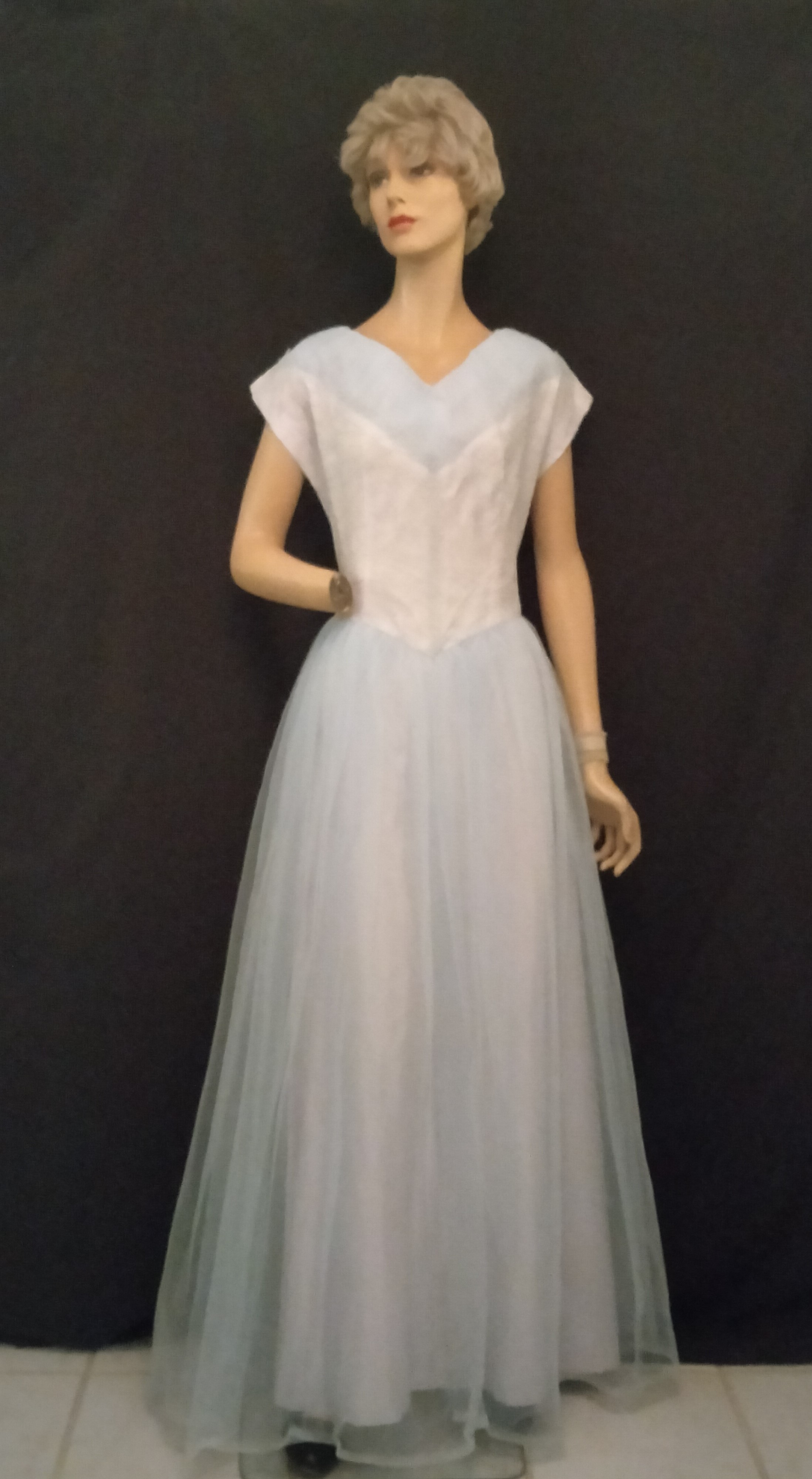
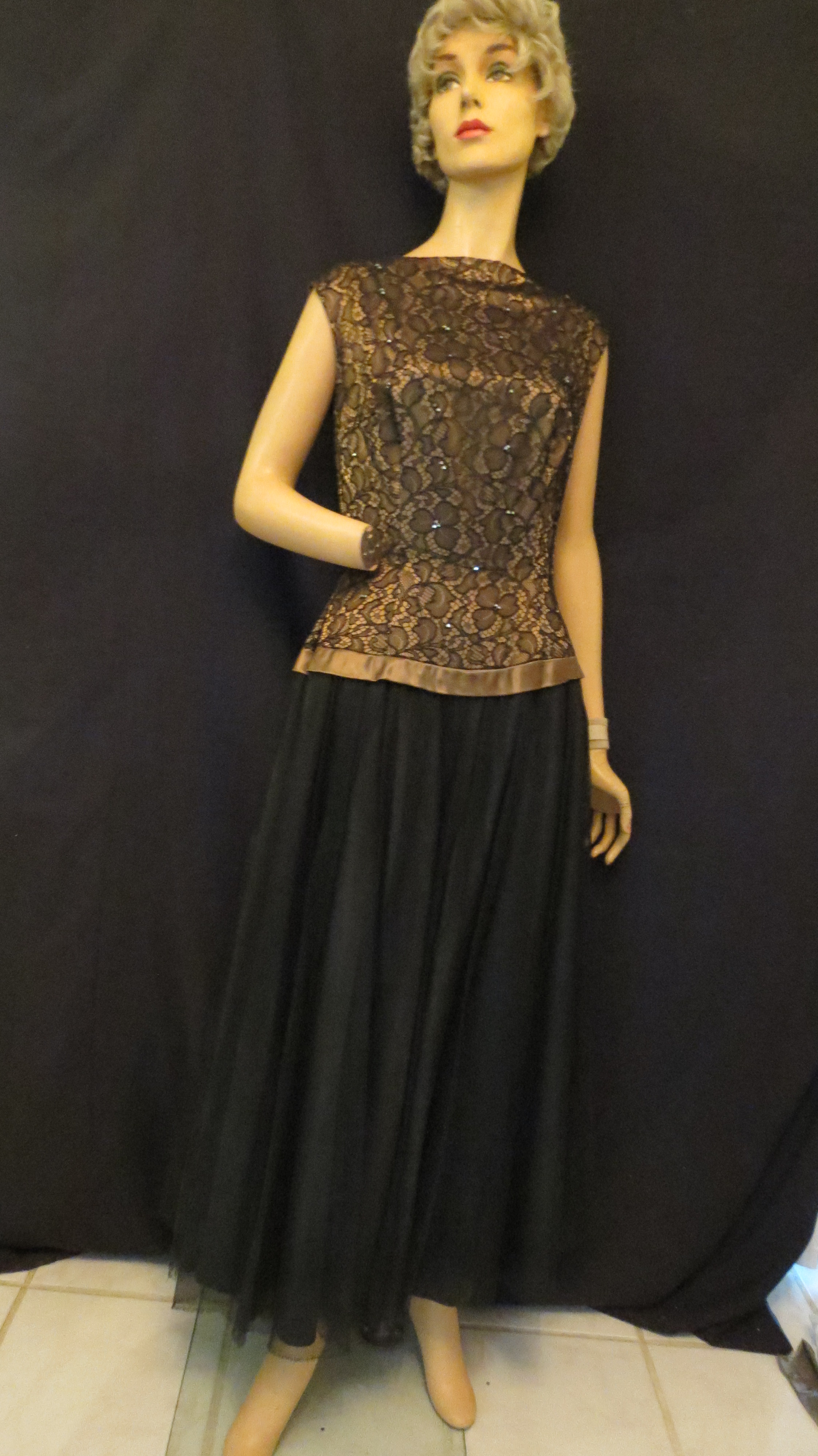
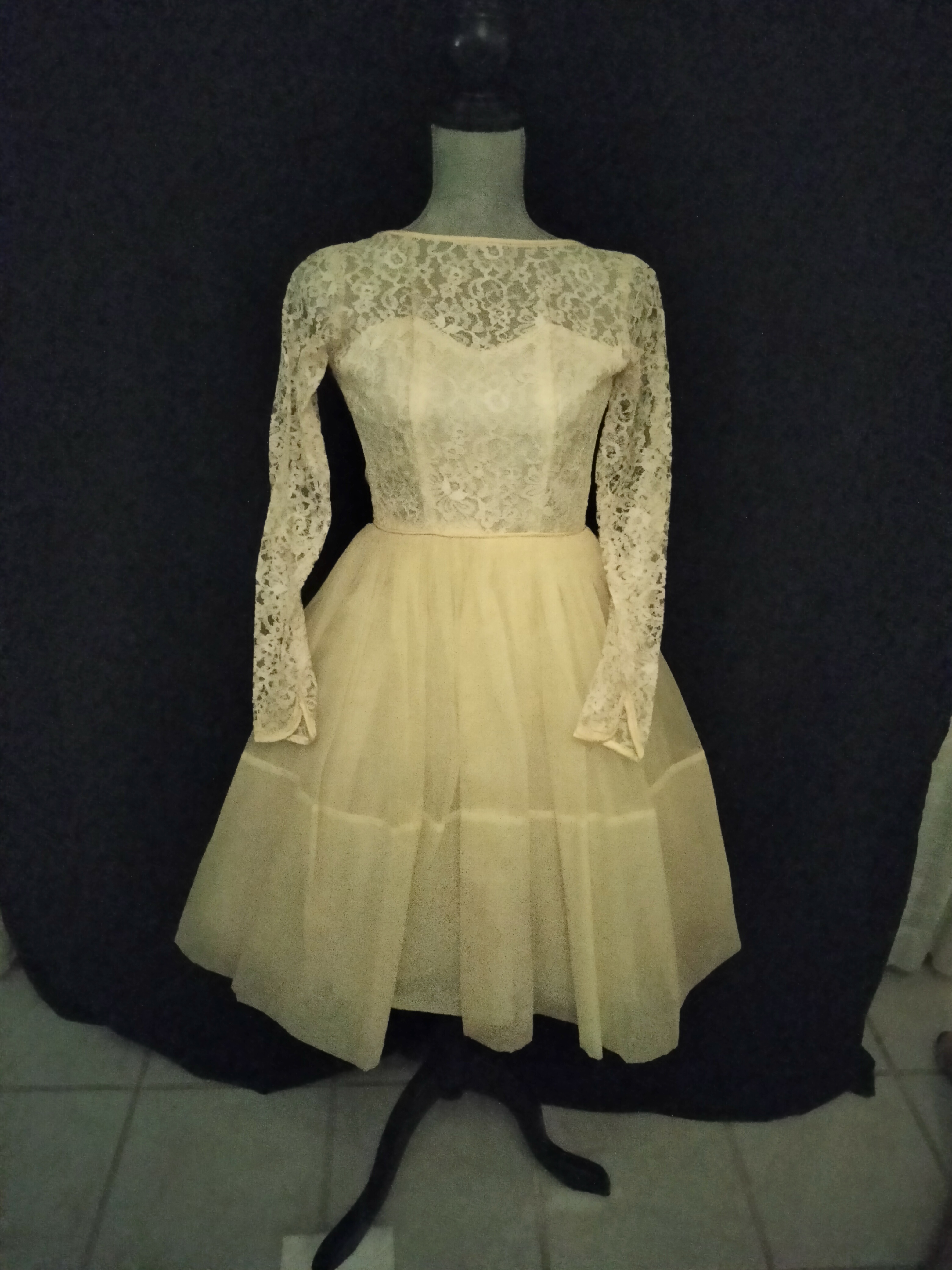
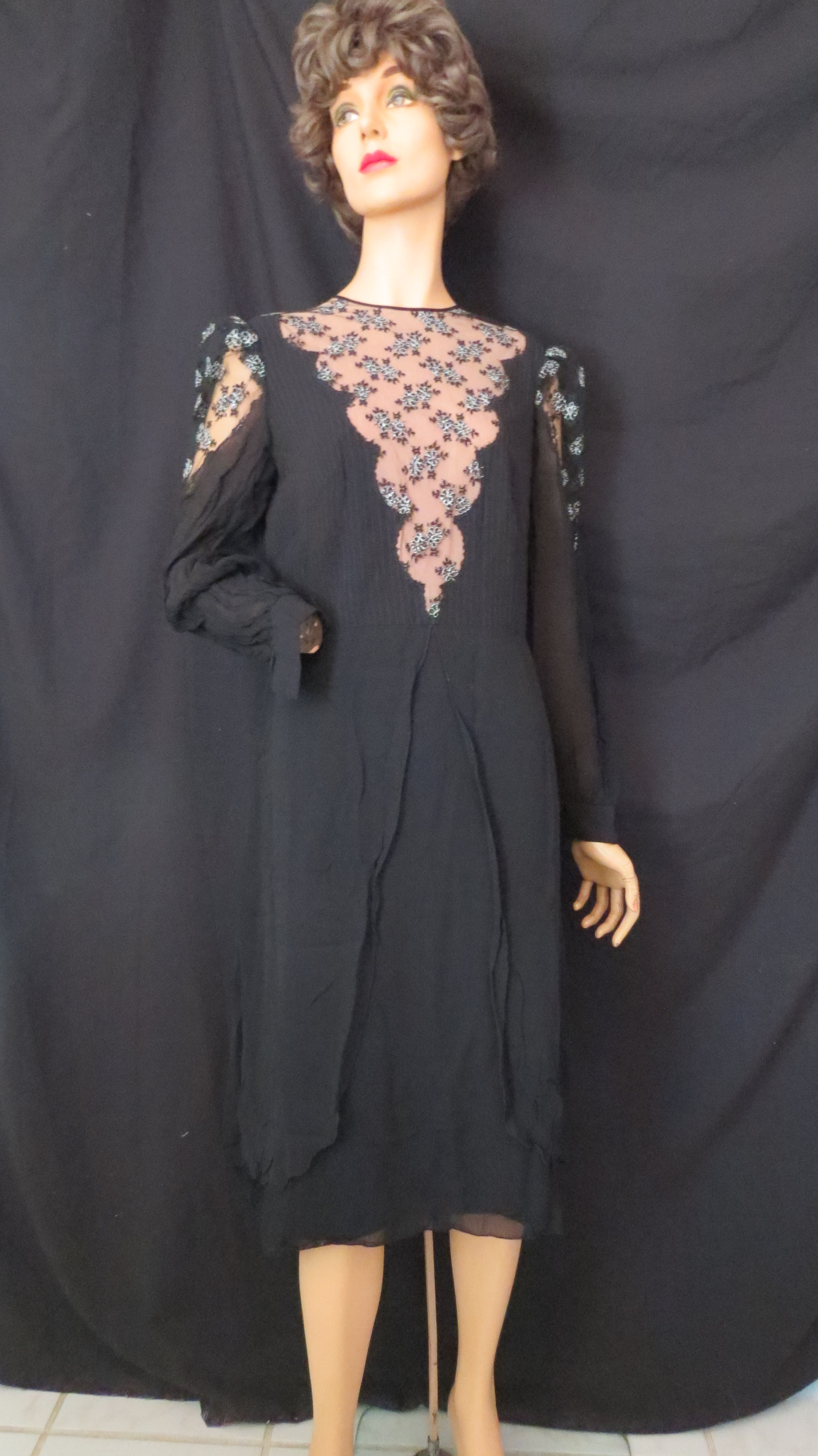
This semi-formal dress uses sheer material to emphasize the design rather than heavy ornamentation like the decorated frock shown yesterday. In my experience, sheer fabric with embroidered designs was popular in the 1940’s. It’s fun to see how dressmakers used it.

On the shoulders, these are augmented by gathered puffs at the shoulder seams and letting the body shine through rather than sewing shoulder pads in. It’s a nice balancing effect without the military look. Sheer fabric on the bodice is something I’ve seen before, too, but here it is backed by flesh-tone fabric, mimicking a plunging decollete’. The sheer fabric, though not with any embroidery, continues to be used for the long cuffed sleeves and as an over-dress with a long peplum over an opaque base layer.

So, the final result is dressy and sexy but also conservative. Clever design though a bit simpler than the one shown yesterday.This dress was at least partly hand-tailored. It has covered buttons on the cuffs and a long center zipper in back, which was a transition from side zippers that, in my experience, began to take place in the Forties.

Again, I was so intrigued and wondered about the original owner of this dress and where she wore it. Stay tuned for yet more 1940’s fashion . . . . . . . . . . . . . . . . . . . . . . . . . . . . . . . . . . . . . . . . . . . .

MORGANA MARTIN, THE MAGICVINTAGESPY

BLOG: MAGICVINTAGESPY.COM
TRUE VINTAGE POST-WAR 1940’S BEADED COCKTAIL DRESS

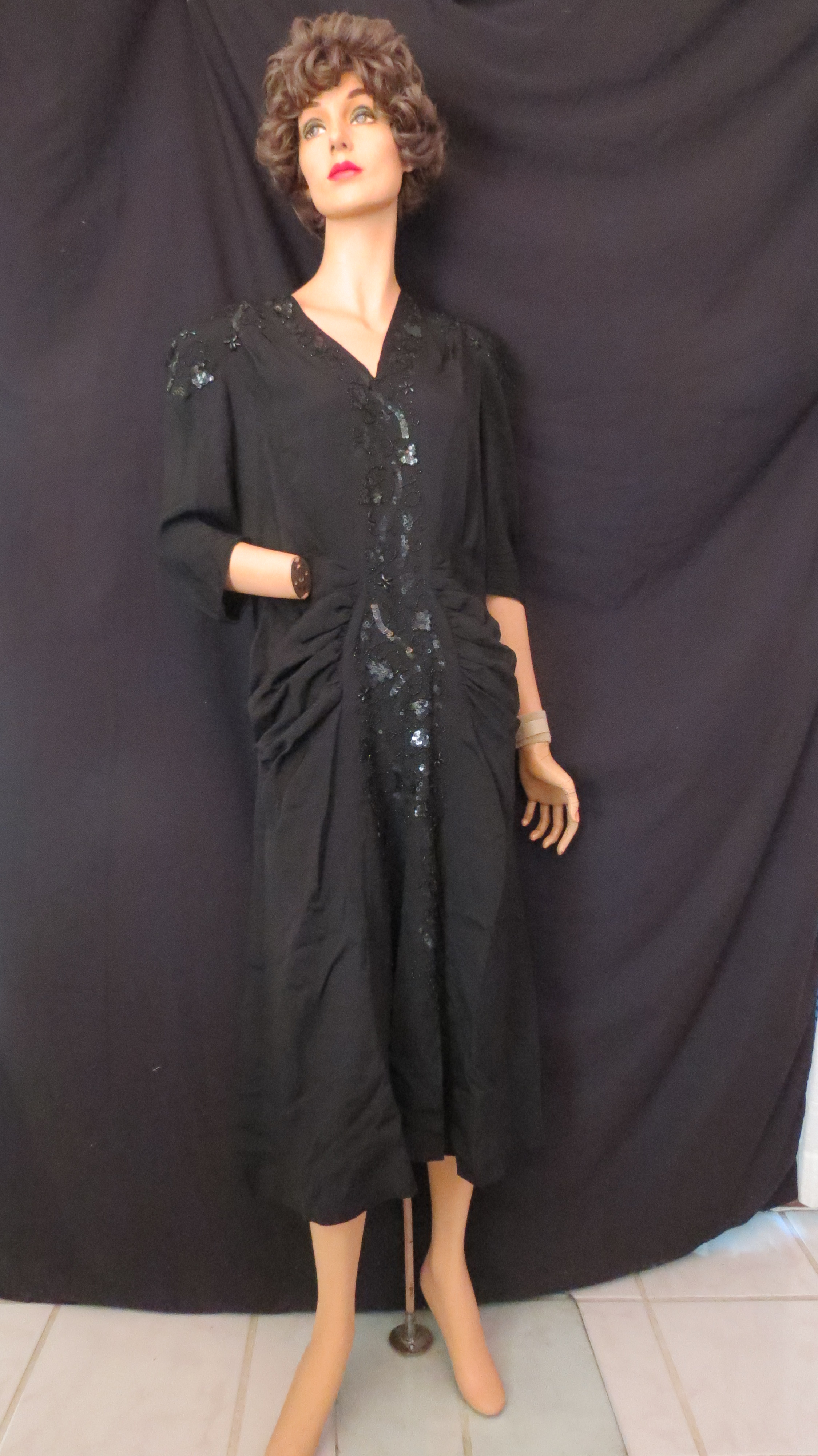
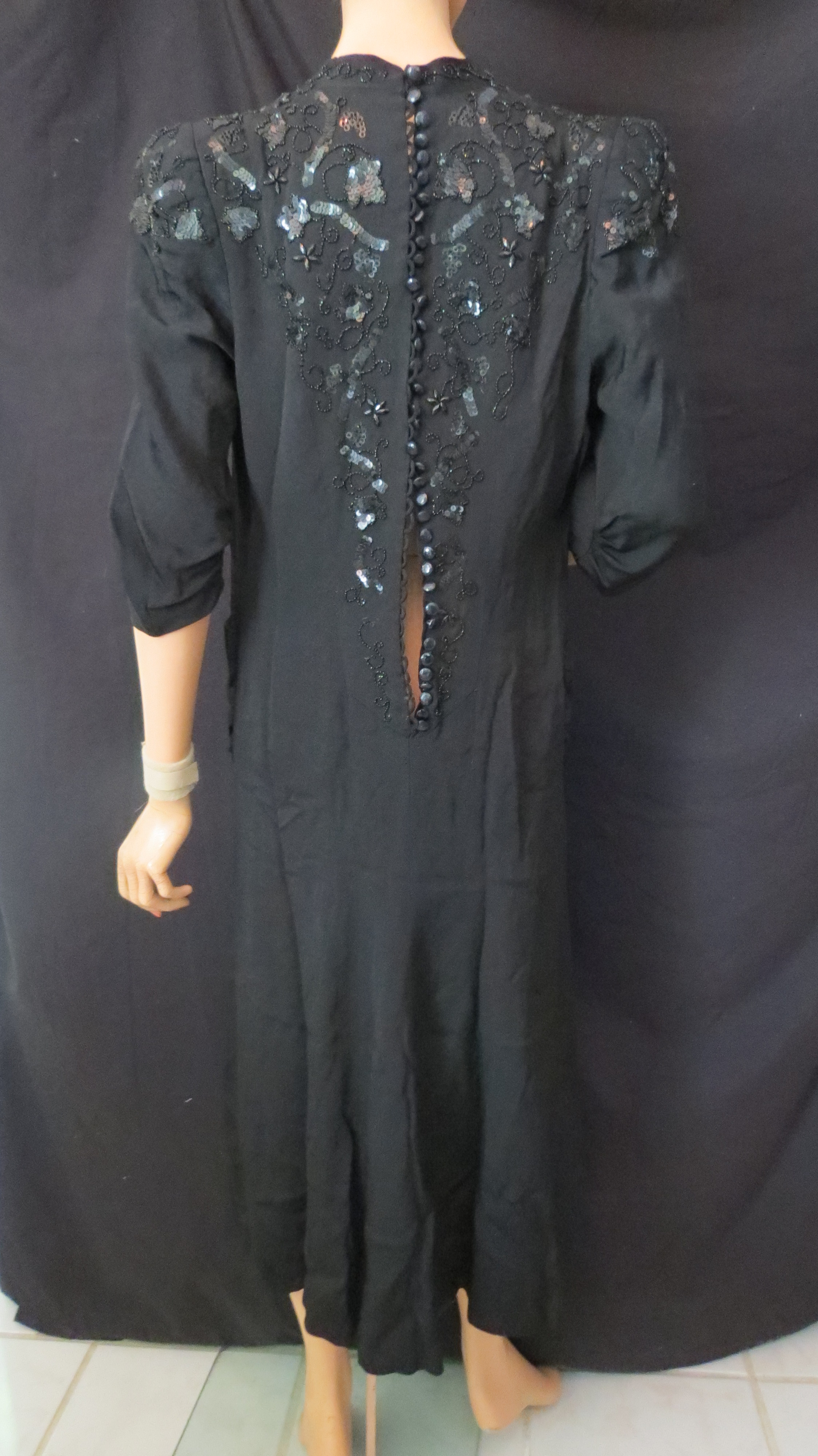
During a South American investigation, this frock was discovered in the beautiful and historic city of Montevideo, Uruguay. During WW 2, well-to-do Uruguayan women still had beautiful dresses made for them and did some trade in clothing and accessories from France. This dress has the label of a small tailoring shop, is exquisitely made by hand and was obviously owned by a woman from the upper class who would wear it to dinner or any semi-formal festive gathering.

Style-wise, the augmented shoulders, funky ruching on the hips and sleeves plus the midi hem point directly to the late 1940’s. Heavy decoration with beads and sequins is all done by hand, as is the finishing. Look at all the small buttons in back, each with it’s own fabric loop closure. Stay tuned for more from the 1940’s . . . . . . . . . . . . . . .

MORGANA MARTIN, THE MAGICVINTAGESPY

BLOG: MAGICVINTAGESPY.COM

FUN TRUE VINTAGE 1940’S POST-WAR NIGHTCLUB DANCE DRESS

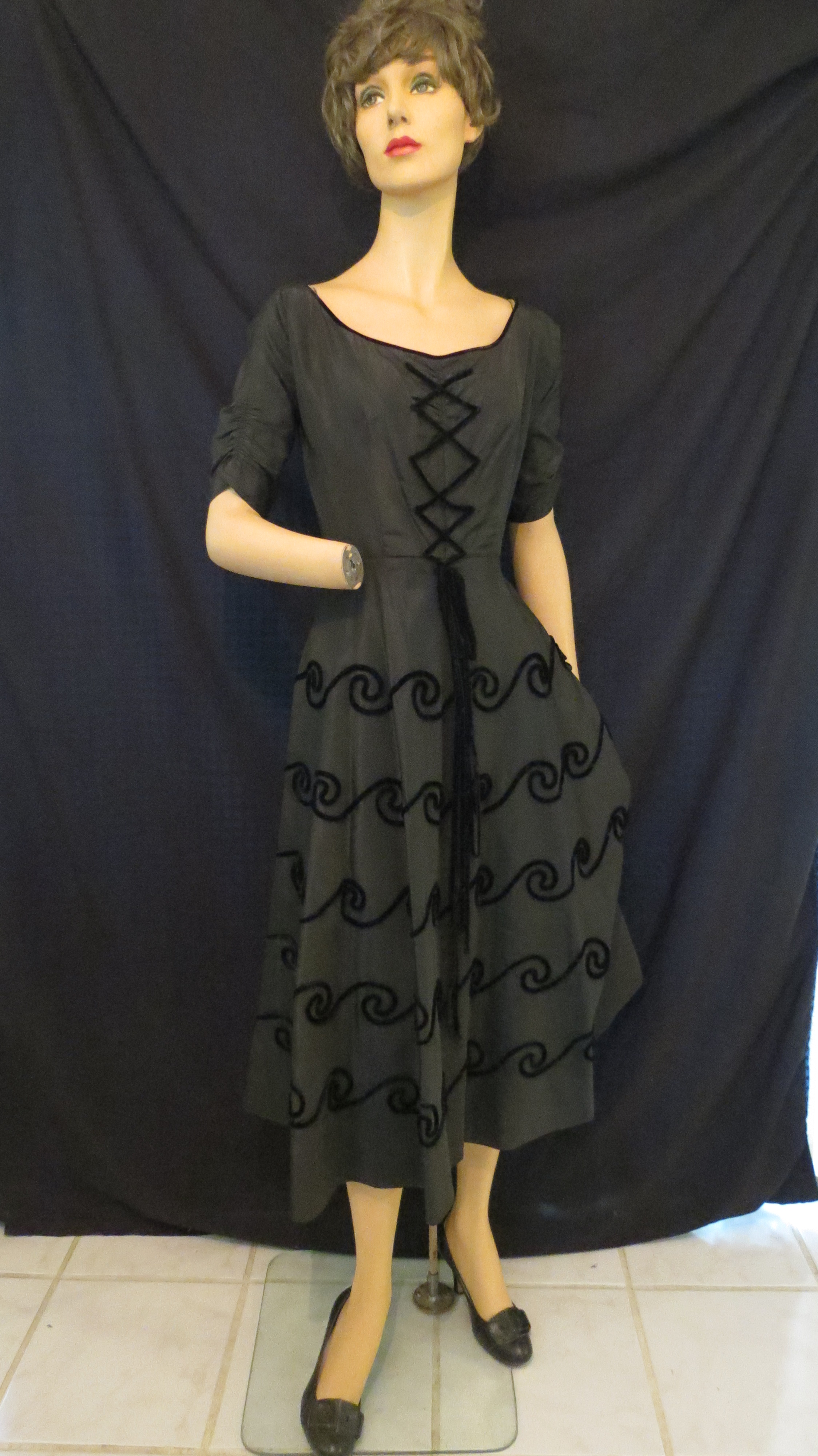
I’m back in black today, but more color coming. I really loved discovering this frock in Texas. Sold by an upscale privately-owned clothing company that had it’s own label. The trim is black velvet tube ribbon and the skirt is made for swingin’ and swayin’. Perfect for wearing to any dance hall or vibrant party, and we know that Texans love to party!

It’s got ruching on the sleeves, which was a favorite ’40’s tailoring feature. Nipped waist and wide skirt plus a midi hem puts in firmly in the post-war time frame. So much fun to discover – a fun dress from a very jubilant time in history. More Forties fashion coming, but dressing it up with an international twist. Stay tuned . . . . . . . . . . . . . . . . . . . . .

MORGANA MARTIN, THE MAGICVINTAGESPY

BLOG: MAGICVINTAGESPY.COM
1940’S WARTIME – EARLY POST-WAR ERA DRESSY FROCK

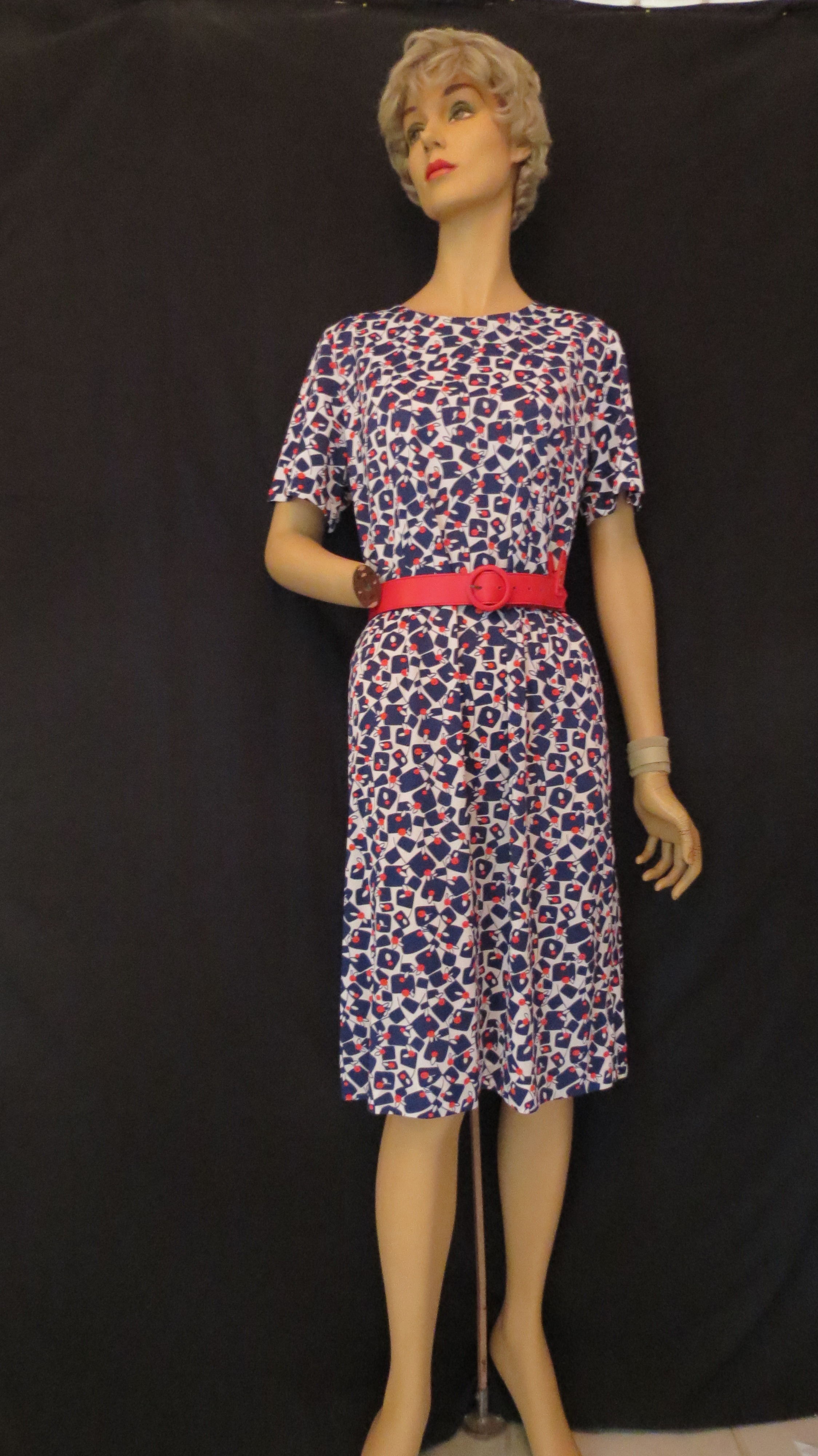
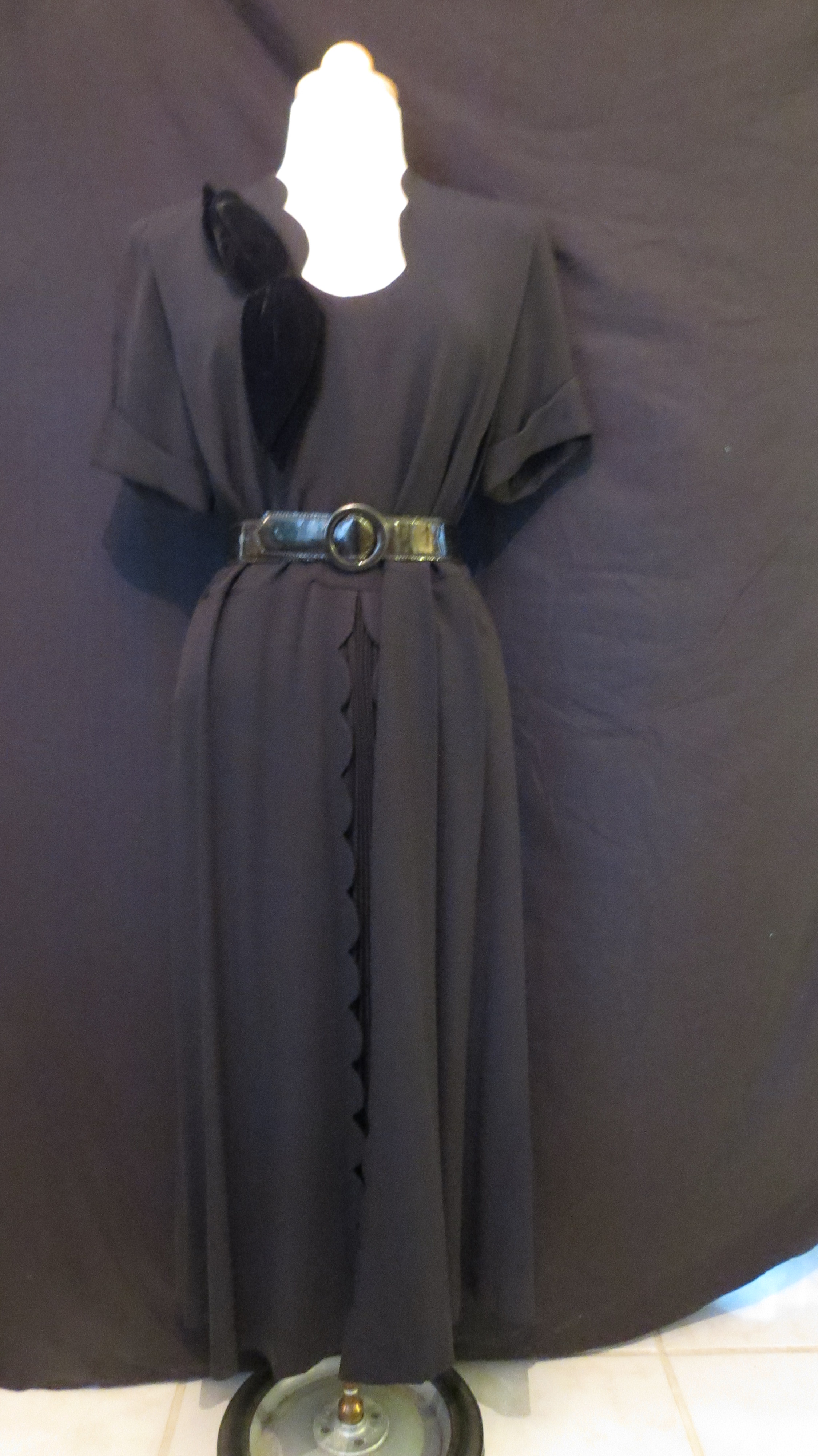
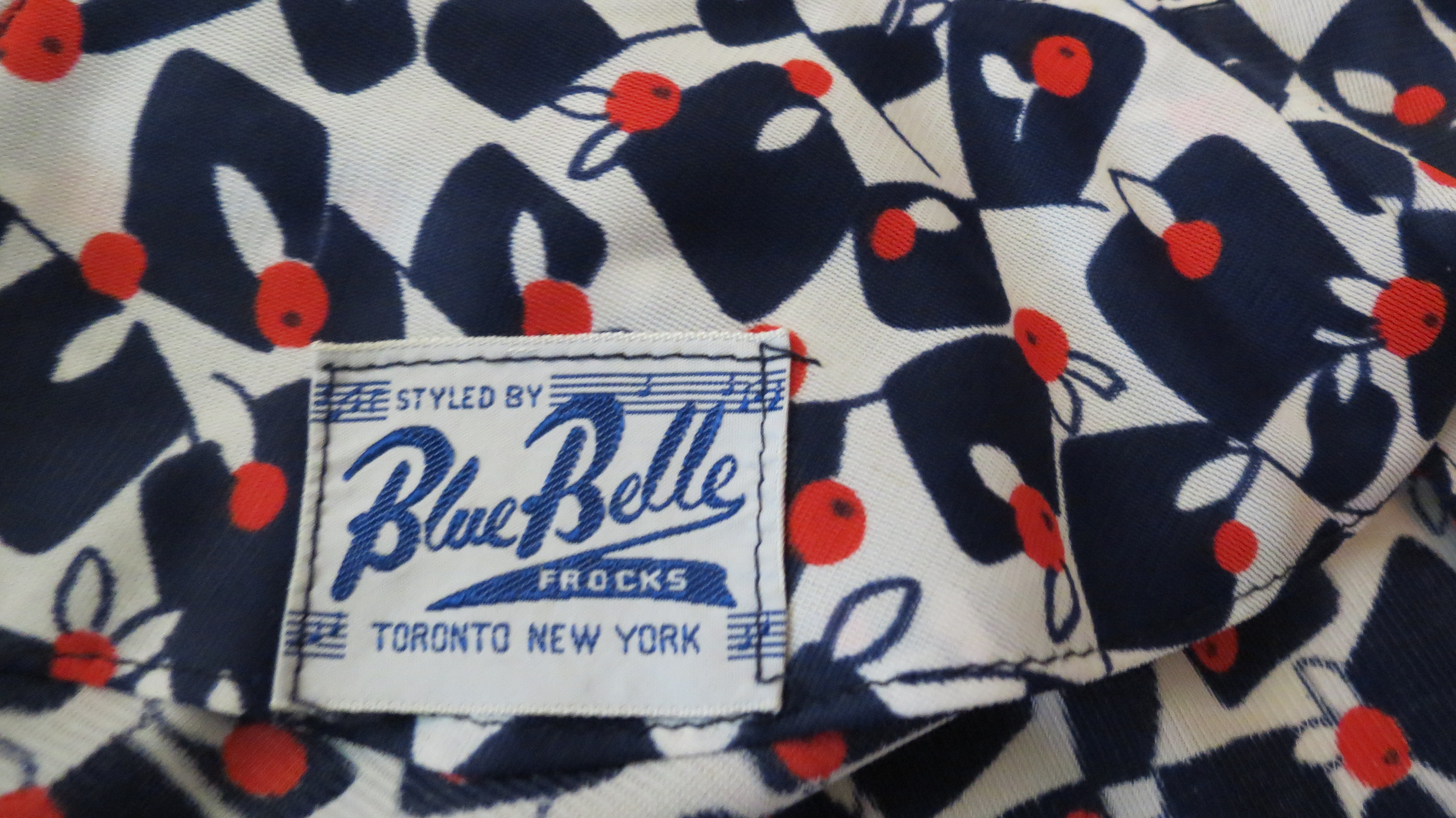
This pretty dress is made of rayon material with a BIG velvet bow and inverted front pleat for added interest. I love the scalloped overlay and the shaping on the cuffs of the short sleeves, which is SO Forties! This dress is labeled as having been made by a company or maker that was nationalized during the years surrounding and following WW2 when many, if not most, fabrics and notions available to garment-makers before the war and the Depression were unavailable to manufacturers and home-tailors because of rationing. Women still wanted pretty fashions and our government helped to make that possible and affordable.

Despite having no lining or buttons, there are very nice tailoring details. It is, unusually for that time, quite a large size but is so well-cut that belting it on my size 6 mannequin (thank you, Madge!) still looks amazing. That is an advantage of any well-made garment and especially in the case of most true vintage clothing. Stay tuned for more . . . . . . . . . . . . . . . . . . . . . .

MORGANA MARTIN, THE MAGICVINTAGESPY

BLOG: MAGICVINTAGESPY.COM
ELEGANT MOD TRUE VINTAGE 1960’S LBD

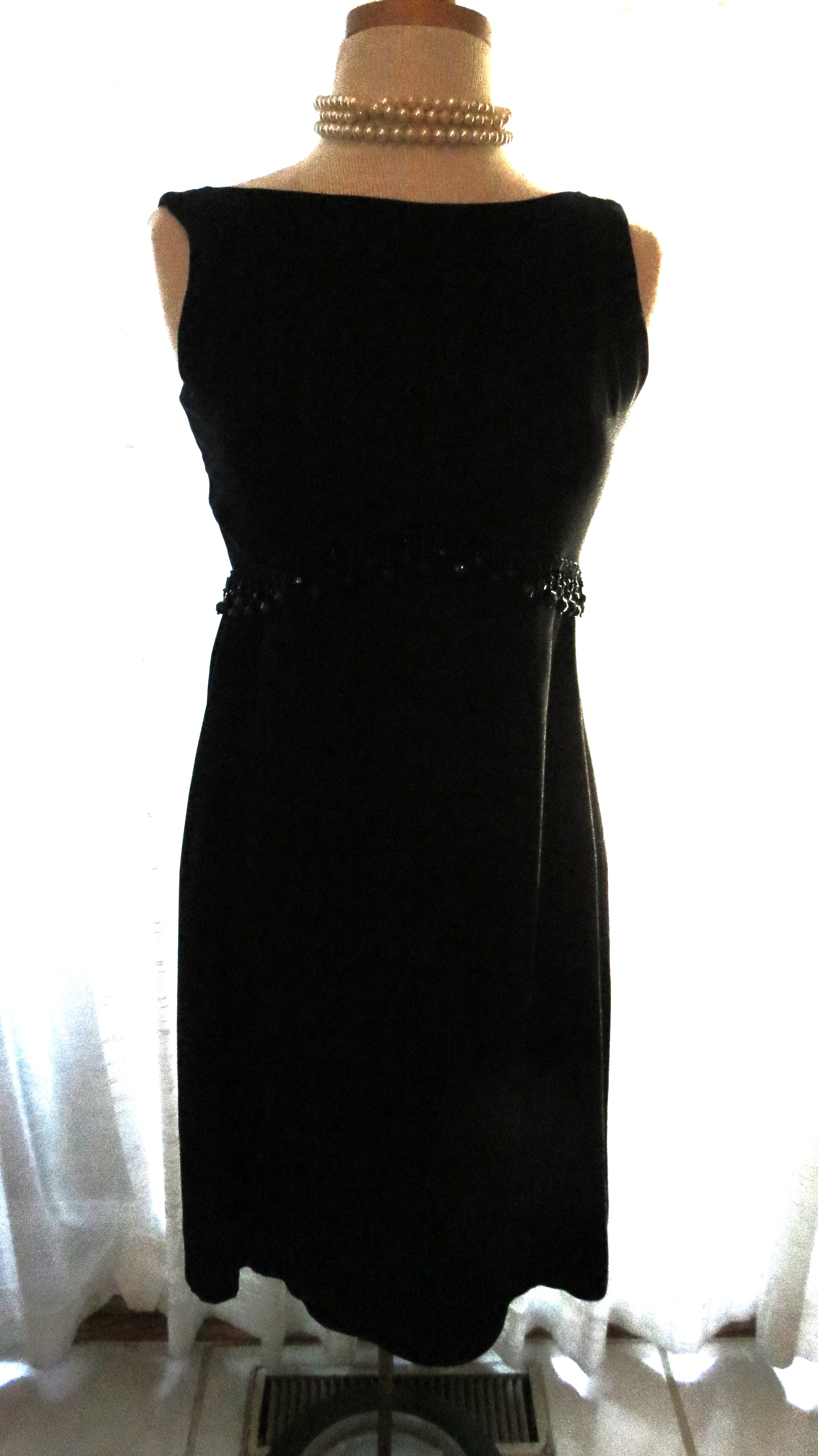
From the early to mid-1960’s, a sleek, sleeveless classic sheath style cocktail dress with a boat neckline, which I love. It’s knee to bottom-of-knee length, which is a very flattering hemline on most women and was common at that time right before almost everything had an above-the-knee or mini length. It’s so hard to get good detail on black clothing in photos, but this one is easier because the only decoration is a medium-width band of black beading at the waistline. Very well-tailored in a light-medium weight knit fabric with a very nice drape. This one factor takes it over the line from a Summer dress to one for Fall. Good quality, good fit – the signature features of well-made true vintage clothing.

I have more examples in the files of 1960’s LBDs but, in my images file, I ran across a large number of dresses of this type from the 1940’s. I’ll probably break the timeline to put these in the next posts before resuming to LBD’s from the more recent decades. I am traveling back to Headquarters as of tomorrow, so there may be a few days pause while I reorganize. Won’t be long so stay tuned . . . . . . . . . . . . . . . . . . . . . . . . . . . . . . . . .

MORGANA MARTIN, THE MAGICVINTAGESPY

BLOG: MAGICVINTAGESPY.COM
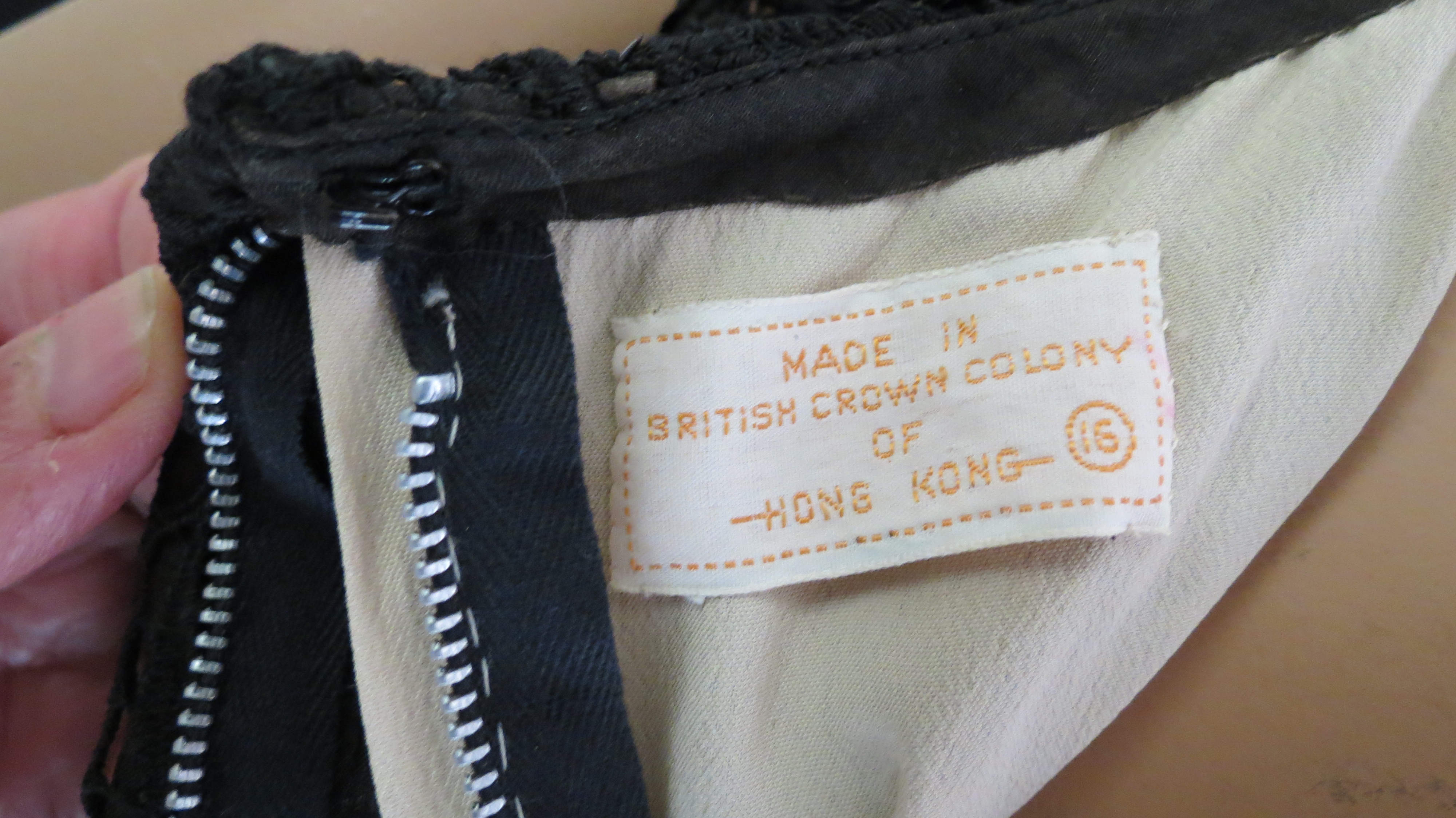
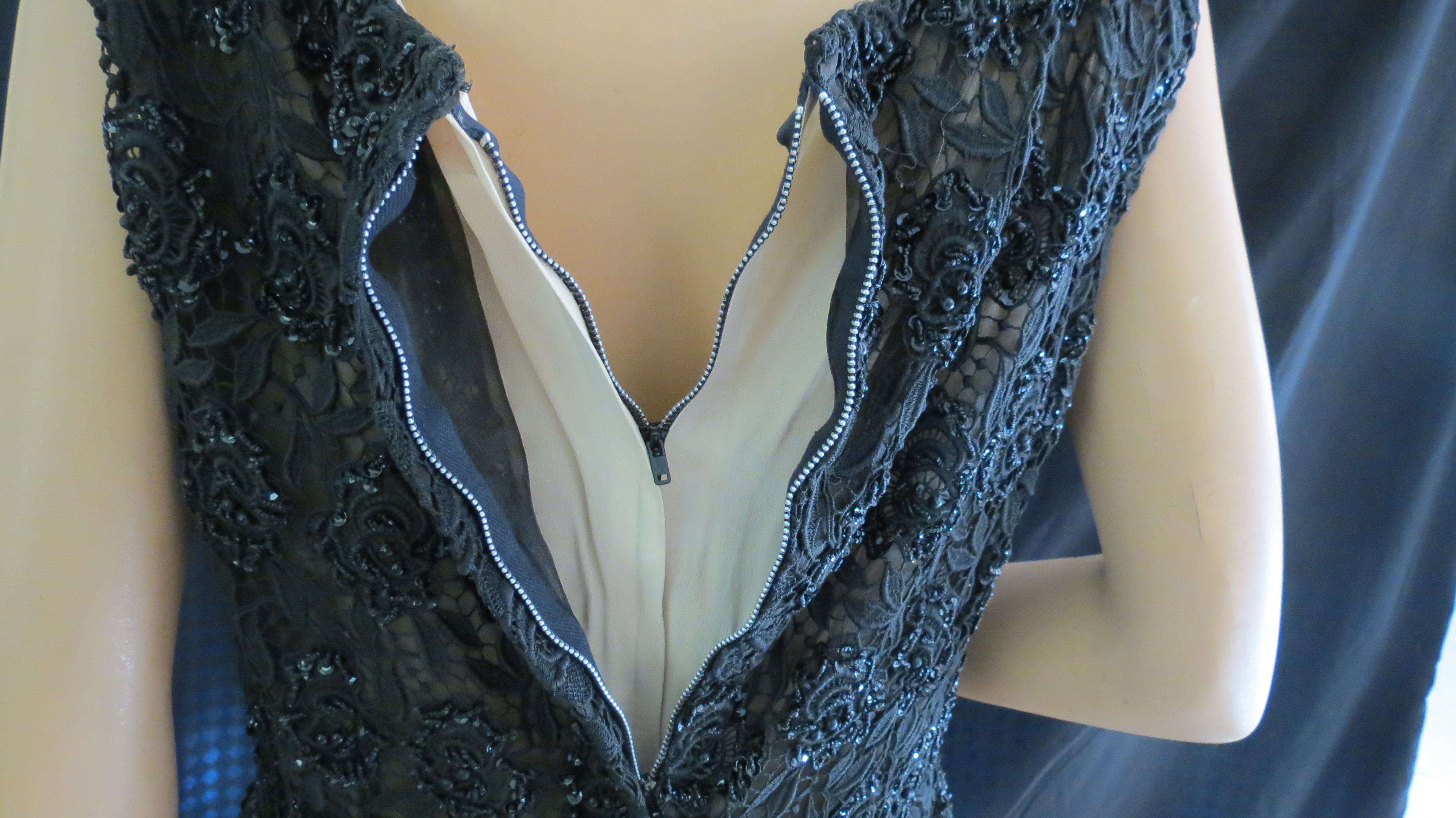
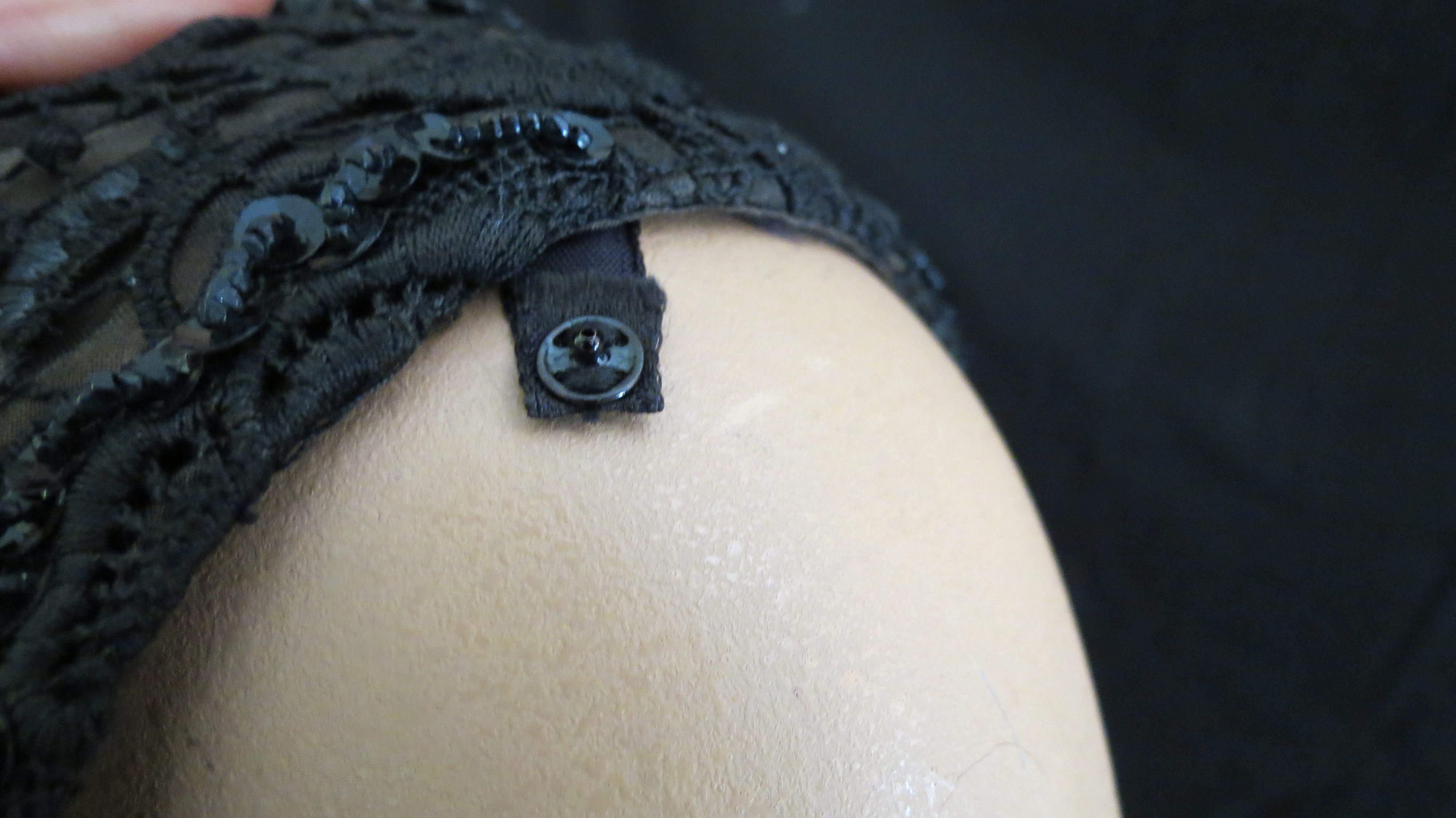
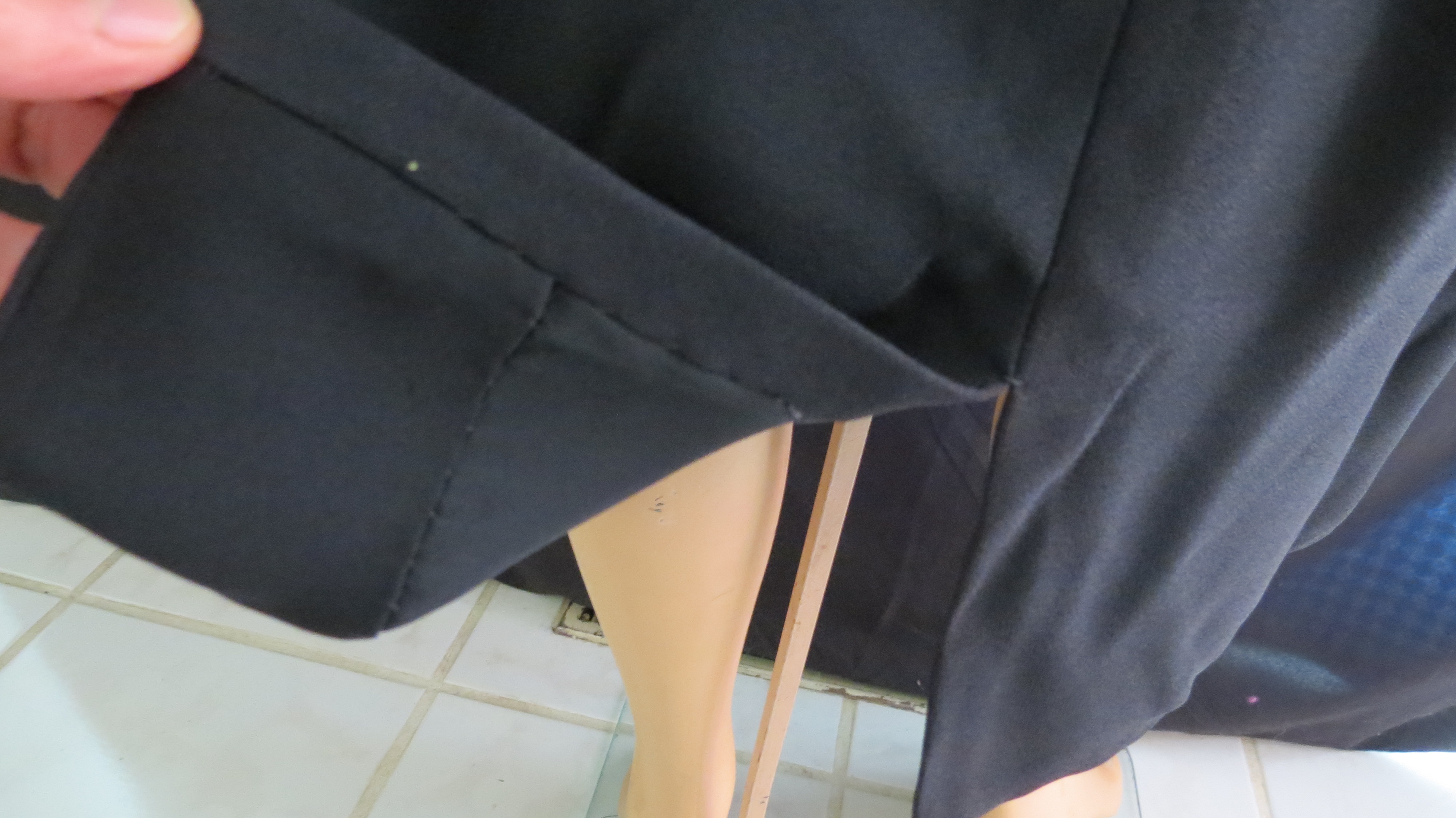
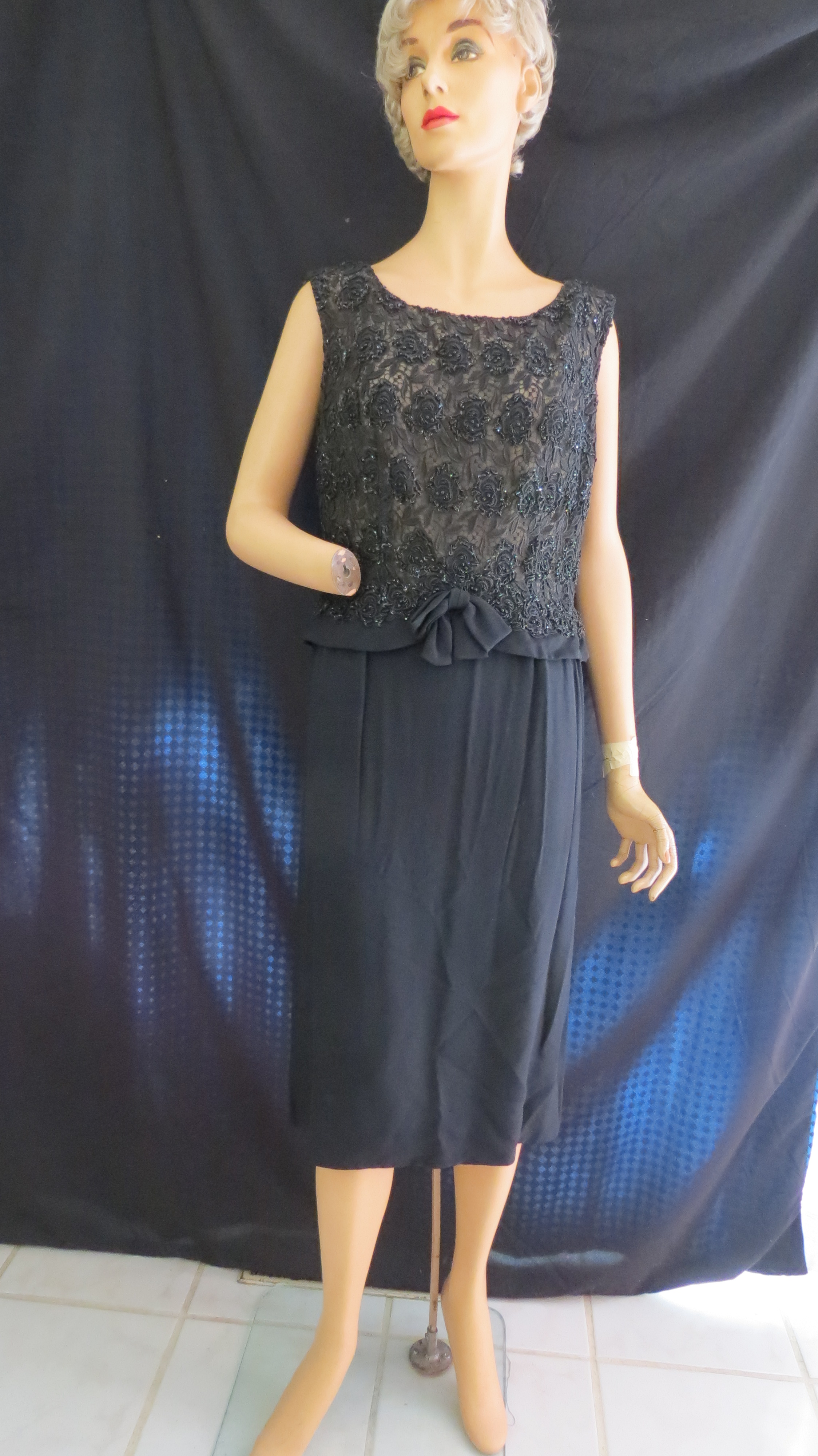
TRUE VINTAGE 1960’S DRESSY FROCK – ANOTHER FINELY HAND -TAILORED GARMENT FROM BRITISH HONG KONG

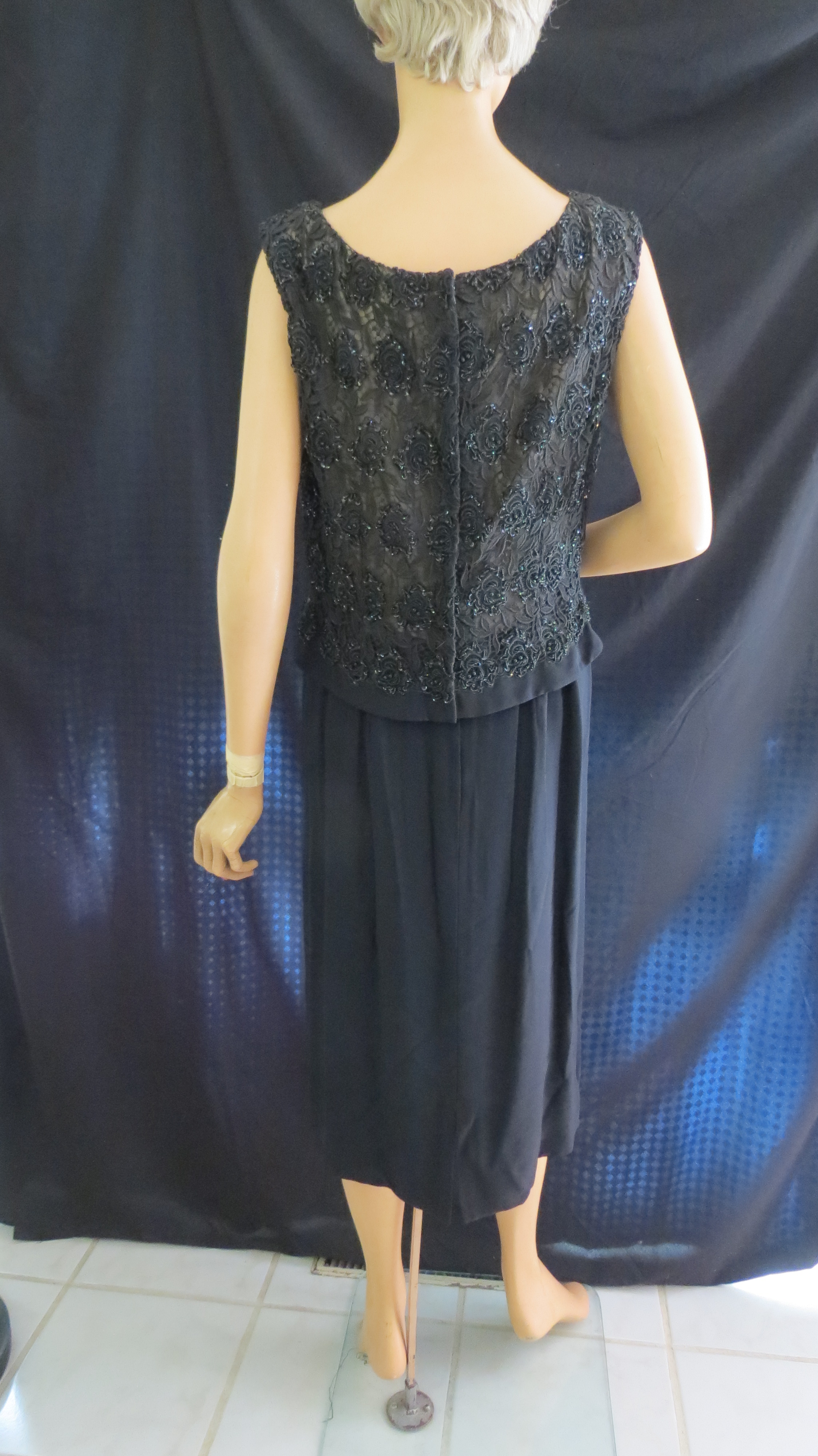
This dress is such a treat! I was so thrilled to uncover it. Look at the marvelous tailoring details and ingenious construction – A basic sheath style, with a heavily-decorated blouson top that appears to be separate, but is attached at the shoulders and fully-lined with a white silk under-blouse. Both layers close with a metal zipper. Hooks and eyes secure the neckline for good fit. The shoulders have strap-holders sewn in. The acetate skirt is also lined with black rayon and has a wide hem allowance plus a walking vent in the rear seam. Hand-finished all over.

In the ’50’s and 1960’s a woman of moderate means could save for the occasional purchase of clothing made this way and more prosperous women had closets full of nothing else. These were the standards of better-made garments during the mid-century. Now even very expensive clothing is sometimes constructed poorly and hardly ever as well as this dress is. The attention to detail and hand-done stitching made clothing fit better look more polished.

Tomorrow I’ll show you another frock from this decade. Stay tuned . . . . . . . . . . . . . . . . . . .

MORGANA MARTIN, THE MAGICVINTAGESPY

BLOG: MAGICVINTAGESPY.COM
START OF A SERIES: TRUE VINTAGE PIECES FOR COOL, DRESSY EVENINGS

We’re now heading into the season for indoor parties, special occasions and events after the long, lovely summer; Cocktail parties, dinners, dances, recitals, holiday galas – you name it. I’ll be starting a series of posts of pretty, dressy and semi-formal garments in my collection from the 1950’s – 1990’s which will take us into the Fall and even Winter. Stay tuned . . . . . . . . . . . . . . . . . . . . . . . . . . . . . . . .

MORGANA MARTIN, THE MAGICVINTAGESPY

BLOG: MAGICVINTAGESPY.COM
TRUE VINTAGE LATE 1950’S – MID-1960’S DRESSES

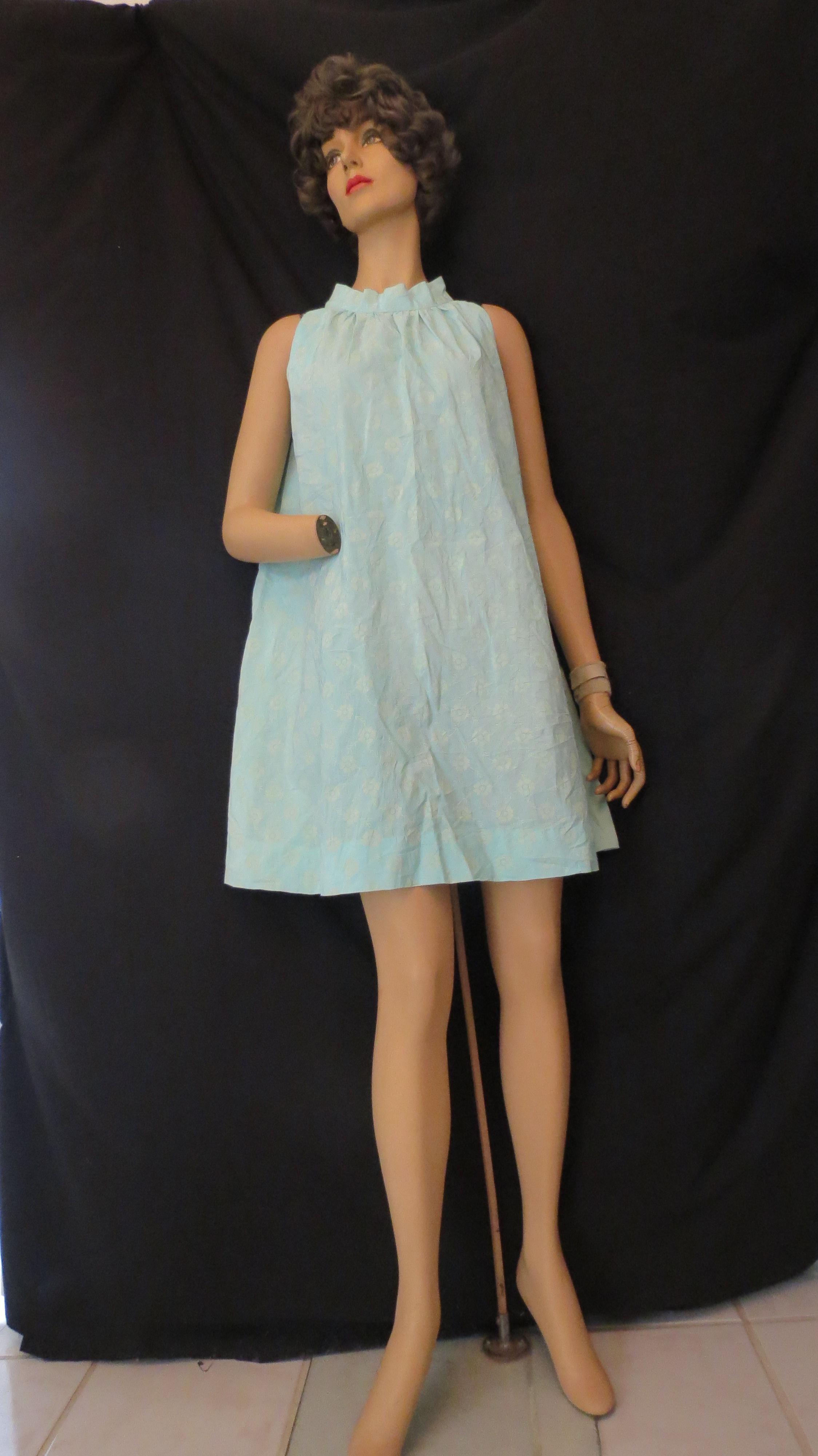
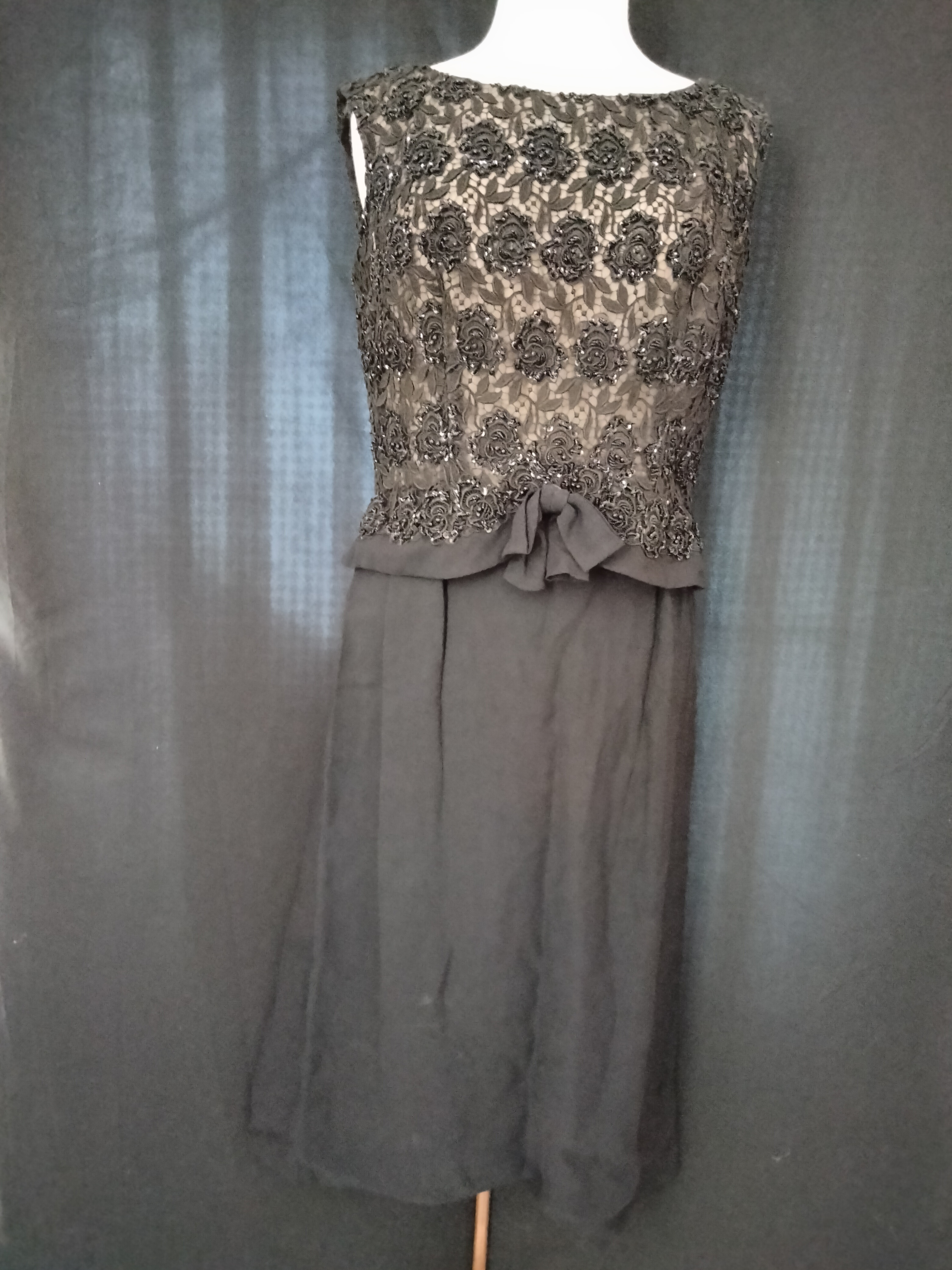
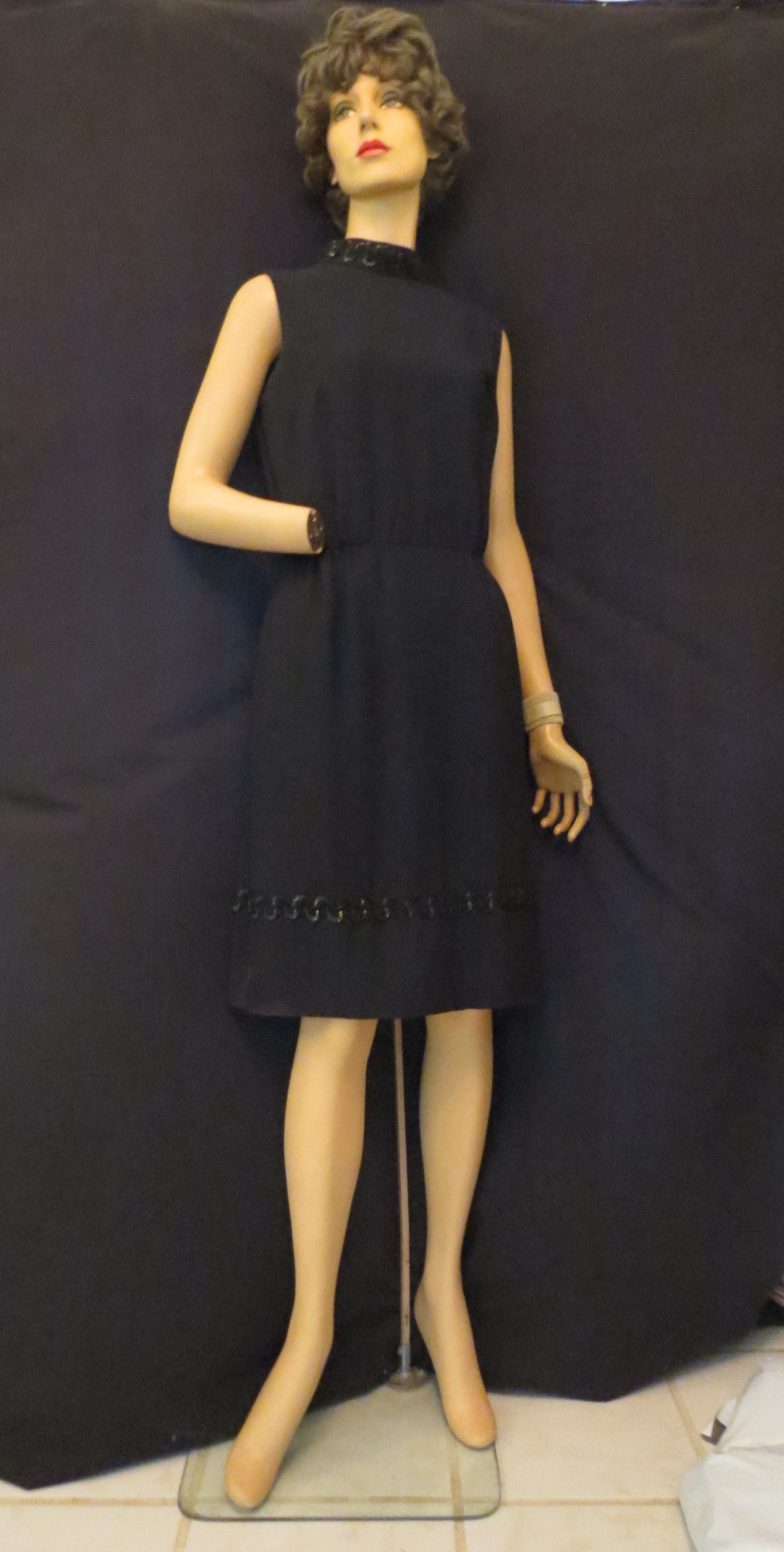
Late Fifties saw slinky knit sheath dresses that carried over the new, easy-care synthetics from the 1940’s. The prints morphed slowly from geometric, atomic shapes back to cute animals, fruits and veggies. This fabric is amazingly comfortable and drapes beautifully but was economical. Common, moderately-priced frocks were made from it.

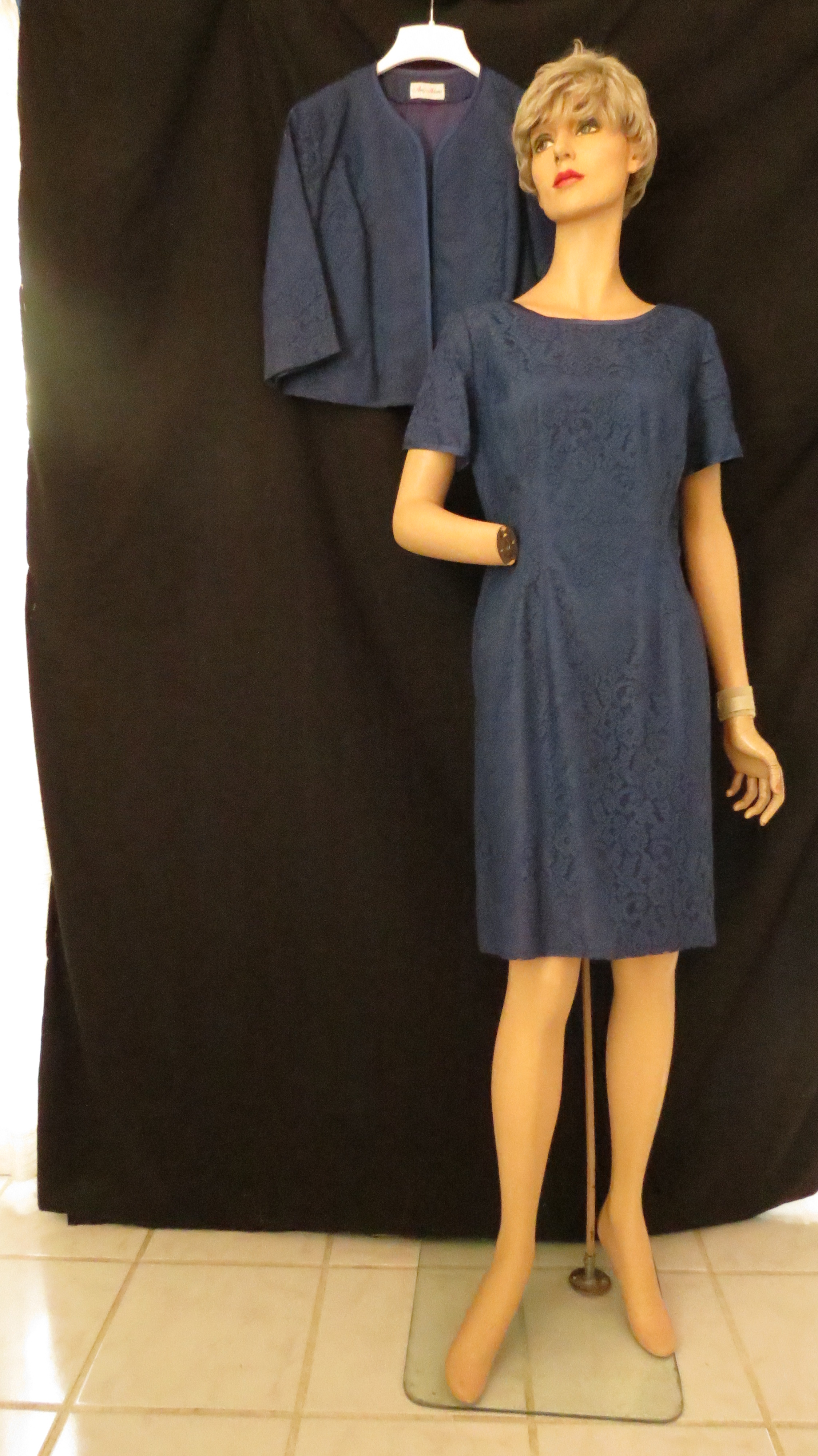
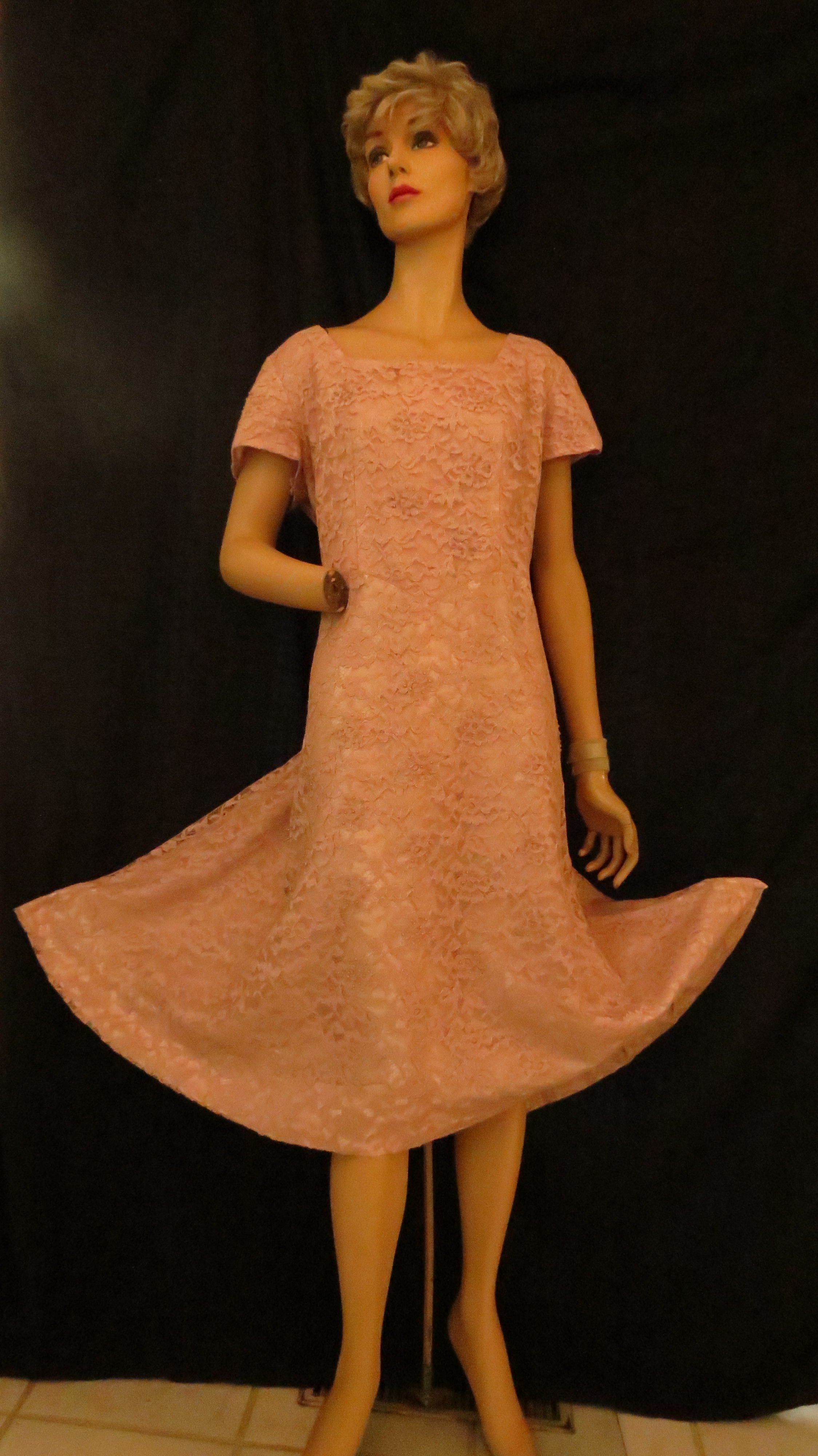
Just a few years later, lace overlay became the big thing. Dressy day-dresses were often made from it, as well as semi-formal and formal gowns. These were also generally made from synthetic or blended fabrics but probably required dry-cleaning. Better frocks often came from British Hong Kong, where the design and hand-made tailoring made them exceptionally elegant and of higher quality. These dresses were still within the reach of middle-income ladies but were more expensive. See the black dressy sheath with a beaded over-blouse above. The straight black high-neck sheath came from Saks Fifth Avenue.

Then, again from the Brits, came Mary Quant’s Tent Dress in 1964. Although the Mod style had started in the 1950’s, it’s appearance in clothing was totally revolutionary. It brought with it radically shorter hemlines and easy-to-wear, casual shapes. See the light blue, home-sewn version above.

Some styles retained their classic, conservative lines and stuck to neutral or basic tones while bright colors became ever more popular, even in formal garments. While political and social movements became radicalized and changed society, the Hippie, Boho and Prairie styles started to take over in the late 1960’s and carried over into the early 1970’s. Tomorrow we’ll look at some of the ways that popular fashion incorporated these trends into mainstream dressing. Stay tuned . . . . . . . . . . . . . . . . . . . . . . . . . .

MORGANA MARTIN, THE MAGICVINTAGESPY

BLOG: MAGICVINTAGESPY.COM
TRUE VINTAGE LADIES’ DRESSY AND FORMAL – WEAR FROM THE EARLY 1950’S

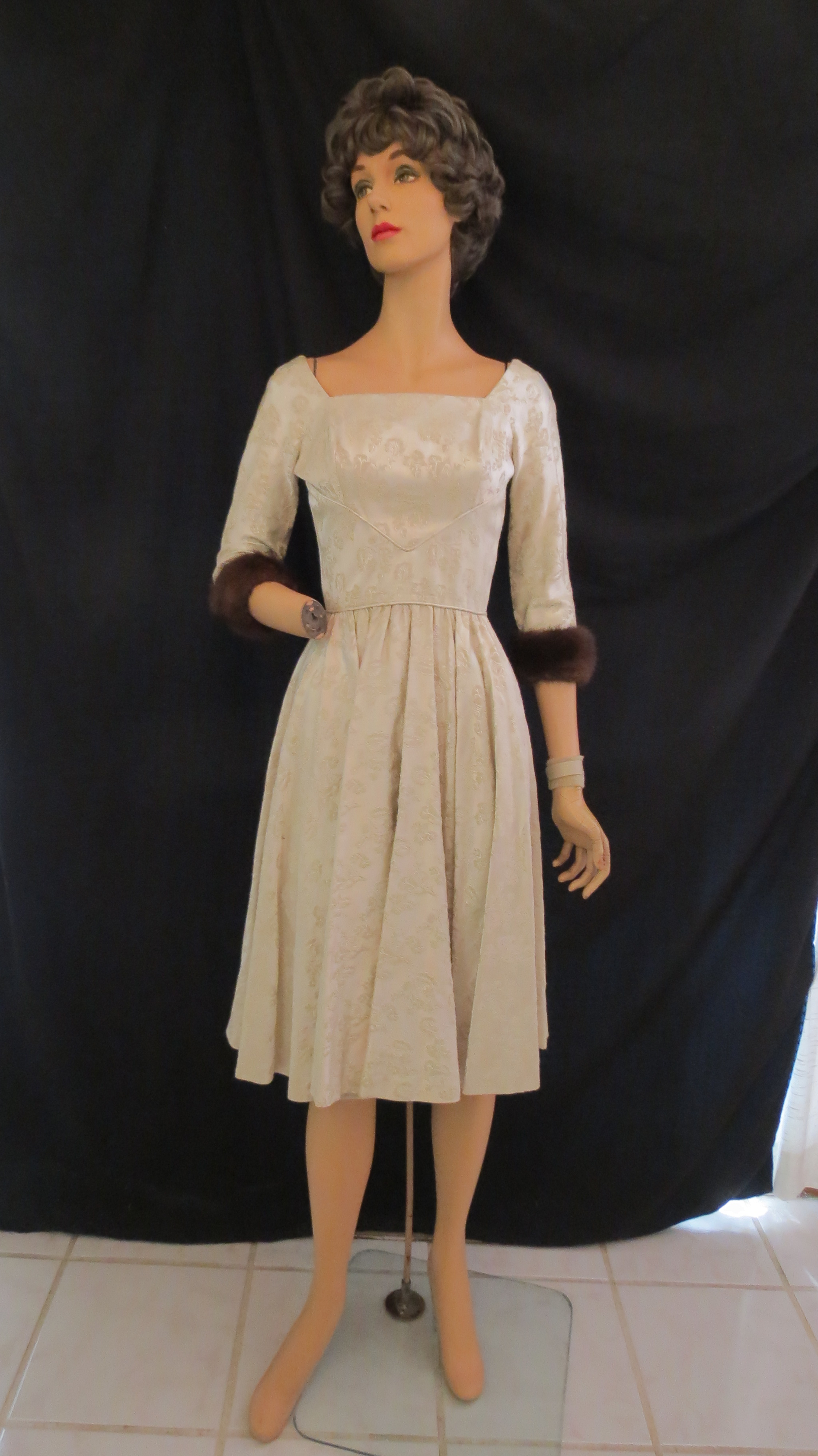
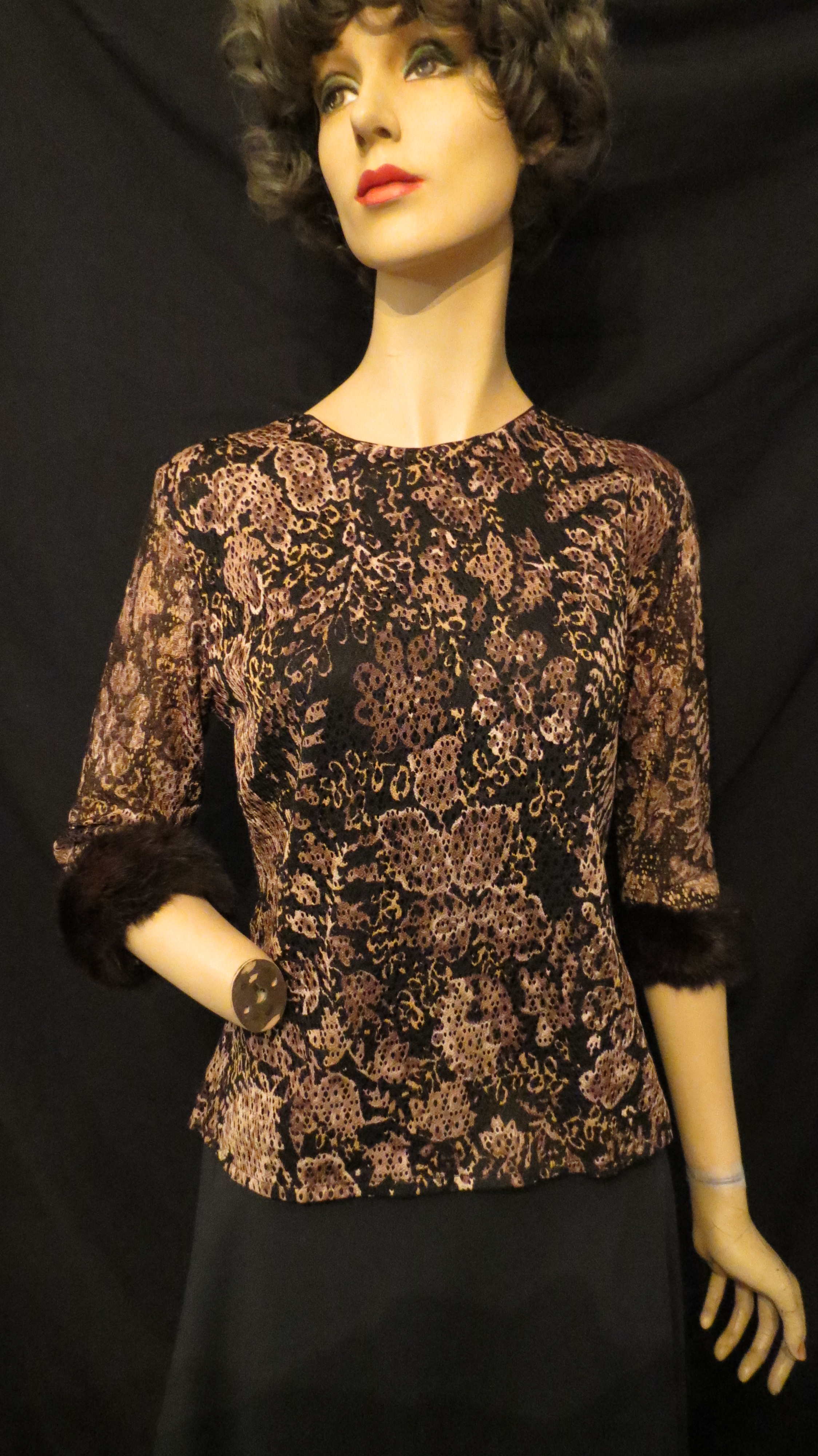
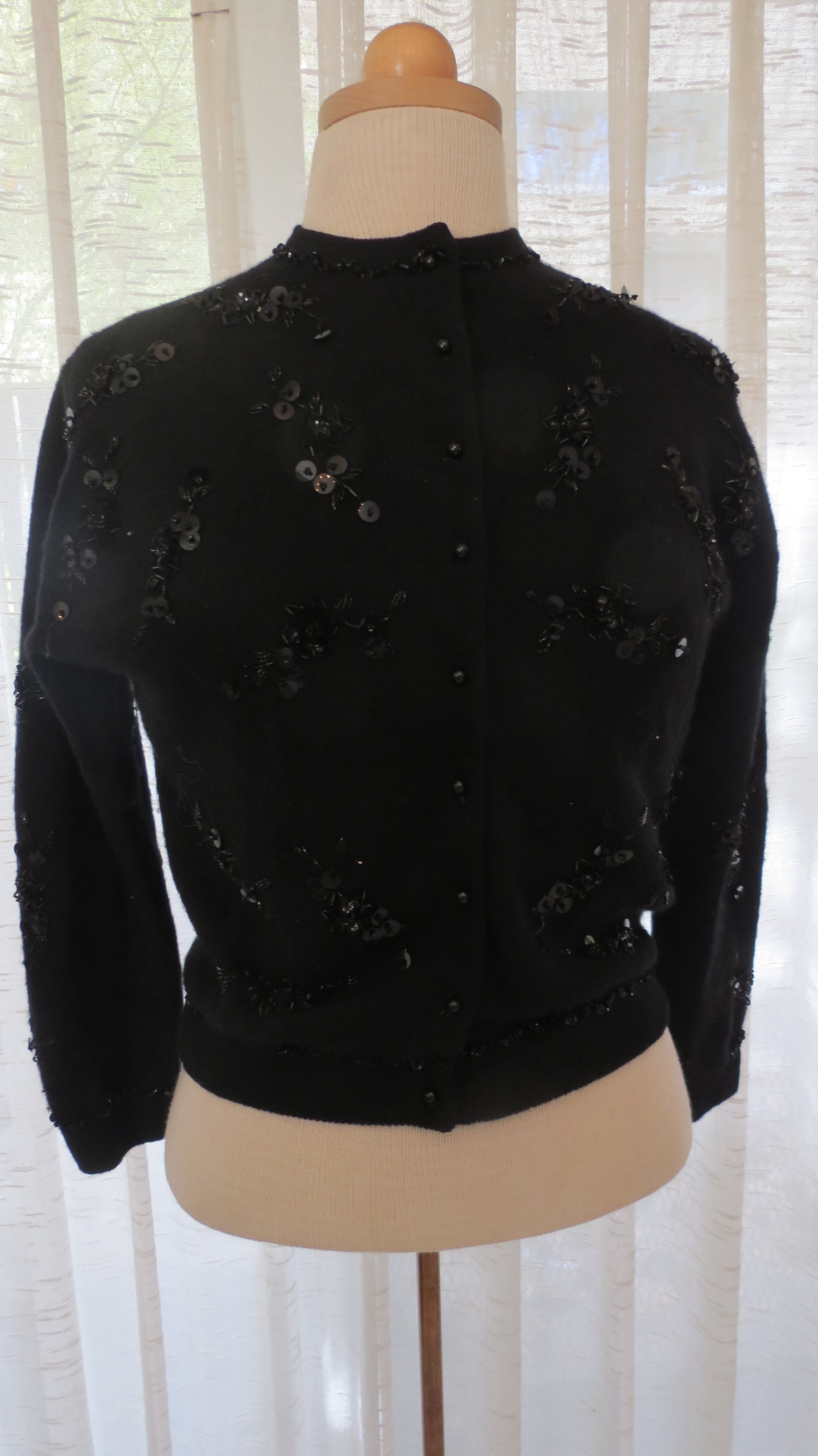
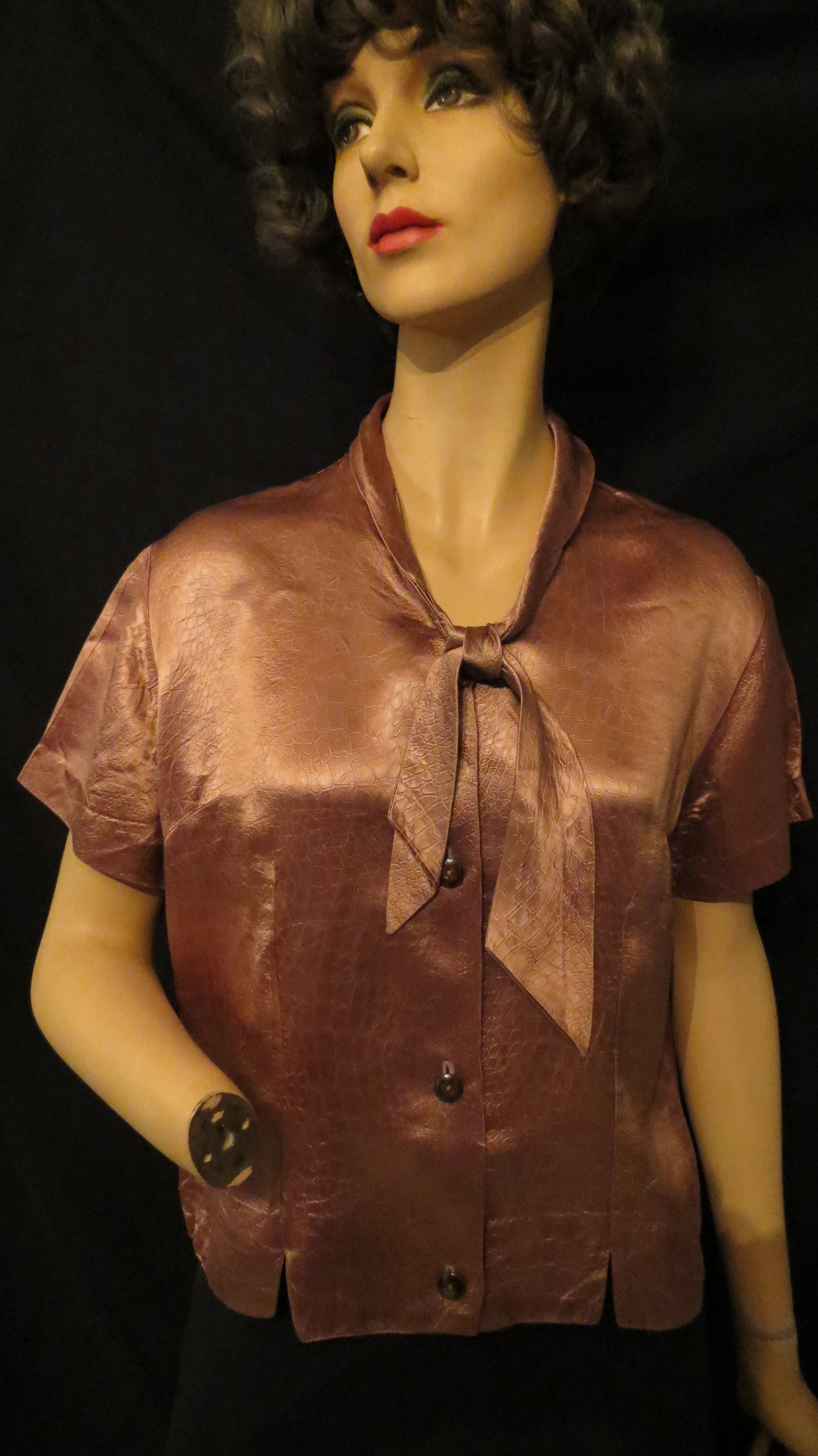
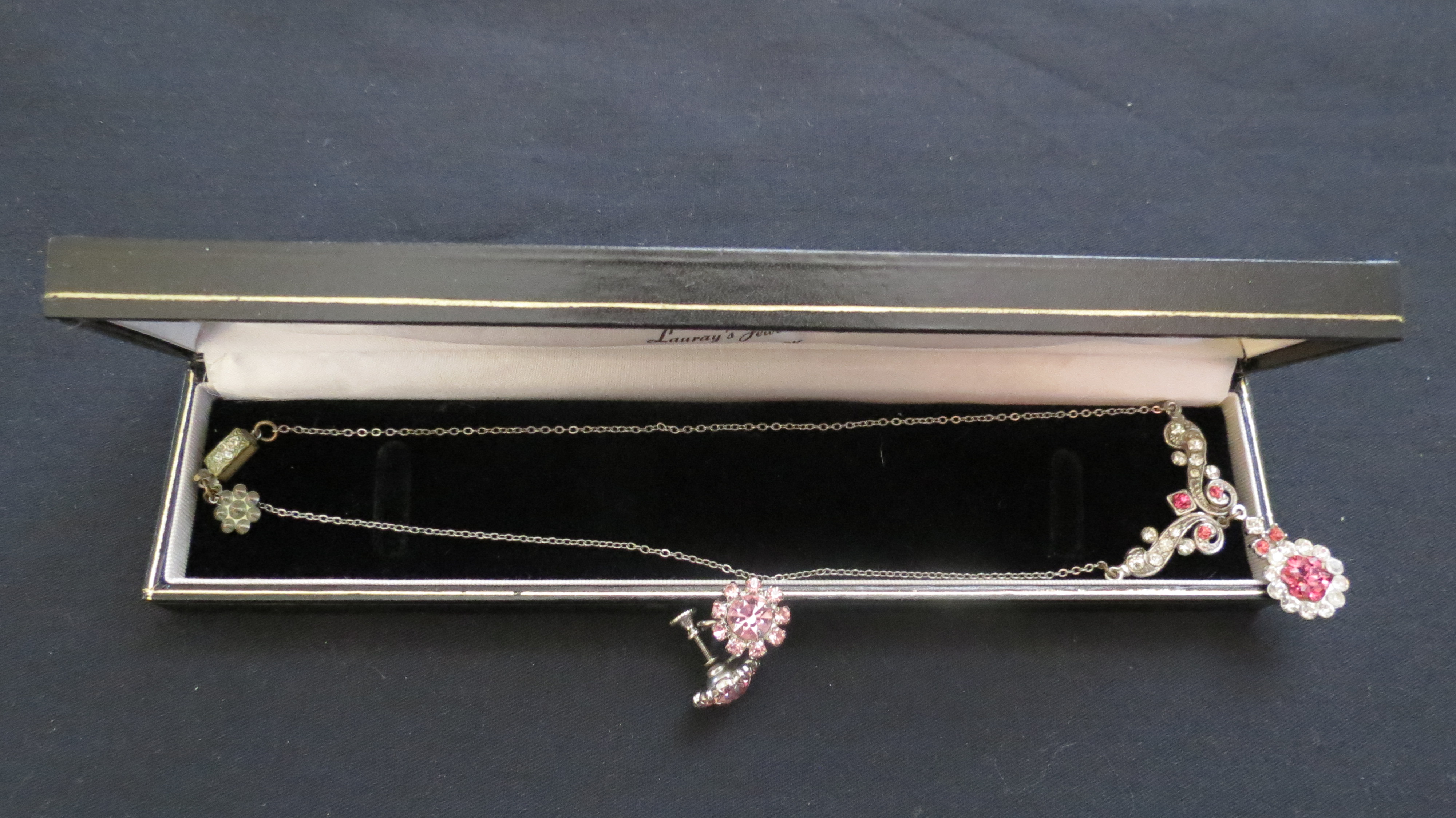
From cocktail party to Prom to a wedding, these dresses and separates went to many swanky events. A sparkly bling necklace and earrings were a necessity, too. Stiletto pumps became the hugely big footwear trend for women.

Jacquard “brocade”, satin, lace, metallic thread, organza and netting, cashmere, beads and sequins and even fur trimming – all popular materials in garments for nights out and special events. The prosperity of the Fifties brought on a real break-out in middle-class spending and ostentation. Showy was good but, fortunately, so was elegance so we had some of the most beautiful gowns produced during this time. Female movie stars of this decade were some of the best-dressed women ever seen. The first dress pictured, with the fur-trimmed sleeves, is a gorgeous example of the New Look style. Fun and novelty were also present in many examples of the more casual clothing but the cheap-looking garishness of the 1990’s was not the thing.

I love these clothes and it’s fun to show them. All would have fascinating stories. The elegance of design showed up in dressy daywear, too, and I’ll be showing some of that tomorrow. Stay tuned . . . . . . . . . . . . . . . . . . . . . . . . . . . . . . . .

MORGANA MARTIN, THE MAGICVINTAGESPY.COM

BLOG: MAGICVINTAGESPY.COM
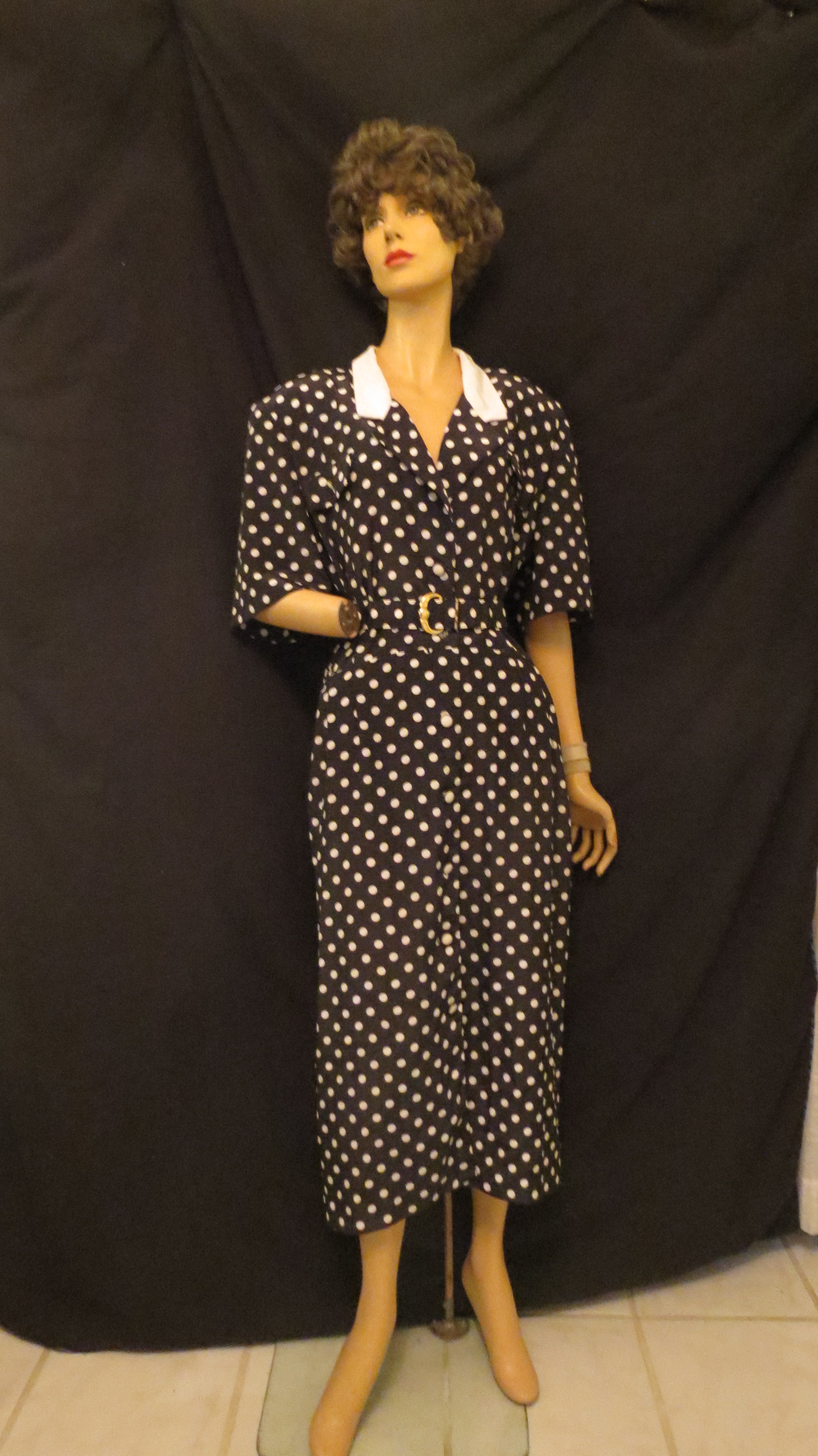
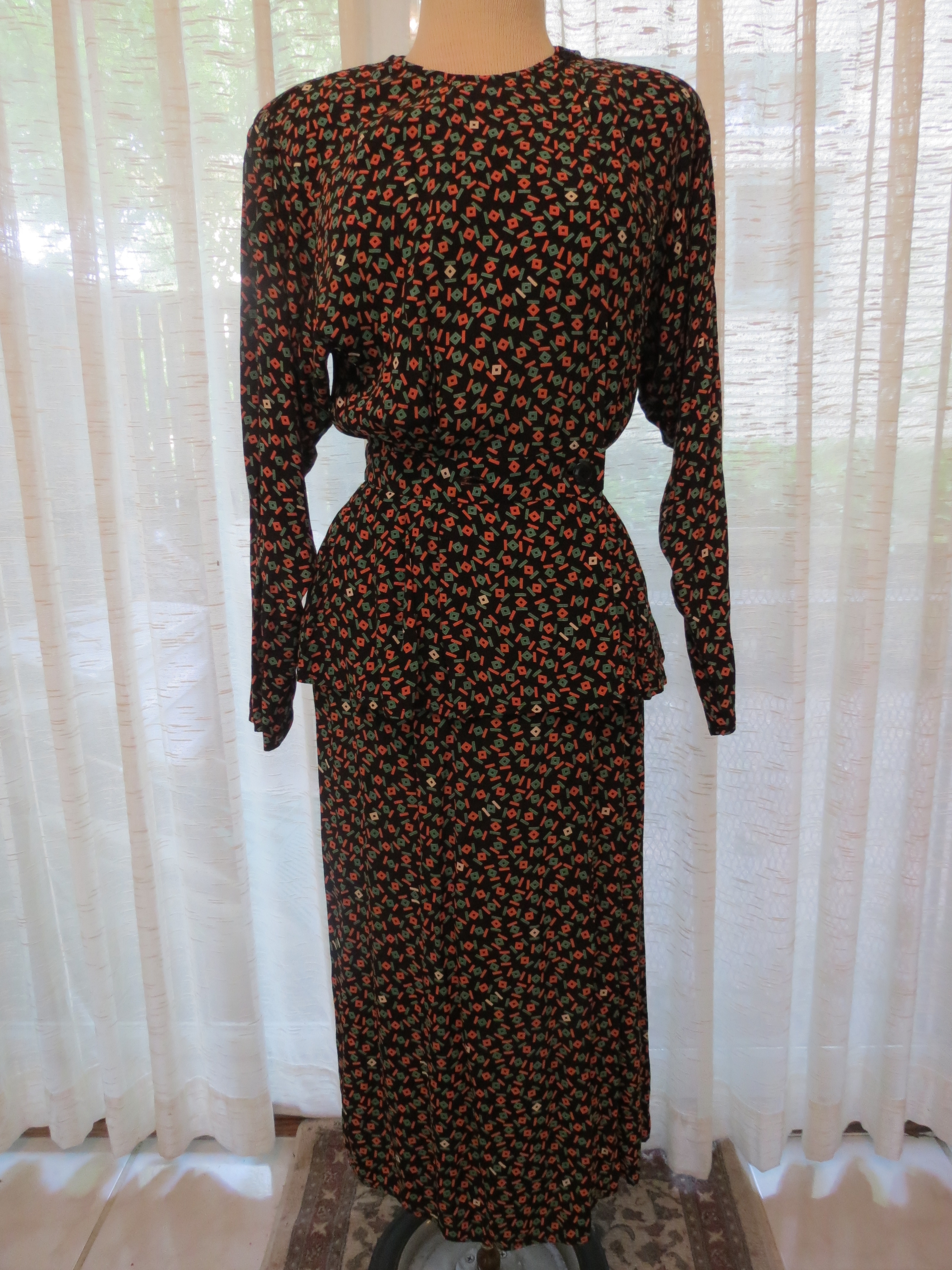
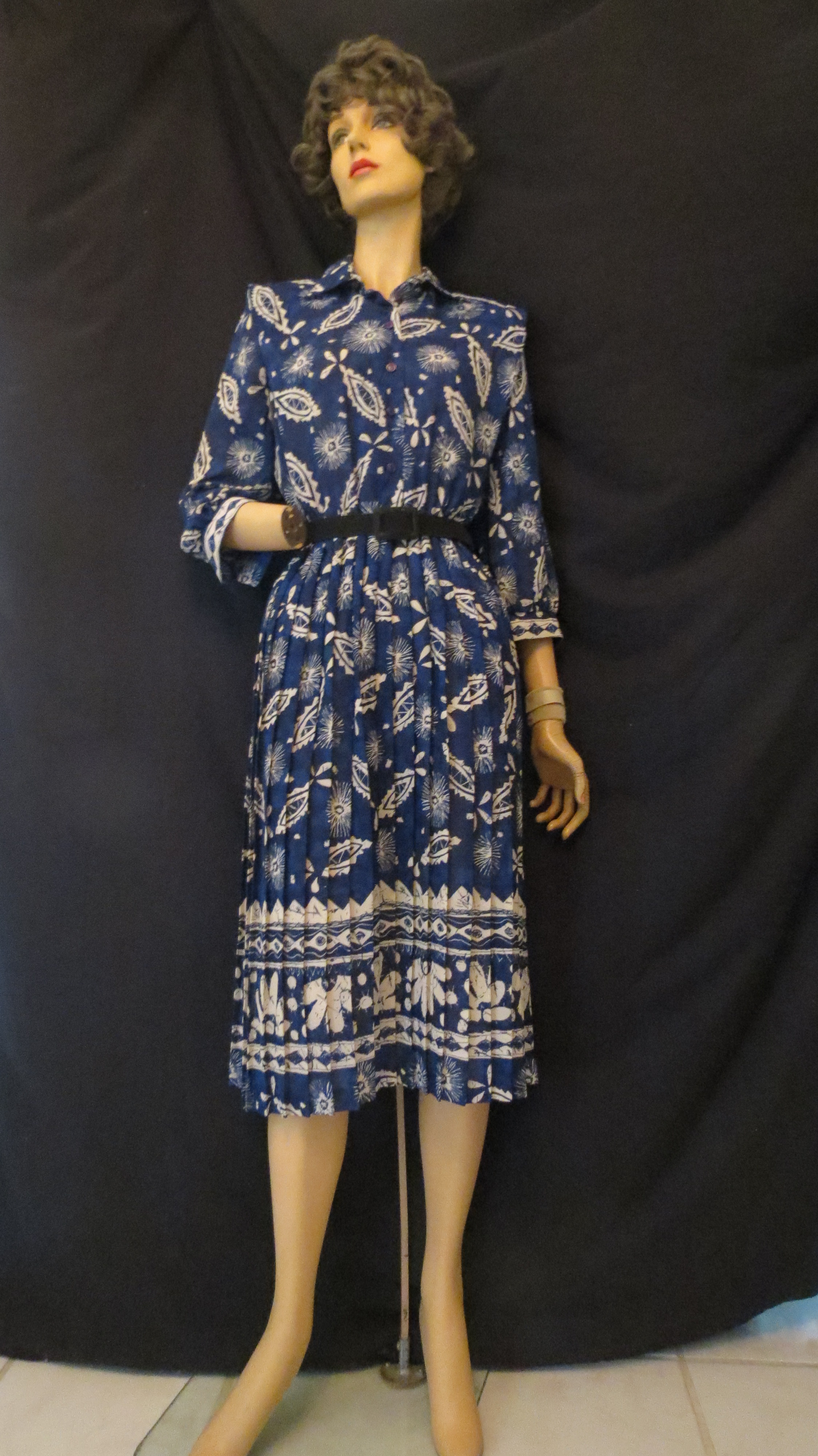
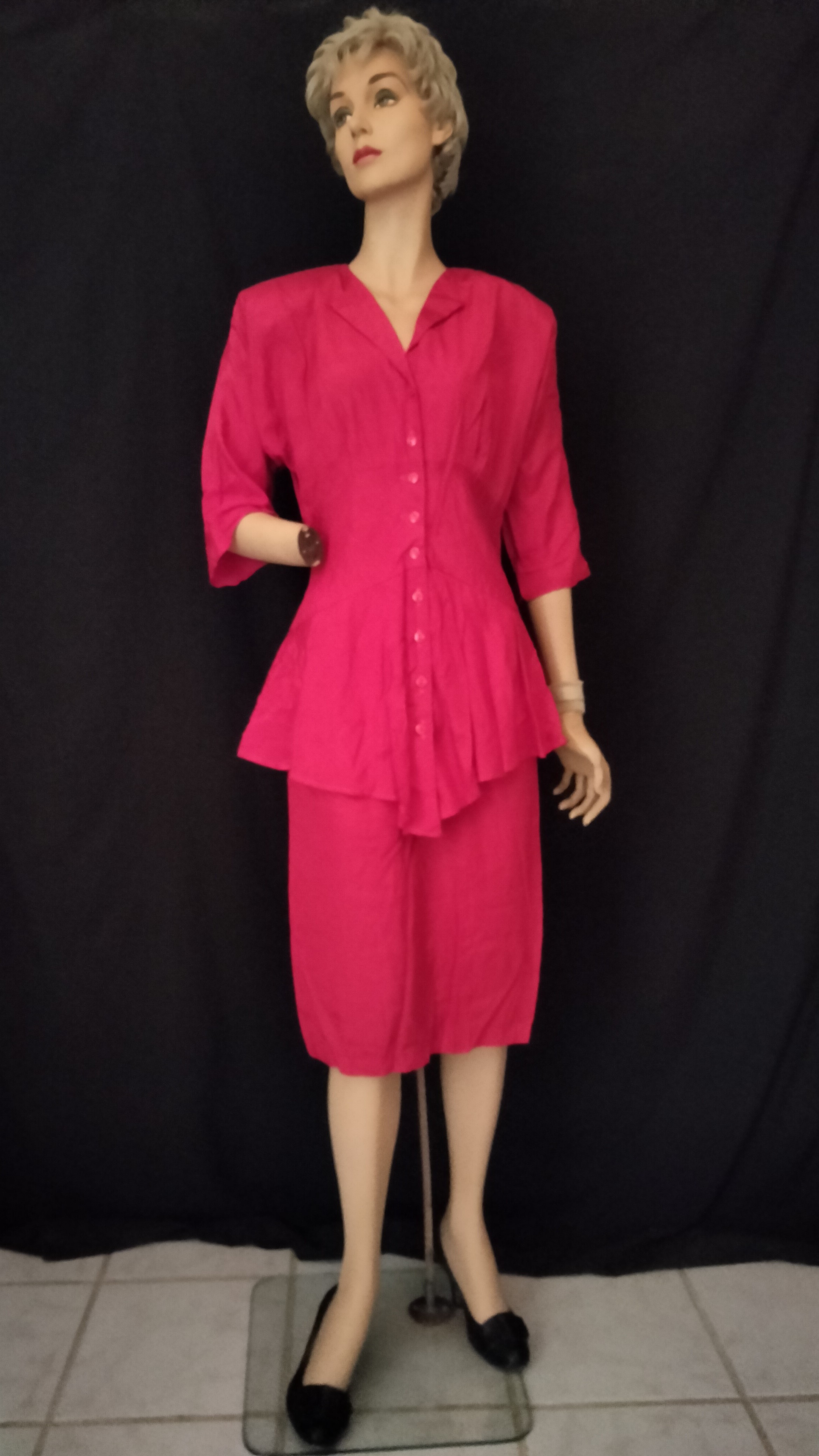
1970’S – 1990’S DOES 1940’S. TRUE VINTAGE RETRO DRESSES AND JUMPSUITS.

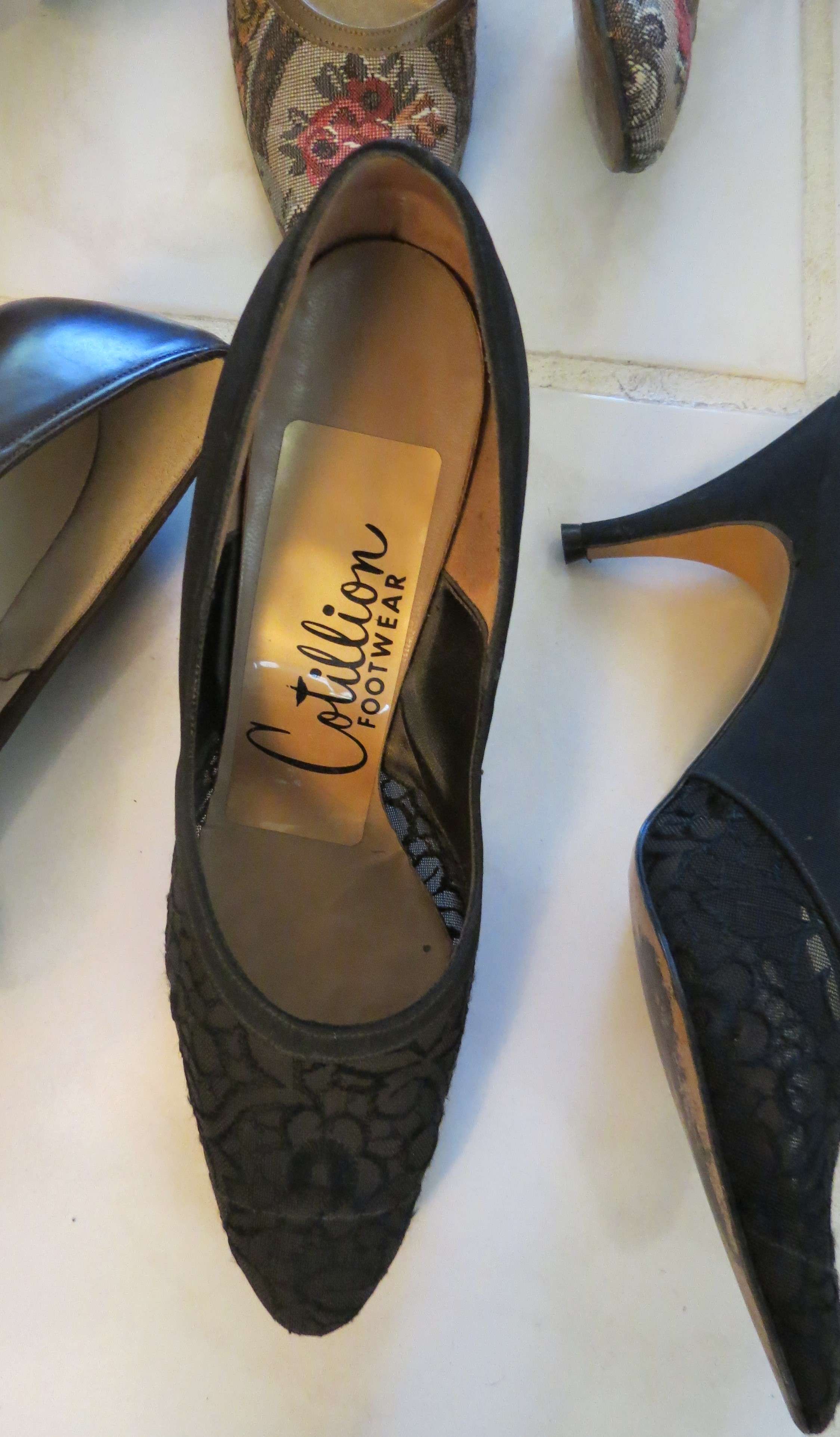
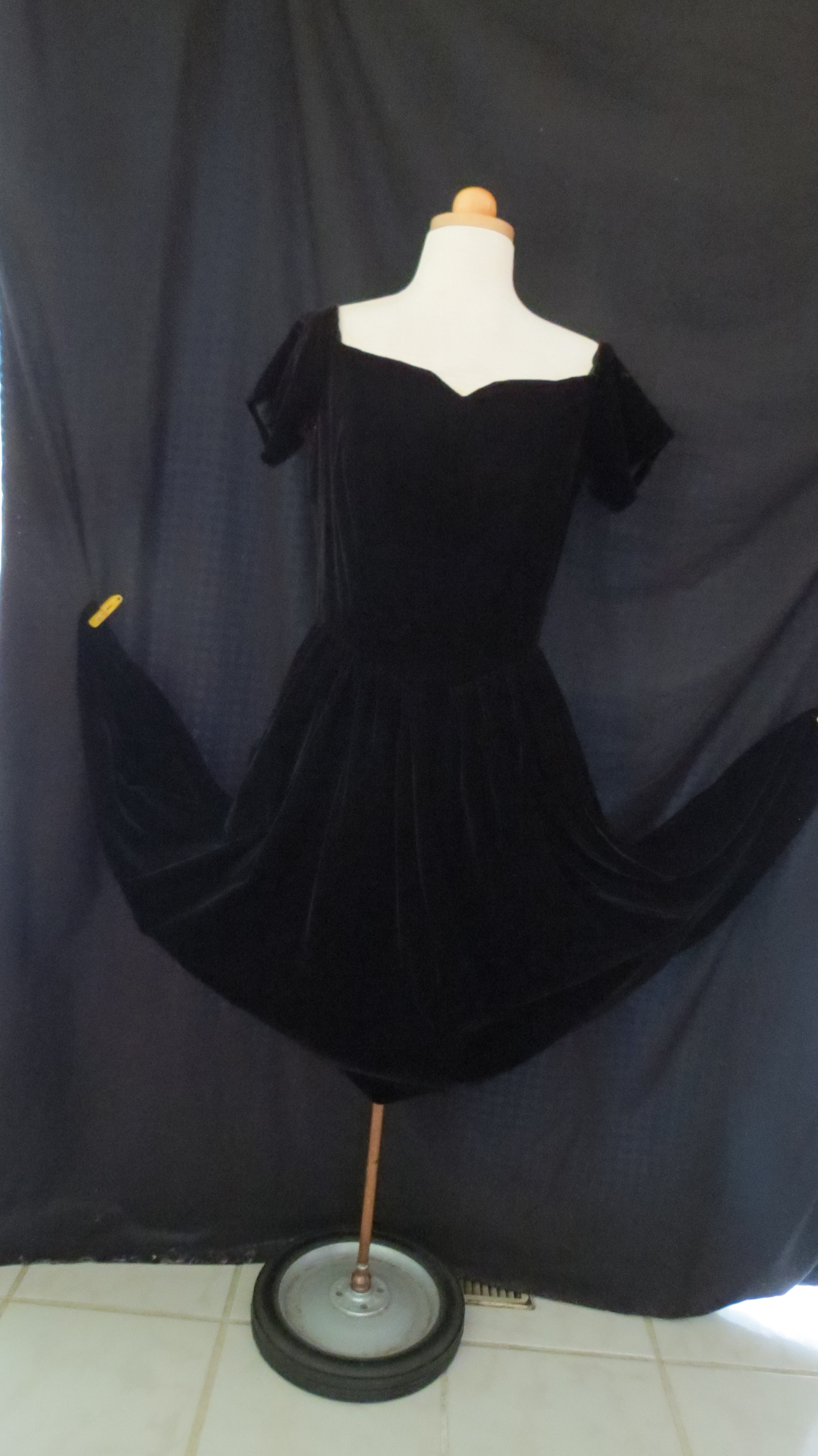
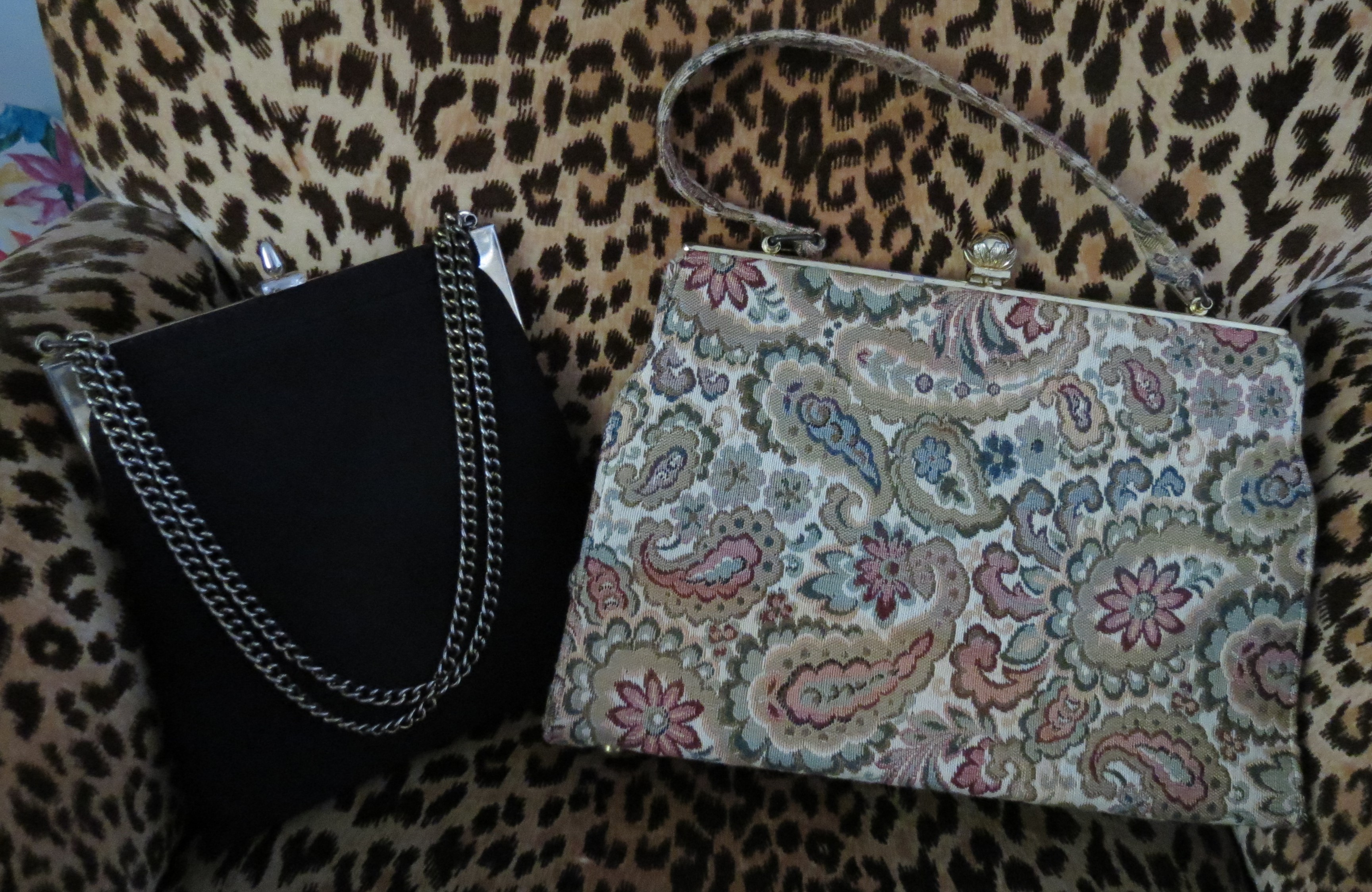
The Seventies, Eighties and Nineties produced a lot of popular retail styles that imitated 1940’s designs. Some were very well done and others not so much, to be charitable. As I’ve said, it’s hard for me to call these decades true vintage but, technically, they are. The two purses echoing shapes and tapestry design popular in the Forties might have shown up in the 1960’s.

All of these could be fun and the reproduction details became best during the mid-1980’s but, unfortunately, modern polyester fabrics and production techniques lowered the quality a lot. No valid comparison, in my opinion, to true vintage from the 1940’s – even the home-sewn versions that were made from older clothing during rationing.

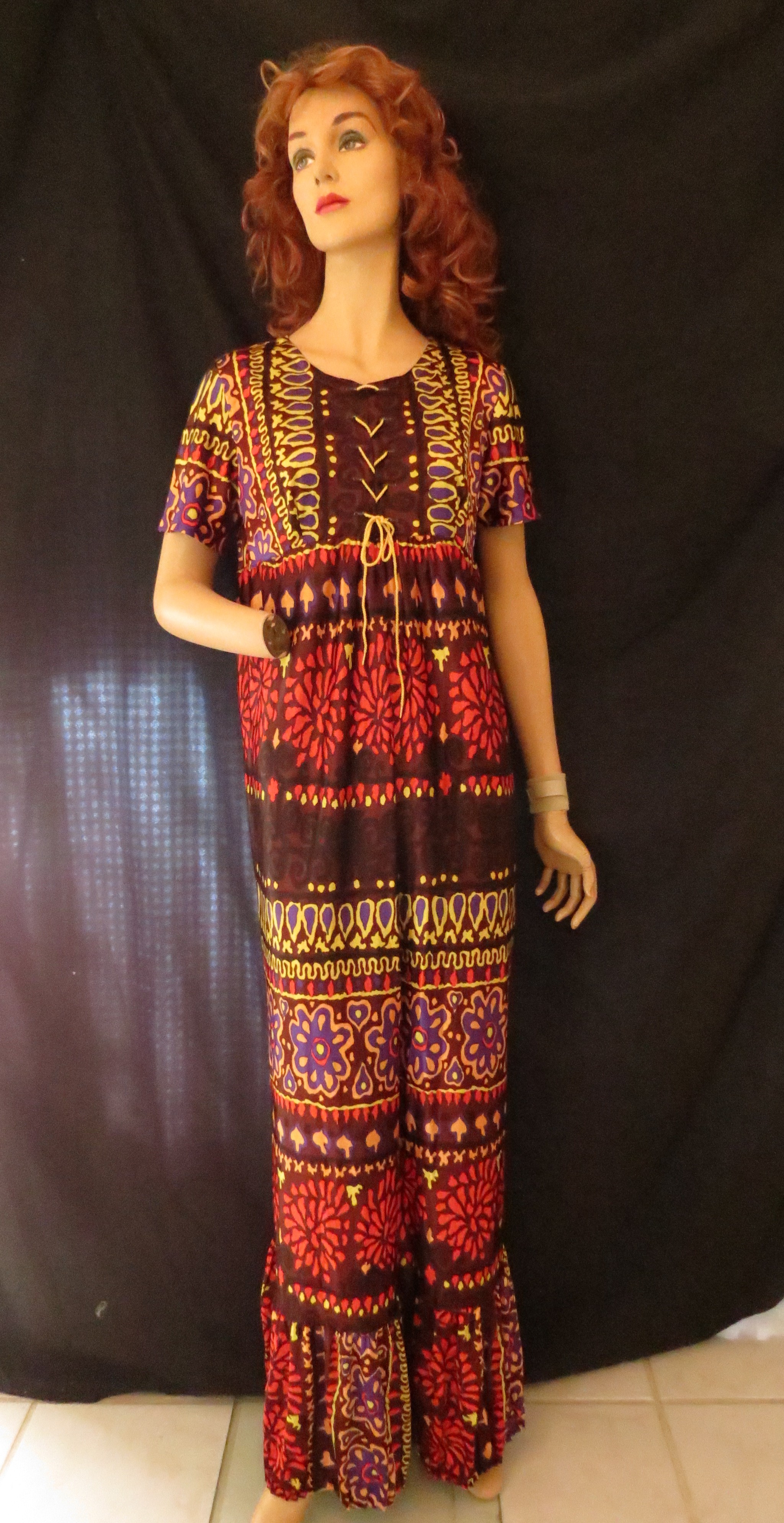
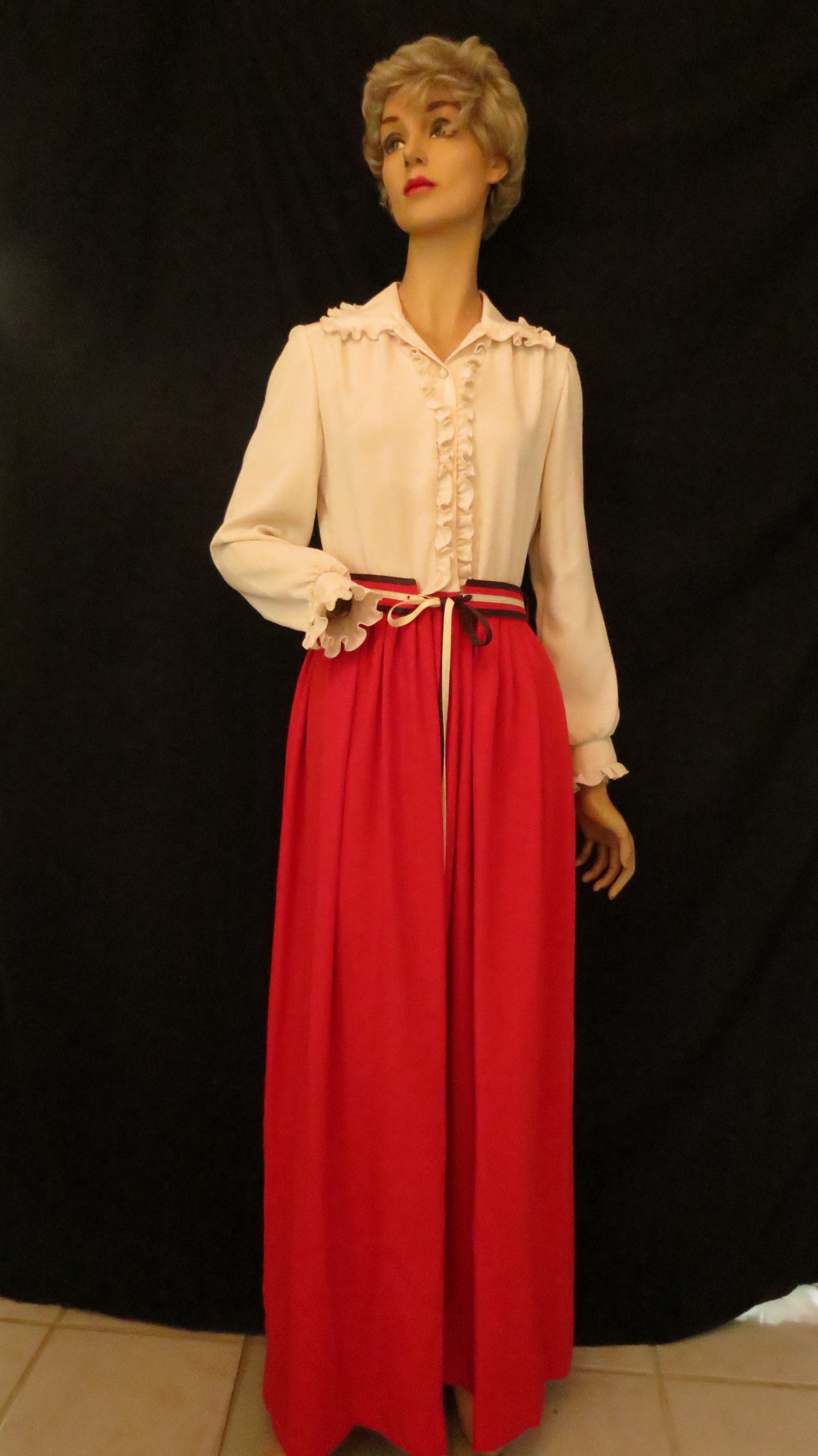
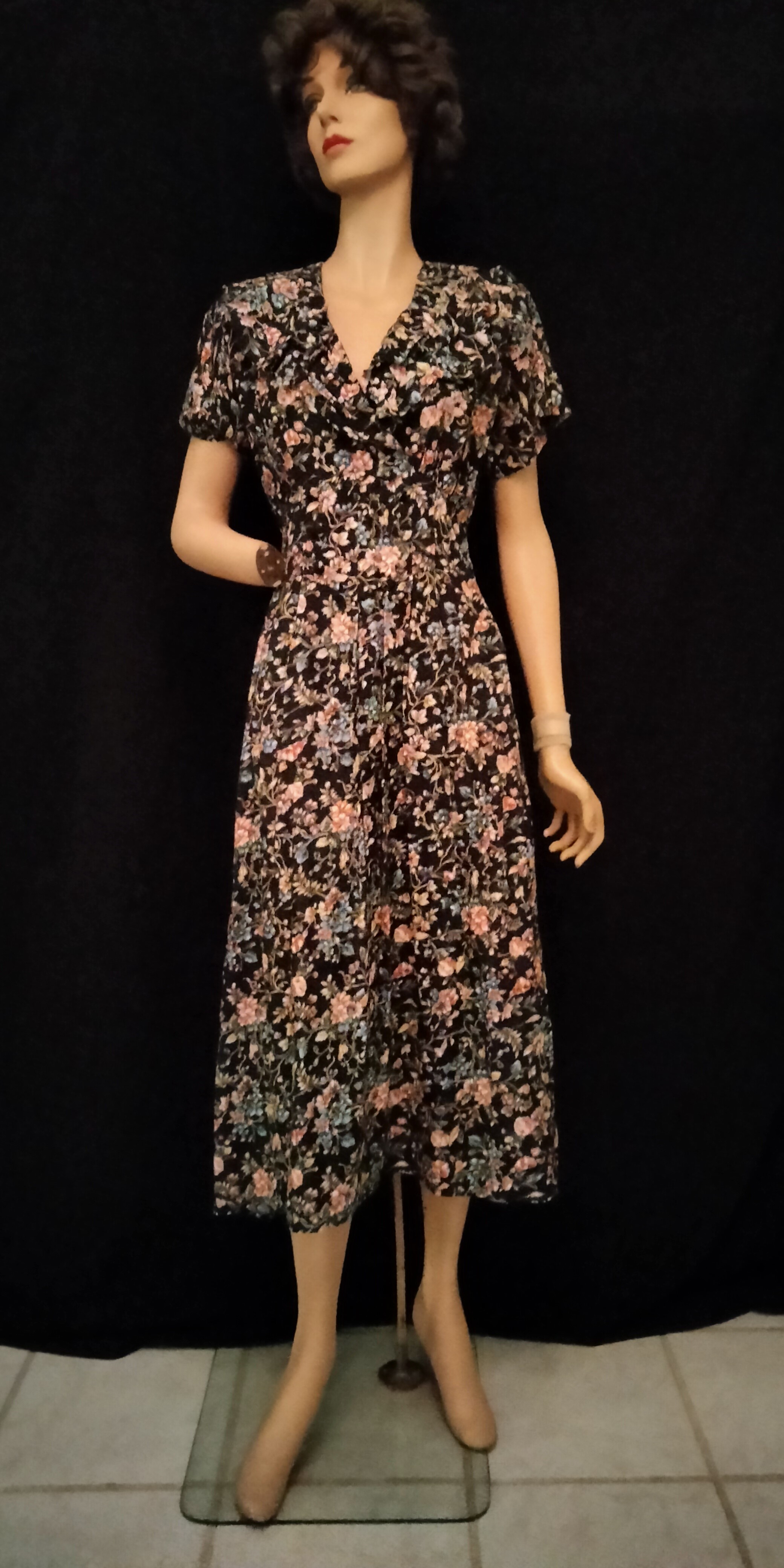
Of this group, the best-made is the black velveteen custom-tailored frock from the 1980’s or 1990’s. It was made by an expert seamstress and is worthy of being called a reproduction in the Post-war New Look style. The retail day-dresses are versatile and the prints are great – pretty faithful to authentic ones that I’ve come across. I always love the padded shoulders and cinched waistlines that are very flattering but were also a nod to the style of military uniforms. Jumpsuits were just for fun in the Seventies, but always are inconvenient. I suspect that the jumpsuits worn by women working in the war effort during the Forties had drop seats, which makes it a little bit better. I do have a pair of high-waisted slacks from the ’40’s that have an ingeniously-designed drop seat that looks quite good.

So, these clues were fun to find and seemed worthy of collection though I always prefer the real deal. Speaking of which, I just came across another archived file of true vintage 1940’s dresses which I will show tomorrow. Stay tuned . . . . . . . . . . . . . . . . . . . . .

MORGANA MARTIN, THE MAGICVINTAGESPY

BLOG: MAGICVINTAGESPY.COM