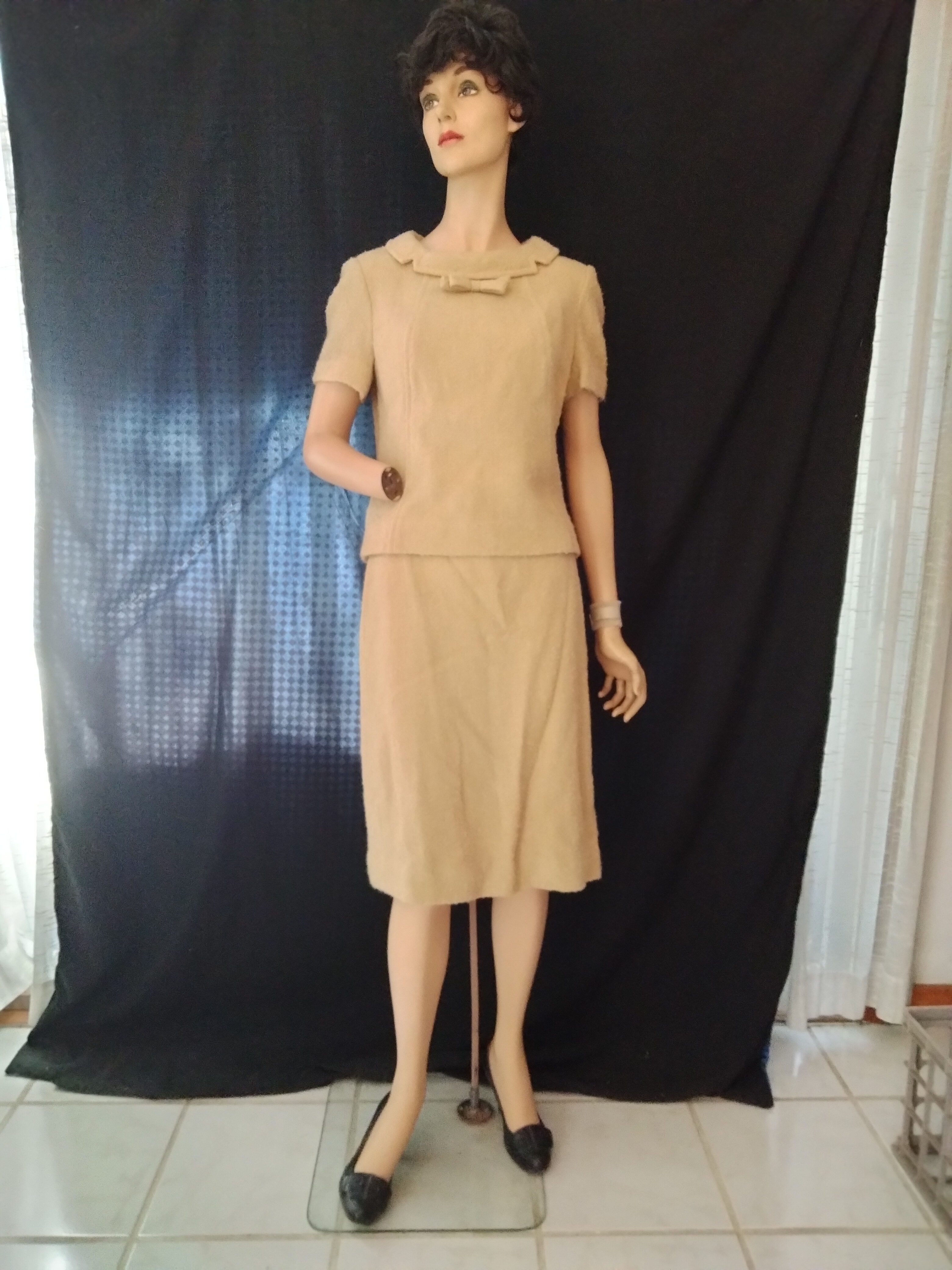
FABULOUS FIND! A PRETTY KENNEDY ERA 2-PIECE DRESS IN BOUCLE’ WOOL

It’s Oh, so Jackie O! Everything about this pretty 2-piece dress is iconic. Wool boucle’ in pastel colors was very big during the early 1960’s. I have discovered at least 3 skirt suits made of this material. Usually it’s in Easter egg tones, but this pale mustard yellow is not out of sync. The collar and bow on the bodice alone give away its timeline, the skirt is straight but not pencil and has the modest below-the-knee length hem,, the blouse is gently-fitted .and the full-length metal zipper center in the back of the top is also common in this era.

This is a simple and elegant design which could have been home-sewn, as many were, but it has a maker’s label which I don’t recognize. It’s very well-made. Both pieces are fully-lined, the button on the skirt’s waistline in back is fabric-covered and there is a spare button attached inside! One clue is a little unusual in a commercially-made garment:: the skirt has a center back zipper of nylon instead of metal. Hmm . . . . . not likely this was original – probably the skirt zipper had been replaced. That wouldn’t be unusual because of the stress in the hip area that often causes zippers to break.

Not a top-of-the-line piece, but a very nice one and a perfect example of its era. I was thrilled to discover it! . I’ve got a few more new finds in this time-capsule to show before we step back on the LBD train. Put on your pillbox hat and gloves and stay tuned . . . . . . . . . . . . . . . . . . . . . . . . . . . . . . . . . .

MORGANA MARTIN, THE MAGICVINTAGESPY

BLOG: MAGICVINTAGESPY.COM
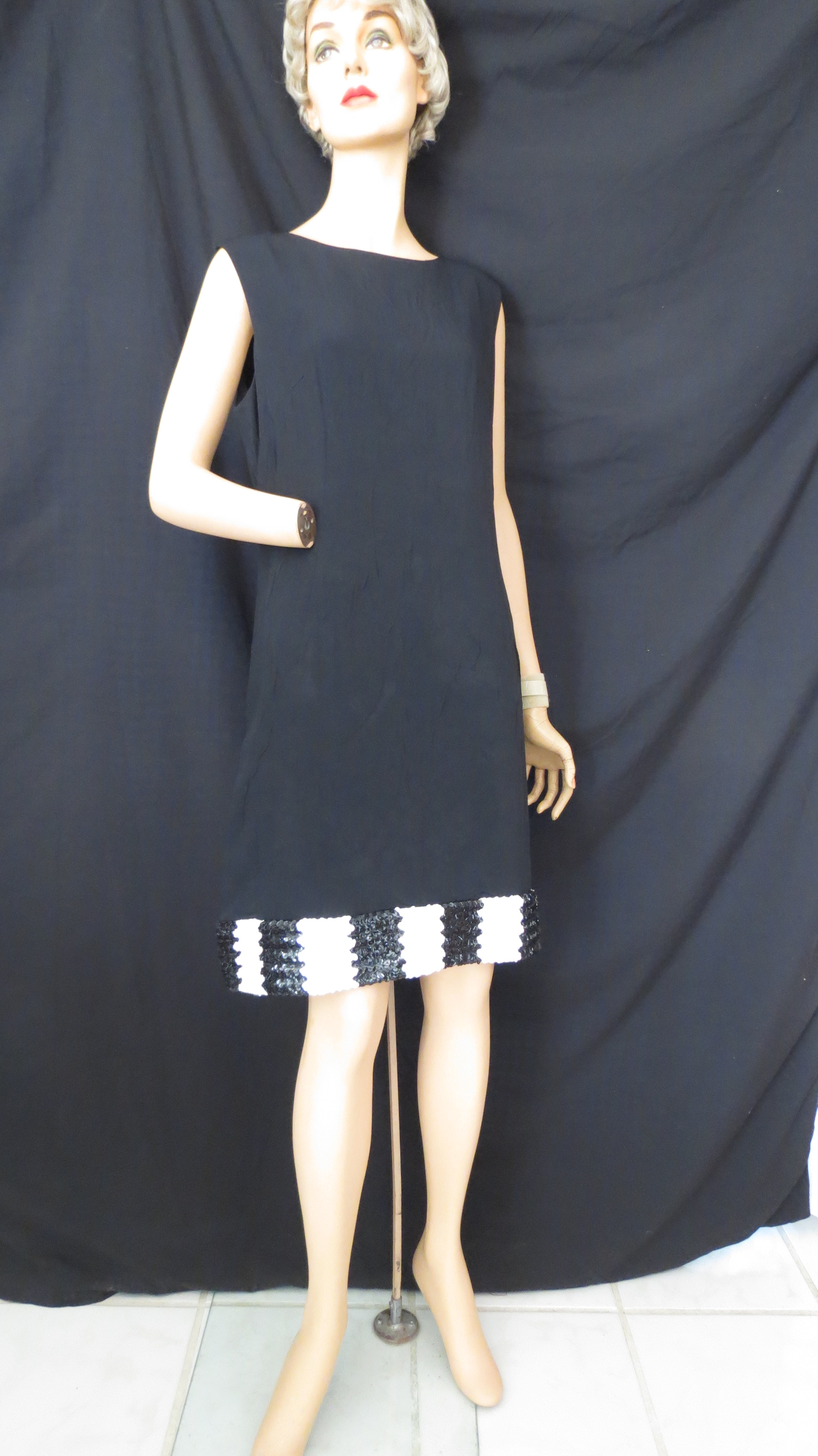
MOD 1960’S COCKTAIL SHEATH DRESS BY CAROL CRAIG

Here we’ve got a black crepe sheath, gently fitted with a band of op-art bling at the hemline. Notice that the hemline has become shorter than in the previous examples. Although it’s obviously a cocktail party style, there’s nothing dressy here excepting the band of sequins. Classic and simple – could cautiously be described as elegant on that account – but seems pretty “ho-hum” to me though we have to remember that in 1964 or so this would have been seen as fashion-forward in a mid-priced dress.

Carol Craig was a mid-century division of the Loma Dress company and designed moderately-priced frocks in Misses sizes during the 1950’s and 1960’s. In my experience, they’re not “cream-of-the-crop” but very nice and stylish for the time; worth collecting. I’ll see about showing my “new” 1960’s finds from yesterday before getting back onto the LBD and cocktail circuit. Stay tuned . . .

MORGANA MARTIN, THE MAGICVINTAGESPY’

BLOG: MAGICVINTAGESPY.COM

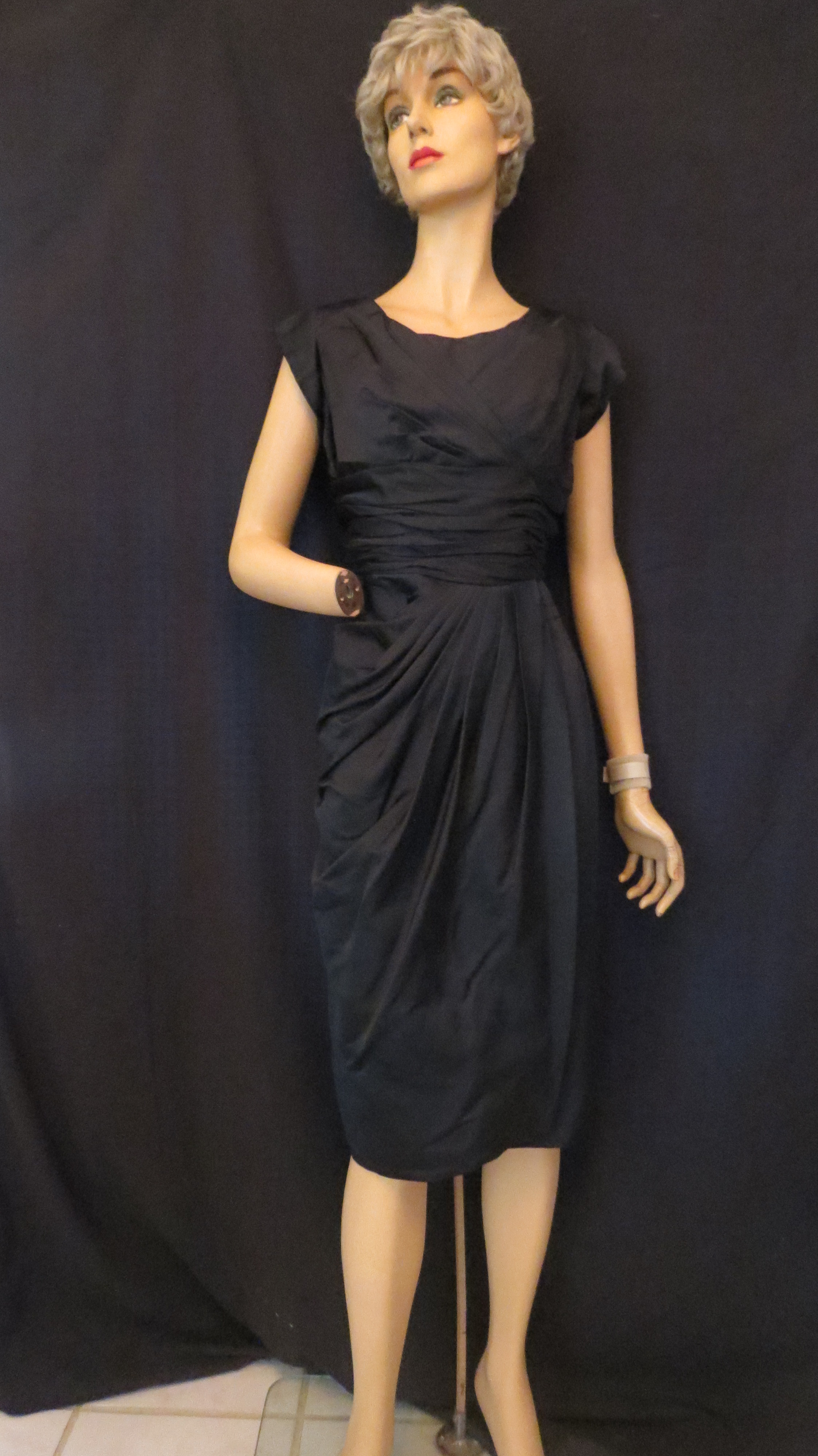
BACK TO PERFECTION – TRUE VINTAGE KENNEDY ERA SILK SHEATH LBD

Gorgeous 100% silk cocktail frock. Discovered in Canada, by a Canadian designer. Look at the ruching and draping from the waistline in this very unique sheath style. The cap sleeves and below-the-knee hemline plus the fitted shape place this beauty’s vintage from the late 1950’s to the very early 1960’s. Never will see another one like it.

Tomorrow we’ll be squarely in the 1960’s with a variety of cocktail dresses on the way as a new design era unfolds. Stay tuned. . .

MORGANA MARTIN, THE MAGICVINTAGESPY

BLOG: MAGICVINTAGESPY.COM

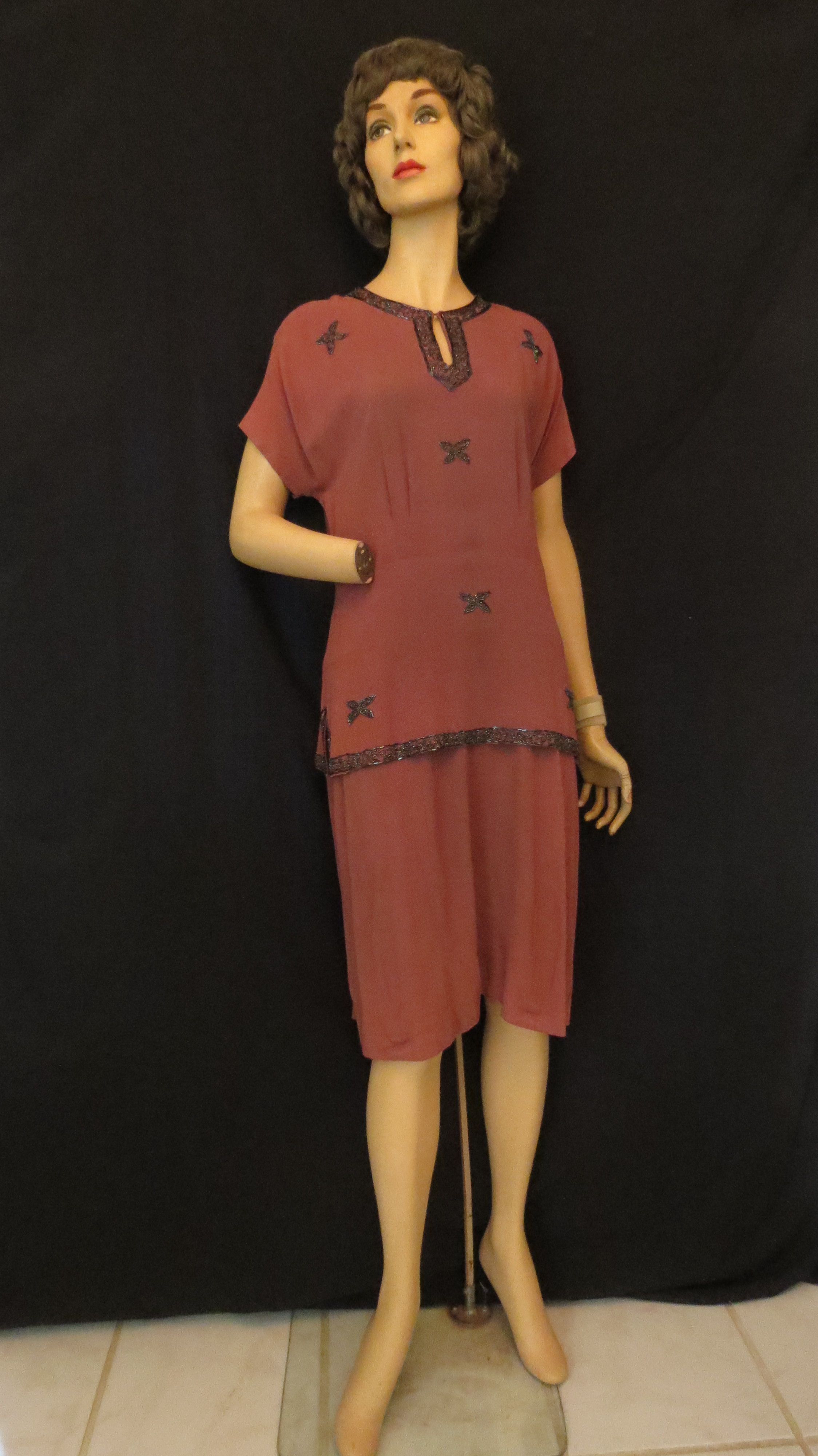
Oops – HERE’S ANOTHER 1930’S PARTY FROCK!

Several elements here from the decade between the two World Wars. Drapey rayon fabric, geometric beading decoration a la’ art deco and a dropped waist/peplum effect, a la; the 1920’s and the early 1940’s. The length also doesn’t know exactly where and when it is – looks pretty short on a tall gal like Stella but would be midi-length on a woman of short stature, or even medium height at that time when average height was shorter than it is today.

As “upscale” as this looks, it was apparently a massed-produced design. That makes it a little easier to understand why the styling was as confused as the times. Marketing always follows social trends. Think about it; we were still recovering from WW1, Prohibition was effecting the economy and the culture, The Depression was strangling almost everybody, war was fomenting in Europe and it was looking like WW2 might happen any day.

Yes, it’s a pretty and fun dress but the historical and cultural overtones are even more fascinating. Just another day in the life of a true vintage sleuth. We ARE going to cross the Post-war border between the 1940’s and the 1950’s by early next week. Stay tuned . . . . . . . . . . . . . .

MORGANA MARTIN, THE MAGICVINTAGESPY

BLOG: MAGICVINTAGESPY.COM

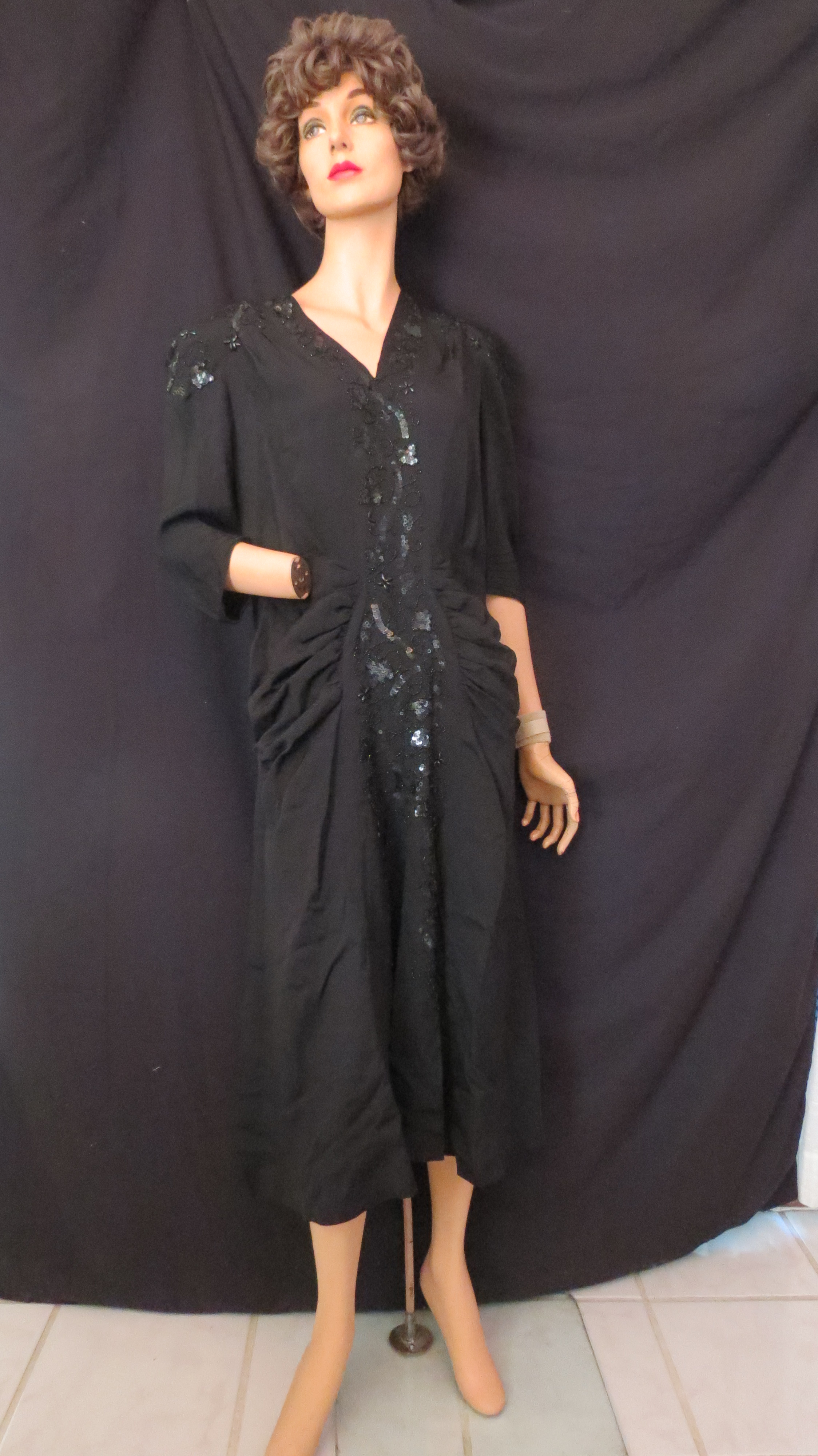
TRUE VINTAGE POST-WAR 1940’S BEADED COCKTAIL DRESS

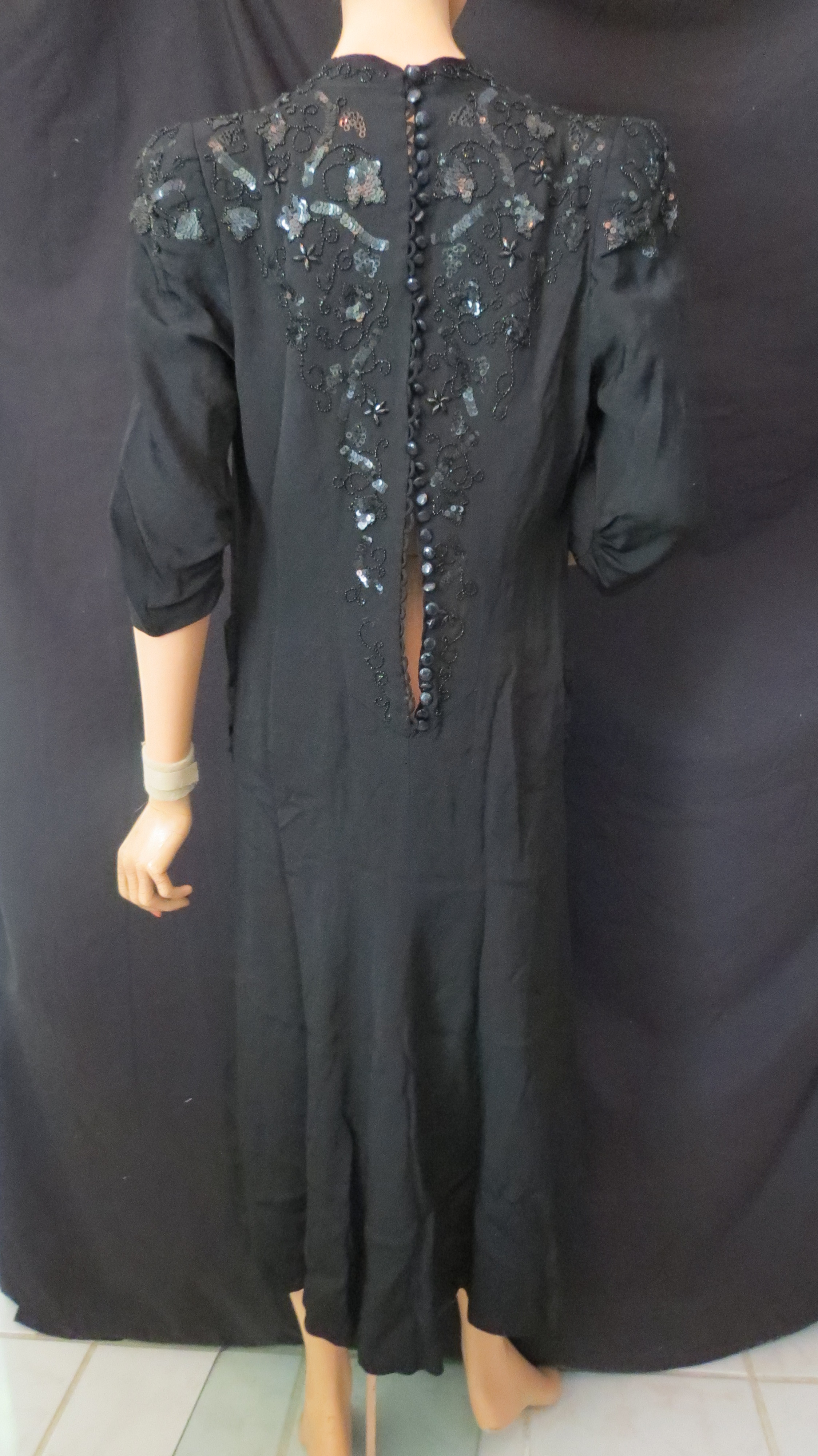
During a South American investigation, this frock was discovered in the beautiful and historic city of Montevideo, Uruguay. During WW 2, well-to-do Uruguayan women still had beautiful dresses made for them and did some trade in clothing and accessories from France. This dress has the label of a small tailoring shop, is exquisitely made by hand and was obviously owned by a woman from the upper class who would wear it to dinner or any semi-formal festive gathering.

Style-wise, the augmented shoulders, funky ruching on the hips and sleeves plus the midi hem point directly to the late 1940’s. Heavy decoration with beads and sequins is all done by hand, as is the finishing. Look at all the small buttons in back, each with it’s own fabric loop closure. Stay tuned for more from the 1940’s . . . . . . . . . . . . . . .

MORGANA MARTIN, THE MAGICVINTAGESPY

BLOG: MAGICVINTAGESPY.COM

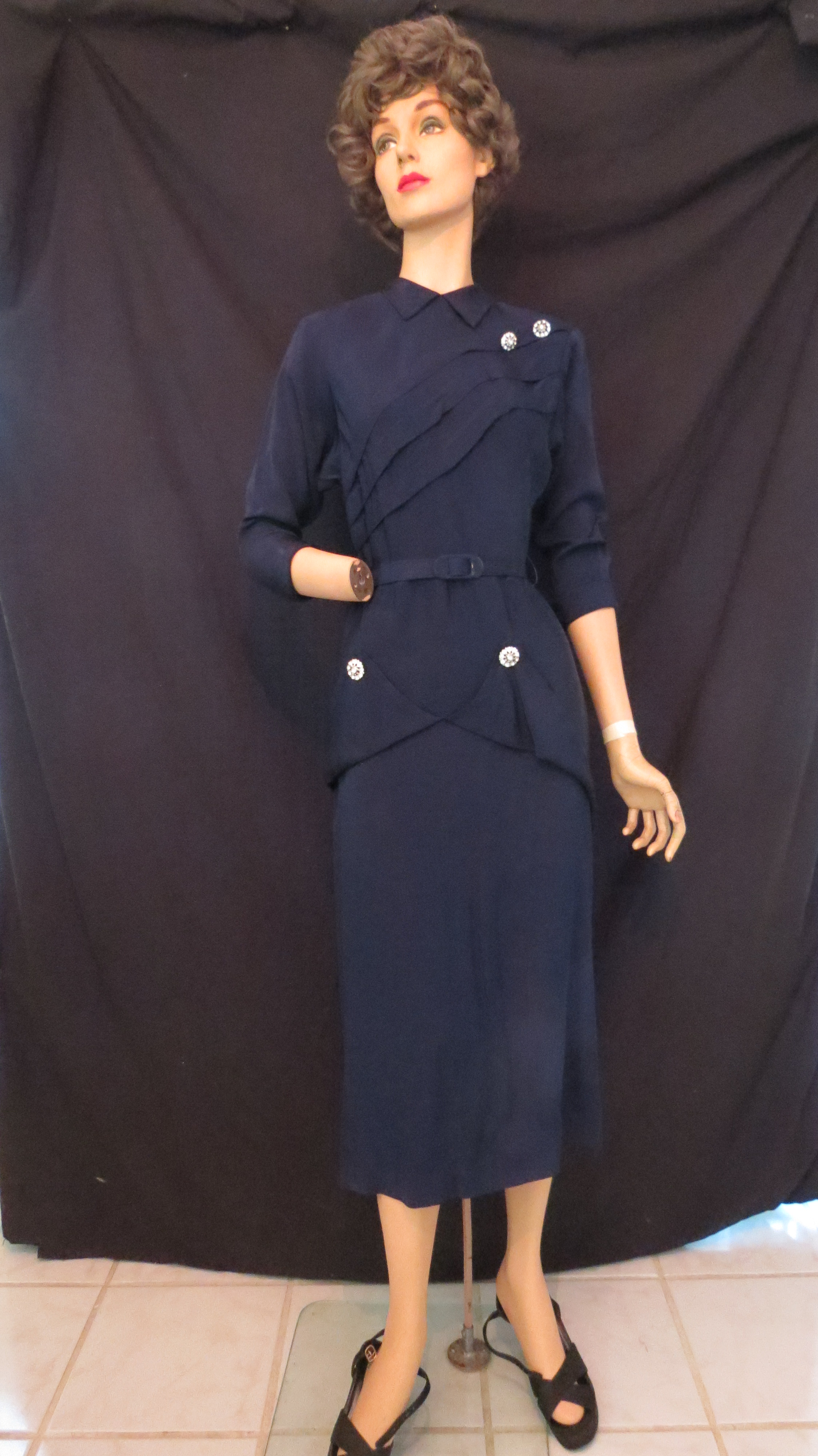
BEAUTIFUL RAYON DRESSY DAY-DRESS FROM THE POST-WAR 1940’S

Taking a short break from the LBDs and going for a little color. This beautiful navy blue fitted rayon dress is a perfect example of the late 1940’s return to more luxurious day wear after the restrictions of rationing were ended. The label is Loma Leads, from a dress company that was organized in the late 1920’s and operated in New York and Paris. It had several departments and was around in one form or another at least into the early 1960’s. A very uptown classic ladies dress from the time when there was more fabric available again, so hemlines came back down and extra tailoring details like the peplum and bodice tucks were again possible. Women had been SO waiting for this! The exuberance of big rhinestone buttons on a day dress speaks to the attitude of a return to extravagance in fashion. The big skirts of Christian Dior’s New Look at this time is another example.

This style, however, is very buttoned-up and, to my mind, underlines the haughty, elegant and “rich” look intended here. After all the restrictions and deprivations of the “make do and mend” wartime years, luxury and affluence were the beckoning horizon for the United States and Canada while Europe was more intent on surviving and rebuilding after all the extensive damage to their infrastructure and land. But, Paris had always led the world of couture and design so fashion bounced back there, too, as Dior and other designers met the challenges and optimism of the new era and resumed their lead.

It is so fascinating to untangle the ways that fashion trends dovetail with historical events. The clues are everywhere and a good sleuth always looks for them. A completely different example from this time tomorrow – stay tuned . . . . . . . . . . . . . . . . . . . . . . . .

MORGANA MARTIN, THE MAGICVINTAGESPY

BLOG: MAGICVINTAGESPY.COM . . . . . .
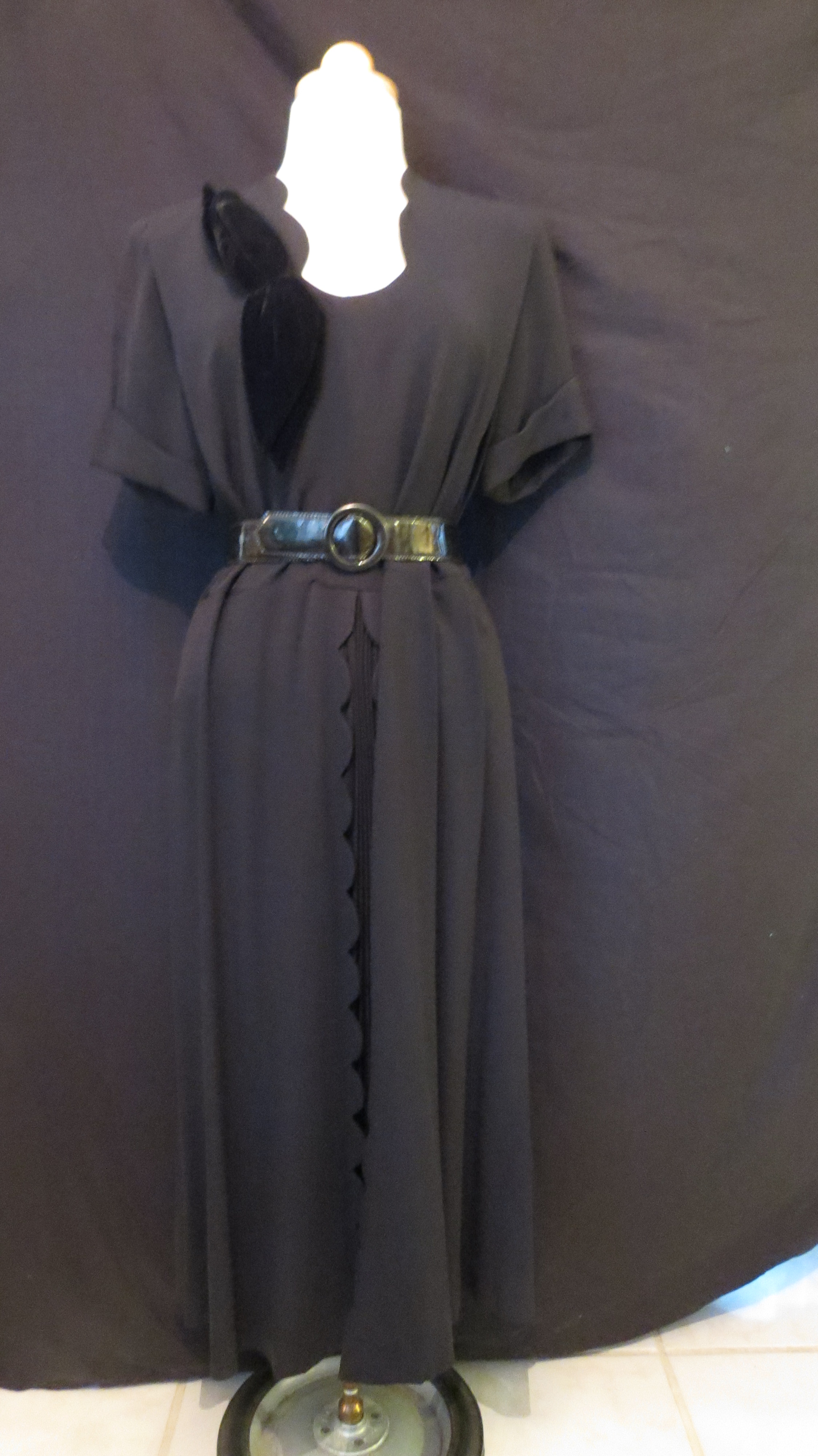
1940’S WARTIME – EARLY POST-WAR ERA DRESSY FROCK

This pretty dress is made of rayon material with a BIG velvet bow and inverted front pleat for added interest. I love the scalloped overlay and the shaping on the cuffs of the short sleeves, which is SO Forties! This dress is labeled as having been made by a company or maker that was nationalized during the years surrounding and following WW2 when many, if not most, fabrics and notions available to garment-makers before the war and the Depression were unavailable to manufacturers and home-tailors because of rationing. Women still wanted pretty fashions and our government helped to make that possible and affordable.

Despite having no lining or buttons, there are very nice tailoring details. It is, unusually for that time, quite a large size but is so well-cut that belting it on my size 6 mannequin (thank you, Madge!) still looks amazing. That is an advantage of any well-made garment and especially in the case of most true vintage clothing. Stay tuned for more . . . . . . . . . . . . . . . . . . . . . .

MORGANA MARTIN, THE MAGICVINTAGESPY

BLOG: MAGICVINTAGESPY.COM
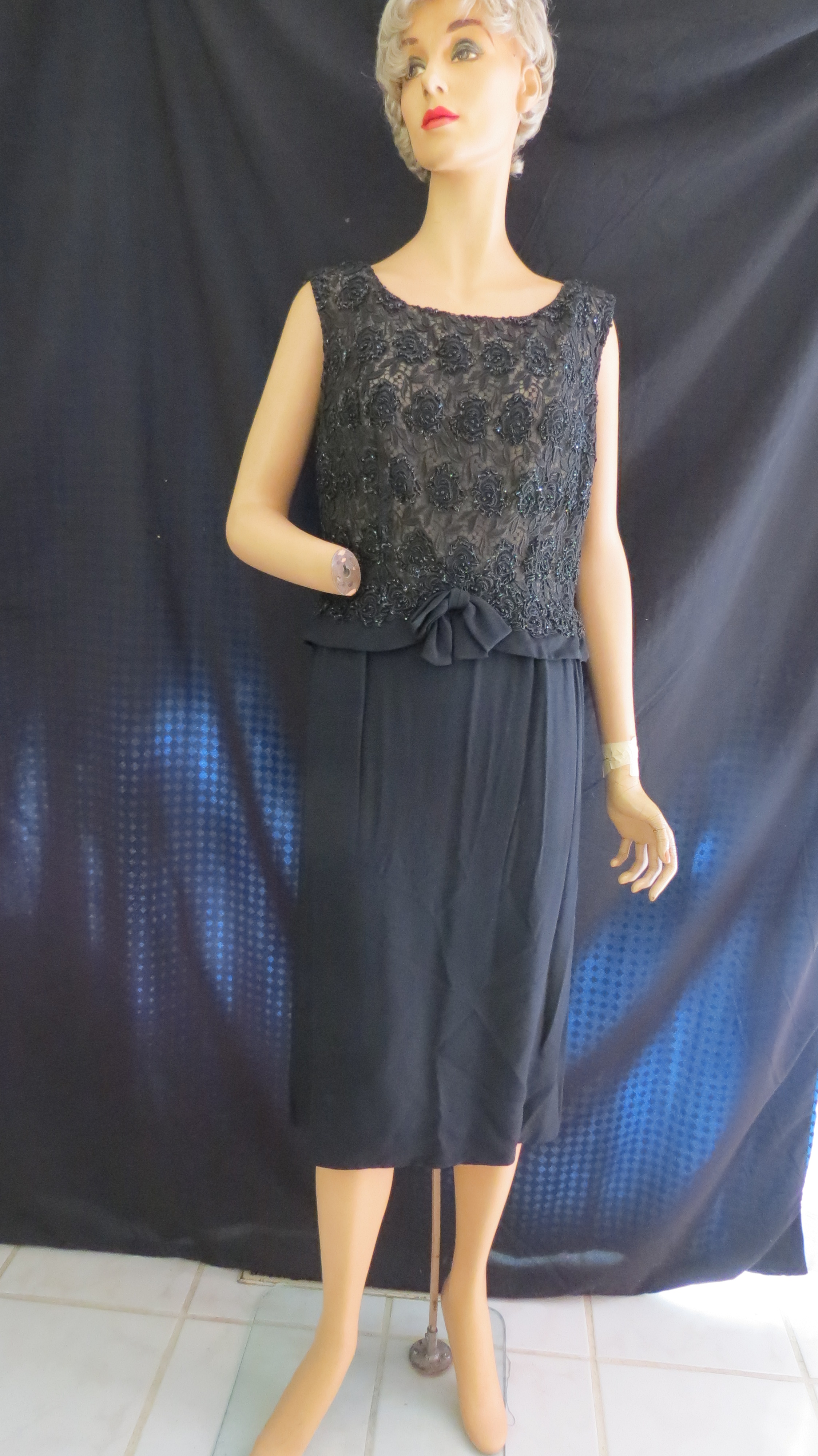
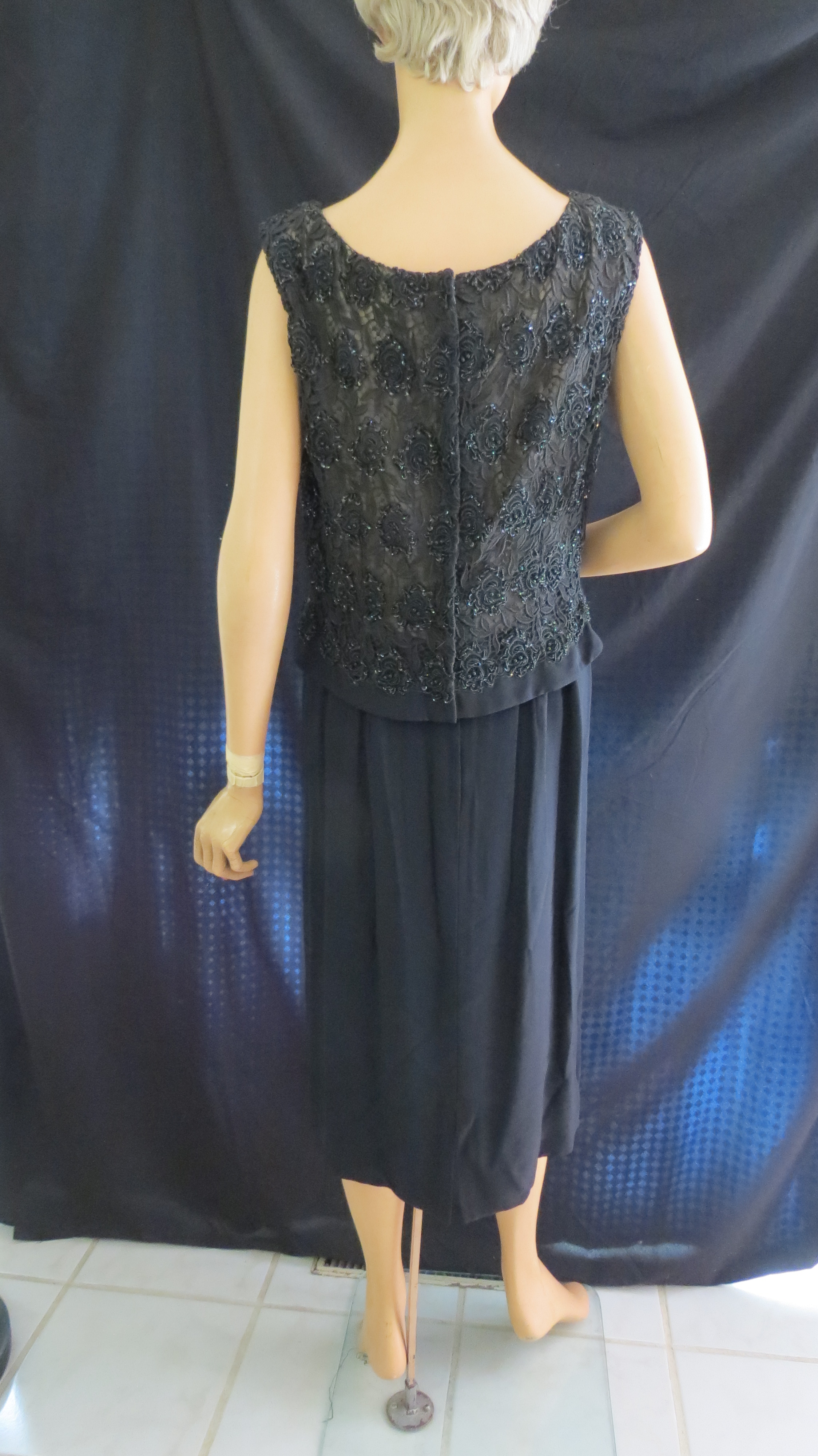
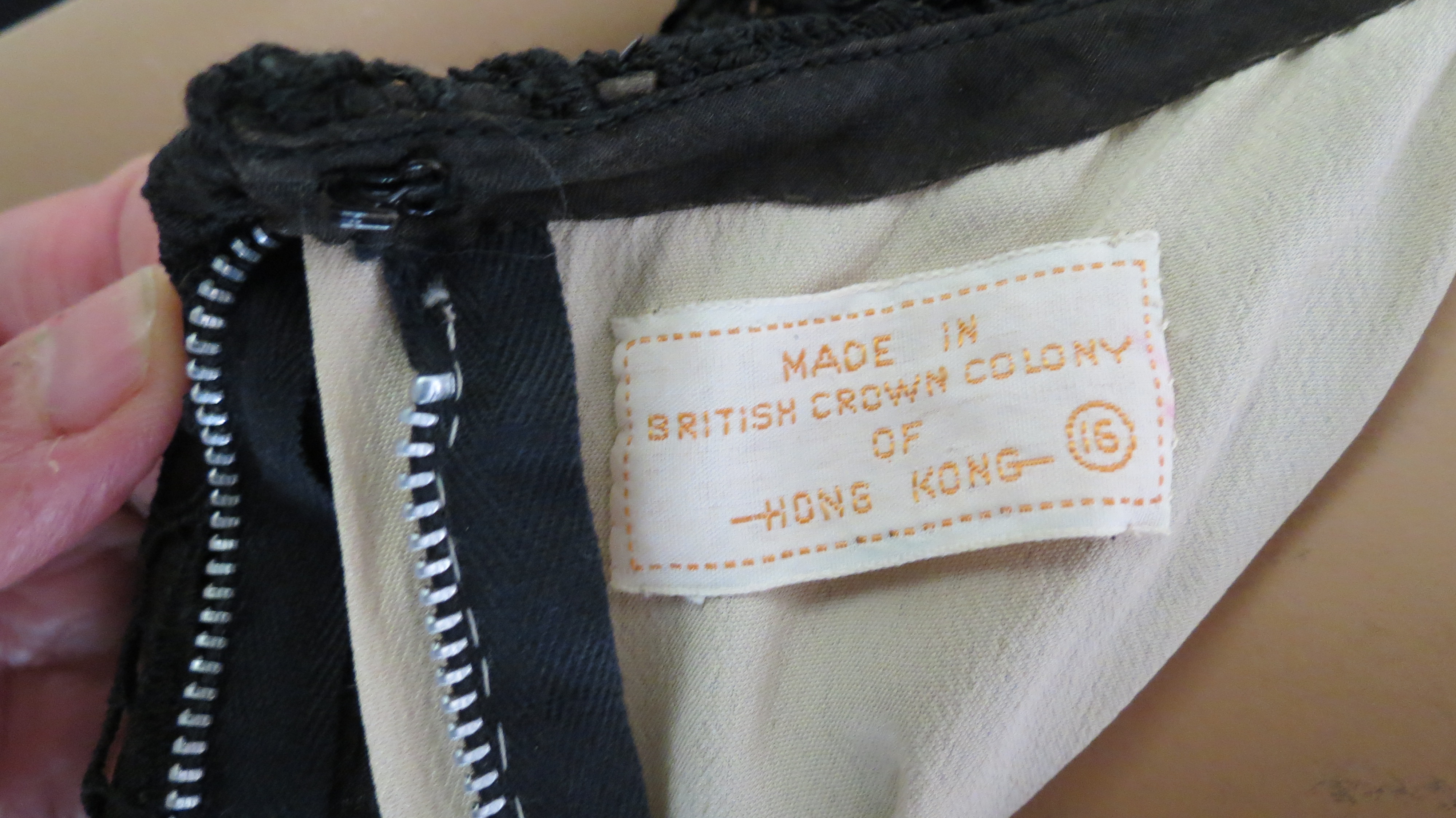
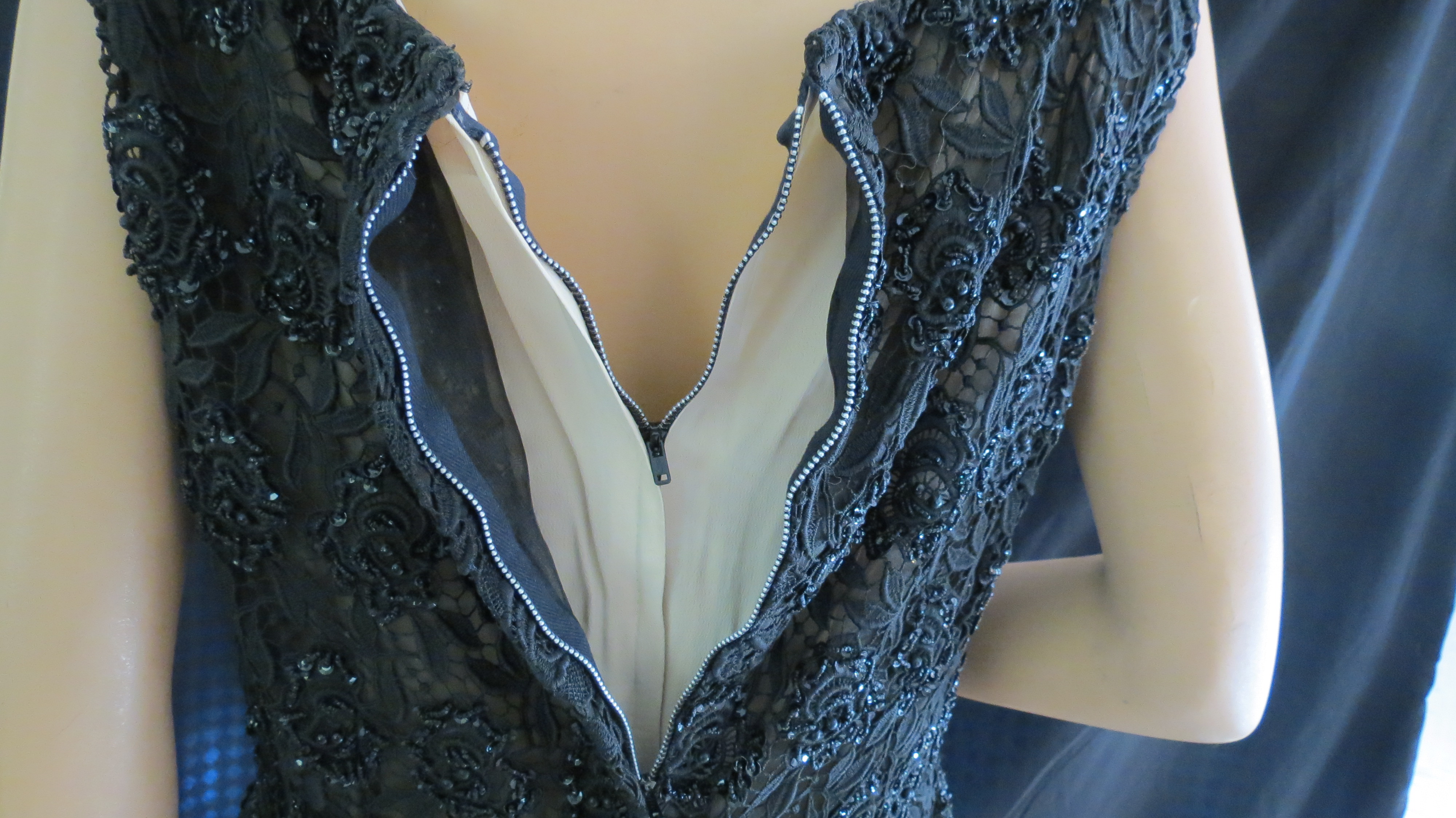
TRUE VINTAGE 1960’S DRESSY FROCK – ANOTHER FINELY HAND -TAILORED GARMENT FROM BRITISH HONG KONG

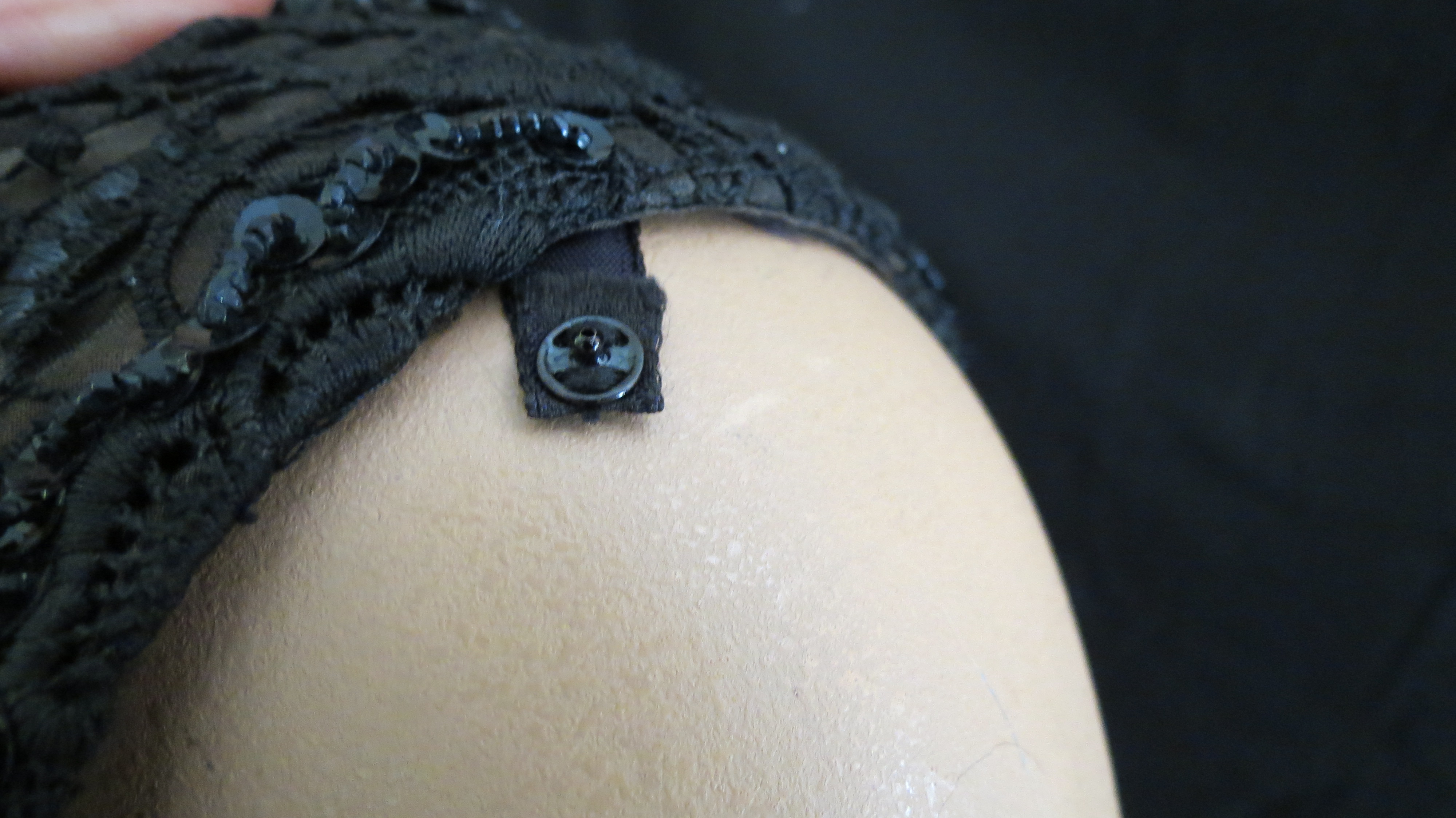
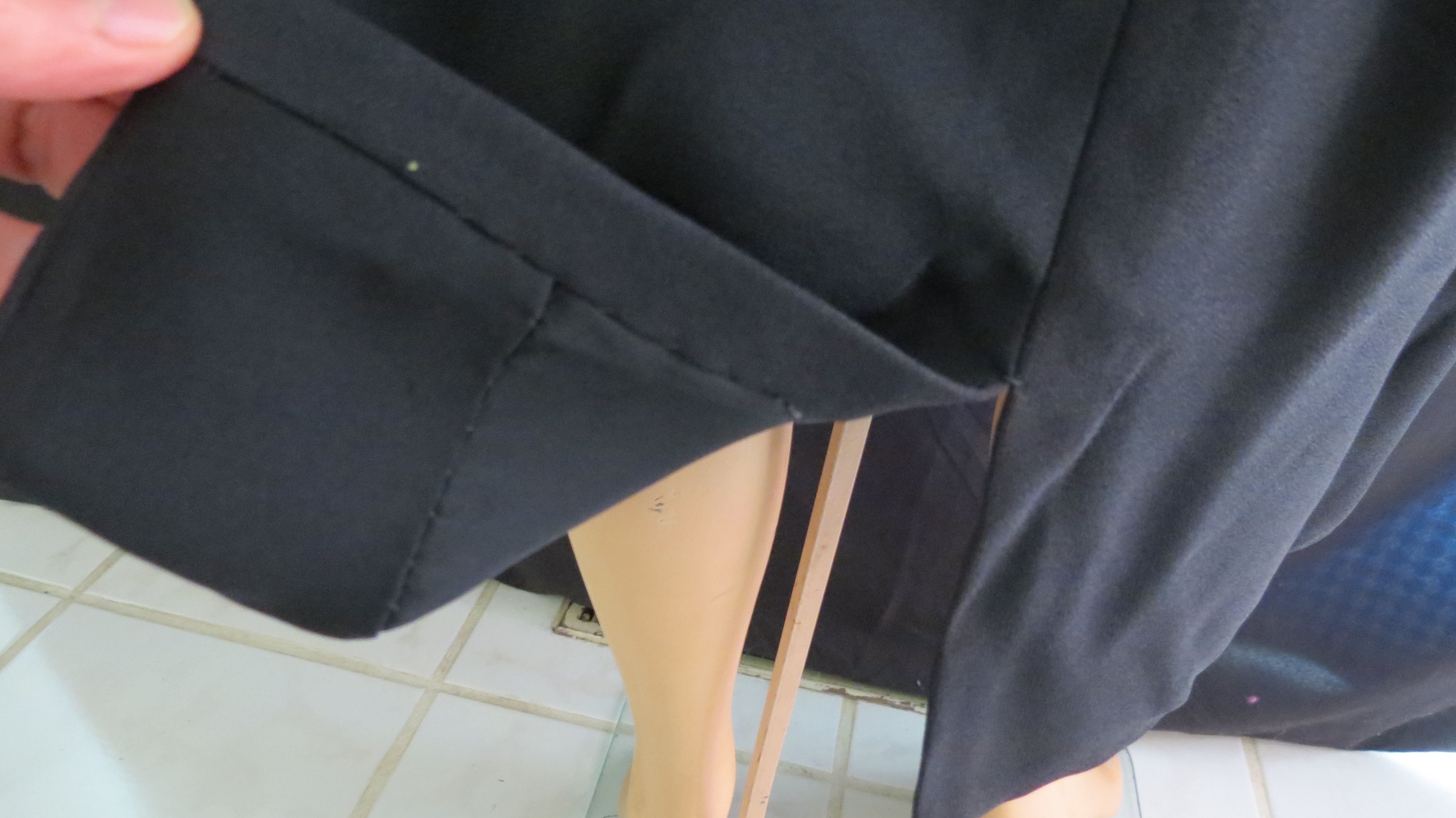
This dress is such a treat! I was so thrilled to uncover it. Look at the marvelous tailoring details and ingenious construction – A basic sheath style, with a heavily-decorated blouson top that appears to be separate, but is attached at the shoulders and fully-lined with a white silk under-blouse. Both layers close with a metal zipper. Hooks and eyes secure the neckline for good fit. The shoulders have strap-holders sewn in. The acetate skirt is also lined with black rayon and has a wide hem allowance plus a walking vent in the rear seam. Hand-finished all over.

In the ’50’s and 1960’s a woman of moderate means could save for the occasional purchase of clothing made this way and more prosperous women had closets full of nothing else. These were the standards of better-made garments during the mid-century. Now even very expensive clothing is sometimes constructed poorly and hardly ever as well as this dress is. The attention to detail and hand-done stitching made clothing fit better look more polished.

Tomorrow I’ll show you another frock from this decade. Stay tuned . . . . . . . . . . . . . . . . . . .

MORGANA MARTIN, THE MAGICVINTAGESPY

BLOG: MAGICVINTAGESPY.COM
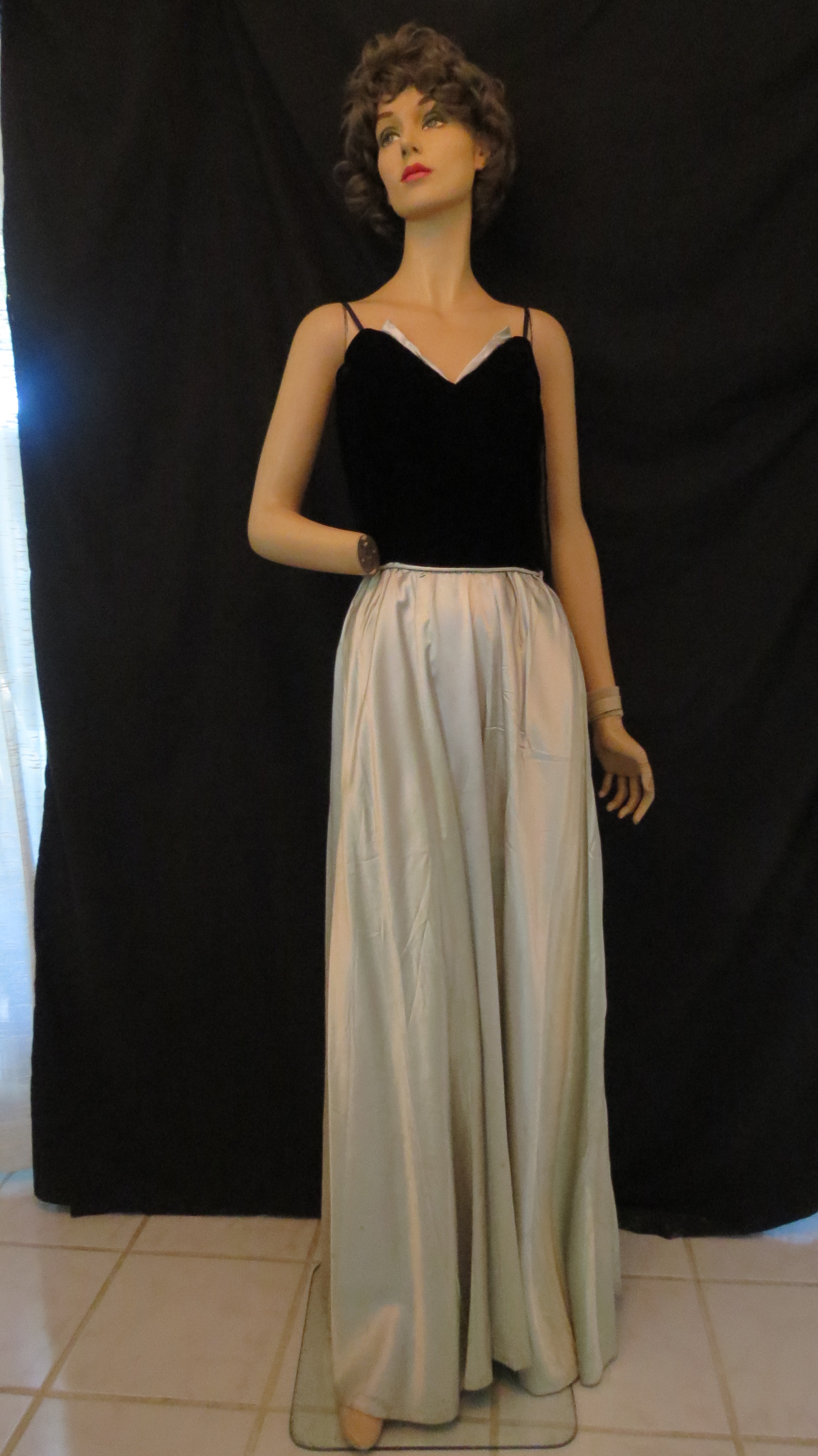
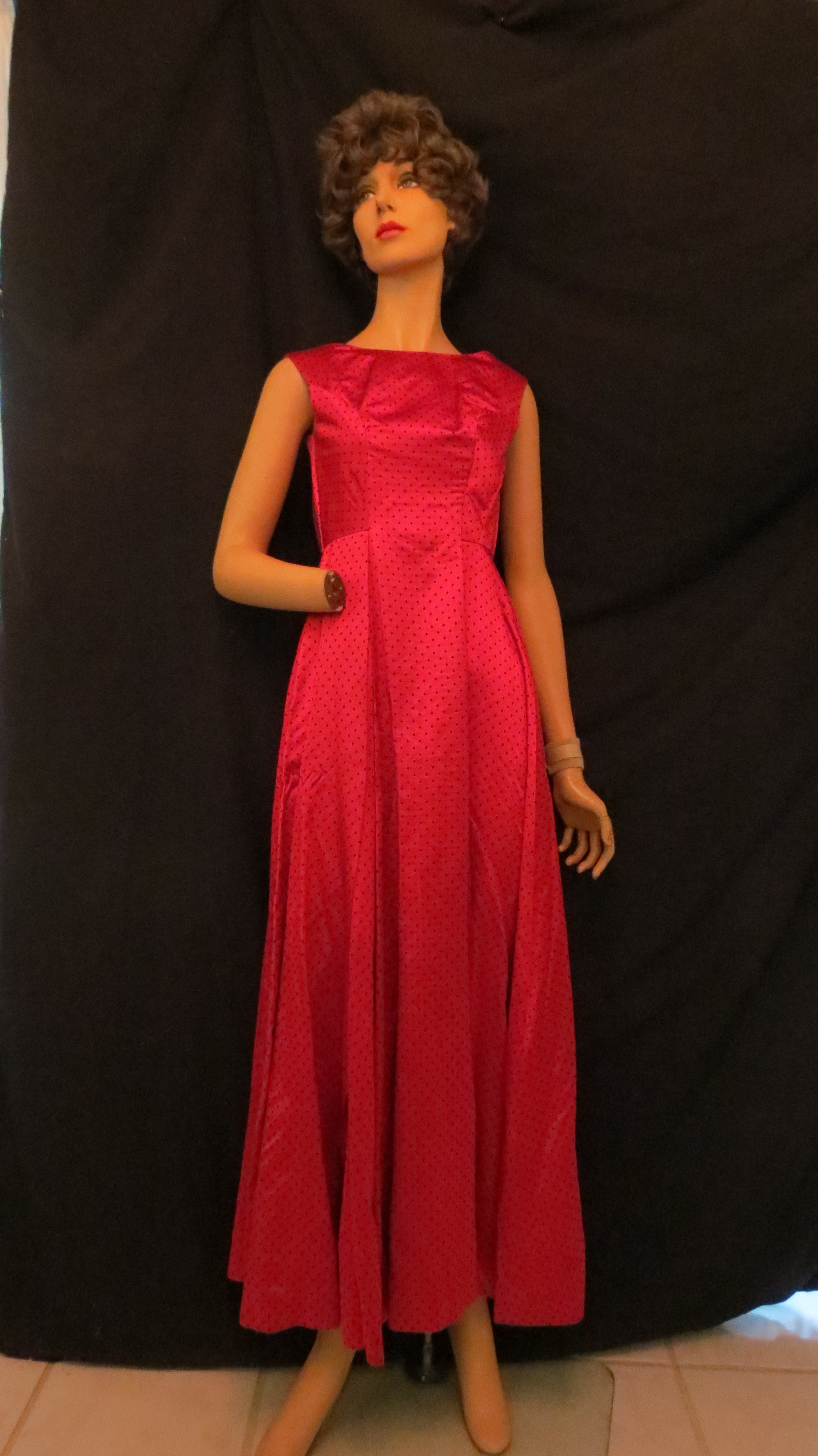
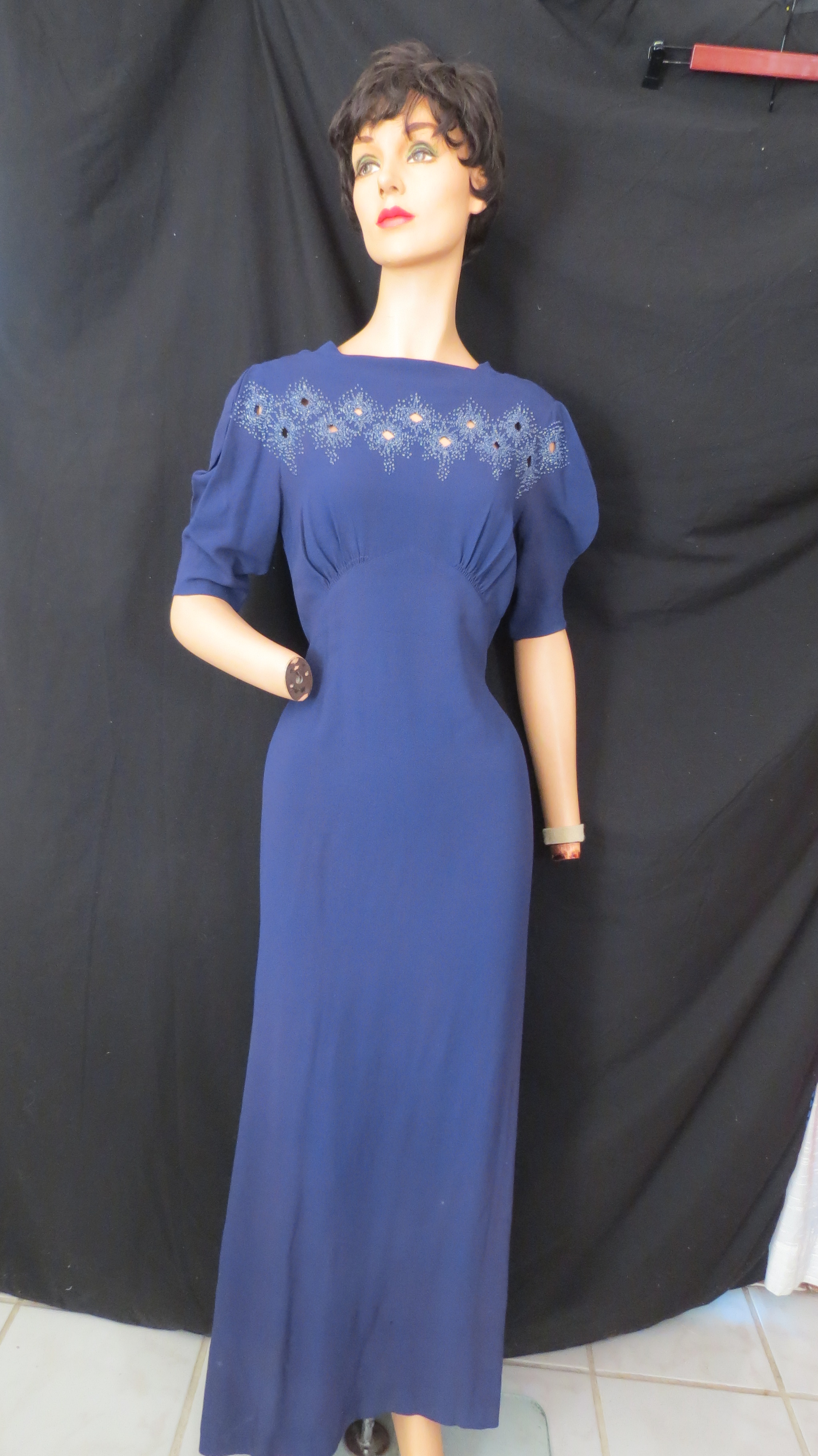
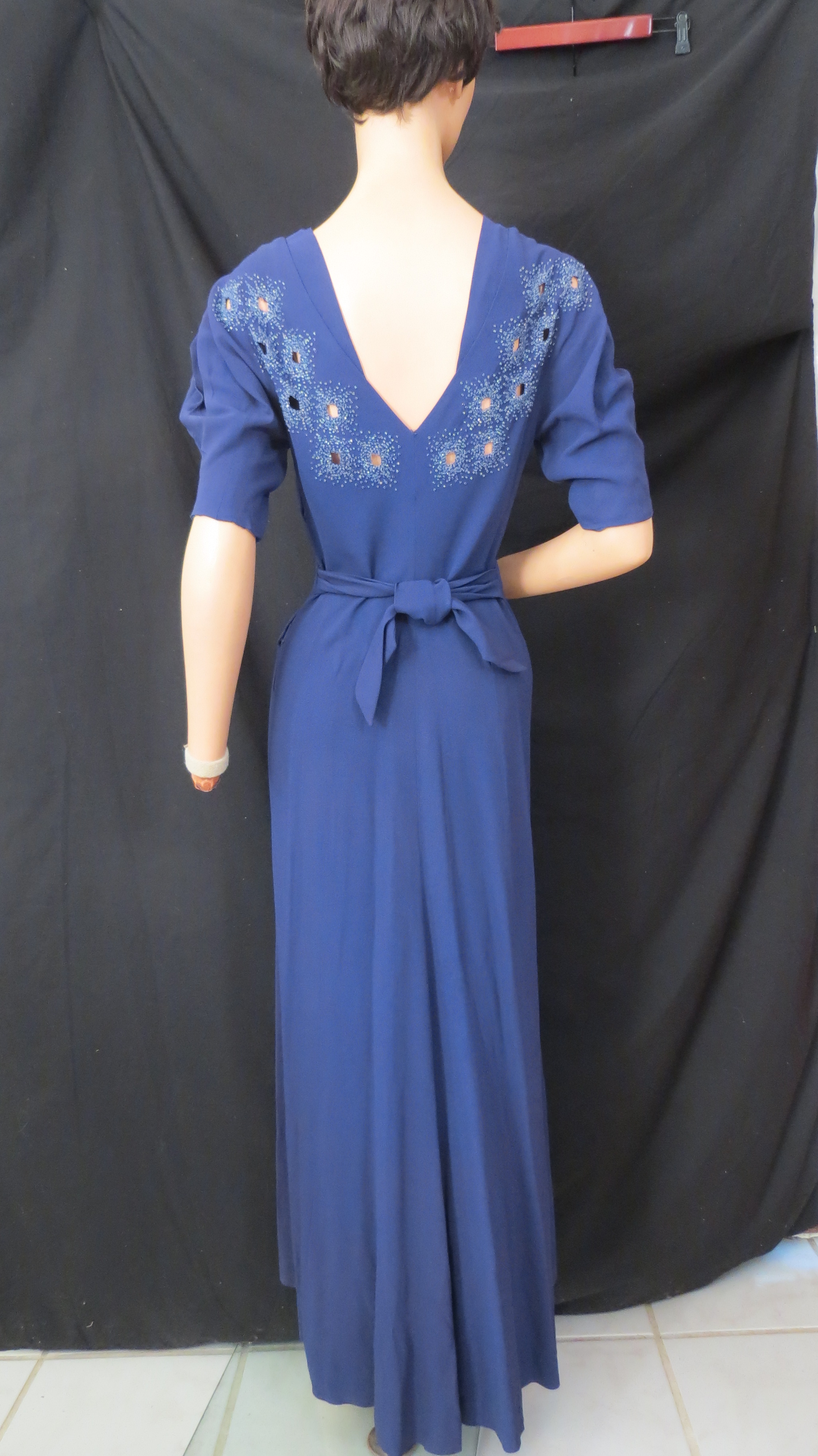
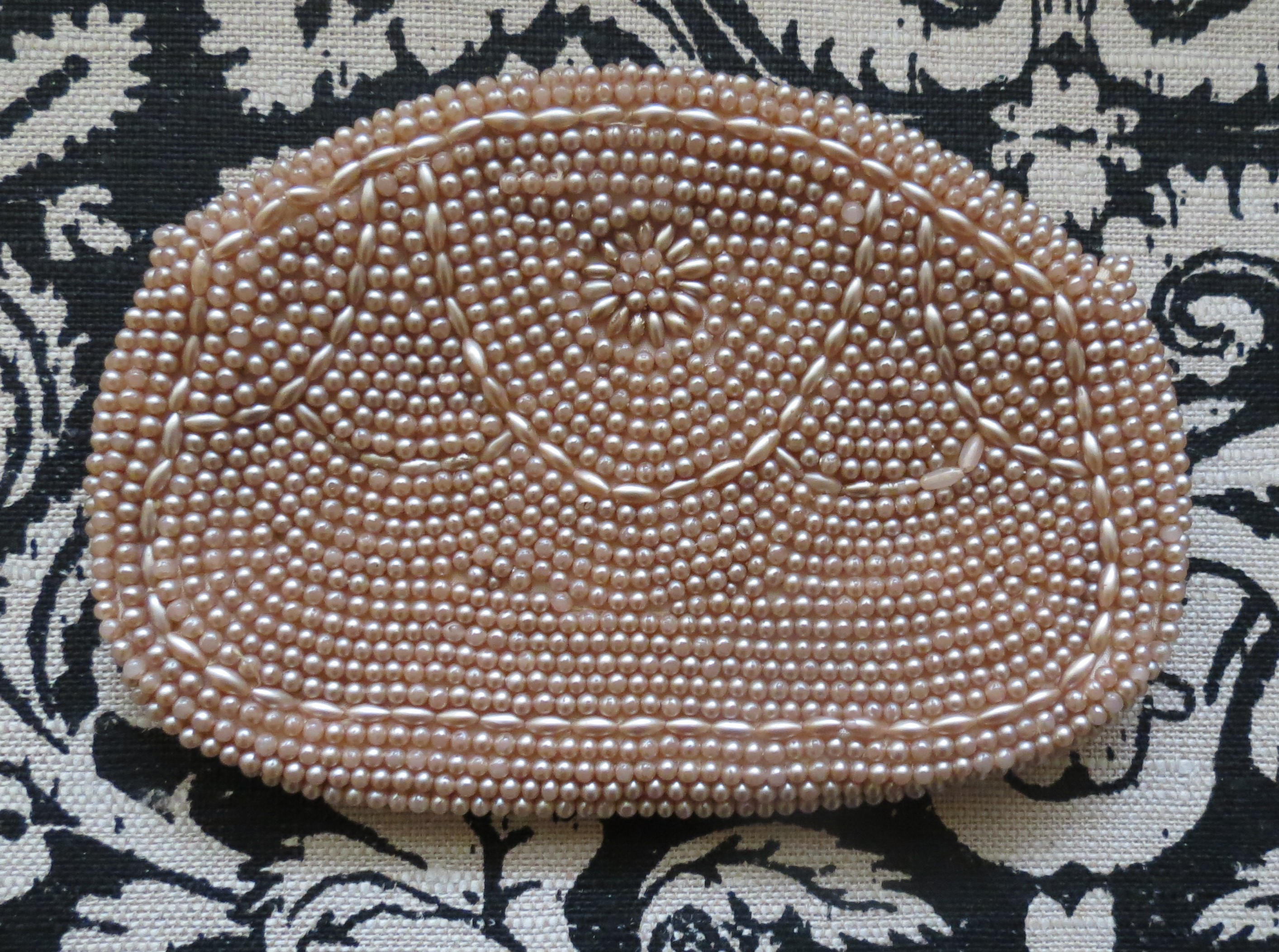
TRUE VINTAGE 1940’s FORMAL DRESSES, PLUS A DRESSY 1930’s CLUTCH PURSE

Beautiful, glossy fabrics – most of them synthetics – and lovely designs. I adore them all, but especially the first one. Let’s look at them one by one.

The first gown has a dark green velvet bodice, trimmed with the same pale green satin fabric that the skirt is made from. So flattering and luxurious. The bright red dress is a more conservative style, but still gorgeous. It’s made of an interesting fabric type which I’ve seen in other 1940’s dresses – it has a satin finish but with tiny black diamonds machine-embroidered all over. I suspect that this fabric, though lovely, was a more economical one.

The blue dress was tailor-made by hand. It is sewn from a bias-cut rayon which gives it that wonderful, drapey fit. The atomic/stellar cut-outs surrounded by seed beads were all done by handwork. I love the cut of the sleeves and the way the bustline and waistline are finished. That back tie belt gives it a really wasp-waist fit.

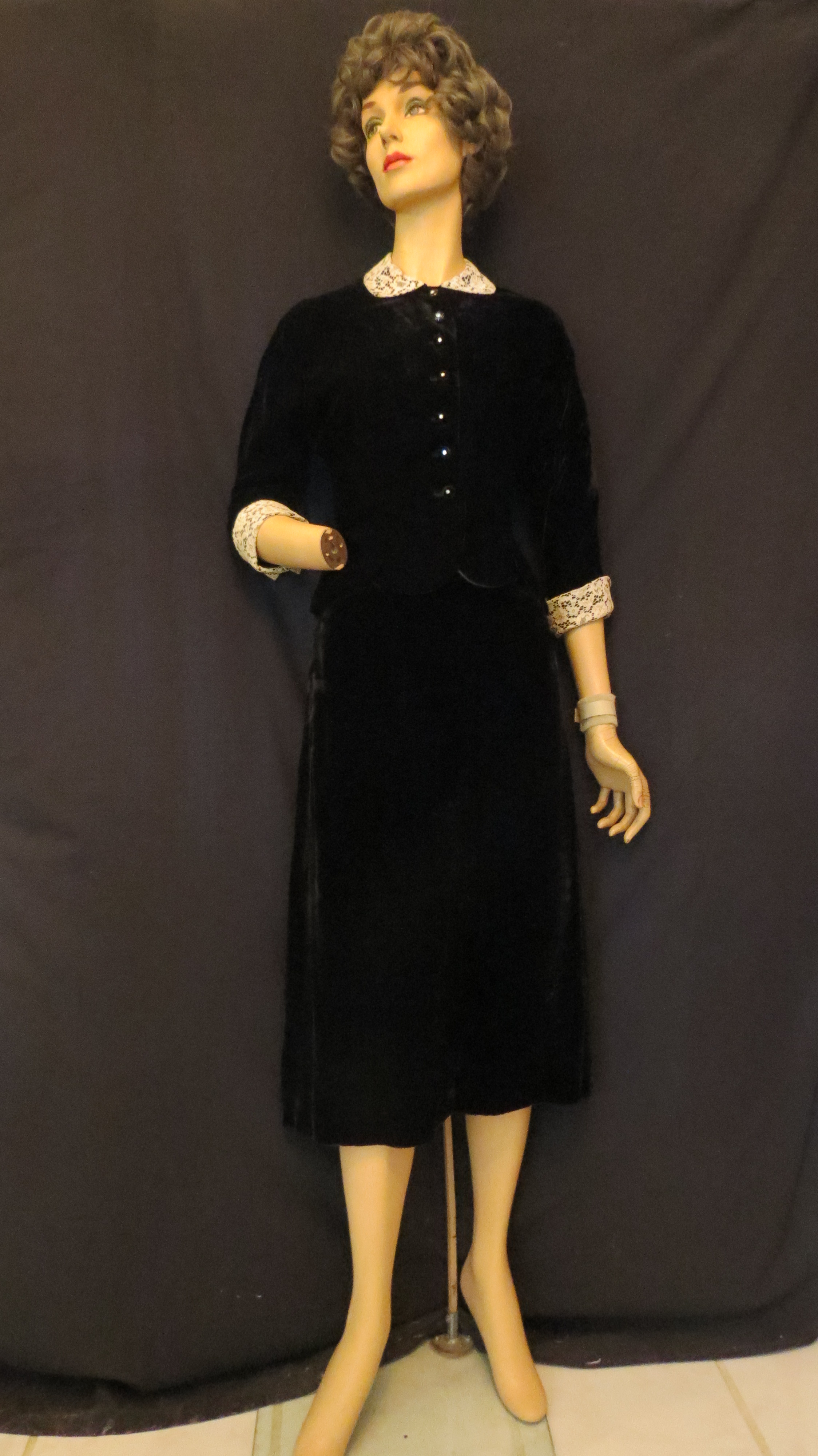
Finally, the black velvet two-piece dress is an entirely different design. Very proper and buttoned-up in velvet and crocheted lace, with rhinestone-center buttons.

Each of these gowns was a surprising and fabulous find. It’s rare to find 1940’s formal garments in the first place, and to find them in near-perfect condition is almost unheard of. The best bet is if they can be acquired from the original owner, or their estate. This is always a more informative clue when starting any investigation.

I’ve re-opened the 1940’s archives and am finding myself doing a deep dive there. Stay tuned . . . . . . . . . . . . . . . . . . . . . . . . . . .

MORGANA MARTIN, THE MAGICVINTAGESPY

BLOG: MAGICVINTAGESPY.COM
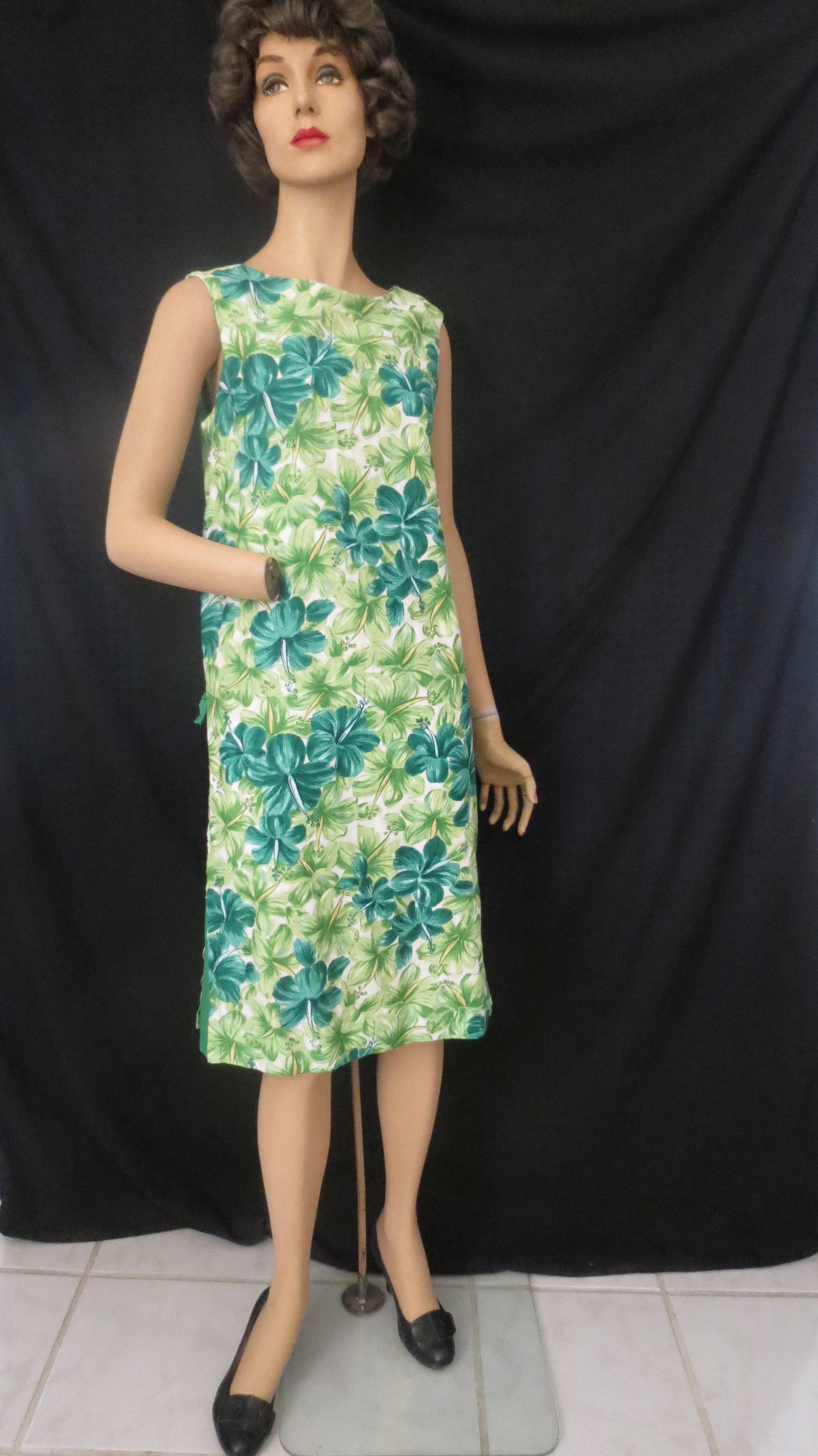
TRUE VINTAGE MID-CENTURY SOUVENIR DRESSES FROM HAWAII

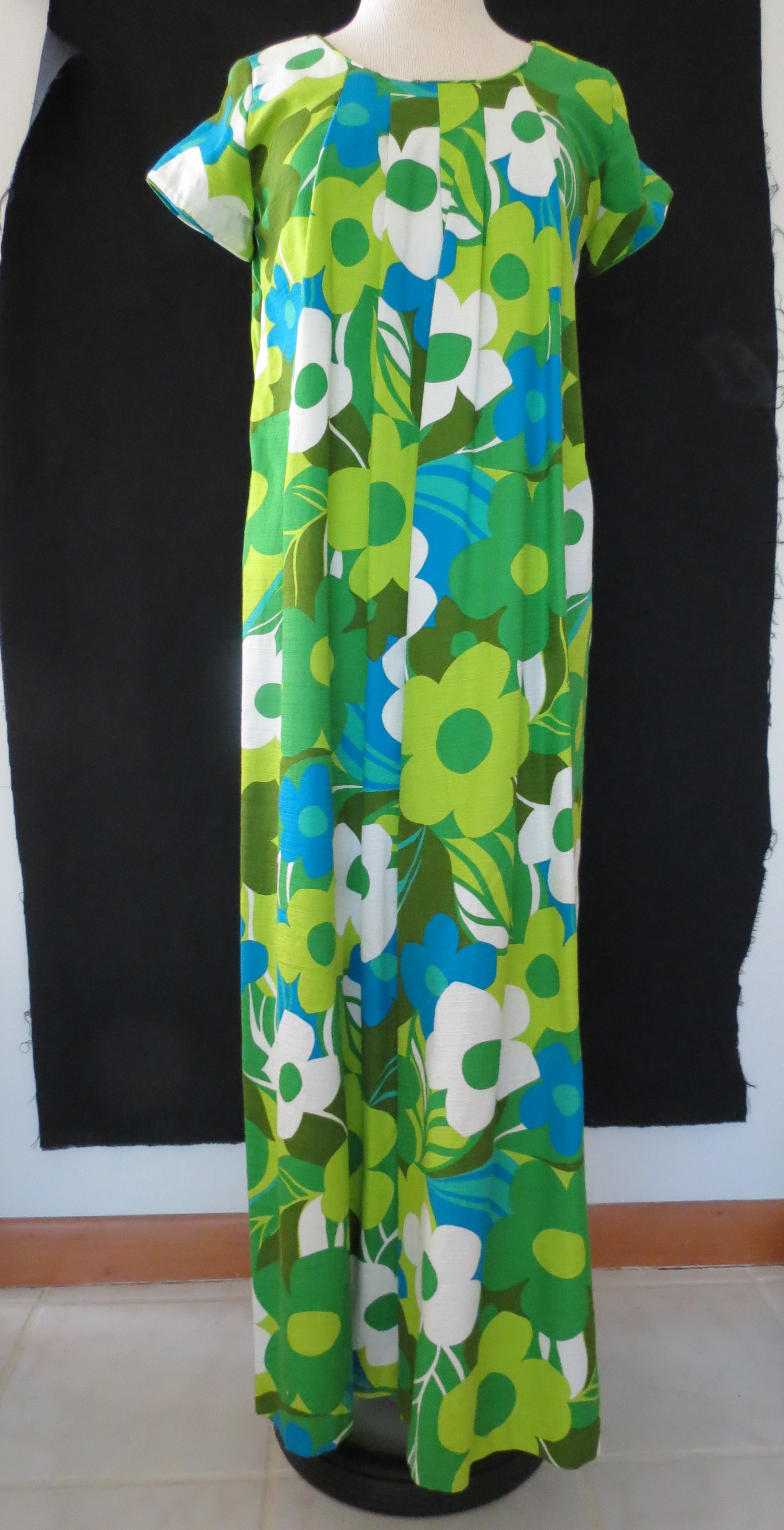
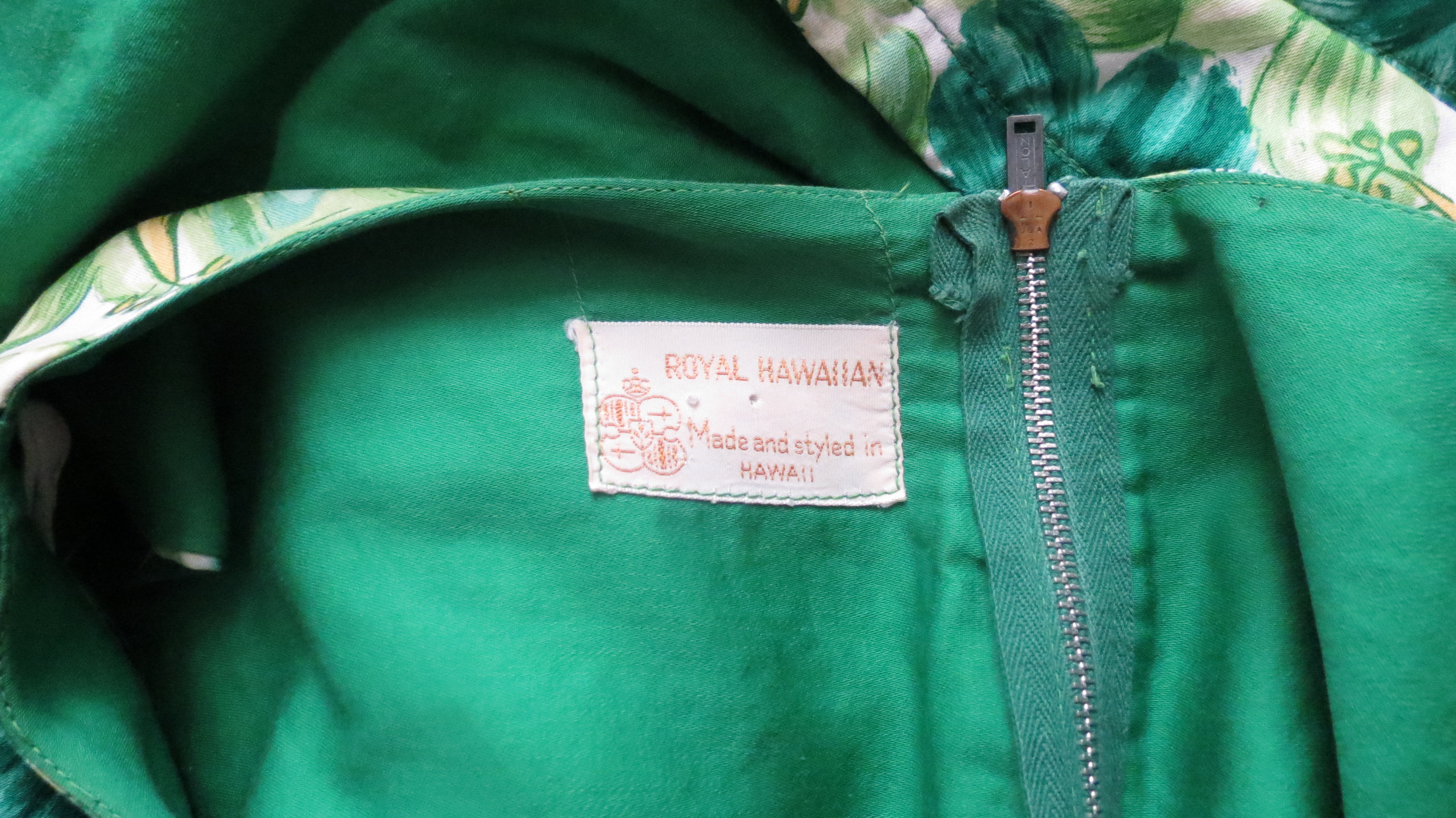
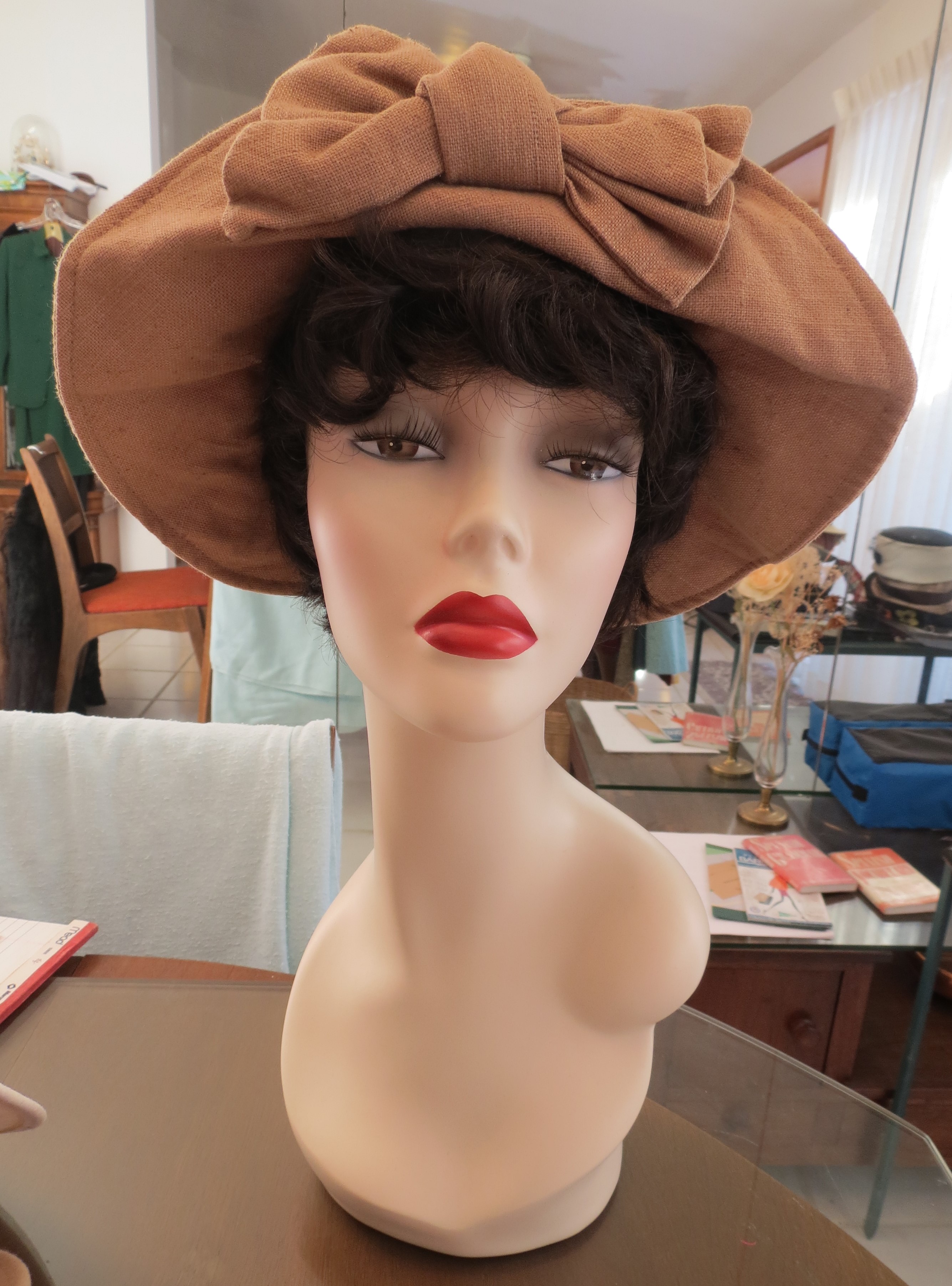
Wow! Our gal’s back home and guess where she went – Honolulu, Hawaii. Looks like she even stayed at the Royal Hawaiian Hotel!! No bargain budget for her, and we can see that in her choice of souvenirs. Two wonderful made-in-Hawaii frocks from the early 1960’s. Remember that blue and green trend from the early ’60’s that I’ve mentioned before? Also, look at the mad, Mod print on the long gown. Fab!

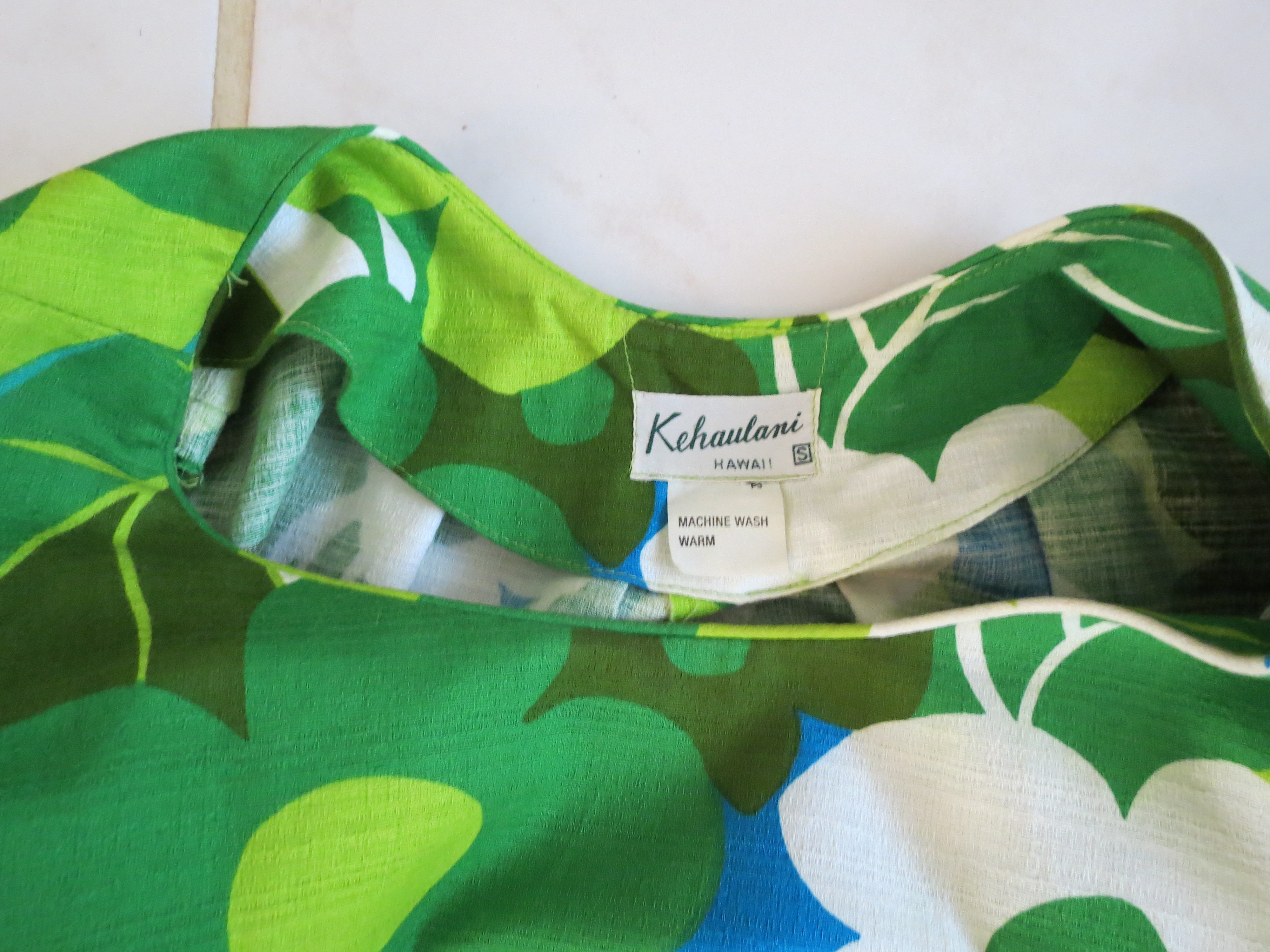
You can’t beat the tailoring on these beautiful dresses. Casual styles, but very elegant. Look at the lining and facings. Fabric piping around the neckline and sleeves of the long gown. Embroidered cloth labels. I’m sure they also have generous hem allowances, finished off professionally. Also, no straw beach hat for this girl – she opted for a cloth hat with unique style and obviously had a wonderful time.

Tomorrow we’ll start reviewing Spring day dresses from the 1930’s through the mid-century, along with some of the accessories that would have been added to their outfits. Stay tuned . . . . . . . . . . . . . . . . . . . . . . . . . . . .

MORGANA MARTIN, THE MAGICVINTAGESPY

BLOG: MAGICVINTAGESPY.COM