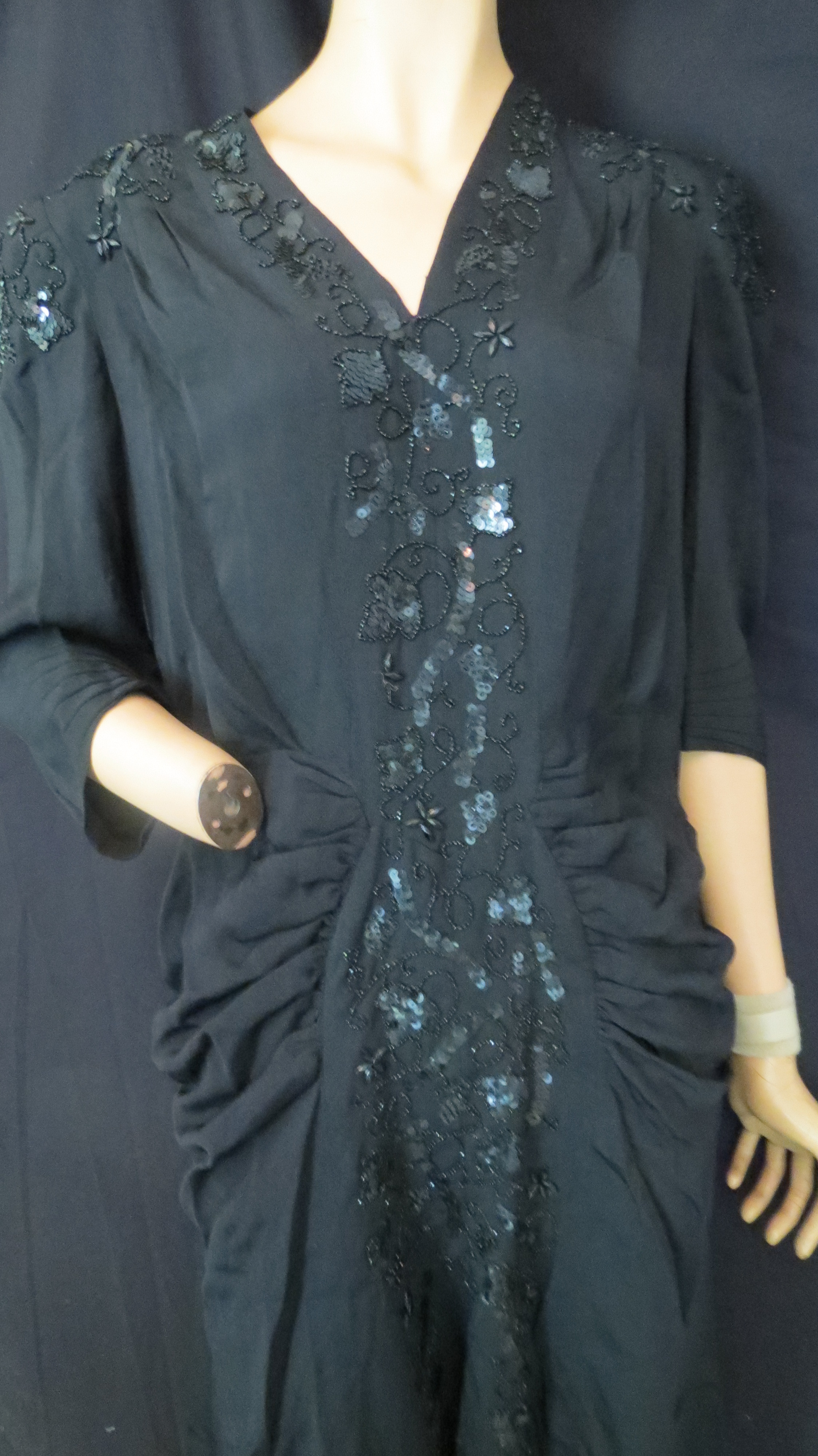
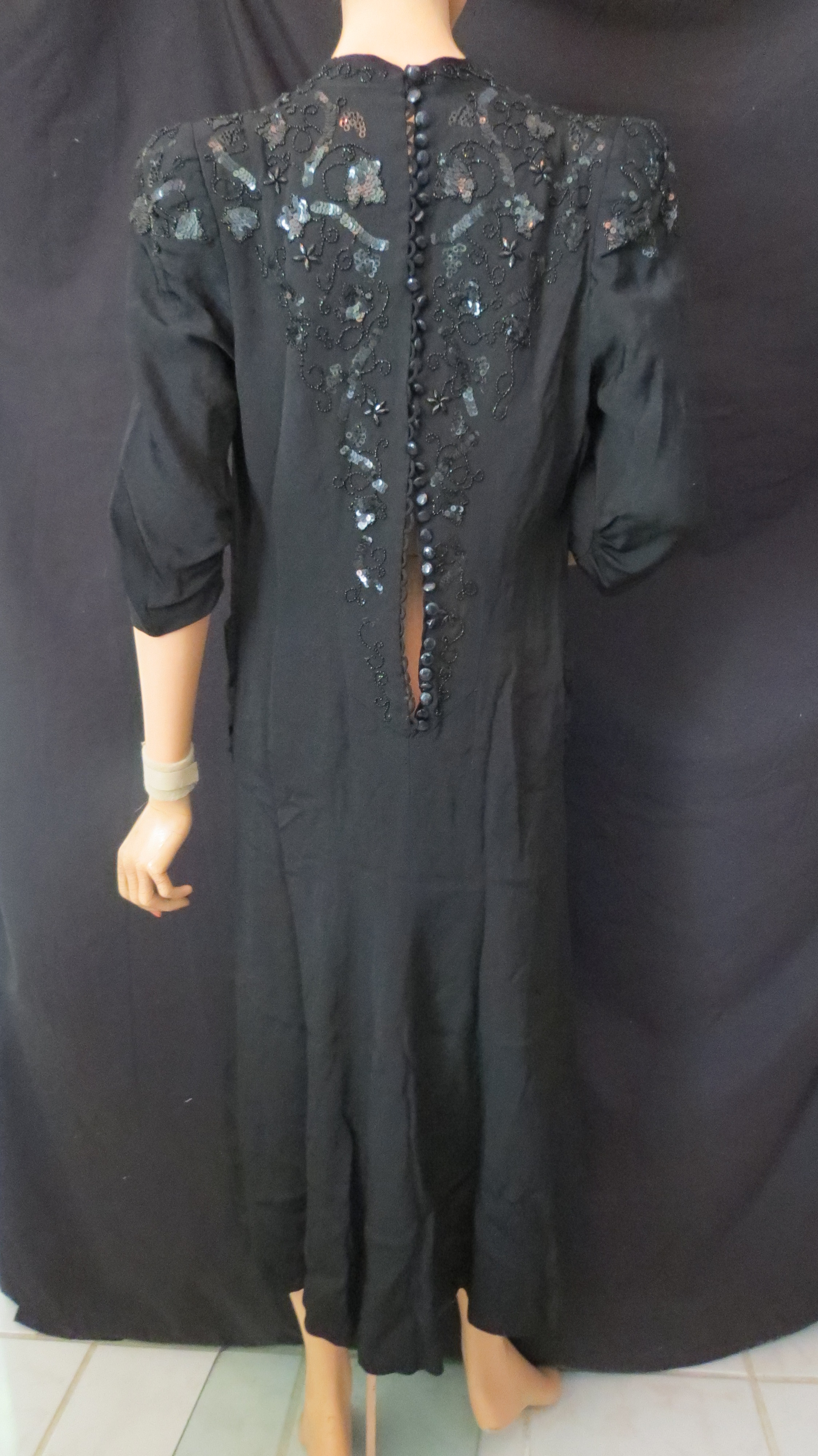
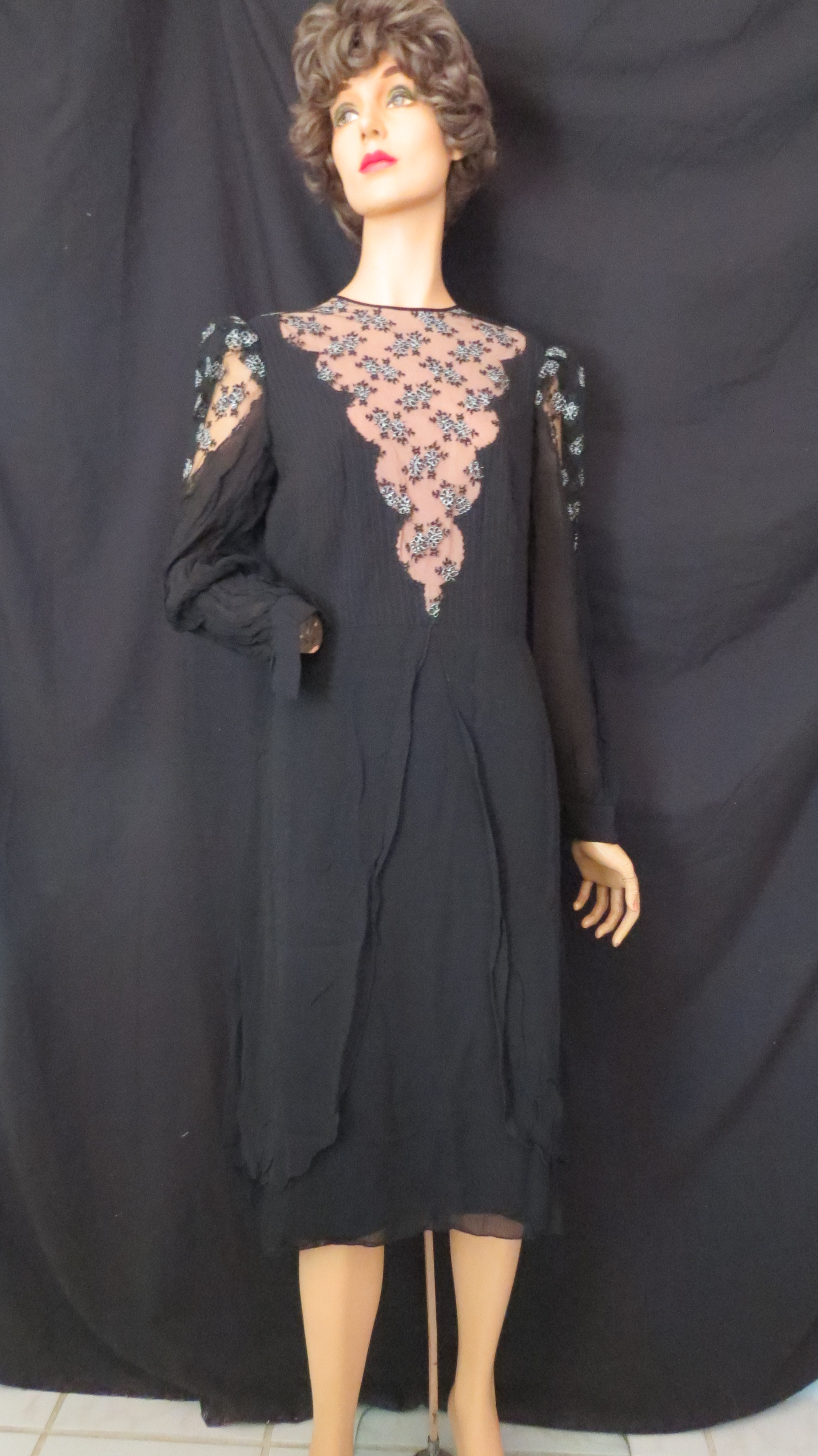
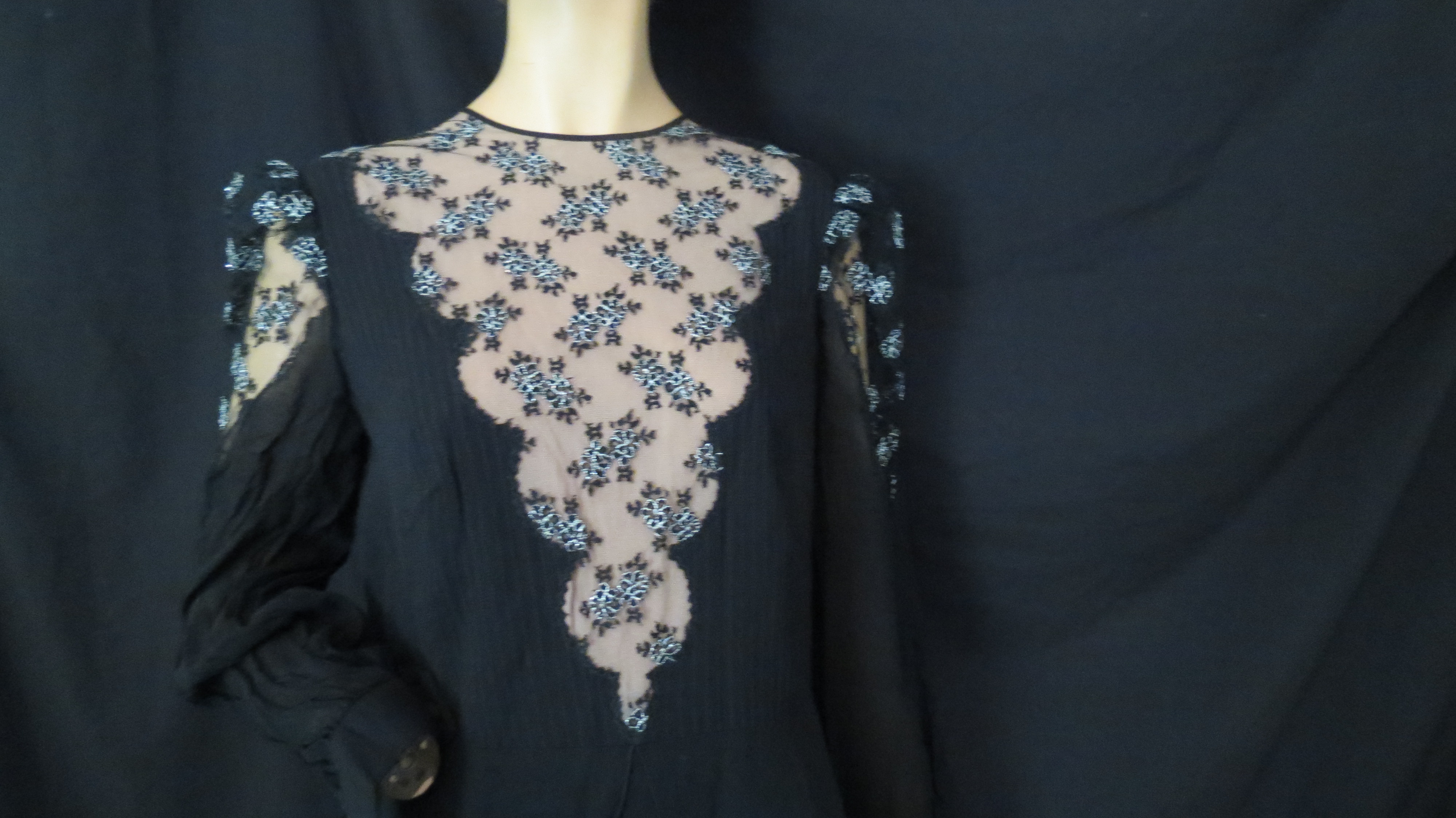
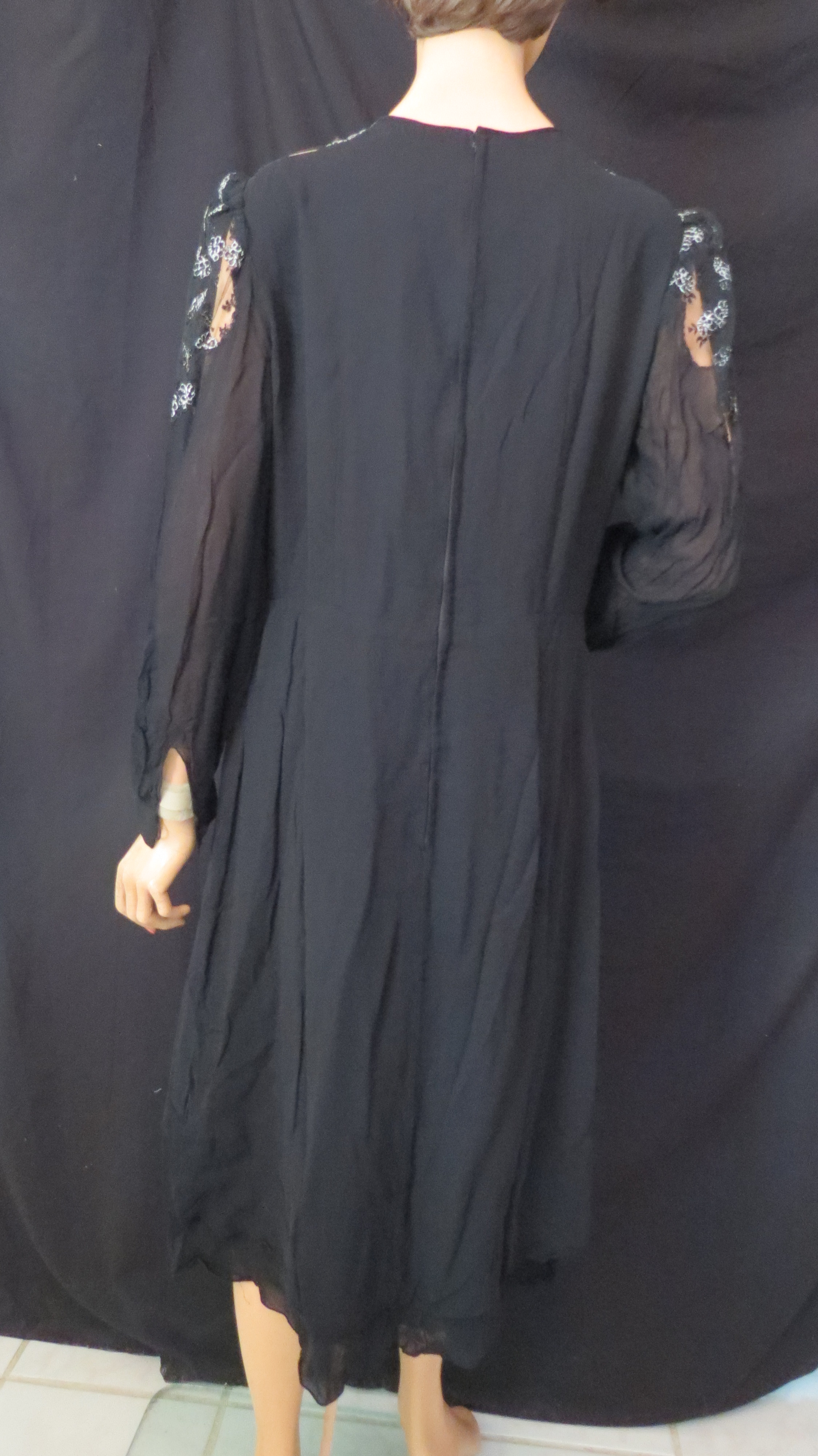
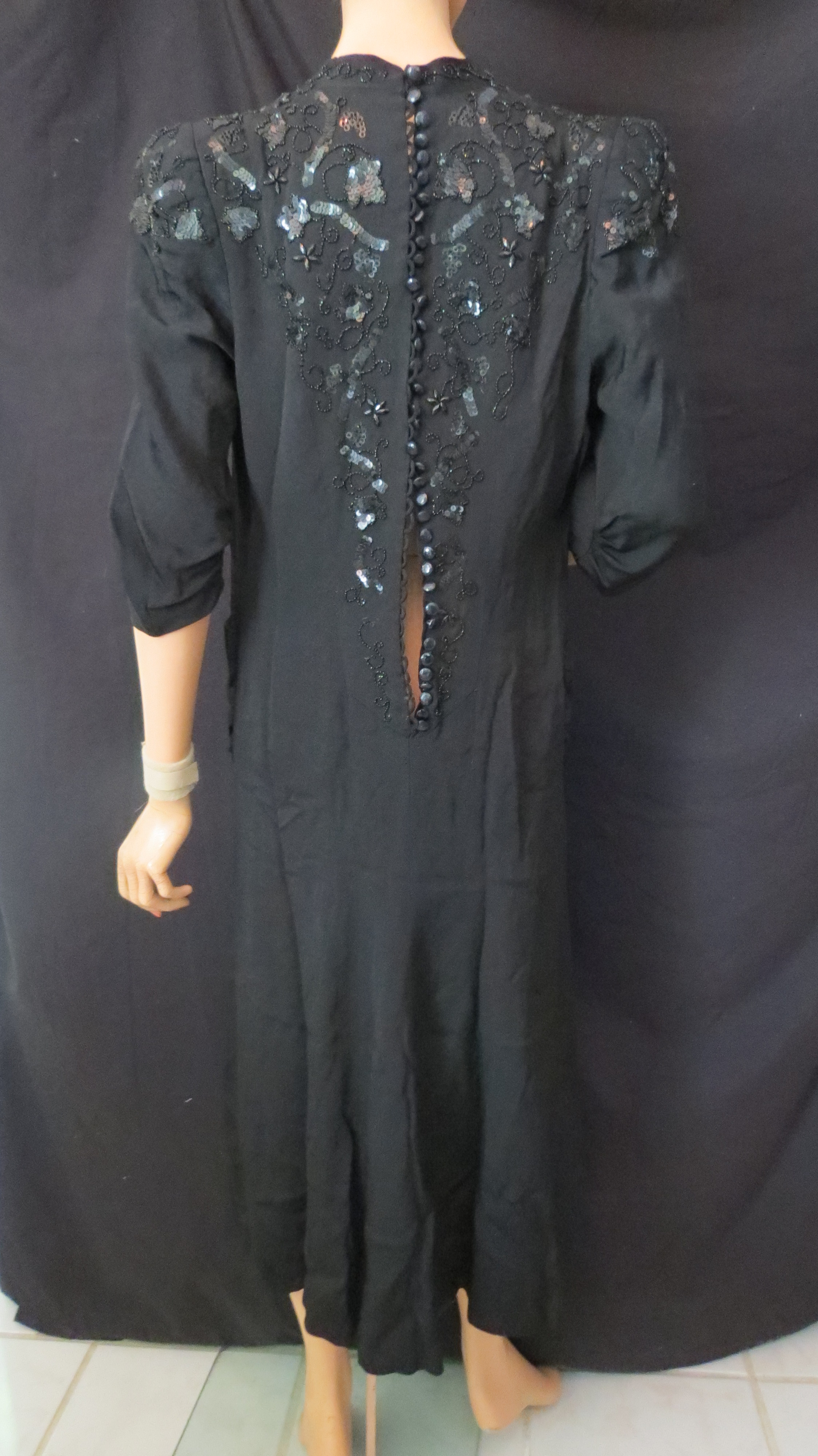
TRUE VINTAGE POST-WAR 1940’S BEADED COCKTAIL DRESS

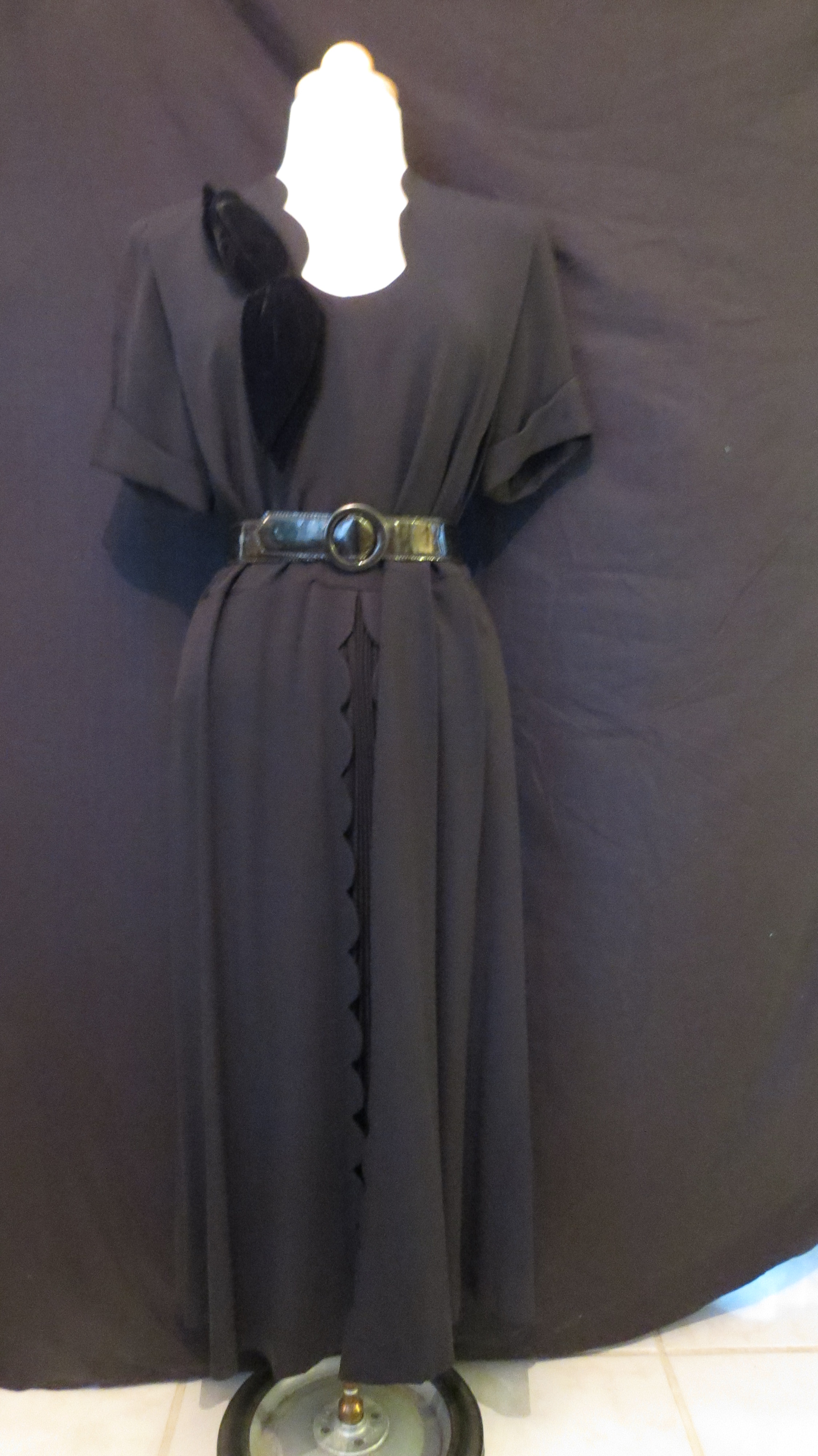
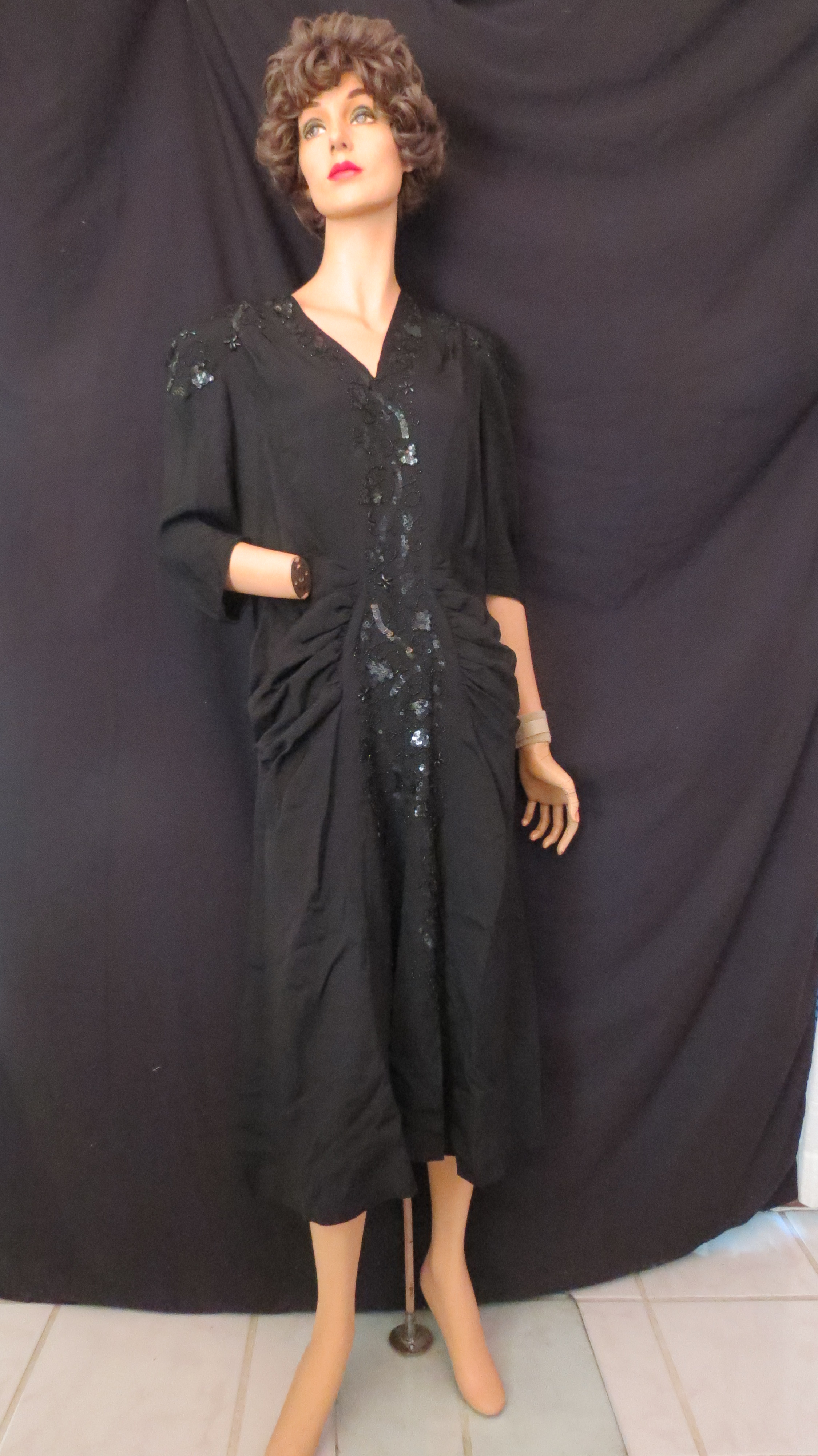
During a South American investigation, this frock was discovered in the beautiful and historic city of Montevideo, Uruguay. During WW 2, well-to-do Uruguayan women still had beautiful dresses made for them and did some trade in clothing and accessories from France. This dress has the label of a small tailoring shop, is exquisitely made by hand and was obviously owned by a woman from the upper class who would wear it to dinner or any semi-formal festive gathering.

Style-wise, the augmented shoulders, funky ruching on the hips and sleeves plus the midi hem point directly to the late 1940’s. Heavy decoration with beads and sequins is all done by hand, as is the finishing. Look at all the small buttons in back, each with it’s own fabric loop closure. Stay tuned for more from the 1940’s . . . . . . . . . . . . . . .

MORGANA MARTIN, THE MAGICVINTAGESPY

BLOG: MAGICVINTAGESPY.COM

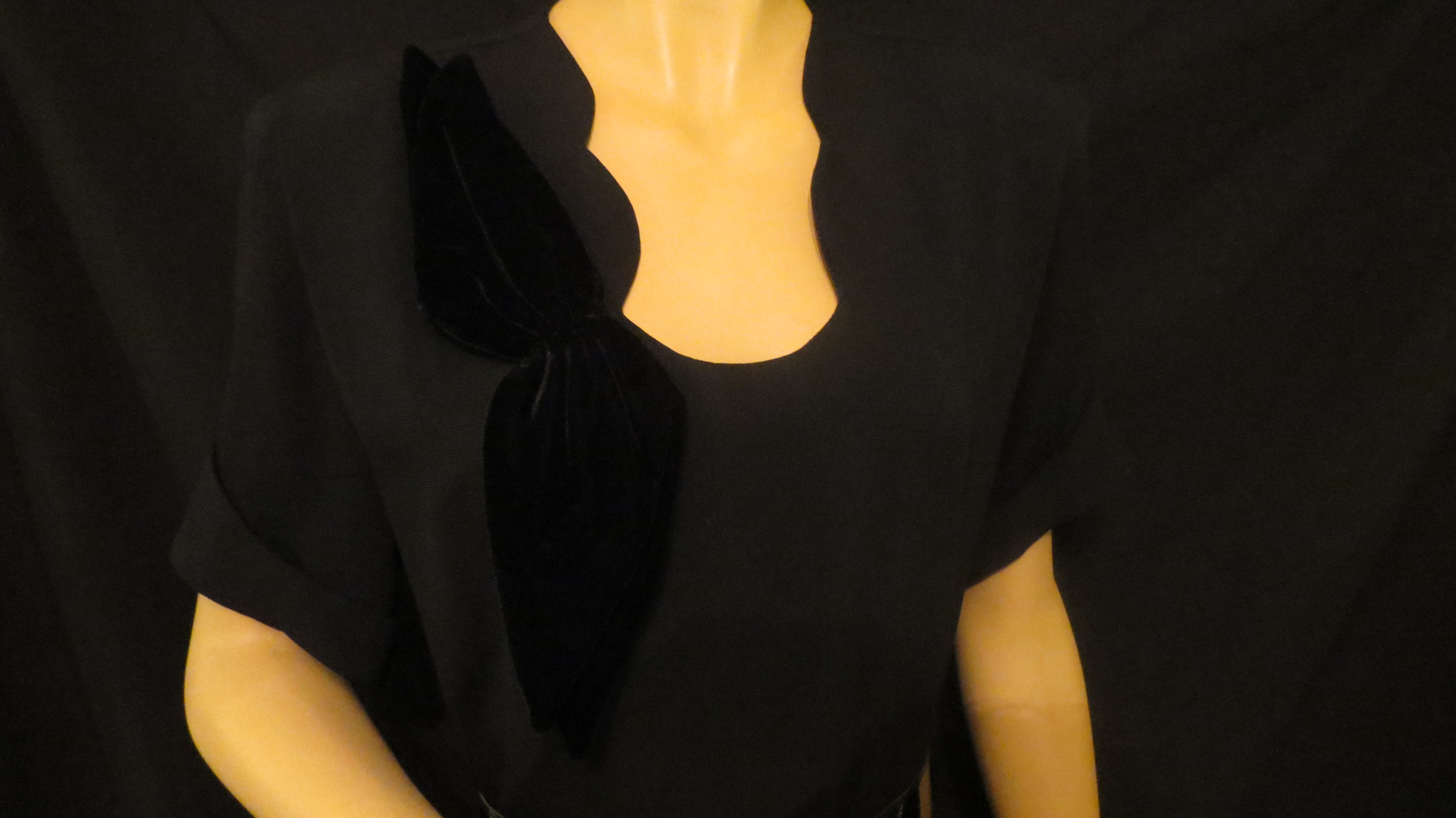
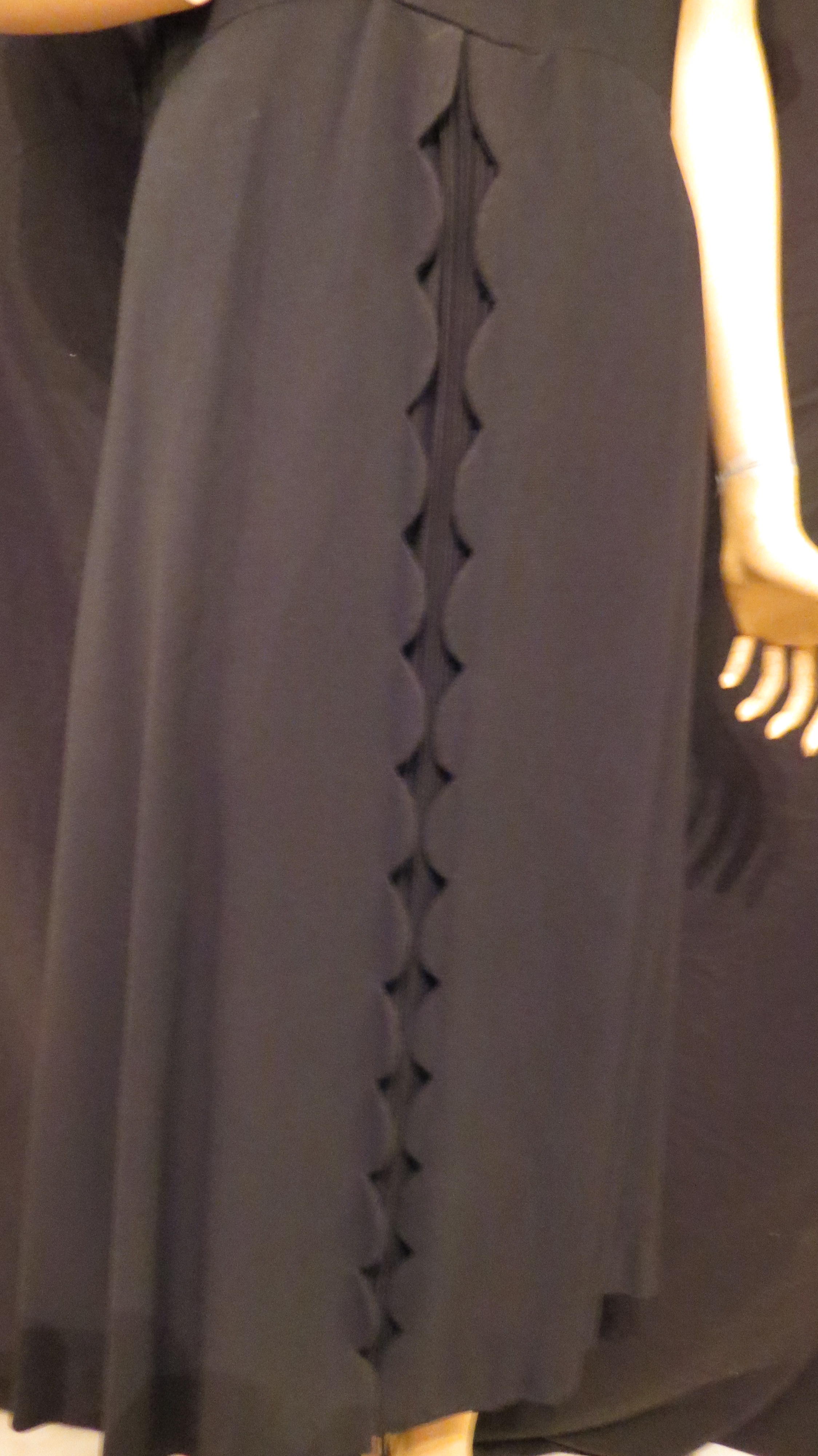
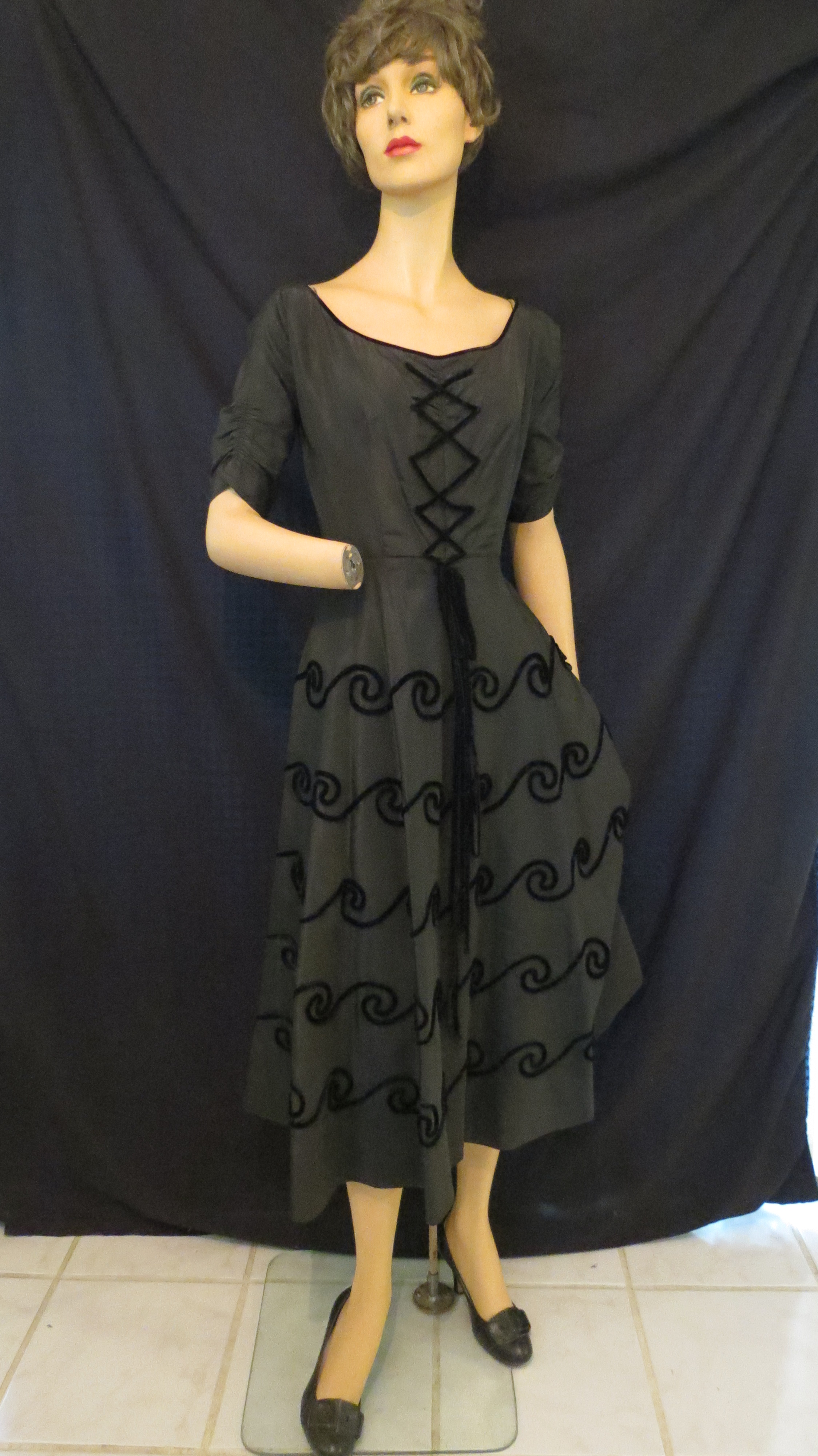
FUN TRUE VINTAGE 1940’S POST-WAR NIGHTCLUB DANCE DRESS

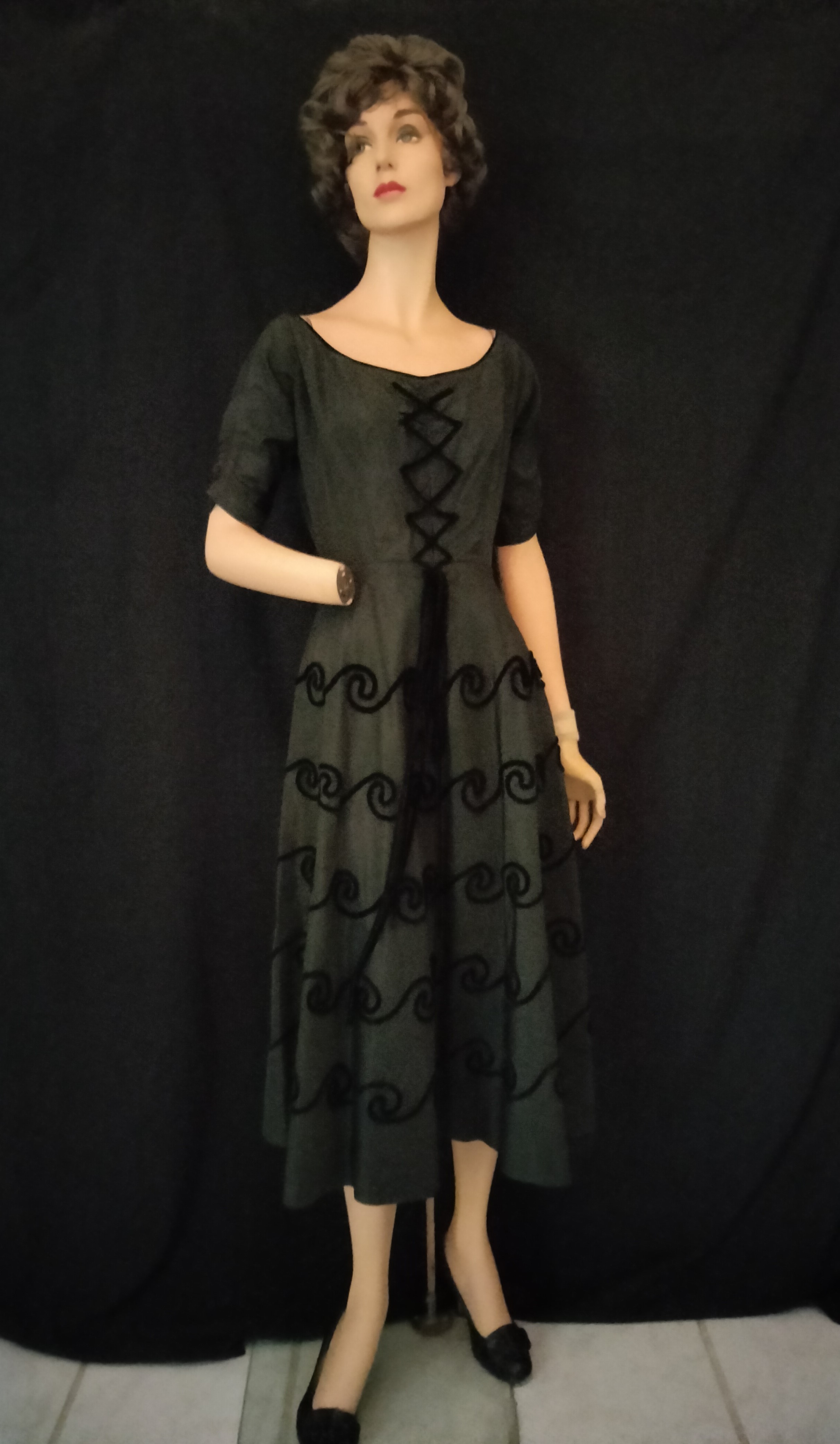
I’m back in black today, but more color coming. I really loved discovering this frock in Texas. Sold by an upscale privately-owned clothing company that had it’s own label. The trim is black velvet tube ribbon and the skirt is made for swingin’ and swayin’. Perfect for wearing to any dance hall or vibrant party, and we know that Texans love to party!

It’s got ruching on the sleeves, which was a favorite ’40’s tailoring feature. Nipped waist and wide skirt plus a midi hem puts in firmly in the post-war time frame. So much fun to discover – a fun dress from a very jubilant time in history. More Forties fashion coming, but dressing it up with an international twist. Stay tuned . . . . . . . . . . . . . . . . . . . . .

MORGANA MARTIN, THE MAGICVINTAGESPY

BLOG: MAGICVINTAGESPY.COM

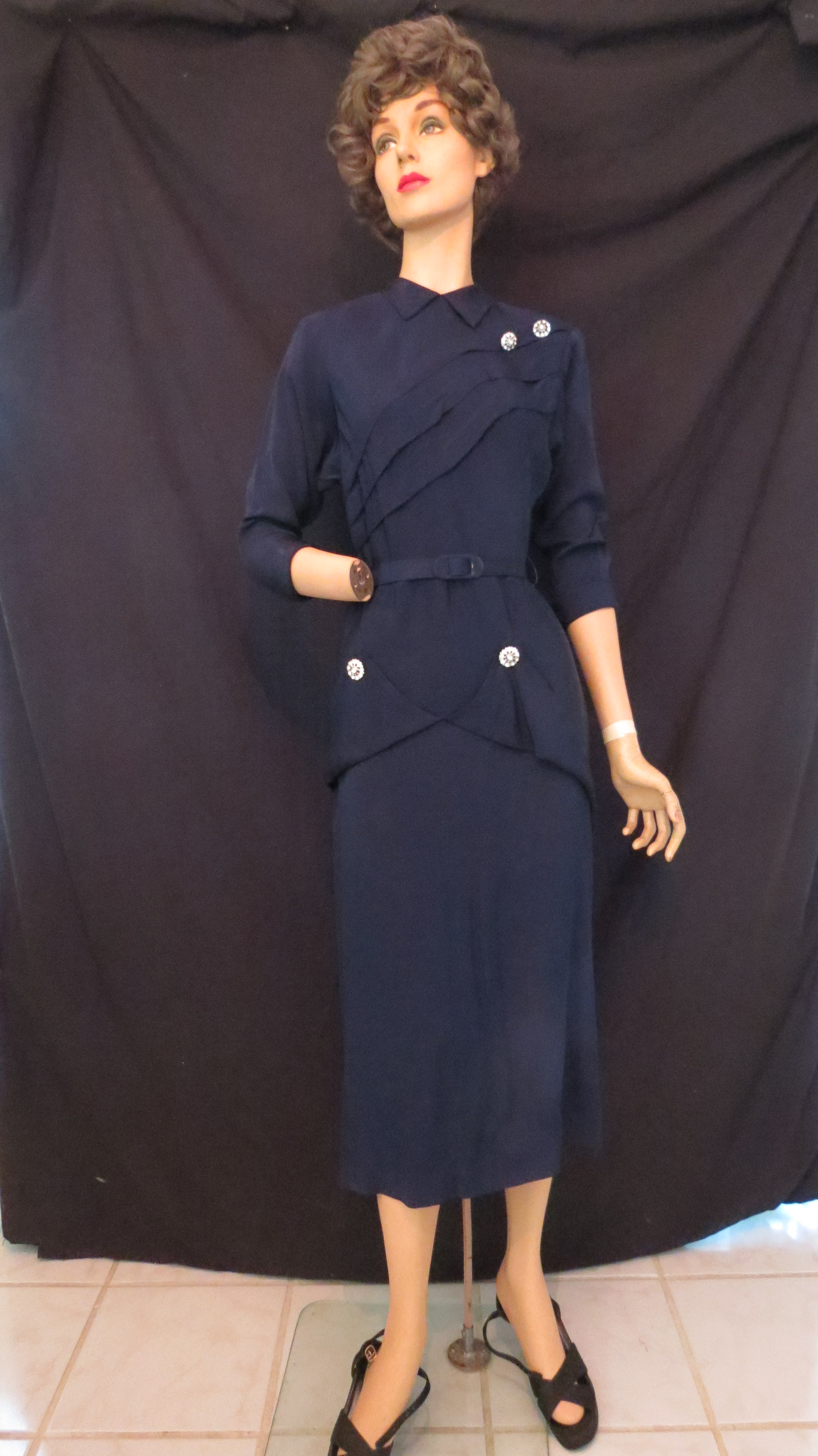
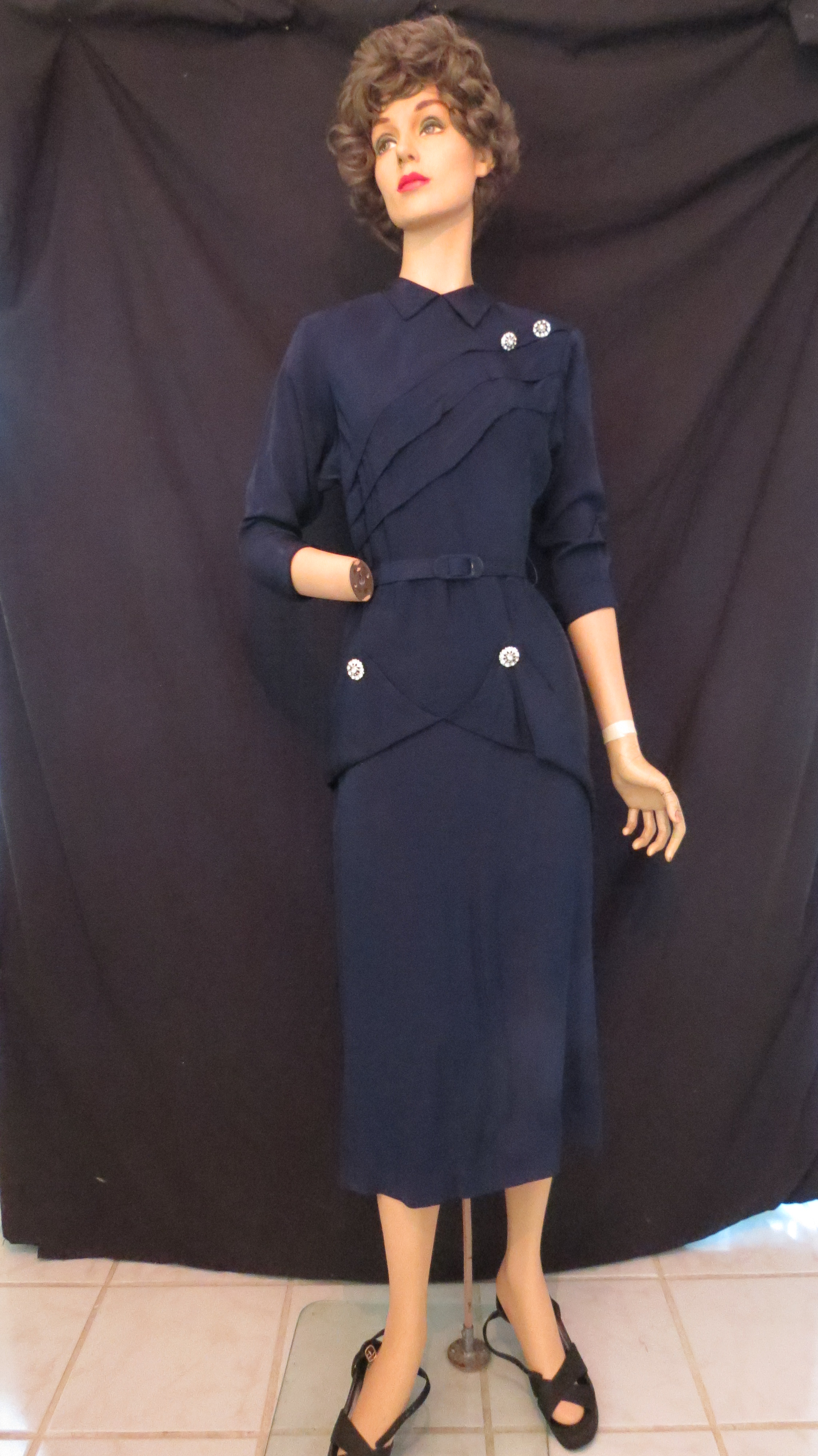
BEAUTIFUL RAYON DRESSY DAY-DRESS FROM THE POST-WAR 1940’S

Taking a short break from the LBDs and going for a little color. This beautiful navy blue fitted rayon dress is a perfect example of the late 1940’s return to more luxurious day wear after the restrictions of rationing were ended. The label is Loma Leads, from a dress company that was organized in the late 1920’s and operated in New York and Paris. It had several departments and was around in one form or another at least into the early 1960’s. A very uptown classic ladies dress from the time when there was more fabric available again, so hemlines came back down and extra tailoring details like the peplum and bodice tucks were again possible. Women had been SO waiting for this! The exuberance of big rhinestone buttons on a day dress speaks to the attitude of a return to extravagance in fashion. The big skirts of Christian Dior’s New Look at this time is another example.

This style, however, is very buttoned-up and, to my mind, underlines the haughty, elegant and “rich” look intended here. After all the restrictions and deprivations of the “make do and mend” wartime years, luxury and affluence were the beckoning horizon for the United States and Canada while Europe was more intent on surviving and rebuilding after all the extensive damage to their infrastructure and land. But, Paris had always led the world of couture and design so fashion bounced back there, too, as Dior and other designers met the challenges and optimism of the new era and resumed their lead.

It is so fascinating to untangle the ways that fashion trends dovetail with historical events. The clues are everywhere and a good sleuth always looks for them. A completely different example from this time tomorrow – stay tuned . . . . . . . . . . . . . . . . . . . . . . . .

MORGANA MARTIN, THE MAGICVINTAGESPY

BLOG: MAGICVINTAGESPY.COM . . . . . .
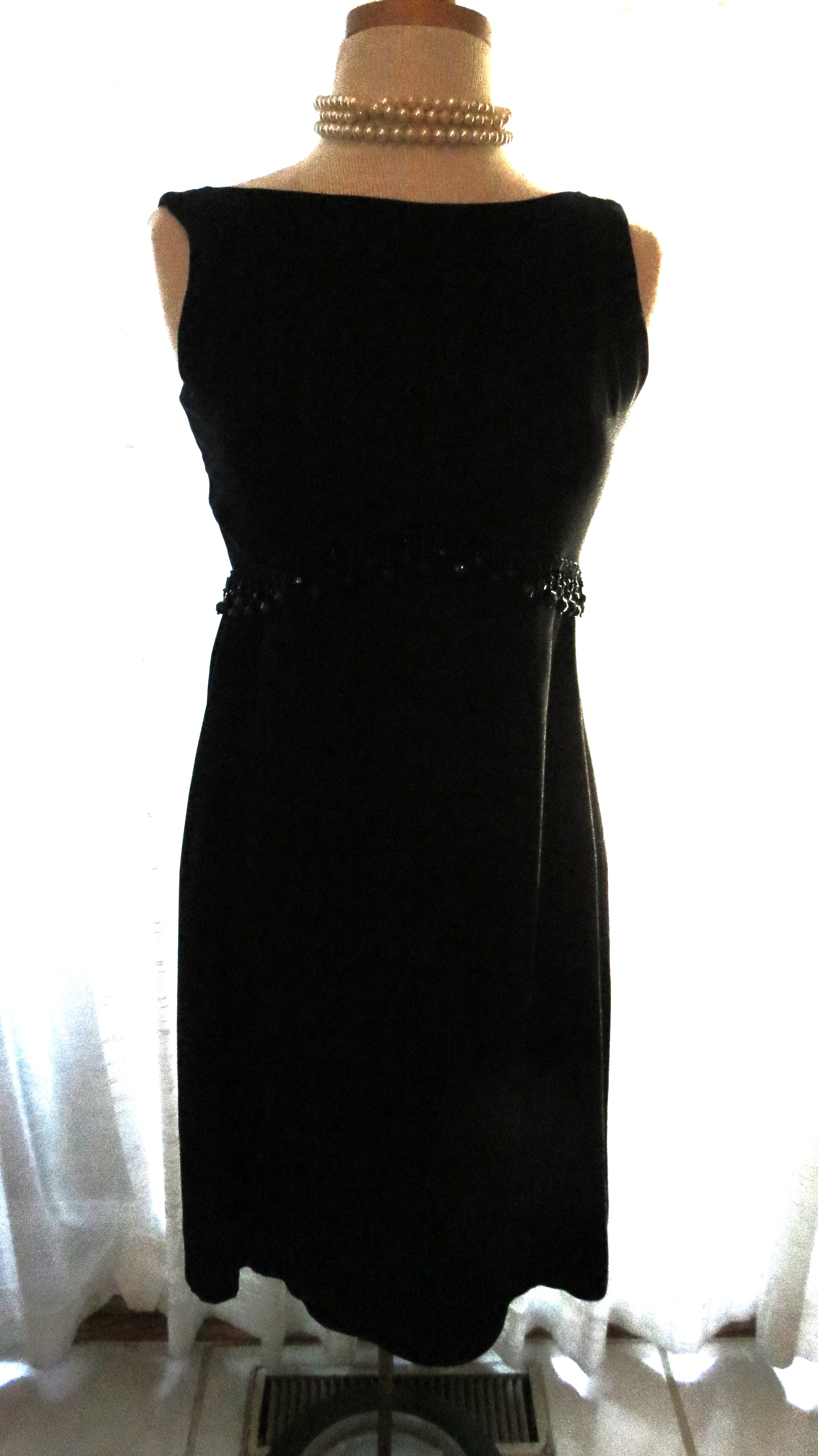
ELEGANT MOD TRUE VINTAGE 1960’S LBD

From the early to mid-1960’s, a sleek, sleeveless classic sheath style cocktail dress with a boat neckline, which I love. It’s knee to bottom-of-knee length, which is a very flattering hemline on most women and was common at that time right before almost everything had an above-the-knee or mini length. It’s so hard to get good detail on black clothing in photos, but this one is easier because the only decoration is a medium-width band of black beading at the waistline. Very well-tailored in a light-medium weight knit fabric with a very nice drape. This one factor takes it over the line from a Summer dress to one for Fall. Good quality, good fit – the signature features of well-made true vintage clothing.

I have more examples in the files of 1960’s LBDs but, in my images file, I ran across a large number of dresses of this type from the 1940’s. I’ll probably break the timeline to put these in the next posts before resuming to LBD’s from the more recent decades. I am traveling back to Headquarters as of tomorrow, so there may be a few days pause while I reorganize. Won’t be long so stay tuned . . . . . . . . . . . . . . . . . . . . . . . . . . . . . . . . .

MORGANA MARTIN, THE MAGICVINTAGESPY

BLOG: MAGICVINTAGESPY.COM
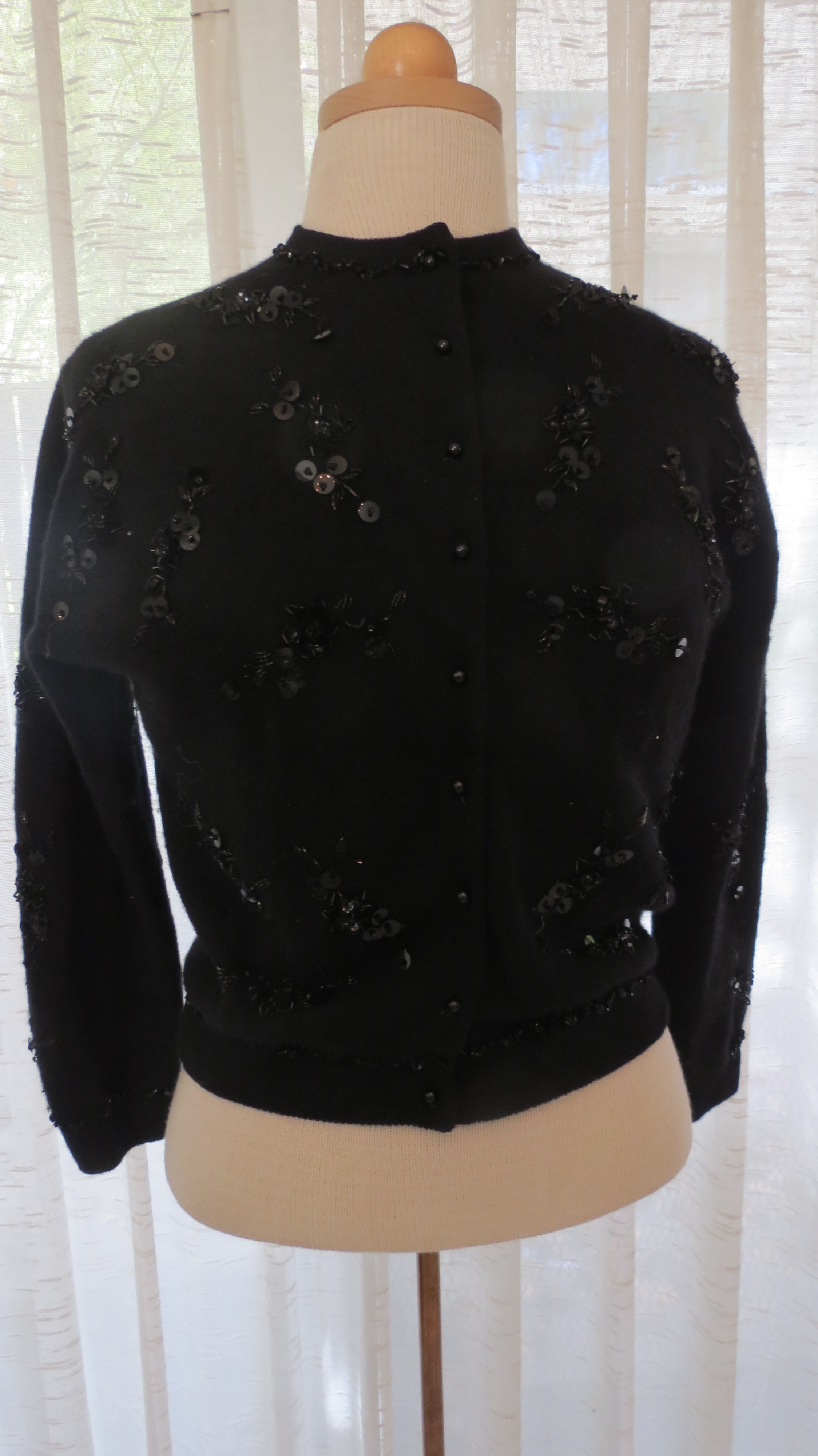
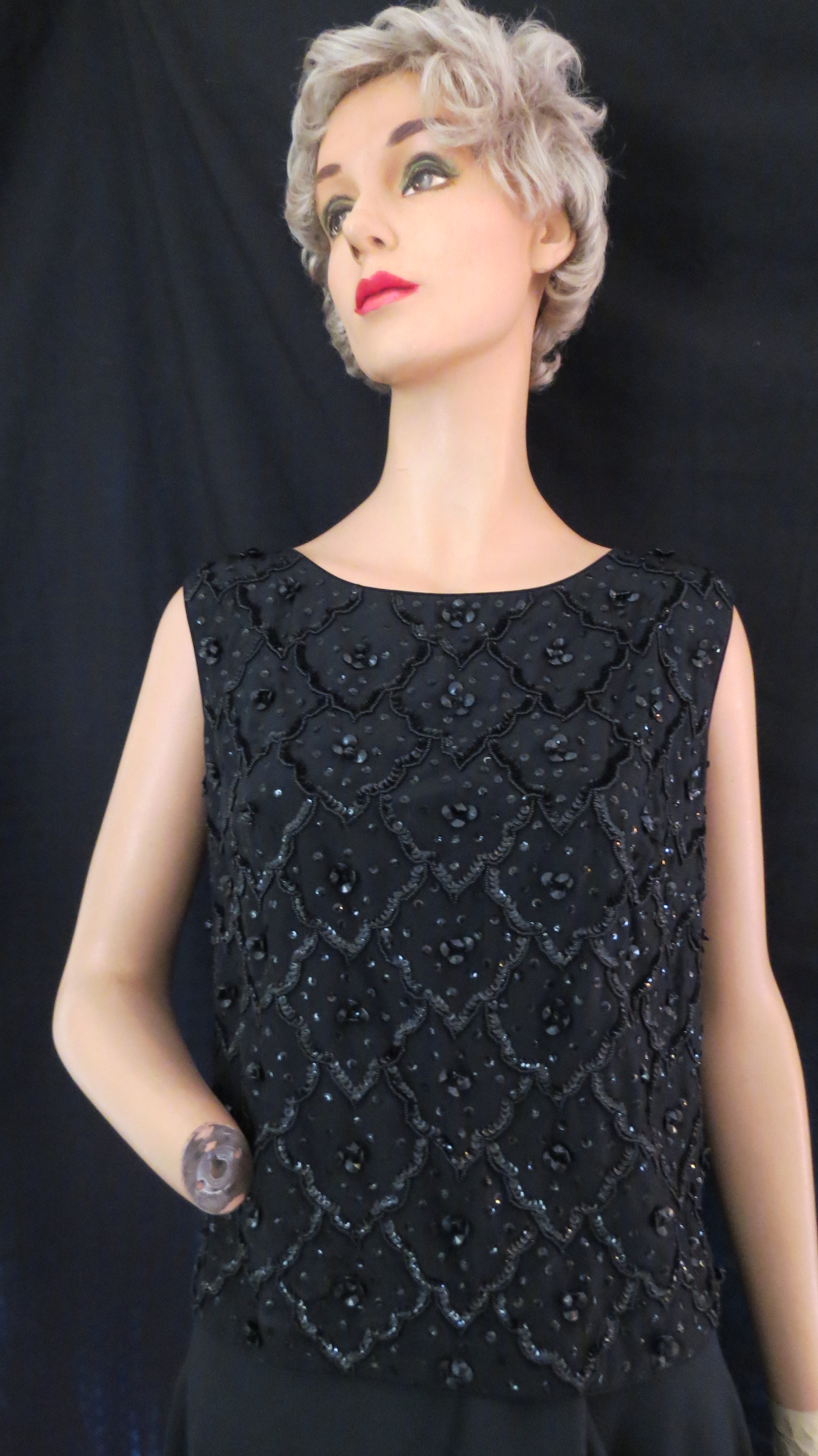
1950’S – EARLY 1960’S BEADED TOPS GO ELEGANT TO DRESS-UP

Here are two examples of the most iconic cocktail fashions of this era, which could be dressed down for a home-based cocktail party or dressed up with a well-styled skirt for a more formal type of party or event. The best were made in British Hong Kong – sweaters were made of fine lambswool or cashmere and shell blouses of rayon or silk. They would always be lined and have tiny sewn-in labels showing the bust measurement. Finer pieces had cloth labels from fine tailoring shops. These two are beautiful, but not the nicest I have discovered.

Although many tops similar to this were made in the ’80’s and ’90’s when retro “vintage” fashions became really hot, I never saw any as well-made as these are. There was a great variety of designs and types of beads; sequins, seed beads, jewels and, ribbon were all used. Like these, most were monochromatic but there were some with contrasting designs. Usually, the design was also on the back side and required some care when worn but that was not considered to be a hardship for women in the 1900’s.

Tomorrow I’ll start showing some dresses. This is a category of true vintage fashion that is a very big one! Stay tuned . . . . . . . . .

MORGANA MARTIN, THE MAGICVINTAGESPY

BLOG: MAGICVINTAGESPY.COM

START OF A SERIES: TRUE VINTAGE PIECES FOR COOL, DRESSY EVENINGS

We’re now heading into the season for indoor parties, special occasions and events after the long, lovely summer; Cocktail parties, dinners, dances, recitals, holiday galas – you name it. I’ll be starting a series of posts of pretty, dressy and semi-formal garments in my collection from the 1950’s – 1990’s which will take us into the Fall and even Winter. Stay tuned . . . . . . . . . . . . . . . . . . . . . . . . . . . . . . . .

MORGANA MARTIN, THE MAGICVINTAGESPY

BLOG: MAGICVINTAGESPY.COM
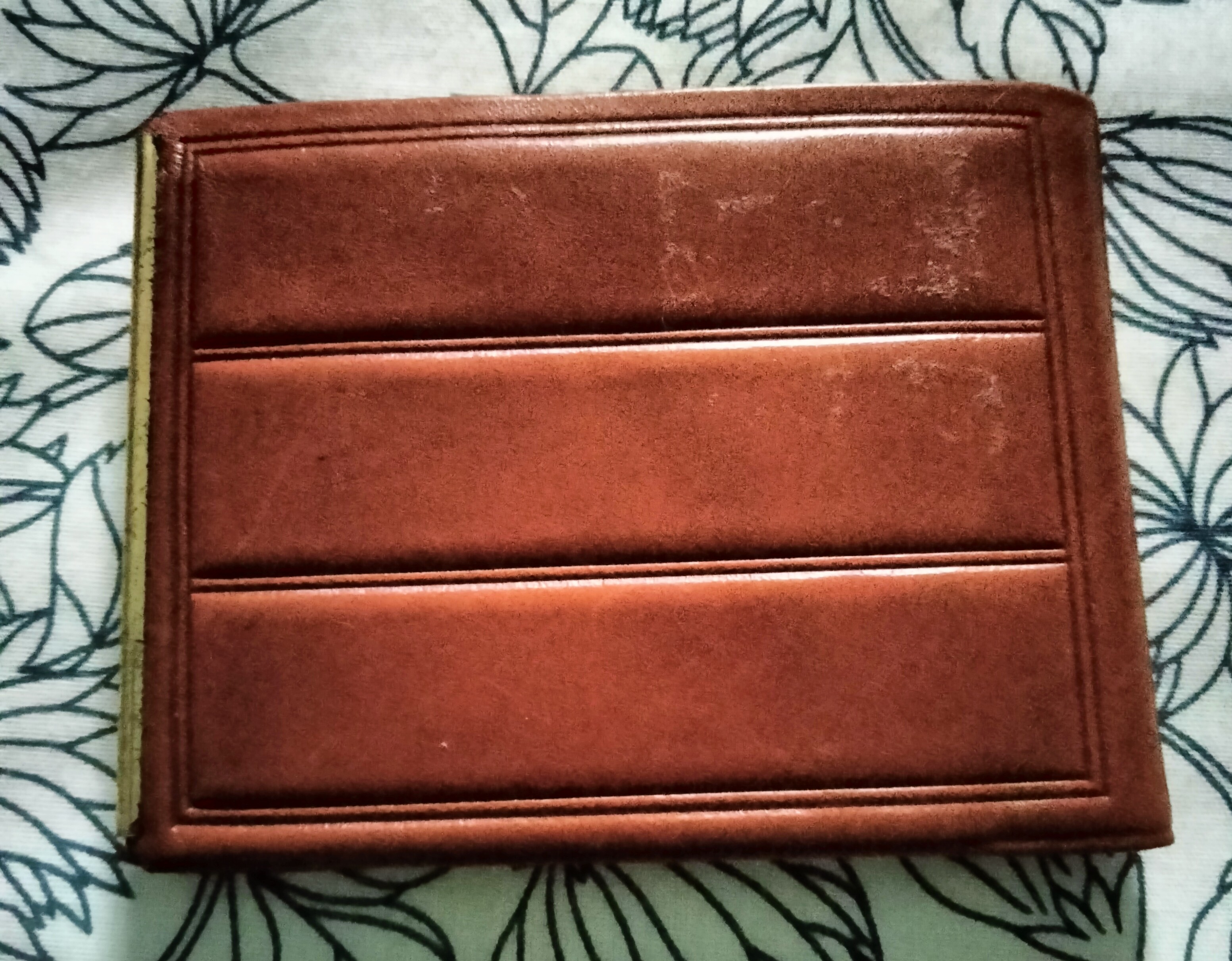
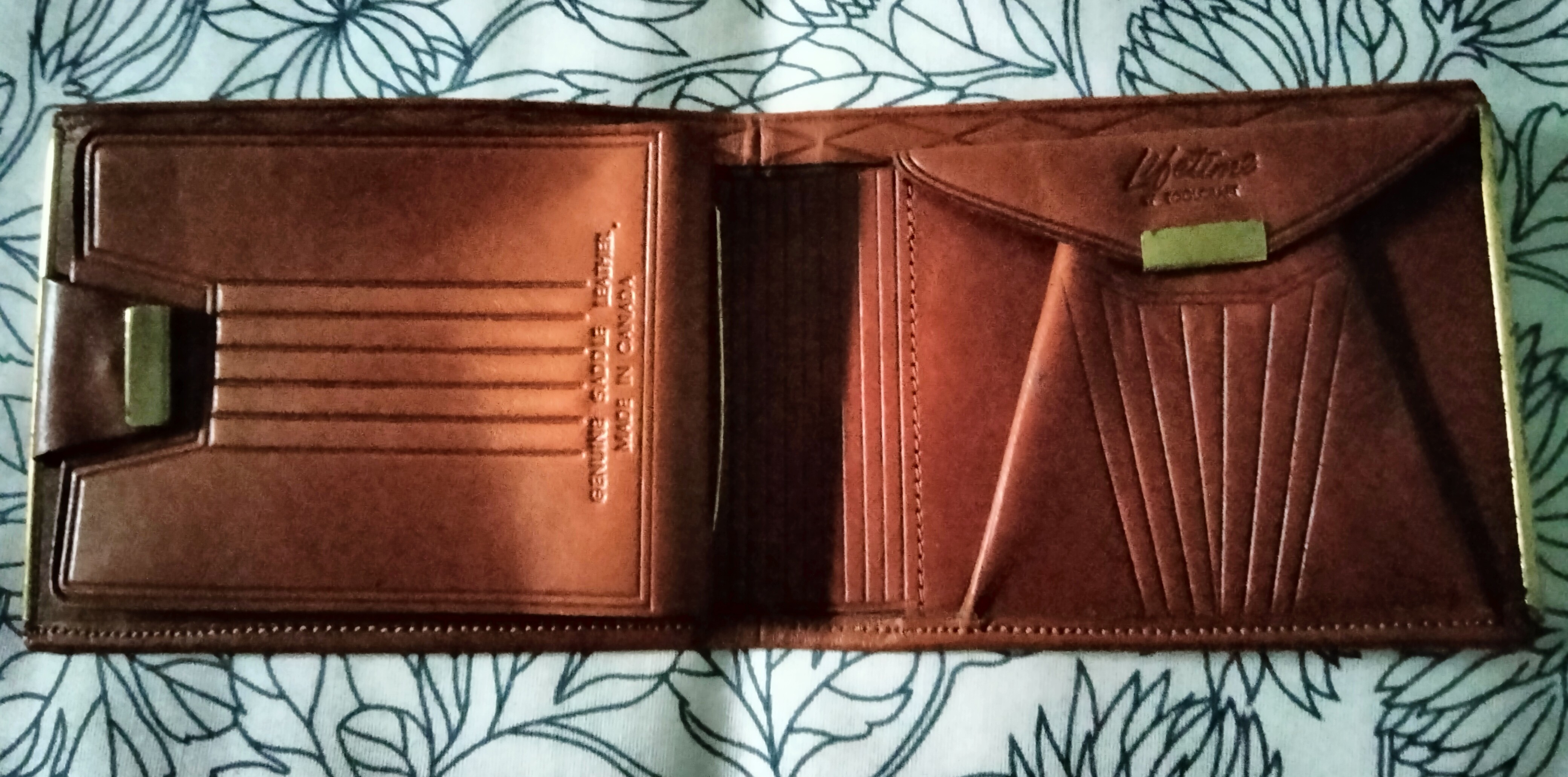
TRUE VINTAGE UNUSUAL MID-CENTURY MEN’S LEATHER BILLFOLD

Here’s my next deja’ vu find – similar but completely different from the wallet found and posted two weeks ago. This well-made billfold is very unique, also with tooled details but very different from the other’s style. The decoration almost makes you think that it could have been designed for women, but I’m going to stick with the conclusion that it was made for men because it is so slim. Women’s true vintage billfolds generally are much thicker and were meant to be carried inside a purse rather than in a pocket. However, I’ll happily use it! Another similarity to the wallet shown two weeks ago is the unusual coin-purse inside. What a surprise to find this feature again! One of the most frustrating things about men’s wallets is no good place to put coins and other small items. What could be more practical for a man or a woman? No more holes in pants pockets from digging for the loose coins at the bottom!

It’s made by another iconic brand – Toolcraft, made in Canada. As I always say, I can’t send enough love for the quality of goods made before about 1970. Also, lots of love to the women, and men, who valued quality over quantity and took care with their possessions so that they would truly last for decades as opposed to the culture we have today which just produces mountains of trash.

OK, enough of that because a true vintage investigator is free from it! And, this is not the last of my latest discoveries – stay tuned for the next transmission .. . . . . . . . . . . . . . .. . . . . . . . . . . . . . . . . . . . . . . . . . . .

MORGANA MARTIN, THE MAGICVINTAGESPY

BLOG: MAGICVINTAGESPY.COM
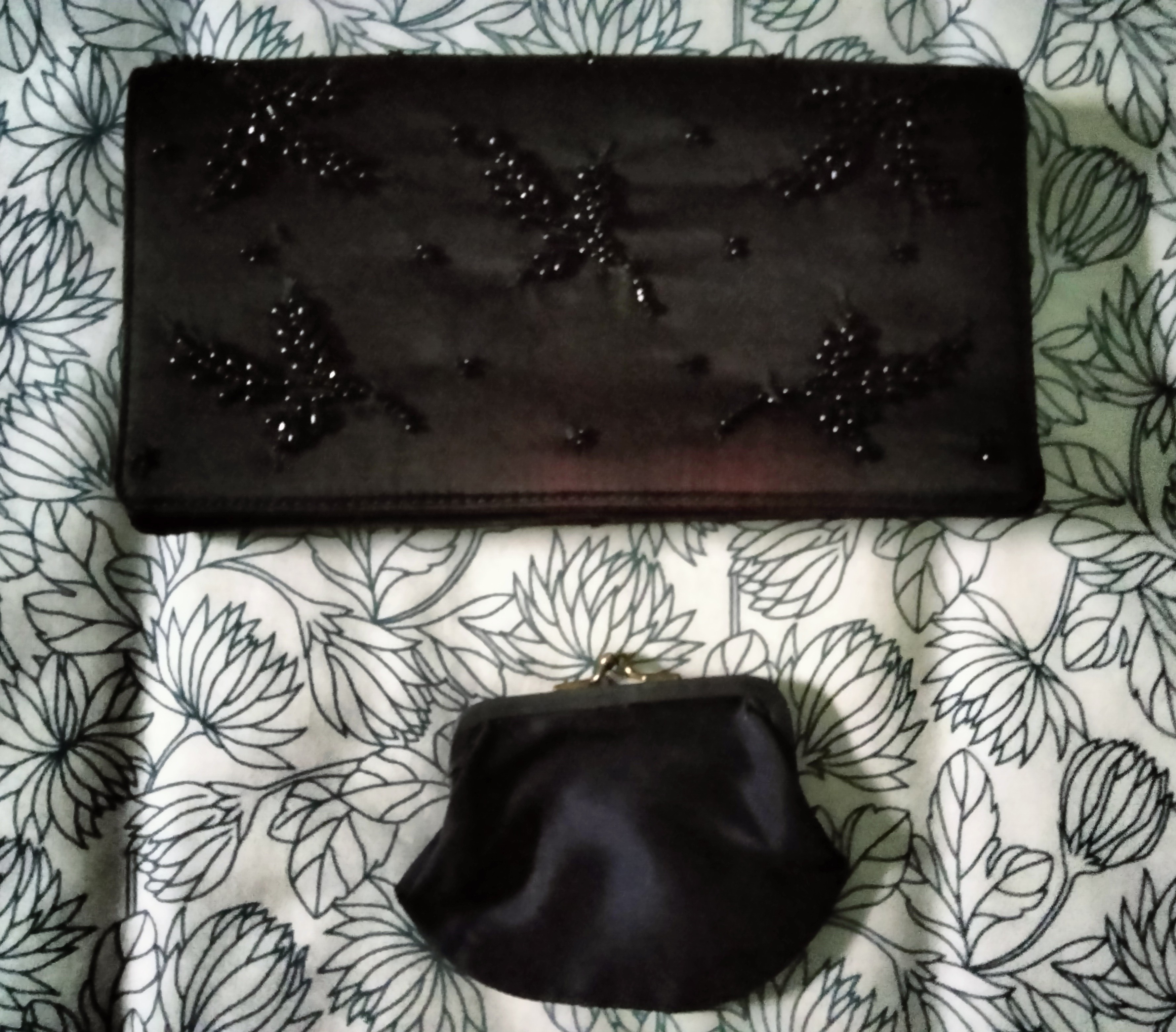
EXCITING “NEW” TRUE VINTAGE HANDBAG FINDS!

Let’s start with a deja’ vu item (for me) – I call it this because I discovered a nearly identical one and posted it just two weeks ago! However, the exciting thing is the different clues involved in their stories. Always SO interesting! Plus, one new item which is a rare find and always makes me do an extra happy dance. . . . . . . .. . . . . ..

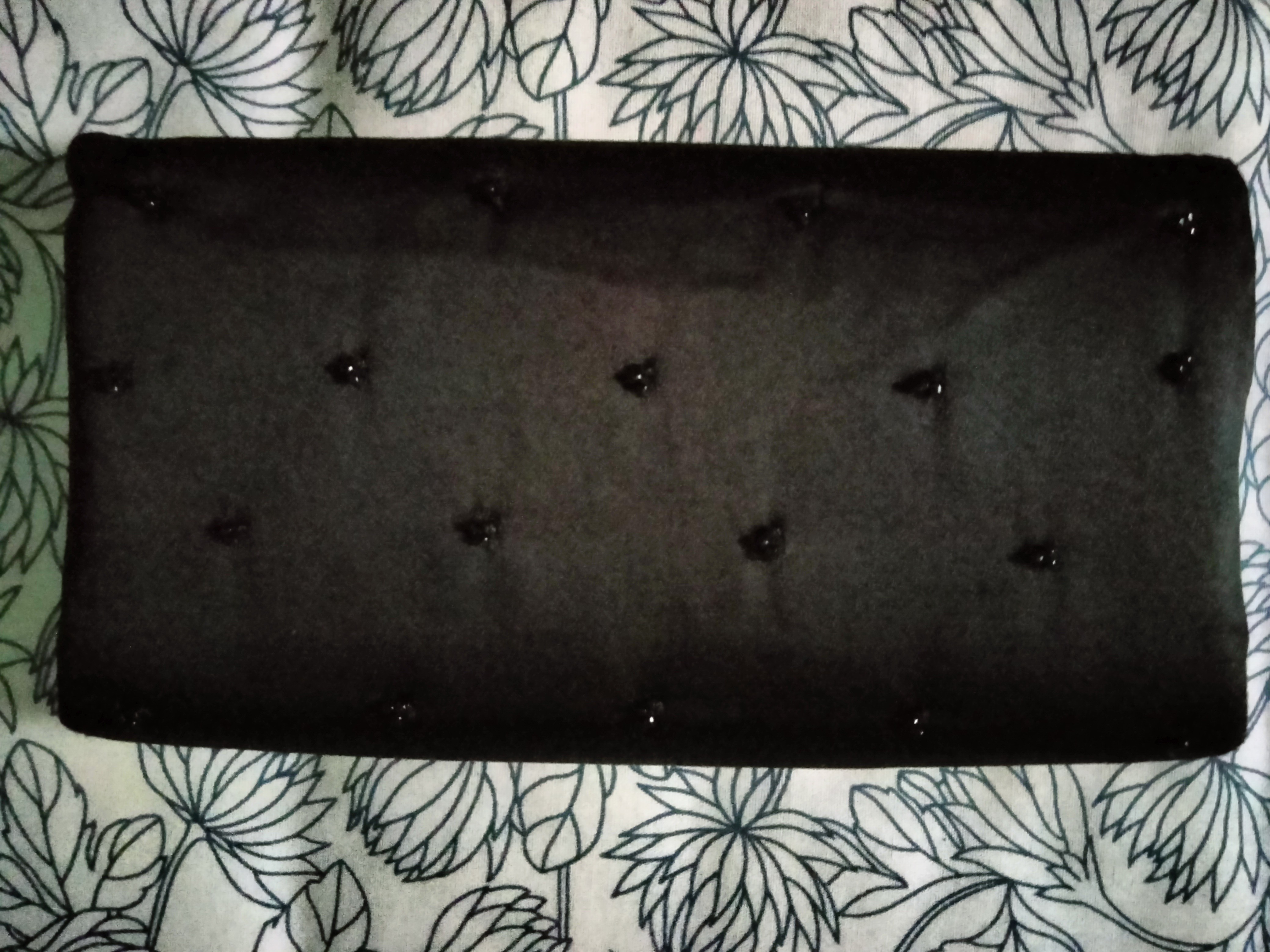
Oh, Ho hum you may say. Another black cocktail clutch. Yes, I have many of these in my case archives (and closet), but each one is unique in some way. The fun thing about this one is the similarities to the other one recently found; 1. Both are rectangular and designed to be hand-held. 2. Both are made of black rayon satin. 3. Both have hand-done beading on the front AND back. 4. Both have an additional pocket (or two) inside. 5. Both are from the mid-century, probably post-WWII.

HOWEVER, the one found two weeks ago is more finely made. It was constructed in Hong Kong (while it was still British Hong Kong) while this one above was probably made in North America but is an iconic brand name (Soure’). The first found has more elaborate beading on the front. It is a sac design with no stiffening and simply folds over to close, while this one has stiffening between the layers, probably some form of cardboard, and a metal snap closure (more common and less elegant). These clues lead me to decide that the first find is 10 – 20 years older even though they are so similar. Investigations are so fun! You can check out the previous post and see what I mean.

The final item, just found, is the one that really gives me happy feet – see the little coin purse? I LOVE FINDING THESE!!!!! Not too many of them exist anymore and they are SO convenient and iconic inside a true vintage handbag. This one, also, is navy blue rather than black. It will definitely have a home in one of my purses at Headquarters.

OK, that’s the first of my recent deja’ vu finds, but there is another one which I will put in a separate post because it is in a different category – Men’s true vintage accessories! Stay tuned . . . . . . . . . . . . . . . . . . . . . . . . . . . . . . . . . . .

MORGANA MARTIN, THE MAGICVINTAGESPY

BLOG: MAGICVINTAGESPY.COM
TRUE VINTAGE 1940’S DRESSY DRESSES FROM AFTER THE WAR YEARS

Here’s another group of finds that were fabulous. Let’s look at the details on these frocks, which were over-the-top when wartime rationing was no more and fashion was ready for a break-out right before the New Look. Lots of glitz – rhinestone buttons, metallic thread, sequins, beads, lots of little buttons and velvet. Hemlines went down again. Rayon reigned – it had become the darling of fabrics.

There was certainly an element of weirdness to some of these designs. The last two black dresses were discovered in Montevideo, Uruguay and had been made by specialty dressmakers. Many of their wardrobe items in that city came from France, and I suspect that there is a lot of European influence in these styles.

The top two designs are squarely U.S. American and the tag on the dress with the big velvet bow indicates that it was made by a company that was producing affordable garments, probably during the early recovery from wartime. The navy blue dress was higher-end and looks so much like the costumes seen in late 1940’s film noir.

Tomorrow we’ll look at some examples of how 1940’s dress styles have persisted during the following decades. Stay tuned . . . . . .

MORGANA MARTIN, THE MAGICVINTAGESPY

1940’s WAR-SHOCK DRESSES & WARTIME FASHION TRENDS

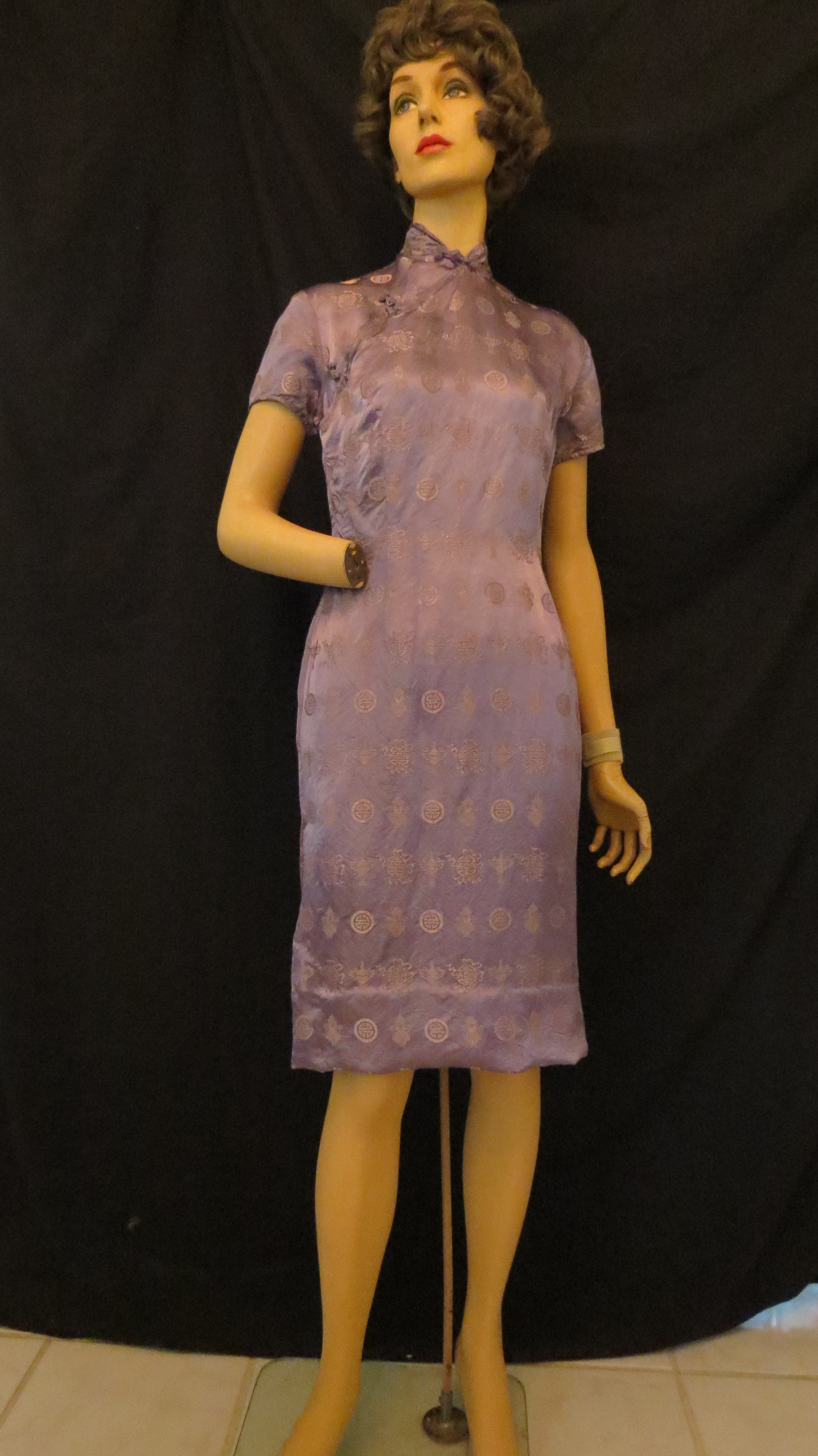
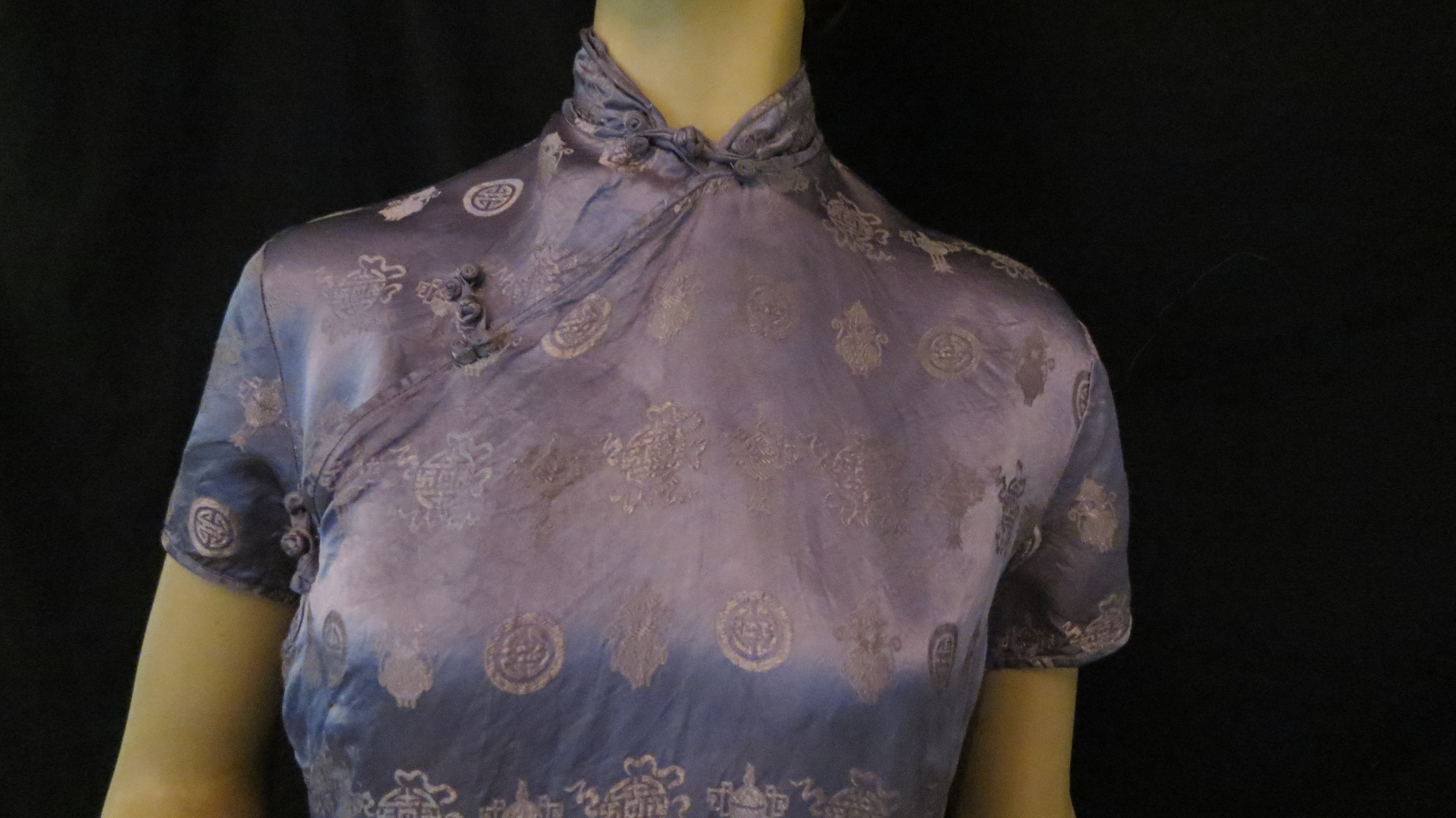
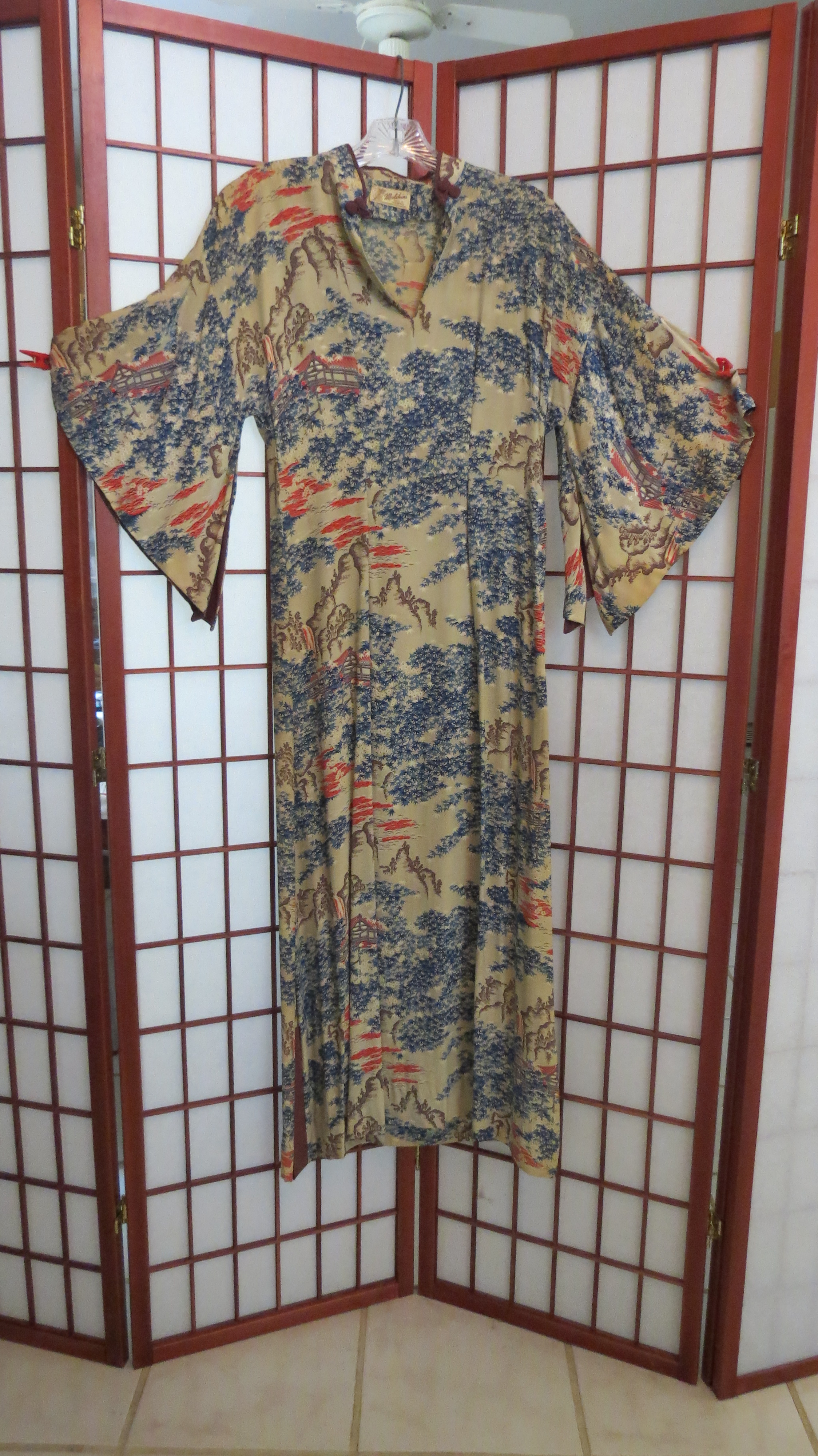
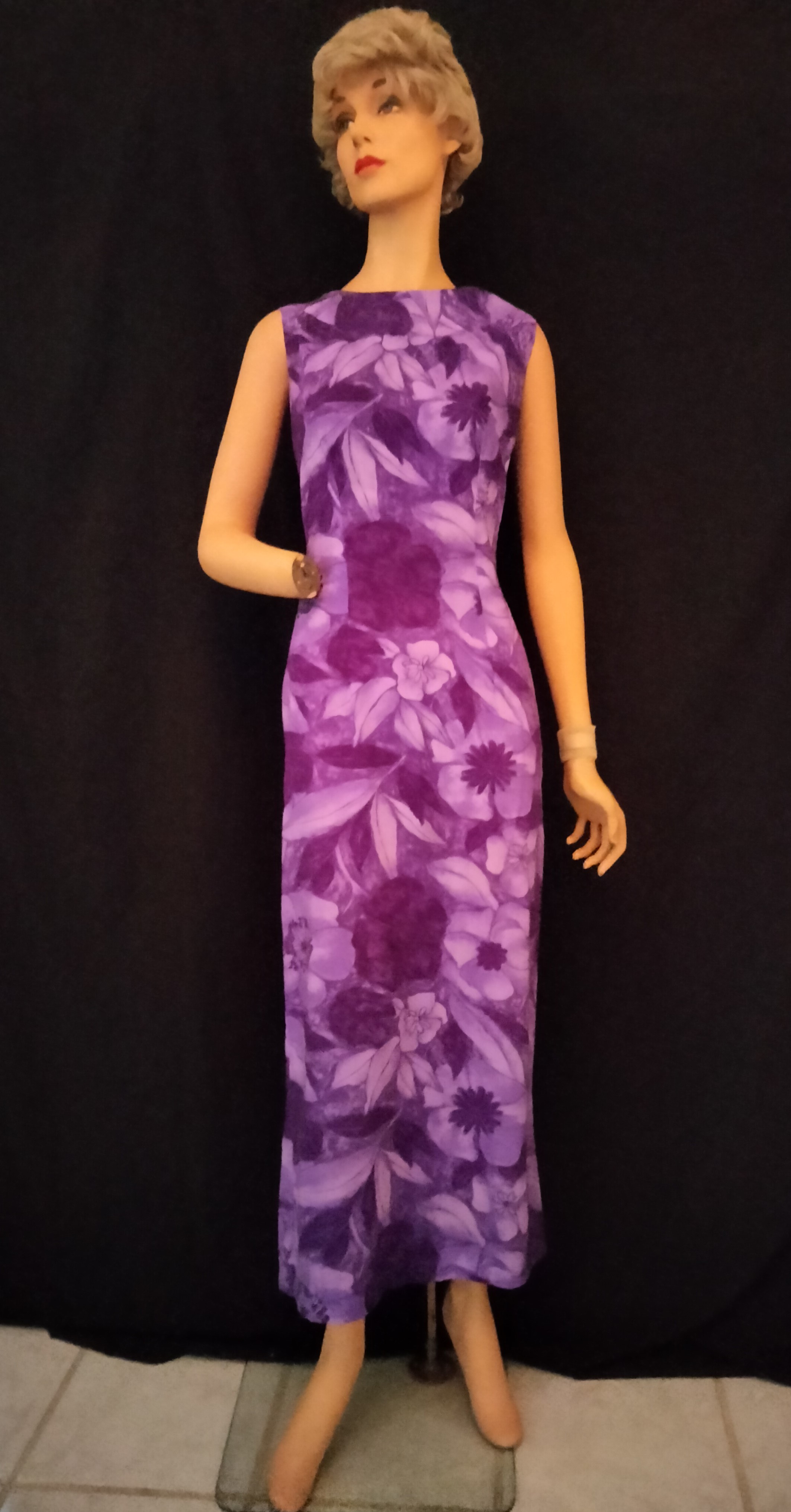
Before 9-11 it was hard for young U.S. Americans to understand the shock and fear that the attack on Pearl Harbor caused in December 1941. The government’s decision to join WWII, which had been happening in Europe and seemed remote to most everyday folks in the U.S., suddenly brought it close to home. The news and the movies began to open the doors on Asian culture and the curiosity of Americans and popular culture started to make this theme trendy. These dresses are from some of my most interesting investigations.

From the 1940’s on, Cheongsam dresses like the lavender one above gained popularity. Mata Hari and Charlie Chan became cultural figures in the media. The beauty and flattering fit of Chinese and Japanese traditional frocks brought interest in Chinatown areas of many cities and non-Asian women began to shop there. Above, see also a Japanese tea dress – fabulous find dating from the 1930’s, made in Hawaii. The purple native traditional gown from Hawaii also found a home in some American woman’s closet after people began traveling again.

But, before that time, women stayed at home. They worried about their family members and friends who were fighting in or living in war zones. They joined the war effort in whatever way they could through their work, volunteerism and spending habits. Of course, some kind of escape was necessary to maintain their sanity. That’s where the movies and dancing filled a void. Whether homemade or found at retail, dancing and cocktails required special dresses and women were very creative despite the restrictions caused by rationing.

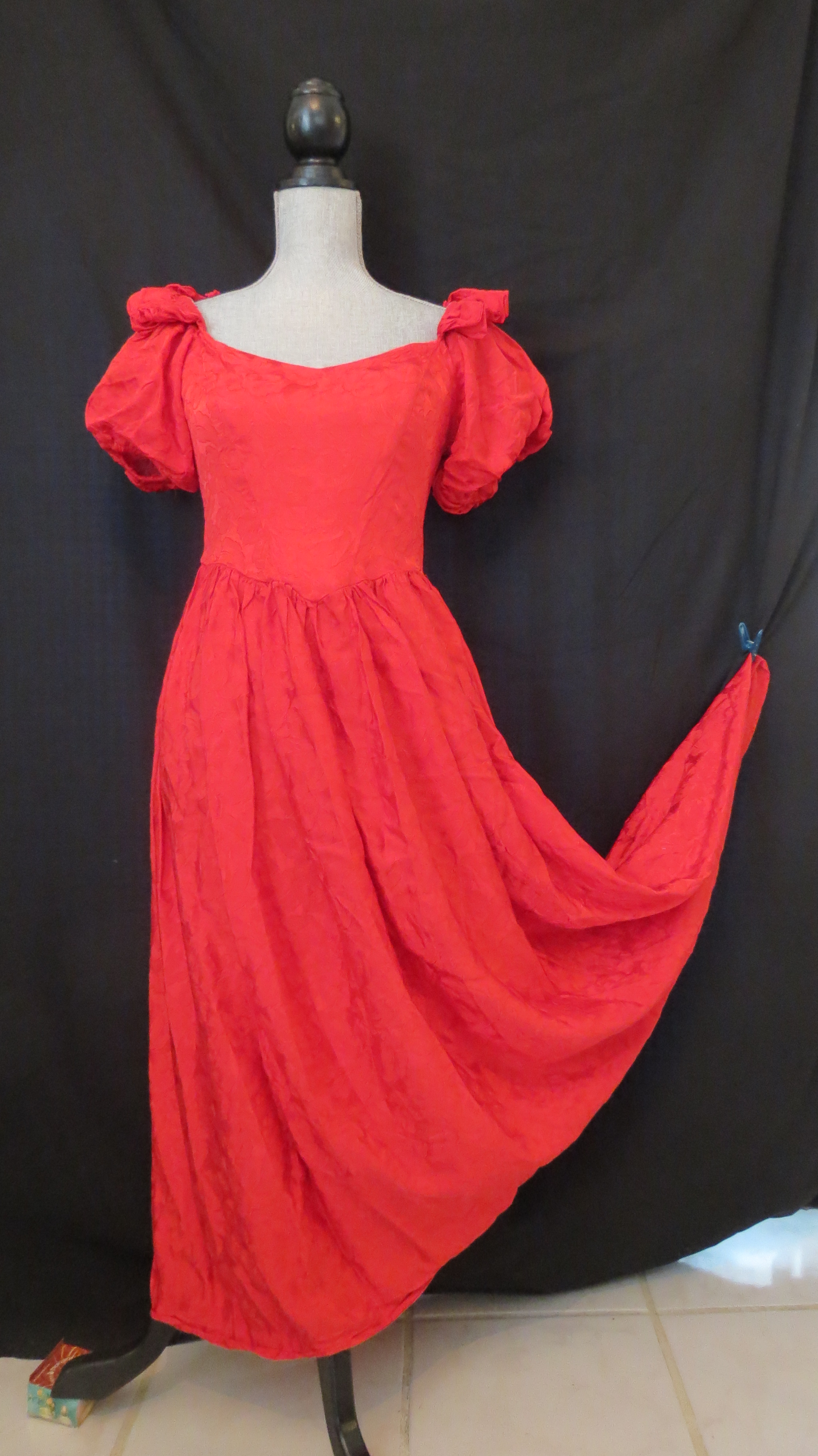
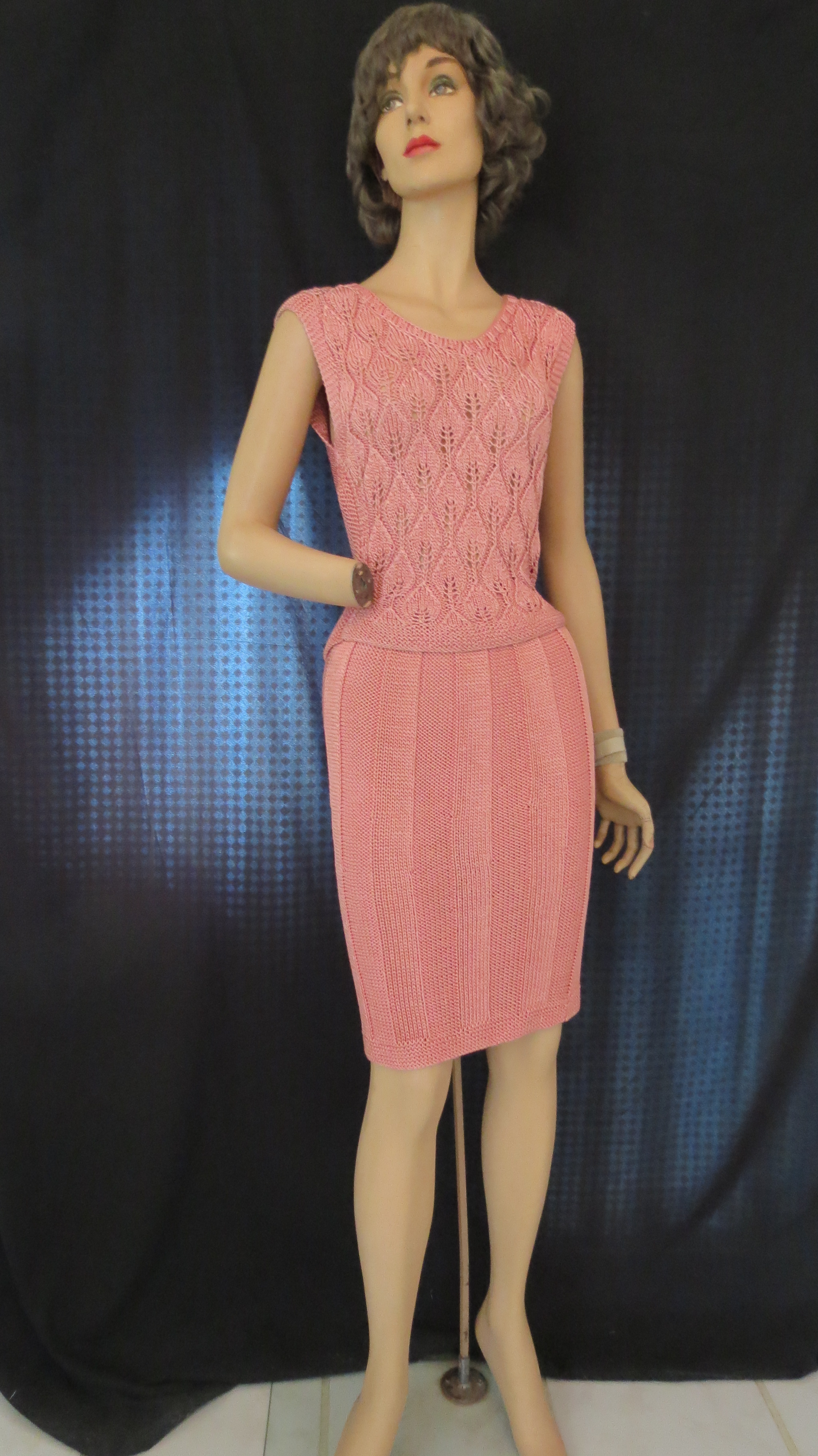
Synthetic fabrics were most available and affordable, so this red jacquard frock with puffed sleeves and an elasticized neckline which allowed cold shoulders was home-sewn. A similar style in black was local couture from a specialty shop in Texas and has ruched 3/4 sleeves and shows off the luxury of velvet piping decoration. The pink knitted and crocheted 2-piece cocktail dress was another unusual find which somehow found it’s way to Argentina. It’s made of a heavy, glossy/shiny yarn that allowed some gal to make a glamorous outfit on the cheap.

So fascinating! Such a fun bunch of clues these are. The delight is in the details. More tomorrow – stay tuned . . . . . . . . . . . . . .

MORGANA MARTIN, THE MAGICVINTAGESPY

BLOG: MAGICVINTAGESPY.COM