A PROPER BLACK TEA OR COCKTAIL DRESS FROM THE POST-WWII ERA

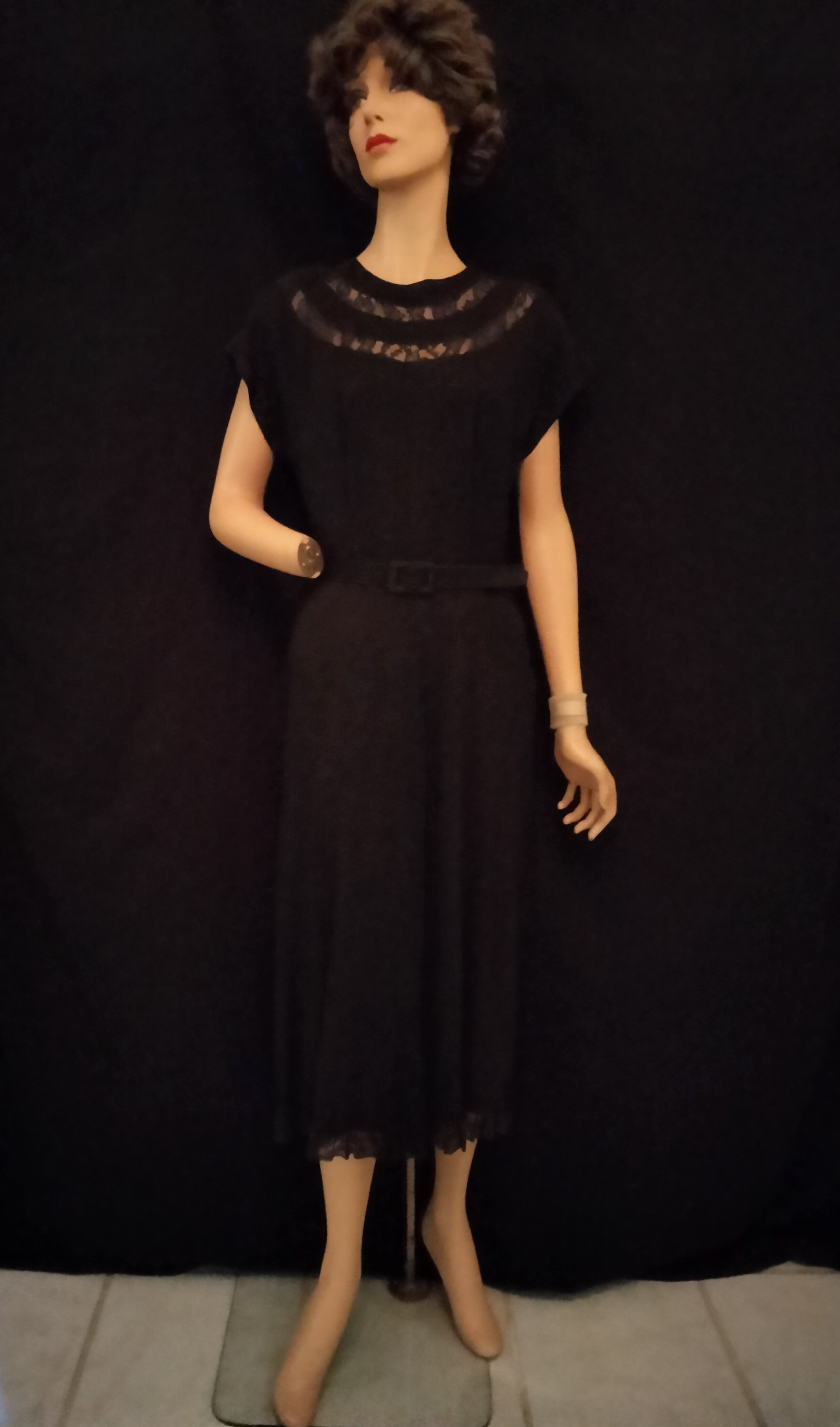
Frilled up a little by the lace inset at the neckline and lace trimming at the hem, this dress would have been accepted at any semi-formal gathering, cocktails or not. Although it’s a little bit “secretary, librarian, school teacher” in it’s modesty, the cap sleeves, peek-a-boo neckline and nipped waistline are a bit flirty. The ever-present black crepe fabric gives it the figure-skimming drape. Elegant, even though it wasn’t the most expensive frock.

Back when dresses were always the expected attire for any gathering that was professional or vaguely formal, this dress was an easy, comfortable design to meet the need. Styles were loosening up a little, though structure was still important and tailoring very elevated. In the 1950’s things changed hugely in Western society and, of course, in fashion. I’ll be investigating during the next few days but we’ll continue the cocktail fashion timeline next week. Stay tuned . . . . . . . . . . . . . . . . . . . . . . . . . . . . . . . . . . . .

MORGANA MARTIN, THE MAGICVINTAGESPY

BLOG: MAGICVINTAGESPY.COM

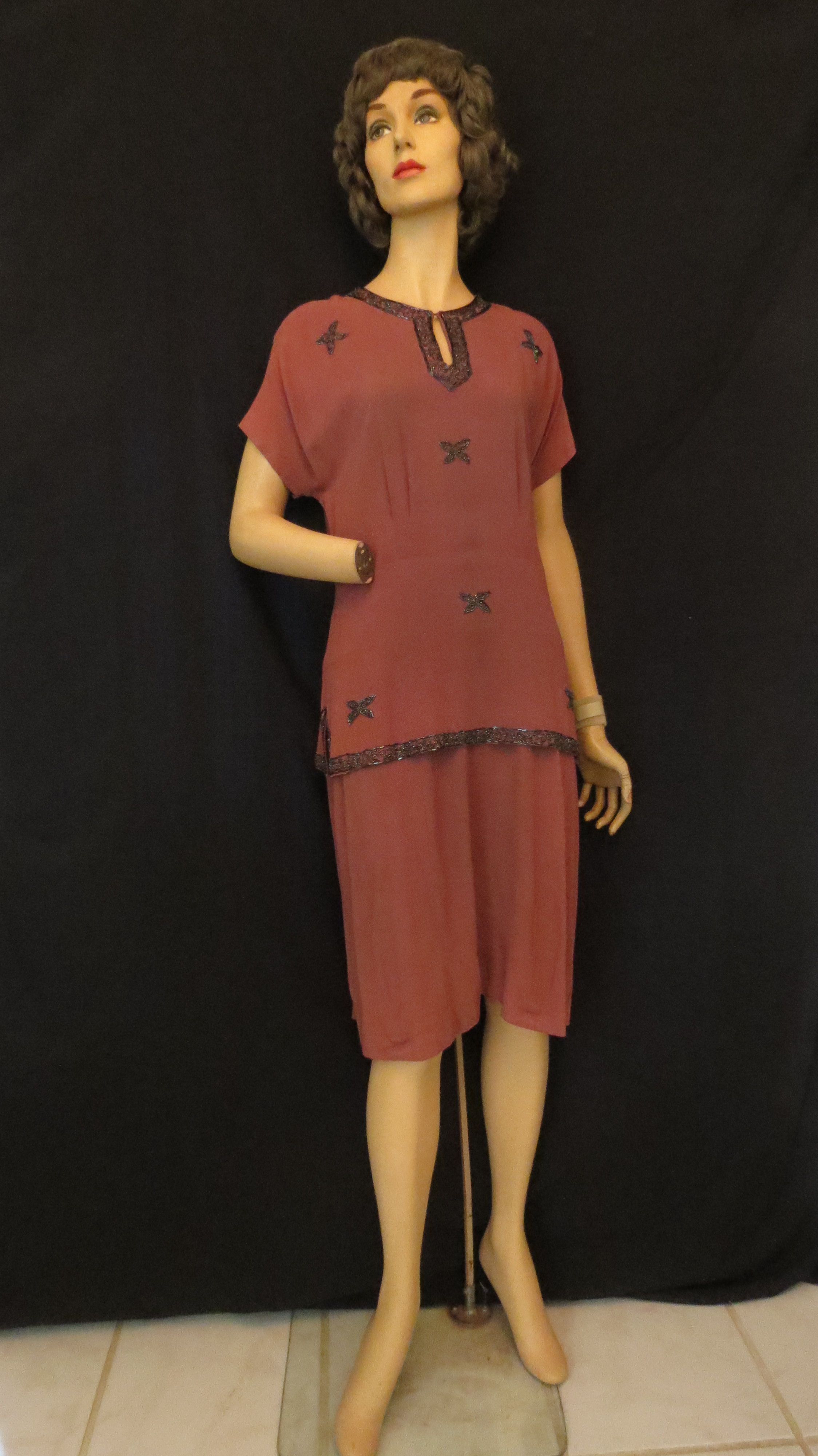
Oops – HERE’S ANOTHER 1930’S PARTY FROCK!

Several elements here from the decade between the two World Wars. Drapey rayon fabric, geometric beading decoration a la’ art deco and a dropped waist/peplum effect, a la; the 1920’s and the early 1940’s. The length also doesn’t know exactly where and when it is – looks pretty short on a tall gal like Stella but would be midi-length on a woman of short stature, or even medium height at that time when average height was shorter than it is today.

As “upscale” as this looks, it was apparently a massed-produced design. That makes it a little easier to understand why the styling was as confused as the times. Marketing always follows social trends. Think about it; we were still recovering from WW1, Prohibition was effecting the economy and the culture, The Depression was strangling almost everybody, war was fomenting in Europe and it was looking like WW2 might happen any day.

Yes, it’s a pretty and fun dress but the historical and cultural overtones are even more fascinating. Just another day in the life of a true vintage sleuth. We ARE going to cross the Post-war border between the 1940’s and the 1950’s by early next week. Stay tuned . . . . . . . . . . . . . .

MORGANA MARTIN, THE MAGICVINTAGESPY

BLOG: MAGICVINTAGESPY.COM

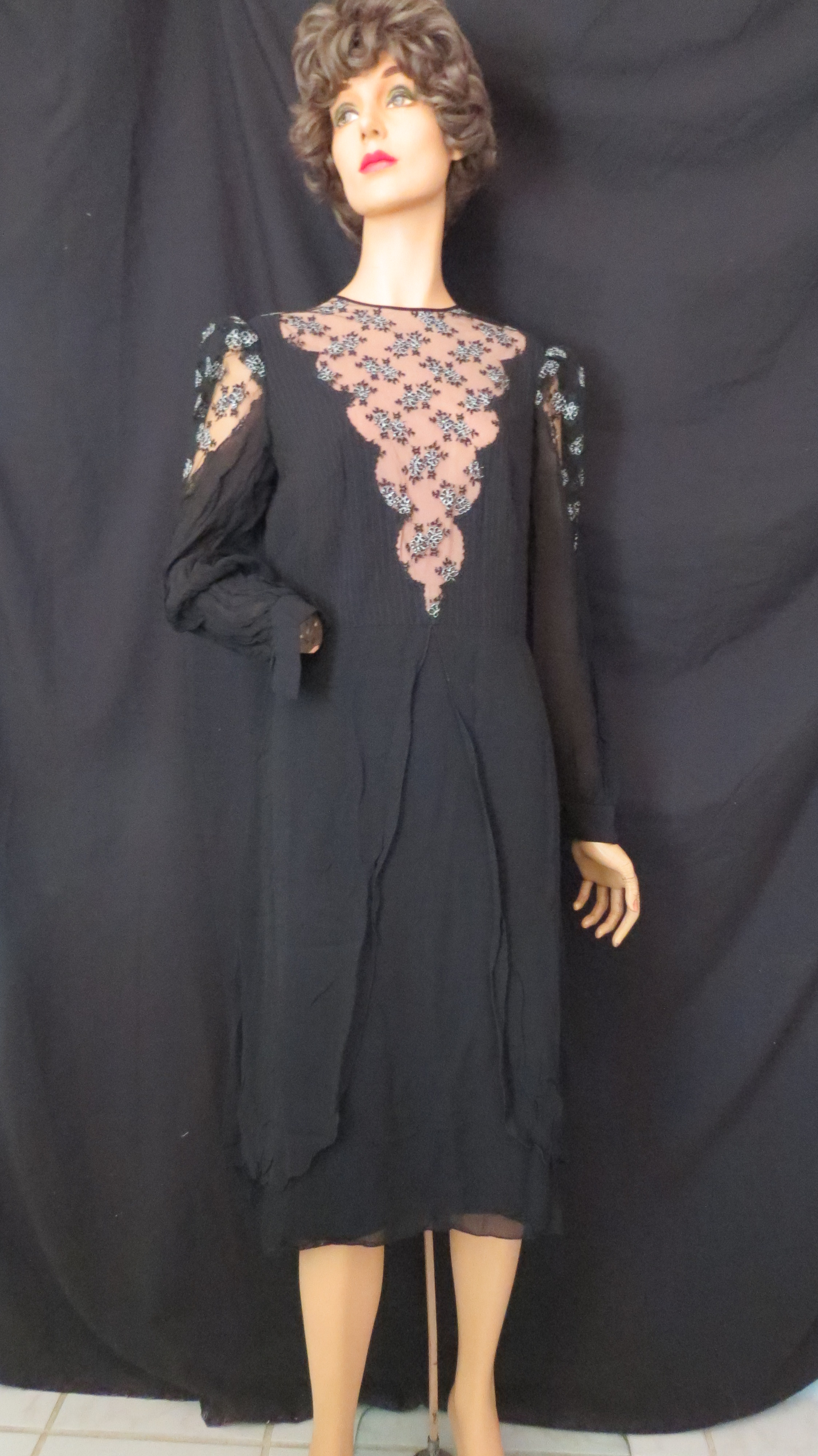
ANOTHER BEAUTIFUL 1940’S COCKTAIL FROCK FROM URUGUAY

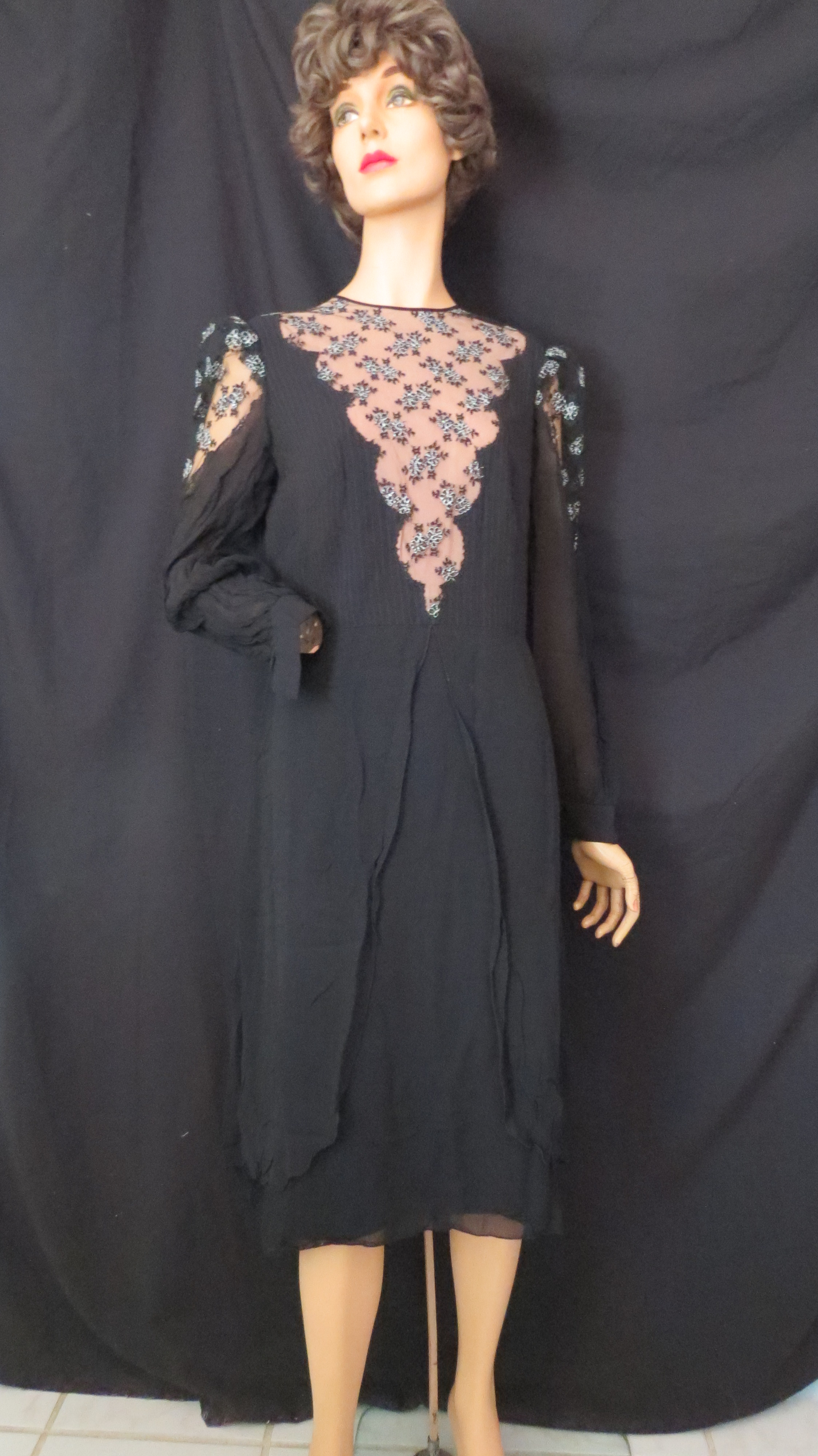
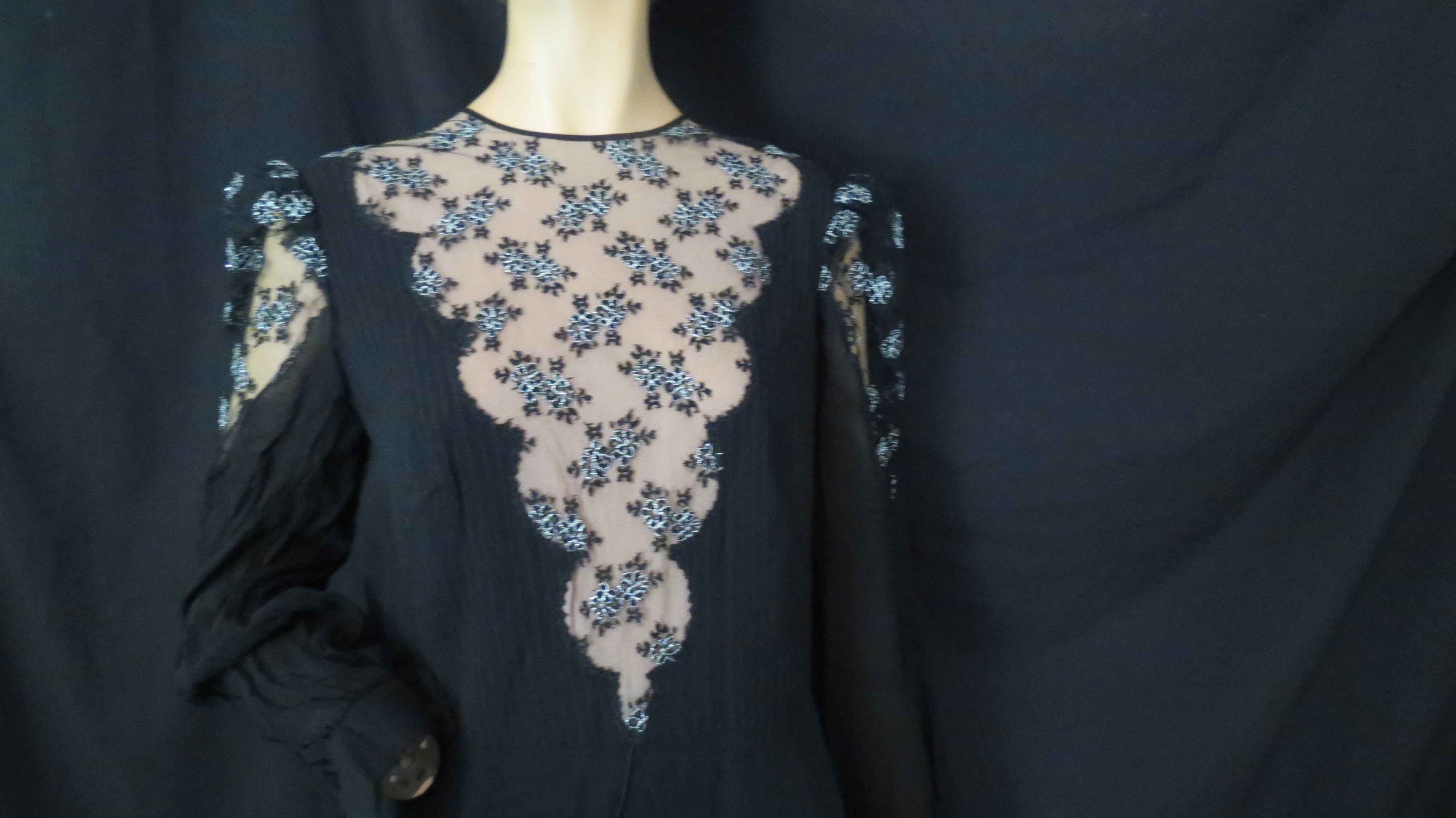
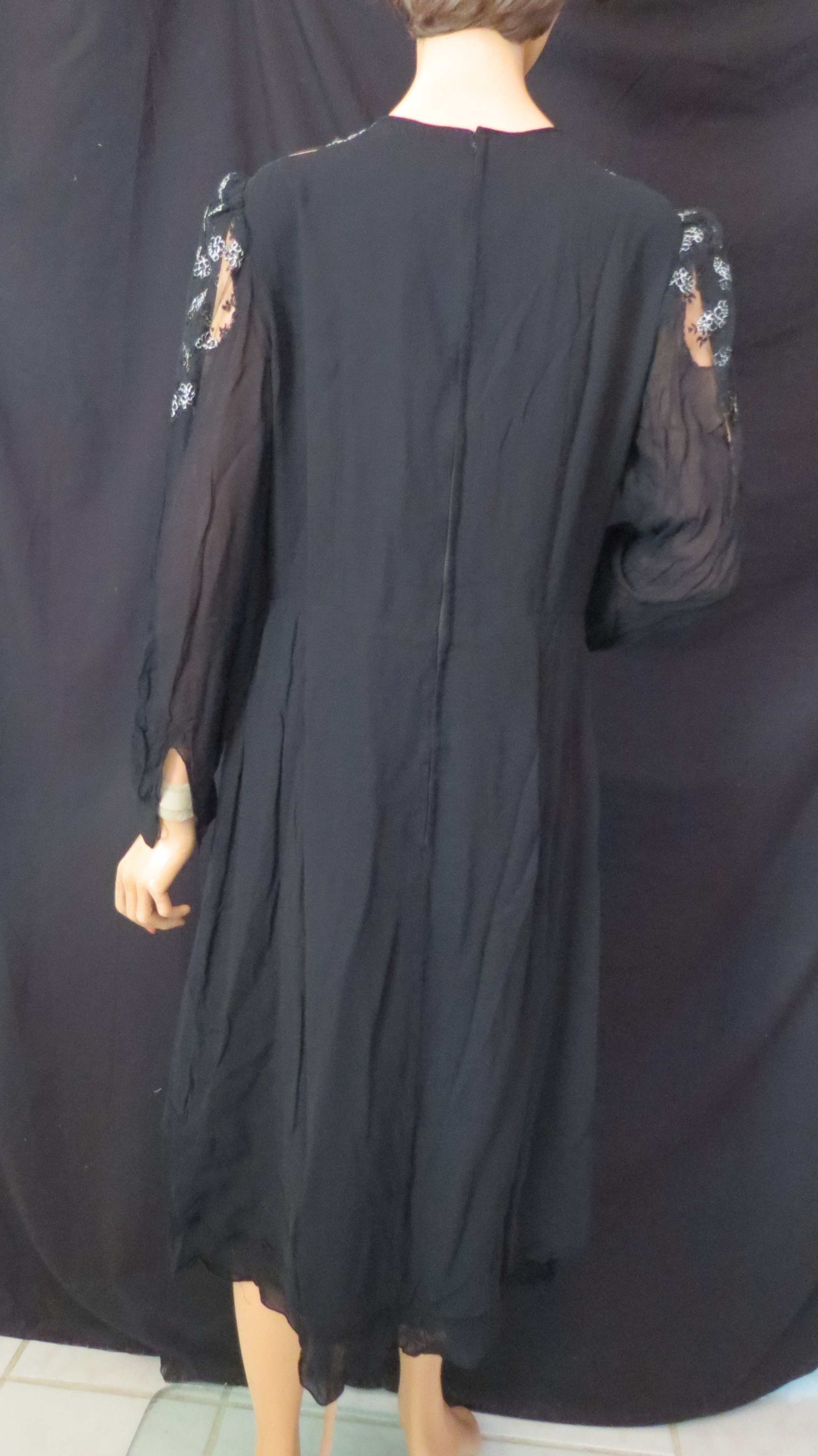
This semi-formal dress uses sheer material to emphasize the design rather than heavy ornamentation like the decorated frock shown yesterday. In my experience, sheer fabric with embroidered designs was popular in the 1940’s. It’s fun to see how dressmakers used it.

On the shoulders, these are augmented by gathered puffs at the shoulder seams and letting the body shine through rather than sewing shoulder pads in. It’s a nice balancing effect without the military look. Sheer fabric on the bodice is something I’ve seen before, too, but here it is backed by flesh-tone fabric, mimicking a plunging decollete’. The sheer fabric, though not with any embroidery, continues to be used for the long cuffed sleeves and as an over-dress with a long peplum over an opaque base layer.

So, the final result is dressy and sexy but also conservative. Clever design though a bit simpler than the one shown yesterday.This dress was at least partly hand-tailored. It has covered buttons on the cuffs and a long center zipper in back, which was a transition from side zippers that, in my experience, began to take place in the Forties.

Again, I was so intrigued and wondered about the original owner of this dress and where she wore it. Stay tuned for yet more 1940’s fashion . . . . . . . . . . . . . . . . . . . . . . . . . . . . . . . . . . . . . . . . . . . .

MORGANA MARTIN, THE MAGICVINTAGESPY

BLOG: MAGICVINTAGESPY.COM

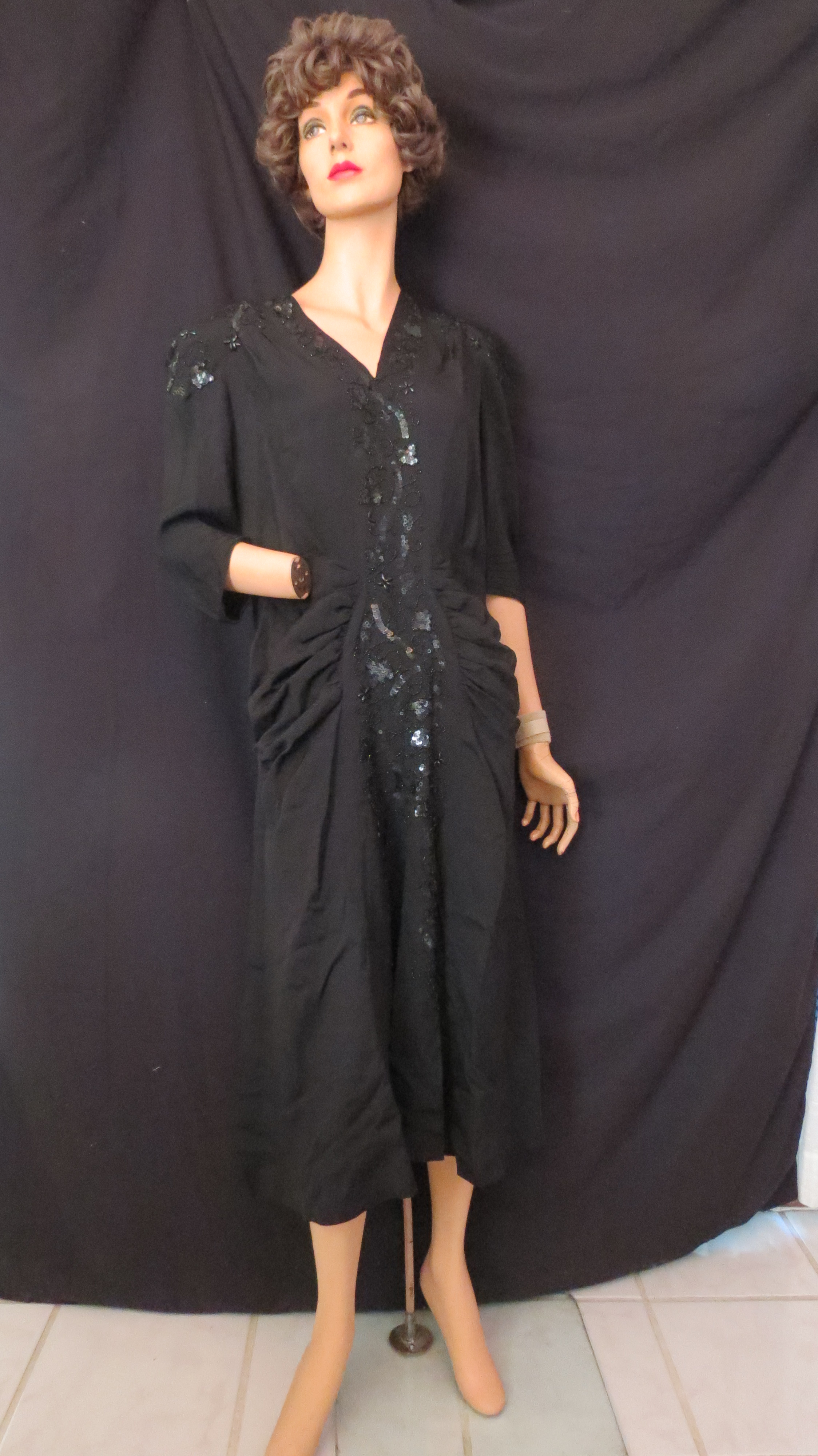
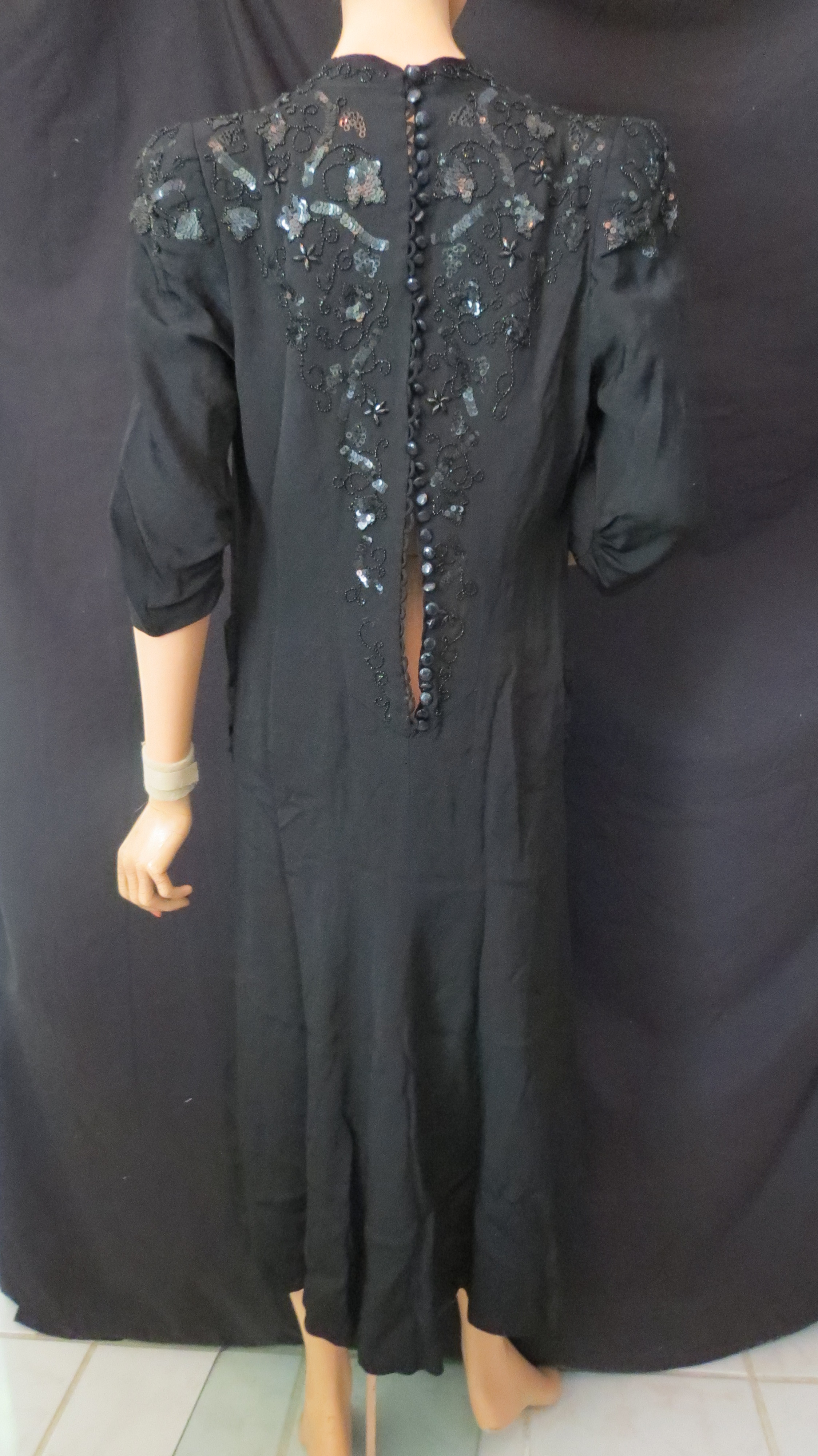
TRUE VINTAGE POST-WAR 1940’S BEADED COCKTAIL DRESS

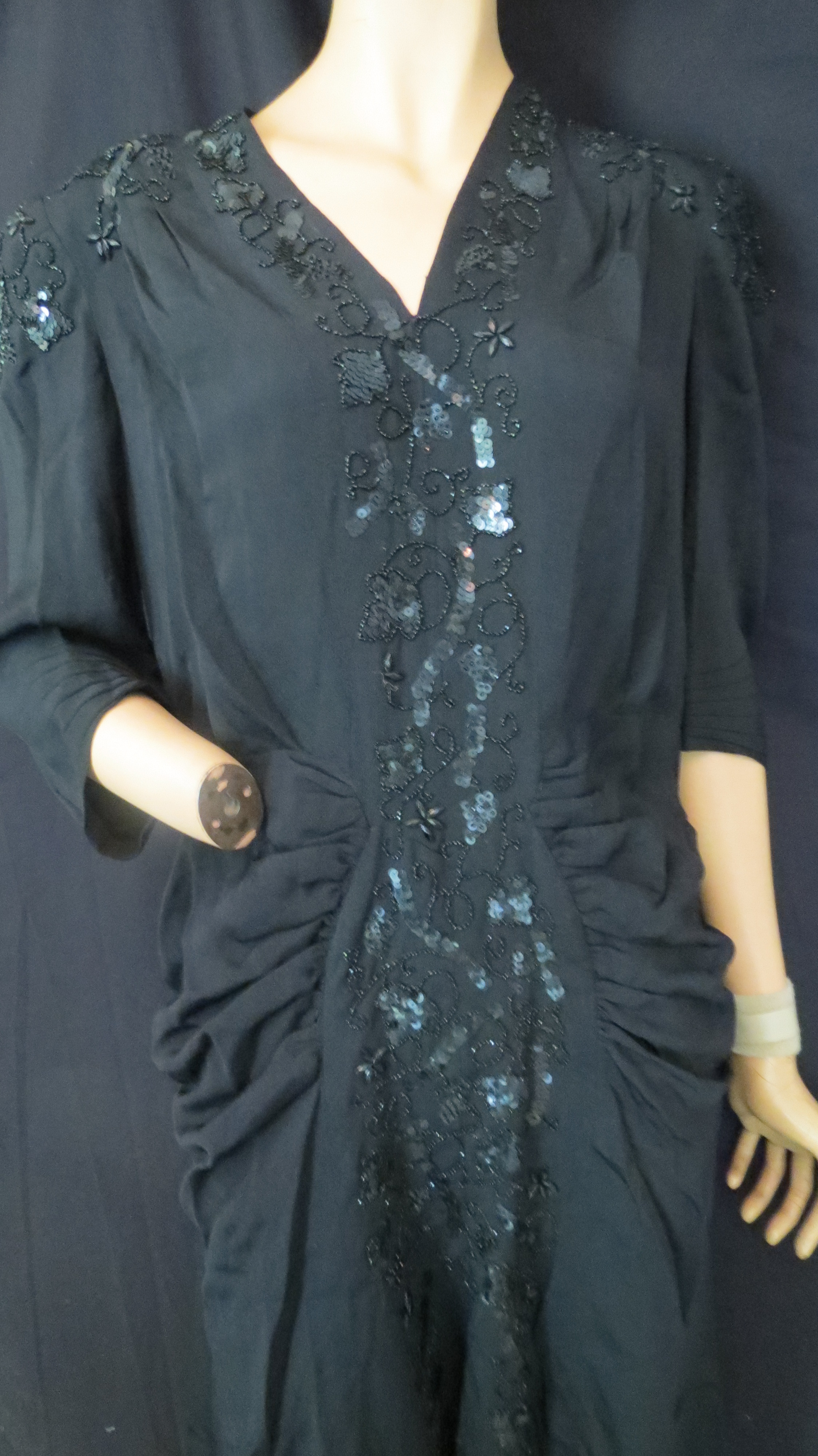
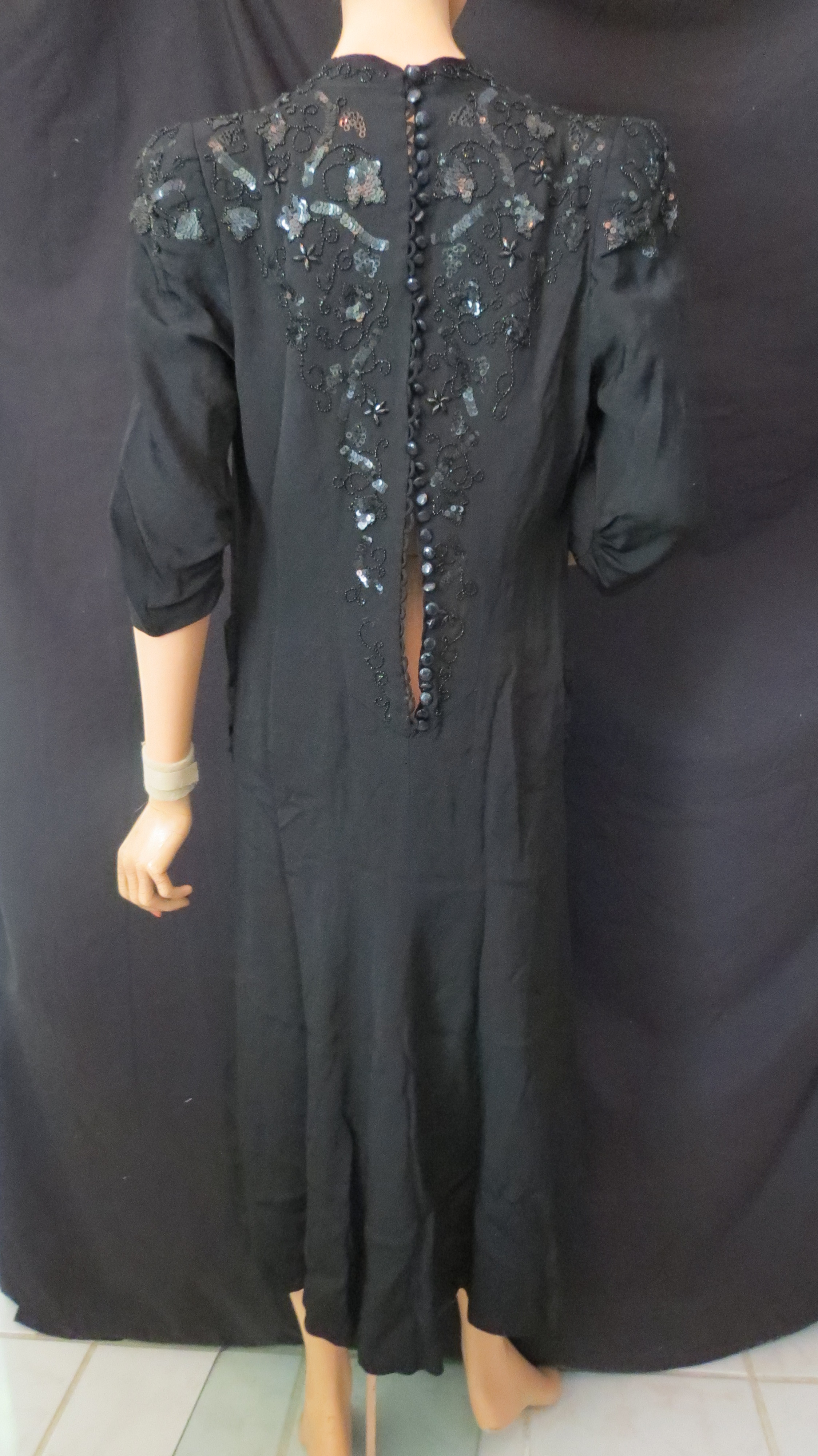
During a South American investigation, this frock was discovered in the beautiful and historic city of Montevideo, Uruguay. During WW 2, well-to-do Uruguayan women still had beautiful dresses made for them and did some trade in clothing and accessories from France. This dress has the label of a small tailoring shop, is exquisitely made by hand and was obviously owned by a woman from the upper class who would wear it to dinner or any semi-formal festive gathering.

Style-wise, the augmented shoulders, funky ruching on the hips and sleeves plus the midi hem point directly to the late 1940’s. Heavy decoration with beads and sequins is all done by hand, as is the finishing. Look at all the small buttons in back, each with it’s own fabric loop closure. Stay tuned for more from the 1940’s . . . . . . . . . . . . . . .

MORGANA MARTIN, THE MAGICVINTAGESPY

BLOG: MAGICVINTAGESPY.COM

BEAUTIFUL RAYON DRESSY DAY-DRESS FROM THE POST-WAR 1940’S

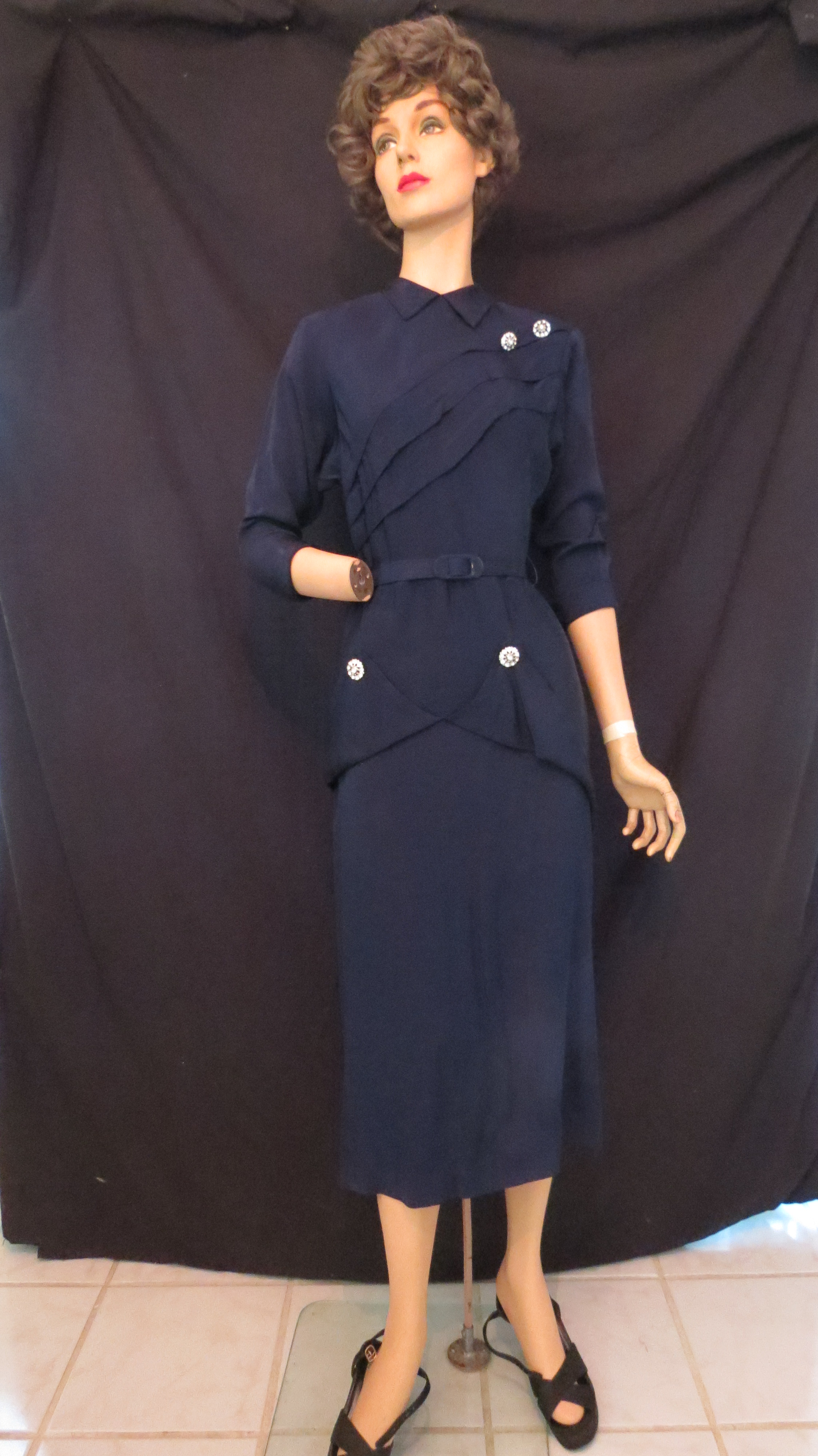
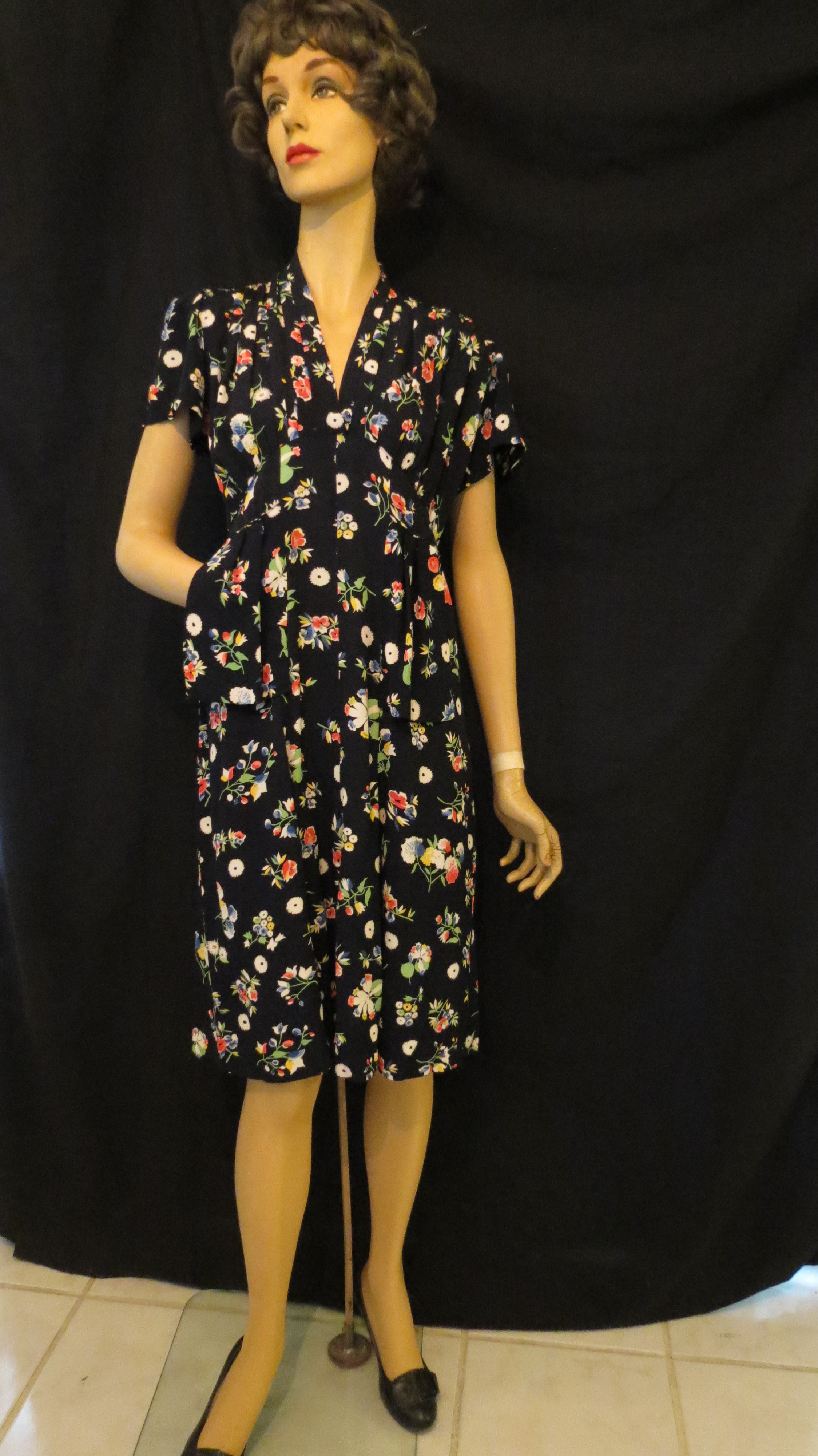
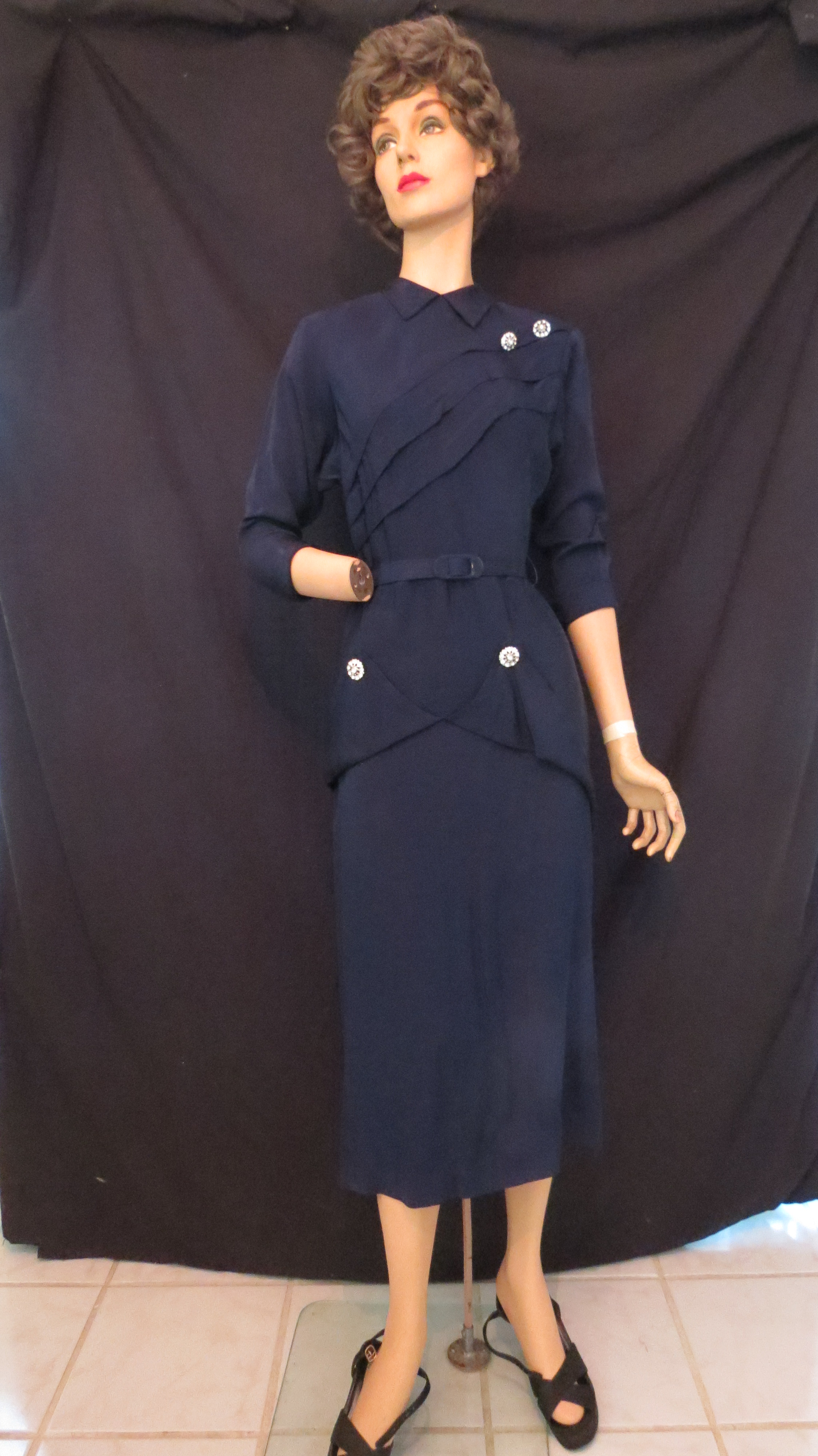
Taking a short break from the LBDs and going for a little color. This beautiful navy blue fitted rayon dress is a perfect example of the late 1940’s return to more luxurious day wear after the restrictions of rationing were ended. The label is Loma Leads, from a dress company that was organized in the late 1920’s and operated in New York and Paris. It had several departments and was around in one form or another at least into the early 1960’s. A very uptown classic ladies dress from the time when there was more fabric available again, so hemlines came back down and extra tailoring details like the peplum and bodice tucks were again possible. Women had been SO waiting for this! The exuberance of big rhinestone buttons on a day dress speaks to the attitude of a return to extravagance in fashion. The big skirts of Christian Dior’s New Look at this time is another example.

This style, however, is very buttoned-up and, to my mind, underlines the haughty, elegant and “rich” look intended here. After all the restrictions and deprivations of the “make do and mend” wartime years, luxury and affluence were the beckoning horizon for the United States and Canada while Europe was more intent on surviving and rebuilding after all the extensive damage to their infrastructure and land. But, Paris had always led the world of couture and design so fashion bounced back there, too, as Dior and other designers met the challenges and optimism of the new era and resumed their lead.

It is so fascinating to untangle the ways that fashion trends dovetail with historical events. The clues are everywhere and a good sleuth always looks for them. A completely different example from this time tomorrow – stay tuned . . . . . . . . . . . . . . . . . . . . . . . .

MORGANA MARTIN, THE MAGICVINTAGESPY

BLOG: MAGICVINTAGESPY.COM . . . . . .

1940’S WARTIME – EARLY POST-WAR ERA DRESSY FROCK

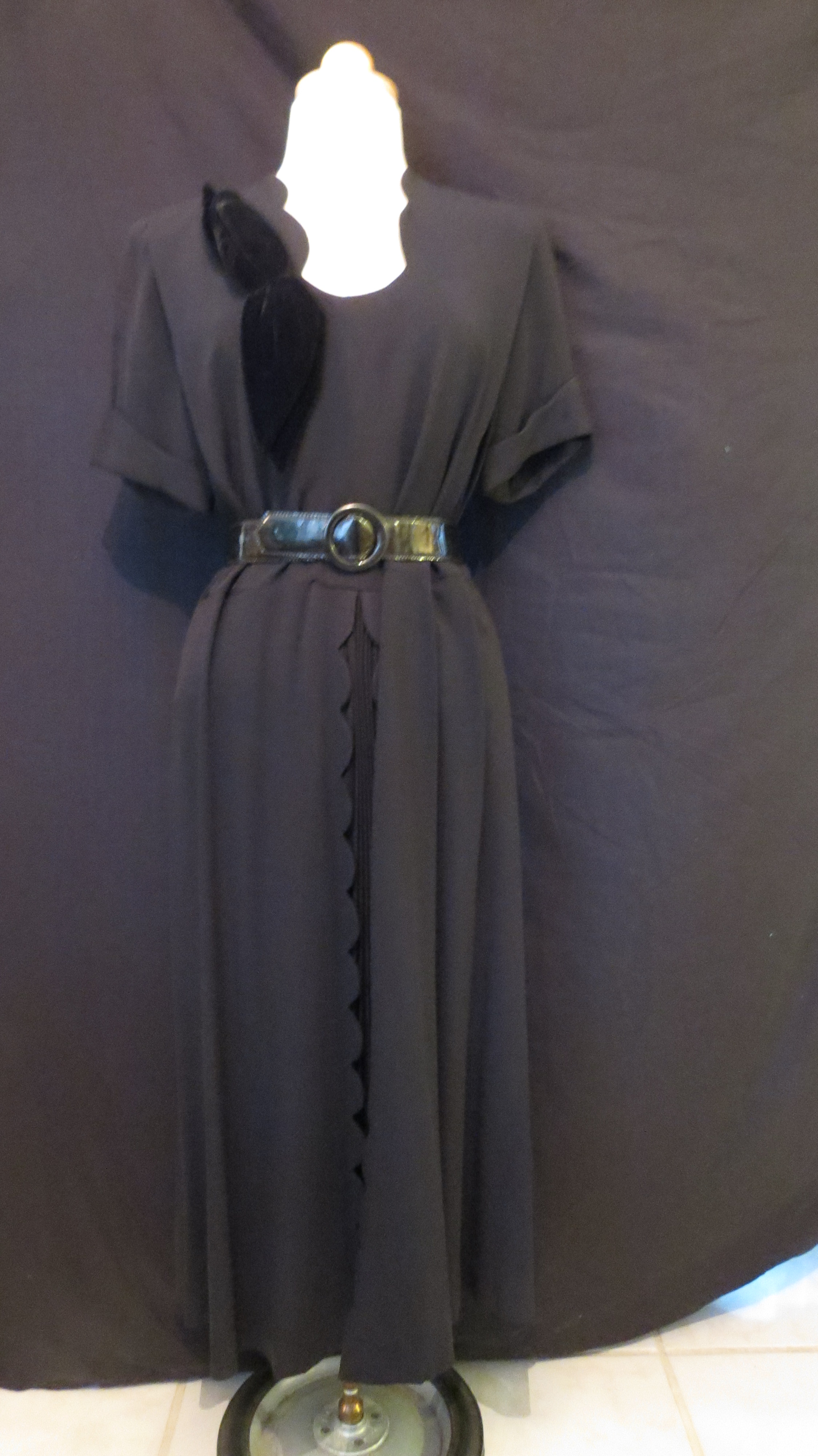
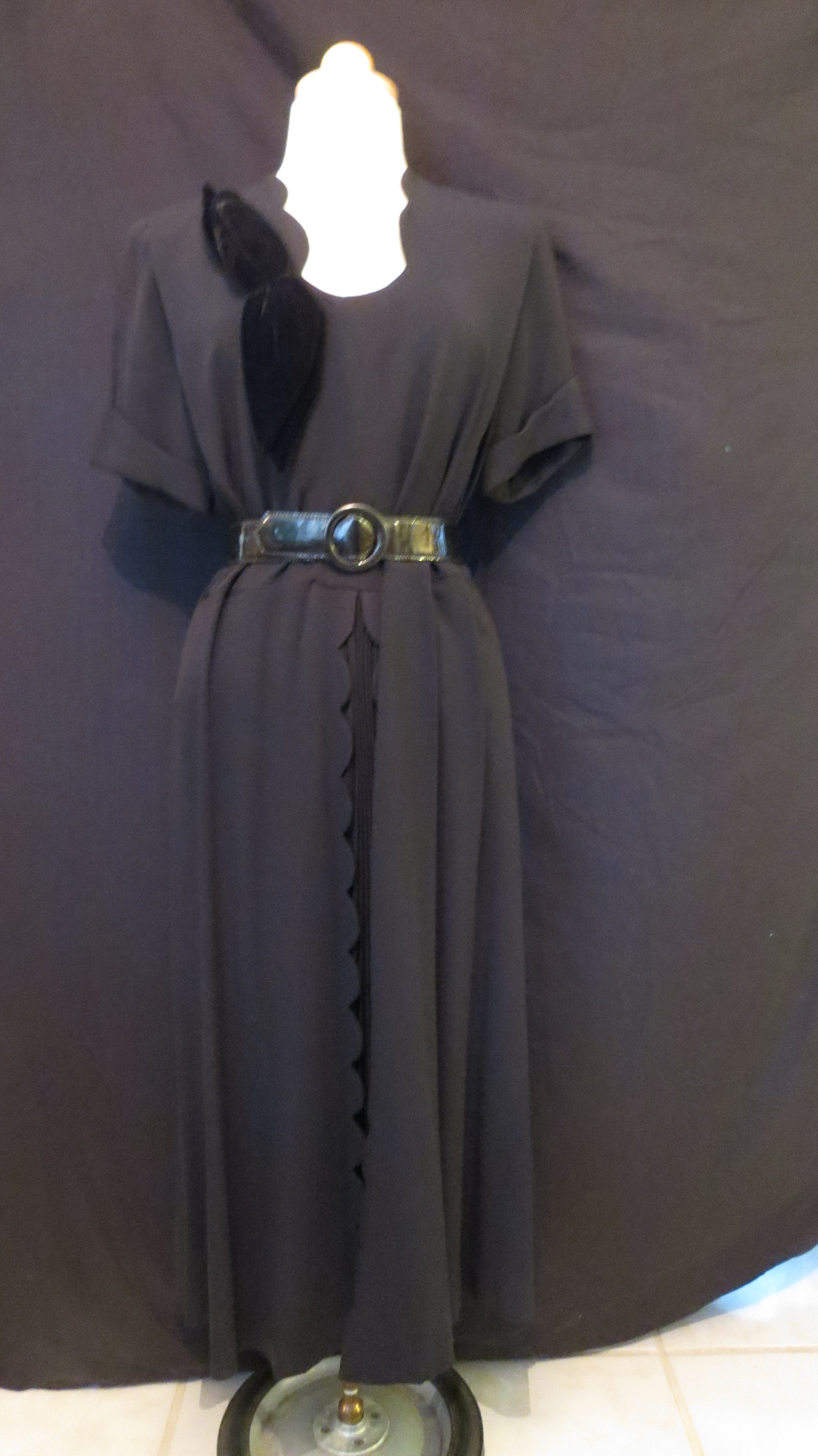
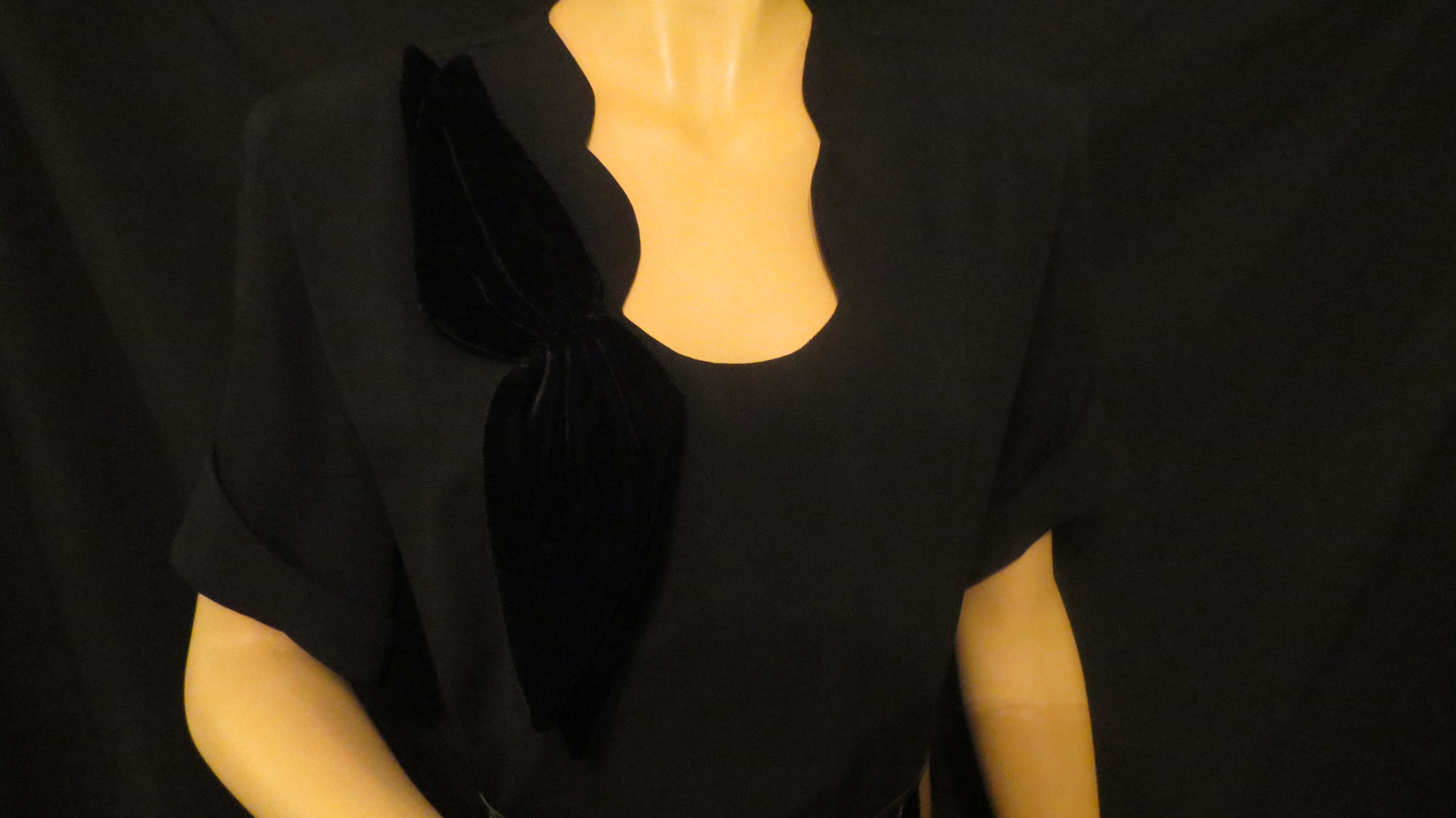
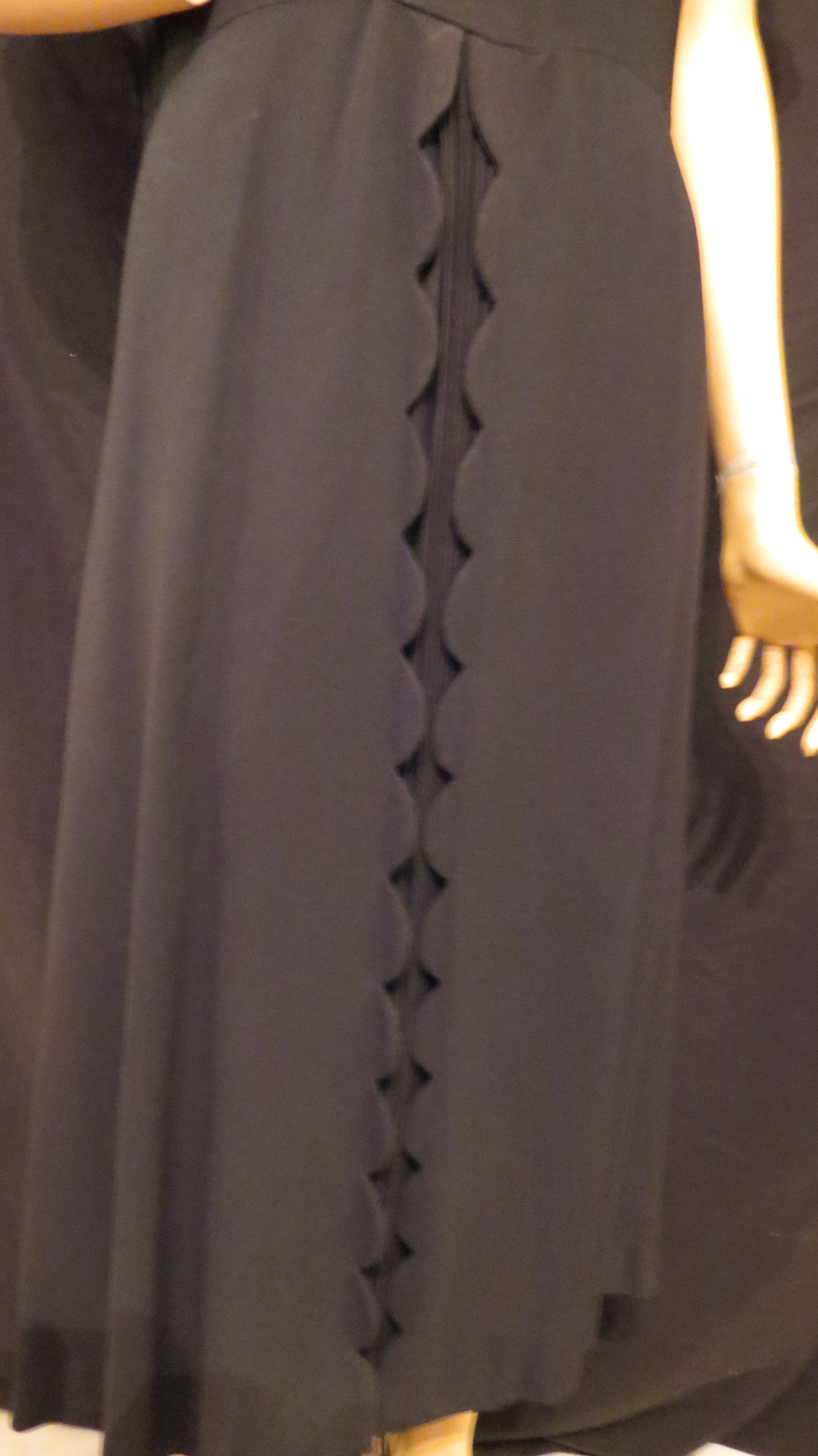
This pretty dress is made of rayon material with a BIG velvet bow and inverted front pleat for added interest. I love the scalloped overlay and the shaping on the cuffs of the short sleeves, which is SO Forties! This dress is labeled as having been made by a company or maker that was nationalized during the years surrounding and following WW2 when many, if not most, fabrics and notions available to garment-makers before the war and the Depression were unavailable to manufacturers and home-tailors because of rationing. Women still wanted pretty fashions and our government helped to make that possible and affordable.

Despite having no lining or buttons, there are very nice tailoring details. It is, unusually for that time, quite a large size but is so well-cut that belting it on my size 6 mannequin (thank you, Madge!) still looks amazing. That is an advantage of any well-made garment and especially in the case of most true vintage clothing. Stay tuned for more . . . . . . . . . . . . . . . . . . . . . .

MORGANA MARTIN, THE MAGICVINTAGESPY

BLOG: MAGICVINTAGESPY.COM

EXCITING “NEW” TRUE VINTAGE HANDBAG FINDS!

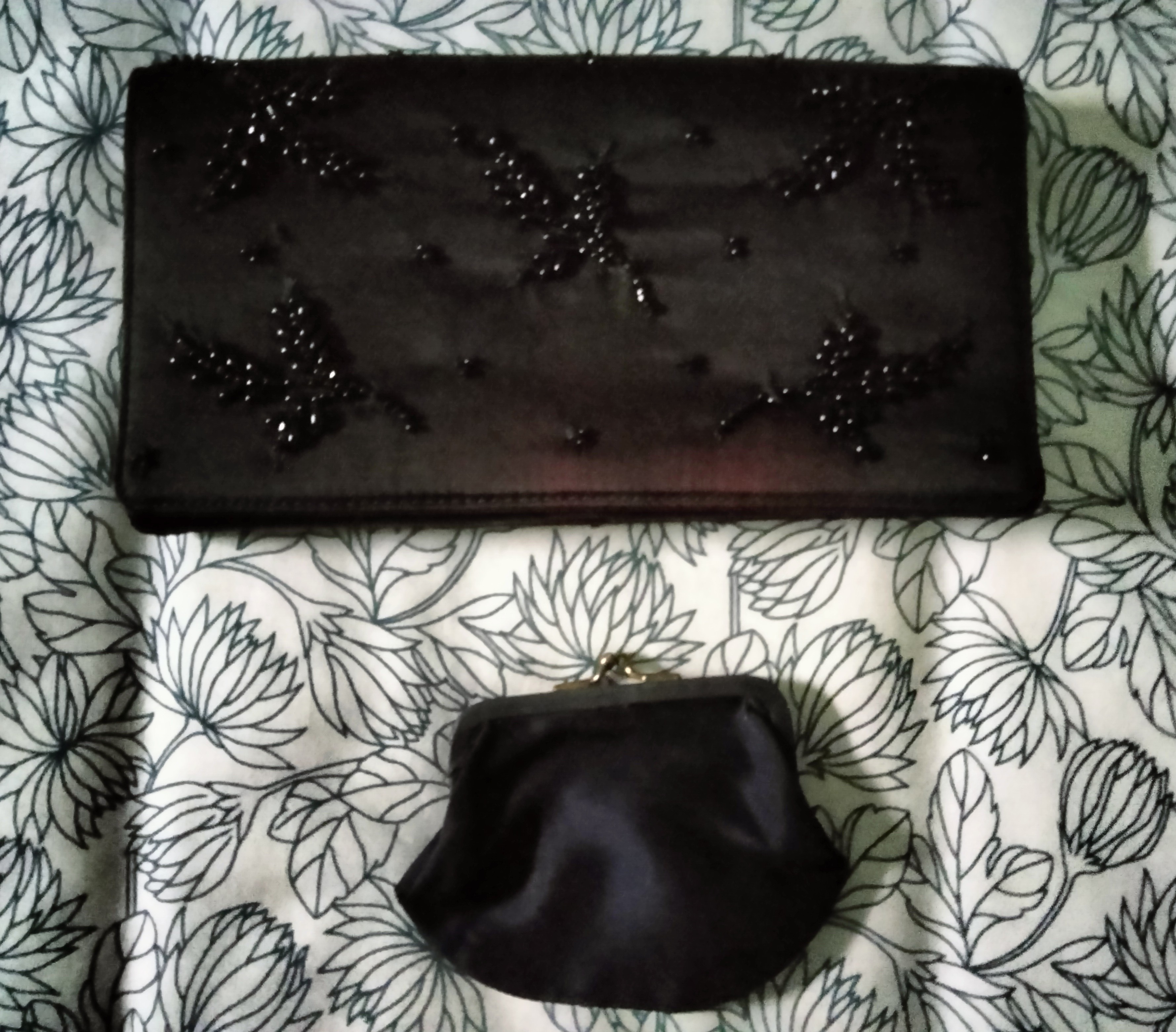
Let’s start with a deja’ vu item (for me) – I call it this because I discovered a nearly identical one and posted it just two weeks ago! However, the exciting thing is the different clues involved in their stories. Always SO interesting! Plus, one new item which is a rare find and always makes me do an extra happy dance. . . . . . . .. . . . . ..

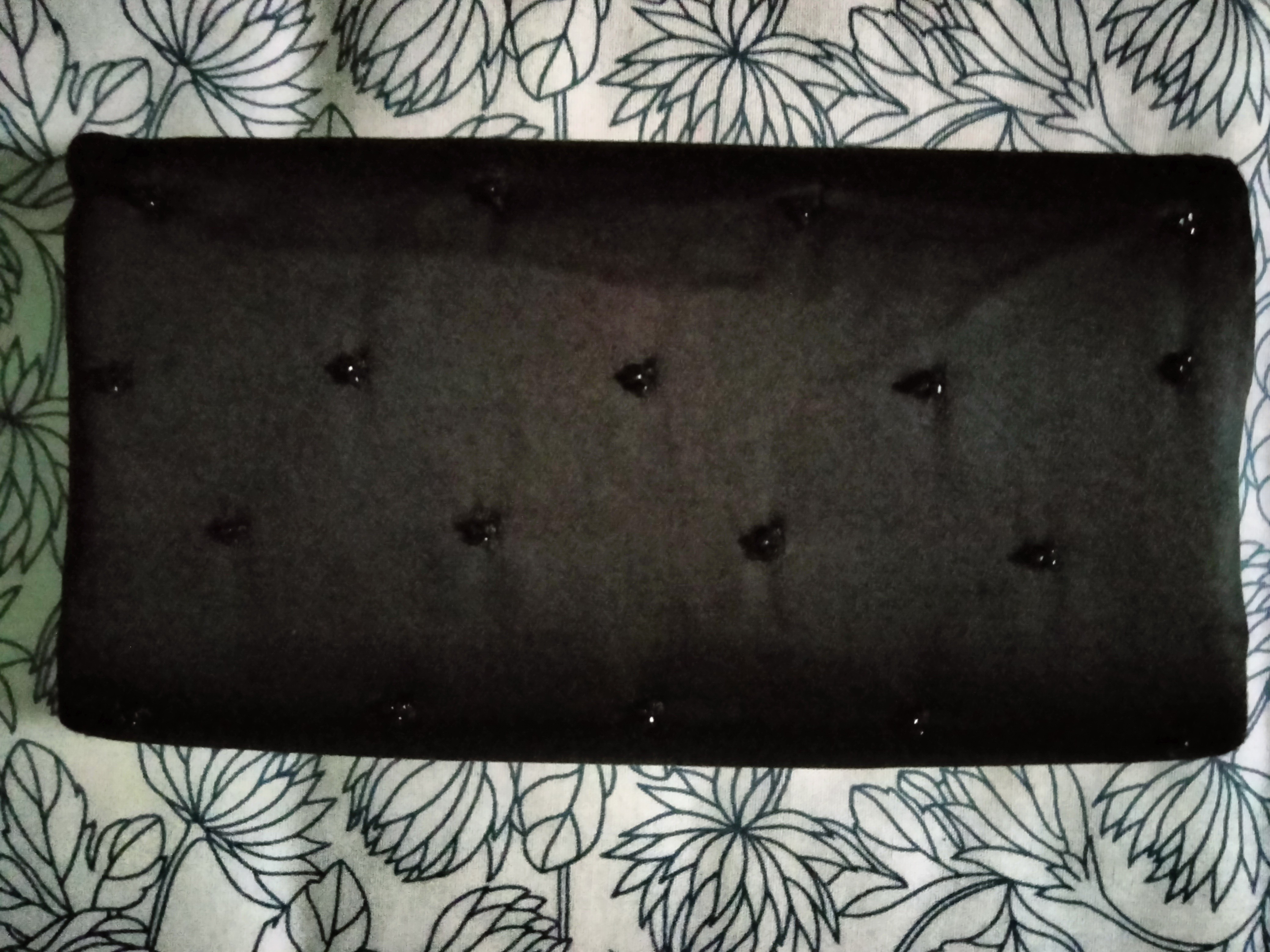
Oh, Ho hum you may say. Another black cocktail clutch. Yes, I have many of these in my case archives (and closet), but each one is unique in some way. The fun thing about this one is the similarities to the other one recently found; 1. Both are rectangular and designed to be hand-held. 2. Both are made of black rayon satin. 3. Both have hand-done beading on the front AND back. 4. Both have an additional pocket (or two) inside. 5. Both are from the mid-century, probably post-WWII.

HOWEVER, the one found two weeks ago is more finely made. It was constructed in Hong Kong (while it was still British Hong Kong) while this one above was probably made in North America but is an iconic brand name (Soure’). The first found has more elaborate beading on the front. It is a sac design with no stiffening and simply folds over to close, while this one has stiffening between the layers, probably some form of cardboard, and a metal snap closure (more common and less elegant). These clues lead me to decide that the first find is 10 – 20 years older even though they are so similar. Investigations are so fun! You can check out the previous post and see what I mean.

The final item, just found, is the one that really gives me happy feet – see the little coin purse? I LOVE FINDING THESE!!!!! Not too many of them exist anymore and they are SO convenient and iconic inside a true vintage handbag. This one, also, is navy blue rather than black. It will definitely have a home in one of my purses at Headquarters.

OK, that’s the first of my recent deja’ vu finds, but there is another one which I will put in a separate post because it is in a different category – Men’s true vintage accessories! Stay tuned . . . . . . . . . . . . . . . . . . . . . . . . . . . . . . . . . . .

MORGANA MARTIN, THE MAGICVINTAGESPY

BLOG: MAGICVINTAGESPY.COM

TRUE VINTAGE EARLY 1950’S DRESSY DAY-WEAR

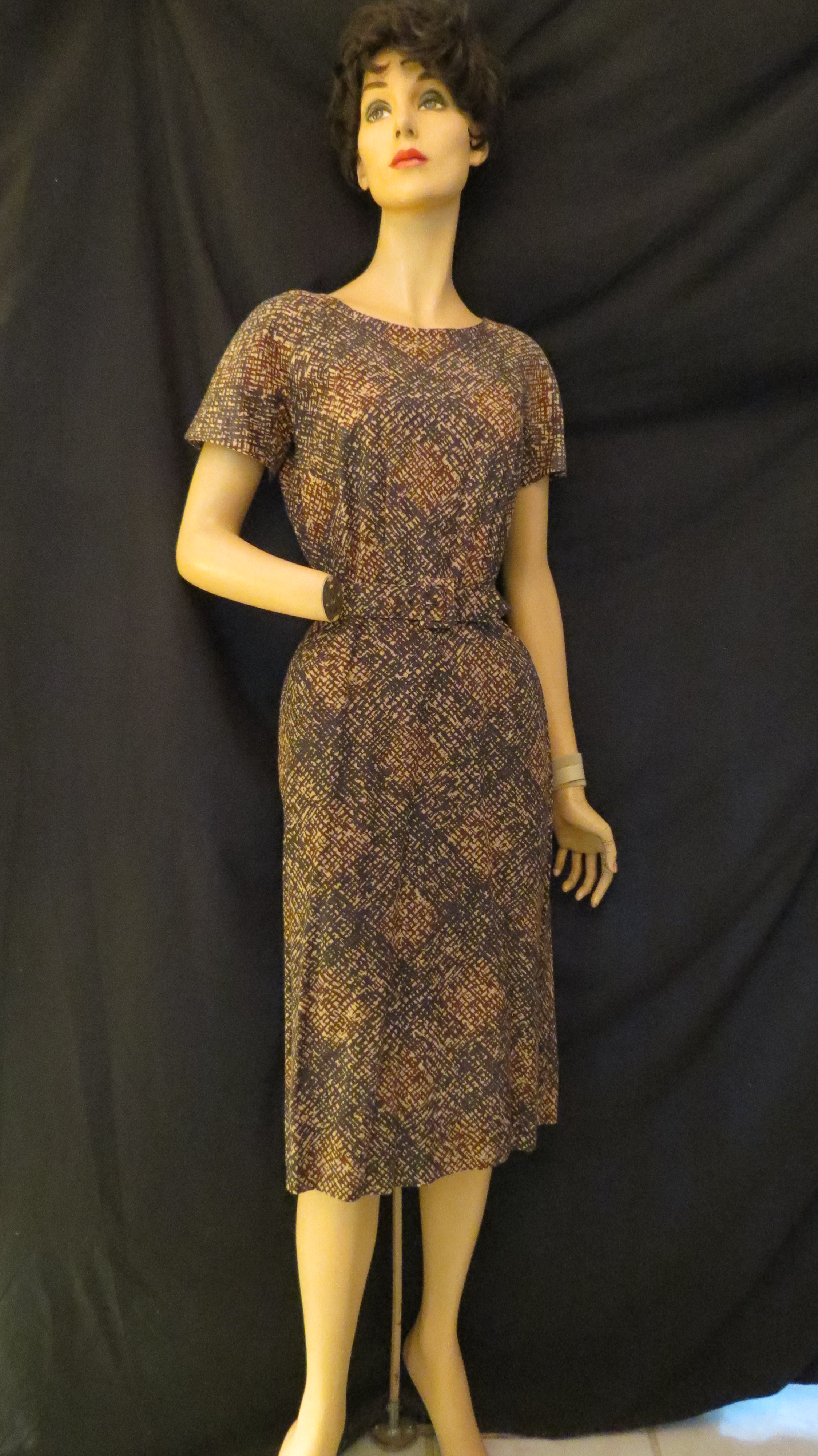
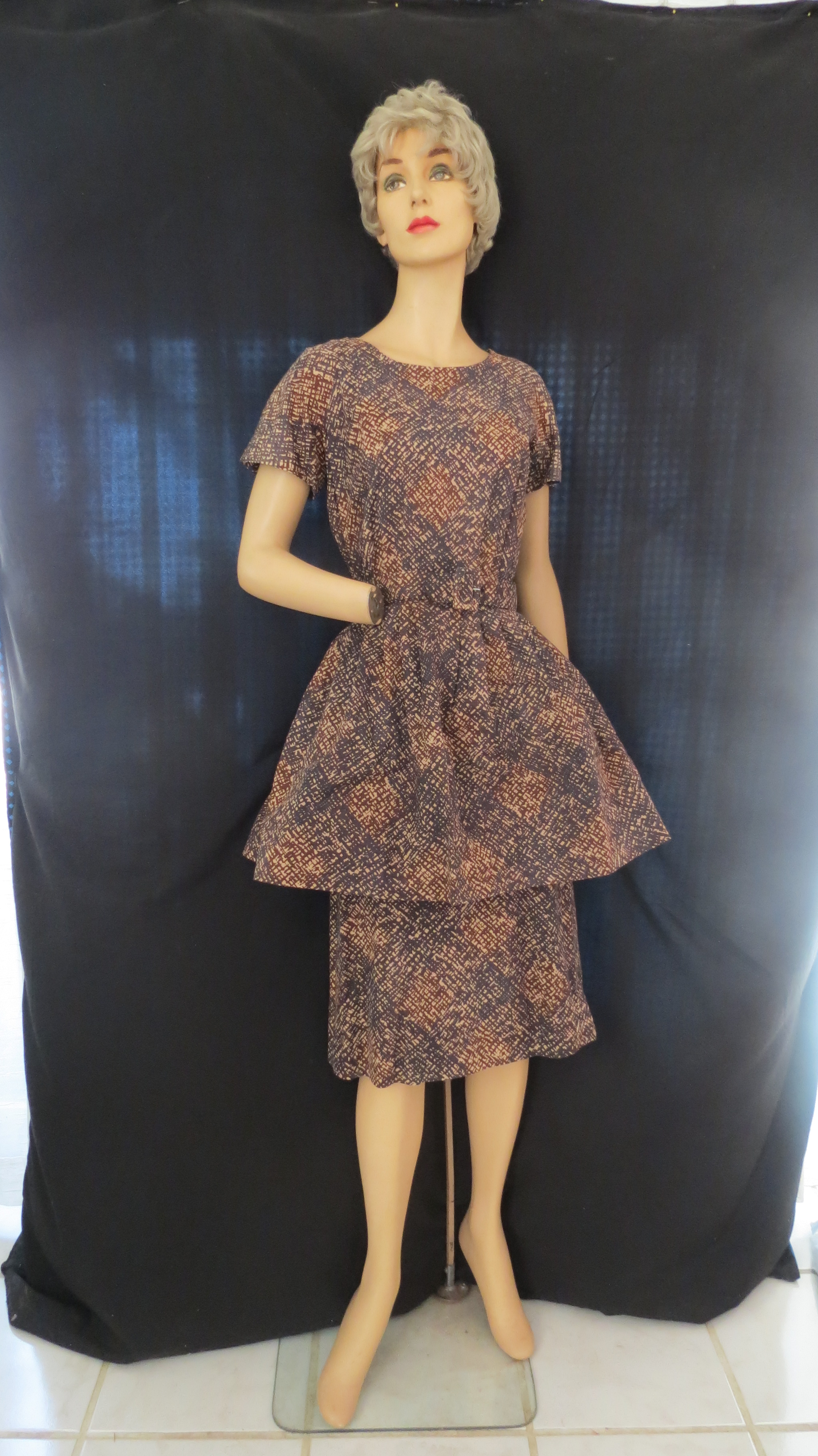
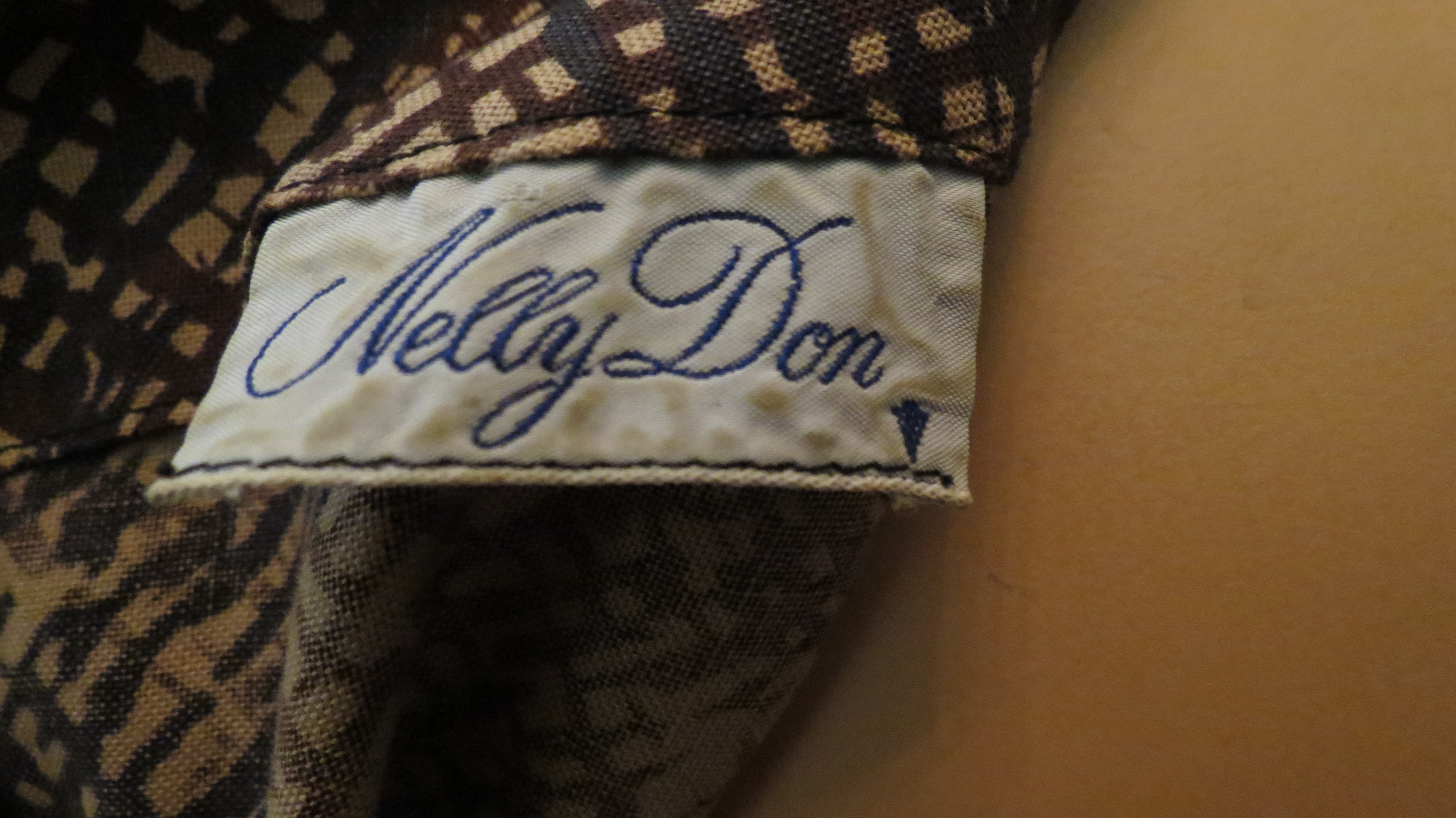
Let’s start with this novel style by a famous French (undoubtedly Paris) designer. The knock-off pictured above was by Nelly Don, a well-known mid-century ladieswear label in the U.S. The belted sheath dress woven of substantial cotton or a blend has a wide detachable peplum which creates this avant garde silhouette. The French designer brought this luxury style out in 1952 and the mid-priced American version followed quickly.

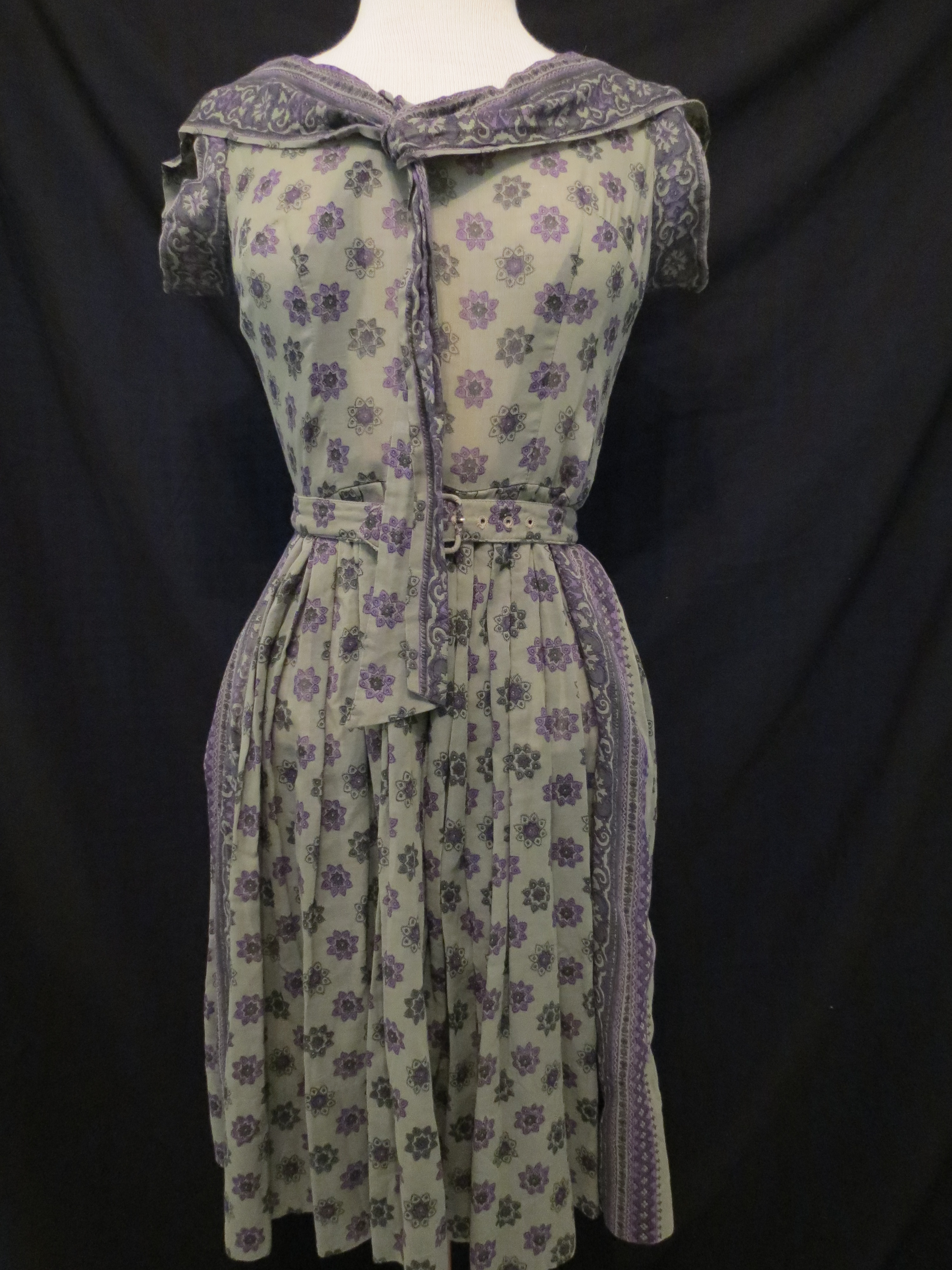
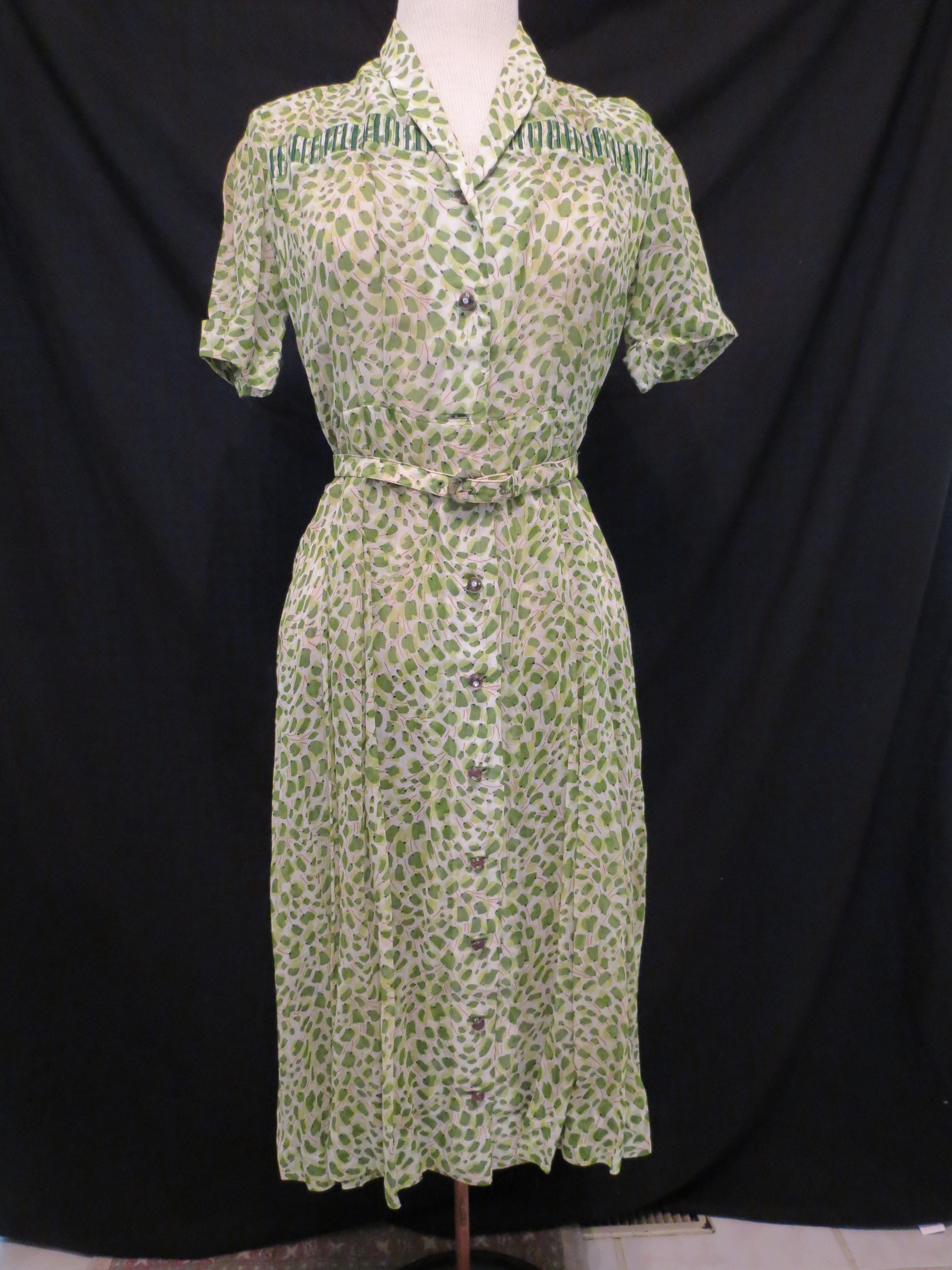
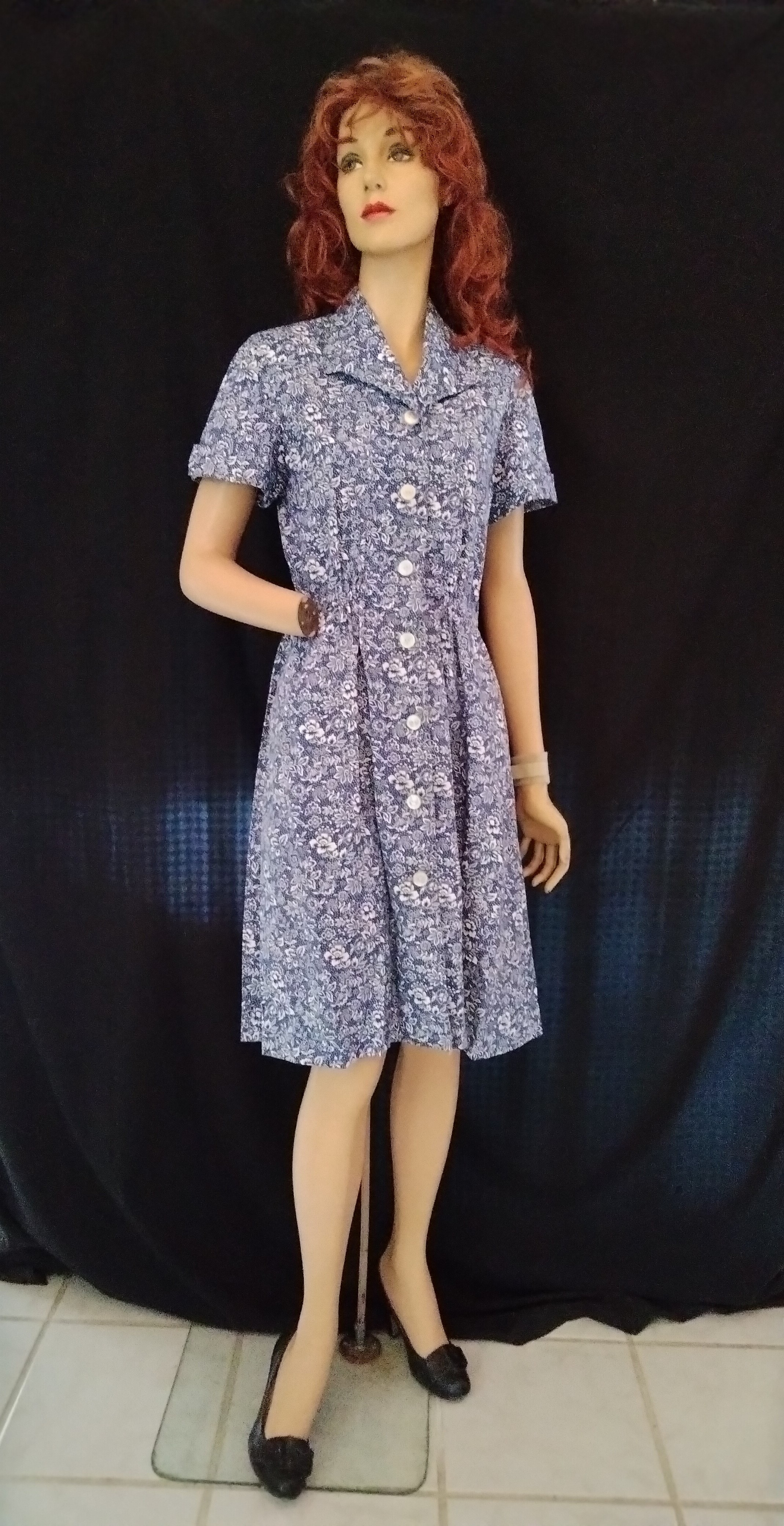
A very pretty semi-sheer dress with a scarf neckline is unusual in an olive green and purple print which I love. Again, it’s belted and fitted as were most of the dresses of this time and follows a shirtdress style.

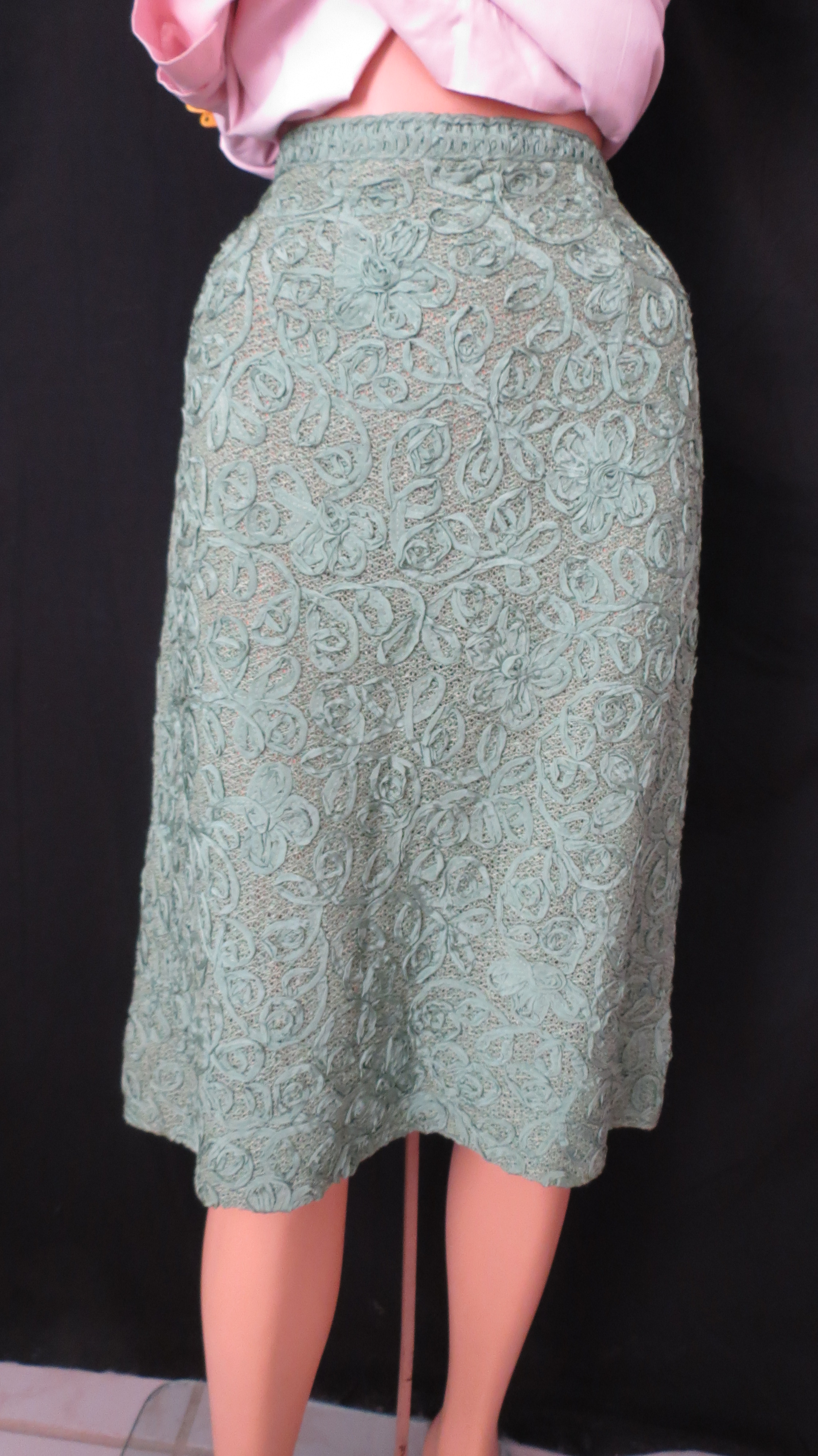
This green pencil skirt is made in a relatively briefly-used but popular fabric which consists of thin, rayon(?) ribbon that is coiled in a continuous design, appliqued onto another fabric base. Imagine it worn with a pretty, fitted blouse. I have a black skirt suit made in this fabric and a family member owned a short-sleeved dress in a gold color, back in the day.

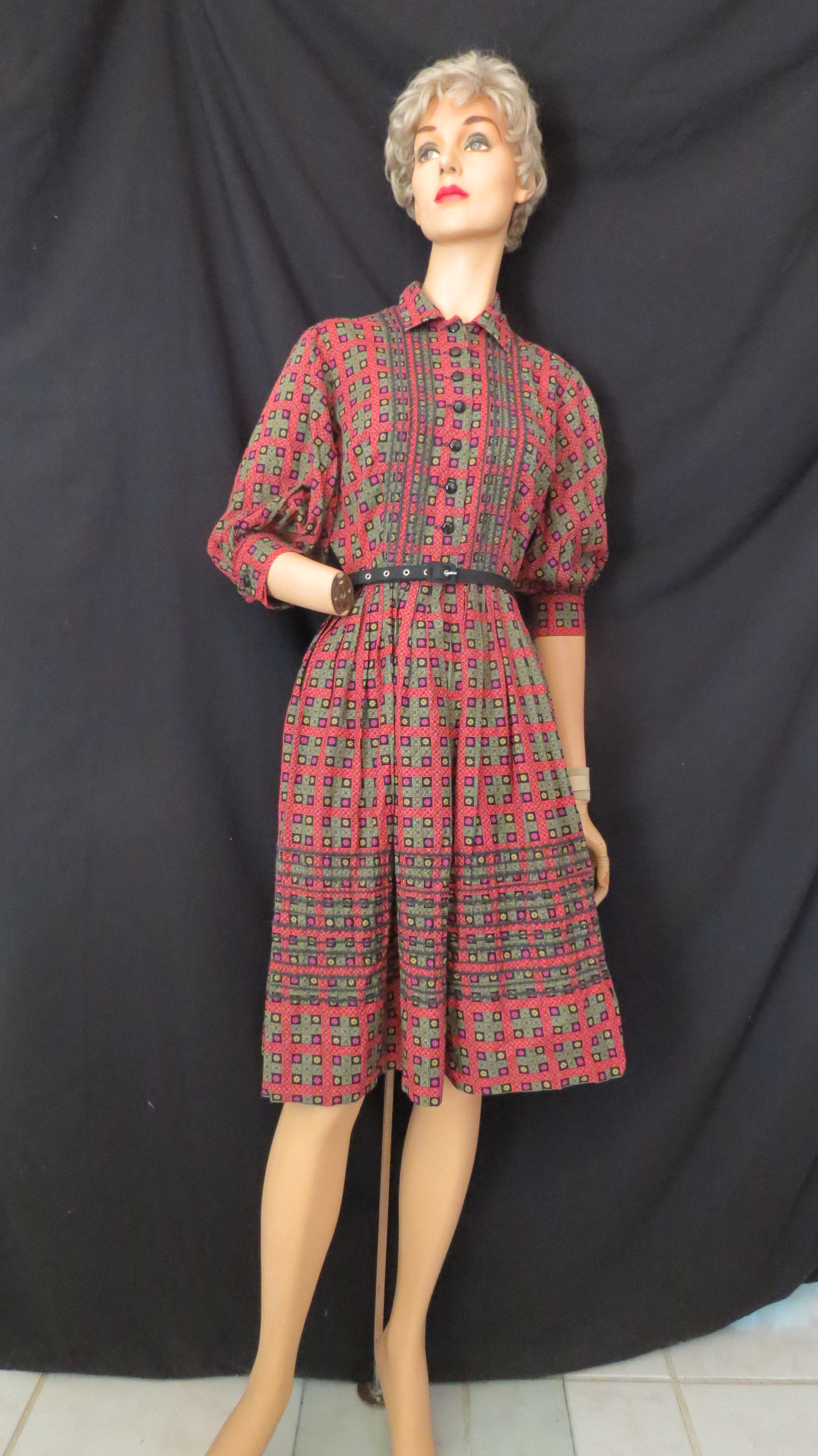
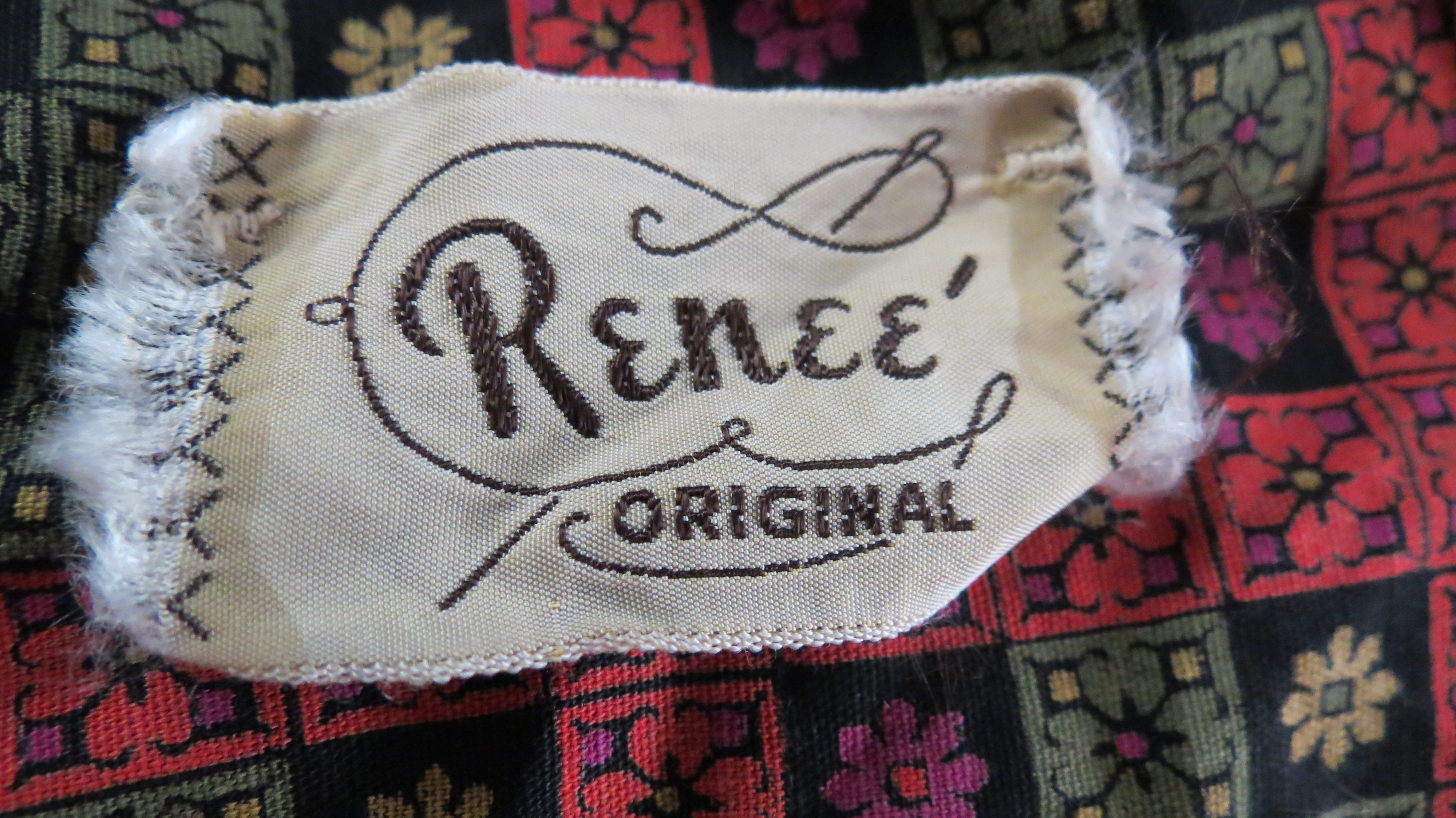
The shirtwaist dress never lost it’s place and continued into the Fifties and beyond in fabrics which ranged from cotton and cotton blends to rayon and silk. The simplest daywear styles continued to be the housewife’s daily uniform. This one is a slightly upscaled version in a more complex print with embroidered trim and tucks.

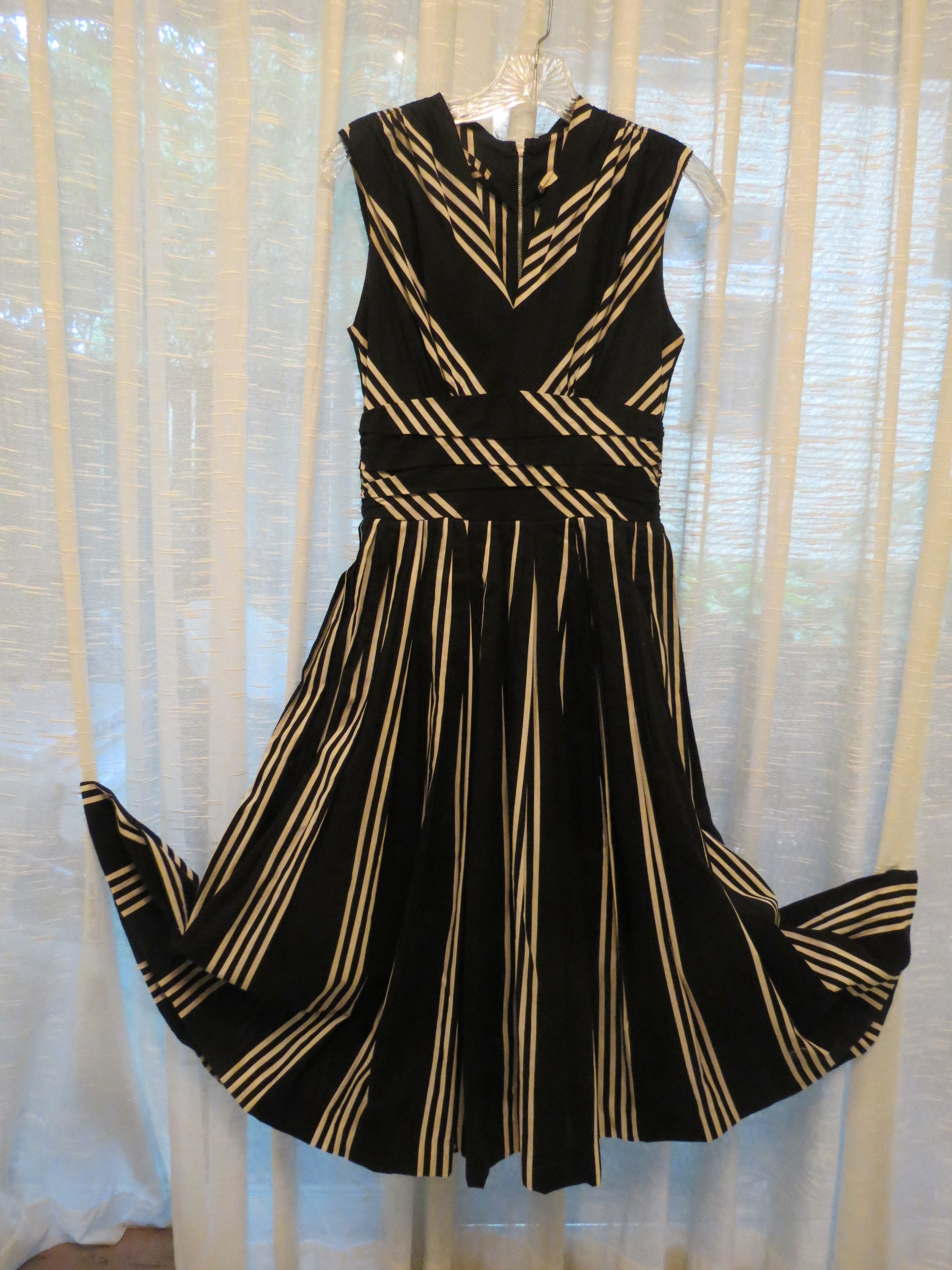
This black and white dressed-up sundress would have been appropriate to go on a date, to the Ladies’ Club, Country Club or shopping in the city. It may have been custom-made, as women and professional tailors continued to use their skills this way though not as much out of necessity as during wartime. The Fifties were about being thrifty but also stylish and having more!

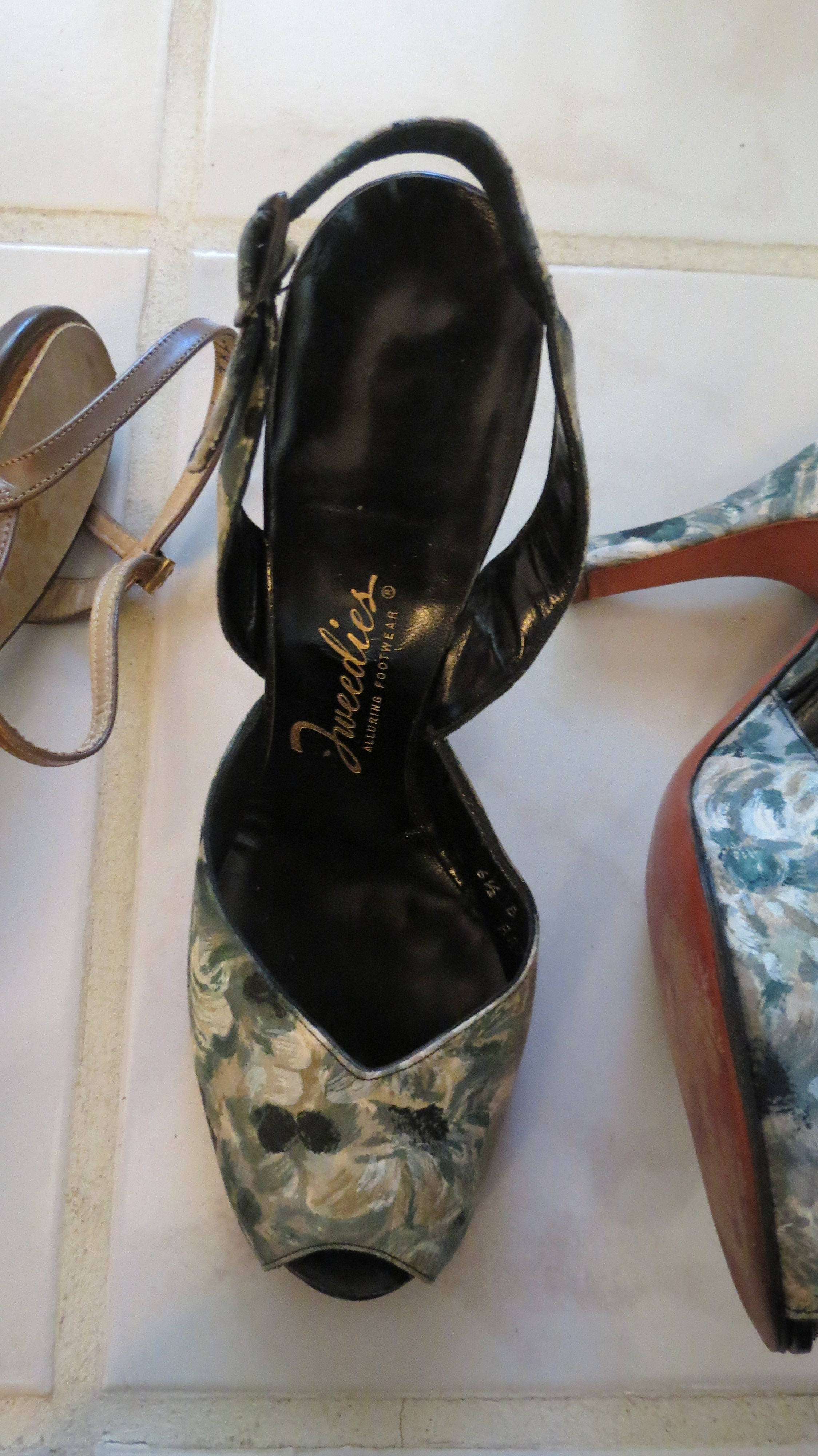
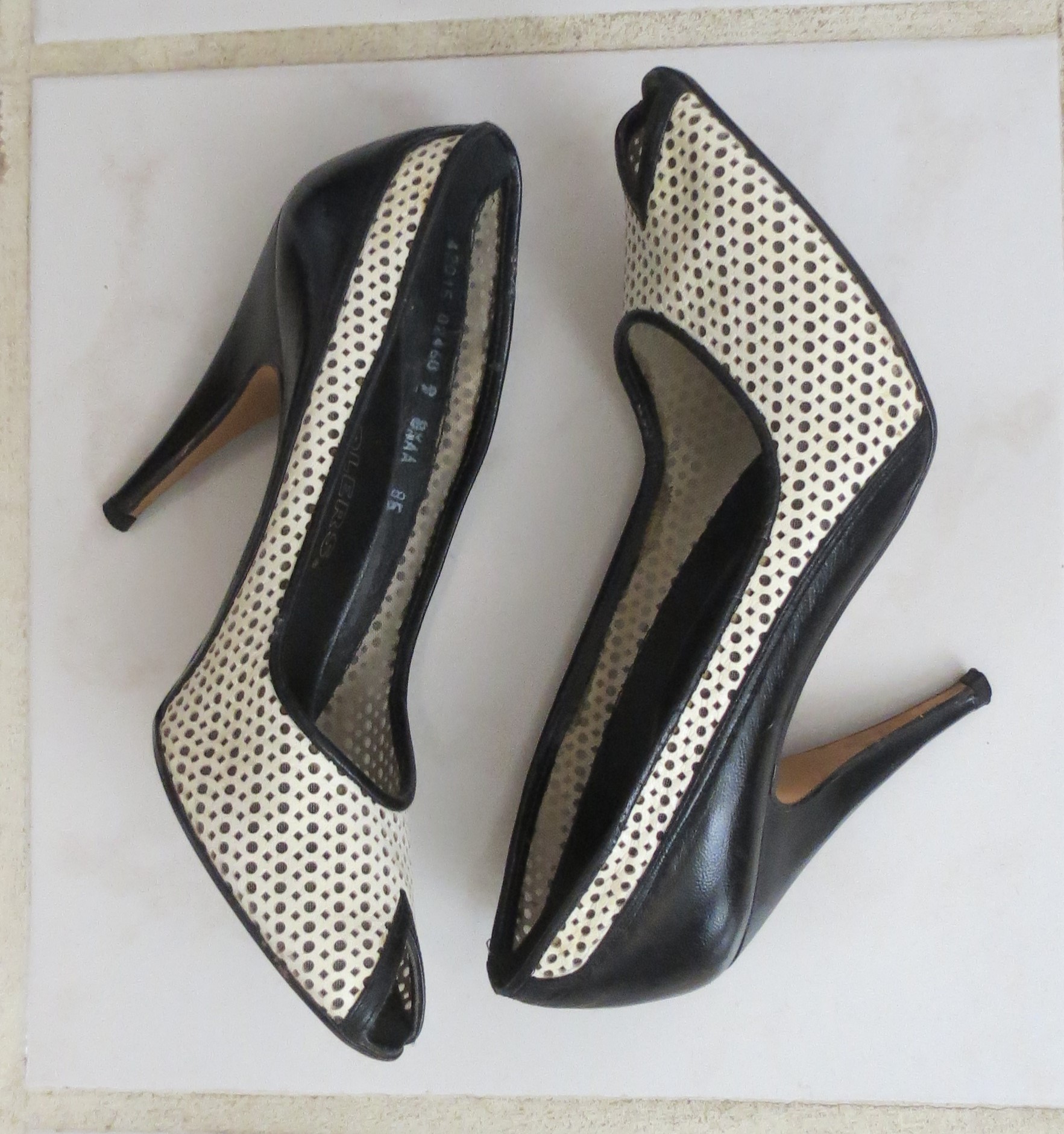
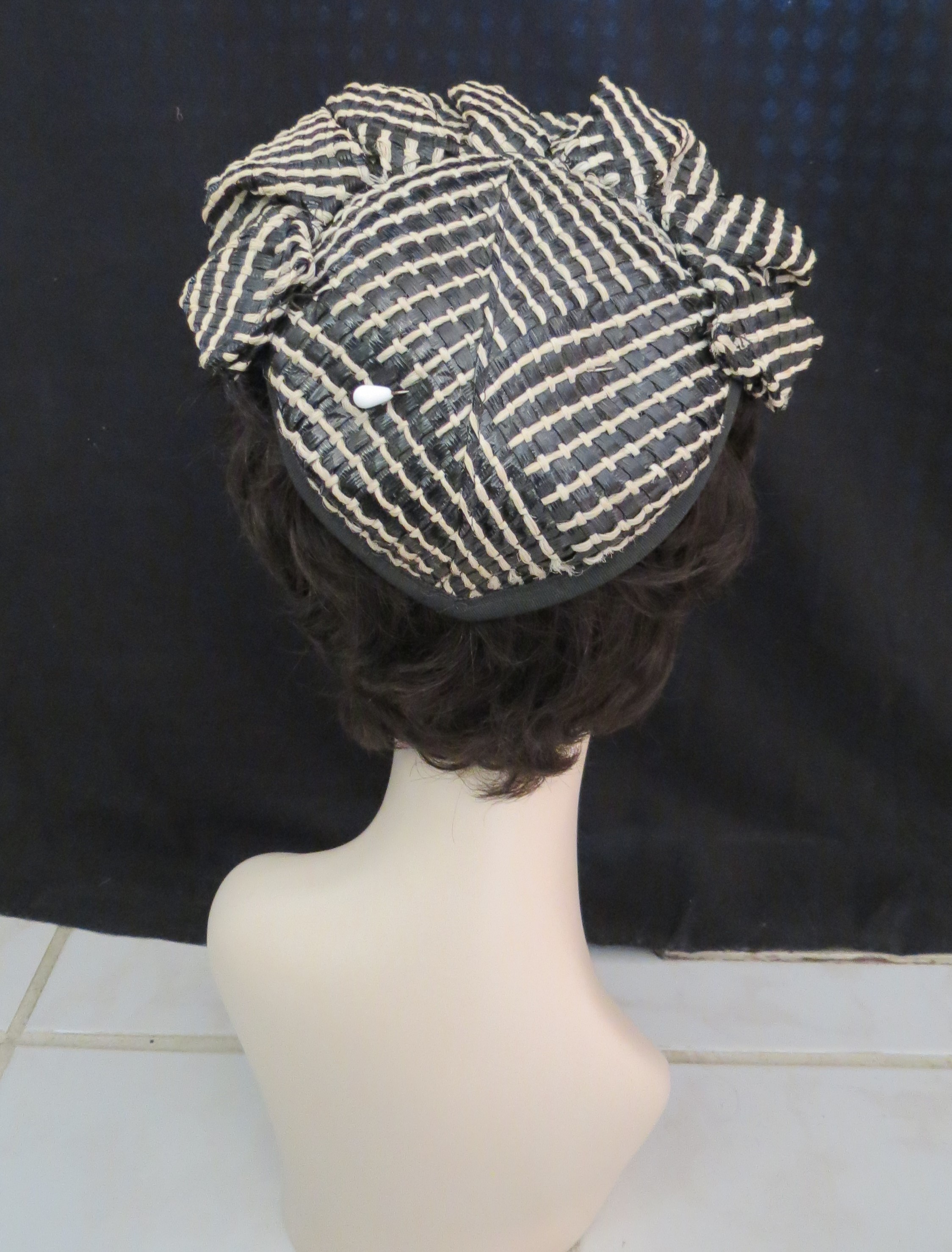
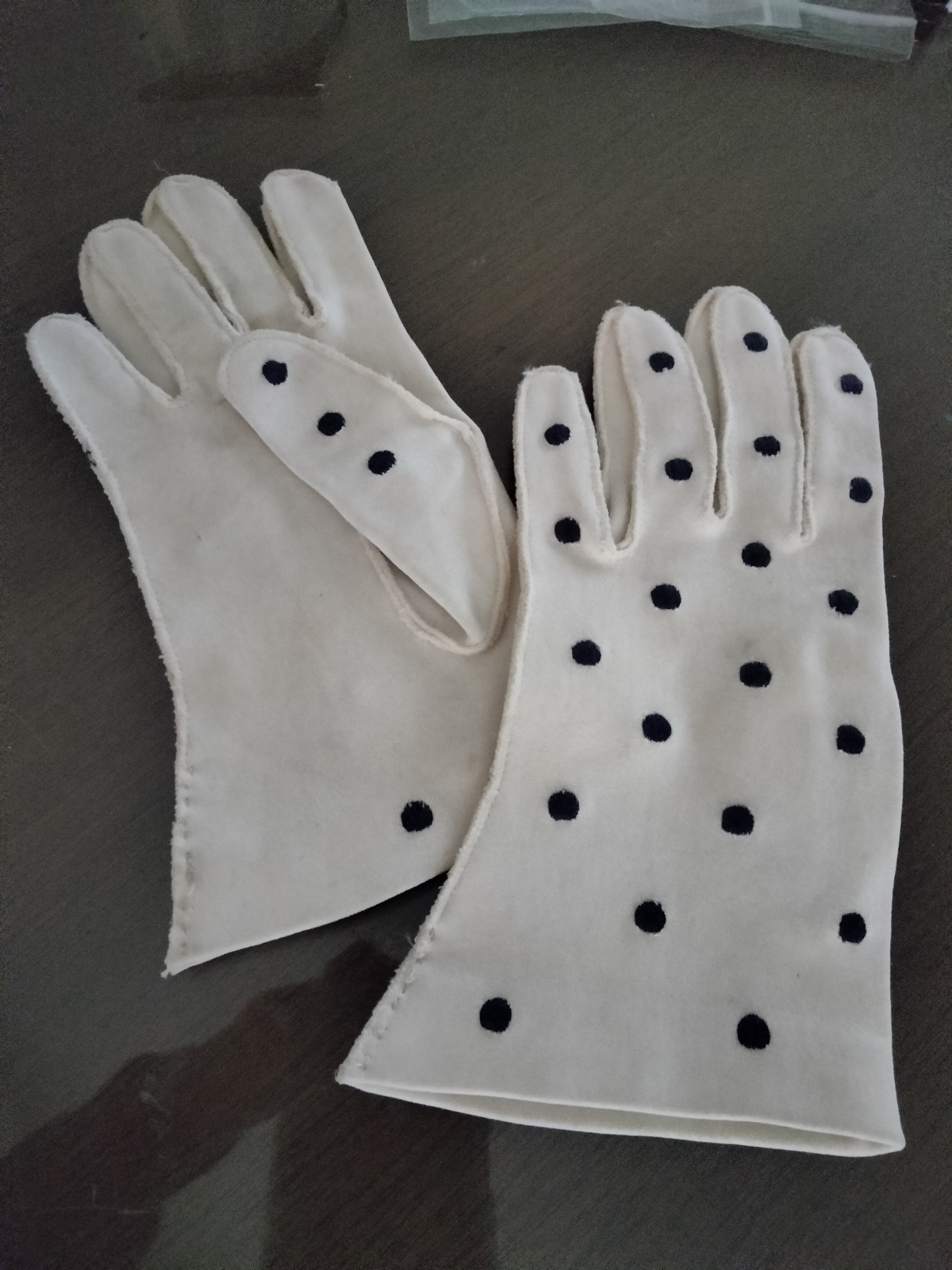
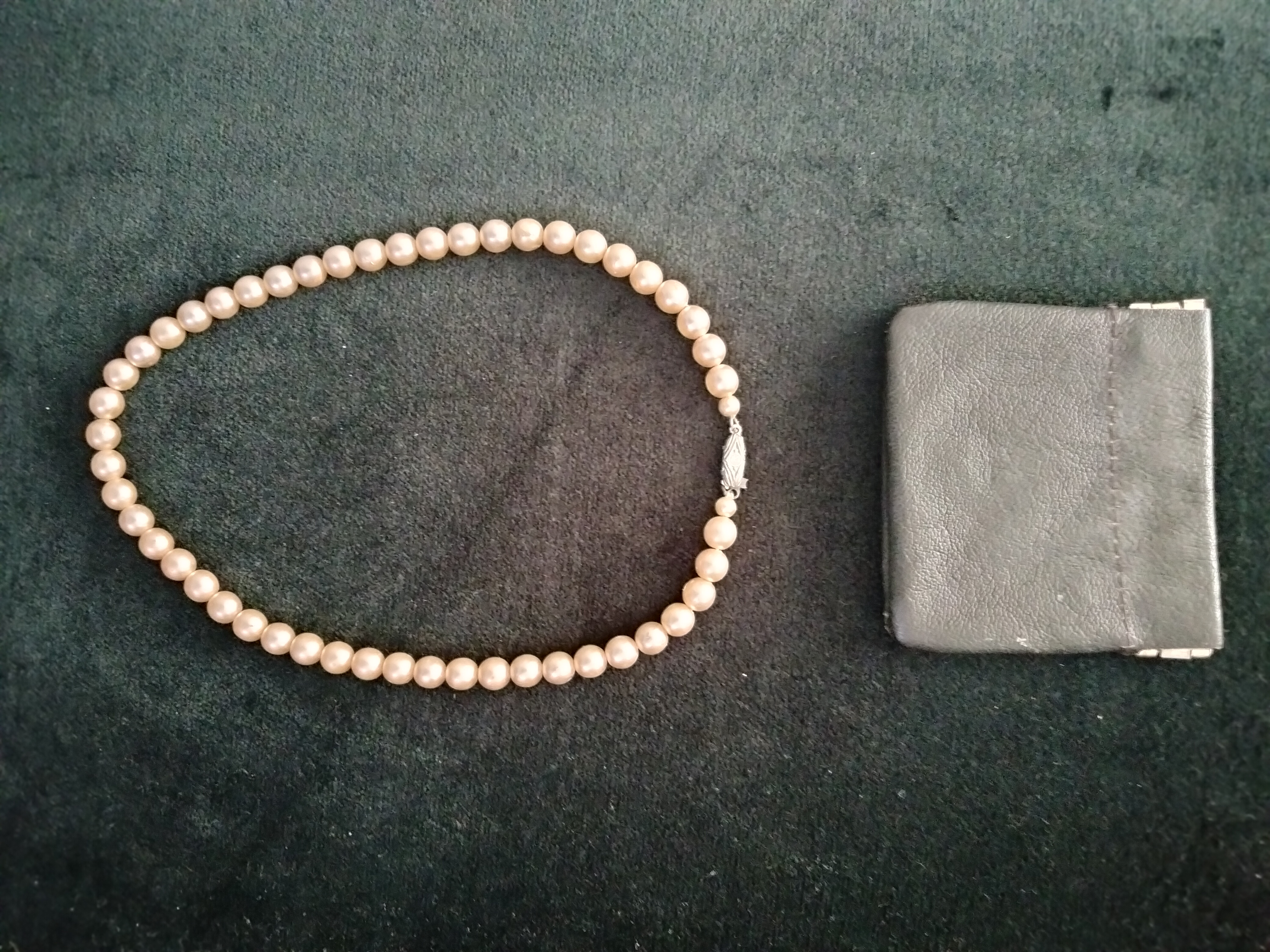
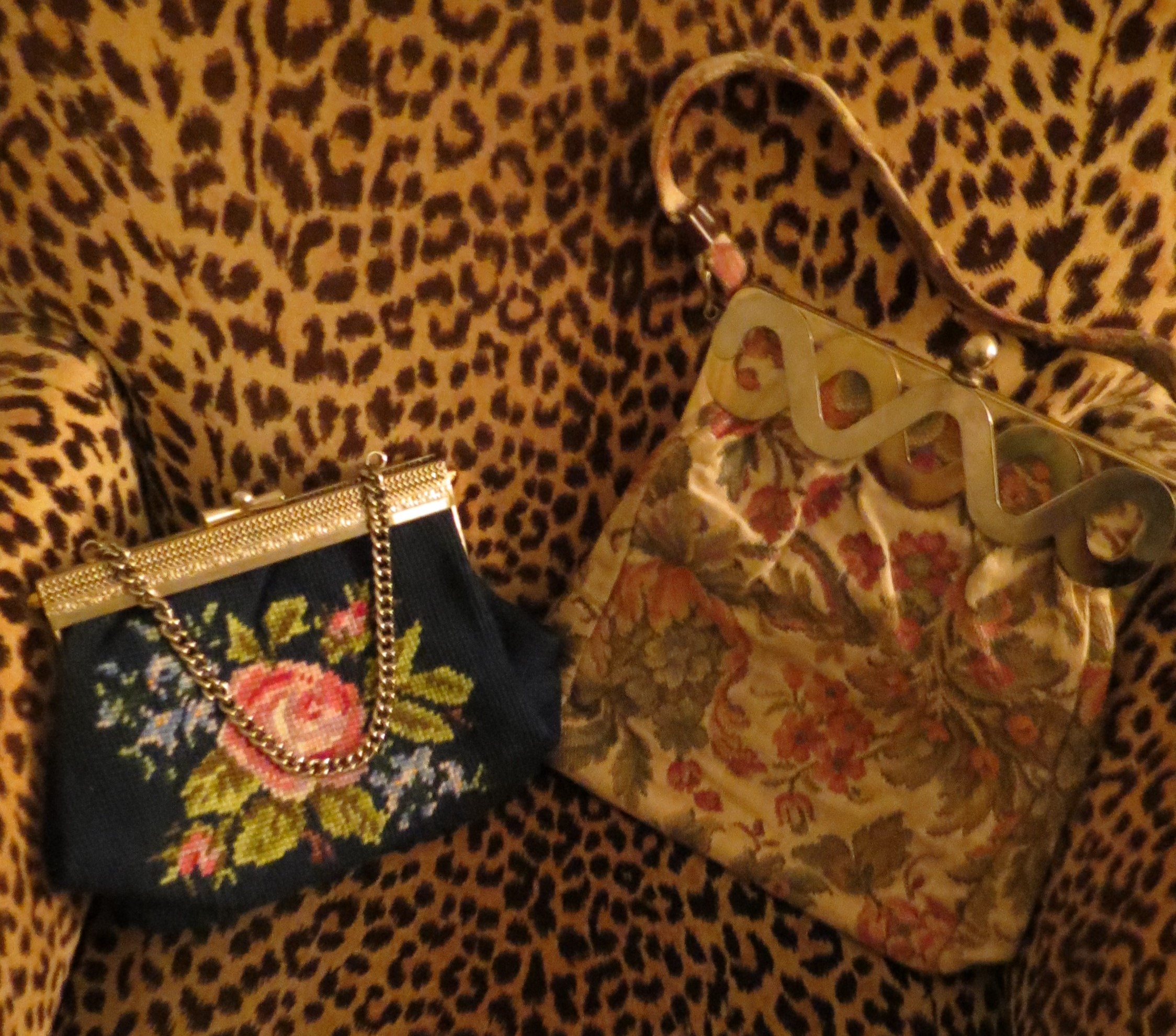
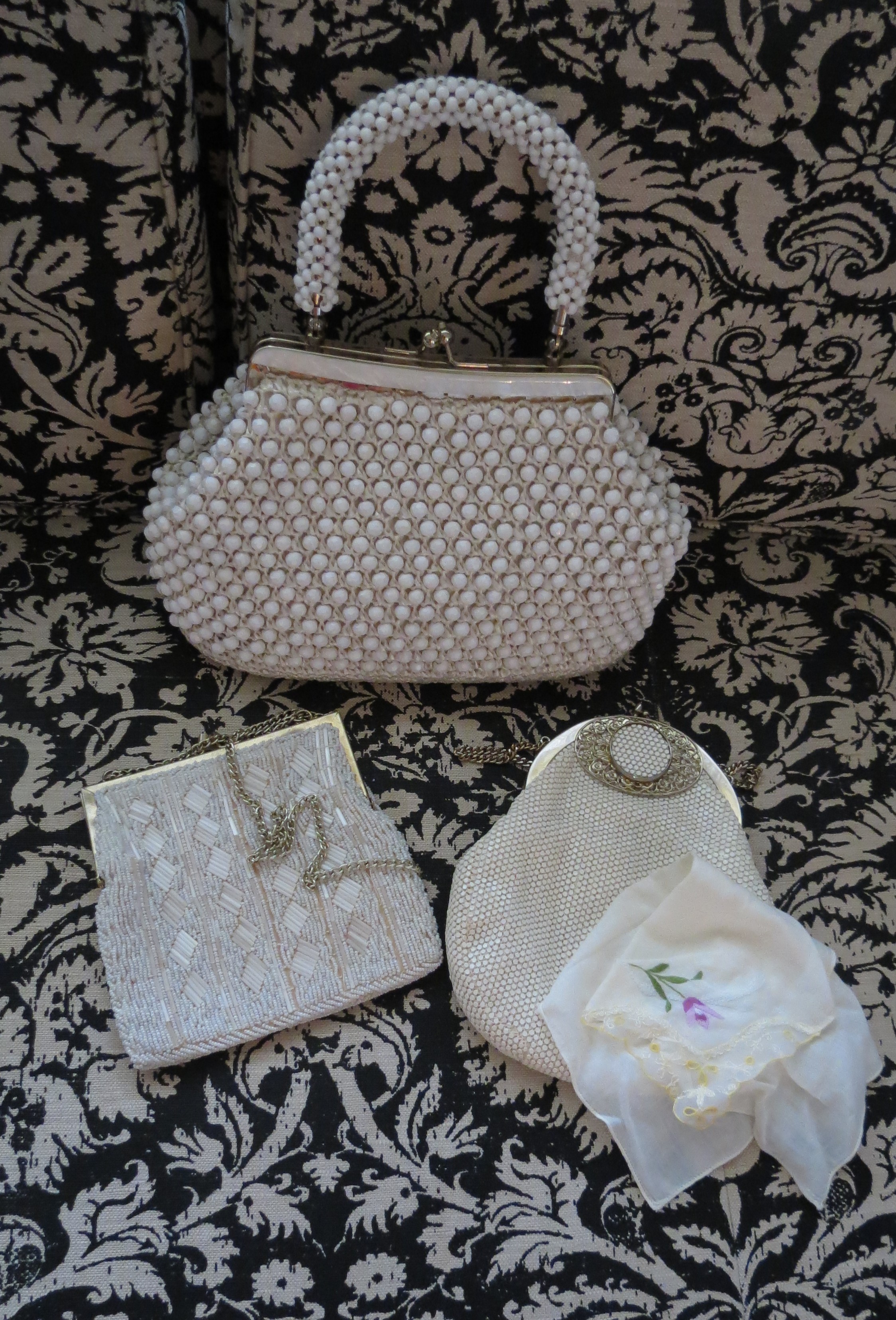
Shoe styles carried over from the 1940’s but with sleeker lines. Pumps were a bit more cutaway and more often had sling-backs. Soles and heels were slimmer. Peep toes continued, which I absolutely love. Hairstyles became smaller and neater again as did hats, which continued to be de rigueur for any well-dressed woman. Also, a pair of well-made gloves in a style which complemented your outfit and a short string of pearls with almost anything from casual to dressy outfits were considered to be necessities for elegant style. Handbags adopted many styles but here are a couple of semi-dressy designs that carry over the classic “tapestry” floral design and introduce the decorative metal frames and vinyl covering which began to be more popular.

Tomorrow we’ll stay in the same Forties to Fifties time-frame but focus on casual separates and trends. Stay tuned . . . . . . . . . . .

MORGANA MARTIN, THE MAGICVINTAGESPY

BLOG: MAGICVINTAGESPY.COM

MORE WONDERFUL TRUE VINTAGE 1940’S SPRING DAY DRESSES AND ACCESSORIES

Some of my very favorite frocks. Wonderful rayon and blended synthetics. Pretty cotton. One sheer, the others opaque and drapey. Don’t you love these prints? Atomic, abstract and floral – big wartime and post-war favorites. Here, also, are some of the handbags, scarves and pumps that might have been worn with them.

Iconic styles, rationing-compliant and “modern” plastic alternatives to leather and wool. Silk and silky synthetic scarves were constant purse accessories. A few items carry over from the 1930’s – a few point toward popular styles as we go into the 1950’s. Since we’ve had such a long, cold winter, tomorrow I will show a few of the coats and outdoor accessories which might have accompanied 1940’s dresses outside the home. Stay tuned . . . . . . . . . . . . . . . . . . . . . . . . . . . . . .

MORGANA MARTIN, THE MAGICVINTAGESPY

BLOG: MAGICVINTAGESPY.COM
TRUE VINTAGE 1940’S DRESSY DRESSES FROM AFTER THE WAR YEARS
Here’s another group of finds that were fabulous. Let’s look at the details on these frocks, which were over-the-top when wartime rationing was no more and fashion was ready for a break-out right before the New Look. Lots of glitz – rhinestone buttons, metallic thread, sequins, beads, lots of little buttons and velvet. Hemlines went down again. Rayon reigned – it had become the darling of fabrics.

There was certainly an element of weirdness to some of these designs. The last two black dresses were discovered in Montevideo, Uruguay and had been made by specialty dressmakers. Many of their wardrobe items in that city came from France, and I suspect that there is a lot of European influence in these styles.

The top two designs are squarely U.S. American and the tag on the dress with the big velvet bow indicates that it was made by a company that was producing affordable garments, probably during the early recovery from wartime. The navy blue dress was higher-end and looks so much like the costumes seen in late 1940’s film noir.

Tomorrow we’ll look at some examples of how 1940’s dress styles have persisted during the following decades. Stay tuned . . . . . .

MORGANA MARTIN, THE MAGICVINTAGESPY