I love this! OK, I forgot my bag of donations but I stopped at the Op Shop (I’m in Canada right now) anyway to look for some Fall turtlenecks and took a few minutes to sift through the piles of jewelry. It’s rare to find true vintage jewelry items now, but I often do so I take a peek and look what I discovered! They’re both paddle back style clip-ons. The top pair are early – mid-1960’s girly flower earrings, which was a common design then. They aren’t really dressy, but the gold-tone and aurora borealis “diamonds” in the centers let them be dressed-up easily as well as being stylish with a more casual outfit. What could be better?
The bottom pair are really precious because they are PERFECT with the pearl and rhinestone bracelet that I found and posted a few weeks ago! Sparkly white rhinestones set in silver-tone metal would probably be from the early to mid-1950’s. They were never high-end but I’d happily wear them to the Opera or any gala (if I went to those things – you just never know). There’s one tiny rhinestone missing, but this would never be noticed and I may have a replacement at Headquarters. We’ll see.
So, the moral of this investigation is that taking the time to look for clues in hidden or unlikely spots is almost always a good idea! My experience has proven that many, many times. Stay tuned . . . . . . . . . . . . . . . . . . . . . . . . . . . . . . . .
About the last thing I expected to encounter! There I was, looking for some chains for crystal pendants I’ve been buying and a dangle for the end of my 1960’s chain belt (which I found, by the way) and what was propped on a nearby hat-stand?; a quasi-luxe faux beaver fur hat, made in Italy for the iconic Simpson’s department store chain of Canada, which finally phased out in 1991!! More about that a bit later. First, the hat . . . . . . . . . . . . . . .. . . . . . . . . . . . . . .
Boy, do I miss my models who are having time free at Headquarters. They would do a much better job of showing this off, but you can get the essentials from these photos. Looking almost like new, with just a little storage crush. This baby is at least 35 years old and could be more like 60. The rayon-like liner is pristine, with the original label. Classic Russian toque style with a slim fabric hatband for best fit. It’s very flattering and super-practical – will fill an empty niche in my hat collection perfectly!
And, what a pedigree! Made in Italy, to their high standards of that time (some makers still seem to have them). Simpsons Department stores were historic vendors, started in 1872!!! They were in stiff competition with the Eaton’s chain and evidently tried to upscale their merchandise for a winning position. All the Eatons stores finally closed in 1999, so these two were head to head for well over 100 years. The first Simpsons store was in Toronto, Ontario, and could be compared to the iconic Marshall Field of Chicago in terms of the elegance of the store itself and its merchandise. Like Field’s, they also did the elaborate Christmas windows that families would travel far just to see. 80 years later, they teamed up with Sears, Roebuck & Co., becoming Simpson Sears. Like Sears in the U.S., they also offered a catalog service. In another 24 years, the Simpsons element was purchased by the Hudson’s Bay Company and the store name became The Bay in 1991. In the Northeast U.S. and Canada, all three of these names were very well-known and depended upon for high quality and fashionable merchandise. In the States, we could compare Eaton’s, Simpsons and The Bay to Marshall Field’s, Bloomingdales and Saks Fifth Avenue, to name a few. You can see why I’m so thrilled with this true vintage find!
So, as I always say: You just never know . . . . . . . . . . . . . . . . . . Stay tuned. I am . . . . . . . . . . . . . . . . . . . . . .
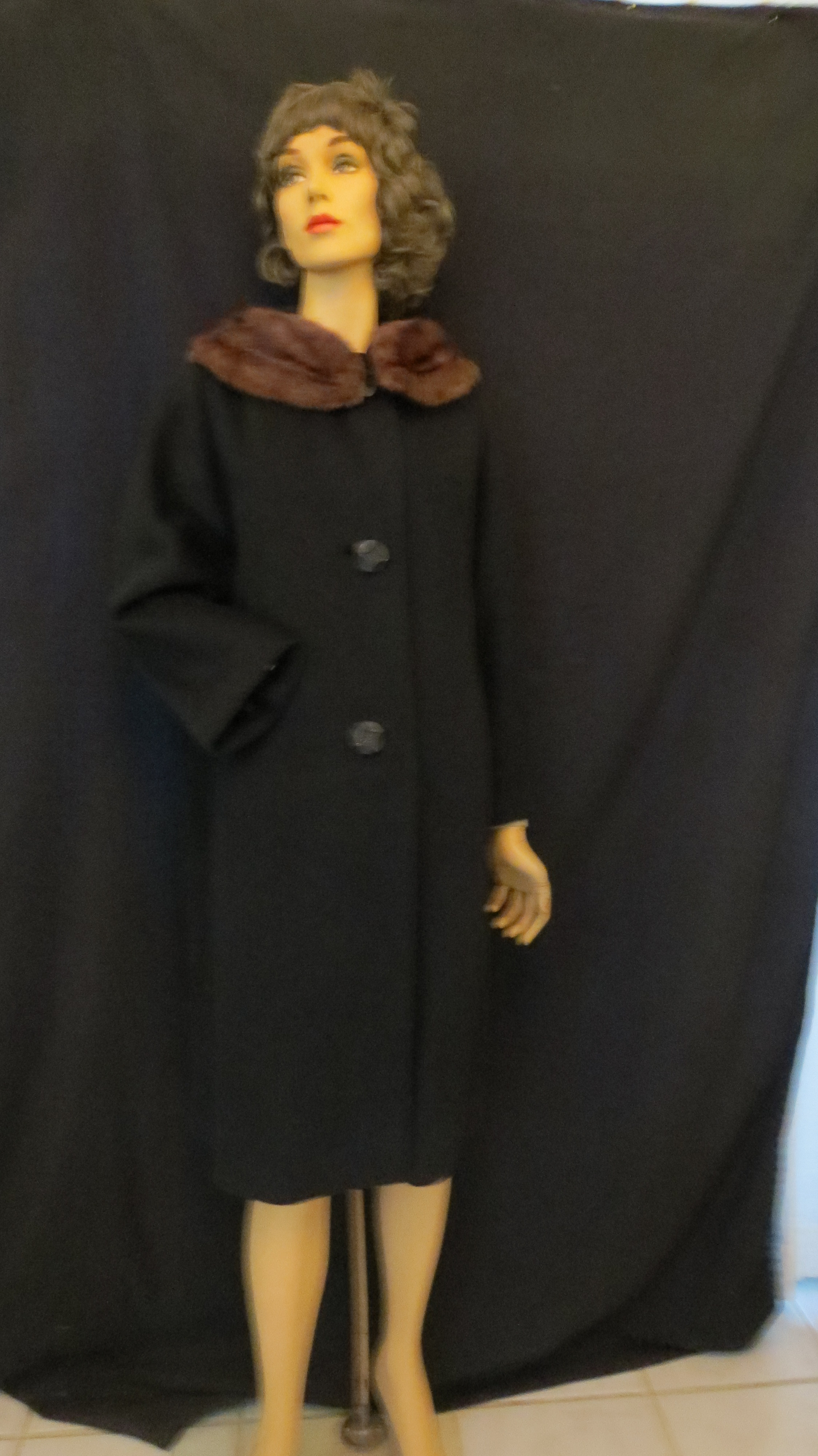
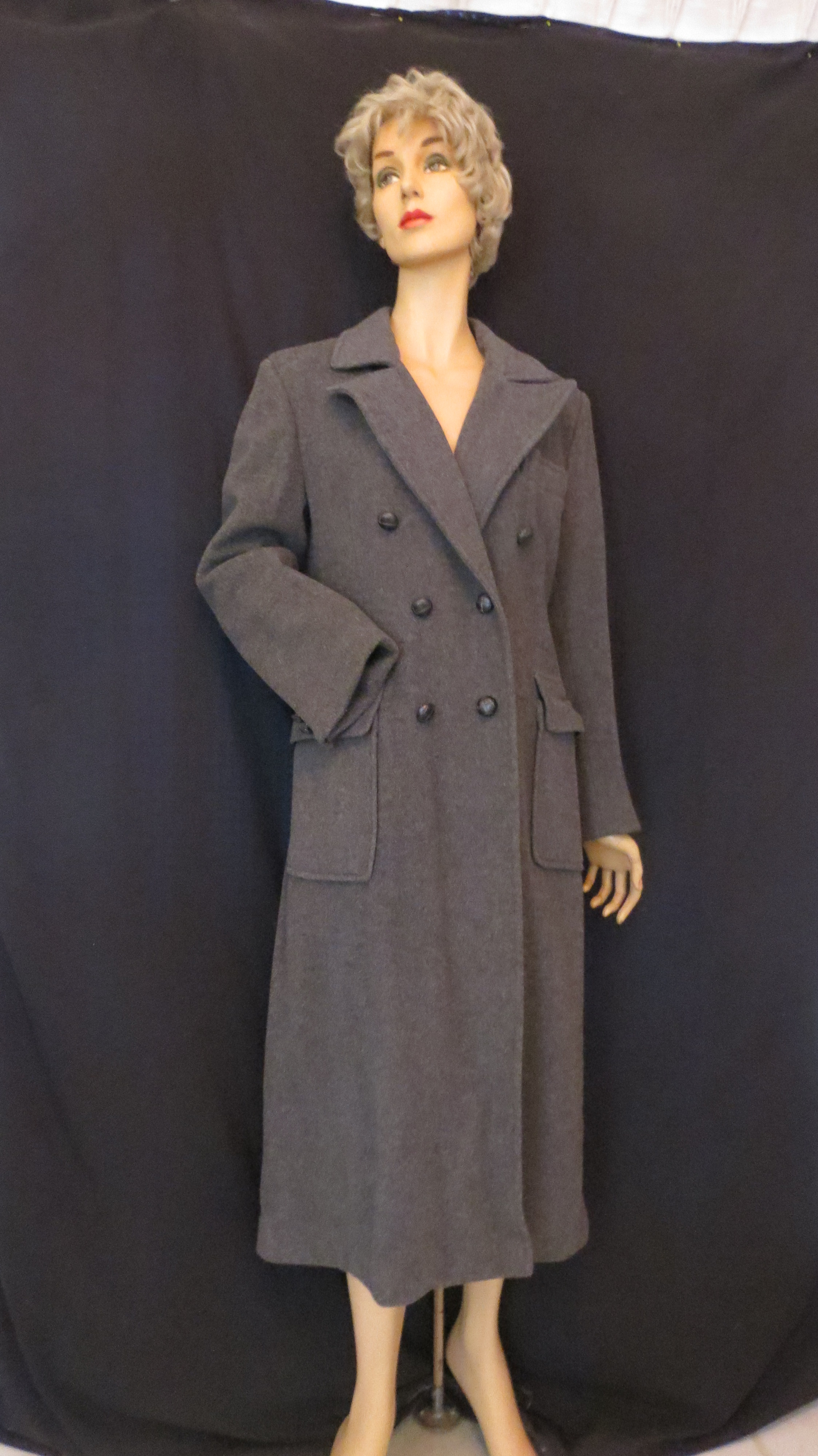
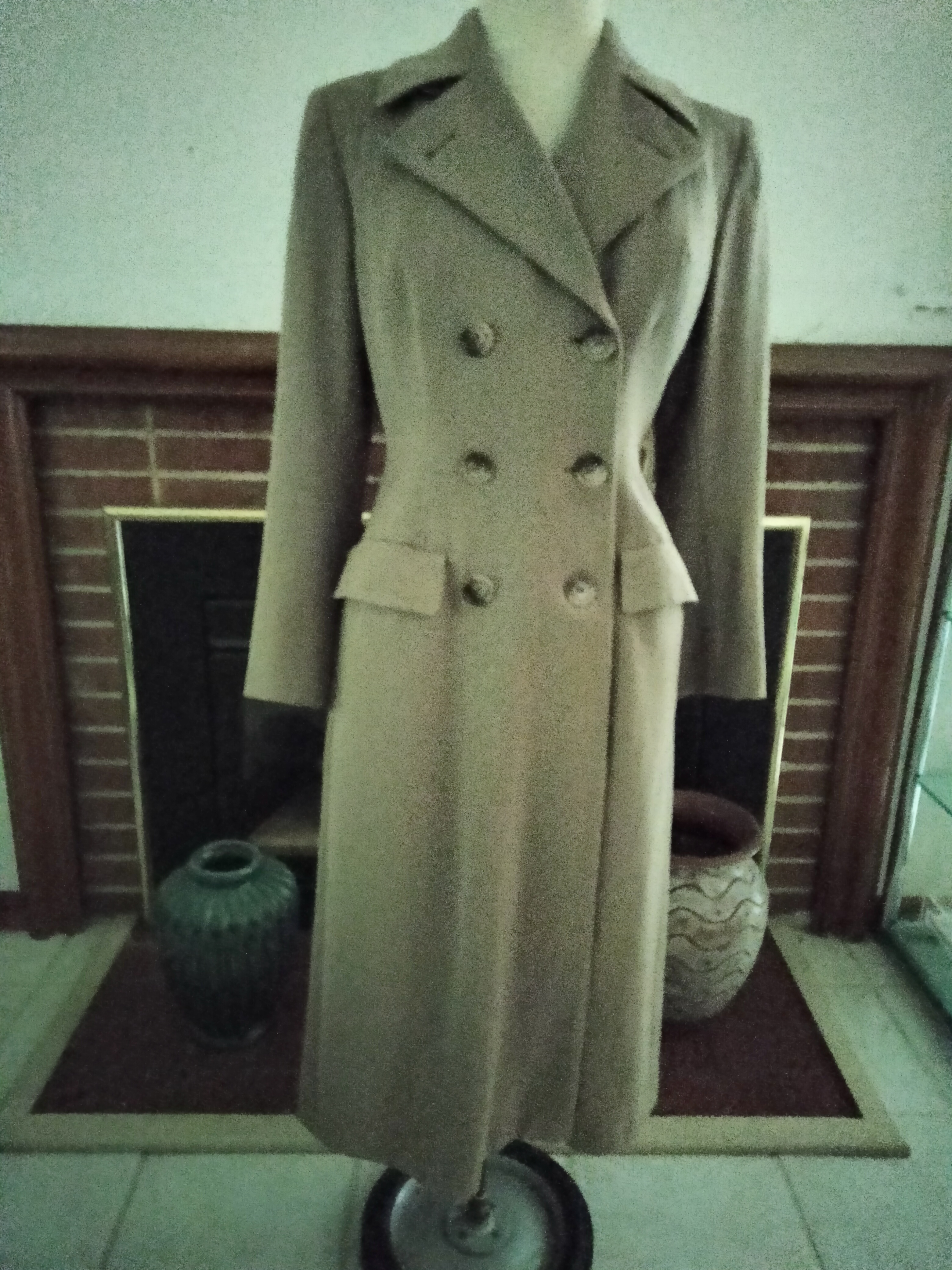
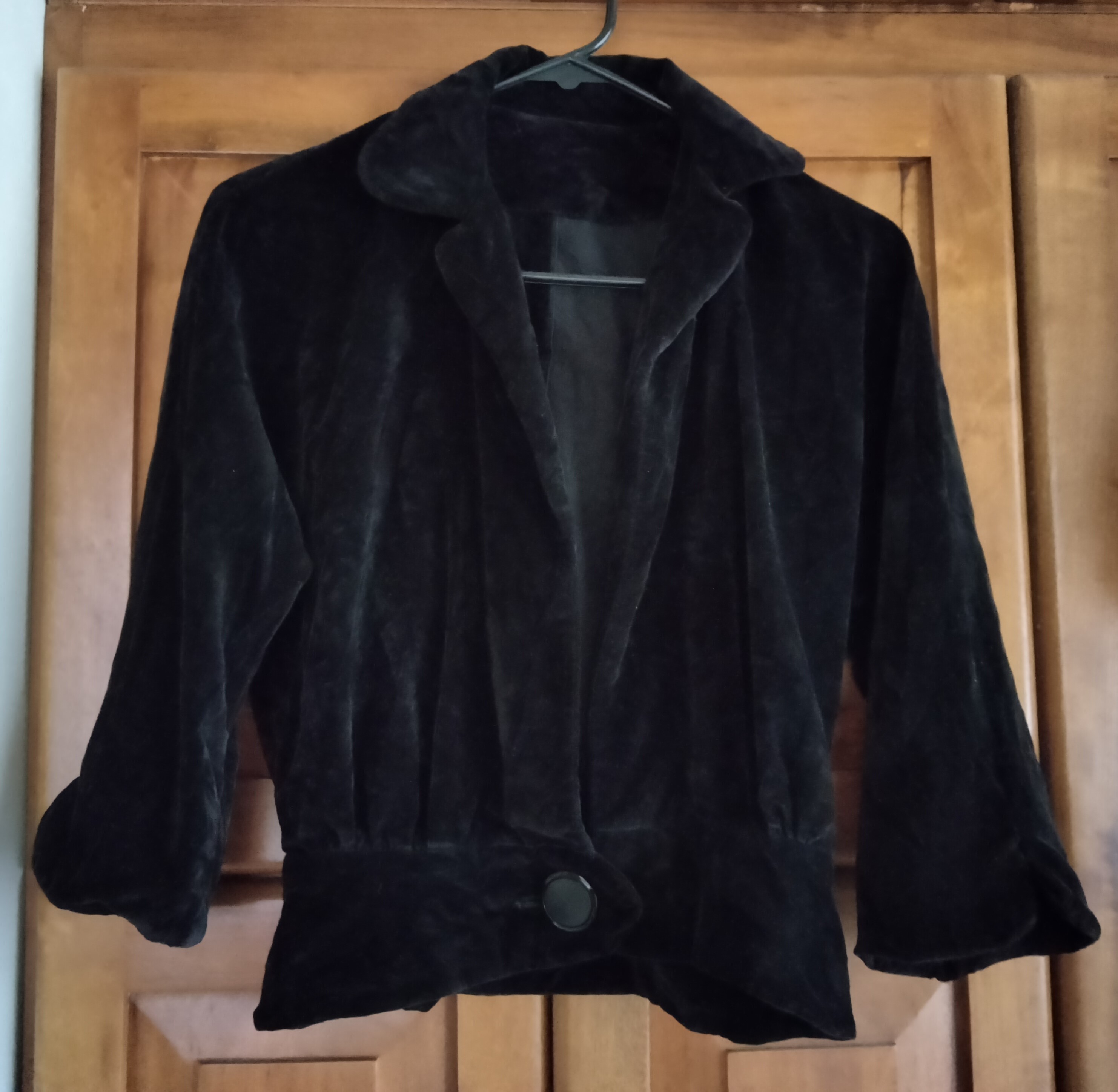
So many mid-century gals had a similar coat when John F. Kennedy was president. This one is a well-made daily-wear style that goes with almost anything. It has a rayon satin lining that doesn’t make it too warm in mild weather, but I have seen and own examples with pile liners which usually zip out. Quality mid-century clothing was ingenious, stylish and practical.
Although 3/4 sleeves might seem awkward on a coat, they were a BIG fashion feature at that time and look SO GREAT with gloves that are longer. It’s always worth collecting true vintage gloves that are almost elbow-length; not the kind that are worn with evening dresses, but beautiful, tailored gloves of vintage kidskin. Knitted or cloth gloves would also work with this jacket in a casual mood because it’s so versatile. I love it here with my 1980’s Western-style suede skirt.
Huge plastic buttons were also a common feature on coats from the years before and after 1960 and would often give major giveaways about the garment. In general, the quality of the buttons reflected the overall quality of the coat. Detailed, sculpted buttons were very interesting and showed that a coat was not a bargain item. Sometimes they even had inlaid pieces of different colors or faux gems like “pearls” or rhinestones. A dressy coat might have buttons like that even though the coat style was very tailored. In this case, you see tailored elegance on a mid-priced garment that would last for many years.
I love Fall and, since the weather is changing, I’ll have to trot out a lot of clothing that has been in storage – maybe even open some of the archives . .. . …. . . . . . . . . . . Stay tuned. . . . . . . . . . . . . . . . . . . . . .
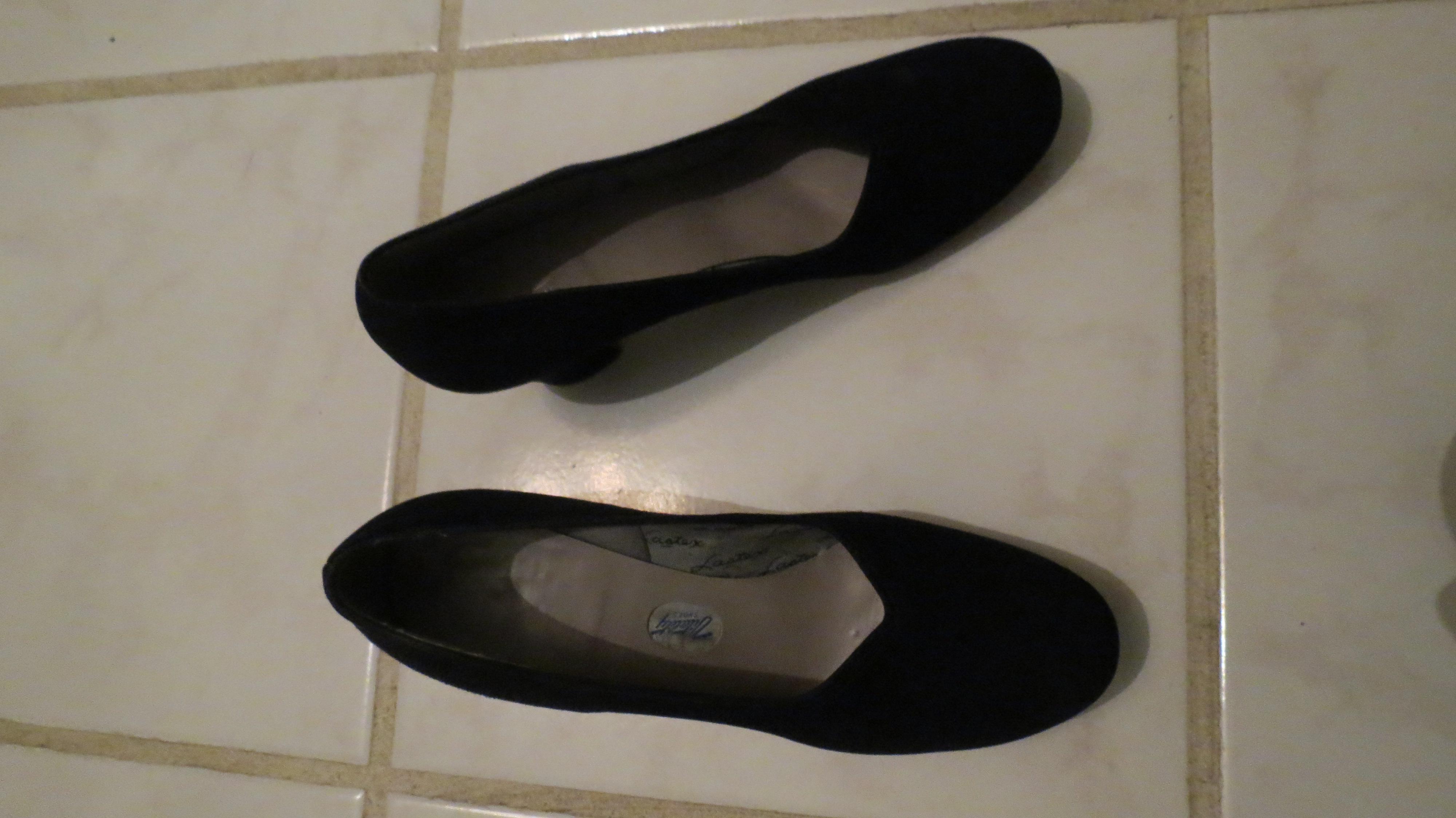
It’s almost Labor Day, OMG!! According to the North American dress codes of the 1960’s, wearing white or shoes with cutouts like these pale beige ones after Labor Day would have been a traditional fashion faux pas (in other words, big “no, no”); an embarrassing mistake that spoke to your lack of fashion sense.
With great respect to individual and cultural standards of proper dress and modesty, thank goodness those rules no longer apply in general! Unlike our grandmothers and maybe our mothers, we can wear white and pastels whenever we want to!! We can also wear black to a wedding, white or bright colors to a funeral, slacks anywhere, sleeveless blouses anytime, shorts and sandals year-round, weather permitting. Good taste and elegance are, of course, another matter . . . . . . . . . . . . . . . . . . . . . . . . . . . ..
In 1960’s shoes like these, our grannies wouldn’t face the Fashion Police in any way. They’re exceptionally well-made (how could they have lasted so long if not?), color is pretty universal and not offensive, style is modest and mainstream and they’re comfortable for walking. Not my favorite style, but worth collecting.
That said, I much prefer the 1980’s Italian-made sandals discovery that I just posted a few days ago – interesting design, great quality, elegant and versatile style and much more flattering. But, hey, we don’t have any lock on that in the more recent decades. Fabulous avante garde and va-va-voom styles have been produced at least for the past 100 years. I should review the archives ……
These pieces are very lovely and well-made. I am surprised that neither of them is signed or branded. It’s not often that I come across clues like these when just out and about – usually they wind up in antique stores or at estate sales.
The brooch is heavy and all the rhinestones are present. Its pin mechanism locks securely There is no corrosion on the gold-tone metal and it is quite clean overall. Someone loved this piece and stored it well. Easy to see why. I date it from the 1950’s to the early to mid-1960’s. The style is classic but modern and a bit lyrical, as was often seen in jewelry by Trifari during the same period.
The pearl bracelet is older and originally was at least as nice. There is a simple, box – push clasp which is not found on most precious jewelry with the exception of some very lightweight pieces; But the metal, while not fine, is untarnished and clean and the latch is secure. The bracelet is heavy but this is predominantly from the weight of the champagne-colored pearls, which I believe are genuine (though surely cultured). One is missing on the clasp, but I think I will be able to replace it. The strands are knotted between the gems. There are a few tiny rhinestones on the clasp and the keeper bars. Only one is missing, in a spot where this would never be noticed. Overall, this is also a very good-quality costume piece in a classic style and I would date it from the late 1930’s to the war-time 1940’s possibly to the early 1960’s.
Though fine jewelry is easier to trace, any accessory piece is a good place to start an investigation. I’ll probably keep them in the files for a while. What a coup if that missing pearl should show up . . . . . . . . . . . . . . . . . . . . .
What could be better for Summer? Love these sling-back sandals with the sculpted stacked leather heel. The soles are Elastane, which was a “new” material introduced in the 1970’s and was very popular for it’s flexibility. I’m dating this pair from the 1980’s. Very city chic, yet casual.
These color-block flats make me think of something Audrey Hepburn might have worn in the the classic movie Roman Holiday, from the early 1960’s. They are by Enzo Angiolini, an Italian designer brand which was very popular in the U.S. during the 1990’s. I believe that they are 100% leather shoes, excepting for the heel caps. This is always a sign of higher-end footwear, if the workmanship is good.
Both pairs have been lovingly cared for and show light wear, considering their age. Even better, they are in my size. Who knows what streets and alleyways these shoes may have walked? Good chance some of them were in Europe. They still have more stories to tell, and I always love a mystery . . . . . . . . . . . . .
More from the 1970’s – 1990’s. Let’s start with the fabulous handbag. Remember that I mentioned Portugal in the last couple of posts? Well, this purse was handmade there. Likely, a traveler picked it up during her(?) trip since leather goods have been premier souvenir items from that country for decades. Look at the craftsmanship! Inside, it has convenient pockets and dividers and is a useful medium size with an adjustable shoulder strap. Pretty gold-tone hardware and my favorite feature: the clasp. This one reminds me of many unusual and crafty closures that are seen on purses from the 1940’s and 1950’s. The circular metal ring fits over the round metal knob and closes firmly with the hinged latch. Not locked, but tightly fastened. These ingenious and pretty hardware items always fascinate me!
During the investigation I also found this small card holder, meant for carrying business cards so no RFID protection required. It is simple, but luxurious. The leather is butter soft and the pouch is lined with a rayon-type fabric, all in perfect condition, Another lovely handbag accessory.
I’m always on the lookout for high quality belts and they are elusive, especially in my size. But, you just never know and look what turned up! Super simple in it’s style. Classic, elegant embossed basket-weave design that adds a bit of interest but won’t be a distraction. 100% leather with a buckle that is probably brass. Sometimes I find them stamped as brass on the underside. That means strong, with no corrosion. Another find in near-perfect condition – just right for jeans, slacks or for cinching a sweater or jacket. Perfect for Fall (yes, it’s coming . . . . . . . . . . . . . . . . . . . . . . . Stay tuned.)
Made in Brazil and Spain – in the 1980’s and 1990’s, two of the BEST places where great shoes and other leather goods were made. Italy and Portugal were also at the top of that list. These were made for well-known brands but small unbranded shoemakers (especially in Latin America and Europe) sold beautiful creations if you were able to find them. I knew immediately that these were vintage footwear pieces and that the quality would be outstanding. The truth, as always, is in the details and I have included photographs and descriptions of the most important ones.
The leather in the top-pictured flats is glove-soft. I adore the embroidered stars covering the vamps. The little finishing detail at the top of the heels was one sign of exceptional workmanship. I usually find this detail on well-made true vintage European footwear. These were made in Spain by Pikolinos, a family brand founded in 1984. Love the style!
The camel-colored flats with brown trim are made in an elegant style meant as a driving shoe (notice the extension of the sole material on the back of the heels). See the little stitching detail that secures the seam there, too, plus the brown trim which reinforces the heel opening but is also very stylish. On the edges of the vamps where the foot enters there are slim inserts of elastic material and elegant stitching detail. These shoes were made in Brazil for Naturalizer, a more common North American company which nevertheless made some excellent quality footwear, at least in the past.
Both these pairs of shoes have a hard but flexible vinyl/rubber sole that is very appropriate for street wear and resists damage. Again, they will last for decades longer. I couldn’t be happier to find these practical styles in one place! Stay tuned for the last installment of this most recent investigation . . . . . . . . . . . . . . . . . . . . . . . . . . . . . . . . . . . . . . . . . .
Love, love, love!!!!! Most likely from the 1980’s – maybe the 1990’s. Always one of my favorite finds (they fit!!!!!), and definitely keepers that will serve me well forever. These boots were made in Brazil of lovely, soft leather. The clues abound regarding their excellent pedigree:
1. The craftsmanship is exquisite: even, strong stitching with high quality elastic gussets that have held their shape and stretch. Notice the nice little tab at the back which looks good but also provides a gripping place to pull the boots on comfortably, without stretching that would pull them out of shape.
2. The soles and heels look very much like leather, which is always a plus because it can be repaired by a skilled shoemaker or shoe-repair technician, but instead are made of the wonderful Vibram-type material which came later in the mid-century and is virtually indestructible. The finish eventually wears off the soles but they don’t wear down as quickly as leather. Repair and replacement are hardly ever needed.
3, The heels are so well-crafted that they have the look of stacked leather, though they probably are not(?)
4. The Granny-style of the heels was fashionable at the time these were made but the overall design is perfectly classic and elegant. Despite the heel style these boots are wearable with most clothing types without looking dated and will continue to be in the future.
This investigation proved not only the age, origin and construction details of these boots, but also strong clues as to what class of person owned and wore them as well as the type of vendor which sold them originally. Although modern technology would allow a greater depth of detailed knowledge to be ascertained in a laboratory, I will leave those tasks to the forensic teams. For my purposes, the investigation is perfect and ends here, in my closet.
_ _ _ _ _ _ _
As I’ve said before, I don’t support the markets for any type of animal skins (including fur) by buying newly-made products that involve the raising, hunting and slaughter of the animals who provide them. I also avoid products made from wool, down and other feathers and silk, which also involve animal cruelty. Collecting beautiful true vintage artifacts easily satisfies my curiosity and fulfills my needs.
As the marketplace continues to offer more alternatives, my diet and toiletries are always vegetarian and vegan whenever possible. Excellent alternatives to most products are available and the prices are constantly coming down. Now that cruelty-free hard goods (not food or other things that will spoil) have been in the marketplace for a few years, it’s increasingly possible to find them in places where previously used items are sold or traded. True vintage items may not have been made with an ethical mentality, but they don’t contribute to cruelty and abuse in the present. Secondhand purchases don’t give money to current unethical manufacturing processes or the people who sell them either, as long as you are not buying from the original producer or vendor. And, the older things are, the better the quality in most cases. What could be better?
This is just the beginning of my posts of recent discoveries. More are coming. Stay tuned . . . . . . . . . . . . . . . . . . . . . .. . . . . . . . .