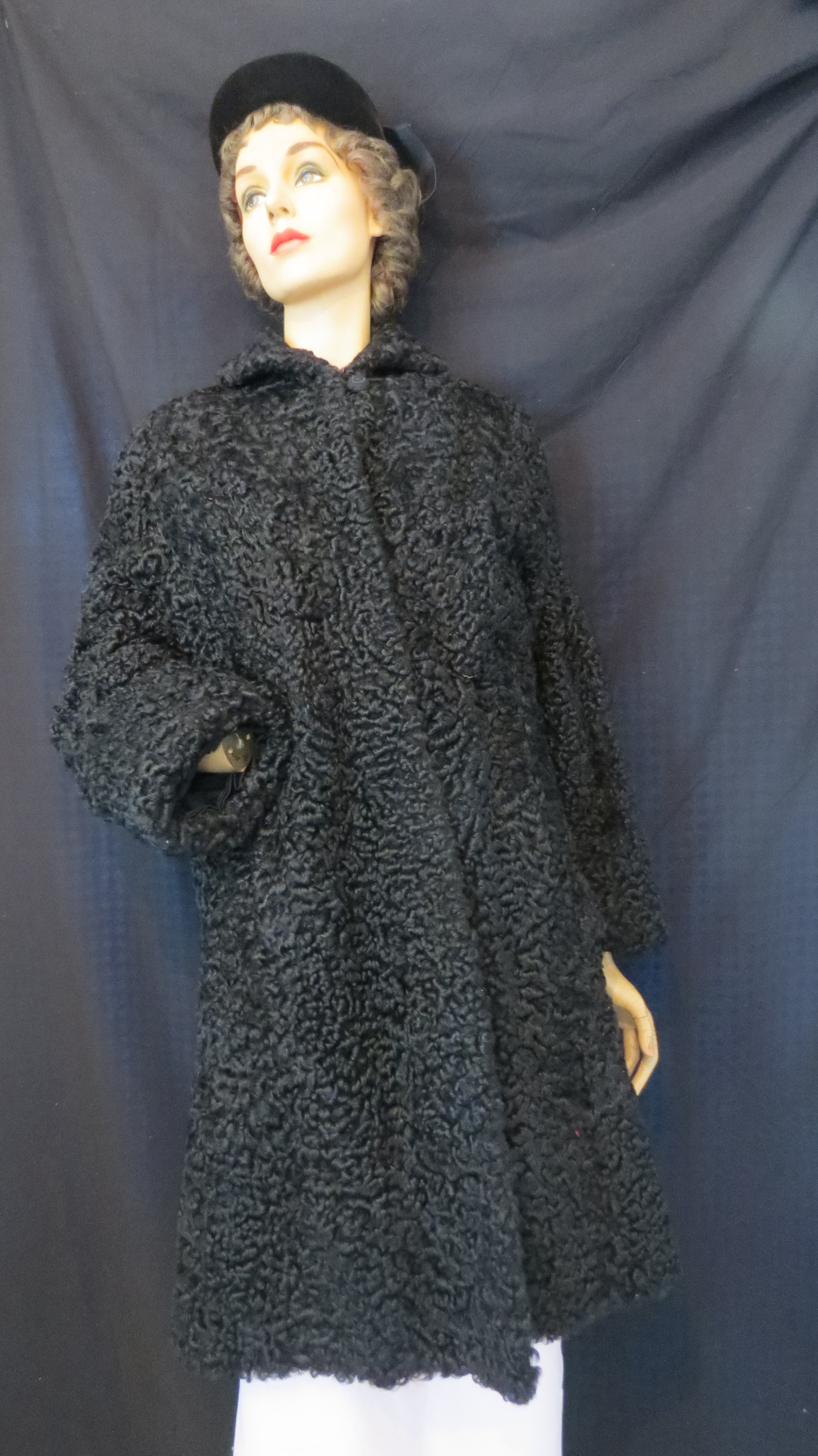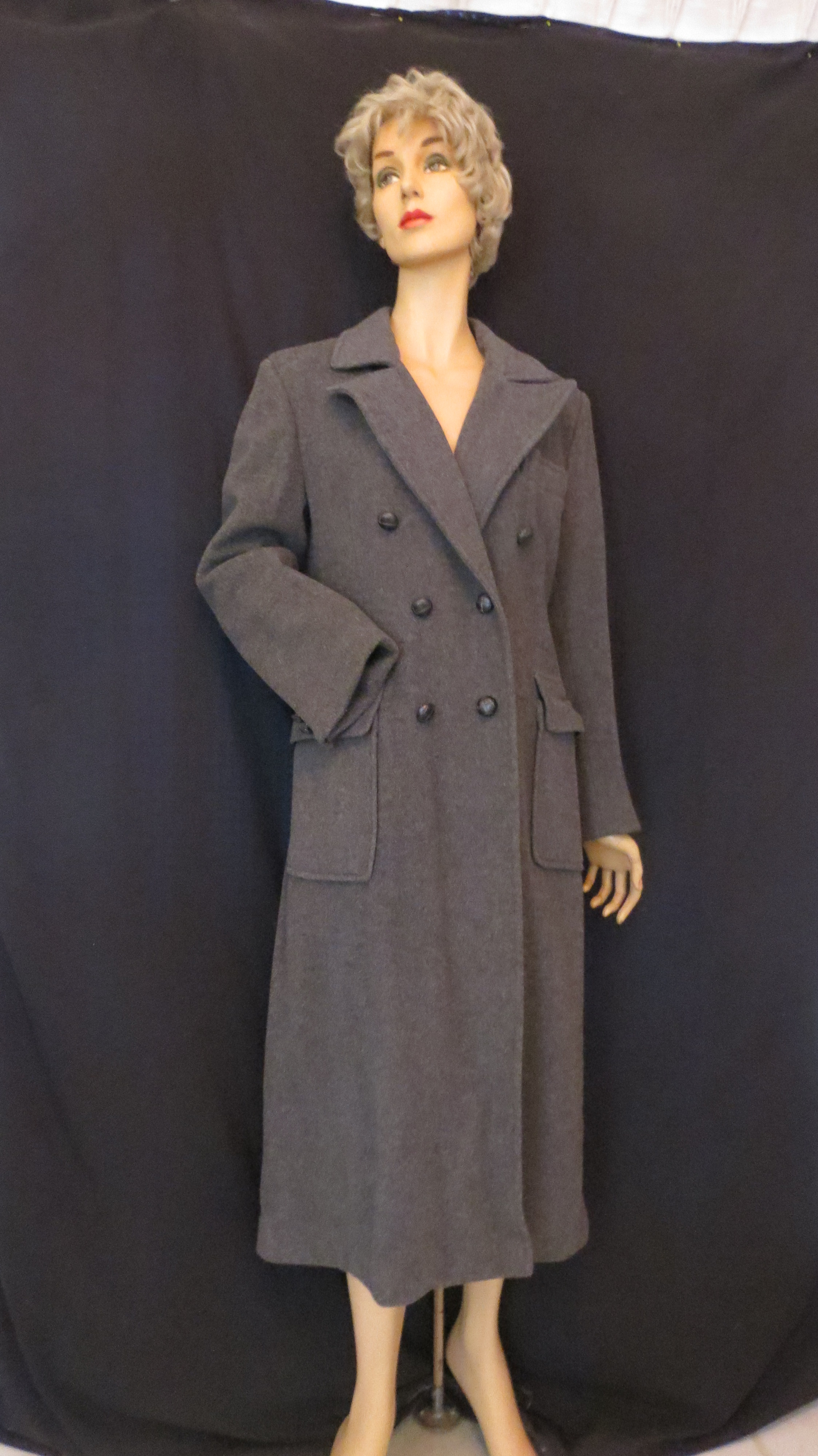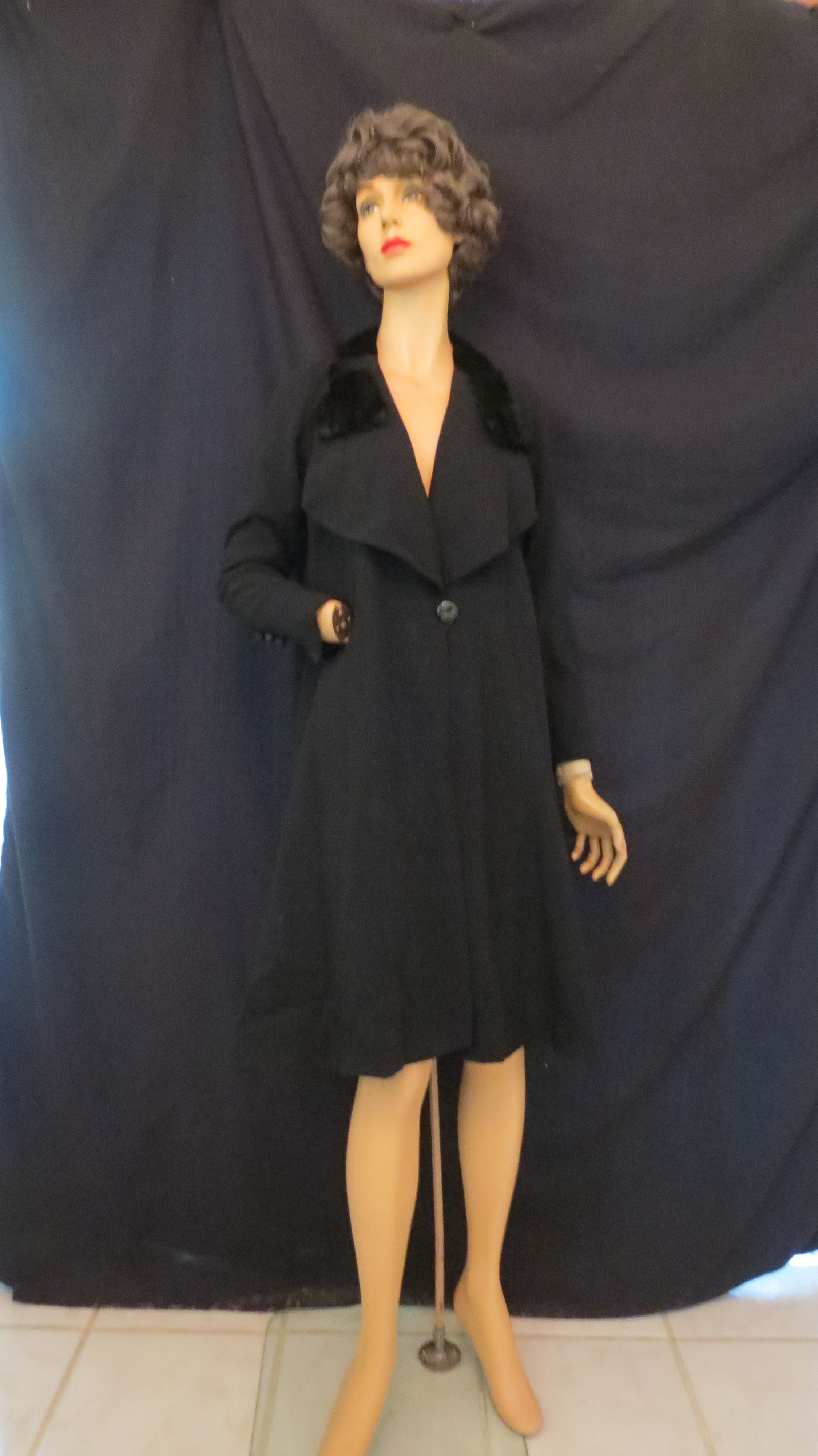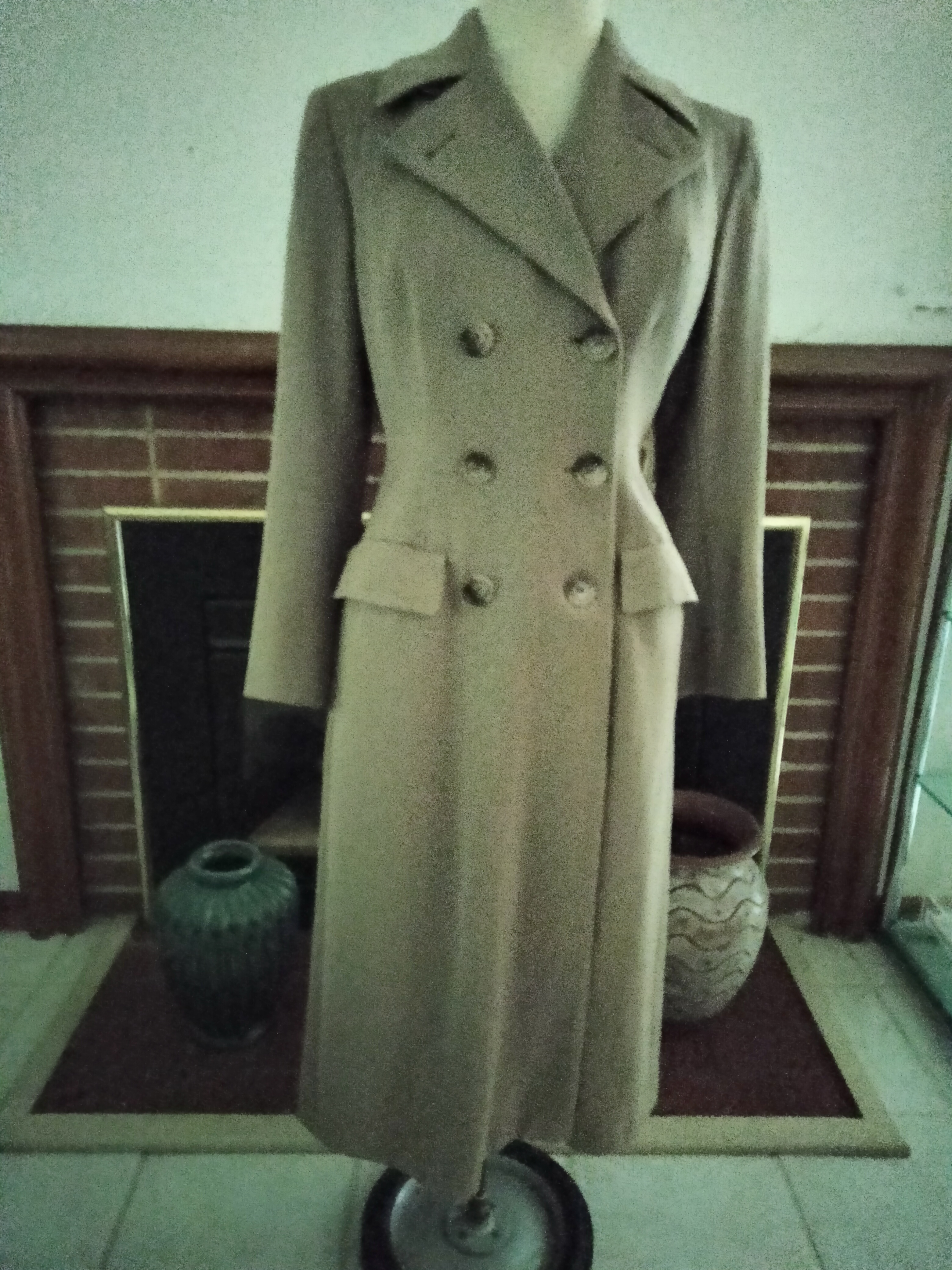
I’M PULLING OUT A 1950’s MEN’S AUTUMN BATHROBE FOR THE EQUINOX – CHILLY NIGHTS!

Not fluffy and plush, but a bit warmer with the l-o-n-g sleeves and mid-calf (on me) length. The heavy cotton fabric is good for this in-between weather and I LOVE, LOVE, LOVE the gorgeous medallion prints on true vintage men’s robes and PJs. Also, the cuffed sleeves and big patch pockets. Very useful. I have an even older one with elegant black satin cuffs and collar – very “le smoking”.

So, I’ll be showing more of my warmer true vintage garments as the weather continues to cool and you just never know what else might show up . . . . . . . . . . . . . . . Stay tuned.

MORGANA MARTIN, THE MAGICVINTAGESPY

BLOG: MAGICVINTAGESPY.COM

UNPACKING ANOTHER TRUE VINTAGE OUTFIT FOR FALL

I love my cotton skirt and vest set from the late 1970’s. The style had a real moment then and this one is by Mr. Leonard, which was a leading manufacturer of women’s clothing from 1965 until it’s closing in 1999. Cool and casual makes it perfect for September while we’re still having warm days but are in the mood for Autumn colors. It’s pretty easy to dress up or down for daytime, too. Looks just as great with a classic blouse or a t-shirt.

The nicest thing is the quality. Nice fabric, well-constructed. The vest is fully lined with a dark green fabric that keeps it’s shape and minimizes wear. Despite it’s age, it looks almost new. That’s probably my favorite thing about true vintage clothing and accessories, second only to the fabulous style and elegance.

I’ll have to continue unpacking, so stay tuned . . . . . . . . . . . . . . . . . . . . . . . . . ..

MORGANA MARTIN, THE MAGICVINTAGESPY

BLOG: MAGICVINTAGESPY.COM

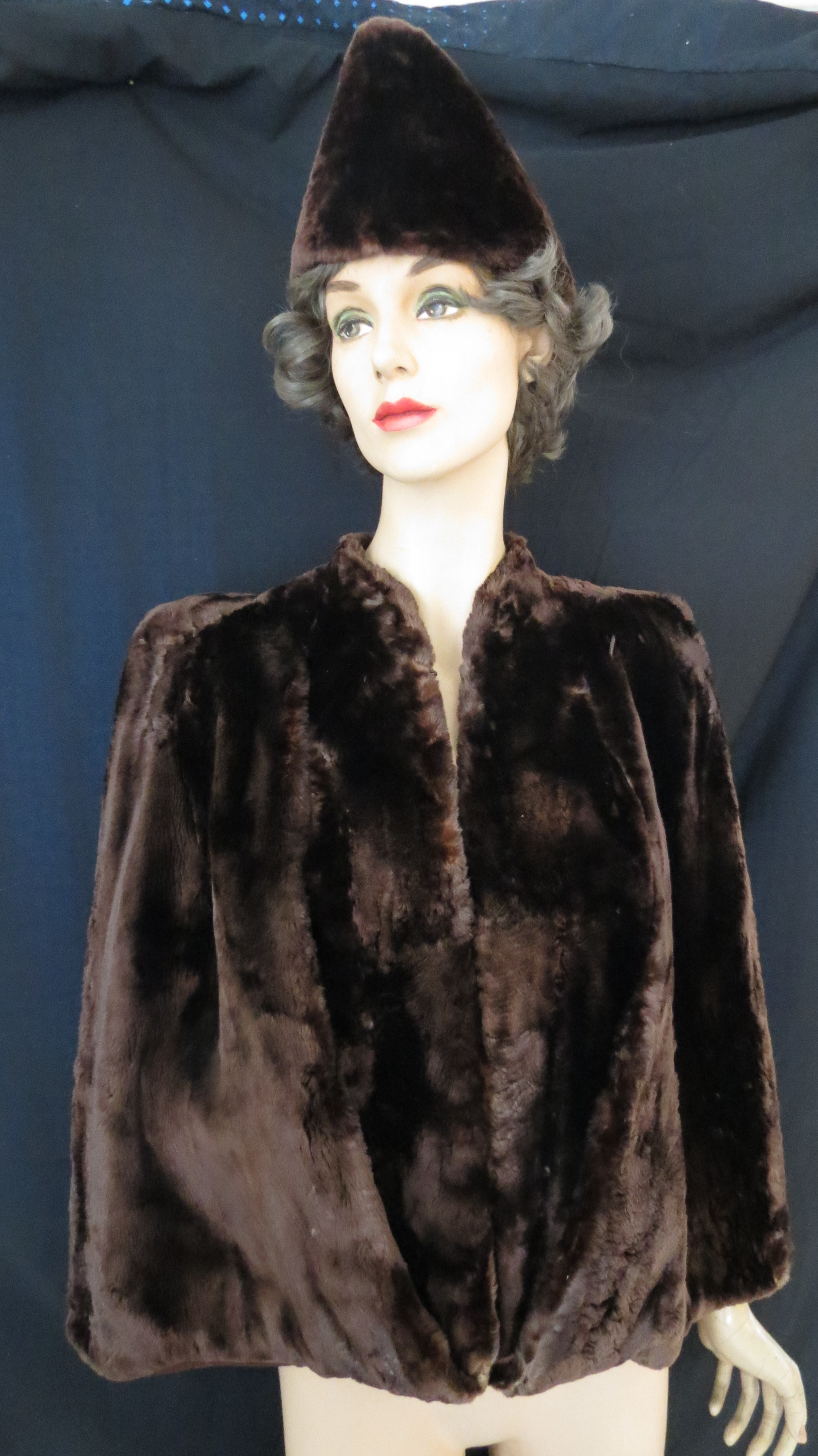
UPSCALE TRUE VINTAGE 3-SEASON FAUX FUR HAT. SO MUCH FUN TO WRITE ABOUT THIS!

About the last thing I expected to encounter! There I was, looking for some chains for crystal pendants I’ve been buying and a dangle for the end of my 1960’s chain belt (which I found, by the way) and what was propped on a nearby hat-stand?; a quasi-luxe faux beaver fur hat, made in Italy for the iconic Simpson’s department store chain of Canada, which finally phased out in 1991!! More about that a bit later. First, the hat . . . . . . . . . . . . . . .. . . . . . . . . . . . . . .

Boy, do I miss my models who are having time free at Headquarters. They would do a much better job of showing this off, but you can get the essentials from these photos. Looking almost like new, with just a little storage crush. This baby is at least 35 years old and could be more like 60. The rayon-like liner is pristine, with the original label. Classic Russian toque style with a slim fabric hatband for best fit. It’s very flattering and super-practical – will fill an empty niche in my hat collection perfectly!

And, what a pedigree! Made in Italy, to their high standards of that time (some makers still seem to have them). Simpsons Department stores were historic vendors, started in 1872!!! They were in stiff competition with the Eaton’s chain and evidently tried to upscale their merchandise for a winning position. All the Eatons stores finally closed in 1999, so these two were head to head for well over 100 years. The first Simpsons store was in Toronto, Ontario, and could be compared to the iconic Marshall Field of Chicago in terms of the elegance of the store itself and its merchandise. Like Field’s, they also did the elaborate Christmas windows that families would travel far just to see. 80 years later, they teamed up with Sears, Roebuck & Co., becoming Simpson Sears. Like Sears in the U.S., they also offered a catalog service. In another 24 years, the Simpsons element was purchased by the Hudson’s Bay Company and the store name became The Bay in 1991. In the Northeast U.S. and Canada, all three of these names were very well-known and depended upon for high quality and fashionable merchandise. In the States, we could compare Eaton’s, Simpsons and The Bay to Marshall Field’s, Bloomingdales and Saks Fifth Avenue, to name a few. You can see why I’m so thrilled with this true vintage find!

So, as I always say: You just never know . . . . . . . . . . . . . . . . . . Stay tuned. I am . . . . . . . . . . . . . . . . . . . . . .

MORGANA MARTIN, THE MAGICVINTAGESPY

BLOG: MAGICVINTAGESPY.COM
GREAT NEW FIND TODAY! BUT, IN THE MEANTIME, A BIG CONTRAST TO THE JUMPSUIT IN MY LAST POST –

This one couldn’t be more different than the Boho outfit I posted two days ago! Looks like it might have been worn to a 4th of July country club event. Very prissy and proper. It’s from the 1970’s and was made by a well-known women’s clothing company – possibly Jonathan Logan. I can’t remember the label because I sold it on eBay right away – NOT my style. However, it was a good example of the jumpsuit evolution and worth collecting.

Aside from the utilitarian work uniform that Rosie the Riveter wore in the 1940’s, jumpsuits (cute as they are) are not in the least bit practical. One nice thing is that the fit can be sleek and slim – no need to tuck in a shirt or top – but anyone who’s worn one knows that they are very inconvenient. There were some cute ones in the early 1970’s when Seventies did Forties but after a couple of evenings bar-hopping, gals often decided to leave them in the drawer and go for their Chic jeans instead. But, we didn’t learn our lesson because they showed up again in the early 1980’s when the Forties were revisited. Then I was horrified to find that, especially for dress-up nights, some designers came up with truly ugly ones in knits and velvets in the 1990’s#@*!! Can you imagine going to an event and wrestling with that in the washroom all evening with the hem dragging on the floor? Forget it! This is a style that I hope we don’t see again.

So, the tide turned today when I discovered a lovely mid-century piece that I can’t wait to show you. Not going to give it away now, but I will be posting it tomorrow. Stay tuned . . . . . . . . . . . . . . . . . . . . . . . . . . . . . . .

MORGANA MARTIN, THE MAGICVINTAGESPY

BLOG: MAGICVINTAGESPY.COM
TRUE VINTAGE LATE 1960’S EARLY 1970’S BOHO HIPPIE JUMPSUIT

Here’s one of my favorite “just hanging – out” things to wear. What a find! Just perfect for “Indian Summer”. I know that old term isn’t correct anymore, but it’s very descriptive of the time of falling leaves, bonfires, harvest moons, cider and hayrides – all the traditional stuff from this autumn time of year. It’s still patio party season, too; fun to imagine the events where it was worn back in the day. The colors are just right as leaves begin to turn red and gold.

Love the pleated flounce at the bottoms of the legs! Lace-up bodices were a big thing at this time, too. Prairie style really got into it right around 1970. This fabric print is somewhere between psychedelic and ethnic, which looks more like a couple of years before that, but the styles kind of mooshed together then so it’s hard to say exactly. If the garment has a label, that helps. This one did not. Could have been home-sewn – lots of gals were still doing that then.

I’d wear these jumpsuit styles a lot if they weren’t so inconvenient!! Stay tuned as I pull out more of my Fall clothing (and there’s always the odd investigation)

MORGANA MARTIN, THE MAGICVINTAGESPY

BLOG: MAGICVINTAGESPY.COM . . . . . . . . . . . . . . . . . . . . . . . .

FALL IS COMING! IT’S TIME TO PULL OUT MY ICONIC 1960’S SUEDE LEATHER CAR COAT

So many mid-century gals had a similar coat when John F. Kennedy was president. This one is a well-made daily-wear style that goes with almost anything. It has a rayon satin lining that doesn’t make it too warm in mild weather, but I have seen and own examples with pile liners which usually zip out. Quality mid-century clothing was ingenious, stylish and practical.

Although 3/4 sleeves might seem awkward on a coat, they were a BIG fashion feature at that time and look SO GREAT with gloves that are longer. It’s always worth collecting true vintage gloves that are almost elbow-length; not the kind that are worn with evening dresses, but beautiful, tailored gloves of vintage kidskin. Knitted or cloth gloves would also work with this jacket in a casual mood because it’s so versatile. I love it here with my 1980’s Western-style suede skirt.

Huge plastic buttons were also a common feature on coats from the years before and after 1960 and would often give major giveaways about the garment. In general, the quality of the buttons reflected the overall quality of the coat. Detailed, sculpted buttons were very interesting and showed that a coat was not a bargain item. Sometimes they even had inlaid pieces of different colors or faux gems like “pearls” or rhinestones. A dressy coat might have buttons like that even though the coat style was very tailored. In this case, you see tailored elegance on a mid-priced garment that would last for many years.

I love Fall and, since the weather is changing, I’ll have to trot out a lot of clothing that has been in storage – maybe even open some of the archives . .. . …. . . . . . . . . . . Stay tuned. . . . . . . . . . . . . . . . . . . . . .

MORGANA MARTIN, THE MAGICVINTAGESPY

BLOG: MAGICVINTAGESPY.COM
MY VERY LATEST FIND: A PAIR OF ICONIC KENNEDY-ERA GLOVES. TOO SPECIAL TO PASS UP . . . . . . .

Who doesn’t have mid-century white wrist-length gloves passed down by the older women in their families? I’ve got a collection, both of “heritage” gloves and those that I’ve discovered during past investigations. Cotton, leather, suede, synthetic – I’ve kept only the best of the best. Like handkerchiefs and little hats, these gloves were ubiquitous – every woman had them because in the late 1950’s through the early 1960’s they were mandatory when you left the house. First Lady Jacqueline Kennedy made them a true fashion statement that no well-dressed woman would be seen without.

So, a ton of them have been out in the vintage marketplace even though they’re not a wardrobe staple anymore. But, wait . . . . . . . . gloves, in general, are definitely a wardrobe staple and these are PERFECT! What do you wear with a white jacket or coat on a cool day? How do you save your white leather gloves from getting dirty? Beautifully hand-tailored gloves like these are a great alternative. Even if you’re not wearing an early ’60’s dress, these are classic enough to wear with anything, including slacks.

Other factors which made these a catch, besides their beauty, and caused me to pick them up: 1. The synthetic fabric – probably nylon or a nylon blend – has stretch which makes them super comfortable and flexible as well as giving a good fit. 2. This type of fabric washes well, similar to nylon lingerie slips. You can even wash them in hot water if you need to and as long as the decoration will tolerate it (but those buttons can easily be detached for laundering and re-sewn on). 3. This is maybe the BIGGEST PLUS – like nylon slips, in my experience, they take dye very well and can be dyed to match anything you’d like!!!

That’s my very latest find and I was thrilled to discover them. You just never know! Now, I only have to decide on the color . . . . . . . . . . . . . .

MORGANA MARTIN, THE MAGICVINTAGESPY

BLOG: MAGICVINTAGESPY.COM

PRETTY WHITE COTTON MINI FROM MID-CENTURY EUROPE

While I’m missing Stella (my fabulous vintage mannequin model), please use your imagination to visualize how fun and flattering this mini-dress or tunic looks when it’s on. Without my honed sleuthing skills, I never would have found it and am so glad that I did. As a mini-dress (if you don’t mind the side slits showing your whole leg almost to the hip) it’s really cute and calls for a 1960’s/’70’s chain belt to finish it off. As a swimsuit cover-up or beach dress it would be perfect – cool, crisp and lightweight while giving some reasonable sun protection. Over a pair of skinny white pants or shorts I LOVE IT!! Also love the elbow-length sleeves and unusually-shaped neckline.

How do I know it’s from Europe? The size label tells me. How do I know that it’s true vintage? By my guesstimate, a European size 42 would always be too big for me, but I look great in this whether worn as a mini-dress or a tunic over pants. So, the cut seems to be smaller than a modern garment of that size would be. This is always tricky with international sizing, but I think I’m correct. The fabric is a nicely-woven cotton with some weight (but not too much for Summer) and all-over floral embroidery – similar to vintage fabrics that are almost never seen now. Also, the interior tailoring is different from what I find on modern garments. Not fine tailoring, because this is a very simple garment and probably sold at a lower price. However, some of the finishing is remarkable – if it did not have a size label, I might say that it had been home-sewn. It has darts in back to give it extra fit and style. The size label, printed rather than embroidered, is sewn in at the back neckline and there are no other tags at all.

All right, the verdict is in. This dress is probably from the 1970’s, give or take 5 years. Allowances have to be made for the overseas manufacture. Whatever it’s exact heritage, it’s wonderful and I will really enjoy it. I love solving mysteries but an open-ended investigation is always intriguing. Who knows – sometimes I solve a cold case years later! You just never know . . . . . . . . . . . . . . . . . . . . . . . . . . . . . . . . . . . . . .

MORGANA MARTIN, THE MAGICVINTAGESPY

BLOG: MAGICVINTAGESPY.COM
FABULOUS AND FUN SURPRISE FIND – TRUE VINTAGE, AS ALWAYS . . . . . . . . . . . . . .

A wonderful authentic Lily blouse from the 1970’s! I was out and about dropping off a charity donation and found this beautiful shirt. Such a surprise; I have several other Lily blouses in my closet, from the 1960’s but haven’t seen one during an investigation for a long time. These lovely shirts were a mid-century staple. The signature fabric is so soft and airy, the pretty embroidery done so well. Most older ones had monochromatic Asian-inspired designs. This one is similar to colorful Latin American indigenous designs, which became more popular in the early 1970’s.

I love the old-style sizing on these blouses and am thrilled that it is in a size I can wear – just about a modern size 2(which would be perfect for Stella, as well. I certainly miss her when I’m not at Headquarters. See her modeling work in many previous posts). It also has double-button cuffs, which is another late 1960’s – early 1970’s tailoring detail, AND a button and loop at the neckline which can be fastened to lessen gaping there, if you want to. True vintage garments almost always have such excellent tailoring and, despite it’s age, I see no signs of wear. The previous owner may have washed it by hand, which would be so easy to do, and avoided the wear and tear of traditional machine washing. So, this lovely won’t be going to eBay or Etsy!!

I also found another true vintage item in pristine condition, which I will post tomorrow. I’m a Satisfied Sleuther!! Just goes to show that you just never know . . . . . . . . . . . . . . . . . . . . . . . . . . . . . . . . . . . . . . . . .

MORGANA MARTIN, THE MAGICVINTAGESPY

BLOG: MAGICVINTAGESPY.COM
TRUE VINTAGE PATIO LEISURE LONG DRESSES FROM THE 1970’S – 1990’S

Through the decades the changes in style are often subtle, but they’re noticeable if your sleuthing trade skills are sharp. One thing that all these dresses have in common is excellent quality. I showed several dresses of this genre which were made in the Victorian/Prairie style when covering 1970’s Prom dresses a couple of months ago. Early in that decade, girls sometimes wore them to the Prom but they were usually fussier with lace and more details. Jessica McClintock of Gunne Sax styled them for at least 20 – 30 years. Labels always help, of course, but aren’t always present. The condition of all these examples is near-perfect, which can make the job a easier, though tell-tale signs of wear can sometimes be very helpful clues. Let’s start from left to right:

A Prairie-style gown, pretty and modest in cotton. Looks like it was made for retail because of the precise tailoring detail, but there is no label. I would put it in the 1970’s but it could possibly have been made later by an individual expert or a company that catered to a niche market which preferred very modest styles of dress.

A red and white plaid gown that picks up on the Prairie style, but in a much more casual, carefree design reminiscent of the 1960’s. It’s probably made from cotton but I can’t be sure without the file in front of me and it could be cotton/poly blend. It was made in the 1980’s in West Germany. This is an example of trends jumping the oceans, usually years after they originally appeared in the Western nations. Although they’ve done their own take on the style, it’s exceptionally well-made, as goods from West Germany have always tended to be, in my experience.

A black and white floral print gown made in Hawaii. This one is from the 1980’s, give or take a decade and is the most elegant. Same deal about the fabric as in the previous dress. The style is pure average conservative, which makes it harder to date exactly. A pretty dress, but nothing distinctive about it excepting for excellent tailoring. It might have been a wardrobe item of someone who lived in Hawaii, purchased at a specialty shop stateside which carried Hawaiian garments or by someone who bought it while on vacation. Hawaiian-made gowns have been popular with women worldwide since the 1950’s, but earlier ones were usually made in more traditional Hawaiian style and, often, of Hawaiian fabric with traditional island prints. The more mainstream universal designs like this one came later.

The final dress is from the 1990’s. Always harder for me to think of as true vintage, but it is worthy because of the good tailoring, 100% cotton fabric and the retail designer label sold by a high-end department store in New York City. It’s got pedigree. Again, nothing notable about the style but it is very well-cut, which can make a world of difference in terms of how a dress fits. That’s one feature of even plain, rather boring vintage clothing items that can make them worth collecting and wearing. The style can always be elevated by adding accessories but one thing that always elevates any garment is how well it is made and how well it fits.

Tomorrow I’ll be showing a collection of dressy day-wear accessories from the 1960’s that fit the category of well-made, classic and designer items that can “make” an outfit. Stay tuned . . . . . . . . . . . . . . . . . . . . . . . . . . . . .

MORGANA MARTIN, THE MAGICVINTAGESPY

BLOG: MAGICVINTAGESPY.COM