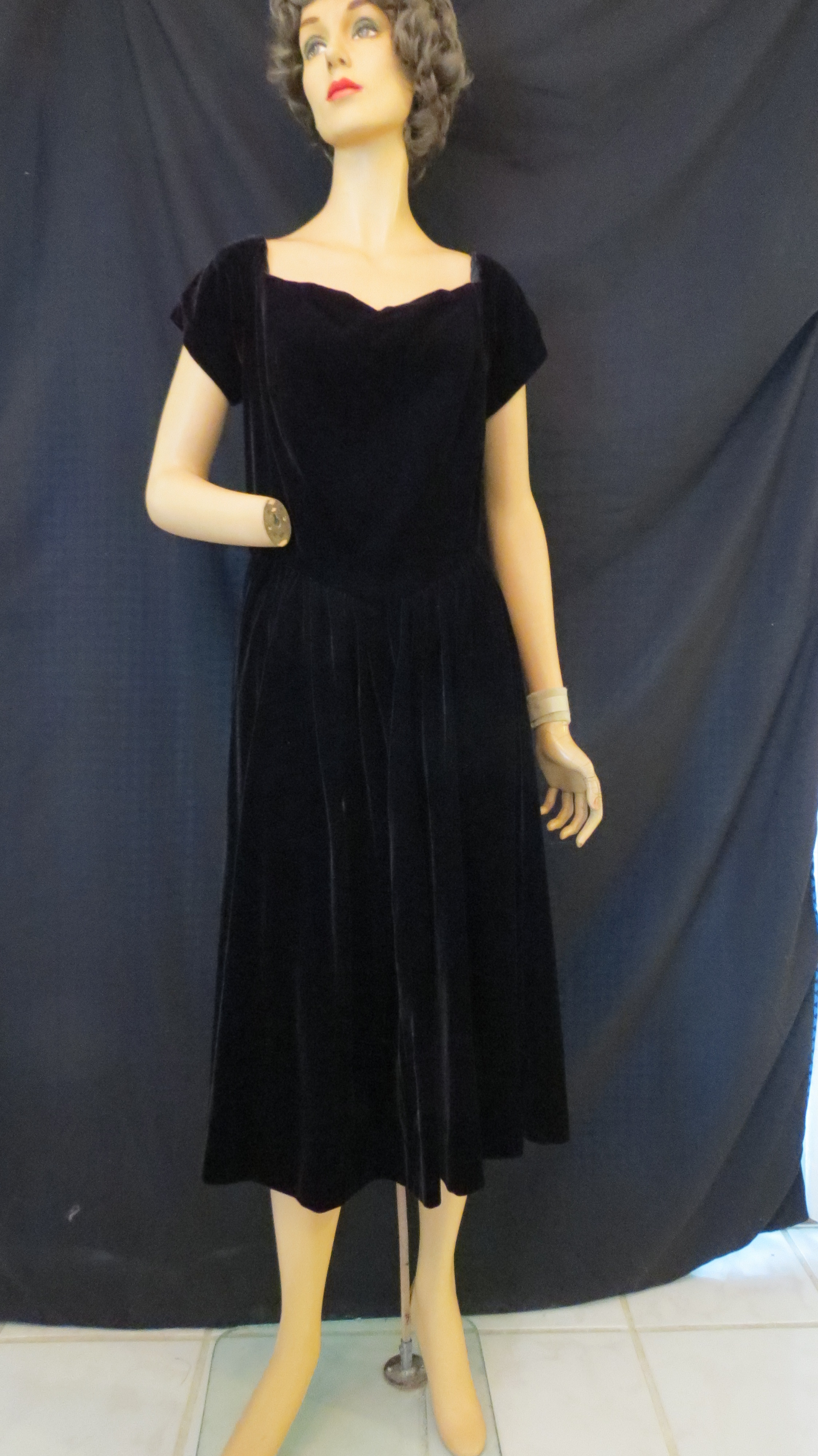
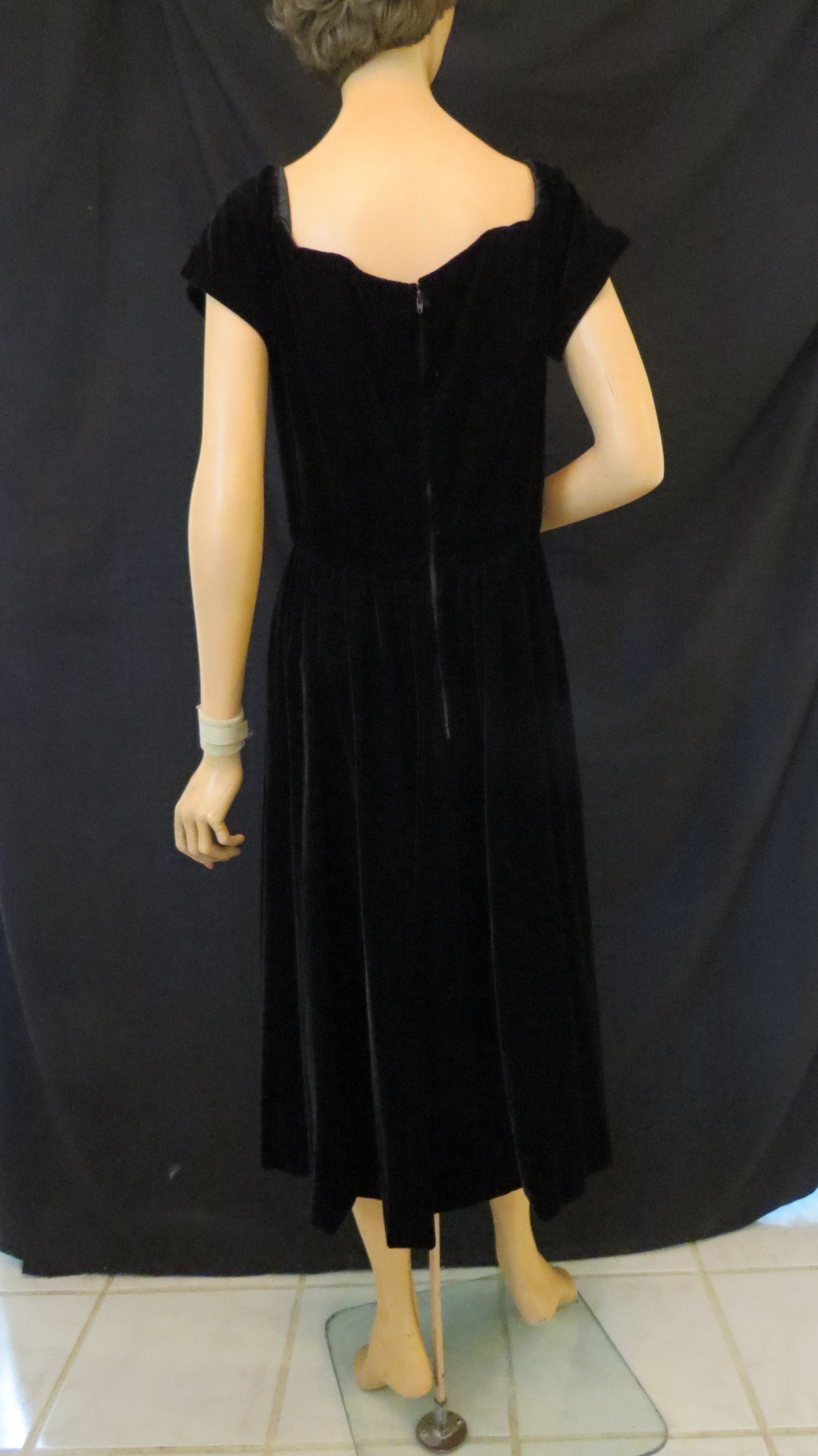
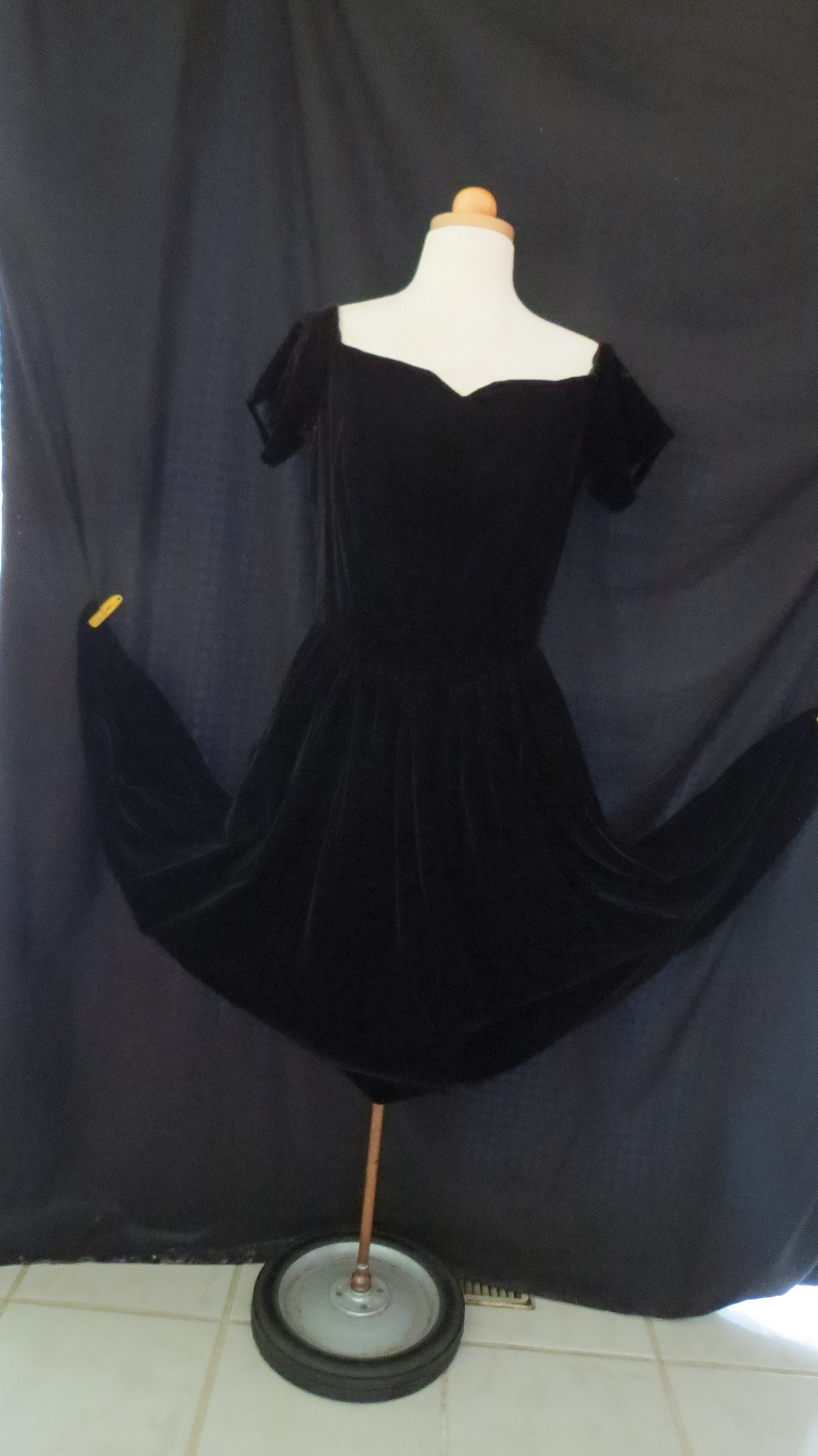
Here’s a lovely frock made by an amateur (?) tailor with her own name label sewn in. The photos don’t do it justice – the tailoring is exceptional. No decoration – classic and elegant. Neckline is the focus, but the features of a post-war 1940’s New Look dressy frock are faithfully recreated – nipped waistline and the point at waist front, sweetheart neckline, very short sleeves and circle skirt. The fabric is a lush velvet.
So, I had to collect it when it showed up. More coming before we round out this decade. Stay tuned . . . . . . . . . . . . . . . . . . . . . . .
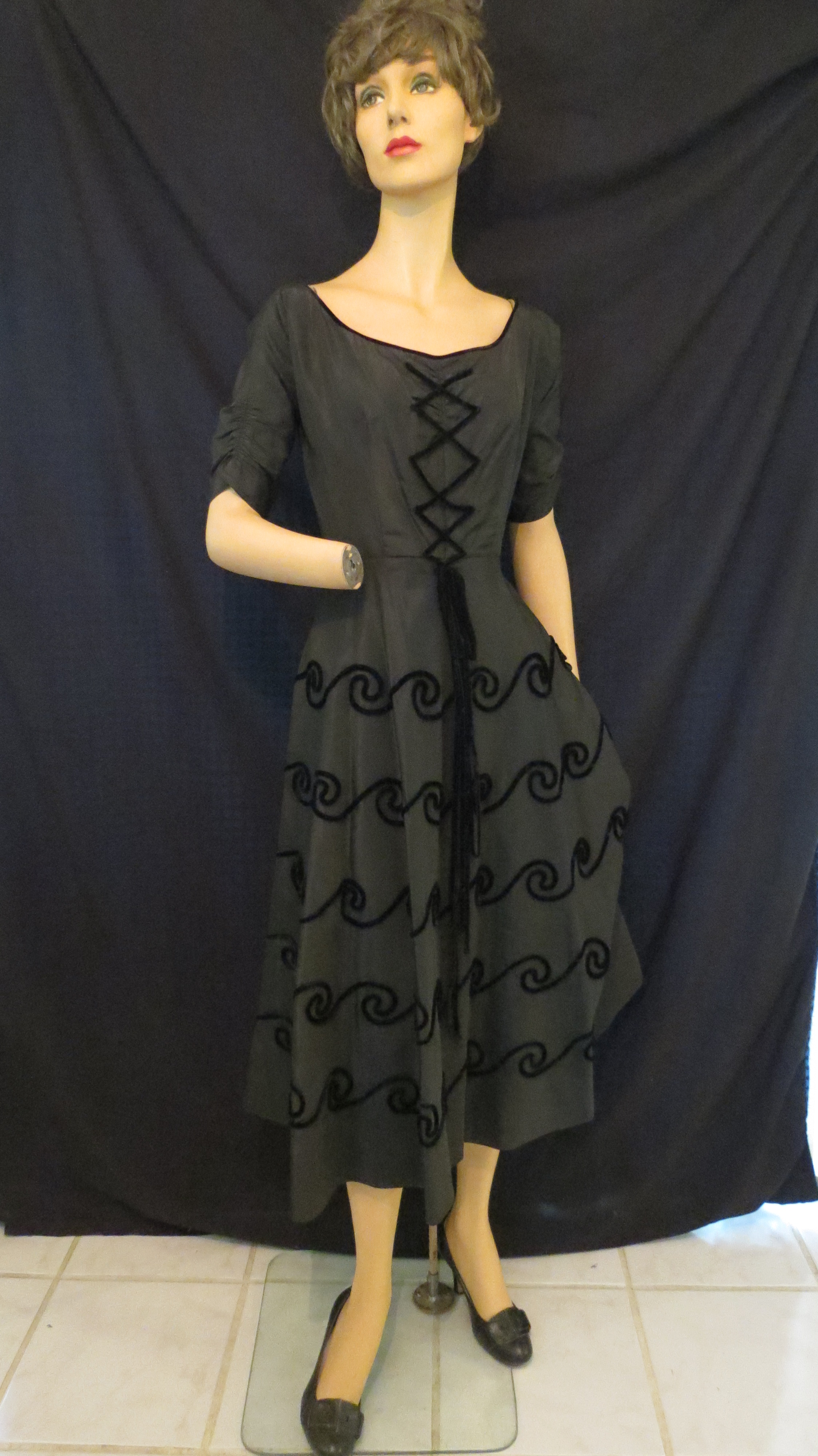
I’m back in black today, but more color coming. I really loved discovering this frock in Texas. Sold by an upscale privately-owned clothing company that had it’s own label. The trim is black velvet tube ribbon and the skirt is made for swingin’ and swayin’. Perfect for wearing to any dance hall or vibrant party, and we know that Texans love to party!
It’s got ruching on the sleeves, which was a favorite ’40’s tailoring feature. Nipped waist and wide skirt plus a midi hem puts in firmly in the post-war time frame. So much fun to discover – a fun dress from a very jubilant time in history. More Forties fashion coming, but dressing it up with an international twist. Stay tuned . . . . . . . . . . . . . . . . . . . . .
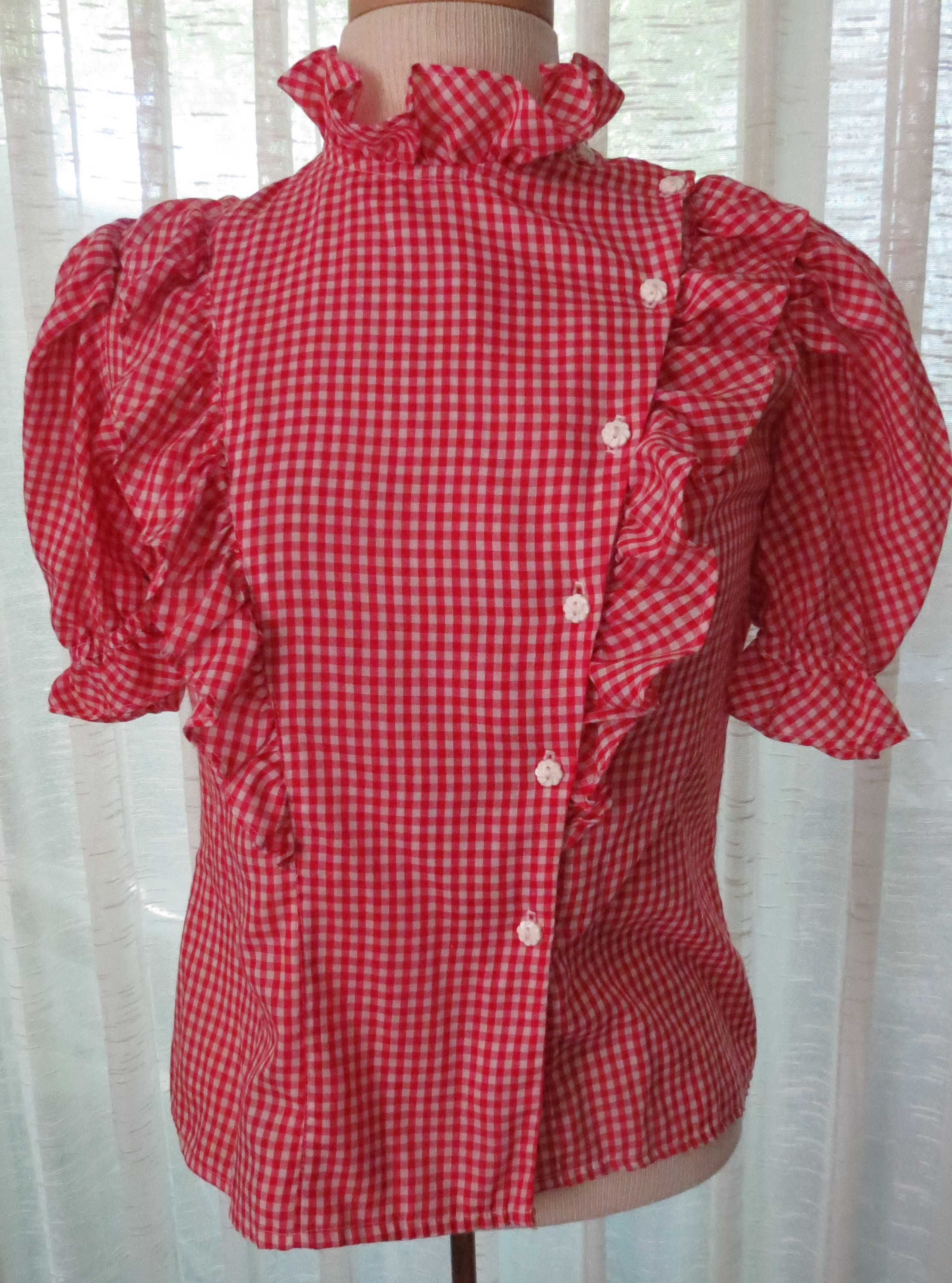
These blouses and sweater all came from the war years spanning the late 1930’s to the very early 1950’s. The first blouse is a women’s-wear version of the Western-wear trend. Perfect for square-dancing. Gingham and sculpted plastic buttons were popular. This example might have been home-sewn by a skilled seamstress.
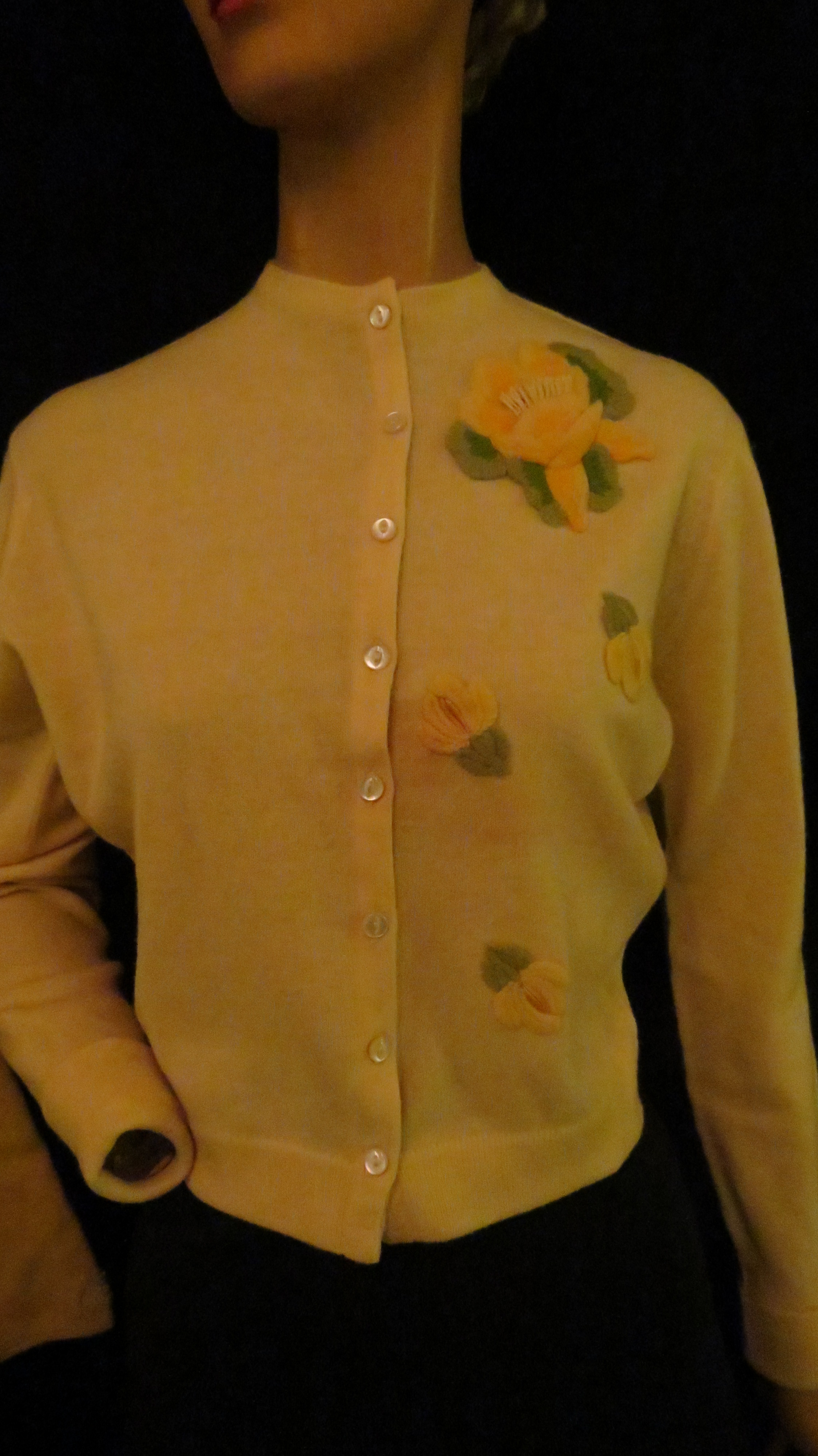
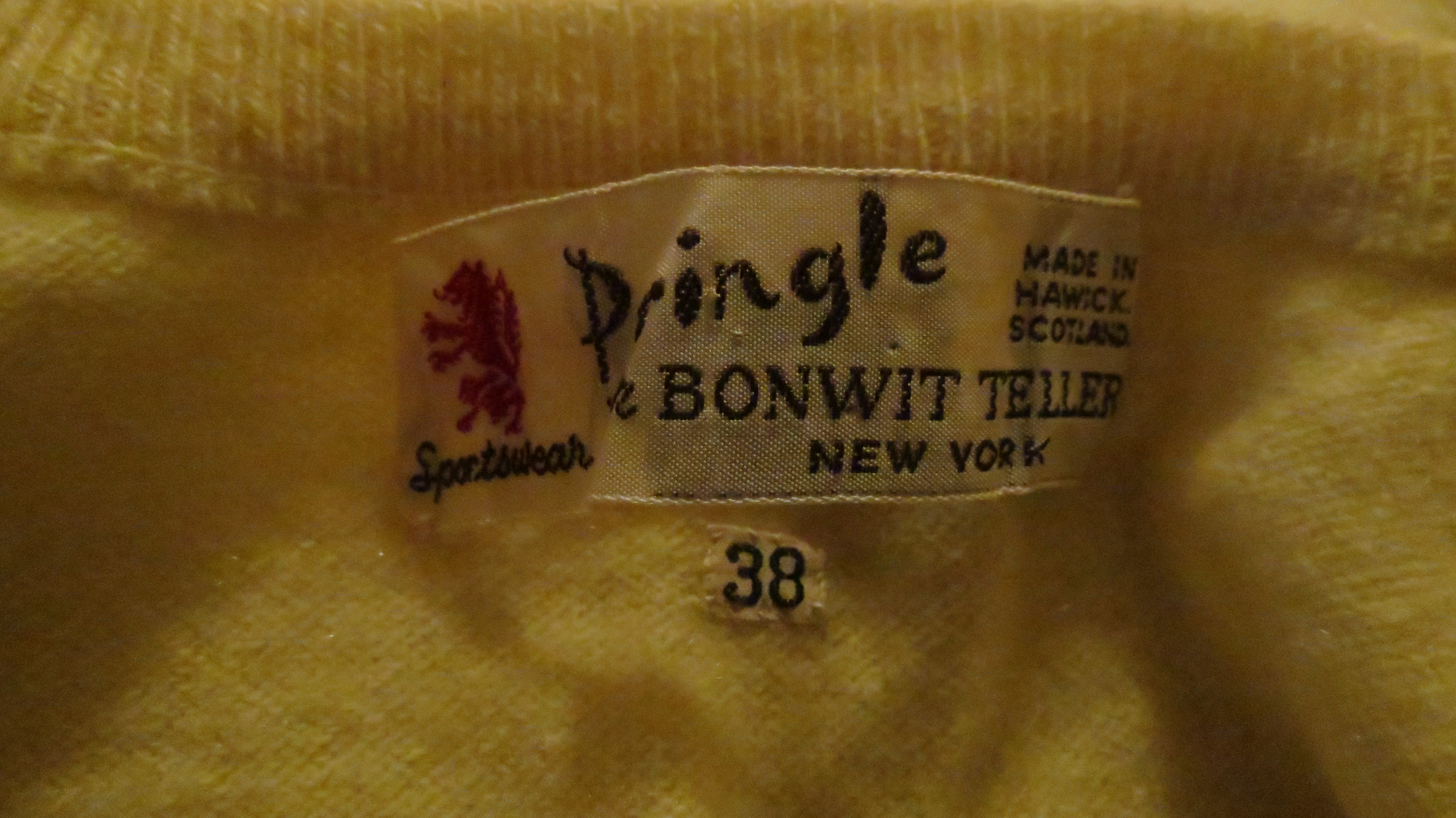
Cashmere cardigan sweaters also were seen worn as blouses, sometimes with the buttons in back if it were a plain knit. This trend was especially popular among co-eds. A beautifully-decorated one like that above would have been front-facing, of course. Pringle of Scotland was a known brand and higher-end.
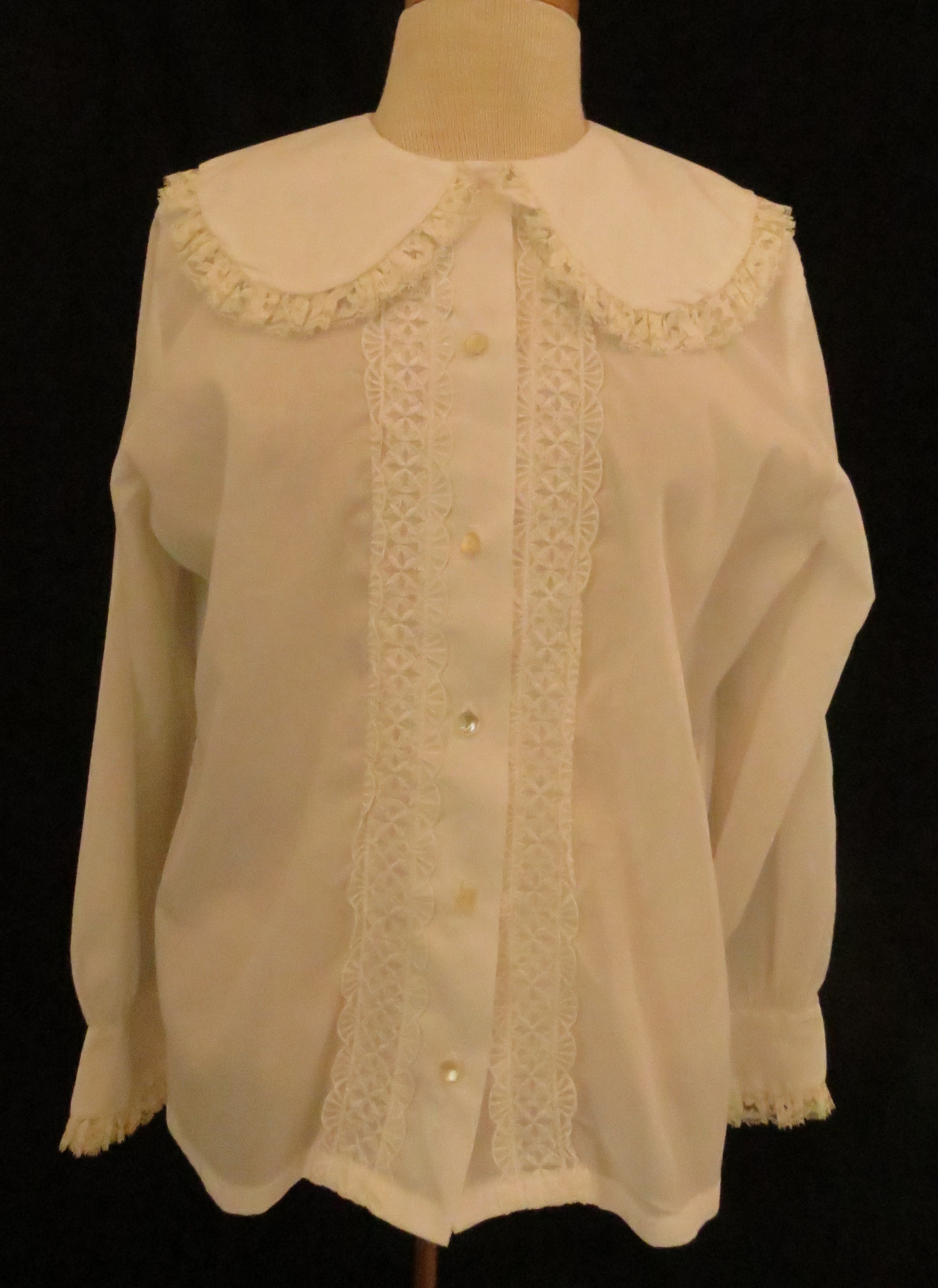
Before and after rationing, lace and other embellishments on tops and dresses were very popular. Tailored styles were also made, but lots of the designs before and after the war were quite fussy with many details.
Beautiful, glossy fabrics – most of them synthetics – and lovely designs. I adore them all, but especially the first one. Let’s look at them one by one.
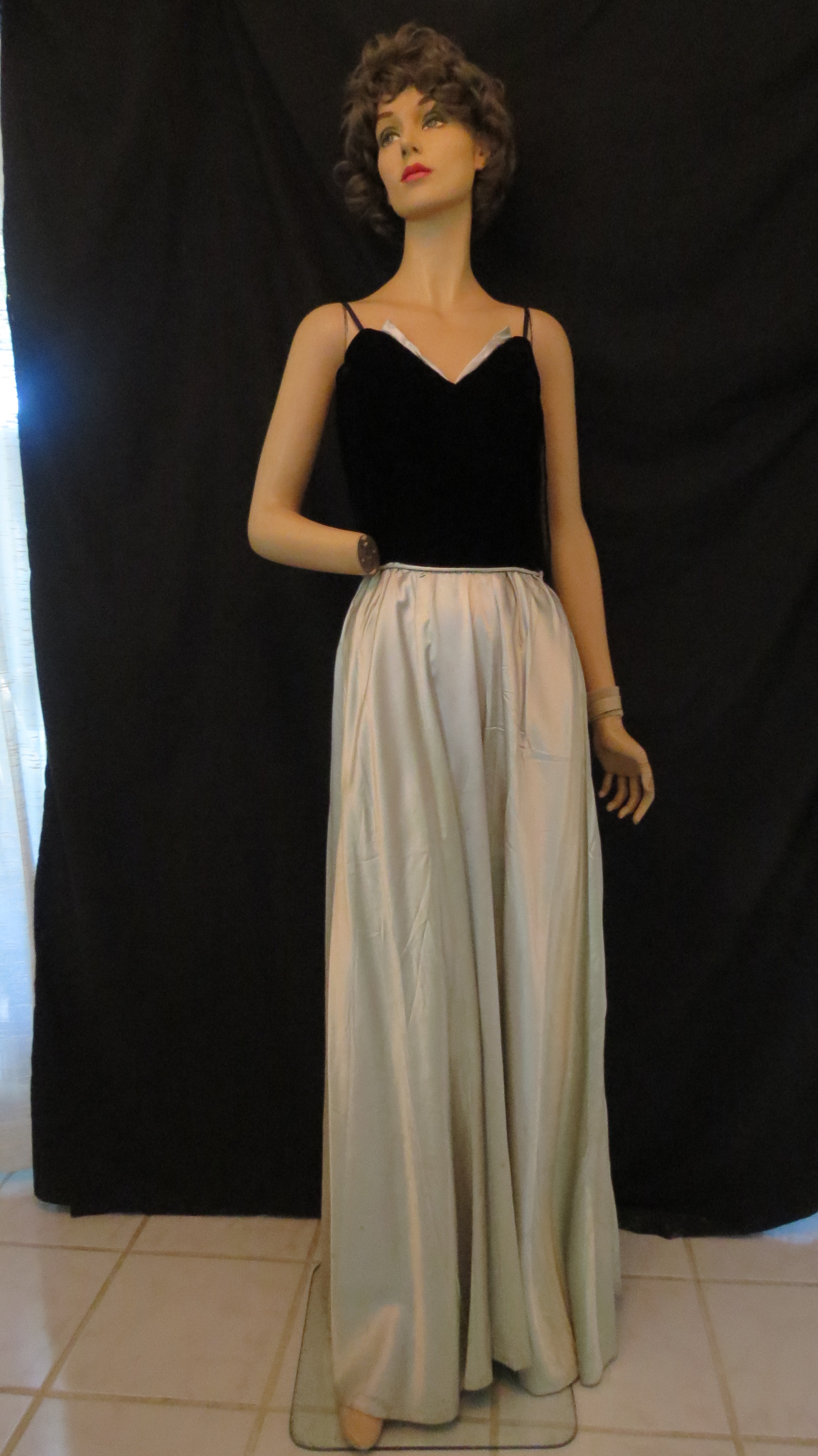
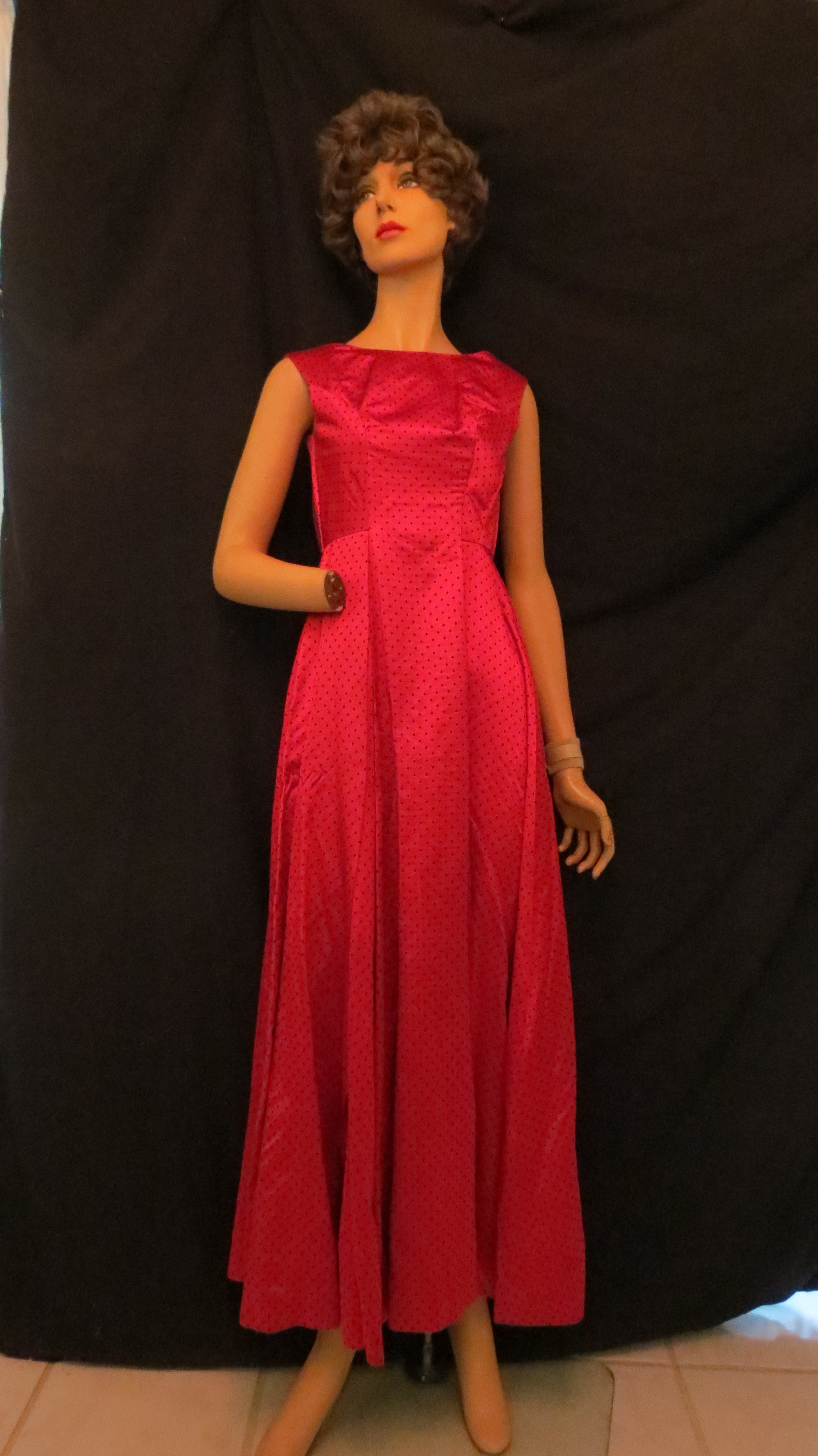
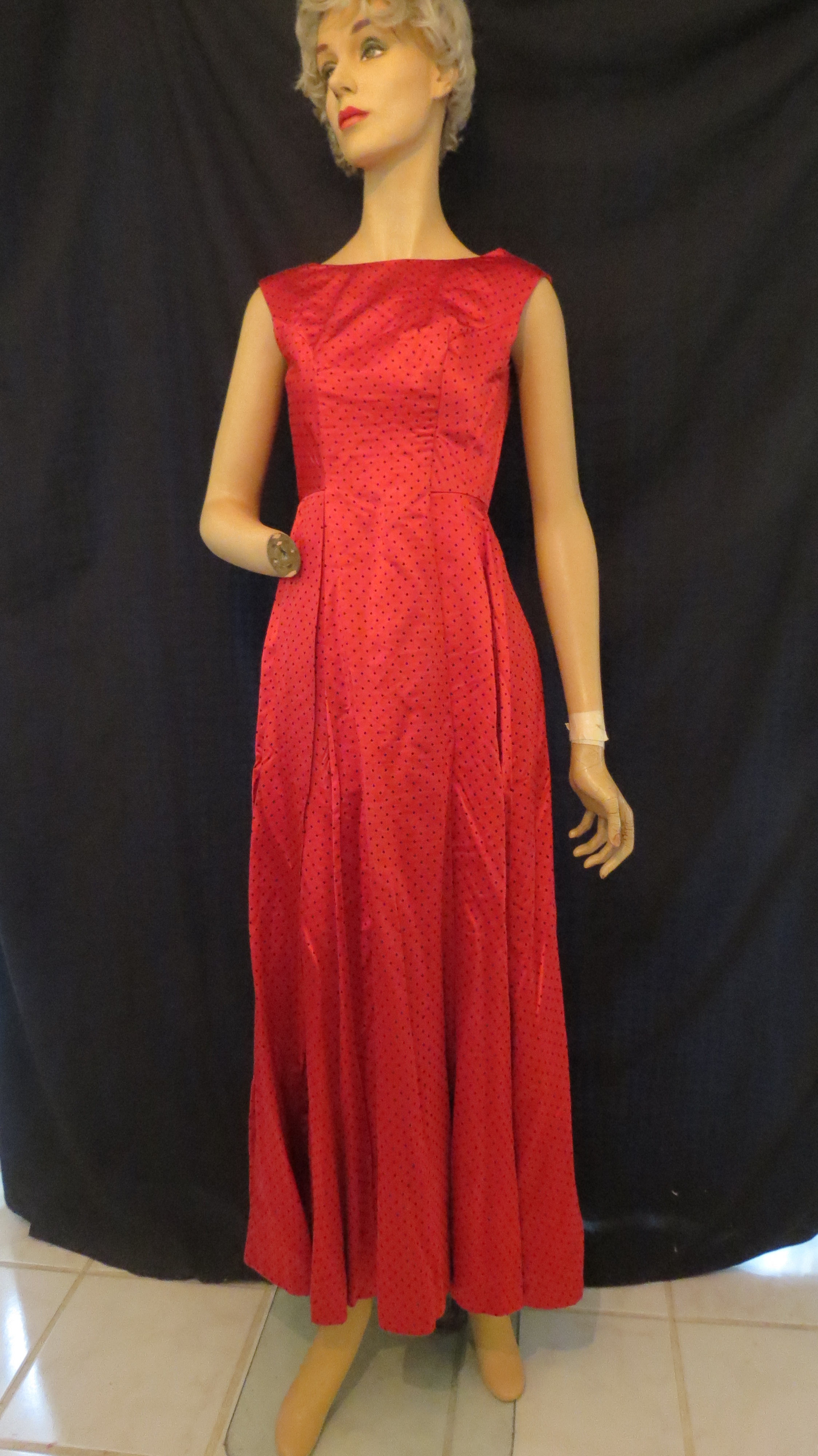
The first gown has a dark green velvet bodice, trimmed with the same pale green satin fabric that the skirt is made from. So flattering and luxurious. The bright red dress is a more conservative style, but still gorgeous. It’s made of an interesting fabric type which I’ve seen in other 1940’s dresses – it has a satin finish but with tiny black diamonds machine-embroidered all over. I suspect that this fabric, though lovely, was a more economical one.
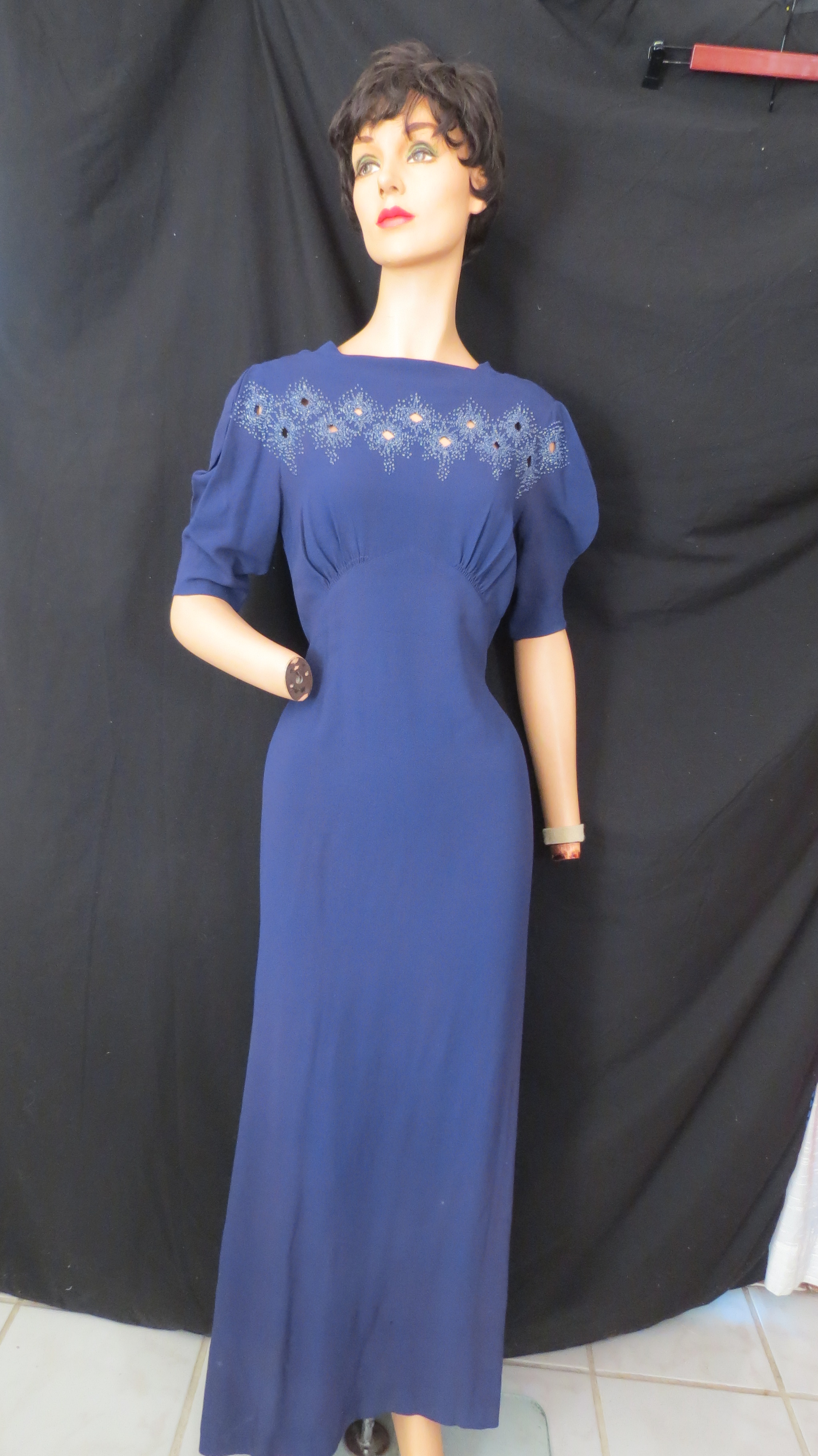
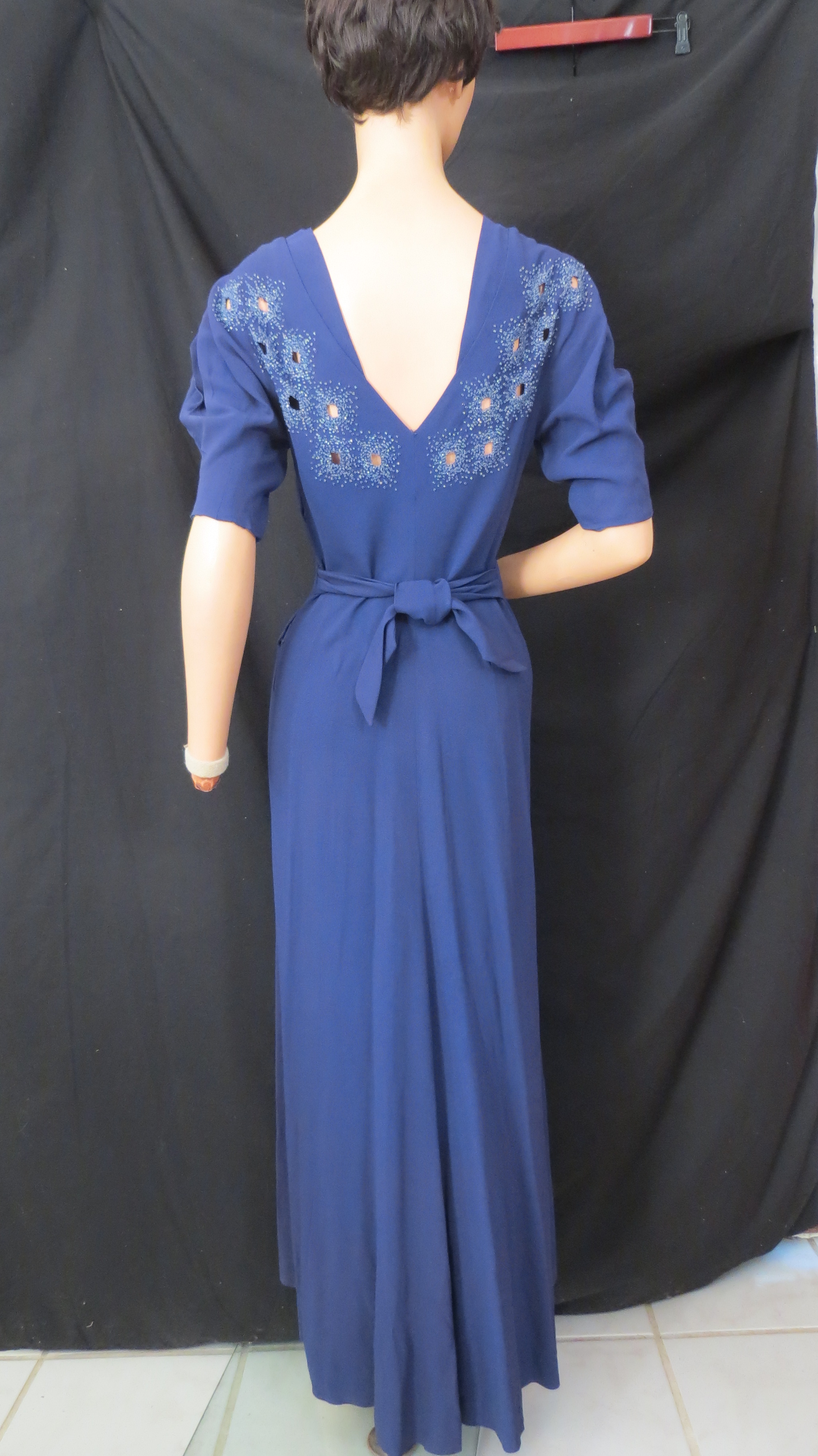
The blue dress was tailor-made by hand. It is sewn from a bias-cut rayon which gives it that wonderful, drapey fit. The atomic/stellar cut-outs surrounded by seed beads were all done by handwork. I love the cut of the sleeves and the way the bustline and waistline are finished. That back tie belt gives it a really wasp-waist fit.
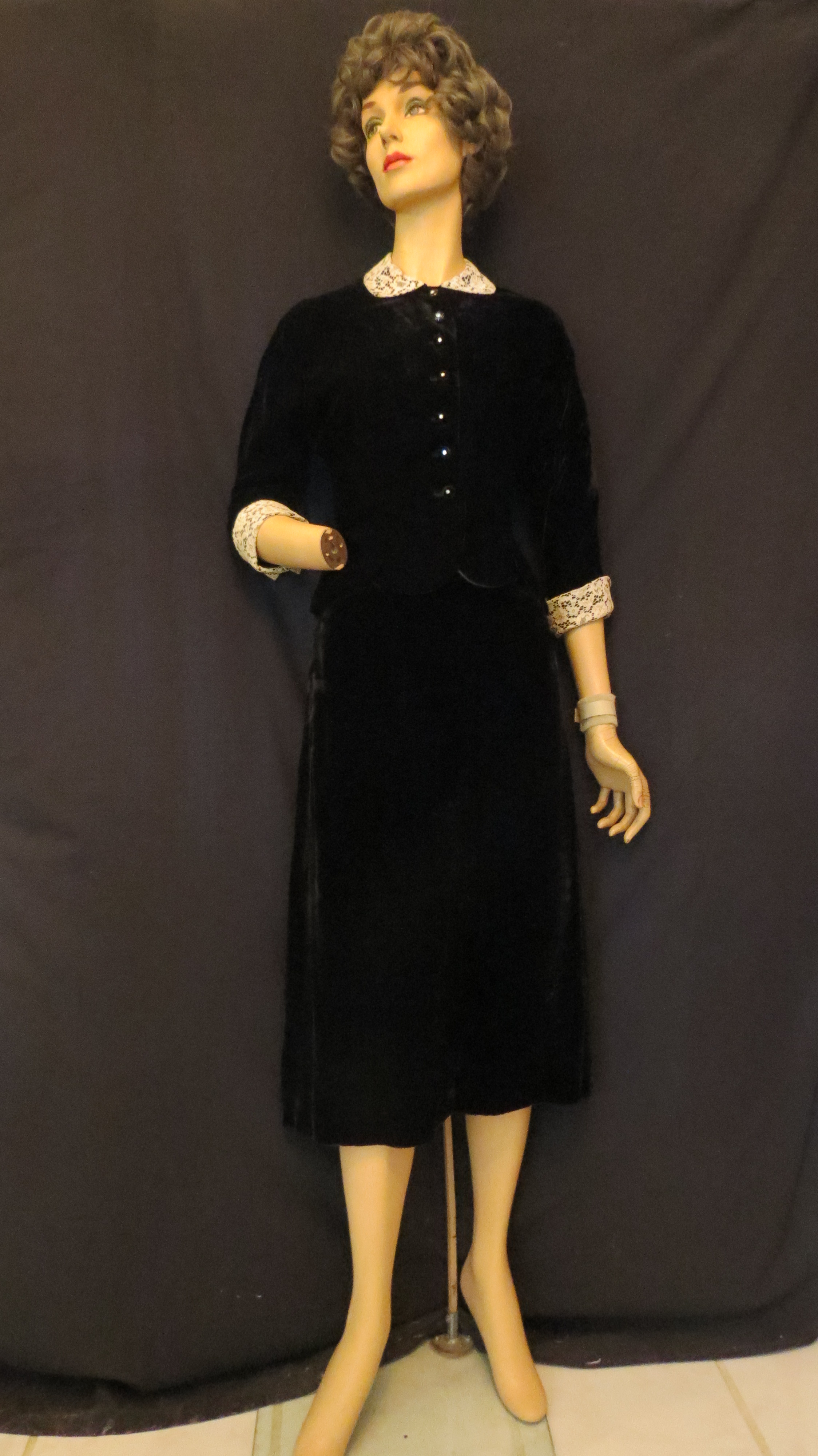
Finally, the black velvet two-piece dress is an entirely different design. Very proper and buttoned-up in velvet and crocheted lace, with rhinestone-center buttons.
Each of these gowns was a surprising and fabulous find. It’s rare to find 1940’s formal garments in the first place, and to find them in near-perfect condition is almost unheard of. The best bet is if they can be acquired from the original owner, or their estate. This is always a more informative clue when starting any investigation.
I’ve re-opened the 1940’s archives and am finding myself doing a deep dive there. Stay tuned . . . . . . . . . . . . . . . . . . . . . . . . . . .
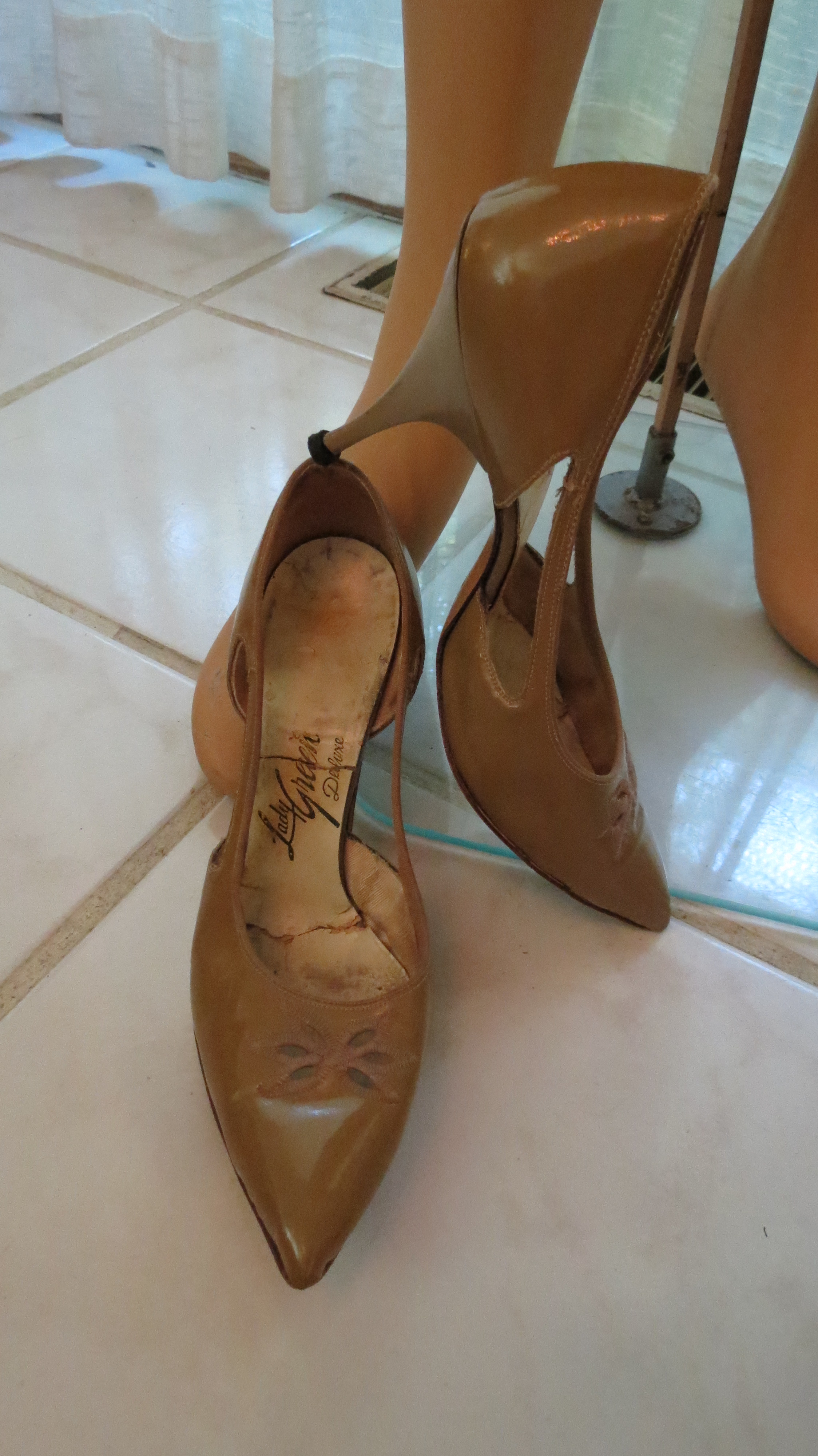
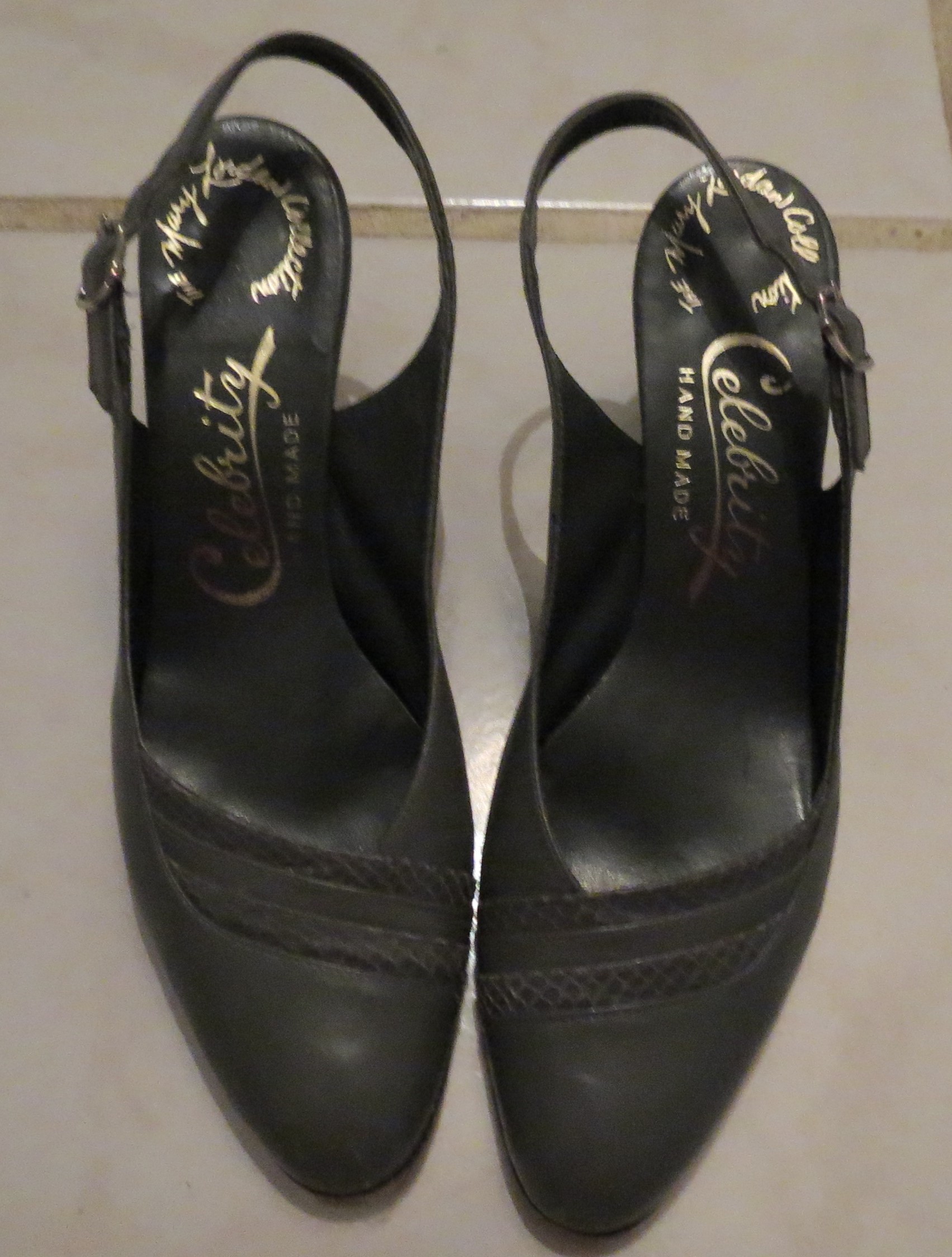
Basic neutral tones will take you around the full year, so these pretty shoes can go along even with some pastel outfits. Back in the day, a pair of black shoes and a pair of brown ones were sometimes the only options a gal had to choose from but, even now, beige and mid-gray will go with almost anything and lighten things up a little. Cutaways, sling-backs and ankle straps have been enduring styles for many decades. Don’t you love the 1940’s high heel take on the traditional black Mary Jane?
I understand that today stiletto heels and open designs are not a good choice in the freezing temps and snow that we have in so many places now. However, in the past when fewer people owned cars, many gals carried their indoor footwear and left snow boots at the door. Public buildings, stores and churches used to routinely have special places to do that. Winter fashion had to start giving way in February, in spite of the weather!
I’ll continue with showing some accessories as well as giving a nod to some cold-weather staple vintage clothing for both women and men. After that, we can’t avoid launching on clothing for the traditional winter vacation before swinging back to Spring dresses. Stay tuned. . . . . . . . . . . . . . . . . . . . . . . . . . . . . . . . . . ..
Pretty in pink for wartime Prom? Prom dresses I’ve found from that time were midi-length, so my guess is that this one was made for a different event. It’s a heavy synthetic material with 1940’s tailoring details: a peplum waistline with a point in the center front. It could almost be worn with either side in front if the fit allowed, but a back zipper makes it clear which side is supposed to be forward. The neckline was popular from 1940’s to 1950’s especially, but is very classic. Pretty clearly, this frock was custom-tailored.
It’s one of those garments that make you wonder what it’s story is. I’m sure there’s an interesting one!
What beautiful fabric! It is substantial but soft and with tiny machine-embroidered diamond shapes all over, which was apparently a “thing” in some Forties material. This might have been a way of making up for the absence of natural fabrics like silk and many of the notions used to decorate clothing before and after WWII.
The style is very simple and I think, like the dress shown yesterday, that it was custom-made. The pattern wouldn’t have been difficult for a home-based seamstress. The neckline in back is a bit lower, but nothing dramatic. The most difficult aspect of the construction is the piecing below the waist and that’s still no big deal. What I like most about it is that it’s just very pretty and so festive and Christmas-y in that fantastic glossy red. I would have collected it for the yards of gorgeous fabric alone! More of that coming – stay tuned . . . . . . . . . . . . . . . . . . . . . . . .
A simple frock, probably made while times were lean and rationing had been imposed on the markets. The fabric is heavy – almost like taffeta but not that real deal. Probably some kind of rayon or acetate. The little splurge is the velveteen neckline, but during WWII any dress like this for an average gal was probably a splurge.
Even on a garment this modest, I love to discover the tailoring features that make it unique. In addition to the neckline trim, notice the little fold-overs that accent the shoulders. Shaping makes the bodice and waist trim and produces the full circle skirt. A deep hem allowance is also a luxury on a dress like this since it adds the option of adding length, adds a little weight to help the skirt sway and just makes the dress look like a more expensive garment.
I think it was made for a teen or a very tiny woman, but who knows the real story. Might even have been a Prom dress – good style for Swing dancing ad Jitterbug. What a fun find! Stay tuned for more knee length and midi cocktail frocks as well as full length gowns . . .. . . . . . . . . . . . .
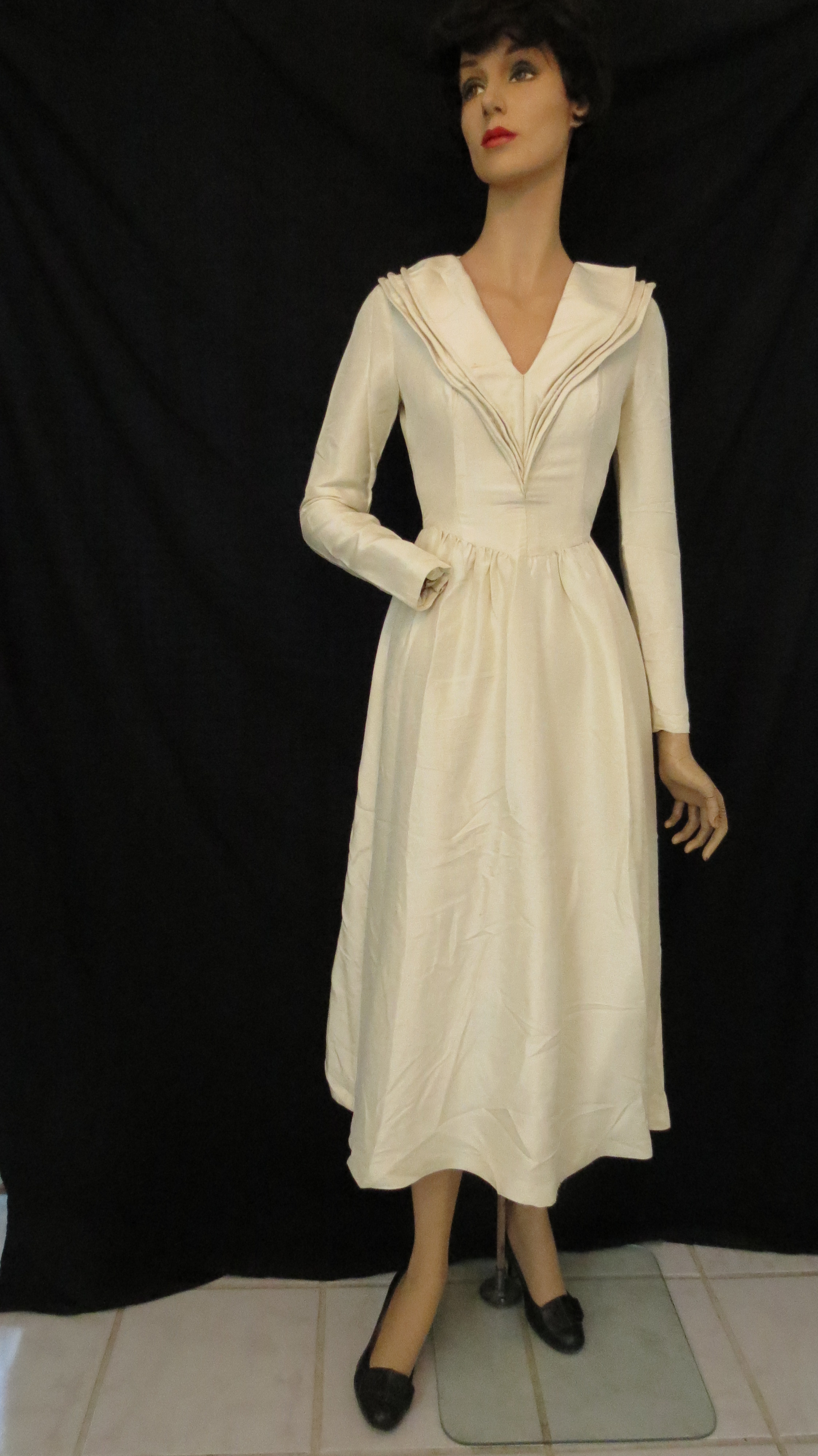
Such an interesting frock. Midi length on Stella, but she’s tall so it could have been tea or floor length on a woman of short stature. I couldn’t decide whether this dress was tailor-made or purchased at retail, but I could find no labels. I suspect that it was custom-made for a cool-weather wedding and the style really makes me think of some Wartime or Post-war bridal dresses I’ve discovered. Could also have been designed for some other special event . . . . .
Pretty mid-weight textured but glossy fabric which may be synthetic or a blend. Unusual long sleeves; but the best thing about this style is the collar. Each layer is carefully supported around the edge with wire so that it can be shaped by hand. I’ve very rarely seen this and it helped me to date the garment. It came from Australia so I may notice a British influence(?).
In my book, the 1940’s through the 1960’s was the best era for ladies’ hats in the U.S. unless you’re into antiquities. Yes, every decade has had some great ones but most beautiful hats that are truly wearable come from the Mid-century. Here are some iconic examples from each of those decades: a Forties picture hat, Fifties toque & pillbox with veil and Sixties pastel cellophane/raffia hats.
Mainstream women from all three of these decades wore hats frequently, if not daily. (Classic films and old magazines are good documentation of this.) So, obviously, they were sold in every store which carried ladies’ fashions and most were affordable. Easy to wear, flattering and very collectable, so go for it. . . . . . and stay tuned . . . . . . . . . . . .