PRETTY WHITE COTTON MINI FROM MID-CENTURY EUROPE

While I’m missing Stella (my fabulous vintage mannequin model), please use your imagination to visualize how fun and flattering this mini-dress or tunic looks when it’s on. Without my honed sleuthing skills, I never would have found it and am so glad that I did. As a mini-dress (if you don’t mind the side slits showing your whole leg almost to the hip) it’s really cute and calls for a 1960’s/’70’s chain belt to finish it off. As a swimsuit cover-up or beach dress it would be perfect – cool, crisp and lightweight while giving some reasonable sun protection. Over a pair of skinny white pants or shorts I LOVE IT!! Also love the elbow-length sleeves and unusually-shaped neckline.

How do I know it’s from Europe? The size label tells me. How do I know that it’s true vintage? By my guesstimate, a European size 42 would always be too big for me, but I look great in this whether worn as a mini-dress or a tunic over pants. So, the cut seems to be smaller than a modern garment of that size would be. This is always tricky with international sizing, but I think I’m correct. The fabric is a nicely-woven cotton with some weight (but not too much for Summer) and all-over floral embroidery – similar to vintage fabrics that are almost never seen now. Also, the interior tailoring is different from what I find on modern garments. Not fine tailoring, because this is a very simple garment and probably sold at a lower price. However, some of the finishing is remarkable – if it did not have a size label, I might say that it had been home-sewn. It has darts in back to give it extra fit and style. The size label, printed rather than embroidered, is sewn in at the back neckline and there are no other tags at all.

All right, the verdict is in. This dress is probably from the 1970’s, give or take 5 years. Allowances have to be made for the overseas manufacture. Whatever it’s exact heritage, it’s wonderful and I will really enjoy it. I love solving mysteries but an open-ended investigation is always intriguing. Who knows – sometimes I solve a cold case years later! You just never know . . . . . . . . . . . . . . . . . . . . . . . . . . . . . . . . . . . . . .

MORGANA MARTIN, THE MAGICVINTAGESPY

BLOG: MAGICVINTAGESPY.COM

2 TRUE VINTAGE ACCESSORY FINDS FROM THE MID-CENTURY AND BEFORE – RARE AND RARER!

So, I was out and about again, making another donation and look what appeared! From the 1950’s – early 1960’s – you’d think that after all the beaded evening bags I’ve discovered that I’d say “ho, hum . . . .”, but this one is a real beauty with one unusual feature.

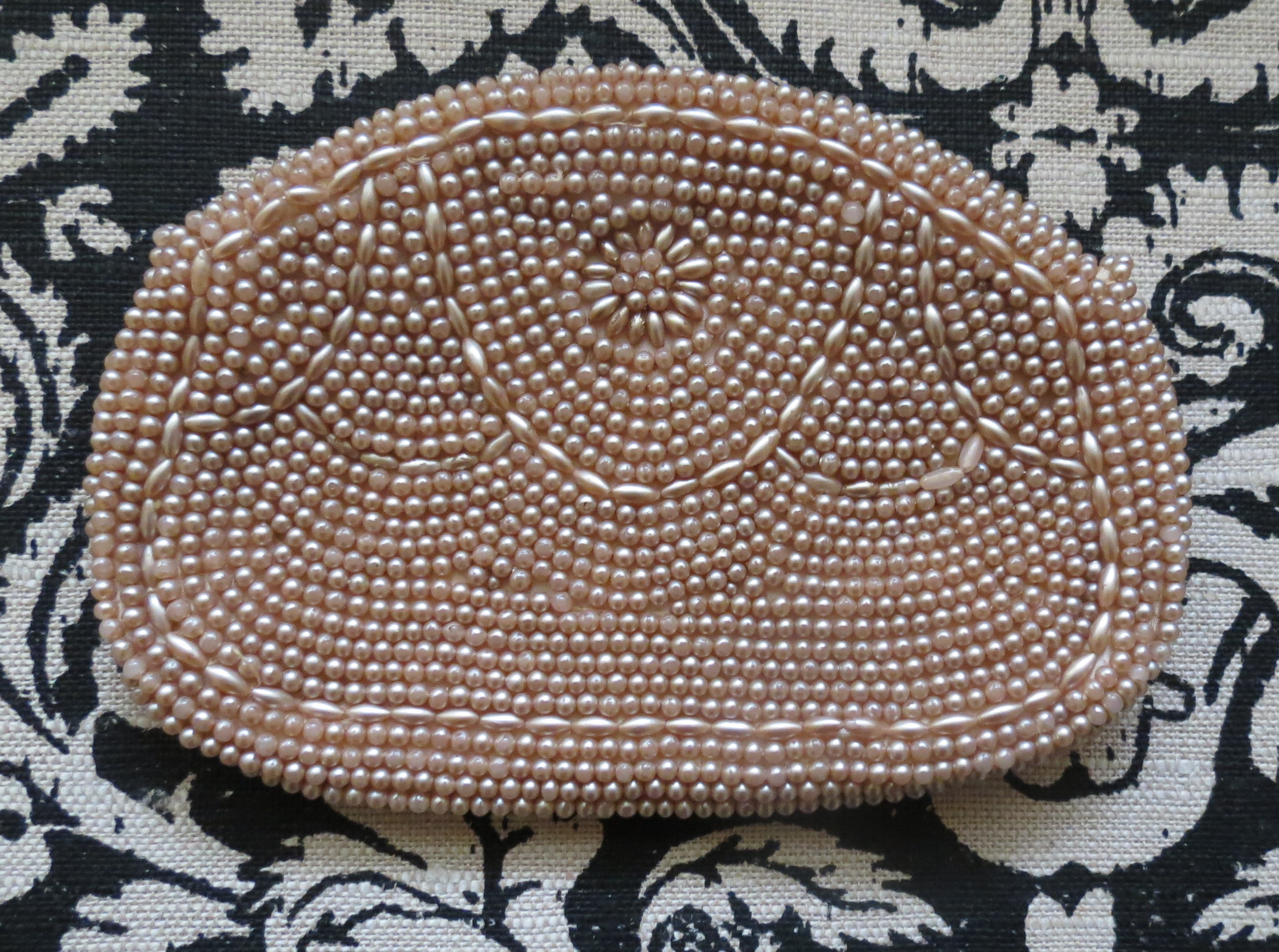
Of course, gorgeous heavy beading front and back with a rayon satin body and lining. Handmade in Hong Kong with an inside pocket. It’s in near-perfect shape – some woman prized this little purse and kept it carefully folded away, probably in a dresser with her scarves or lingerie. The fabric label inside has started to fray and there are a couple of tiny marks on the lining – otherwise the condition is like new. The unusual feature mentioned above is the fact that it has no closure. Most bags like this close with a snap or a metal zipper. This one has an elongated top that simply folds over. Once in a while I have seen a vintage day or evening bag designed in this way, but it’s rare.

Even more special in some ways is this glass bead necklace. Clues point to the 1920’s – 1930’s – great find! The white beads are about 1/4″ round with white seed beads in between rather than knots. The clues pointing to it’s age are numerous. It’s been hand-strung by someone who knew what they were doing and tied off with a firm knot. The cord looks like it has yellowed over the years, which I’ve often seen. Seems to be a professional job to me – nice and tight. Interesting that there is no finding closure. Unless the beads were re-strung without a finding, I guess that it had been made that way originally – not unusual in jewelry I’ve discovered from the 20’s and the Depression era when metal findings weren’t as available (in case you don’t know the term – findings on jewelry are the metal closures and other pieces that make up the structure on necklaces, earrings and bracelets with beads or stones). Another clue is the length of this necklace. It’s a long one that hangs below the waist but also can be looped twice over the head to make a double strand. Perfect for any flapper.

After I happily collected these two, something else appeared, which I’ll post tomorrow. It just goes to show that you just never know . . . . . . . . . . . . . . . . . . . . . . . . . . . . . . . . . .

MORGANA MARTIN, THE MAGICVINTAGESPY

BLOG: MAGICVINTAGESPY.COM
WOWEE! MORE TRUE VINTAGE SURPRISE FINDS –

Will transmit data very soon. Lots of clues! – stay tuned . . . . . . . . . . . . . . . . . . . . . . . . . . . . . . . . . . . . .

MORGANA MARTIN, THE MAGICVINTAGESPY

BLOG: MAGICVINTAGESPY.COM
JUST FOUND! A BEAUTIFUL TRUE VINTAGE ACCESSORY IN CLASSIC TOOLED LEATHER

oplus_48

I always LOVE discovering these gorgeous handmade leather accessories from the mid-century. As they become rarer, it’s a huge thrill to uncover one by surprise! In this case, the wallet is so classic and early mid-century that I love the design. An added bonus is the near-perfect condition. A small amount of common greenish corrosion can be seen on the metal snap closing the coin pocket but it works perfectly. I will remove the corrosion with a bit of vinegar. Other signs of light use are very minor – looks like it was cared for lovingly.

Let’s start the evaluation with the exterior, which has a traditional rosebush motif. This is an early pattern, seen on some of the older items I’ve found. It’s amazing to find the leather lacing around the edges unbroken and in such pristine condition. On the inside, I adore the additional features such as sleeves for a drivers license and other cards, receipts, etc. This billfold was probably made for a man in spite of the rose design, likely before the time of common credit cards, but has such an unusual addition of the coin purse inside; Multi-tasking before the modern era of man-purses and other pocket accessories. However, the bi-color interior is also an unexpected feature to see in an older men’s accessory. Who knows the sex of the original owner? I always love a mystery!!

This beauty will have a gentle massage with leather lotion to extend it’s lifetime even more. Back at Headquarters, I’ll look in the files to see which of my tooled leather purses may need an additional accessory – I always try to match the finishes and designs, if possible. If there’s no good match, this billfold can stand on its own, with spaces for all money-related items (excepting a checkbook).

So, two surprise discoveries in my brief investigation two days ago and both of them unusual and wonderful! See my other find in yesterday’s post. You just never know . . . . . . . . . . . . . . . . . . . . . . . . . . . . . . . . . . . ..

MORGANA MARTIN, THE MAGICVINTAGESPY

BLOG: MAGICVINTAGESPY.COM
FABULOUS AND FUN SURPRISE FIND – TRUE VINTAGE, AS ALWAYS . . . . . . . . . . . . . .

A wonderful authentic Lily blouse from the 1970’s! I was out and about dropping off a charity donation and found this beautiful shirt. Such a surprise; I have several other Lily blouses in my closet, from the 1960’s but haven’t seen one during an investigation for a long time. These lovely shirts were a mid-century staple. The signature fabric is so soft and airy, the pretty embroidery done so well. Most older ones had monochromatic Asian-inspired designs. This one is similar to colorful Latin American indigenous designs, which became more popular in the early 1970’s.

I love the old-style sizing on these blouses and am thrilled that it is in a size I can wear – just about a modern size 2(which would be perfect for Stella, as well. I certainly miss her when I’m not at Headquarters. See her modeling work in many previous posts). It also has double-button cuffs, which is another late 1960’s – early 1970’s tailoring detail, AND a button and loop at the neckline which can be fastened to lessen gaping there, if you want to. True vintage garments almost always have such excellent tailoring and, despite it’s age, I see no signs of wear. The previous owner may have washed it by hand, which would be so easy to do, and avoided the wear and tear of traditional machine washing. So, this lovely won’t be going to eBay or Etsy!!

I also found another true vintage item in pristine condition, which I will post tomorrow. I’m a Satisfied Sleuther!! Just goes to show that you just never know . . . . . . . . . . . . . . . . . . . . . . . . . . . . . . . . . . . . . . . . .

MORGANA MARTIN, THE MAGICVINTAGESPY

BLOG: MAGICVINTAGESPY.COM
RARE TRUE VINTAGE PRE-WWII AND WARTIME LADIES’ BLOUSES

Here are two of my oldest women’s blouses and two of the most interesting. What more can I say about the blue one? Not sure if it was home-tailored by a creative and fashion-forward gal, but I think so. Perfectly unique and attention-grabbing. What fun! Love it!!

The second blouse is from about the same time frame, but much more classic. You can see from the label that it was commercially-made and the Sanforized cotton designation puts it squarely after 1930. The Sailor collar styling was really popular for children beginning in the 1800’s, or before, but became a “thing” in women’s fashion especially in the years surrounding major wars, as did other types of military-inspired styling. It’s a classic sportswear item from the mid-century and could have been worn with a skirt, too, when women rarely wore pants or shorts.

The unusual thing about it is the tartan-weave trim. I can’t decide what may have inspired that but this blouse may have been sold in Great Britain or, possibly, was a homegrown Japanese take on U.S. and U.K. style, made to be worn locally in Japan. Some of that kind of thing was happening in Japan even decades before WWII. See how these investigative mysteries become more complex the deeper you go? I’d planned on showing more blouses today, but these two easily fill the space. I’ll continue with more tomorrow.

In the meantime, this is a NEWS FLASH! Yesterday I was on a new investigation and discovered true vintage and exceptionally-made retro garments. Both need a touch of hand-repair, so today will be a sewing day but I will post them soon. Stay tuned . . . . . . . . . . . . . . . . . . . . . . . . . .

MORGANA MARTIN, THE MAGICVINTAGESPY

BLOG: MAGICVINTAGESPY.COM
1940’s Western-wear Fashion Trend, Inspired by the Movies

Cowboy movies, which actually began a decade or so before the 1940’s, gained popularity and caused a major fashion movement in the Forties and Fifties. This beautiful men’s shirt, which belonged to a family member, is one of the favorite pieces I’ve ever seen. The colors are vibrant and who doesn’t love red and turquoise together? Look at the detail! There are even small pockets tucked under the yoke piping in front. Some of these were custom-tailored.

Cowboy hats also became very popular. This one is a well-preserved woven straw but wool felt hats by Stetson, in particular, were the most often seen. Bolo ties, made of leather with silver slides and aiguillettes replaced fabric neckties in Western-wear dress-up.

I have a pair of 1940’s women’s high-waist wool slacks with wide fabric belt loops finished with pearlized snaps. What a rare find! Don’t have a picture of them handy, but take my word that some of the Western fad did cross over into women’s-wear. I’ve got a cowboy-style shirt with floral embroidery and a fringed leather jacket from this era. This mother-of-pearl brooch is an example and, of course, silver and turquoise jewelry made by Native Americans was the real deal. I also have many examples of that, some that were owned by family members, too.

Naturally, the popularity of Western-wear has not decreased over the decades. Although there is a niche market for the very authentic and work-oriented designs, the style shows up in retail fashion all the time. A very pronounced trend really hit in the early 1950’s – that was Southwestern-style cotton dresses, most of which were 2-piece, and heavily decorated with colorful ric-rac and ribbon. Some Native American women wore these and they were heavily marketed for tourists in the southwestern states. 1940’s versions had 3/4 length skinny sleeves with metal zippers to the elbow. Later, short-sleeved versions and even cap-sleeve style dresses showed up in the genre. I’ve shown many of these in past blog posts. Add to that soft leather ankle-length boots and beaded moccasins. So glad that my family alive during the ’30’s – ’50’s enjoyed traveling to the the Southwest and did so many times!

Very fun, collectable and wearable. Tomorrow I’ll be showing women’s blouses & tops from this era. Stay tuned . . . . . . . . . . . .

MORGANA MARTIN, THE MAGICVINTAGESPY

BLOG: MAGICVINTAGESPY.COM
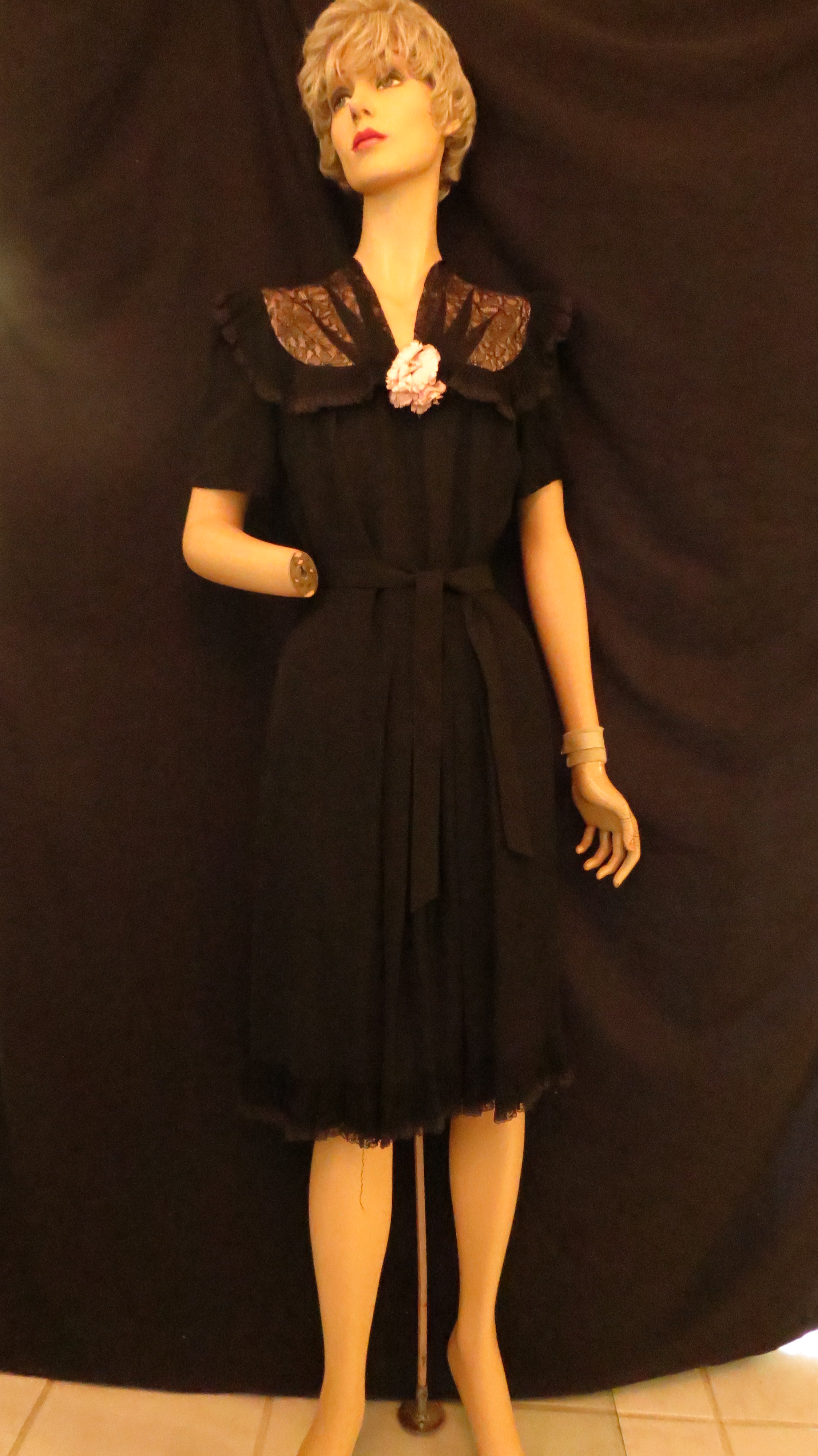
TRUE VINTAGE 1940’s FORMAL DRESSES, PLUS A DRESSY 1930’s CLUTCH PURSE

Beautiful, glossy fabrics – most of them synthetics – and lovely designs. I adore them all, but especially the first one. Let’s look at them one by one.

The first gown has a dark green velvet bodice, trimmed with the same pale green satin fabric that the skirt is made from. So flattering and luxurious. The bright red dress is a more conservative style, but still gorgeous. It’s made of an interesting fabric type which I’ve seen in other 1940’s dresses – it has a satin finish but with tiny black diamonds machine-embroidered all over. I suspect that this fabric, though lovely, was a more economical one.

The blue dress was tailor-made by hand. It is sewn from a bias-cut rayon which gives it that wonderful, drapey fit. The atomic/stellar cut-outs surrounded by seed beads were all done by handwork. I love the cut of the sleeves and the way the bustline and waistline are finished. That back tie belt gives it a really wasp-waist fit.

Finally, the black velvet two-piece dress is an entirely different design. Very proper and buttoned-up in velvet and crocheted lace, with rhinestone-center buttons.

Each of these gowns was a surprising and fabulous find. It’s rare to find 1940’s formal garments in the first place, and to find them in near-perfect condition is almost unheard of. The best bet is if they can be acquired from the original owner, or their estate. This is always a more informative clue when starting any investigation.

I’ve re-opened the 1940’s archives and am finding myself doing a deep dive there. Stay tuned . . . . . . . . . . . . . . . . . . . . . . . . . . .

MORGANA MARTIN, THE MAGICVINTAGESPY

BLOG: MAGICVINTAGESPY.COM
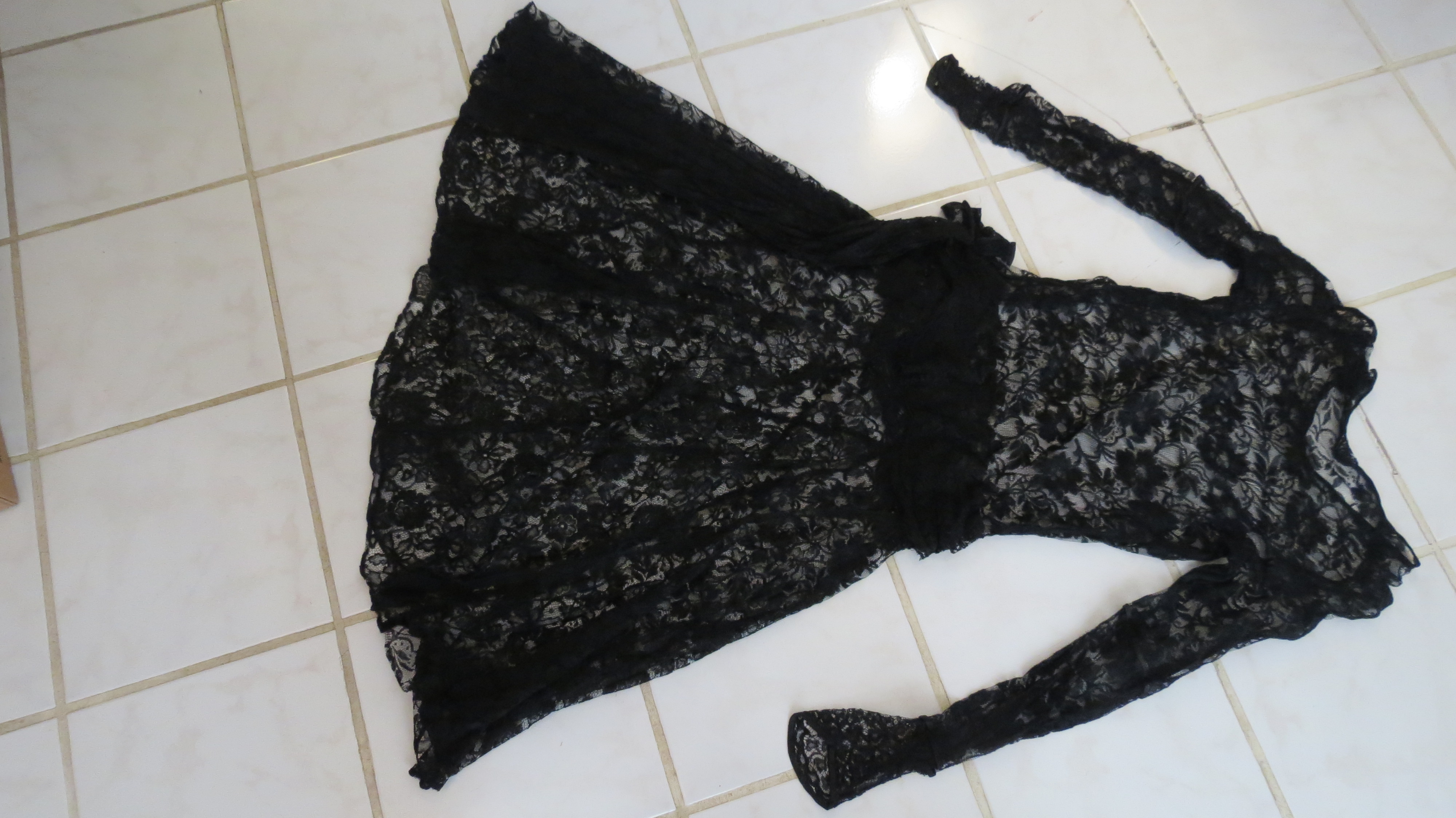
TRUE VINTAGE STYLES FROM THE SEVENTIES

The 1970’s was far from a stellar fashion decade, as far as I’m concerned, but it did include several signature trends. Seventies does Forties, Boho/Prairie, polyester knit pantsuits and dresses (including men’s leisure suits), long pointy collars and animal prints were the predominant ones. The garments shown above are all from the early part of the decade. Psychedelic prints still showed up. Flower power still had a moment. Disco glitz was queen in the late 1970’s. Virtually everything was made of polyester fabric.

Carly Simon wore a hat similar to the one above on her first album cover in 1971 or 2 and it became instantly trendy. 1940’s styles, especially the tailoring details and medium-size shoulder pads, became really popular. Look at the trims on the short sleeved blouses. They are very ’40’s-looking. See the high waist and full legs on the slacks – women’s pants of the 1940’s were mostly made this way. An exception was Western-wear slacks, which tended to be slimmer.

The most-worn styles included platform shoes and jumpsuits in a big way. Military personnel and working women made jumpsuit uniforms visible during wartime and they became part of trendy fashion. The example above is from the early 1970’s. I have found and enjoyed wearing all of these designs. There are many photos in the files, but I can’t display them all at once. Some 1940’s styles popped up again in the 1980’s and I’ll show a few tomorrow. Stay tuned . . . . . . . .. . . . . . . . . . . . . . . . . . . . . .

MORGANA MARTIN, THE MAGICVINTAGESPY

BLOG: MAGICVINTAGESPY.COM