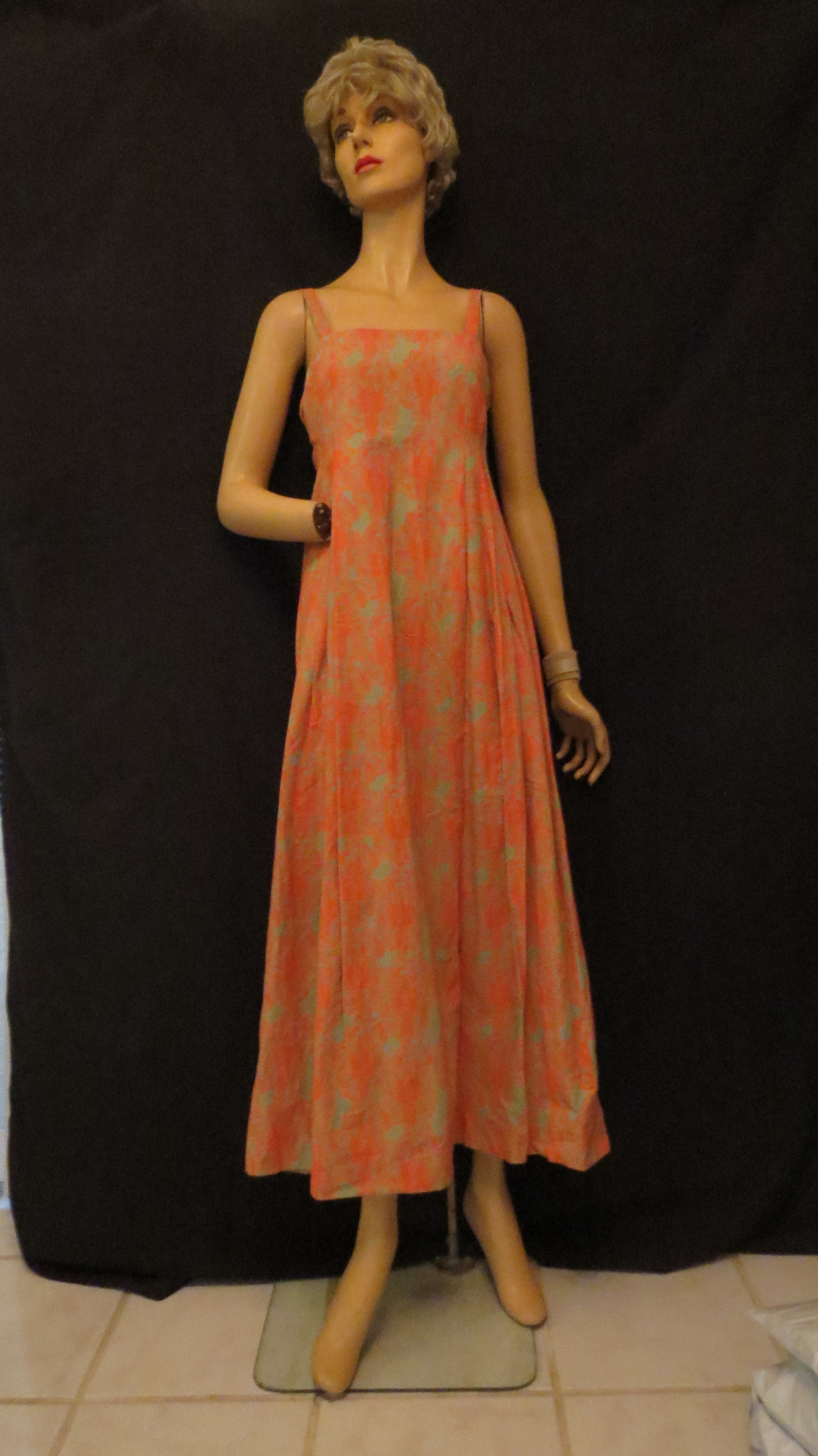
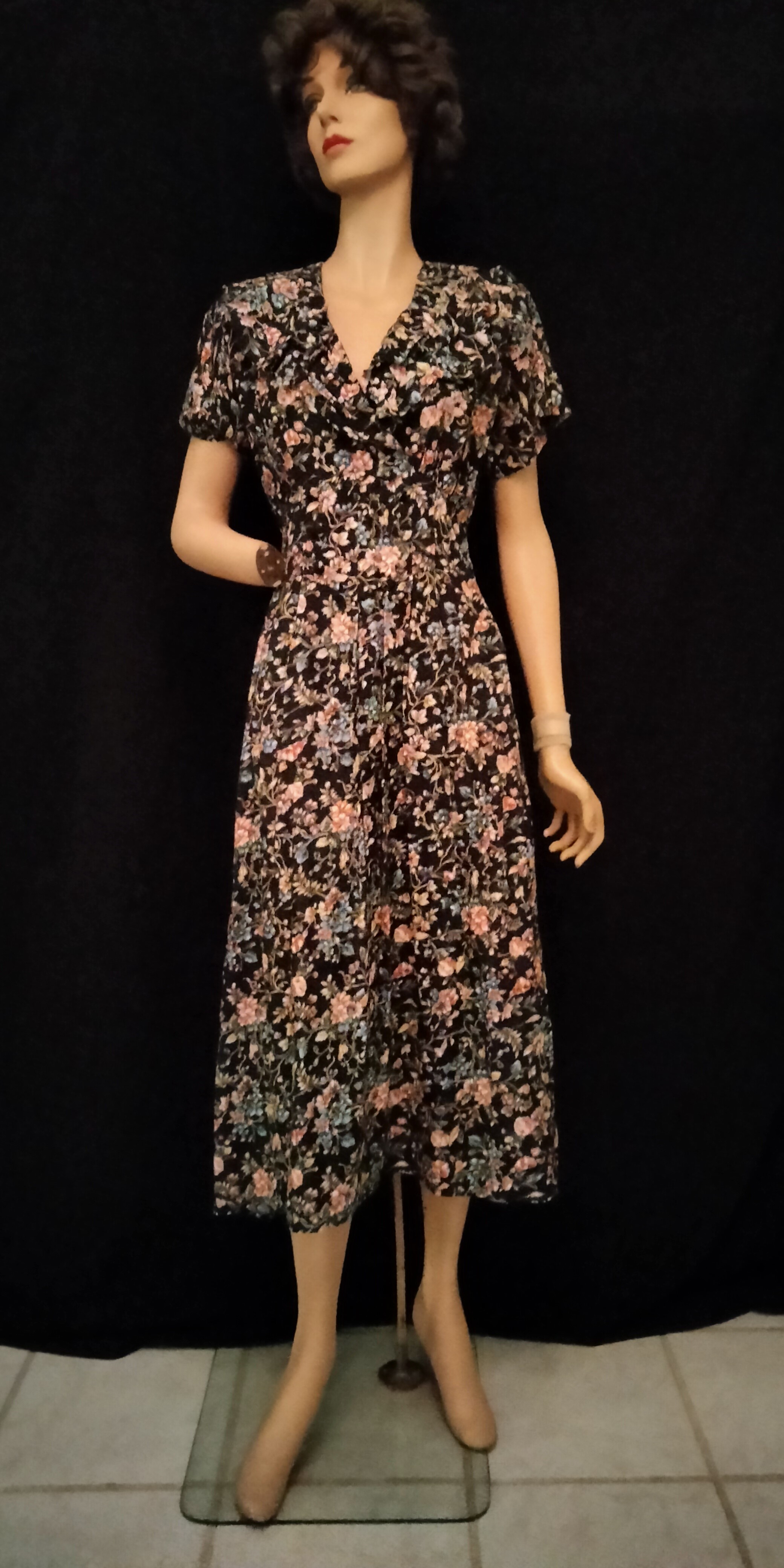
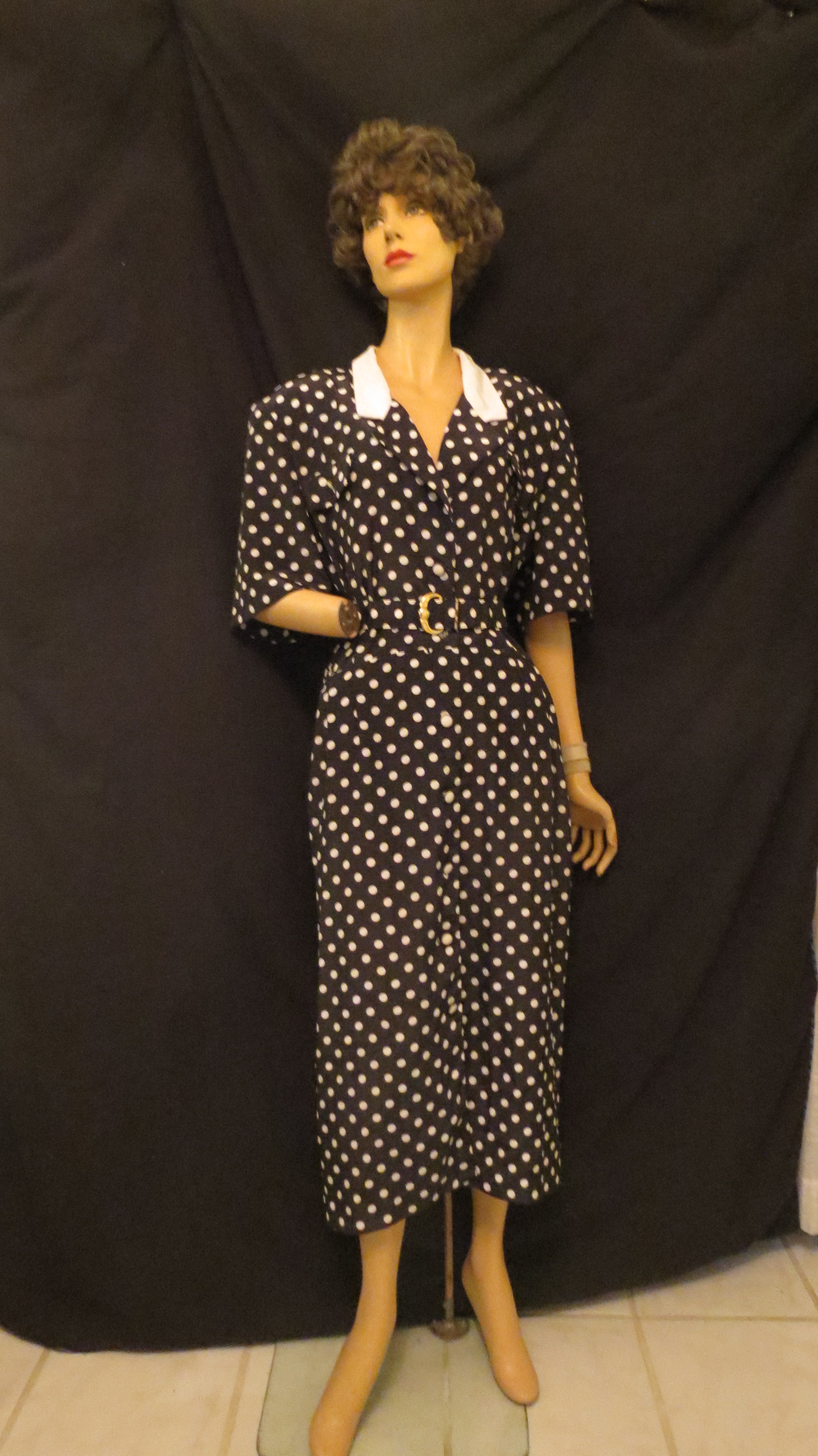
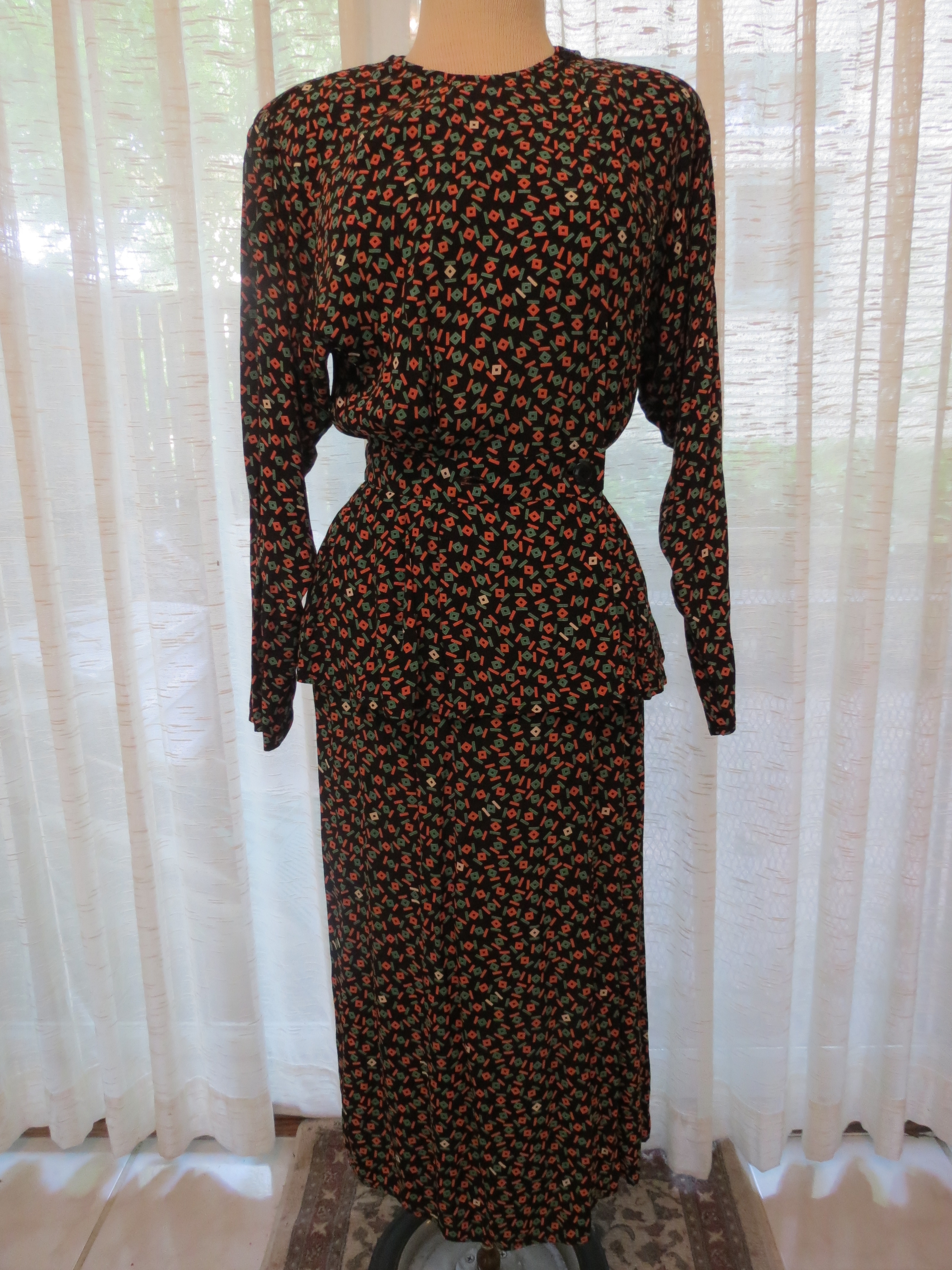
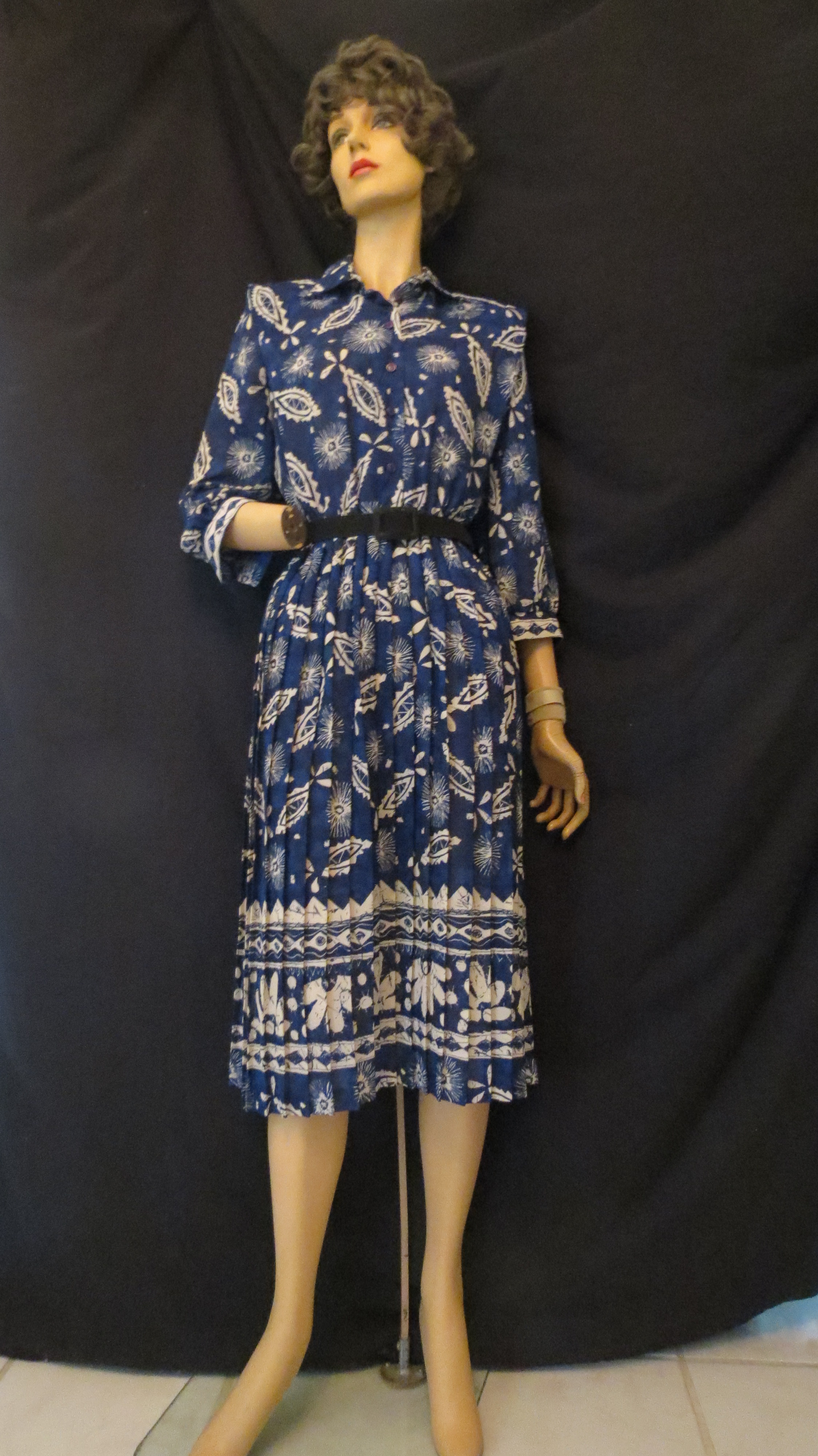
We’re now heading into the season for indoor parties, special occasions and events after the long, lovely summer; Cocktail parties, dinners, dances, recitals, holiday galas – you name it. I’ll be starting a series of posts of pretty, dressy and semi-formal garments in my collection from the 1950’s – 1990’s which will take us into the Fall and even Winter. Stay tuned . . . . . . . . . . . . . . . . . . . . . . . . . . . . . . . .
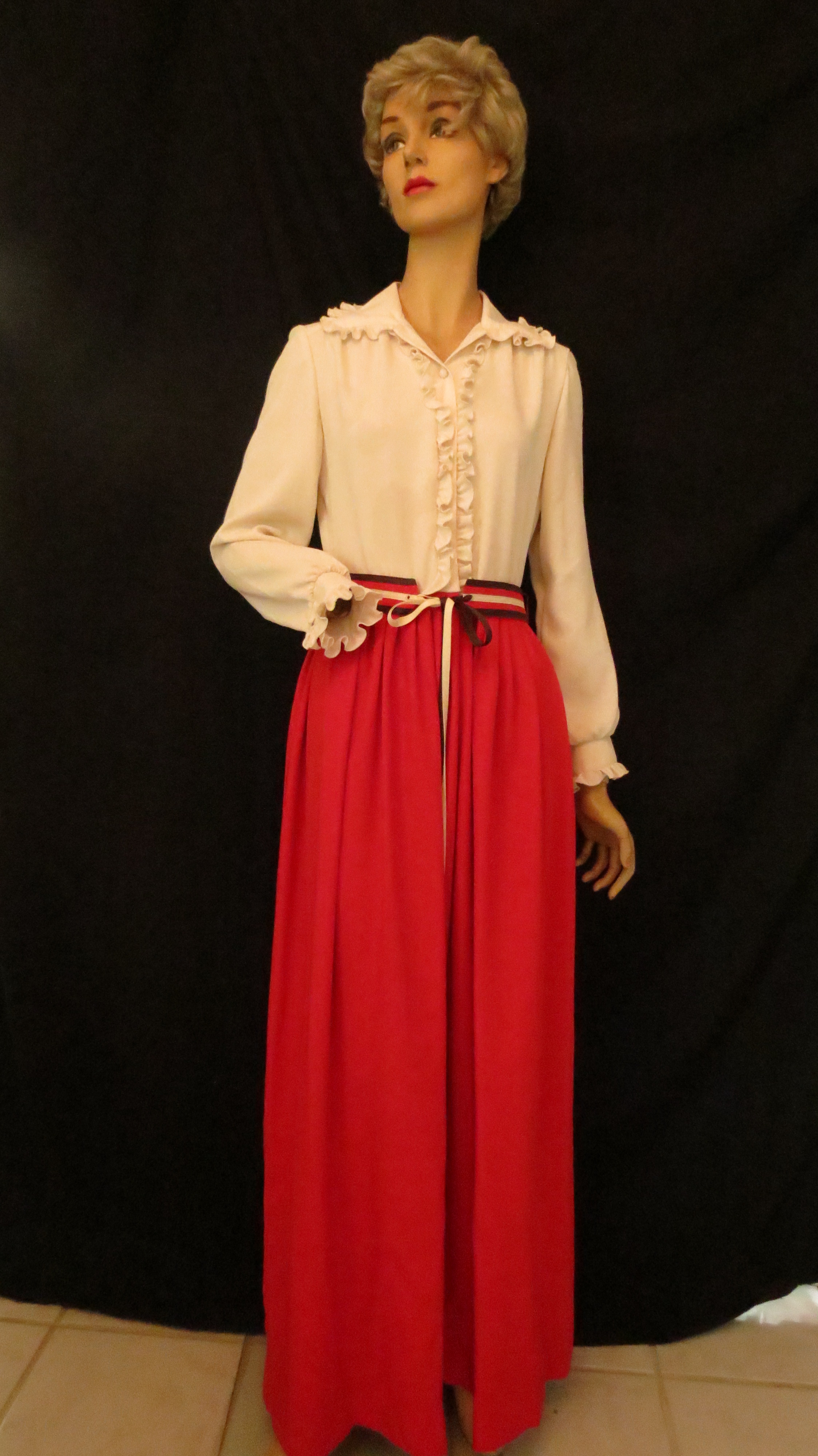
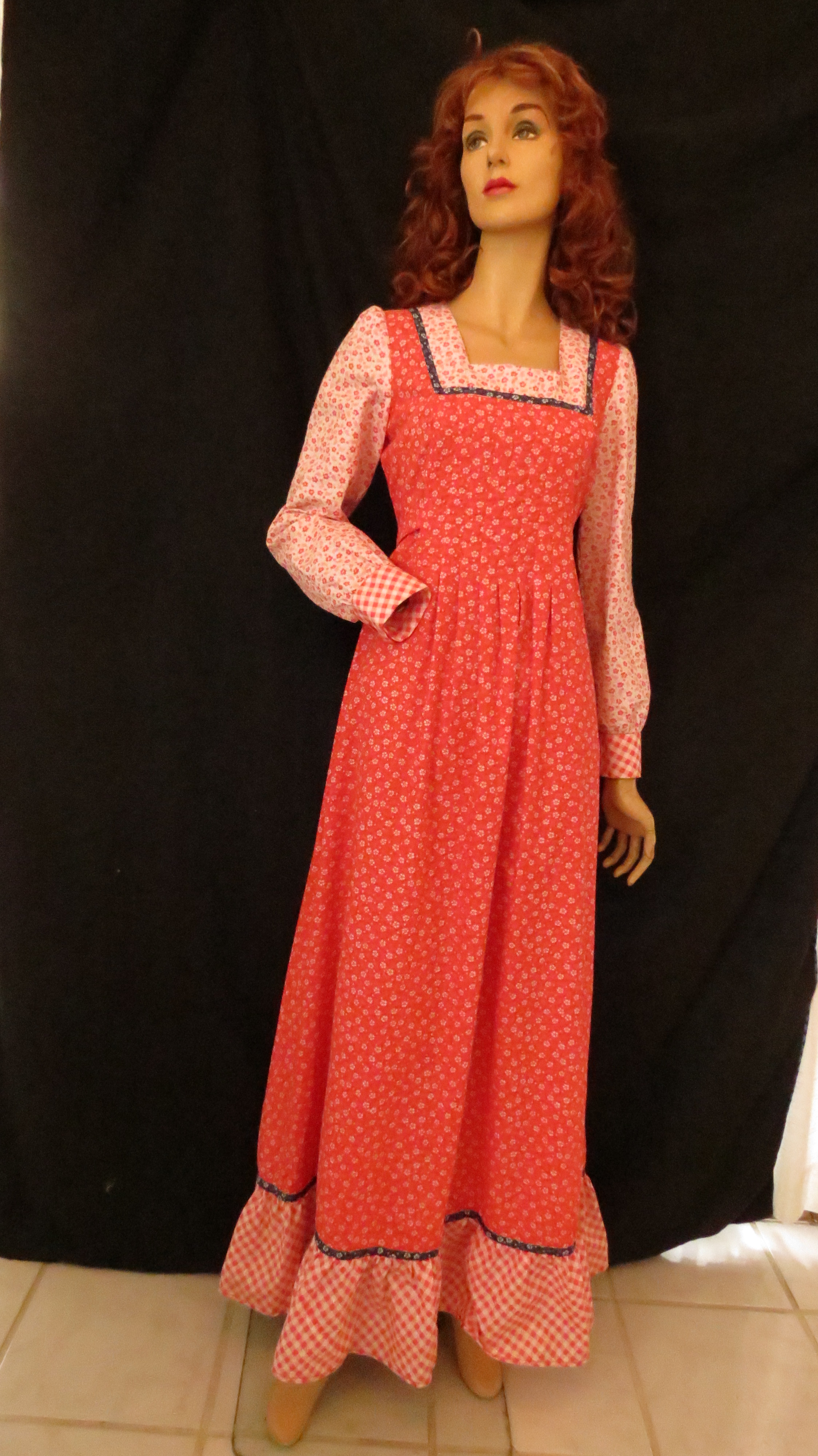
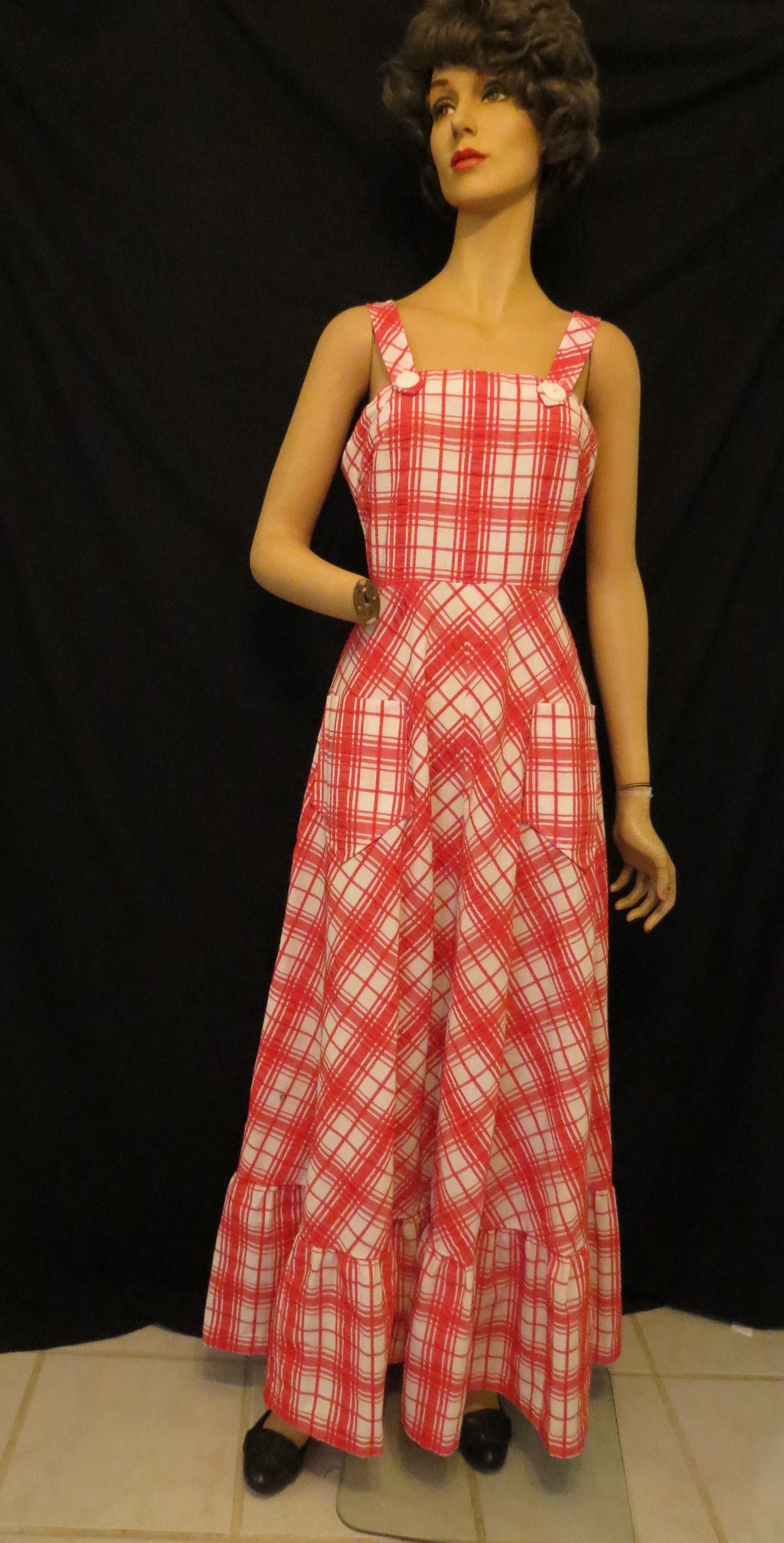
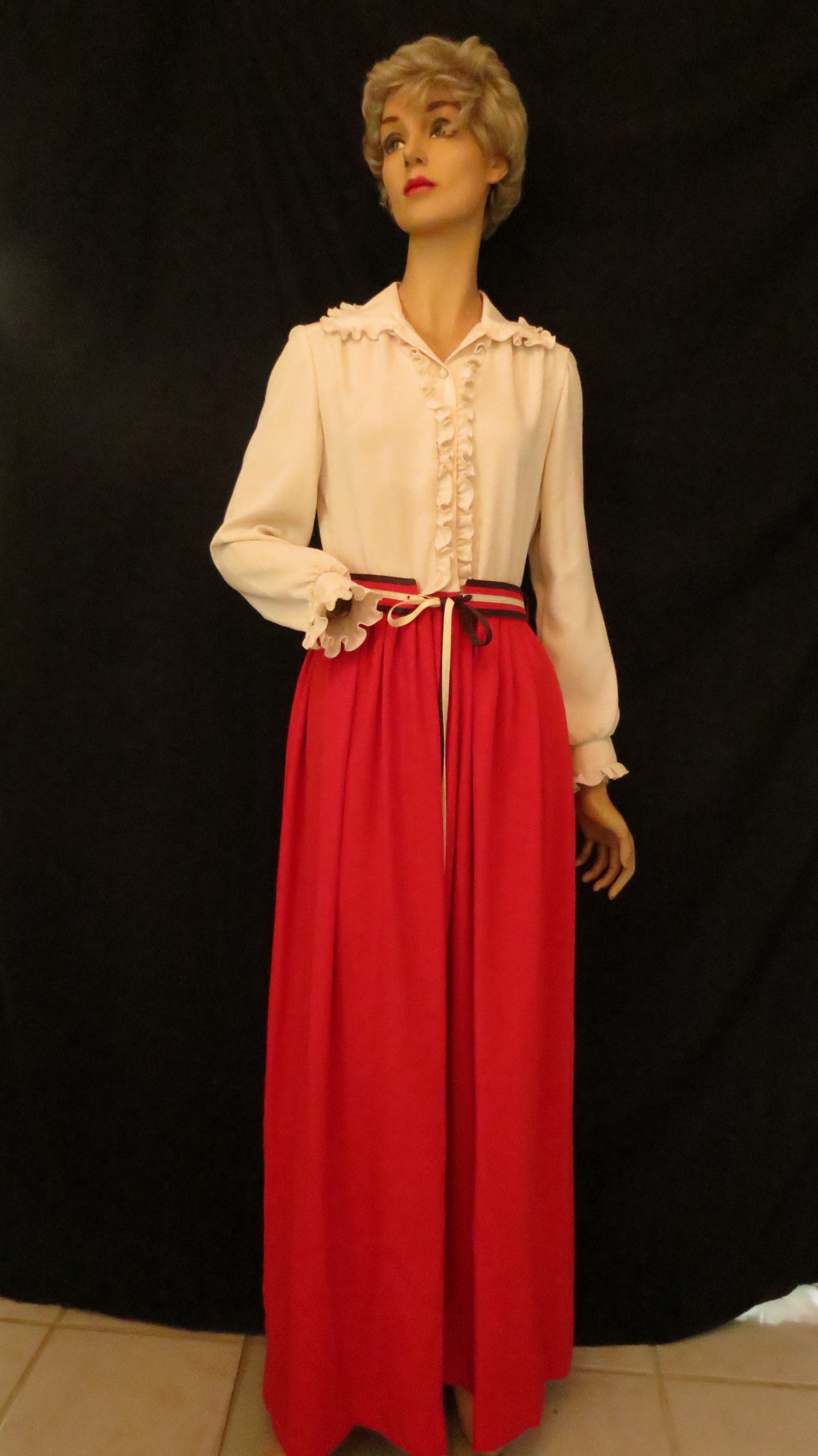
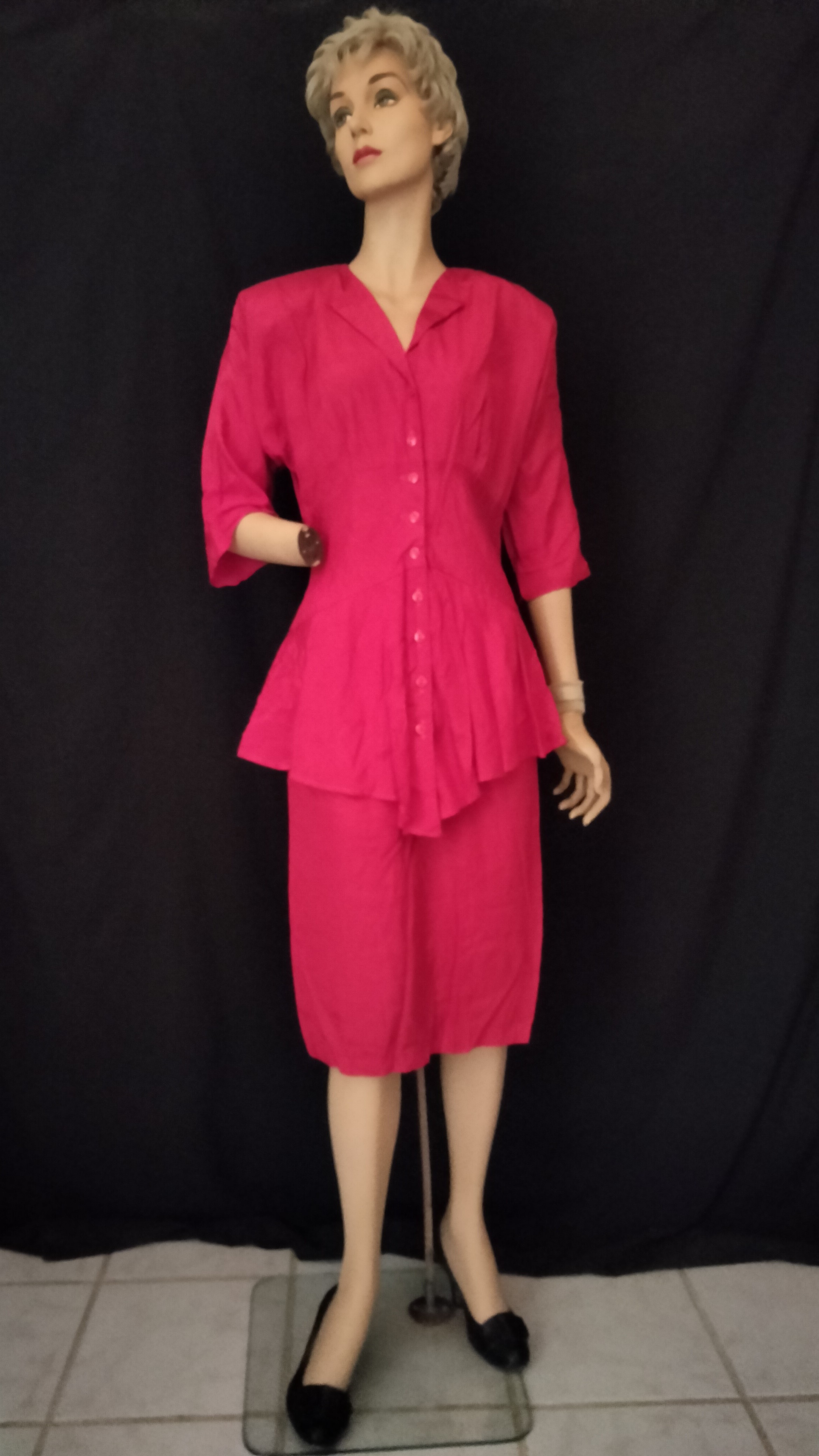
This one couldn’t be more different than the Boho outfit I posted two days ago! Looks like it might have been worn to a 4th of July country club event. Very prissy and proper. It’s from the 1970’s and was made by a well-known women’s clothing company – possibly Jonathan Logan. I can’t remember the label because I sold it on eBay right away – NOT my style. However, it was a good example of the jumpsuit evolution and worth collecting.
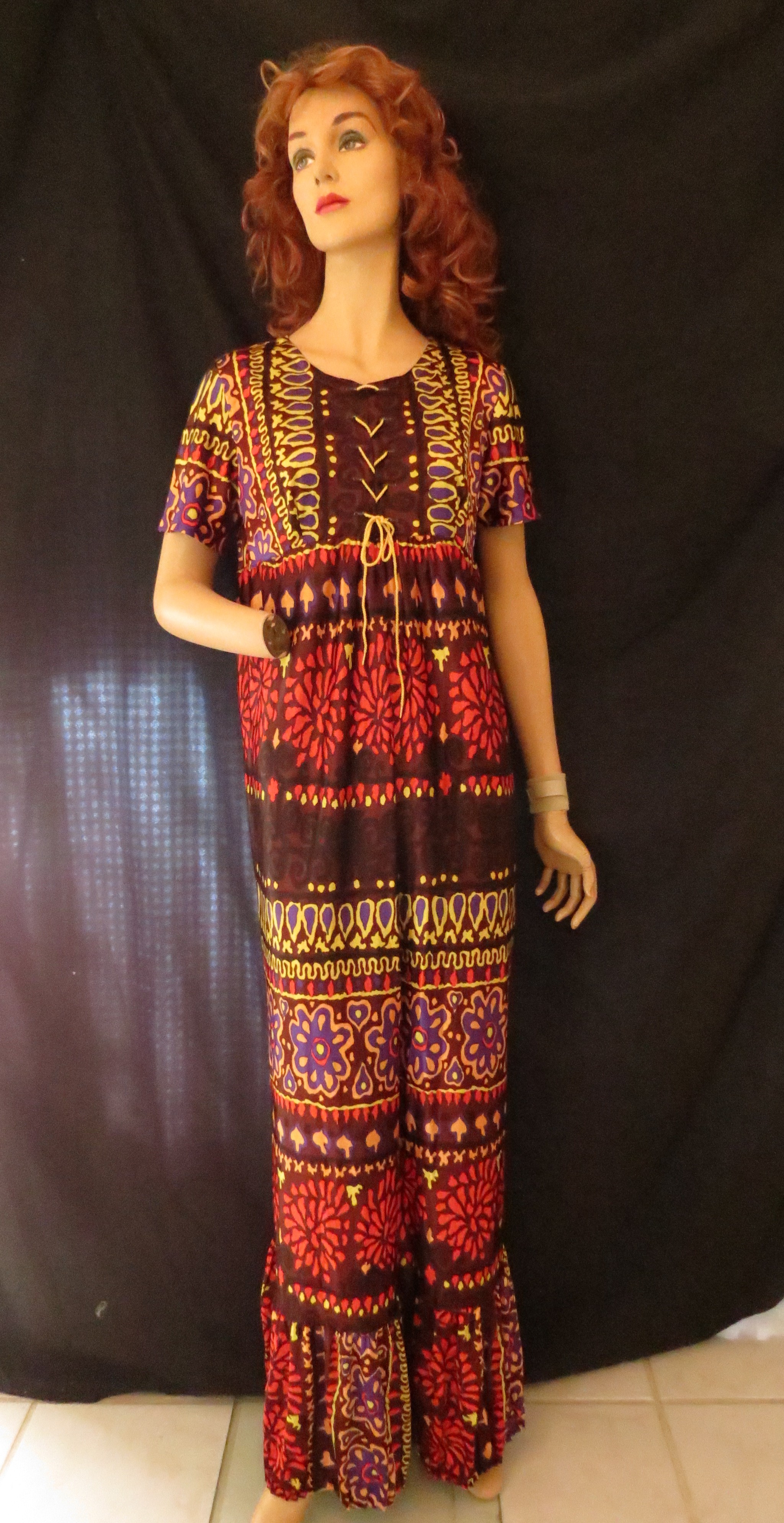
Aside from the utilitarian work uniform that Rosie the Riveter wore in the 1940’s, jumpsuits (cute as they are) are not in the least bit practical. One nice thing is that the fit can be sleek and slim – no need to tuck in a shirt or top – but anyone who’s worn one knows that they are very inconvenient. There were some cute ones in the early 1970’s when Seventies did Forties but after a couple of evenings bar-hopping, gals often decided to leave them in the drawer and go for their Chic jeans instead. But, we didn’t learn our lesson because they showed up again in the early 1980’s when the Forties were revisited. Then I was horrified to find that, especially for dress-up nights, some designers came up with truly ugly ones in knits and velvets in the 1990’s#@*!! Can you imagine going to an event and wrestling with that in the washroom all evening with the hem dragging on the floor? Forget it! This is a style that I hope we don’t see again.
So, the tide turned today when I discovered a lovely mid-century piece that I can’t wait to show you. Not going to give it away now, but I will be posting it tomorrow. Stay tuned . . . . . . . . . . . . . . . . . . . . . . . . . . . . . . .
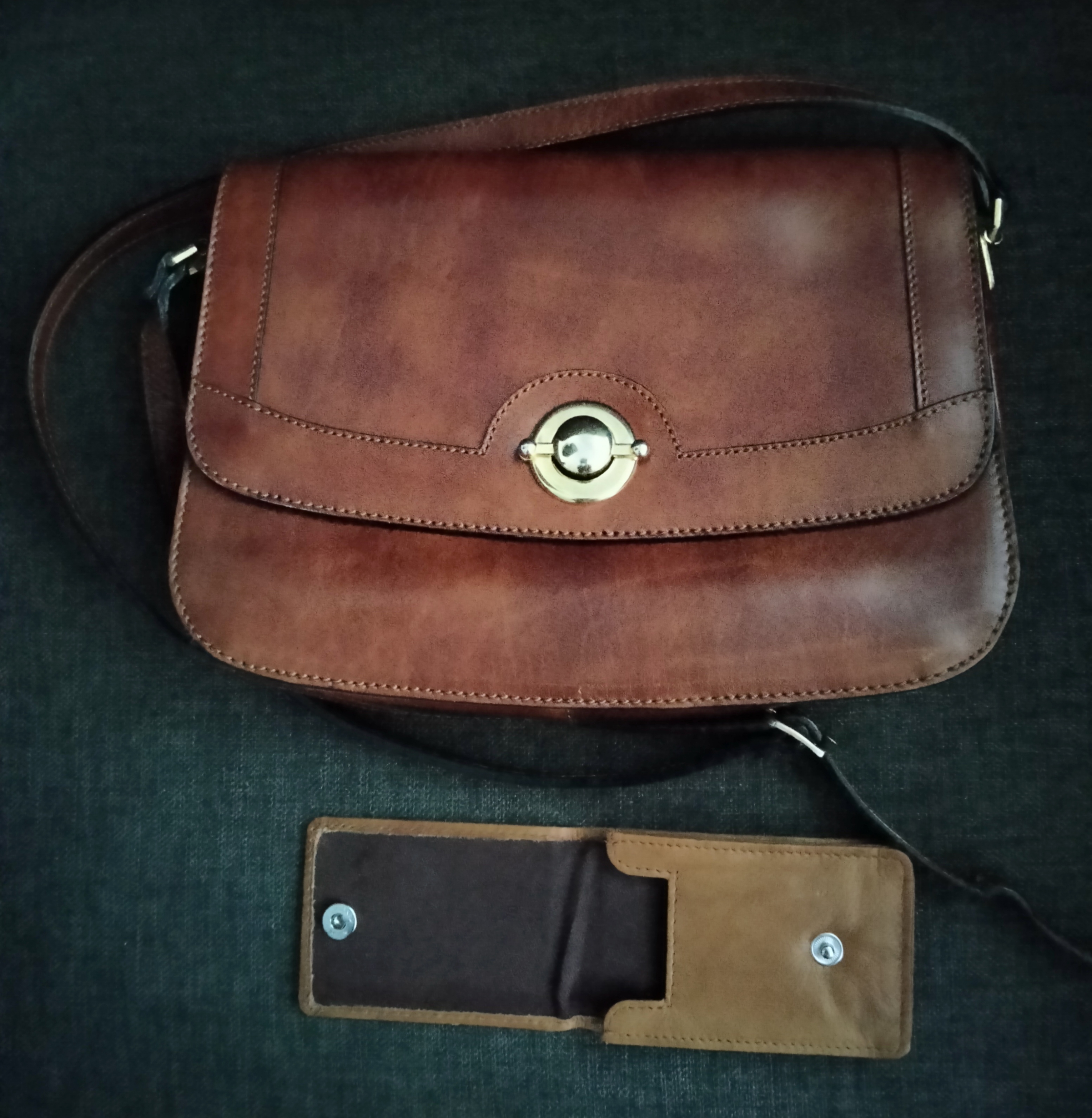
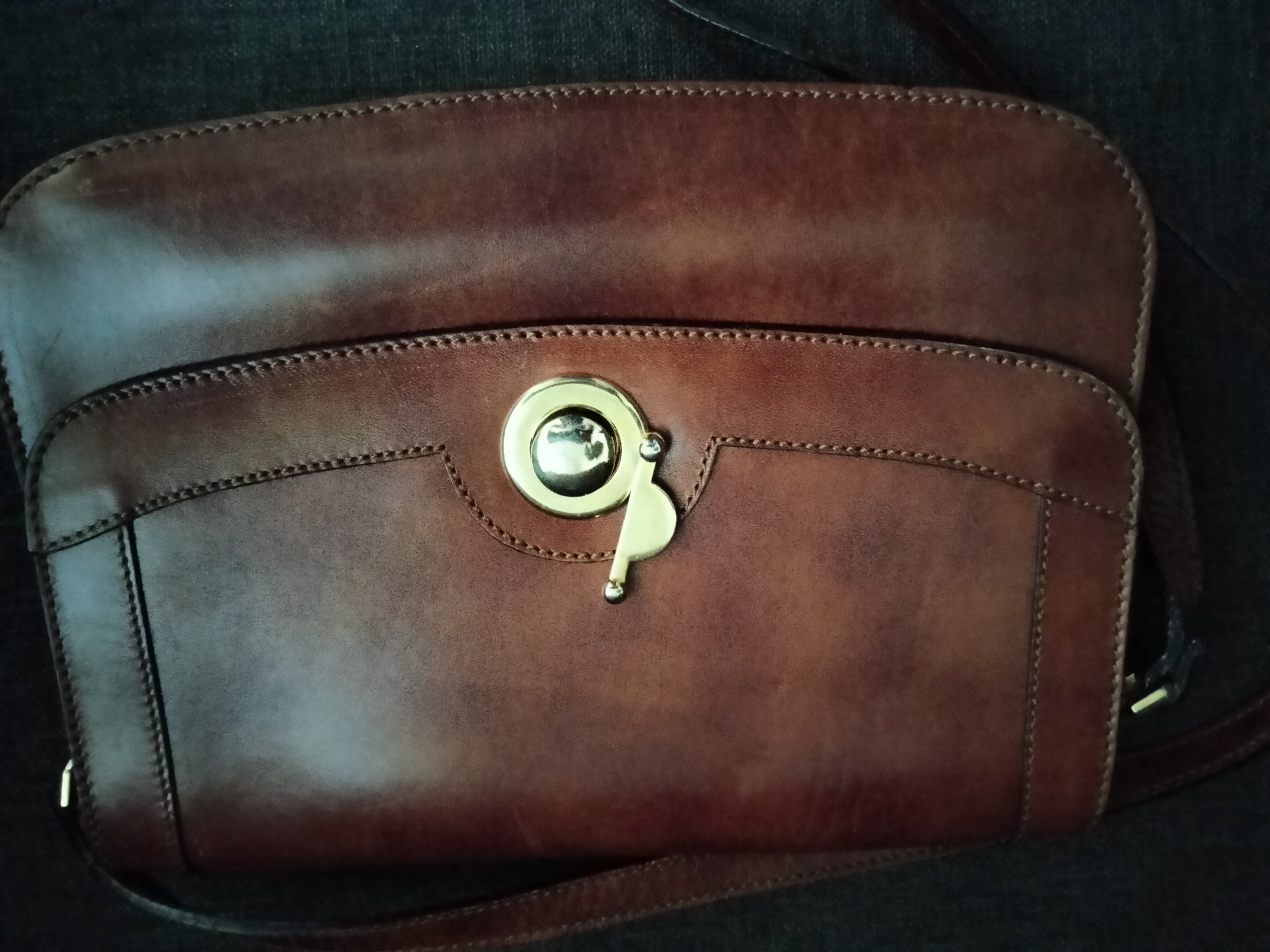
More from the 1970’s – 1990’s. Let’s start with the fabulous handbag. Remember that I mentioned Portugal in the last couple of posts? Well, this purse was handmade there. Likely, a traveler picked it up during her(?) trip since leather goods have been premier souvenir items from that country for decades. Look at the craftsmanship! Inside, it has convenient pockets and dividers and is a useful medium size with an adjustable shoulder strap. Pretty gold-tone hardware and my favorite feature: the clasp. This one reminds me of many unusual and crafty closures that are seen on purses from the 1940’s and 1950’s. The circular metal ring fits over the round metal knob and closes firmly with the hinged latch. Not locked, but tightly fastened. These ingenious and pretty hardware items always fascinate me!
During the investigation I also found this small card holder, meant for carrying business cards so no RFID protection required. It is simple, but luxurious. The leather is butter soft and the pouch is lined with a rayon-type fabric, all in perfect condition, Another lovely handbag accessory.
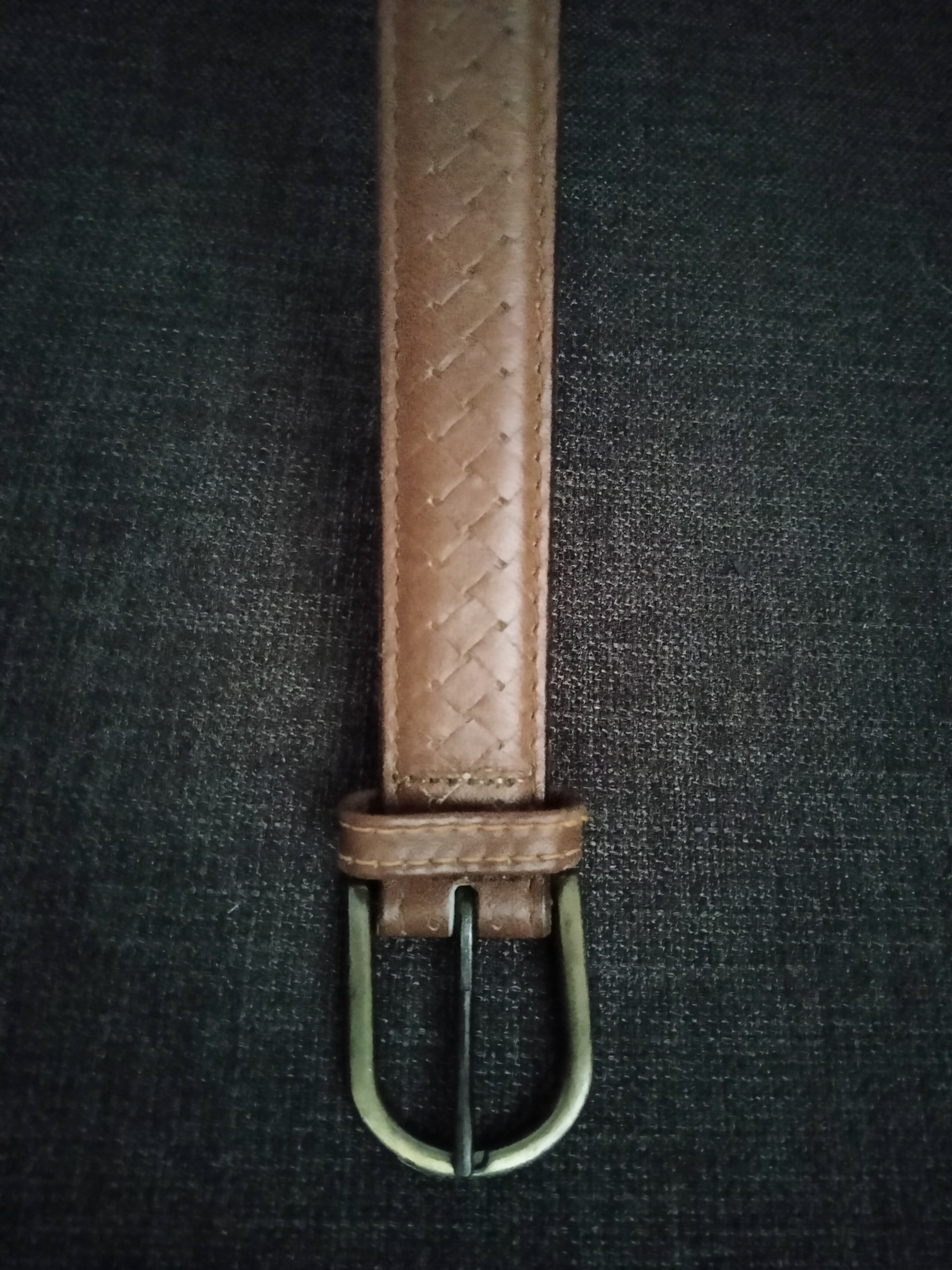
I’m always on the lookout for high quality belts and they are elusive, especially in my size. But, you just never know and look what turned up! Super simple in it’s style. Classic, elegant embossed basket-weave design that adds a bit of interest but won’t be a distraction. 100% leather with a buckle that is probably brass. Sometimes I find them stamped as brass on the underside. That means strong, with no corrosion. Another find in near-perfect condition – just right for jeans, slacks or for cinching a sweater or jacket. Perfect for Fall (yes, it’s coming . . . . . . . . . . . . . . . . . . . . . . . Stay tuned.)
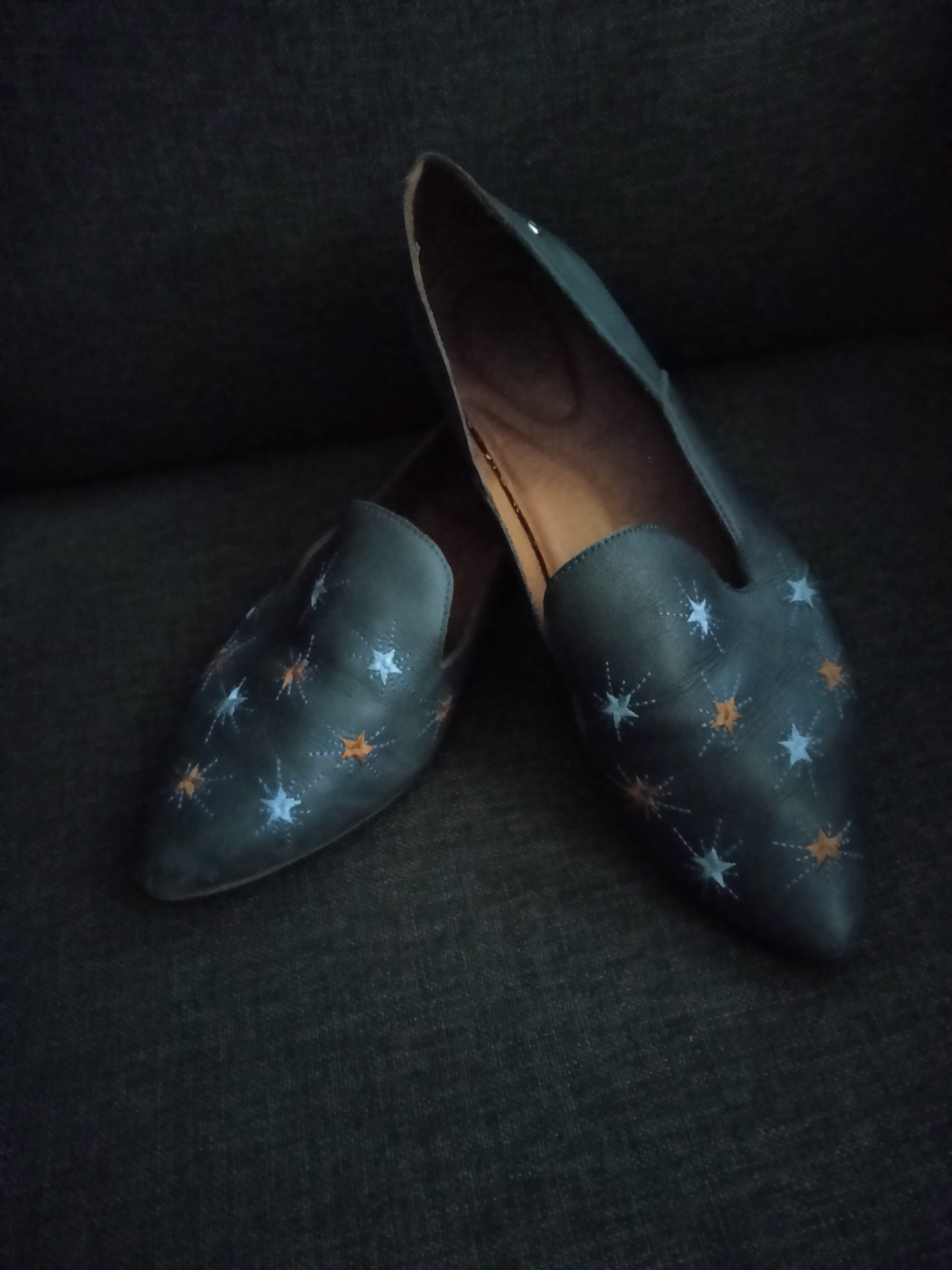
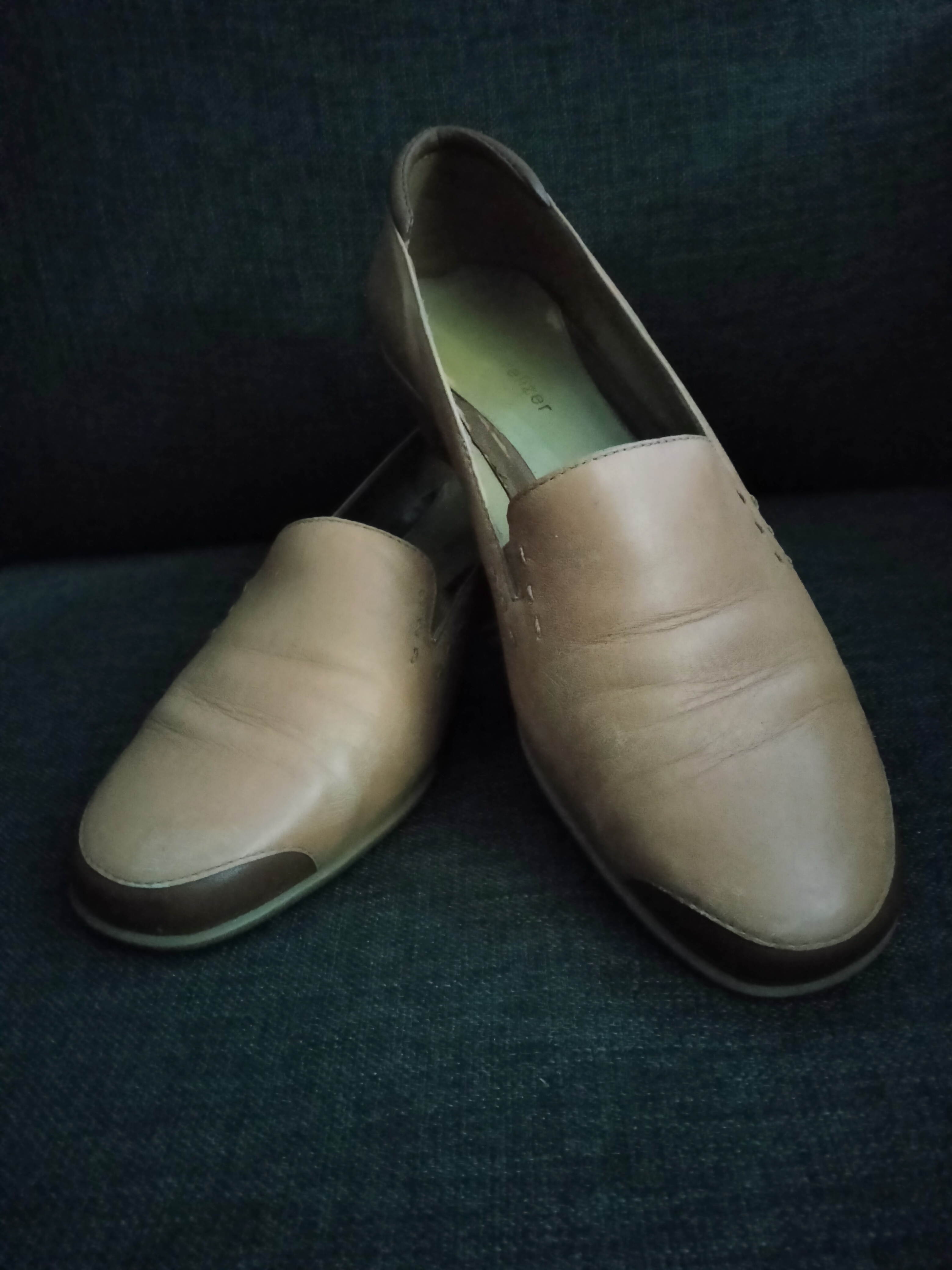
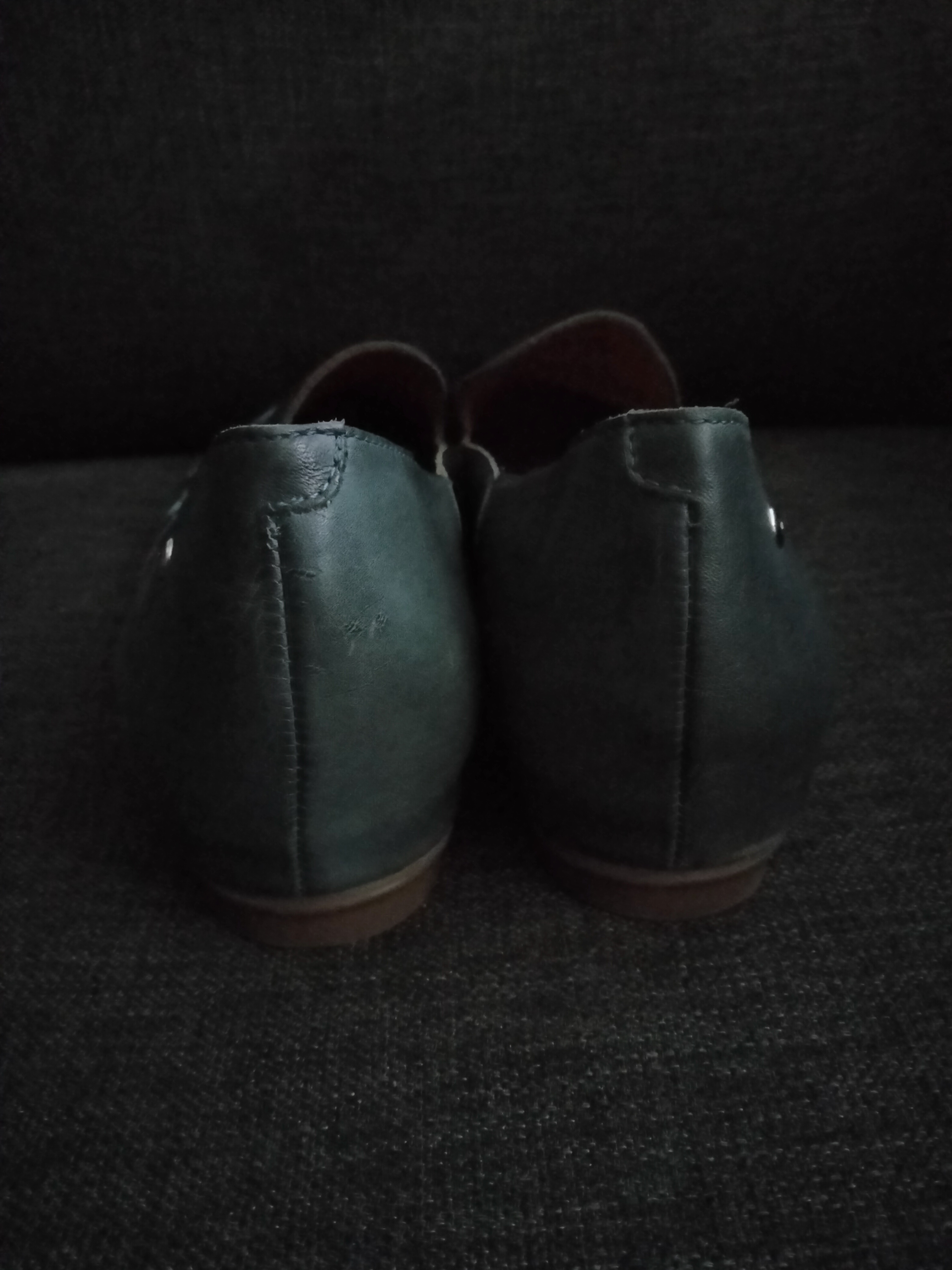
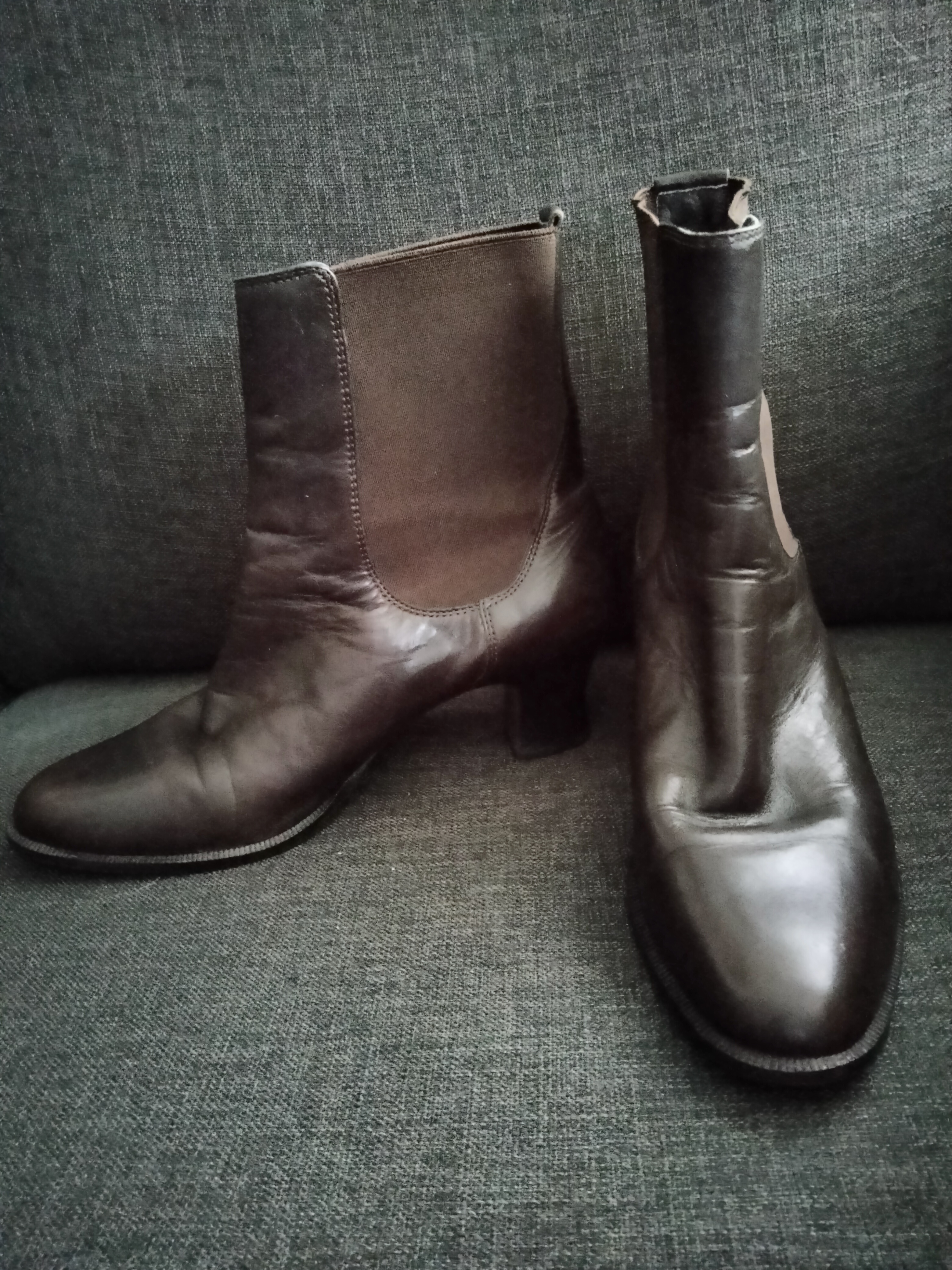
Made in Brazil and Spain – in the 1980’s and 1990’s, two of the BEST places where great shoes and other leather goods were made. Italy and Portugal were also at the top of that list. These were made for well-known brands but small unbranded shoemakers (especially in Latin America and Europe) sold beautiful creations if you were able to find them. I knew immediately that these were vintage footwear pieces and that the quality would be outstanding. The truth, as always, is in the details and I have included photographs and descriptions of the most important ones.
The leather in the top-pictured flats is glove-soft. I adore the embroidered stars covering the vamps. The little finishing detail at the top of the heels was one sign of exceptional workmanship. I usually find this detail on well-made true vintage European footwear. These were made in Spain by Pikolinos, a family brand founded in 1984. Love the style!
The camel-colored flats with brown trim are made in an elegant style meant as a driving shoe (notice the extension of the sole material on the back of the heels). See the little stitching detail that secures the seam there, too, plus the brown trim which reinforces the heel opening but is also very stylish. On the edges of the vamps where the foot enters there are slim inserts of elastic material and elegant stitching detail. These shoes were made in Brazil for Naturalizer, a more common North American company which nevertheless made some excellent quality footwear, at least in the past.
Both these pairs of shoes have a hard but flexible vinyl/rubber sole that is very appropriate for street wear and resists damage. Again, they will last for decades longer. I couldn’t be happier to find these practical styles in one place! Stay tuned for the last installment of this most recent investigation . . . . . . . . . . . . . . . . . . . . . . . . . . . . . . . . . . . . . . . . . .
Love, love, love!!!!! Most likely from the 1980’s – maybe the 1990’s. Always one of my favorite finds (they fit!!!!!), and definitely keepers that will serve me well forever. These boots were made in Brazil of lovely, soft leather. The clues abound regarding their excellent pedigree:
1. The craftsmanship is exquisite: even, strong stitching with high quality elastic gussets that have held their shape and stretch. Notice the nice little tab at the back which looks good but also provides a gripping place to pull the boots on comfortably, without stretching that would pull them out of shape.
2. The soles and heels look very much like leather, which is always a plus because it can be repaired by a skilled shoemaker or shoe-repair technician, but instead are made of the wonderful Vibram-type material which came later in the mid-century and is virtually indestructible. The finish eventually wears off the soles but they don’t wear down as quickly as leather. Repair and replacement are hardly ever needed.
3, The heels are so well-crafted that they have the look of stacked leather, though they probably are not(?)
4. The Granny-style of the heels was fashionable at the time these were made but the overall design is perfectly classic and elegant. Despite the heel style these boots are wearable with most clothing types without looking dated and will continue to be in the future.
This investigation proved not only the age, origin and construction details of these boots, but also strong clues as to what class of person owned and wore them as well as the type of vendor which sold them originally. Although modern technology would allow a greater depth of detailed knowledge to be ascertained in a laboratory, I will leave those tasks to the forensic teams. For my purposes, the investigation is perfect and ends here, in my closet.
_ _ _ _ _ _ _
As I’ve said before, I don’t support the markets for any type of animal skins (including fur) by buying newly-made products that involve the raising, hunting and slaughter of the animals who provide them. I also avoid products made from wool, down and other feathers and silk, which also involve animal cruelty. Collecting beautiful true vintage artifacts easily satisfies my curiosity and fulfills my needs.
As the marketplace continues to offer more alternatives, my diet and toiletries are always vegetarian and vegan whenever possible. Excellent alternatives to most products are available and the prices are constantly coming down. Now that cruelty-free hard goods (not food or other things that will spoil) have been in the marketplace for a few years, it’s increasingly possible to find them in places where previously used items are sold or traded. True vintage items may not have been made with an ethical mentality, but they don’t contribute to cruelty and abuse in the present. Secondhand purchases don’t give money to current unethical manufacturing processes or the people who sell them either, as long as you are not buying from the original producer or vendor. And, the older things are, the better the quality in most cases. What could be better?
This is just the beginning of my posts of recent discoveries. More are coming. Stay tuned . . . . . . . . . . . . . . . . . . . . . .. . . . . . . . .
Through the decades the changes in style are often subtle, but they’re noticeable if your sleuthing trade skills are sharp. One thing that all these dresses have in common is excellent quality. I showed several dresses of this genre which were made in the Victorian/Prairie style when covering 1970’s Prom dresses a couple of months ago. Early in that decade, girls sometimes wore them to the Prom but they were usually fussier with lace and more details. Jessica McClintock of Gunne Sax styled them for at least 20 – 30 years. Labels always help, of course, but aren’t always present. The condition of all these examples is near-perfect, which can make the job a easier, though tell-tale signs of wear can sometimes be very helpful clues. Let’s start from left to right:
A Prairie-style gown, pretty and modest in cotton. Looks like it was made for retail because of the precise tailoring detail, but there is no label. I would put it in the 1970’s but it could possibly have been made later by an individual expert or a company that catered to a niche market which preferred very modest styles of dress.
A red and white plaid gown that picks up on the Prairie style, but in a much more casual, carefree design reminiscent of the 1960’s. It’s probably made from cotton but I can’t be sure without the file in front of me and it could be cotton/poly blend. It was made in the 1980’s in West Germany. This is an example of trends jumping the oceans, usually years after they originally appeared in the Western nations. Although they’ve done their own take on the style, it’s exceptionally well-made, as goods from West Germany have always tended to be, in my experience.
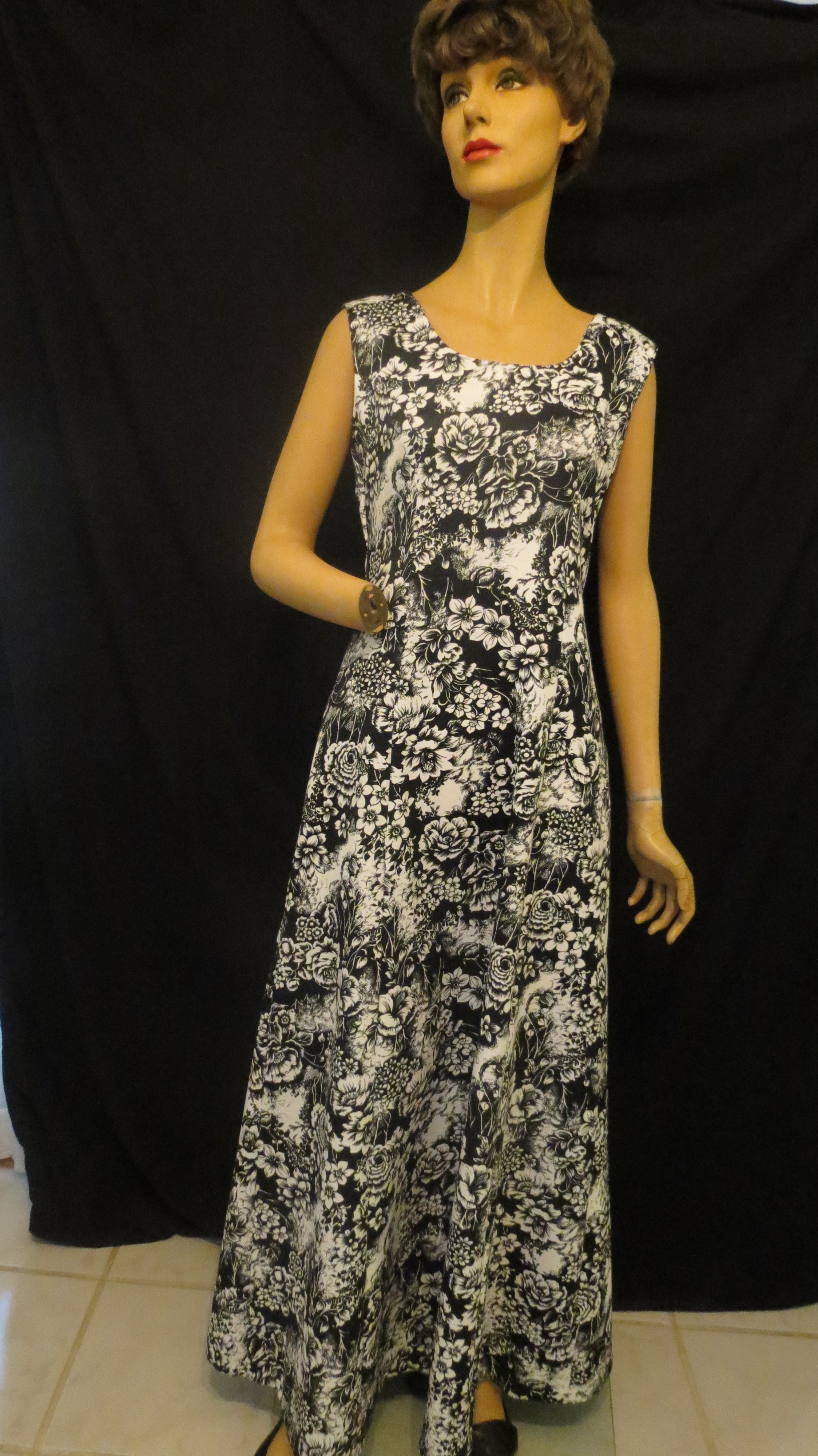
A black and white floral print gown made in Hawaii. This one is from the 1980’s, give or take a decade and is the most elegant. Same deal about the fabric as in the previous dress. The style is pure average conservative, which makes it harder to date exactly. A pretty dress, but nothing distinctive about it excepting for excellent tailoring. It might have been a wardrobe item of someone who lived in Hawaii, purchased at a specialty shop stateside which carried Hawaiian garments or by someone who bought it while on vacation. Hawaiian-made gowns have been popular with women worldwide since the 1950’s, but earlier ones were usually made in more traditional Hawaiian style and, often, of Hawaiian fabric with traditional island prints. The more mainstream universal designs like this one came later.
The final dress is from the 1990’s. Always harder for me to think of as true vintage, but it is worthy because of the good tailoring, 100% cotton fabric and the retail designer label sold by a high-end department store in New York City. It’s got pedigree. Again, nothing notable about the style but it is very well-cut, which can make a world of difference in terms of how a dress fits. That’s one feature of even plain, rather boring vintage clothing items that can make them worth collecting and wearing. The style can always be elevated by adding accessories but one thing that always elevates any garment is how well it is made and how well it fits.
Tomorrow I’ll be showing a collection of dressy day-wear accessories from the 1960’s that fit the category of well-made, classic and designer items that can “make” an outfit. Stay tuned . . . . . . . . . . . . . . . . . . . . . . . . . . . . .
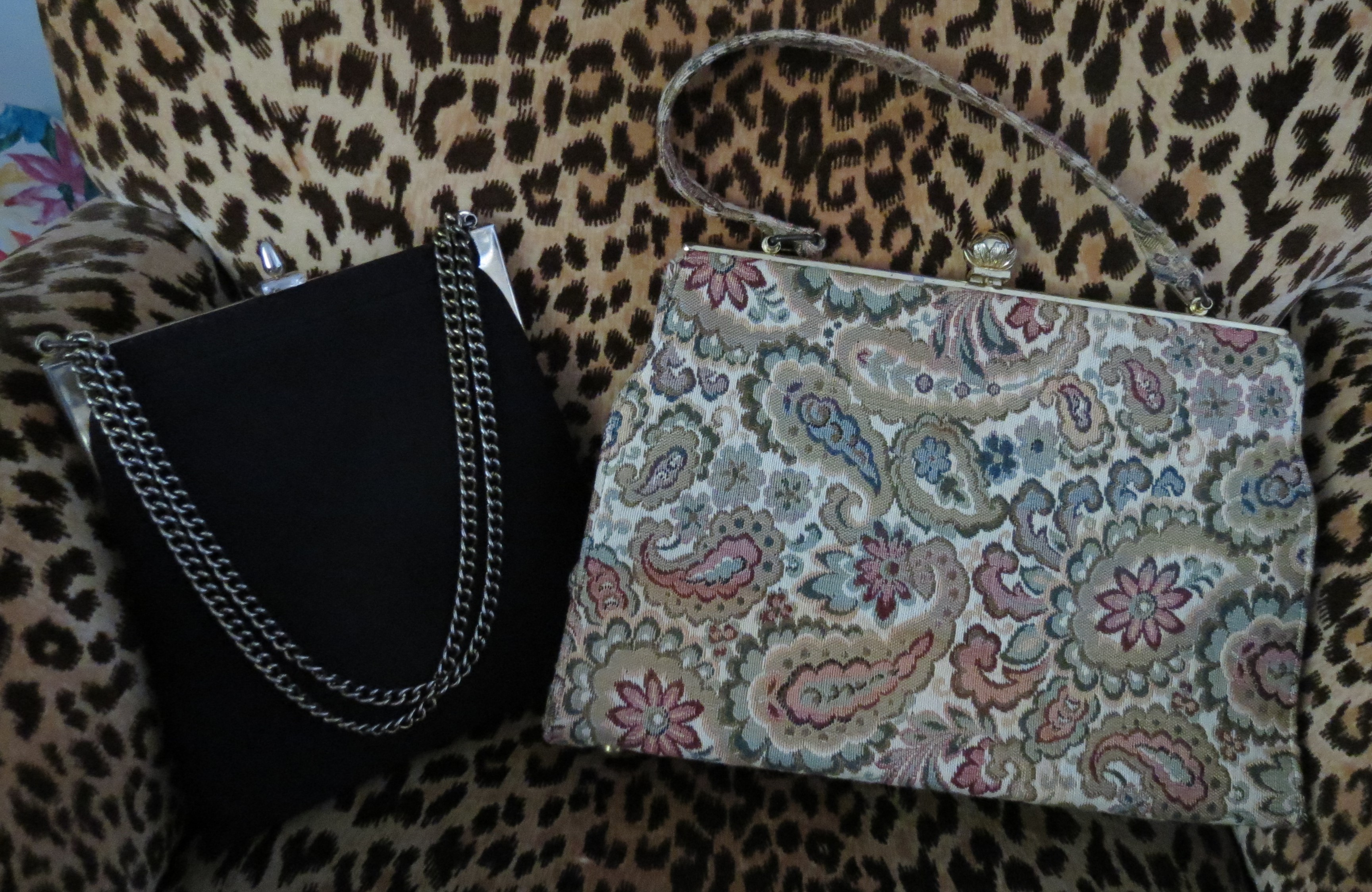
The Seventies, Eighties and Nineties produced a lot of popular retail styles that imitated 1940’s designs. Some were very well done and others not so much, to be charitable. As I’ve said, it’s hard for me to call these decades true vintage but, technically, they are. The two purses echoing shapes and tapestry design popular in the Forties might have shown up in the 1960’s.
All of these could be fun and the reproduction details became best during the mid-1980’s but, unfortunately, modern polyester fabrics and production techniques lowered the quality a lot. No valid comparison, in my opinion, to true vintage from the 1940’s – even the home-sewn versions that were made from older clothing during rationing.
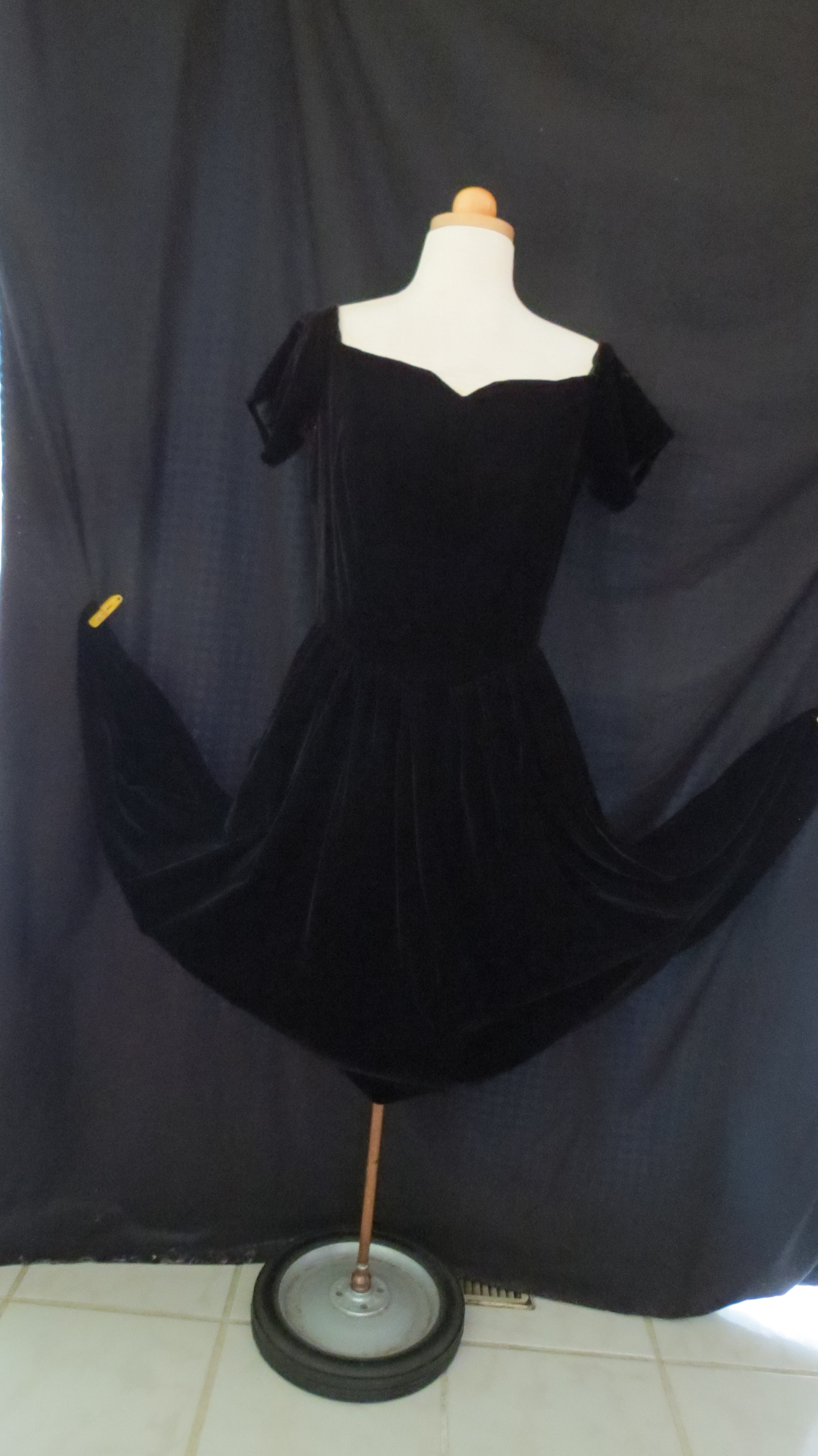
Of this group, the best-made is the black velveteen custom-tailored frock from the 1980’s or 1990’s. It was made by an expert seamstress and is worthy of being called a reproduction in the Post-war New Look style. The retail day-dresses are versatile and the prints are great – pretty faithful to authentic ones that I’ve come across. I always love the padded shoulders and cinched waistlines that are very flattering but were also a nod to the style of military uniforms. Jumpsuits were just for fun in the Seventies, but always are inconvenient. I suspect that the jumpsuits worn by women working in the war effort during the Forties had drop seats, which makes it a little bit better. I do have a pair of high-waisted slacks from the ’40’s that have an ingeniously-designed drop seat that looks quite good.
So, these clues were fun to find and seemed worthy of collection though I always prefer the real deal. Speaking of which, I just came across another archived file of true vintage 1940’s dresses which I will show tomorrow. Stay tuned . . . . . . . . . . . . . . . . . . . . .
Right about now, usually after the U.S. Thanksgiving holiday, the build-up-to-Christmas galas and formal parties seem to begin and gather momentum. This is, to my mind, the beginning of a formalwear season in the northern countries that lasts through St. Valentine’s Day and picks up speed heading into Prom, with a bump of semi-formal events around Easter and ends, more or less, with bridal events in June. I guess this is the way that humanity has amused itself during the colder months when daily outdoor activities are not generally practical.
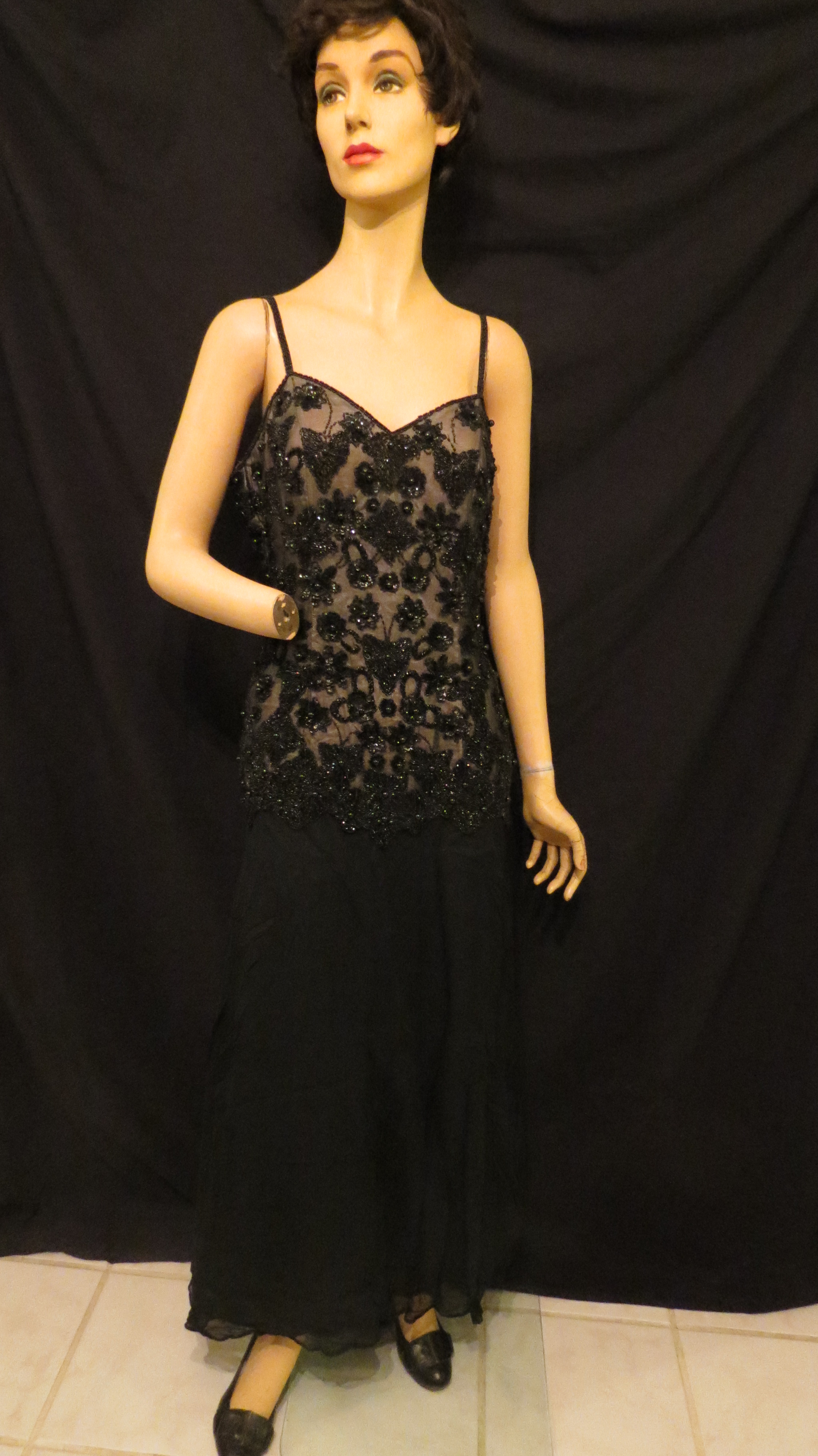
The above frock is a beautiful example of many I have seen by Alyce Designs. Most are highly embellished, like this one. Although they are more “modern true vintage” (1970’s – 1990’s), they do have excellent tailoring unlike many garments made since the 1960’s. I believe that the company may still be making dresses, but of course I am not interested now. However, this one is old enough and well enough done that it deserves a showing. I do love the beading on sheer fabric and the nod to 1920’s style.
So, we’ll be heading into a stream of transmissions which will include clues related to semi-formal and formal events. But, evidence from new investigations comes up at random times so stay tuned . . . . . . . .
Last night I was out and about to a theater production and couldn’t reasonably drive a two block distance. Walking was the only choice, which I love, but IT WAS SO COLD!!! My warmest outerwear option, which kept me toasty and comfy, was my post-war beaver jacket from Canada. 75 years old and it’s still snuggly and beautiful. I grieve for the precious animals who (yes, WHO) were sacrificed for vanity and retail profit back in the day and will NEVER buy modern fur products. I advocate for animal rights but also celebrate those lives and gifts by preserving and enjoying elegant fashions from the past for as long as they will last.
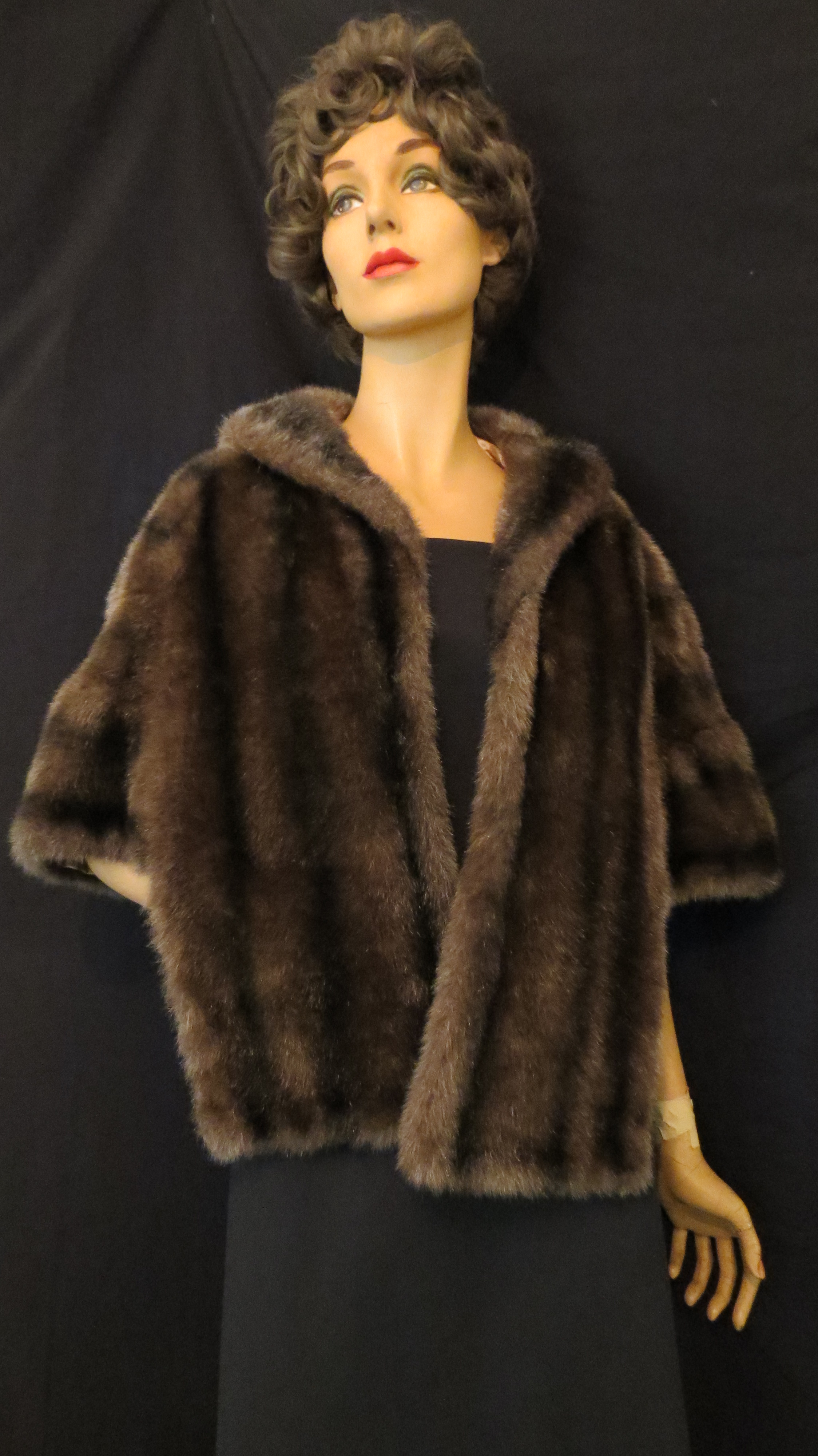
I own many gorgeous fur and faux fur pieces made decades ago, before protective legislation and individual conscience stopped some of the fur trade and promoted humane practices. Above is one example, on the left, of an older fur jacket dyed to mimic mink. I cannot identify the fur – could be muskrat. Before the end of WWII, furs considered to be less fine were often processed this way. Other examples, such as the one on the right, are fakes – popular in the 1950’s and beyond. Some have been very convincing even since the 1950’s. Many of those made today look and even feel very authentic. The look is fun and elegant, in a vintage way, plus, as I proved last night, very practical.
Faux fur and secondhand true vintage furs are the best, the ONLY humane and progressive choice. I prefer those from the 1960’s and before. The remaining fur trade is still a blot on humanity, so we must be vigilant in our boycotting of this active market but I don’t see the enjoyment of historical fashions as being hypocritical. I will continue to show you how much I love them. Stay tuned . . . . . . . . . . . . . . . . . . . . . . . . . . . . . . . . . .