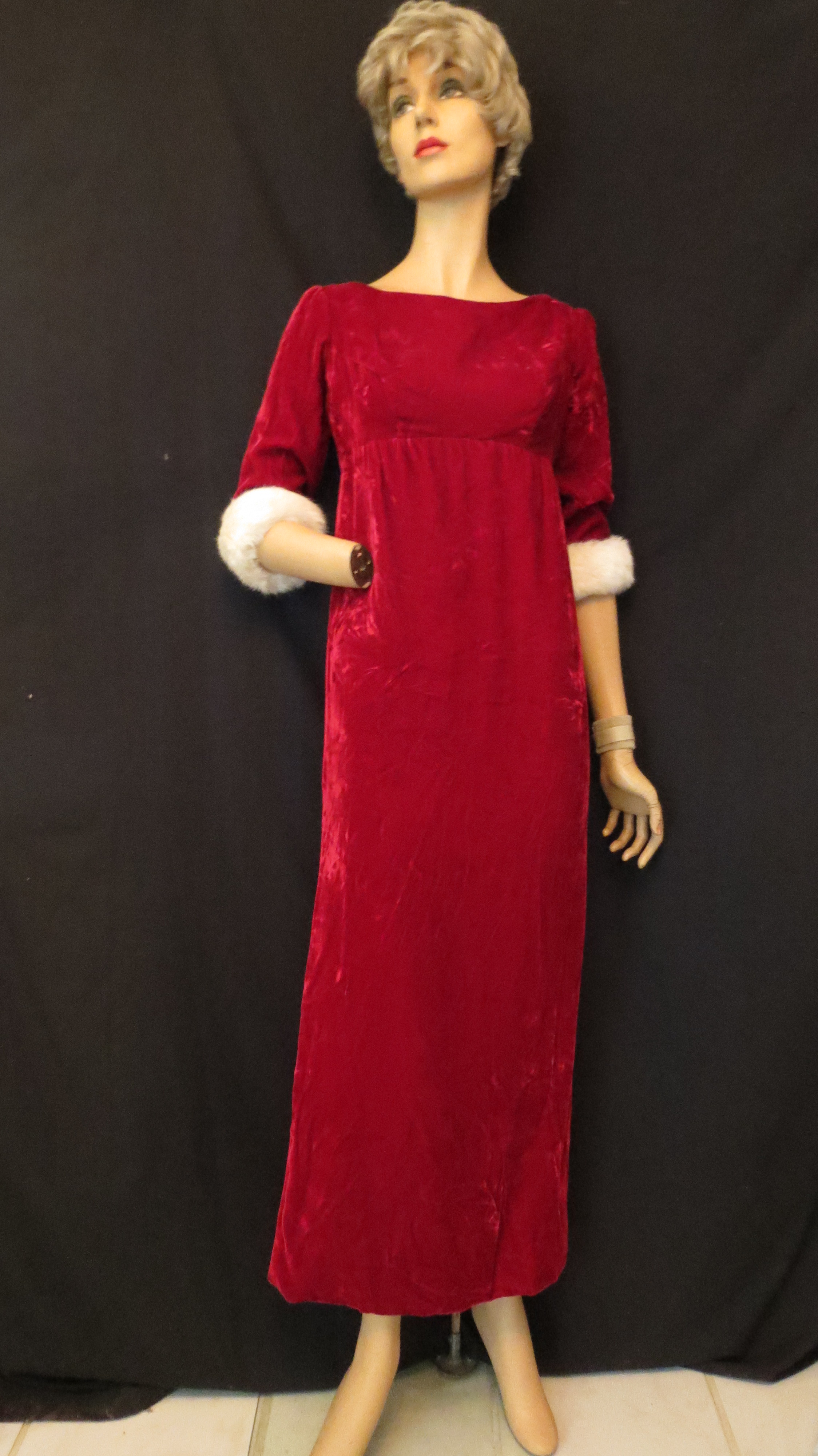
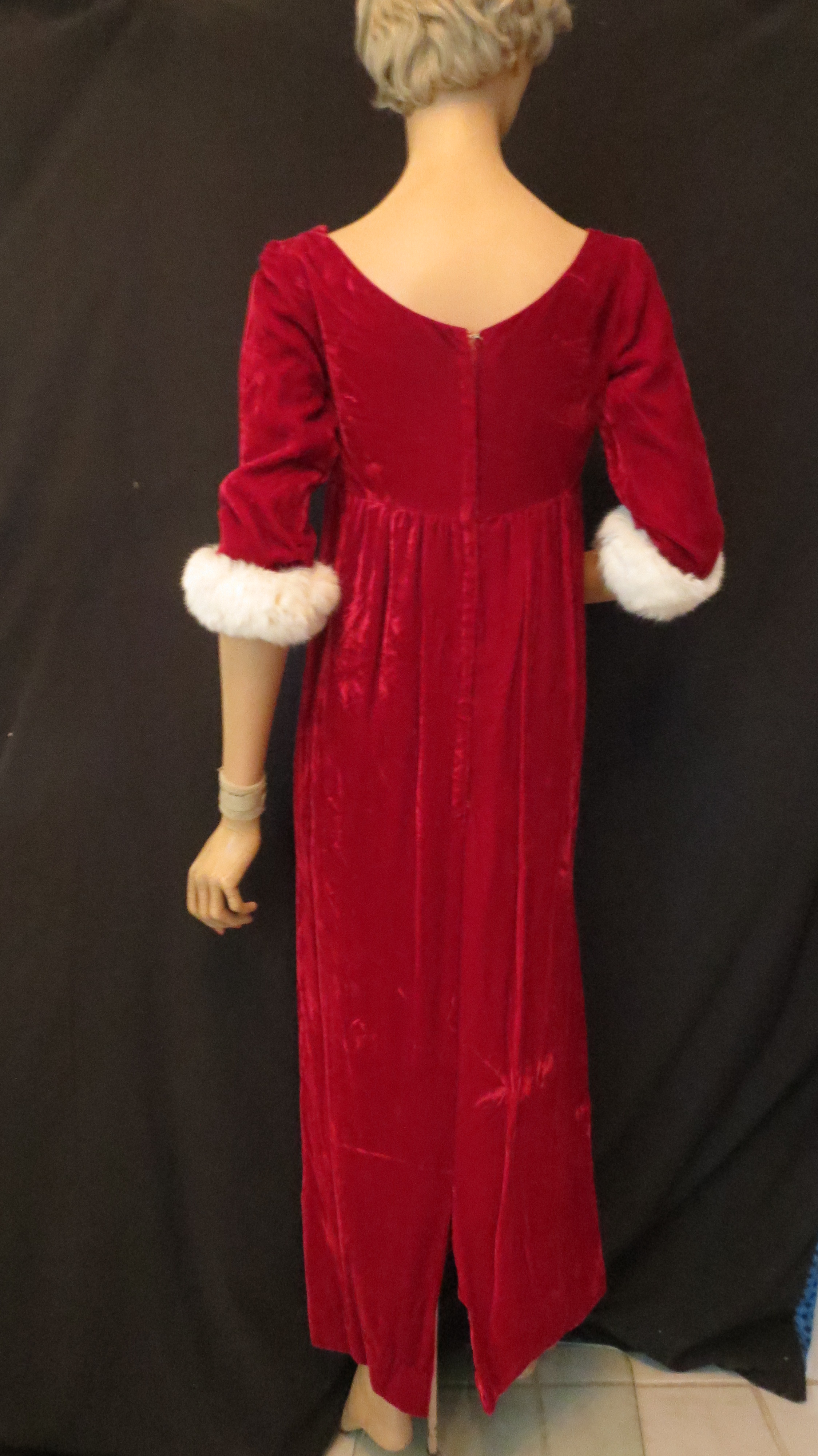
Perhaps appropriate for your intimate cocktail gathering with friends, but can you imagine anything more impractical than hosting a party wearing velvet and fur? Or dealing with Christmas morning craziness and food prep wearing this? No wonder it’s been packed away. Still, some home-based seamstress had a lot of fun planning and wearing this gown. It was the height of “fad-shion” and she must have felt like a queen. Good thing her sleeve didn’t get into the gravy or the baby’s diaper leak onto her lap.
No doubt this frock has a story but, after this short digression, it’s time to return to the LBD and it’s slightly-flashier cousins. We’ve moved into the late 1950’s – early 1960’s and it’s time to get back to some serious partying. Stay tuned . . . . . . . . . . . . . . . . .
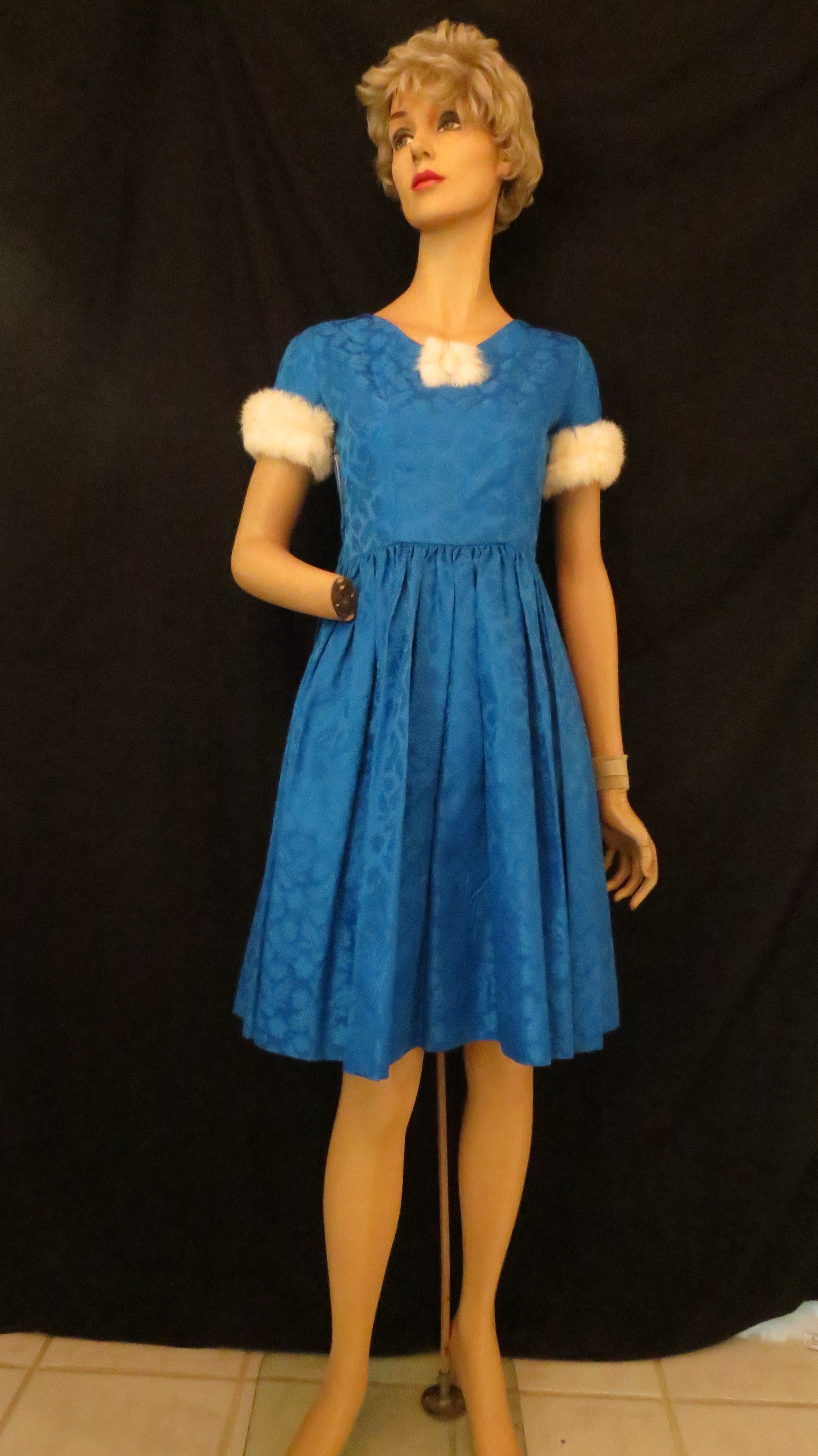
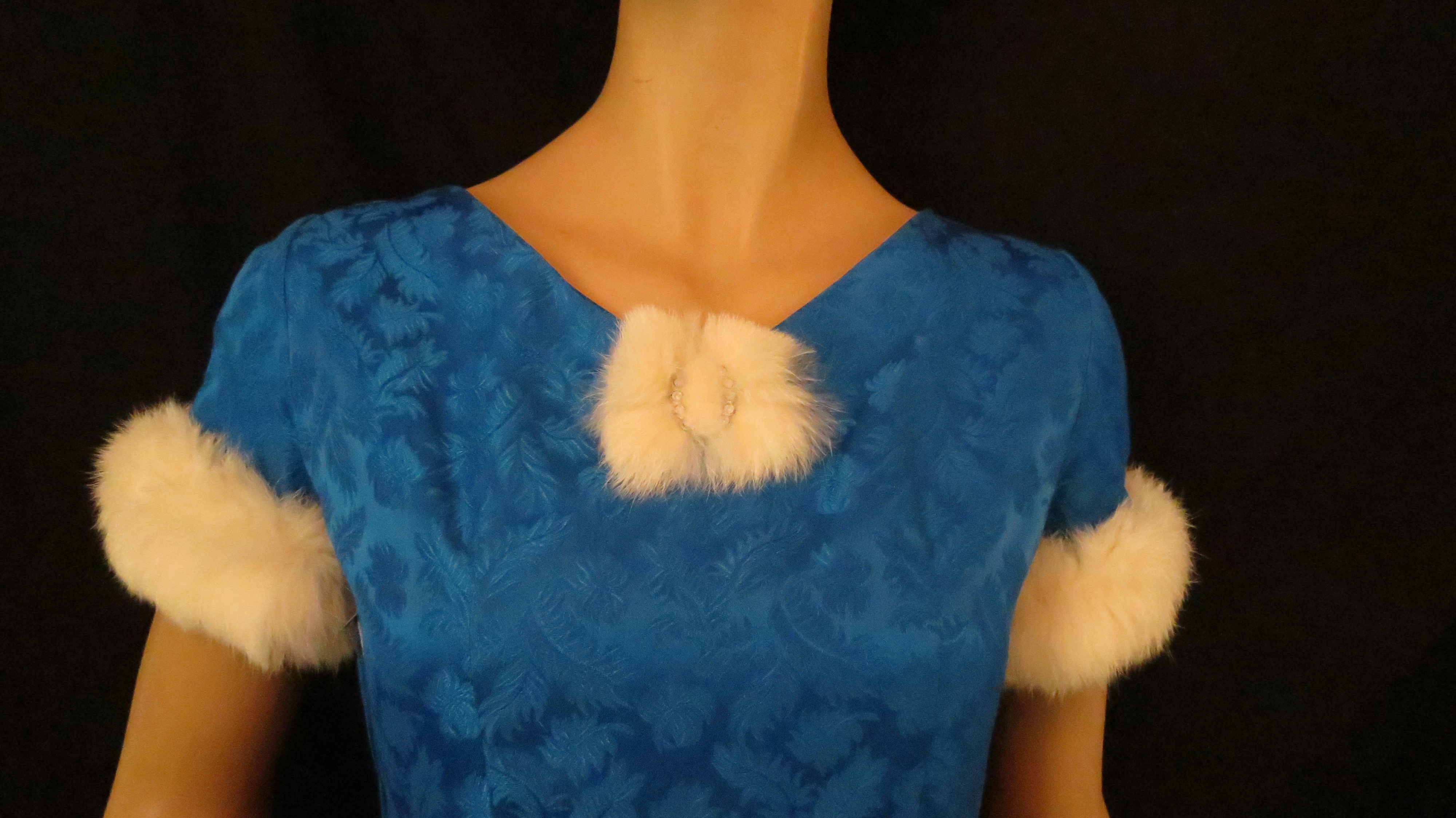
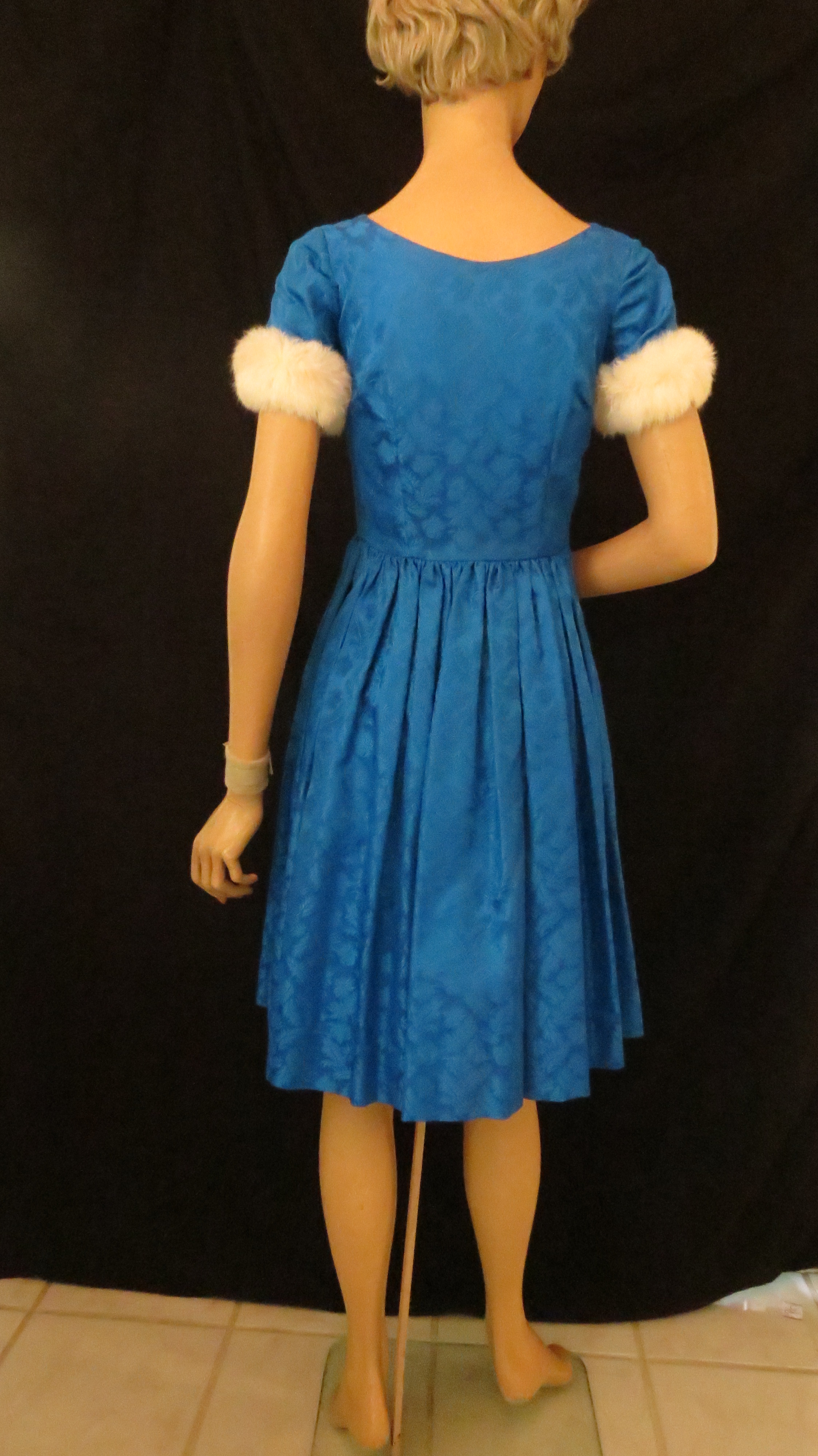
Not a cocktail style, though it belongs in the line-up. This is such a distinctive tailoring style – I’ve got at least 6 garments dating from the 1930’s to Fifties or early Sixties with fur-trimmed sleeves. In the early ’60’s and into the ’70’s the trim also showed up on hems. The same type of glossy jacquard fabric is used here as in the dress shown yesterday, but I suspect that this special-occasion frock was made for a girl or young woman. Maybe for a party, maybe for an “event”. Might even have been home-sewn. Fabric shops used to carry trims of all kinds. This looks like rabbit fur.
My feeling is that this style was really a fad, although it kept cropping up. Popular, in it’s way, but only for a smaller segment of the market. Not the same as fur collars on coats, which has been a standard for many centuries. I suppose that fur has been a trademark of luxury and wealth throughout history. If a designer wanted to create an upscale look, fur trim might be chosen. Thank goodness, now we can have the authentic look without the cruelty.
Tomorrow another garment of this design, in a really impractical example. Stay tuned . . . . . . . . . . . . . . . . . . . . . . . . . . . .
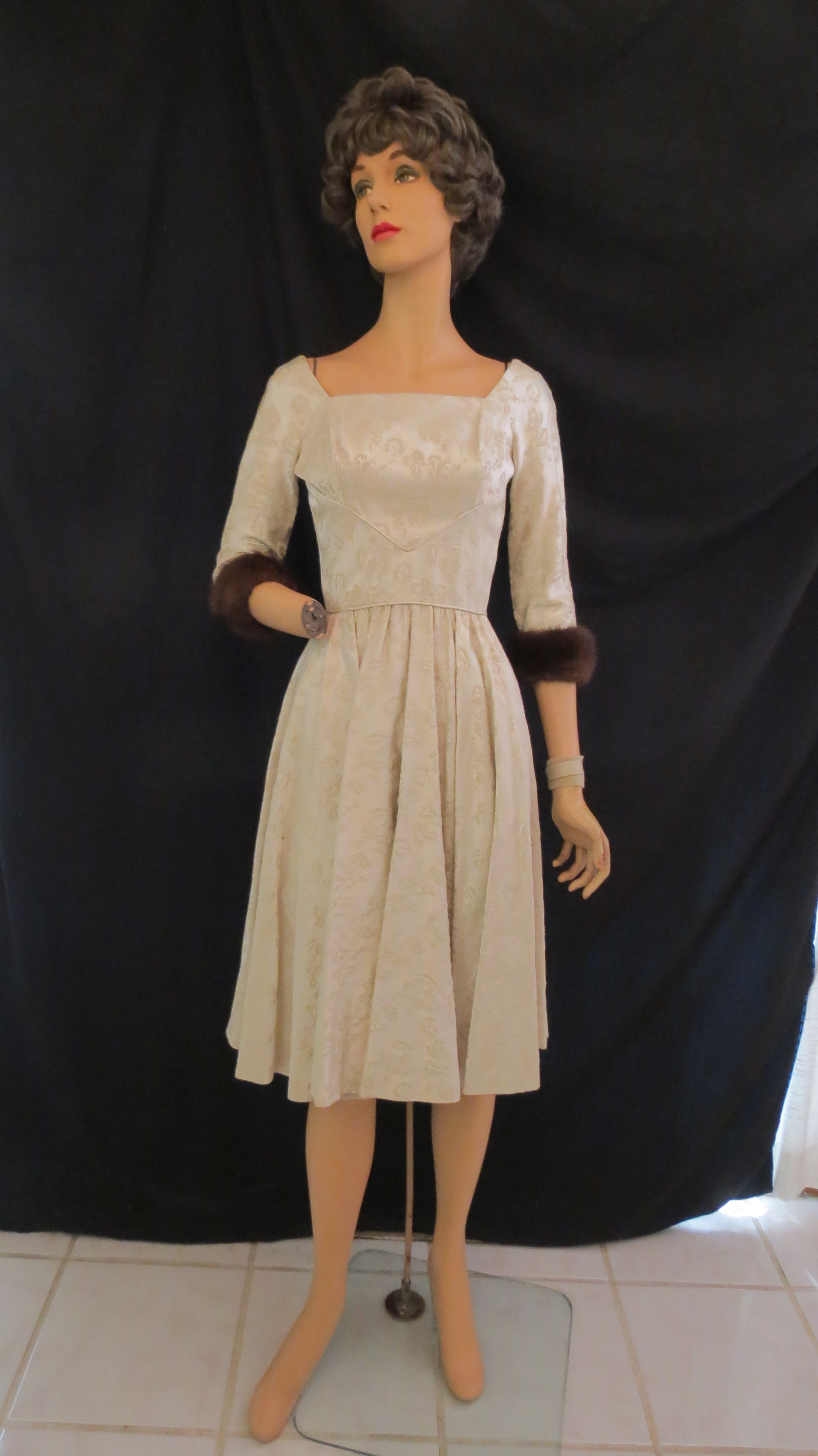
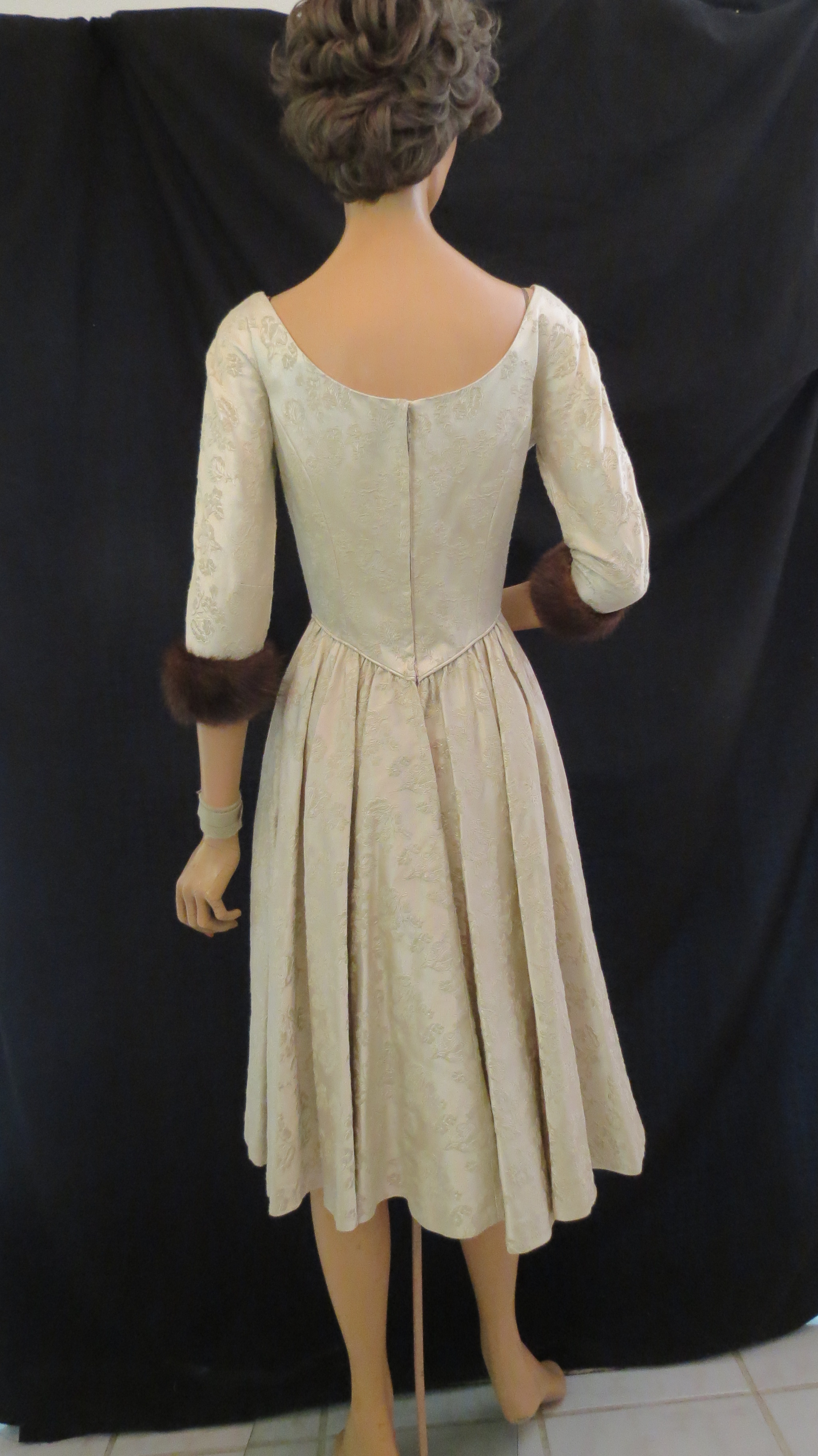
New Look style without the crinoline. Nipped waist and full skirt. Instead of in the front, as was possible in the 1940’s, there’s a V-shaped seam at the back waist. In this case, we also see the increasingly-popular fur-trimmed sleeves. The fabric is a medium-heavy jacquard with a glossy brocade look. Again, simple elegance though the fur trim does put it alittle over the top, to my eye.
There’s no label, so this gown could have been custom-tailored but it’s quite possible that the owner removed the tag, as so often happened. It’s a lovely semi-formal dress with a neckline which could show off a statement necklace. Doesn’t need that in any way as far as I’m concerned, but you know how some women are. . . . . . . . . . . . . . . . .
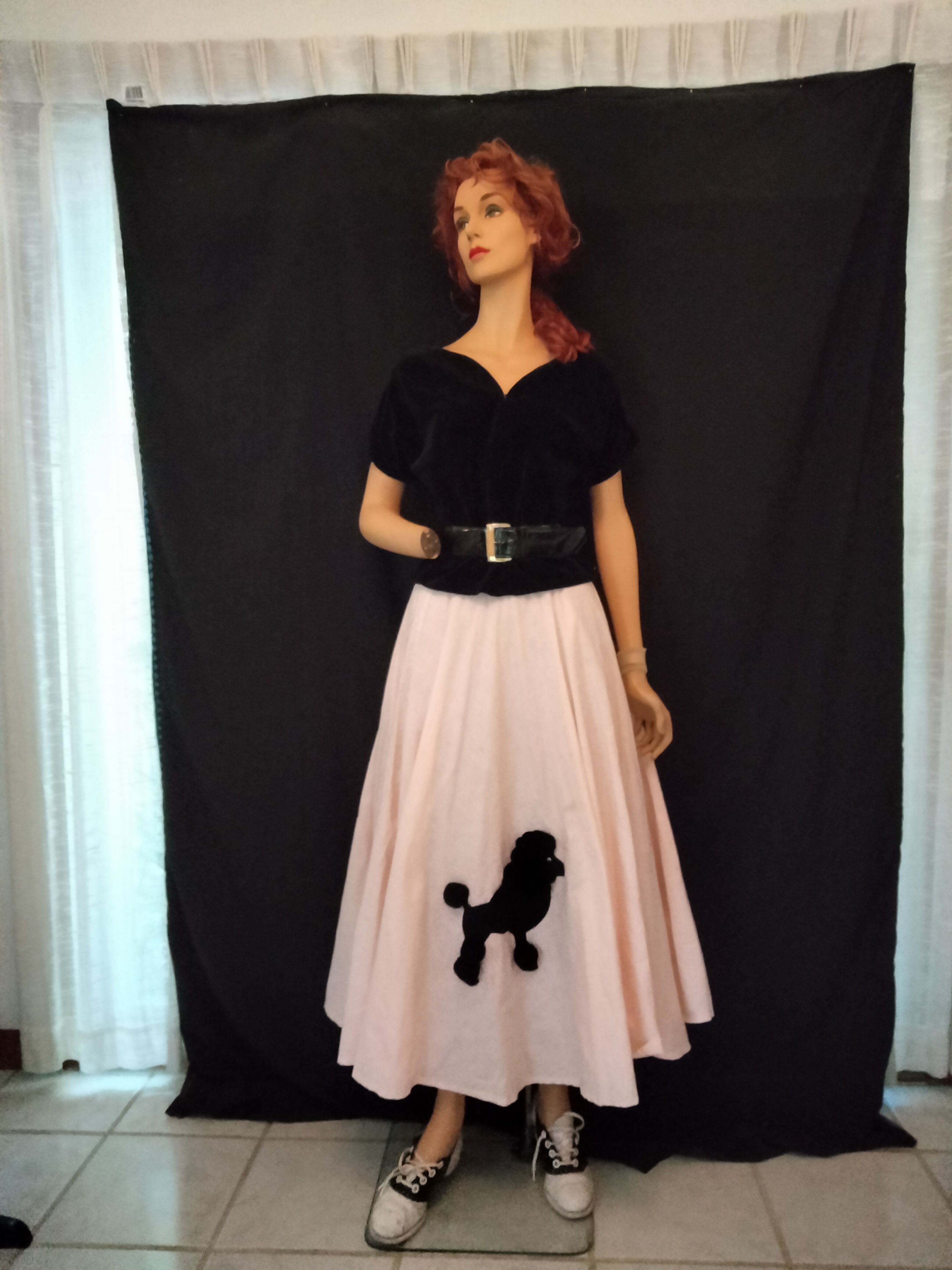
What fun! Taking a break with friends from the regular Headquarters routine (but a Sleuth is a Sleuth 24/7) and what did I discover? This repro poodle circle skirt would be great for a costume anytime, but especially right about now. It was homemade, probably for exactly that purpose, so I’ll be donating it to the University theater but along with my FABULOUS find, it’s blog-worthy. . . . . . . . . . . . . . . .
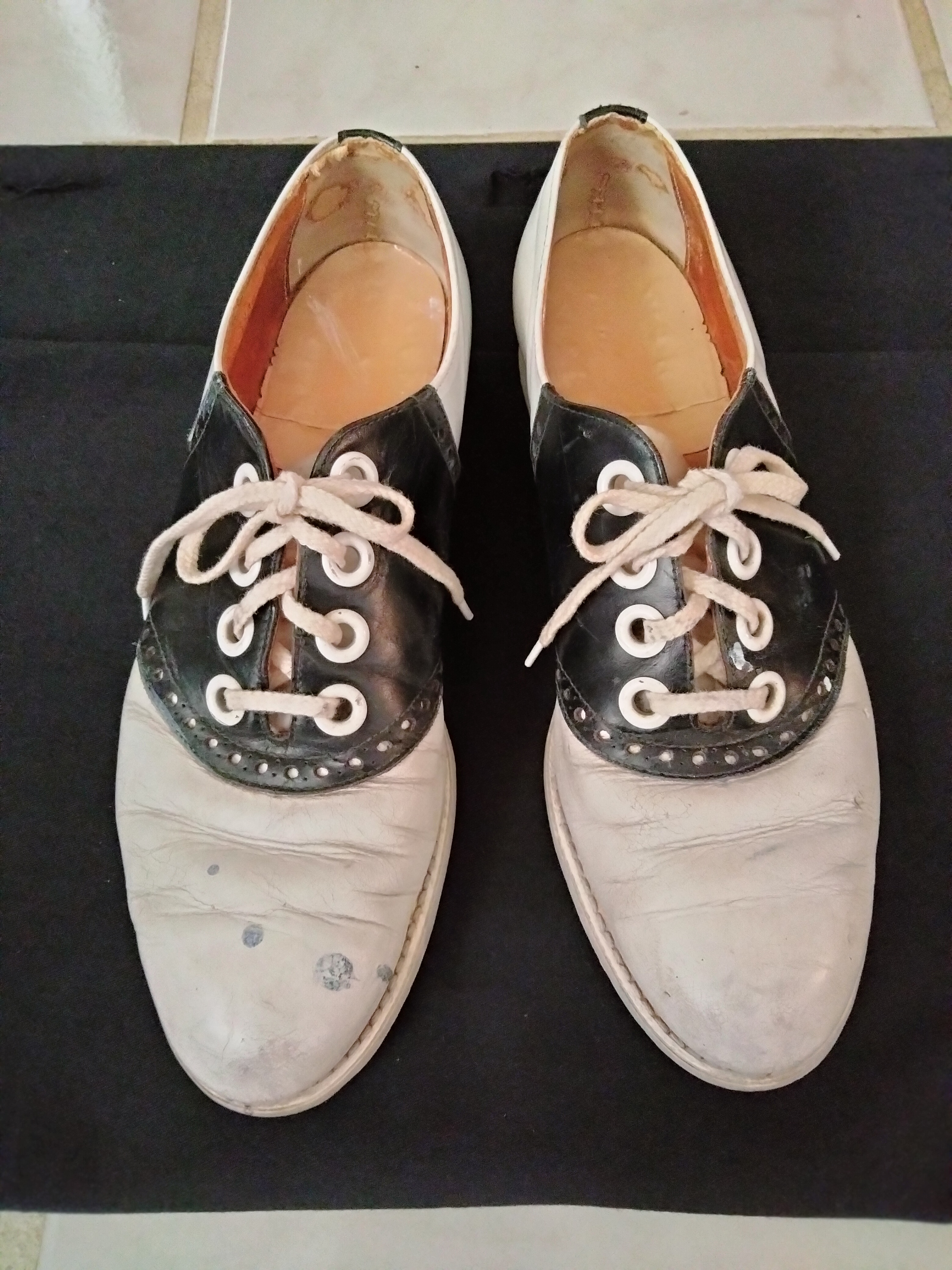
Although I have some new-vintage re-do’s, an authentic pair of 1940’s – 1950’s saddle shoes has been on my radar for years. Look what I found!! In my size!!!
Spent yesterday afternoon wearing them around the house and they are SO comfortable. Older well-made footwear was built to last and usually fit well, too. Although these were just the daily, non-special go-to for teens and many adults and were undoubtedly moderately priced, the quality is built in. Even the messy polishing effort gives them the best street creds. I’m over the moon.
However, that wasn’t the end of the story. Stay tuned . . . . . . . . . . . . . . . . . . . . . . .
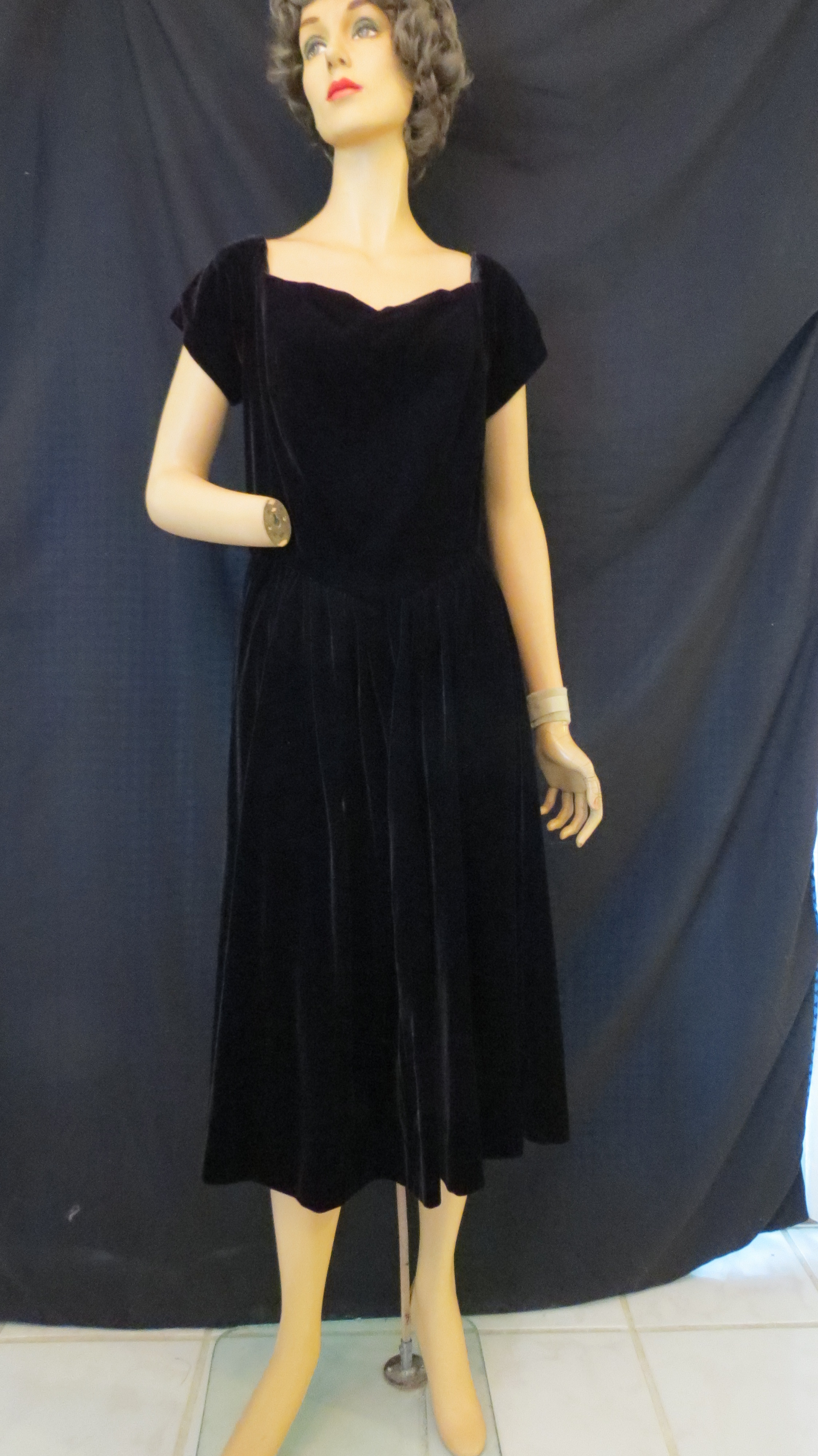
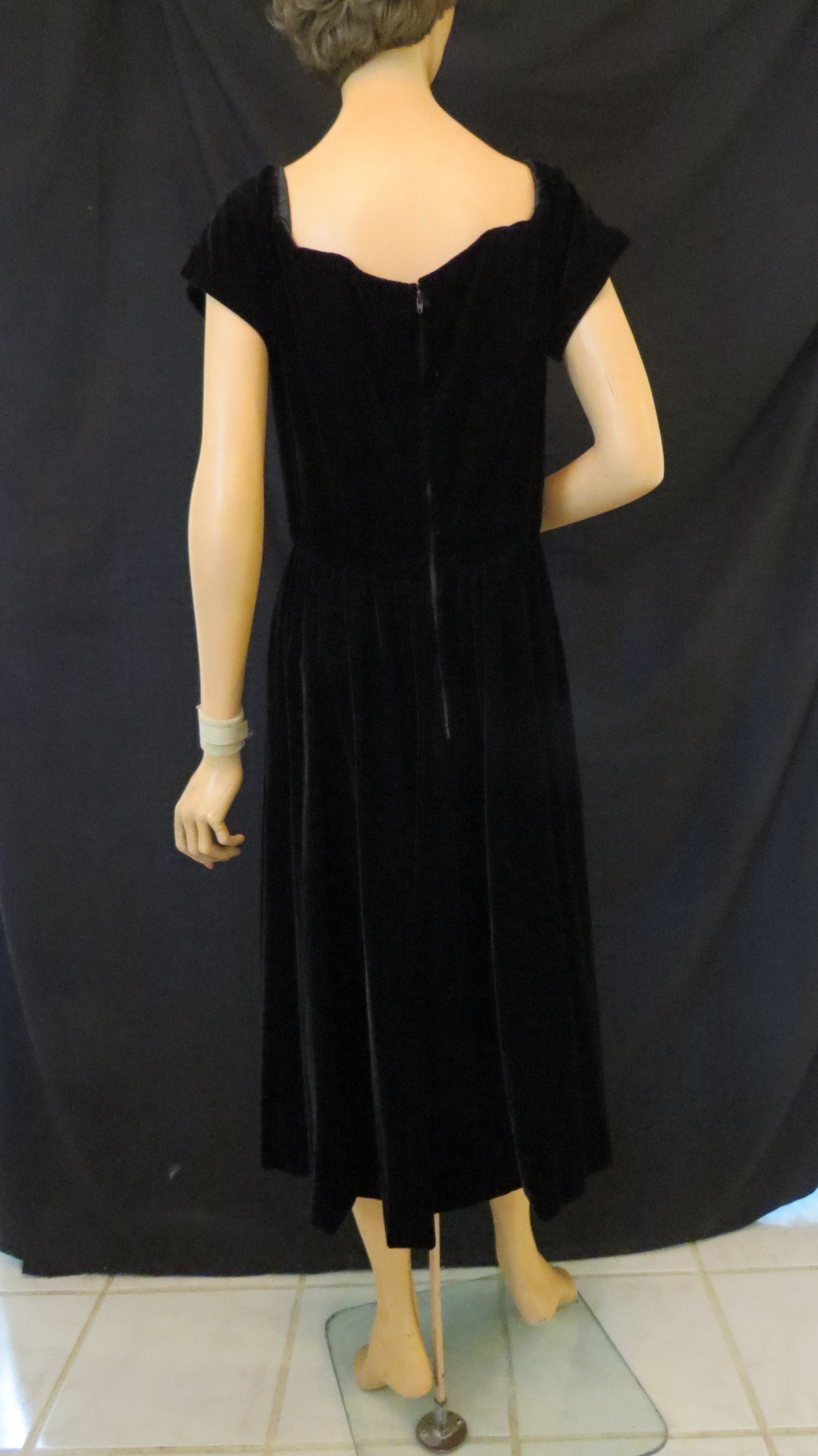
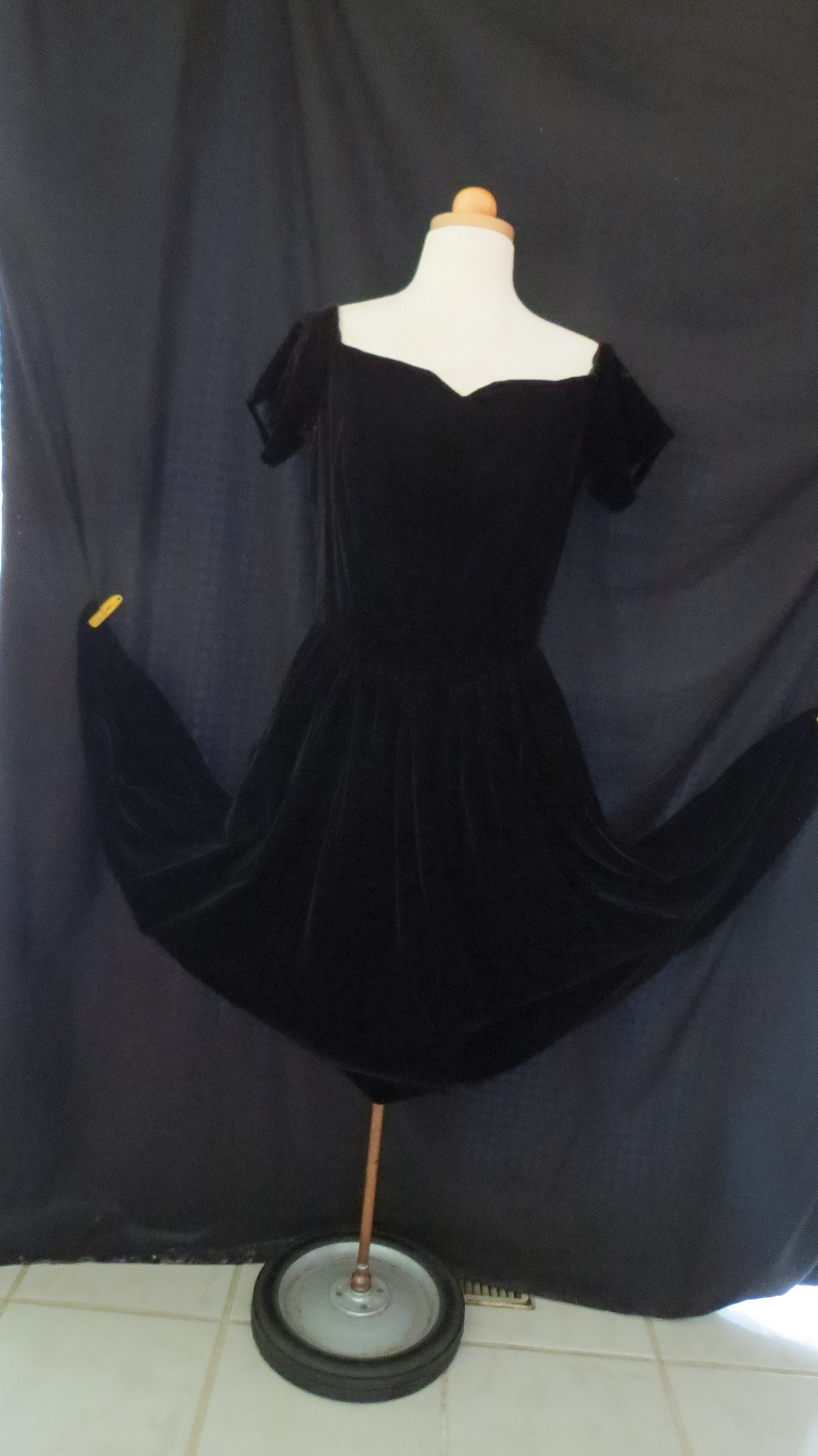
Here’s a lovely frock made by an amateur (?) tailor with her own name label sewn in. The photos don’t do it justice – the tailoring is exceptional. No decoration – classic and elegant. Neckline is the focus, but the features of a post-war 1940’s New Look dressy frock are faithfully recreated – nipped waistline and the point at waist front, sweetheart neckline, very short sleeves and circle skirt. The fabric is a lush velvet.
So, I had to collect it when it showed up. More coming before we round out this decade. Stay tuned . . . . . . . . . . . . . . . . . . . . . . .
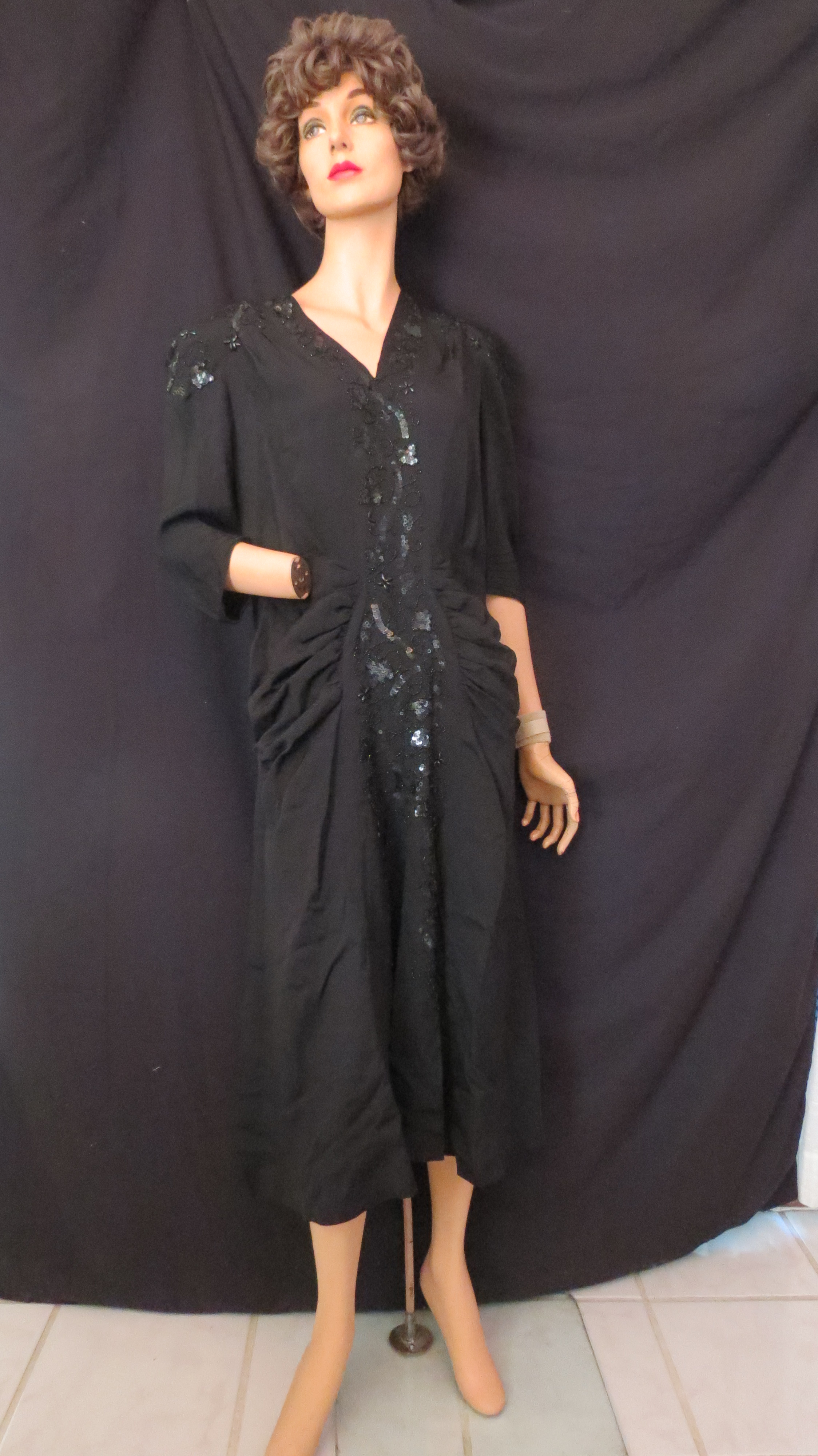
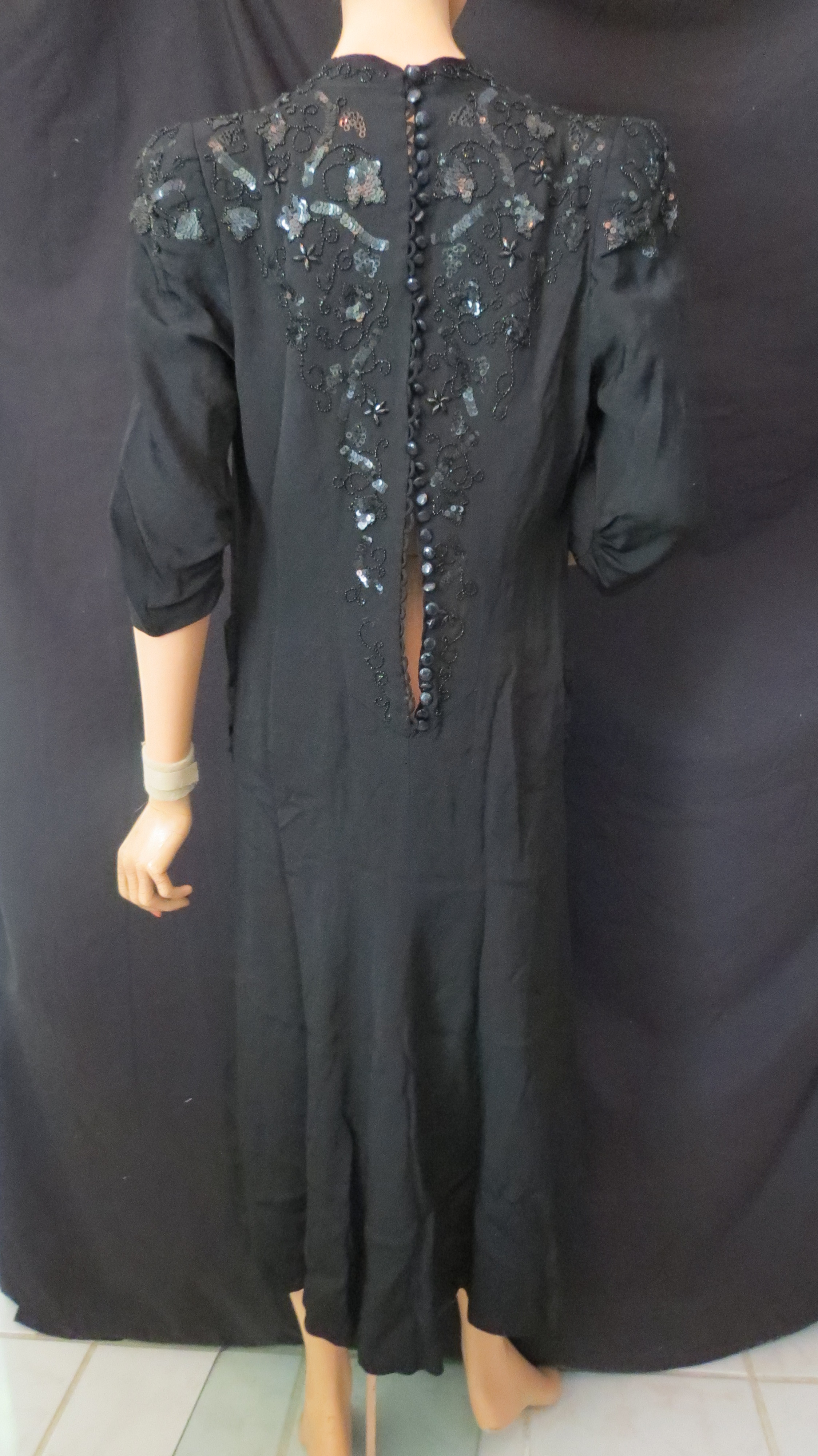
During a South American investigation, this frock was discovered in the beautiful and historic city of Montevideo, Uruguay. During WW 2, well-to-do Uruguayan women still had beautiful dresses made for them and did some trade in clothing and accessories from France. This dress has the label of a small tailoring shop, is exquisitely made by hand and was obviously owned by a woman from the upper class who would wear it to dinner or any semi-formal festive gathering.
Style-wise, the augmented shoulders, funky ruching on the hips and sleeves plus the midi hem point directly to the late 1940’s. Heavy decoration with beads and sequins is all done by hand, as is the finishing. Look at all the small buttons in back, each with it’s own fabric loop closure. Stay tuned for more from the 1940’s . . . . . . . . . . . . . . .
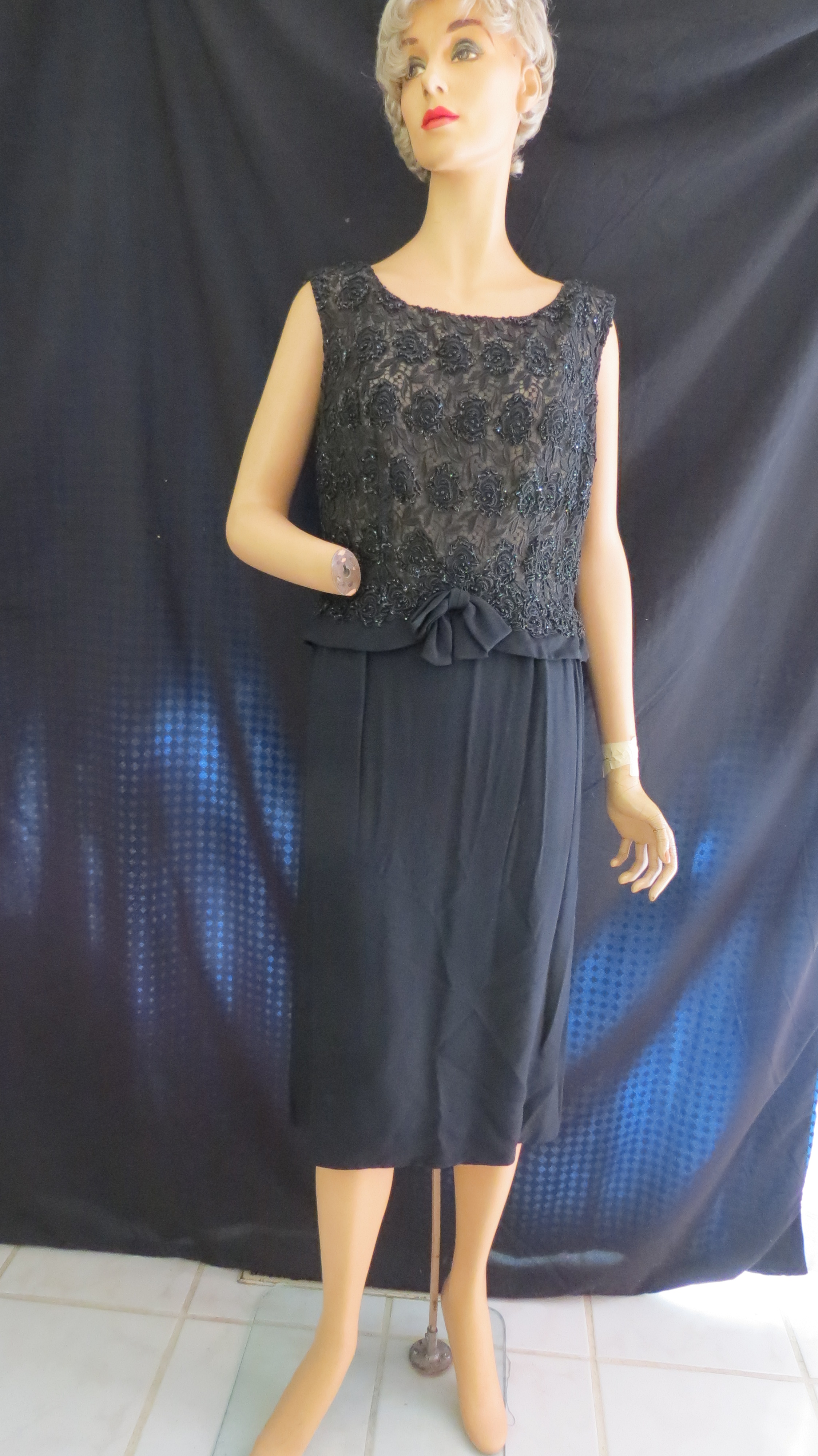
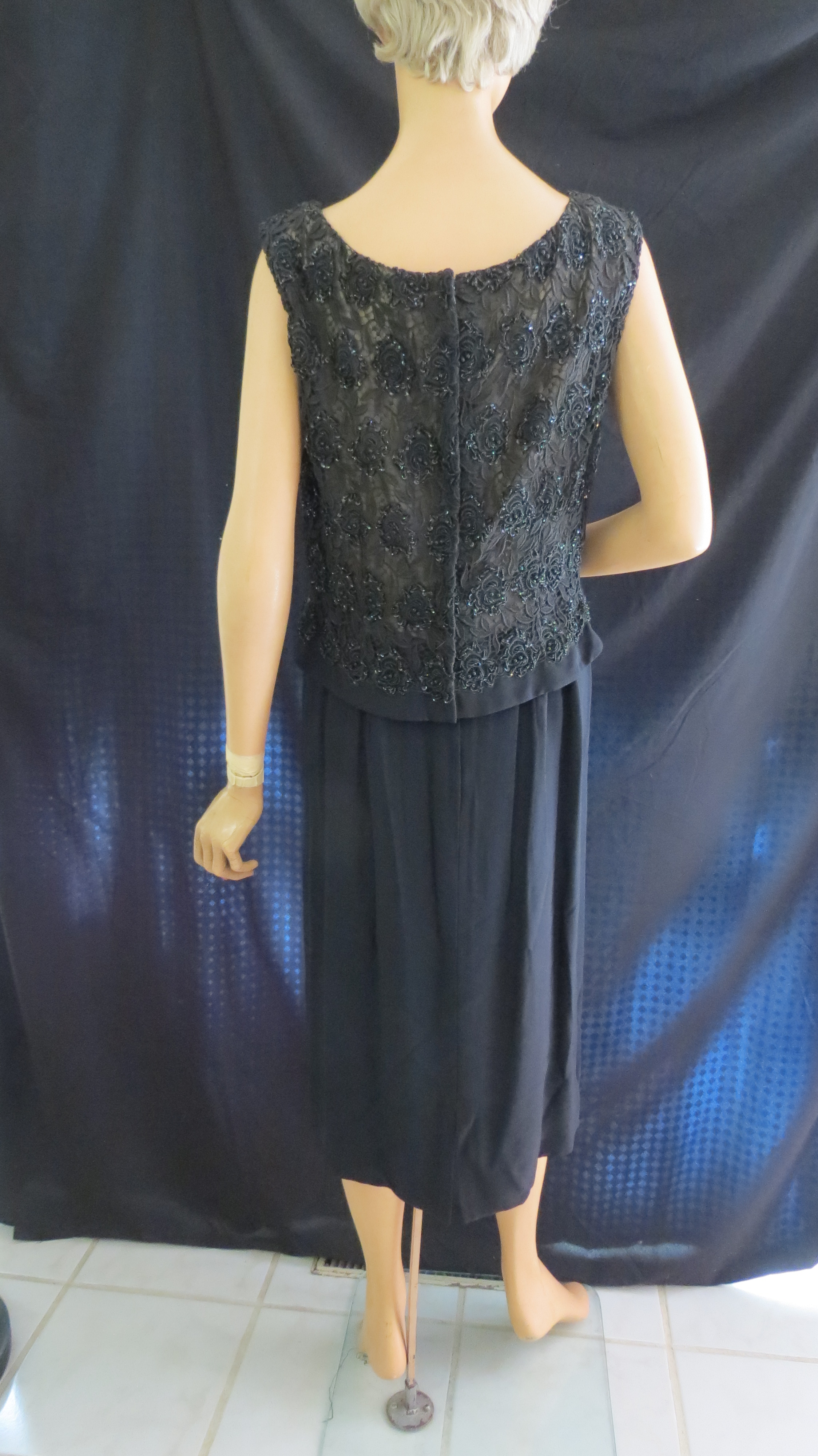
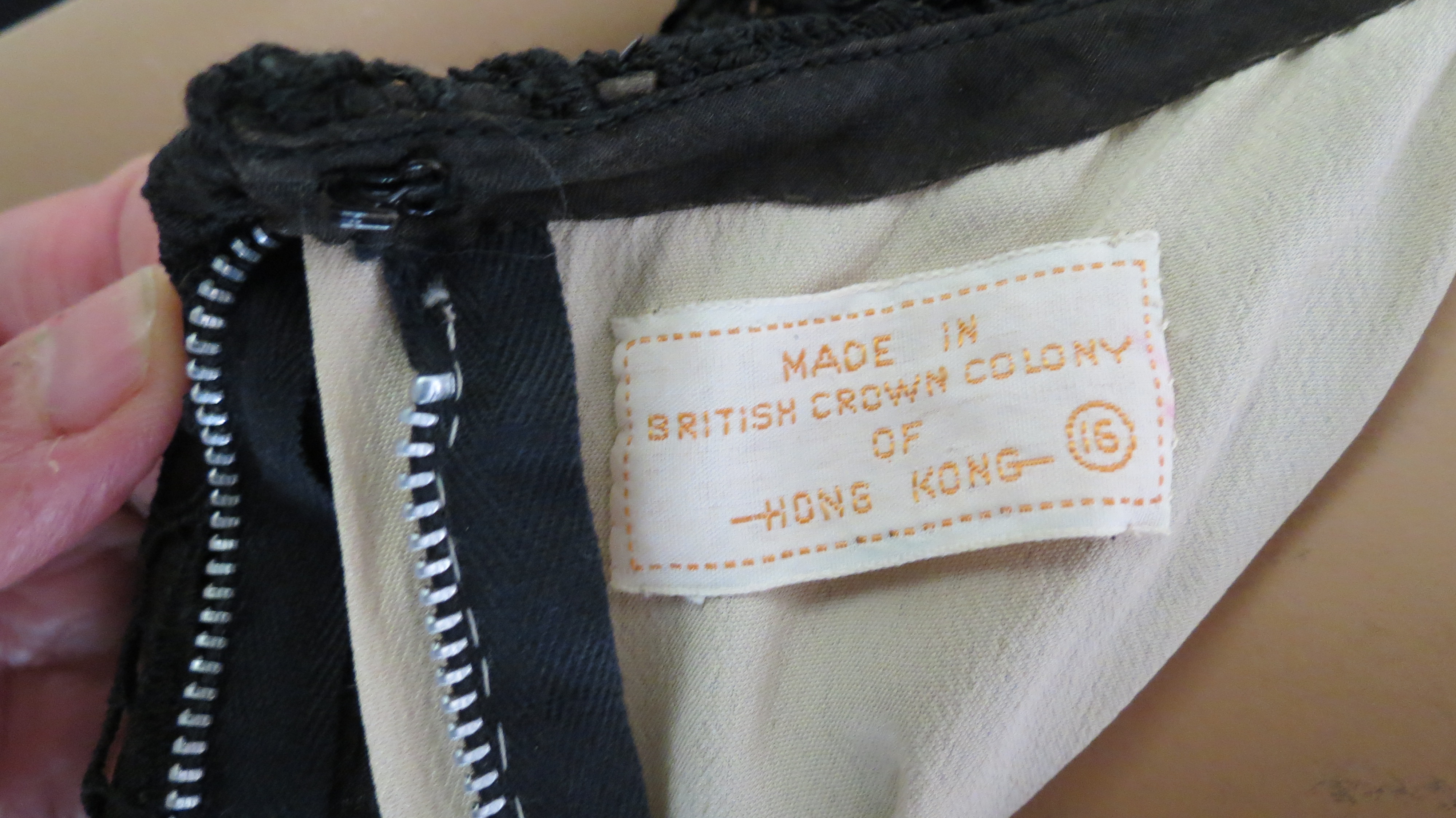
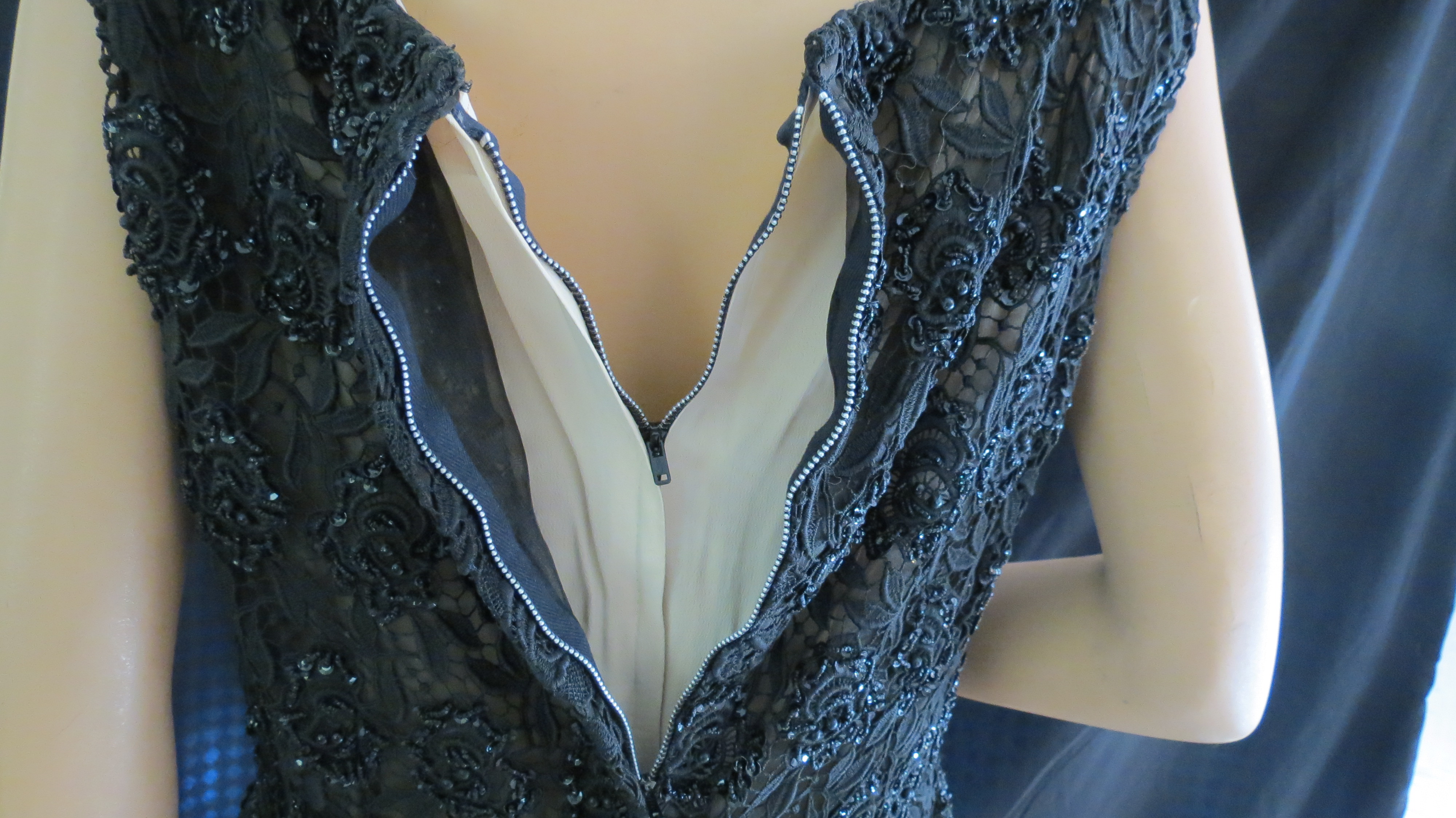
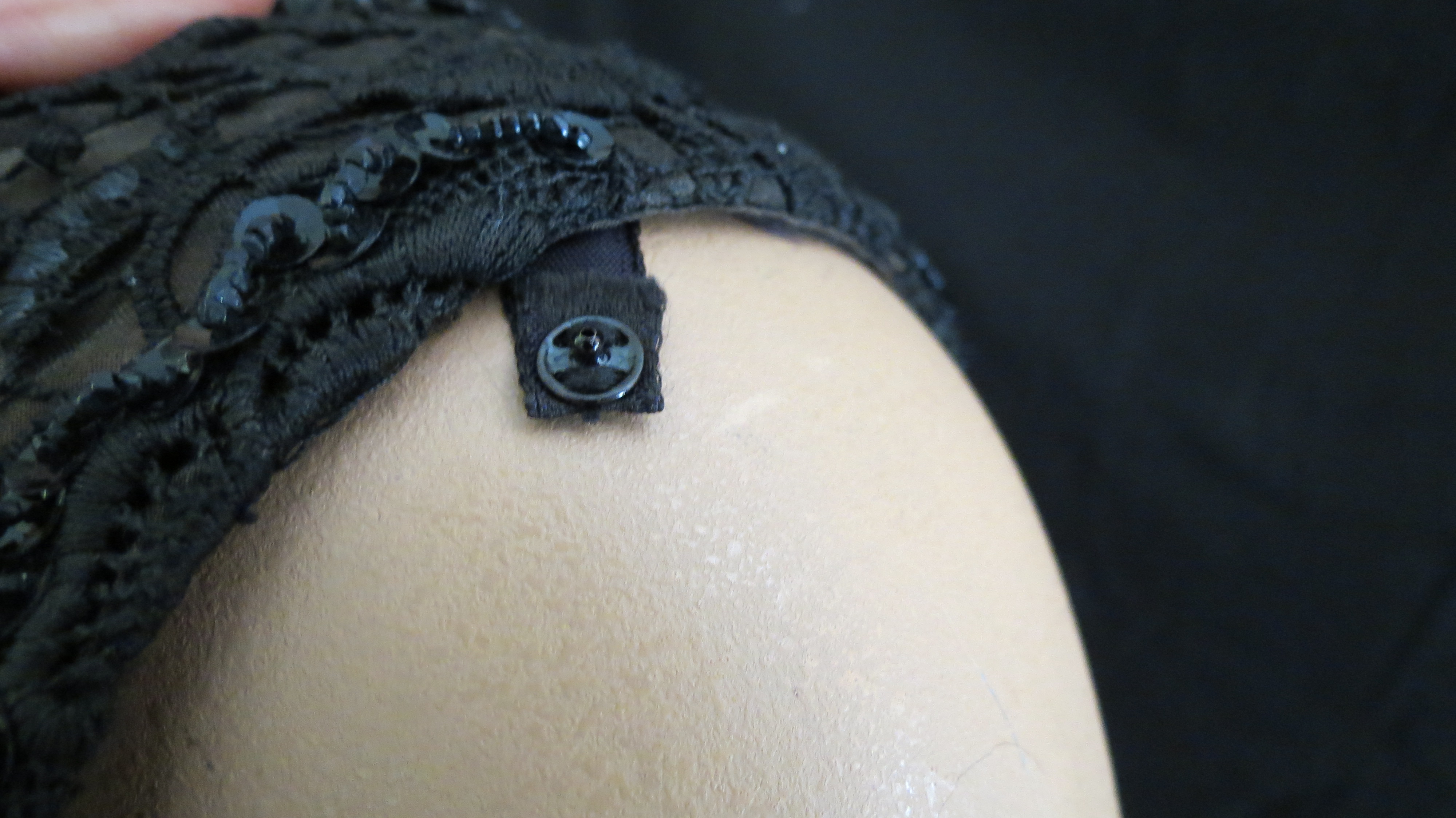
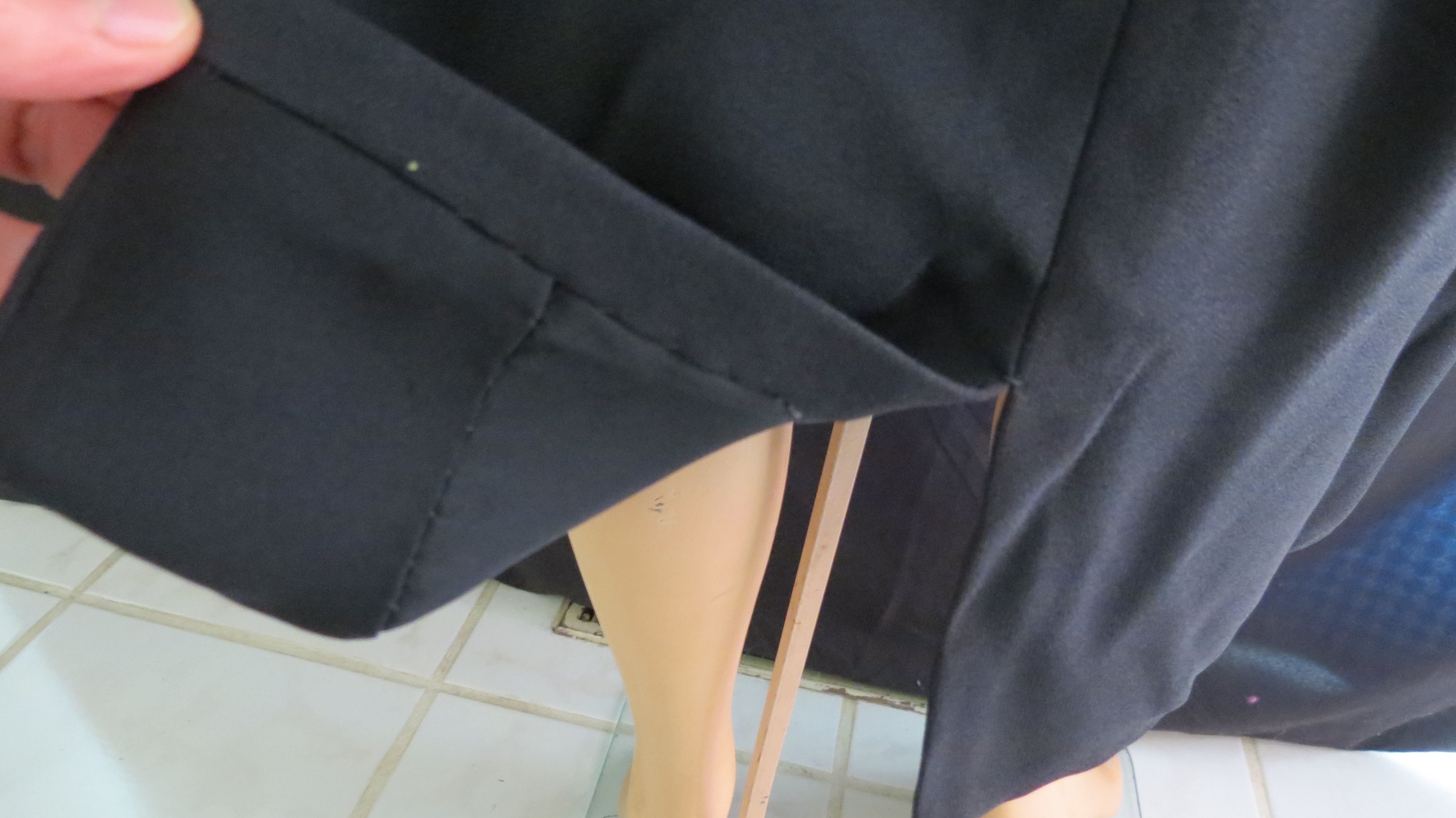
This dress is such a treat! I was so thrilled to uncover it. Look at the marvelous tailoring details and ingenious construction – A basic sheath style, with a heavily-decorated blouson top that appears to be separate, but is attached at the shoulders and fully-lined with a white silk under-blouse. Both layers close with a metal zipper. Hooks and eyes secure the neckline for good fit. The shoulders have strap-holders sewn in. The acetate skirt is also lined with black rayon and has a wide hem allowance plus a walking vent in the rear seam. Hand-finished all over.
In the ’50’s and 1960’s a woman of moderate means could save for the occasional purchase of clothing made this way and more prosperous women had closets full of nothing else. These were the standards of better-made garments during the mid-century. Now even very expensive clothing is sometimes constructed poorly and hardly ever as well as this dress is. The attention to detail and hand-done stitching made clothing fit better look more polished.
Tomorrow I’ll show you another frock from this decade. Stay tuned . . . . . . . . . . . . . . . . . . .
We’re now heading into the season for indoor parties, special occasions and events after the long, lovely summer; Cocktail parties, dinners, dances, recitals, holiday galas – you name it. I’ll be starting a series of posts of pretty, dressy and semi-formal garments in my collection from the 1950’s – 1990’s which will take us into the Fall and even Winter. Stay tuned . . . . . . . . . . . . . . . . . . . . . . . . . . . . . . . .
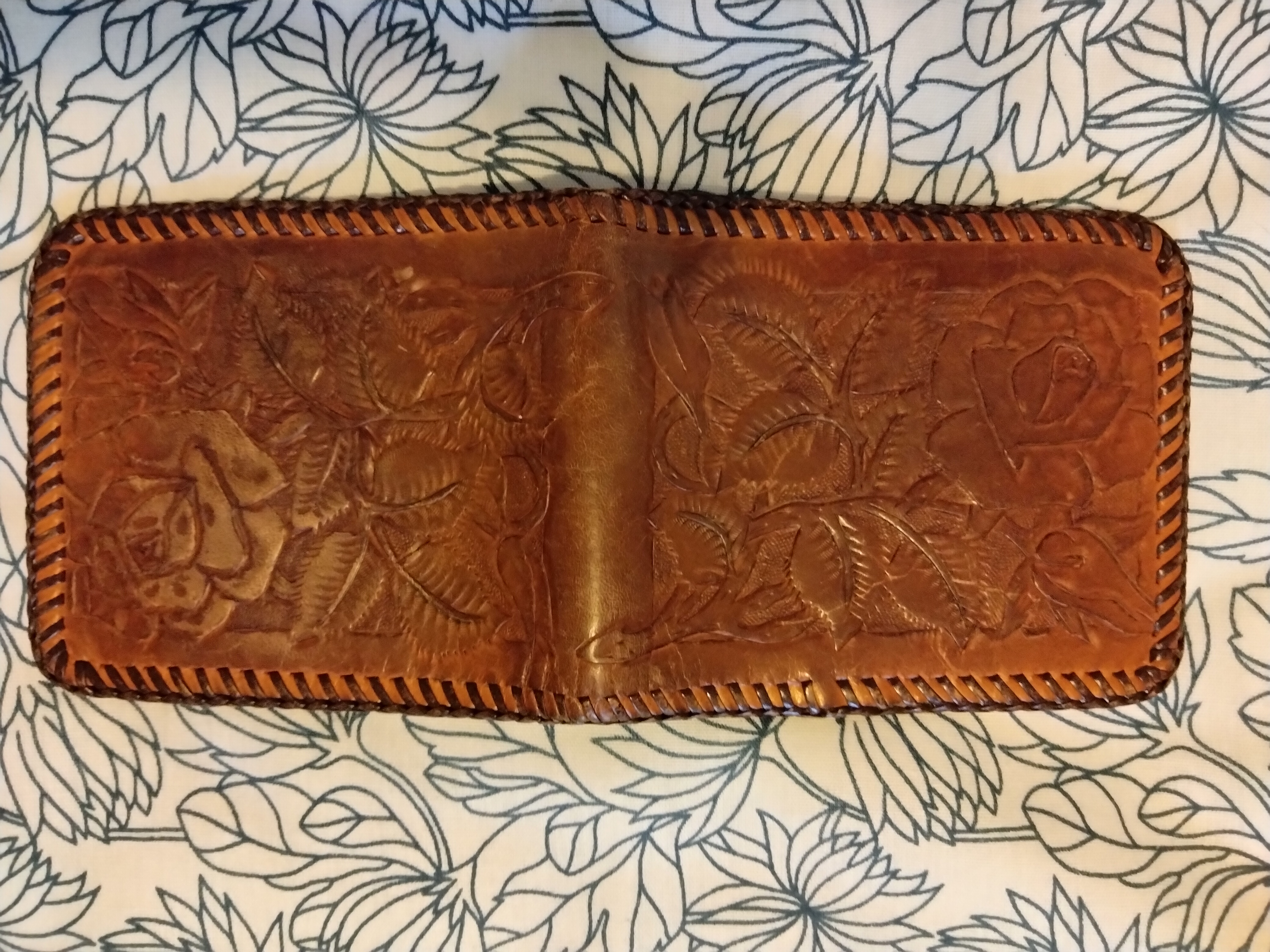
I always LOVE discovering these gorgeous handmade leather accessories from the mid-century. As they become rarer, it’s a huge thrill to uncover one by surprise! In this case, the wallet is so classic and early mid-century that I love the design. An added bonus is the near-perfect condition. A small amount of common greenish corrosion can be seen on the metal snap closing the coin pocket but it works perfectly. I will remove the corrosion with a bit of vinegar. Other signs of light use are very minor – looks like it was cared for lovingly.
Let’s start the evaluation with the exterior, which has a traditional rosebush motif. This is an early pattern, seen on some of the older items I’ve found. It’s amazing to find the leather lacing around the edges unbroken and in such pristine condition. On the inside, I adore the additional features such as sleeves for a drivers license and other cards, receipts, etc. This billfold was probably made for a man in spite of the rose design, likely before the time of common credit cards, but has such an unusual addition of the coin purse inside; Multi-tasking before the modern era of man-purses and other pocket accessories. However, the bi-color interior is also an unexpected feature to see in an older men’s accessory. Who knows the sex of the original owner? I always love a mystery!!
This beauty will have a gentle massage with leather lotion to extend it’s lifetime even more. Back at Headquarters, I’ll look in the files to see which of my tooled leather purses may need an additional accessory – I always try to match the finishes and designs, if possible. If there’s no good match, this billfold can stand on its own, with spaces for all money-related items (excepting a checkbook).
So, two surprise discoveries in my brief investigation two days ago and both of them unusual and wonderful! See my other find in yesterday’s post. You just never know . . . . . . . . . . . . . . . . . . . . . . . . . . . . . . . . . . . ..
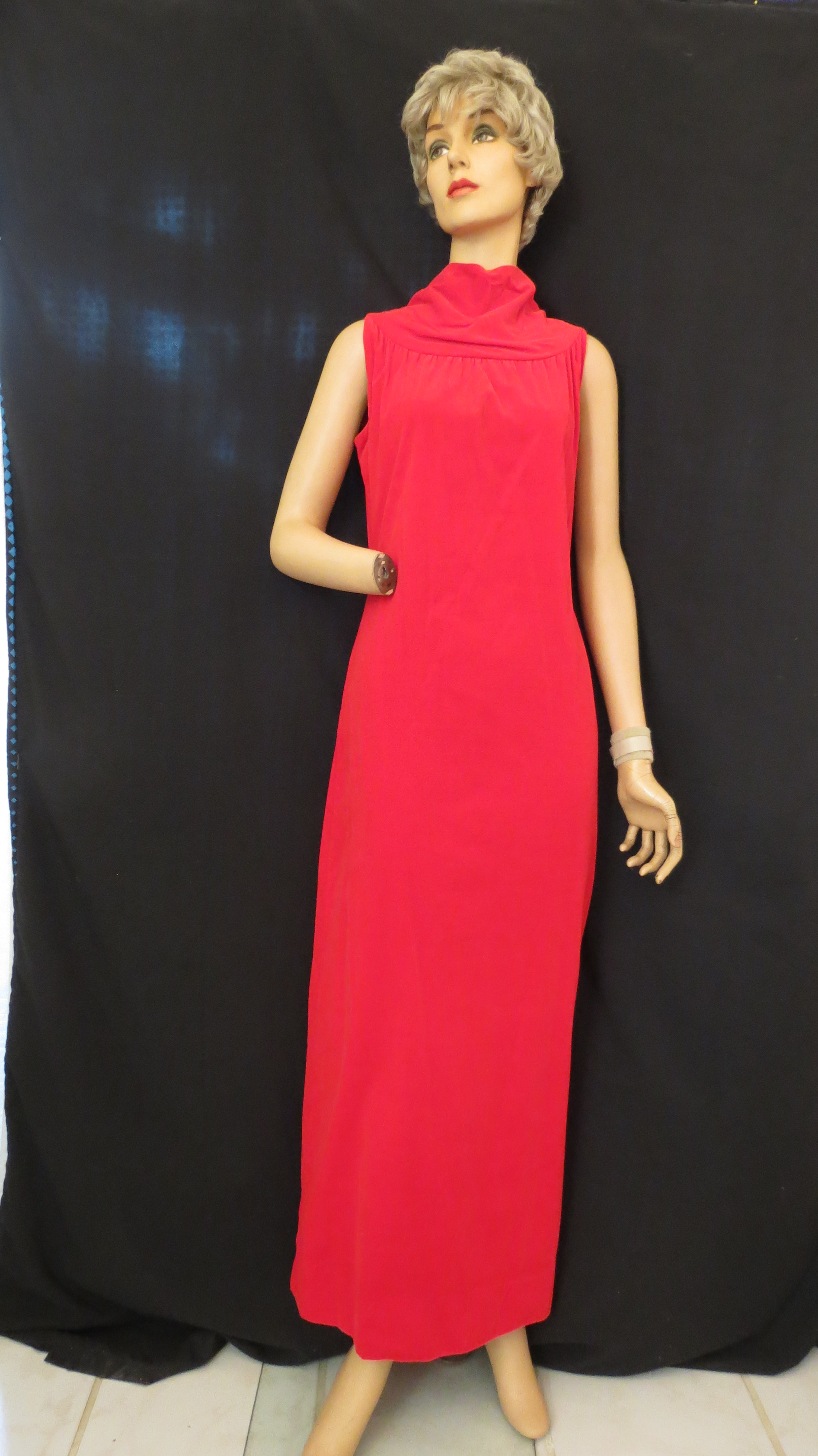
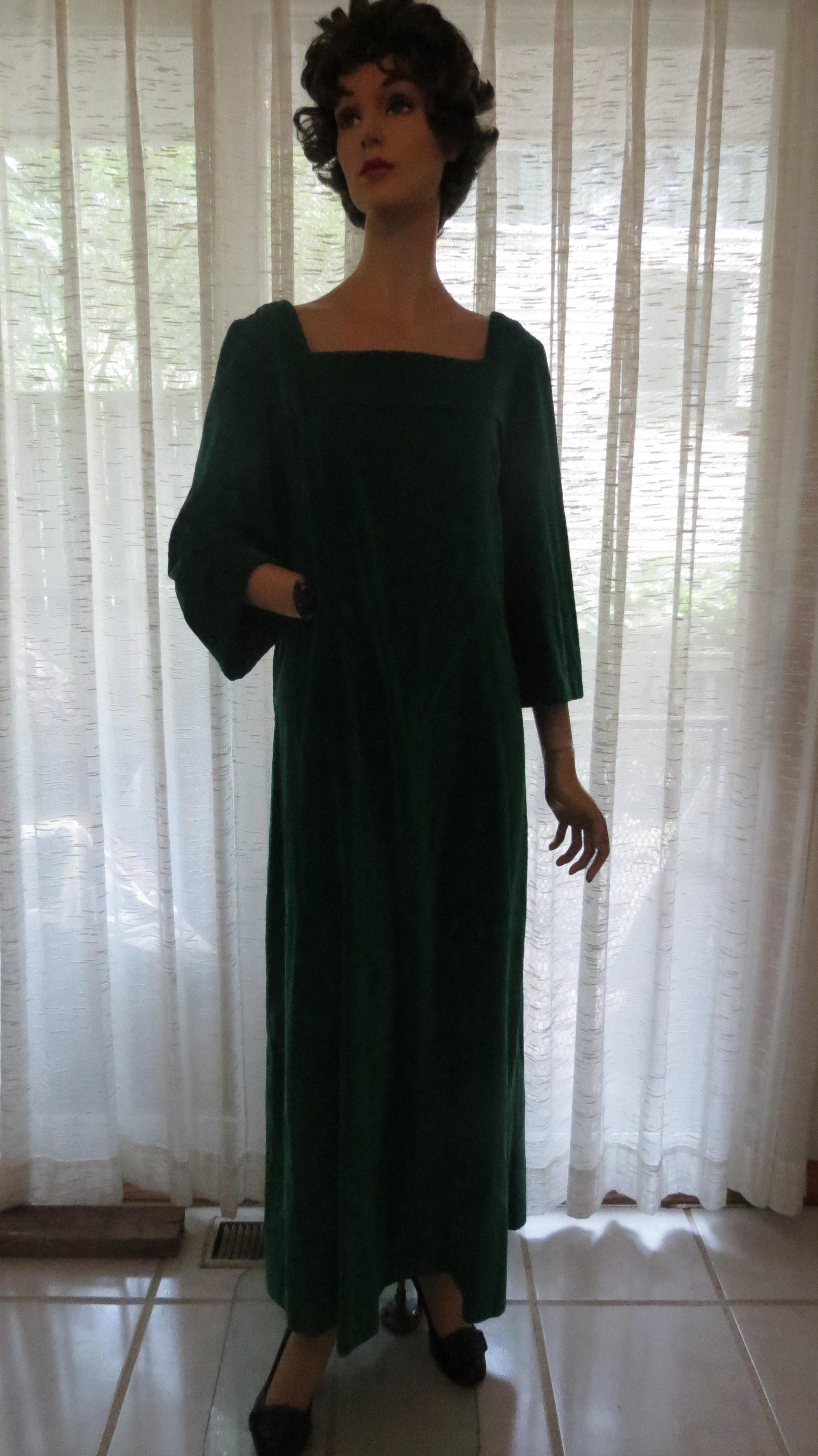
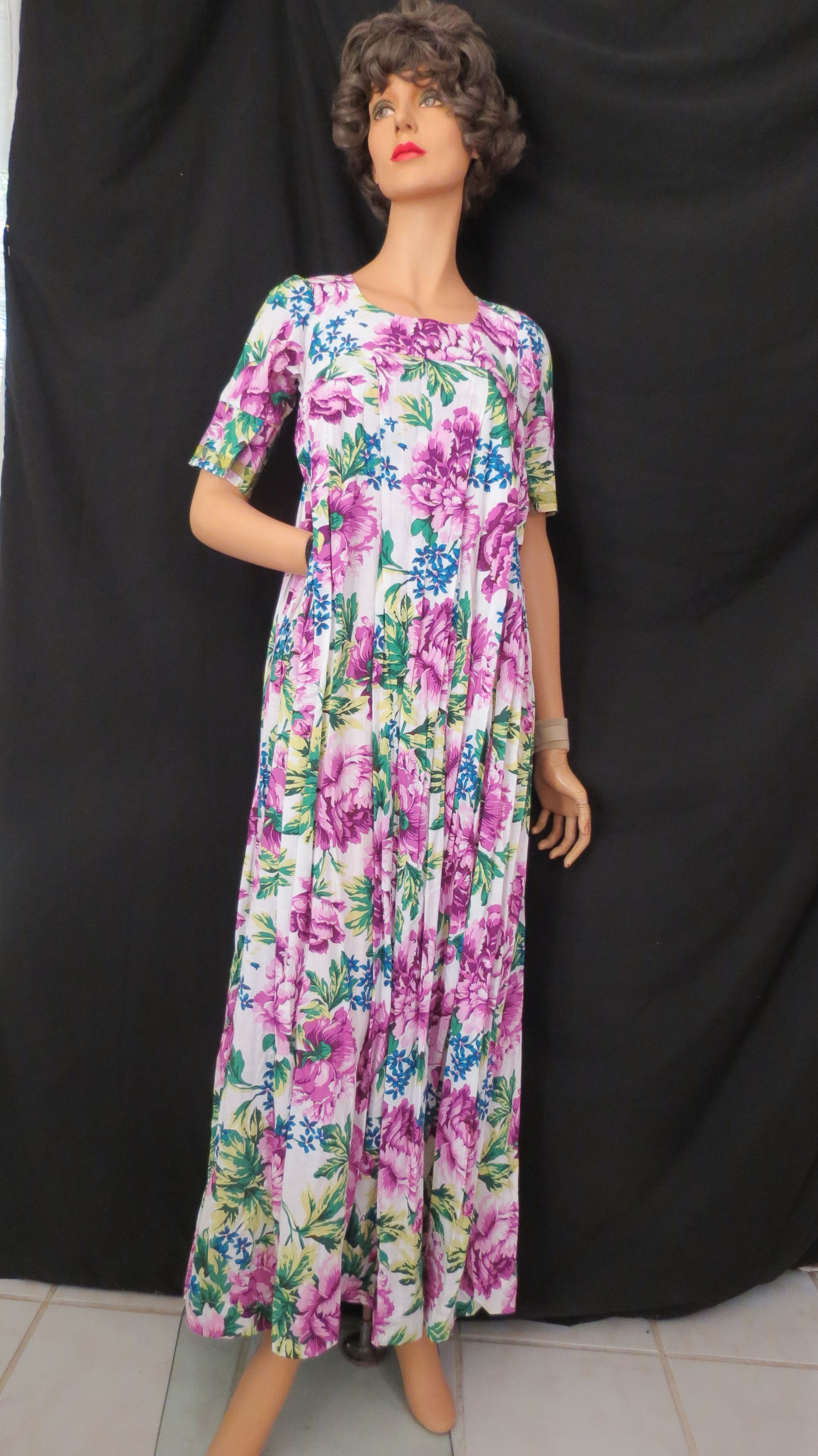
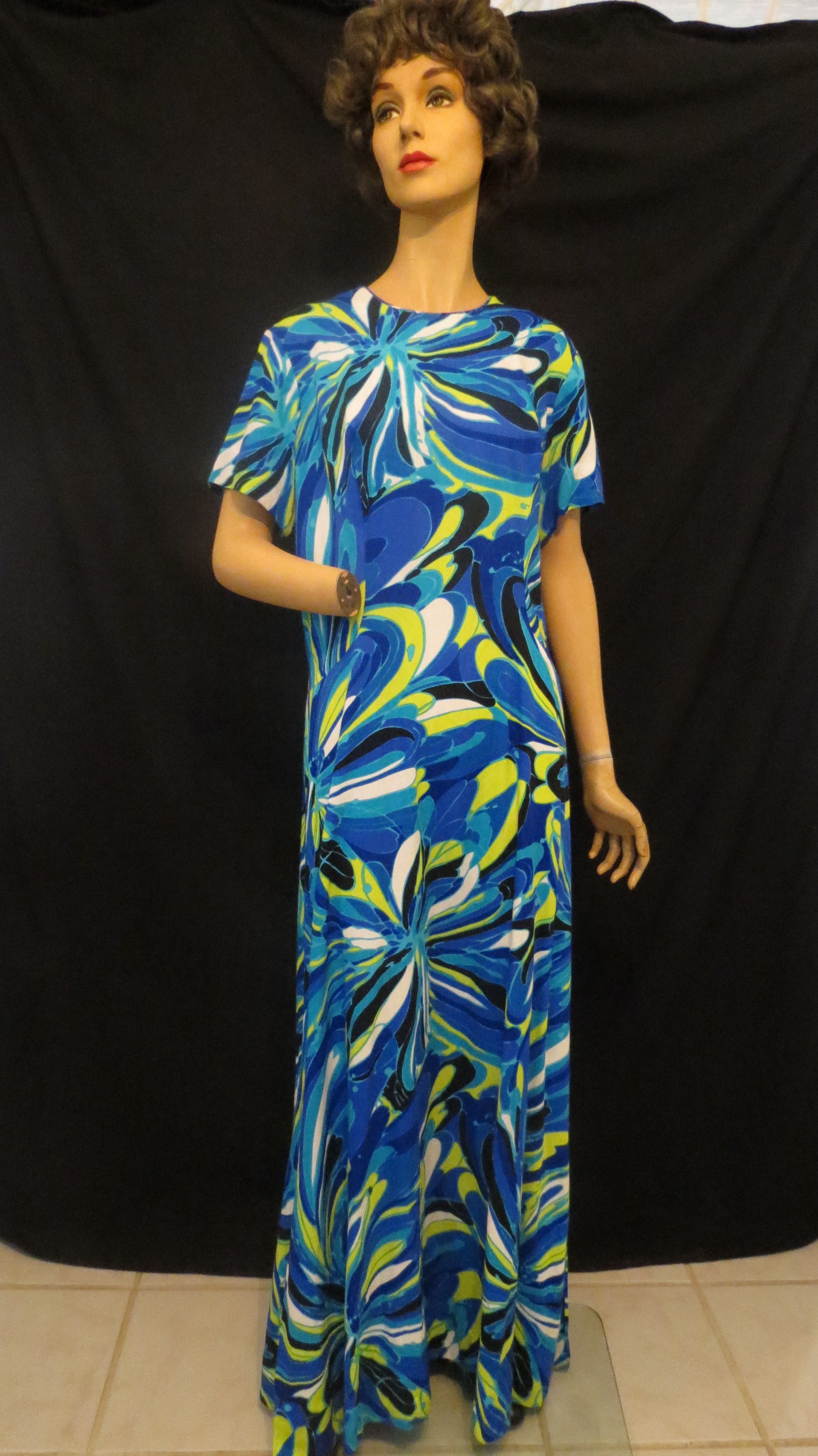
In the early 1960’s home-based seamstresses began making at-home leisure dresses. Velveteen was a popular fabric for hostess dresses that could work for cocktails with friends. An early flower-power dress in a traditional style was a more timid effort (looks like a vintage tablecloth) and a Mod print gown stepped firmly into the mid-decade. Washable cotton and blends made these easy-care garments and fashionable alternative styles for women who hadn’t been ready for 1950’s Boho or early ’60’s minis.
Tomorrow we’ll look at dresses from this genre that appeared later in the Sixties. Stay tuned . . . . . . . . . . . . . . . . . . . . . . . .