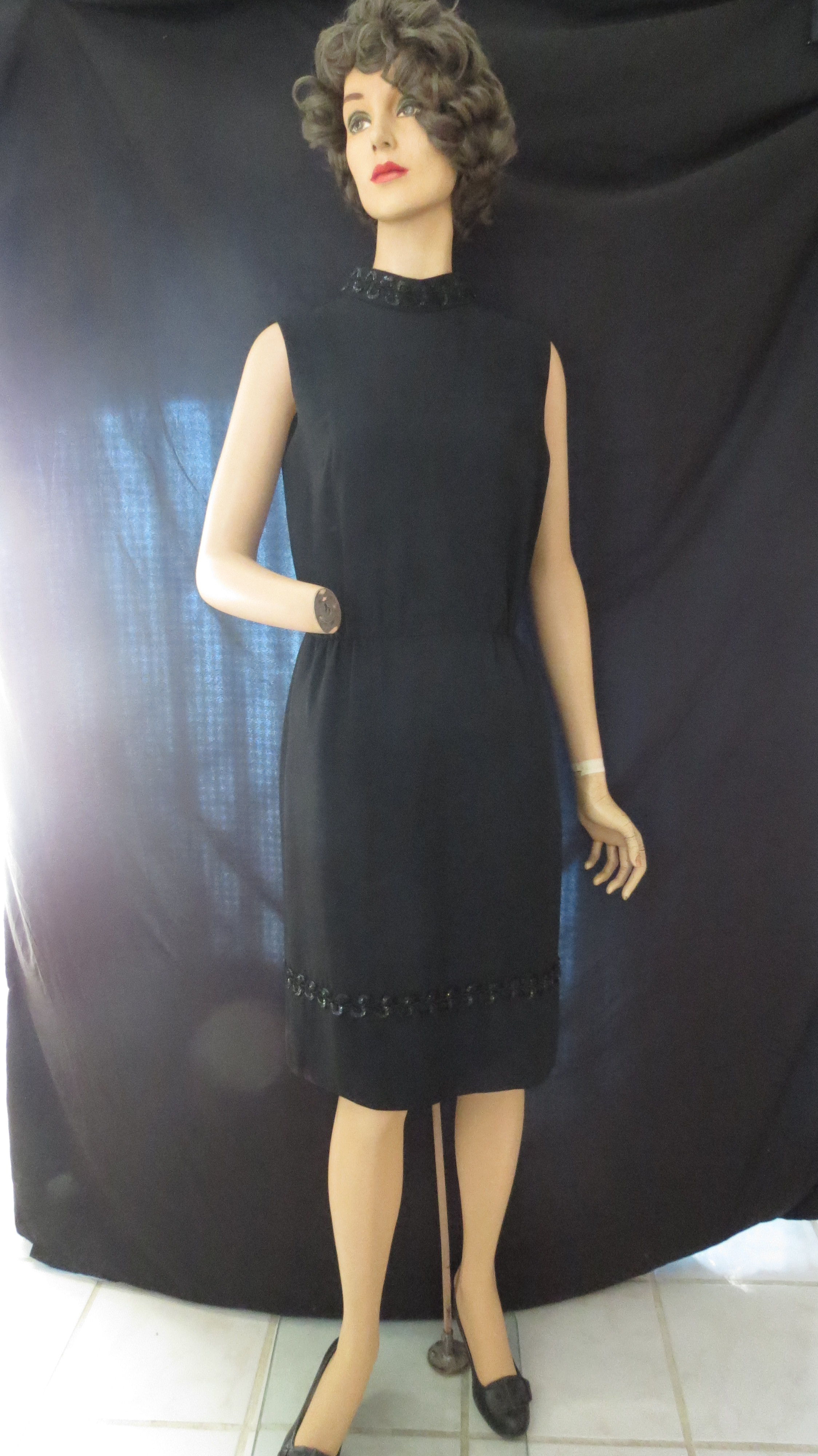
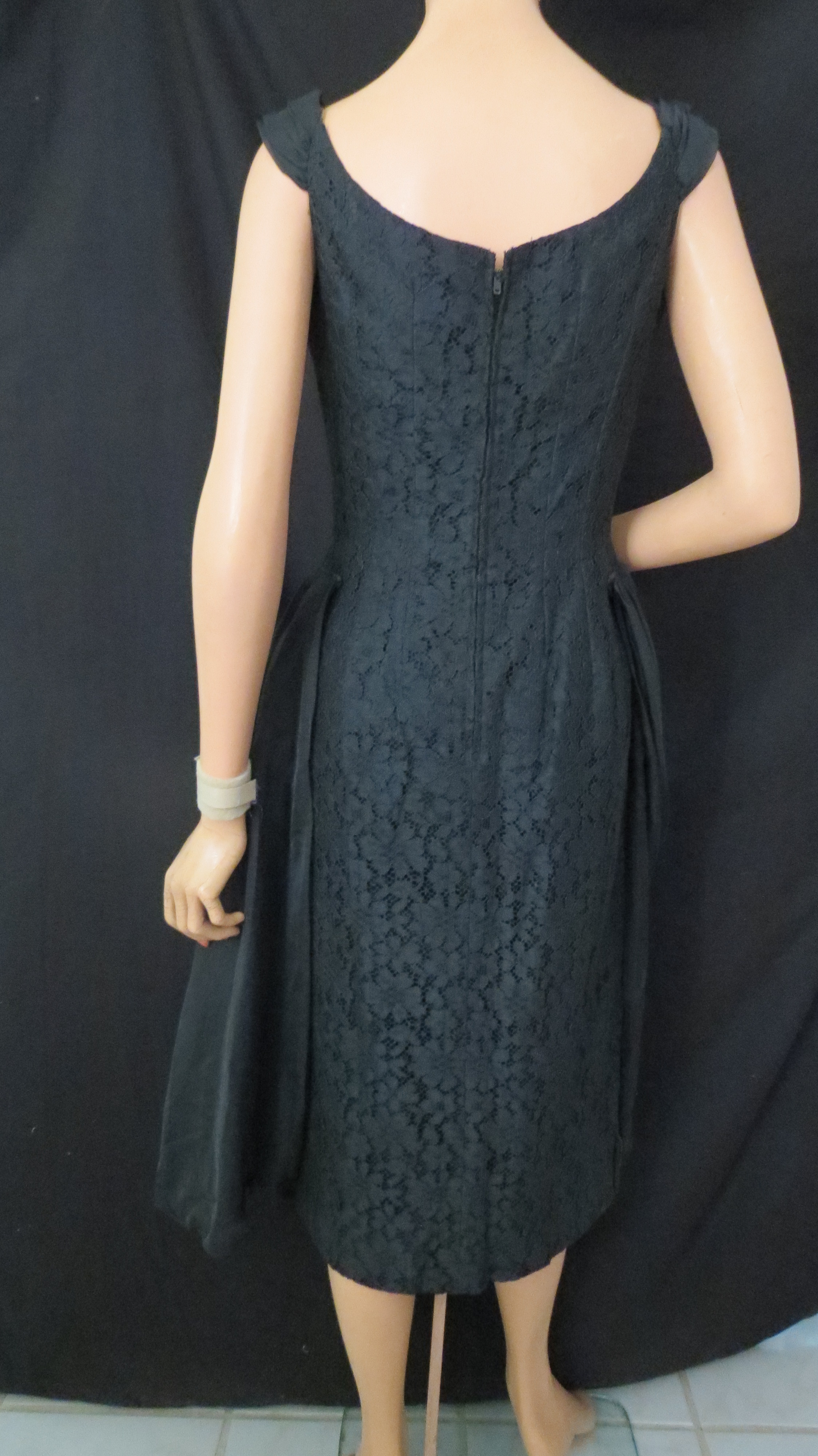
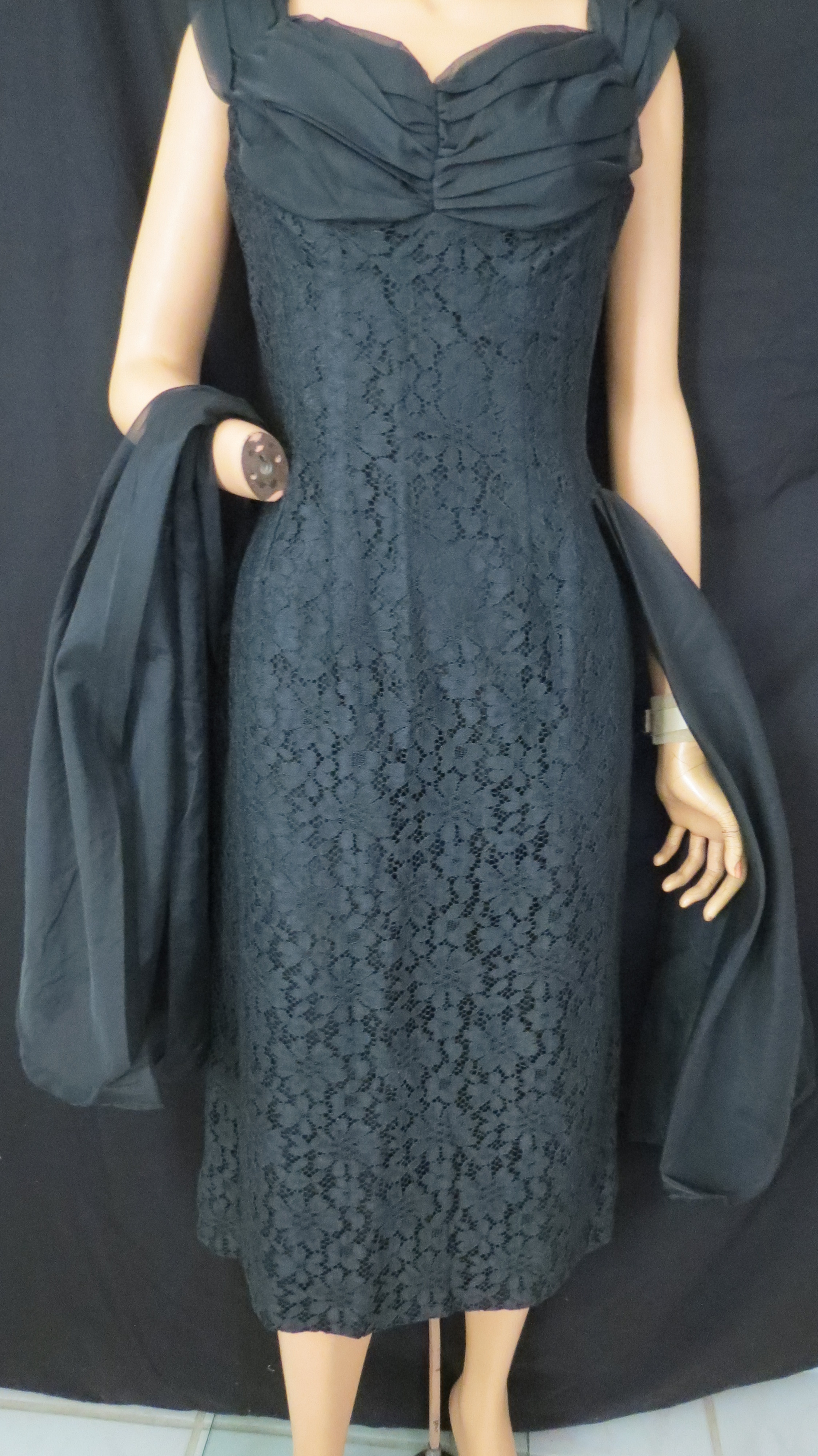
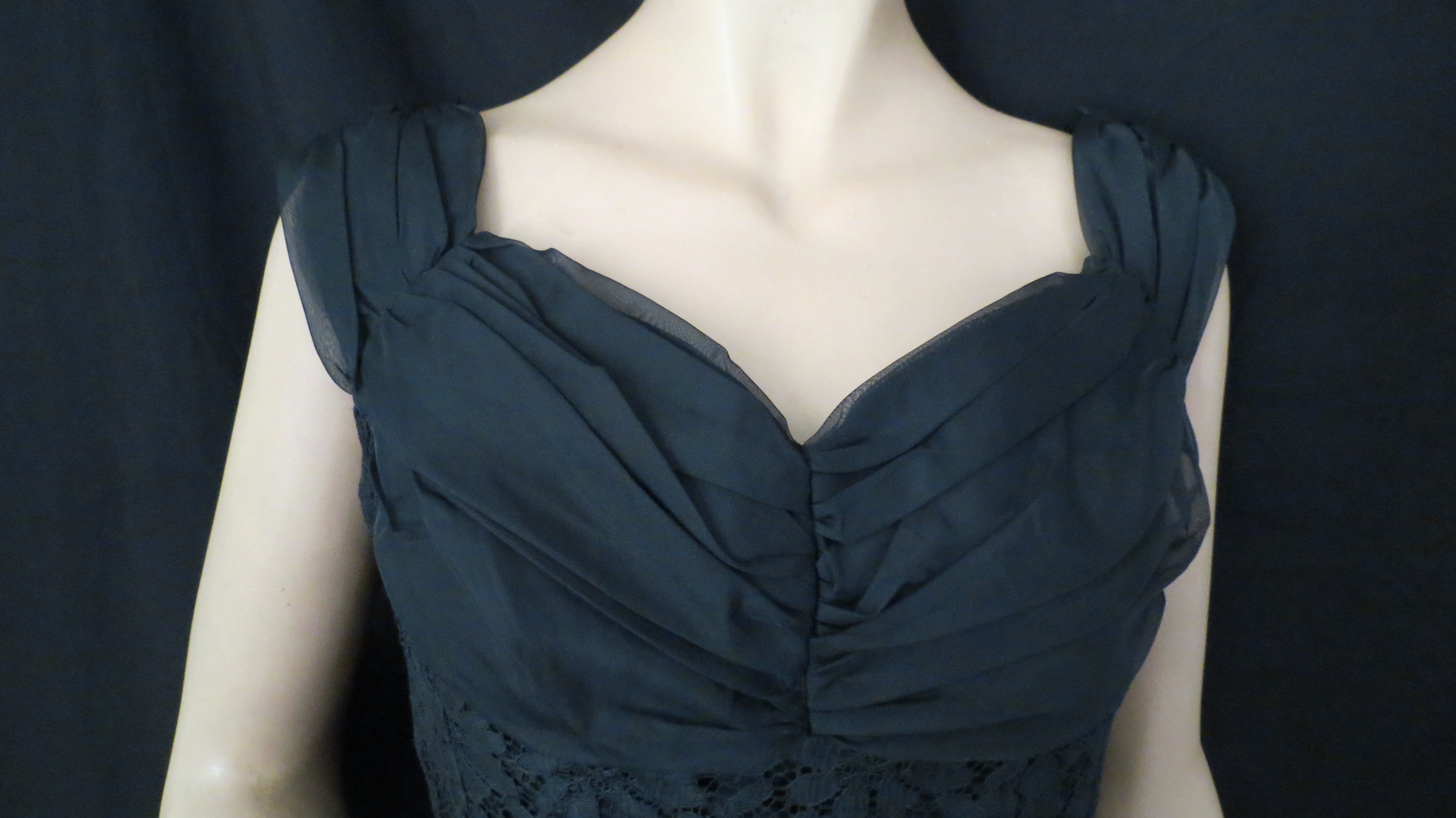
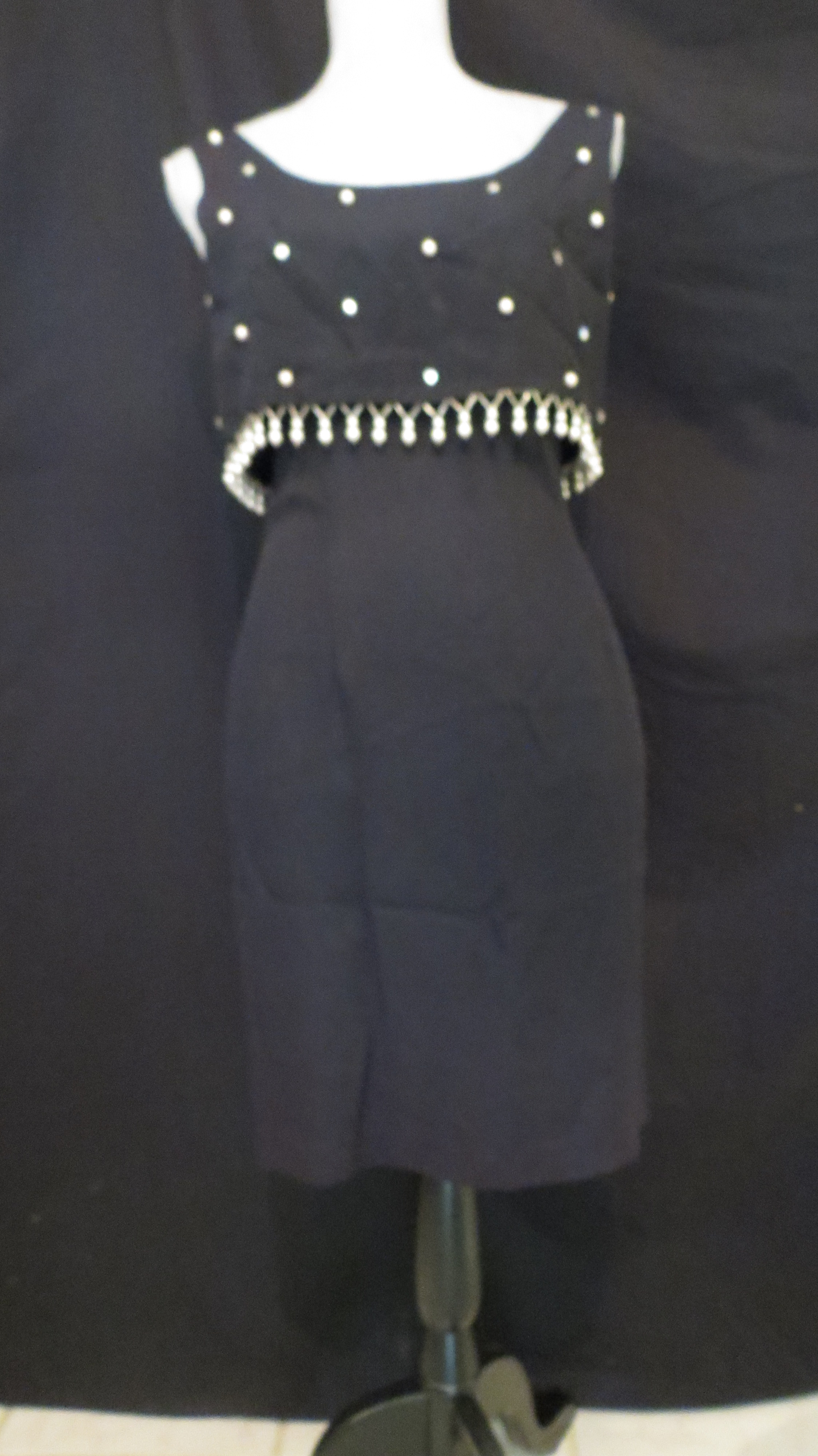
CUTE AND SASSY 1990’S LBD – LOOKS LIKE A MID-1960’S COCKTAIL PARTY TO ME . . . . . . . . . .

Black crepe and pearls, but more like Bye Bye Birdie than Breakfast at Tiffany’s. Sheath dresses with a short over-bodice had a significant moment in the early to mid-1960’s. Dangling trim was also a thing. This 1990’s version is a real throw-back. It’s well-made by Alchemy of New York. In fashion, what goes around comes around – we all know this. The best is when the style is faithfully represented and, most of all, when the quality is exceptional. I can say that this one hits the mark.

That’s the end of this LBD down the decades series. There have been some nice ones made after the Nineties, but I’m not going to go there – too recent. In fact, I am about to head off on a lengthy investigation so after tomorrow posts will be made whenever new evidence comes to light. Tomorrow I will show you the final discovery from my investigation on the 6th – something different and special from the 1960’s. Stay tuned . . . . . .. . . . . . . . . . . .

MORGANA MARTIN, THE MAGICVINTAGESPY

BLOG: MAGICVINTAGESPY.COM

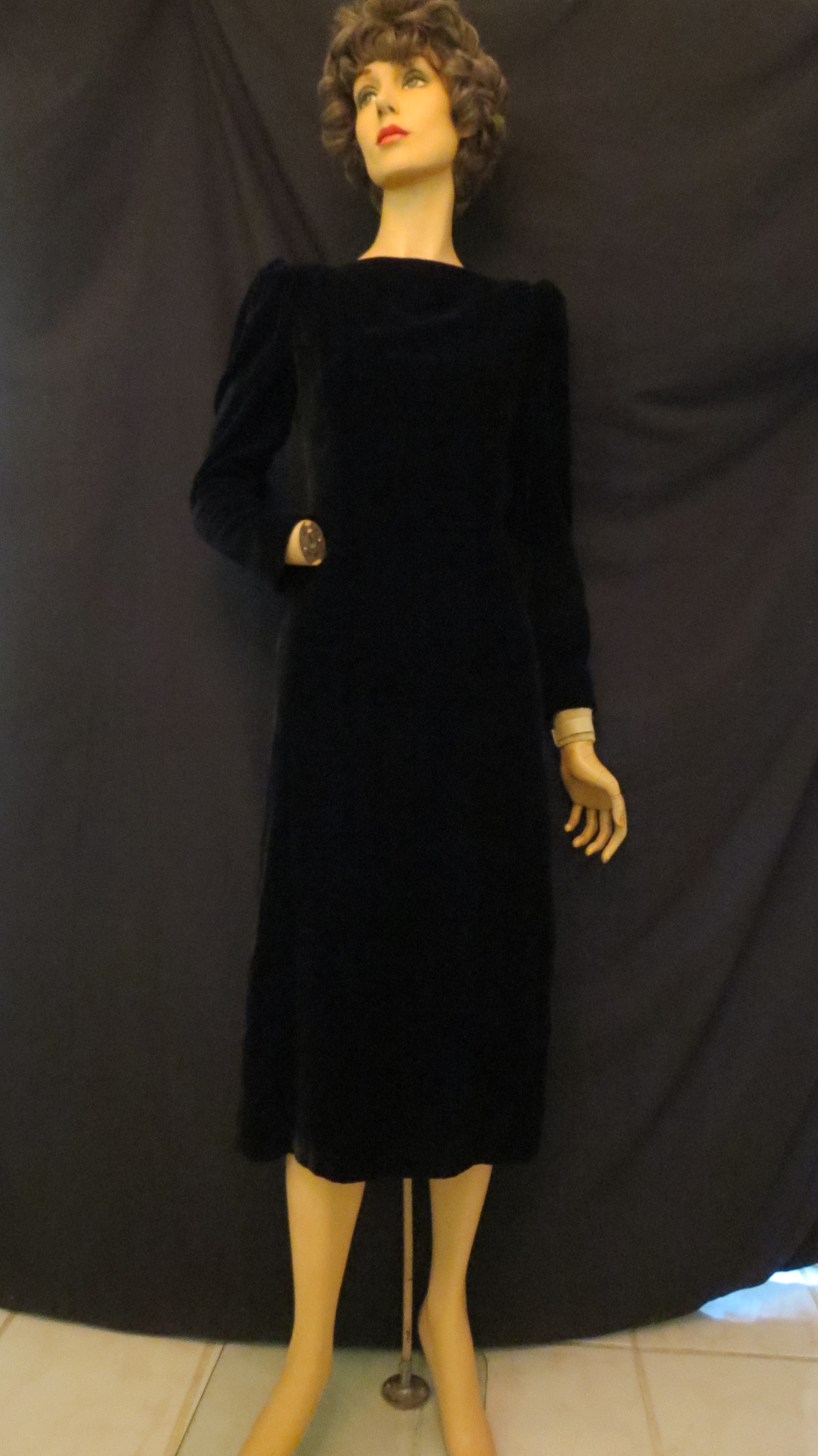
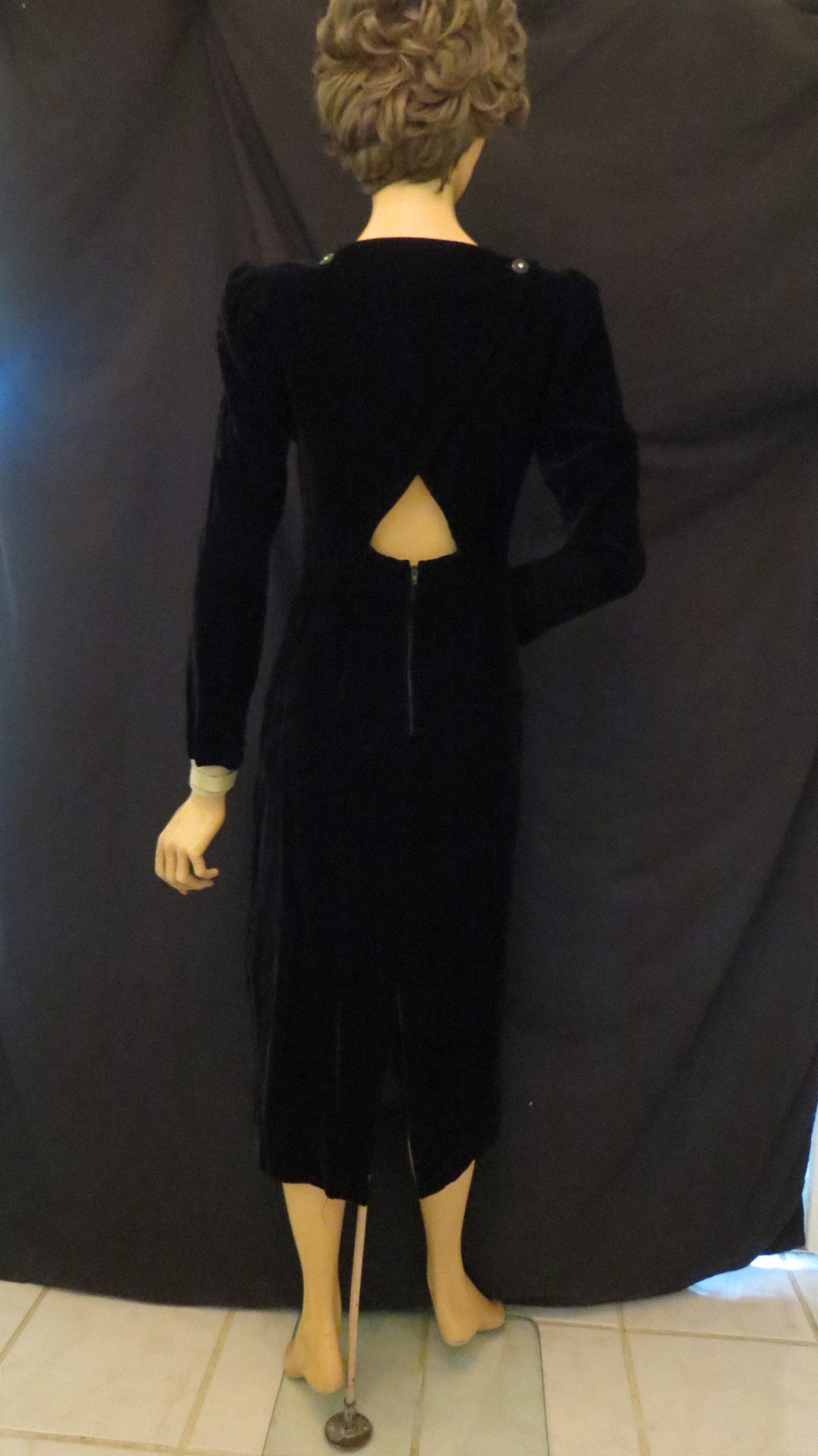
LOVELY TRUE VINTAGE 1980’S DOES 1940’S BLACK VELVET COCKTAIL GOWN

Very simple and elegant though, again, the tailoring is everything. So many of the styling details that made dresses from the Post-war late 1940’s so sophisticated and beautiful. Midi-length hem, augmented shoulders, long skinny sleeves. Very understated in front and the surprise accents on the back: rhinestone buttons at the shoulders and a keyhole opening at the waistline. A back walking vent keeps it easy to wear and walk gracefully.

Unlike so many dresses from the 1980’s and 1990’s, this one is not over-the-top in any way; Just perfection in its simplicity. We’ll see another LBD in the same category tomorrow. Stay tuned . . . . . . . . . . . . . . . . . . . . . . . . . . . . . . . . . . . . .

MORGANA MARTIN, THE MAGICVINTAGESPY

BLOG: MAGICVINTAGESPY.COM

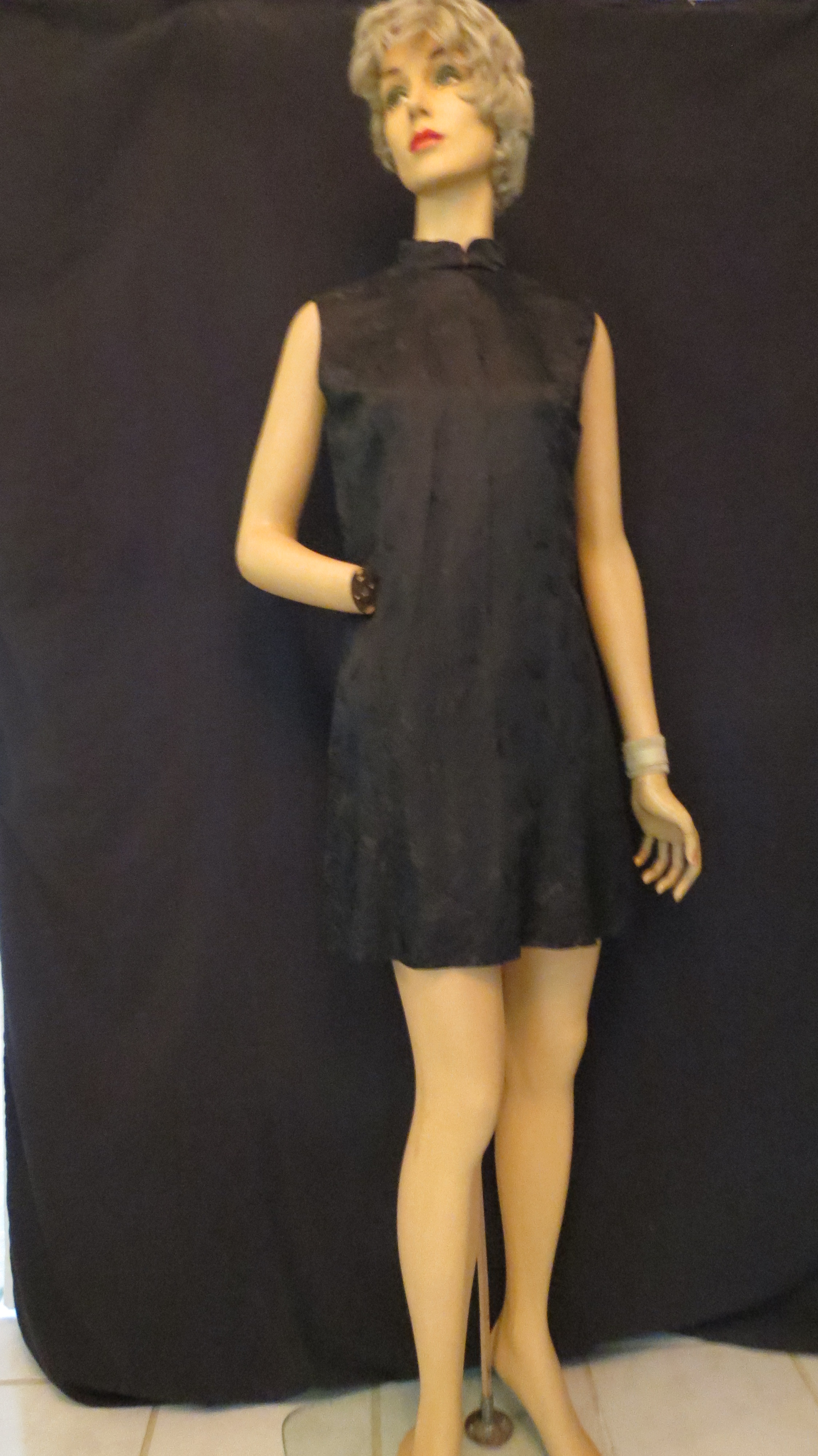
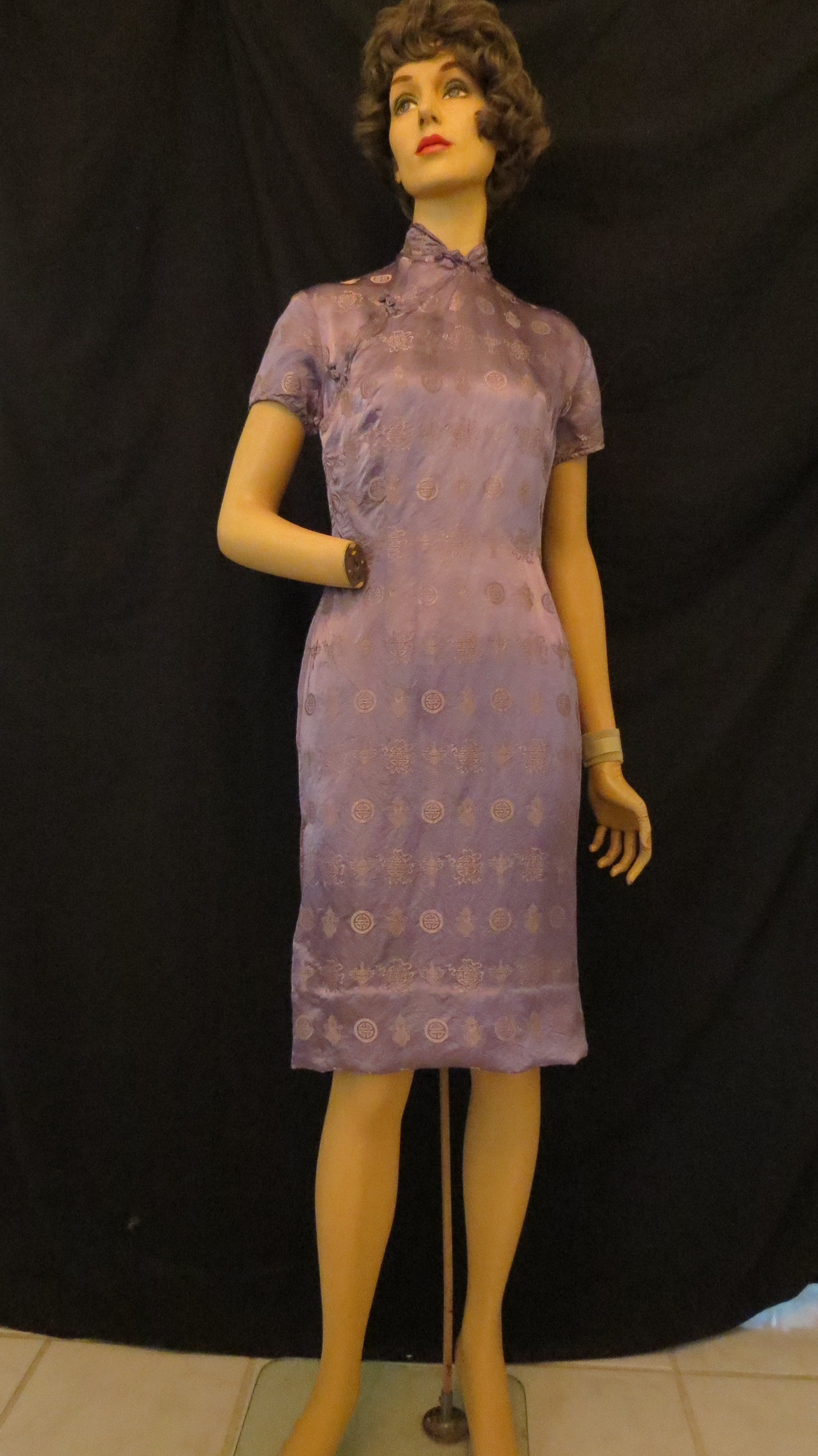
TRUE VINTAGE MID-1960’s BLACK JACQUARD ASIAN-STYLE LBD

Since the Post-war 1950’s, interest in Asian-style dresses (and other garments) has grown, with pretty sheaths like this one creeping into women’s closets. Clothing made in British Hong Kong established a reputation for being exceptionally well-made. Tailors from China, principally, expanded their clientele and any city’s Chinatown was a great place to shop. Silk and hand-decorated versions are always the most beautiful, but all these clothes tend to be well-made, often with hand-done finishing. Because of their persistent fashionable presence, excellent quality and traditional design they can be categorized as Classic clothing. Though they are mass-produced now, versions from the 1960’s were still of high quality.

This little dress was made to sell, simply-designed with a center back metal zipper, moderately priced and styled to the then-current fad for mandarin collars and mini-skirt hems. It’s free of embroidered design, but the jacquard fabric is glossy and woven with an Asian medallion motif. Just right for making an entrance to a casual mid-Sixties cocktail party.

I’m wrapping up the cocktail LBDs for the 1960’s decade with this cutie. Tomorrow I’ll begin showing some dressy coats that would be just right with most of them. Stay tuned . . . . . . . . . . . . . . . . . . . . . . . . . . . . . . . . . . . . . . .

MORGANA MARTIN, THE MAGICVINTAGESPY

BLOG: MAGICVINTAGESPY.COM

TRUE VINTAGE EARLY 1960’S LBD FROM SAKS FIFTH AVENUE

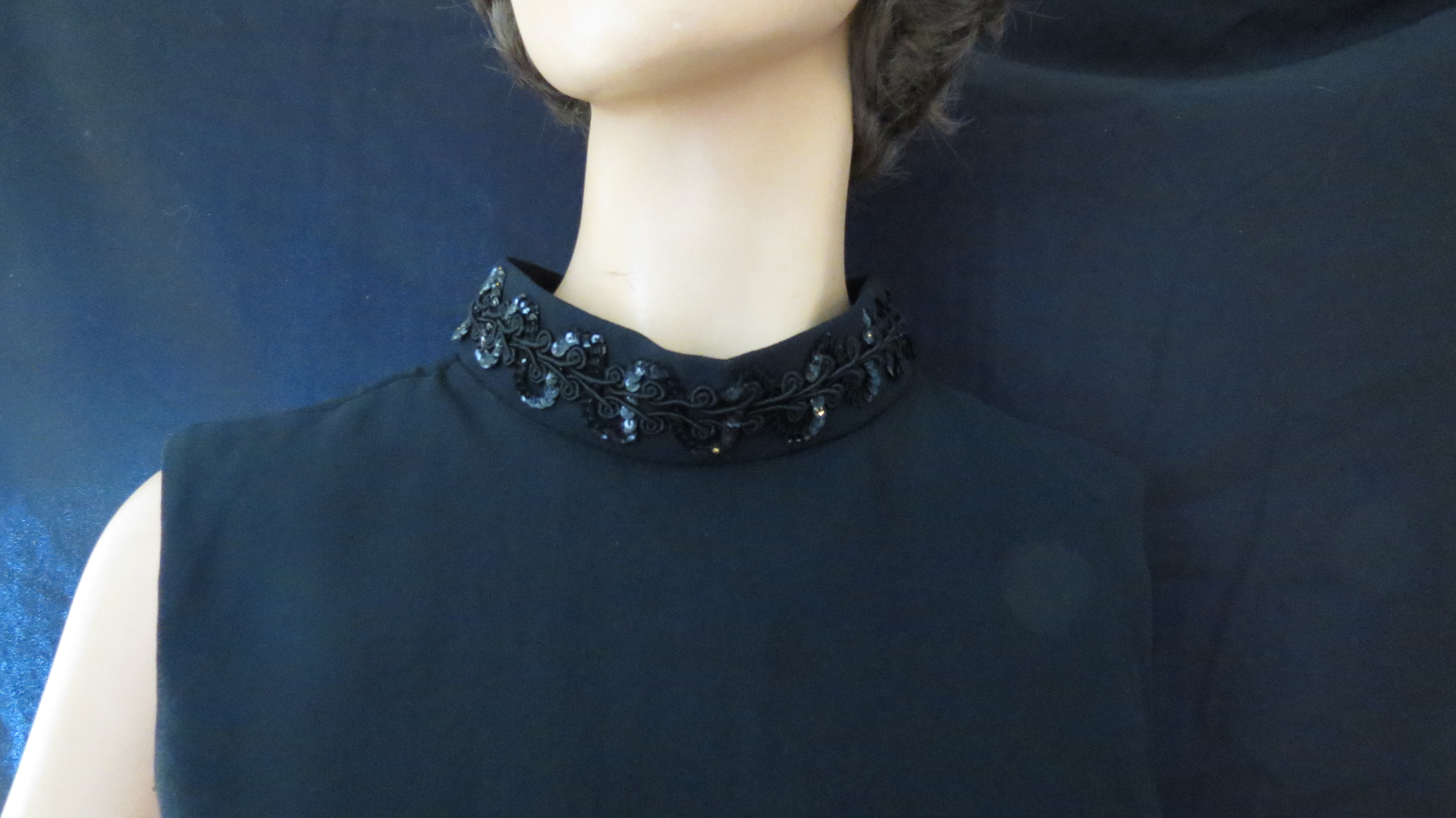
Definitely a conservative, go-almost-anywhere style but with an upper-mid-level pedigree as it has a Saks Fifth Avenue label (take my word for it). The hemline still hovers below the knee, but we see a stand collar, which is becoming more popular on ’60’s dresses and tops. The sequin trim on the collar and skirt defines it as a semi-formal cocktail design. Though you wouldn’t be likely to turn many heads on your entrance to the party, that’s exactly the impression that many upper class women have wanted to make, especially in the Mid-West (and this dress likely came from Saks in Chicago).

Excellent tailoring, as would be expected, and perfectly classic in design. The aristocratic heritage is what makes this evidence collectible. Moving ahead into the mid-’60’s we’ll lighten up a little. Stay tuned . . . . . . . . . . . . . . . . . . . . . . . . . . . . . . .

MORGANA MARTIN, THE MAGICVINTAGESPY

BLOG: MAGICVINTAGESPY.COM

TRUE VINTAGE EARLY 1960’S UP-SCALE LBD – SO PRETTY!

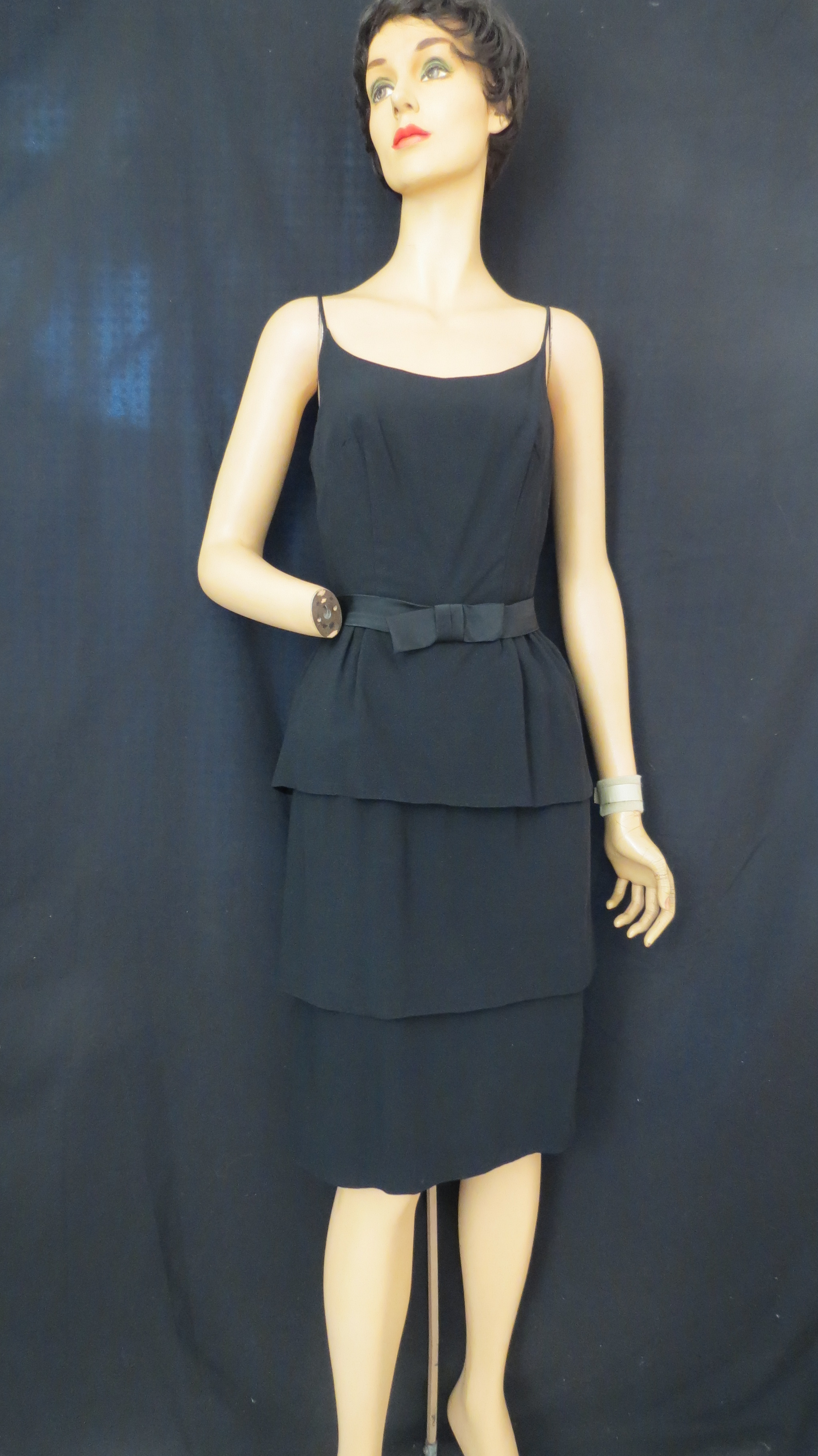
“Daring” spaghetti straps, the ubiquitous ’50’s/’60’s grosgrain ribbon bow and a tiered skirt that harks back to the 1940’s plus a solidly early Sixties below-the-knee hemline. Youthful, attractive, classic and conservative at the same time. Looks like this designer was being experimental while styles were shifting. I’d say it was a success!

This is a very well-tailored semi-formal dinner/dance/cocktail frock, probably sold at a department store which carried upscale goods or a smaller women’s boutique. Crepe fabric which drapes beautifully, a well-fitting cut, elegant simplicity with the surprisingly unexpected skirt. A very “modern” design. A first step toward Mod, which wasn’t as avant garde or counter-culture as the styles which followed in the mid to late 1960’s. We’ll keep stepping along the path tomorrow. Stay tuned . . . . . . . . . . . . . . . . . . . . . . . ..

MORGANA MARTIN, THE MAGICVINTAGESPY

BLOG: MAGICVINTAGESPY.COM

BACK TO PERFECTION – TRUE VINTAGE KENNEDY ERA SILK SHEATH LBD

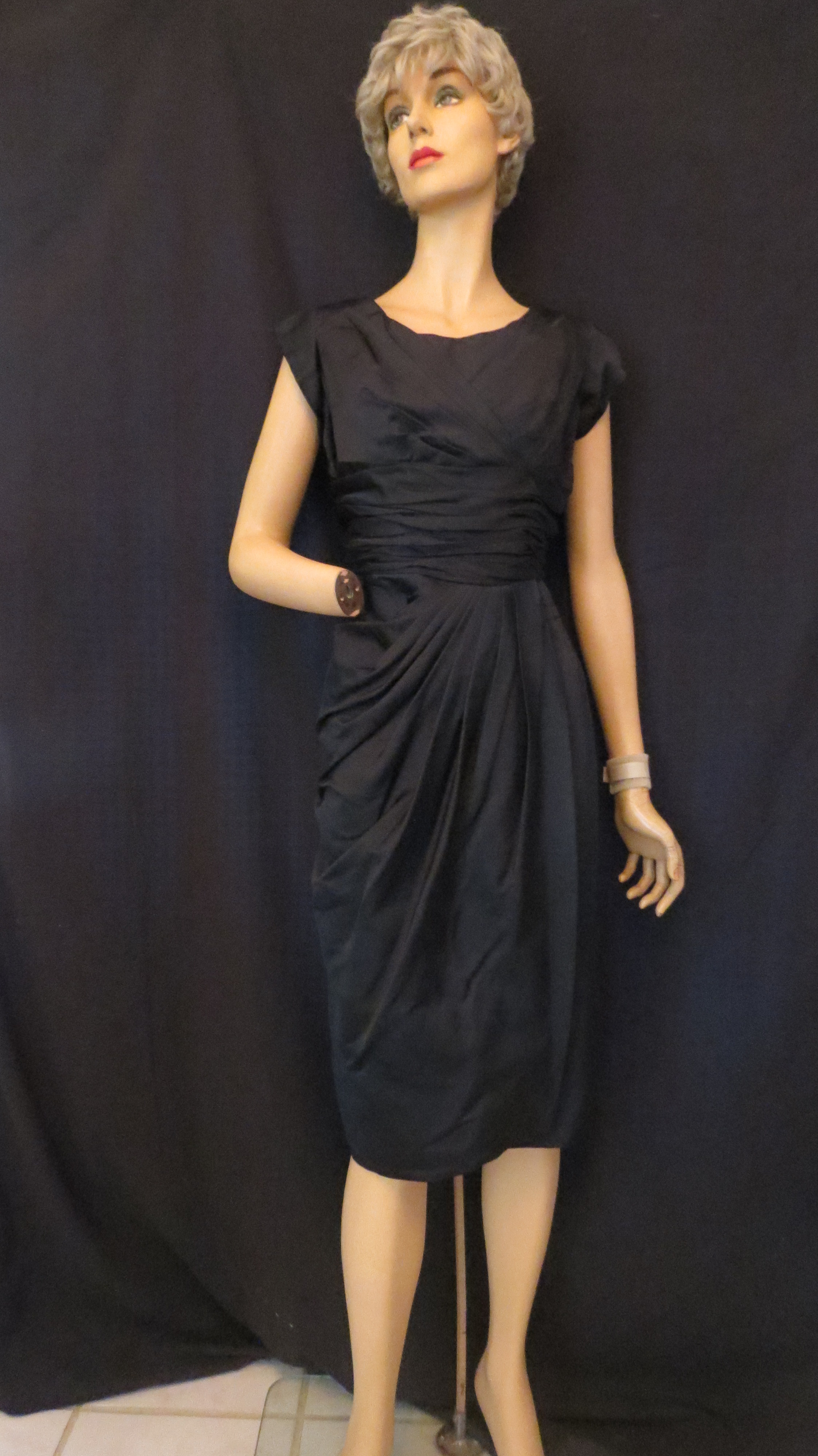
Gorgeous 100% silk cocktail frock. Discovered in Canada, by a Canadian designer. Look at the ruching and draping from the waistline in this very unique sheath style. The cap sleeves and below-the-knee hemline plus the fitted shape place this beauty’s vintage from the late 1950’s to the very early 1960’s. Never will see another one like it.

Tomorrow we’ll be squarely in the 1960’s with a variety of cocktail dresses on the way as a new design era unfolds. Stay tuned. . .

MORGANA MARTIN, THE MAGICVINTAGESPY

BLOG: MAGICVINTAGESPY.COM

TRUE VINTAGE EARLY 1960’S KENNEDY ERA COCTAIL PARTY DRESS

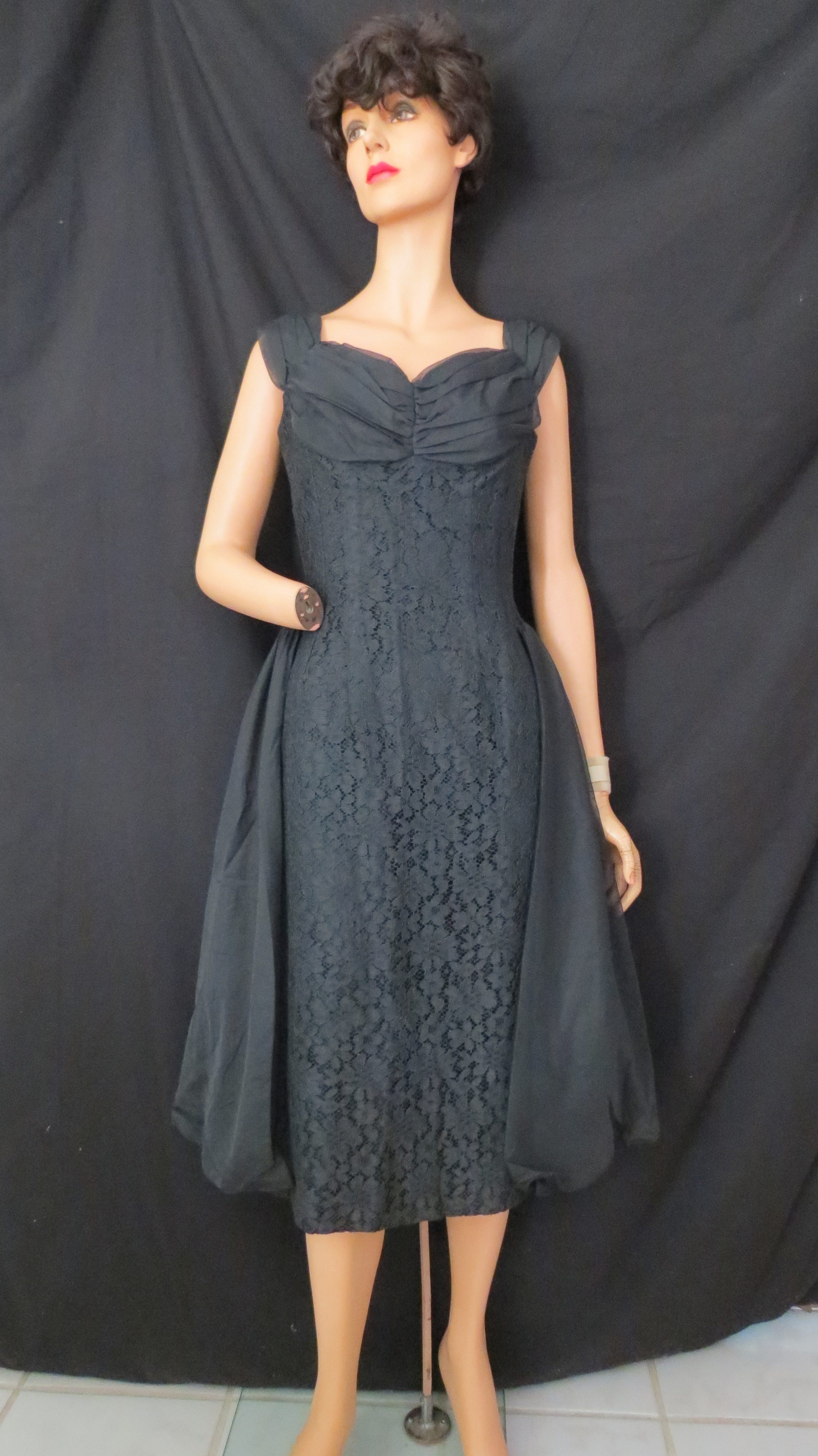
Interesting tailoring on this dress. Much more fussy than a true LBD. The lace overlay fabric was commonly used in the early 1960’s but the pouchy drapes attached to the hips almost look like something from the late 1940’s and the pleated bodice looks like many from the early 1950’s. All of this confusion makes a straight-cut sheath style look entirely different and made this frock completely unique.

It seems to me that changes from one decade to the next and significant historical events have often caused interesting and, sometimes, odd shifts in fashion. The early ’60’s also swung back to the New Look nipped waistlines and poufy skirts for a little while. More 1960’s designs on the way – stay tuned . . . . . . . . . . . . . . . . . . . . . . . . . . . . . . . . . . .

MORGANA MARTIN, THE MAGICVINTAGESPY

BLOG: MAGICVINTAGESPY.COM

1940’s WAR-SHOCK DRESSES & WARTIME FASHION TRENDS

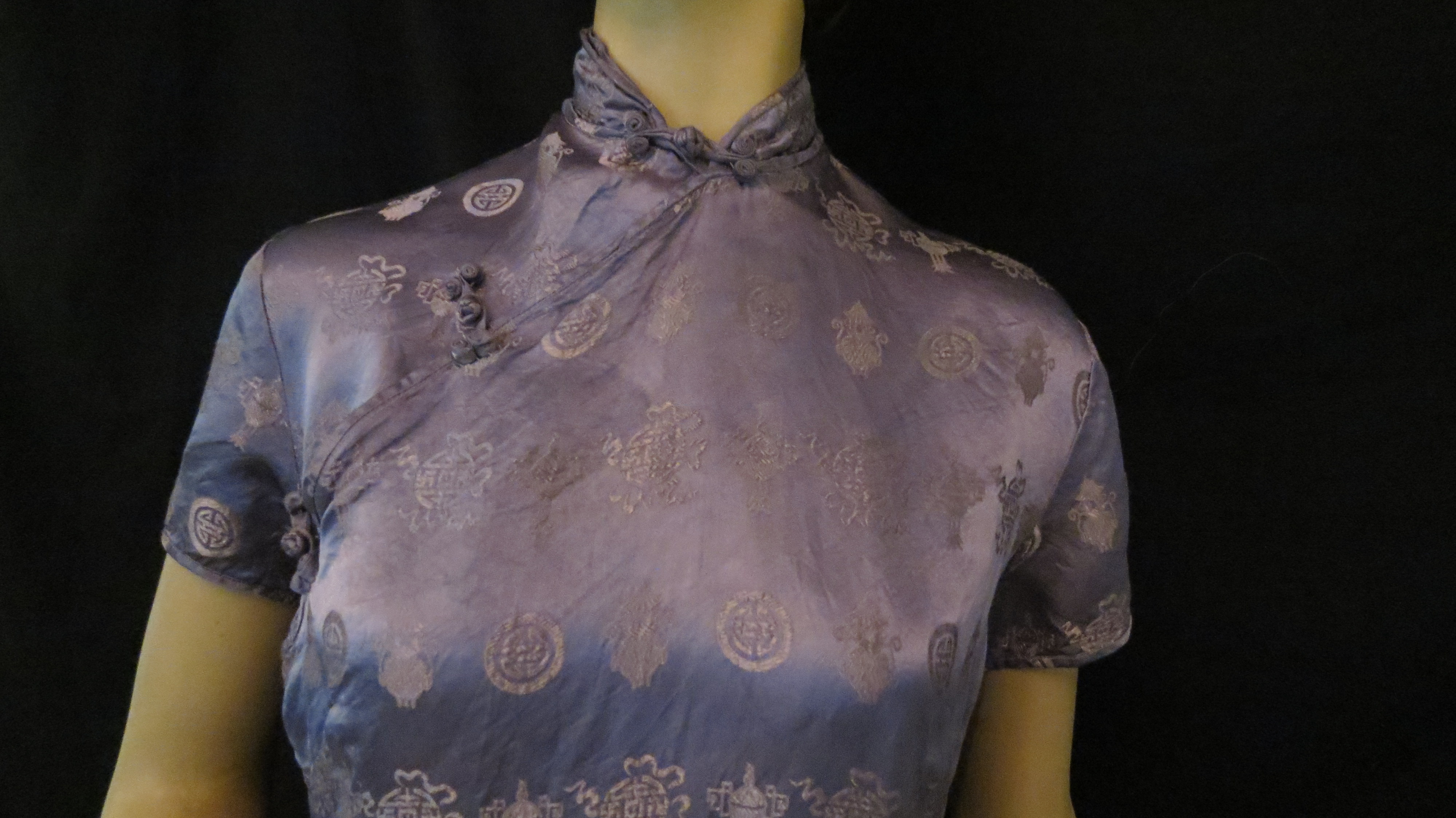
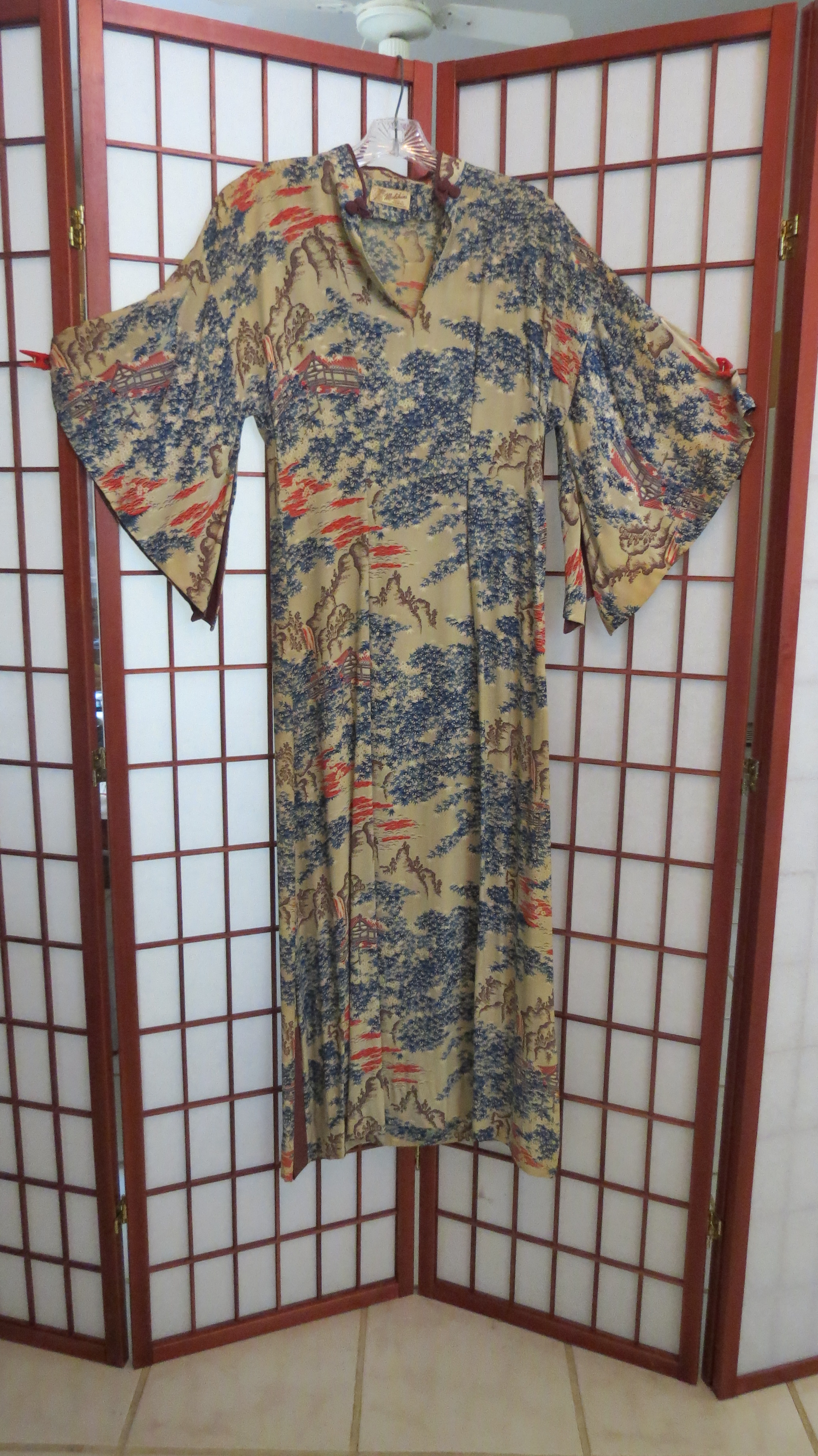
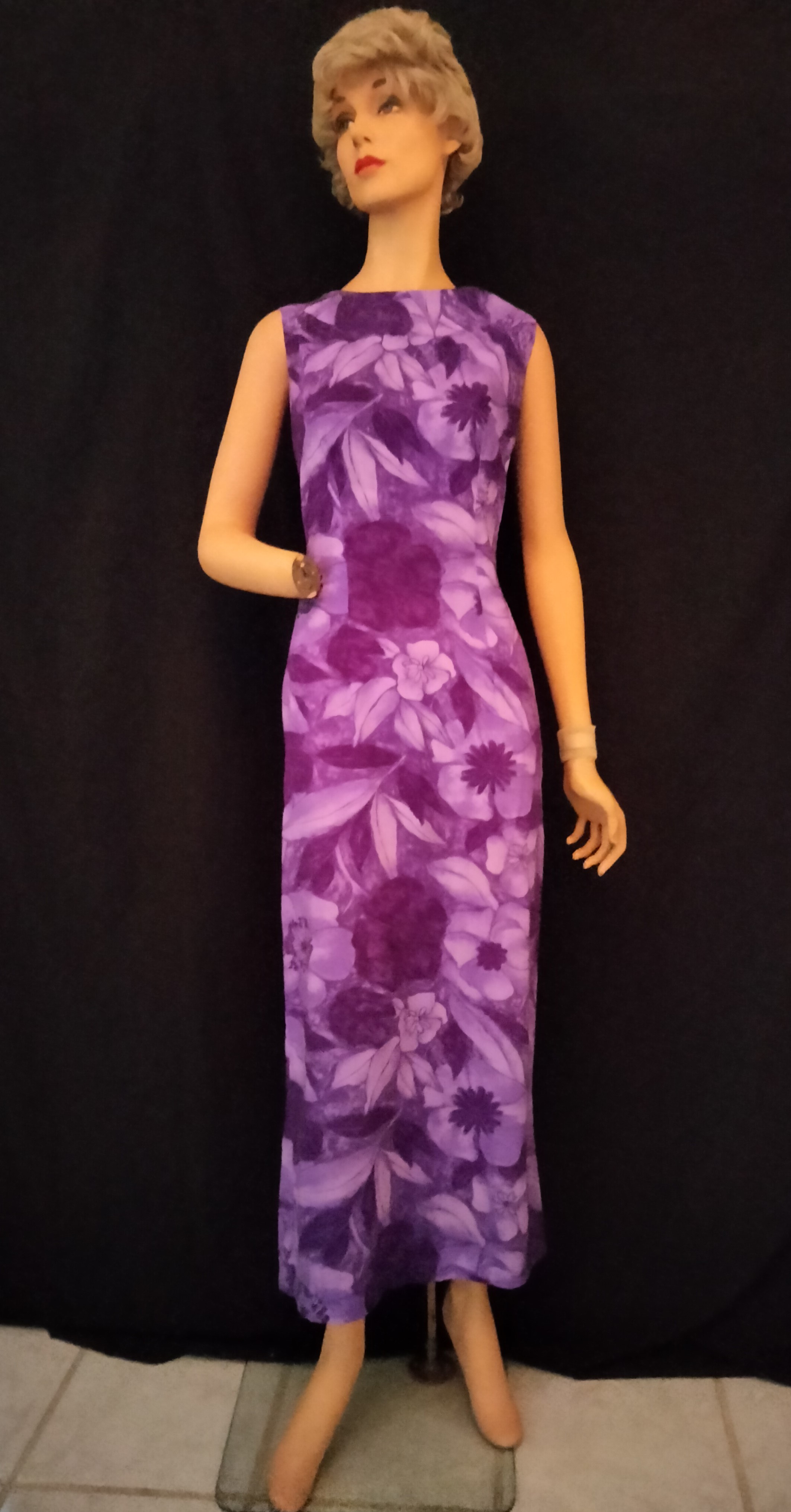
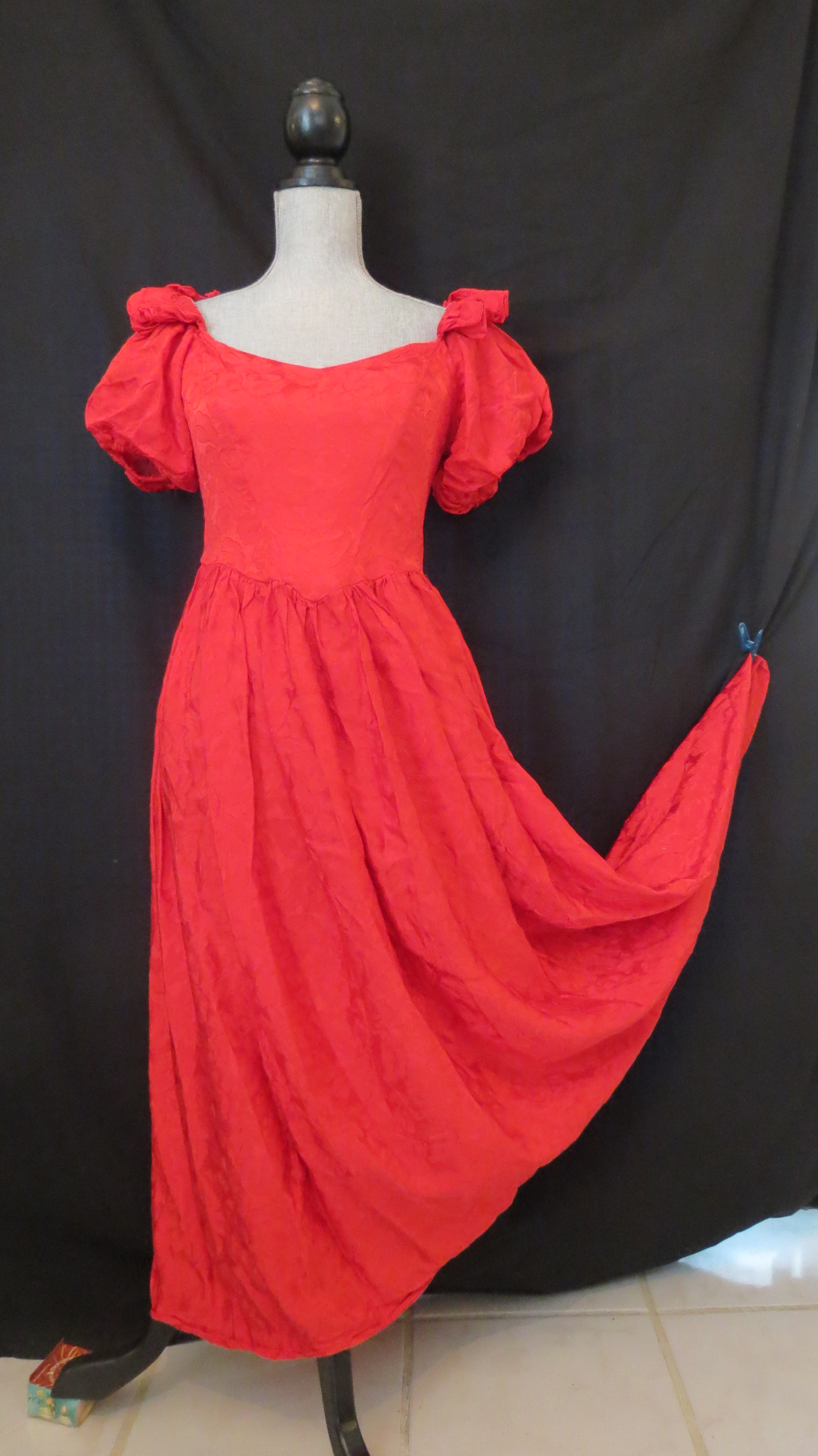
Before 9-11 it was hard for young U.S. Americans to understand the shock and fear that the attack on Pearl Harbor caused in December 1941. The government’s decision to join WWII, which had been happening in Europe and seemed remote to most everyday folks in the U.S., suddenly brought it close to home. The news and the movies began to open the doors on Asian culture and the curiosity of Americans and popular culture started to make this theme trendy. These dresses are from some of my most interesting investigations.

From the 1940’s on, Cheongsam dresses like the lavender one above gained popularity. Mata Hari and Charlie Chan became cultural figures in the media. The beauty and flattering fit of Chinese and Japanese traditional frocks brought interest in Chinatown areas of many cities and non-Asian women began to shop there. Above, see also a Japanese tea dress – fabulous find dating from the 1930’s, made in Hawaii. The purple native traditional gown from Hawaii also found a home in some American woman’s closet after people began traveling again.

But, before that time, women stayed at home. They worried about their family members and friends who were fighting in or living in war zones. They joined the war effort in whatever way they could through their work, volunteerism and spending habits. Of course, some kind of escape was necessary to maintain their sanity. That’s where the movies and dancing filled a void. Whether homemade or found at retail, dancing and cocktails required special dresses and women were very creative despite the restrictions caused by rationing.

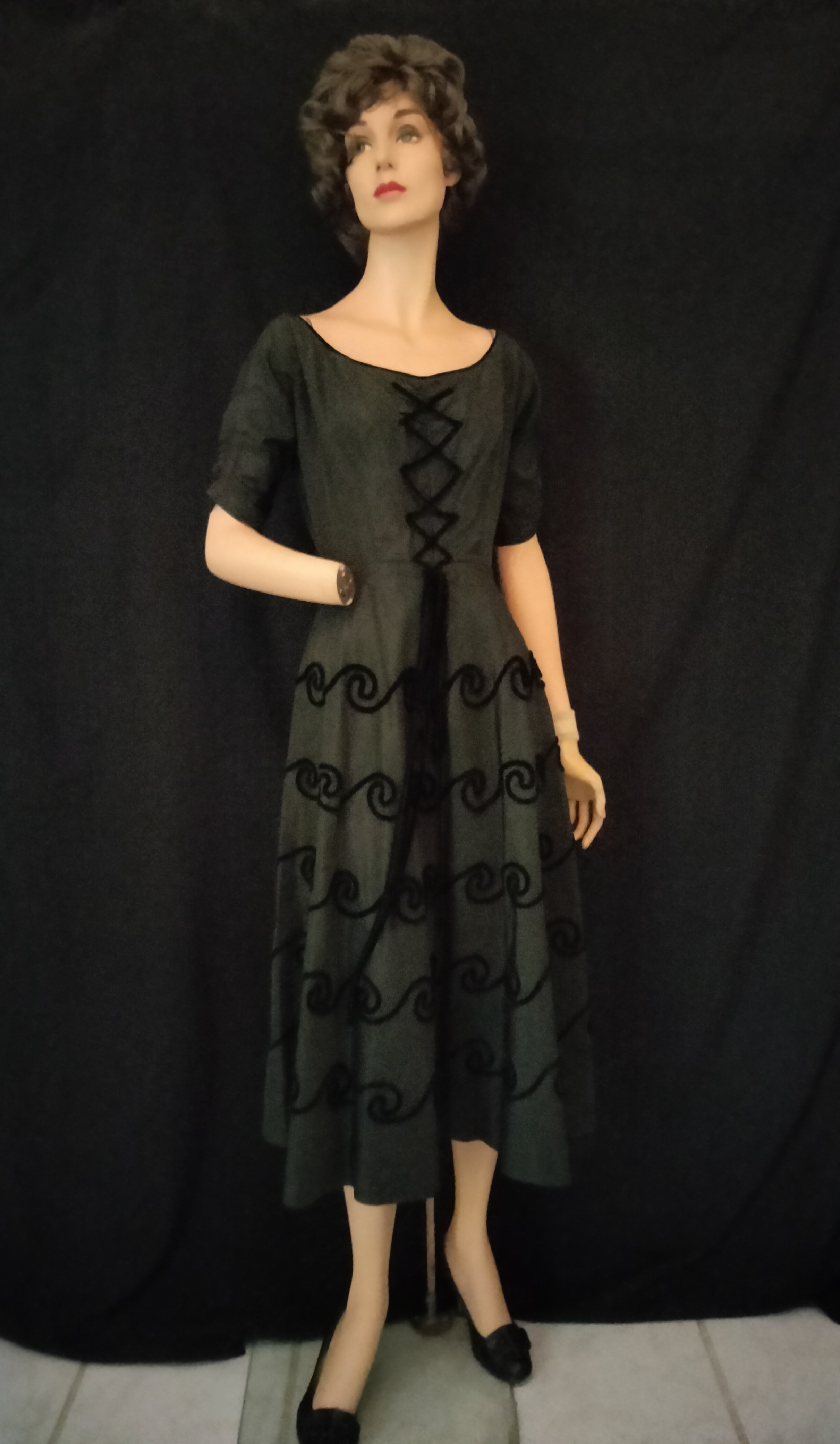
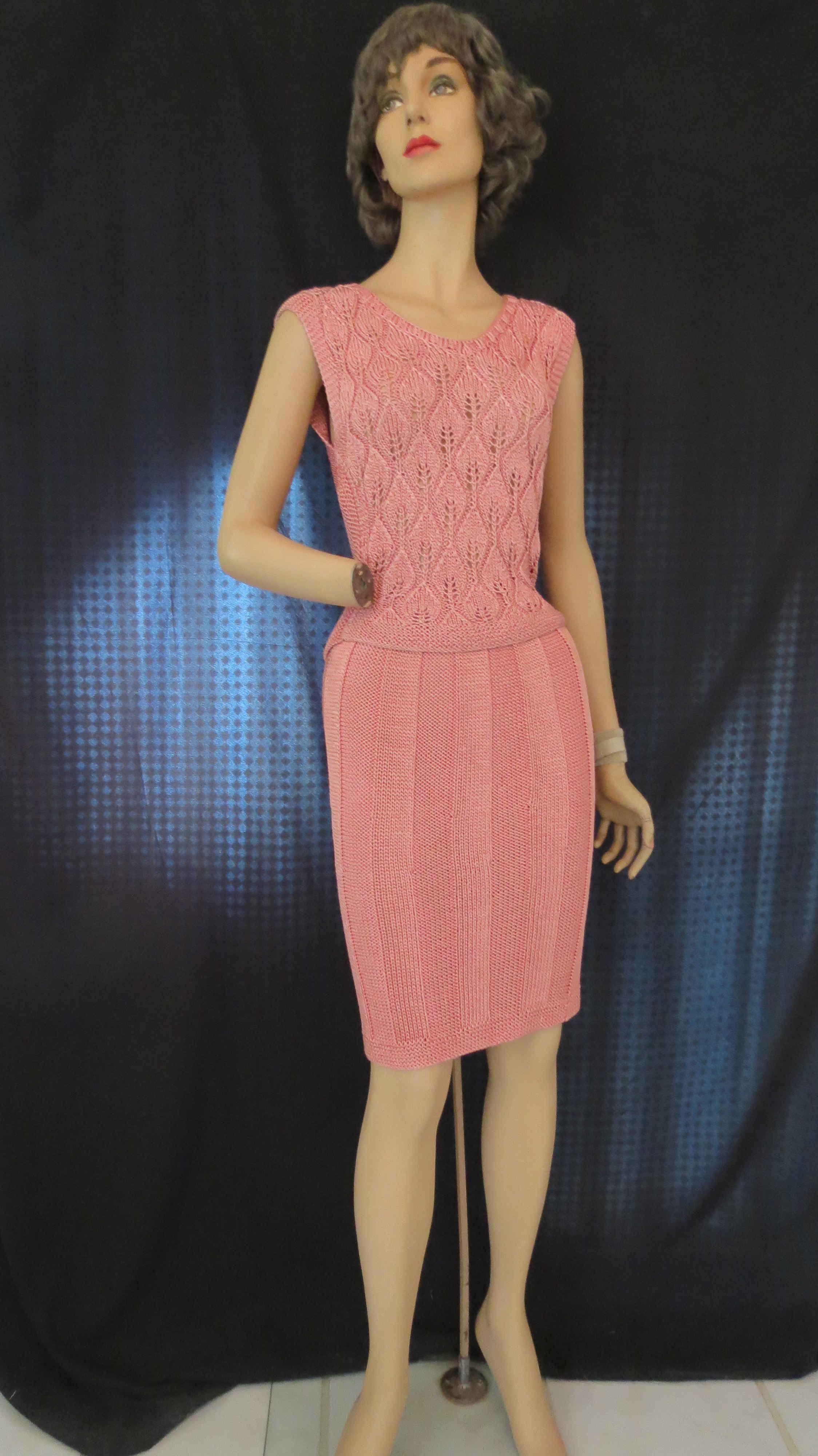
Synthetic fabrics were most available and affordable, so this red jacquard frock with puffed sleeves and an elasticized neckline which allowed cold shoulders was home-sewn. A similar style in black was local couture from a specialty shop in Texas and has ruched 3/4 sleeves and shows off the luxury of velvet piping decoration. The pink knitted and crocheted 2-piece cocktail dress was another unusual find which somehow found it’s way to Argentina. It’s made of a heavy, glossy/shiny yarn that allowed some gal to make a glamorous outfit on the cheap.

So fascinating! Such a fun bunch of clues these are. The delight is in the details. More tomorrow – stay tuned . . . . . . . . . . . . . .

MORGANA MARTIN, THE MAGICVINTAGESPY

BLOG: MAGICVINTAGESPY.COM

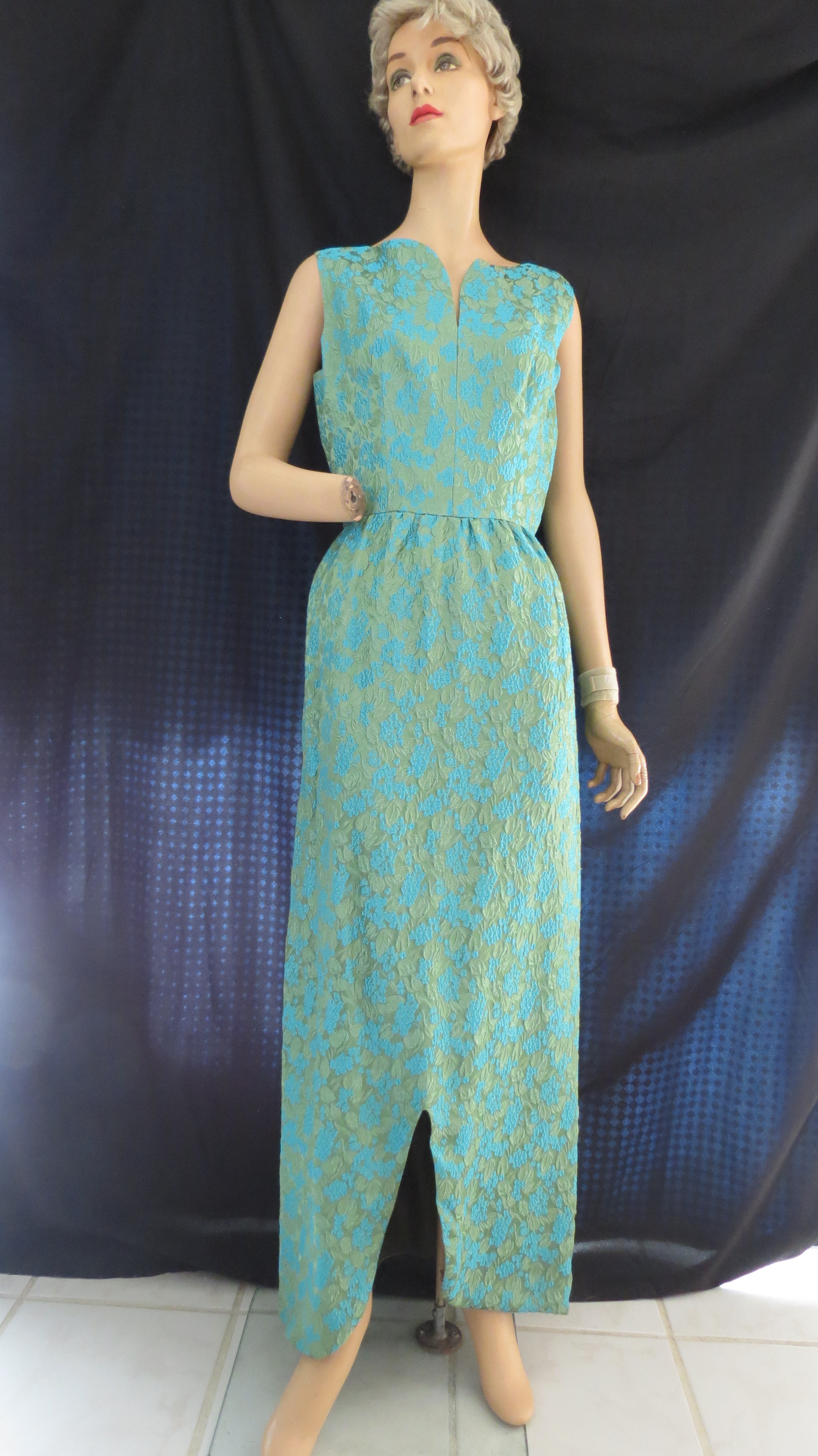
True Vintage Mod-style Special Event Long Dress from the Early 1960’s

From just a year or two later, compared to the frock shown yesterday, look how different the style is! This dress would have been made in 1962 or 1963, when the blue plus green craze was all over the marketplace – in clothing and home fashions. It was a thrilling find because I know it’s history since I got it from the seamstress who made it. She regularly tailored dresses to wear to faculty events at a university.

Medium-weight synthetic fabric, with a brocade-look weave. It just says Spring, and the beginnings of Mod. Sleek and slim, rather than fussy or poufy. A new kind of feminine style. We’ll be in totally different territory again tomorrow. Stay tuned . . . . .

MORGANA MARTIN, THE MAGICVINTAGESPY

BLOG: MAGICVINTAGESPY.COM
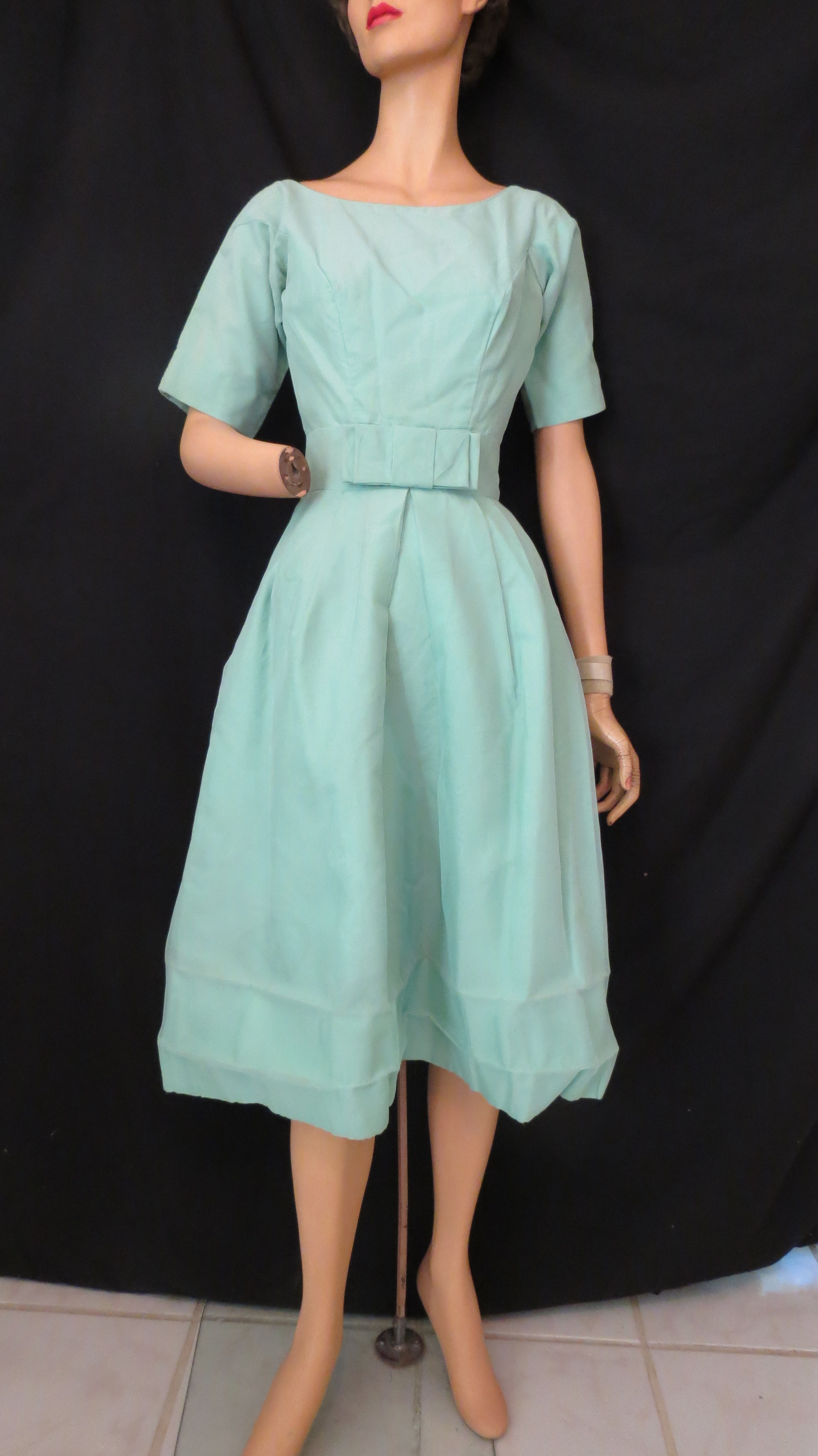
Pretty Mint Green Semi-formal Dress from the early 1960’s

Bows and bell-shaped skirts were popular in the early ’60’s, as well as some elbow-length sleeves. In this picture I have taken down the hem to the correct length for someone as tall as Stella. It would have been below-the-knee on the original owner. So very early ’60’s. I can see a vintage Barbie doll in this costume.

These gorgeous dresses I’ve been showing all have looked similar, but each has it’s own unique details and style. We’re staying in the Sixties for the next couple of days, but the styles become very different. Stay tuned . . . . . . . . . . . . . . . . . . . . . . . .

MORGANA MARTIN, THE MAGICVINTAGESPY

BLOG: MAGICVINTAGESPY.COM