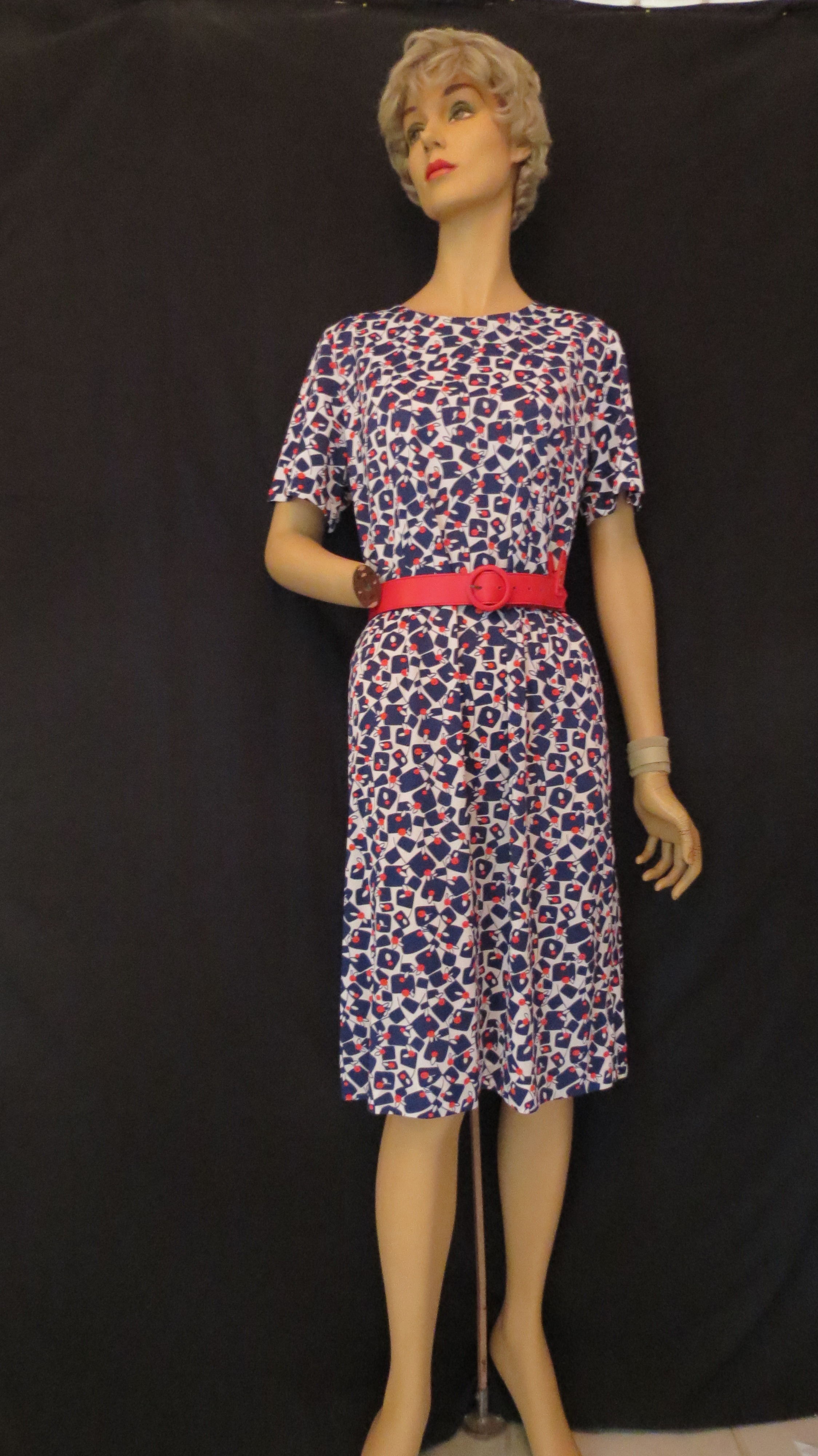
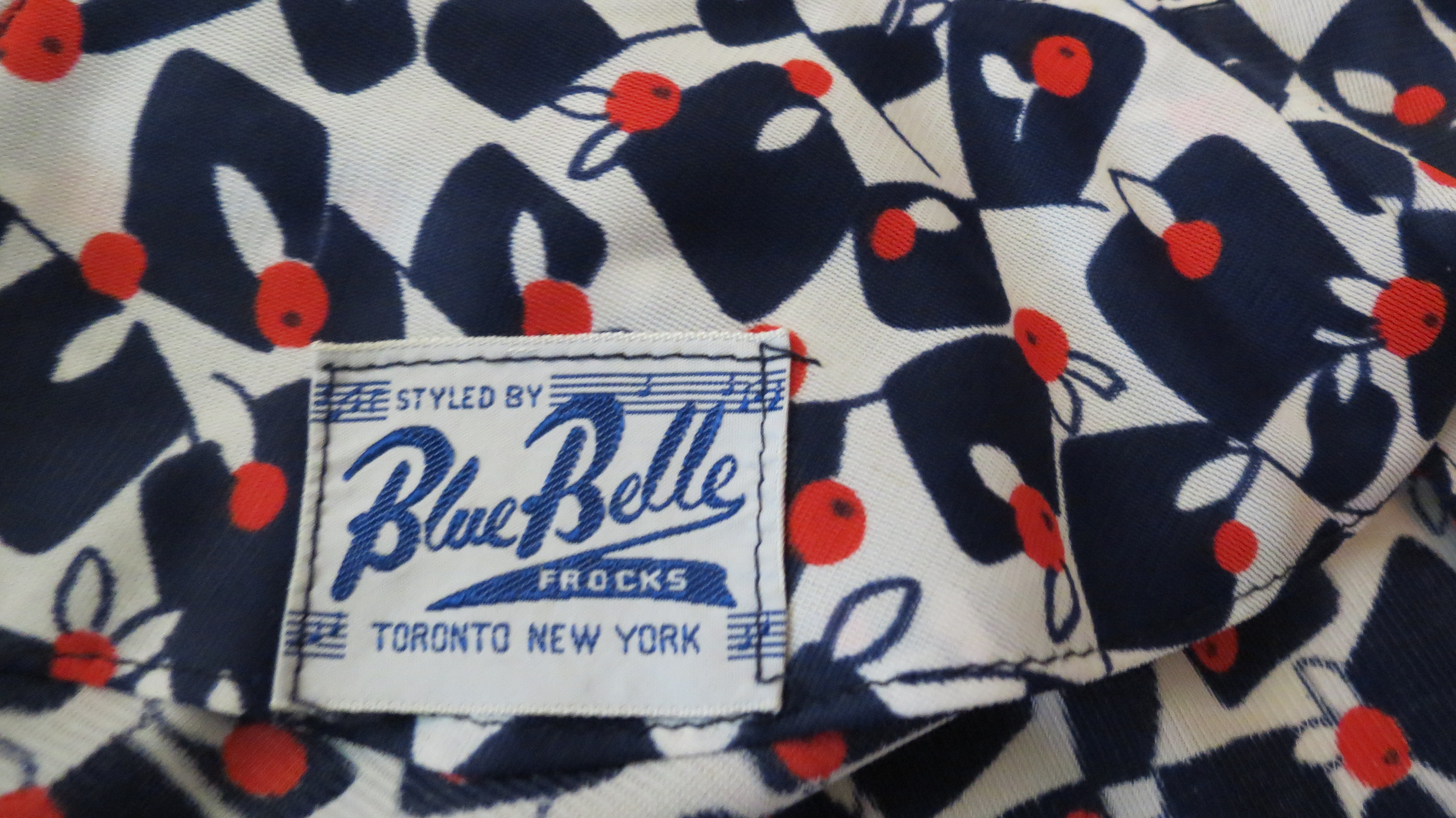
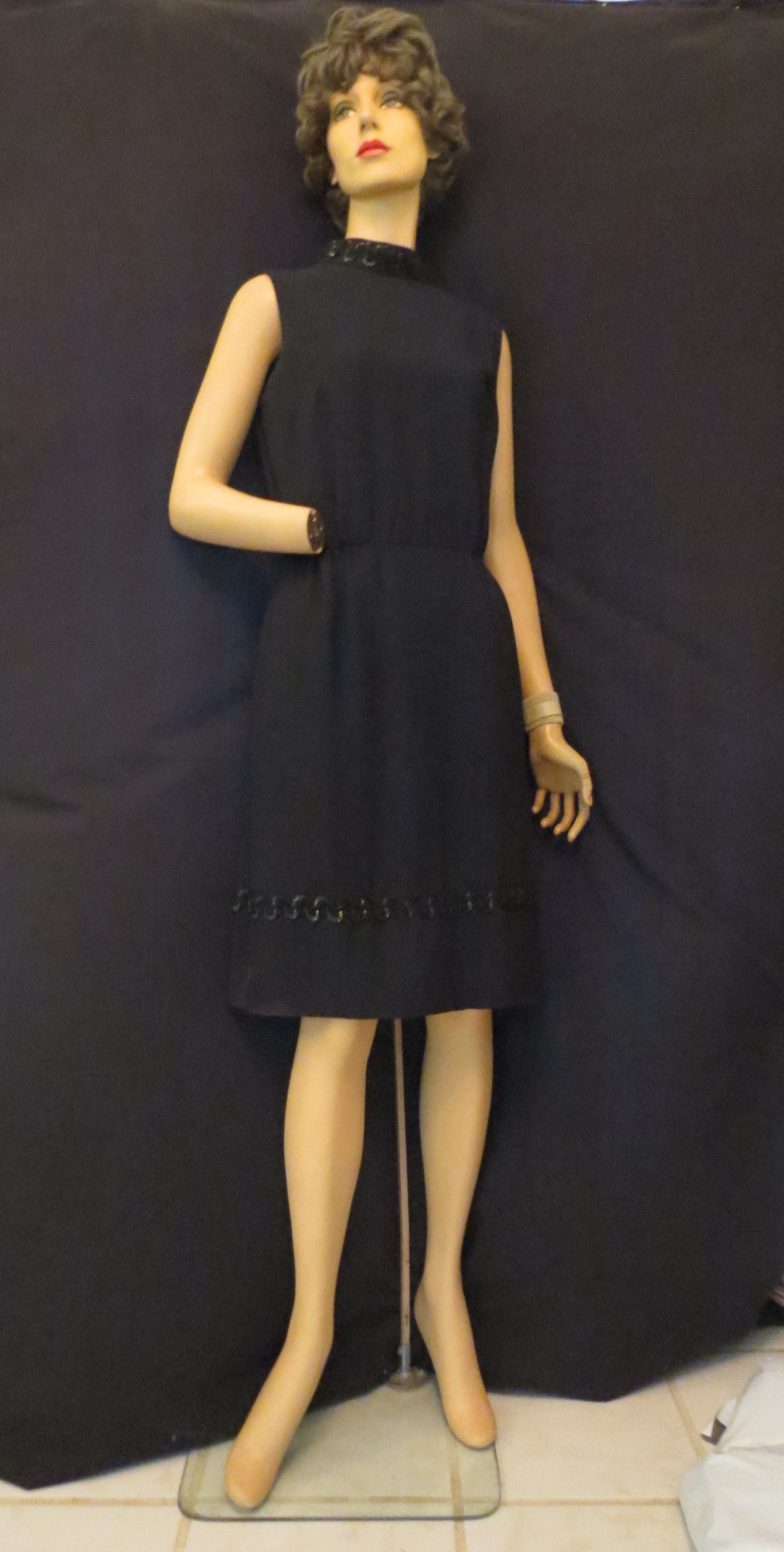
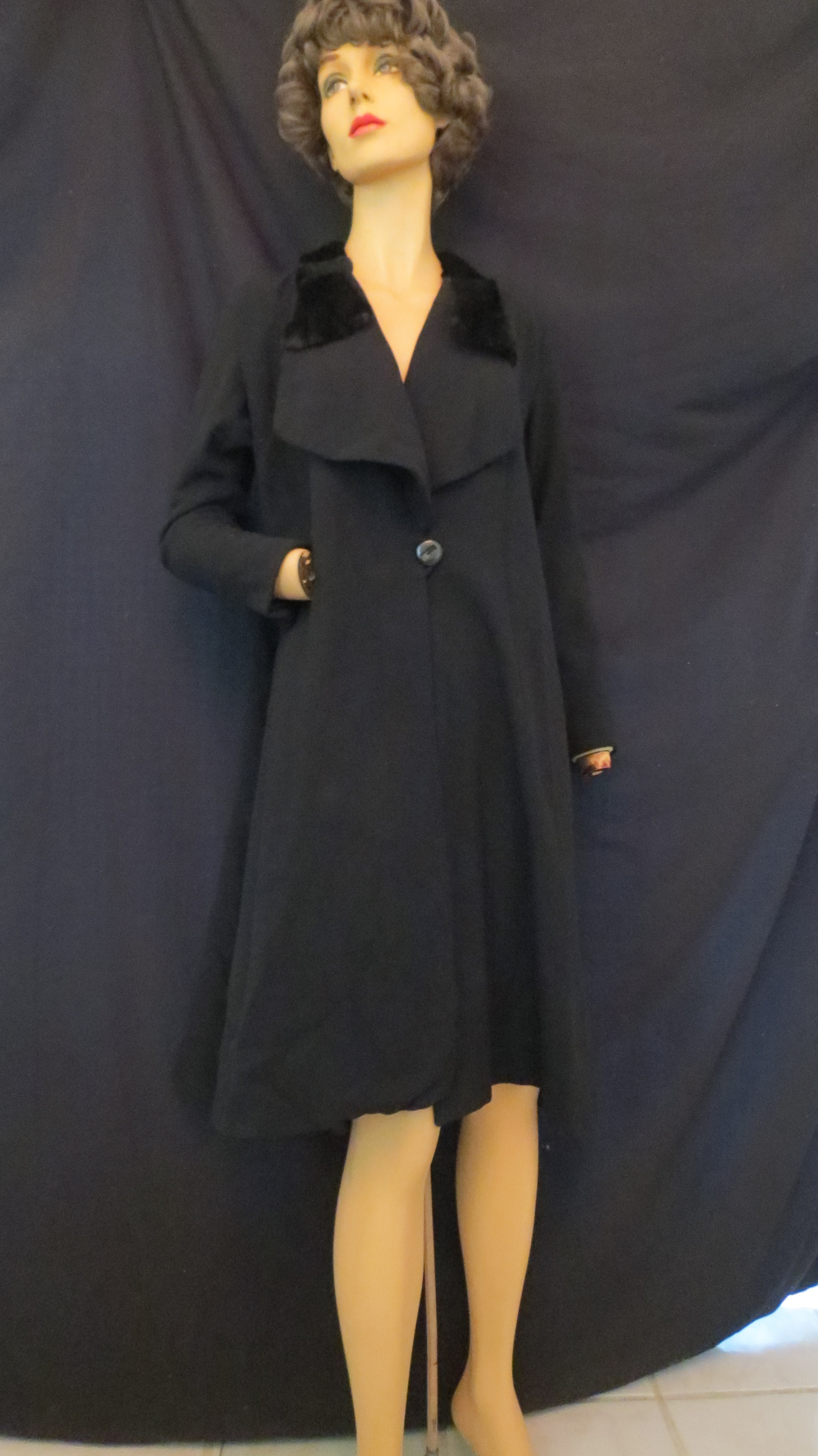
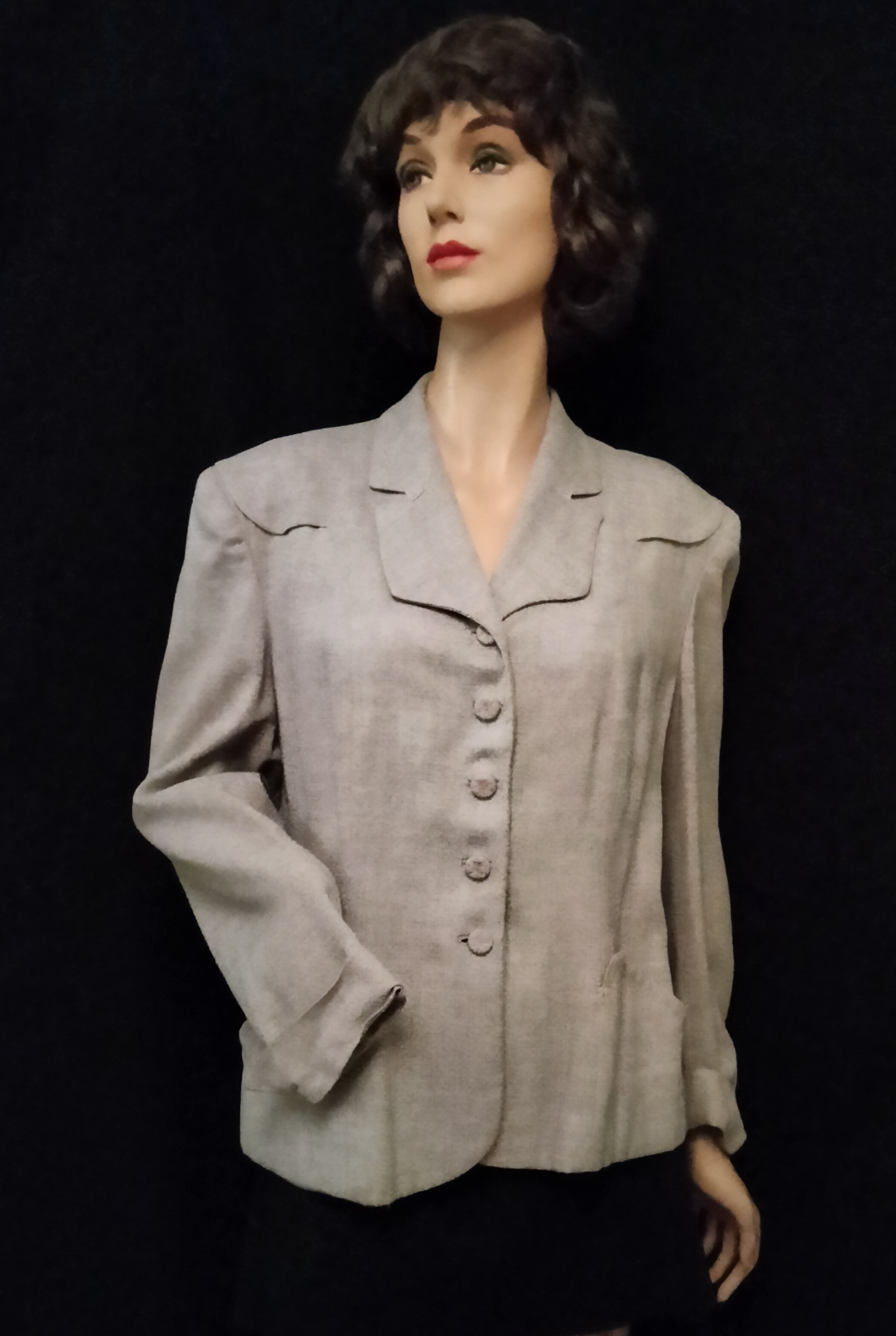
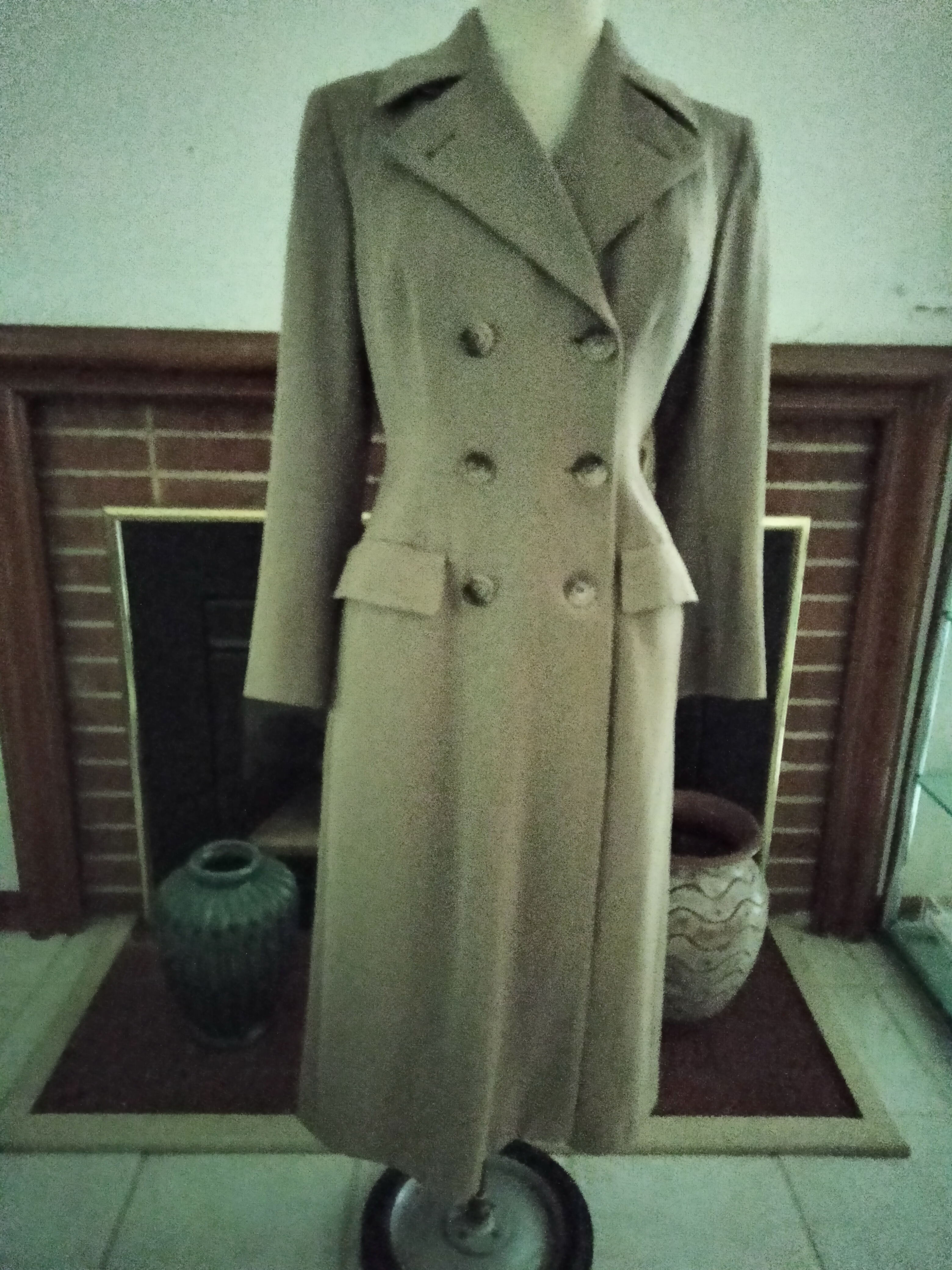
FUN TRUE VINTAGE 1940’S POST-WAR NIGHTCLUB DANCE DRESS

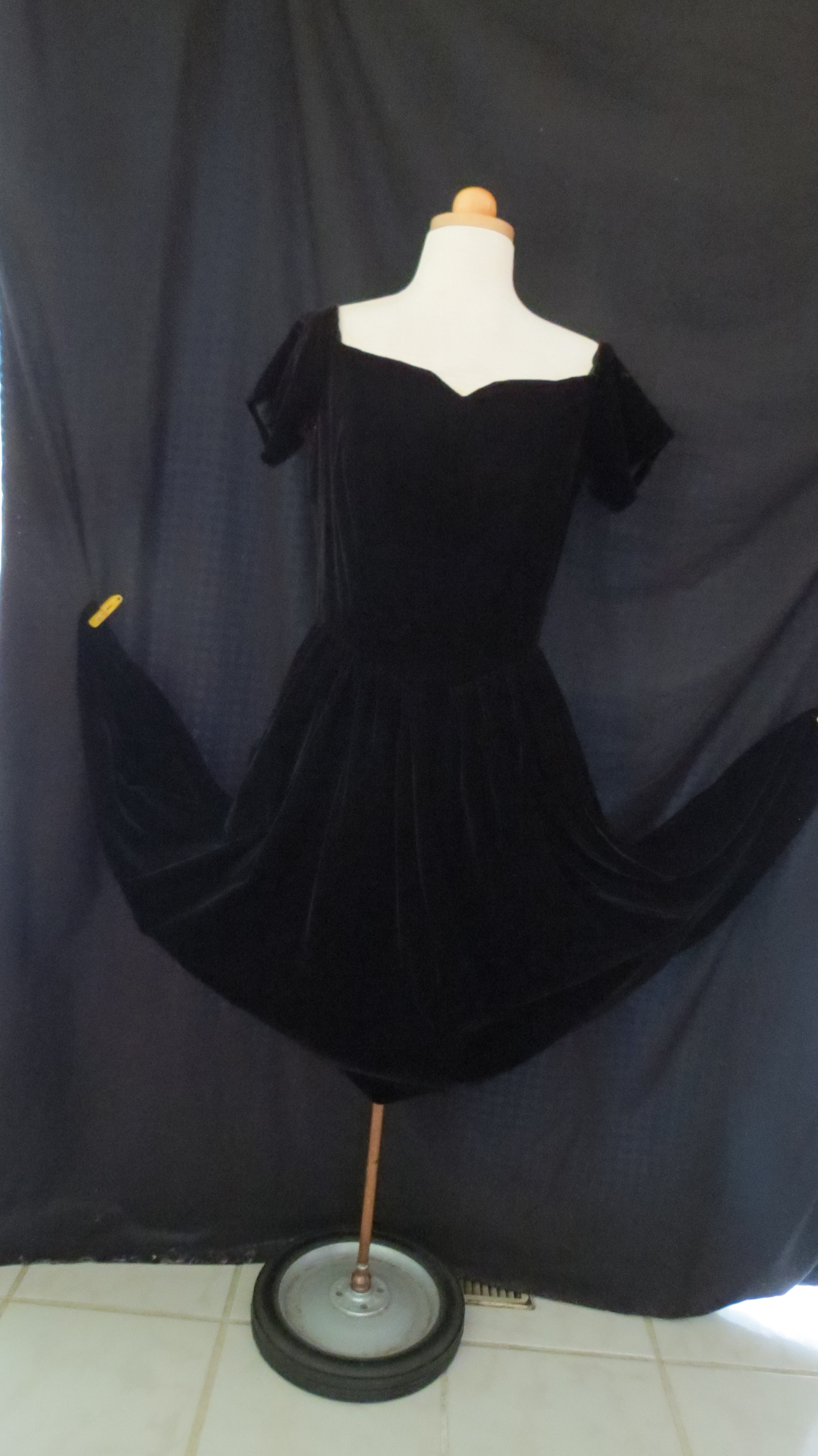
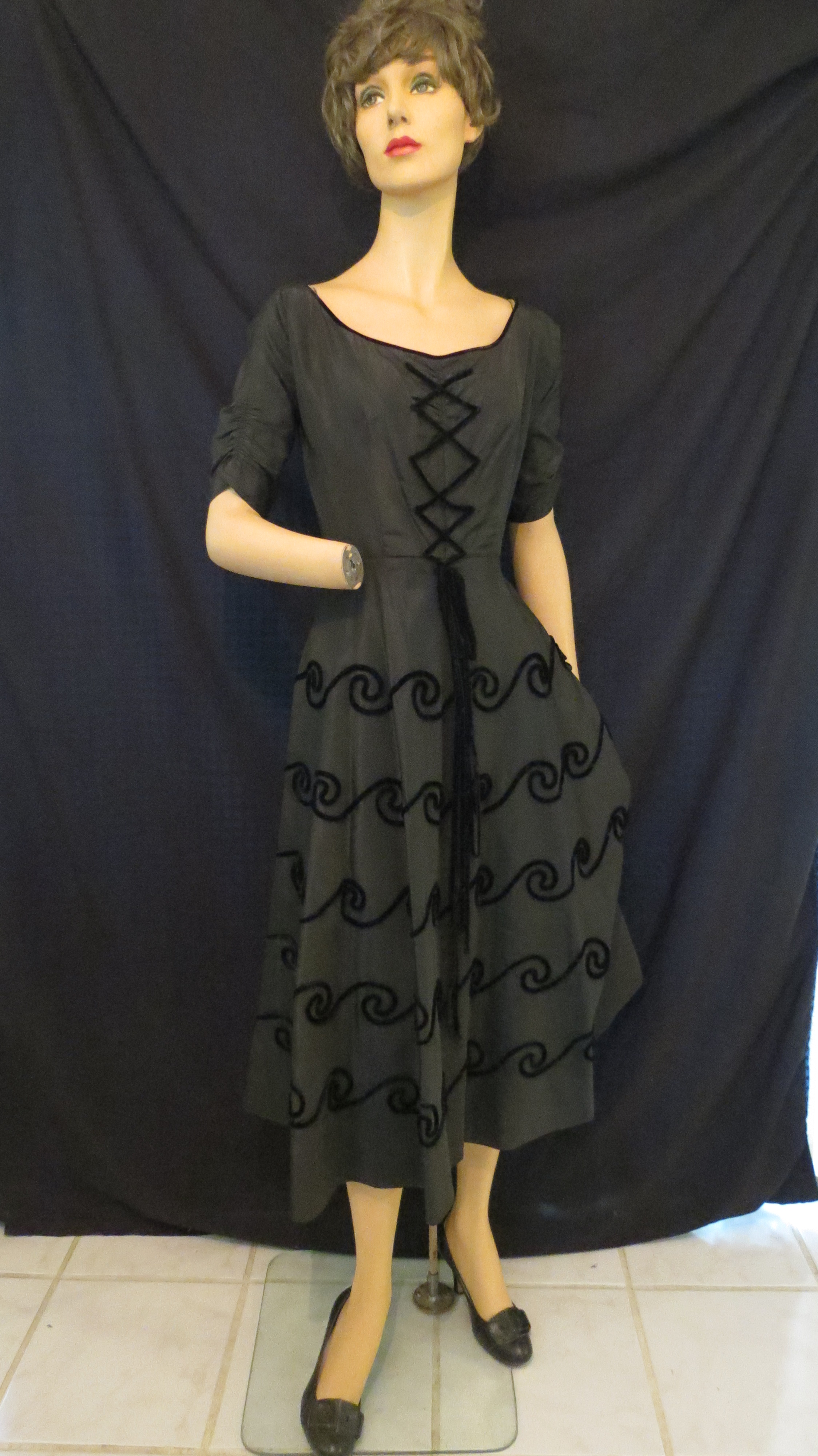
I’m back in black today, but more color coming. I really loved discovering this frock in Texas. Sold by an upscale privately-owned clothing company that had it’s own label. The trim is black velvet tube ribbon and the skirt is made for swingin’ and swayin’. Perfect for wearing to any dance hall or vibrant party, and we know that Texans love to party!

It’s got ruching on the sleeves, which was a favorite ’40’s tailoring feature. Nipped waist and wide skirt plus a midi hem puts in firmly in the post-war time frame. So much fun to discover – a fun dress from a very jubilant time in history. More Forties fashion coming, but dressing it up with an international twist. Stay tuned . . . . . . . . . . . . . . . . . . . . .

MORGANA MARTIN, THE MAGICVINTAGESPY

BLOG: MAGICVINTAGESPY.COM

BEAUTIFUL RAYON DRESSY DAY-DRESS FROM THE POST-WAR 1940’S

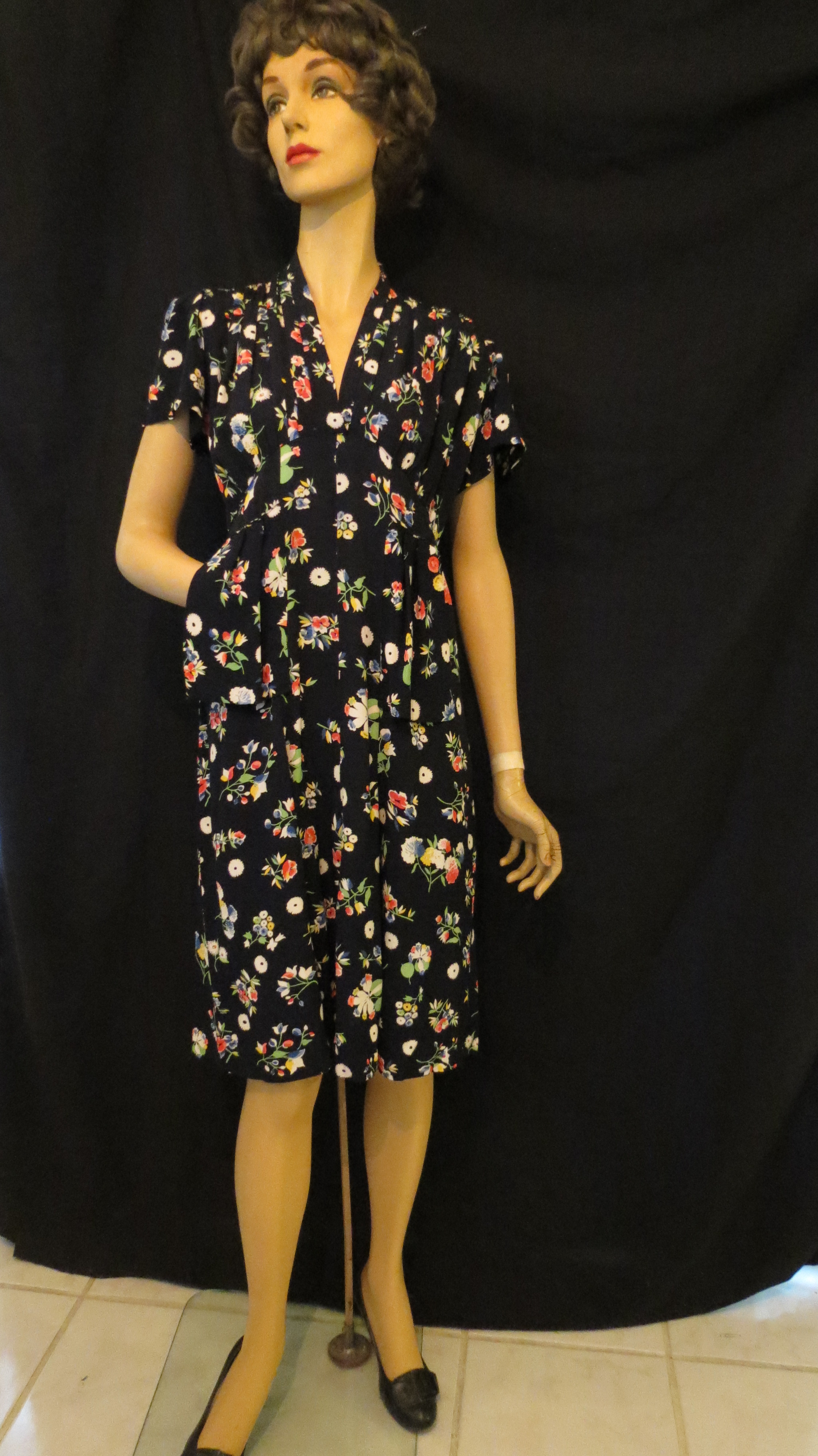
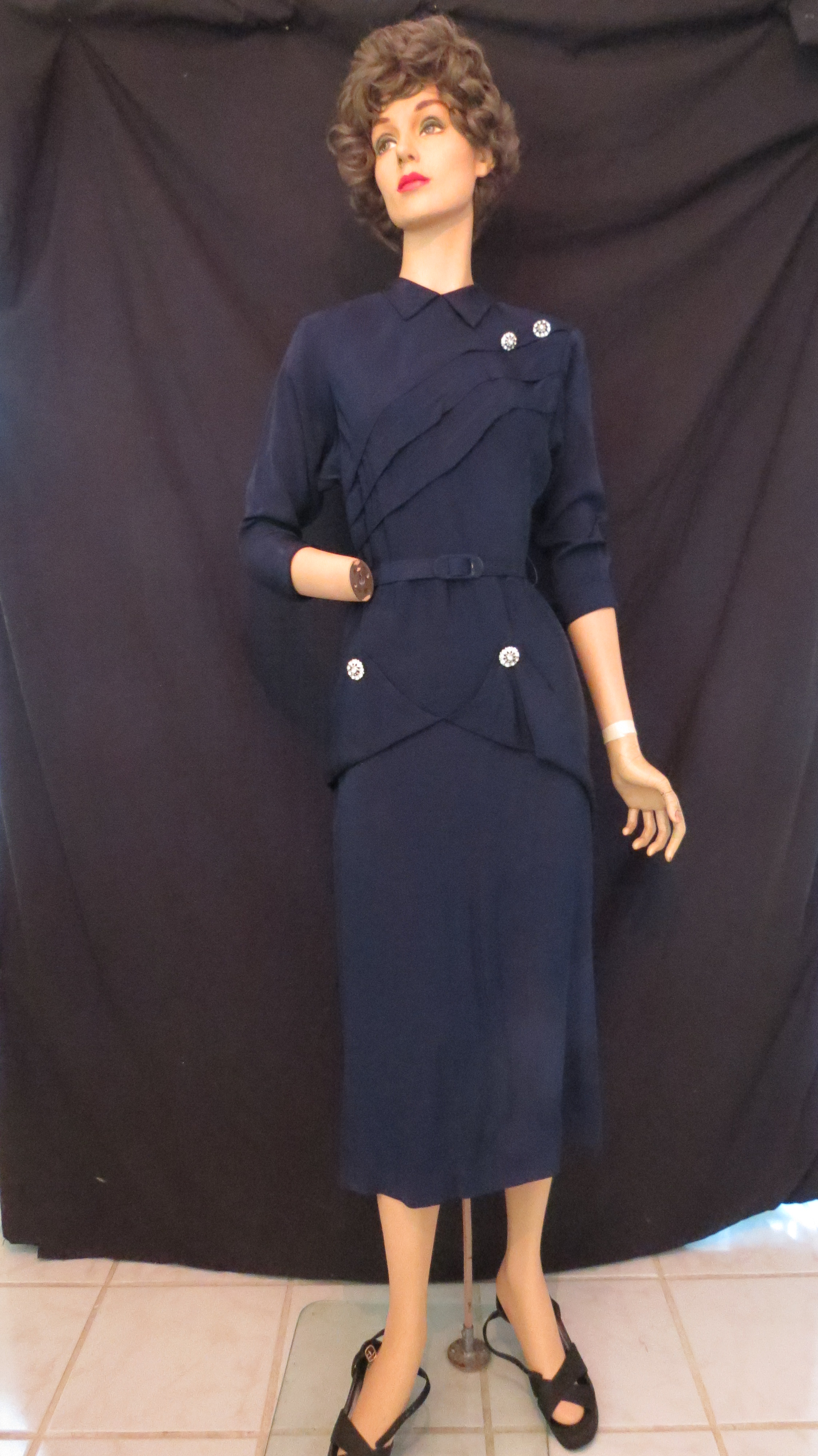
Taking a short break from the LBDs and going for a little color. This beautiful navy blue fitted rayon dress is a perfect example of the late 1940’s return to more luxurious day wear after the restrictions of rationing were ended. The label is Loma Leads, from a dress company that was organized in the late 1920’s and operated in New York and Paris. It had several departments and was around in one form or another at least into the early 1960’s. A very uptown classic ladies dress from the time when there was more fabric available again, so hemlines came back down and extra tailoring details like the peplum and bodice tucks were again possible. Women had been SO waiting for this! The exuberance of big rhinestone buttons on a day dress speaks to the attitude of a return to extravagance in fashion. The big skirts of Christian Dior’s New Look at this time is another example.

This style, however, is very buttoned-up and, to my mind, underlines the haughty, elegant and “rich” look intended here. After all the restrictions and deprivations of the “make do and mend” wartime years, luxury and affluence were the beckoning horizon for the United States and Canada while Europe was more intent on surviving and rebuilding after all the extensive damage to their infrastructure and land. But, Paris had always led the world of couture and design so fashion bounced back there, too, as Dior and other designers met the challenges and optimism of the new era and resumed their lead.

It is so fascinating to untangle the ways that fashion trends dovetail with historical events. The clues are everywhere and a good sleuth always looks for them. A completely different example from this time tomorrow – stay tuned . . . . . . . . . . . . . . . . . . . . . . . .

MORGANA MARTIN, THE MAGICVINTAGESPY

BLOG: MAGICVINTAGESPY.COM . . . . . .
1940’S WARTIME – EARLY POST-WAR ERA DRESSY FROCK

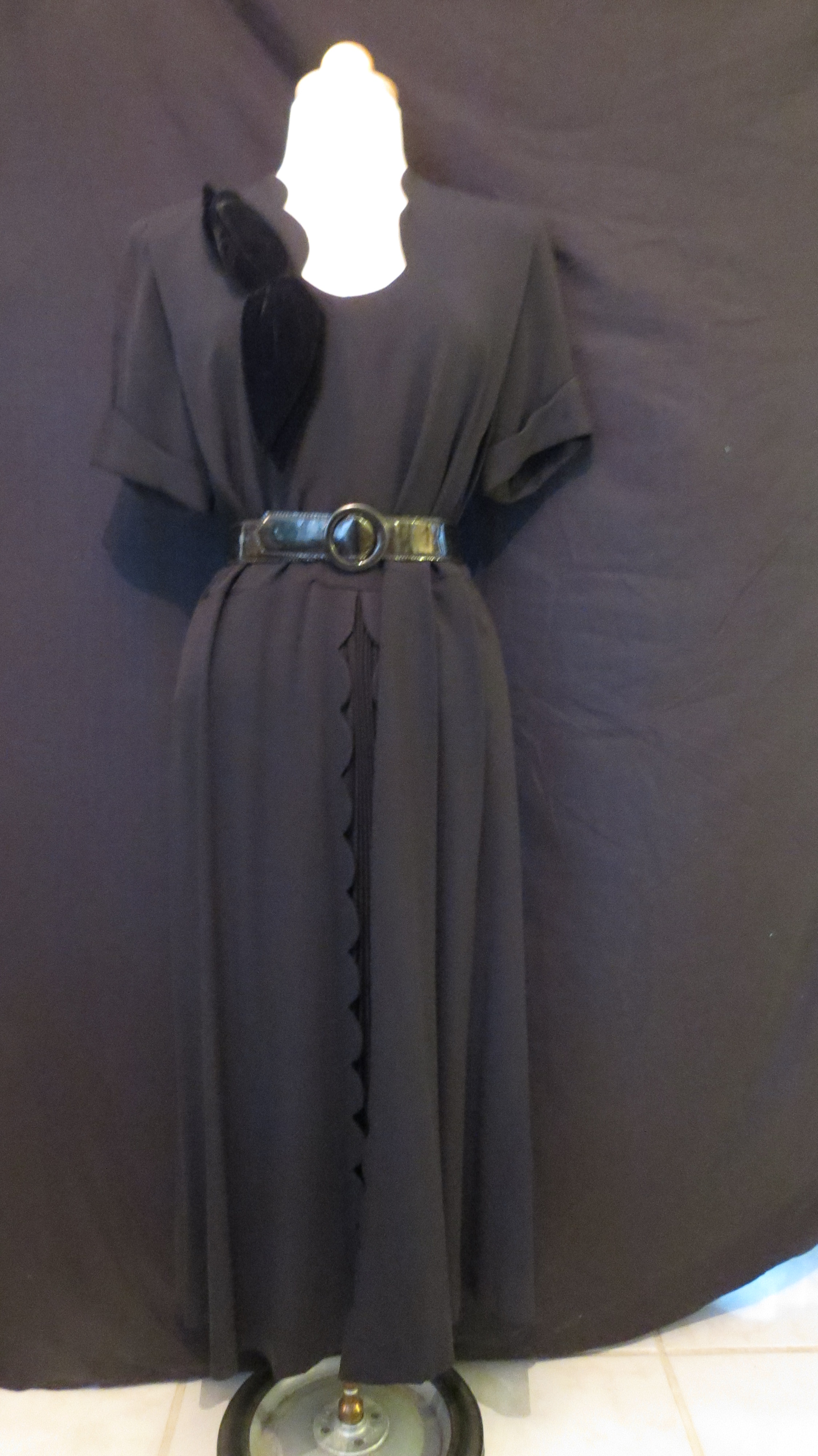
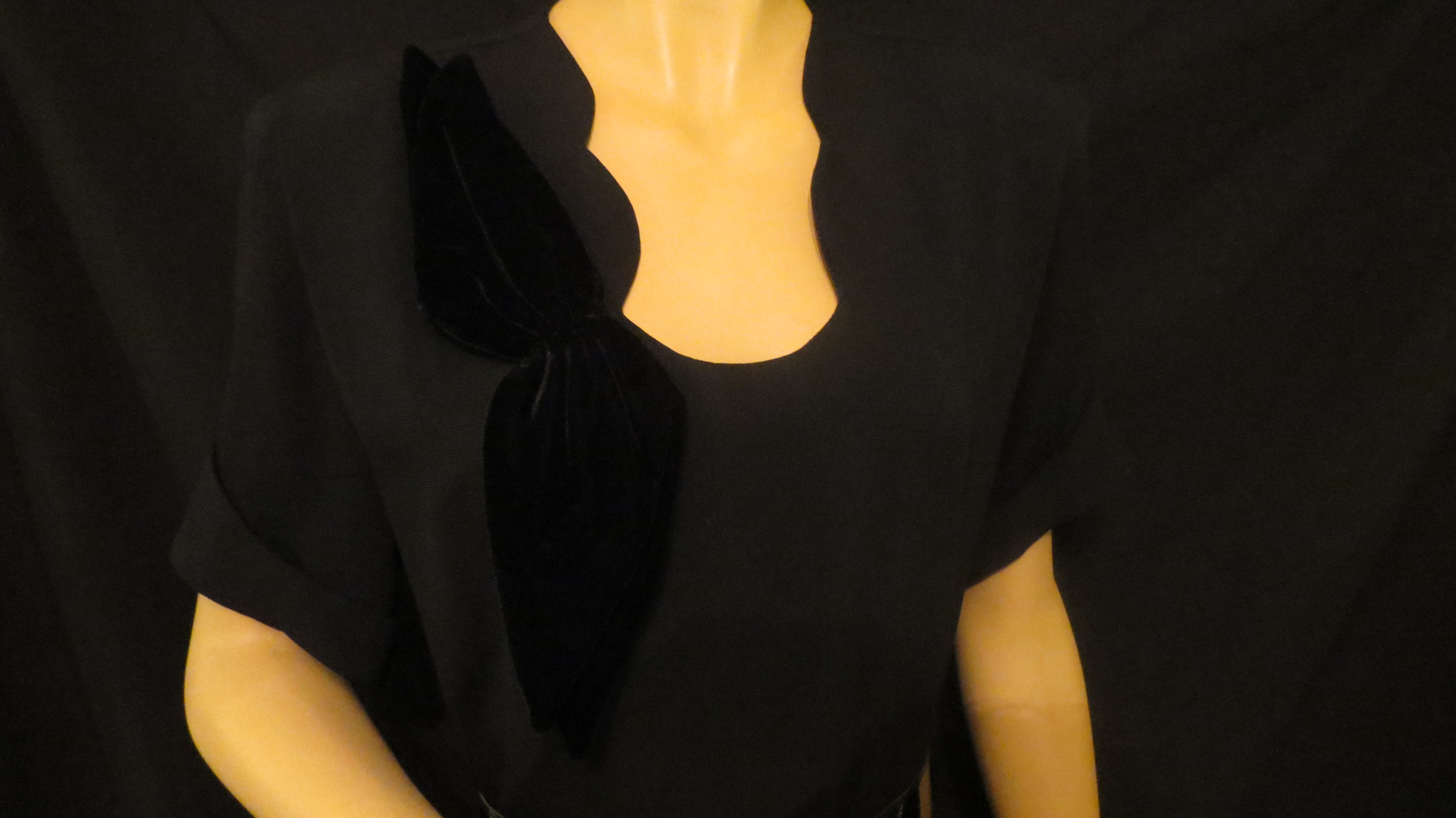
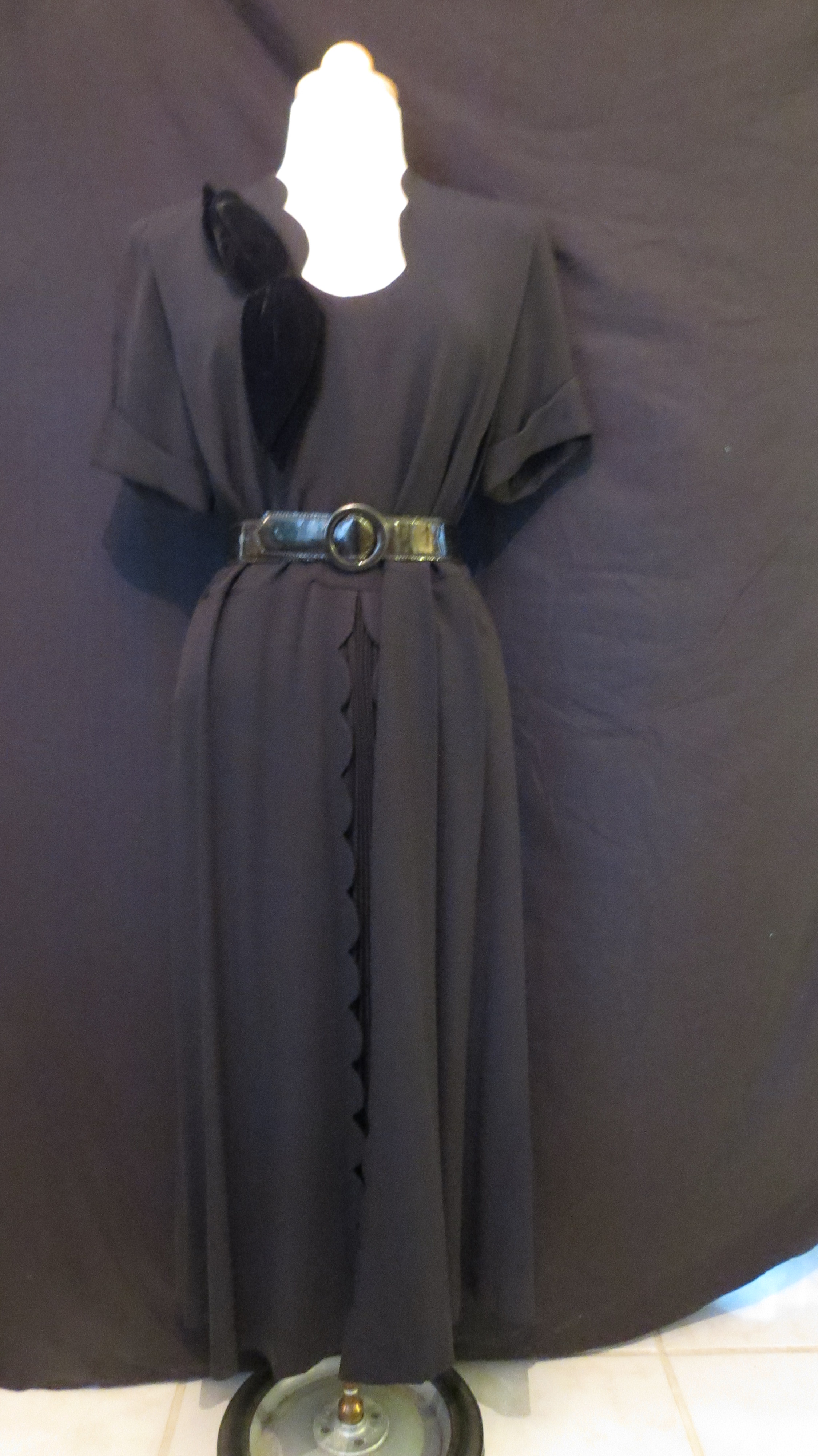
This pretty dress is made of rayon material with a BIG velvet bow and inverted front pleat for added interest. I love the scalloped overlay and the shaping on the cuffs of the short sleeves, which is SO Forties! This dress is labeled as having been made by a company or maker that was nationalized during the years surrounding and following WW2 when many, if not most, fabrics and notions available to garment-makers before the war and the Depression were unavailable to manufacturers and home-tailors because of rationing. Women still wanted pretty fashions and our government helped to make that possible and affordable.

Despite having no lining or buttons, there are very nice tailoring details. It is, unusually for that time, quite a large size but is so well-cut that belting it on my size 6 mannequin (thank you, Madge!) still looks amazing. That is an advantage of any well-made garment and especially in the case of most true vintage clothing. Stay tuned for more . . . . . . . . . . . . . . . . . . . . . .

MORGANA MARTIN, THE MAGICVINTAGESPY

BLOG: MAGICVINTAGESPY.COM
UH – OH! CHANCE OF FROST OVERNIGHT. TIME FOR A TRUE VINTAGE WOOL JACKET.

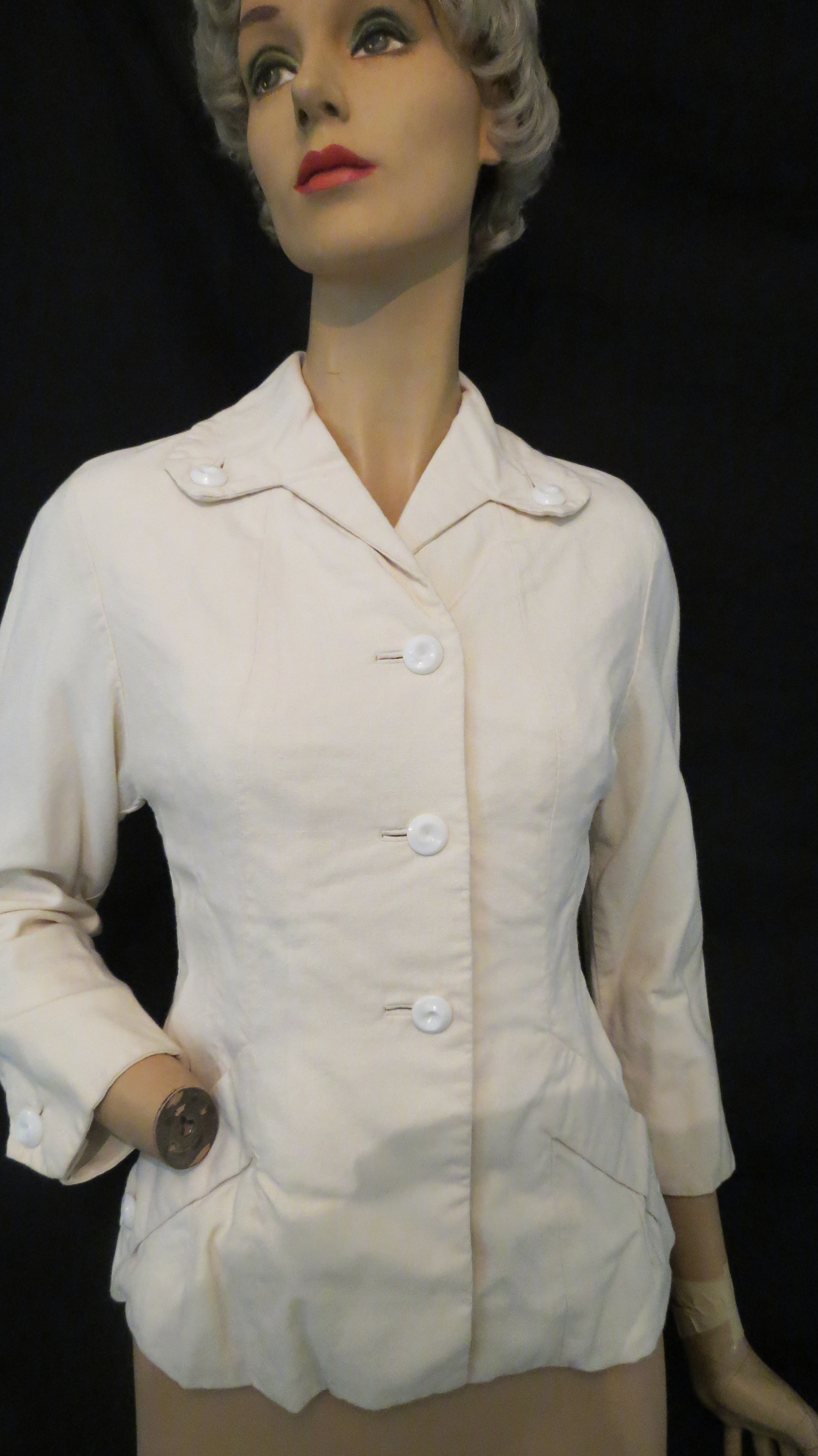
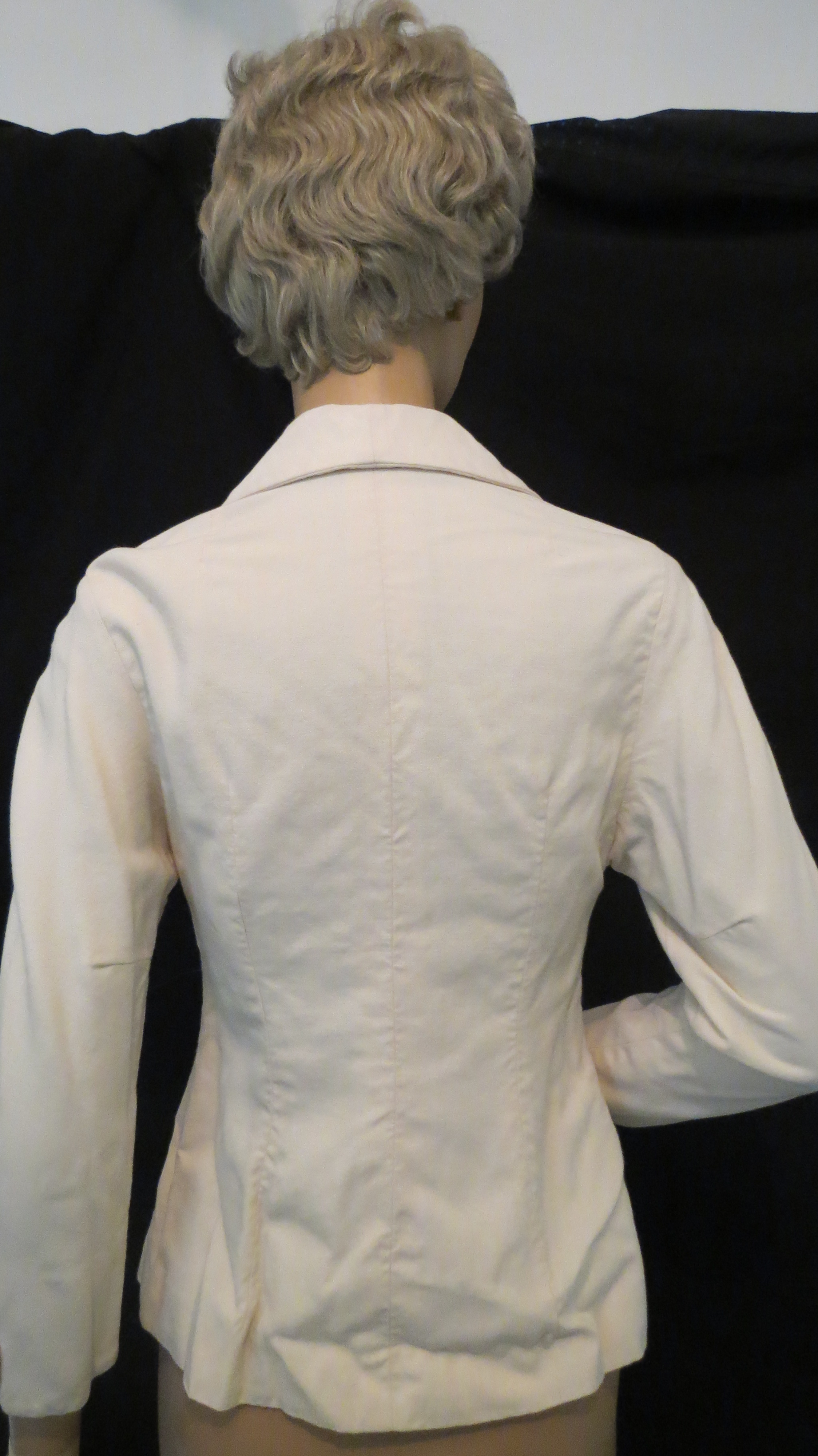
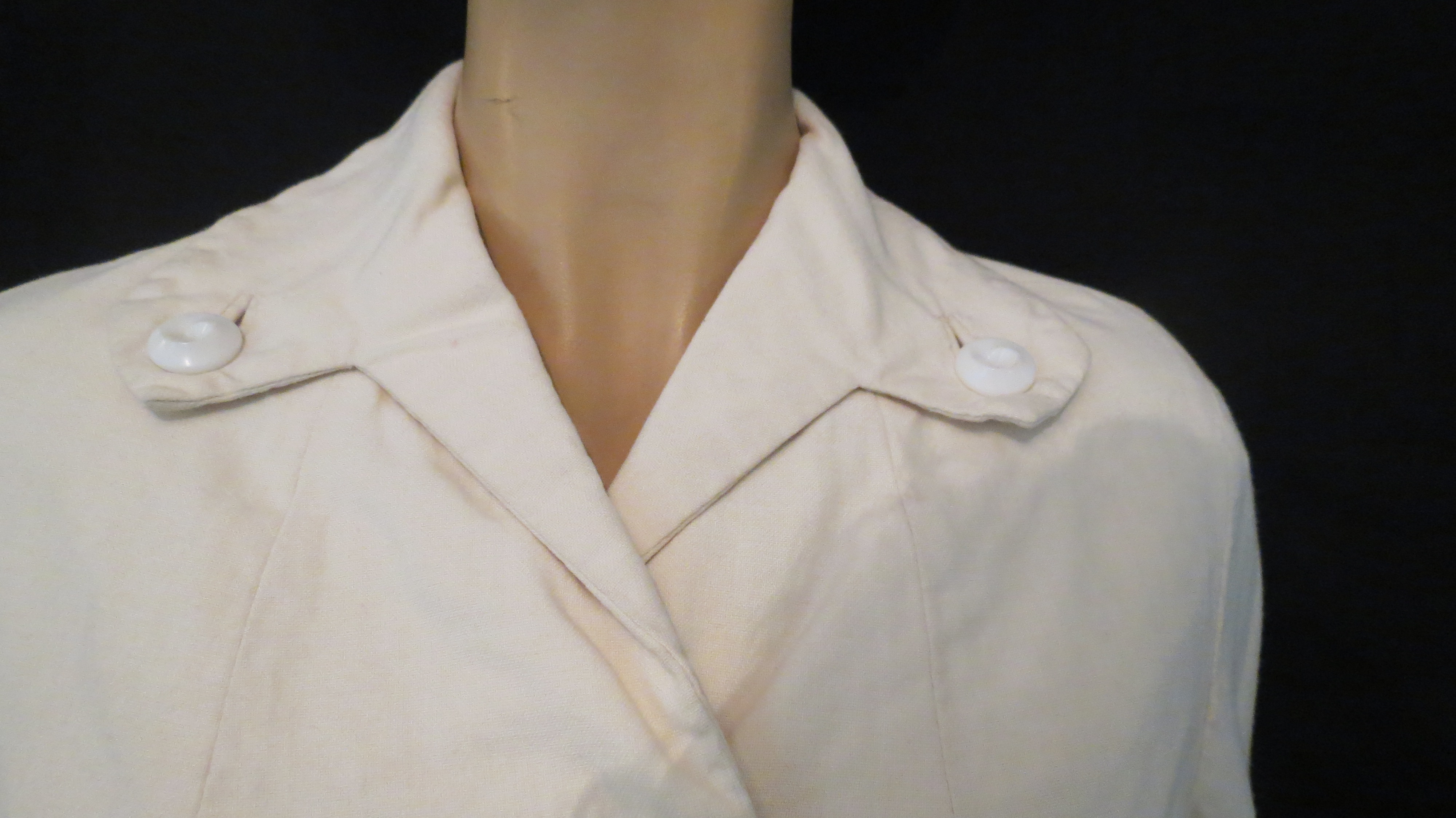
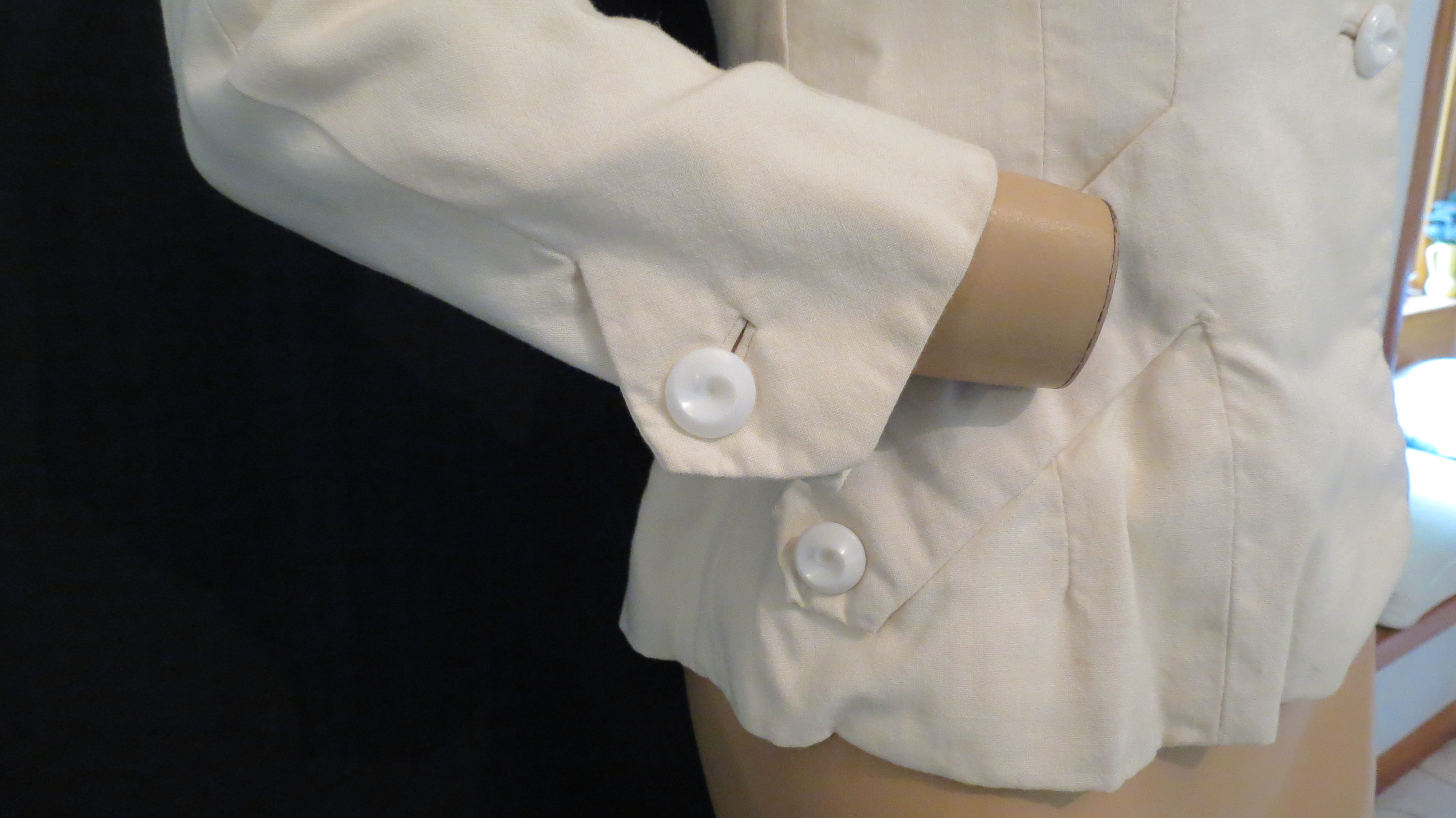
Yes, it’s still September and early for wool but this post-war 1940’s – early 1950’s jacket is perfect for the transition. It’s fairly lightweight and the winter white color can take it through 3 seasons. Almost a blazer, but the fit makes me wonder if it once had a matching skirt. Who knows. I was thrilled to discover it. This beauty can stand alone.

Look at the wonderful tailoring details. A sculpted collar, cuffs and tabs at the hips that are accented with arty buttons (which are all still present!). Full lining in matching rayon(?) fabric. It may even have been custom-made. You just can’t beat the fabulous construction of most garments made during this era. It’s a tiny size that will fit well over a light blouse or even a tank. Easy to dress up or to wear more casually.

My best guess for what the weather is going to be like tomorrow, let alone next week, is up in the air (pun intended). I’ll keep on unpacking what I need, so stay tuned . . . . . . . . . . . . . . . . . . . . . . . . . . . . . . . . .

MORGANA MARTIN, THE MAGICVINTAGESPY

BLOG: MAGICVINTAGESPY.COM
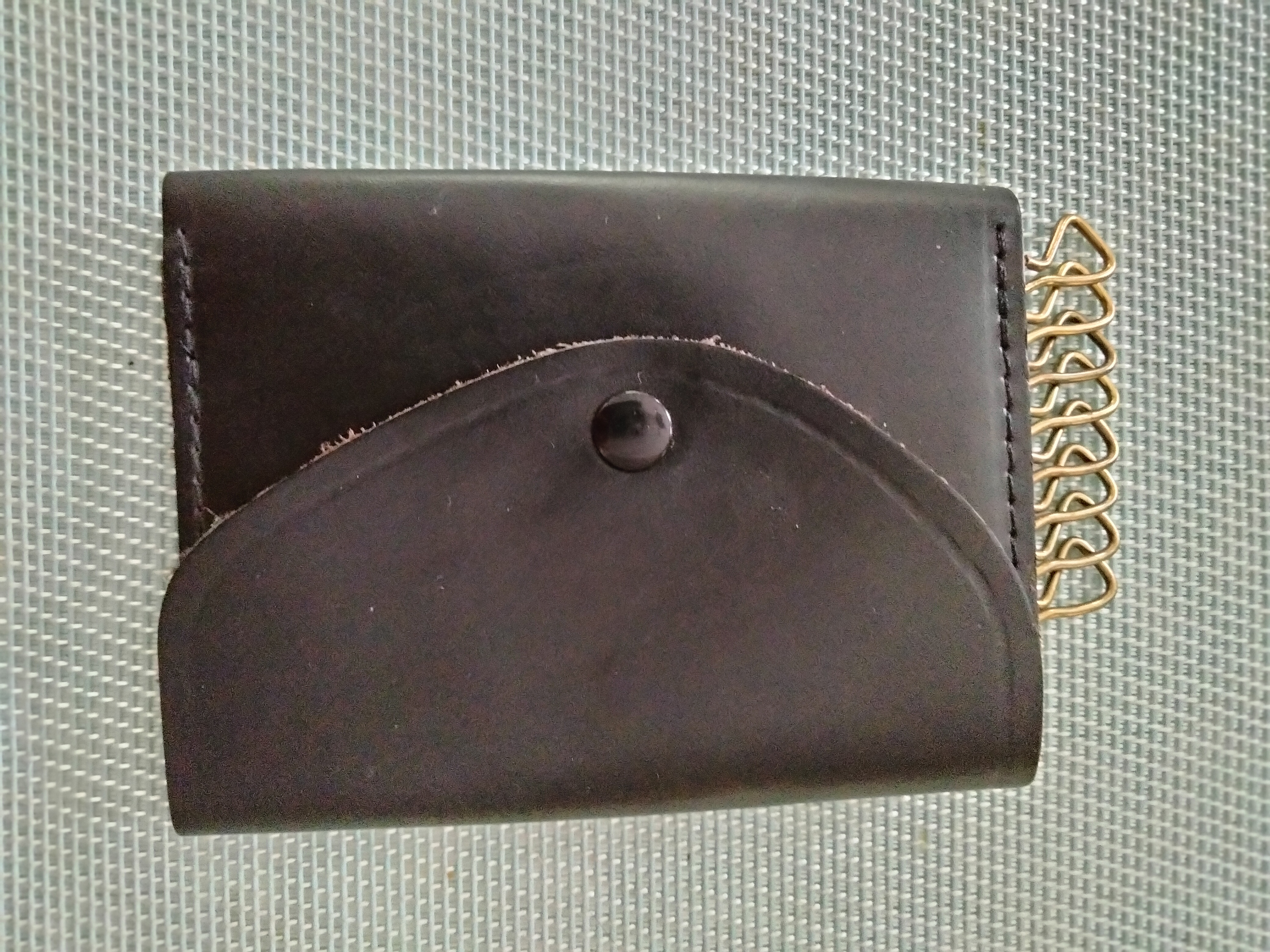
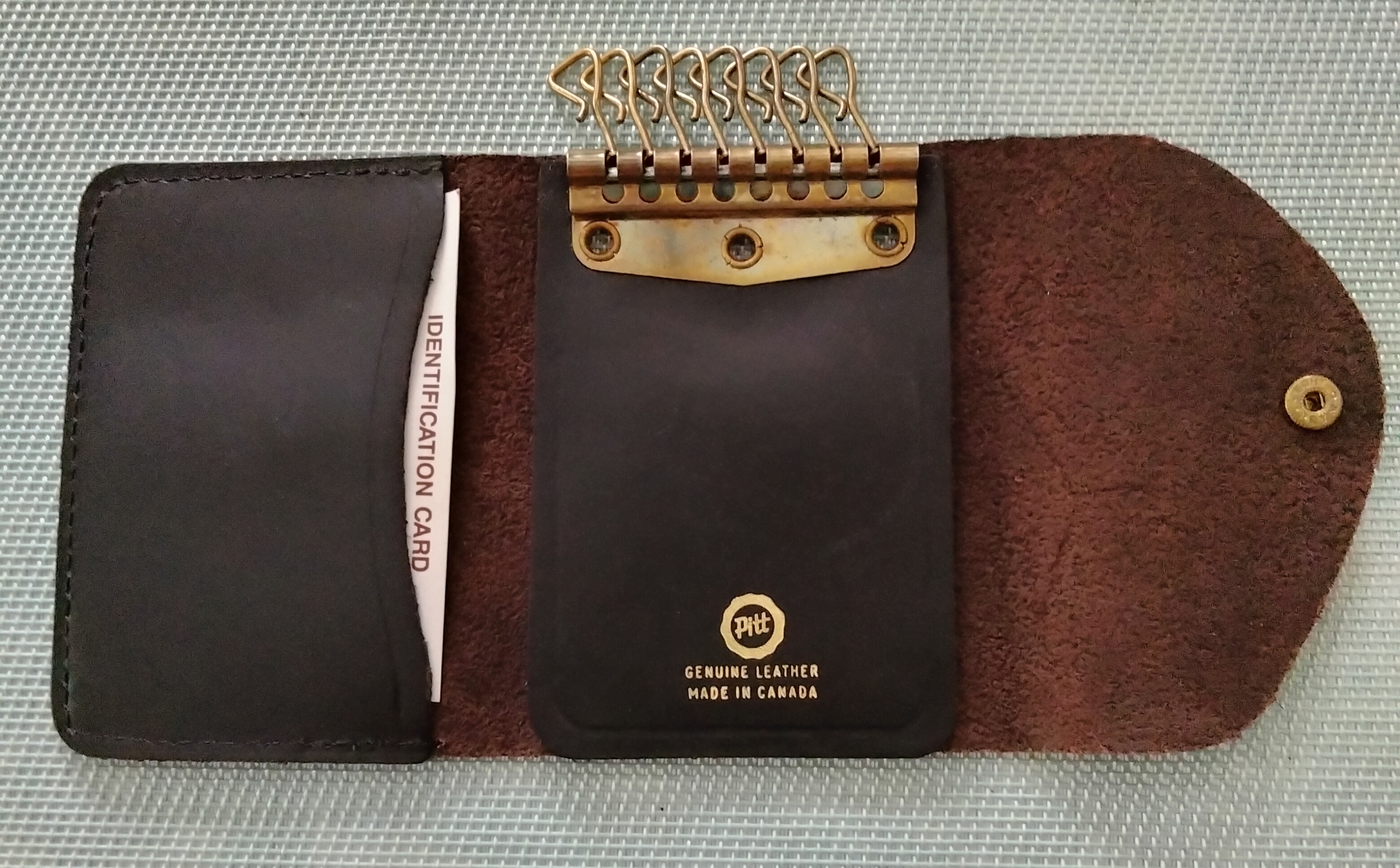
JUST FOUND: MID-CENTURY MEN’S(?) LEATHER KEY CASE ACCESSORY

Practically “new”; just a little corrosion on the metal parts. I couldn’t pass this up since it is an iconic true vintage personal item. This fine accessory is an example of a key case style that had been made for decades and decades, mostly before the 1970’s. Always in leather, and with a simple fold-over design and with these little metal hooks that can hold old-style car keys, house keys, post office box key, storage box key, office key, etc,, etc. I’ve seen many of them, and they’re always a good clue – especially if the keys are still present. . . . . . . . . . . . .

The design is meant to lie flat when the keys are tucked inside, so best for a pocket only. That’s why I have always guessed that it’s mostly a men’s accessory. When other types of more modern and prettier key-rings were not available, though, one of these could tuck securely into a lady’s handbag and they do allow the owner to carry all their important keys in one tidy place. Many of them, like this one, contained a card on which the owner could write their name and address in case the keys were lost. Often, people ignored these and they were still left tucked inside.

It’s another example of the elegant and high-quality items that our ancestors owned and used almost every day. I just never know what might turn up. Stay tuned . . . . . . . . . . . . . . . . . . . . . . .

MORGANA MARTIN, THE MAGICVINTAGESPY

BLOG: MAGICVINTAGESPY.COM
TRUE VINTAGE LATE 1950’S – MID-1960’S DRESSES

Late Fifties saw slinky knit sheath dresses that carried over the new, easy-care synthetics from the 1940’s. The prints morphed slowly from geometric, atomic shapes back to cute animals, fruits and veggies. This fabric is amazingly comfortable and drapes beautifully but was economical. Common, moderately-priced frocks were made from it.

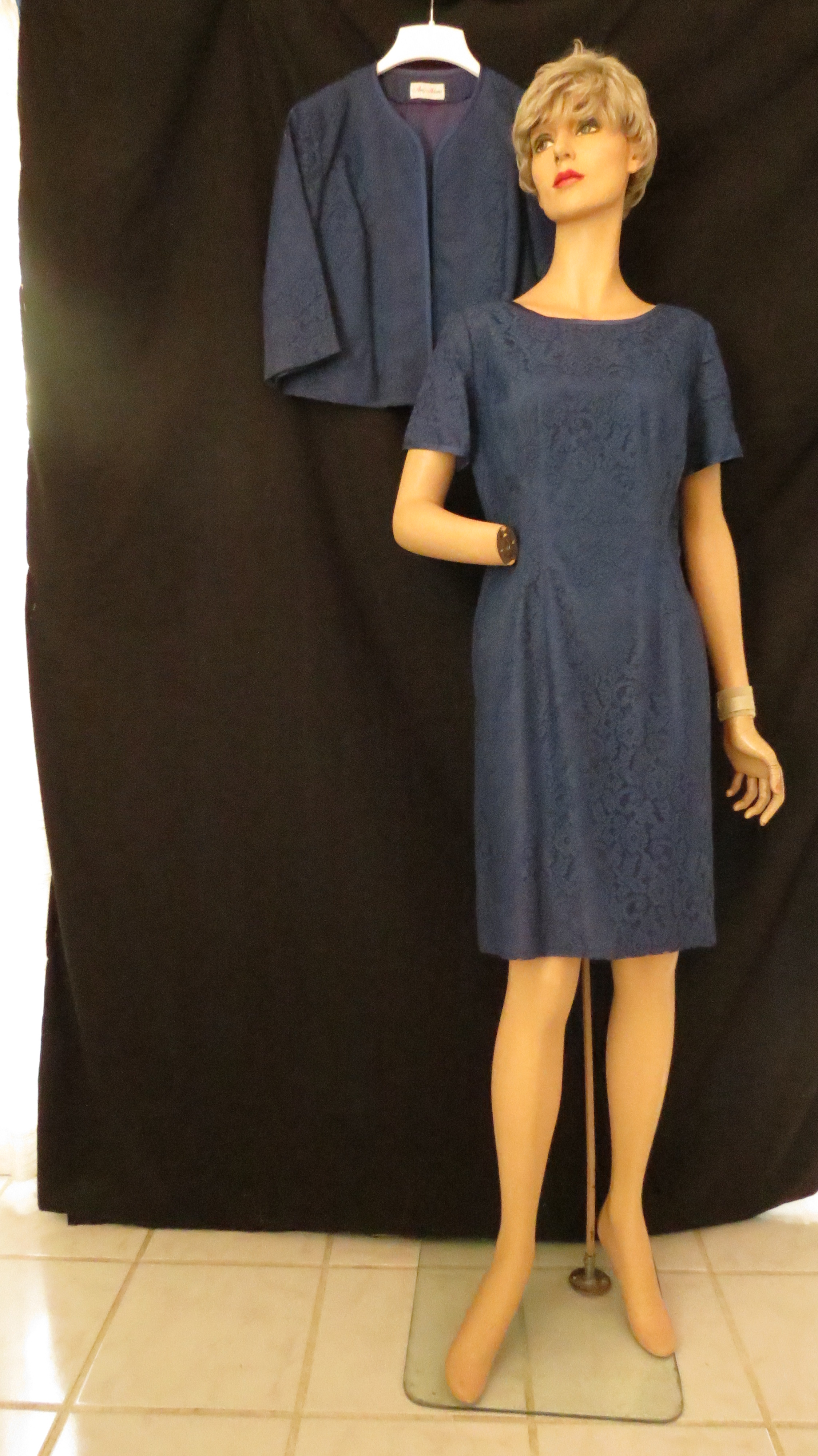
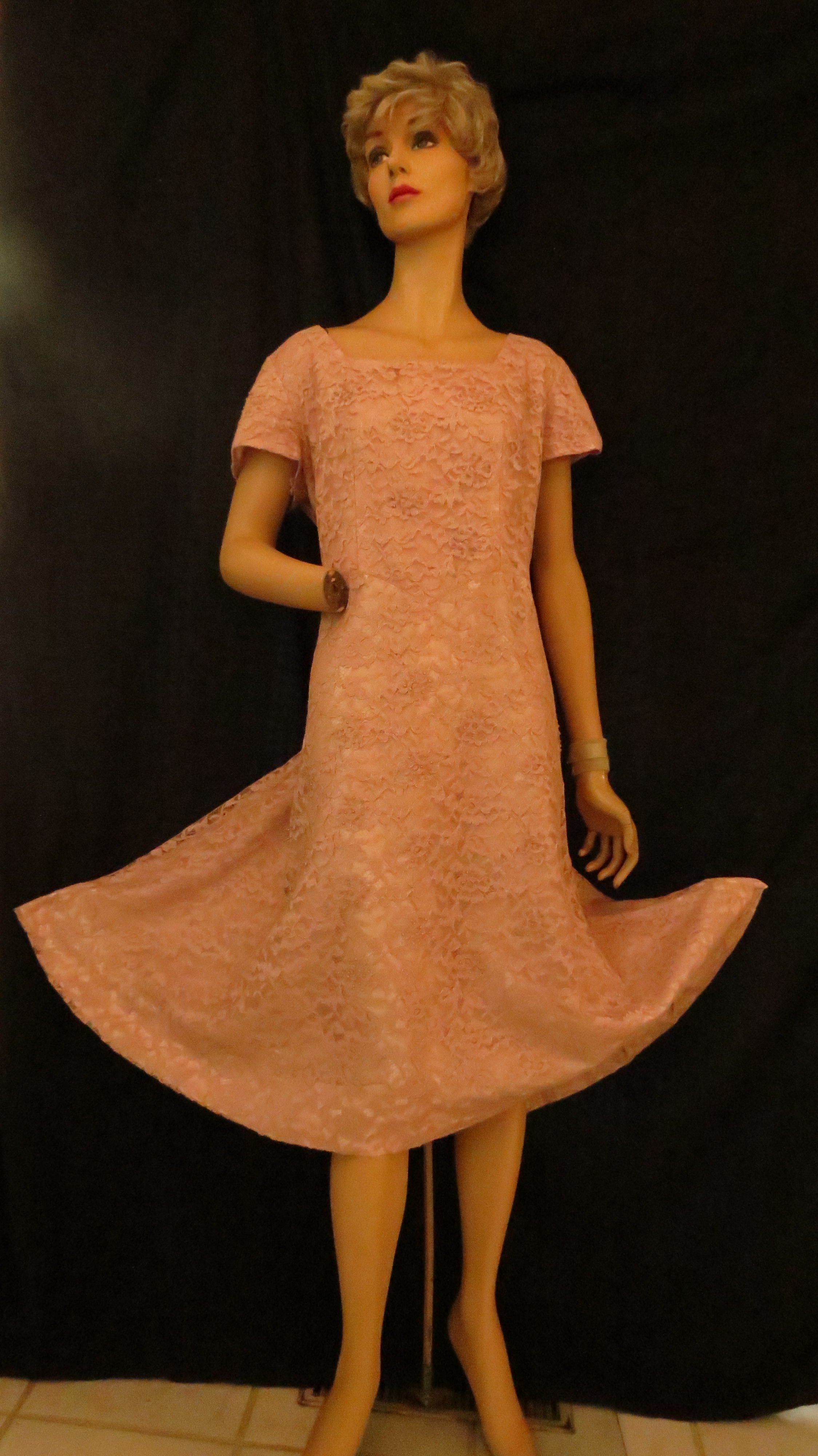
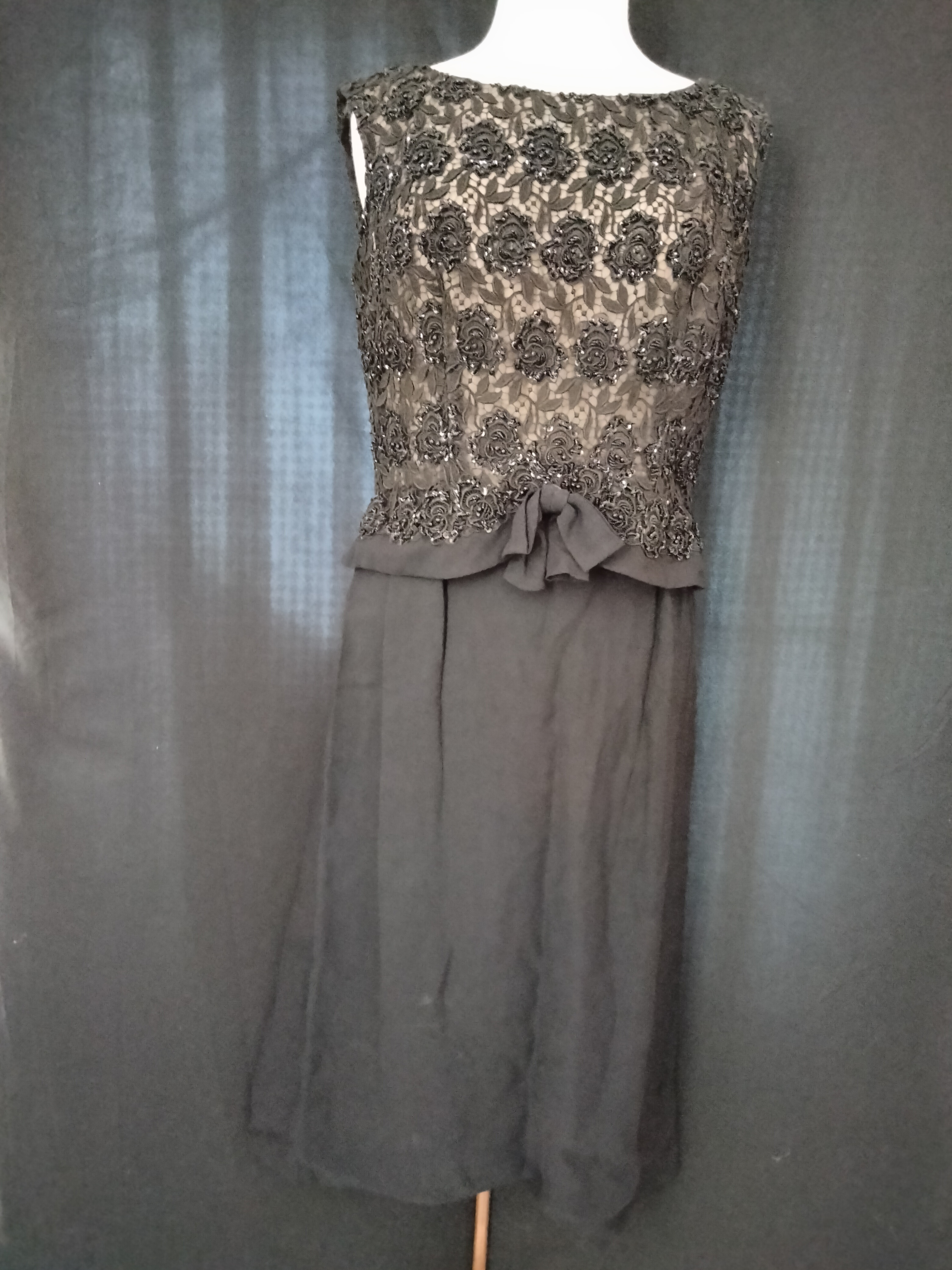
Just a few years later, lace overlay became the big thing. Dressy day-dresses were often made from it, as well as semi-formal and formal gowns. These were also generally made from synthetic or blended fabrics but probably required dry-cleaning. Better frocks often came from British Hong Kong, where the design and hand-made tailoring made them exceptionally elegant and of higher quality. These dresses were still within the reach of middle-income ladies but were more expensive. See the black dressy sheath with a beaded over-blouse above. The straight black high-neck sheath came from Saks Fifth Avenue.

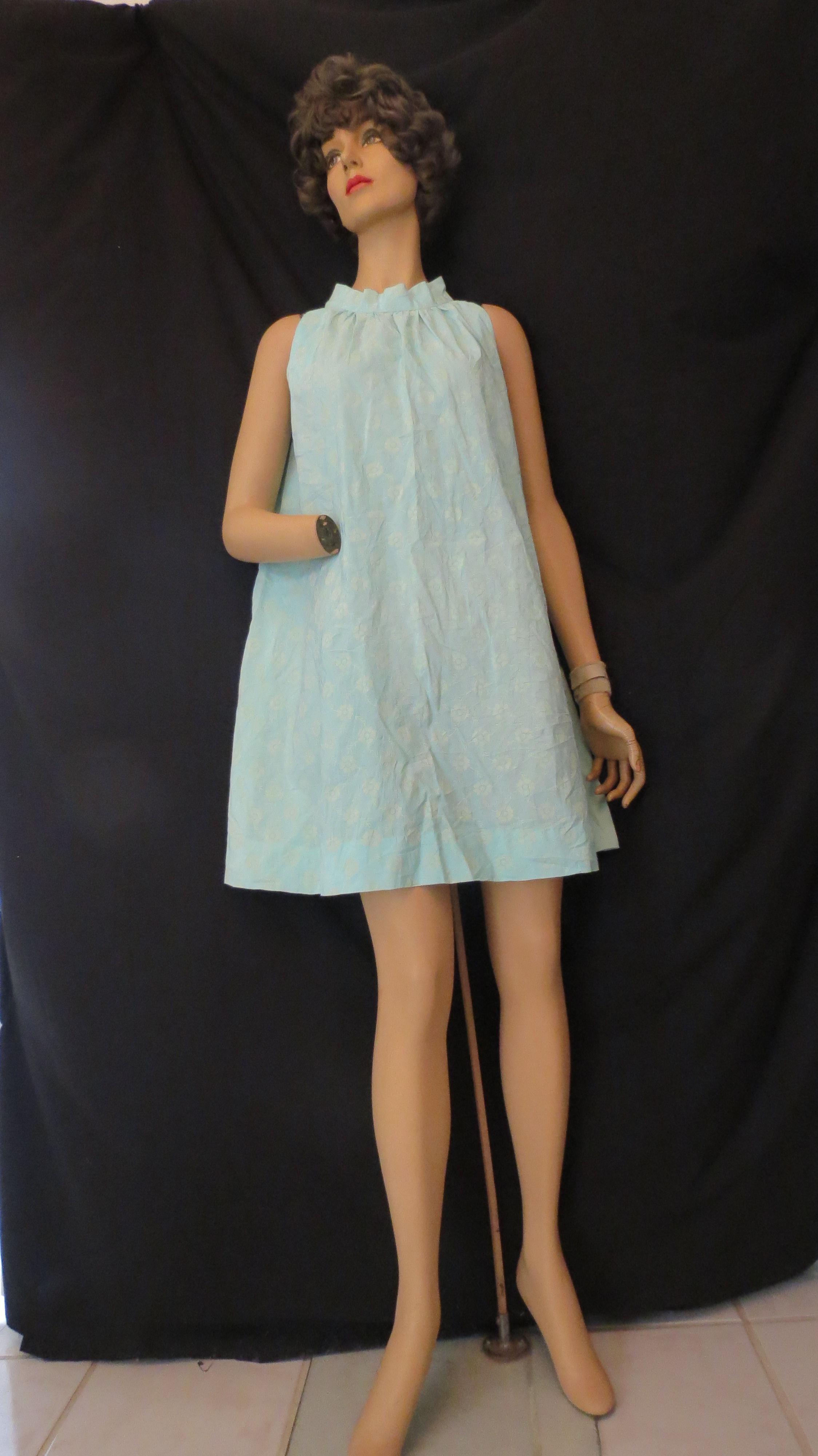
Then, again from the Brits, came Mary Quant’s Tent Dress in 1964. Although the Mod style had started in the 1950’s, it’s appearance in clothing was totally revolutionary. It brought with it radically shorter hemlines and easy-to-wear, casual shapes. See the light blue, home-sewn version above.

Some styles retained their classic, conservative lines and stuck to neutral or basic tones while bright colors became ever more popular, even in formal garments. While political and social movements became radicalized and changed society, the Hippie, Boho and Prairie styles started to take over in the late 1960’s and carried over into the early 1970’s. Tomorrow we’ll look at some of the ways that popular fashion incorporated these trends into mainstream dressing. Stay tuned . . . . . . . . . . . . . . . . . . . . . . . . . .

MORGANA MARTIN, THE MAGICVINTAGESPY

BLOG: MAGICVINTAGESPY.COM
TRUE VINTAGE 1940’S LADIES COATS AND ACCESSORIES

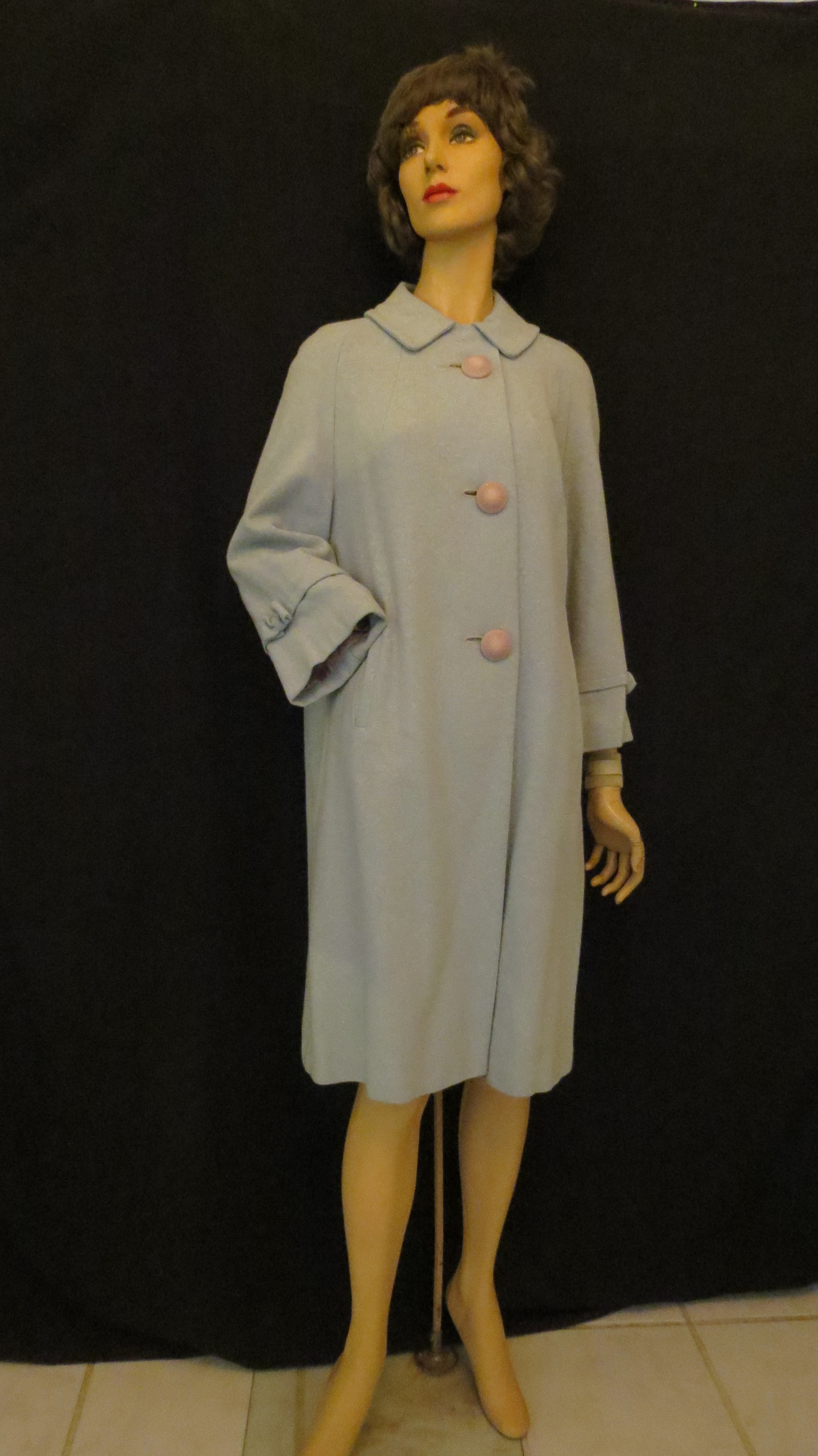
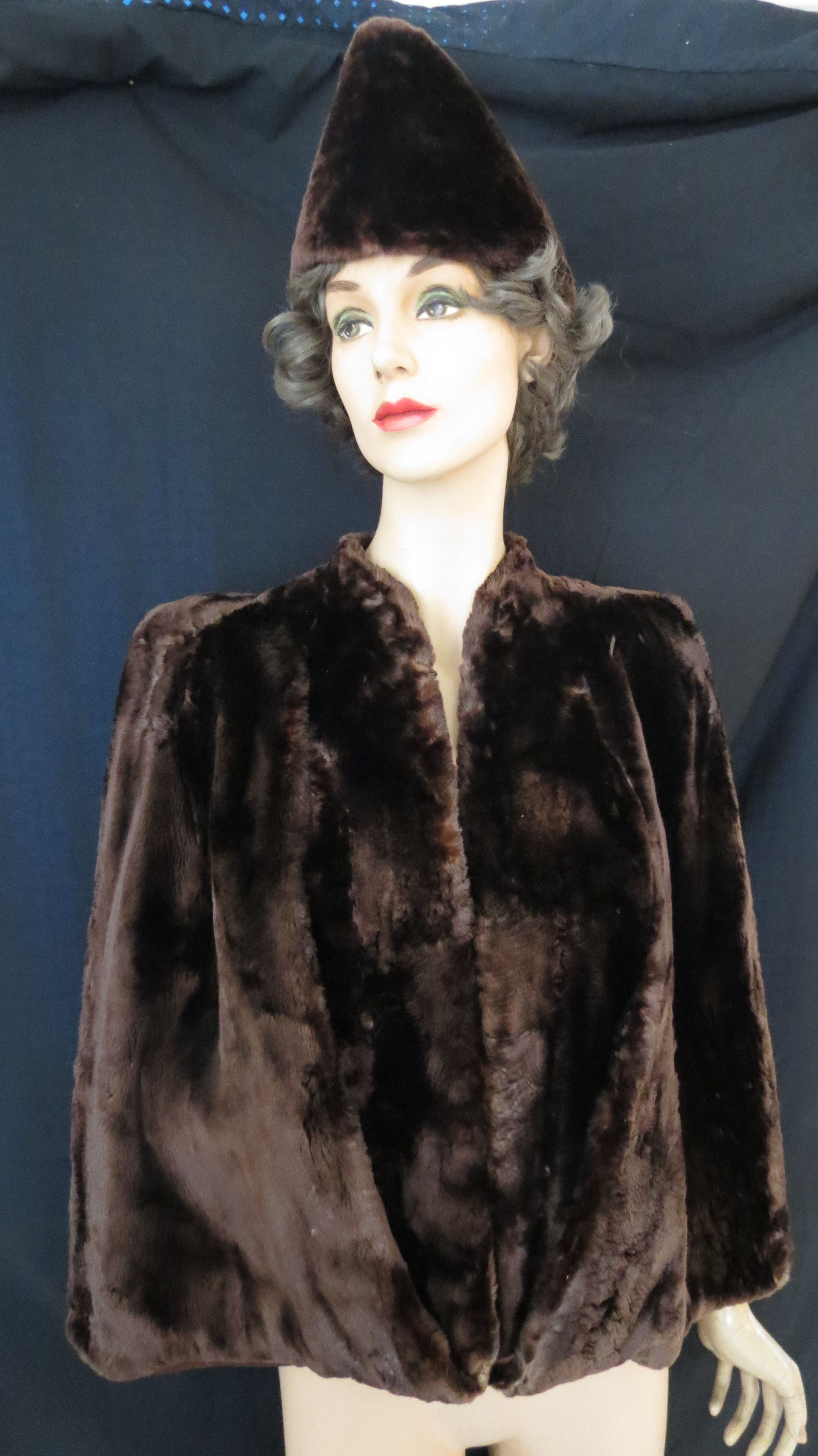
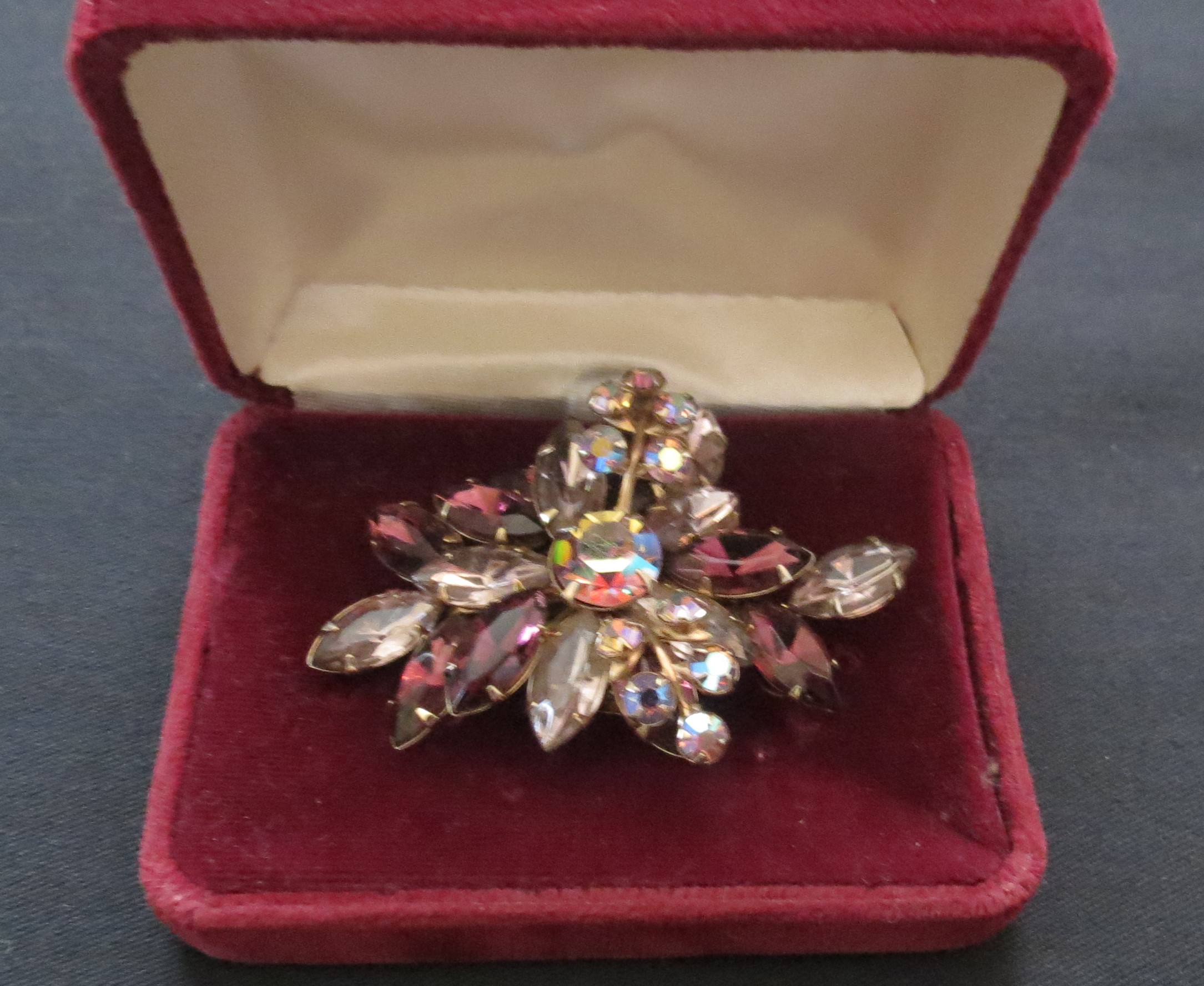
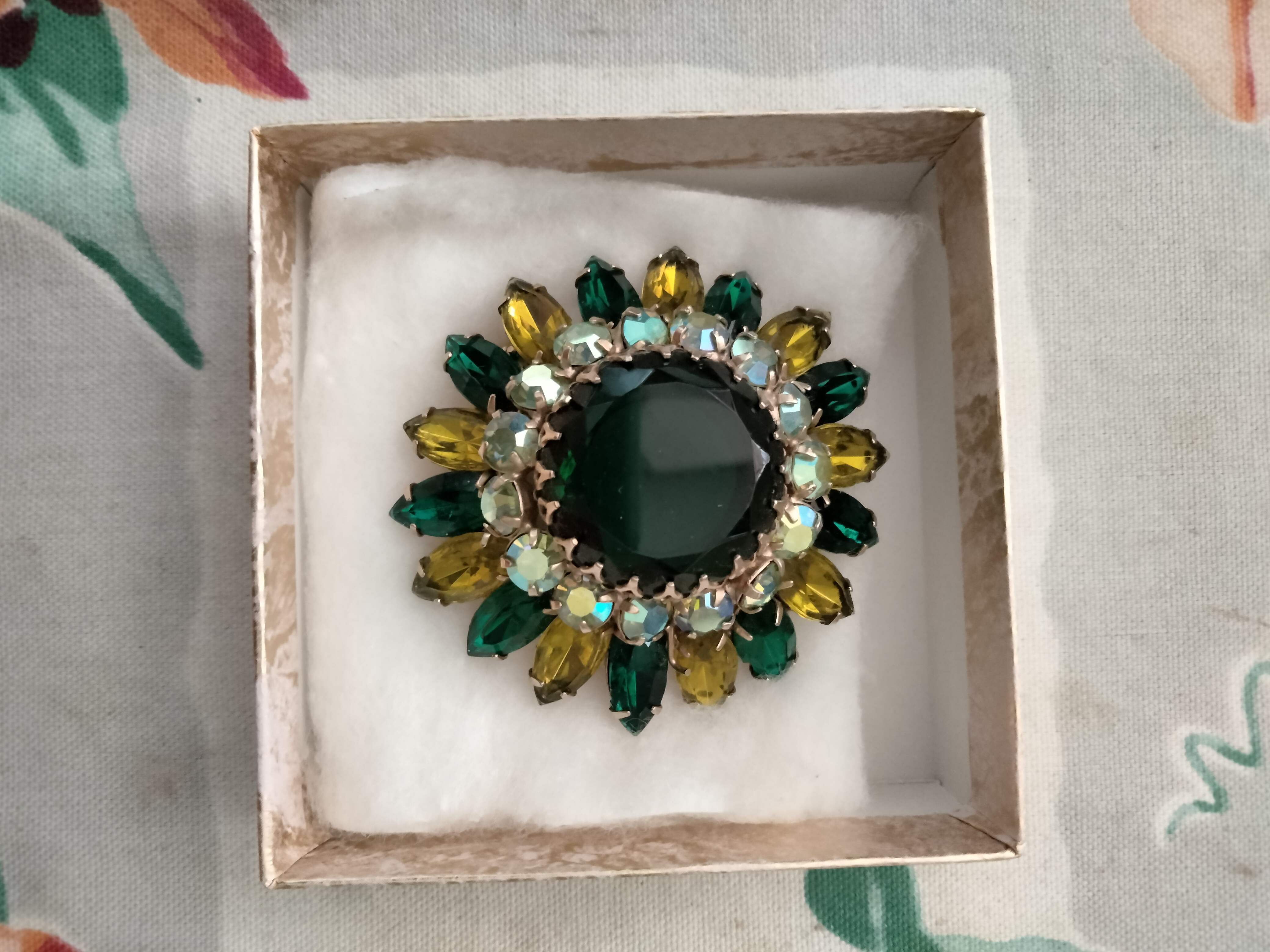
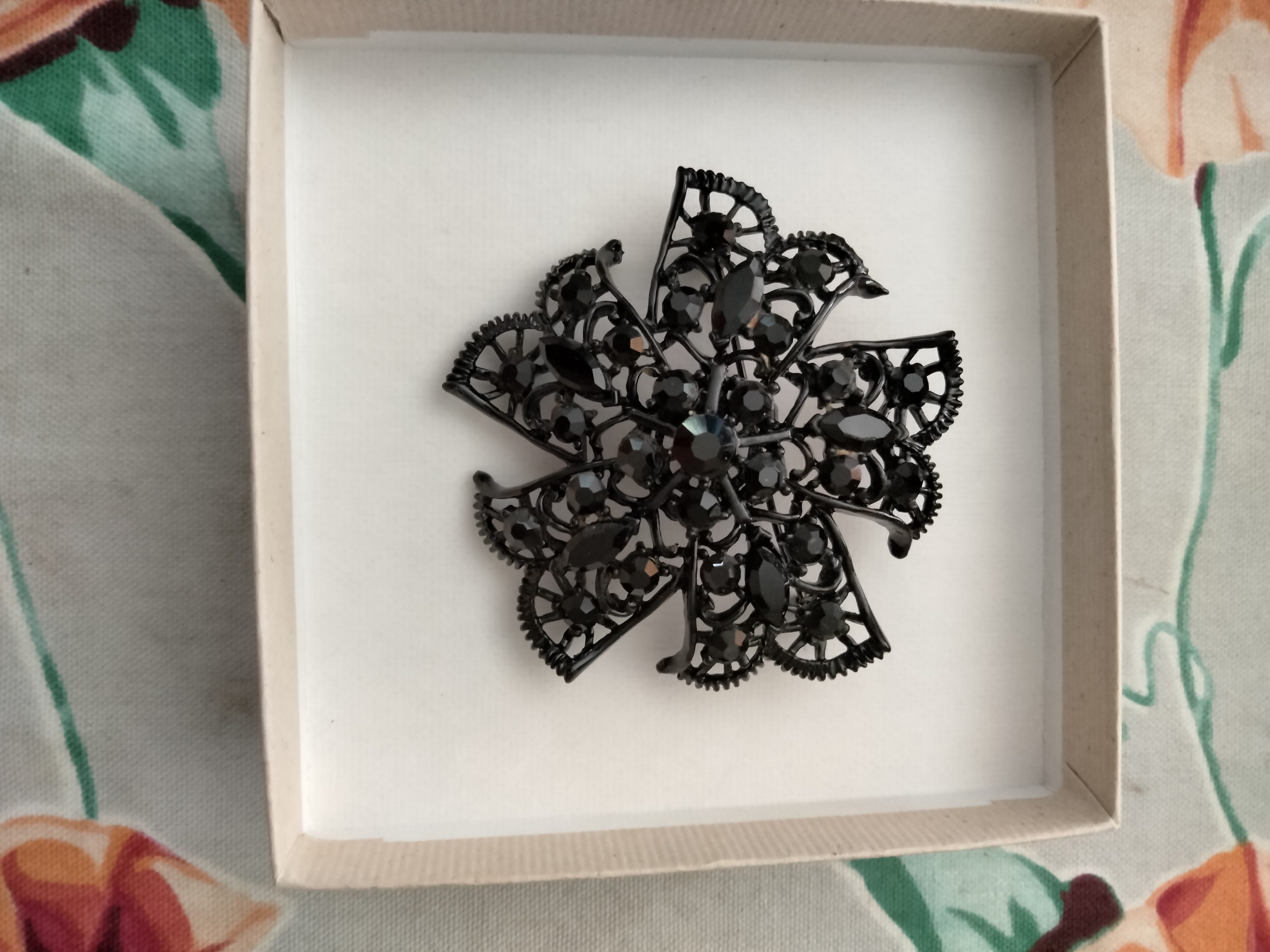
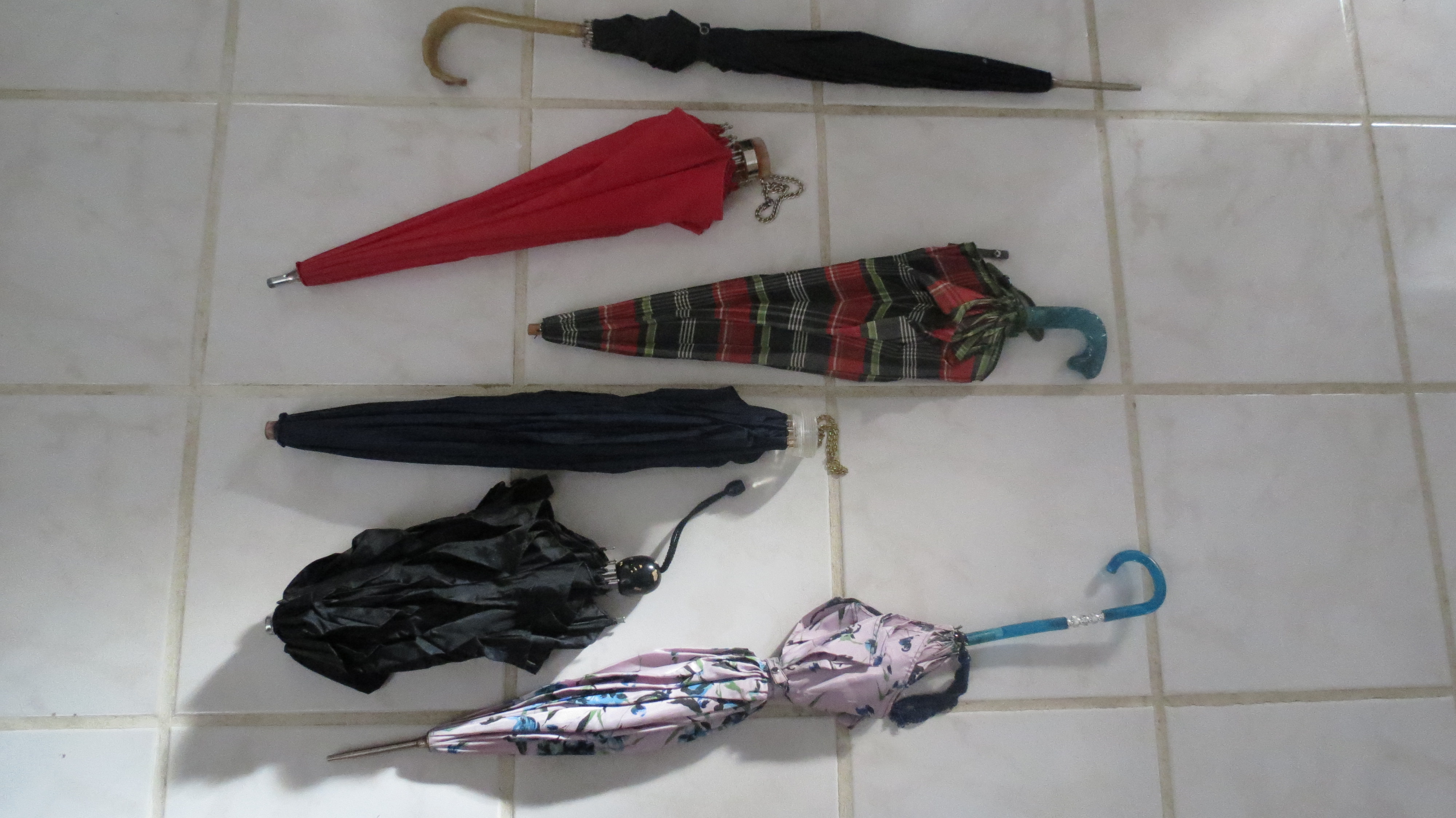
Beautiful wool coats which called for lapel brooches. Umbrellas with handles made of wood, celluloid and other “new” plastics. As always, I love the pretty fabric patterns and bling alongside the tailored elegance of the coats and jackets.

You can see the wartime influence on the first coat with it’s simplicity and lack of detail while a nod to luxury has been made by the velvet collar. Military style influence is visible in the big padded shoulders and the shape of the fur hat. I can really picture Ingrid Bergman wearing a coat like the fitted one – similar to trenchcoat design a la the movie Casablanca. The pale blue version with big pink buttons is moving us toward the 1950’s.

More reasons why the 1940’s fashion decade is probably my favorite. However, the 1950’s are also a big competitor on my favorites list and we’ll travel into the early part of that decade tomorrow. Stay tuned . . . . . . . . . . . . . . . . . . . . . . . . . . . . . . . . . ..

MORGANA MARTIN, THE MAGICVINTAGESPY

BLOG: MAGICVINTAGESPY.COM

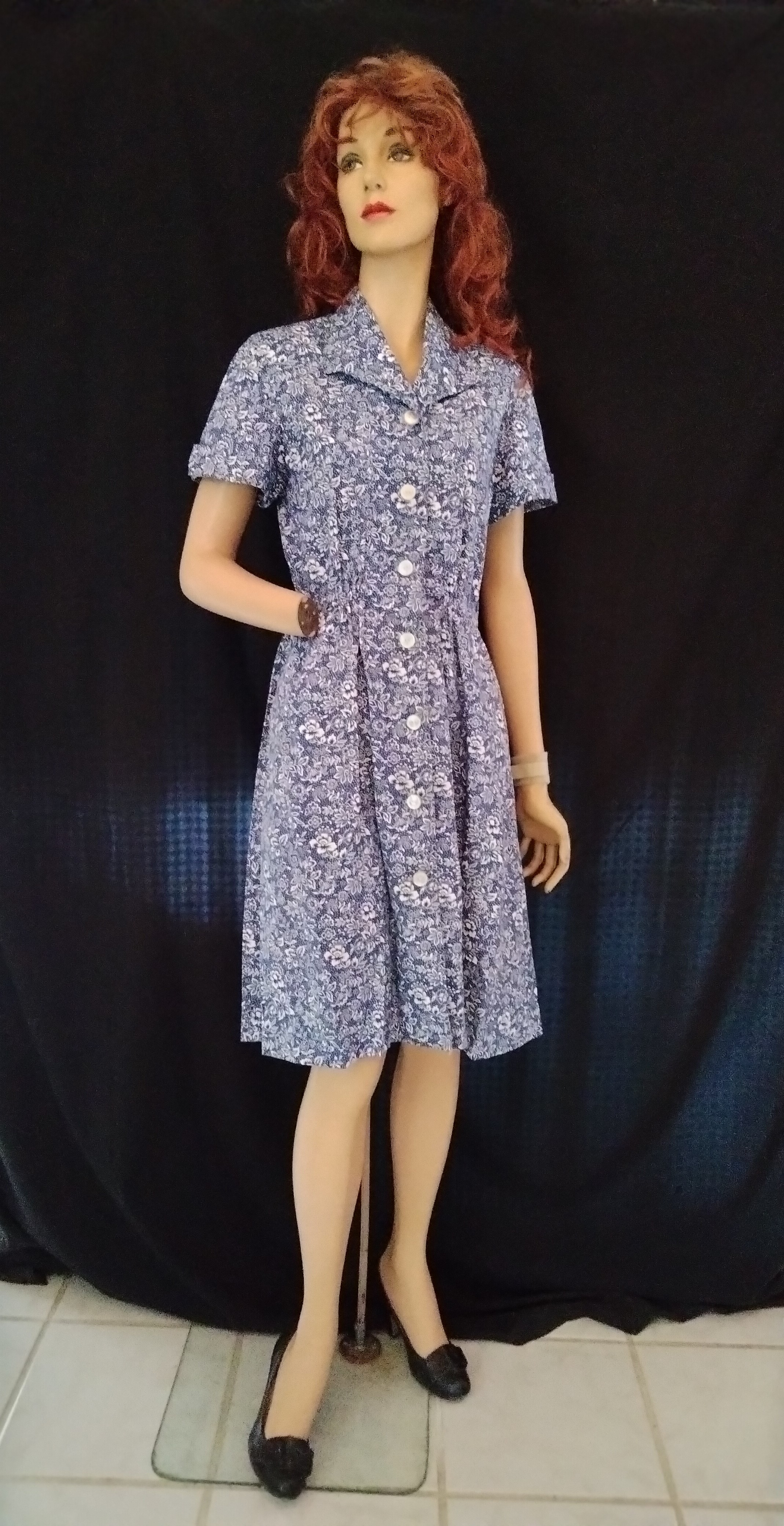
MORE WONDERFUL TRUE VINTAGE 1940’S SPRING DAY DRESSES AND ACCESSORIES

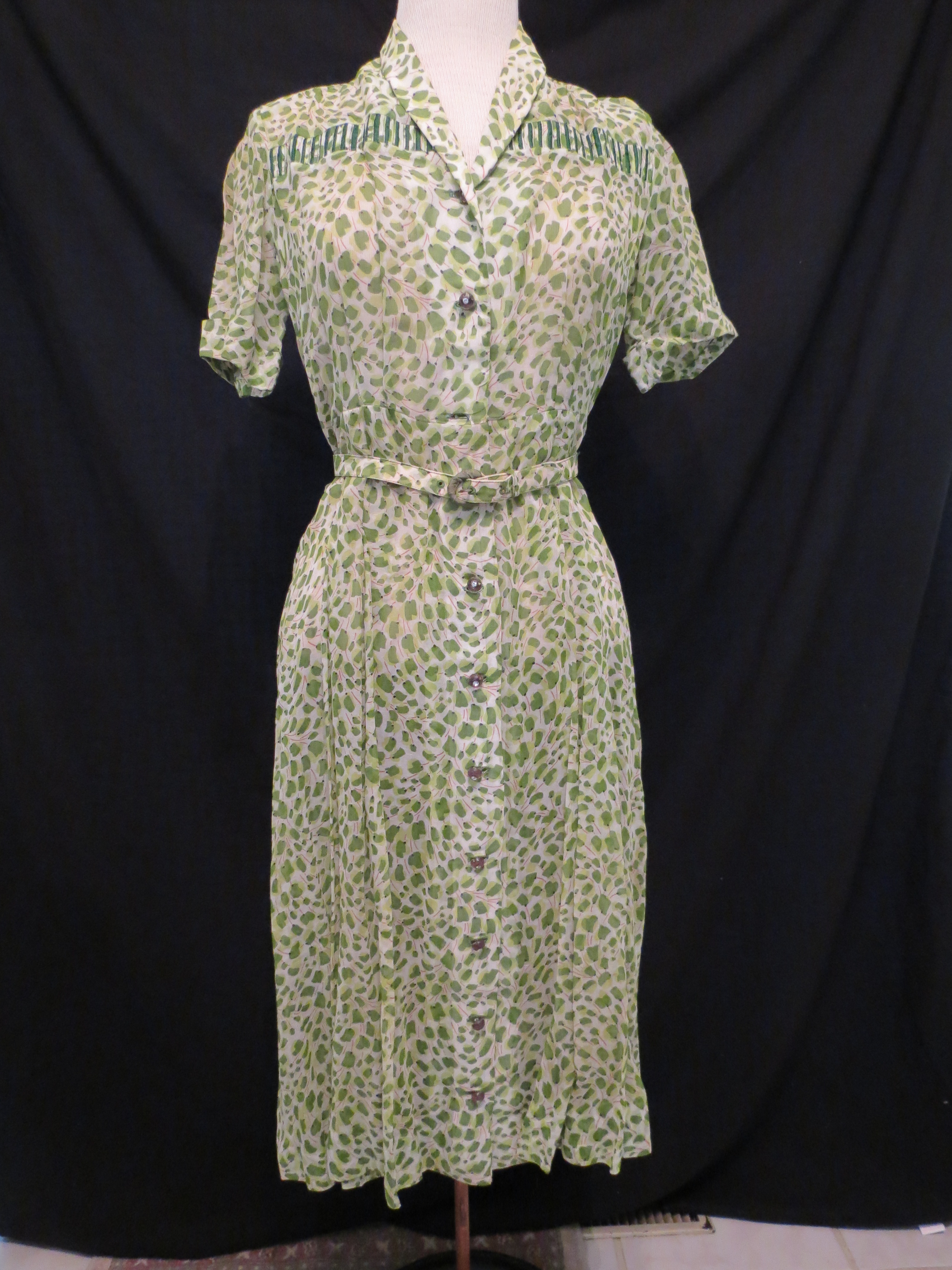
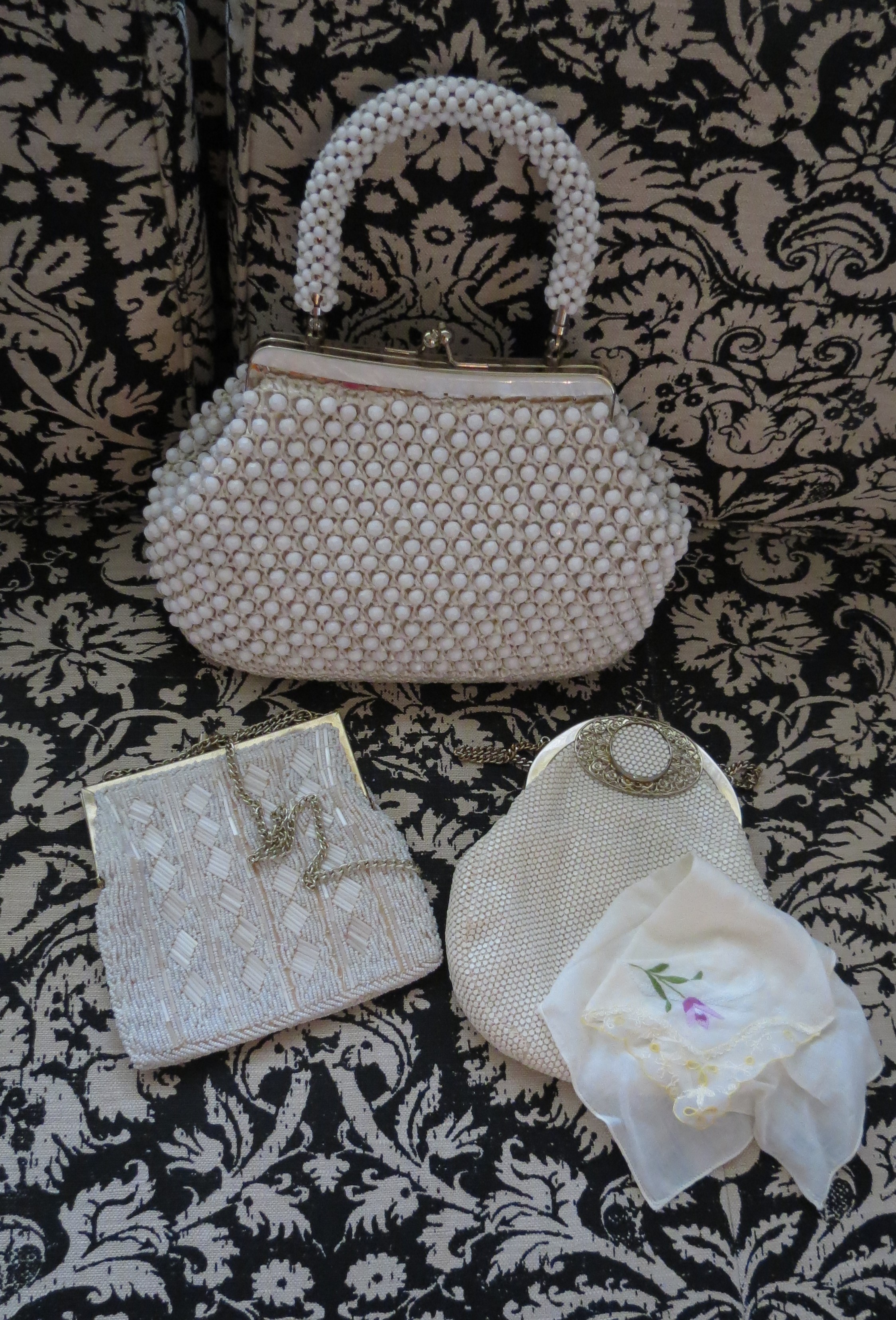
Some of my very favorite frocks. Wonderful rayon and blended synthetics. Pretty cotton. One sheer, the others opaque and drapey. Don’t you love these prints? Atomic, abstract and floral – big wartime and post-war favorites. Here, also, are some of the handbags, scarves and pumps that might have been worn with them.

Iconic styles, rationing-compliant and “modern” plastic alternatives to leather and wool. Silk and silky synthetic scarves were constant purse accessories. A few items carry over from the 1930’s – a few point toward popular styles as we go into the 1950’s. Since we’ve had such a long, cold winter, tomorrow I will show a few of the coats and outdoor accessories which might have accompanied 1940’s dresses outside the home. Stay tuned . . . . . . . . . . . . . . . . . . . . . . . . . . . . . .

MORGANA MARTIN, THE MAGICVINTAGESPY

BLOG: MAGICVINTAGESPY.COM
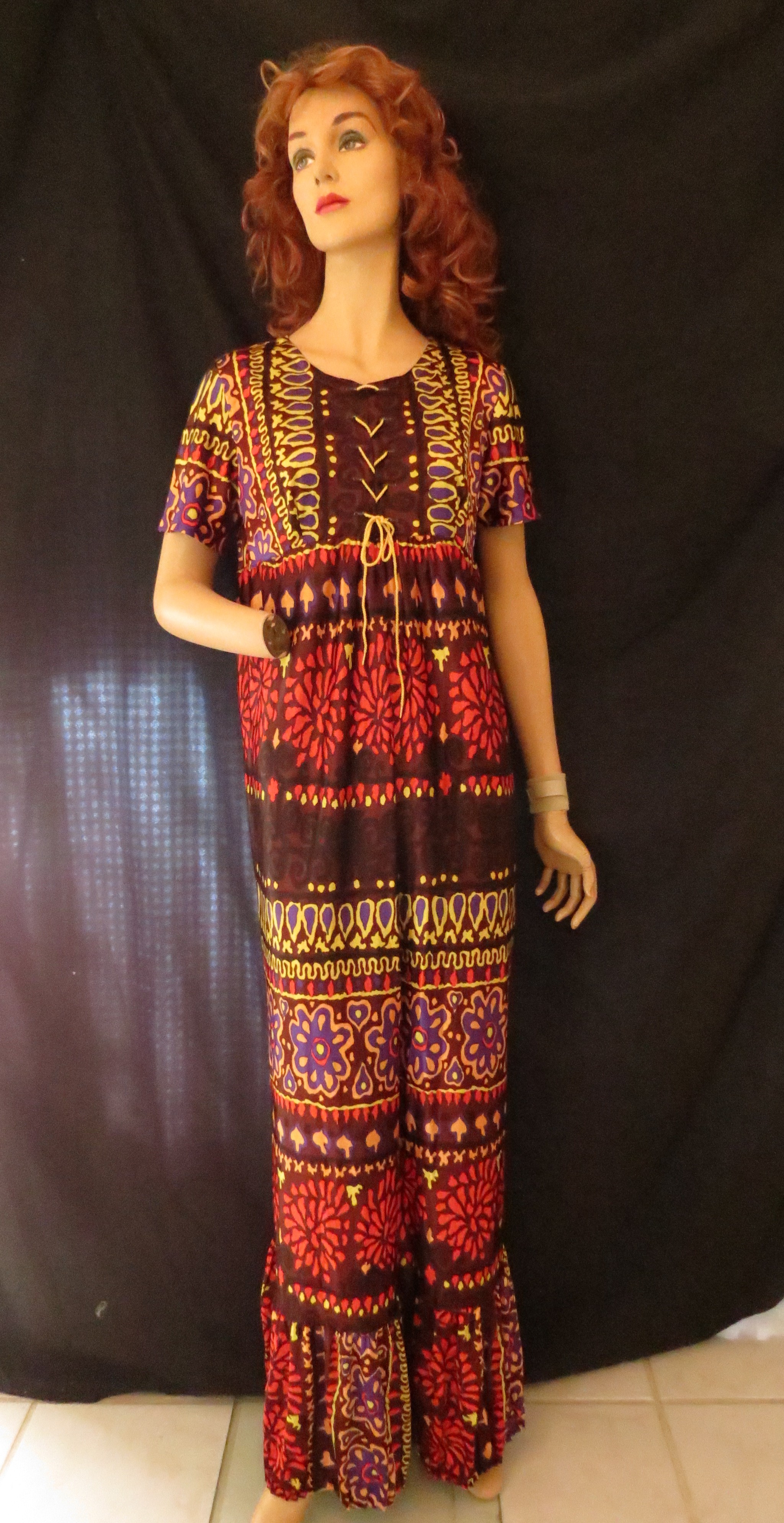
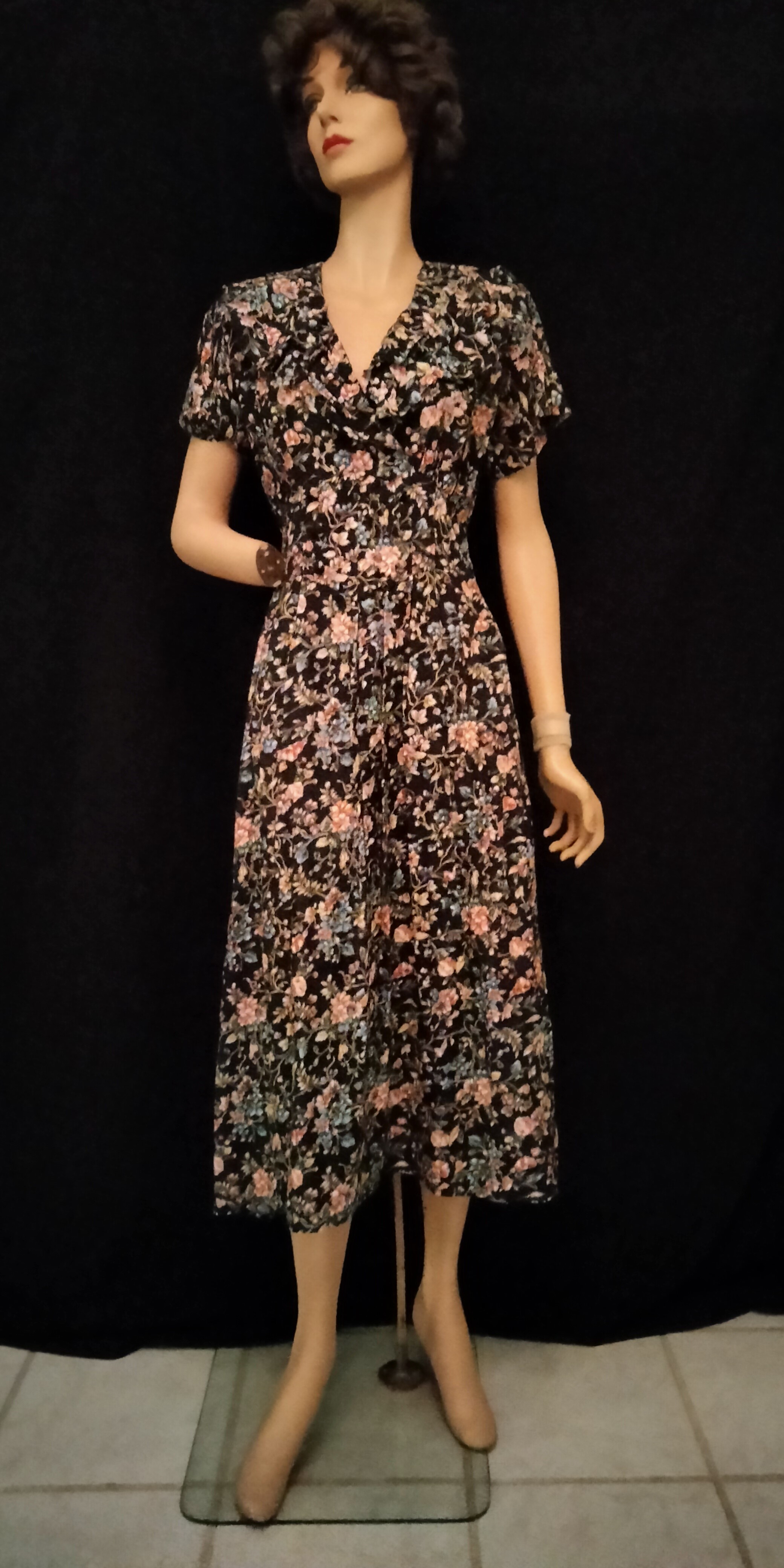
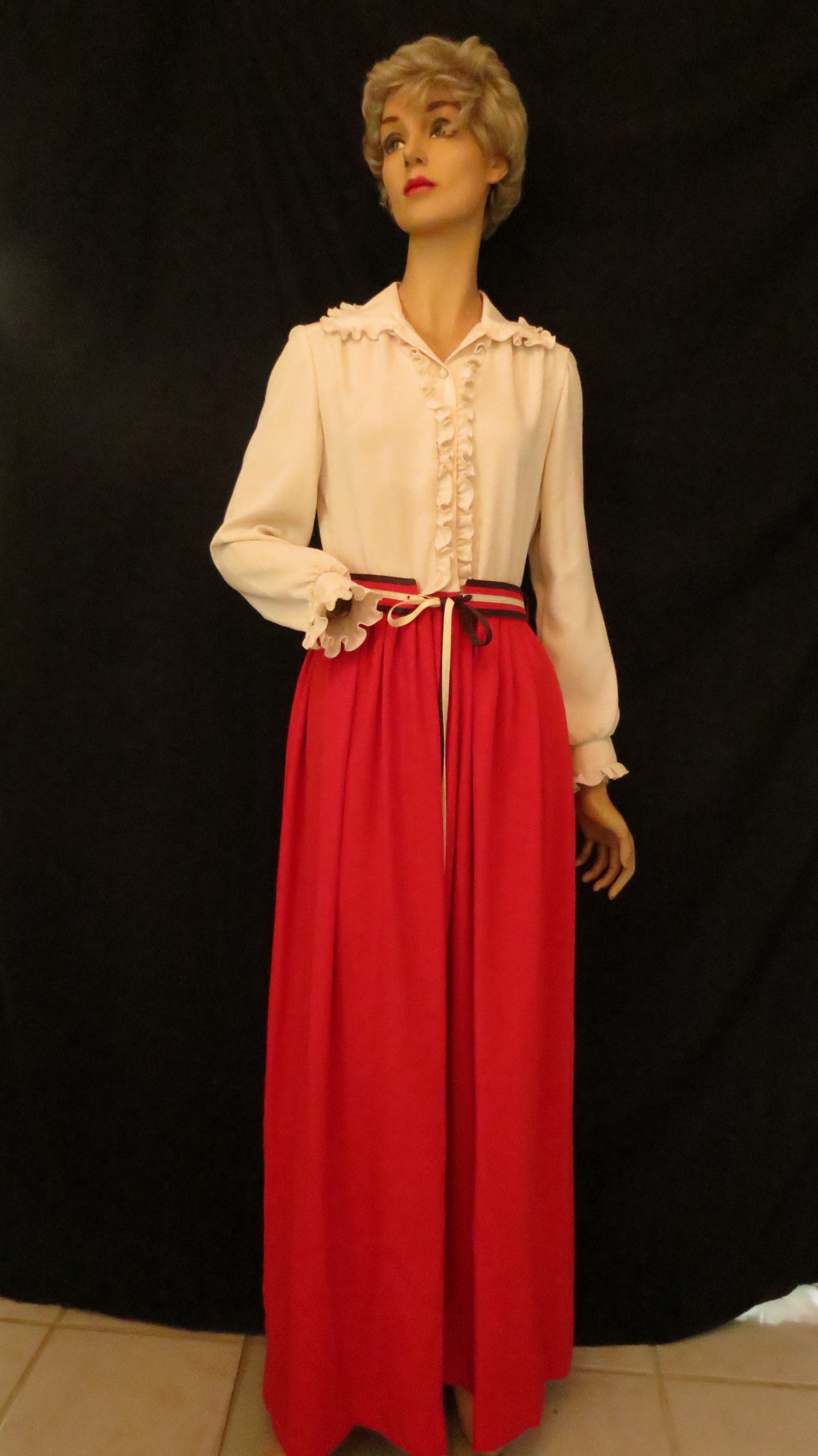
1970’S – 1990’S DOES 1940’S. TRUE VINTAGE RETRO DRESSES AND JUMPSUITS.

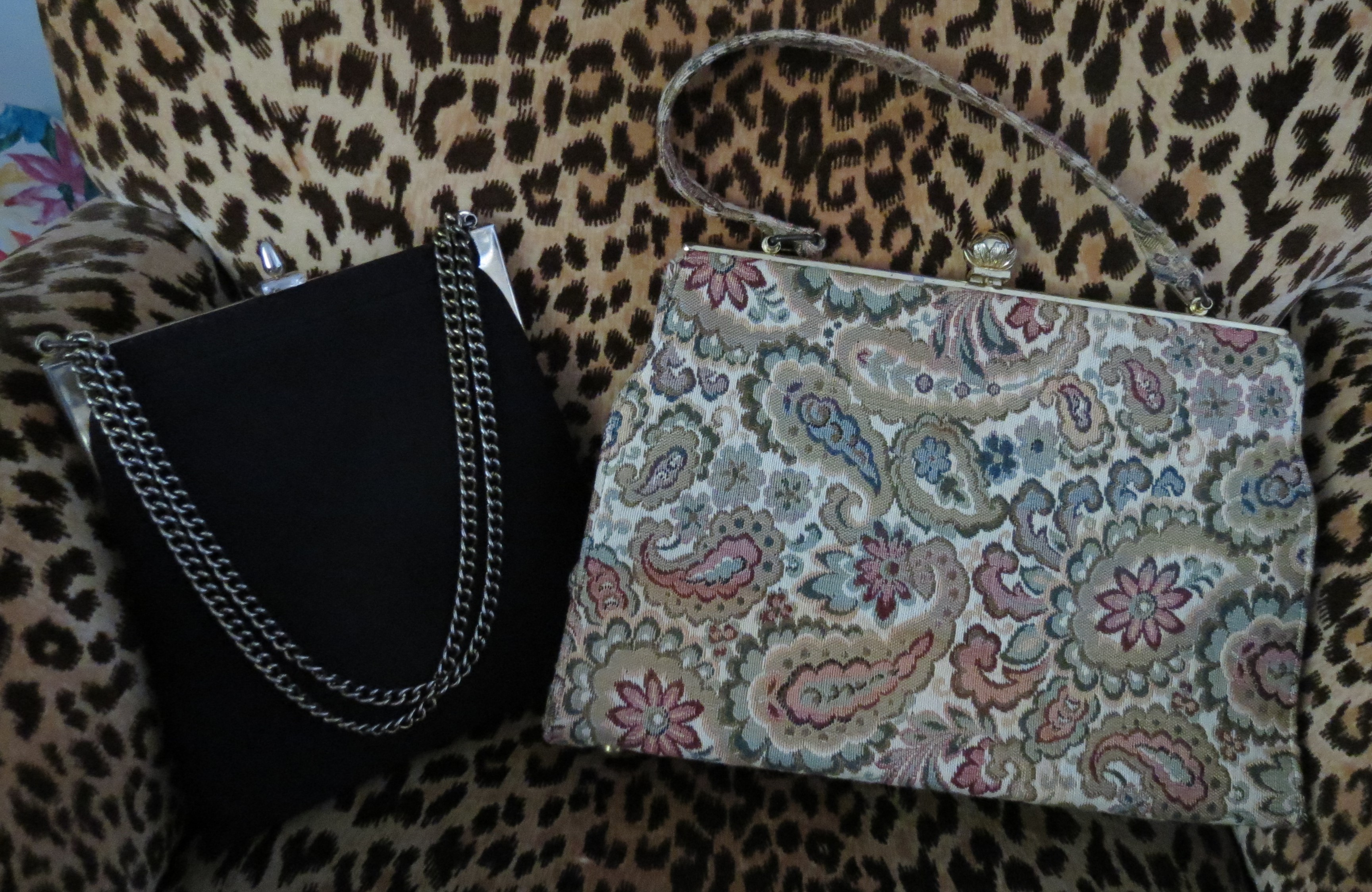
The Seventies, Eighties and Nineties produced a lot of popular retail styles that imitated 1940’s designs. Some were very well done and others not so much, to be charitable. As I’ve said, it’s hard for me to call these decades true vintage but, technically, they are. The two purses echoing shapes and tapestry design popular in the Forties might have shown up in the 1960’s.

All of these could be fun and the reproduction details became best during the mid-1980’s but, unfortunately, modern polyester fabrics and production techniques lowered the quality a lot. No valid comparison, in my opinion, to true vintage from the 1940’s – even the home-sewn versions that were made from older clothing during rationing.

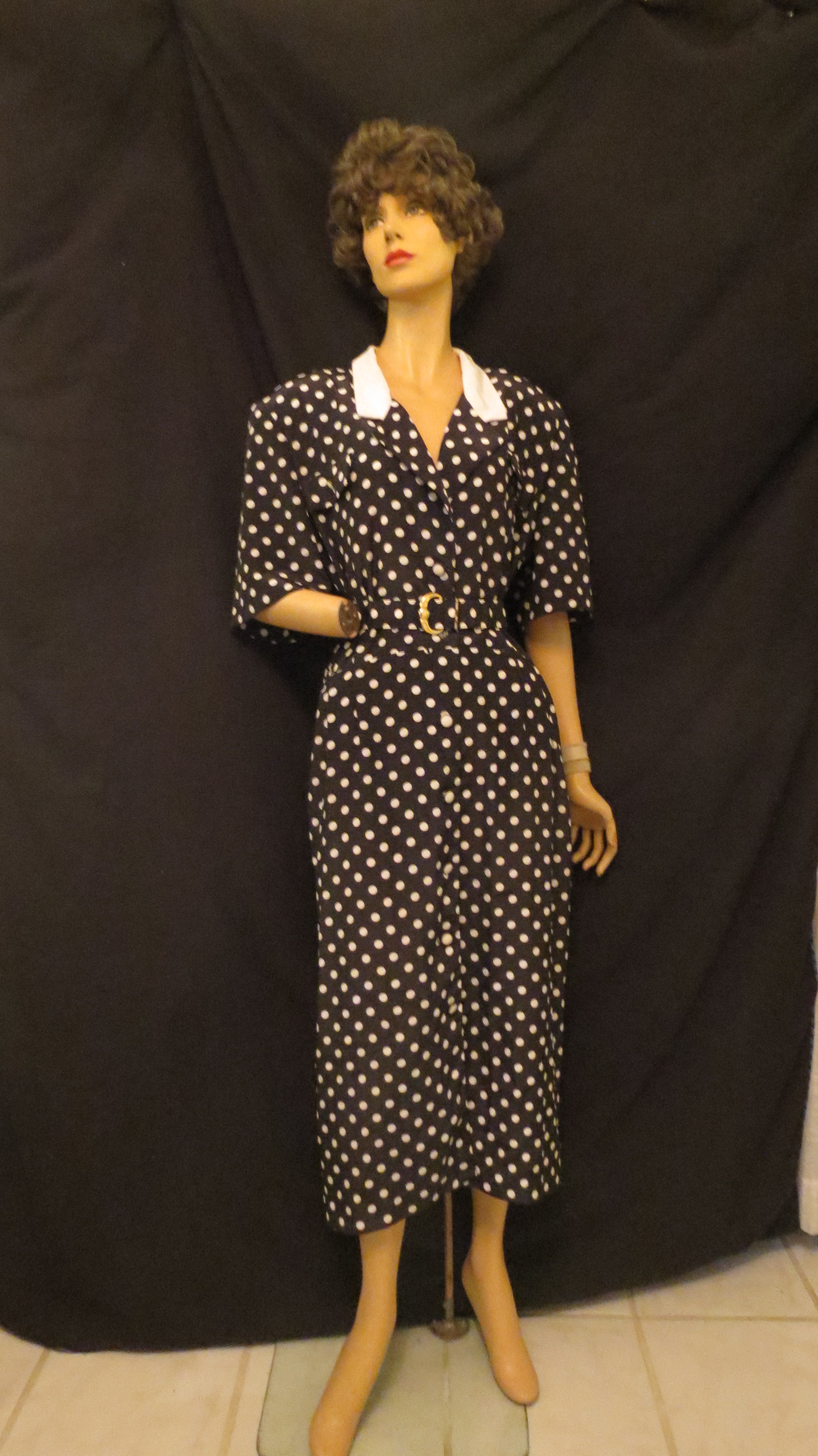
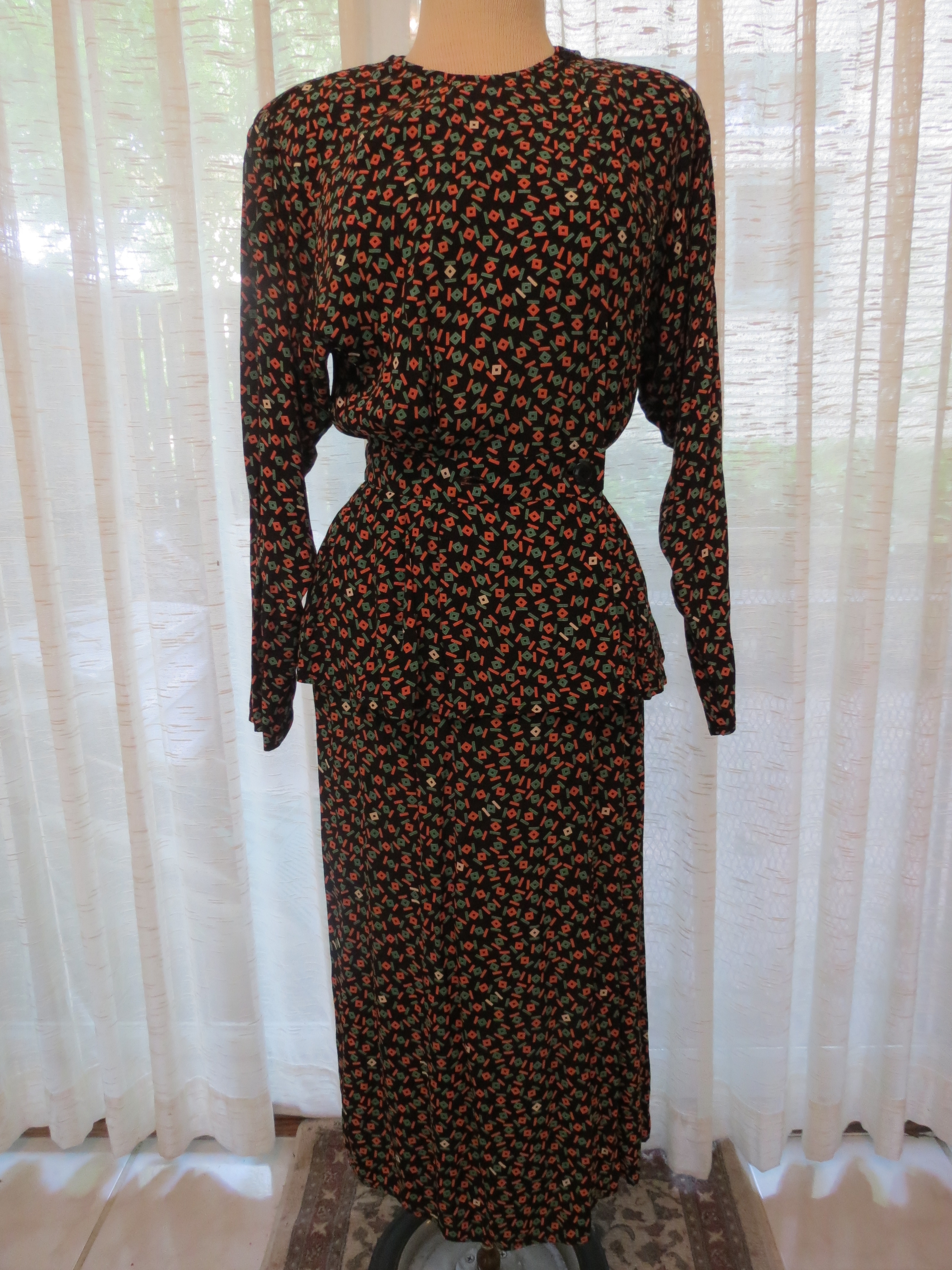
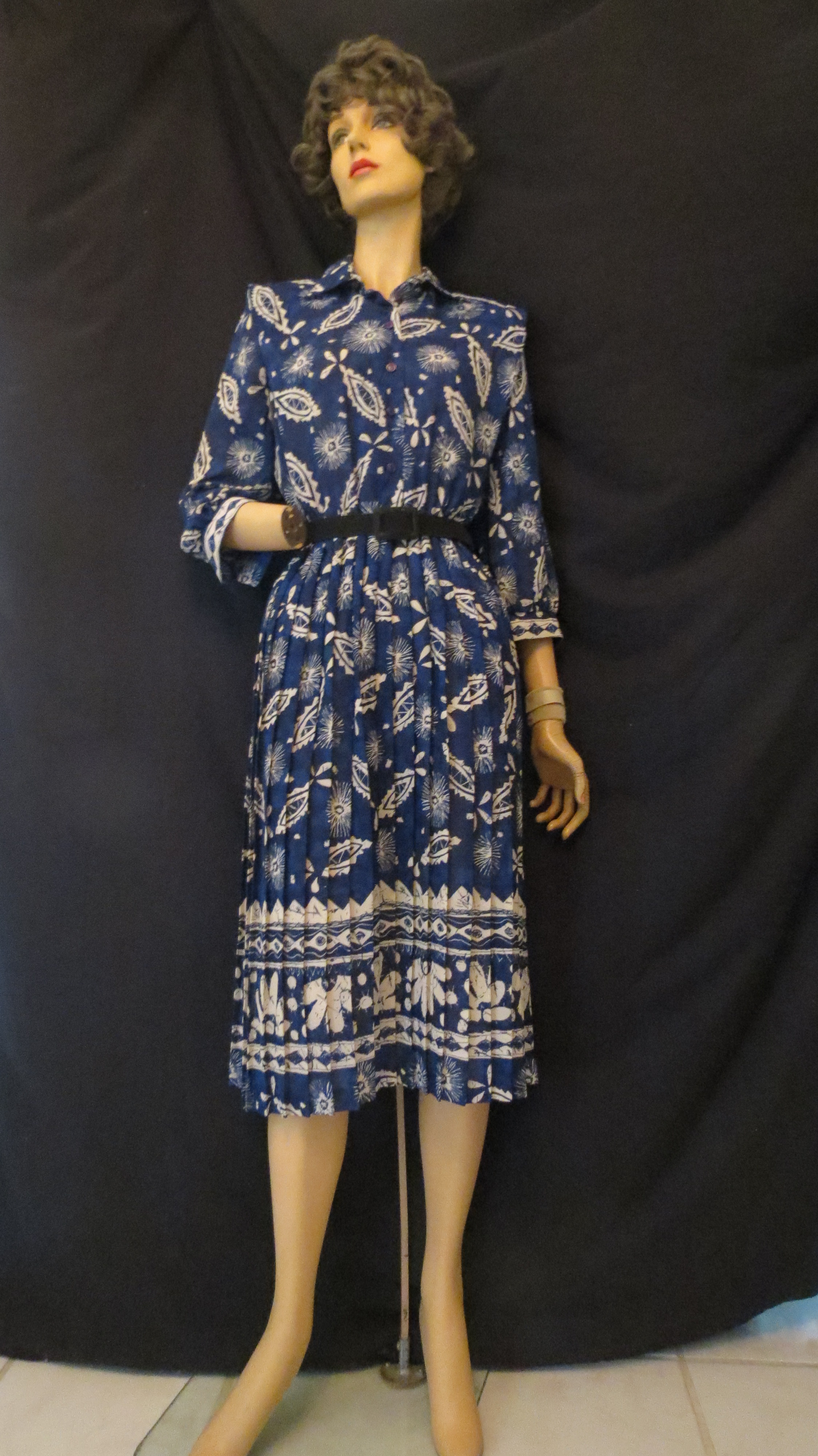
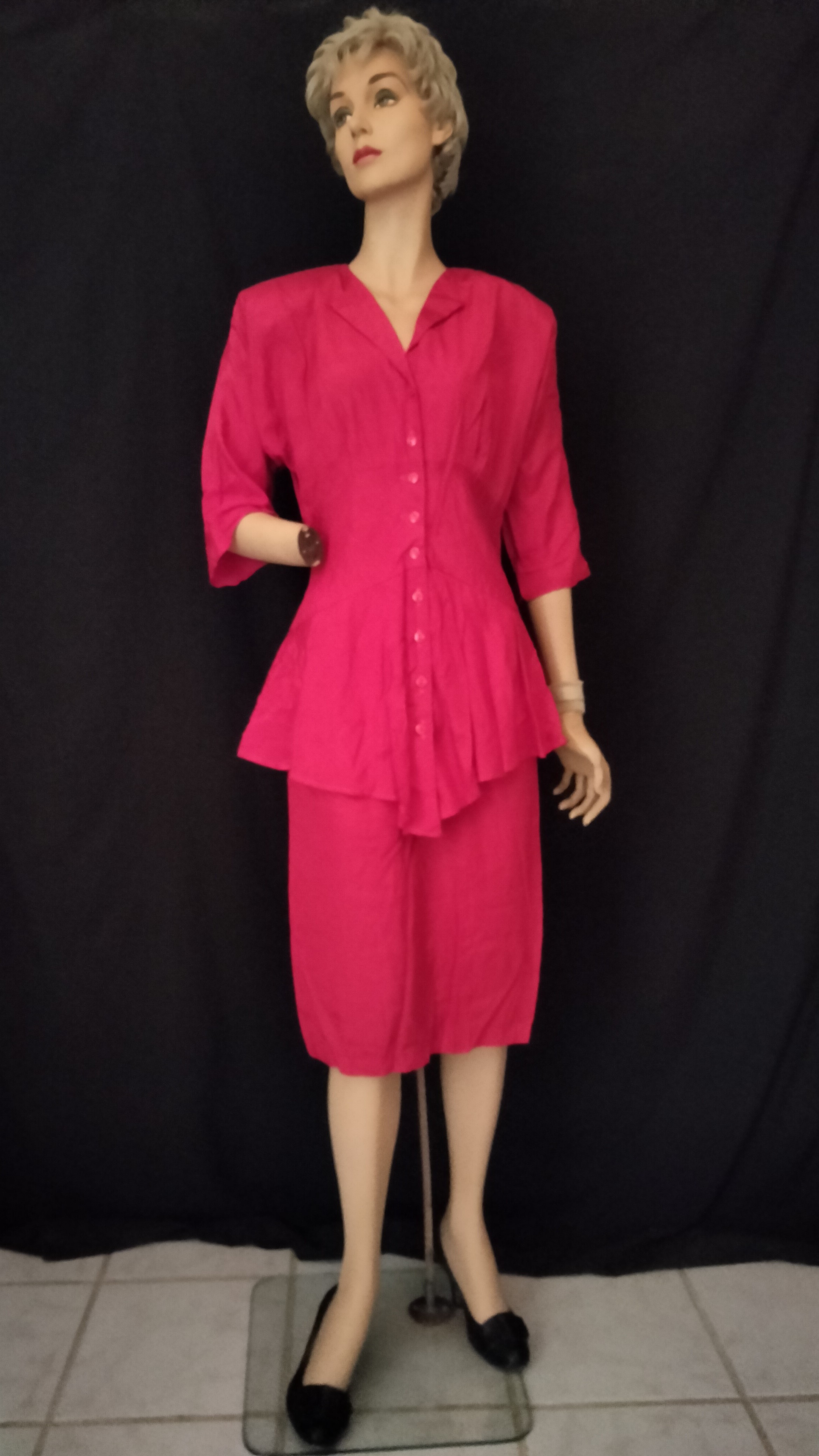
Of this group, the best-made is the black velveteen custom-tailored frock from the 1980’s or 1990’s. It was made by an expert seamstress and is worthy of being called a reproduction in the Post-war New Look style. The retail day-dresses are versatile and the prints are great – pretty faithful to authentic ones that I’ve come across. I always love the padded shoulders and cinched waistlines that are very flattering but were also a nod to the style of military uniforms. Jumpsuits were just for fun in the Seventies, but always are inconvenient. I suspect that the jumpsuits worn by women working in the war effort during the Forties had drop seats, which makes it a little bit better. I do have a pair of high-waisted slacks from the ’40’s that have an ingeniously-designed drop seat that looks quite good.

So, these clues were fun to find and seemed worthy of collection though I always prefer the real deal. Speaking of which, I just came across another archived file of true vintage 1940’s dresses which I will show tomorrow. Stay tuned . . . . . . . . . . . . . . . . . . . . .

MORGANA MARTIN, THE MAGICVINTAGESPY

BLOG: MAGICVINTAGESPY.COM
TRUE VINTAGE 1940’S DRESSY DRESSES FROM AFTER THE WAR YEARS
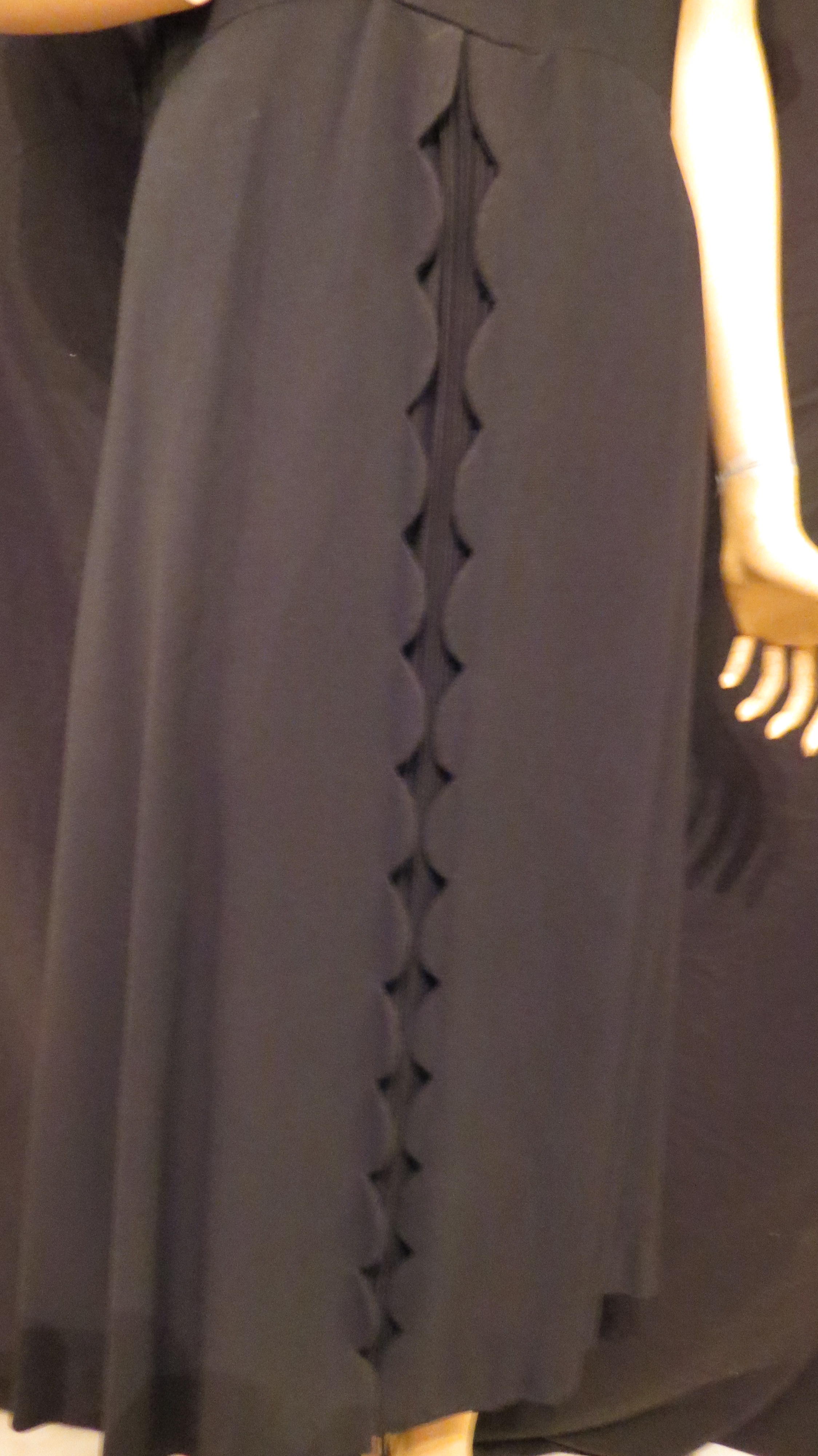
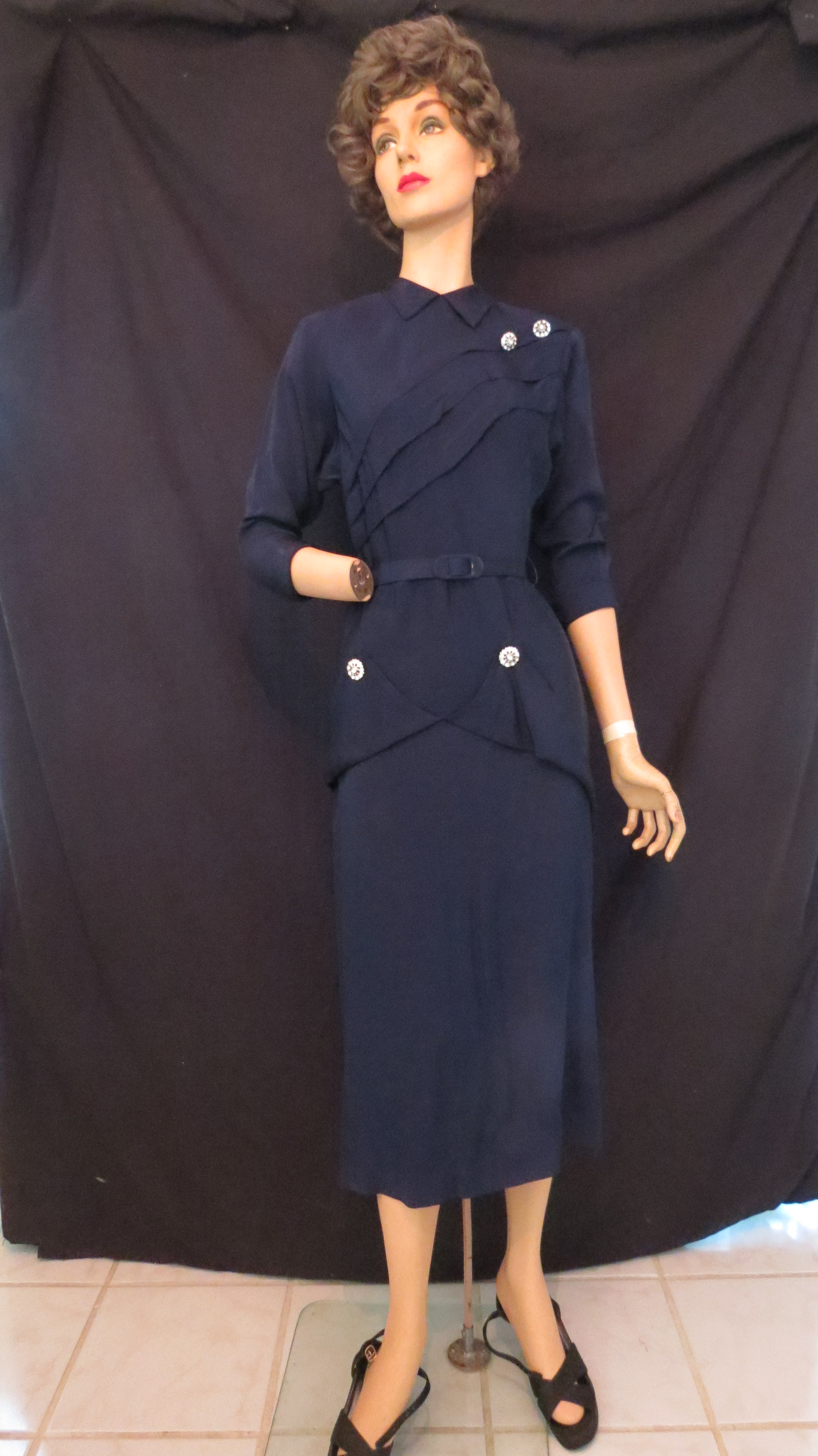
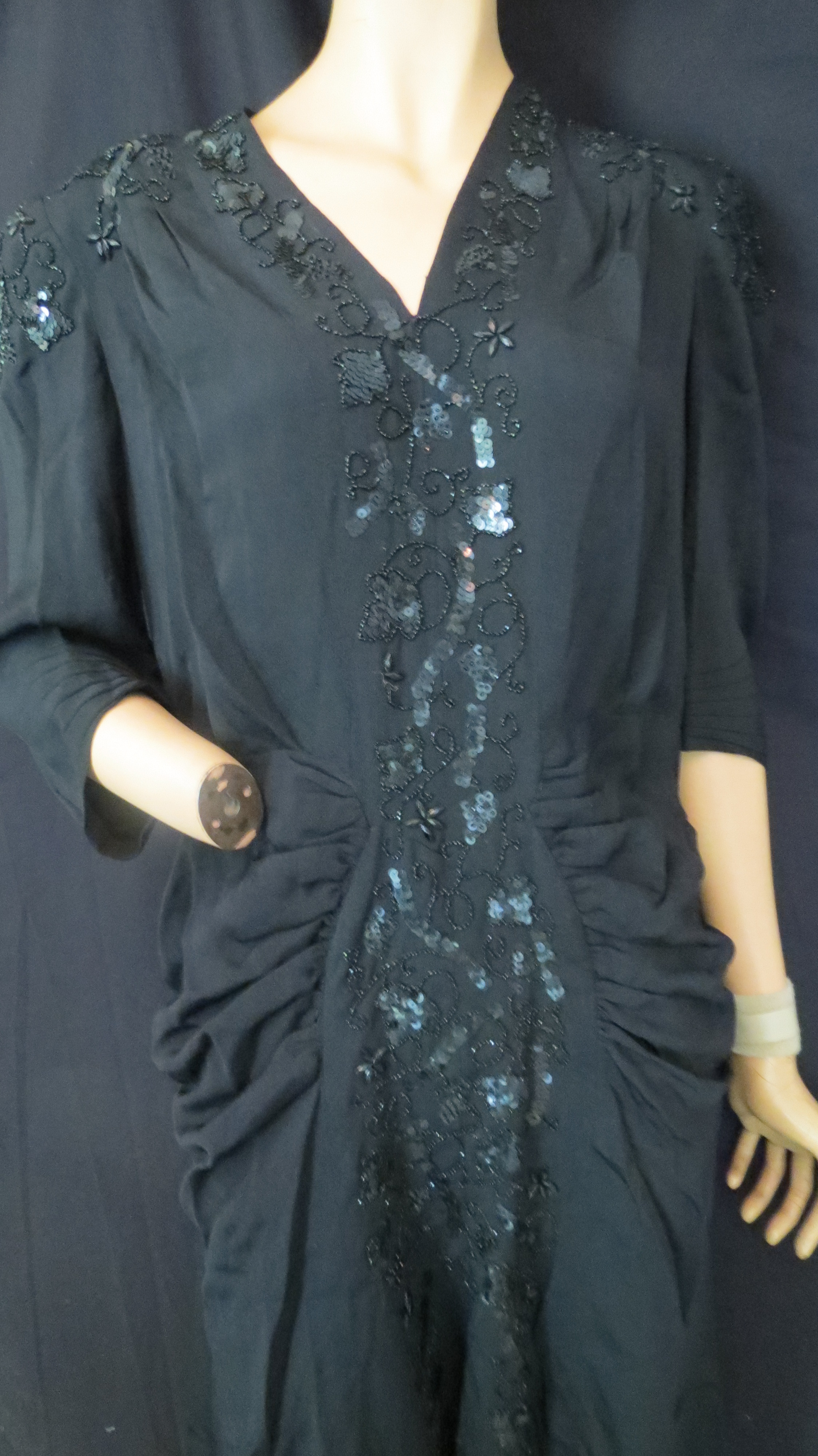
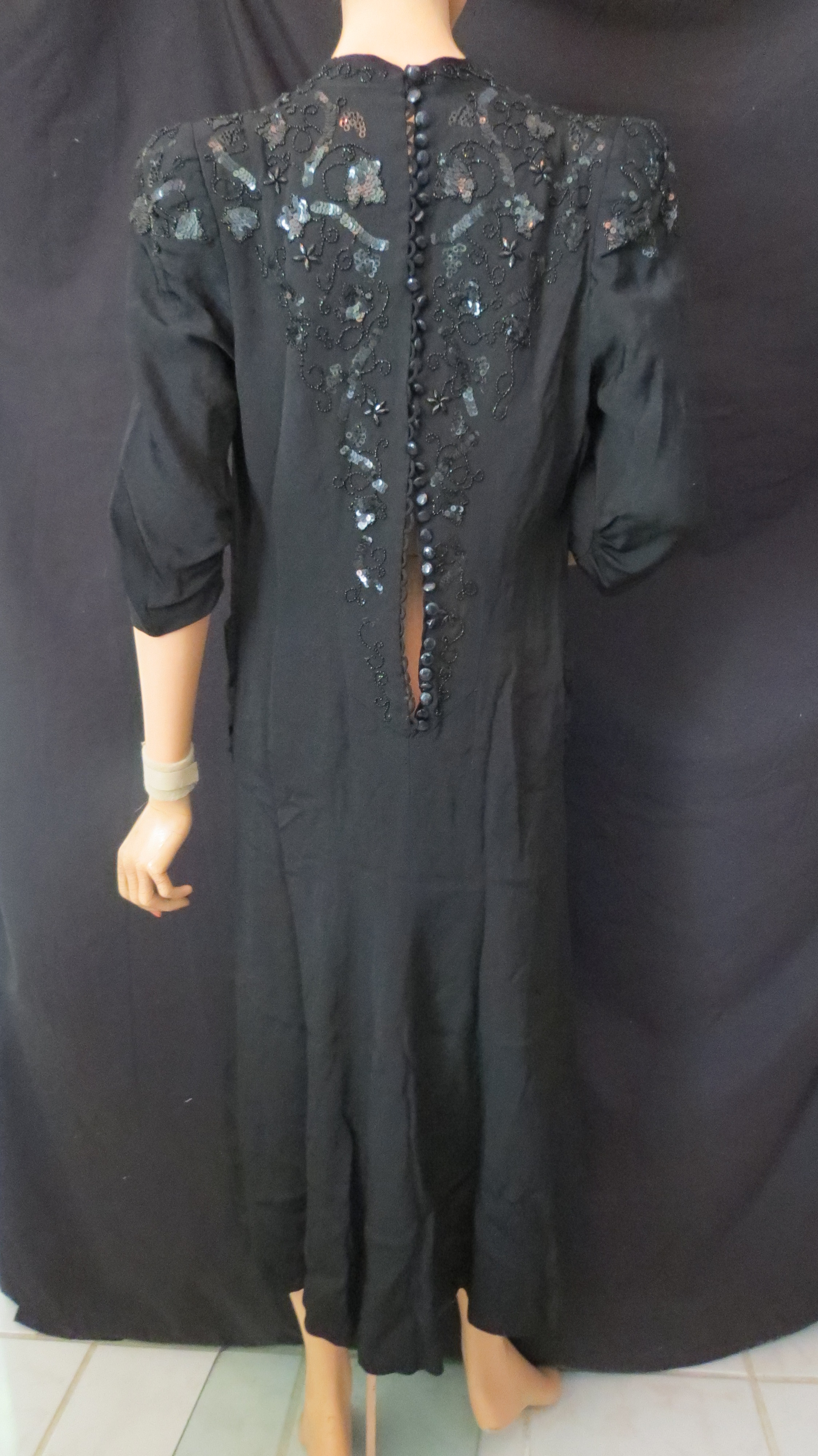
Here’s another group of finds that were fabulous. Let’s look at the details on these frocks, which were over-the-top when wartime rationing was no more and fashion was ready for a break-out right before the New Look. Lots of glitz – rhinestone buttons, metallic thread, sequins, beads, lots of little buttons and velvet. Hemlines went down again. Rayon reigned – it had become the darling of fabrics.

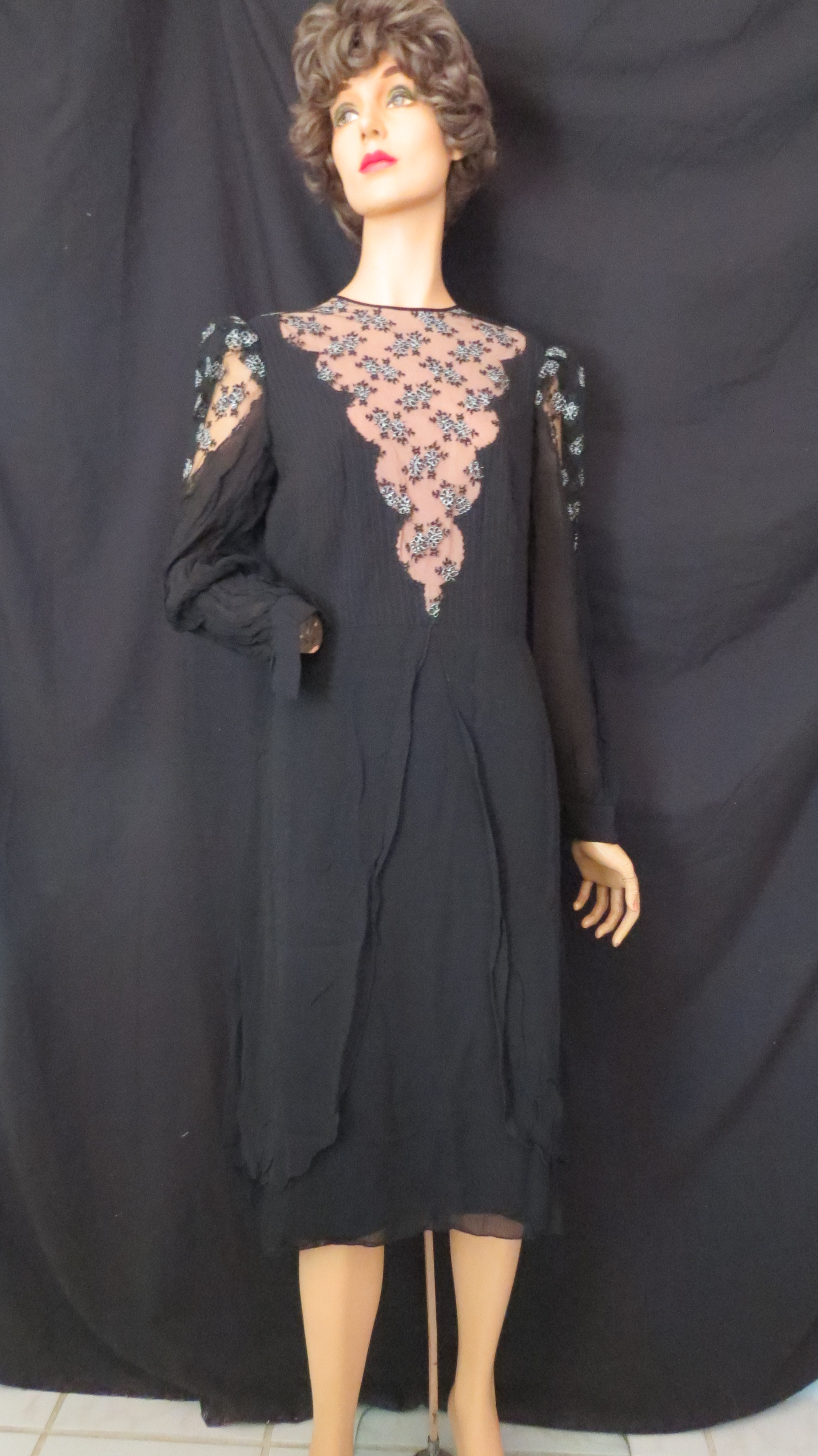
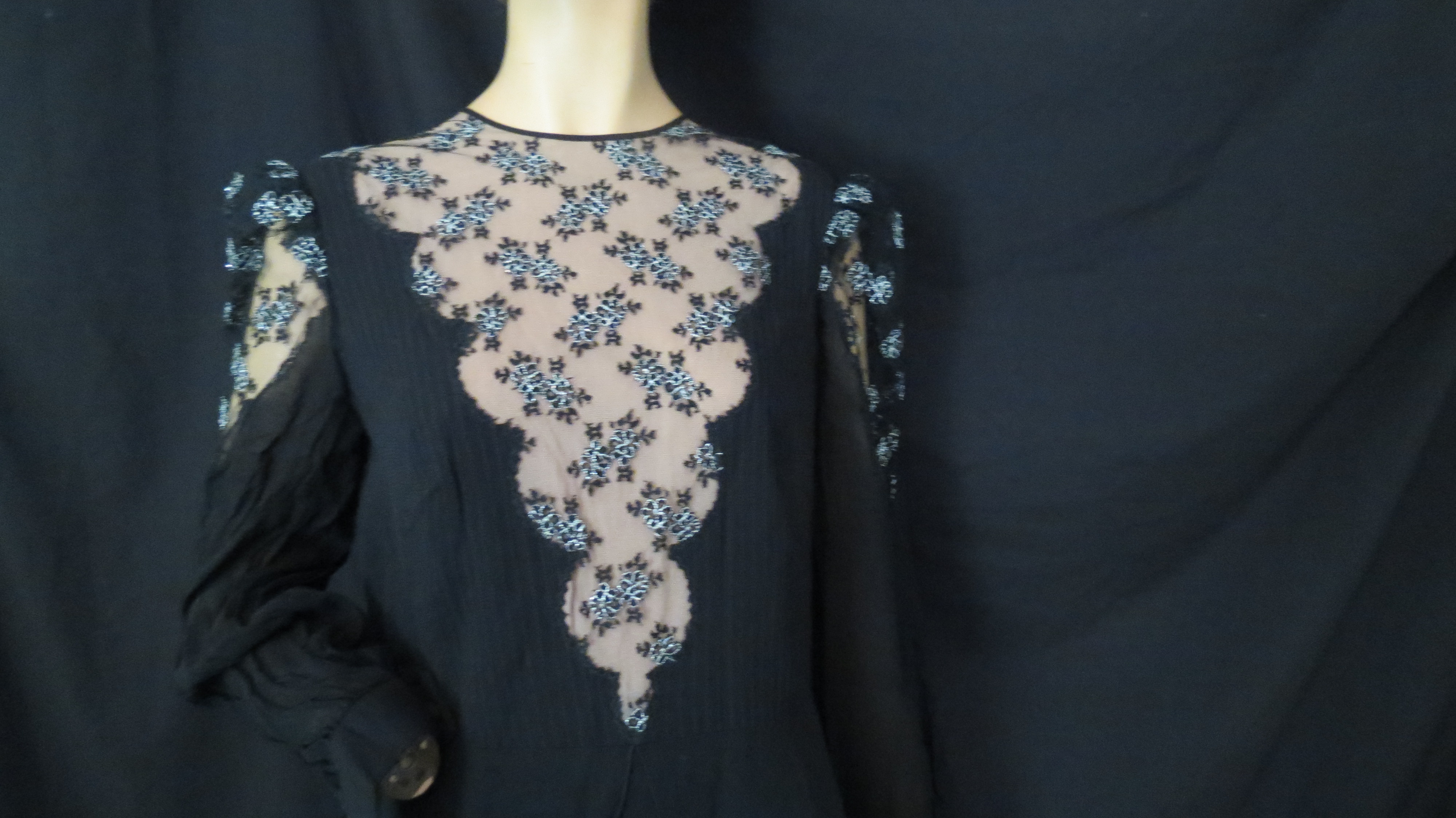
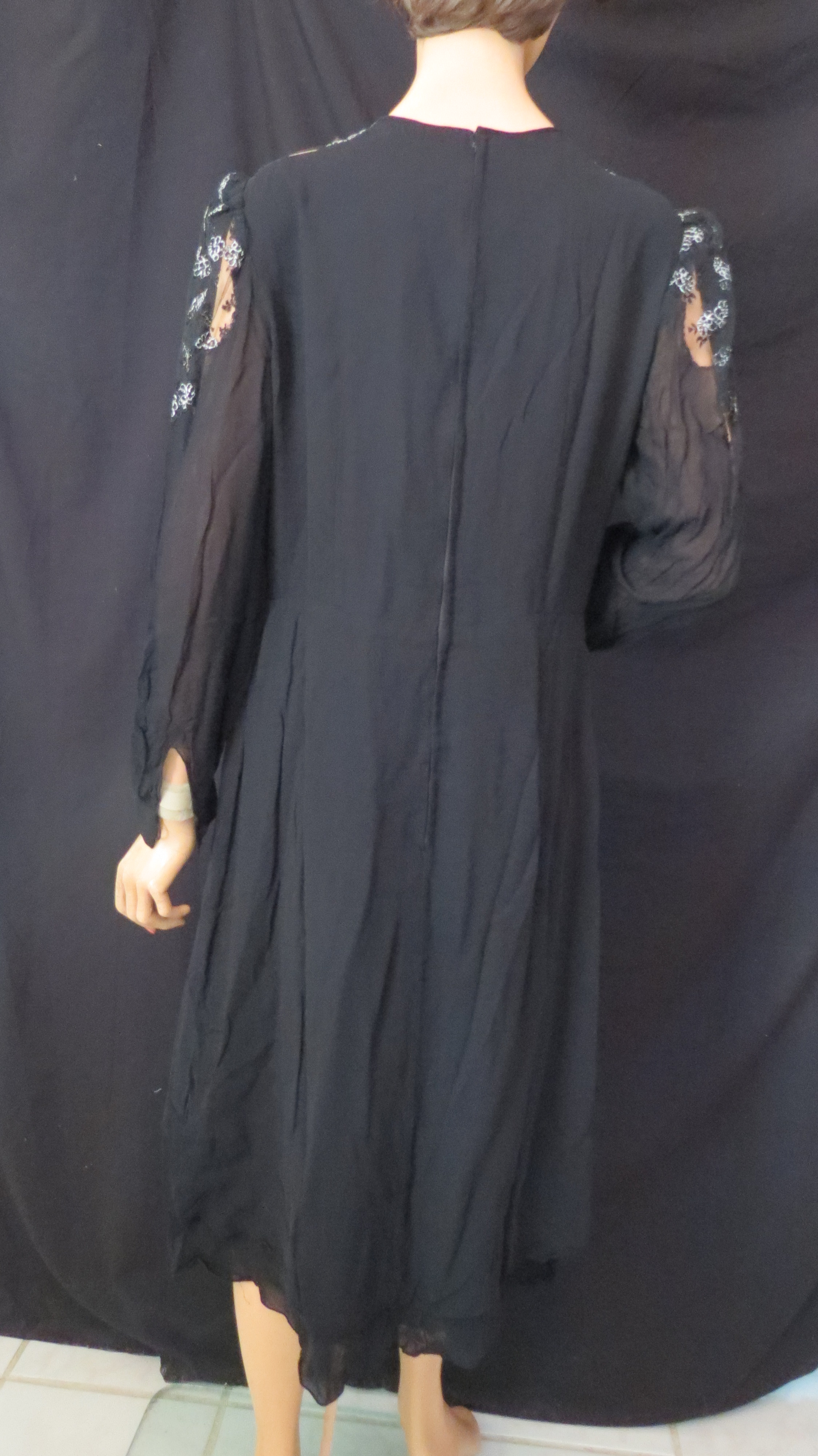
There was certainly an element of weirdness to some of these designs. The last two black dresses were discovered in Montevideo, Uruguay and had been made by specialty dressmakers. Many of their wardrobe items in that city came from France, and I suspect that there is a lot of European influence in these styles.

The top two designs are squarely U.S. American and the tag on the dress with the big velvet bow indicates that it was made by a company that was producing affordable garments, probably during the early recovery from wartime. The navy blue dress was higher-end and looks so much like the costumes seen in late 1940’s film noir.

Tomorrow we’ll look at some examples of how 1940’s dress styles have persisted during the following decades. Stay tuned . . . . . .

MORGANA MARTIN, THE MAGICVINTAGESPY