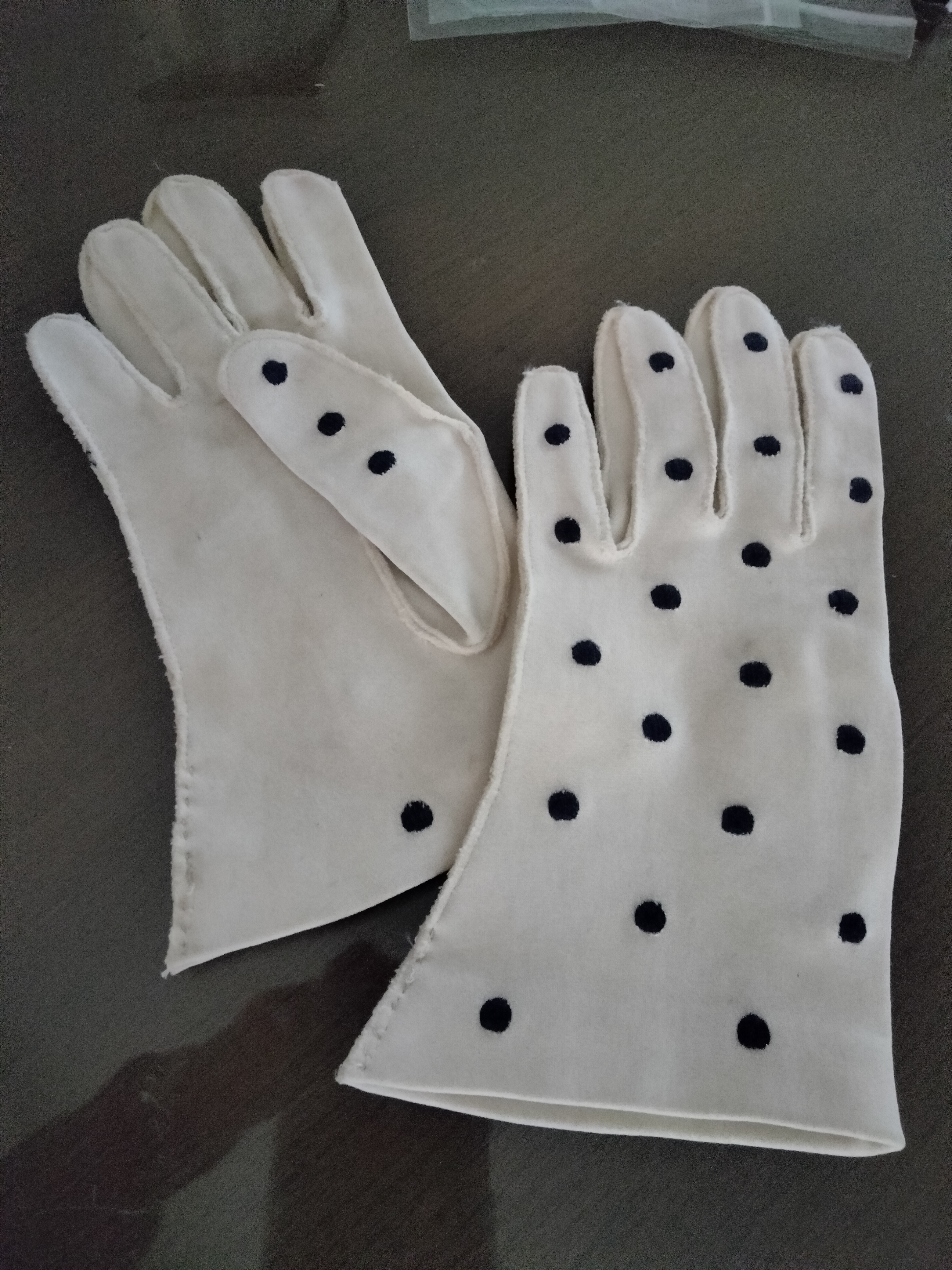
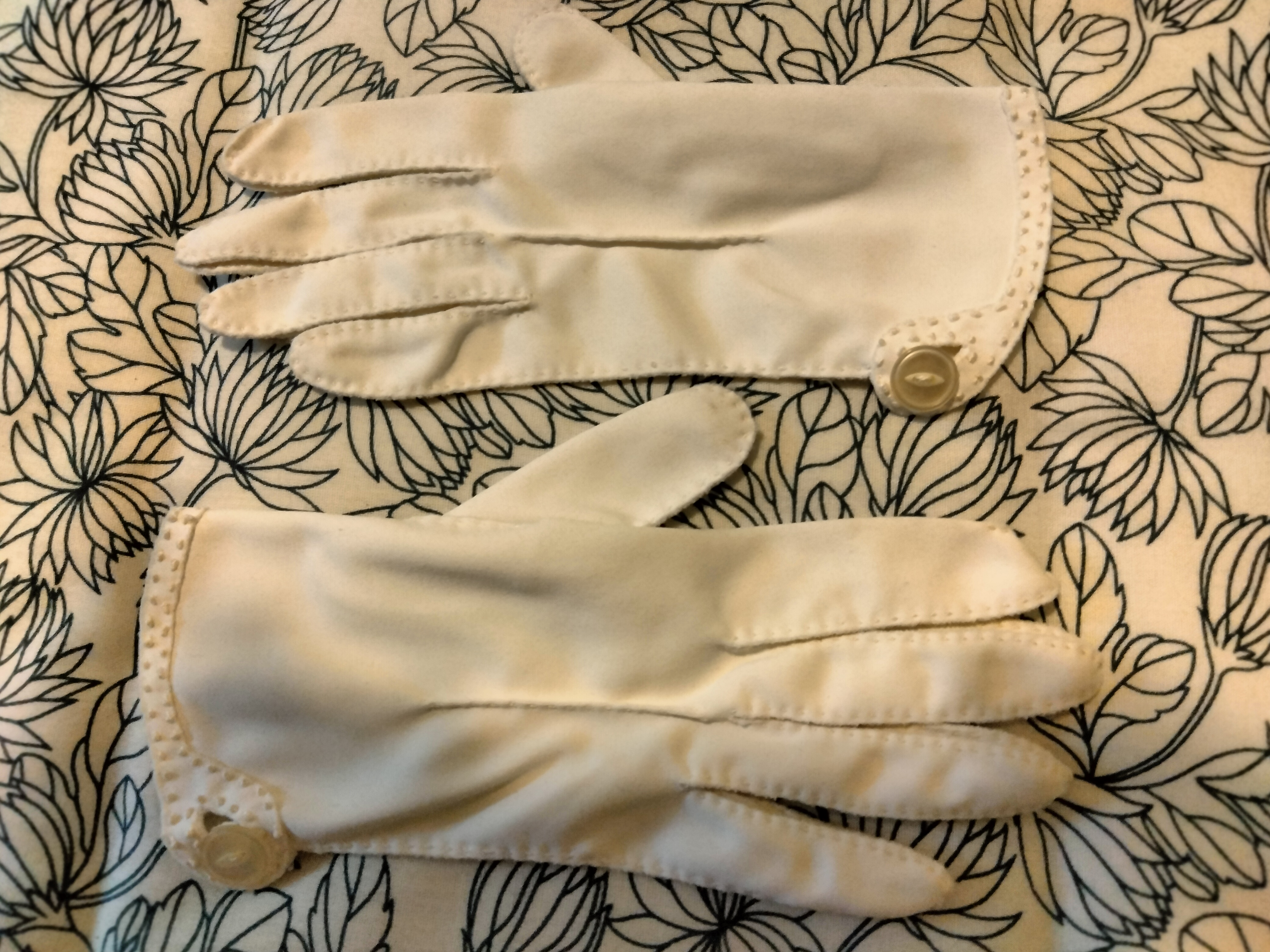
MY VERY LATEST FIND: A PAIR OF ICONIC KENNEDY-ERA GLOVES. TOO SPECIAL TO PASS UP . . . . . . .

Who doesn’t have mid-century white wrist-length gloves passed down by the older women in their families? I’ve got a collection, both of “heritage” gloves and those that I’ve discovered during past investigations. Cotton, leather, suede, synthetic – I’ve kept only the best of the best. Like handkerchiefs and little hats, these gloves were ubiquitous – every woman had them because in the late 1950’s through the early 1960’s they were mandatory when you left the house. First Lady Jacqueline Kennedy made them a true fashion statement that no well-dressed woman would be seen without.

So, a ton of them have been out in the vintage marketplace even though they’re not a wardrobe staple anymore. But, wait . . . . . . . . gloves, in general, are definitely a wardrobe staple and these are PERFECT! What do you wear with a white jacket or coat on a cool day? How do you save your white leather gloves from getting dirty? Beautifully hand-tailored gloves like these are a great alternative. Even if you’re not wearing an early ’60’s dress, these are classic enough to wear with anything, including slacks.

Other factors which made these a catch, besides their beauty, and caused me to pick them up: 1. The synthetic fabric – probably nylon or a nylon blend – has stretch which makes them super comfortable and flexible as well as giving a good fit. 2. This type of fabric washes well, similar to nylon lingerie slips. You can even wash them in hot water if you need to and as long as the decoration will tolerate it (but those buttons can easily be detached for laundering and re-sewn on). 3. This is maybe the BIGGEST PLUS – like nylon slips, in my experience, they take dye very well and can be dyed to match anything you’d like!!!

That’s my very latest find and I was thrilled to discover them. You just never know! Now, I only have to decide on the color . . . . . . . . . . . . . .

MORGANA MARTIN, THE MAGICVINTAGESPY

BLOG: MAGICVINTAGESPY.COM

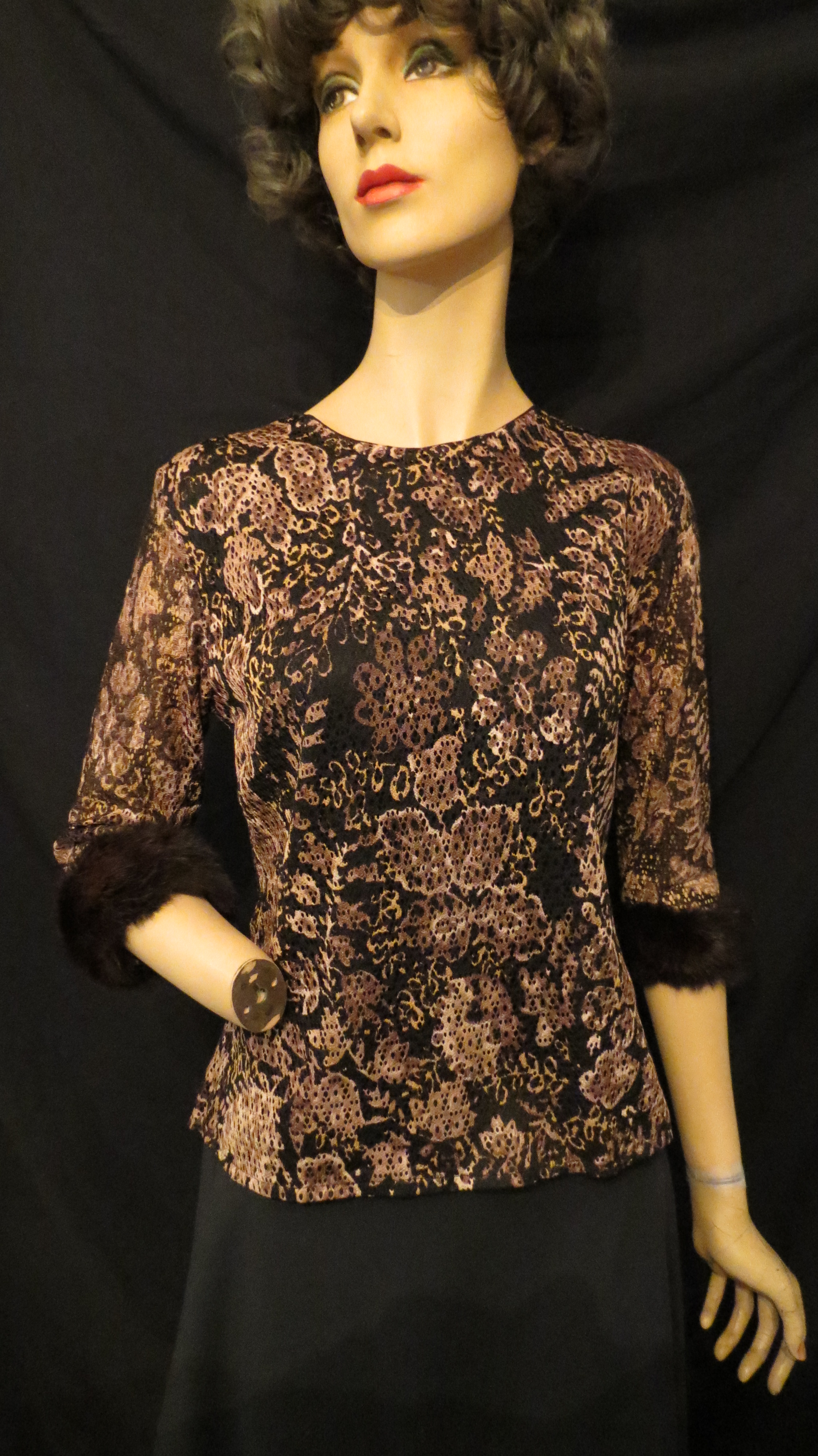
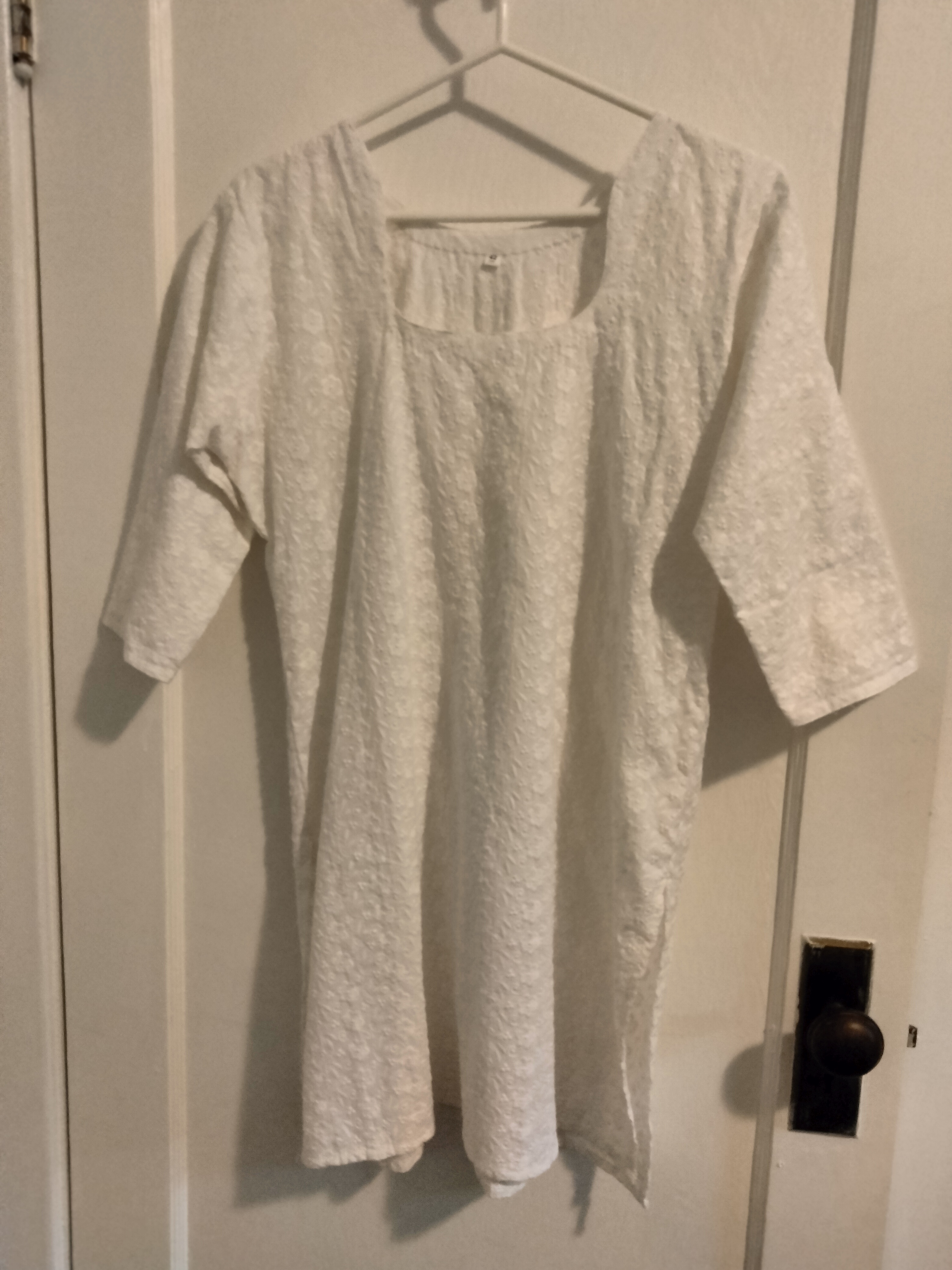
PRETTY WHITE COTTON MINI FROM MID-CENTURY EUROPE

While I’m missing Stella (my fabulous vintage mannequin model), please use your imagination to visualize how fun and flattering this mini-dress or tunic looks when it’s on. Without my honed sleuthing skills, I never would have found it and am so glad that I did. As a mini-dress (if you don’t mind the side slits showing your whole leg almost to the hip) it’s really cute and calls for a 1960’s/’70’s chain belt to finish it off. As a swimsuit cover-up or beach dress it would be perfect – cool, crisp and lightweight while giving some reasonable sun protection. Over a pair of skinny white pants or shorts I LOVE IT!! Also love the elbow-length sleeves and unusually-shaped neckline.

How do I know it’s from Europe? The size label tells me. How do I know that it’s true vintage? By my guesstimate, a European size 42 would always be too big for me, but I look great in this whether worn as a mini-dress or a tunic over pants. So, the cut seems to be smaller than a modern garment of that size would be. This is always tricky with international sizing, but I think I’m correct. The fabric is a nicely-woven cotton with some weight (but not too much for Summer) and all-over floral embroidery – similar to vintage fabrics that are almost never seen now. Also, the interior tailoring is different from what I find on modern garments. Not fine tailoring, because this is a very simple garment and probably sold at a lower price. However, some of the finishing is remarkable – if it did not have a size label, I might say that it had been home-sewn. It has darts in back to give it extra fit and style. The size label, printed rather than embroidered, is sewn in at the back neckline and there are no other tags at all.

All right, the verdict is in. This dress is probably from the 1970’s, give or take 5 years. Allowances have to be made for the overseas manufacture. Whatever it’s exact heritage, it’s wonderful and I will really enjoy it. I love solving mysteries but an open-ended investigation is always intriguing. Who knows – sometimes I solve a cold case years later! You just never know . . . . . . . . . . . . . . . . . . . . . . . . . . . . . . . . . . . . . .

MORGANA MARTIN, THE MAGICVINTAGESPY

BLOG: MAGICVINTAGESPY.COM
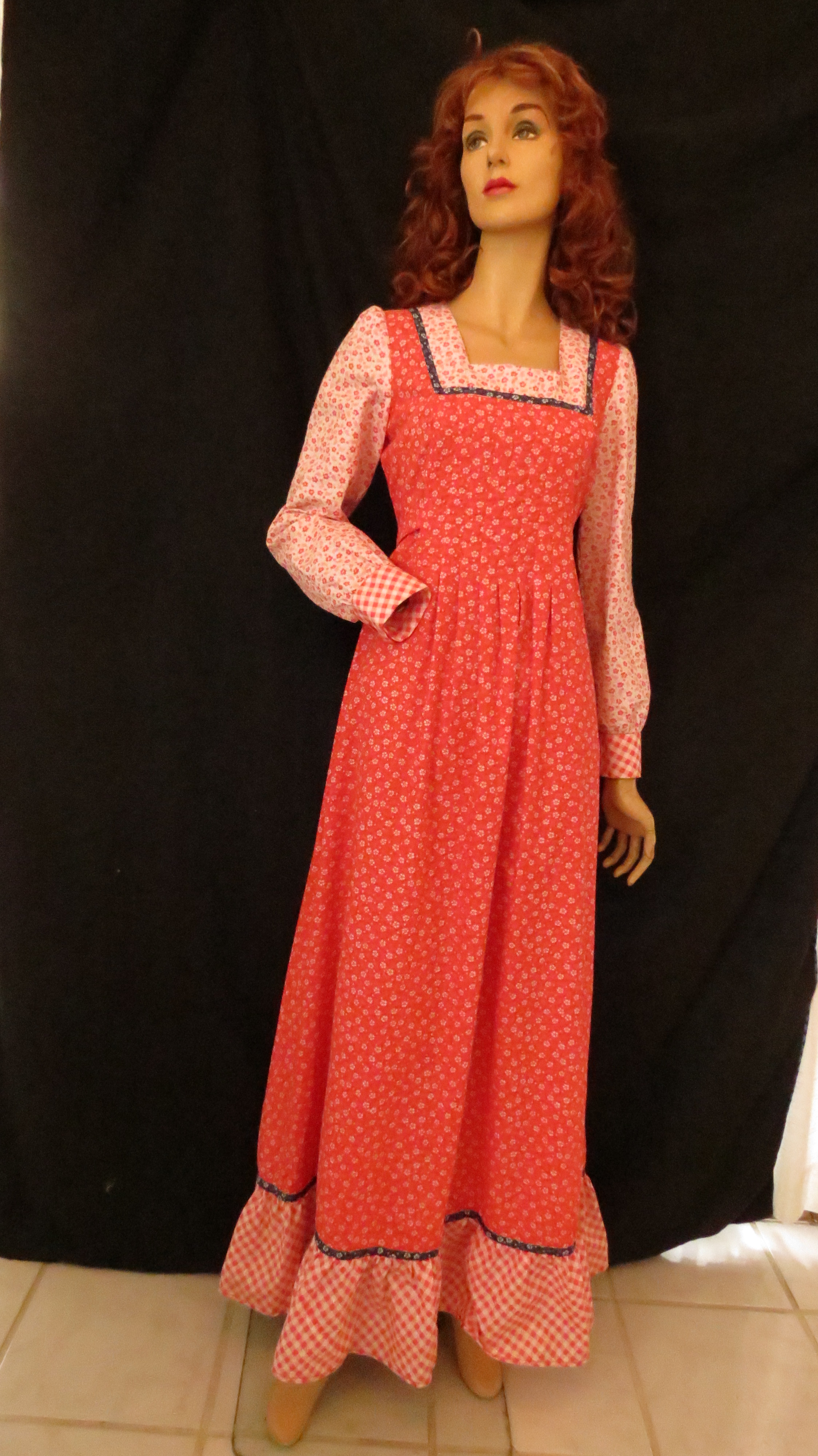
TRUE VINTAGE PATIO LEISURE LONG DRESSES FROM THE 1970’S – 1990’S

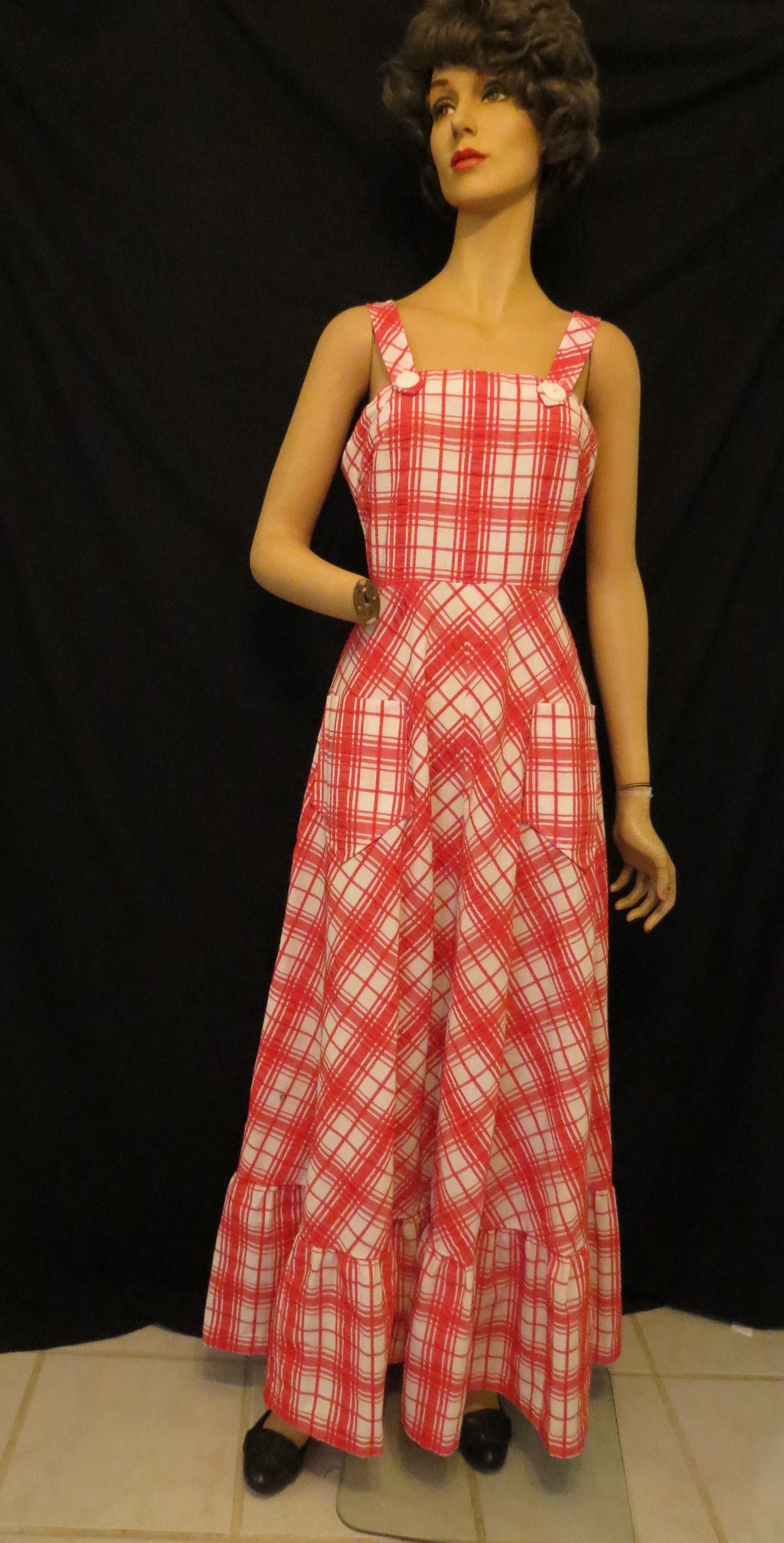
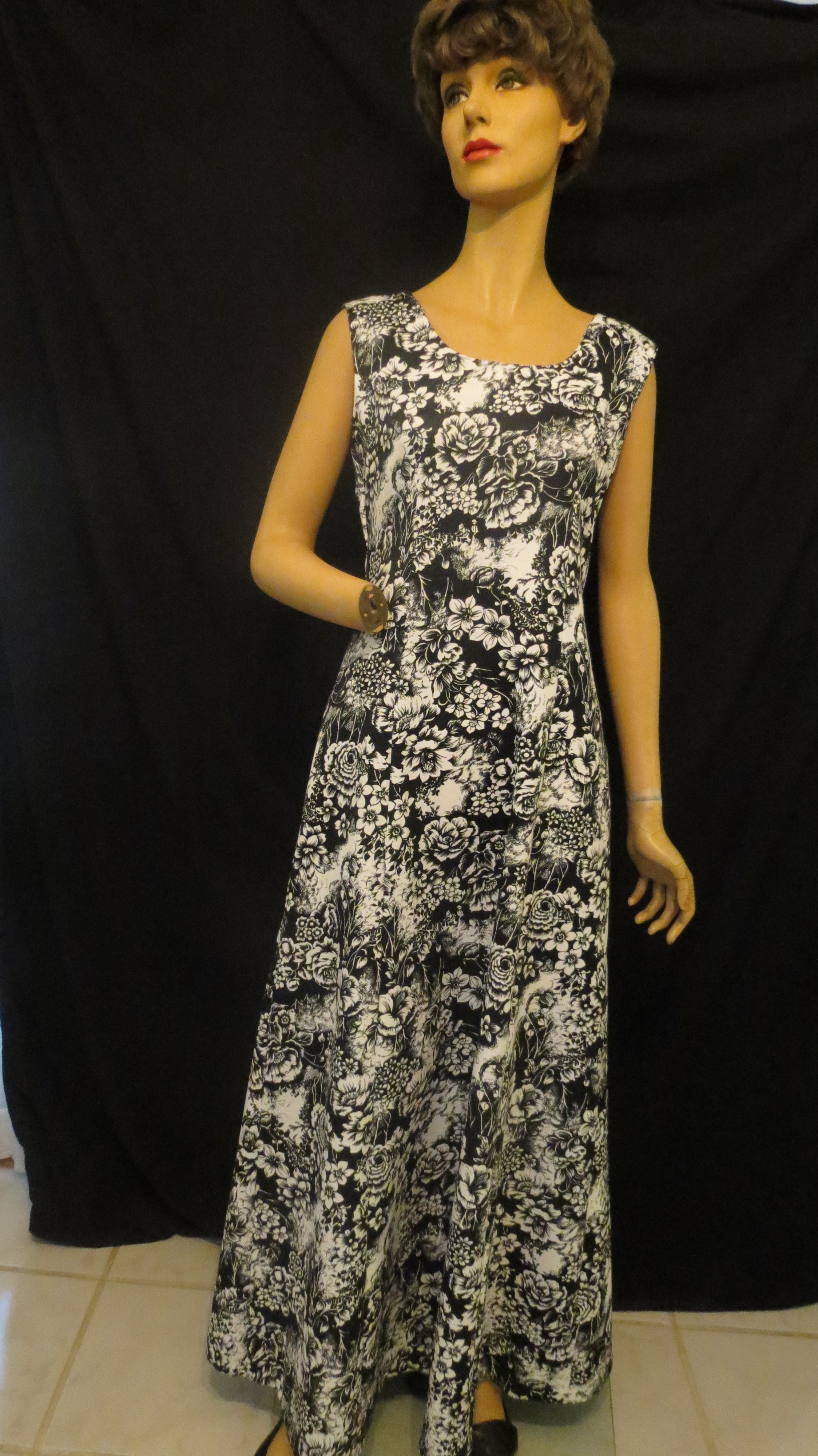
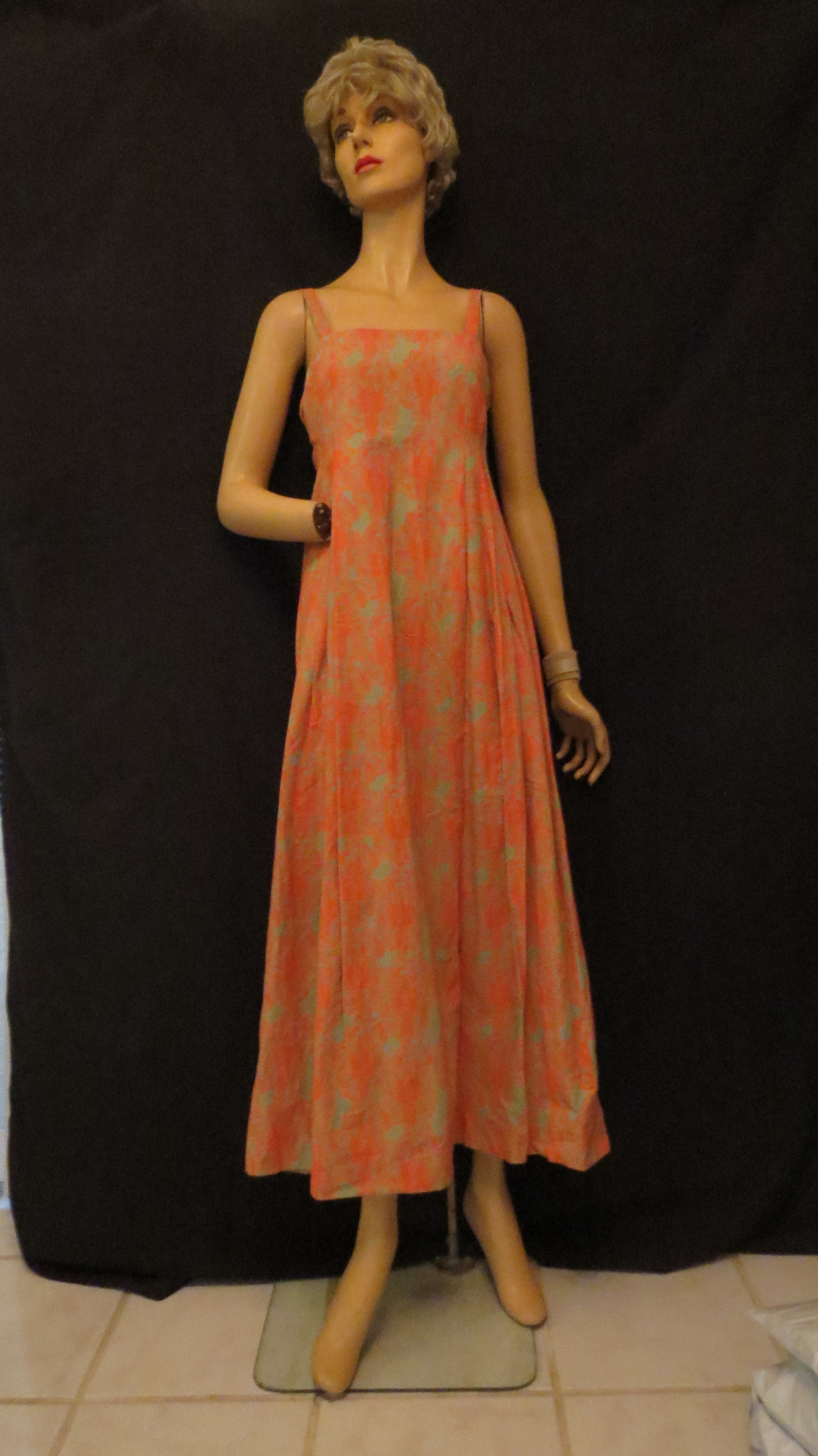
Through the decades the changes in style are often subtle, but they’re noticeable if your sleuthing trade skills are sharp. One thing that all these dresses have in common is excellent quality. I showed several dresses of this genre which were made in the Victorian/Prairie style when covering 1970’s Prom dresses a couple of months ago. Early in that decade, girls sometimes wore them to the Prom but they were usually fussier with lace and more details. Jessica McClintock of Gunne Sax styled them for at least 20 – 30 years. Labels always help, of course, but aren’t always present. The condition of all these examples is near-perfect, which can make the job a easier, though tell-tale signs of wear can sometimes be very helpful clues. Let’s start from left to right:

A Prairie-style gown, pretty and modest in cotton. Looks like it was made for retail because of the precise tailoring detail, but there is no label. I would put it in the 1970’s but it could possibly have been made later by an individual expert or a company that catered to a niche market which preferred very modest styles of dress.

A red and white plaid gown that picks up on the Prairie style, but in a much more casual, carefree design reminiscent of the 1960’s. It’s probably made from cotton but I can’t be sure without the file in front of me and it could be cotton/poly blend. It was made in the 1980’s in West Germany. This is an example of trends jumping the oceans, usually years after they originally appeared in the Western nations. Although they’ve done their own take on the style, it’s exceptionally well-made, as goods from West Germany have always tended to be, in my experience.

A black and white floral print gown made in Hawaii. This one is from the 1980’s, give or take a decade and is the most elegant. Same deal about the fabric as in the previous dress. The style is pure average conservative, which makes it harder to date exactly. A pretty dress, but nothing distinctive about it excepting for excellent tailoring. It might have been a wardrobe item of someone who lived in Hawaii, purchased at a specialty shop stateside which carried Hawaiian garments or by someone who bought it while on vacation. Hawaiian-made gowns have been popular with women worldwide since the 1950’s, but earlier ones were usually made in more traditional Hawaiian style and, often, of Hawaiian fabric with traditional island prints. The more mainstream universal designs like this one came later.

The final dress is from the 1990’s. Always harder for me to think of as true vintage, but it is worthy because of the good tailoring, 100% cotton fabric and the retail designer label sold by a high-end department store in New York City. It’s got pedigree. Again, nothing notable about the style but it is very well-cut, which can make a world of difference in terms of how a dress fits. That’s one feature of even plain, rather boring vintage clothing items that can make them worth collecting and wearing. The style can always be elevated by adding accessories but one thing that always elevates any garment is how well it is made and how well it fits.

Tomorrow I’ll be showing a collection of dressy day-wear accessories from the 1960’s that fit the category of well-made, classic and designer items that can “make” an outfit. Stay tuned . . . . . . . . . . . . . . . . . . . . . . . . . . . . .

MORGANA MARTIN, THE MAGICVINTAGESPY

BLOG: MAGICVINTAGESPY.COM
TRUE VINTAGE EARLY 1950’S DRESSY DAY-WEAR

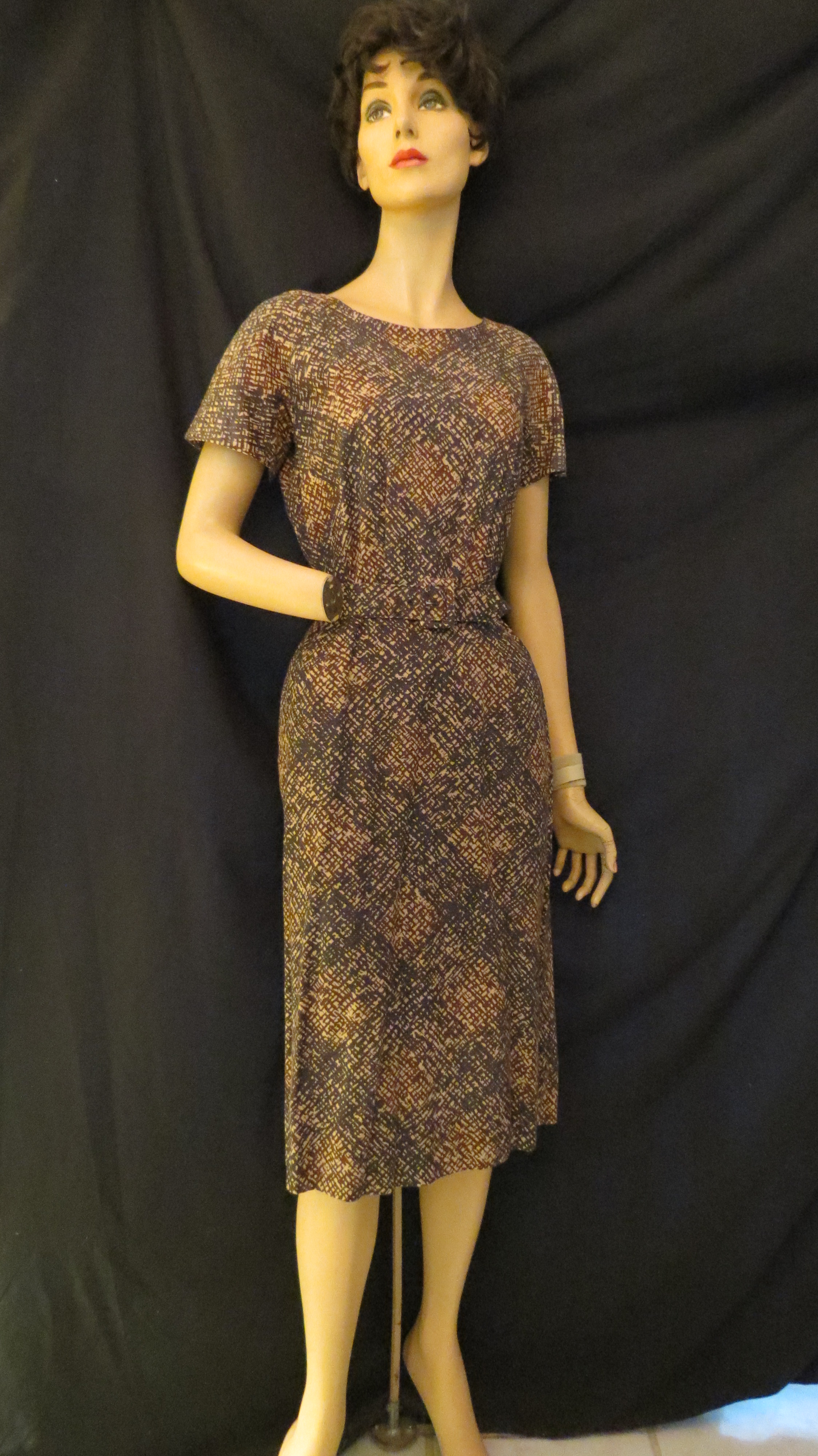
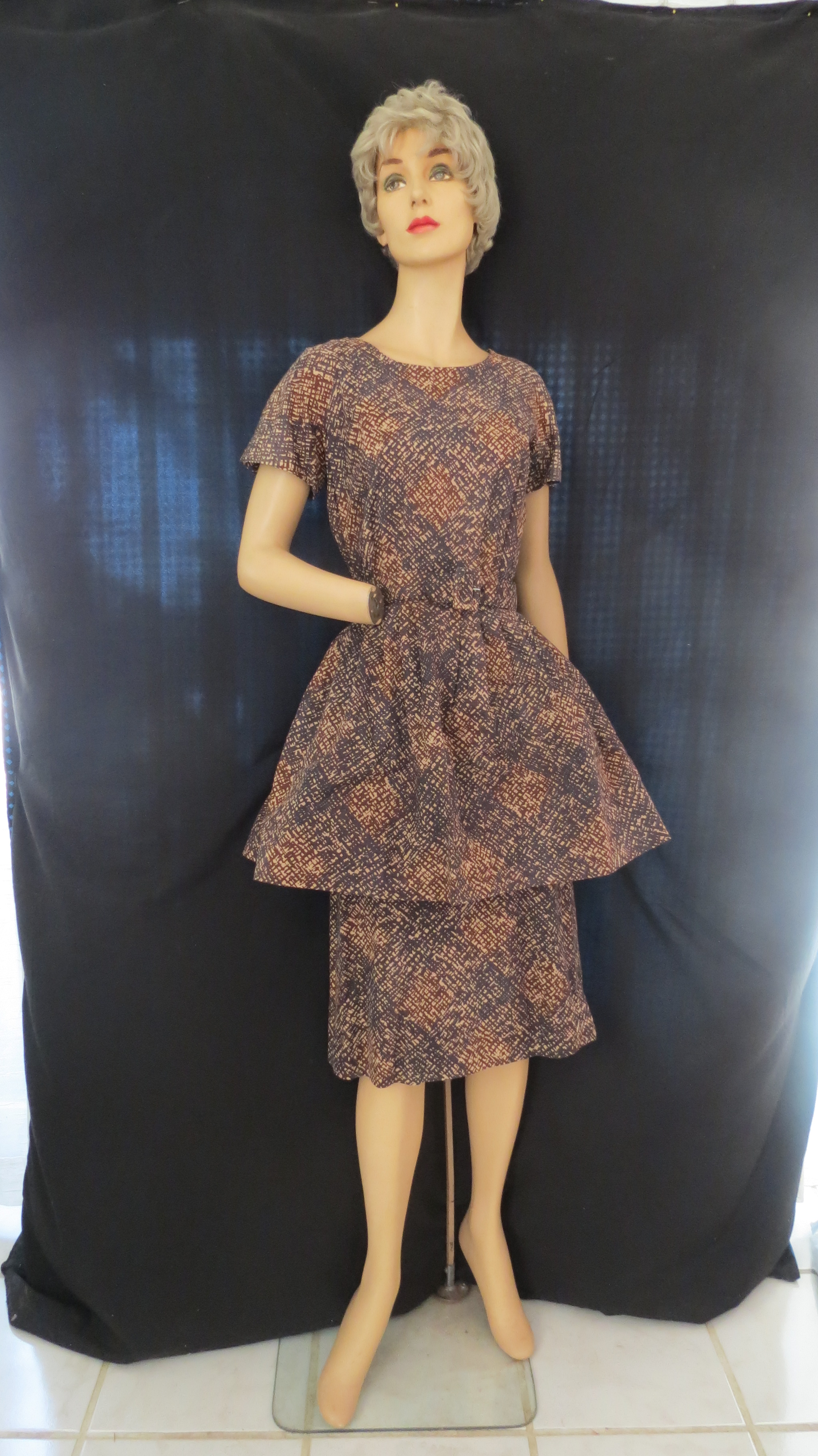
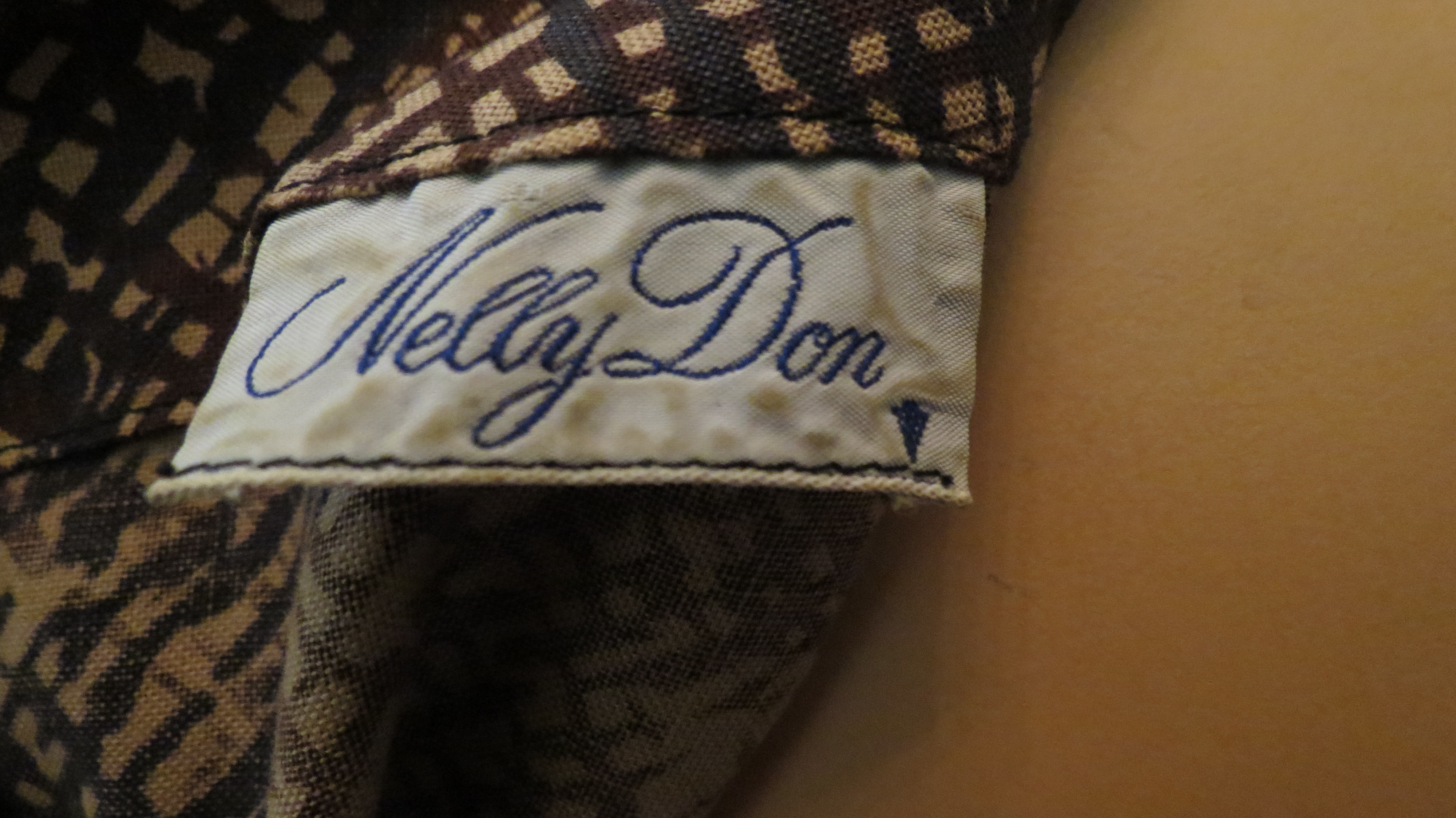
Let’s start with this novel style by a famous French (undoubtedly Paris) designer. The knock-off pictured above was by Nelly Don, a well-known mid-century ladieswear label in the U.S. The belted sheath dress woven of substantial cotton or a blend has a wide detachable peplum which creates this avant garde silhouette. The French designer brought this luxury style out in 1952 and the mid-priced American version followed quickly.

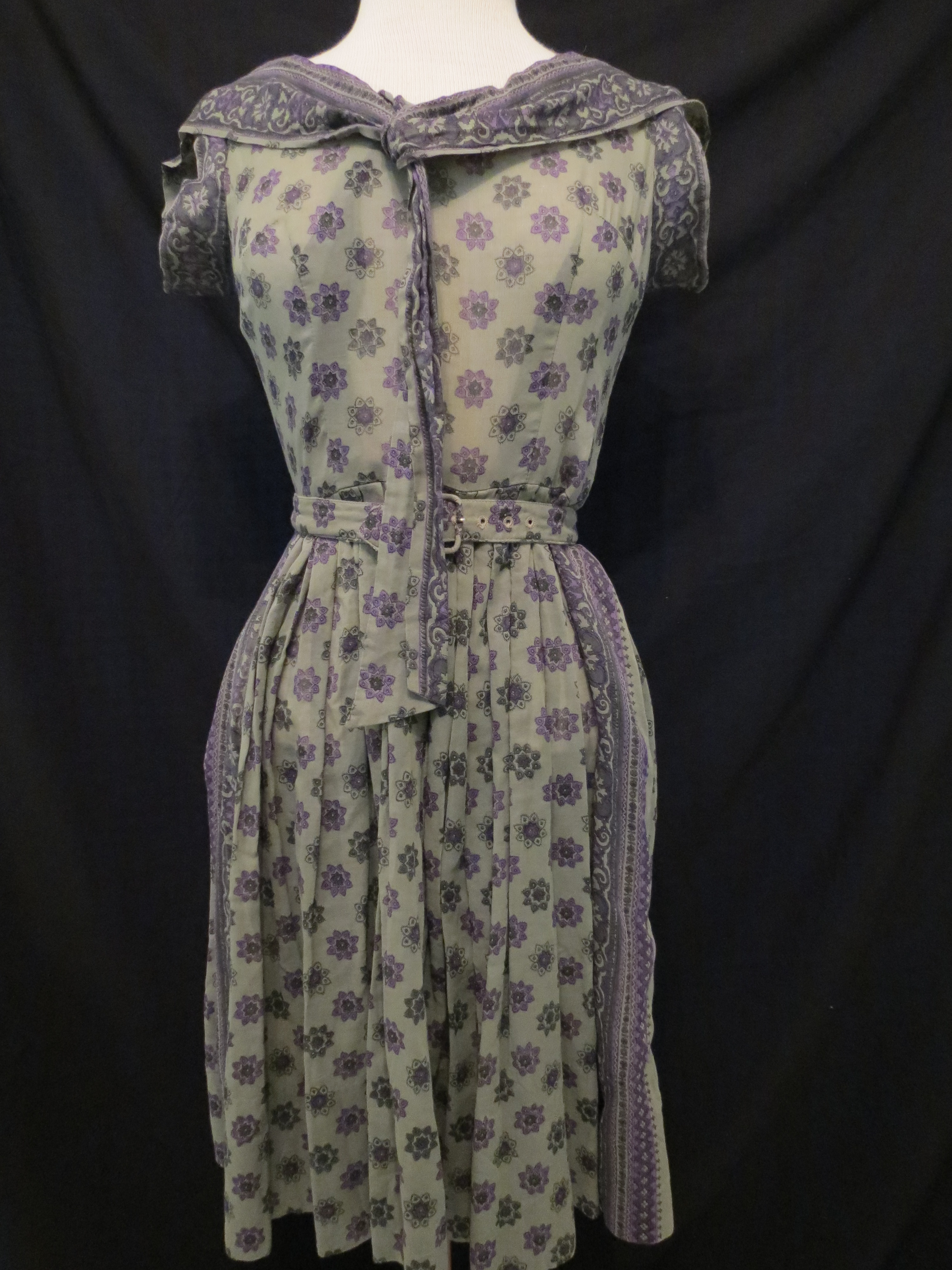
A very pretty semi-sheer dress with a scarf neckline is unusual in an olive green and purple print which I love. Again, it’s belted and fitted as were most of the dresses of this time and follows a shirtdress style.

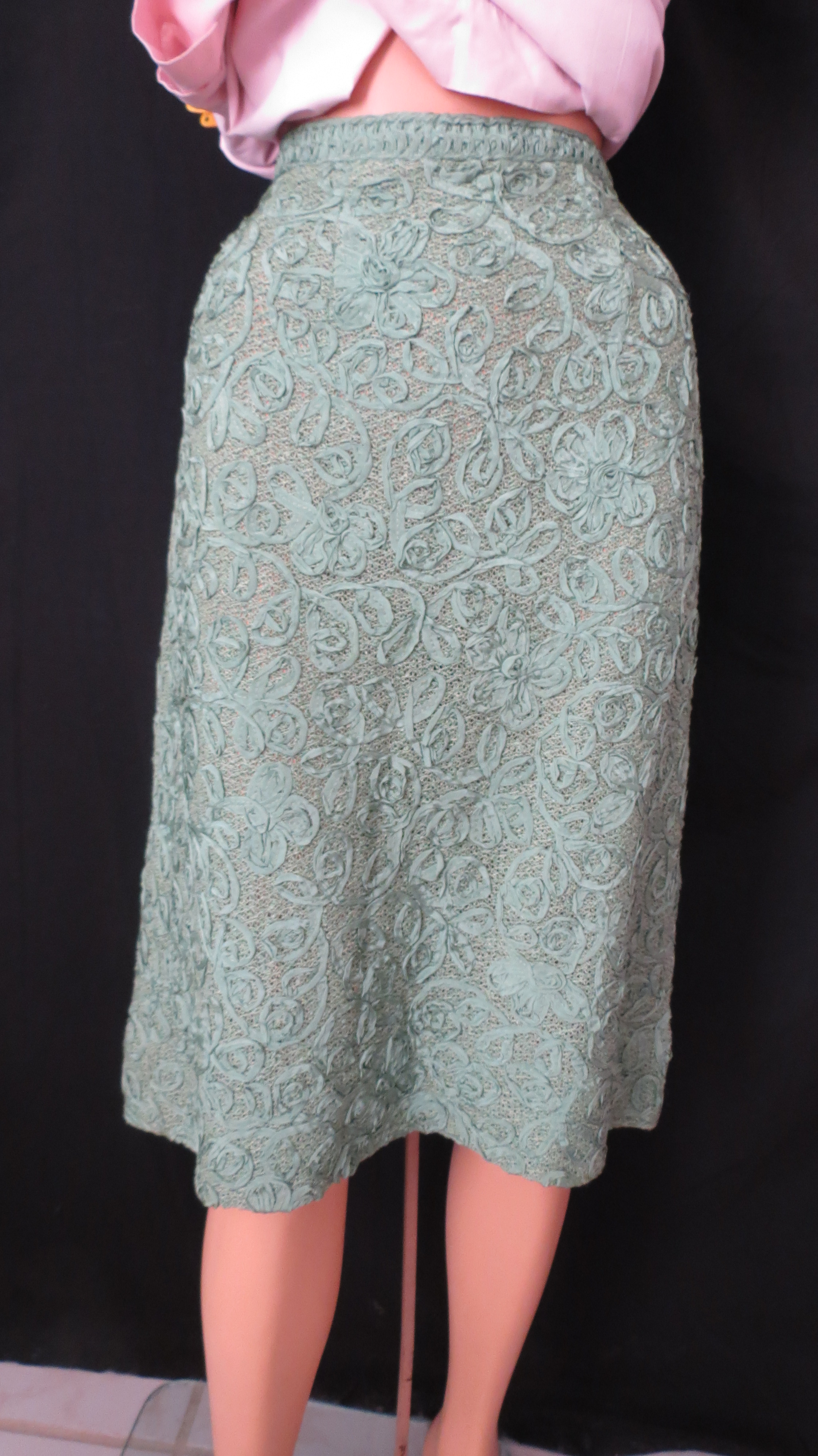
This green pencil skirt is made in a relatively briefly-used but popular fabric which consists of thin, rayon(?) ribbon that is coiled in a continuous design, appliqued onto another fabric base. Imagine it worn with a pretty, fitted blouse. I have a black skirt suit made in this fabric and a family member owned a short-sleeved dress in a gold color, back in the day.

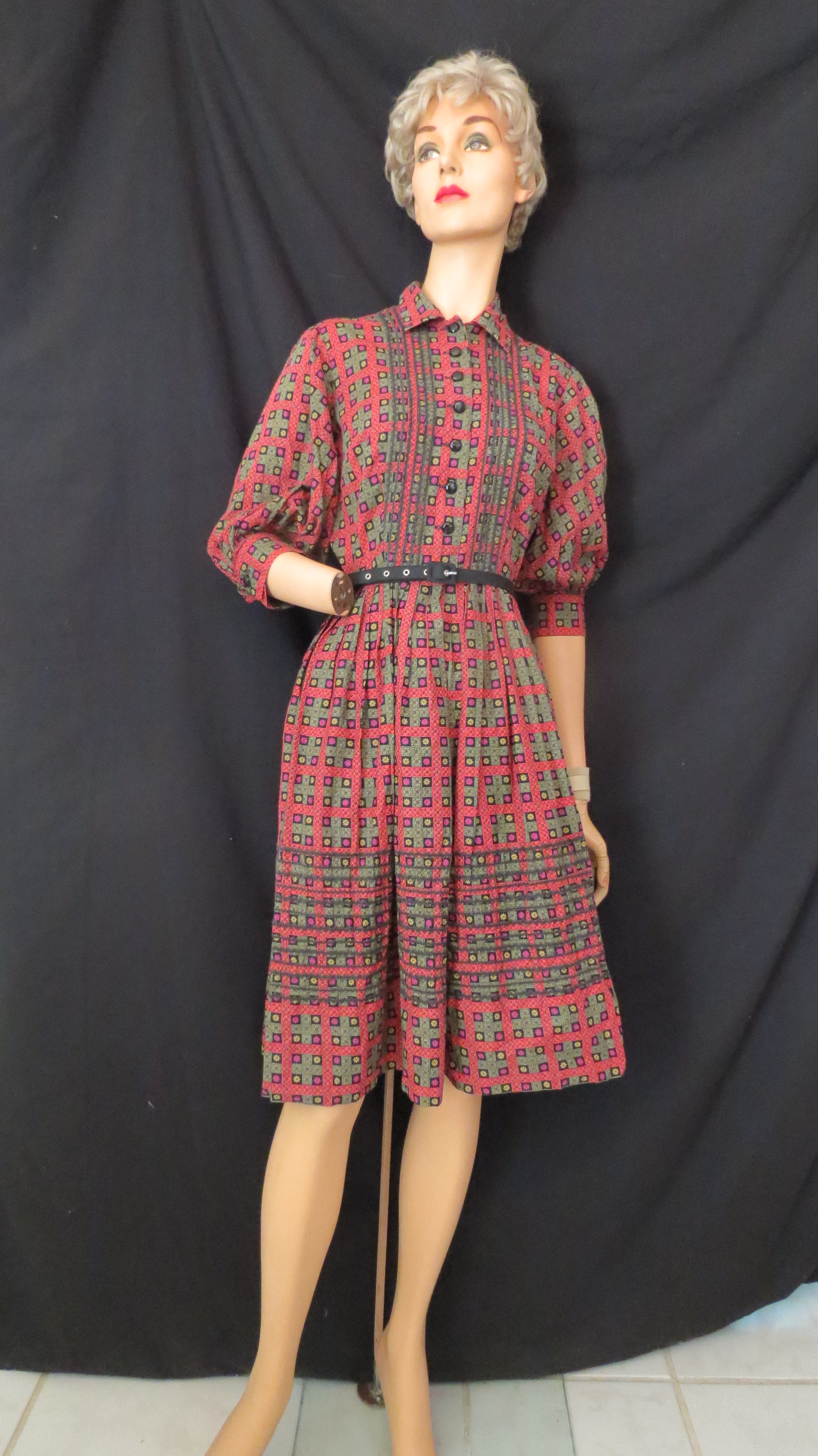
The shirtwaist dress never lost it’s place and continued into the Fifties and beyond in fabrics which ranged from cotton and cotton blends to rayon and silk. The simplest daywear styles continued to be the housewife’s daily uniform. This one is a slightly upscaled version in a more complex print with embroidered trim and tucks.

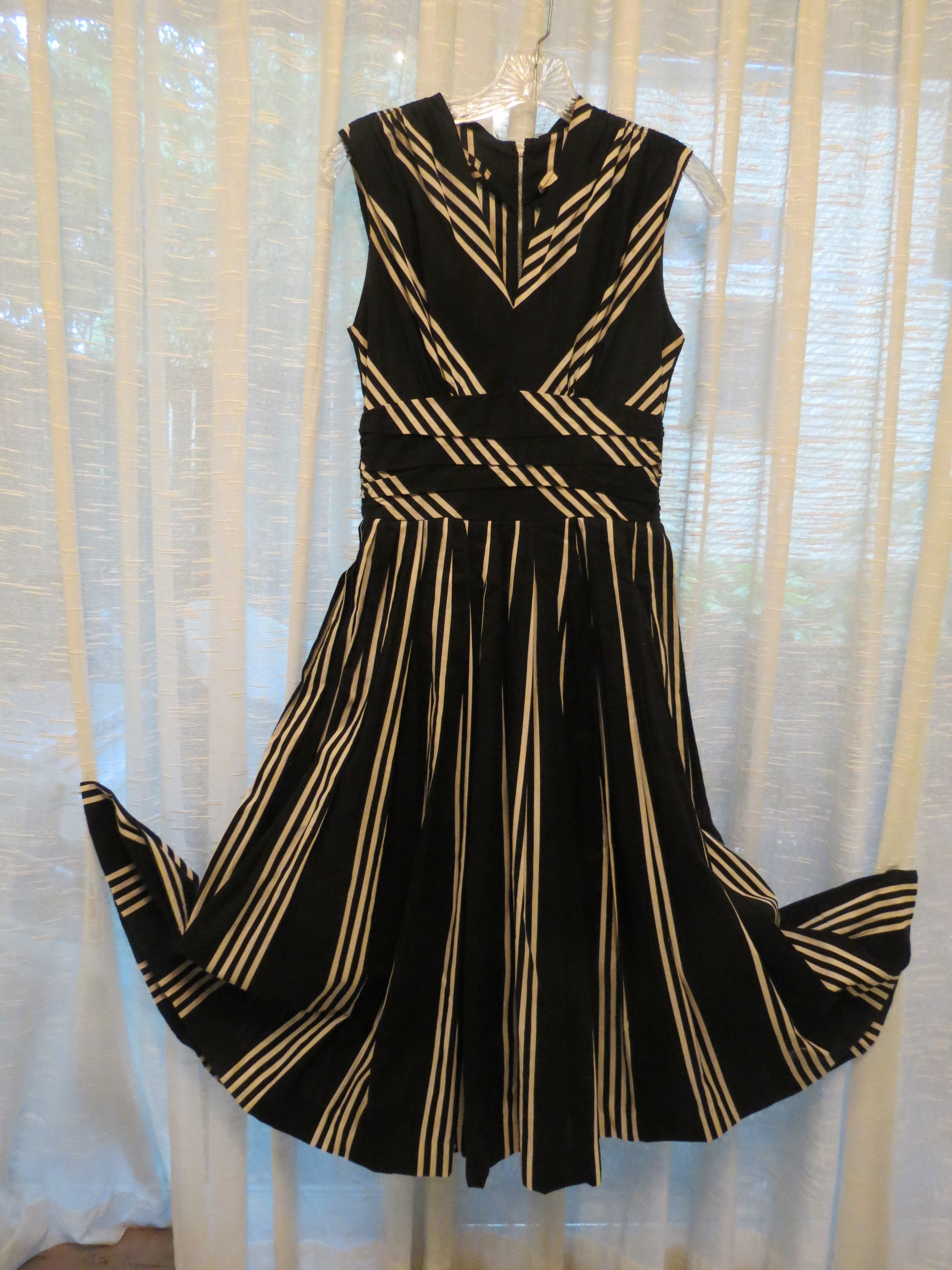
This black and white dressed-up sundress would have been appropriate to go on a date, to the Ladies’ Club, Country Club or shopping in the city. It may have been custom-made, as women and professional tailors continued to use their skills this way though not as much out of necessity as during wartime. The Fifties were about being thrifty but also stylish and having more!

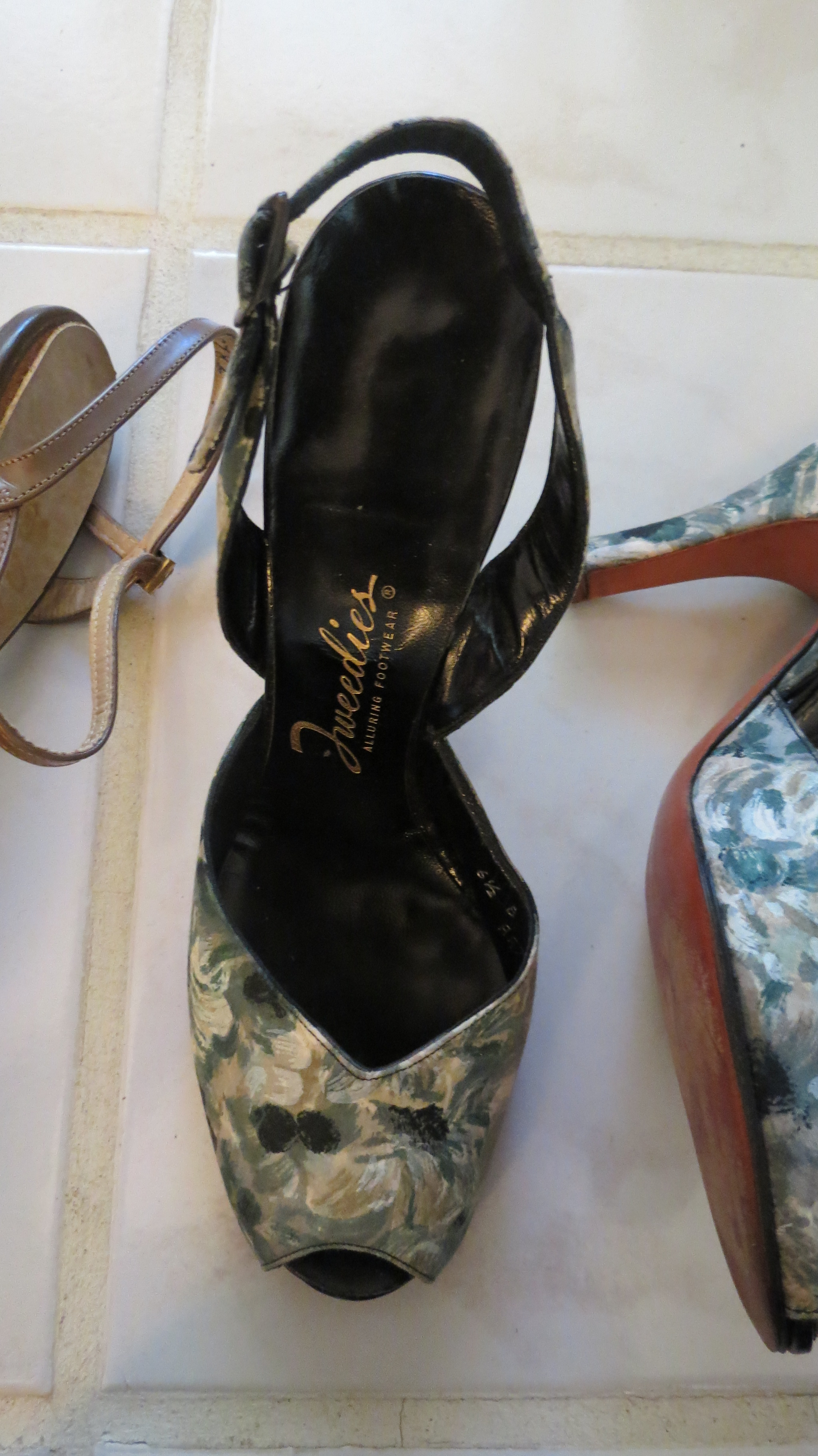
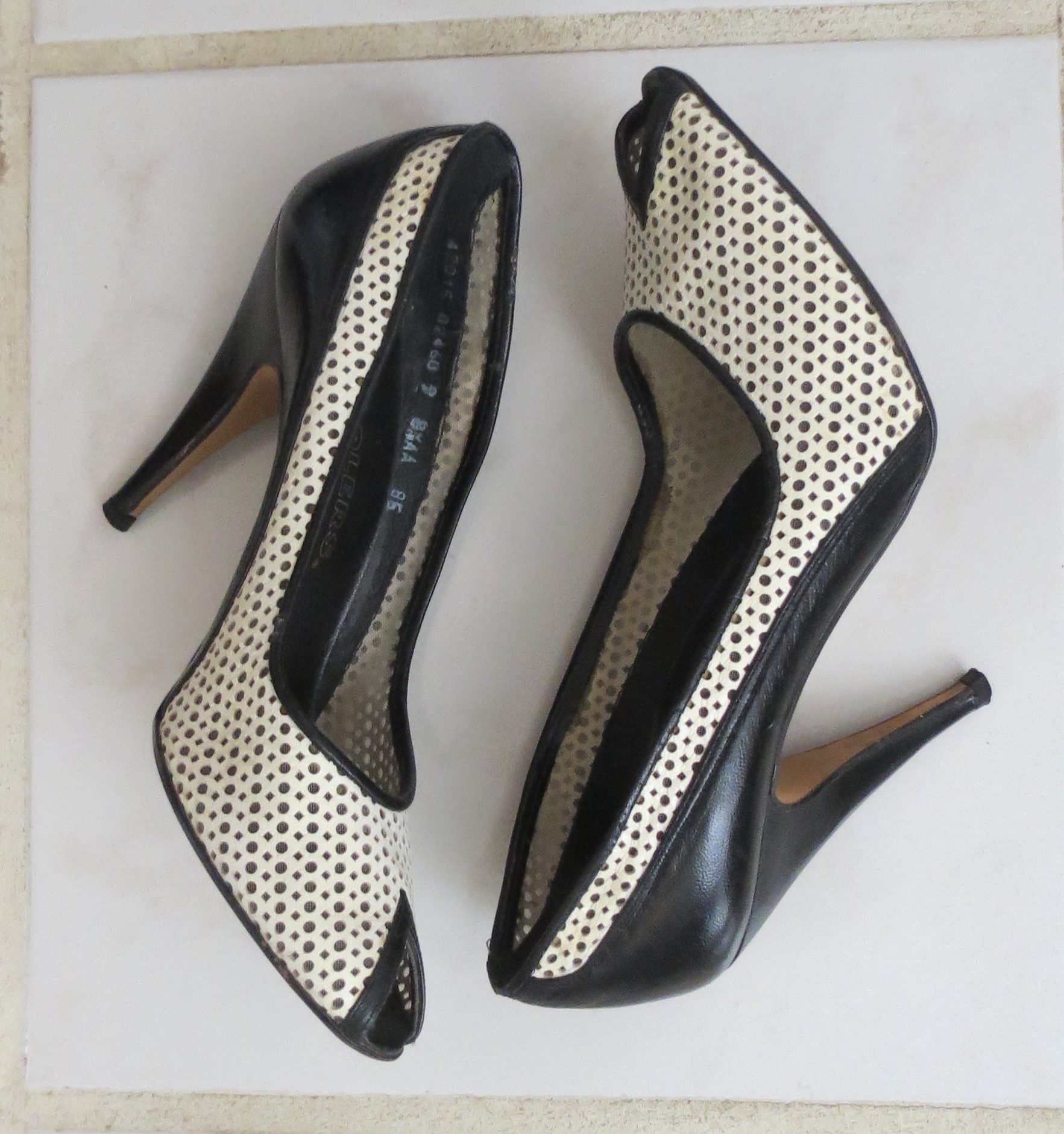
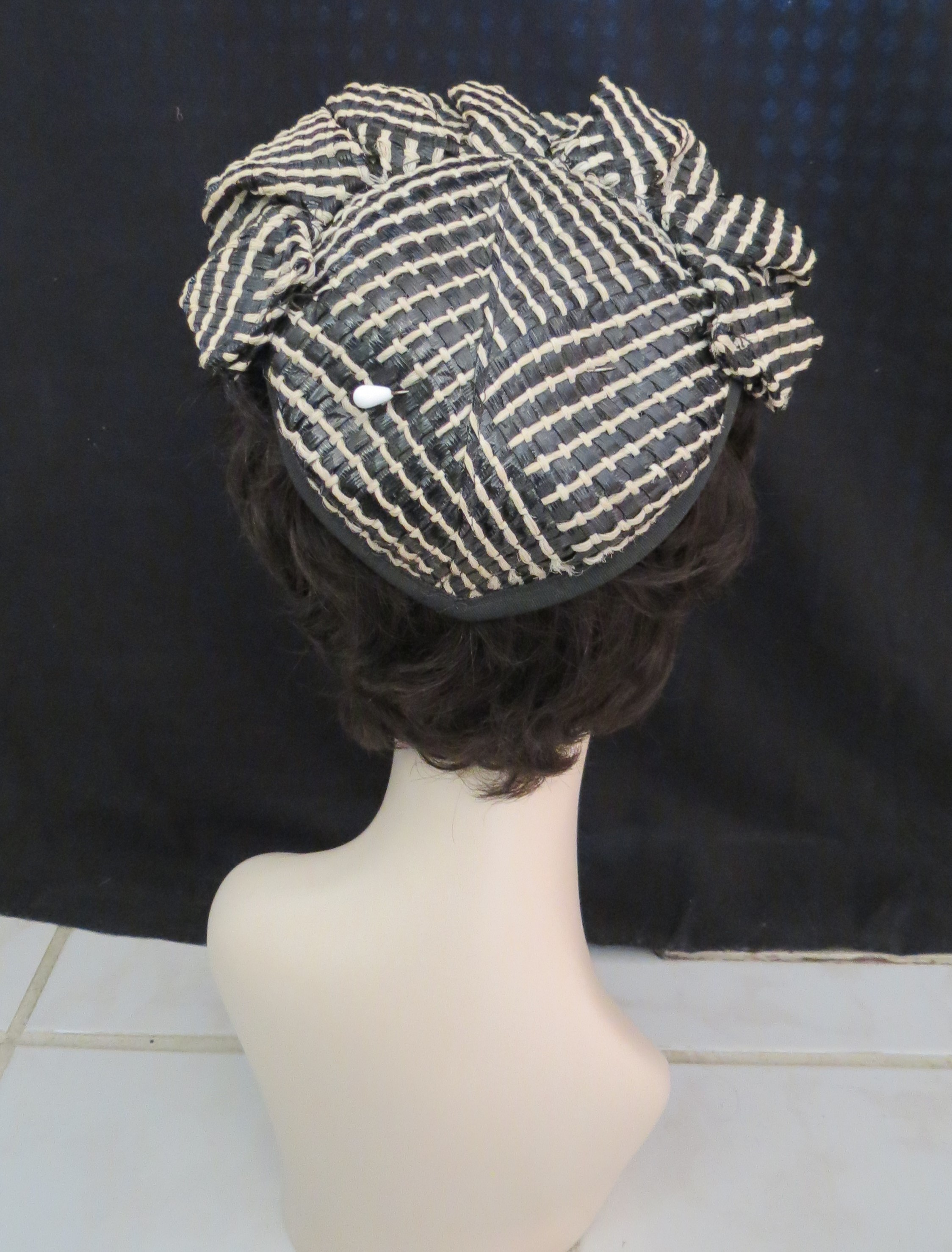
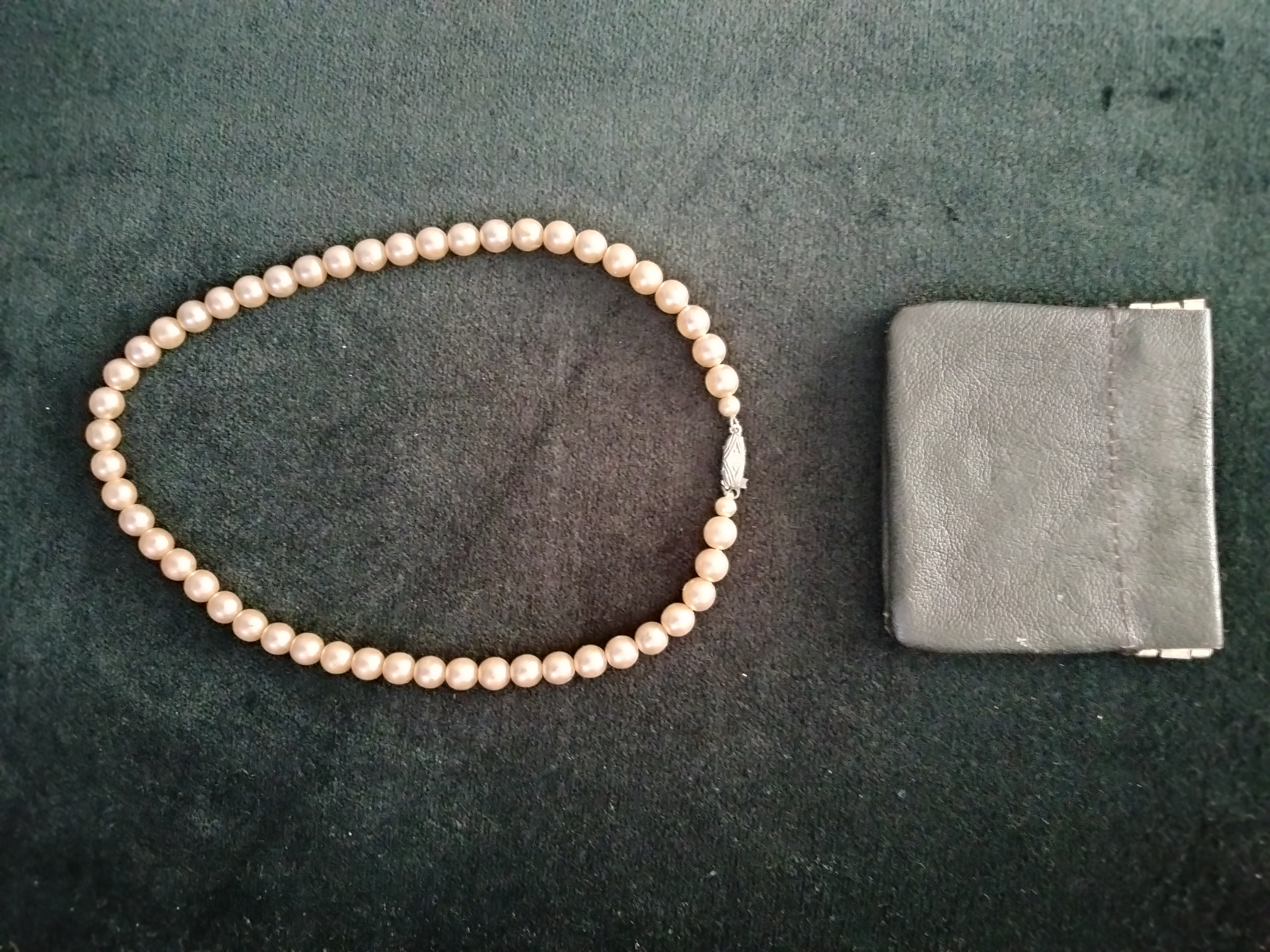
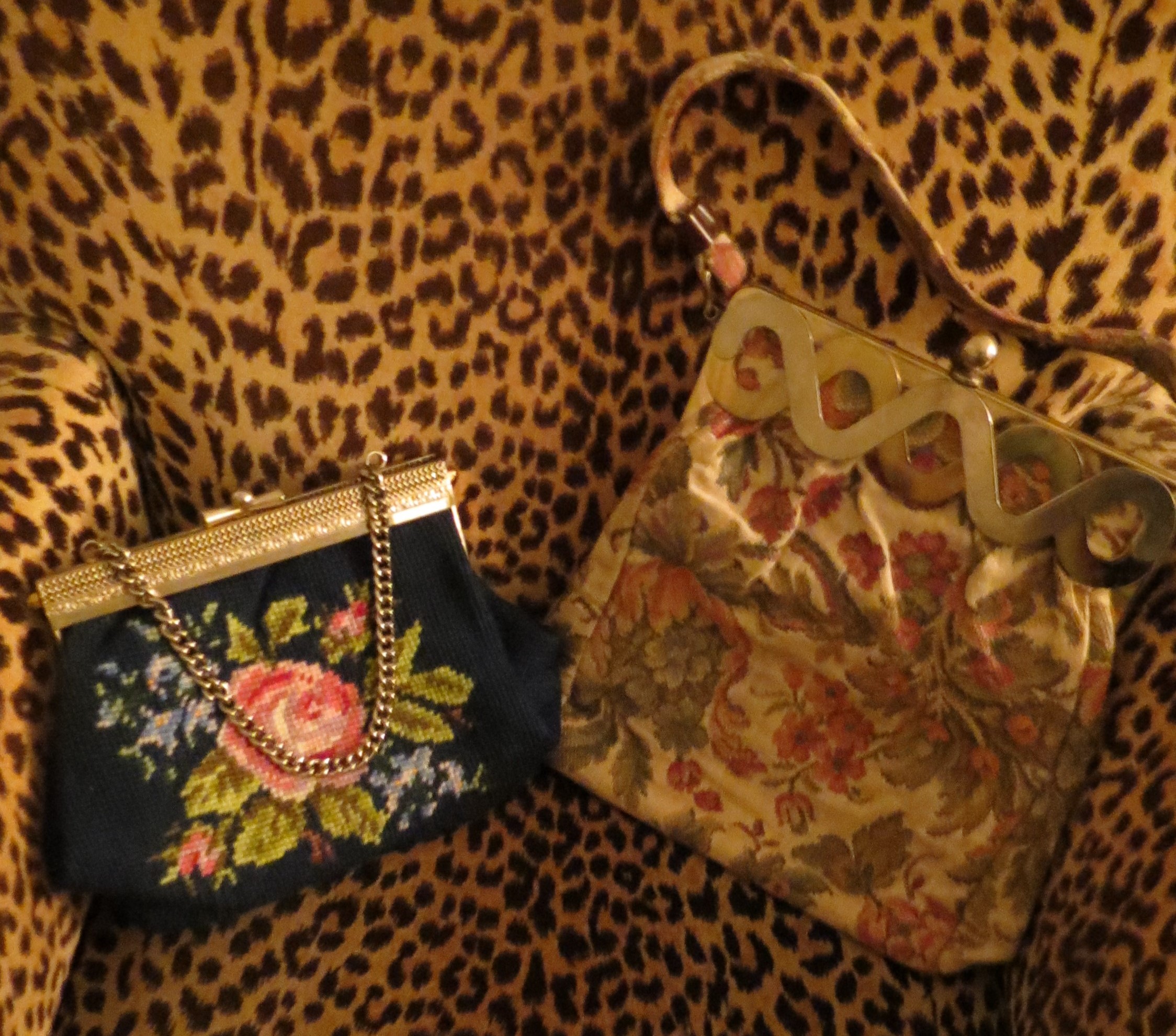
Shoe styles carried over from the 1940’s but with sleeker lines. Pumps were a bit more cutaway and more often had sling-backs. Soles and heels were slimmer. Peep toes continued, which I absolutely love. Hairstyles became smaller and neater again as did hats, which continued to be de rigueur for any well-dressed woman. Also, a pair of well-made gloves in a style which complemented your outfit and a short string of pearls with almost anything from casual to dressy outfits were considered to be necessities for elegant style. Handbags adopted many styles but here are a couple of semi-dressy designs that carry over the classic “tapestry” floral design and introduce the decorative metal frames and vinyl covering which began to be more popular.

Tomorrow we’ll stay in the same Forties to Fifties time-frame but focus on casual separates and trends. Stay tuned . . . . . . . . . . .

MORGANA MARTIN, THE MAGICVINTAGESPY

BLOG: MAGICVINTAGESPY.COM

1940’s Western-wear Fashion Trend, Inspired by the Movies

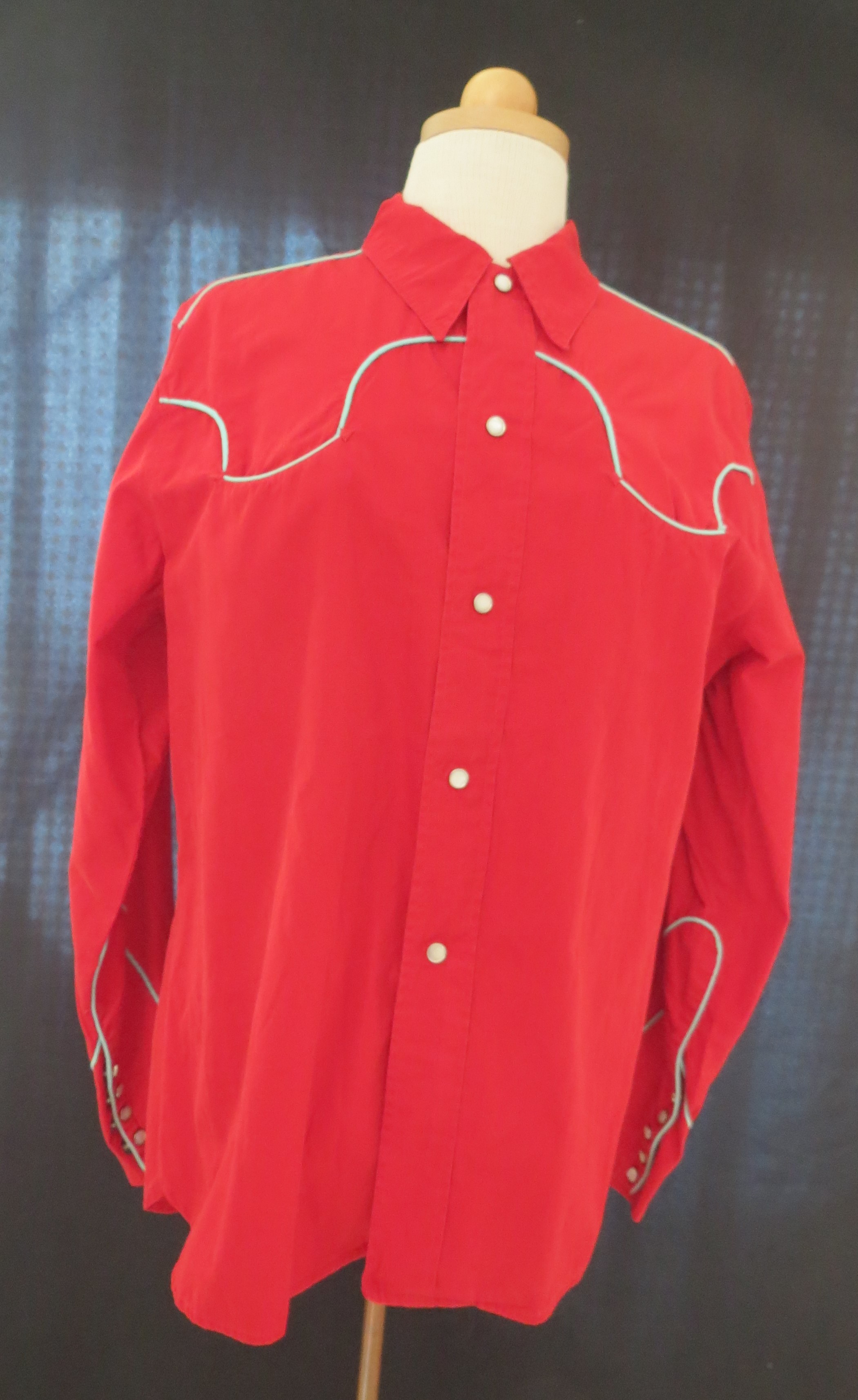
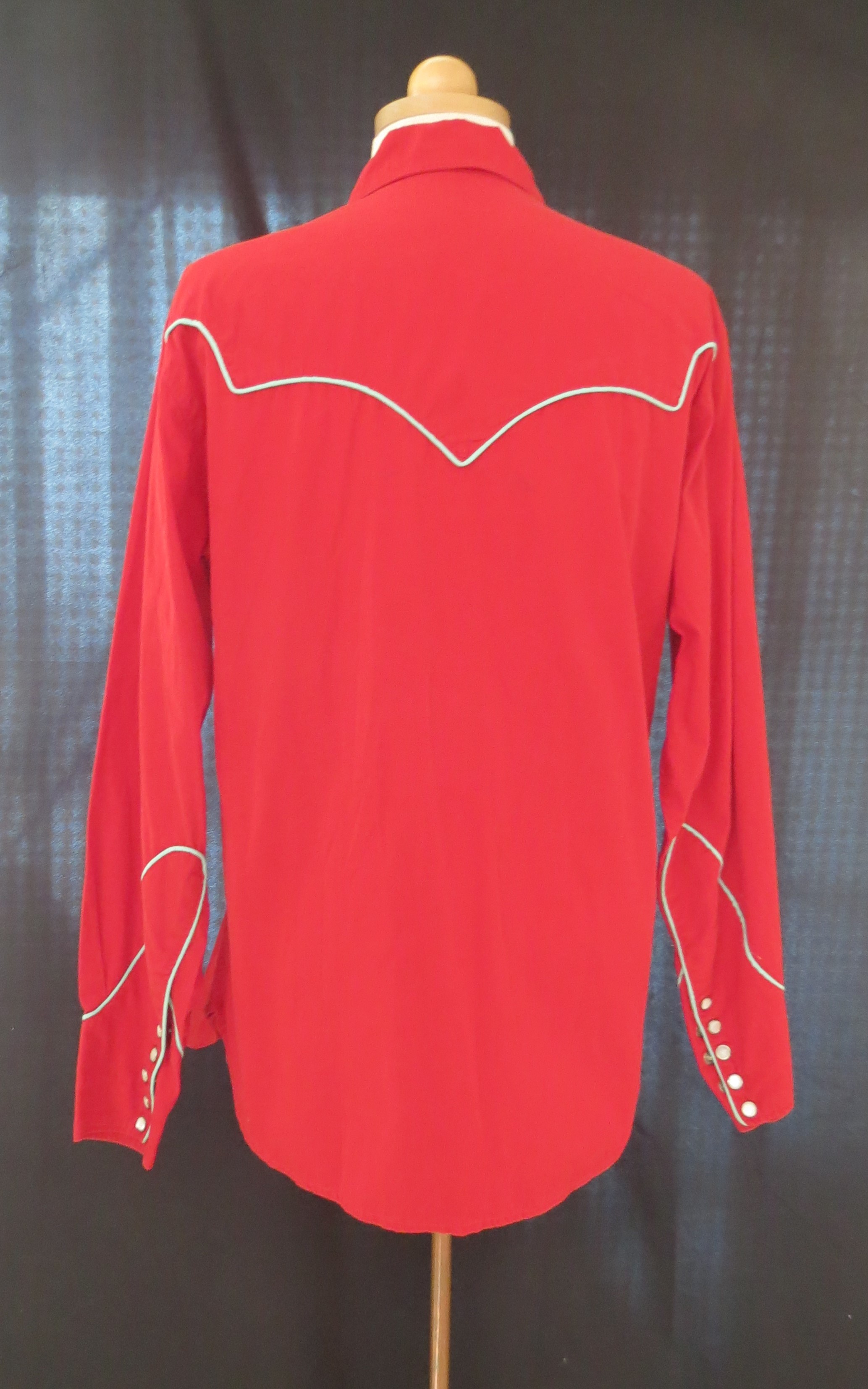
Cowboy movies, which actually began a decade or so before the 1940’s, gained popularity and caused a major fashion movement in the Forties and Fifties. This beautiful men’s shirt, which belonged to a family member, is one of the favorite pieces I’ve ever seen. The colors are vibrant and who doesn’t love red and turquoise together? Look at the detail! There are even small pockets tucked under the yoke piping in front. Some of these were custom-tailored.

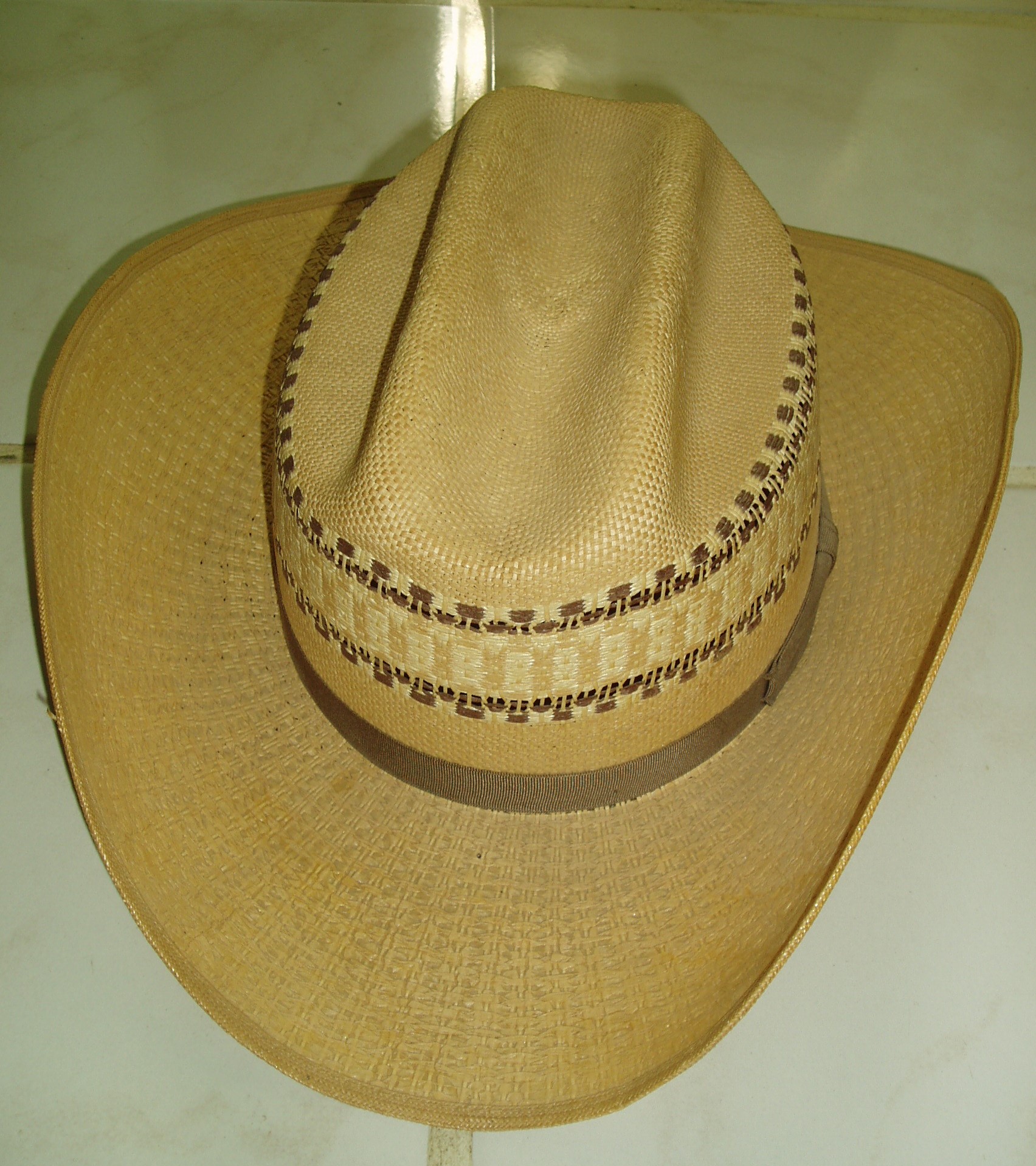
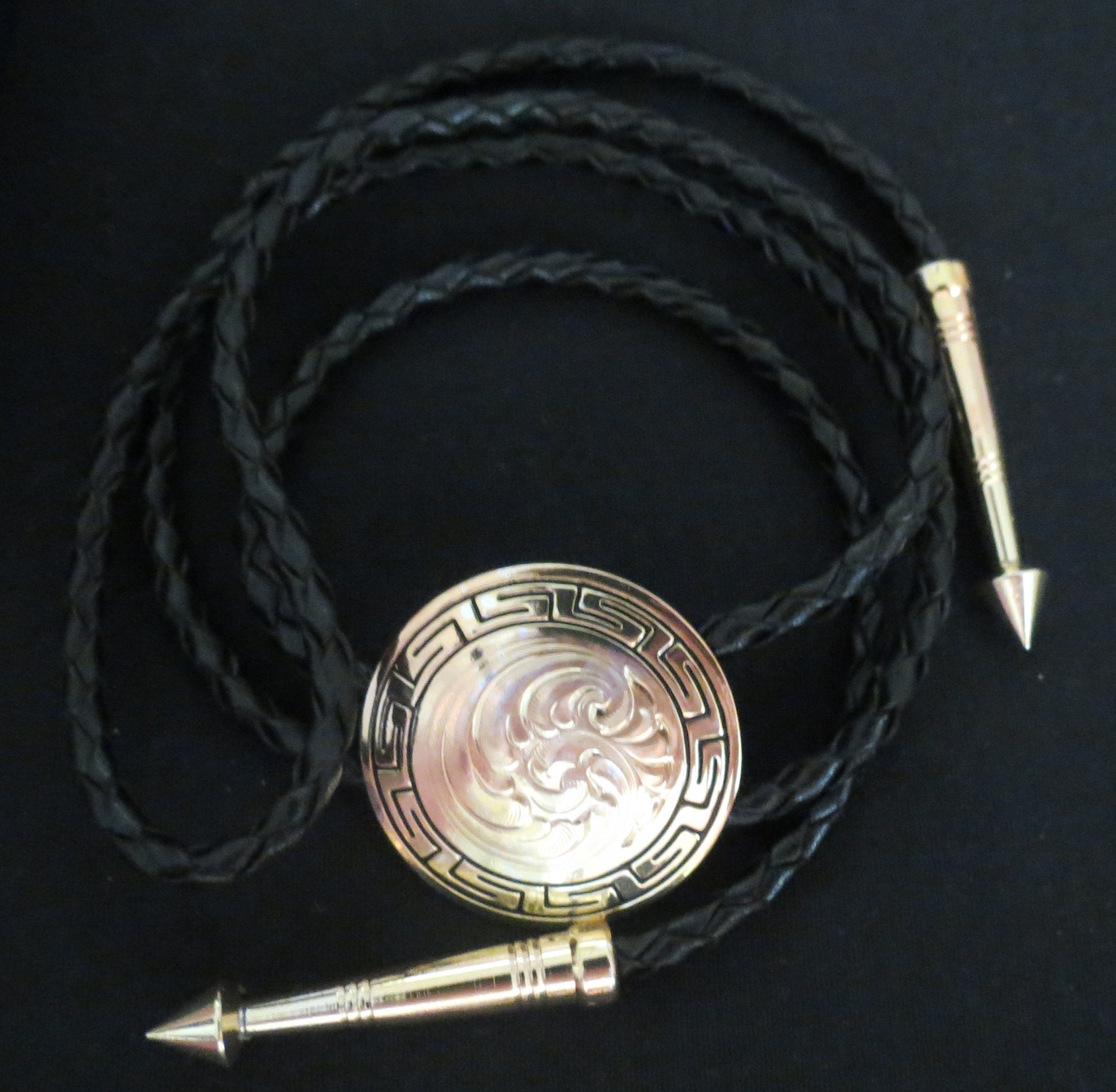
Cowboy hats also became very popular. This one is a well-preserved woven straw but wool felt hats by Stetson, in particular, were the most often seen. Bolo ties, made of leather with silver slides and aiguillettes replaced fabric neckties in Western-wear dress-up.

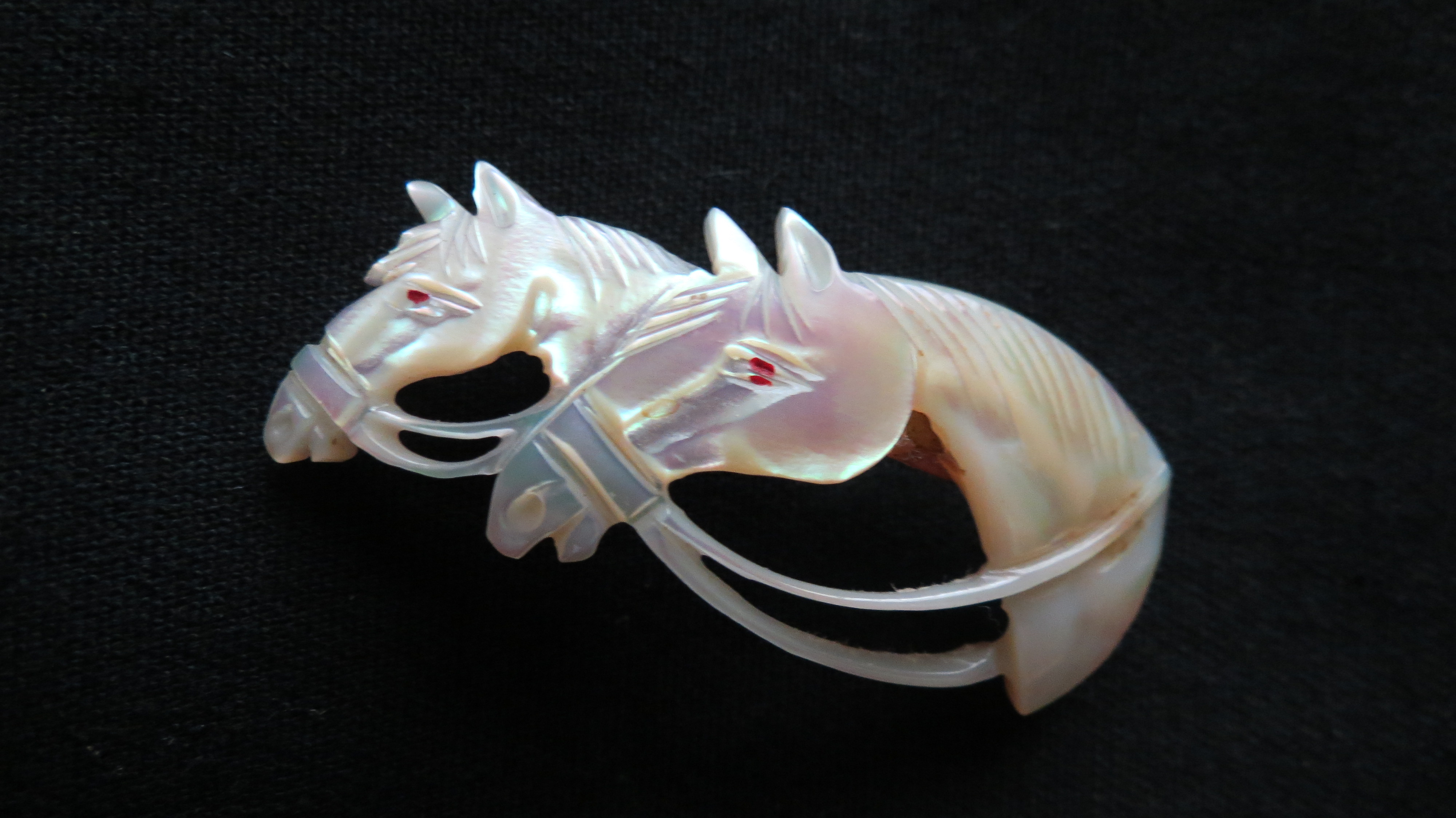
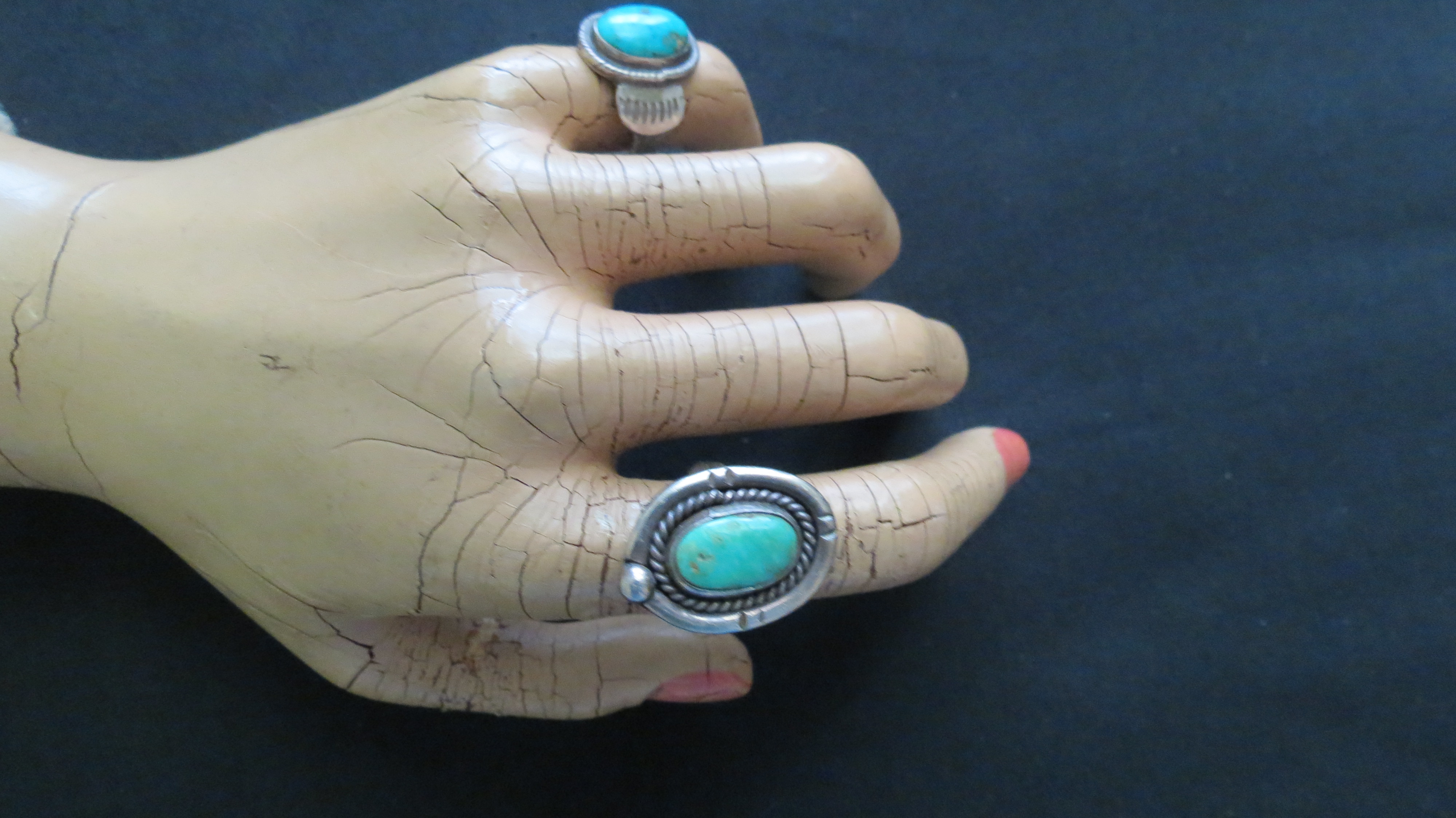
I have a pair of 1940’s women’s high-waist wool slacks with wide fabric belt loops finished with pearlized snaps. What a rare find! Don’t have a picture of them handy, but take my word that some of the Western fad did cross over into women’s-wear. I’ve got a cowboy-style shirt with floral embroidery and a fringed leather jacket from this era. This mother-of-pearl brooch is an example and, of course, silver and turquoise jewelry made by Native Americans was the real deal. I also have many examples of that, some that were owned by family members, too.

Naturally, the popularity of Western-wear has not decreased over the decades. Although there is a niche market for the very authentic and work-oriented designs, the style shows up in retail fashion all the time. A very pronounced trend really hit in the early 1950’s – that was Southwestern-style cotton dresses, most of which were 2-piece, and heavily decorated with colorful ric-rac and ribbon. Some Native American women wore these and they were heavily marketed for tourists in the southwestern states. 1940’s versions had 3/4 length skinny sleeves with metal zippers to the elbow. Later, short-sleeved versions and even cap-sleeve style dresses showed up in the genre. I’ve shown many of these in past blog posts. Add to that soft leather ankle-length boots and beaded moccasins. So glad that my family alive during the ’30’s – ’50’s enjoyed traveling to the the Southwest and did so many times!

Very fun, collectable and wearable. Tomorrow I’ll be showing women’s blouses & tops from this era. Stay tuned . . . . . . . . . . . .

MORGANA MARTIN, THE MAGICVINTAGESPY

BLOG: MAGICVINTAGESPY.COM

DETOUR! 1950’S DRESSIER FROCKS BEFORE WE MOVE TO THE SIXTIES

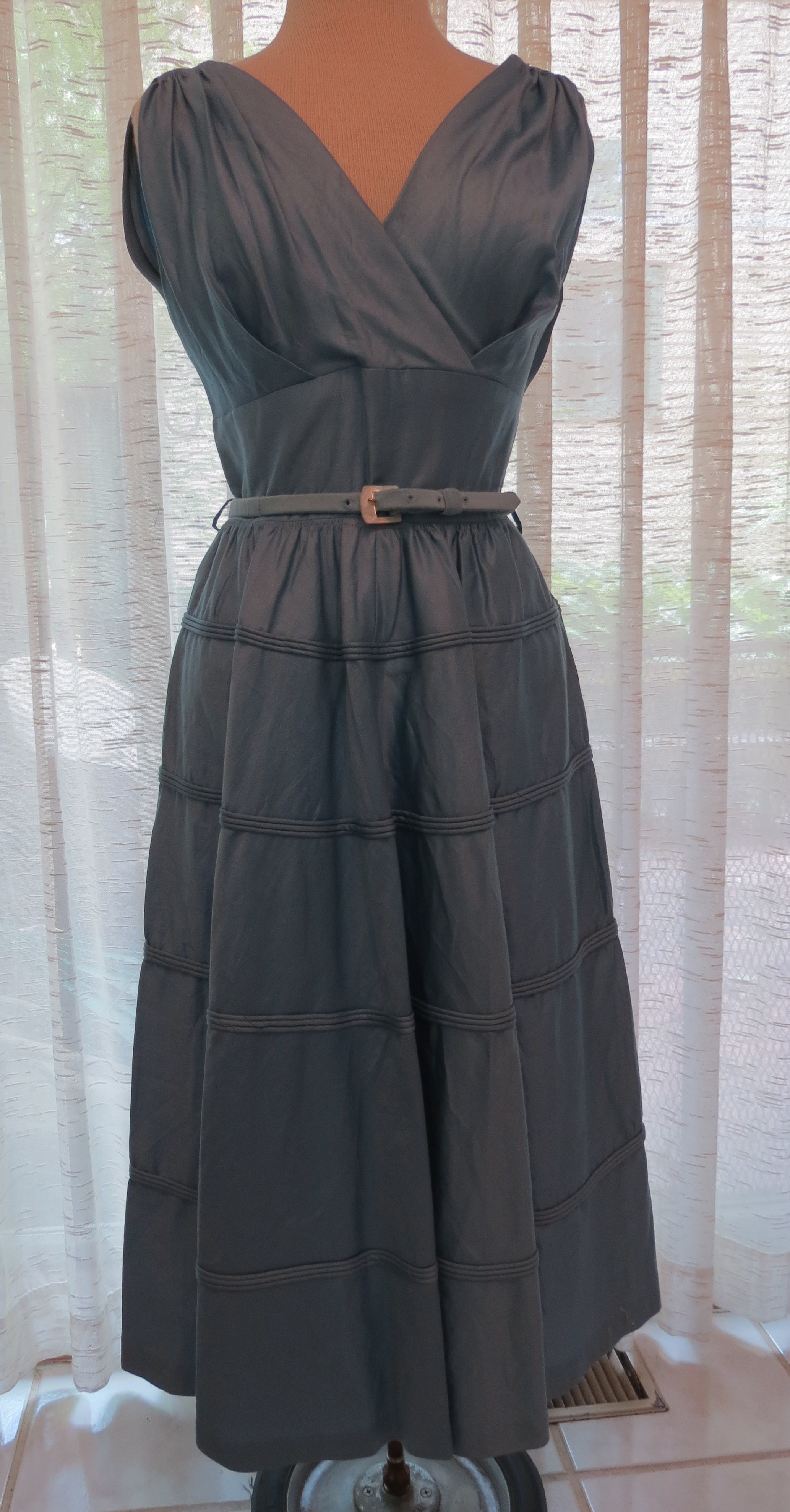
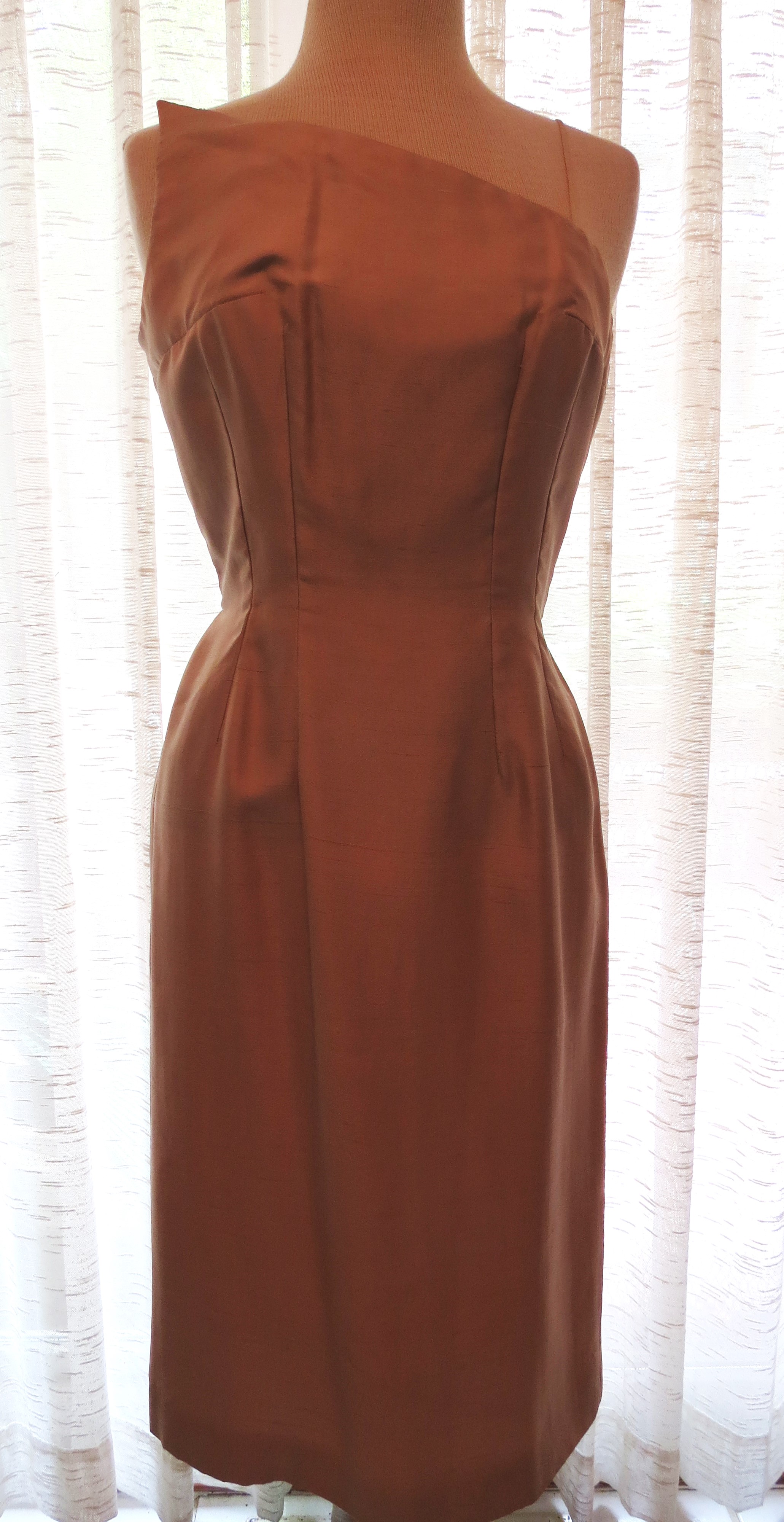
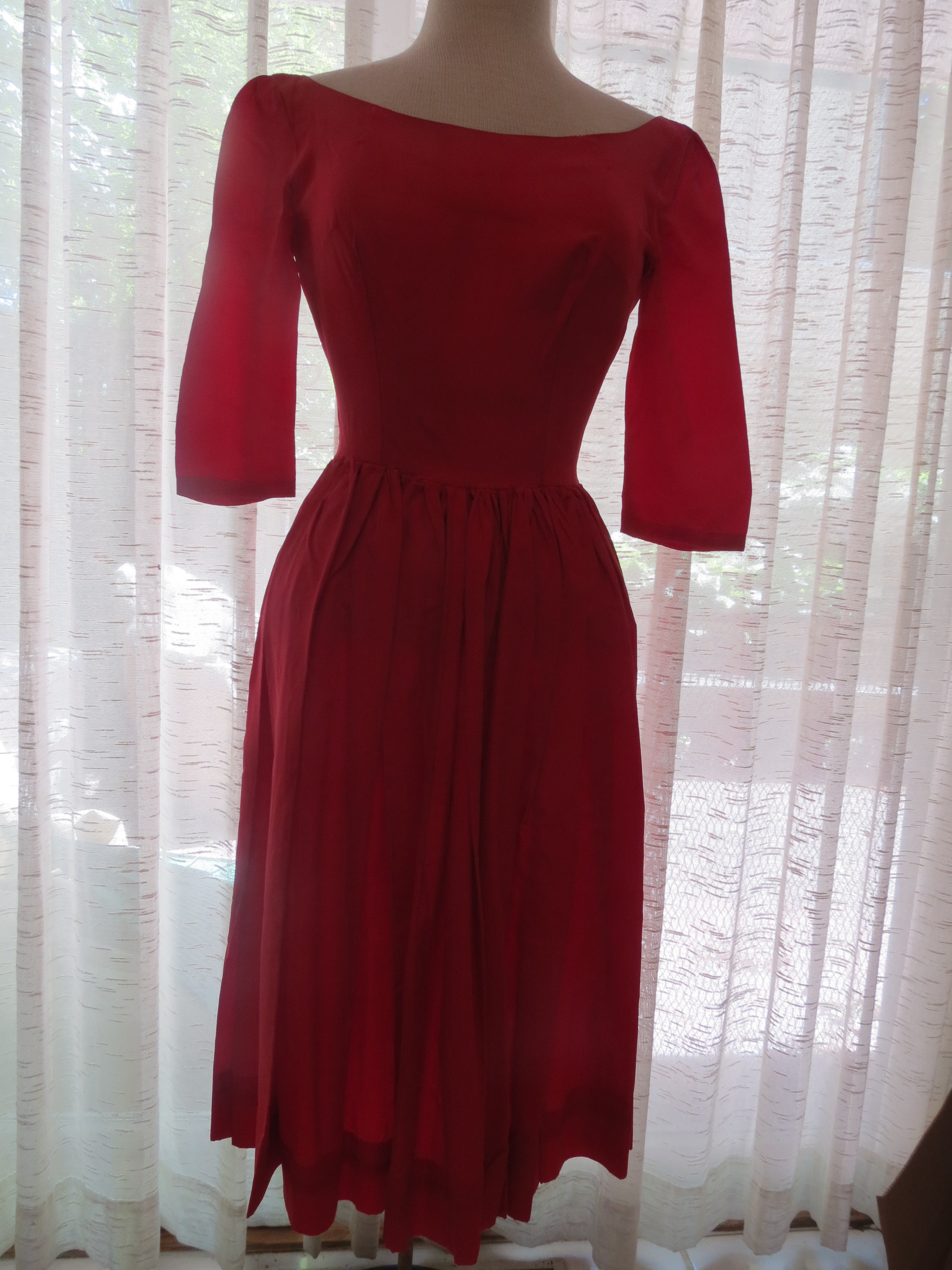
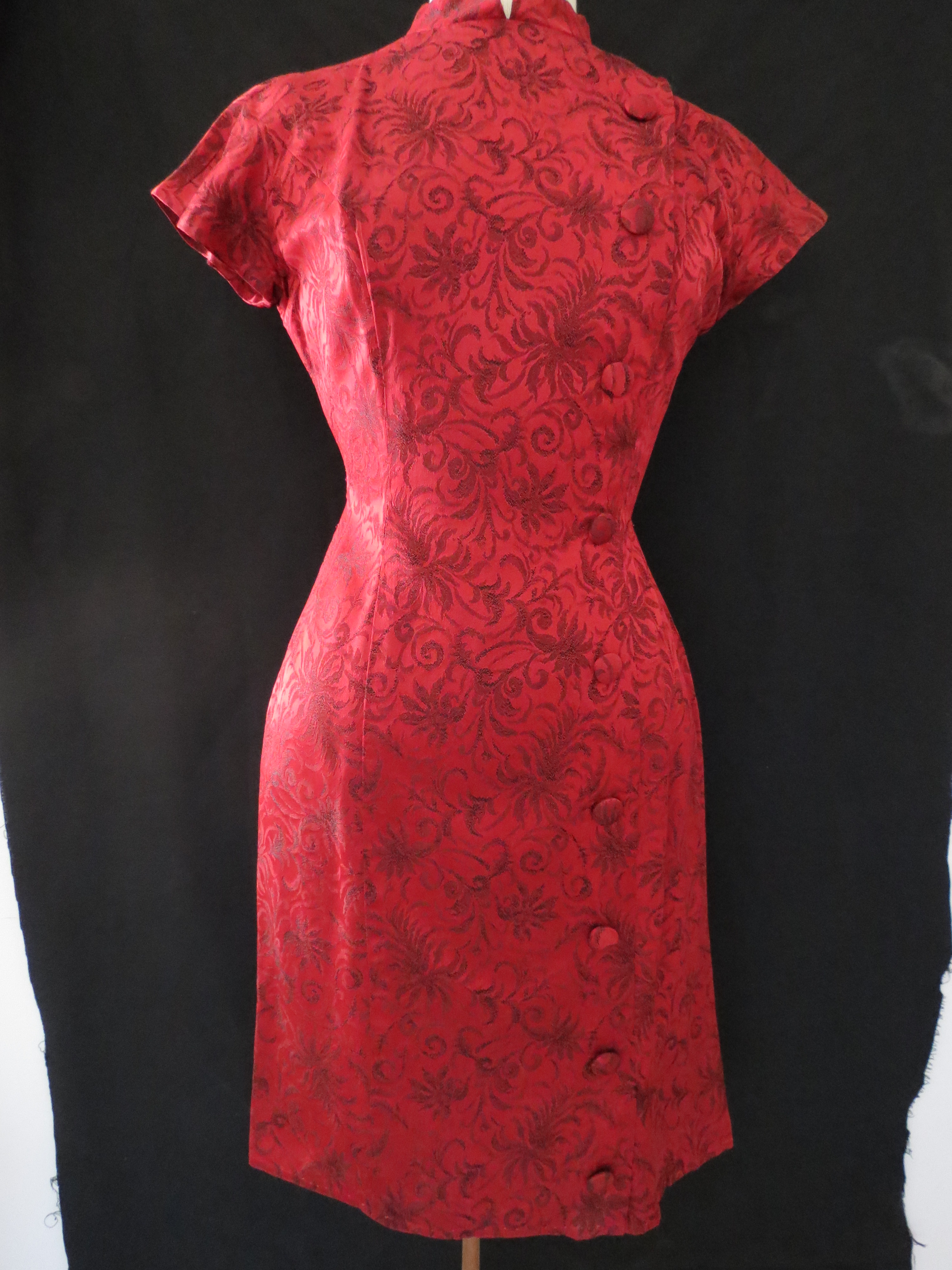
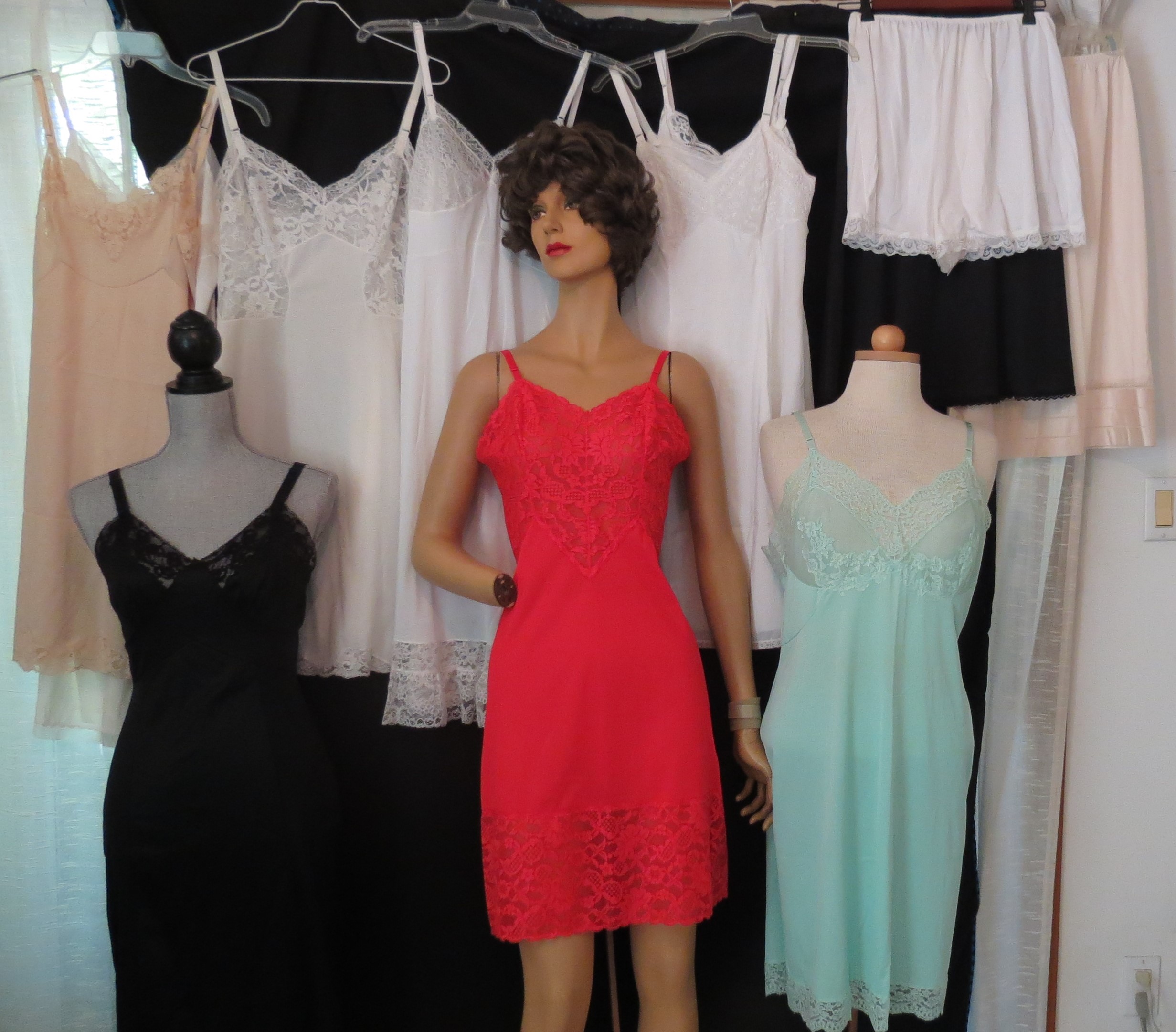
I just couldn’t head into the 1960’s without a display of some of the prettiest dressy frocks from the 1950’s and the fabulous nylon lingerie slips that might have been worn underneath. The first two pictured also have interesting remodeling stories.

First is a beautiful, heavy polished cotton dress from the early 1950’s or, perhaps, the late 1940’s. It is absolutely gorgeous and falls to tea length. Polished cotton was a favorite fabric during the mid-century, before 1965 or so. As often happens, this frock had lost it’s belt somewhere along the way so I took some fabric from the generous hem and covered a skinny one by hand.

The mocha dress with the interesting shoulder line was a more ambitious remodel but still done entirely by hand. This wonderful wiggle dress is made of rayon fabric which looks like silk shantung. It originally had an upper bodice made of sheer fabric with cap sleeves. Piping finished the sleeves and round neckline. This design feature was such a popular one in the late ’40’s and early ’50’s but, alas, the sheer fabric had several holes that didn’t have a mending or patching option that I thought would do justice to the style. So, I chose to remove the upper bodice and secure the cut edges underneath. The back zipper didn’t have to be changed because it ended where a keyhole opening used to be at the back. I am very happy with the result, though I hate to change original designs.

The RED party frock is a style that endured at least from the mid-1940’s until the early 1960’s. It’s a rayon fabric with midi hemline, 3/4 sleeves and a boat neckline – all of which I love. You can see how deep the hem is and, of course, the bodice and skirt are fully lined.

Finally, the red jacquard cheongsam-style sheath is a fashion that became quite popular in the Fifties and Sixties, probably a carry-over from WWII when Asian culture became better known in the West and the female spy, Mata Hari, became legend. It carries on the wiggle cut and cap sleeves which were common then. Overall, this was a decade of very flattering and well-made ladies’ garments.

We finish off with a photo of luxurious nylon slips from the 1950’s, with their fabulous fabric and pretty decoration in some of the luscious colors that were available. We WILL do 1960’s dresses tomorrow. Stay tuned . . . . . . . . . . . . . . . . . . . . . .

MORGANA MARTIN, THE MAGICVINTAGESPY

BLOG: MAGICVINTAGESPY.COM
TRUE VINTAGE DAY DRESSES THROUGH THE DECADES, HANDBAGS AND SHOES – 1930’s

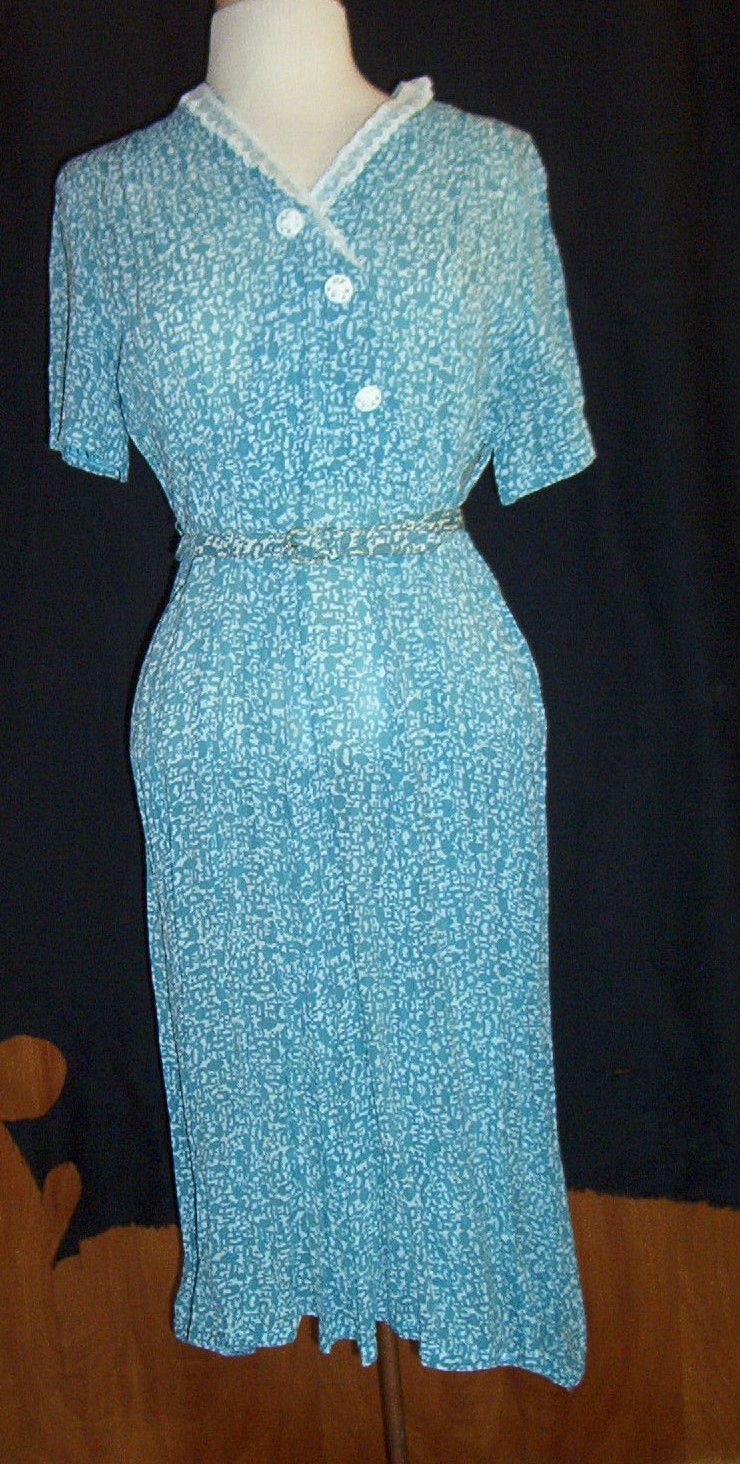
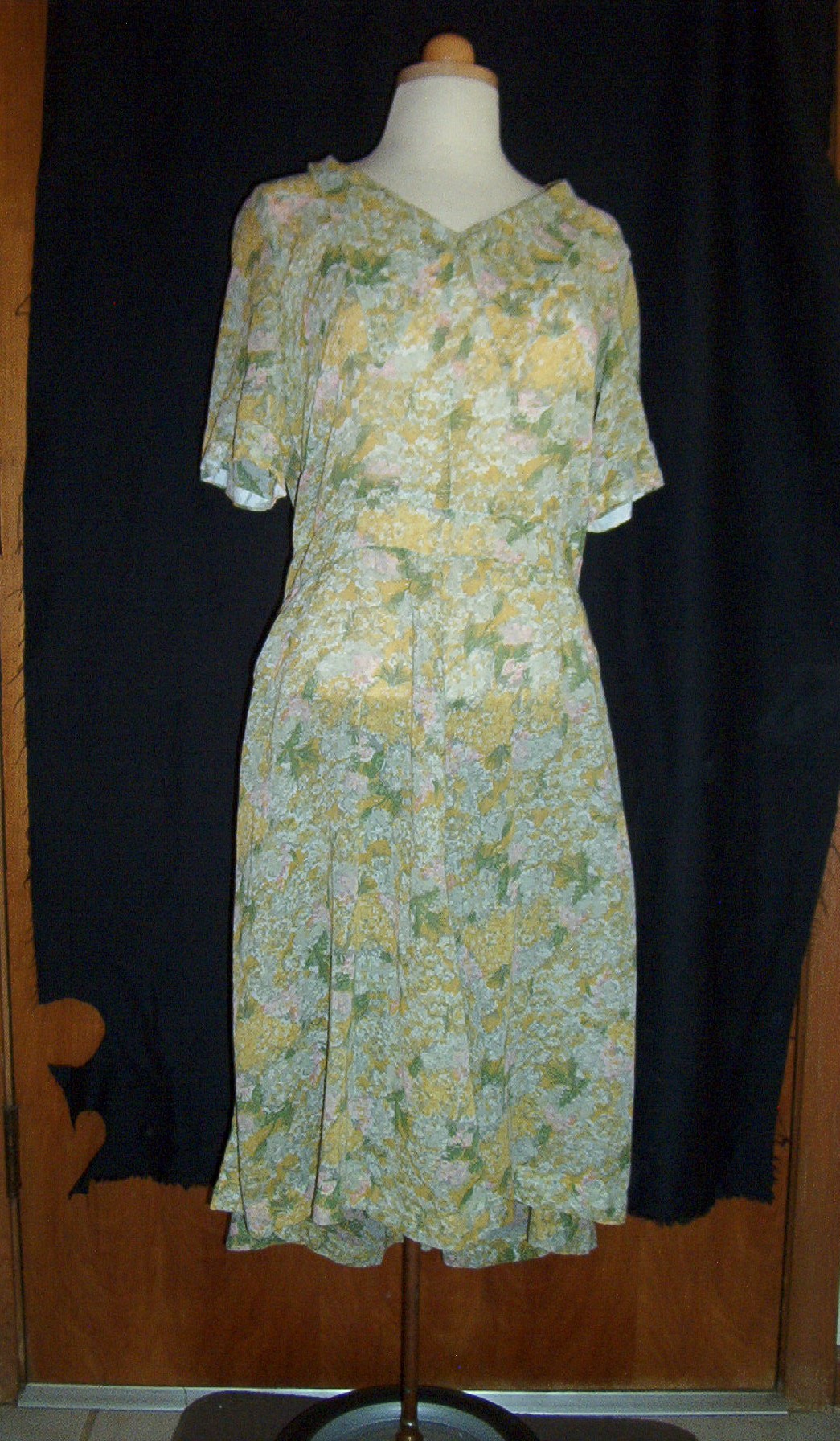
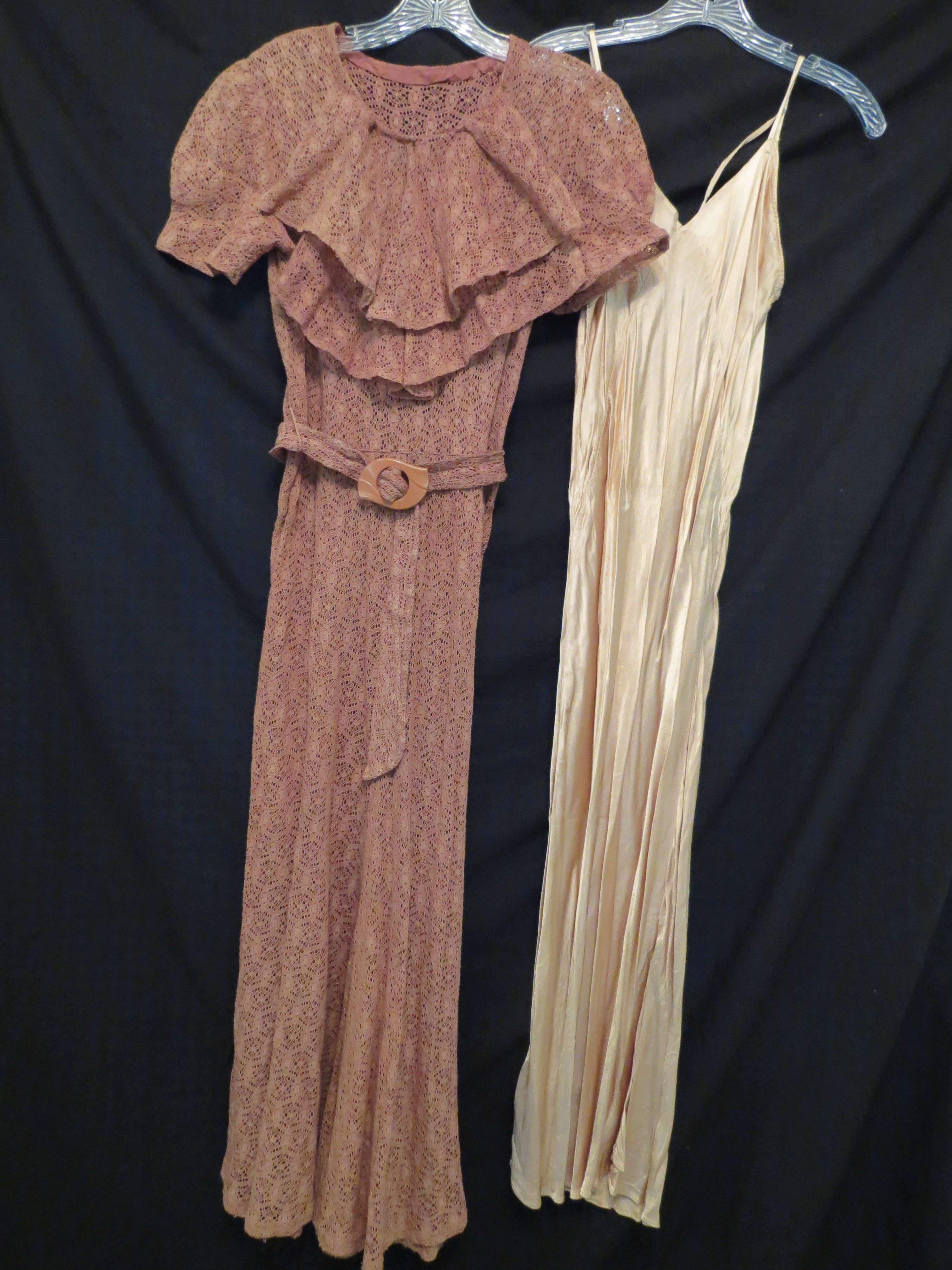
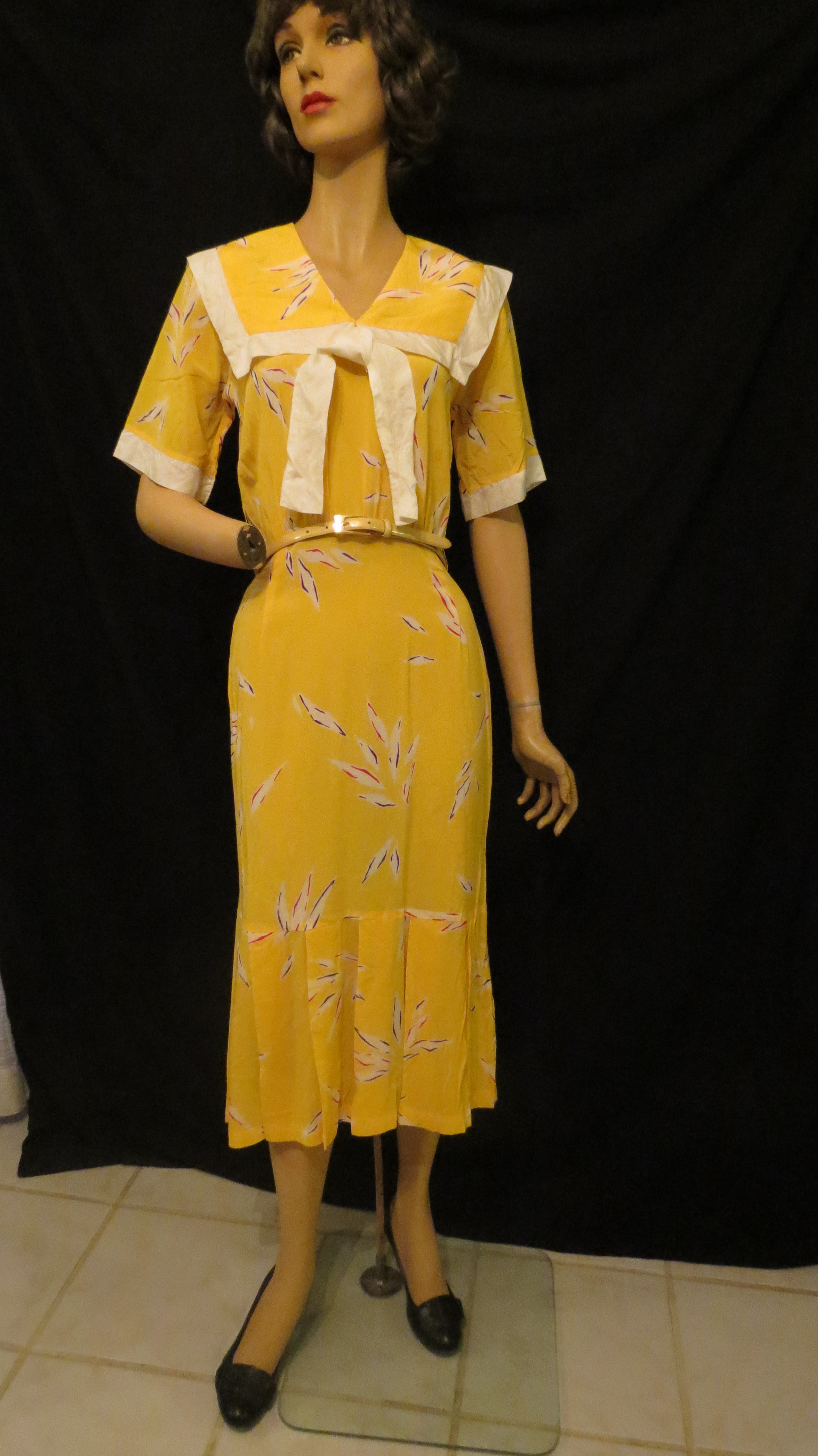
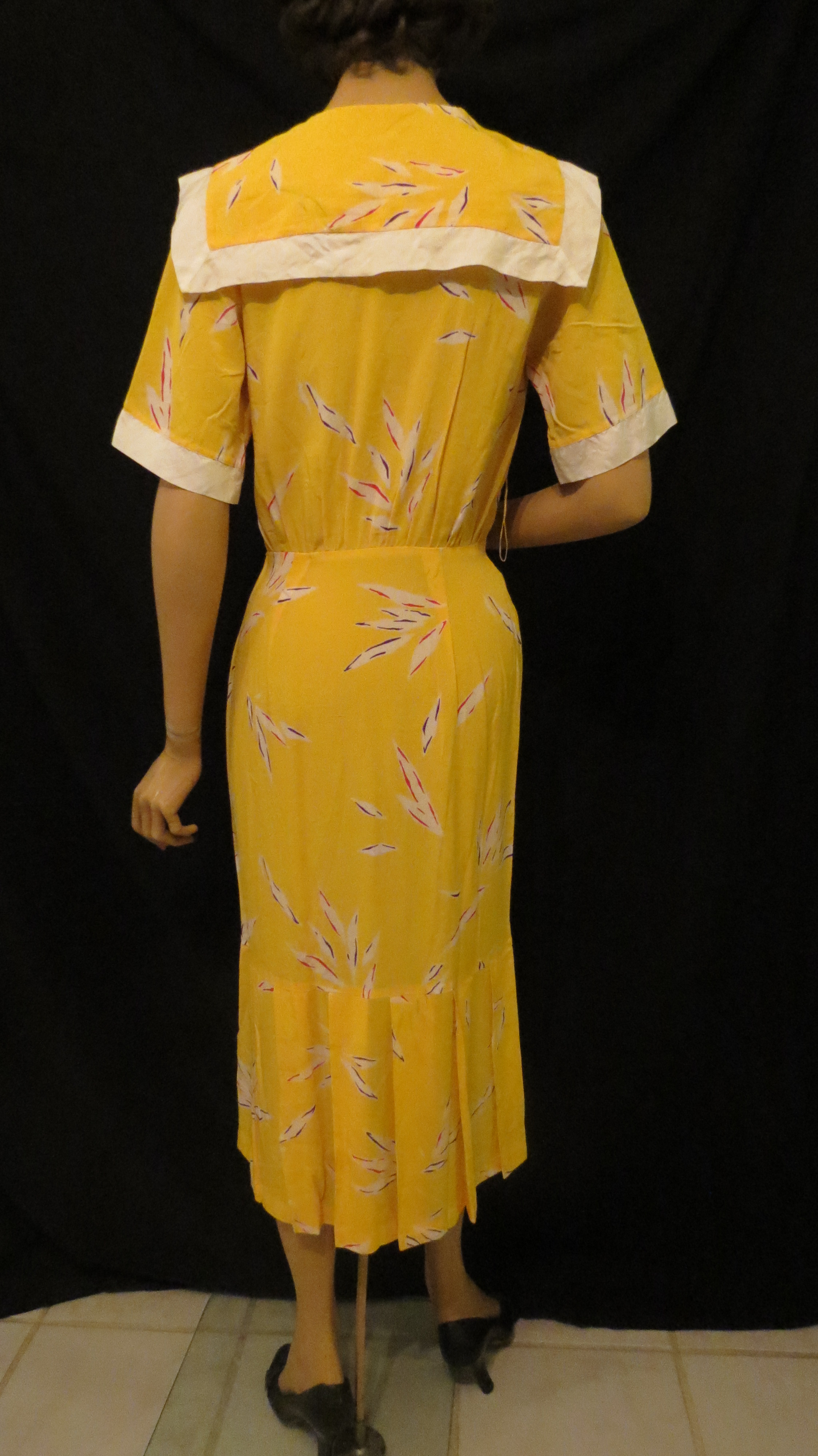
Two of my favorite 1930’s dresses to wear and one when I feel like Bonnie of Bonnie and Clyde. The fabrics feel so wonderful on the body and the fit is killer because of the fabulous drape. An earlier find, I was thrilled to discover the blue dress because of it’s condition. The original buttons and belt are present and no damage to the trim at the neckline. Also, no stains! You can see that the body of the dress has faded a bit due to years of washing by the original owner (compare to the color of the belt, which would not have been put in the laundry), but I don’t mind. The floral-print yellow and green frock is near-perfect and is a bit more casual. Super easy-breezy. The crocheted dress with satiny rayon slip given to me by a family member who found it in an old antique wardrove is the real star. It still has the authentic celluloid plastic belt buckle. The longer hemline makes it probably the oldest of the group, from the very early ’30’s. I have to include a 1980’s or ’90’s dress that dipped into a retro 1930’s. The yellow rayon belted sheath is a fun fashion with loyalty to the Thirties style and lovely rayon fabric.

These are both mid-priced dresses, at most, but have held up over 70 years before finding their way into my closet. It’s possible they were home-sewn. I love the elbow-length sleeves and the way that the fabric causes the hemline to ripple and sway. Very flattering. Both do require a slip underneath because of the sheerness and, since they are warmer weather frocks, I like to wear a true vintage cotton slip with very little decoration so that it doesn’t show through and compete with the print. Slips of that sort are hard to find since most of the slips that have survived are made of nylon and full of decorative detail. Although some fabrics don’t seem to require a slip, wearing one often causes the dress to fit and move so much better. Your other foundation garments i.e. brassiere, underpants and even stockings will have a real effect on how your outfit looks so it’s an important consideration. I have silk tap pants and some silk slips from the pre-war and WWII era that are good examples of undergarments that work really well with dresses like these.

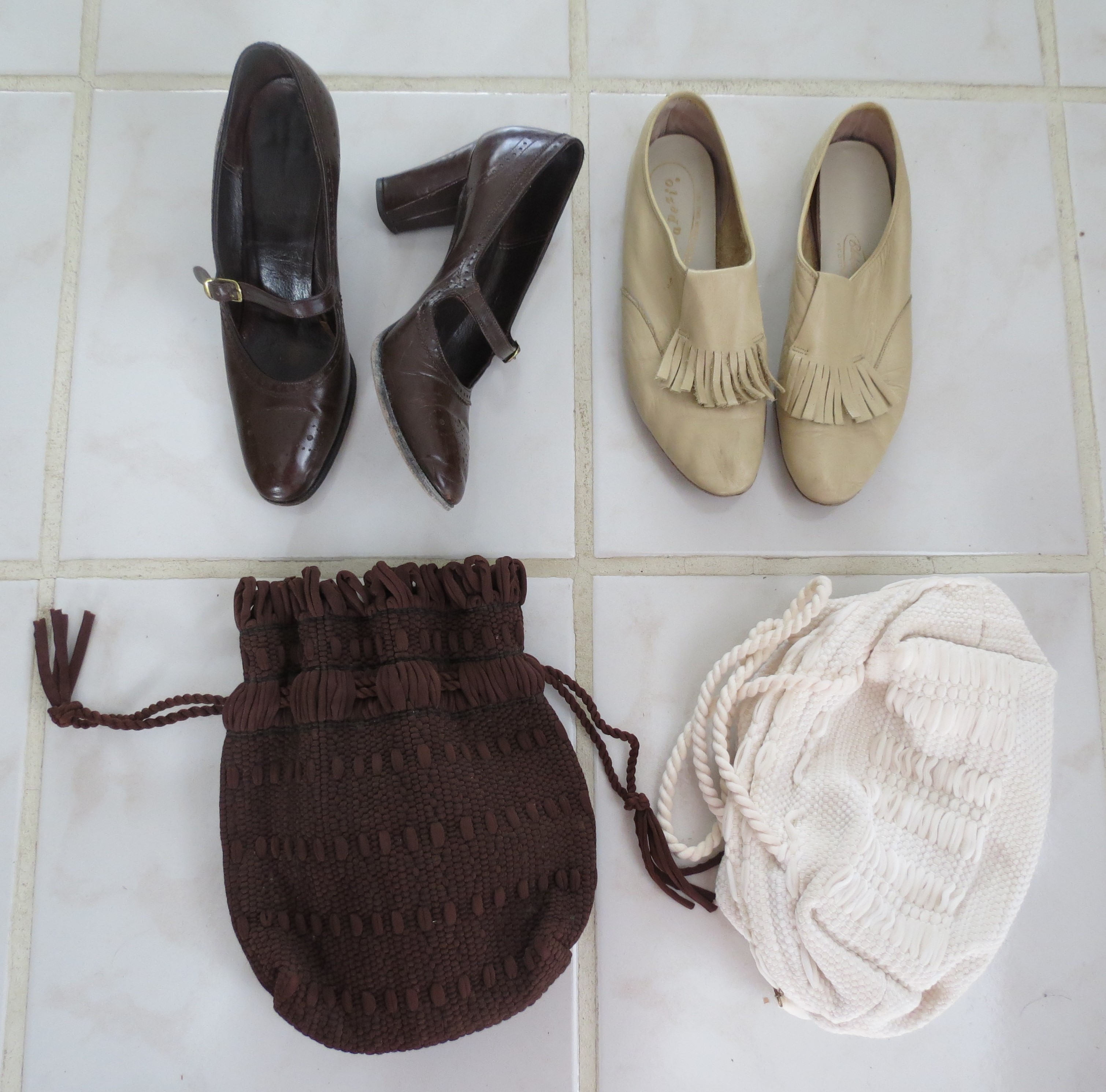
Mary Jane style shoes are seen in every decade since the 1920’s. Decorated flats became popular for women, too, especially when they began wearing slacks. The shoes shown above may be a little younger than the dresses and purses, but are still within a decade or so. Handbags woven from synthetic yarn were another way that the market for clothing and accessories coped with the economic downturn of the Depression and the looming rationing of wartime. Leather, silk, quality cotton and wool were less available and too expensive for many buyers. The big move forward in the development of synthetics changed clothing in big ways, many having to do with fit, comfort and convenience so, overall, the deprivation turned out to be a plus. Tomorrow we move into the 1940’s. Stay tuned . . . . . . . . . . . . . . . . . . . . . . . . . . . . . . . .

MORGANA MARTIN, THE MAGICVINTAGESPY

BLOG: MAGICVINTAGESPY.COM
TRUE VINTAGE LINGERIE ROBES & SLEEPWEAR FROM 1930’S TO MID-CENTURY

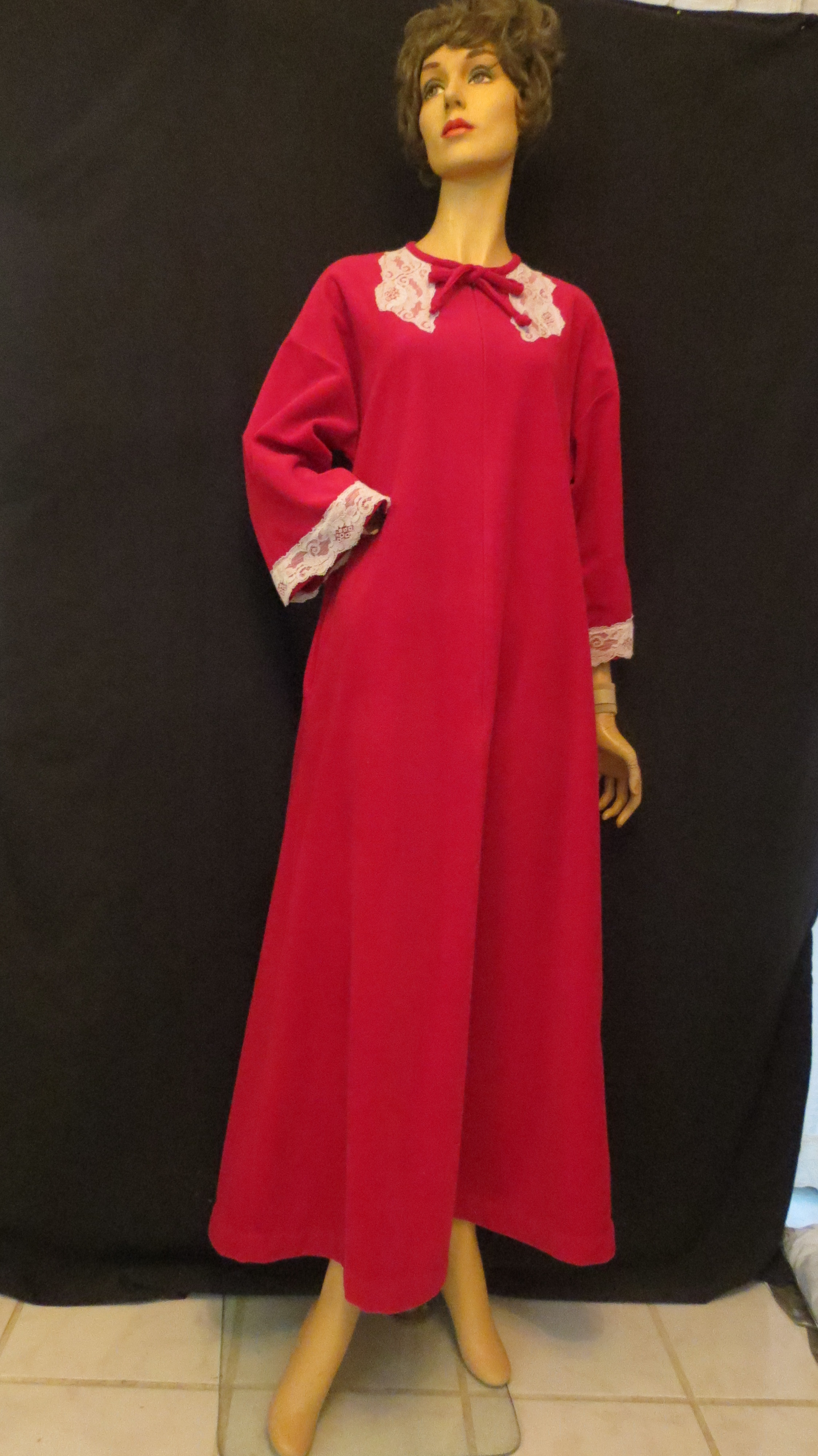
I’m definitely in the mood to look at some pretty Spring lingerie, although it won’t keep us as warm. The 1970’s RED velour robe by Vanity Fair is an exception, but I had to include it for St. Valentine’s Day.

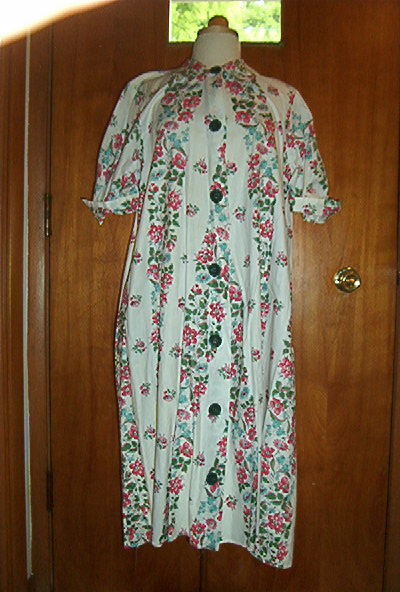
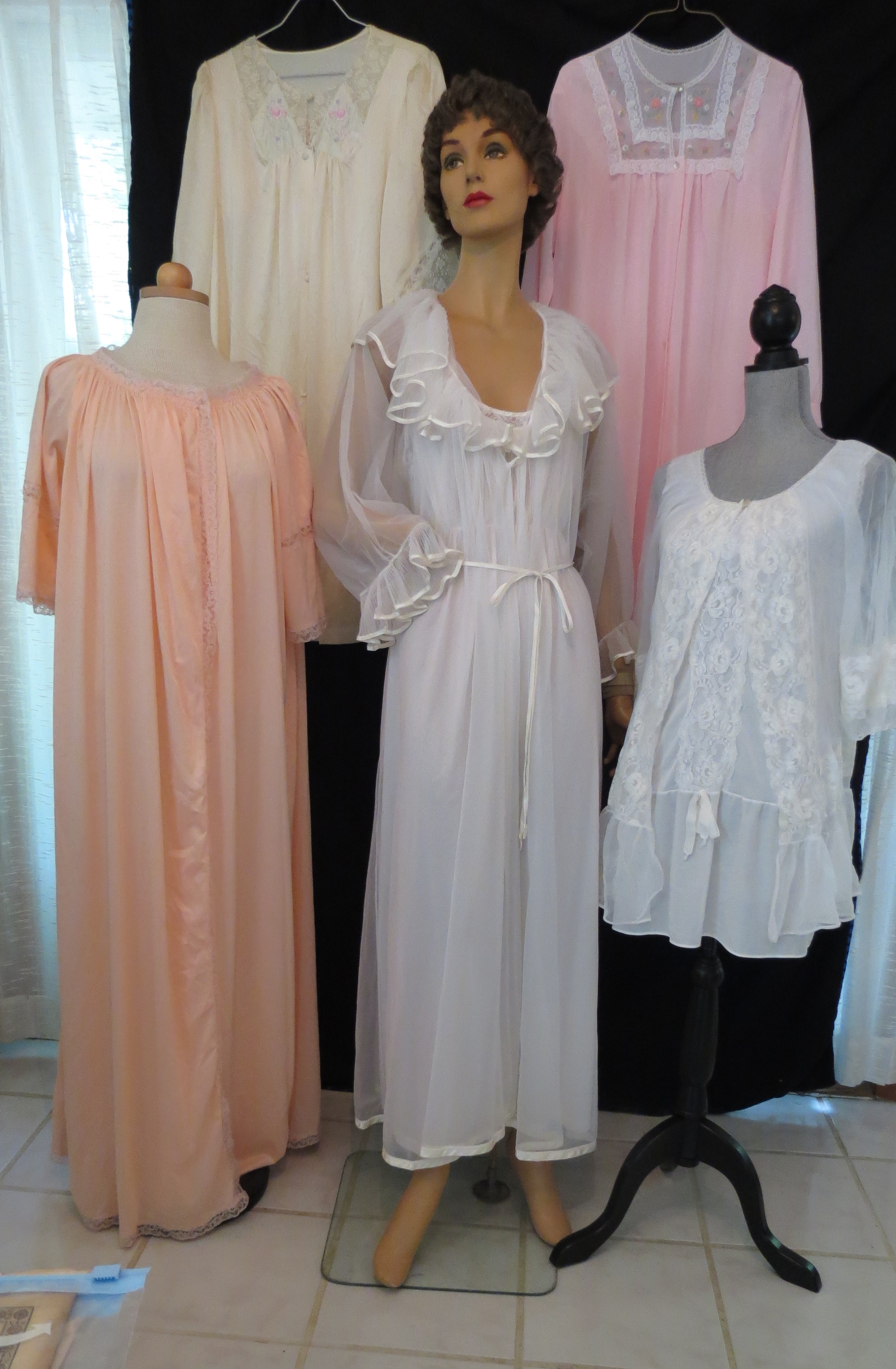
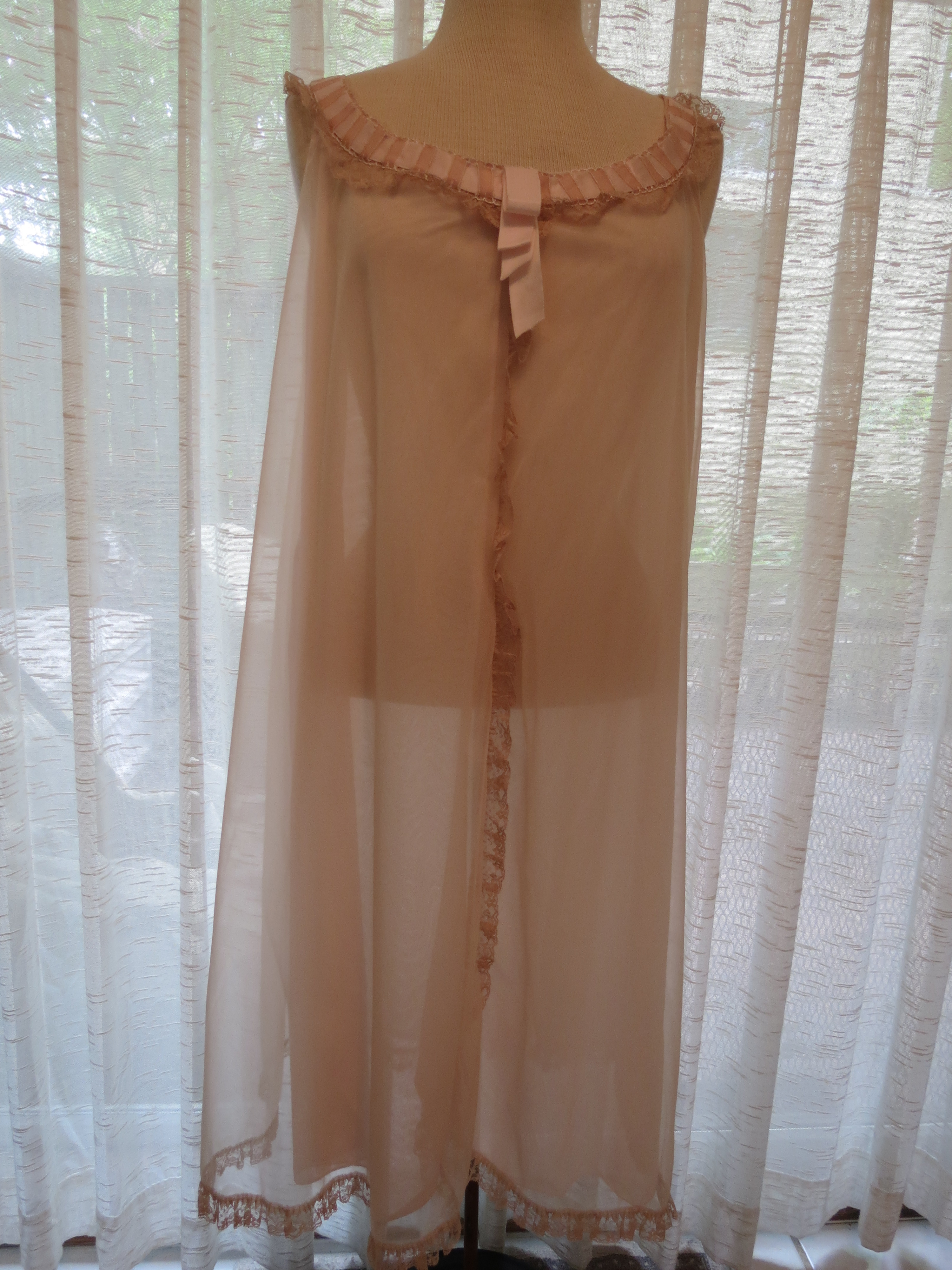
A floral heavy cotton housecoat robe from the 1930’s with big sculpted buttons was a fabulous find! See how it compares when we jump to the 1950’s, 1960’s and 1970’s. Double-layer nylon peignoirs and gowns began to appear in the Forties and there were some beautiful ones in silk during the Thirties and Forties before WWII rationing disrupted all of that. Lots of great synthetic materials were developed during this time, however, and the 1950’s nylon used for sleepwear and slips is fabulous! Thick, glossy and still silky to the touch, it could be found into the 1960’s and very early 1970’s but since then has mostly been replaced by cheaper, poorer quality fabric that doesn’t feel or look the same and is definitely inferior.

Until then, we had this wonderful nylon that can be dyed in bright colors, lasts forever and feels like heaven on the body. Lingerie from this time also included beautiful tailoring and details like lace and embroidery which was high quality and didn’t come loose. Tiny pearlized plastic or fabric-covered buttons and satin ribbon were also common. That’s why these garments still look and feel so beautiful 50 – 70 years later!

This marvelous nylon was also used to make lingerie slips, of course, and women bought a gazillion of them while day dresses were still the standard outfit for daily wear. When we go back to looking at day dresses through the decades, I will be opening an archive of beautiful slips, too. First, I think our mid-century gal is getting back from her vacation tomorrow so we will see what she bought at the beach and start the dresses review afterward. Stay tuned . . . . . . . . . . . . . . . . . . . . . . . . . . . . . .

MORGANA MARTIN, THE MAGICVINTAGESPY

BLOG: MAGICVINTAGESPY.COM
TRUE VINTAGE MEN’S AND LADIES’ SLEEPWEAR & ROBES FROM THE 1950’S & 1960’S

While our mid-century gal is off on her snowbird vacation (see posts from the last few days), Baby, it’s COLD outside here at home! Although Spring is just around the corner (yes, it really is), we still need to be snuggling into robes and pajamas at night. I love doing posts about my archives of true vintage lingerie because it’s always so interesting and pretty. So, let’s take a closer look at these files –

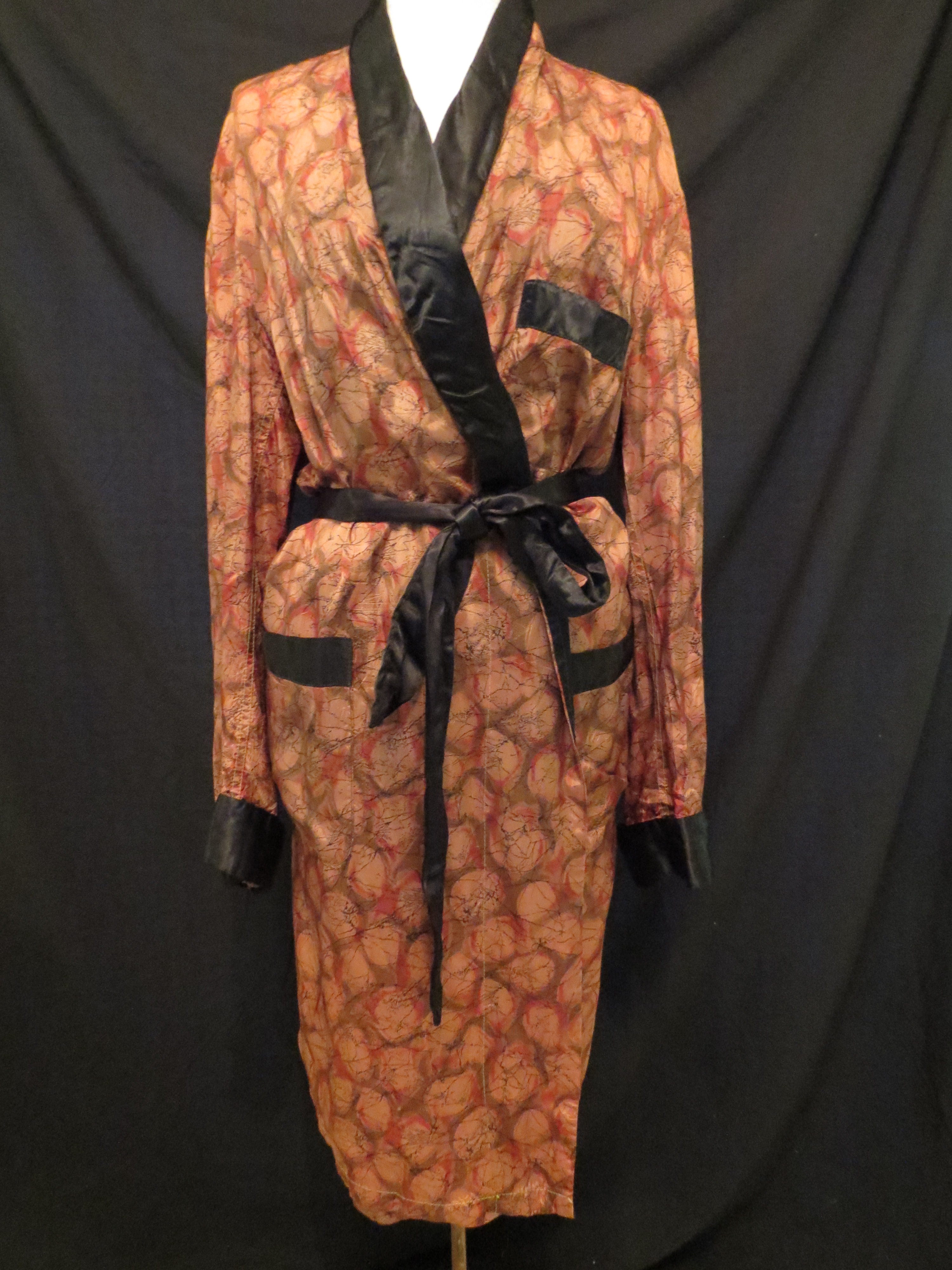
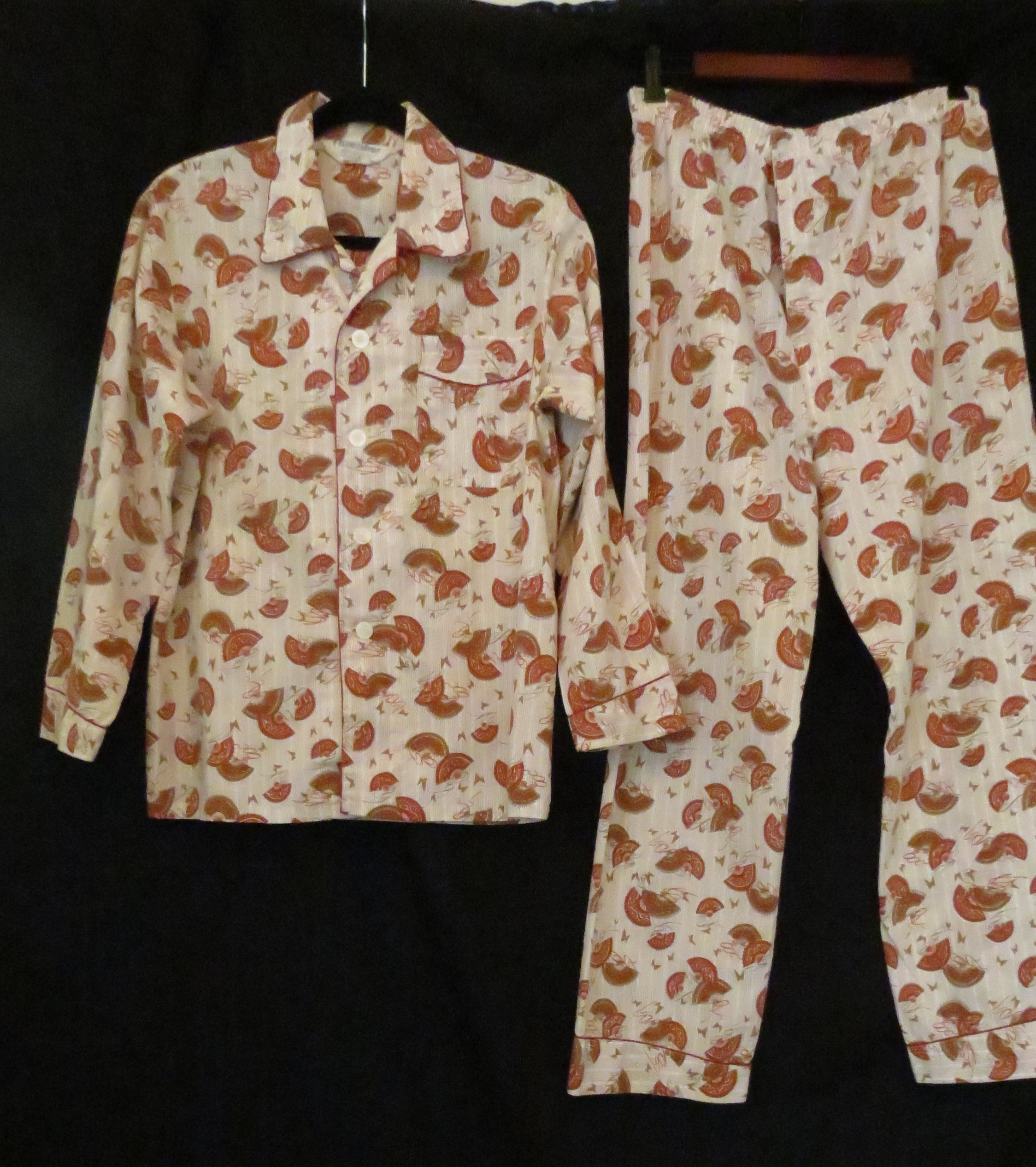
For the men, a swanky rayon bathrobe makes any guy an instant sophisticate. Abstract medallion print with satin trim. How aristocratic! As for the PJs, cotton print men’s pajamas from the 1940’s and 1950’s are so wonderful. Of course, they wear to cozy softness but the real star of the scene is the art prints that many of them displayed. This pair have stylized hand fans all over – an unusual motif for men’s PJs, but that’s what they are. Both pieces show the standard tailoring for men’s garments, though it’s fun for women to wear them, too.

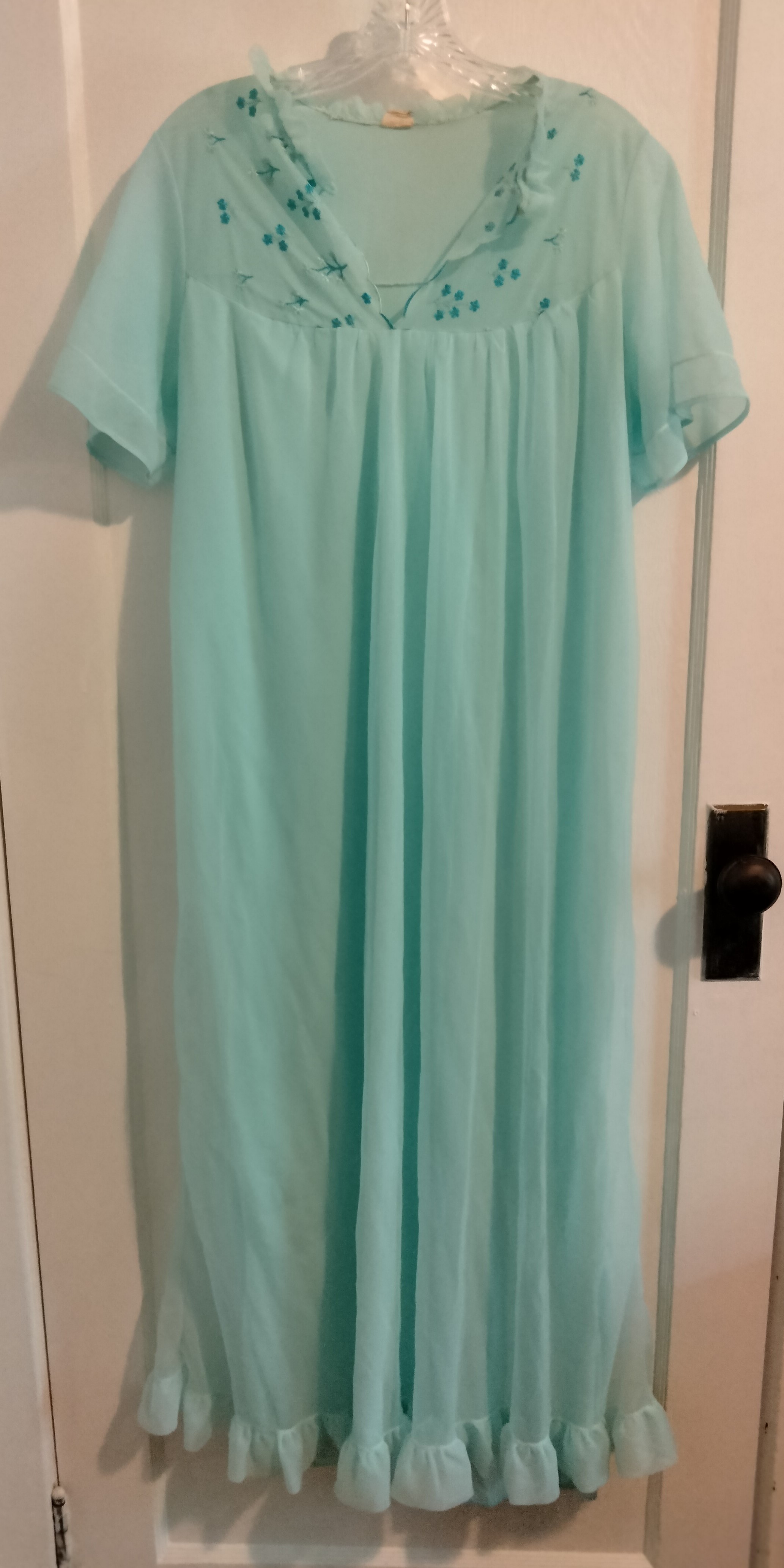
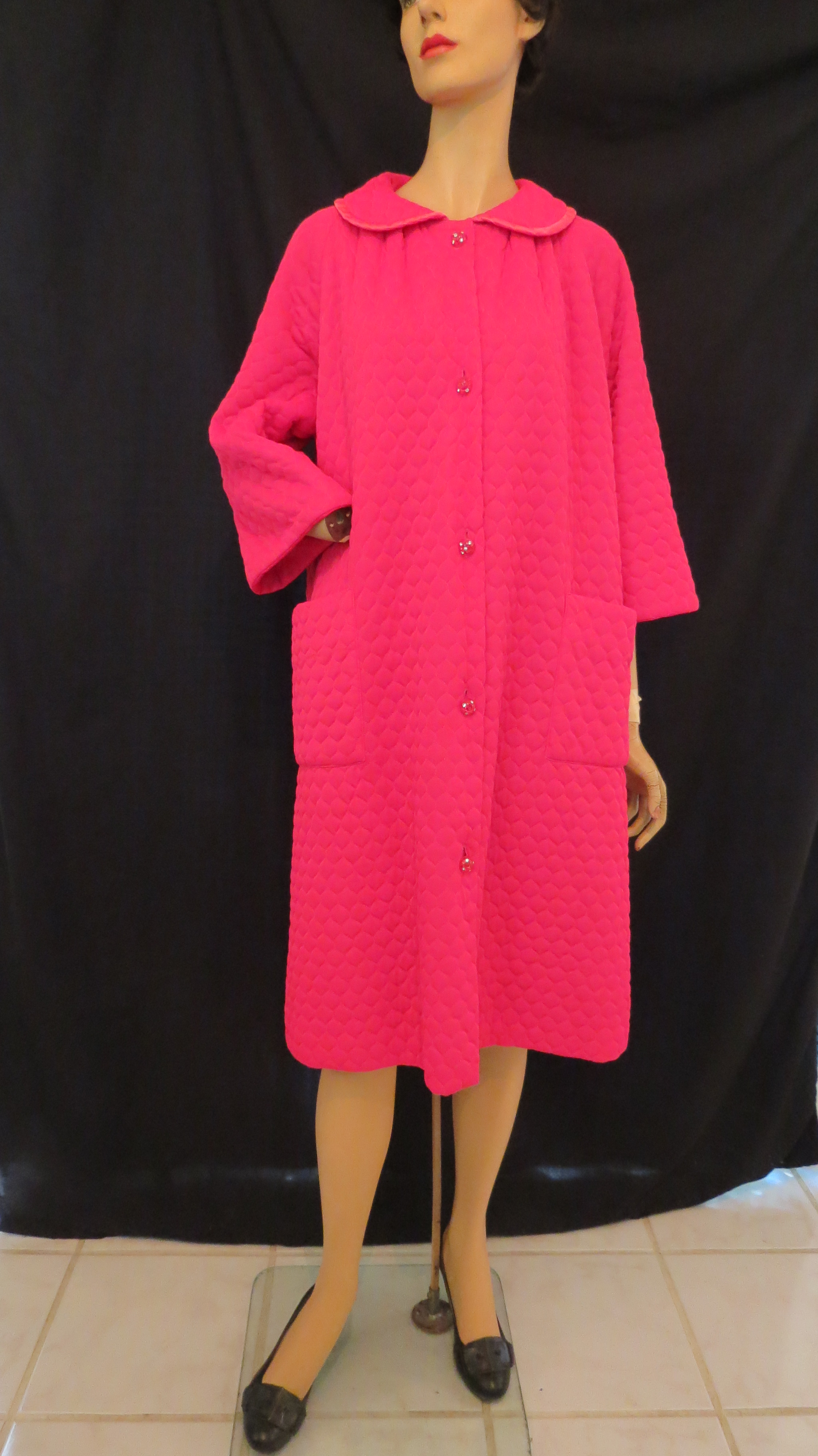
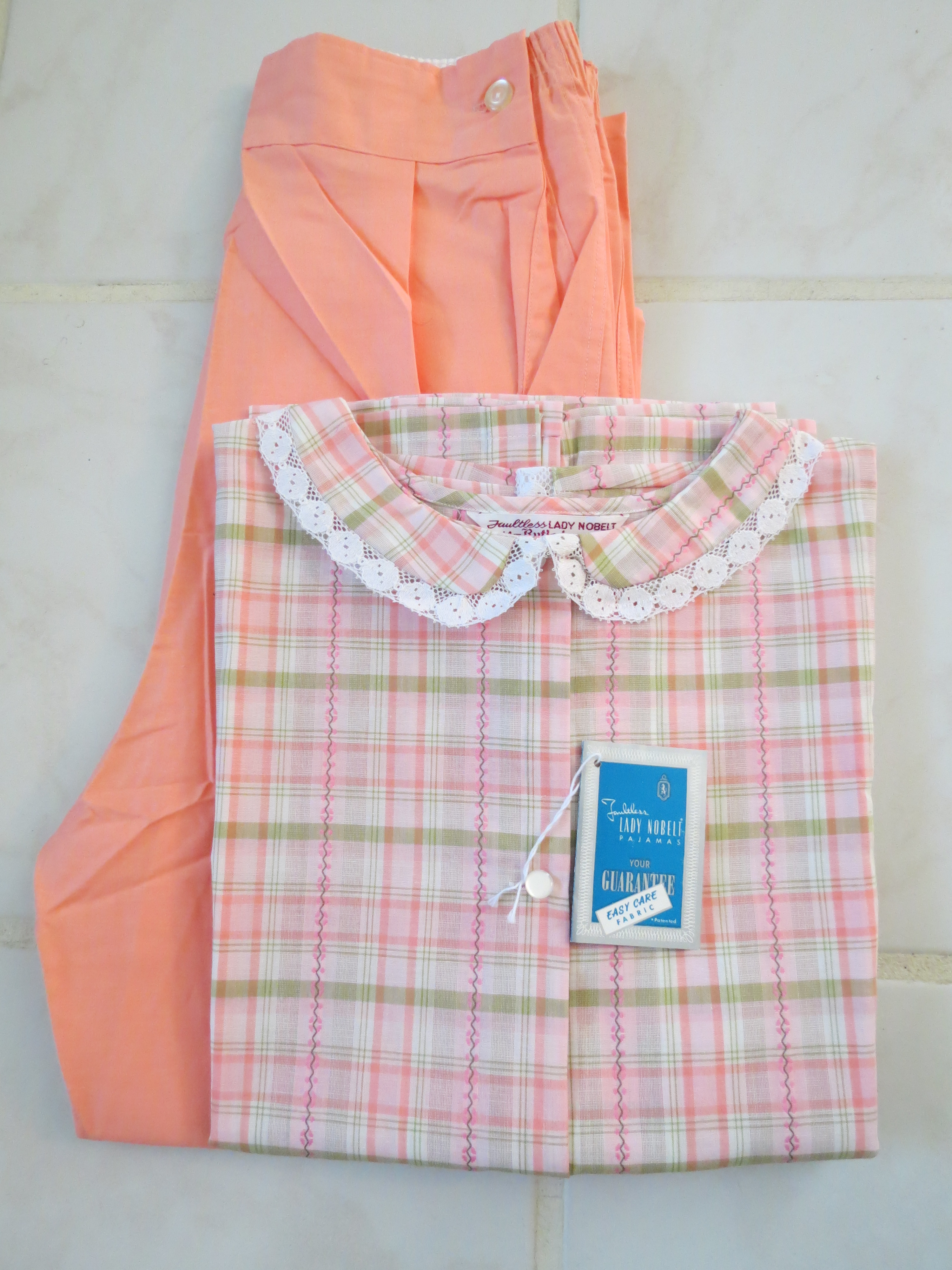
For the ladies, true vintage sleepwear and robes are always so lovely. Even very plain ones seem to have pretty tailoring details. The rosy red robe pictured above is made from a plush fabric. Details include pretty buttons, satin piping on the collar and 3/4 length bell sleeves. The deadstock cotton PJs are plain but still have pretty lace trim and pearl buttons. I think the plaid fabric is quite nice, too. The thing I like most about these old-style pajamas is how the waistline is made. It does have some elastic around the back, but the front is plain and closes with a side button. It also has at least one hip pocket, which is surprisingly convenient.

Tomorrow, before our vacationer gets home, I’ll look at another true vintage sleepwear archive with more Spring-like styling. Stay tuned . . . . . . . . . . . . . . . . . . . . . . . . . . . . . . . .

MORGANA MARTIN, THE MAGICVINTAGESPY

BLOG: MAGICVINTAGESPY.COM
True Vintage Ladies’ Sweaters 1940’s – 1970’s

Just a few examples of the many styles and varieties in my archives, but this assortment is a good beginning. The most classic, and probably the most numerous of my discoveries, have been cardigans. Finely made cashmere sweaters, like my mother’s yellow one with appliqued flowers, were a staple for the college coed in the late 1930’s to 1940’s. Plain styles were often worn in reverse, with the buttons in back. Up through the 1950’s to the early 1960’s beaded and embroidered cardigans were hugely popular and the designs were endless. Most were commercially-made, many of the best ones in British Hong Kong, but some women decorated theirs at home. My mother bought this yellow sweater jacket by Banff in the early 1960’s.

Of course, there were v-neck, crew neck, and collared sweaters in all sorts of variety. Most were nice, but casual styles made to wear with skirts and, later, with slacks. Wool sweaters provided the most warmth for colder months and, until Orlon became available, almost all sweaters were made of wool. Synthetics were really given a boost during WWII because of the government’s requisitioning of wool for military uniforms.

The turtleneck that we love now didn’t seem to show up too much in everyone’s closets until the early 1960’s. Until then, it was a little more avant guarde or unconventional for the average gal though they were on the scene from the 1920’s. Always a sportswear item, especially from the time women began to dress more casually in the 1940’s, women’s sweaters became less dressy. We’d begin to see themed sweaters like this Las Vegas souvenir from the 1970’s or with prominent monograms, mostly in the ’50’s. Of course, many mid-century women knitted and crocheted tons of styles at home, from super-casual to evening styles.

True vintage sweaters from before the 1970’s when acrylic yarn took over are a rare and fabulous find. Moth damage, pills and snags usually took most of them out of circulation. Though I have many, it’s only possible to show sample at one time. A few ladies’ casual Spring jackets tomorrow – stay tuned . . . . . . . . . . . . . . . . . . . . . . . . . . . . . .

MORGANA MARTIN, THE MAGICVINTAGESPY

BLOG: MAGICVINTAGESPY.COM