Unexpected sleuthing successes – the best kind! Stay tuned . . . . . . . . . . . . . . . . . . . . . . .
MORGANA MARTIN, THE MAGICVINTAGESPY
BLOG: MAGICVINTAGESPY.COM

Unexpected sleuthing successes – the best kind! Stay tuned . . . . . . . . . . . . . . . . . . . . . . .
MORGANA MARTIN, THE MAGICVINTAGESPY
BLOG: MAGICVINTAGESPY.COM
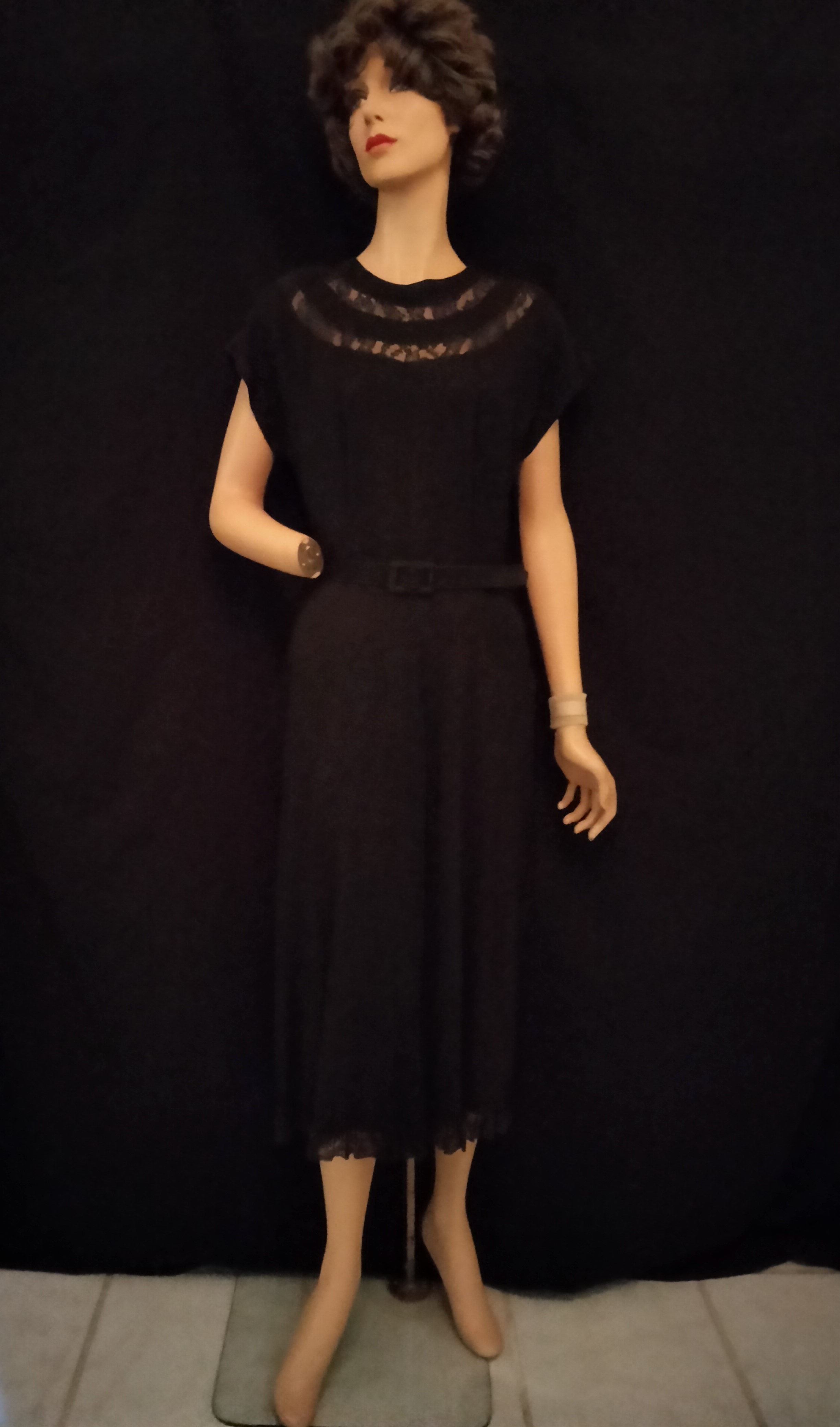
Frilled up a little by the lace inset at the neckline and lace trimming at the hem, this dress would have been accepted at any semi-formal gathering, cocktails or not. Although it’s a little bit “secretary, librarian, school teacher” in it’s modesty, the cap sleeves, peek-a-boo neckline and nipped waistline are a bit flirty. The ever-present black crepe fabric gives it the figure-skimming drape. Elegant, even though it wasn’t the most expensive frock.
Back when dresses were always the expected attire for any gathering that was professional or vaguely formal, this dress was an easy, comfortable design to meet the need. Styles were loosening up a little, though structure was still important and tailoring very elevated. In the 1950’s things changed hugely in Western society and, of course, in fashion. I’ll be investigating during the next few days but we’ll continue the cocktail fashion timeline next week. Stay tuned . . . . . . . . . . . . . . . . . . . . . . . . . . . . . . . . . . . .
MORGANA MARTIN, THE MAGICVINTAGESPY
BLOG: MAGICVINTAGESPY.COM
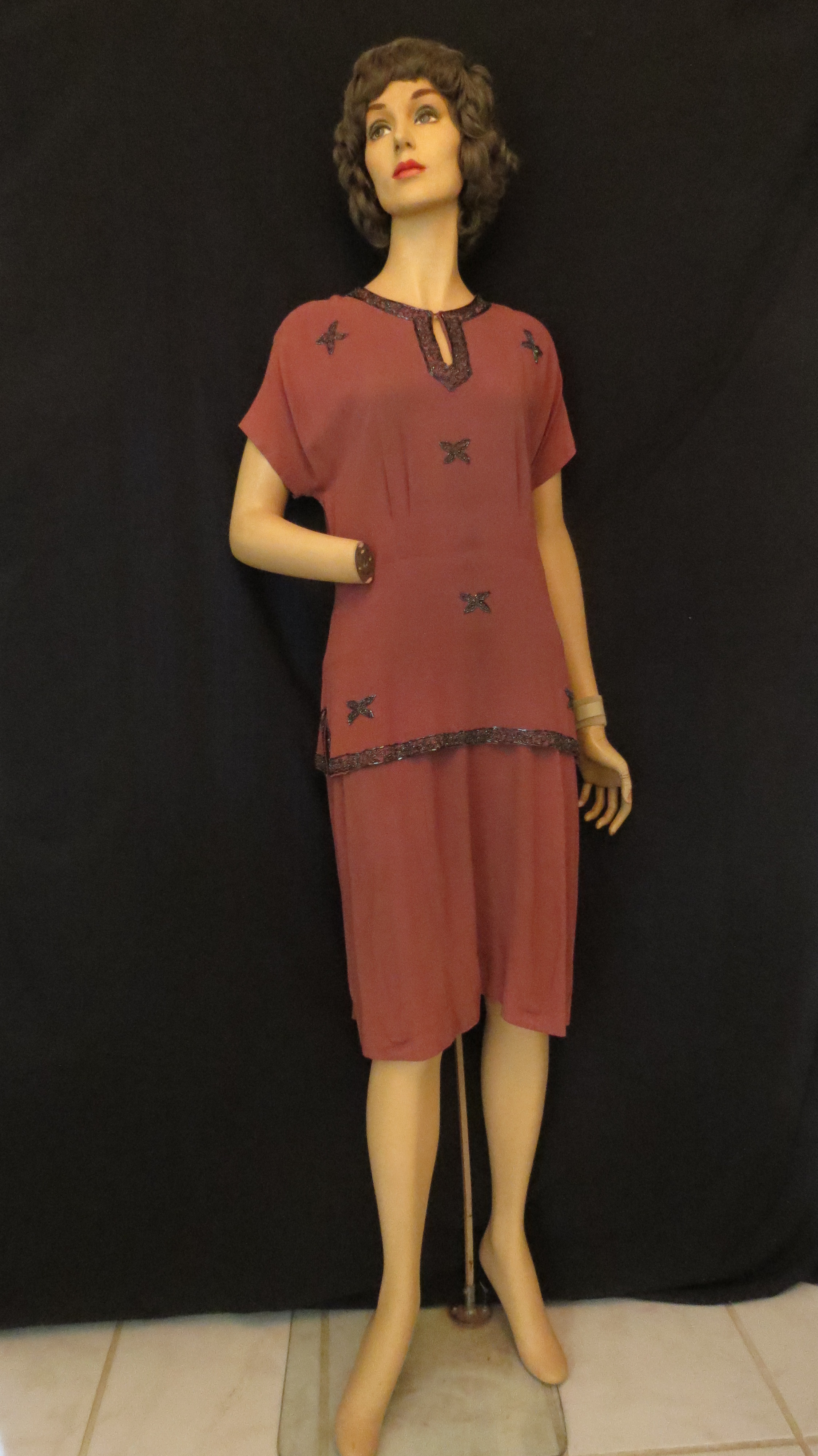
Several elements here from the decade between the two World Wars. Drapey rayon fabric, geometric beading decoration a la’ art deco and a dropped waist/peplum effect, a la; the 1920’s and the early 1940’s. The length also doesn’t know exactly where and when it is – looks pretty short on a tall gal like Stella but would be midi-length on a woman of short stature, or even medium height at that time when average height was shorter than it is today.
As “upscale” as this looks, it was apparently a massed-produced design. That makes it a little easier to understand why the styling was as confused as the times. Marketing always follows social trends. Think about it; we were still recovering from WW1, Prohibition was effecting the economy and the culture, The Depression was strangling almost everybody, war was fomenting in Europe and it was looking like WW2 might happen any day.
Yes, it’s a pretty and fun dress but the historical and cultural overtones are even more fascinating. Just another day in the life of a true vintage sleuth. We ARE going to cross the Post-war border between the 1940’s and the 1950’s by early next week. Stay tuned . . . . . . . . . . . . . .
MORGANA MARTIN, THE MAGICVINTAGESPY
BLOG: MAGICVINTAGESPY.COM
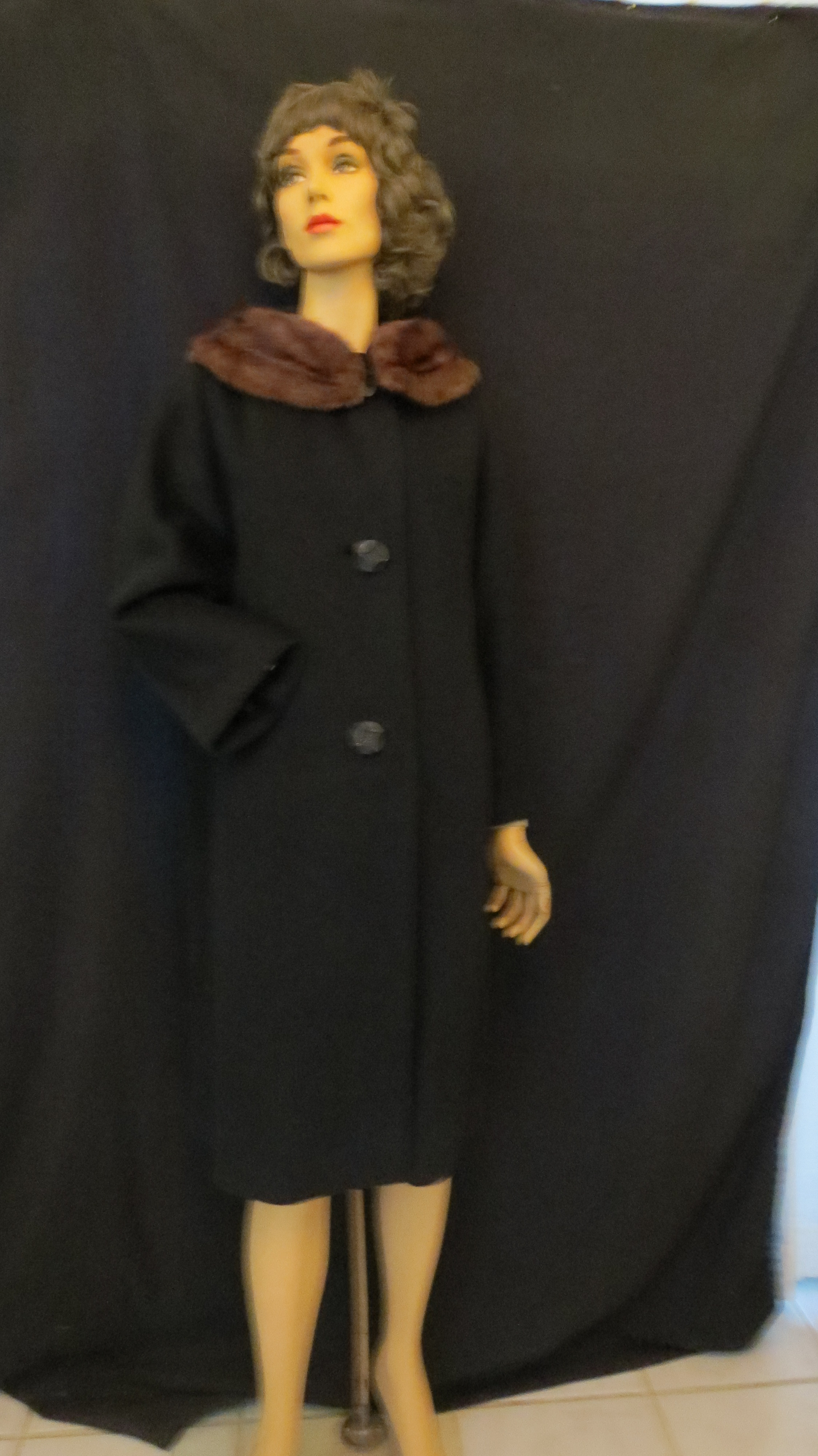
The standard and traditional mid-century classic: a wool coat with fur collar and oversize buttons. Perfect and elegant in black. Wartime in Europe hadn’t yet impacted women’s fashion with rationing, but the economic Depression was being felt by almost everyone. Though the fur collar is not fine, the owner of this coat was a lucky lady.
MORGANA MARTIN, THE MAGICVINTAGESPY
BLOG: MAGICVINTAGESPY.COM
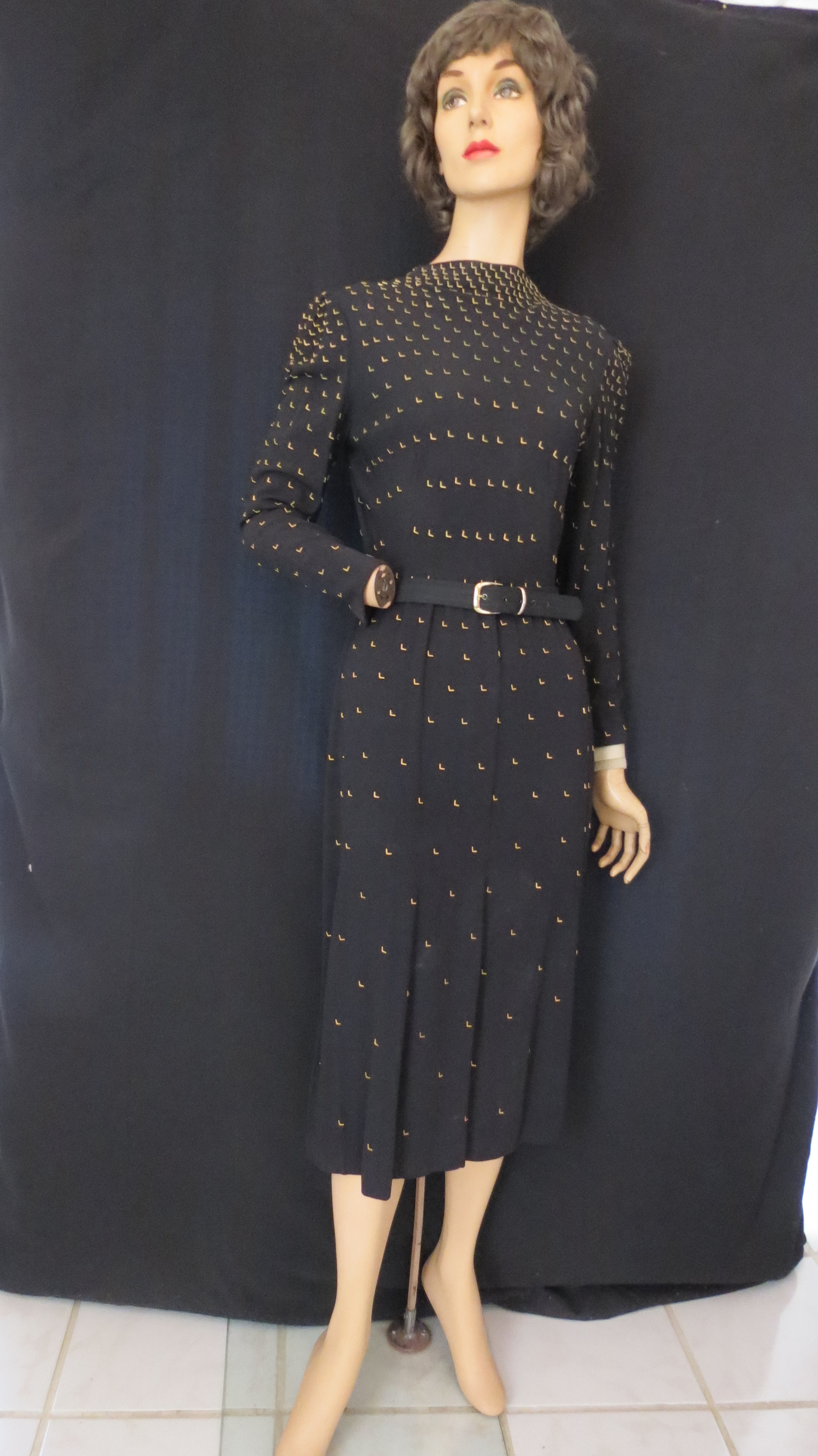
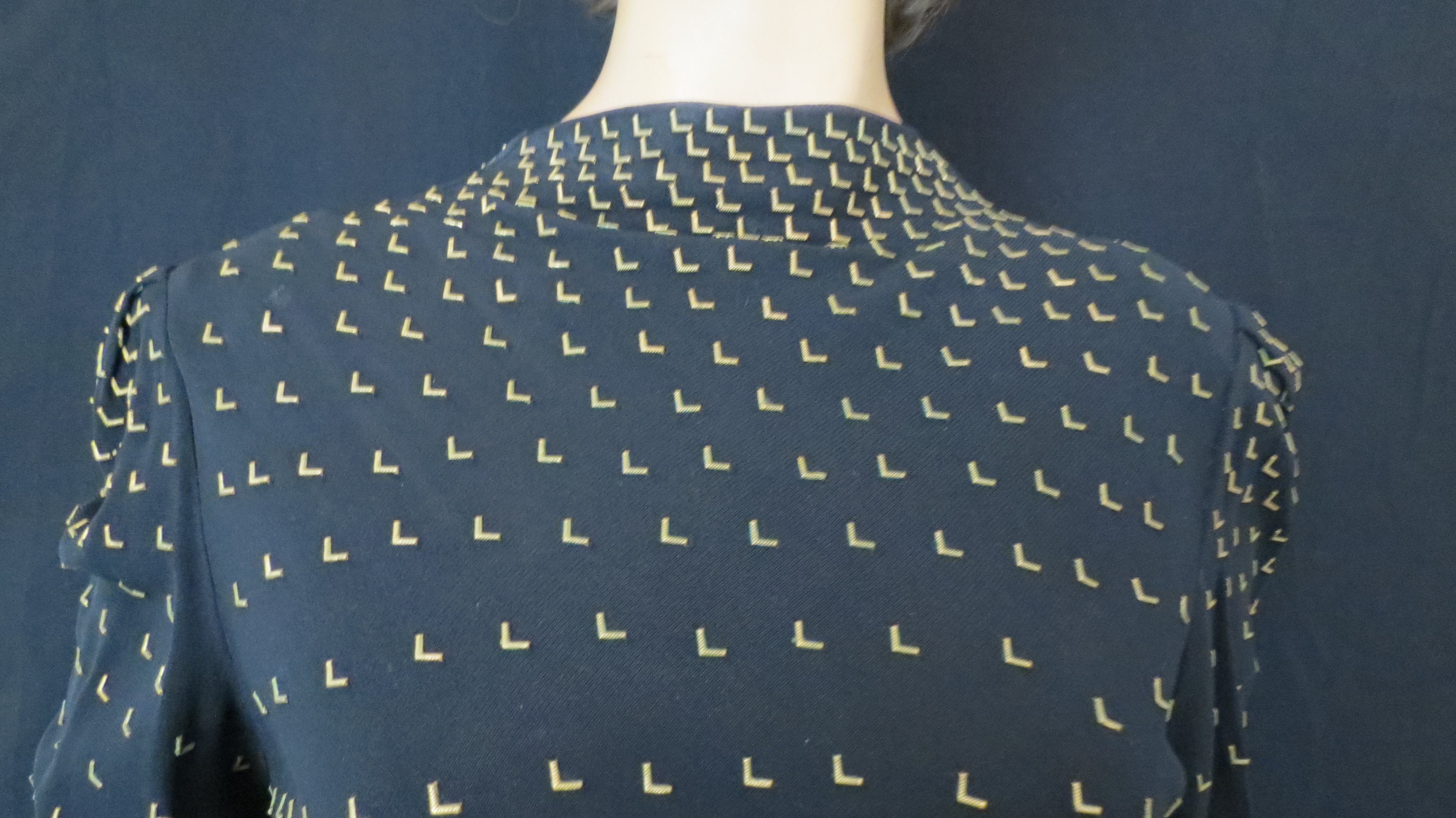
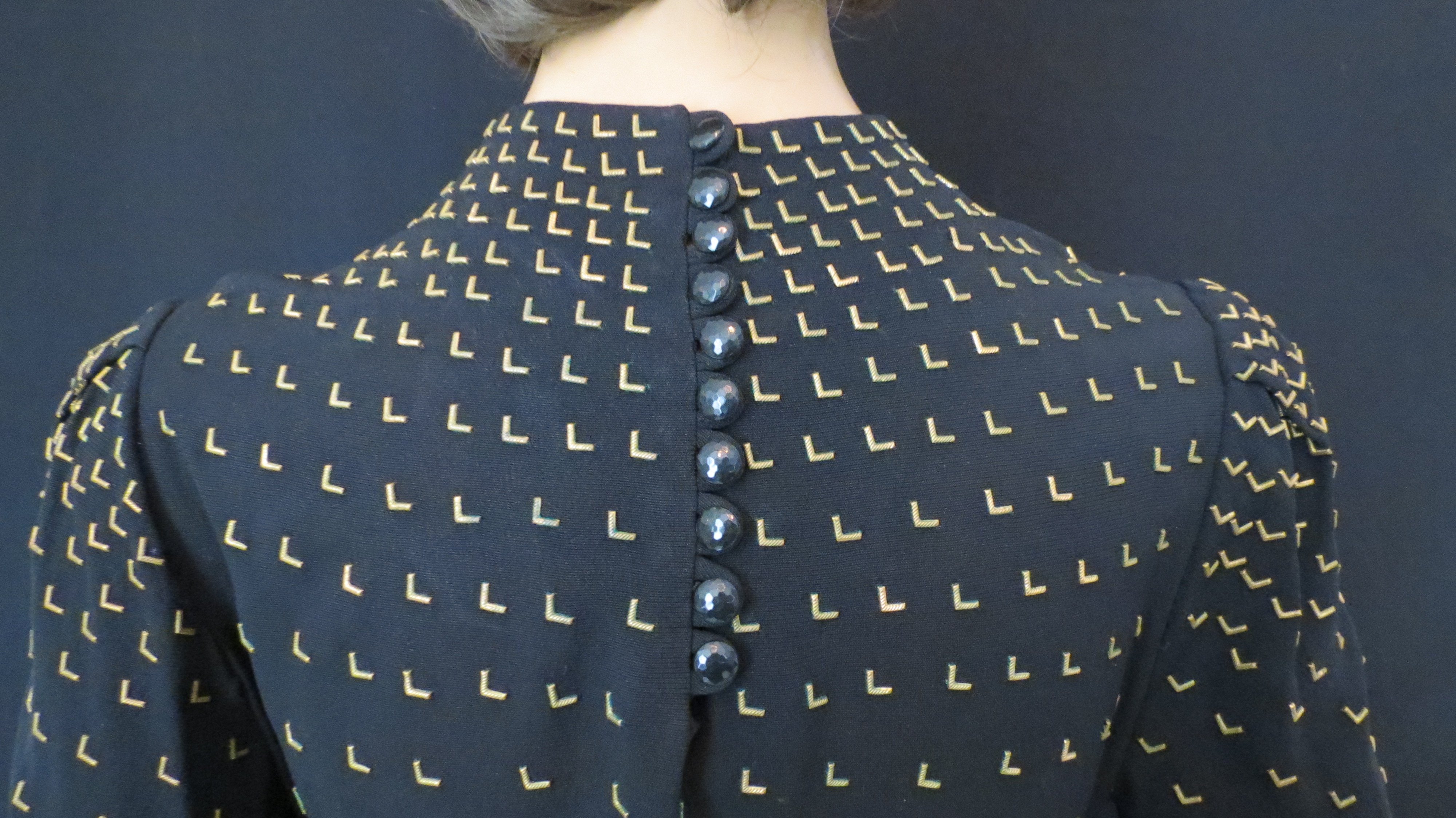
Sleek and streamlined with a back neckline button closure. Overall gold-tone metal studs. Made of a heavy knit synthetic fabric that still drapes well despite it’s weight. A very business-like dress that would also go to a cocktail party with supreme confidence. This dress has PRESENCE. Worthy of any Hollywood actress of that time – looks like Joan Crawford to me. So completely different from the 1930’s frock in yesterday’s post.
Tomorrow we’ll be edging from the late 1940’s into the early 1950’s. Stay tuned . . . . . . . . . . . . . . . . . . . . . . . . . . . . . . . . By the way, I apologize for the photos that aren’t aligned to vertical. For some reason neither WordPress or my computer will allow me to edit this or I simply don’t know how.
MORGANA MARTIN, THE MAGICVINTAGESPY
BLOG: MAGICVINTAGESPY.COM
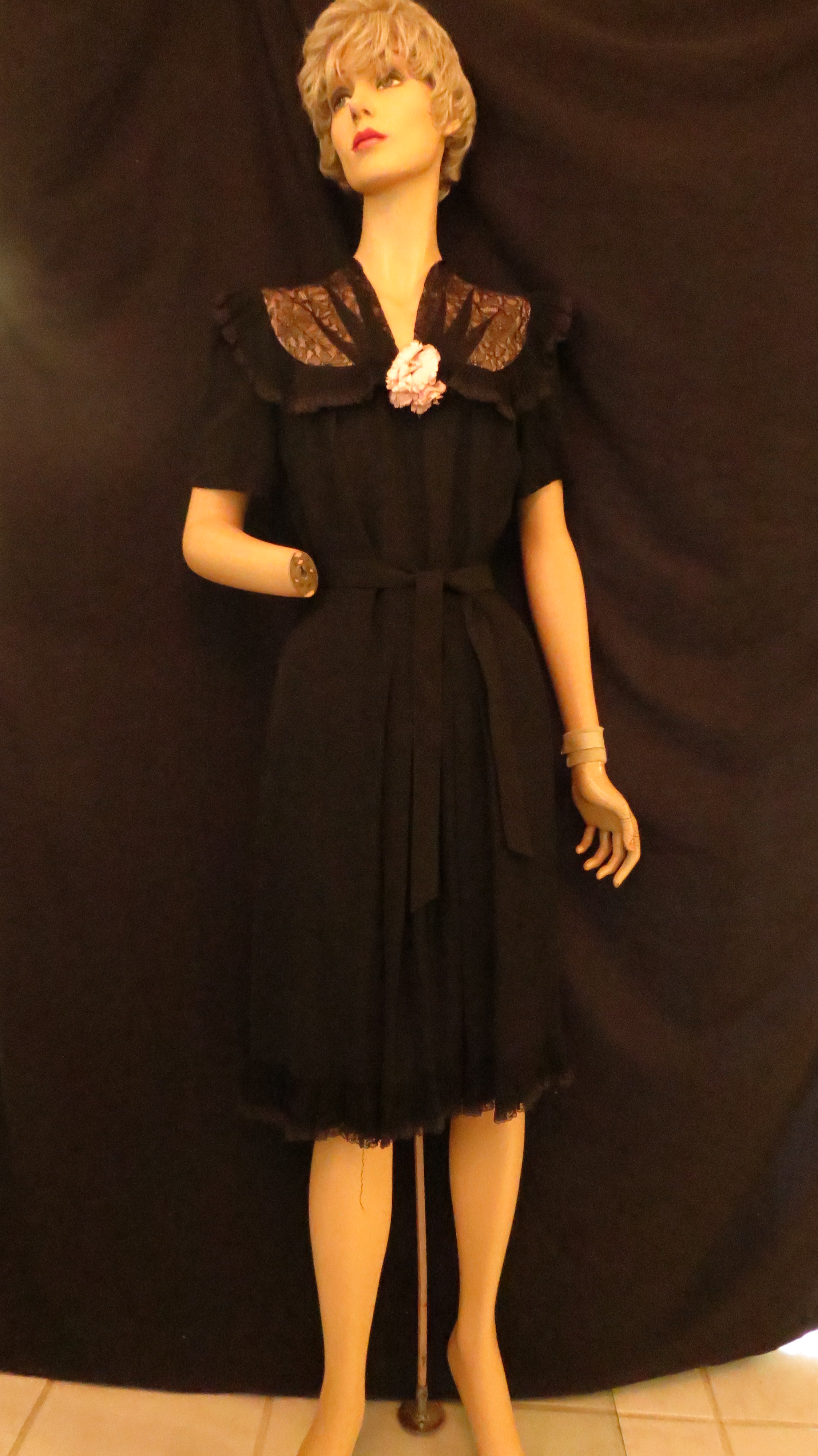
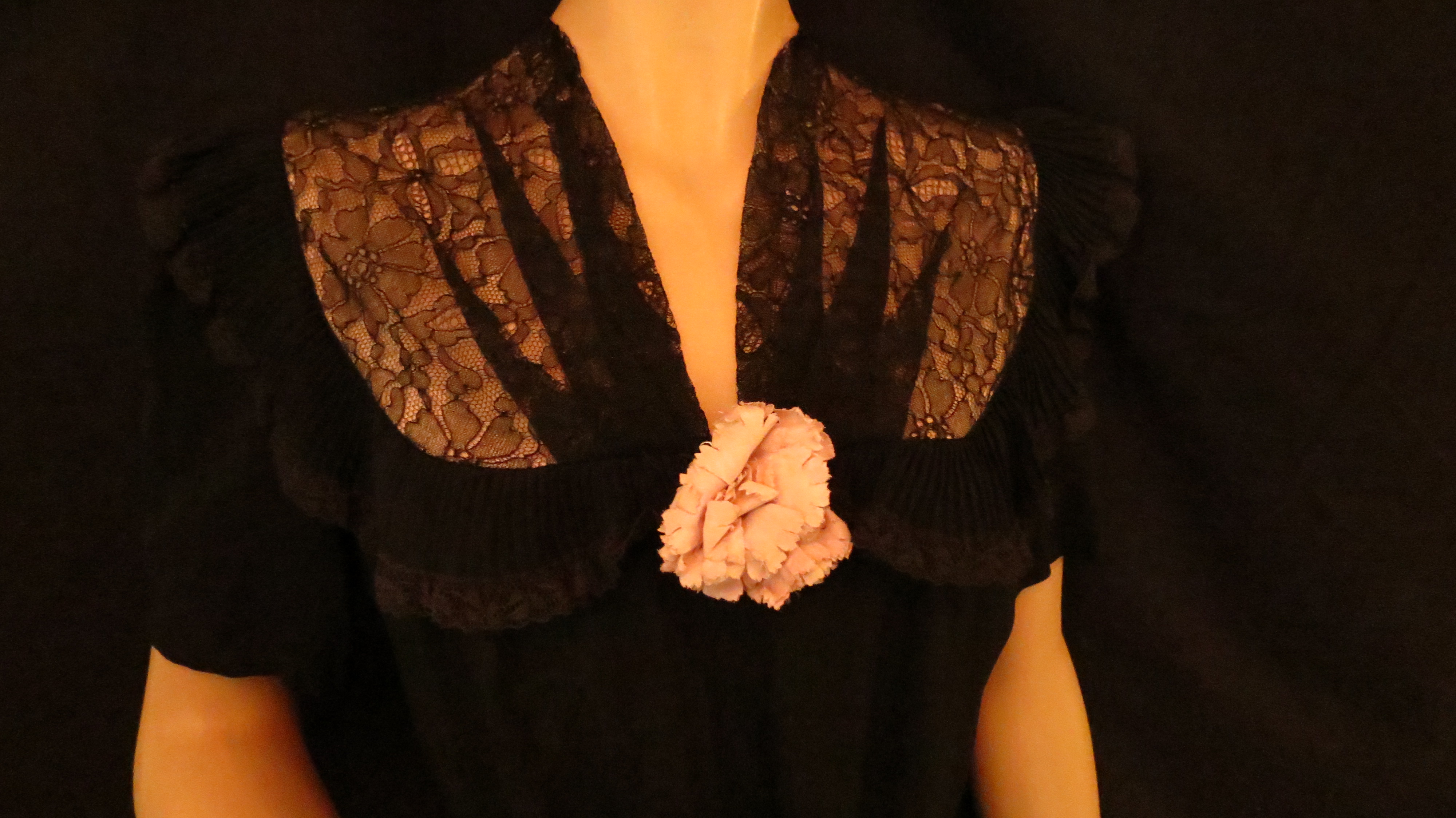
These two are certainly not designs by Coco Chanel, who came up with the Little Black Dress in 1926, but they still might have been seen at a cocktail party. They’re both oh-so-proper in spite of the loosening restrictions on women’s dress that were happening after the Edwardian 1910’s. The dress on the left, from the Thirties, is not terribly interesting to me but the bodice has those Deco-style pleats in the sheer lace panel that elevate the whole design. It was so amazing to discover it with the original floral ornament in front.
The midi-tea length lace dress from the 1920’s is pretty and would be very swishy over a rayon slip worn underneath. It was discovered in an antique wardrobe at a farm sale. The dropped waist is iconic. This frock was meant for a dressy special occasion rather than a night dancing the Charleston in a speakeasy.
How amazing it was discovering these pieces in such wonderful condition after almost 100 years! Most textile clues don’t last as well over so many decades but there are more to come . . . . . . . . . . . . . . . . . . . .Stay tuned . . . . . . . . . . . . . . . . . . . .
MORGANA MARTIN, THE MAGICVINTAGESPY
BLOG: MAGICVINTAGESPY.COM
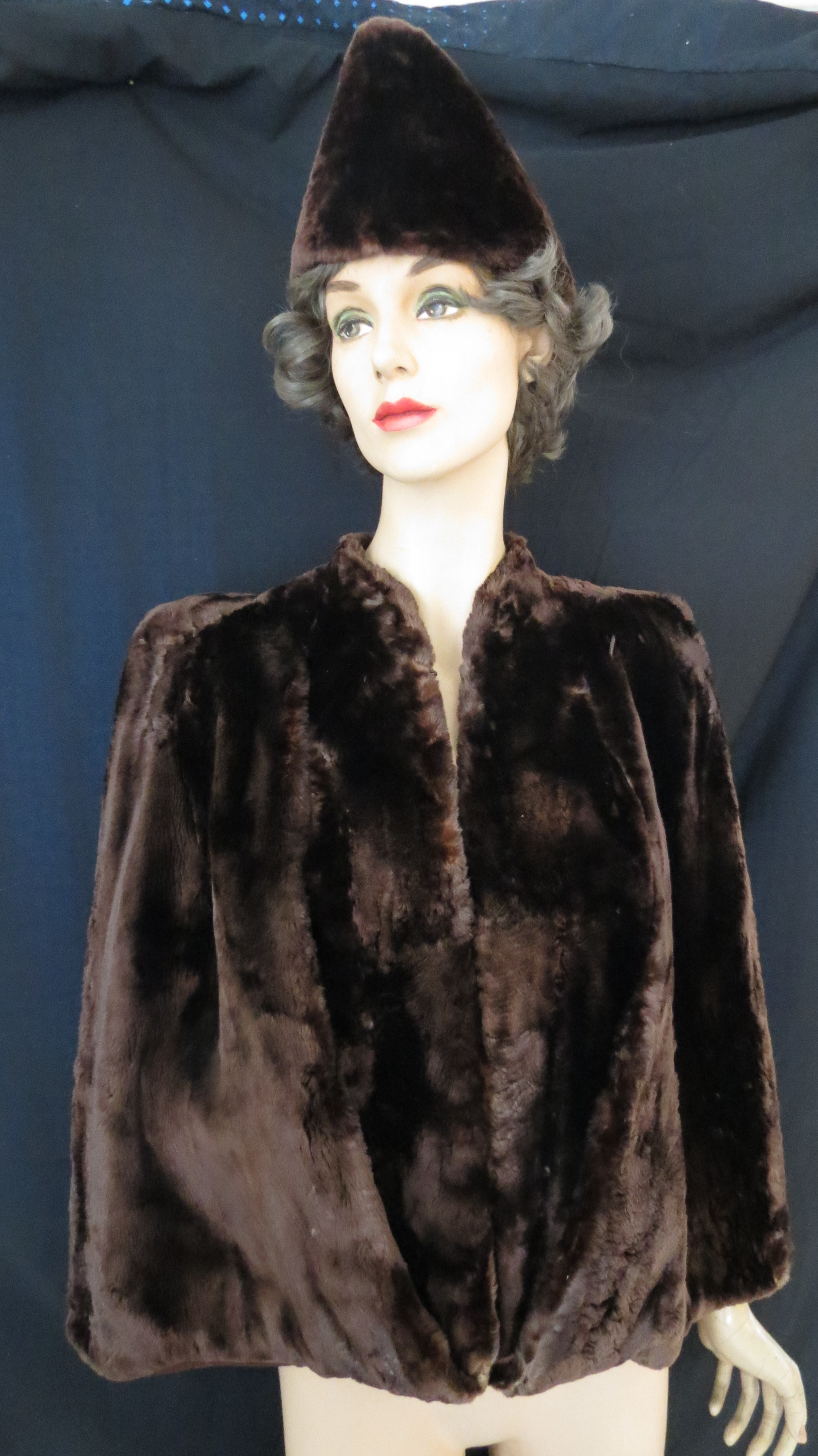
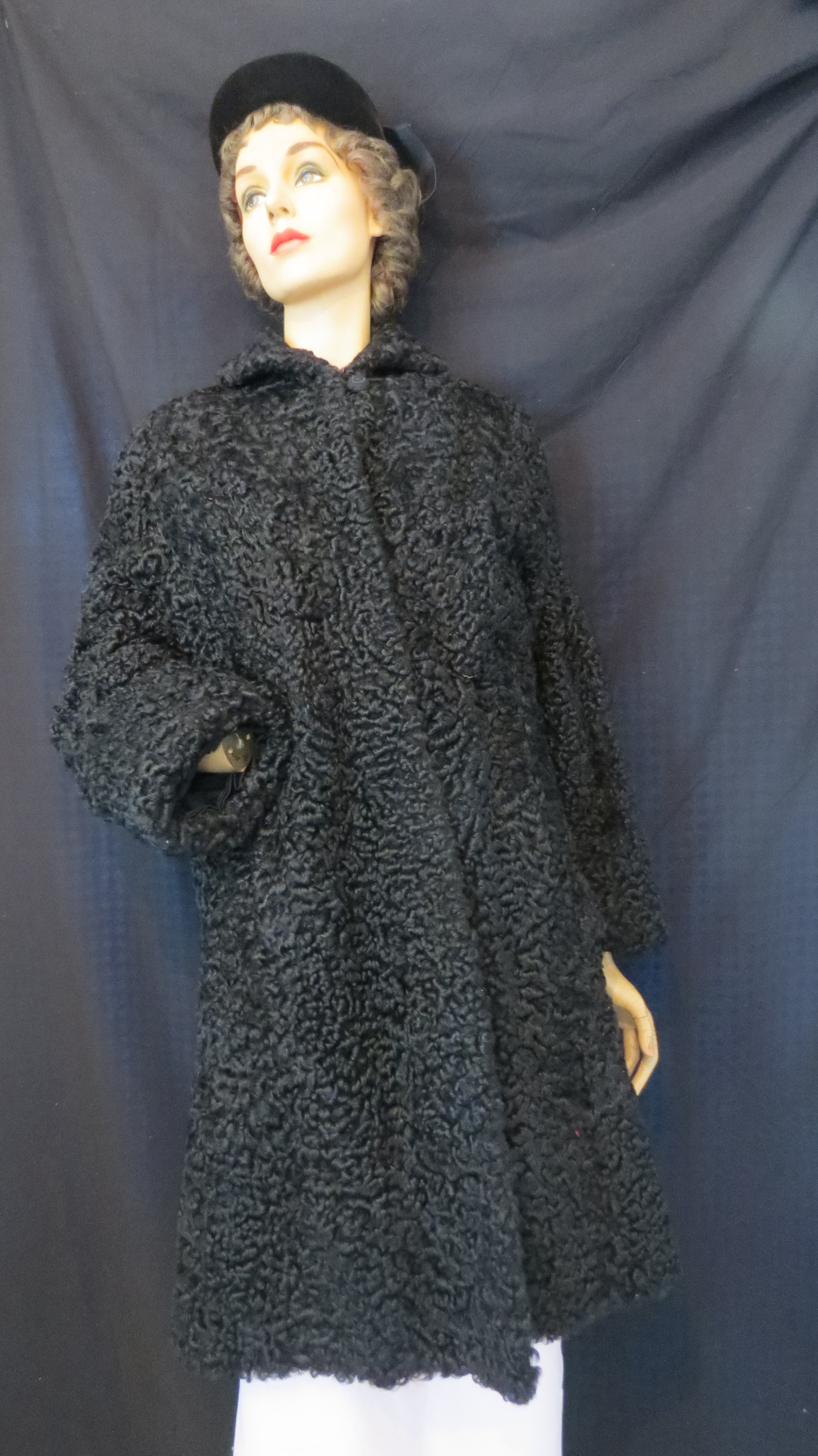
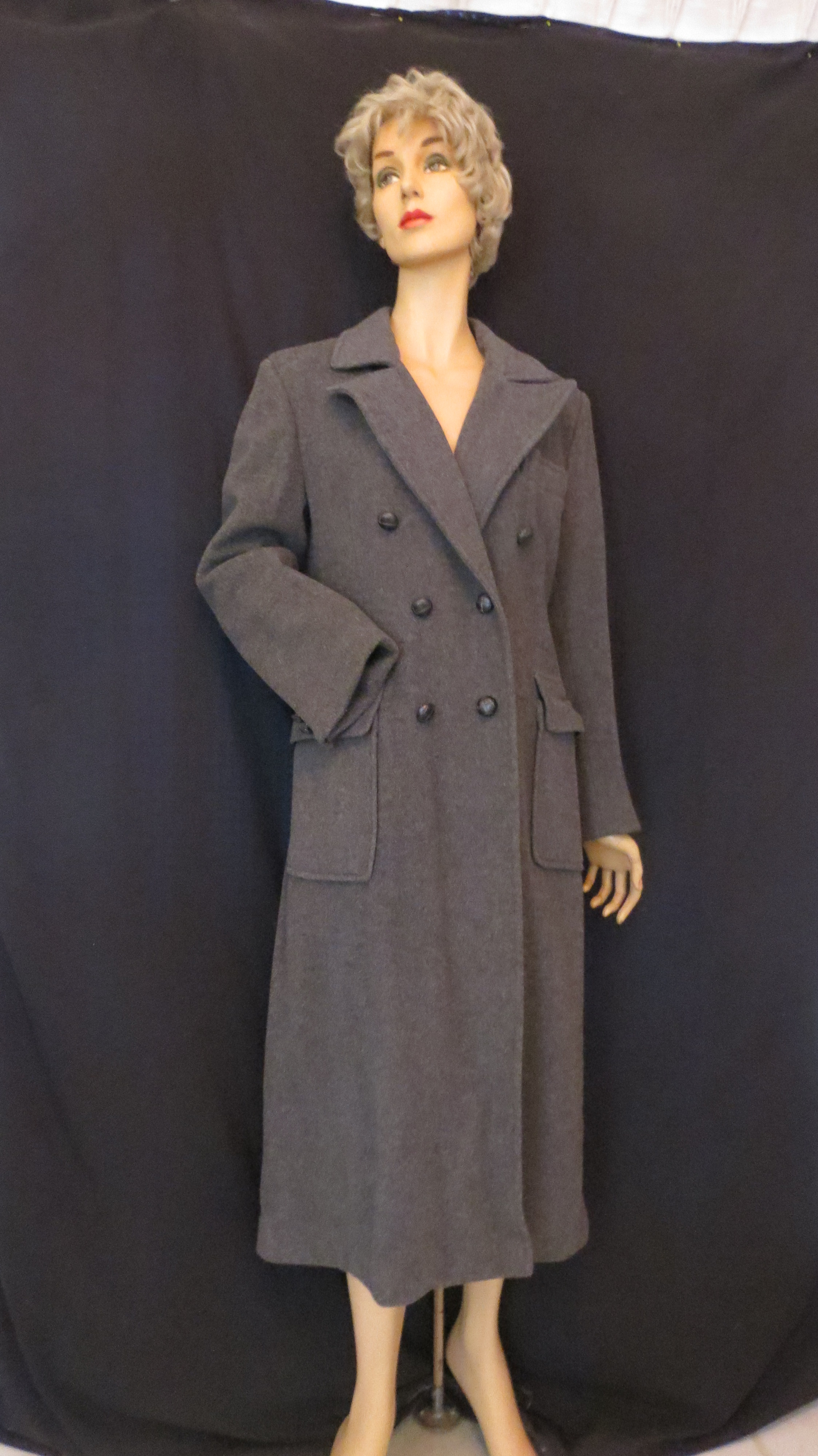
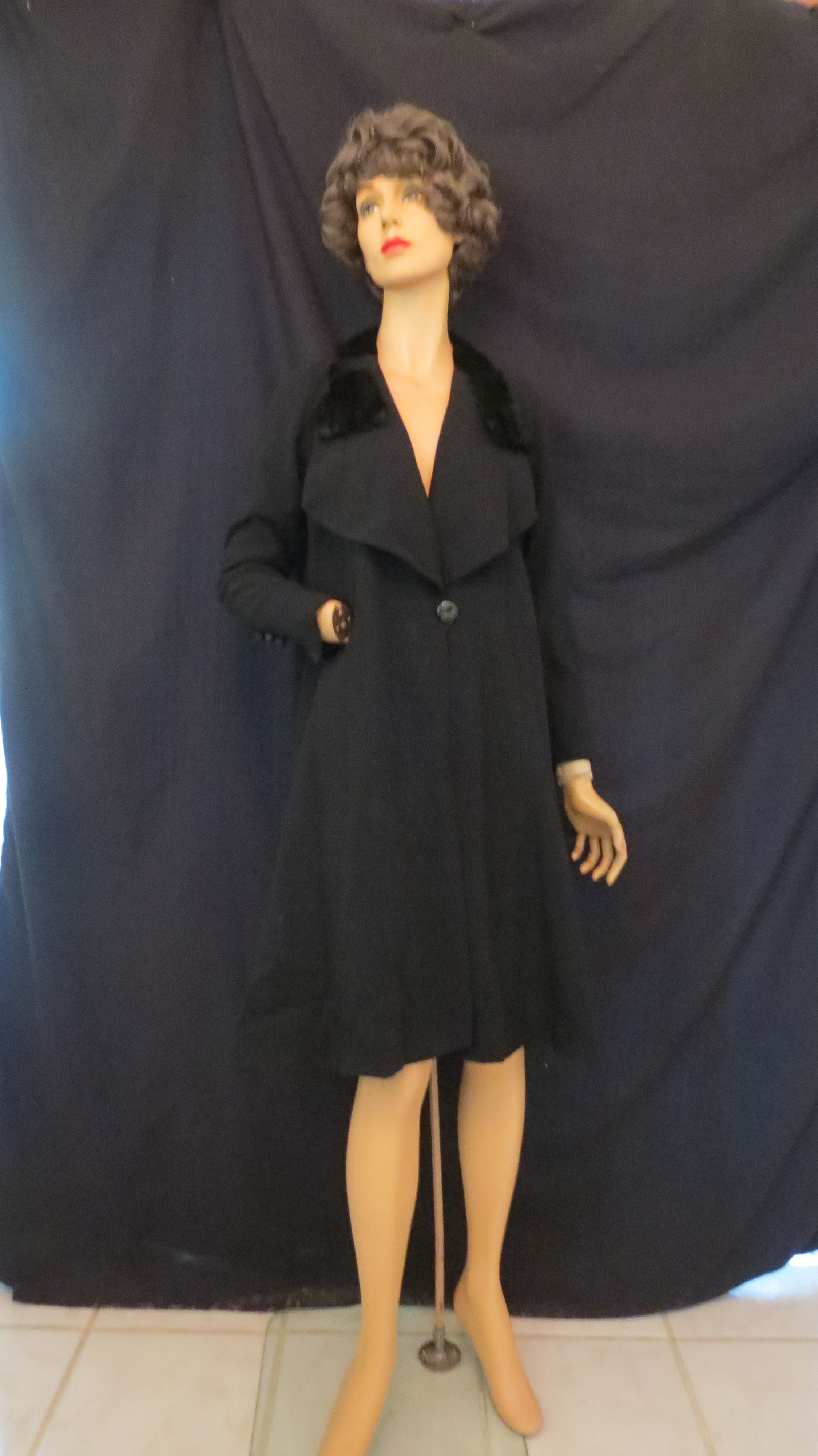
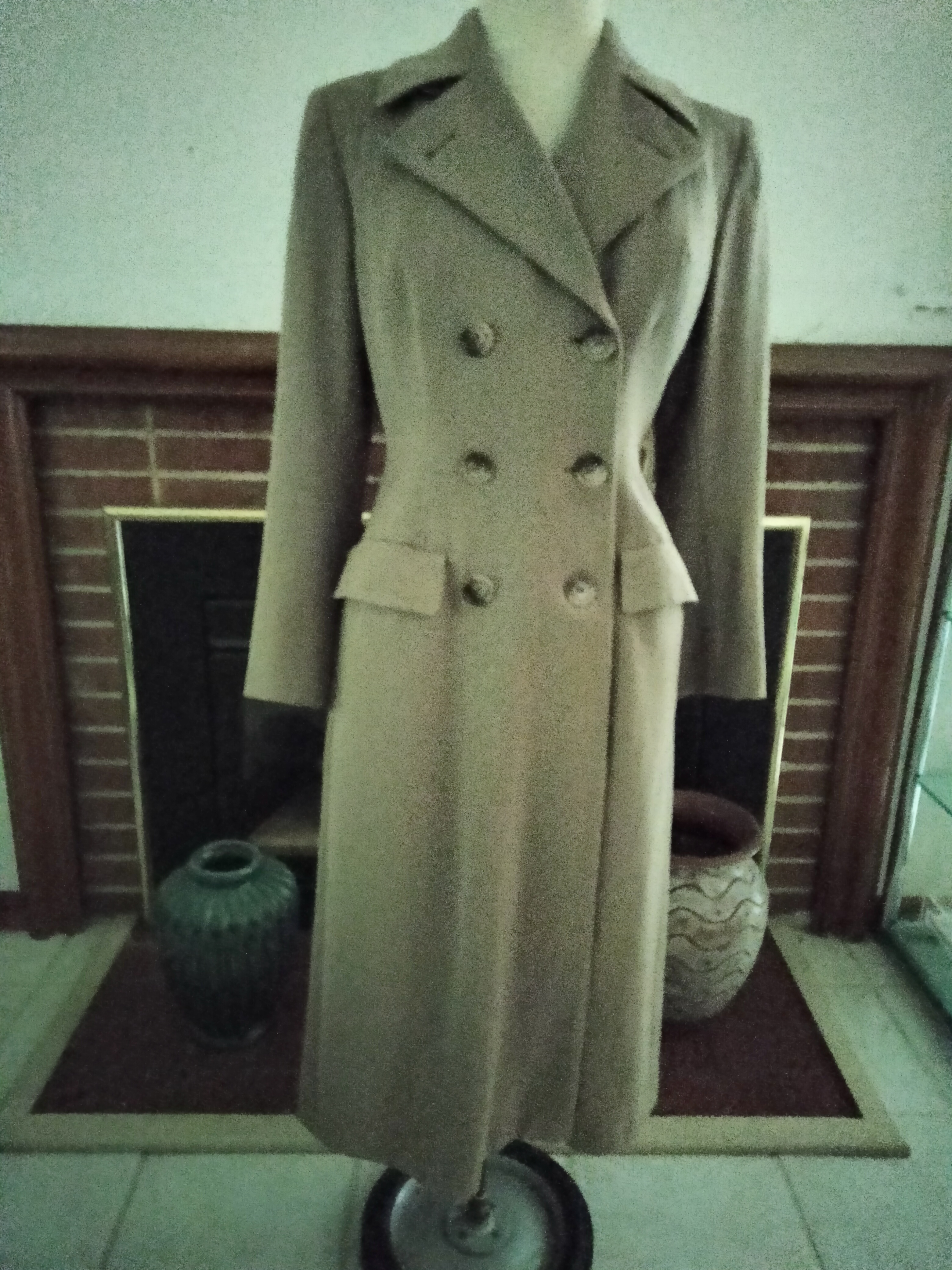
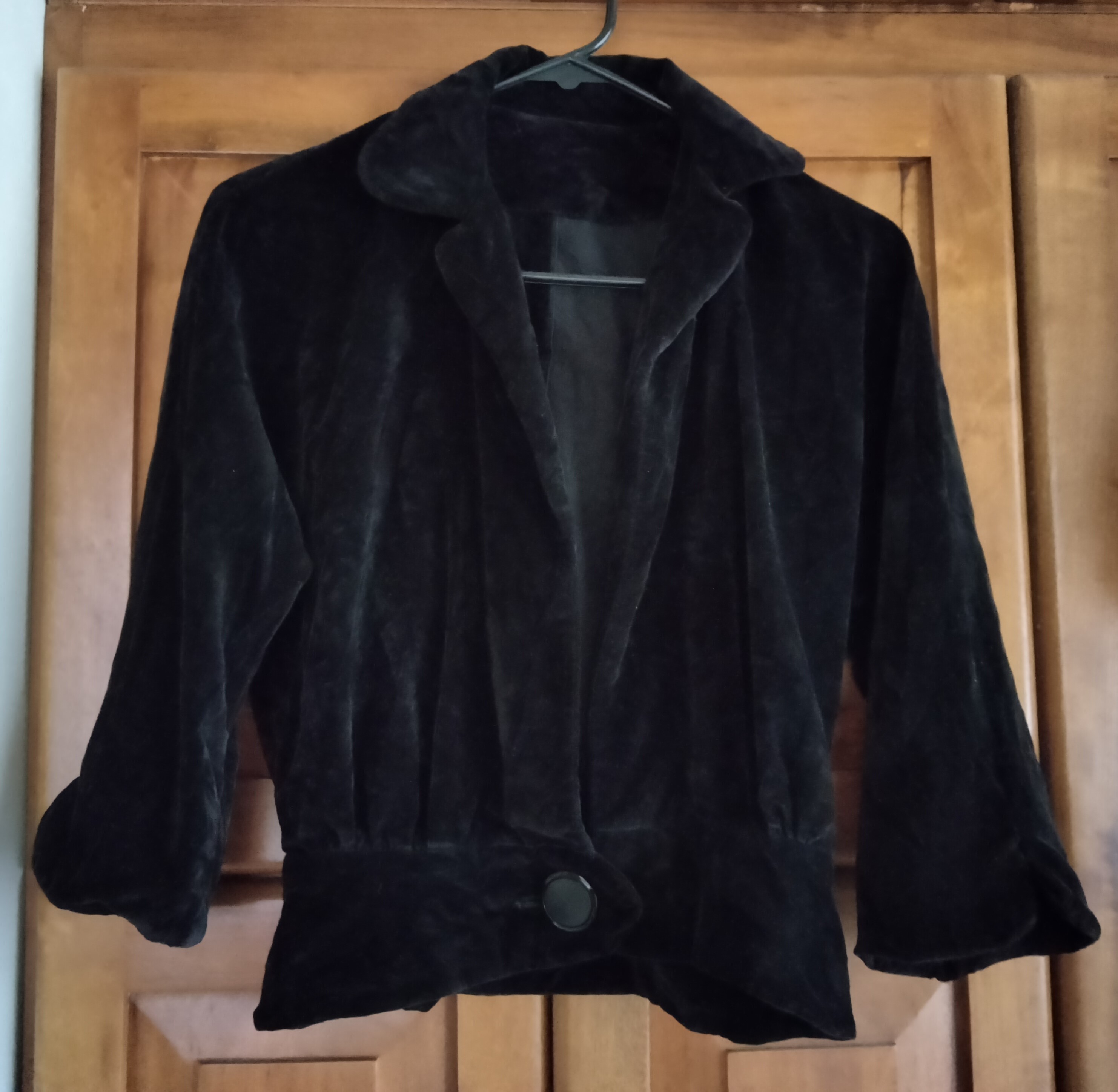
Seal, curly lamb, fine wool – even the more masculine overcoat and trench coat styles were worn by women. Remember Ingrid Bergman’s in Casablanca? Classics like this were considered to be very elegant back in the day. They still are, though our choice of materials is changing, thank goodness. Any of them would have been considered appropriate over dressy attire. On a warmer evening, this little velveteen jacket with 3/4 sleeves and a peplum waist would suit for any semi-formal or even formal occasion to keep bare arms and shoulders cozy.
Next, back to the ’30’s – ’40’s “cocktail” dresses rundown. Stay tuned . . . . . . . . . . . . . . . . . . . . . . . . . . . . . . . . . .
MORGANA MARTIN, THE MAGICVINTAGESPY
BLOG: MAGICVINTAGESPY.COM
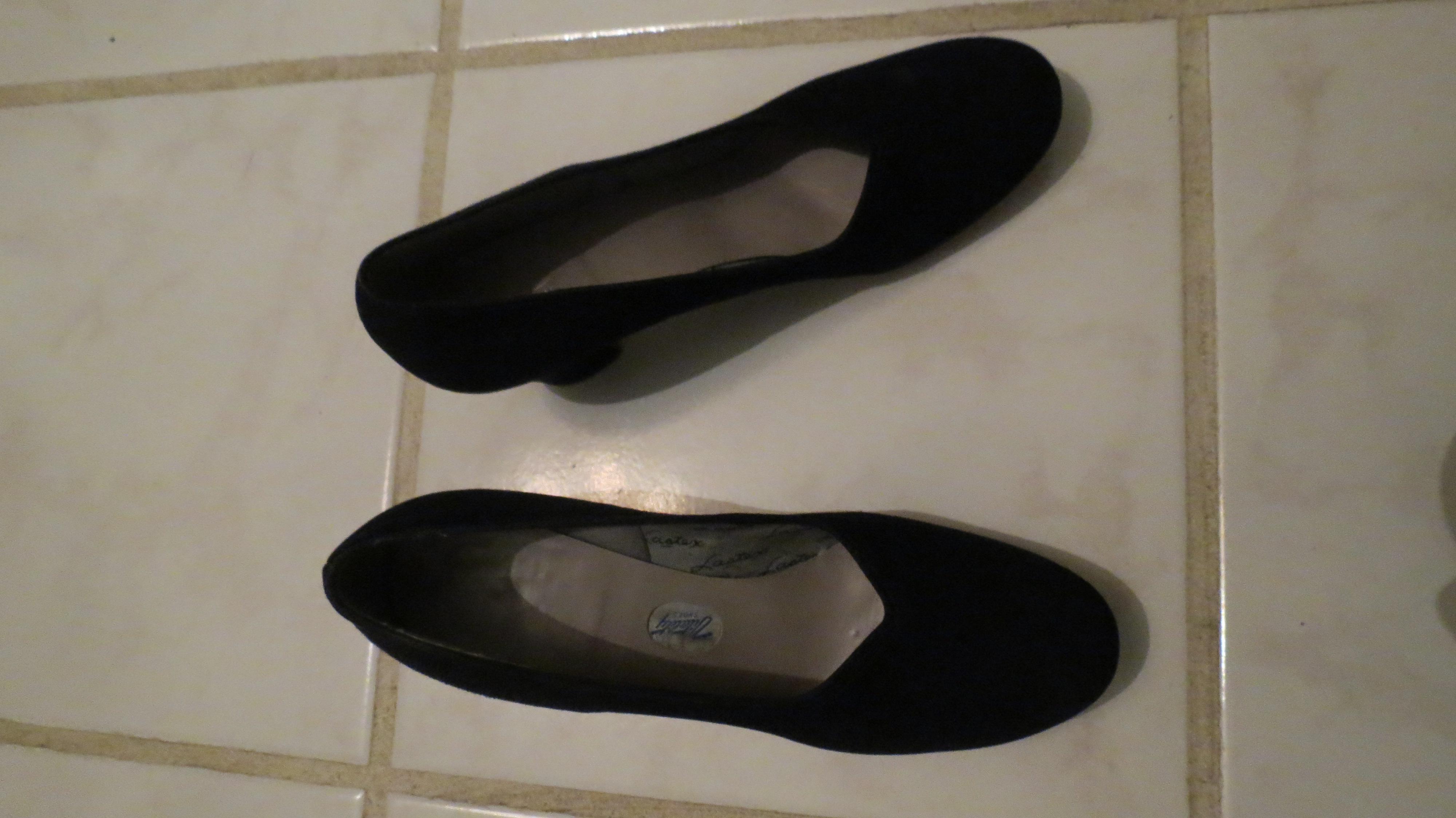
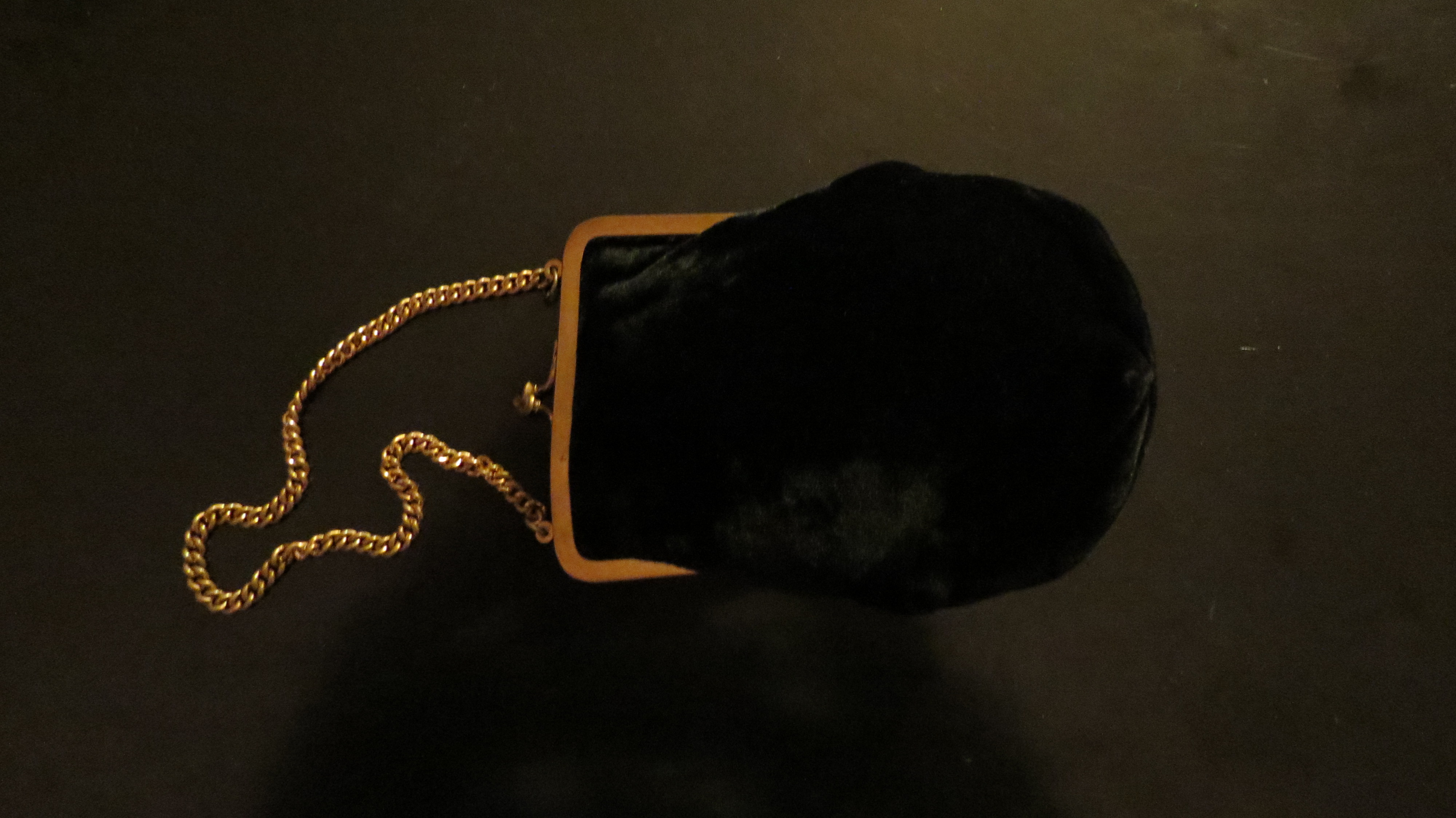
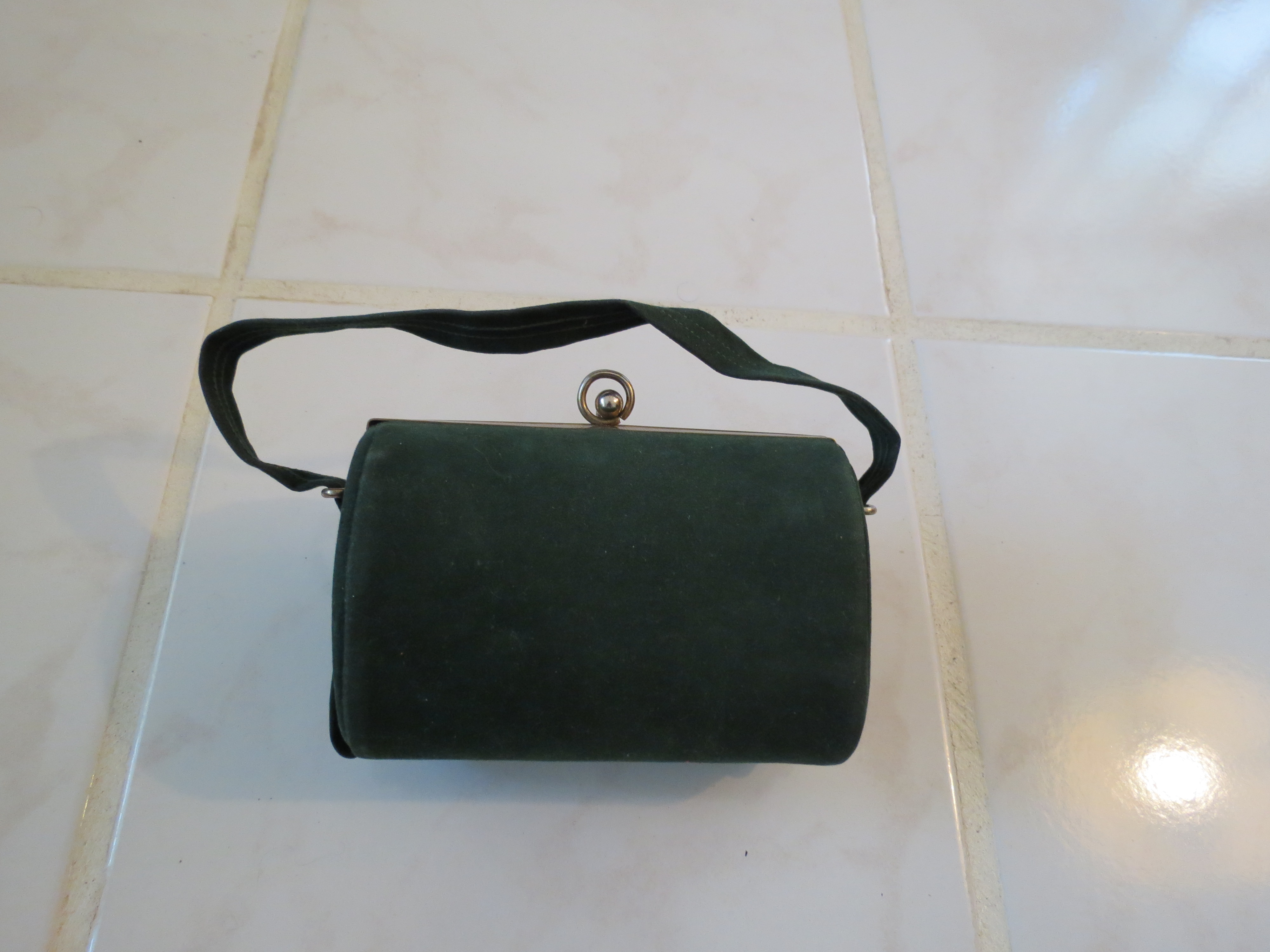
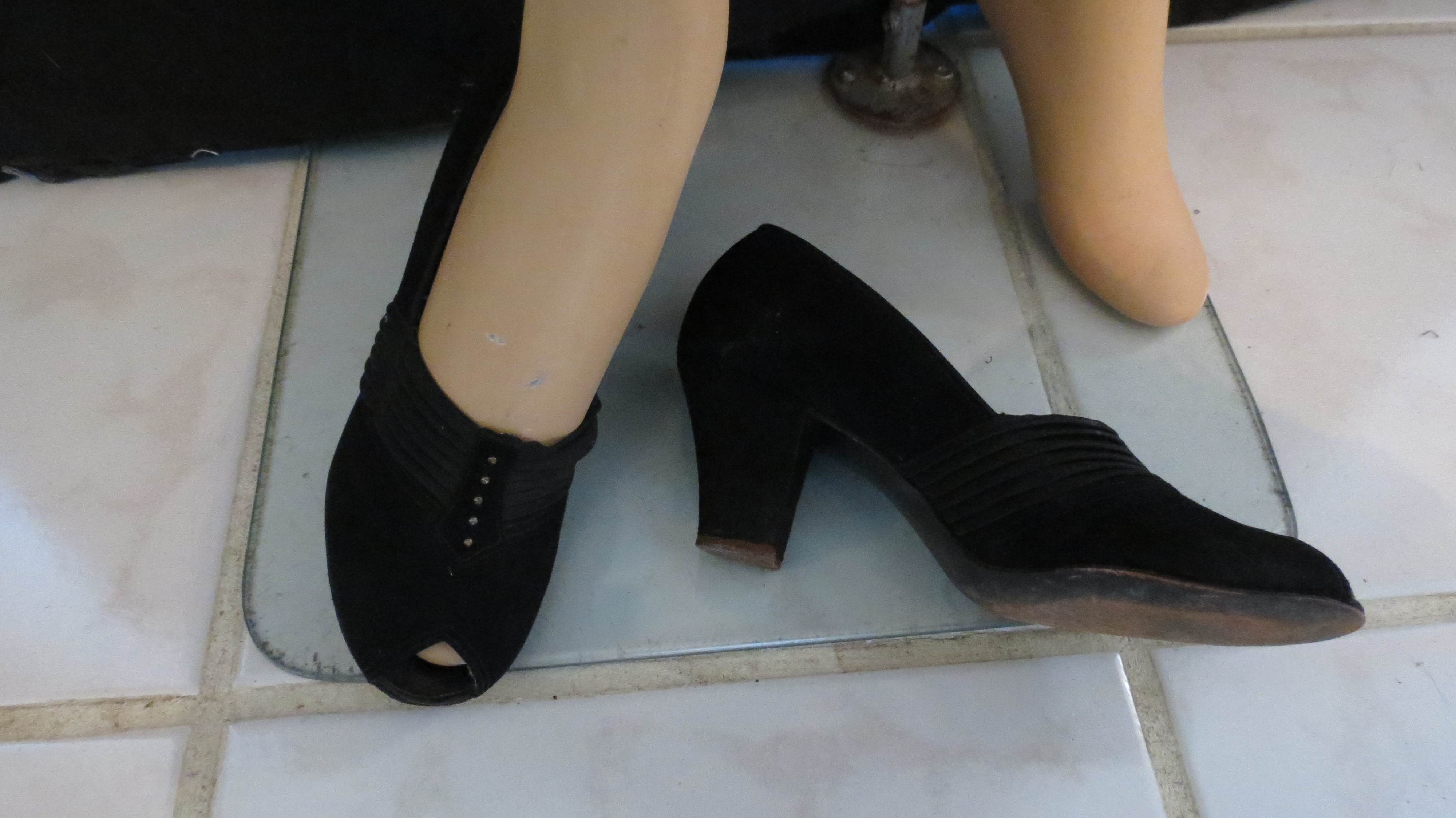
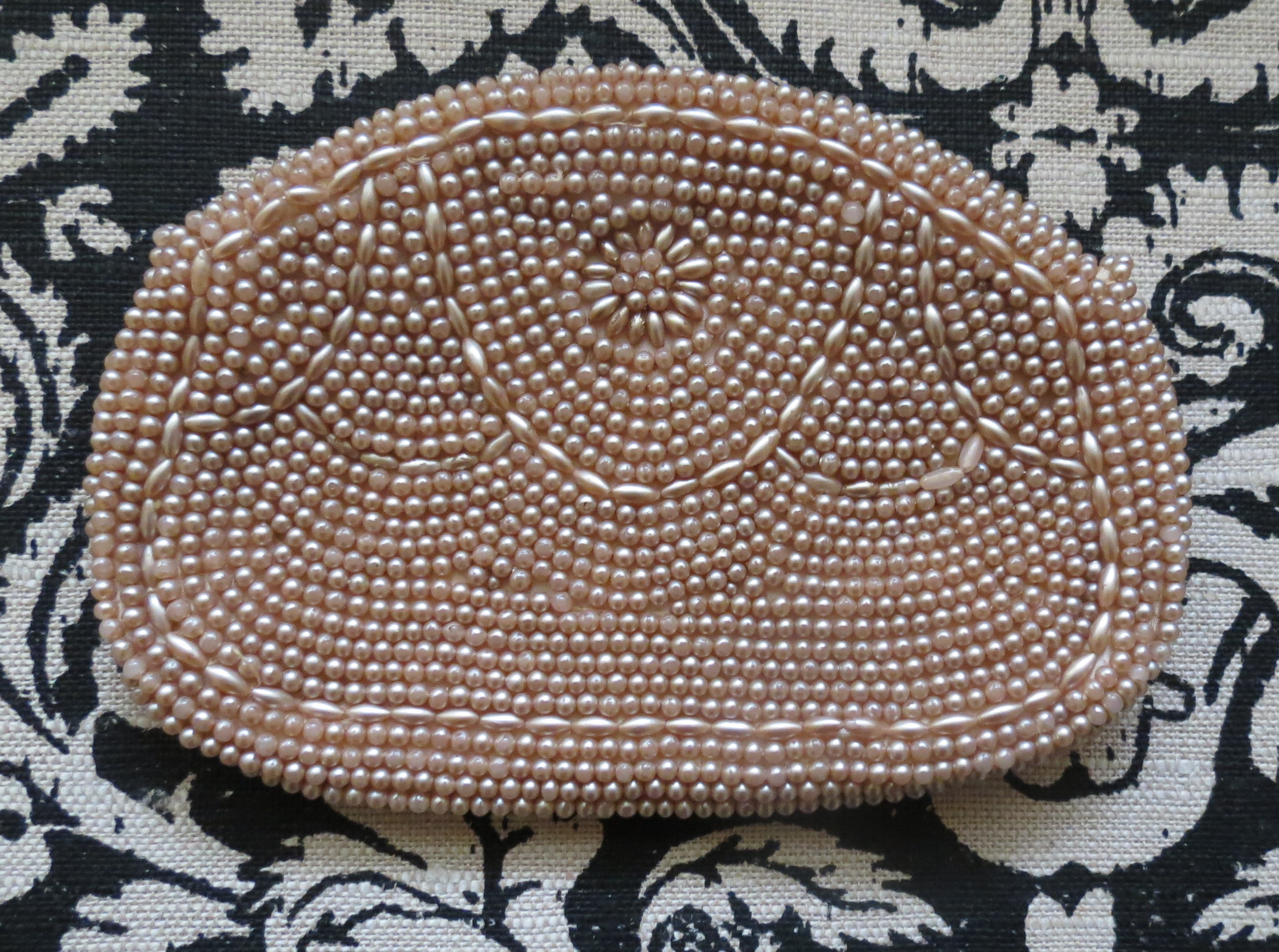
Velveteen pumps, velveteen and velvet bags, even a 1930’s beaded version – what could be more perfect for a dressy evening out? Marvelous finds! Tomorrow I’ll show some 1940’s outerwear for the occasion. Stay tuned . . . . . . . . . . . . . . . . . . . . . . . . . . . . . .
MORGANA MARTIN, THE MAGICVINTAGSPY
BLOG: MAGICVINTAGESPY.COM
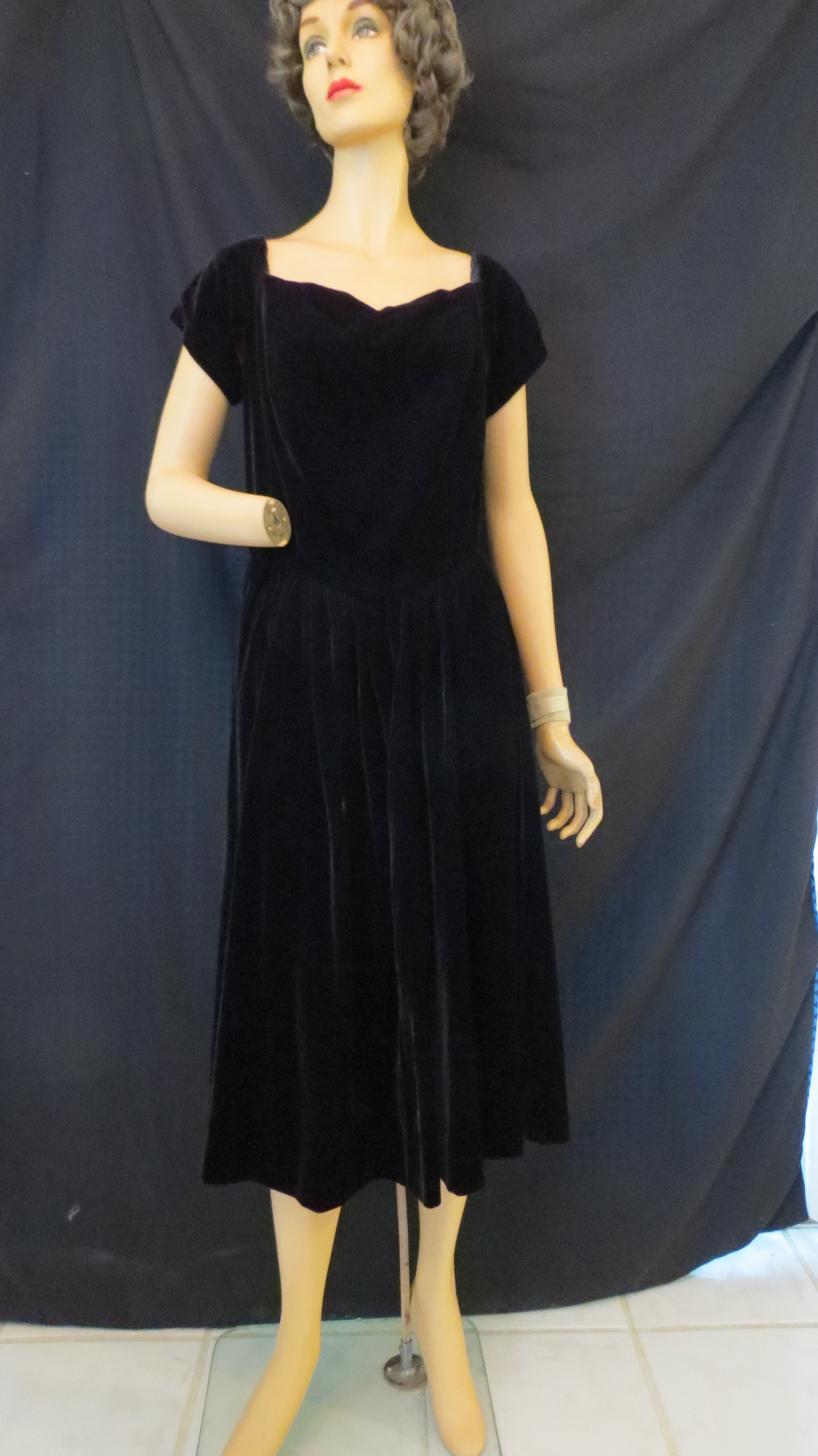
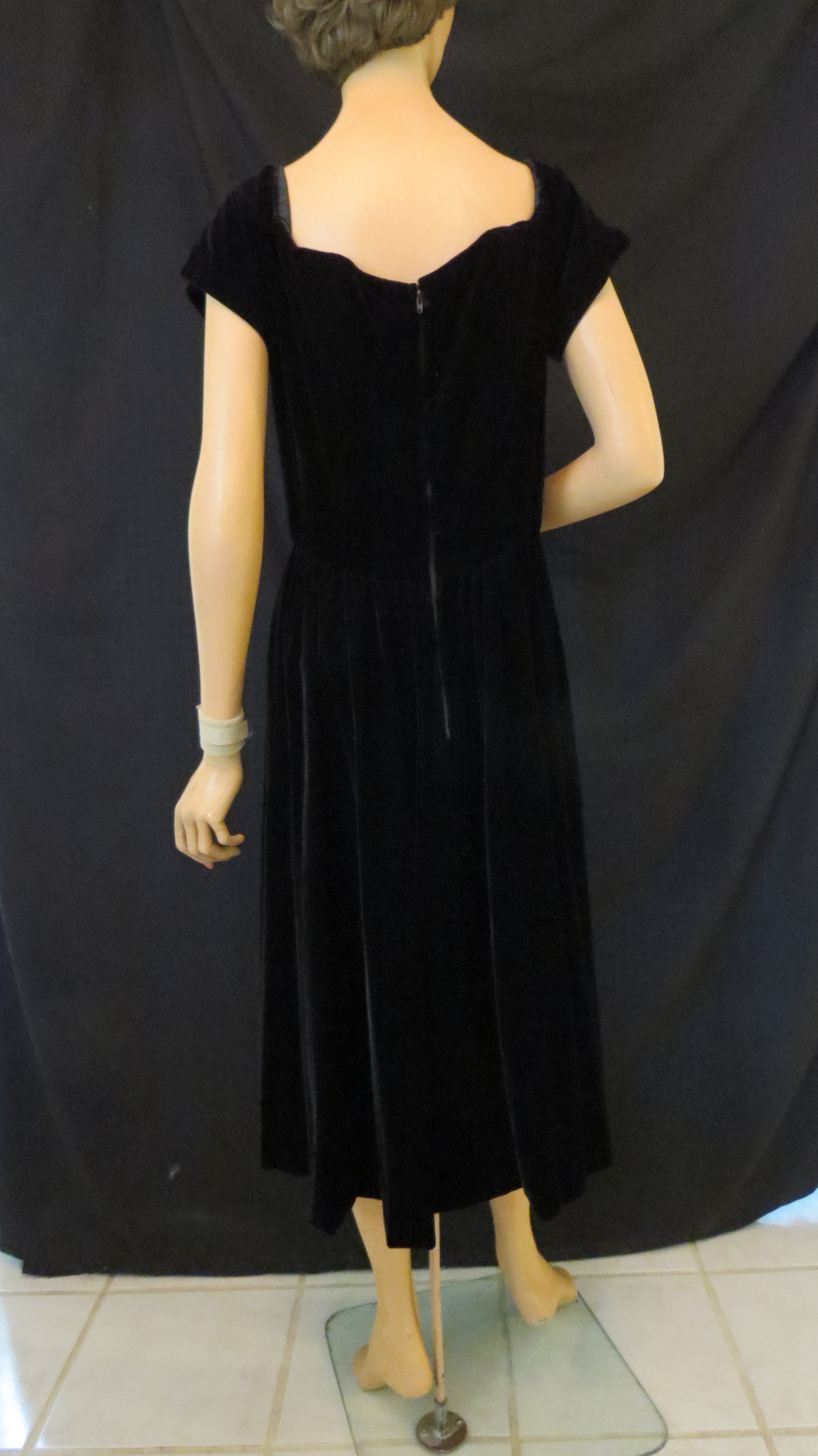
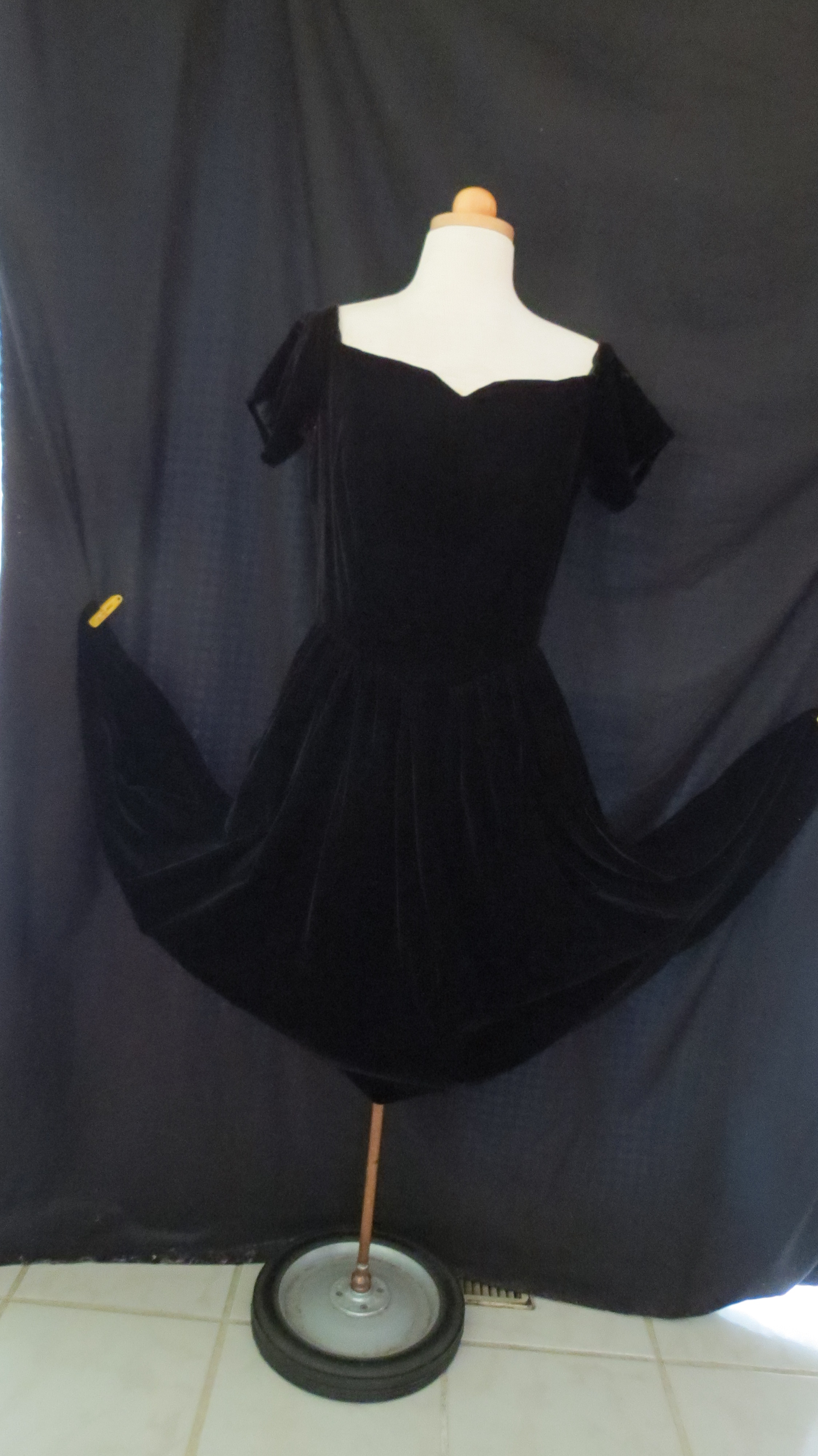
Here’s a lovely frock made by an amateur (?) tailor with her own name label sewn in. The photos don’t do it justice – the tailoring is exceptional. No decoration – classic and elegant. Neckline is the focus, but the features of a post-war 1940’s New Look dressy frock are faithfully recreated – nipped waistline and the point at waist front, sweetheart neckline, very short sleeves and circle skirt. The fabric is a lush velvet.
So, I had to collect it when it showed up. More coming before we round out this decade. Stay tuned . . . . . . . . . . . . . . . . . . . . . . .
MORGANA MARTIN, THE MAGICVINTAGESPY
BLOG: MAGICVINTAGESPY.COM
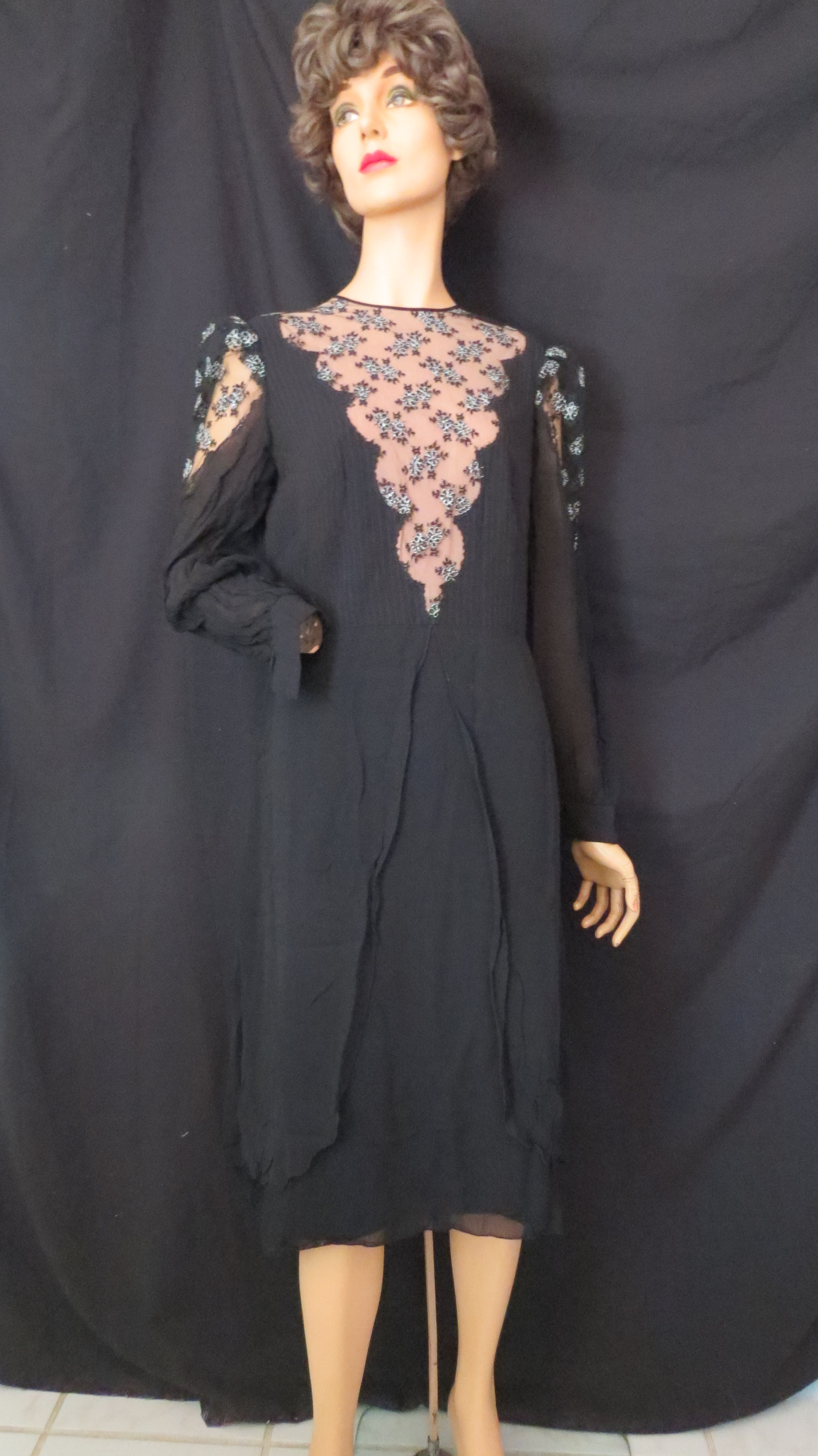
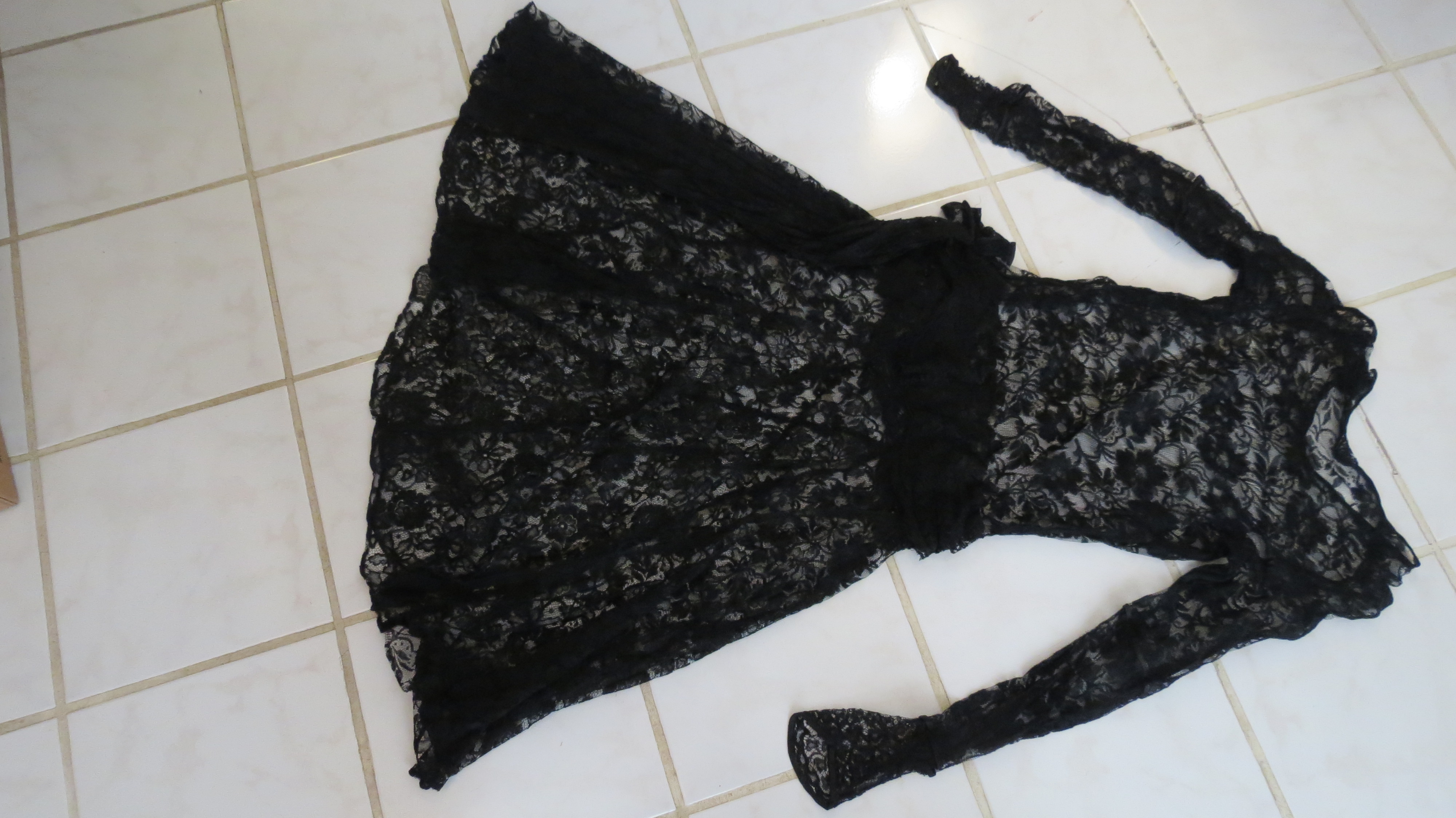
This semi-formal dress uses sheer material to emphasize the design rather than heavy ornamentation like the decorated frock shown yesterday. In my experience, sheer fabric with embroidered designs was popular in the 1940’s. It’s fun to see how dressmakers used it.
On the shoulders, these are augmented by gathered puffs at the shoulder seams and letting the body shine through rather than sewing shoulder pads in. It’s a nice balancing effect without the military look. Sheer fabric on the bodice is something I’ve seen before, too, but here it is backed by flesh-tone fabric, mimicking a plunging decollete’. The sheer fabric, though not with any embroidery, continues to be used for the long cuffed sleeves and as an over-dress with a long peplum over an opaque base layer.
So, the final result is dressy and sexy but also conservative. Clever design though a bit simpler than the one shown yesterday.This dress was at least partly hand-tailored. It has covered buttons on the cuffs and a long center zipper in back, which was a transition from side zippers that, in my experience, began to take place in the Forties.
Again, I was so intrigued and wondered about the original owner of this dress and where she wore it. Stay tuned for yet more 1940’s fashion . . . . . . . . . . . . . . . . . . . . . . . . . . . . . . . . . . . . . . . . . . . .
MORGANA MARTIN, THE MAGICVINTAGESPY
BLOG: MAGICVINTAGESPY.COM

