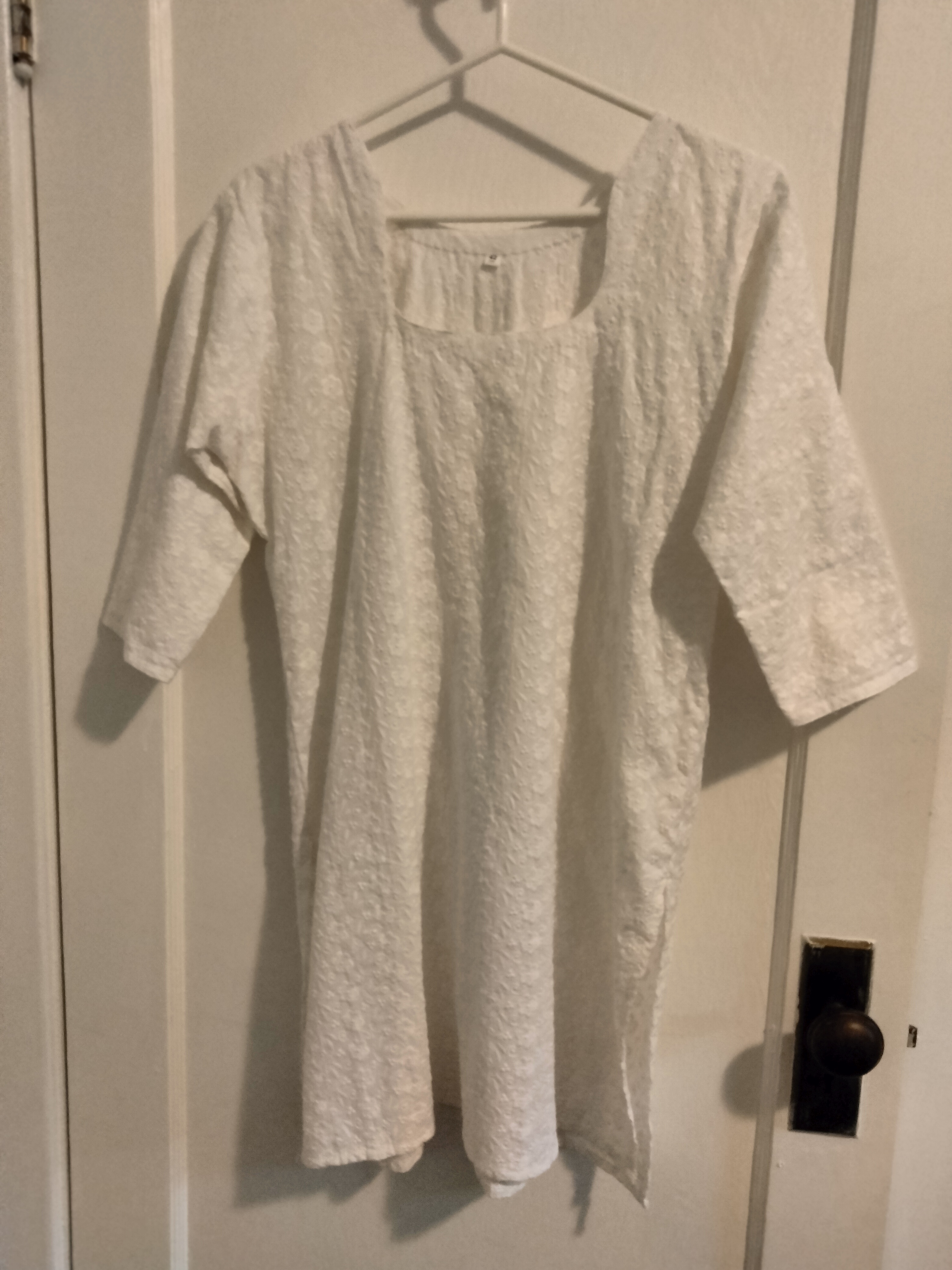
PRETTY WHITE COTTON MINI FROM MID-CENTURY EUROPE

While I’m missing Stella (my fabulous vintage mannequin model), please use your imagination to visualize how fun and flattering this mini-dress or tunic looks when it’s on. Without my honed sleuthing skills, I never would have found it and am so glad that I did. As a mini-dress (if you don’t mind the side slits showing your whole leg almost to the hip) it’s really cute and calls for a 1960’s/’70’s chain belt to finish it off. As a swimsuit cover-up or beach dress it would be perfect – cool, crisp and lightweight while giving some reasonable sun protection. Over a pair of skinny white pants or shorts I LOVE IT!! Also love the elbow-length sleeves and unusually-shaped neckline.

How do I know it’s from Europe? The size label tells me. How do I know that it’s true vintage? By my guesstimate, a European size 42 would always be too big for me, but I look great in this whether worn as a mini-dress or a tunic over pants. So, the cut seems to be smaller than a modern garment of that size would be. This is always tricky with international sizing, but I think I’m correct. The fabric is a nicely-woven cotton with some weight (but not too much for Summer) and all-over floral embroidery – similar to vintage fabrics that are almost never seen now. Also, the interior tailoring is different from what I find on modern garments. Not fine tailoring, because this is a very simple garment and probably sold at a lower price. However, some of the finishing is remarkable – if it did not have a size label, I might say that it had been home-sewn. It has darts in back to give it extra fit and style. The size label, printed rather than embroidered, is sewn in at the back neckline and there are no other tags at all.

All right, the verdict is in. This dress is probably from the 1970’s, give or take 5 years. Allowances have to be made for the overseas manufacture. Whatever it’s exact heritage, it’s wonderful and I will really enjoy it. I love solving mysteries but an open-ended investigation is always intriguing. Who knows – sometimes I solve a cold case years later! You just never know . . . . . . . . . . . . . . . . . . . . . . . . . . . . . . . . . . . . . .

MORGANA MARTIN, THE MAGICVINTAGESPY

BLOG: MAGICVINTAGESPY.COM
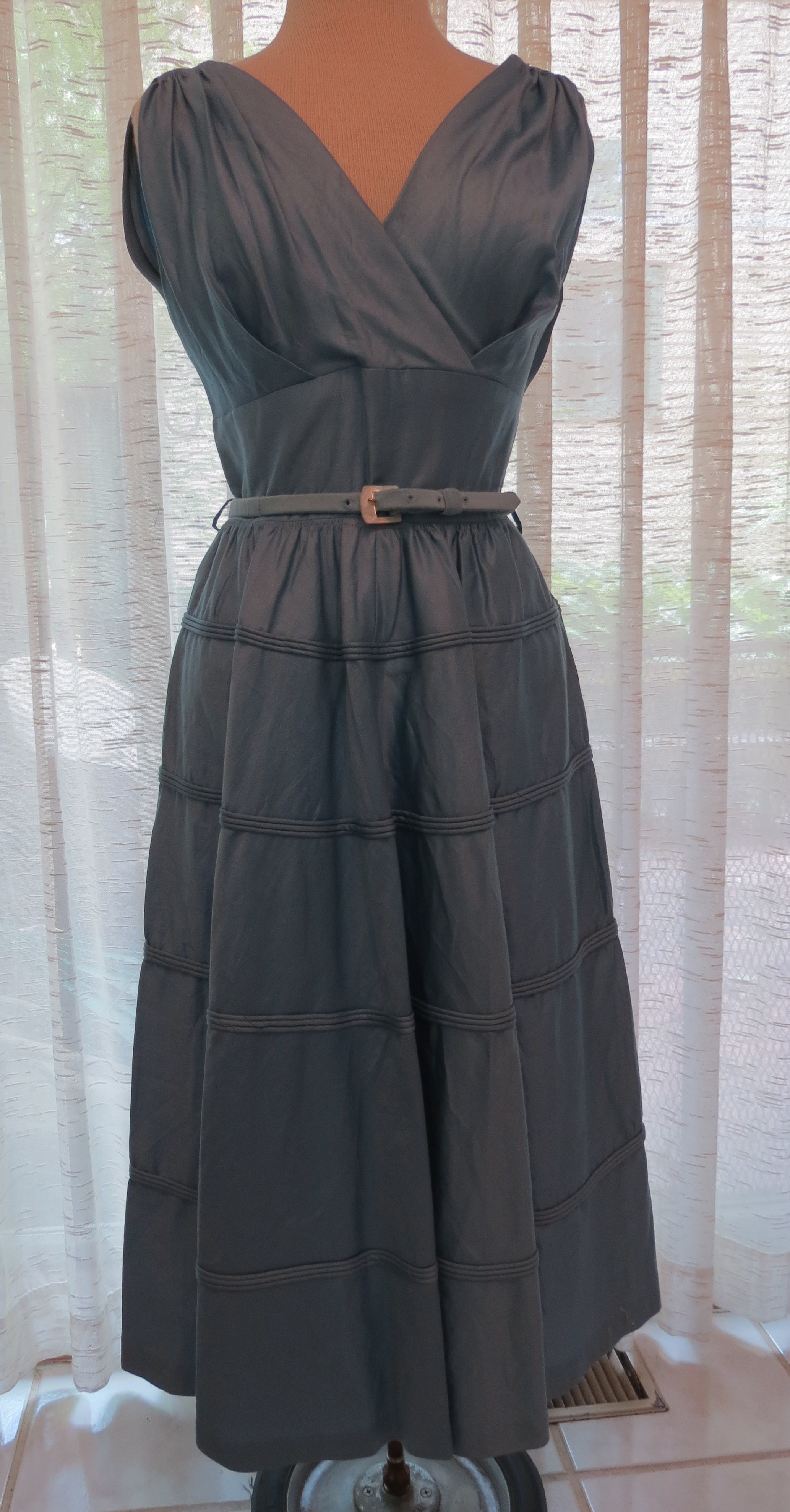
DETOUR! 1950’S DRESSIER FROCKS BEFORE WE MOVE TO THE SIXTIES

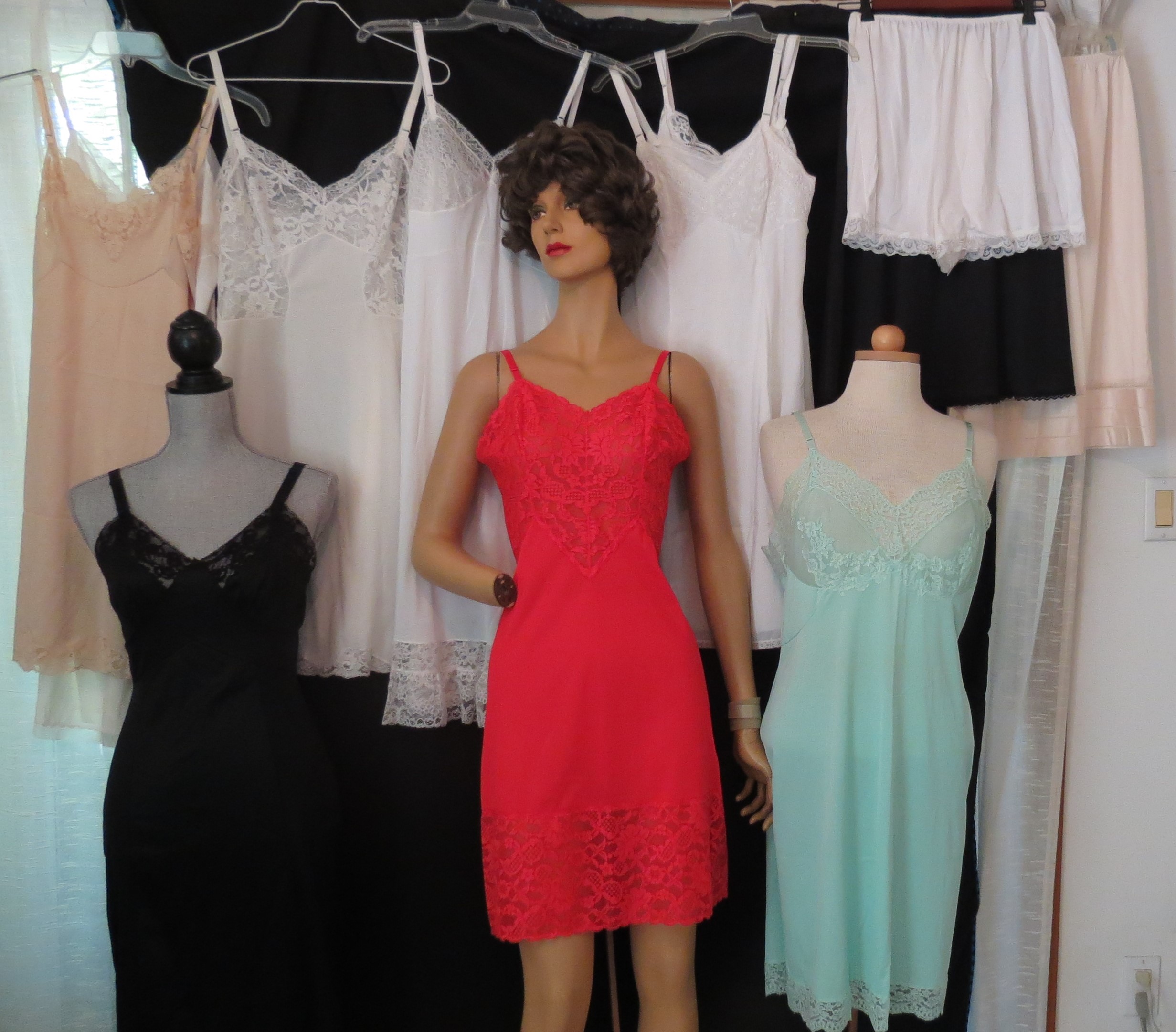
I just couldn’t head into the 1960’s without a display of some of the prettiest dressy frocks from the 1950’s and the fabulous nylon lingerie slips that might have been worn underneath. The first two pictured also have interesting remodeling stories.

First is a beautiful, heavy polished cotton dress from the early 1950’s or, perhaps, the late 1940’s. It is absolutely gorgeous and falls to tea length. Polished cotton was a favorite fabric during the mid-century, before 1965 or so. As often happens, this frock had lost it’s belt somewhere along the way so I took some fabric from the generous hem and covered a skinny one by hand.

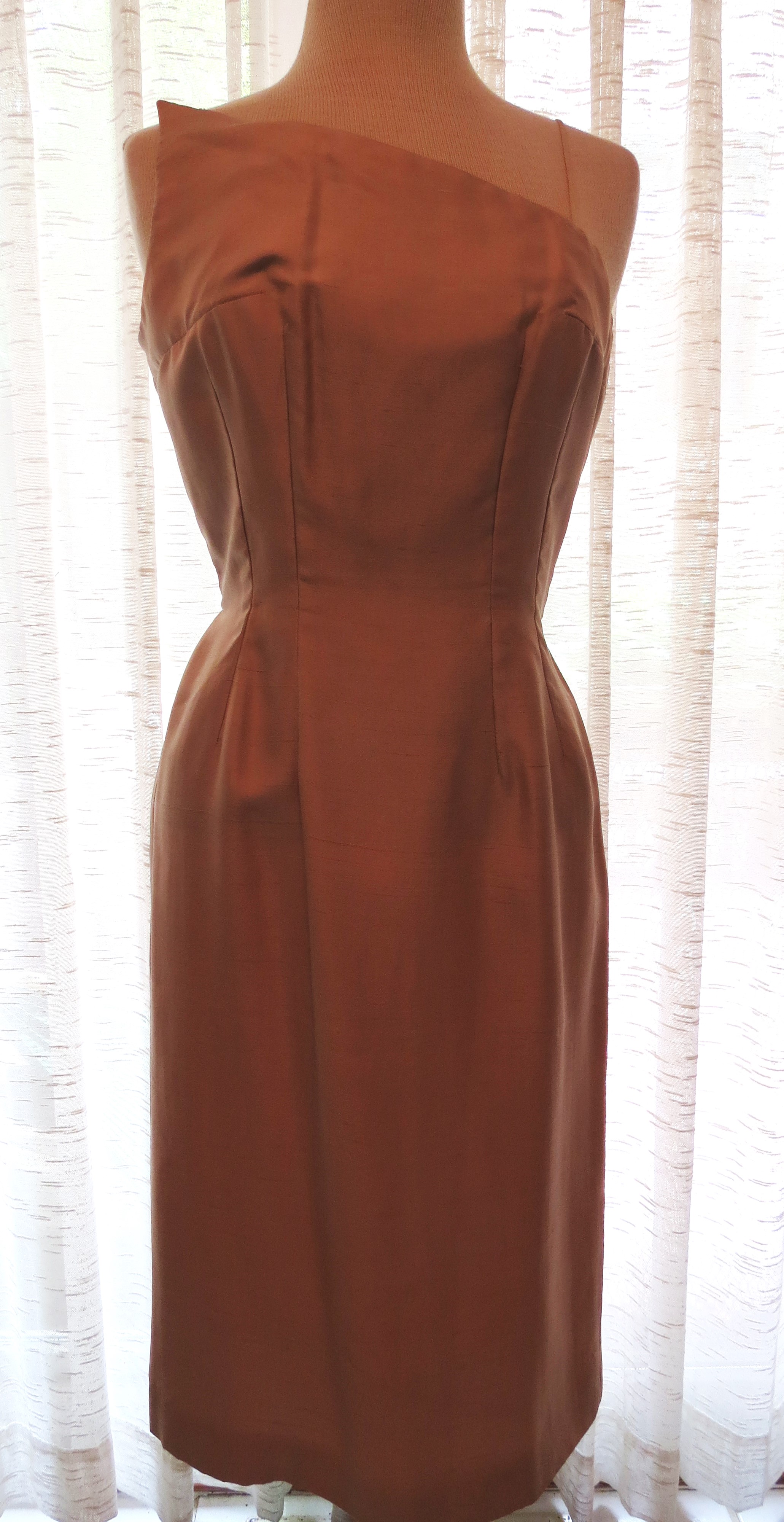
The mocha dress with the interesting shoulder line was a more ambitious remodel but still done entirely by hand. This wonderful wiggle dress is made of rayon fabric which looks like silk shantung. It originally had an upper bodice made of sheer fabric with cap sleeves. Piping finished the sleeves and round neckline. This design feature was such a popular one in the late ’40’s and early ’50’s but, alas, the sheer fabric had several holes that didn’t have a mending or patching option that I thought would do justice to the style. So, I chose to remove the upper bodice and secure the cut edges underneath. The back zipper didn’t have to be changed because it ended where a keyhole opening used to be at the back. I am very happy with the result, though I hate to change original designs.

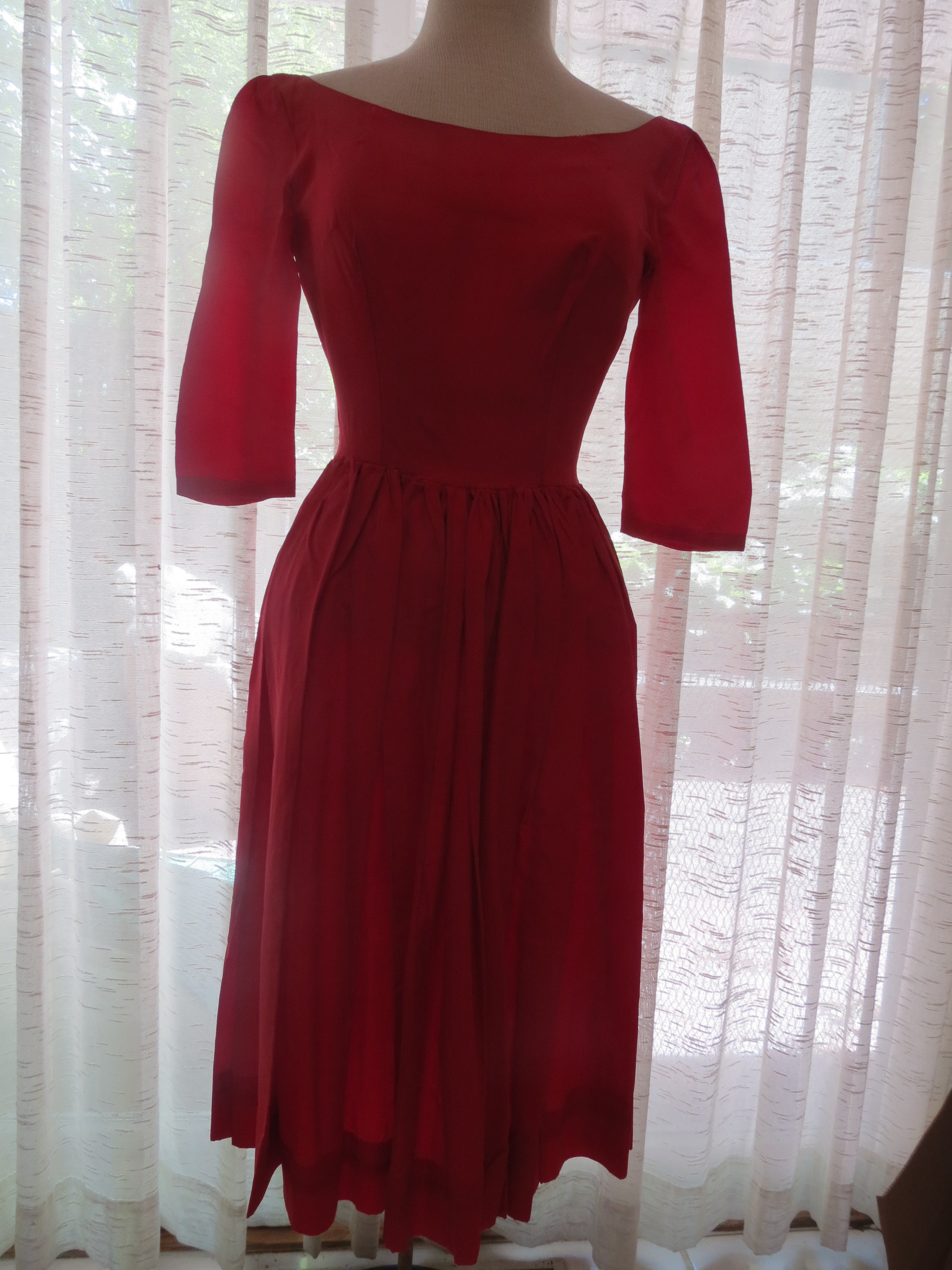
The RED party frock is a style that endured at least from the mid-1940’s until the early 1960’s. It’s a rayon fabric with midi hemline, 3/4 sleeves and a boat neckline – all of which I love. You can see how deep the hem is and, of course, the bodice and skirt are fully lined.

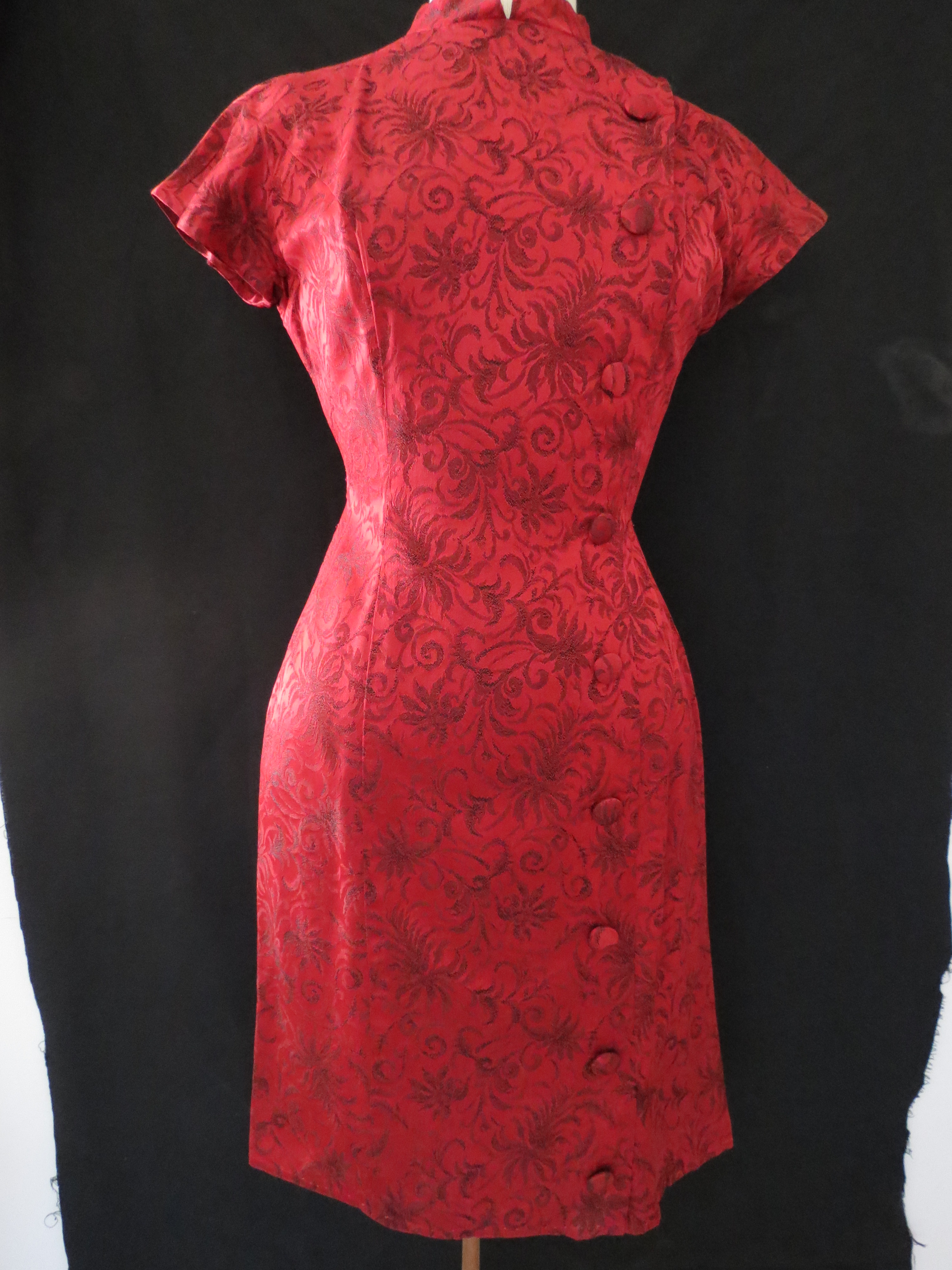
Finally, the red jacquard cheongsam-style sheath is a fashion that became quite popular in the Fifties and Sixties, probably a carry-over from WWII when Asian culture became better known in the West and the female spy, Mata Hari, became legend. It carries on the wiggle cut and cap sleeves which were common then. Overall, this was a decade of very flattering and well-made ladies’ garments.

We finish off with a photo of luxurious nylon slips from the 1950’s, with their fabulous fabric and pretty decoration in some of the luscious colors that were available. We WILL do 1960’s dresses tomorrow. Stay tuned . . . . . . . . . . . . . . . . . . . . . .

MORGANA MARTIN, THE MAGICVINTAGESPY

BLOG: MAGICVINTAGESPY.COM