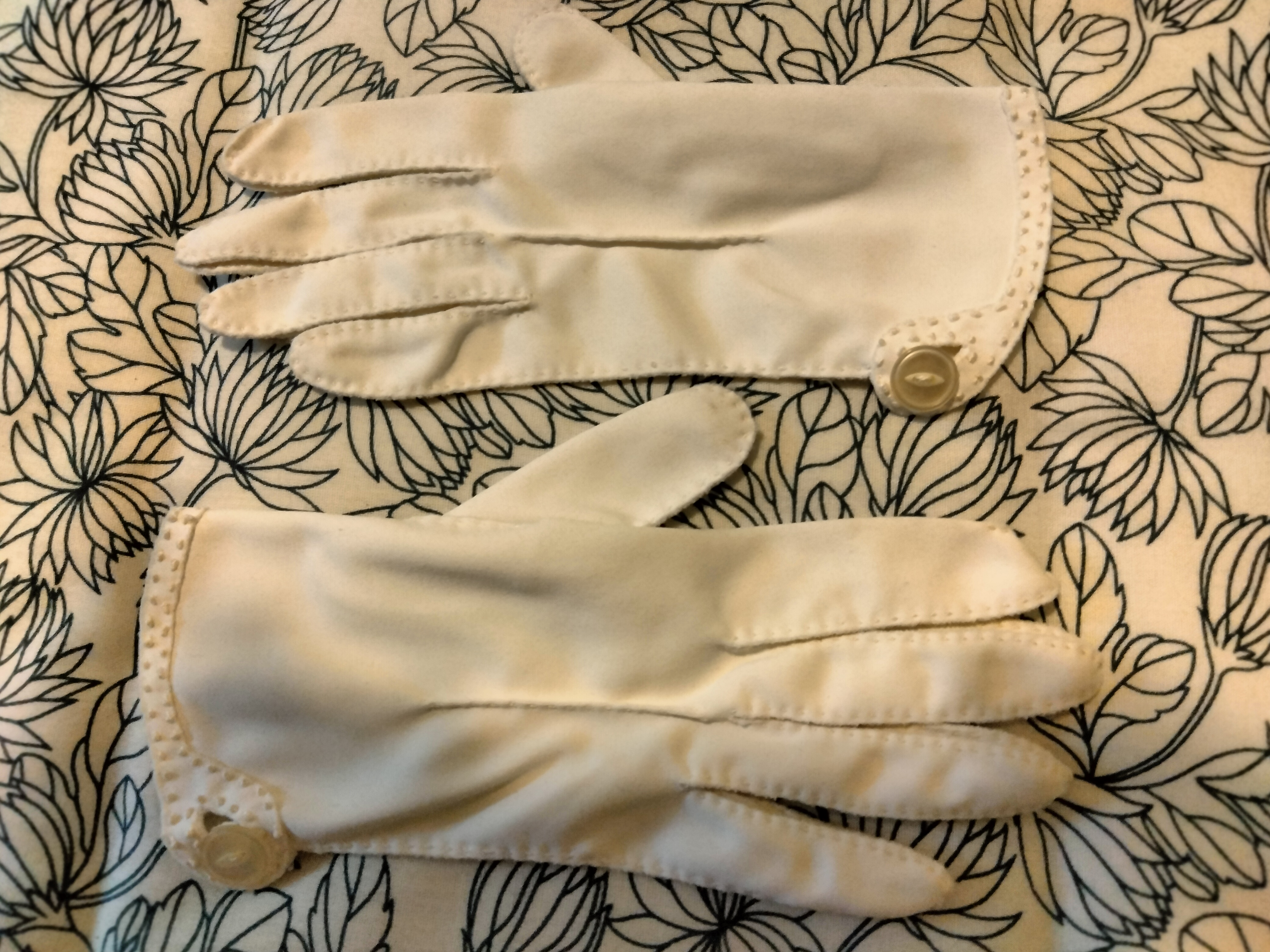
MY VERY LATEST FIND: A PAIR OF ICONIC KENNEDY-ERA GLOVES. TOO SPECIAL TO PASS UP . . . . . . .

Who doesn’t have mid-century white wrist-length gloves passed down by the older women in their families? I’ve got a collection, both of “heritage” gloves and those that I’ve discovered during past investigations. Cotton, leather, suede, synthetic – I’ve kept only the best of the best. Like handkerchiefs and little hats, these gloves were ubiquitous – every woman had them because in the late 1950’s through the early 1960’s they were mandatory when you left the house. First Lady Jacqueline Kennedy made them a true fashion statement that no well-dressed woman would be seen without.

So, a ton of them have been out in the vintage marketplace even though they’re not a wardrobe staple anymore. But, wait . . . . . . . . gloves, in general, are definitely a wardrobe staple and these are PERFECT! What do you wear with a white jacket or coat on a cool day? How do you save your white leather gloves from getting dirty? Beautifully hand-tailored gloves like these are a great alternative. Even if you’re not wearing an early ’60’s dress, these are classic enough to wear with anything, including slacks.

Other factors which made these a catch, besides their beauty, and caused me to pick them up: 1. The synthetic fabric – probably nylon or a nylon blend – has stretch which makes them super comfortable and flexible as well as giving a good fit. 2. This type of fabric washes well, similar to nylon lingerie slips. You can even wash them in hot water if you need to and as long as the decoration will tolerate it (but those buttons can easily be detached for laundering and re-sewn on). 3. This is maybe the BIGGEST PLUS – like nylon slips, in my experience, they take dye very well and can be dyed to match anything you’d like!!!

That’s my very latest find and I was thrilled to discover them. You just never know! Now, I only have to decide on the color . . . . . . . . . . . . . .

MORGANA MARTIN, THE MAGICVINTAGESPY

BLOG: MAGICVINTAGESPY.COM
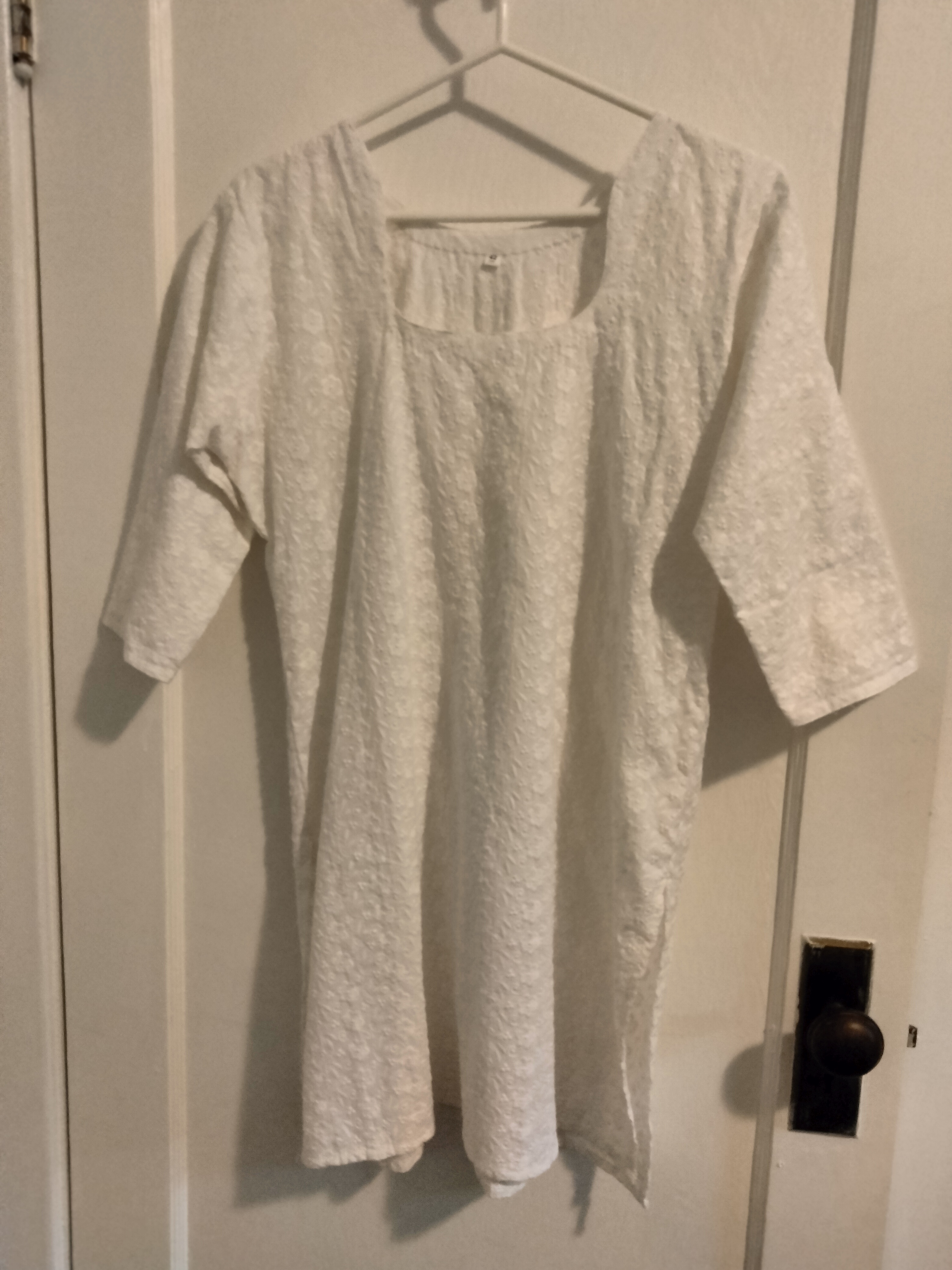
PRETTY WHITE COTTON MINI FROM MID-CENTURY EUROPE

While I’m missing Stella (my fabulous vintage mannequin model), please use your imagination to visualize how fun and flattering this mini-dress or tunic looks when it’s on. Without my honed sleuthing skills, I never would have found it and am so glad that I did. As a mini-dress (if you don’t mind the side slits showing your whole leg almost to the hip) it’s really cute and calls for a 1960’s/’70’s chain belt to finish it off. As a swimsuit cover-up or beach dress it would be perfect – cool, crisp and lightweight while giving some reasonable sun protection. Over a pair of skinny white pants or shorts I LOVE IT!! Also love the elbow-length sleeves and unusually-shaped neckline.

How do I know it’s from Europe? The size label tells me. How do I know that it’s true vintage? By my guesstimate, a European size 42 would always be too big for me, but I look great in this whether worn as a mini-dress or a tunic over pants. So, the cut seems to be smaller than a modern garment of that size would be. This is always tricky with international sizing, but I think I’m correct. The fabric is a nicely-woven cotton with some weight (but not too much for Summer) and all-over floral embroidery – similar to vintage fabrics that are almost never seen now. Also, the interior tailoring is different from what I find on modern garments. Not fine tailoring, because this is a very simple garment and probably sold at a lower price. However, some of the finishing is remarkable – if it did not have a size label, I might say that it had been home-sewn. It has darts in back to give it extra fit and style. The size label, printed rather than embroidered, is sewn in at the back neckline and there are no other tags at all.

All right, the verdict is in. This dress is probably from the 1970’s, give or take 5 years. Allowances have to be made for the overseas manufacture. Whatever it’s exact heritage, it’s wonderful and I will really enjoy it. I love solving mysteries but an open-ended investigation is always intriguing. Who knows – sometimes I solve a cold case years later! You just never know . . . . . . . . . . . . . . . . . . . . . . . . . . . . . . . . . . . . . .

MORGANA MARTIN, THE MAGICVINTAGESPY

BLOG: MAGICVINTAGESPY.COM
TRUE VINTAGE 1950’S DRESSES FOR EVERYDAY

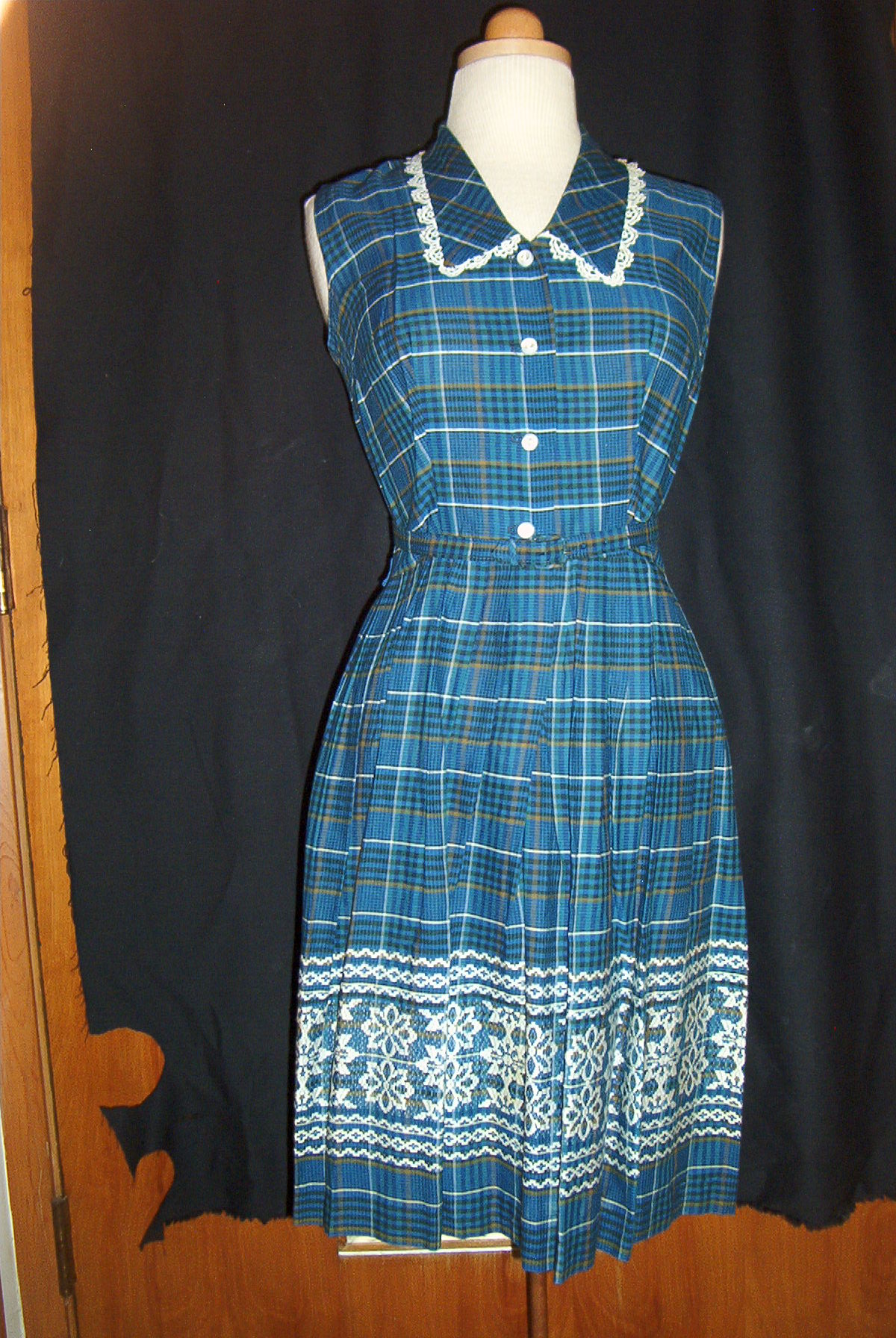
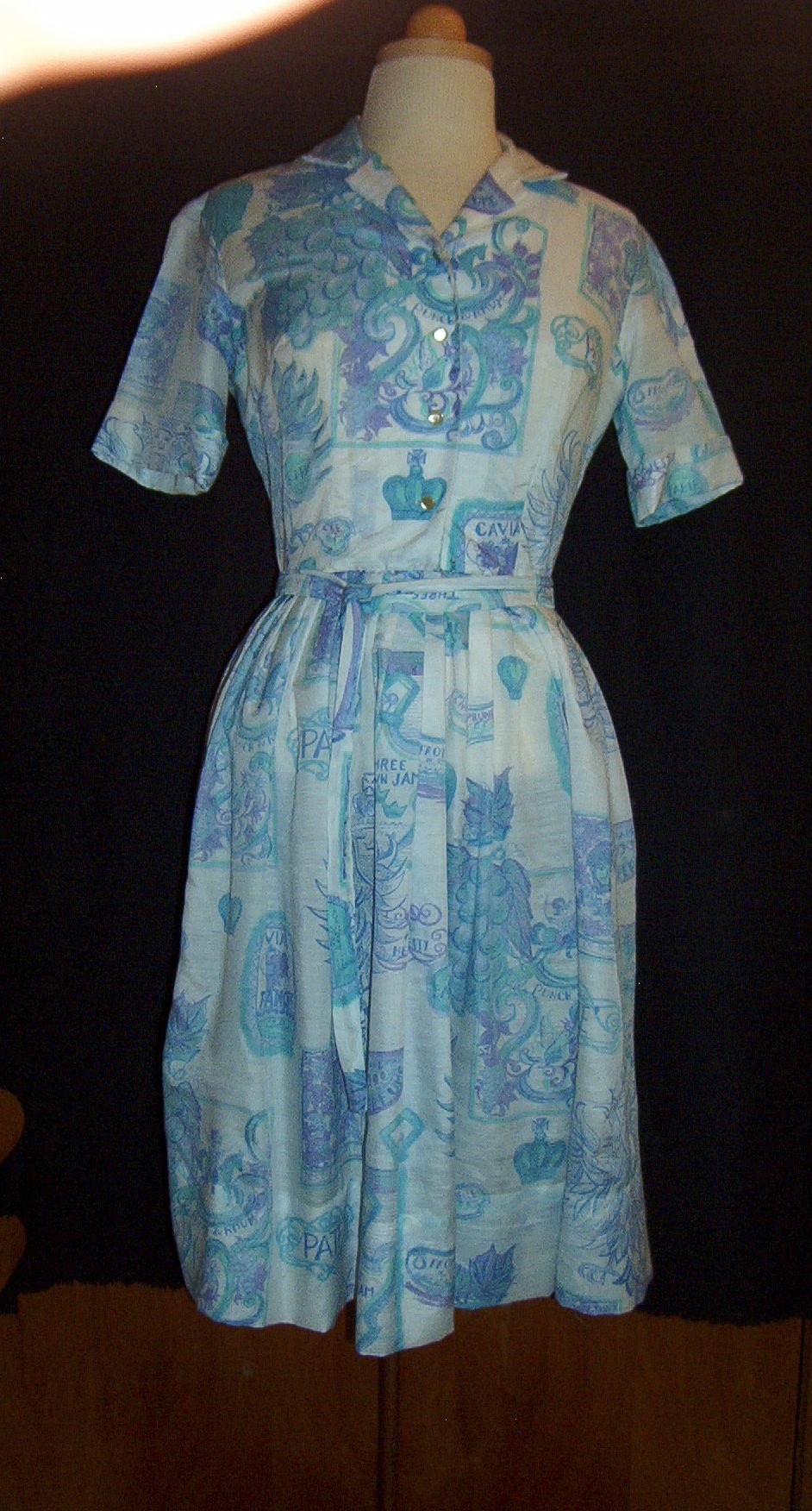
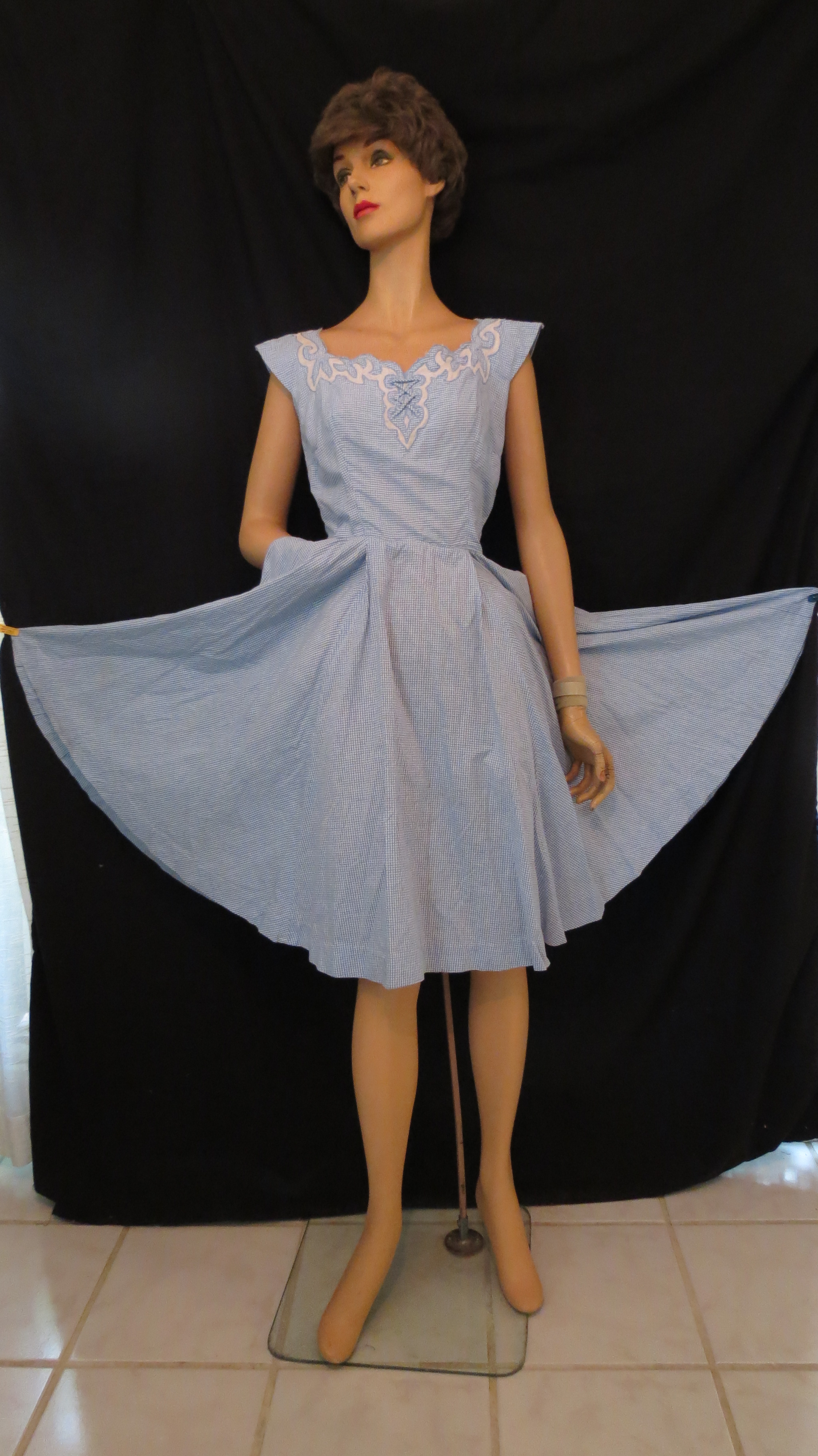
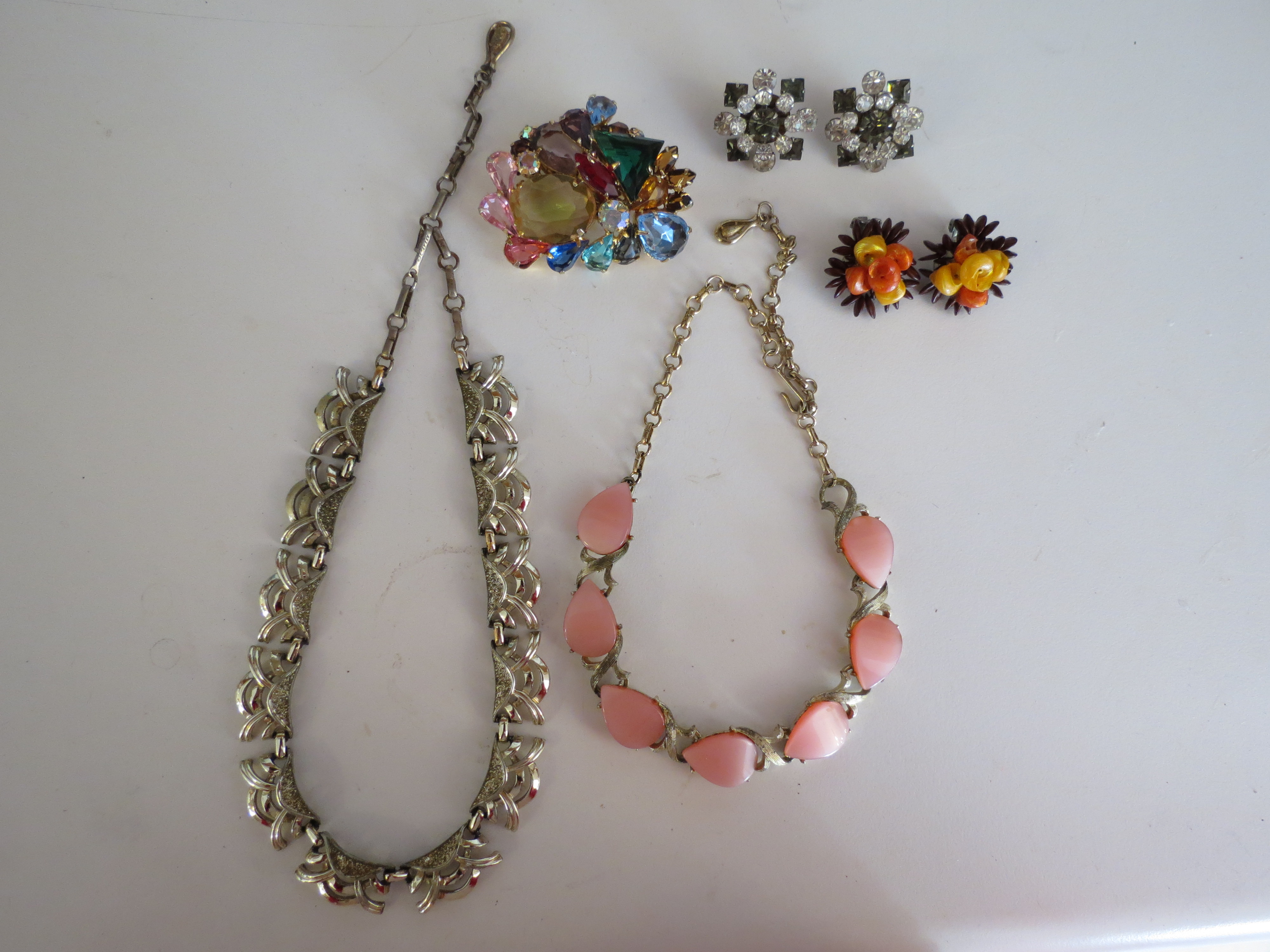
Wasp waists, circle skirts and cap sleeves – 3 style features which are predominant on 1950’s frocks, though many other elements of design appear. The tiny waistline is probably the most frequently seen feature of a Fifties dress. As popular as the synthetic fabrics had become, 100% cotton material was queen of everyday dresses and especially for plaids and stripes which could be woven right into the cloth. Prints were still very evident, such as the blue and aqua shirtdress above, with a cute Paris, France motif (special to me because it belonged to a family member). A variation of the open-toe, low-heel sandal shown yesterday would have gone very well with these dresses, too. Colorful dresses called for fun and affordable costume jewelry, which abounded in the ’50’s. Made from pot metal, glass and plastic, every gal could afford a little bling with every outfit. Natural materials were sometimes used, too. Our mid-century gal who returned from Hawaii a few days ago, might have brought home a pair of souvenir earrings made from seeds and shells.

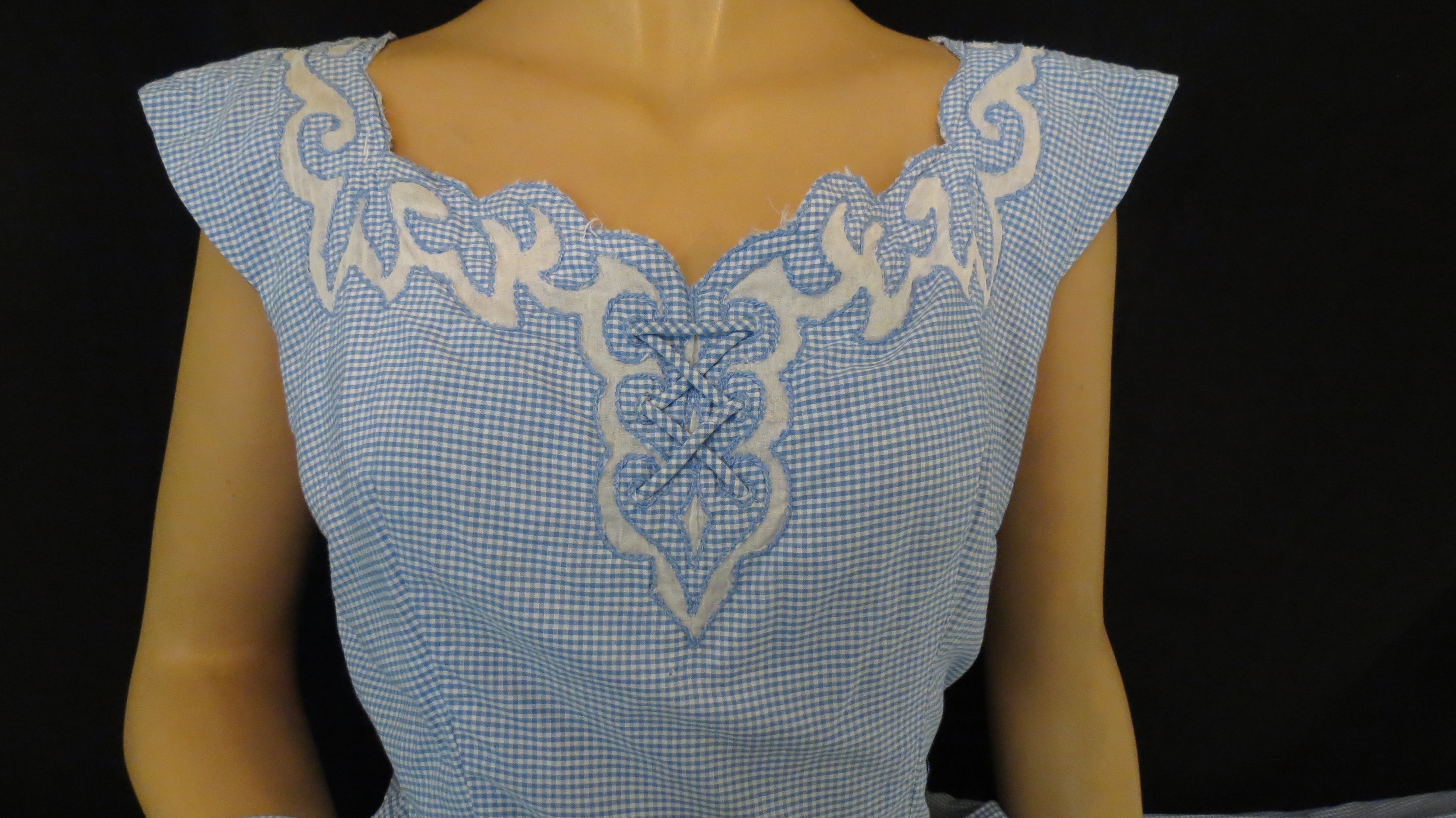
Decorative detailing was still a big deal, whether the dress was a day dress or something more special. Ric rac and embroidery were everywhere. The intricate cut-out design and lacing on the neckline above, though probably done by machine, is a very pretty touch on a flirty frock. Fabric-covered belts were the most common way of cinching a waistline.

Sticking with casual dresses, we’ll head into the early 1960’s tomorrow. Stay tuned . . . . . . . . . . . . . . . . . . . . . . . .

MORGANA MARTIN, THE MAGICVINTAGESPY

BLOG: MAGICVINTAGESPY.COM
6 PRETTY TRUE VINTAGE 1940’S DRESSES WITH ’80’S DOES ’40’S WEDGE-HEEL SANDALS

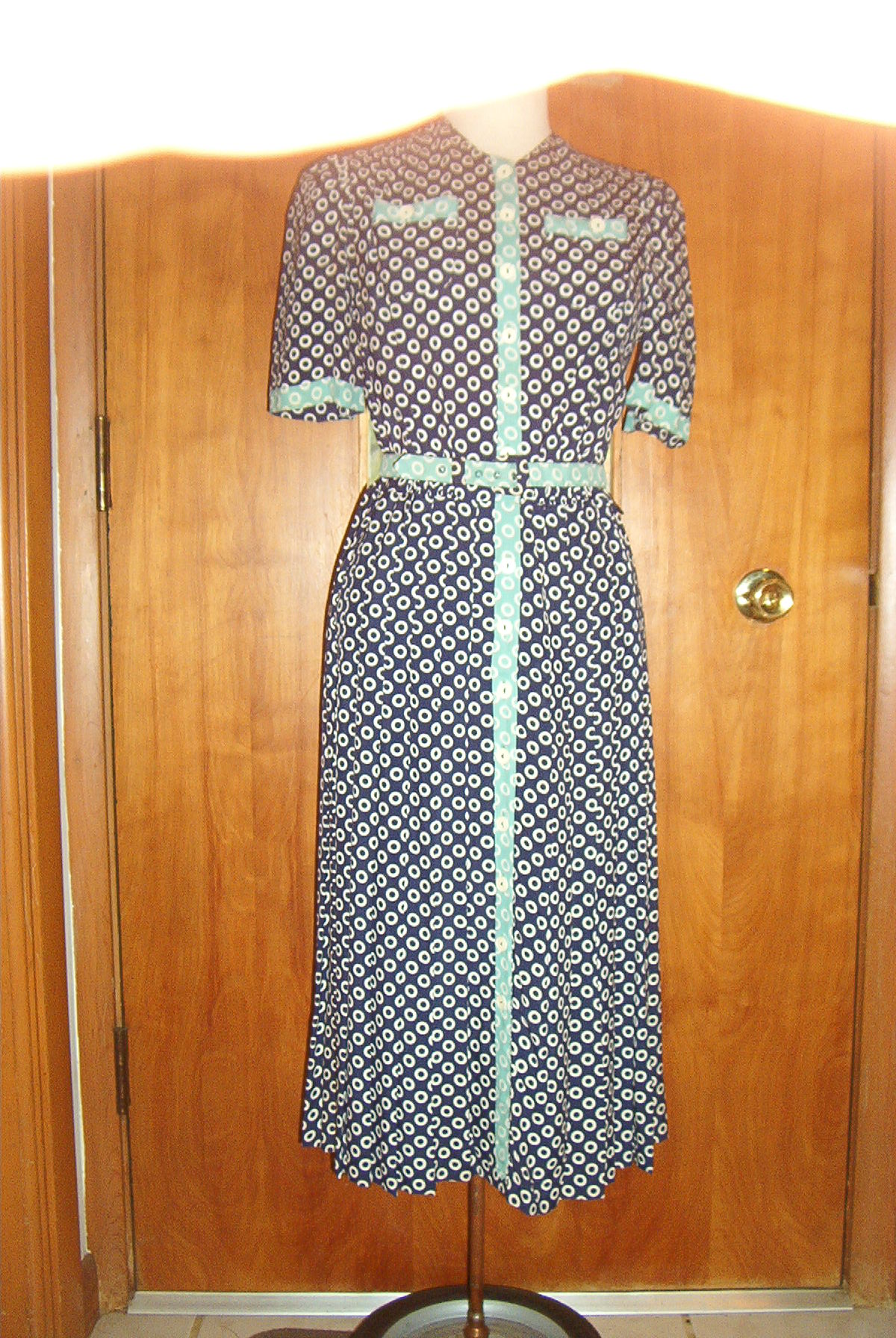
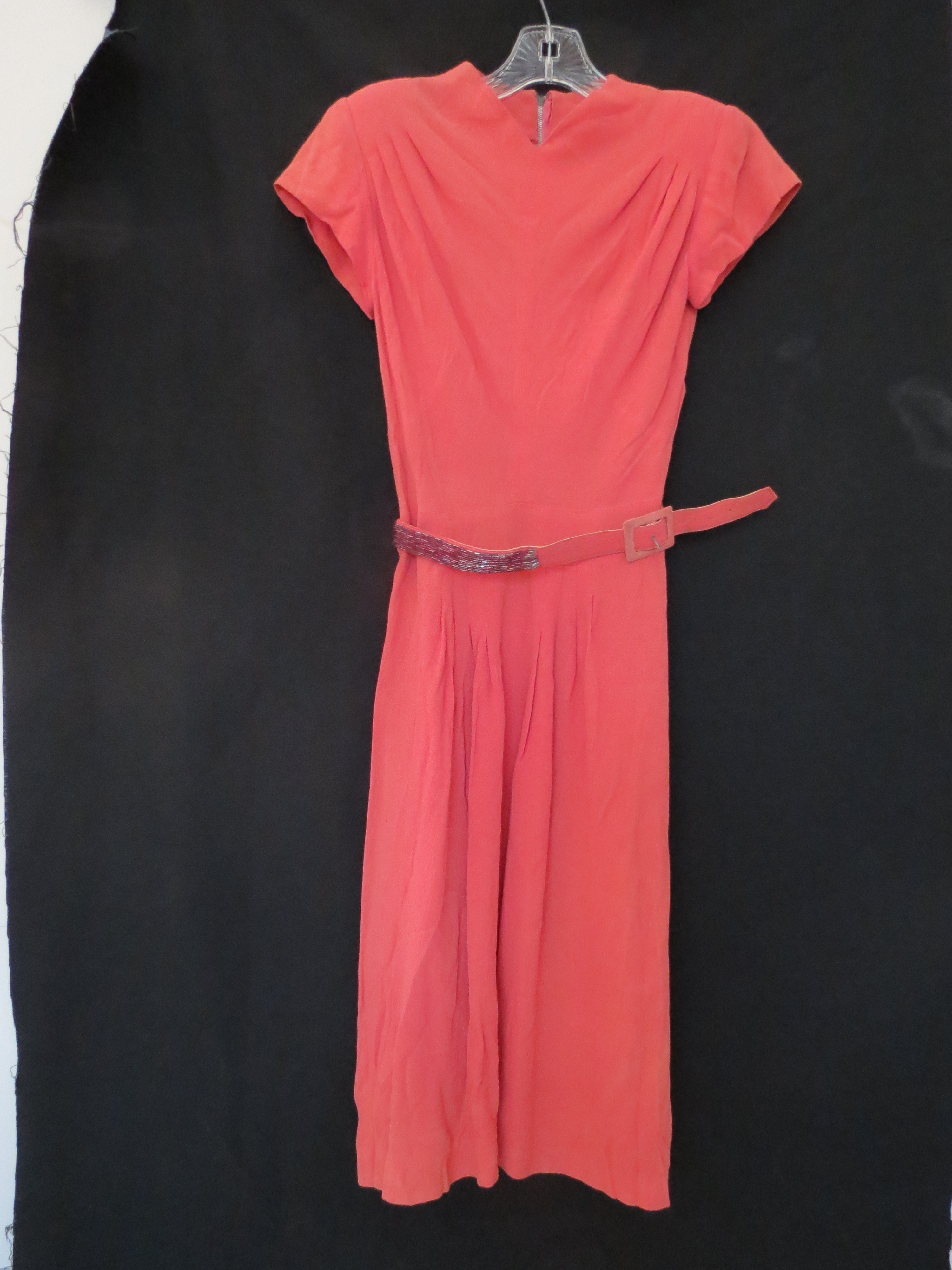
A knee-length synthetic (probably acetate blend) coral red frock from the early 1940’s has augmented shoulders, a straight cut and a fabric-covered belt with some glass beads to dress it up. In the post-war Forties, hemlines were able to come down again and skirts became fuller. The knee-length wartime styles were able to resume their previous midi-length luxury. Rayons and polyester synthetics continued their popularity because of their availability, lovely drape and acceptance of color dyes. During the early recovery from the war, some natural fabrics and detail items were still not fully stocked in dressmaking supplies.

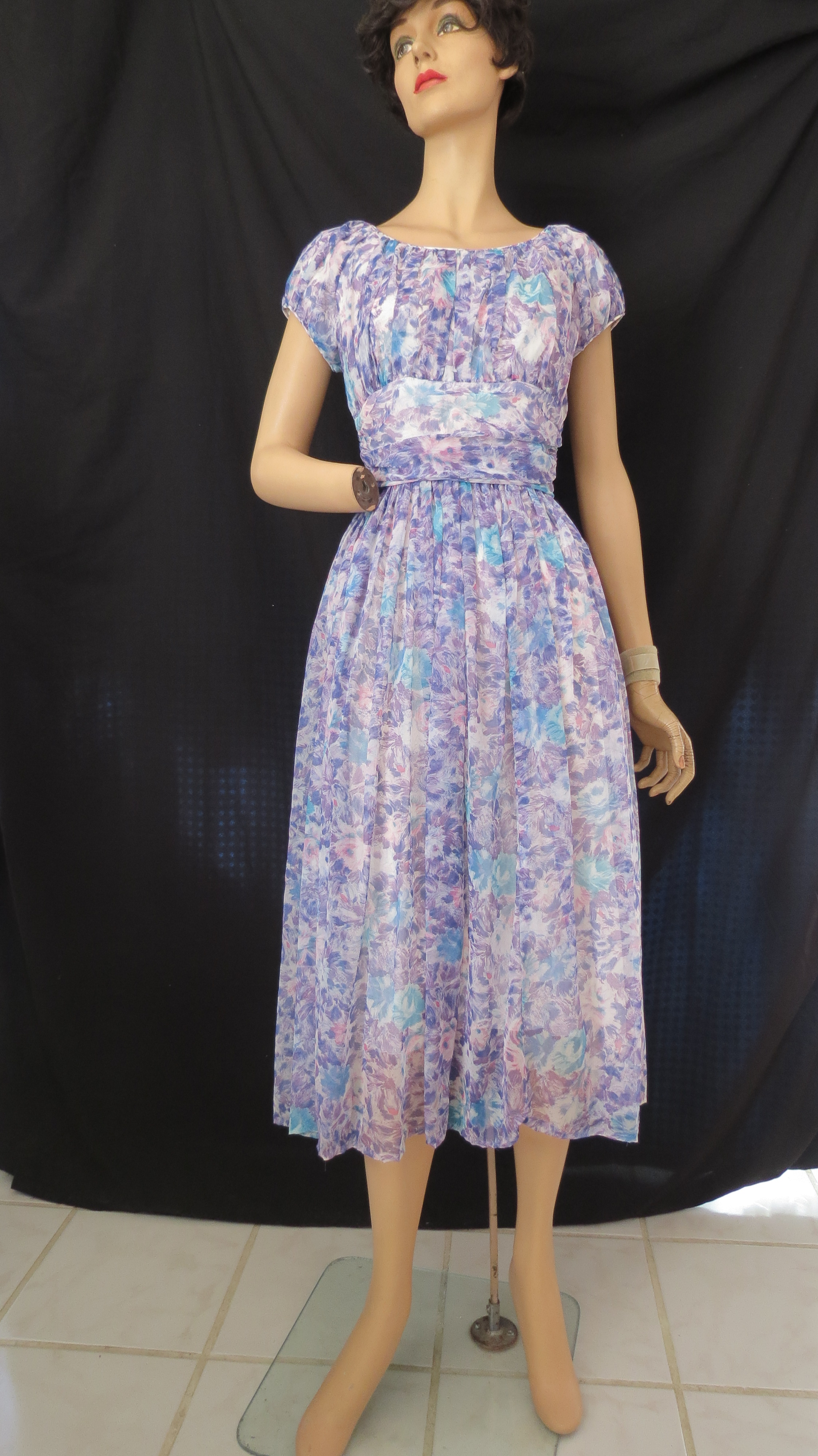
The ever-popular shirtwaist style has never left the fashion scene but became more modern, with atomic prints, and more sophisticated design in the later ’40’s after women had stepped into more visible roles in society with their wartime efforts. When the majority of the trauma and restrictions were finally past, this tea-length floral frock is an example of a more relaxed, aristocratic style as the culture looked forward to the more prosperous 1950’s.

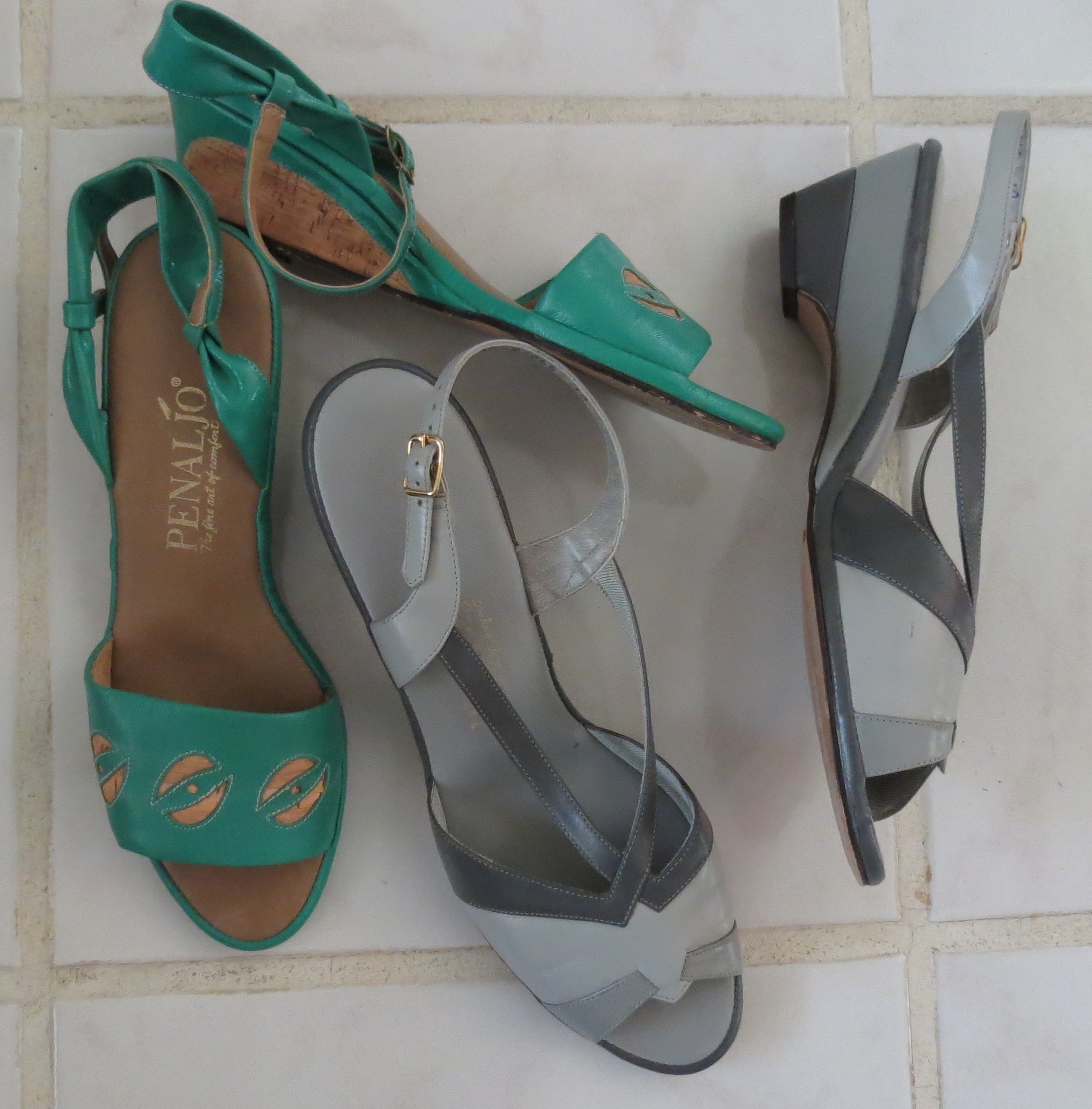
With day-dresses to slacks, I love wedgie sandals and these Eighties does Forties versions did not disappoint me. Their sleek leather sling-back style goes well with almost everything and the 2″ heel gives lift along with walkability. This design carried on into the 1950’s and would look great with the dresses I’ll post tomorrow. Stay tuned . . . . . . . . . . . . . . . . . . .

MORGANA MARTIN, THE MAGICVINTAGESPY

BLOG: MAGICVINTAGESPY.COM
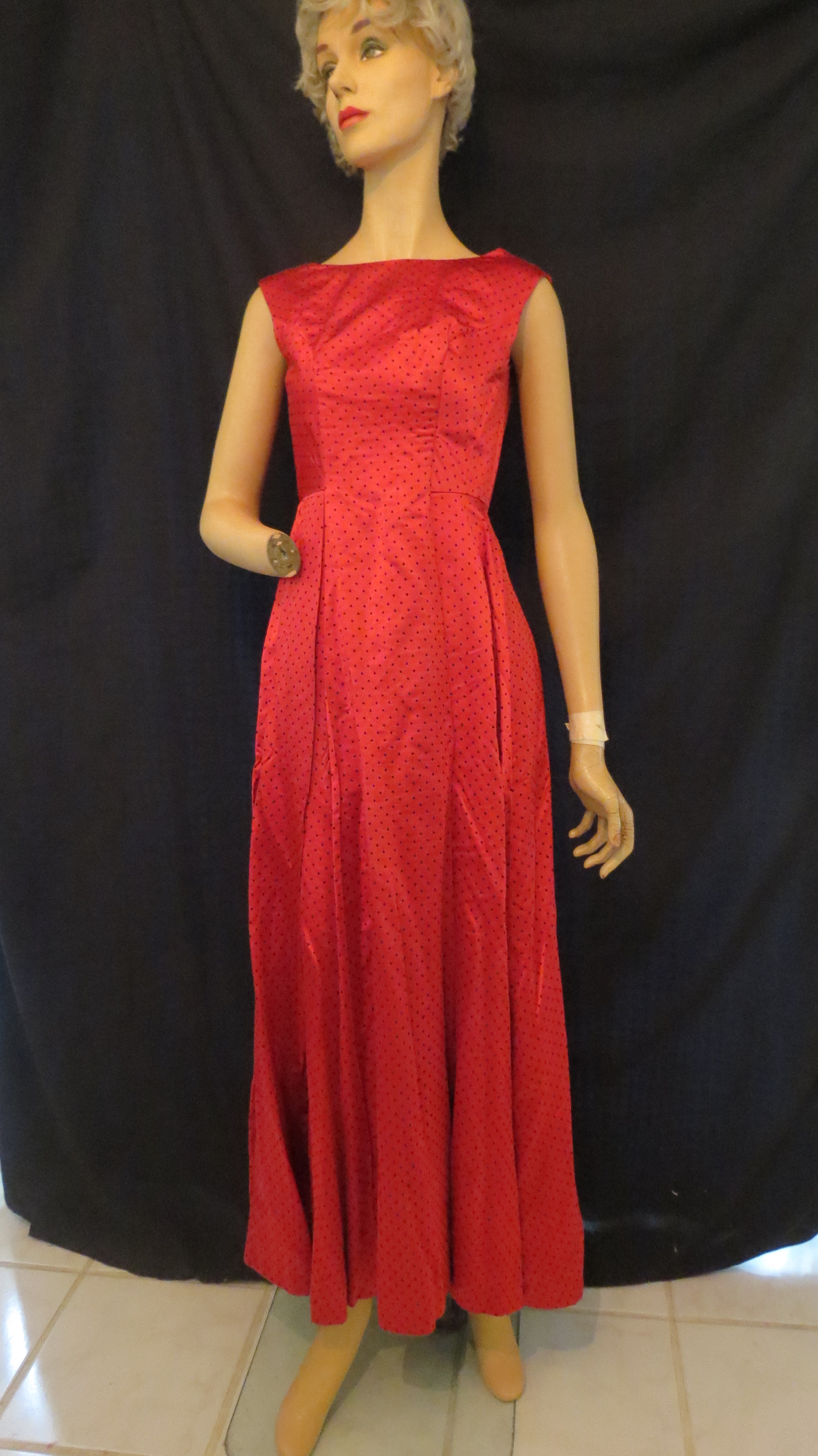
Another 1940’s Gown, this time in Holiday Red

What beautiful fabric! It is substantial but soft and with tiny machine-embroidered diamond shapes all over, which was apparently a “thing” in some Forties material. This might have been a way of making up for the absence of natural fabrics like silk and many of the notions used to decorate clothing before and after WWII.

The style is very simple and I think, like the dress shown yesterday, that it was custom-made. The pattern wouldn’t have been difficult for a home-based seamstress. The neckline in back is a bit lower, but nothing dramatic. The most difficult aspect of the construction is the piecing below the waist and that’s still no big deal. What I like most about it is that it’s just very pretty and so festive and Christmas-y in that fantastic glossy red. I would have collected it for the yards of gorgeous fabric alone! More of that coming – stay tuned . . . . . . . . . . . . . . . . . . . . . . . .

MORGANA MARTIN, THE MAGICVINTAGESPY

BLOG: MAGICVINTAGESPY.COM
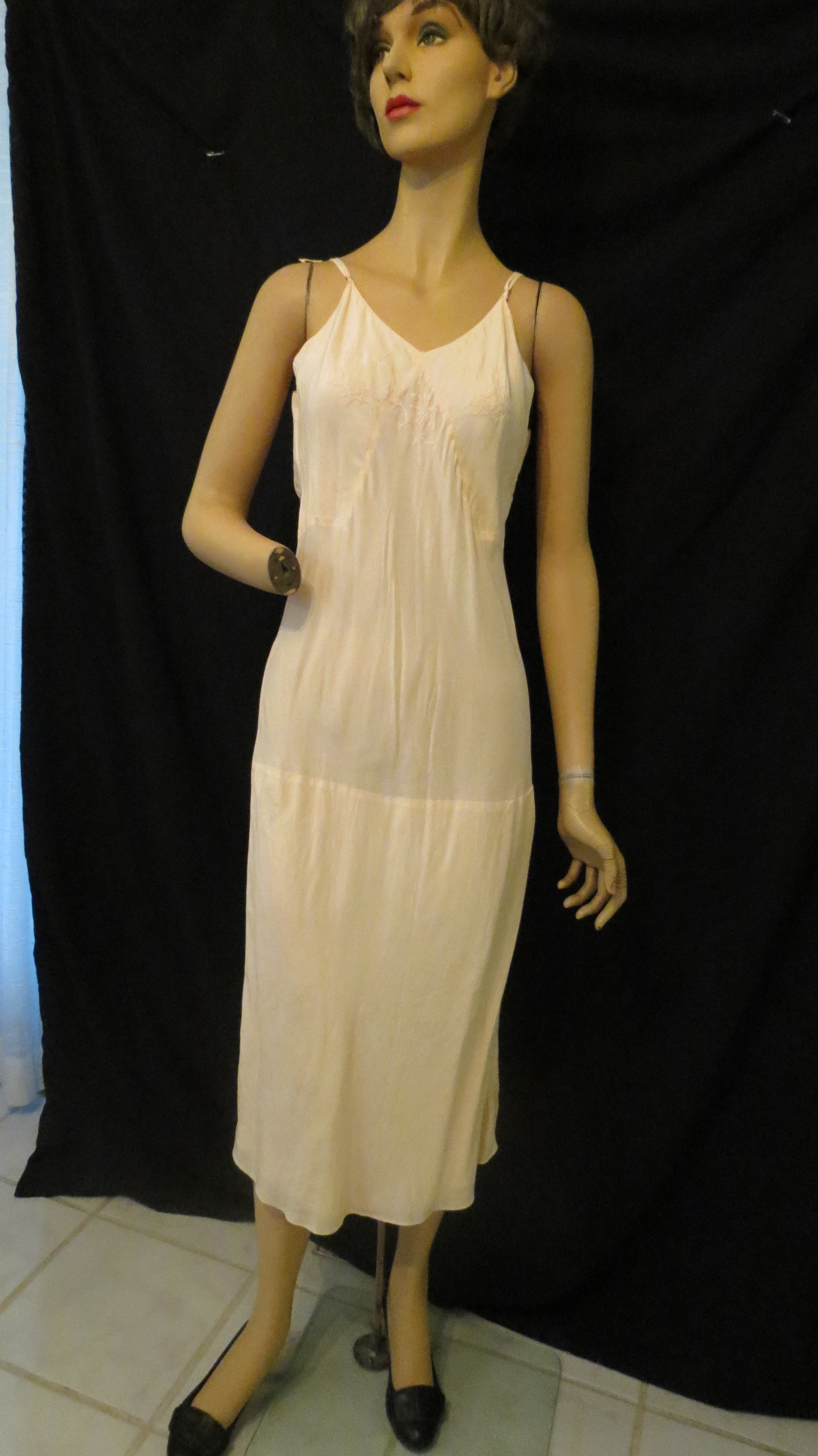
A Gallery of True Vintage Lingerie Slips

Here’s a sampling of my dozens of beautiful lingerie slips from several eras. True vintage lingerie is essential to wearing your dresses, blouses and skirts with their best fit and comfort. Slips can be fine cotton, rayon, silk, acetate or nylon. Designs can be highly decorated or very sleek and plain. It pays to have every type you can find in different lengths and colors. Some are so gorgeous they can be worn alone as “slip dresses”.

Matching your undergarments to your dresses in a way that minimizes binding, getting too hot or having some unsightly see-through makes all the difference in the final presentation of your outfits and your enjoyment of wearing them. Usually, you’re the only one who knows how truly beautiful your full or half-slip really is. Sometimes it’s fun to allow just a corner of lace trim to show beneath a hemline or at a neckline. In other words, have fun. Have a beautiful Thanksgiving holiday and stay tuned . . . . . . . . . . ..

MORGANA MARTIN, THE MAGICVINTAGESPY

BLOG: MAGICVINTAGESPY.COM
TRUE VINTAGE 1960’S STILETTO SLING-BACK HEELS FOR 3-SEASONS – FABRIC AND LEATHER FROM JOHANSEN

 STILETTO SLING-BACK HEELS FOR SUMMER - FABRIC AND LEATHER FROM JOHANSEN AGAIN

This is one of my favorite true vintage styles in warm weather shoes.  The fabric uppers and openness are so breezy, cool and feminine.   They are such a cross between dressy and casual that they are very versatile and will look just right almost any time.

I’ve found lots of lovely true vintage shoe styles by Johansen since I’ve been sleuthing and they’re always dependably elegant and well-made. Such a pleasure to find and to wear . . . . . . . . . . . .. . . . . ..

MORGANA MARTIN, THE MAGICVINTAGESPY

BLOG:  MAGICVINTAGESPY.COM
TRUE VINTAGE FIFTIES / EARLY SIXTIES SCARF BANDEAUS – BEAUTIFUL FOR SPRING AND SUMMER!

TRUE VINTAGE FIFTIES / EARLY SIXTIES SCARF BANDEAUS - BEAUTIFUL FOR SUMMER!

These scarves are of a vintage style I see rarely – sewn in a continuous circle and open in the back.  You can scrunch and spread them but they have no elastic built in.  Mid-century film stars loved this style.

The idea is to make a chic “hat”, pinned and adjusted to your type of hairstyle, or a quick and elegant solution to bad hair days.  They’re usually sheer rayon, nylon or silk.

Must have been, more or less, a brief “fad”. It would be easy to make or fake now, but the real thing is always more intriguing . . . . . . . . .

MORGANA MARTIN, THE MAGICVINTAGESPY

BLOG:  MAGICVINTAGESPY.COM
TRUE VINTAGE ANDREW GELLER STILETTO HEELS FROM THE 1960’S

TRUE VINTAGE ANDREW GELLER STILETTO HEELS  FROM THE 1960'S

In the original bags from Saks Fifth Avenue – what a find! These fabric – upper heels are so beautiful and well-made.

In a swirly, abstract print of browns and greens, they could work with your dark green dress.  Leather soles, of course.

What more can I say? . . . . . . . . . . . . .

MORGANA MARTIN, THE MAGICVINTAGESPY

BLOG:  MAGICVINTAGESPY.COM
FABULOUS 1940’S DAY DRESS – ANOTHER FIND FROM THE WARTIME YEARS

IMG_3555

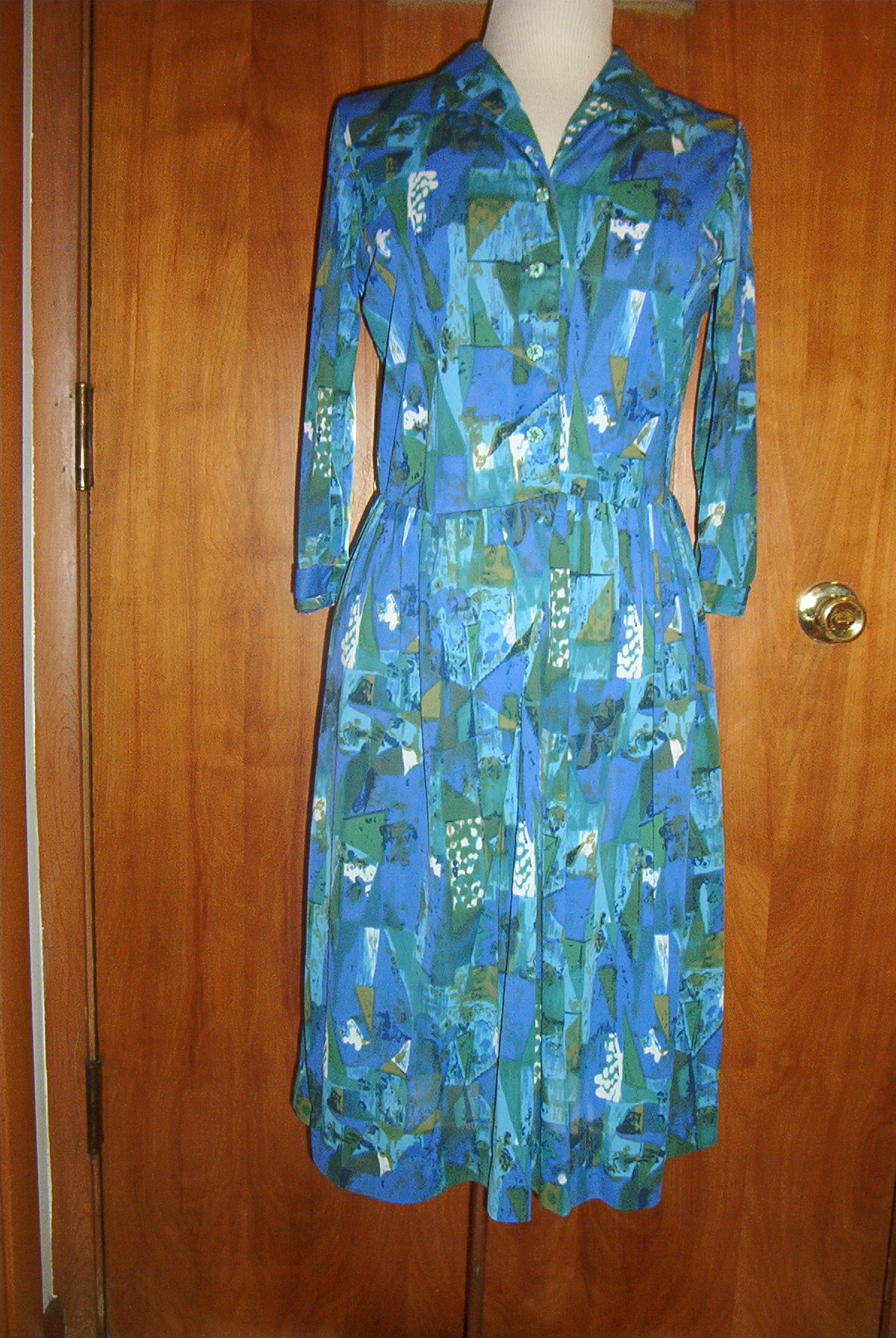
Love this frock!  They had such fun print designs then.  This one’s a bit atomic – hope they’re not supposed to be bombs.  The wide collar, sleeve cuffs, fabric-covered buttons and bronze color give unusual touches to this example.  The original belt would probably have been covered with the same material as the dress.

It’s got some stain damage down near the hem from bleach or a storage spill, but I don’t care.  Those kinds of accidents were so common in mid-century laundry rooms and have, unhappily, occurred also to many garments that were stored in basements along with chemicals and cans of paint.  As much as I love finding items that are in pristine condition, sometimes the little dings and dirt add a certain je ne sais quoi . . . . . . . . . . . . . . .

MORGANA MARTIN, THE MAGICVINTAGESPY’

BLOG:  MAGICVINTAGESPY.COM