UPSCALE TRUE VINTAGE 3-SEASON FAUX FUR HAT. SO MUCH FUN TO WRITE ABOUT THIS!

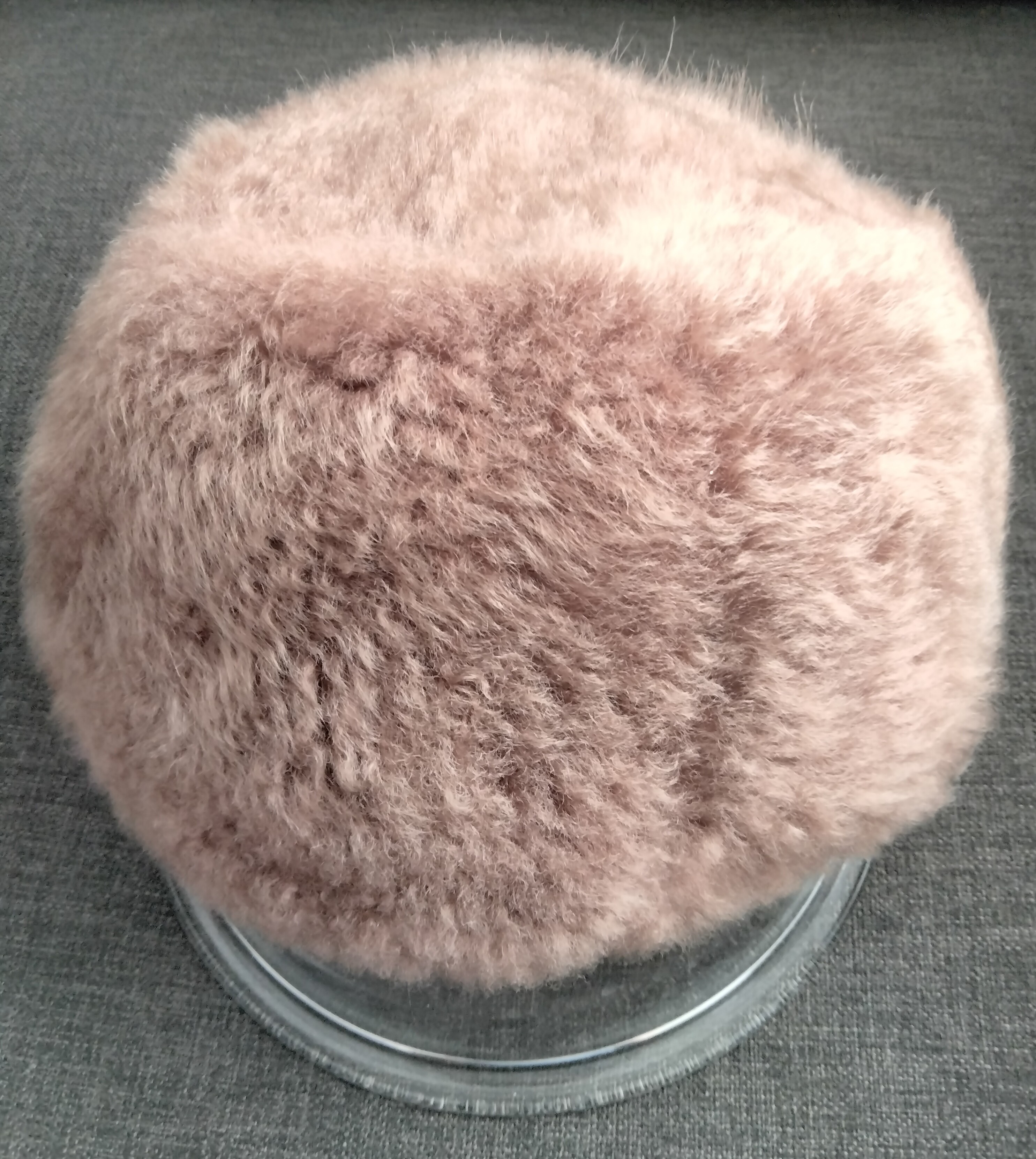
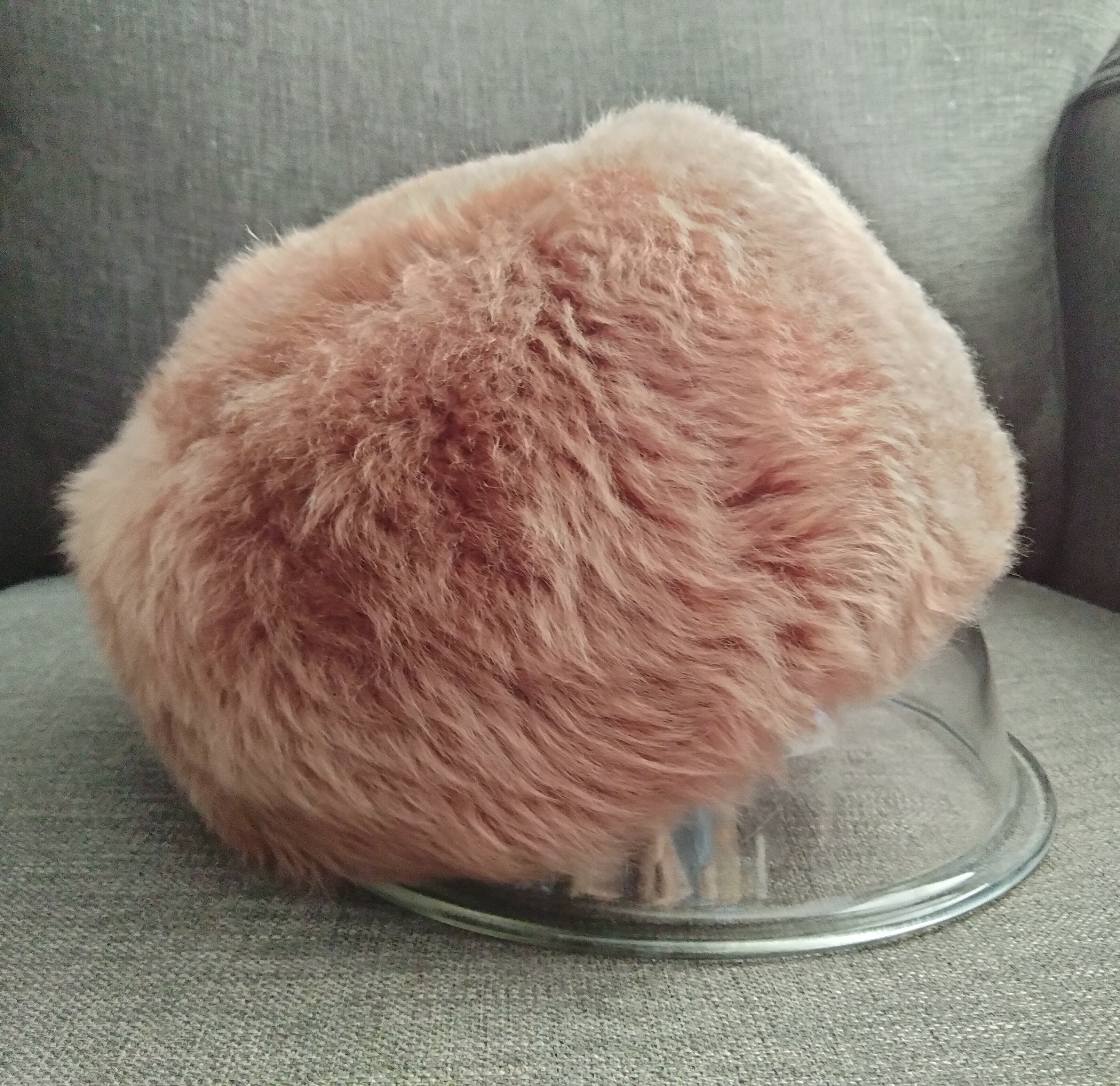
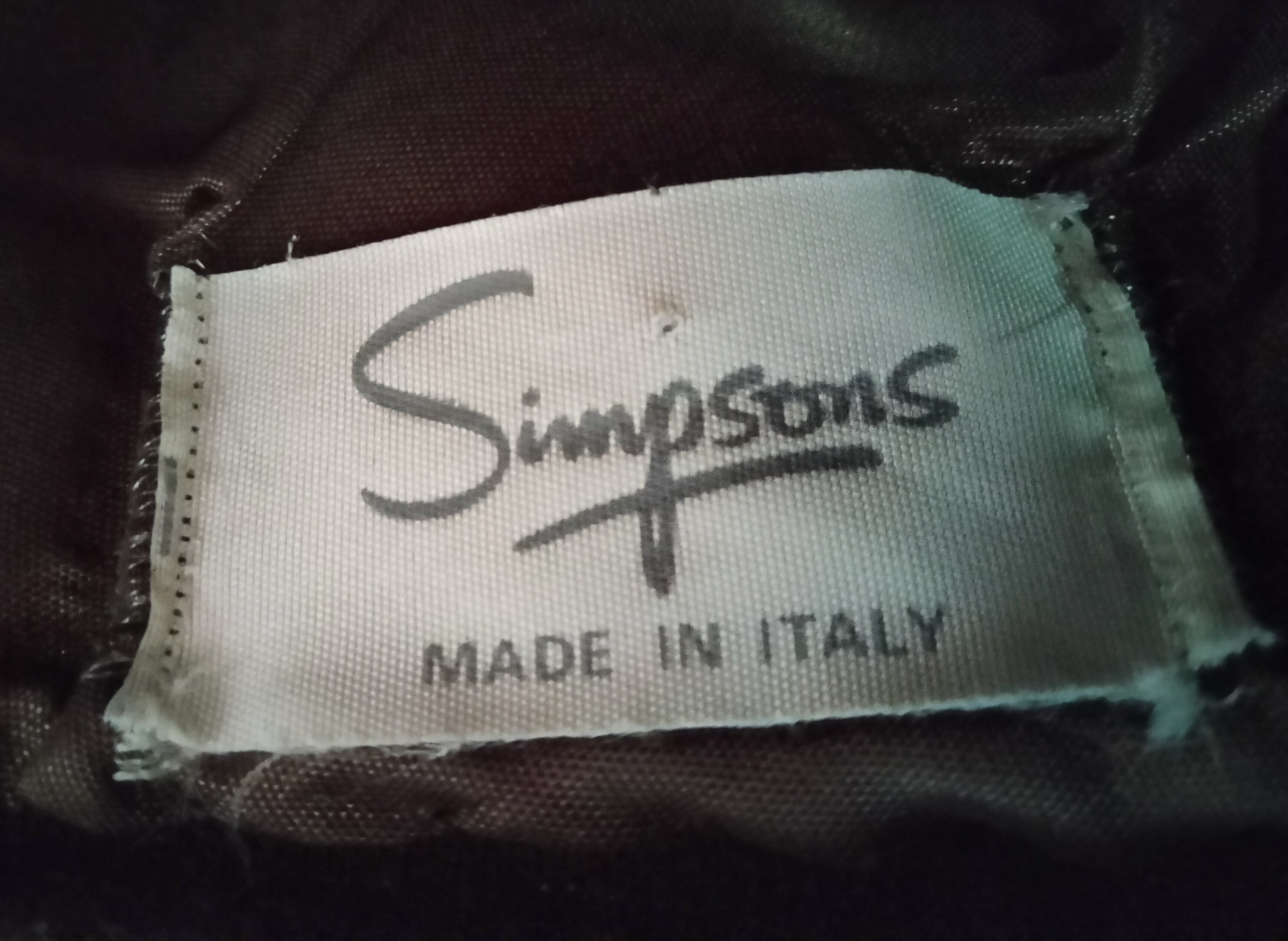
About the last thing I expected to encounter! There I was, looking for some chains for crystal pendants I’ve been buying and a dangle for the end of my 1960’s chain belt (which I found, by the way) and what was propped on a nearby hat-stand?; a quasi-luxe faux beaver fur hat, made in Italy for the iconic Simpson’s department store chain of Canada, which finally phased out in 1991!! More about that a bit later. First, the hat . . . . . . . . . . . . . . .. . . . . . . . . . . . . . .

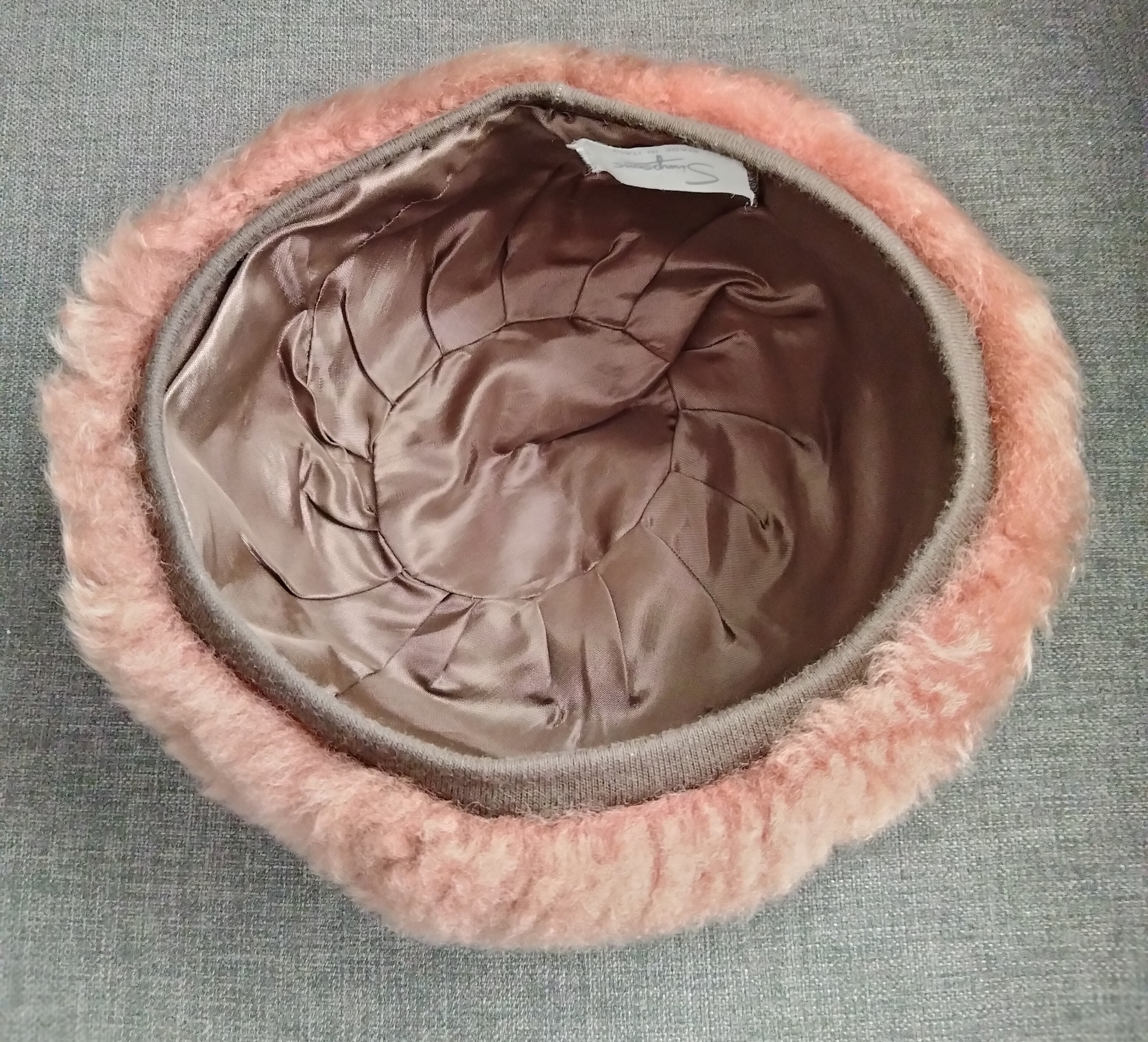
Boy, do I miss my models who are having time free at Headquarters. They would do a much better job of showing this off, but you can get the essentials from these photos. Looking almost like new, with just a little storage crush. This baby is at least 35 years old and could be more like 60. The rayon-like liner is pristine, with the original label. Classic Russian toque style with a slim fabric hatband for best fit. It’s very flattering and super-practical – will fill an empty niche in my hat collection perfectly!

And, what a pedigree! Made in Italy, to their high standards of that time (some makers still seem to have them). Simpsons Department stores were historic vendors, started in 1872!!! They were in stiff competition with the Eaton’s chain and evidently tried to upscale their merchandise for a winning position. All the Eatons stores finally closed in 1999, so these two were head to head for well over 100 years. The first Simpsons store was in Toronto, Ontario, and could be compared to the iconic Marshall Field of Chicago in terms of the elegance of the store itself and its merchandise. Like Field’s, they also did the elaborate Christmas windows that families would travel far just to see. 80 years later, they teamed up with Sears, Roebuck & Co., becoming Simpson Sears. Like Sears in the U.S., they also offered a catalog service. In another 24 years, the Simpsons element was purchased by the Hudson’s Bay Company and the store name became The Bay in 1991. In the Northeast U.S. and Canada, all three of these names were very well-known and depended upon for high quality and fashionable merchandise. In the States, we could compare Eaton’s, Simpsons and The Bay to Marshall Field’s, Bloomingdales and Saks Fifth Avenue, to name a few. You can see why I’m so thrilled with this true vintage find!

So, as I always say: You just never know . . . . . . . . . . . . . . . . . . Stay tuned. I am . . . . . . . . . . . . . . . . . . . . . .

MORGANA MARTIN, THE MAGICVINTAGESPY

BLOG: MAGICVINTAGESPY.COM

EXCITING “NEW” TRUE VINTAGE HANDBAG FINDS!

Let’s start with a deja’ vu item (for me) – I call it this because I discovered a nearly identical one and posted it just two weeks ago! However, the exciting thing is the different clues involved in their stories. Always SO interesting! Plus, one new item which is a rare find and always makes me do an extra happy dance. . . . . . . .. . . . . ..

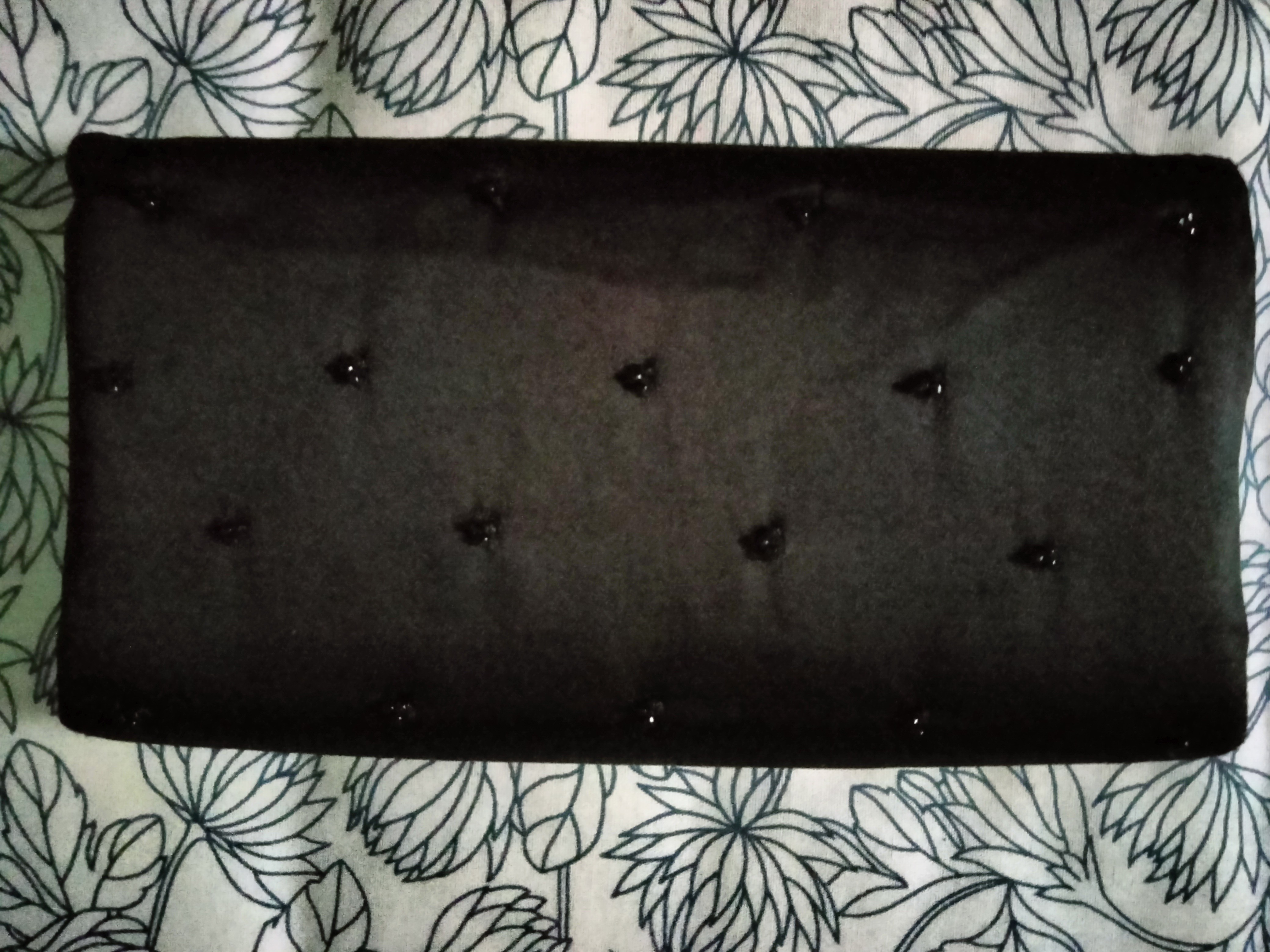
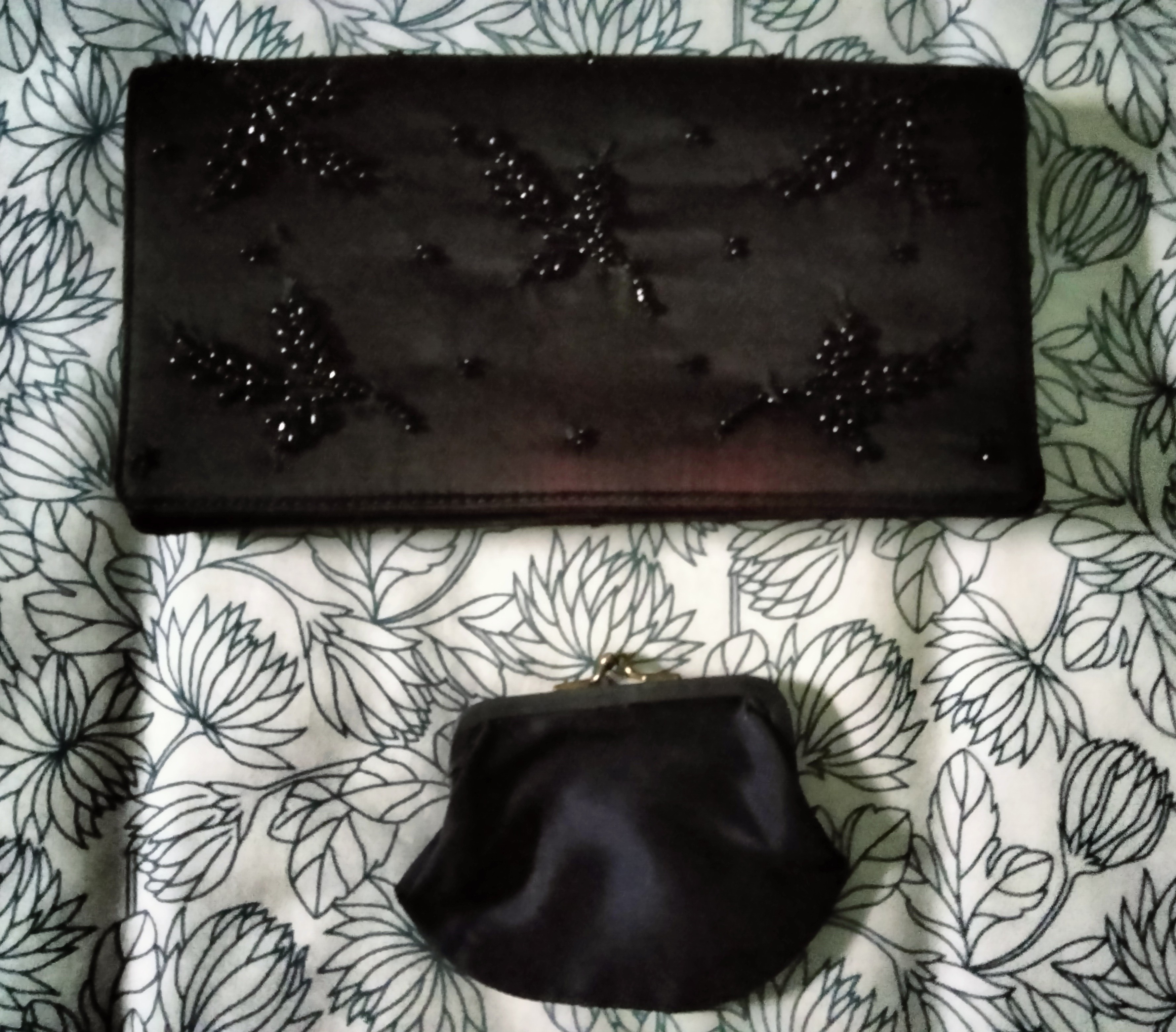
Oh, Ho hum you may say. Another black cocktail clutch. Yes, I have many of these in my case archives (and closet), but each one is unique in some way. The fun thing about this one is the similarities to the other one recently found; 1. Both are rectangular and designed to be hand-held. 2. Both are made of black rayon satin. 3. Both have hand-done beading on the front AND back. 4. Both have an additional pocket (or two) inside. 5. Both are from the mid-century, probably post-WWII.

HOWEVER, the one found two weeks ago is more finely made. It was constructed in Hong Kong (while it was still British Hong Kong) while this one above was probably made in North America but is an iconic brand name (Soure’). The first found has more elaborate beading on the front. It is a sac design with no stiffening and simply folds over to close, while this one has stiffening between the layers, probably some form of cardboard, and a metal snap closure (more common and less elegant). These clues lead me to decide that the first find is 10 – 20 years older even though they are so similar. Investigations are so fun! You can check out the previous post and see what I mean.

The final item, just found, is the one that really gives me happy feet – see the little coin purse? I LOVE FINDING THESE!!!!! Not too many of them exist anymore and they are SO convenient and iconic inside a true vintage handbag. This one, also, is navy blue rather than black. It will definitely have a home in one of my purses at Headquarters.

OK, that’s the first of my recent deja’ vu finds, but there is another one which I will put in a separate post because it is in a different category – Men’s true vintage accessories! Stay tuned . . . . . . . . . . . . . . . . . . . . . . . . . . . . . . . . . . .

MORGANA MARTIN, THE MAGICVINTAGESPY

BLOG: MAGICVINTAGESPY.COM
PRETTY WHITE COTTON MINI FROM MID-CENTURY EUROPE

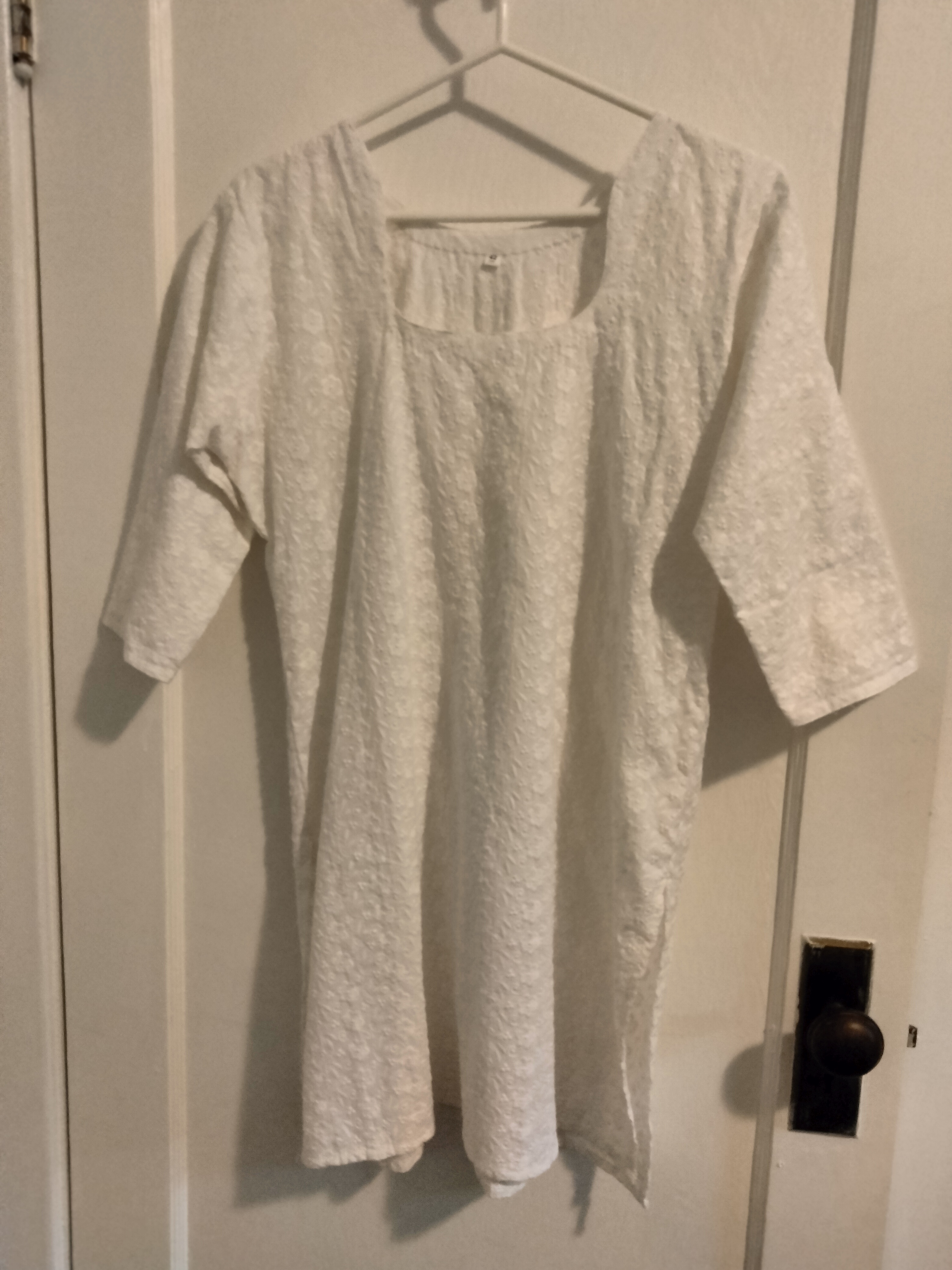
While I’m missing Stella (my fabulous vintage mannequin model), please use your imagination to visualize how fun and flattering this mini-dress or tunic looks when it’s on. Without my honed sleuthing skills, I never would have found it and am so glad that I did. As a mini-dress (if you don’t mind the side slits showing your whole leg almost to the hip) it’s really cute and calls for a 1960’s/’70’s chain belt to finish it off. As a swimsuit cover-up or beach dress it would be perfect – cool, crisp and lightweight while giving some reasonable sun protection. Over a pair of skinny white pants or shorts I LOVE IT!! Also love the elbow-length sleeves and unusually-shaped neckline.

How do I know it’s from Europe? The size label tells me. How do I know that it’s true vintage? By my guesstimate, a European size 42 would always be too big for me, but I look great in this whether worn as a mini-dress or a tunic over pants. So, the cut seems to be smaller than a modern garment of that size would be. This is always tricky with international sizing, but I think I’m correct. The fabric is a nicely-woven cotton with some weight (but not too much for Summer) and all-over floral embroidery – similar to vintage fabrics that are almost never seen now. Also, the interior tailoring is different from what I find on modern garments. Not fine tailoring, because this is a very simple garment and probably sold at a lower price. However, some of the finishing is remarkable – if it did not have a size label, I might say that it had been home-sewn. It has darts in back to give it extra fit and style. The size label, printed rather than embroidered, is sewn in at the back neckline and there are no other tags at all.

All right, the verdict is in. This dress is probably from the 1970’s, give or take 5 years. Allowances have to be made for the overseas manufacture. Whatever it’s exact heritage, it’s wonderful and I will really enjoy it. I love solving mysteries but an open-ended investigation is always intriguing. Who knows – sometimes I solve a cold case years later! You just never know . . . . . . . . . . . . . . . . . . . . . . . . . . . . . . . . . . . . . .

MORGANA MARTIN, THE MAGICVINTAGESPY

BLOG: MAGICVINTAGESPY.COM
FABULOUS AND FUN SURPRISE FIND – TRUE VINTAGE, AS ALWAYS . . . . . . . . . . . . . .

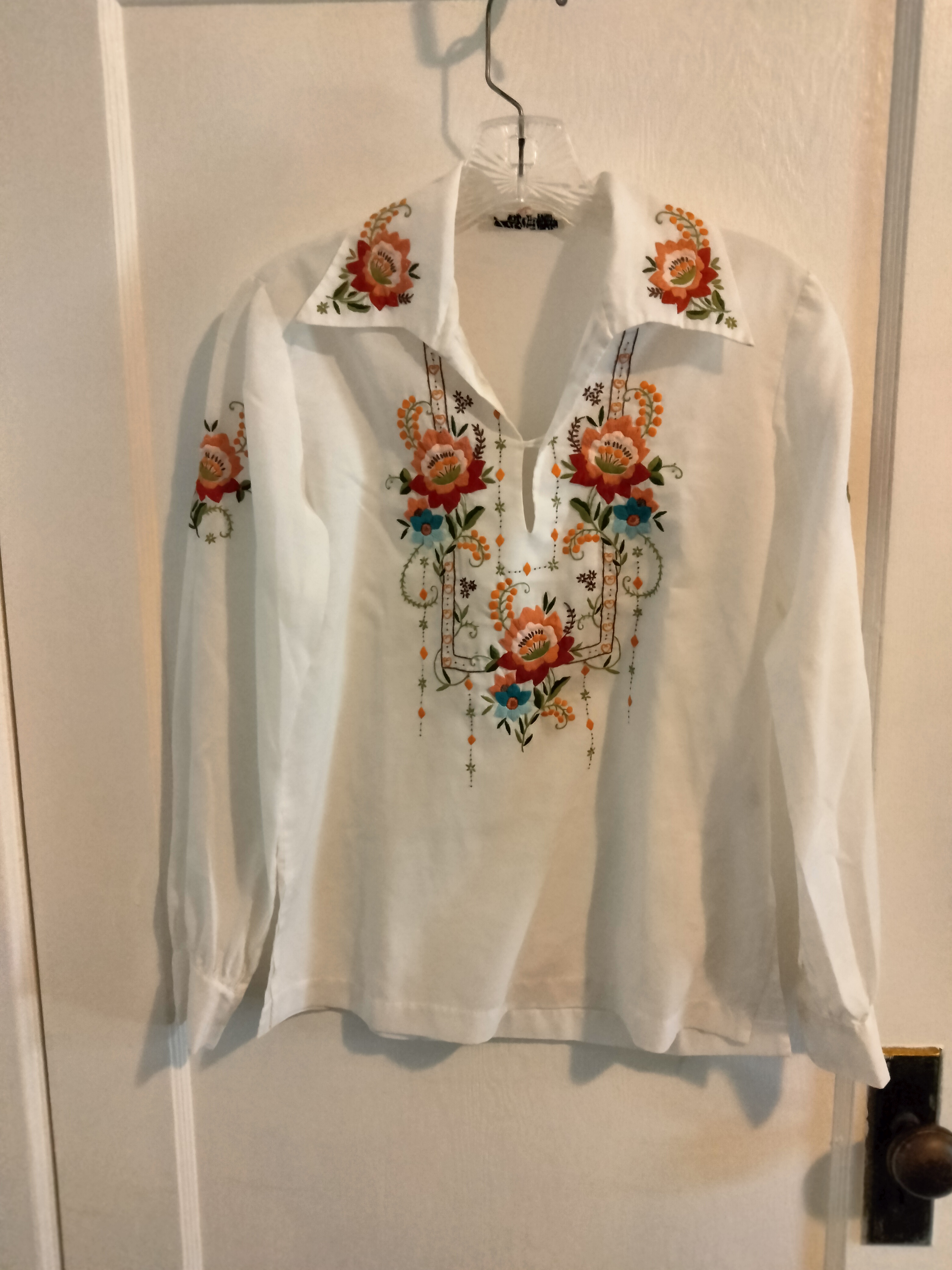
A wonderful authentic Lily blouse from the 1970’s! I was out and about dropping off a charity donation and found this beautiful shirt. Such a surprise; I have several other Lily blouses in my closet, from the 1960’s but haven’t seen one during an investigation for a long time. These lovely shirts were a mid-century staple. The signature fabric is so soft and airy, the pretty embroidery done so well. Most older ones had monochromatic Asian-inspired designs. This one is similar to colorful Latin American indigenous designs, which became more popular in the early 1970’s.

I love the old-style sizing on these blouses and am thrilled that it is in a size I can wear – just about a modern size 2(which would be perfect for Stella, as well. I certainly miss her when I’m not at Headquarters. See her modeling work in many previous posts). It also has double-button cuffs, which is another late 1960’s – early 1970’s tailoring detail, AND a button and loop at the neckline which can be fastened to lessen gaping there, if you want to. True vintage garments almost always have such excellent tailoring and, despite it’s age, I see no signs of wear. The previous owner may have washed it by hand, which would be so easy to do, and avoided the wear and tear of traditional machine washing. So, this lovely won’t be going to eBay or Etsy!!

I also found another true vintage item in pristine condition, which I will post tomorrow. I’m a Satisfied Sleuther!! Just goes to show that you just never know . . . . . . . . . . . . . . . . . . . . . . . . . . . . . . . . . . . . . . . . .

MORGANA MARTIN, THE MAGICVINTAGESPY

BLOG: MAGICVINTAGESPY.COM
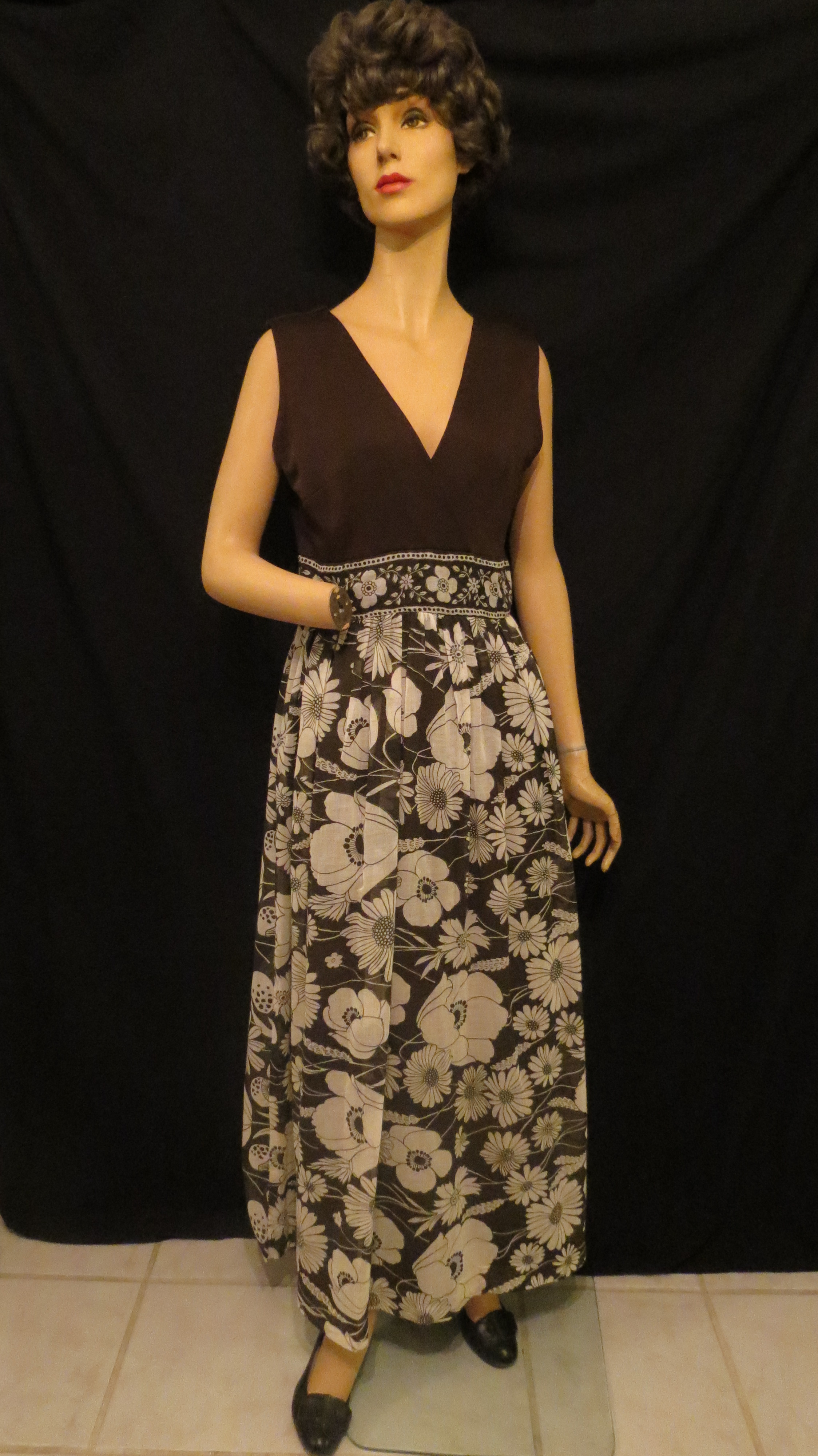
TRUE VINTAGE MID – LATE 1960’S LONG LEISURE DRESSES – MOD, WITCHY, ETHNIC

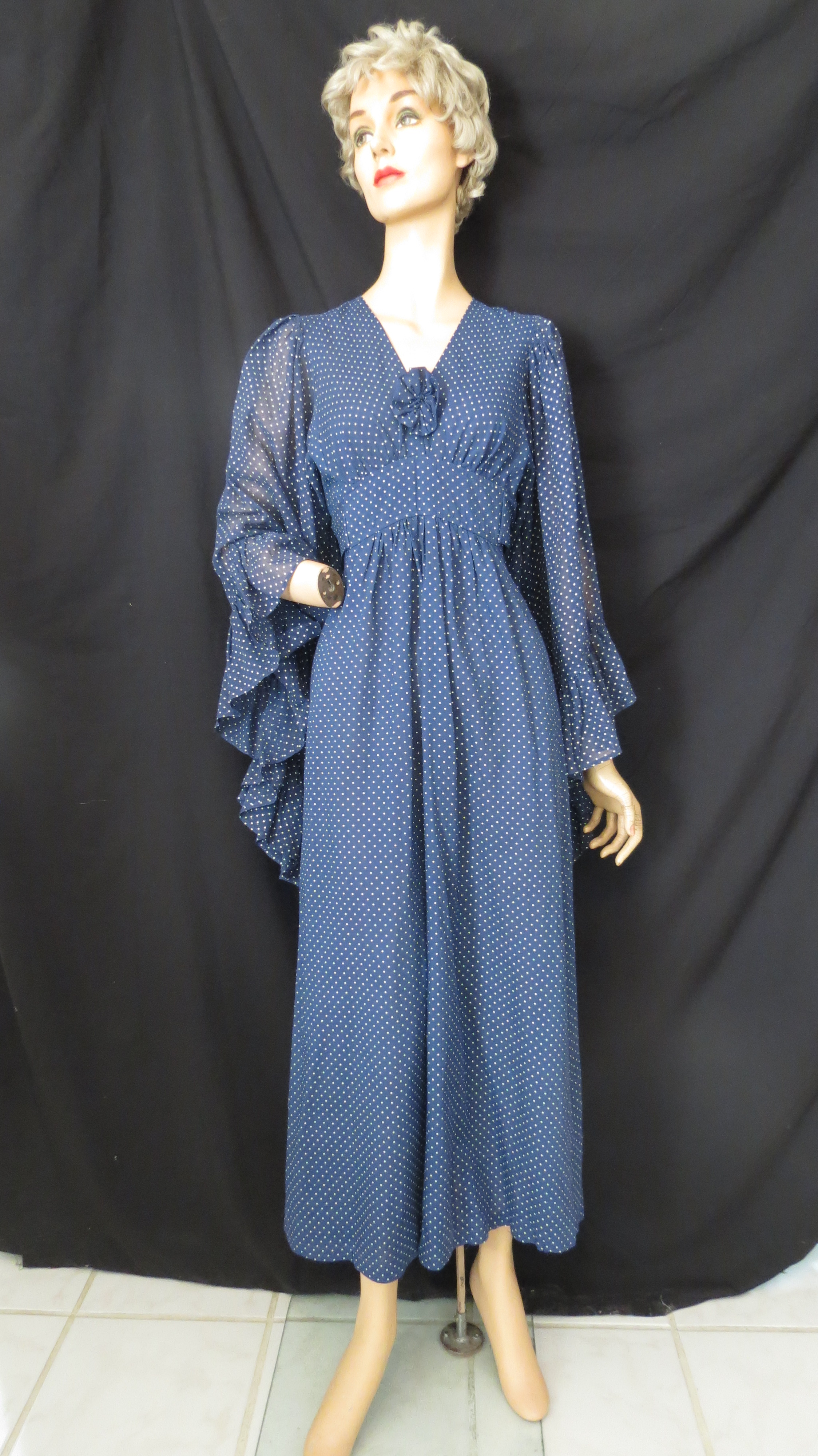
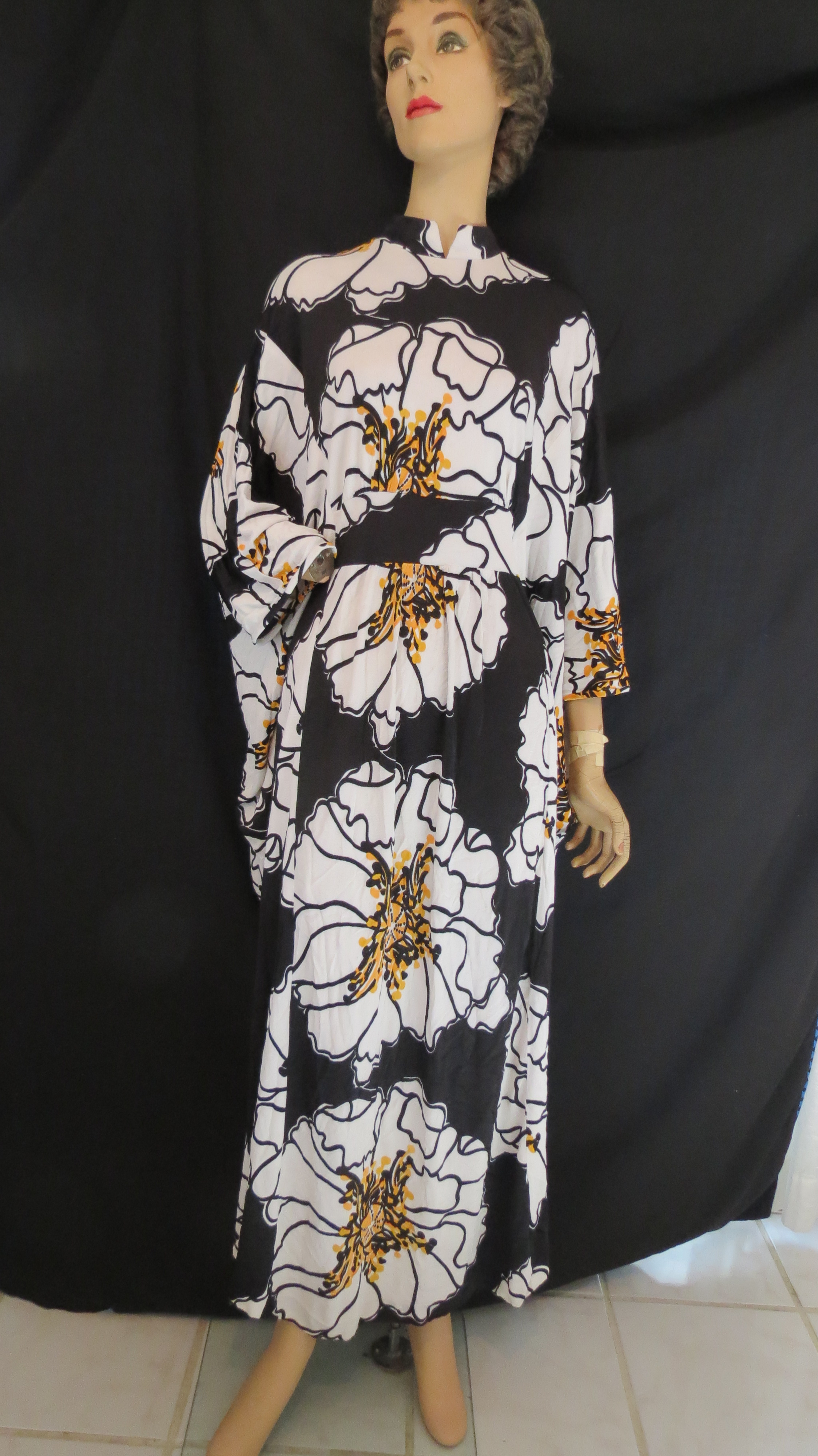
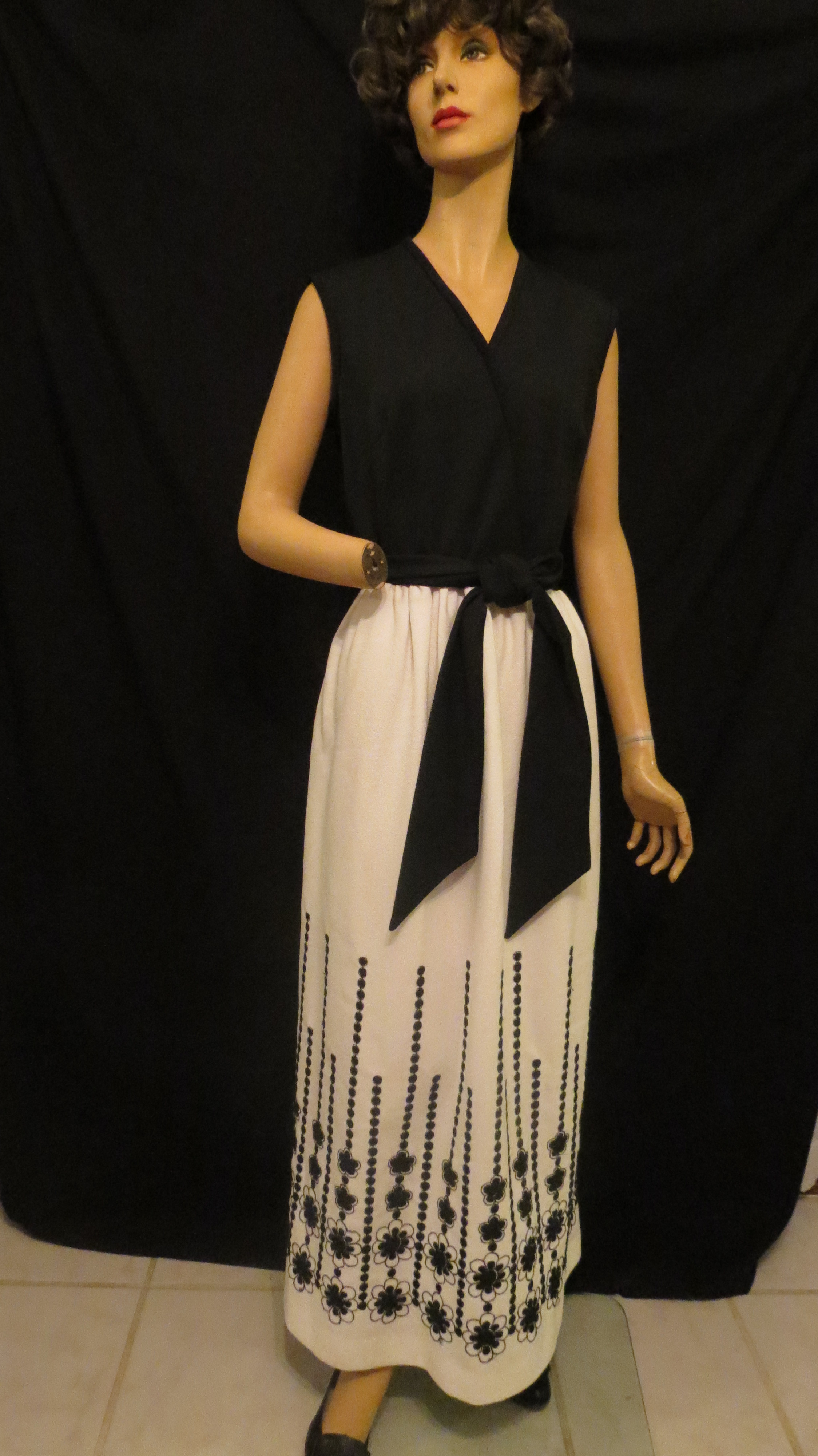
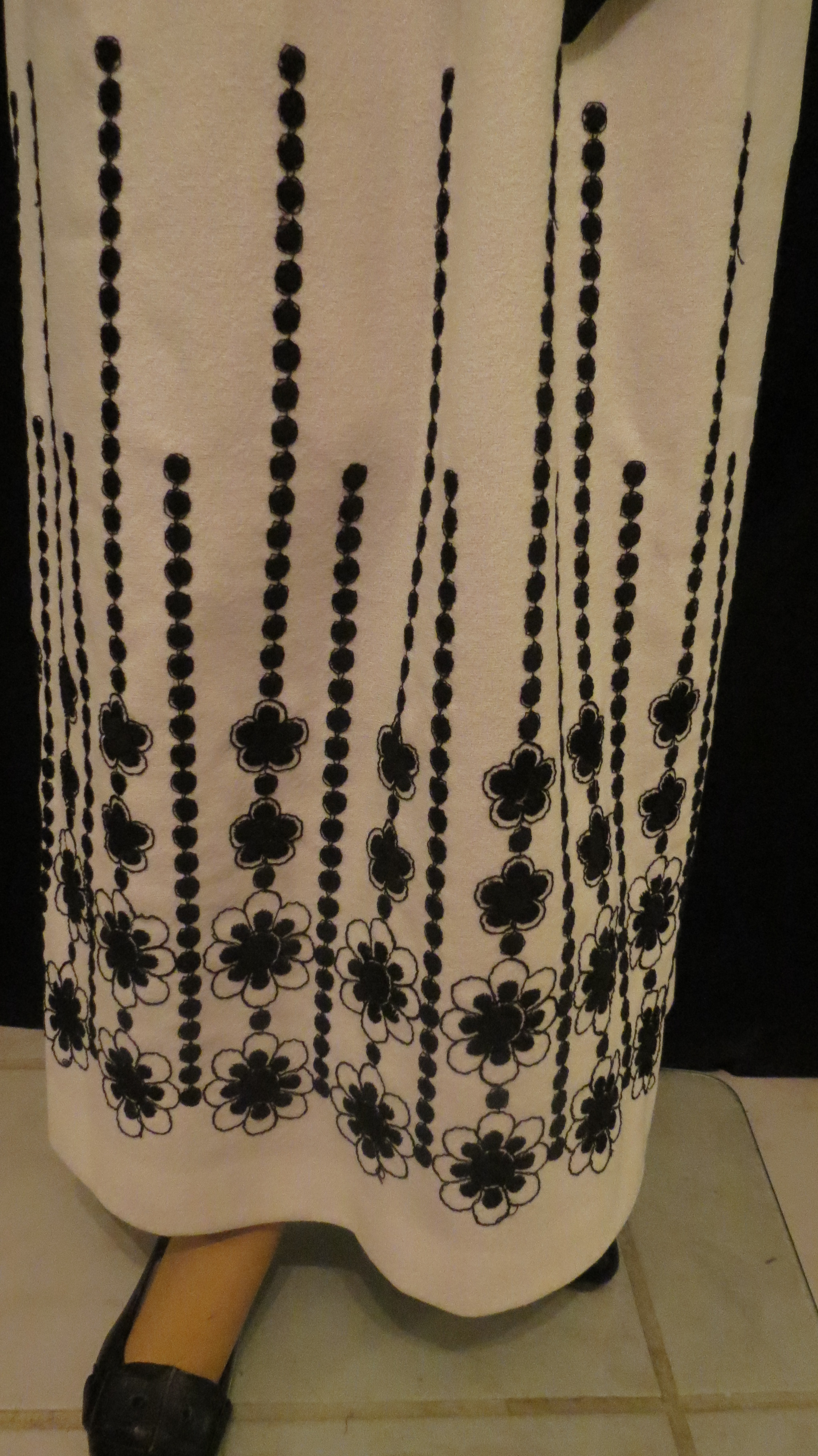
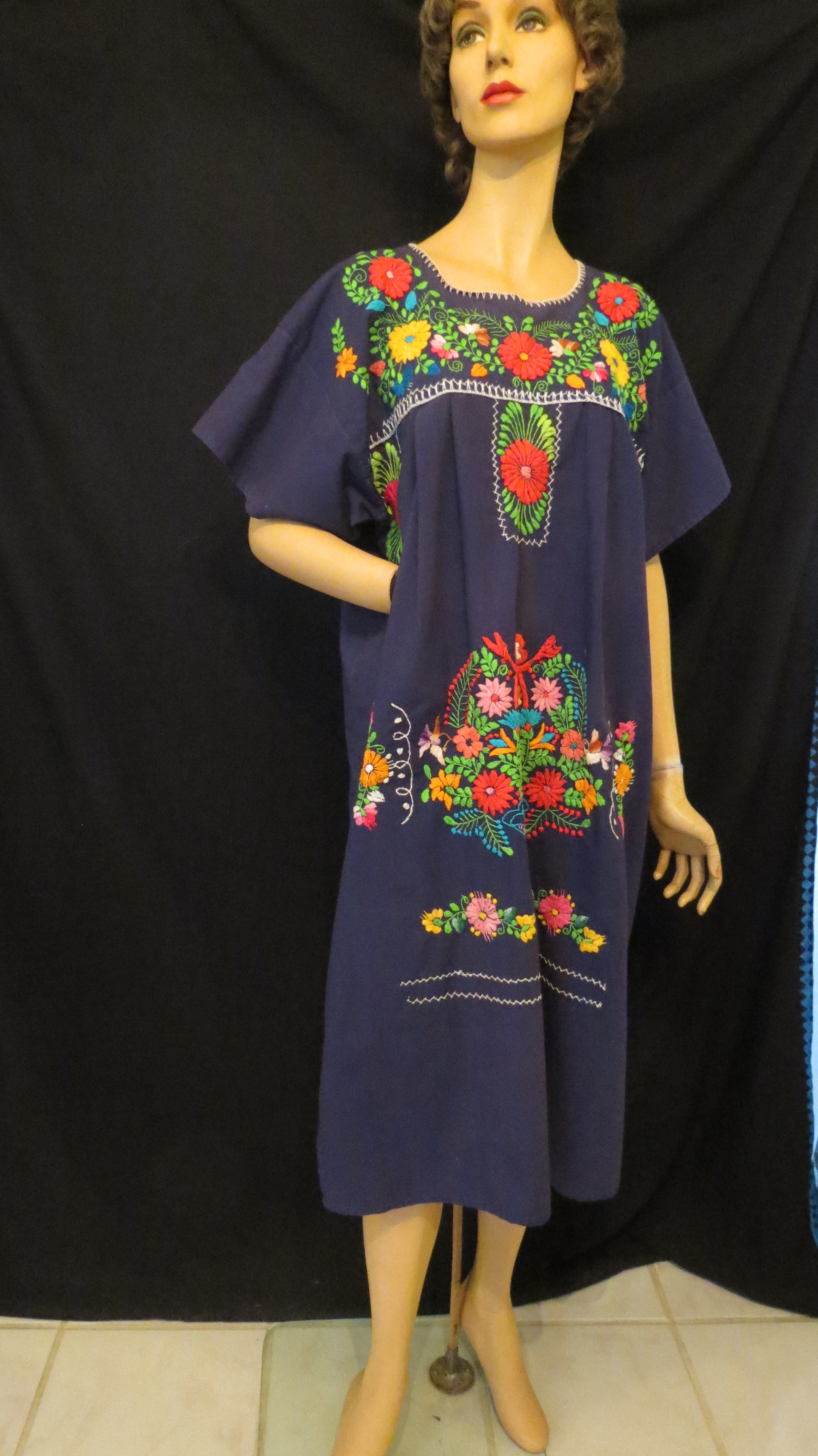
British influence Medieval/Victorian/Edwardian vibes, Op-Art, Flower Power and Indigenous influences allowed mainstream women to enjoy some “revolutionary” style during this transformative decade while not getting too far away from classic traditions. Plus the fact that they couldn’t have been more comfortable, convenient and flattering.

Fabulous sleeves, hand-done embroidery, geometric floral graphics. Love, love, love! Of course I had to collect these clues. Tomorrow we’ll step into the progression of this genre in examples from the Seventies, Eighties and Nineties. Stay tuned . . . . . . .

MORGANA MARTIN, THE MAGICVINTAGESPY

BLOG: MAGICVINTAGESPY.COM

TRUE VINTAGE LATE 1960’S FASHION TRENDS – MOD HEADS INTO THE 1970’S

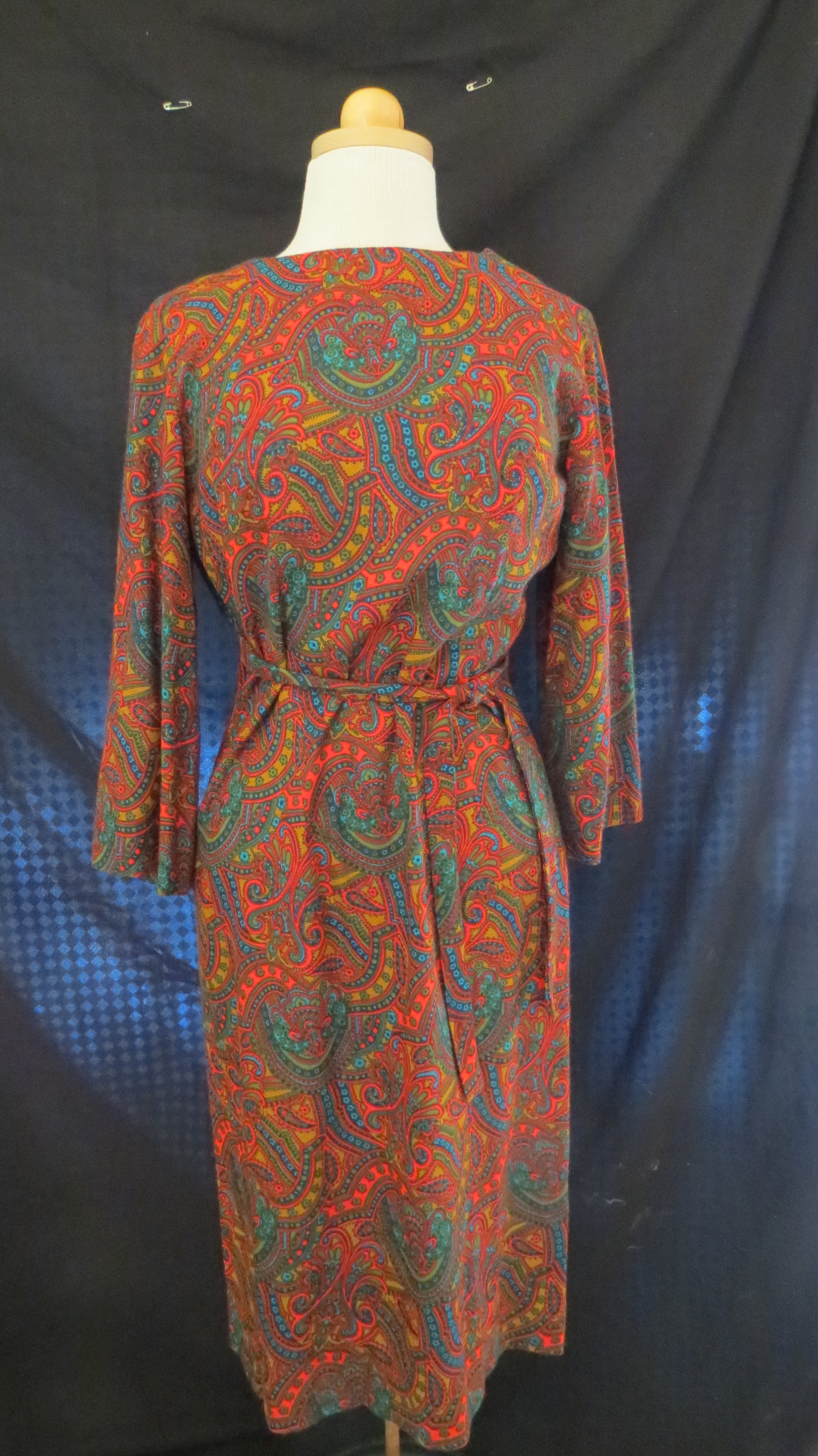
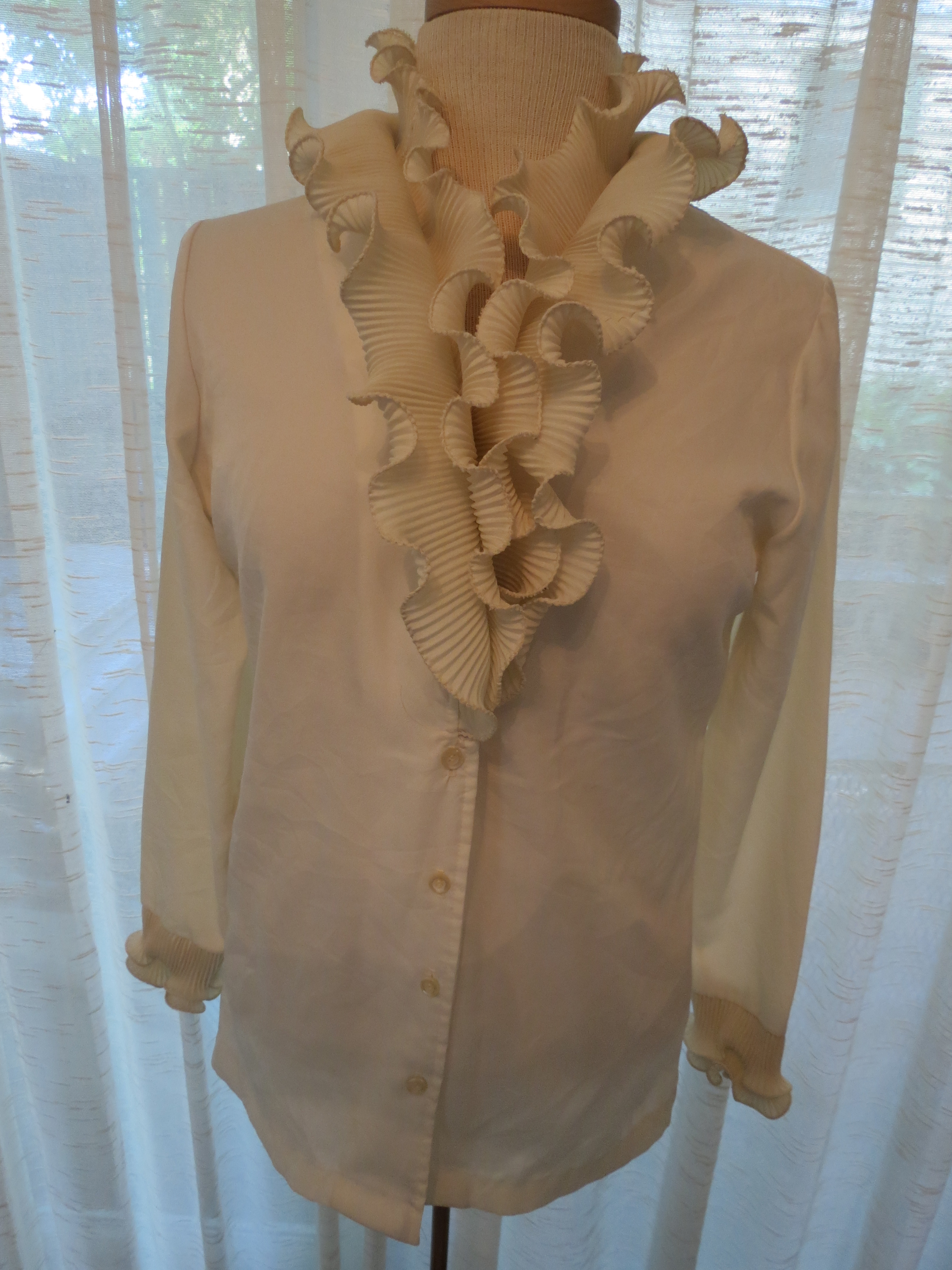
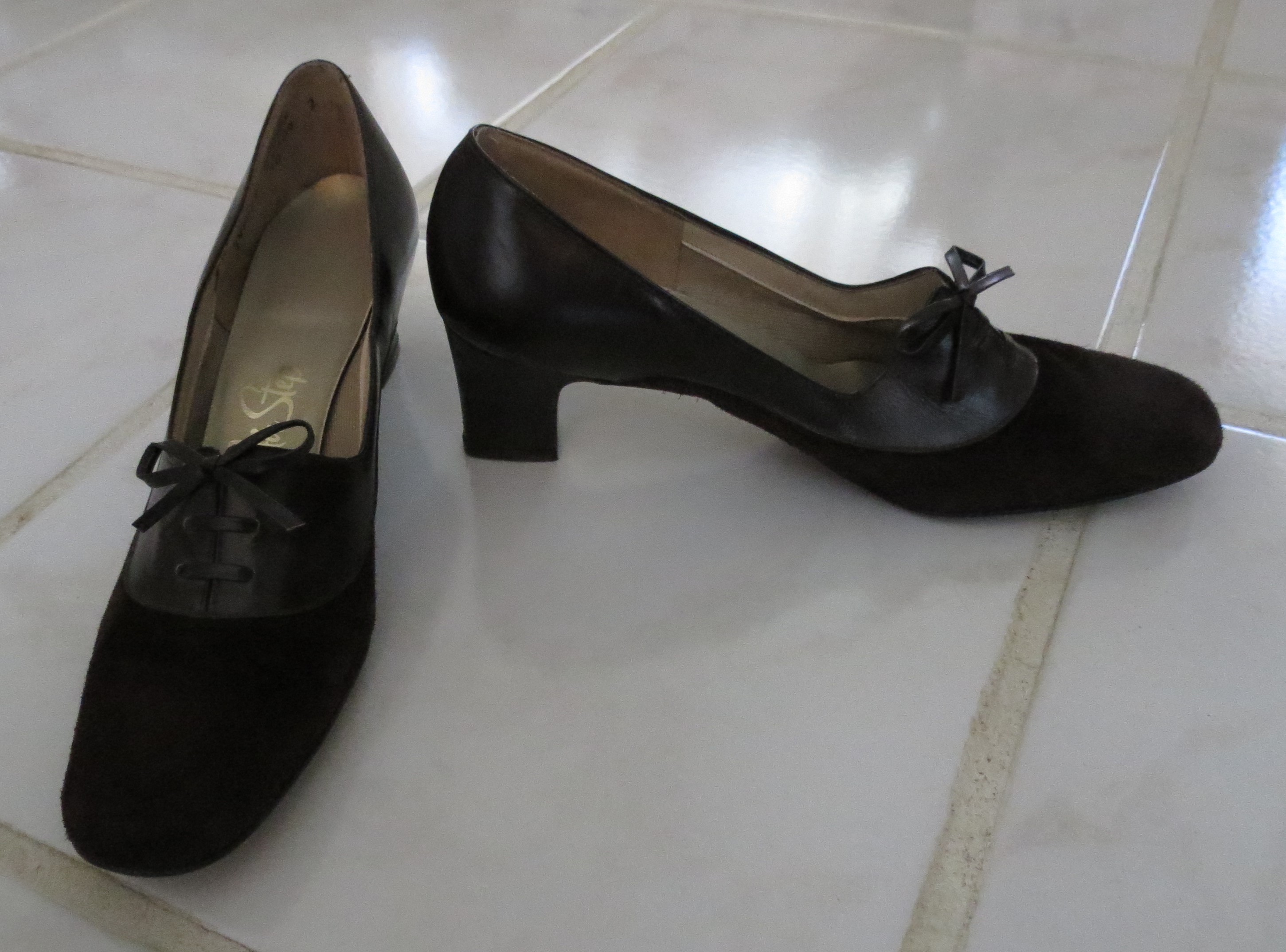
Britain continued to lead the fashion trends in the late ’60’s and it seems to me that their influence strengthened during these years as the Carnaby Street styles showed up. Mod and ultra mini began to slow down with a strong Edwardian/Victorian/Hippie wave predominating. Psychedelic and paisley prints were super popular, even on higher-end classic styles. Long bell sleeves showed up a lot. Ruffled, high-collar blouses and men’s neckties for women were fun fads. Platform soles went out (for a while) in favor of mid-heel pumps with high vamps and rounded toes. LifeStride, a popular mid-priced U.S. brand got into the trend with the example shown above.

Knee-length, midi and full-length hemlines came on the scene again, especially on more conservative and higher-end dresses. Though some minis were still worn, the hippie-styles usually had ankle-length skirts. While Carnaby Street fashions passed by, the long hippie/Victorian looks drifted into the early 1970’s. If you have followed me, you might remember a few of my posts earlier this year covering vintage Prom dresses that showed early 1970’s Victorian/Prairie designs in that mix.

There was a lot more, however, to the early 1970’s fashion designs. We’ll start looking at the Seventies tomorrow. Stay tuned . . . .

MORGANA MARTIN, THE MAGICVINTAGESPY

BLOG: MAGICVINTAGESPY.COM

TRUE VINTAGE LINGERIE ROBES & SLEEPWEAR FROM 1930’S TO MID-CENTURY

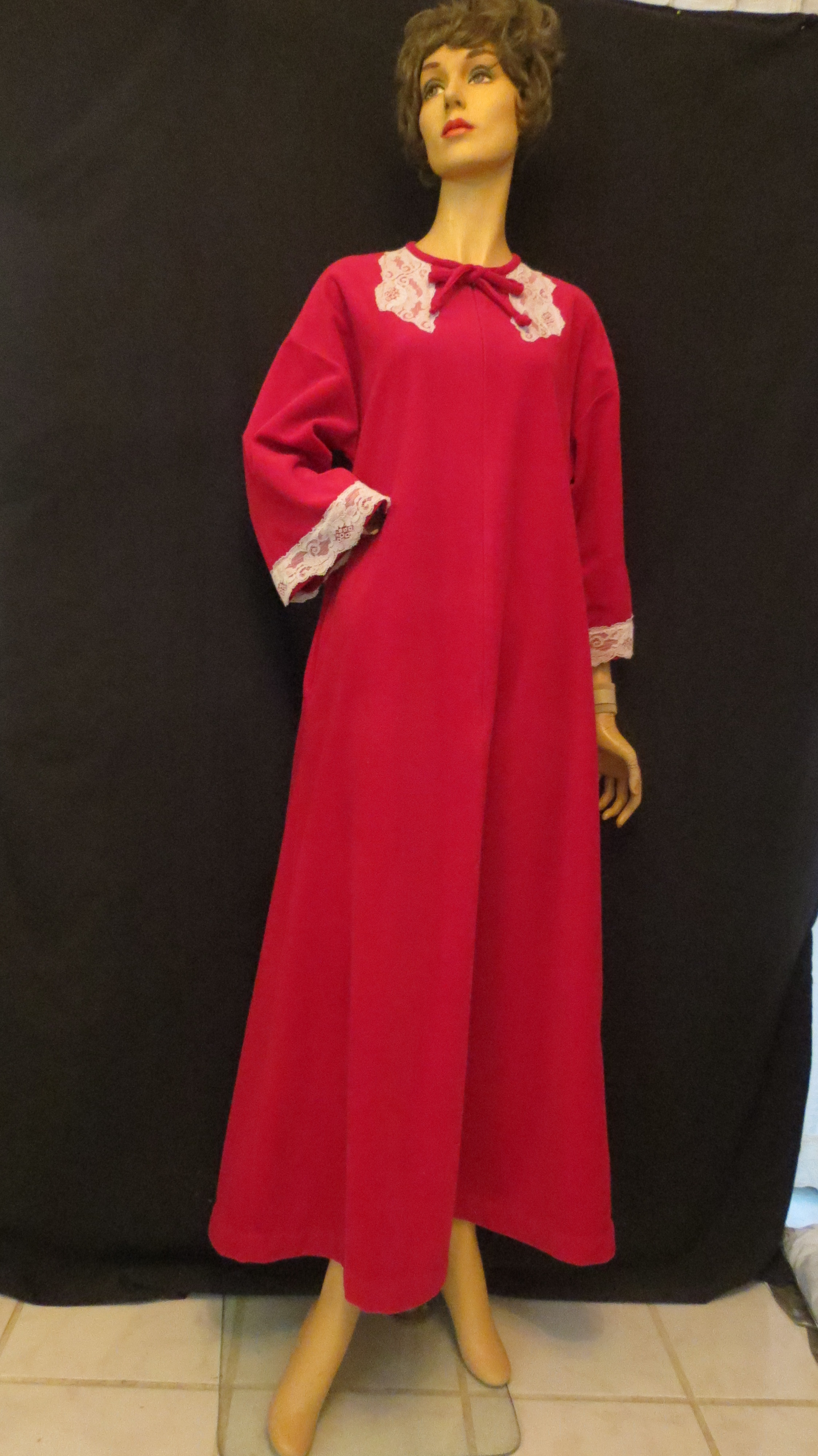
I’m definitely in the mood to look at some pretty Spring lingerie, although it won’t keep us as warm. The 1970’s RED velour robe by Vanity Fair is an exception, but I had to include it for St. Valentine’s Day.

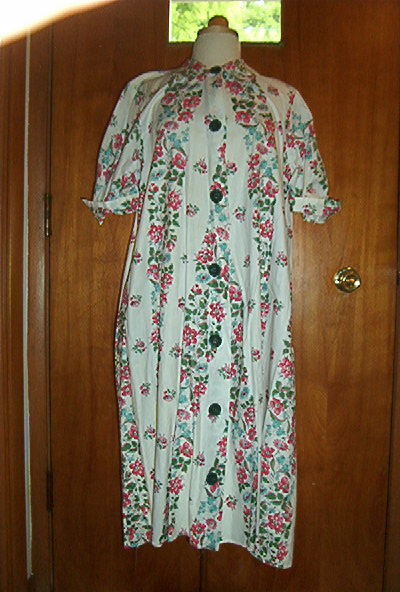
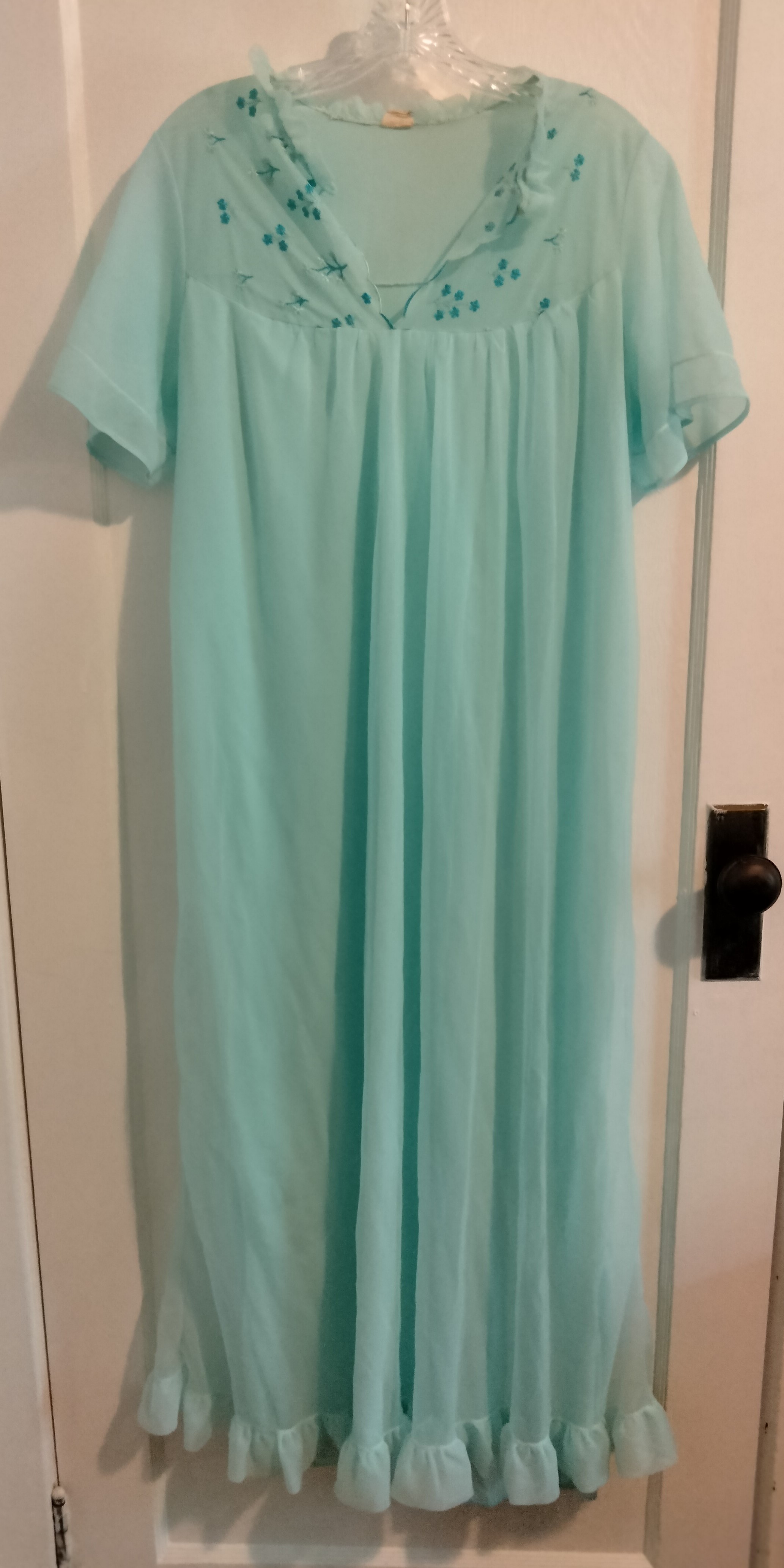
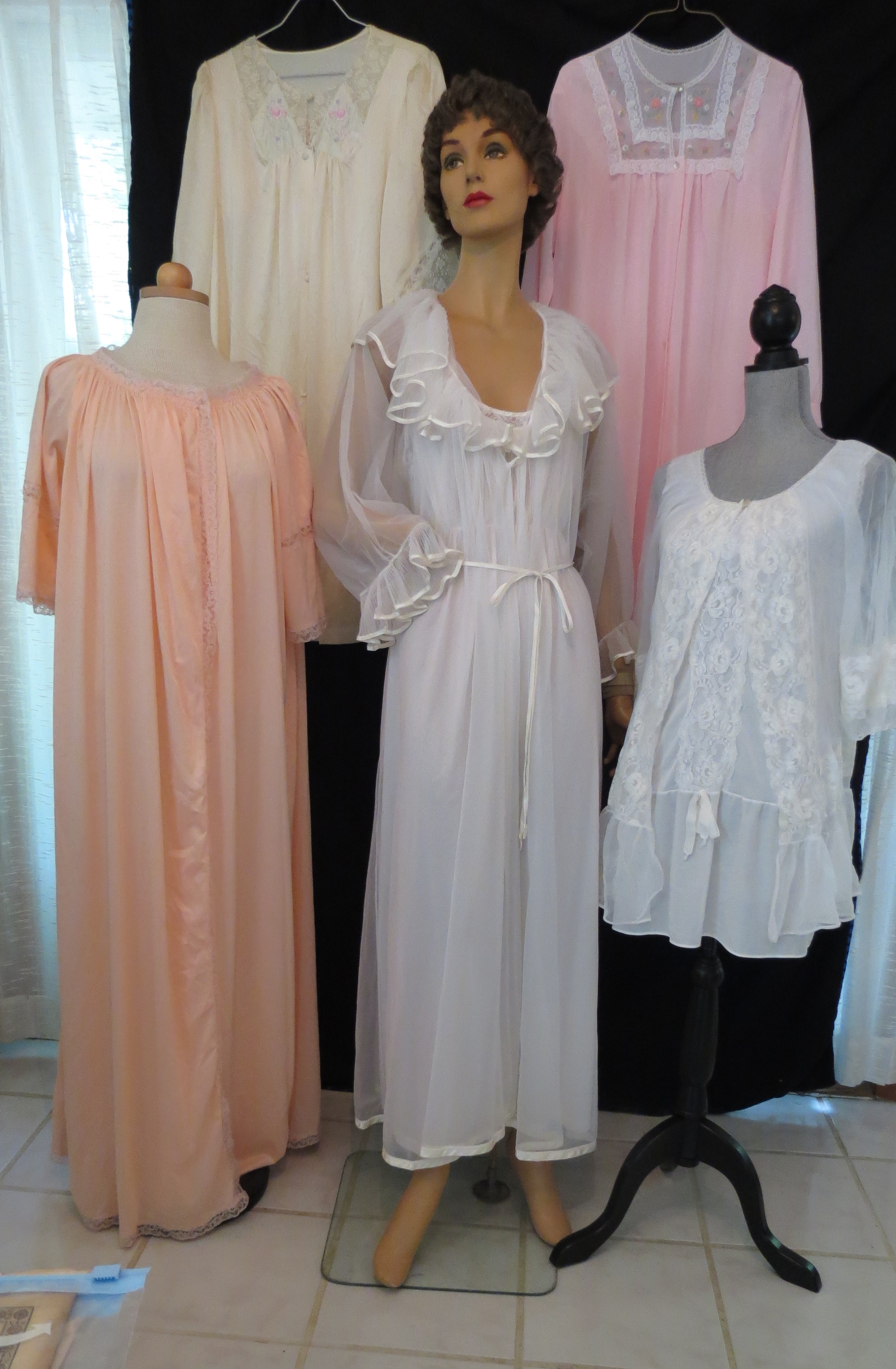
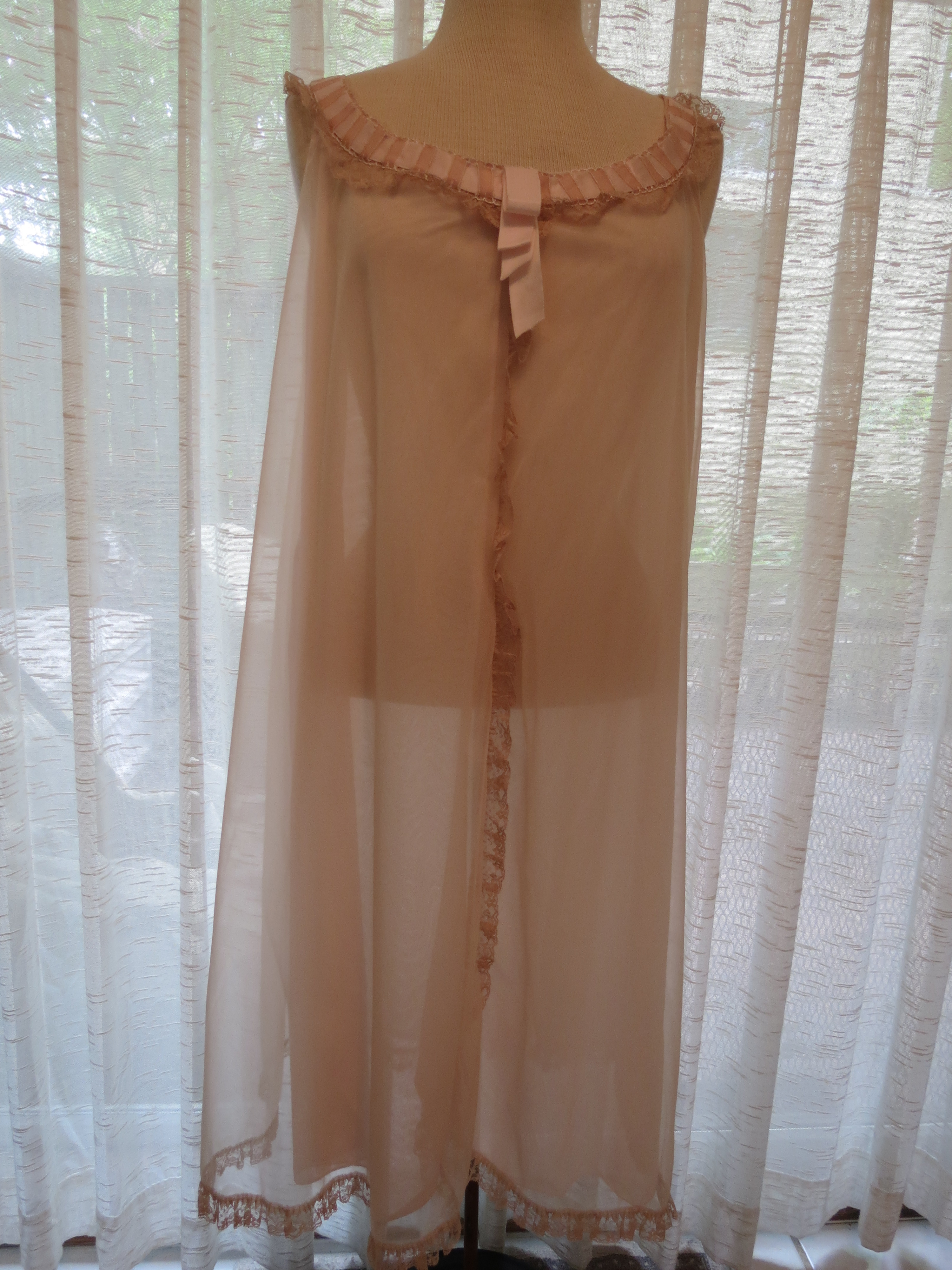
A floral heavy cotton housecoat robe from the 1930’s with big sculpted buttons was a fabulous find! See how it compares when we jump to the 1950’s, 1960’s and 1970’s. Double-layer nylon peignoirs and gowns began to appear in the Forties and there were some beautiful ones in silk during the Thirties and Forties before WWII rationing disrupted all of that. Lots of great synthetic materials were developed during this time, however, and the 1950’s nylon used for sleepwear and slips is fabulous! Thick, glossy and still silky to the touch, it could be found into the 1960’s and very early 1970’s but since then has mostly been replaced by cheaper, poorer quality fabric that doesn’t feel or look the same and is definitely inferior.

Until then, we had this wonderful nylon that can be dyed in bright colors, lasts forever and feels like heaven on the body. Lingerie from this time also included beautiful tailoring and details like lace and embroidery which was high quality and didn’t come loose. Tiny pearlized plastic or fabric-covered buttons and satin ribbon were also common. That’s why these garments still look and feel so beautiful 50 – 70 years later!

This marvelous nylon was also used to make lingerie slips, of course, and women bought a gazillion of them while day dresses were still the standard outfit for daily wear. When we go back to looking at day dresses through the decades, I will be opening an archive of beautiful slips, too. First, I think our mid-century gal is getting back from her vacation tomorrow so we will see what she bought at the beach and start the dresses review afterward. Stay tuned . . . . . . . . . . . . . . . . . . . . . . . . . . . . . .

MORGANA MARTIN, THE MAGICVINTAGESPY

BLOG: MAGICVINTAGESPY.COM
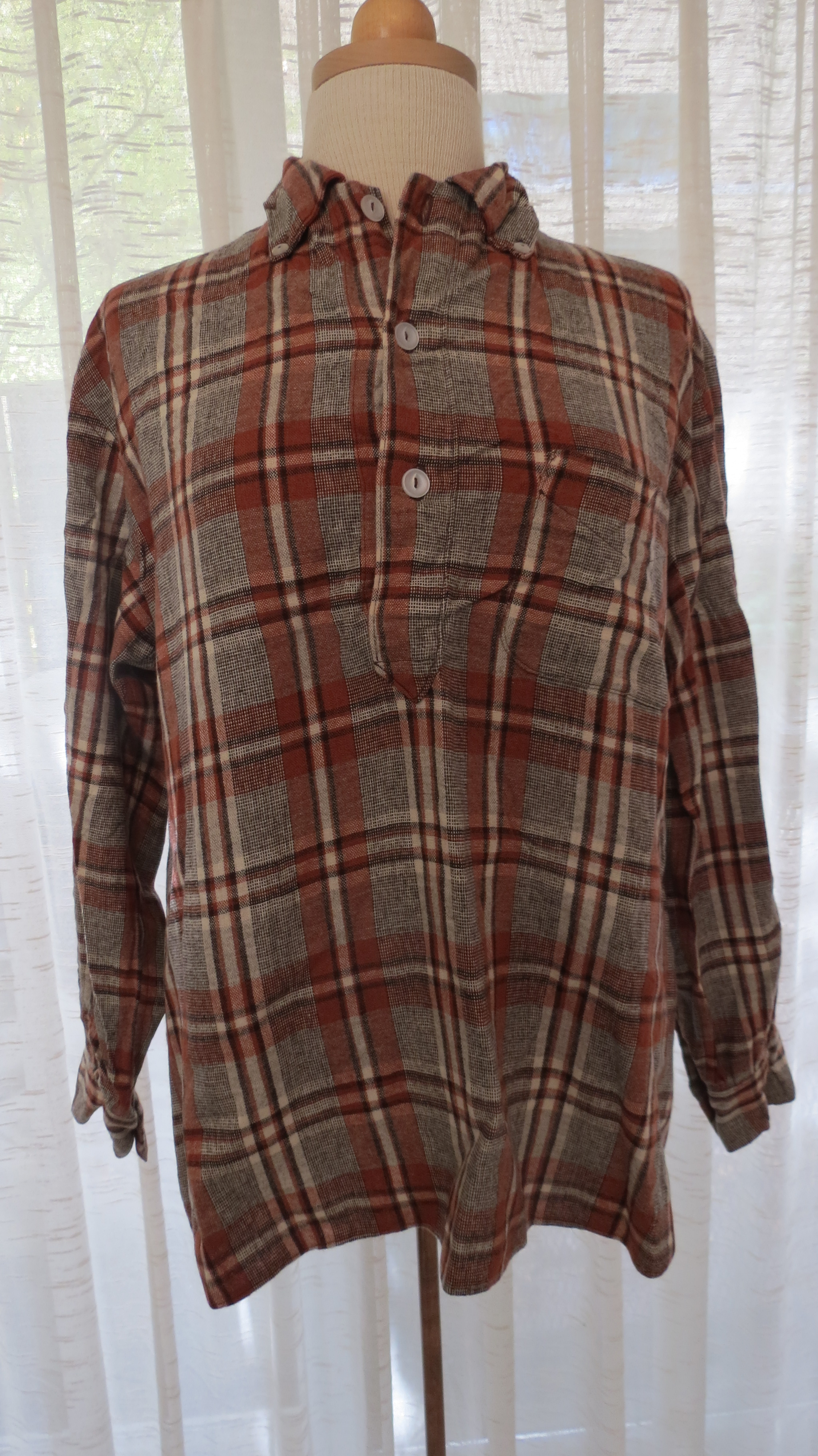
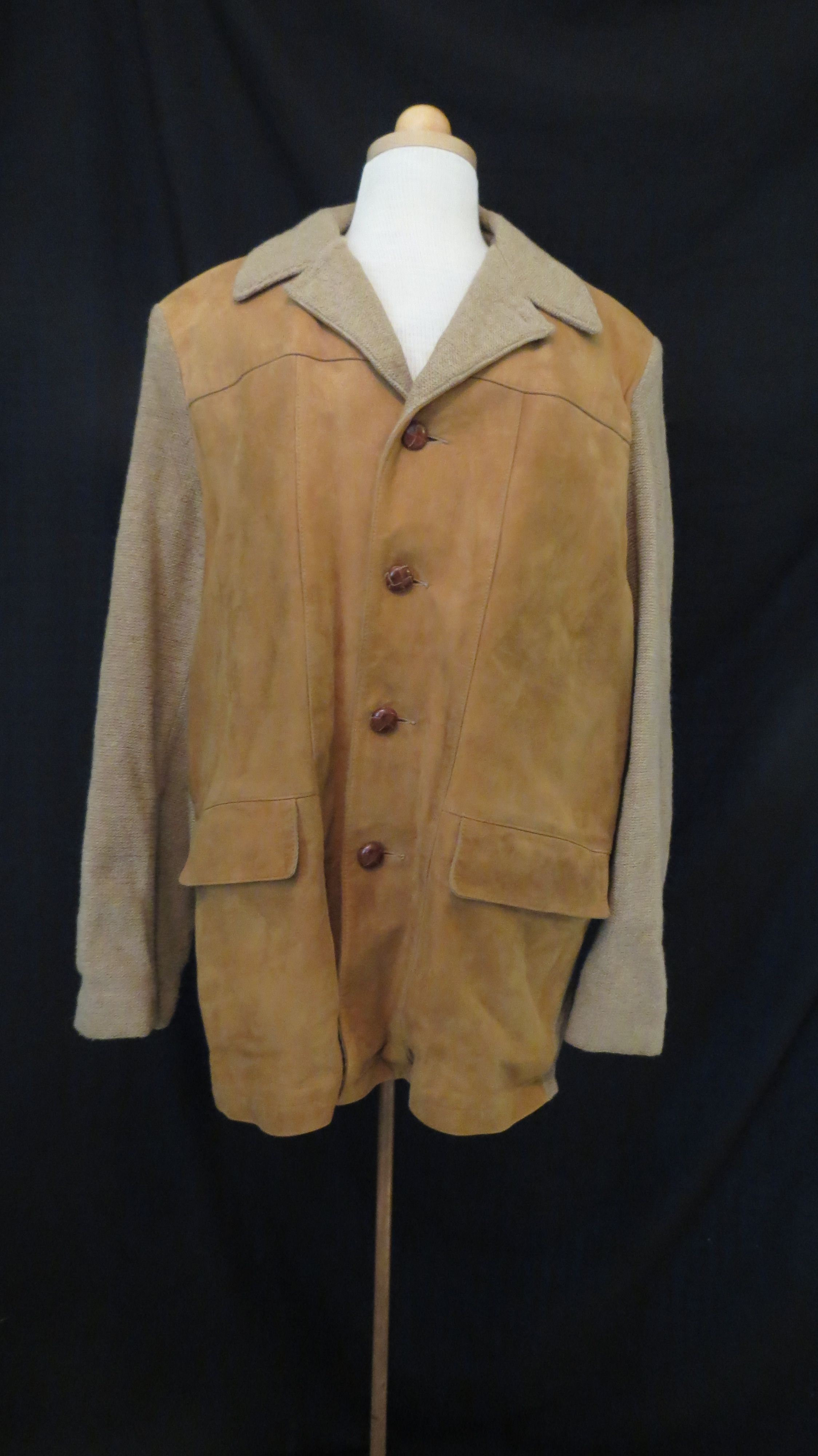
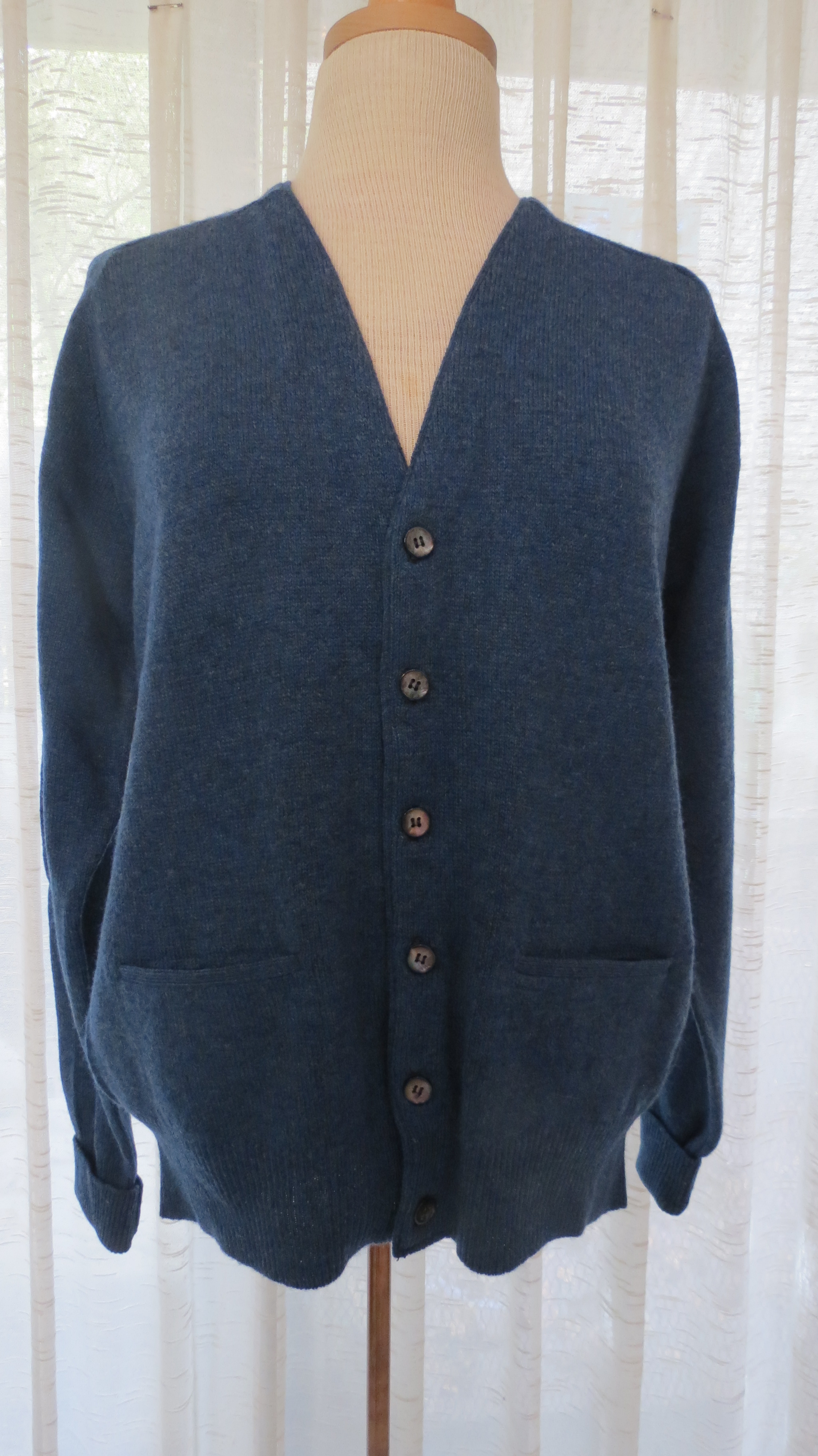
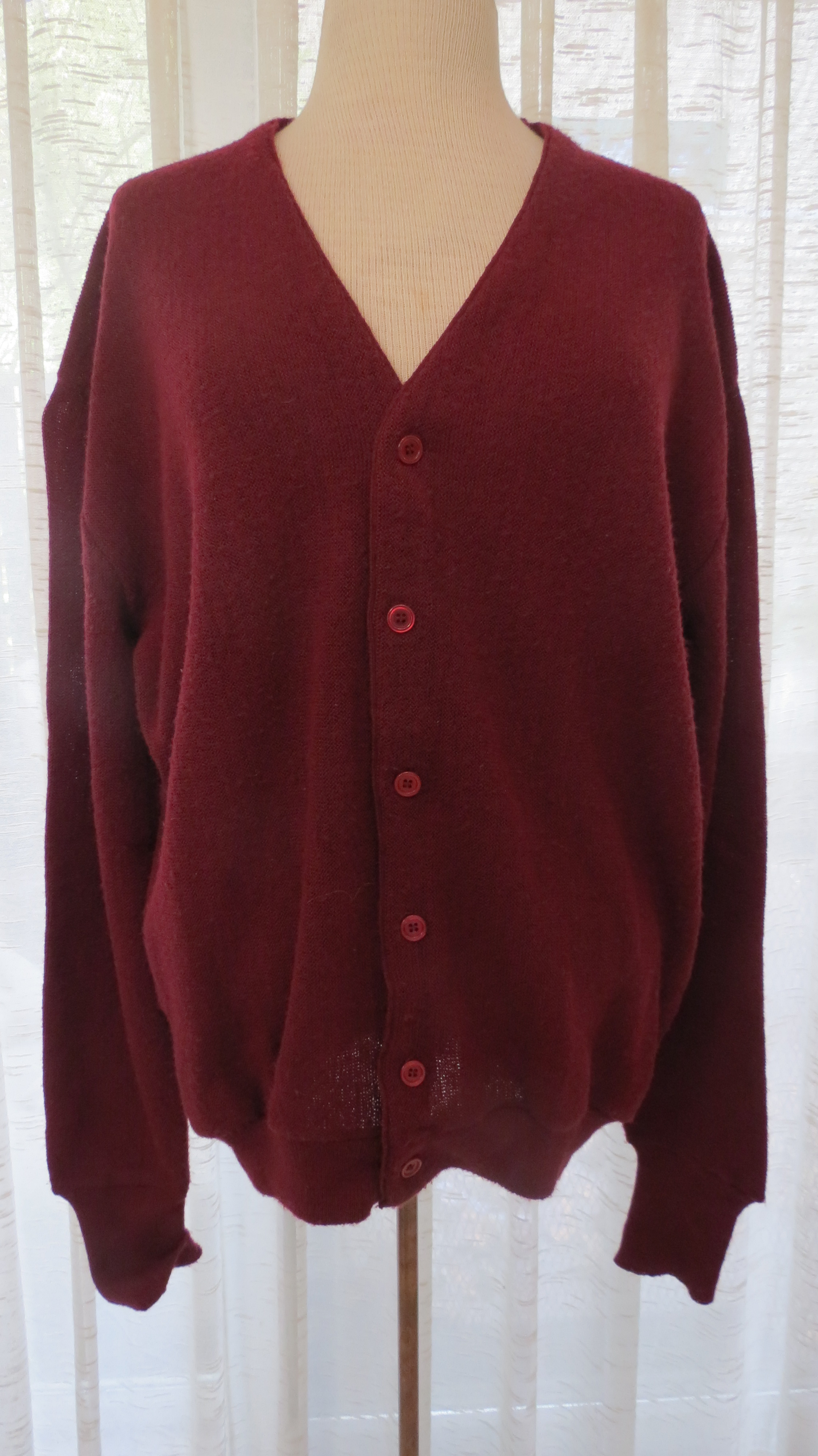
A FEW TRUE VINTAGE MEN’S SWEATERS, WOOL SHIRT AND 2 JACKETS FROM THE 1960’S AND 1970’S

Here are a few of the iconic everyday styles seen frequently in menswear from the early 1960’s until the mid 1970’s. The 1970’s styles, shown in the center panel, are still probably in production. Cardigans and pullovers have been popular for men at least since the 1940’s. The styles produced in the 1940’s and 1950’s were most interesting, with colorful knitted-in patterns and leather inserts.

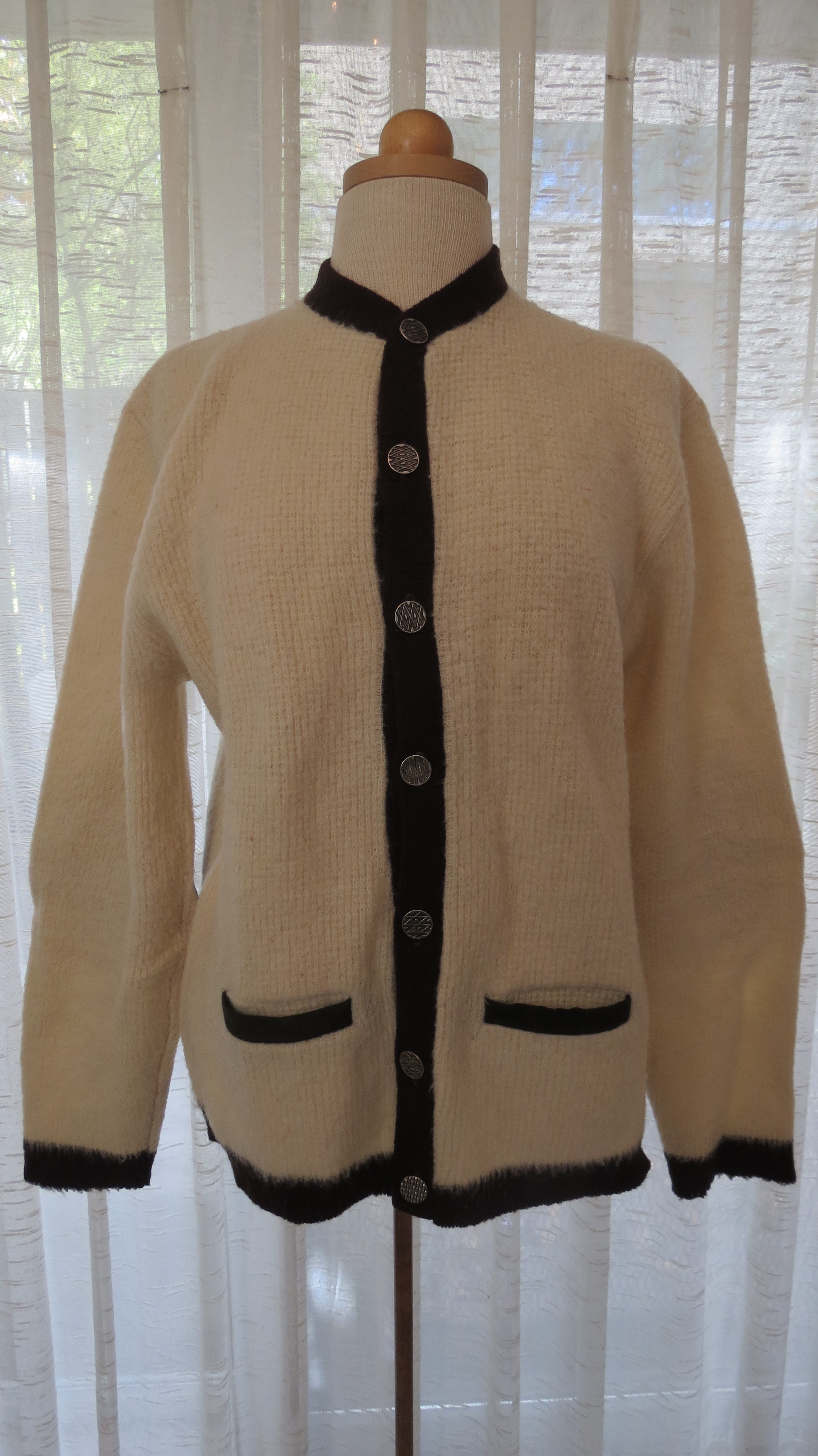
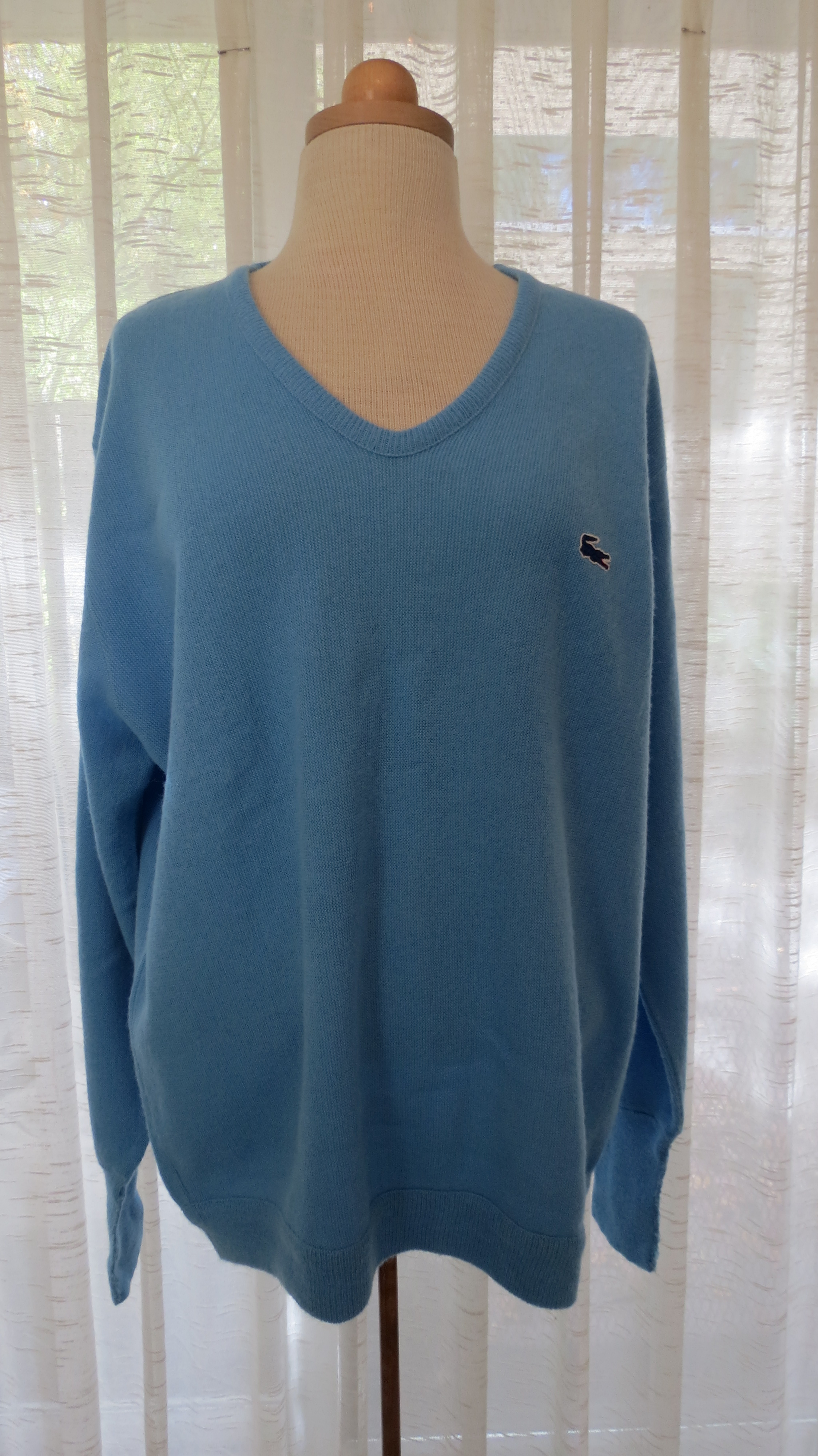
In the top panel, first shown is a woolen knit cardigan with embossed metallic buttons. It’s an imported European style. Second is a wool shirt, which has been a cold-weather casual staple for men for decades. The Henley neckline closure makes this one unique. After that, an iconic suede leather jacket with sweater-knit collar and sleeves. I have several of these in the archives, in different earth-tone colors. They are beautiful pieces which have, surprisingly, survived the decades in excellent condition. Next are 2 plain, standard cardigans which have been a part of almost every older man’s wardrobe (often with leather elbow patches) and younger mens’, too, especially when they have been designed as golf sweaters. The first, with patch pockets, is made of wool and is older – probably 1960’s. The second, in burgundy, is acrylic knit as is the light blue Izod V-neck. Standard 1970’s construction and fabric.

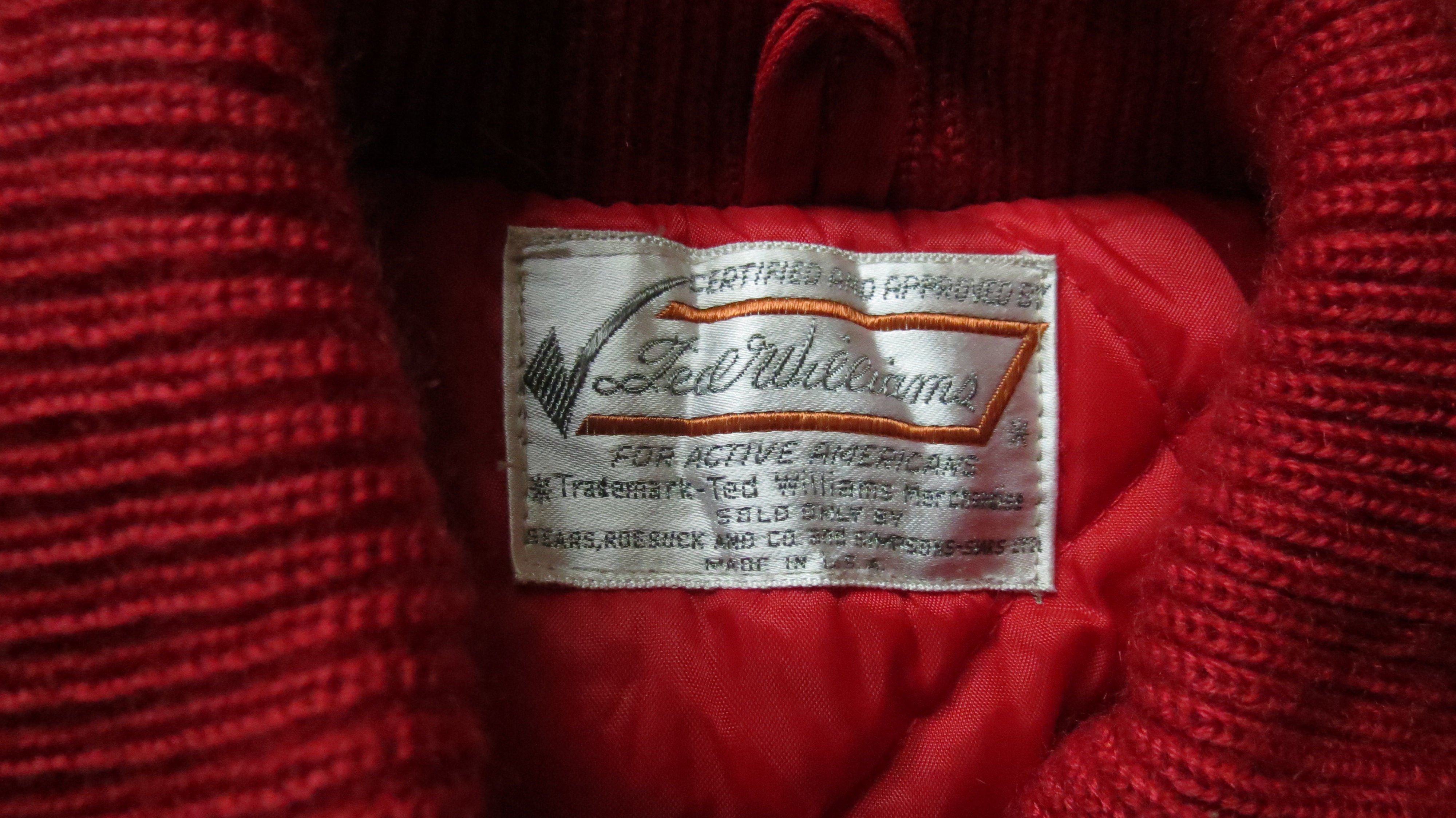
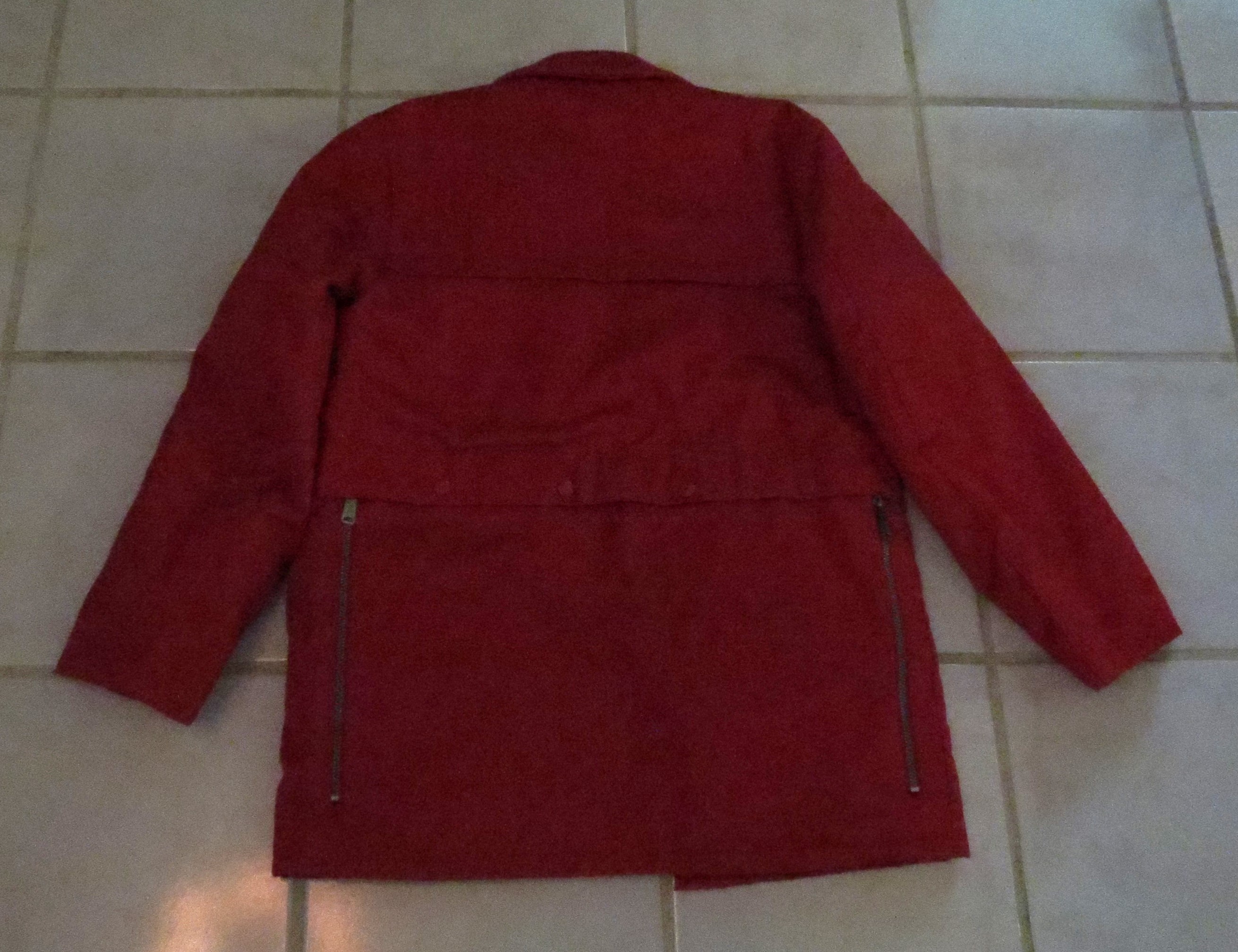
Finally, I picked this iconic Ted Williams hunting jacket to include in the post. Ted Williams was a famous baseball player and lent his name to this jacket sold by Sears & Roebuck in the early 1960’s. The label tells the marketing story and you can see the heavy knitted neckline. Cuffs are made of the same material. In front, the jacket zips and has standard-looking pockets. I have shown the back view because the rear “game pocket” is most visible. It extends across the lower back and opens with a zipper on both sides.

This find was an education for me, as I’d never heard of Ted Williams or seen this type of jacket before. What great clues in any investigation! Women’s styles tomorrow – stay tuned . . . . . . . . . . . . . . . . . . .

MORGANA MARTIN, THE MAGICVINTAGESPY

BLOG: MAGICVINTAGESPY.COM
Beautiful True Vintage Victorian Prairie Style Dress from early 1970’s

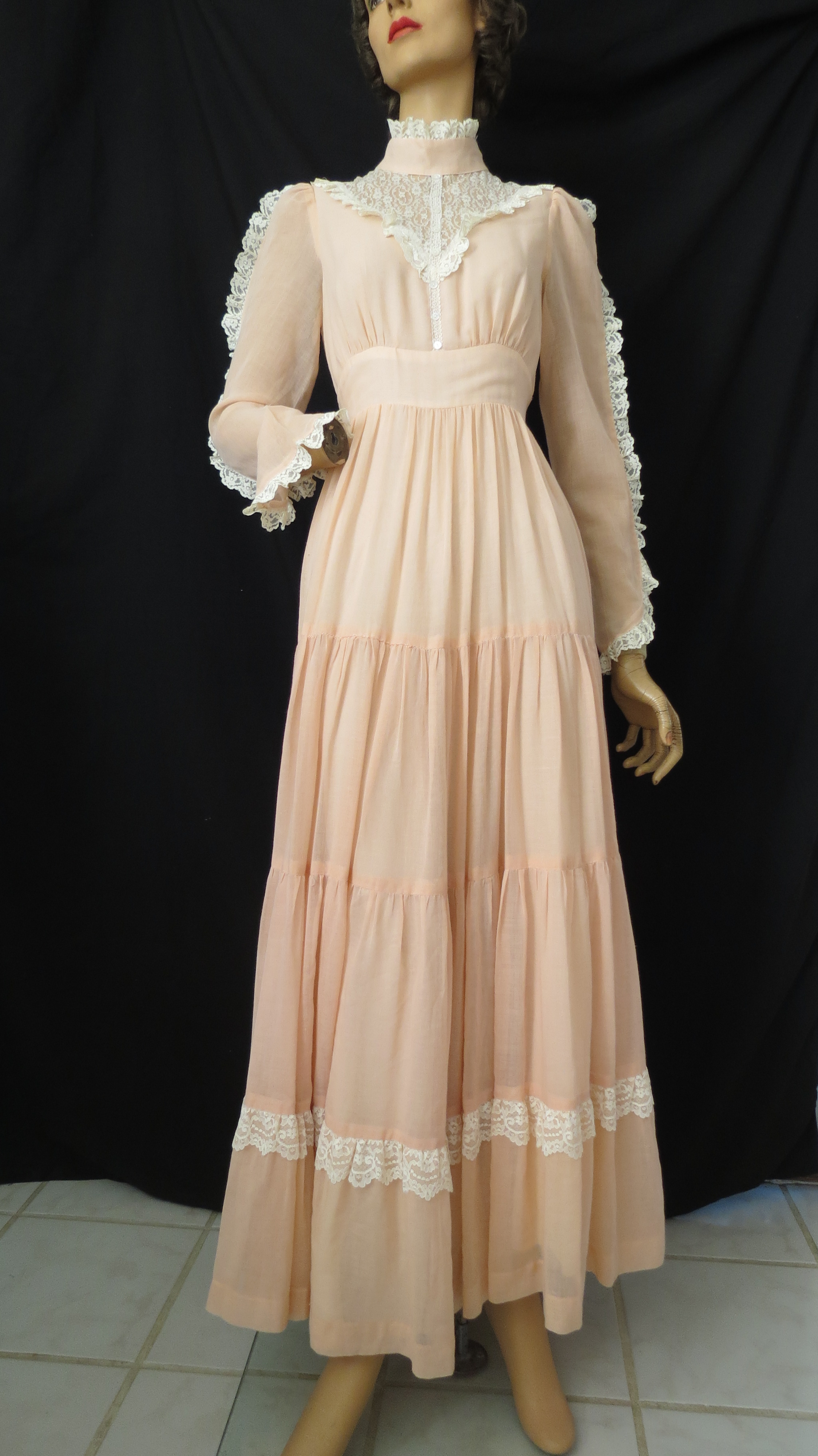
In a pretty apricot pink pastel hue, this lace and cotton gown is a perfect example of the prairie dresses in Victorian style from the late 1960’s to the very early 1970’s. Unlike the ones that were hippie-style, this type is very straight-laced and conservative, modeled after the dresses from the late 1800’s. Never my favorite, but definitely worth collecting since they represented a major Seventies fashion trend.

This one is not a famous label like Gunnie Sax, but it’s well-made and well-designed. During those few years when these were most popular they sometimes found their way to church as non-traditional wedding fashions and less buttoned-up styles sometimes found their way to the Prom. Speaking of Prom and other formals, we’ll be seeing more of them in the next few days. Although it’s early, girls traditionally started thinking about formal dresses for Prom and for the Spring holidays about this time of year – after all, it does require a lot of planning. That was especially true if you were having your dress custom-made, either by Mom or the neighborhood lady who took in sewing. Stay tuned . . . . . . . . . . . . . . .

MORGANA MARTIN, THE MAGICVINTAGESPY

BLOG: MAGICVINTAGESPY.COM
True Vintage Mid-century Long Formal Dress – Theater Reproduction?

This frock was an unusual find and a bit of a mystery. The sewing notions such as the zipper are from the mid-century but the overall style is undefined. My best guess is that this gown was made for a theater production back in the day. It is not as carefully constructed or designed as garments made for commercial sale or general wear. The only other possibility is that it was made by an inexperienced seamstress. It’s fun to find these kinds of things occasionally, which exercise your sleuthing skills! Back to the “real thing” tomorrow . . . . . . . . . . . . . . . . . . . . . . . . . . . . .

MORGANA MARTIN, THE MAGICVINTAGESPY

BLOG: MAGICVINTAGESPY.COM