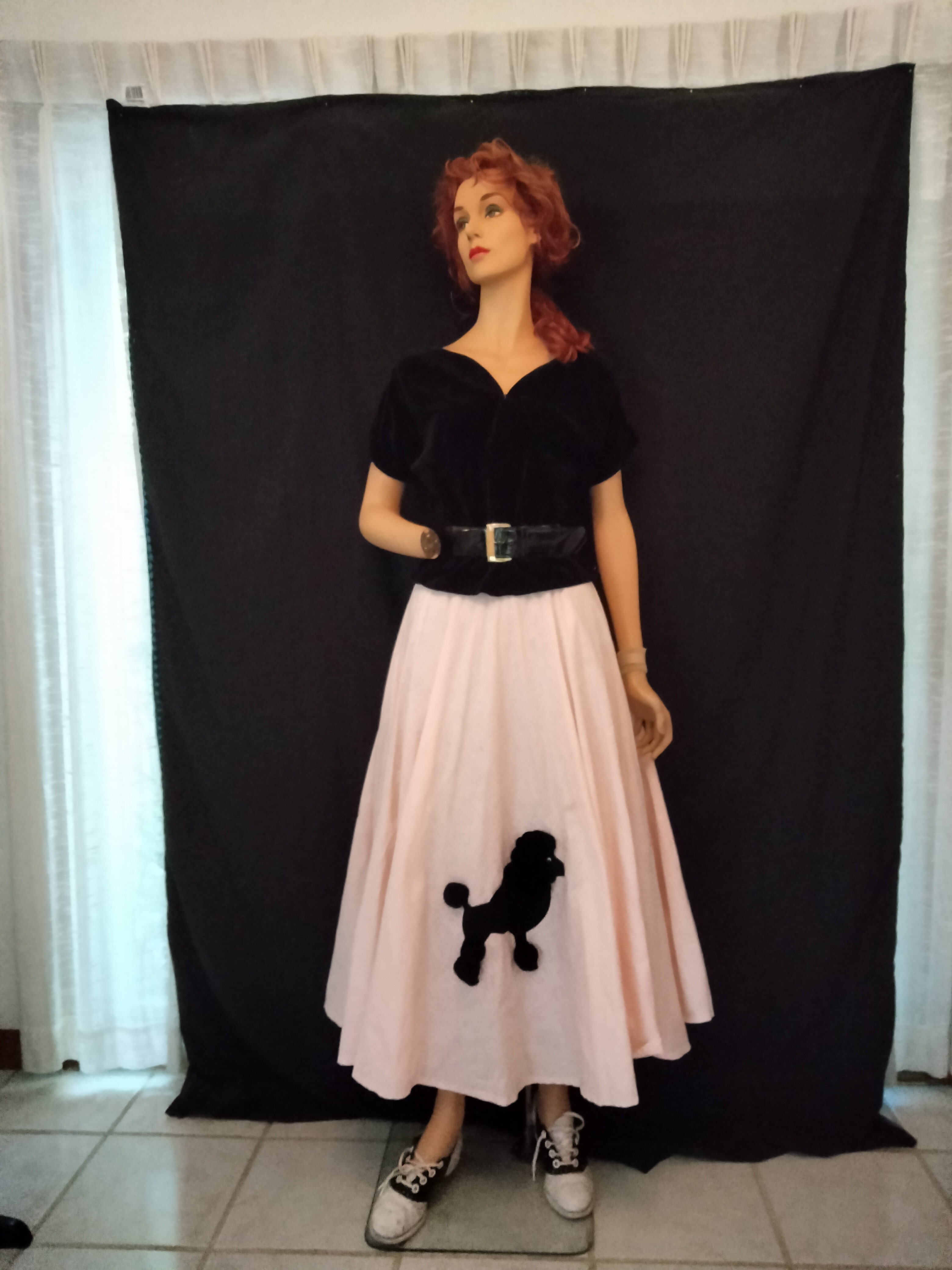
What fun! Taking a break with friends from the regular Headquarters routine (but a Sleuth is a Sleuth 24/7) and what did I discover? This repro poodle circle skirt would be great for a costume anytime, but especially right about now. It was homemade, probably for exactly that purpose, so I’ll be donating it to the University theater but along with my FABULOUS find, it’s blog-worthy. . . . . . . . . . . . . . . .
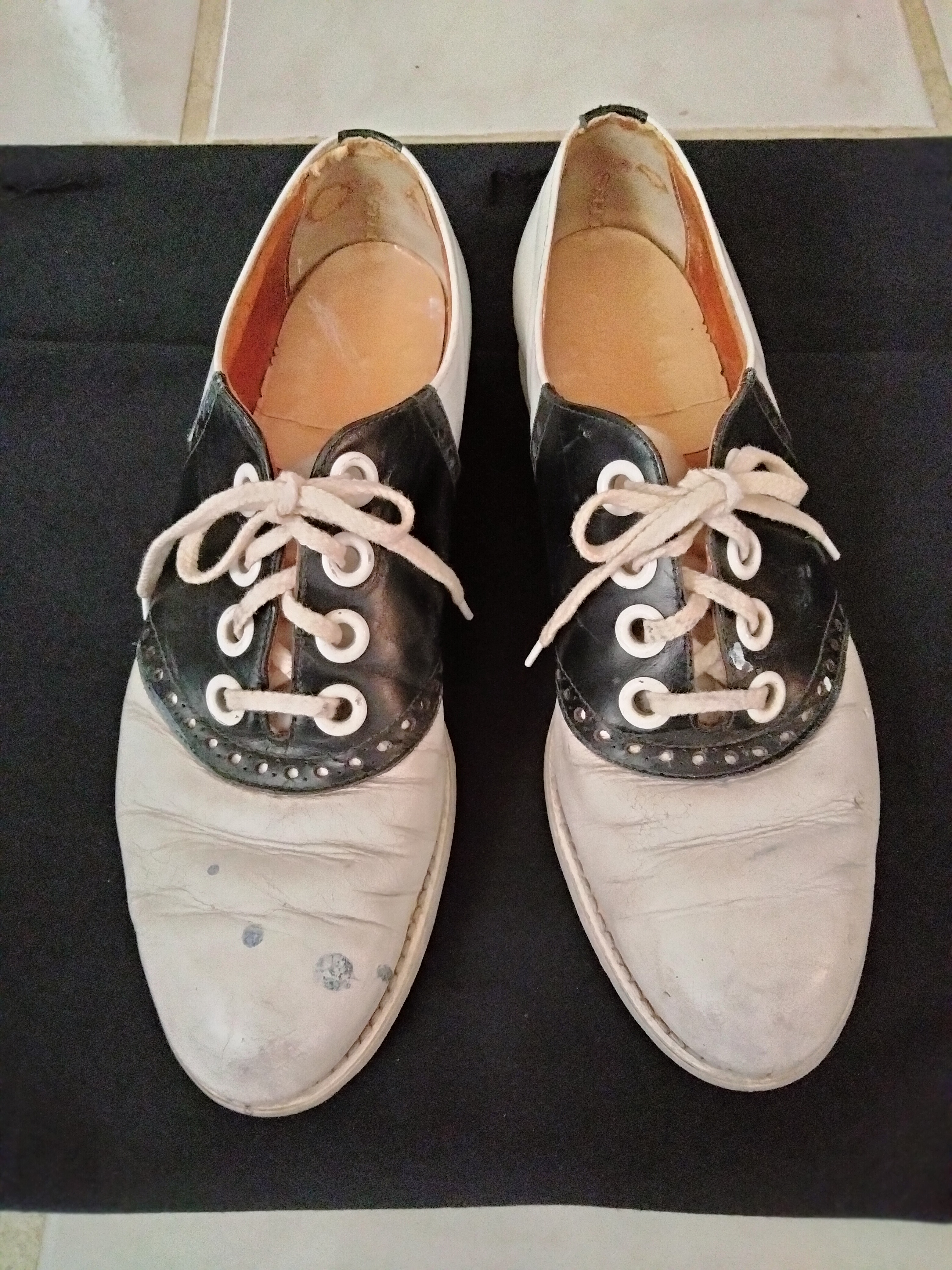
Although I have some new-vintage re-do’s, an authentic pair of 1940’s – 1950’s saddle shoes has been on my radar for years. Look what I found!! In my size!!!
Spent yesterday afternoon wearing them around the house and they are SO comfortable. Older well-made footwear was built to last and usually fit well, too. Although these were just the daily, non-special go-to for teens and many adults and were undoubtedly moderately priced, the quality is built in. Even the messy polishing effort gives them the best street creds. I’m over the moon.
However, that wasn’t the end of the story. Stay tuned . . . . . . . . . . . . . . . . . . . . . . .
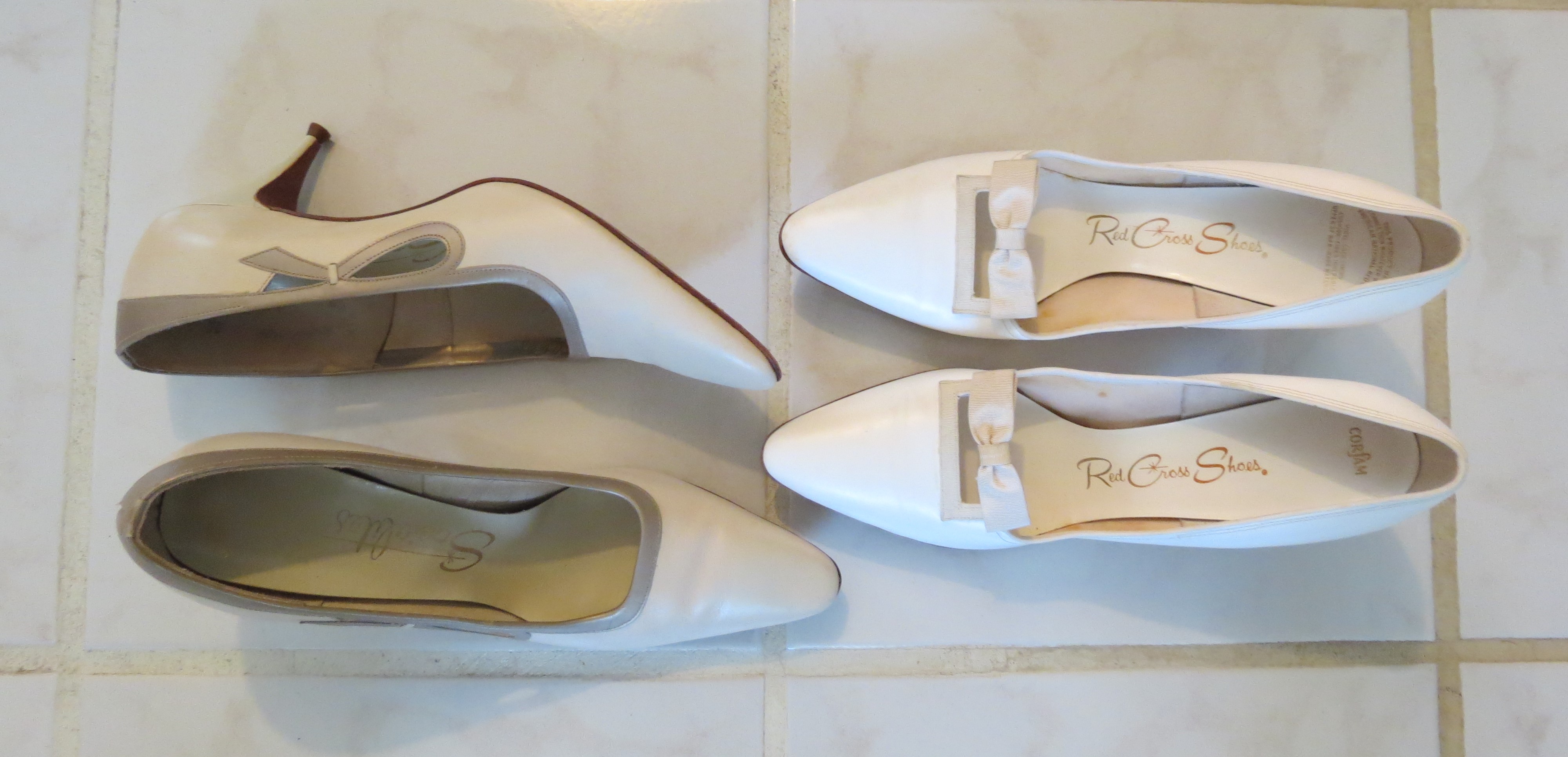
It’s almost Labor Day, OMG!! According to the North American dress codes of the 1960’s, wearing white or shoes with cutouts like these pale beige ones after Labor Day would have been a traditional fashion faux pas (in other words, big “no, no”); an embarrassing mistake that spoke to your lack of fashion sense.
With great respect to individual and cultural standards of proper dress and modesty, thank goodness those rules no longer apply in general! Unlike our grandmothers and maybe our mothers, we can wear white and pastels whenever we want to!! We can also wear black to a wedding, white or bright colors to a funeral, slacks anywhere, sleeveless blouses anytime, shorts and sandals year-round, weather permitting. Good taste and elegance are, of course, another matter . . . . . . . . . . . . . . . . . . . . . . . . . . . ..
In 1960’s shoes like these, our grannies wouldn’t face the Fashion Police in any way. They’re exceptionally well-made (how could they have lasted so long if not?), color is pretty universal and not offensive, style is modest and mainstream and they’re comfortable for walking. Not my favorite style, but worth collecting.
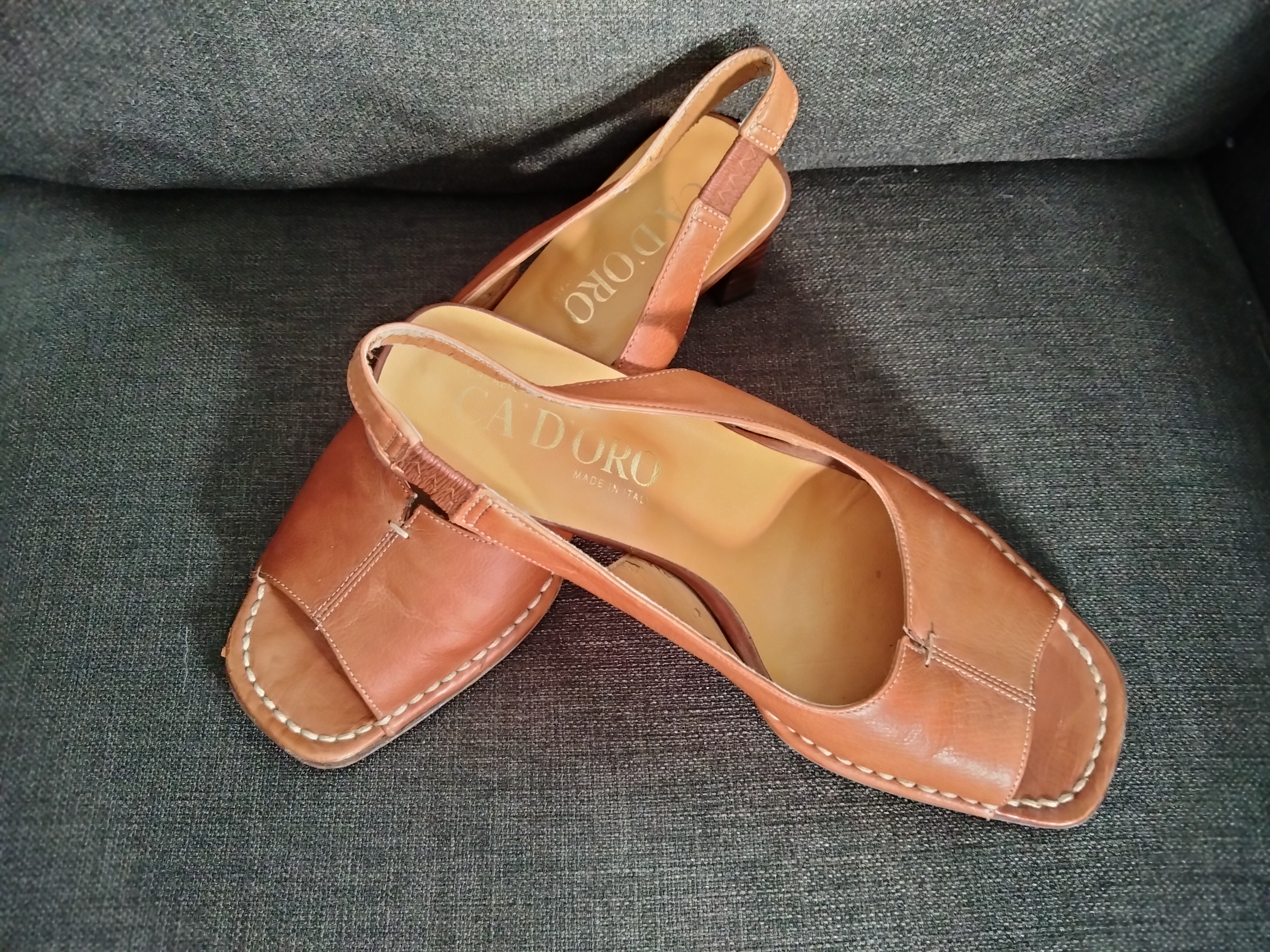
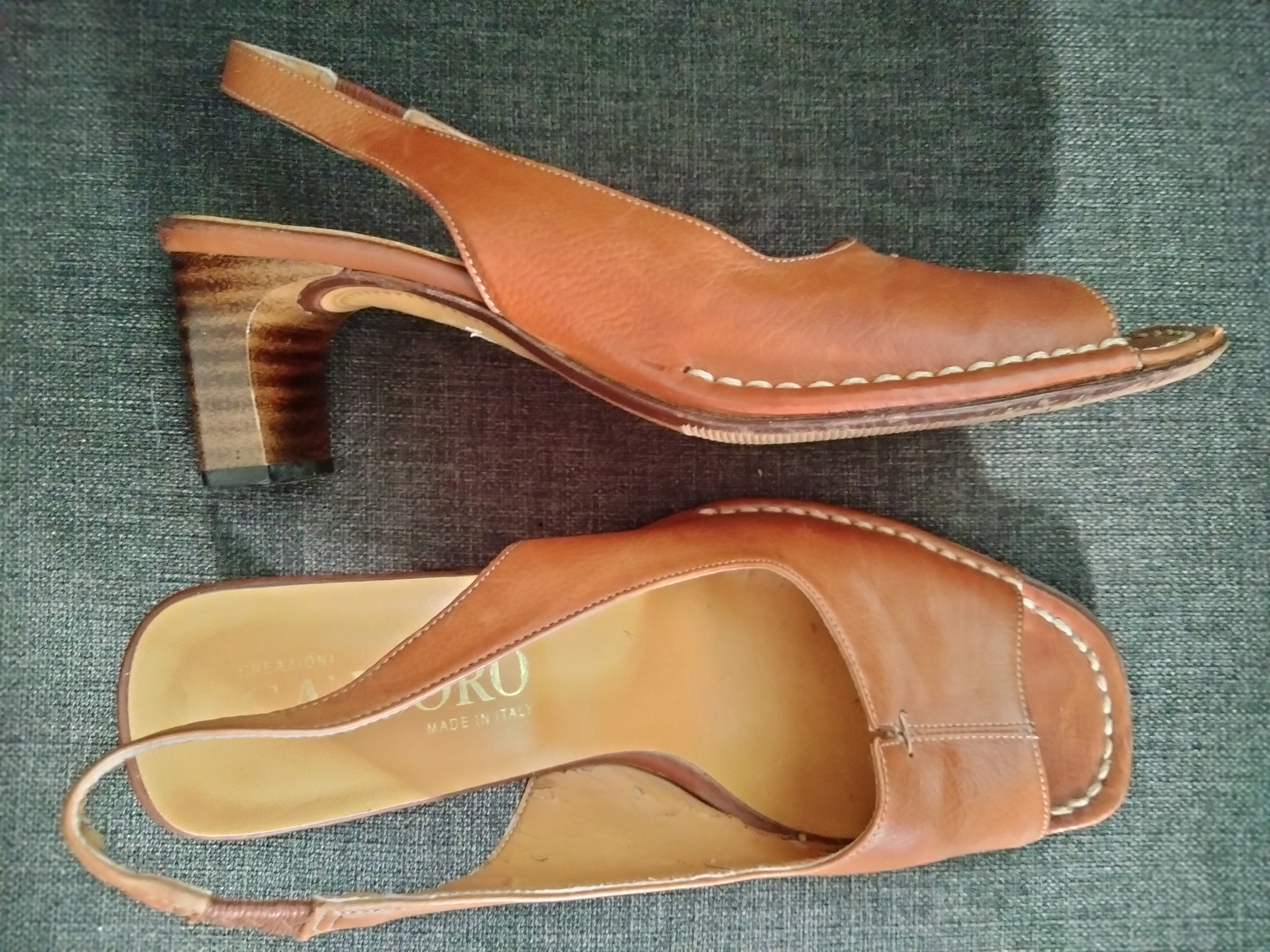
That said, I much prefer the 1980’s Italian-made sandals discovery that I just posted a few days ago – interesting design, great quality, elegant and versatile style and much more flattering. But, hey, we don’t have any lock on that in the more recent decades. Fabulous avante garde and va-va-voom styles have been produced at least for the past 100 years. I should review the archives ……
What could be better for Summer? Love these sling-back sandals with the sculpted stacked leather heel. The soles are Elastane, which was a “new” material introduced in the 1970’s and was very popular for it’s flexibility. I’m dating this pair from the 1980’s. Very city chic, yet casual.
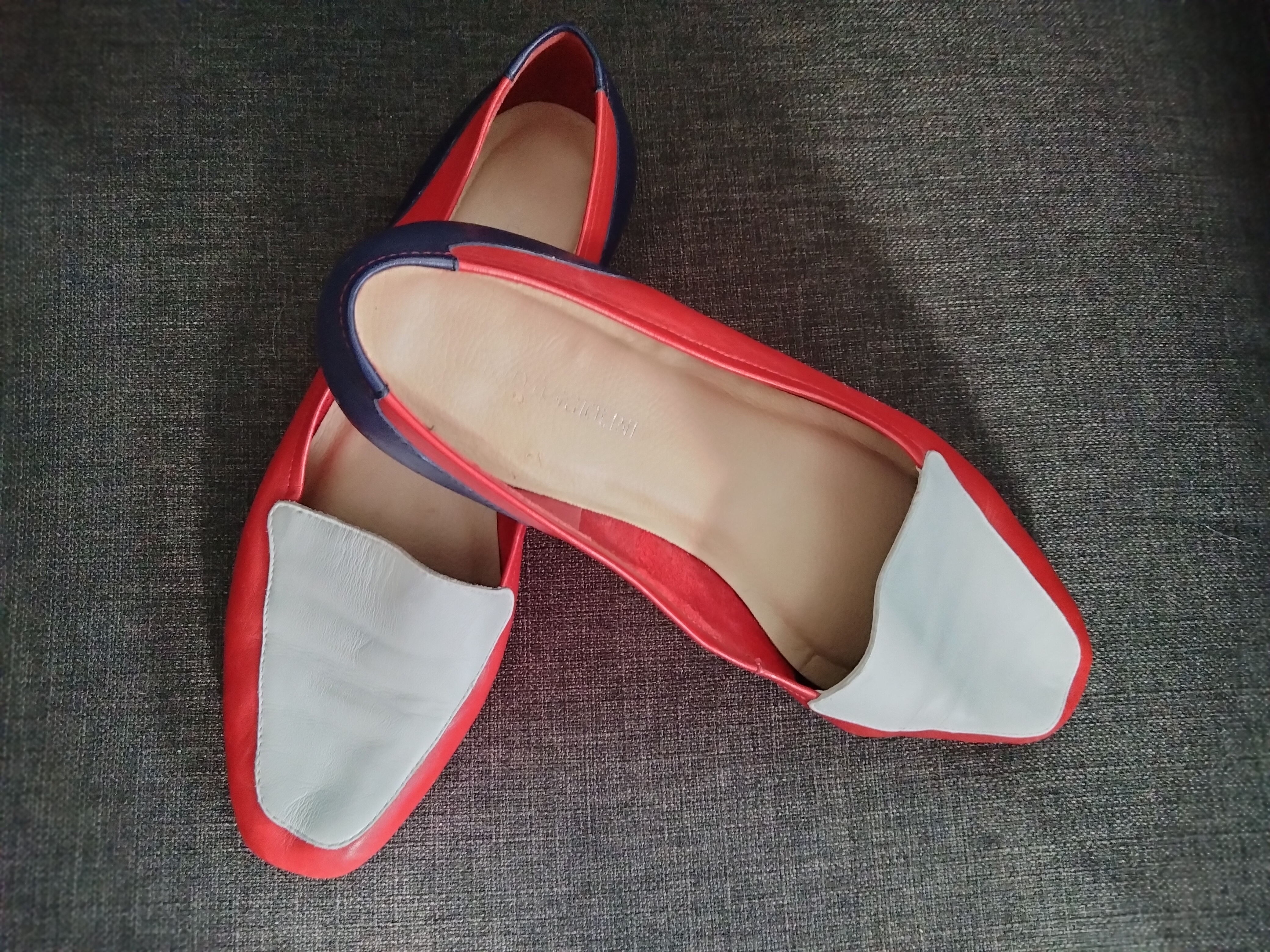
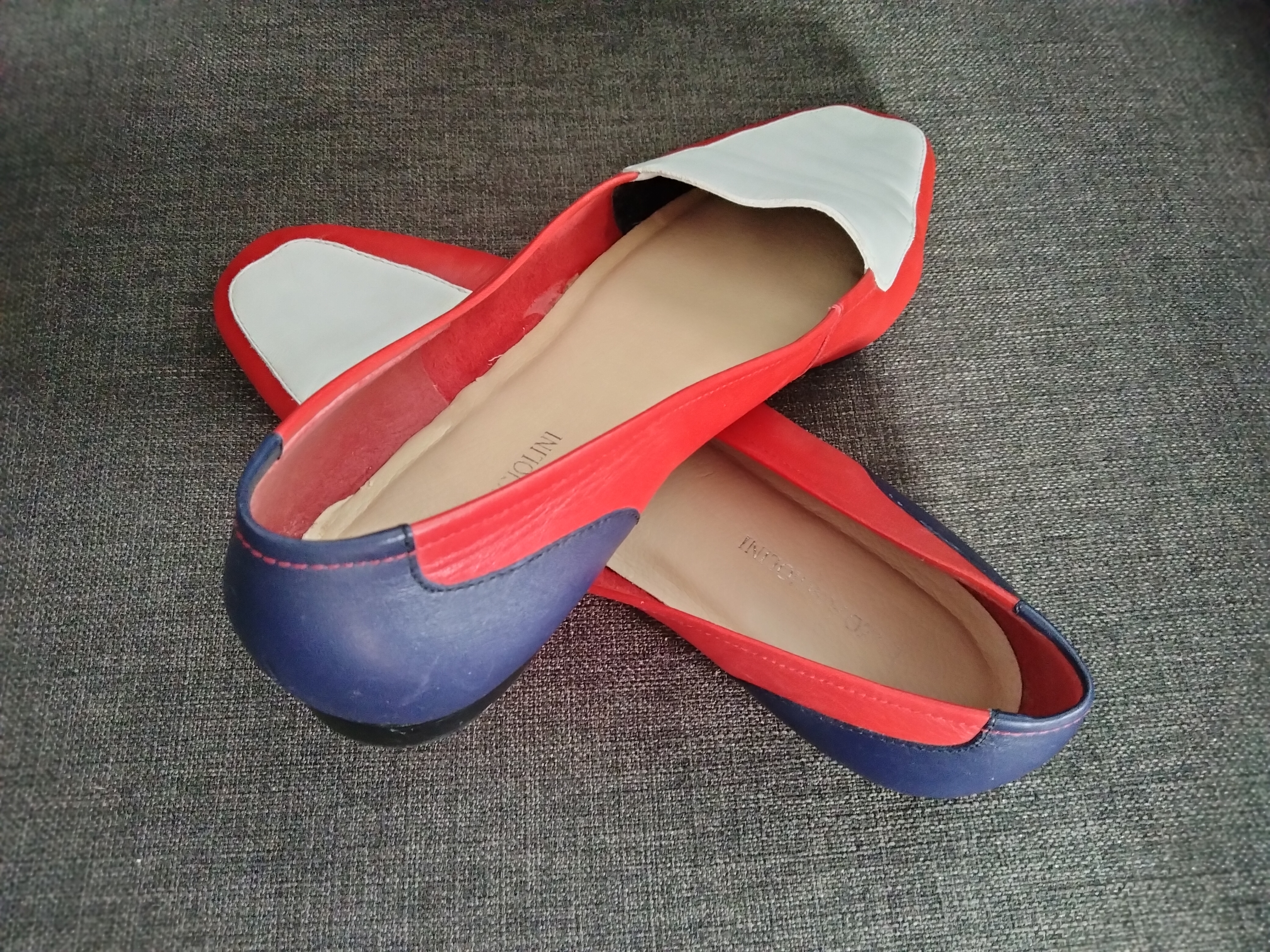
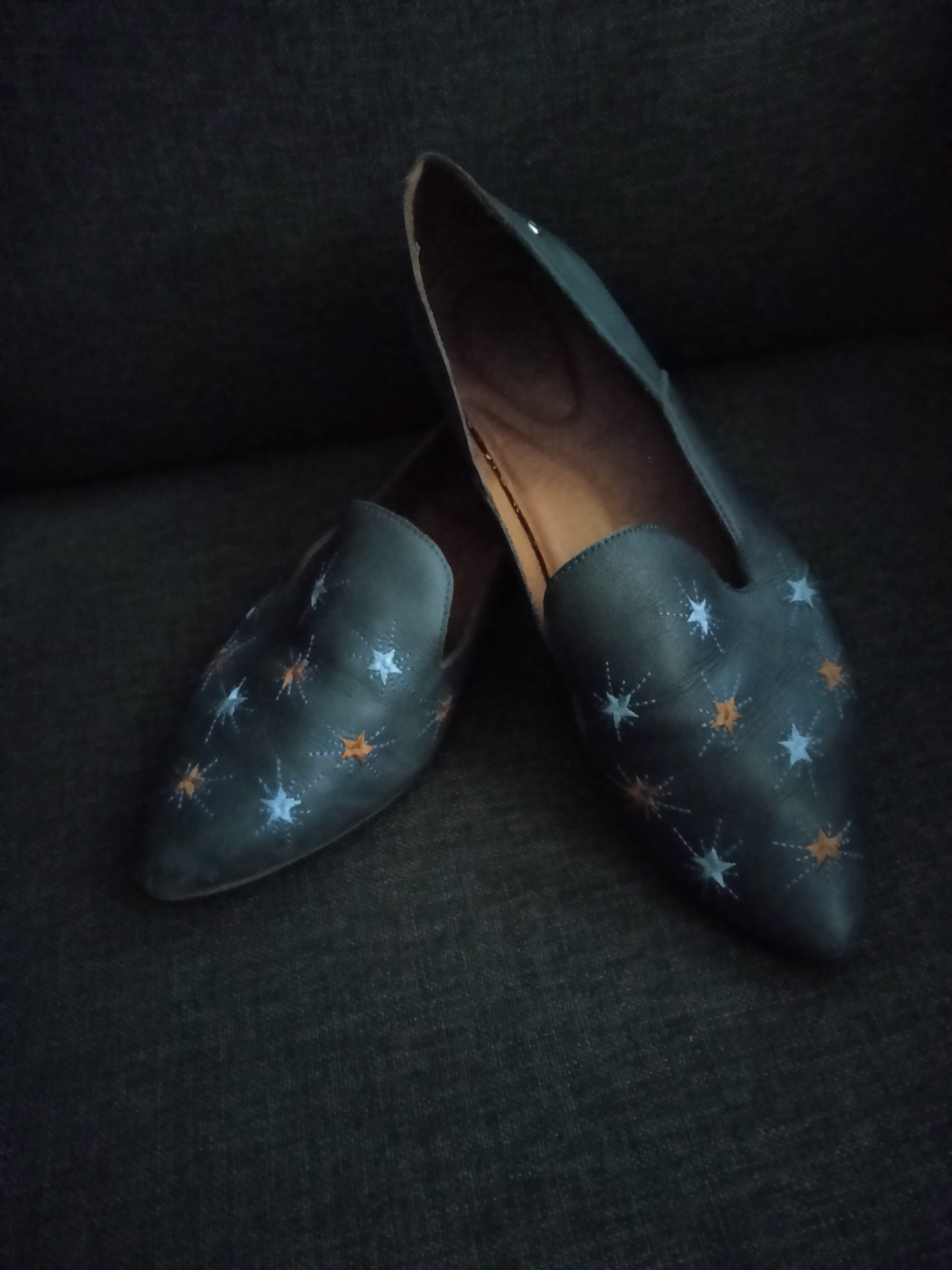
These color-block flats make me think of something Audrey Hepburn might have worn in the the classic movie Roman Holiday, from the early 1960’s. They are by Enzo Angiolini, an Italian designer brand which was very popular in the U.S. during the 1990’s. I believe that they are 100% leather shoes, excepting for the heel caps. This is always a sign of higher-end footwear, if the workmanship is good.
Both pairs have been lovingly cared for and show light wear, considering their age. Even better, they are in my size. Who knows what streets and alleyways these shoes may have walked? Good chance some of them were in Europe. They still have more stories to tell, and I always love a mystery . . . . . . . . . . . . .
Made in Brazil and Spain – in the 1980’s and 1990’s, two of the BEST places where great shoes and other leather goods were made. Italy and Portugal were also at the top of that list. These were made for well-known brands but small unbranded shoemakers (especially in Latin America and Europe) sold beautiful creations if you were able to find them. I knew immediately that these were vintage footwear pieces and that the quality would be outstanding. The truth, as always, is in the details and I have included photographs and descriptions of the most important ones.
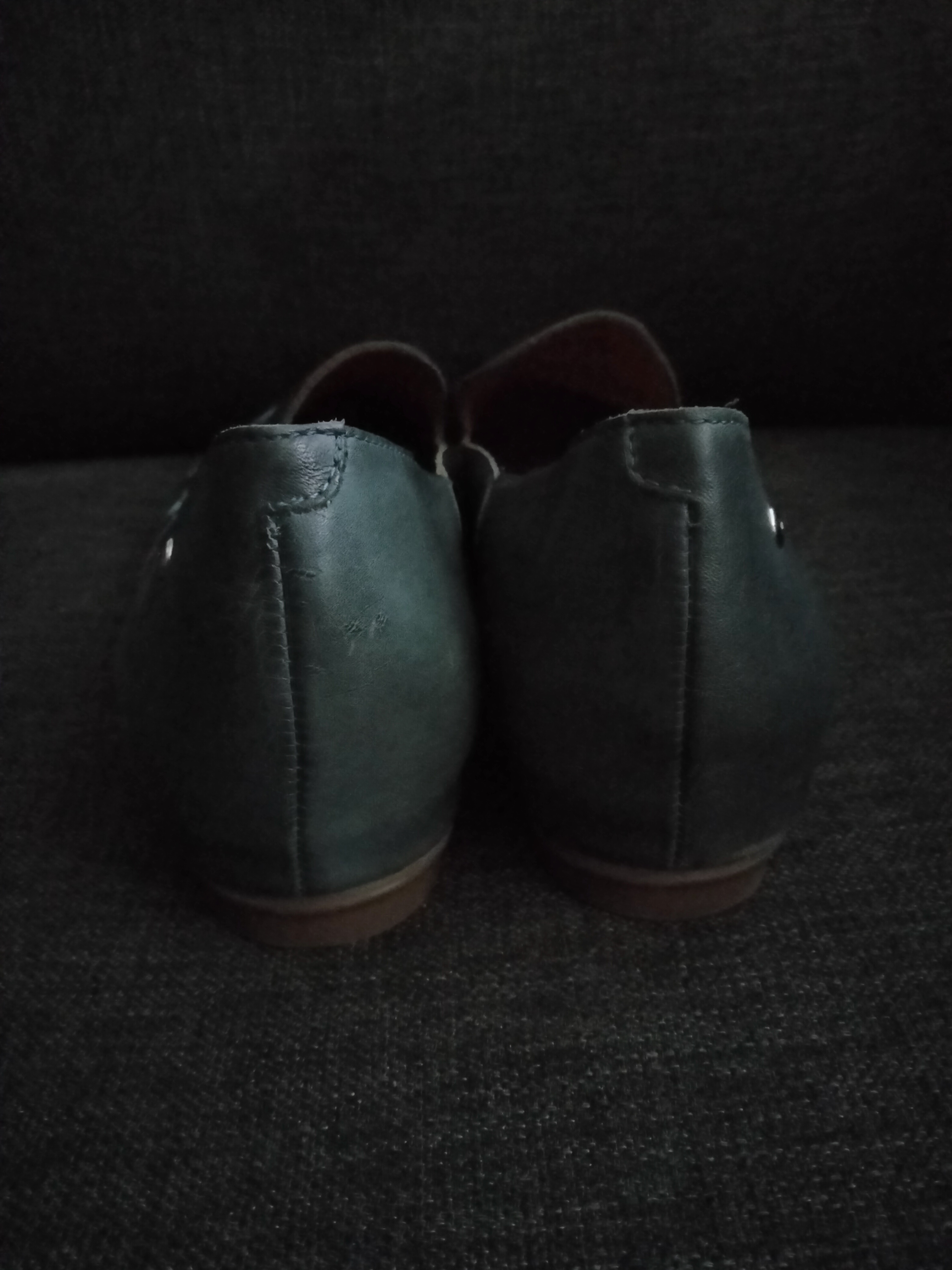
The leather in the top-pictured flats is glove-soft. I adore the embroidered stars covering the vamps. The little finishing detail at the top of the heels was one sign of exceptional workmanship. I usually find this detail on well-made true vintage European footwear. These were made in Spain by Pikolinos, a family brand founded in 1984. Love the style!
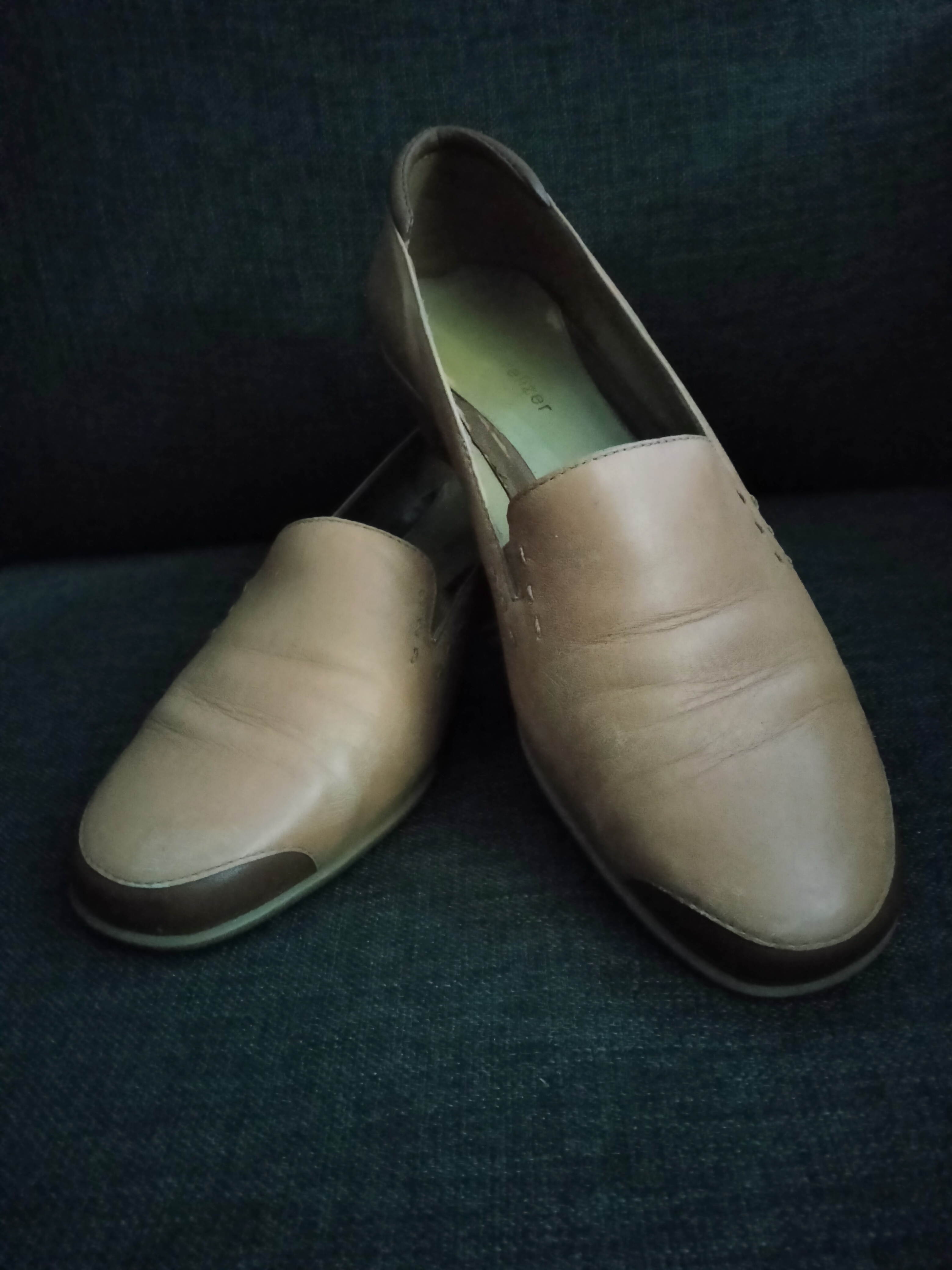
The camel-colored flats with brown trim are made in an elegant style meant as a driving shoe (notice the extension of the sole material on the back of the heels). See the little stitching detail that secures the seam there, too, plus the brown trim which reinforces the heel opening but is also very stylish. On the edges of the vamps where the foot enters there are slim inserts of elastic material and elegant stitching detail. These shoes were made in Brazil for Naturalizer, a more common North American company which nevertheless made some excellent quality footwear, at least in the past.
Both these pairs of shoes have a hard but flexible vinyl/rubber sole that is very appropriate for street wear and resists damage. Again, they will last for decades longer. I couldn’t be happier to find these practical styles in one place! Stay tuned for the last installment of this most recent investigation . . . . . . . . . . . . . . . . . . . . . . . . . . . . . . . . . . . . . . . . . .
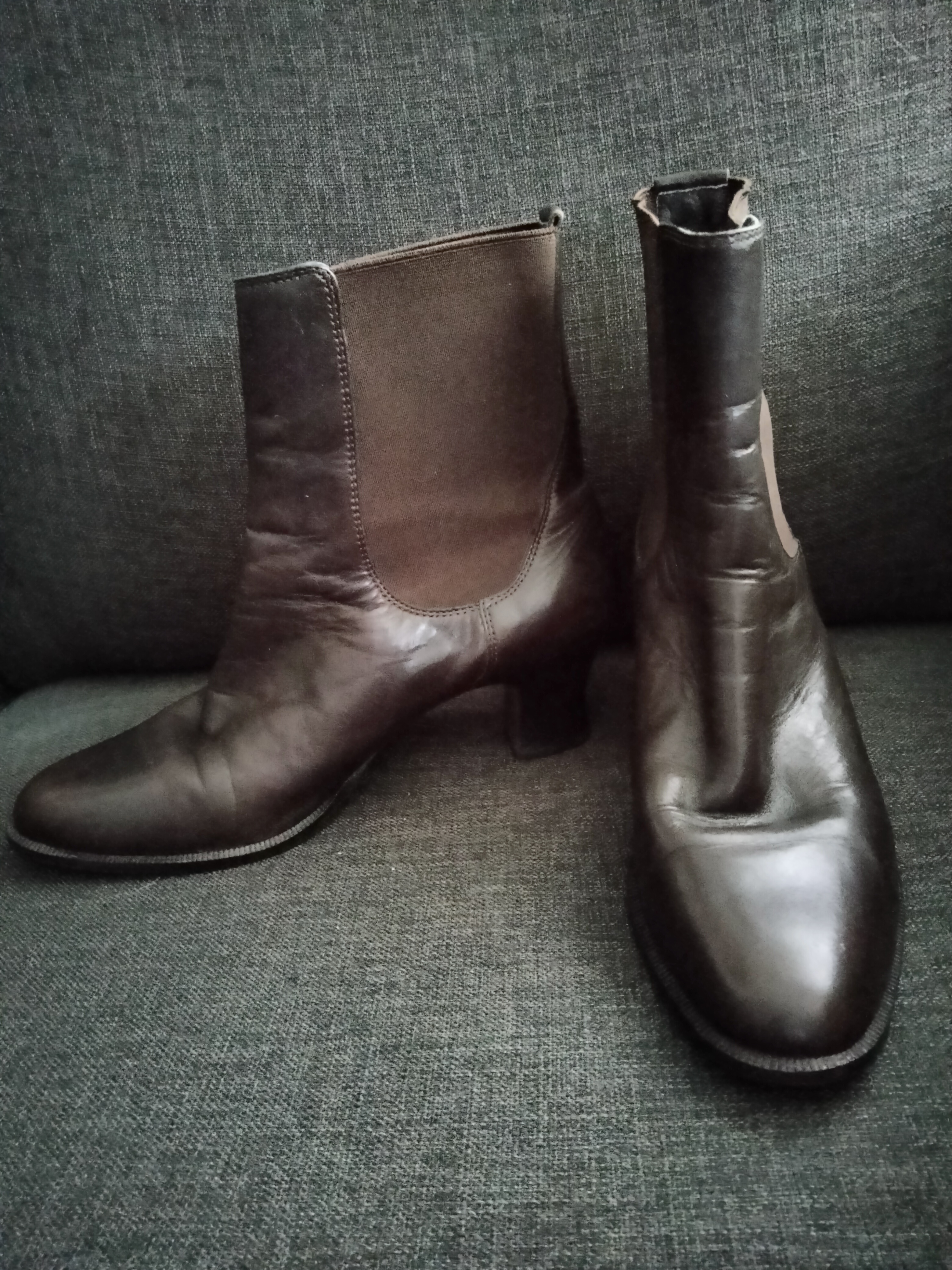
Love, love, love!!!!! Most likely from the 1980’s – maybe the 1990’s. Always one of my favorite finds (they fit!!!!!), and definitely keepers that will serve me well forever. These boots were made in Brazil of lovely, soft leather. The clues abound regarding their excellent pedigree:
1. The craftsmanship is exquisite: even, strong stitching with high quality elastic gussets that have held their shape and stretch. Notice the nice little tab at the back which looks good but also provides a gripping place to pull the boots on comfortably, without stretching that would pull them out of shape.
2. The soles and heels look very much like leather, which is always a plus because it can be repaired by a skilled shoemaker or shoe-repair technician, but instead are made of the wonderful Vibram-type material which came later in the mid-century and is virtually indestructible. The finish eventually wears off the soles but they don’t wear down as quickly as leather. Repair and replacement are hardly ever needed.
3, The heels are so well-crafted that they have the look of stacked leather, though they probably are not(?)
4. The Granny-style of the heels was fashionable at the time these were made but the overall design is perfectly classic and elegant. Despite the heel style these boots are wearable with most clothing types without looking dated and will continue to be in the future.
This investigation proved not only the age, origin and construction details of these boots, but also strong clues as to what class of person owned and wore them as well as the type of vendor which sold them originally. Although modern technology would allow a greater depth of detailed knowledge to be ascertained in a laboratory, I will leave those tasks to the forensic teams. For my purposes, the investigation is perfect and ends here, in my closet.
_ _ _ _ _ _ _
As I’ve said before, I don’t support the markets for any type of animal skins (including fur) by buying newly-made products that involve the raising, hunting and slaughter of the animals who provide them. I also avoid products made from wool, down and other feathers and silk, which also involve animal cruelty. Collecting beautiful true vintage artifacts easily satisfies my curiosity and fulfills my needs.
As the marketplace continues to offer more alternatives, my diet and toiletries are always vegetarian and vegan whenever possible. Excellent alternatives to most products are available and the prices are constantly coming down. Now that cruelty-free hard goods (not food or other things that will spoil) have been in the marketplace for a few years, it’s increasingly possible to find them in places where previously used items are sold or traded. True vintage items may not have been made with an ethical mentality, but they don’t contribute to cruelty and abuse in the present. Secondhand purchases don’t give money to current unethical manufacturing processes or the people who sell them either, as long as you are not buying from the original producer or vendor. And, the older things are, the better the quality in most cases. What could be better?
This is just the beginning of my posts of recent discoveries. More are coming. Stay tuned . . . . . . . . . . . . . . . . . . . . . .. . . . . . . . .
Wonderful items from the 1980’s and 1990’s. Although I never buy modern leather, skins or fur, I love these beautiful true vintage pieces which have the quality craftsmanship and materials that we rarely see anymore. With good care, they last for decades and decades! Stay tuned – I’ll post them soon . . . . . . . . . . . . . . . . . . . . . . .
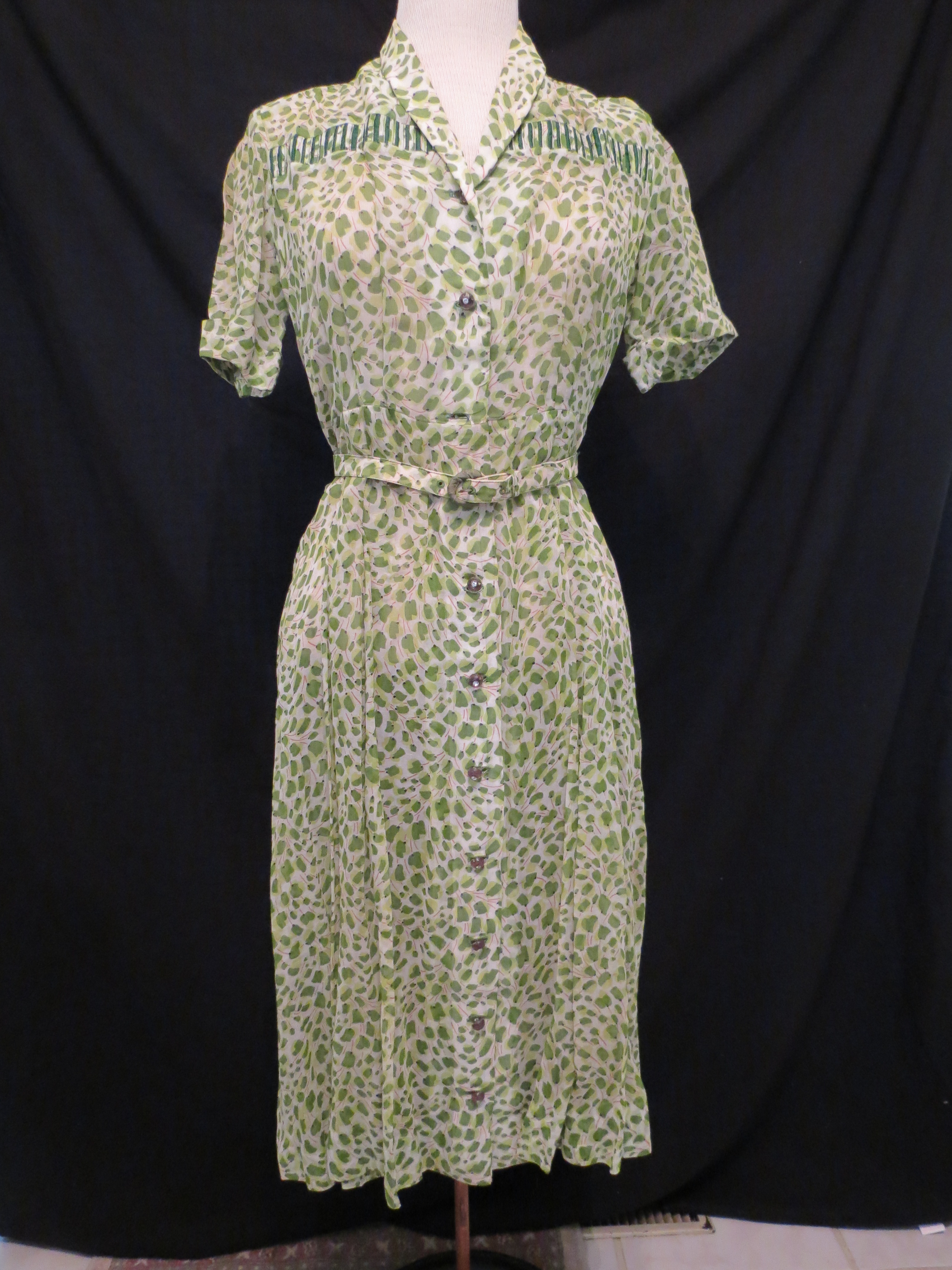
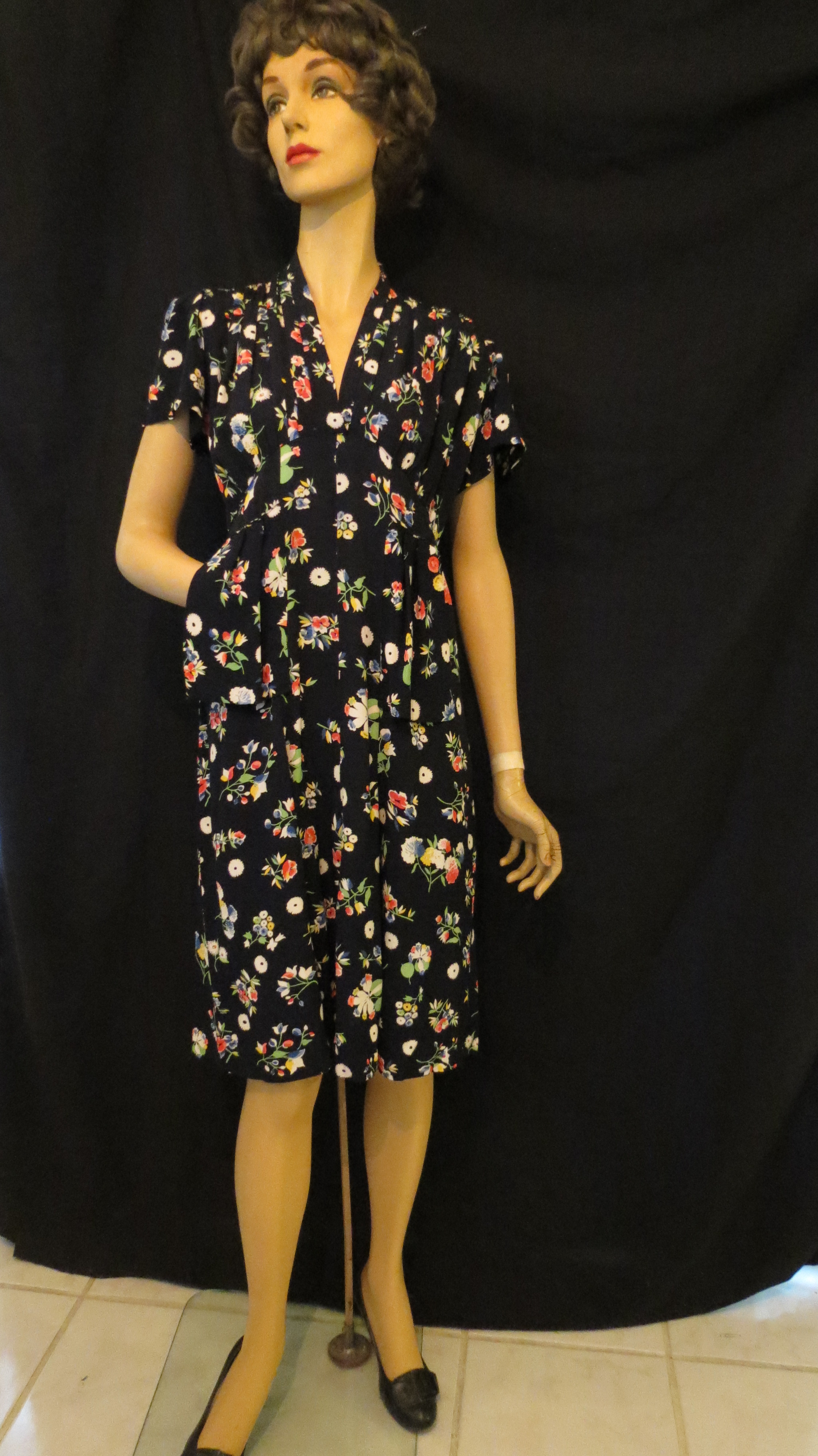
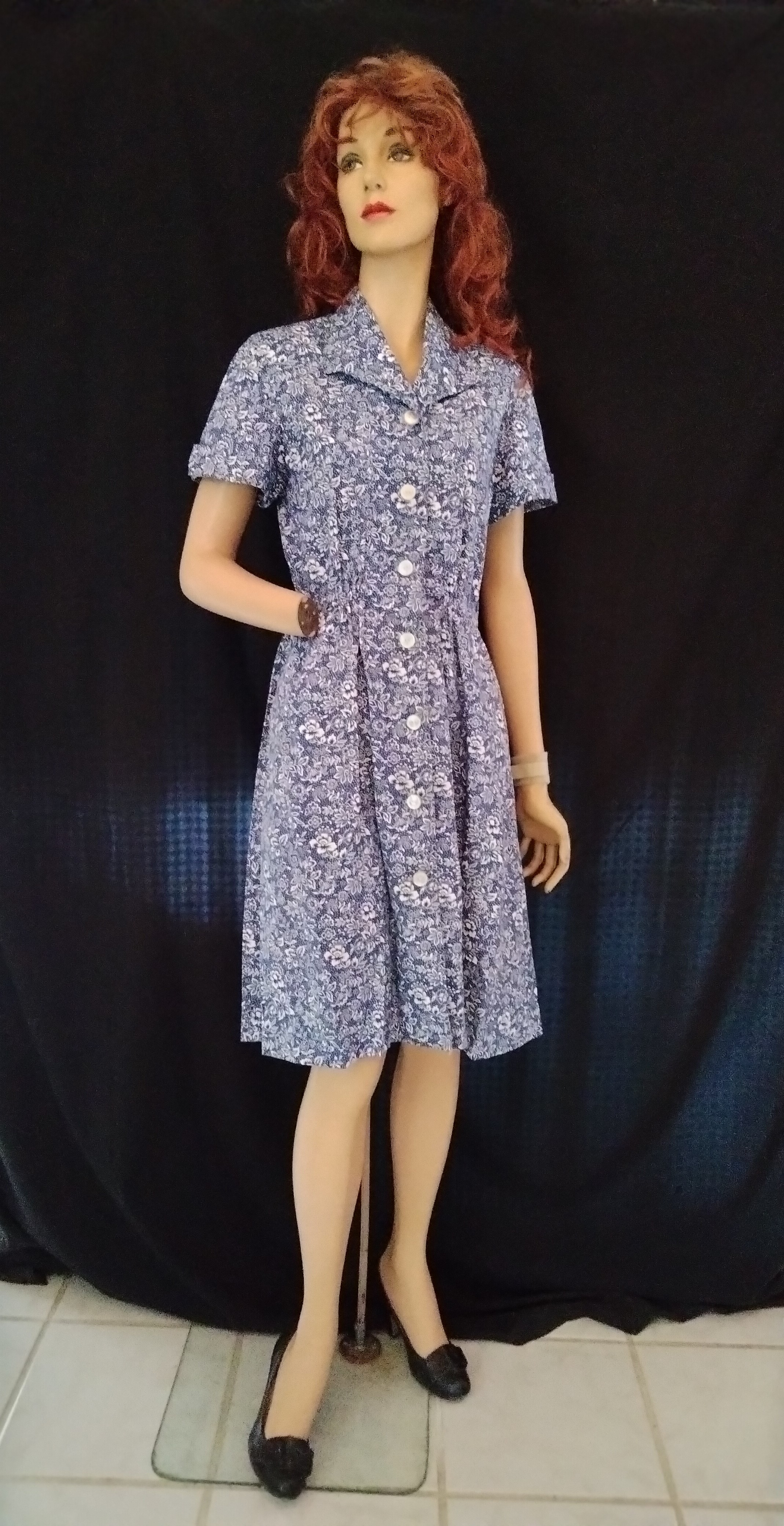
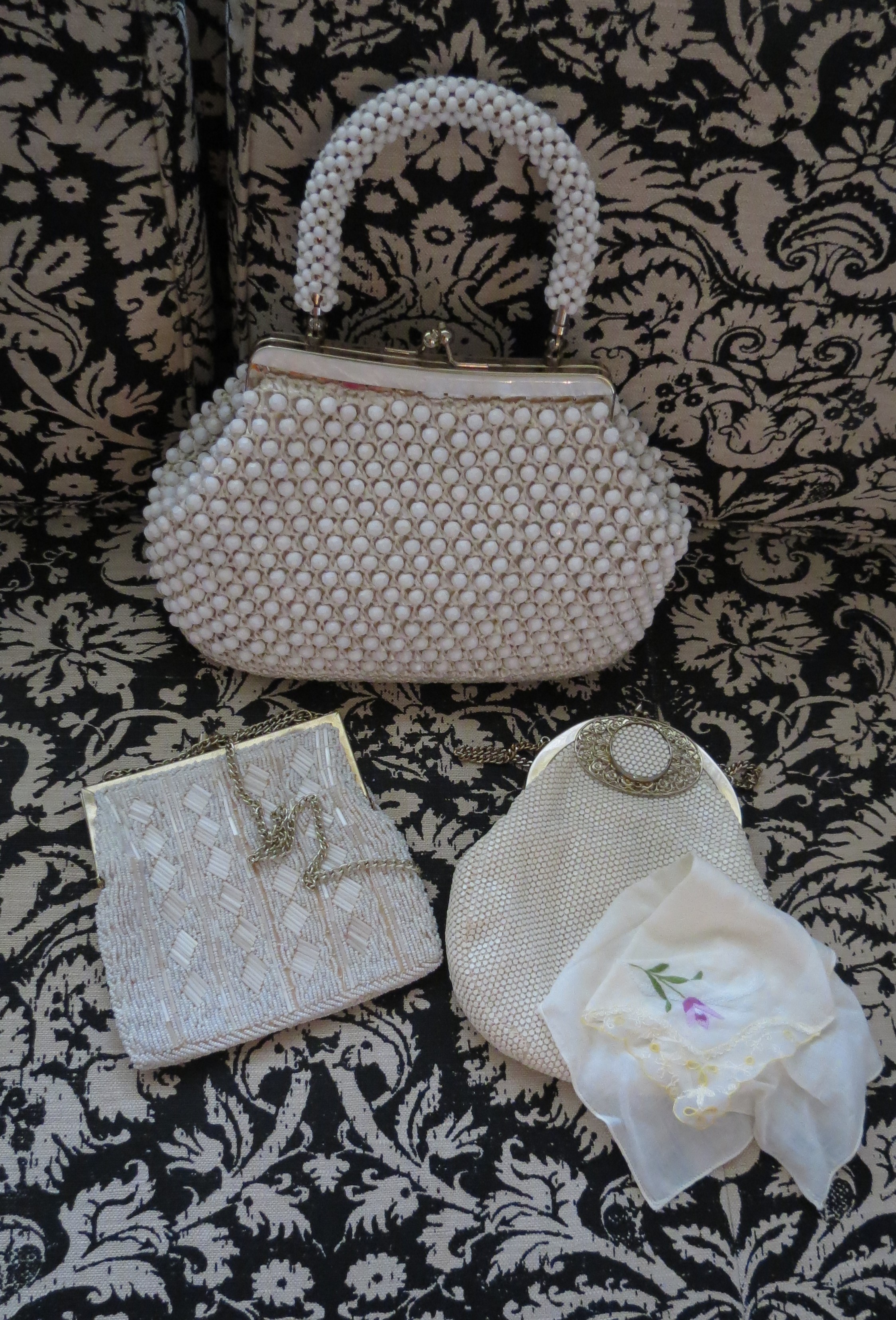
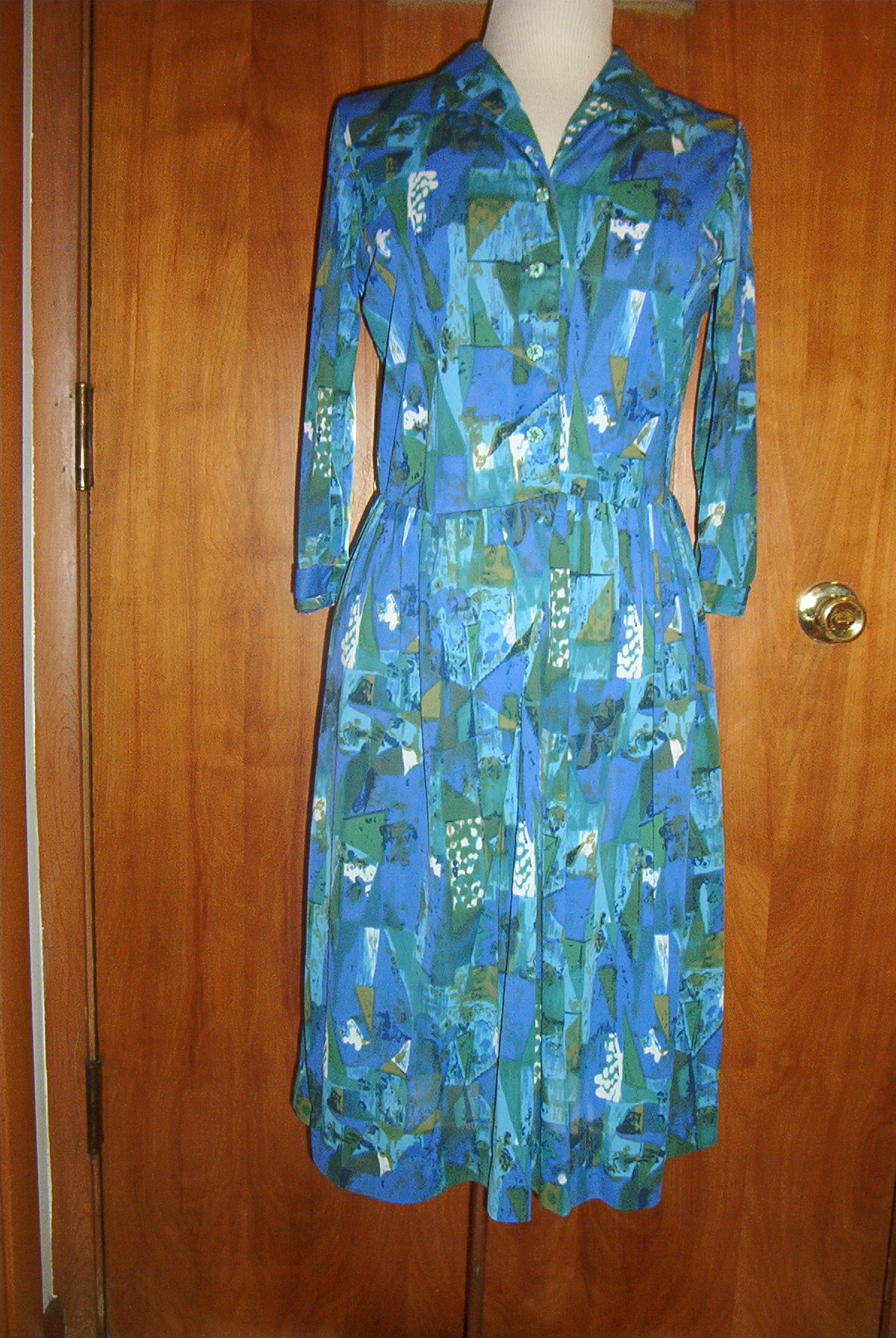
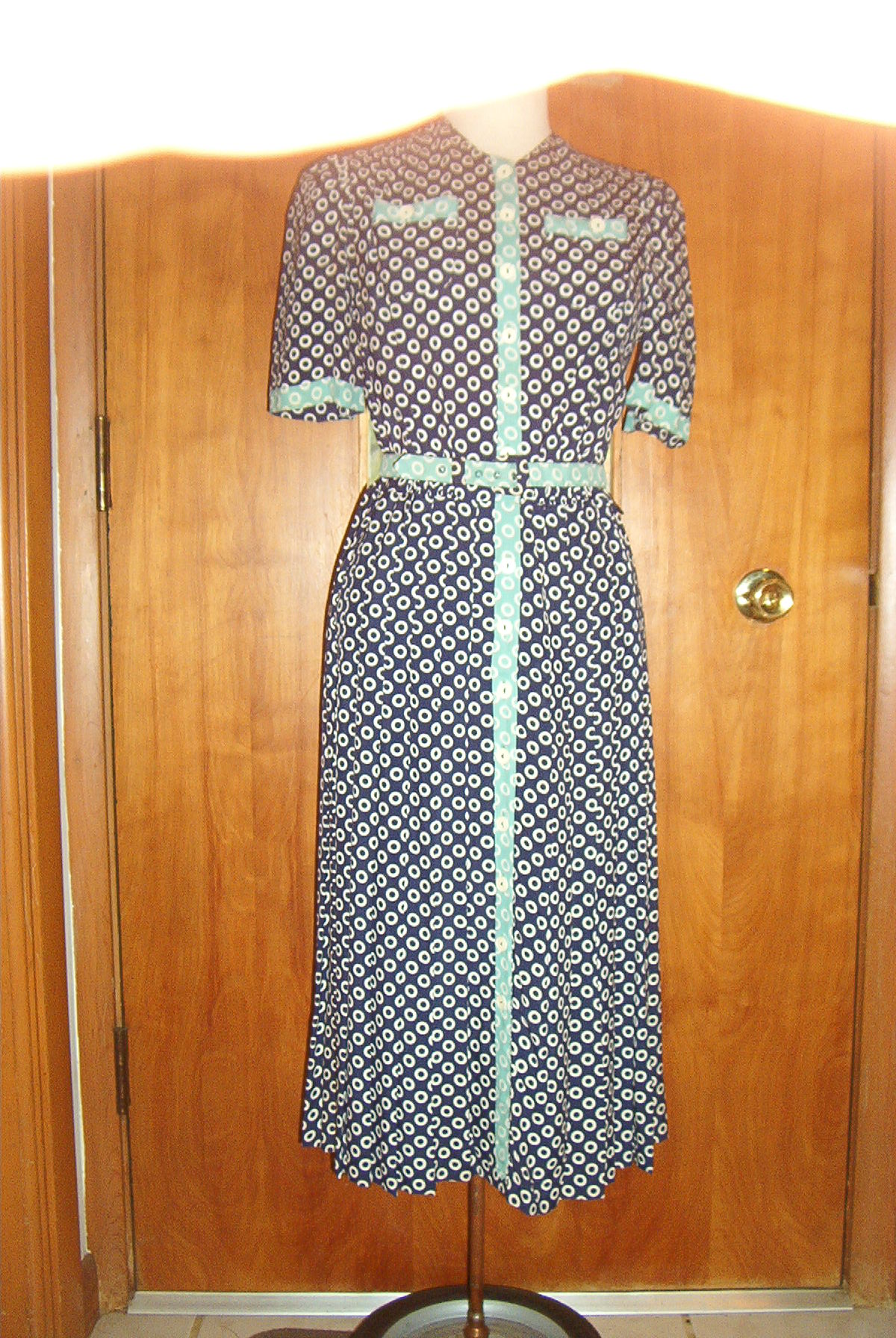
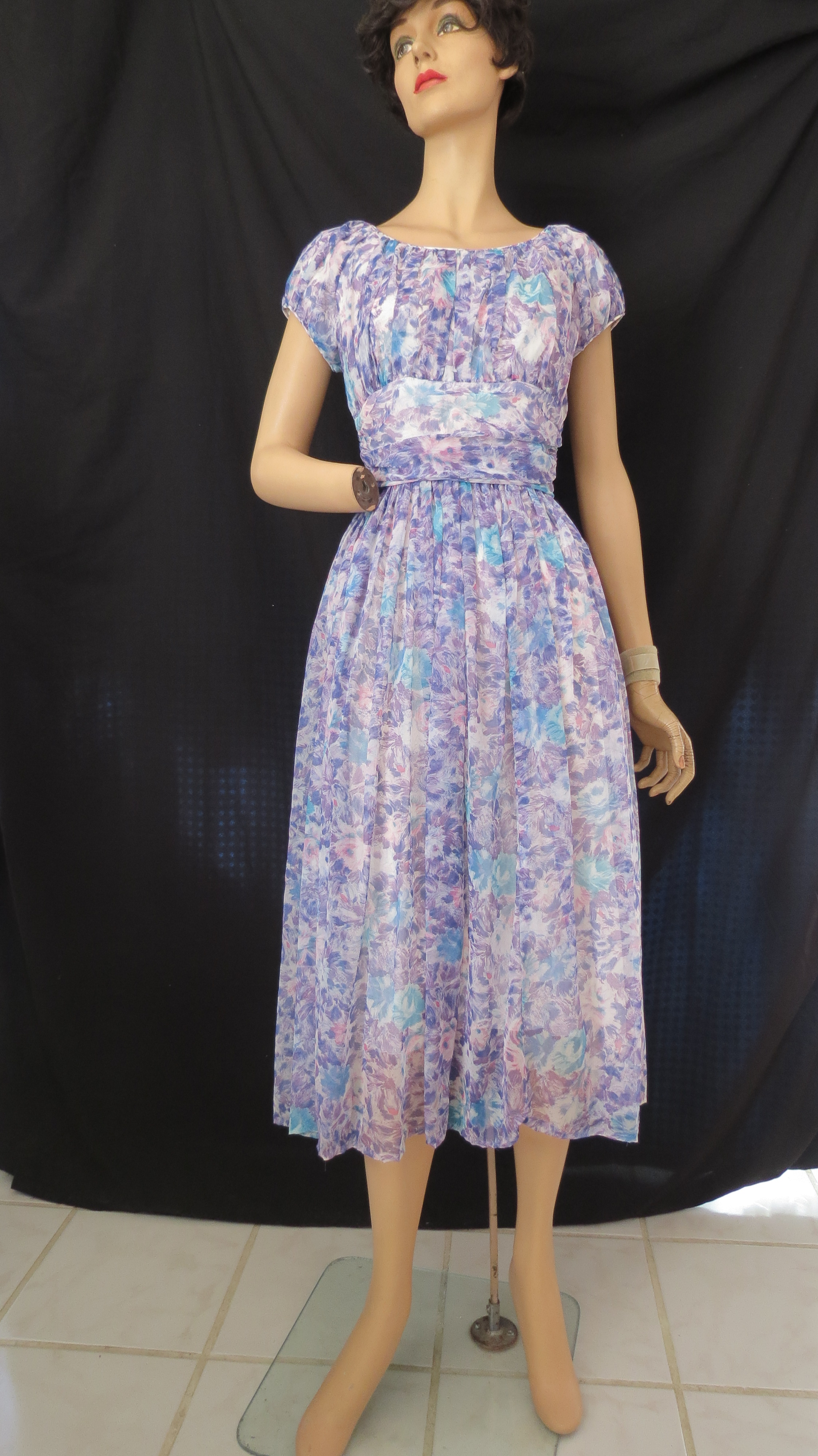
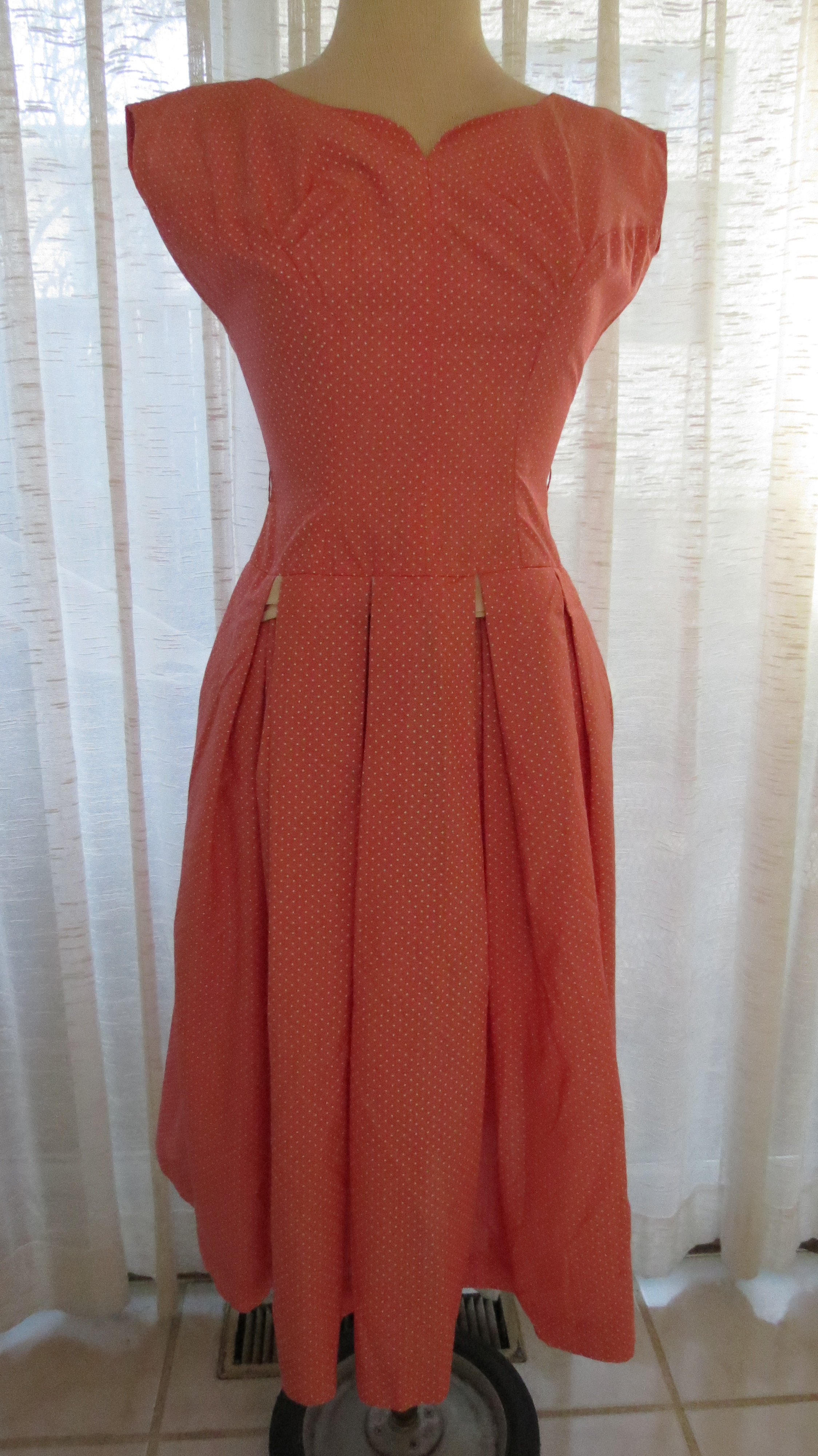
Some of my very favorite frocks. Wonderful rayon and blended synthetics. Pretty cotton. One sheer, the others opaque and drapey. Don’t you love these prints? Atomic, abstract and floral – big wartime and post-war favorites. Here, also, are some of the handbags, scarves and pumps that might have been worn with them.
Iconic styles, rationing-compliant and “modern” plastic alternatives to leather and wool. Silk and silky synthetic scarves were constant purse accessories. A few items carry over from the 1930’s – a few point toward popular styles as we go into the 1950’s. Since we’ve had such a long, cold winter, tomorrow I will show a few of the coats and outdoor accessories which might have accompanied 1940’s dresses outside the home. Stay tuned . . . . . . . . . . . . . . . . . . . . . . . . . . . . . .
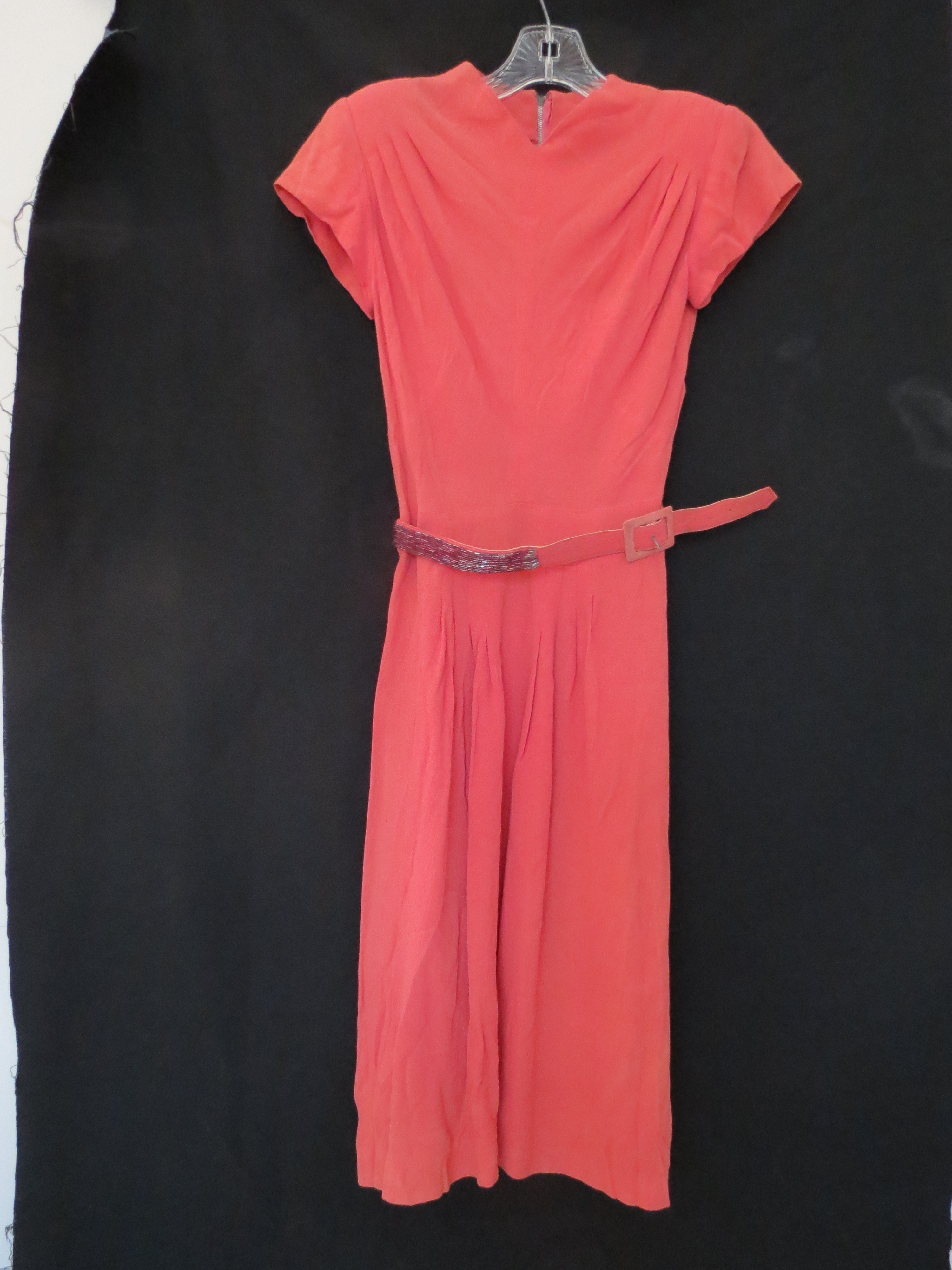
A knee-length synthetic (probably acetate blend) coral red frock from the early 1940’s has augmented shoulders, a straight cut and a fabric-covered belt with some glass beads to dress it up. In the post-war Forties, hemlines were able to come down again and skirts became fuller. The knee-length wartime styles were able to resume their previous midi-length luxury. Rayons and polyester synthetics continued their popularity because of their availability, lovely drape and acceptance of color dyes. During the early recovery from the war, some natural fabrics and detail items were still not fully stocked in dressmaking supplies.
The ever-popular shirtwaist style has never left the fashion scene but became more modern, with atomic prints, and more sophisticated design in the later ’40’s after women had stepped into more visible roles in society with their wartime efforts. When the majority of the trauma and restrictions were finally past, this tea-length floral frock is an example of a more relaxed, aristocratic style as the culture looked forward to the more prosperous 1950’s.
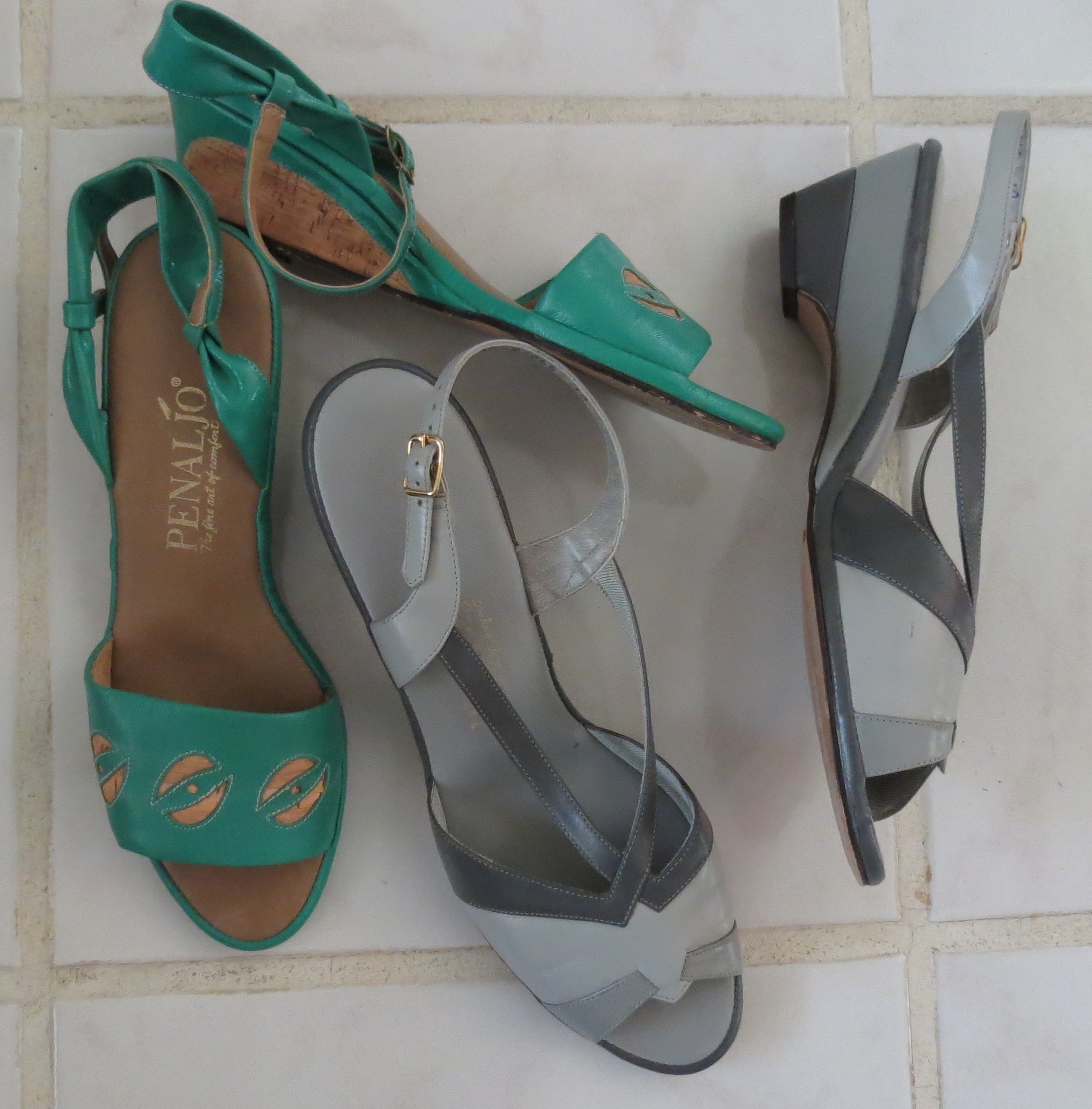
With day-dresses to slacks, I love wedgie sandals and these Eighties does Forties versions did not disappoint me. Their sleek leather sling-back style goes well with almost everything and the 2″ heel gives lift along with walkability. This design carried on into the 1950’s and would look great with the dresses I’ll post tomorrow. Stay tuned . . . . . . . . . . . . . . . . . . .
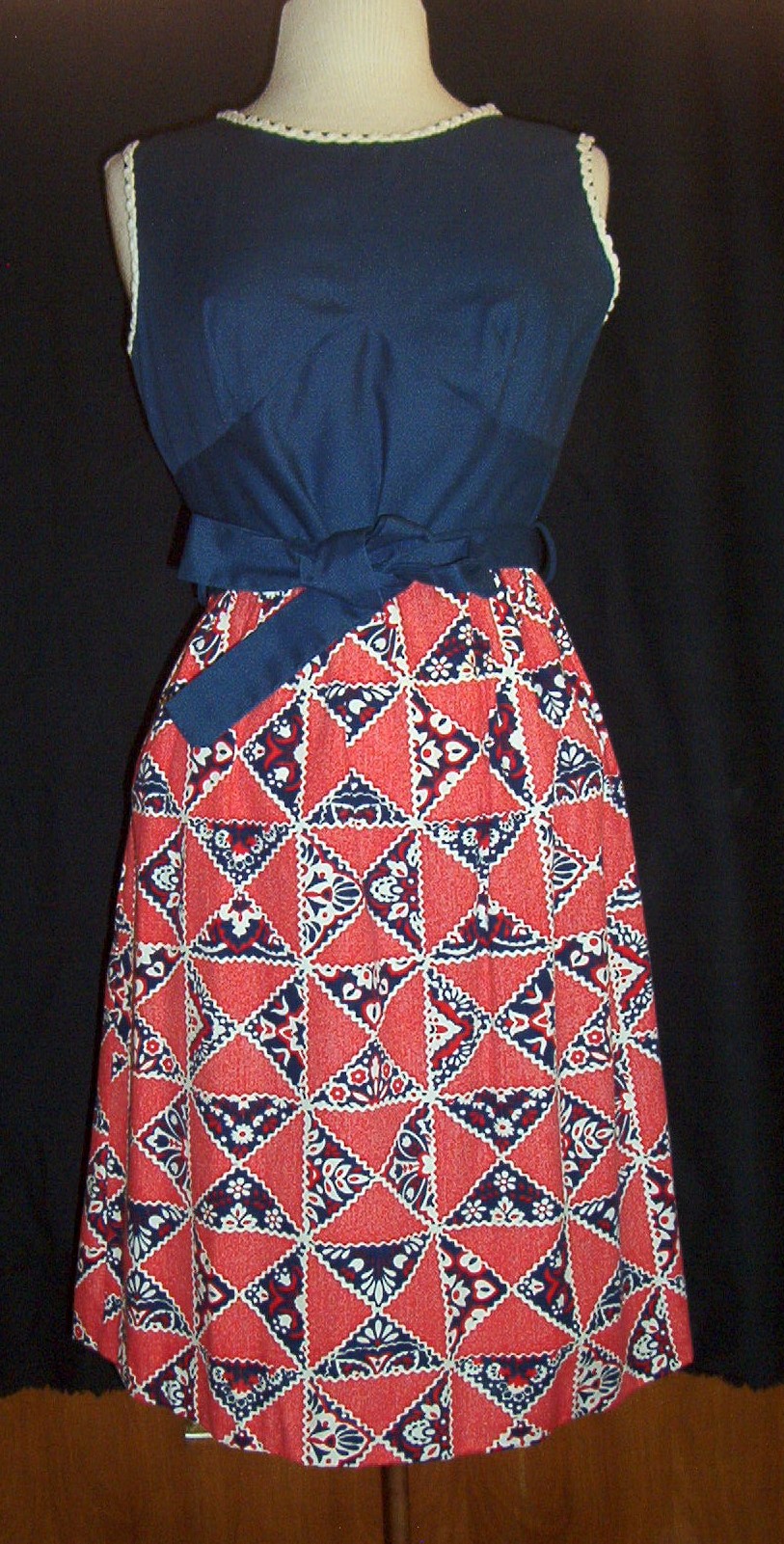
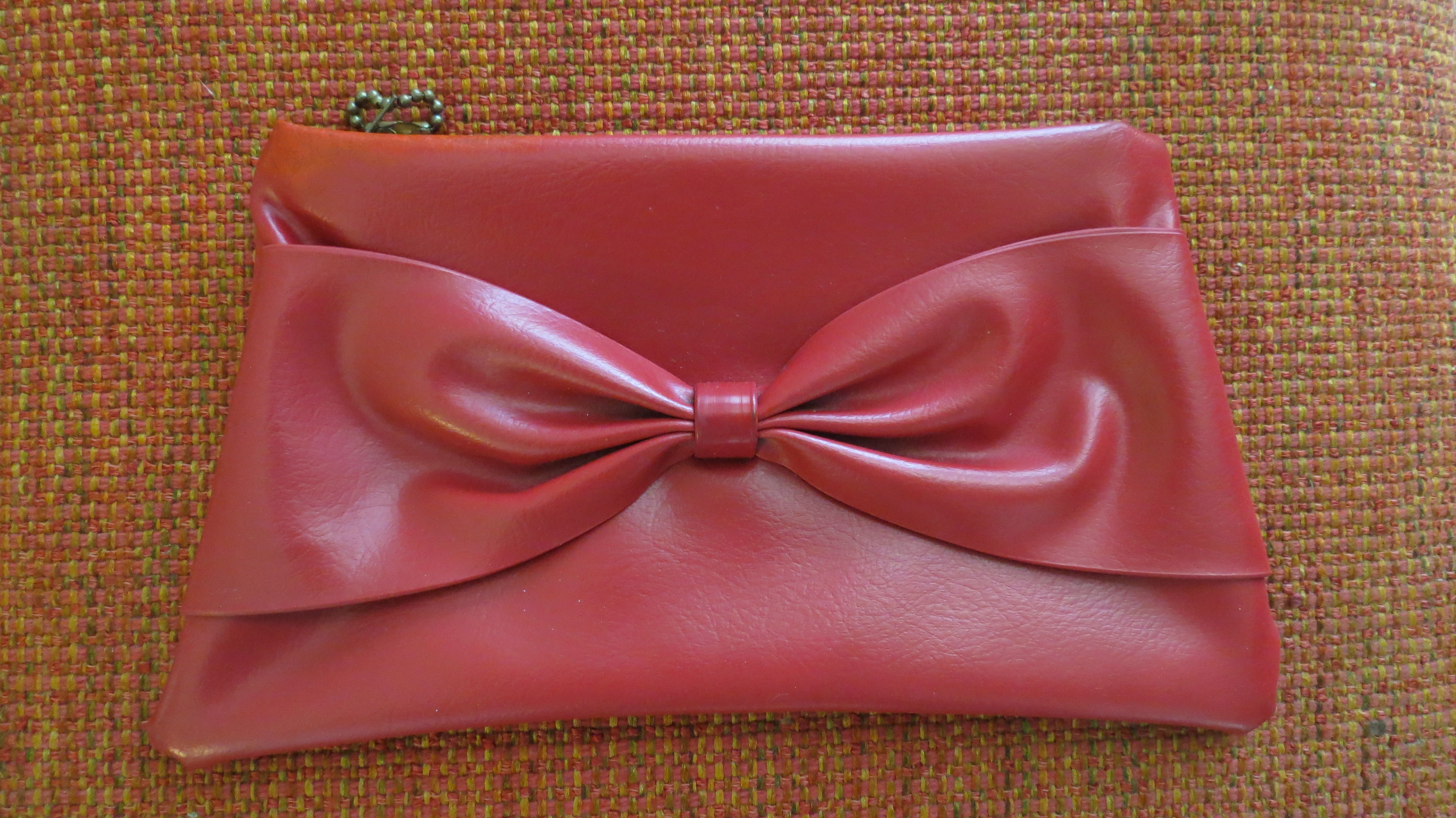
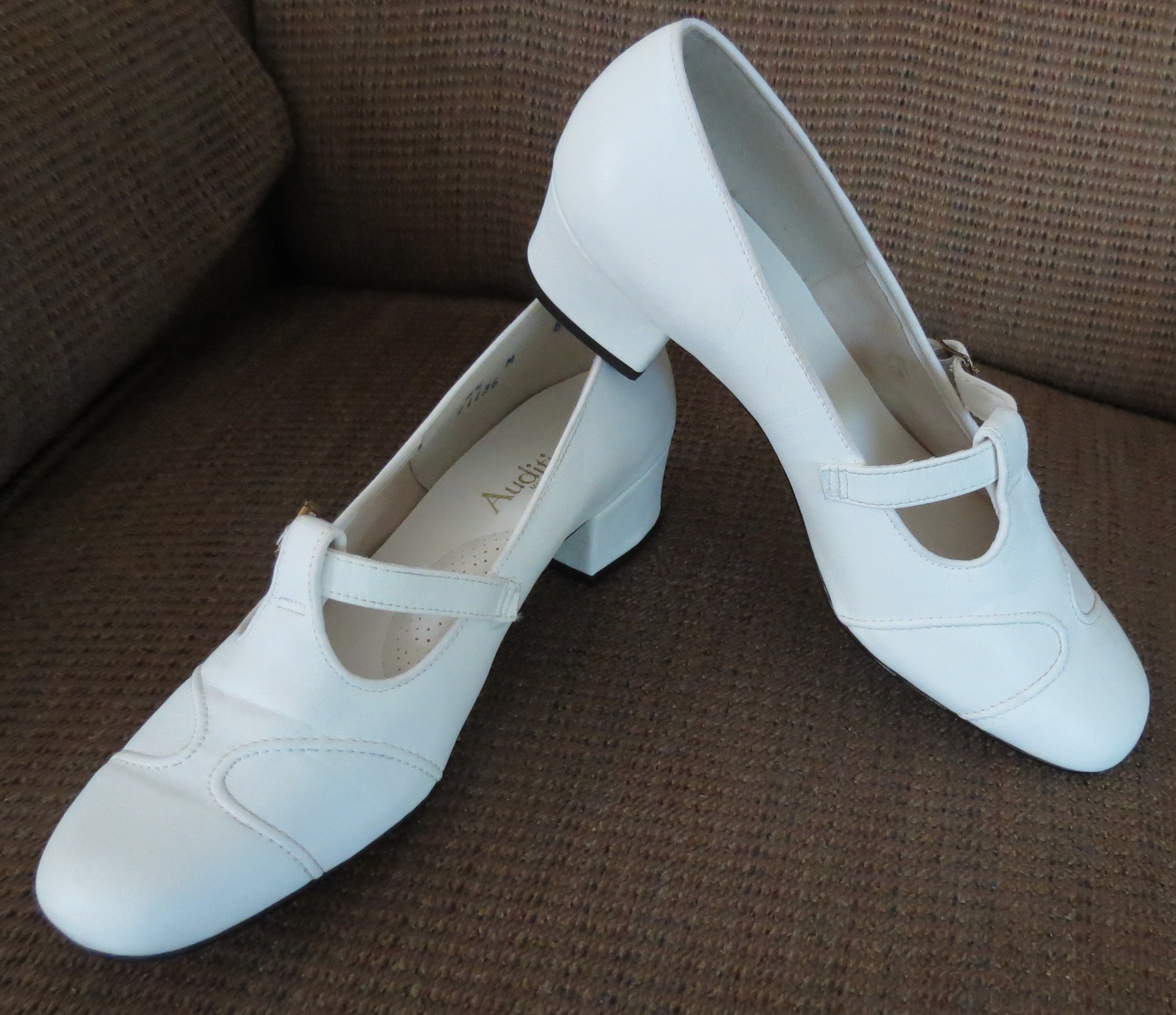
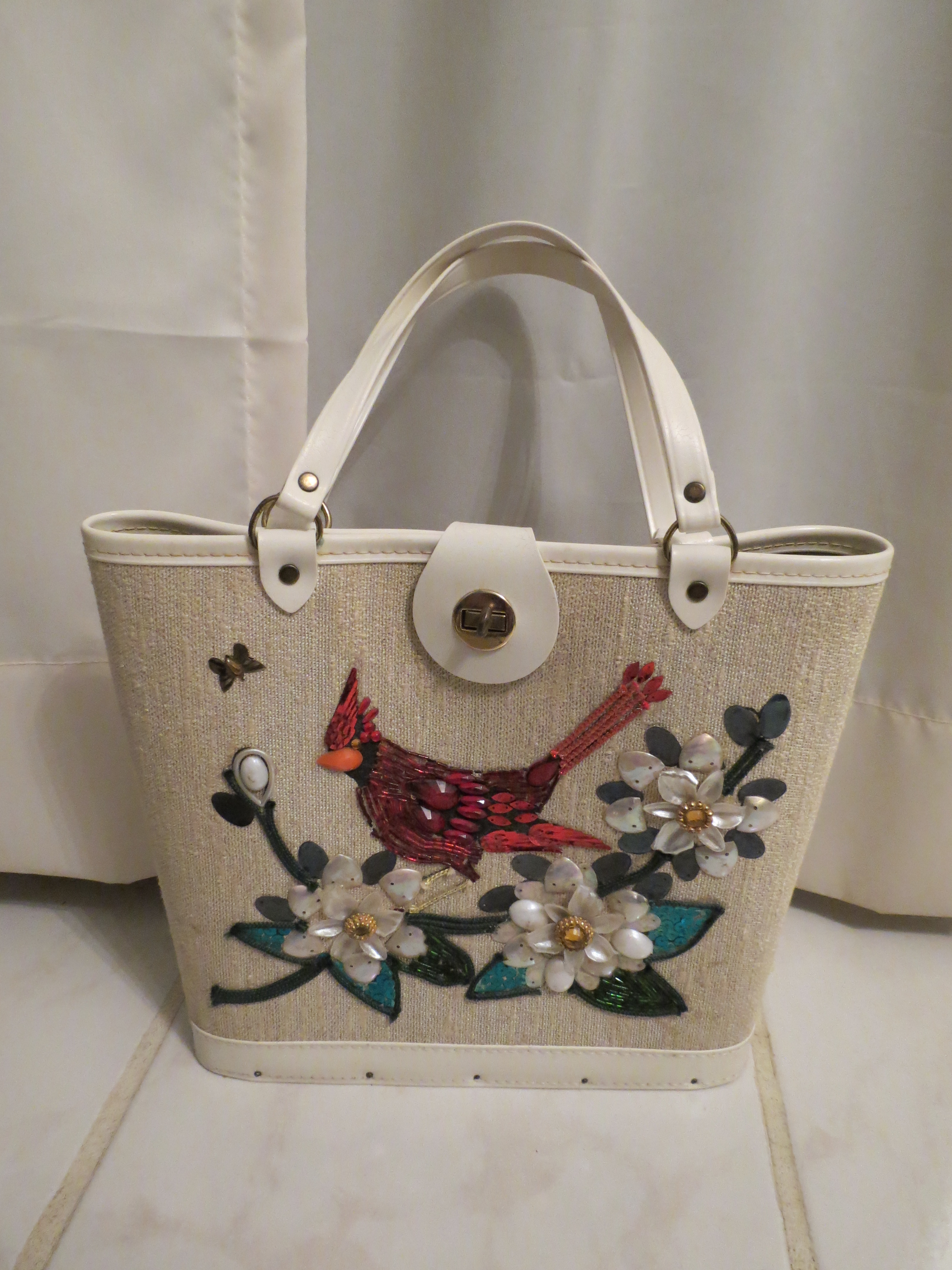
Okay. She’s got to be prepared for attending some dinner or event that is a little more dressy even though spending all her time on the beach and the boardwalk is the best. Pretty 1950’s and early 1960’s sundresses will allow her to be appropriate while also bending to her casual style. A more sophisticated purse and low-heel Mary Janes go to town or a restaurant very properly. This decorated tote bag is a fashion statement of the time that is very practical for shopping.
In spite of the extra travel case for her roller skates, our girl will be able to finish packing this travel wardrobe in one suitcase. Several things can be worn on the plane, ’cause it looks like she’s going to fly. When she gets there, she’ll probably come back with some purchases and will have to buy a beach hat. Maybe we’ll get a chance to see her purchases when she comes home. Stay tuned . . . . . . . . . . . . . . . . . . . .