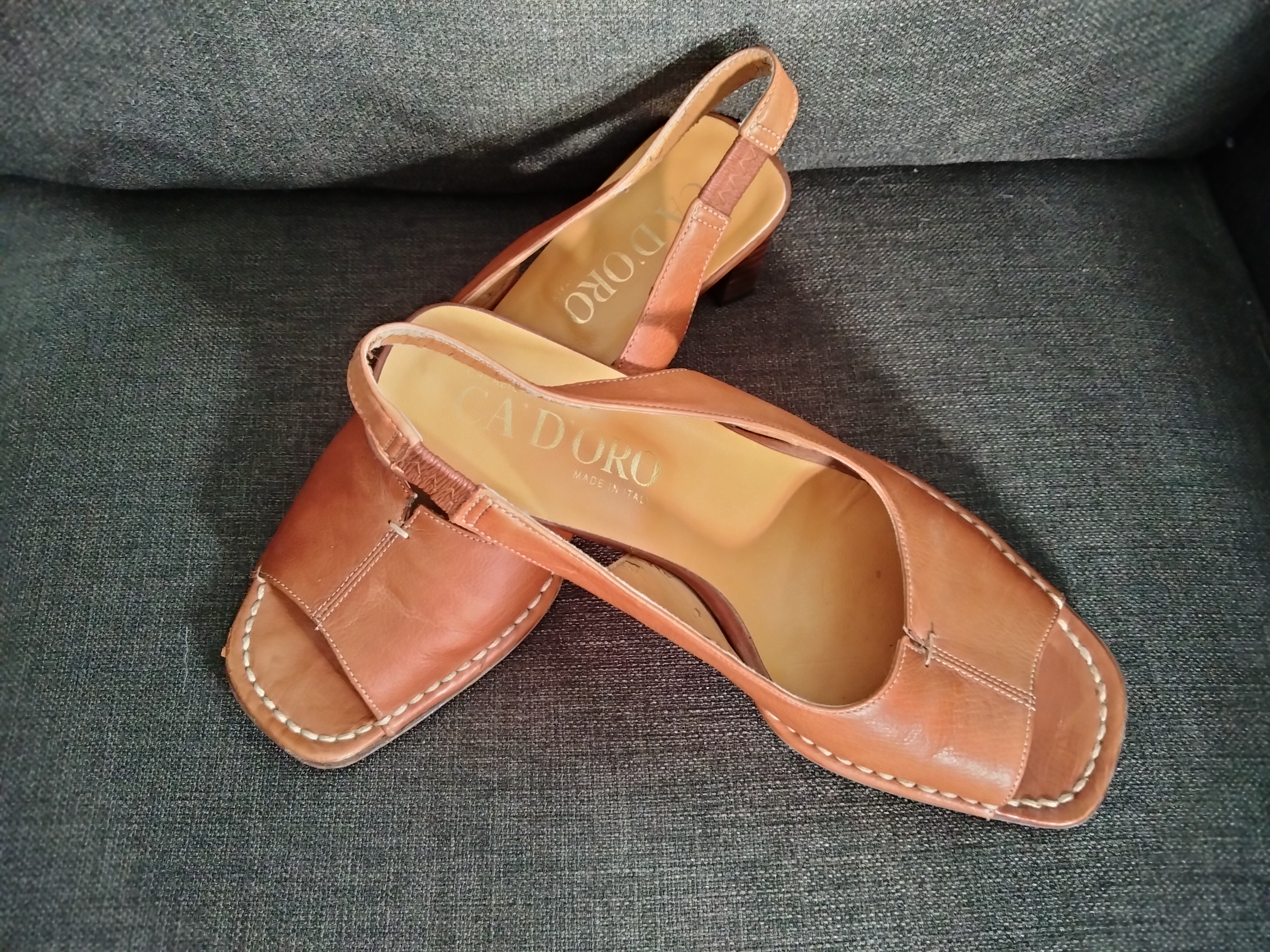
Italian leather shoes and mid-century jewels! I’ll post the discoveries on the weekend. Stay tuned . . . . . . . . . . . . . . . . . . . ..
MORGANA MARTIN, THE MAGICVINTAGESPY
BLOG: MAGICVINTAGESPY.COM


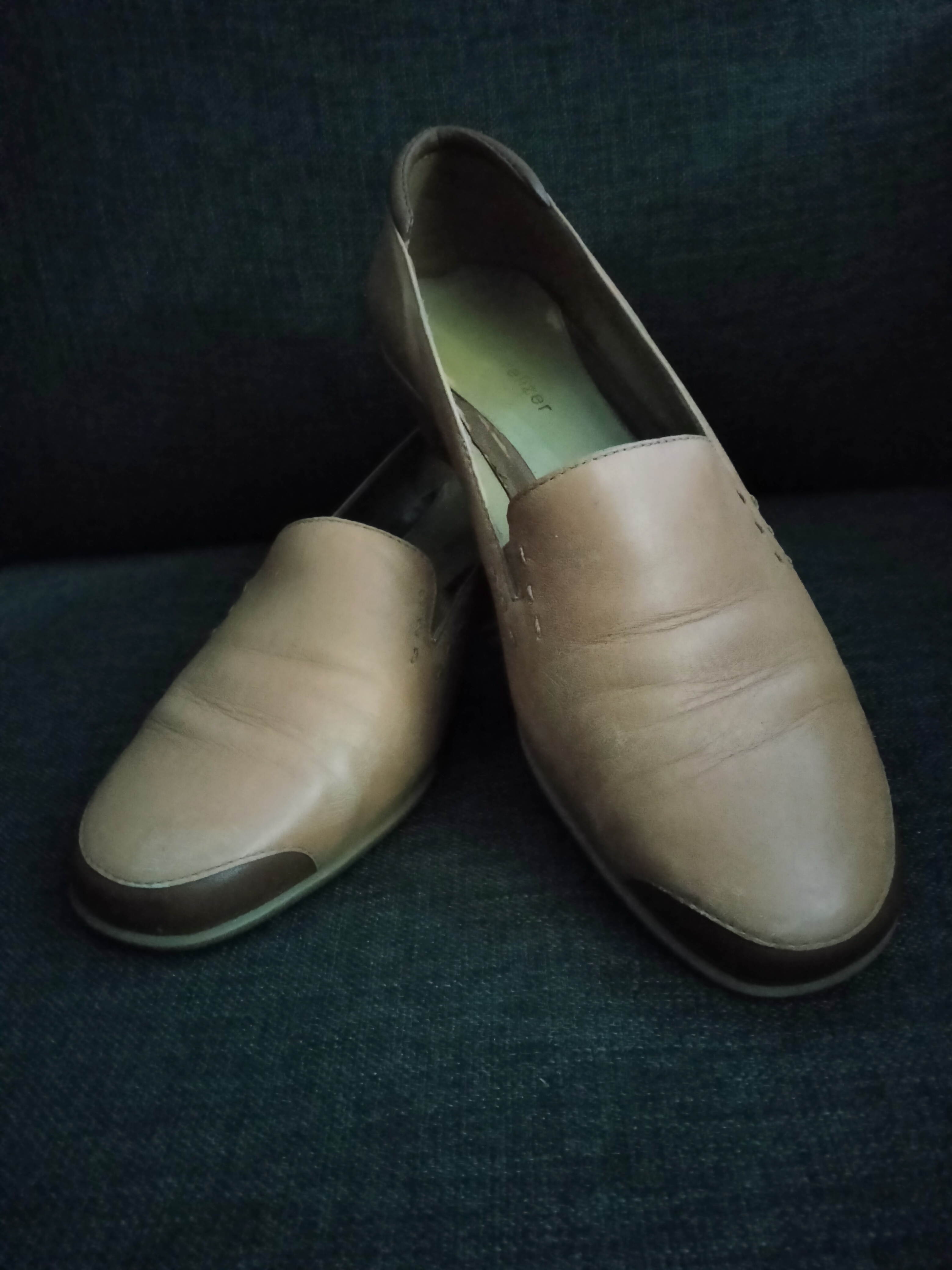
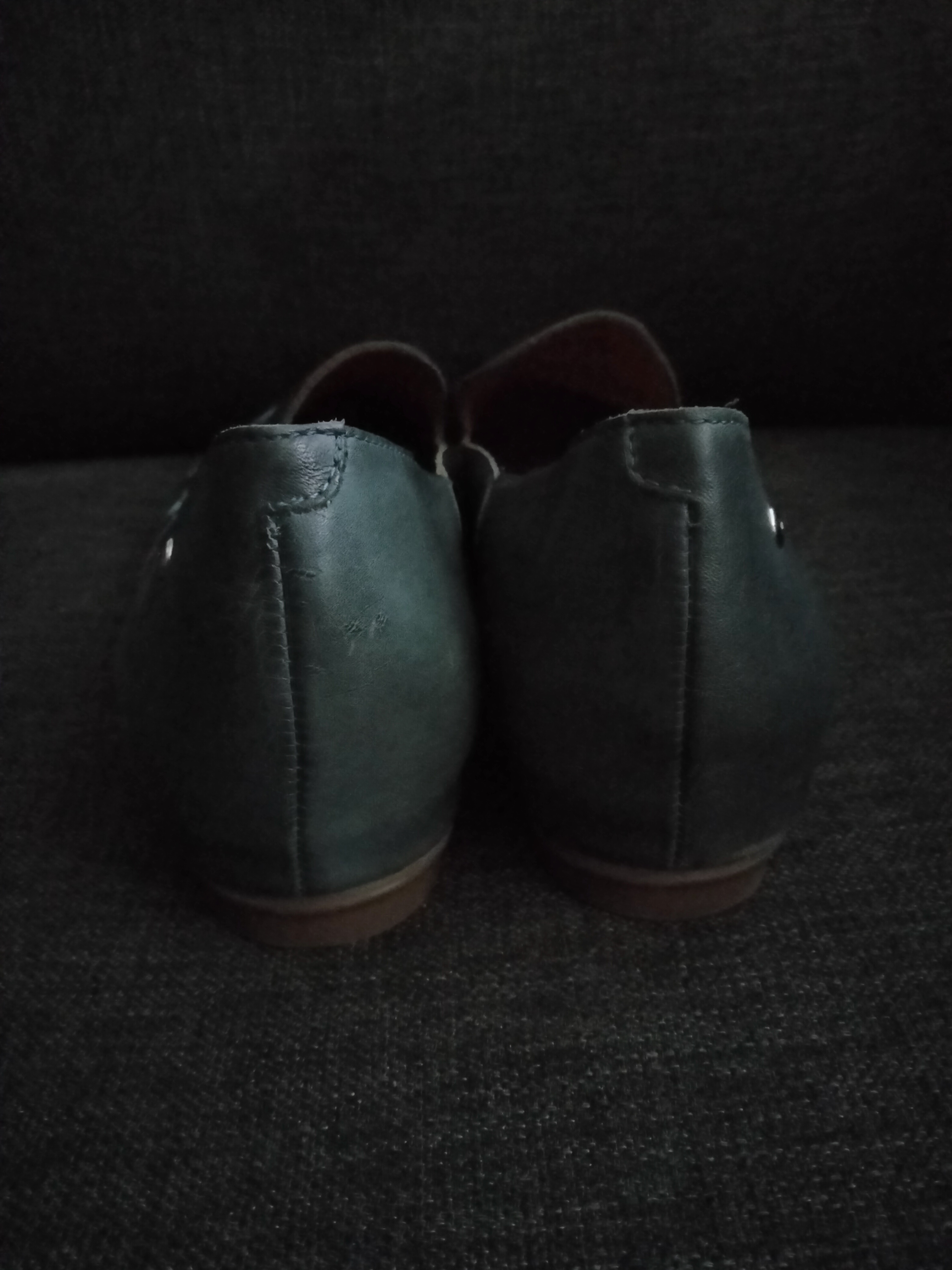
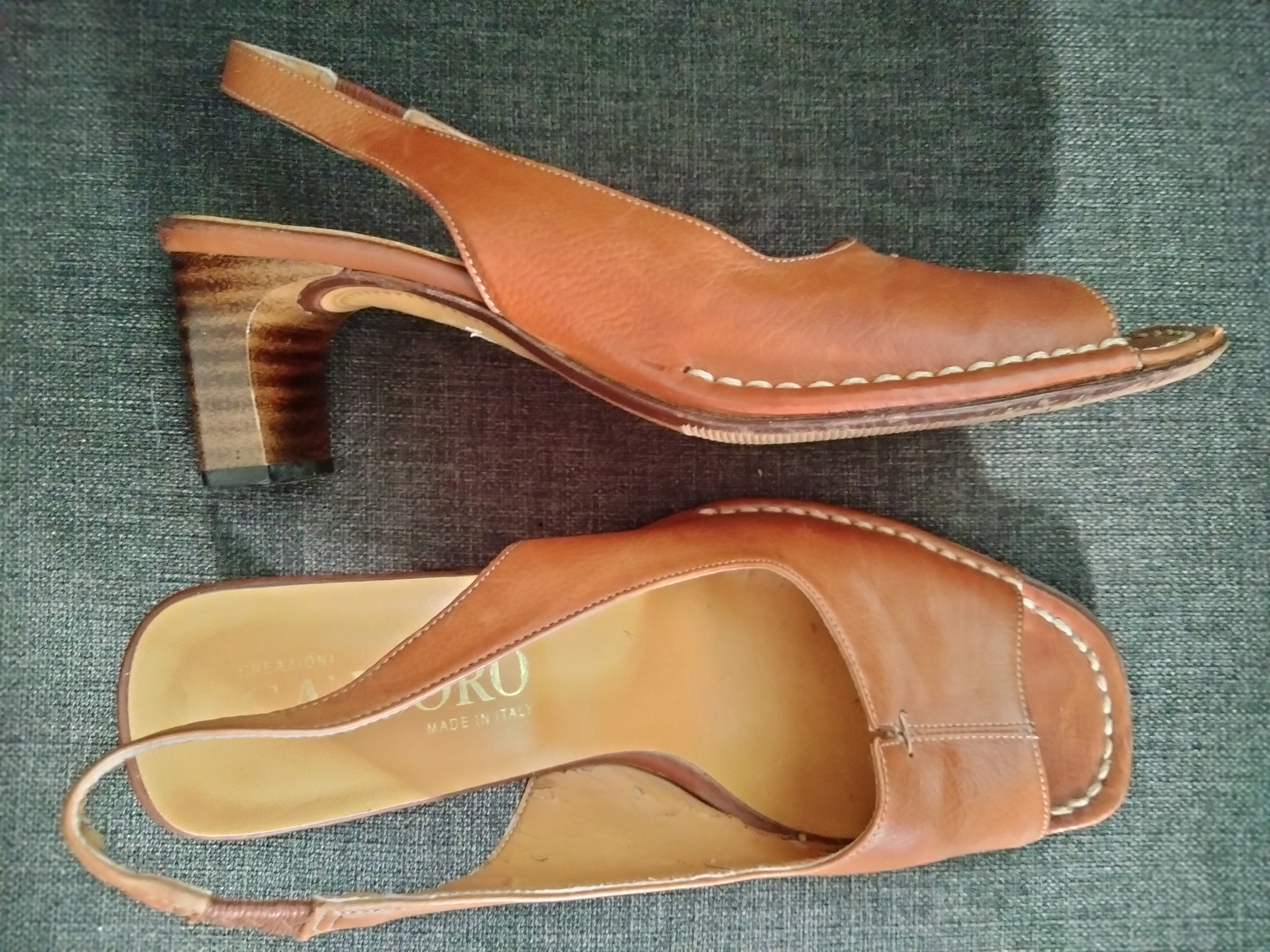
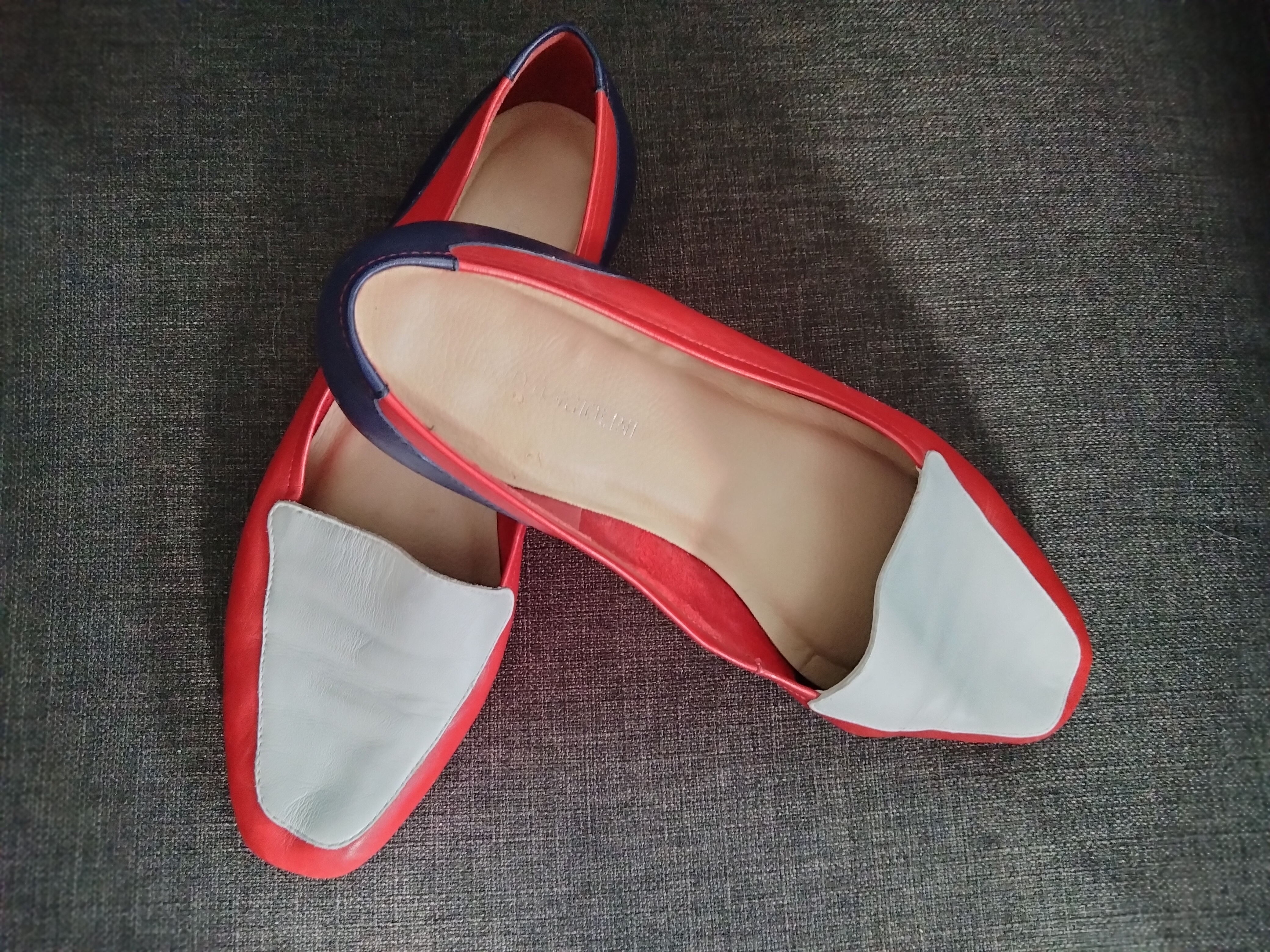
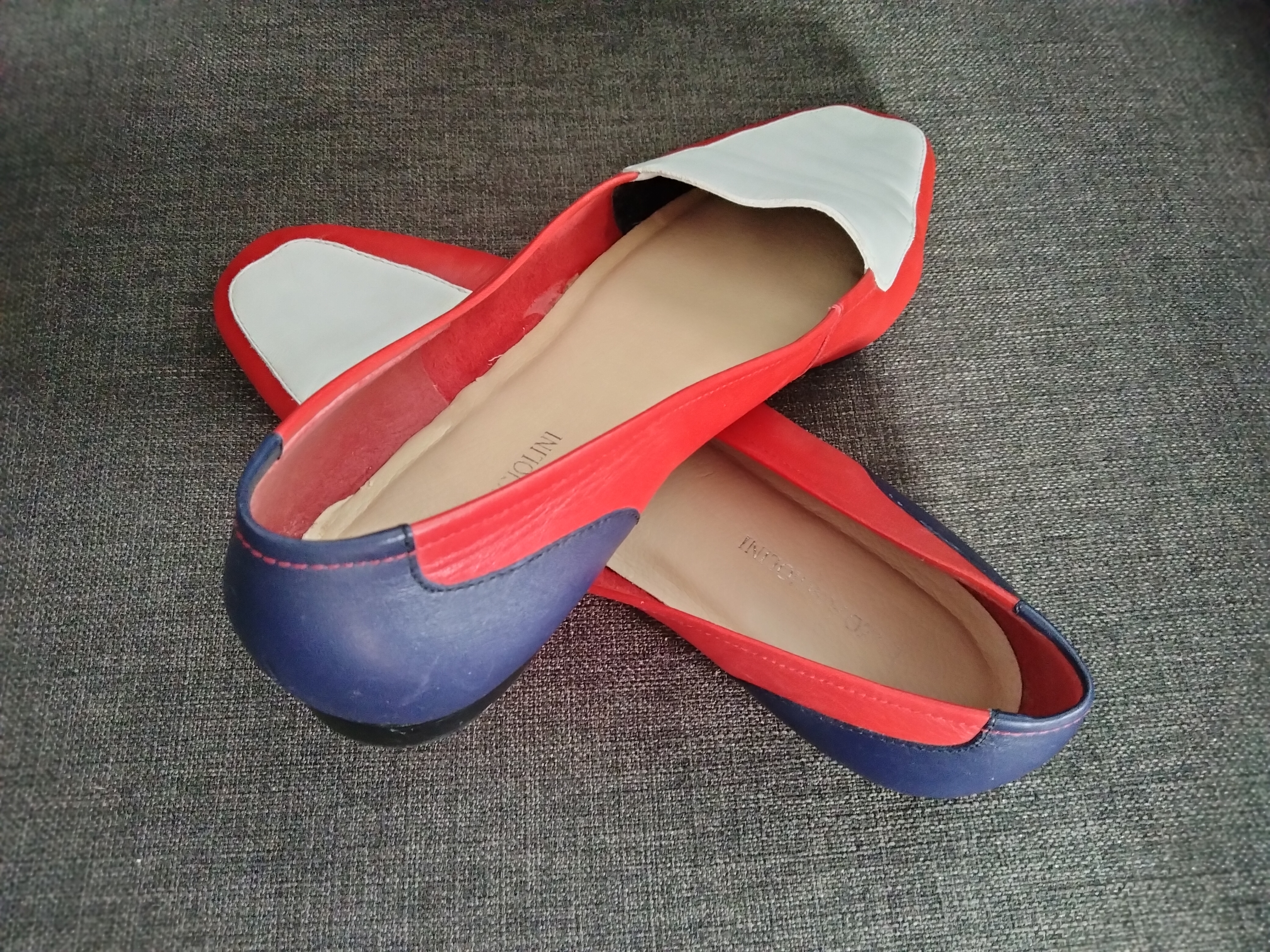
Made in Brazil and Spain – in the 1980’s and 1990’s, two of the BEST places where great shoes and other leather goods were made. Italy and Portugal were also at the top of that list. These were made for well-known brands but small unbranded shoemakers (especially in Latin America and Europe) sold beautiful creations if you were able to find them. I knew immediately that these were vintage footwear pieces and that the quality would be outstanding. The truth, as always, is in the details and I have included photographs and descriptions of the most important ones.
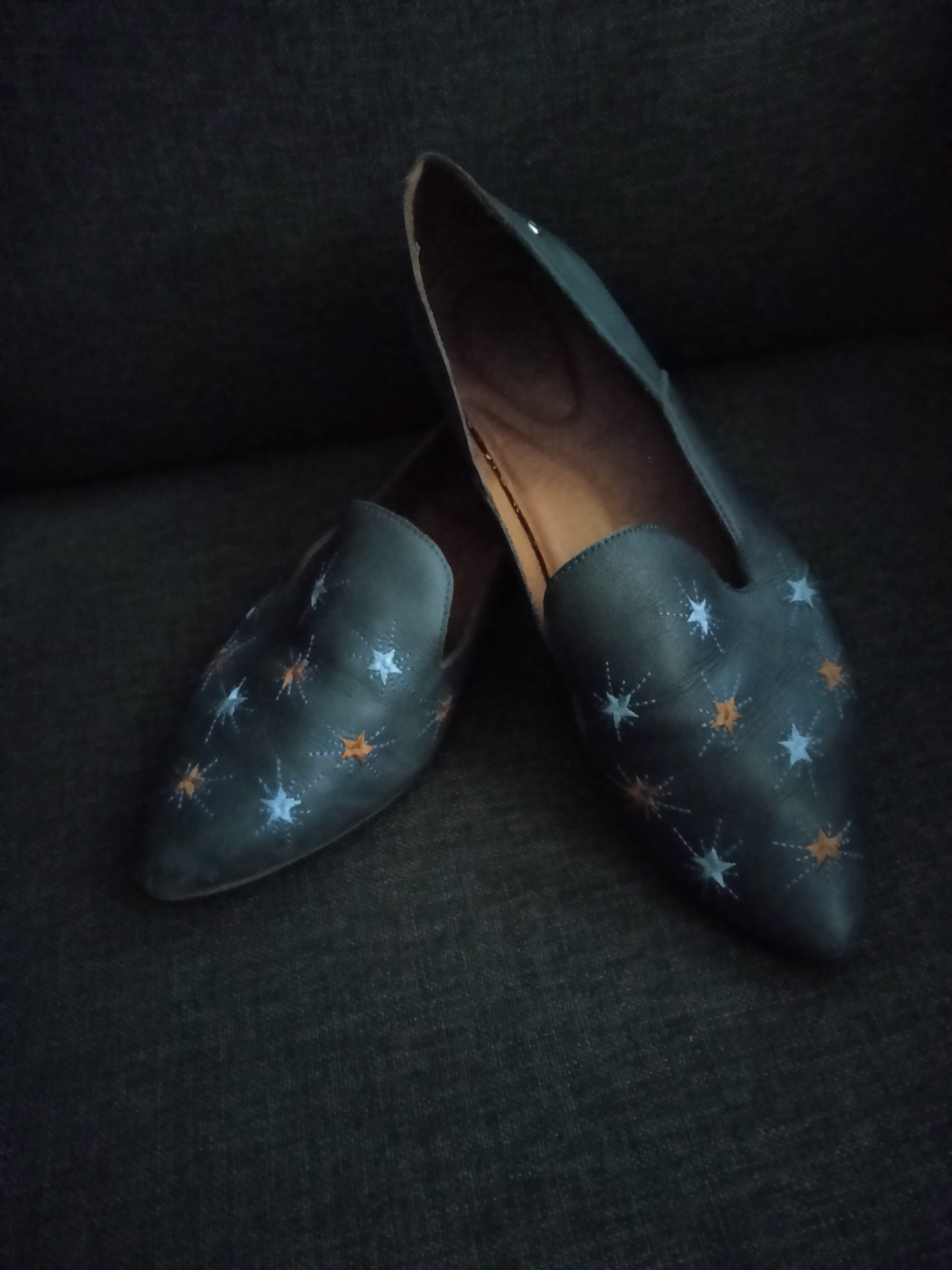
The leather in the top-pictured flats is glove-soft. I adore the embroidered stars covering the vamps. The little finishing detail at the top of the heels was one sign of exceptional workmanship. I usually find this detail on well-made true vintage European footwear. These were made in Spain by Pikolinos, a family brand founded in 1984. Love the style!
The camel-colored flats with brown trim are made in an elegant style meant as a driving shoe (notice the extension of the sole material on the back of the heels). See the little stitching detail that secures the seam there, too, plus the brown trim which reinforces the heel opening but is also very stylish. On the edges of the vamps where the foot enters there are slim inserts of elastic material and elegant stitching detail. These shoes were made in Brazil for Naturalizer, a more common North American company which nevertheless made some excellent quality footwear, at least in the past.
Both these pairs of shoes have a hard but flexible vinyl/rubber sole that is very appropriate for street wear and resists damage. Again, they will last for decades longer. I couldn’t be happier to find these practical styles in one place! Stay tuned for the last installment of this most recent investigation . . . . . . . . . . . . . . . . . . . . . . . . . . . . . . . . . . . . . . . . . .
MORGANA MARTIN, THE MAGICVINTAGESPY
BLOG: MAGICVINTAGESPY.COM

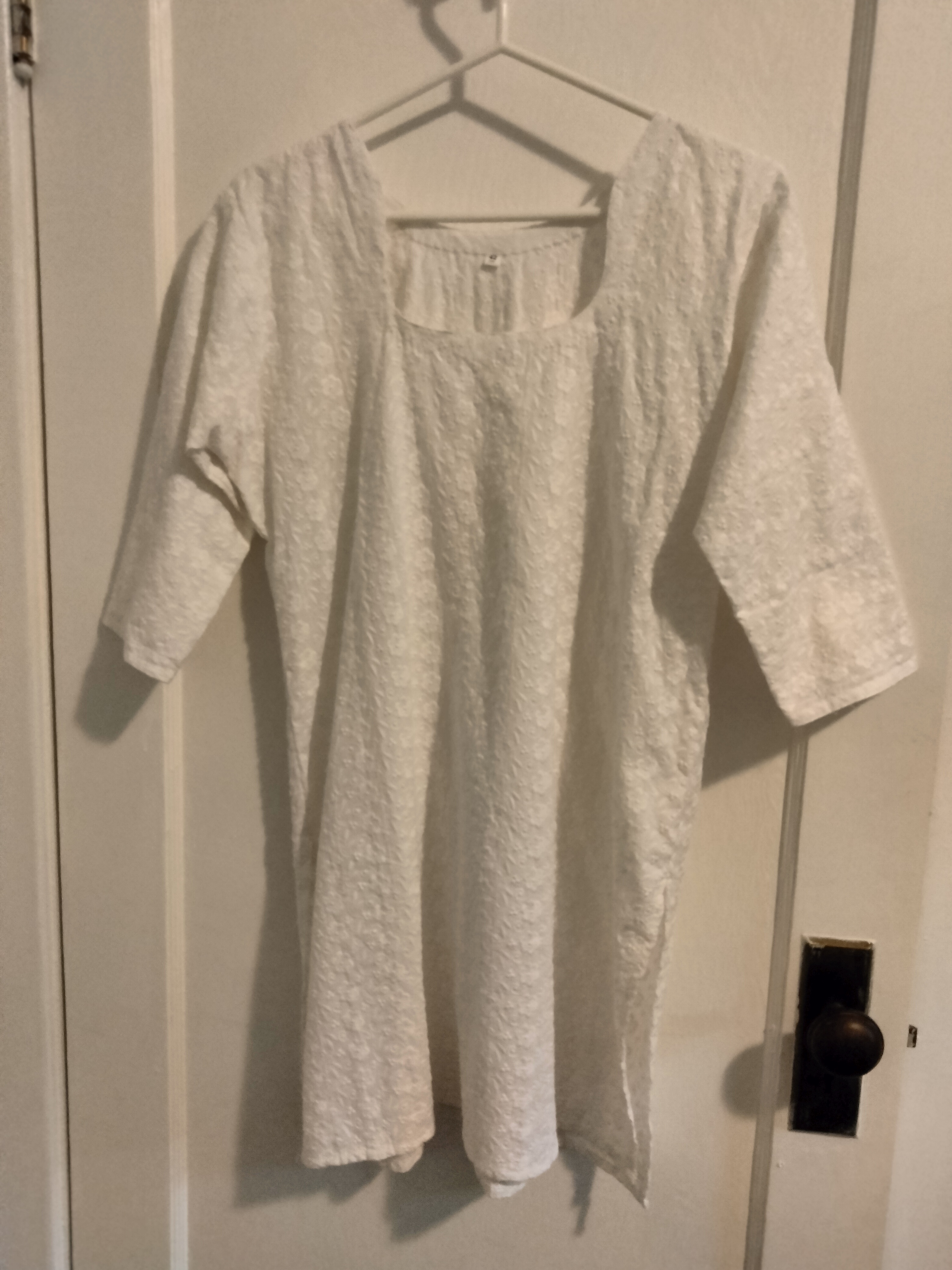
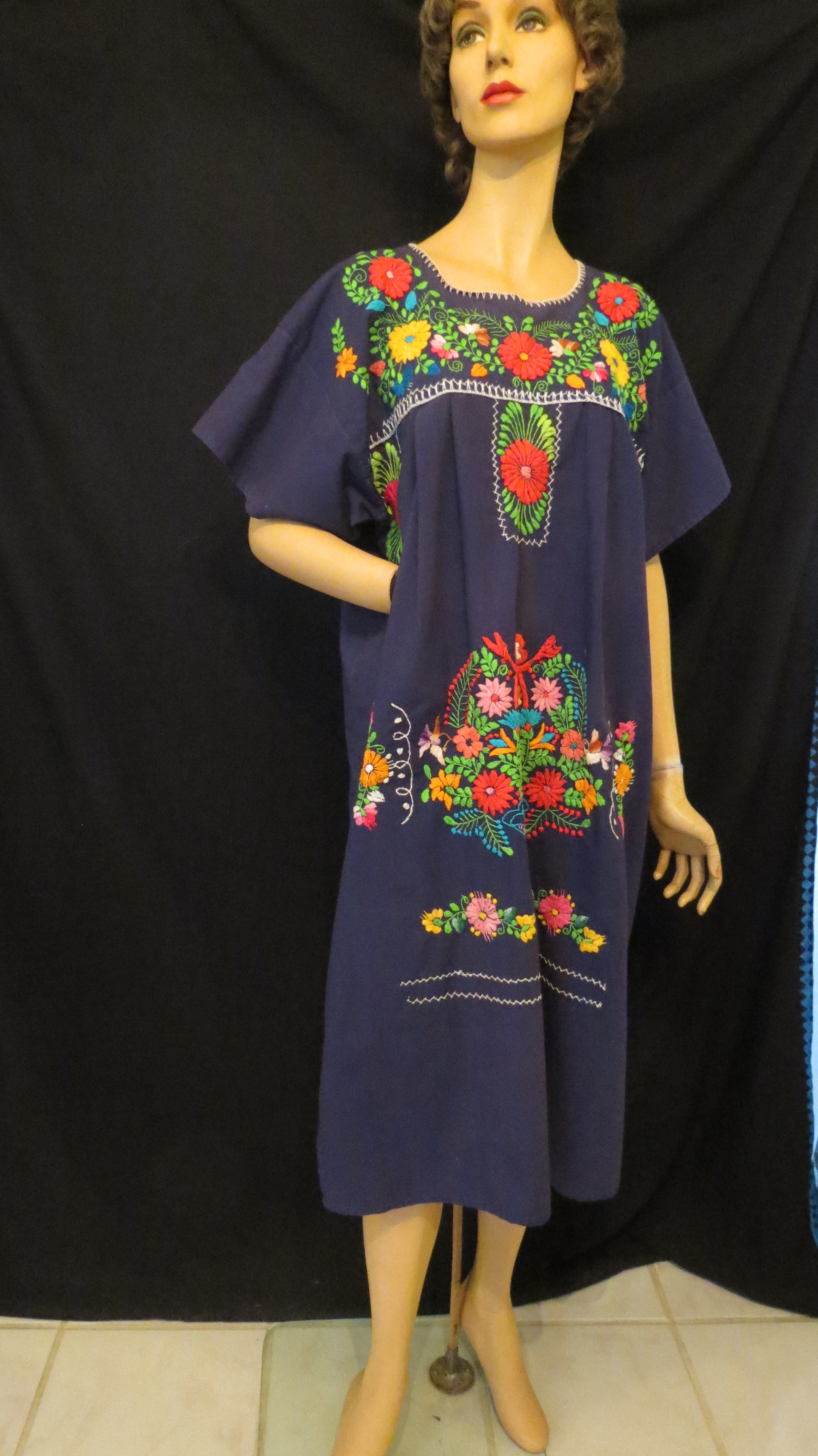
While I’m missing Stella (my fabulous vintage mannequin model), please use your imagination to visualize how fun and flattering this mini-dress or tunic looks when it’s on. Without my honed sleuthing skills, I never would have found it and am so glad that I did. As a mini-dress (if you don’t mind the side slits showing your whole leg almost to the hip) it’s really cute and calls for a 1960’s/’70’s chain belt to finish it off. As a swimsuit cover-up or beach dress it would be perfect – cool, crisp and lightweight while giving some reasonable sun protection. Over a pair of skinny white pants or shorts I LOVE IT!! Also love the elbow-length sleeves and unusually-shaped neckline.
How do I know it’s from Europe? The size label tells me. How do I know that it’s true vintage? By my guesstimate, a European size 42 would always be too big for me, but I look great in this whether worn as a mini-dress or a tunic over pants. So, the cut seems to be smaller than a modern garment of that size would be. This is always tricky with international sizing, but I think I’m correct. The fabric is a nicely-woven cotton with some weight (but not too much for Summer) and all-over floral embroidery – similar to vintage fabrics that are almost never seen now. Also, the interior tailoring is different from what I find on modern garments. Not fine tailoring, because this is a very simple garment and probably sold at a lower price. However, some of the finishing is remarkable – if it did not have a size label, I might say that it had been home-sewn. It has darts in back to give it extra fit and style. The size label, printed rather than embroidered, is sewn in at the back neckline and there are no other tags at all.
All right, the verdict is in. This dress is probably from the 1970’s, give or take 5 years. Allowances have to be made for the overseas manufacture. Whatever it’s exact heritage, it’s wonderful and I will really enjoy it. I love solving mysteries but an open-ended investigation is always intriguing. Who knows – sometimes I solve a cold case years later! You just never know . . . . . . . . . . . . . . . . . . . . . . . . . . . . . . . . . . . . . .
MORGANA MARTIN, THE MAGICVINTAGESPY
BLOG: MAGICVINTAGESPY.COM


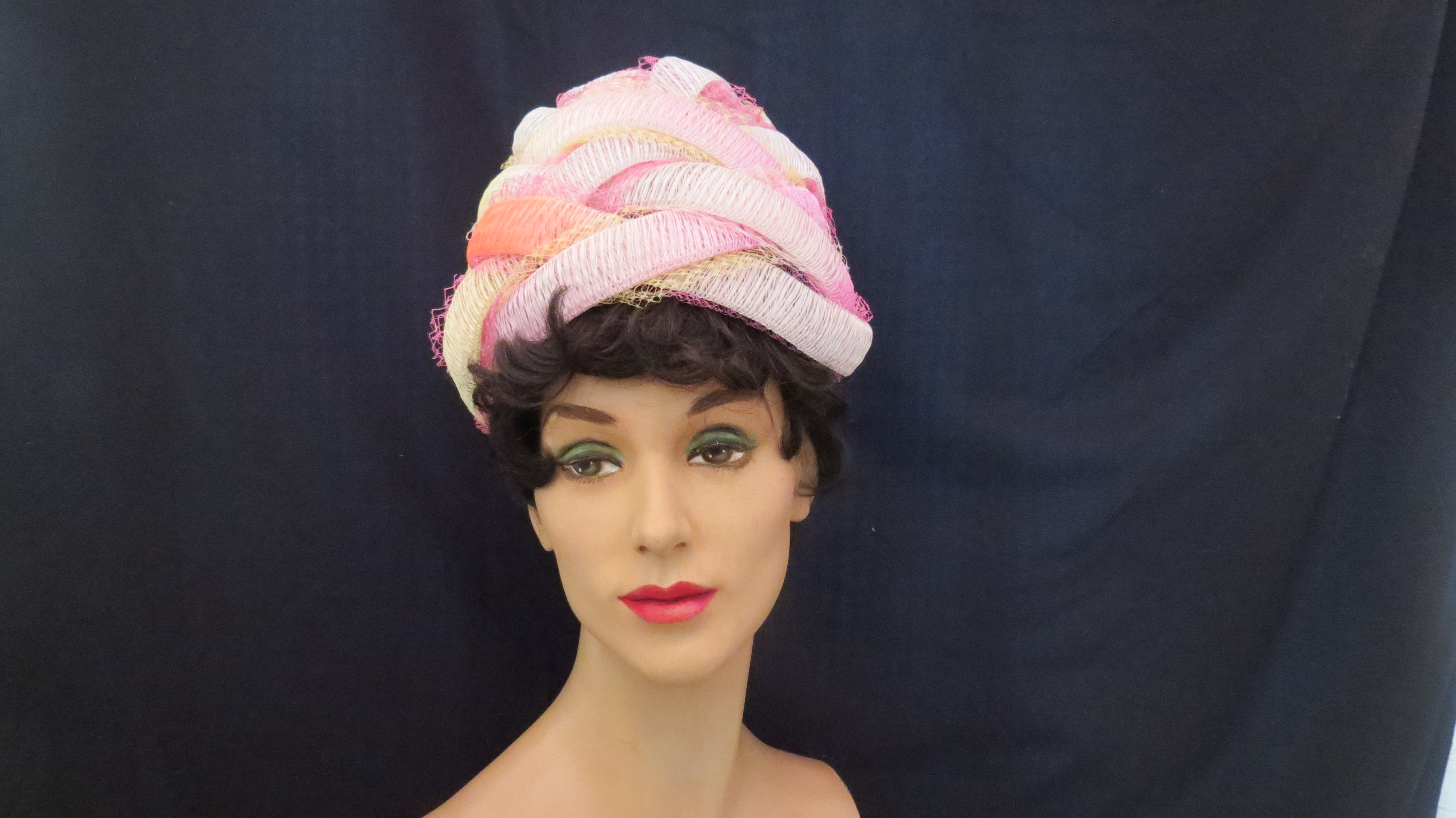
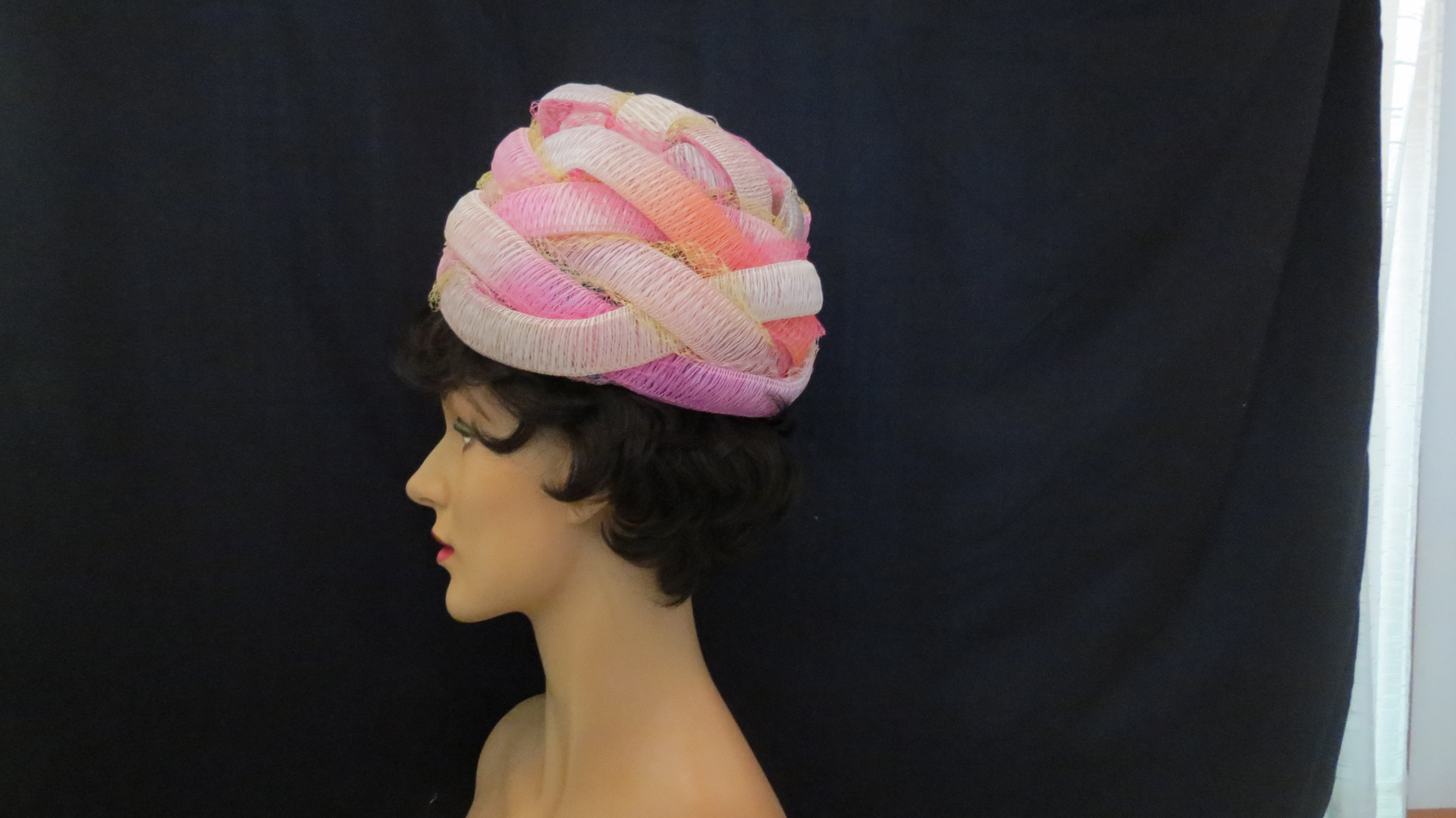
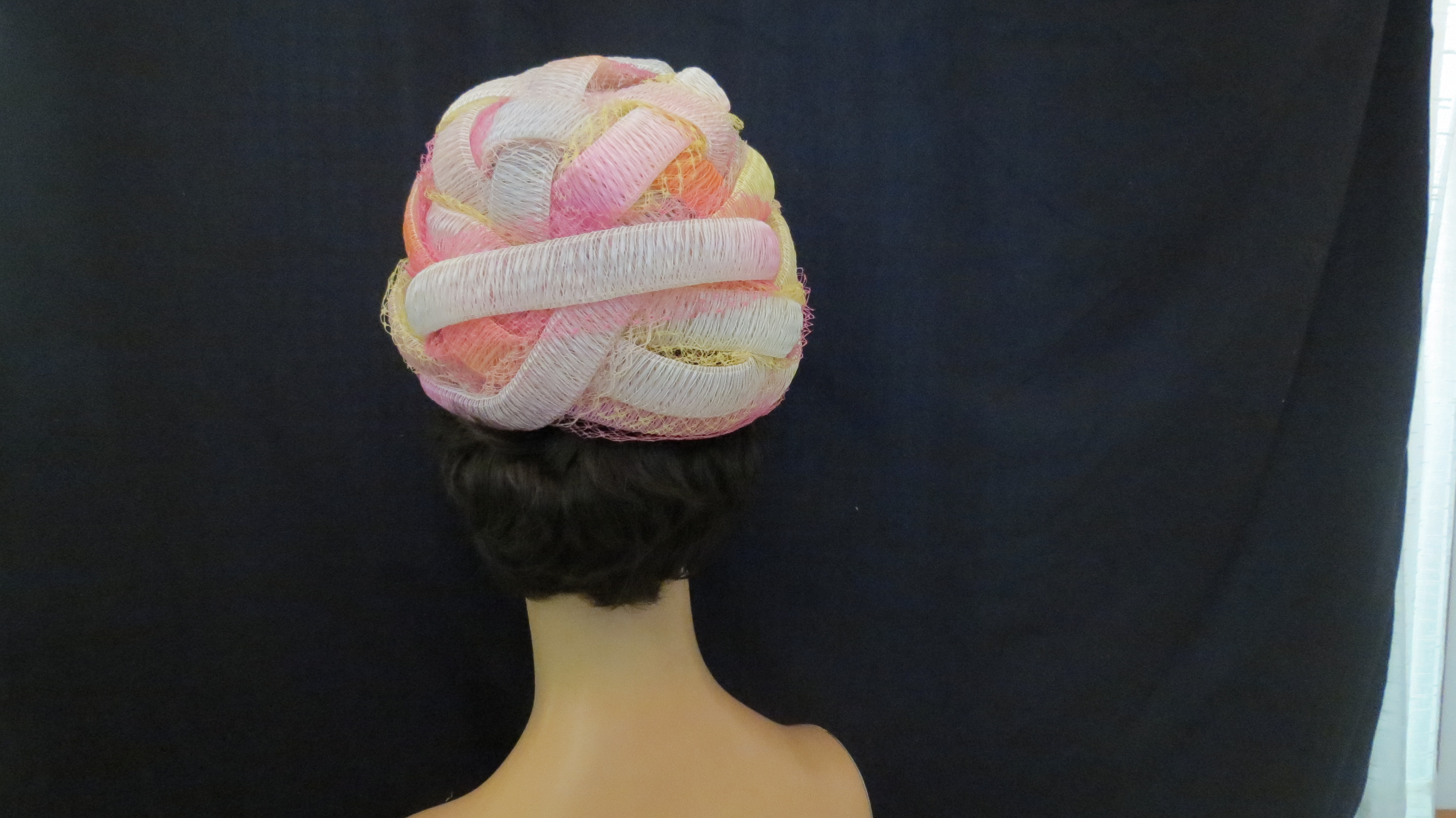
Now that we’ve reached the Spring Equinox, let’s start off with a Calvin Klein Easter hat in Spring pastels. A continuous flat tube of fabric is woven into a toque shape, overlaid with netting. A Mod-ern take on a traditional style. A lucky woman could look like an ice cream cone.
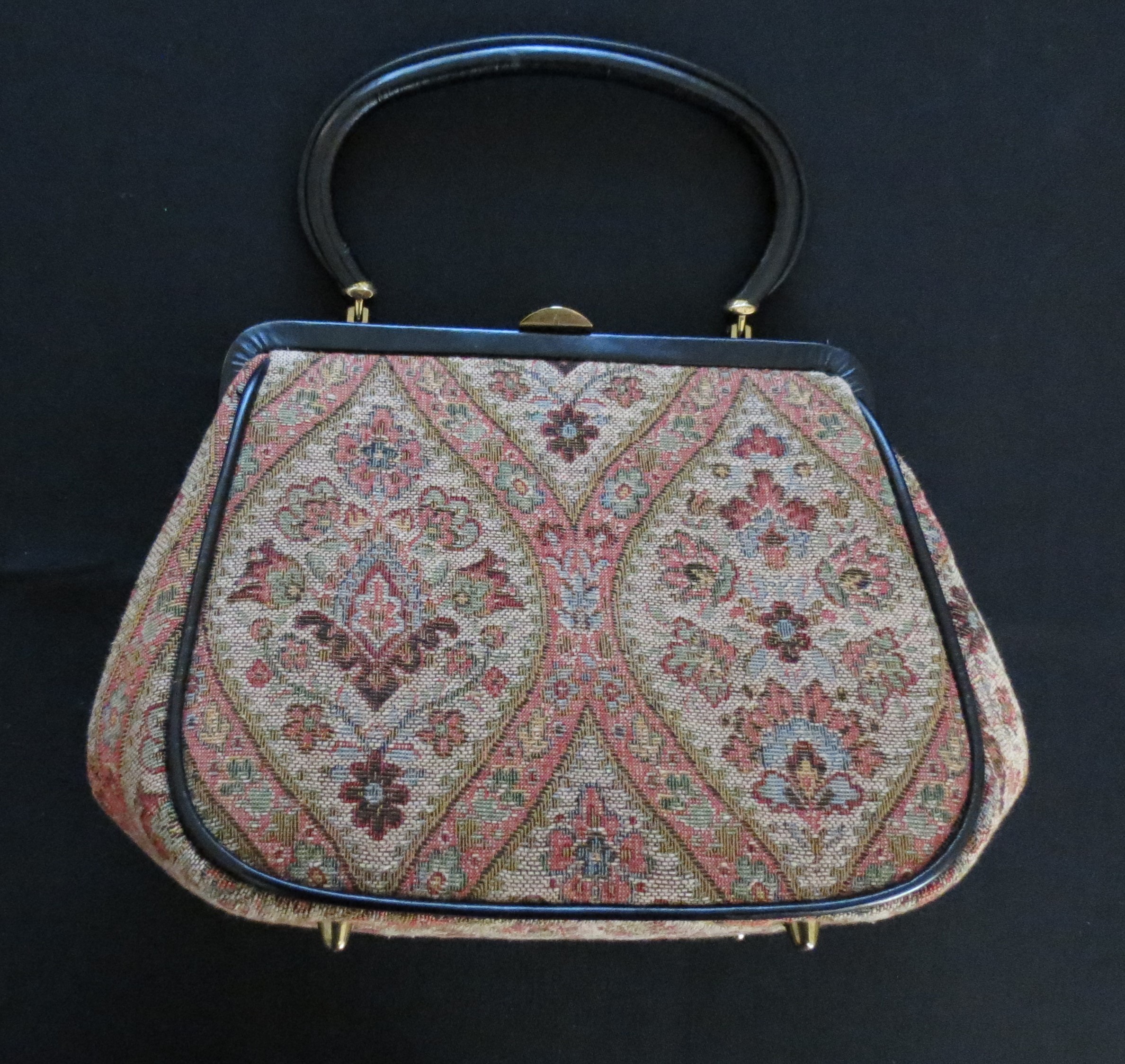
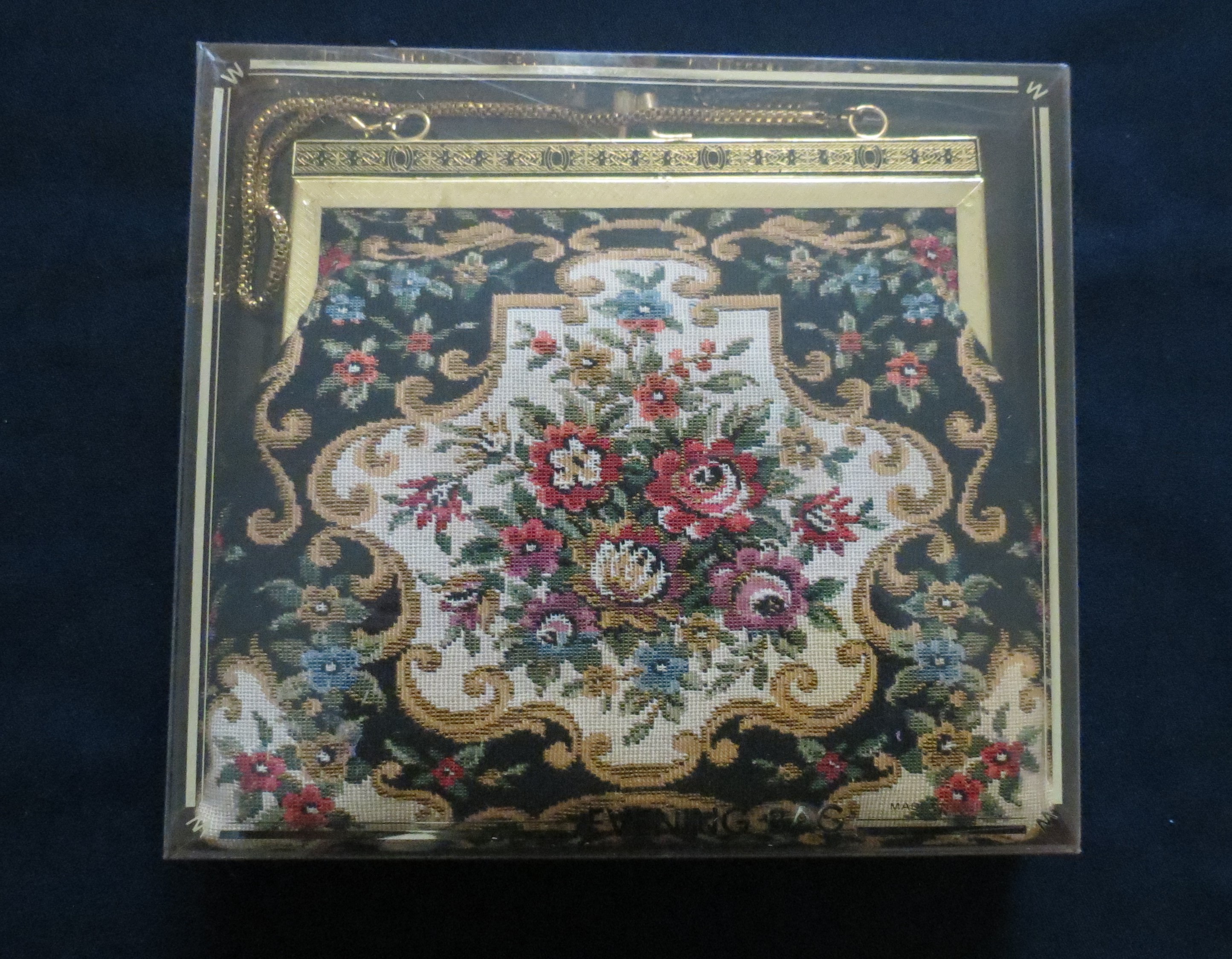
Some dressier handbags continued to be made of traditional tapestry-design fabric. Both of these above are small, one with a rigid leather-covered handle,, leather trim and metal feet on a covered metal frame. The other is a soft bag with a decorative closure and snake chain handle, sold with it’s own protective cover.
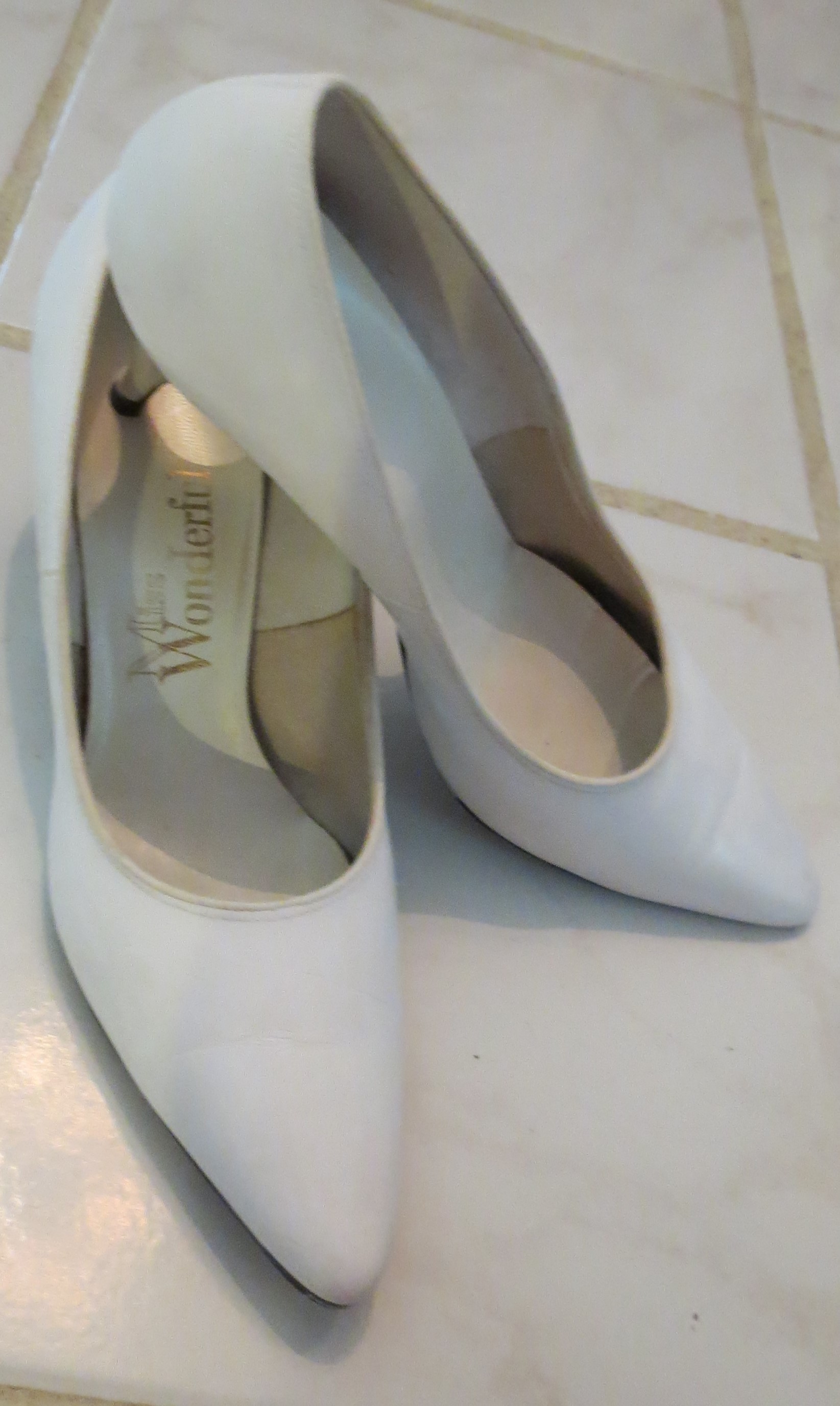
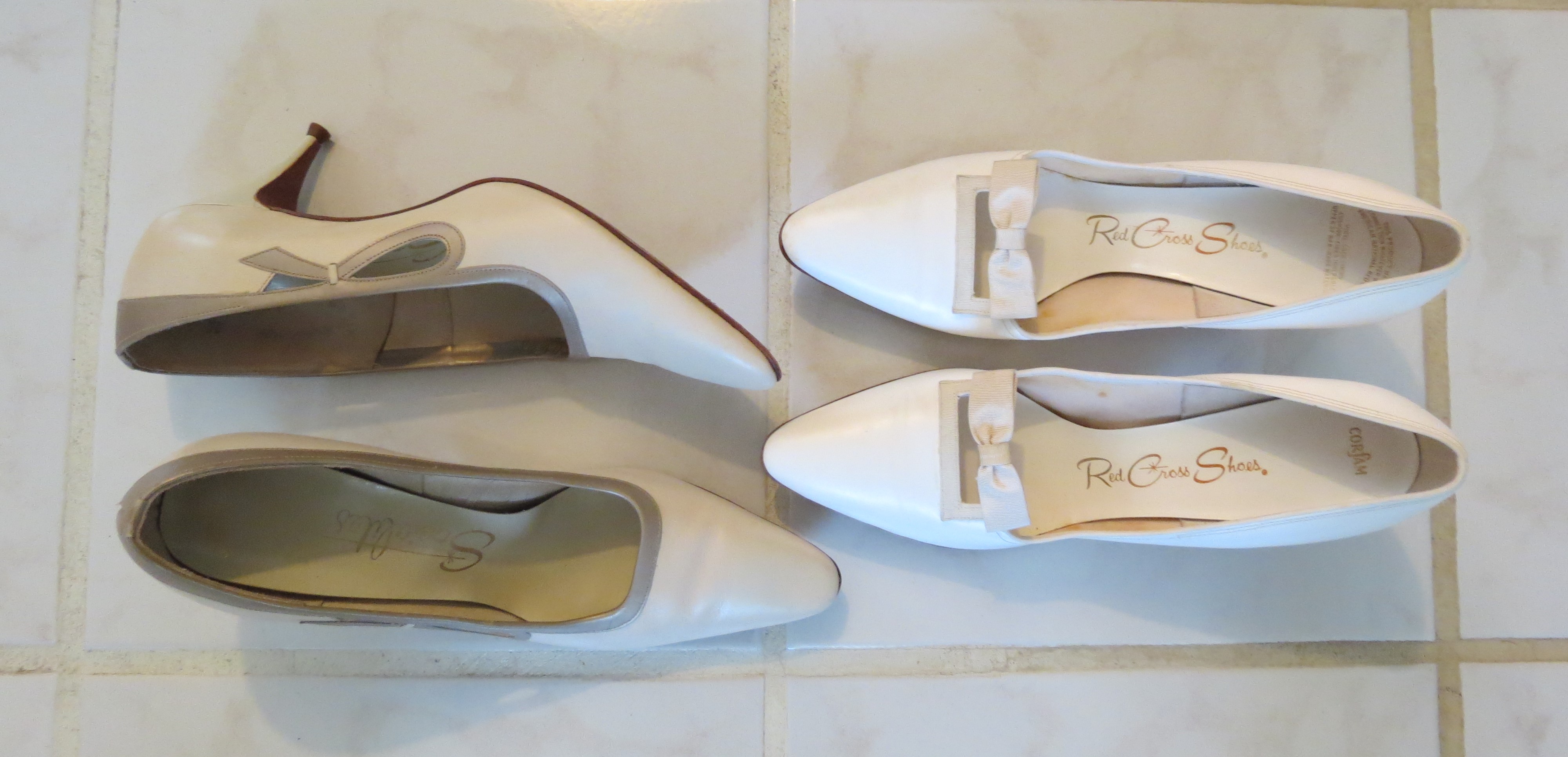
Classic pumps for everyday evolved in the early – mid 1960’s to mid-heel height with a slightly rounded toe but stilettos were still more popular than chunky heels – a necessary Rockabilly accessory. A pair of white pumps was an essential part of Spring – Summer wardrobes, even though pastels to match outfits and classic neutrals, beige, gray, navy, black and brown, still held their places. Miss Wonderful was a fun, mid-priced brand.
This has been a fun review of some of the files since December. Guests have arrived and international travel is looming. Daily transmissions over this airwave will be suspended, though periodic bulletins may continue. Archived posts in the public domain will remain available. Over . . . . . . . . . . . . . . . . . . . . . . . . .
MORGANA MARTIN, THE MAGICVINTAGESPY
BLOG: MAGICVINTAGESPY.COM


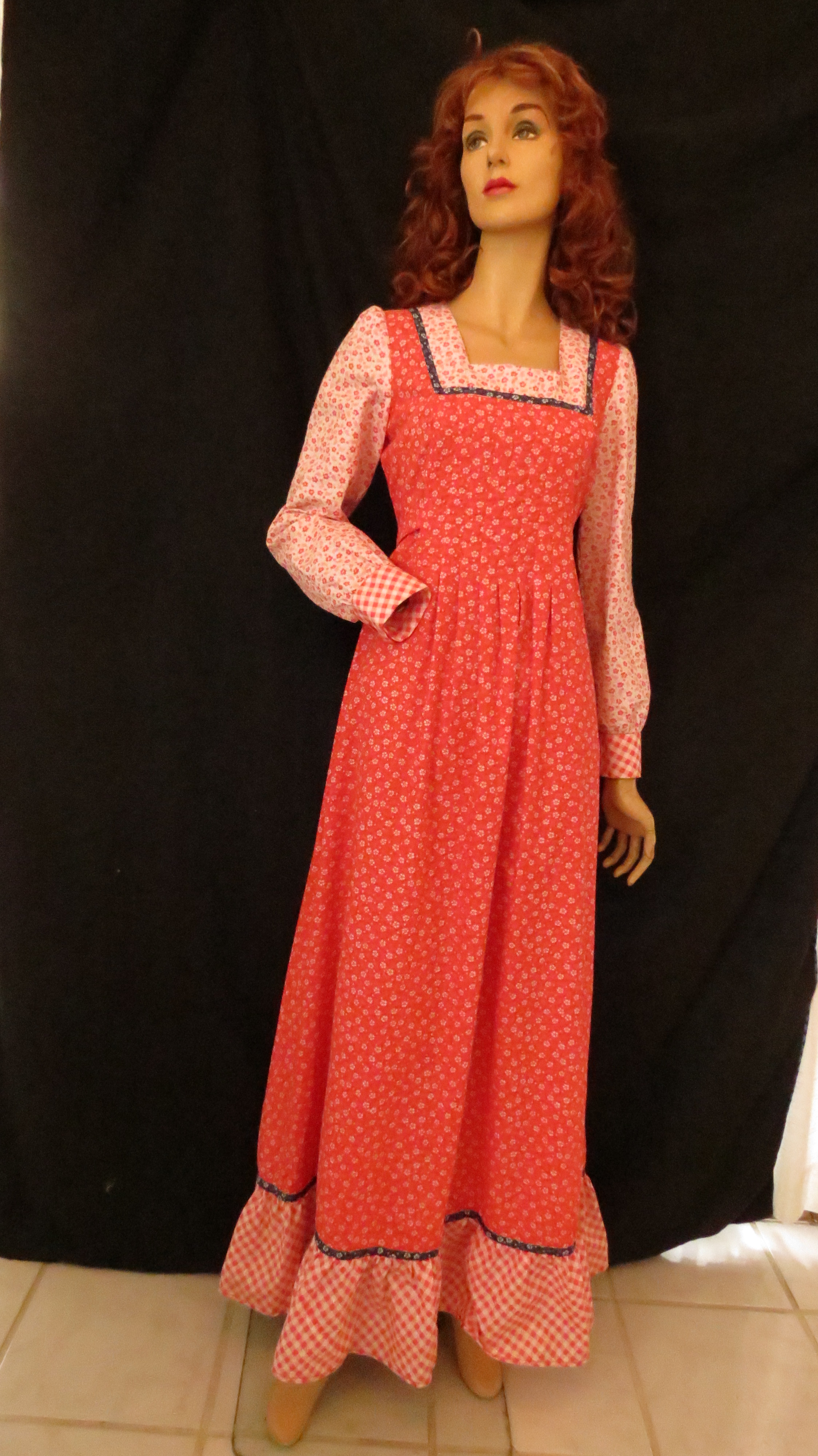
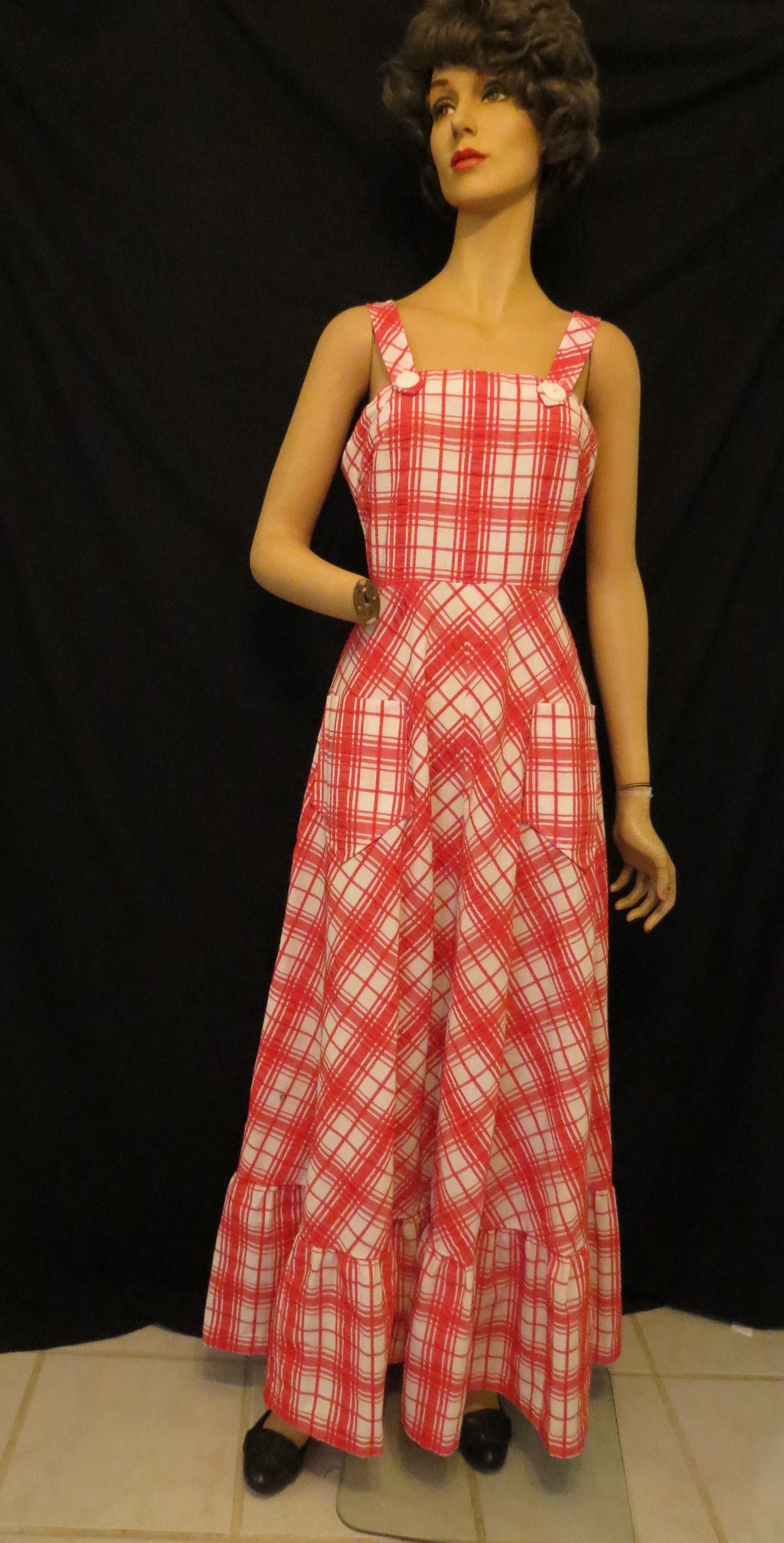
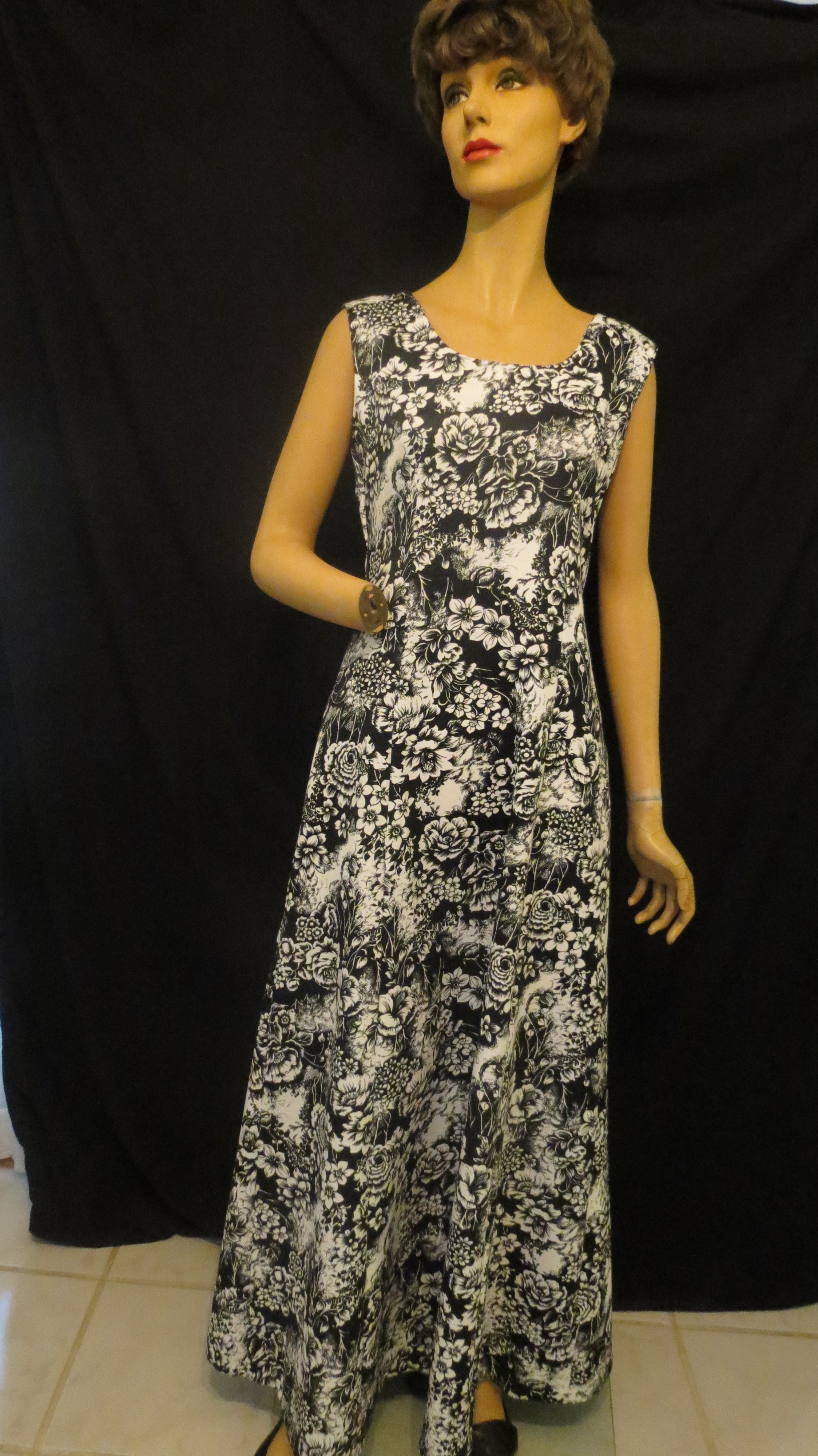
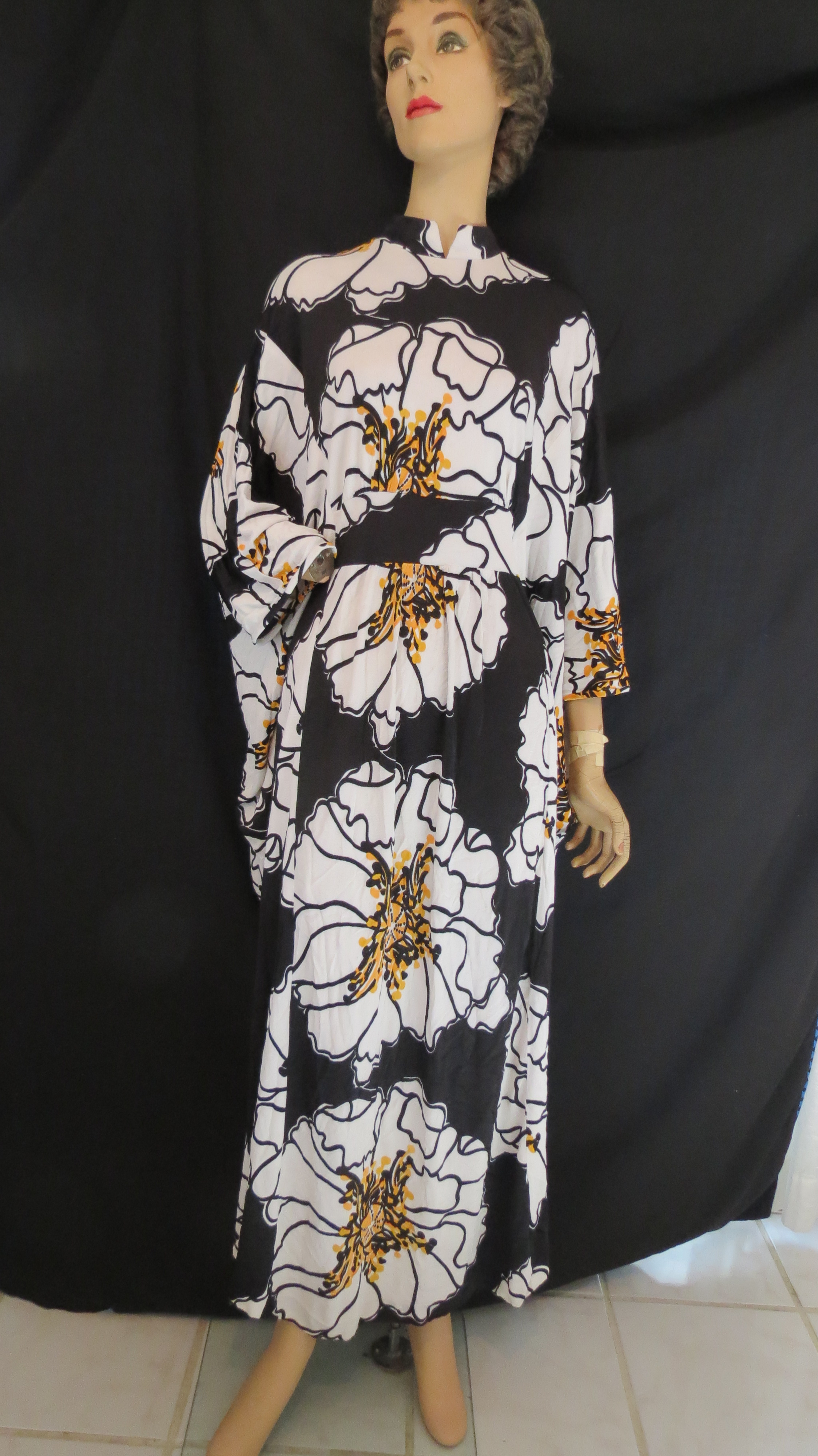
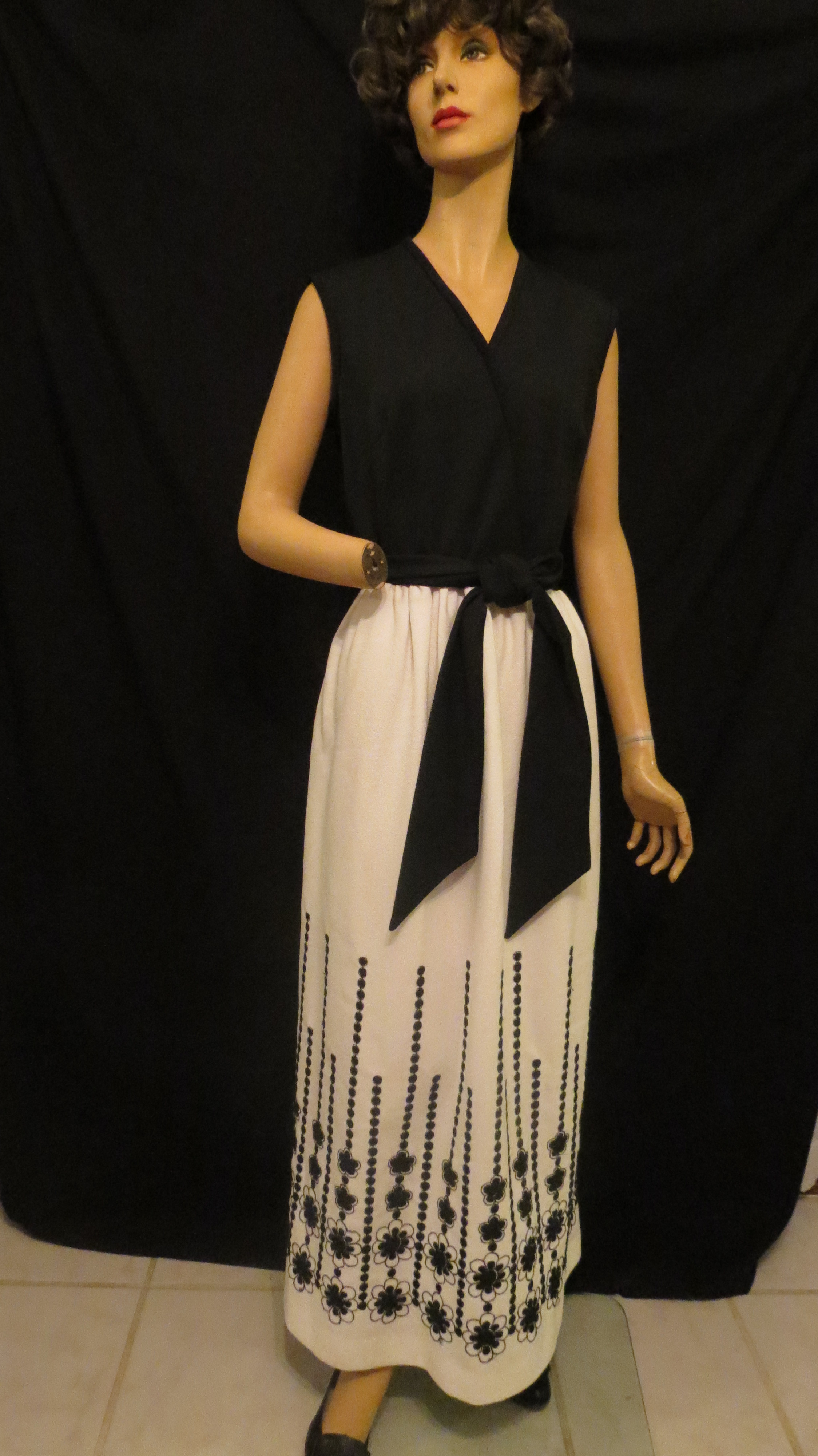
Through the decades the changes in style are often subtle, but they’re noticeable if your sleuthing trade skills are sharp. One thing that all these dresses have in common is excellent quality. I showed several dresses of this genre which were made in the Victorian/Prairie style when covering 1970’s Prom dresses a couple of months ago. Early in that decade, girls sometimes wore them to the Prom but they were usually fussier with lace and more details. Jessica McClintock of Gunne Sax styled them for at least 20 – 30 years. Labels always help, of course, but aren’t always present. The condition of all these examples is near-perfect, which can make the job a easier, though tell-tale signs of wear can sometimes be very helpful clues. Let’s start from left to right:
A Prairie-style gown, pretty and modest in cotton. Looks like it was made for retail because of the precise tailoring detail, but there is no label. I would put it in the 1970’s but it could possibly have been made later by an individual expert or a company that catered to a niche market which preferred very modest styles of dress.
A red and white plaid gown that picks up on the Prairie style, but in a much more casual, carefree design reminiscent of the 1960’s. It’s probably made from cotton but I can’t be sure without the file in front of me and it could be cotton/poly blend. It was made in the 1980’s in West Germany. This is an example of trends jumping the oceans, usually years after they originally appeared in the Western nations. Although they’ve done their own take on the style, it’s exceptionally well-made, as goods from West Germany have always tended to be, in my experience.
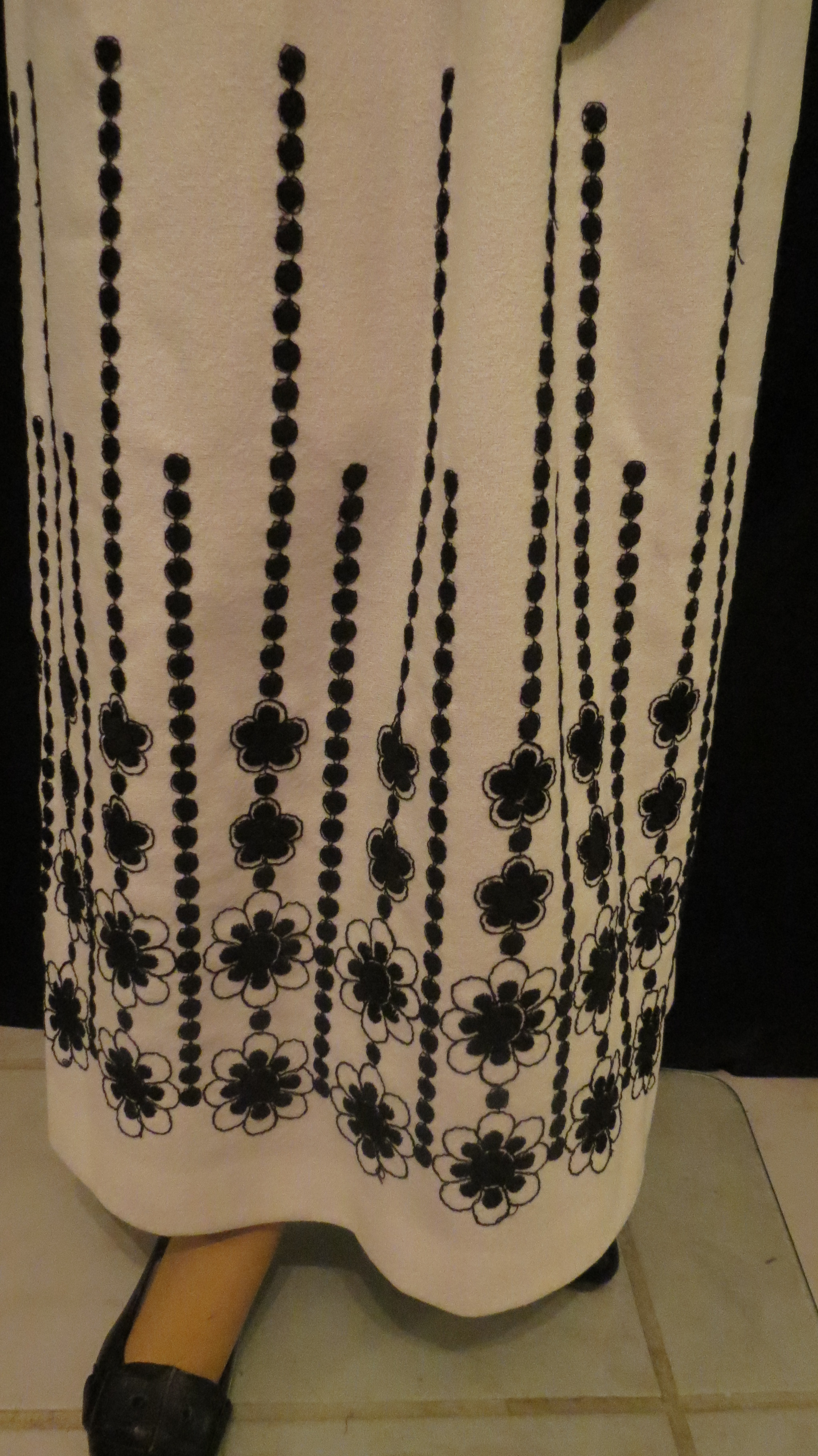
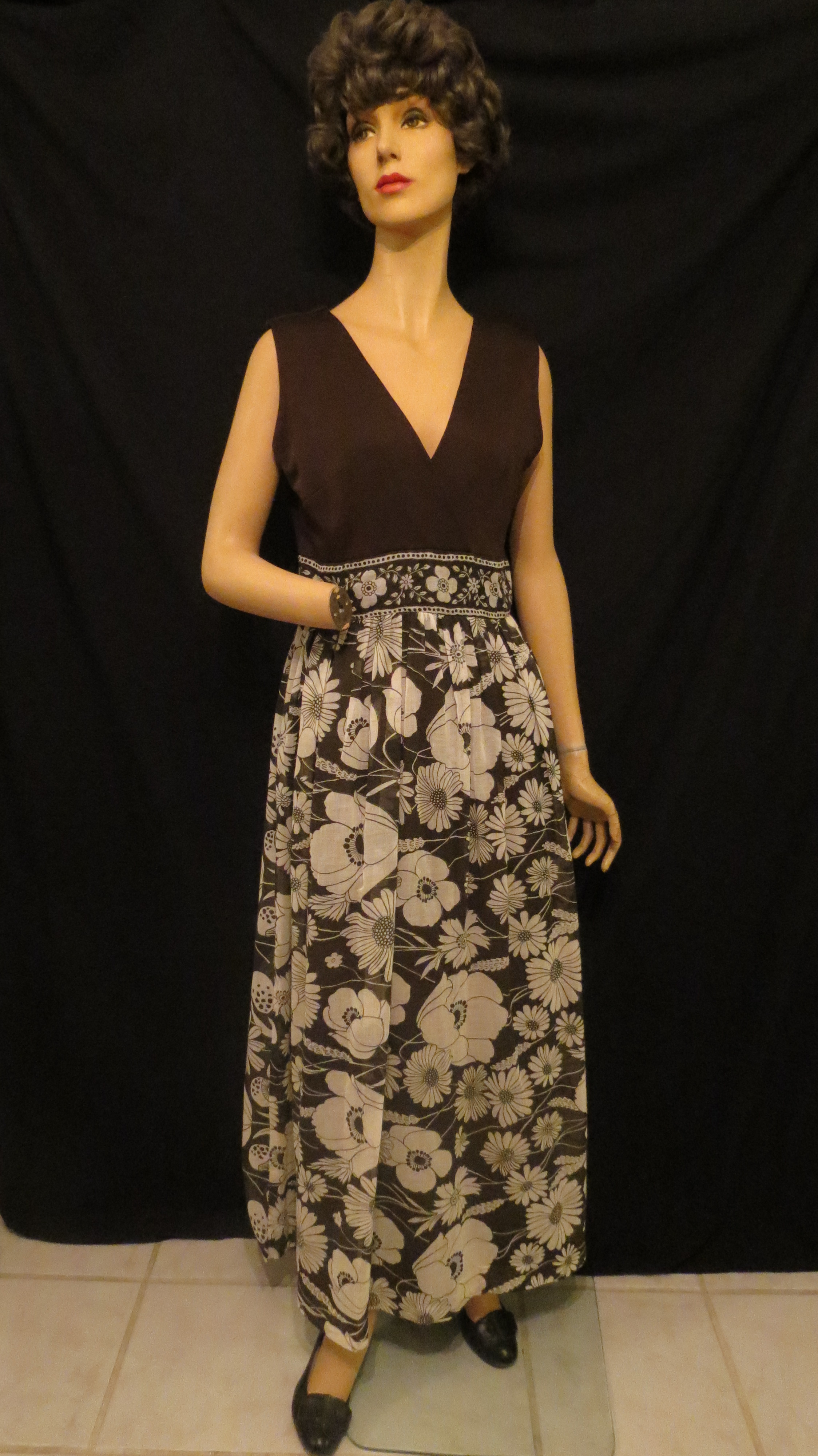
A black and white floral print gown made in Hawaii. This one is from the 1980’s, give or take a decade and is the most elegant. Same deal about the fabric as in the previous dress. The style is pure average conservative, which makes it harder to date exactly. A pretty dress, but nothing distinctive about it excepting for excellent tailoring. It might have been a wardrobe item of someone who lived in Hawaii, purchased at a specialty shop stateside which carried Hawaiian garments or by someone who bought it while on vacation. Hawaiian-made gowns have been popular with women worldwide since the 1950’s, but earlier ones were usually made in more traditional Hawaiian style and, often, of Hawaiian fabric with traditional island prints. The more mainstream universal designs like this one came later.
The final dress is from the 1990’s. Always harder for me to think of as true vintage, but it is worthy because of the good tailoring, 100% cotton fabric and the retail designer label sold by a high-end department store in New York City. It’s got pedigree. Again, nothing notable about the style but it is very well-cut, which can make a world of difference in terms of how a dress fits. That’s one feature of even plain, rather boring vintage clothing items that can make them worth collecting and wearing. The style can always be elevated by adding accessories but one thing that always elevates any garment is how well it is made and how well it fits.
Tomorrow I’ll be showing a collection of dressy day-wear accessories from the 1960’s that fit the category of well-made, classic and designer items that can “make” an outfit. Stay tuned . . . . . . . . . . . . . . . . . . . . . . . . . . . . .
MORGANA MARTIN, THE MAGICVINTAGESPY
BLOG: MAGICVINTAGESPY.COM


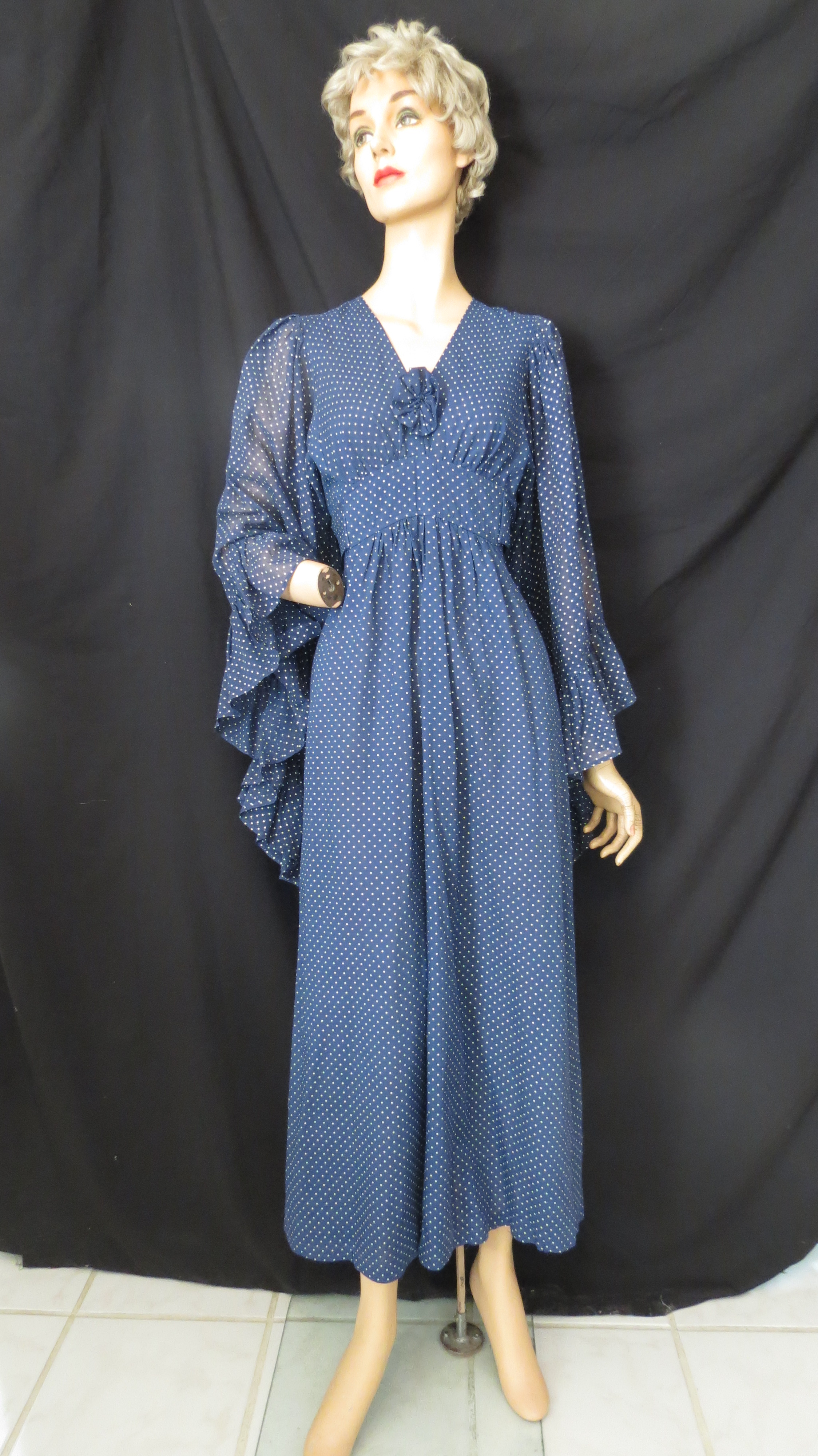
British influence Medieval/Victorian/Edwardian vibes, Op-Art, Flower Power and Indigenous influences allowed mainstream women to enjoy some “revolutionary” style during this transformative decade while not getting too far away from classic traditions. Plus the fact that they couldn’t have been more comfortable, convenient and flattering.
Fabulous sleeves, hand-done embroidery, geometric floral graphics. Love, love, love! Of course I had to collect these clues. Tomorrow we’ll step into the progression of this genre in examples from the Seventies, Eighties and Nineties. Stay tuned . . . . . . .
MORGANA MARTIN, THE MAGICVINTAGESPY
BLOG: MAGICVINTAGESPY.COM


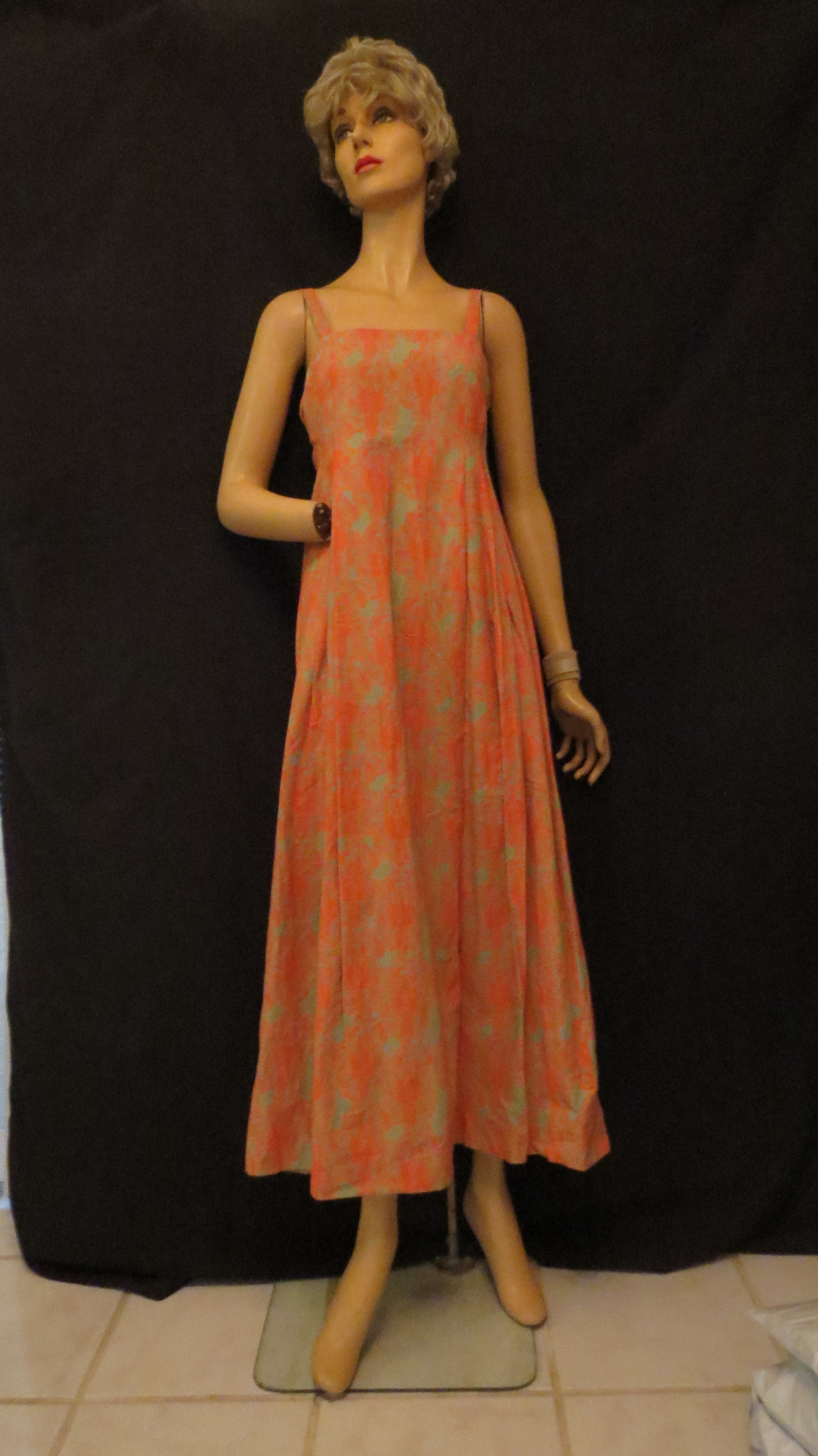
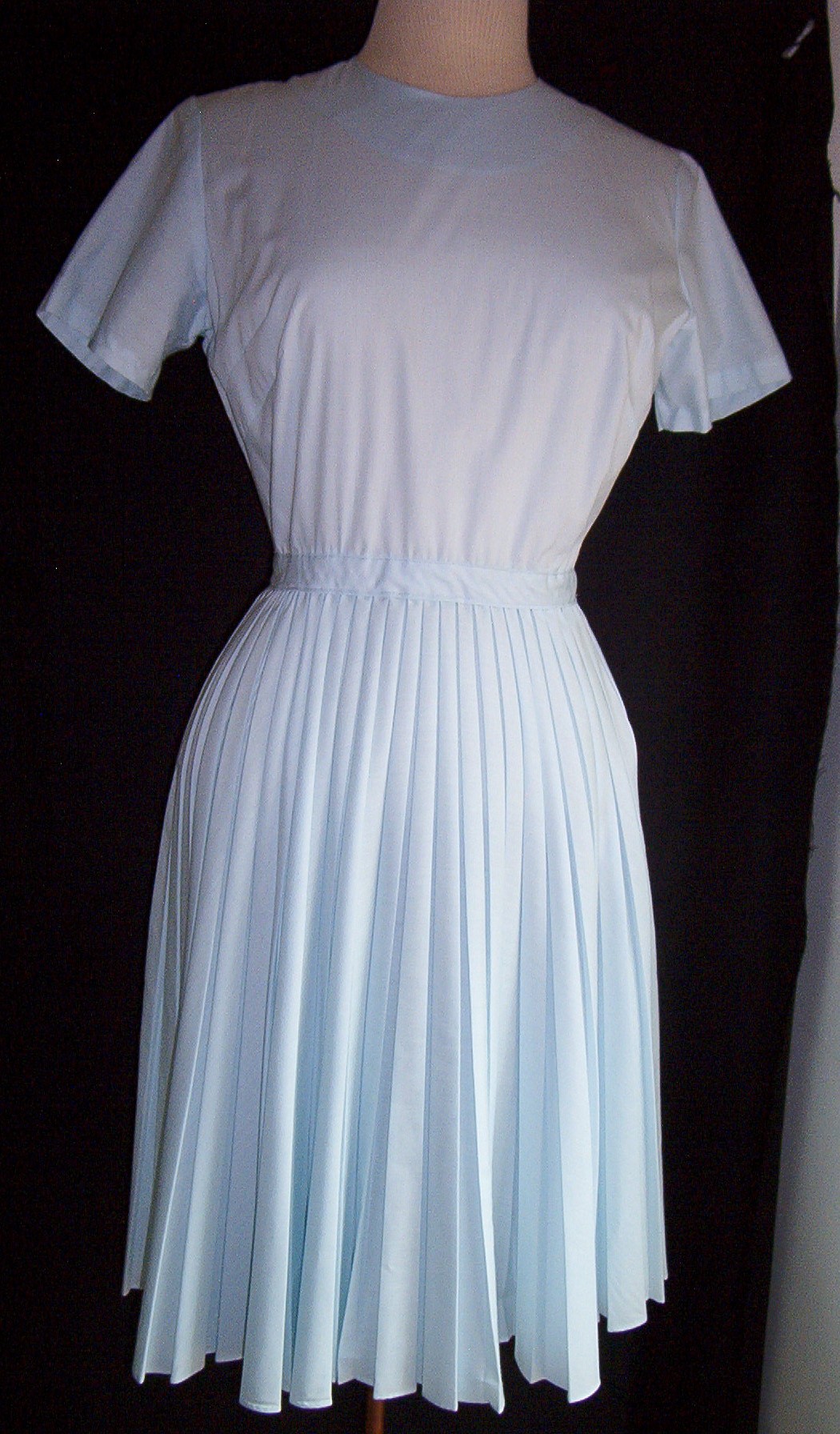
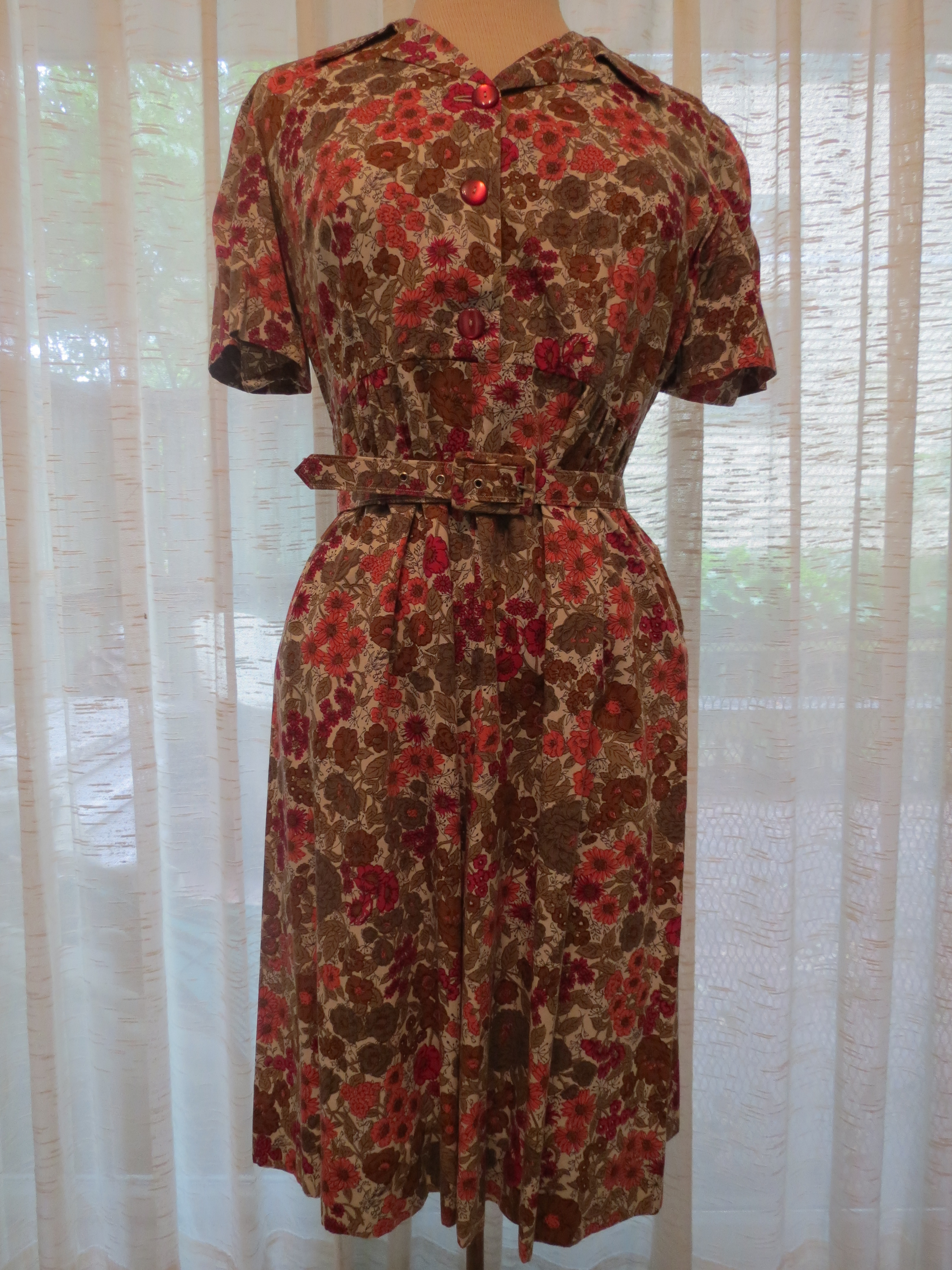
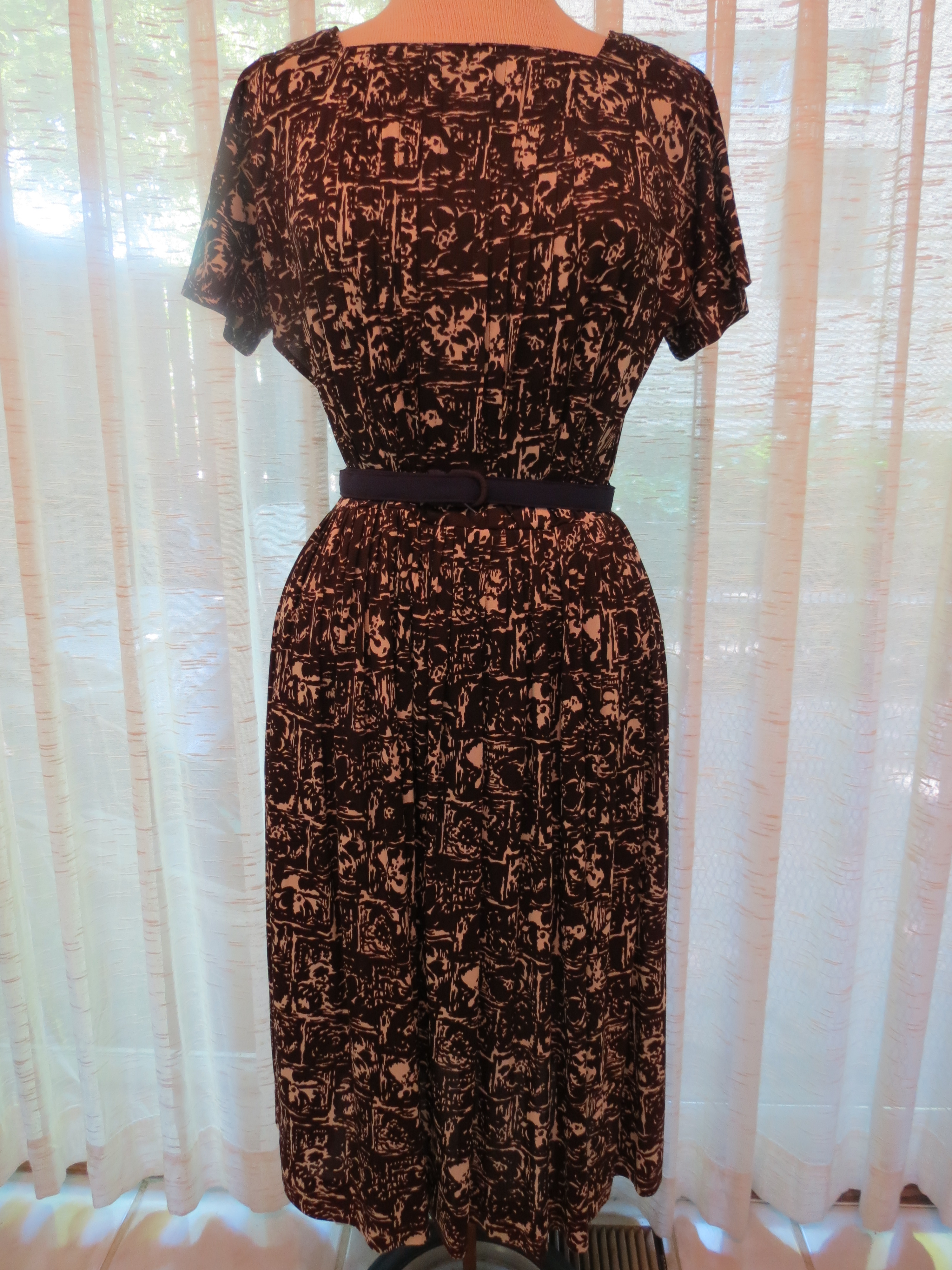
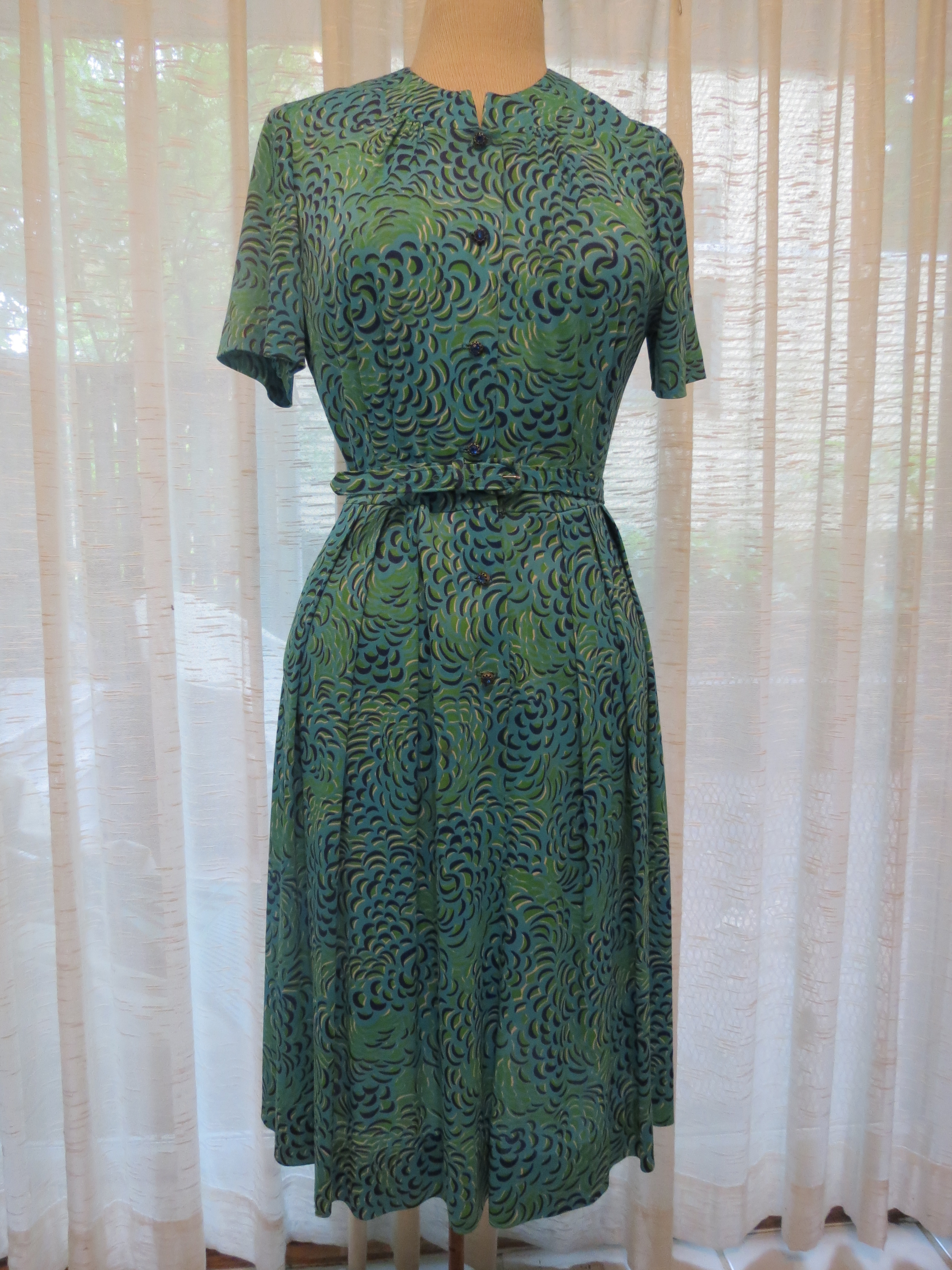
The very early 1960’s, Kennedy era was a time for ladies’ dresses to begin a shift in style. We started off with wasp waists, shirtwaist dresses and full skirts . Cotton and cotton blend shirtwaist dresses were still the day dress uniform for most middle-income women. But, also popular at that time for slightly dressier styles was a slinky knit fabric that was probably a poly/acetate blend. I remember older relatives wearing some of these, which they had probably owned for years. Many of the slinky knit dresses had rhinestone buttons. Great-grandma styles. The first 4 photos above are examples of these two types.
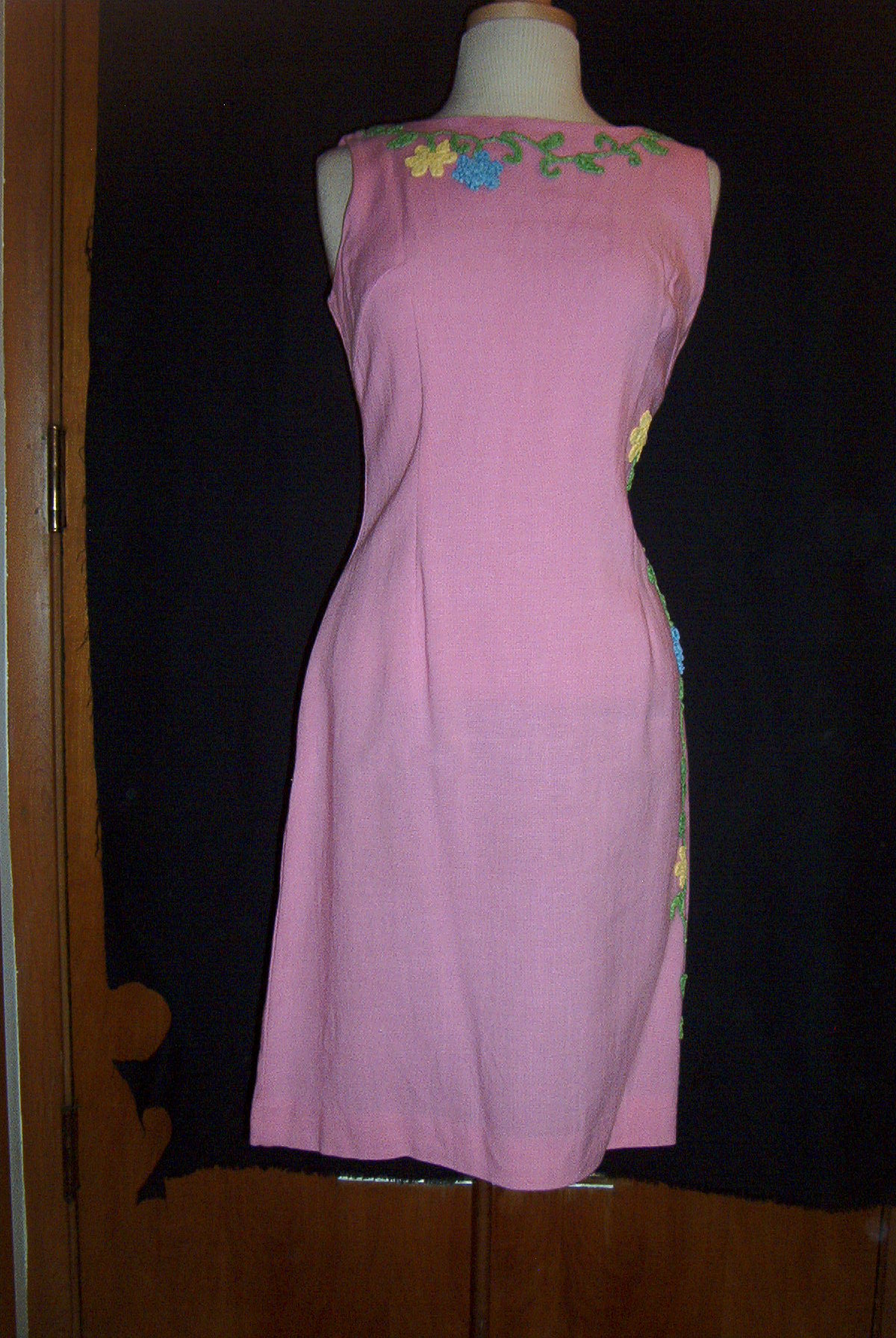
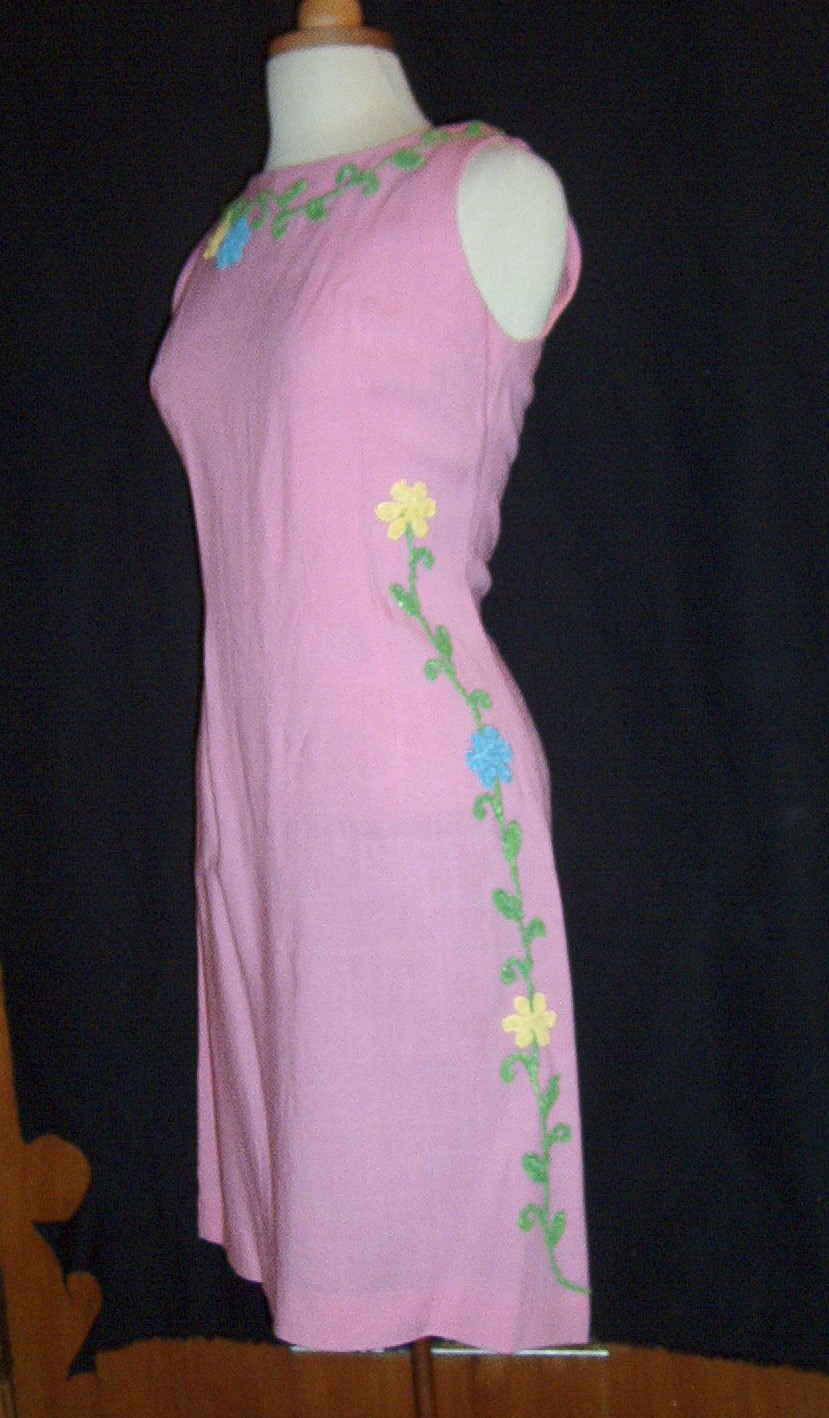
After that, sheath styles and fun details like this floral embroidery above started to make an appearance. This pink dress may have been home-tailored. The crafty, homemade trend that had taken root during WWII was still very strong, even though families had more prosperity in the 1950’s.
My internet connection or the blog host software has limited the number of photos I can add to my posts, so I am focusing on narrower topics and timelines now. Part of the issue for me is that I have so many photos in my archives that I just can’t squeeze them all in. Possibly better for you, my readers and followers, to see these wonderful garments in more detail. I will be continuing with dresses from the 1960’s because there were so many changes during that decade and it can take several posts to cover them all. Stay tuned . . . . . . . . . . . . . . . . . . . . . . . . . . . . .
MORGANA MARTIN, THE MAGICVINTAGESPY
BLOG: MAGICVINTAGESPY.COM


Wasp waists, circle skirts and cap sleeves – 3 style features which are predominant on 1950’s frocks, though many other elements of design appear. The tiny waistline is probably the most frequently seen feature of a Fifties dress. As popular as the synthetic fabrics had become, 100% cotton material was queen of everyday dresses and especially for plaids and stripes which could be woven right into the cloth. Prints were still very evident, such as the blue and aqua shirtdress above, with a cute Paris, France motif (special to me because it belonged to a family member). A variation of the open-toe, low-heel sandal shown yesterday would have gone very well with these dresses, too. Colorful dresses called for fun and affordable costume jewelry, which abounded in the ’50’s. Made from pot metal, glass and plastic, every gal could afford a little bling with every outfit. Natural materials were sometimes used, too. Our mid-century gal who returned from Hawaii a few days ago, might have brought home a pair of souvenir earrings made from seeds and shells.
Decorative detailing was still a big deal, whether the dress was a day dress or something more special. Ric rac and embroidery were everywhere. The intricate cut-out design and lacing on the neckline above, though probably done by machine, is a very pretty touch on a flirty frock. Fabric-covered belts were the most common way of cinching a waistline.
Sticking with casual dresses, we’ll head into the early 1960’s tomorrow. Stay tuned . . . . . . . . . . . . . . . . . . . . . . . .
MORGANA MARTIN, THE MAGICVINTAGESPY
BLOG: MAGICVINTAGESPY.COM


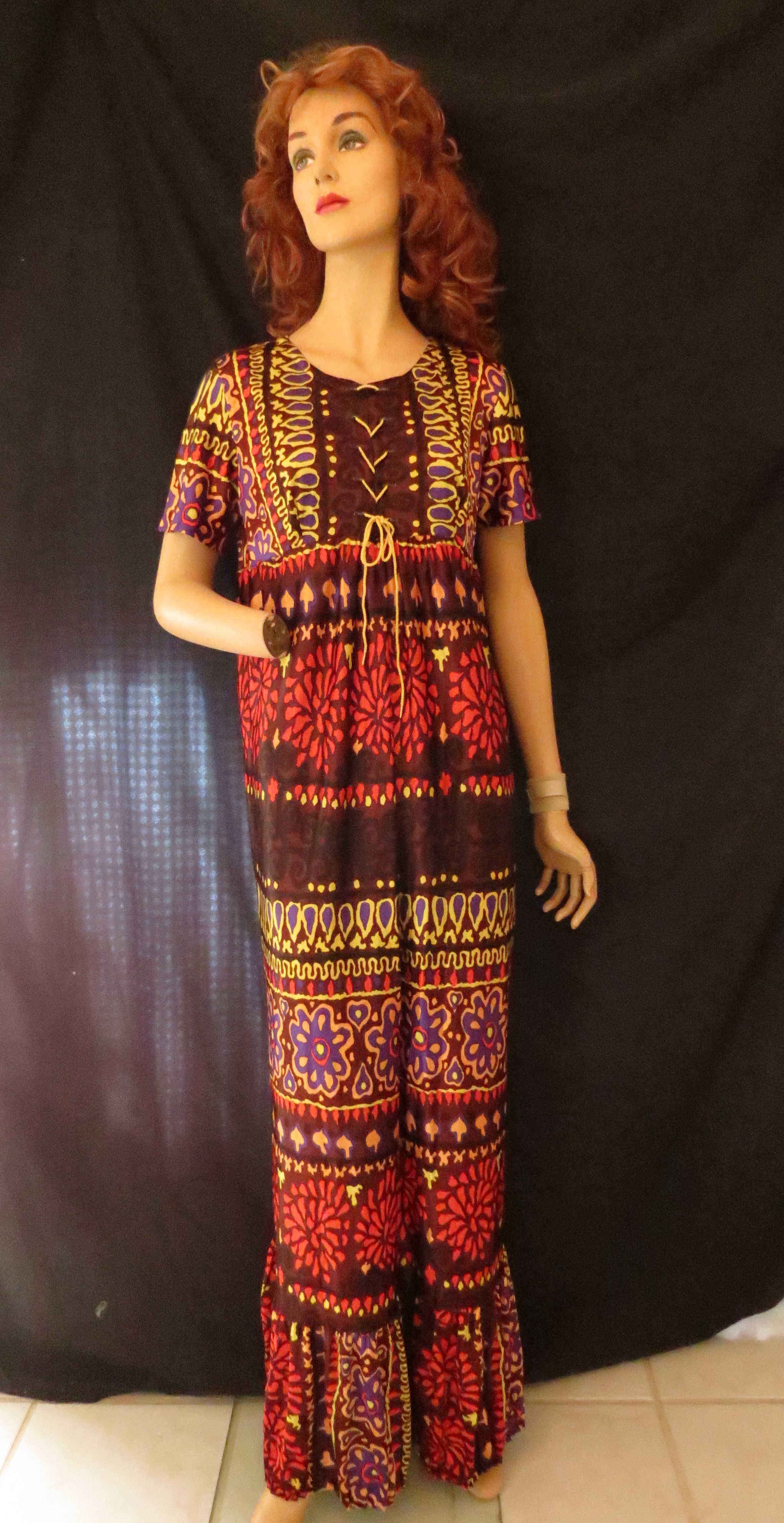
Wow! Our gal’s back home and guess where she went – Honolulu, Hawaii. Looks like she even stayed at the Royal Hawaiian Hotel!! No bargain budget for her, and we can see that in her choice of souvenirs. Two wonderful made-in-Hawaii frocks from the early 1960’s. Remember that blue and green trend from the early ’60’s that I’ve mentioned before? Also, look at the mad, Mod print on the long gown. Fab!
You can’t beat the tailoring on these beautiful dresses. Casual styles, but very elegant. Look at the lining and facings. Fabric piping around the neckline and sleeves of the long gown. Embroidered cloth labels. I’m sure they also have generous hem allowances, finished off professionally. Also, no straw beach hat for this girl – she opted for a cloth hat with unique style and obviously had a wonderful time.
Tomorrow we’ll start reviewing Spring day dresses from the 1930’s through the mid-century, along with some of the accessories that would have been added to their outfits. Stay tuned . . . . . . . . . . . . . . . . . . . . . . . . . . . .
MORGANA MARTIN, THE MAGICVINTAGESPY
BLOG: MAGICVINTAGESPY.COM


Okay. A couple days ago she packed her swimsuit for the pool and the beach, short shorts and cute top and a skort for casual day play and sightseeing. Good start. Today she’ll concentrate on more sporty day outfits that will take advantage of the tennis court and boardwalk as well as lots of other fun activities.
Can’t forget her 1950’s play-suit! Love the funky drums motif and the cropped top. Very original. This one isn’t a romper – it will even let her go downtown after the badminton game. Can’t forget the matching Keds. When it’s time to go to the dining room, a simple wrap skirt from the ’60’s/’70’s is very appropriate and her cute handbag goes well with all outfits so far!! The white sleeveless top that she packed already is perfect with it. That’s the secret of great packing – mix and match. Oh, yeah – GOT to take her roller skates !!!!! Yes, they’re heavy but gotta have them.
All right. That’s enough for today. Packing always makes her tired with so many decisions and it’s easy to forget something important if she doesn’t take her time. Good choices so far, but there’s still more to do over the next few days. Stay tuned . . . . . . .
MORGANA MARTIN, THE MAGICVINTAGESPY
BLOG: MAGICVINTAGESPY.COM