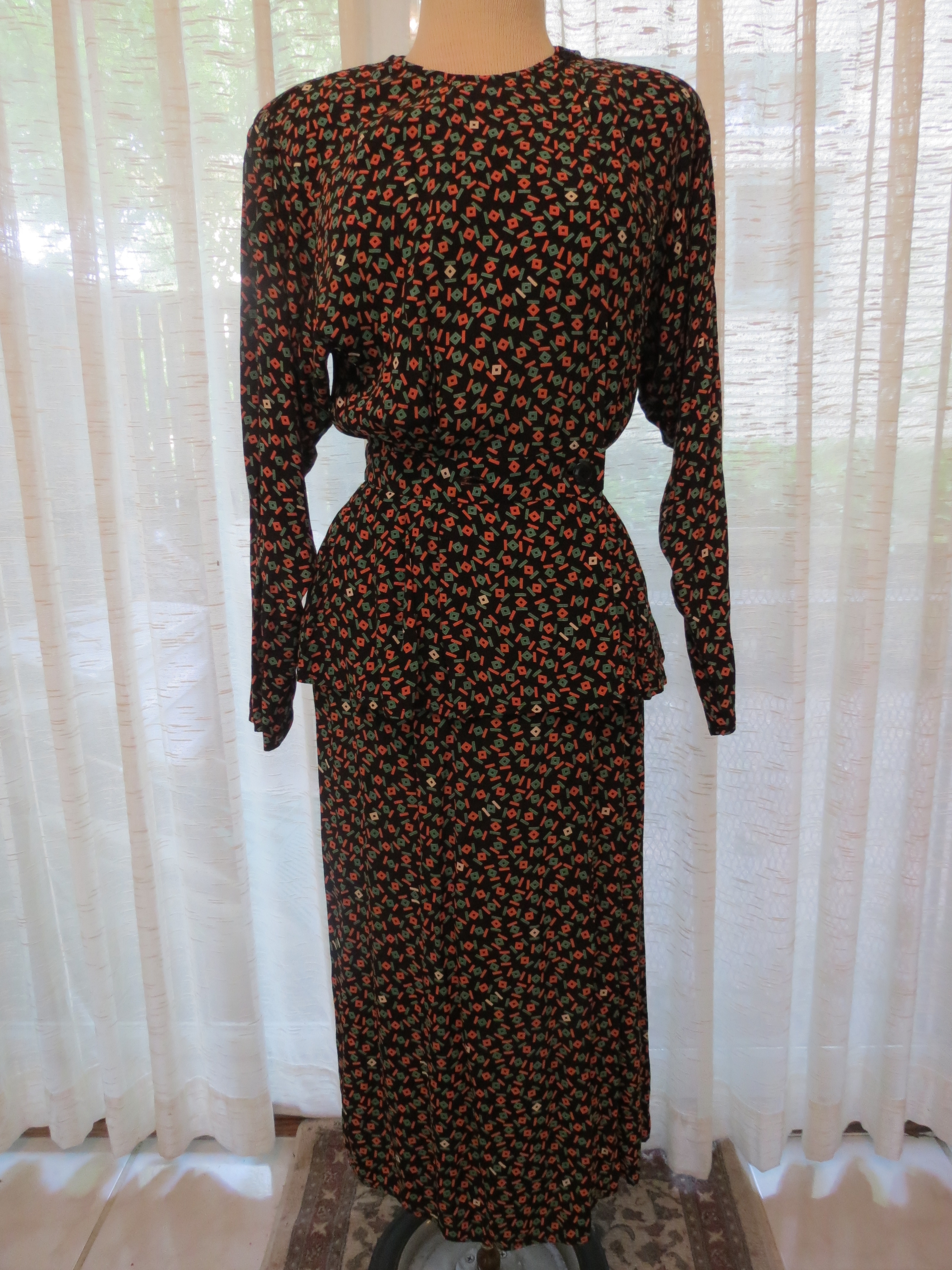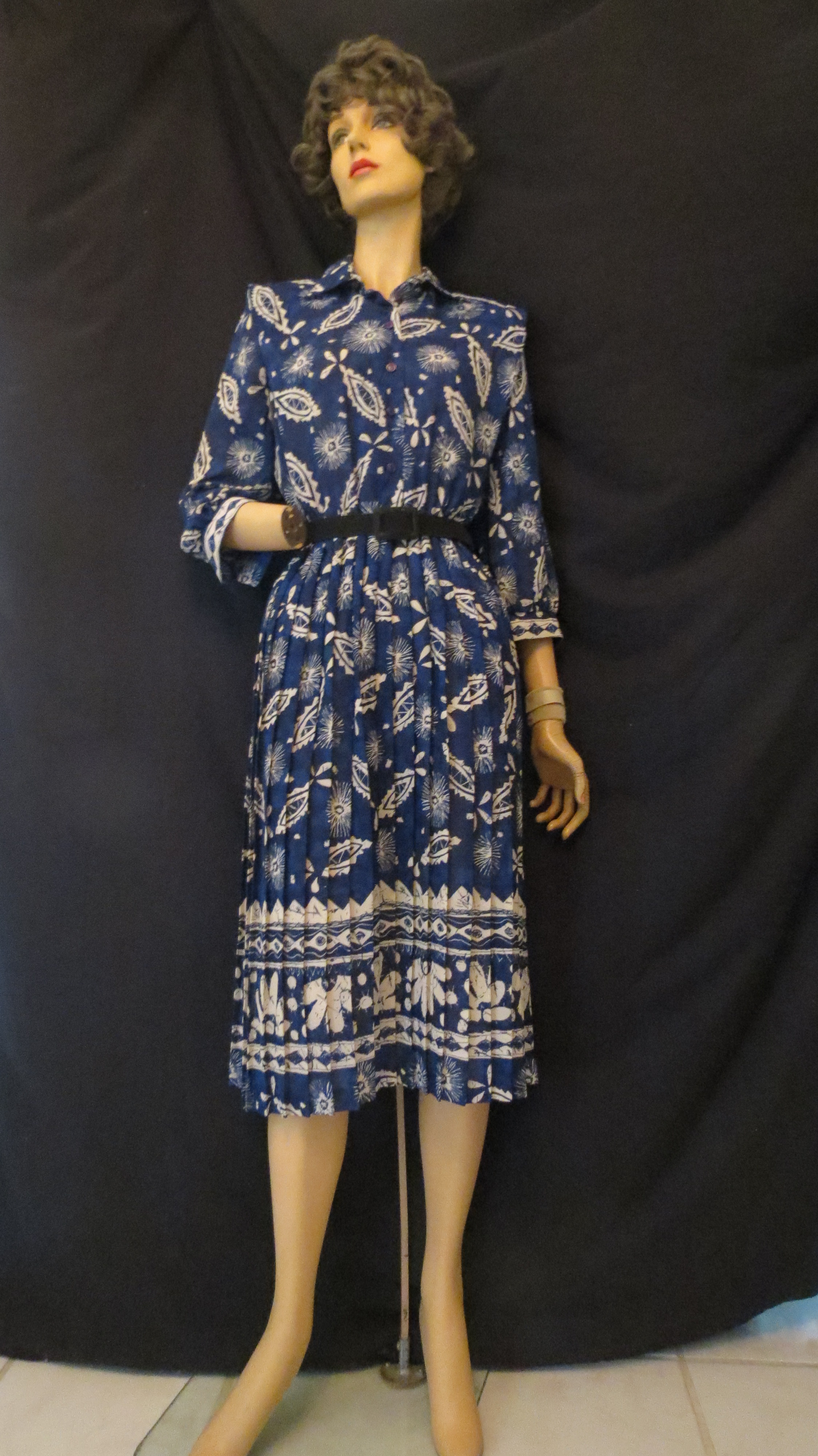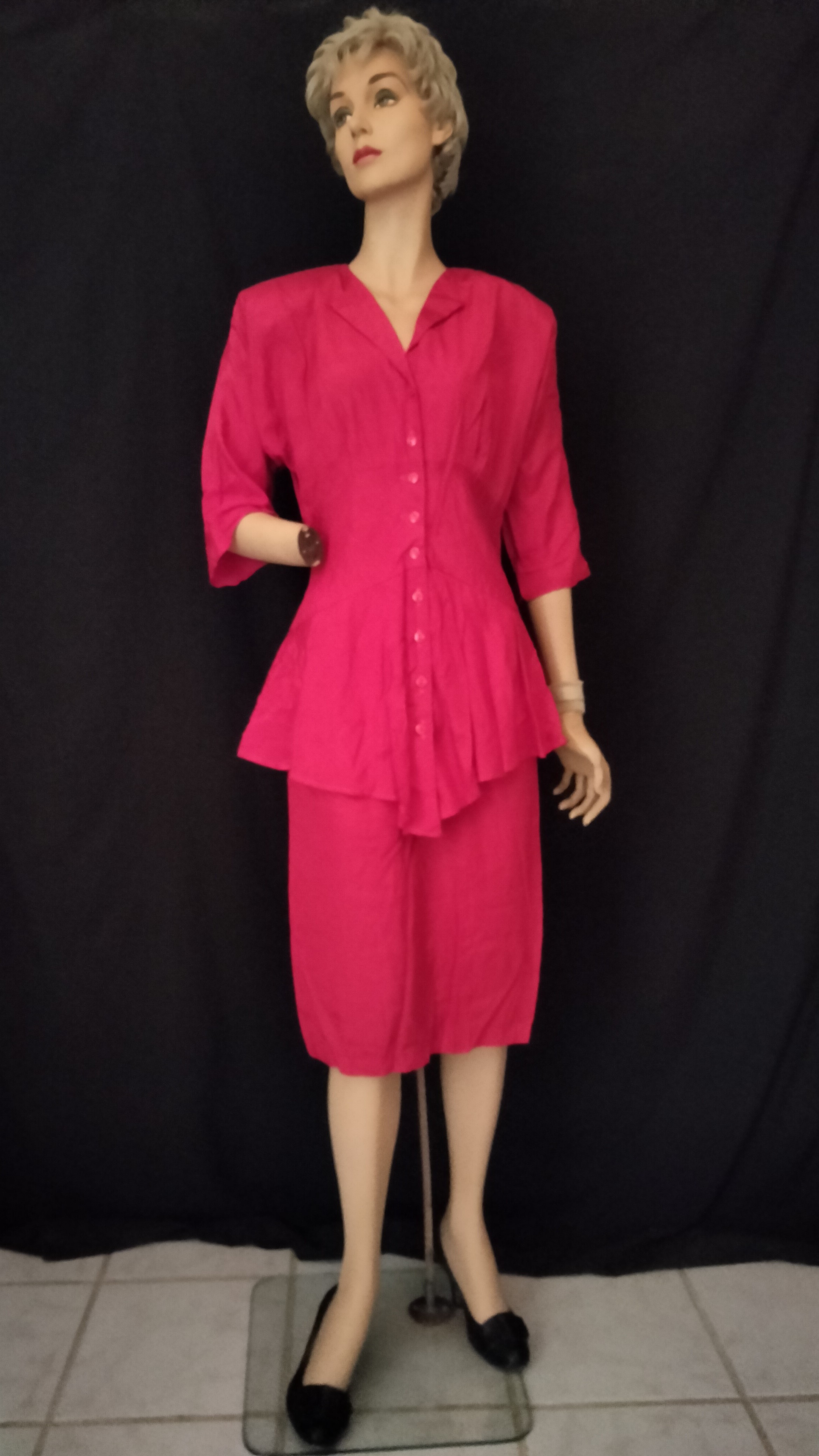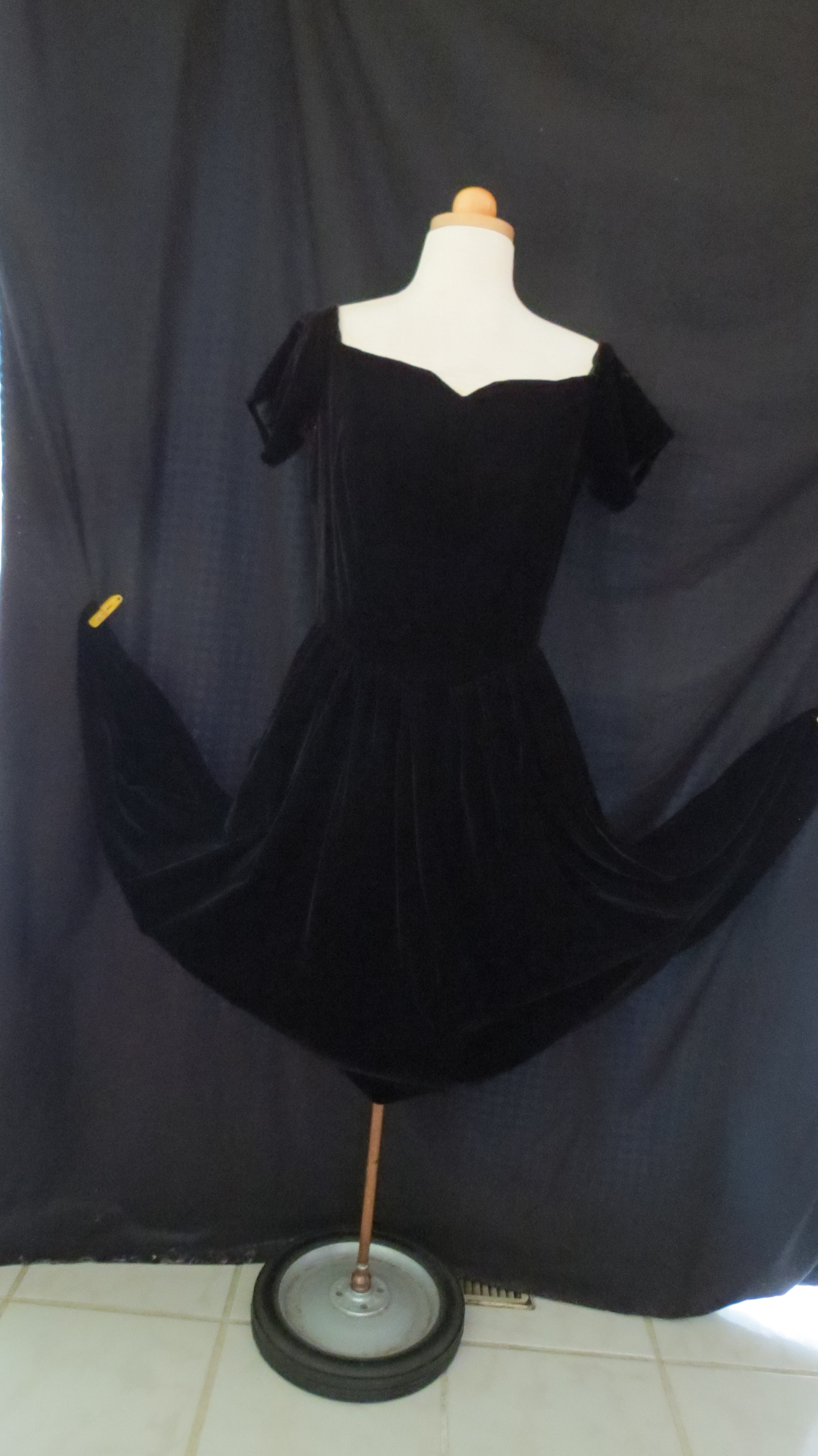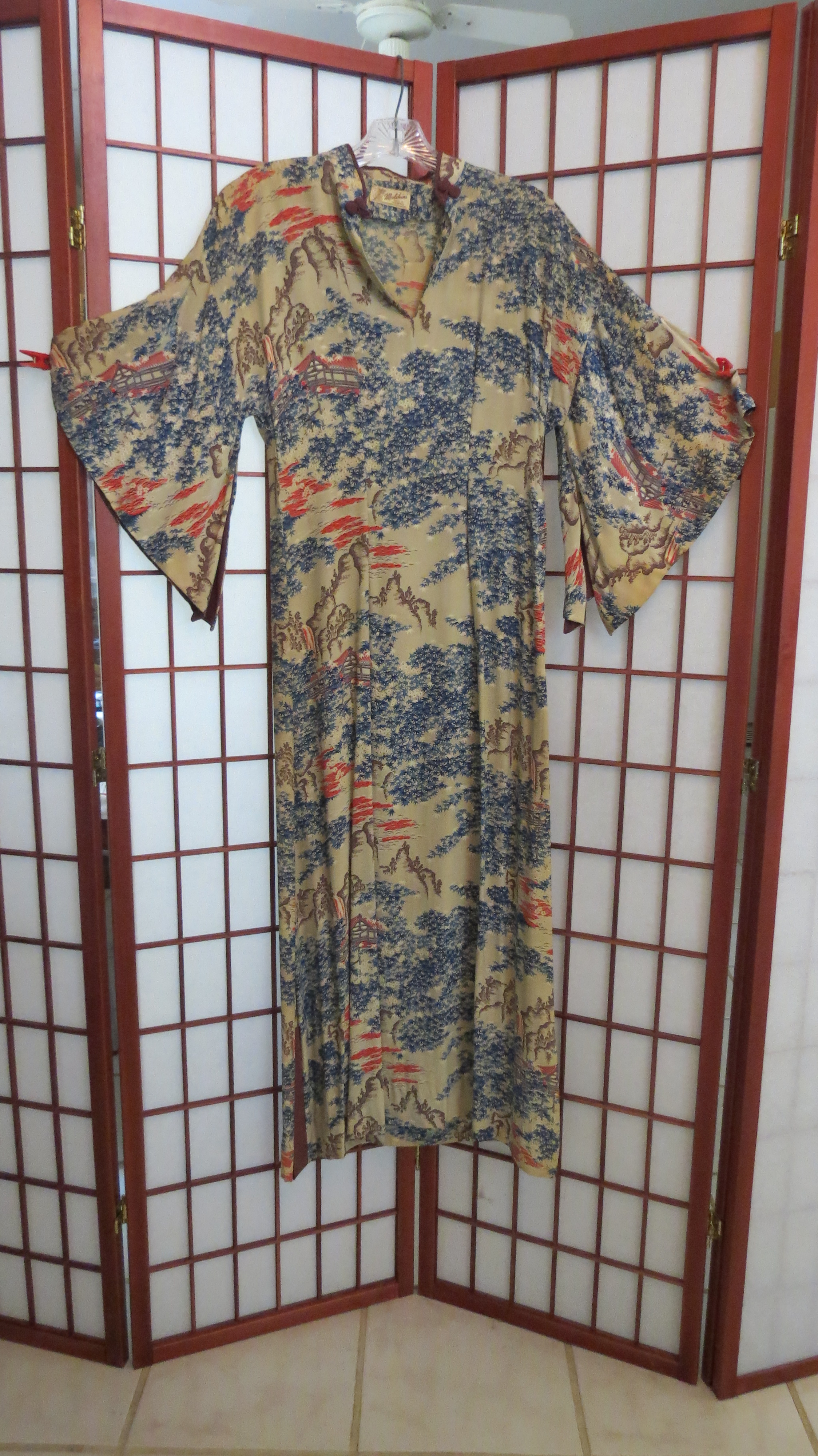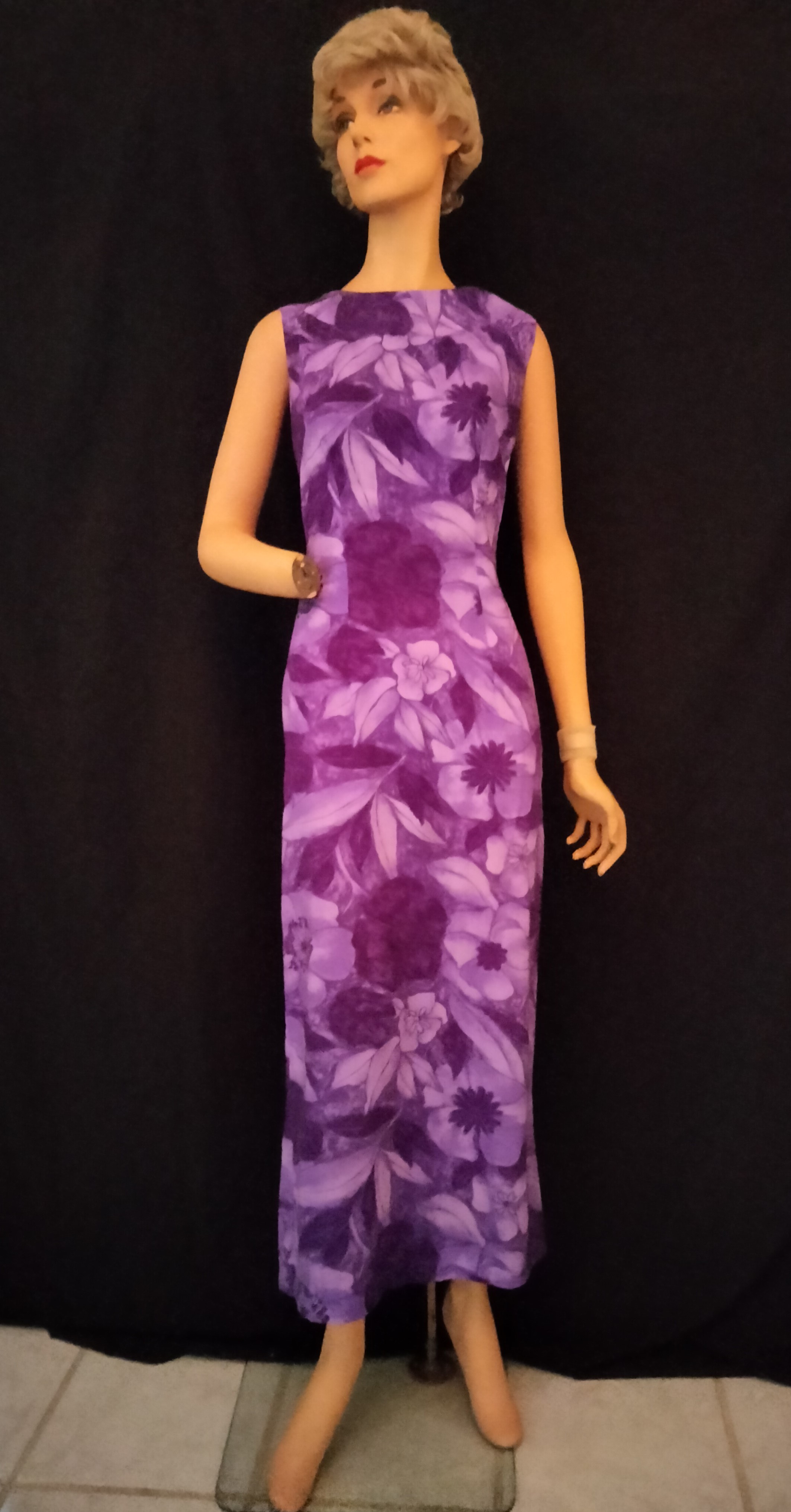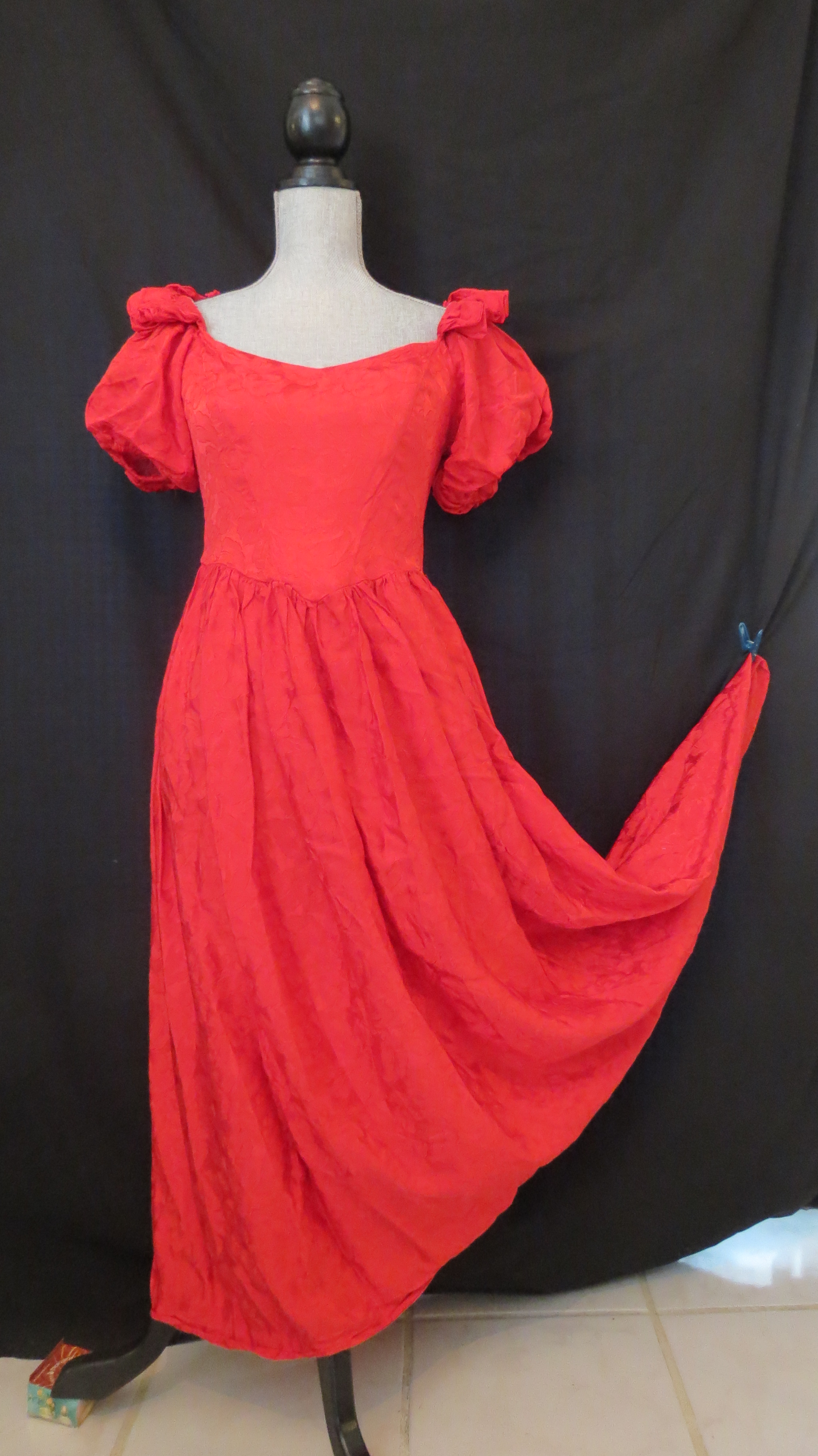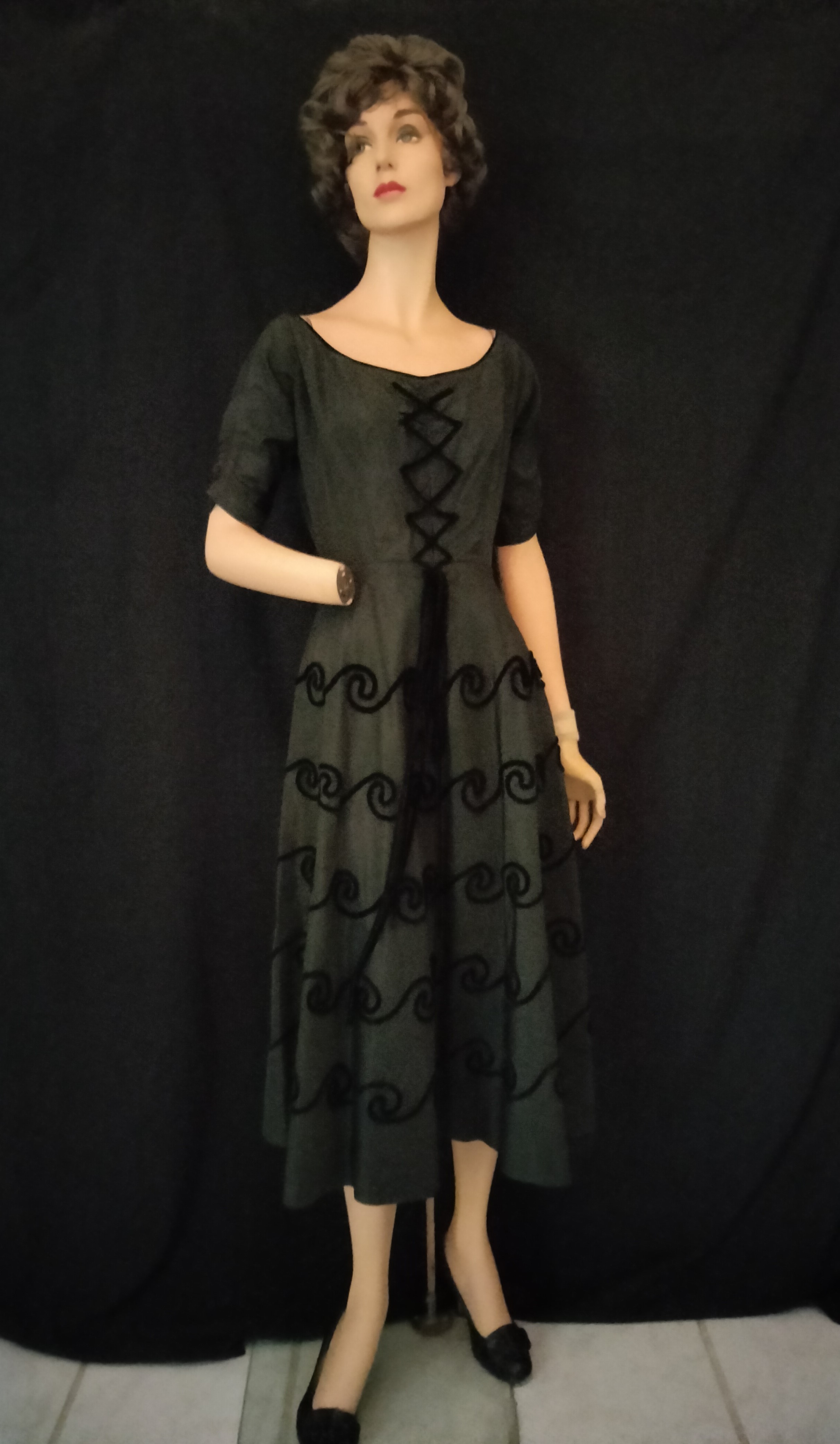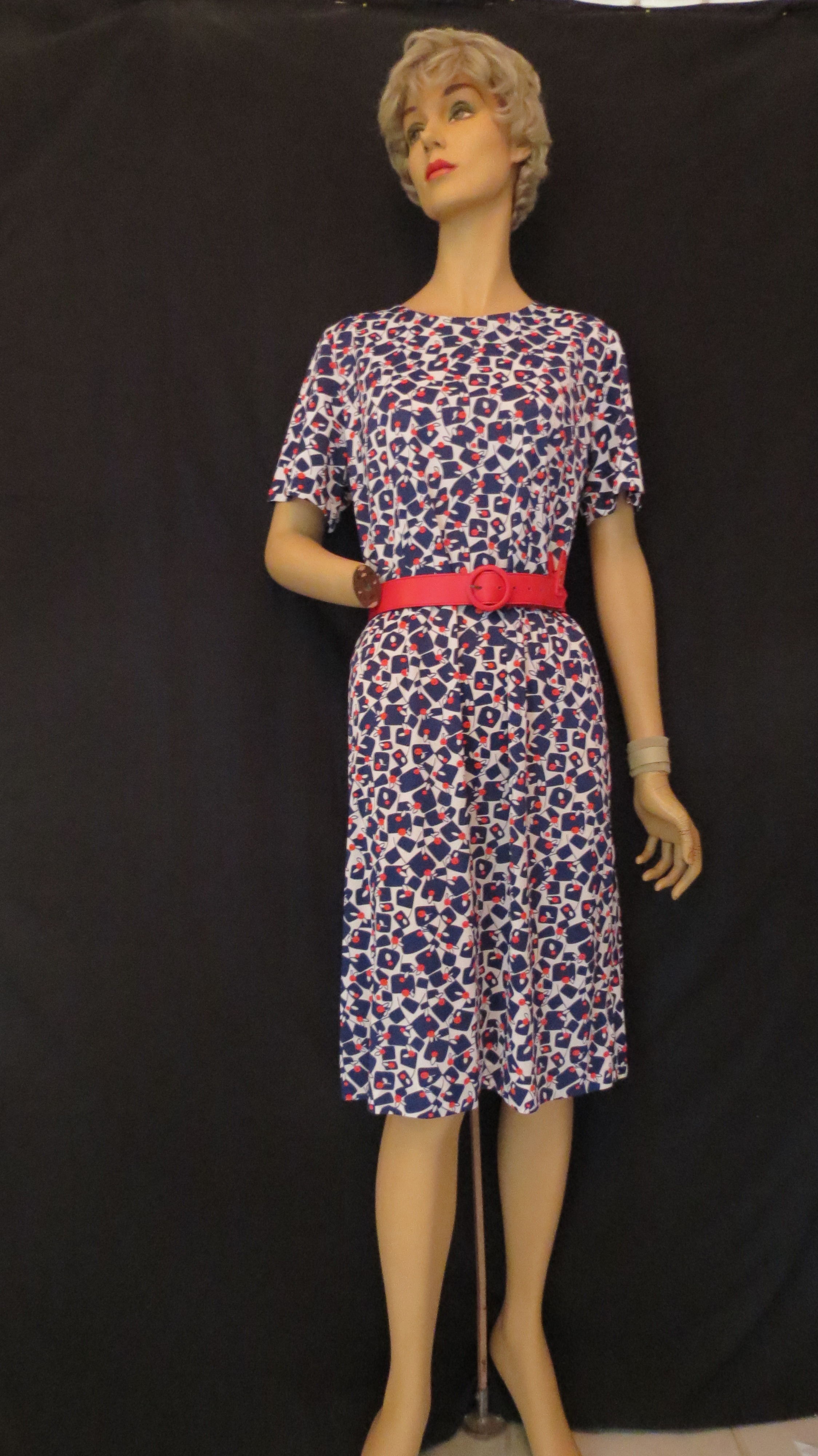
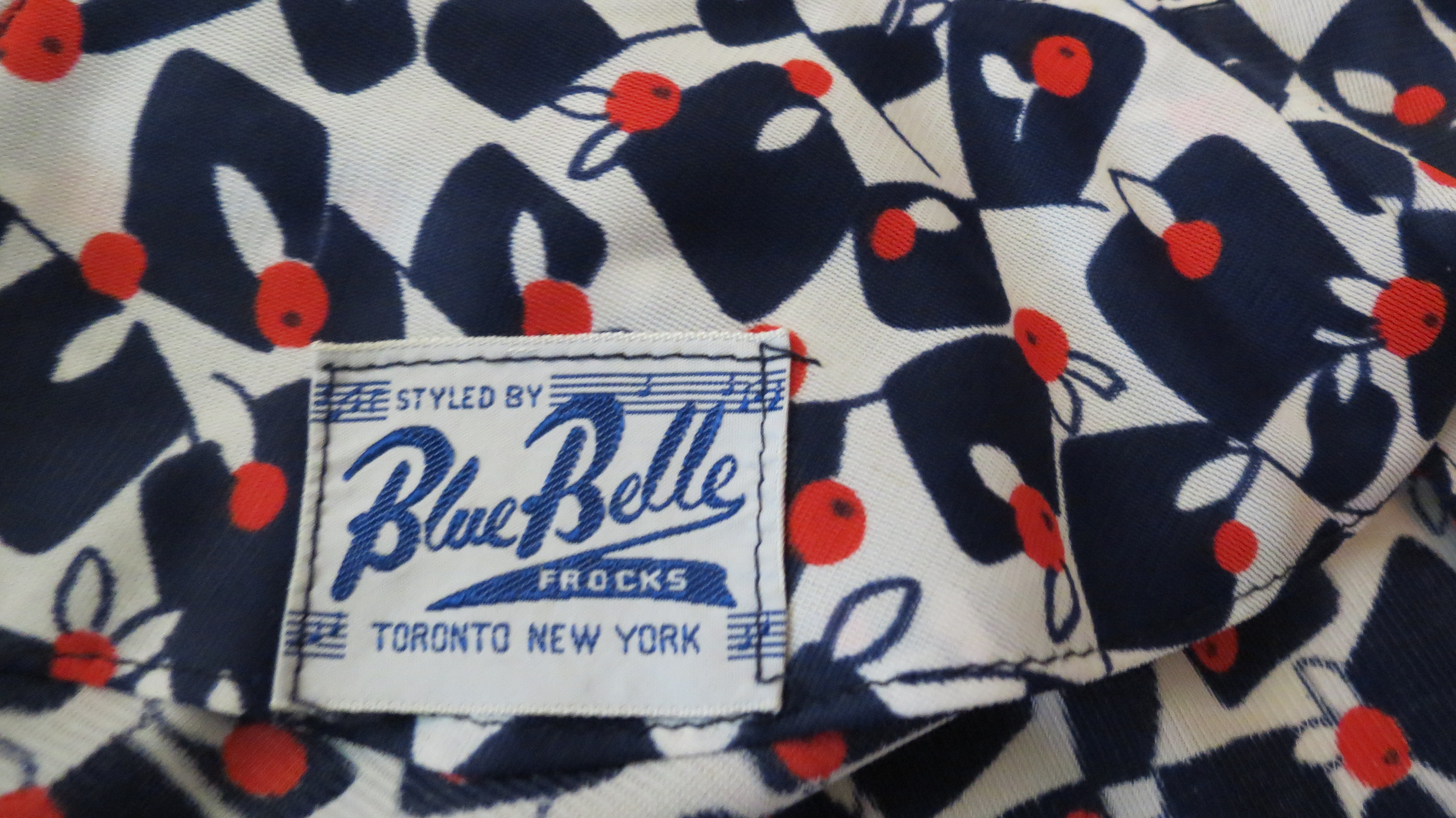
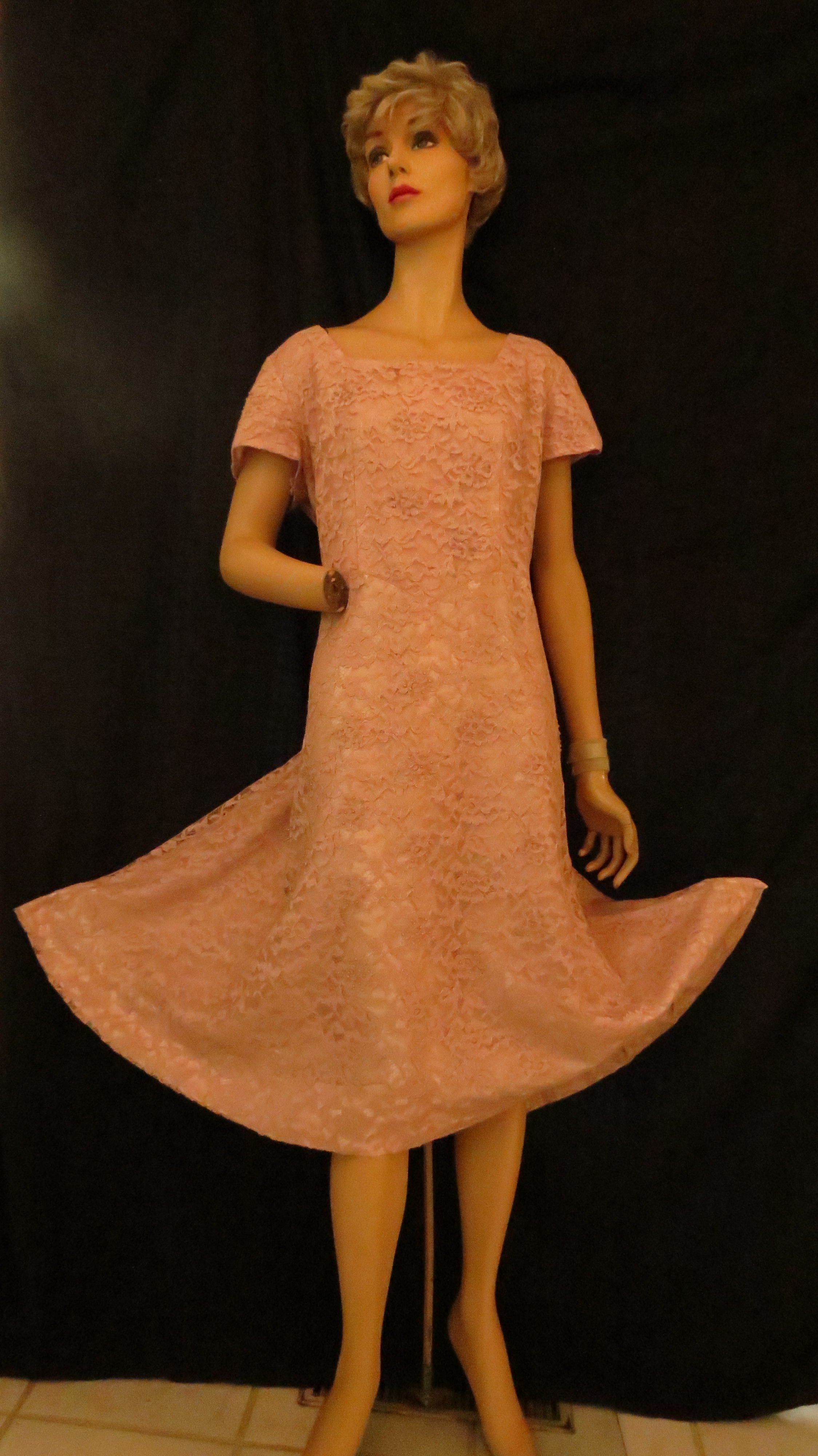
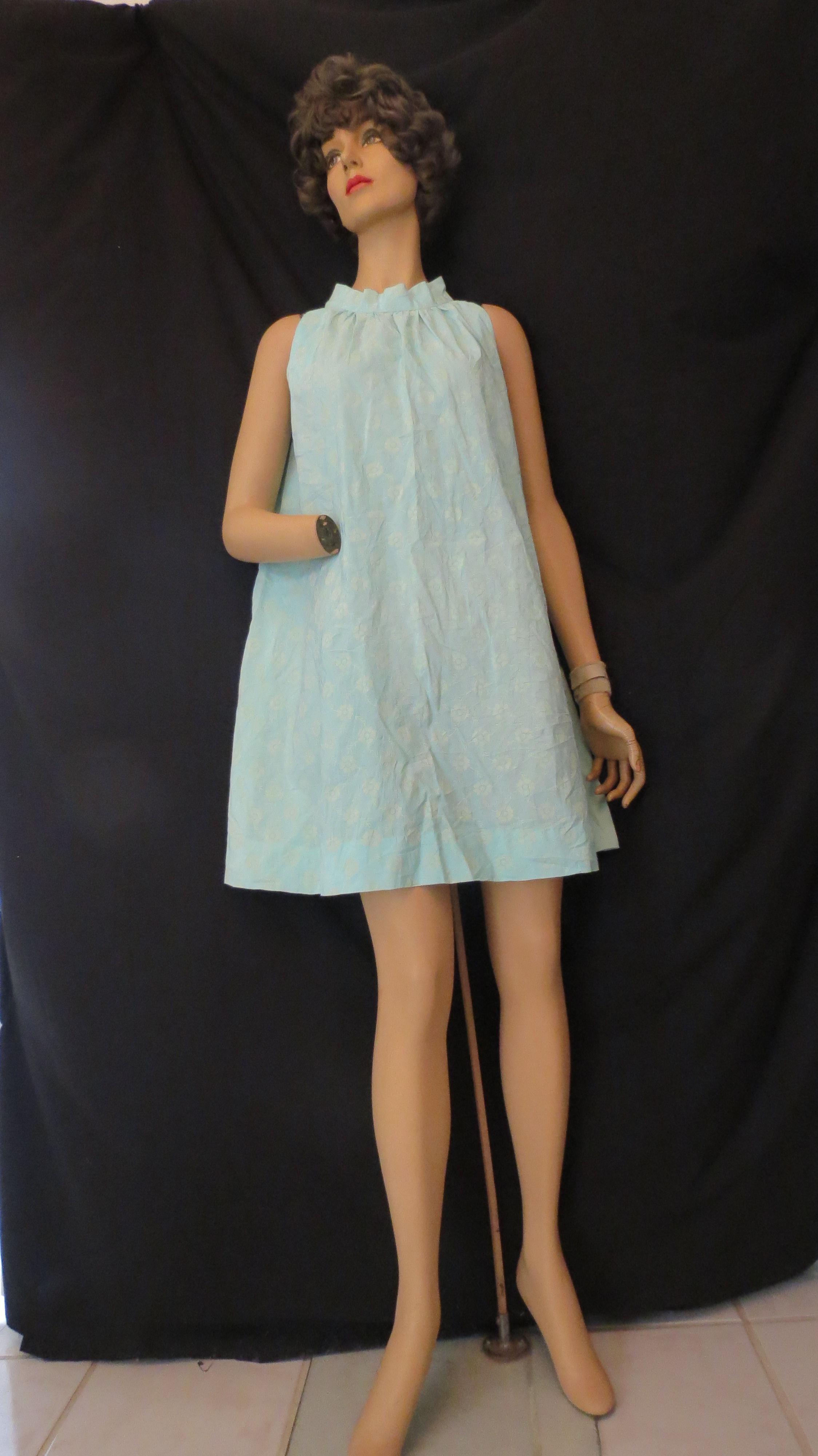
Another 1940’s Gown, this time in Holiday Red

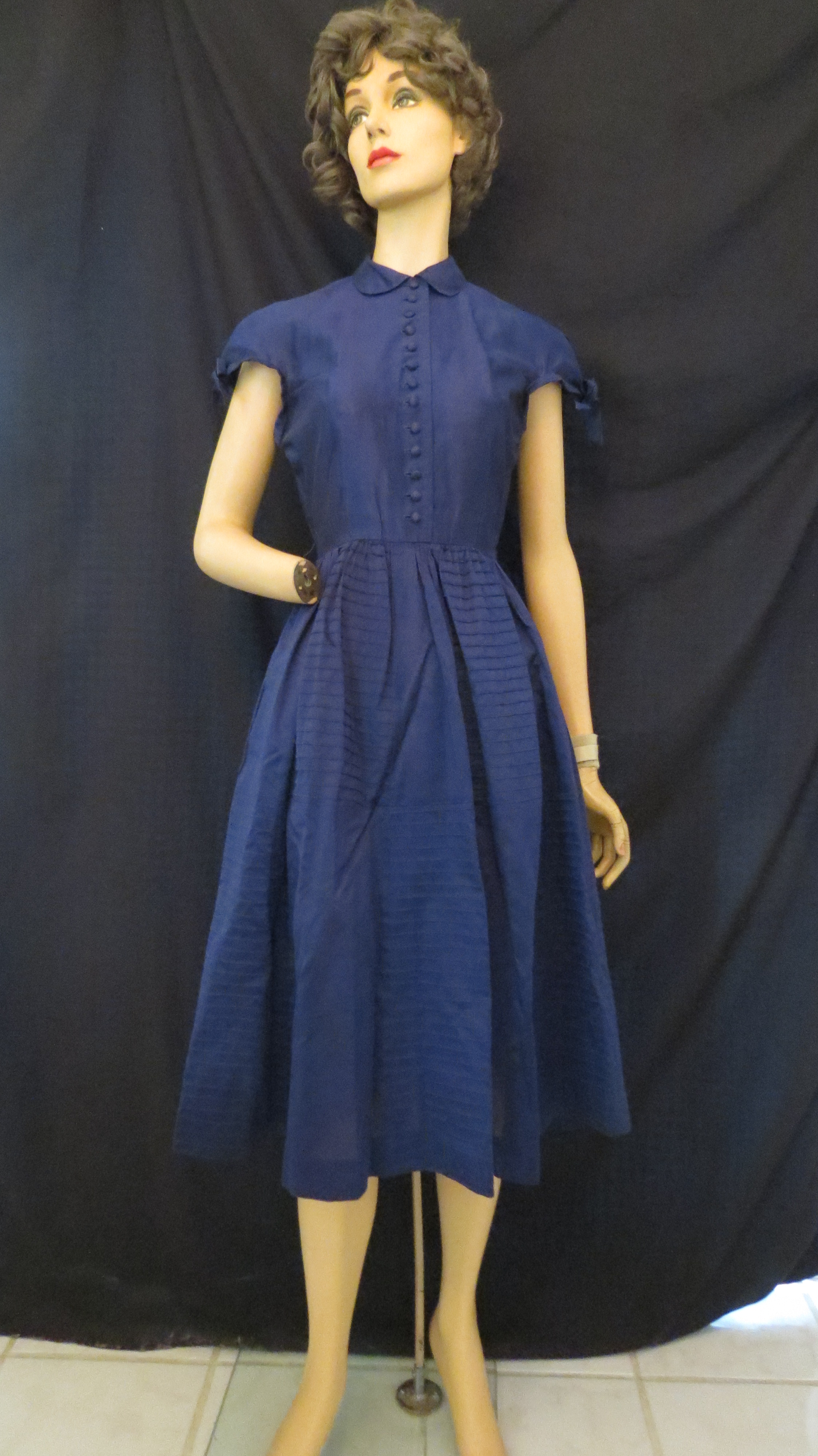
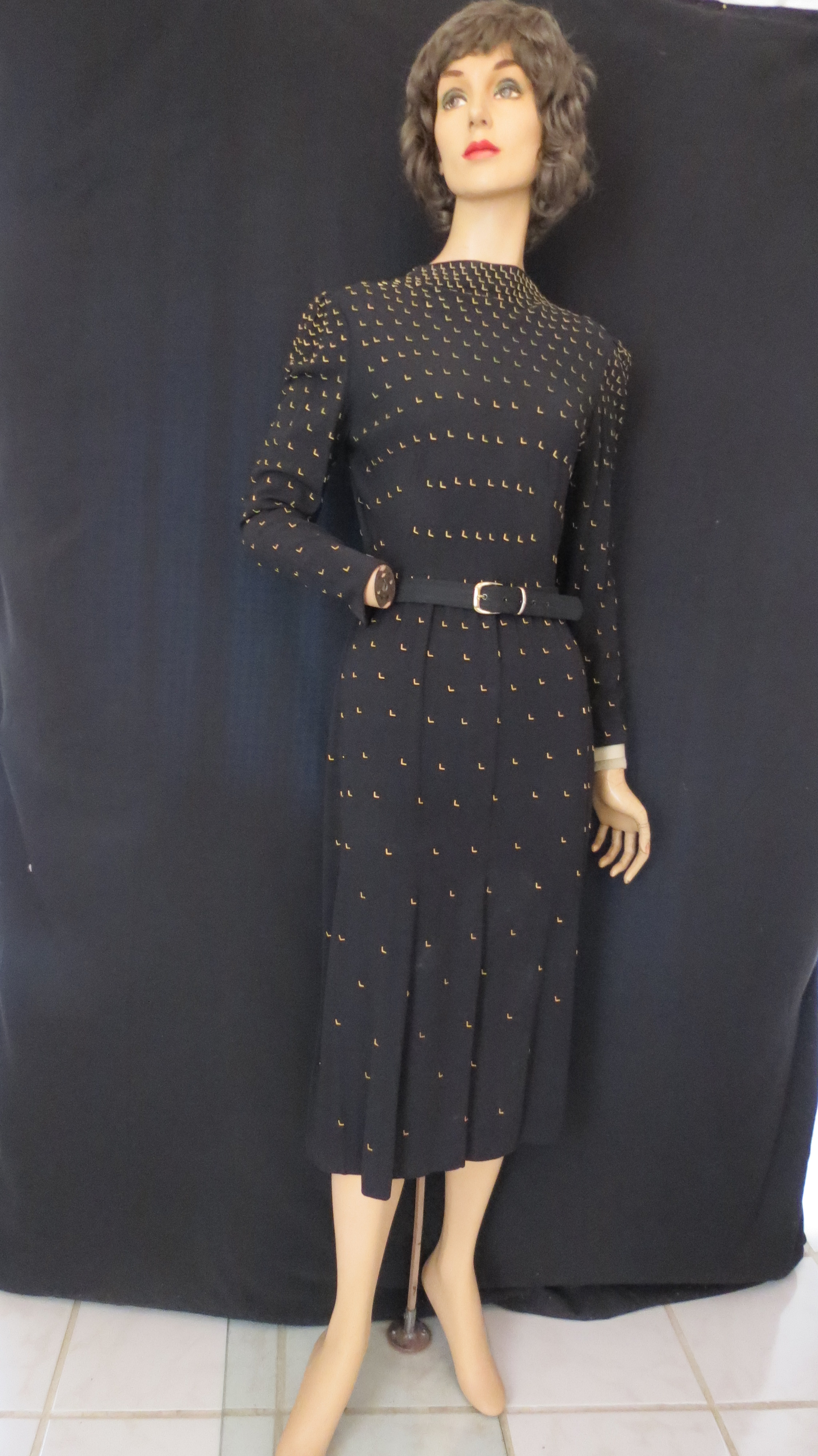
What beautiful fabric! It is substantial but soft and with tiny machine-embroidered diamond shapes all over, which was apparently a “thing” in some Forties material. This might have been a way of making up for the absence of natural fabrics like silk and many of the notions used to decorate clothing before and after WWII.

The style is very simple and I think, like the dress shown yesterday, that it was custom-made. The pattern wouldn’t have been difficult for a home-based seamstress. The neckline in back is a bit lower, but nothing dramatic. The most difficult aspect of the construction is the piecing below the waist and that’s still no big deal. What I like most about it is that it’s just very pretty and so festive and Christmas-y in that fantastic glossy red. I would have collected it for the yards of gorgeous fabric alone! More of that coming – stay tuned . . . . . . . . . . . . . . . . . . . . . . . .

MORGANA MARTIN, THE MAGICVINTAGESPY

BLOG: MAGICVINTAGESPY.COM
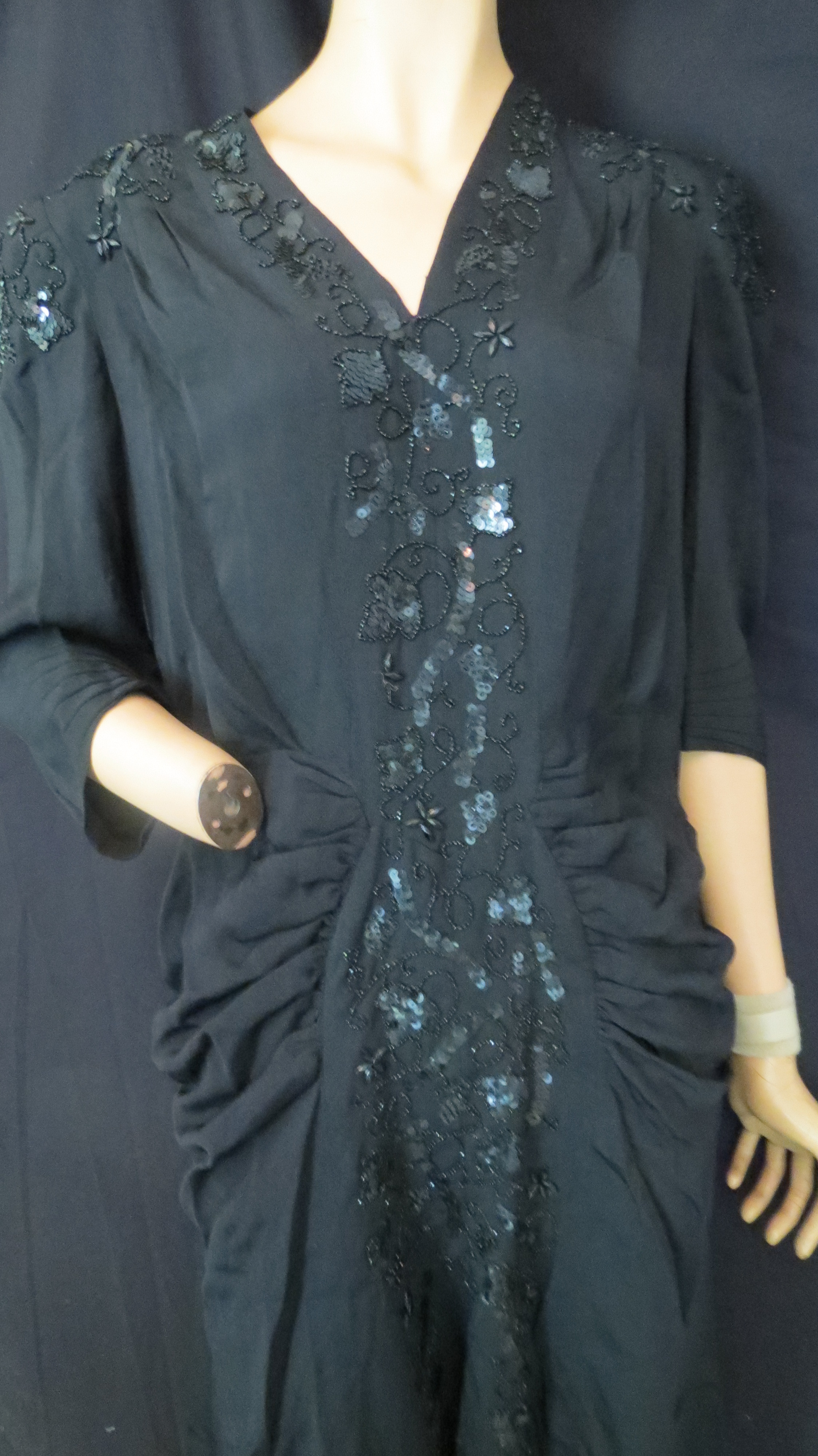
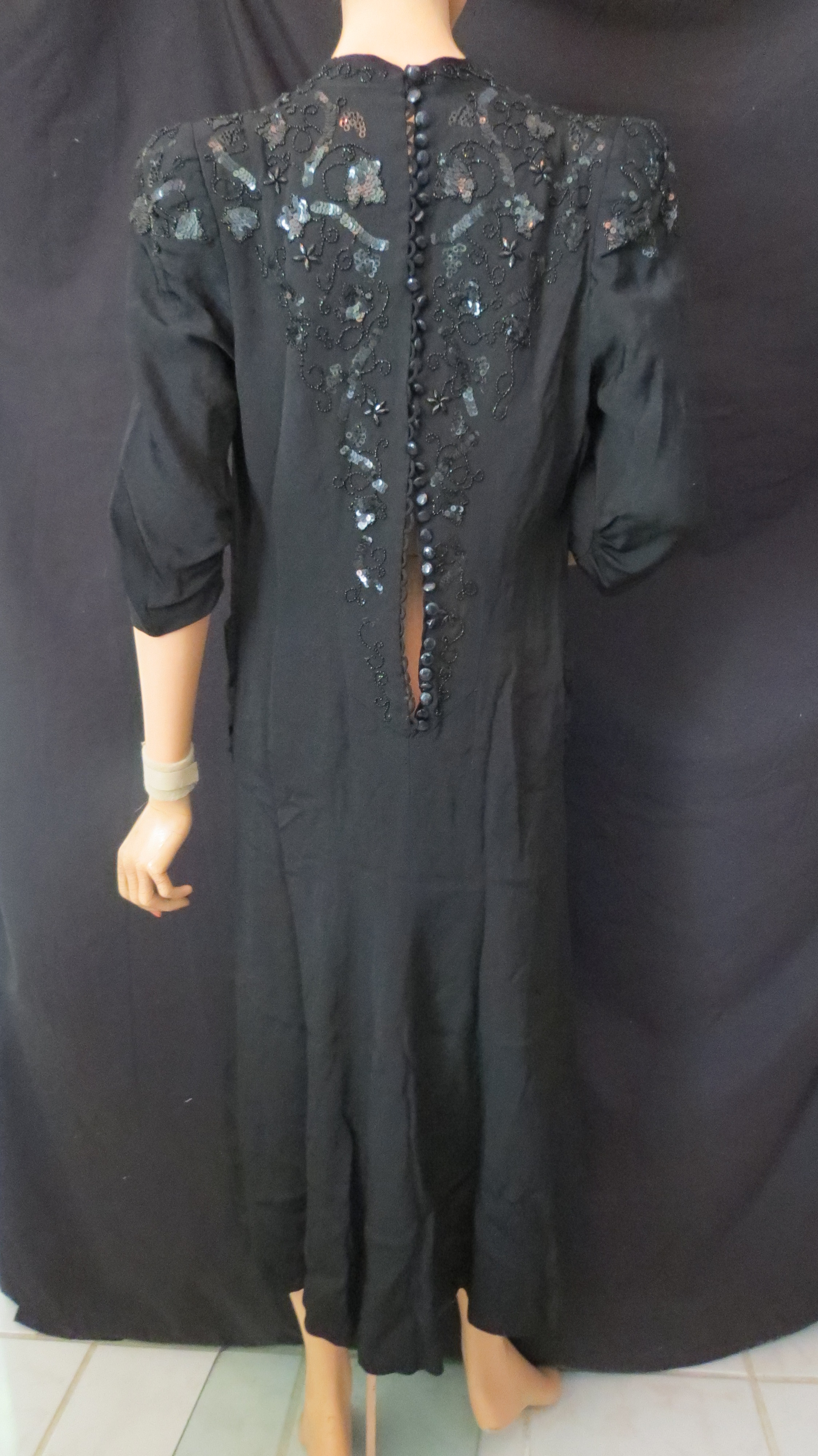
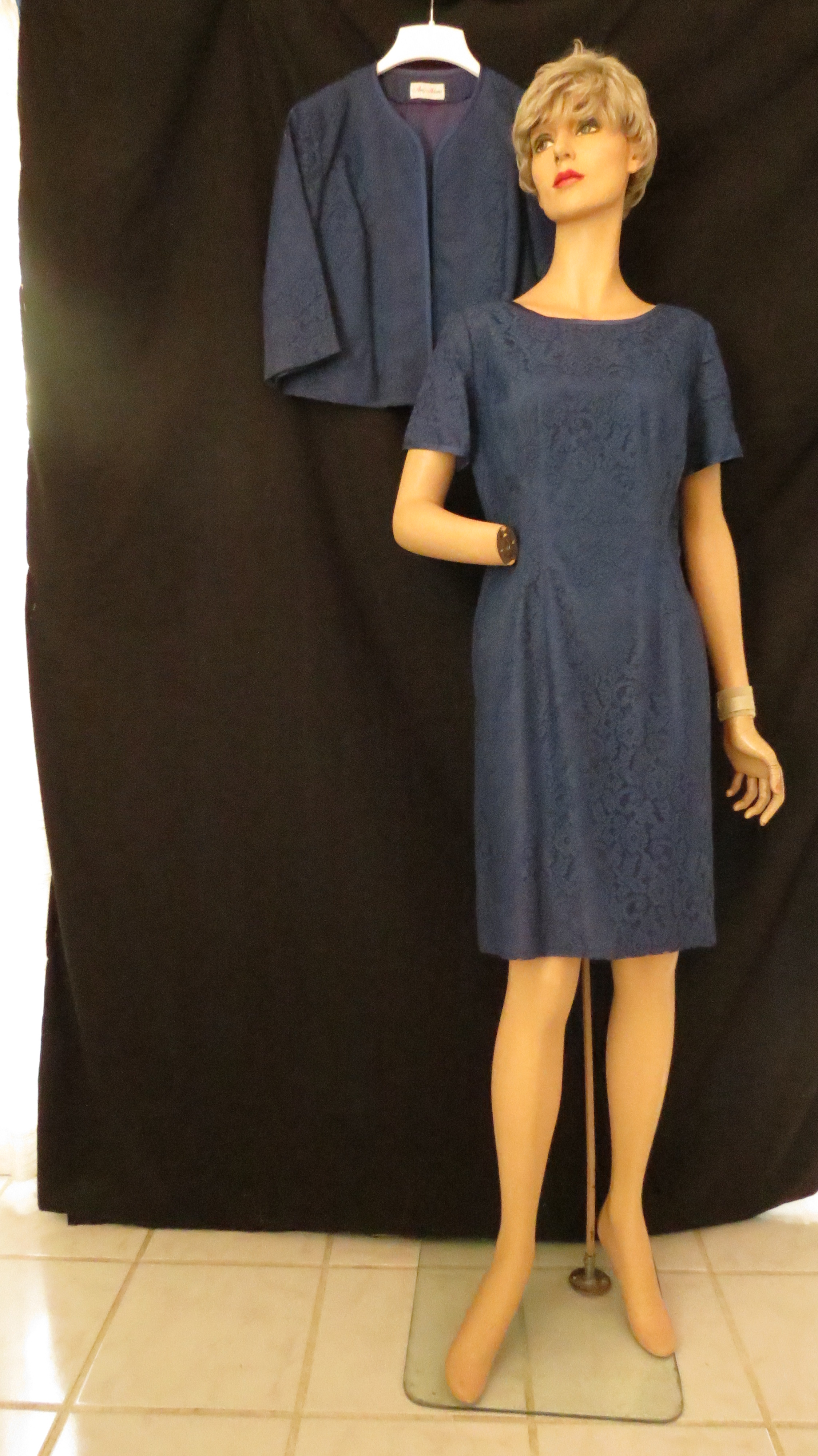
True Vintage 1940’s Bias – Cut Gown with Beading Decoration

What a wonderful find!! This gown was custom-made, possibly by a home-based seamstress, in this unusual style with 3/4 length sleeves. You can see the waist ties that would be fastened in back to nip the waistline. The bias cut glossy fabric, which gives a really slinky body-con fit is a hold-over from the 1930’s when it was very popular. I love the blue color which looks like a night-time sky and the peekaboo beading that resembles exploding stars. Very appropriate today, when the comet AiATLAS is closest to Earth.

This is another one-of-a-kind, never-to-be-seen-again frock. More to come – stay tuned . . . . . . . . . . . . . .

MORGANA MARTIN, THE MAGICVINTAGESPY.COM

BLOG: MAGICVINTAGESPY.COM

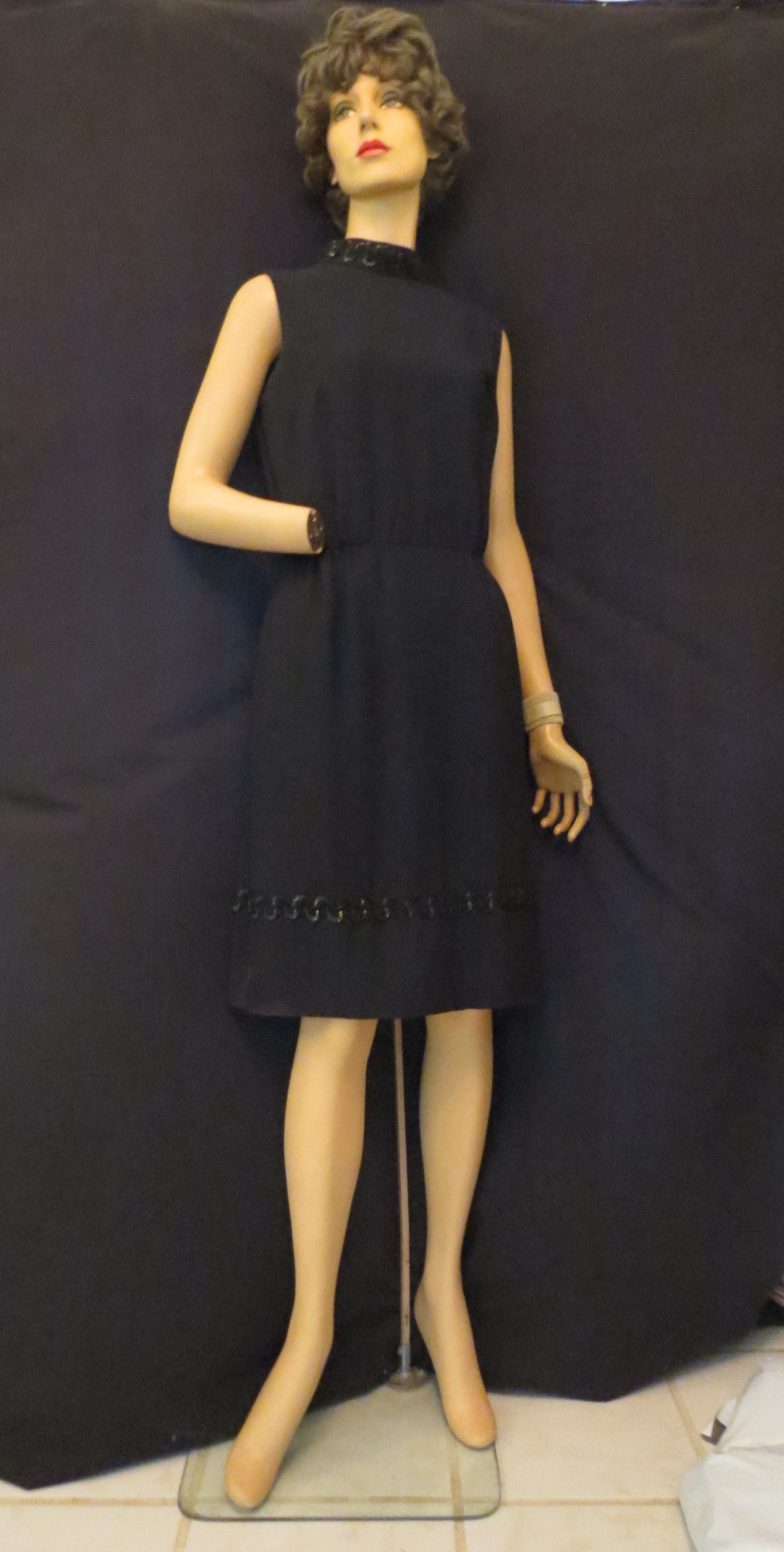
Classic True Vintage 1980’s does 1940’s Dressy LBD

Not a big-deal frock by any means, but I picked it up because of the clear 1940’s vibe. I’ve seen and own similar dresses that are true late 1940’s editions. Essential tailoring includes the cut which highlights the fabric drape and the fit on the body. Sexy fit without being clingy. Padded shoulders – very Forties, and cap sleeves – moving into the 1950’s. Rhinestone trim, always super mid-century, and a plunging back view with a conservative impression from the front. A fun surprise in any style.

An original 1940’s would be of at least slightly longer length and might have a side zipper. Again, nothing to celebrate but a worthy imitation . . . . . . . . . . . . . . . . . . . . . . . .

MORGANA MARTIN, THE MAGICVINTAGESPY

BLOG: MAGICVINTAGESPY.COM
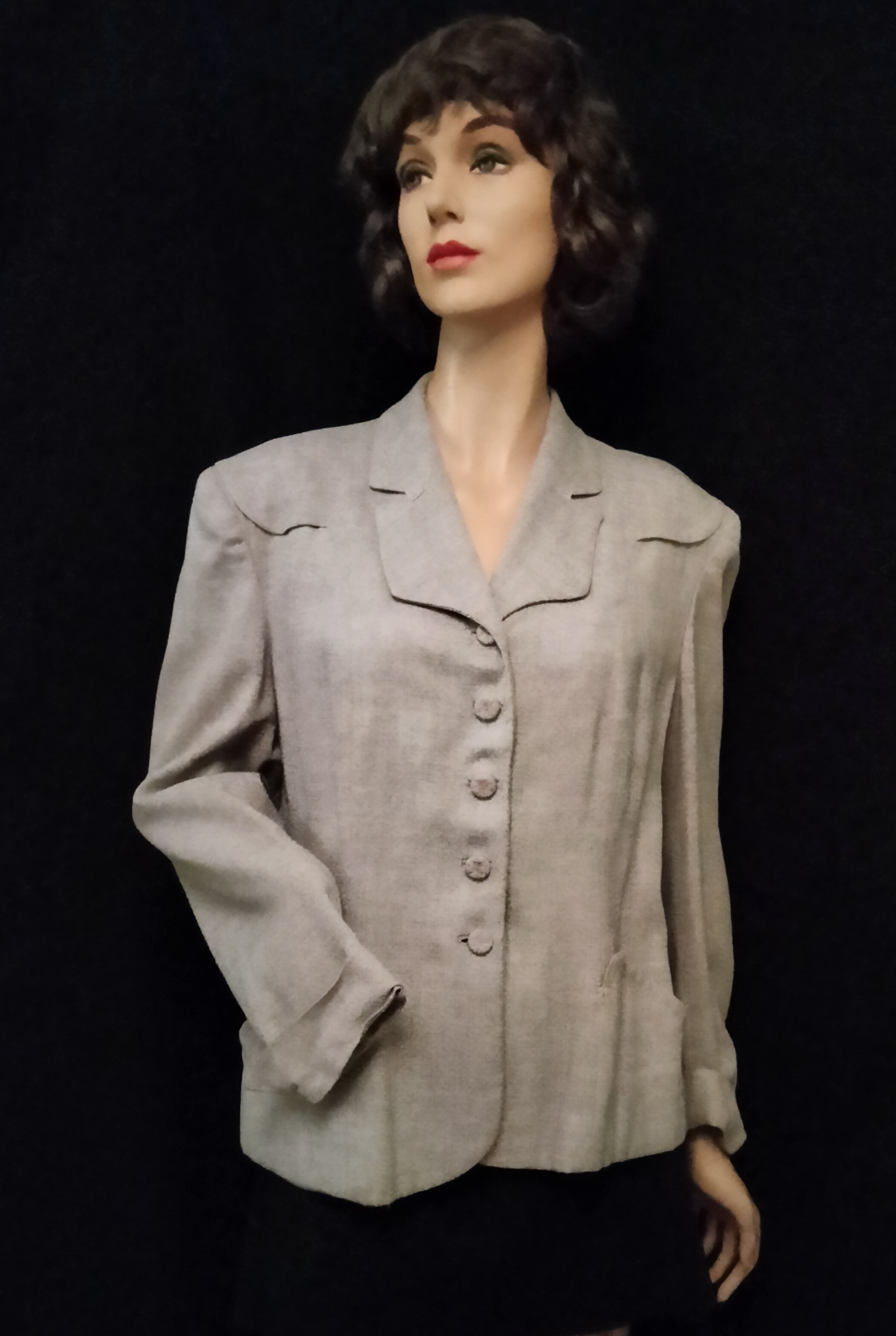
OOPSIE DAISY, BACK IN THE 1940’S WITH A BLACK CREPE COCKTAIL FROCK

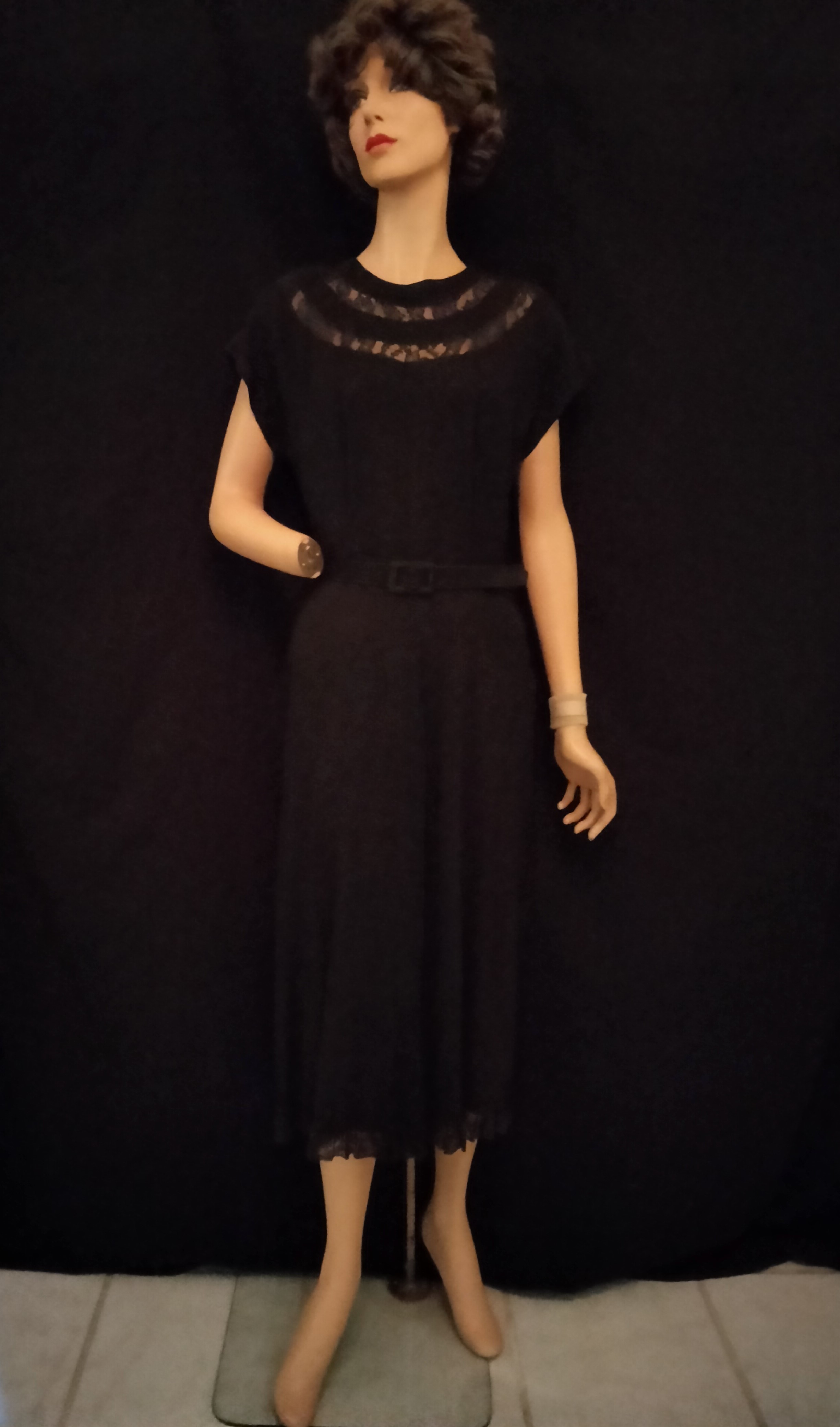
For cocktails and/or dinner, a dressy but elegantly designed garment. Either pre- or post-WWII (probably Post-) a simple rayon crepe sheath with a midi hemline. Notice the beautiful drape of this fabric. Modest but semi-flashy rhinestone decoration and an eye-catching deep keyhole neckline, saying “YES! The war is over and we can party in beautiful dresses again!”

This one came from Australia so may even have been made in Britain, as much of their clothing was before the 1970’s or so. The arrival of fast fashion put an end to many quality brands and their exports as well as iconic department stores and ladies’ clothing shops which used to sell them. Today we can have boatloads of cute crappy stuff instead of a selection of well-made and lovely garments and accessories. Progress? Ha! Don’t believe it. I’m old enough to remember my grandmother’s good stuff and trips to the city with my mom for Christmas shopping. Stay tuned for more . . . . . . . . . . . . . . . . . . . . .

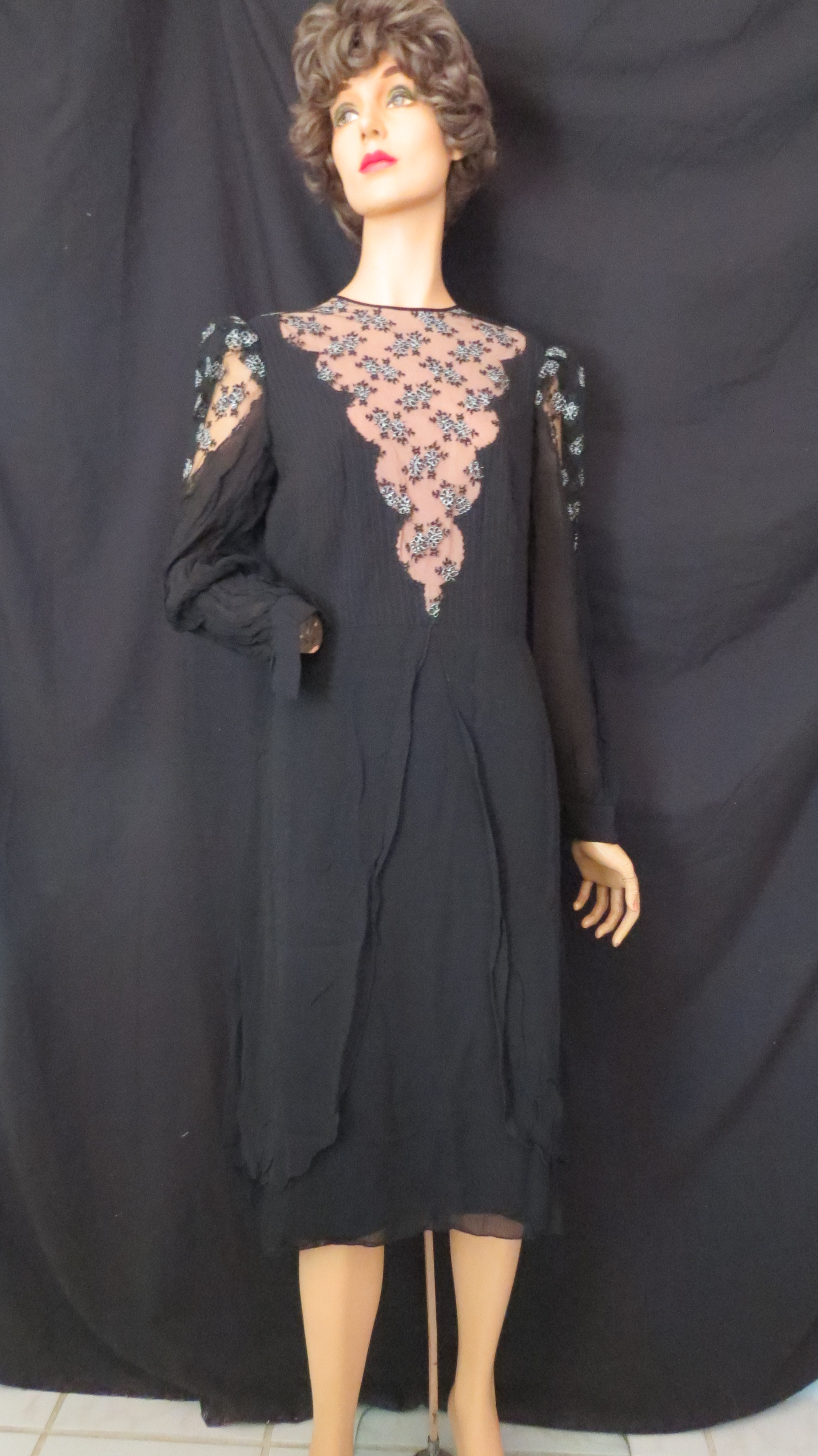
Cute LBD with Iconic Mid-century Tailoring Detail

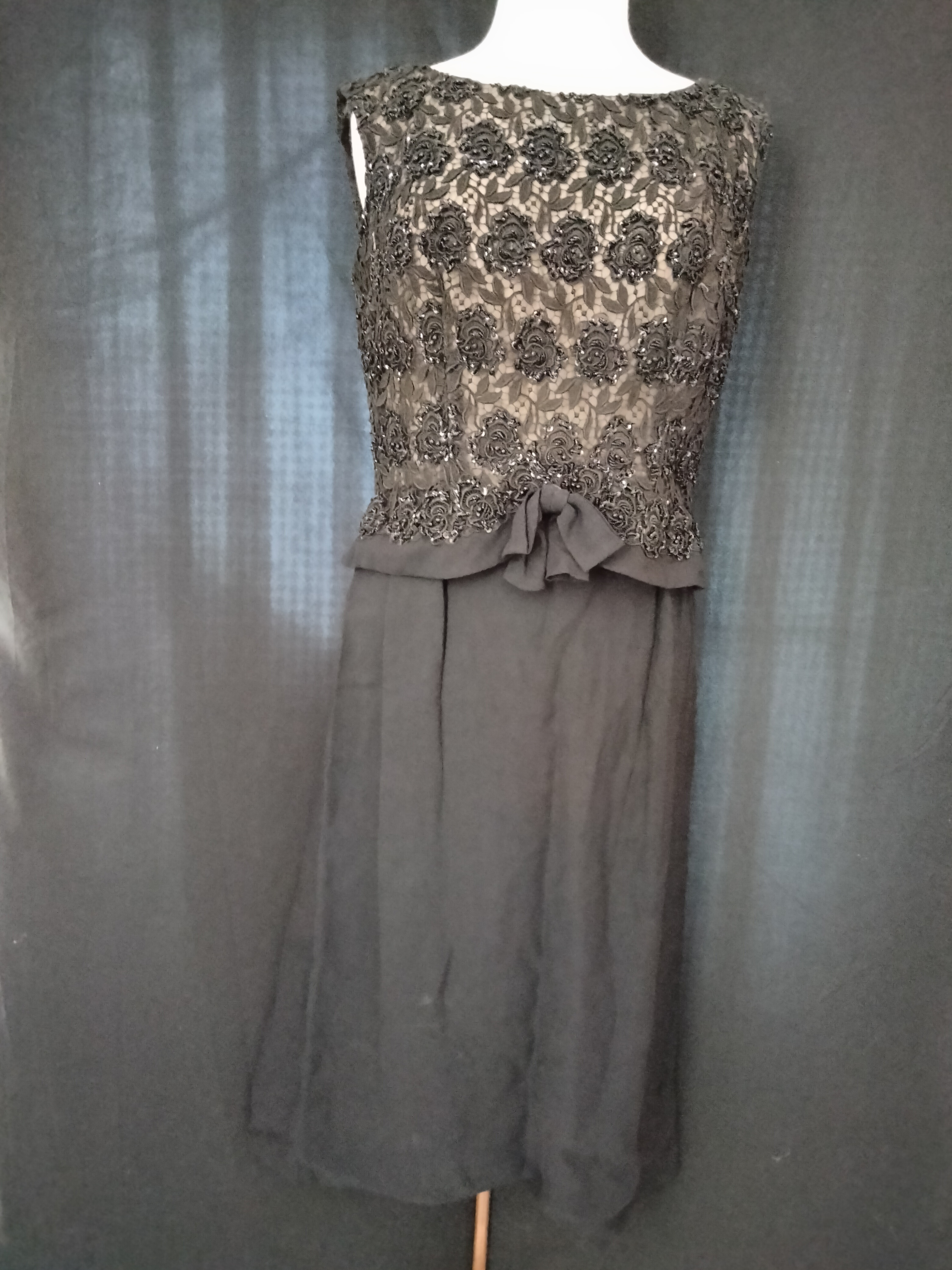
I admit, this dress is no star with regard to overall quality. Very middle-of-the-road in that department, but I couldn’t help being struck by the embroidered sheer mesh bodice. This is a detail that I have seen in 1940’s and early 1950’s frocks; usually not since then. The gold thread gives it a holiday feel which makes styles like this appropriate for Christmas events. The fabric leads me to decide that this garment was made in the 1960’s at the earliest – possibly as late as the 1990’s.

I have to give the designer congrats for using this tailoring again. It’s so attractive and feminine, allowing for an interesting neckline without gapping, buckling or too much de’collete’ to allow it to be truly elegant. This frock drapes well and fits beautifully in the bodice. The only improvements I would point out might be a full lining, which would support the lines better without fullness. That would make it a very sophisticated cocktail dress. .

Of course, this one might have been a late 1970’s disco design in which case you wouldn’t want to add any bulk to the skirt or a potentially sweaty lining, for that matter. In any case, it’s cute and can stand proud exactly as it is. Stay tuned for more cocktail frocks, each with it’s own personal character . . . . . . .

MORGANA MARTIN, THE MAGICVINTAGESPY

BLOG: MAGICVINTAGESPY.COM

Post-war 1940’s Early 1950’s Strapless Wiggle Cocktail Dress

This one was from Chicago, as the label tells me. It’s not officially an LBD because it is actually dark mid-night navy blue in a smooth, lighter weight fabric to get that sleek silhouette. In spite of the little flesh-color straps, which might have been mostly for hanging purposes, you’ve got to have the right figure to pull this off correctly. Marilyn Monroe did it wonderfully well.

This was a one-of-a-kind find originally sold by a higher-end store in the Windy City. Would love to know who, where, when and how it was worn but, sadly, there were no additional clues. Who cares – she speaks for herself. Stay tuned for more . . . . . . . . . . . . . . . . . . .

MORGANA MARTIN, THE MAGICVINTAGESPY

BLOG: MAGICVINTAGESPY.COM
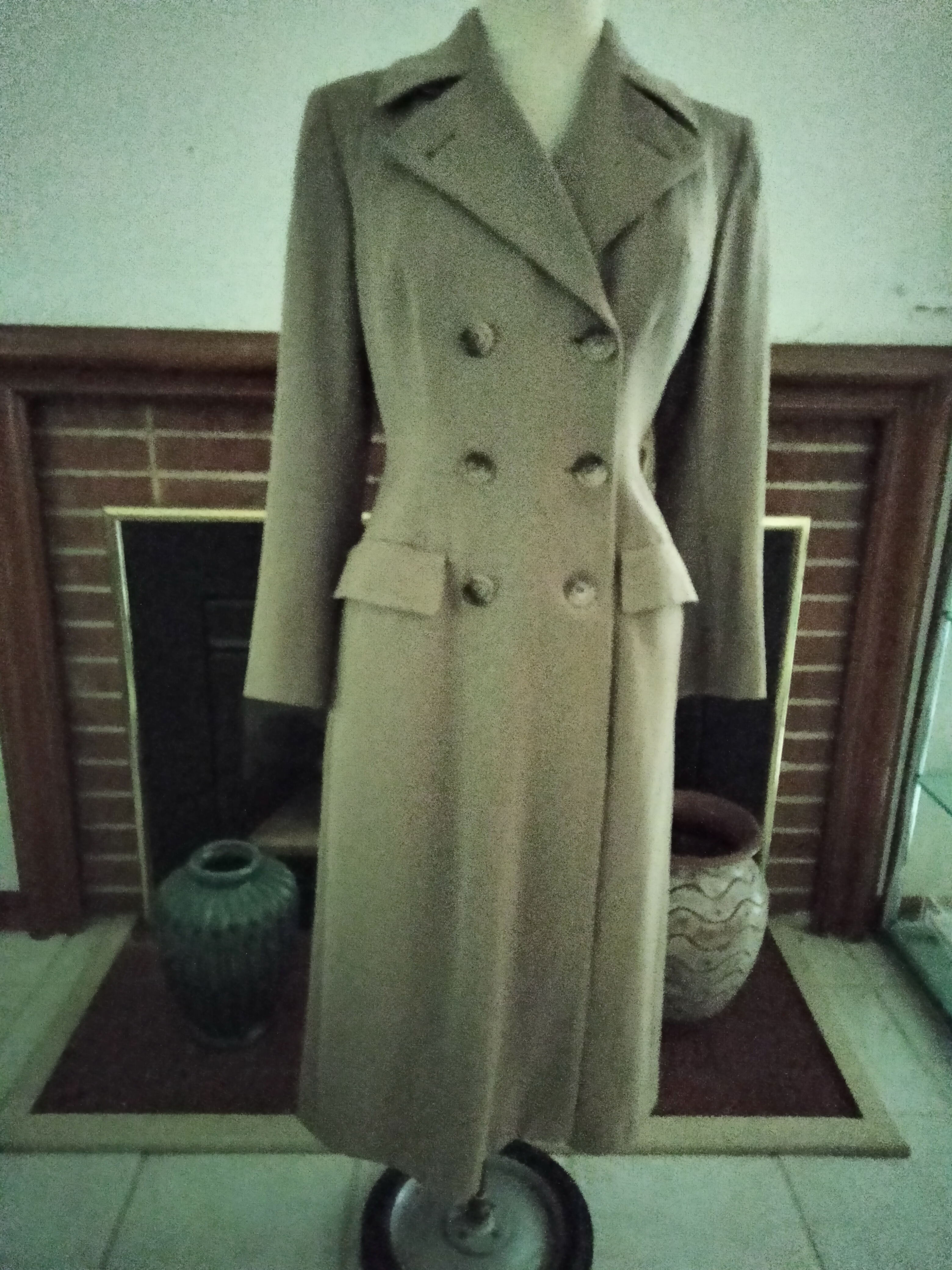
JUST OPENED ANOTHER ARCHIVE OF TRUE VINTAGE LBDs

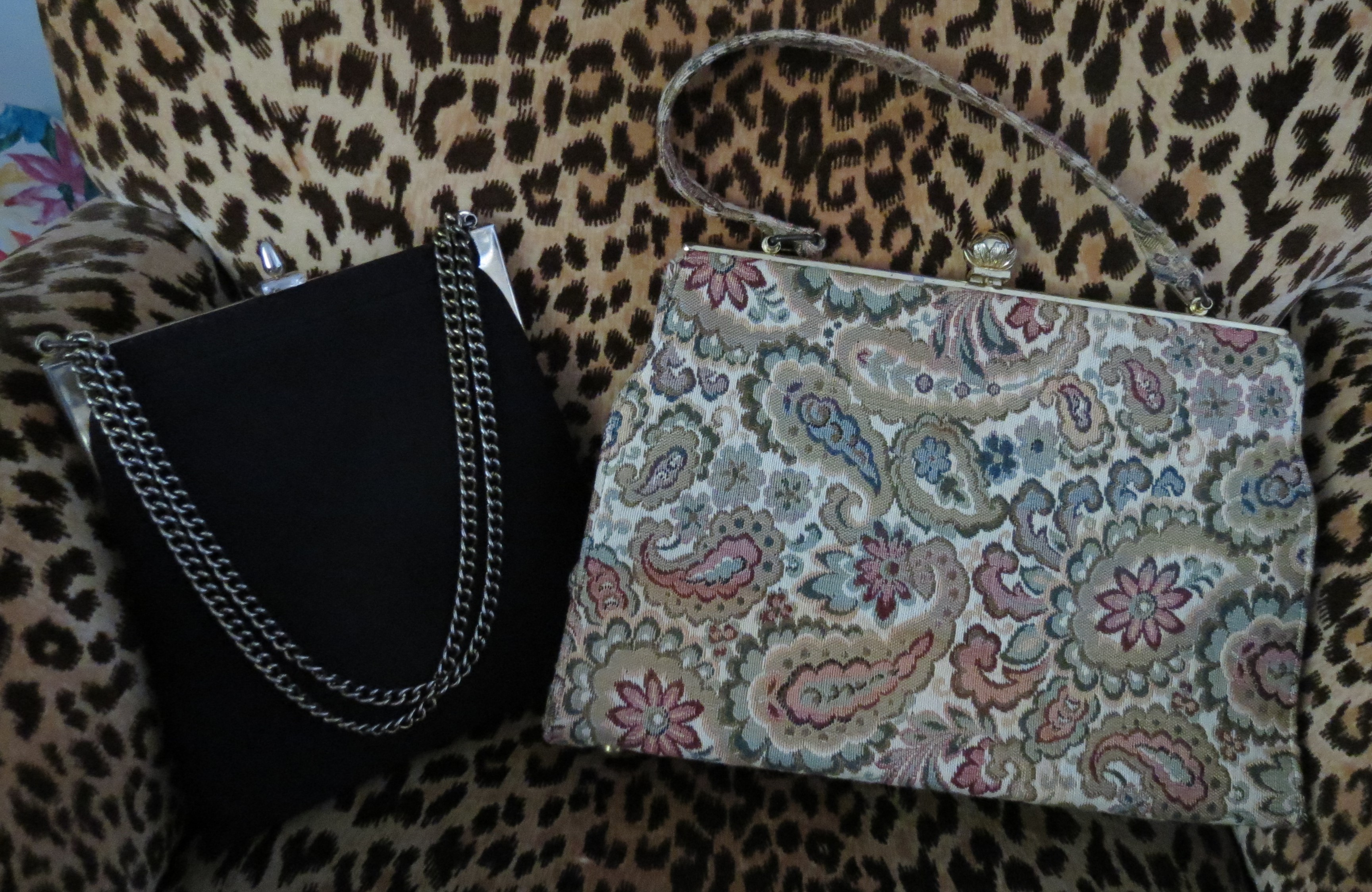
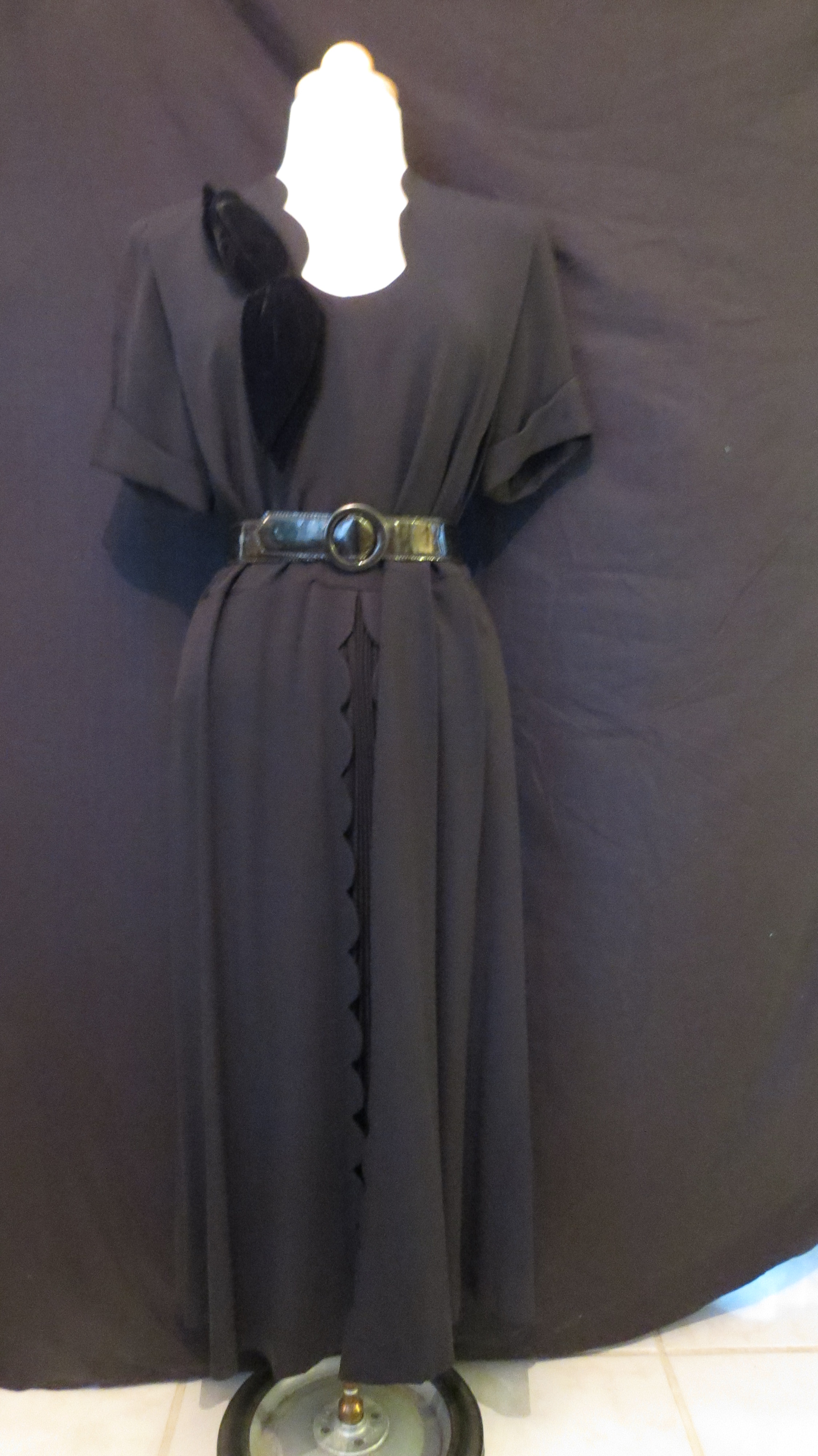
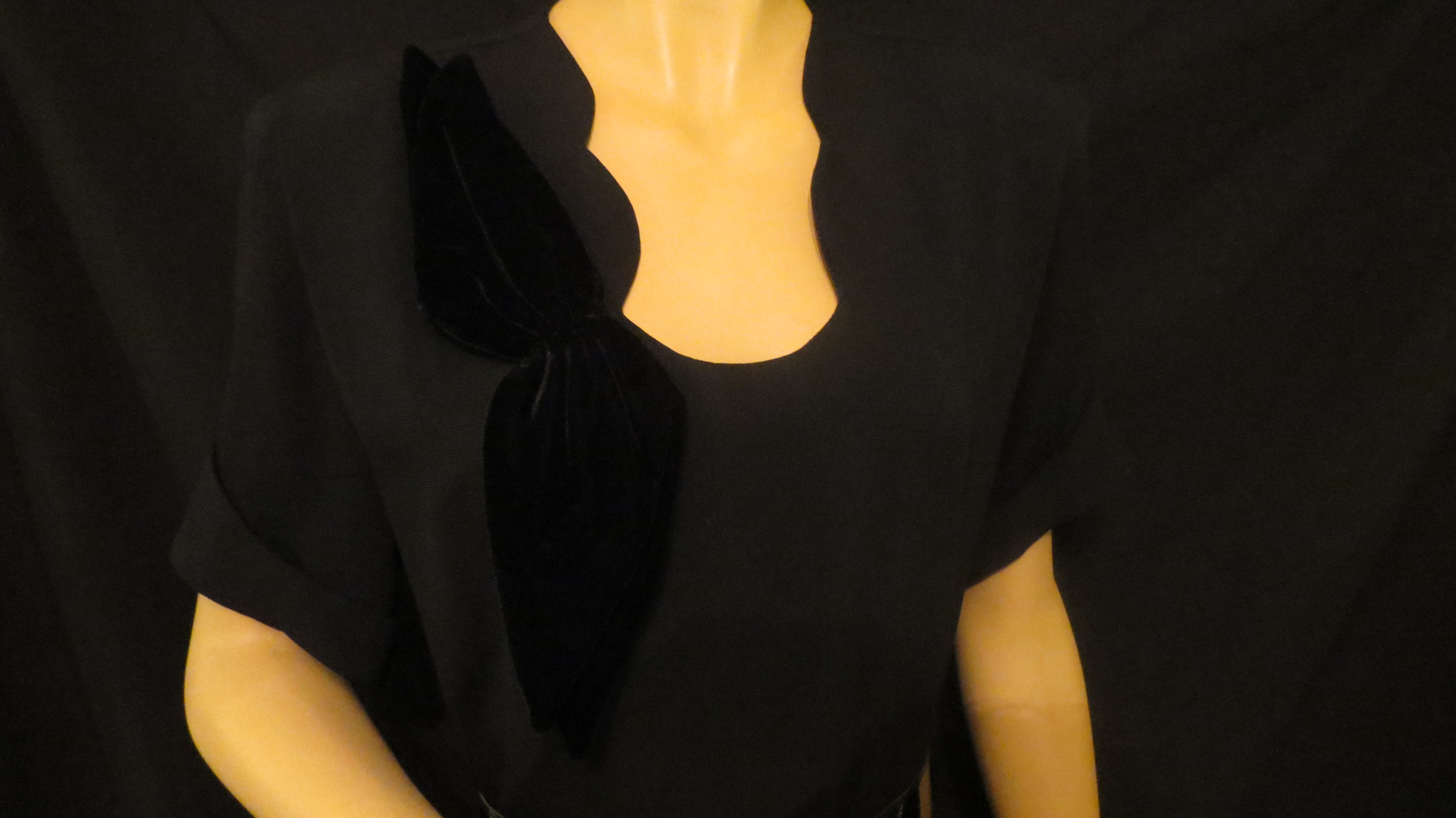
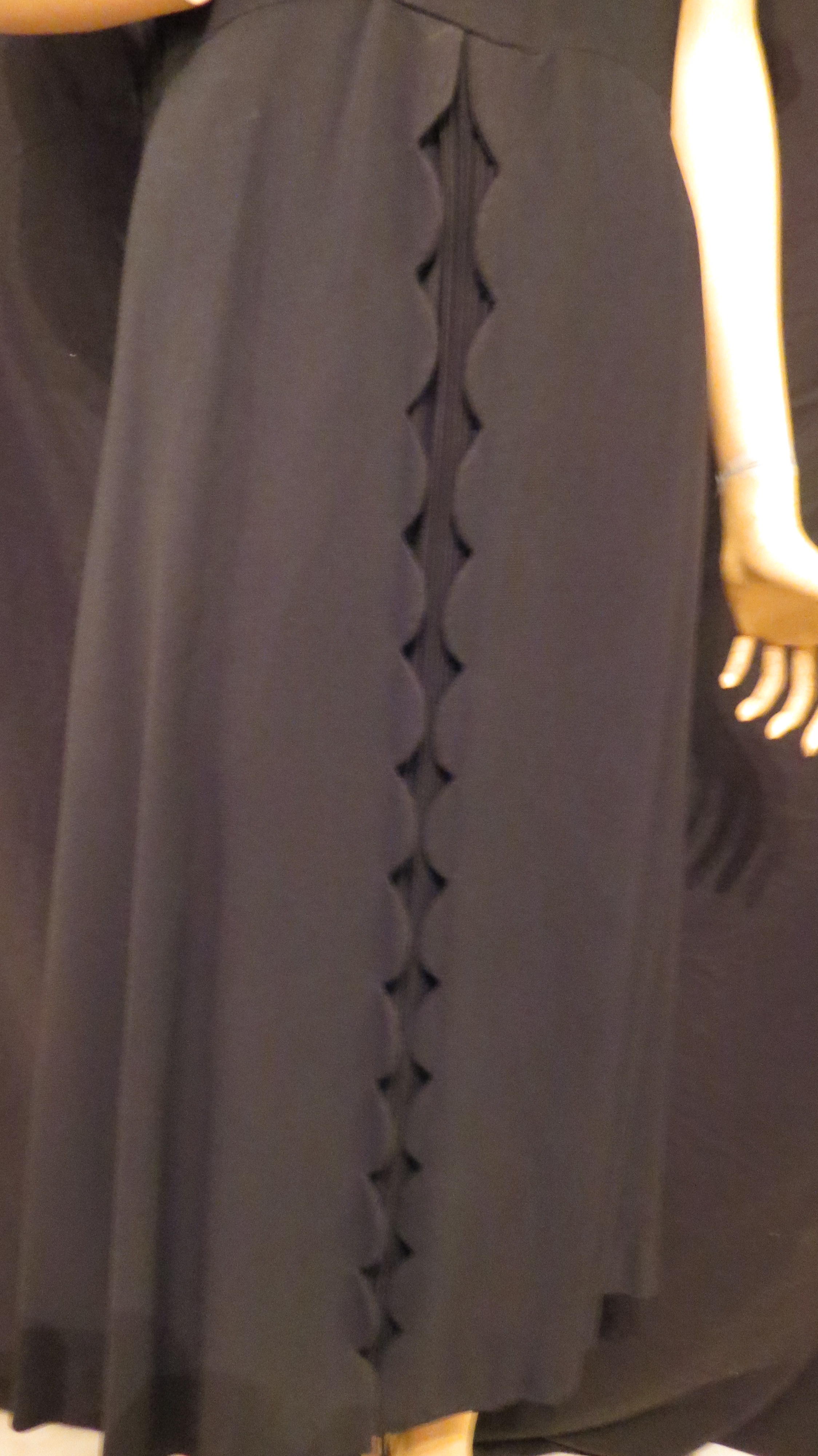
Let’s start with a velveteen pencil dress and coordinating handbag from the 1940’s. True Forties styling with the pencil cut and skinny sleeves with zippers at the wrists. The dress zips down the back rather than at the side, which began to be seen in the Forties. This dress was probably purchased at retail unless made by an expert tailor. It’s stylish and sophisticated but is frugal with the use of fabric so probably made during wartime.

Other than the wrist zippers, which are almost a necessity with these kinds of sleeves, and the piping finish on sleeves, neckline and waist there are no other embellishments. Piping done this well is not an easy task. In fact, the piping may have saved fabric that otherwise would have been used in hems or facing. Many purses, like the one above, were made of fabric during WWII instead of leather. 1940’s clothing and accessories, especially women’s designs, were very creative. Women and clothing companies came up with lovely fashions while coping with rationing and a limited economy. While not formal, a garment like this would have been appropriate for any dressy event from dinner to cocktails.

Stay tuned for more frocks in this category, from the mid-century . . . . . . . . . . . . . . . . . . . . . . . .

MORGANA MARTIN, THE MAGICVINTAGESPY

Blog: MAGICVINTAGESPY.COM

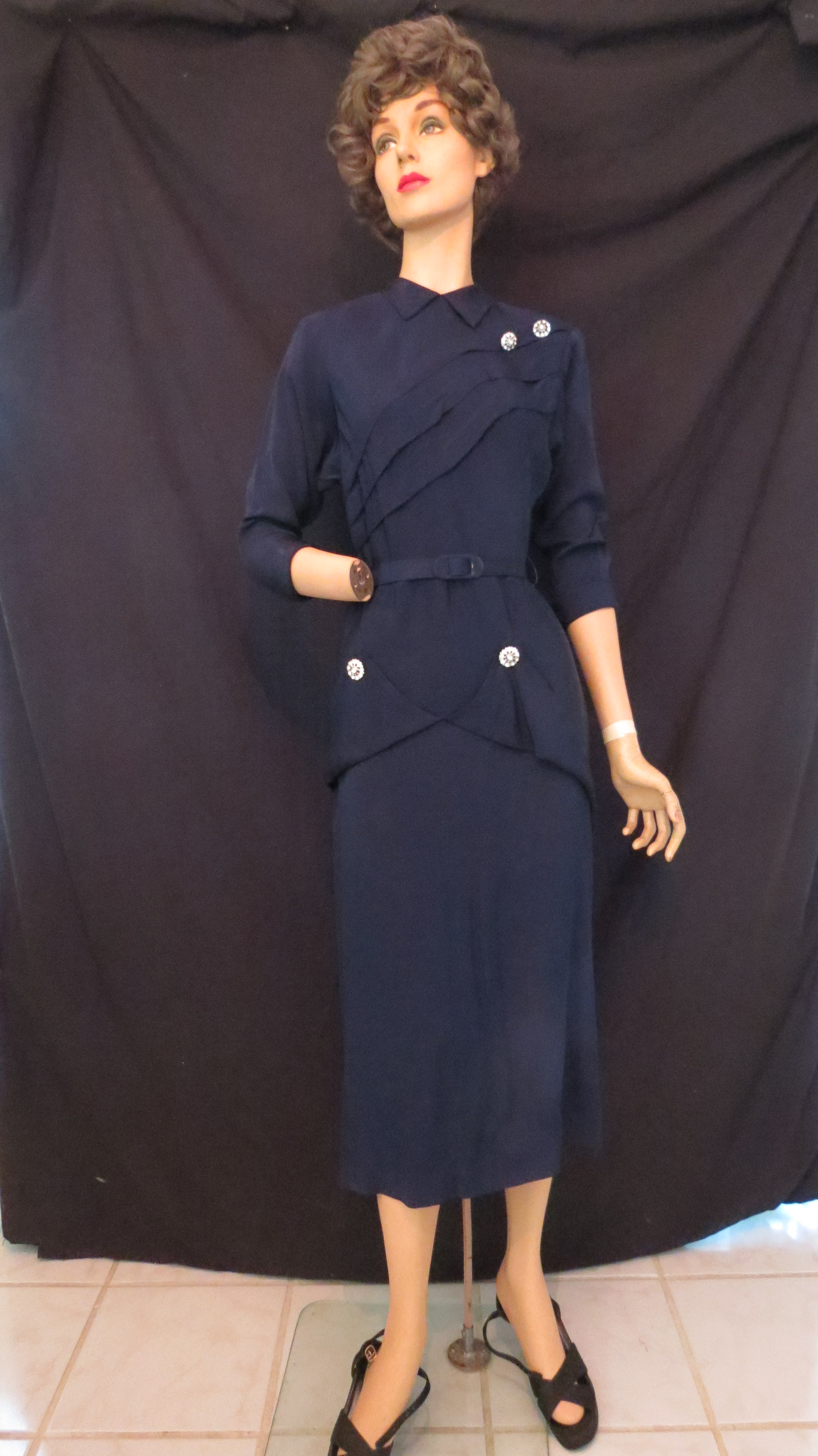
1940’s POST-WAR 2-PIECE DRESSY WEDDING SUIT

Here’s Stella in a beautiful wedding suit from the 1940’s. In fact, it was the outfit she was wearing when I discovered her. Although this ensemble might have been worn for another special event, I’m sure it was a wedding dress. It’s in a heavier-weight jacquard fabric with classic bridal tailoring details such as tiny covered buttons and points at the wrists – almost midieval. Again, I suspect that it was tailor-made. The peplum and shawl collar are very Forties, plus a rare coil zipper and unusual piecing of the skirt which causes the uneven hemline.

A fabulous and fun find! Stella’s been part of the team ever since. Stay tuned for her modeling more semi-formal and long dresses . . . . . . . . . . . . . . . . . . . . . . . . . . . . . . .

MORGANA MARTIN, THE MAGICVINTAGESPY

BLOG: MAGICVINTAGESPY.COM
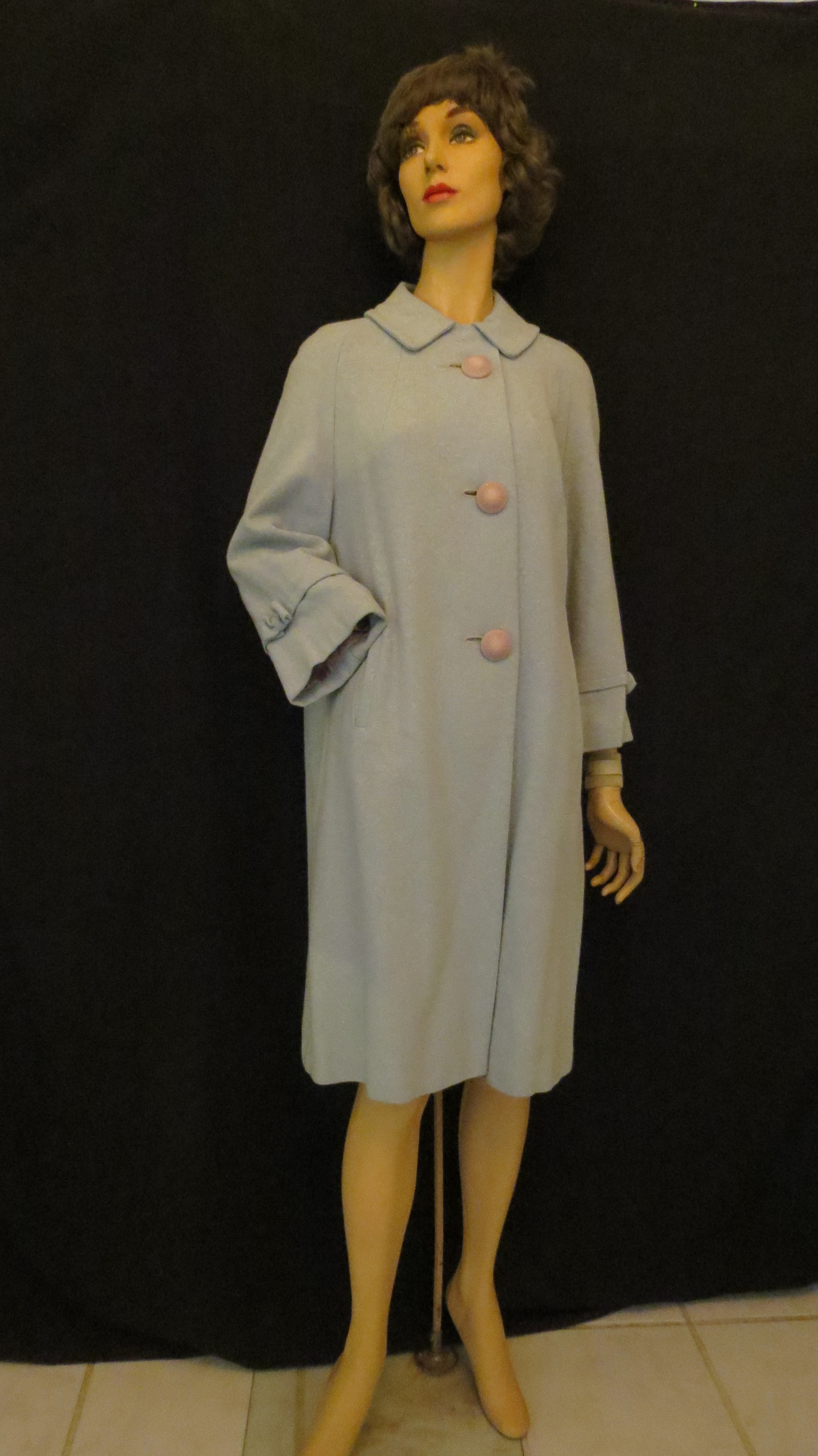
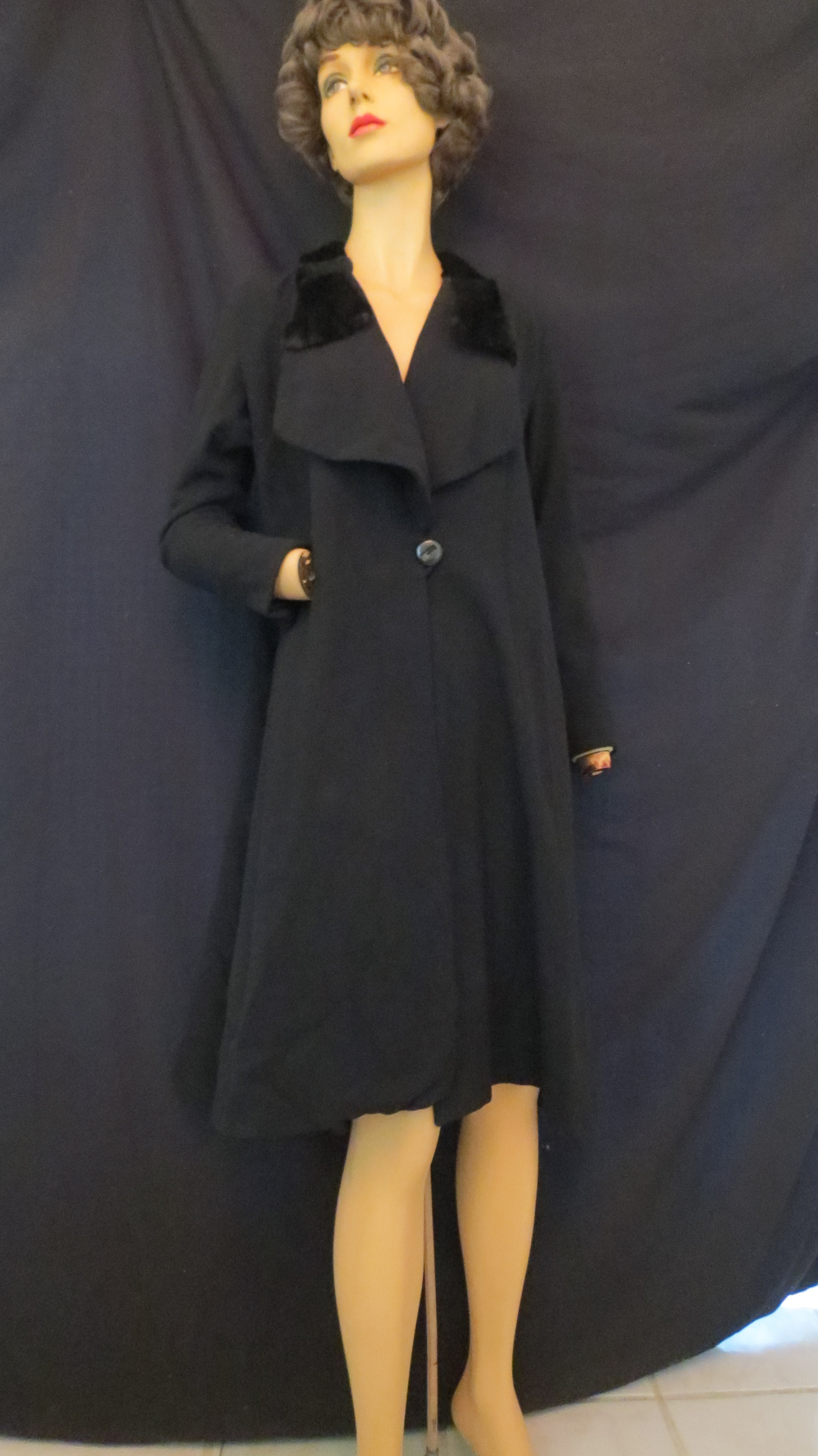
1940’S – ’50’S SEMI-FORMAL FROCK WHICH COULD ALSO HAVE BEEN FOR A BRIDE

Such an interesting frock. Midi length on Stella, but she’s tall so it could have been tea or floor length on a woman of short stature. I couldn’t decide whether this dress was tailor-made or purchased at retail, but I could find no labels. I suspect that it was custom-made for a cool-weather wedding and the style really makes me think of some Wartime or Post-war bridal dresses I’ve discovered. Could also have been designed for some other special event . . . . .

Pretty mid-weight textured but glossy fabric which may be synthetic or a blend. Unusual long sleeves; but the best thing about this style is the collar. Each layer is carefully supported around the edge with wire so that it can be shaped by hand. I’ve very rarely seen this and it helped me to date the garment. It came from Australia so I may notice a British influence(?).

More semi-formal and long dresses coming. Stay tuned . . . . . . . . . . . . . . . . . . . . . . . . . . . . . . .

MORGANA MARTIN, THE MAGICVINTAGESPY

BLOG: MAGICVINTAGESPY.COM
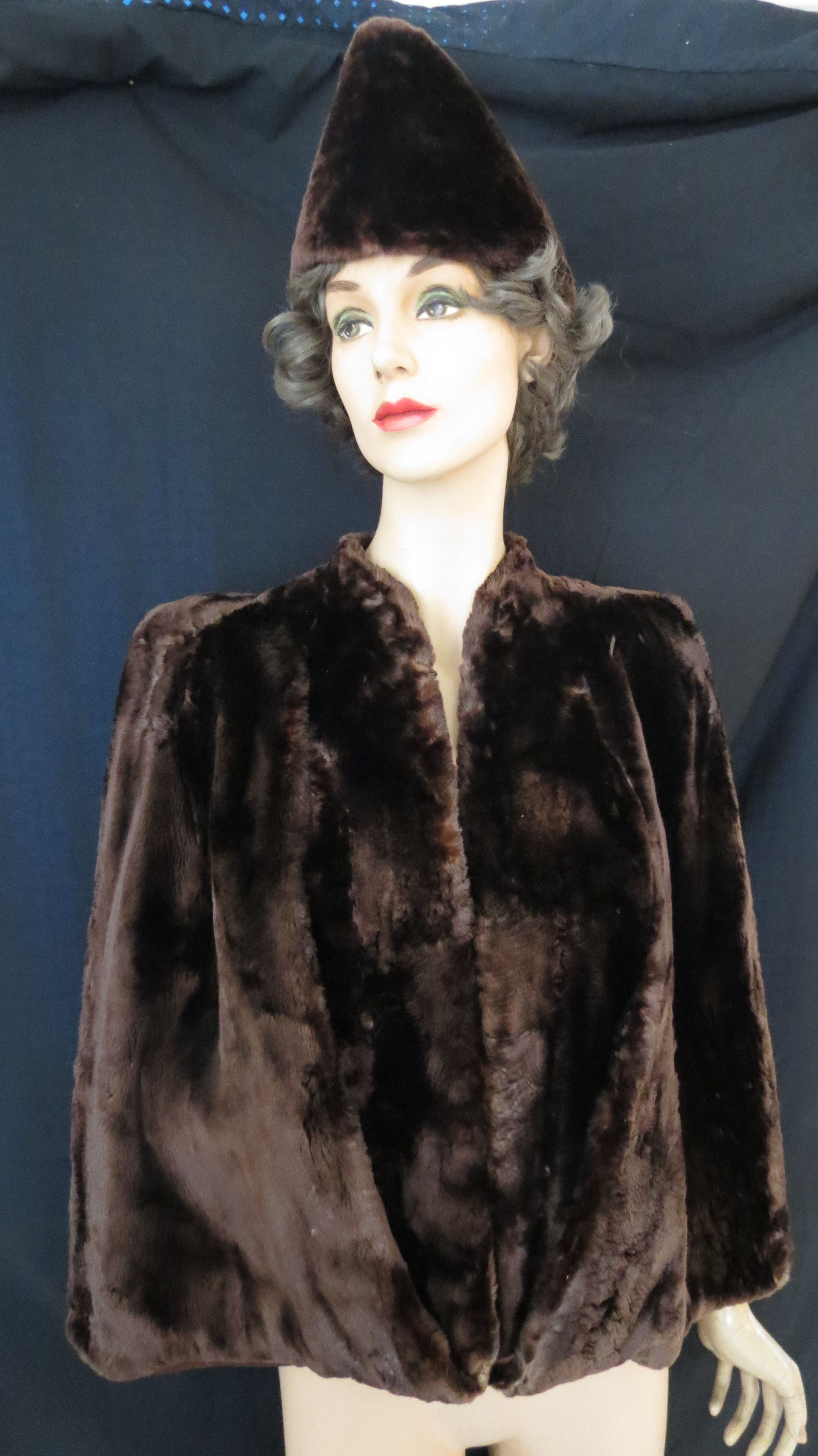
Undercover Magic, Essential True Vintage Lingerie

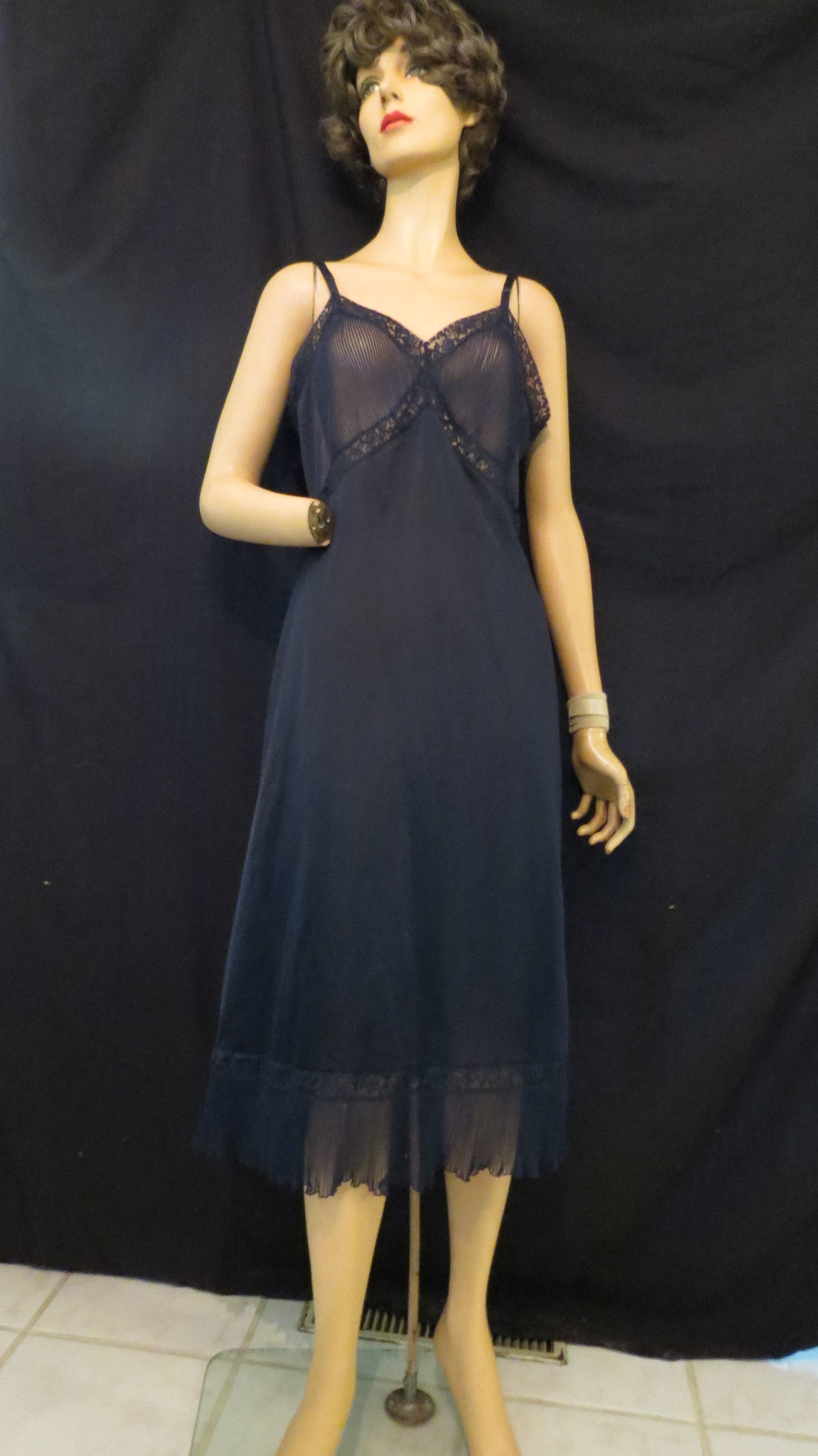
No matter what you’re wearing, lingerie pieces are key to making the outfit look right. Preventing lumps, bumps and see-through are only the simplest issues. The proper undergarment also ensures that the fabric lays correctly on your body and allows it to drape without clinging. Above are a very few examples of beautiful slips and only a tiny fraction of my complete collection.

You can see here how lovely the details are. Typically, even the plainest design will have nice little details and excellent tailoring. More elaborate styles are full of lace, embroidery, ribbons, sheer panels, satin straps and, often, some work done by hand. Though most slips are done in neutral, pastel colors, some (especially from the 1950’s to early 1960’s) were made in fabulous vibrant colors. True vintage nylon has a feel like no modern fabric and is absolutely luxurious. So gorgeous they could often be worn as a lightweight dress or skirt on their own.

Look for vintage lingerie that suits your wardrobe. Notice the details. Slips, of course, are the basis if you wear dresses and skirts. Search for cotton slips as well as the more-common nylon ones. In the summer, you will appreciate the difference! It’s also important to match your undergarments to the clothing worn with it – if anything might show or peek out, whether by accident or on purpose, will the color be OK? How will your outer garment move over the fabric of the slip? How will the fabric of the slip react with your skin in hot weather? Lots of things to consider in order to get the best result.

Also, look for other undergarments – in the 1960’s some split slips were made to be worn under culottes and split skirts. “Slips” to be worn under slacks can even be found from the 1960’s and 1970’s. A 1950’s/1960’s girdle was ALWAYS a base foundation for most women at that time (thank goodness, not now!). If you’re wearing a wiggle dress, you may not have a choice in order to make it look right. Silk tap pants from the Twenties are so comfy and perfect under a lightweight dress in the summer. A camisole under a blouse or top can improve the fit, add some warmth on a cold day and sometimes provide a little neckline interest depending on the style. A “bullet bra” is perfect if you want to be a “sweater girl”. Garter belts and girdles are necessary for wearing stockings. A crinoline is important for most mid-century dress styles with circle skirts, especially from the late 1940’s through the early 1960’s. Some dresses have their own, but others require you to add one.

I’ve probably forgotten to mention something but you get the drift. Lingerie is SO important that I probably should always start any series of posts with it. . . . . . . . . . . . . . . . . . .

MORGANA MARTIN, THE MAGICVINTAGESPY

BLOG: MAGICVINTAGESPY.COM