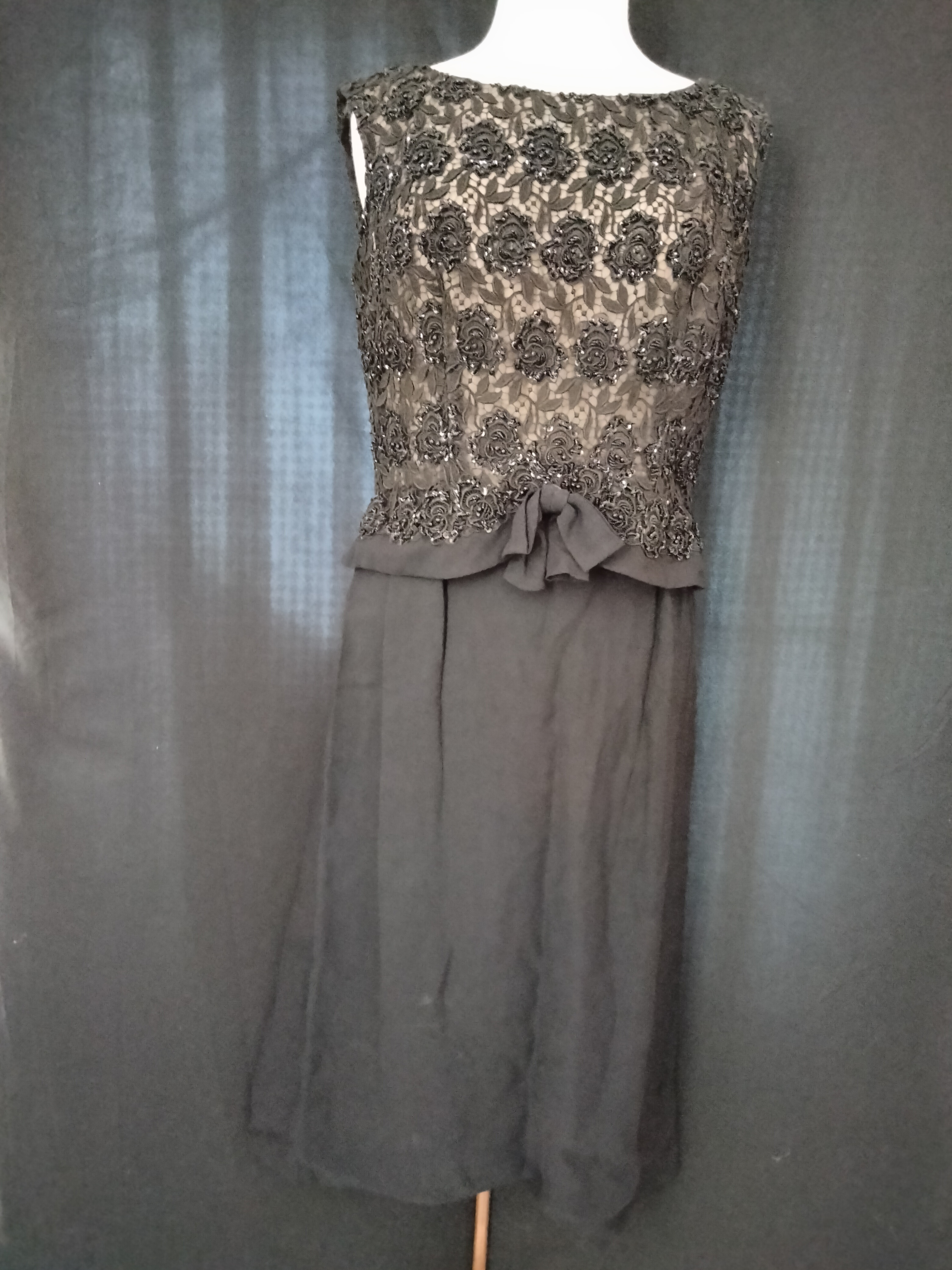
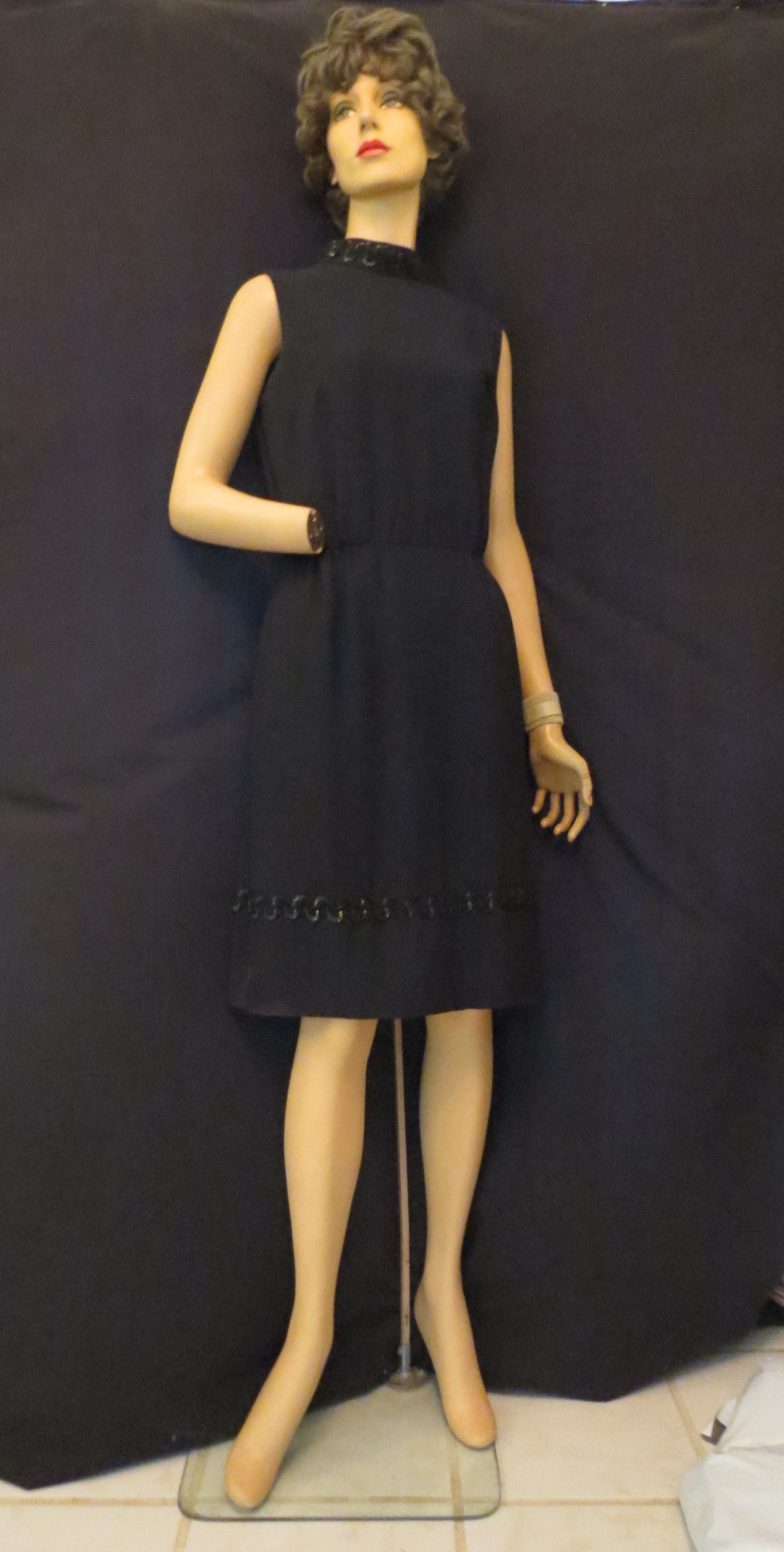
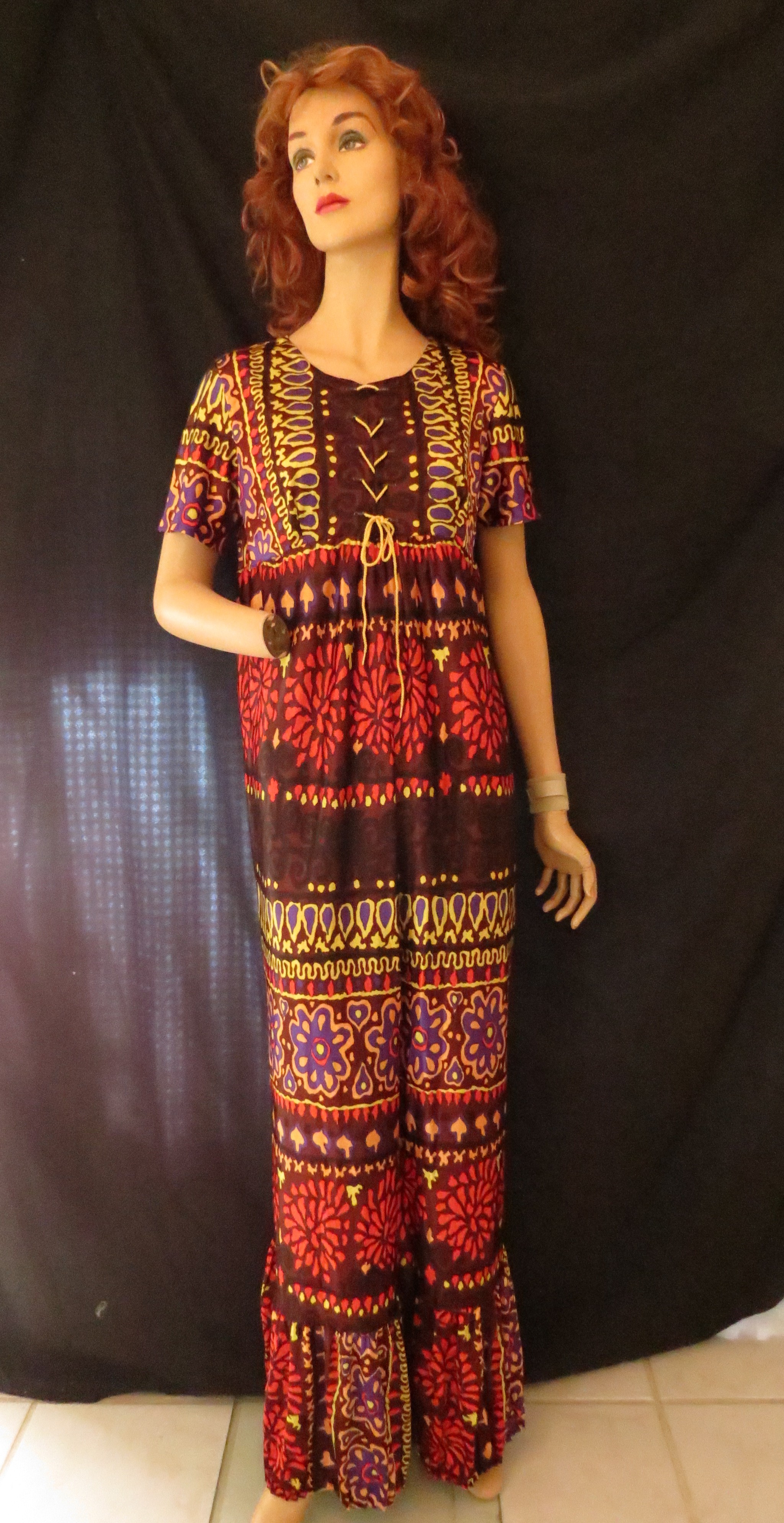
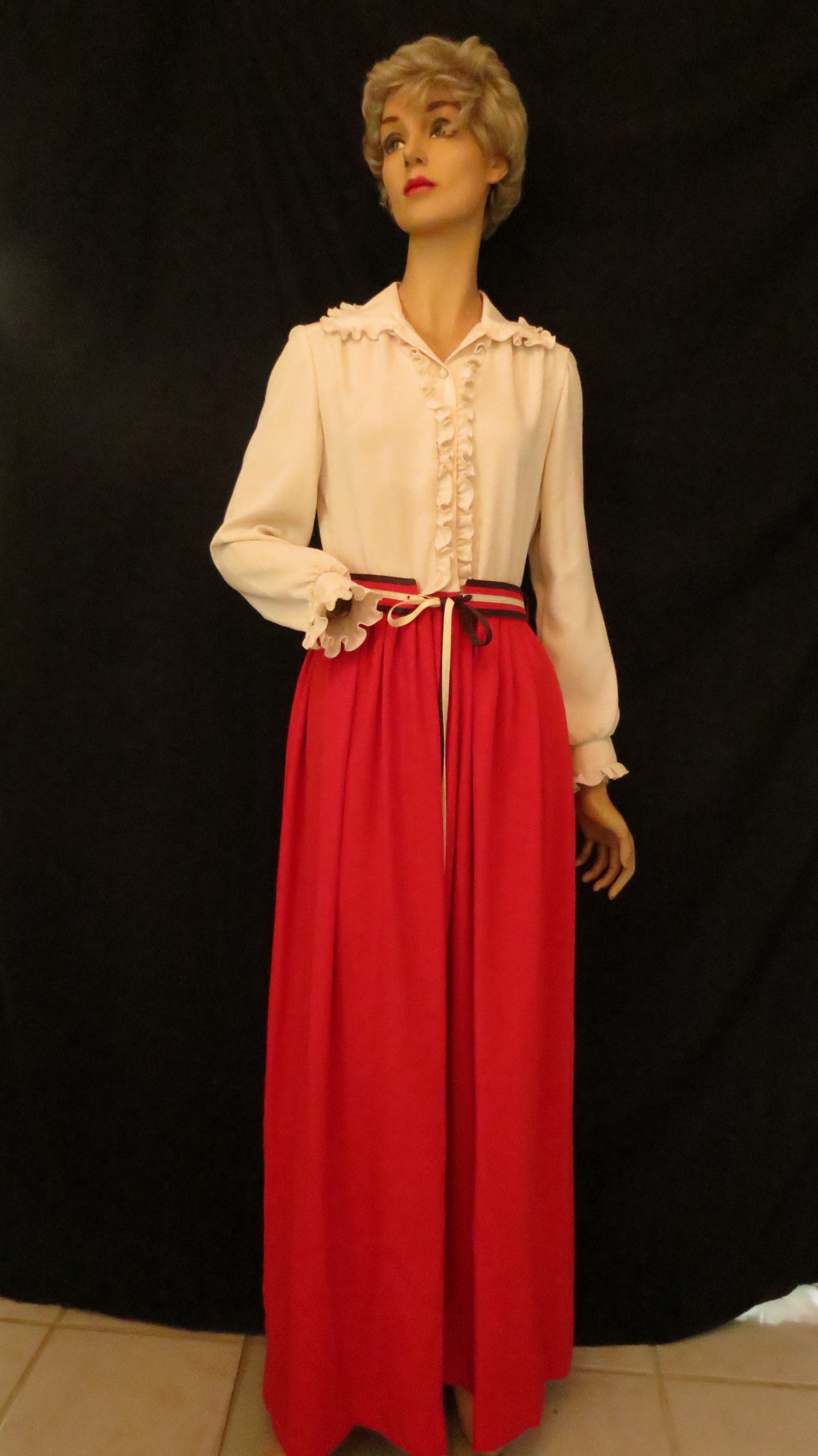
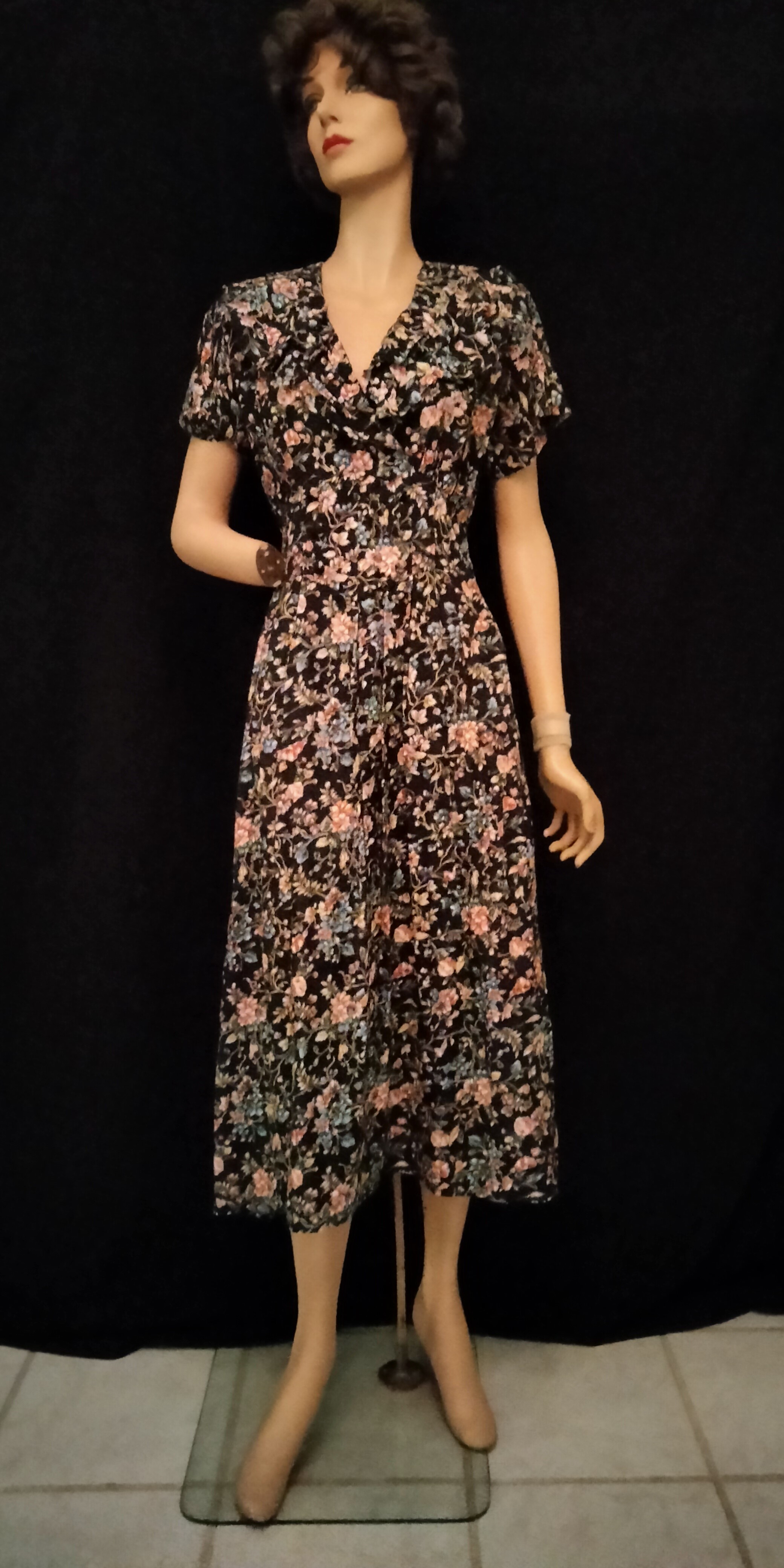
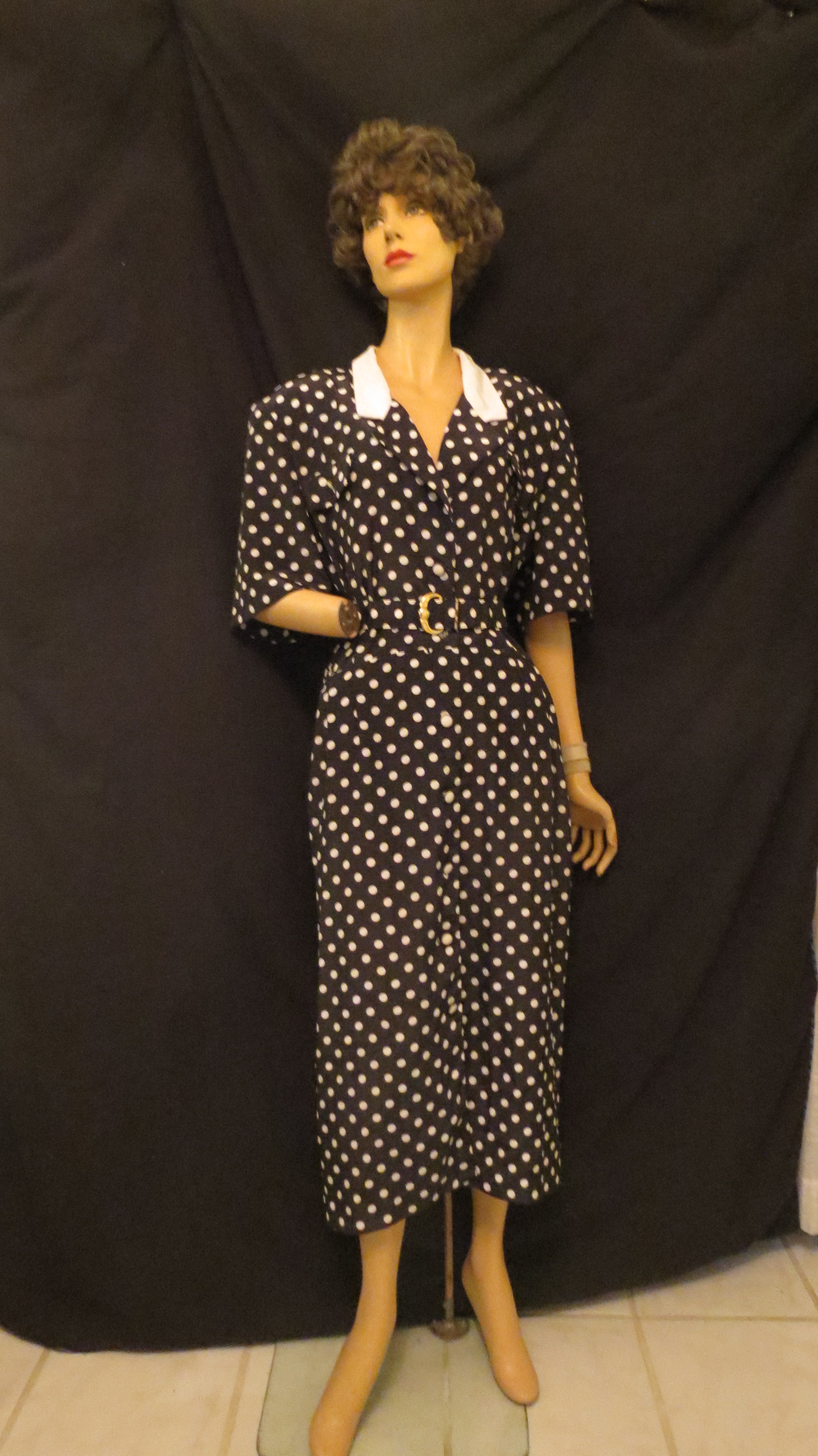
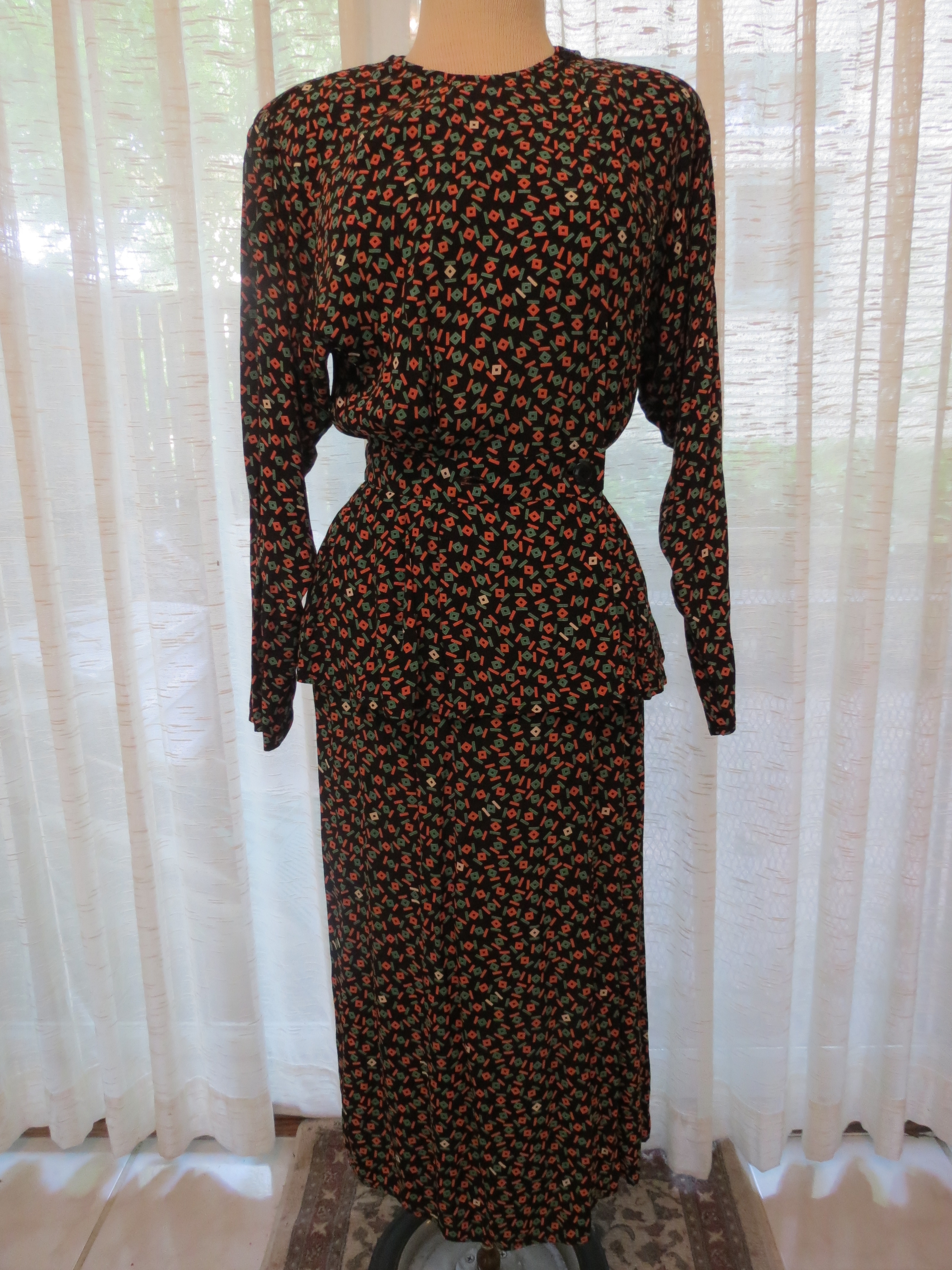
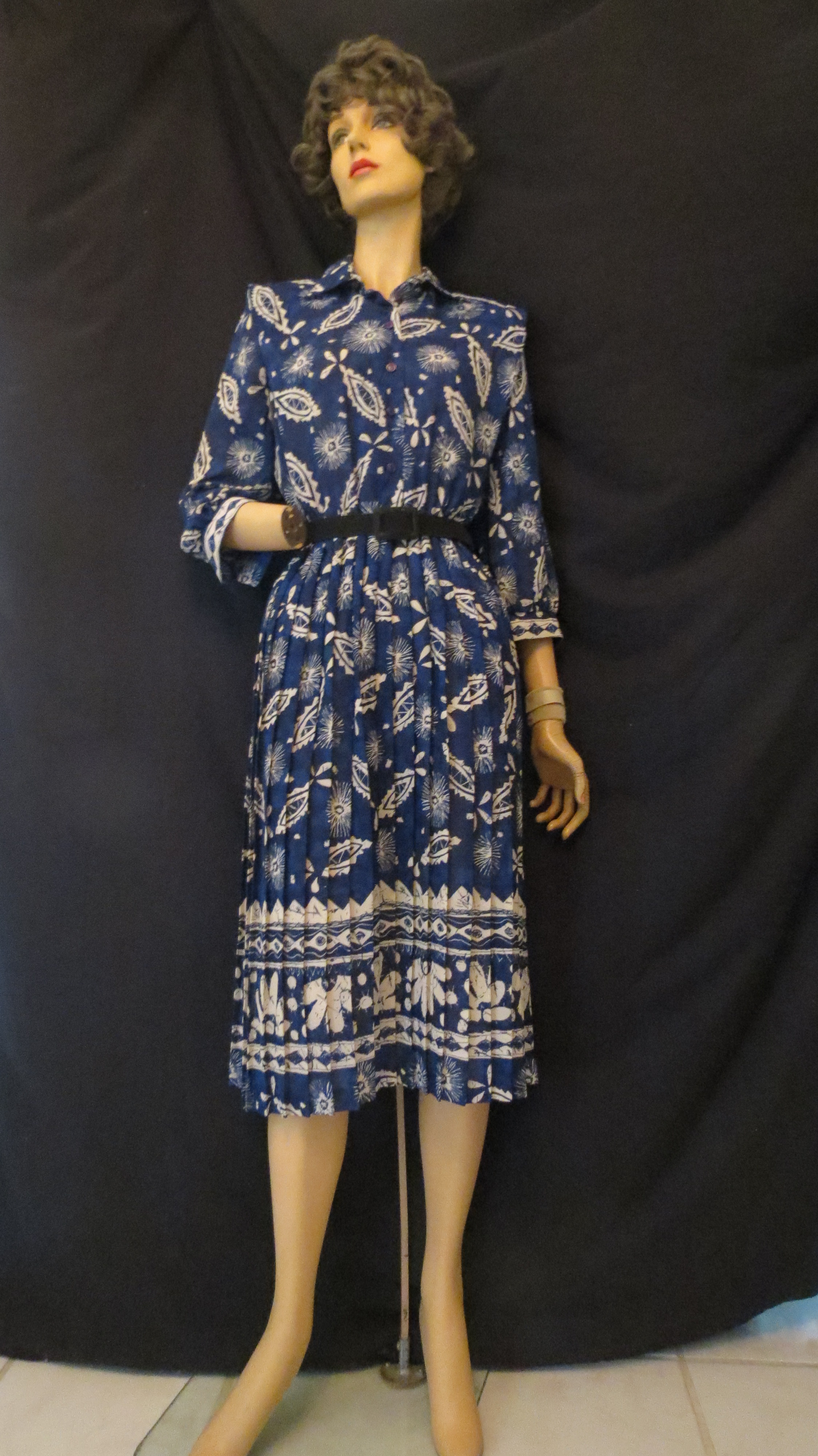
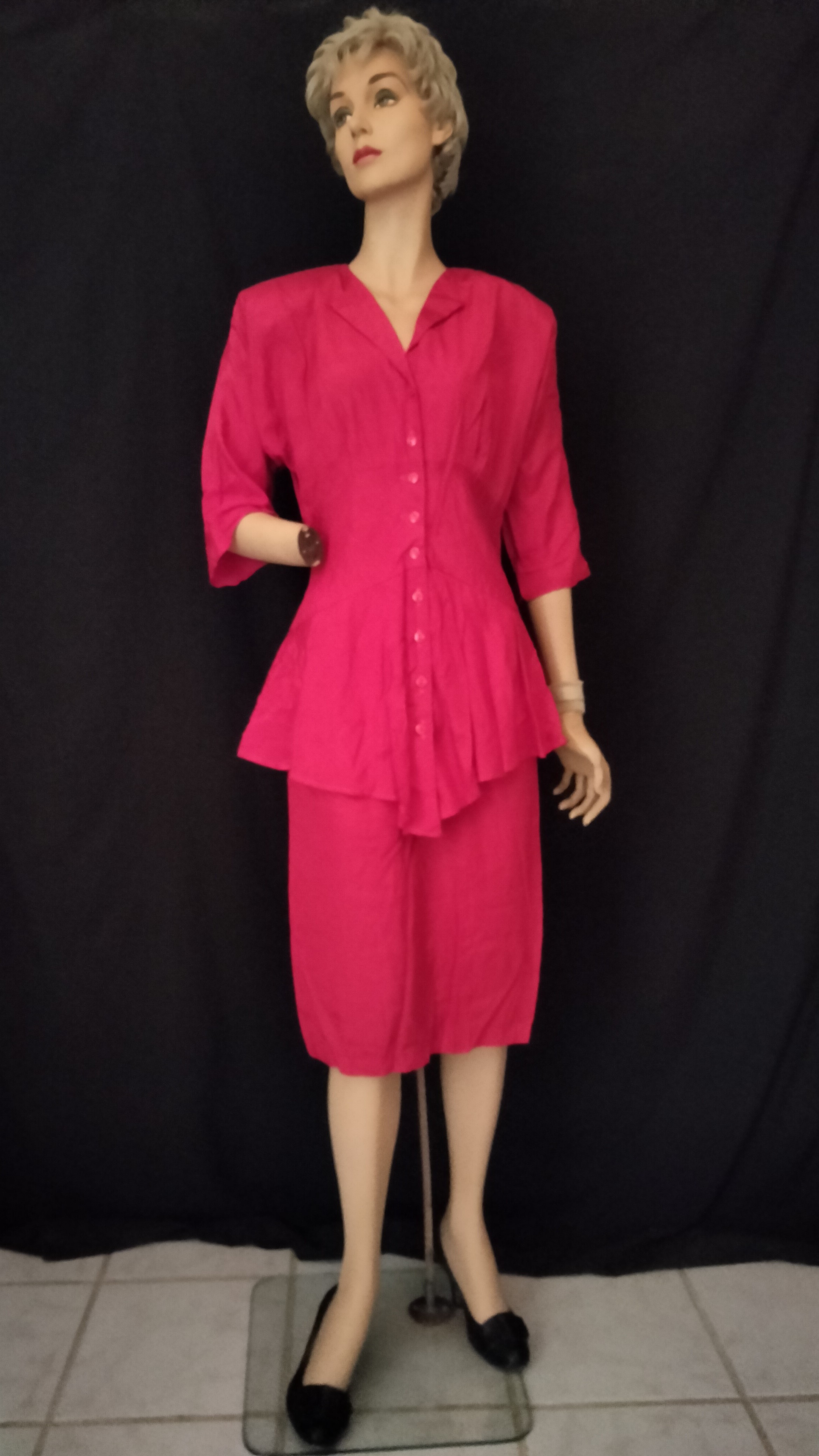
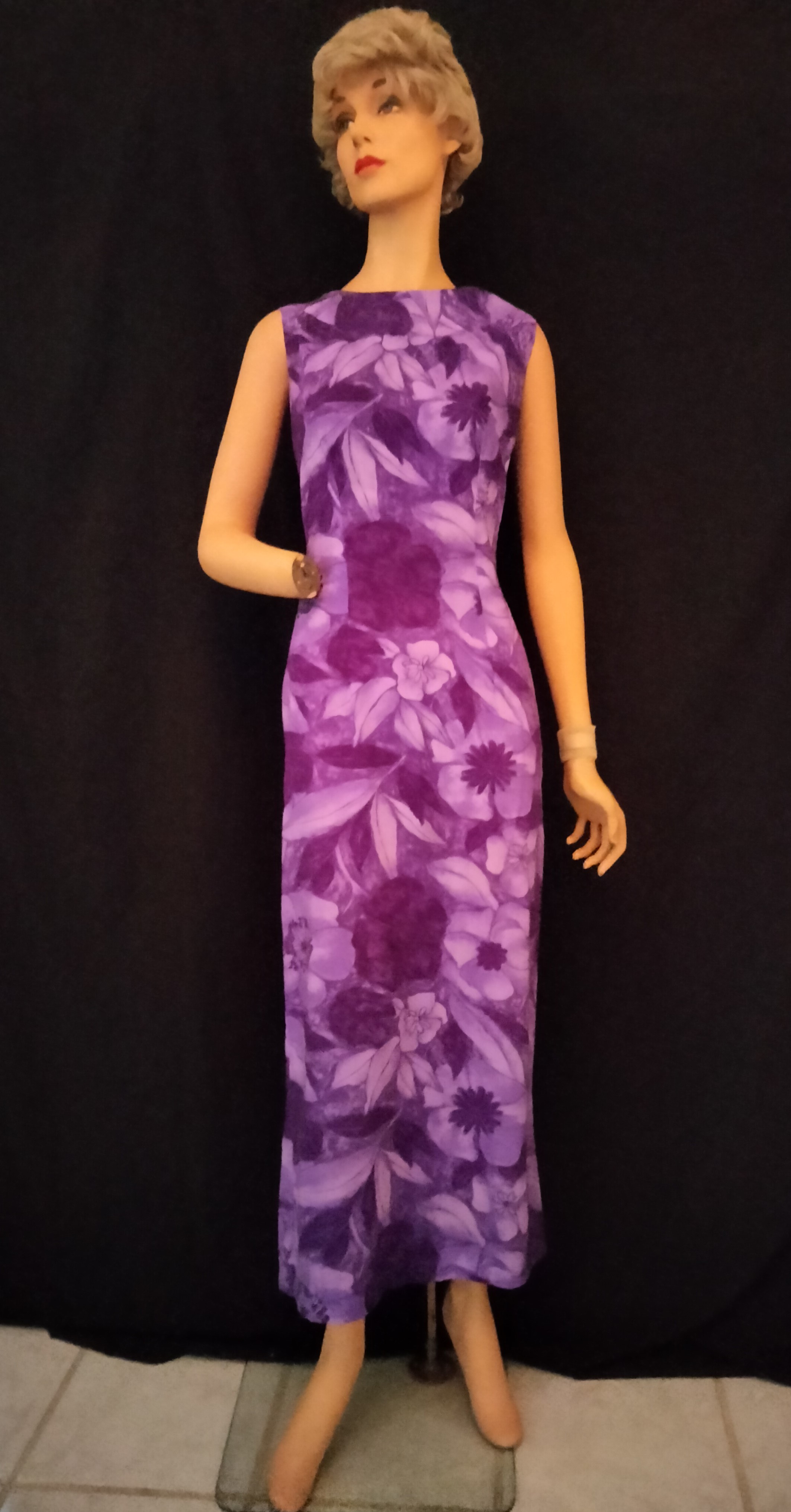
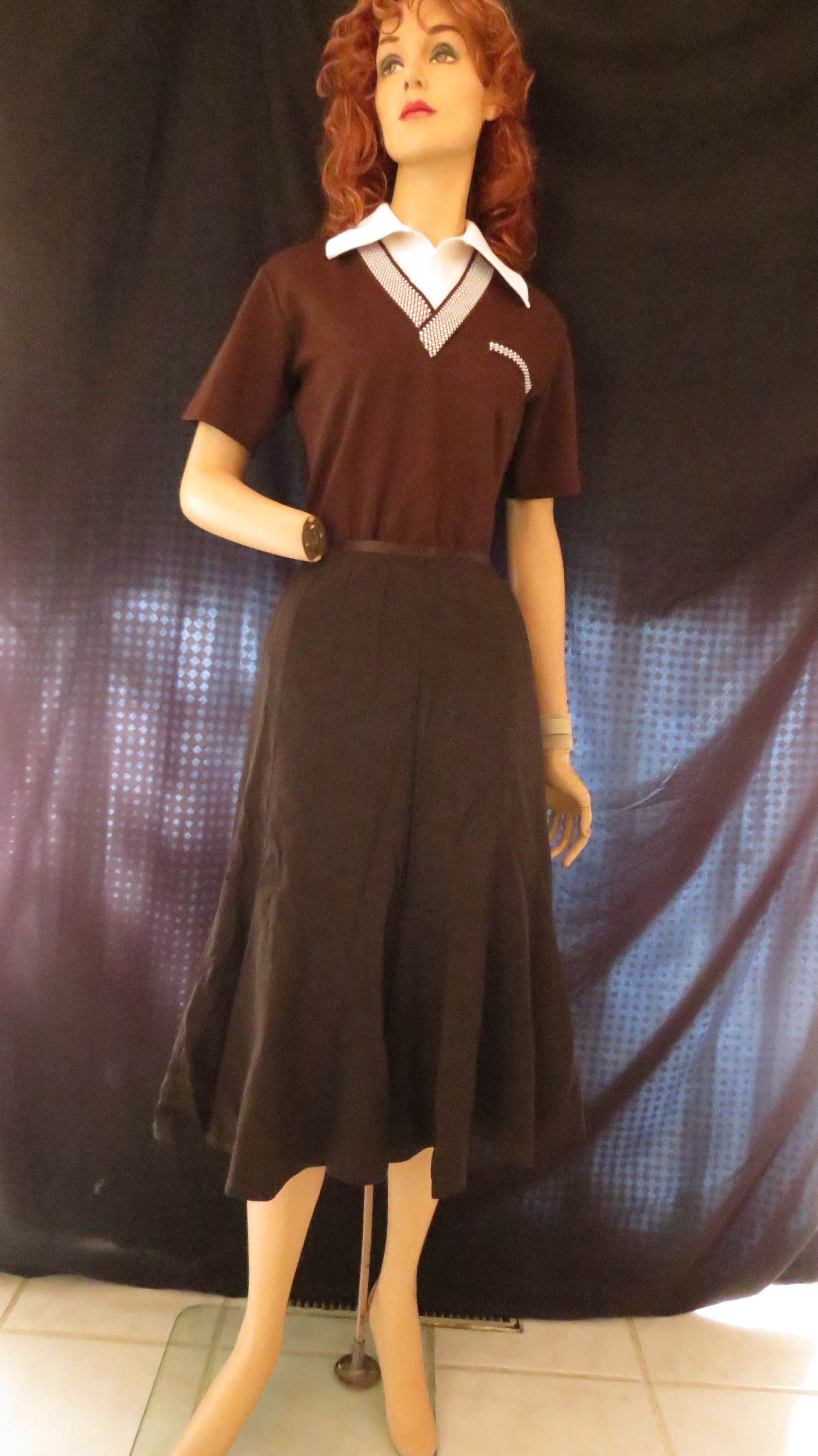
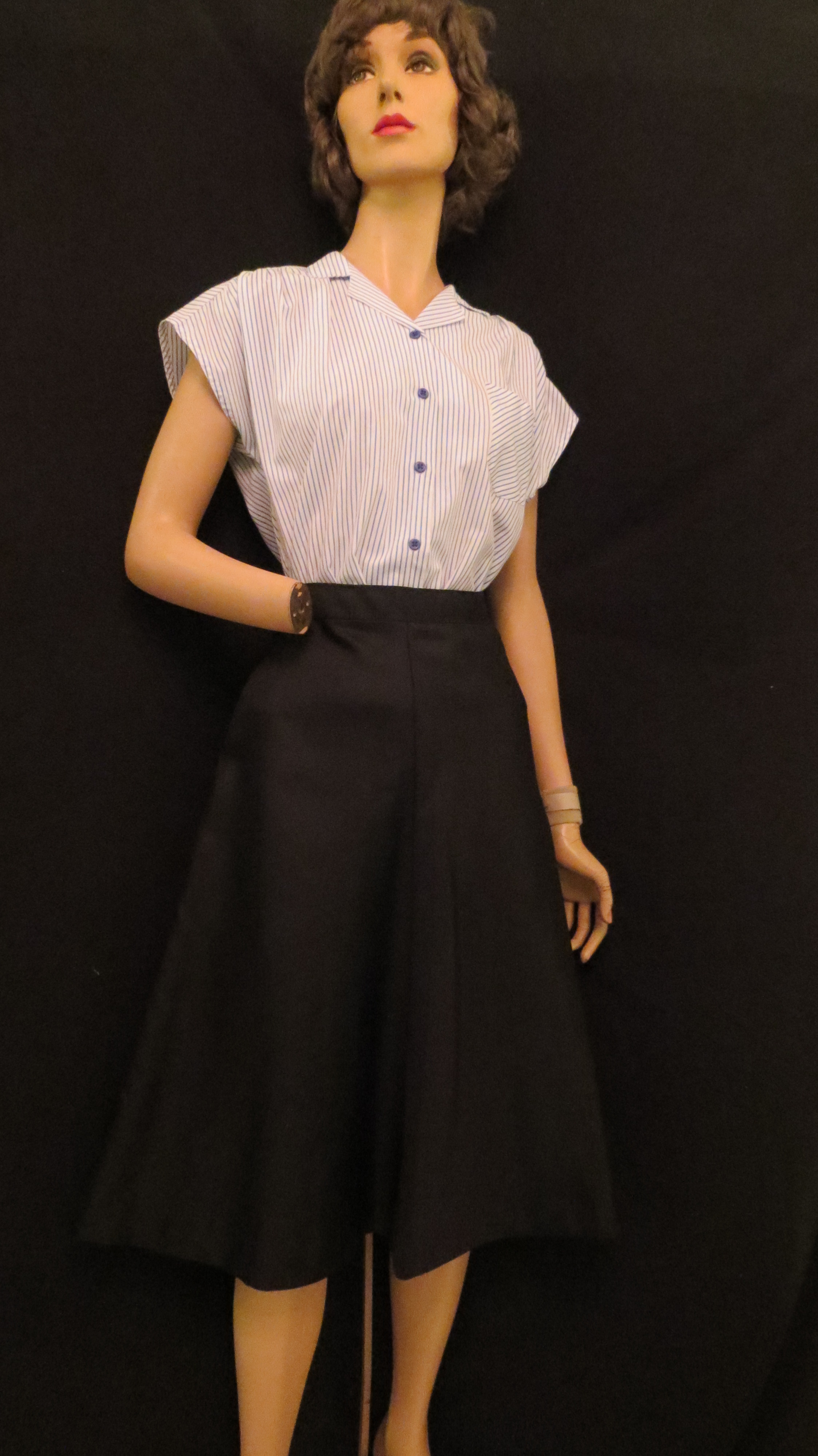
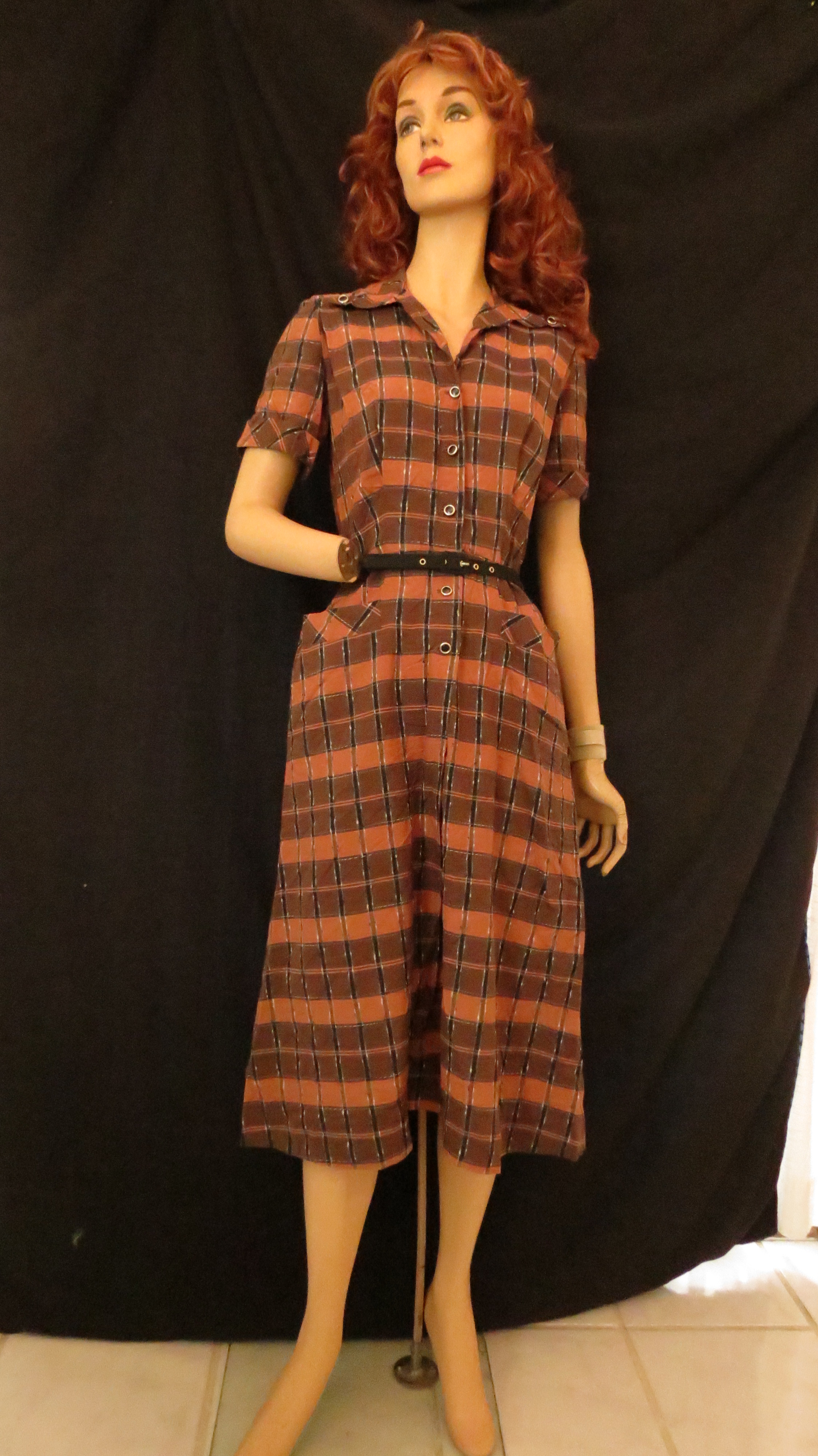
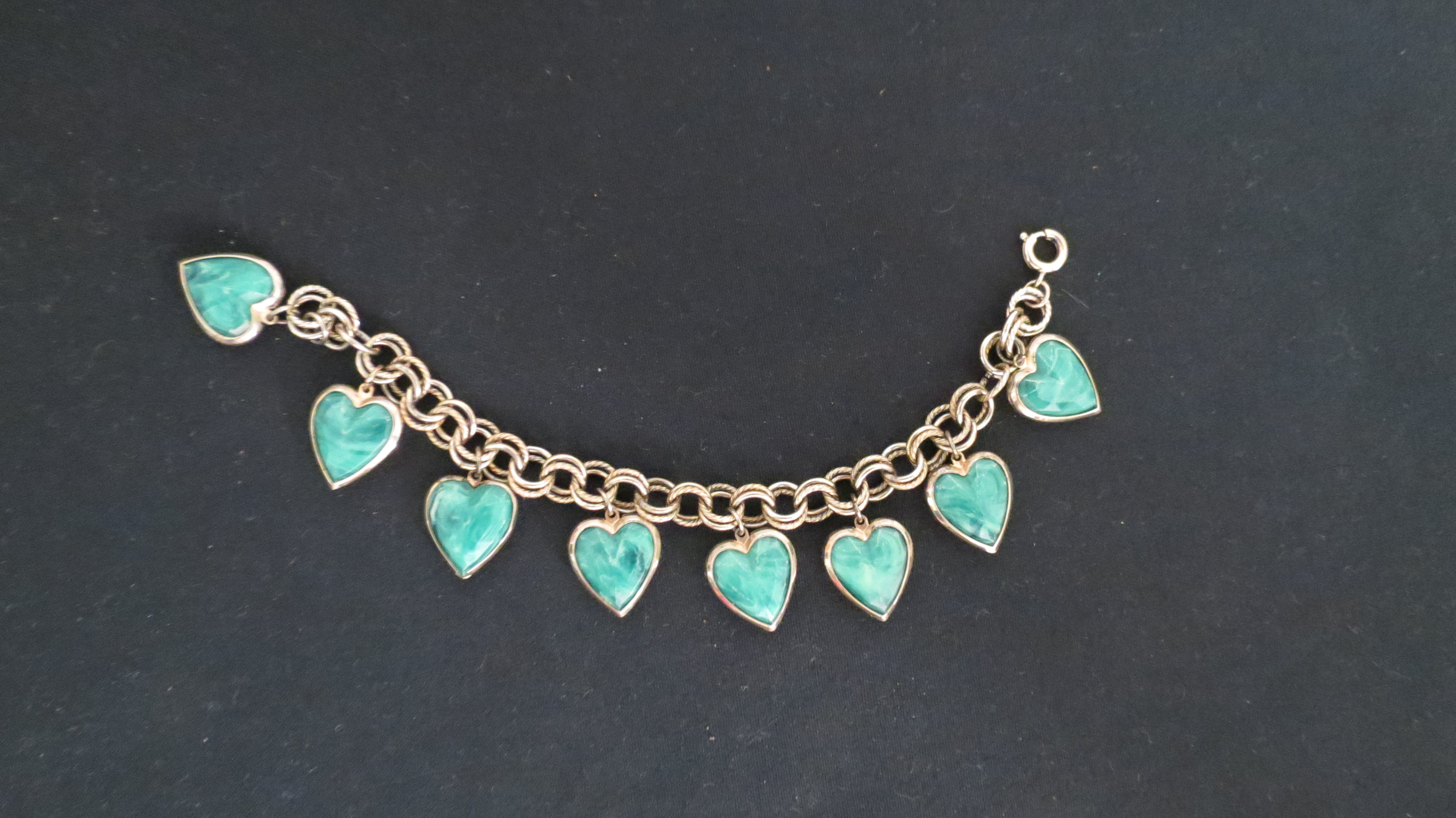
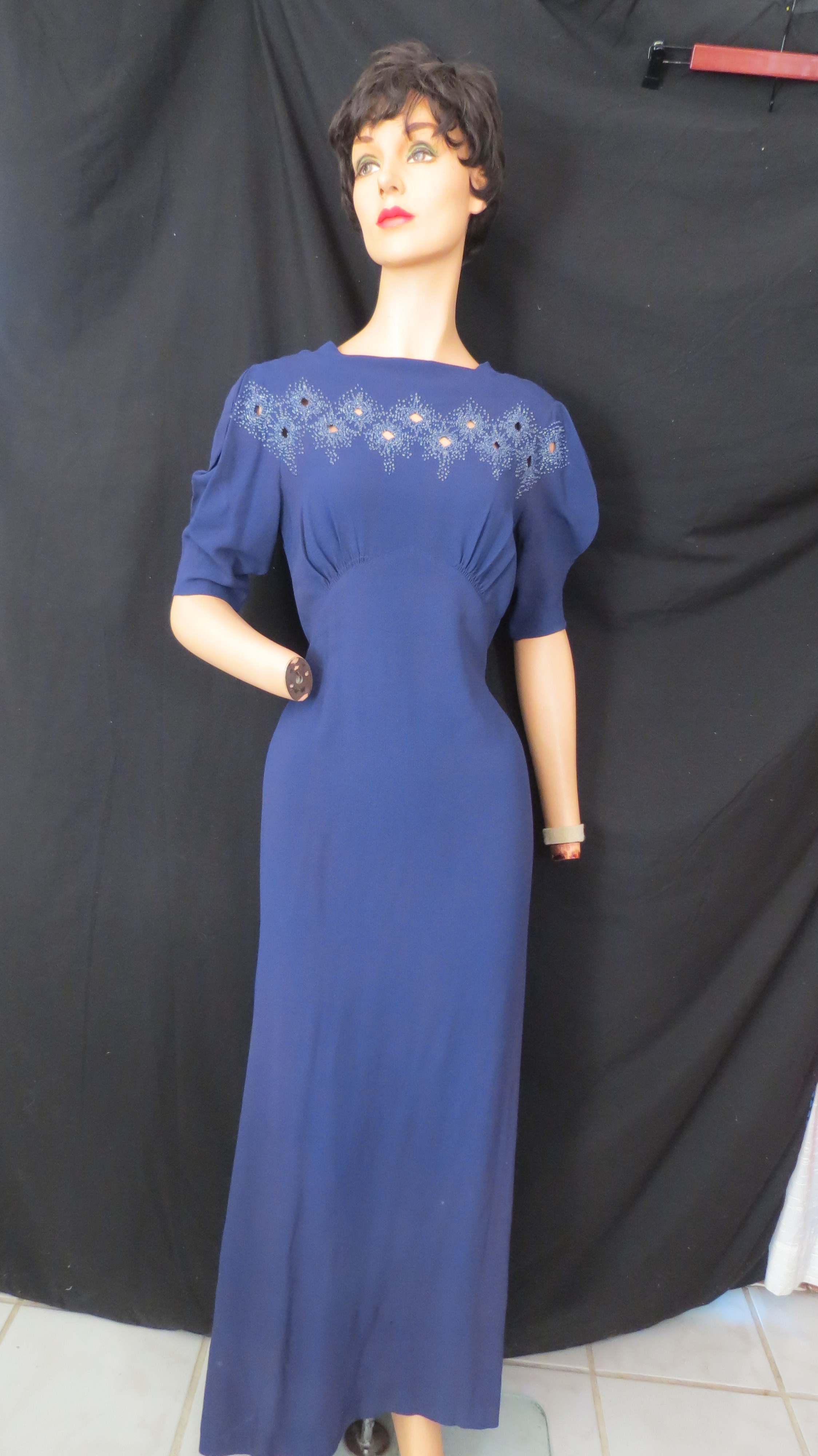
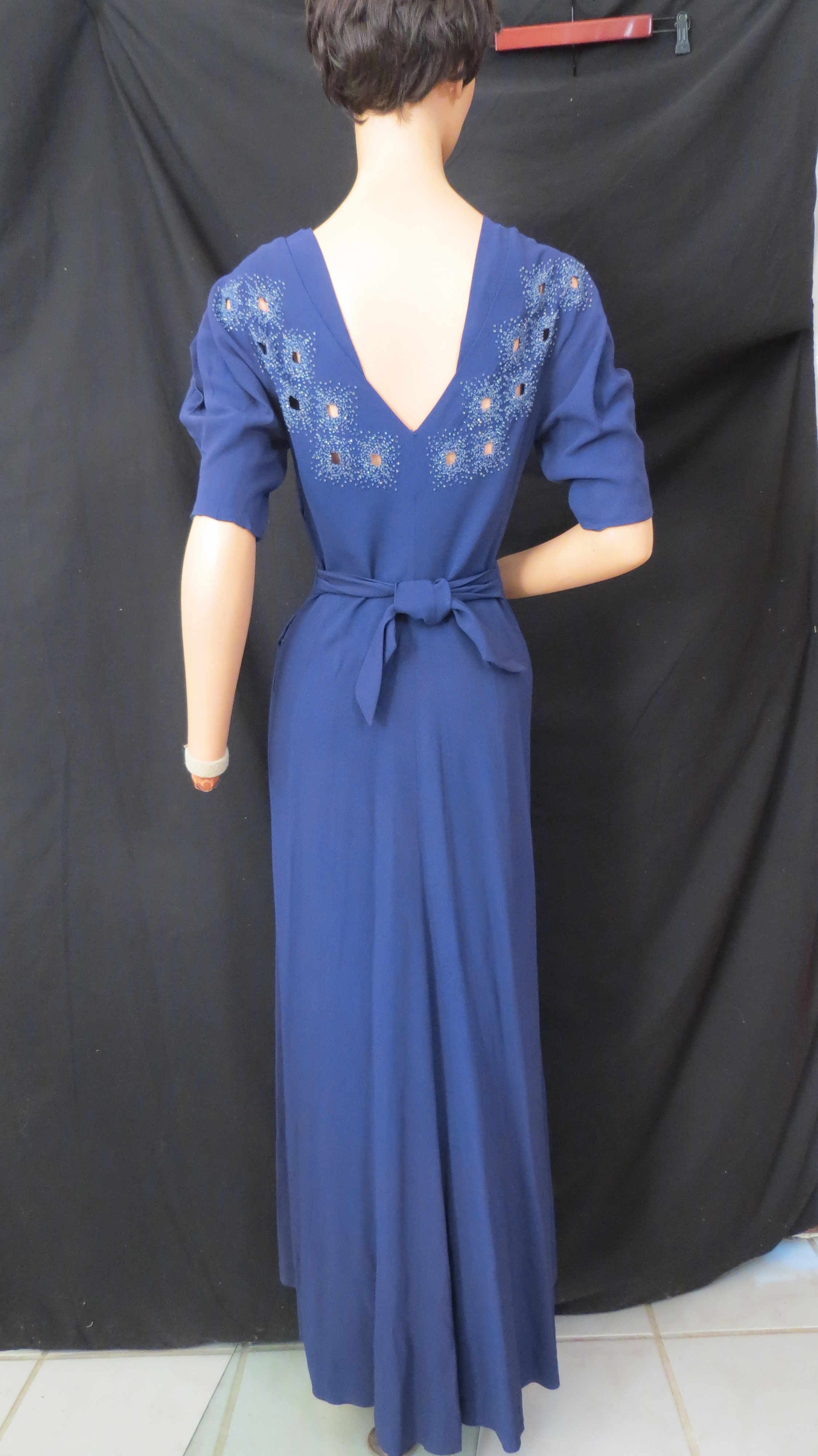
True Vintage 1940’s Bias – Cut Gown with Beading Decoration

What a wonderful find!! This gown was custom-made, possibly by a home-based seamstress, in this unusual style with 3/4 length sleeves. You can see the waist ties that would be fastened in back to nip the waistline. The bias cut glossy fabric, which gives a really slinky body-con fit is a hold-over from the 1930’s when it was very popular. I love the blue color which looks like a night-time sky and the peekaboo beading that resembles exploding stars. Very appropriate today, when the comet AiATLAS is closest to Earth.

This is another one-of-a-kind, never-to-be-seen-again frock. More to come – stay tuned . . . . . . . . . . . . . .

MORGANA MARTIN, THE MAGICVINTAGESPY.COM

BLOG: MAGICVINTAGESPY.COM

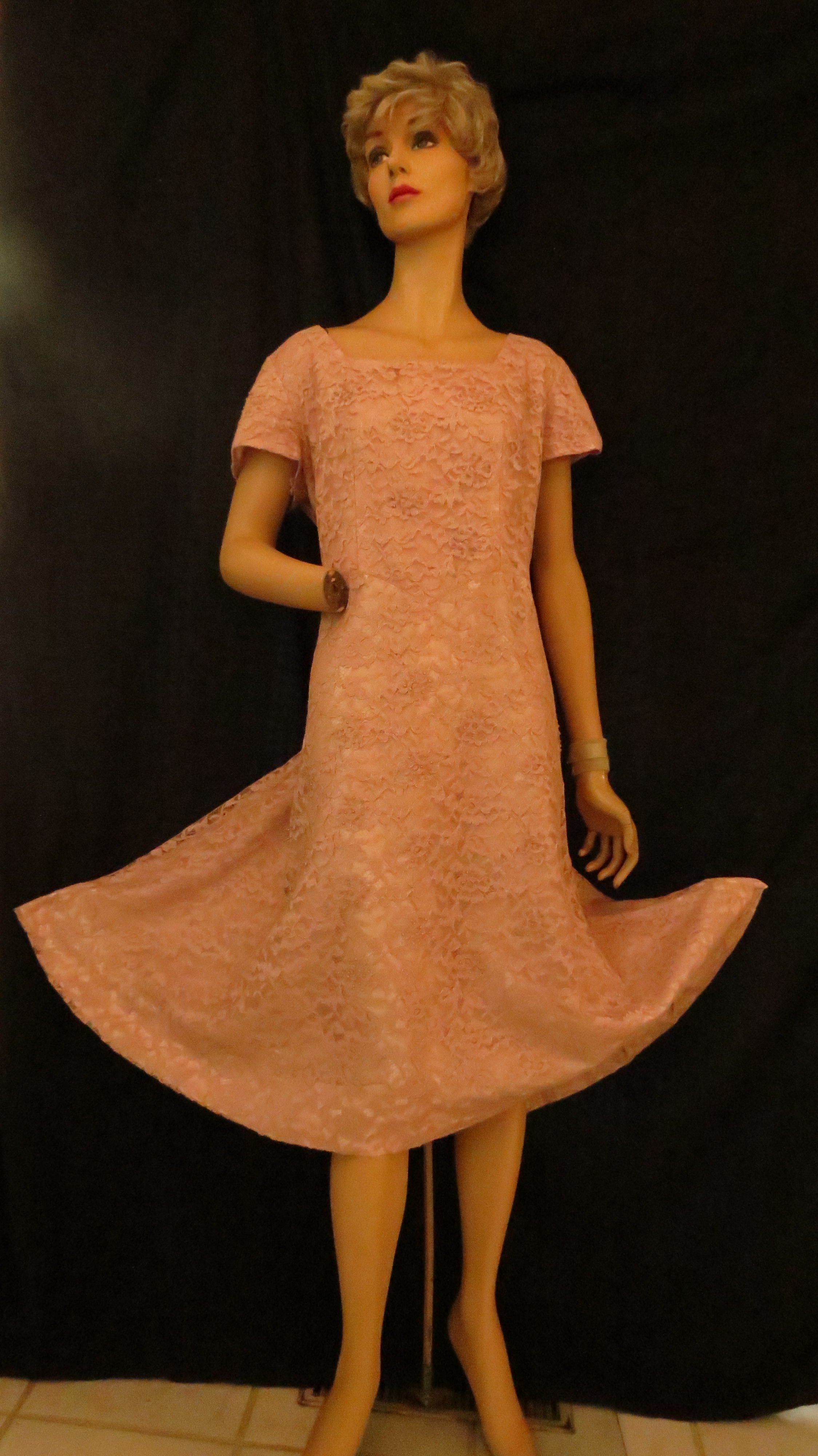
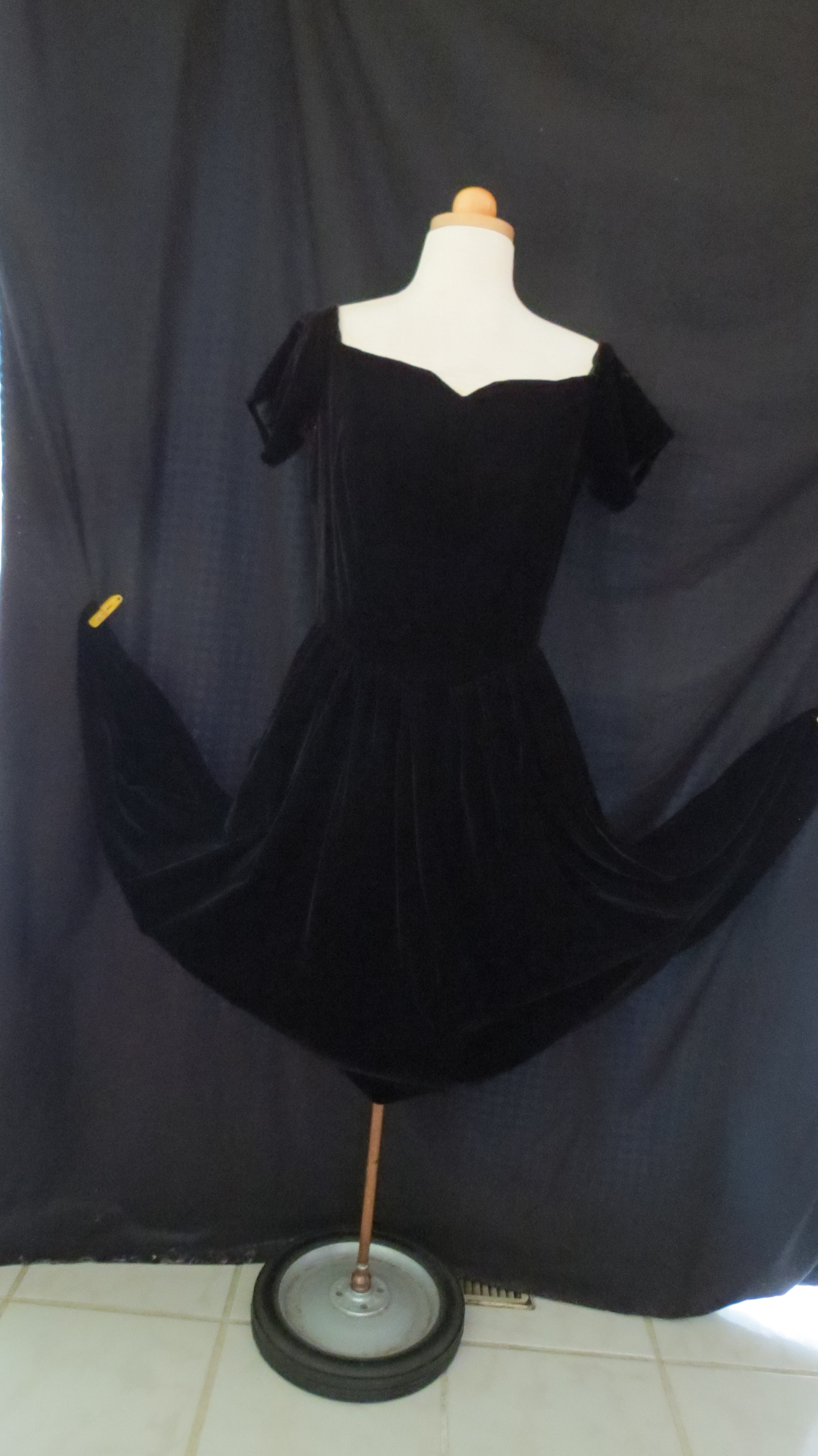
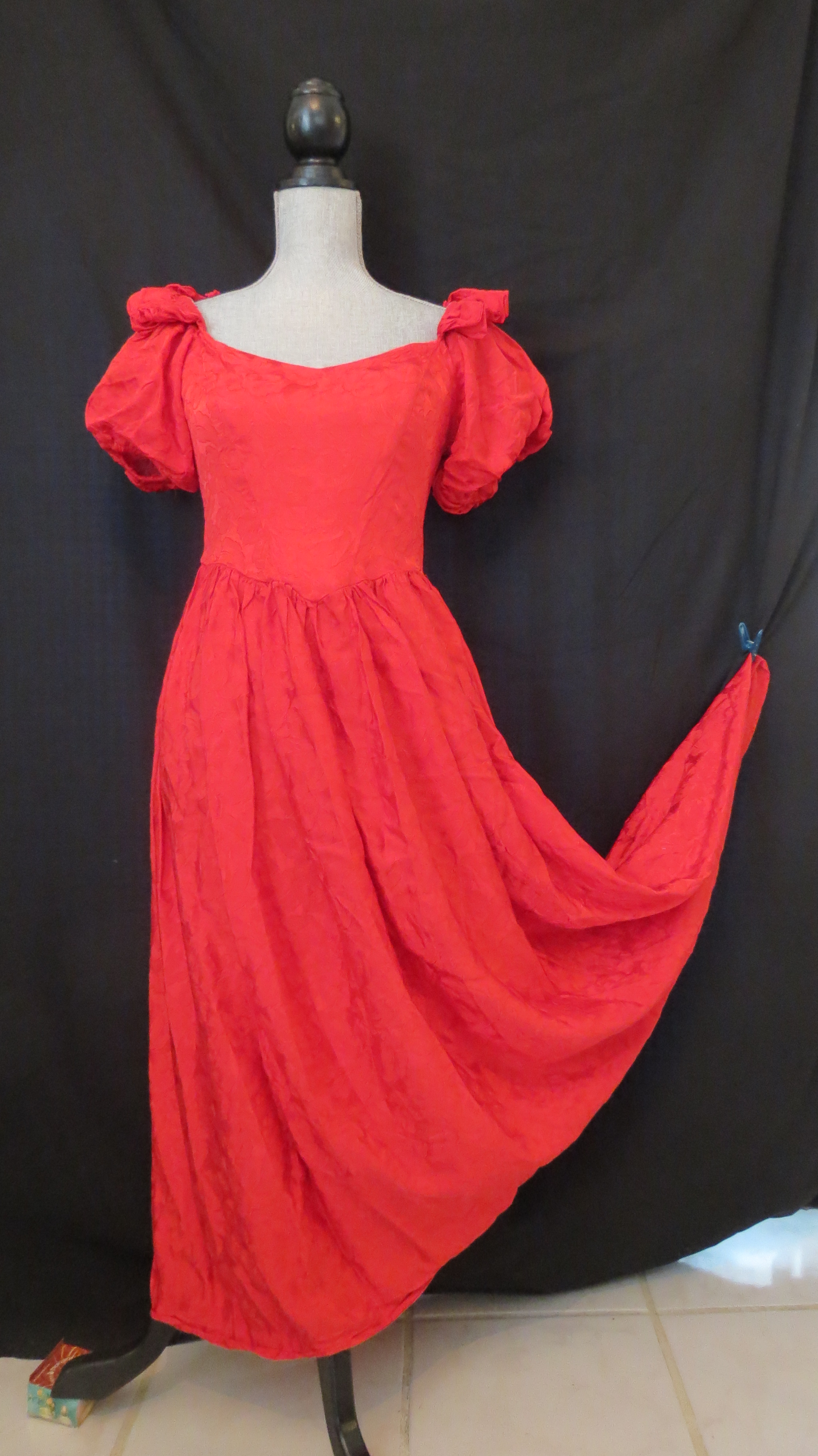
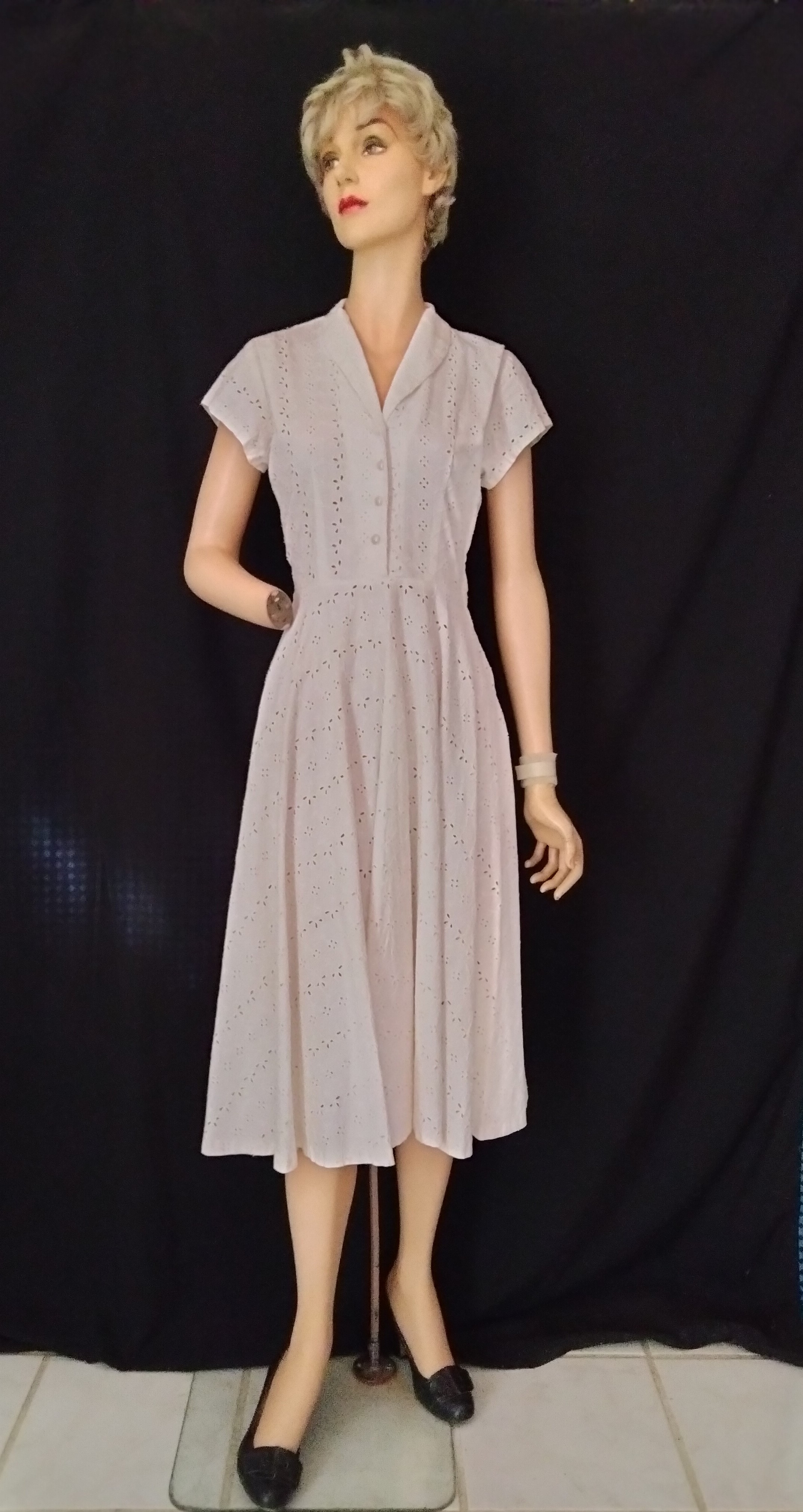
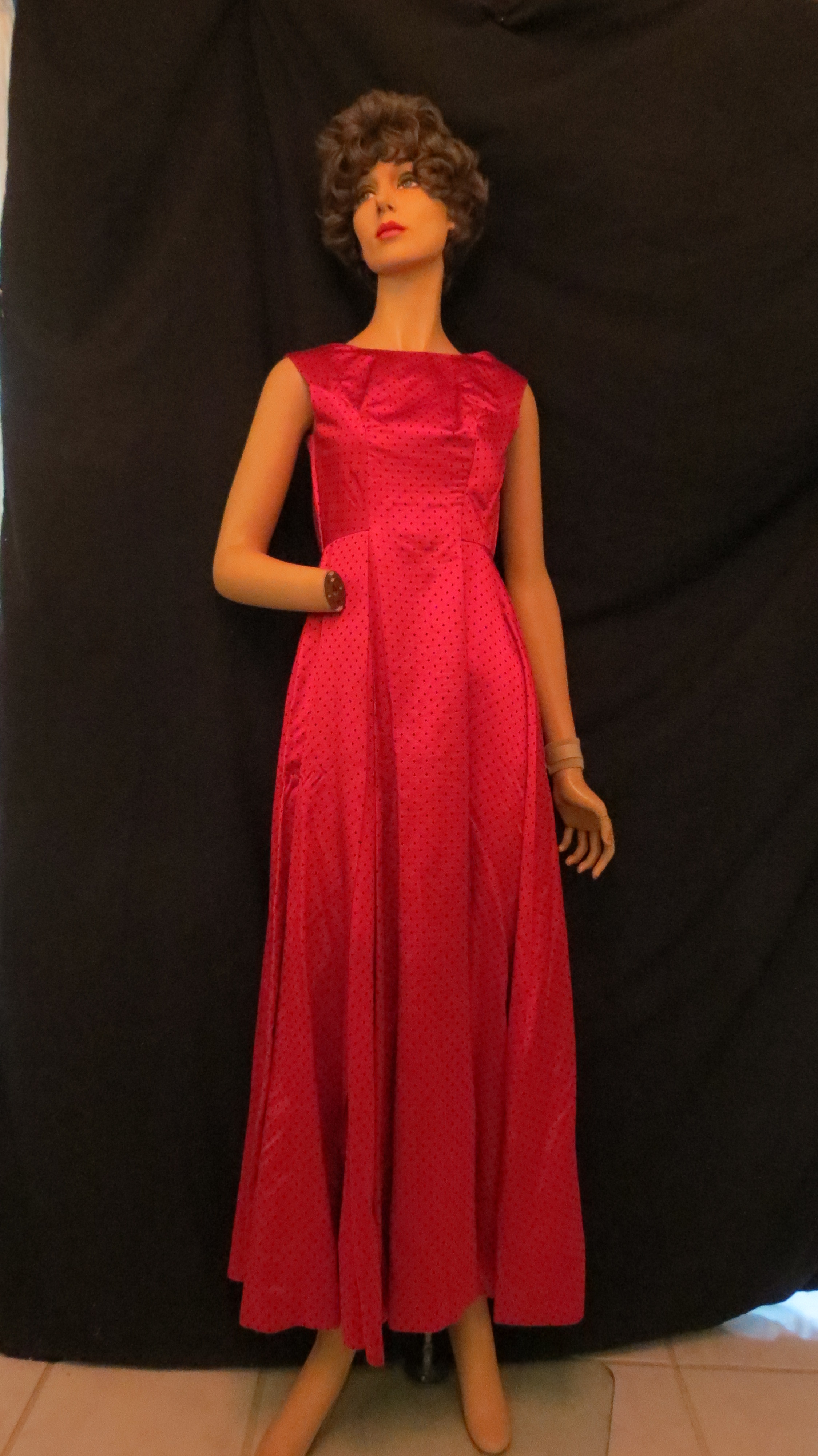
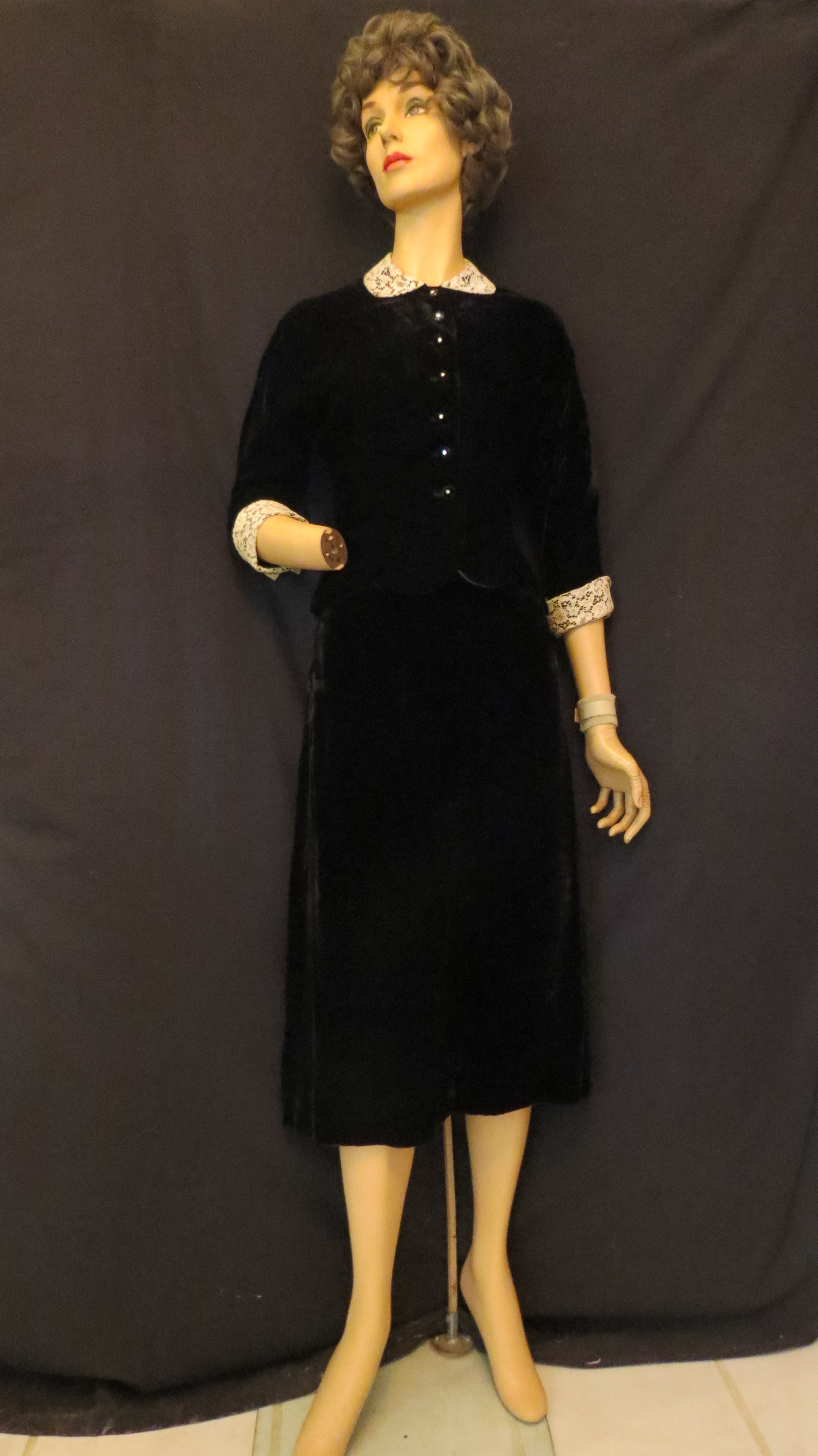
Home-Sewn 1940’s Wartime Party Dress

A simple frock, probably made while times were lean and rationing had been imposed on the markets. The fabric is heavy – almost like taffeta but not that real deal. Probably some kind of rayon or acetate. The little splurge is the velveteen neckline, but during WWII any dress like this for an average gal was probably a splurge.

Even on a garment this modest, I love to discover the tailoring features that make it unique. In addition to the neckline trim, notice the little fold-overs that accent the shoulders. Shaping makes the bodice and waist trim and produces the full circle skirt. A deep hem allowance is also a luxury on a dress like this since it adds the option of adding length, adds a little weight to help the skirt sway and just makes the dress look like a more expensive garment.

I think it was made for a teen or a very tiny woman, but who knows the real story. Might even have been a Prom dress – good style for Swing dancing ad Jitterbug. What a fun find! Stay tuned for more knee length and midi cocktail frocks as well as full length gowns . . .. . . . . . . . . . . . .

MORGANA MARTIN, THE MAGICVINTAGESPY

BLOG: MAGICVINTAGESPY.COM

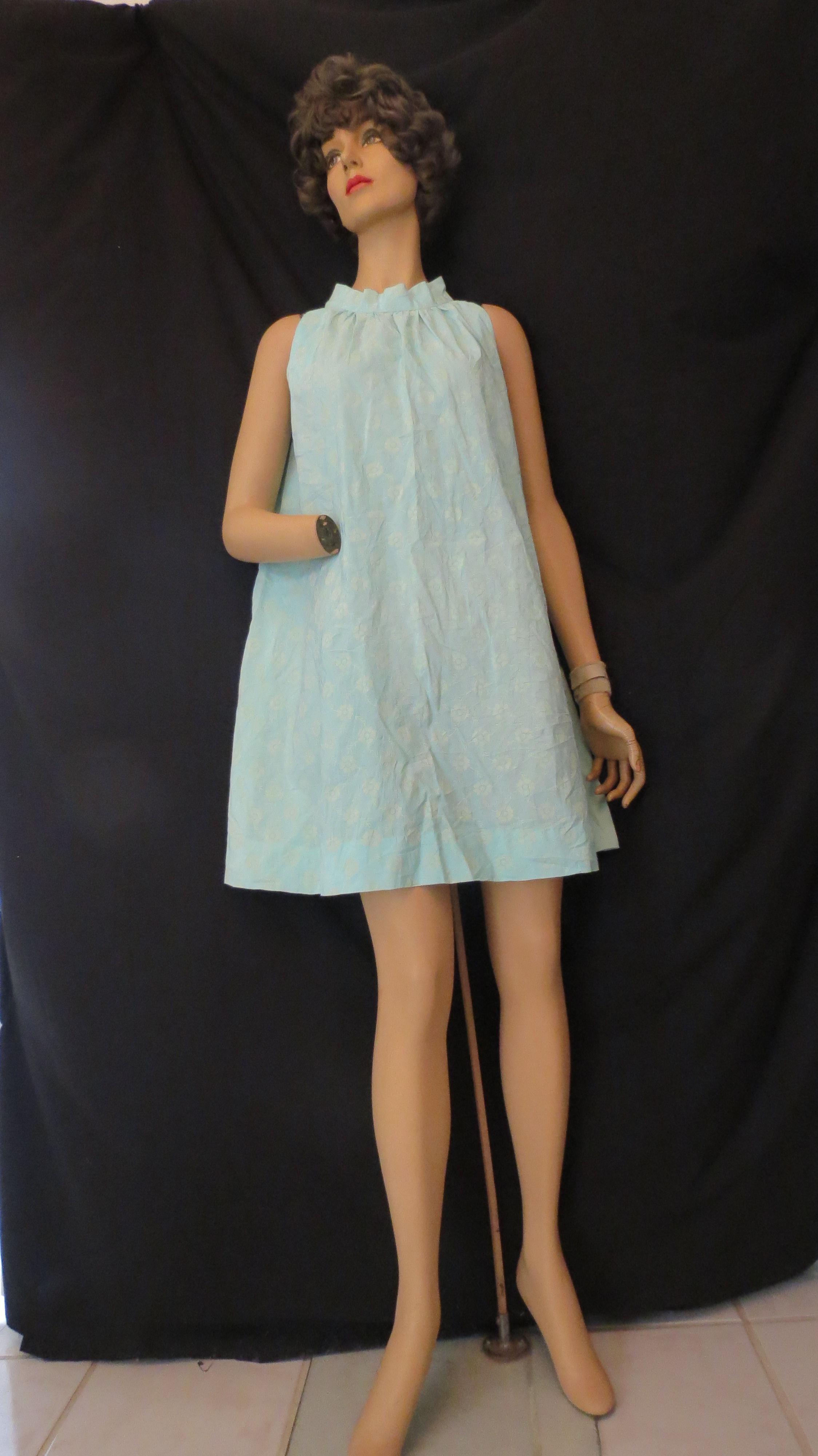
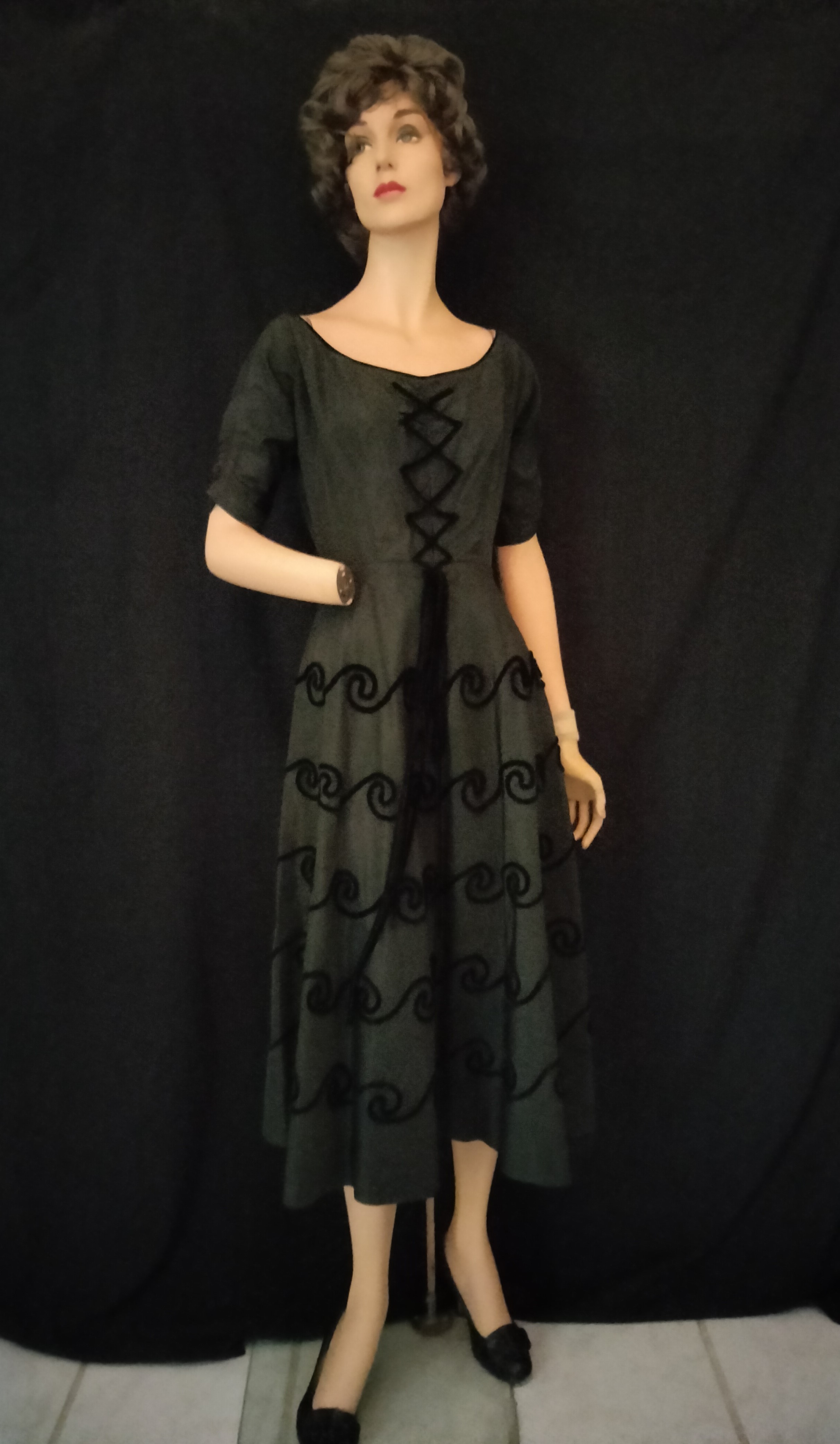
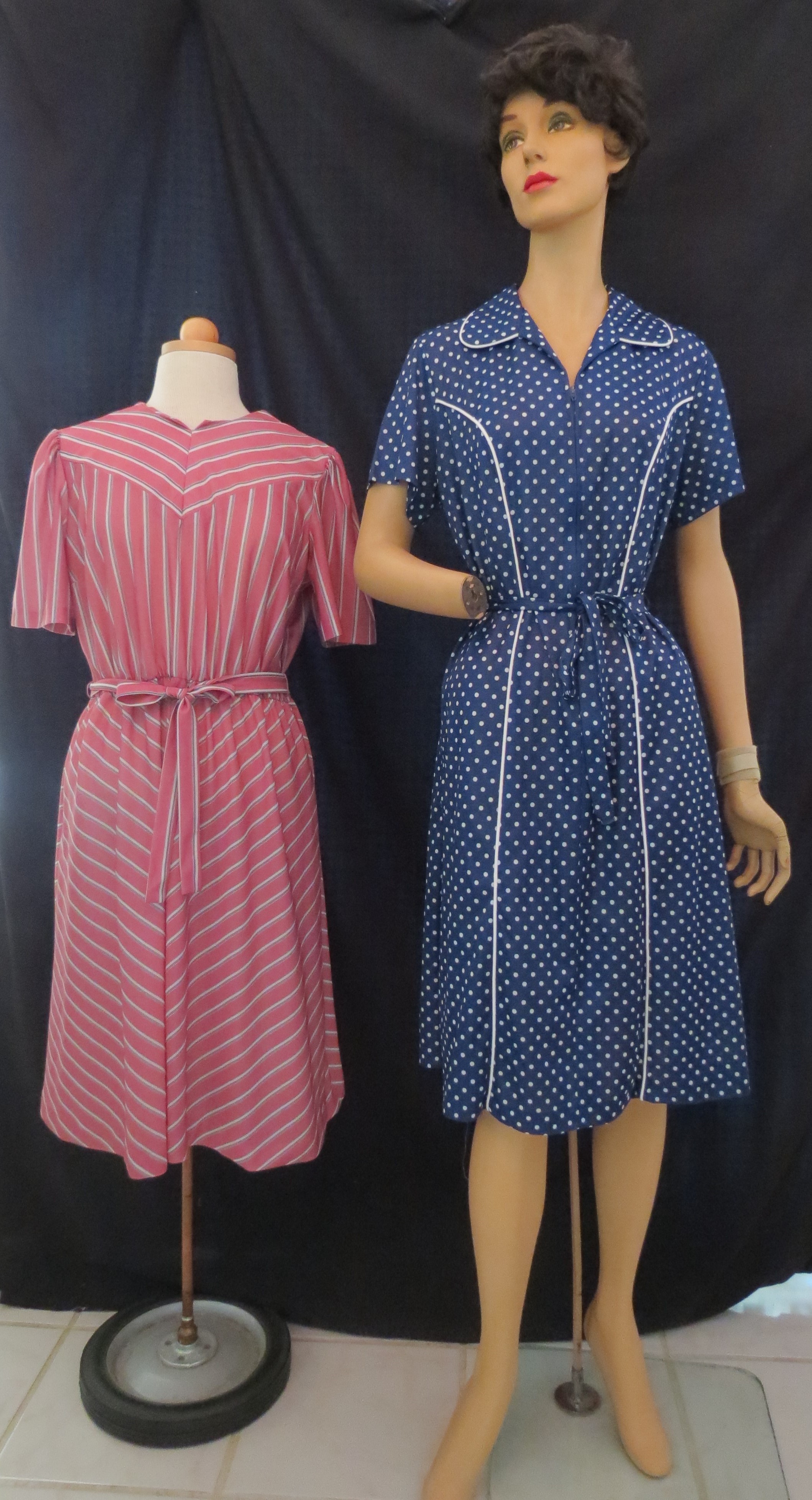
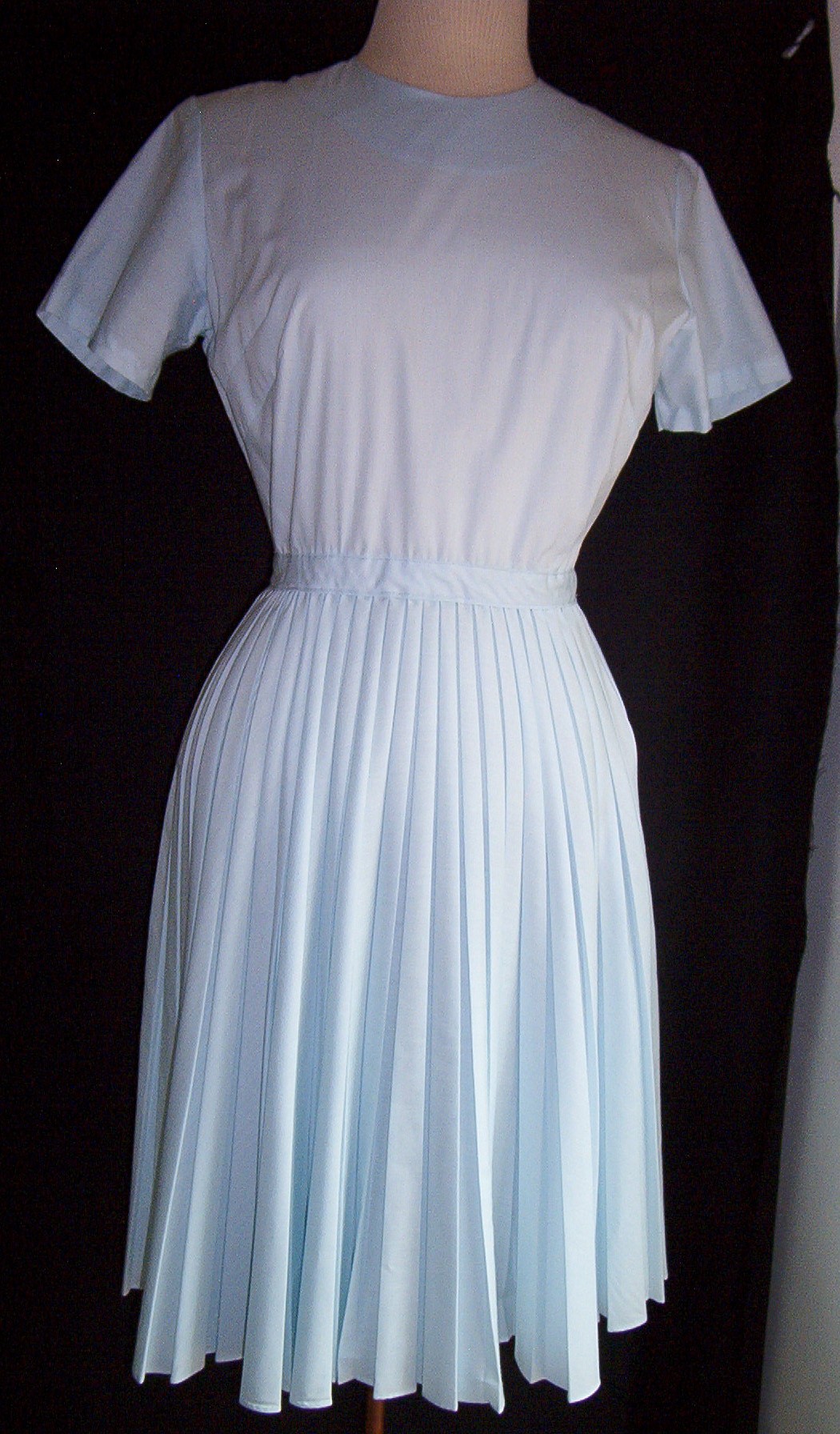
Interesting Early 1950’s Home-Sewn “Cocktail Dress”

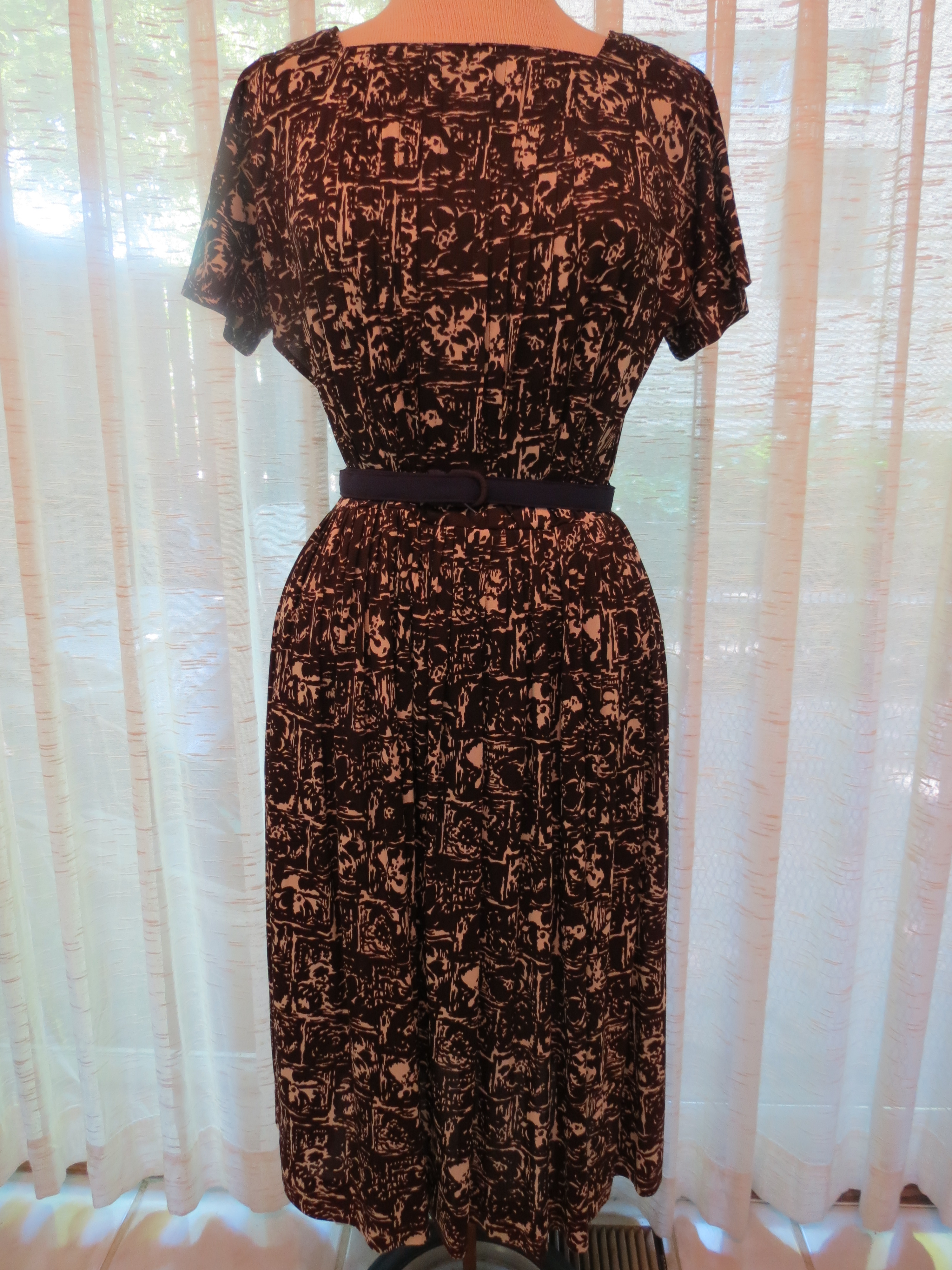
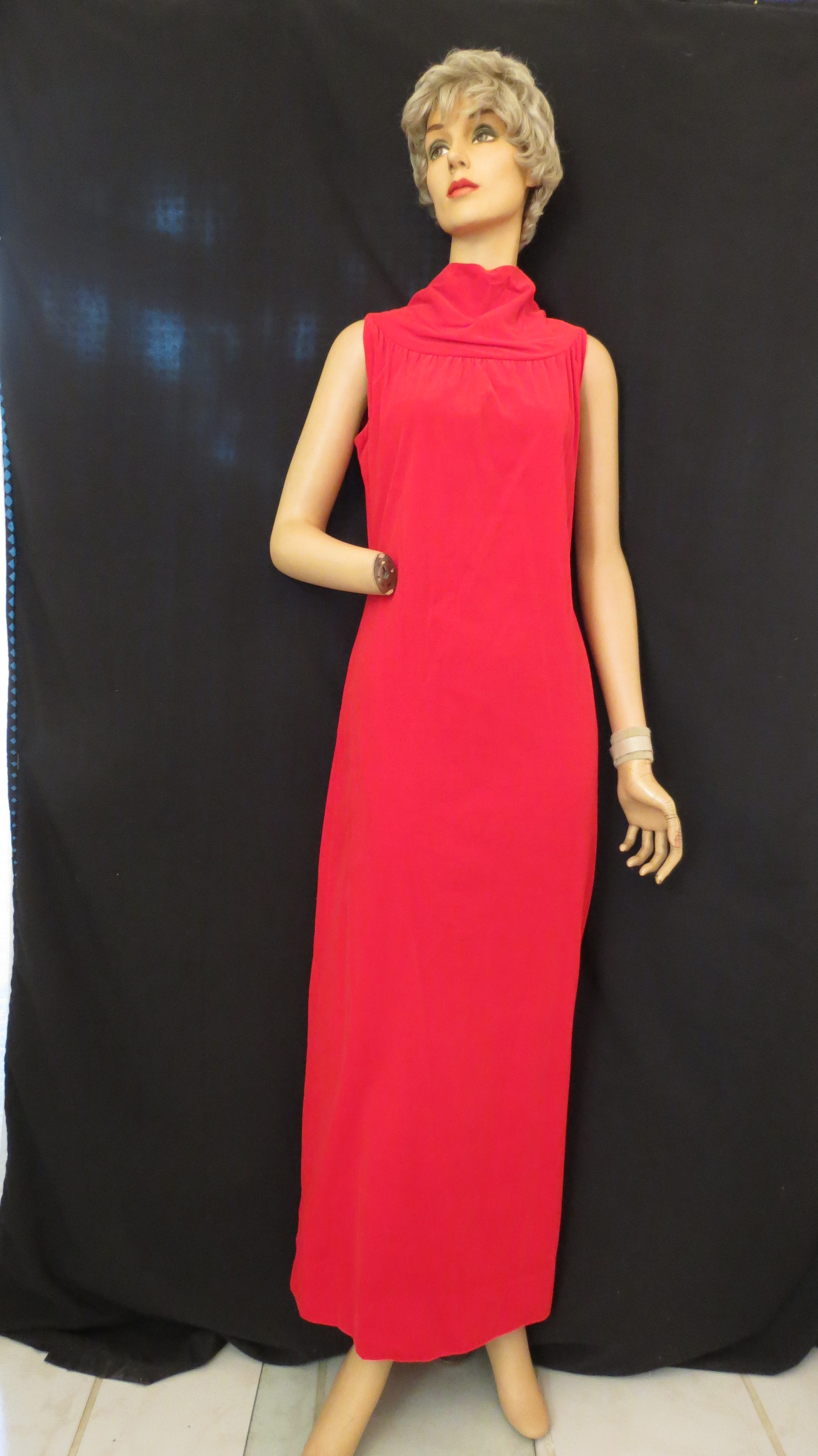
When I spied this frock, I knew it was true vintage but couldn’t actually place it. With a little research I discovered that dresses of this type, worn over a plain slip-dress of some kind, had their niche popularity in the early 1950’s. This one must have been a home-seamstress’s answer to having a more affordable version.

At first I couldn’t decide between the front and back, but when put on Madge, who is a perfectly proportioned modern size 6, it is obvious that the cowl effect fits best in the front and is an elegant style. Depending on how it fits, could also be worn in the reverse. It’s always fun to solve the mysteries . . . . . . . . . . . . . . . . . . . . . . . . .

MORGANA MARTIN, THE MAGICVINTAGESPY

BLOG: MAGICVINTAGESPY.COM
OUR GRANDMOTHERS’ MID-CENTURY HOLIDAY AND HOSTESS KITCHEN APRONS

These are just 3 out of my collection of lovely kitchen aprons, but perhaps a bit more interesting and seasonal than others I have, which are more generic, like a cotton gingham check without any specific theme. Many aprons, like the first one here, were specifically themed for a particular holiday or fashion era. It’s a great example, with bright color and a novelty print for Thanksgiving. Although it’s definitely trendy and targeted, it is also at least somewhat practical because of the machine-washable fabric, wraparound style, secure ties and big pocket. It could actually do the job of keeping the cook’s skirt clean. The most useful styles also covered the bodice.

The usefulness is really important, but I love the novelty print. It’s always good to play the hostess in something that also makes people smile. The two aprons following are entirely different in their purpose. These are made from a much more delicate fabric and would be best washed by hand, both because of their delicacy and because they are hand-painted. They were made for and gifted to my grandmother by a relative who at least did the painting herself, if not the sewing job. Gifts like this were common in her day, and cherished. These aprons were made not so much to protect clothing as to be pretty. Grandma might have worn them when she had her friends in for tea or a card game, maybe even for hosting an at-home cocktail party. The messy part of the hostess job would have already been done when she made the cake or other refreshments beforehand.

Aprons were much more commonly worn in decades past and were a significant part of a woman’s household wardrobe, like housedresses worn on cleaning day. Most women’s (especially married women’s) lives were organized around a routine of household duties throughout the week and each one usually required a different kind of outfit – one for cooking, one cleaning, one for tending plants, one for doing the weekly shopping. Special accessories to these outfits were needed for certain jobs, such as gloves of various kinds, hats of various kinds, nursing bras and pads to protect clothing from breast milk and burping babies. Housewives were trained to be very practical and were rewarded by Society for a job well-done. The home was their workplace and the role defined them, so their household wardrobe had a central place in their lives. For better or for worse, that was the way it was. Do we want that again? Think about it and keep your eyes on the clues . . . . . . . . . . . . . . . . . . . . . . . . . . . . . . . . . . . . . .

MORGANA MARTIN, THE MAGICVINTAGESPY

BLOG: MAGICVINTAGESPY.COM
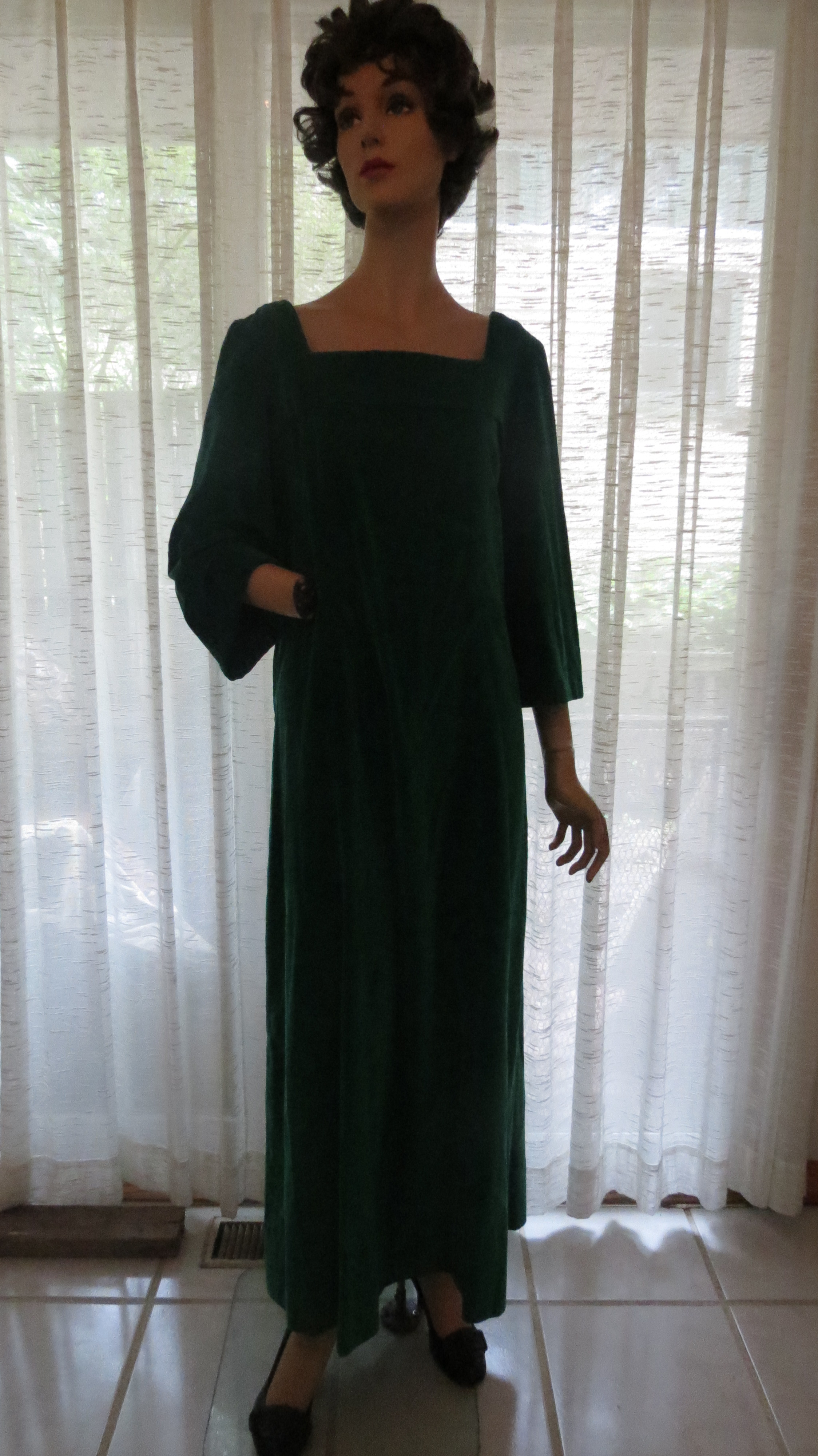
NEW TRUE VINTAGE FIND – HOME-SEWN MID-CENTURY BOHO ETHNIC SKIRT

I always collect true vintage separates – especially those that are fun and unusual. They usually tell a story. This one is in great shape with evidence of being custom-tailored by a home-based “seamster” (probably a woman, but who knows?). One thing I know by an interior-only clue is that s/he probably had a little dog or other small pet. S/he very frugally used seam tape that had been chewed a bit. No problem – it did the job.

It could be part of an ethnic costume or simply one of the Boho styles which were very trendy in some ways between 1955 and 1975. I love the dirndl style and colorful weave, almost like home-loomed fabric. I don’t have any special knowledge about ethnic dress that would allow me to pinpoint more closely. Anyway, it’s flattering and easy-wear. Good for mix and match with a variety of tops for different looks and different weathers.

What else makes this special and very wearable in cooler weather? The colors and medium weight are good for 3-season wear. It’s possible that the material contains wool. Would look great with tights, boots or even some leggings. Separates are a useful way to add variety to a true vintage wardrobe and to dress “vintage” without having a complete outfit. Added to my go-to daily wardrobe . . . . . . . . . . . . . .

MORGANA MARTIN, THE MAGICVINTAGESPY

BLOG: MAGICVINTAGESPY.COM
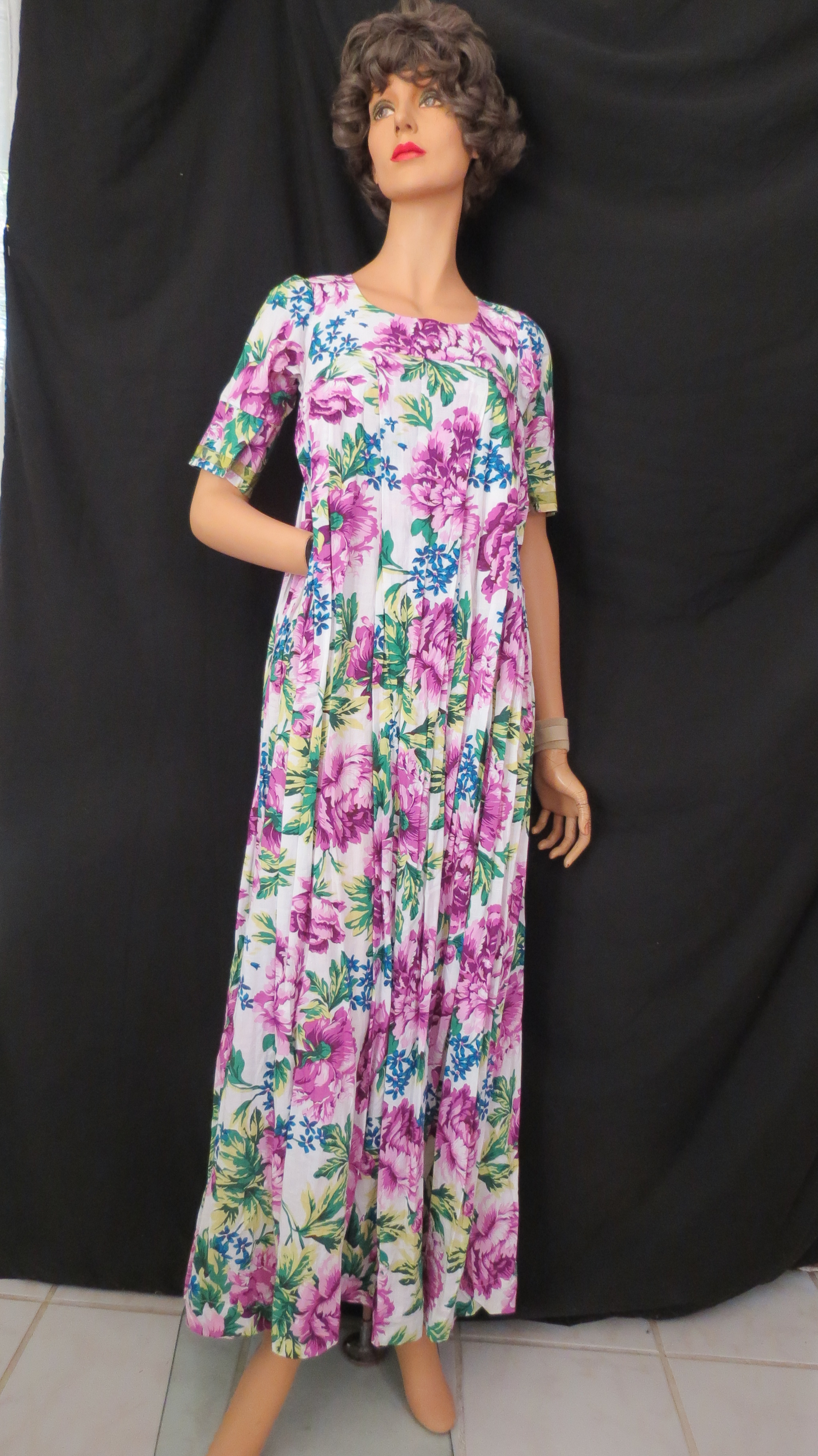
More Accessories ESSENTIAL for a True Vintage Wardrobe: Scarves and Ties

True vintage scarves are a must-have. They are generally very well-made with hand-rolled and stitched edges. Often, they are made of silk; if not, the fabric is of very good quality. Mostly, it’s the artwork on printed vintage scarves that is so wonderful. The only essential example I’m not showing here is the souvenir scarf, depicting scenes from a specific place or theme. Mid-century women collected these. Large scarves are great as capes or folded into turbans. Small scarves make cute little collars or accents on handbags or pockets. Every size in between can be worn in a gazillion variations. Lots of books and online tutorials teach you how to do this.

For a menswear outfit, a true vintage necktie is key. I especially love the mid-century graphics. Some 1940’s ties are truly spectacular and the only example I have of this style is a 1970’s/’80’s souvenir tie from Watson’s Desert Inn in the Canary Islands.

Scarves and ties alone can make up a vintage collector’s obsession but I prefer to use them as accessories only. As a very useful clue added to a modern or otherwise banal outfit, they can open unexpected doors. Stay tuned . . . . . . . . . . . . . . . . . . . . . . . . . . . . . . . . . . . . . .

MORGANA MARTIN, THE MAGICVINTAGESPY

BLOG: MAGICVINTAGESPY.COM
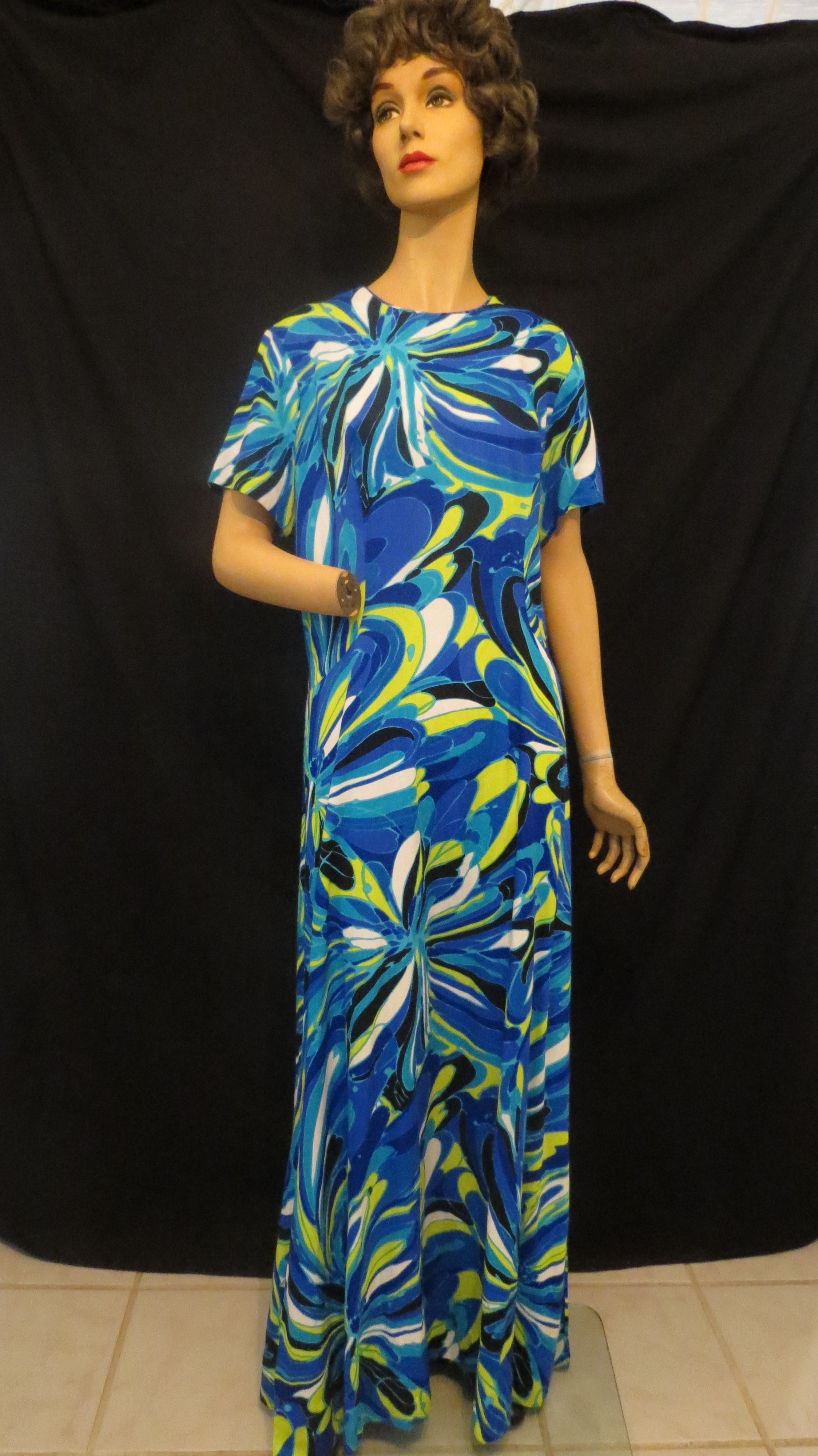
TOTALLY CLASSIC, ABSOLUTELY ESSENTIAL TRUE VINTAGE WARDROBE SHOES. WHAT ARE THEY?

100% LEATHER PENNY LOAFERS. Don’t care who you are, where you are, what your age, what you do; if you want to build a true vintage wardrobe, high quality penny loafers made of leather are a MUST. You might think that this is only an American or western European fashion, but not so. They originated over 100 years ago in Norway and, like the human population, have migrated into mainstream fashion all over the world since then. Men, especially, have been able to wear them as dress shoes since the beginning. They were de rigeuer for high school and college men and coeds at least since WWII; Probably replaced the saddle shoe in most adolescent closets. Mid-century pennies are a strong suggestion.

Highly polished, for smart casual to semi-formal dress. Lightly scuffed or a little dusty for just about everything else. Pretty versatile. Smooth leather in black or cordovan brown is the true classic. The full leather construction is mandatory because it’s original and also allows them to be repaired forever. (OK, a true vintage synthetic sole is acceptable if that is all you can find, but keep looking). In line with my philosophy regarding humane treatment of animals and environmental sustainability, I don’t recommend buying modern retro versions at retail, no matter how nice they are. You can find the real thing at second-hand and they’re better. Also, I’m obviously all about running undercover investigations and that’s a lot more fun because – you just never know. Stay tuned . . . . . . . . . . . . . . . . . . . . . . .

MORGANA MARTIN, THE MAGICVINTAGESPY

BLOG: MAGICVINTAGESPY.COM
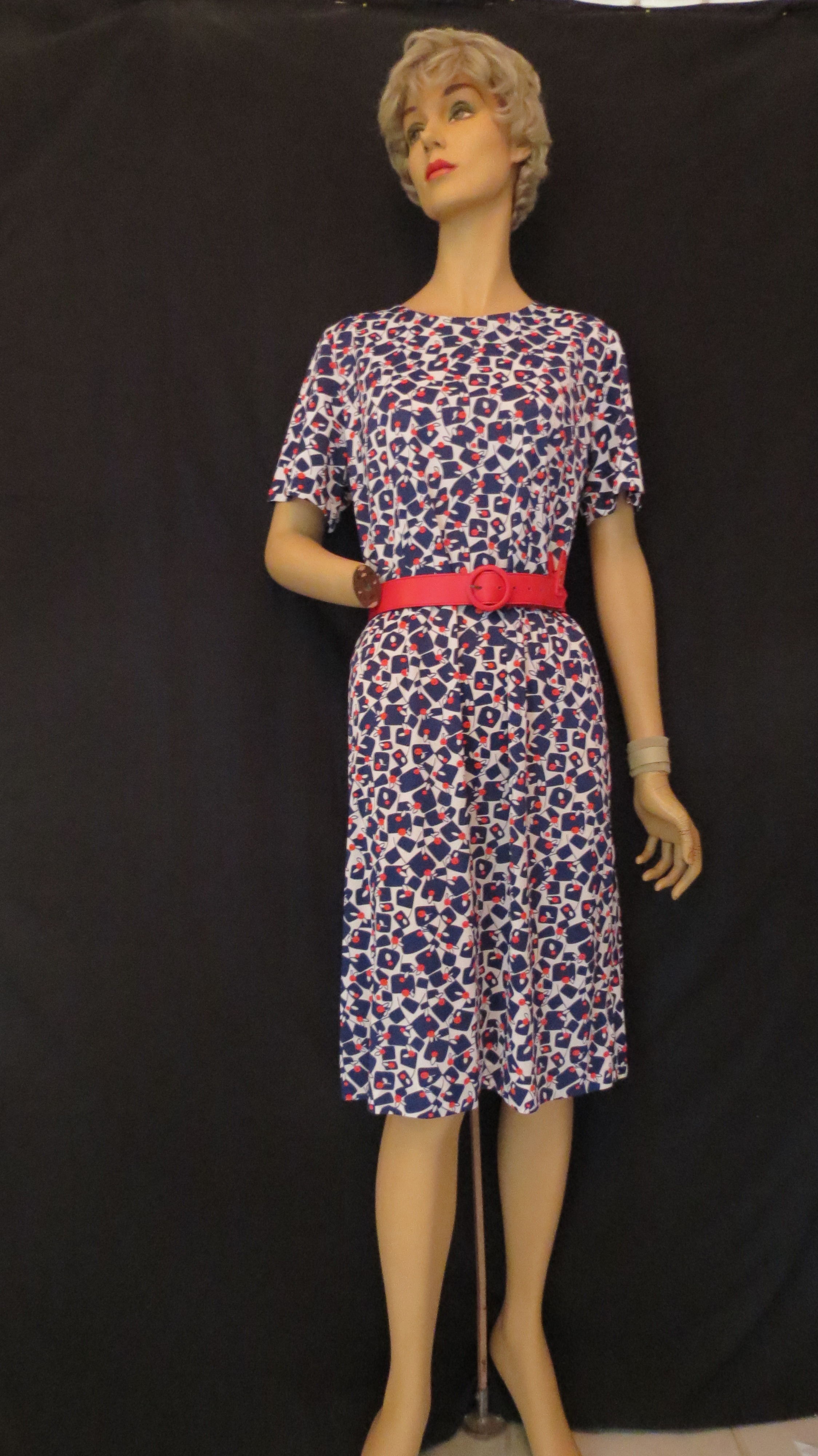
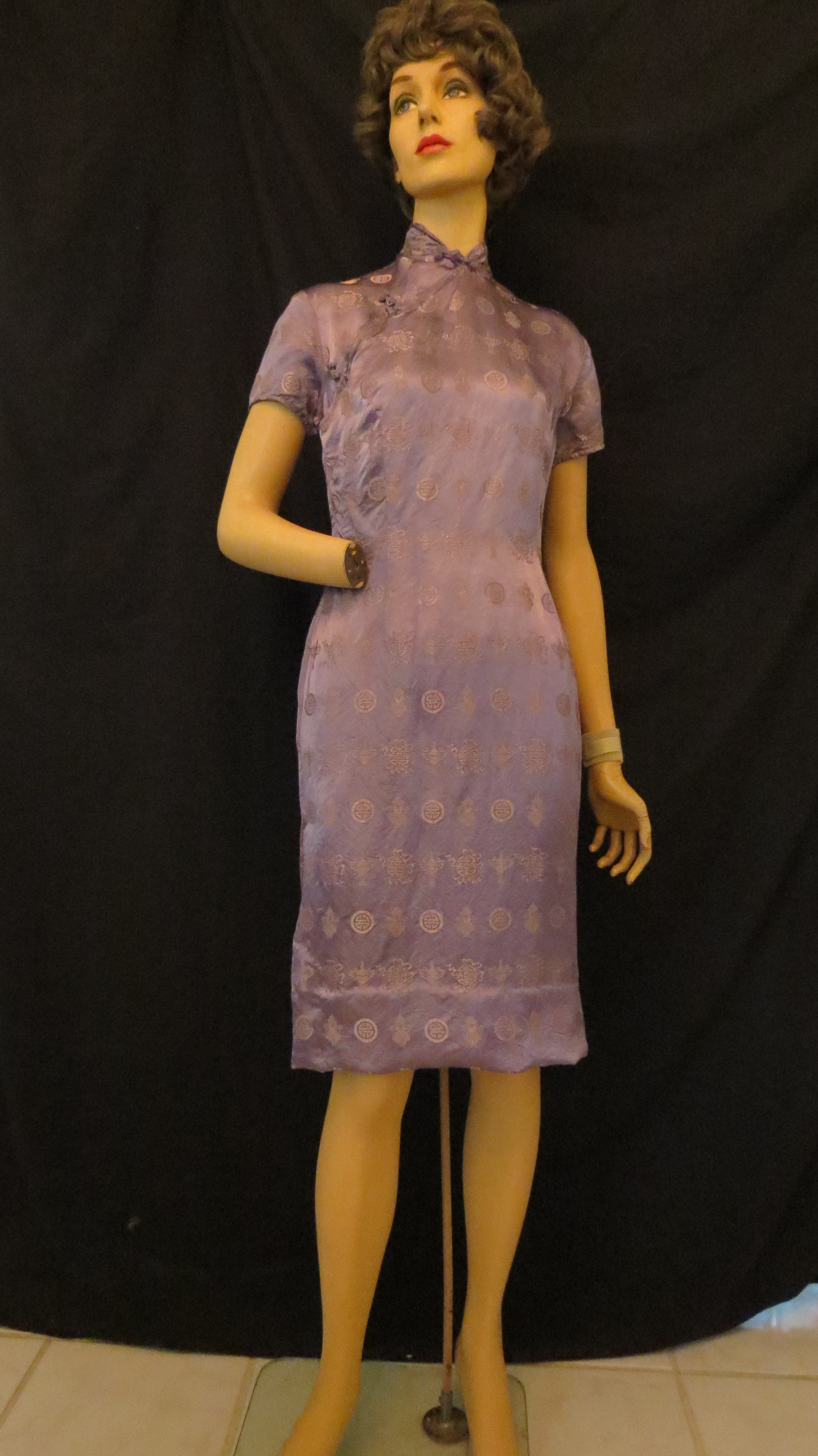
BEAUTIFUL 100% SILK TAILORED WASP WAIST GOWN

Of course, I couldn’t pass up this Asian(?) beauty when I discovered it although I don’t know it’s history. There’s no label and it looks unworn so Where and When did it originate? The zipper gives me my best clue – it’s a Talon, in the style of the 1960’s and 1970’s – but not a definite answer, since this frock was hand-tailored.

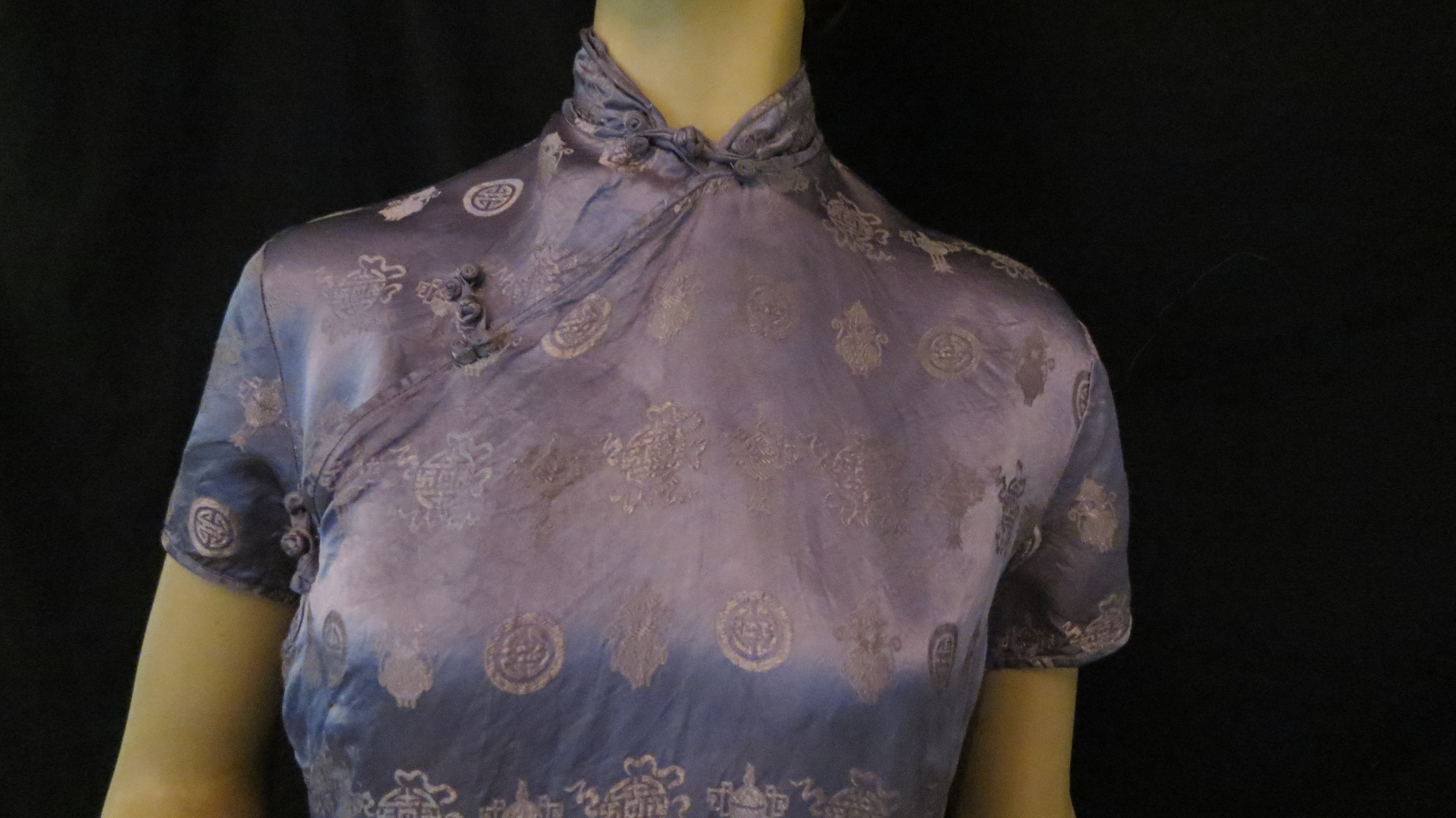
The fabric, also, is a clue – pure silk with gold embellishments – which brings to mind others I have seen in garments made by Asian and Middle Eastern tailors; sometimes overseas and sometimes in North America. I love a mystery, but let’s get down to the real brass tacks. What makes this dress so exceptional and worthy of being categorized as True Vintage?

  1. Professional hand-tailoring which includes traditional features such as strap holders for undergarments sewn into the shoulders, other hand-finishing details and a full lining.
  2. True vintage styling most popular in previous decades i.e. wasp waist, ruching and midi length.
  3. The vintage Talon zipper. True, the maker may have saved this from previous times but still noteworthy.

So, there you have the initial conclusions of the investigation. Further clues may be uncovered in the future but this is enough to justify the acquisition. It’s a gorgeous example of tailoring history and garment design. However, the purge continues and it’s not a perfect fit for Moi, so off to the public auction house it has gone . . . . . . . . . . . . . . . . . . . . . . . . . . . . . . .

MORGANA MARTIN, THE MAGICVINTAGESPY

BLOG: MAGICVINTAGESPY.COM
Another True Vintage Accessory – Fabulous Spanish-made Boots

oplus_32

These beauties were made in 1979! Wow, do I ever love them!! Soft, supple glove leather with leather soles and heels. All the beautiful workmanship that was expected in European-made footwear. Shoes from Spain and Italy, especially. Not sure if that’s true now, but it certainly was up to a couple of decades ago. Still have the original everything and they’re going strong!

Oldies really are the best goodies! And, on top of that, they don’t contribute to animal cruelty or inhumanity in the marketplace today. True vintage purchases, especially from a reputable charity shop or individual (do your research) is VEGAN and responsible. That can go for anything made of leather, skins or fur several decades ago. We can appreciate and get service from these vintage items without doing any harm to life or the environment today. That’s how to enjoy the best of the best. Stay tuned . . . . . . . .

MORGANA MARTIN, THE MAGICVINTAGESPY

BLOG: MAGICVINTAGESPY.COM
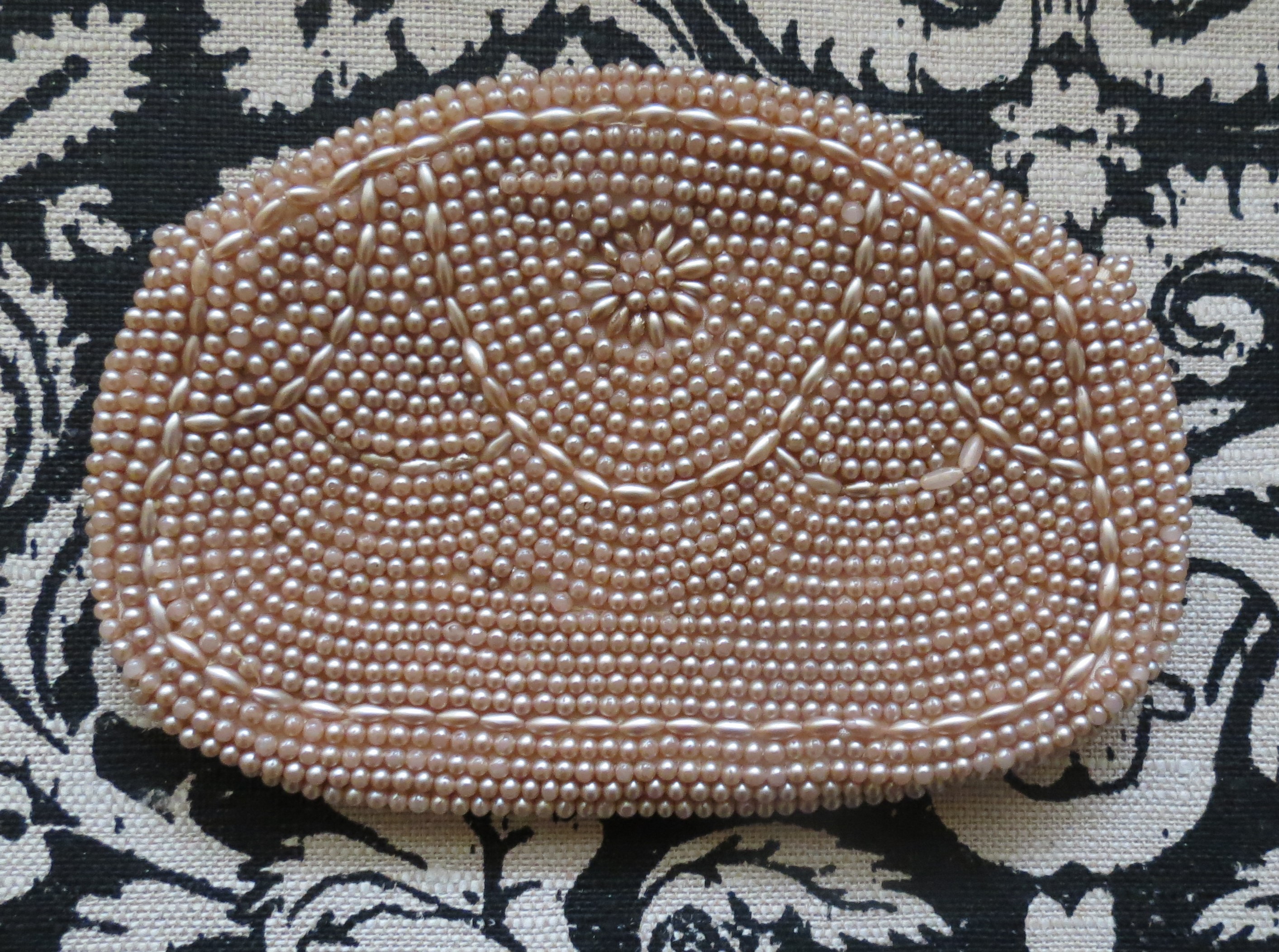
ELEGANT, TINY BEADED EVENING PURSE FIND! MID-CENTURY MAGIC . . . . . . . . . . . . . . . .

Always such a pleasure to discover these little beauties. Made by a well-known Japanese maker from the mid-1900’s, these small handbags were almost always assembled and decorated by hand. This one is especially tiny, and flat. It has room only for a key, a small amount of money or a charge card, and maybe a small comb and/or lipstick. Just the bare essentials. Almost like some made in the 1920’s and 1930’s but I would place this one from the 1960’s.

Silk or rayon body, with mono-tone black bead decoration, a metal snap closure and an unusual fabric handle. On close examination there are a few beads missing but that will be no problem to fix.

I’ve found so many, but this one is unique! What’s next? Stay tuned . . . . . . . . . . . . . . . . . . . . . . . . . . . .

MORGANA MARTIN, THE MAGICVINTAGESPY

BLOG: MAGICVINTAGESPY.COM