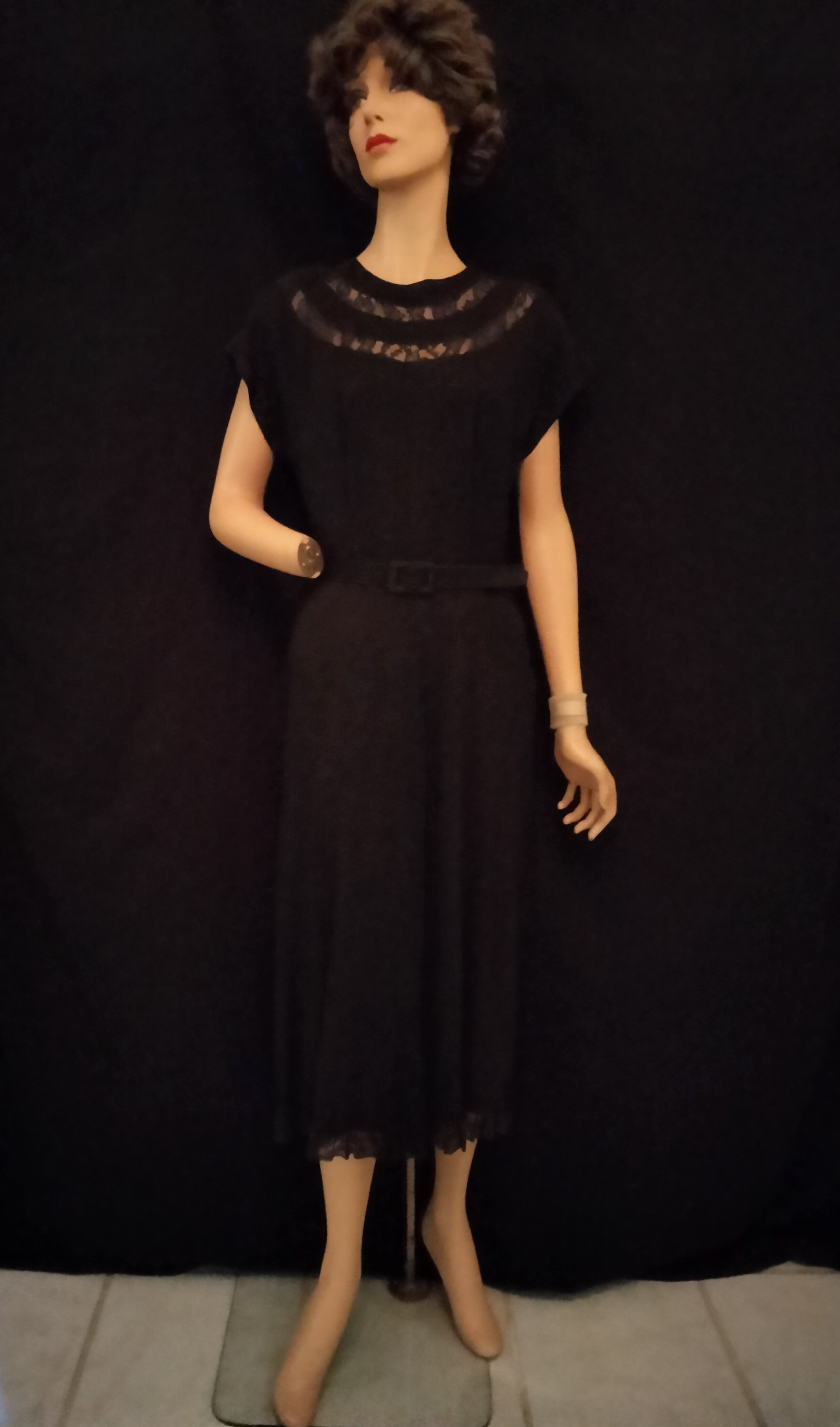
Frilled up a little by the lace inset at the neckline and lace trimming at the hem, this dress would have been accepted at any semi-formal gathering, cocktails or not. Although it’s a little bit “secretary, librarian, school teacher” in it’s modesty, the cap sleeves, peek-a-boo neckline and nipped waistline are a bit flirty. The ever-present black crepe fabric gives it the figure-skimming drape. Elegant, even though it wasn’t the most expensive frock.
Back when dresses were always the expected attire for any gathering that was professional or vaguely formal, this dress was an easy, comfortable design to meet the need. Styles were loosening up a little, though structure was still important and tailoring very elevated. In the 1950’s things changed hugely in Western society and, of course, in fashion. I’ll be investigating during the next few days but we’ll continue the cocktail fashion timeline next week. Stay tuned . . . . . . . . . . . . . . . . . . . . . . . . . . . . . . . . . . . .
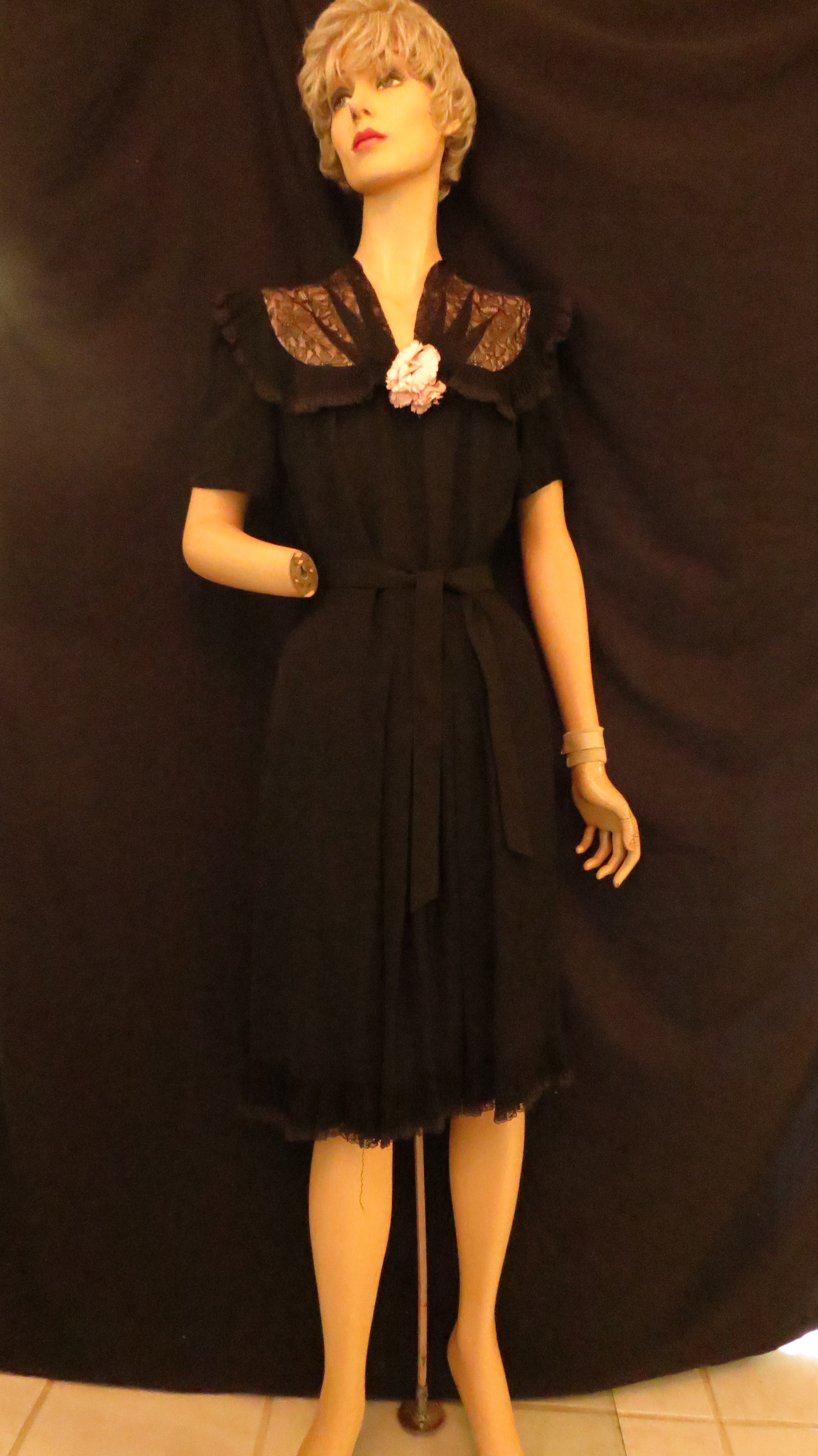
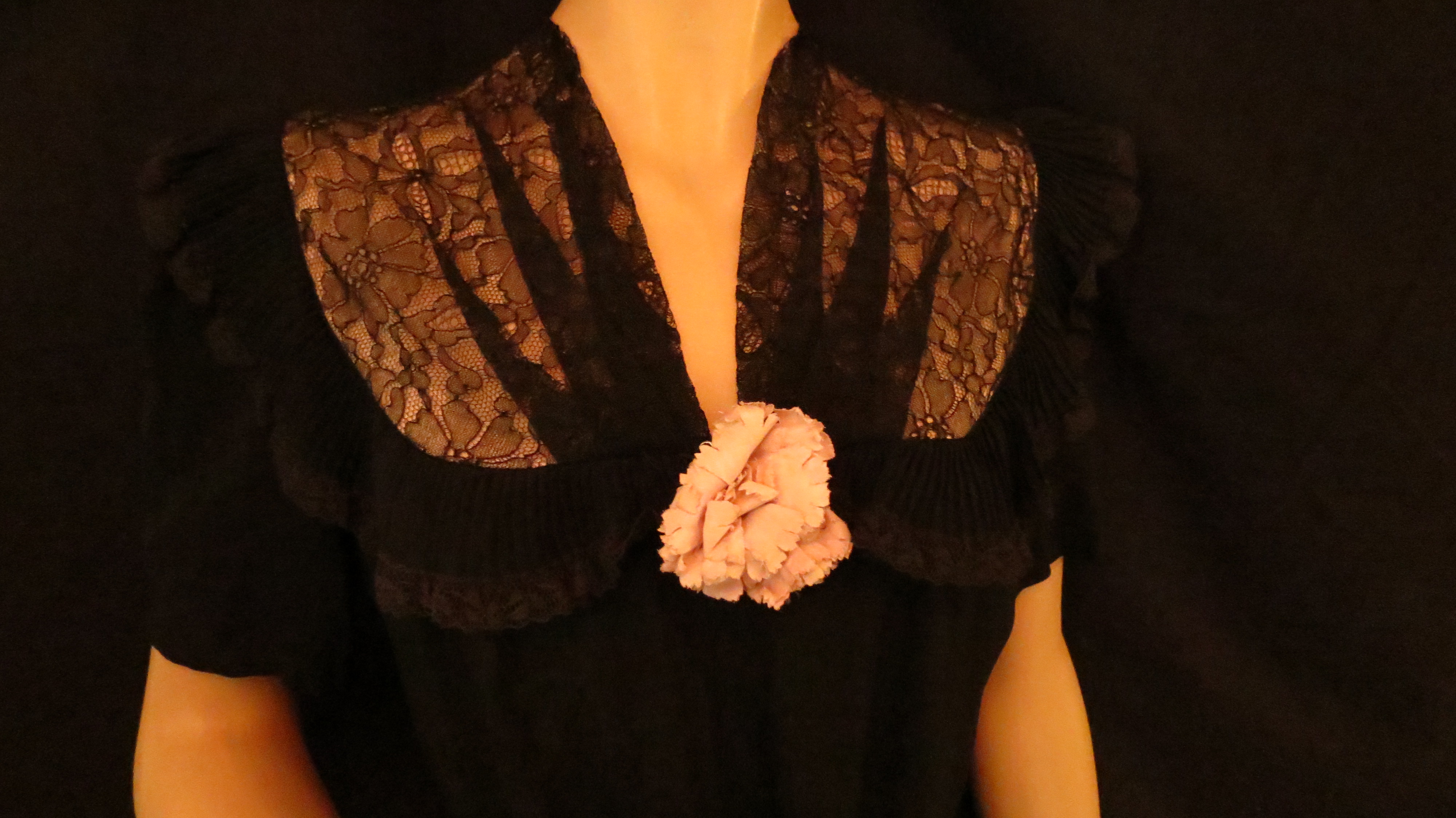
These two are certainly not designs by Coco Chanel, who came up with the Little Black Dress in 1926, but they still might have been seen at a cocktail party. They’re both oh-so-proper in spite of the loosening restrictions on women’s dress that were happening after the Edwardian 1910’s. The dress on the left, from the Thirties, is not terribly interesting to me but the bodice has those Deco-style pleats in the sheer lace panel that elevate the whole design. It was so amazing to discover it with the original floral ornament in front.
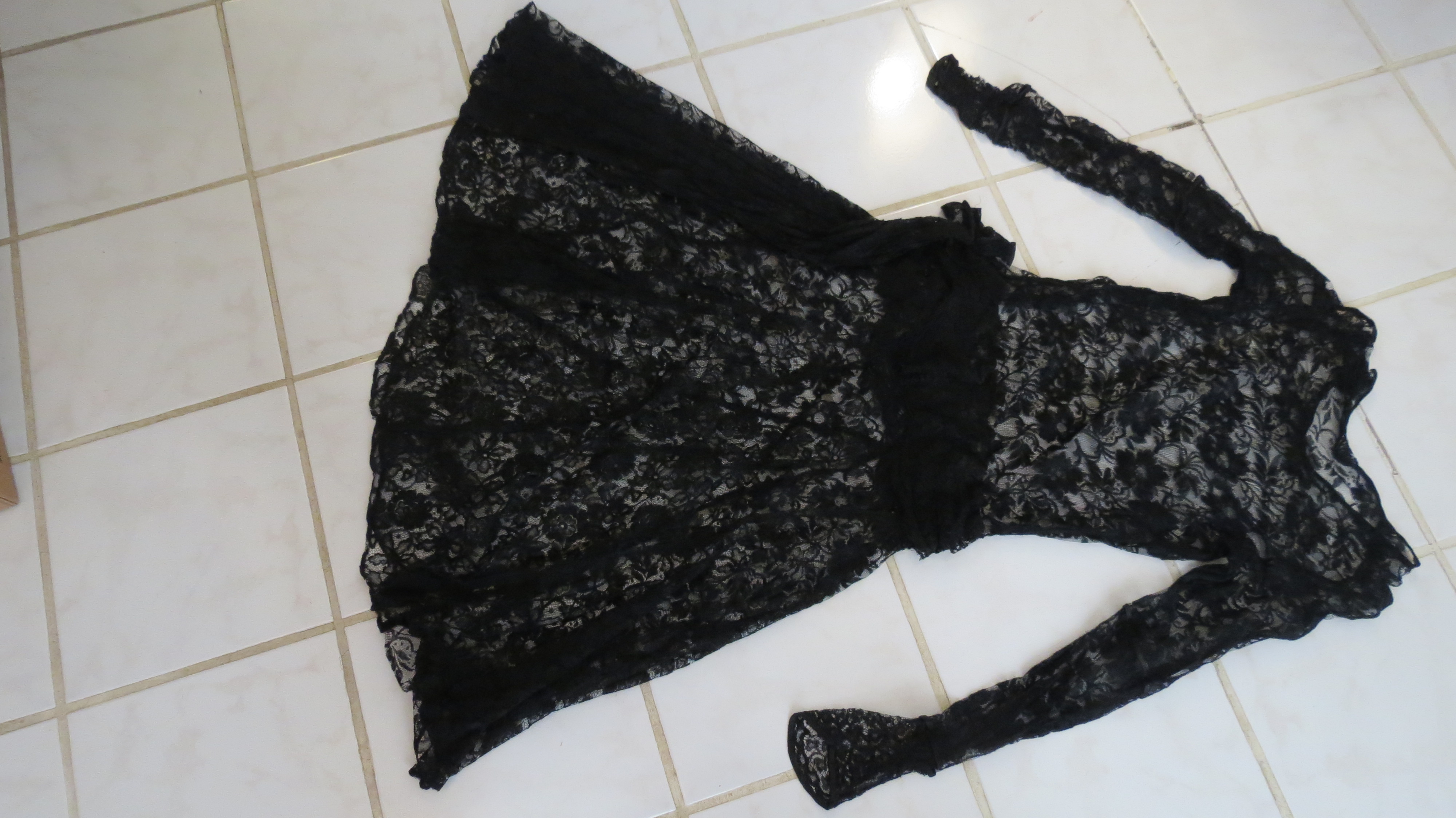
The midi-tea length lace dress from the 1920’s is pretty and would be very swishy over a rayon slip worn underneath. It was discovered in an antique wardrobe at a farm sale. The dropped waist is iconic. This frock was meant for a dressy special occasion rather than a night dancing the Charleston in a speakeasy.
How amazing it was discovering these pieces in such wonderful condition after almost 100 years! Most textile clues don’t last as well over so many decades but there are more to come . . . . . . . . . . . . . . . . . . . .Stay tuned . . . . . . . . . . . . . . . . . . . .
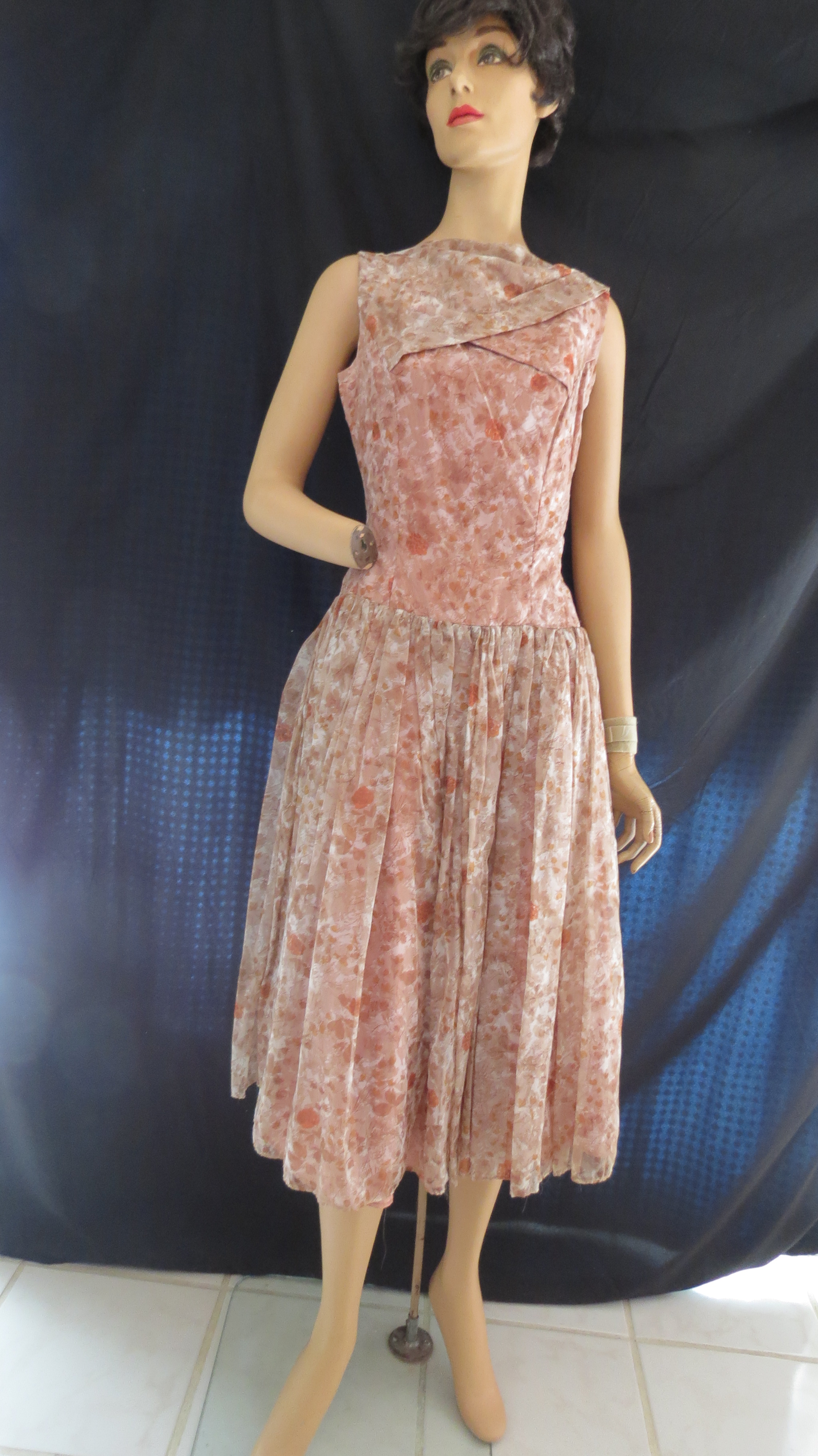
Had overlooked this archive – so similar to the dress shown just a few days ago. Looks like Grace Kelly had an alternate in the closet. Same color theme, same basic fit, same below-knee hemline BUT look at that crossover neckline! So interesting. I’m not sure if I’ve seen it on any other dress. Also, the dropped waistline is different, though still with that wasp fit. Like the other one, it could also be worn with a poufy petticoat but there is none attached. It’s quite sophisticated but could still go to a party.
I never get tired of finding and showing these girly styles from the early mid-century. Stay tuned . . . . . . . .
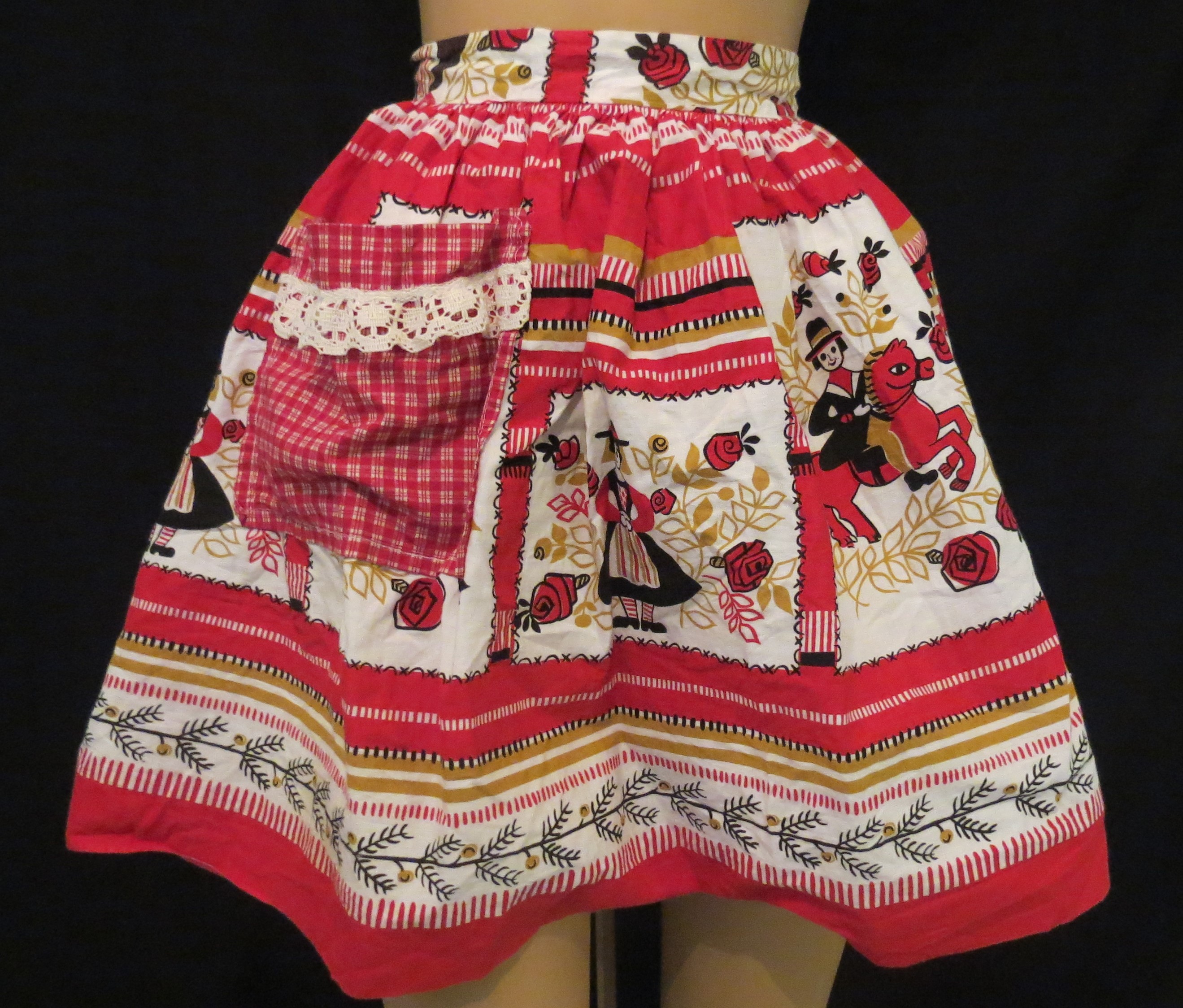
These are just 3 out of my collection of lovely kitchen aprons, but perhaps a bit more interesting and seasonal than others I have, which are more generic, like a cotton gingham check without any specific theme. Many aprons, like the first one here, were specifically themed for a particular holiday or fashion era. It’s a great example, with bright color and a novelty print for Thanksgiving. Although it’s definitely trendy and targeted, it is also at least somewhat practical because of the machine-washable fabric, wraparound style, secure ties and big pocket. It could actually do the job of keeping the cook’s skirt clean. The most useful styles also covered the bodice.
The usefulness is really important, but I love the novelty print. It’s always good to play the hostess in something that also makes people smile. The two aprons following are entirely different in their purpose. These are made from a much more delicate fabric and would be best washed by hand, both because of their delicacy and because they are hand-painted. They were made for and gifted to my grandmother by a relative who at least did the painting herself, if not the sewing job. Gifts like this were common in her day, and cherished. These aprons were made not so much to protect clothing as to be pretty. Grandma might have worn them when she had her friends in for tea or a card game, maybe even for hosting an at-home cocktail party. The messy part of the hostess job would have already been done when she made the cake or other refreshments beforehand.
Aprons were much more commonly worn in decades past and were a significant part of a woman’s household wardrobe, like housedresses worn on cleaning day. Most women’s (especially married women’s) lives were organized around a routine of household duties throughout the week and each one usually required a different kind of outfit – one for cooking, one cleaning, one for tending plants, one for doing the weekly shopping. Special accessories to these outfits were needed for certain jobs, such as gloves of various kinds, hats of various kinds, nursing bras and pads to protect clothing from breast milk and burping babies. Housewives were trained to be very practical and were rewarded by Society for a job well-done. The home was their workplace and the role defined them, so their household wardrobe had a central place in their lives. For better or for worse, that was the way it was. Do we want that again? Think about it and keep your eyes on the clues . . . . . . . . . . . . . . . . . . . . . . . . . . . . . . . . . . . . . .
Sheer cotton “lawn”(?) – I don’t know. A beige color with delicate flower and leaf embroidery on the collar and skirt. Closes with snaps, hooks & eyes on the left and has partially-gathered sleeves and a two-tier skirt. Such interesting design details, so different from any styles we usually see, vintage or not.
So delicate. This will be worn with great care. The waist isn’t right for most dresses made in the 1920’s so it could, possibly, have been an earlier style made for a teen or someone who was very petite. But – early 1930’s could be the most accurate. Must do some more in-depth research.
Dark navy and white, with clear buttons all-the-way down the front. Almost a tea dress, but very North American. So smart not to spoil the print and pretty lines while still making it super-easy on and off. I really appreciate the good tailoring that could still be found on low- and mid-priced dresses in the Seventies and early Eighties.
Love the nipped-waist fit and cute pocket flaps at the hips. It’s a simple dress, but with so much FIT and figure-enhancing detail. It will be another go-to frock on hot days this summer. Soon we’ll be heading into Fall and even Holiday styles – stay tuned . . . . . . . . . . .
Dark blue with a bit of smoke in it. The front placket, cuffs and decorative bow are a dusty mauve satin. Very elegant and mysterious – she still had the tag on, but no clue where she’s from or where she’s been . . . . . . . .. . . . . ..
This is a really pretty dress. Suitable for any dressy occasion – dinner, dance, party,wedding. Probably from a specialty area in some higher-end department store. . . . . . . . . . . . . . . . . . . . . .
from sometime in the mid-century. I’ve never seen anything quite like this one and can’t precisely place it, either. Oh, well – no worries. Would you?
Here’s pretty, floaty frock of satin and chiffon for a dinner-dance or any semi-formal party. It does have stiffening in the skirt, but doesn’t have a huge crinoline, like many made a few years later .
I just die with delight when I discover one of these! It reminds me of the classic movies that I love, where there’s always a dance in the plot somewhere.
This one is not haute couture – just an average lovely gown that any middle-income woman might have selected. I’m not complaining! It makes me think of France, where I’ll be in a couple of weeks!
With the mid-calf length, this one could go to the Prom, and maybe it did, once. You just never know . . . .. . . .
MORGANA MARTIN, THE MAGICVINTAGESPY
BLOG: MAGICVINTAGESPY.COM
BOOK: HOW TO FIND THE BEST IN VINTAGE FASHION – AVAILABLE ON AMAZON.COM
This one could have been worn to the Cotillion dinner-dance before the time of Disco. With sheer sleeves and crystal-pleated skirt, it’s a dream of a dress for dancing. It had no belt when I found it – I think I would put on a skinny tie belt, perhaps with a little sparkle (depending on my jewelry).
Crystal pleats can be really lovely and in this case they have a superb swing, with their trumpet shape. Polyester fabric holds pleats like this really well, so that style was popular when poly was really big. This dress is very nicely made, by a company that was based in California.
It’s always frustrating to try finding a really good dance dress. I’ve already shown one and will be posting several more soon because I have a collection! One thing that was really popular in decades past was social dancing, in a more formal way than we do now. Therefore, there have been mountains of fabulous dresses created to dance in.
I’m always thrilled when I find a super one like this! Though it’s not meant for funky get-down nights, it would be perfect for most kinds of ballroom dancing (fox trot, swing, tango, waltz, rumba, samba – stuff like that). Whenever you go to a formal wedding or dance, there’s bound to be some of that – just depends.
Stick with me and I’ll show you all the treasures that I keep uncovering all year. So much fun, because you just never know!
MORGANA MARTIN, THE MAGICVINTAGESPY
BLOG: MAGICVINTAGESPY.COM
BOOK: HOW TO FIND THE BEST IN VINTAGE FASHION – AVAILABLE ON AMAZON.COM
Okay, this one is a little longer and it could probably have gone to the Prom – but – have you ever seen anything that looks more like what to wear on a date with the Easter Bunny? These poufy frocks in sherbet pastel colors were all over the place about 50 years ago and.
Lovely coral-pink taffeta with a huge sash that ties in a bow behind. The skirt under is stiff, but not like netting. A crinoline could be added. What could say Spring more than this one? Well, maybe some of the others coming up . . . . .
Every girl and woman in the ’50s loved party dresses like this. (With apologies to your grandmother who always wore black from Chanel) I have discovered many dresses of this type, with slight variations in the style. Watch old movies from the late ’40s and early ’50s and you will see many similar.
When I hunt for true vintage, I sometimes feel like I’m a designer going into the costume warehouse of a huge theater, looking for just the right clothing for my characters and enjoying all the different costumes that I see. If I want to, I can take hours just being in the fantasy of all the eras and style trends that I can find. If I want to use my time wisely, I can zero in on the best, most wonderful things in a few minutes.
Sleuthing for true vintage is one of the most fun things I do. It’s always an adventure, because you just never know . . . . .. . . .
MORGANA MARTIN, THE MAGICVINTAGESPY
BLOG: MAGICVINTAGESPY.COM
BOOK: HOW TO FIND THE BEST IN VINTAGE FASHION – AVAILABLE ON AMAZON.COM