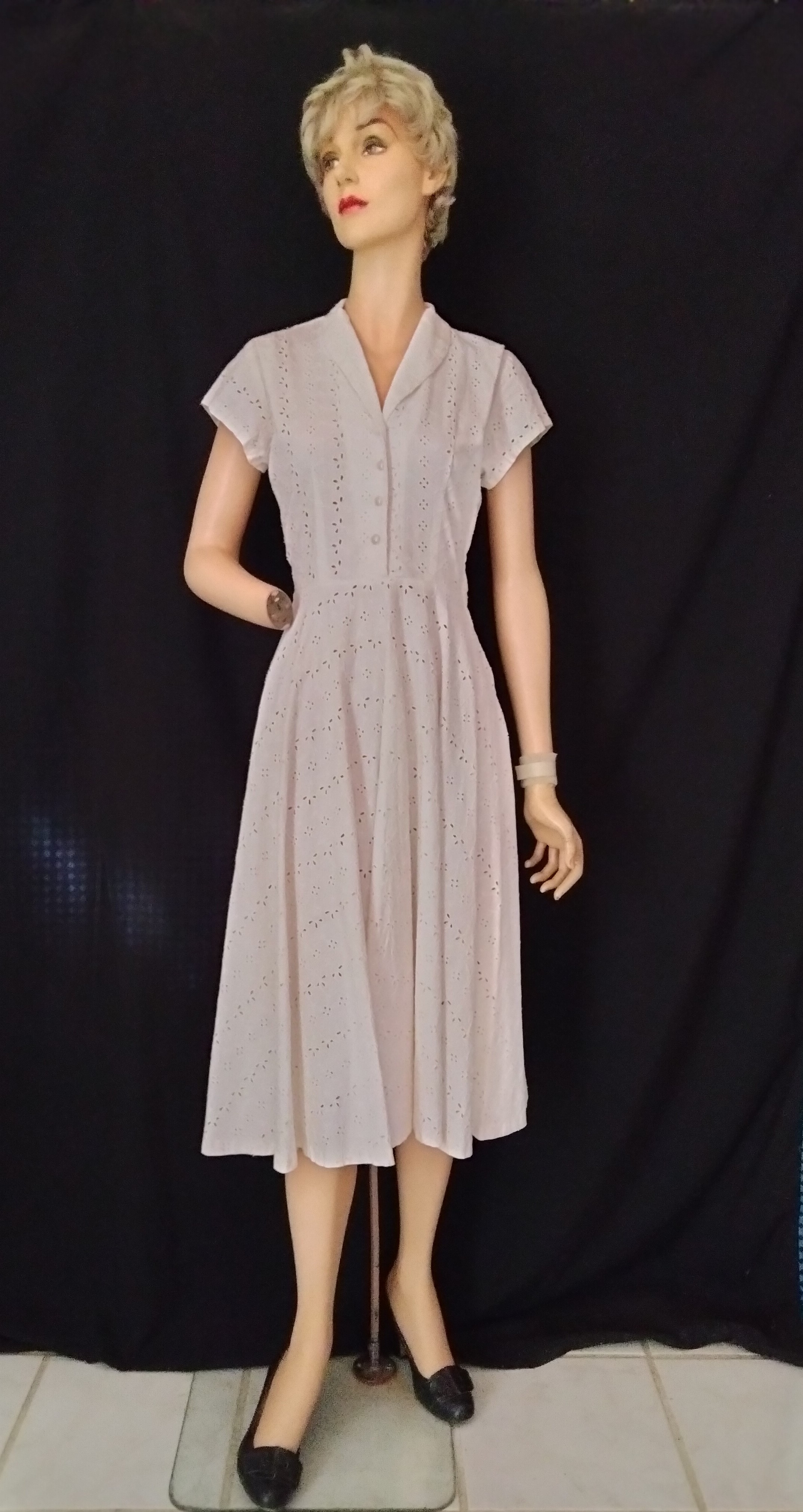
We’ll begin with a pretty, white cotton eyelet dress that was home-sewn in 1940. It’s a lovely dress for town or a picnic, but it was made to be a wedding dress. Coming off the Depression years and with war in Europe, it was a very modest but hopeful costume for entering a dream future.
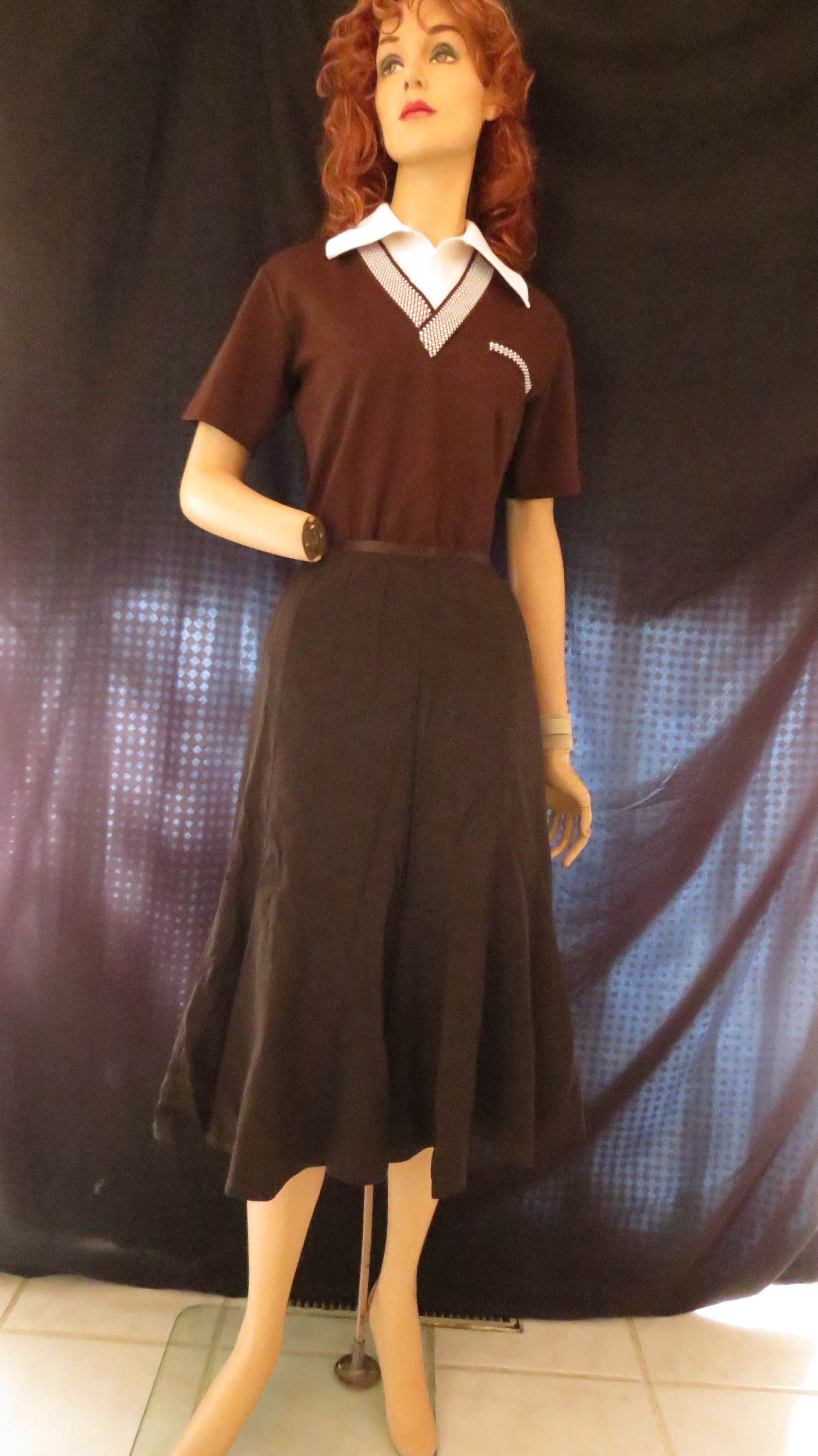
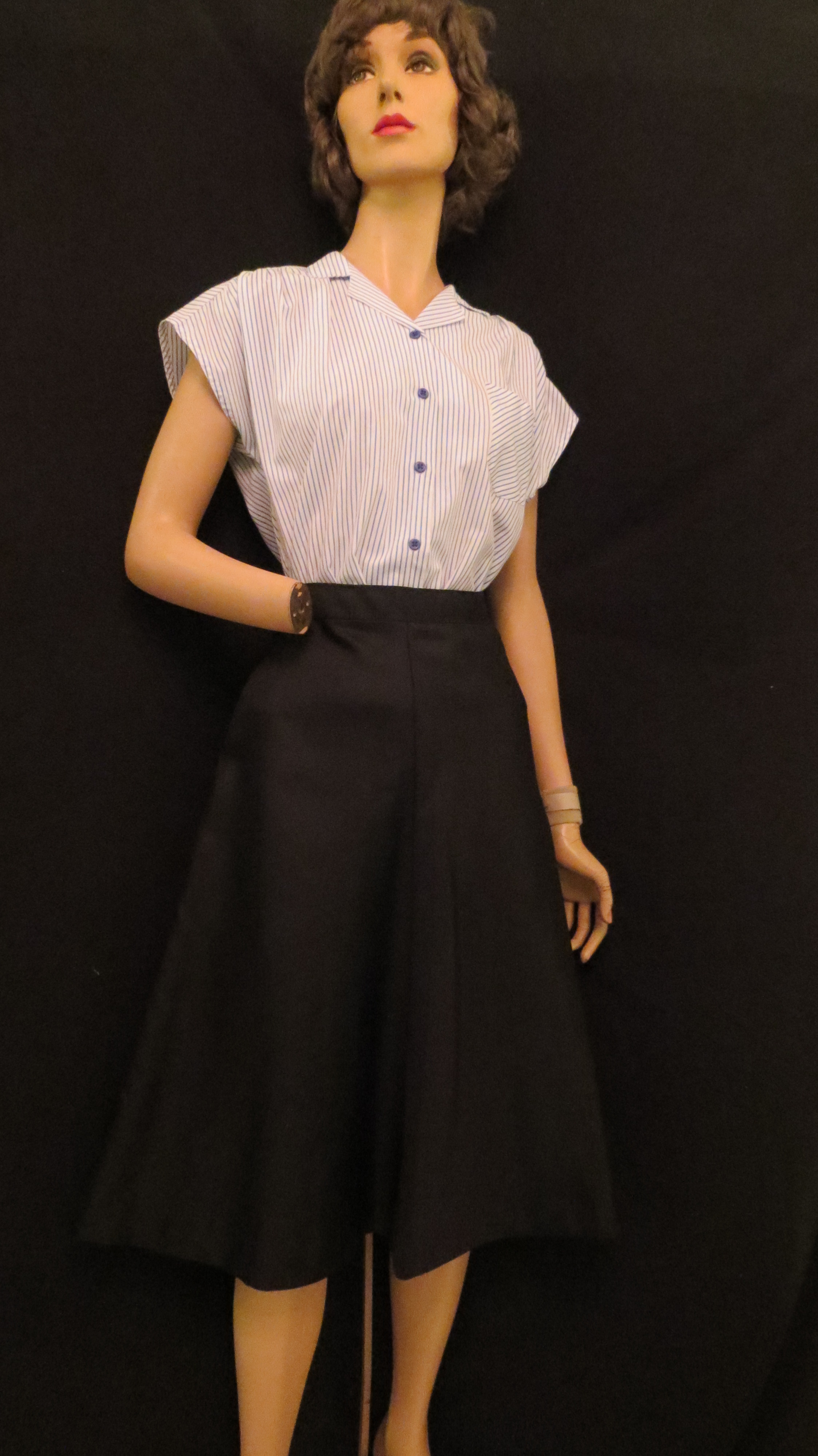
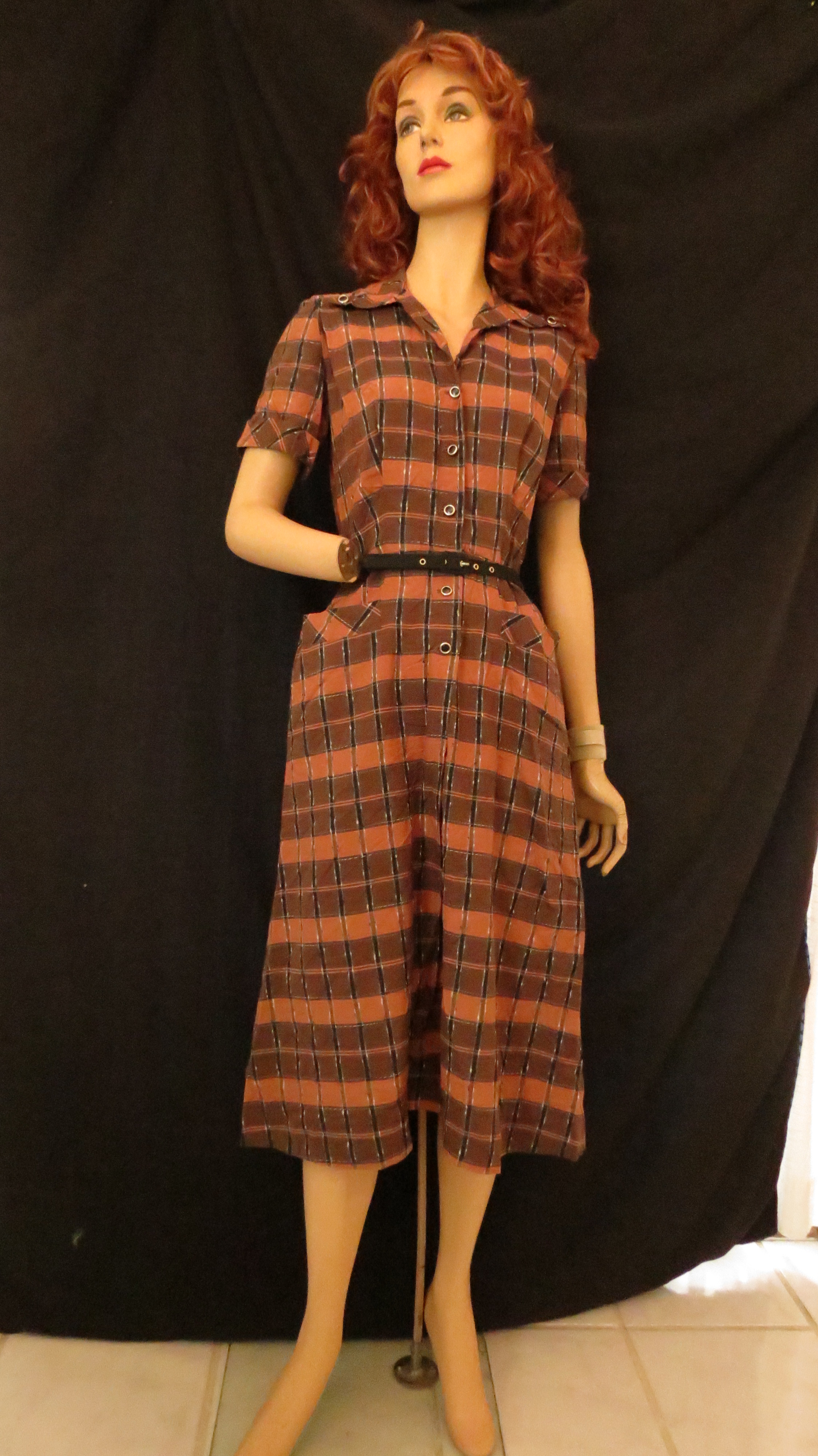
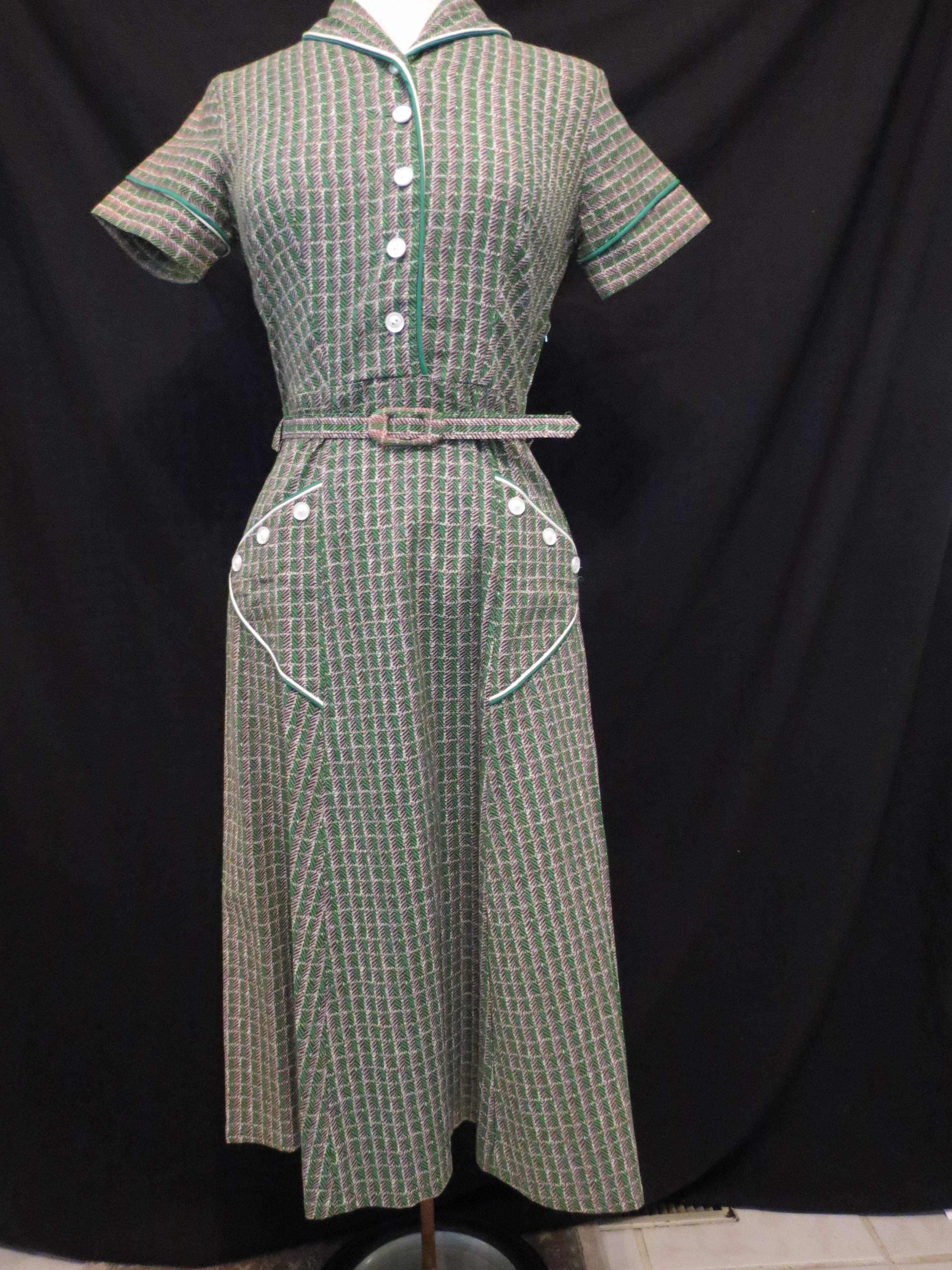
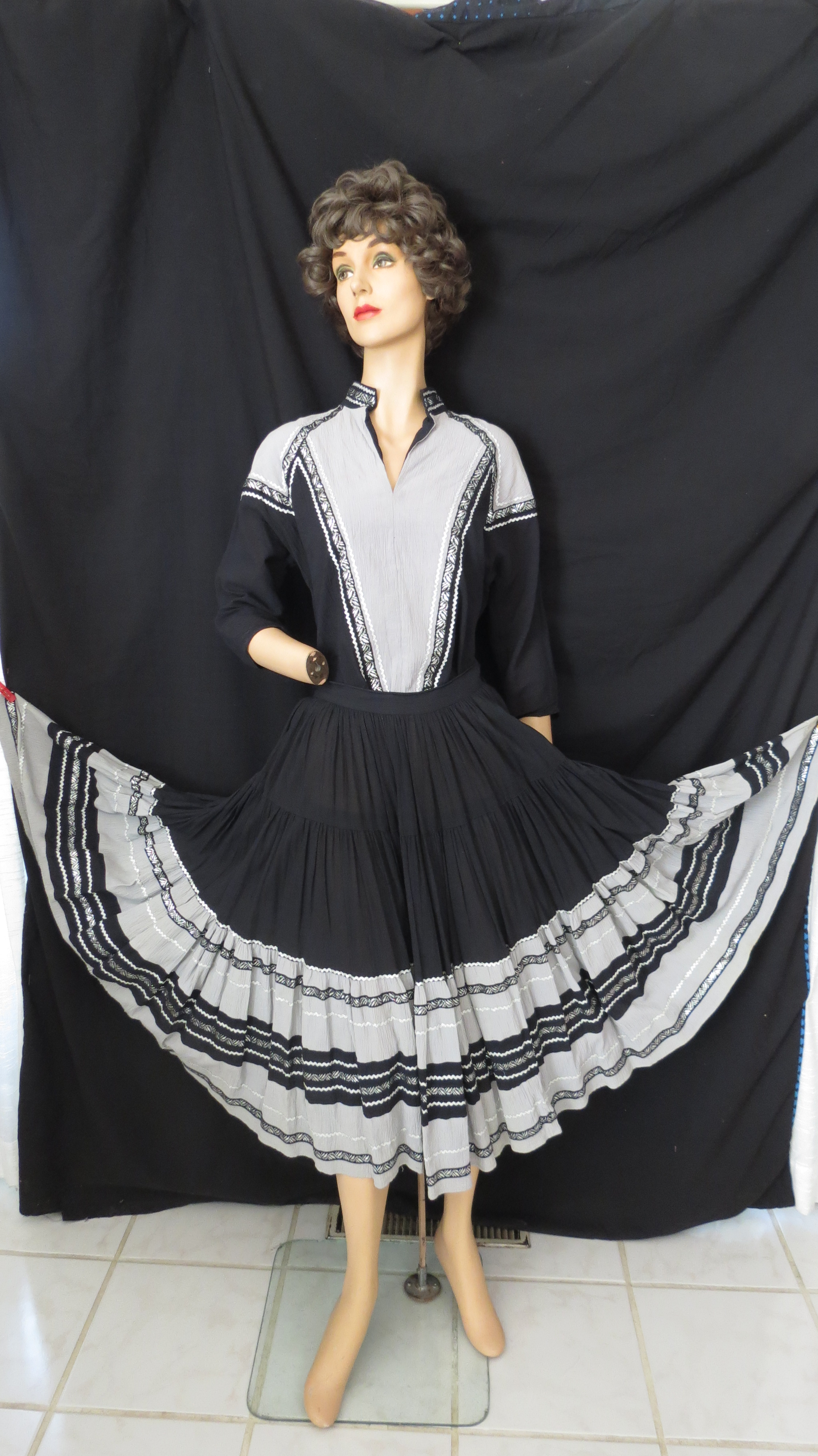
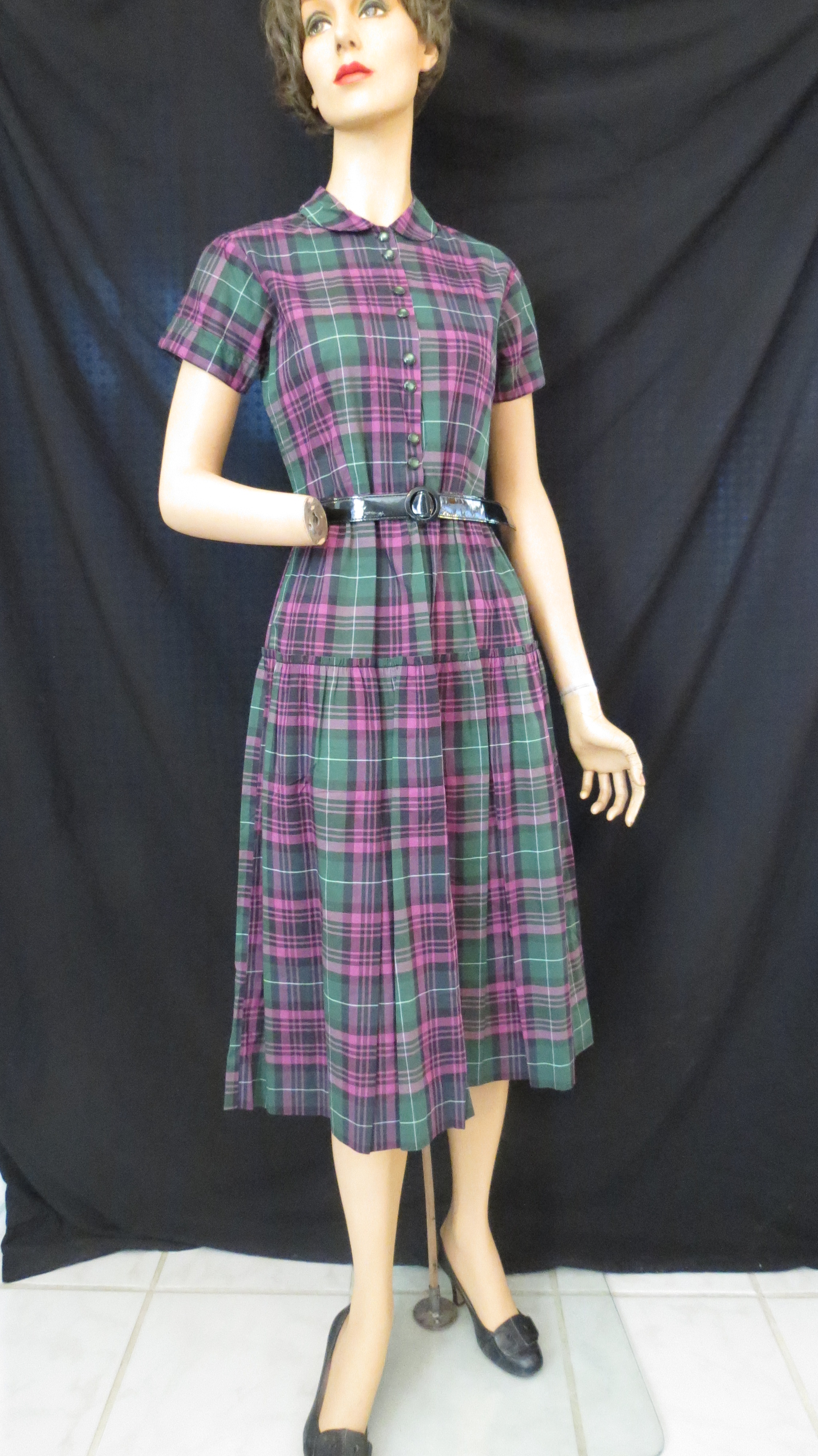
After 1941 and the United States joined World War 2, fashion became much simpler and plainer, but very practical. Shirtwaist housedresses and day dresses were the general uniform for women who didn’t wear specific uniforms related to their work. Dancing, as well as movie-going, were common inexpensive activities that helped people escape the worries and fears of their daily lives. Separates became more popular. Knitwear and wider gored skirts allowed movement while jitterbug was the favorite dance of those young enough to do it.
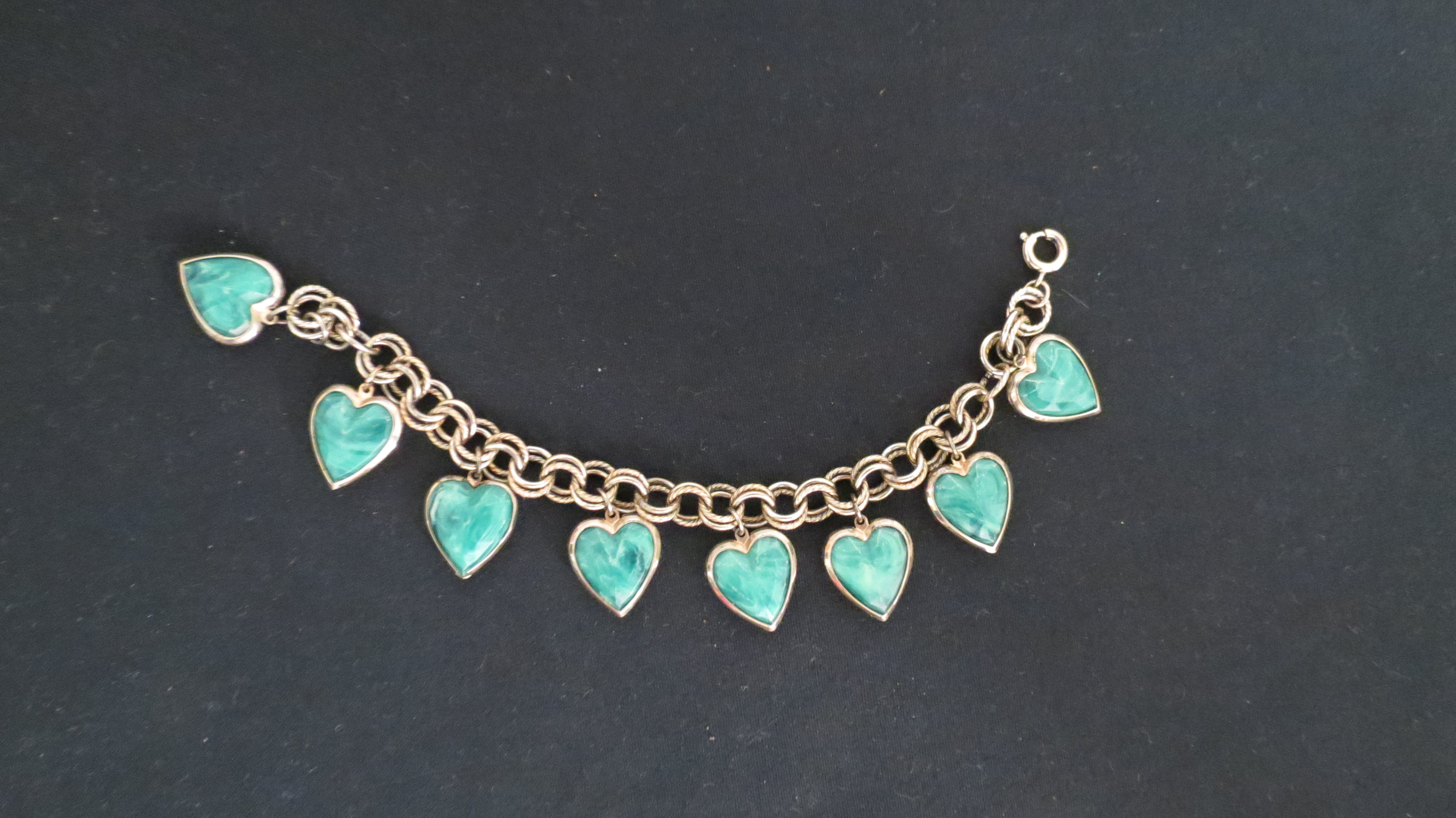
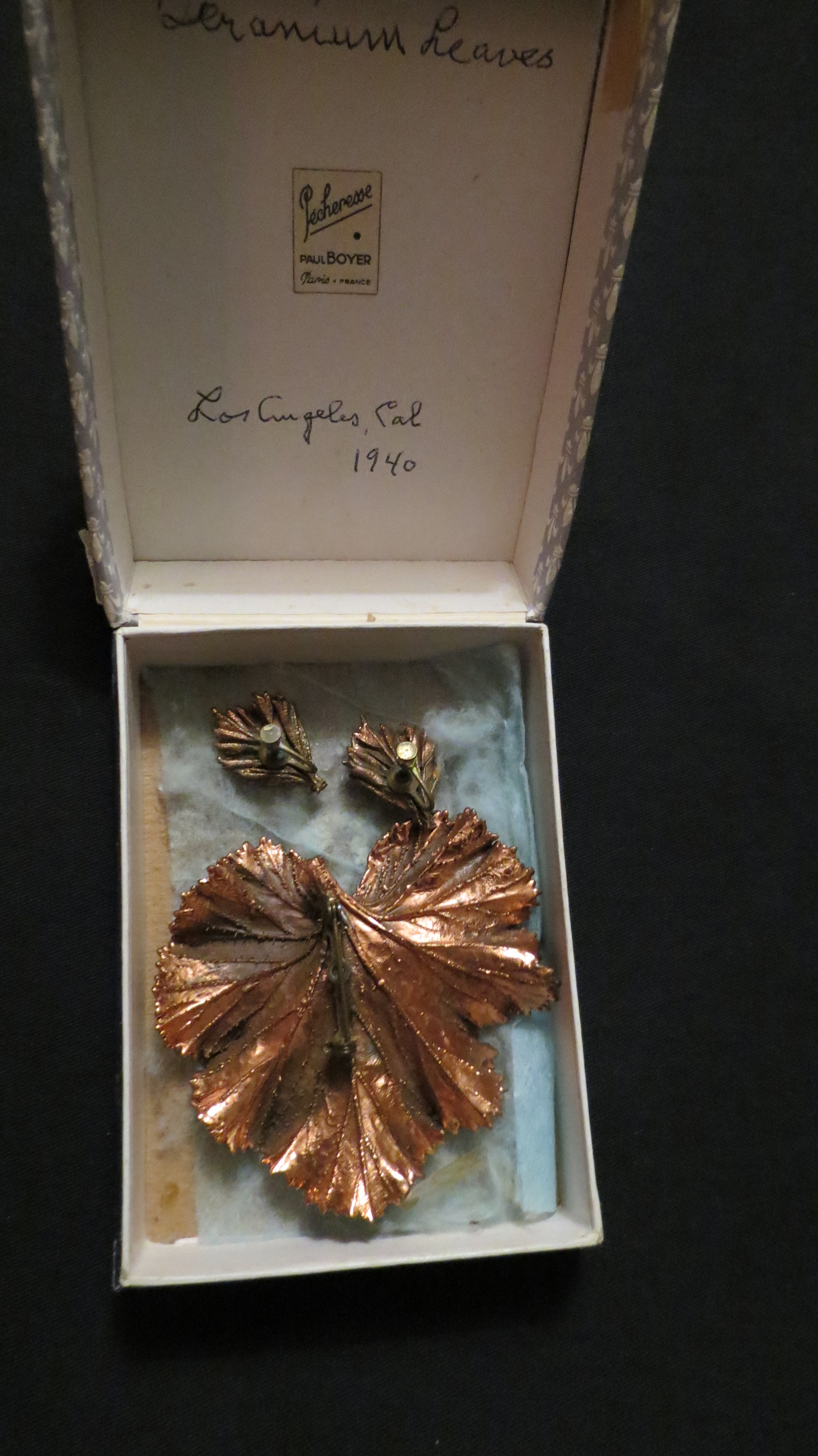
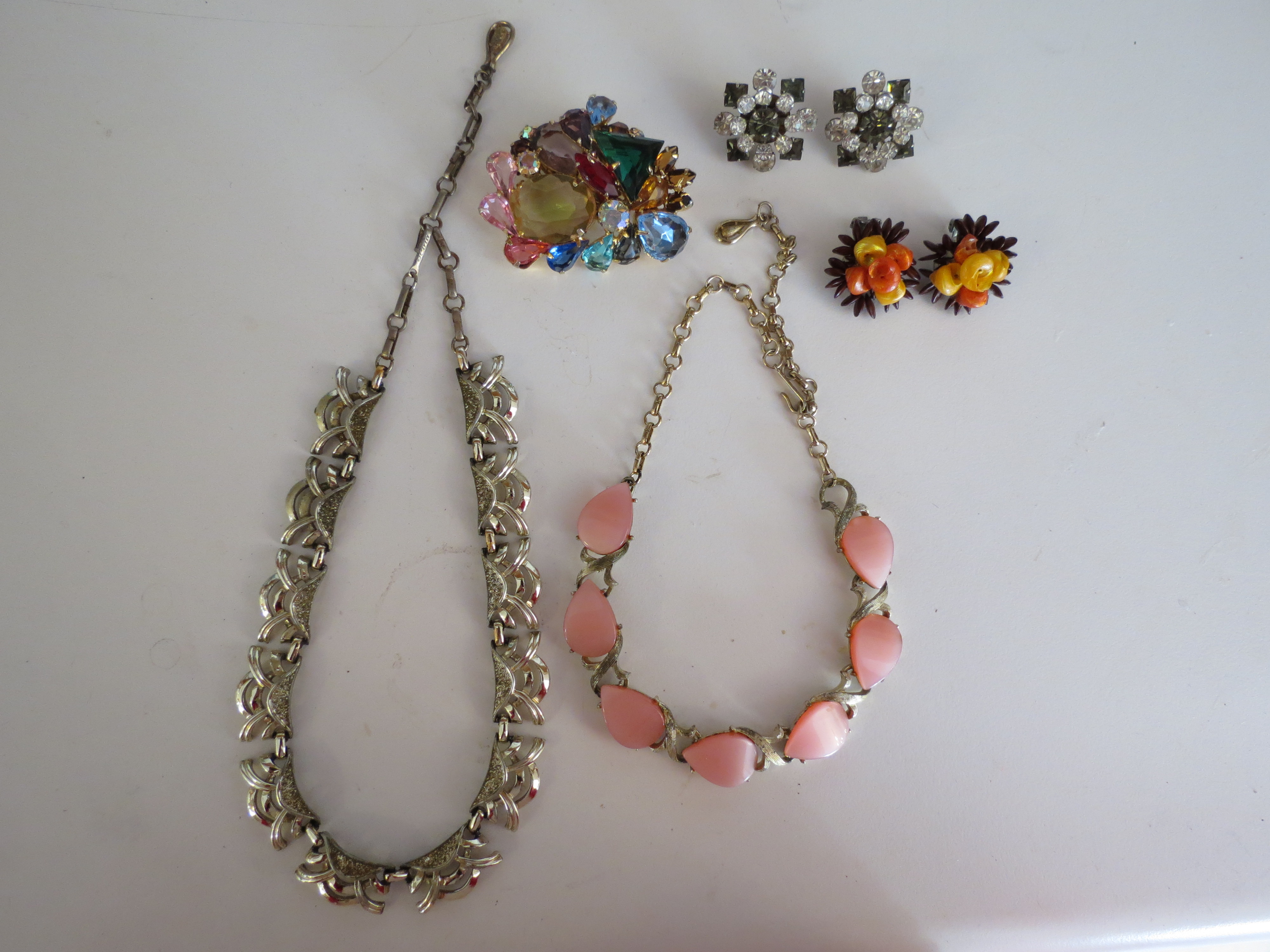
Plastic “gems” appeared in costume jewelry pieces, as well as preserved natural leaves. Even during the Depression and Wartime, a little bling always lifted spirits and enhanced any outfit. Tomorrow I’ll cover a 1940’s casual fad that made fashion more interesting during that time. Stay tuned . . . . . . . . . . . . . . . . . . . . . . . . .
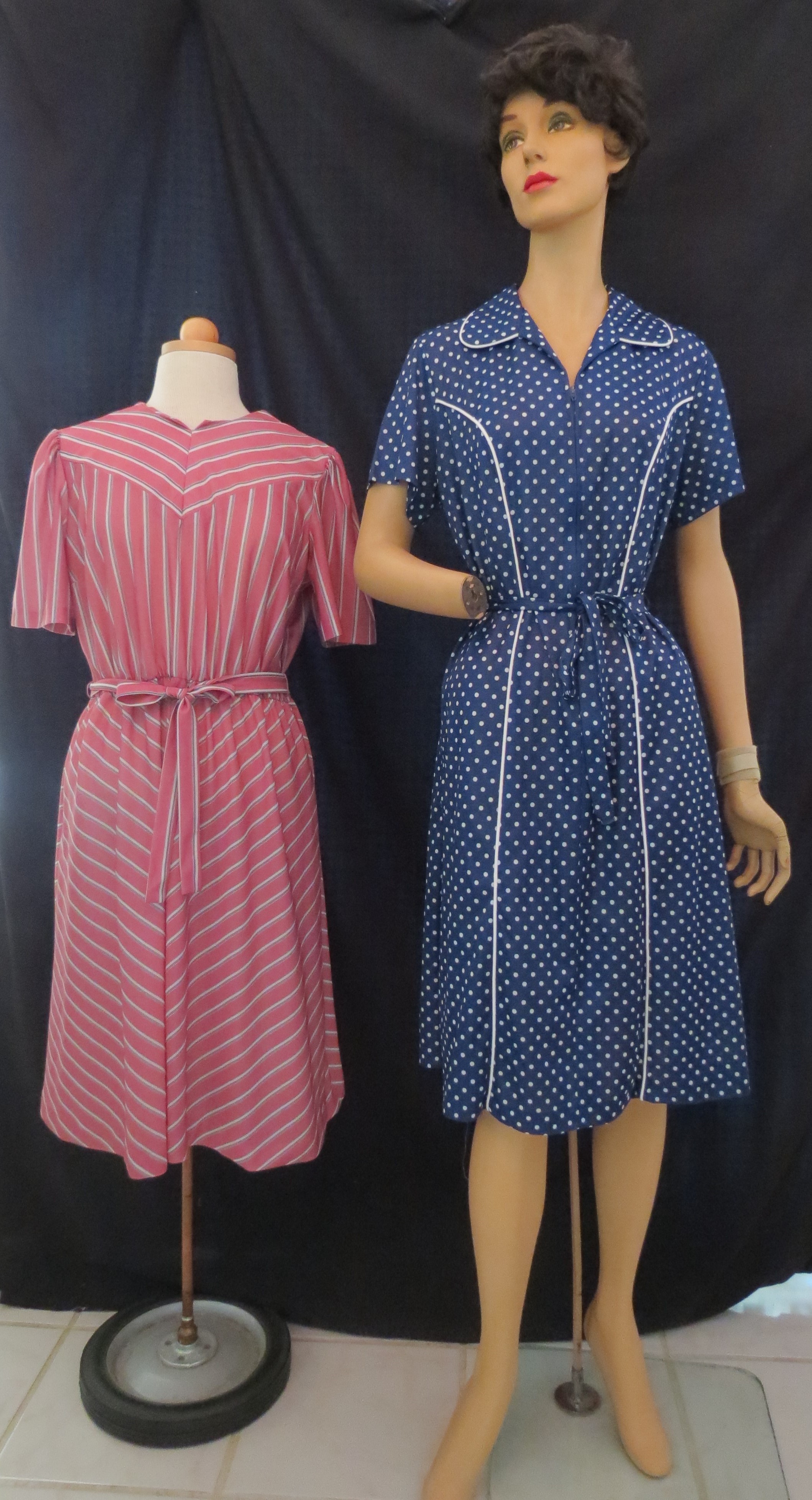
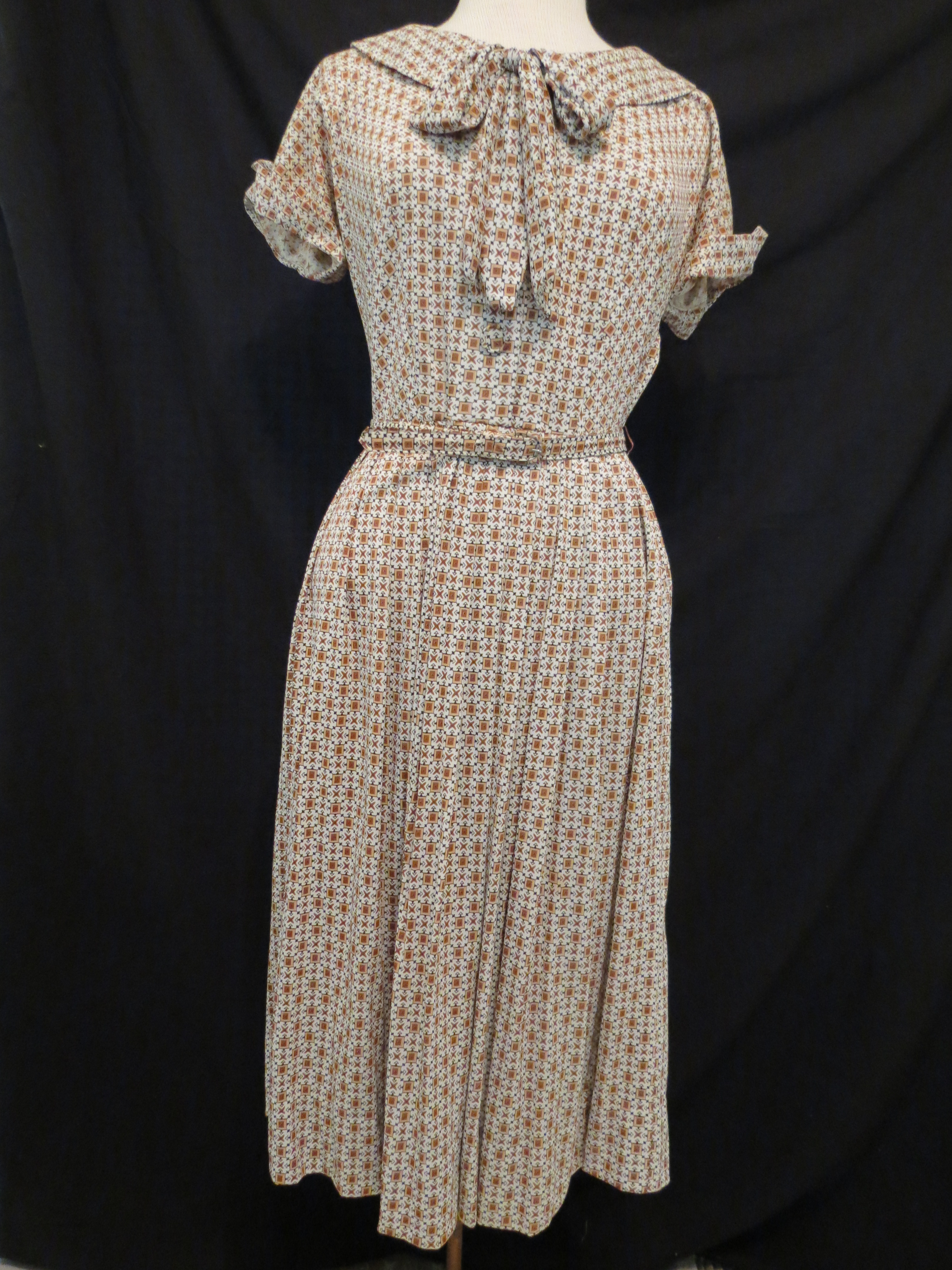
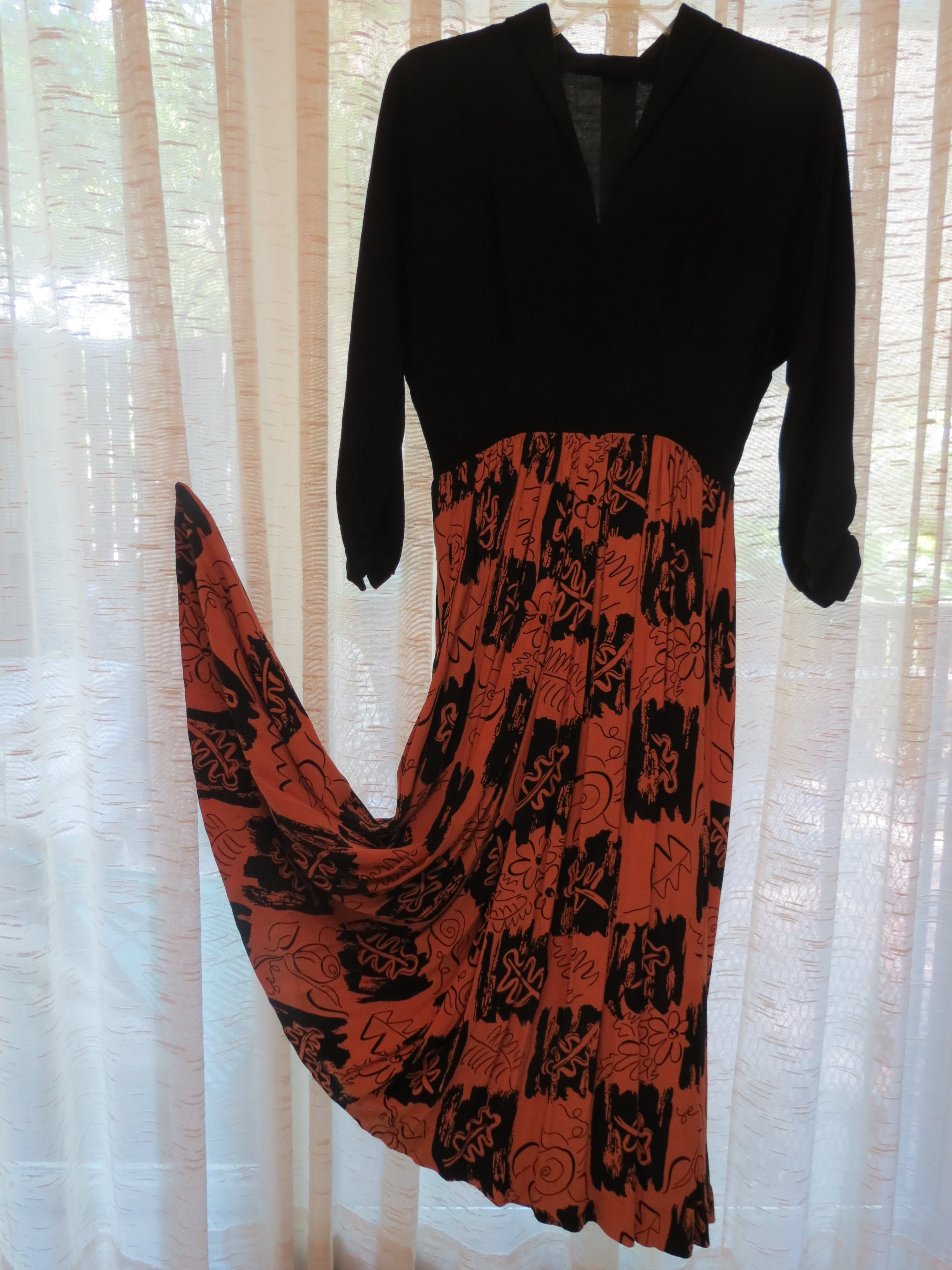
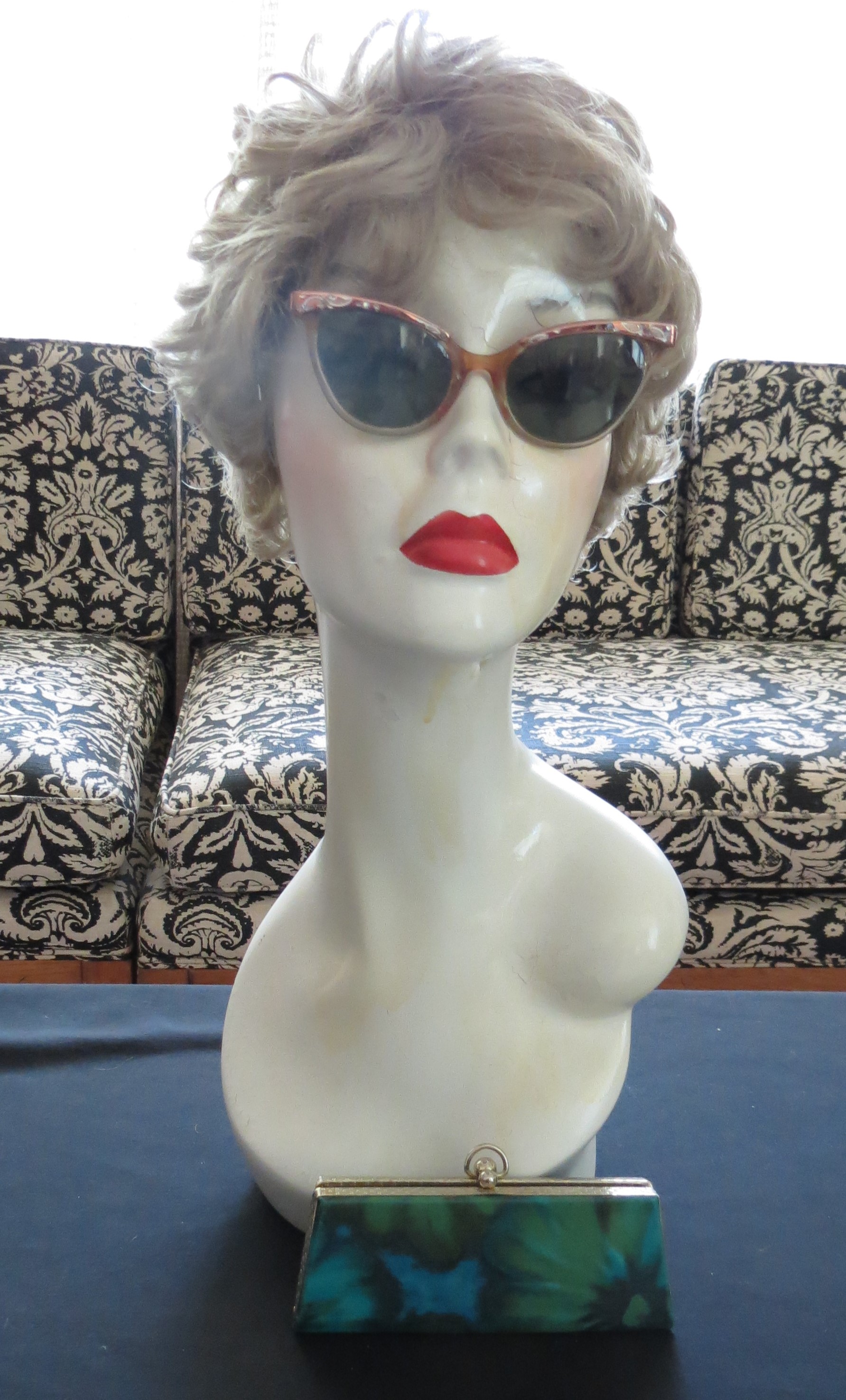
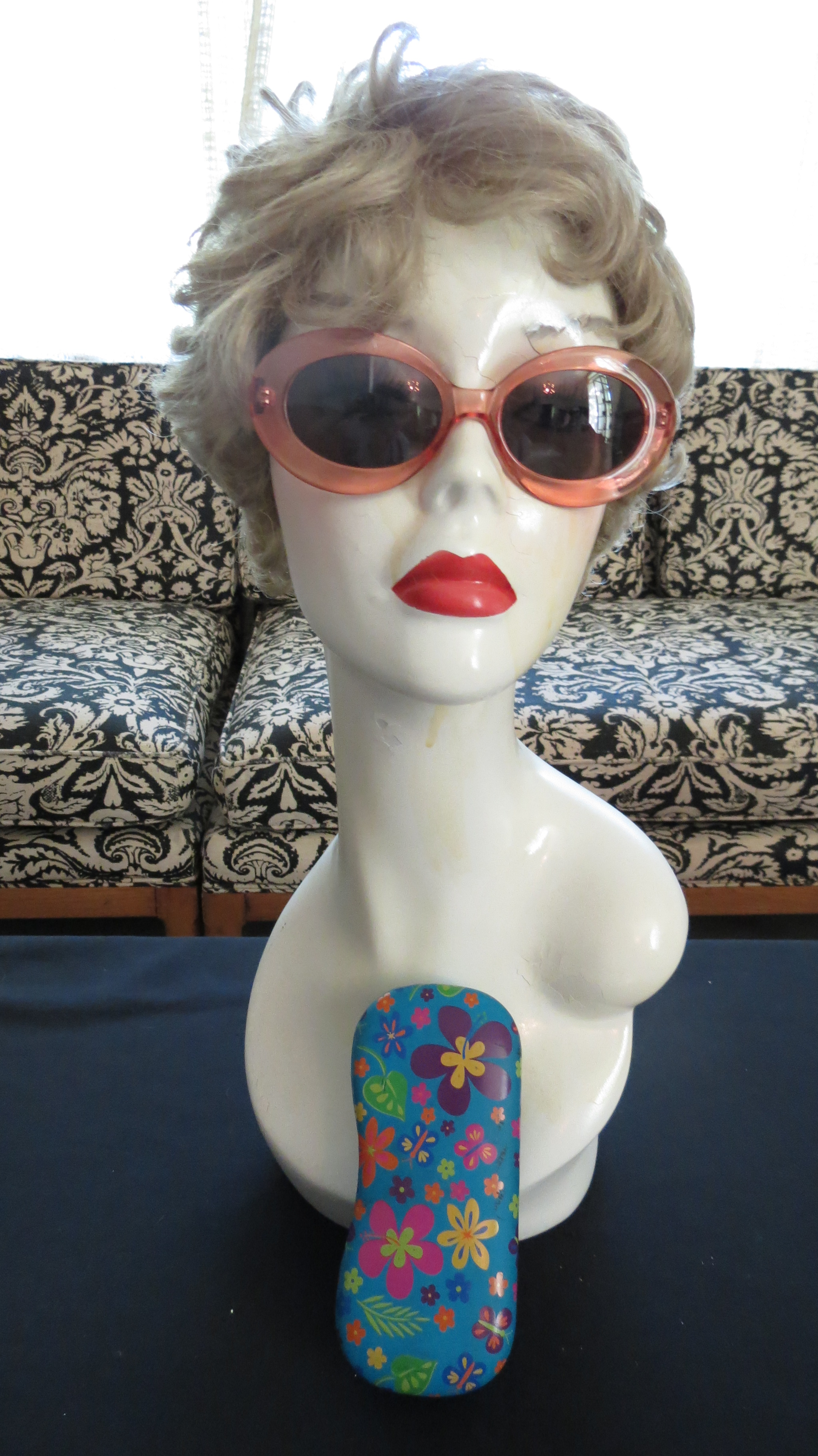
Made from cotton, poly and rayon – these dresses from the pre- and post-war years of the 1940’s tell a fashion history of what was happening during the decade. In the late 1930’s and first 2 years of the 1940’s the war was still fomenting in Europe and Americans didn’t feel especially impacted by this. We had not joined the fight yet and everything at home was ticking along as usual, with fun movie entertainment, jitterbug dancing and jazz. Casual cotton dresses were available, as well as comfy cotton slips. A Western-wear travel fad breezed through the fashion world and sunglasses became more and more common accessories. Cat-eye glasses were called Harlequin glasses then but a round or square lens with heavy plastic frames was the most common until the 1950’s. (Of course, the glasses case in the second picture is retro 1960’s.)
While the reality of war was settling in, synthetic poly fabrics and some rayon took the place of cotton, silk and wool. During rationing, shirtwaist dresses were still the classic standard but hemlines inched up, sleeves got shorter, details and pretty decoration decreased and styles changed, with more sheath dresses being seen. Some of these things changed back after the war but fashion always moves forward. More 1940’s fashion tomorrow – stay tuned . . . . . . . . . .
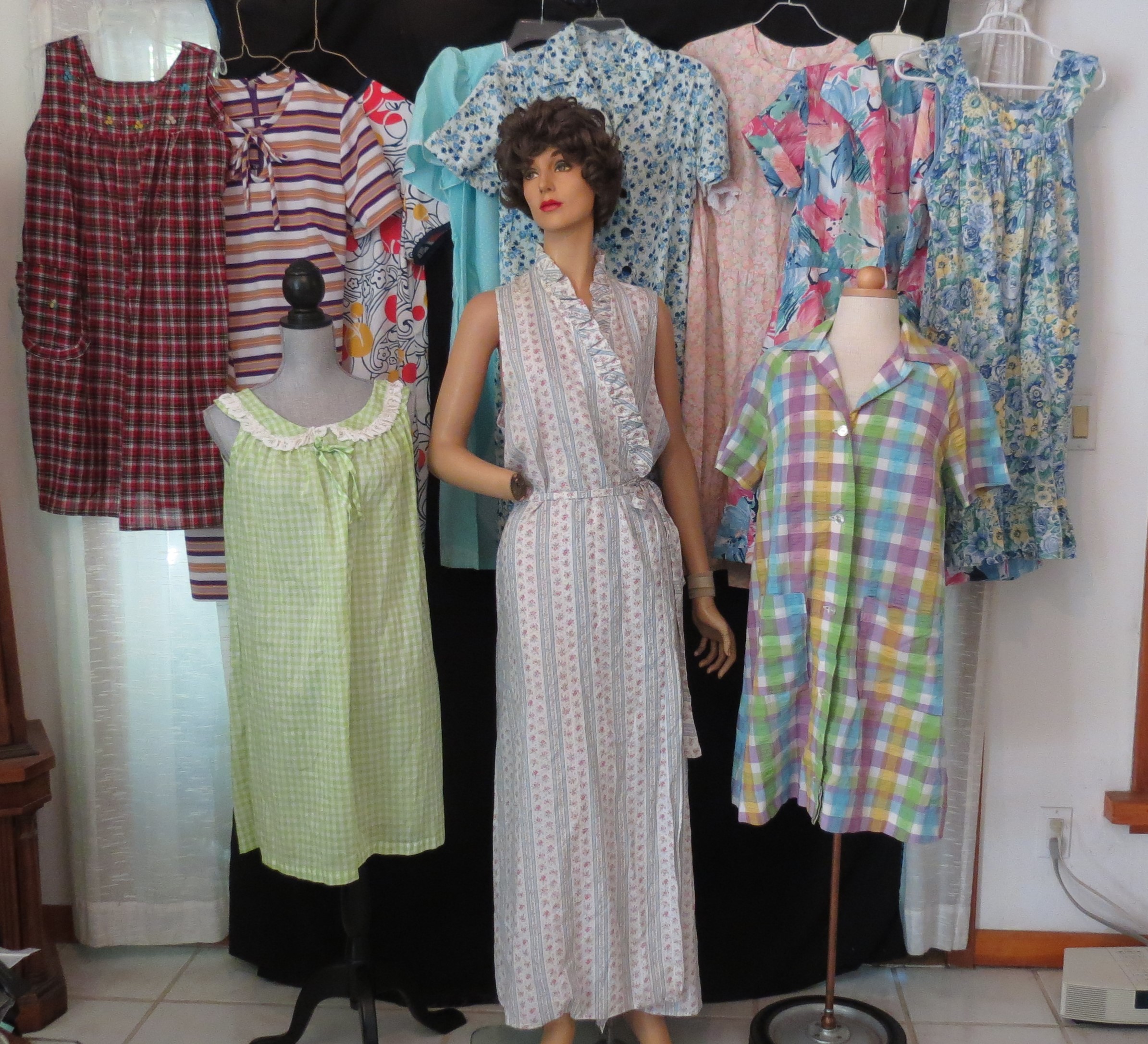
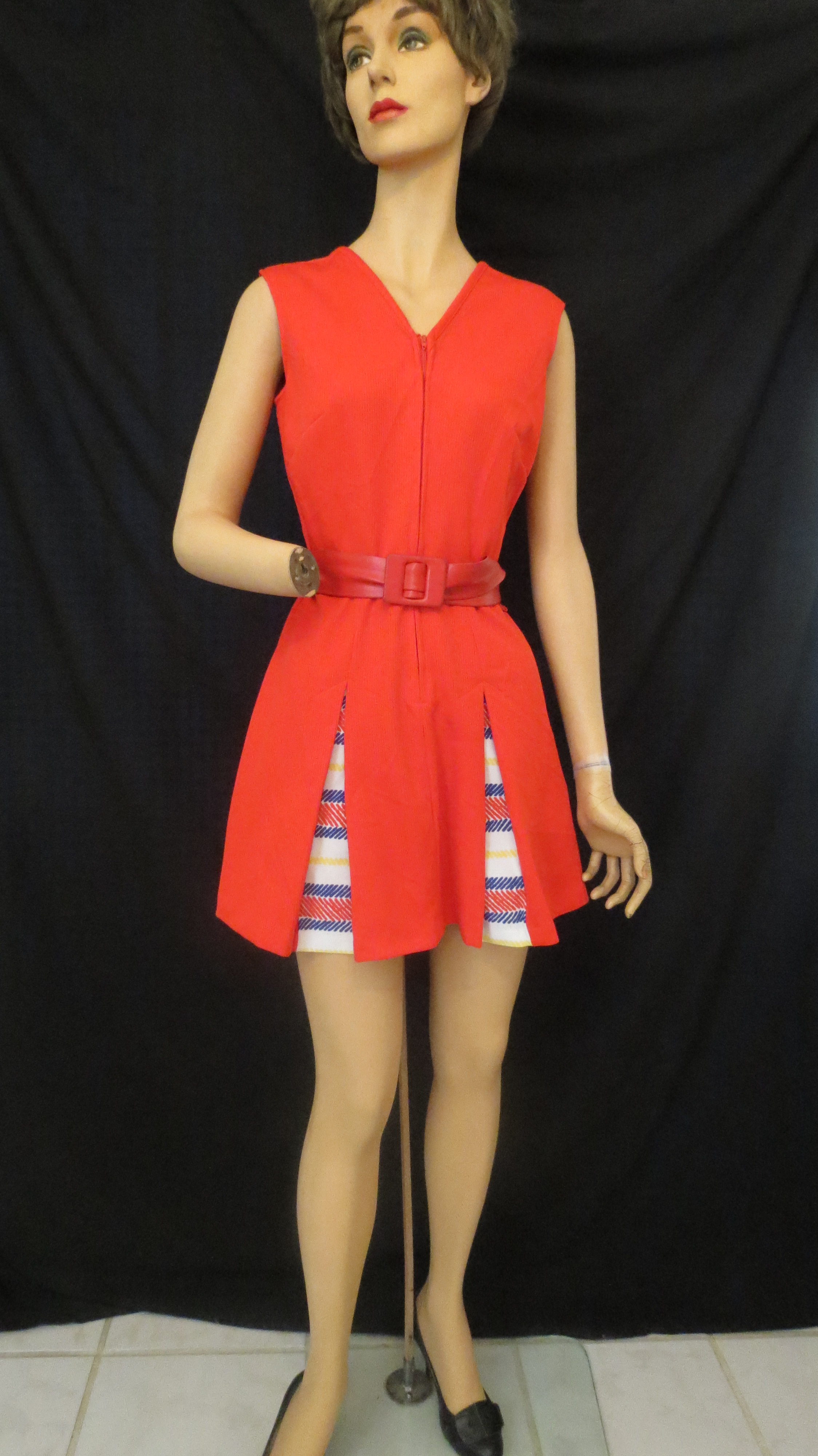
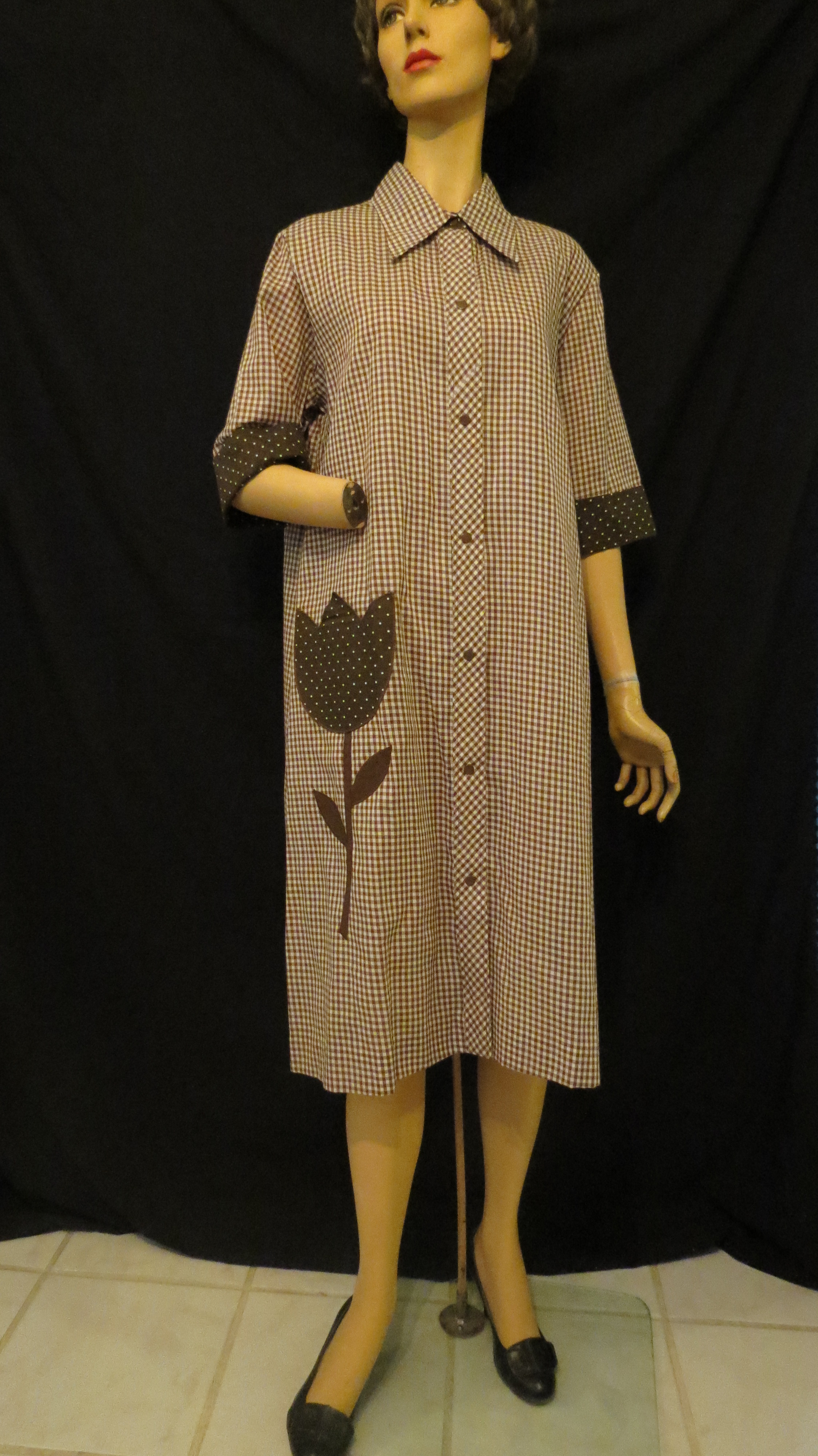
Casual cotton and cotton blend housedresses and model’s coats became really popular as styles started to become less traditional. Some of these dresses would even be seen at the grocery store or for other casual errands in warm weather. The shirtwaist dress was still around, of course, but was starting to take a back seat for everyday. The culotte mini/play-dress was also a new take on the 1940’s/’50’s romper. Casual designs like those shown above were still very well-made, generally, and had cute and pretty prints and tailoring elements.
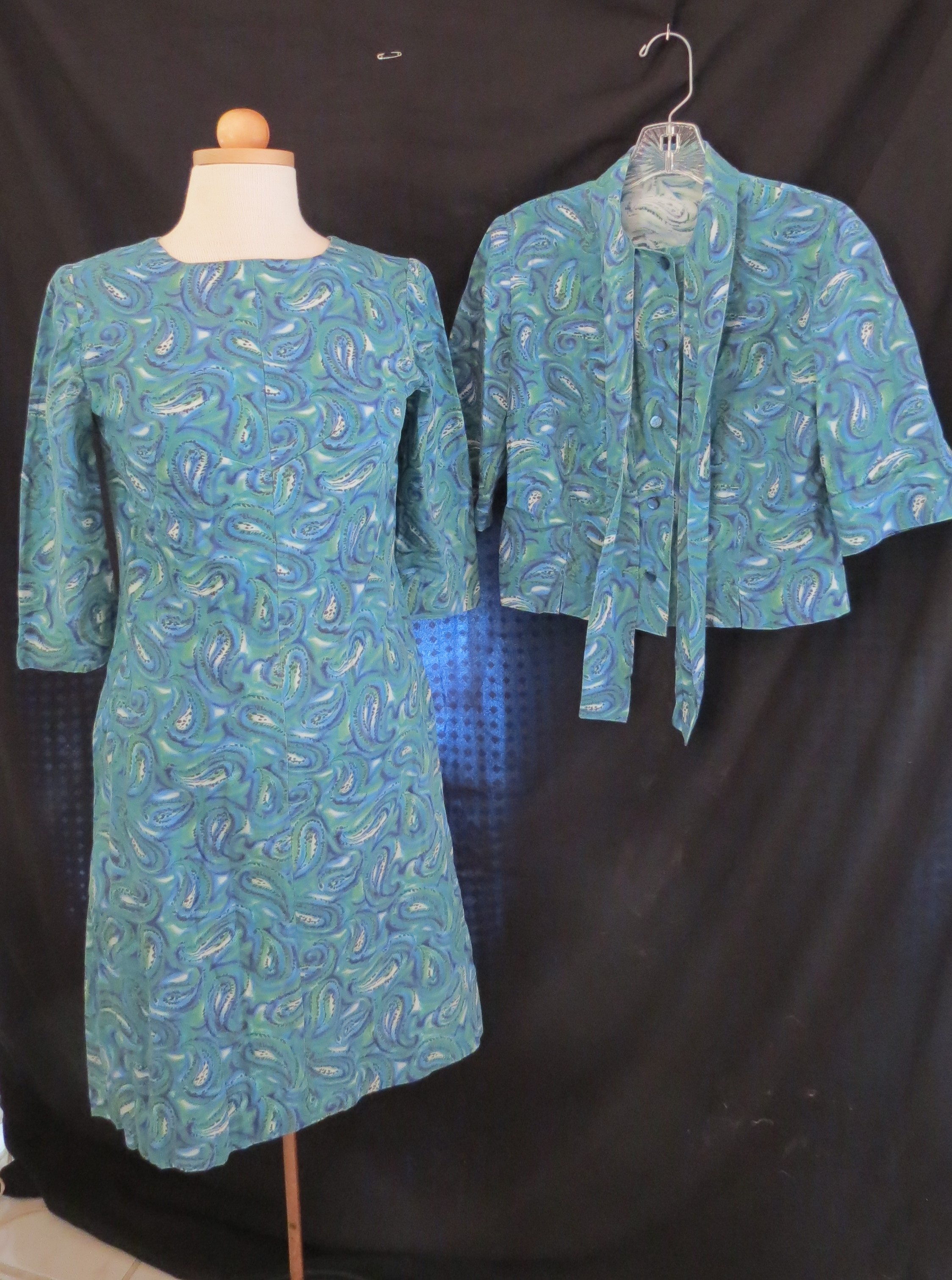
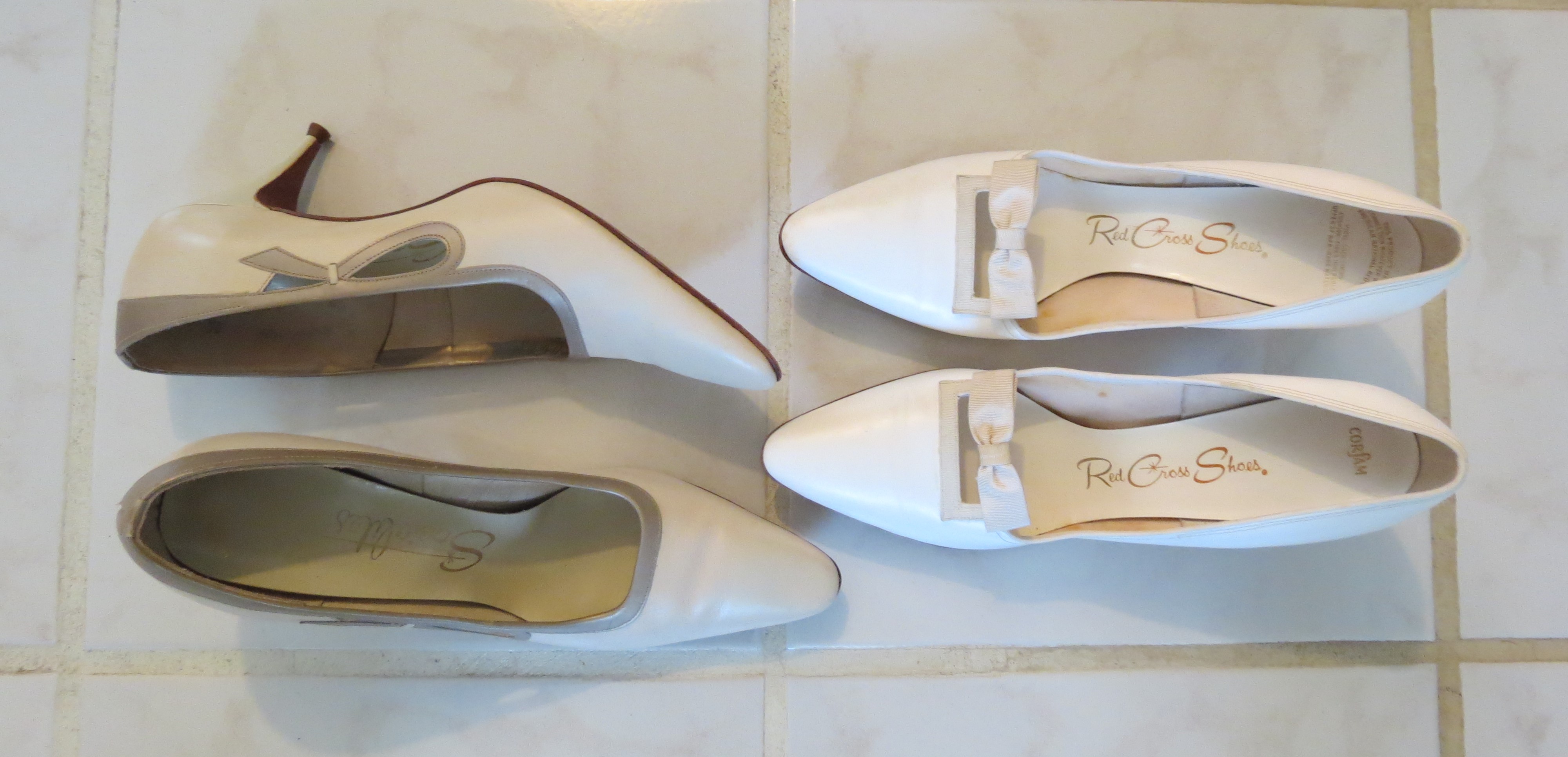
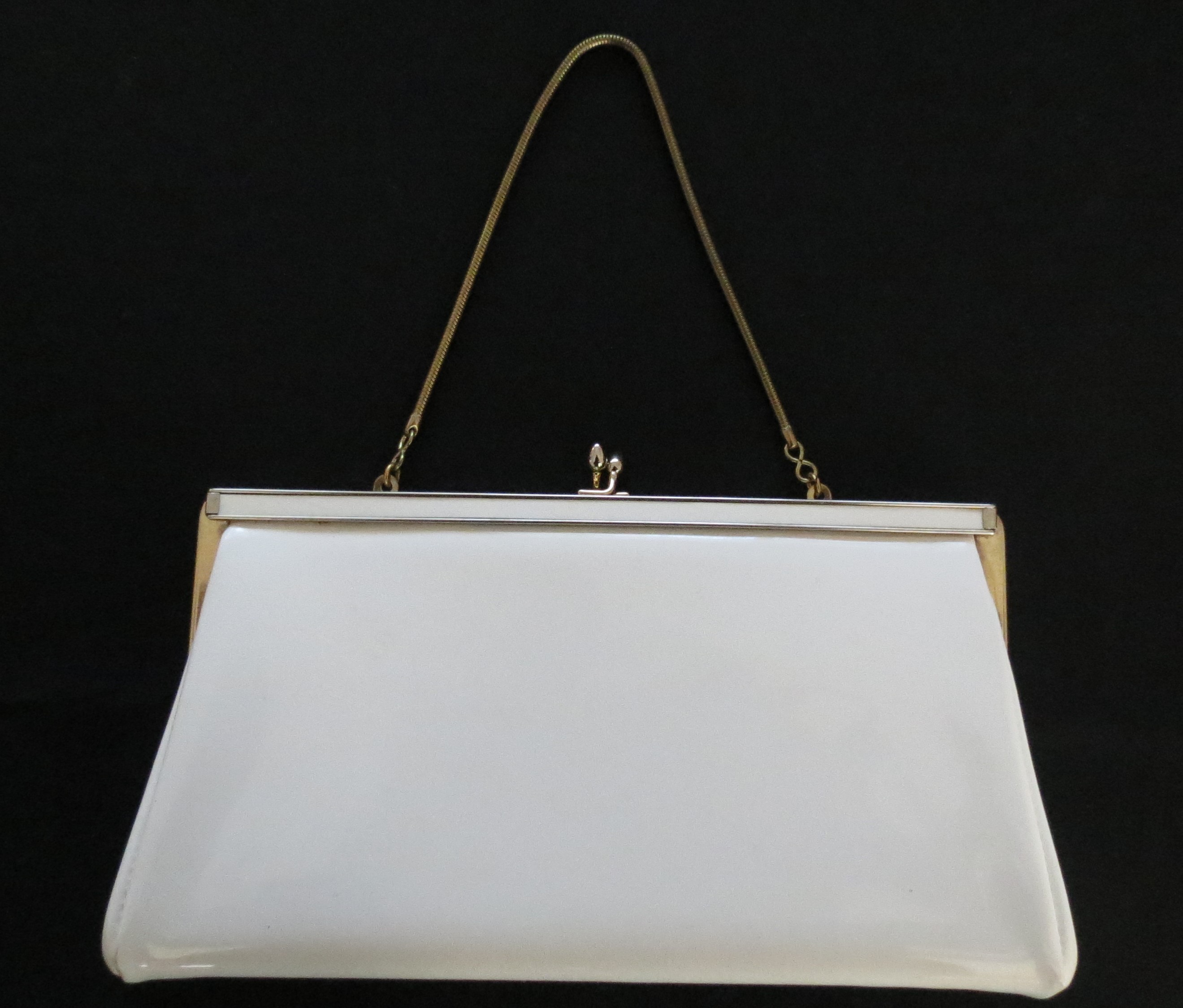
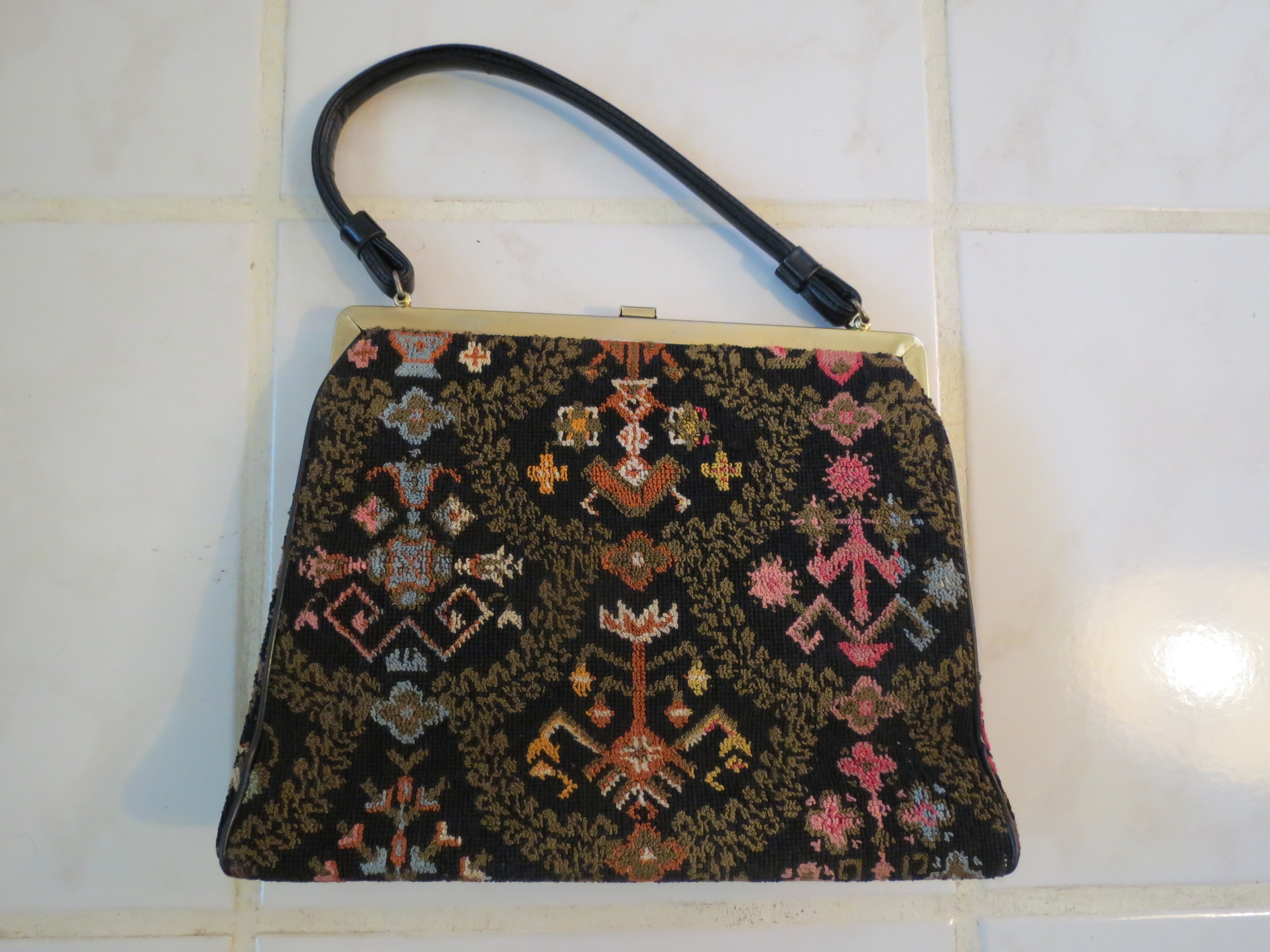
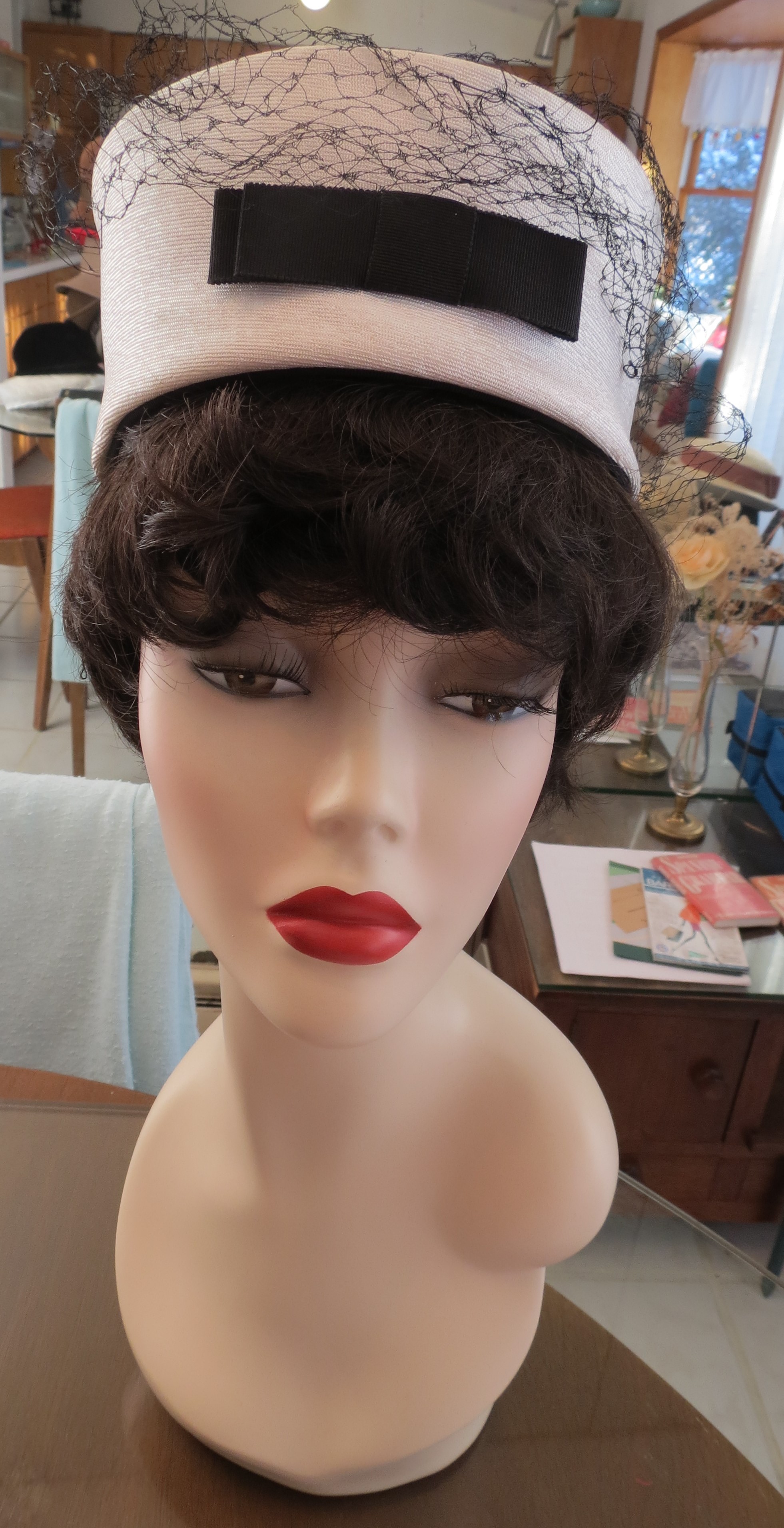
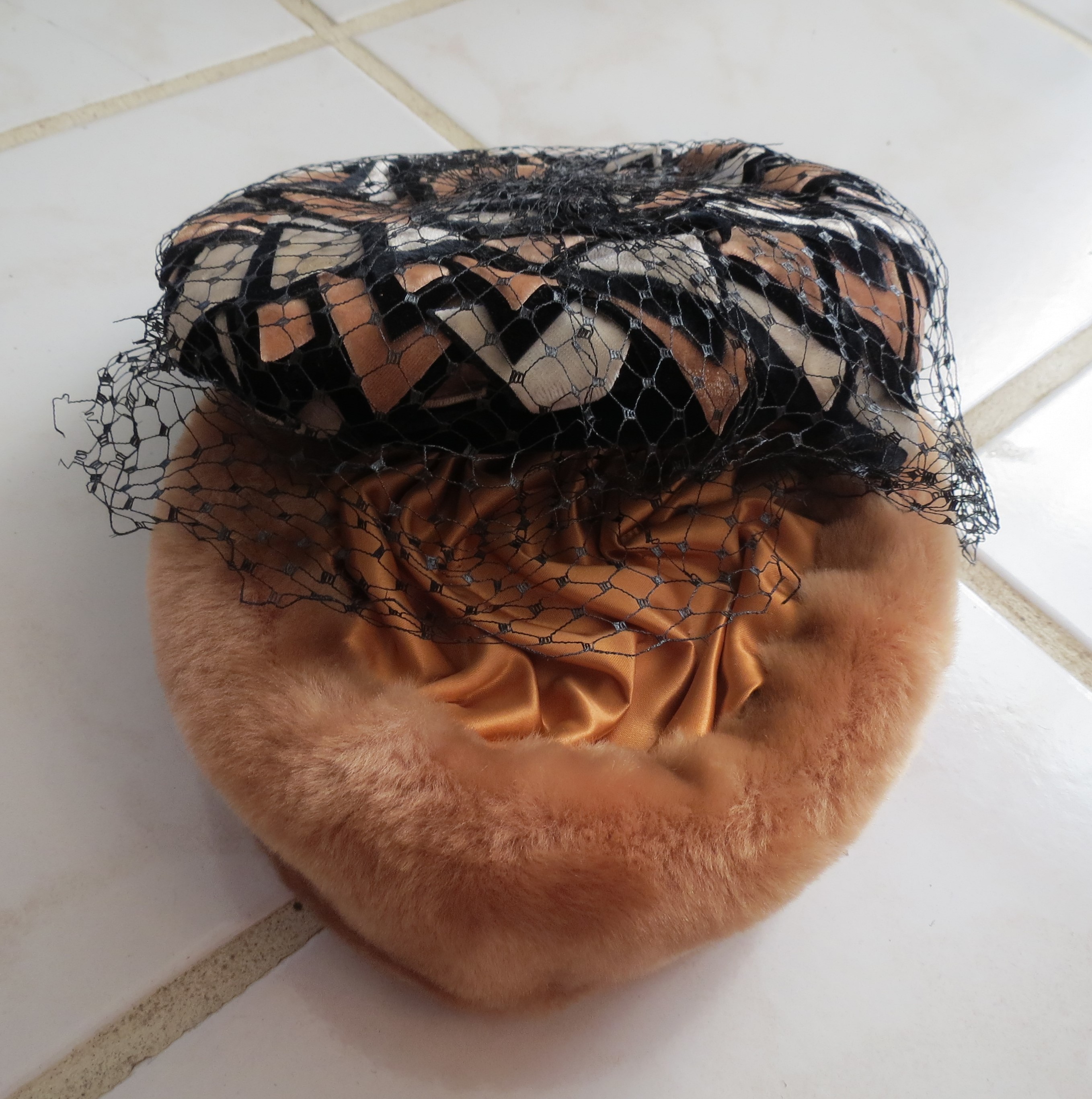
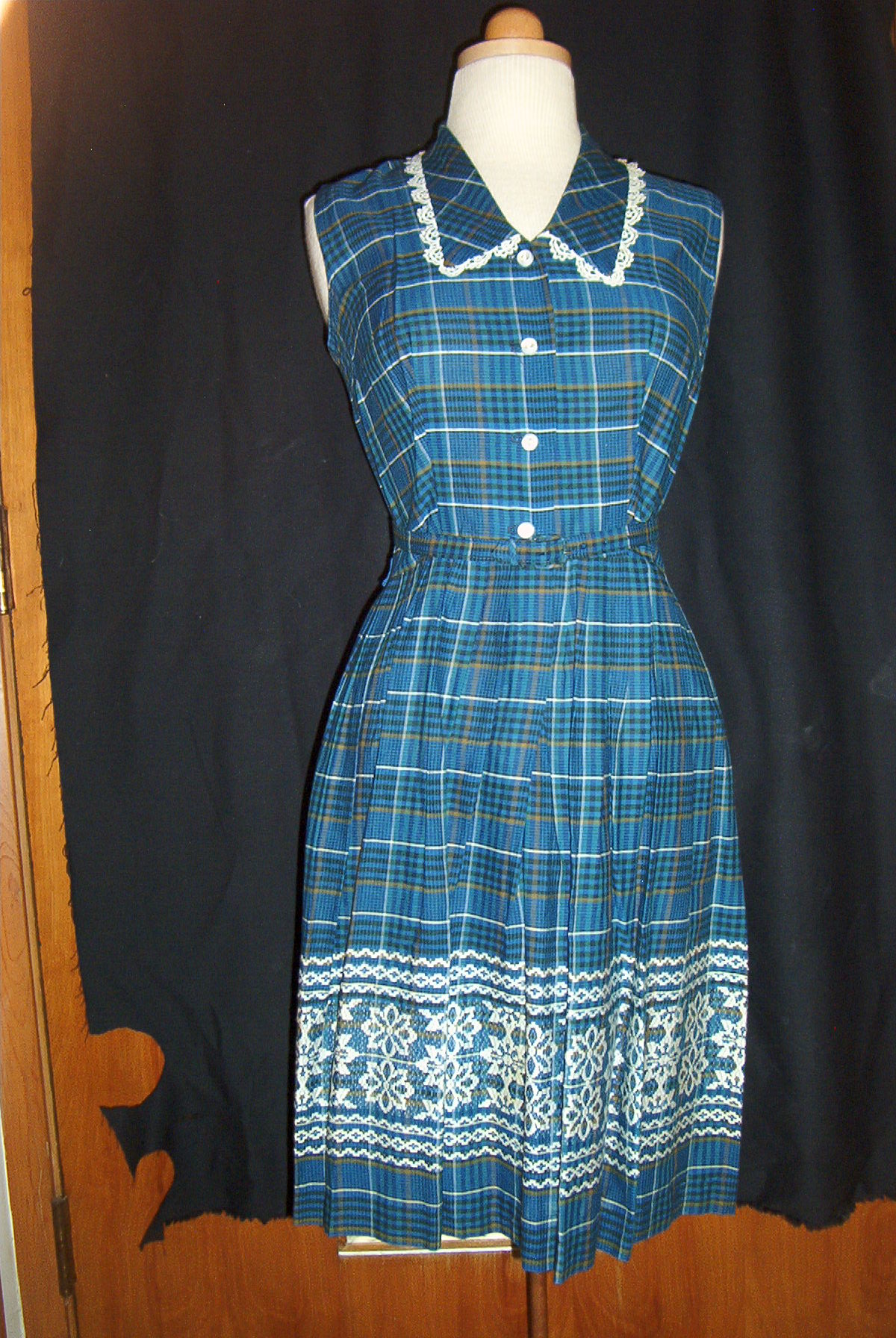
Dresses with little matching jackets became very popular for everyday wear when a step up the dressy scale was called for – an important appointment, special event or church. The shoes, purses and hats are examples of those which might have been worn with dresses like this. The blue & green example above was home-sewn in the color combo that defined popular design in 1963. The prints on the two blue dresses in center are a harbinger of the MOD trend that was just about to erupt.
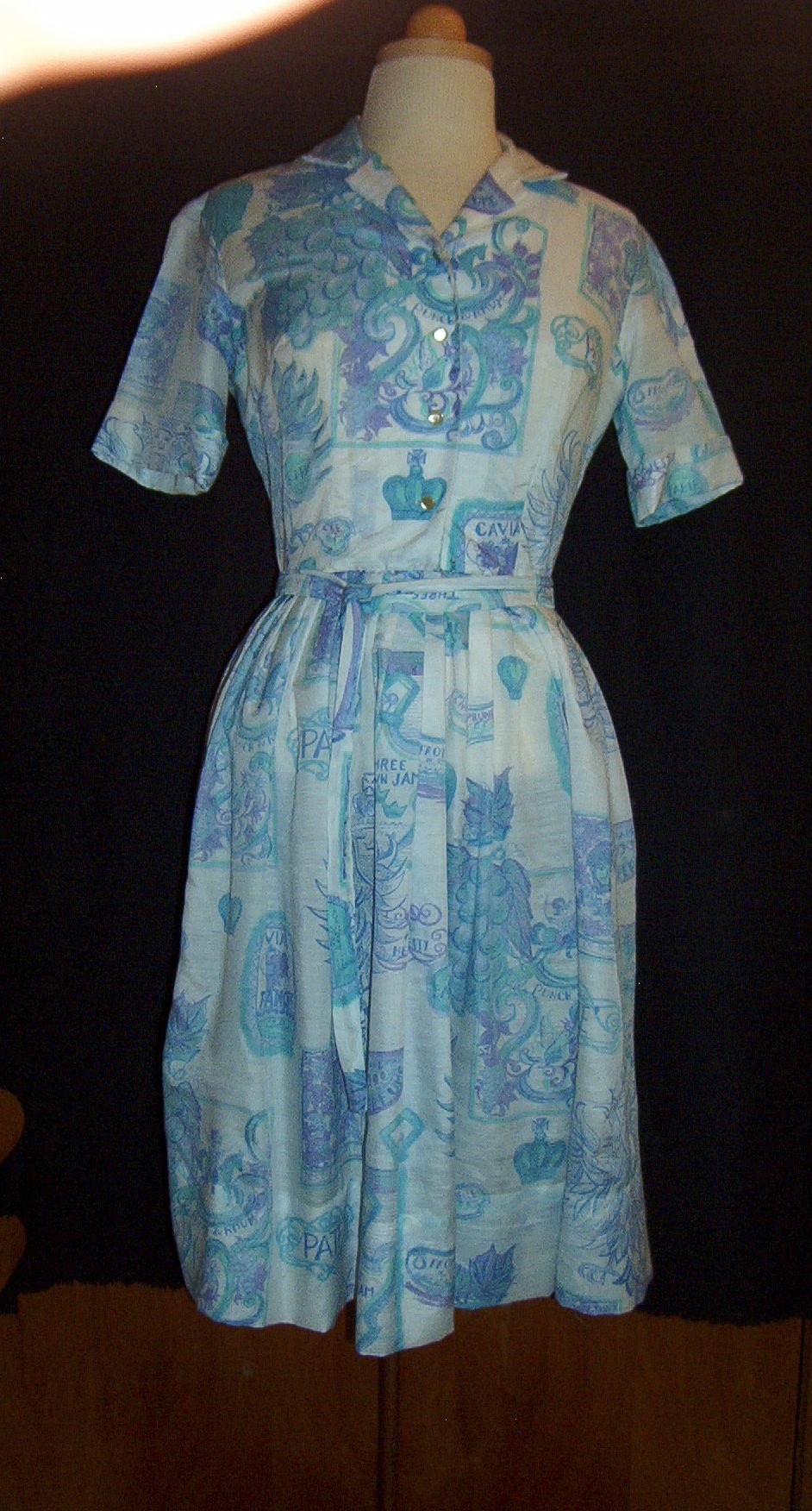
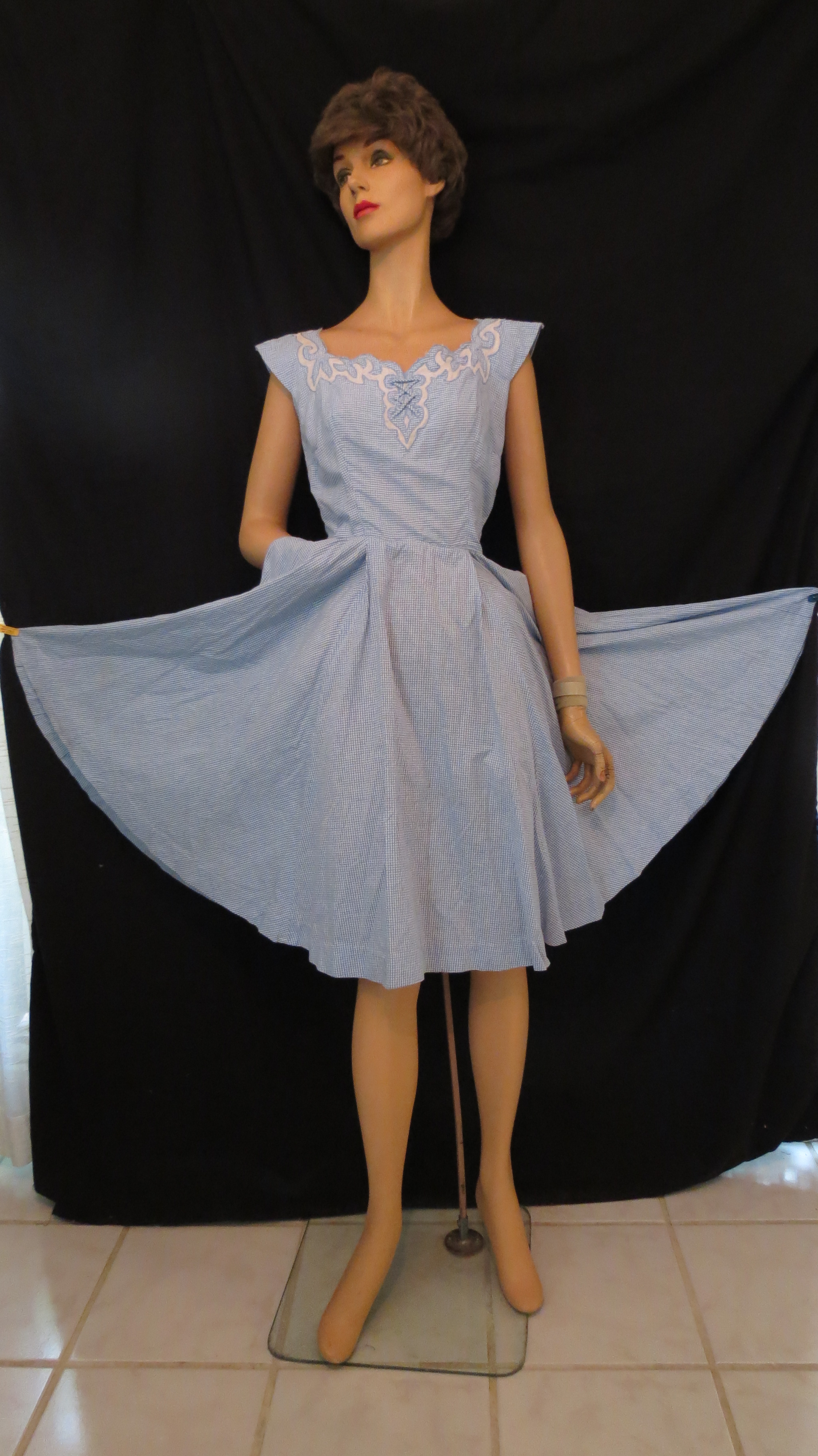
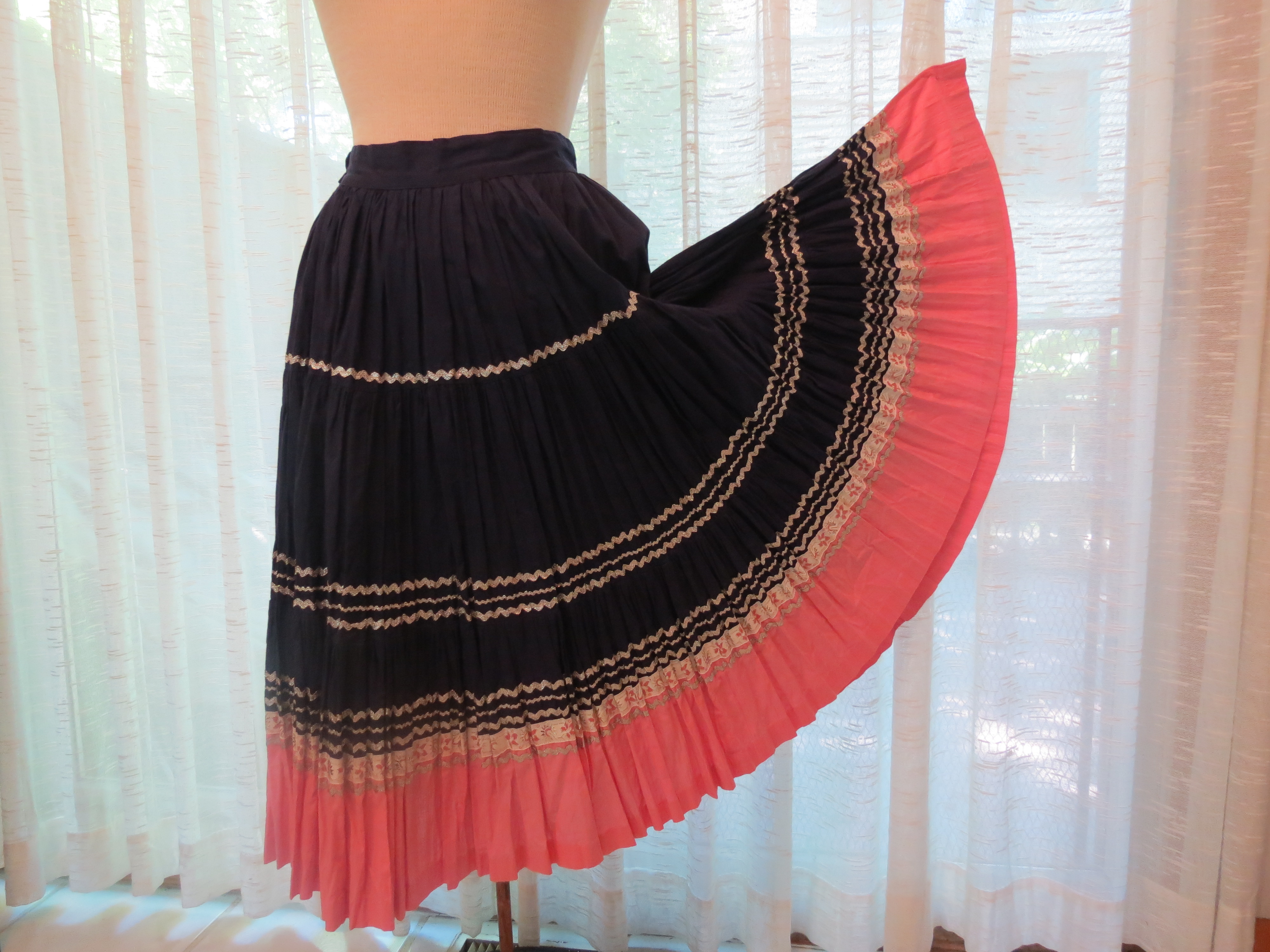
Wasp waists, circle skirts and cap sleeves – 3 style features which are predominant on 1950’s frocks, though many other elements of design appear. The tiny waistline is probably the most frequently seen feature of a Fifties dress. As popular as the synthetic fabrics had become, 100% cotton material was queen of everyday dresses and especially for plaids and stripes which could be woven right into the cloth. Prints were still very evident, such as the blue and aqua shirtdress above, with a cute Paris, France motif (special to me because it belonged to a family member). A variation of the open-toe, low-heel sandal shown yesterday would have gone very well with these dresses, too. Colorful dresses called for fun and affordable costume jewelry, which abounded in the ’50’s. Made from pot metal, glass and plastic, every gal could afford a little bling with every outfit. Natural materials were sometimes used, too. Our mid-century gal who returned from Hawaii a few days ago, might have brought home a pair of souvenir earrings made from seeds and shells.
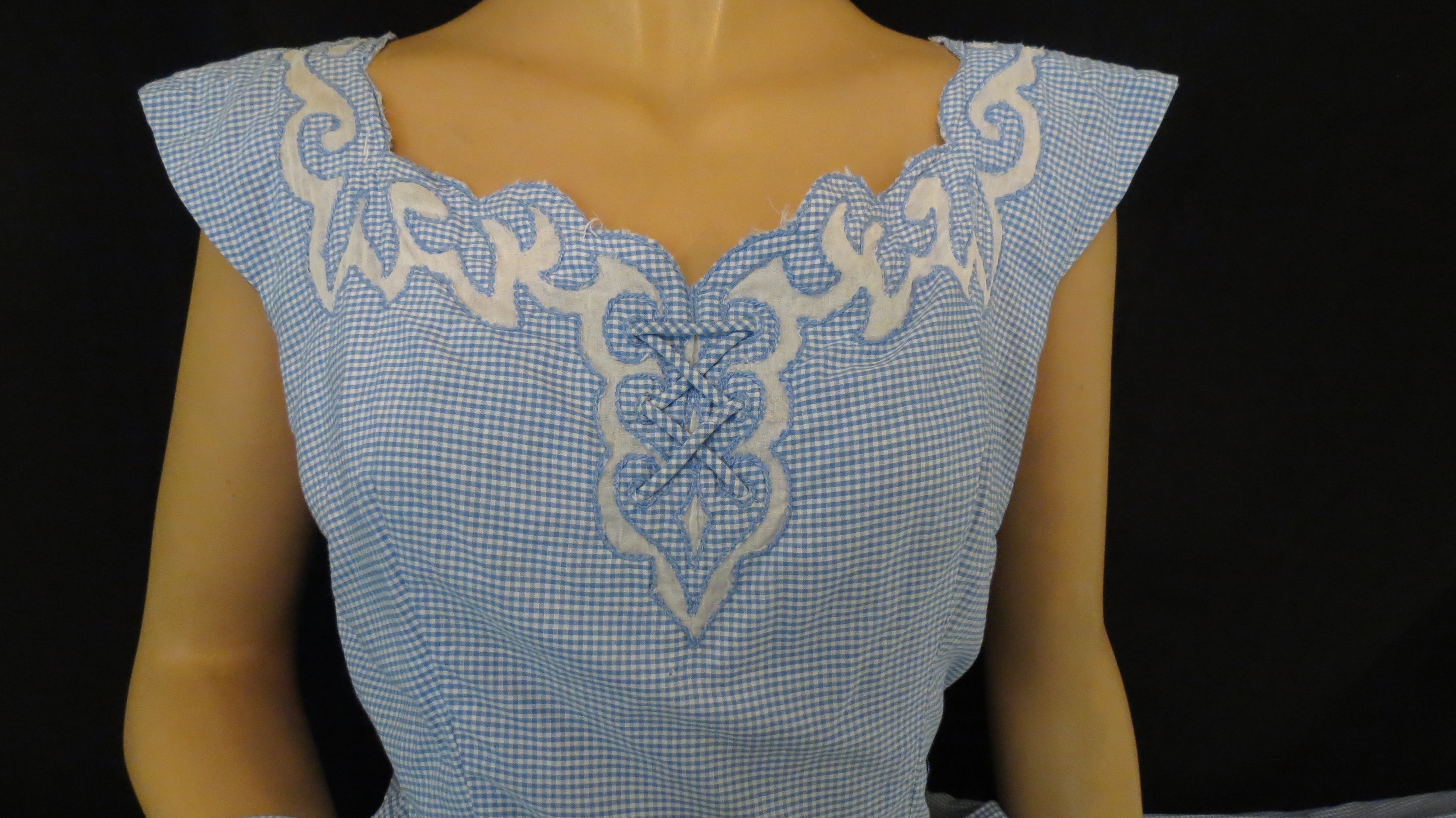
Decorative detailing was still a big deal, whether the dress was a day dress or something more special. Ric rac and embroidery were everywhere. The intricate cut-out design and lacing on the neckline above, though probably done by machine, is a very pretty touch on a flirty frock. Fabric-covered belts were the most common way of cinching a waistline.
Sticking with casual dresses, we’ll head into the early 1960’s tomorrow. Stay tuned . . . . . . . . . . . . . . . . . . . . . . . .
While our mid-century gal is off on her snowbird vacation (see posts from the last few days), Baby, it’s COLD outside here at home! Although Spring is just around the corner (yes, it really is), we still need to be snuggling into robes and pajamas at night. I love doing posts about my archives of true vintage lingerie because it’s always so interesting and pretty. So, let’s take a closer look at these files –
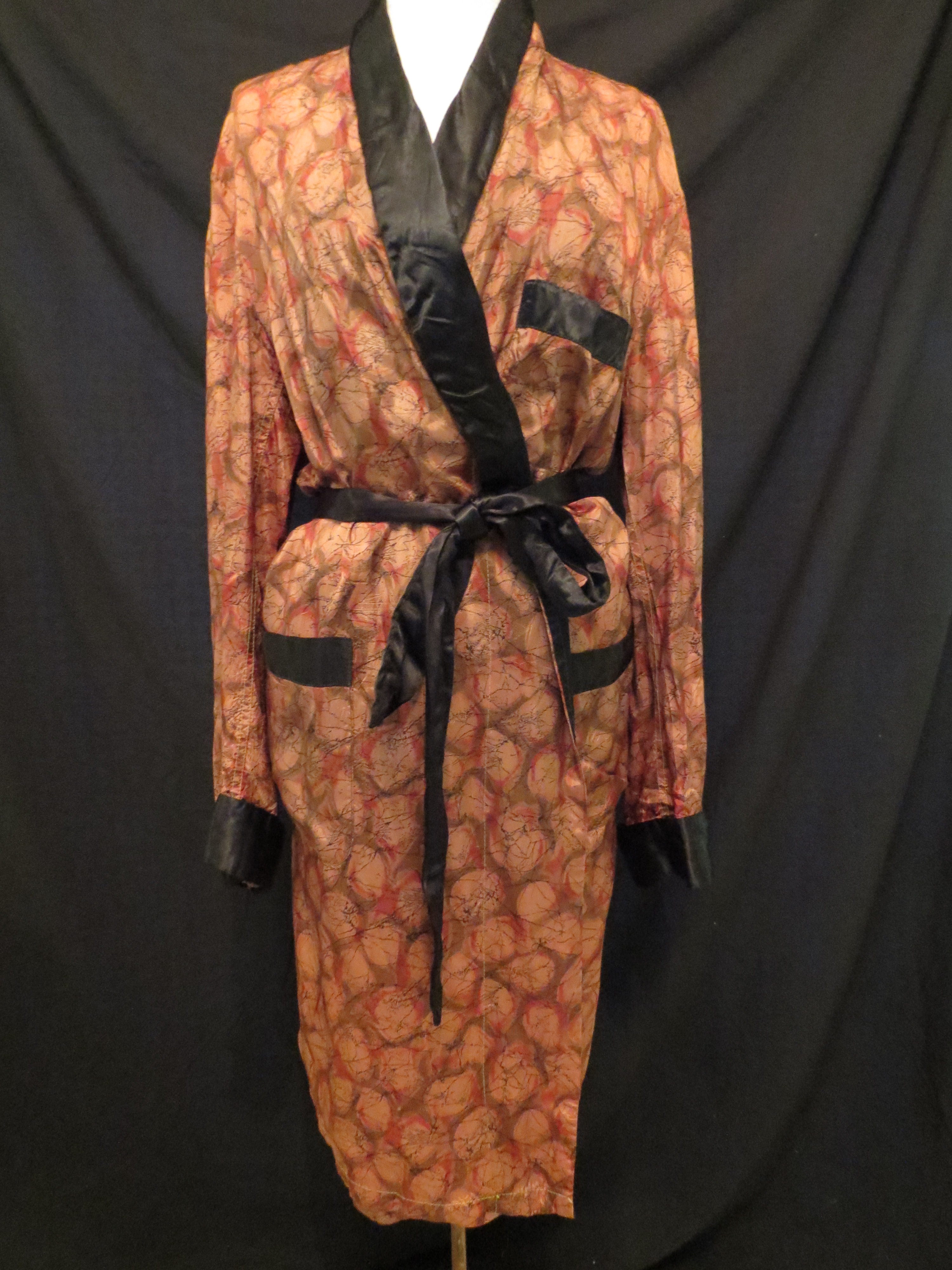
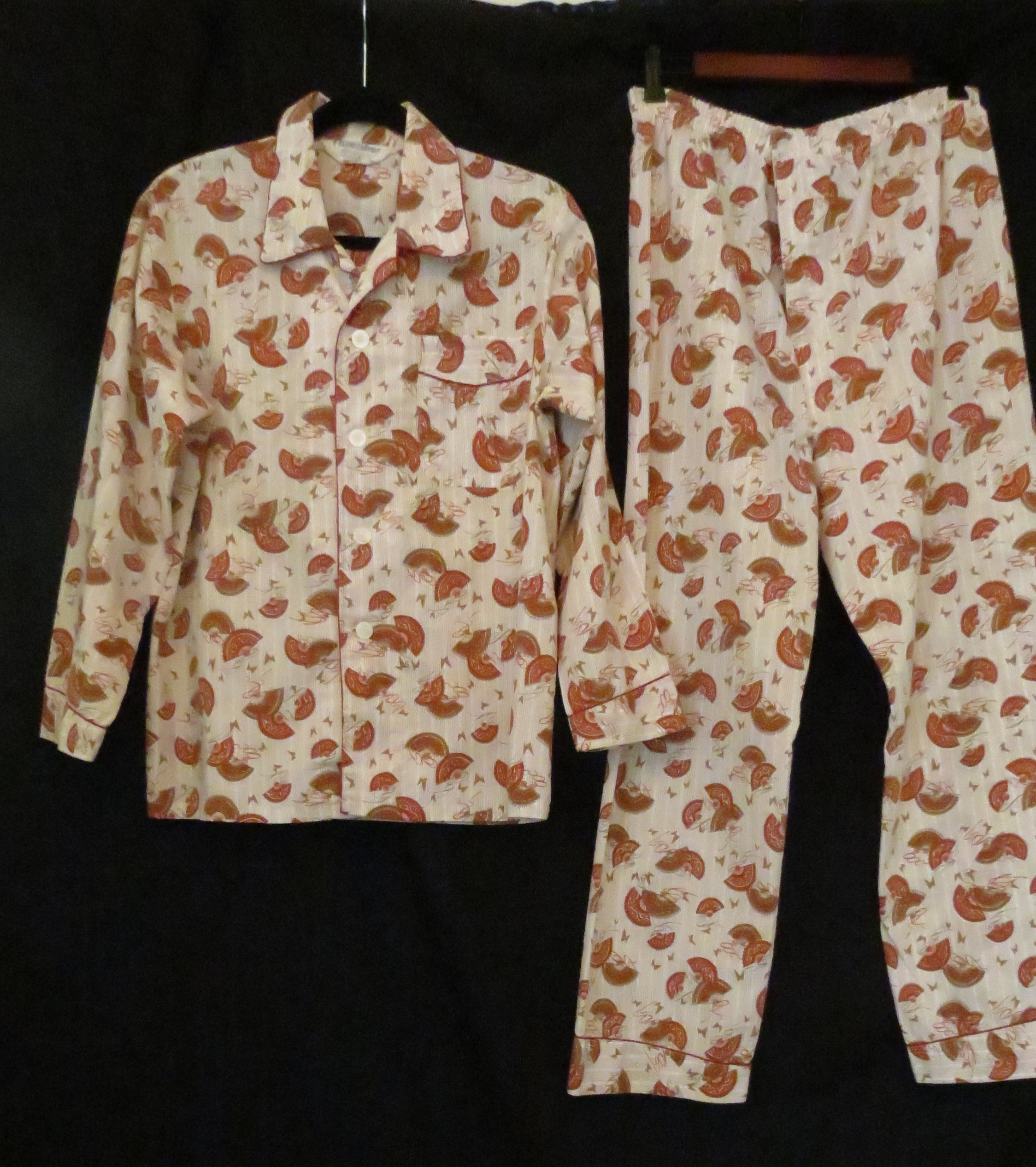
For the men, a swanky rayon bathrobe makes any guy an instant sophisticate. Abstract medallion print with satin trim. How aristocratic! As for the PJs, cotton print men’s pajamas from the 1940’s and 1950’s are so wonderful. Of course, they wear to cozy softness but the real star of the scene is the art prints that many of them displayed. This pair have stylized hand fans all over – an unusual motif for men’s PJs, but that’s what they are. Both pieces show the standard tailoring for men’s garments, though it’s fun for women to wear them, too.
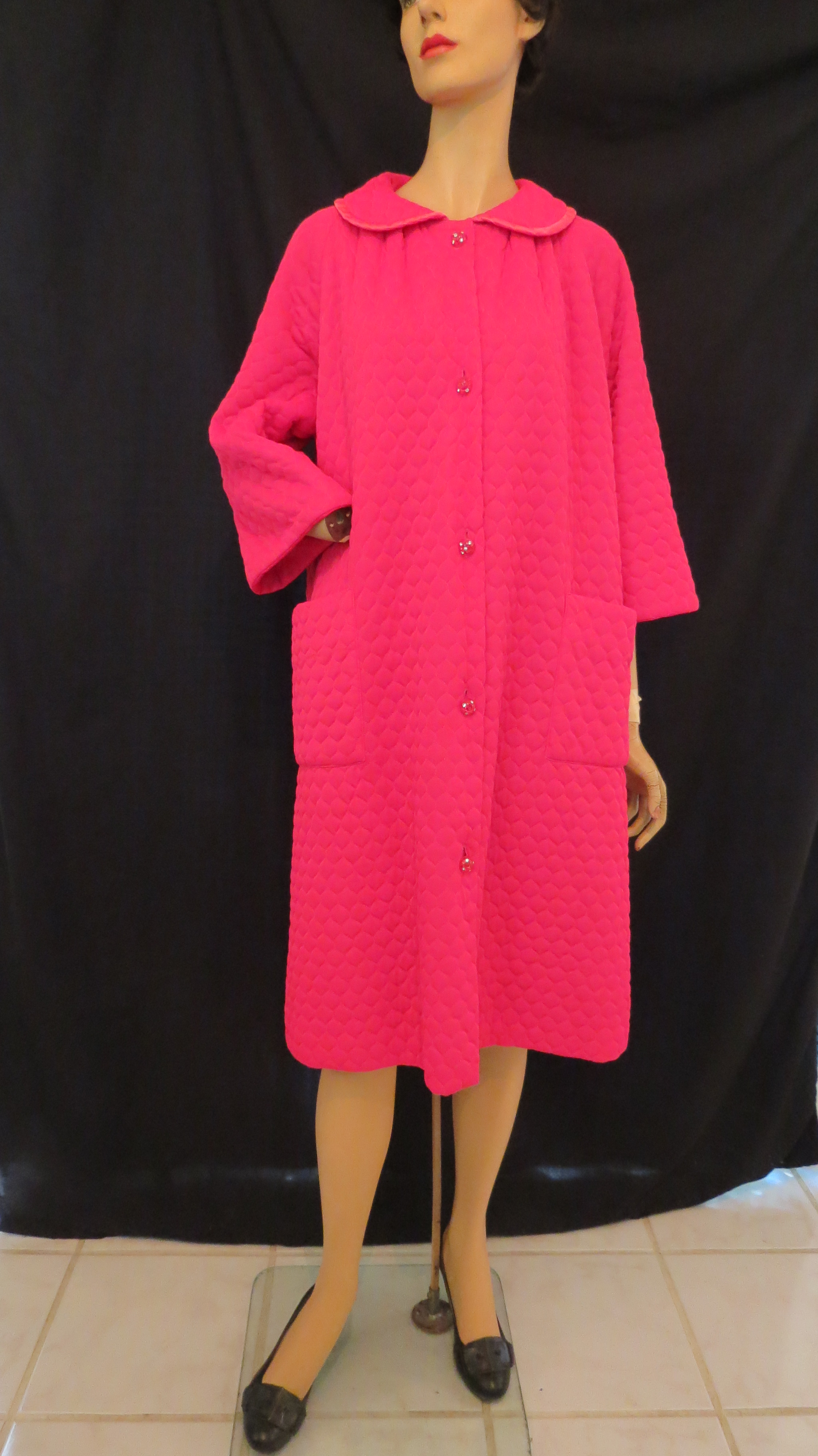
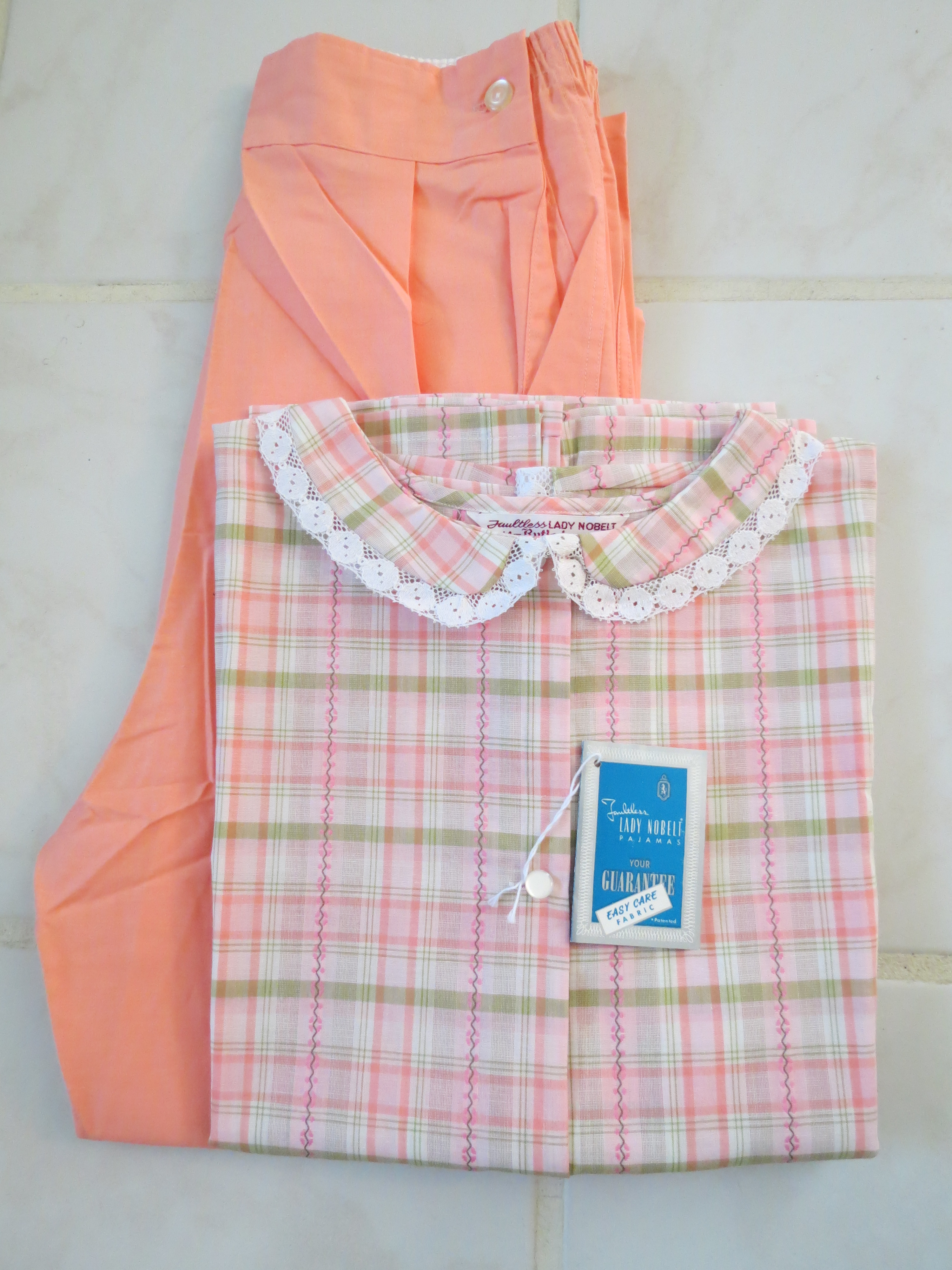
For the ladies, true vintage sleepwear and robes are always so lovely. Even very plain ones seem to have pretty tailoring details. The rosy red robe pictured above is made from a plush fabric. Details include pretty buttons, satin piping on the collar and 3/4 length bell sleeves. The deadstock cotton PJs are plain but still have pretty lace trim and pearl buttons. I think the plaid fabric is quite nice, too. The thing I like most about these old-style pajamas is how the waistline is made. It does have some elastic around the back, but the front is plain and closes with a side button. It also has at least one hip pocket, which is surprisingly convenient.
Okay. A couple days ago she packed her swimsuit for the pool and the beach, short shorts and cute top and a skort for casual day play and sightseeing. Good start. Today she’ll concentrate on more sporty day outfits that will take advantage of the tennis court and boardwalk as well as lots of other fun activities.
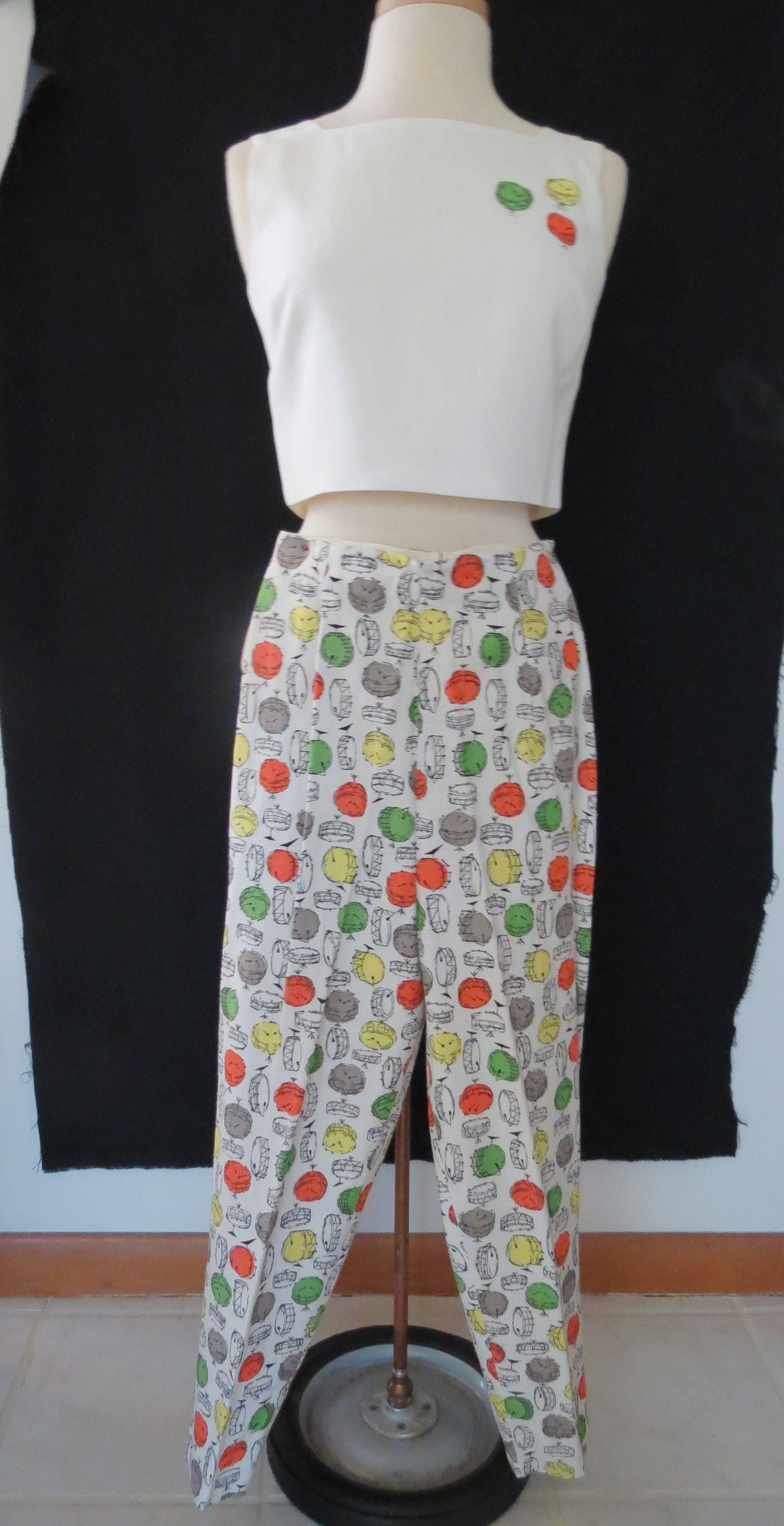
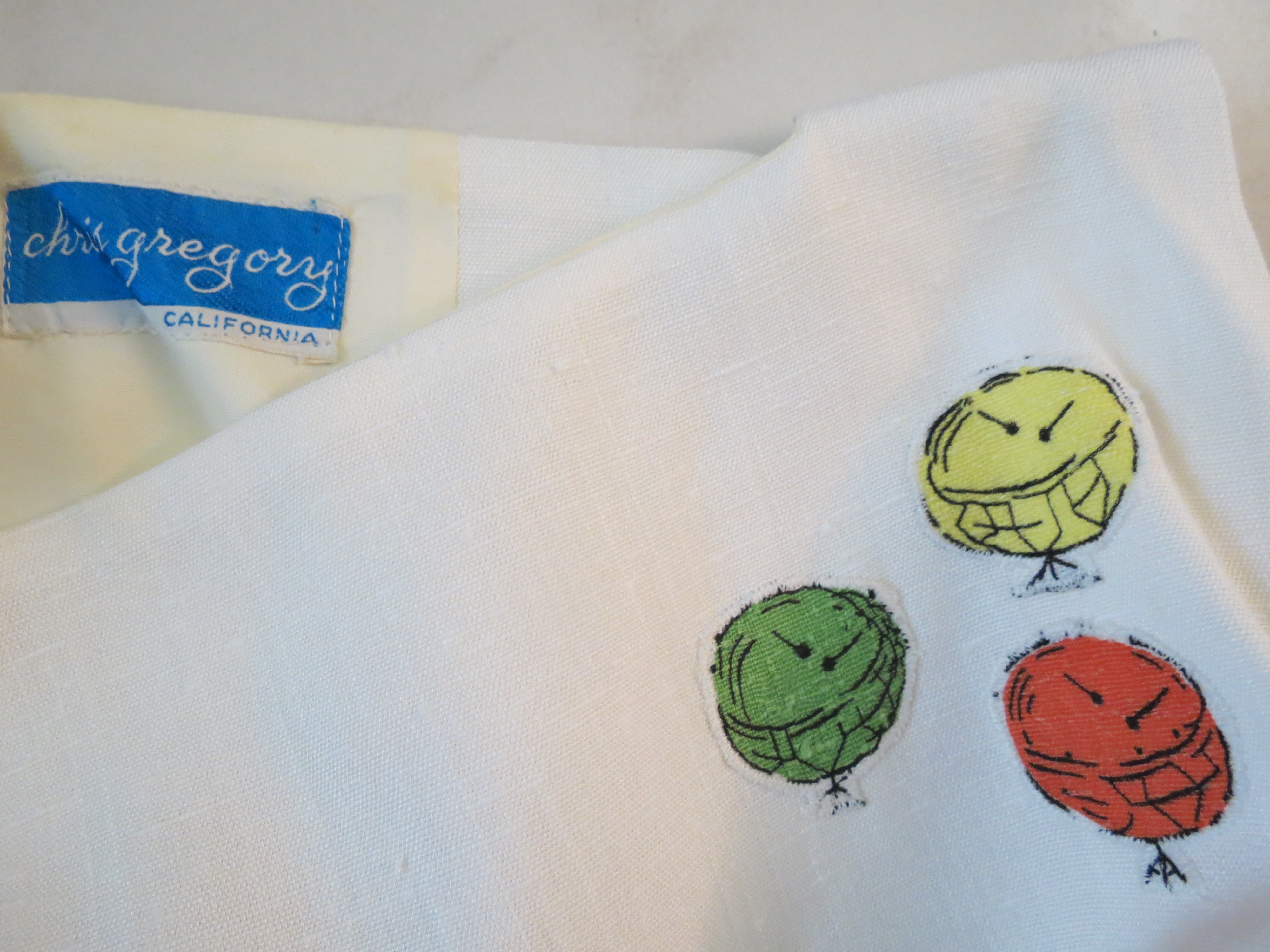
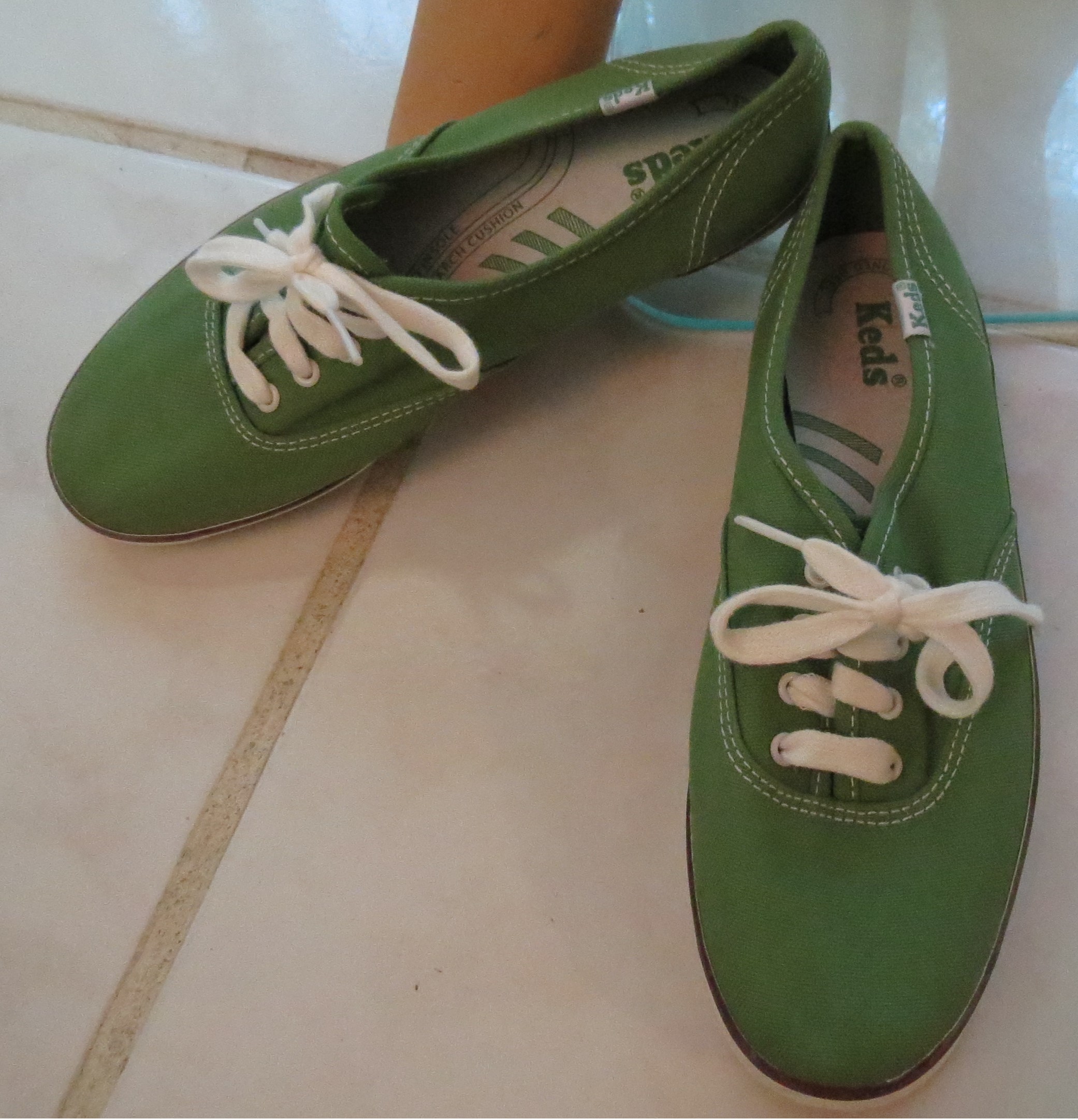
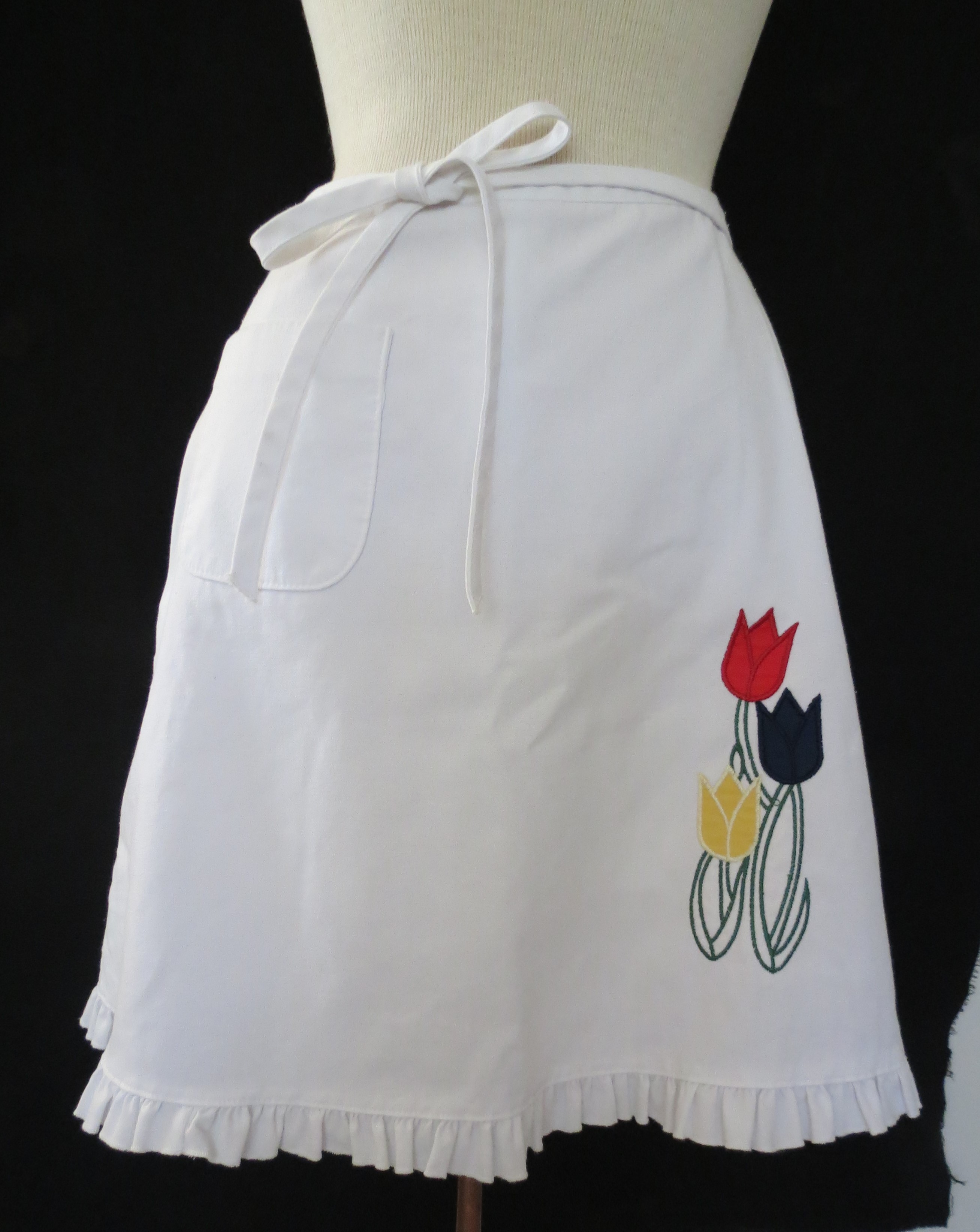
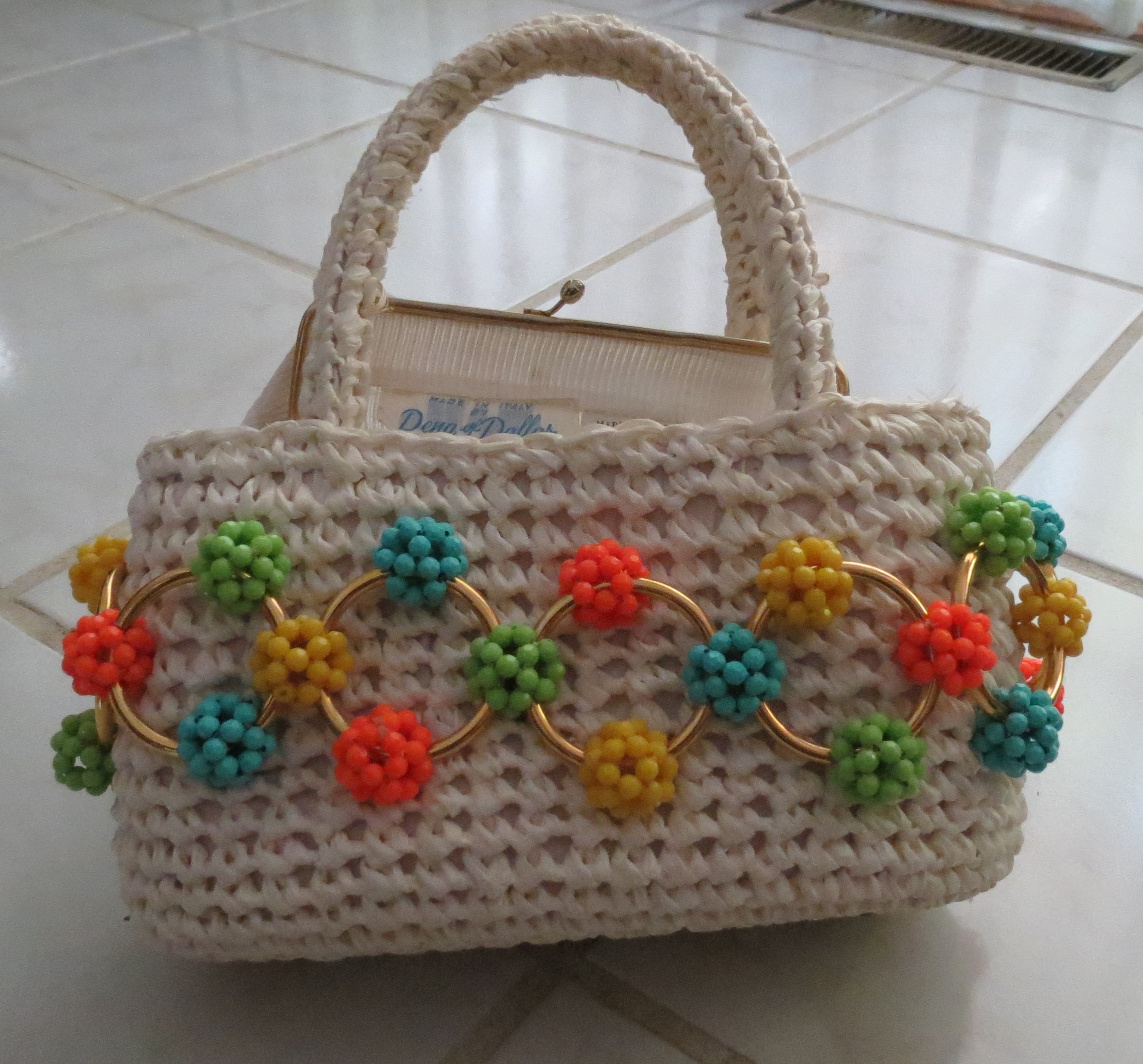
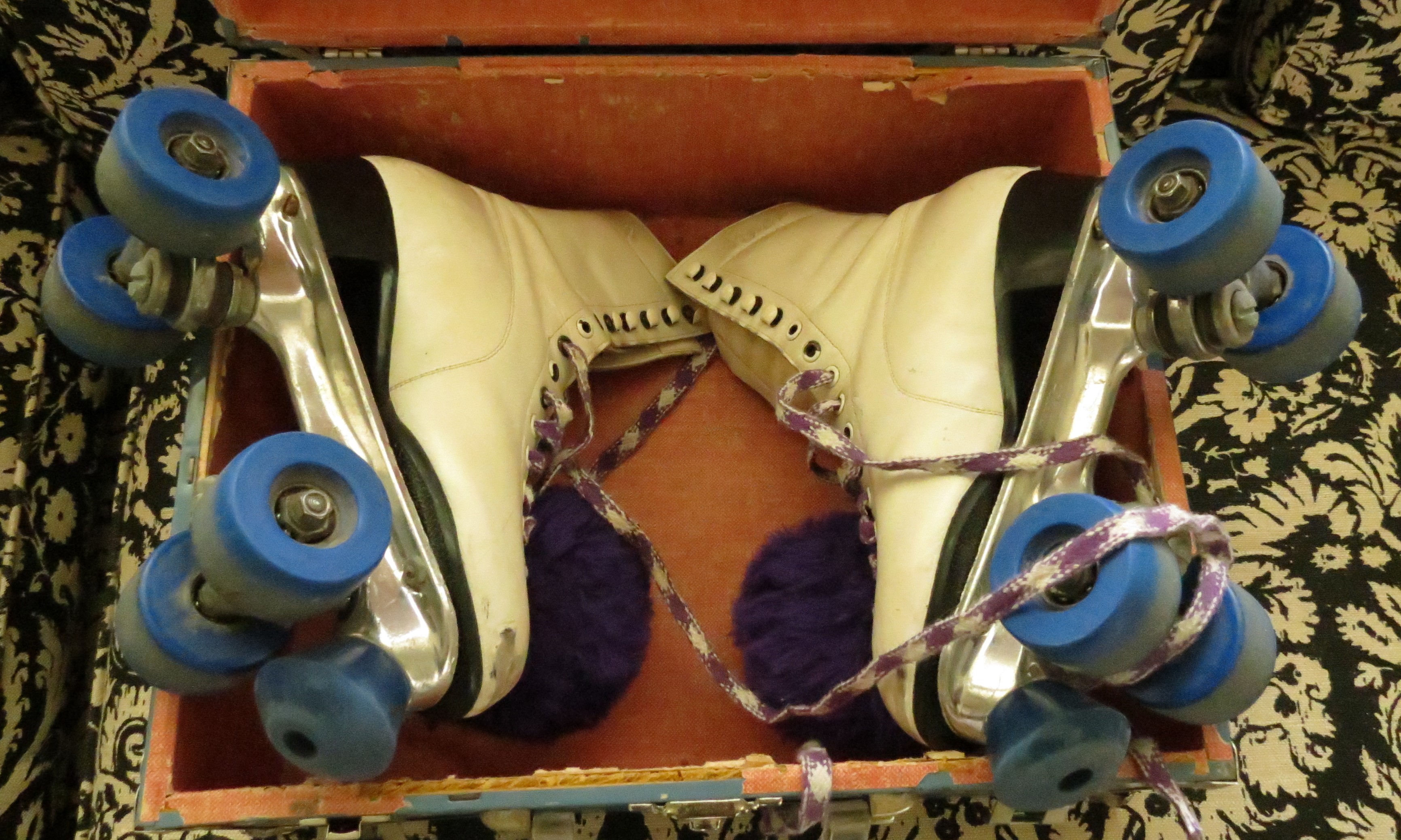
Can’t forget her 1950’s play-suit! Love the funky drums motif and the cropped top. Very original. This one isn’t a romper – it will even let her go downtown after the badminton game. Can’t forget the matching Keds. When it’s time to go to the dining room, a simple wrap skirt from the ’60’s/’70’s is very appropriate and her cute handbag goes well with all outfits so far!! The white sleeveless top that she packed already is perfect with it. That’s the secret of great packing – mix and match. Oh, yeah – GOT to take her roller skates !!!!! Yes, they’re heavy but gotta have them.
All right. That’s enough for today. Packing always makes her tired with so many decisions and it’s easy to forget something important if she doesn’t take her time. Good choices so far, but there’s still more to do over the next few days. Stay tuned . . . . . . .
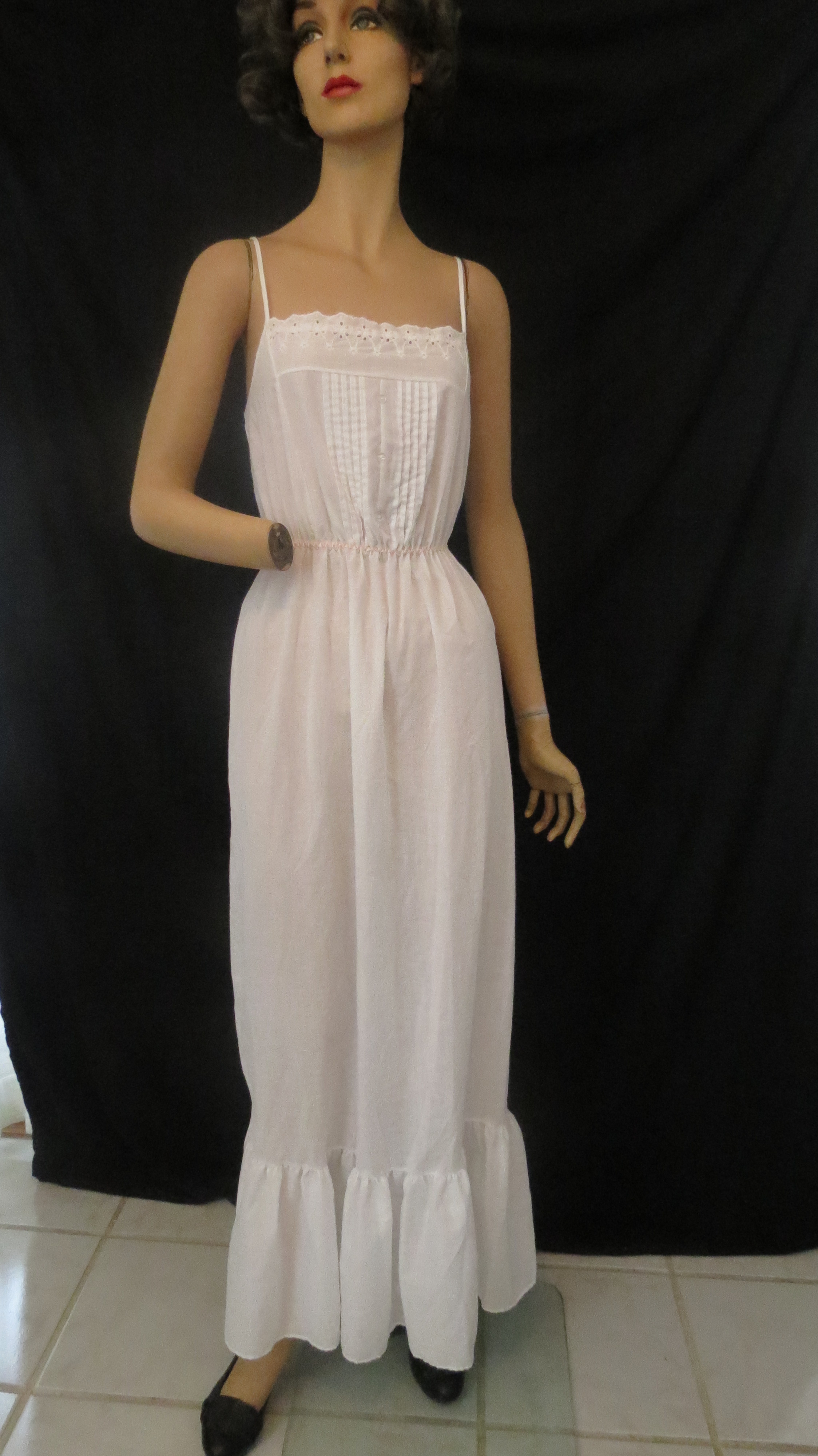
Looks like a real stretch to think of this casual cotton dress as a wedding costume, but not necessarily for this time frame. Hippie/peasant/vintage fashions were super-big during this time and casual or non-traditional weddings became very popular. Who knows – it was probably just a summer/vacation/day dress for no particular reason but is pretty enough for a gal who wants to opt out of the “big white wedding” trap and go Boho.
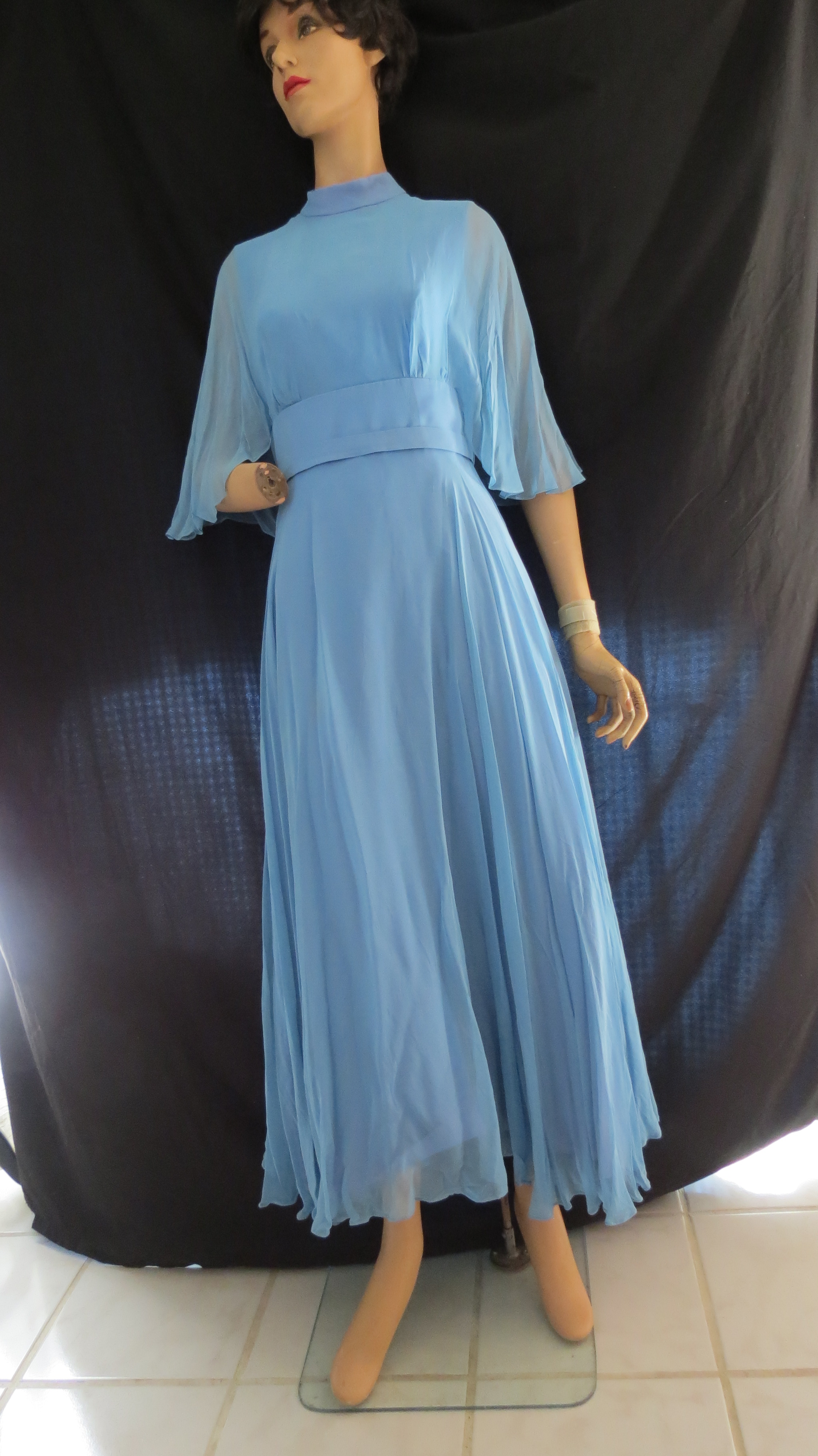
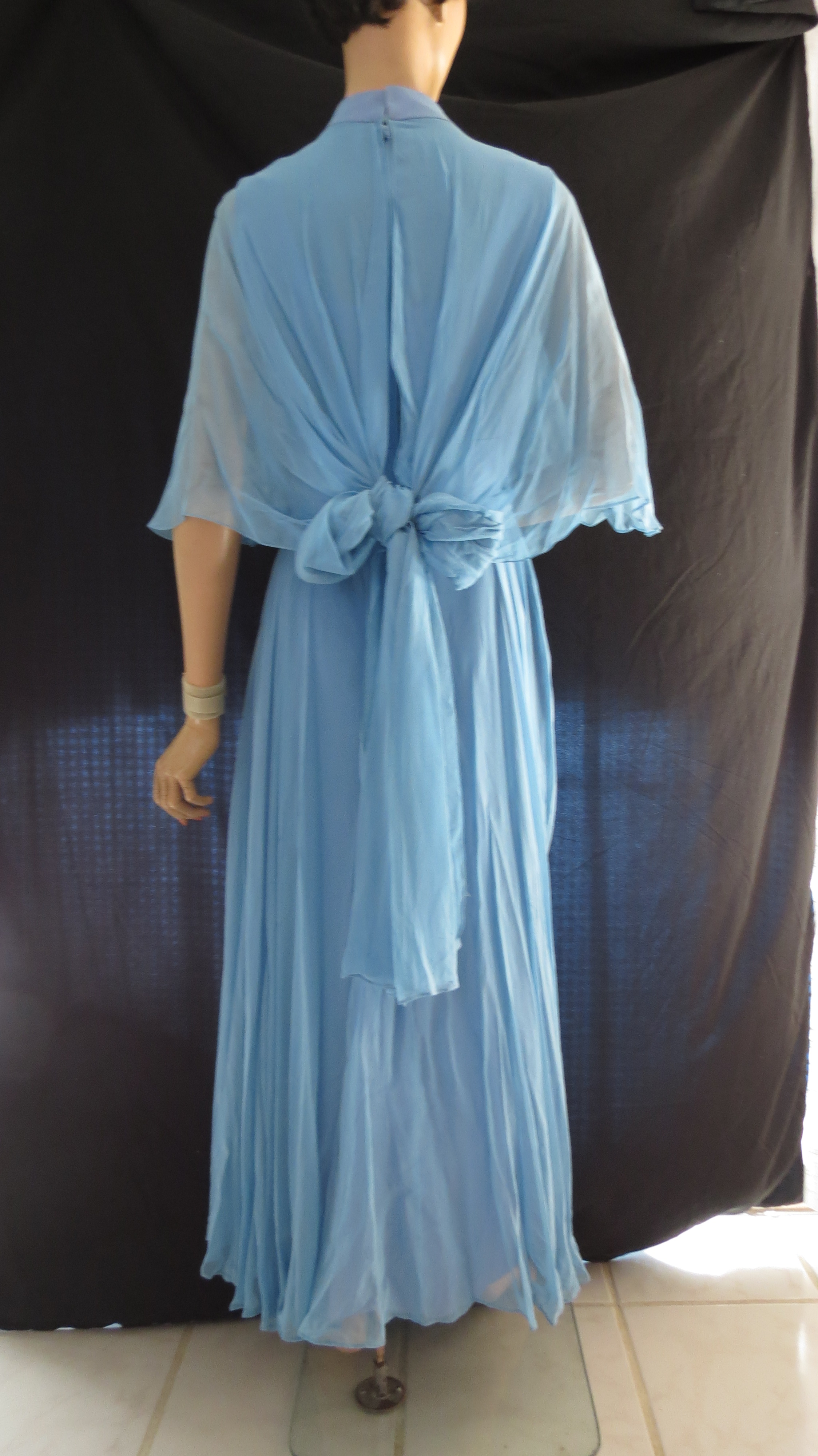
For her mother, on the other hand, the semi-dressy blue frock might not have offended her daughter’s rebellious efforts too much while still allowing Mom to fulfill her Mother of the Bride role with some elegance and decorum. A real advantage of both these dresses is that they were moderately priced and easy to wear again and again in a variety of situations. This is definitely not the most interesting era of beautiful fashion, with the exception of a very few examples, but it does have a specific identity and is very worthy of mention in the chronology of fashion history. More to come – stay tuned . . . . . . . . . . . . . .
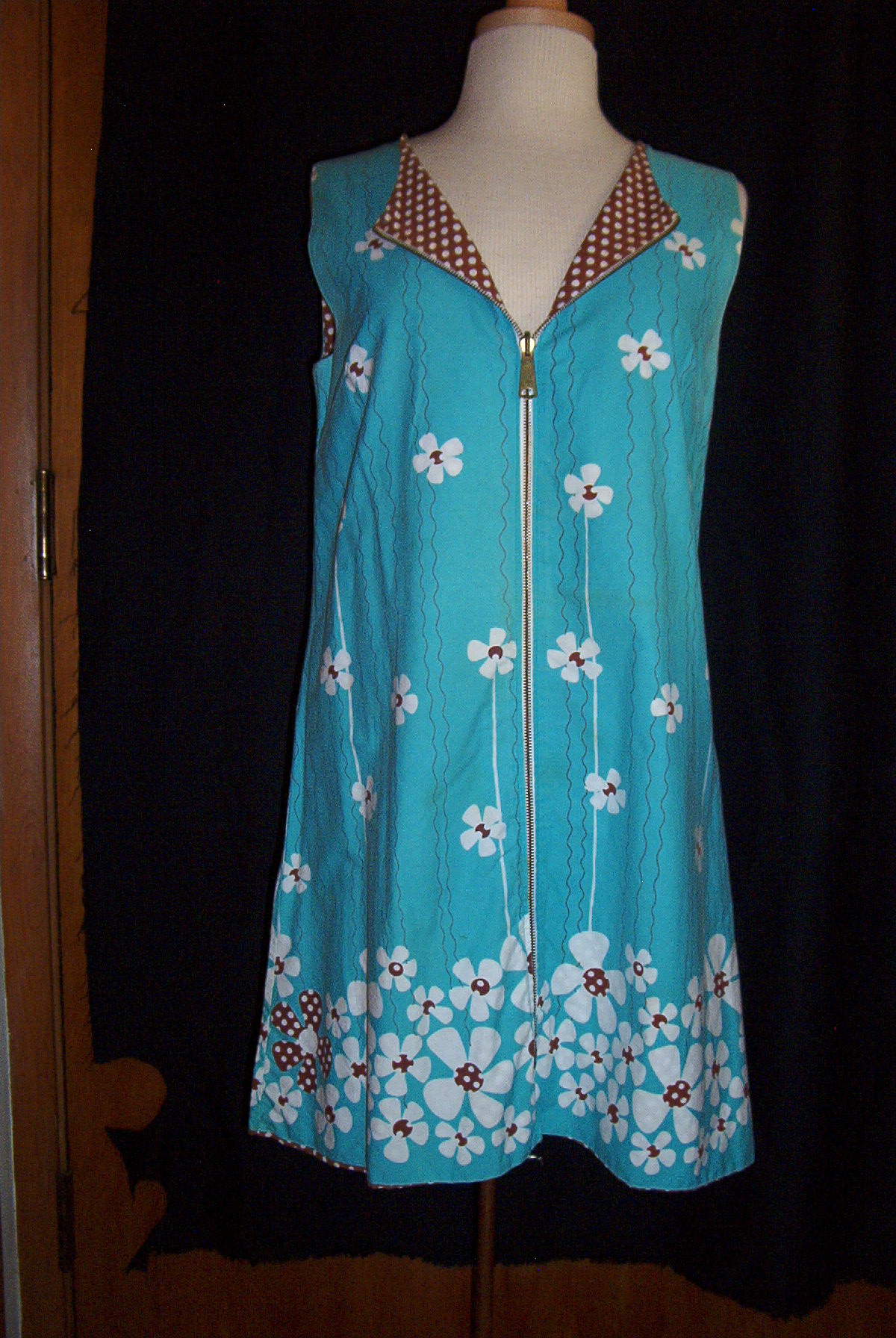
A not-quite-as-little LBD from the 1970’s with casual vibes. I wasn’t going to show this frock until I got into the Snowbird vacation designs, but it’s such a great comparison to the dressier version from yesterday that it was time. Just as sleek, simple and elegant, but of Hawaiian origin with their wonderful cotton fabric. It’s up to the job in the afternoon as well as the evening.
This dress is a perfect example of functional true vintage wardrobe selection for traveling. One dress can do double or triple duty – from casual to sophisticated, even without accessories.
Semi-formal and Formal season are just starting, so back to those archives again next – stay tuned . . . . . .
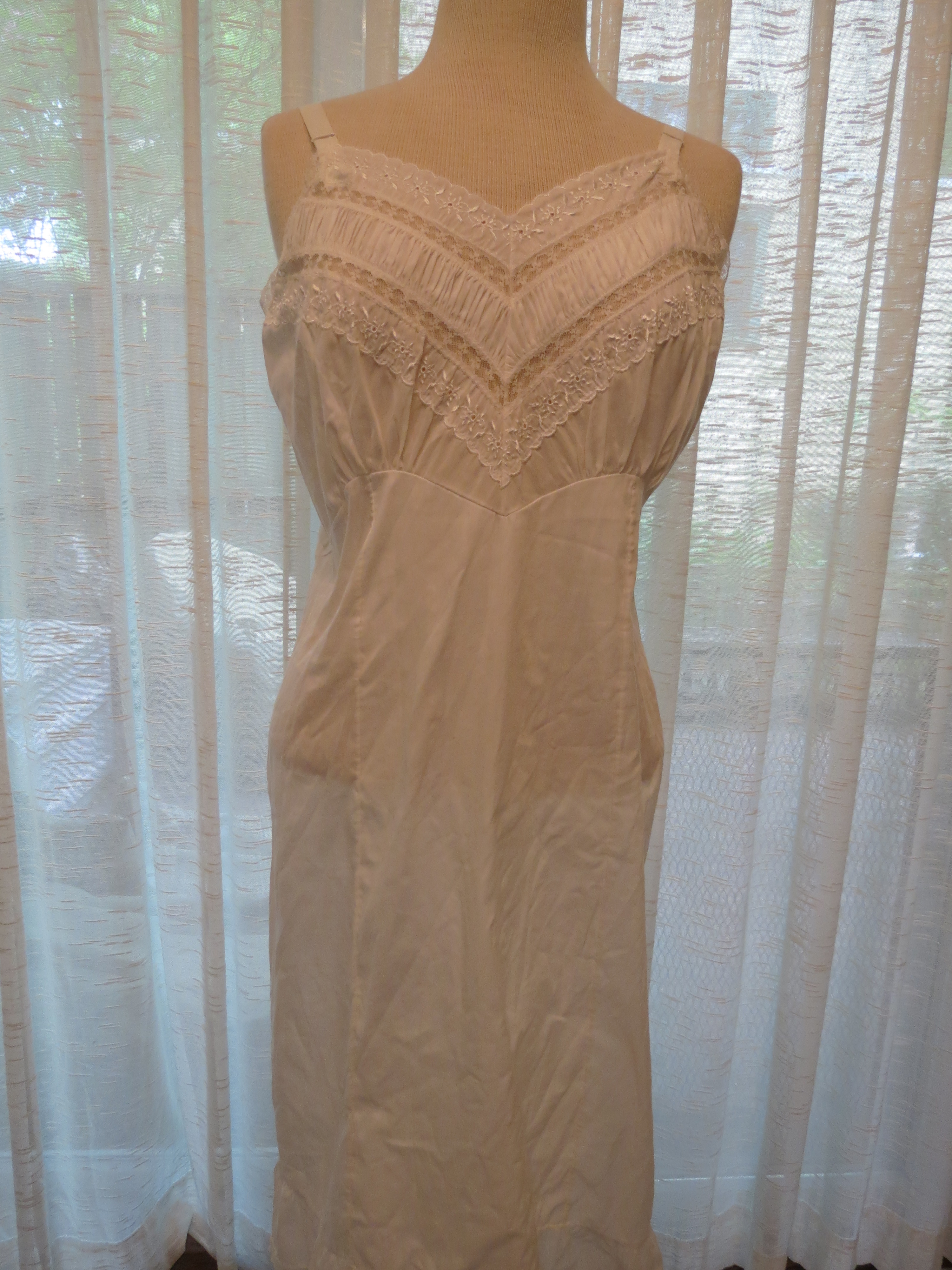
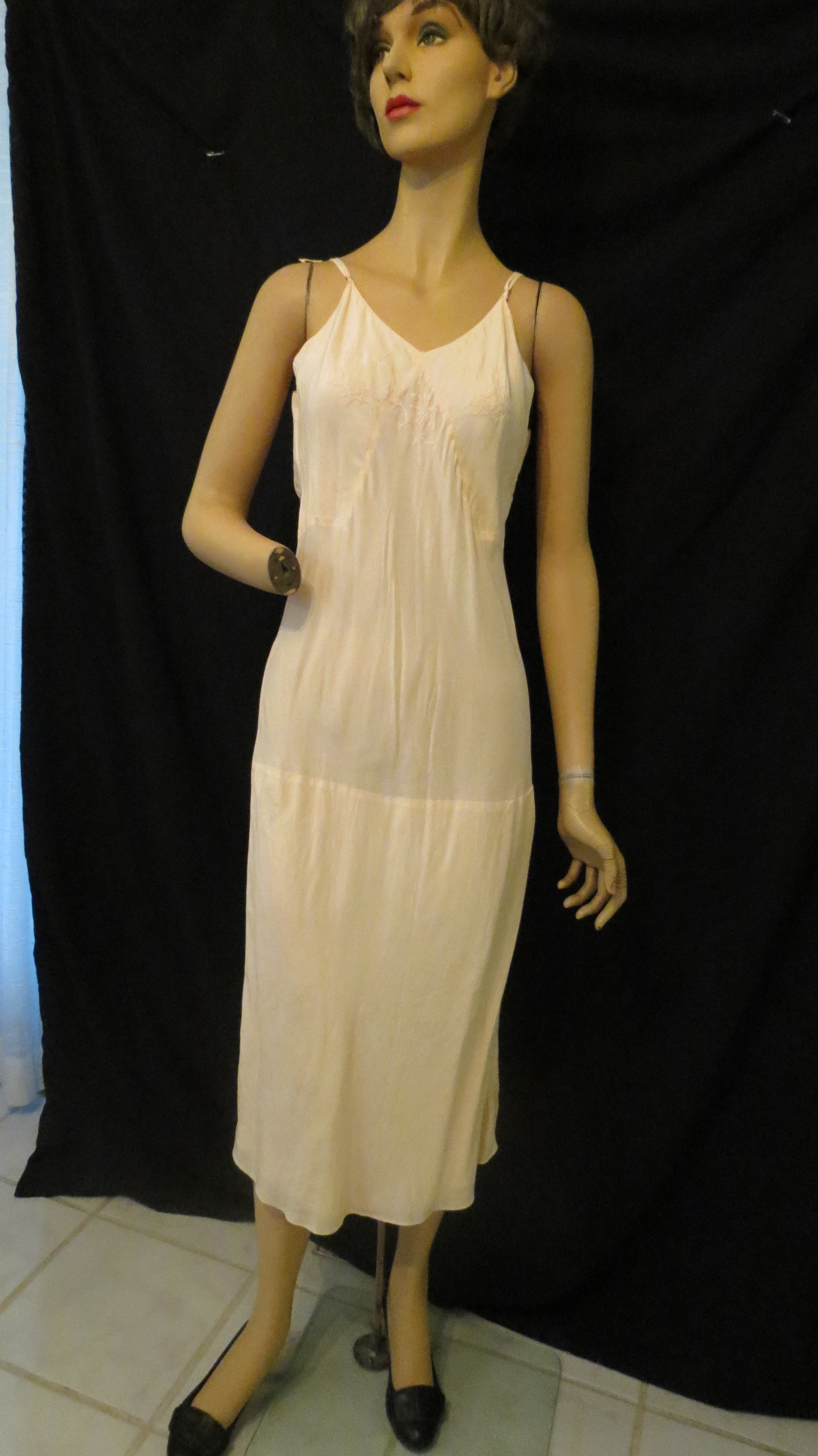
Here’s a sampling of my dozens of beautiful lingerie slips from several eras. True vintage lingerie is essential to wearing your dresses, blouses and skirts with their best fit and comfort. Slips can be fine cotton, rayon, silk, acetate or nylon. Designs can be highly decorated or very sleek and plain. It pays to have every type you can find in different lengths and colors. Some are so gorgeous they can be worn alone as “slip dresses”.
Matching your undergarments to your dresses in a way that minimizes binding, getting too hot or having some unsightly see-through makes all the difference in the final presentation of your outfits and your enjoyment of wearing them. Usually, you’re the only one who knows how truly beautiful your full or half-slip really is. Sometimes it’s fun to allow just a corner of lace trim to show beneath a hemline or at a neckline. In other words, have fun. Have a beautiful Thanksgiving holiday and stay tuned . . . . . . . . . . ..
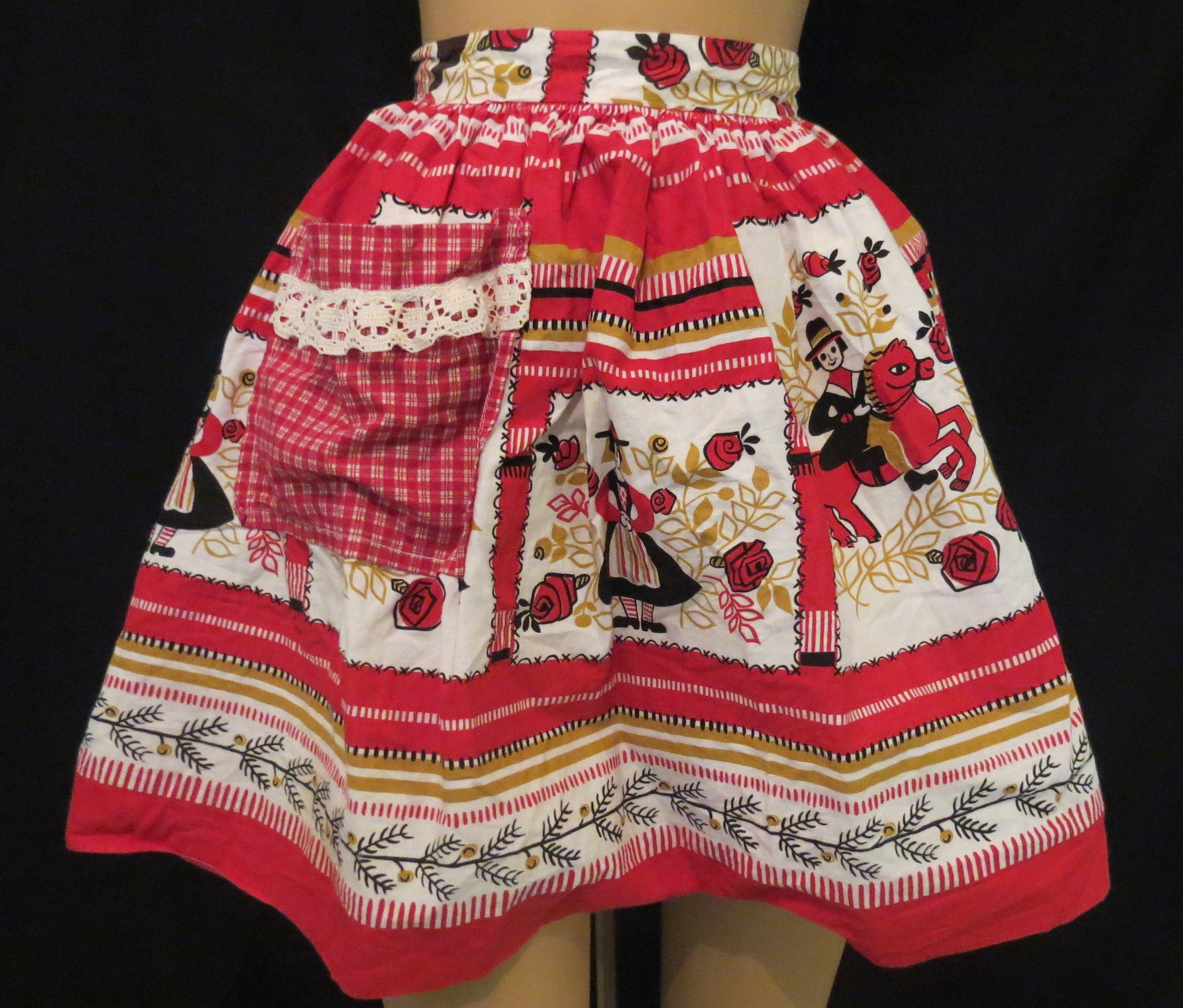
These are just 3 out of my collection of lovely kitchen aprons, but perhaps a bit more interesting and seasonal than others I have, which are more generic, like a cotton gingham check without any specific theme. Many aprons, like the first one here, were specifically themed for a particular holiday or fashion era. It’s a great example, with bright color and a novelty print for Thanksgiving. Although it’s definitely trendy and targeted, it is also at least somewhat practical because of the machine-washable fabric, wraparound style, secure ties and big pocket. It could actually do the job of keeping the cook’s skirt clean. The most useful styles also covered the bodice.
The usefulness is really important, but I love the novelty print. It’s always good to play the hostess in something that also makes people smile. The two aprons following are entirely different in their purpose. These are made from a much more delicate fabric and would be best washed by hand, both because of their delicacy and because they are hand-painted. They were made for and gifted to my grandmother by a relative who at least did the painting herself, if not the sewing job. Gifts like this were common in her day, and cherished. These aprons were made not so much to protect clothing as to be pretty. Grandma might have worn them when she had her friends in for tea or a card game, maybe even for hosting an at-home cocktail party. The messy part of the hostess job would have already been done when she made the cake or other refreshments beforehand.
Aprons were much more commonly worn in decades past and were a significant part of a woman’s household wardrobe, like housedresses worn on cleaning day. Most women’s (especially married women’s) lives were organized around a routine of household duties throughout the week and each one usually required a different kind of outfit – one for cooking, one cleaning, one for tending plants, one for doing the weekly shopping. Special accessories to these outfits were needed for certain jobs, such as gloves of various kinds, hats of various kinds, nursing bras and pads to protect clothing from breast milk and burping babies. Housewives were trained to be very practical and were rewarded by Society for a job well-done. The home was their workplace and the role defined them, so their household wardrobe had a central place in their lives. For better or for worse, that was the way it was. Do we want that again? Think about it and keep your eyes on the clues . . . . . . . . . . . . . . . . . . . . . . . . . . . . . . . . . . . . . .