True Vintage Ladies’ Sweaters 1940’s – 1970’s

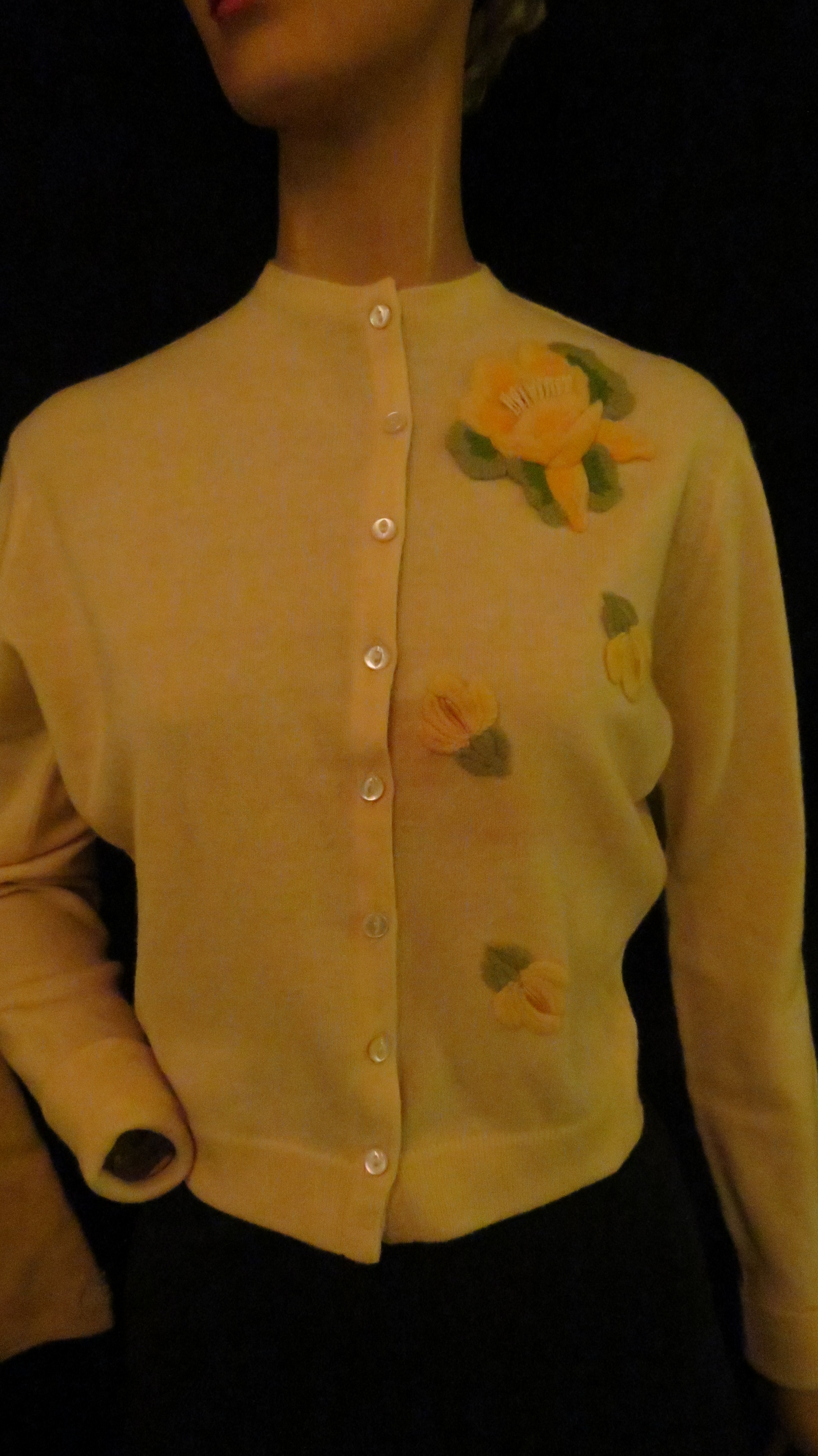
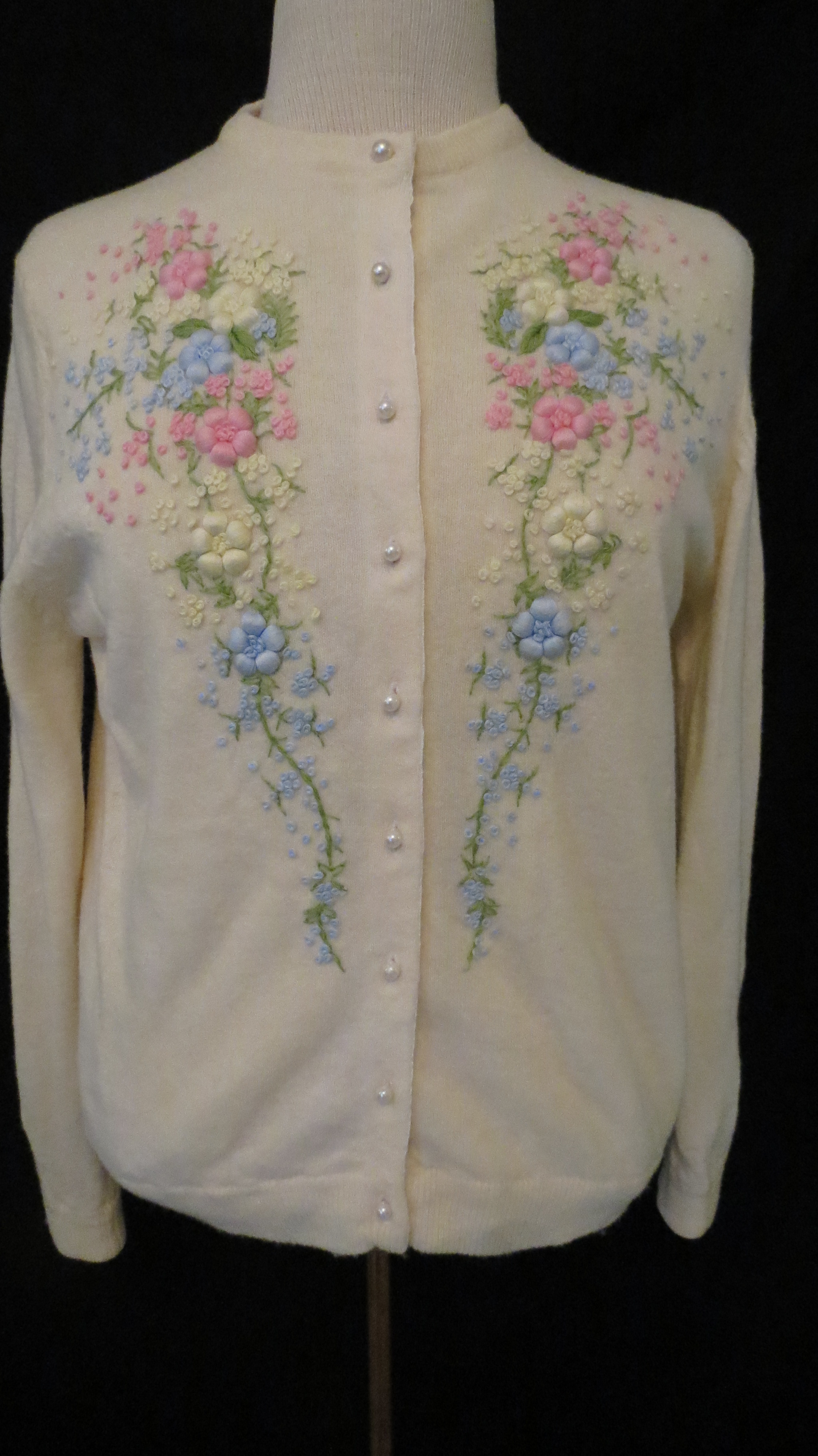
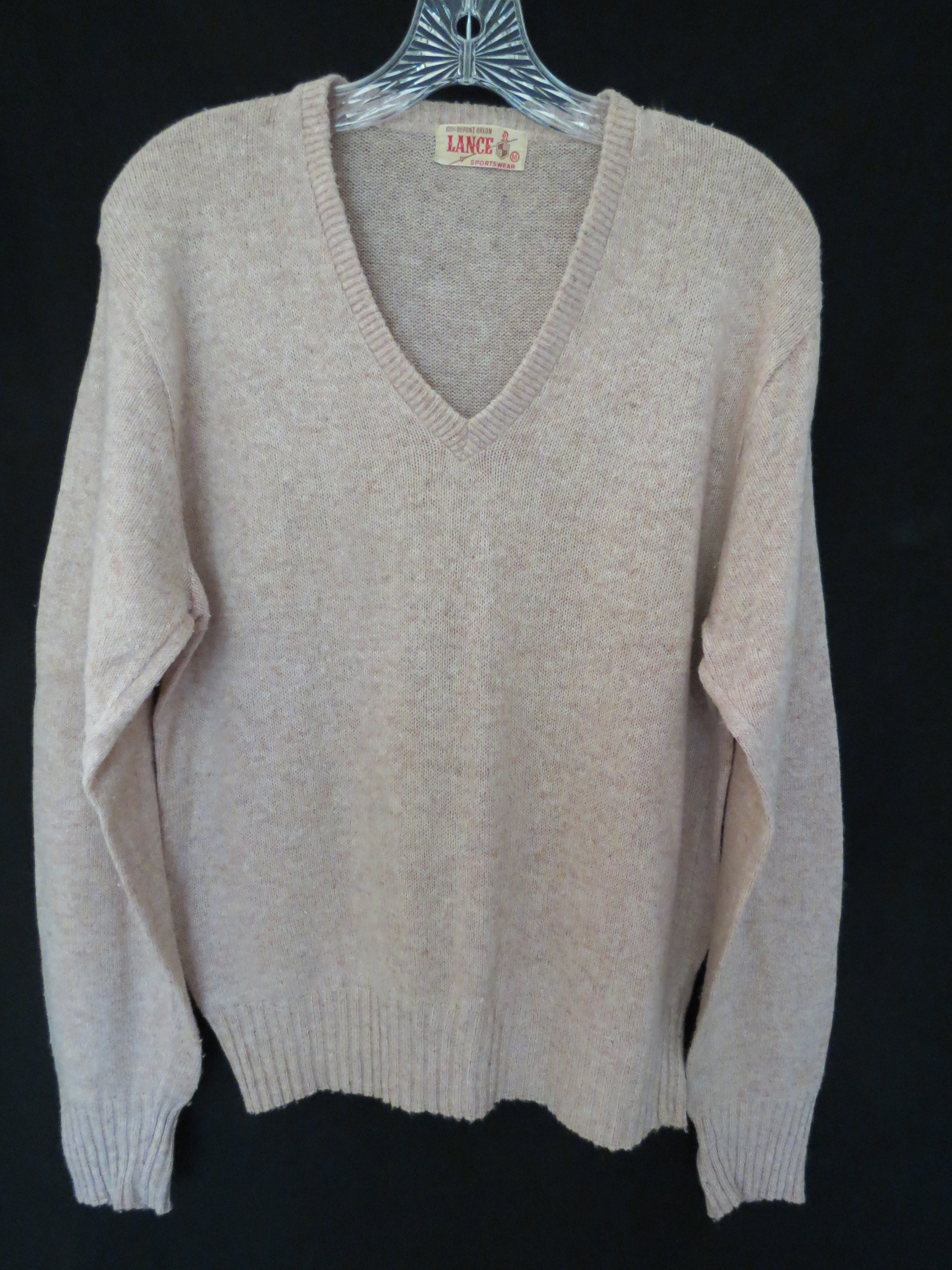
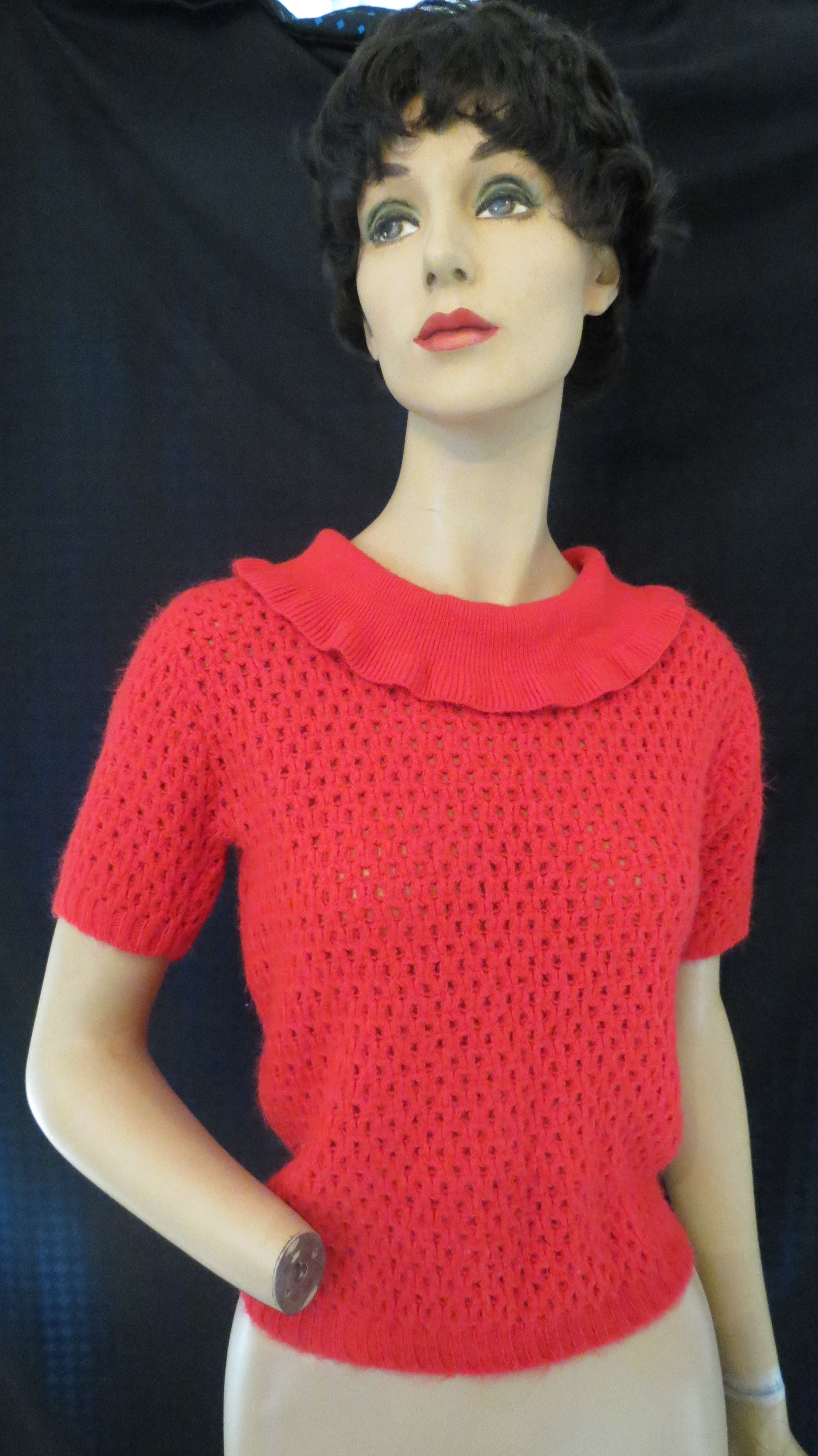
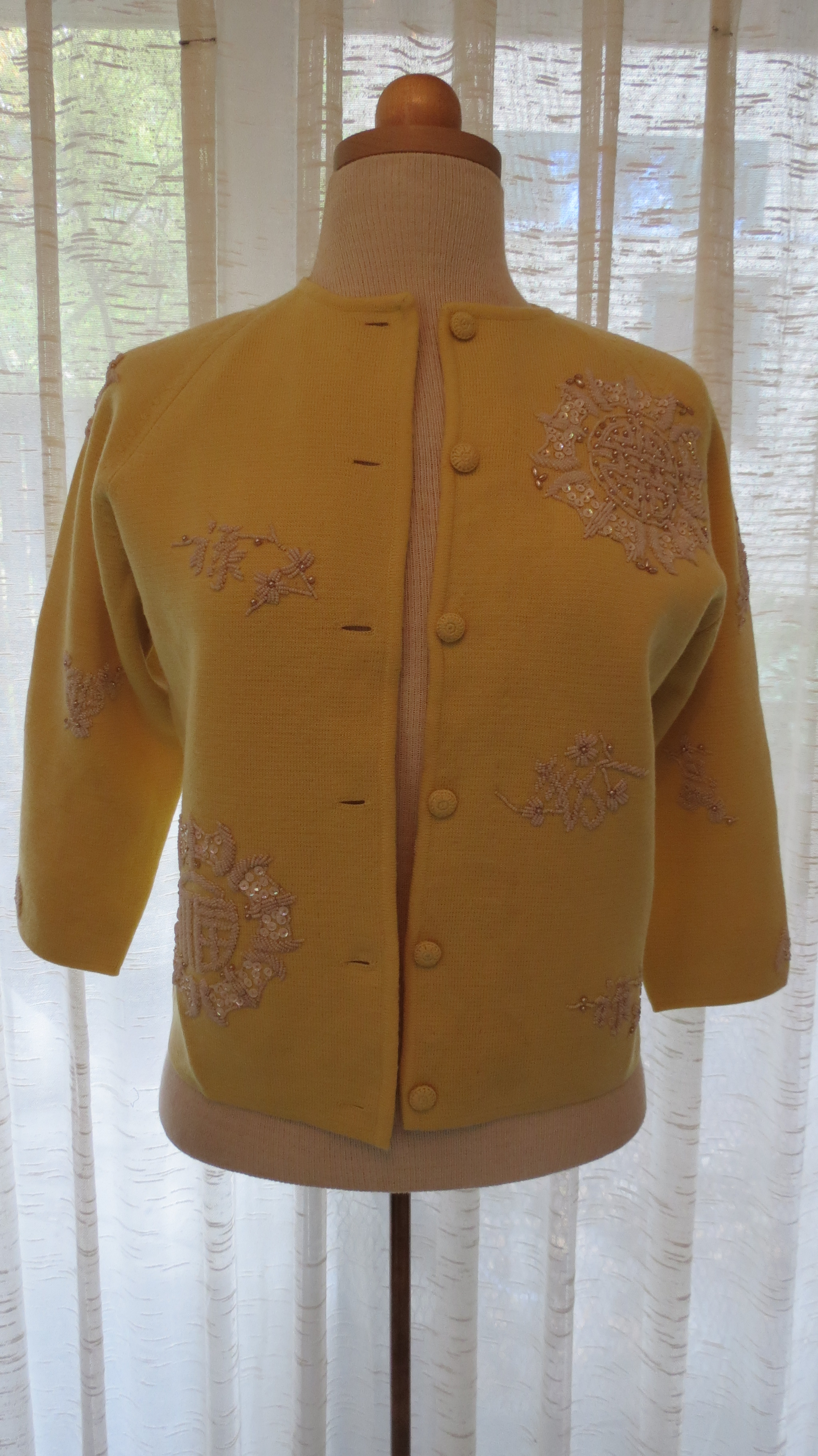
Just a few examples of the many styles and varieties in my archives, but this assortment is a good beginning. The most classic, and probably the most numerous of my discoveries, have been cardigans. Finely made cashmere sweaters, like my mother’s yellow one with appliqued flowers, were a staple for the college coed in the late 1930’s to 1940’s. Plain styles were often worn in reverse, with the buttons in back. Up through the 1950’s to the early 1960’s beaded and embroidered cardigans were hugely popular and the designs were endless. Most were commercially-made, many of the best ones in British Hong Kong, but some women decorated theirs at home. My mother bought this yellow sweater jacket by Banff in the early 1960’s.

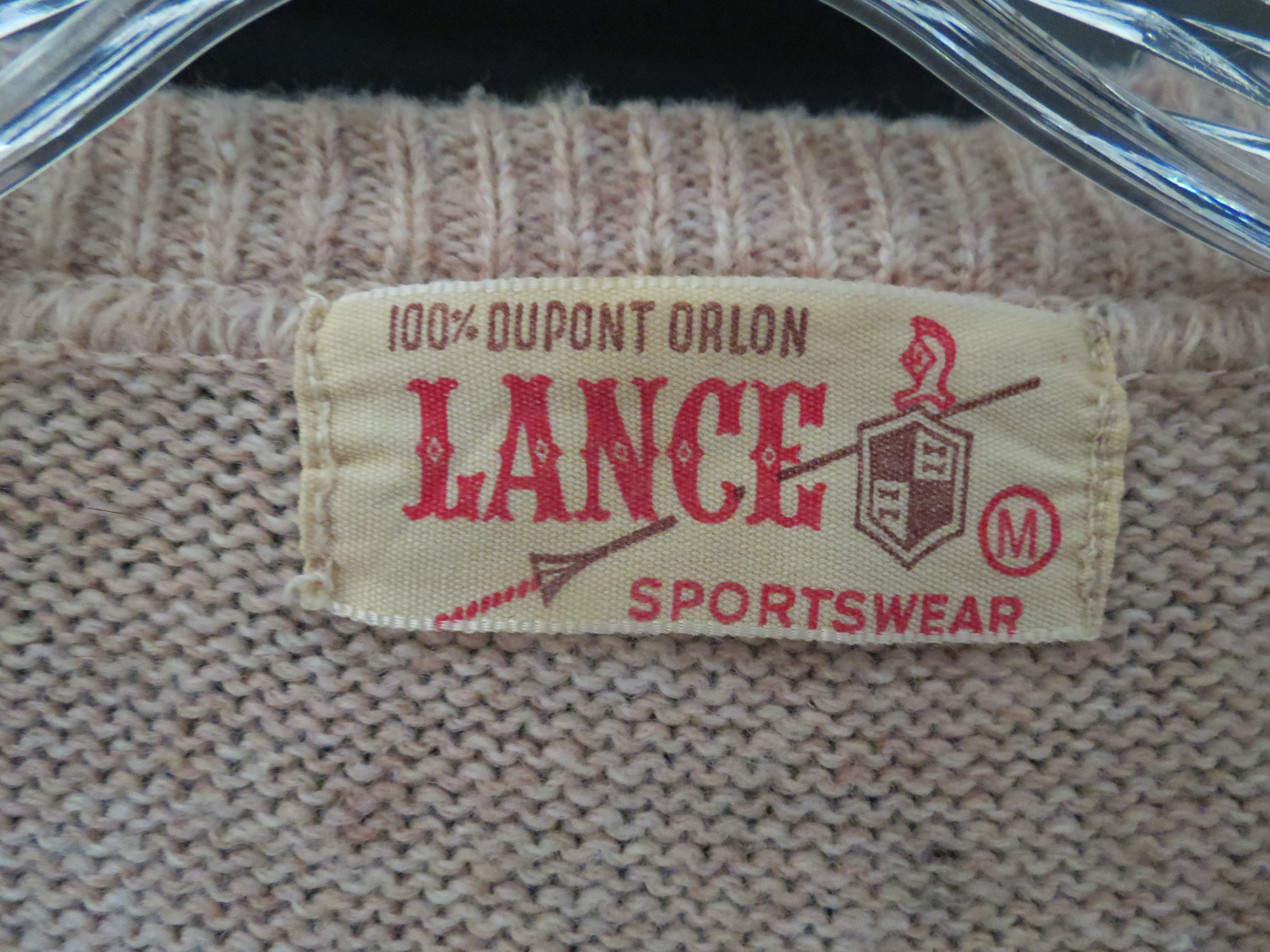
Of course, there were v-neck, crew neck, and collared sweaters in all sorts of variety. Most were nice, but casual styles made to wear with skirts and, later, with slacks. Wool sweaters provided the most warmth for colder months and, until Orlon became available, almost all sweaters were made of wool. Synthetics were really given a boost during WWII because of the government’s requisitioning of wool for military uniforms.

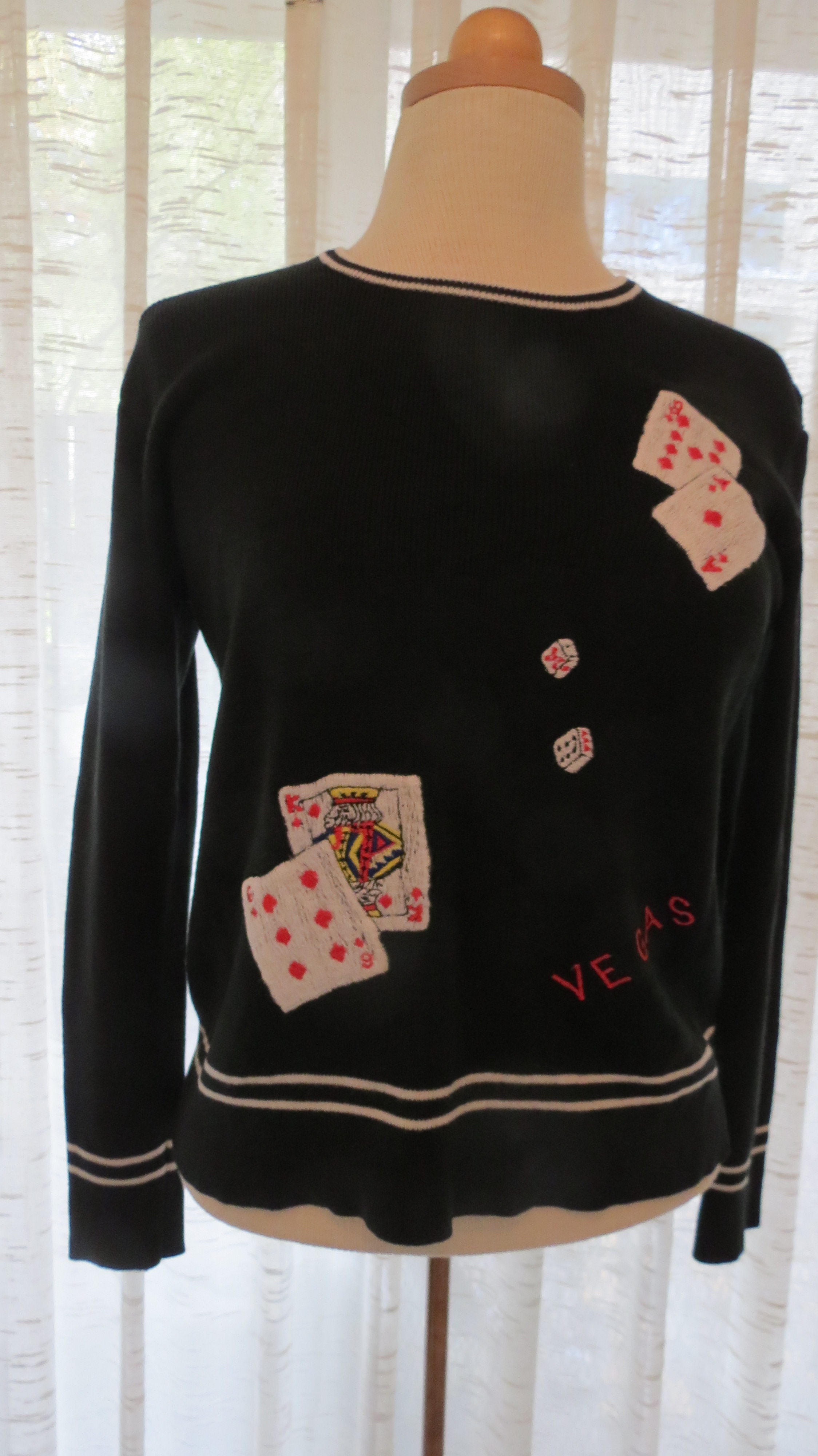
The turtleneck that we love now didn’t seem to show up too much in everyone’s closets until the early 1960’s. Until then, it was a little more avant guarde or unconventional for the average gal though they were on the scene from the 1920’s. Always a sportswear item, especially from the time women began to dress more casually in the 1940’s, women’s sweaters became less dressy. We’d begin to see themed sweaters like this Las Vegas souvenir from the 1970’s or with prominent monograms, mostly in the ’50’s. Of course, many mid-century women knitted and crocheted tons of styles at home, from super-casual to evening styles.

True vintage sweaters from before the 1970’s when acrylic yarn took over are a rare and fabulous find. Moth damage, pills and snags usually took most of them out of circulation. Though I have many, it’s only possible to show sample at one time. A few ladies’ casual Spring jackets tomorrow – stay tuned . . . . . . . . . . . . . . . . . . . . . . . . . . . . . .

MORGANA MARTIN, THE MAGICVINTAGESPY

BLOG: MAGICVINTAGESPY.COM
A FEW TRUE VINTAGE MEN’S SWEATERS, WOOL SHIRT AND 2 JACKETS FROM THE 1960’S AND 1970’S

Here are a few of the iconic everyday styles seen frequently in menswear from the early 1960’s until the mid 1970’s. The 1970’s styles, shown in the center panel, are still probably in production. Cardigans and pullovers have been popular for men at least since the 1940’s. The styles produced in the 1940’s and 1950’s were most interesting, with colorful knitted-in patterns and leather inserts.

In the top panel, first shown is a woolen knit cardigan with embossed metallic buttons. It’s an imported European style. Second is a wool shirt, which has been a cold-weather casual staple for men for decades. The Henley neckline closure makes this one unique. After that, an iconic suede leather jacket with sweater-knit collar and sleeves. I have several of these in the archives, in different earth-tone colors. They are beautiful pieces which have, surprisingly, survived the decades in excellent condition. Next are 2 plain, standard cardigans which have been a part of almost every older man’s wardrobe (often with leather elbow patches) and younger mens’, too, especially when they have been designed as golf sweaters. The first, with patch pockets, is made of wool and is older – probably 1960’s. The second, in burgundy, is acrylic knit as is the light blue Izod V-neck. Standard 1970’s construction and fabric.

Finally, I picked this iconic Ted Williams hunting jacket to include in the post. Ted Williams was a famous baseball player and lent his name to this jacket sold by Sears & Roebuck in the early 1960’s. The label tells the marketing story and you can see the heavy knitted neckline. Cuffs are made of the same material. In front, the jacket zips and has standard-looking pockets. I have shown the back view because the rear “game pocket” is most visible. It extends across the lower back and opens with a zipper on both sides.

This find was an education for me, as I’d never heard of Ted Williams or seen this type of jacket before. What great clues in any investigation! Women’s styles tomorrow – stay tuned . . . . . . . . . . . . . . . . . . .

MORGANA MARTIN, THE MAGICVINTAGESPY

BLOG: MAGICVINTAGESPY.COM
TRUE VINTAGE STRAPPY PUMPS TO WEAR WITH SPRING ENSEMBLES from the 1960’s and 1940’s

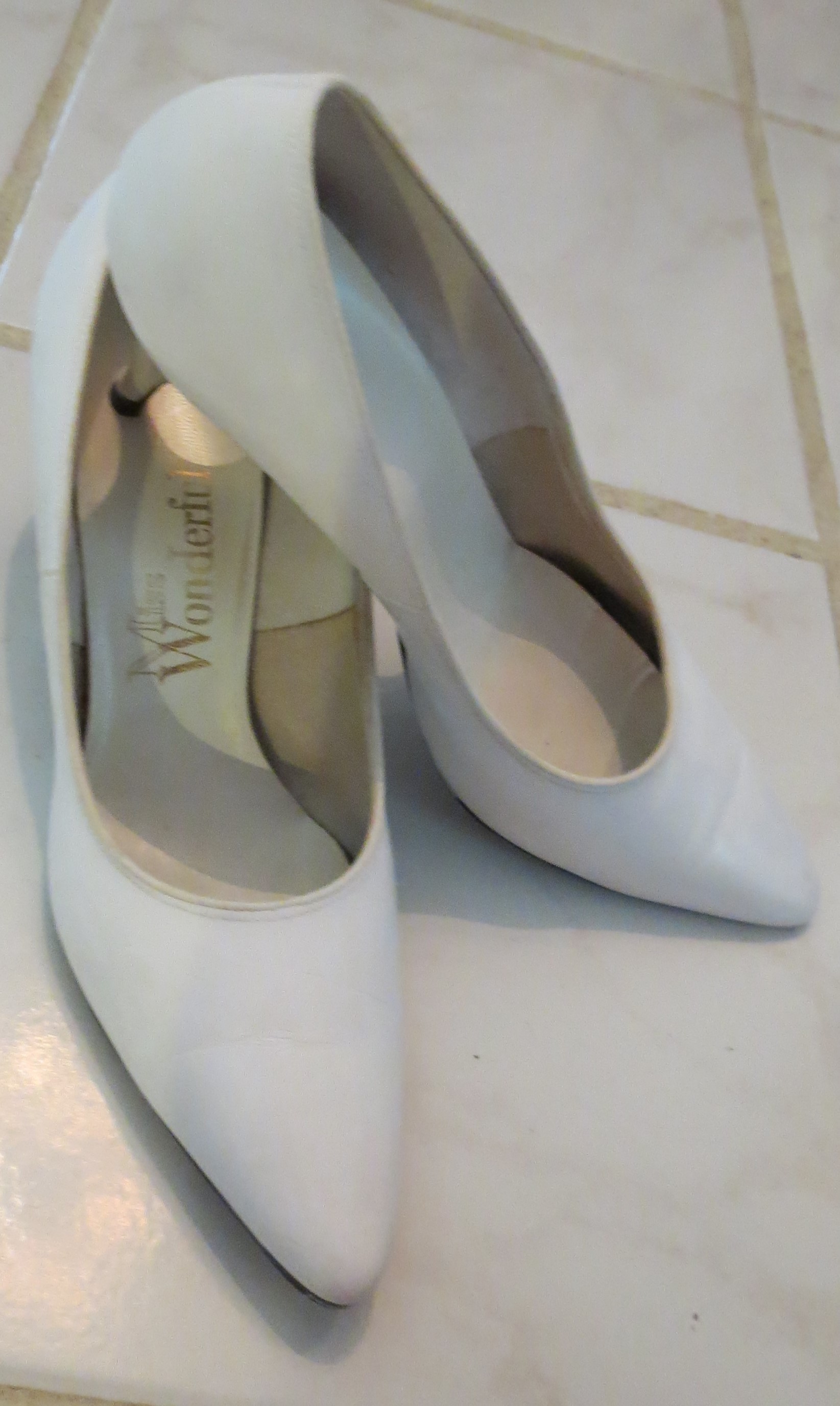
Basic neutral tones will take you around the full year, so these pretty shoes can go along even with some pastel outfits. Back in the day, a pair of black shoes and a pair of brown ones were sometimes the only options a gal had to choose from but, even now, beige and mid-gray will go with almost anything and lighten things up a little. Cutaways, sling-backs and ankle straps have been enduring styles for many decades. Don’t you love the 1940’s high heel take on the traditional black Mary Jane?

I understand that today stiletto heels and open designs are not a good choice in the freezing temps and snow that we have in so many places now. However, in the past when fewer people owned cars, many gals carried their indoor footwear and left snow boots at the door. Public buildings, stores and churches used to routinely have special places to do that. Winter fashion had to start giving way in February, in spite of the weather!

I’ll continue with showing some accessories as well as giving a nod to some cold-weather staple vintage clothing for both women and men. After that, we can’t avoid launching on clothing for the traditional winter vacation before swinging back to Spring dresses. Stay tuned. . . . . . . . . . . . . . . . . . . . . . . . . . . . . . . . . . ..

MORGANA MARTIN, THE MAGICVINTAGESPY

BLOG: MAGICVINTAGESPY.COM

Mod Floral Prom Formal from the Mid- Late 1960’s

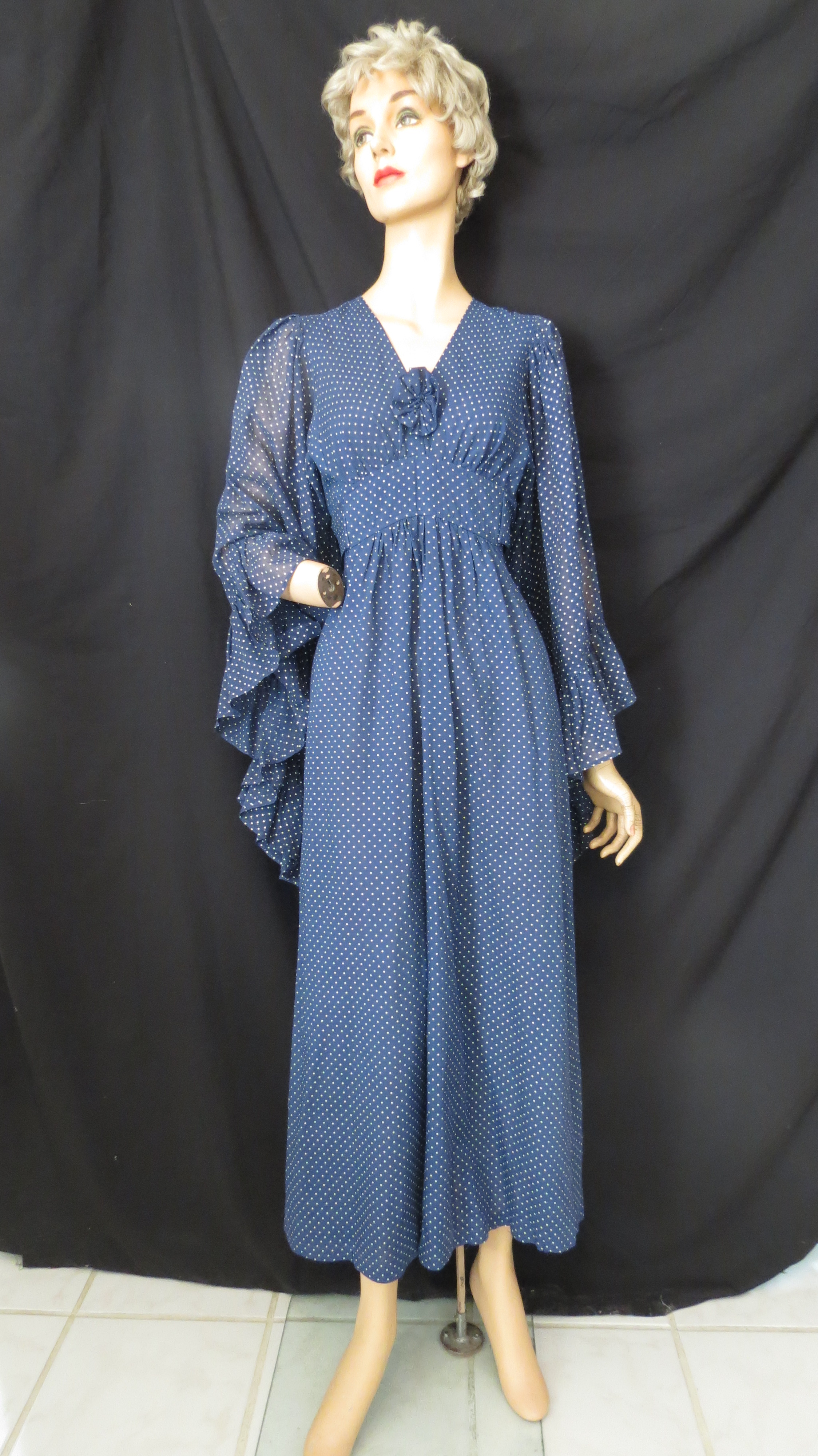
Flower Power! A little Victorian flavor here, too, which began to show up in the late Sixties. This carried over into the Prairie styles of the late Sixties and early Seventies, several of which I showed a few days ago. At that time, many were worn to the Prom. Lots of changes were happening in history and culture during this time and fashions morphed at lightening speed.

Of course, Mod flowers, empire waistline, gathered sleeves and retro ruffles plus a novel style element that showed up then and disappeared pretty quickly – big tall cuffs with lots of buttons. Many blouses and dresses were made with these, as well as long pointy collars, which had their own version on 1970’s shirts a few years later.

Although it’s a mangled mash of styles, it’s really cute and this was a time for CUTE clothing. It was a fad for a fairly short time. Sophisticated fashion took a back seat for a while. I haven’t seen too many of these during my investigations, so this one was a very fun find. Stay tuned for going ahead to the 1980’s . . . . . . . . . . . . . . . . . . . . . . . . . . . . . . . . . .

MORGANA MARTIN, THE MAGICVINTAGESPY

BLOG: MAGICVINTAGESPY.COM
Sweet 1960’s Long Dress for a Special Occasion – Wedding?

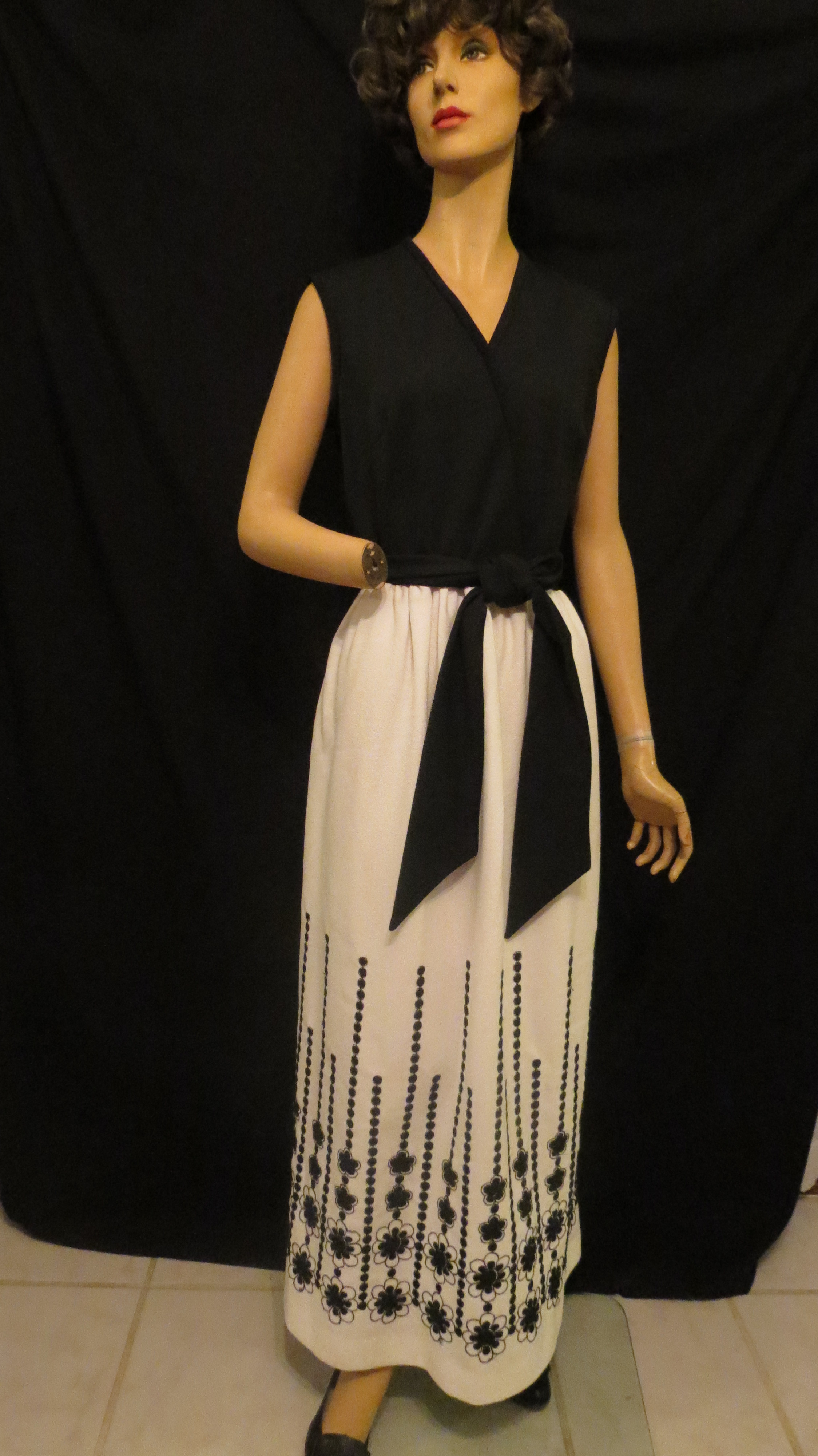
A really pretty formal gown with a wasp waist, cummerbund effect, scooped neckline and short sleeves. I’d put it in the 1960’s, but could be slightly older or slightly newer. Very classic. I’d also guess that it was made for a Teen or young woman, but who knows. Bridal, Prom or other special event – there’s no other clue; just absolutely beautiful tailoring . . . . . . . . . . . . . . . . . . . . . . . . .

MORGANA MARTIN, THE MAGICVINTAGESPY

BLOG: MAGICVINTAGESPY.COM
Fun and Unusual 1960’s – 1970’s Mod-ish Cocktail LBD with Maribou

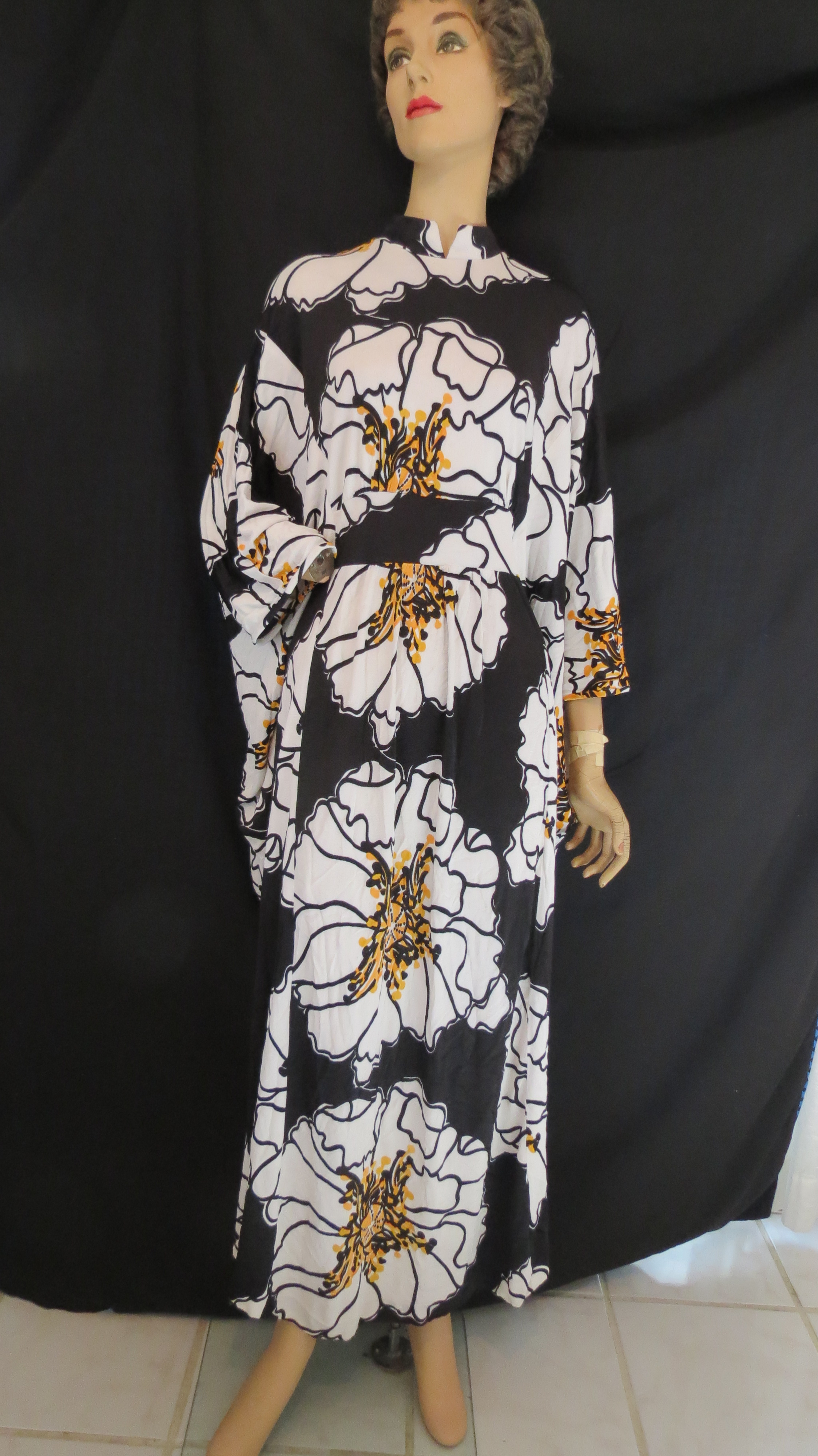
Another one-of-a-kind mid-century cocktail frock. De rigeuer black crepe-ish fabric with a full lining. Unusual 3/4 kimono-ish sleeves with maribou trim. Elegant and easy body-skimming style. Made by a company called Dresstown which seems to have straddled the U.S./Canada border about 50 years ago. Not high-end, but distinguished. Again, never will find another like it . . . . . . . . . . . . . . . .

MORGANA MARTIN, THE MAGICVINTAGESPY

BLOG: MAGICVINTAGESPY.COM

A Couple of Very Conservative Party or Event Dresses from the 1960’s

My examples of the true vintage “Party” genre wouldn’t be complete without including some frocks like these two. Not the typical type of party dress we usually think of, and certainly not the most popular styles, but conservative styles in muted colors have always been available no matter the decade or era. Even for those of us who are more flamboyant in our taste, it’s always a good idea to have at least one of these in the back of the closet because they may be the only type of dress that is appropriate for certain occasions. It could be a Celebration of Life event, a corporate gathering or meeting the prospective in-laws . . . . . . . . . your call, but sometimes we just know.

The frock on the left, by a high-quality vintage maker, is very elegant and could hardly be criticized by even the most picky person – at least not publicly – and then, who cares (unless it’s your boss). The dress on the right was much more “common” and affordable, but is still attractive and “correct”. Some picky person might balk at the sheer sleeves or say that the neckline is too low but that would be extreme (and you could also wear a neckline scarf and/or a lightweight pretty shawl if you want to be ultra demure).

So, that covers the ground, for the time being, of holiday party options and how to avoid the fashion police. Speaking of which, I will be relocating to another safehouse within the week so there will be a pause in transmissions for at least 2 or three days by the weekend but this will be temporary so stay tuned . . . . . . . . . . . . . . . . . . . . . ..

MORGANA MARTIN, THE MAGICVINTAGESPY

BLOG: MAGICVINTAGESPY.COM

OUR GRANDMOTHERS’ MID-CENTURY HOLIDAY AND HOSTESS KITCHEN APRONS

These are just 3 out of my collection of lovely kitchen aprons, but perhaps a bit more interesting and seasonal than others I have, which are more generic, like a cotton gingham check without any specific theme. Many aprons, like the first one here, were specifically themed for a particular holiday or fashion era. It’s a great example, with bright color and a novelty print for Thanksgiving. Although it’s definitely trendy and targeted, it is also at least somewhat practical because of the machine-washable fabric, wraparound style, secure ties and big pocket. It could actually do the job of keeping the cook’s skirt clean. The most useful styles also covered the bodice.

The usefulness is really important, but I love the novelty print. It’s always good to play the hostess in something that also makes people smile. The two aprons following are entirely different in their purpose. These are made from a much more delicate fabric and would be best washed by hand, both because of their delicacy and because they are hand-painted. They were made for and gifted to my grandmother by a relative who at least did the painting herself, if not the sewing job. Gifts like this were common in her day, and cherished. These aprons were made not so much to protect clothing as to be pretty. Grandma might have worn them when she had her friends in for tea or a card game, maybe even for hosting an at-home cocktail party. The messy part of the hostess job would have already been done when she made the cake or other refreshments beforehand.

Aprons were much more commonly worn in decades past and were a significant part of a woman’s household wardrobe, like housedresses worn on cleaning day. Most women’s (especially married women’s) lives were organized around a routine of household duties throughout the week and each one usually required a different kind of outfit – one for cooking, one cleaning, one for tending plants, one for doing the weekly shopping. Special accessories to these outfits were needed for certain jobs, such as gloves of various kinds, hats of various kinds, nursing bras and pads to protect clothing from breast milk and burping babies. Housewives were trained to be very practical and were rewarded by Society for a job well-done. The home was their workplace and the role defined them, so their household wardrobe had a central place in their lives. For better or for worse, that was the way it was. Do we want that again? Think about it and keep your eyes on the clues . . . . . . . . . . . . . . . . . . . . . . . . . . . . . . . . . . . . . .

MORGANA MARTIN, THE MAGICVINTAGESPY

BLOG: MAGICVINTAGESPY.COM
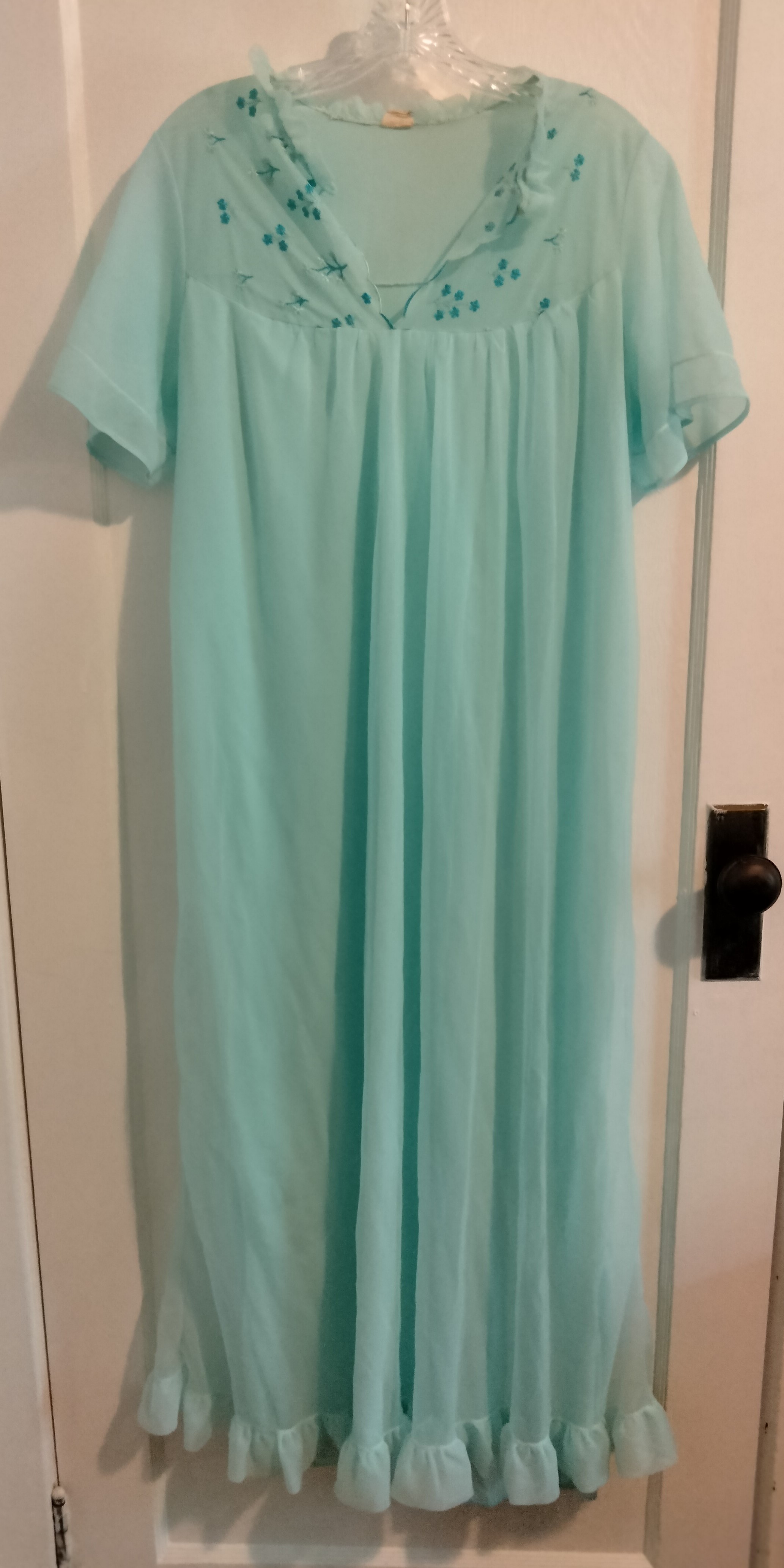
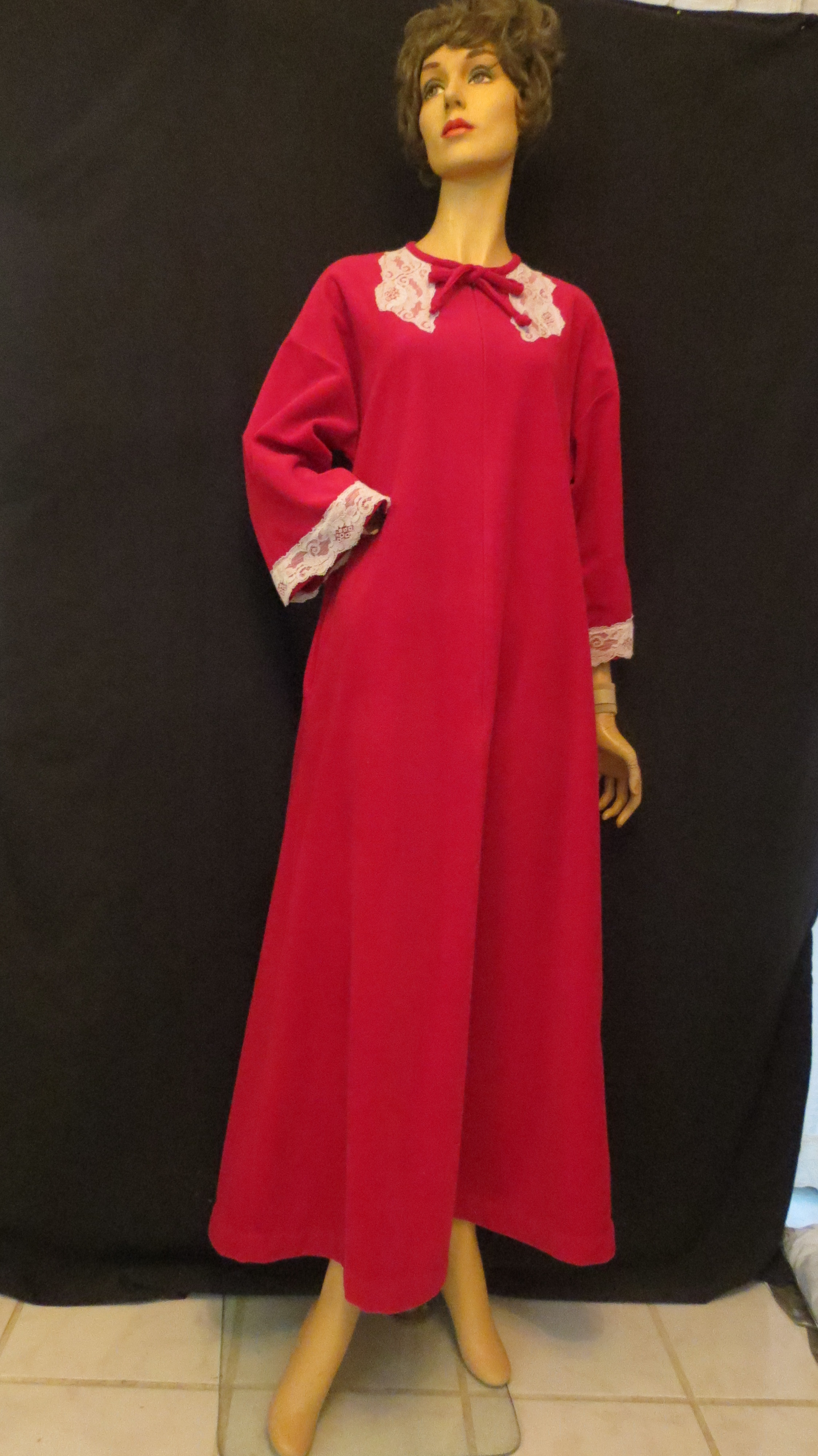
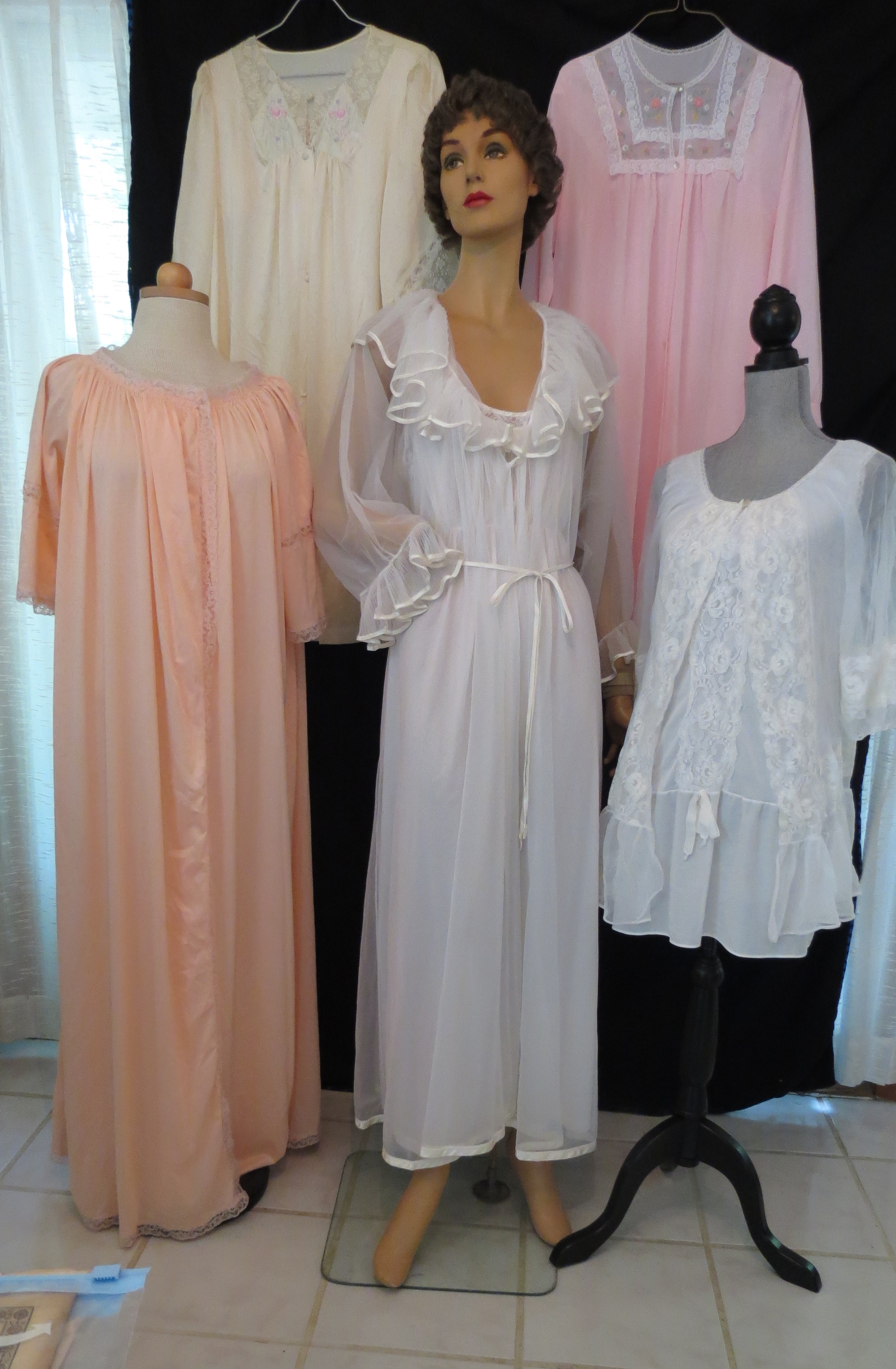
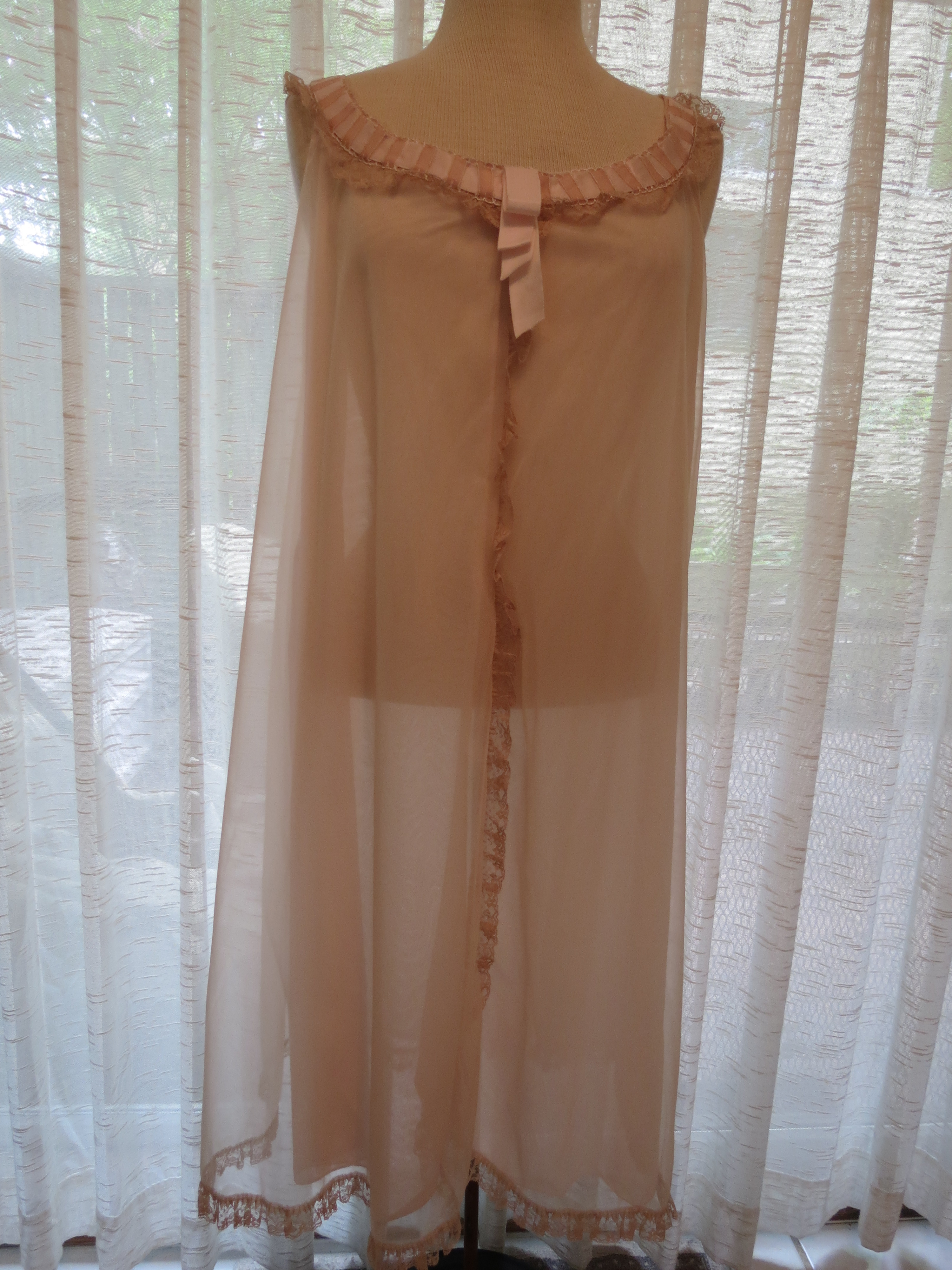
SNUGGLEY TRUE VINTAGE SLEEPWEAR AND LOUNGEWEAR 1950’S – 1970’S

Everybody seems to love red, especially this time of year. It’s certainly a color which can make us feel warmer, which is what we’re beginning to need in a big way now. On the left is a favorite 1950’s pajama set of mine, woven 100% cotton with little fans printed all over. The print would make you think that these must be women’s PJ’s but actually these are a large size boys’! Take a look at the direction of the button closure.

Although I have lots of women’s PJ’s and gowns, my men’s pajamas from the 1940’s and 1950’s are really special. Classic unisex PJ style (though, often, men’s have a fly), but the best feature is that the men’s garments are very sometimes printed with wonderful medallion prints or novelty prints like the one above. A large (16 – 18) vintage boys’ size will fit me well – I wear a ladies 4. A men’s small will usually do OK or can be easily altered. Women’s PJ’s are most often of a solid color nylon or silk or a fine cotton printed with small flowers, decorated with lace or other trim. Really beautiful and comfy, but sometimes a little boring.

However, true warmth comes from robes, and this is where the women’s garments shine. They are more often found in warm fabrics such as plush, chenille and quilting. Women traditionally spent more time at home than men did so ladies’ true vintage robes and dressing gowns are built to be worn for several hours, rather than just after getting out of the bath or shower. Although men’s vintage robes sometimes have nice prints, women’s are more often embellished with embroidery, trim and buttons. Each decade had it’s typical style and popular fabric but the general rules seem to apply to sleepwear and robes from all the decades from the late 1800’s to the present day.

My 1970’s robe above is certainly worthy of Mrs. Claus as she makes breakfast for the elves. (Sorry, but traditional folklore and myths tend to be very sexist.) It’s by Vanity Fair, a company which has made women’s at-home styles and lingerie for decades. I love the pretty style, but the long bell sleeves are very impractical in the kitchen and I don’t think the mid-priced market for this item targeted women who had hired “help” at home. That can be an inherent problem with true vintage fashions – occasionally they are poorly suited to an average lifestyle and can even be uncomfortable at times but that’s a minor consideration and not worth a mention as long as you are in the know. Wouldn’t stop me gathering the evidence for a second. When did practicality ever have anything to do with fashion and style, especially when a holiday or other special occasions are on the horizon? Stay tuned . . . . . . . . . . . . . . . . . . . . . ..

MORGANA MARTIN, THE MAGICVINTAGESPY

BLOG: MAGICVINTAGESPY.COM
NEW TRUE VINTAGE FIND – HOME-SEWN MID-CENTURY BOHO ETHNIC SKIRT

I always collect true vintage separates – especially those that are fun and unusual. They usually tell a story. This one is in great shape with evidence of being custom-tailored by a home-based “seamster” (probably a woman, but who knows?). One thing I know by an interior-only clue is that s/he probably had a little dog or other small pet. S/he very frugally used seam tape that had been chewed a bit. No problem – it did the job.

It could be part of an ethnic costume or simply one of the Boho styles which were very trendy in some ways between 1955 and 1975. I love the dirndl style and colorful weave, almost like home-loomed fabric. I don’t have any special knowledge about ethnic dress that would allow me to pinpoint more closely. Anyway, it’s flattering and easy-wear. Good for mix and match with a variety of tops for different looks and different weathers.

What else makes this special and very wearable in cooler weather? The colors and medium weight are good for 3-season wear. It’s possible that the material contains wool. Would look great with tights, boots or even some leggings. Separates are a useful way to add variety to a true vintage wardrobe and to dress “vintage” without having a complete outfit. Added to my go-to daily wardrobe . . . . . . . . . . . . . .

MORGANA MARTIN, THE MAGICVINTAGESPY

BLOG: MAGICVINTAGESPY.COM