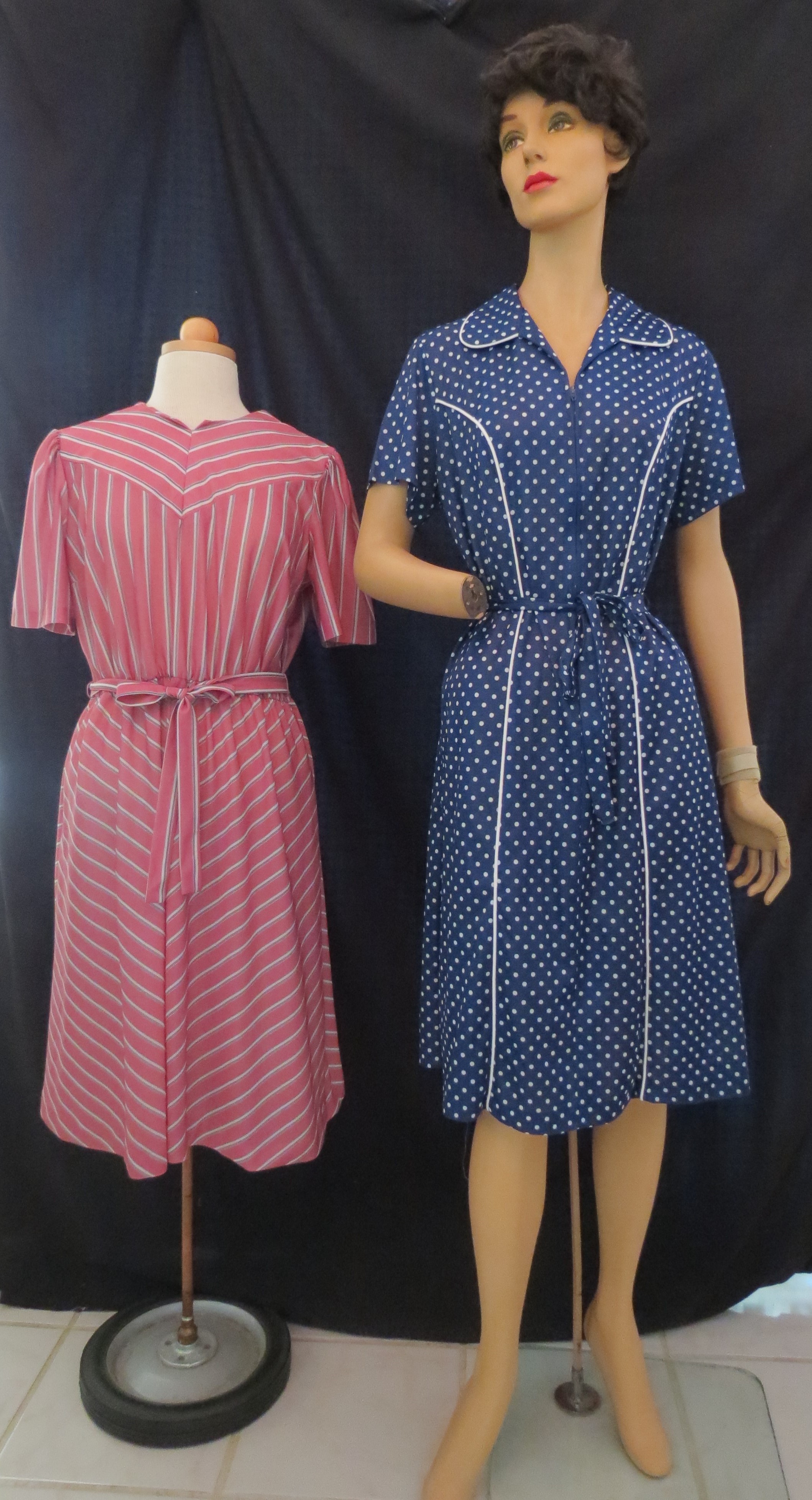
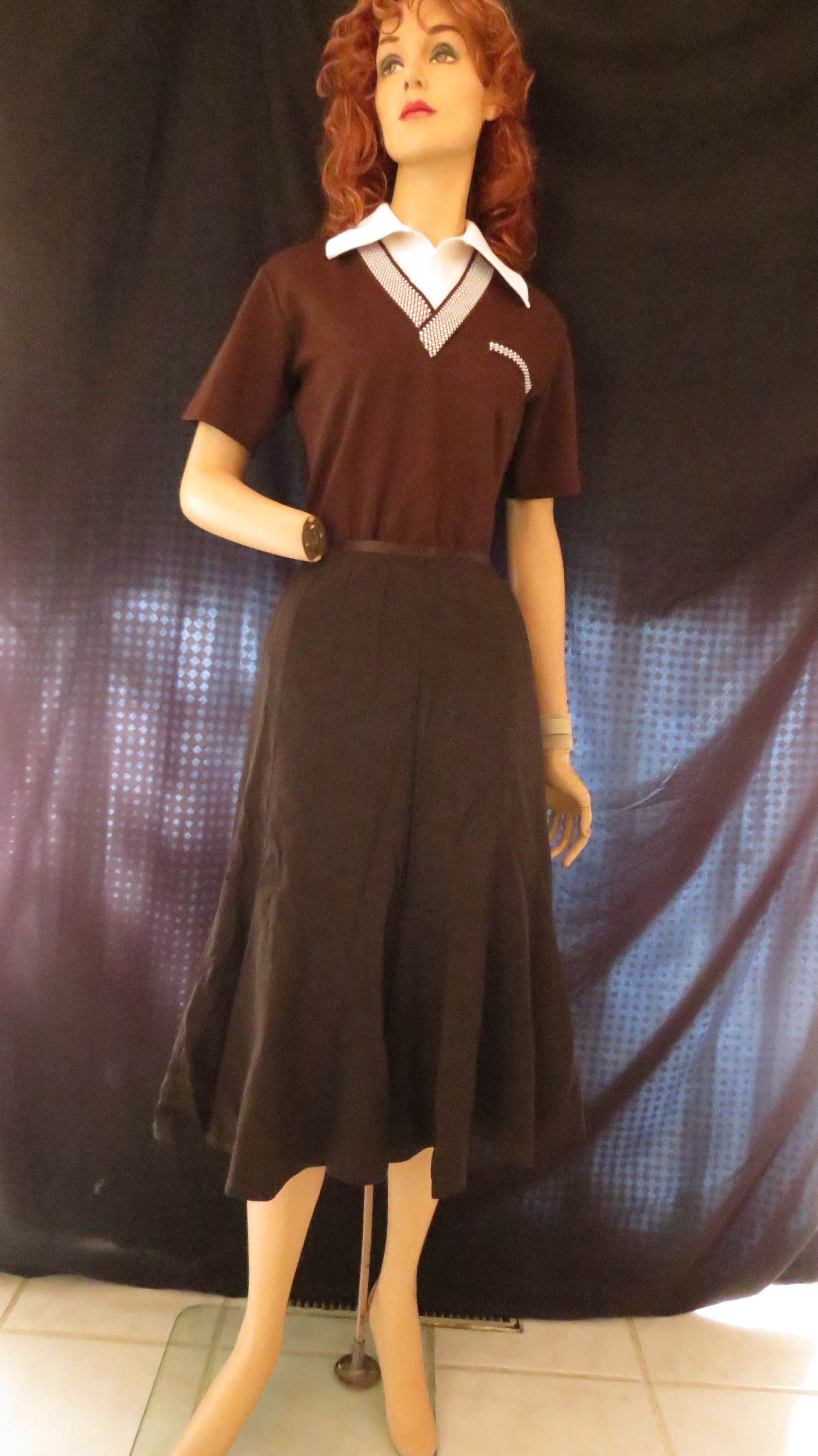
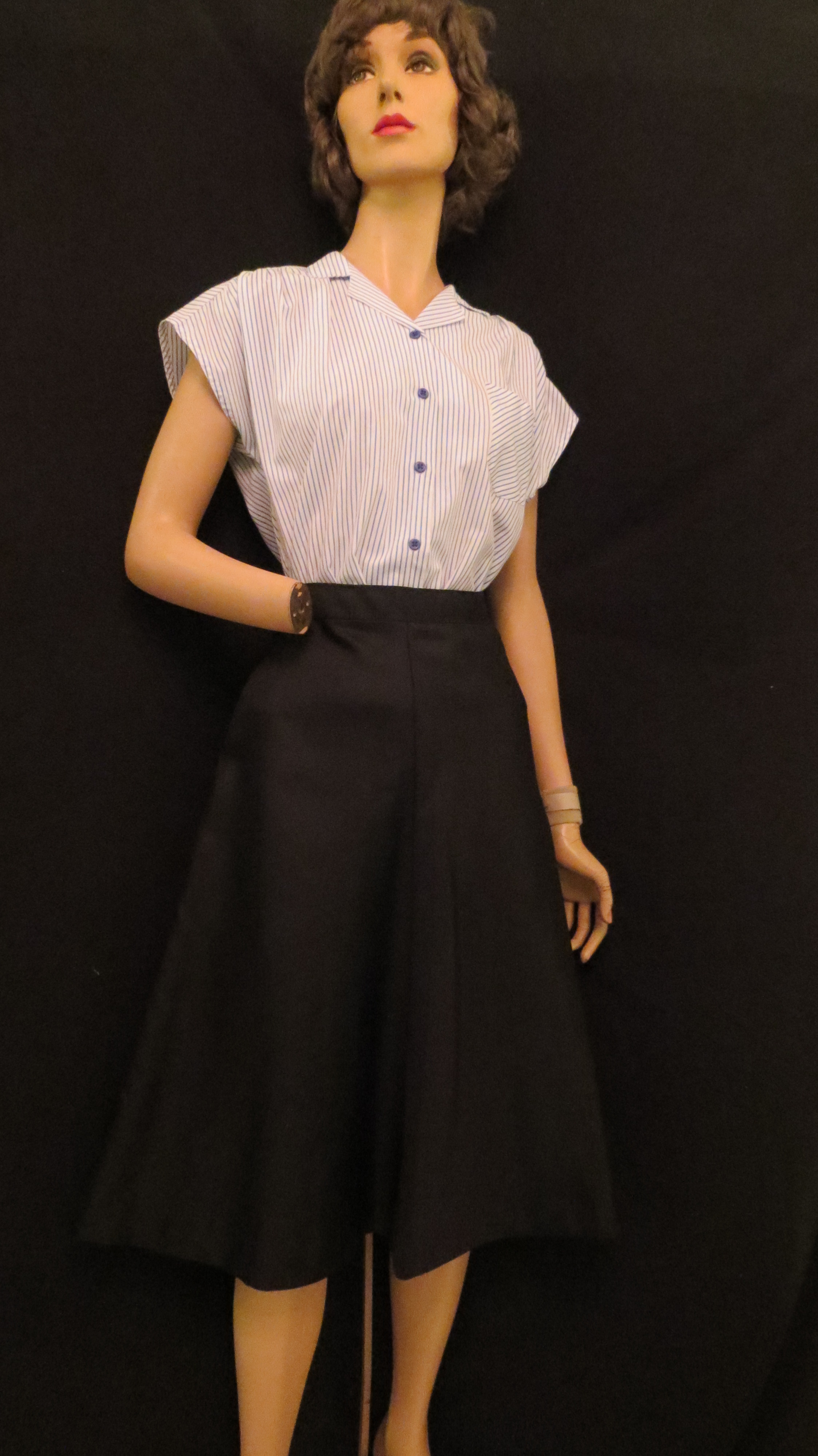
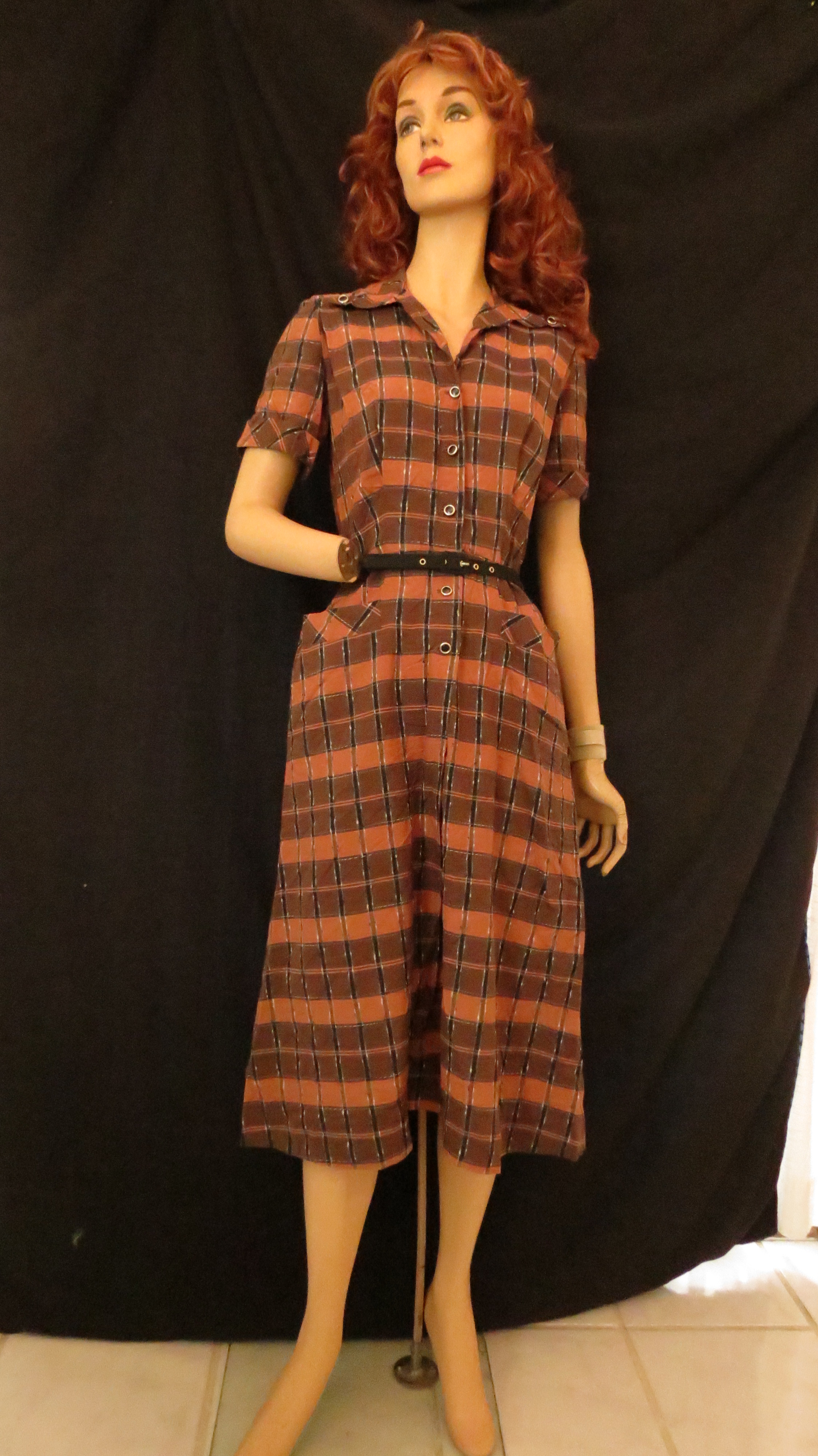
6 PRETTY TRUE VINTAGE 1940’S DRESSES WITH ’80’S DOES ’40’S WEDGE-HEEL SANDALS

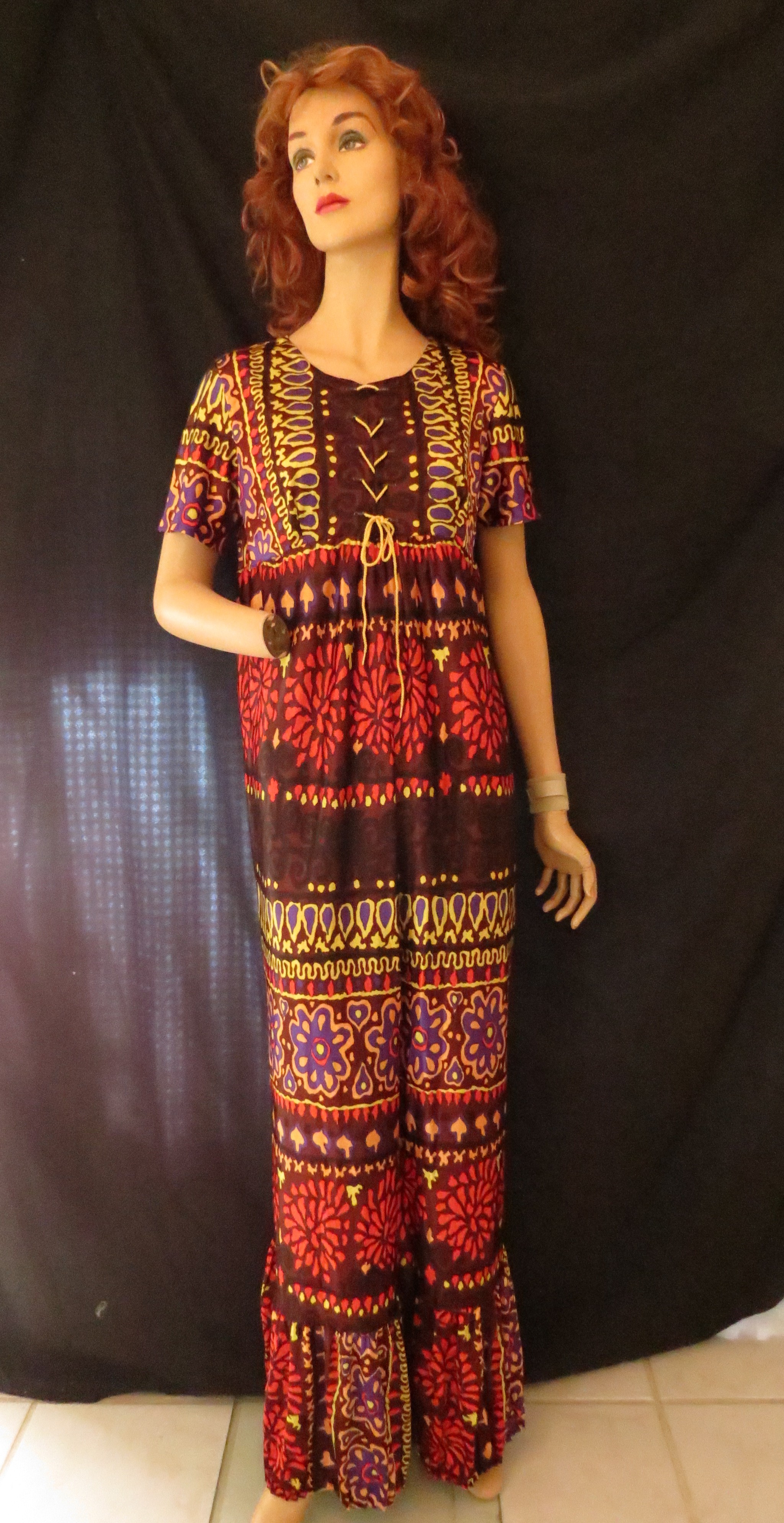
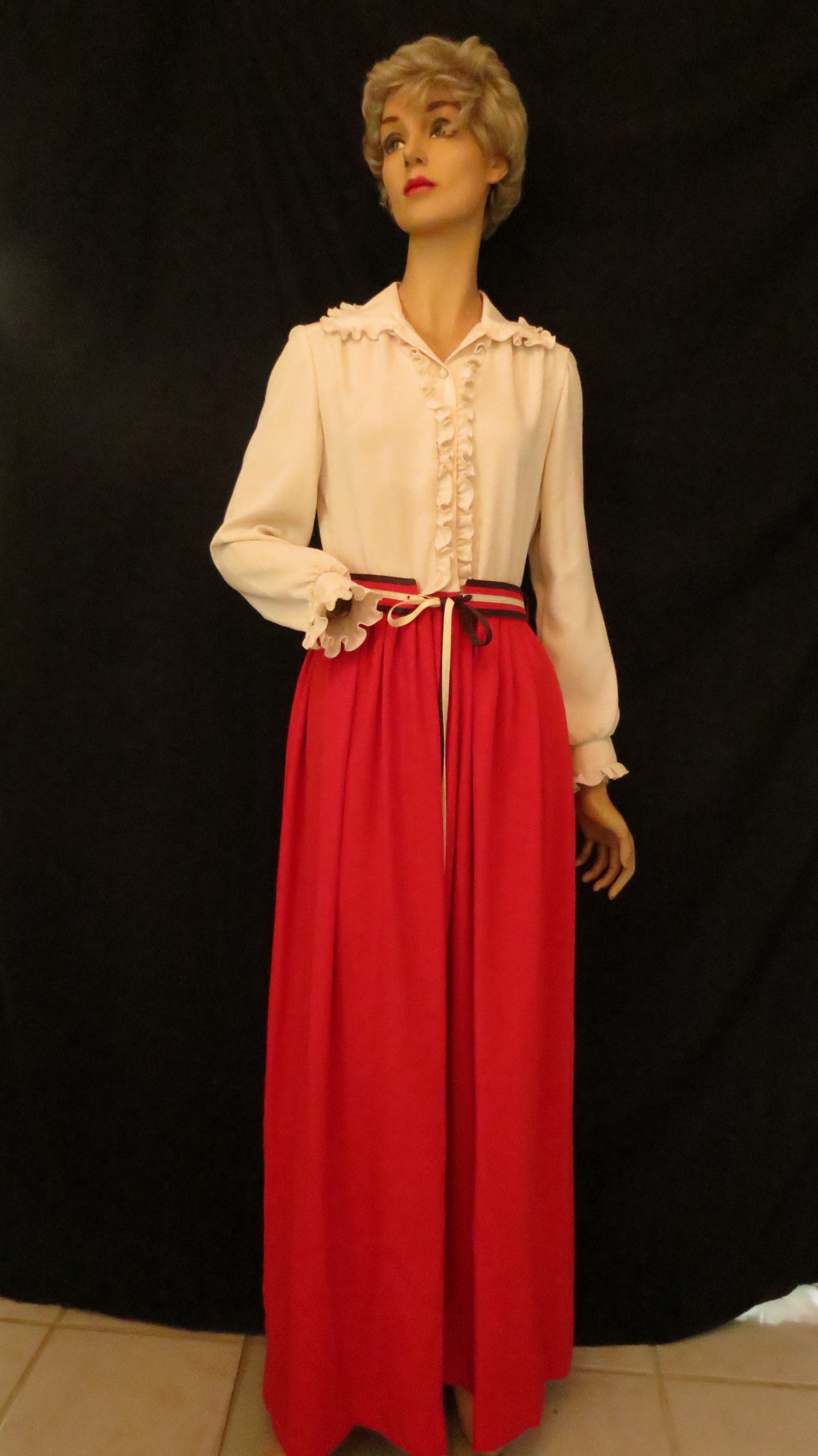
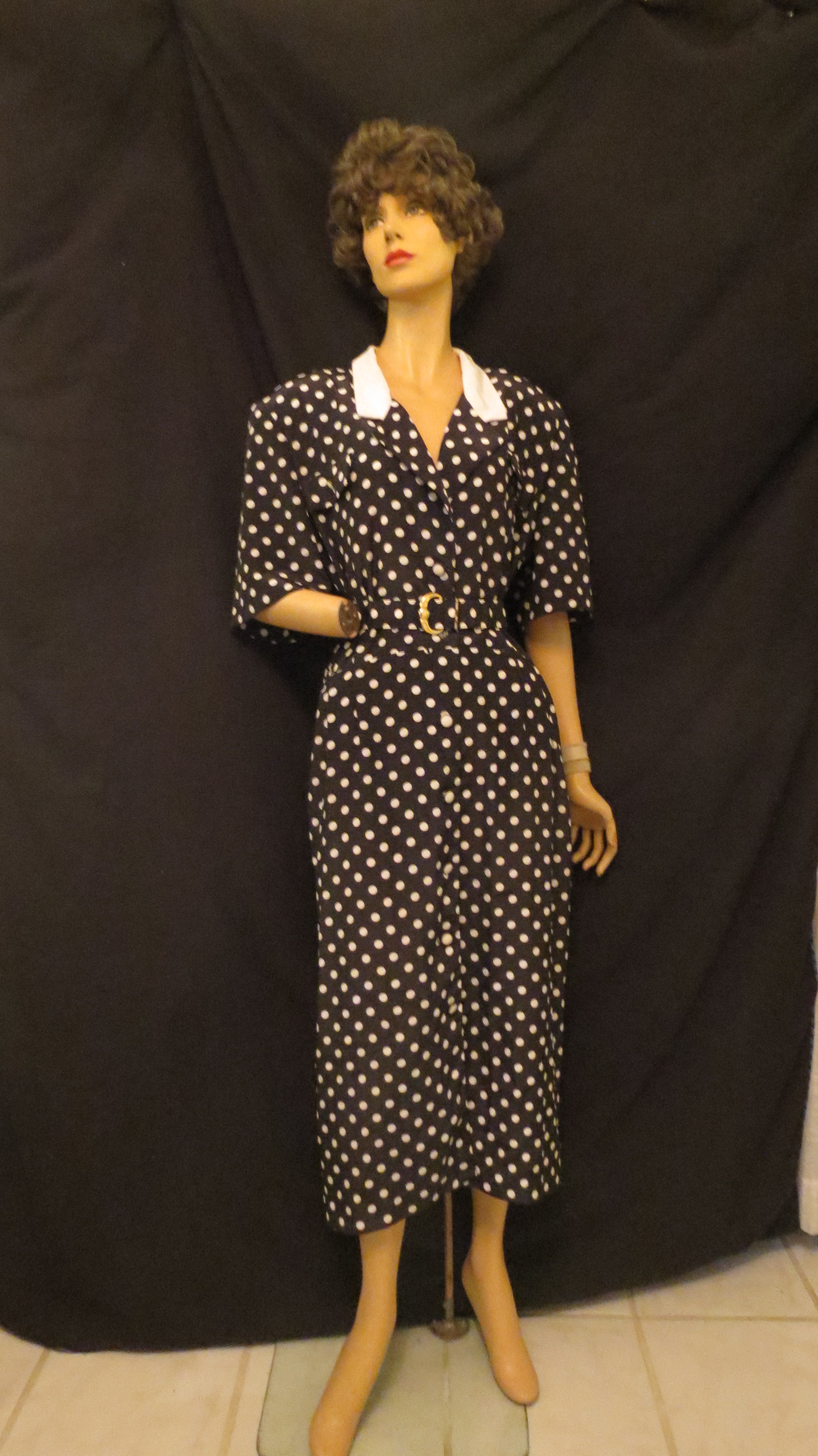
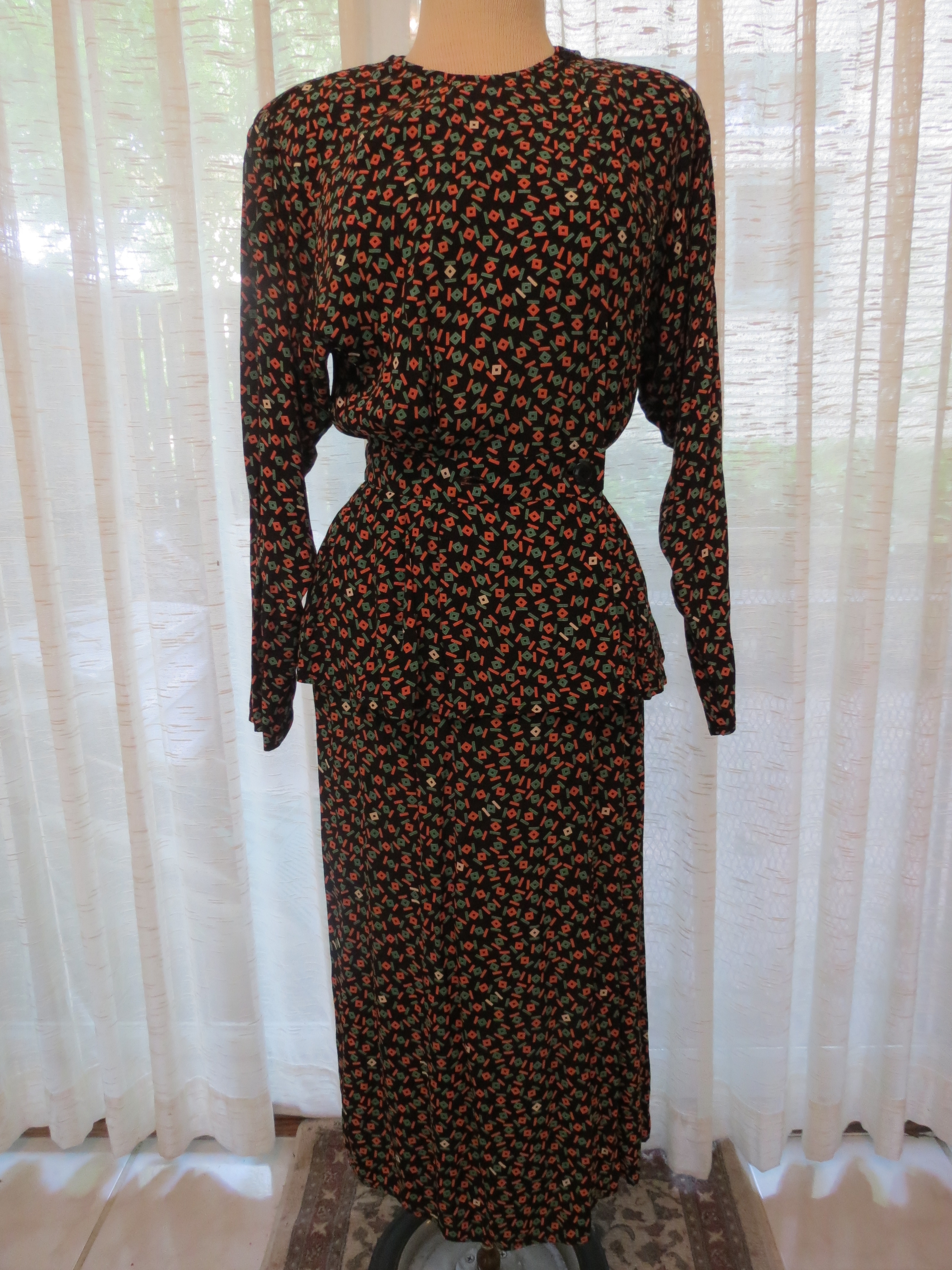
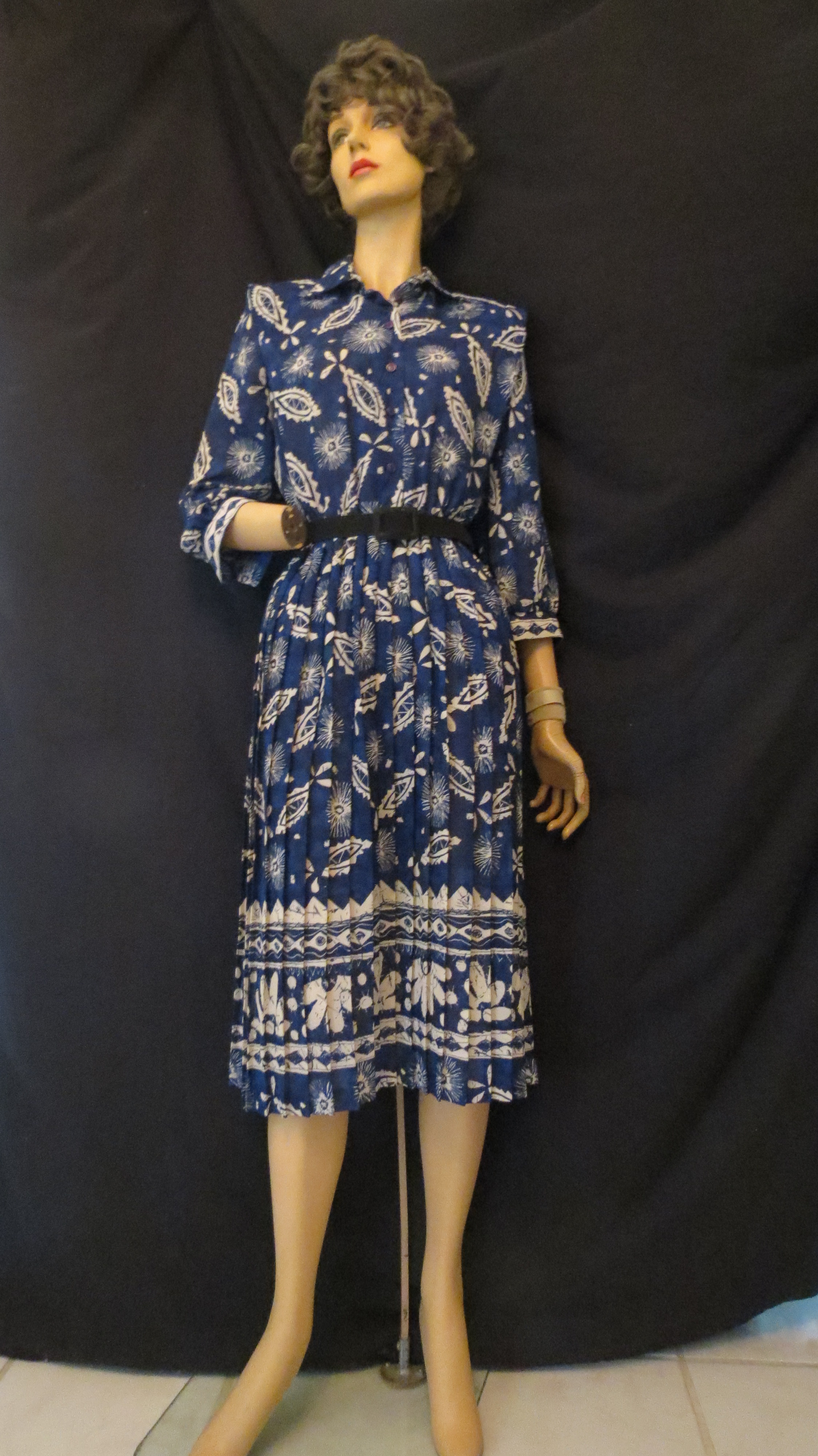
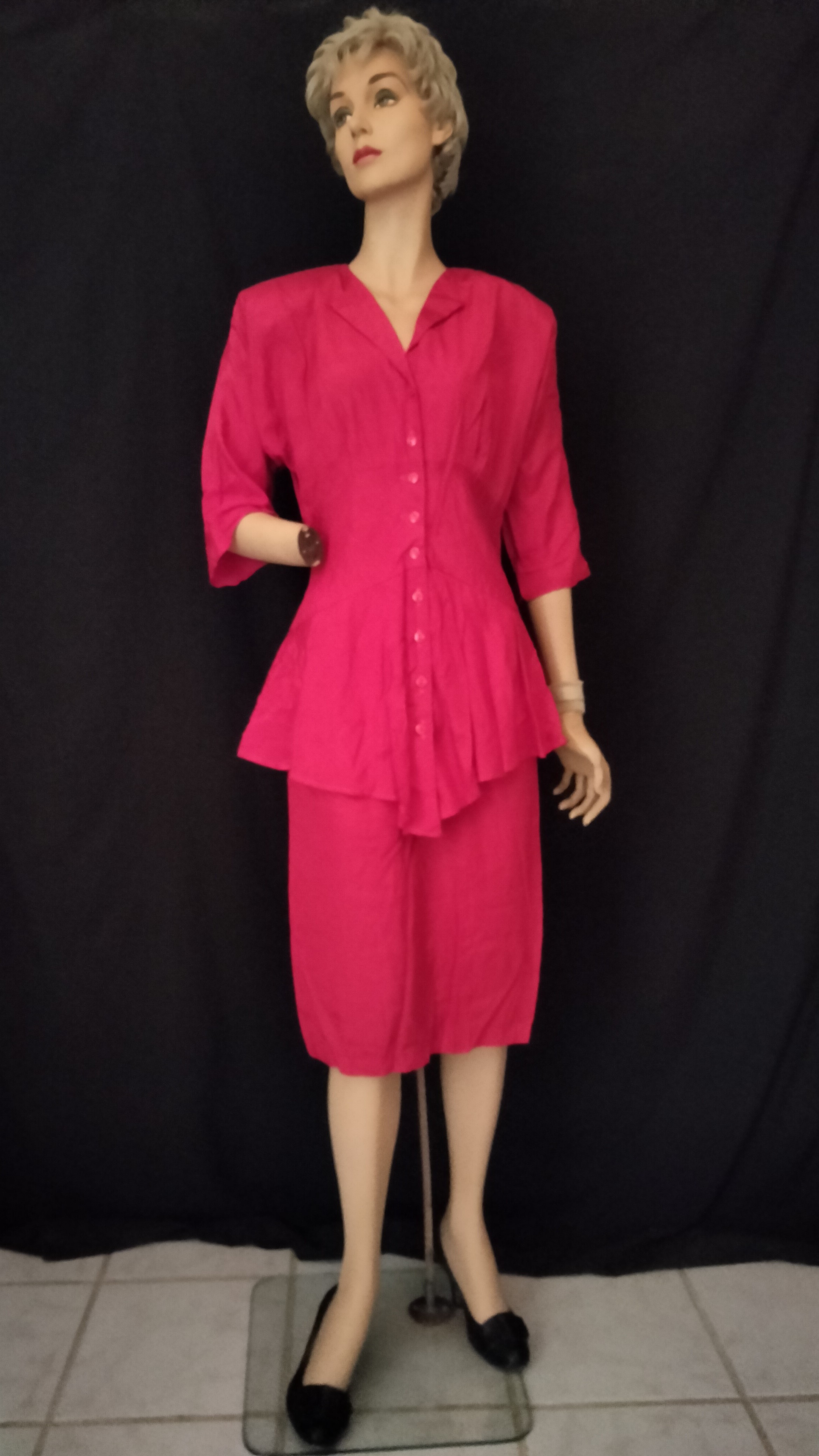
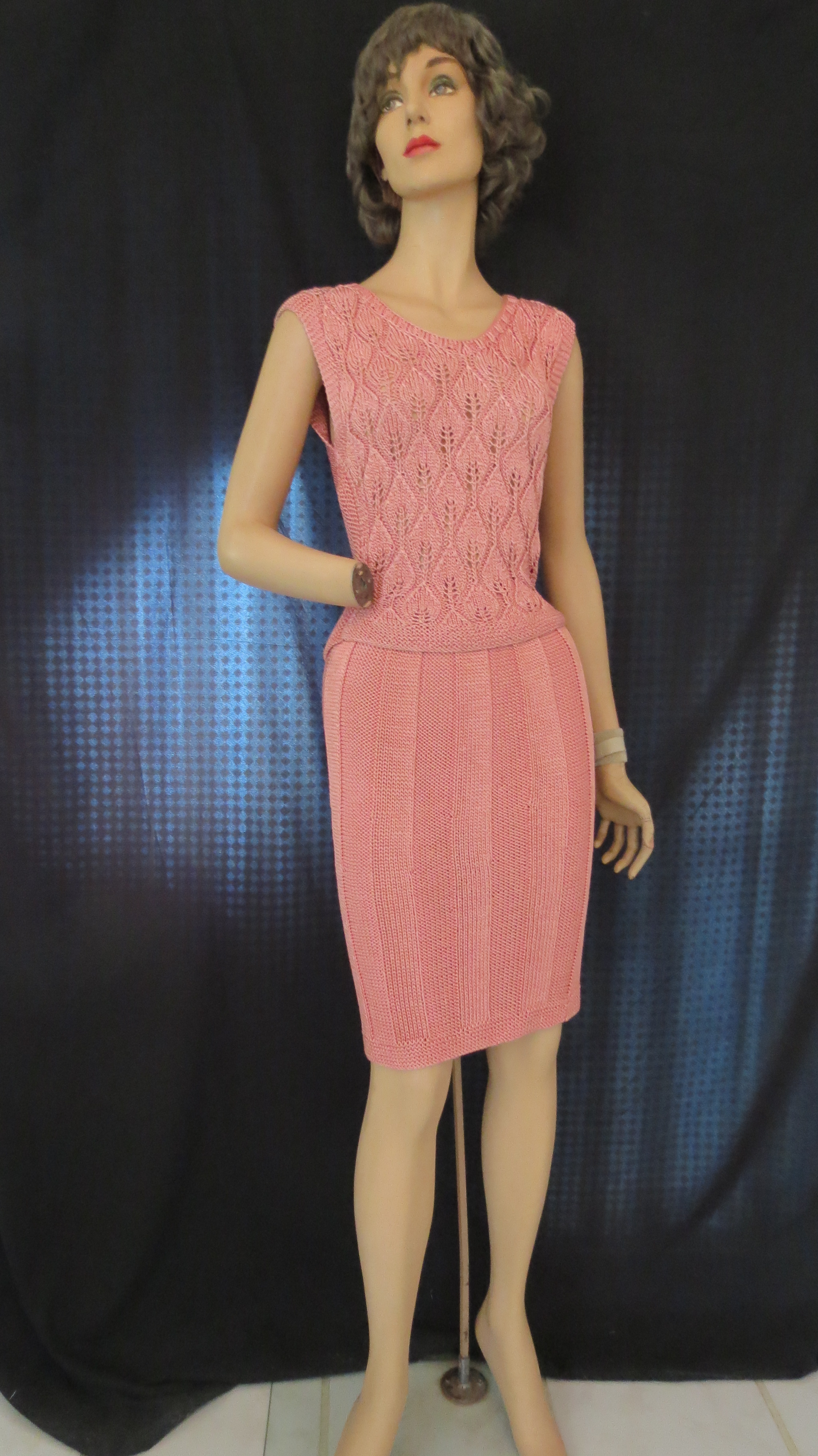
A knee-length synthetic (probably acetate blend) coral red frock from the early 1940’s has augmented shoulders, a straight cut and a fabric-covered belt with some glass beads to dress it up. In the post-war Forties, hemlines were able to come down again and skirts became fuller. The knee-length wartime styles were able to resume their previous midi-length luxury. Rayons and polyester synthetics continued their popularity because of their availability, lovely drape and acceptance of color dyes. During the early recovery from the war, some natural fabrics and detail items were still not fully stocked in dressmaking supplies.

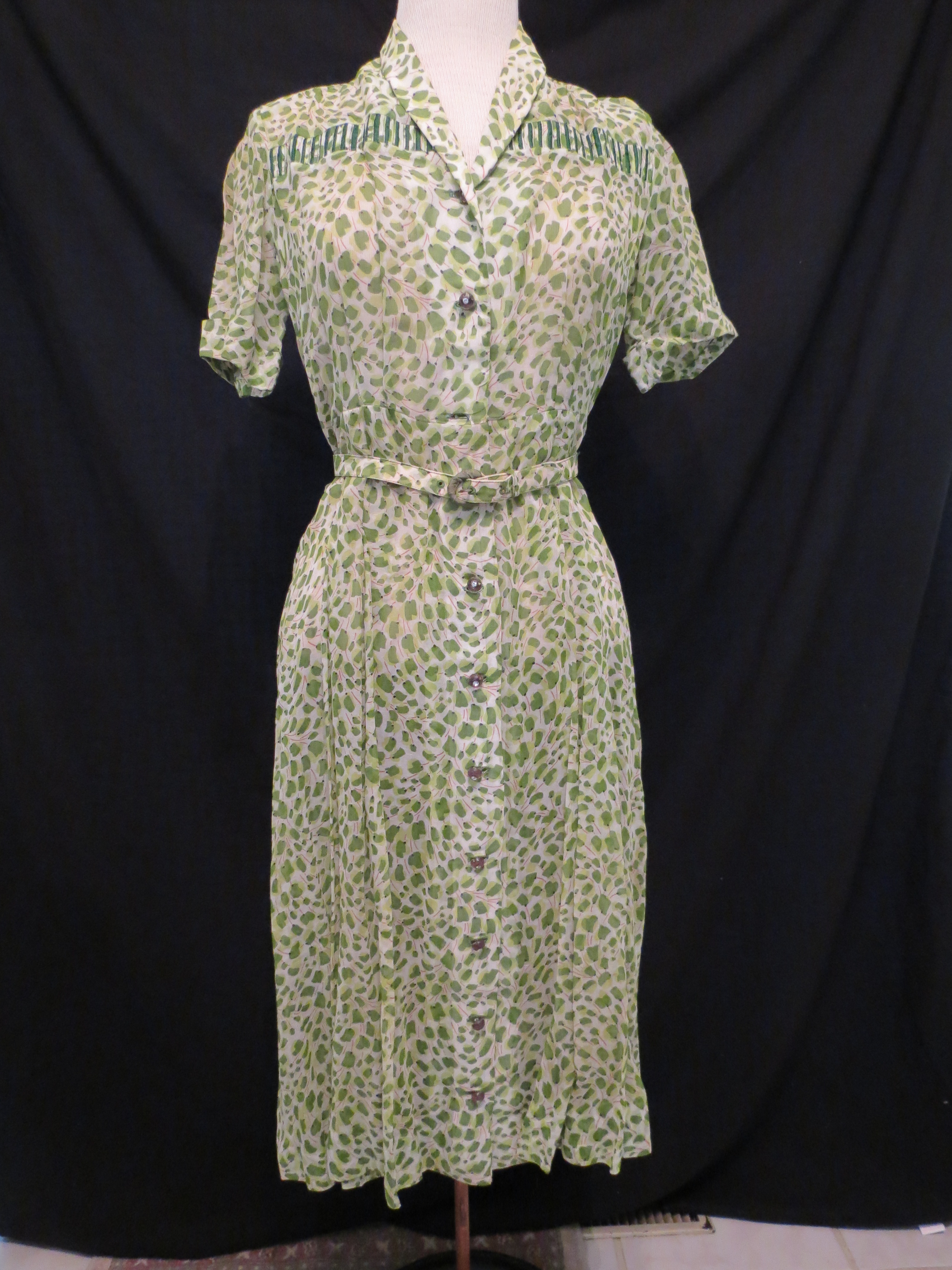
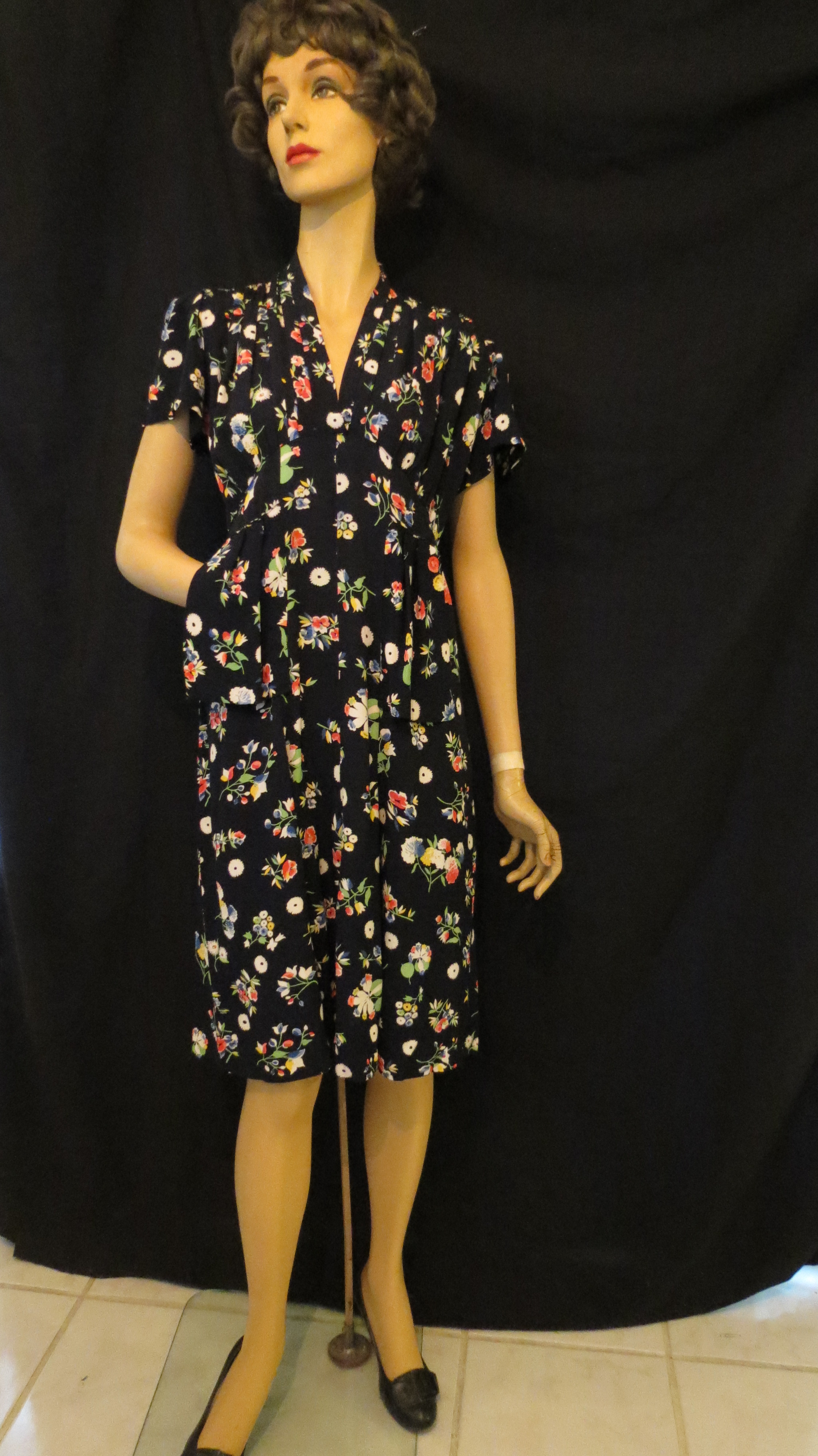
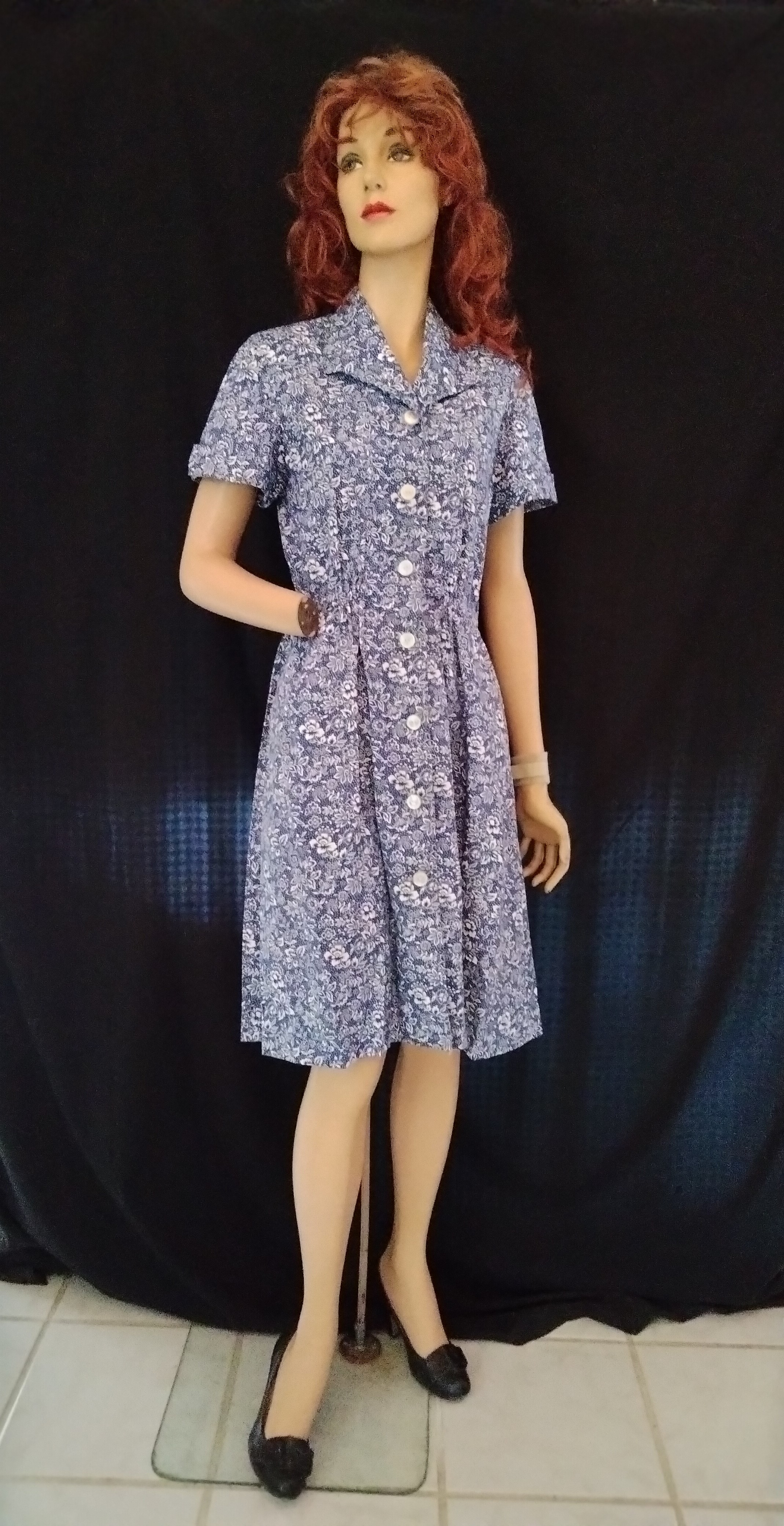
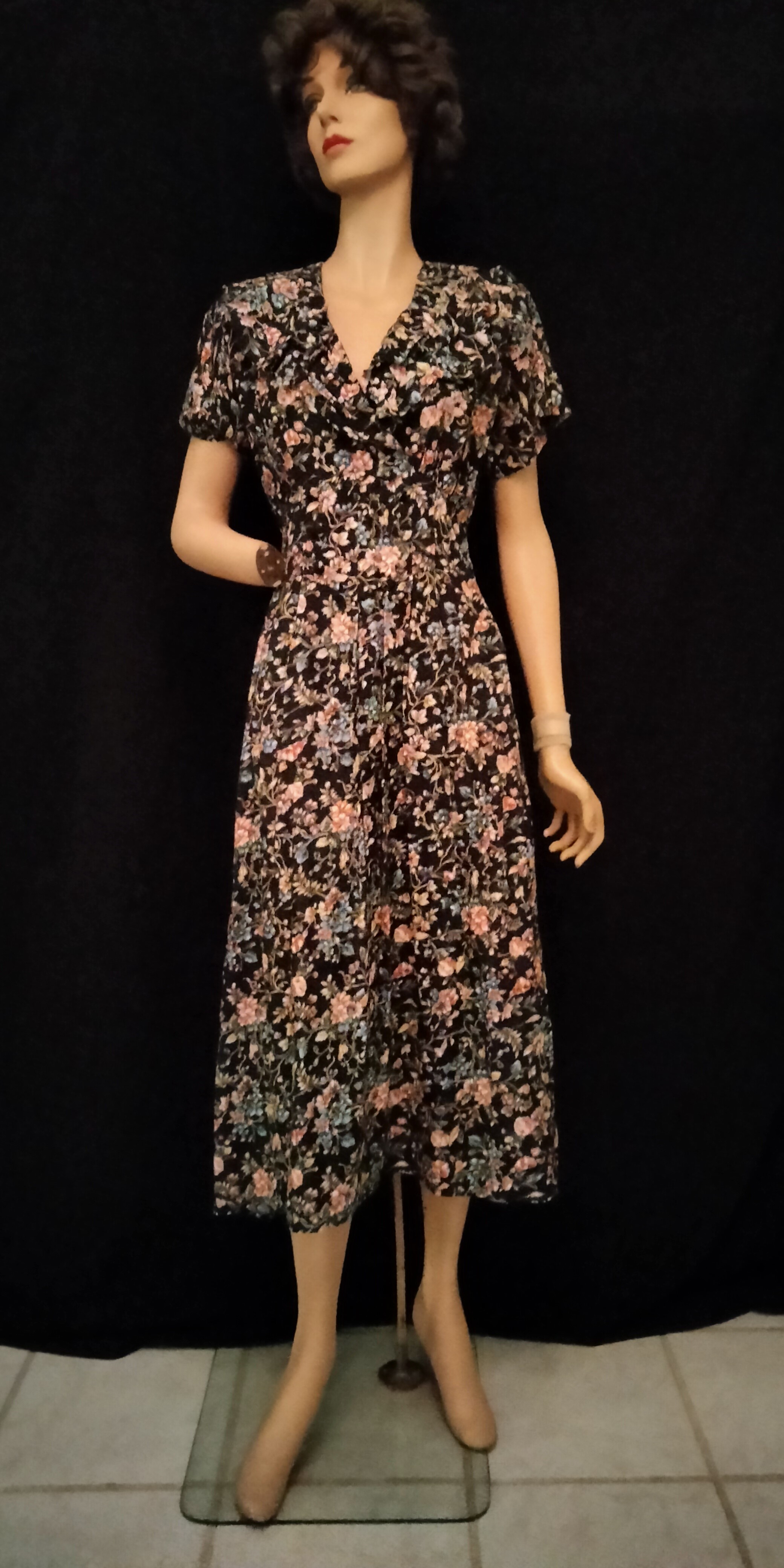
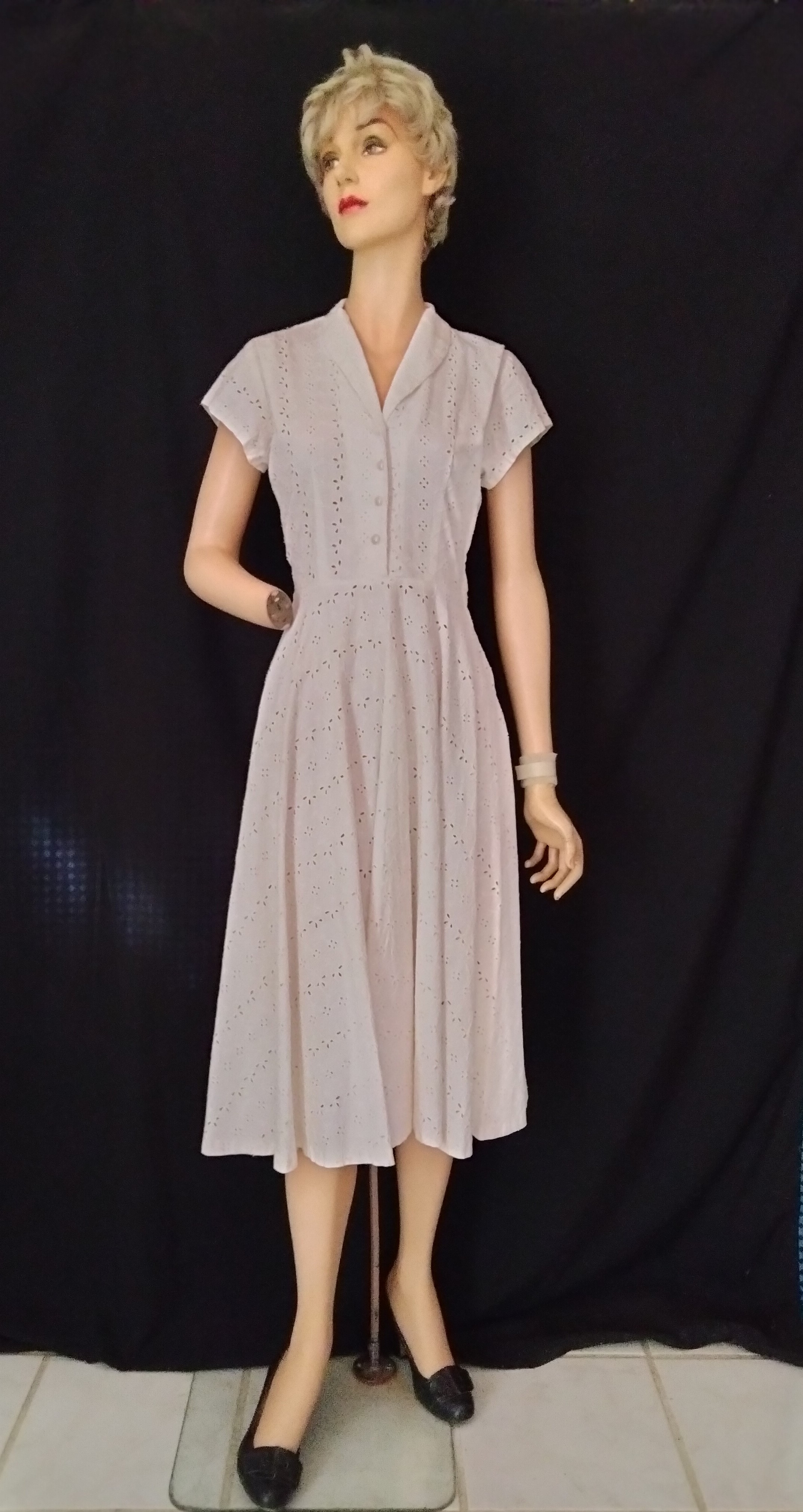
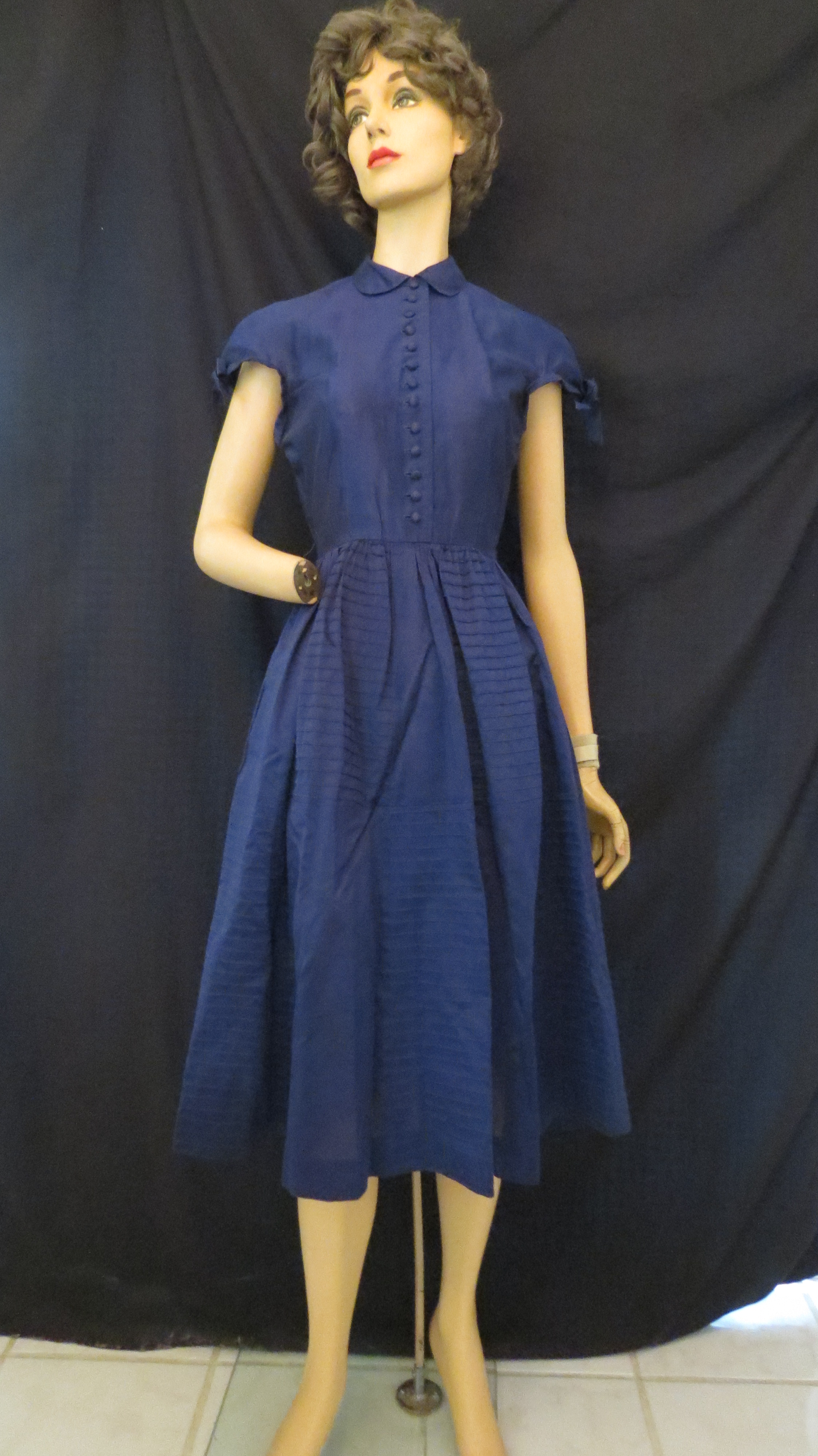
The ever-popular shirtwaist style has never left the fashion scene but became more modern, with atomic prints, and more sophisticated design in the later ’40’s after women had stepped into more visible roles in society with their wartime efforts. When the majority of the trauma and restrictions were finally past, this tea-length floral frock is an example of a more relaxed, aristocratic style as the culture looked forward to the more prosperous 1950’s.

With day-dresses to slacks, I love wedgie sandals and these Eighties does Forties versions did not disappoint me. Their sleek leather sling-back style goes well with almost everything and the 2″ heel gives lift along with walkability. This design carried on into the 1950’s and would look great with the dresses I’ll post tomorrow. Stay tuned . . . . . . . . . . . . . . . . . . .

MORGANA MARTIN, THE MAGICVINTAGESPY

BLOG: MAGICVINTAGESPY.COM

TRUE VINTAGE DAY DRESSES THROUGH THE DECADES, HANDBAGS AND SHOES – 1930’s

Two of my favorite 1930’s dresses to wear and one when I feel like Bonnie of Bonnie and Clyde. The fabrics feel so wonderful on the body and the fit is killer because of the fabulous drape. An earlier find, I was thrilled to discover the blue dress because of it’s condition. The original buttons and belt are present and no damage to the trim at the neckline. Also, no stains! You can see that the body of the dress has faded a bit due to years of washing by the original owner (compare to the color of the belt, which would not have been put in the laundry), but I don’t mind. The floral-print yellow and green frock is near-perfect and is a bit more casual. Super easy-breezy. The crocheted dress with satiny rayon slip given to me by a family member who found it in an old antique wardrove is the real star. It still has the authentic celluloid plastic belt buckle. The longer hemline makes it probably the oldest of the group, from the very early ’30’s. I have to include a 1980’s or ’90’s dress that dipped into a retro 1930’s. The yellow rayon belted sheath is a fun fashion with loyalty to the Thirties style and lovely rayon fabric.

These are both mid-priced dresses, at most, but have held up over 70 years before finding their way into my closet. It’s possible they were home-sewn. I love the elbow-length sleeves and the way that the fabric causes the hemline to ripple and sway. Very flattering. Both do require a slip underneath because of the sheerness and, since they are warmer weather frocks, I like to wear a true vintage cotton slip with very little decoration so that it doesn’t show through and compete with the print. Slips of that sort are hard to find since most of the slips that have survived are made of nylon and full of decorative detail. Although some fabrics don’t seem to require a slip, wearing one often causes the dress to fit and move so much better. Your other foundation garments i.e. brassiere, underpants and even stockings will have a real effect on how your outfit looks so it’s an important consideration. I have silk tap pants and some silk slips from the pre-war and WWII era that are good examples of undergarments that work really well with dresses like these.

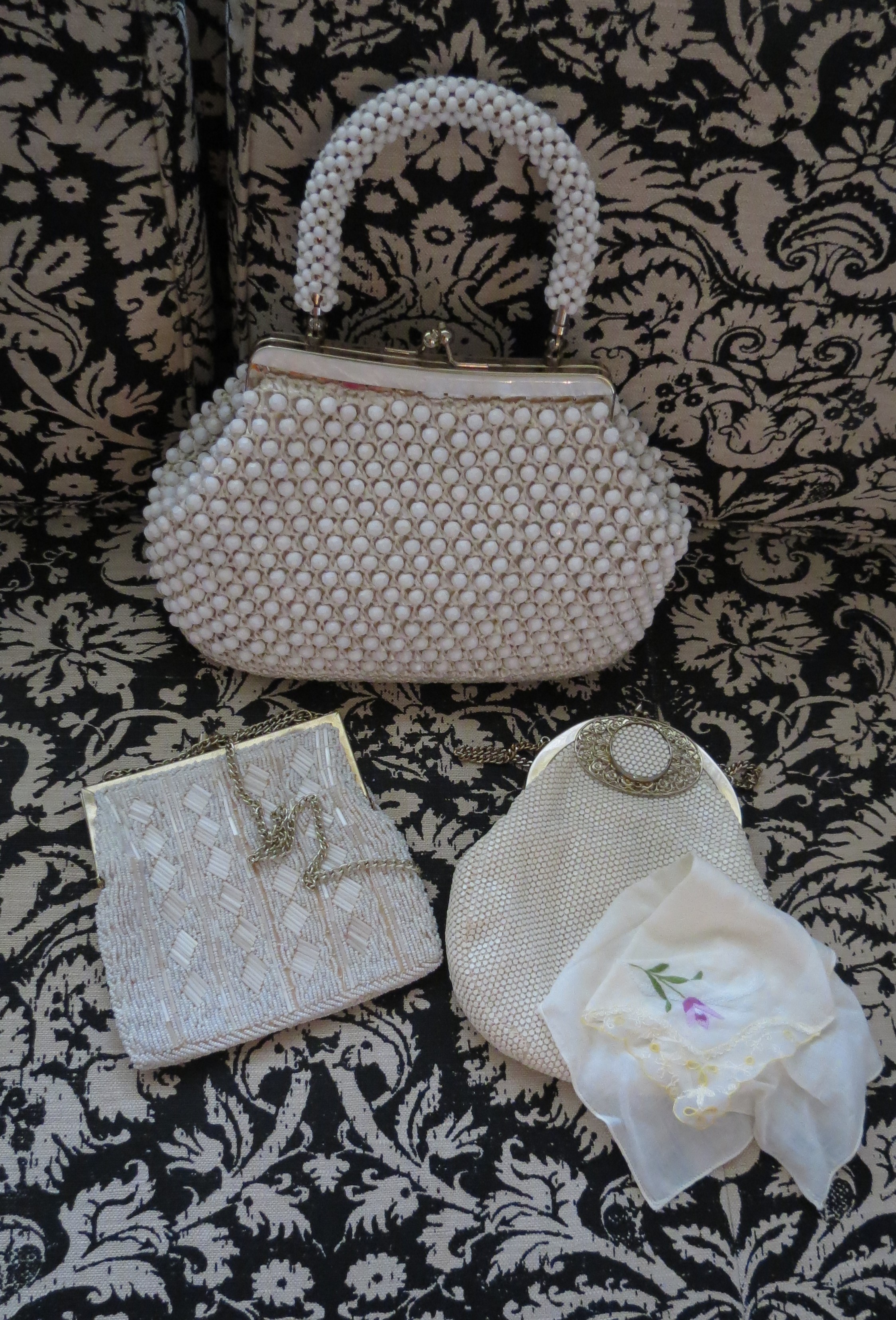
Mary Jane style shoes are seen in every decade since the 1920’s. Decorated flats became popular for women, too, especially when they began wearing slacks. The shoes shown above may be a little younger than the dresses and purses, but are still within a decade or so. Handbags woven from synthetic yarn were another way that the market for clothing and accessories coped with the economic downturn of the Depression and the looming rationing of wartime. Leather, silk, quality cotton and wool were less available and too expensive for many buyers. The big move forward in the development of synthetics changed clothing in big ways, many having to do with fit, comfort and convenience so, overall, the deprivation turned out to be a plus. Tomorrow we move into the 1940’s. Stay tuned . . . . . . . . . . . . . . . . . . . . . . . . . . . . . . . .

MORGANA MARTIN, THE MAGICVINTAGESPY

BLOG: MAGICVINTAGESPY.COM
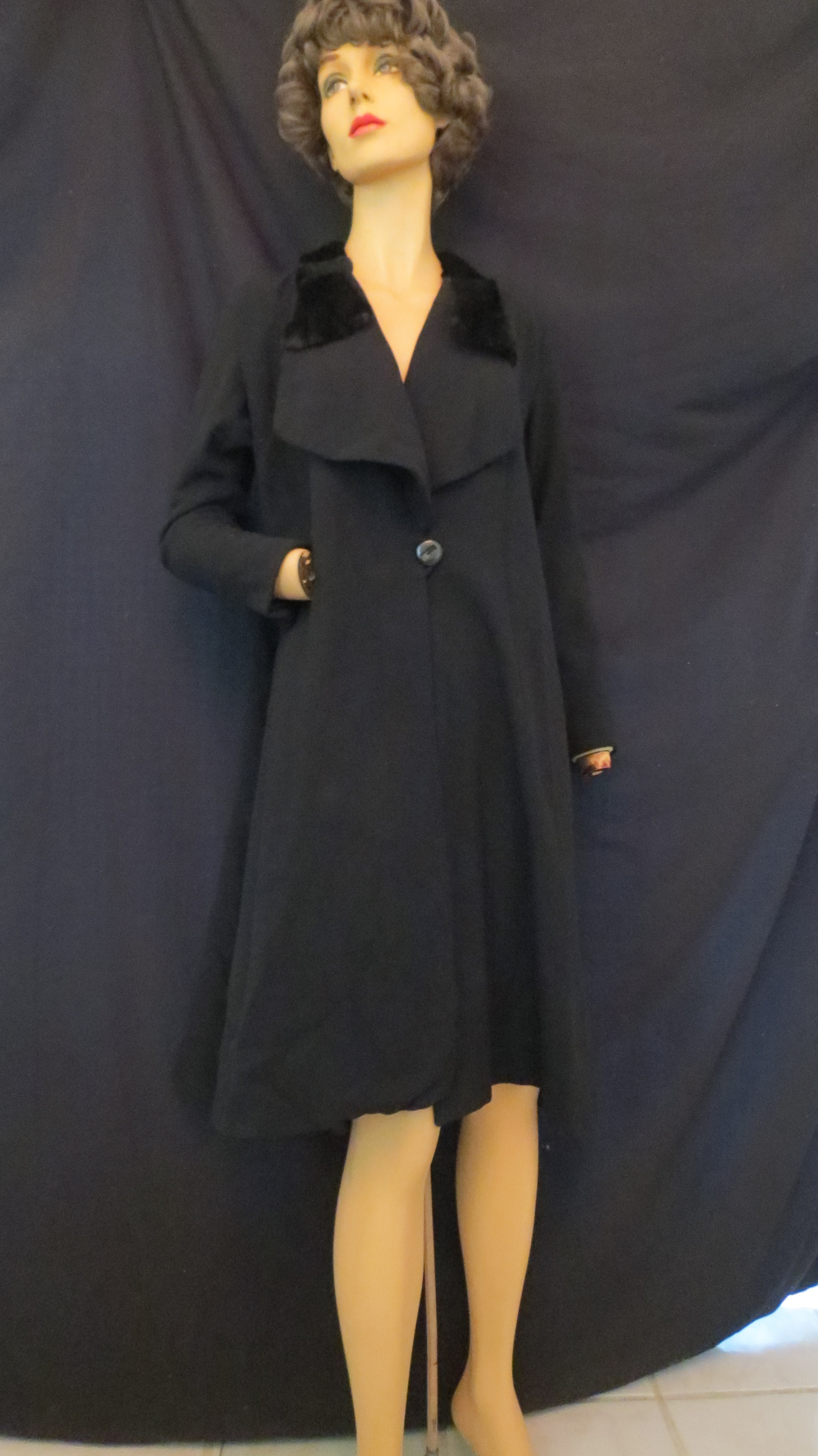
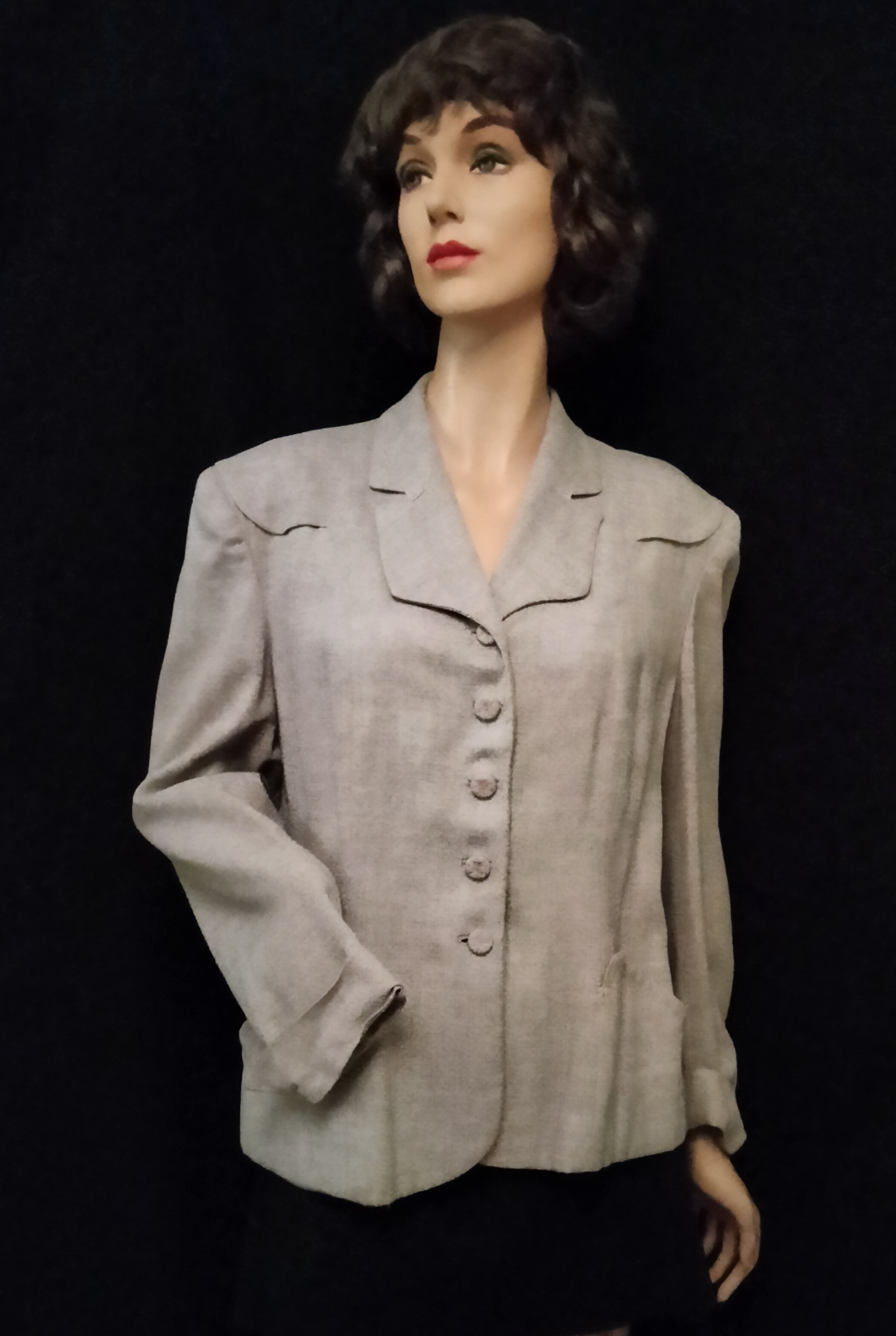
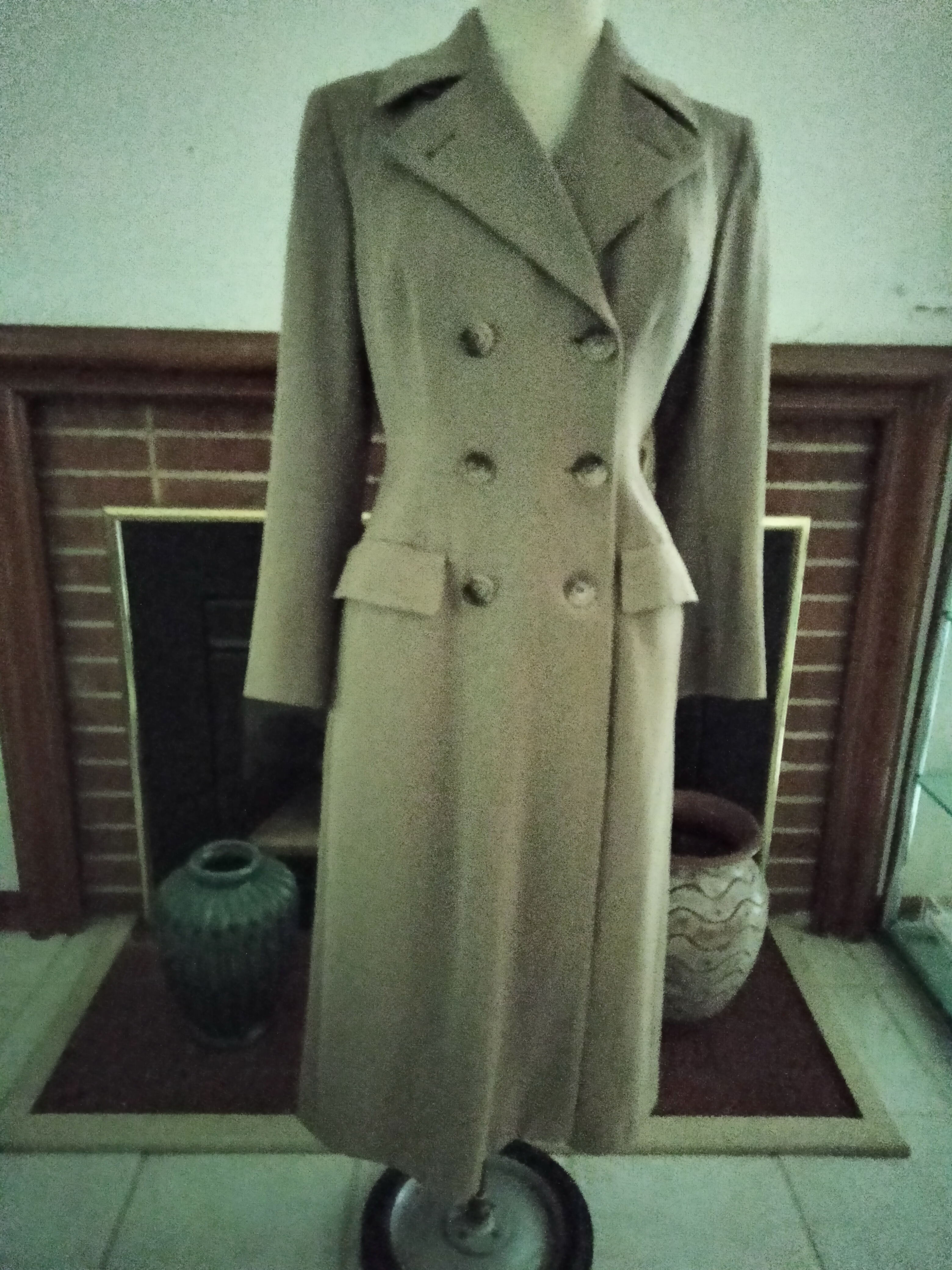
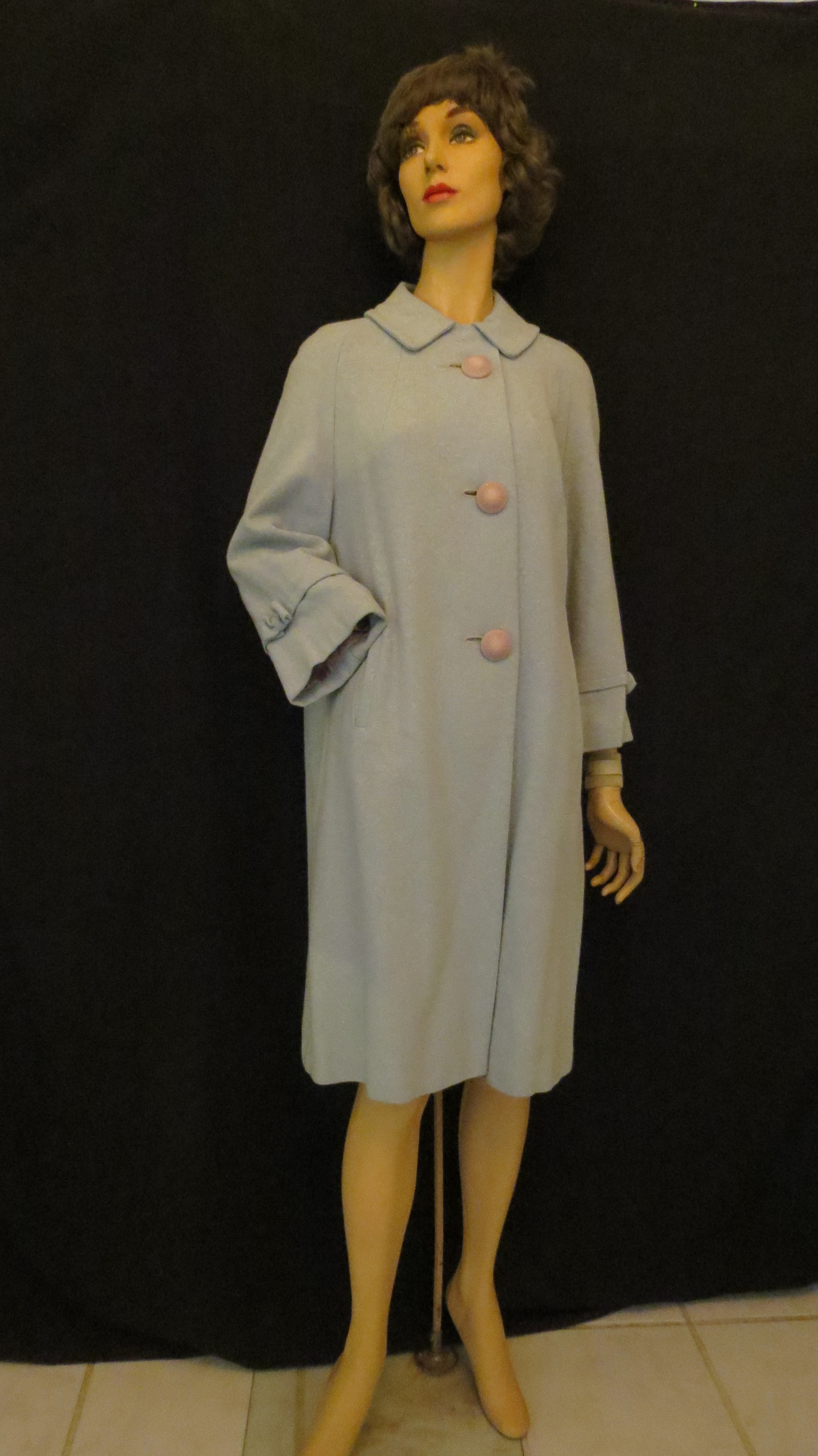
TRUE VINTAGE SPRING JACKETS & COAT 1940’S – 1980’S

Distinctive tailoring and fabric in ladies’ jackets helps identify their decade in fashion history. Wool jackets with interesting buttons and lots of tailored details were very popular from the late 1930’s into the 1950’s. Not all 1940’s jackets had big, military-style shoulders. The two 1940’s jackets in the first photo are good examples which were both parts of a skirt suit originally. They’d look great with a pair of tailored pants, too. Look at the buttons and pockets that draw attention. Tabs on the cuffs and waistline detail do the same. Both jackets have an easy, flattering fit.

In the 1950’s, jackets became more sporty and body-conscious in many cases. This fitted white leather jacket is a great example. Covered buttons, a wide collar, slash pockets and back vent really draw the eye. It’s sleek and streamlined. The fitting reflects that in the tapered sleeves and fitted waist. Extra room on top which accents she shoulders and bustline gives a bit of an athletic or “va-va-voom” figure enhancement. Love it!

The bright red all-weather textured polyester coat from the 1970’s has many mid-century style features. The stand-out collar design with extended lapels is a “1970’s does 1940’s” style which was very popular in the early Seventies. The fitted Princess cut also harks back to the 1940’s and 1950’s, up through the early 1960’s because it is very classic. Knee-length hemlines on coats reflected the hemlines on skirts and dresses, so were shorter during WWII and the mini-skirt era between the early ’60’s and early ’70’s.

The tan-color 1980’s jacket is also made of leather. It’s a casual style that is more international and eccentric but has a bomber jacket silhouette paired with a 1940’s peplum waist that goes with some types of skirts and pants. Lots of gathers on the shoulders and at the waist give it a roomy fit that lets you wear a sweater underneath if you want to.

Before heading into a chronology of true vintage Spring day dresses, we’ll take a Snowbird vacation tomorrow. Stay tuned . .. . . . . . . . . . . . . . . . . . . . .

MORGANA MARTIN, THE MAGICVINTAGESPY

BLOG: MAGICVINTAGESPY.COM
True Vintage Ladies’ Sweaters 1940’s – 1970’s

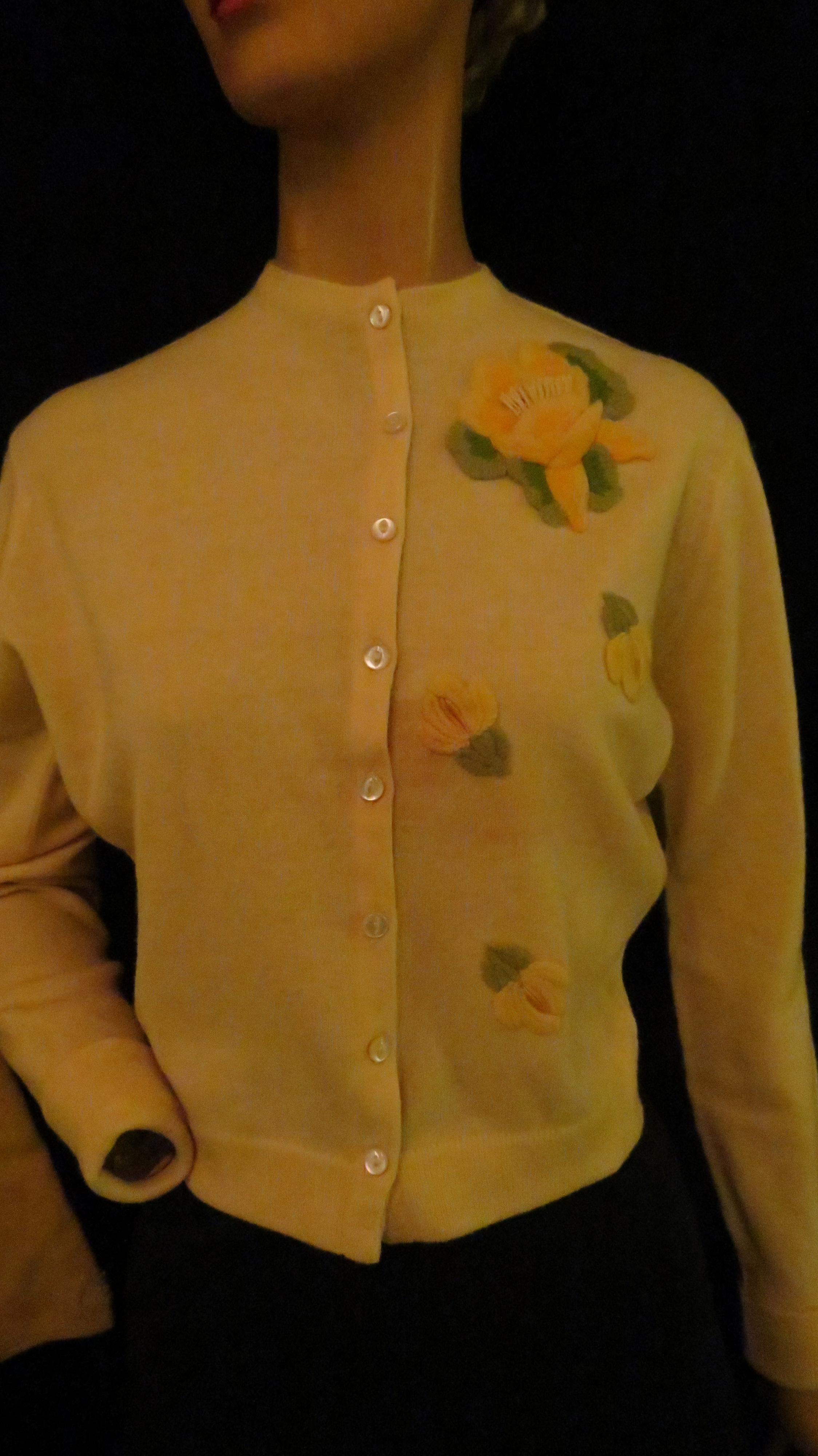
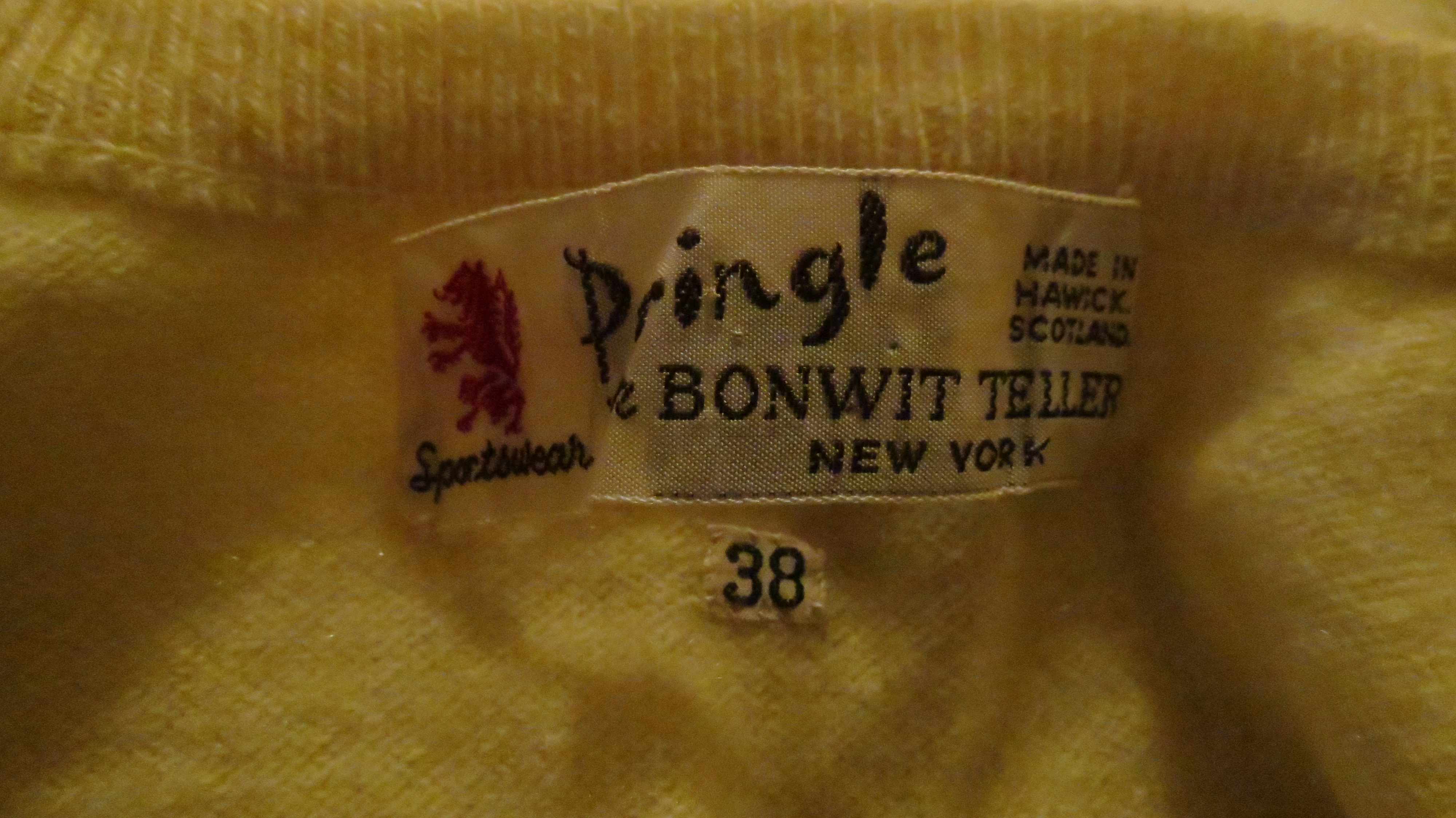
Just a few examples of the many styles and varieties in my archives, but this assortment is a good beginning. The most classic, and probably the most numerous of my discoveries, have been cardigans. Finely made cashmere sweaters, like my mother’s yellow one with appliqued flowers, were a staple for the college coed in the late 1930’s to 1940’s. Plain styles were often worn in reverse, with the buttons in back. Up through the 1950’s to the early 1960’s beaded and embroidered cardigans were hugely popular and the designs were endless. Most were commercially-made, many of the best ones in British Hong Kong, but some women decorated theirs at home. My mother bought this yellow sweater jacket by Banff in the early 1960’s.

Of course, there were v-neck, crew neck, and collared sweaters in all sorts of variety. Most were nice, but casual styles made to wear with skirts and, later, with slacks. Wool sweaters provided the most warmth for colder months and, until Orlon became available, almost all sweaters were made of wool. Synthetics were really given a boost during WWII because of the government’s requisitioning of wool for military uniforms.

The turtleneck that we love now didn’t seem to show up too much in everyone’s closets until the early 1960’s. Until then, it was a little more avant guarde or unconventional for the average gal though they were on the scene from the 1920’s. Always a sportswear item, especially from the time women began to dress more casually in the 1940’s, women’s sweaters became less dressy. We’d begin to see themed sweaters like this Las Vegas souvenir from the 1970’s or with prominent monograms, mostly in the ’50’s. Of course, many mid-century women knitted and crocheted tons of styles at home, from super-casual to evening styles.

True vintage sweaters from before the 1970’s when acrylic yarn took over are a rare and fabulous find. Moth damage, pills and snags usually took most of them out of circulation. Though I have many, it’s only possible to show sample at one time. A few ladies’ casual Spring jackets tomorrow – stay tuned . . . . . . . . . . . . . . . . . . . . . . . . . . . . . .

MORGANA MARTIN, THE MAGICVINTAGESPY

BLOG: MAGICVINTAGESPY.COM
MORE TRUE VINTAGE HATS FOR MID-CENTURY ENSEMBLES

Aren’t these fun and beautiful! From the 1940’s to the early 1960’s, women would hardly leave the house without a hat. Straw, suede, velvet, synthetic mesh, wool felt and ribbon were all used frequently. Artificial flowers and real feathers were, too. The combinations and designs were almost limitless. Finding a hat that flattered you and accented your clothing was an epic quest.

Even though I’ve been told that numerous groundhogs predicted an early Spring this year (yay!), I’ll be leaving the Spring fashions for a bit while concentrating on some beloved and practical vintage wardrobe items that have kept women and men warm on frigid days like the one’s we’ve been living with. Stay tuned . . . . . . . . . . . . . . . . . . . . . . . . . . . . . . . .

MORGANA MARTIN, THE MAGICVINTAGESPY

BLOG: MAGICVINTAGESPY.COM
TRUE VINTAGE STRAPPY PUMPS TO WEAR WITH SPRING ENSEMBLES from the 1960’s and 1940’s

Basic neutral tones will take you around the full year, so these pretty shoes can go along even with some pastel outfits. Back in the day, a pair of black shoes and a pair of brown ones were sometimes the only options a gal had to choose from but, even now, beige and mid-gray will go with almost anything and lighten things up a little. Cutaways, sling-backs and ankle straps have been enduring styles for many decades. Don’t you love the 1940’s high heel take on the traditional black Mary Jane?

I understand that today stiletto heels and open designs are not a good choice in the freezing temps and snow that we have in so many places now. However, in the past when fewer people owned cars, many gals carried their indoor footwear and left snow boots at the door. Public buildings, stores and churches used to routinely have special places to do that. Winter fashion had to start giving way in February, in spite of the weather!

I’ll continue with showing some accessories as well as giving a nod to some cold-weather staple vintage clothing for both women and men. After that, we can’t avoid launching on clothing for the traditional winter vacation before swinging back to Spring dresses. Stay tuned. . . . . . . . . . . . . . . . . . . . . . . . . . . . . . . . . . ..

MORGANA MARTIN, THE MAGICVINTAGESPY

BLOG: MAGICVINTAGESPY.COM
POST-WAR THREE-SEASON SKIRT SUIT & HAT & PUMPS

Imagine my THRILL at discovering this never-worn ladies’ suit from the late 1940’s to early 1950’s! Perfect condition, tags still on. Love the wasp waist and strong shoulders. The white trim is so stylish and perfect for Spring, though the medium weight of the fabric makes it wearable on cool Summer and Fall days, too. This beautiful hat could have been made to match, but was found completely separately. How perfect is the color and little round white button and white stripe on the brim?! Although the pumps are not a perfect color match and were made in the 1960’s or 1970’s, I include them because the Spectator style was very popular during this pre- and post-war time frame and is a perfect part of this ensemble.

It’s wonderful when evidence fits together in this way. It’s certain that a hat, some kind of hat, would have been worn with this suit because of the era when it was sold. But, finding the PERFECT hat in this way is rare, though never impossible. That’s one of the things that make the one-and-only Magicvintagespy’s craft so wonderful and unique. More to come – stay tuned . . . . . . . . . . . . . . . . . . . . . .

MORGANA MARTIN, THE MAGICVINTAGESPY

BLOG: MAGICVINTAGESPY.COM
More Wedding Dresses through the Mid-Century

Here’s a beautiful example of an ensemble from 1940. It’s a long way from June now, but weddings know no real season so it’s great to feature them alongside their sisters, the formal and semi-formal dresses. I know some of this one’s history because I was able to get it from the bride’s daughter. She told me that her mother had purchased it from Eaton’s, which was a well-known department store chain in Canada, sadly closed in the 1990’s or early 2000’s. I also think that there’s an interior tag indicating that it had been made in Europe.

So beautiful with the veil but the dress alone is stunning. Heavy ivory-color fabric – probably a type of rayon. Classic long sleeves that make it a 3-season gown. This was before Canada and the U.S. joined the Allies in WWII, so materials were not heavily rationed even though we had just emerged from the Depression of the 1930’s.

A couple of brownish age spots are the only signs of wear or damage. It’s so wonderful to discover a piece like this, also with background information that makes the investigation so much easier to report. Stay tuned for more transmissions . . . . . . . . . . . . .

MORGANA MARTIN, THE MAGICVINTAGESPY

BLOG: MAGICVINTAGESPY.COM
True Vintage 1940’s – early 1960’s Red Velveteen Party Dress for Christmas Holiday Celebrations

A fun little frock while the parties are still free-wheeling with cocktails, hors d’oeuvres, music and dancing. You could also bring it out again at St. Valentine’s Day. This dress is a pure home-sewn creation made or commissioned by some gal who was definitely in the party spirit and looking forward to a great time. Some clues date the dress as early as the 1940’s, but I suspect it’s not quite that old. That skirt is definitely styled for dancing, though.

The festive holiday clue is the sequin decoration on the bodice, which makes me think more of the 1950’s. No other clues to the details of the stories that it has to tell, but I’m sure we can invent quite a few . . . .. . .

MORGANA MARTIN, THE MAGICVINTAGESPY

BLOG: MAGICVINTAGESPY.COM
Pretty Early 1940’s Gown; so Unusual and PINK

Pretty in pink for wartime Prom? Prom dresses I’ve found from that time were midi-length, so my guess is that this one was made for a different event. It’s a heavy synthetic material with 1940’s tailoring details: a peplum waistline with a point in the center front. It could almost be worn with either side in front if the fit allowed, but a back zipper makes it clear which side is supposed to be forward. The neckline was popular from 1940’s to 1950’s especially, but is very classic. Pretty clearly, this frock was custom-tailored.

It’s one of those garments that make you wonder what it’s story is. I’m sure there’s an interesting one!

MORGANA MARTIN, THE MAGICVINTAGESPY

BLOG: MAGICVINTAGESPY.COM