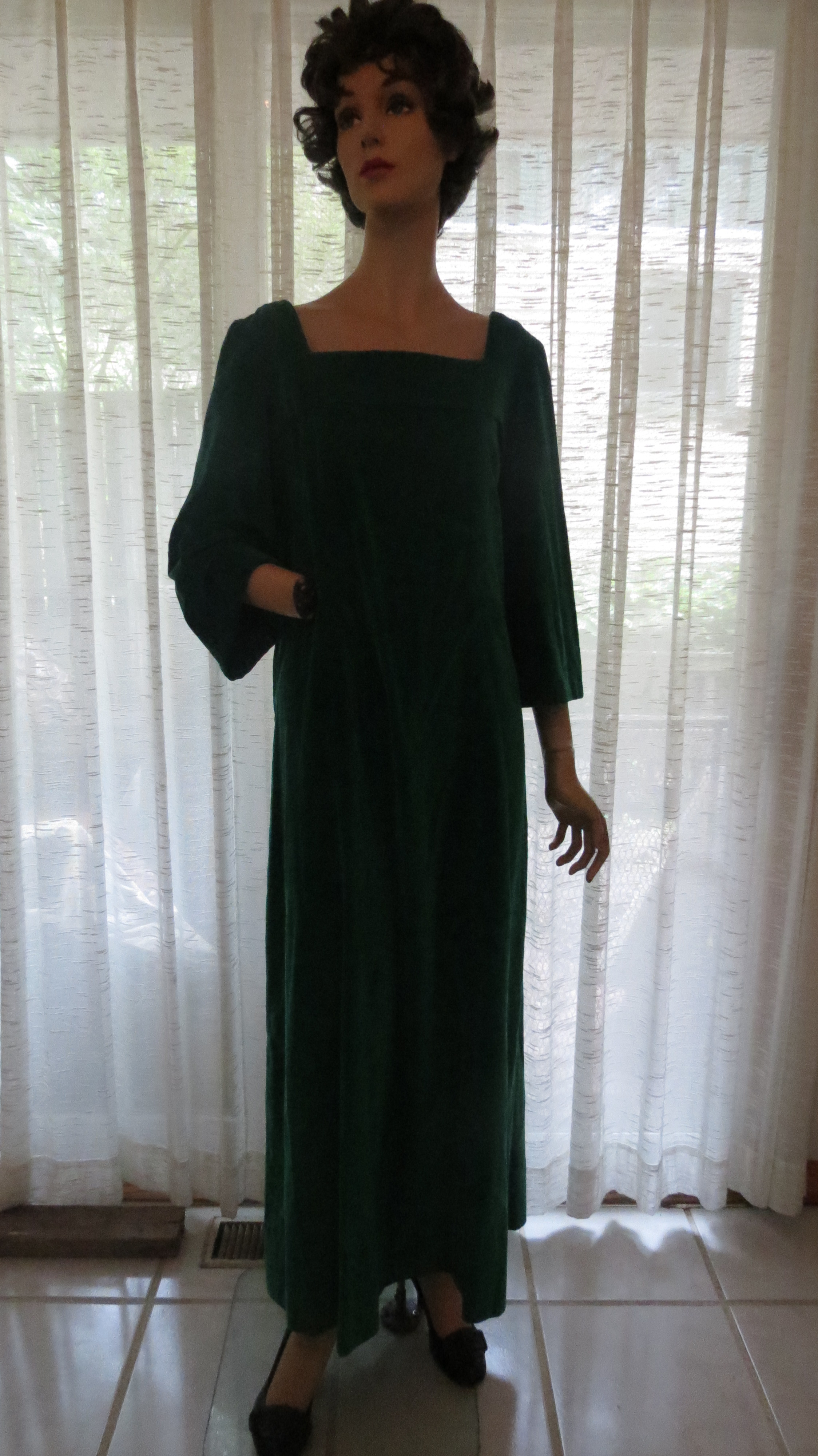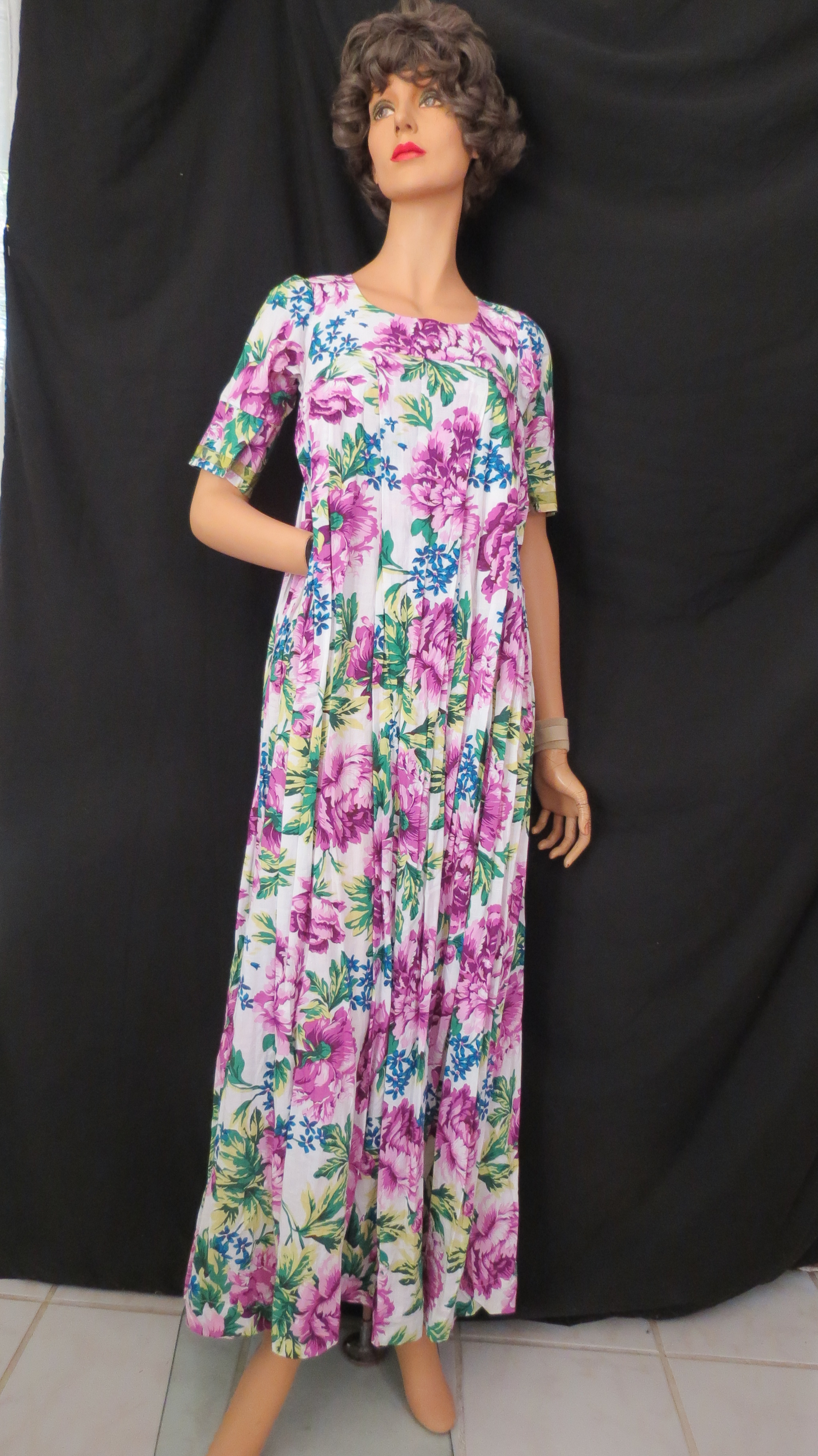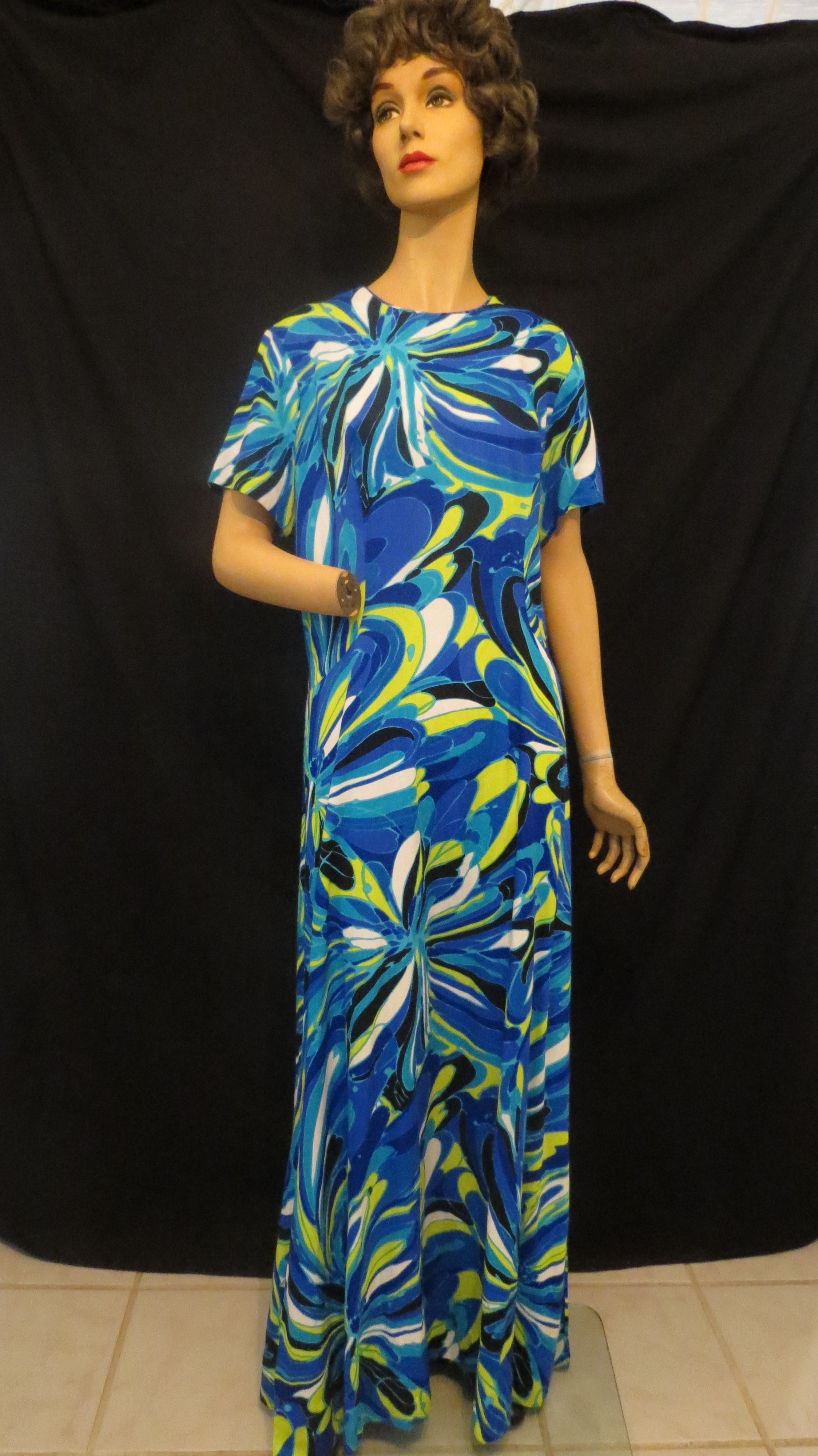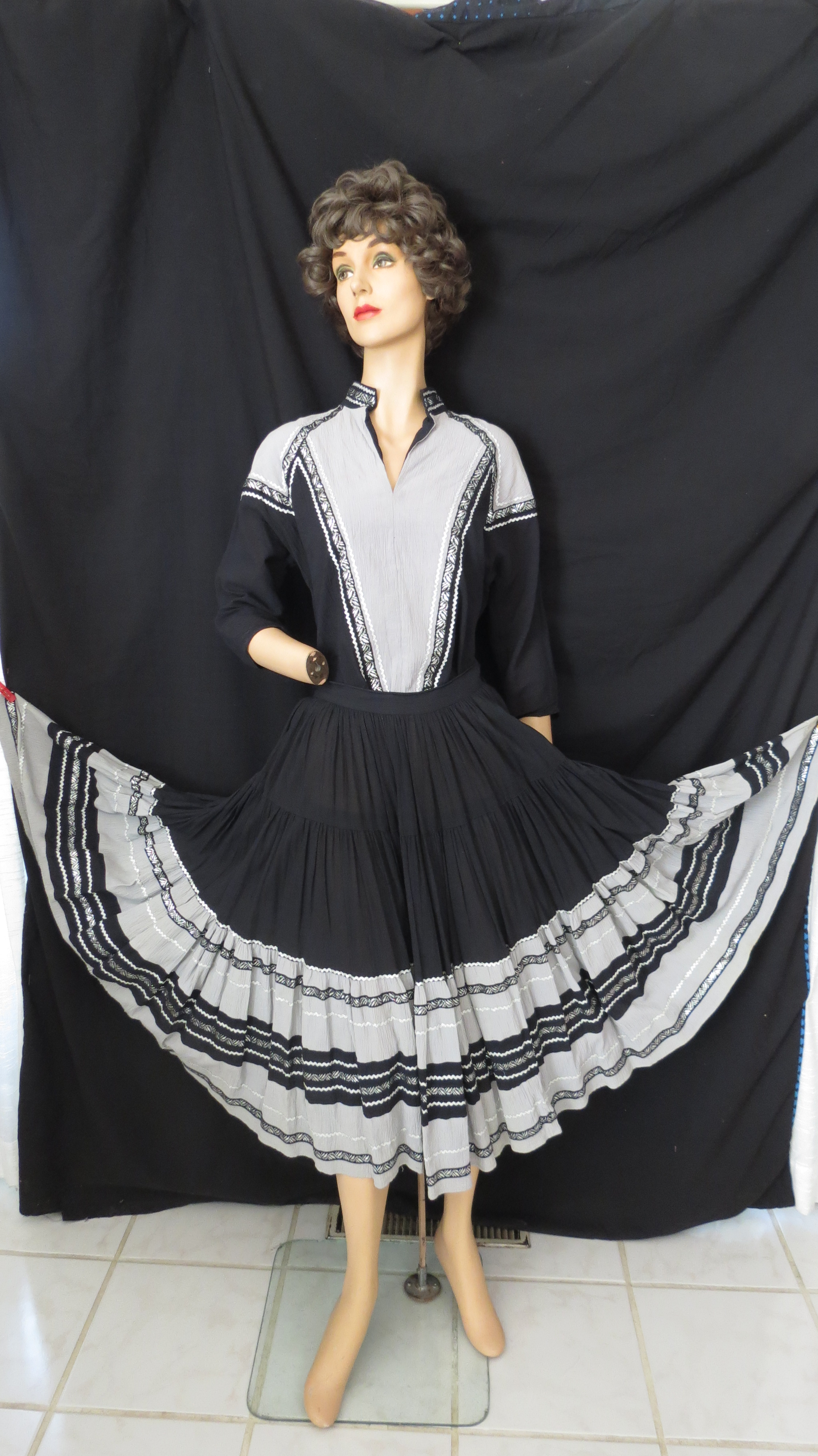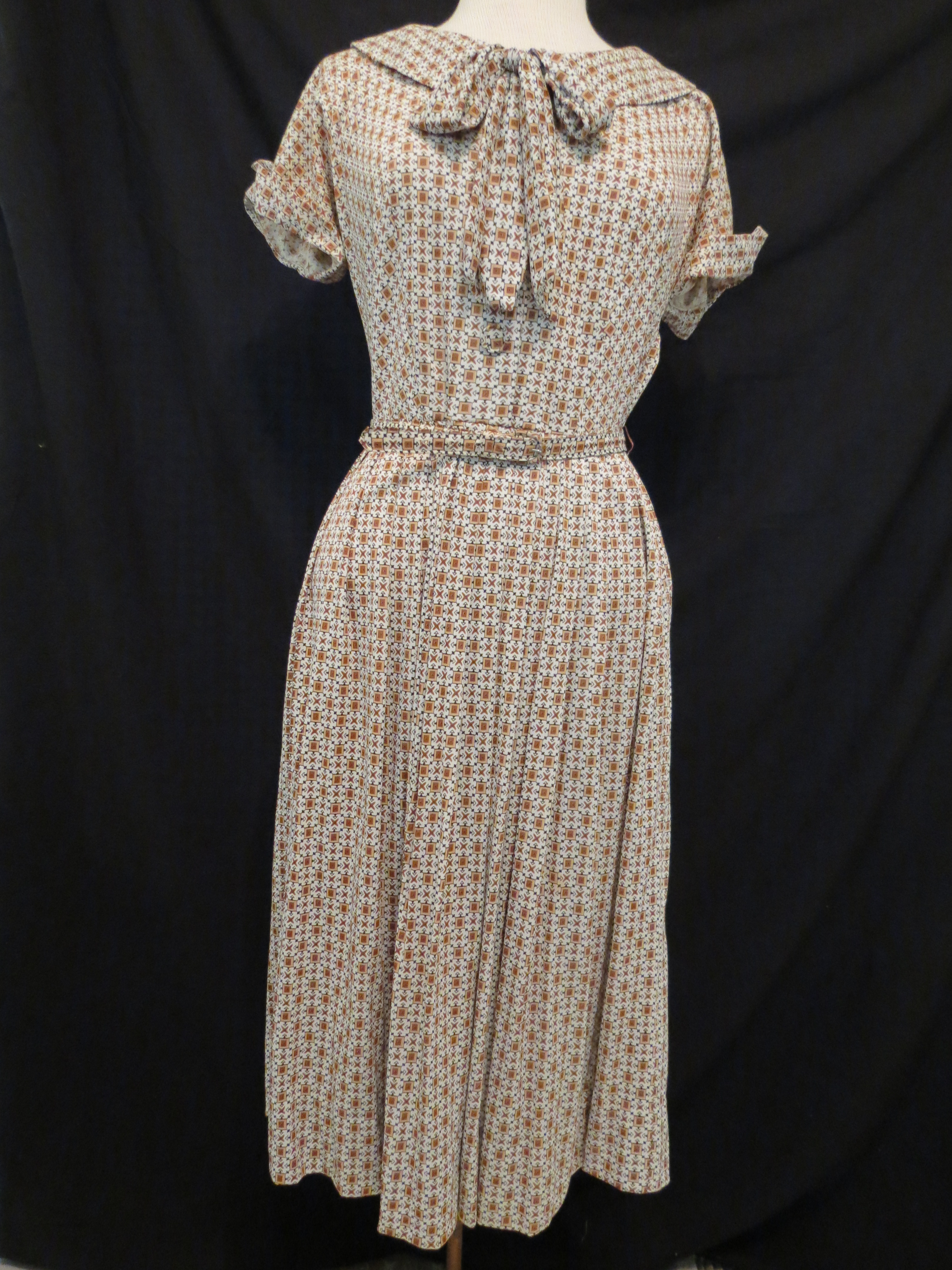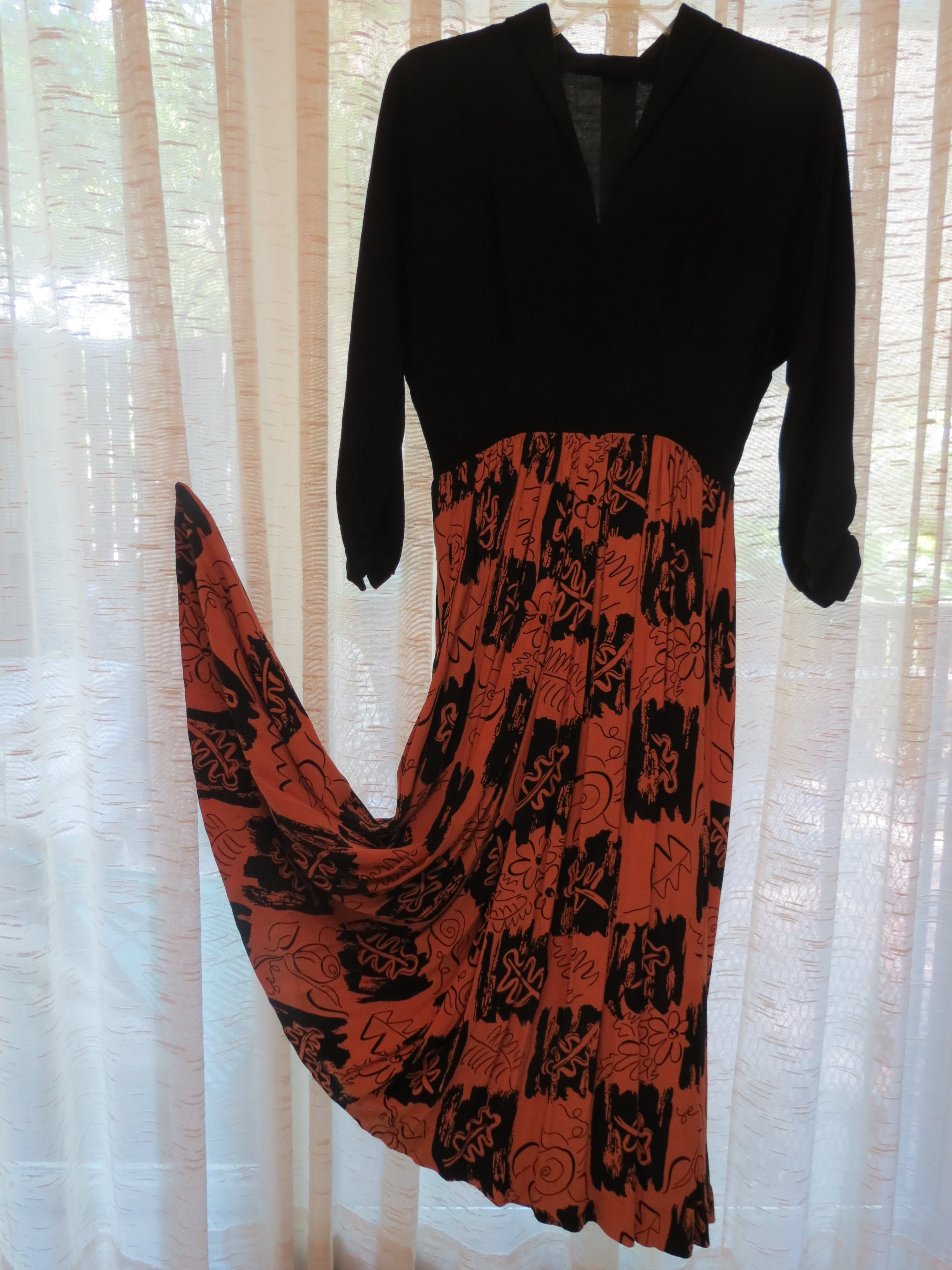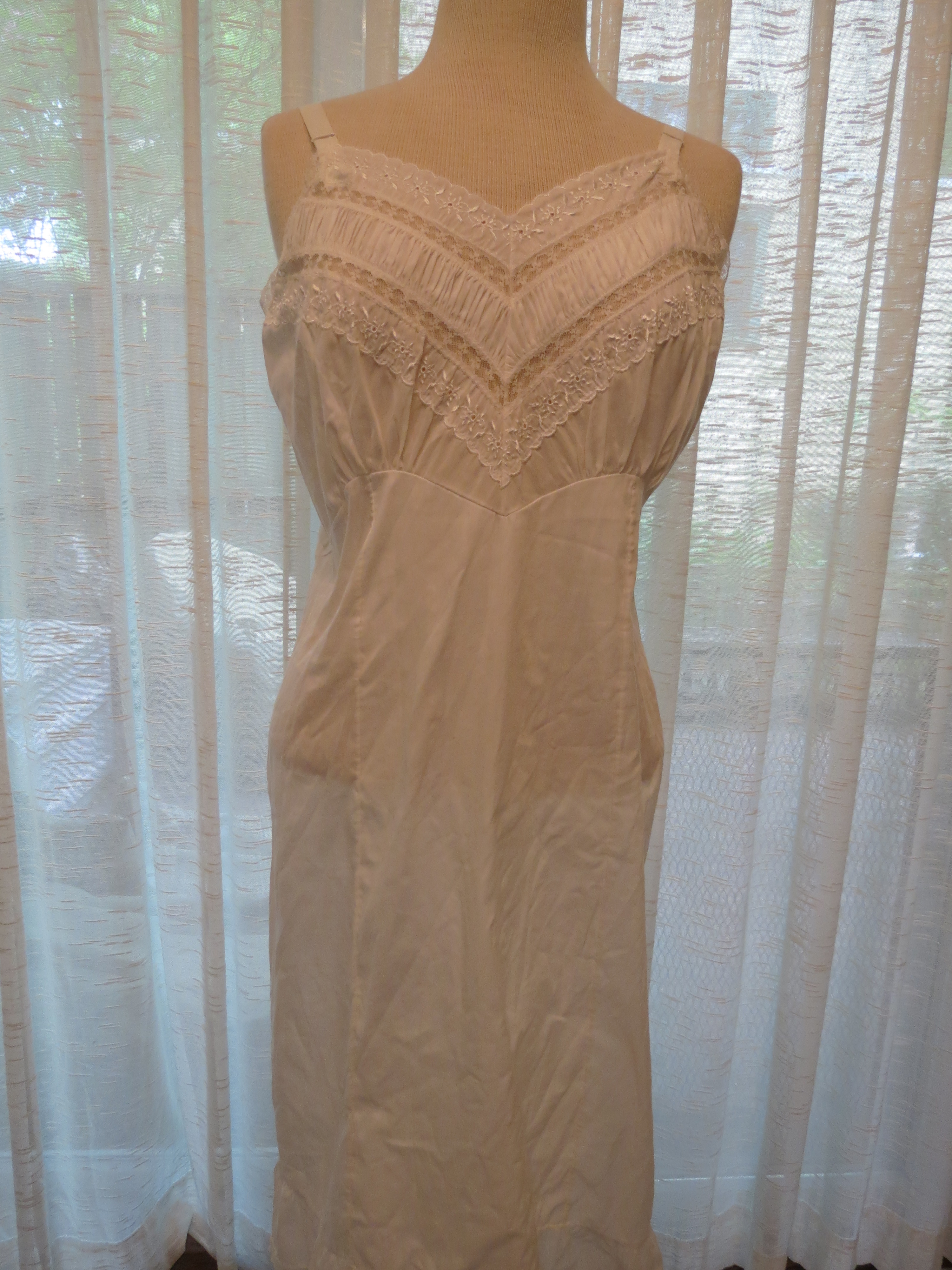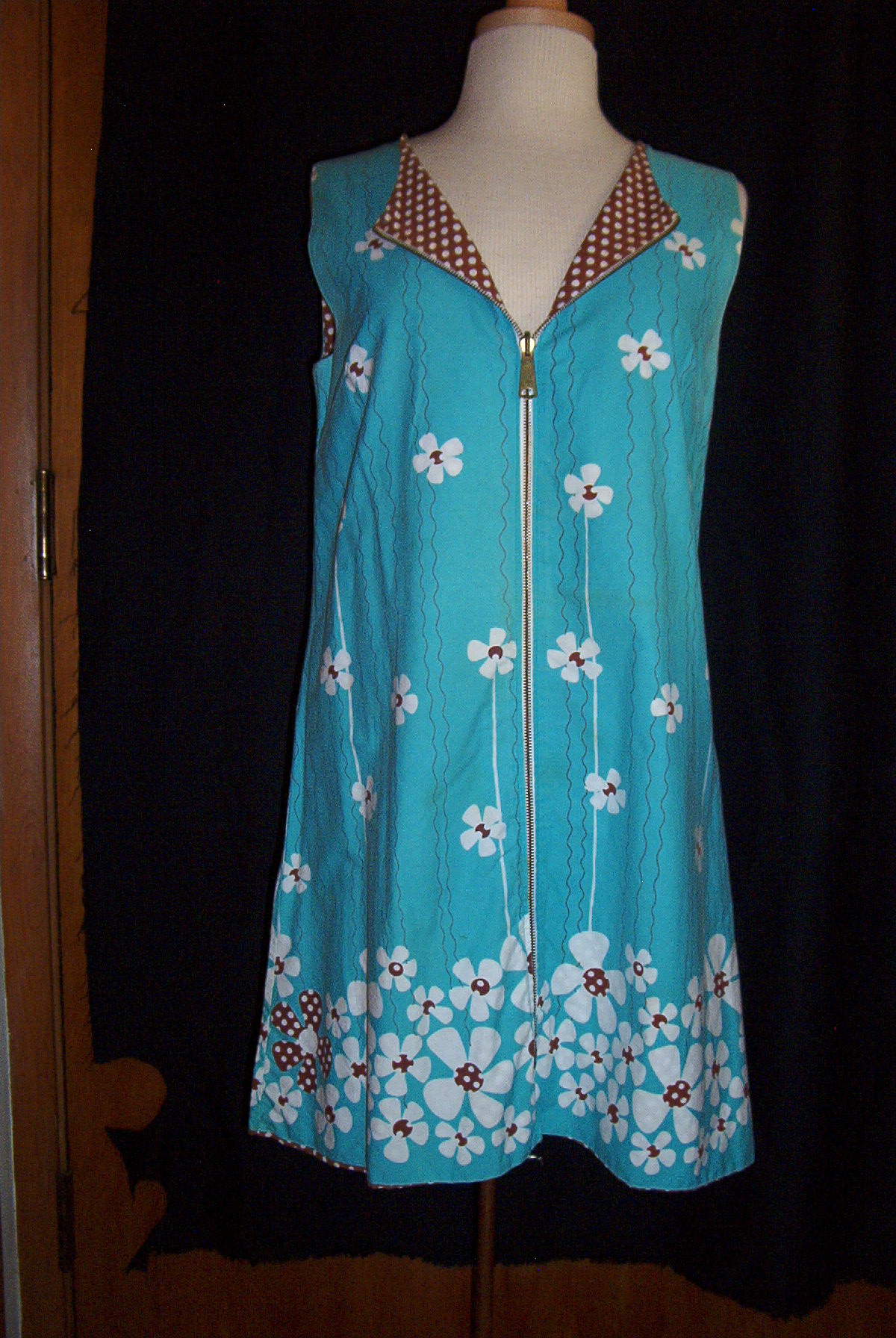
TRUE VINTAGE PATIO LEISURE LONG DRESSES FROM THE 1970’S – 1990’S

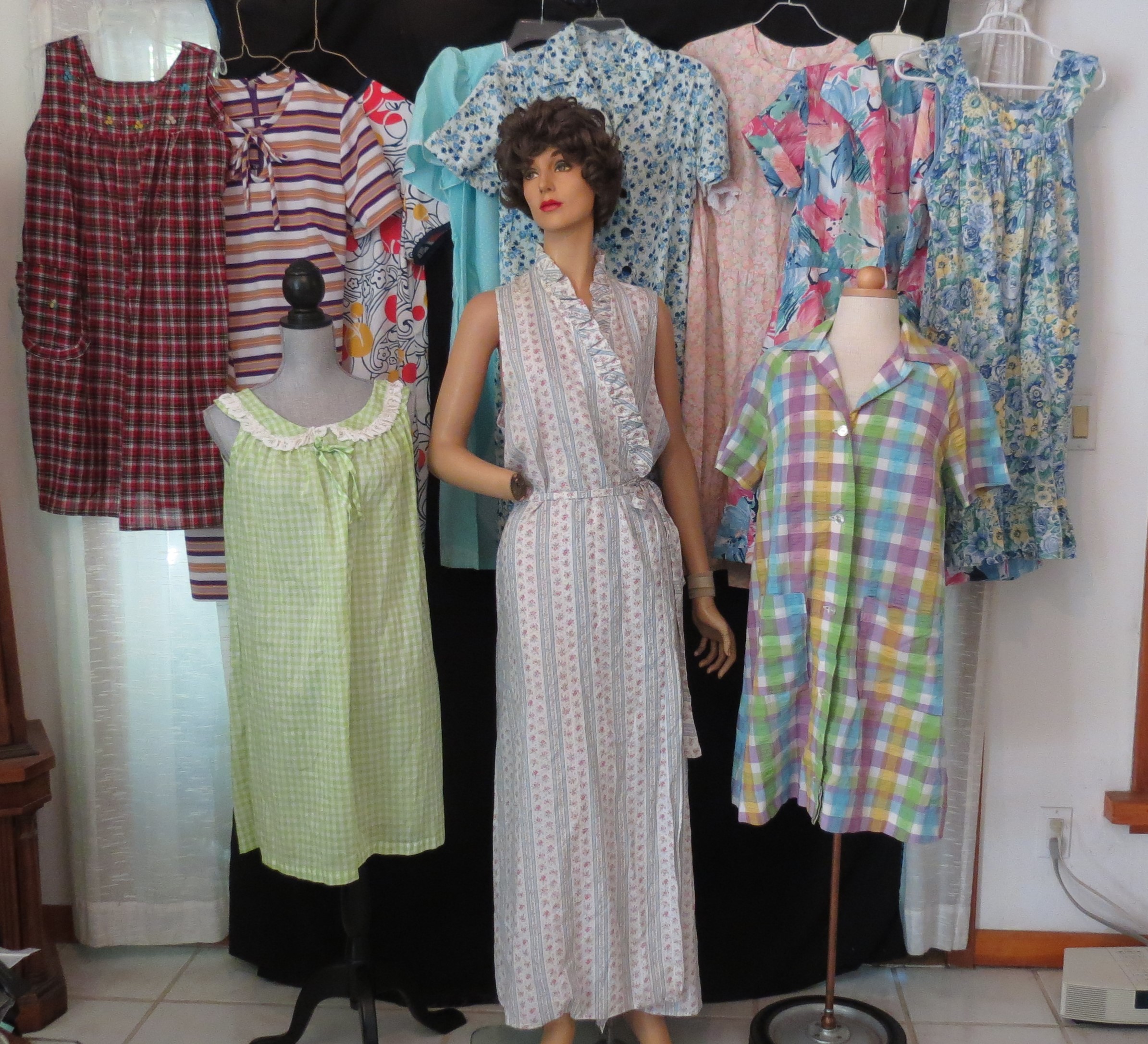
Through the decades the changes in style are often subtle, but they’re noticeable if your sleuthing trade skills are sharp. One thing that all these dresses have in common is excellent quality. I showed several dresses of this genre which were made in the Victorian/Prairie style when covering 1970’s Prom dresses a couple of months ago. Early in that decade, girls sometimes wore them to the Prom but they were usually fussier with lace and more details. Jessica McClintock of Gunne Sax styled them for at least 20 – 30 years. Labels always help, of course, but aren’t always present. The condition of all these examples is near-perfect, which can make the job a easier, though tell-tale signs of wear can sometimes be very helpful clues. Let’s start from left to right:

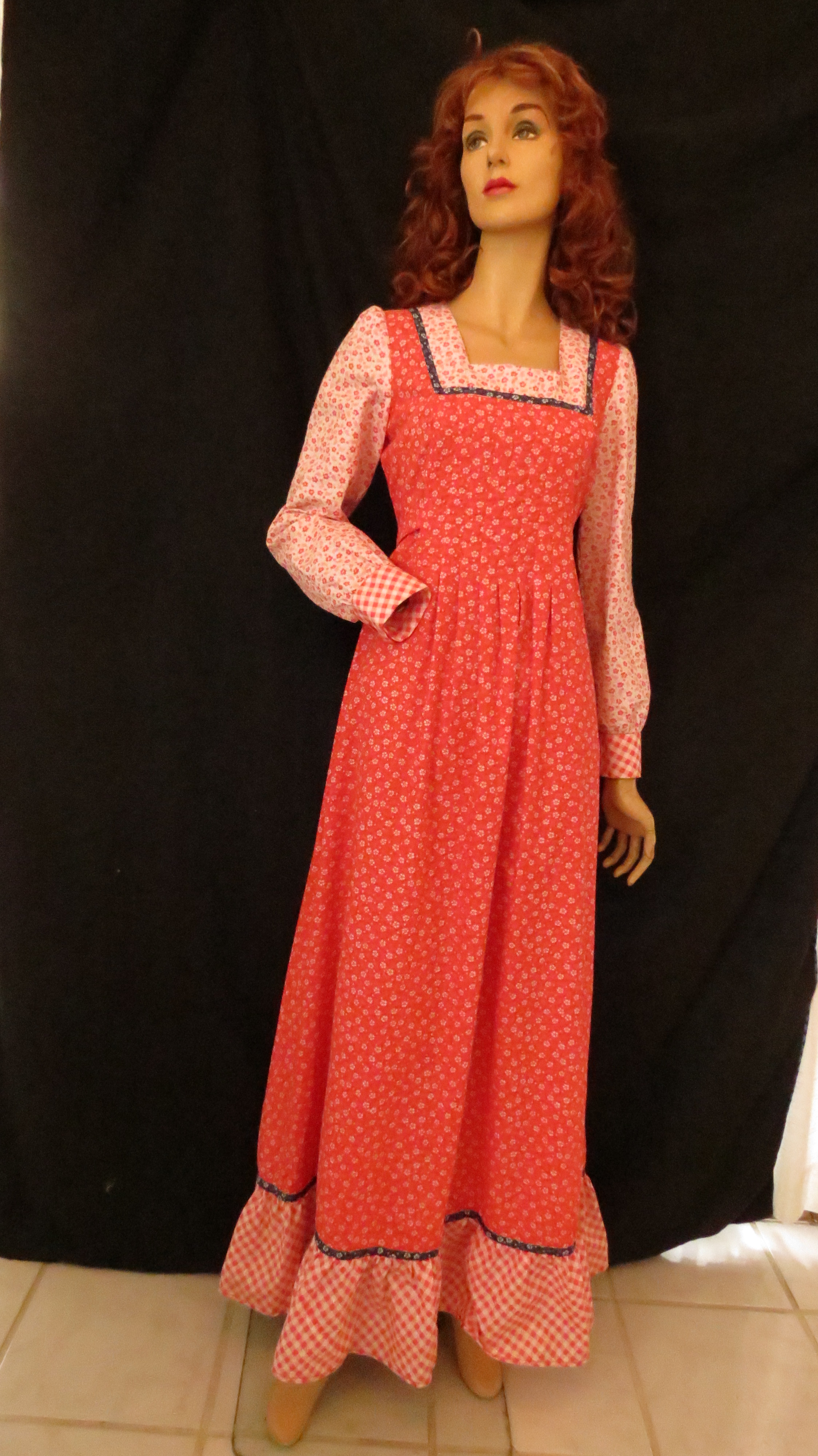
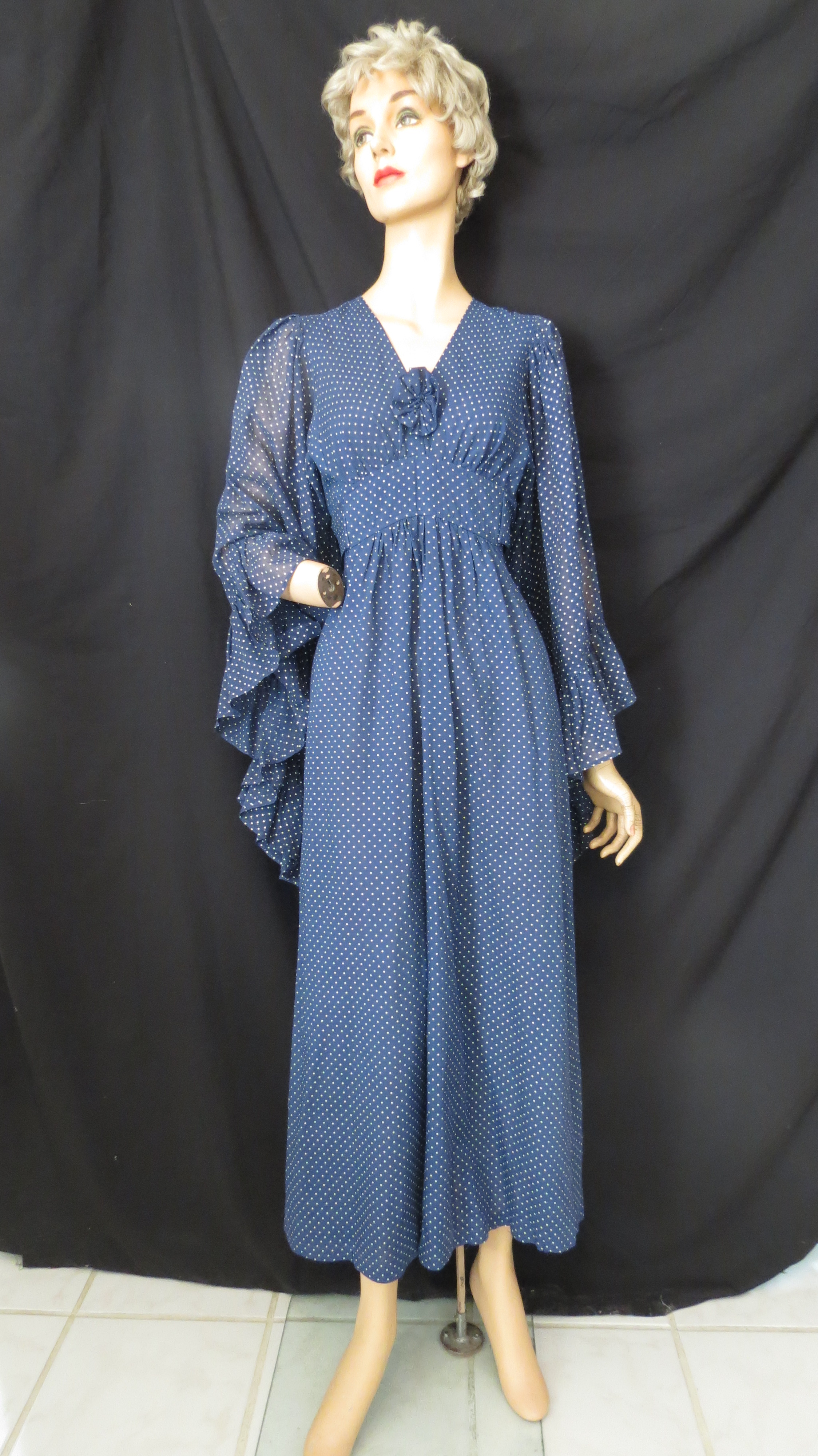
A Prairie-style gown, pretty and modest in cotton. Looks like it was made for retail because of the precise tailoring detail, but there is no label. I would put it in the 1970’s but it could possibly have been made later by an individual expert or a company that catered to a niche market which preferred very modest styles of dress.

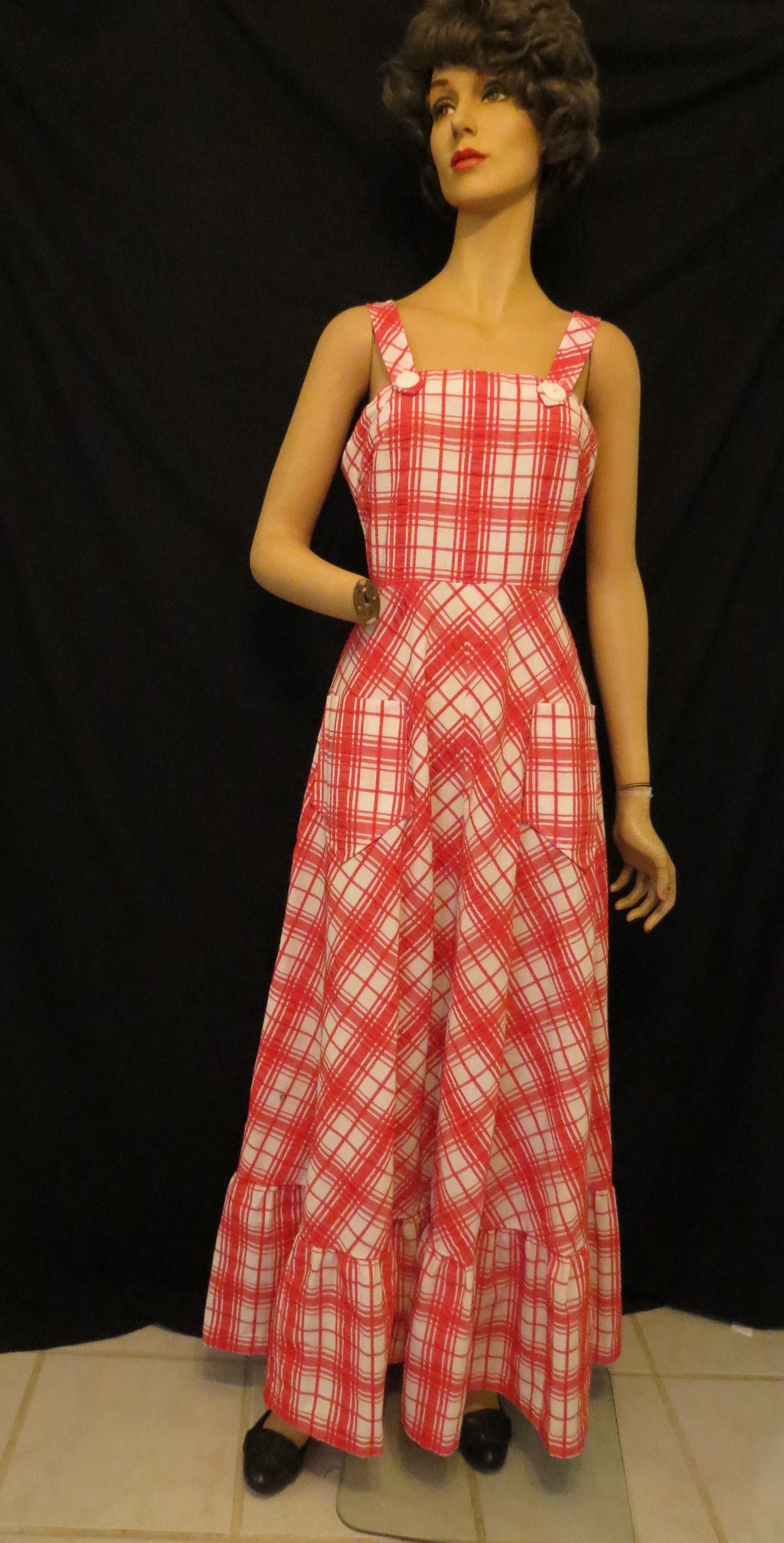
A red and white plaid gown that picks up on the Prairie style, but in a much more casual, carefree design reminiscent of the 1960’s. It’s probably made from cotton but I can’t be sure without the file in front of me and it could be cotton/poly blend. It was made in the 1980’s in West Germany. This is an example of trends jumping the oceans, usually years after they originally appeared in the Western nations. Although they’ve done their own take on the style, it’s exceptionally well-made, as goods from West Germany have always tended to be, in my experience.

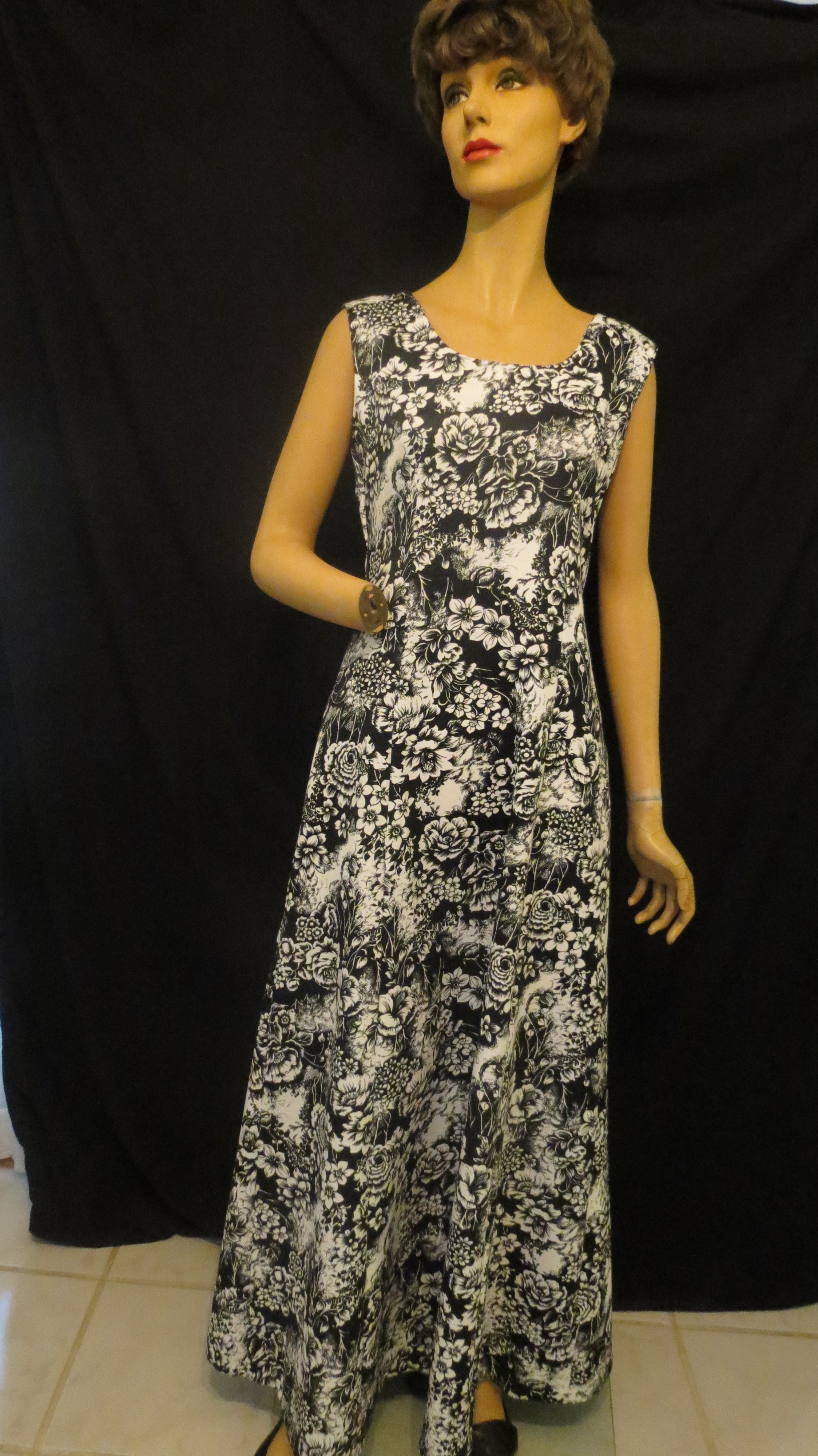
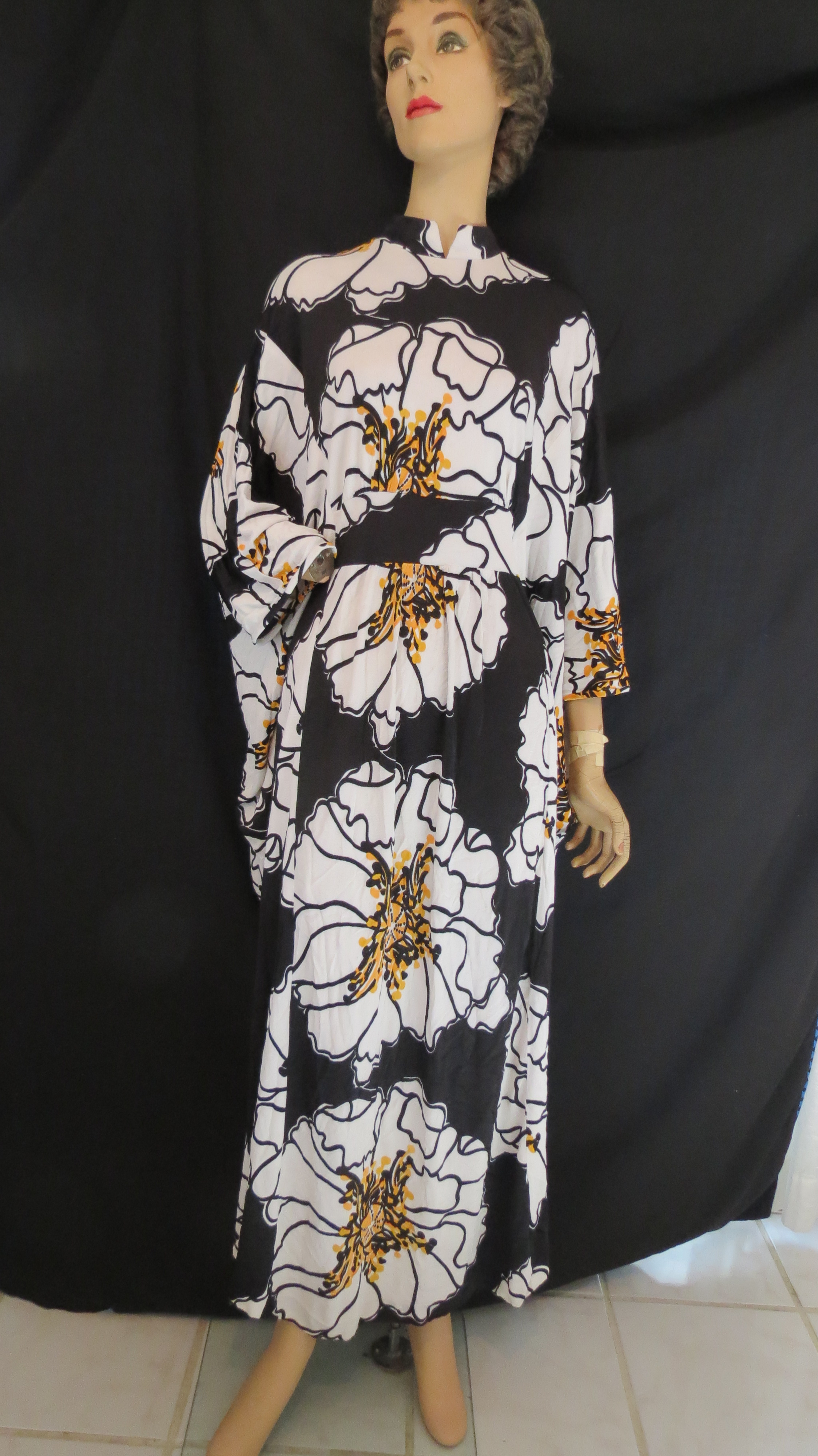
A black and white floral print gown made in Hawaii. This one is from the 1980’s, give or take a decade and is the most elegant. Same deal about the fabric as in the previous dress. The style is pure average conservative, which makes it harder to date exactly. A pretty dress, but nothing distinctive about it excepting for excellent tailoring. It might have been a wardrobe item of someone who lived in Hawaii, purchased at a specialty shop stateside which carried Hawaiian garments or by someone who bought it while on vacation. Hawaiian-made gowns have been popular with women worldwide since the 1950’s, but earlier ones were usually made in more traditional Hawaiian style and, often, of Hawaiian fabric with traditional island prints. The more mainstream universal designs like this one came later.

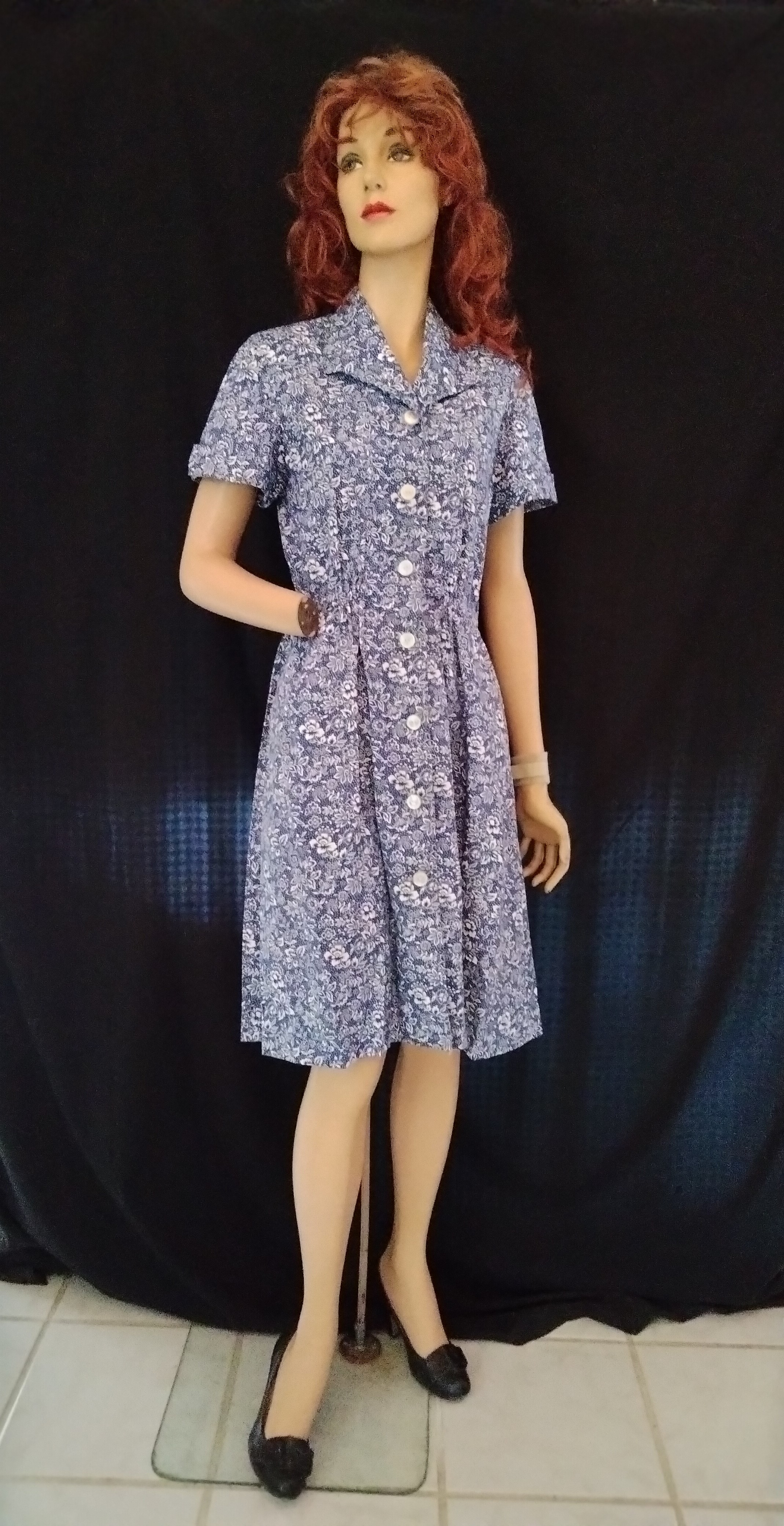
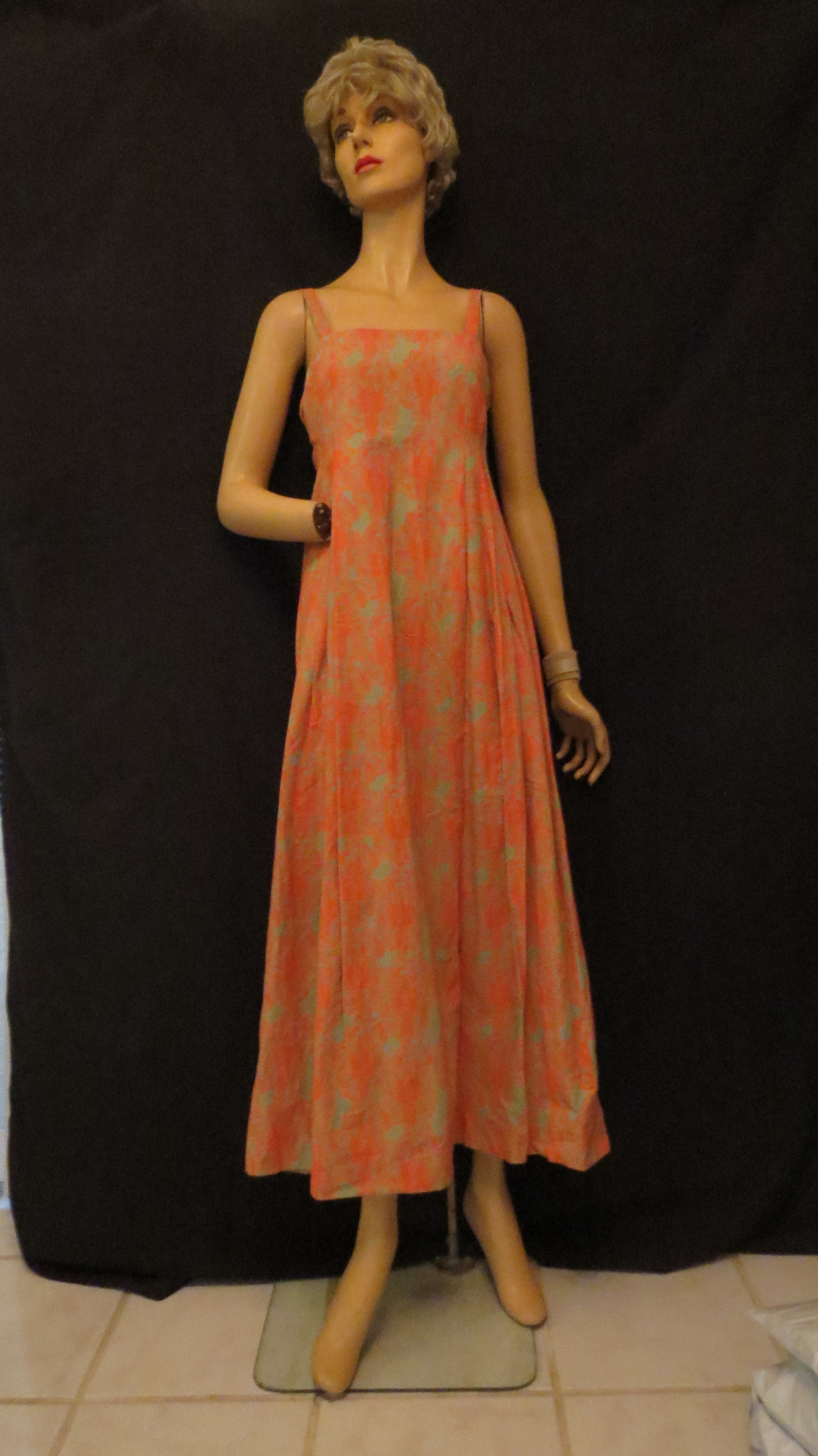
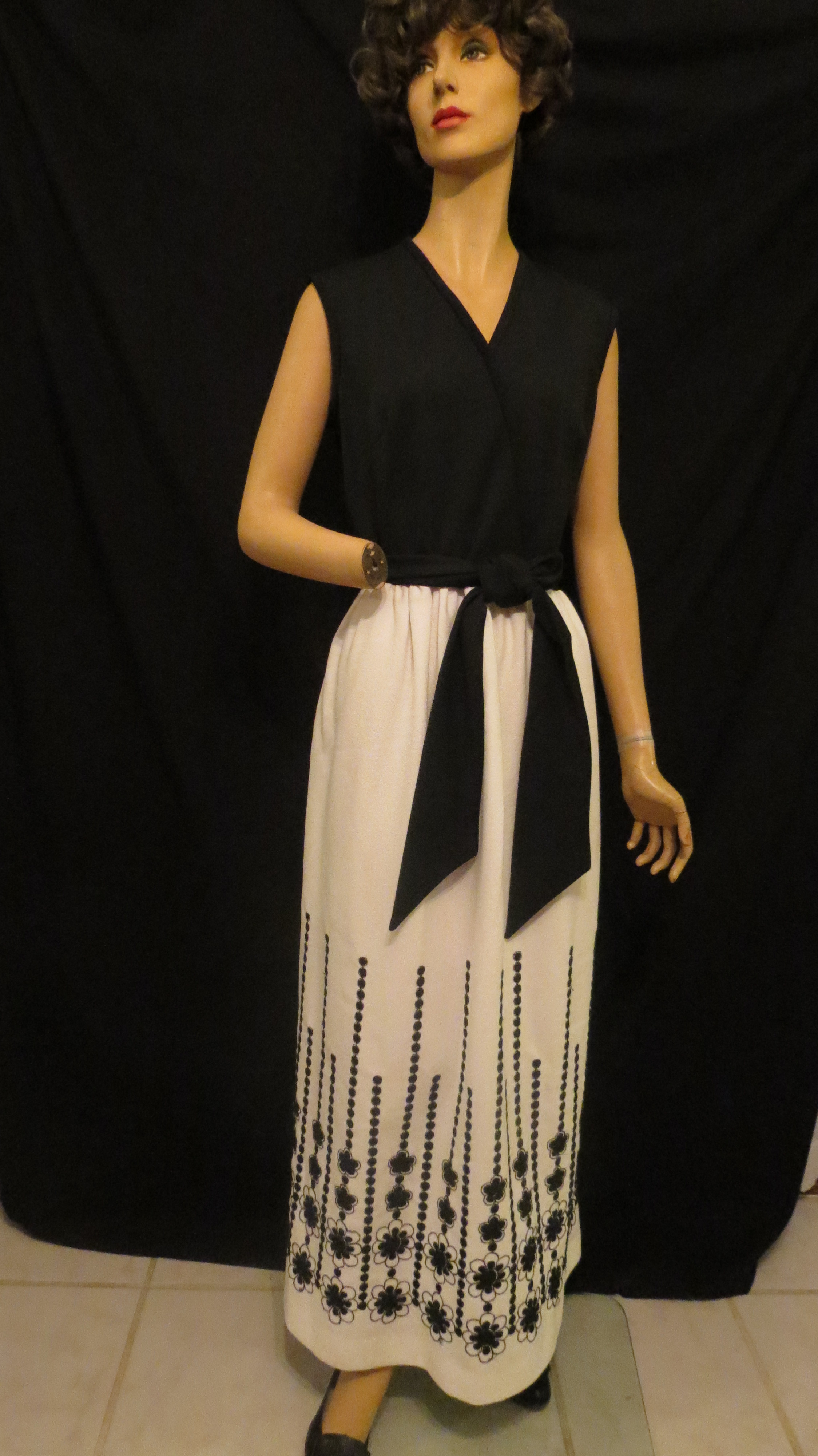
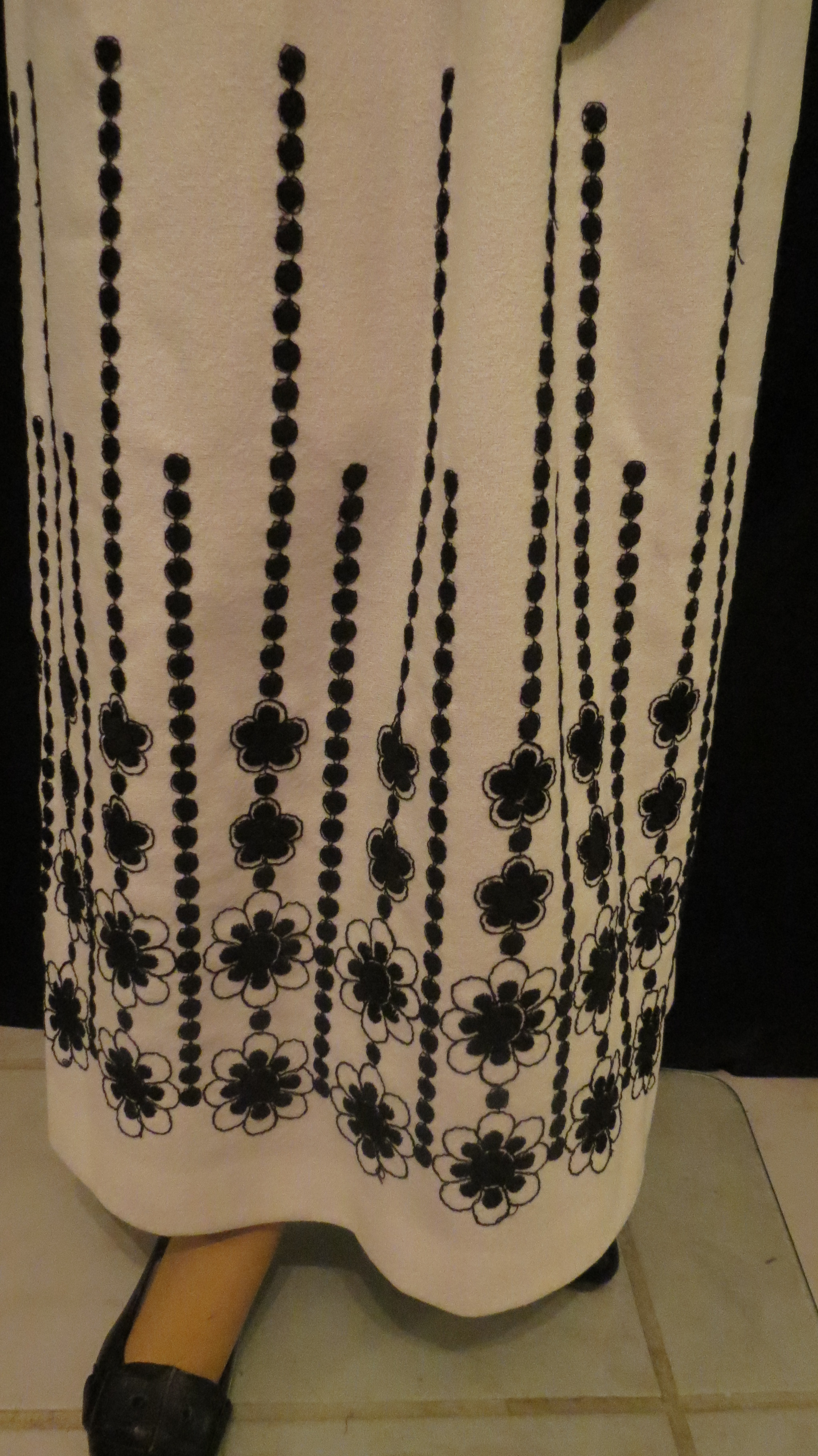
The final dress is from the 1990’s. Always harder for me to think of as true vintage, but it is worthy because of the good tailoring, 100% cotton fabric and the retail designer label sold by a high-end department store in New York City. It’s got pedigree. Again, nothing notable about the style but it is very well-cut, which can make a world of difference in terms of how a dress fits. That’s one feature of even plain, rather boring vintage clothing items that can make them worth collecting and wearing. The style can always be elevated by adding accessories but one thing that always elevates any garment is how well it is made and how well it fits.

Tomorrow I’ll be showing a collection of dressy day-wear accessories from the 1960’s that fit the category of well-made, classic and designer items that can “make” an outfit. Stay tuned . . . . . . . . . . . . . . . . . . . . . . . . . . . . .

MORGANA MARTIN, THE MAGICVINTAGESPY

BLOG: MAGICVINTAGESPY.COM
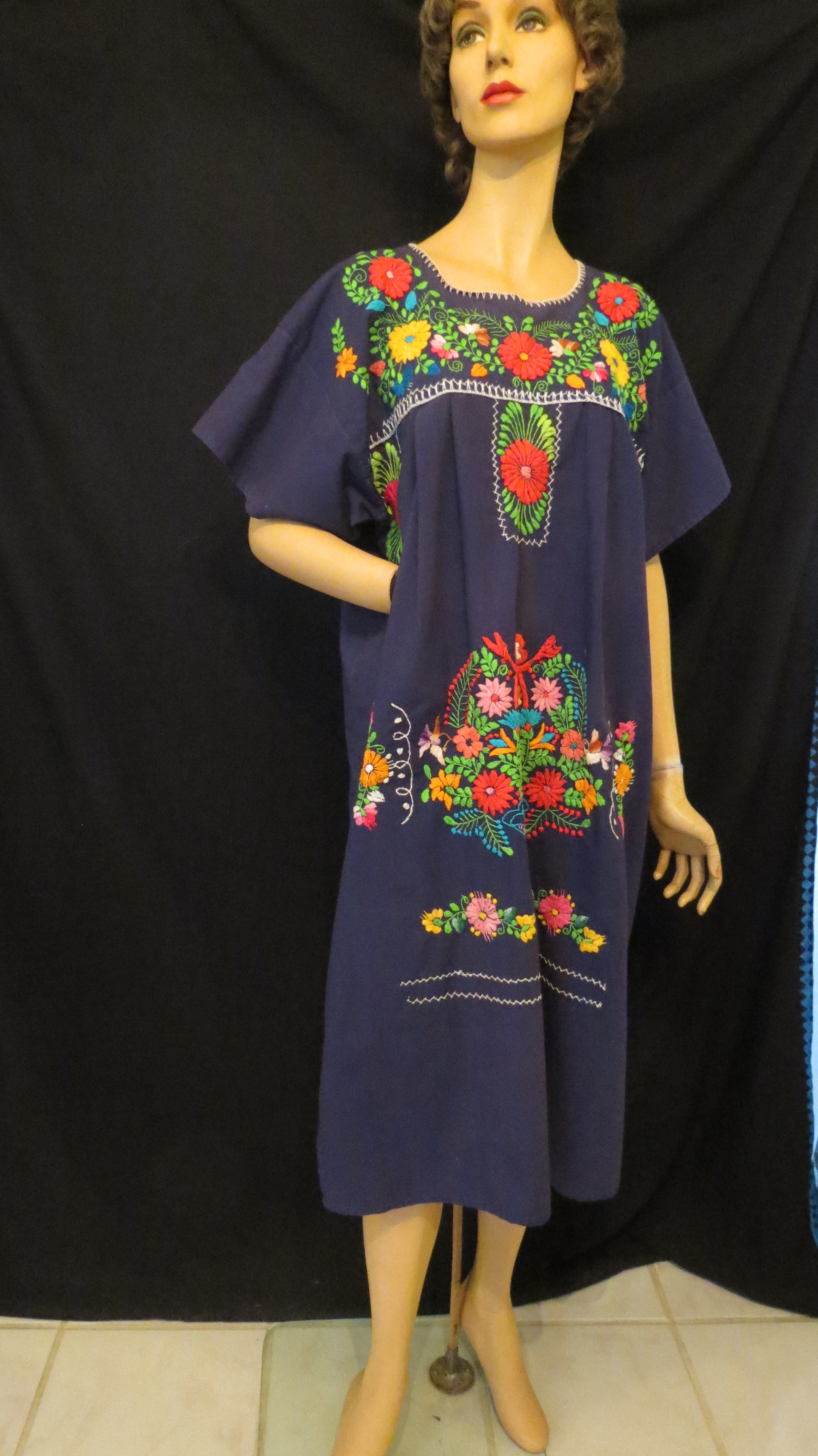
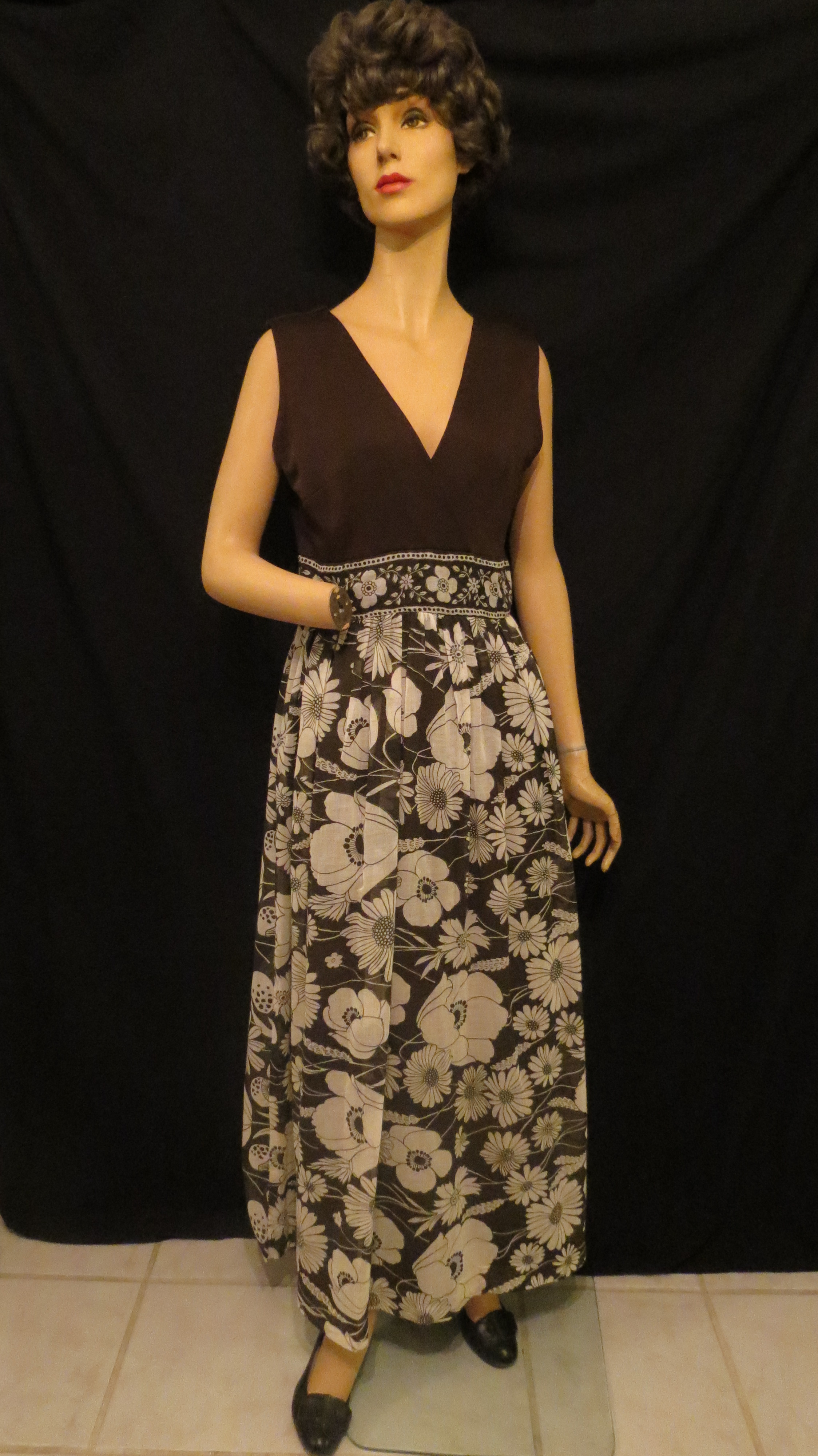
TRUE VINTAGE MID – LATE 1960’S LONG LEISURE DRESSES – MOD, WITCHY, ETHNIC

British influence Medieval/Victorian/Edwardian vibes, Op-Art, Flower Power and Indigenous influences allowed mainstream women to enjoy some “revolutionary” style during this transformative decade while not getting too far away from classic traditions. Plus the fact that they couldn’t have been more comfortable, convenient and flattering.

Fabulous sleeves, hand-done embroidery, geometric floral graphics. Love, love, love! Of course I had to collect these clues. Tomorrow we’ll step into the progression of this genre in examples from the Seventies, Eighties and Nineties. Stay tuned . . . . . . .

MORGANA MARTIN, THE MAGICVINTAGESPY

BLOG: MAGICVINTAGESPY.COM

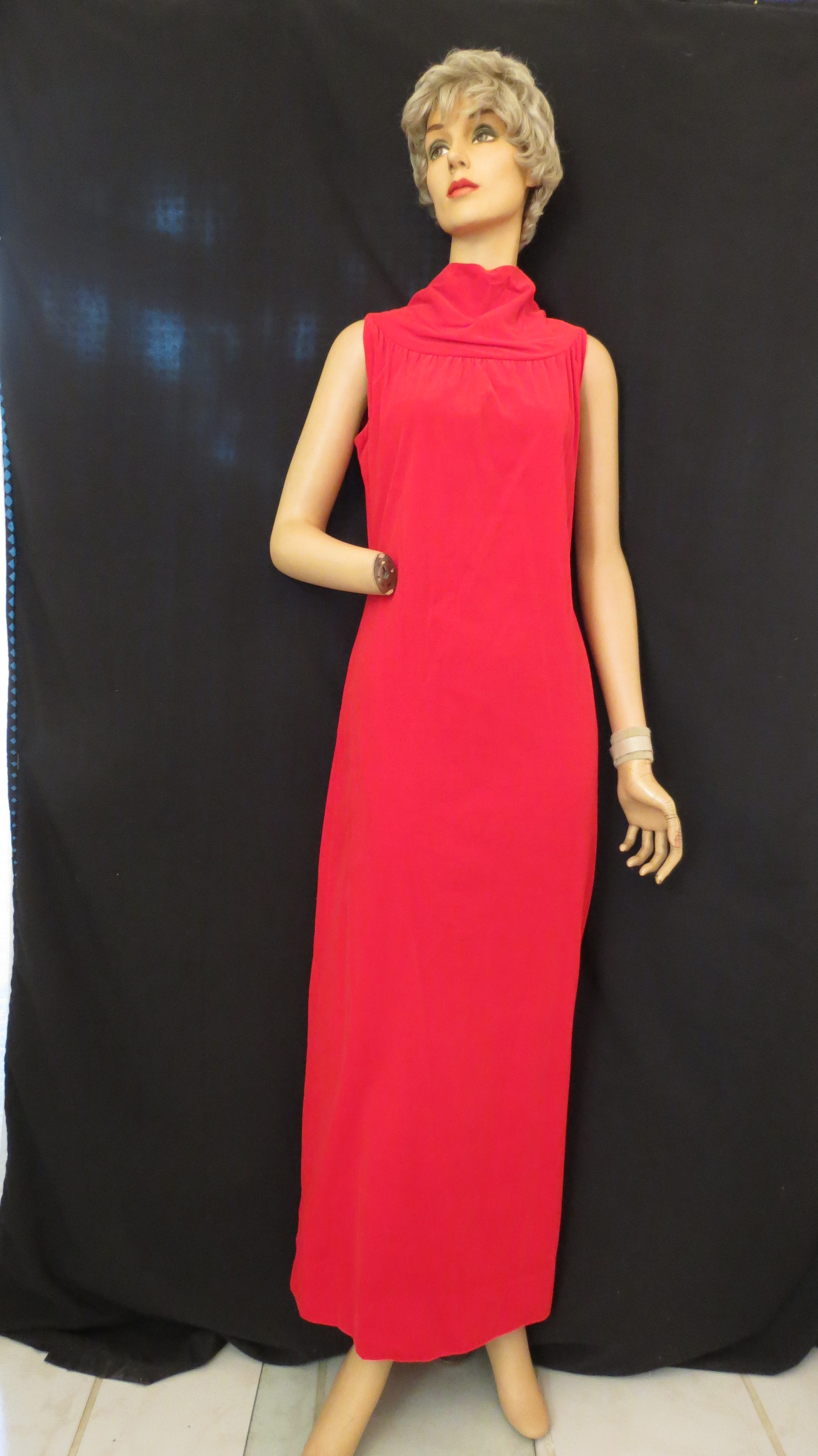
TRUE VINTAGE 1960’S LEISURE DRESSES – ALTERNATIVE STYLE FINDS THE MAINSTREAM

In the early 1960’s home-based seamstresses began making at-home leisure dresses. Velveteen was a popular fabric for hostess dresses that could work for cocktails with friends. An early flower-power dress in a traditional style was a more timid effort (looks like a vintage tablecloth) and a Mod print gown stepped firmly into the mid-decade. Washable cotton and blends made these easy-care garments and fashionable alternative styles for women who hadn’t been ready for 1950’s Boho or early ’60’s minis.

Tomorrow we’ll look at dresses from this genre that appeared later in the Sixties. Stay tuned . . . . . . . . . . . . . . . . . . . . . . . .

MORGANA MARTIN, THE MAGICVINTAGESPY

BLOG: MAGICVINTAGESPY.COM
TRUE VINTAGE ASSORTMENT OF 1940’S TO 1950’S SEPARATES, LEISURE GARMENTS AND JEWELRY

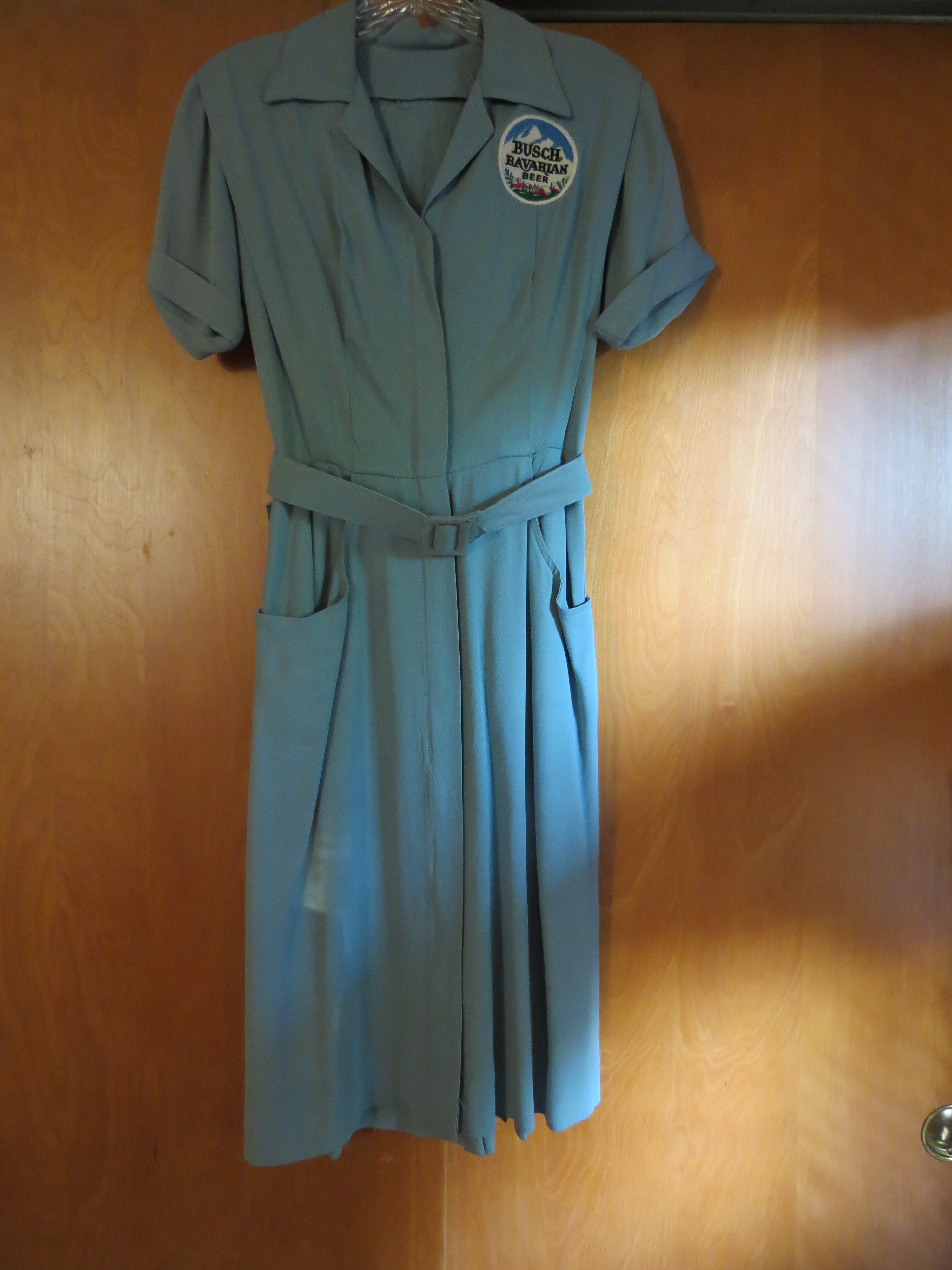
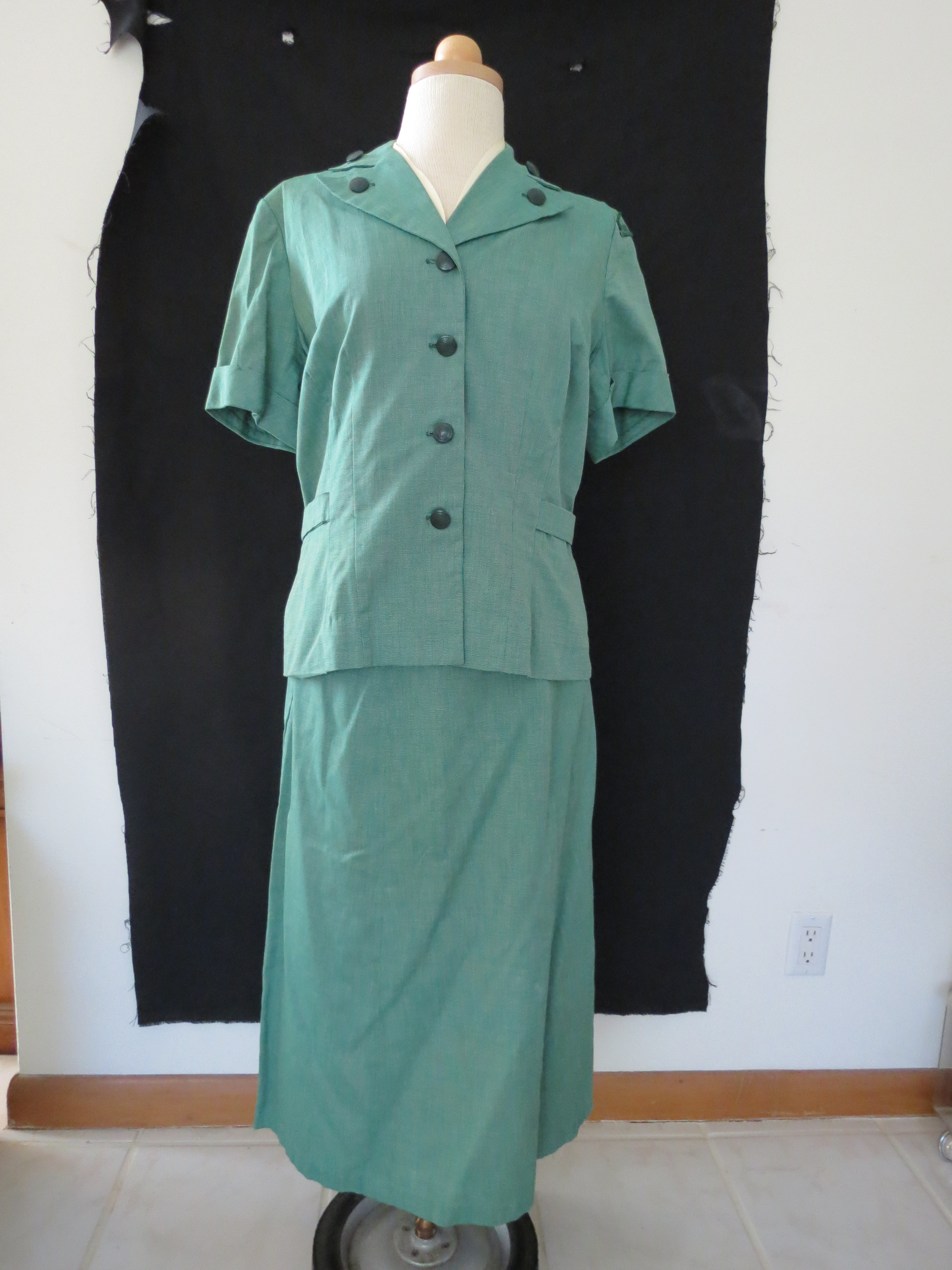
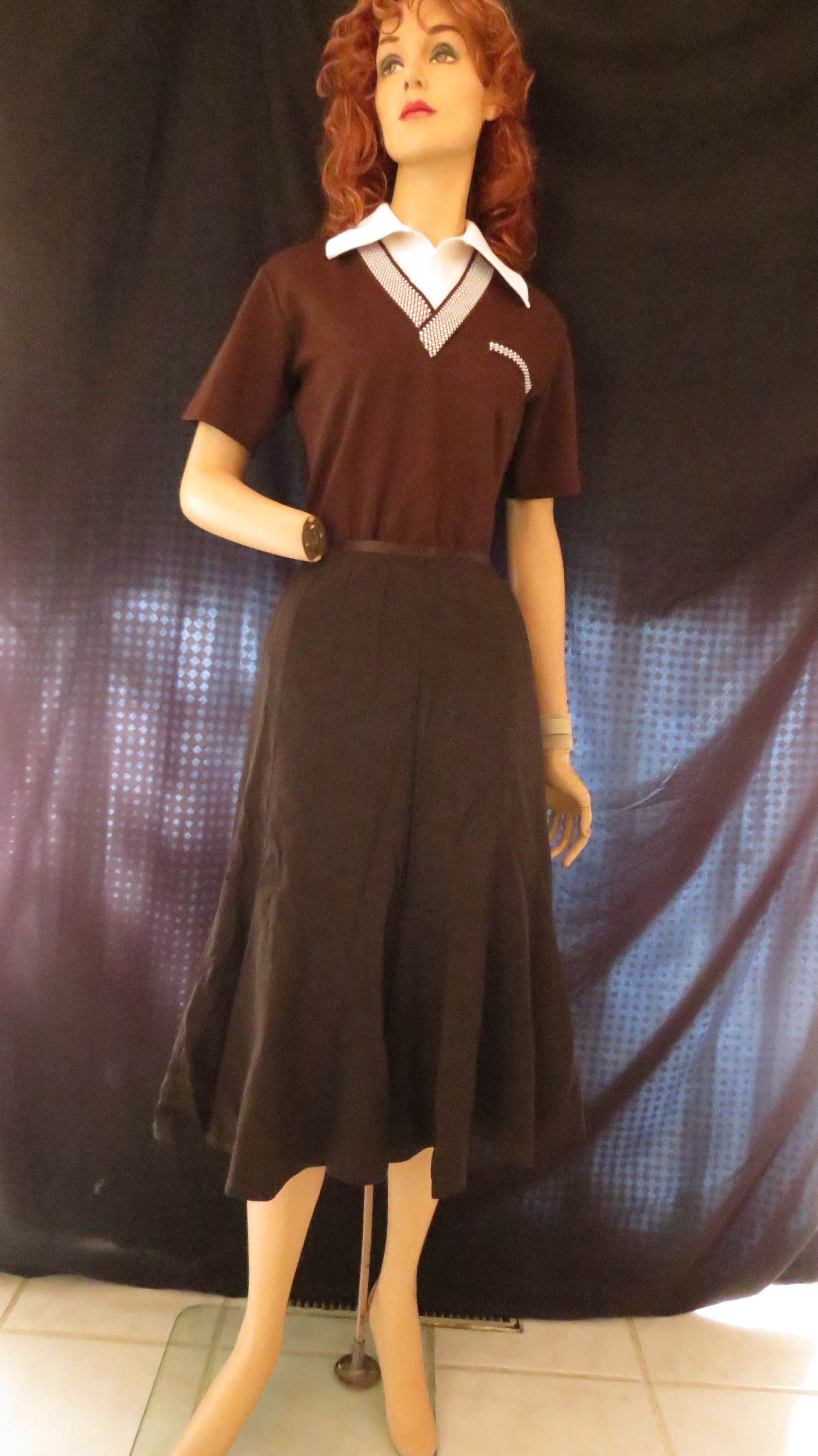
Starting off with ladies’ uniforms for popular leisure and volunteer activities – women’s bowling and the Girl Scouts. Here are a team member’s uniform and a Scout leader’s. Many mid-century women took part in these activities during their spare time to enjoy and contribute to their communities.

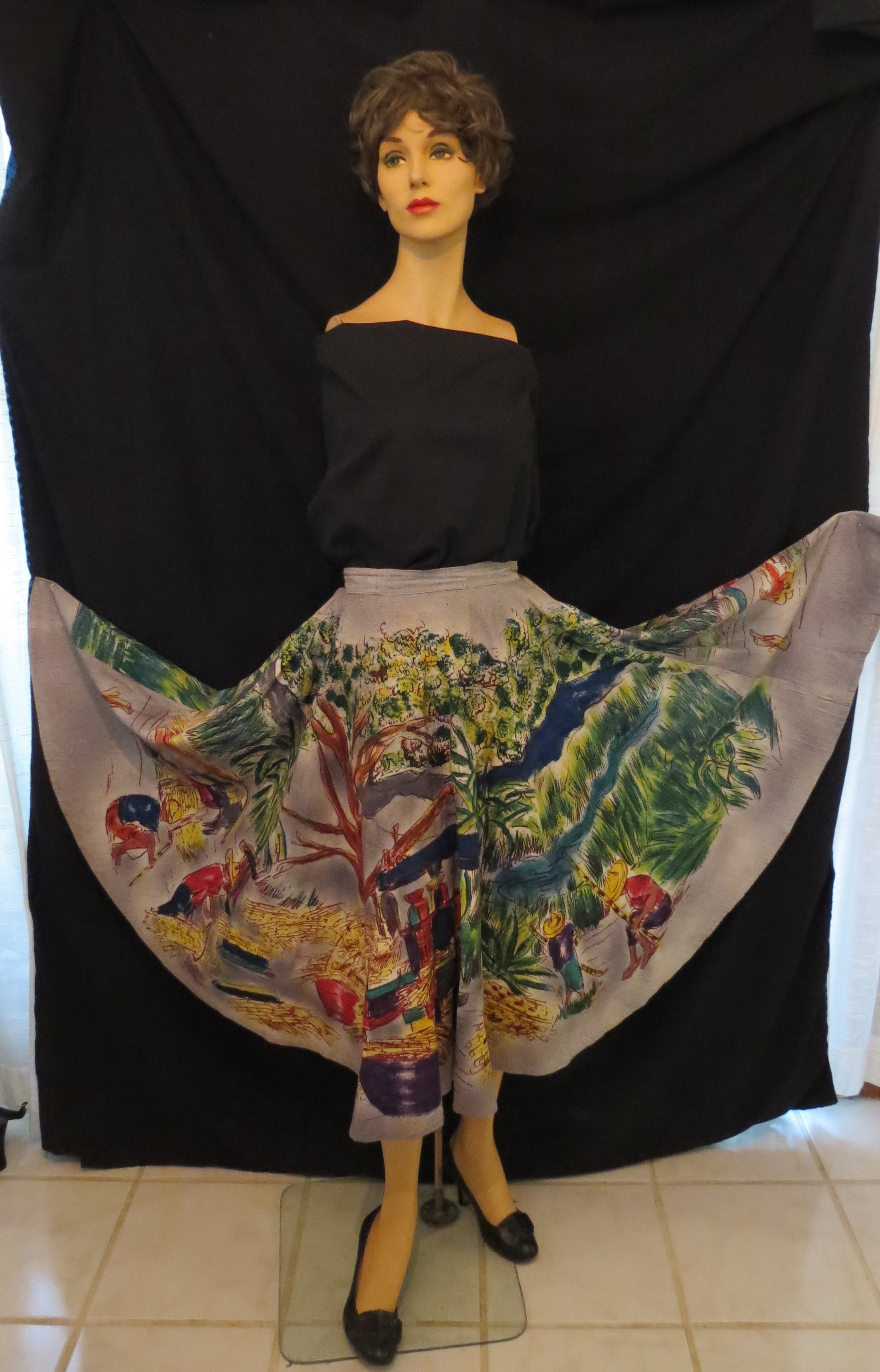
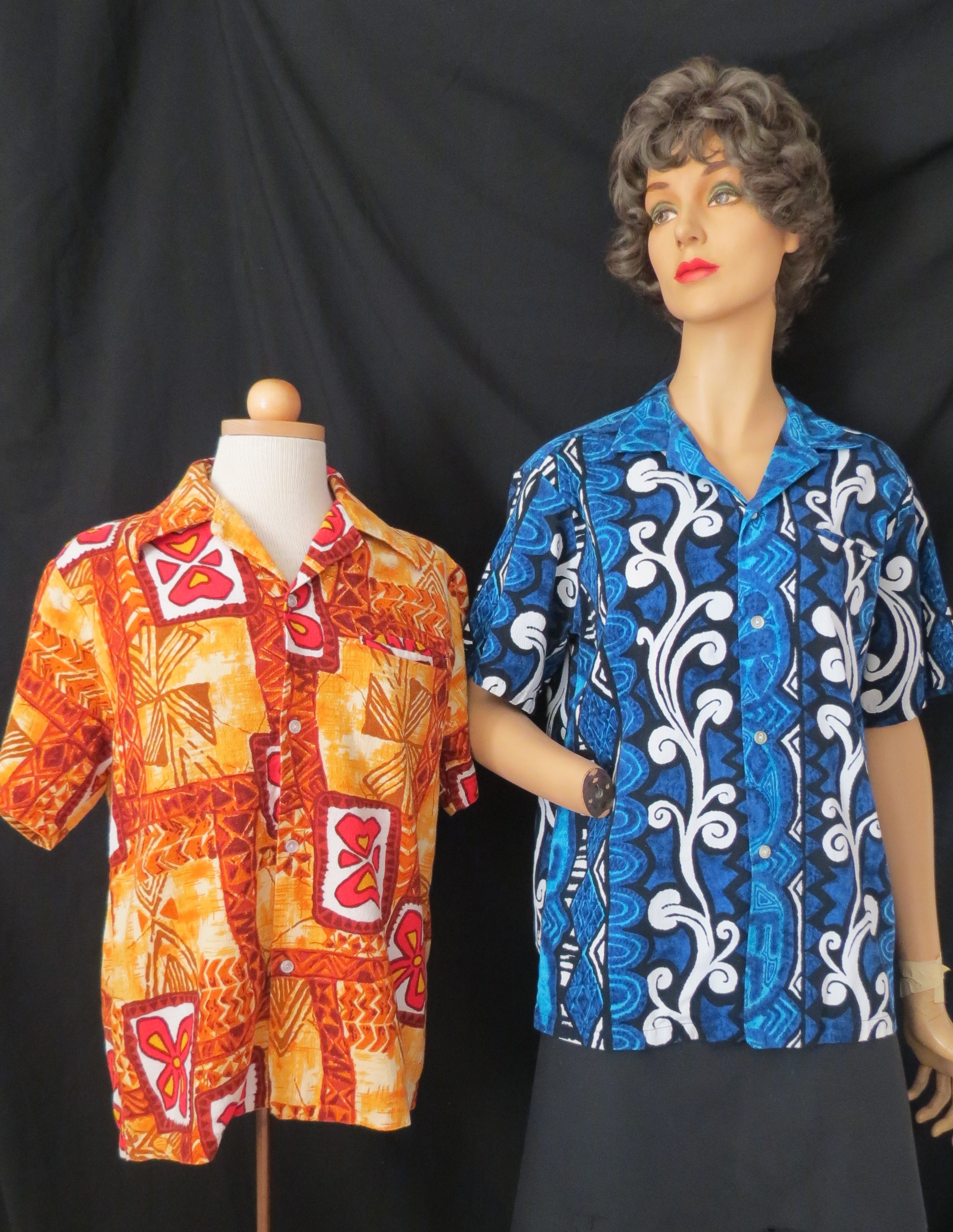
Travel became a big part of 1950’s family life. What could be easier in order to take an “exotic” vacation than to go to Mexico or the new State of Hawaii? These were popular destinations and many women returned with a hand-painted skirt or traditional printed shirts like the ones above.

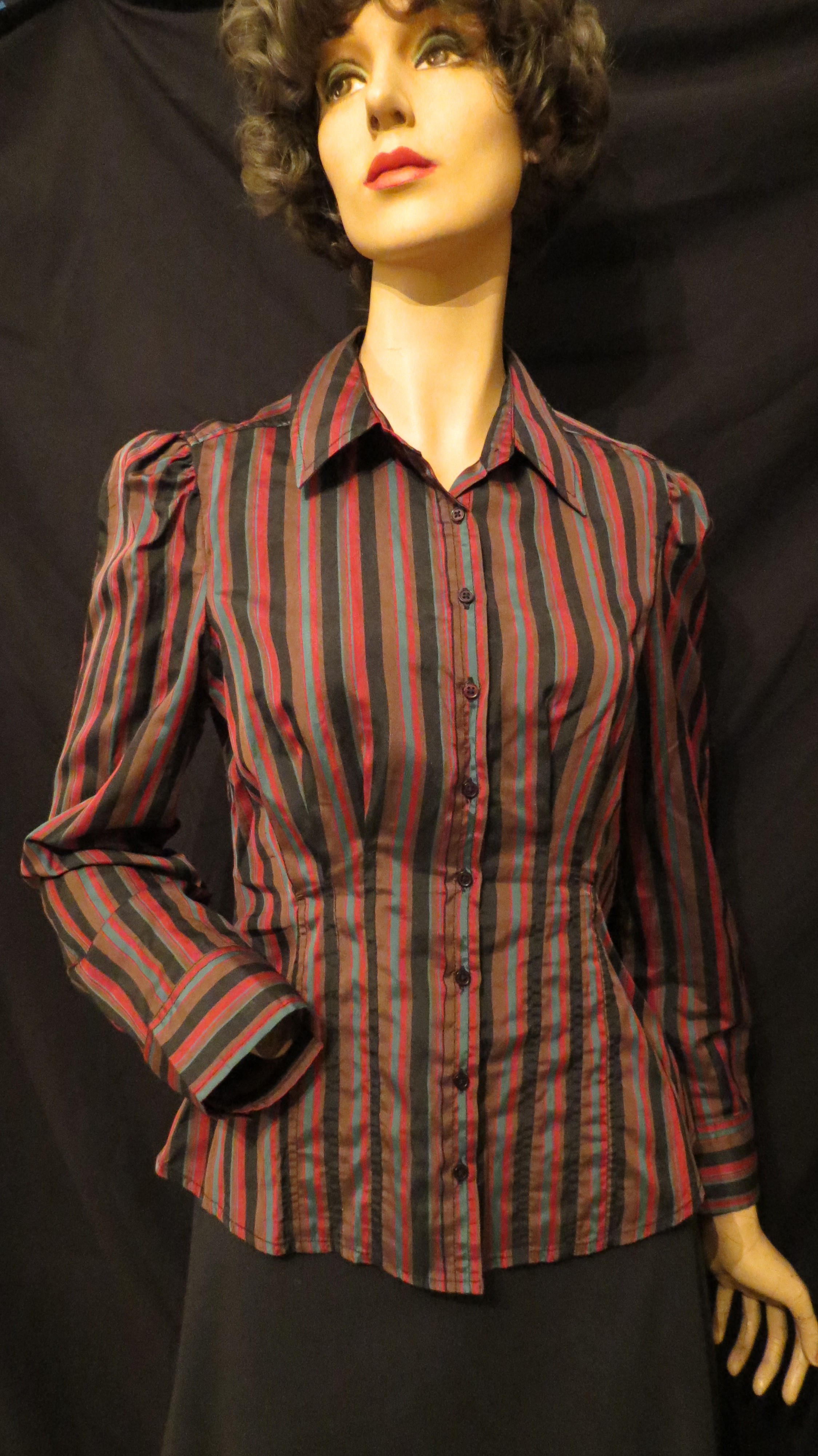
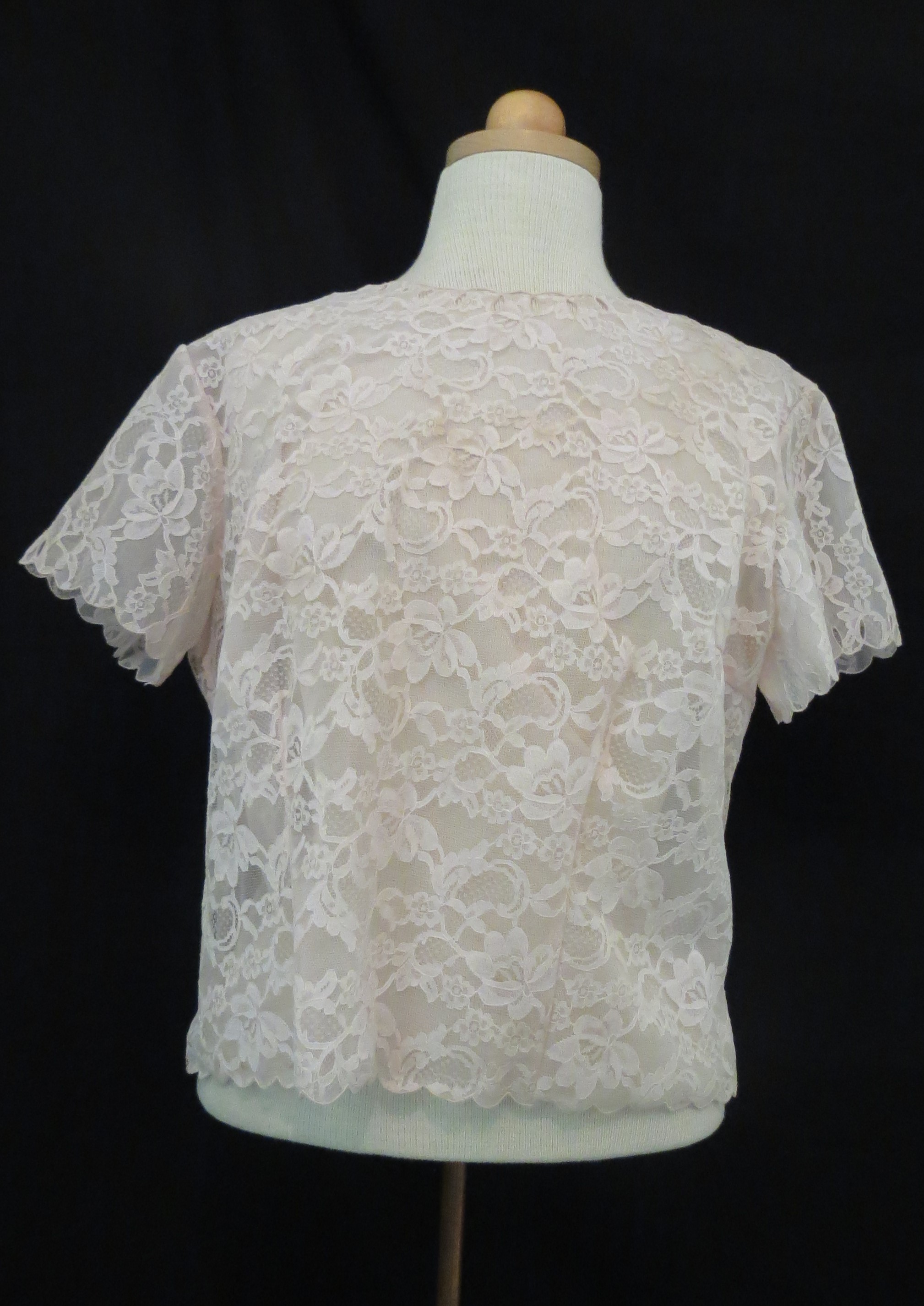
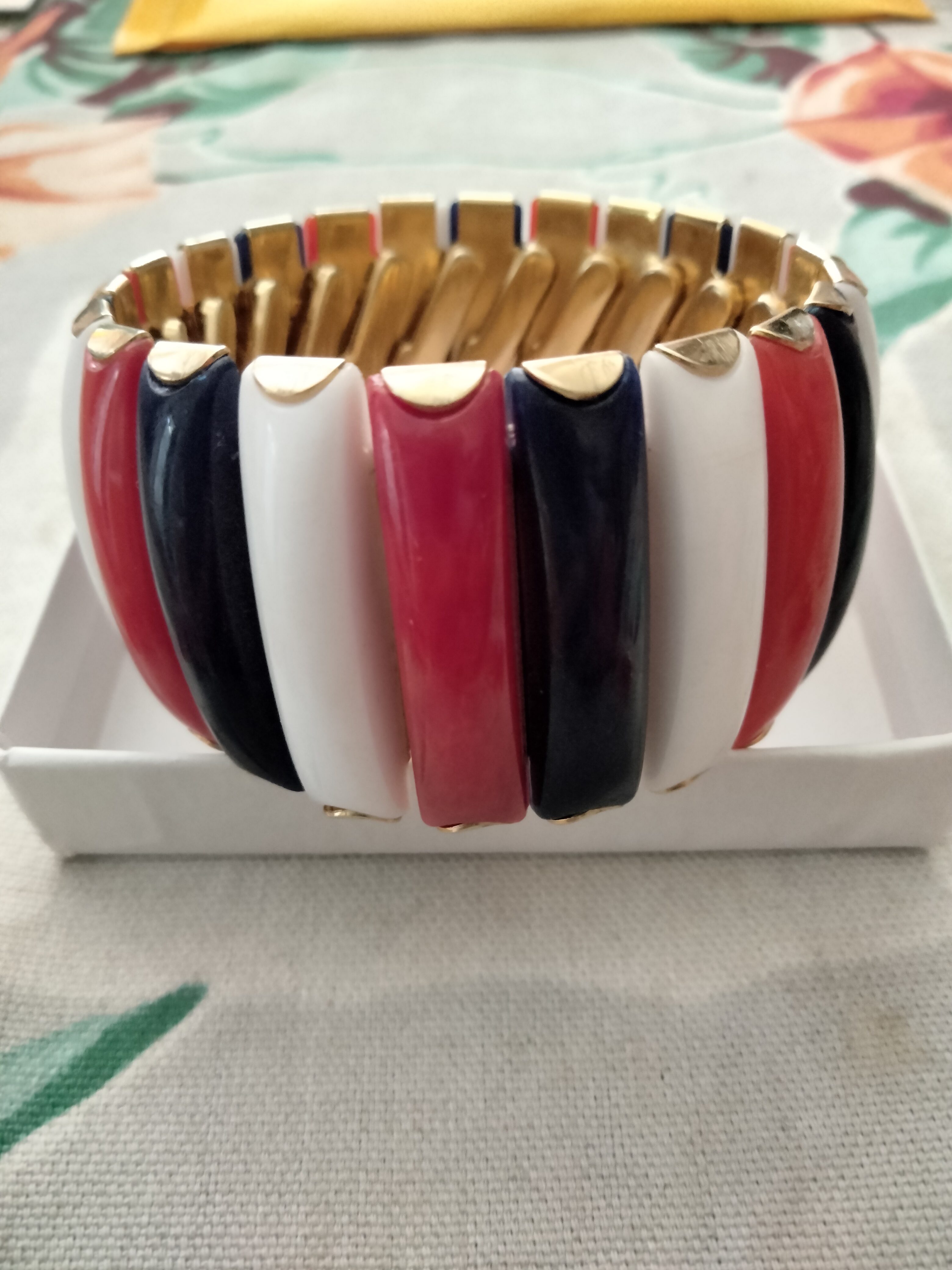
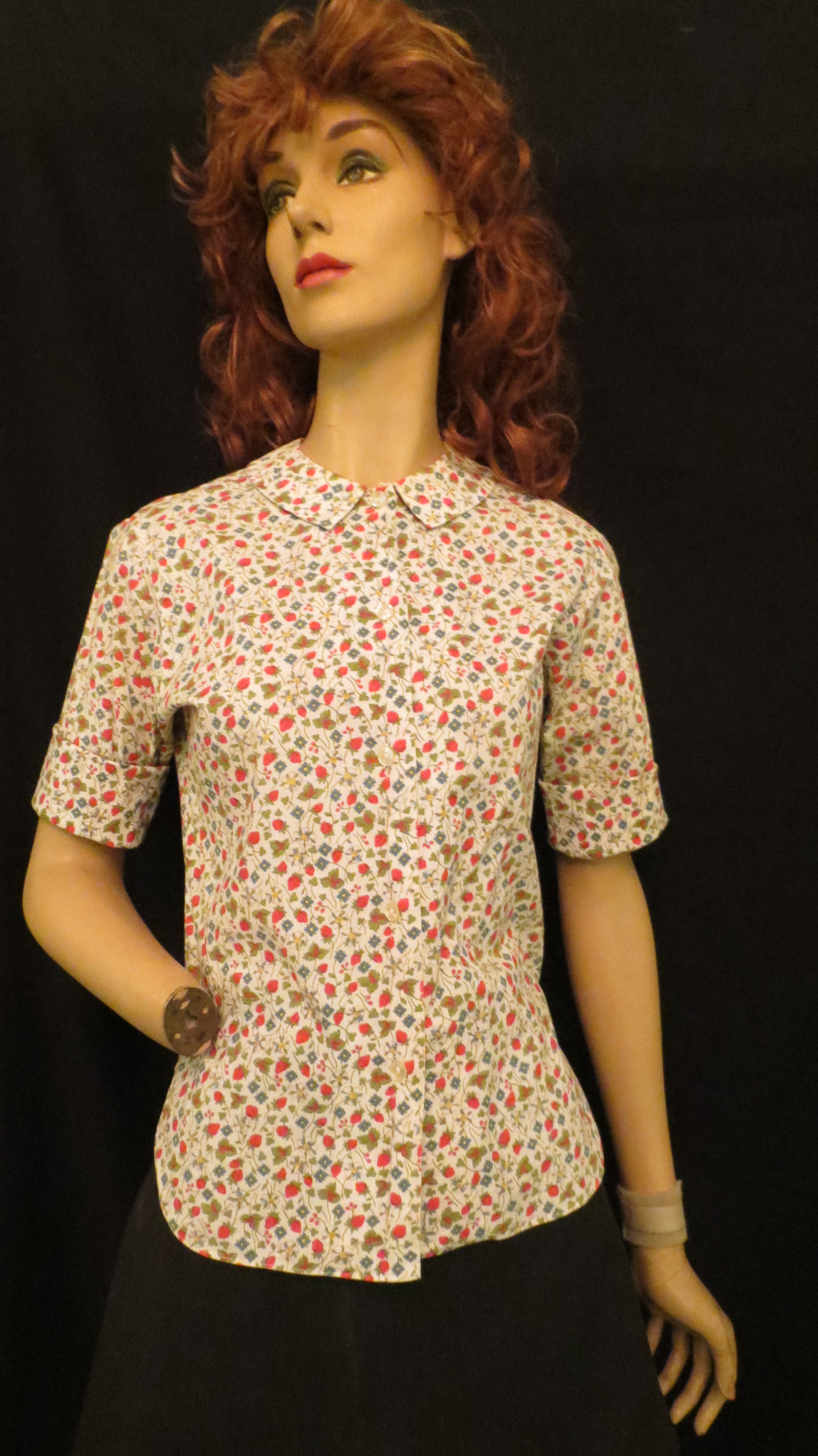
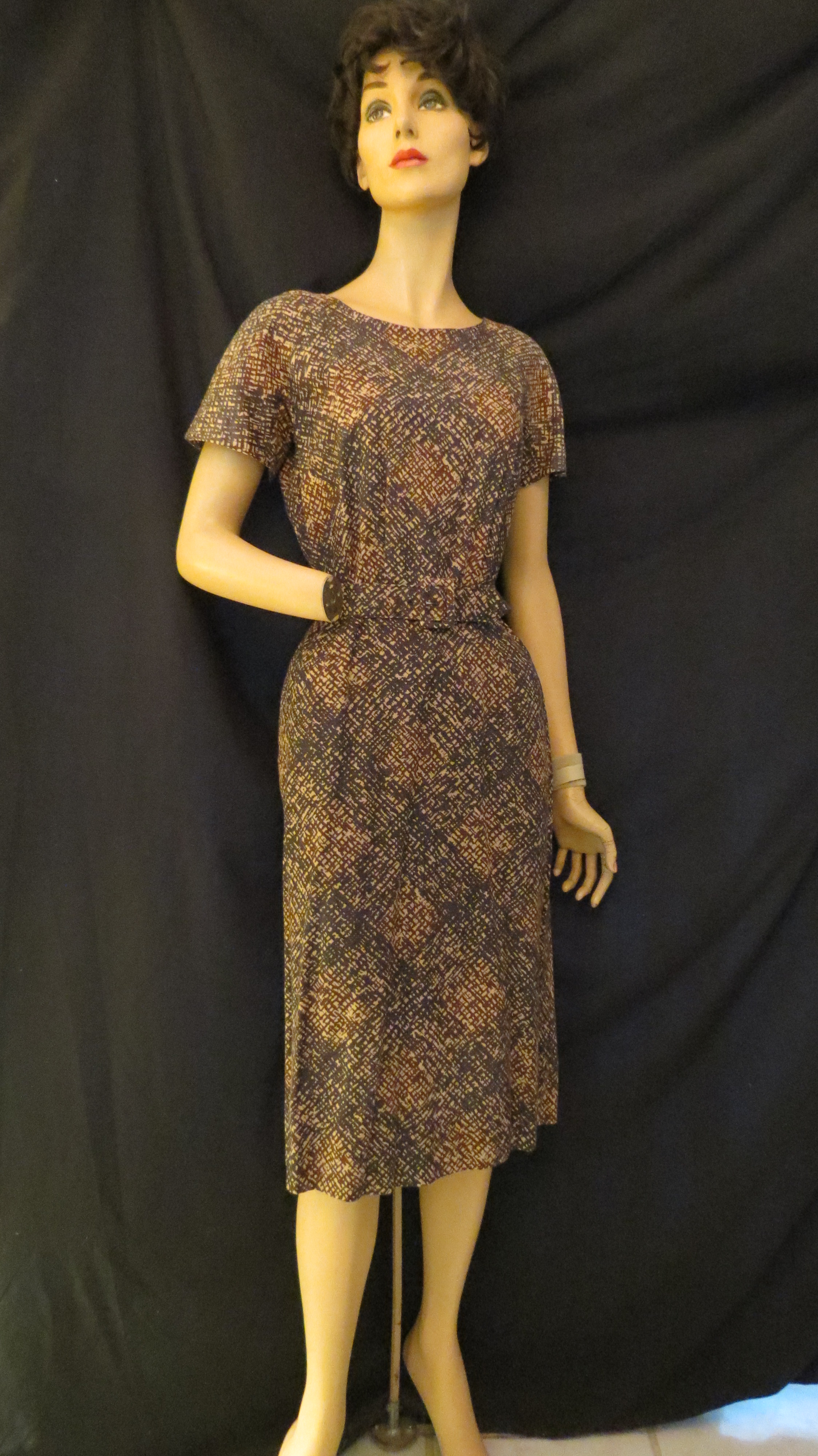
With the restoration of access to fine fabrics and sewing notions beautiful blouses were manufactured for retail again. Costume jewelry was abundant again. I love this accordion-style stretch bracelet design. So ingenious and convenient. One size fits all and no links or fasteners to break. This one’s perfect for celebrating U.S. 250th anniversary of independence from oppressive British rule. It was a time of hope and vision.

Despite surface appearances, today is the same. Let’s look forward that way. Tomorrow we’ll step into the 1960’s, also a decade of revolution and change. Stay tuned . . . . . . . . . . . . . . . . . . . . . . . . . .

MORGANA MARTIN, THE MAGICVINTAGESPY

BLOG: MAGICVINTAGESPY.COM
TRUE VINTAGE EARLY 1950’S DRESSY DAY-WEAR

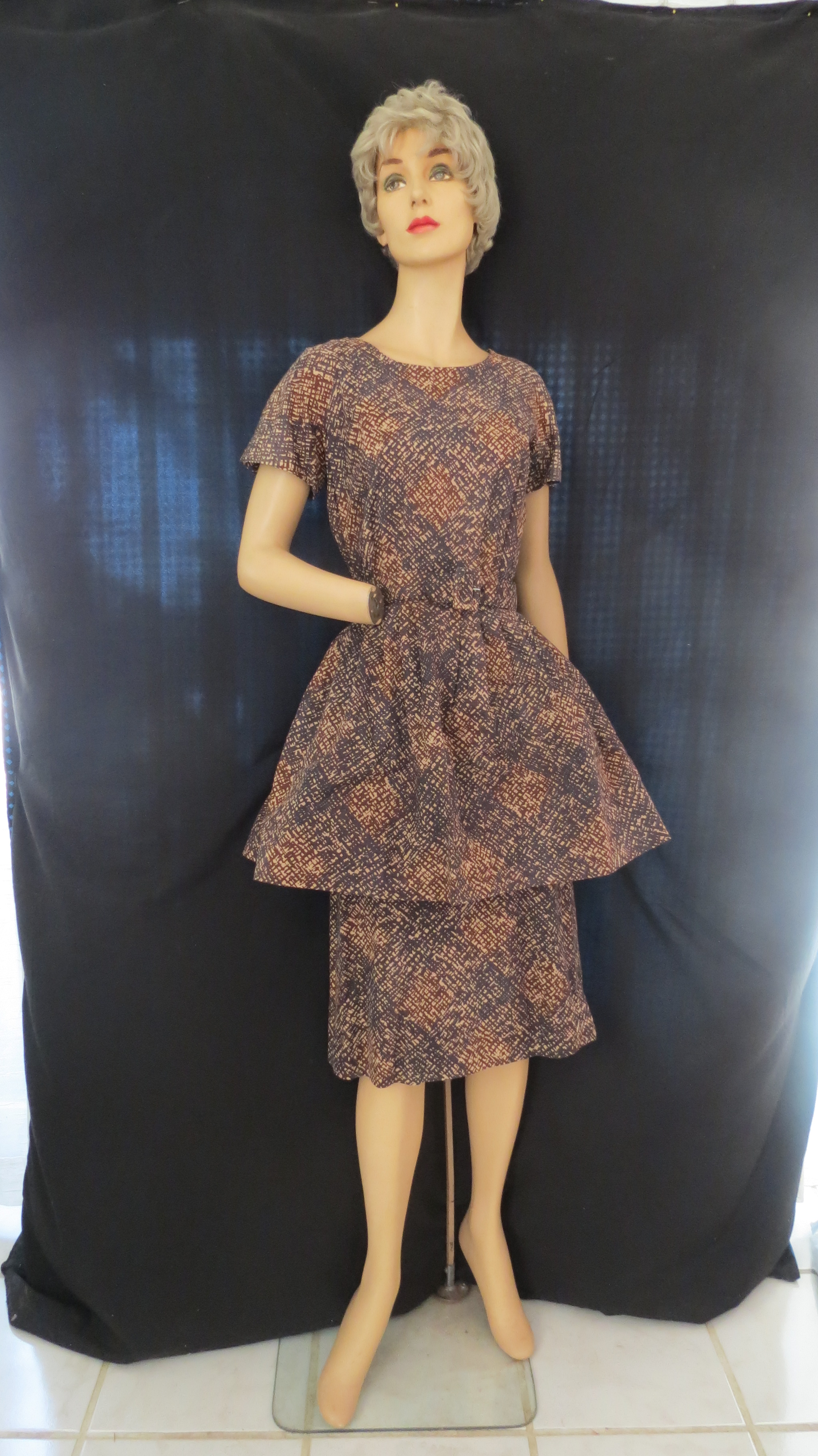
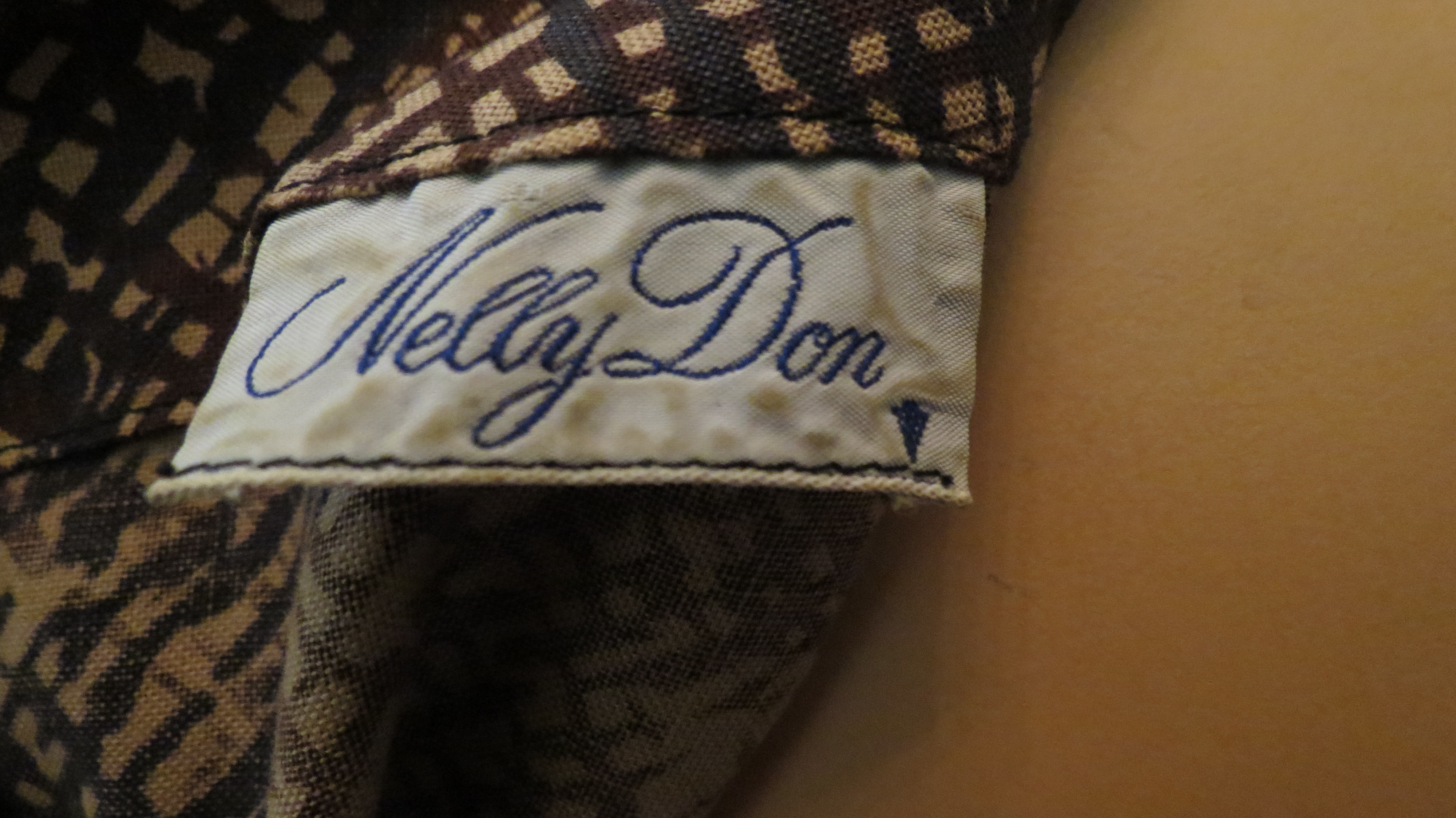
Let’s start with this novel style by a famous French (undoubtedly Paris) designer. The knock-off pictured above was by Nelly Don, a well-known mid-century ladieswear label in the U.S. The belted sheath dress woven of substantial cotton or a blend has a wide detachable peplum which creates this avant garde silhouette. The French designer brought this luxury style out in 1952 and the mid-priced American version followed quickly.

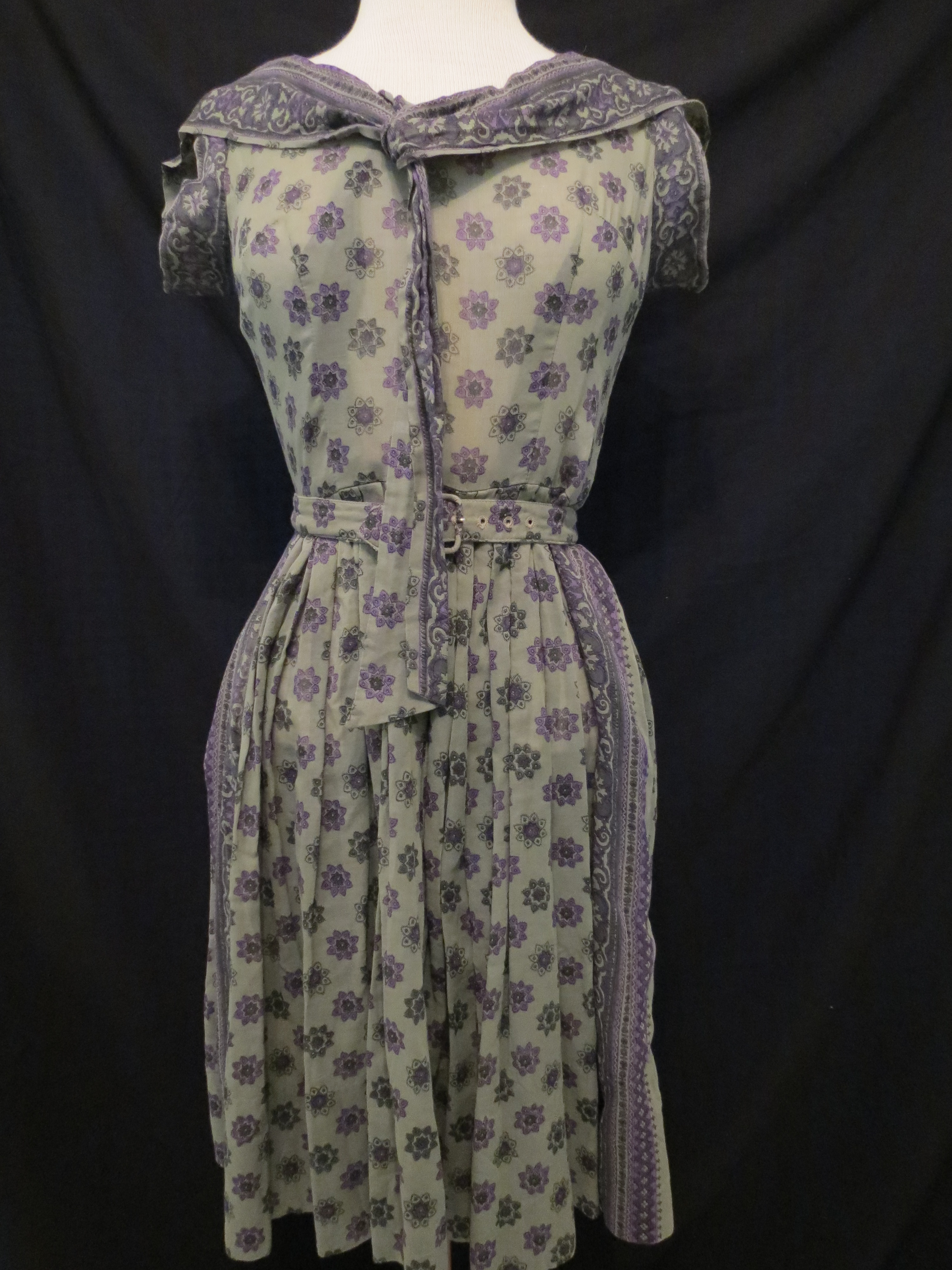
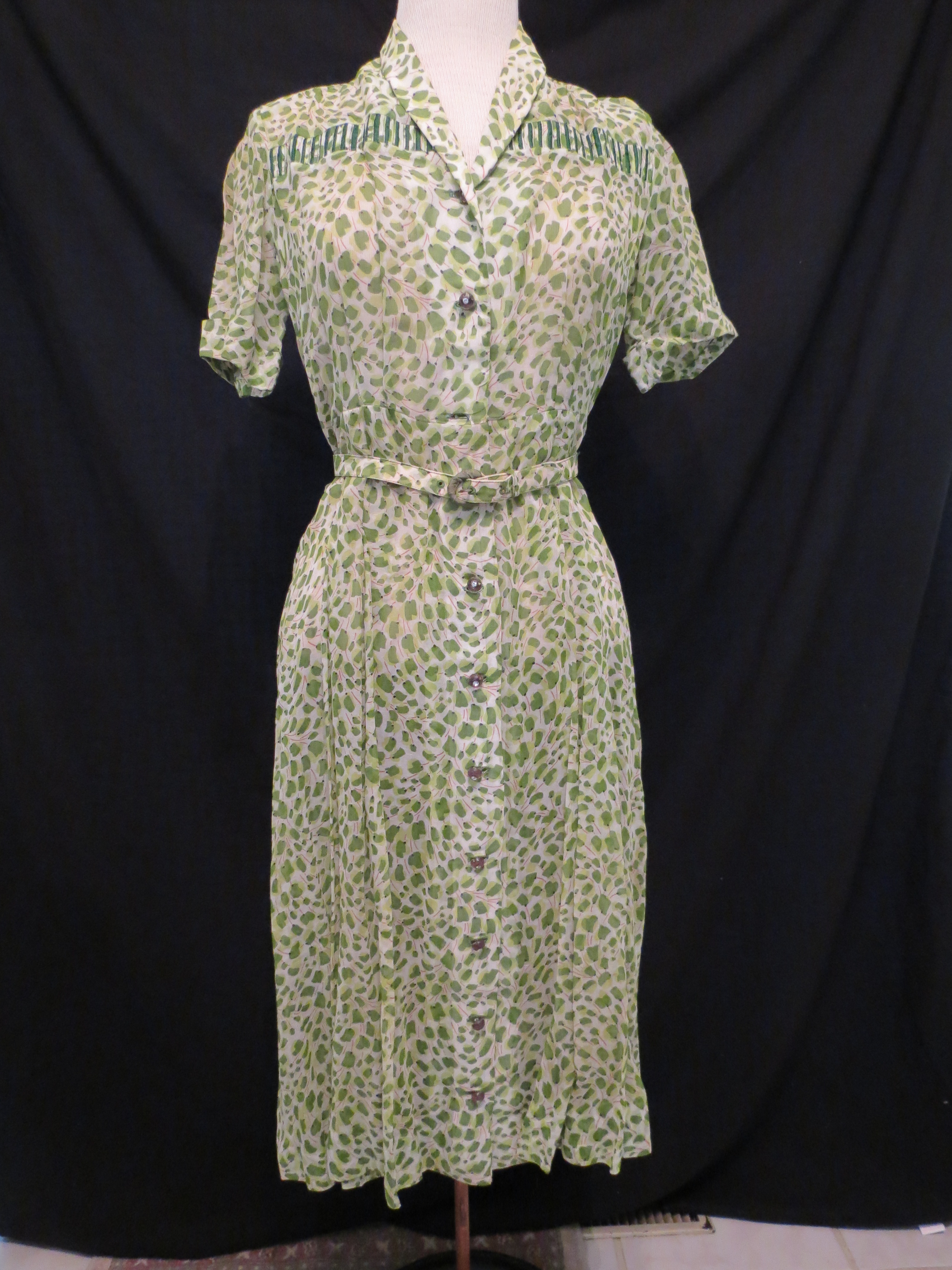
A very pretty semi-sheer dress with a scarf neckline is unusual in an olive green and purple print which I love. Again, it’s belted and fitted as were most of the dresses of this time and follows a shirtdress style.

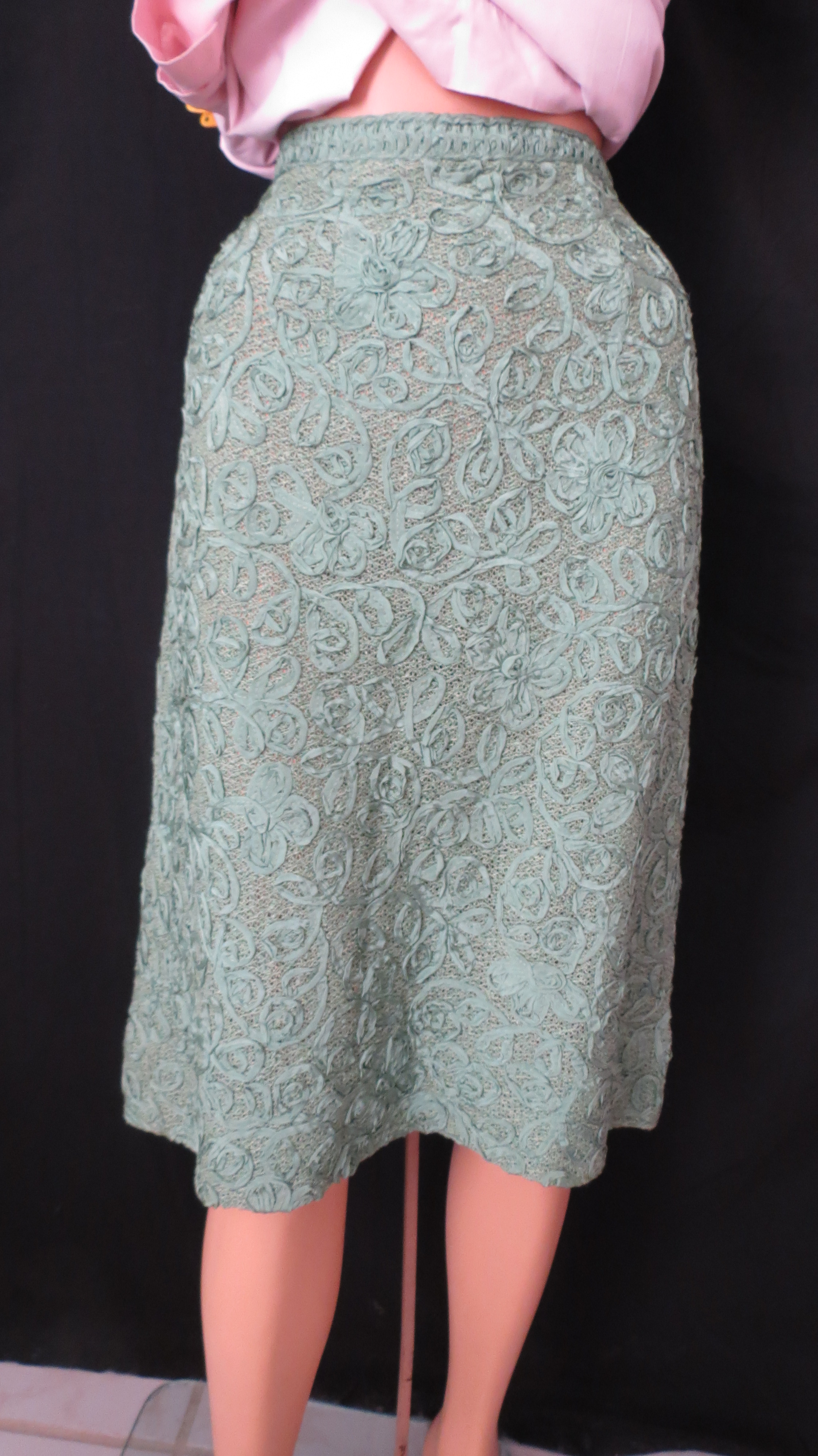
This green pencil skirt is made in a relatively briefly-used but popular fabric which consists of thin, rayon(?) ribbon that is coiled in a continuous design, appliqued onto another fabric base. Imagine it worn with a pretty, fitted blouse. I have a black skirt suit made in this fabric and a family member owned a short-sleeved dress in a gold color, back in the day.

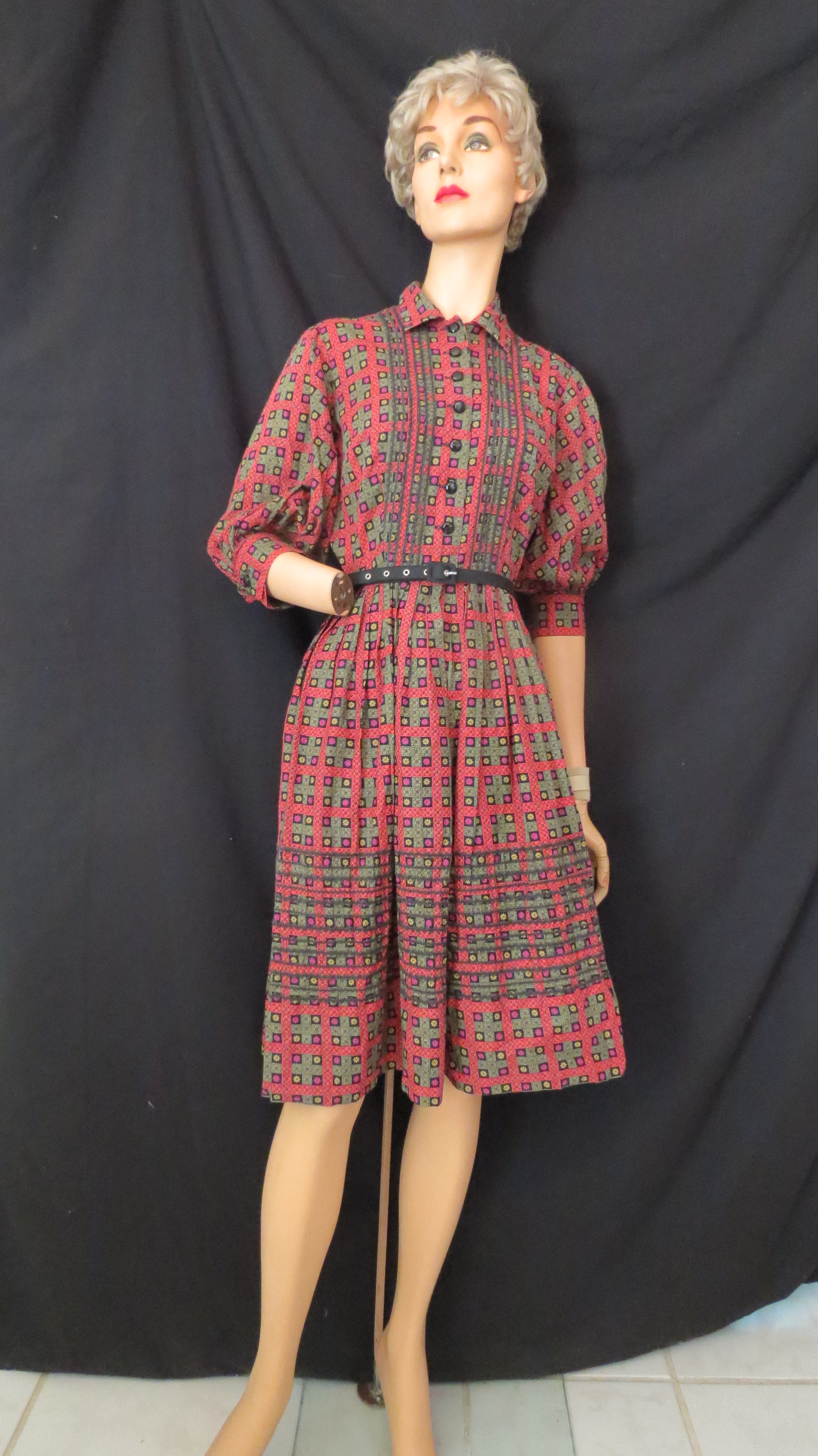
The shirtwaist dress never lost it’s place and continued into the Fifties and beyond in fabrics which ranged from cotton and cotton blends to rayon and silk. The simplest daywear styles continued to be the housewife’s daily uniform. This one is a slightly upscaled version in a more complex print with embroidered trim and tucks.

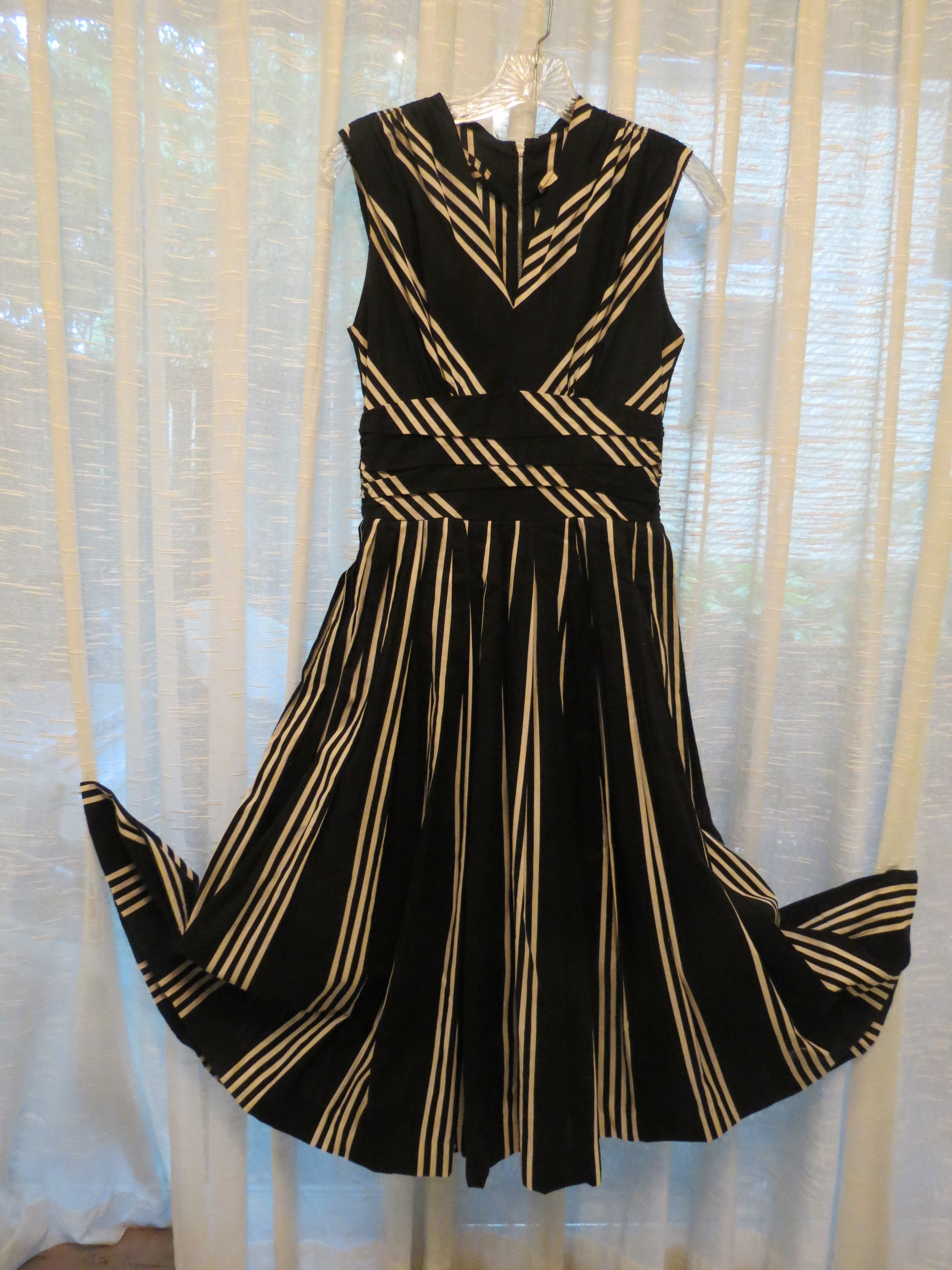
This black and white dressed-up sundress would have been appropriate to go on a date, to the Ladies’ Club, Country Club or shopping in the city. It may have been custom-made, as women and professional tailors continued to use their skills this way though not as much out of necessity as during wartime. The Fifties were about being thrifty but also stylish and having more!

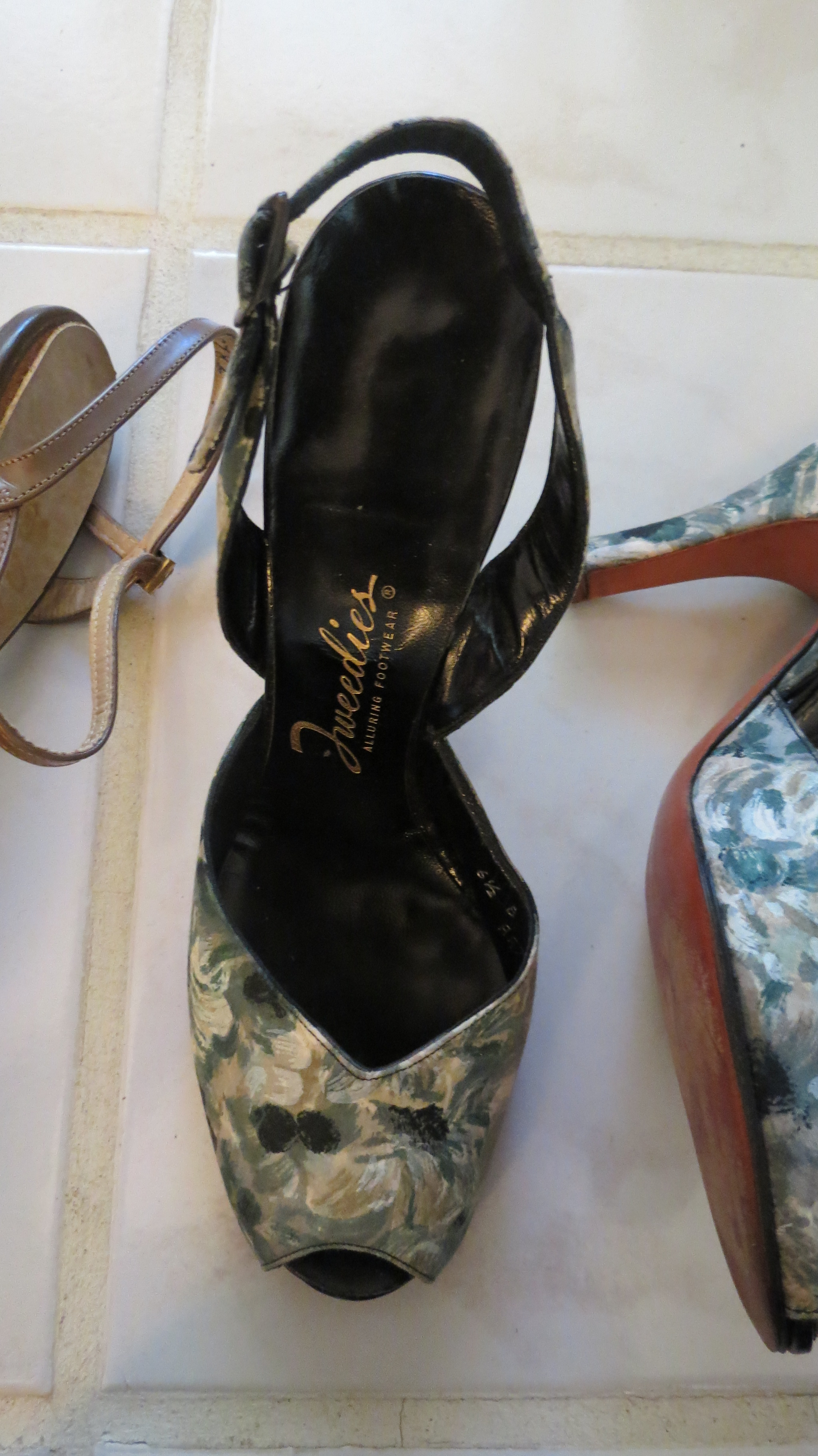
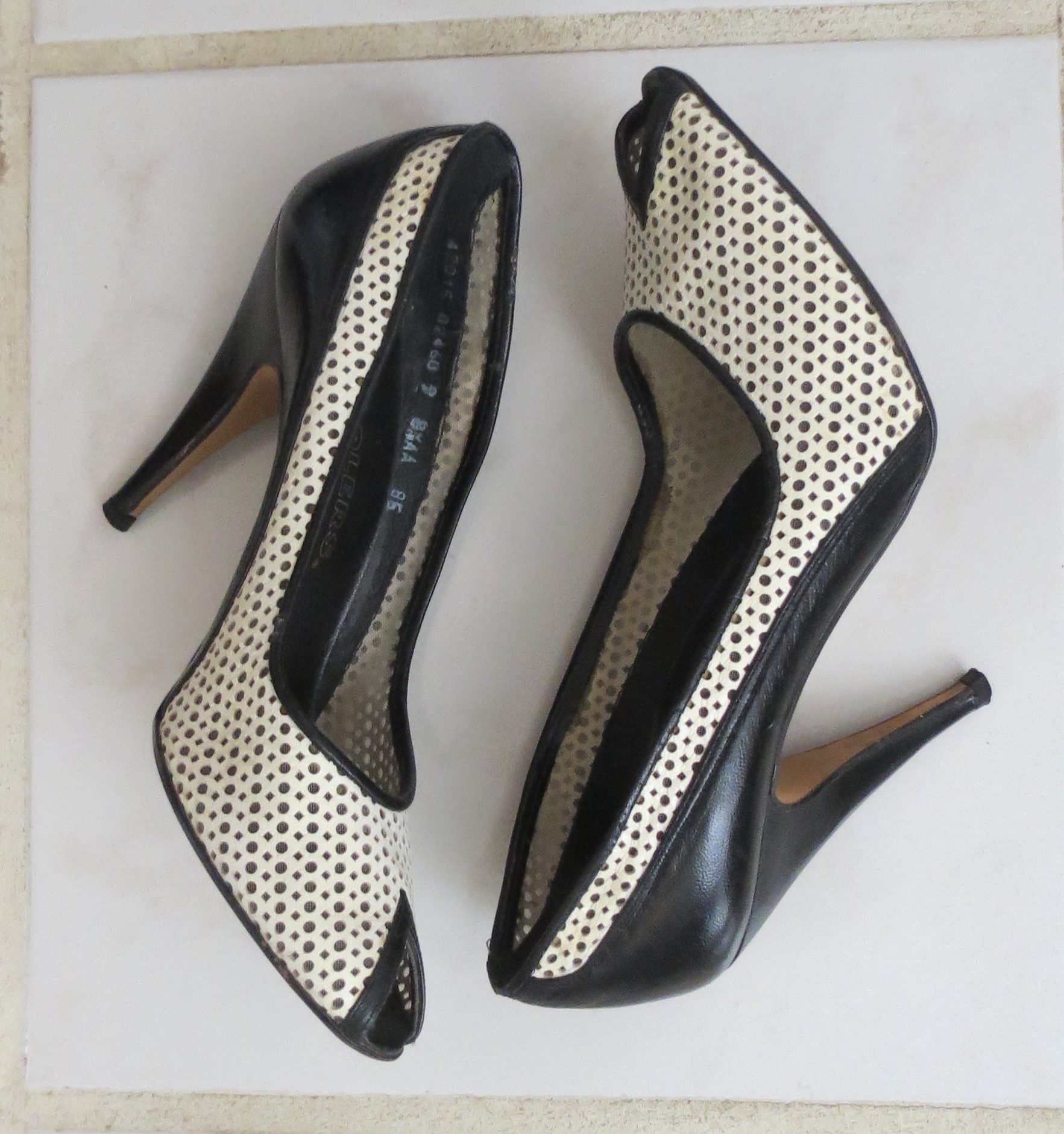
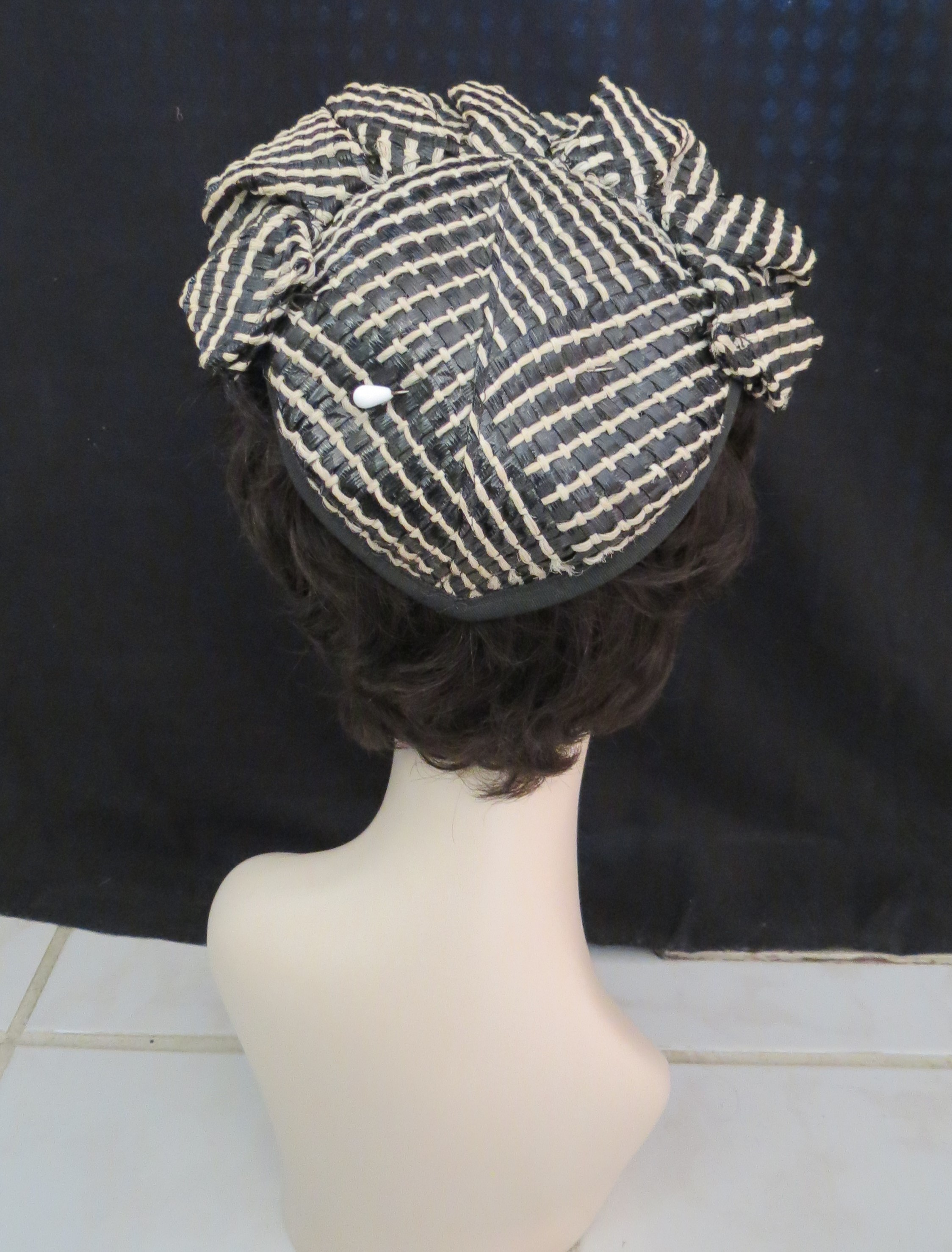
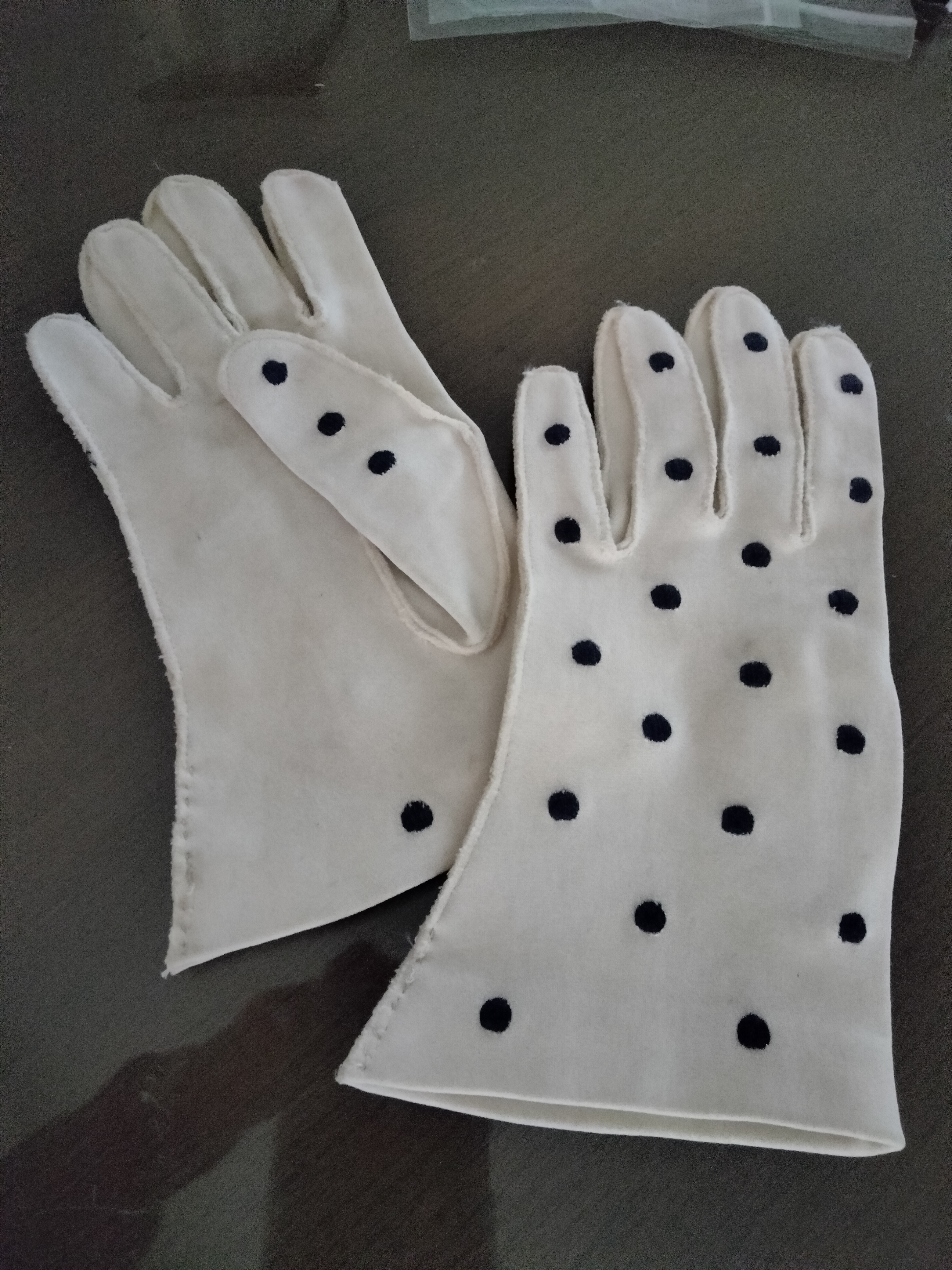
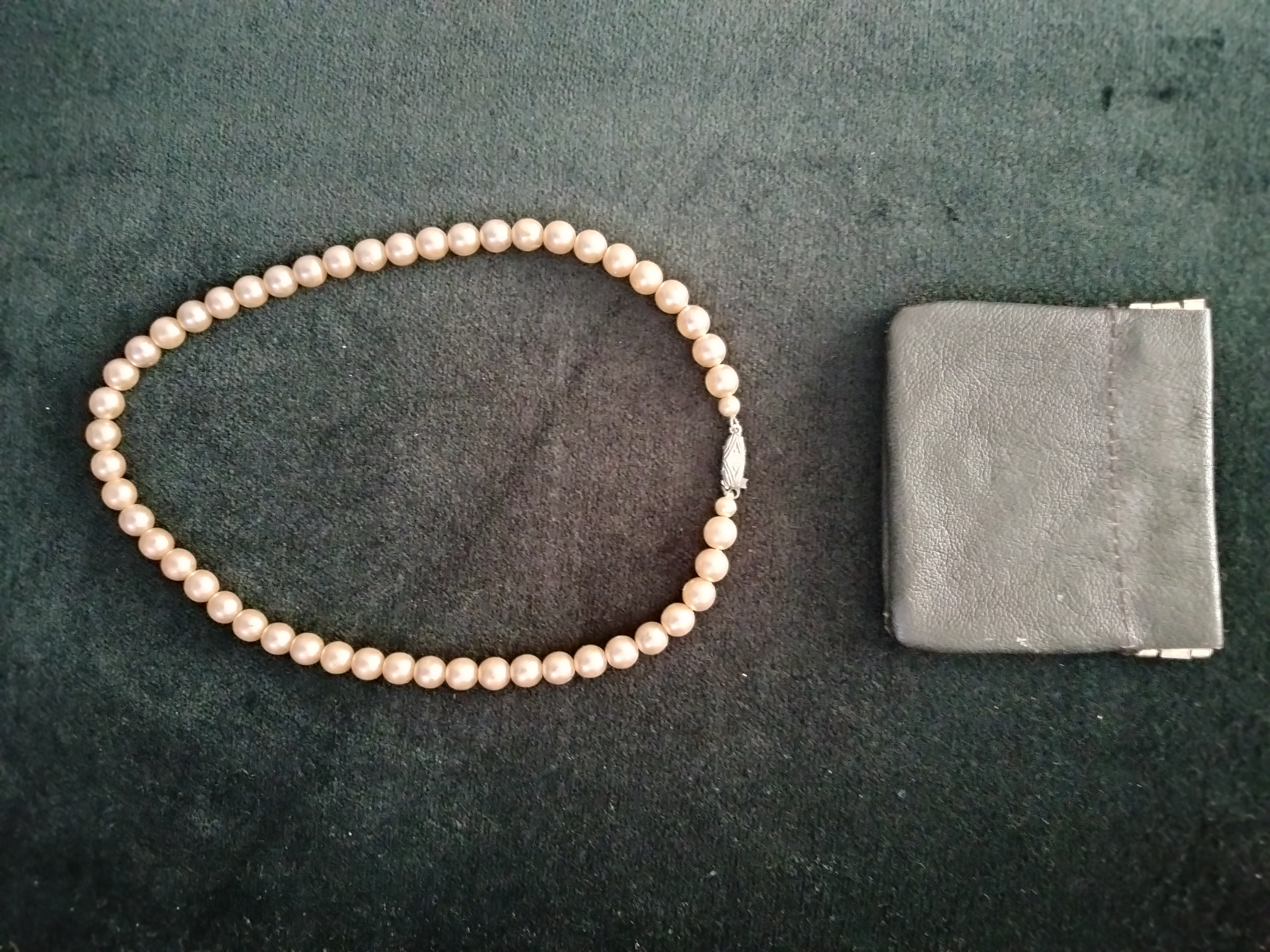
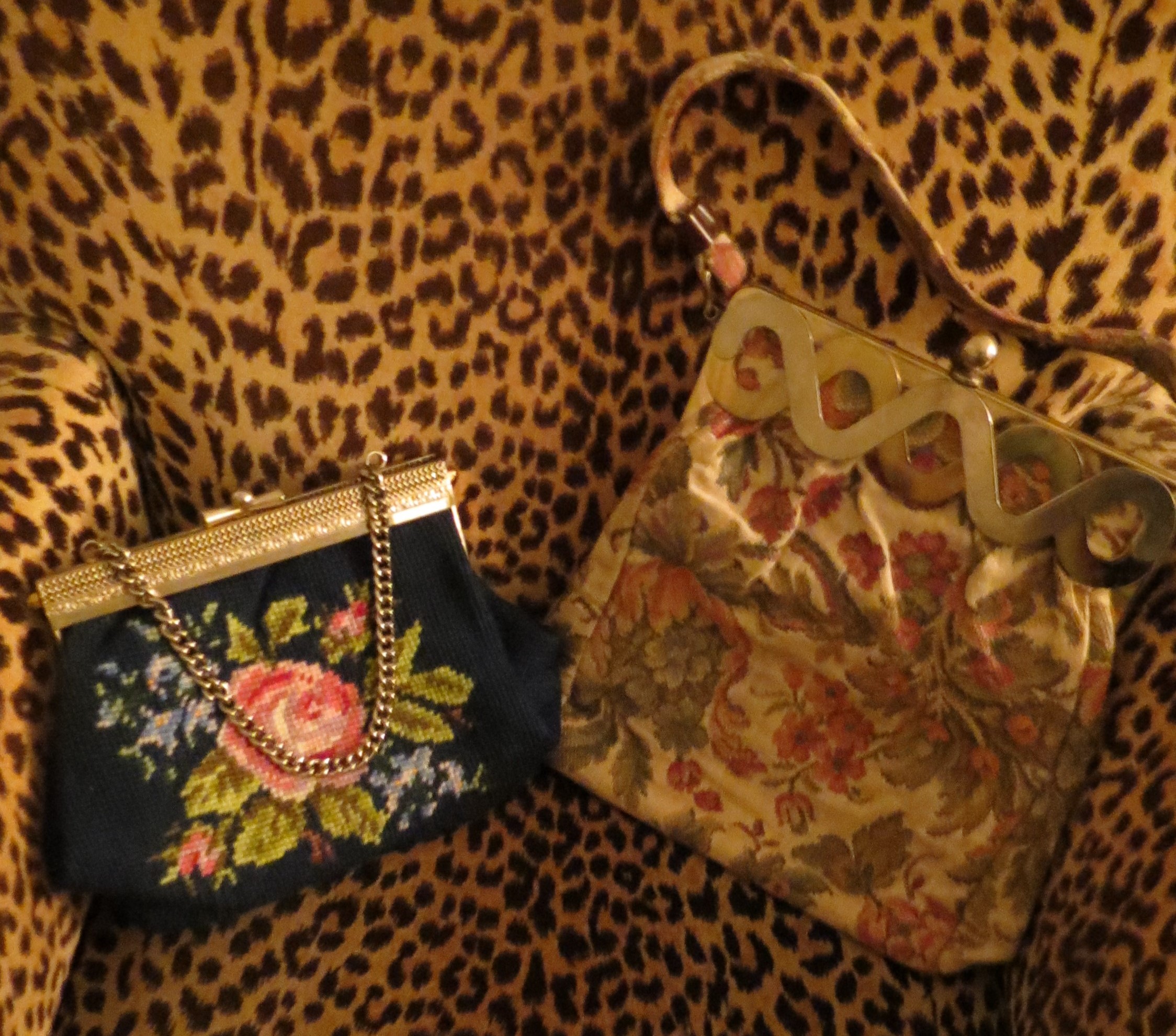
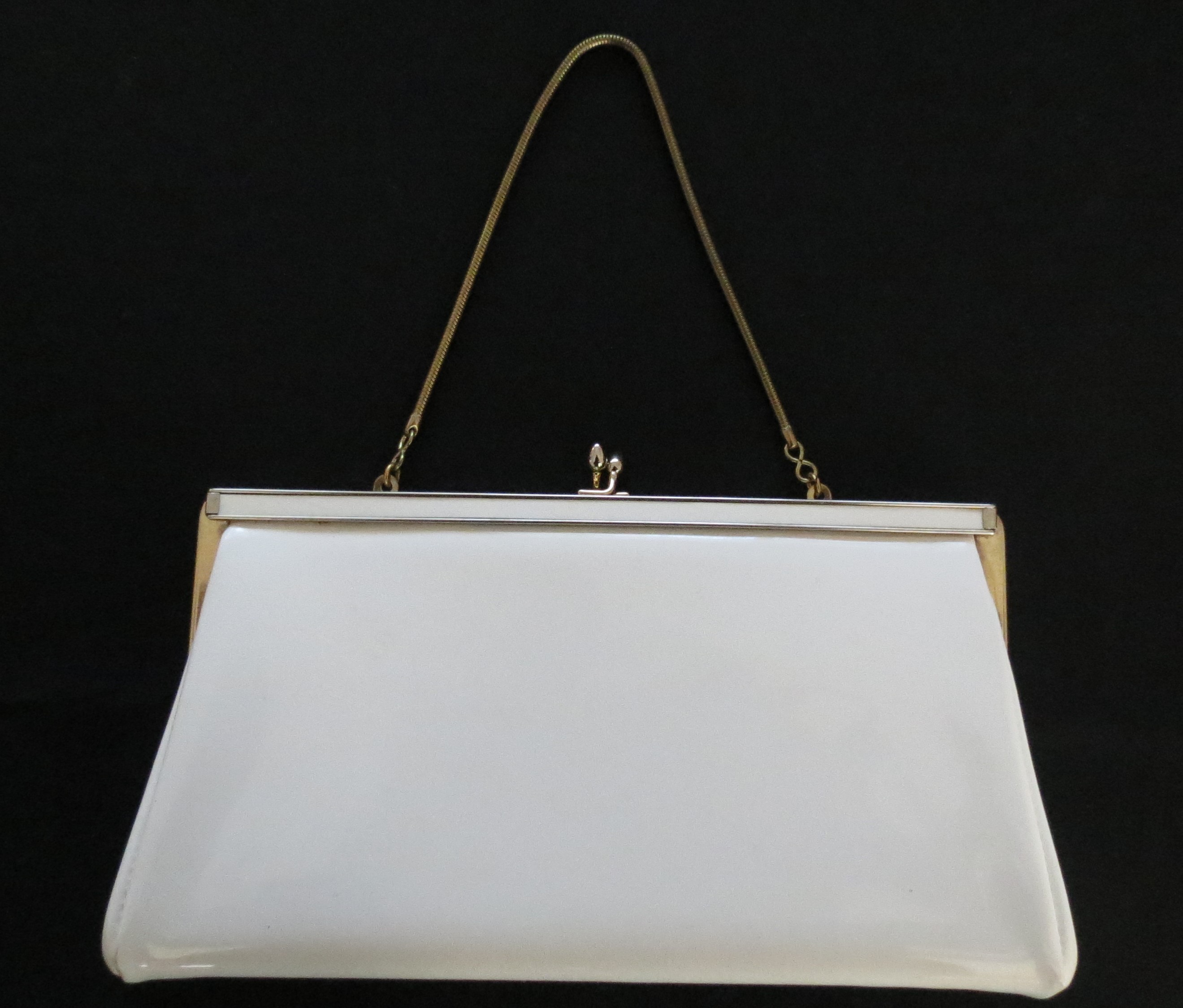
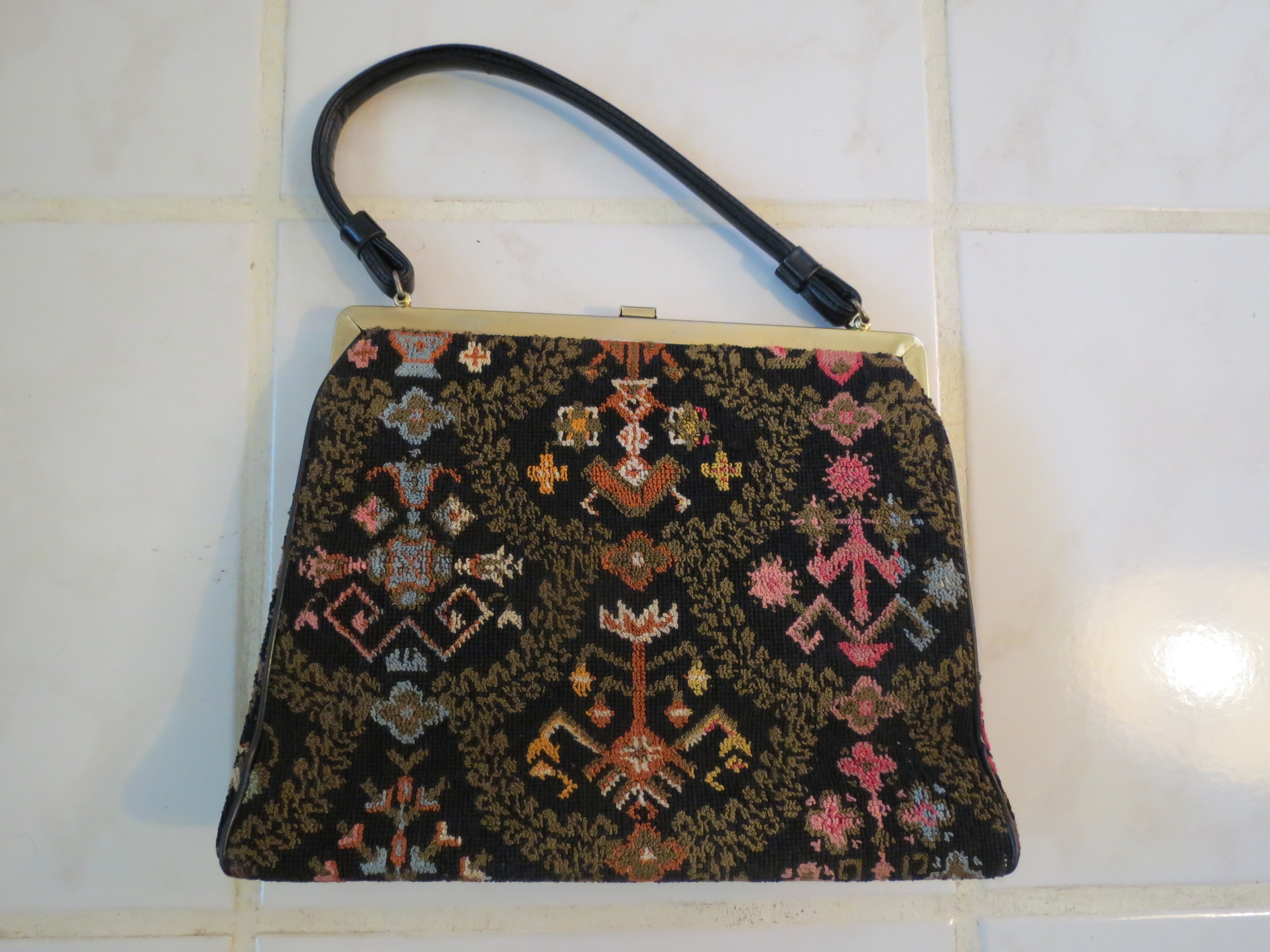
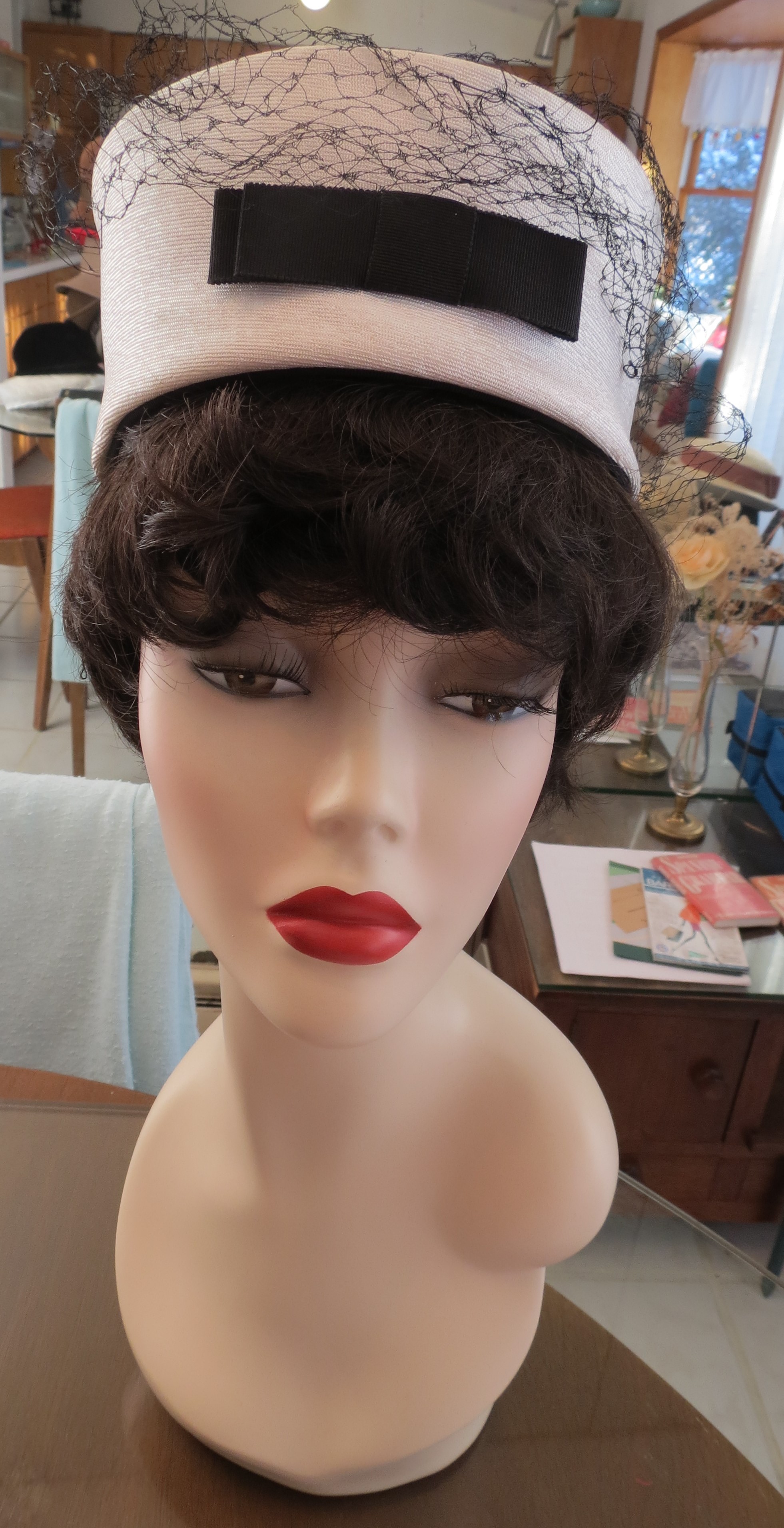
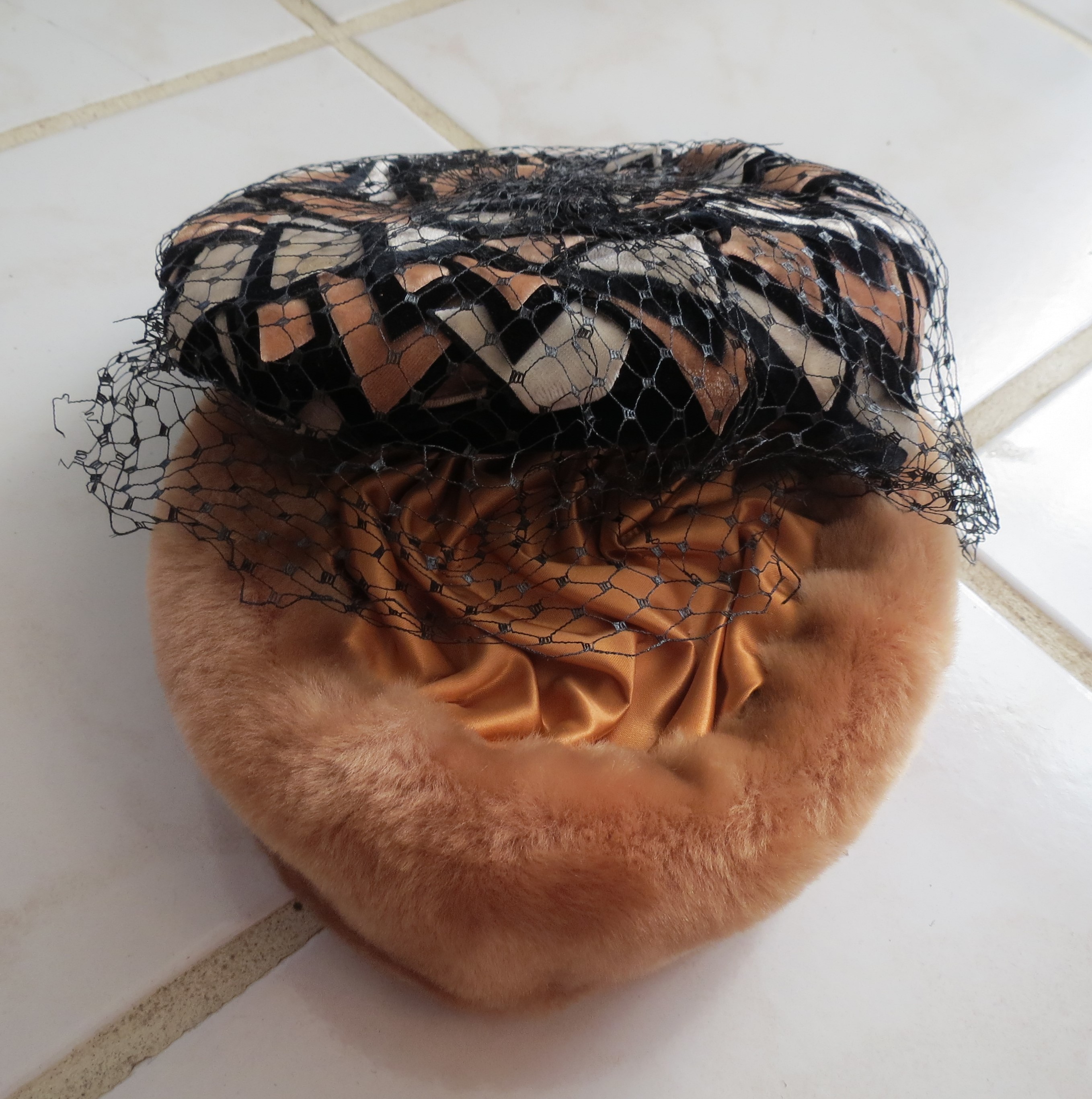
Shoe styles carried over from the 1940’s but with sleeker lines. Pumps were a bit more cutaway and more often had sling-backs. Soles and heels were slimmer. Peep toes continued, which I absolutely love. Hairstyles became smaller and neater again as did hats, which continued to be de rigueur for any well-dressed woman. Also, a pair of well-made gloves in a style which complemented your outfit and a short string of pearls with almost anything from casual to dressy outfits were considered to be necessities for elegant style. Handbags adopted many styles but here are a couple of semi-dressy designs that carry over the classic “tapestry” floral design and introduce the decorative metal frames and vinyl covering which began to be more popular.

Tomorrow we’ll stay in the same Forties to Fifties time-frame but focus on casual separates and trends. Stay tuned . . . . . . . . . . .

MORGANA MARTIN, THE MAGICVINTAGESPY

BLOG: MAGICVINTAGESPY.COM

MORE WONDERFUL TRUE VINTAGE 1940’S SPRING DAY DRESSES AND ACCESSORIES

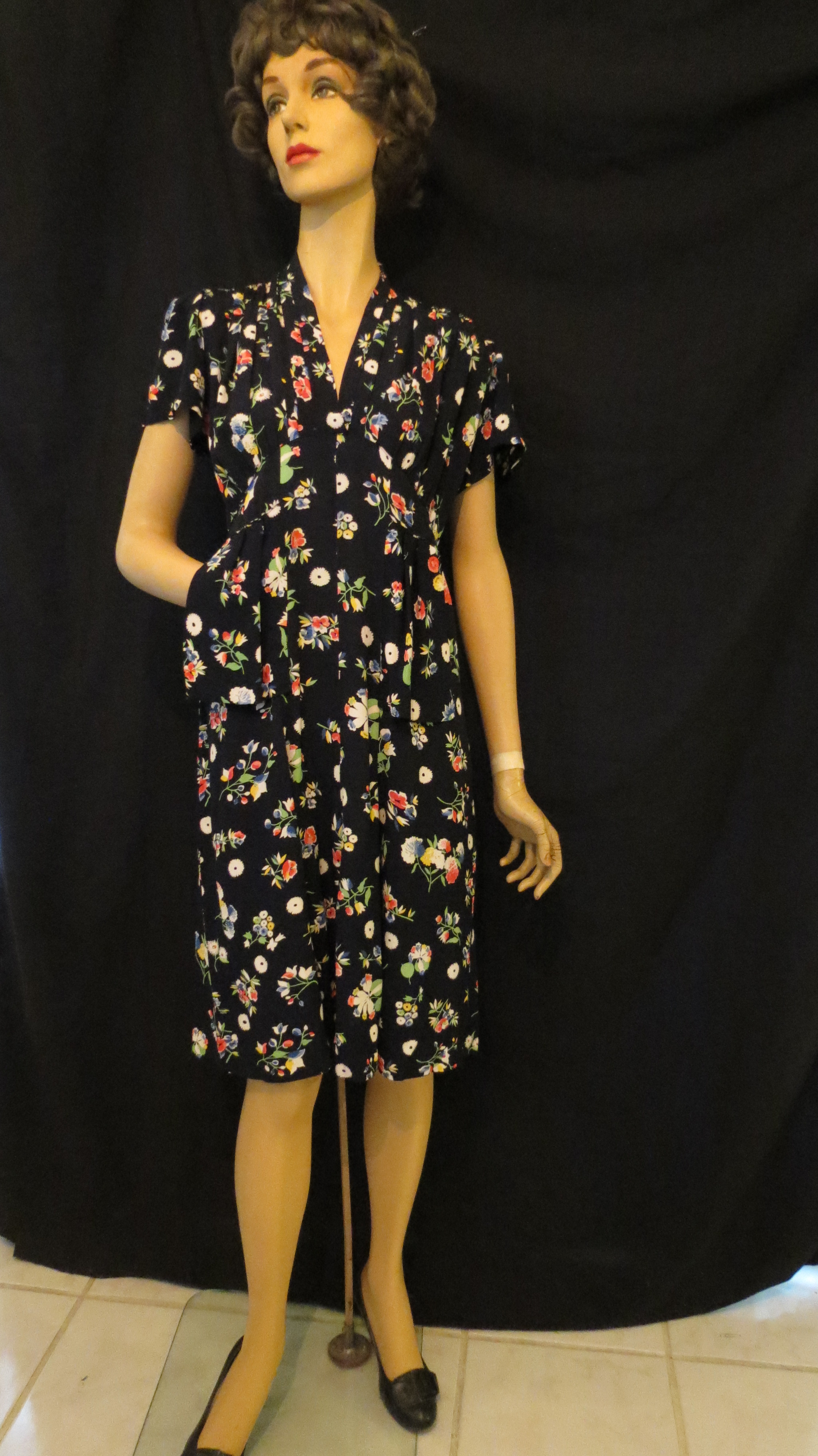
Some of my very favorite frocks. Wonderful rayon and blended synthetics. Pretty cotton. One sheer, the others opaque and drapey. Don’t you love these prints? Atomic, abstract and floral – big wartime and post-war favorites. Here, also, are some of the handbags, scarves and pumps that might have been worn with them.

Iconic styles, rationing-compliant and “modern” plastic alternatives to leather and wool. Silk and silky synthetic scarves were constant purse accessories. A few items carry over from the 1930’s – a few point toward popular styles as we go into the 1950’s. Since we’ve had such a long, cold winter, tomorrow I will show a few of the coats and outdoor accessories which might have accompanied 1940’s dresses outside the home. Stay tuned . . . . . . . . . . . . . . . . . . . . . . . . . . . . . .

MORGANA MARTIN, THE MAGICVINTAGESPY

BLOG: MAGICVINTAGESPY.COM
JUST FOUND – VINTAGE LADIES CLASSIC SHIRT WITH EXCEPTIONAL TAILORING

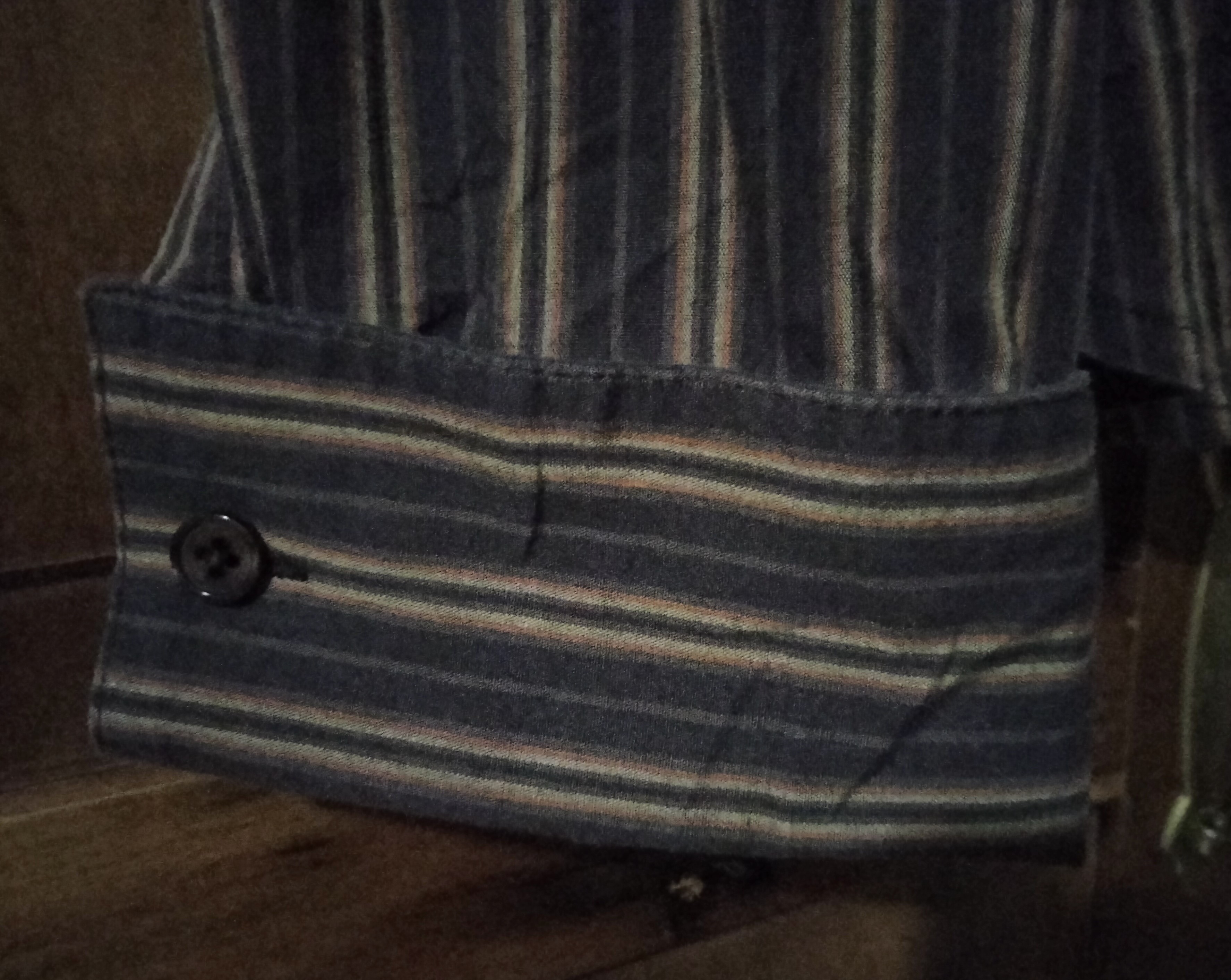
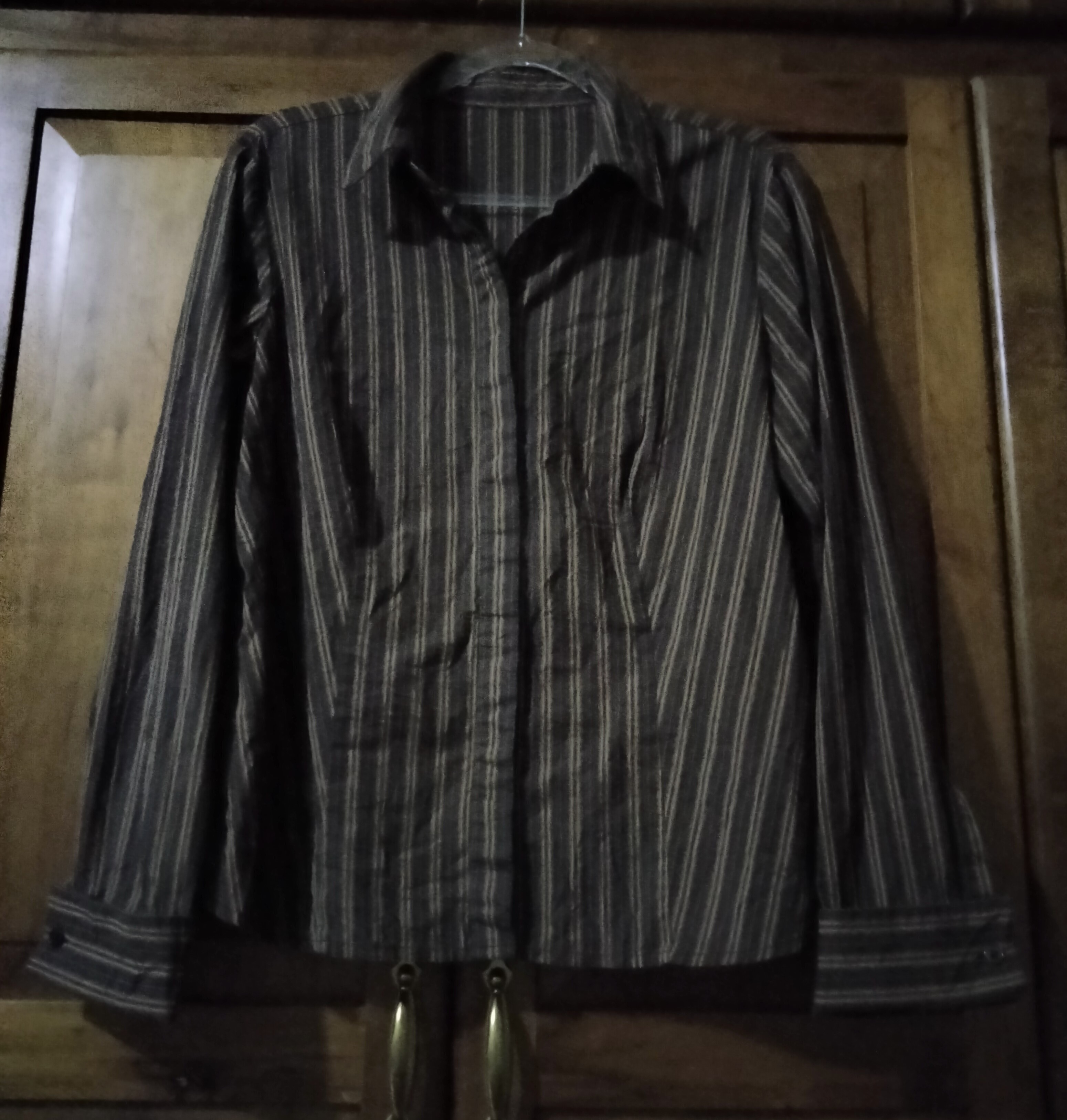
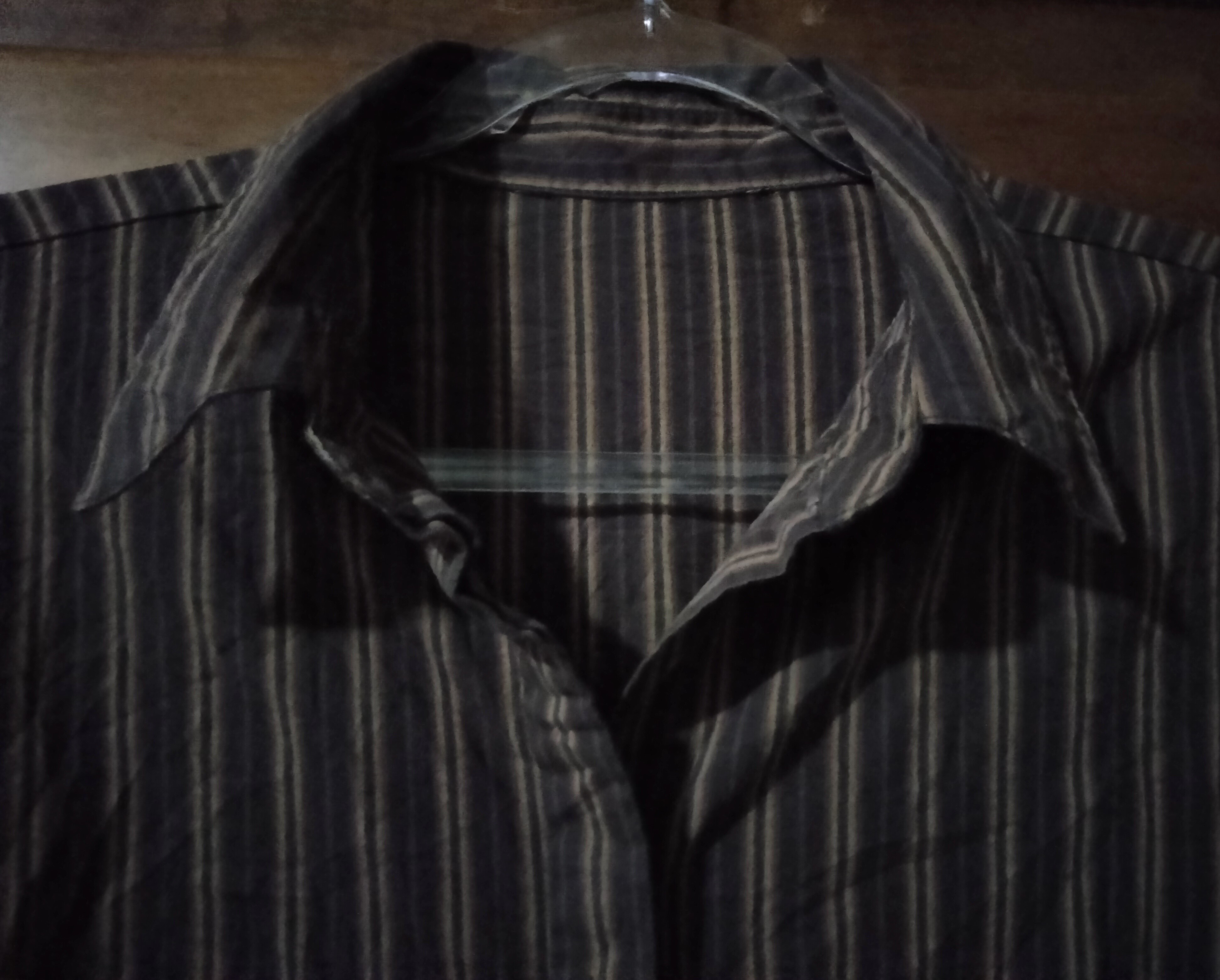
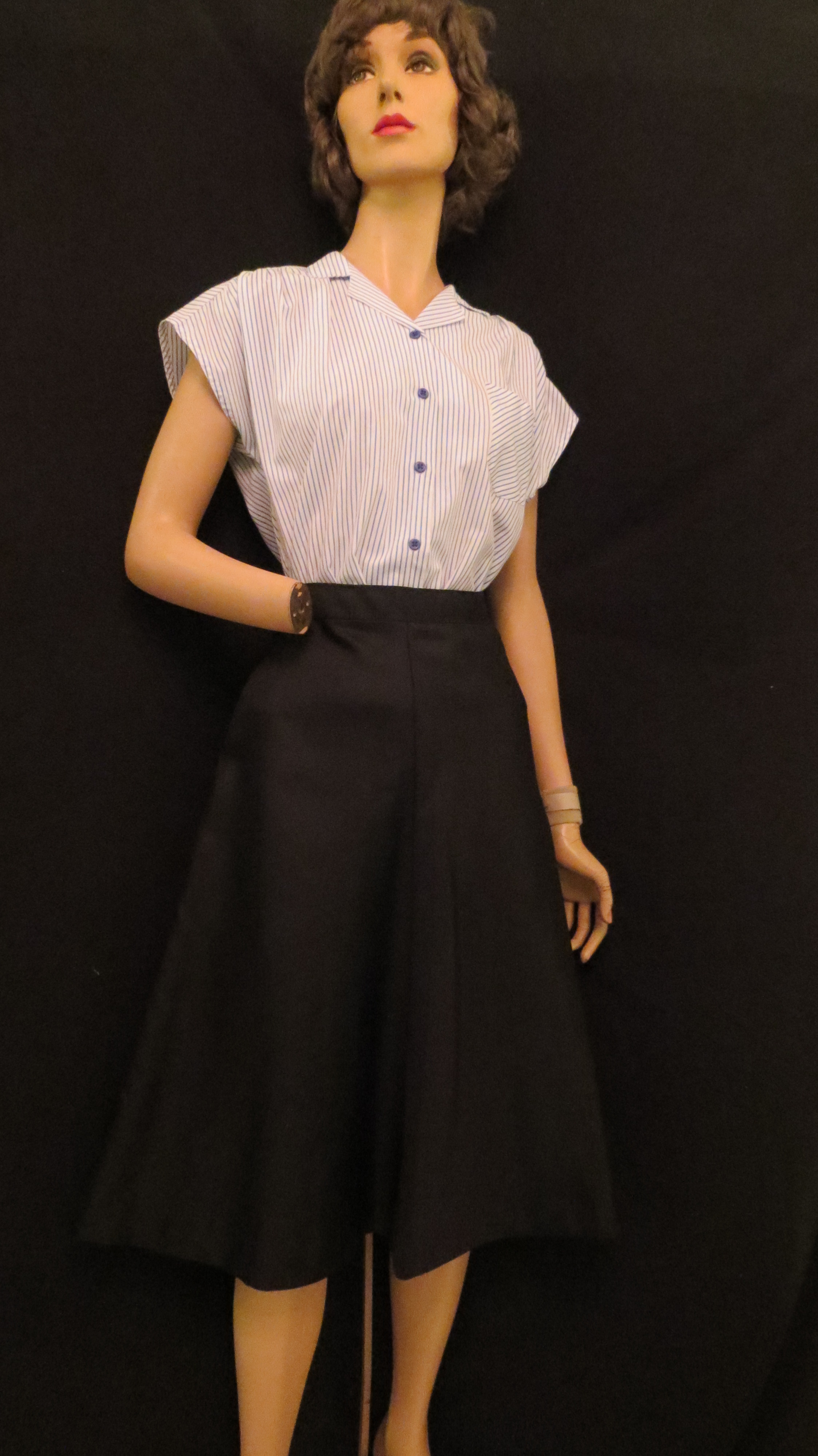
This blouse was worth collecting. I immediately recognized the fine cotton fabric and exceptional tailoring detail, worthy of mid-century ladies shirts though I suspect that this one was made in the 1980’s or ’90’s. The most interesting features are the French cuffs and the distinctively-shaped wing collar. Nicely fitted with front and back darts and a finished, straight hem. The seams are incredibly neat and overcast so carefully that they will stay strong for many years. They have also been reasonably well-matched. Little cufflinks are made from matching buttons but, of course, you could substitute any pair of cufflinks that you own. It’s also nice to see dyed-to-match buttons in a true vintage style as well as a covered-button placket construction, though these are not as unusual.

It’s always a thrill for me to find a garment made to these exacting standards. Finding one in any retail establishment, even lots of expensive ones, is rare. Just had to show you these recent finds but tomorrow we’ll return to the 1940’s and Post-WWII era. Stay tuned . . . . . . . . . . . . . . . . . . . .

MORGANA MARTIN, THE MAGICVINTAGESPY

BLOG: MAGICVINTAGESPY.COM
TRUE VINTAGE 1940’S CASUAL DRESSES

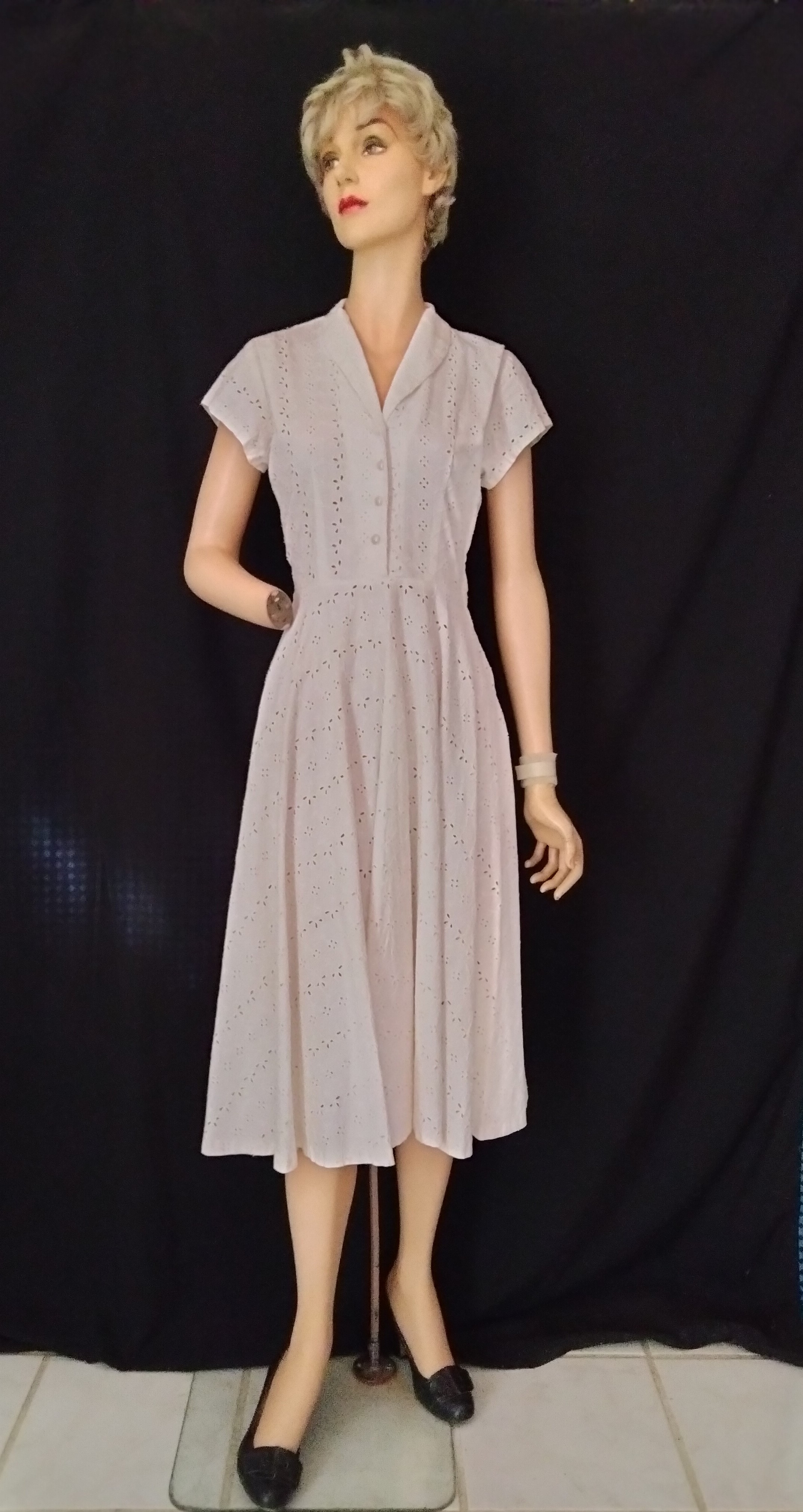
We’ll begin with a pretty, white cotton eyelet dress that was home-sewn in 1940. It’s a lovely dress for town or a picnic, but it was made to be a wedding dress. Coming off the Depression years and with war in Europe, it was a very modest but hopeful costume for entering a dream future.

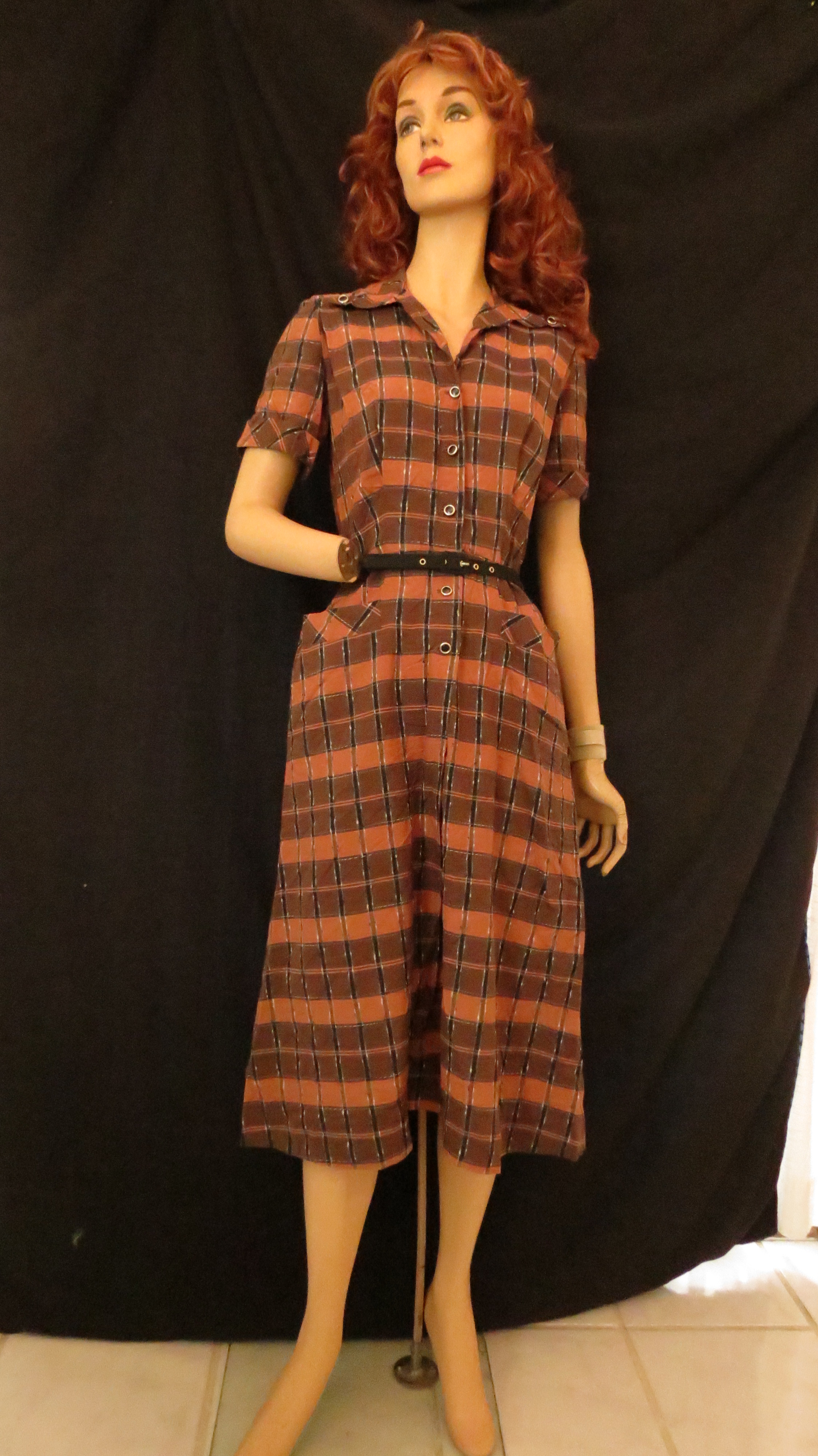
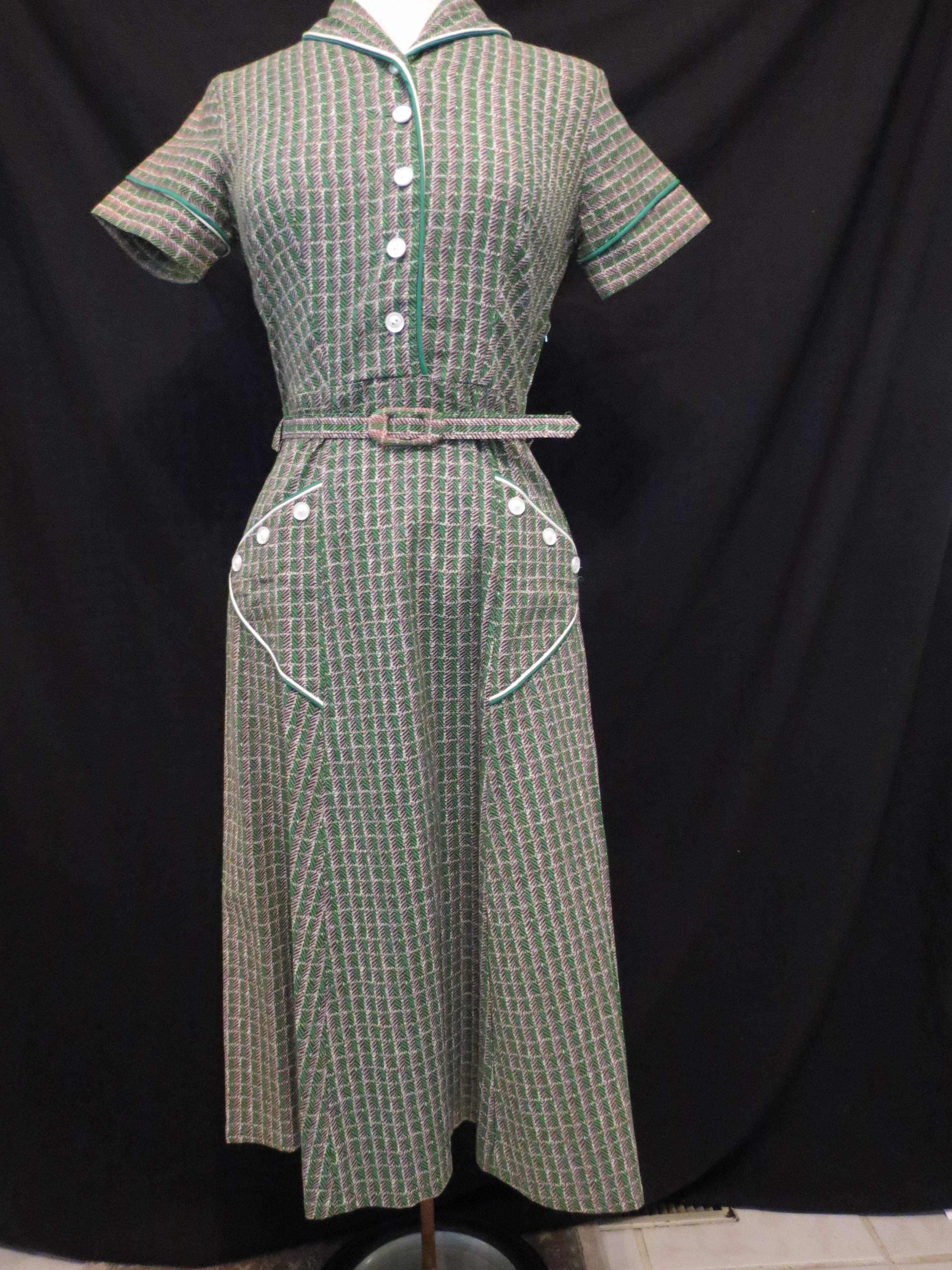
After 1941 and the United States joined World War 2, fashion became much simpler and plainer, but very practical. Shirtwaist housedresses and day dresses were the general uniform for women who didn’t wear specific uniforms related to their work. Dancing, as well as movie-going, were common inexpensive activities that helped people escape the worries and fears of their daily lives. Separates became more popular. Knitwear and wider gored skirts allowed movement while jitterbug was the favorite dance of those young enough to do it.

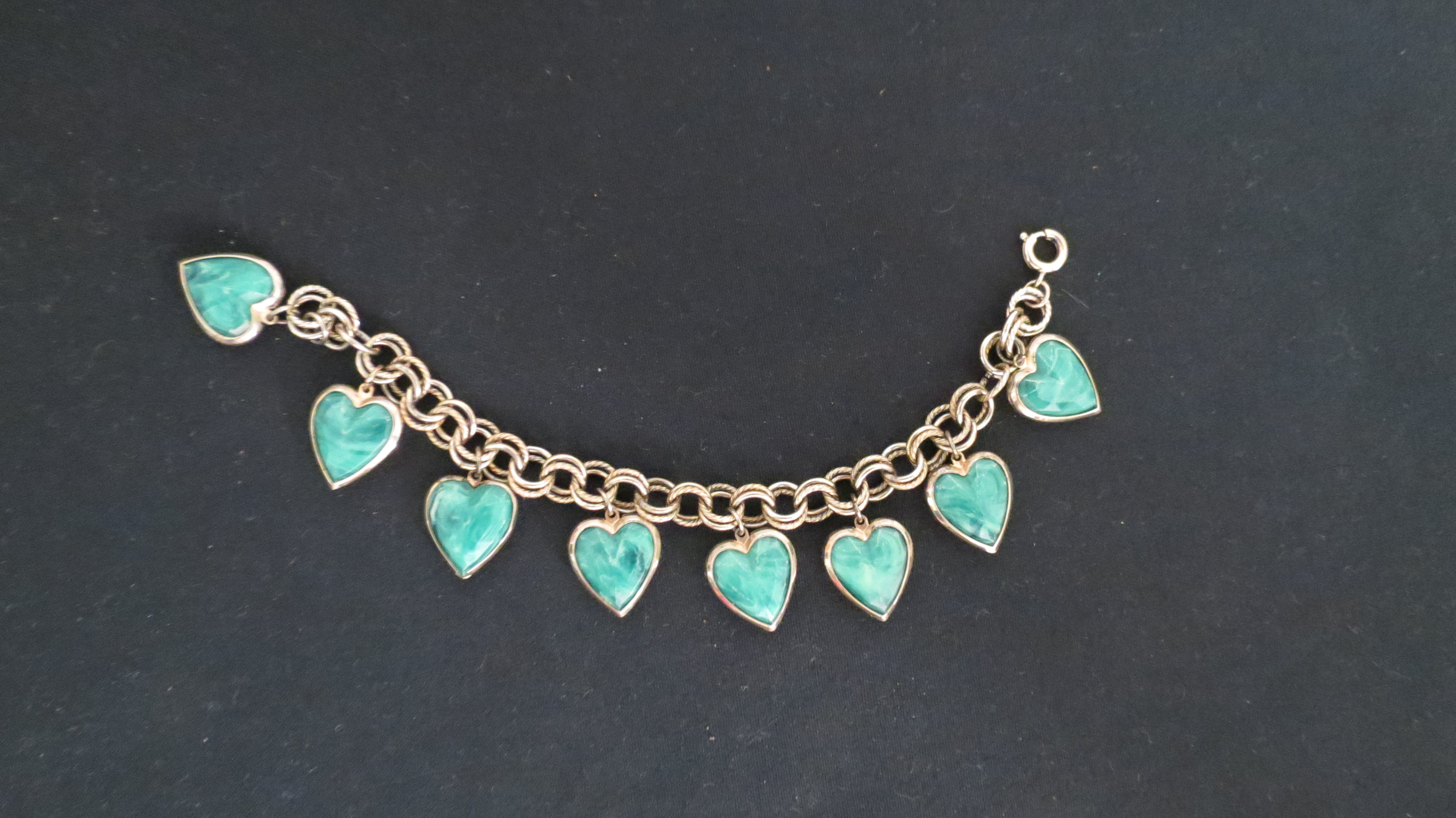
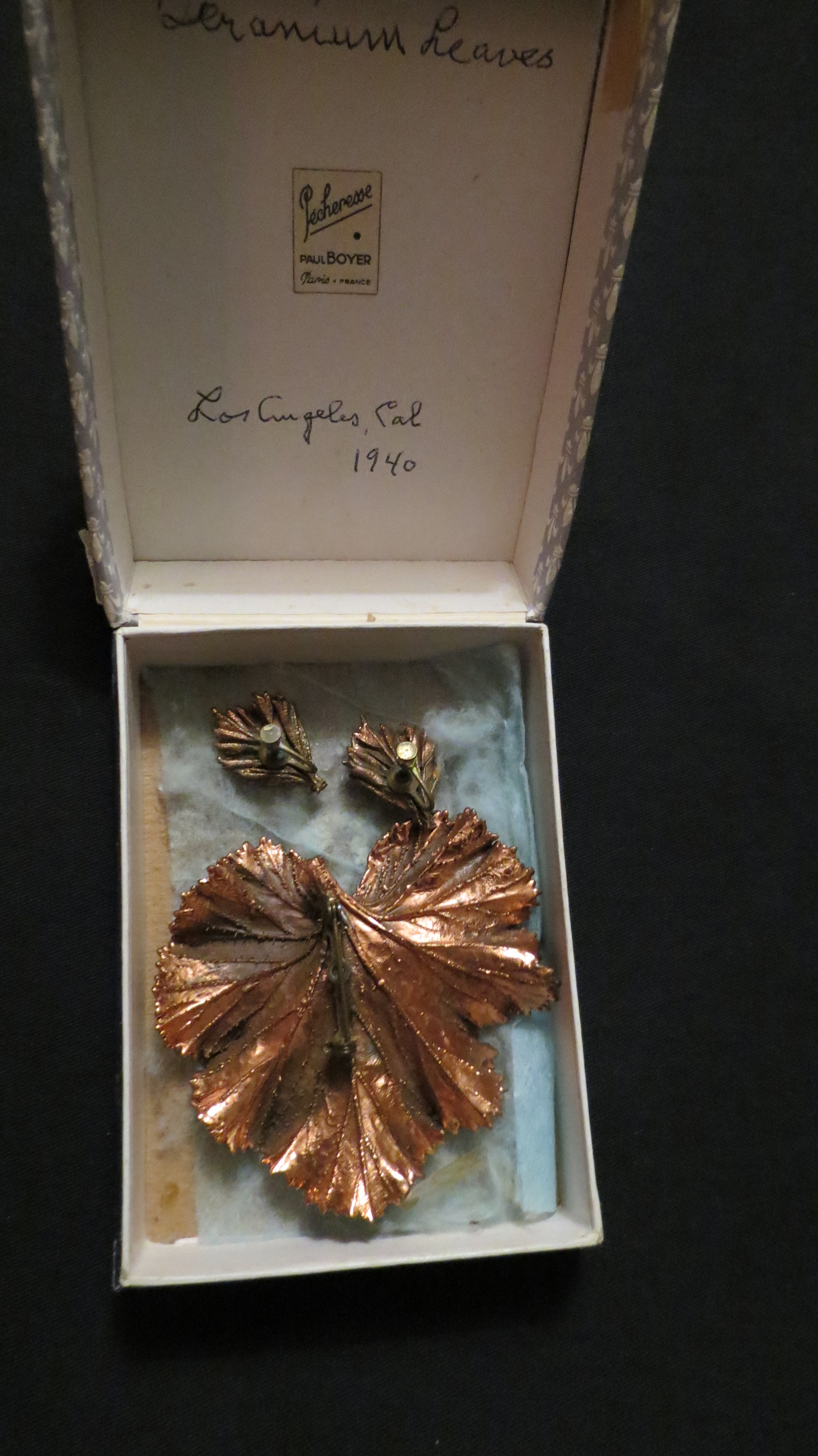
Plastic “gems” appeared in costume jewelry pieces, as well as preserved natural leaves. Even during the Depression and Wartime, a little bling always lifted spirits and enhanced any outfit. Tomorrow I’ll cover a 1940’s casual fad that made fashion more interesting during that time. Stay tuned . . . . . . . . . . . . . . . . . . . . . . . . .

MORGANA MARTIN, THE MAGICVINTAGESPY

BLOG: MAGICVINTAGESPY.COM
MORE TRUE VINTAGE 1940’S DAY DRESSES (& ACCESSORIES)

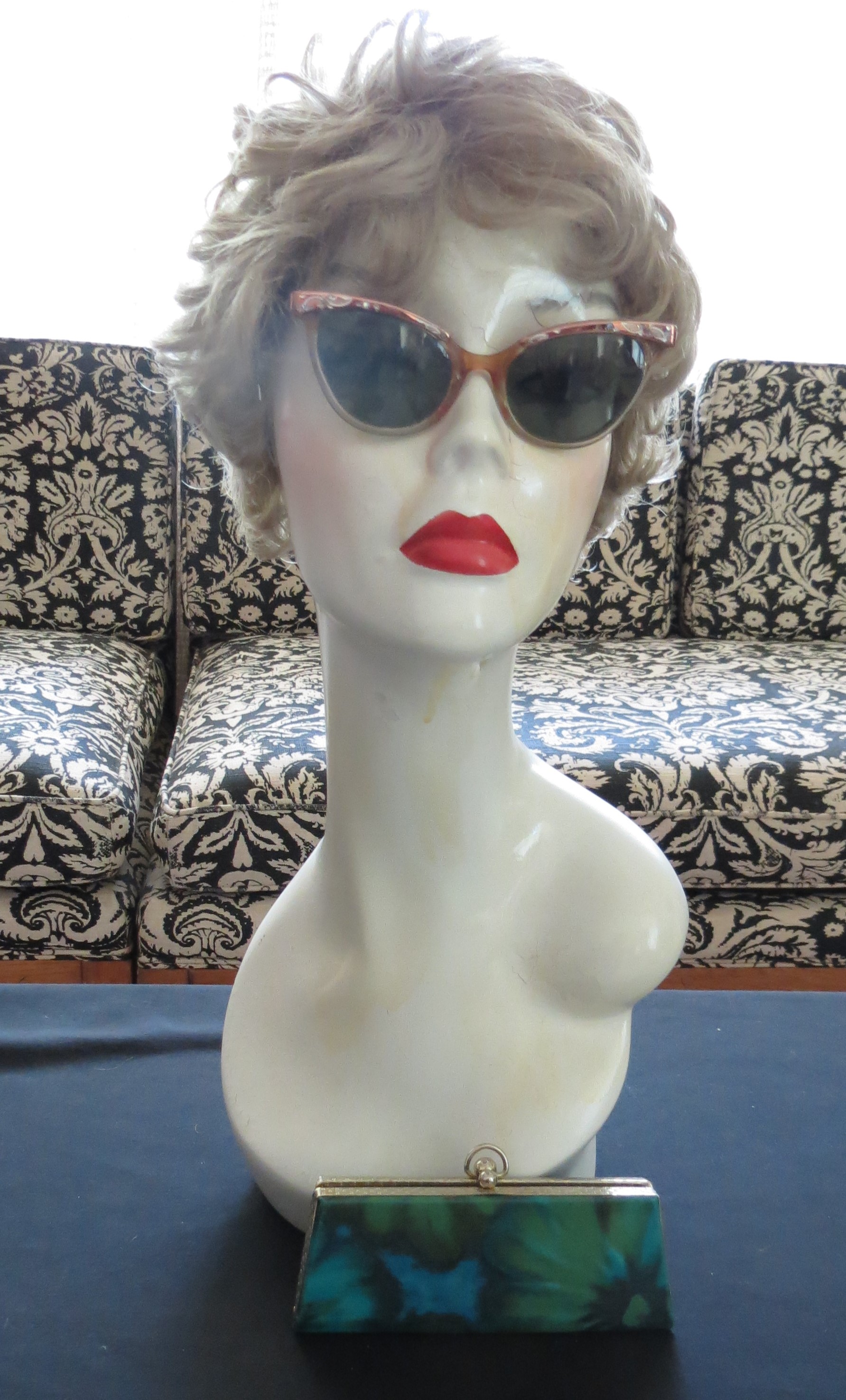
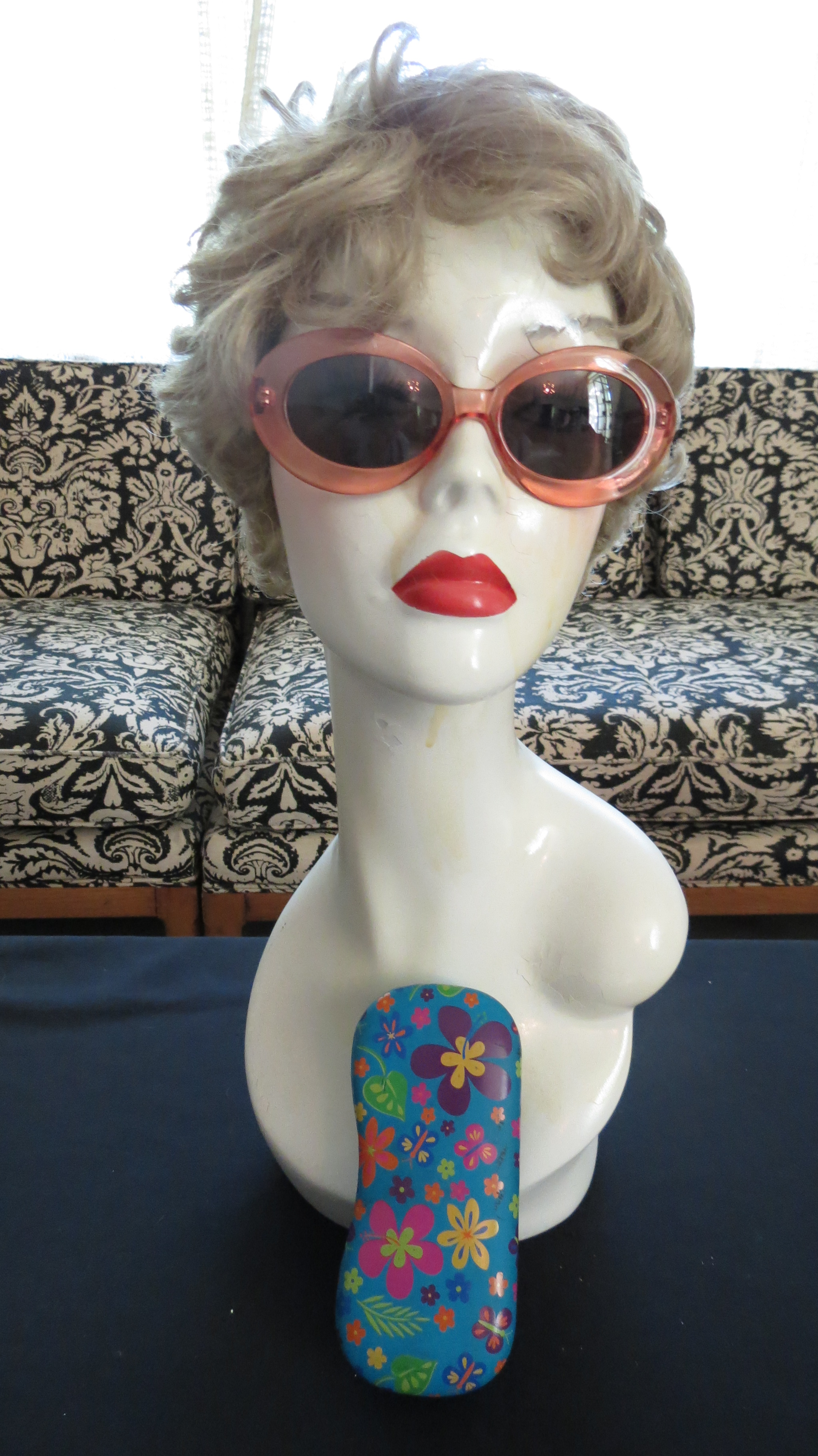
Made from cotton, poly and rayon – these dresses from the pre- and post-war years of the 1940’s tell a fashion history of what was happening during the decade. In the late 1930’s and first 2 years of the 1940’s the war was still fomenting in Europe and Americans didn’t feel especially impacted by this. We had not joined the fight yet and everything at home was ticking along as usual, with fun movie entertainment, jitterbug dancing and jazz. Casual cotton dresses were available, as well as comfy cotton slips. A Western-wear travel fad breezed through the fashion world and sunglasses became more and more common accessories. Cat-eye glasses were called Harlequin glasses then but a round or square lens with heavy plastic frames was the most common until the 1950’s. (Of course, the glasses case in the second picture is retro 1960’s.)

While the reality of war was settling in, synthetic poly fabrics and some rayon took the place of cotton, silk and wool. During rationing, shirtwaist dresses were still the classic standard but hemlines inched up, sleeves got shorter, details and pretty decoration decreased and styles changed, with more sheath dresses being seen. Some of these things changed back after the war but fashion always moves forward. More 1940’s fashion tomorrow – stay tuned . . . . . . . . . .

MORGANA MARTIN, THE MAGICVINTAGESPY

BLOG: MAGICVINTAGESPY.COM
TRUE VINTAGE 1960’S TRENDS IN DRESSES, HOUSEDRESSES & ACCESSORIES – TO THE START OF MOD

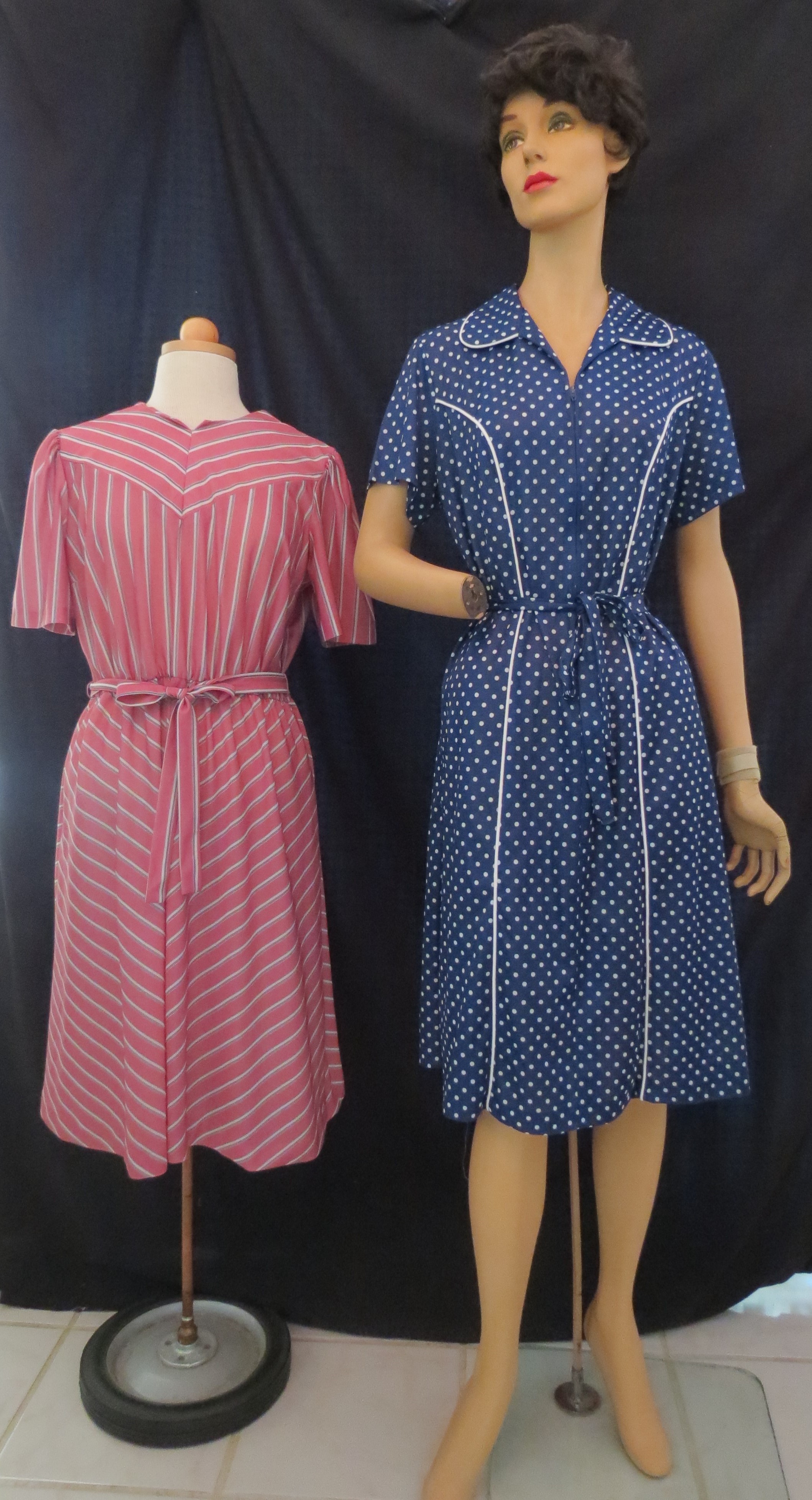
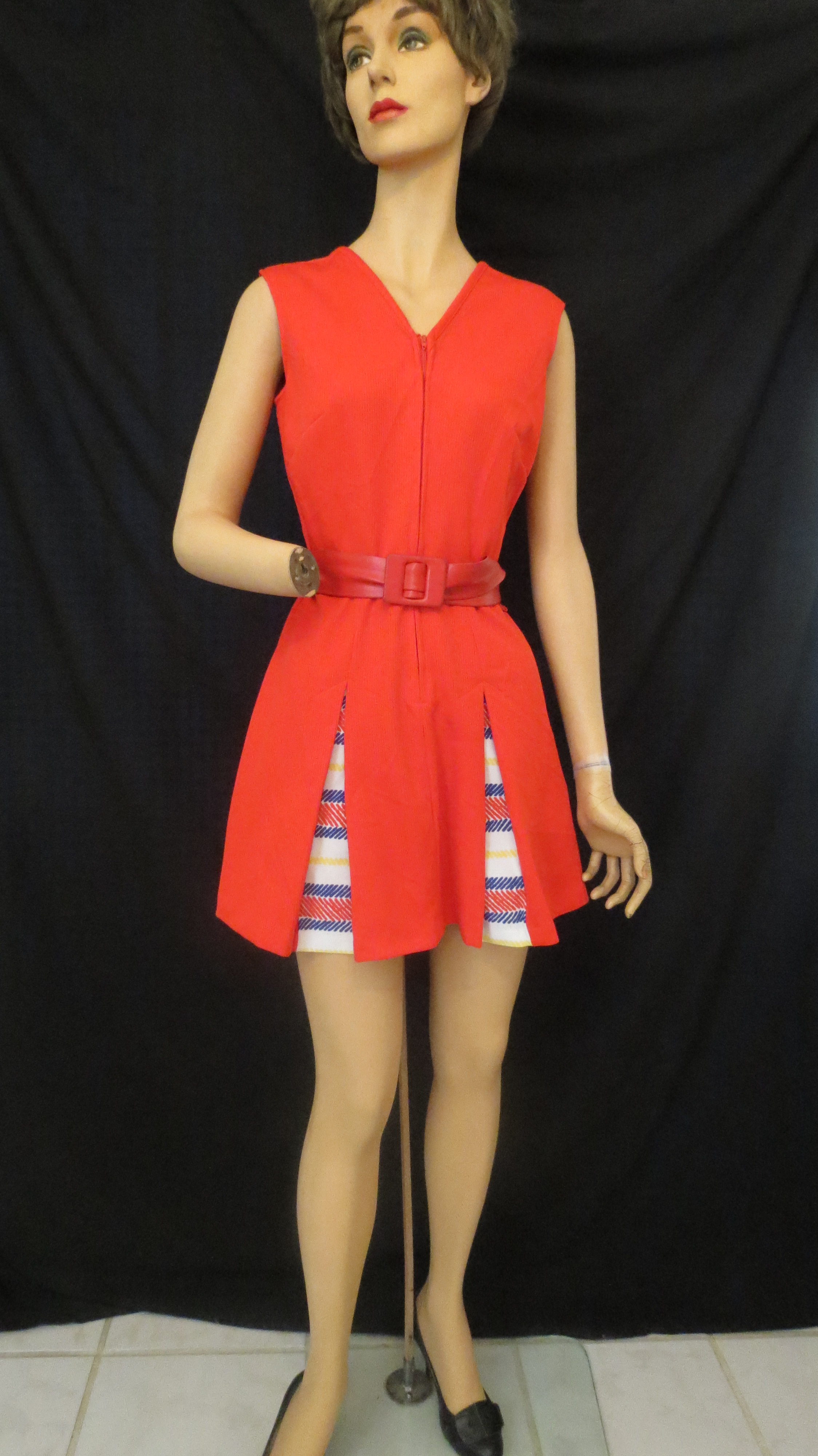
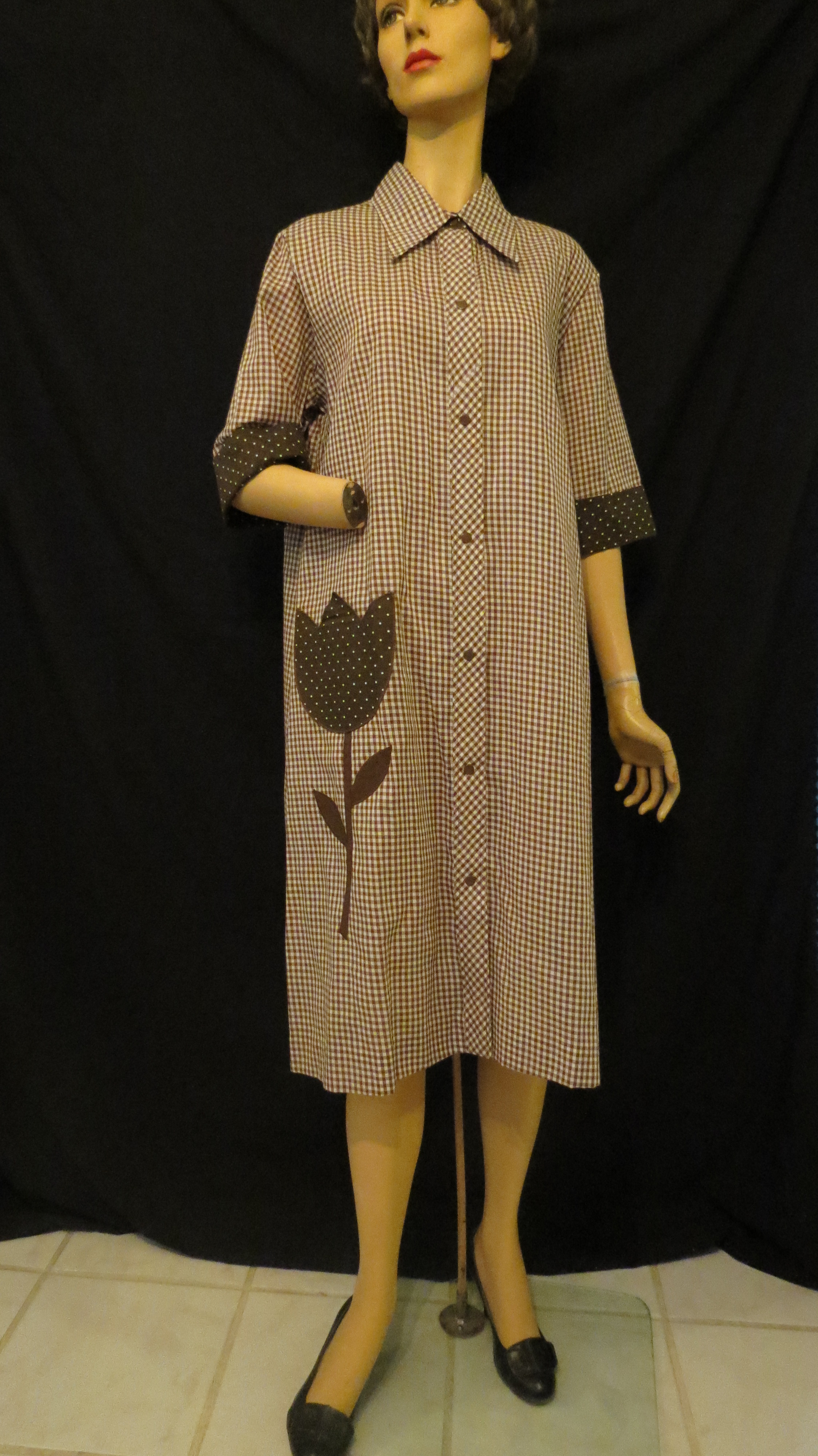
Casual cotton and cotton blend housedresses and model’s coats became really popular as styles started to become less traditional. Some of these dresses would even be seen at the grocery store or for other casual errands in warm weather. The shirtwaist dress was still around, of course, but was starting to take a back seat for everyday. The culotte mini/play-dress was also a new take on the 1940’s/’50’s romper. Casual designs like those shown above were still very well-made, generally, and had cute and pretty prints and tailoring elements.

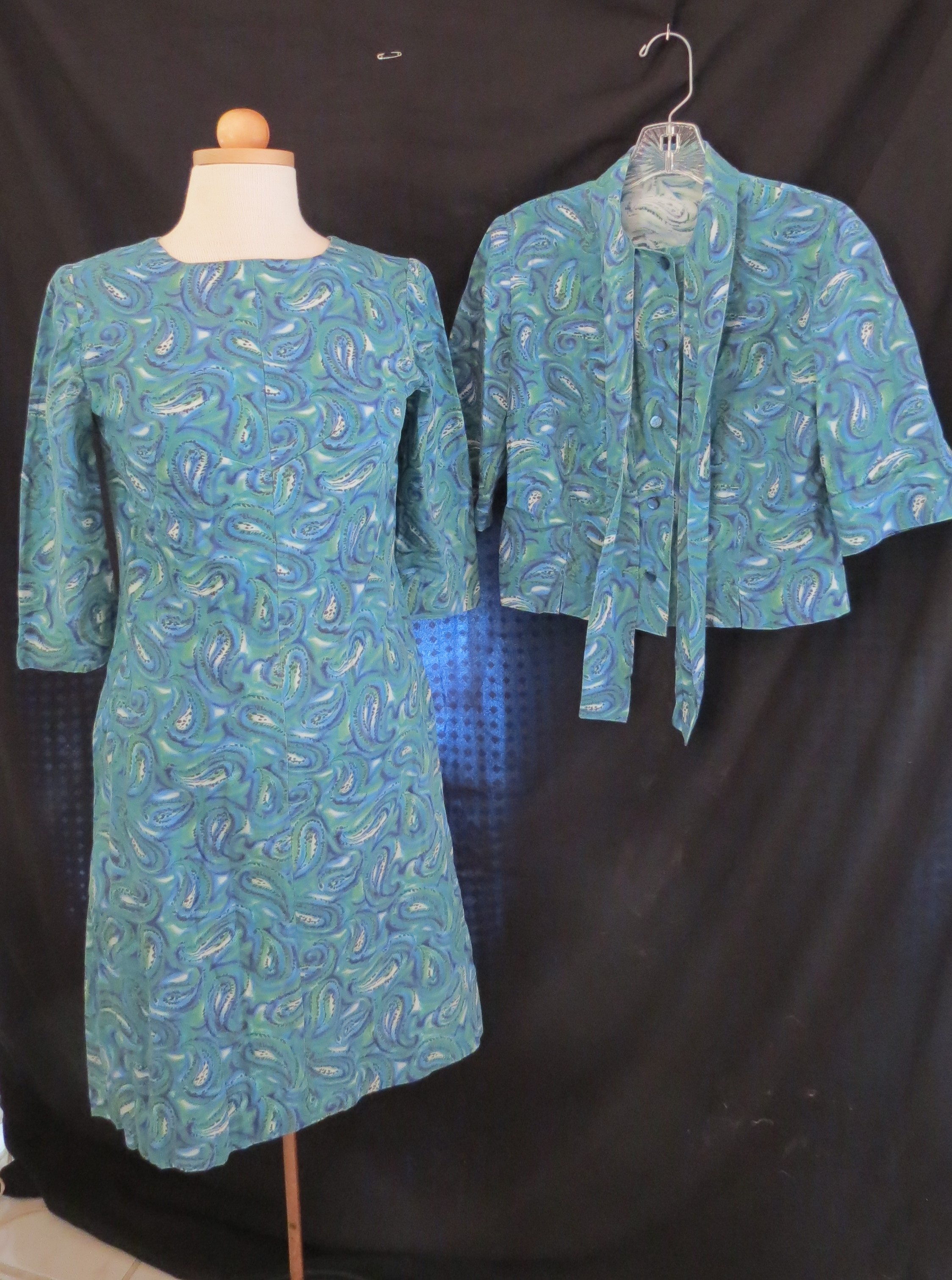
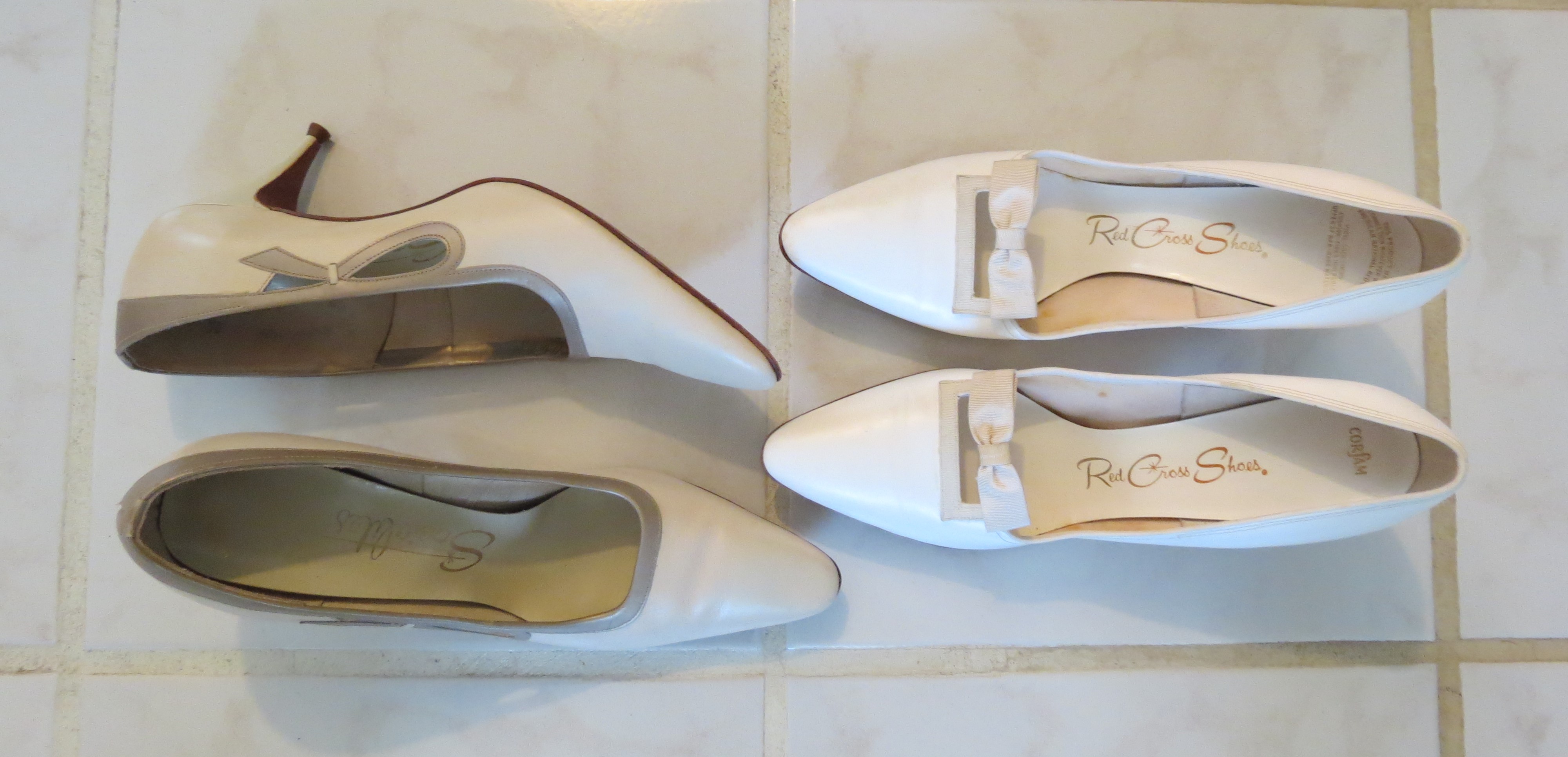
Dresses with little matching jackets became very popular for everyday wear when a step up the dressy scale was called for – an important appointment, special event or church. The shoes, purses and hats are examples of those which might have been worn with dresses like this. The blue & green example above was home-sewn in the color combo that defined popular design in 1963. The prints on the two blue dresses in center are a harbinger of the MOD trend that was just about to erupt.

Stay tuned for a trip to the mid-1960’s tomorrow . . . . . . . . . . . . . . . . . . . . . . . . . . . . . . . . . . . . . .

MORGANA MARTIN, THE MAGICVINTAGESPY

BLOG: MAGICVINTAGESPY.COM