DETOUR! 1950’S DRESSIER FROCKS BEFORE WE MOVE TO THE SIXTIES

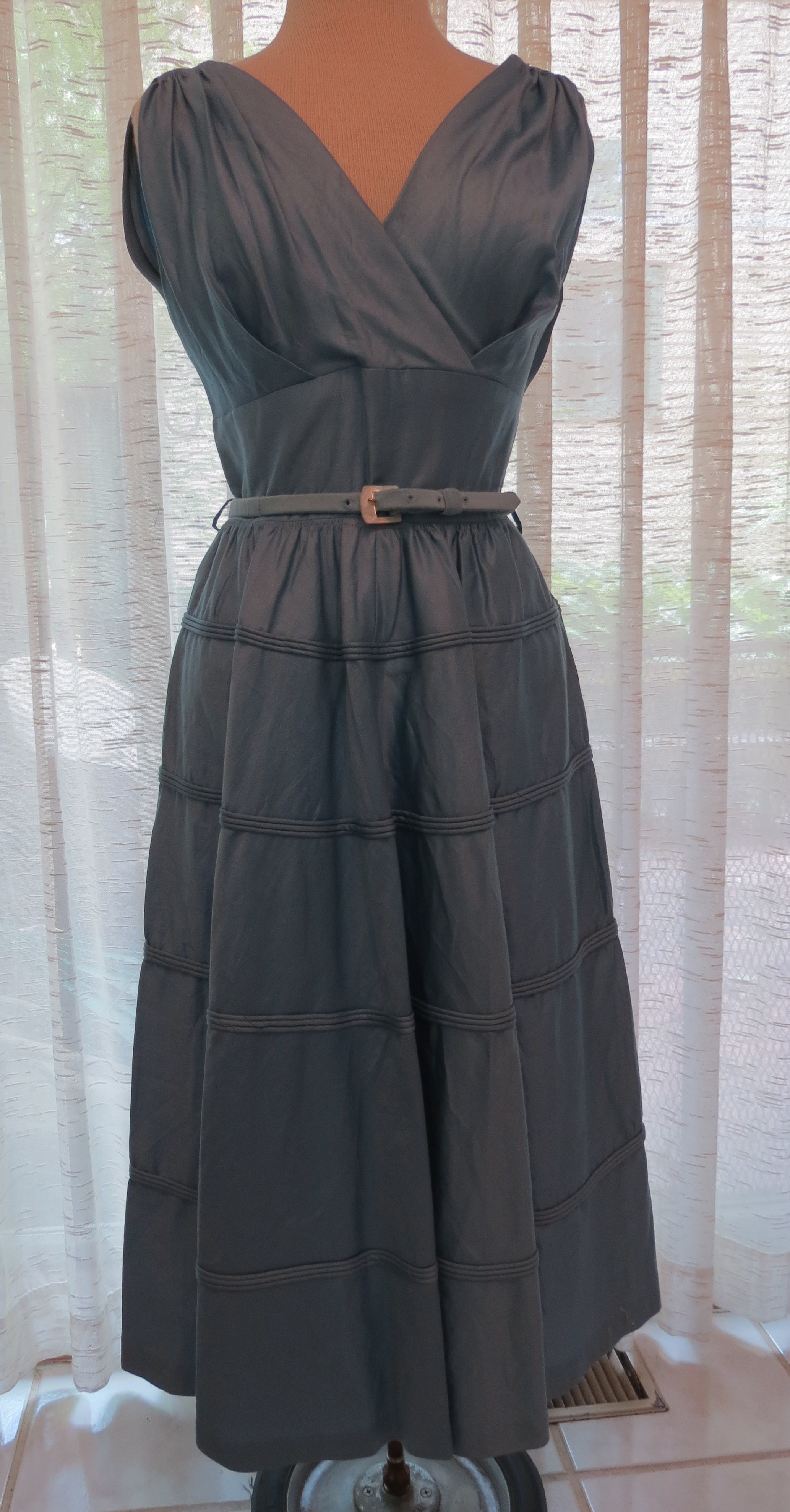
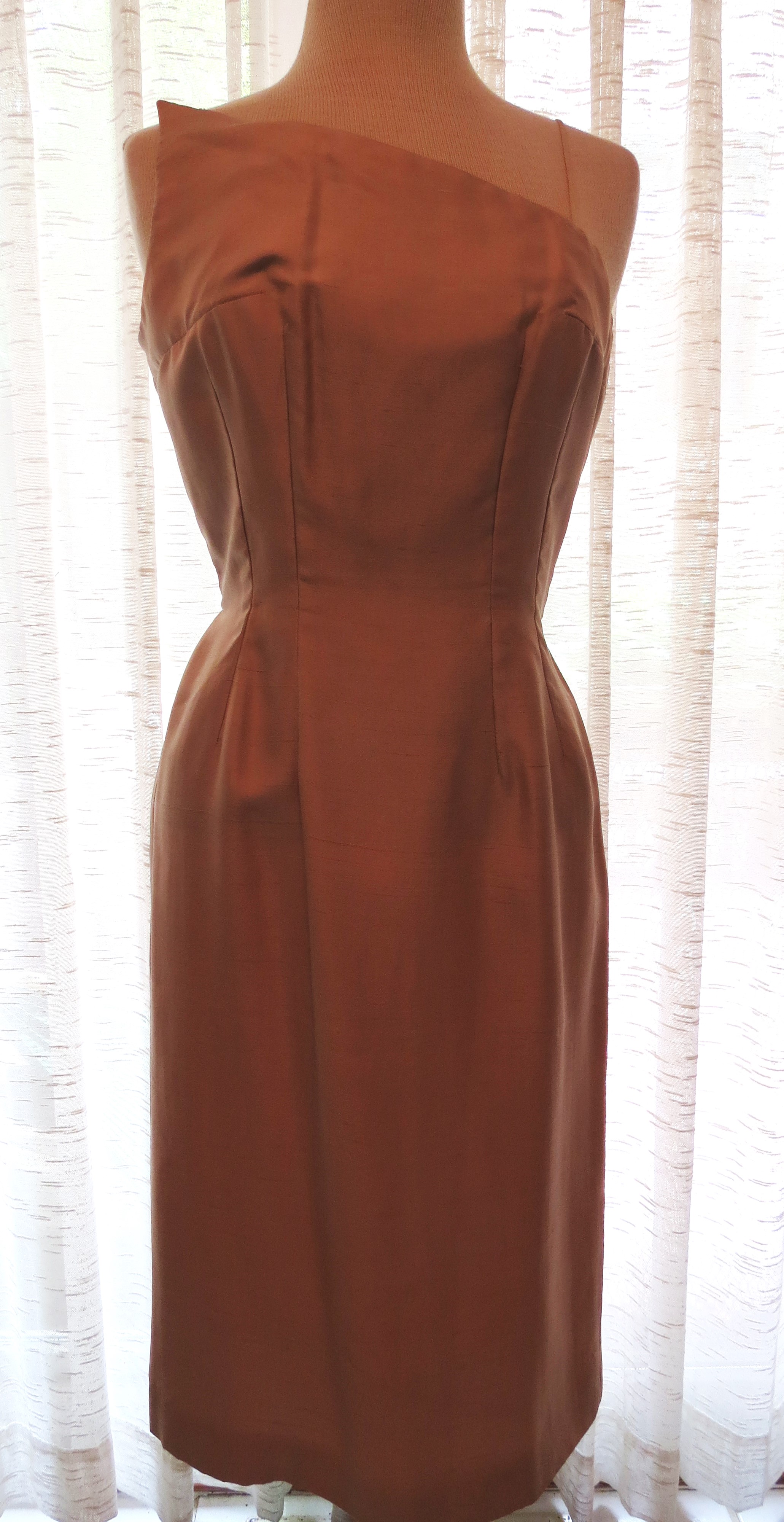
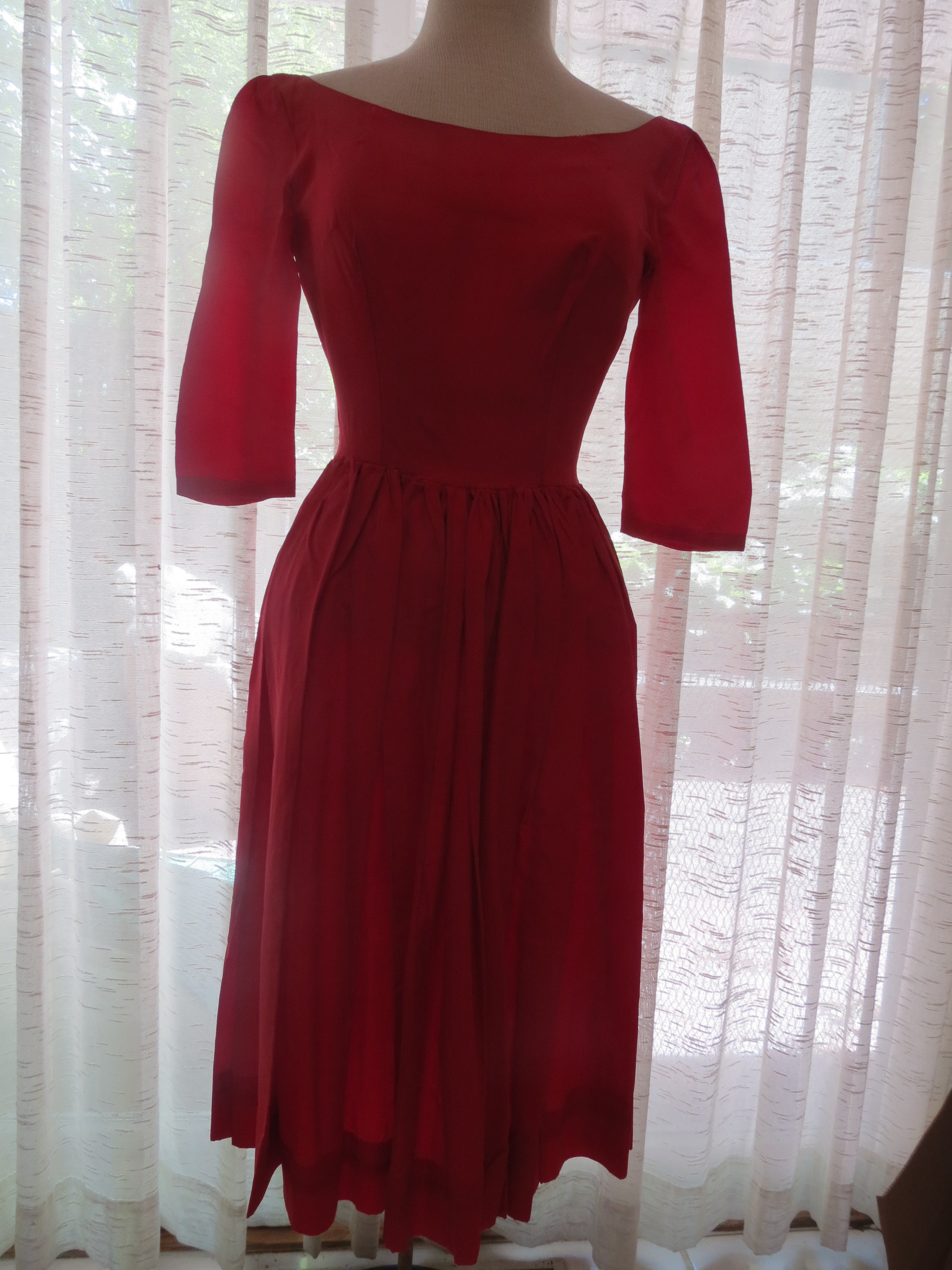
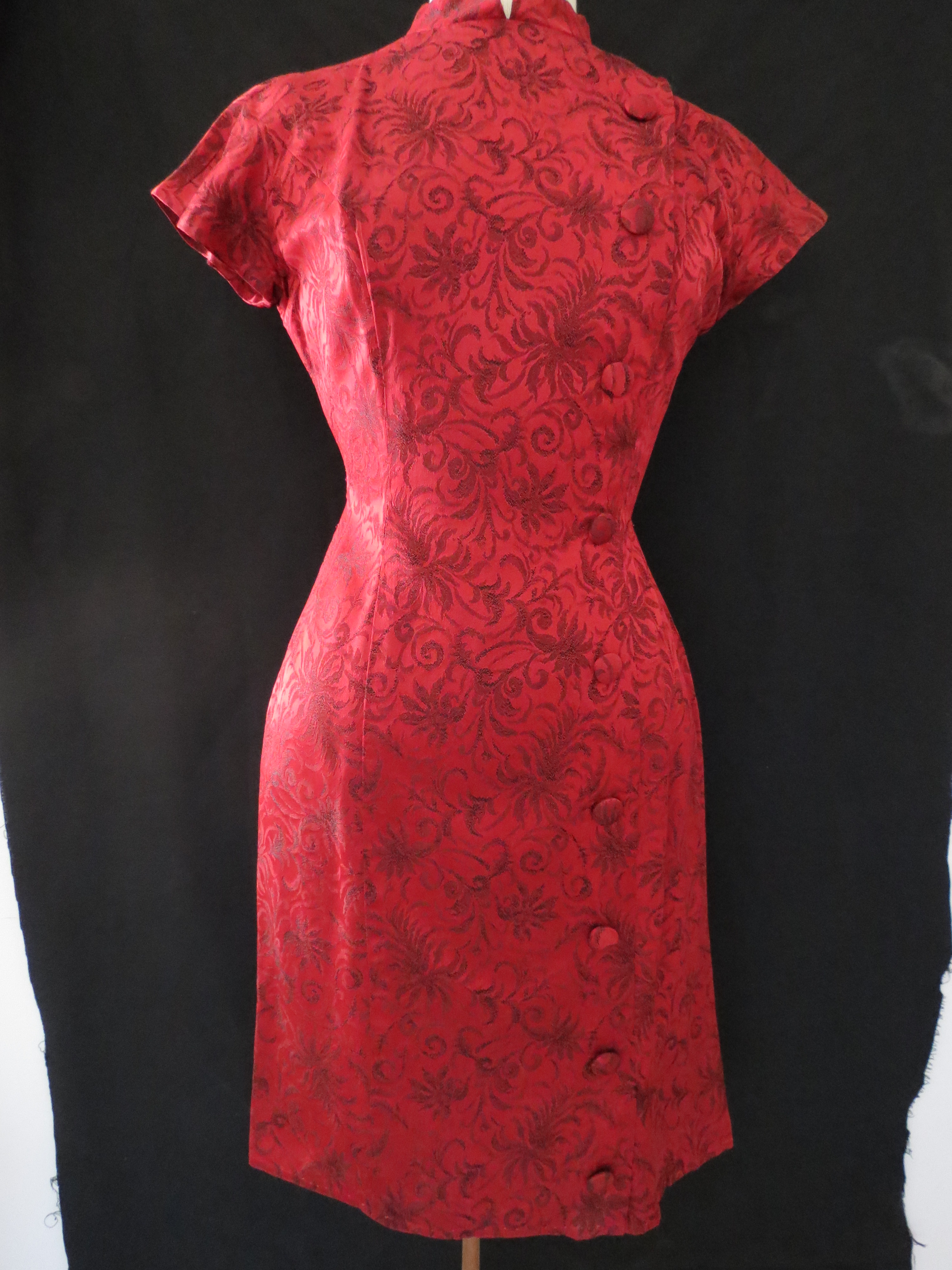
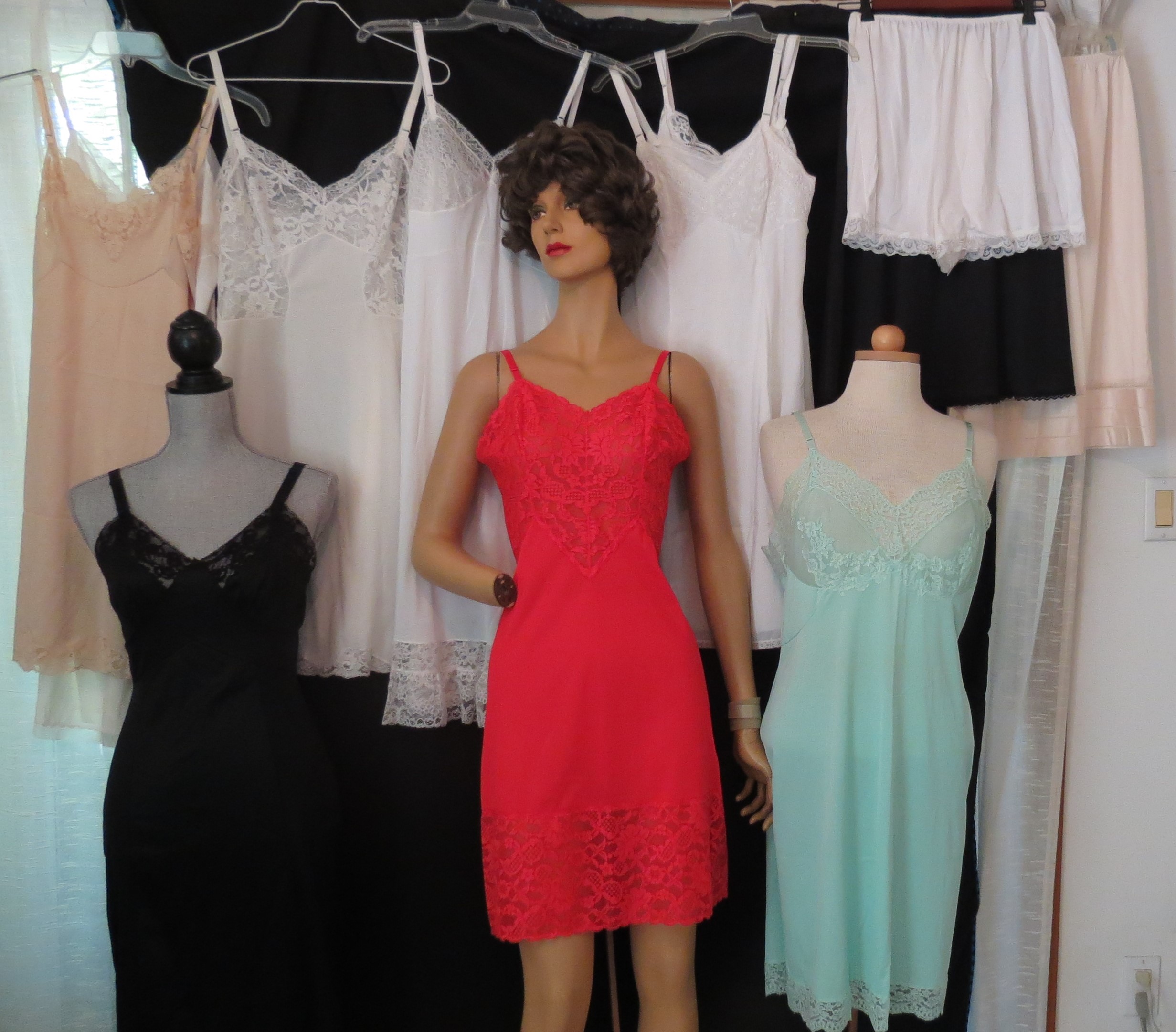
I just couldn’t head into the 1960’s without a display of some of the prettiest dressy frocks from the 1950’s and the fabulous nylon lingerie slips that might have been worn underneath. The first two pictured also have interesting remodeling stories.

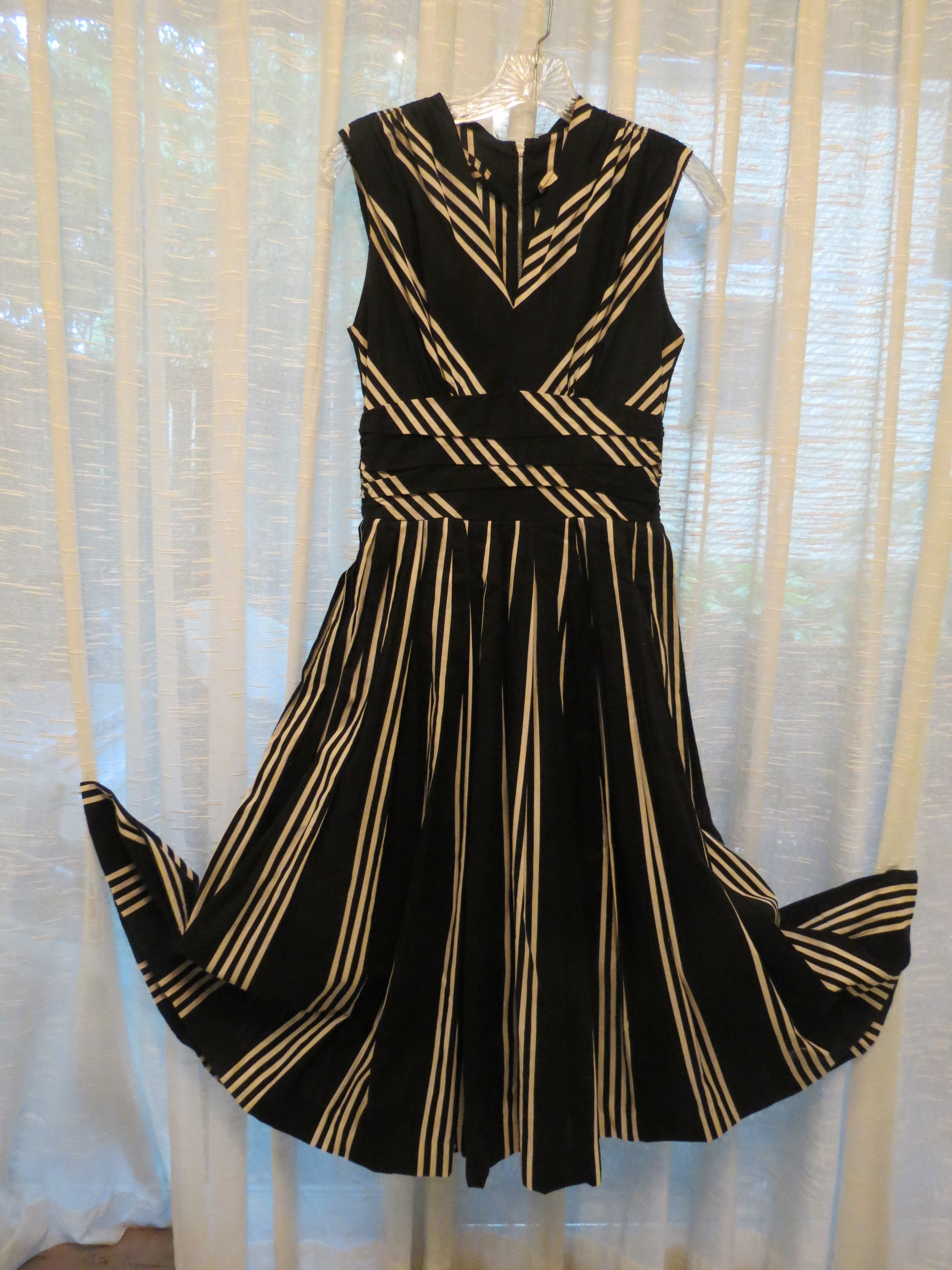
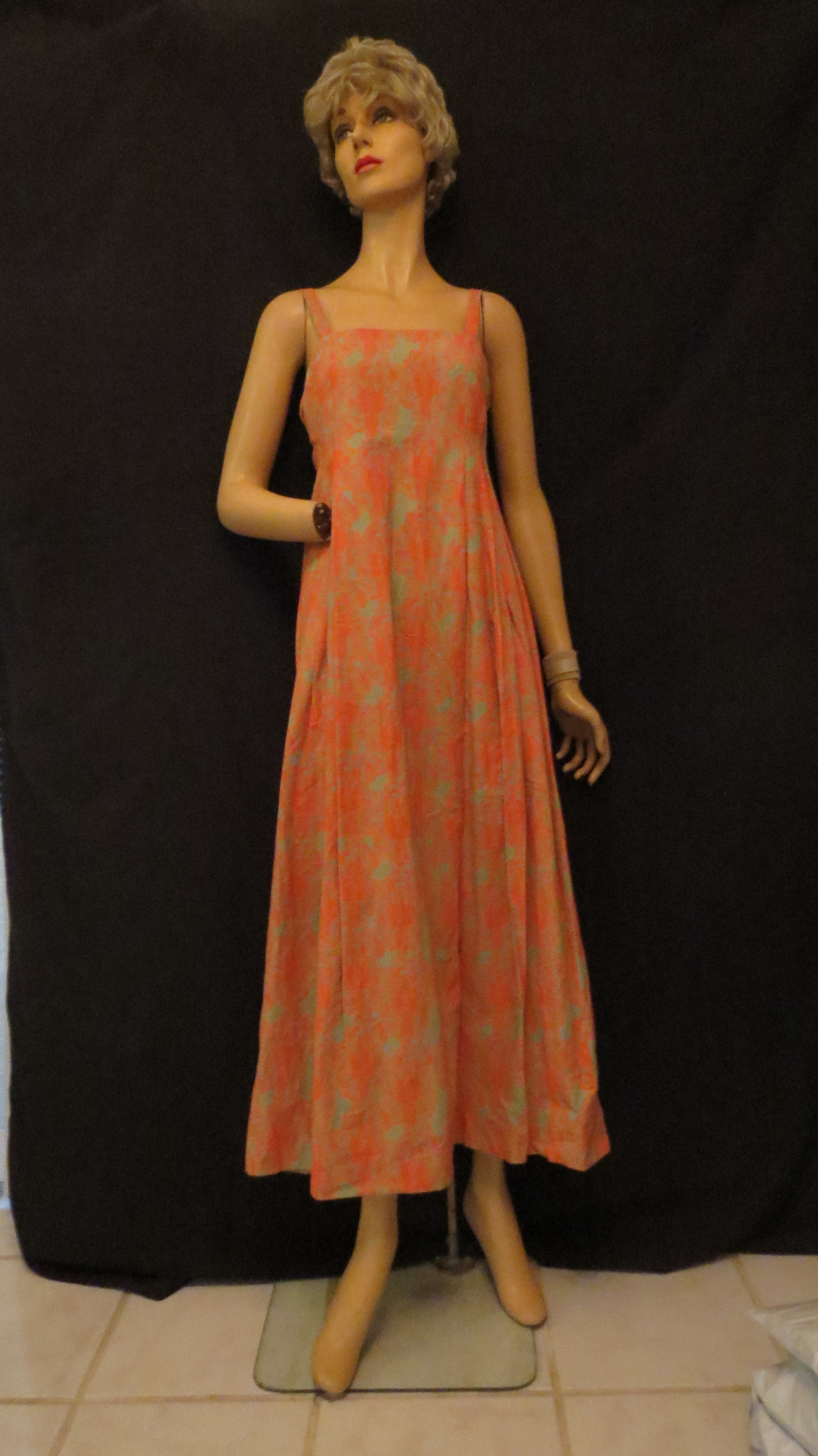
First is a beautiful, heavy polished cotton dress from the early 1950’s or, perhaps, the late 1940’s. It is absolutely gorgeous and falls to tea length. Polished cotton was a favorite fabric during the mid-century, before 1965 or so. As often happens, this frock had lost it’s belt somewhere along the way so I took some fabric from the generous hem and covered a skinny one by hand.

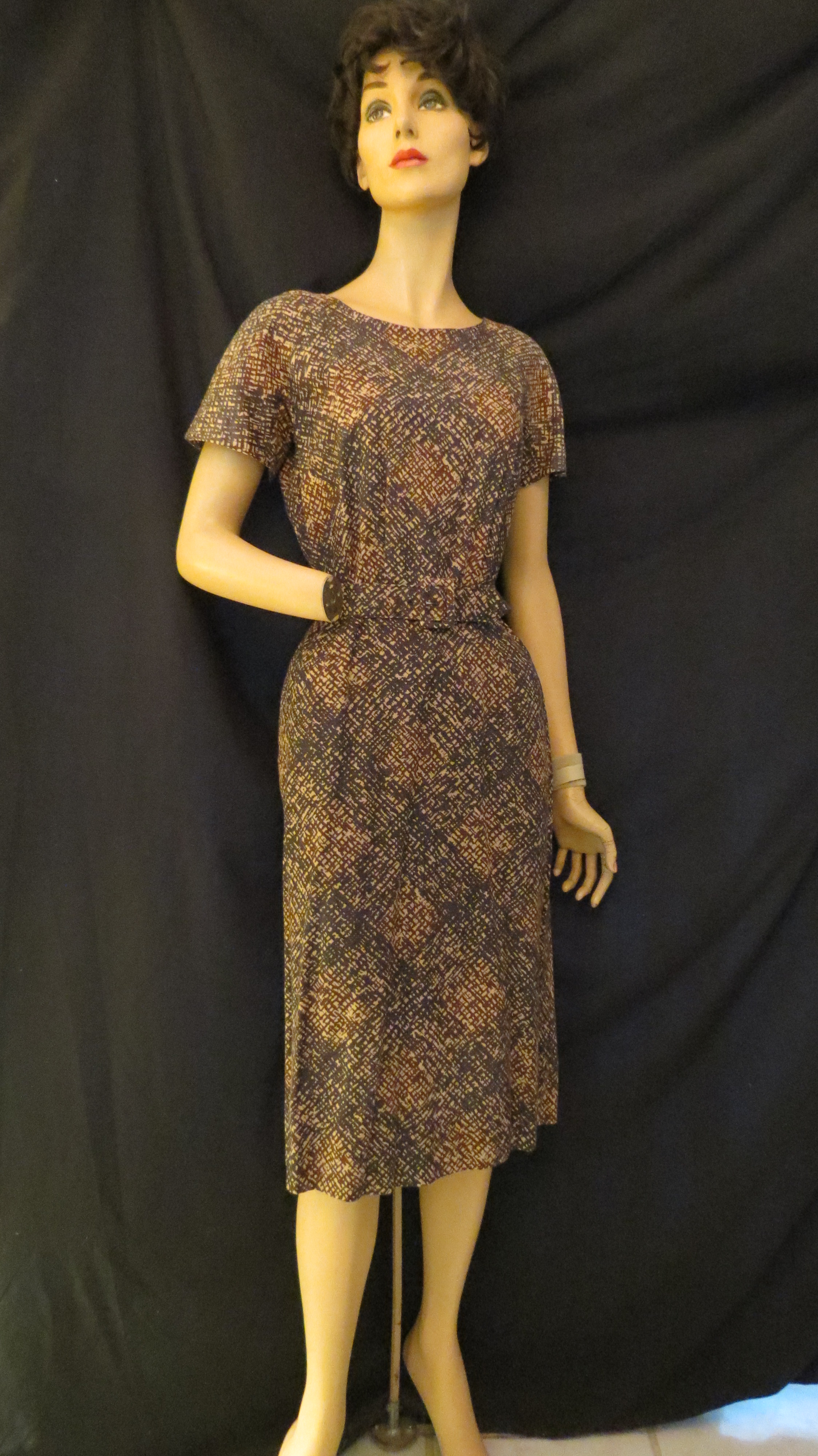
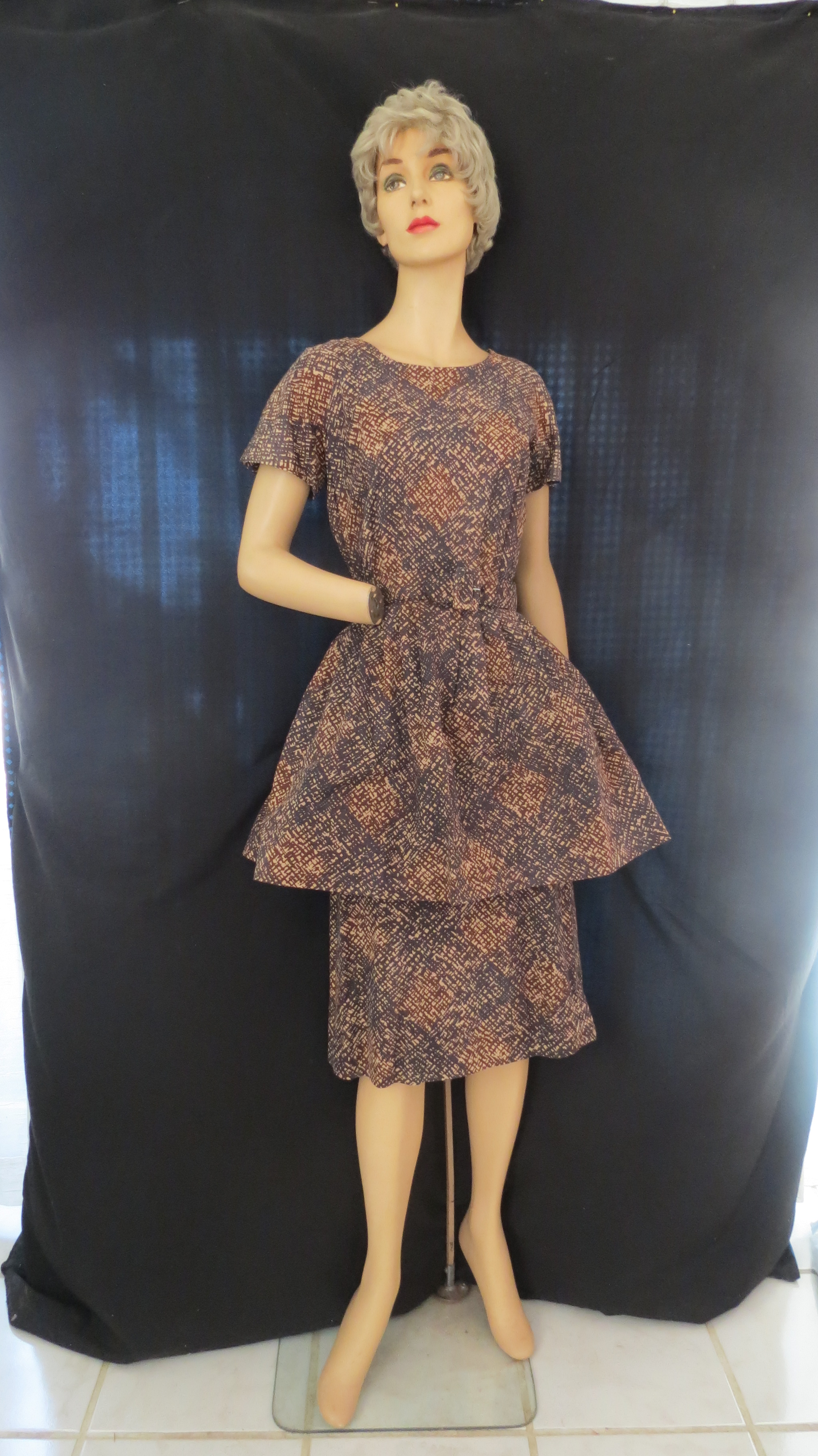
The mocha dress with the interesting shoulder line was a more ambitious remodel but still done entirely by hand. This wonderful wiggle dress is made of rayon fabric which looks like silk shantung. It originally had an upper bodice made of sheer fabric with cap sleeves. Piping finished the sleeves and round neckline. This design feature was such a popular one in the late ’40’s and early ’50’s but, alas, the sheer fabric had several holes that didn’t have a mending or patching option that I thought would do justice to the style. So, I chose to remove the upper bodice and secure the cut edges underneath. The back zipper didn’t have to be changed because it ended where a keyhole opening used to be at the back. I am very happy with the result, though I hate to change original designs.

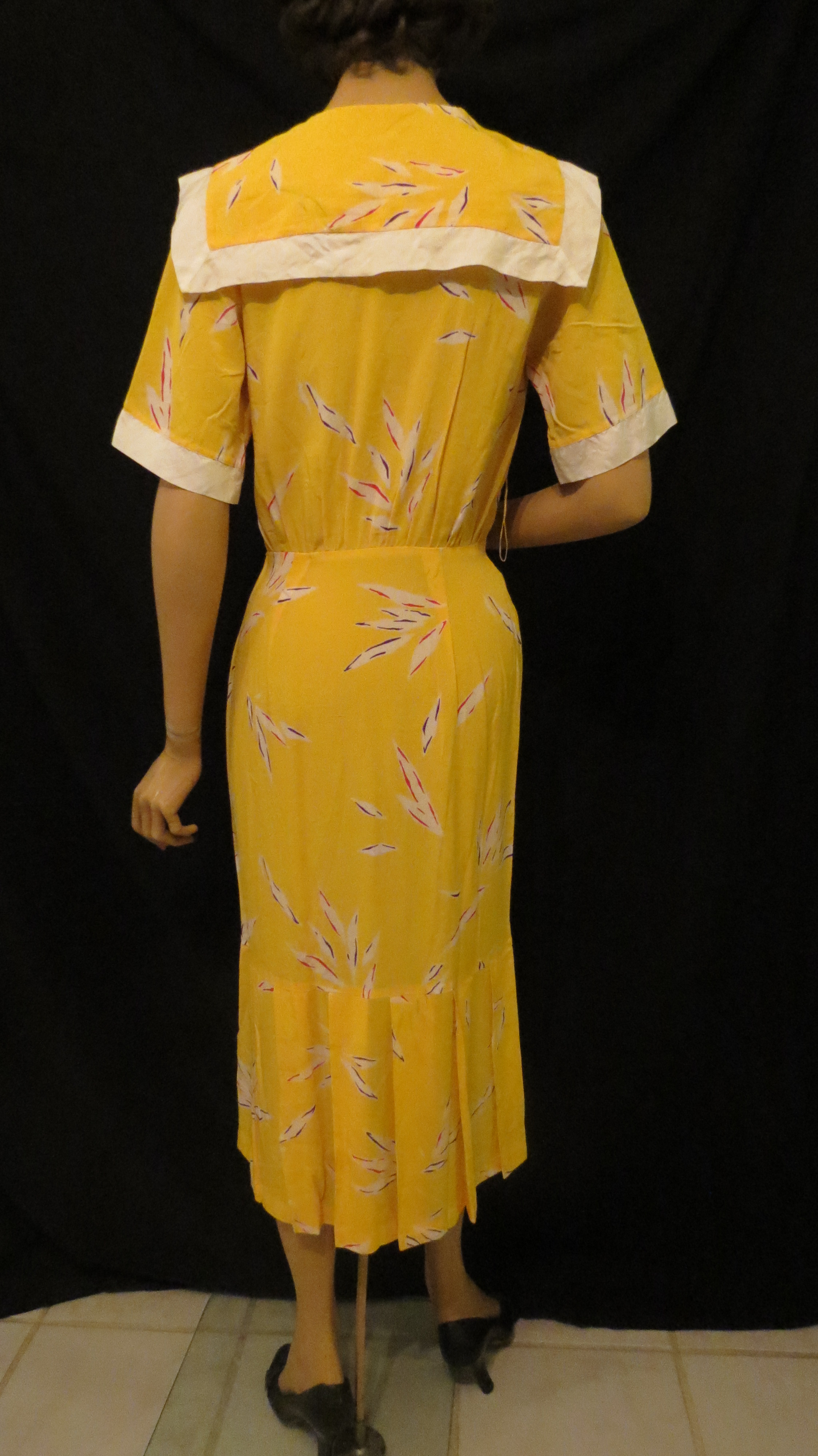
The RED party frock is a style that endured at least from the mid-1940’s until the early 1960’s. It’s a rayon fabric with midi hemline, 3/4 sleeves and a boat neckline – all of which I love. You can see how deep the hem is and, of course, the bodice and skirt are fully lined.

Finally, the red jacquard cheongsam-style sheath is a fashion that became quite popular in the Fifties and Sixties, probably a carry-over from WWII when Asian culture became better known in the West and the female spy, Mata Hari, became legend. It carries on the wiggle cut and cap sleeves which were common then. Overall, this was a decade of very flattering and well-made ladies’ garments.

We finish off with a photo of luxurious nylon slips from the 1950’s, with their fabulous fabric and pretty decoration in some of the luscious colors that were available. We WILL do 1960’s dresses tomorrow. Stay tuned . . . . . . . . . . . . . . . . . . . . . .

MORGANA MARTIN, THE MAGICVINTAGESPY

BLOG: MAGICVINTAGESPY.COM
TRUE VINTAGE DAY DRESSES THROUGH THE DECADES, HANDBAGS AND SHOES – 1930’s

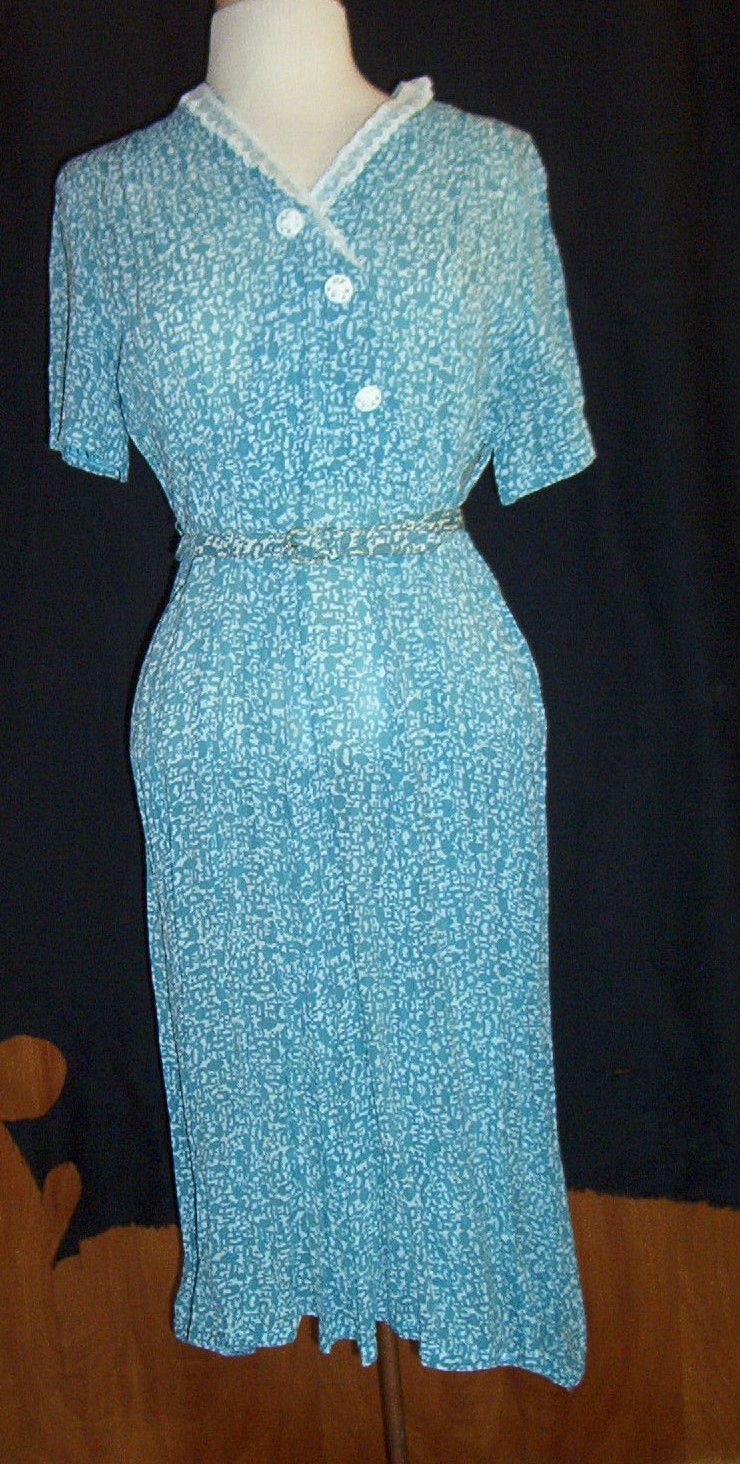
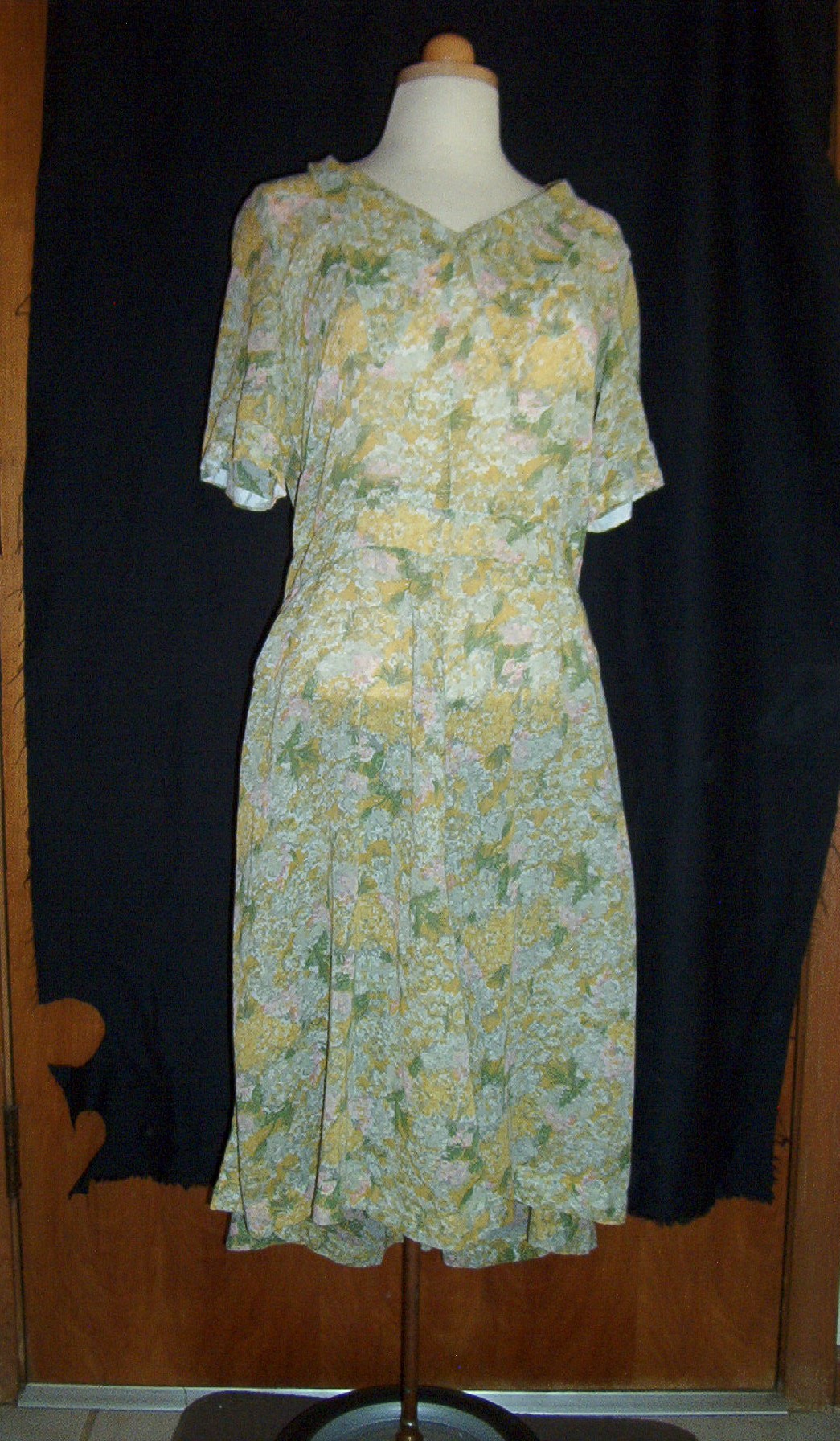
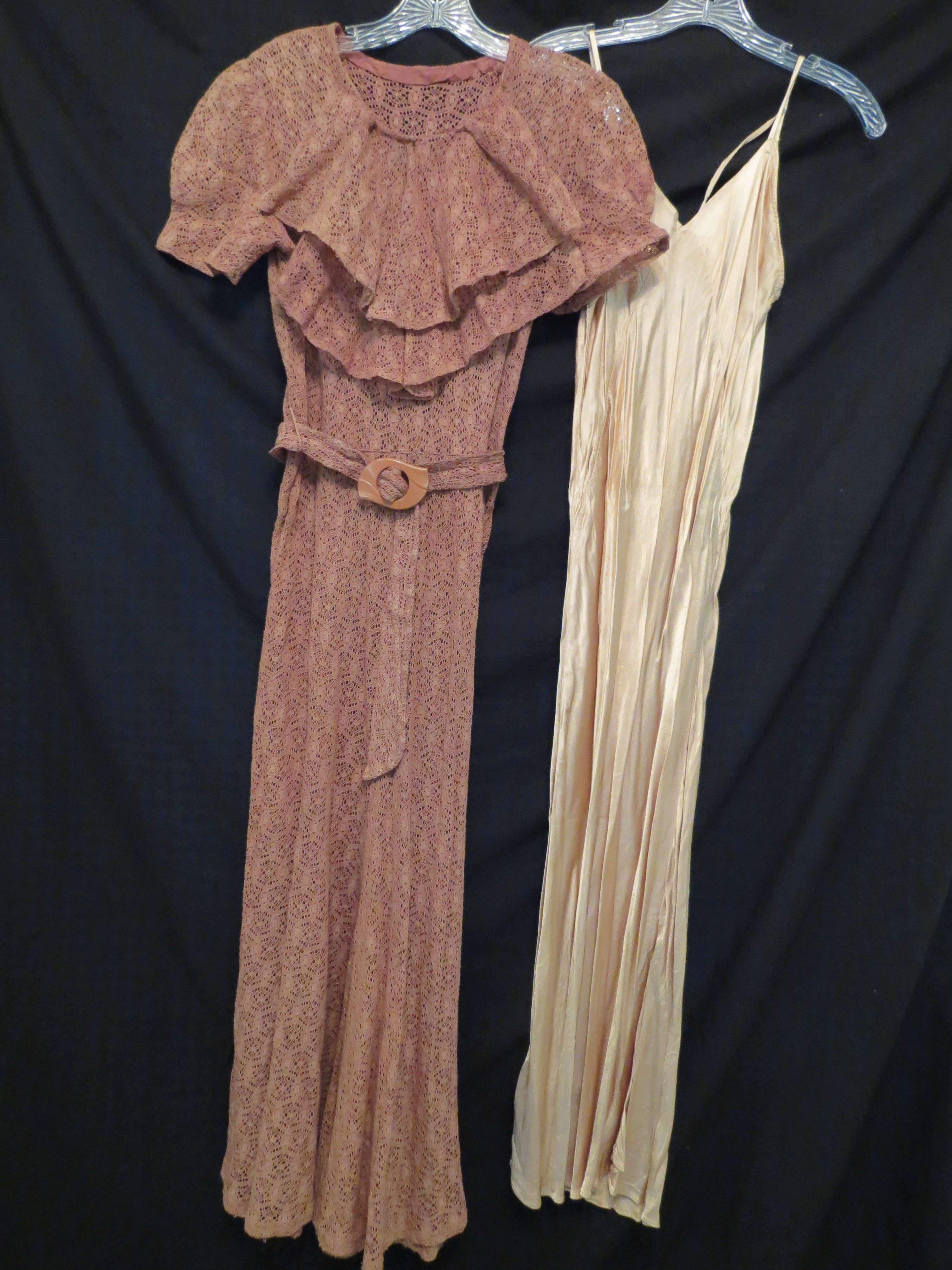
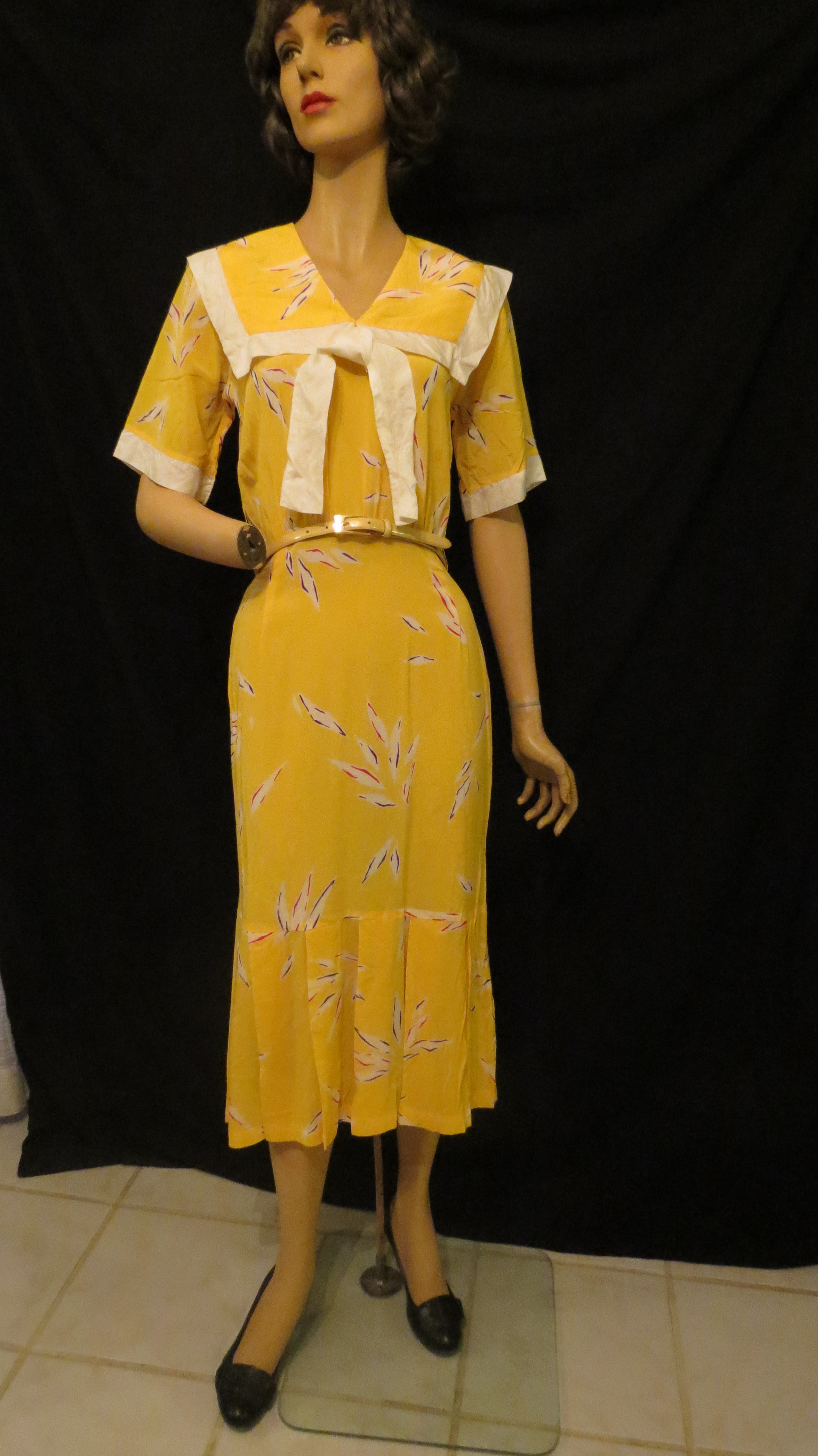
Two of my favorite 1930’s dresses to wear and one when I feel like Bonnie of Bonnie and Clyde. The fabrics feel so wonderful on the body and the fit is killer because of the fabulous drape. An earlier find, I was thrilled to discover the blue dress because of it’s condition. The original buttons and belt are present and no damage to the trim at the neckline. Also, no stains! You can see that the body of the dress has faded a bit due to years of washing by the original owner (compare to the color of the belt, which would not have been put in the laundry), but I don’t mind. The floral-print yellow and green frock is near-perfect and is a bit more casual. Super easy-breezy. The crocheted dress with satiny rayon slip given to me by a family member who found it in an old antique wardrove is the real star. It still has the authentic celluloid plastic belt buckle. The longer hemline makes it probably the oldest of the group, from the very early ’30’s. I have to include a 1980’s or ’90’s dress that dipped into a retro 1930’s. The yellow rayon belted sheath is a fun fashion with loyalty to the Thirties style and lovely rayon fabric.

These are both mid-priced dresses, at most, but have held up over 70 years before finding their way into my closet. It’s possible they were home-sewn. I love the elbow-length sleeves and the way that the fabric causes the hemline to ripple and sway. Very flattering. Both do require a slip underneath because of the sheerness and, since they are warmer weather frocks, I like to wear a true vintage cotton slip with very little decoration so that it doesn’t show through and compete with the print. Slips of that sort are hard to find since most of the slips that have survived are made of nylon and full of decorative detail. Although some fabrics don’t seem to require a slip, wearing one often causes the dress to fit and move so much better. Your other foundation garments i.e. brassiere, underpants and even stockings will have a real effect on how your outfit looks so it’s an important consideration. I have silk tap pants and some silk slips from the pre-war and WWII era that are good examples of undergarments that work really well with dresses like these.

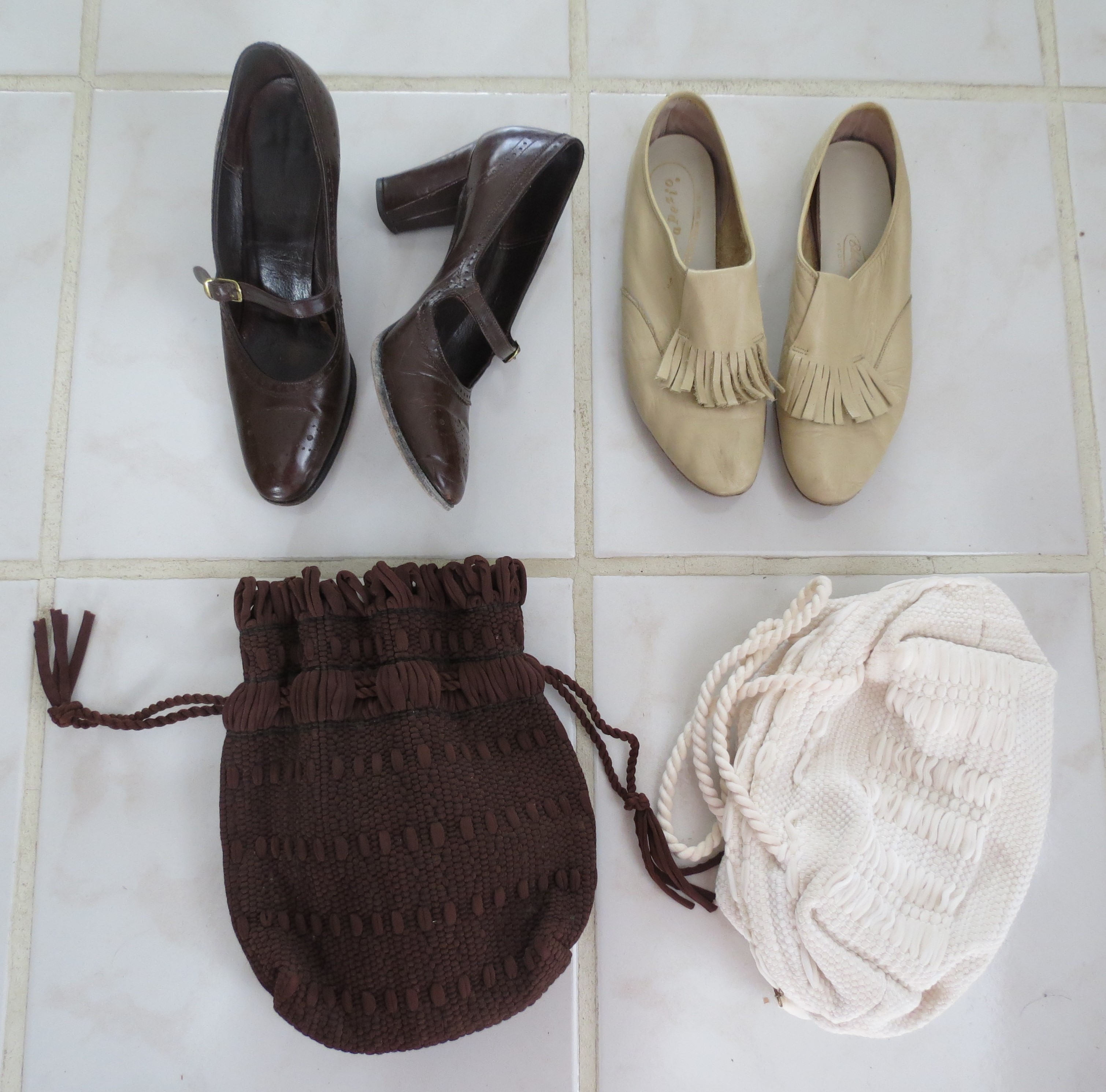
Mary Jane style shoes are seen in every decade since the 1920’s. Decorated flats became popular for women, too, especially when they began wearing slacks. The shoes shown above may be a little younger than the dresses and purses, but are still within a decade or so. Handbags woven from synthetic yarn were another way that the market for clothing and accessories coped with the economic downturn of the Depression and the looming rationing of wartime. Leather, silk, quality cotton and wool were less available and too expensive for many buyers. The big move forward in the development of synthetics changed clothing in big ways, many having to do with fit, comfort and convenience so, overall, the deprivation turned out to be a plus. Tomorrow we move into the 1940’s. Stay tuned . . . . . . . . . . . . . . . . . . . . . . . . . . . . . . . .

MORGANA MARTIN, THE MAGICVINTAGESPY

BLOG: MAGICVINTAGESPY.COM
TRUE VINTAGE LINGERIE ROBES & SLEEPWEAR FROM 1930’S TO MID-CENTURY

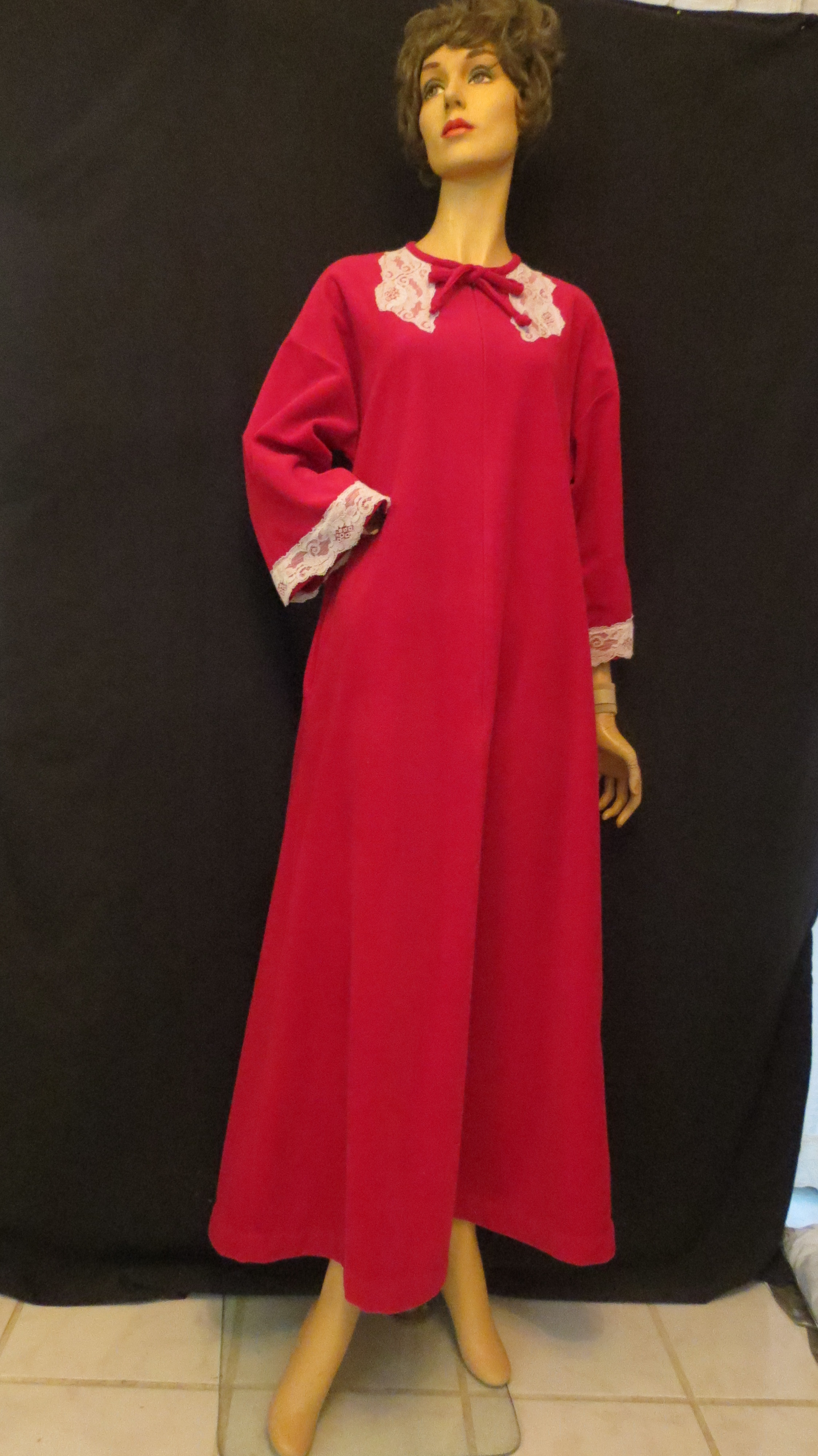
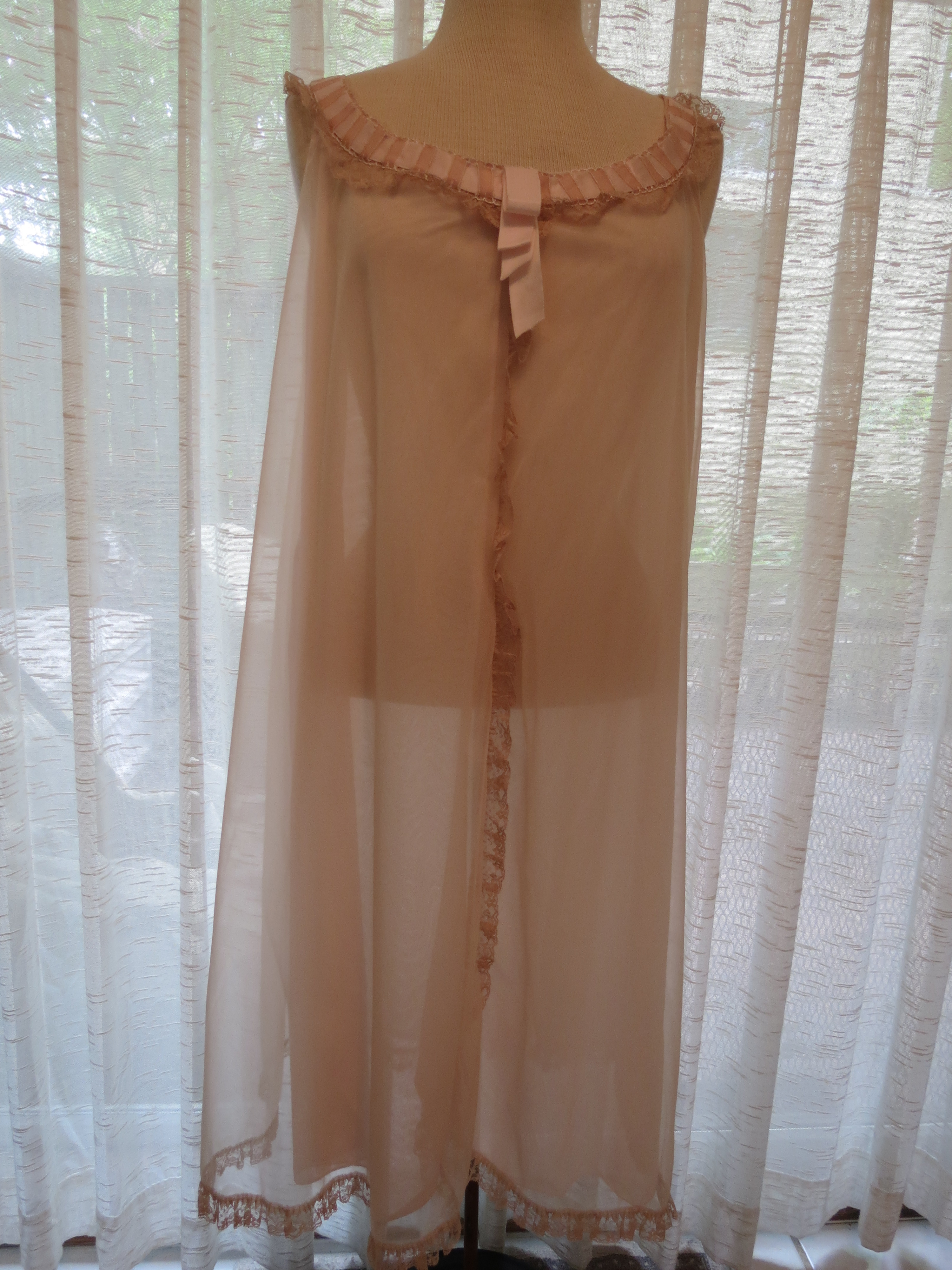
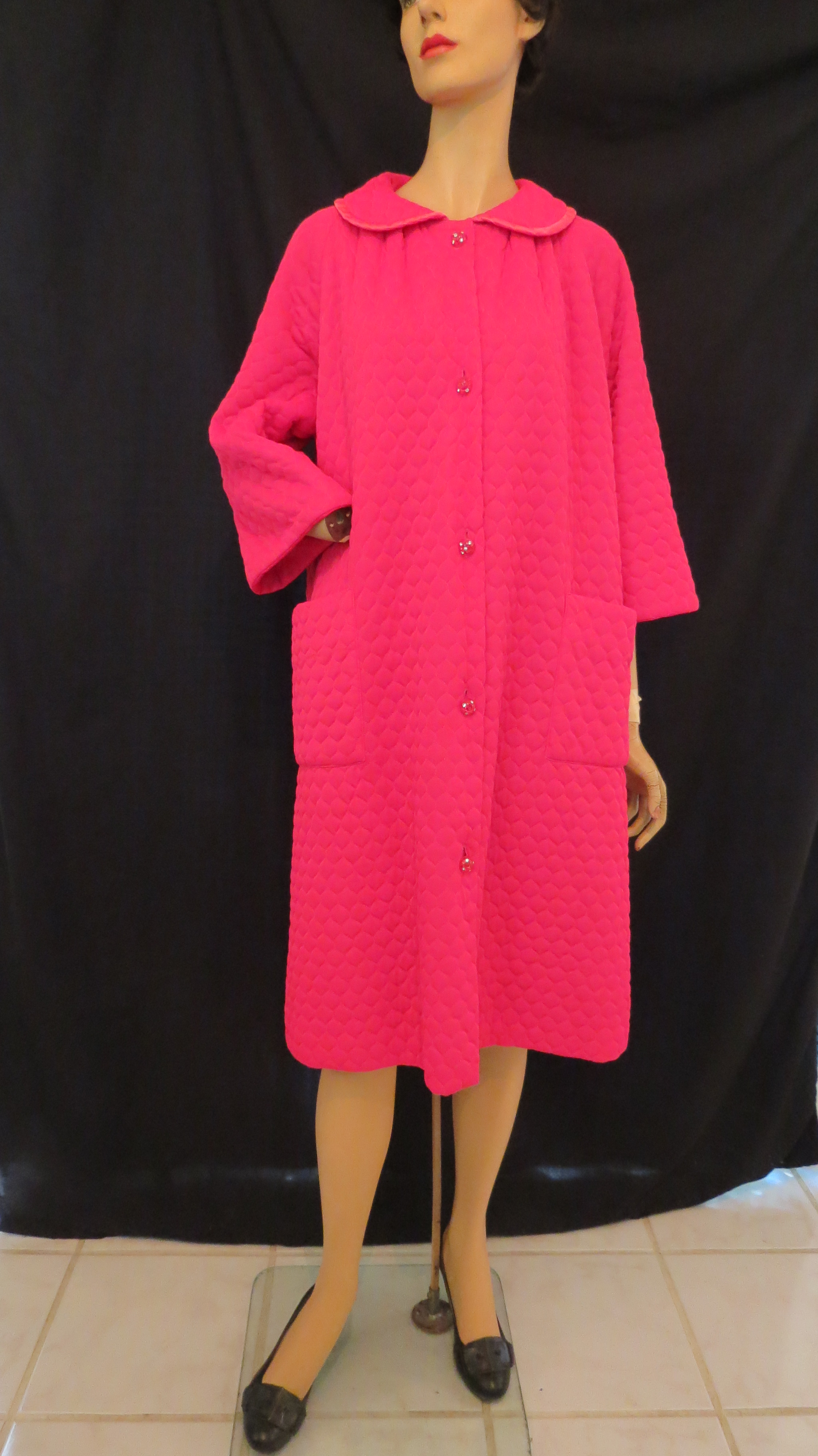
I’m definitely in the mood to look at some pretty Spring lingerie, although it won’t keep us as warm. The 1970’s RED velour robe by Vanity Fair is an exception, but I had to include it for St. Valentine’s Day.

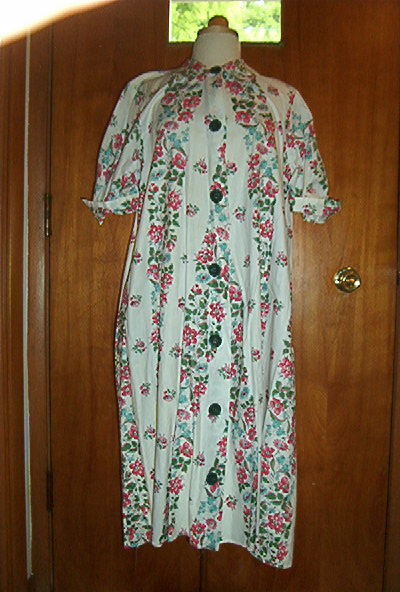
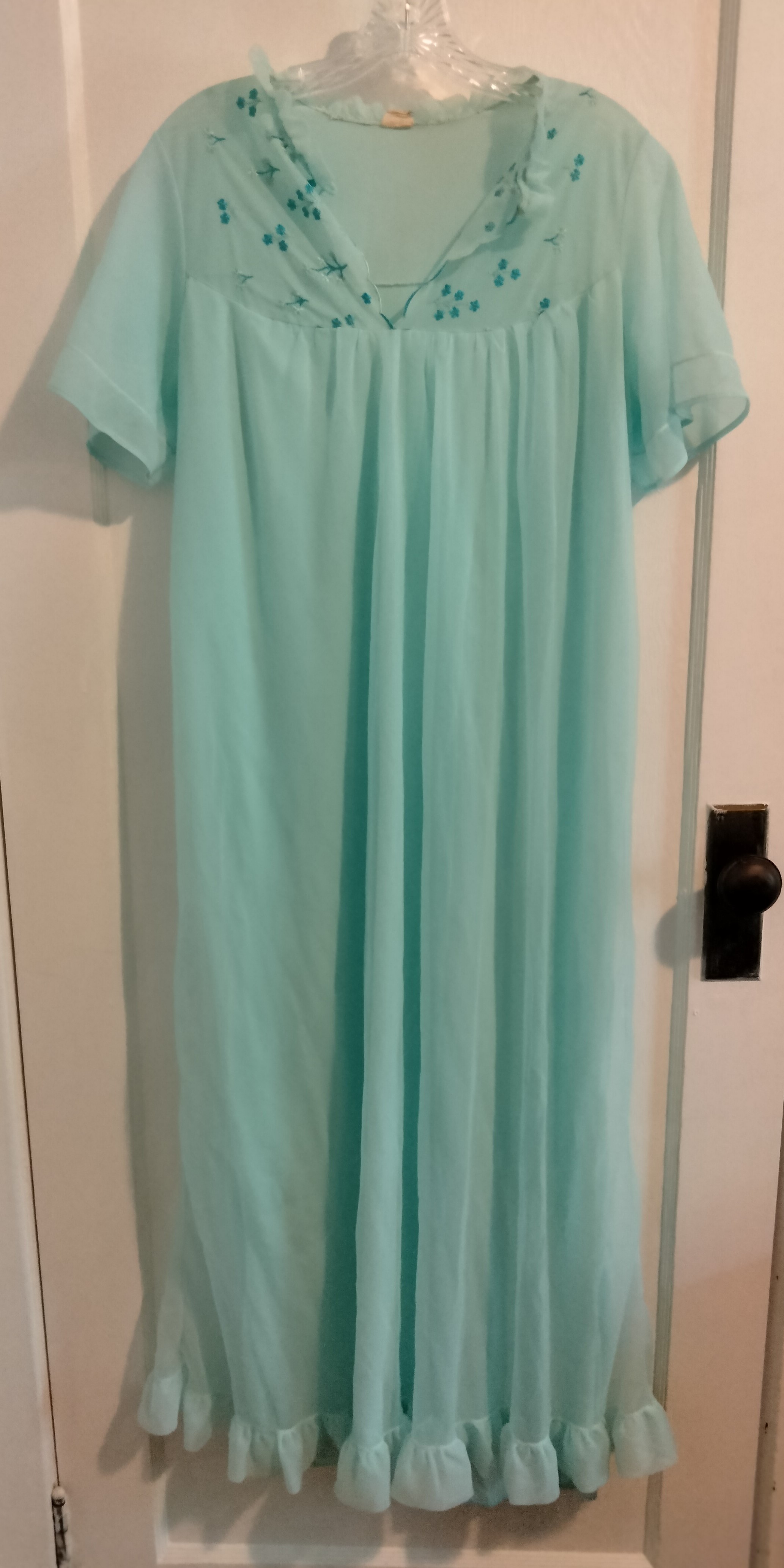
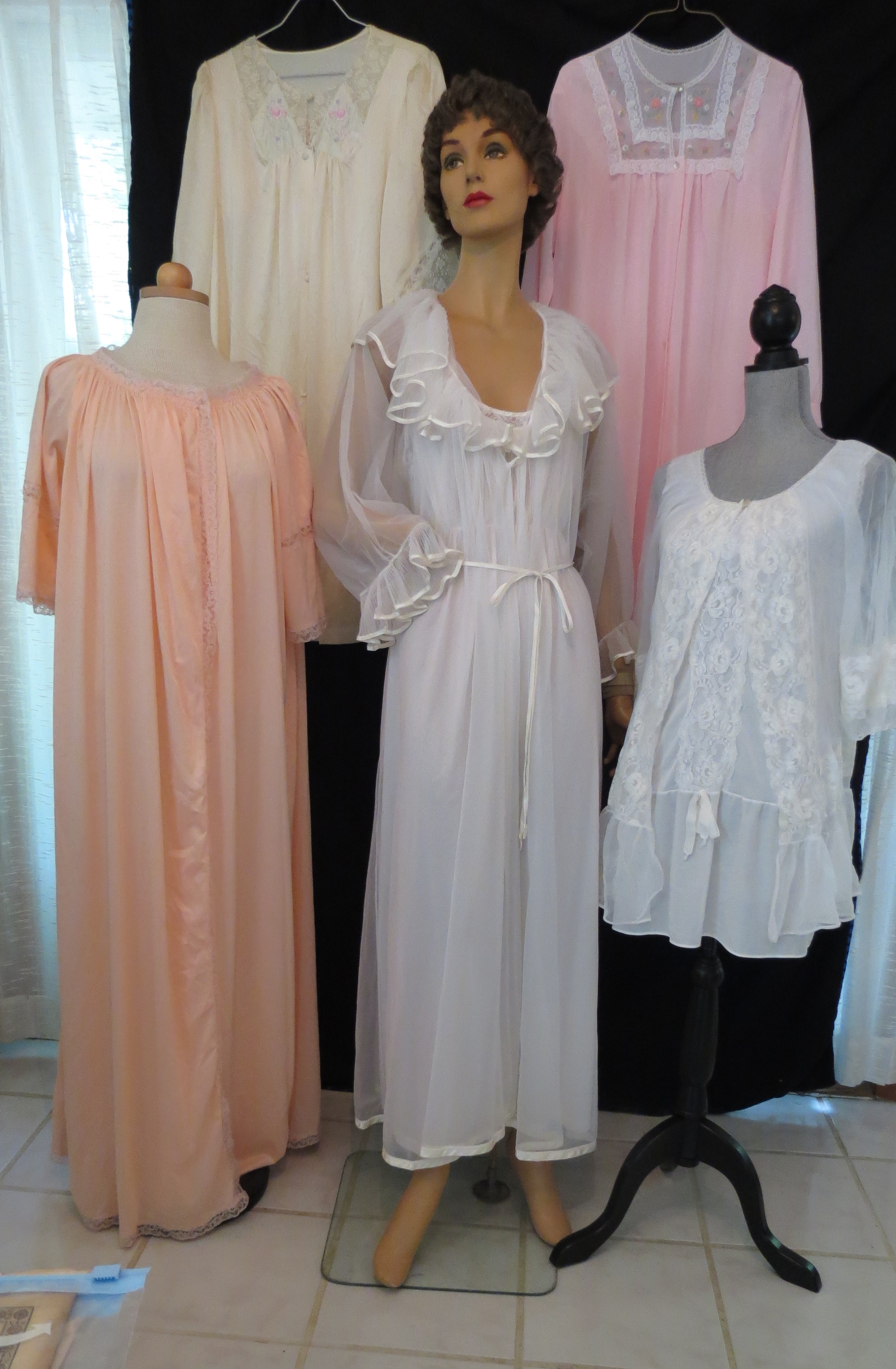
A floral heavy cotton housecoat robe from the 1930’s with big sculpted buttons was a fabulous find! See how it compares when we jump to the 1950’s, 1960’s and 1970’s. Double-layer nylon peignoirs and gowns began to appear in the Forties and there were some beautiful ones in silk during the Thirties and Forties before WWII rationing disrupted all of that. Lots of great synthetic materials were developed during this time, however, and the 1950’s nylon used for sleepwear and slips is fabulous! Thick, glossy and still silky to the touch, it could be found into the 1960’s and very early 1970’s but since then has mostly been replaced by cheaper, poorer quality fabric that doesn’t feel or look the same and is definitely inferior.

Until then, we had this wonderful nylon that can be dyed in bright colors, lasts forever and feels like heaven on the body. Lingerie from this time also included beautiful tailoring and details like lace and embroidery which was high quality and didn’t come loose. Tiny pearlized plastic or fabric-covered buttons and satin ribbon were also common. That’s why these garments still look and feel so beautiful 50 – 70 years later!

This marvelous nylon was also used to make lingerie slips, of course, and women bought a gazillion of them while day dresses were still the standard outfit for daily wear. When we go back to looking at day dresses through the decades, I will be opening an archive of beautiful slips, too. First, I think our mid-century gal is getting back from her vacation tomorrow so we will see what she bought at the beach and start the dresses review afterward. Stay tuned . . . . . . . . . . . . . . . . . . . . . . . . . . . . . .

MORGANA MARTIN, THE MAGICVINTAGESPY

BLOG: MAGICVINTAGESPY.COM
TRUE VINTAGE MEN’S AND LADIES’ SLEEPWEAR & ROBES FROM THE 1950’S & 1960’S

While our mid-century gal is off on her snowbird vacation (see posts from the last few days), Baby, it’s COLD outside here at home! Although Spring is just around the corner (yes, it really is), we still need to be snuggling into robes and pajamas at night. I love doing posts about my archives of true vintage lingerie because it’s always so interesting and pretty. So, let’s take a closer look at these files –

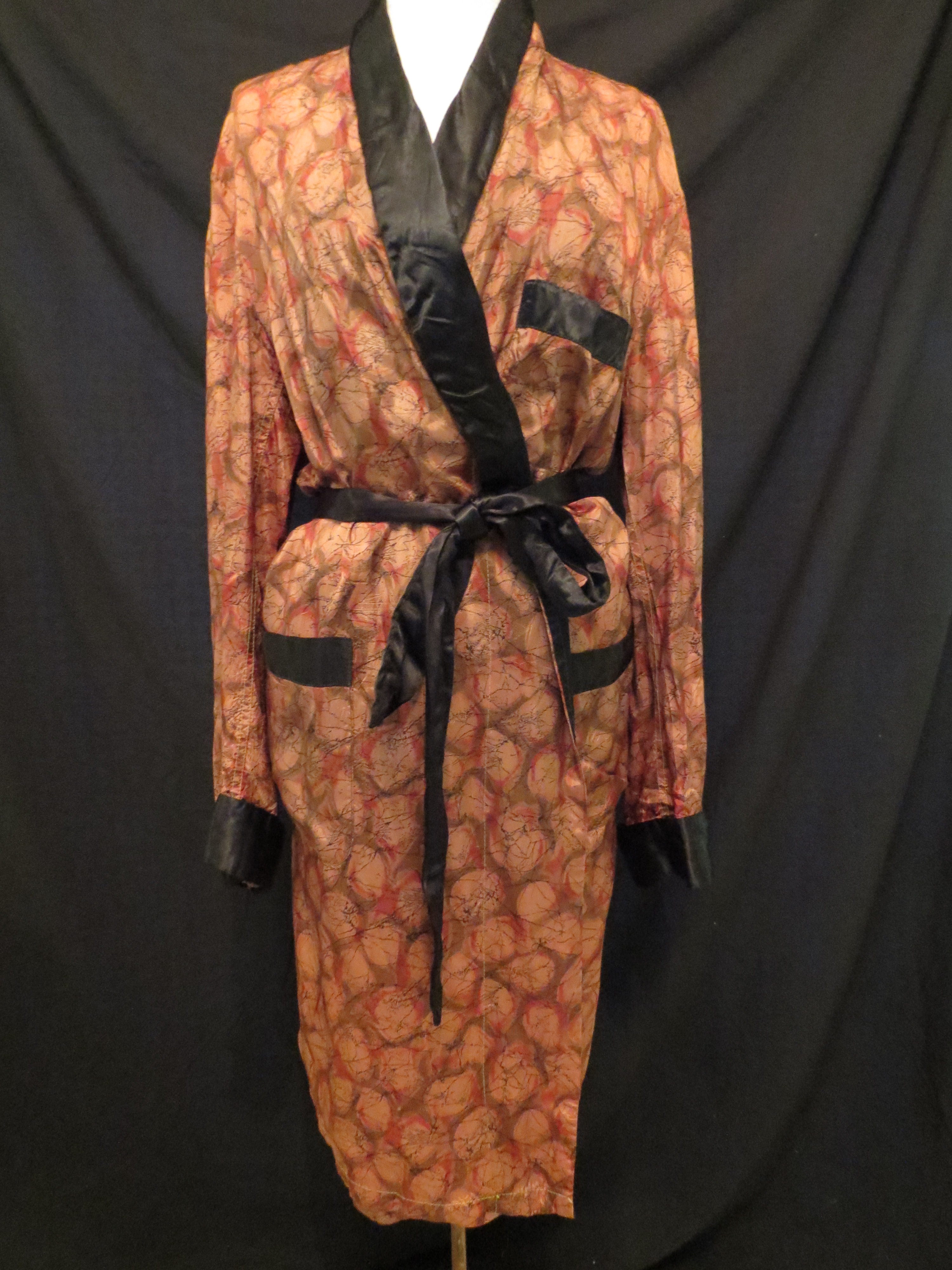
For the men, a swanky rayon bathrobe makes any guy an instant sophisticate. Abstract medallion print with satin trim. How aristocratic! As for the PJs, cotton print men’s pajamas from the 1940’s and 1950’s are so wonderful. Of course, they wear to cozy softness but the real star of the scene is the art prints that many of them displayed. This pair have stylized hand fans all over – an unusual motif for men’s PJs, but that’s what they are. Both pieces show the standard tailoring for men’s garments, though it’s fun for women to wear them, too.

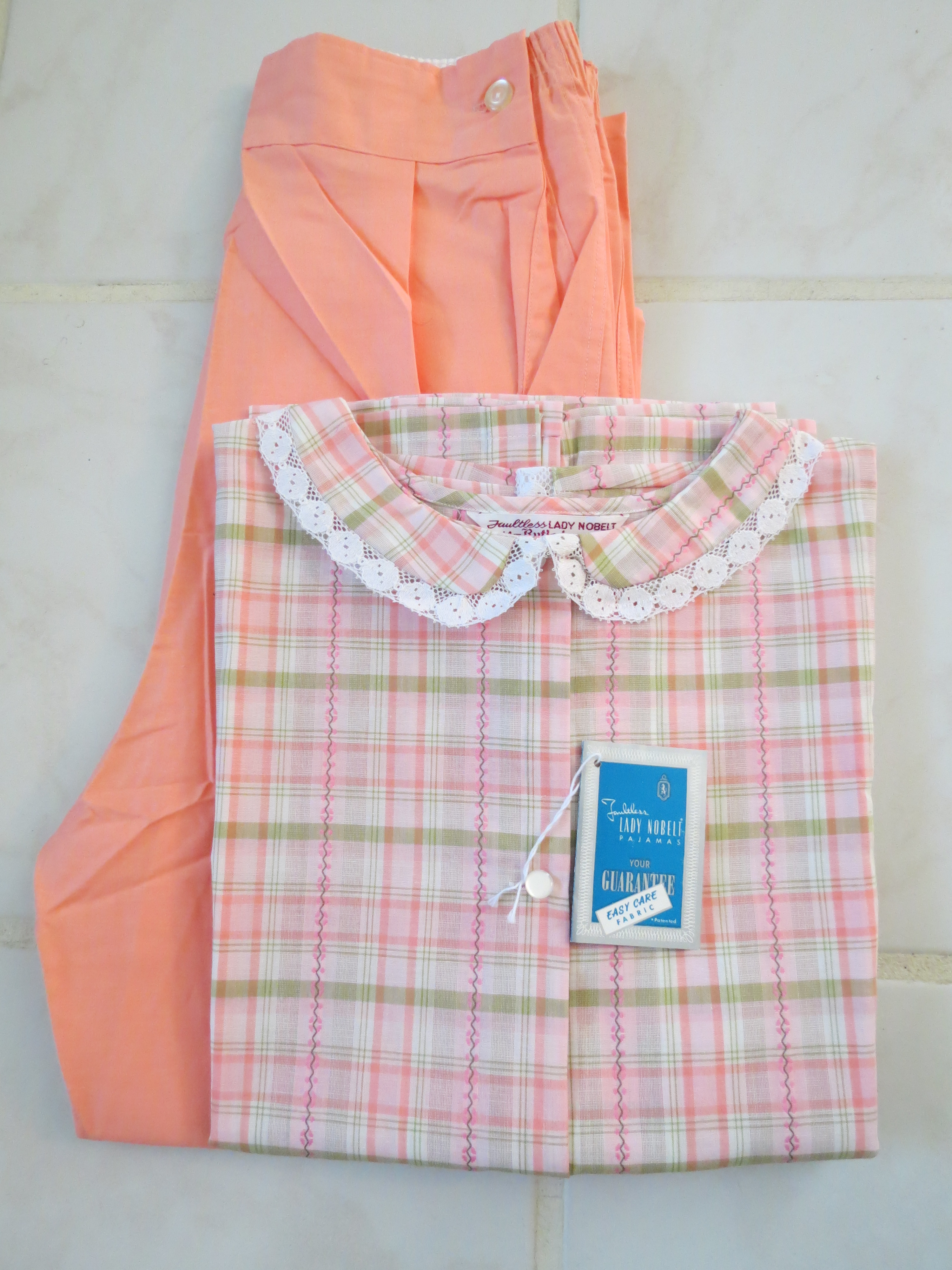
For the ladies, true vintage sleepwear and robes are always so lovely. Even very plain ones seem to have pretty tailoring details. The rosy red robe pictured above is made from a plush fabric. Details include pretty buttons, satin piping on the collar and 3/4 length bell sleeves. The deadstock cotton PJs are plain but still have pretty lace trim and pearl buttons. I think the plaid fabric is quite nice, too. The thing I like most about these old-style pajamas is how the waistline is made. It does have some elastic around the back, but the front is plain and closes with a side button. It also has at least one hip pocket, which is surprisingly convenient.

Tomorrow, before our vacationer gets home, I’ll look at another true vintage sleepwear archive with more Spring-like styling. Stay tuned . . . . . . . . . . . . . . . . . . . . . . . . . . . . . . . .

MORGANA MARTIN, THE MAGICVINTAGESPY

BLOG: MAGICVINTAGESPY.COM
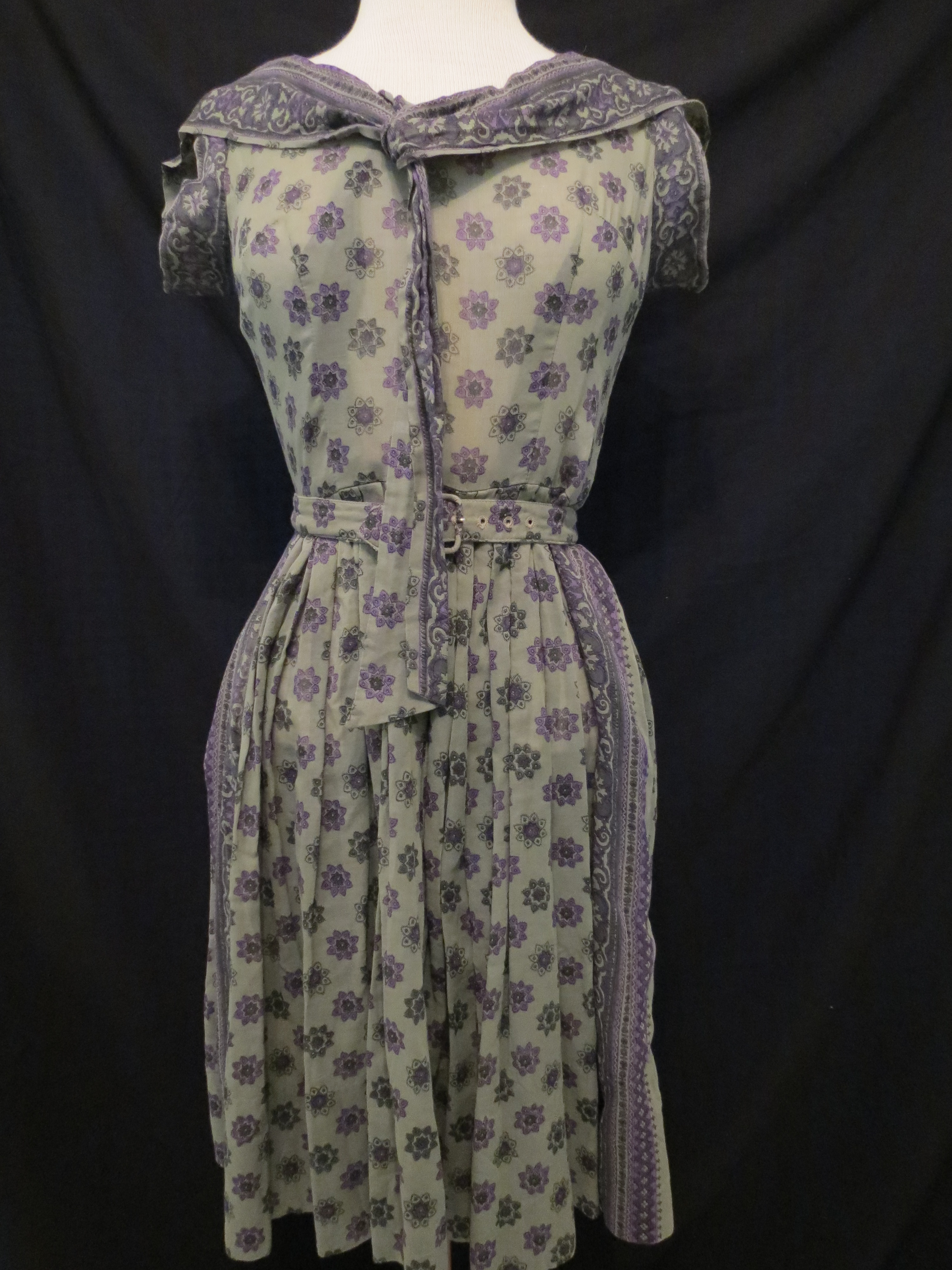
True Vintage Ladies’ Sweaters 1940’s – 1970’s

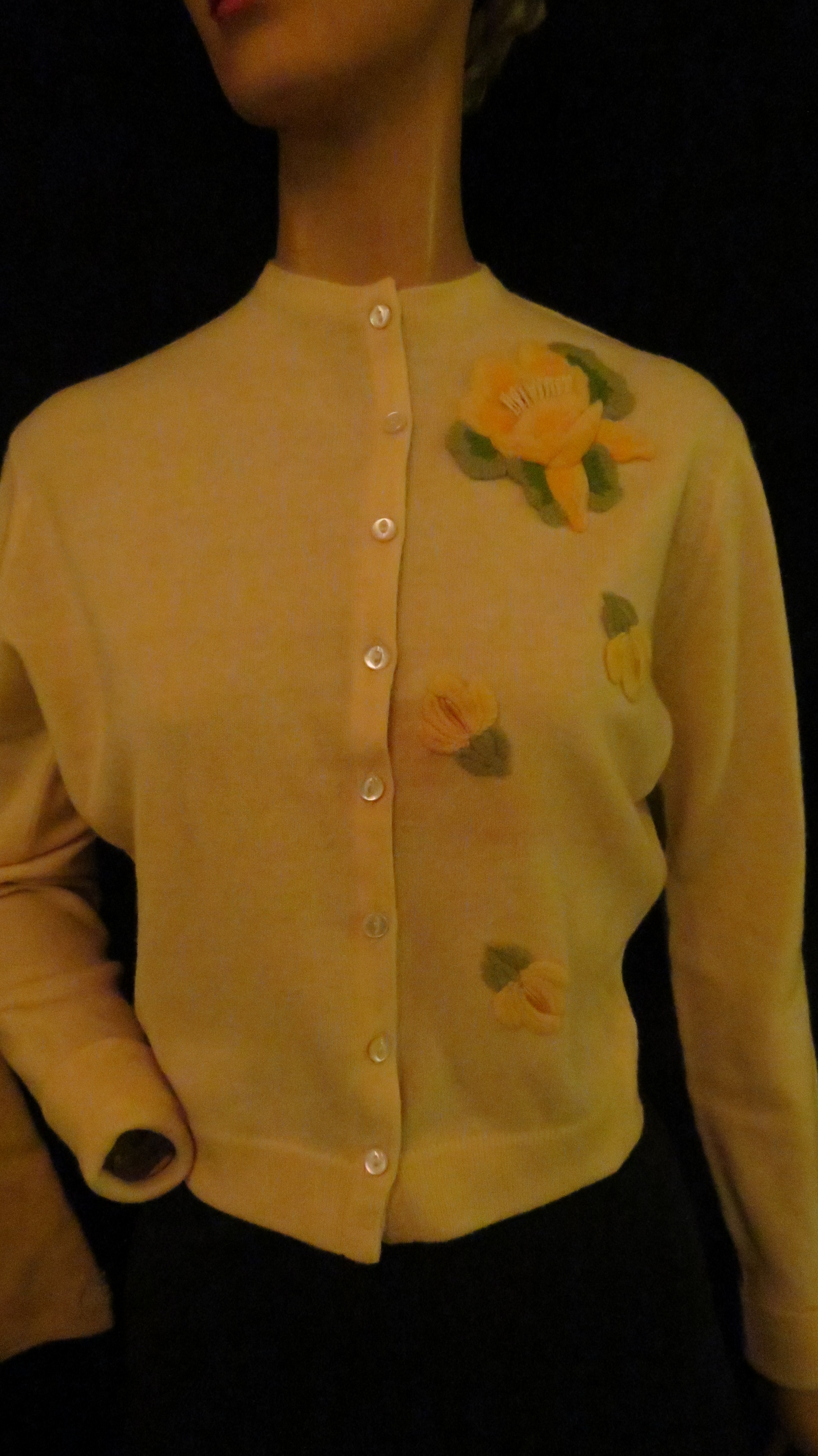
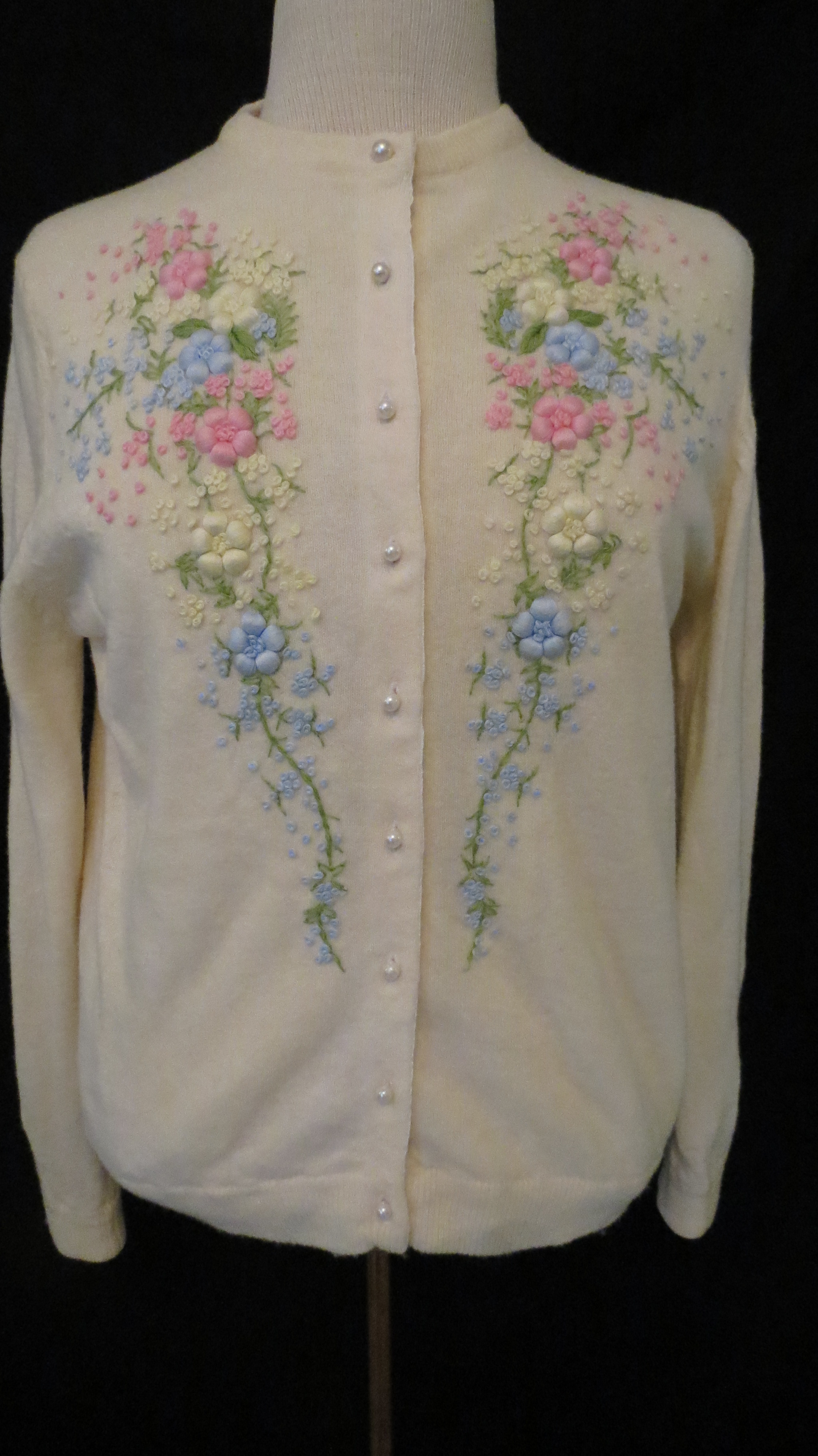
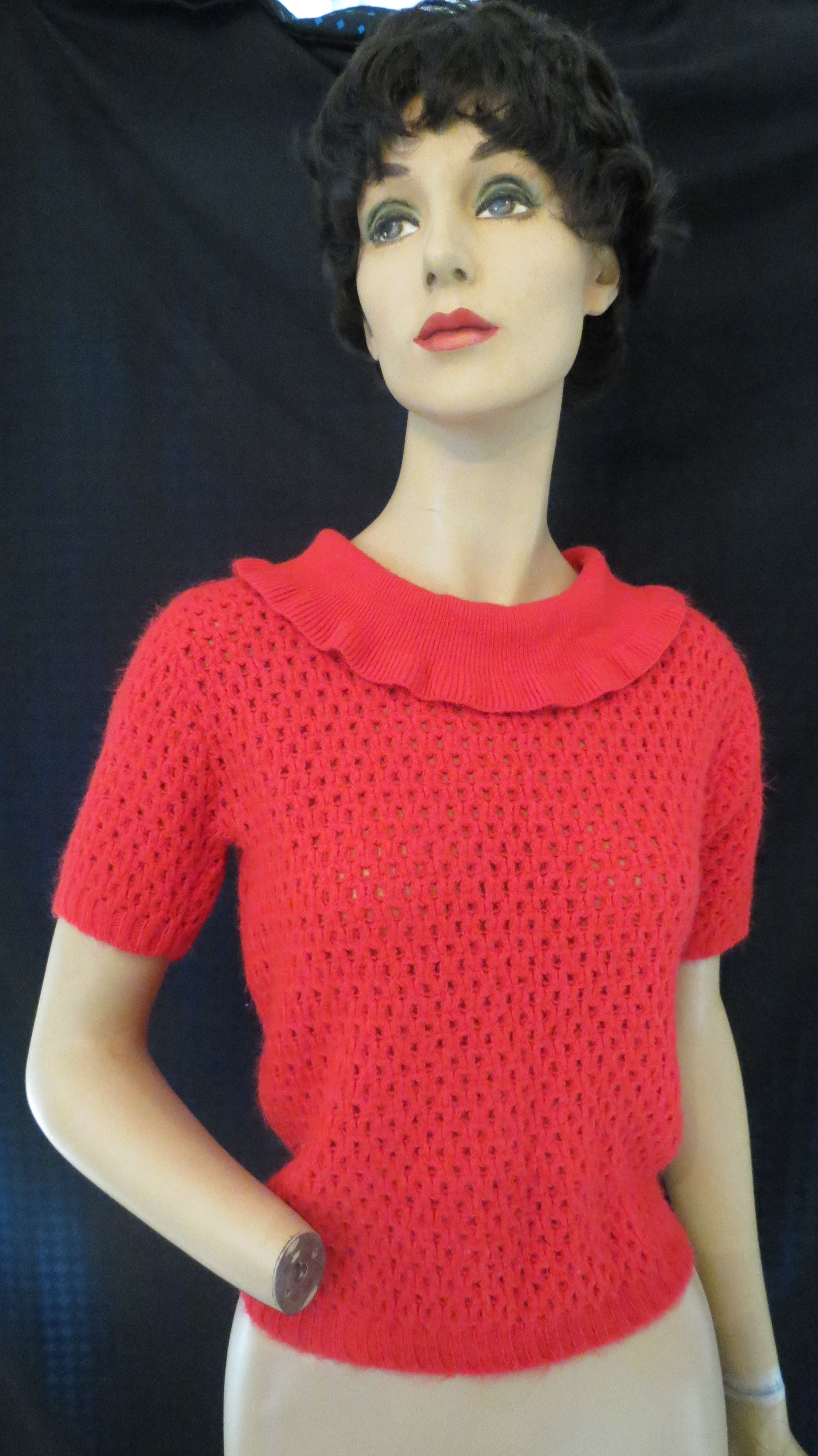
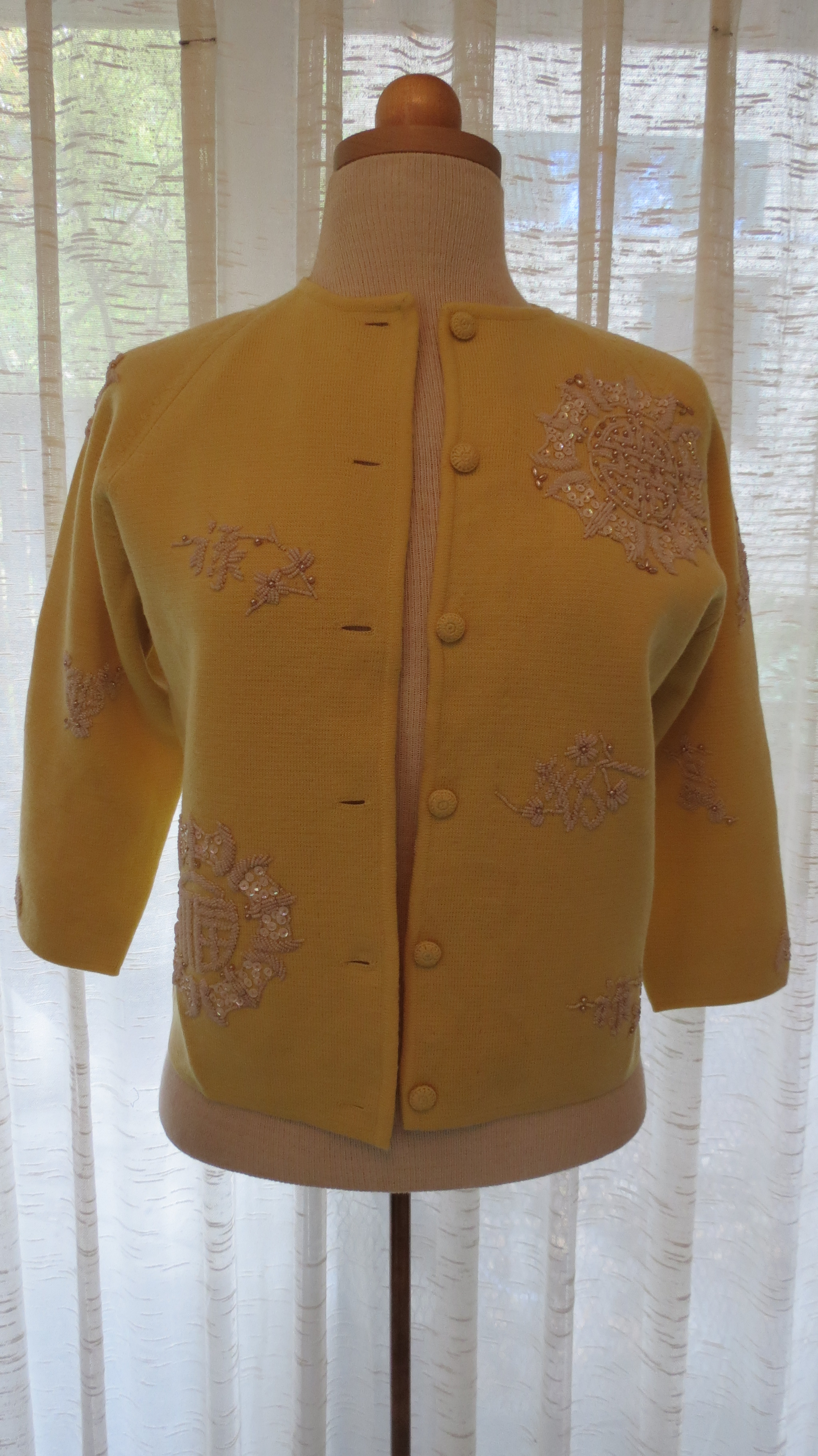
Just a few examples of the many styles and varieties in my archives, but this assortment is a good beginning. The most classic, and probably the most numerous of my discoveries, have been cardigans. Finely made cashmere sweaters, like my mother’s yellow one with appliqued flowers, were a staple for the college coed in the late 1930’s to 1940’s. Plain styles were often worn in reverse, with the buttons in back. Up through the 1950’s to the early 1960’s beaded and embroidered cardigans were hugely popular and the designs were endless. Most were commercially-made, many of the best ones in British Hong Kong, but some women decorated theirs at home. My mother bought this yellow sweater jacket by Banff in the early 1960’s.

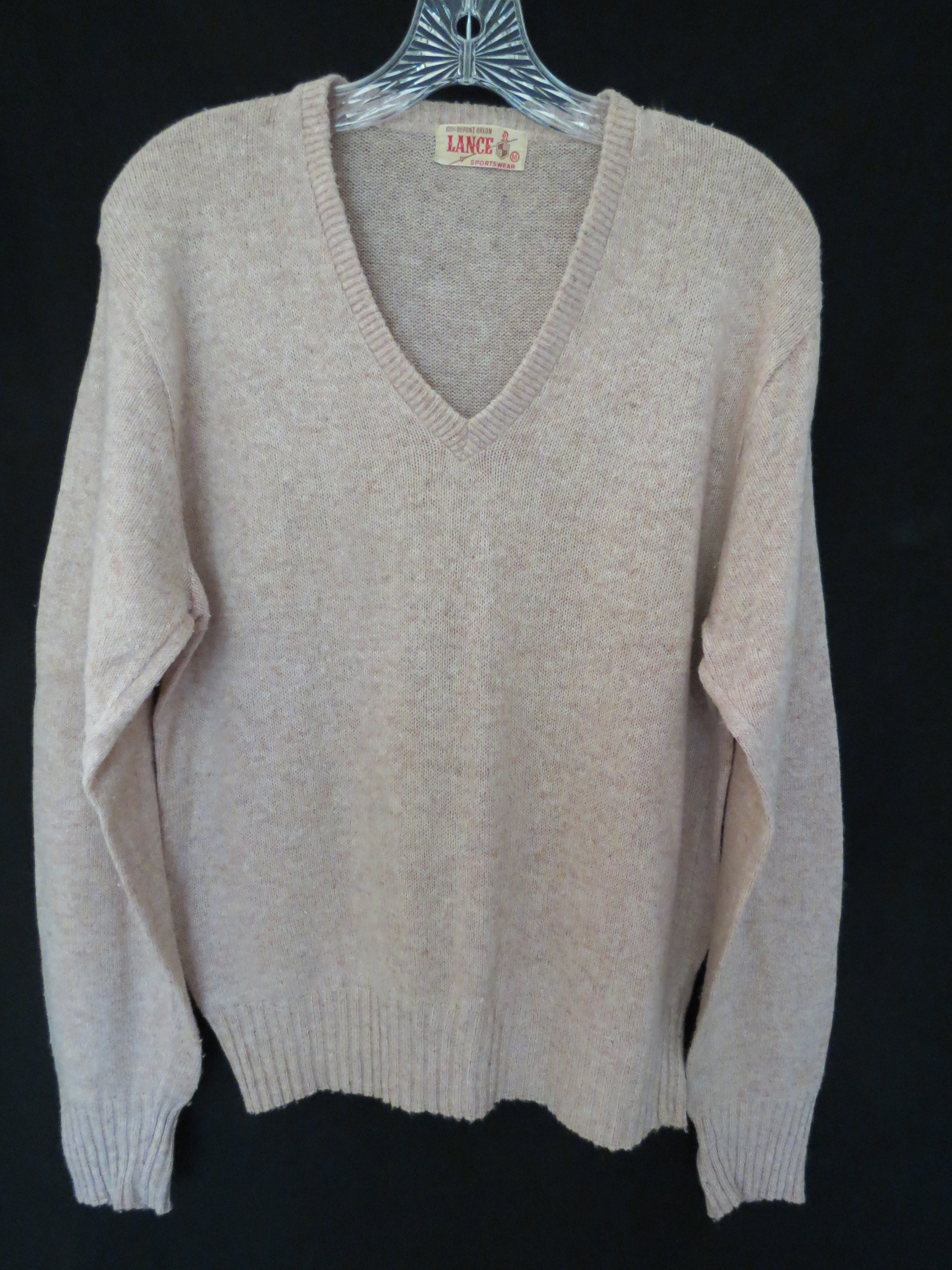
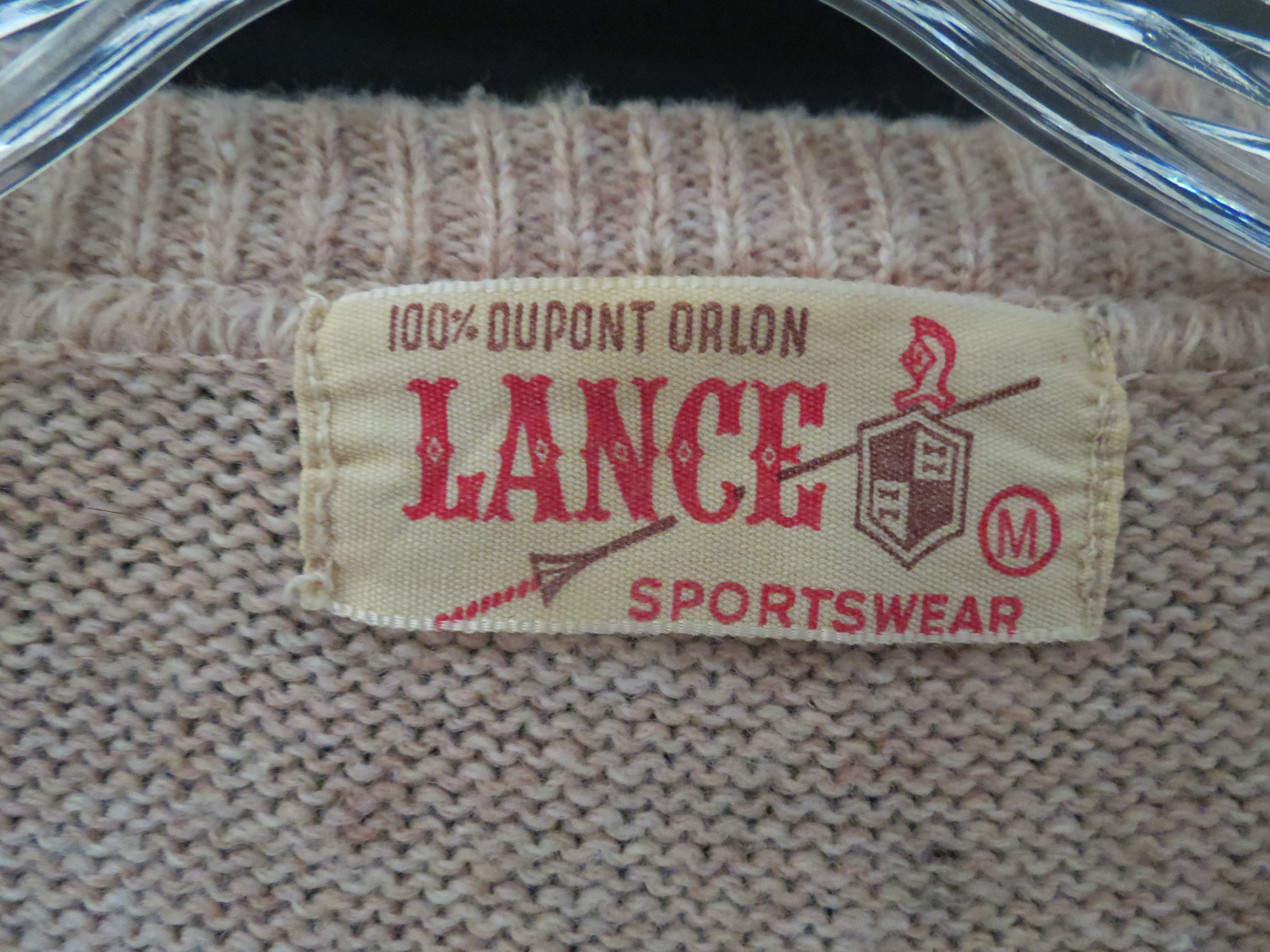
Of course, there were v-neck, crew neck, and collared sweaters in all sorts of variety. Most were nice, but casual styles made to wear with skirts and, later, with slacks. Wool sweaters provided the most warmth for colder months and, until Orlon became available, almost all sweaters were made of wool. Synthetics were really given a boost during WWII because of the government’s requisitioning of wool for military uniforms.

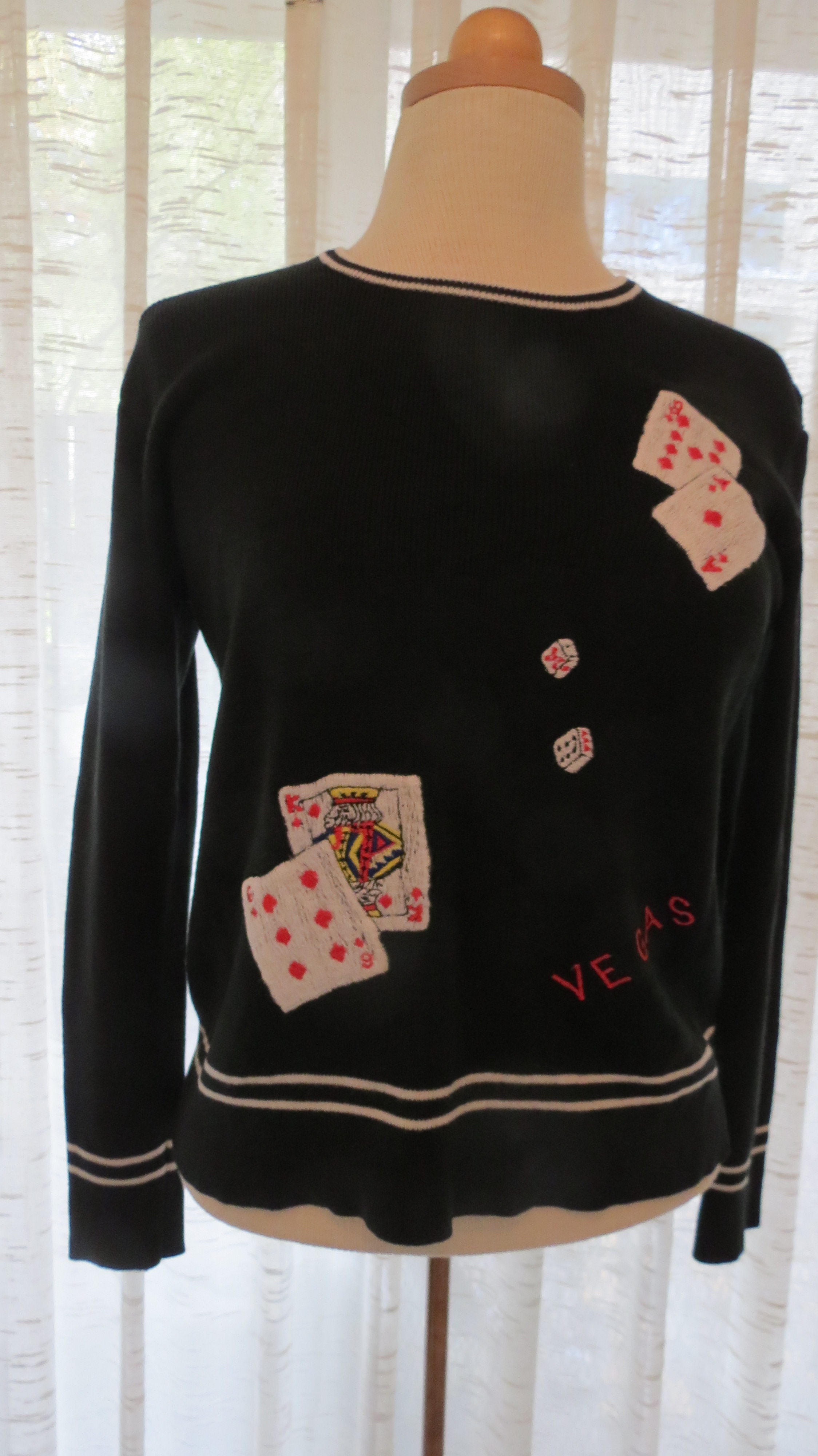
The turtleneck that we love now didn’t seem to show up too much in everyone’s closets until the early 1960’s. Until then, it was a little more avant guarde or unconventional for the average gal though they were on the scene from the 1920’s. Always a sportswear item, especially from the time women began to dress more casually in the 1940’s, women’s sweaters became less dressy. We’d begin to see themed sweaters like this Las Vegas souvenir from the 1970’s or with prominent monograms, mostly in the ’50’s. Of course, many mid-century women knitted and crocheted tons of styles at home, from super-casual to evening styles.

True vintage sweaters from before the 1970’s when acrylic yarn took over are a rare and fabulous find. Moth damage, pills and snags usually took most of them out of circulation. Though I have many, it’s only possible to show sample at one time. A few ladies’ casual Spring jackets tomorrow – stay tuned . . . . . . . . . . . . . . . . . . . . . . . . . . . . . .

MORGANA MARTIN, THE MAGICVINTAGESPY

BLOG: MAGICVINTAGESPY.COM
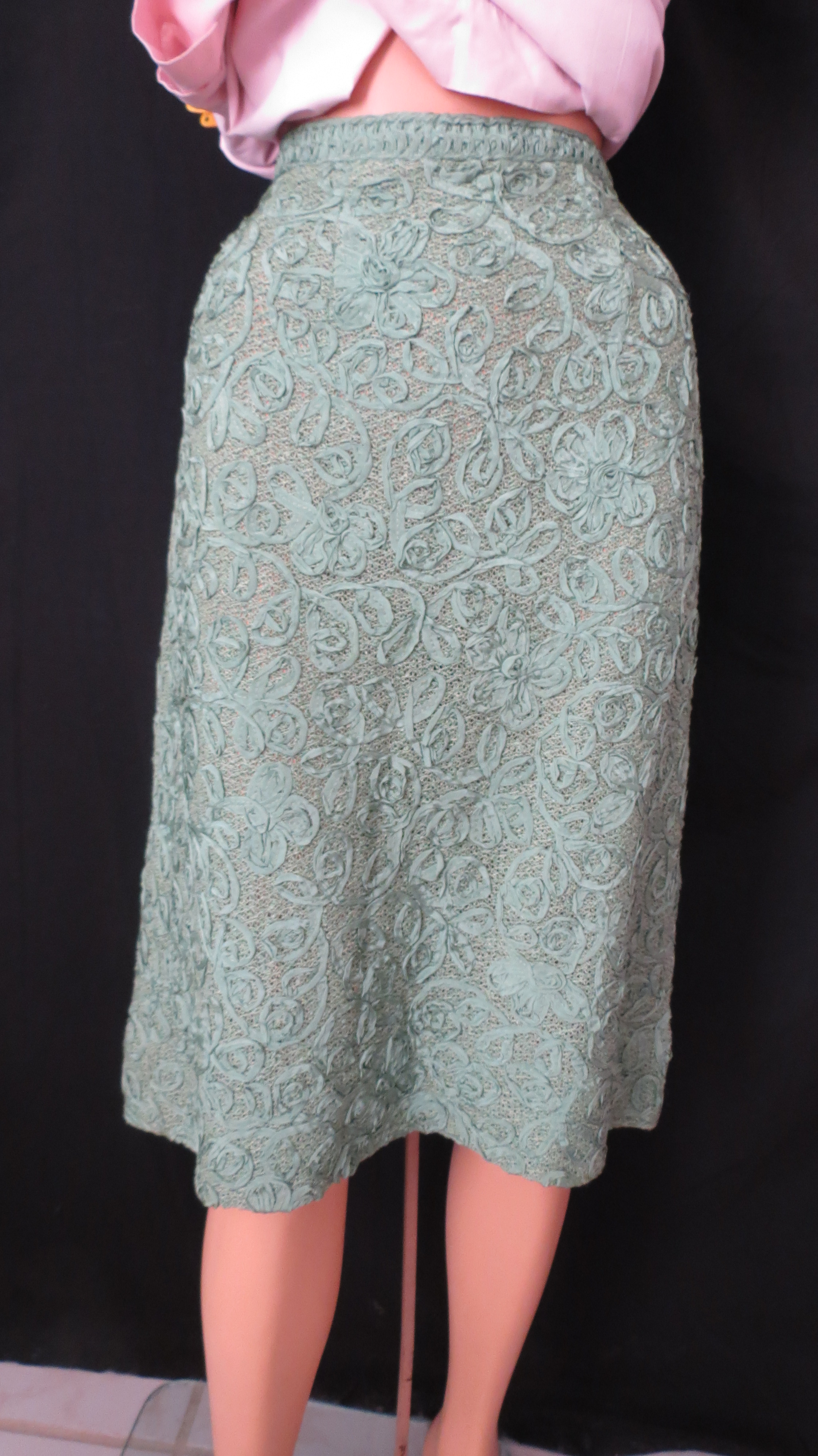
SNUGGLEY TRUE VINTAGE SLEEPWEAR AND LOUNGEWEAR 1950’S – 1970’S

Everybody seems to love red, especially this time of year. It’s certainly a color which can make us feel warmer, which is what we’re beginning to need in a big way now. On the left is a favorite 1950’s pajama set of mine, woven 100% cotton with little fans printed all over. The print would make you think that these must be women’s PJ’s but actually these are a large size boys’! Take a look at the direction of the button closure.

Although I have lots of women’s PJ’s and gowns, my men’s pajamas from the 1940’s and 1950’s are really special. Classic unisex PJ style (though, often, men’s have a fly), but the best feature is that the men’s garments are very sometimes printed with wonderful medallion prints or novelty prints like the one above. A large (16 – 18) vintage boys’ size will fit me well – I wear a ladies 4. A men’s small will usually do OK or can be easily altered. Women’s PJ’s are most often of a solid color nylon or silk or a fine cotton printed with small flowers, decorated with lace or other trim. Really beautiful and comfy, but sometimes a little boring.

However, true warmth comes from robes, and this is where the women’s garments shine. They are more often found in warm fabrics such as plush, chenille and quilting. Women traditionally spent more time at home than men did so ladies’ true vintage robes and dressing gowns are built to be worn for several hours, rather than just after getting out of the bath or shower. Although men’s vintage robes sometimes have nice prints, women’s are more often embellished with embroidery, trim and buttons. Each decade had it’s typical style and popular fabric but the general rules seem to apply to sleepwear and robes from all the decades from the late 1800’s to the present day.

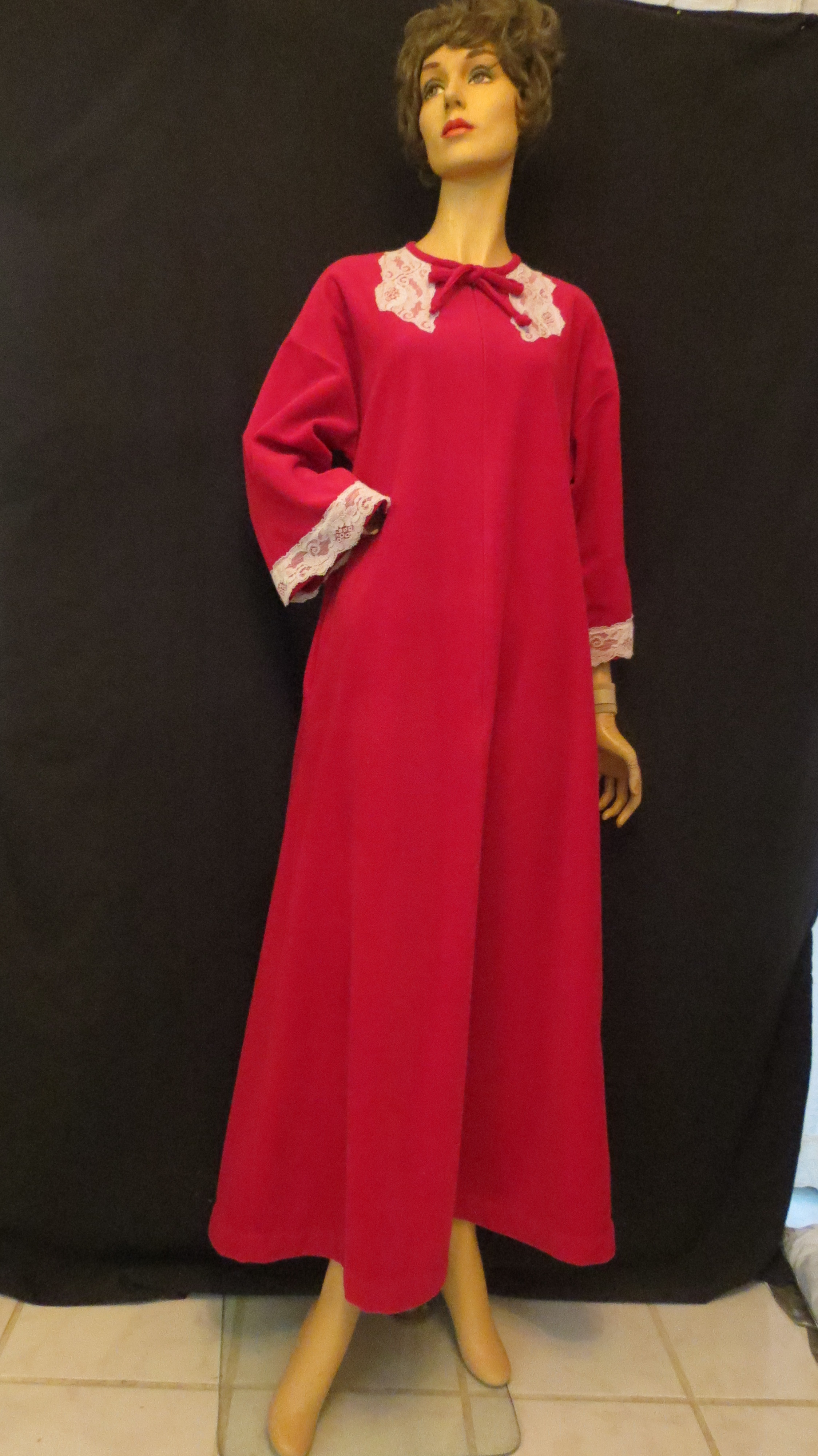
My 1970’s robe above is certainly worthy of Mrs. Claus as she makes breakfast for the elves. (Sorry, but traditional folklore and myths tend to be very sexist.) It’s by Vanity Fair, a company which has made women’s at-home styles and lingerie for decades. I love the pretty style, but the long bell sleeves are very impractical in the kitchen and I don’t think the mid-priced market for this item targeted women who had hired “help” at home. That can be an inherent problem with true vintage fashions – occasionally they are poorly suited to an average lifestyle and can even be uncomfortable at times but that’s a minor consideration and not worth a mention as long as you are in the know. Wouldn’t stop me gathering the evidence for a second. When did practicality ever have anything to do with fashion and style, especially when a holiday or other special occasions are on the horizon? Stay tuned . . . . . . . . . . . . . . . . . . . . . ..

MORGANA MARTIN, THE MAGICVINTAGESPY

BLOG: MAGICVINTAGESPY.COM

Another “New” Find – Mid-century Fringed Western-wear Jacket

oplus_0

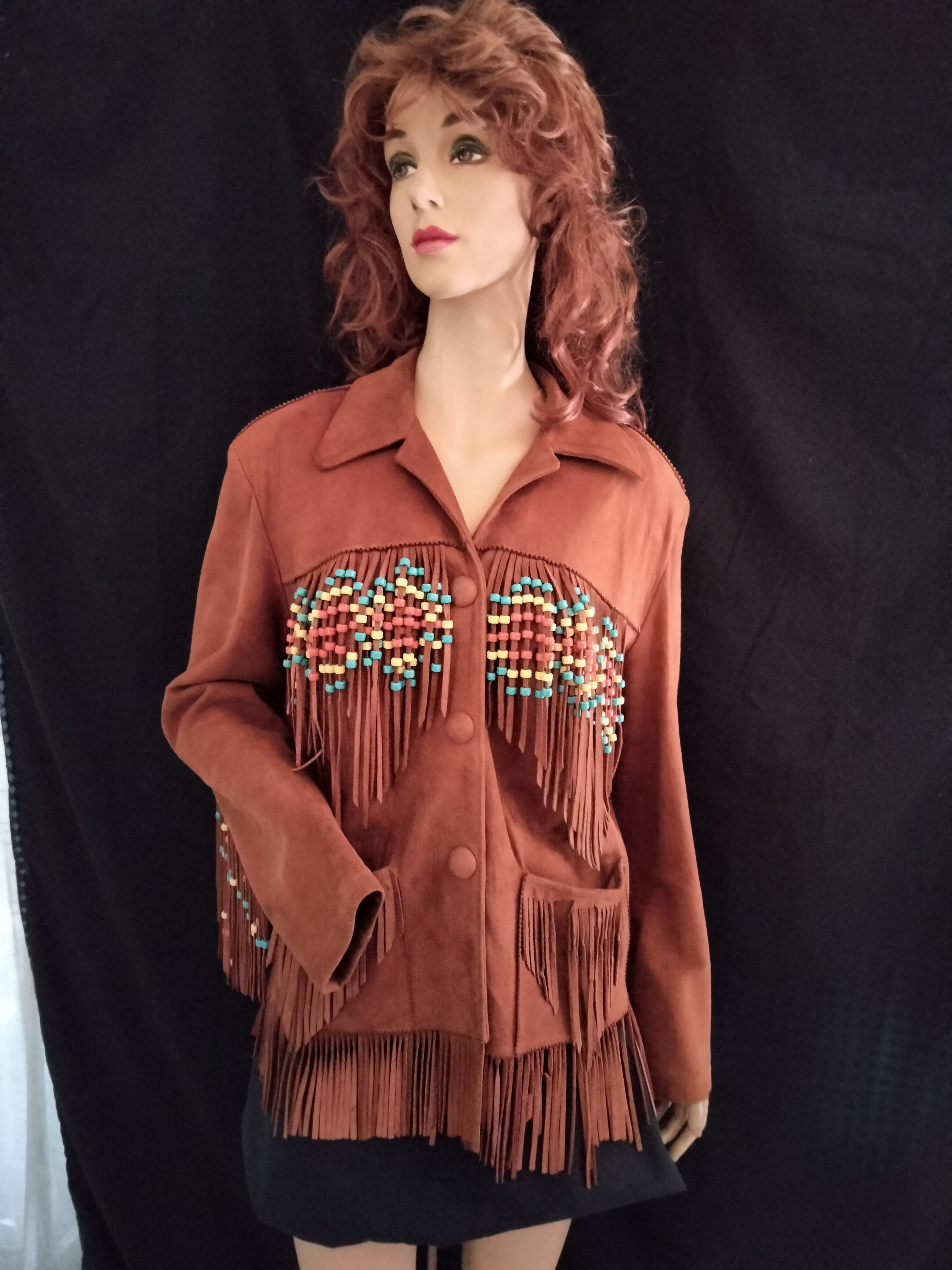
This one’s been well-loved and worn, but excepting the fringe it’s in good vintage condition. So iconic that I couldn’t resist picking it up. Lots of clues here, and I was also able to speak to a witness who provided additional information.

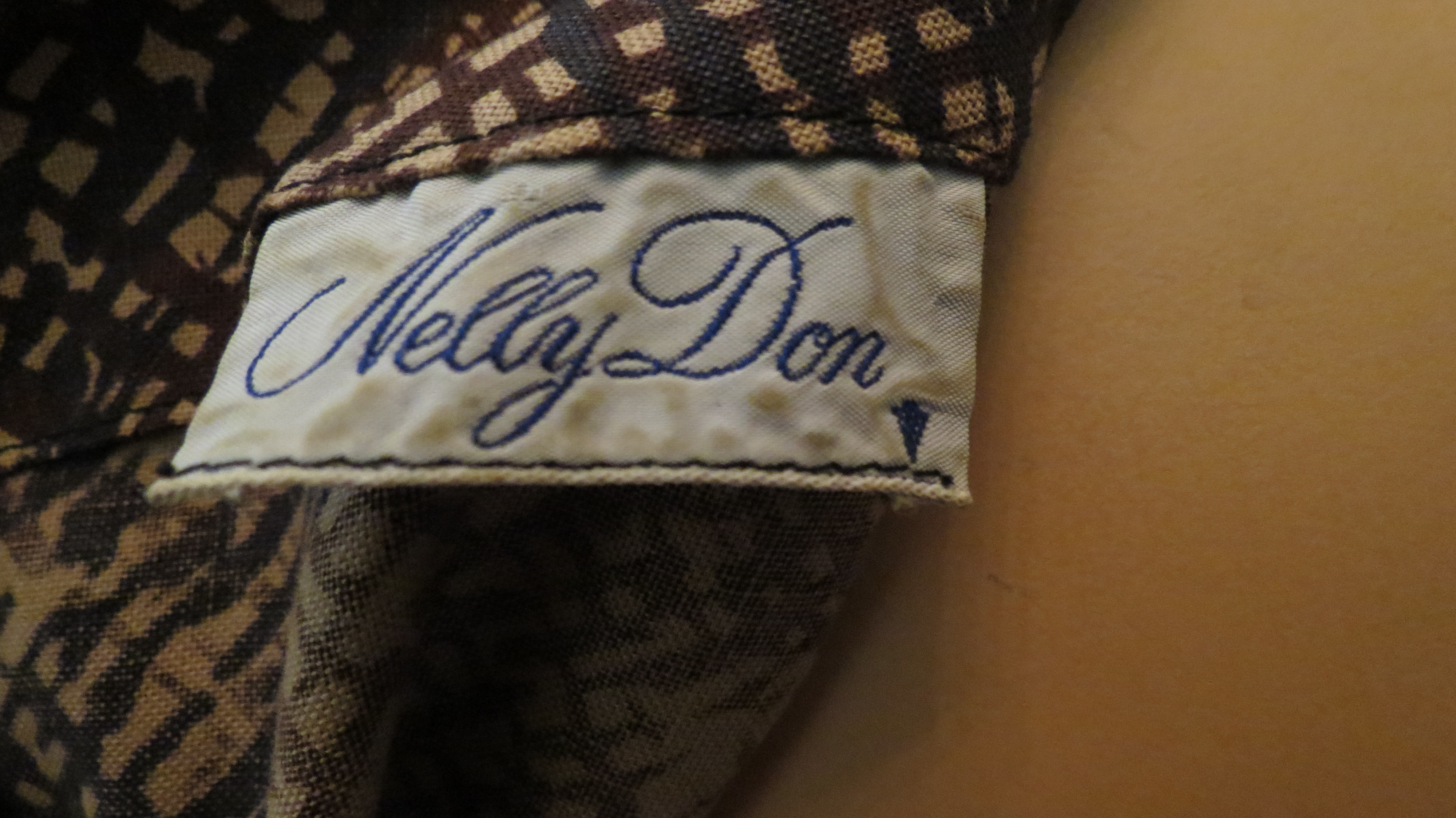
First clue: Always look for the origin. I researched this Western-wear label and it seems that the store no longer exists. No surprise after 60 or 70 years but this may not always be the case. The way that the label is made also gives me information about it’s age. However, be alert to copycats on more modern items. Second clue: scope out anything that may not have been original (added decoration, changed buttons, zip replacement, mending, etc.). Each one of these features can fill out the story to a remarkable degree. Third clue: Look at signs of wear or damage – they also can tell a story.

What I have learned about this garment by investigating as above: 1. It was purchased in the 1950’s or 1960’s. 2. The store may have been part of a chain rather than a single entity. Part of this conclusion comes from investigation of the label itself and also from the quality of the garment – very good, but not the best I’ve seen. 3. The beads are not original. This conclusion was affirmed by the witness who offered a statement. 4. The original owner, now deceased, took good care of her coat but wasn’t always careful. The inside is virtually pristine but there are a few light spots on the outside which had not been cleaned and significant damage to the fringe. Part of this damage is inevitable due to the age of the leather but also looks accidental. I wonder if repeated seatbelt use without care may have caused this.

This person was also the one who got married in the eyelet dress which I showed a couple of days ago. It looks like there was a change in her size during the time between acquiring these two garments, so that’s another clue as to the ages of the garment and owner and the eras during which it was worn.

How fun! I hope that you enjoyed this little journey through an investigation. There will be more, so stay tuned . . . . . . . . . . . . . . . . . . . . . . . . . . . . . . . . . . . . . . . . . . . . . . . . . . . . . . . . . . . . . . . . . . . . . . .

MORGANA MARTIN, THE MAGICVINTAGESPY

BLOG: MAGICVINTAGESPY.COM
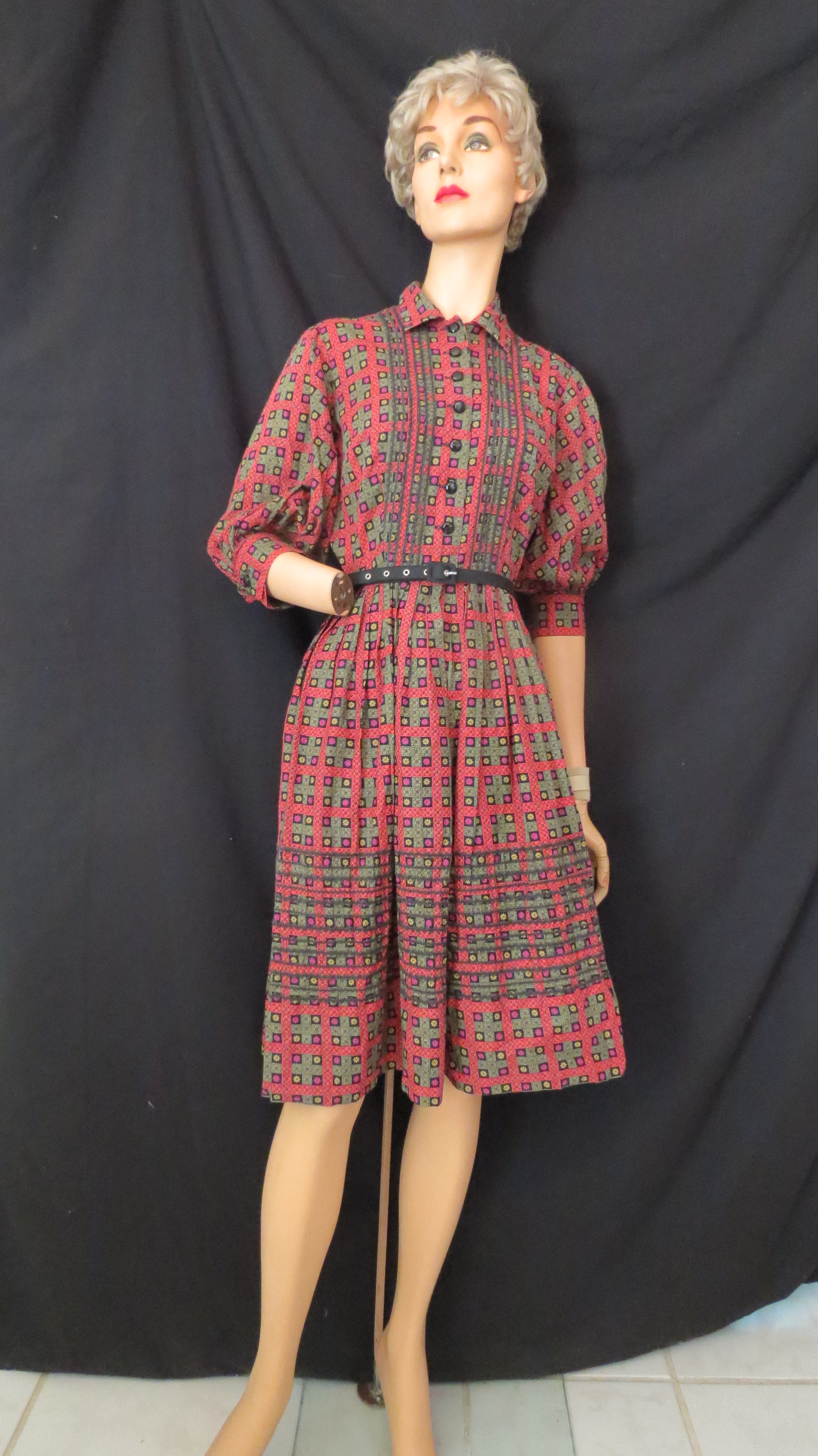
HEY, MOM – I NEED A HALLOWEEN COSTUME! NO WORRIES FOR OUR 1950’S HOMEMAKER . . .
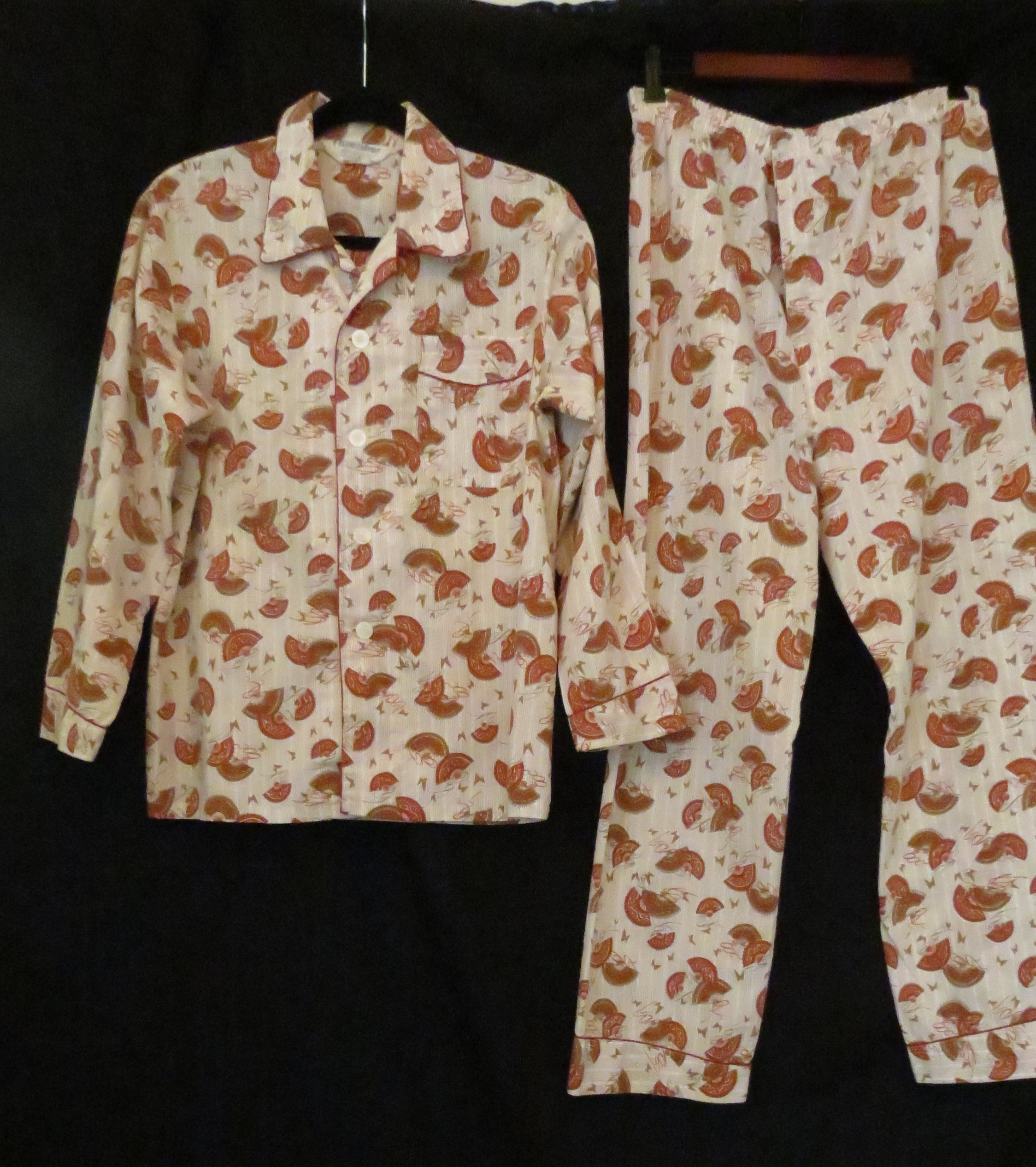
TRUE VINTAGE 1950’S PROM DRESS GETS REFURBISHED
I’VE DUG UP TREASURE AGAIN -FABULOUS, FANTASTIC FIFTIES FABRIC!

OLYMPUS DIGITAL CAMERA

What wonderful things I’m discovering!  Just LOVE the old kitchy motifs here.  Although there’s probably enough material to make a simple dress, the fabric is more the weight for upholstery so I’ll save it for sofa pillows or to cover a chair.

Such fun!!!!!!!!!!!!  And, rare as can be . . . . . . . . . . . . . . . . . ..

MORGANA MARTIN, THE MAGICVINTAGESPY

BLOG:  MAGICVINTAGESPY.COM