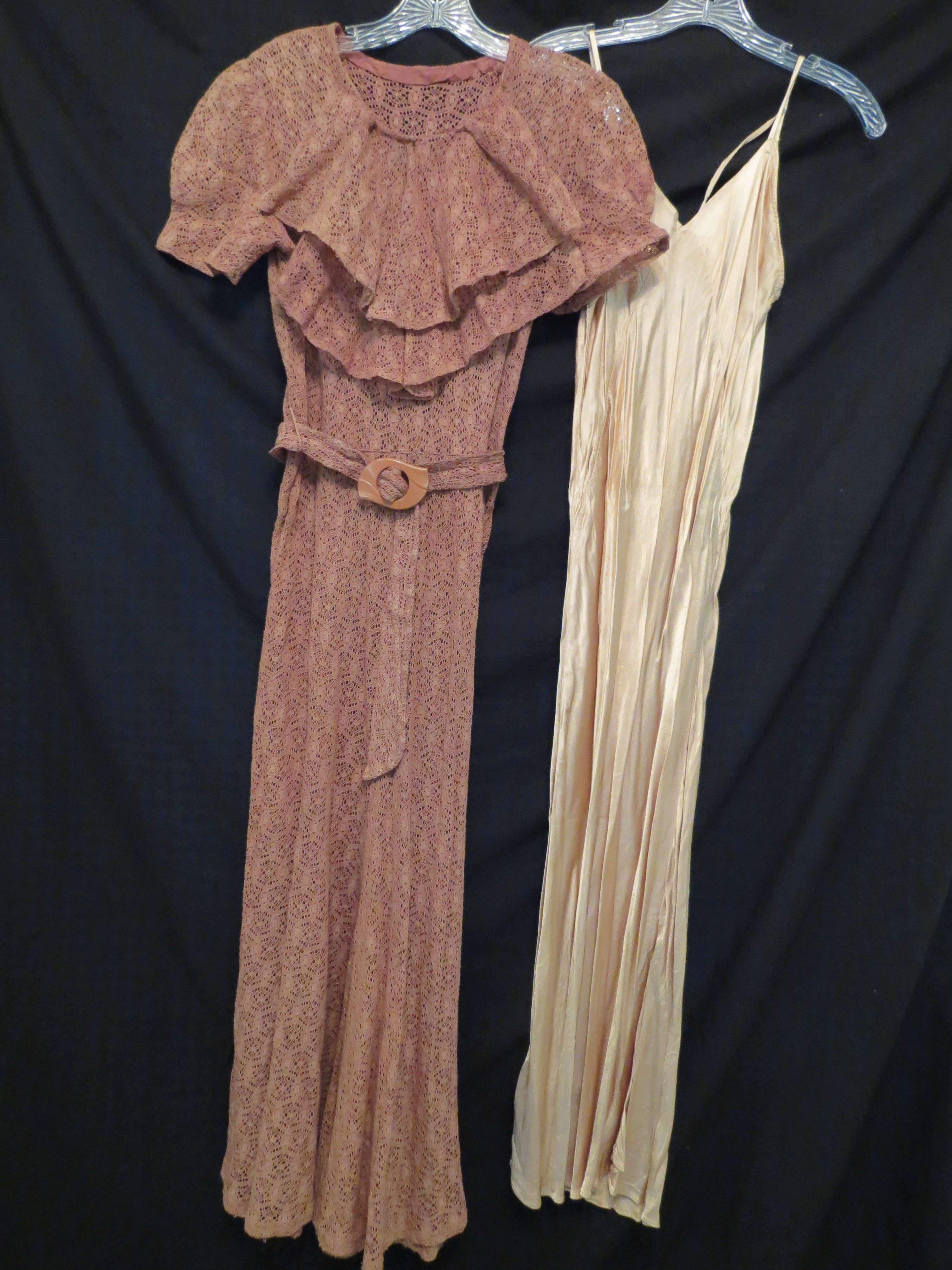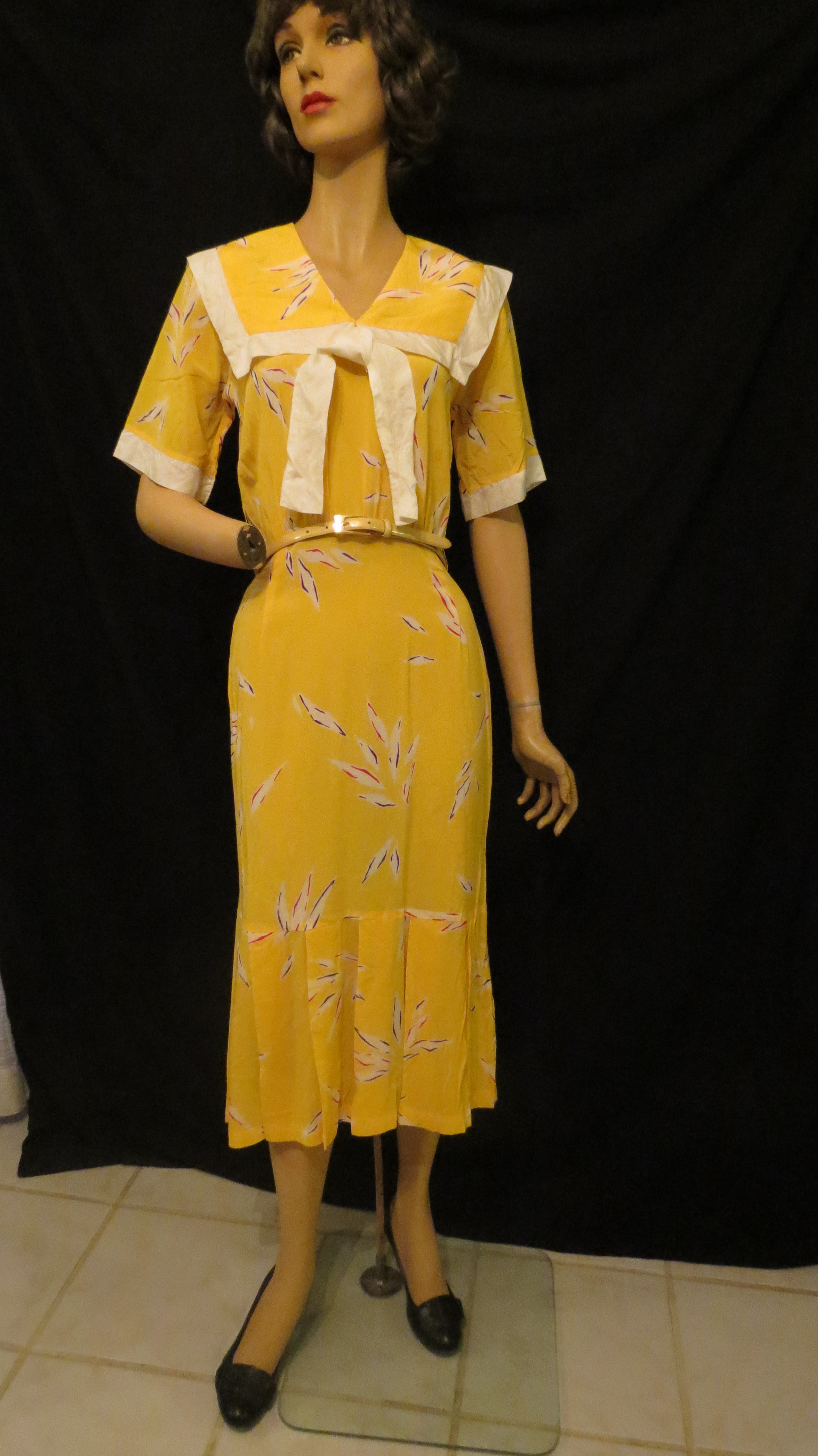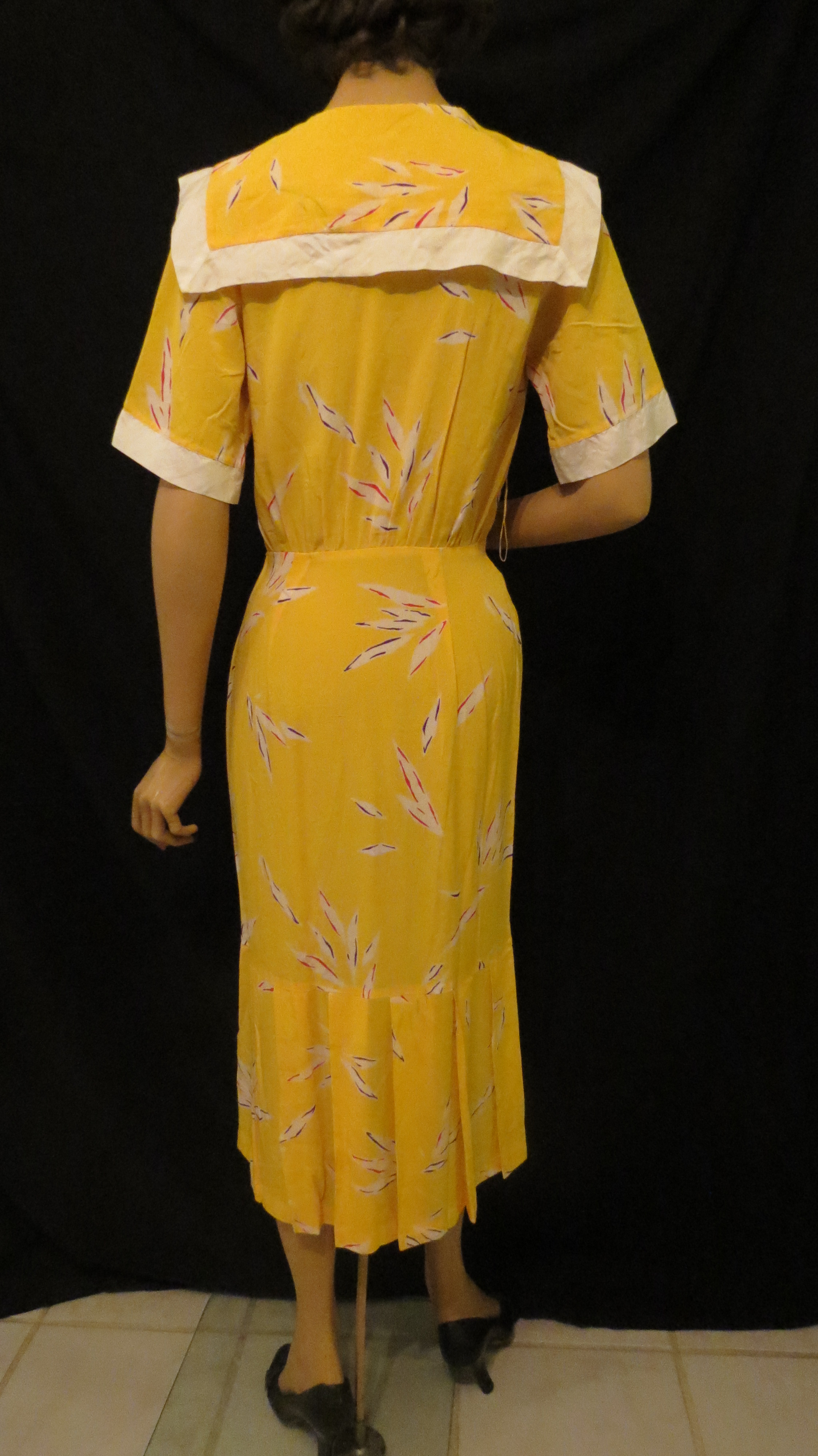
TRUE VINTAGE DAY DRESSES THROUGH THE DECADES, HANDBAGS AND SHOES – 1930’s

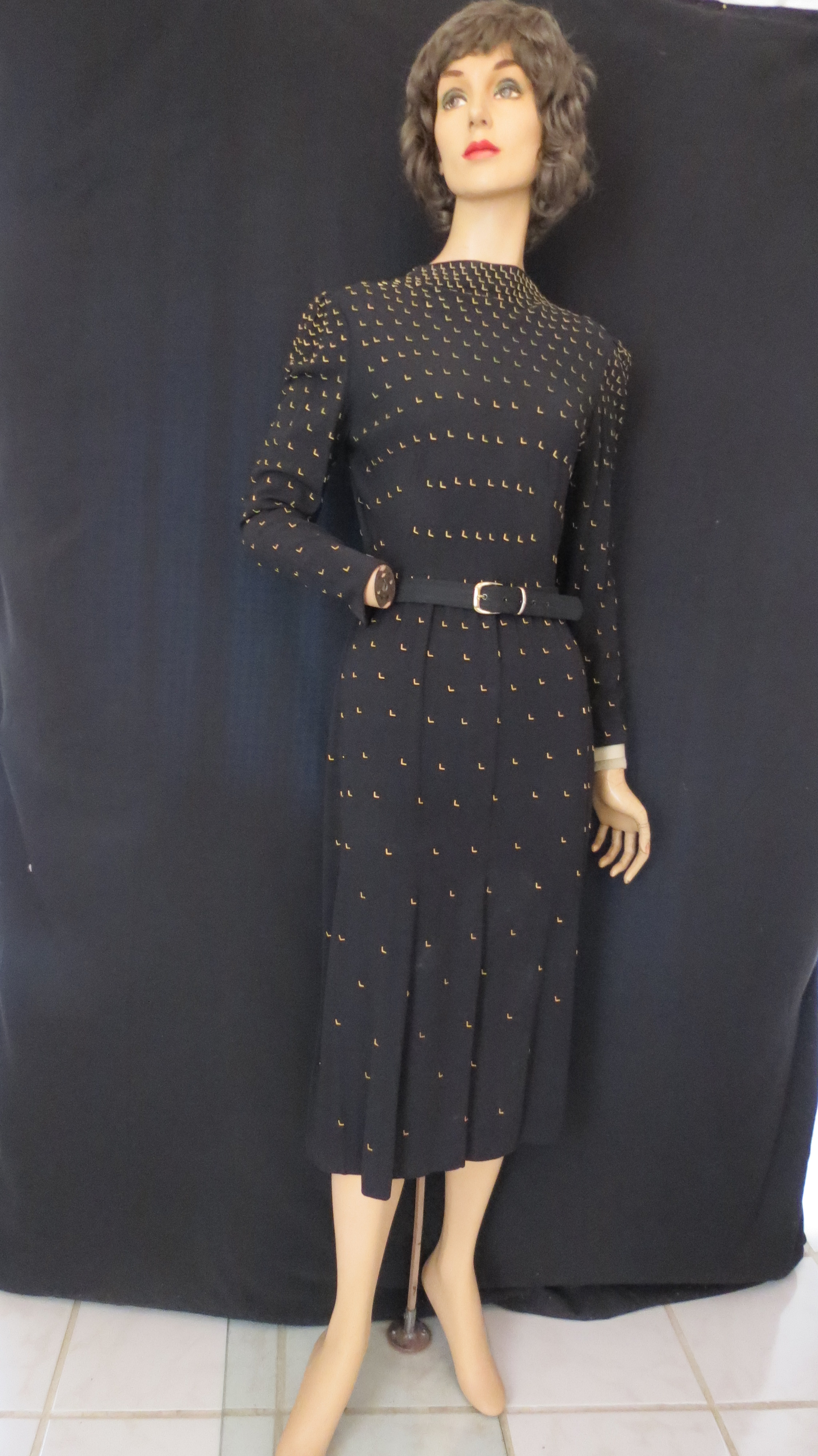
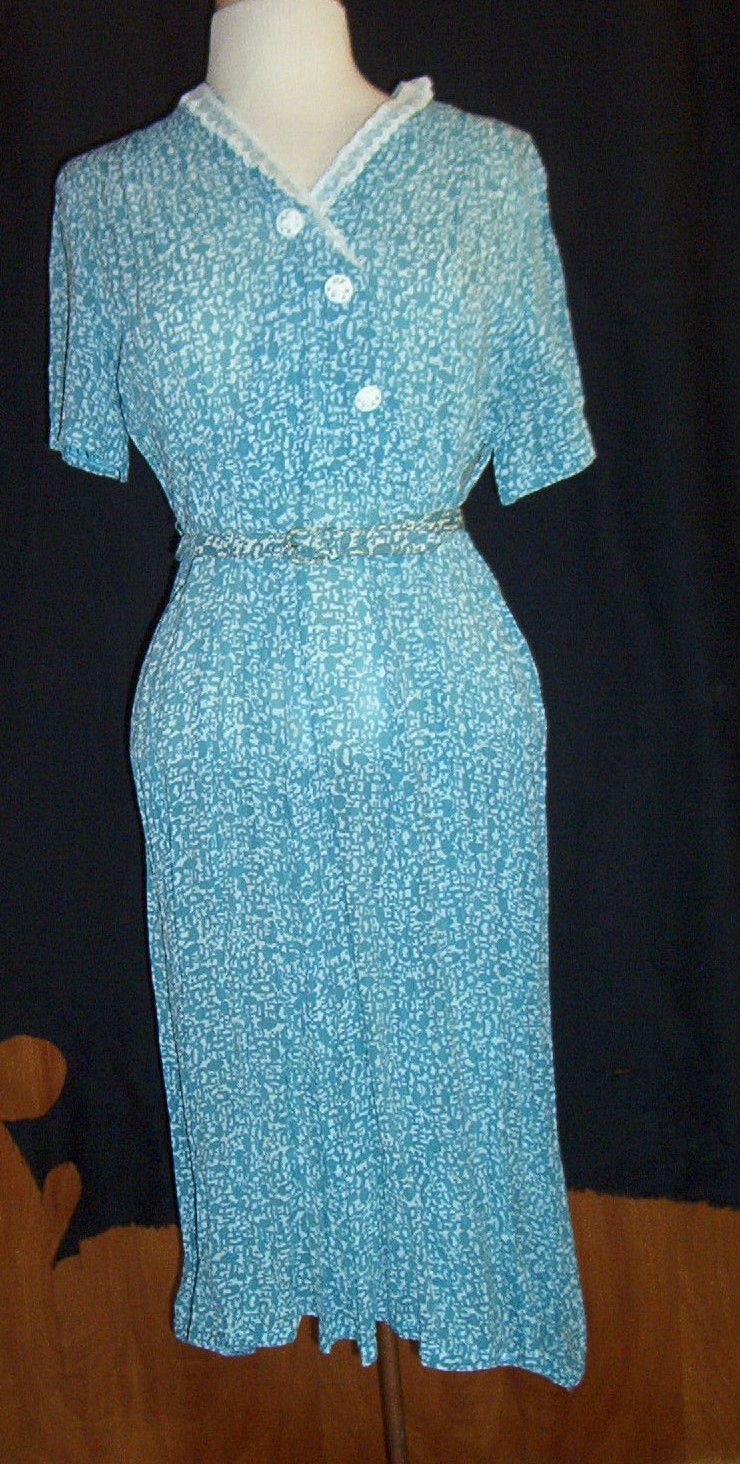
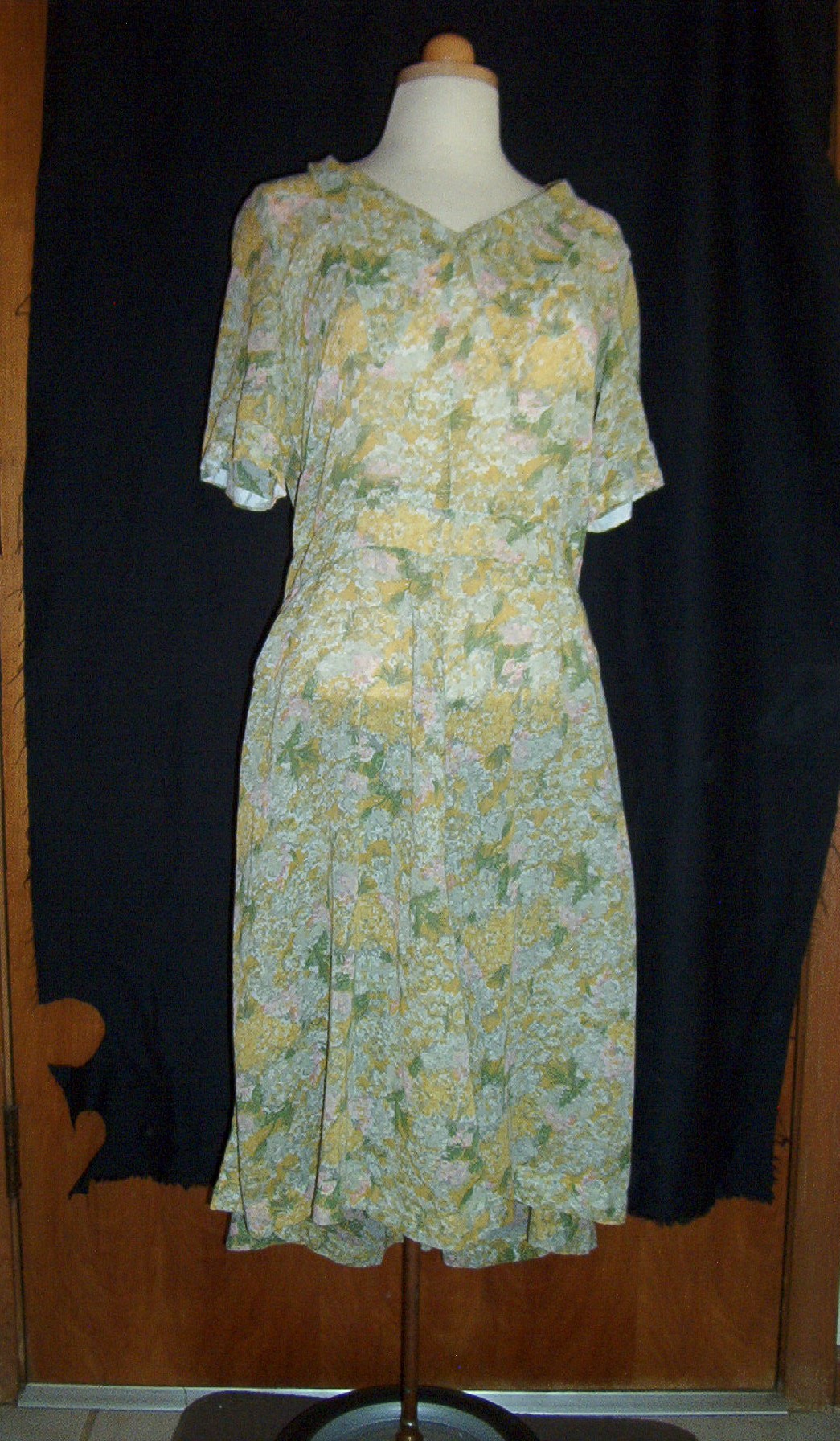
Two of my favorite 1930’s dresses to wear and one when I feel like Bonnie of Bonnie and Clyde. The fabrics feel so wonderful on the body and the fit is killer because of the fabulous drape. An earlier find, I was thrilled to discover the blue dress because of it’s condition. The original buttons and belt are present and no damage to the trim at the neckline. Also, no stains! You can see that the body of the dress has faded a bit due to years of washing by the original owner (compare to the color of the belt, which would not have been put in the laundry), but I don’t mind. The floral-print yellow and green frock is near-perfect and is a bit more casual. Super easy-breezy. The crocheted dress with satiny rayon slip given to me by a family member who found it in an old antique wardrove is the real star. It still has the authentic celluloid plastic belt buckle. The longer hemline makes it probably the oldest of the group, from the very early ’30’s. I have to include a 1980’s or ’90’s dress that dipped into a retro 1930’s. The yellow rayon belted sheath is a fun fashion with loyalty to the Thirties style and lovely rayon fabric.

These are both mid-priced dresses, at most, but have held up over 70 years before finding their way into my closet. It’s possible they were home-sewn. I love the elbow-length sleeves and the way that the fabric causes the hemline to ripple and sway. Very flattering. Both do require a slip underneath because of the sheerness and, since they are warmer weather frocks, I like to wear a true vintage cotton slip with very little decoration so that it doesn’t show through and compete with the print. Slips of that sort are hard to find since most of the slips that have survived are made of nylon and full of decorative detail. Although some fabrics don’t seem to require a slip, wearing one often causes the dress to fit and move so much better. Your other foundation garments i.e. brassiere, underpants and even stockings will have a real effect on how your outfit looks so it’s an important consideration. I have silk tap pants and some silk slips from the pre-war and WWII era that are good examples of undergarments that work really well with dresses like these.

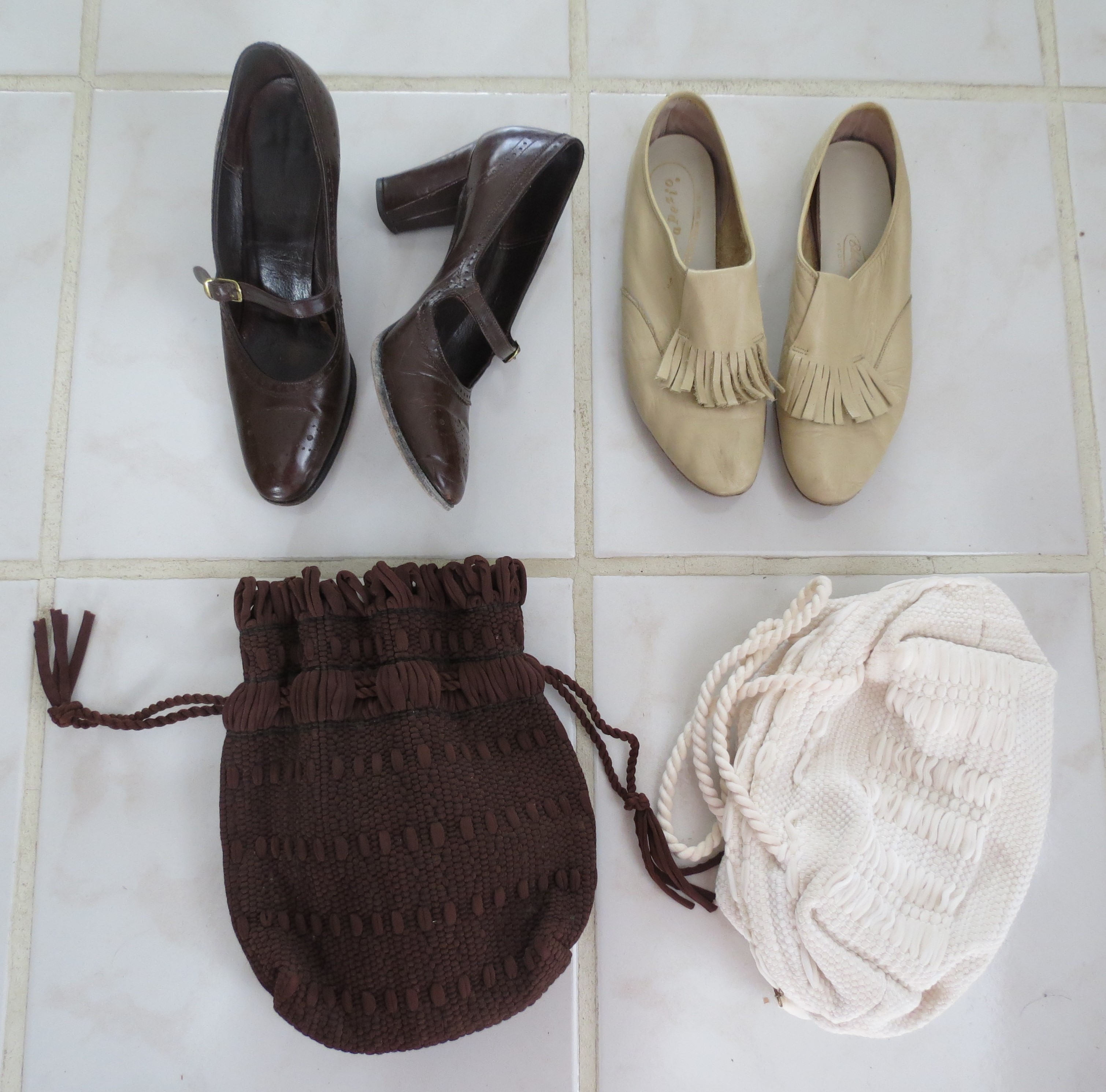
Mary Jane style shoes are seen in every decade since the 1920’s. Decorated flats became popular for women, too, especially when they began wearing slacks. The shoes shown above may be a little younger than the dresses and purses, but are still within a decade or so. Handbags woven from synthetic yarn were another way that the market for clothing and accessories coped with the economic downturn of the Depression and the looming rationing of wartime. Leather, silk, quality cotton and wool were less available and too expensive for many buyers. The big move forward in the development of synthetics changed clothing in big ways, many having to do with fit, comfort and convenience so, overall, the deprivation turned out to be a plus. Tomorrow we move into the 1940’s. Stay tuned . . . . . . . . . . . . . . . . . . . . . . . . . . . . . . . .

MORGANA MARTIN, THE MAGICVINTAGESPY

BLOG: MAGICVINTAGESPY.COM
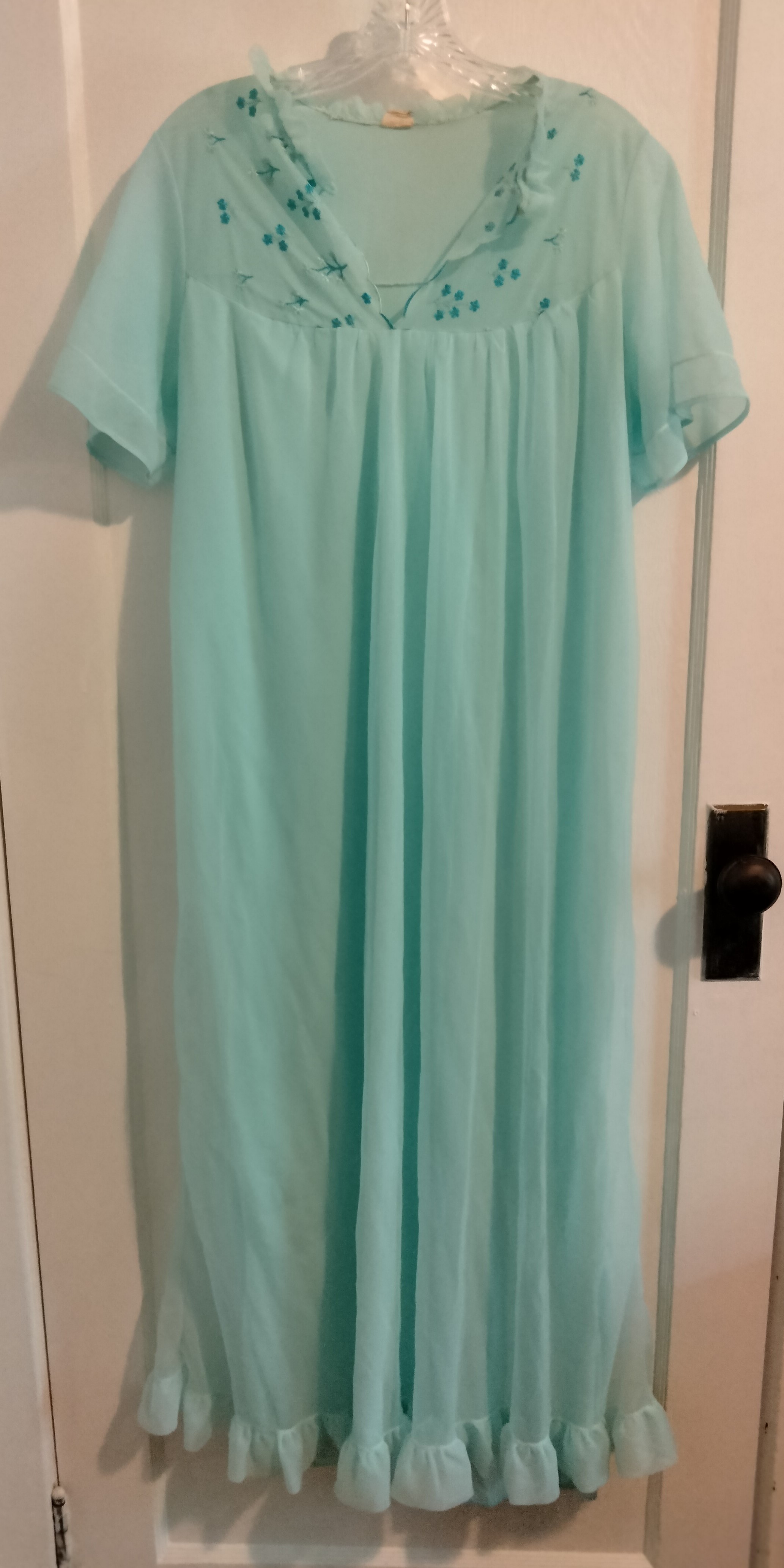
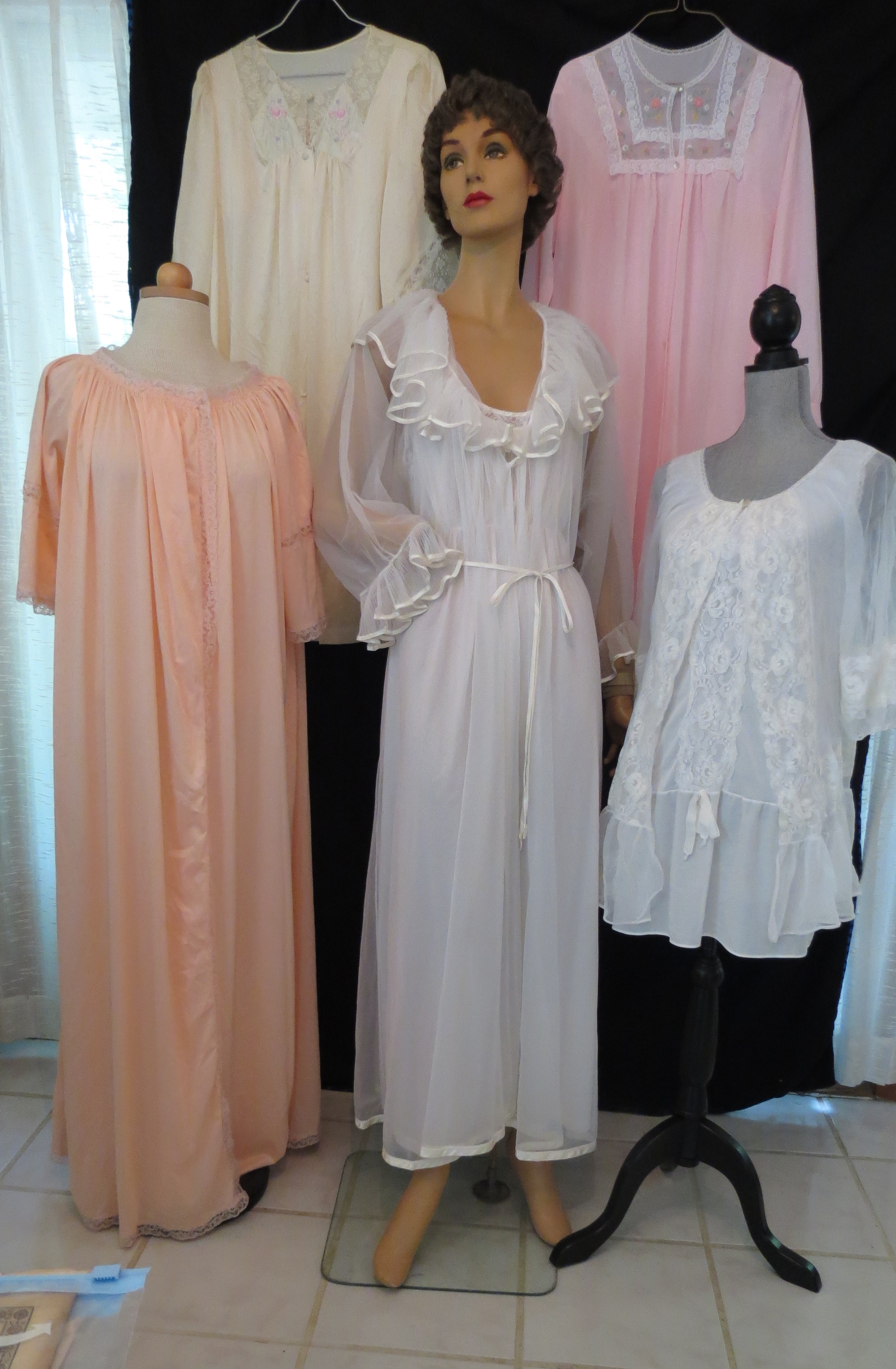
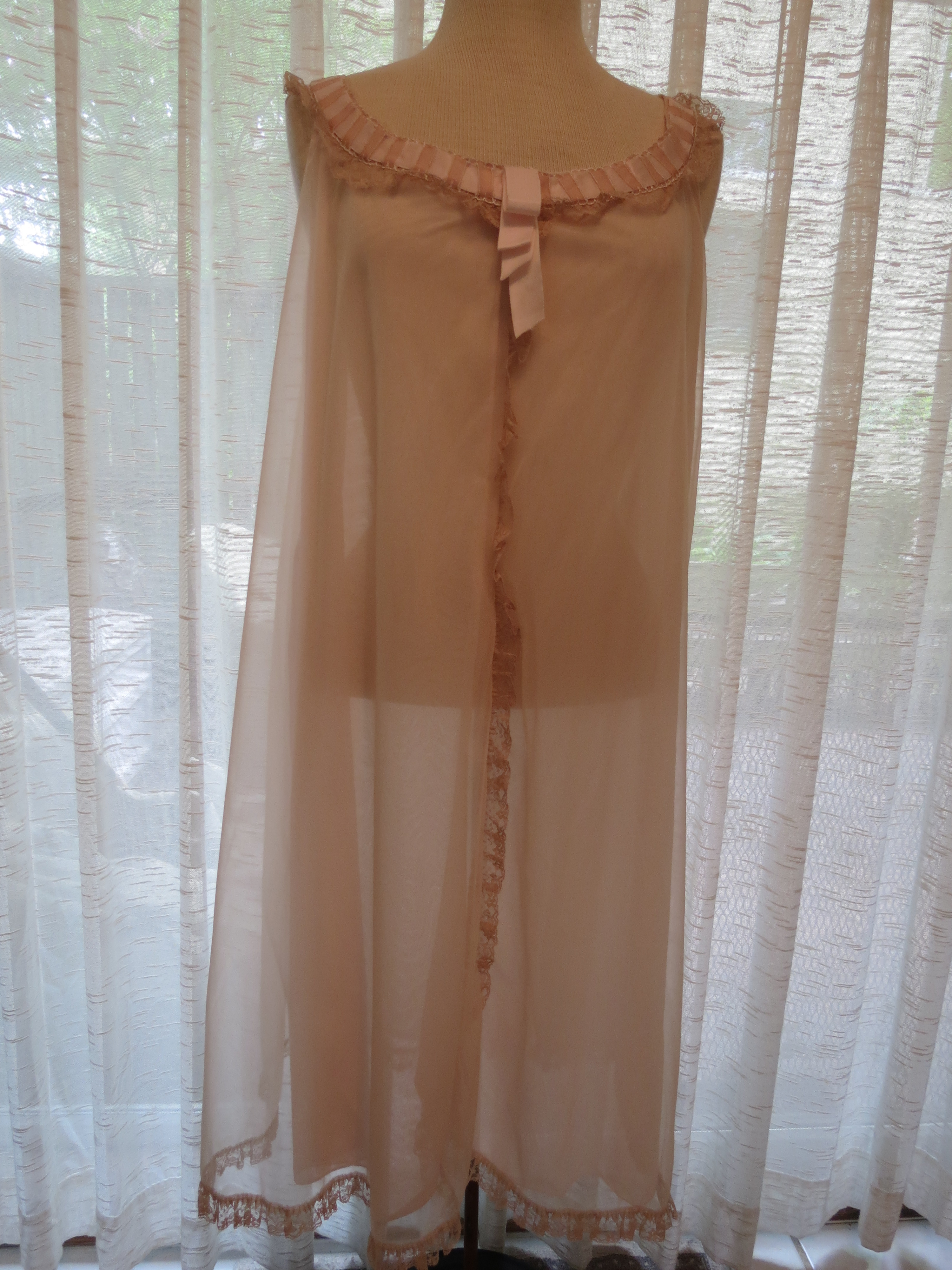
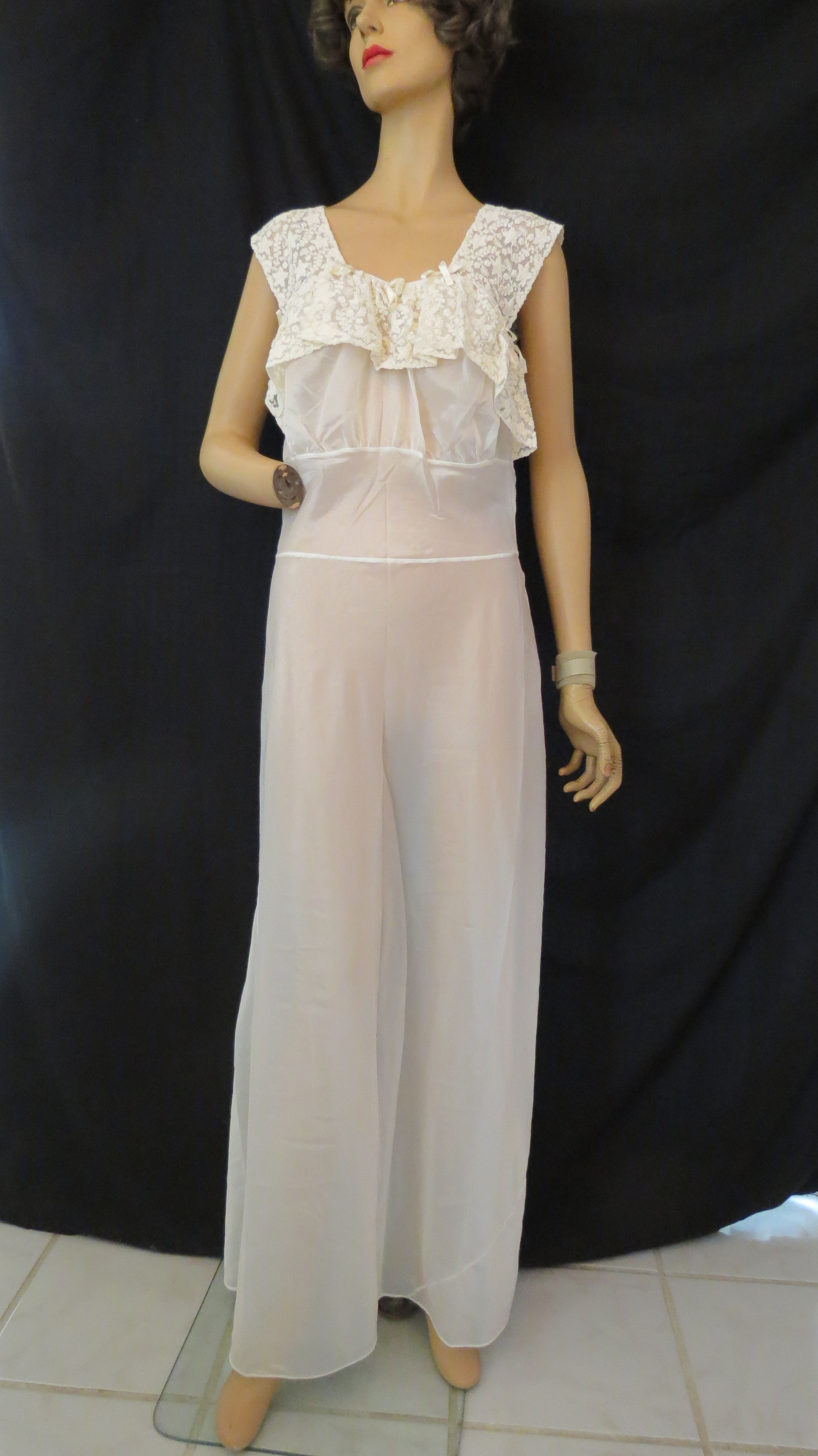
TRUE VINTAGE LINGERIE ROBES & SLEEPWEAR FROM 1930’S TO MID-CENTURY

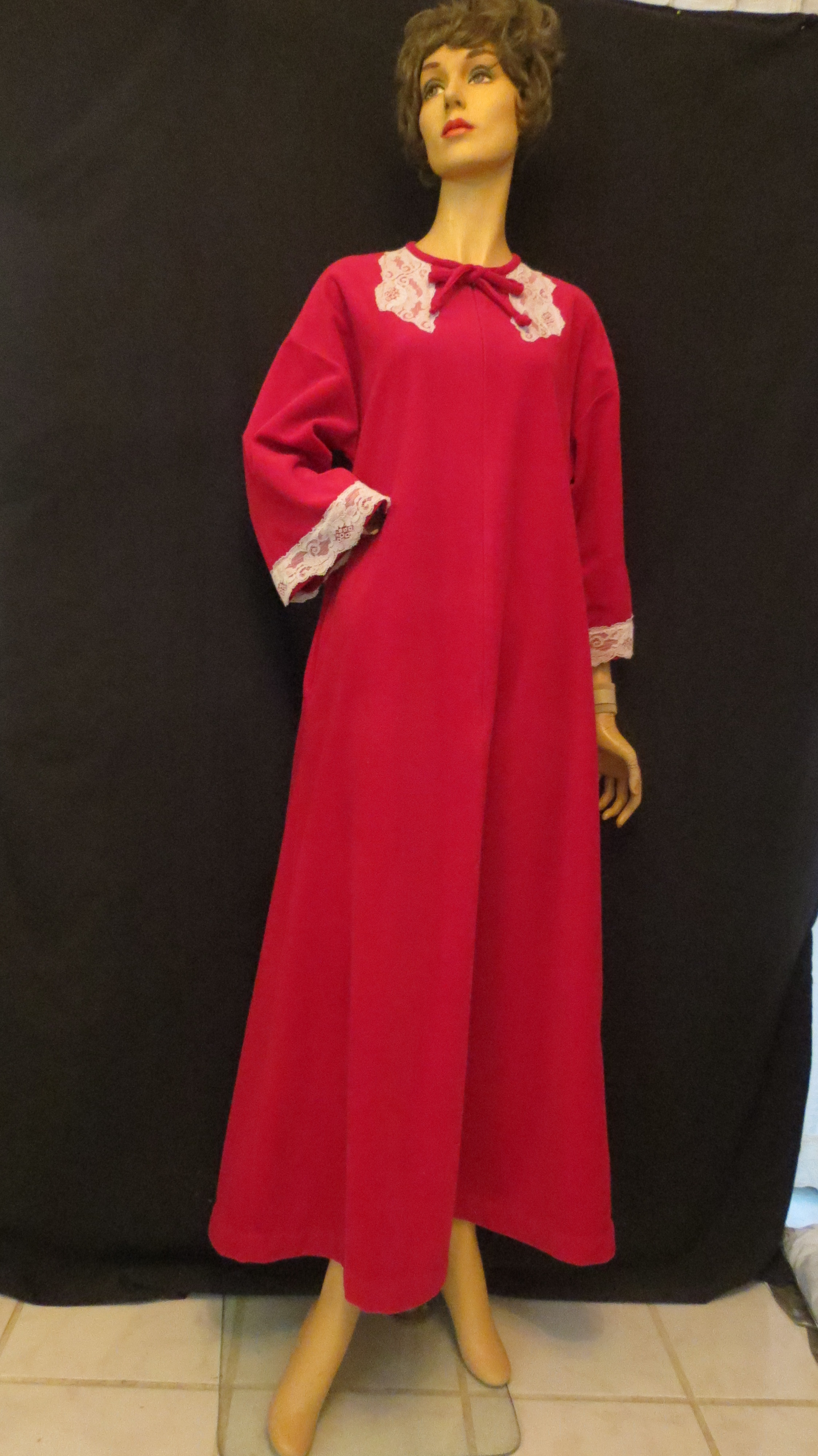
I’m definitely in the mood to look at some pretty Spring lingerie, although it won’t keep us as warm. The 1970’s RED velour robe by Vanity Fair is an exception, but I had to include it for St. Valentine’s Day.

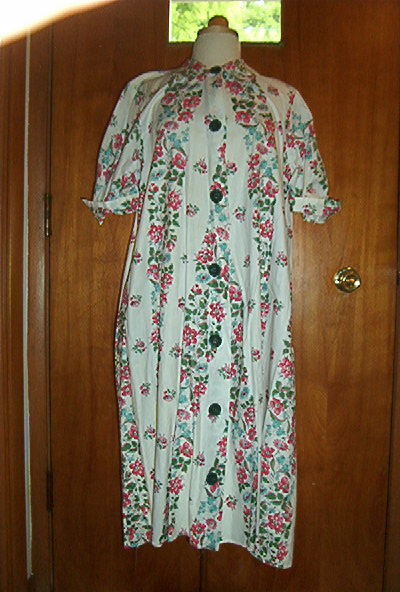
A floral heavy cotton housecoat robe from the 1930’s with big sculpted buttons was a fabulous find! See how it compares when we jump to the 1950’s, 1960’s and 1970’s. Double-layer nylon peignoirs and gowns began to appear in the Forties and there were some beautiful ones in silk during the Thirties and Forties before WWII rationing disrupted all of that. Lots of great synthetic materials were developed during this time, however, and the 1950’s nylon used for sleepwear and slips is fabulous! Thick, glossy and still silky to the touch, it could be found into the 1960’s and very early 1970’s but since then has mostly been replaced by cheaper, poorer quality fabric that doesn’t feel or look the same and is definitely inferior.

Until then, we had this wonderful nylon that can be dyed in bright colors, lasts forever and feels like heaven on the body. Lingerie from this time also included beautiful tailoring and details like lace and embroidery which was high quality and didn’t come loose. Tiny pearlized plastic or fabric-covered buttons and satin ribbon were also common. That’s why these garments still look and feel so beautiful 50 – 70 years later!

This marvelous nylon was also used to make lingerie slips, of course, and women bought a gazillion of them while day dresses were still the standard outfit for daily wear. When we go back to looking at day dresses through the decades, I will be opening an archive of beautiful slips, too. First, I think our mid-century gal is getting back from her vacation tomorrow so we will see what she bought at the beach and start the dresses review afterward. Stay tuned . . . . . . . . . . . . . . . . . . . . . . . . . . . . . .

MORGANA MARTIN, THE MAGICVINTAGESPY

BLOG: MAGICVINTAGESPY.COM
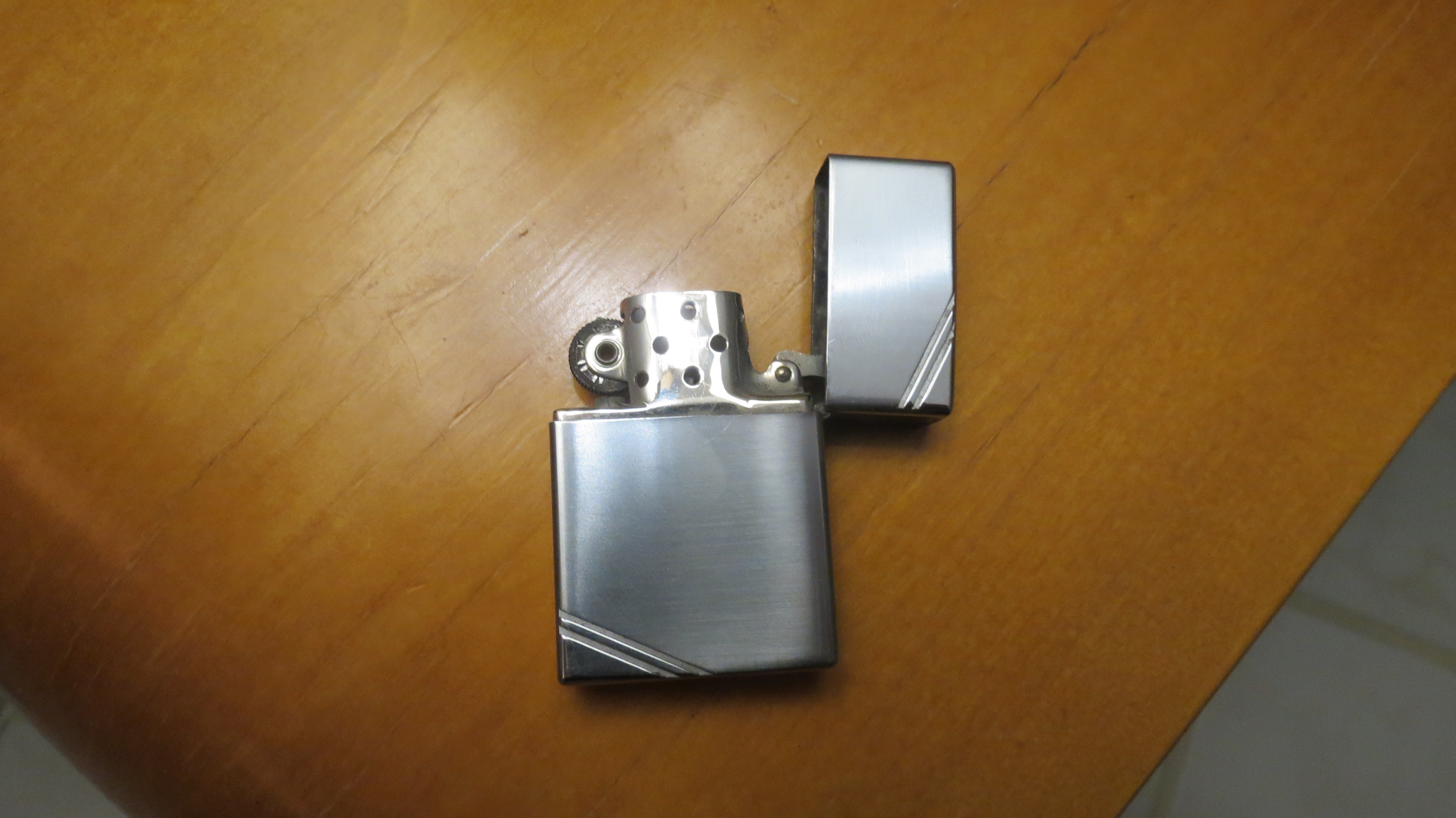
A 1930’S ZIPPO LIGHTER COMPLETES THE PICTURE

Our hero completes the scene of evening relaxation with an iconic lighter by Zippo.

MORGANA MARTIN, THE MAGICVINTAGESPY

BLOG: MAGICVINTAGESPY.COM
AN HISTORICAL CHARM BRACELET FROM THE 1920’S 1930’S 1940’s DEPRESSION – World War ERA

So, when I unpacked this I thought “Oh, a charm bracelet. Those started to become fashionable in the mid-century.” Well, when I looked at it closely it’s no regular charm bracelet. It tells the story of the New Deal and wartime. Those coins are from various European countries, and the United States. Germany, France, Italy and England are represented. Leaving out several players, these are the principal Enemy and western Allies of World Wars 1&2. The little male figures (only men, of course) represent people from different walks of life and levels of society. The Native American, the professor, the businessman, the teamster, the beggar, the Laborer and the Elite. This may represent the New Deal’s aim of leveling the economic playing field across all the population. A great idea. Good luck with that.

Fabulous clue, however. Only a certain type of woman at a certain time and from a certain type of place would wear such a bracelet. Or, perhaps, it was an individual creation worn as an unobtrusive bauble but carrying a coded message . . . . . . . . . . . . . .

MORGANA MARTIN, THE MAGICVINTAGESPY

BLOG: MAGICVINTAGESPY.COM
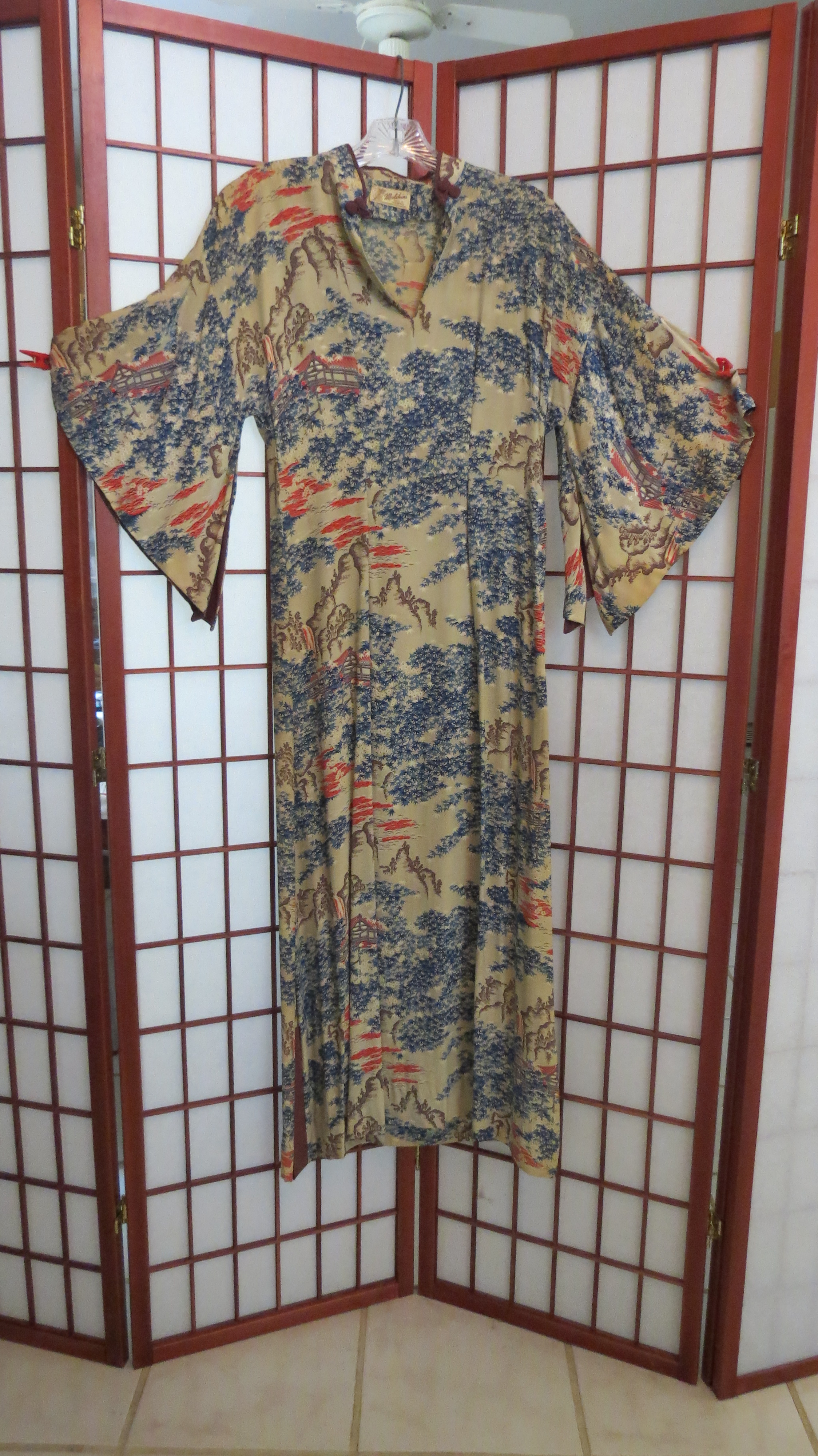
A MYSTERY DRESS THAT I STILL CAN’T DECIDE ABOUT – PROBABLY ’30’S, AND 2 FROM THE ’40’S

Yes, probably 1930’s there on the left, or maybe even ’20’s. It would look completely different with the appropriate undergarments, but still super-unstructured. What a difference 10 years can make. We go from shaped like a bag to built like a battleship in the 1940’s. Especially after a war – everything changes. This can certainly be seen in the fashion world and makes the sleuthing trade a little easier, but a LOT more fascinating . … . . . . . . . . . . . . . . . . . . . . . . . . . . . . . . . . . . . . . . . . . . . . . . . . . . .

MORGANA MARTIN, THE MAGICVINTAGESPY

BLOG: MAGICVINTAGESPY.COM
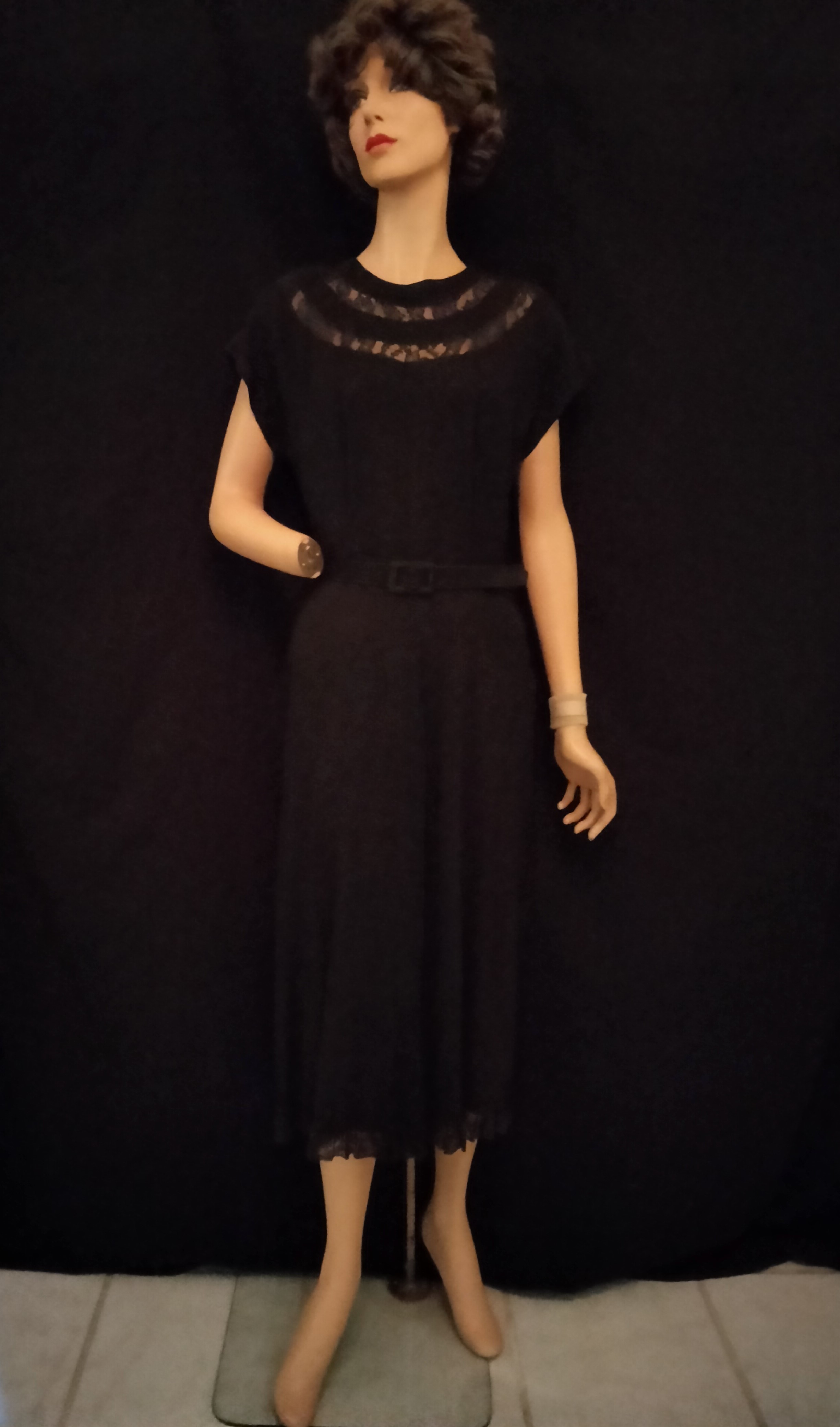
A 1930’S BLACK CREPE COCKTAIL SHEATH WITH ART DECO EMBELLISHMENTS

Worthy of Ayn Rand and such a fabulous example of a Deco design. Black crepe that drapes beautifully is always the go-to but these metal studs covering the fabric are pure Art Deco of the late 1930’s. The high-rise neckline is not often seen. The shoulders are augmented not with pads but with little fabric wedges that extend them just a bit. A side metal zipper and neckline opening complete the sleek and streamlined silhouette. Like so many fitted frocks of that era, this baby goes on over your head.

Unfortunately, the fit of this dress doesn’t do a thing for me even though it’s my size but it looks great on Stella. I guess that’s why she found the right career. At any rate, it’s a perfect sophisticated disguise for any cocktail party or elite dinner. So many of those occasions take place amongst members of high society and the ruling class the world over – perfect for collecting intelligence. . . . . . . . . . . . . . . . . . . . . . . . . . . . . . . . . . . . . . . . . . . . . . . .

MORGANA MARTIN, THE MAGICVINTAGESPY

BLOG: MAGICVINTAGESPY.COM
1920’S – 1930’S DROPPED WAIST CREPE DRESS WITH BEADED TRIM

This dress was a really great find and incredibly rare. The slouchy, dropped sleeves, loosely fitted silhouette and tons of beading design are very indicative of the few years pre-war – whether talking about WWI or WWII, although other style elements still were frequently seen. This frock was custom-made for dressy dinner or party events. As often happened with vintage rayon crepe, there is some color fade but the condition of the garment is still remarkable. Since it turned up away from its original home, there are no specific clues associated with it. But, the city in which it was found and where its original owner undoubtedly went about her business has been known, for decades, for its high-rollers, shady dealings and clandestine activities. Need I say more? The case will probably never be closed . . . . . . . . . . . . . . . . . . . . . . . . . . . . . . . . . . . . . . . . . . .

MORGANA MARTIN, THE MAGICVINTAGESPY

BLOG: MAGICVINTAGESPY.COM
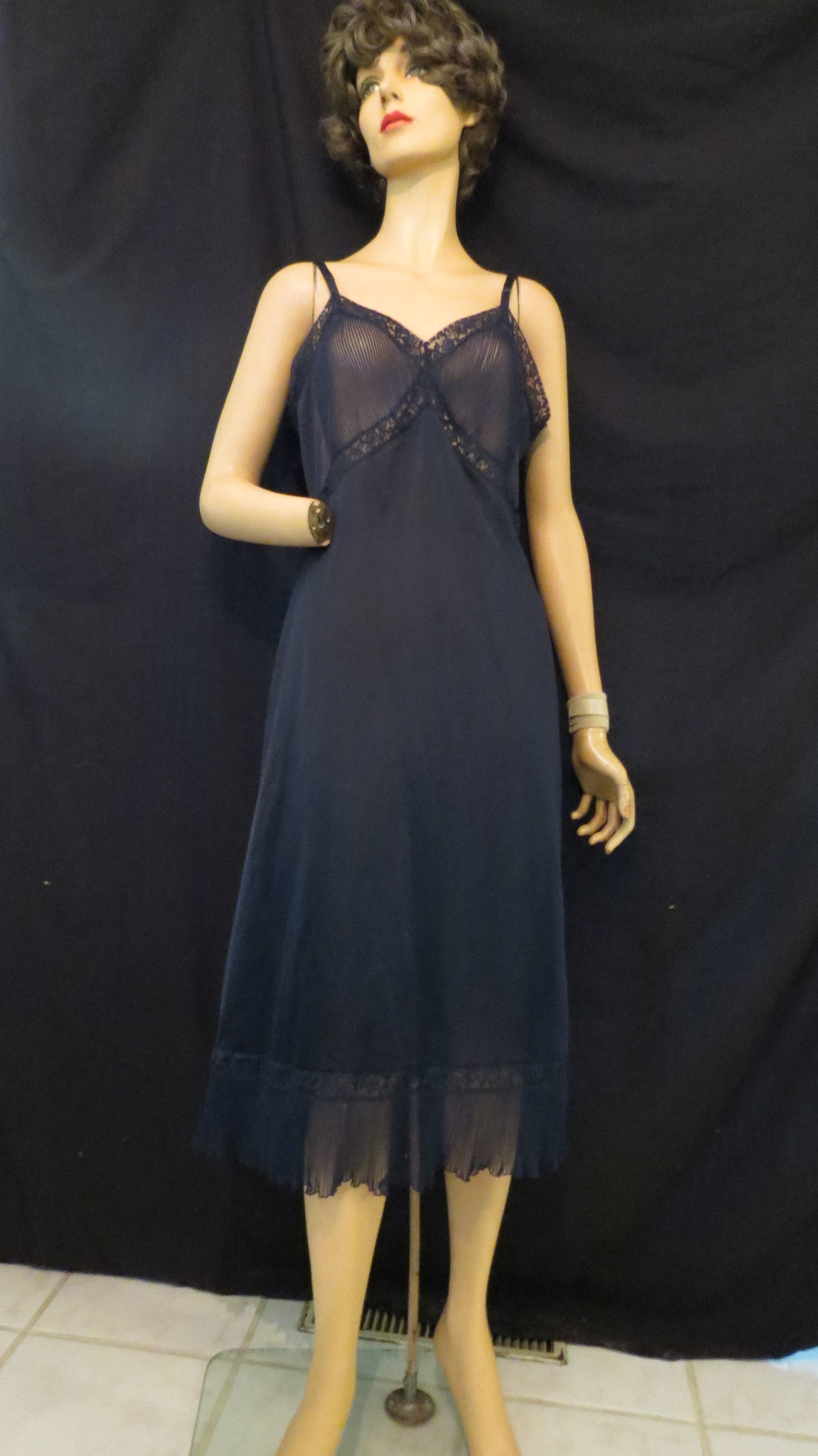
TRUE VINTAGE FUR CAPE FROM THE 1930’S – 1940′ S – EARLY 1950’s

TRUE VINTAGE FUR CAPE FROM THE 1930'S - 1940'S - early 1950's

I just love this cape and it’s little details.  I’m an animal rights activist and don’t approve of the fur trade in any way, but I have collected old ones from back in the day.

Not sure what the origin of this fur is.  The stripes are clearly dyed, probably to resemble mink.  It’s got these funny little tabs to “close” the bottoms of the arm slits, for a better appearance and added warmth.

Of course, it had patches sewn inside with the owner’s initials embroidered on, along with the maker’s label, both of which are gone now.  Surprisingly, it’s in great condition for its age – still soft and radiant.

These garments are so full of history that they intrigue me as much as any other vintage fashion.  I wear them, too.  Some people would say this is hypocritical but  I would disagree – buying or wearing antique fur or leather does not support the current market for these things unless someone makes an irresponsible decision.  I suggest that we should all be responsible for our choices in the marketplace – so, if you like my vintage fur, don’t use that as an excuse to go out and buy a modern one.  Search for another vintage fur at least 50 or more years old or buy an imitation fur replica and do something kind for wildlife or your pet.

MORGANA MARTIN, THE MAGICVINTAGESPY

BLOG:  MAGICVINTAGESPY.COM
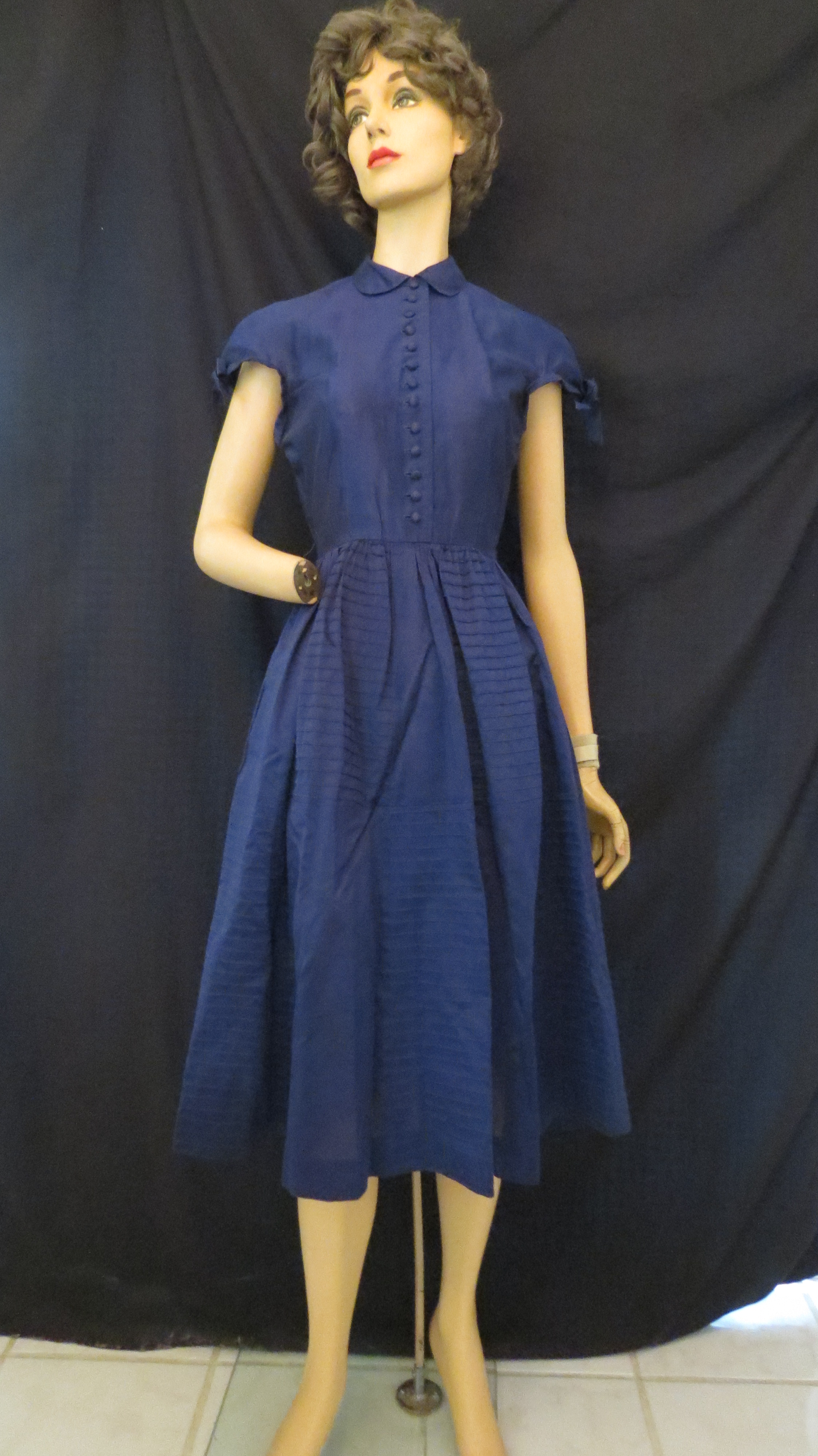
BOOK:  HOW TO FIND THE BEST IN VINTAGE FASHION – AVAILABLE ON AMAZON.COM

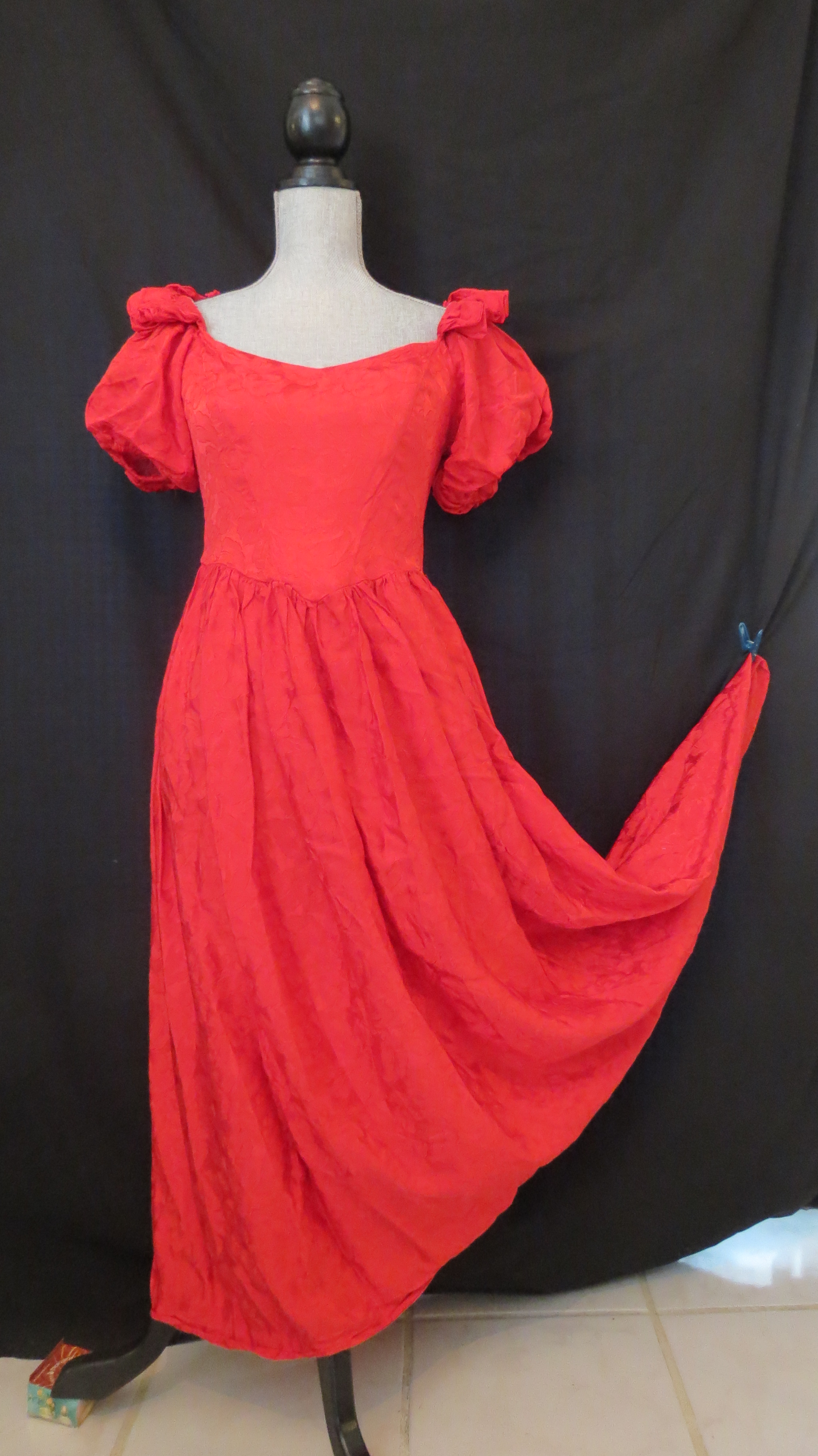
1980’s DOES ’40’s – ’30’s GLAM RAYON VELVET GOWN

This example is one of the few cases where picking up a more modern garment is worthwhile.  Although it’s definitely retro and not expensively made, this gown has so many of the true-to-style elements that evening frocks from the 1930’s and 1940’s did – I was delighted to see how much of the styling the designers had gotten “right” and couldn’t resist it as a great costume.

For Halloween or a historical play it will be lots of fun and fits me well.

MORGANA MARTIN, THE MAGICVINTAGESPY

BLOG:  MAGICVINTAGESPY.COM
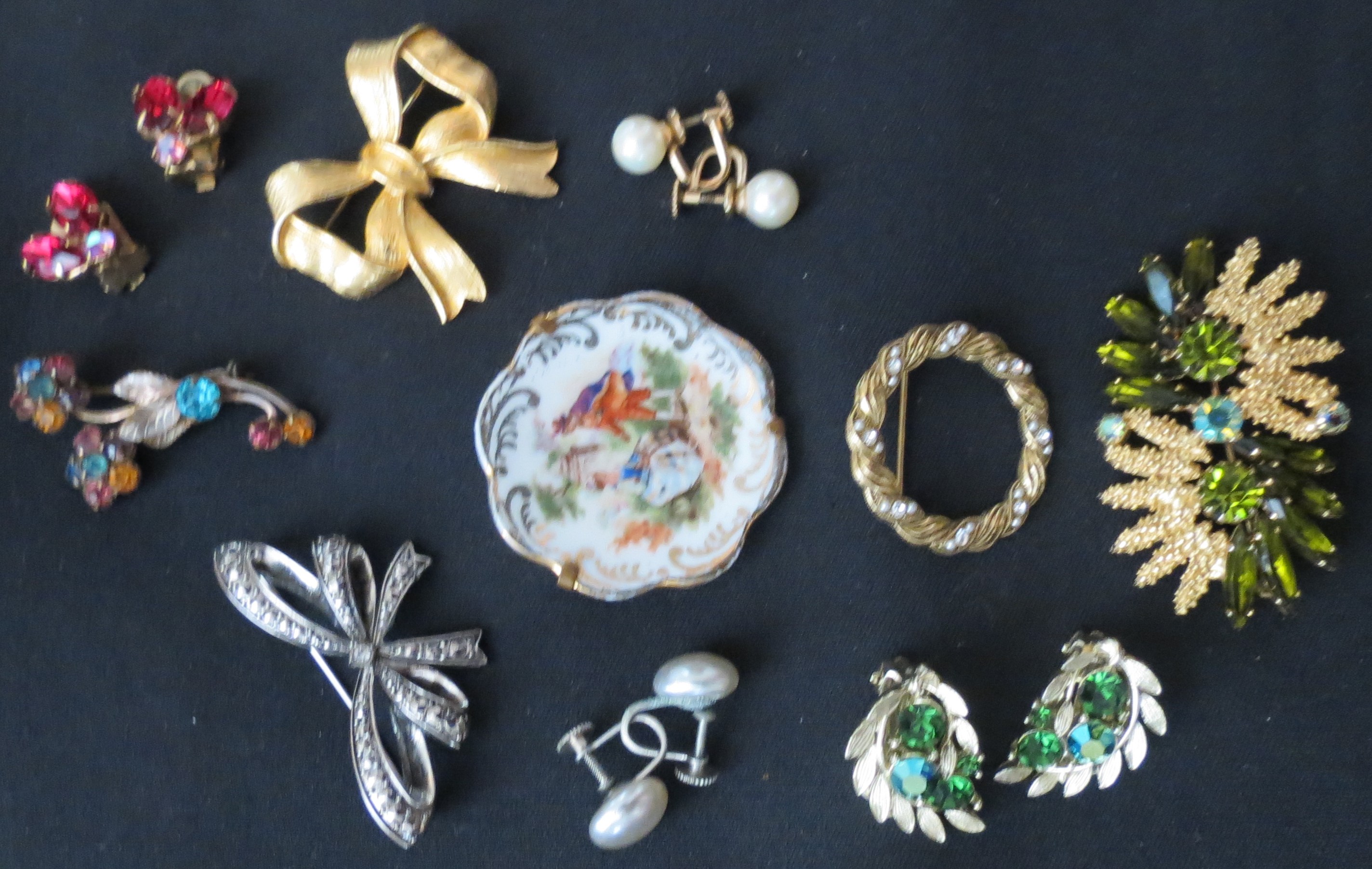
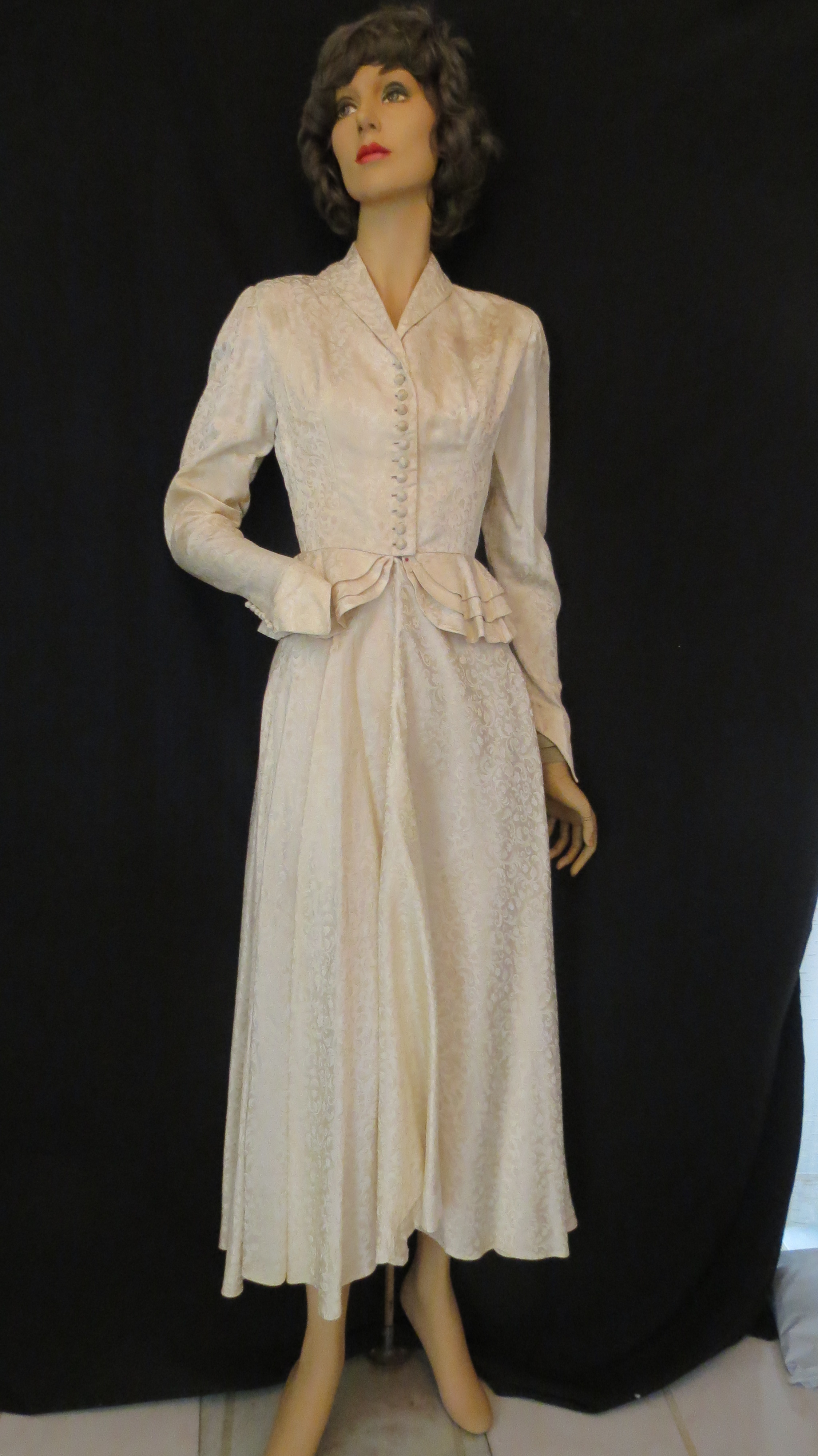
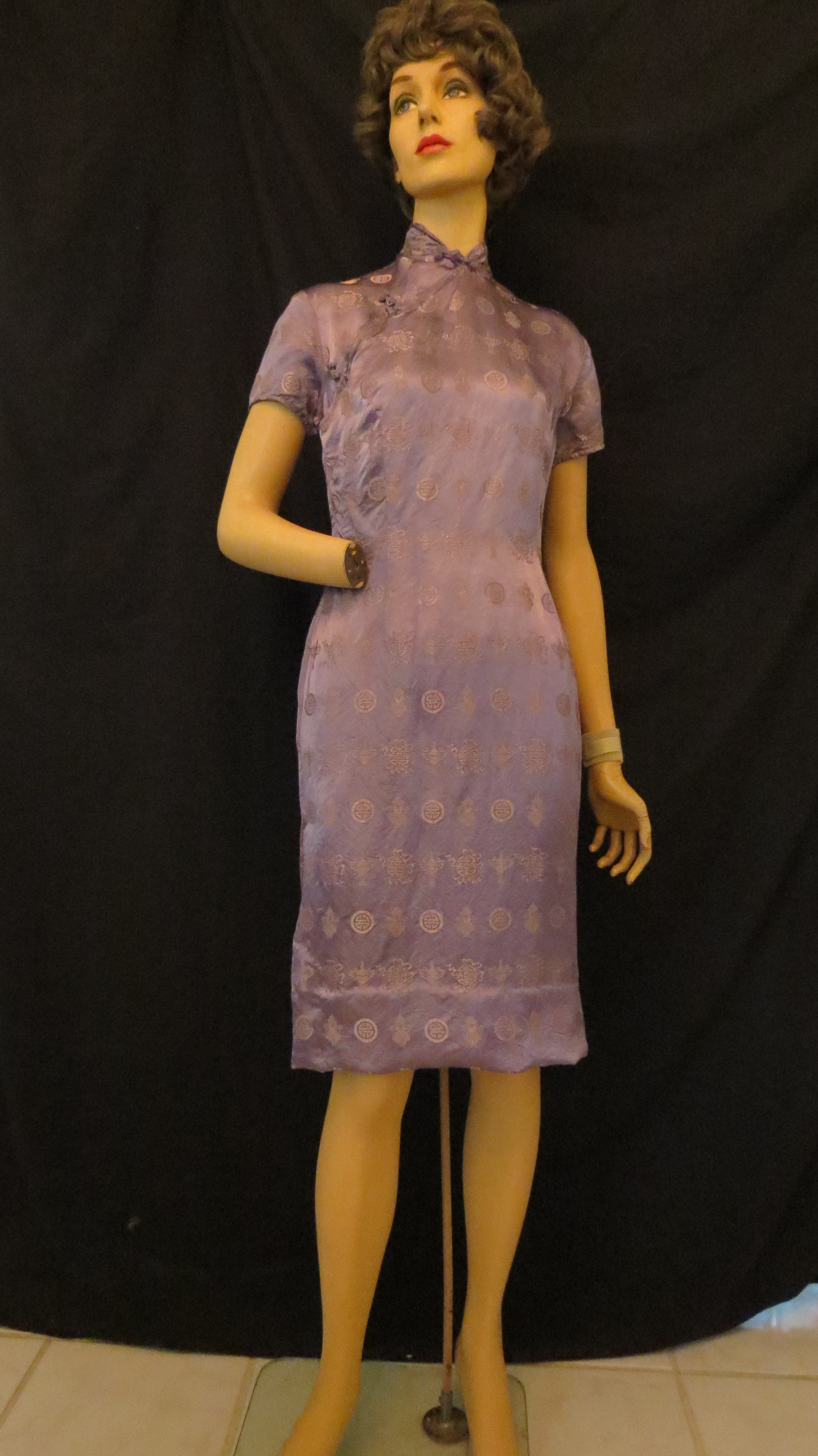
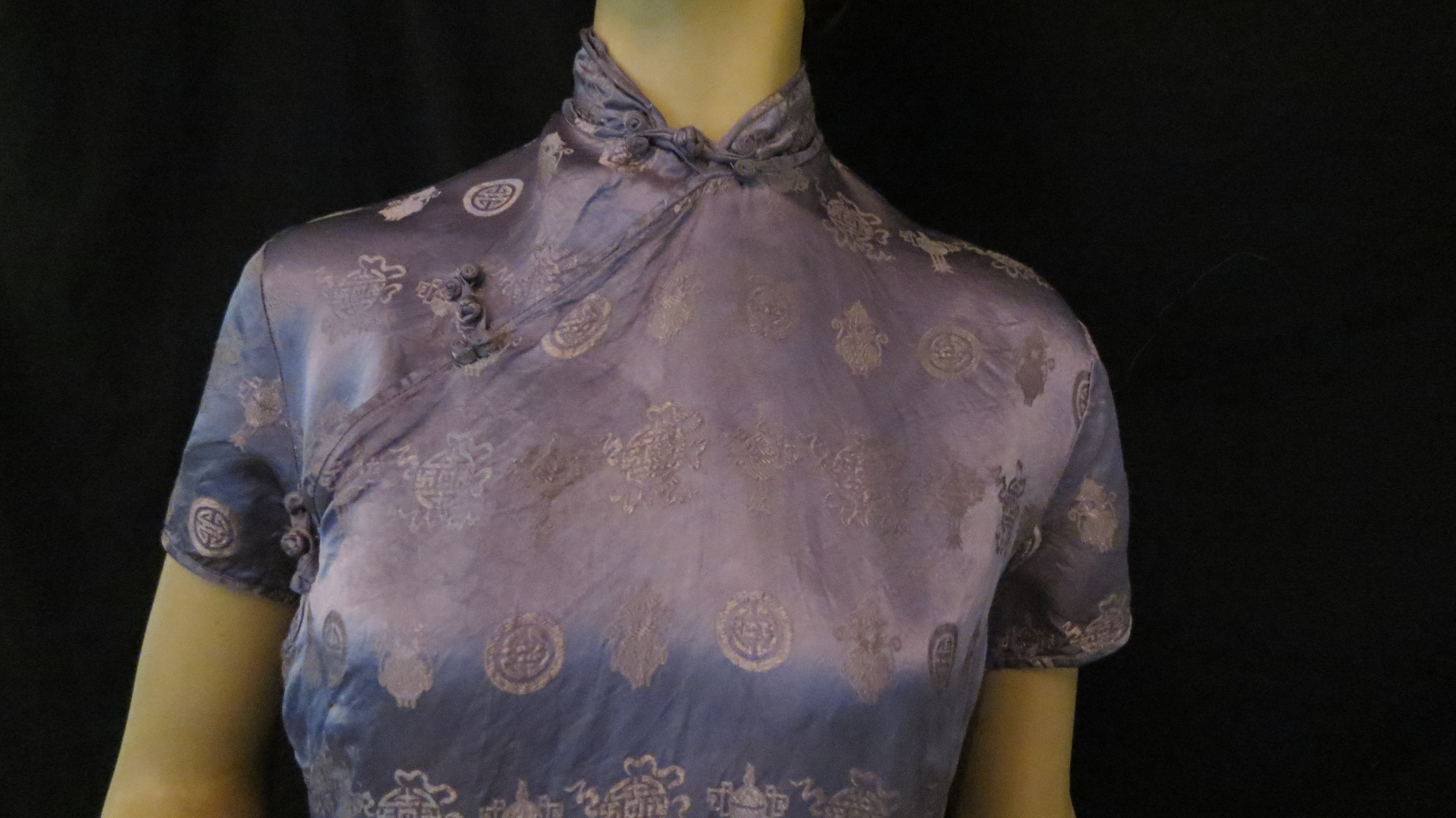
GORGEOUS MID-CENTURY SPECIAL OCCASION SILK DRESS FROM AUSTRALIA

IMG_1056     Back to my Australian find – I found the best photo and description of this gown and Stella shows it off properly.  I gasped when I discovered it.  It may even have been a wedding gown back in the Depression and World War days of the 1930’s and 1940’s when they were often simpler.   But, I suppose they had the equivalent of “debutantes” in that society, too.  The custom of showing off young, marriageable women “of good family background” was a widespread practice that still persists in some places.

Lots of clues:  Since Australia is closer to Southern Asia than we are in North America, silk may have been a more  popular fabric for better dresses than it was here.  A friend of mine says that she remembers the wired necklines from the 1950’s.  This dress was made for a VERY tiny person (even more so than Stella), so it could have been floor length on the original owner.  Impossible to say for sure.

Anyway, it’s beautiful and unique with an interesting history. I’m glad to have it home where I can show you a better photograph.  Fully lined, with covered buttons at the wrists and that collar with  wiring all around the edges – it was quite a tailoring project for someone!  It’s really one that makes me wonder what stories it can tell . . . . .

MORGANA MARTIN, THE MAGICVINTAGESPY

BLOG:  MAGICVINTAGESPY.COM
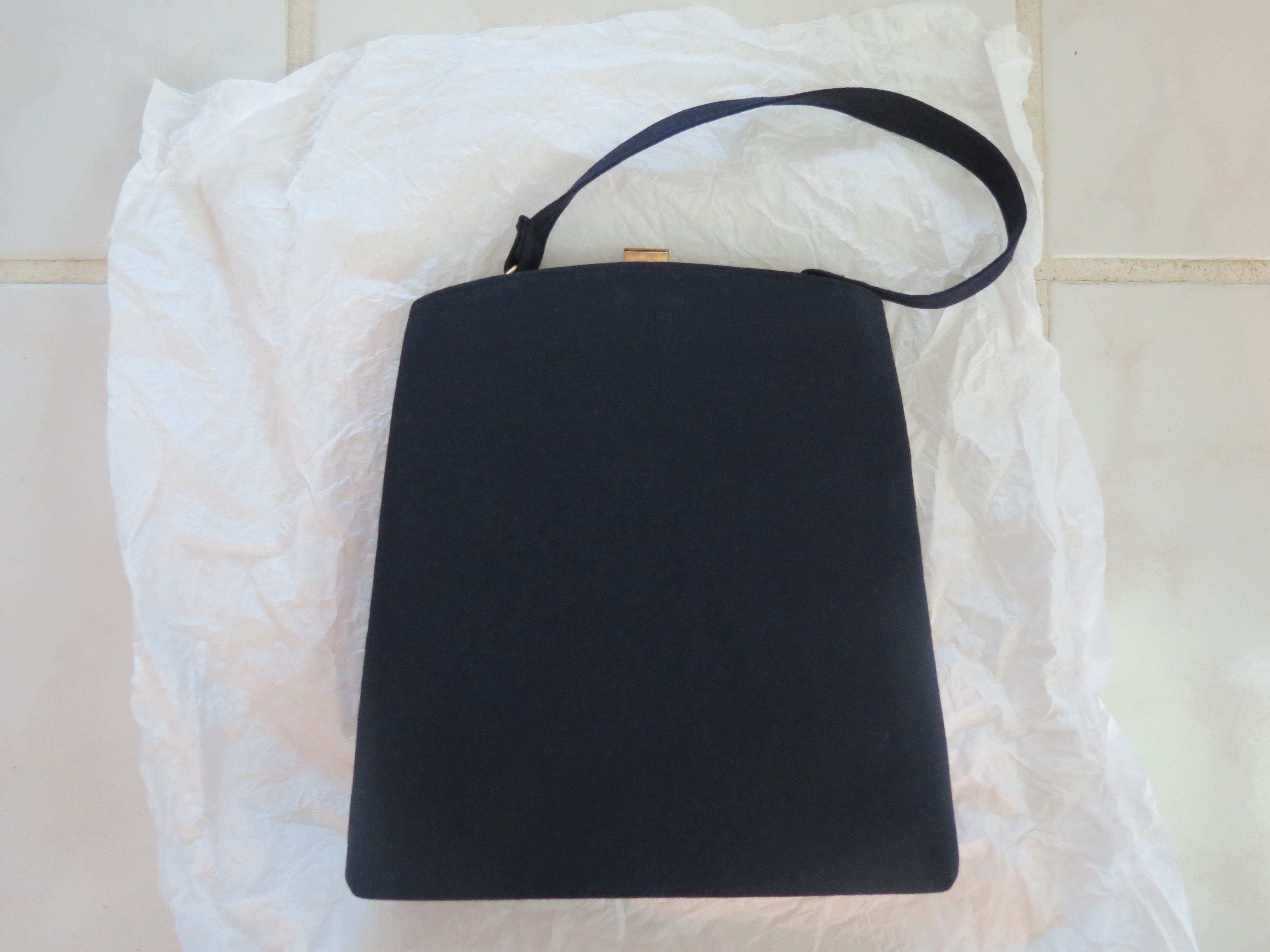
BOOK:  HOW TO FIND THE BEST IN VINTAGE FASHION – AVAILABLE ON AMAZON.COM