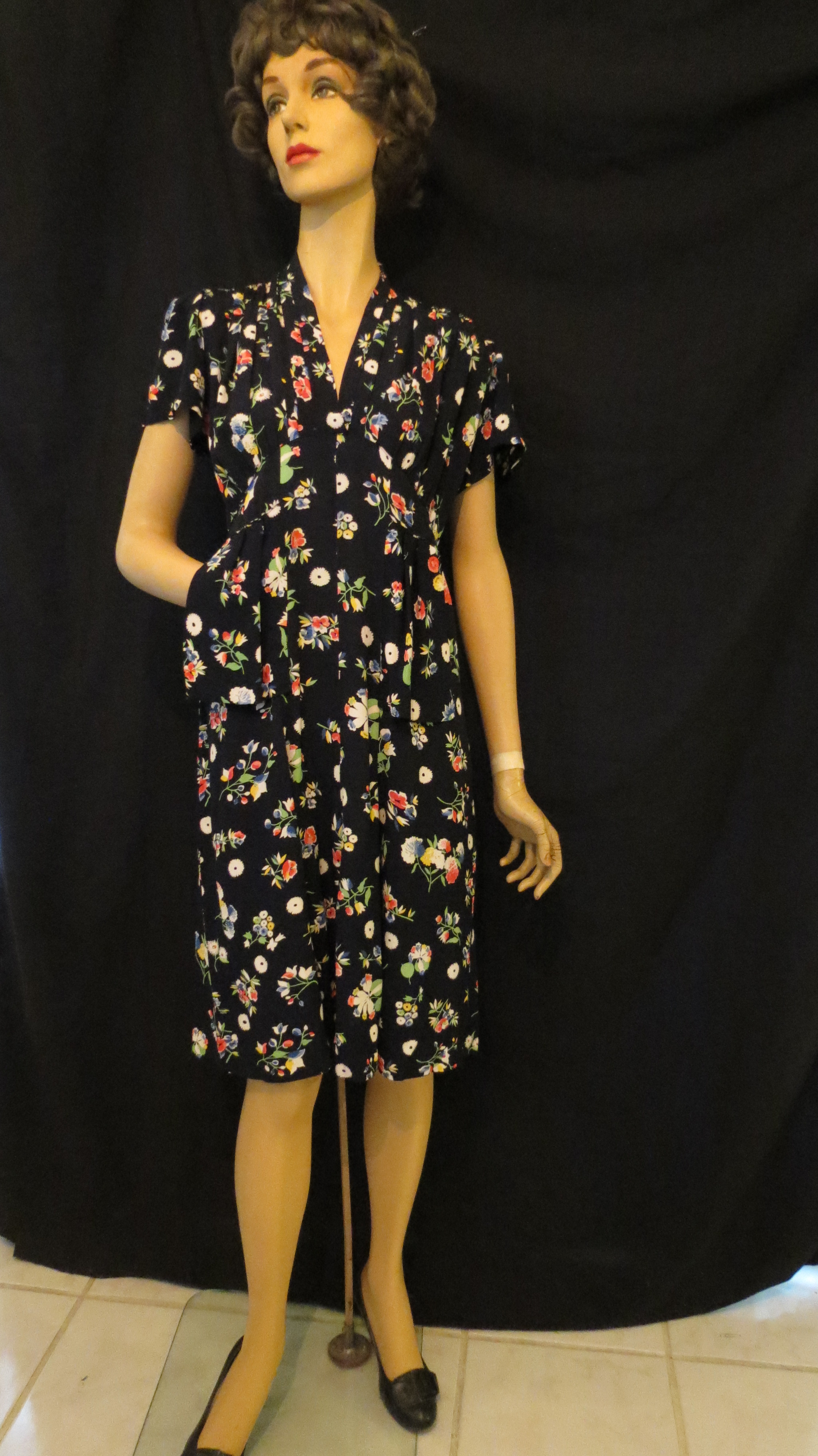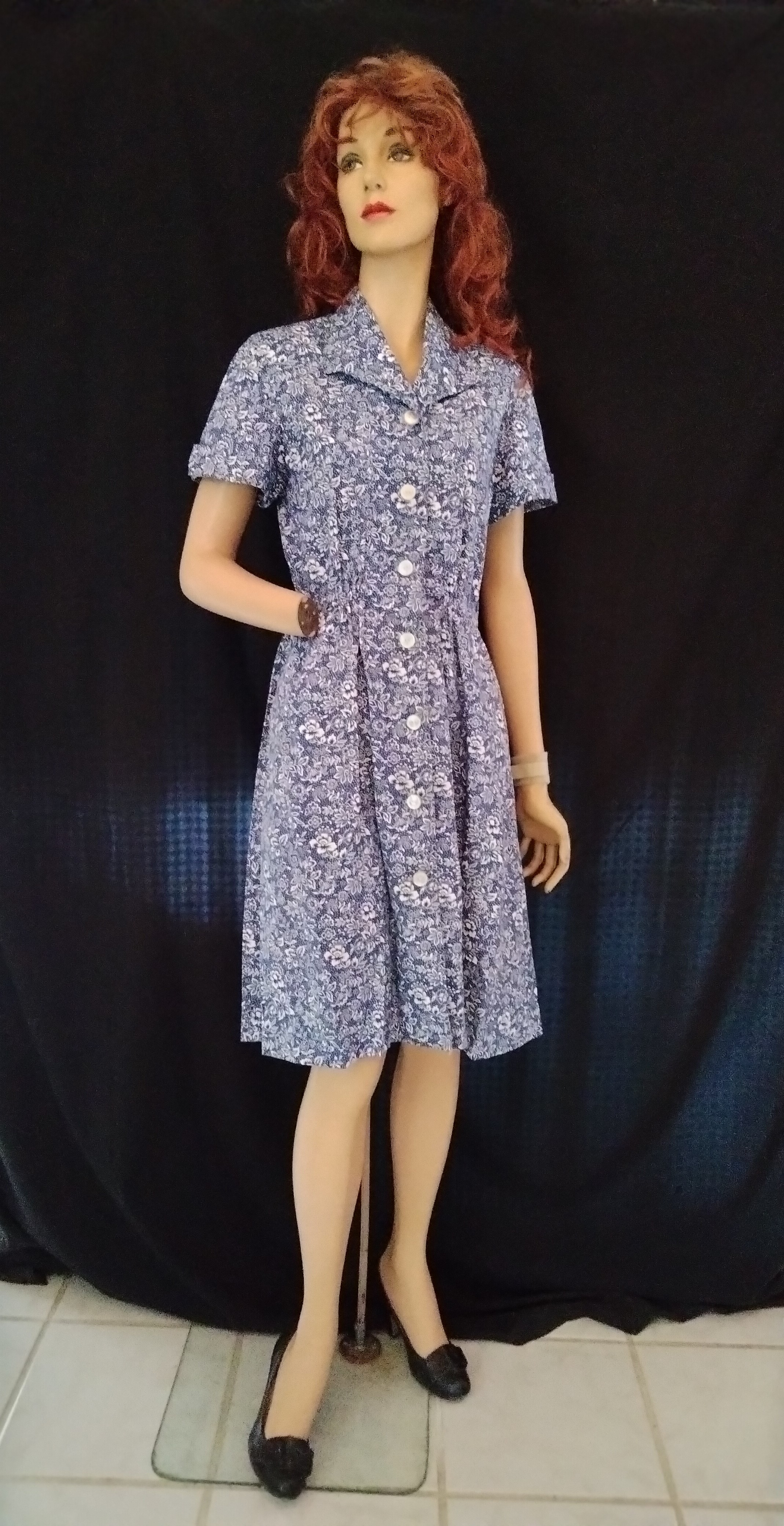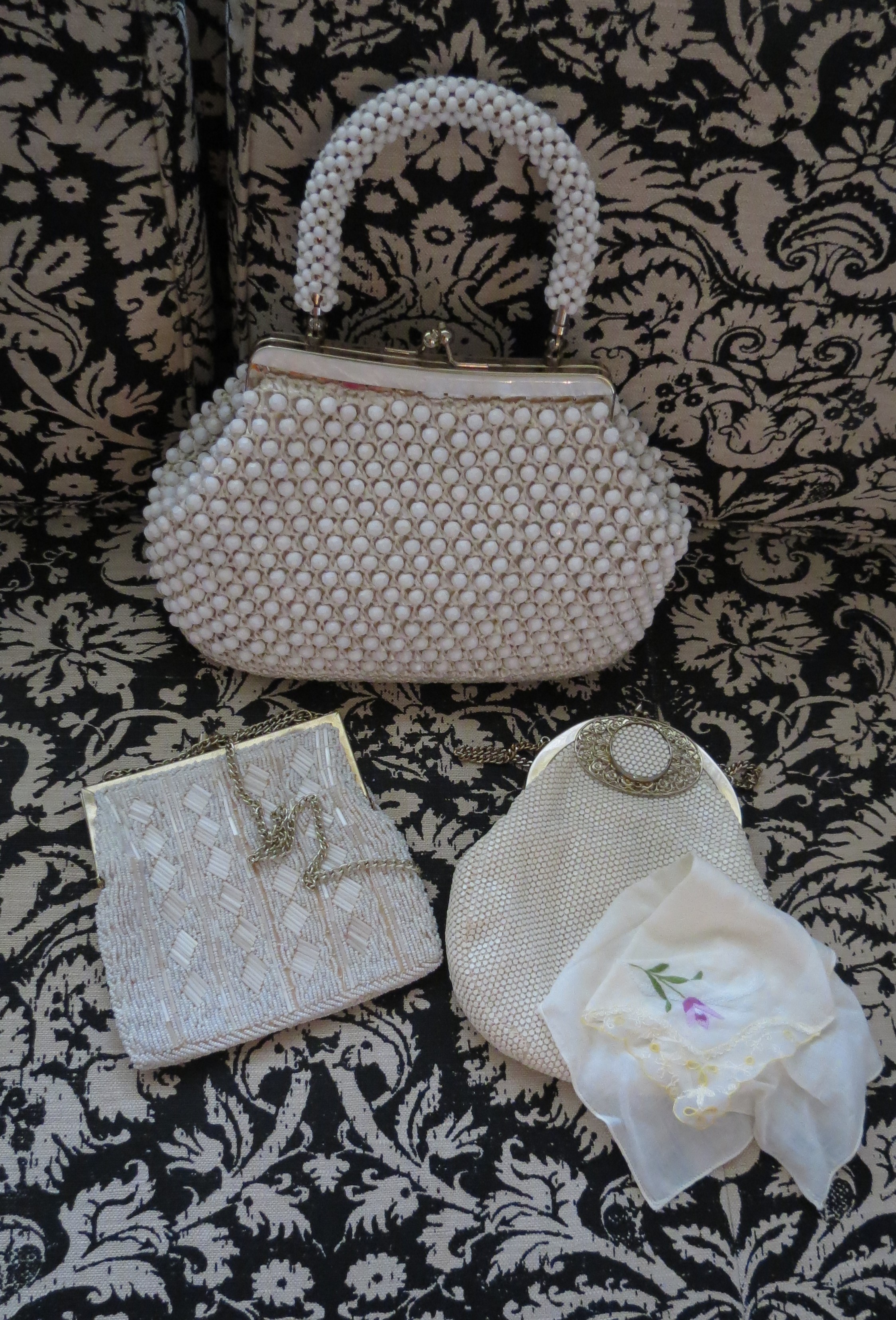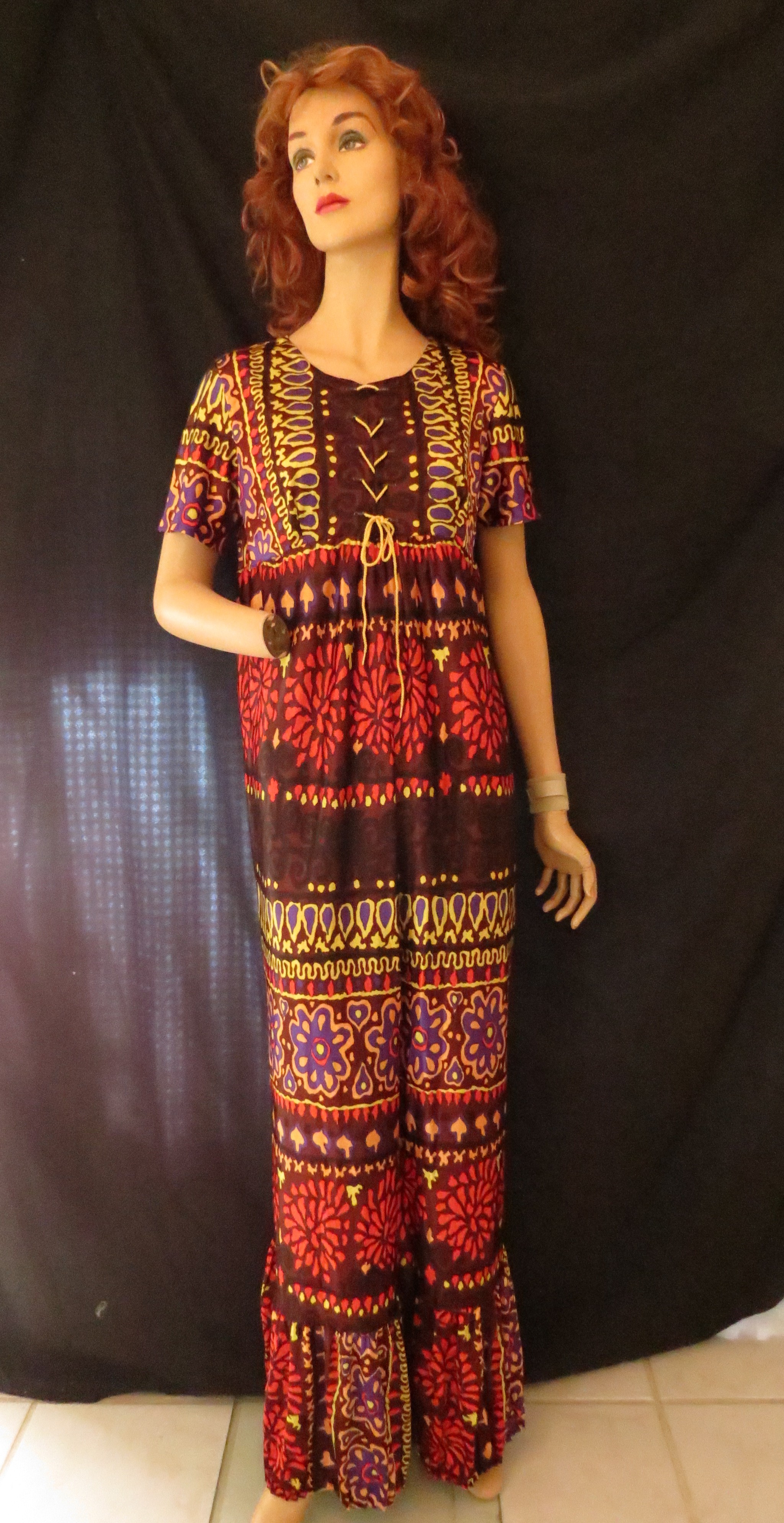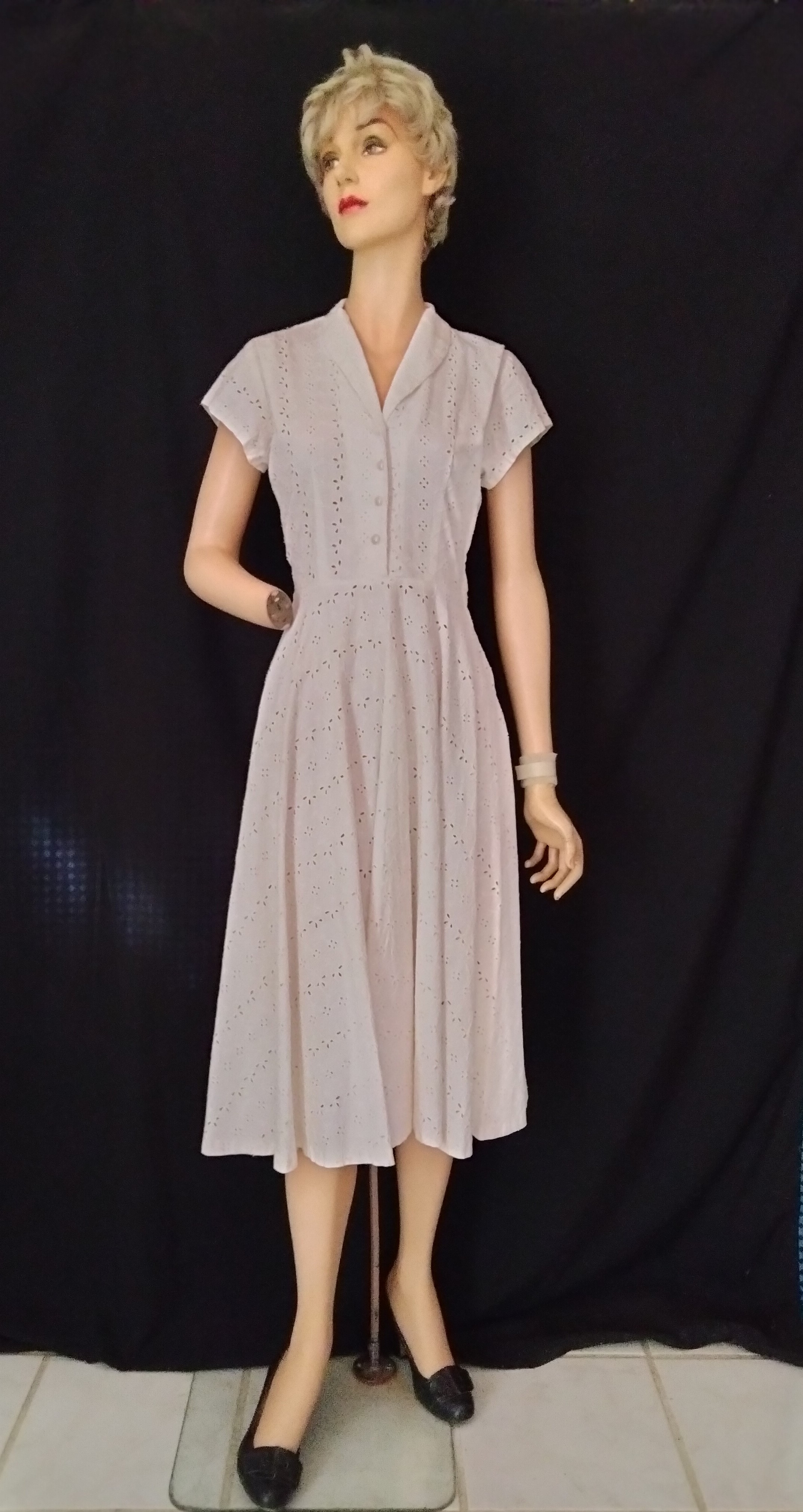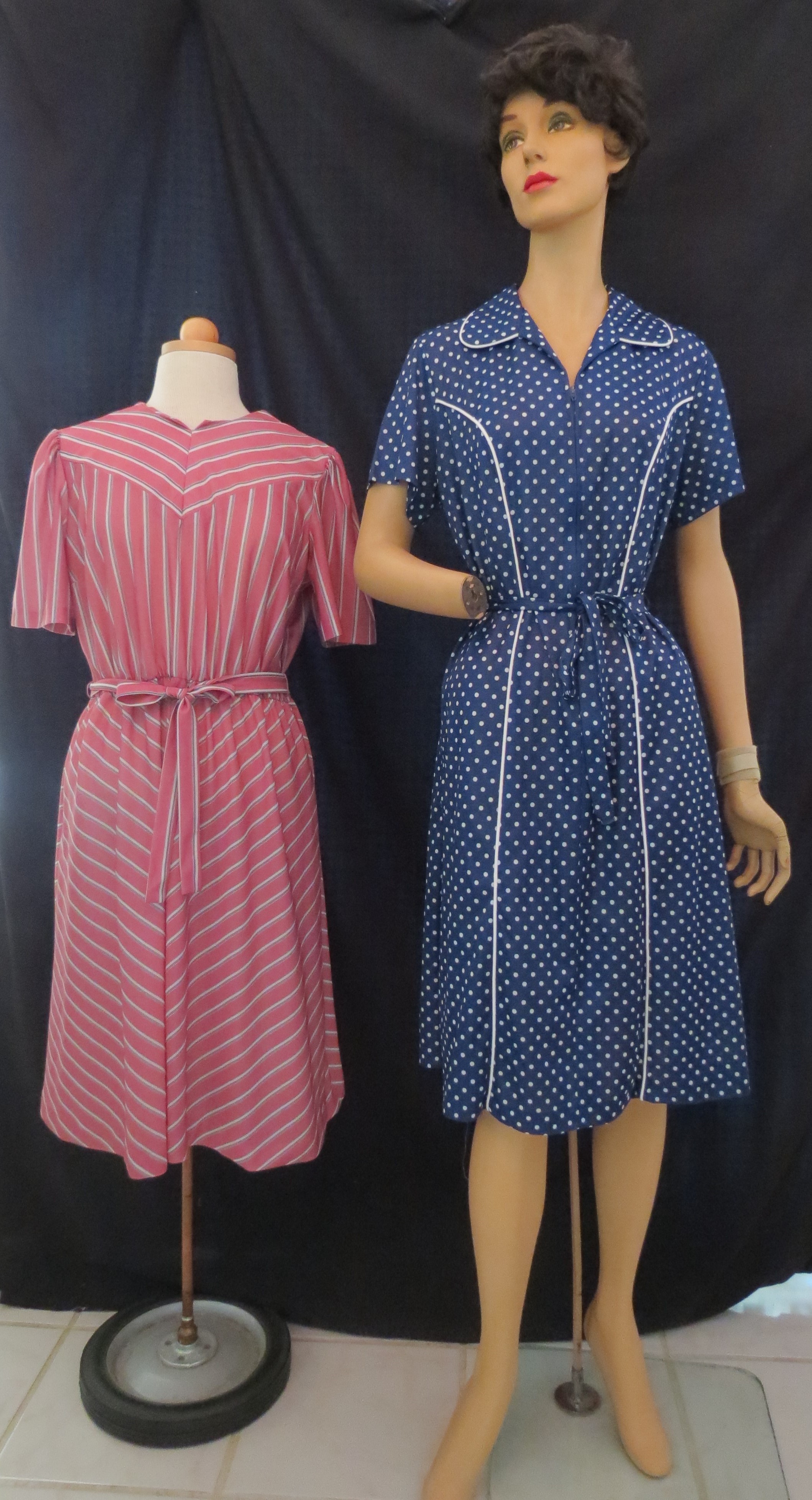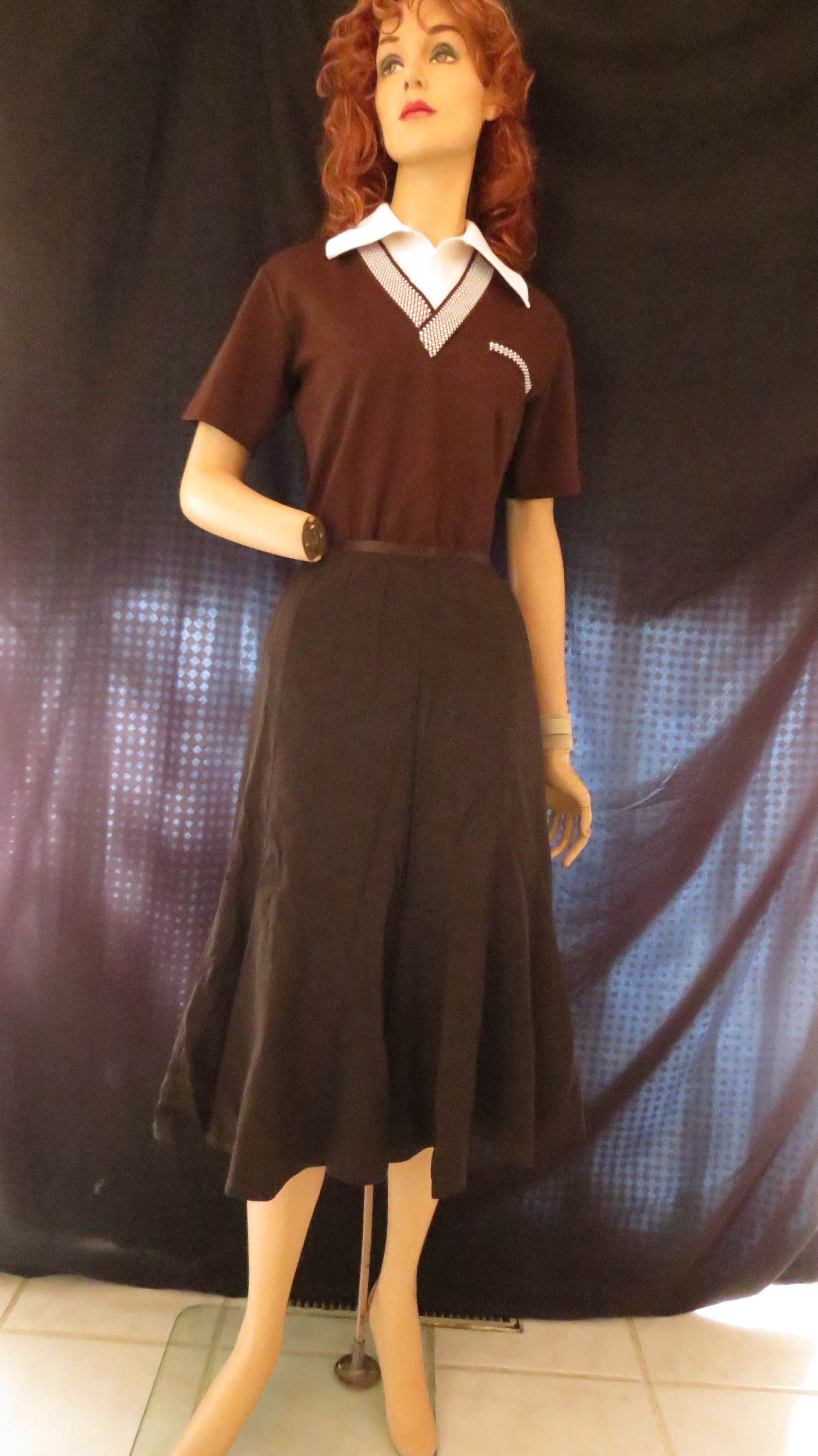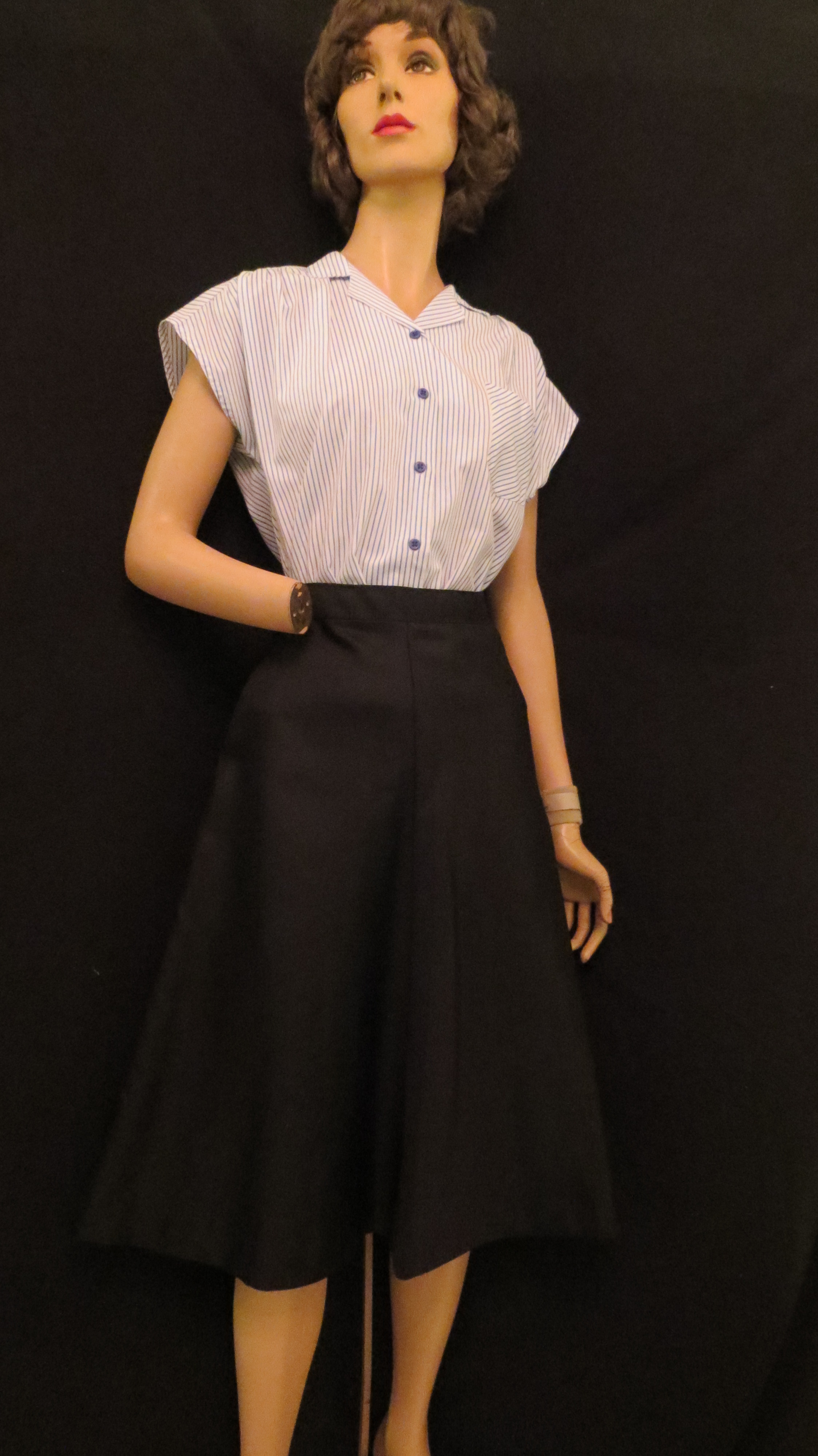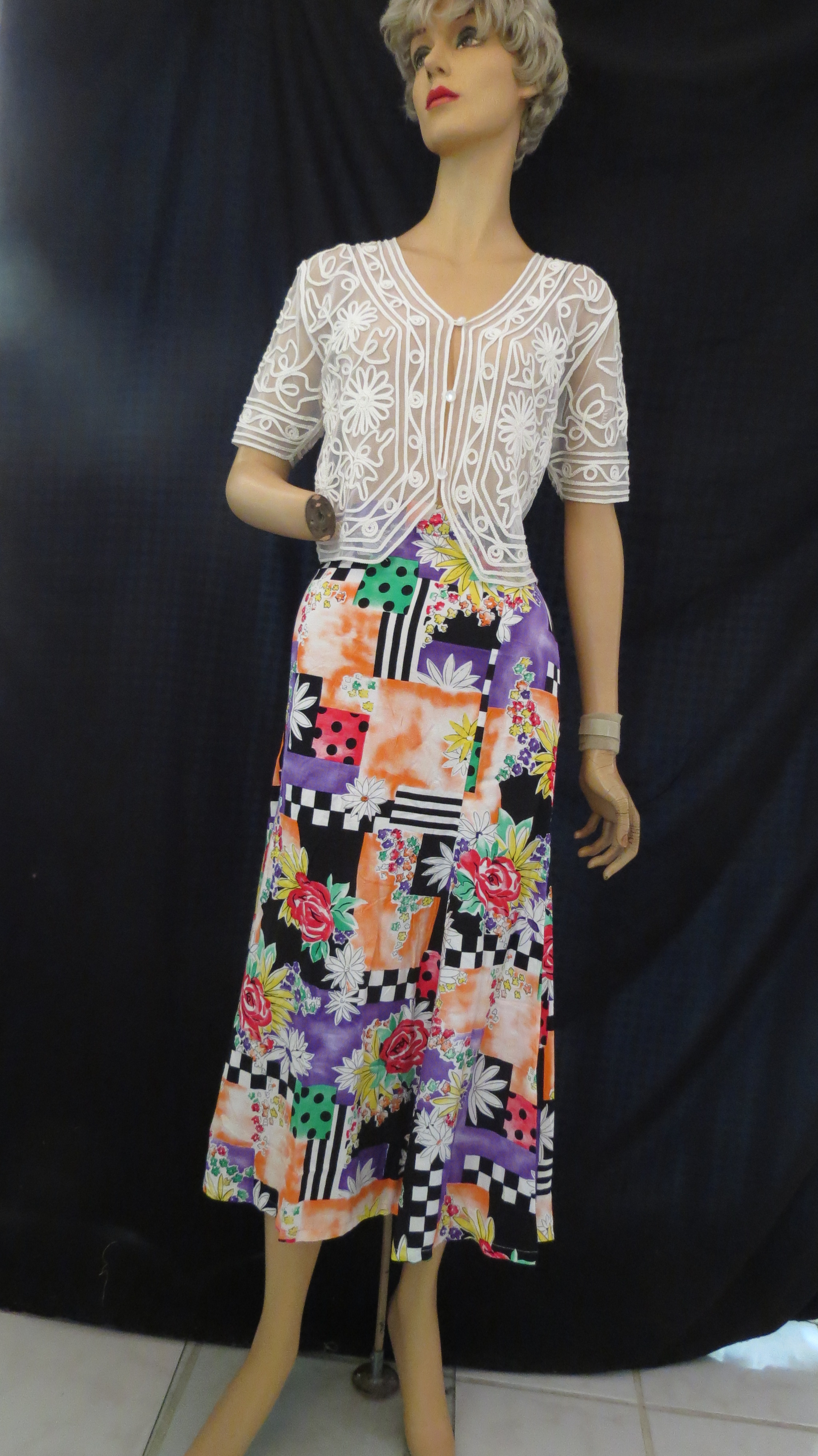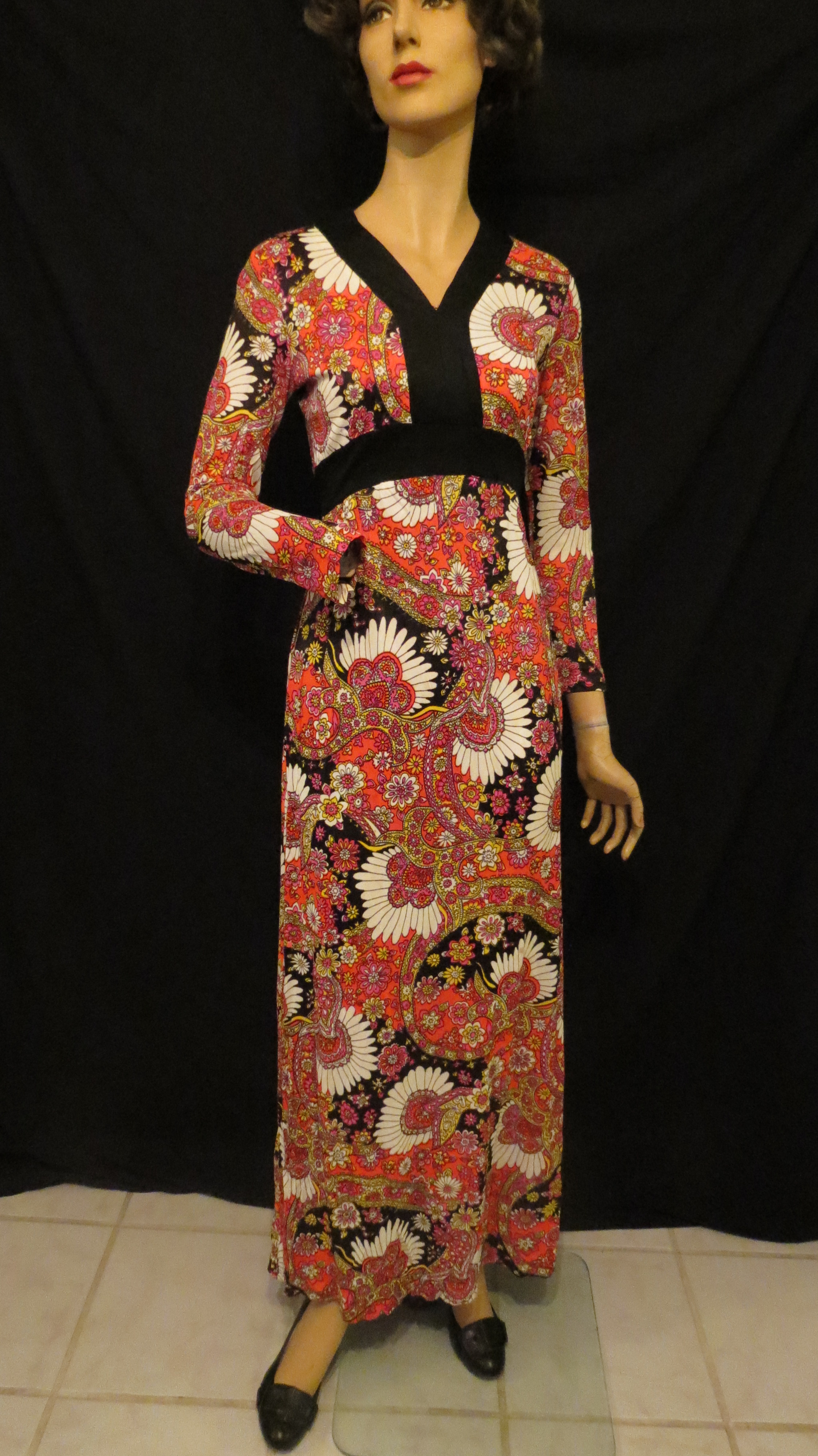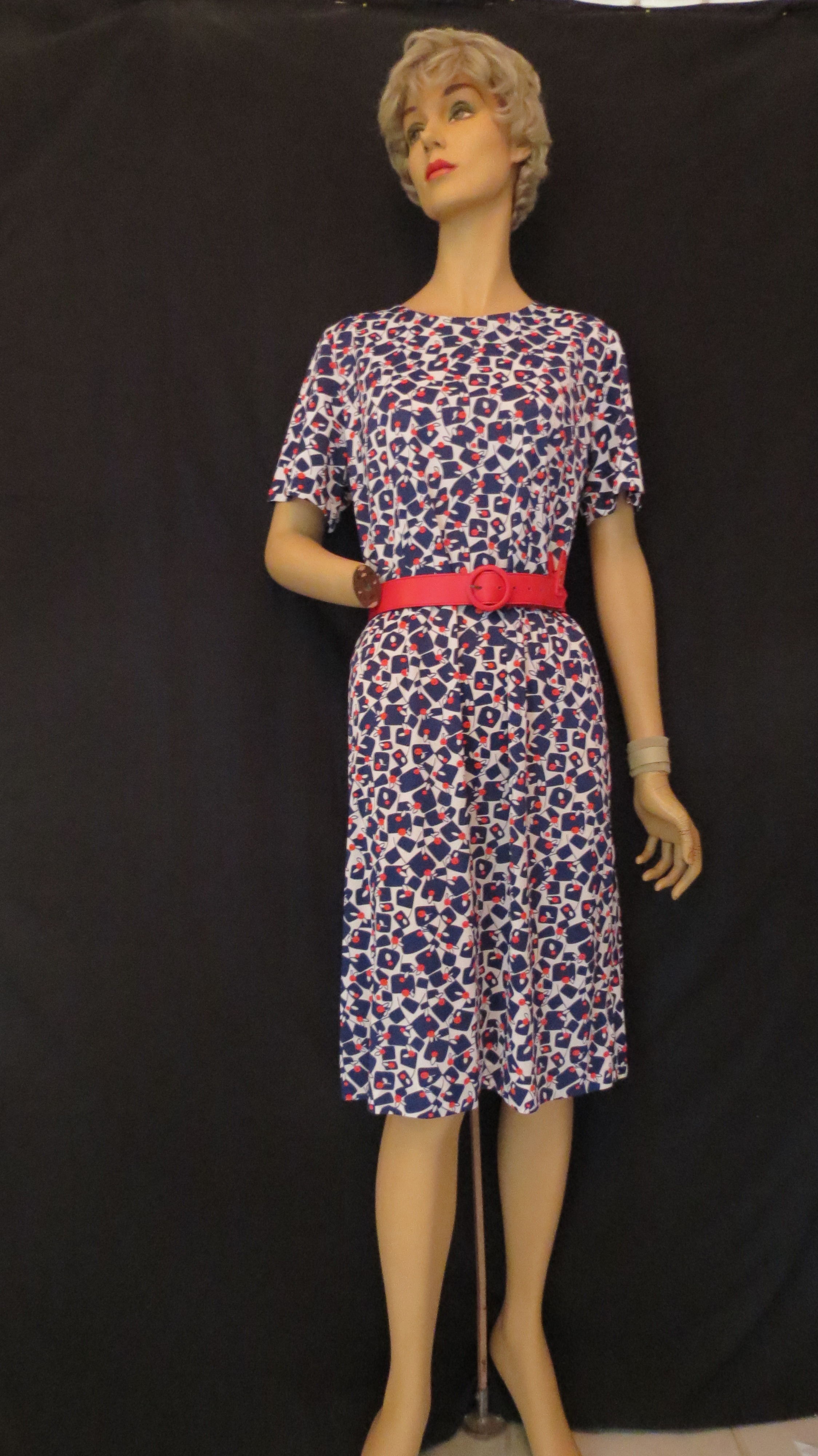
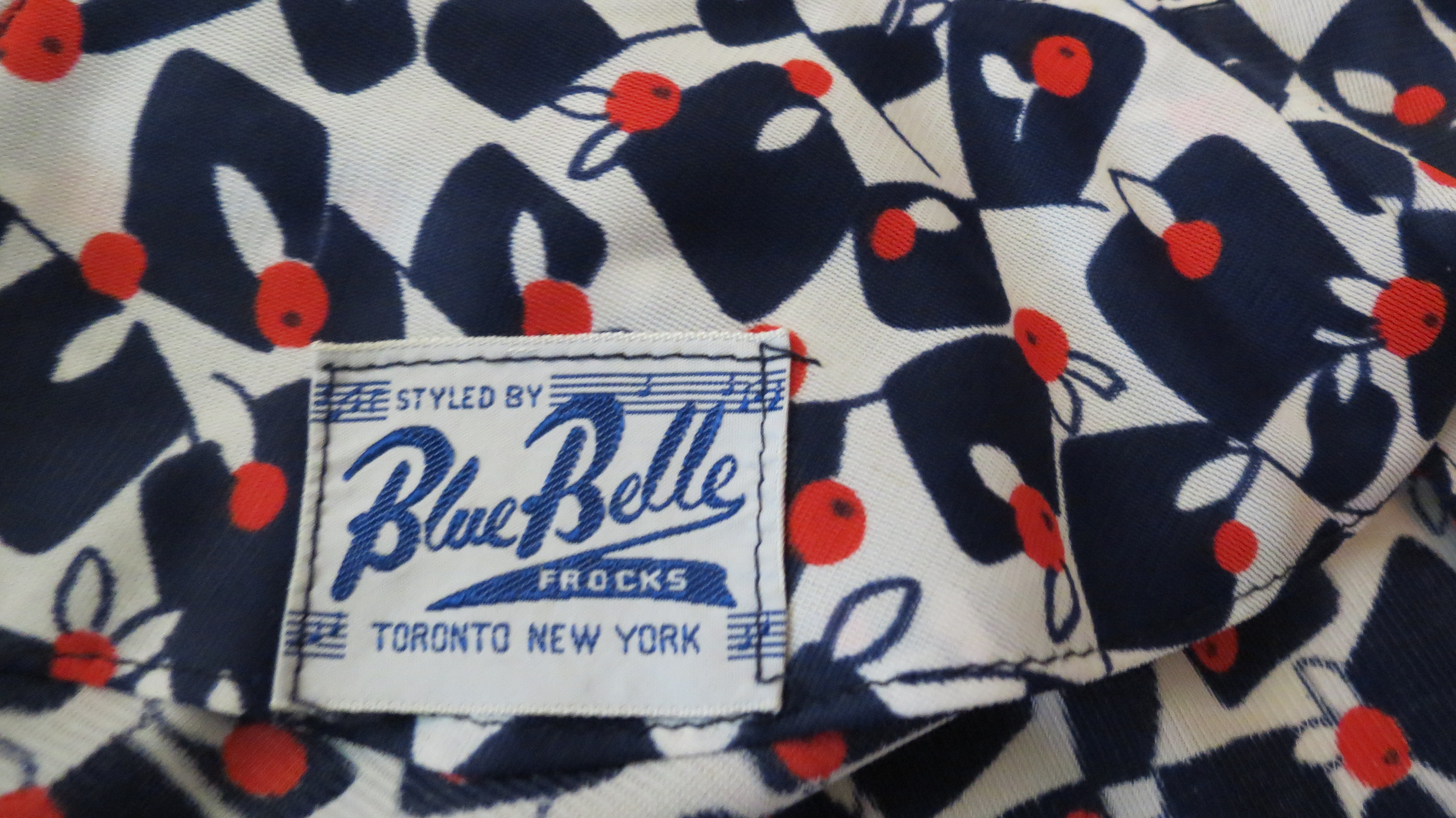
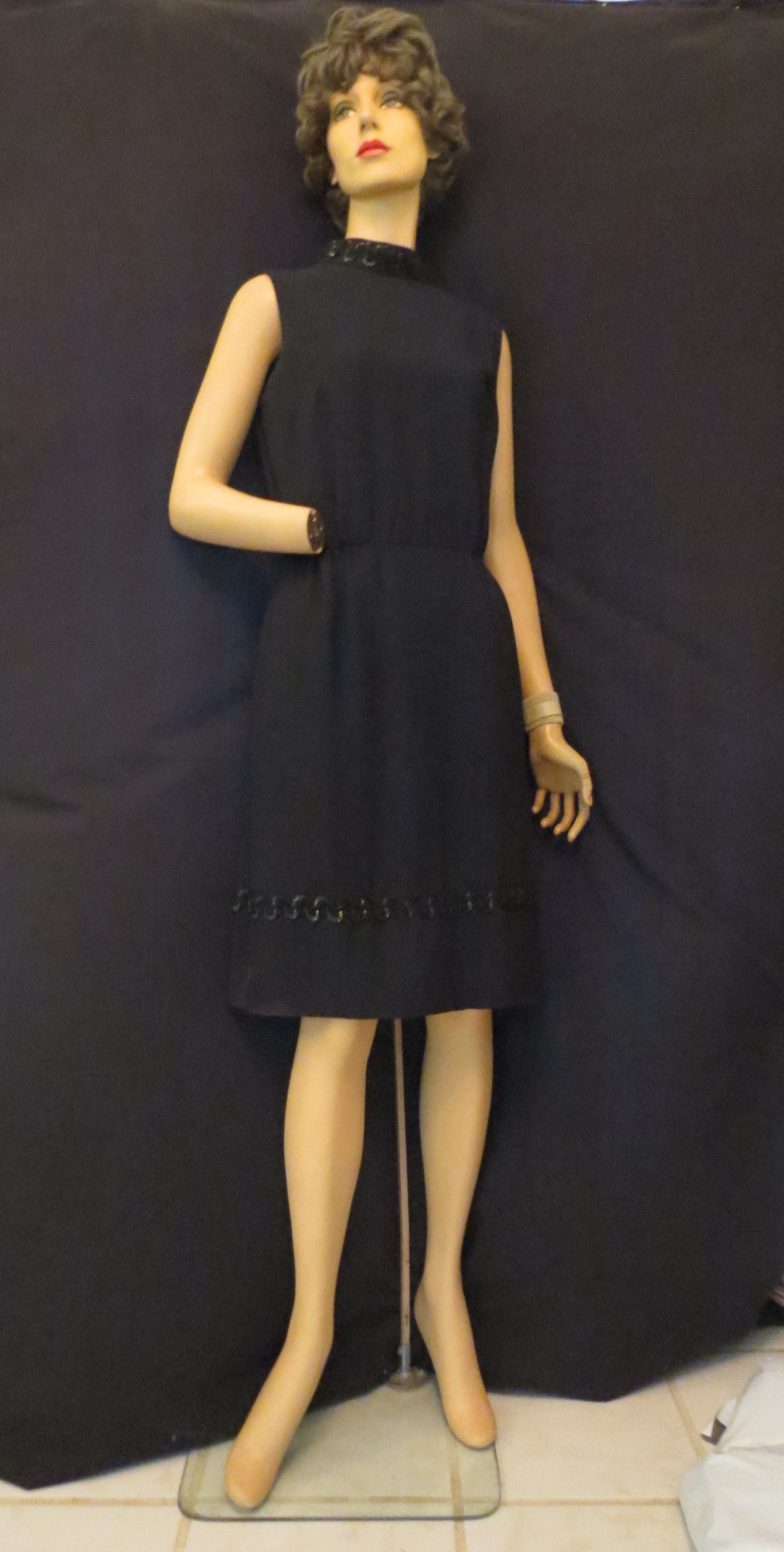
TRUE VINTAGE LATE 1950’S – MID-1960’S DRESSES

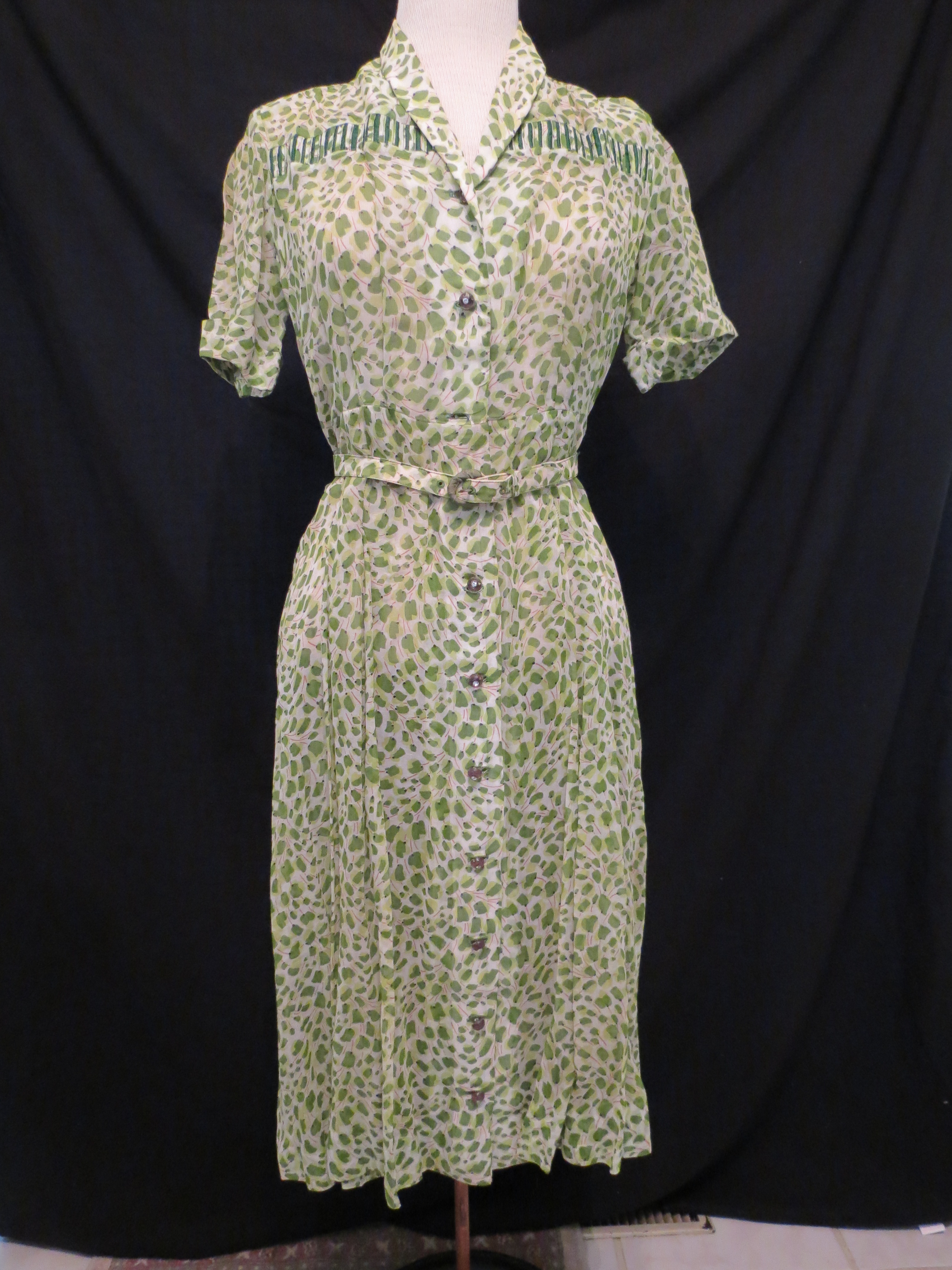
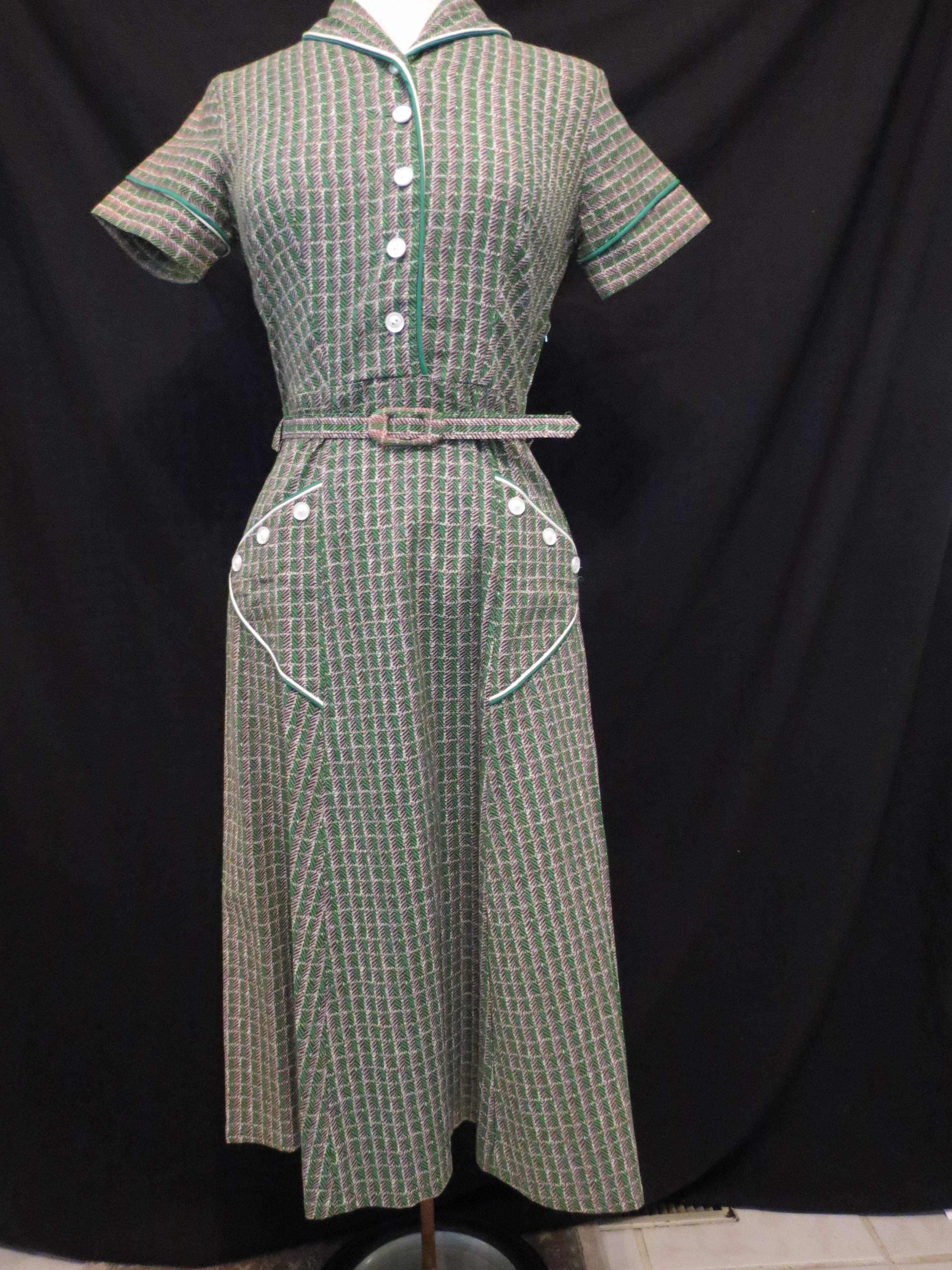
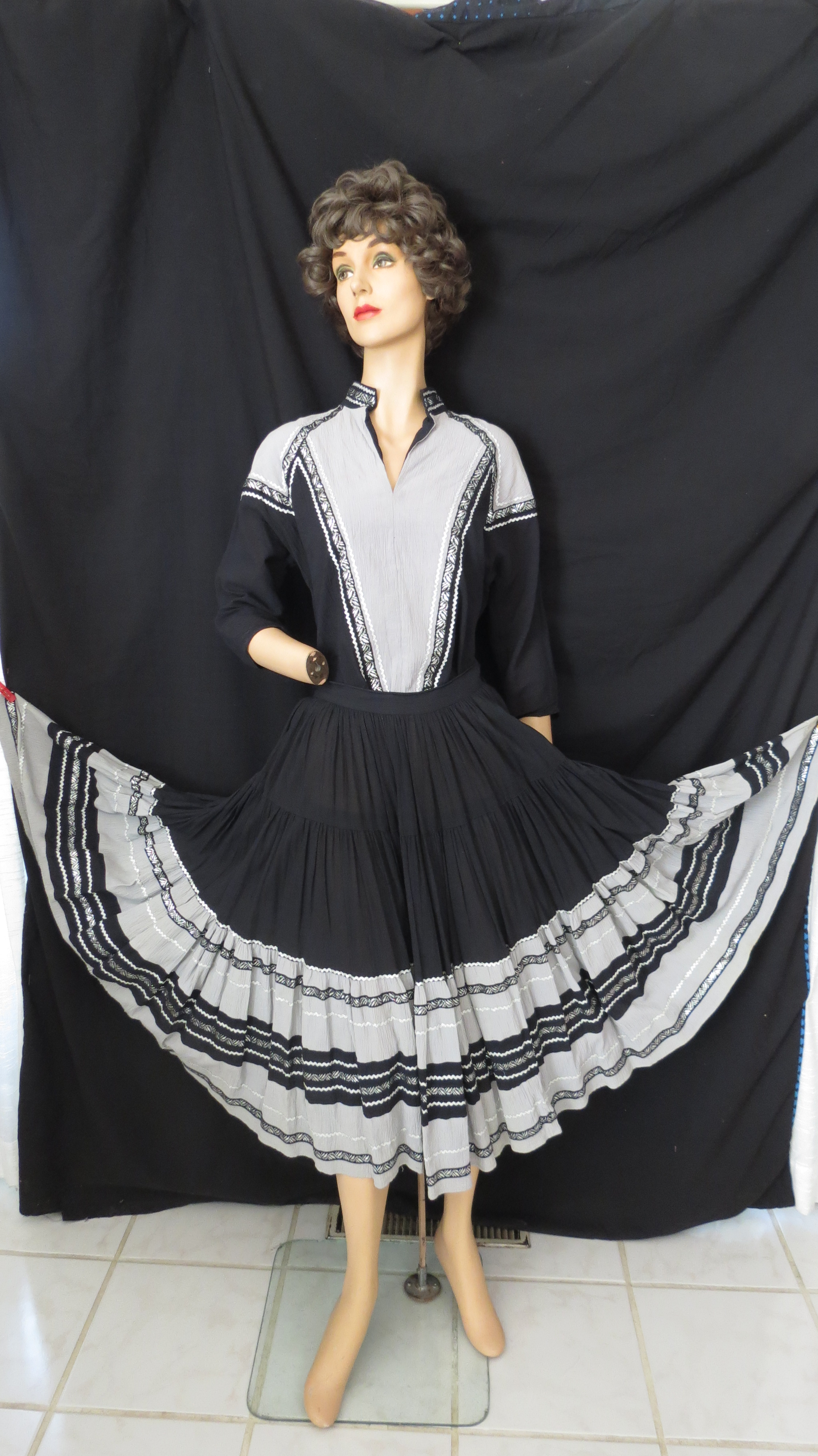
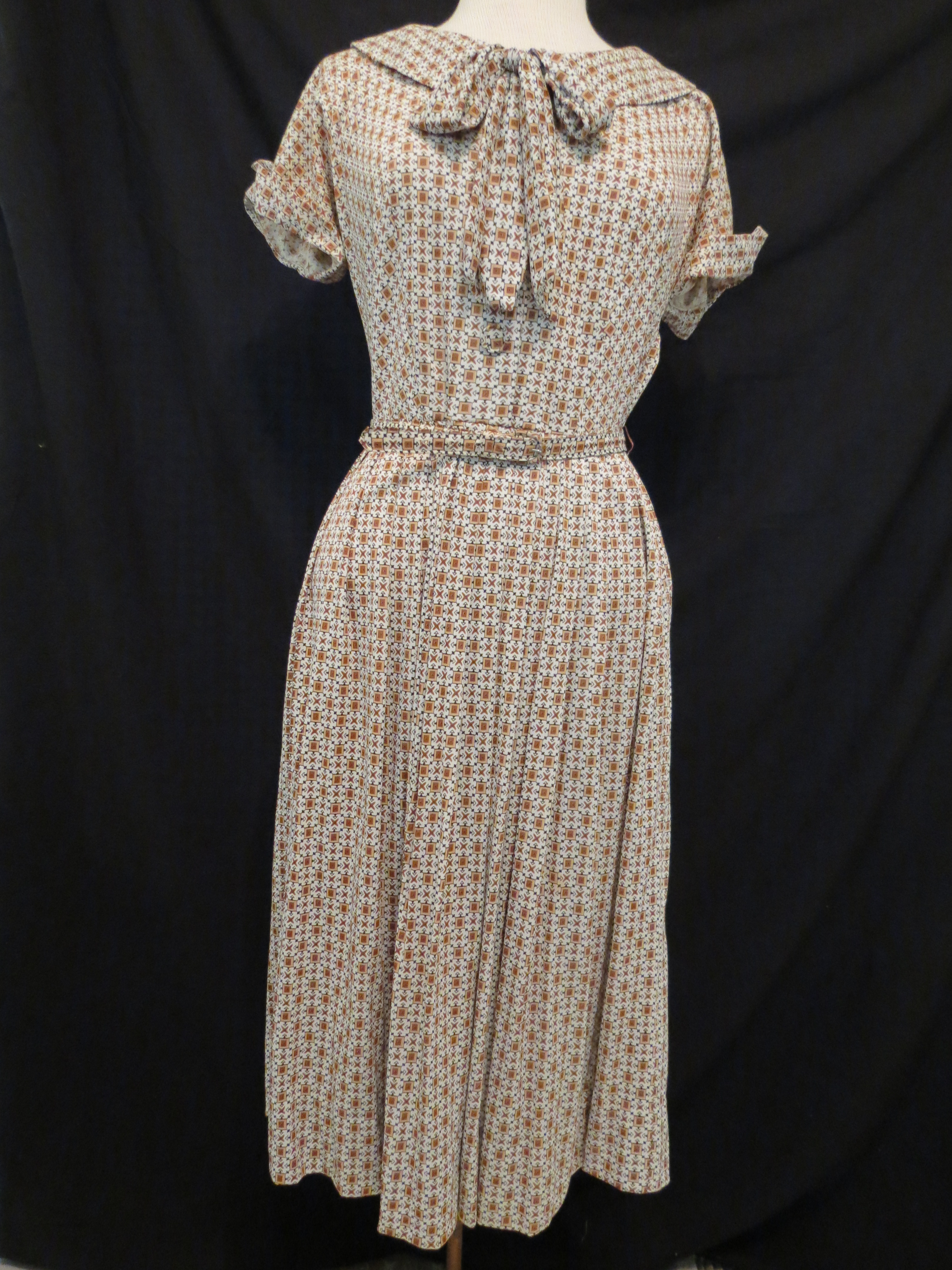
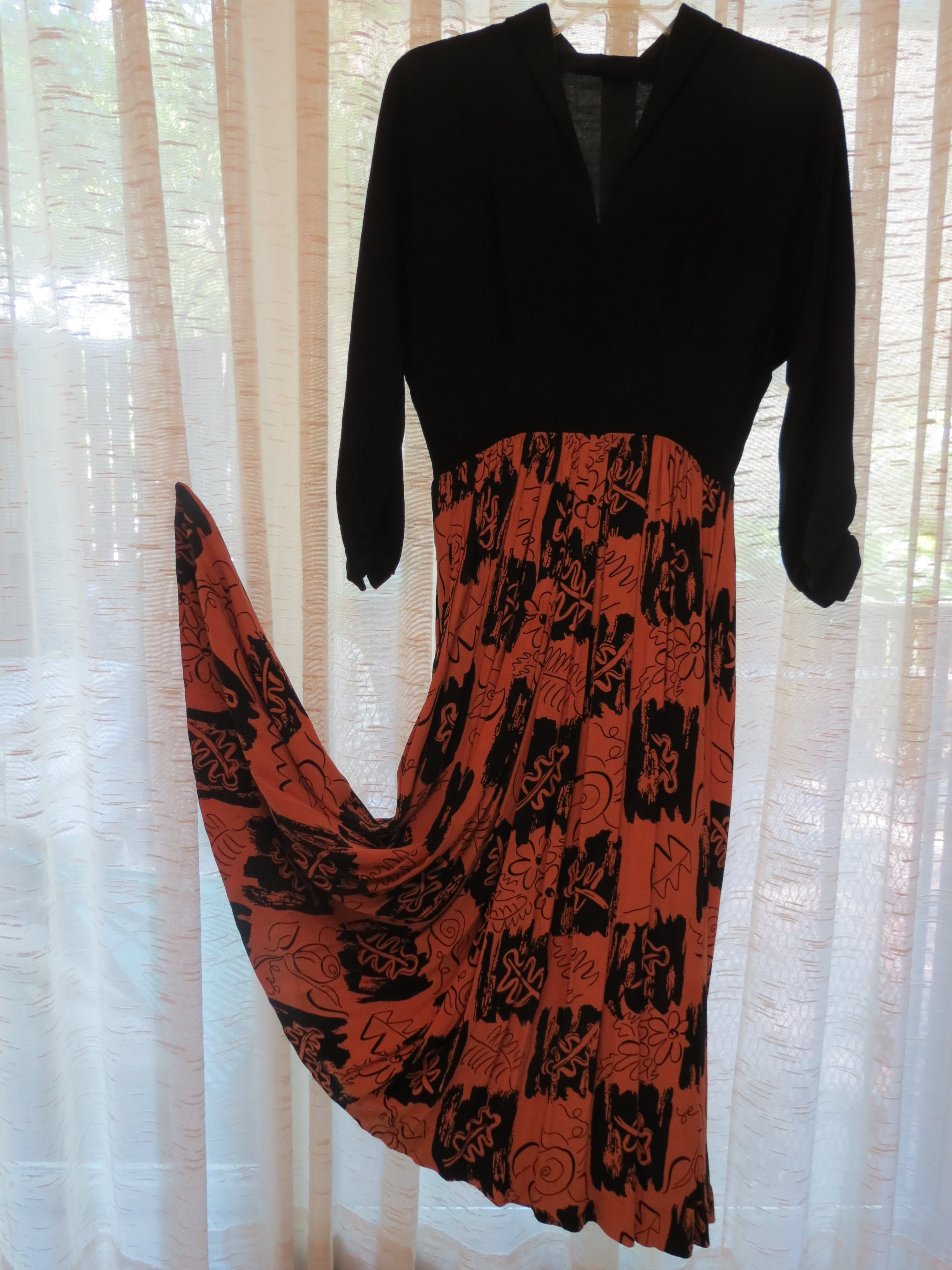
Late Fifties saw slinky knit sheath dresses that carried over the new, easy-care synthetics from the 1940’s. The prints morphed slowly from geometric, atomic shapes back to cute animals, fruits and veggies. This fabric is amazingly comfortable and drapes beautifully but was economical. Common, moderately-priced frocks were made from it.

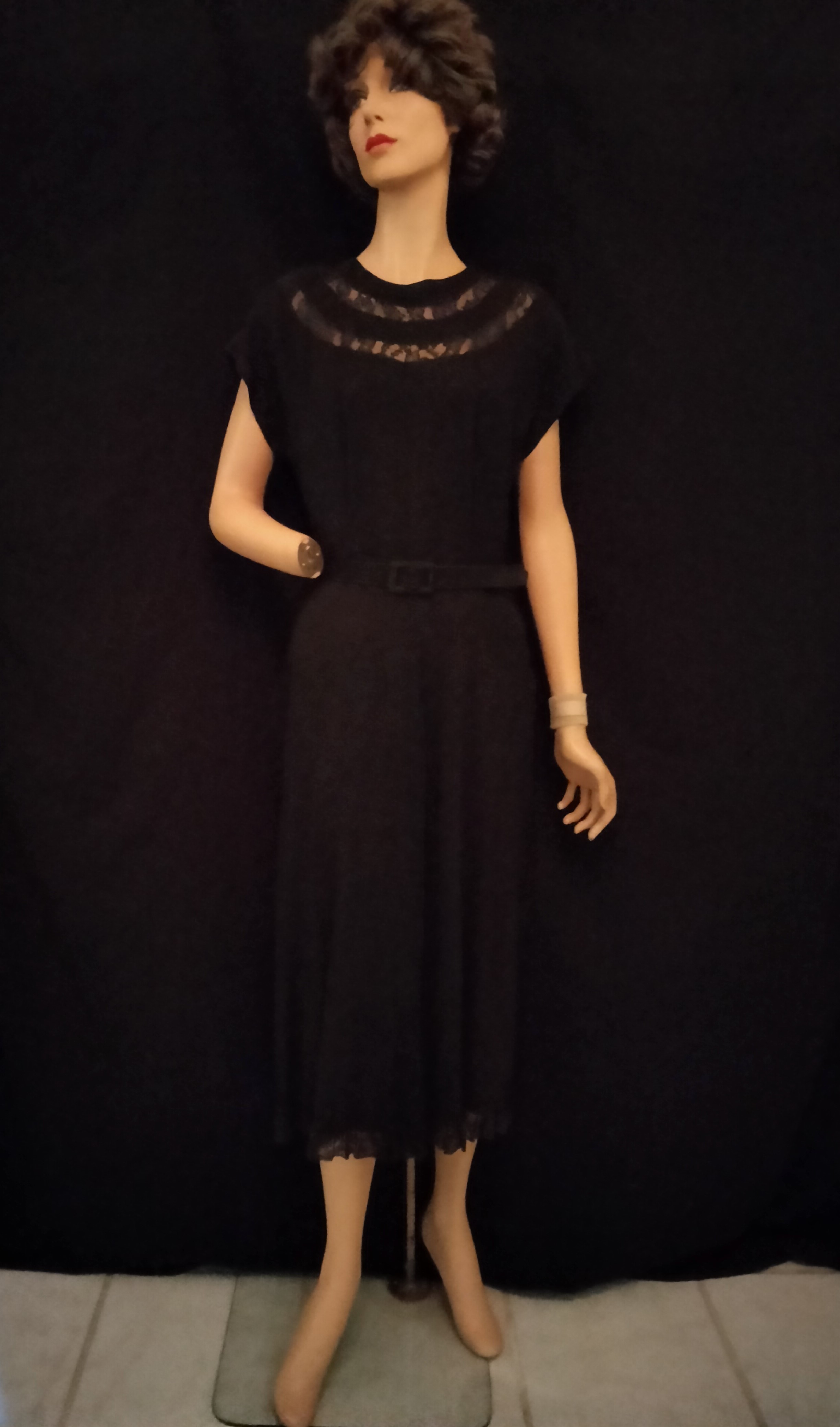
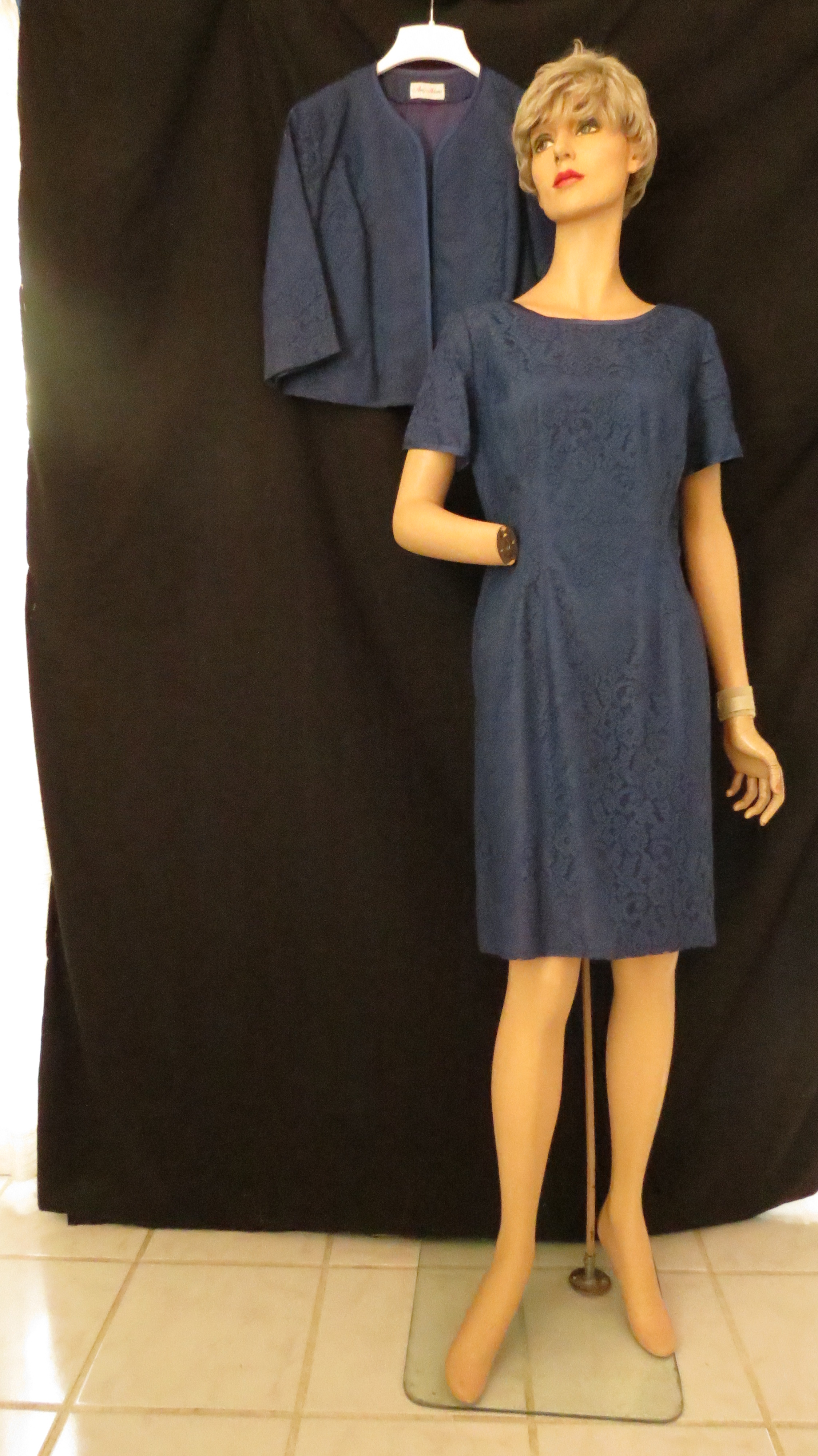
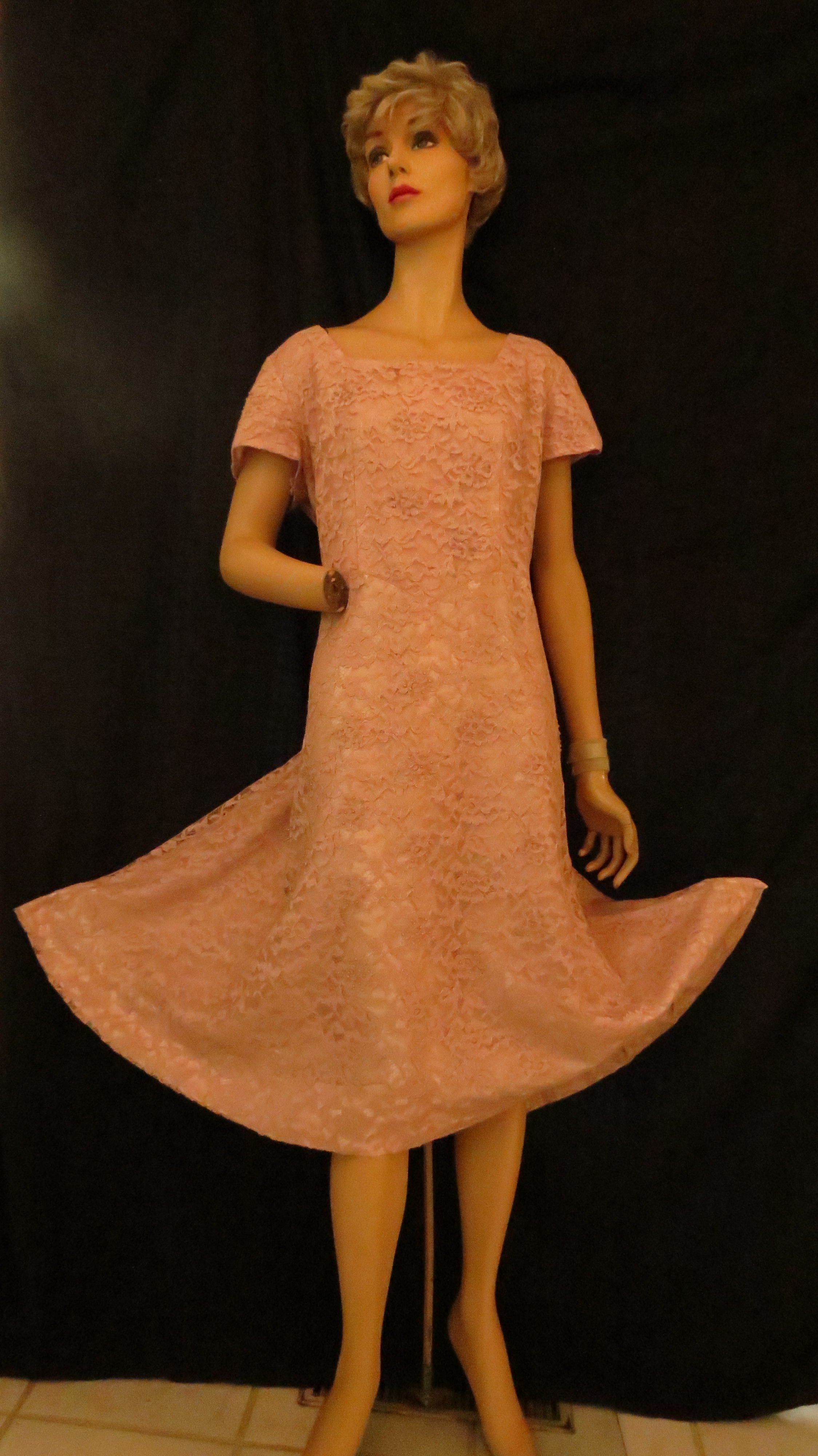
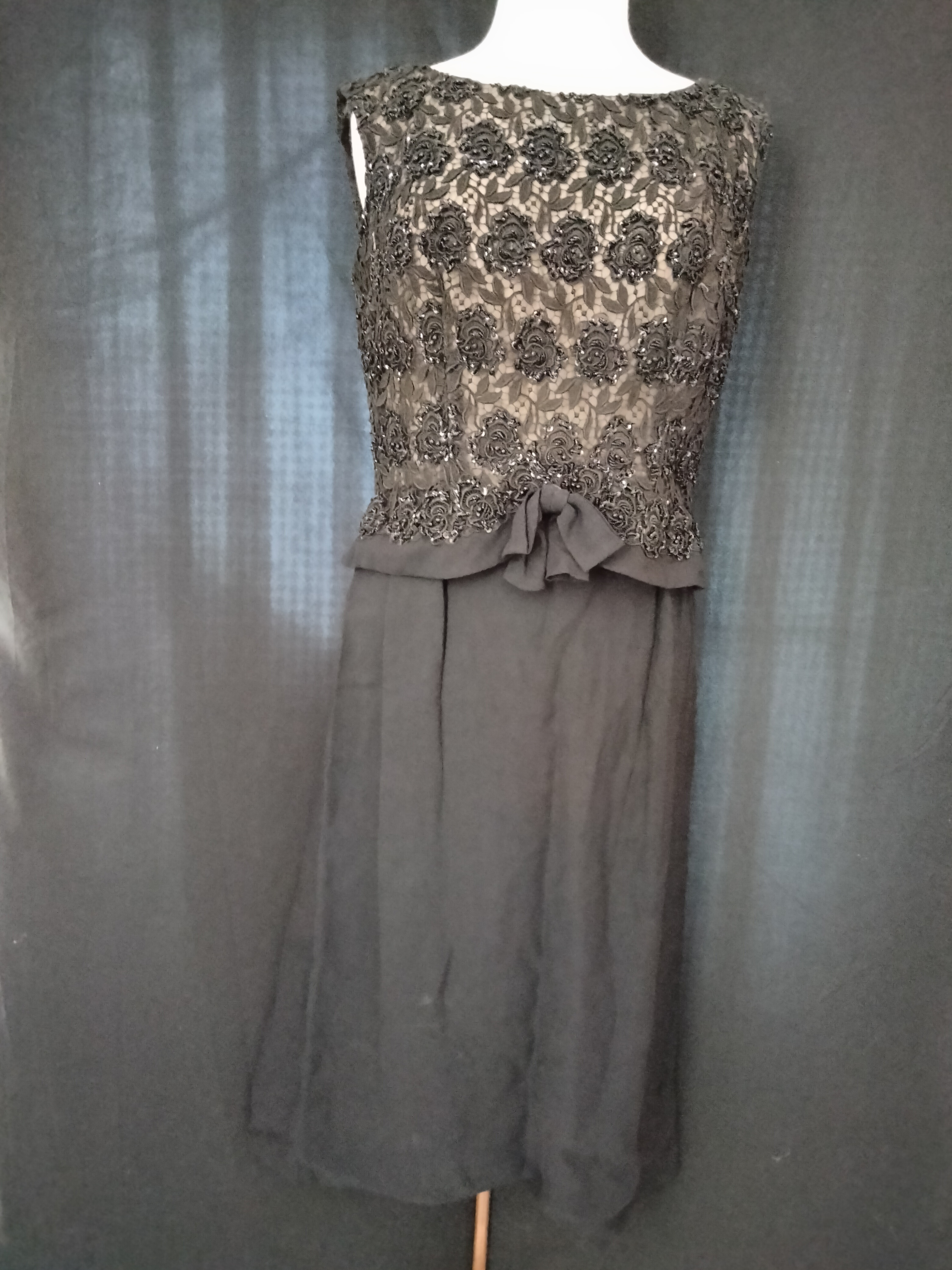
Just a few years later, lace overlay became the big thing. Dressy day-dresses were often made from it, as well as semi-formal and formal gowns. These were also generally made from synthetic or blended fabrics but probably required dry-cleaning. Better frocks often came from British Hong Kong, where the design and hand-made tailoring made them exceptionally elegant and of higher quality. These dresses were still within the reach of middle-income ladies but were more expensive. See the black dressy sheath with a beaded over-blouse above. The straight black high-neck sheath came from Saks Fifth Avenue.

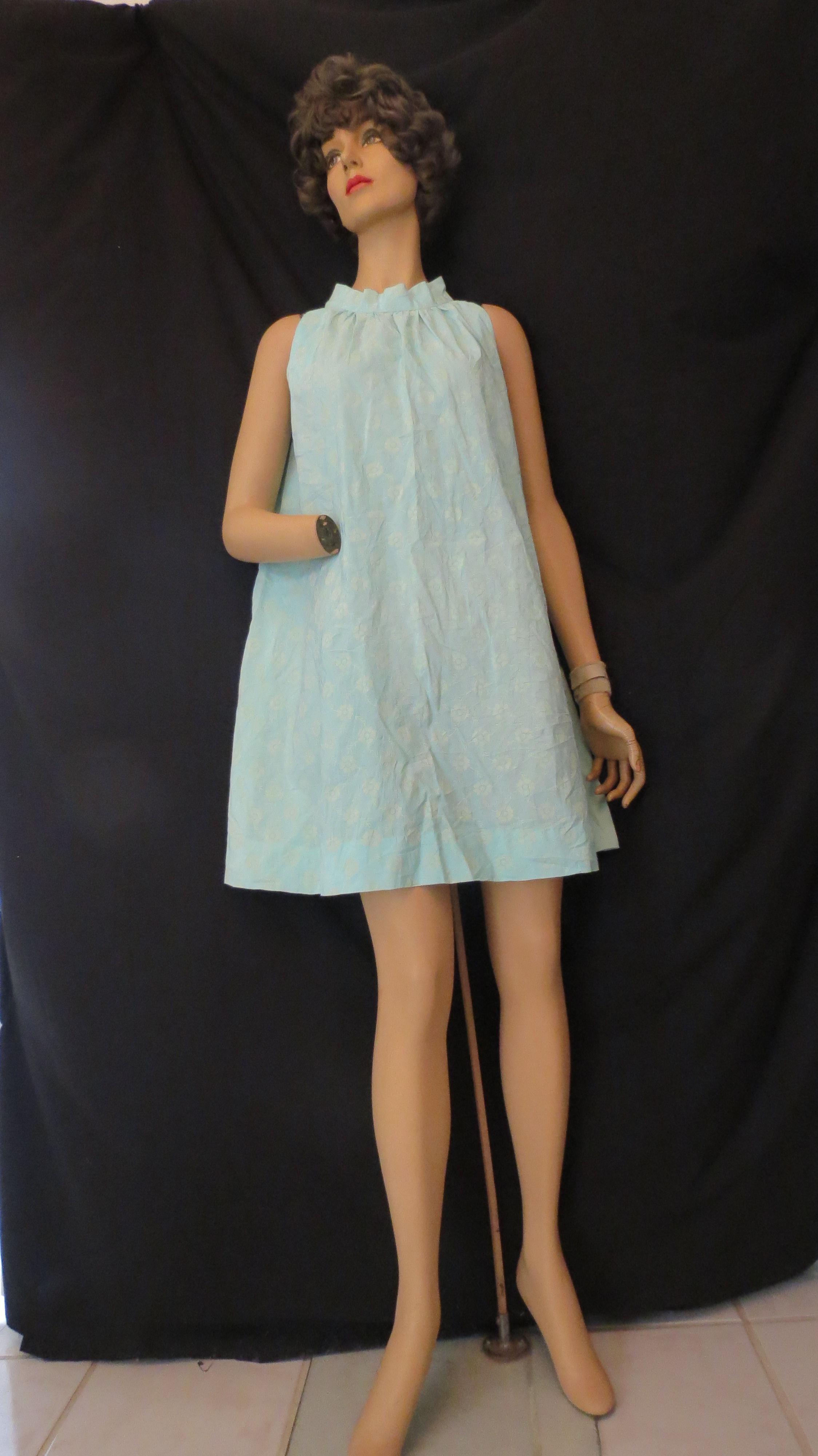
Then, again from the Brits, came Mary Quant’s Tent Dress in 1964. Although the Mod style had started in the 1950’s, it’s appearance in clothing was totally revolutionary. It brought with it radically shorter hemlines and easy-to-wear, casual shapes. See the light blue, home-sewn version above.

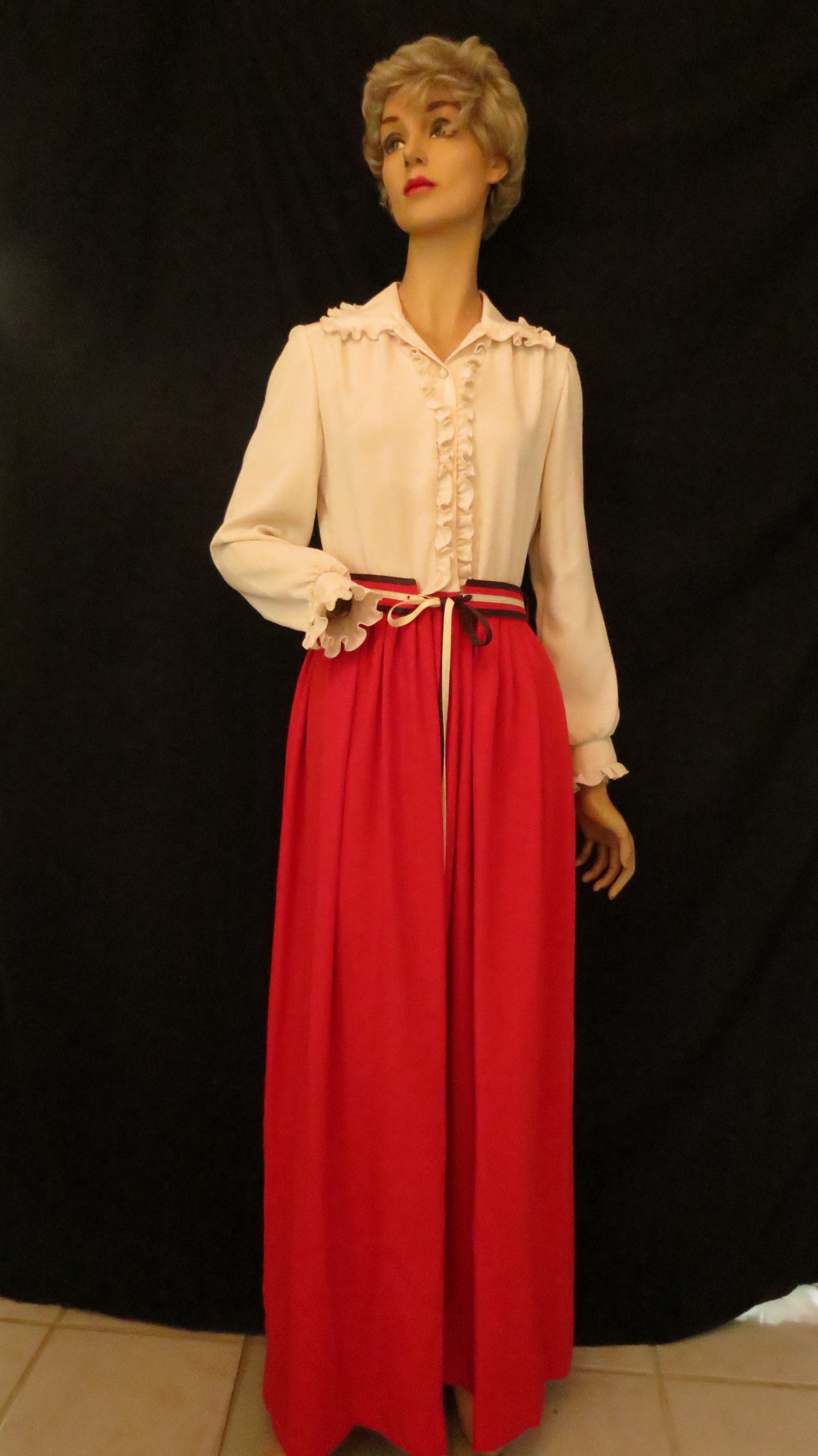
Some styles retained their classic, conservative lines and stuck to neutral or basic tones while bright colors became ever more popular, even in formal garments. While political and social movements became radicalized and changed society, the Hippie, Boho and Prairie styles started to take over in the late 1960’s and carried over into the early 1970’s. Tomorrow we’ll look at some of the ways that popular fashion incorporated these trends into mainstream dressing. Stay tuned . . . . . . . . . . . . . . . . . . . . . . . . . .

MORGANA MARTIN, THE MAGICVINTAGESPY

BLOG: MAGICVINTAGESPY.COM
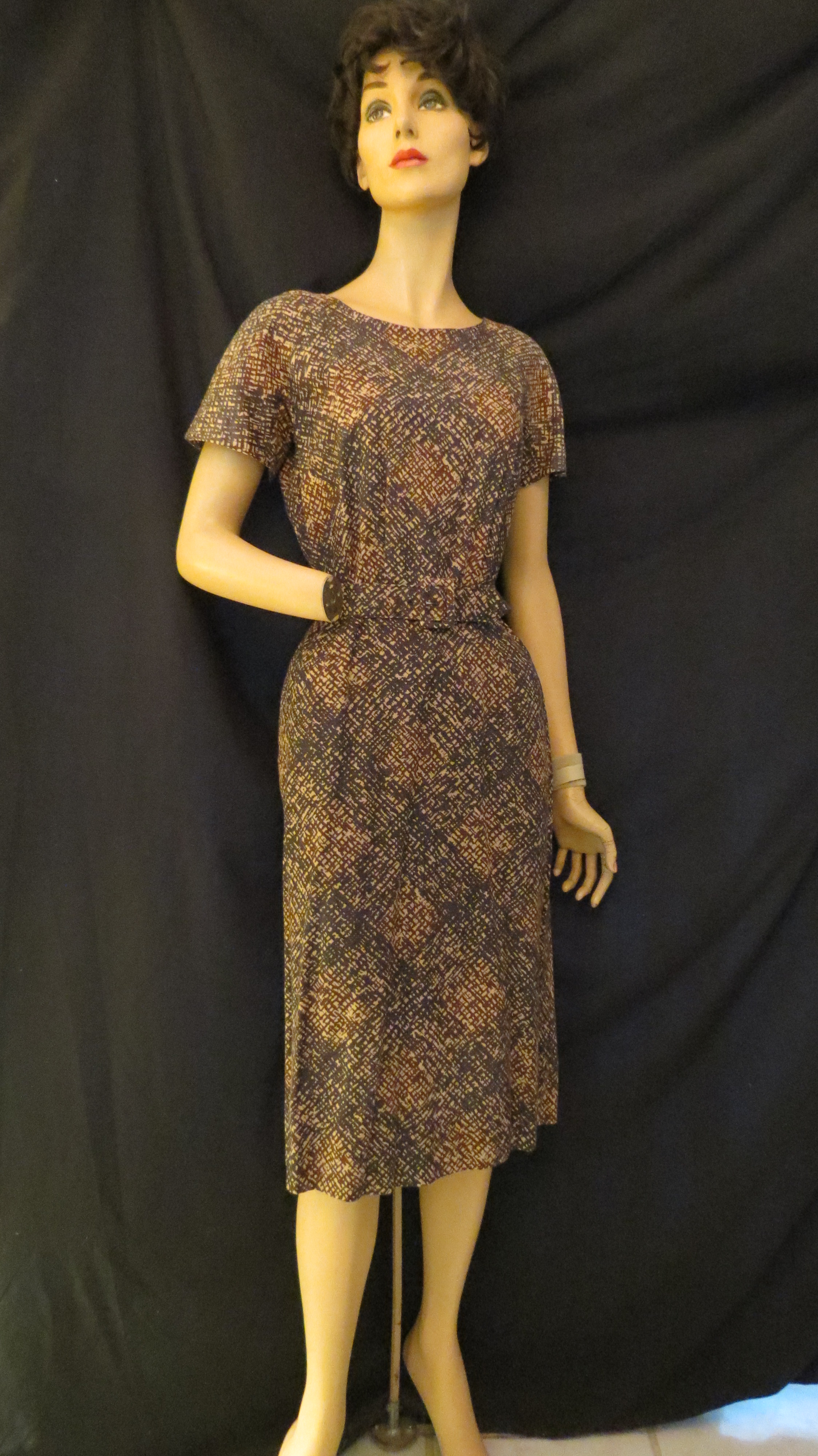
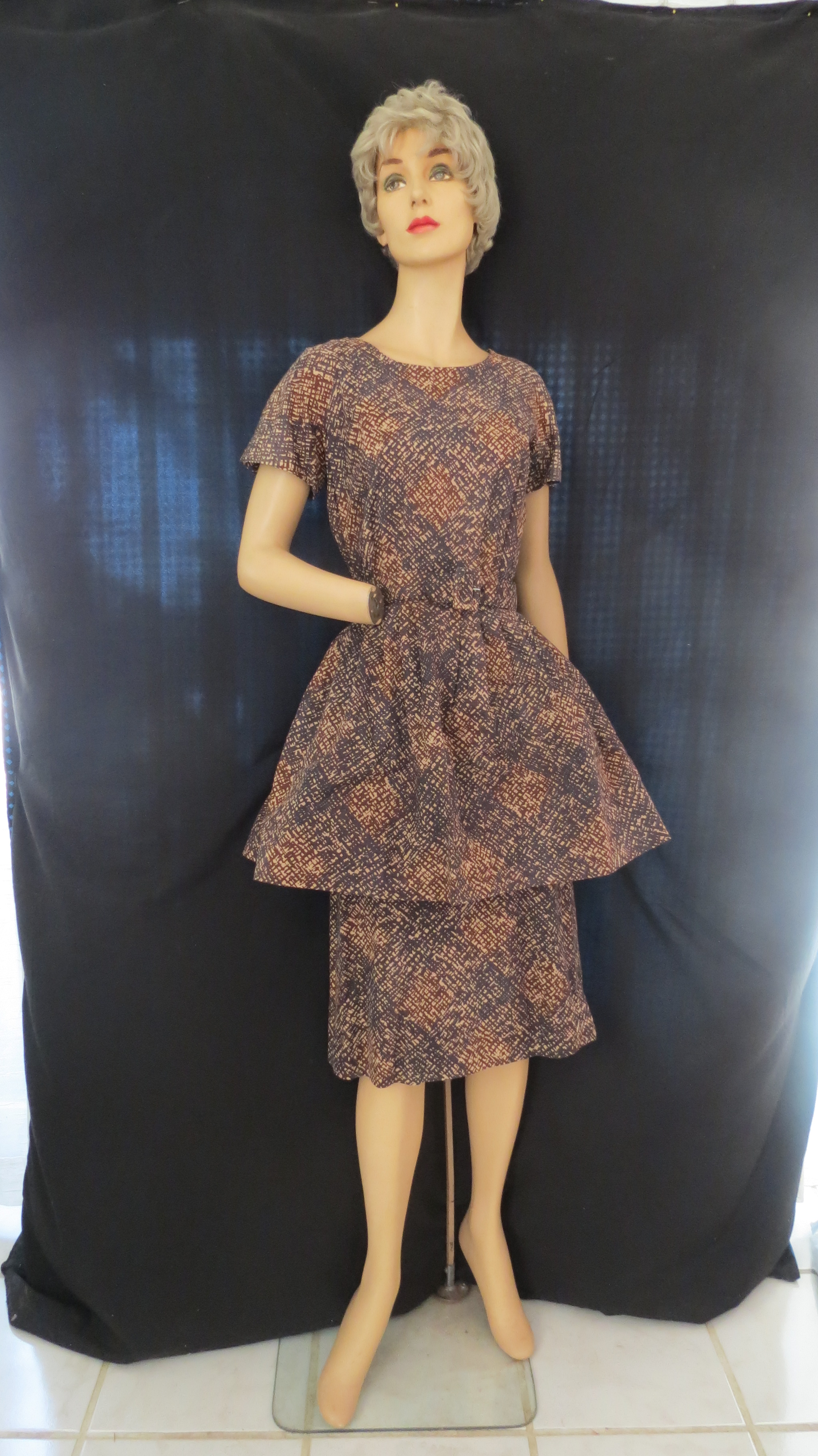
TRUE VINTAGE EARLY 1950’S DRESSY DAY-WEAR

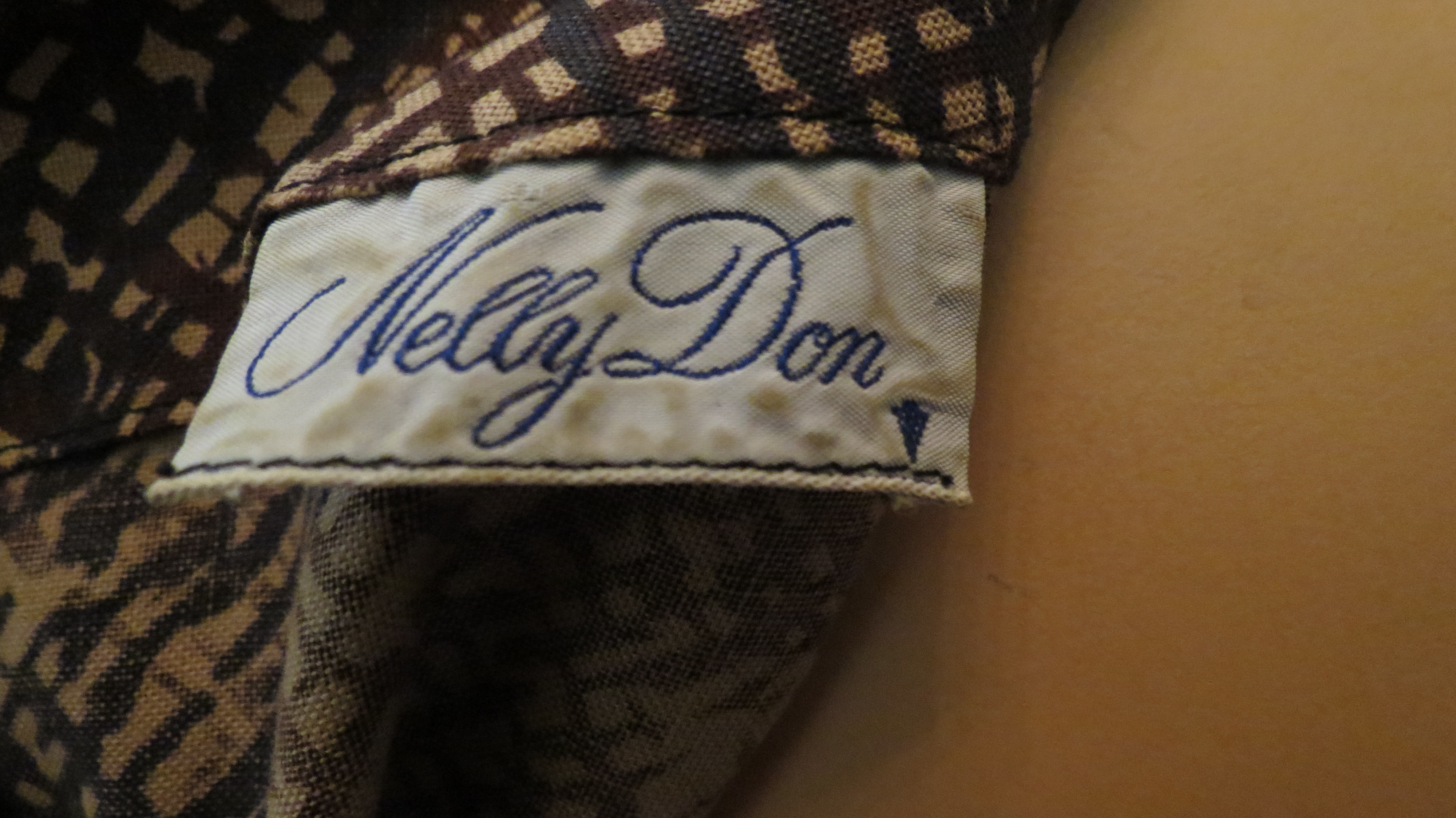
Let’s start with this novel style by a famous French (undoubtedly Paris) designer. The knock-off pictured above was by Nelly Don, a well-known mid-century ladieswear label in the U.S. The belted sheath dress woven of substantial cotton or a blend has a wide detachable peplum which creates this avant garde silhouette. The French designer brought this luxury style out in 1952 and the mid-priced American version followed quickly.

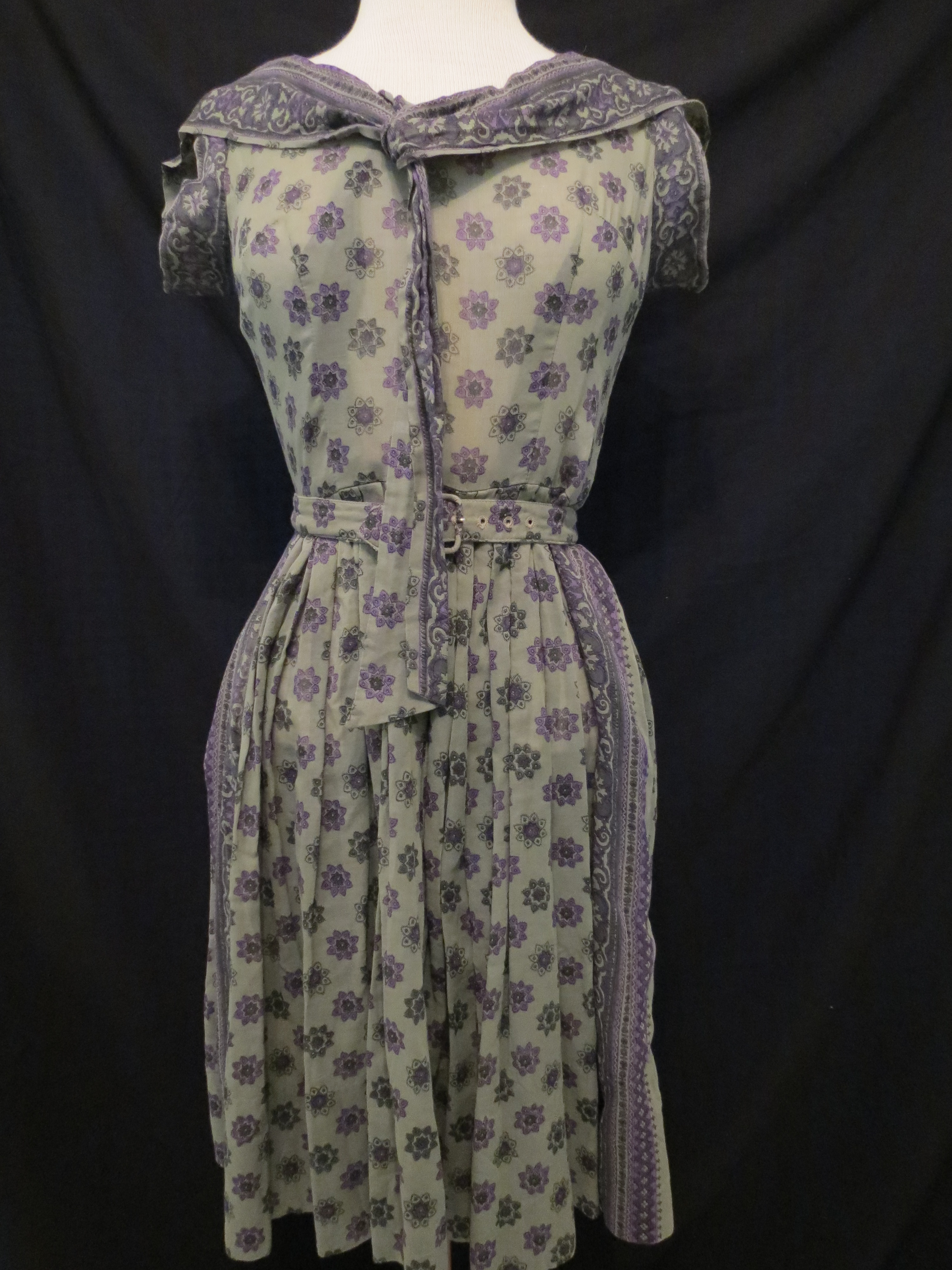
A very pretty semi-sheer dress with a scarf neckline is unusual in an olive green and purple print which I love. Again, it’s belted and fitted as were most of the dresses of this time and follows a shirtdress style.

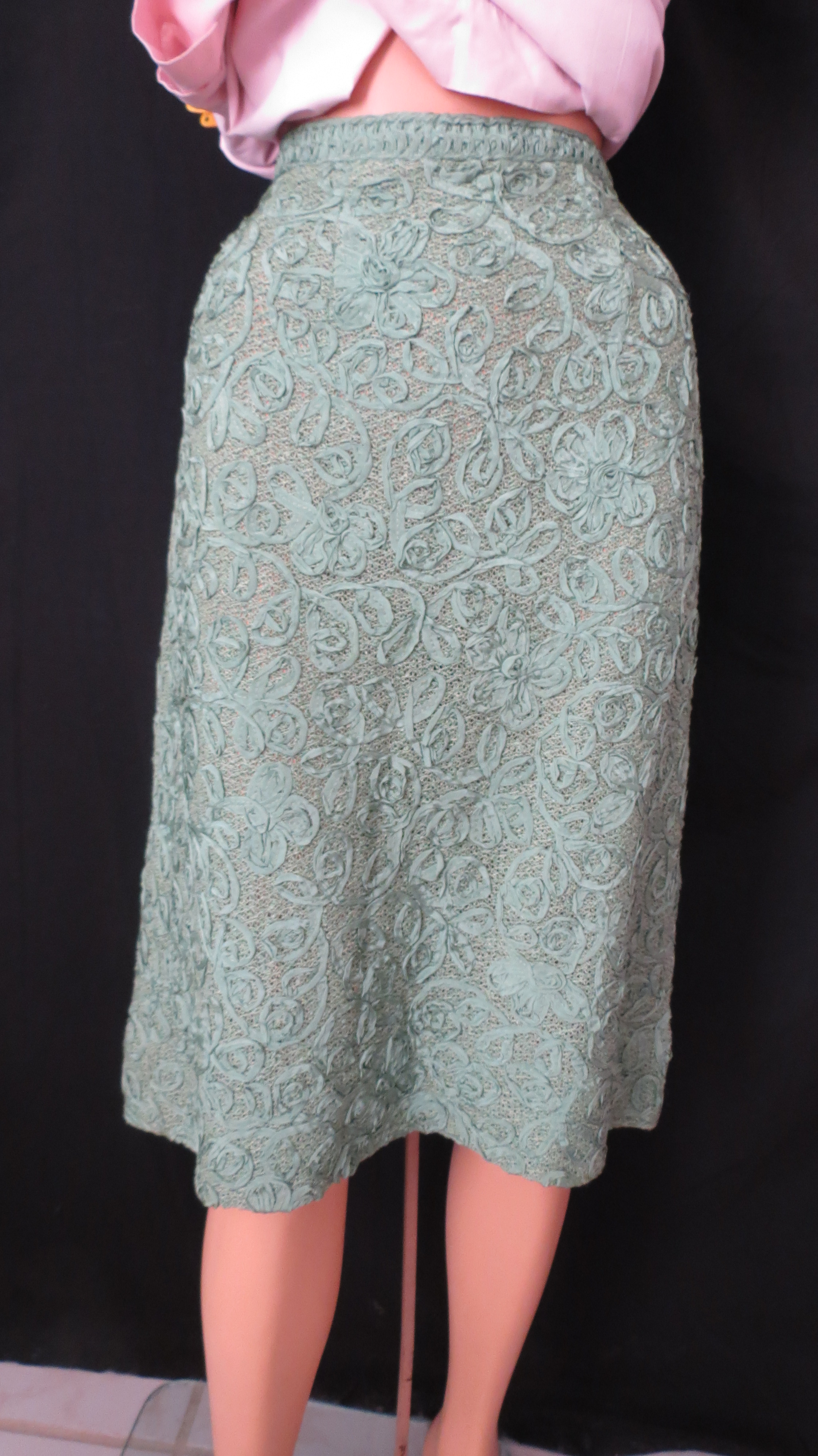
This green pencil skirt is made in a relatively briefly-used but popular fabric which consists of thin, rayon(?) ribbon that is coiled in a continuous design, appliqued onto another fabric base. Imagine it worn with a pretty, fitted blouse. I have a black skirt suit made in this fabric and a family member owned a short-sleeved dress in a gold color, back in the day.

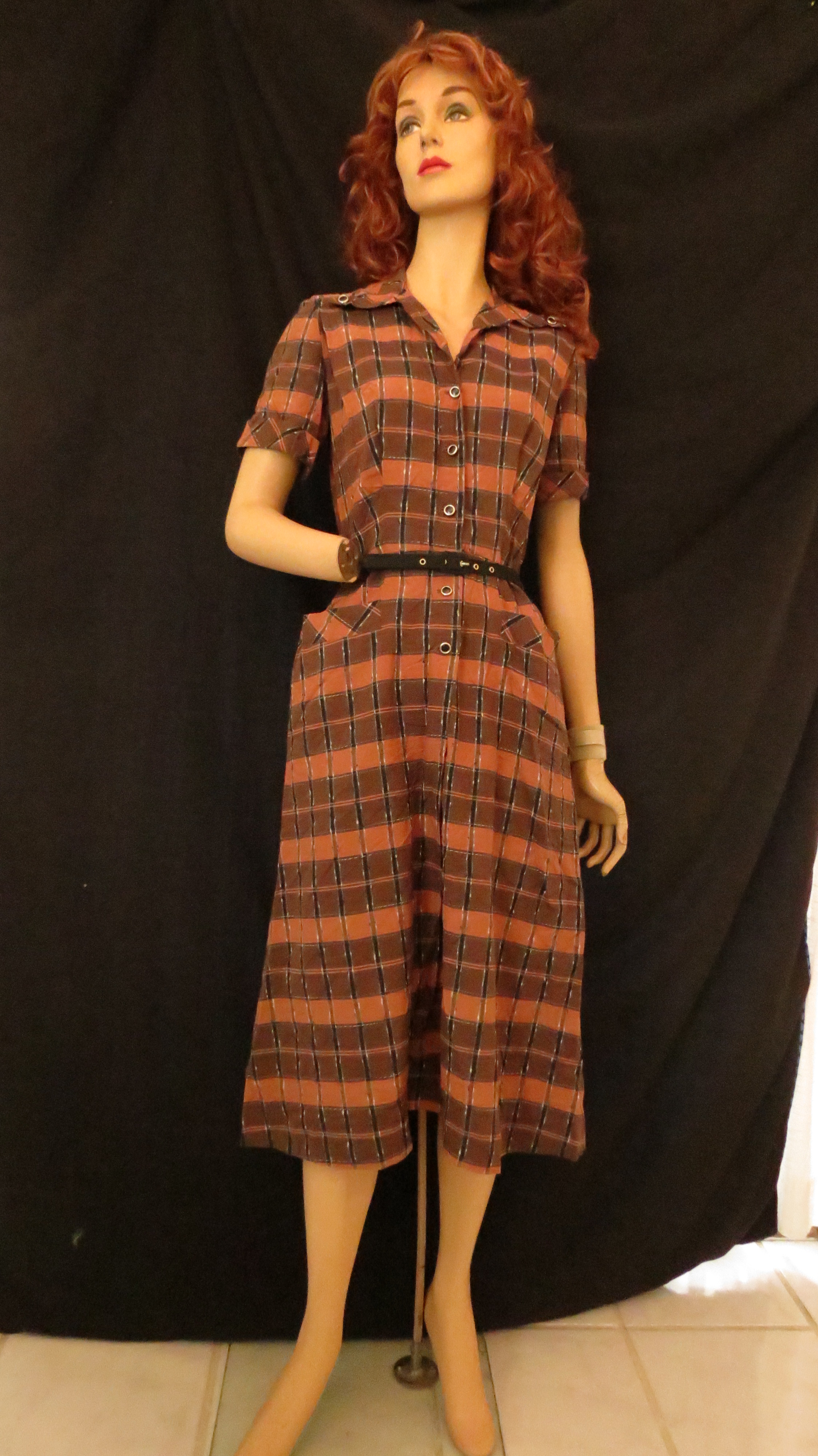
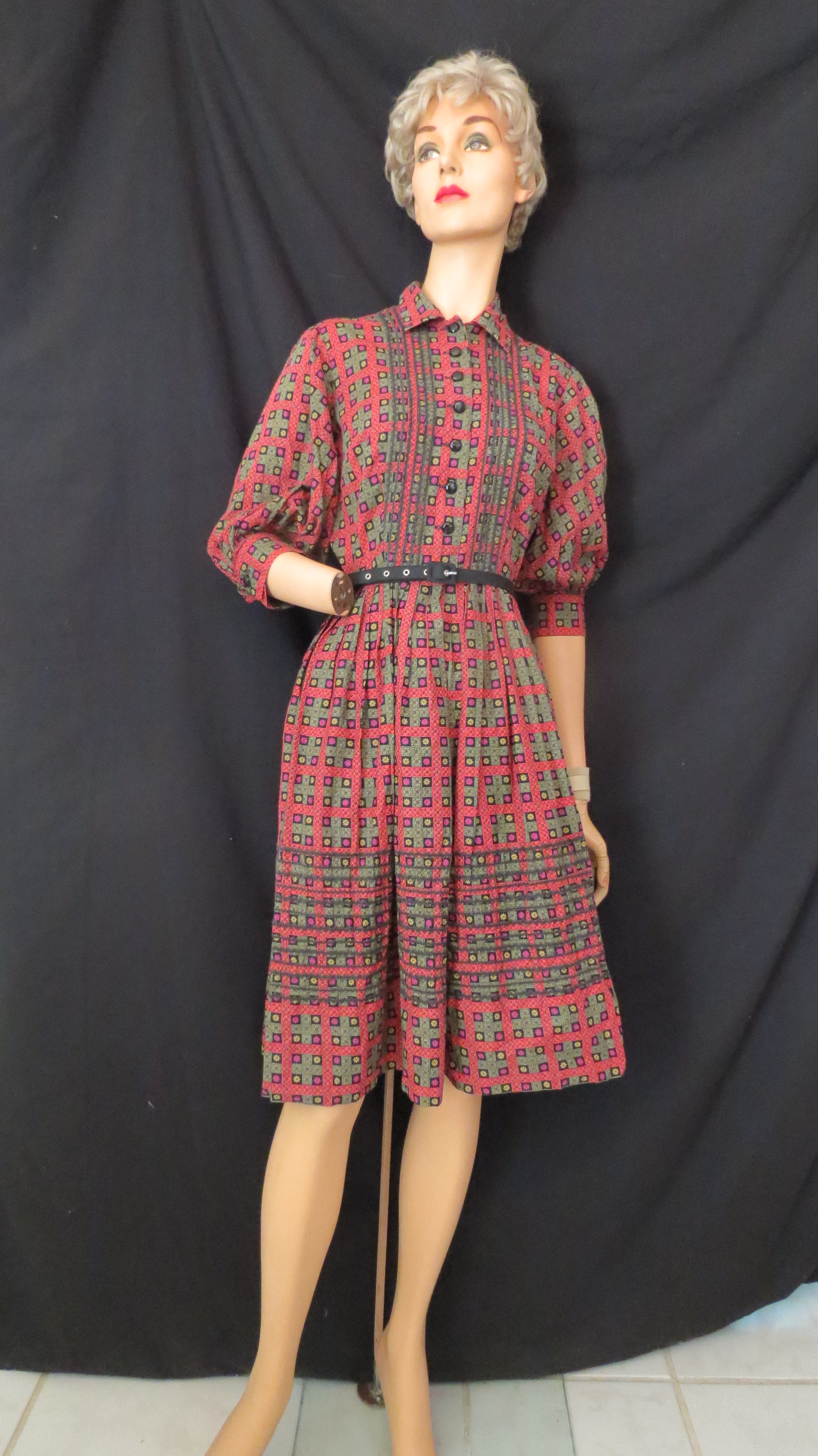
The shirtwaist dress never lost it’s place and continued into the Fifties and beyond in fabrics which ranged from cotton and cotton blends to rayon and silk. The simplest daywear styles continued to be the housewife’s daily uniform. This one is a slightly upscaled version in a more complex print with embroidered trim and tucks.

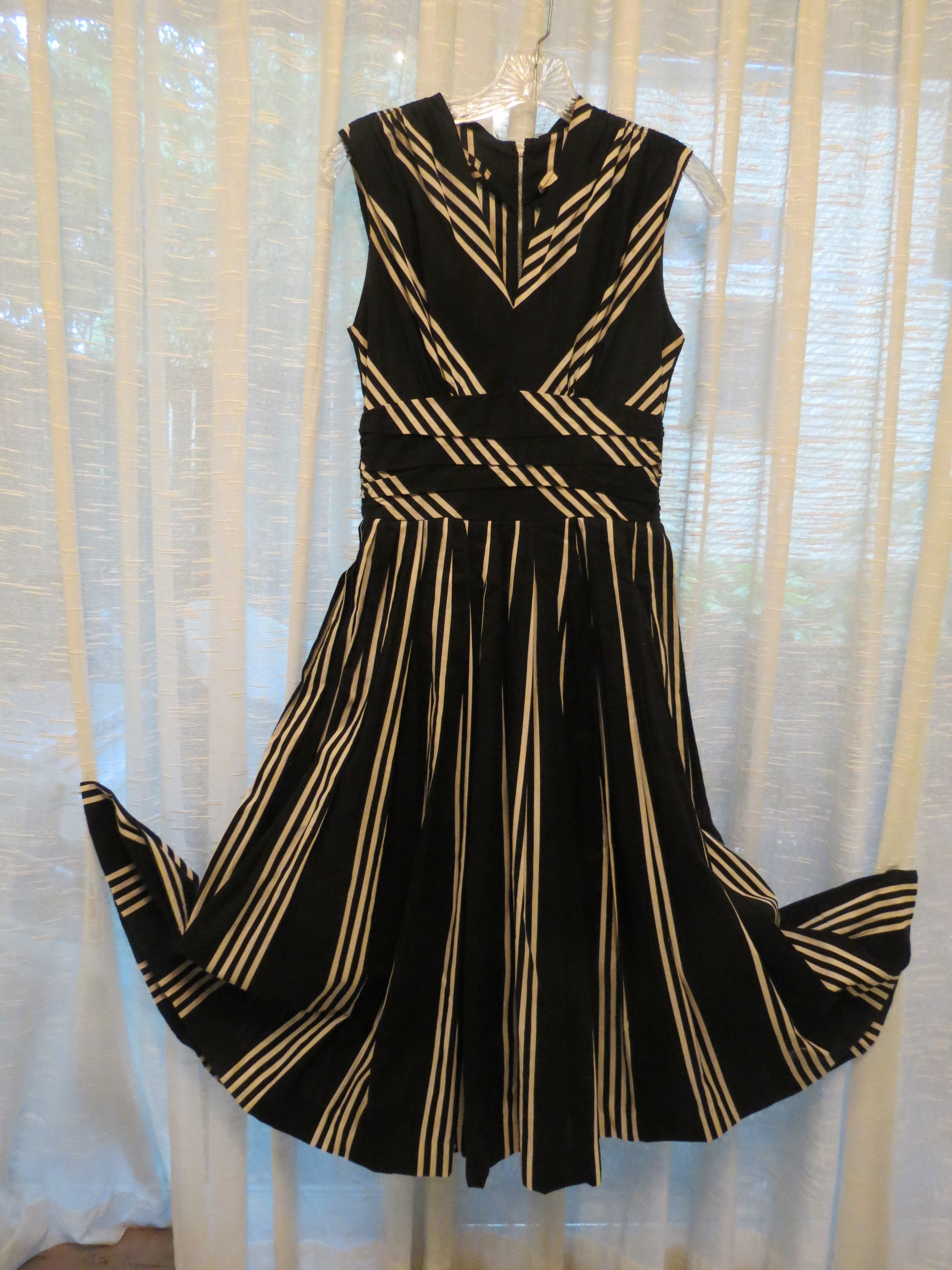
This black and white dressed-up sundress would have been appropriate to go on a date, to the Ladies’ Club, Country Club or shopping in the city. It may have been custom-made, as women and professional tailors continued to use their skills this way though not as much out of necessity as during wartime. The Fifties were about being thrifty but also stylish and having more!

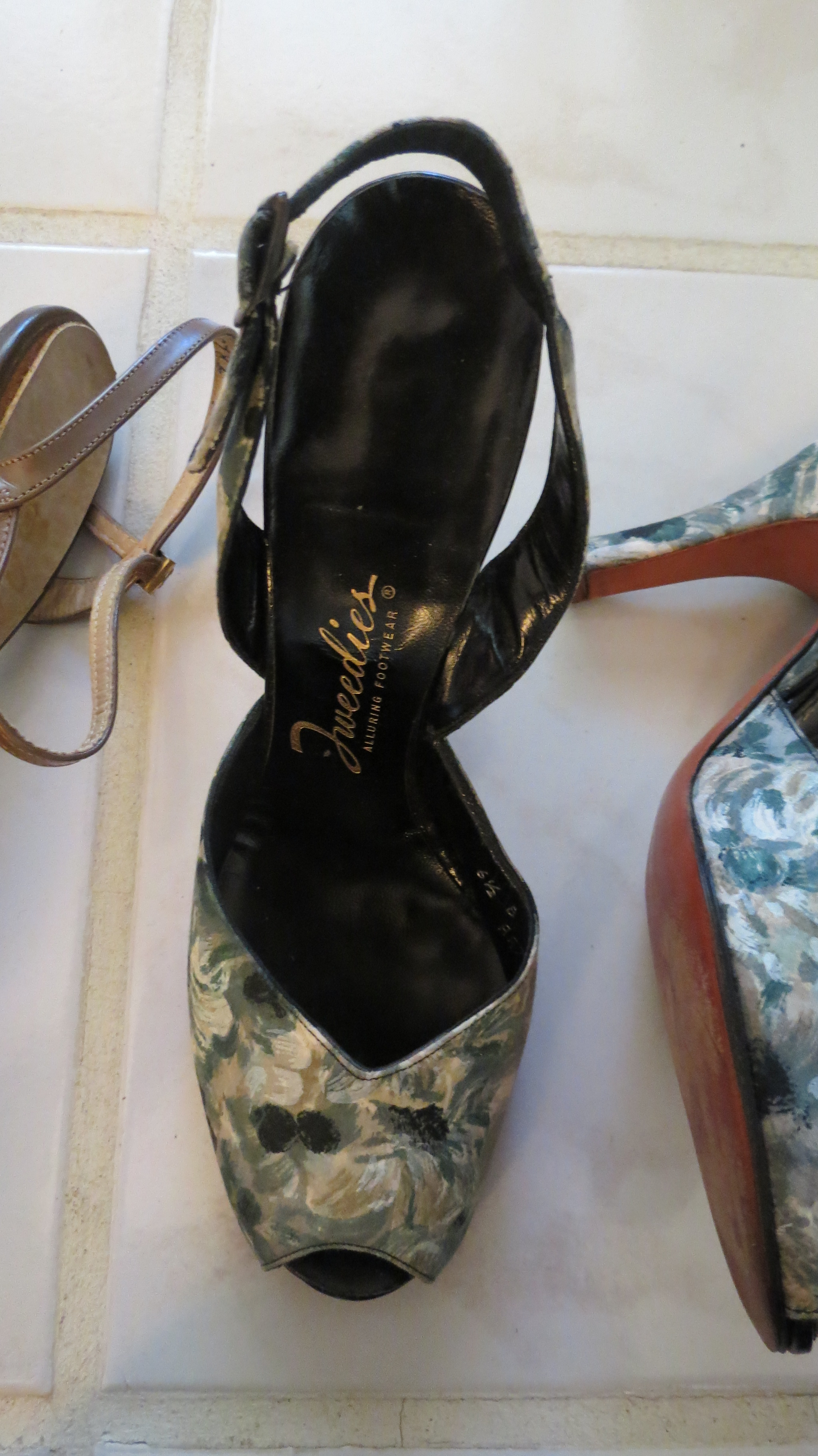
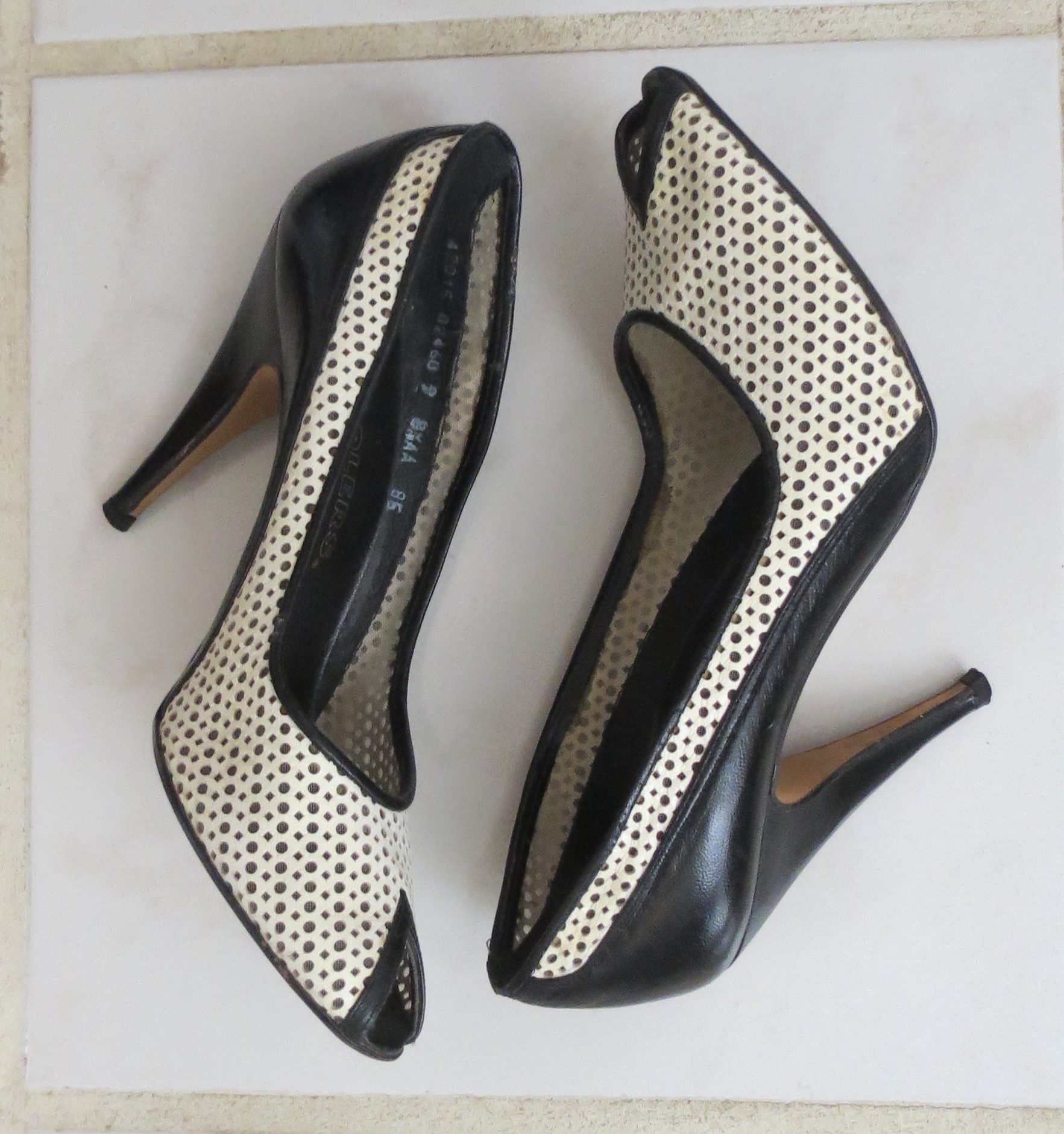
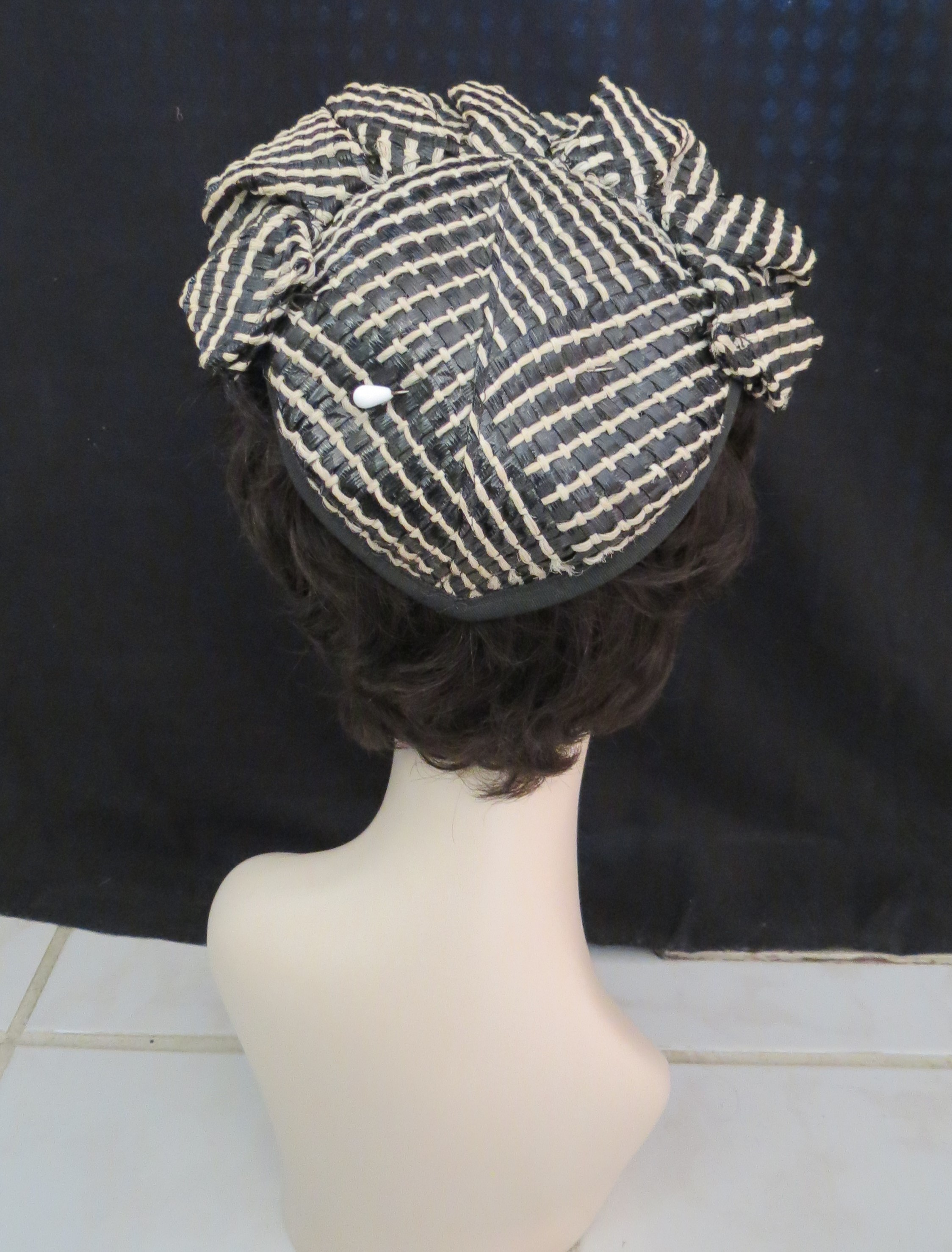
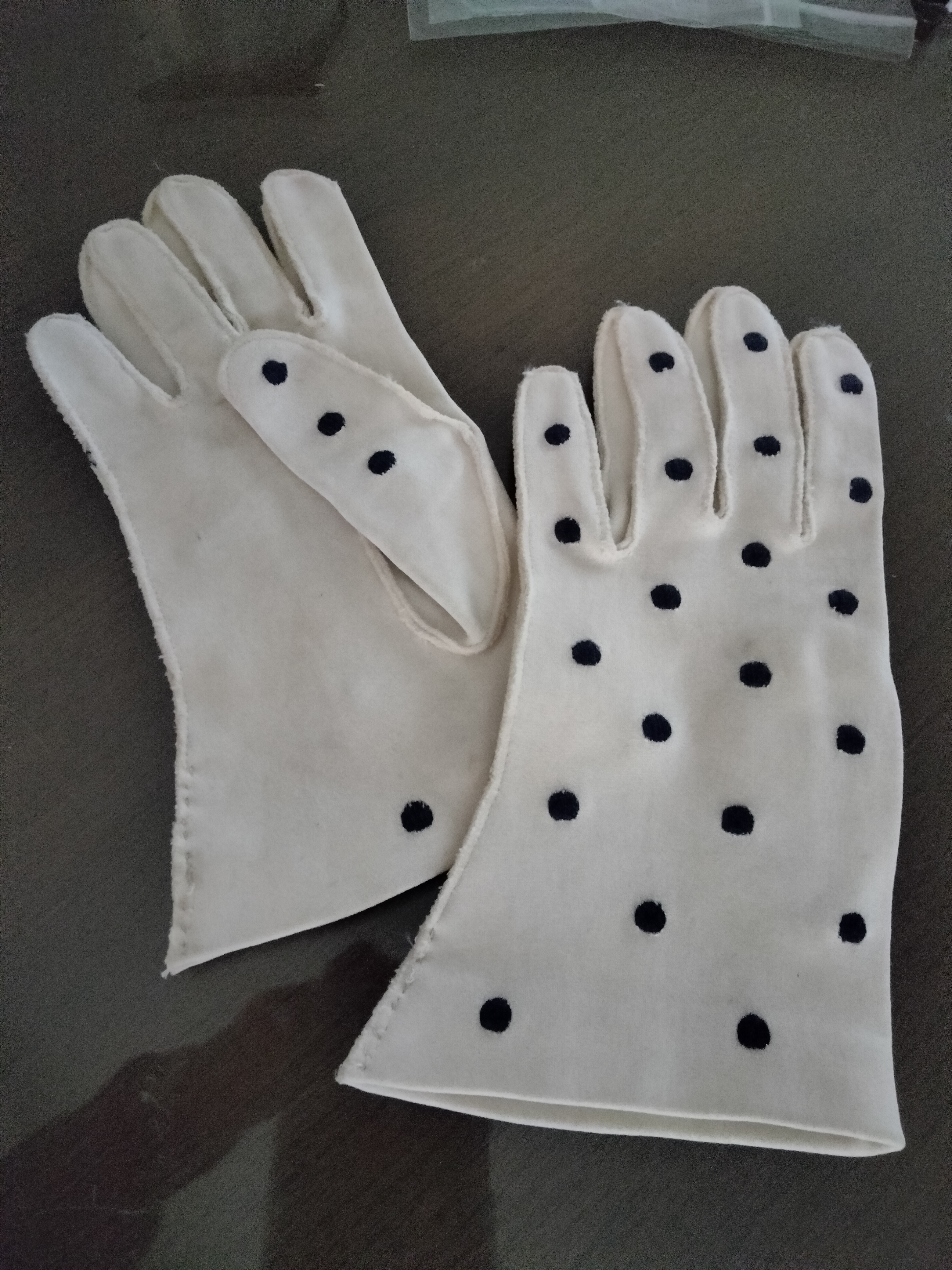
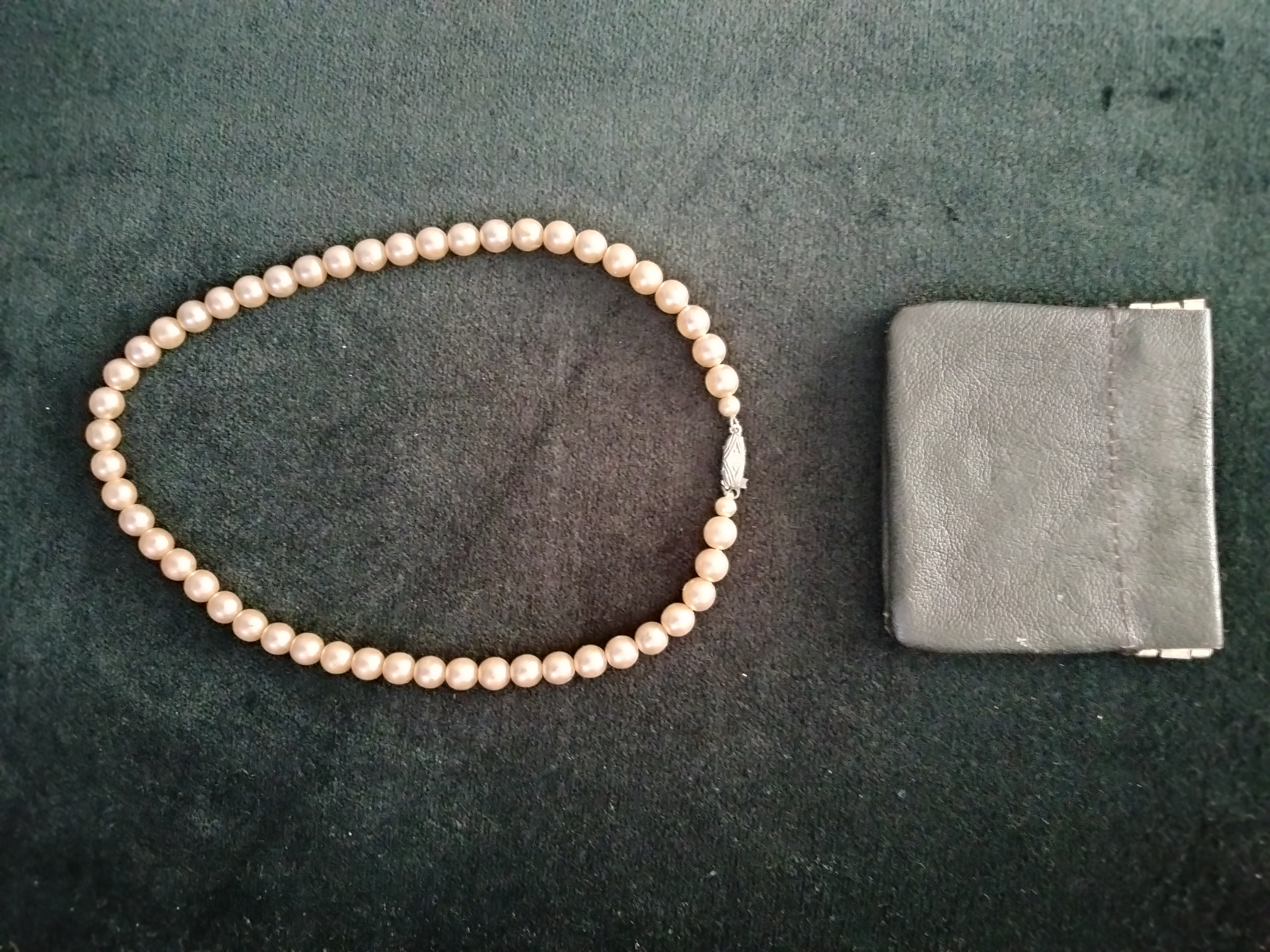
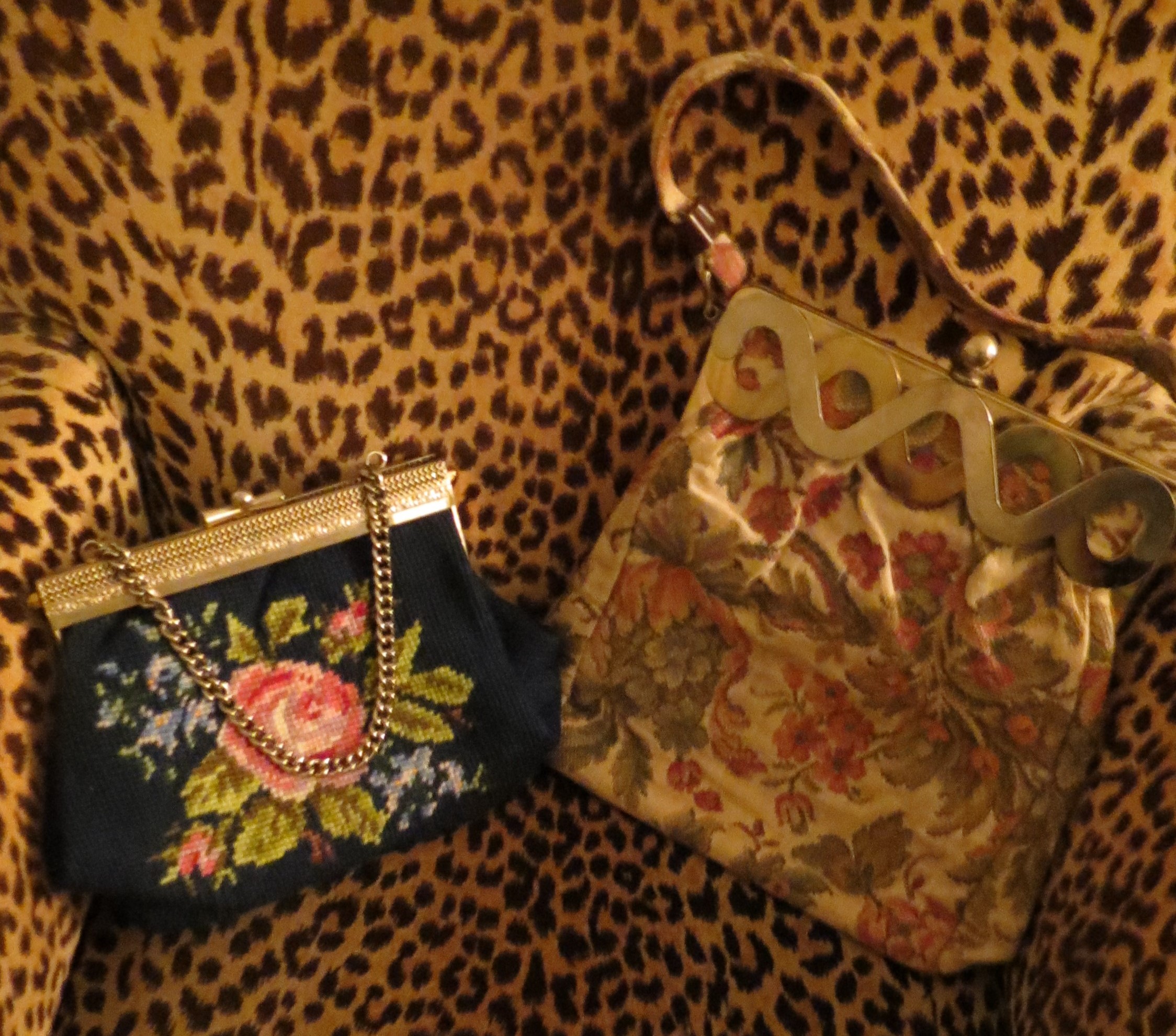
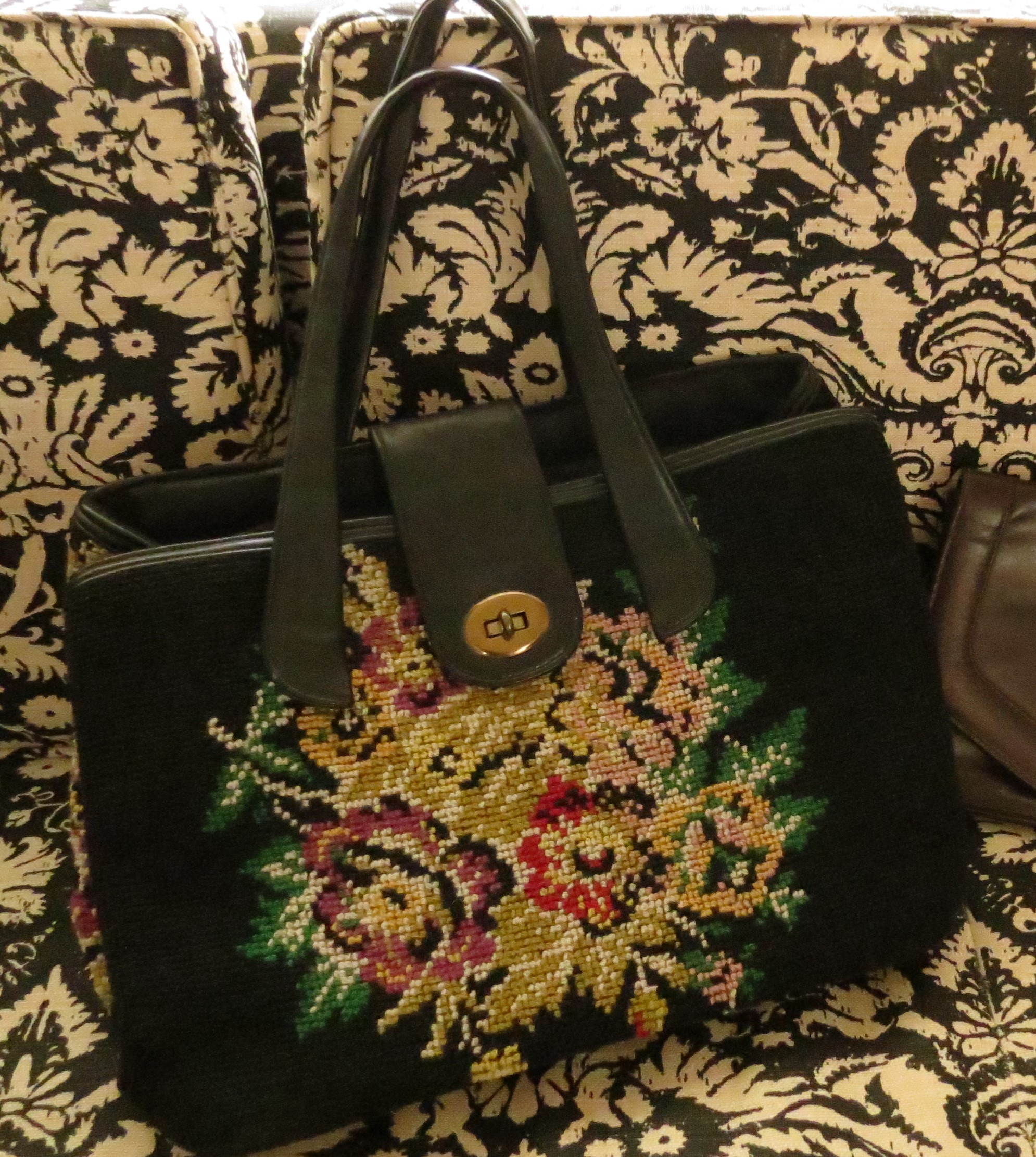
Shoe styles carried over from the 1940’s but with sleeker lines. Pumps were a bit more cutaway and more often had sling-backs. Soles and heels were slimmer. Peep toes continued, which I absolutely love. Hairstyles became smaller and neater again as did hats, which continued to be de rigueur for any well-dressed woman. Also, a pair of well-made gloves in a style which complemented your outfit and a short string of pearls with almost anything from casual to dressy outfits were considered to be necessities for elegant style. Handbags adopted many styles but here are a couple of semi-dressy designs that carry over the classic “tapestry” floral design and introduce the decorative metal frames and vinyl covering which began to be more popular.

Tomorrow we’ll stay in the same Forties to Fifties time-frame but focus on casual separates and trends. Stay tuned . . . . . . . . . . .

MORGANA MARTIN, THE MAGICVINTAGESPY

BLOG: MAGICVINTAGESPY.COM

MORE WONDERFUL TRUE VINTAGE 1940’S SPRING DAY DRESSES AND ACCESSORIES

Some of my very favorite frocks. Wonderful rayon and blended synthetics. Pretty cotton. One sheer, the others opaque and drapey. Don’t you love these prints? Atomic, abstract and floral – big wartime and post-war favorites. Here, also, are some of the handbags, scarves and pumps that might have been worn with them.

Iconic styles, rationing-compliant and “modern” plastic alternatives to leather and wool. Silk and silky synthetic scarves were constant purse accessories. A few items carry over from the 1930’s – a few point toward popular styles as we go into the 1950’s. Since we’ve had such a long, cold winter, tomorrow I will show a few of the coats and outdoor accessories which might have accompanied 1940’s dresses outside the home. Stay tuned . . . . . . . . . . . . . . . . . . . . . . . . . . . . . .

MORGANA MARTIN, THE MAGICVINTAGESPY

BLOG: MAGICVINTAGESPY.COM
1970’S – 1990’S DOES 1940’S. TRUE VINTAGE RETRO DRESSES AND JUMPSUITS.

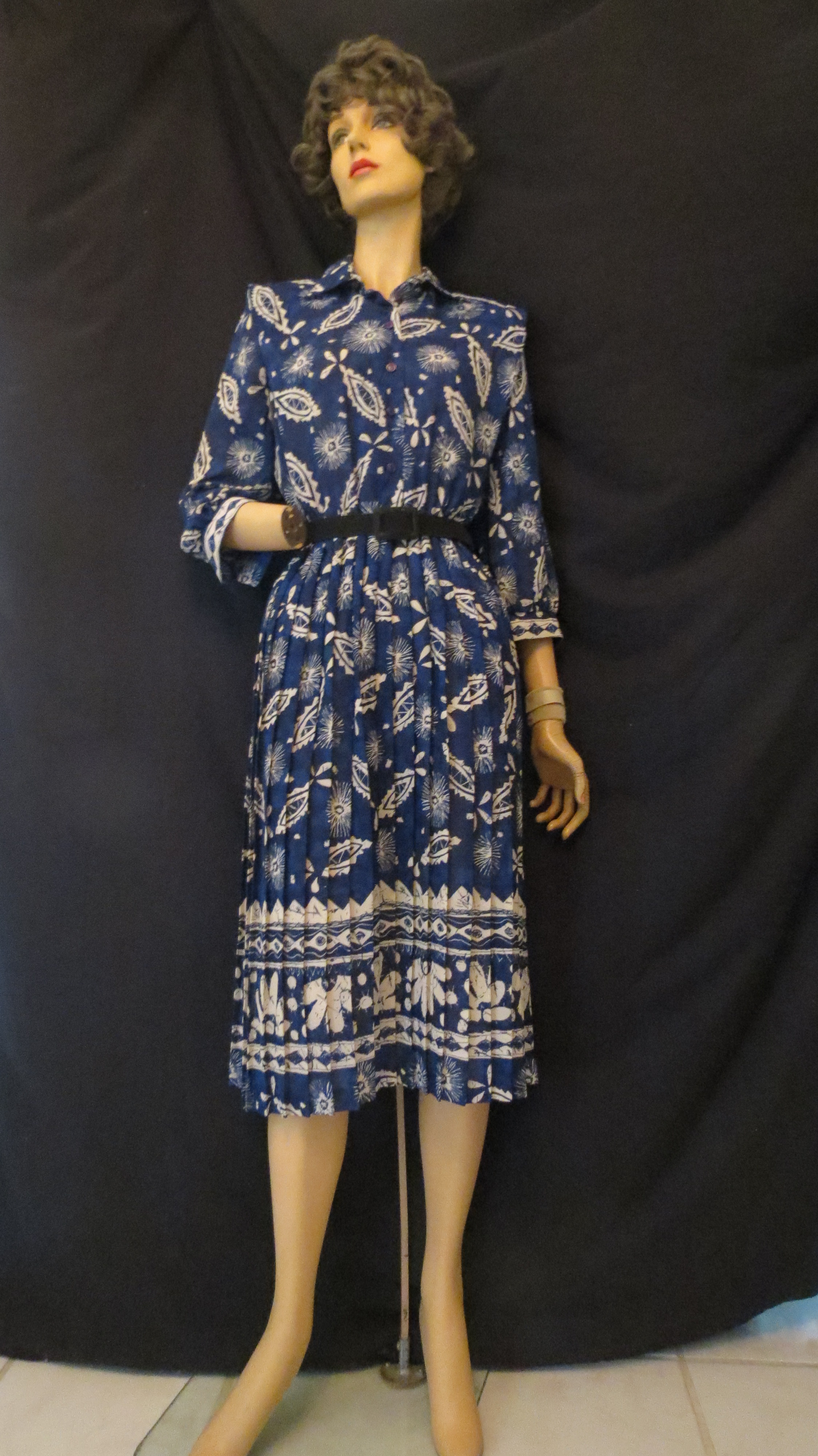
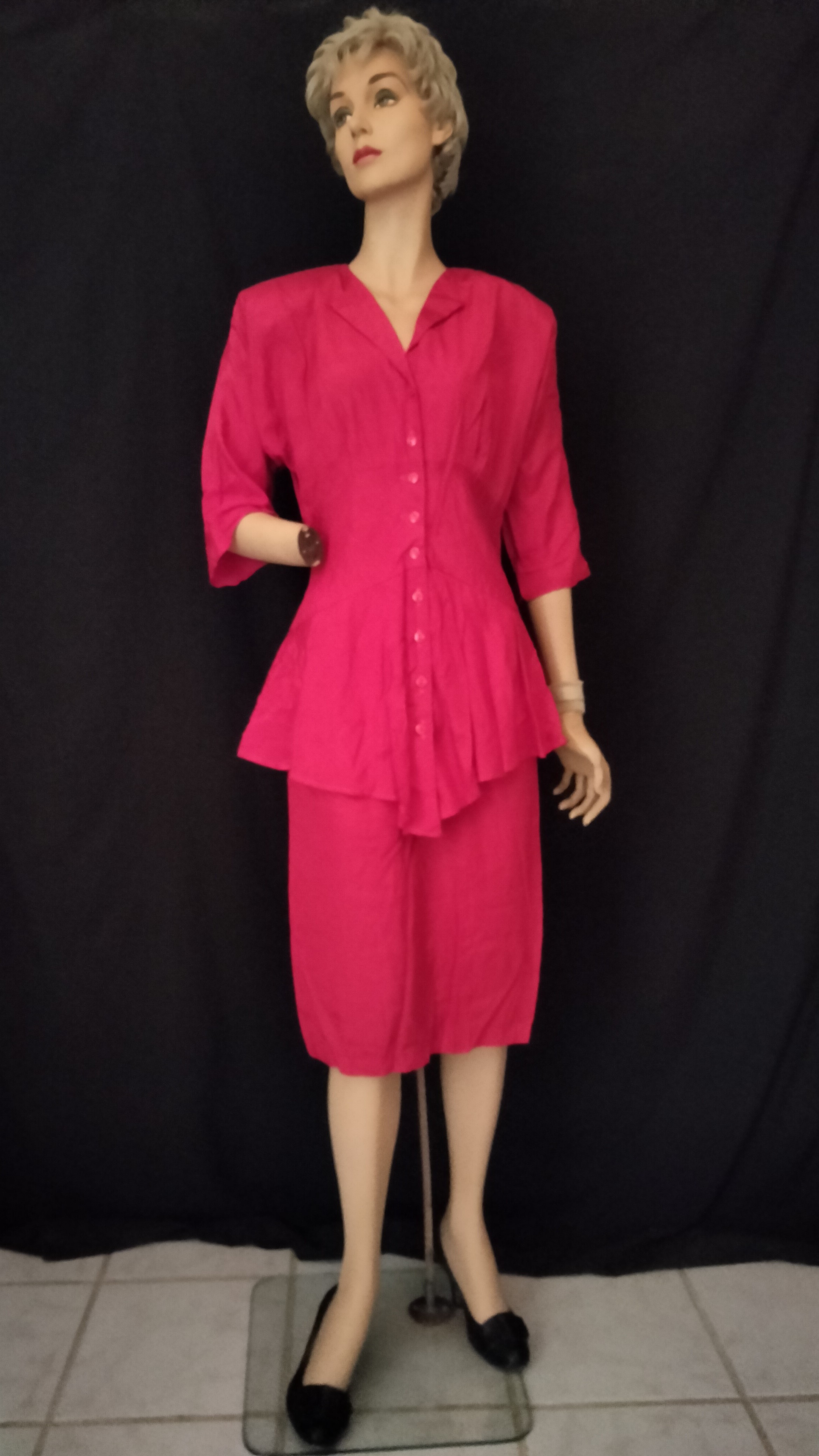
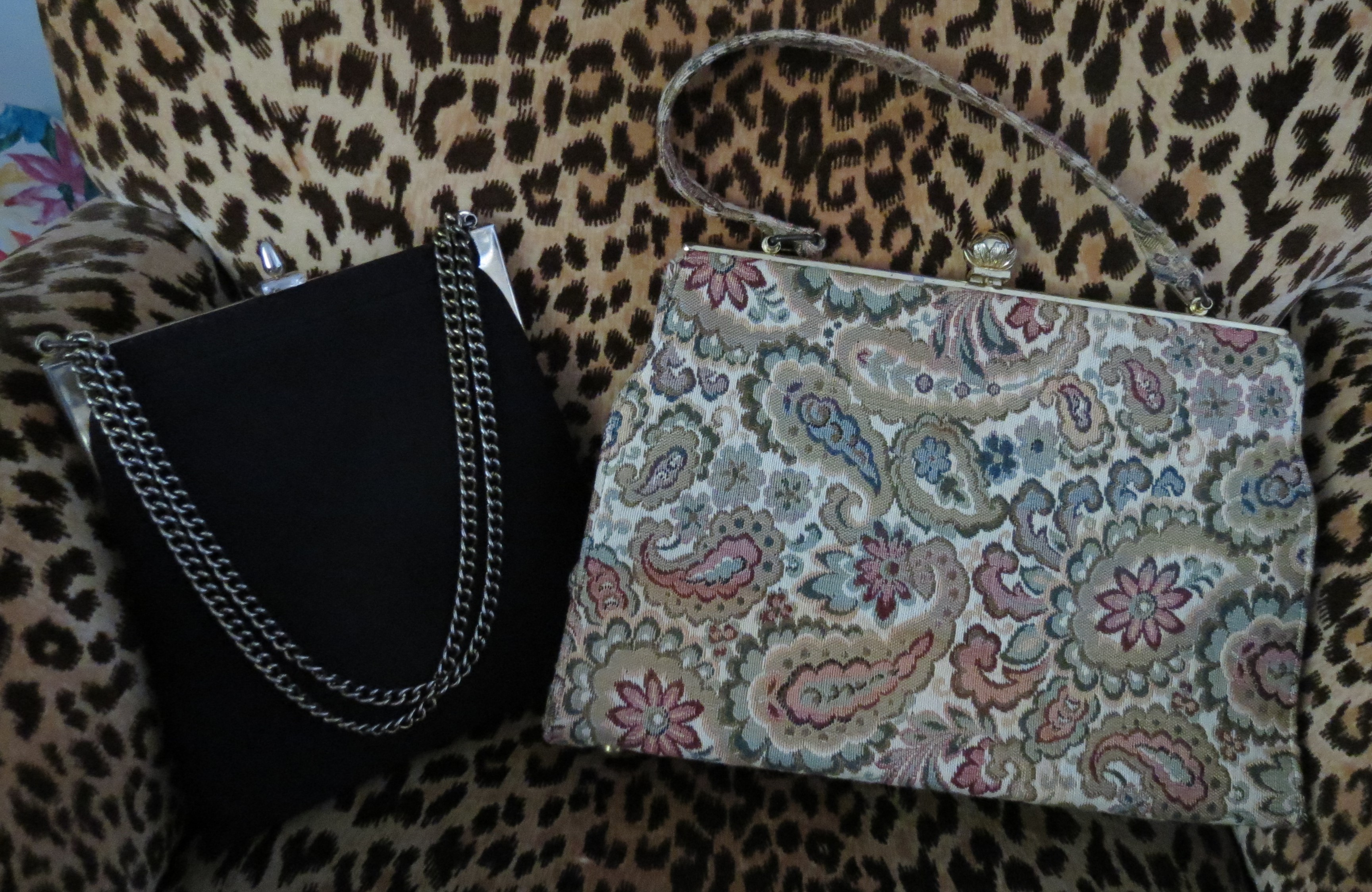
The Seventies, Eighties and Nineties produced a lot of popular retail styles that imitated 1940’s designs. Some were very well done and others not so much, to be charitable. As I’ve said, it’s hard for me to call these decades true vintage but, technically, they are. The two purses echoing shapes and tapestry design popular in the Forties might have shown up in the 1960’s.

All of these could be fun and the reproduction details became best during the mid-1980’s but, unfortunately, modern polyester fabrics and production techniques lowered the quality a lot. No valid comparison, in my opinion, to true vintage from the 1940’s – even the home-sewn versions that were made from older clothing during rationing.

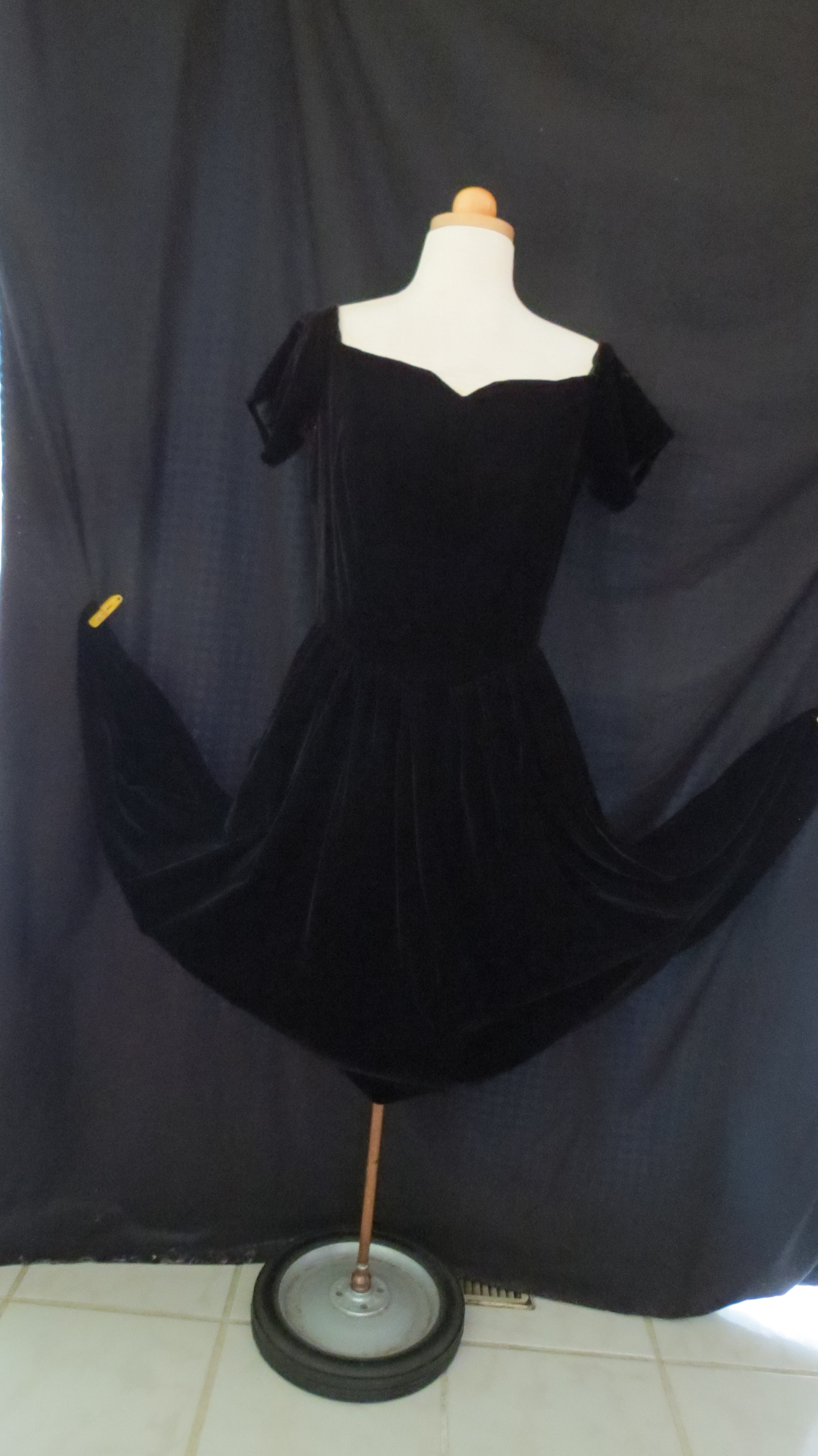
Of this group, the best-made is the black velveteen custom-tailored frock from the 1980’s or 1990’s. It was made by an expert seamstress and is worthy of being called a reproduction in the Post-war New Look style. The retail day-dresses are versatile and the prints are great – pretty faithful to authentic ones that I’ve come across. I always love the padded shoulders and cinched waistlines that are very flattering but were also a nod to the style of military uniforms. Jumpsuits were just for fun in the Seventies, but always are inconvenient. I suspect that the jumpsuits worn by women working in the war effort during the Forties had drop seats, which makes it a little bit better. I do have a pair of high-waisted slacks from the ’40’s that have an ingeniously-designed drop seat that looks quite good.

So, these clues were fun to find and seemed worthy of collection though I always prefer the real deal. Speaking of which, I just came across another archived file of true vintage 1940’s dresses which I will show tomorrow. Stay tuned . . . . . . . . . . . . . . . . . . . . .

MORGANA MARTIN, THE MAGICVINTAGESPY

BLOG: MAGICVINTAGESPY.COM
TRUE VINTAGE 1940’S CASUAL DRESSES

We’ll begin with a pretty, white cotton eyelet dress that was home-sewn in 1940. It’s a lovely dress for town or a picnic, but it was made to be a wedding dress. Coming off the Depression years and with war in Europe, it was a very modest but hopeful costume for entering a dream future.

After 1941 and the United States joined World War 2, fashion became much simpler and plainer, but very practical. Shirtwaist housedresses and day dresses were the general uniform for women who didn’t wear specific uniforms related to their work. Dancing, as well as movie-going, were common inexpensive activities that helped people escape the worries and fears of their daily lives. Separates became more popular. Knitwear and wider gored skirts allowed movement while jitterbug was the favorite dance of those young enough to do it.

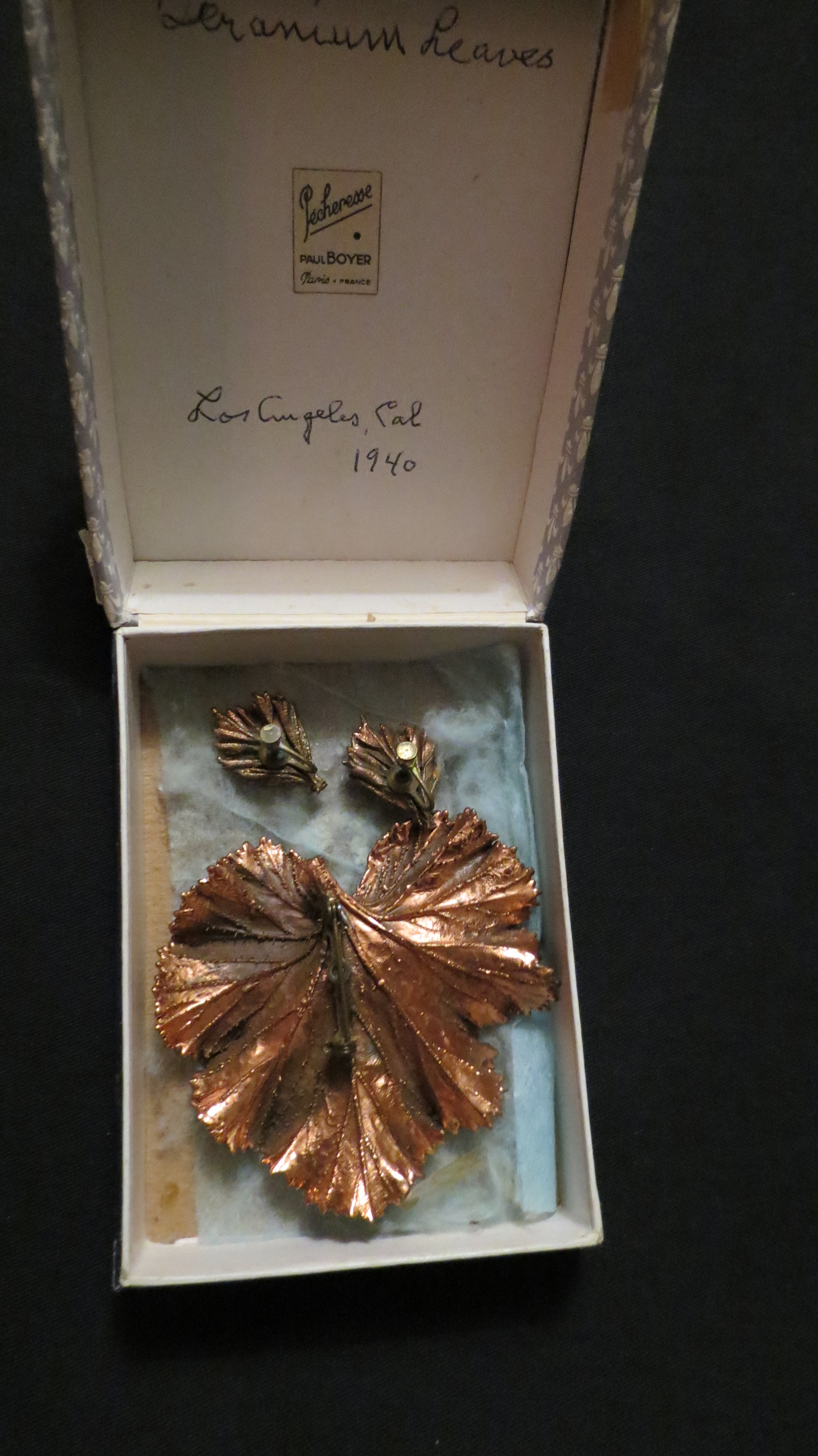
Plastic “gems” appeared in costume jewelry pieces, as well as preserved natural leaves. Even during the Depression and Wartime, a little bling always lifted spirits and enhanced any outfit. Tomorrow I’ll cover a 1940’s casual fad that made fashion more interesting during that time. Stay tuned . . . . . . . . . . . . . . . . . . . . . . . . .

MORGANA MARTIN, THE MAGICVINTAGESPY

BLOG: MAGICVINTAGESPY.COM
TRUE VINTAGE 1940’S BETTER DAY-DRESSES AND ACCESSORIES

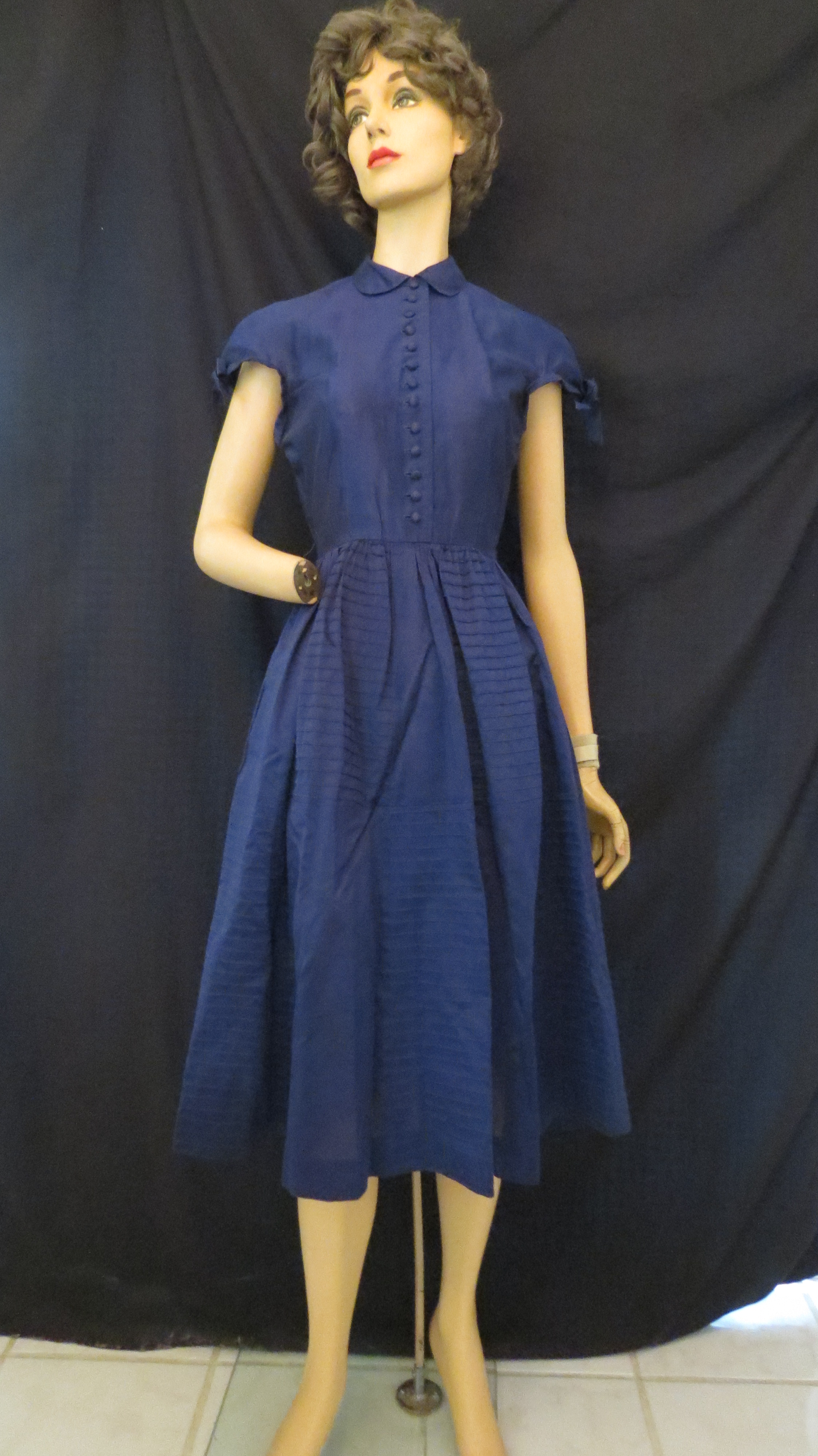
I had planned to show more dresses this morning, but my computer suddenly won’t upload more pictures. So, we’ll stick with these beautiful frocks today. The one above is from the Post-war period, I would guess, though some longer hems were also present before WWII started.

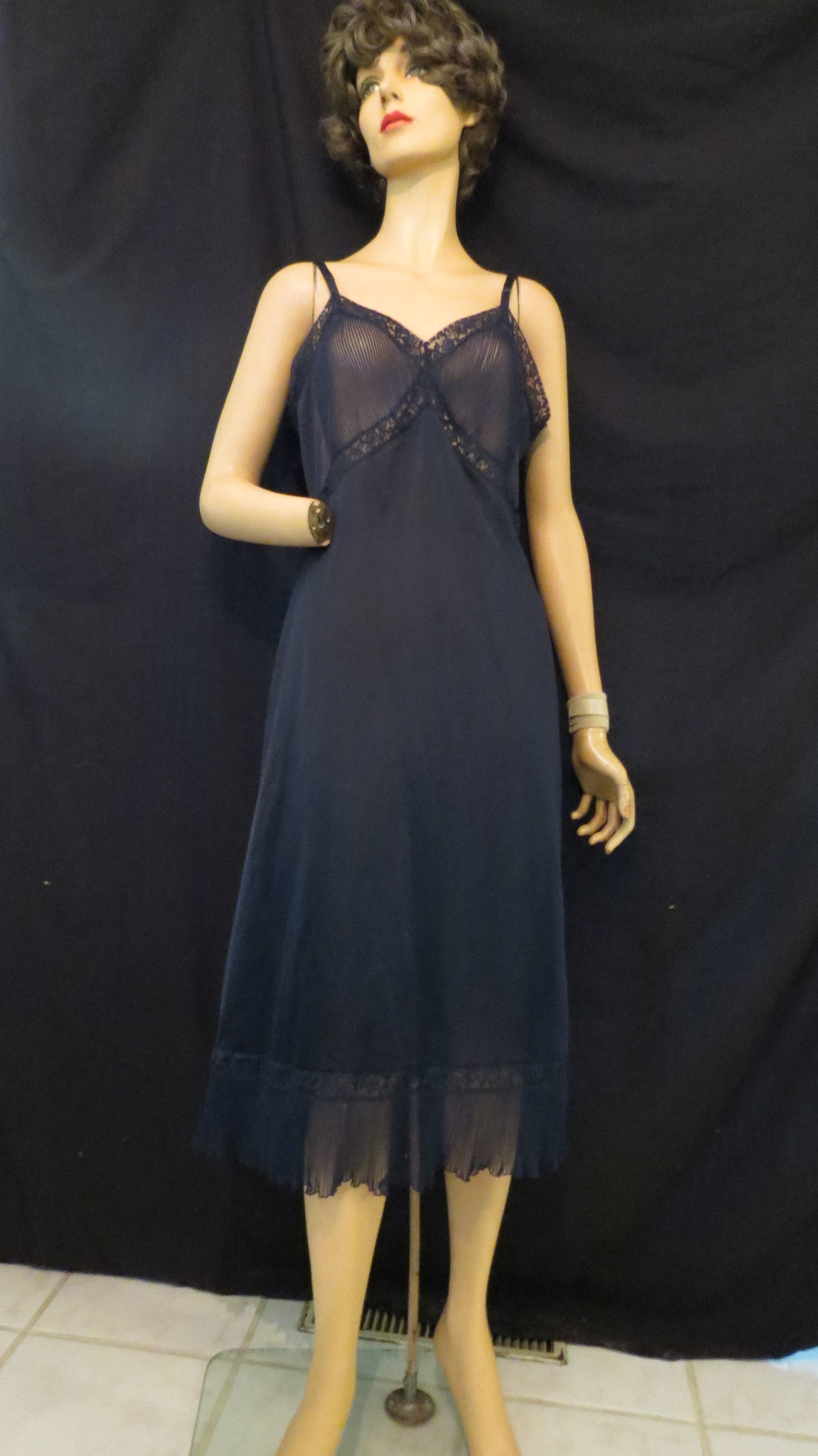
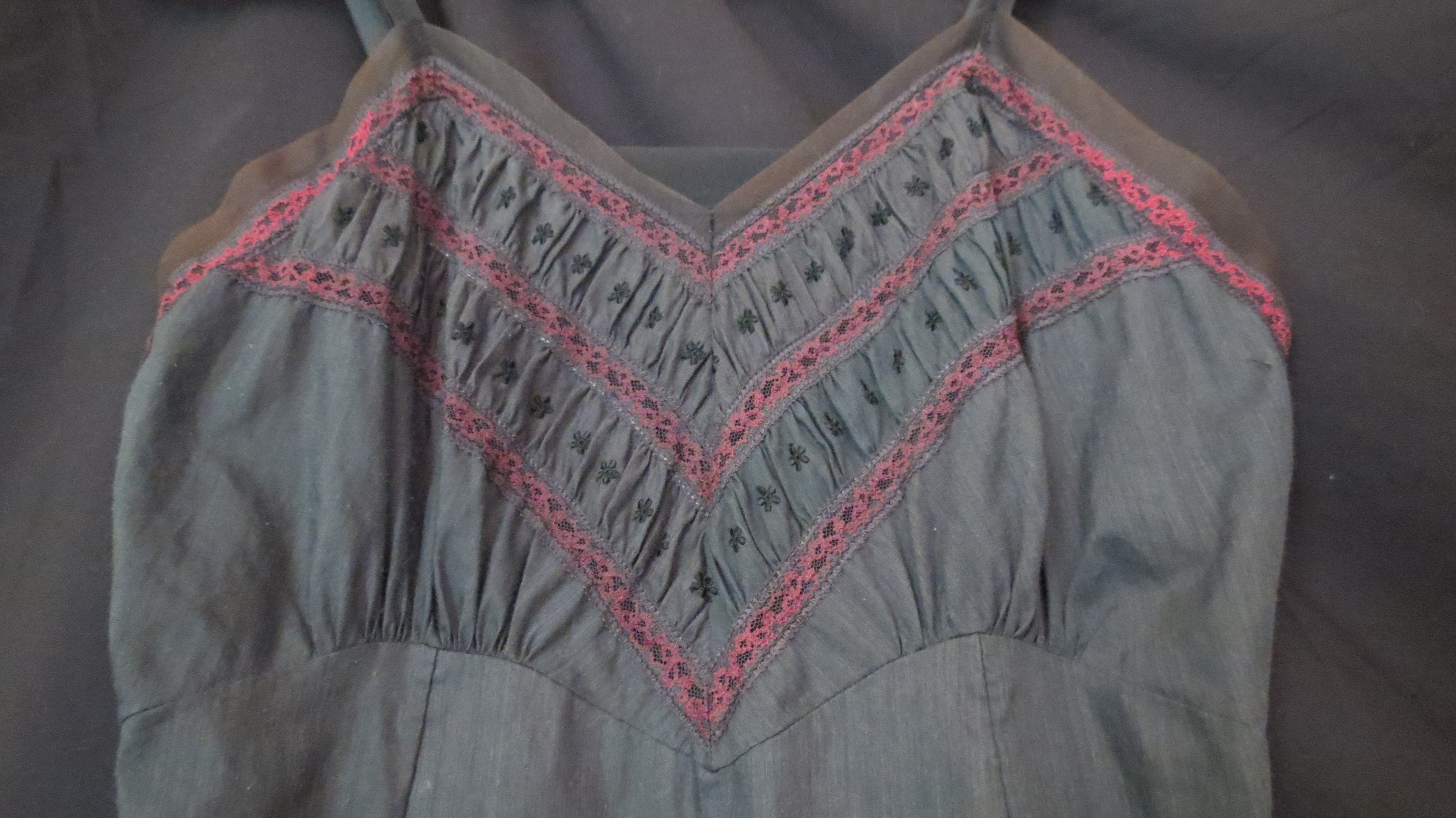
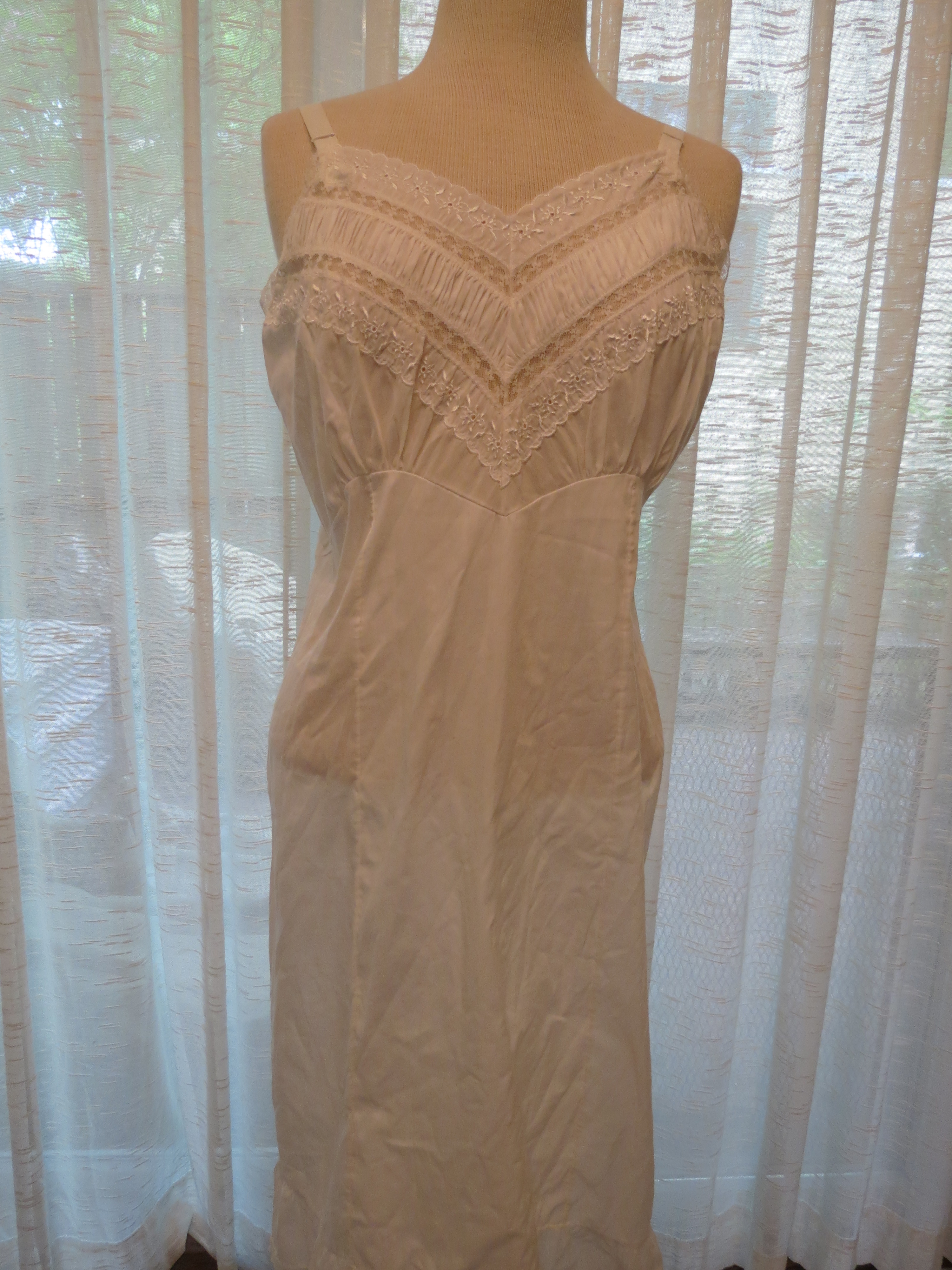
A lovely nylon slip like the one above might have been worn with it.

The mid-blue dress is made from a stiffer fabric and is from earlier in the decade. Cute and more girlish, but both are special – dressier daywear.

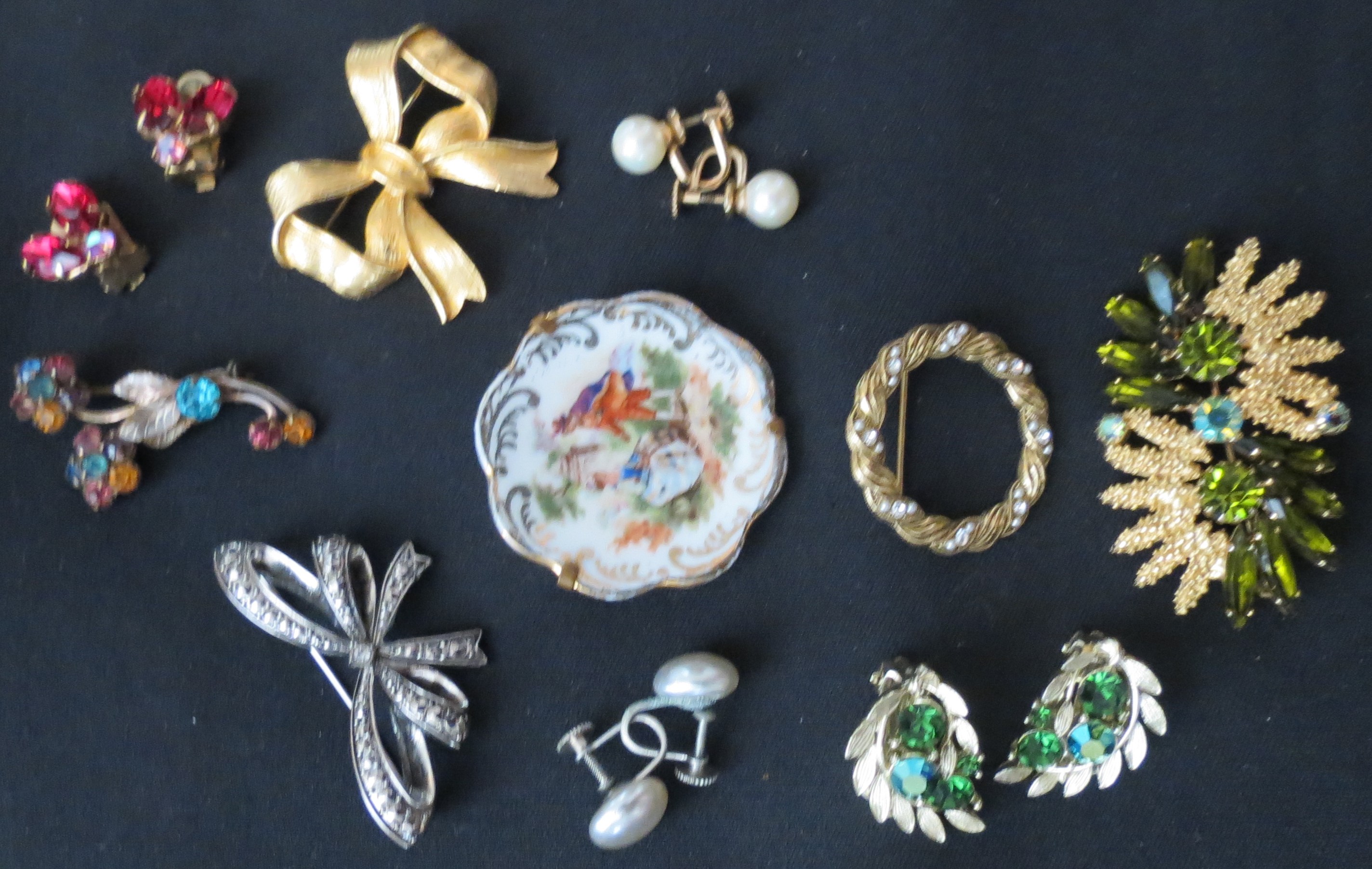
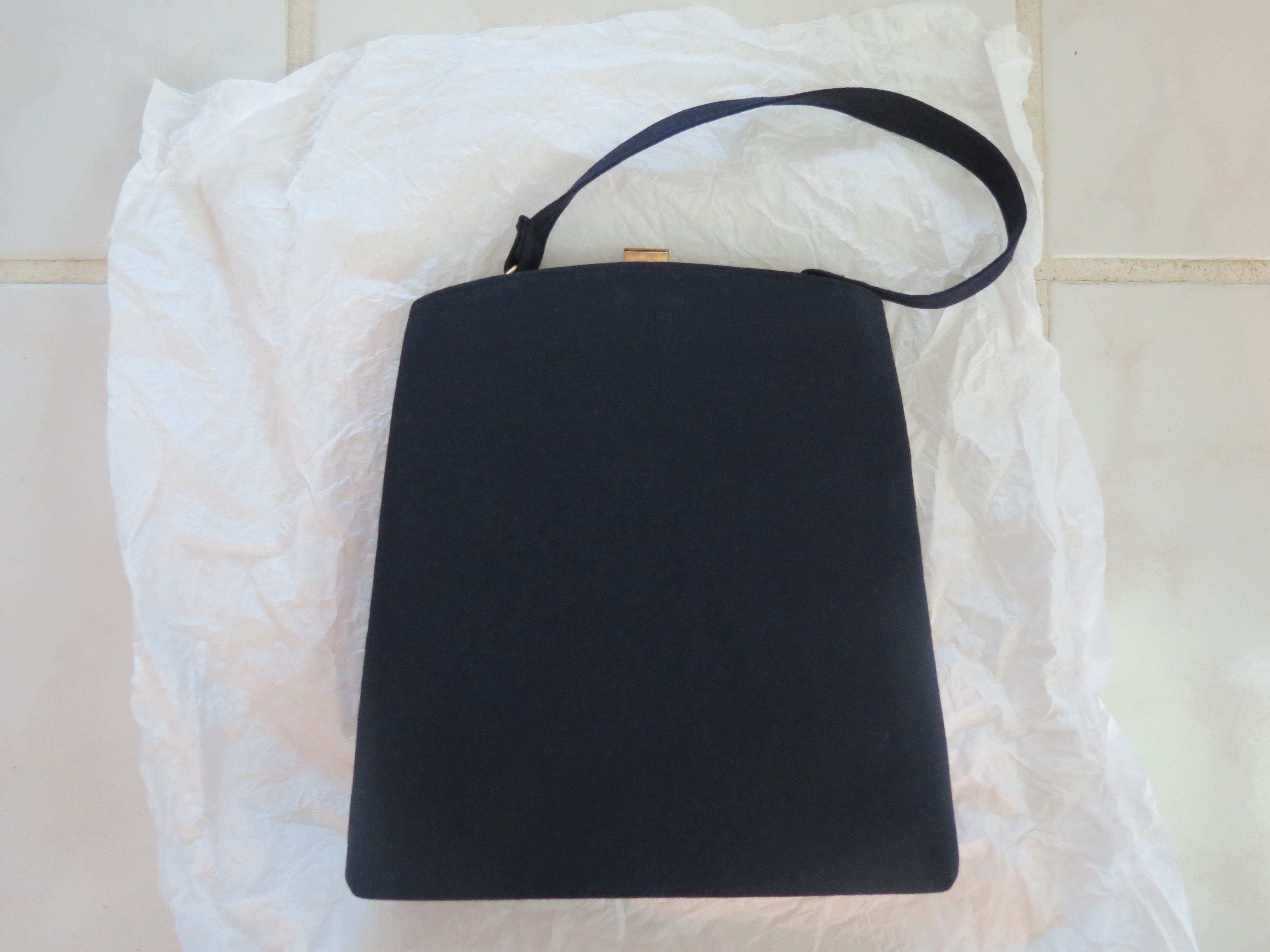
Mid-century costume jewelry pins and brooches like the ones in this picture, especially those on the left side, might have been worn with dresses like this and a dark navy handbag like the one above is a nicer 1940’s style with a fabric body and strap.

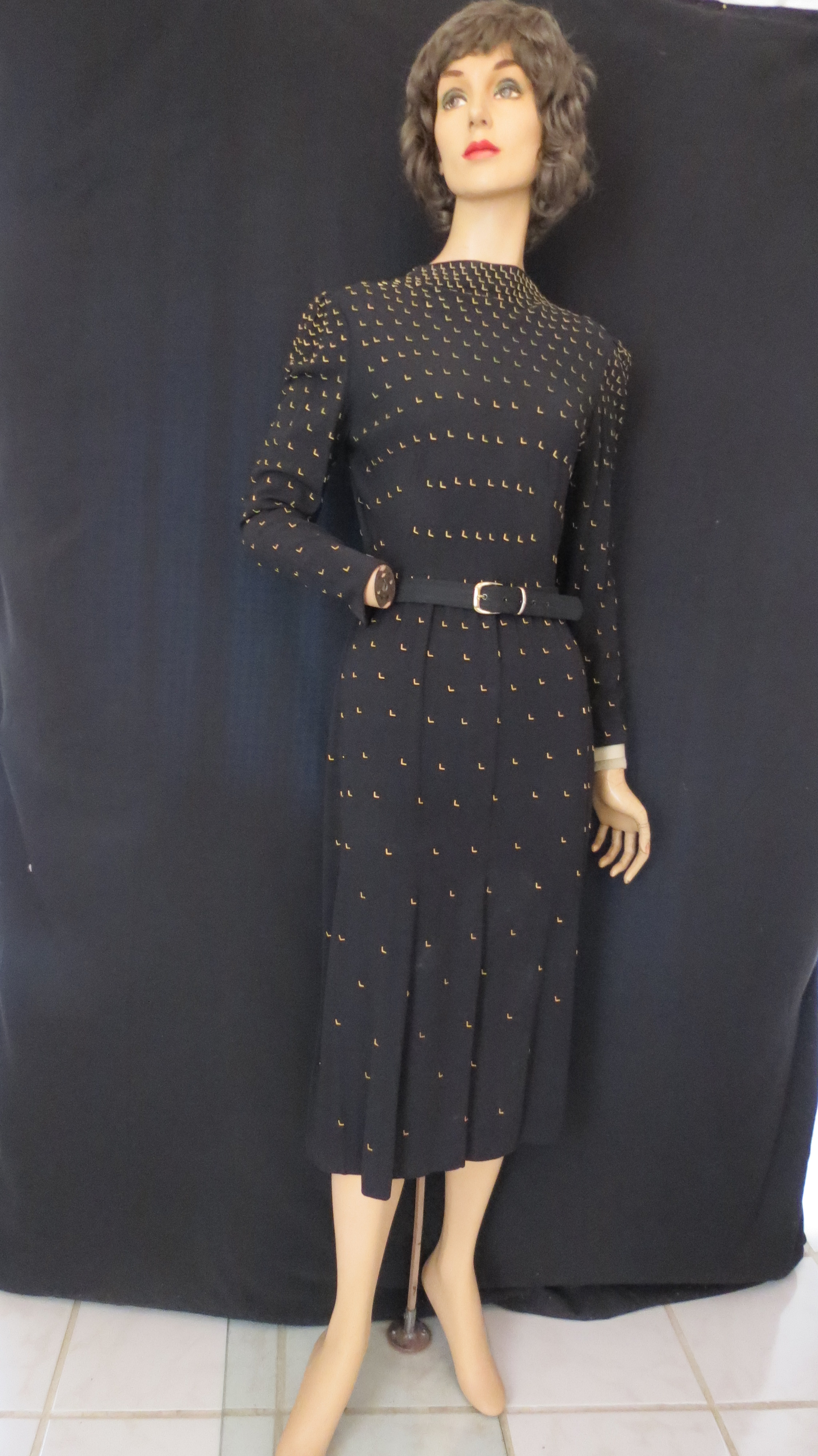
This final black frock is probably meant for cocktails, dinner or evening, though very tailored. It comes from the early Forties or perhaps the Thirties, with it’s Deco-style decoration with metal studs.

So, this is a little wardrobe trip from the pre-war and, possibly, the post-war 1940’s. Some of the costume pins also span the decades from late Thirties to early Fifties. Tomorrow I’m sticking with the same era, but focusing on more casual styles. Stay tuned . . . . . . . . . . . . . . . . . . . .

MORGANA MARTIN, THE MAGICVINTAGESPY

BLOG: MAGICVINTAGESPY.COM
LATE 1930’S DAY AND DRESSIER FROCK and ACCESSORIES

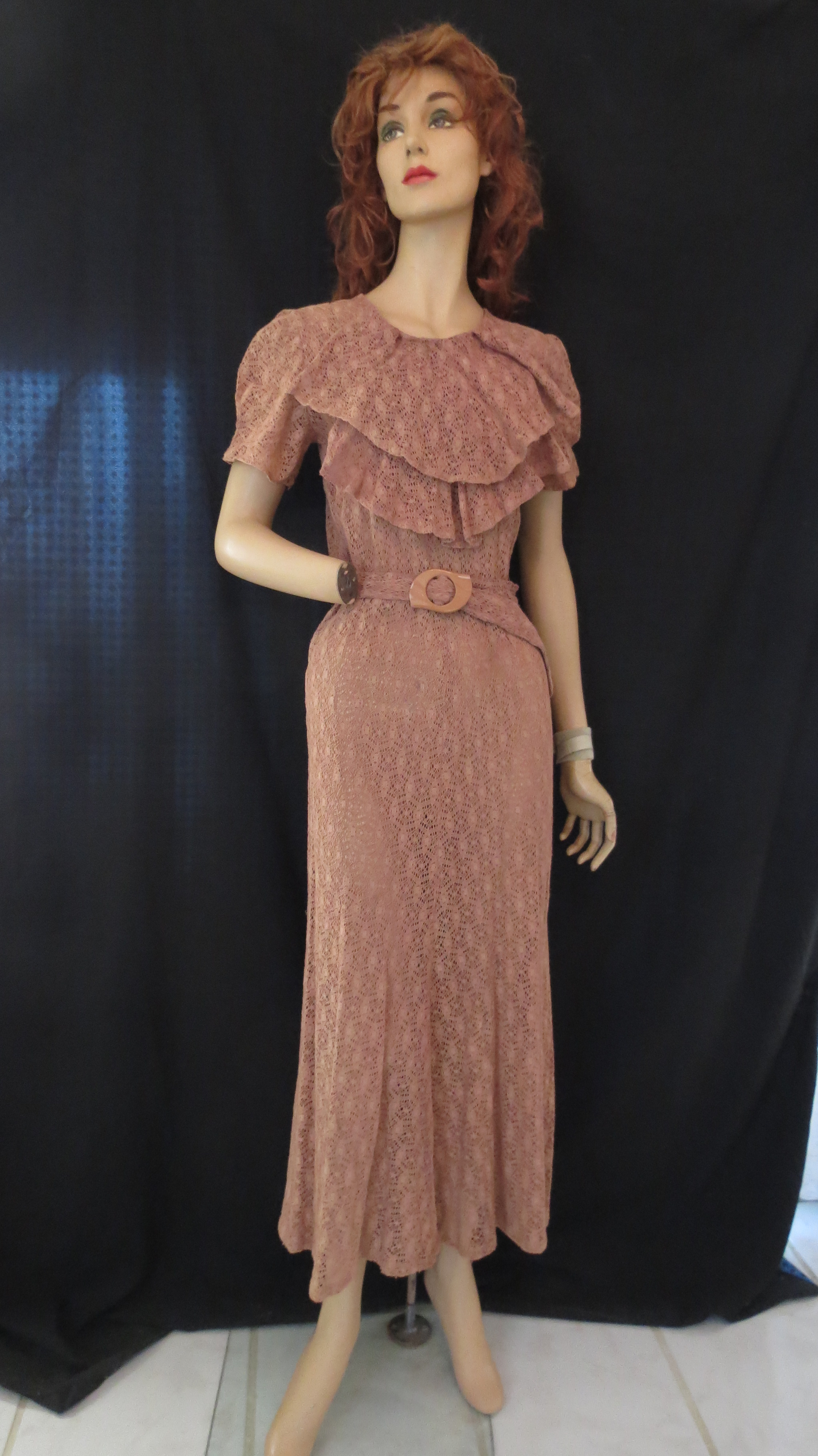
Too many photos to do both decades together! I’ll spread them out over 2 or 3 days instead. Here are a couple of pretty 1930’s frocks and their accompaniments. First, one that our Depression Era gal might have worn to town. Perfect for shopping and a movie. It’s a lovely crocheted lace over-dress with a matching acetate satin slip underneath. Look at the celluloid belt buckle, also died to match.

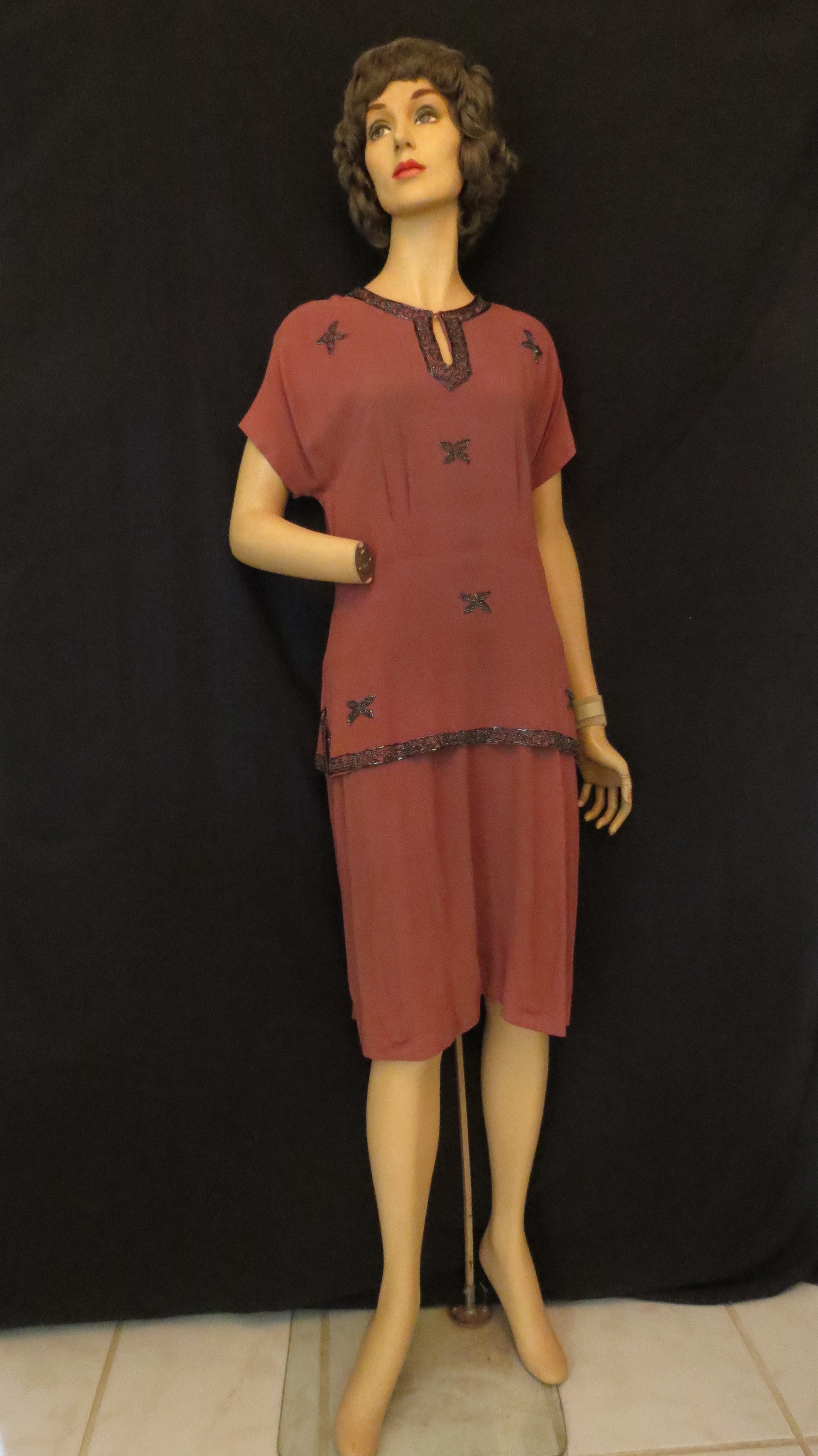
The second dress is a rayon sheath with an over-blouse look and Art Deco beaded decoration. She might have worn it to cocktails, dinner and dancing later. Probably, the hemline would have been midi-length on her figure. An acetate slip underneath would have enhanced the fit and it has such unusual decoration on the bodice.

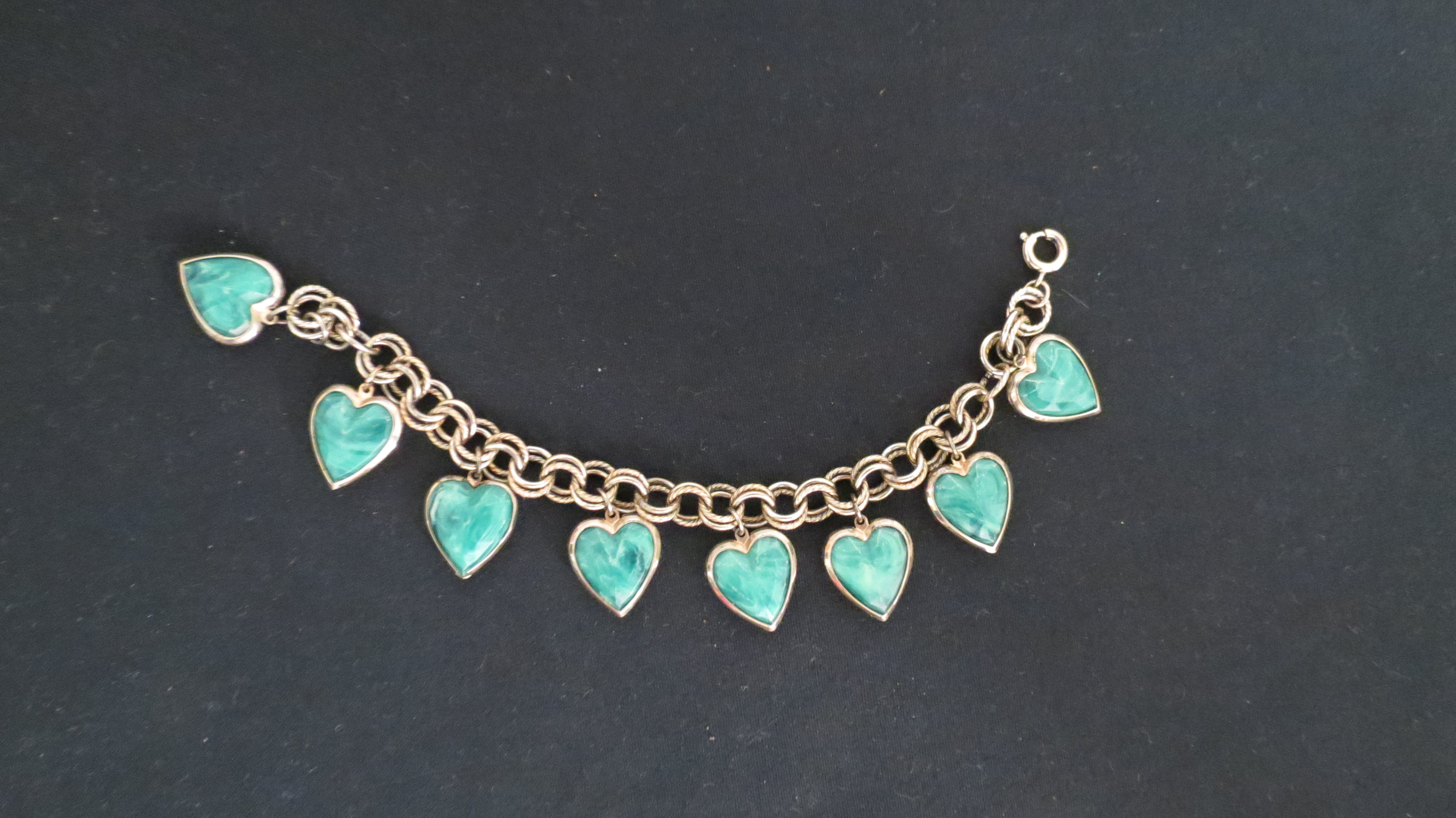
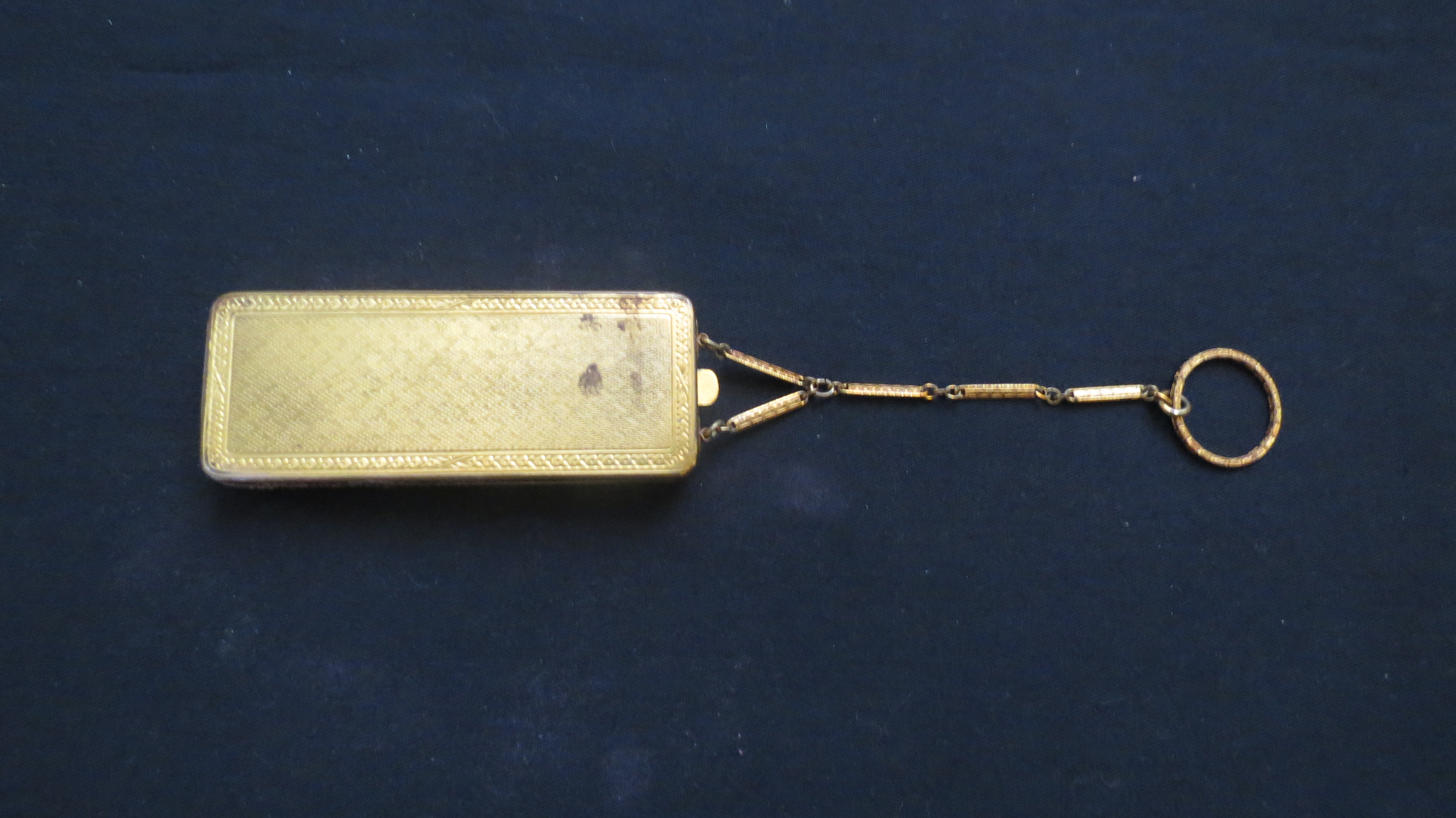
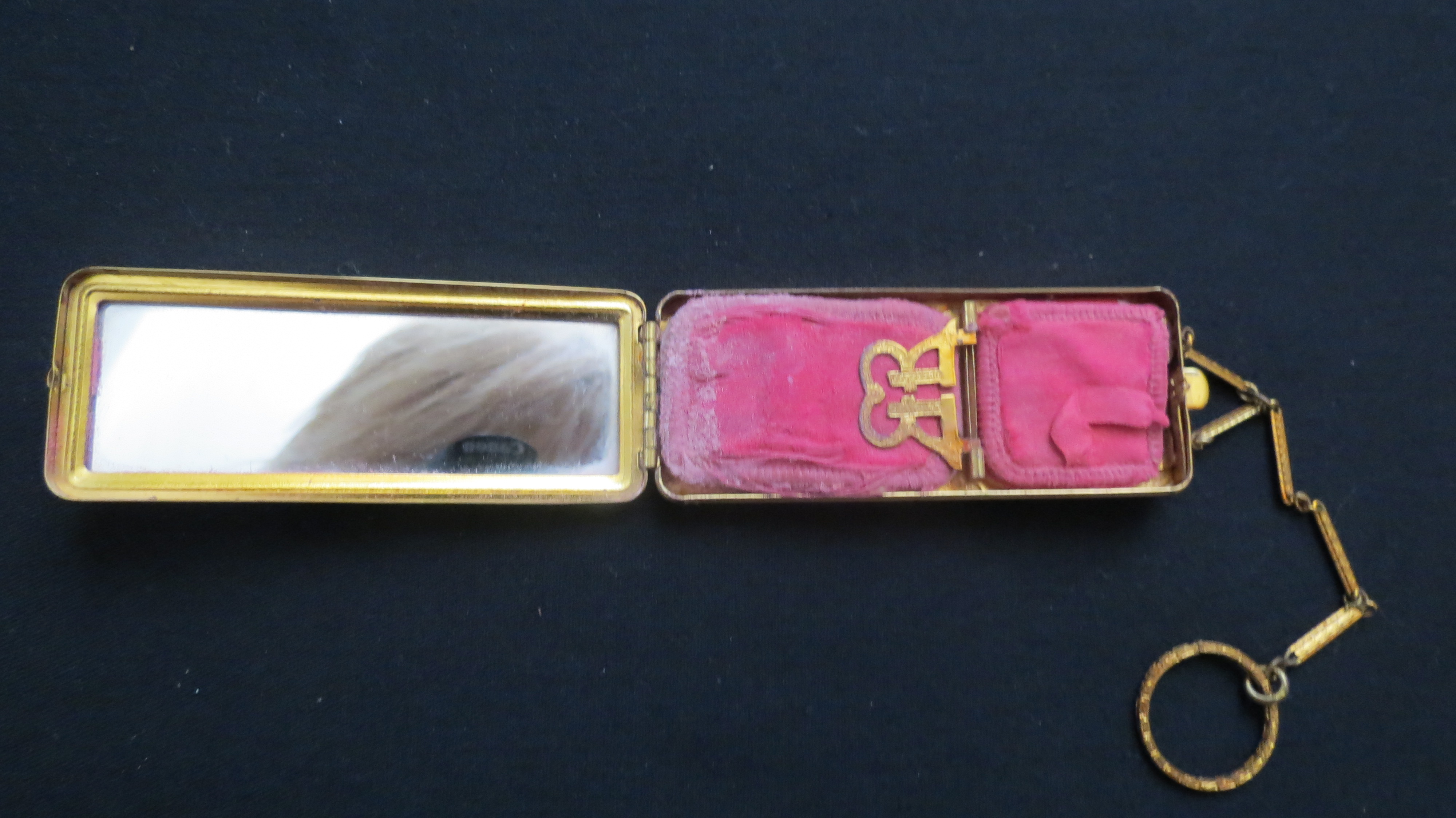
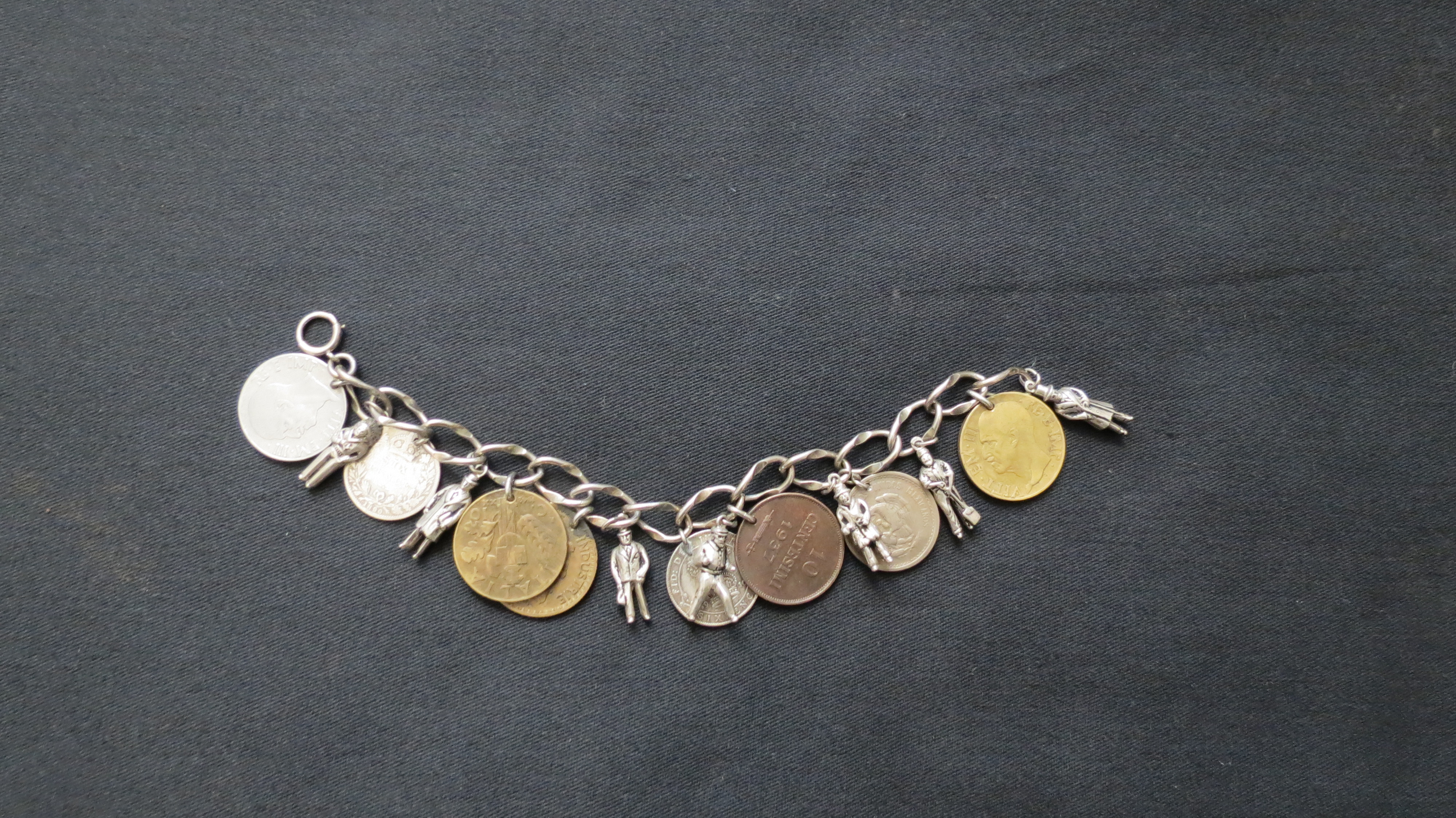
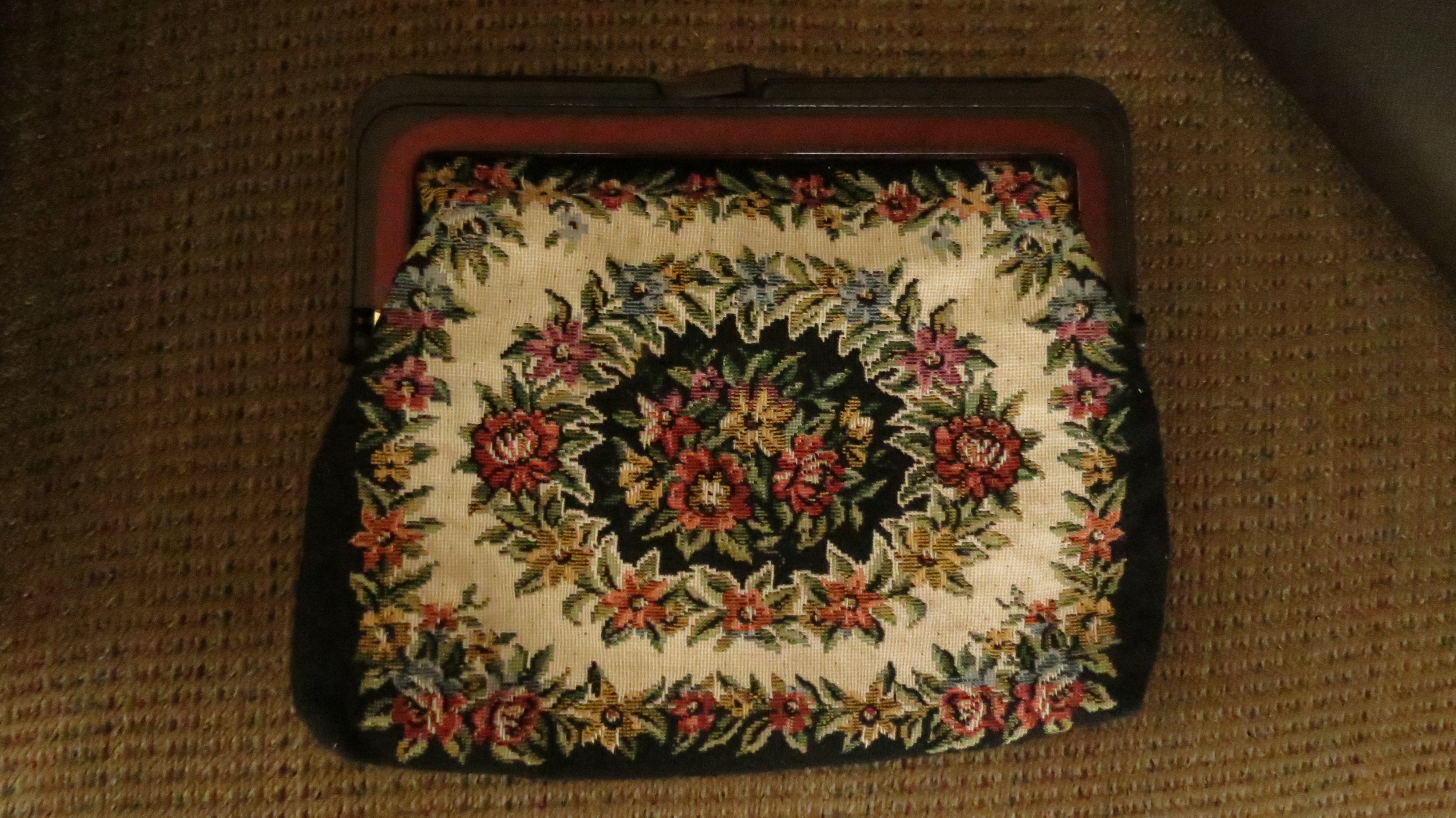
No matter where she was going, she might have carried a chatelaine rouge and powder compact and an antique needlepoint handbag. The clutch above also has a celluloid closure on the metal frame. The pot metal charm bracelet for daytime has European coins and Depression Era male figures dangling – a soldier, a laborer and a tycoon.

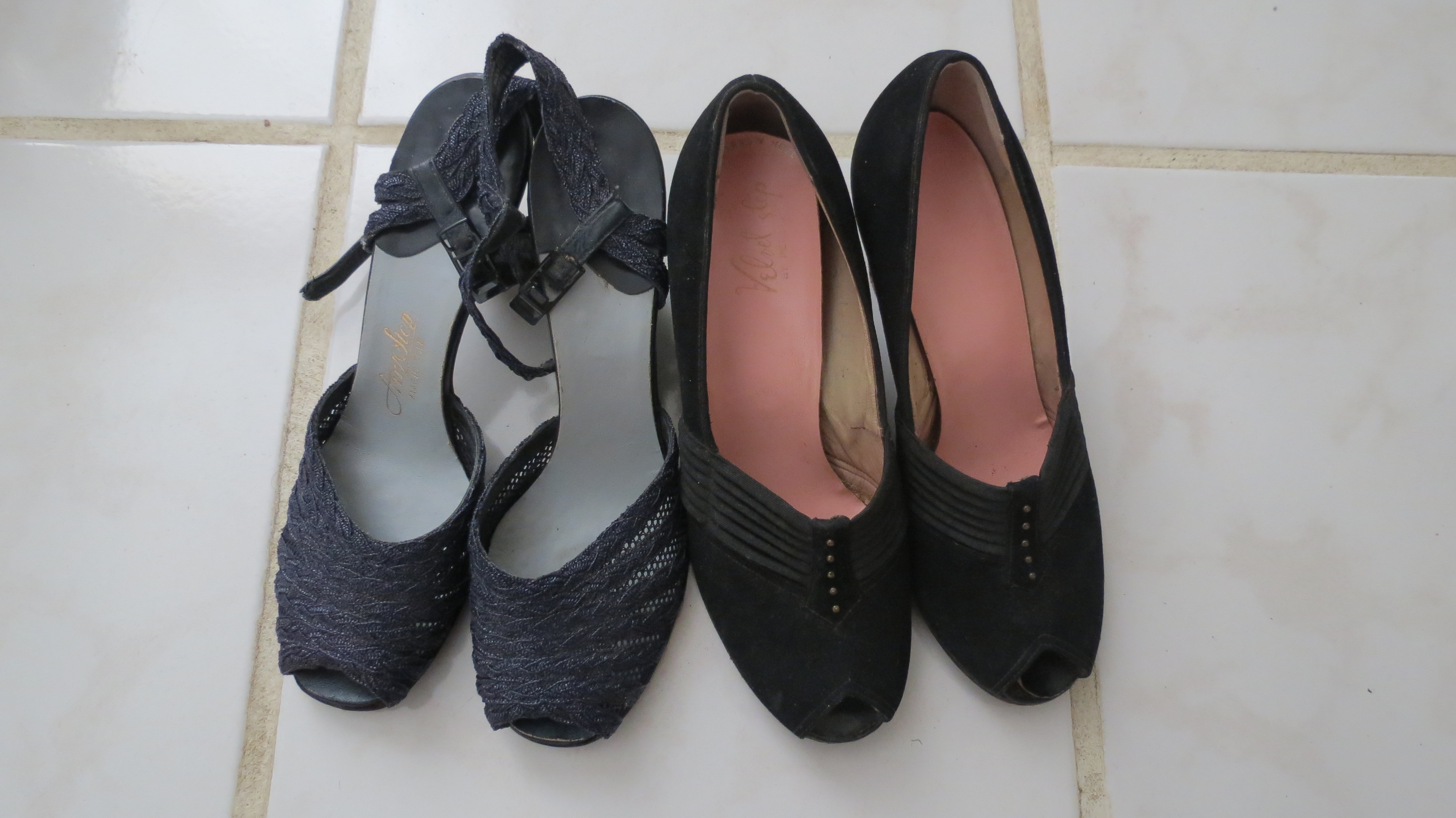
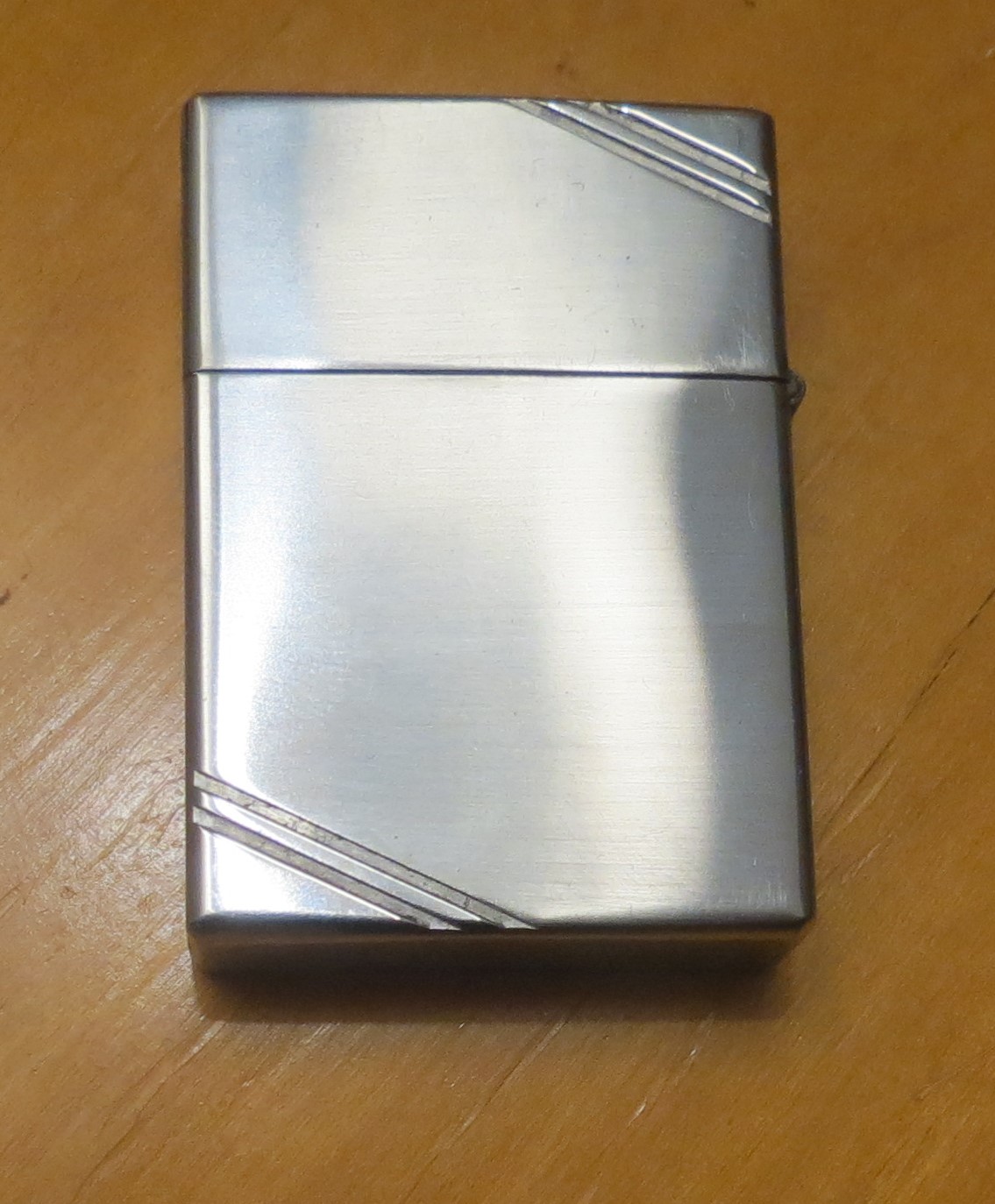
Pretty but practical shoes made for walking and dancing – and, of course, she can’t go anywhere without her 1930’s Zippo lighter. She’ll want to visit the smoking lounge during the movie matinee’.

Late Thirties – Forties tomorrow. Stay tuned . . . . . . . . . . . . . . . . . . . . . . . .

MORGANA MARTIN, THE MAGICVINTAGESPY

BLOG: MAGICVINTAGESPY.COM
MORE TRUE VINTAGE 1940’S DAY DRESSES (& ACCESSORIES)

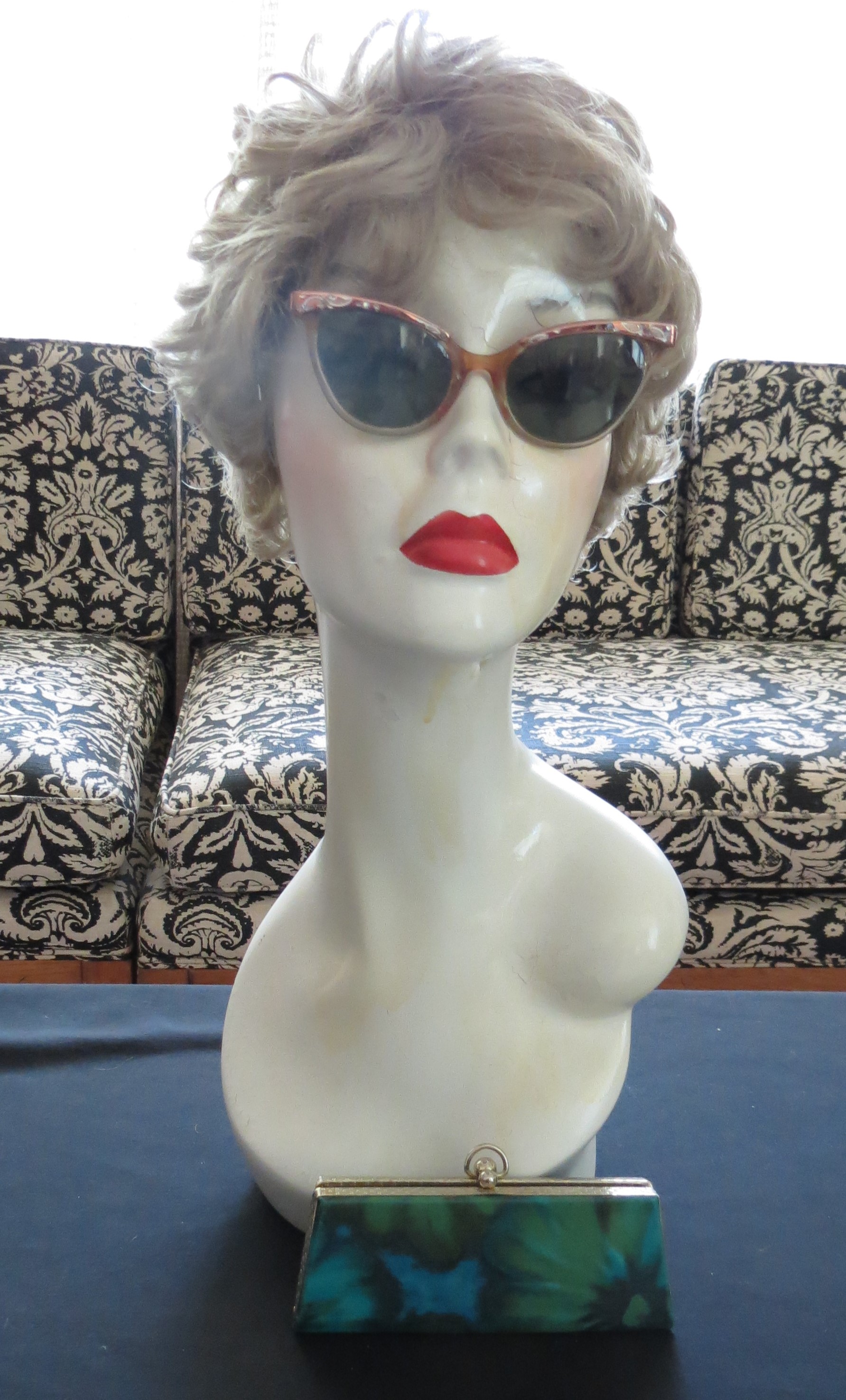
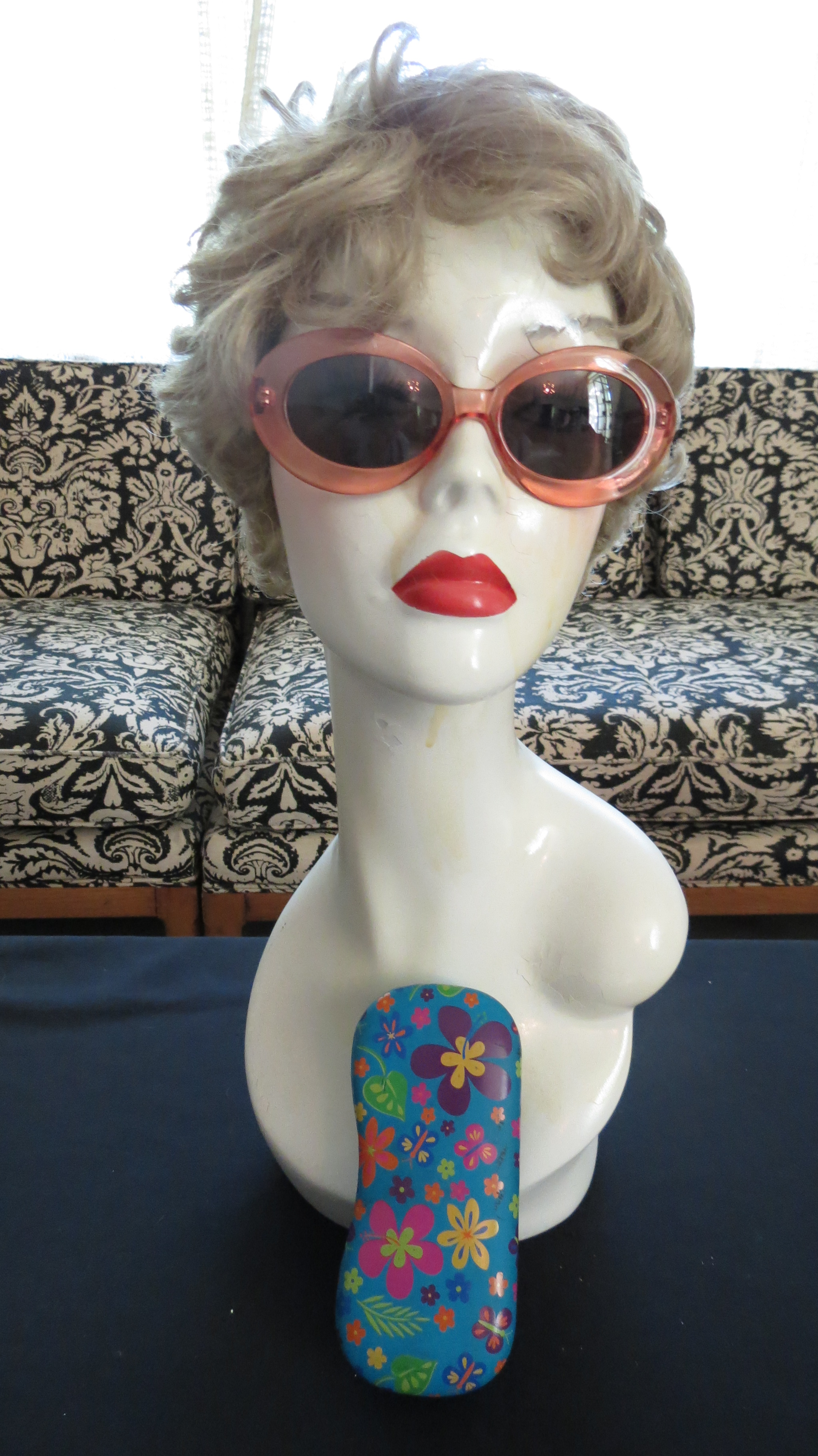
Made from cotton, poly and rayon – these dresses from the pre- and post-war years of the 1940’s tell a fashion history of what was happening during the decade. In the late 1930’s and first 2 years of the 1940’s the war was still fomenting in Europe and Americans didn’t feel especially impacted by this. We had not joined the fight yet and everything at home was ticking along as usual, with fun movie entertainment, jitterbug dancing and jazz. Casual cotton dresses were available, as well as comfy cotton slips. A Western-wear travel fad breezed through the fashion world and sunglasses became more and more common accessories. Cat-eye glasses were called Harlequin glasses then but a round or square lens with heavy plastic frames was the most common until the 1950’s. (Of course, the glasses case in the second picture is retro 1960’s.)

While the reality of war was settling in, synthetic poly fabrics and some rayon took the place of cotton, silk and wool. During rationing, shirtwaist dresses were still the classic standard but hemlines inched up, sleeves got shorter, details and pretty decoration decreased and styles changed, with more sheath dresses being seen. Some of these things changed back after the war but fashion always moves forward. More 1940’s fashion tomorrow – stay tuned . . . . . . . . . .

MORGANA MARTIN, THE MAGICVINTAGESPY

BLOG: MAGICVINTAGESPY.COM

TRUE VINTAGE 1980’S DOES 1940’S DRESSES

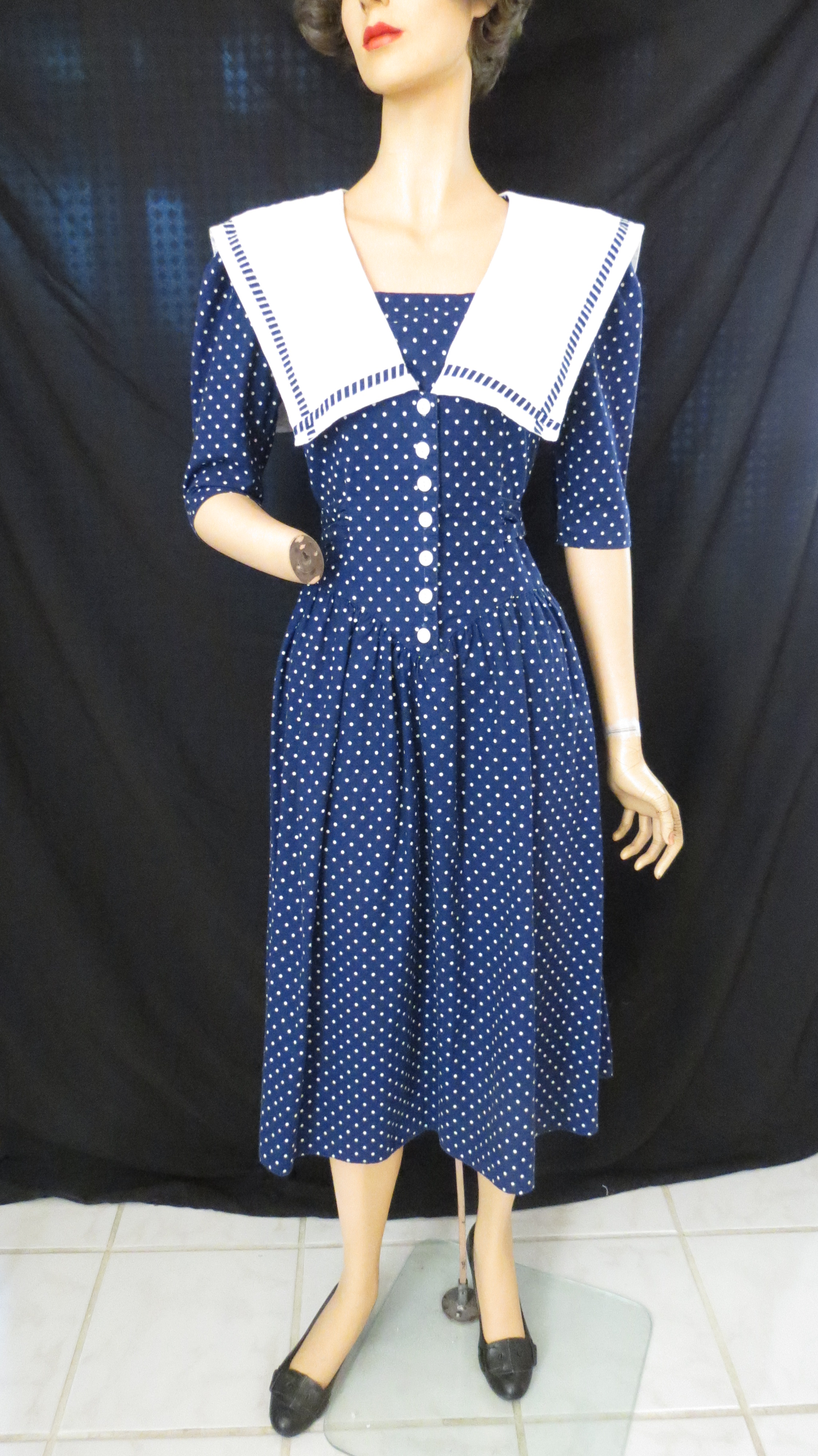
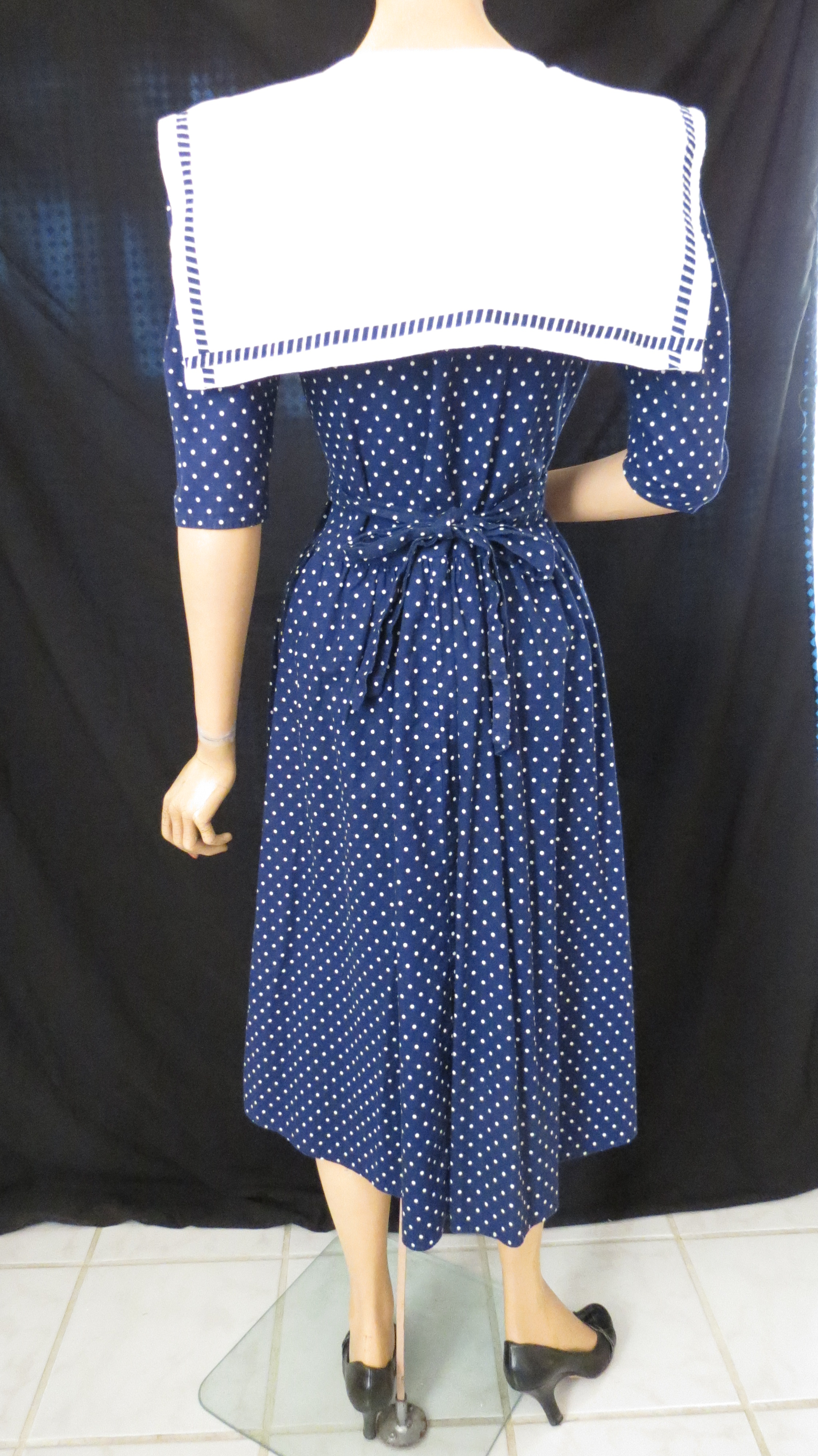
As you probably noticed in my last post looking at the 1970’s, I am not very focused on the “modern” styles from that decade because they were not interesting, in my opinion, and generally not of high quality. The same goes for lots of the 1980’s clothing, but I do enjoy some of the New Wave styles and the revival (again!) of 1940’s designs. I don’t have a large archive of New Wave examples because it was a short movement and so trendy that lots of the garments were cheaply-made and didn’t last. However, the Forties revival was a bit more mainstream and produced some dresses, etc., of better quality. The examples above cover this whole spectrum.

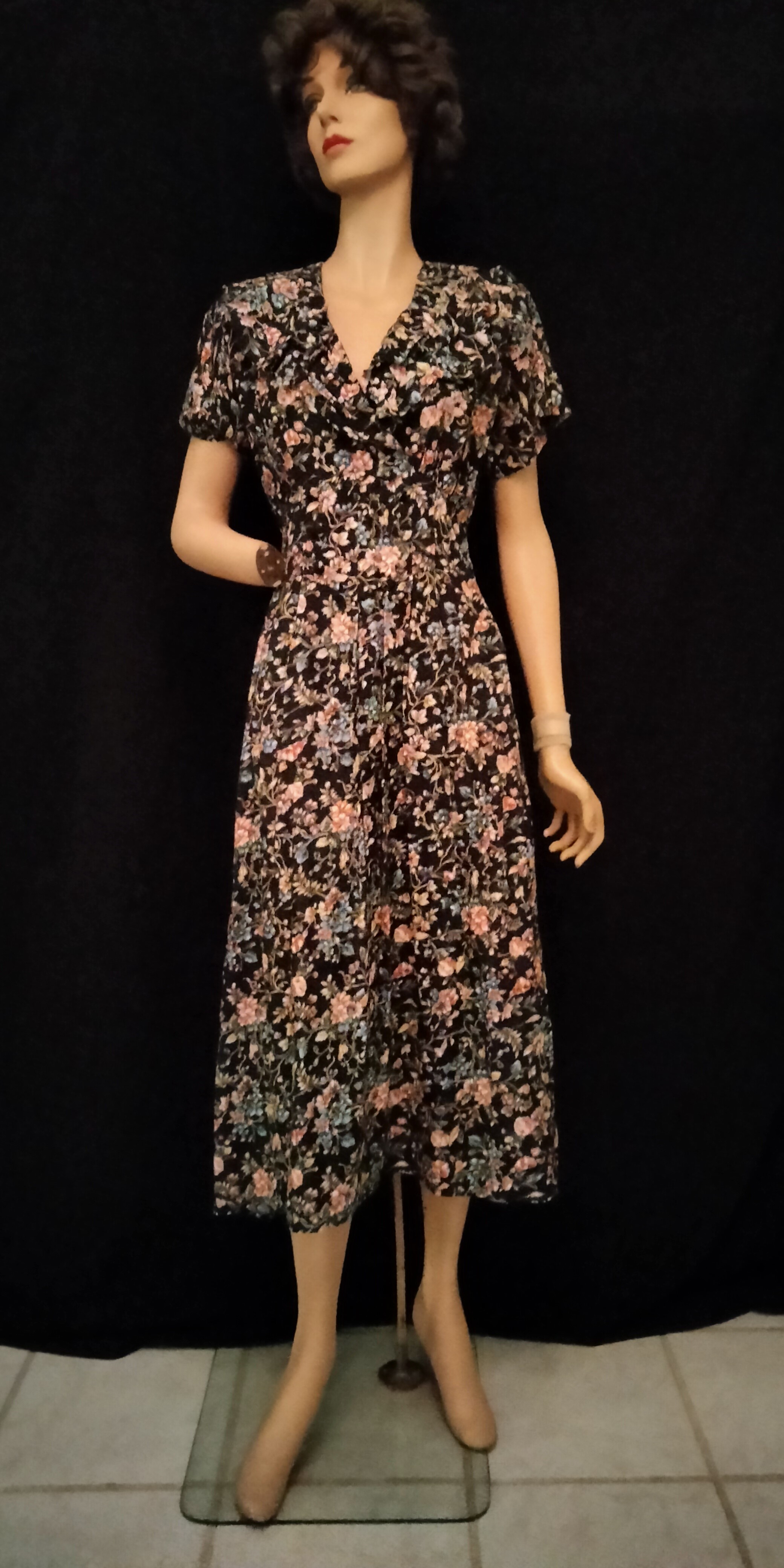
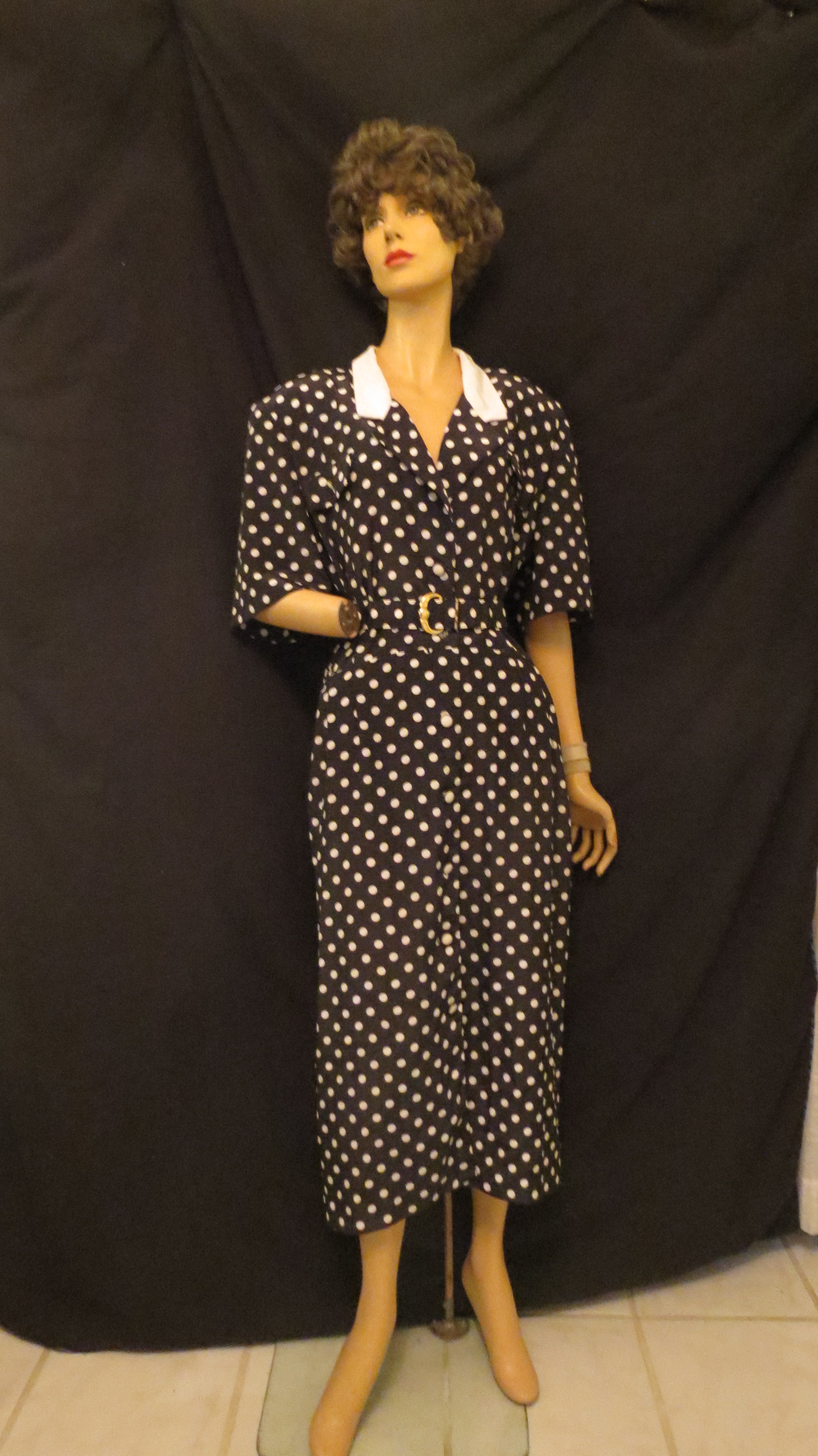
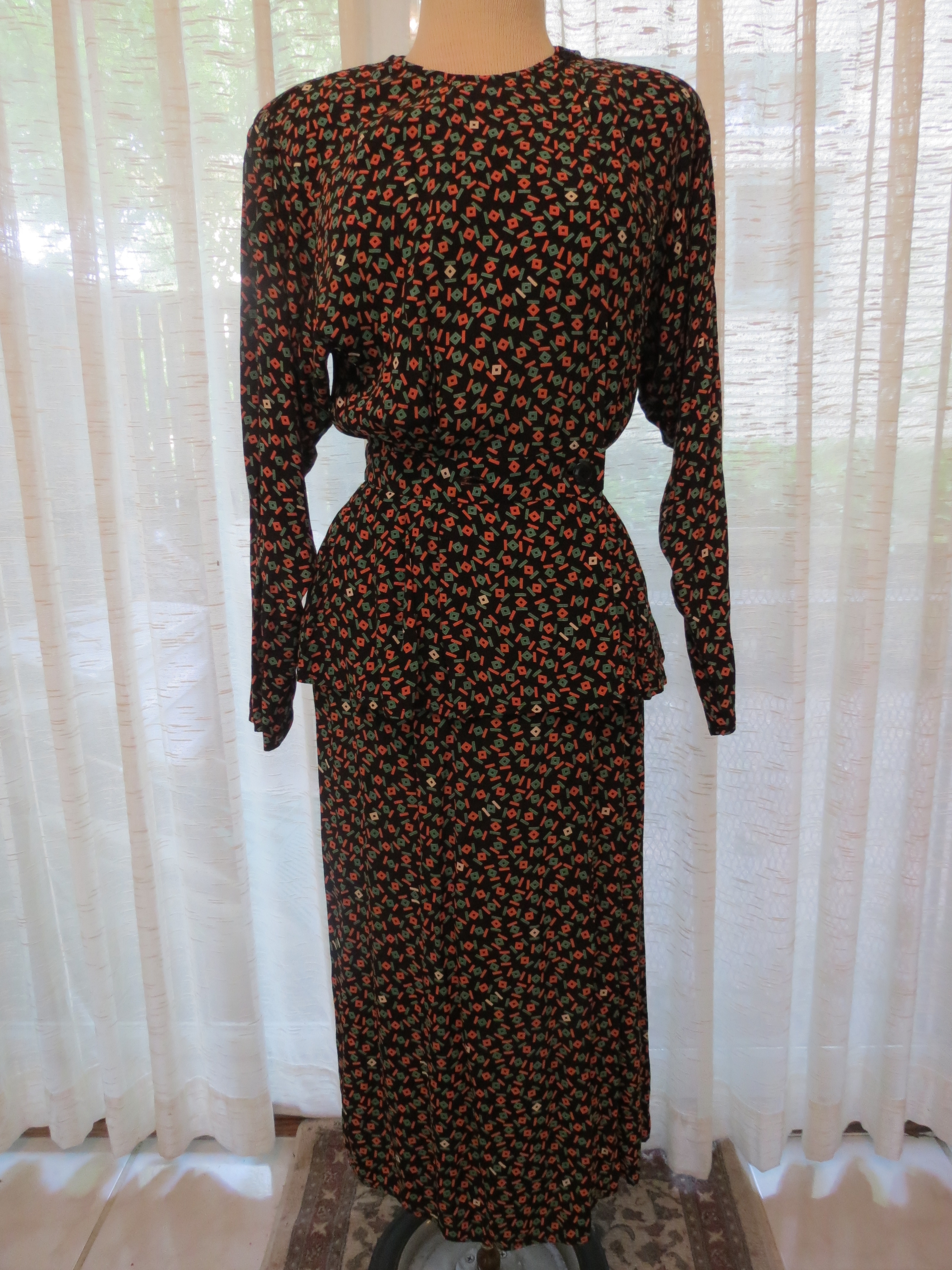
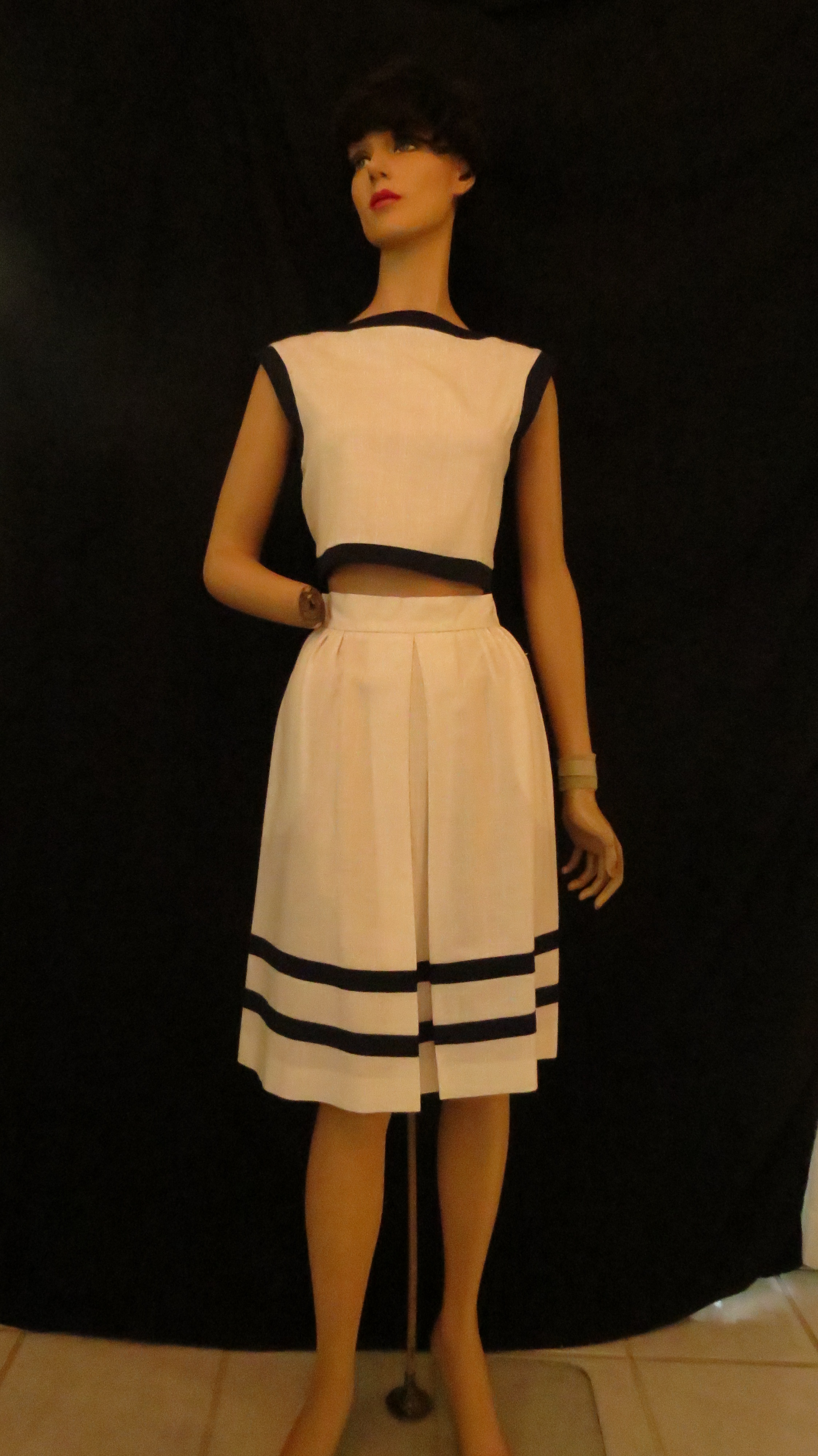
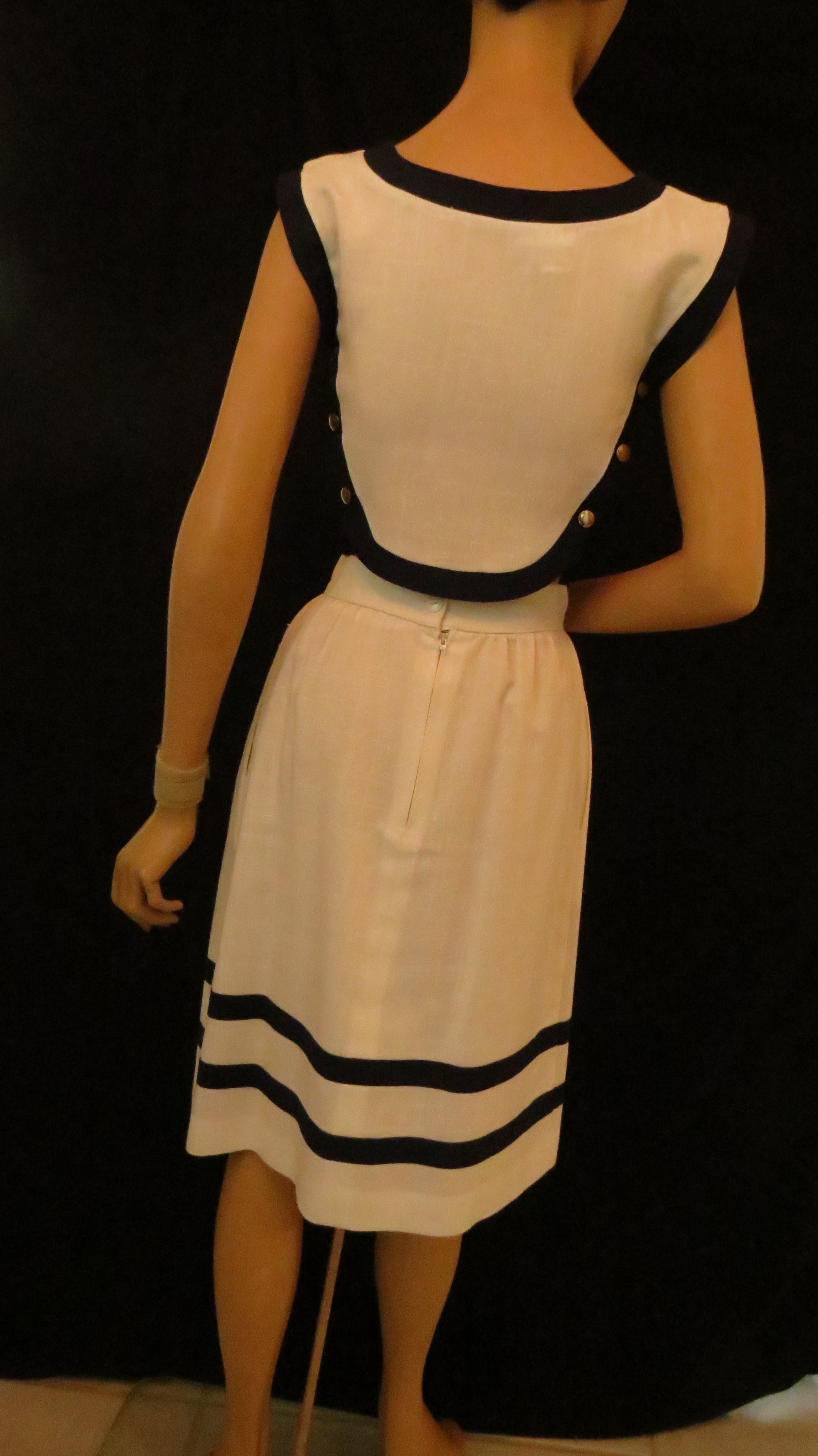
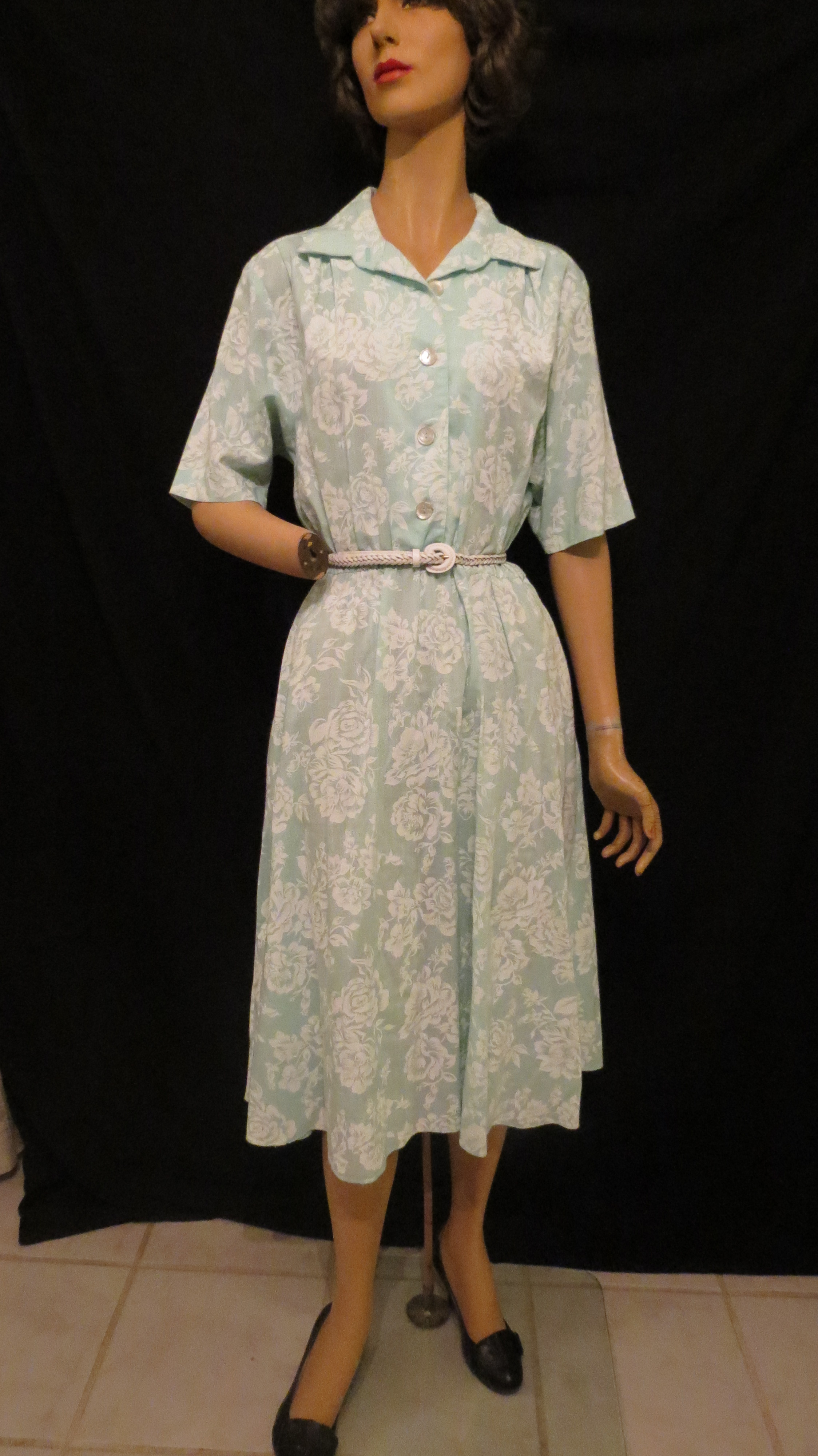
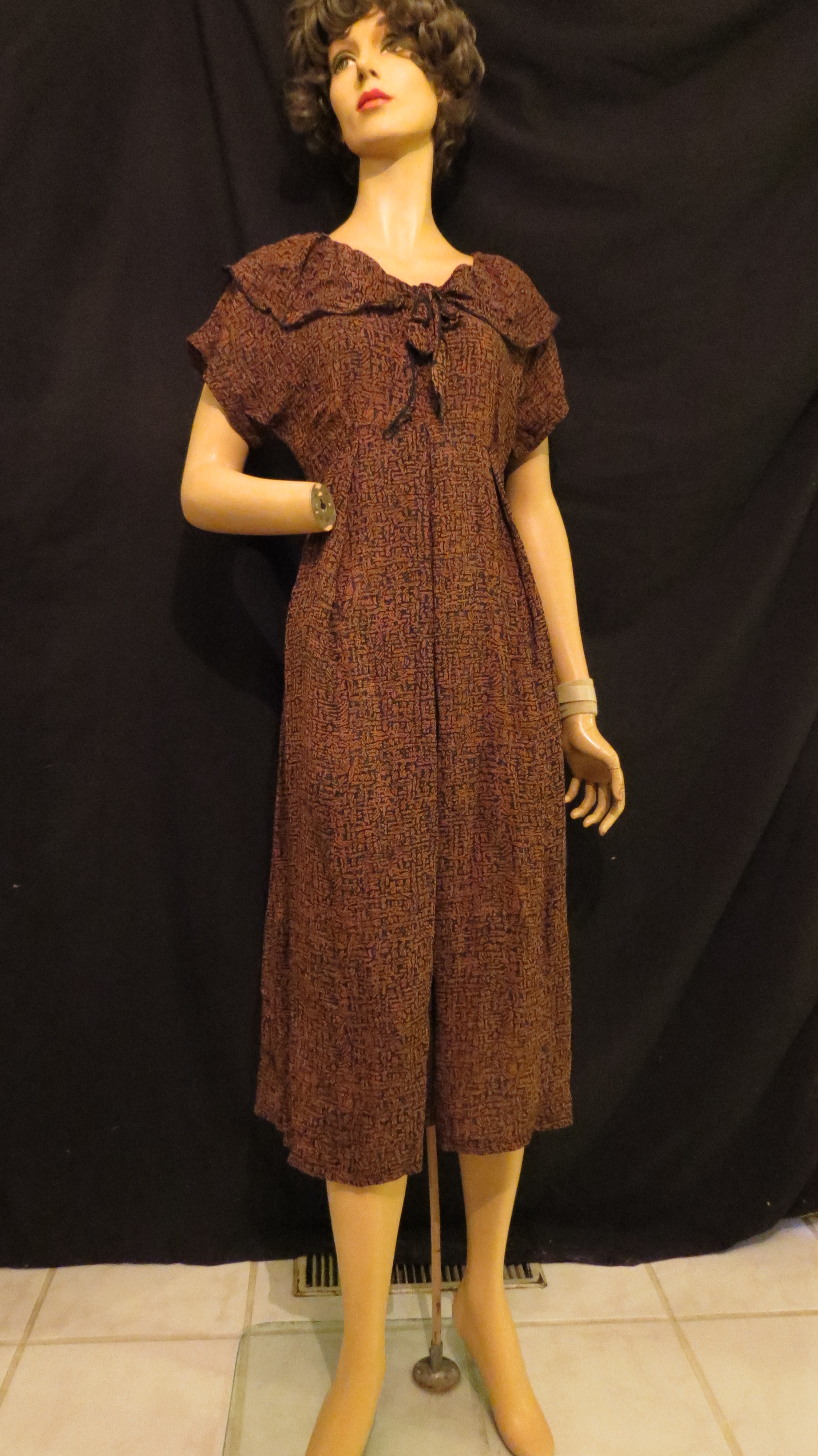
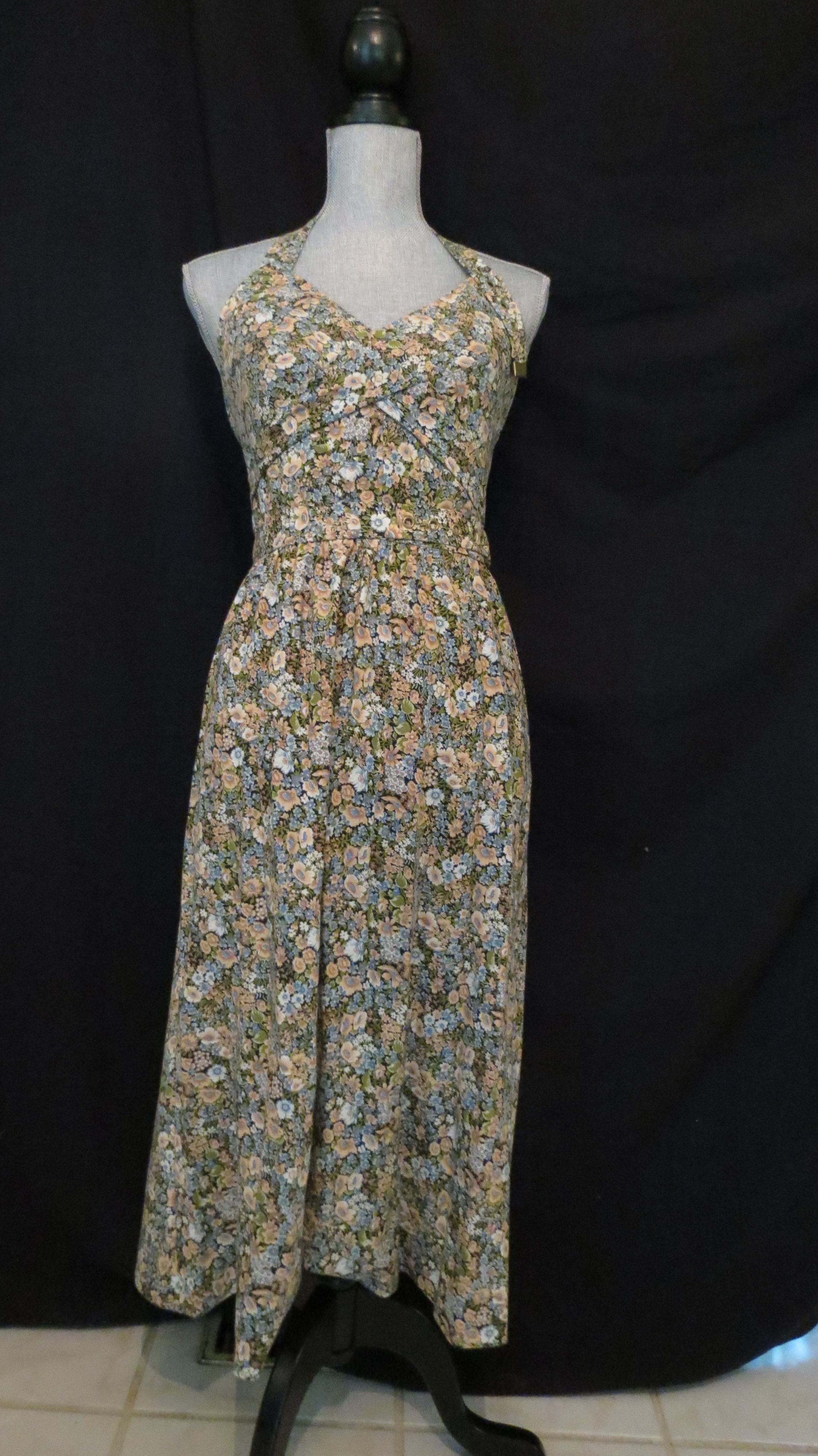
The first two frocks are a revival of designs giving a nod to nautical or “sailor” styles. Sailor collars, especially, have shown up on women’s dresses and children’s clothing since the 1800’s and maybe before. Blue and white have been classic color combinations in Spring fashions, too. The first example above with the outsized collar also has 1940’s-style cut, waistline, 3/4 sleeves and midi hemline. It’s a less expensive dress, very trendy and not true navy blue in color. By contrast, the second dress is true to military style with it’s embossed metal buttons, true navy blue and white colors and prominent stripes. The rest of it’s style is more New Wave, with a midriff top and geometric cut. It’s much more elegant and well-made. We saw a LOT of mid-priced floral print midi skirts and shirtwaist dresses, which were very good flashbacks to 1940’s everyday styles. Finally, I do love this brown print rayon dress by a trendy mid-priced designer (forgot her name). It’s a late ’30’s – early ’40’s design with great fabric drape. I also love this halter style floral midi – Very mid – ’40’s!

I rarely cover anything from the high fashion or couture world since my investigations don’t typically take place where those clues are likely to be found, though exceptions to the rule always exist. Tomorrow I’m going back to my primary focus on dresses and accessories actually made before 1970. Stay tuned . . . . . . . . . . . . . . . . . . . . . . . . . . . . . . . .

MORGANA MARTIN, THE MAGICVINTAGESPY

BLOG: MAGICVINTAGESPY.COM
TRUE VINTAGE LATE 1960’S FASHION TRENDS – MOD HEADS INTO THE 1970’S

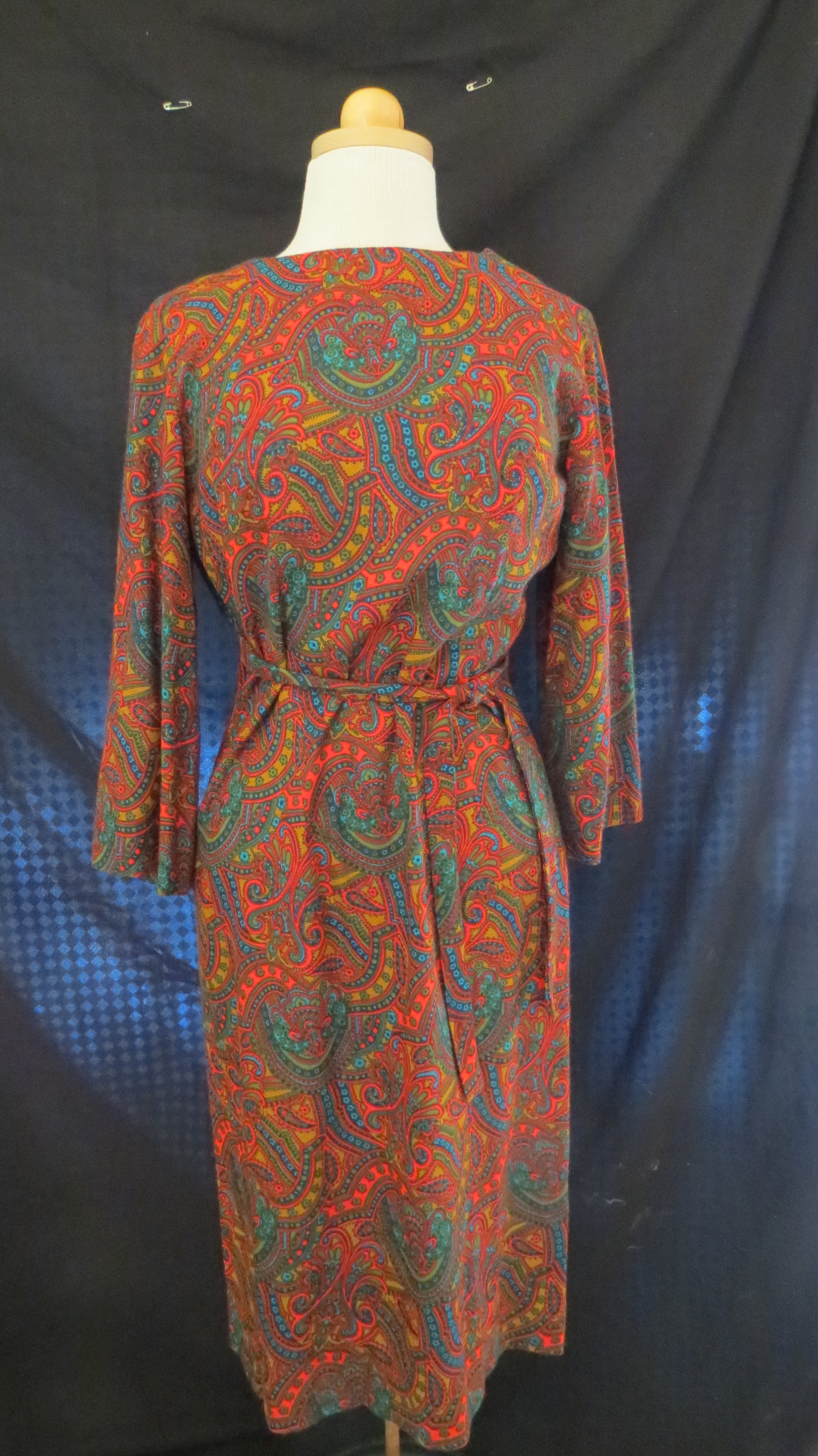
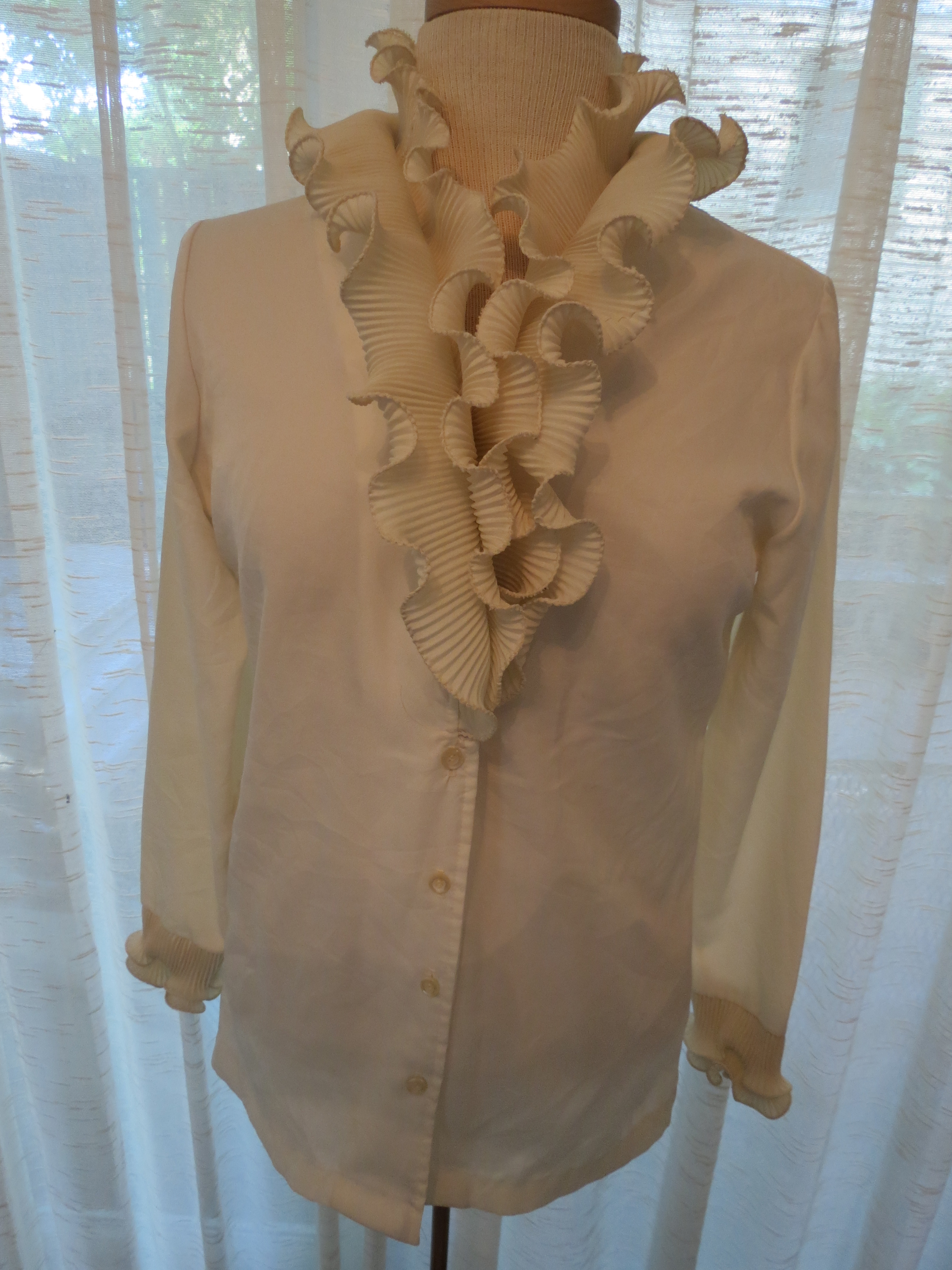
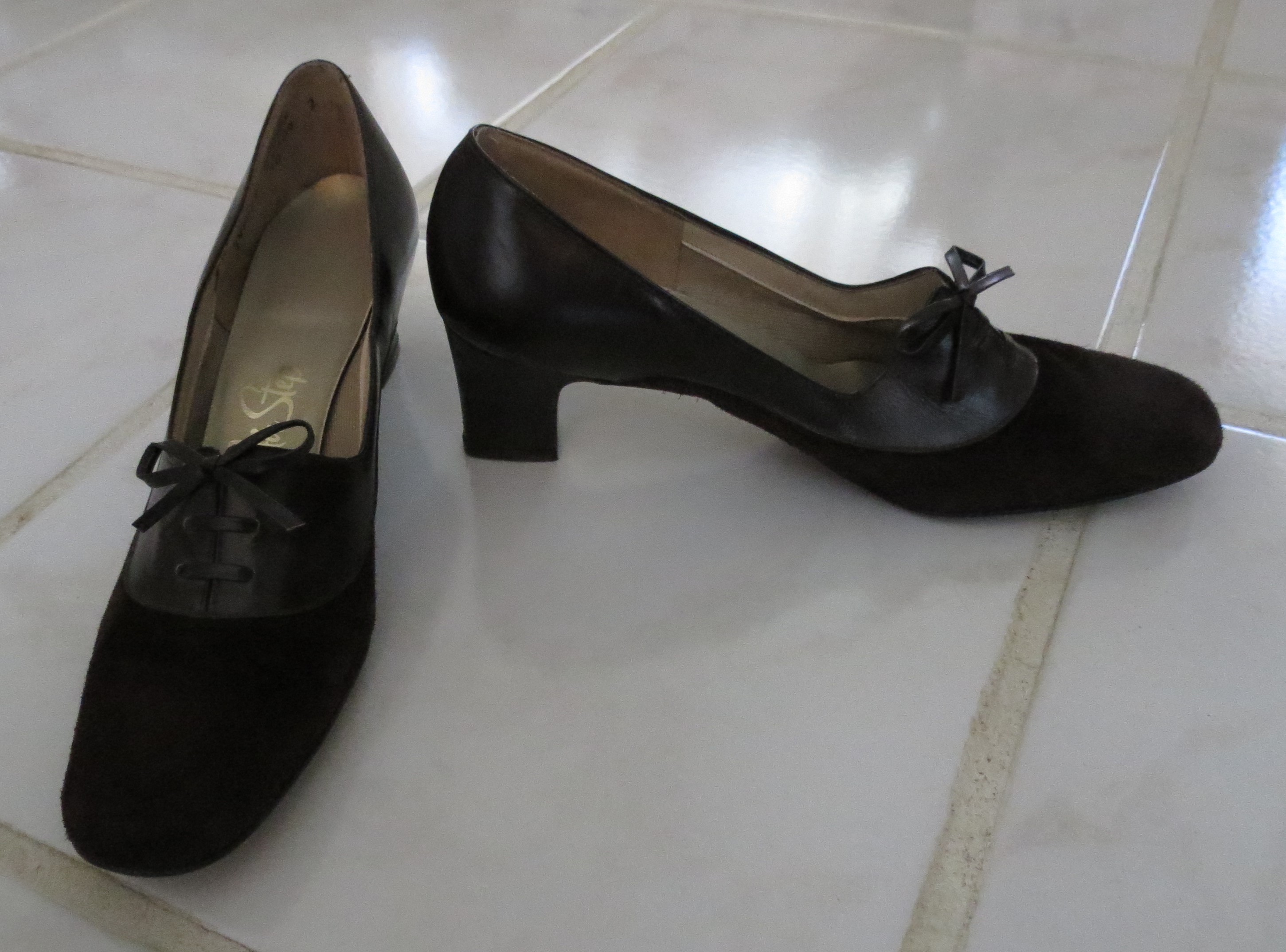
Britain continued to lead the fashion trends in the late ’60’s and it seems to me that their influence strengthened during these years as the Carnaby Street styles showed up. Mod and ultra mini began to slow down with a strong Edwardian/Victorian/Hippie wave predominating. Psychedelic and paisley prints were super popular, even on higher-end classic styles. Long bell sleeves showed up a lot. Ruffled, high-collar blouses and men’s neckties for women were fun fads. Platform soles went out (for a while) in favor of mid-heel pumps with high vamps and rounded toes. LifeStride, a popular mid-priced U.S. brand got into the trend with the example shown above.

Knee-length, midi and full-length hemlines came on the scene again, especially on more conservative and higher-end dresses. Though some minis were still worn, the hippie-styles usually had ankle-length skirts. While Carnaby Street fashions passed by, the long hippie/Victorian looks drifted into the early 1970’s. If you have followed me, you might remember a few of my posts earlier this year covering vintage Prom dresses that showed early 1970’s Victorian/Prairie designs in that mix.

There was a lot more, however, to the early 1970’s fashion designs. We’ll start looking at the Seventies tomorrow. Stay tuned . . . .

MORGANA MARTIN, THE MAGICVINTAGESPY

BLOG: MAGICVINTAGESPY.COM