SO EXCITING. A RARE, ANTIQUE, HANDMADE DRESS FROM THE 1920’S – EARLY 1930’S

Sheer cotton “lawn”(?) – I don’t know.  A beige color with delicate flower and leaf embroidery on the collar and skirt.  Closes with snaps, hooks & eyes on the left and has partially-gathered sleeves and a two-tier skirt.  Such interesting design details, so different from any styles we usually see, vintage or not.

So delicate.  This will be worn with great care.  The waist isn’t right for most dresses made in the 1920’s so it could, possibly, have been an earlier style made for a teen or someone who was very petite.  But – early 1930’s could be the most accurate.  Must do some more in-depth research.

Anyway, what a treasure!

MORGANA MARTIN, THE MAGICVINTAGESPY

BLOG:  MAGICVINTAGESPY.COM

TRUE VINTAGE TEXTILE FINDS ARE ALWAYS TREASURE

DSC00739

Fun and interesting mid-century and antique table and bed linens often show up during my investigations.  The prints are humorous, colorful and pretty.  Modern copycats can’t  come close!  If there is handwork like embroidery or lace, it’s beautiful.  I collect them, too.  The mending and stain removal that is sometimes required is no big deal and anything with too much damage can be made into pillow covers and cloth napkins.  I love using these things at home in my kitchen and bedroom, but there’s more . . . . . . . . . . .

Big pieces of fabric are also wonderful made into clothing and accessories.  Trim can sometimes be added to other garments or a big piece of crocheted or tatted lace makes a beautiful dress or blouse. Can’t you just imagine this cloth made into a summer dress, skirt or blouse, maybe with a matching handbag? Can’t wait to use this cute tablecloth!

Potential vintage fashion treasures abound everywhere!  Use your imagination and you never know what you may uncover . . . . . . . . . . . . . . . . . . . . . . . . . . . . . . . . . . .

MORGANA MARTIN, THE MAGICVINTAGESPY

BLOG:  MAGICVINTAGESPY.COM


NEW FIND – DEPRESSION ERA HANKIE WITH BEAUTIFUL HAND-MADE APPLIQUE’

DSC00732DSC00731

I still come across true vintage handkerchiefs once in a while and always collect them.  This one is not fine linen or even high quality cotton and started it’s life as a commercially-made piece that probably had no decoration excepting the machine-done edging, BUT the delicate applique needlework down in the left-lower corner is the real story.  Some woman who couldn’t afford more expensive linens made a dainty item with her own hands.  It is almost unbelievable with the tiny, tiny stitches and the steps taken to prepare the pieces that were sewn on to make the flower.

Girls used to be taught this kind of hand work in almost every home before WWII time, and many still afterwards.  If not lace-making, tatting or applique’ by the late mid-century, girls at least learned some embroidery, crochet or knitting.  My own grandmothers still knew how to do it.

Even though paper tissues are more convenient now, a fabric handkerchief is very elegant and just the thing when attending a wedding or other private affair.  The decoration on most of them is gorgeous, whether hand-done or by machine.  Even the printed patterns are lovely or at least colorful and amusing.  If you’re into home sewing, I’ve seen these hankies pieced together and turned into pretty pillow tops, table linens and even blouses, skirts or dresses.

So, another little story unfolds for me to share with you. . . . . . . . . . . . . . . . . . . . . . . . . . . . .

MORGANA MARTIN, THE MAGICVINTAGESPY

BLOG:  MAGICVINTAGESPY.COM

RARE EARLY MID-CENTURY ICONIC “SANFORIZED” COTTON SAILOR BLOUSE

IMG_1377 IMG_1379 What could be more classic than a sailor collar?  These have been popular fashion for decades and always come back.  Side vents, detachable “modesty panels” in necklines, and tartan plaid have also been important details found in iconic true vintage styles. This blouse was made in the 1940’SIMG_1378 to early 1950’s.  The label says it is made of “Sanforized” cotton – Sanforization was a process developed in the 1930’s.  It’s so unusual to find a blouse from that time that is in wonderful condition!

White cotton blouses used to be a major staple in every woman’s (and man’s) wardrobe. Men still wear them, more than women do, because they usually don’t do any of the ironing that is required!

Yes, they require more care in some ways, but it’s well worth it.  Nothing can compare to this fabric.  Also, if you do get a stain, it’s often easier to remove than from easy-care synthetics because cotton can withstand hot water.

Discovering a garment like this is always a high point of any investigation, for me.

MORGANA MARTIN, THE MAGICVINTAGESPY

BLOG:  MAGICVINTAGESPY.COM


YES!!! LOOK WHAT SHE’S GOT ON HER FEET – TRUE VINTAGE FROM 1938

IMG_1475I was browsing through a few OLD  family yearbooks at my parent’s home and look what I found.  This photo is fabulous evidence of the classic and enduring style of the spectator pump – couldn’t get better proof than this!  Love it when that happens.

And, the rest of her outfit is pretty spectacular, too – reminds me of lots of things in my closet . . . . .

MORGANA MARTIN, THE MAGICVINTAGESPY

BLOG:  MAGICVINTAGESPY.COM


TRUE VINTAGE 1940’S/1950’S SHERBET-COLORED PEEP-TOE PLATFORM SANDALS

IMG_0870
These lovely sandals are very fine, in beautiful kid suede. They have tiny peep-toes – a favorite feature of mine – and sling-back heels.

What a fabulous addition to any 3-season dress or perky pants outfit!

MORGANA MARTIN, THE MAGICVINTAGESPY

BLOG:  MAGICVINTAGESPY.COM

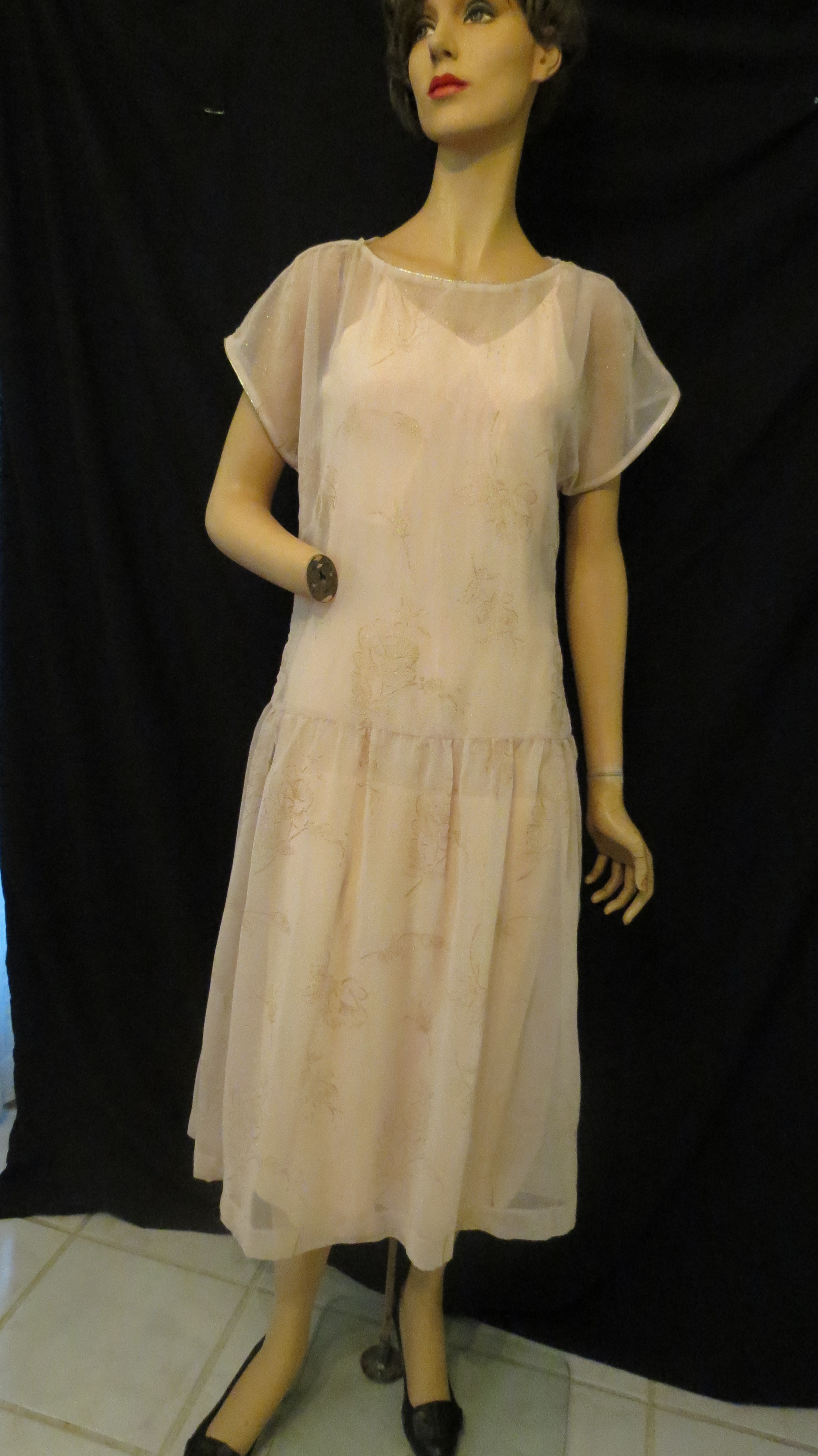
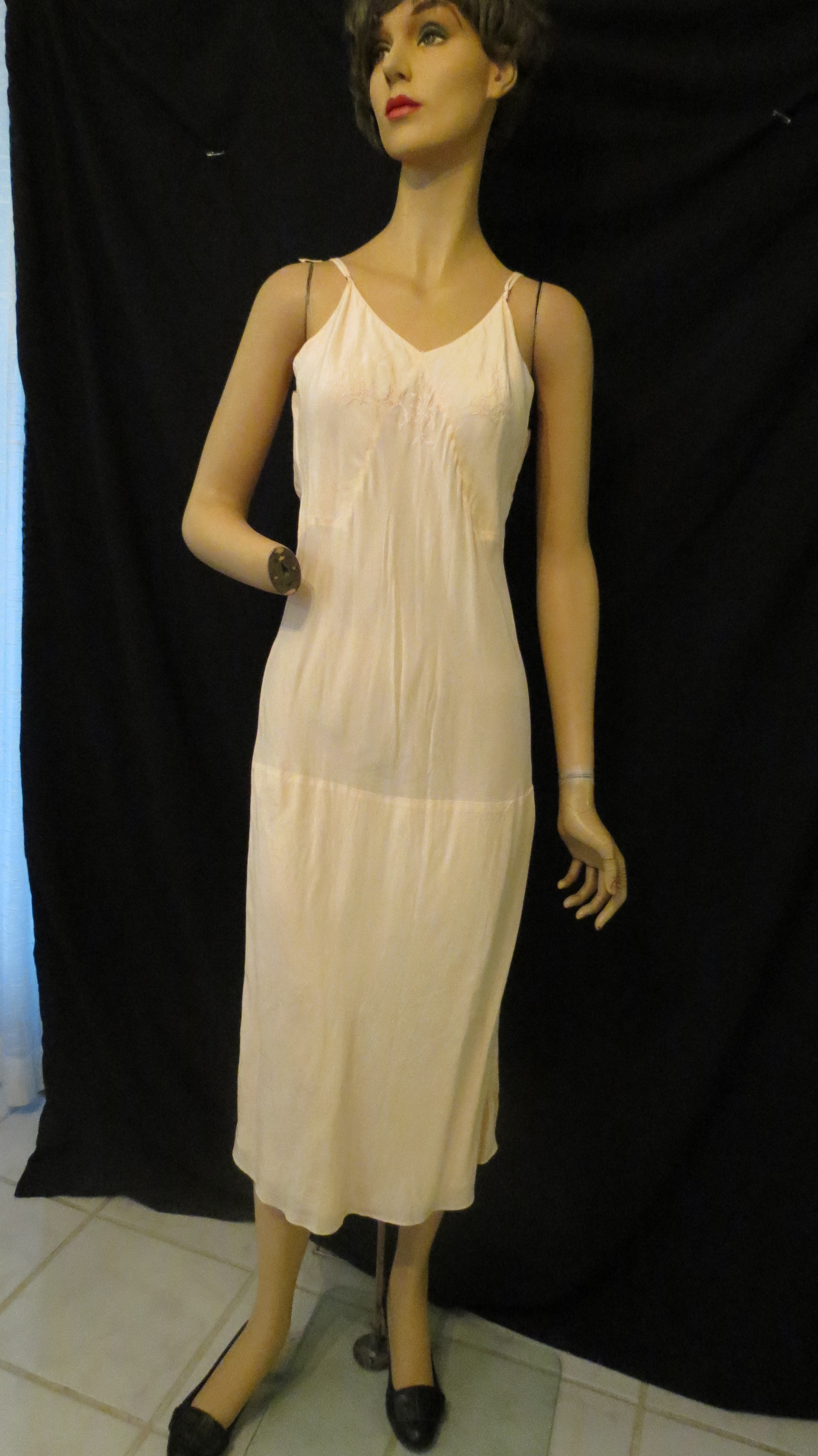
SHEER 1950’S PARTY DRESS AND SILK SLIP

IMG_1149IMG_1147IMG_1150IMG_1148These pieces were found on opposite sides of the world, several years apart, but they work here.  Mid-century sheer dresses require beautiful, but pretty plain, lingerie slips of the right length to carry them off properly.

From Canada, the lovely peach-colored silk slip can double as a dress.  Bias cut and the slinky, sexy fit points to the 1930’s as it’s era.  Pretty embroidery makes it really special and it has little hardware which make the shoulder straps adjustable..

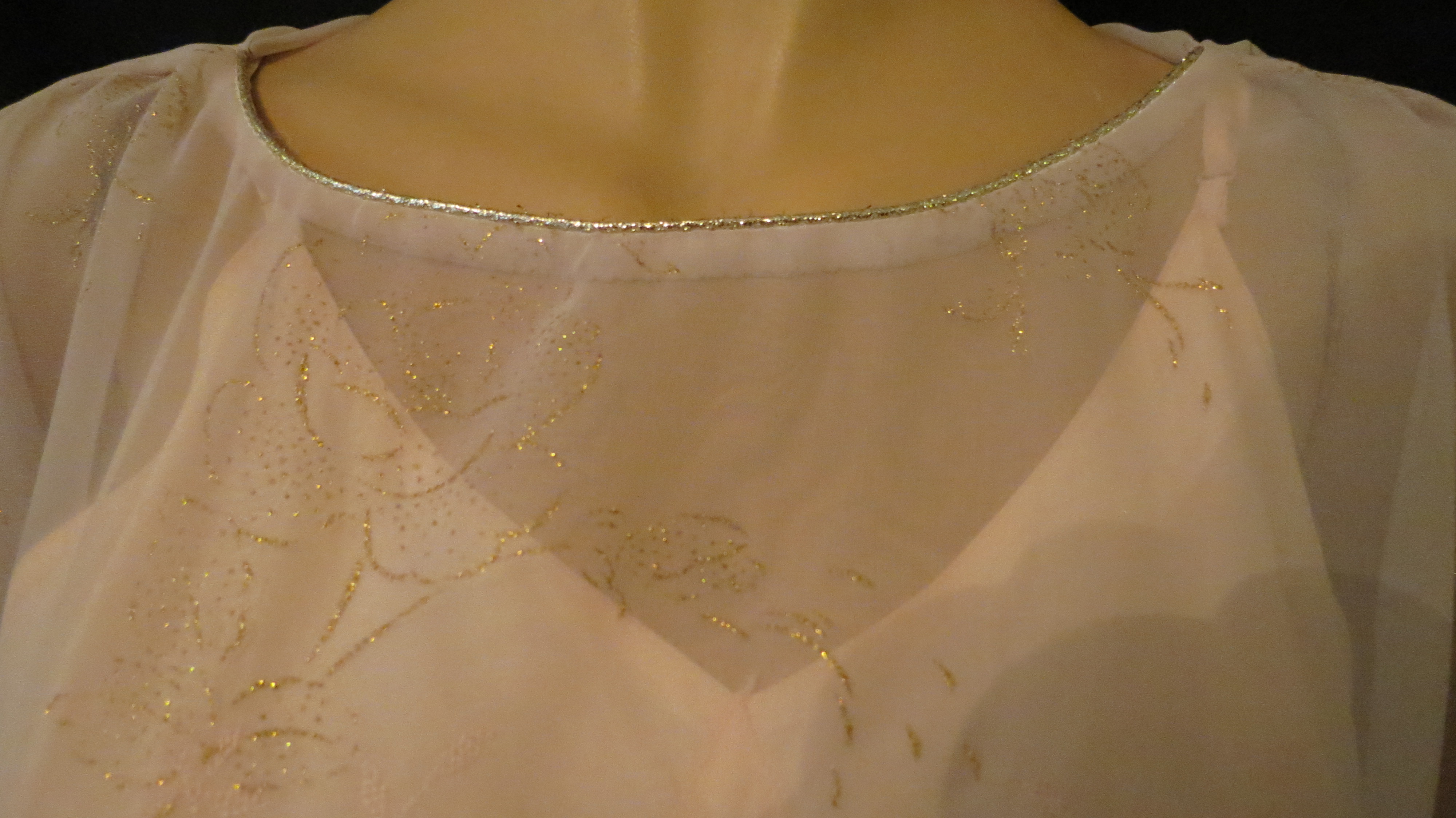
The sheer party dress, which I found in Australia a few years ago, was probably custom-tailored.  Dropped waist and tea length.  See the photo showing metallic piping that is sewn around each sleeve and the front of the neckline, with a cowl in back. The fabric also has metallic flower and leaf decoration stamped on.  So fabulous to find pieces like this in near-perfect condition!

Picky work to construct this dress, and I’m so astounded by the skill of seamstresses back in the day.  Yes, it was a lot of work, but how fun it would be to have something exactly as you wanted with personalized fit!

MORGANA MARTIN, THE MAGICVINTAGESPY

BLOG:  MAGICVINTAGESPY.COM


MORE 1930’S – 1940’S SLEEVES FROM A DAY-DRESS

Puffed, very girly sleeves on a plain, black crepe dress that was a very common part of most women’s wardrobes.  Almost everyone had a black crepe dress – often more than one and not just for evening wear.  Crepe was such a frequently-used fabric that made even ho-hum garments drape beautifully and look fabulous!

MORGANA MARTIN, THE MAGICVINTAGESPY

BLOG:  MAGICVINTAGESPY.COM


1940’S SLEEVE TREATMENTS – WHAT’S OLD IS NEW AGAIN, AND AGAIN, AND AGAIN . . . . . . . . . . . . .

This post was inspired by the fabulous Theodora Brack and her post of a few weeks ago on the blog, Paris: People, Places and Bling.  Shirt sleeve styles are, again. doing some very interesting things with pleats, gathers and puffs.  Here are a few from my  own true vintage collection which show how these styles cycle through the decades.

Pictured here are 1930’s and 1940’s blouses excepting, in photos #1 and #3, the right-hand and left-hand examples are retro Forties, which were made in the early 1980’s. Cotton, silk, rayon and poly.  Kimono, pirate, Western-inspired and prissy designs all had their day in the 1940’s and have wound their way up and down runways every decade or two since then.  Of course, some decades were known for their beautiful craftsmanship, gorgeous fabrics and special tailoring details so these aspects will always be showcased in true vintage garments from those times.

Modern blouses which follow these style trends will not be nearly as beautiful or as well-made but, I love my finds.  Thanks for the opportunity to put them in the spotlight again.

MORGANA MARTIN, THE MAGICVINTAGESPY

BLOG:  MAGICVINTAGESPY.COM


THREE OF MY OLDEST TRUE VINTAGE HAWAIIAN GOWNS

THREE OF MY MOST VINTAGE HAWAIIAN GOWNS

From the 1960’s back to, maybe the 1920’s, these three are my oldest vintage examples of Hawaiian gowns.  From the farthest left, to right –

Psychedelic hues and patterns on the far left – not hard to see the late Sixties here.  The center dress is from the 1950’s and is fashioned in the traditional Hawaiian style, with a panel on the back that is almost like a train, without the dragging hem.

On the far right is a mystery dress with a metal side zipper. It has images in the print that are not your standard Hawaiian shirt variety and the fabric is very different –

instead of being the heavy cotton that I’d usually expect, it is a fluid material that I’d guess is rayon. If the label did not indicate that it was made in Hawaii, I’d say it had come from Japan.  The toggle closure at the neck is also something often seen on Chinese and Japanese garments. It’s also got a very 1930’s cut – close to the body.

Hmmm . . . . . . . . . this is REALLY Mata Hari undercover espionage stuff.  I wonder how she wound her way to the place where I discovered her . . . . . . . . . . . . . . . . . . . . . . . . . . . . . .

MORGANA MARTIN, THE MAGICVINTAGESPY

BLOG:  MAGICVINTAGESPY.COM