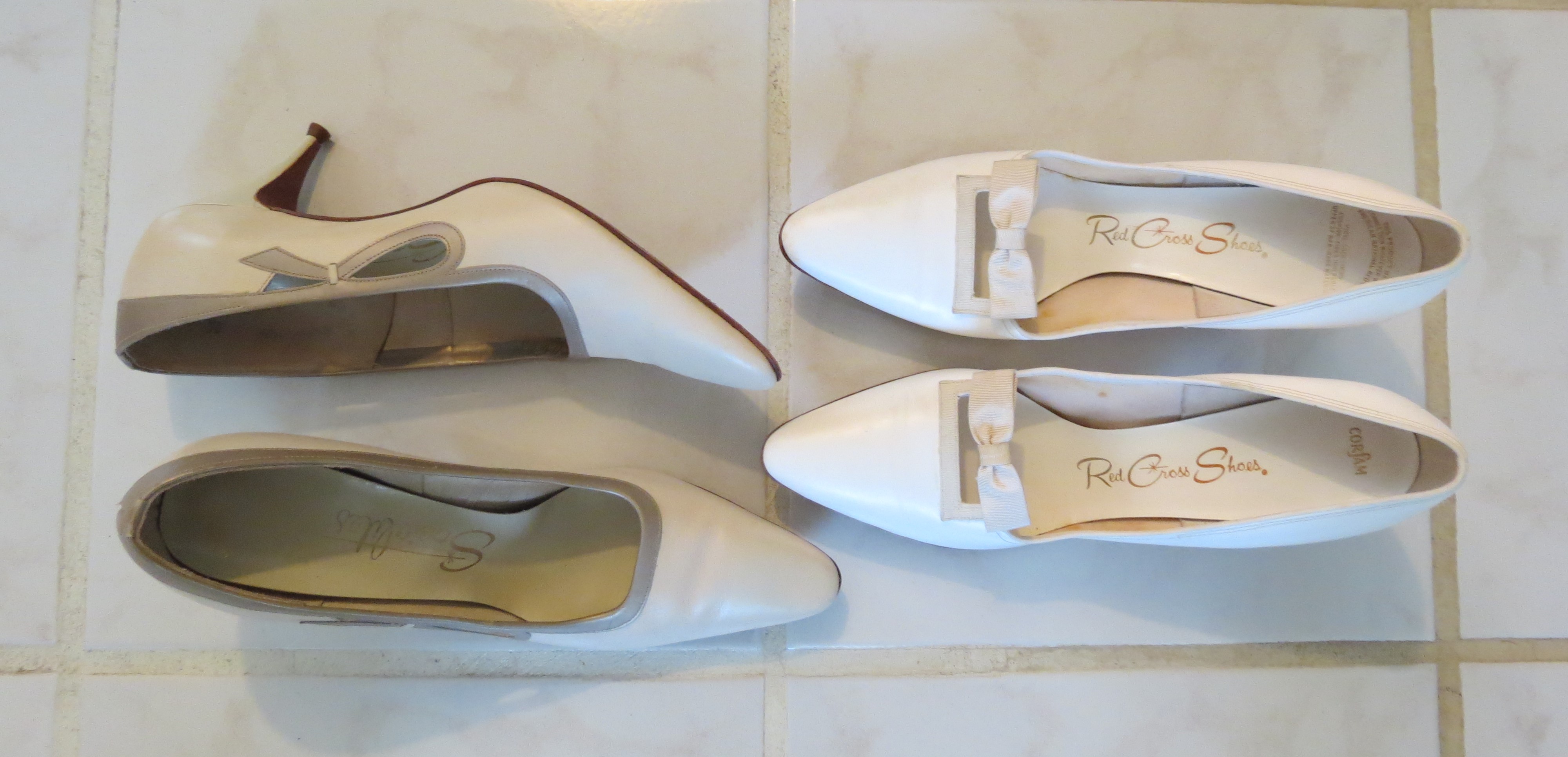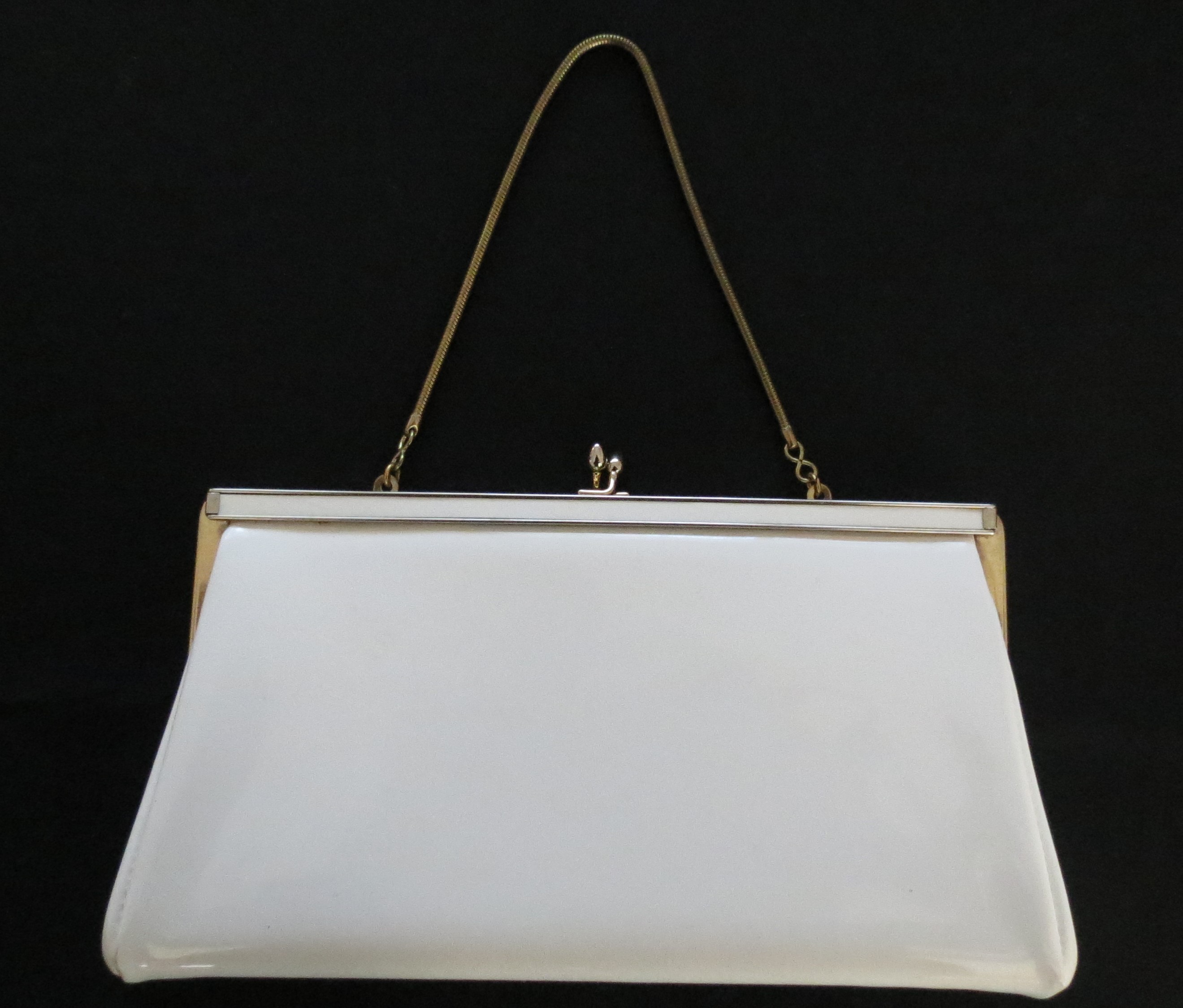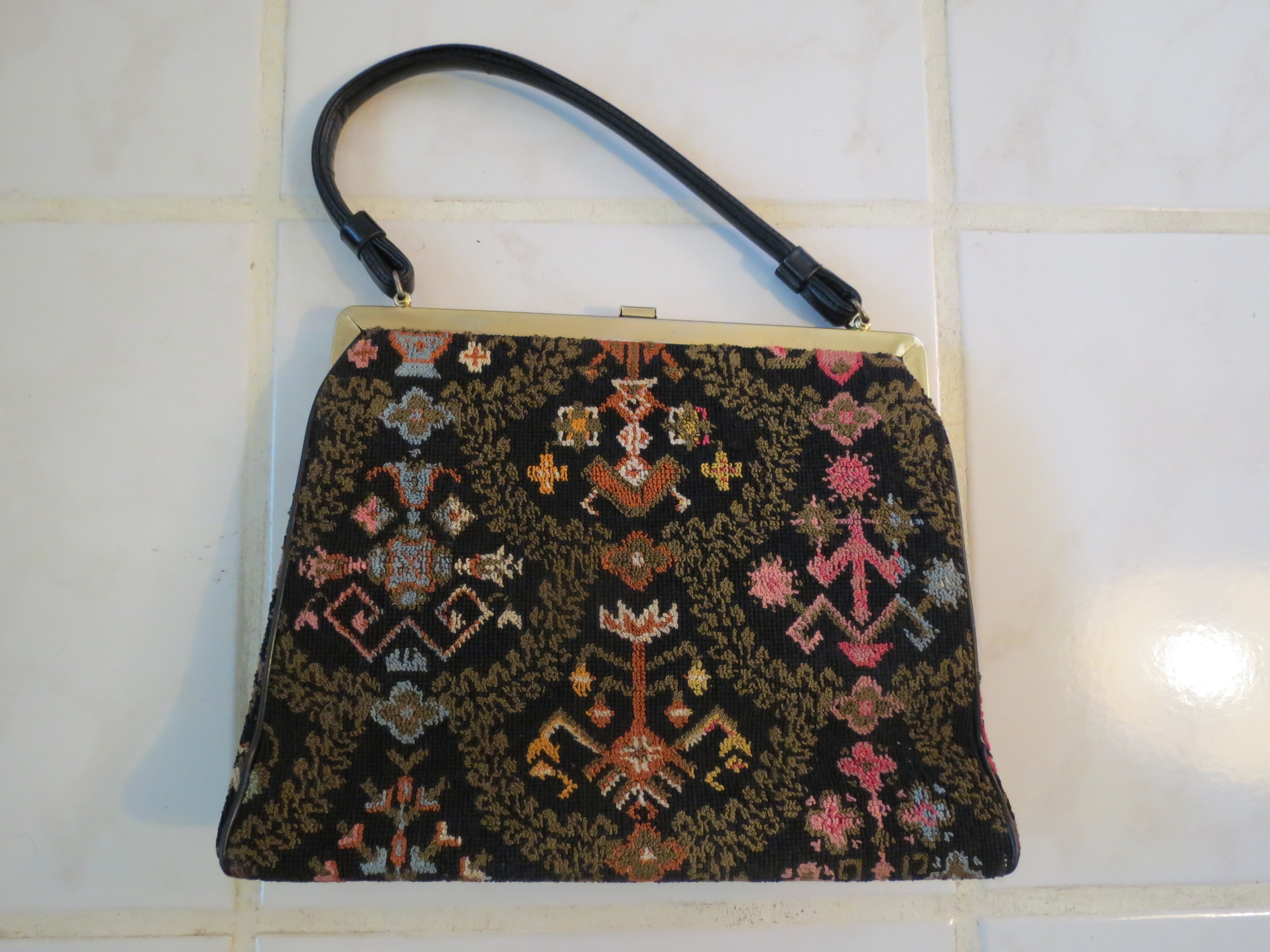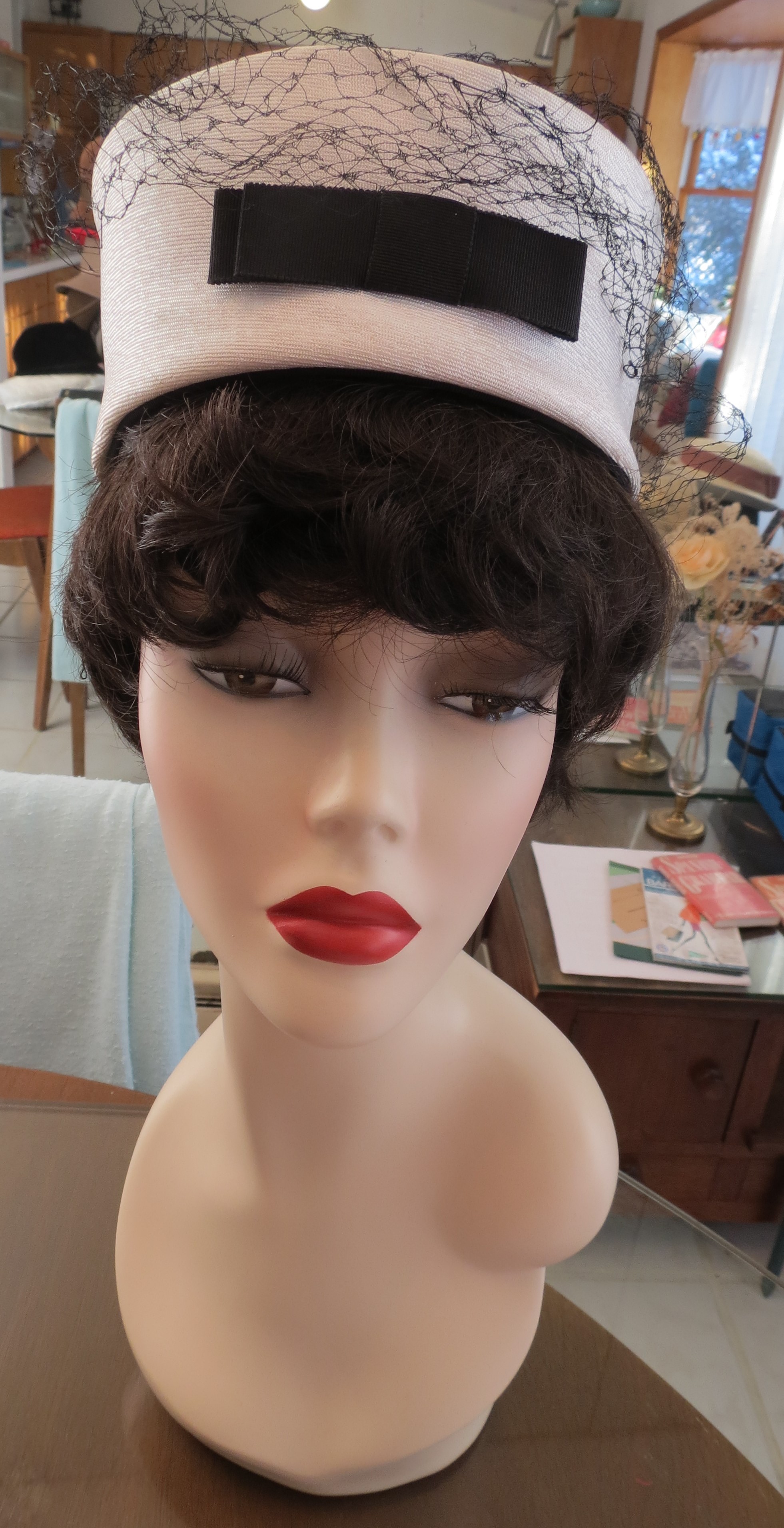
Here’s another wedding costume ensemble with known history. In fact, this gown was worn by a family member in 1954. Frothy, but elegant, and so flattering. A 3-layer skirt with rows of decoration and embroidery on the fabric of the little bolero jacket. Although shorter skirts on wedding gowns were popular then, this one sticks with the floor-length style. Long sleeves make it more demure but the sheerness adds a youthful touch. I also love the pretty tiara instead of a veil. Despite some sophisticated tailoring, the bride was 18. The strappy design of the bodice and wasp waist make it a dress I could see being worn to the Prom.
Too lovely for words. More special occasion and wedding dresses coming – stay tuned . . . . . . . . . . . . . . . . .
Here’s a beautiful example of an ensemble from 1940. It’s a long way from June now, but weddings know no real season so it’s great to feature them alongside their sisters, the formal and semi-formal dresses. I know some of this one’s history because I was able to get it from the bride’s daughter. She told me that her mother had purchased it from Eaton’s, which was a well-known department store chain in Canada, sadly closed in the 1990’s or early 2000’s. I also think that there’s an interior tag indicating that it had been made in Europe.
So beautiful with the veil but the dress alone is stunning. Heavy ivory-color fabric – probably a type of rayon. Classic long sleeves that make it a 3-season gown. This was before Canada and the U.S. joined the Allies in WWII, so materials were not heavily rationed even though we had just emerged from the Depression of the 1930’s.
A couple of brownish age spots are the only signs of wear or damage. It’s so wonderful to discover a piece like this, also with background information that makes the investigation so much easier to report. Stay tuned for more transmissions . . . . . . . . . . . . .
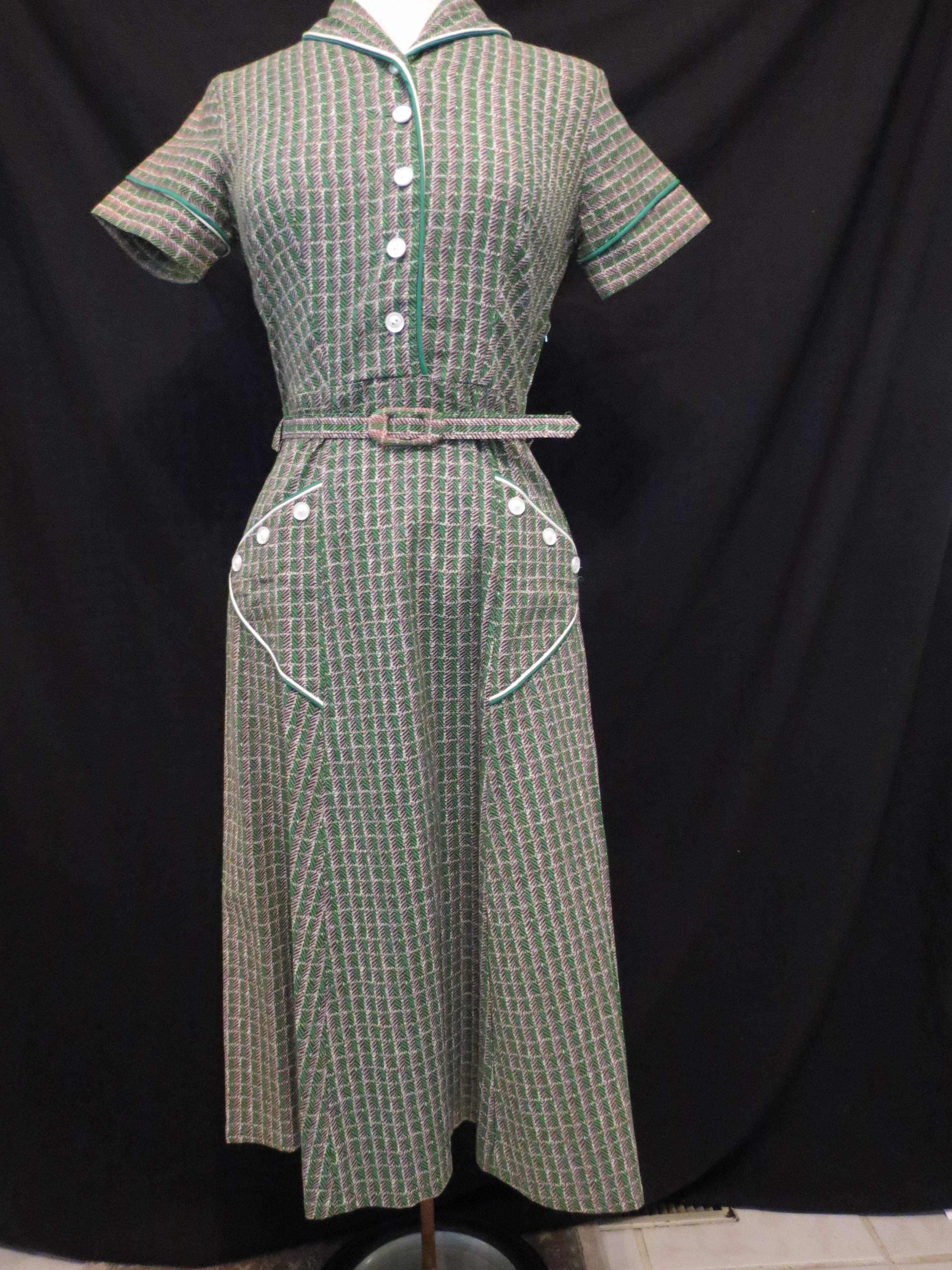
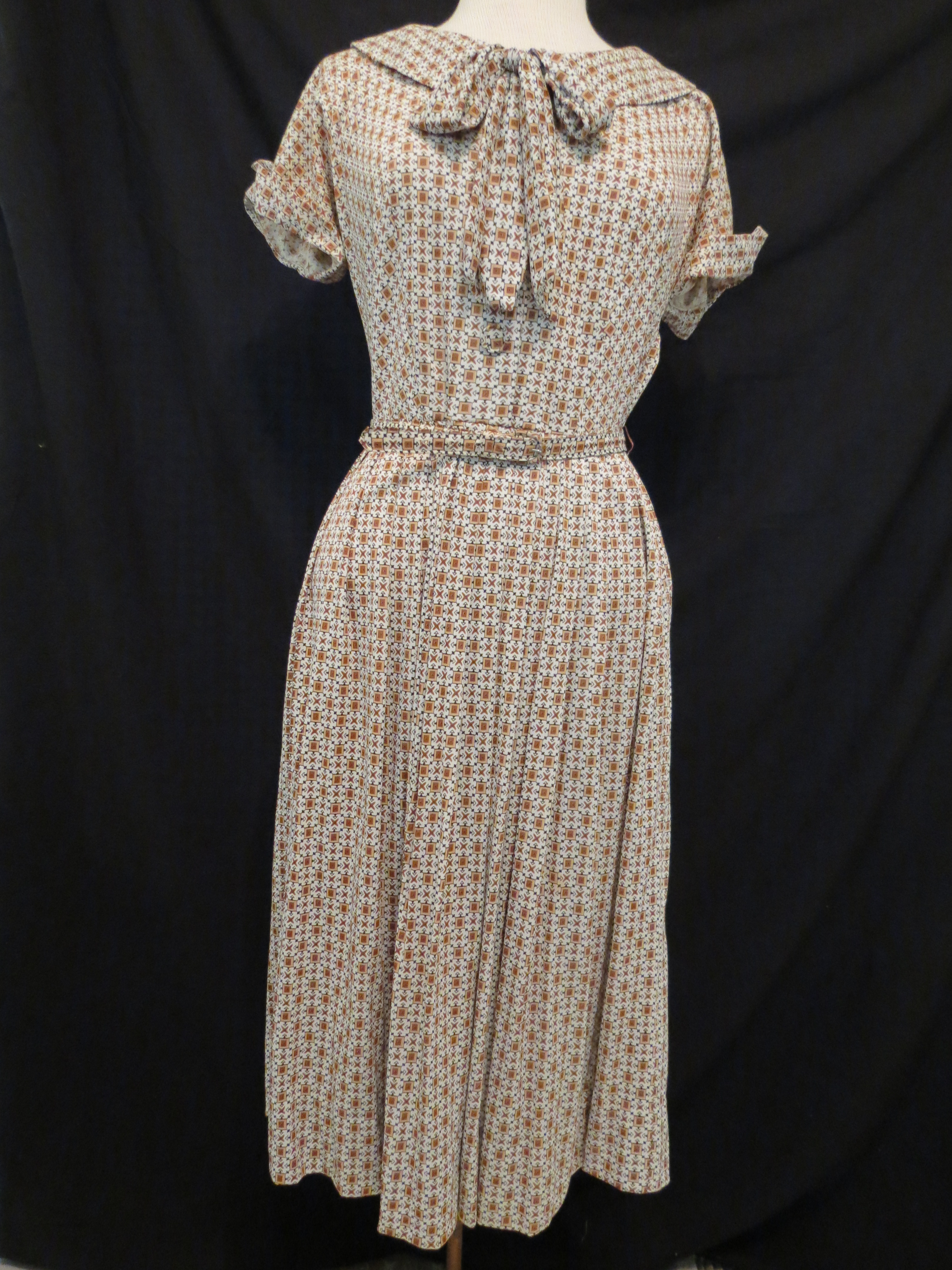
Was that really a bride’s dress yesterday? Well, here’s what her matron of honor or one of her bridesmaids might have worn. Again we’re in the middle to late 1950’s to the early 1960’s for the date of this costume. The New Look Post-war design and below-knee hemlines are still popular. It’s made from a common, mid-weight synthetic fabric that has a nice gloss, with classic fitted styling and it’s own unique tailoring details. There is an attached netting crinoline layer under the skirt for gentle pouf.
Not designed to steal the bride’s thunder, but still very attractive. The virginal veil headdress, dipping neckline, wasp waist fitting and flouncy skirt in back do make the rear view a bit flirtatious. Some of the best fashion designs have combined both demure and come-hither vibes with genius artistry.
Here’s one other possibility which adds to the mystery – this might actually have been the bride’s dress, if it wasn’t her first wedding . . . . . . . . . . . . . . . . . . . . . . . . . . . . Stay tuned –
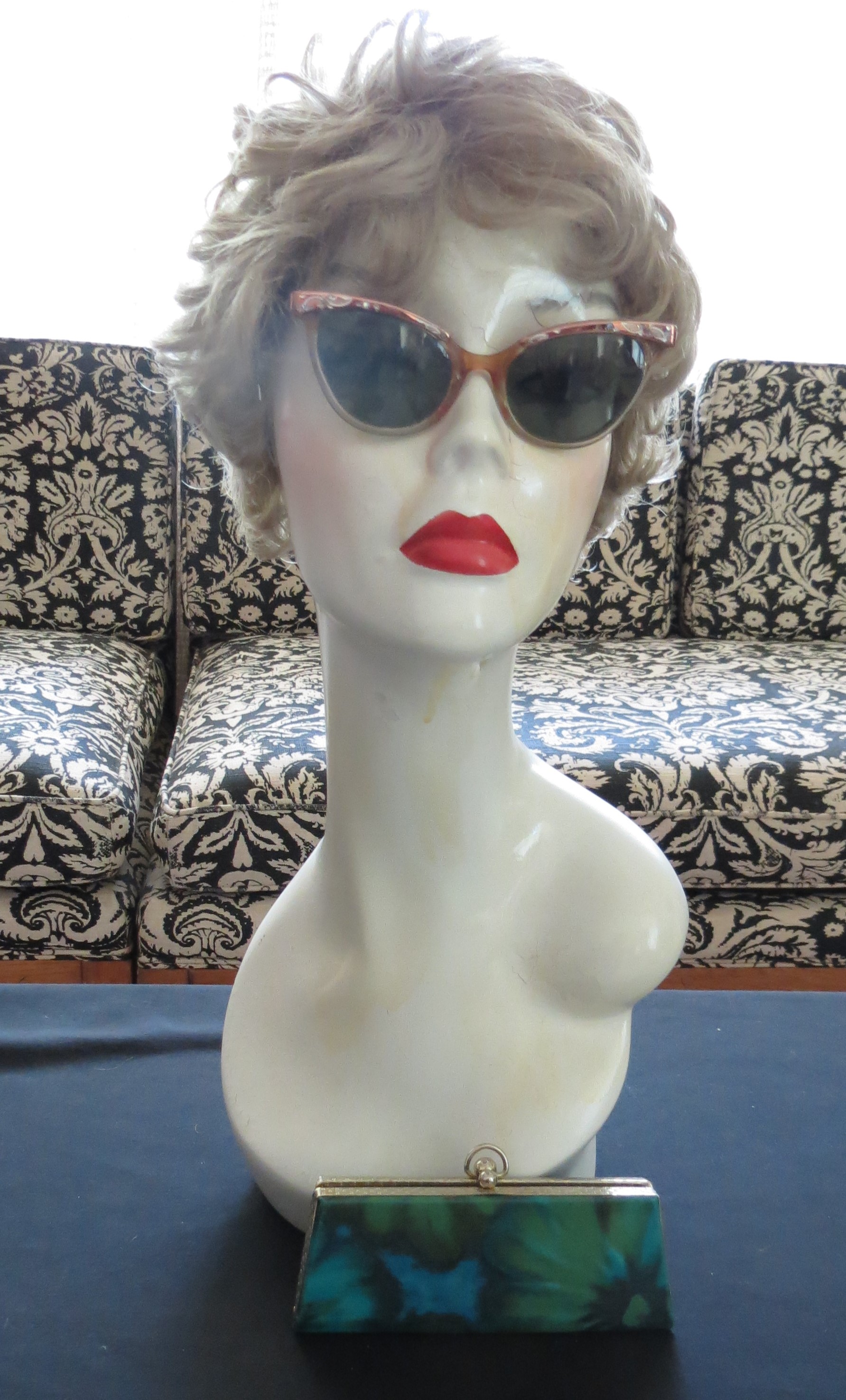
The most sophisticated gal would still want some glitz for the party tonight, but would do it in high style from one of the best stores. A jacquard weave shell blouse with a long black skirt and luxurious golden leather clutch purse (with it’s own pocket mirror, of course) make a stunning ensemble for cocktails and dinner beforehand, and which will take her through the whole evening.
Madge shows off the blouse beautifully with her buxom figure and tiny waist. Her bag is of quite good quality and size – larger than most evening bags and more modern than the beaded silk variety which were still popular the year John F. Kennedy was elected President.
The New Year has always represented a time of hope, joy and the anticipation of turning over a new leaf. The moon is awfully bright in the sky tonight – What do you say? Let’s go! . . . . . . . . . . . . . . . .
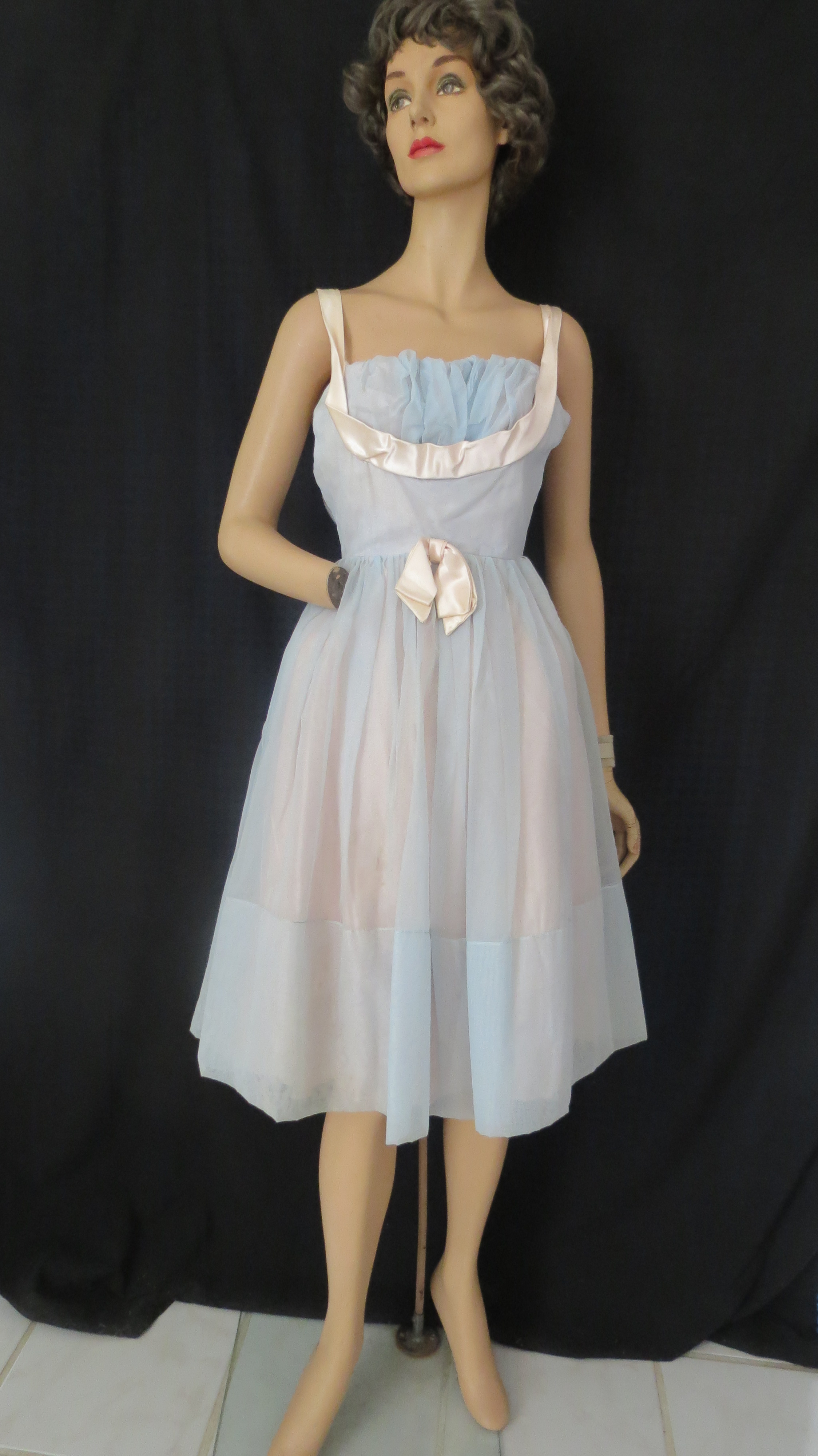
Powder pink frock for a special occasion. Love the long sleeves with our current weather and I’m happy with the color that doesn’t feel like Winter. It’s not a Prom dress, but could have been worn to any dressy dance party, a recital or . . . . . . . . . . . . . Very demure, but gives a nod to formal wear with a sheer bodice and scooped back. Of course, it has the 3-layer pouf skirt with stiff attached crinoline, acetate/rayon opaque layer and a gauzy synthetic overskirt that was iconic in the Fifties, up to the very early Sixties. Naturally, the stiletto pumps are mandatory.
Despite it’s tiny size, I believe that this frock was sold in the Misses Department (probably size 10) rather than as a Junior size. Just goes to show how our Misses sizes have changed over the decades. A modern size 10 now would hang like a tent on Stella – a 1950’s size 10 is equal to a current size 2. Perplexing, but the clues all fit together. Go figure (no pun intended) and stay tuned . . . . . . . . . . . . . . . . . . . . . . . . . . . . . .
Sorry to be so late – trouble with my WordPress account, but so far so good.
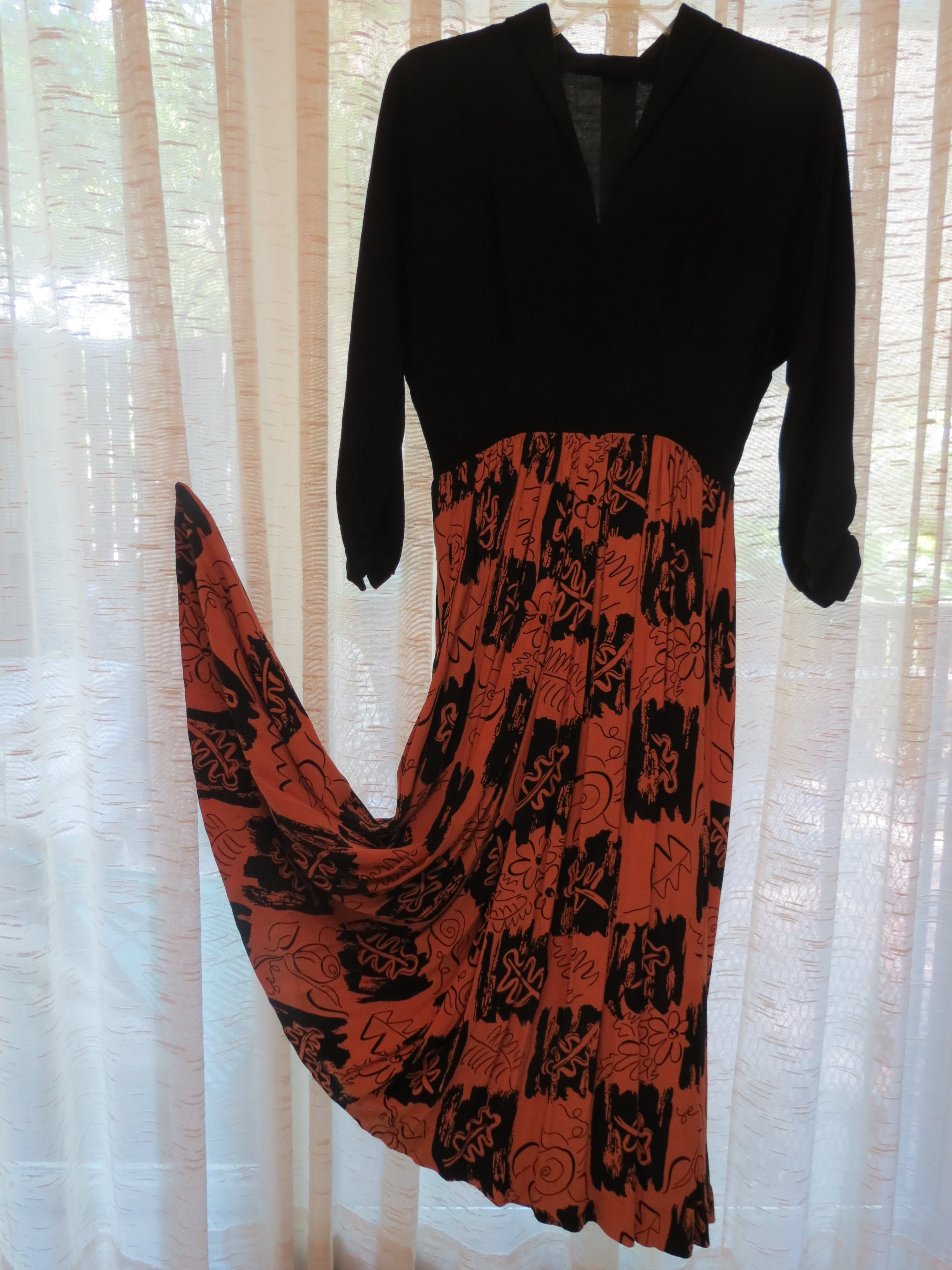
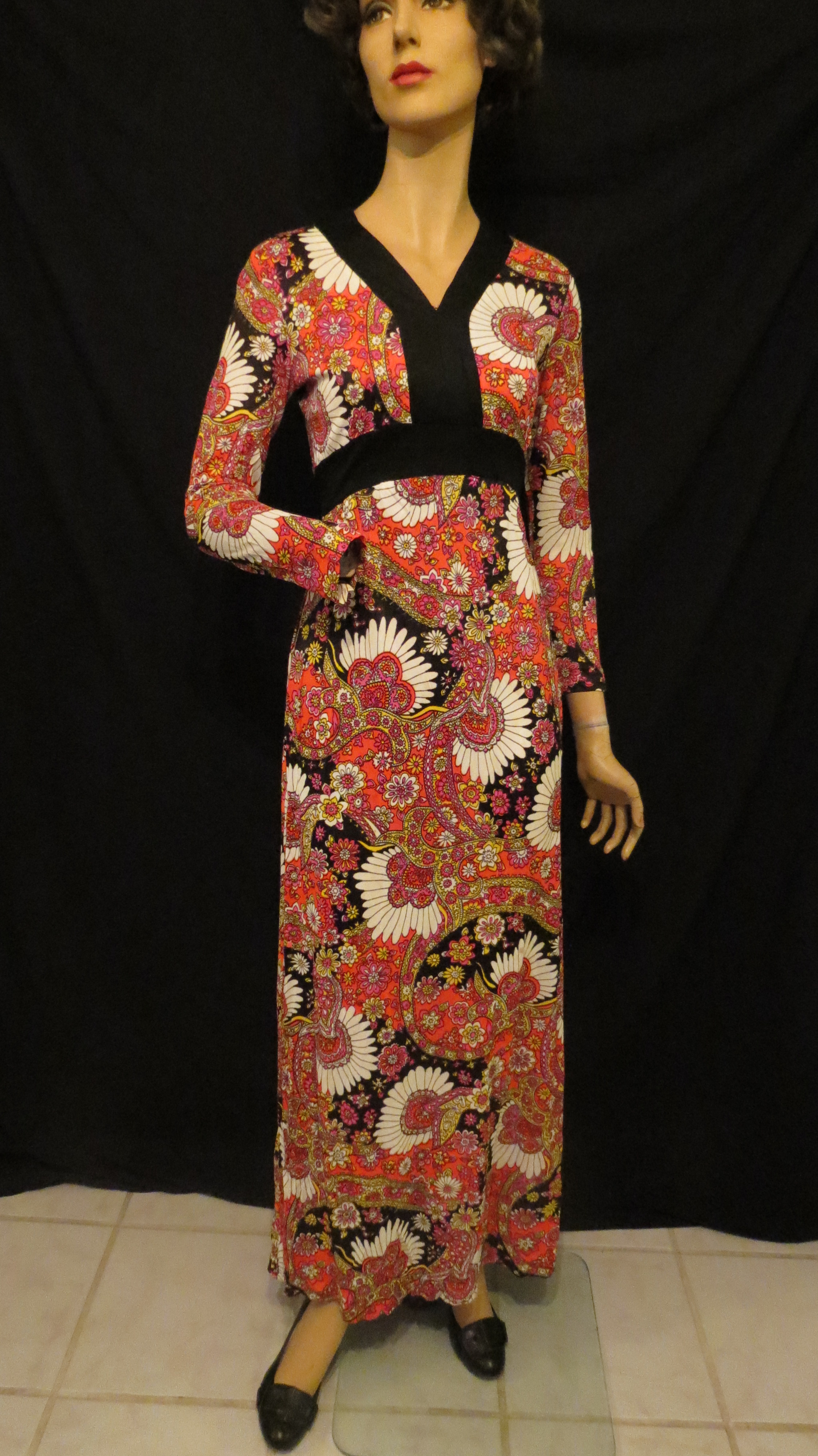
Here’s a pretty velvet knit gown from the late 1960’s – early 1970’s which I would say is perfect for at-home, though there is a matching purse! Perfect for Boxing Day, which was yesterday in Great Britain and it’s former colonies. That’s traditionally the day to unbox all the gifts, clean up the mess and relax. This easy-fitting, soft and comfy dress allows for movement. Adds warmth, without being restrictive.
Although it’s very plain, the empire waist and embroidered trim, plus the fabric and zipper allow me to date it. The fact that it was custom-made helps, too. I must give kudos to the seamster who took on the project of creating a matching shoulder bag. That requires some skill and, probably a simple machine to attach the hardware. Cool!
Although it’s Christmas Past now, we’re still in a holiday week and the party spirit will continue in the archived files I will show you in the coming days. It’s so fun to review the clues and data from previous sleuthing investigations! Stay tuned . . . . . . . . . . . . . . . . . . . . . . . . . . . . . . . .
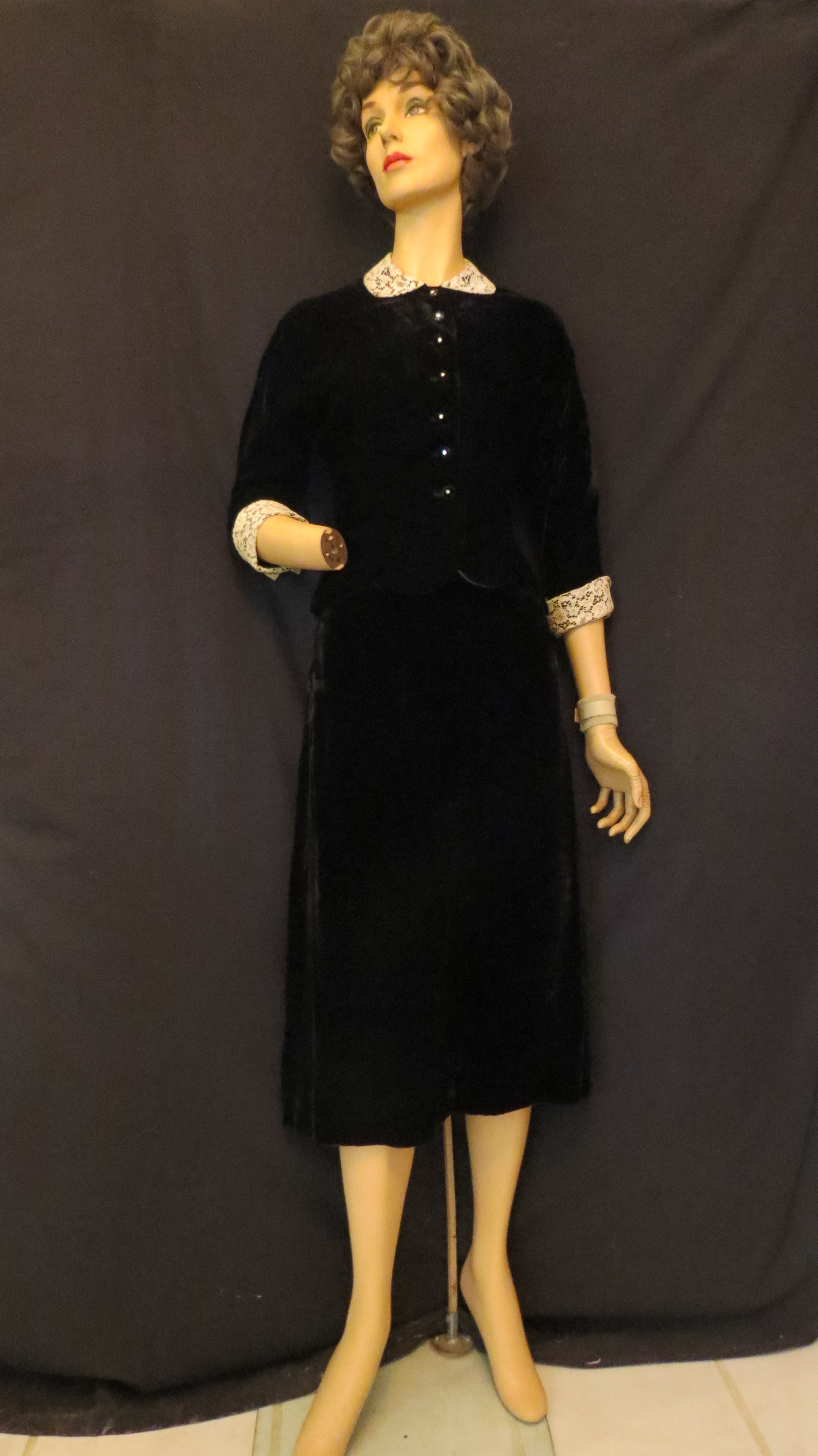
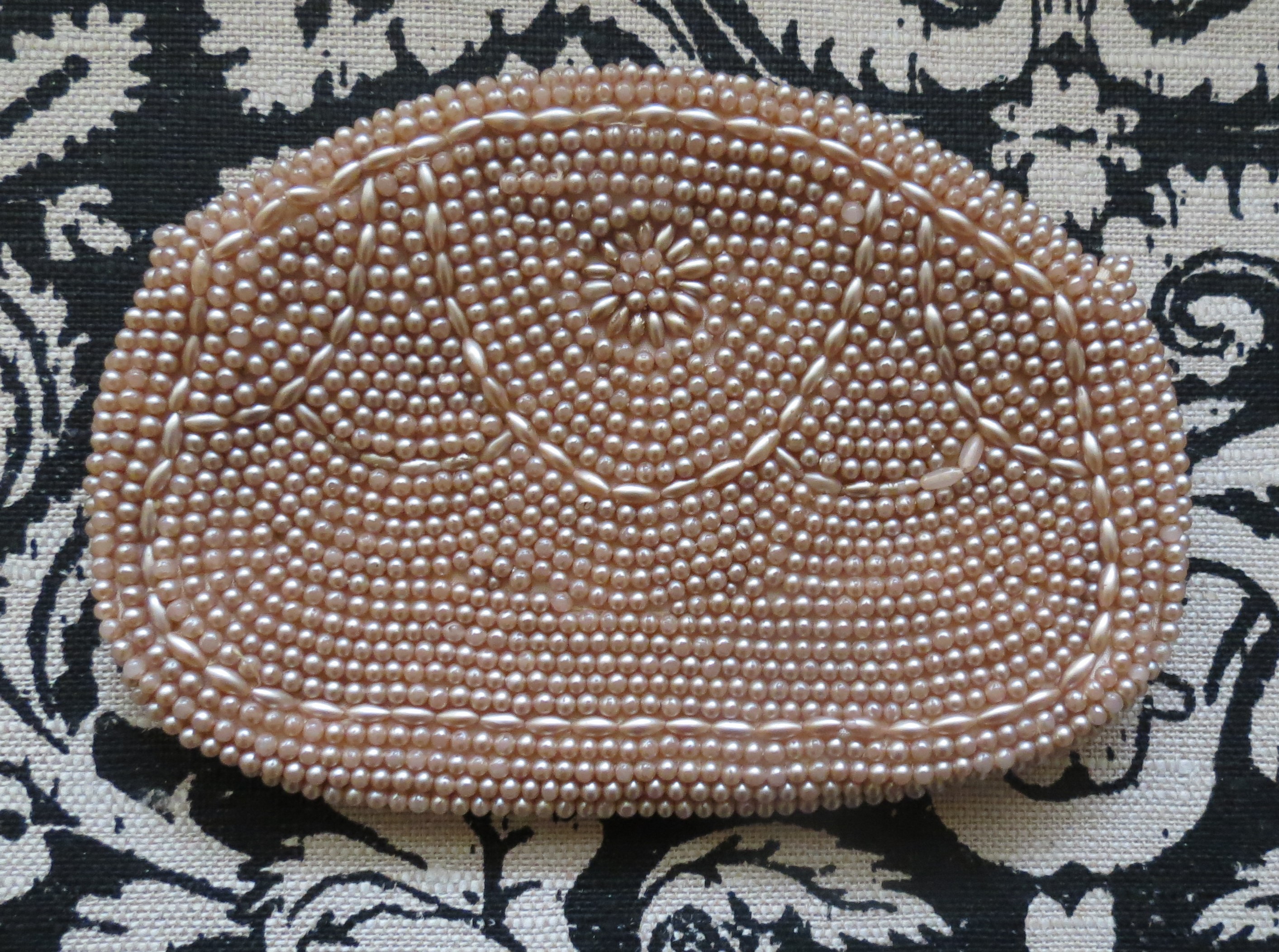
Let’s start with a velveteen pencil dress and coordinating handbag from the 1940’s. True Forties styling with the pencil cut and skinny sleeves with zippers at the wrists. The dress zips down the back rather than at the side, which began to be seen in the Forties. This dress was probably purchased at retail unless made by an expert tailor. It’s stylish and sophisticated but is frugal with the use of fabric so probably made during wartime.
Other than the wrist zippers, which are almost a necessity with these kinds of sleeves, and the piping finish on sleeves, neckline and waist there are no other embellishments. Piping done this well is not an easy task. In fact, the piping may have saved fabric that otherwise would have been used in hems or facing. Many purses, like the one above, were made of fabric during WWII instead of leather. 1940’s clothing and accessories, especially women’s designs, were very creative. Women and clothing companies came up with lovely fashions while coping with rationing and a limited economy. While not formal, a garment like this would have been appropriate for any dressy event from dinner to cocktails.
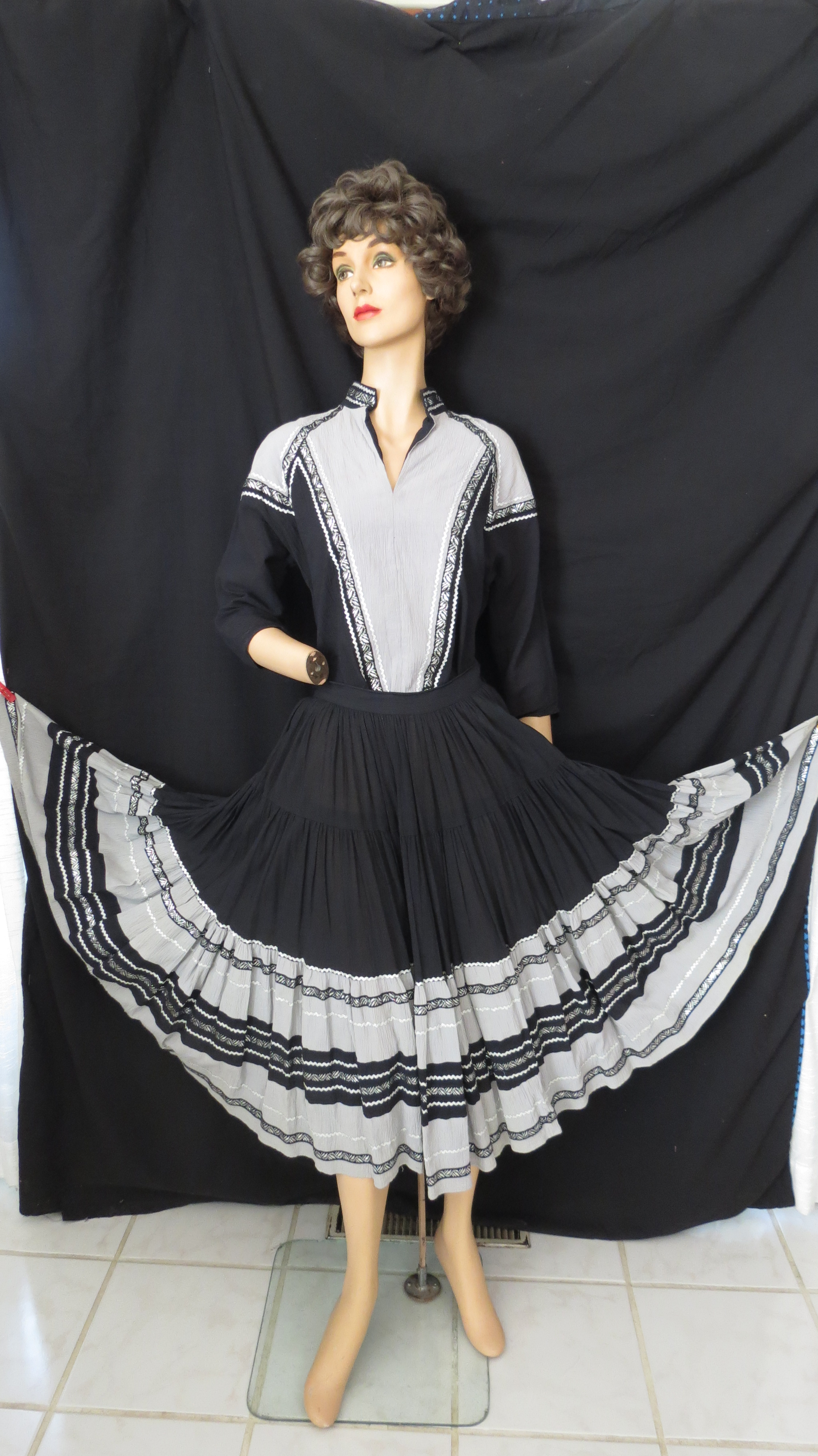
Stay tuned for more frocks in this category, from the mid-century . . . . . . . . . . . . . . . . . . . . . . . .
Here’s a perfect example of a case where your undergarments are going to be really important. This unusual cocktail sheath is so gorgeous because of the cut and the fit. Nothing fancy, nothing fussy – just pure elegance.
Imagine how it would be ruined by straps showing, panty lines or cling. This dress looks perfect only when it fits flawlessly and glides freely over the body. You’d need a smooth undergarment which allows that to happen – skimming the body with enough substance to soften any lines but whisper soft and sleek in order to be invisible. Happy sleuthing for just the right one . . . . . . . . . . . . . . . . . . . .
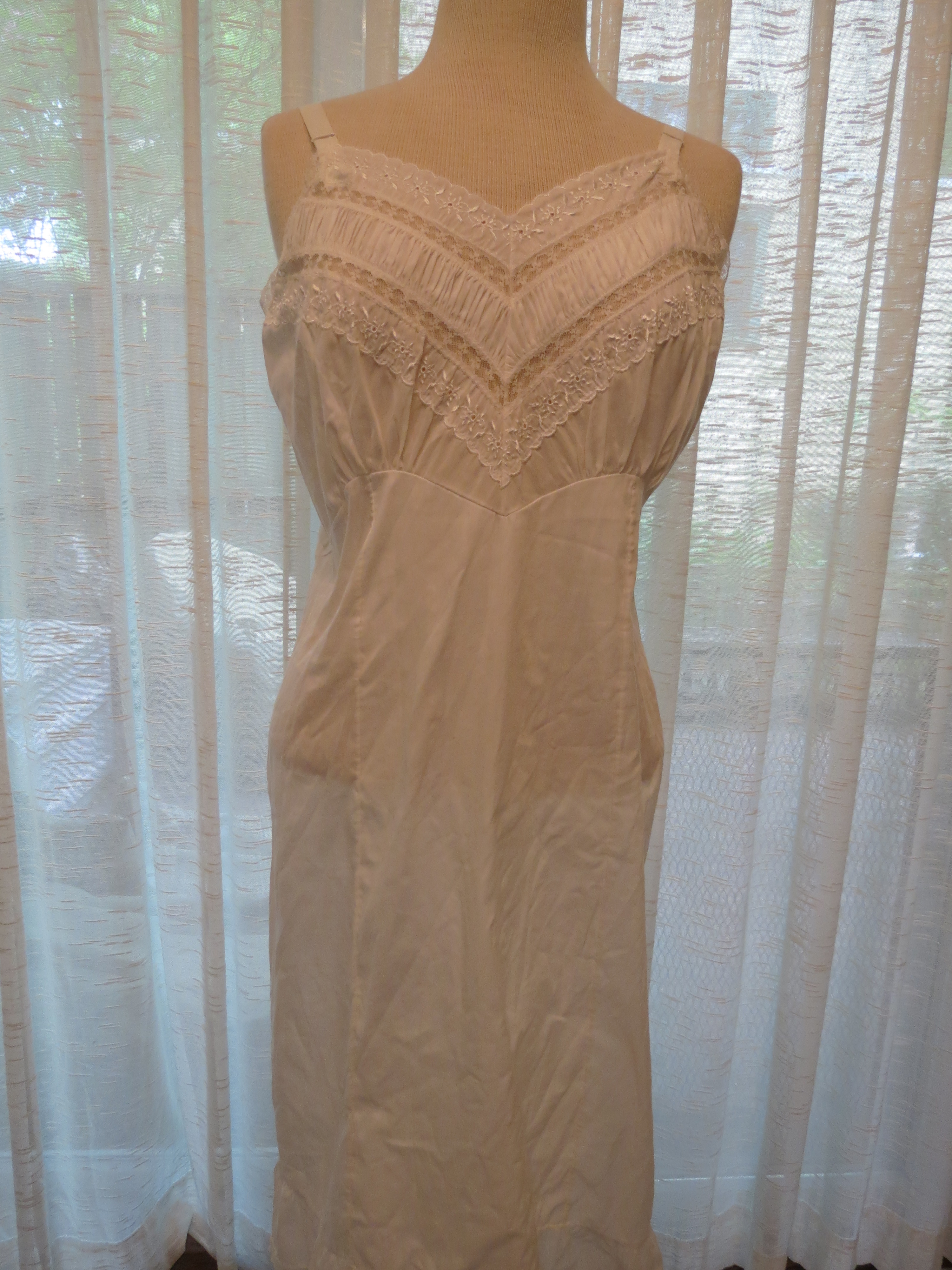
Here’s a sampling of my dozens of beautiful lingerie slips from several eras. True vintage lingerie is essential to wearing your dresses, blouses and skirts with their best fit and comfort. Slips can be fine cotton, rayon, silk, acetate or nylon. Designs can be highly decorated or very sleek and plain. It pays to have every type you can find in different lengths and colors. Some are so gorgeous they can be worn alone as “slip dresses”.
Matching your undergarments to your dresses in a way that minimizes binding, getting too hot or having some unsightly see-through makes all the difference in the final presentation of your outfits and your enjoyment of wearing them. Usually, you’re the only one who knows how truly beautiful your full or half-slip really is. Sometimes it’s fun to allow just a corner of lace trim to show beneath a hemline or at a neckline. In other words, have fun. Have a beautiful Thanksgiving holiday and stay tuned . . . . . . . . . . ..
These are just 3 out of my collection of lovely kitchen aprons, but perhaps a bit more interesting and seasonal than others I have, which are more generic, like a cotton gingham check without any specific theme. Many aprons, like the first one here, were specifically themed for a particular holiday or fashion era. It’s a great example, with bright color and a novelty print for Thanksgiving. Although it’s definitely trendy and targeted, it is also at least somewhat practical because of the machine-washable fabric, wraparound style, secure ties and big pocket. It could actually do the job of keeping the cook’s skirt clean. The most useful styles also covered the bodice.
The usefulness is really important, but I love the novelty print. It’s always good to play the hostess in something that also makes people smile. The two aprons following are entirely different in their purpose. These are made from a much more delicate fabric and would be best washed by hand, both because of their delicacy and because they are hand-painted. They were made for and gifted to my grandmother by a relative who at least did the painting herself, if not the sewing job. Gifts like this were common in her day, and cherished. These aprons were made not so much to protect clothing as to be pretty. Grandma might have worn them when she had her friends in for tea or a card game, maybe even for hosting an at-home cocktail party. The messy part of the hostess job would have already been done when she made the cake or other refreshments beforehand.
Aprons were much more commonly worn in decades past and were a significant part of a woman’s household wardrobe, like housedresses worn on cleaning day. Most women’s (especially married women’s) lives were organized around a routine of household duties throughout the week and each one usually required a different kind of outfit – one for cooking, one cleaning, one for tending plants, one for doing the weekly shopping. Special accessories to these outfits were needed for certain jobs, such as gloves of various kinds, hats of various kinds, nursing bras and pads to protect clothing from breast milk and burping babies. Housewives were trained to be very practical and were rewarded by Society for a job well-done. The home was their workplace and the role defined them, so their household wardrobe had a central place in their lives. For better or for worse, that was the way it was. Do we want that again? Think about it and keep your eyes on the clues . . . . . . . . . . . . . . . . . . . . . . . . . . . . . . . . . . . . . .