A bit of a confusing style – not sure where this frock landed back in the day. The little paper tag peeking out from the neckline in back tells us that it was an off-the-rack garment. Looks like a hybrid cocktail wedding dress. White, with glitzy beaded “cummerbund” effect around the front waist and a short formal length. The shoulder tails are a clue which points specifically to the late 1950’s – early 1960’s when these were having a come-back. Pretty on a wedding or party style but a bit awkward for dancing.
Whatever it was intended to be or ended up being, it’s gorgeous and sophisticated. I’m sure the lucky gal enjoyed it. More to come. Stay tuned . . . . . . . . . . . . . . . . . . . . . . . .
Stylistically, almost identical to the one shown a couple of days ago excepting that this one has a different tailoring on the bodice. When sleuthing, it’s been so much fun to find dresses of this type and to notice that they are very individual, even though they come from the same time and the same category. Again, we’ve got the sheer elbow-length sleeves, so I would say that this dress comes from the identical 1950’s – early 1960’s decade.
What a perfect color for this time of year – the pastels always are ready to come out in force after New Year’s Day. Again, an early Prom dress?; possibly. Possibly was worn as part of a bridal party. Bridesmaid, Maid of Honor or maybe even the bride. More to come – stay tuned . . . . . . . . . . . . . . . . . . . . . . . . ..
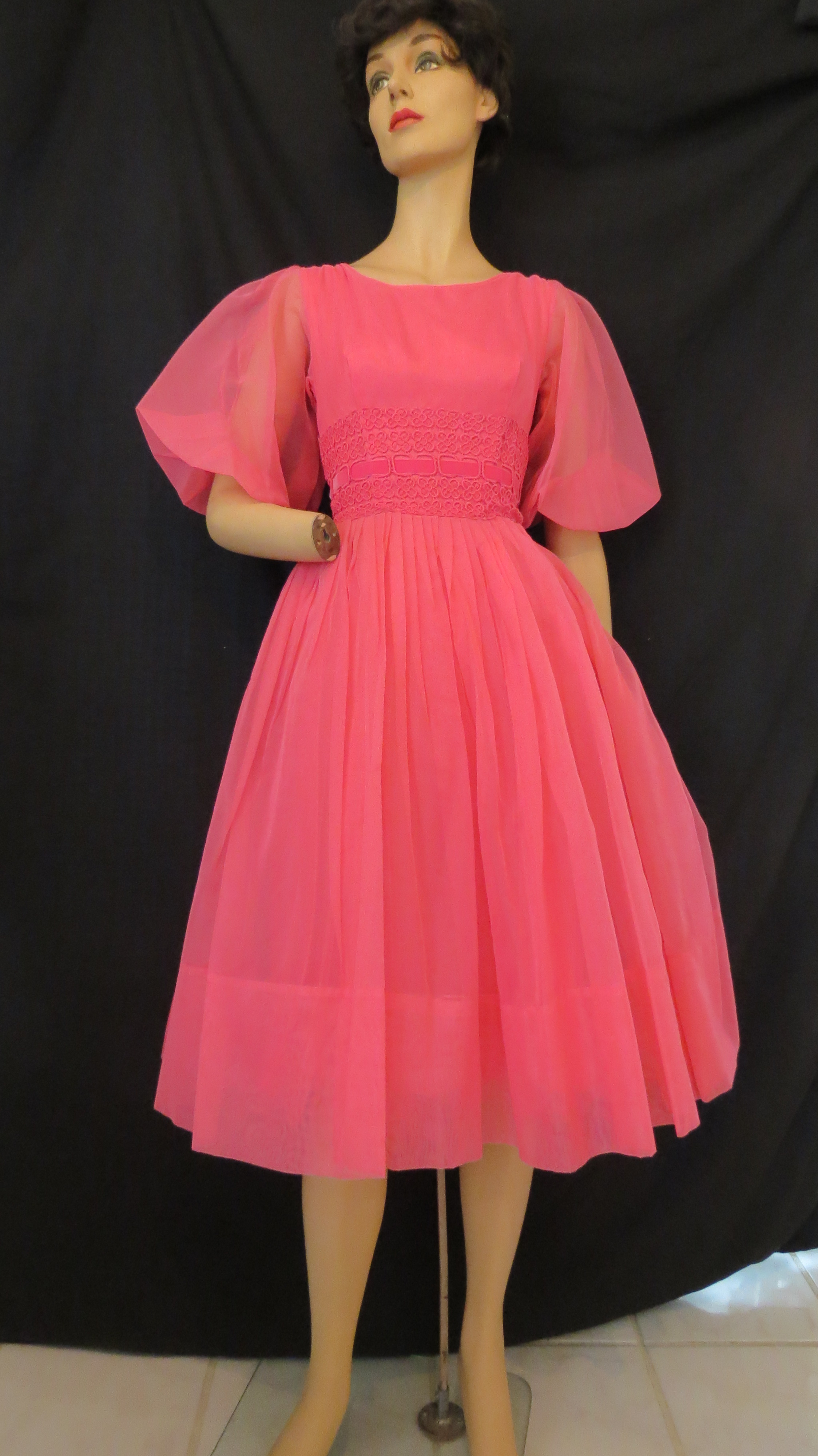
Such a pretty style and color! In a dark salmon pink, with the unusual sleeve design and waistline embroidered smocking. It’s not an in-your-face sexy style, or even close, but it has all the design hallmarks we’ve been seeing with regard to the fabric, fitted bodice, cinched waist, pouf skirt and tailoring detail. A bit high-waisted, as many of the dresses of the Forties and Fifties tended to be. Perhaps they fit most women’s bodies better at that time. I can never get over the generous hem allowances to die for.
This could have been a prom gown when they were still wearing below-the-knee styles. Maybe even a bridesmaid dress. It’s a real confection, like a strawberry or mid-century powder puff. Makes me think of another holiday that’s coming up soon. Stay tuned . . . . . . . . . . .. . . . . . . . . . . . . . . . .
Still from the same genre and general Post-war Mid-century era as the dresses I’ve been showing since before Christmas, but this frock is so much more Spring-like because of the color. Feels like we’re already looking toward Easter or Prom. I suspect that this one might be just a little bit newer than the one shown yesterday, but it has some conflicting clues with regard to the tailoring and fabric. Unlike yesterday’s, it does have attached stiffening in the skirt and a slightly shorter hemline, though still below the knee. Dating it right between 1955 and 1962 would be accurate.
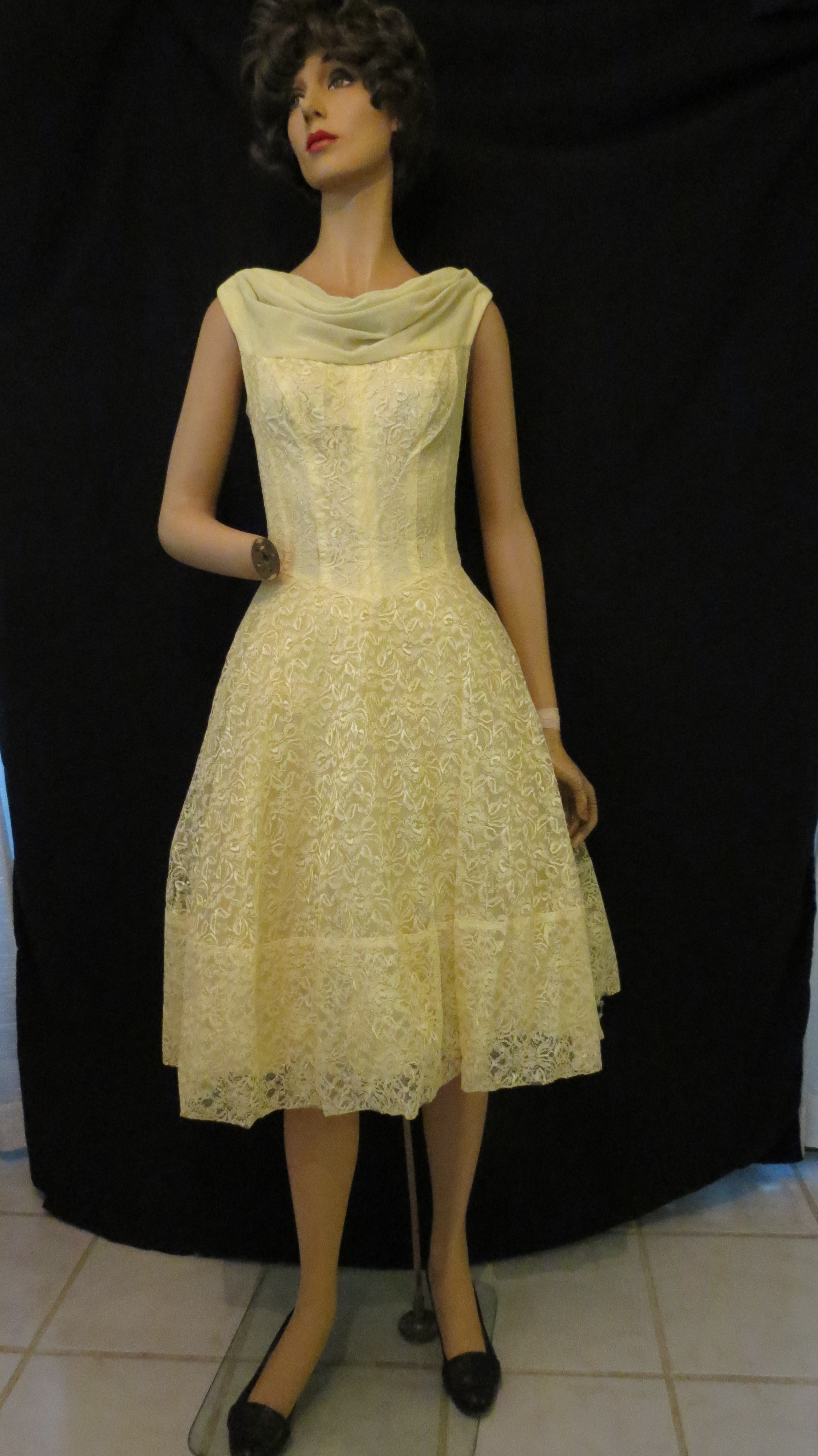
The butter yellow is different but the most distinctive feature is the neckline. Love the drape in front and the LONG tails in back. The wasp-waist fitting is always stunning on those who wear it well. As we begin to get away from the darker colors and heavier fabrics, the undergarments become critical. Stay tuned . . .
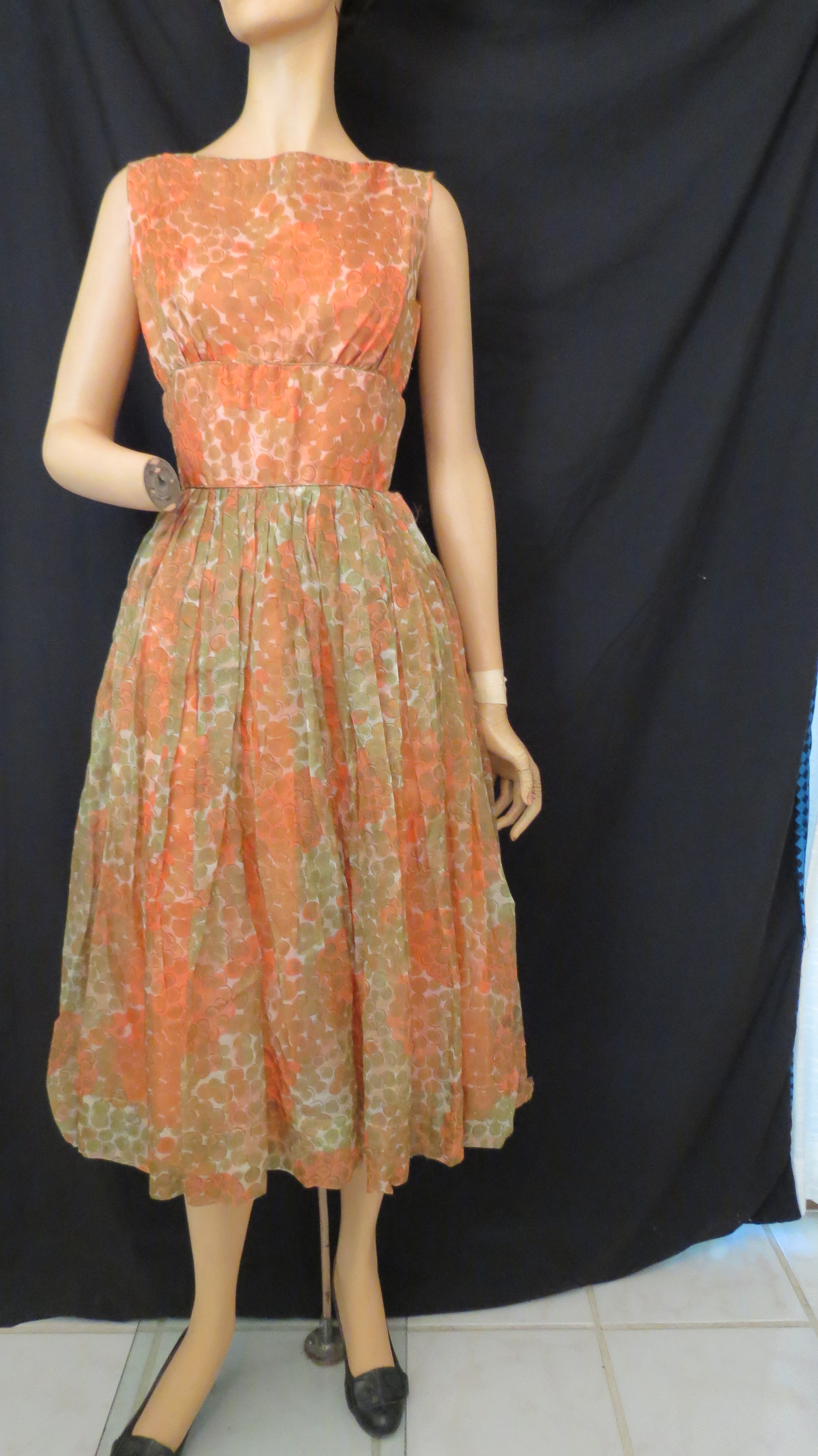
Since I tend to sleuth in out of the way places, all my discoveries are happy surprises but I remember this one as being especially so. A gorgeous 1950’s – early 1960’s frock worthy of Grace Kelly. Looks wonderful on Stella, too. Unusual color combo looks great whatever the season.
Like many of the dressier dresses of this time, it has a sheer layer over an opaque liner. This skirt could accommodate a crinoline but doesn’t have one attached. From the time of WWII, with slacks for women becoming popular, women began having more freedom in their choice of clothing and how to wear it.
What a beautiful example from that Post-war decade! We’re on a roll – stay tuned . . . . . . . . . . . . .
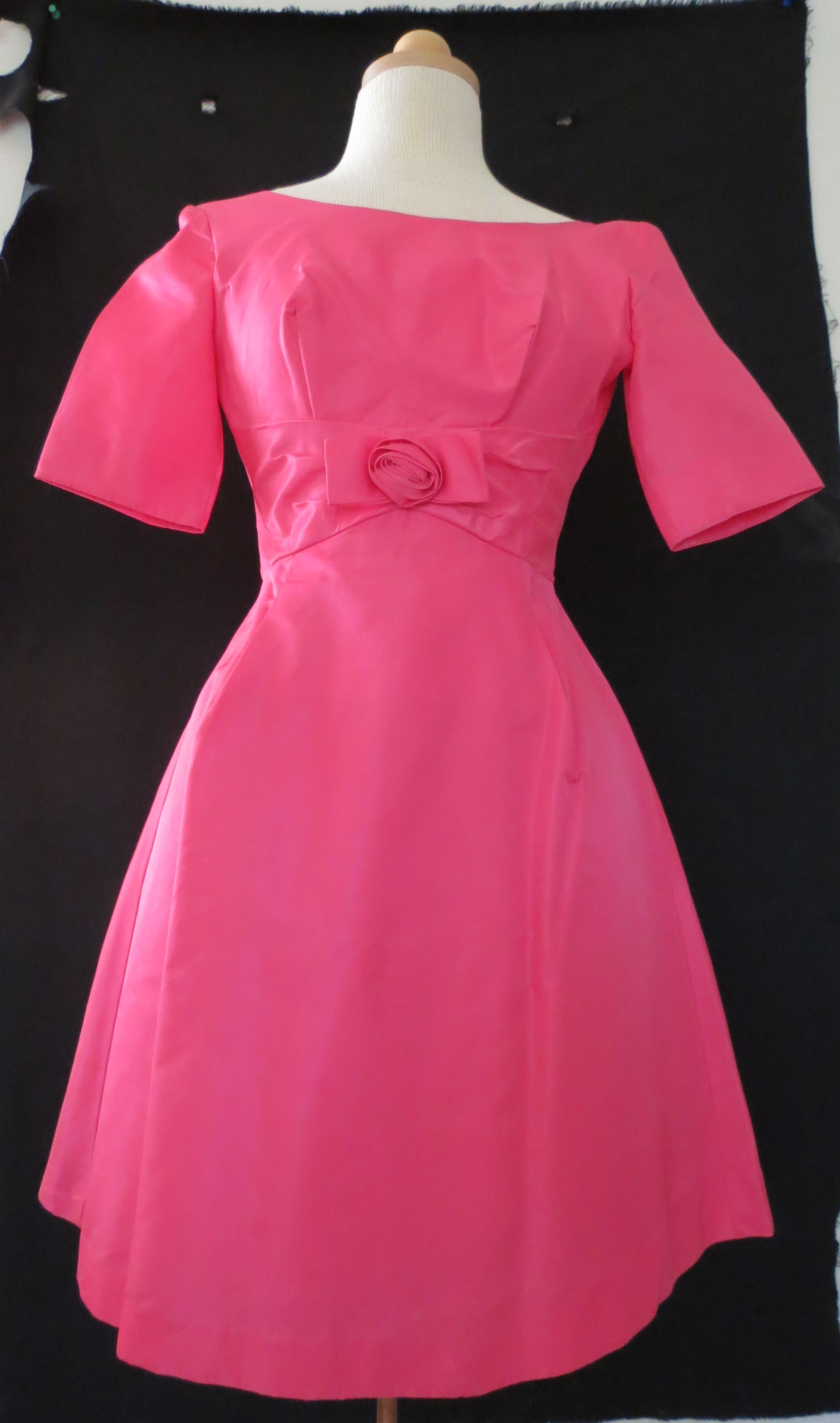
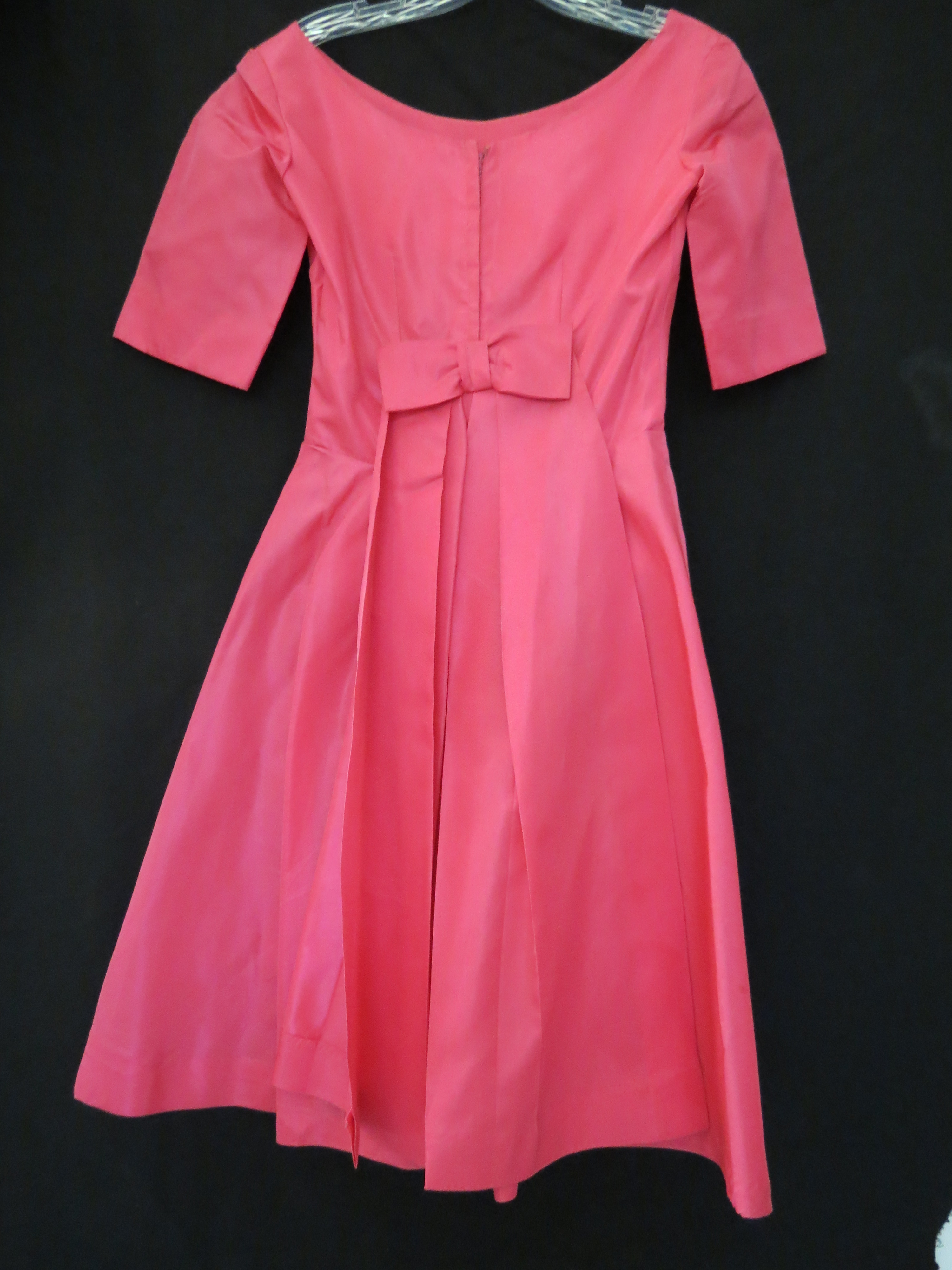
This little frock has the hallmarks of being from the Kennedy Era – the 4-5 year period around the transition from the 1950’s to the 1960’s. It still has some of the fussy tailoring of the Fifties, but is simpler. The fabric is heavy, though not true taffeta, and the A-line skirt still has a somewhat stiff underskirt to support the all-important shape. Elbow-length sleeves are great for the season and are a little more informal than sleeveless designs. Could be worn to a cocktail party, though very different from the usual LBD.
The bow detail is iconic of the time and emphasizes an empire waistline, still with the wasp waist fitting. If you look closely at the photo of the back, you can see one of the best styling features, in my opinion. the bow has LONG and WIDE tails that extend to the hemline and add a bit of sophistication and very interesting movement to the design. Again, very demure and tiny but could have been styled for and worn either by an older Teen or by an adult woman. Only a size label or, less likely to be found, a brand label will help answer this question. I’m sure this was an off-the-rack garment, so best guess is you’d be lucky to find, if they haven’t already been removed, a tag with size and/or inventory info and/or a Ladies Garment Worker label. Valuable clues all!
An interesting time for ladies’ dressy garments. So much change happening. Stay tuned . . . . . . . . . . . . . . .
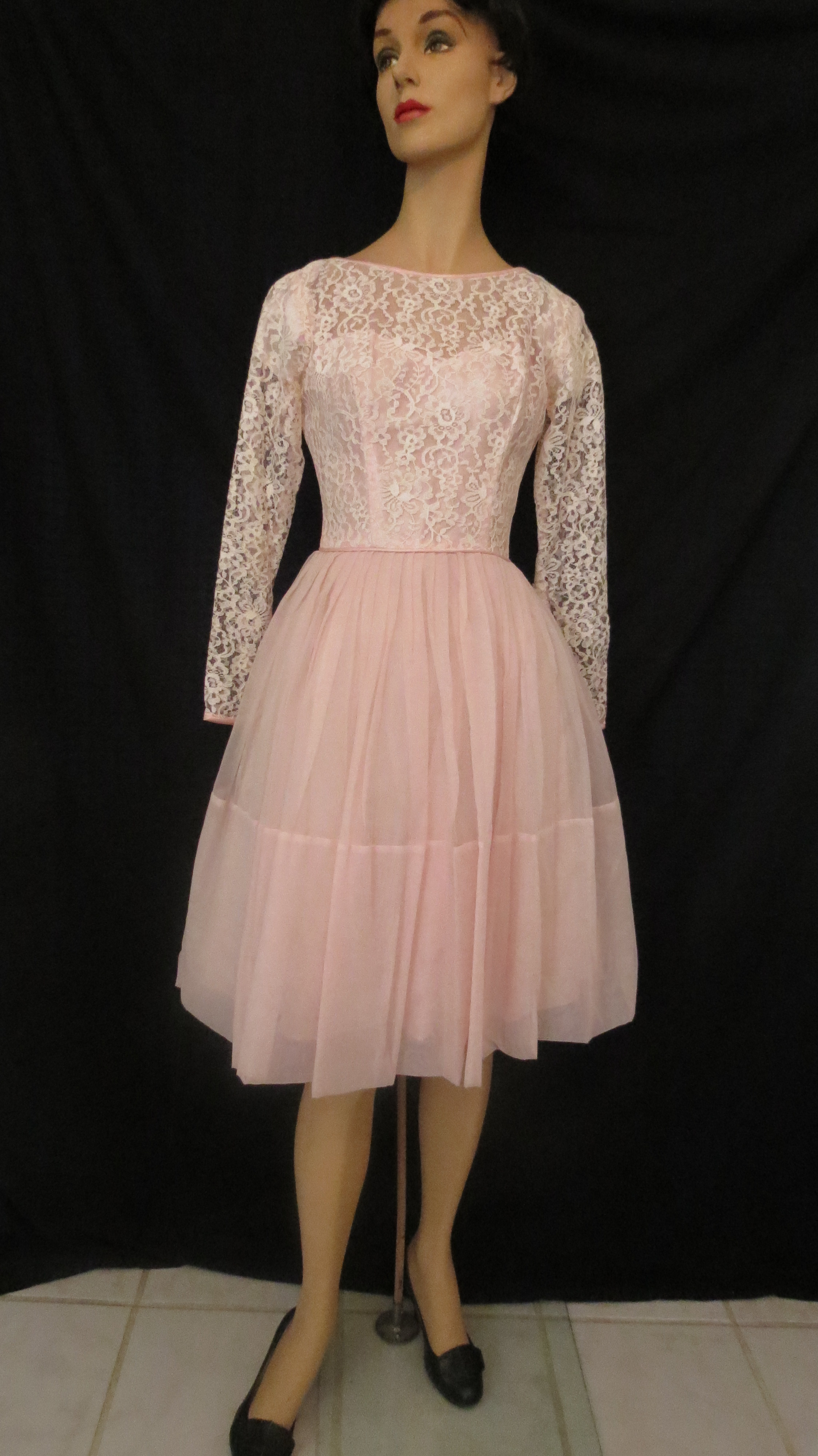
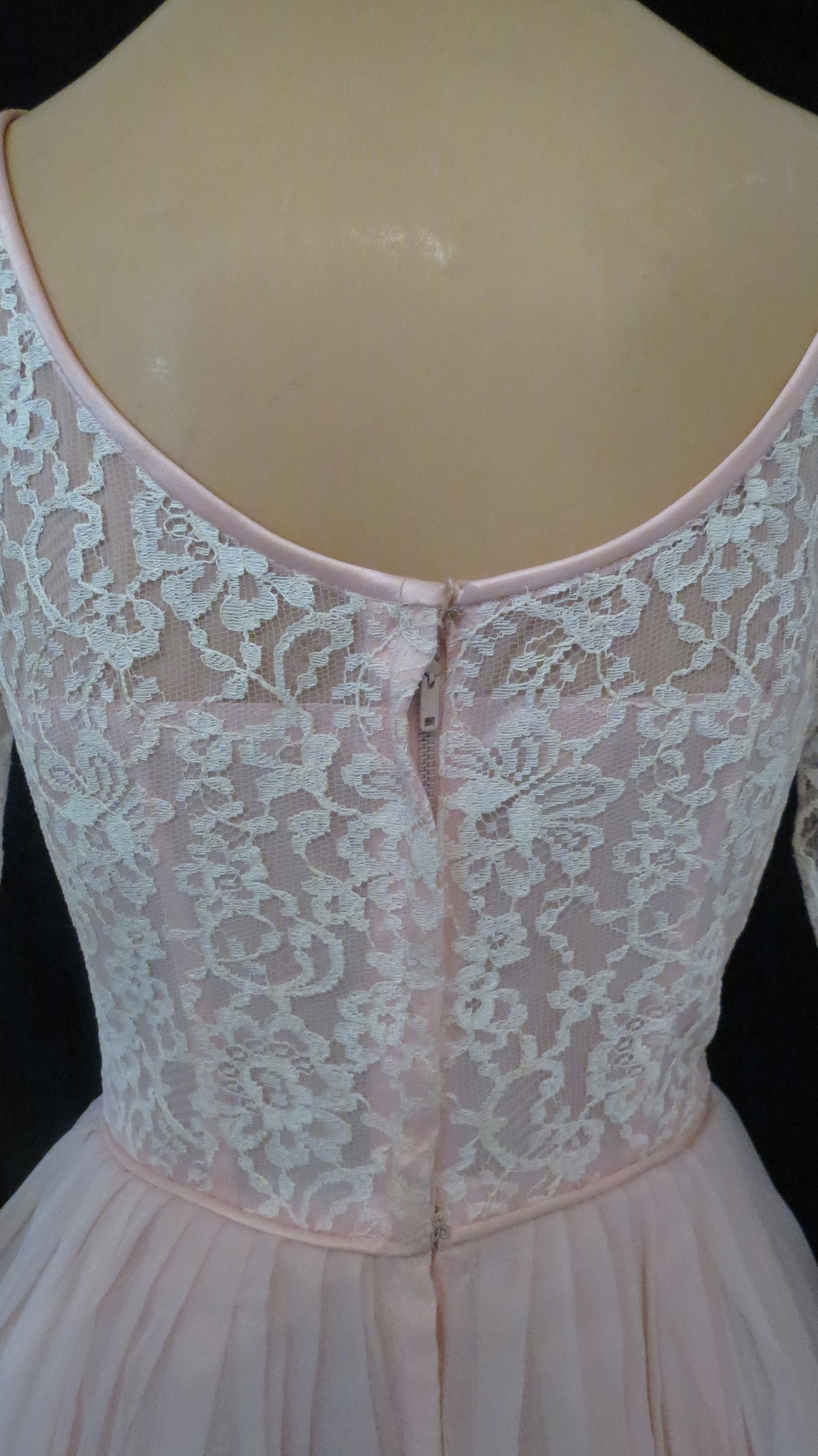
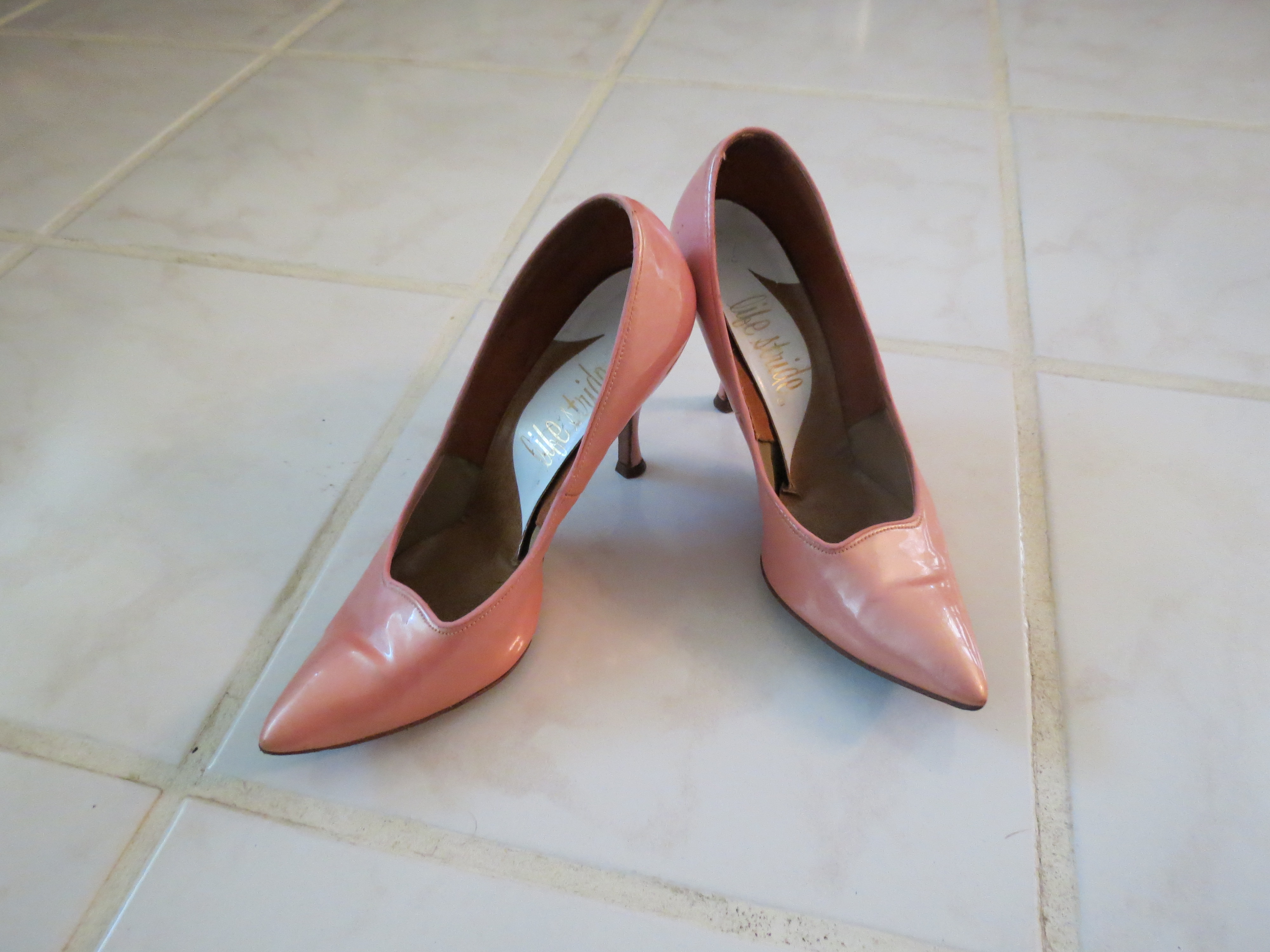
Powder pink frock for a special occasion. Love the long sleeves with our current weather and I’m happy with the color that doesn’t feel like Winter. It’s not a Prom dress, but could have been worn to any dressy dance party, a recital or . . . . . . . . . . . . . Very demure, but gives a nod to formal wear with a sheer bodice and scooped back. Of course, it has the 3-layer pouf skirt with stiff attached crinoline, acetate/rayon opaque layer and a gauzy synthetic overskirt that was iconic in the Fifties, up to the very early Sixties. Naturally, the stiletto pumps are mandatory.
Despite it’s tiny size, I believe that this frock was sold in the Misses Department (probably size 10) rather than as a Junior size. Just goes to show how our Misses sizes have changed over the decades. A modern size 10 now would hang like a tent on Stella – a 1950’s size 10 is equal to a current size 2. Perplexing, but the clues all fit together. Go figure (no pun intended) and stay tuned . . . . . . . . . . . . . . . . . . . . . . . . . . . . . .
Late 1950’s – early 1960’s cocktail/dinner 2-piece dress in a surprising cadet blue color. How could I not have collected this one? It’s not eccentric at all, but I love the original and surprising vibe when a black frock would have been expected. In a substantial knit fabric and with a flattering pencil/wiggle cut that accentuates the figure but is also very “proper”. It ticks all the boxes for lower to mid-priced elegance. No jewelry needed excepting some stud earrings and perhaps a cocktail ring.
Many well-dressed women during the Kennedy Era could have worn this ensemble with confidence. While not a garment for those socializing in the “highest circles”, an average gal might have gathered some lingering looks . . . . . . . . . . . . . . .
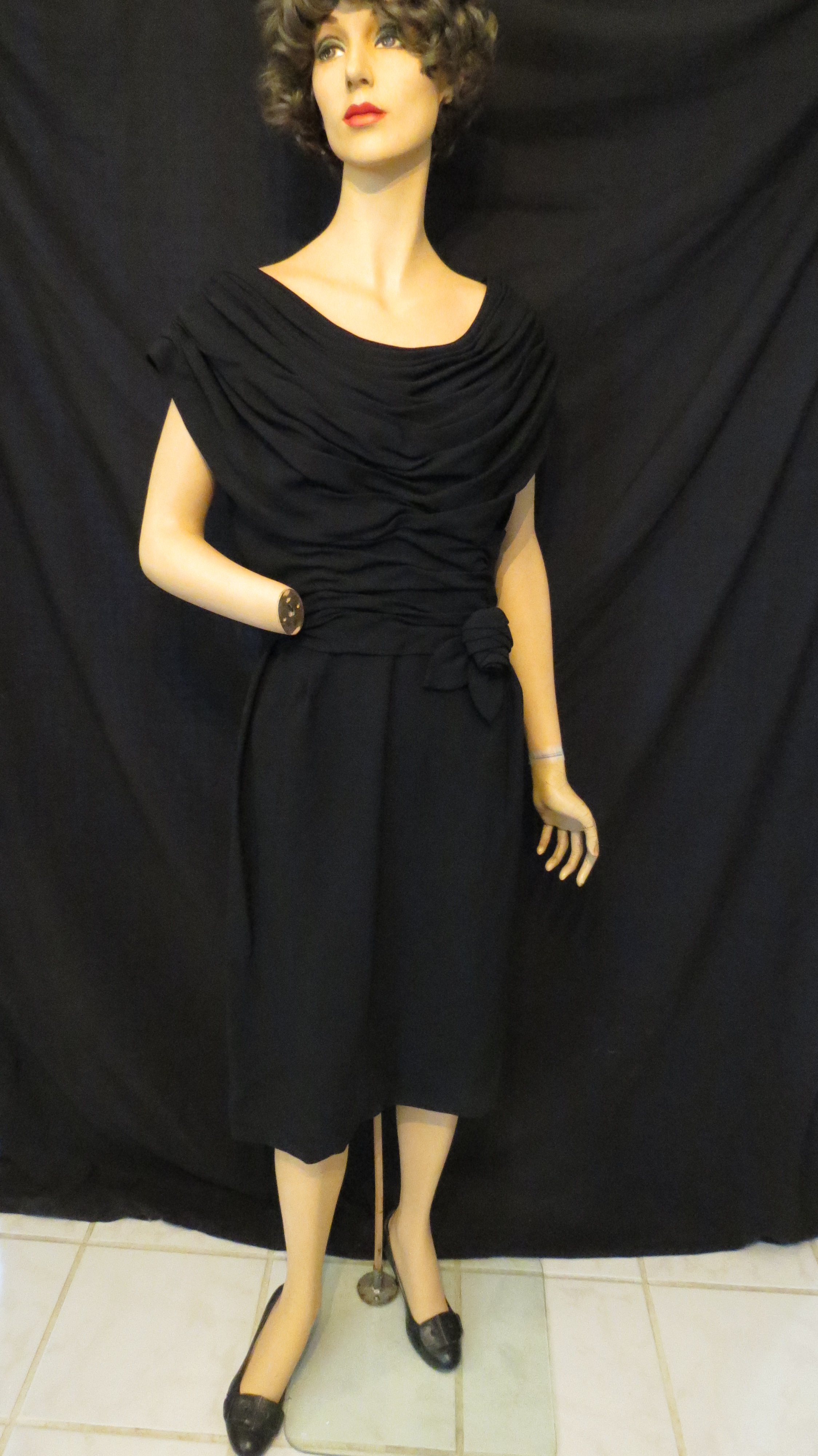
Any time there’s a special event or holiday, a true vintage little black dress will never let you down. This one is so unusual, I had to slip it into the line of bright and colorful frocks that I’ve been showing. Not an easy fit for everyone, but if you’ve got the shoulders to support the neckline and a tiny waist like Stella, it’s absolutely stunning. The drape of the bodice is genius and the fabric flower at the waist adds even more interest without any need to be flashy.
Jewelry should be sophisticated but simple. Diamond stud earrings or gold, or pearls. Absolutely NO statement necklaces to detract from that beautiful neckline and maybe no necklace at all. If more bling is desired, a delicate but luxurious bracelet or watch would be nice. Back in the day beautiful tiny watches in gold or platinum with diamonds were not unusual for those who could afford to splurge on them. Of course, a cocktail ring is always acceptable with a dress like this but, again, the jewelry should not overpower the dress, which is the star of this show. And, the show must go on. Stay tuned . . . . . . . . . . . .
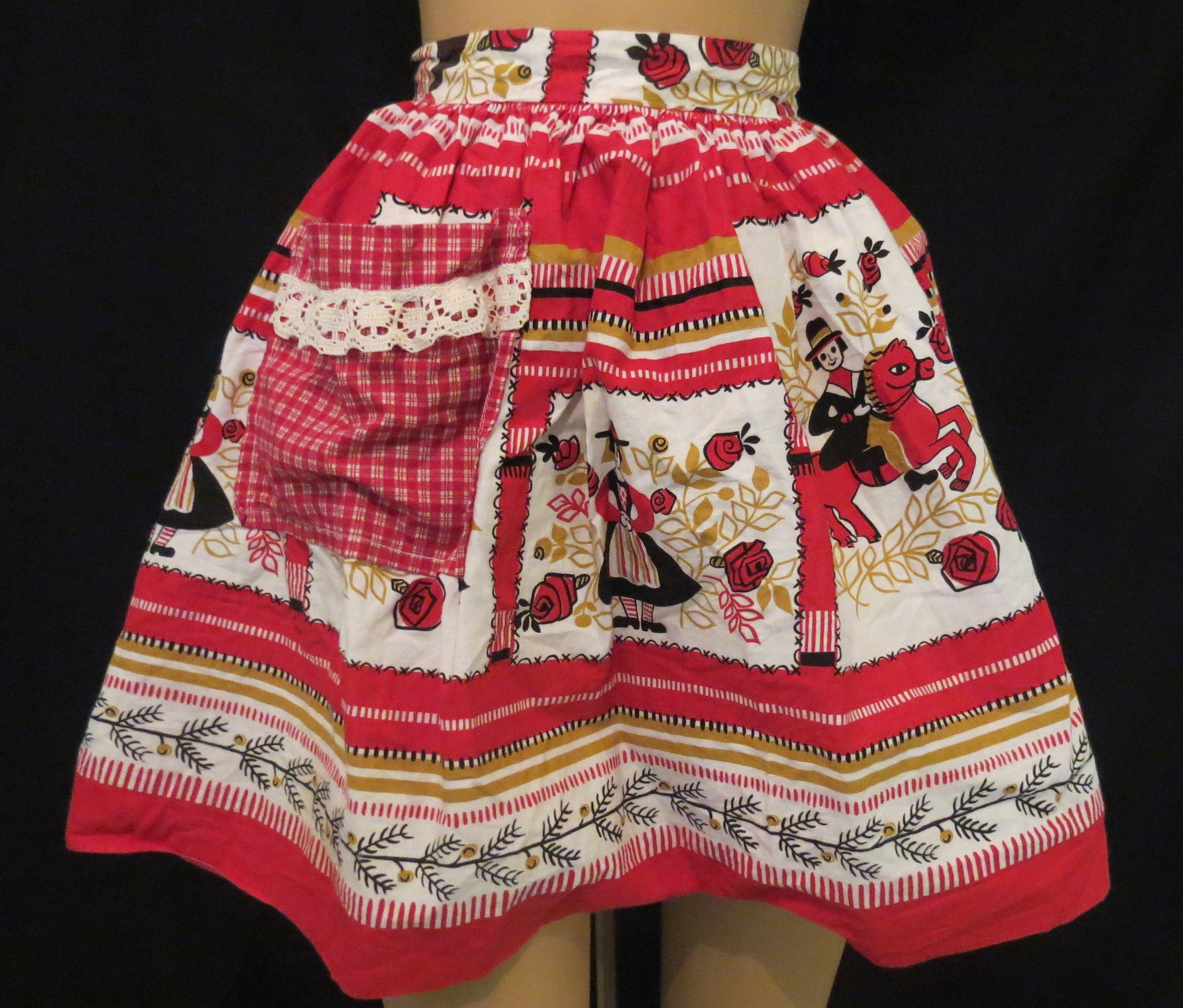
These are just 3 out of my collection of lovely kitchen aprons, but perhaps a bit more interesting and seasonal than others I have, which are more generic, like a cotton gingham check without any specific theme. Many aprons, like the first one here, were specifically themed for a particular holiday or fashion era. It’s a great example, with bright color and a novelty print for Thanksgiving. Although it’s definitely trendy and targeted, it is also at least somewhat practical because of the machine-washable fabric, wraparound style, secure ties and big pocket. It could actually do the job of keeping the cook’s skirt clean. The most useful styles also covered the bodice.
The usefulness is really important, but I love the novelty print. It’s always good to play the hostess in something that also makes people smile. The two aprons following are entirely different in their purpose. These are made from a much more delicate fabric and would be best washed by hand, both because of their delicacy and because they are hand-painted. They were made for and gifted to my grandmother by a relative who at least did the painting herself, if not the sewing job. Gifts like this were common in her day, and cherished. These aprons were made not so much to protect clothing as to be pretty. Grandma might have worn them when she had her friends in for tea or a card game, maybe even for hosting an at-home cocktail party. The messy part of the hostess job would have already been done when she made the cake or other refreshments beforehand.
Aprons were much more commonly worn in decades past and were a significant part of a woman’s household wardrobe, like housedresses worn on cleaning day. Most women’s (especially married women’s) lives were organized around a routine of household duties throughout the week and each one usually required a different kind of outfit – one for cooking, one cleaning, one for tending plants, one for doing the weekly shopping. Special accessories to these outfits were needed for certain jobs, such as gloves of various kinds, hats of various kinds, nursing bras and pads to protect clothing from breast milk and burping babies. Housewives were trained to be very practical and were rewarded by Society for a job well-done. The home was their workplace and the role defined them, so their household wardrobe had a central place in their lives. For better or for worse, that was the way it was. Do we want that again? Think about it and keep your eyes on the clues . . . . . . . . . . . . . . . . . . . . . . . . . . . . . . . . . . . . . .








 Magicvintagespy