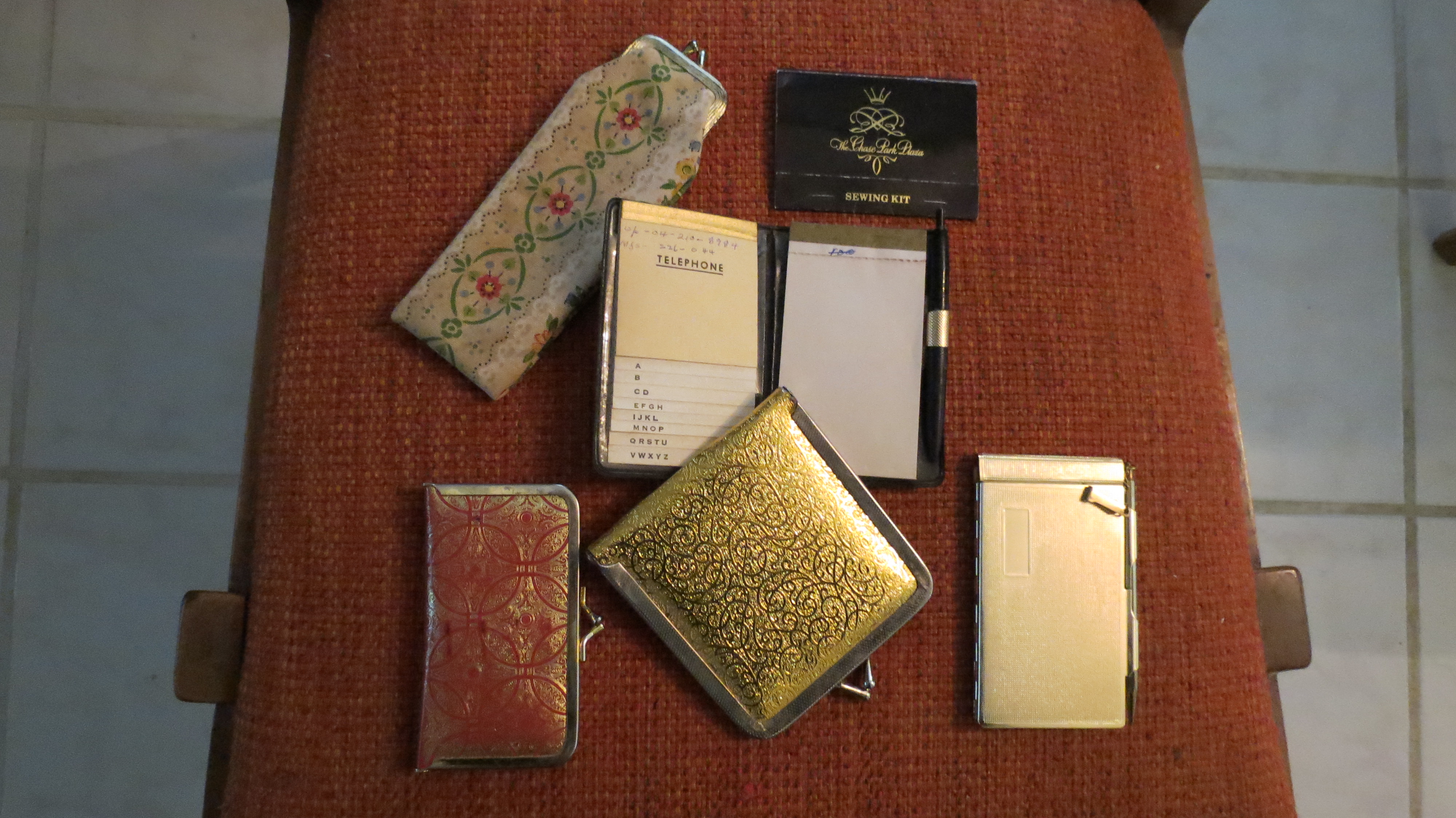
MID-CENTURY NIGHTHAWK NIGHT DRIVING GLASSES

Classic rectangular frames in heavy black plastic (but not Bakelite), with the metal screw details expected on many true vintage eyeglass frames but rarely seen now. I also love the carved detail on the temples.

The brand name NIGHTHAWK is stamped inside along with another unusual stamp: FOREIGN. I suspect that this indicates that the frames, at least, were imported. I can find no other explanation. Some similar glasses from that time were made in West Germany and these may be knock-offs, assembled in North America.

I’ll keep these forever – love the styling but they’re also very practical. There’s only minor to moderate wear on the frames and the lenses are almost perfect, even though they are made of a plastic material. So interesting to wonder about the origin details. If anyone has specialized knowledge on this topic, I’d love to hear from you. I’ll post the second pair of eyeglasses tomorrow, so stay tuned . . . . . . . . . . . . . . . . . .

MORGANA MARTIN, THE MAGICVINTAGESPY

BLOG: MAGICVINTAGESPY.COM

Ooooh, FUN! ANOTHER ’60’S FIND

Although I have discovered several of these iconic soft handbags from the 1960’s and early 1970’s, this one is probably the nicest I’ve ever found. As often happens, I was just shopping for some everyday items when this beauty came into view. You just never know, though this powerful Summer Solstice surely didn’t hurt the good vibes today. Happy First Day Of Summer.

Why is this such a wonderful true vintage example? One, it’s in absolutely pristine condition. I doubt it was ever used. Second, I love the style. The bag is mid-sized so it’s roomy without being awkward. The tortoiseshell Lucite handles are cleverly shaped so that they snap closed at the top. It’s easy to carry in hand or over your arm. The full lining has a brown paisley pattern and the loose-weave “hopsacking” cover fabric is sturdy enough to last. These are materials that are very identified with the 1960’s.

Two unusual features really caught my eye: Unlike many purses in this style, this bag has a rigid base that gives it form and stability and makes items inside easier to find. The final touch is just a hoot! Remember all the mid-century purses that had little coin purses attached to the inside by a cord or chain? This bag has a chain with a clear vinyl envelope containing a plastic rain hat! Take my word for it – mid-century women almost always had one of these rain hats in their purses. They were often given away by businesses like key chains and pens still are. It was always a lurking fear in the backs of the minds of my grandmother’s generation that a sudden rain shower might catch them when they had their hairdo “just so”! Cute!!

Another sweet and oh-so-Sixties characteristic of this handbag is that I suspect it was homemade from a kit. Purse kits of this type were popular then, just like other needlework projects, and there is no brand label inside. All of the pieces and instructions would have been supplied. The maker did an excellent job.

So, another useful accessory for my closet. The navy blue color is perfect for my wardrobe and I’ll love it for years!

MORGANA MARTIN, THE MAGICVINTAGESPY

BLOG: MAGICVINTAGESPY.COM

ANOTHER CLOSET HIDER: 1960’S CASUAL KNIT ZIPPER JACKET WITH COLORFUL TRIM

When the weather got cool, this was casual street-wear the way that hoodies are now. Of course, hooded sweatshirts were also around but they were seen mostly at athletic events or other outdoor activities. A jacket like this had just a little more panache and could be worn over jeans or slacks.

Also perfectly classic and unisex in style. Sportswear separates tended to have more decorative trim in the Fifties and Sixties, in my experience. The heavy metal zippers don’t tend to fail. Bulky acrylic knits with knitted cuffs keep you nice and toasty. Lots to love here!

I’ve never heard of the brand name, Abbey, and couldn’t find it online but that makes this jacket even more special. Another keeper in a small size – whoo-hoo!

MORGANA MARTIN, THE MAGICVINTAGESPY

BLOG: MAGICVINTAGESPY.COM
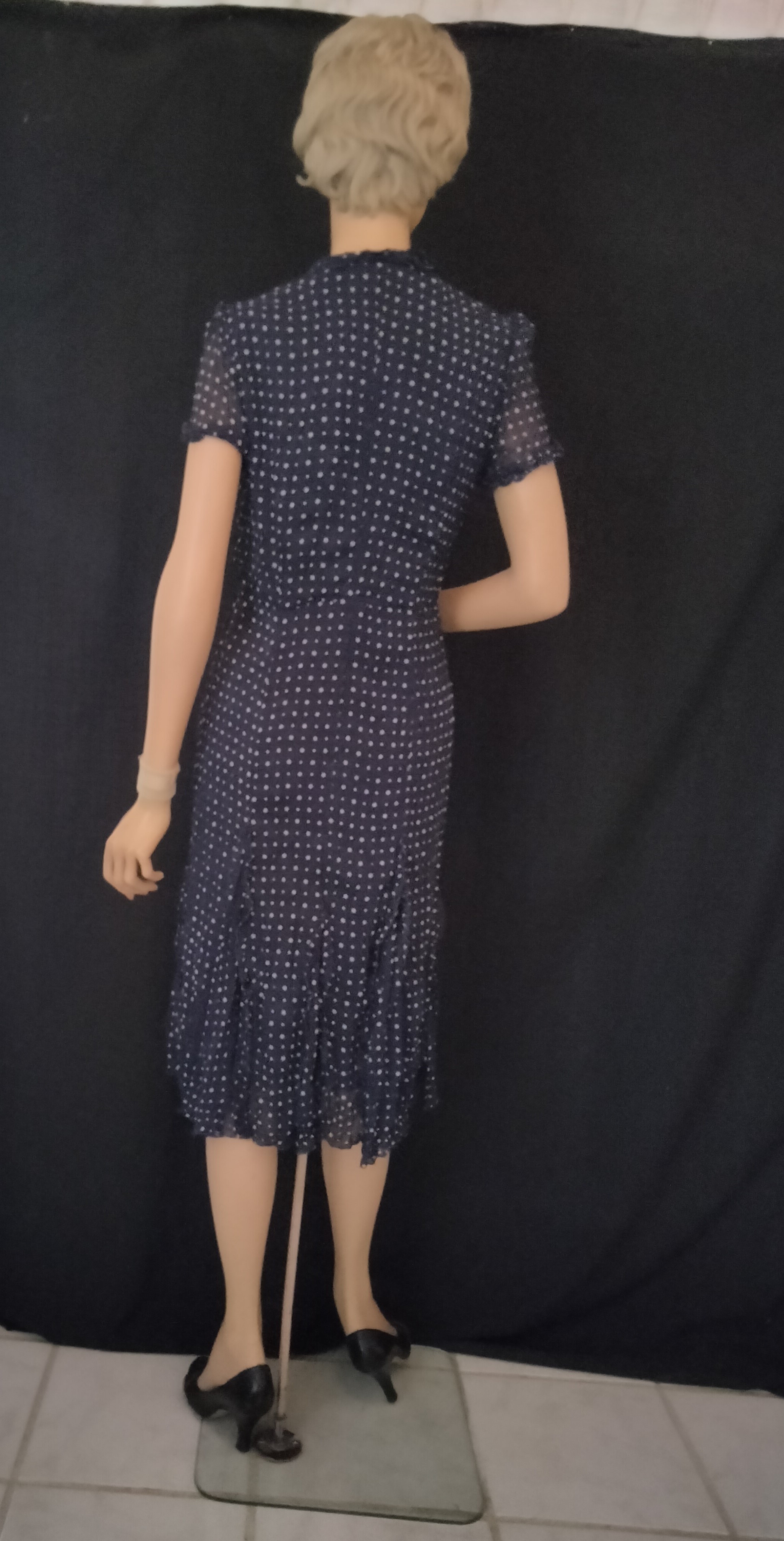
ICONIC EARLY 1970’S PEASANT BLOUSE

This one IS my favorite. Although, as always, I’ve really missed having the modeling assistance of Stella, Madge and Giselle when I’m not at Headquarters, this blouse displays well on its own. Peasant blouses have had fad appeal at various times in the 1940’s, 1950’s and 1960’s so it was no surprise that the fad surfaced again in the ‘Seventies. We’ve seen Mexican style, Prairie style and other knock-off ethnic designs over the years and the Mexican style seemed to be prominent in the early ’70’s. Usually these ethnic fads are linked to some historical or social event/trend such as a war, politics or increased leisure travel.

In the early 1970’s, we were between the Hippie/Vietnam war and Prairie/Back to the Land movements and people were also traveling a lot more. The style of the blouses was Mexican peasant or Prairie pioneer with some Asian and African prints thrown in. So, this one presents as mostly Mexican peasant in the cut, placement of the embroidery and heavy cotton muslin fabric. However, the floral design and colors are more traditional Prairie than Mexican and that tells me that the blouse was probably home-sewn rather than a commercial product or travel souvenir. But, with so much variation and many blouses produced by hand in Mexico without labels, this is just a guess based on my experience.

Anyway, I love it! Bell sleeves are always a hit with me, as well as hand-done embroidery. The brighter Mexican colors are preferred, but this one is more versatile with a Fall wardrobe. I’m not a prairie-style gal but hippie/traveler resonates. Another keeper!

The blouses found in hidden storage are all covered now. Since my first post at the beginning of this series, another jacket turned up – maybe older than the first. I’ll be showing and discussing them over the coming week but maybe not on a daily basis as a short road trip is on the schedule. Stay tuned . . . . . . . . .. . . … . . . . . . . . . . . . . . . . . . . . . . .

MORGANA MARTIN, THE MAGICVINTAGESPY

BLOG: MAGICVINTAGESPY.COM
1960’S – ’70’S WESTERN-WEAR KNOCK-OFF SHIRT BY AN OLD CATALOG FAVORITE BRAND

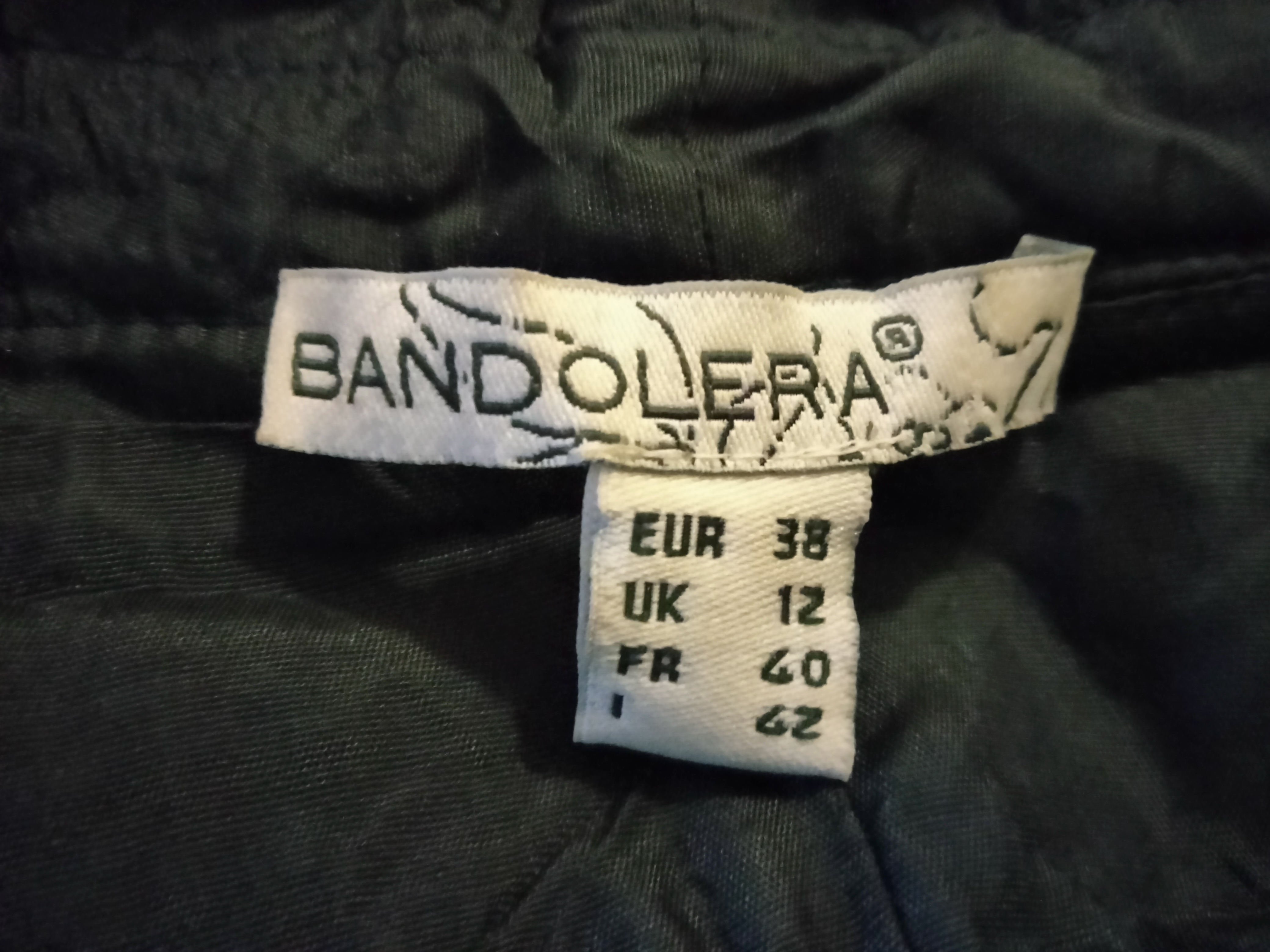
Faithful Western-wear style with a front and back yoke, chest pockets and pearlized snap closures (2 on each cuff). Compared to authentic western-wear this fabric is really lightweight, so better as a casual fashion shirt. Look at that tag – what convenience! Super easy-care. This garment has survived the decades almost intact, with just a little fabric wear and tear. Might make a good gardening shirt.

Good old “Monkey Ward” followed fashion trends well, just like Sears & Roebuck and J.C. Penney always did. Women around the U.S. waited impatiently for the new Spring catalogs to come out each year. After the 1970’s all these stores upped the offerings in their store locations and gradually phased out catalog sales. Maybe some still existed, but it was less important. Now these chains are closing down most of their outlets.

I’ll show you my favorite of these blouse finds tomorrow. Stay tuned . . . . . . . . . . . . . . . . . . . . . . . . . . . . . . . . . . . . . . . . . . . . .

MORGANA MARTIN, THE MAGICVINTAGESPY

BLOG: MAGICVINTAGESPY.COM

BACK TO THE 1970’S! VELOUR TOPS FROM WELL-KNOWN BRANDS

This is more like it! True vintage again, in an iconic style of ‘Seventies sportswear. Both are in amazing condition with plush fabric in rich colors (better in person).

Aside from a bit of stretching in the aileen neckline and a bit of fade around the seams on the Sears top, I don’t find anything wrong. Of course, the aileen top was a slightly more upscale brand, but the quality levels of the two are very much alike. All the seams are finished with serging and remain strong.

There seems to have been a bit more stretching of the ribbing on the aileen top – perhaps a bigger person wore it or it was washed improperly – something I can probably fix. The slight fading on the navy top would probably not be noticed when it’s worn. These would be keepers!

We’ll stay in the ‘Seventies and maybe dive into the ‘Sixties for a look at the rest of these surprise finds. Stay tuned . . . . . . . . . .

MORGANA MARTIN, THE MAGICVINTAGESPY

BLOG: MAGICVINTAGESPY.COM
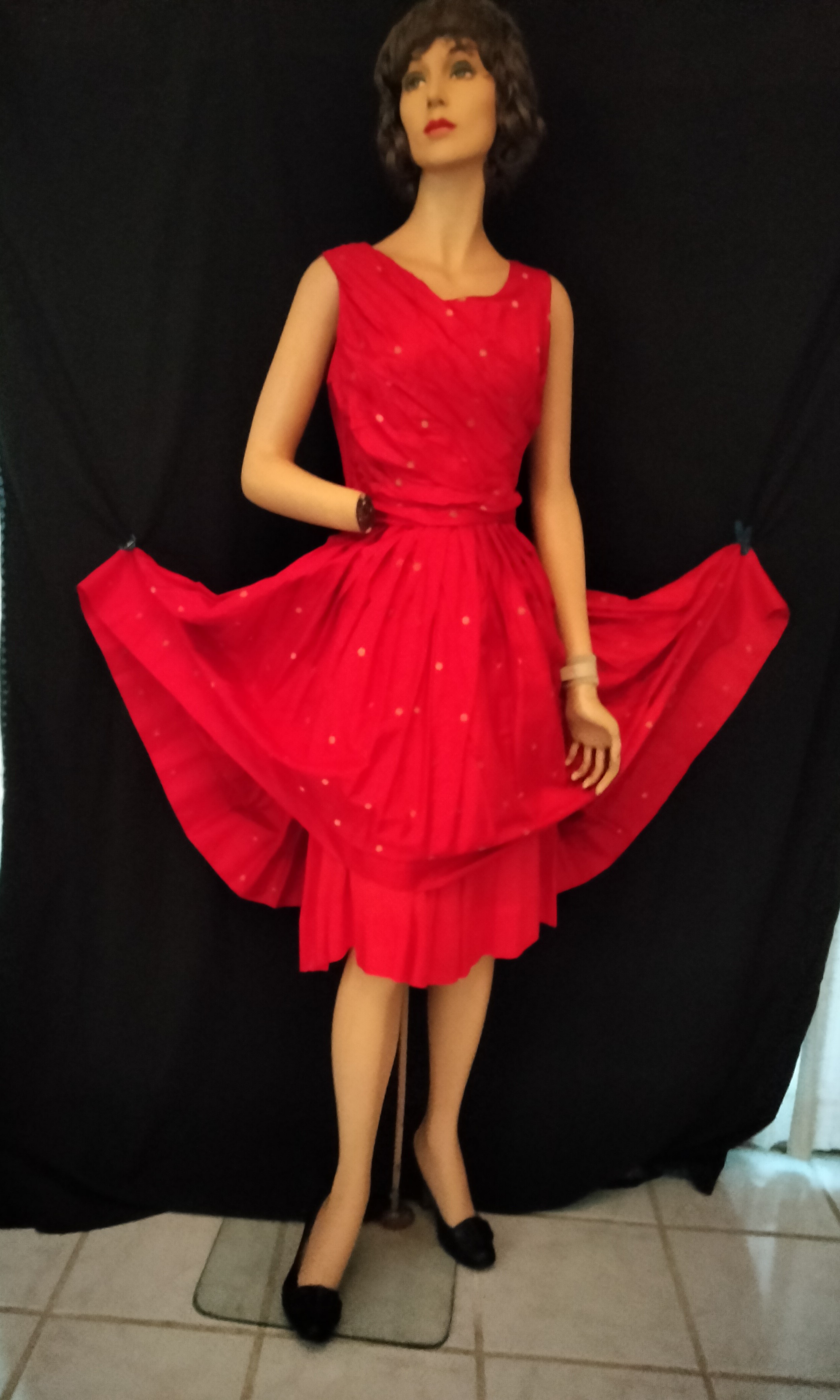
Nothing fabulous, but SO EARLY ‘SEVENTIES!

I was hopeful at first – such a pretty, bright, abstract feather print. Even the maker’s label looked promising. “Mardi Modes New York”; embroidered cloth label, attached firmly at the neckline in the old folded style. There’s even an RN number, which makes the brand “legitimate”. But, in reality this blouse is stuck in that early 1970’s period which saw polyester becoming the fabric of choice for most garments. They worked their way from 1960’s Mod and casual clothing into the professional office and dressy venues. Some were made very well, up to earlier mid-century standards, but many were somewhere in-between or frankly cheap. In any case, I doubt you would have seen one in the boardroom, unless the boss’s secretary was present; but that’s another blog . . . . . . . . . . . . . . .

The in-between level of quality is what we see in this example. Best features include: 1. The well-done brand label. 2. Artistic print on the fabric. 3. Pearlized buttons with stems. 4. A button under the bow-tie which improves the fit at the neckline. 5. A hand-finished hem. On the other hand, 1. The textile quality is just OK. 2. The blouse isn’t fitted well and doesn’t hold its shape. 3. The vents at the cuffs are very poorly finished (hardly finished at all).

So, the verdict is: Interesting, but disappointing. Let’s see if we can do better with a blouse of a similar genre that is the only outlier of the group, time-wise. Stay tuned . . . . . . . . . . . . . . . . . . . . . . . .

MORGANA MARTIN, THE MAGICVINTAGESPY

BLOG: MAGICVINTAGESPY.COM
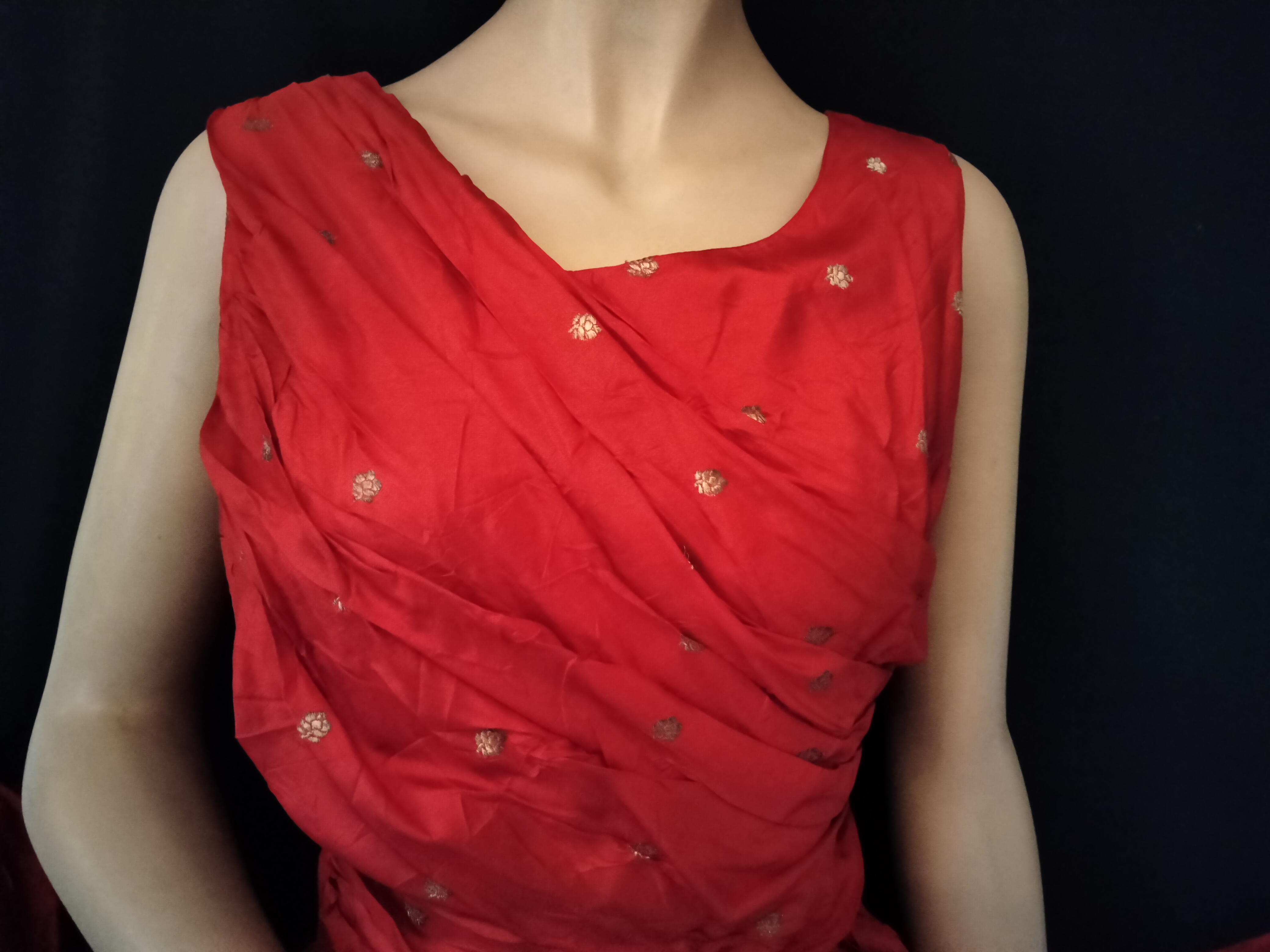
EARLY 1970’S TAILORED SHIRT

Boring old shirt, right? Wrong. Let’s start with the most important characteristic: 1. MAKERS LABEL/ BRAND: Labels are made of soft cloth and attached at the neckline, firmly stitched along two sides. Fabric content, wrinkle resistance and wash-ability are clearly marked. Information is embroidered on the cloth, rather than printed, which will last longer. Any brand which identifies itself as “Shirtmakers” is likely to be of higher quality in all respects. There are no other tags in side seams. These labels won’t bother the wearer or easily come loose. The name Ms. SERO clearly identifies it as being a 1970’s brand, when the Women’s Liberation movement was “new” again, gaining popularity, and the title Ms. was beginning to replace the use of Miss or Mrs..

2. FABRIC: The plaid is beautiful. The material has a light, very silky-soft hand. Part of this must be age, but part is due to the fact that this fabric is tightly-woven. It’s a poly/cotton blend, which adds washing convenience, but it’s obviously a higher quality textile, also. Wrinkle resistant fabric was a slightly more upscale feature at that time, as today. The mystery of its history is deepened by the appearance of a shadow stain illuminated by the digital camera photo. The quality of the fabric will be reflected in how well it will release the stain. That will require further investigation, as it was obviously overlooked when the evidence was found. Doesn’t look like blood, but . . . . . . . . . . . . . . . . . . . . . . . . . . . . .

3. STYLE/DESIGN: The Peter Pan collar, of course, the plaid and the basic menswear cut; Classic elements of style which are often seen throughout the decades, though the Peter Pan collar design originated in 1905 and was first used in children’s clothing. It didn’t become iconic to women’s garments until the Pre- and Post-WW2 mid-century eras. Elements of menswear styling have been seen in women’s clothing ever since women began wearing shirts and pants.

4. TAILORING DETAILS: After the fabric quality passes muster, this is where the rubber really hits the road. The best clothing, even in very plain styles, will have “tells” indicating their value in fine tailoring methods. TOPSTITCHING can be a design element when it’s visible on the outside, but also strengthens seams and attachments. See the stitching on the collar, which will help it to maintain its shape without stiffening. The stitching is very even in appearance – a good sign. Let’s review the other photos, too. There is a YOKE at the shoulders, extending to the upper back but also crossing the tops of the shoulders. This is a design feature, but the double-thickness of fabric strengthens this area where arm movements put stress on the sleeve attachments and upper back seams. SEAM FINISHING – take a look at the photos of interior and exterior seams. You can see the stitching around the armholes, which looks like simple topstitching on the outside. But, when the seams are examined inside you can see that they are completely finished off. They lie completely flat inside and out with the double reinforcement of two rows of stitches. The shirt hem is also carefully finished.

Last of all, the vents at the sleeve cuffs are finished with a decorative PLACKET that reinforces both sides and the top of the opening – another area of stress which frequently frays and tears with wear. Also worth a mention is that the buttonholes are very well-finished and only the second one from the top, which would be the one most frequently opened and closed with normal wear, shows some fraying. I can and will repair that with some hand-done stitches.

All in all, this “simple” mid-priced shirt is a quality garment with styling and construction that make it flattering and comfortable to wear, as well as long-lasting. When was the last time you saw these features on clothing in a retail store? If you do and you like it, Grab It, but you see why I love true vintage garments. Stay tuned for more . . . . . . . . . . . . . . . . . . . . . . . .

P.S. I’ll update you on the stain removal story.

MORGANA MARTIN, THE MAGICVINTAGESPY

BLOG: MAGICVINTAGESPY.COM

HIDING IN PLAIN SIGHT . . . . . . . . . . . . . . . . . . .

. . . . . . . . . . . . . in a neglected storage locker, 8 varied items of mid-century true vintage clothing evidence turned up; Seven shirts/blouses and one 3-season jacket were tucked away in dark corners. At first glance, they may seem “ho-hum” but careful examination proved why they had been collected and kept. Each one contains a variety of clues worth noticing and discussing.

So, I will be presenting these items individually with details . . . . . . . . . . . . . . . . . . . . . . . . . . . . . . . . . . . . . .

MORGANA MARTIN, THE MAGICVINTAGESPY

BLOG: MAGICVINTAGESPY.COM
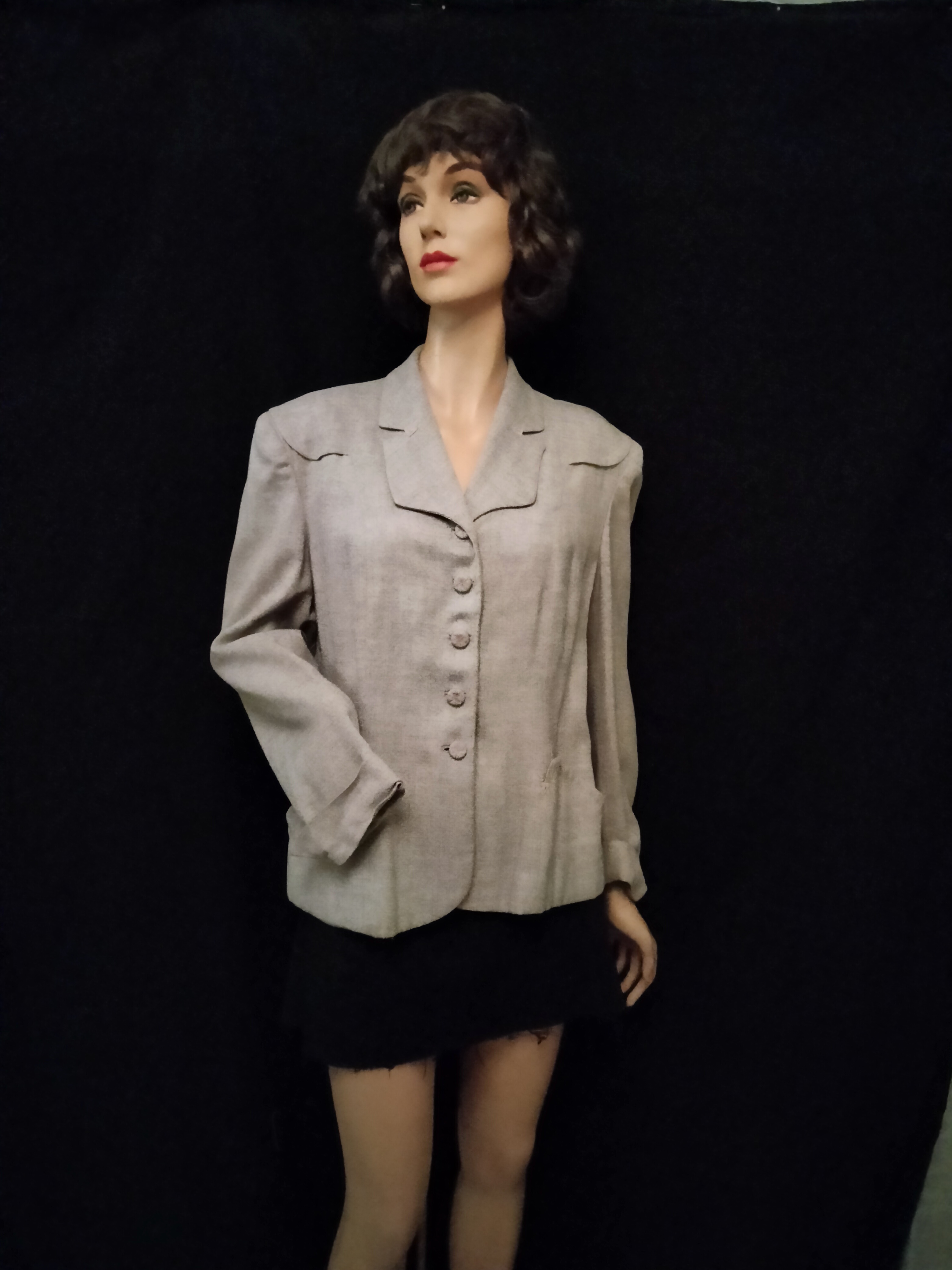
A FABULOUS HISTORICAL SHIRT FIND WITH PERFECT, PERFECT TAILORING!

A super, surprise find of 5 dead stock tailored shirts from the British House, Michigan Avenue, Chicago, which permanently closed in 2016 after the company was unable to find a new buyer. Started in 1928 by several U.S. entrepreneurs, it was one of a group of stores located in high-end shopping areas in several major cities. This history of selling more or less elite merchandise is supported by the original tags on these shirts, which show a price of $121.50.

It’s so fun to find this little bit of fashion history but I couldn’t be more delighted for several reasons. The tailoring, as you would expect, is superb. Three of the shirts are 100% cotton and two are a 65-35 poly-cotton blend. At first glance, I expected them to have come from a Western-wear store so I’m not sure who copied whom when these styles were originated.

The next best things are the tailoring and fitting. They are exceptionally well-made but also have a wonderful fit that is very hard to find now. The design is casual but the fitting is uptown. Perfect on Stella (and me!).

MORGANA MARTIN, THE MAGICVINTAGESPY

BLOG: MAGICVINTAGESPY.COM