TRUE VINTAGE DAY DRESSES THROUGH THE DECADES, HANDBAGS AND SHOES – 1930’s

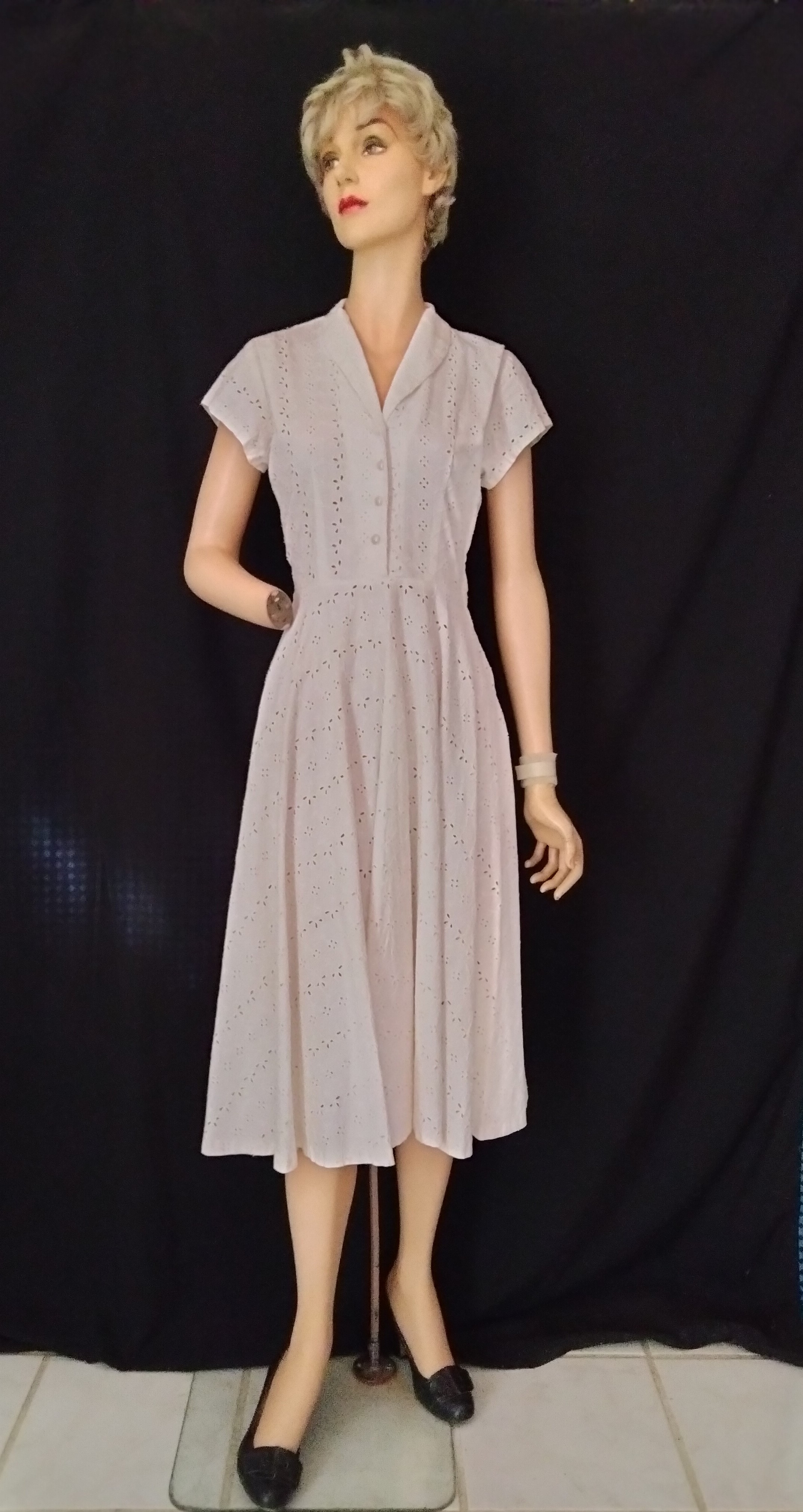
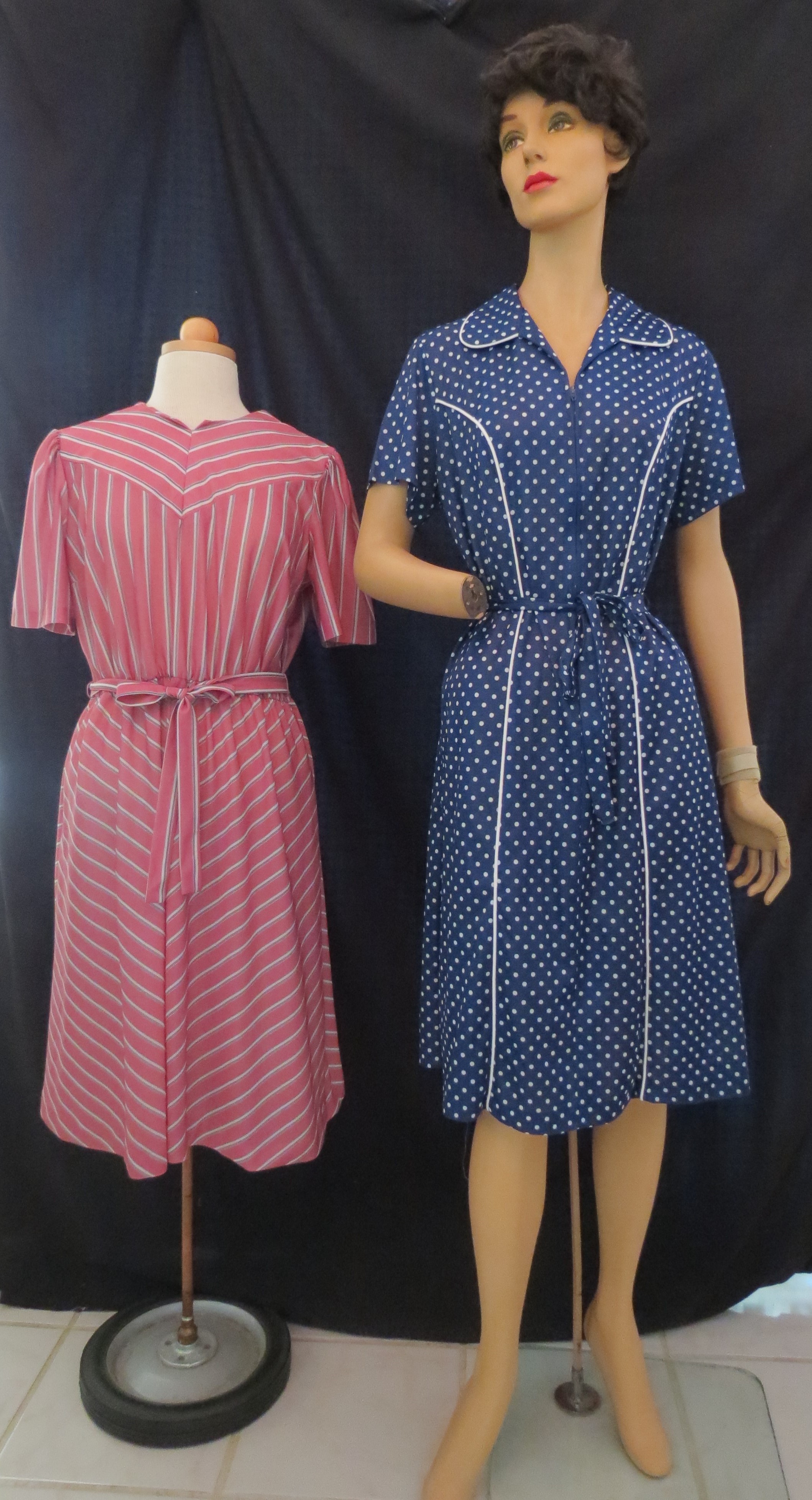
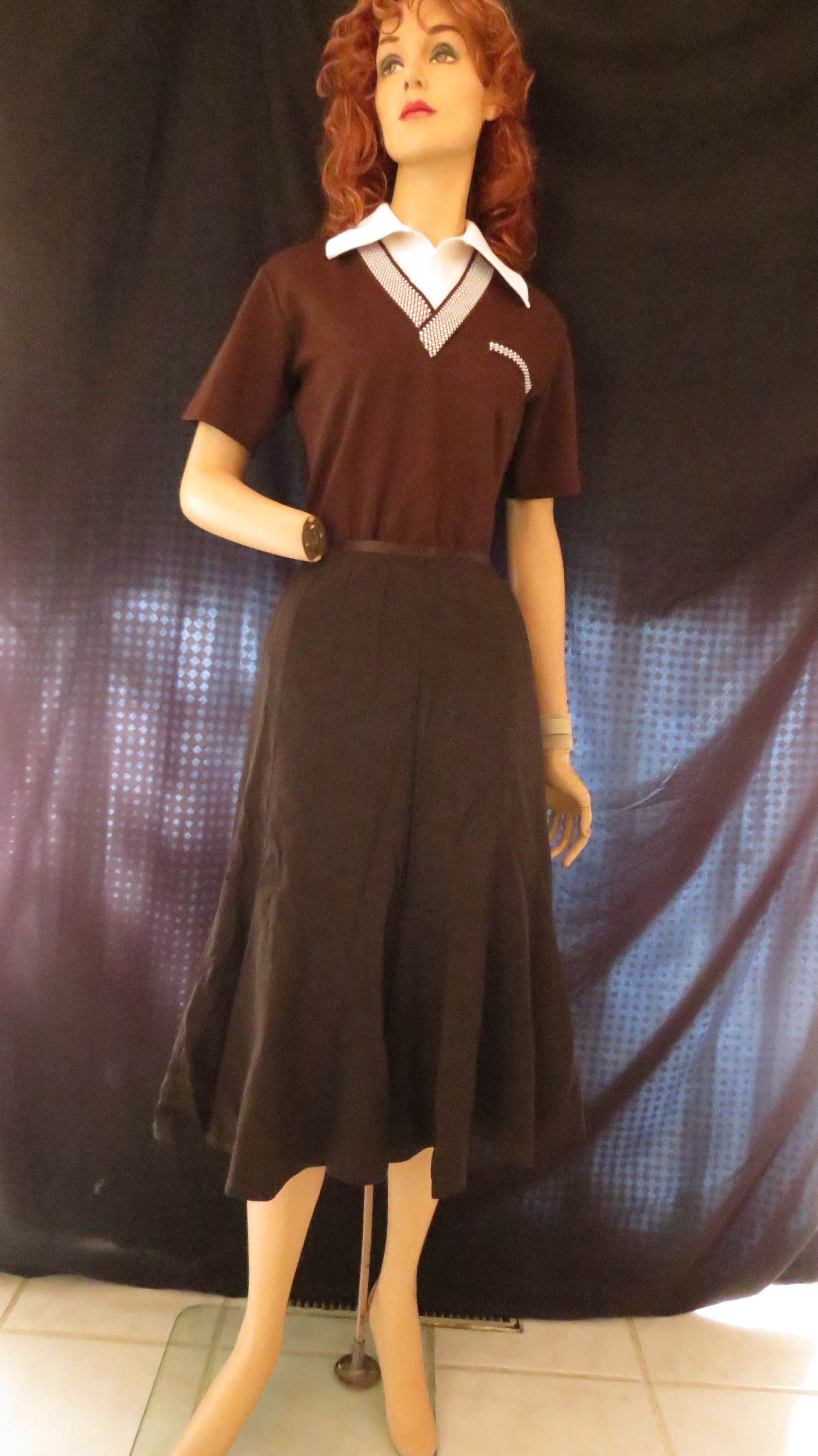
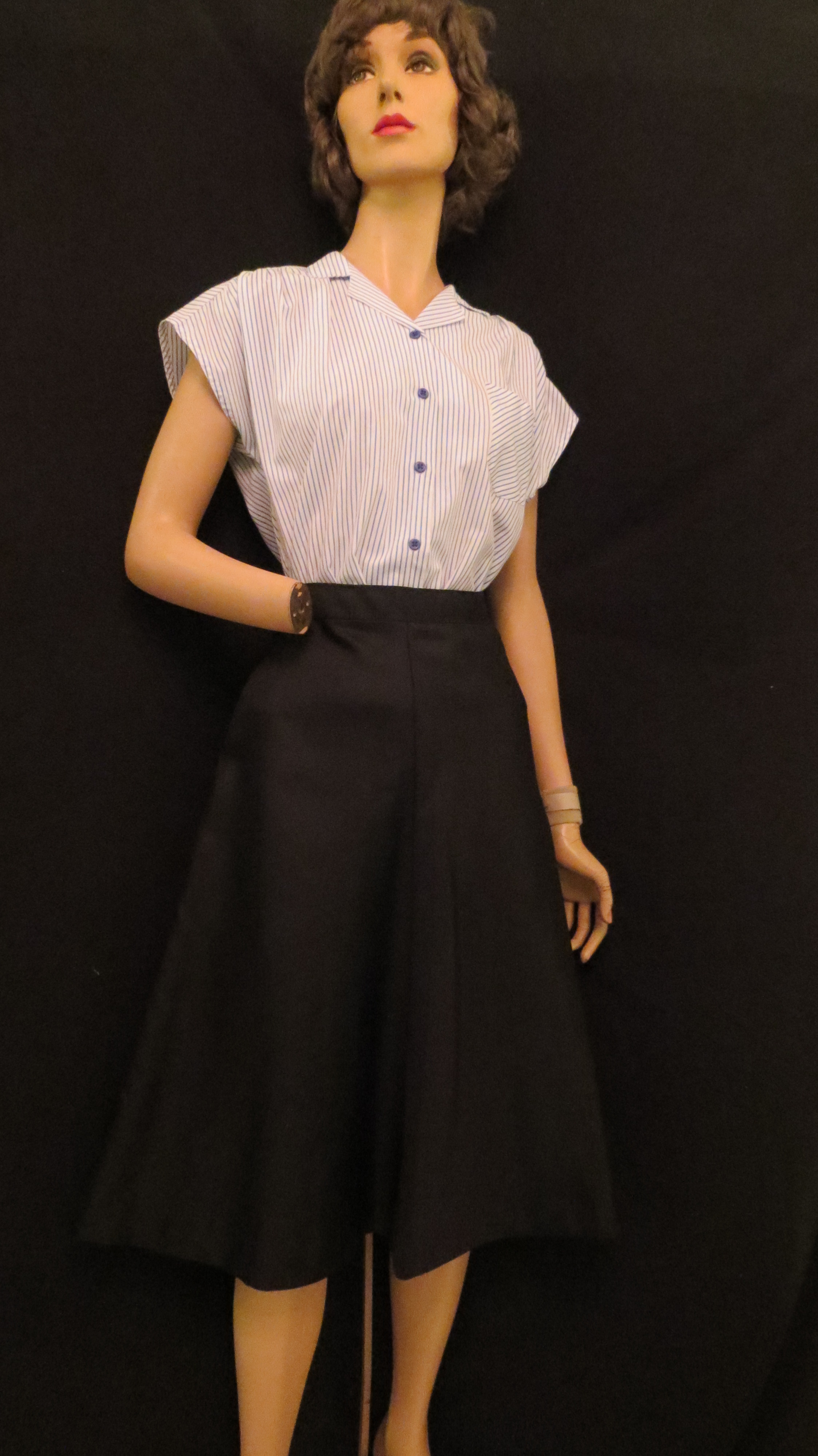
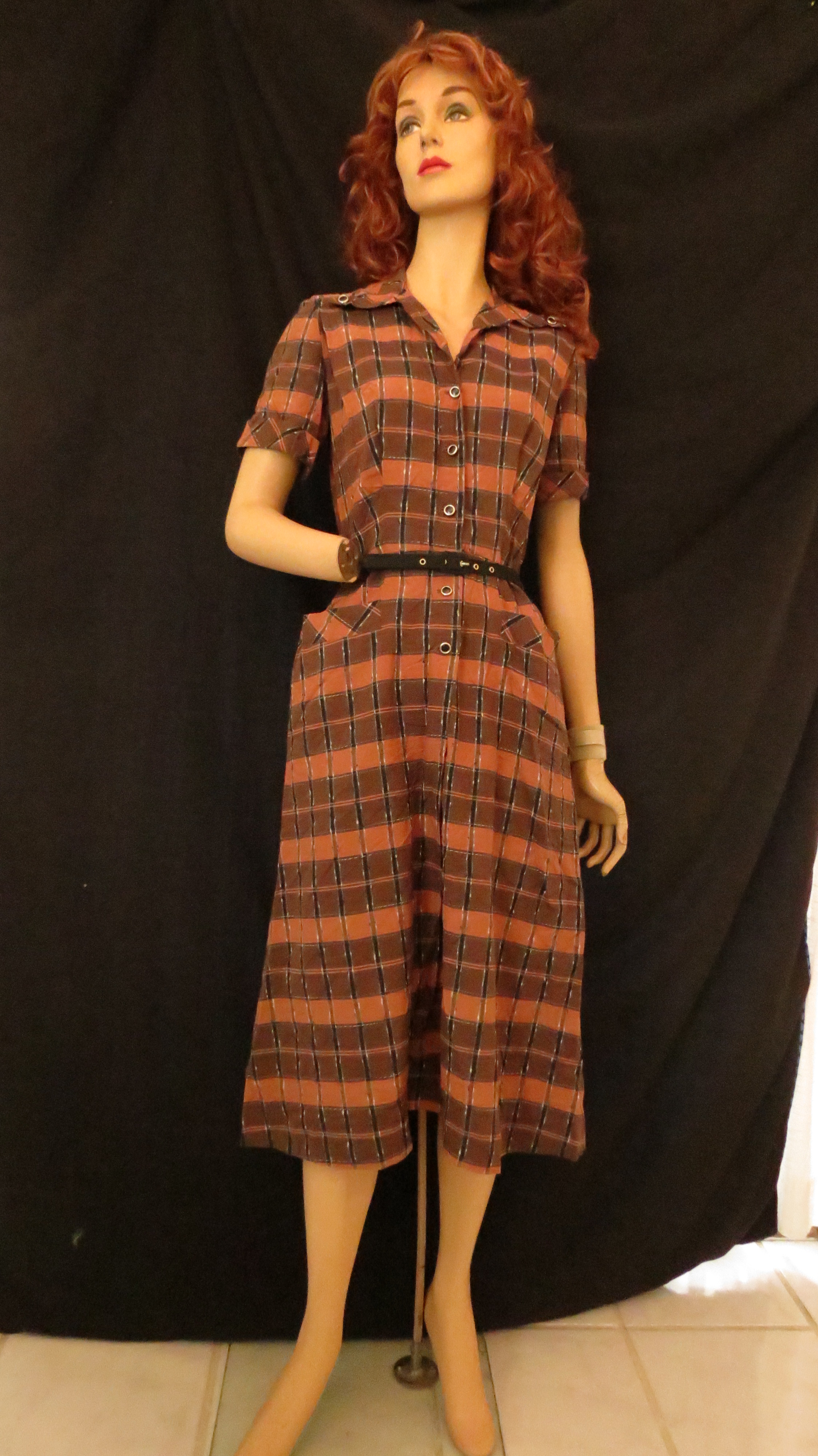
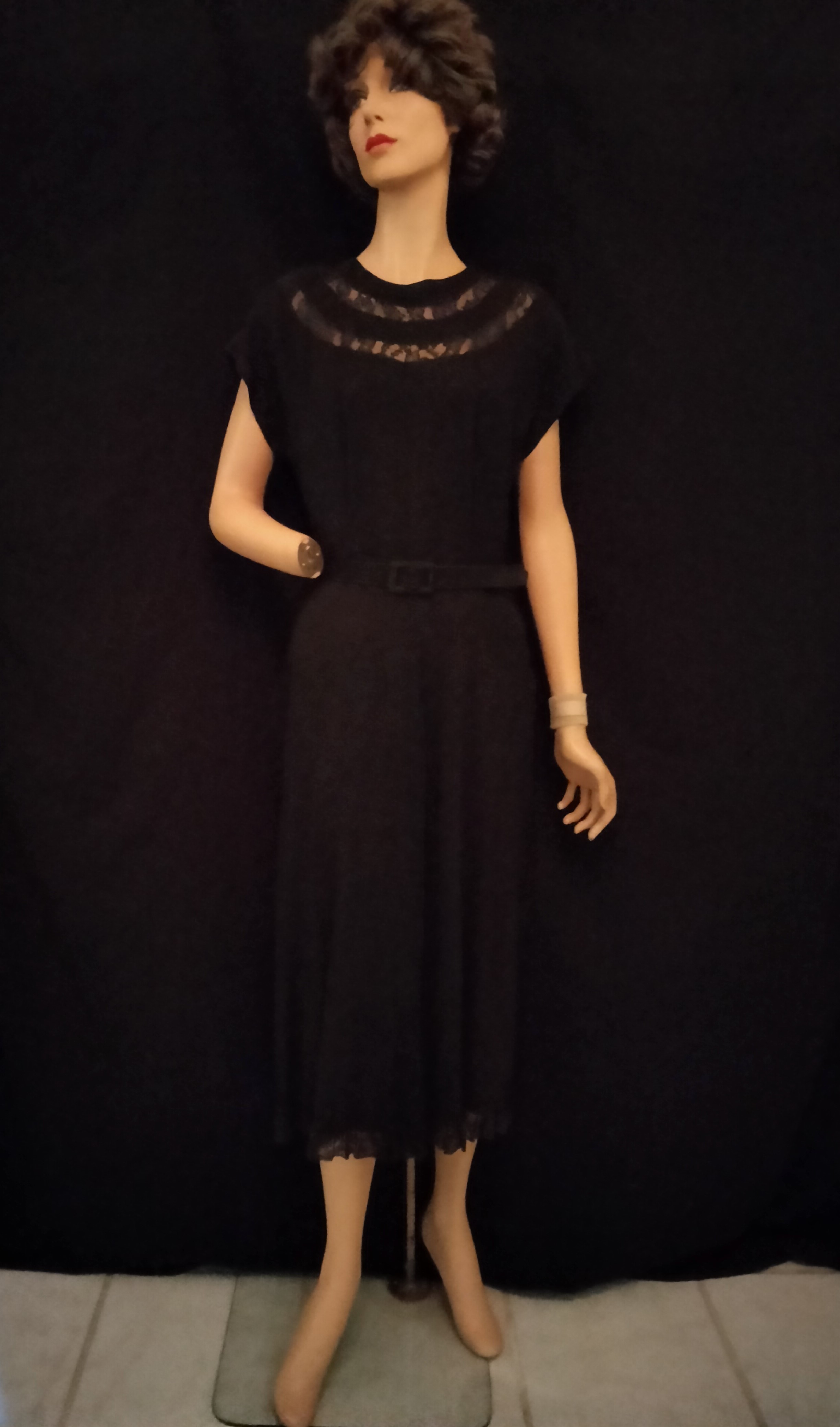
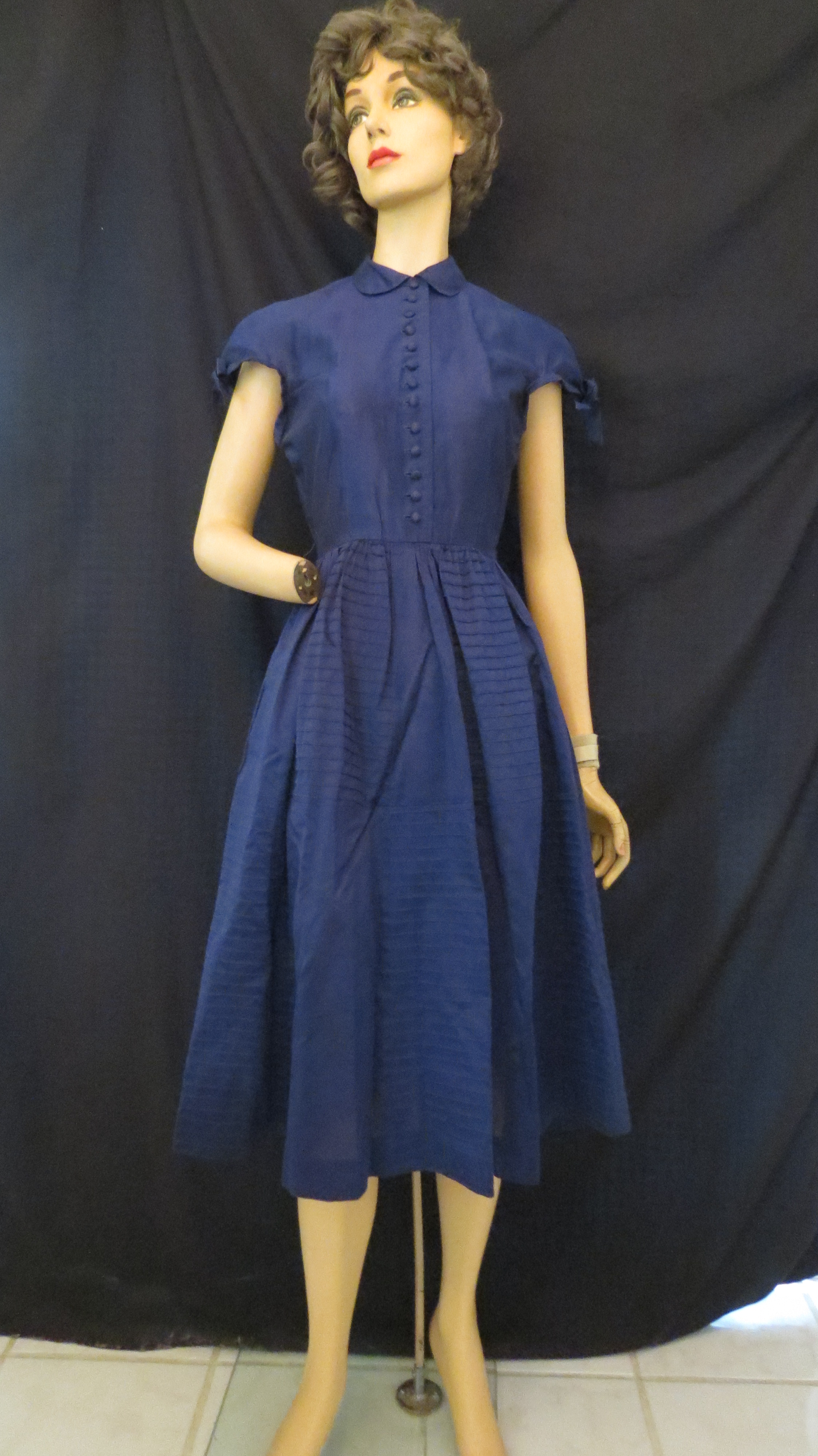
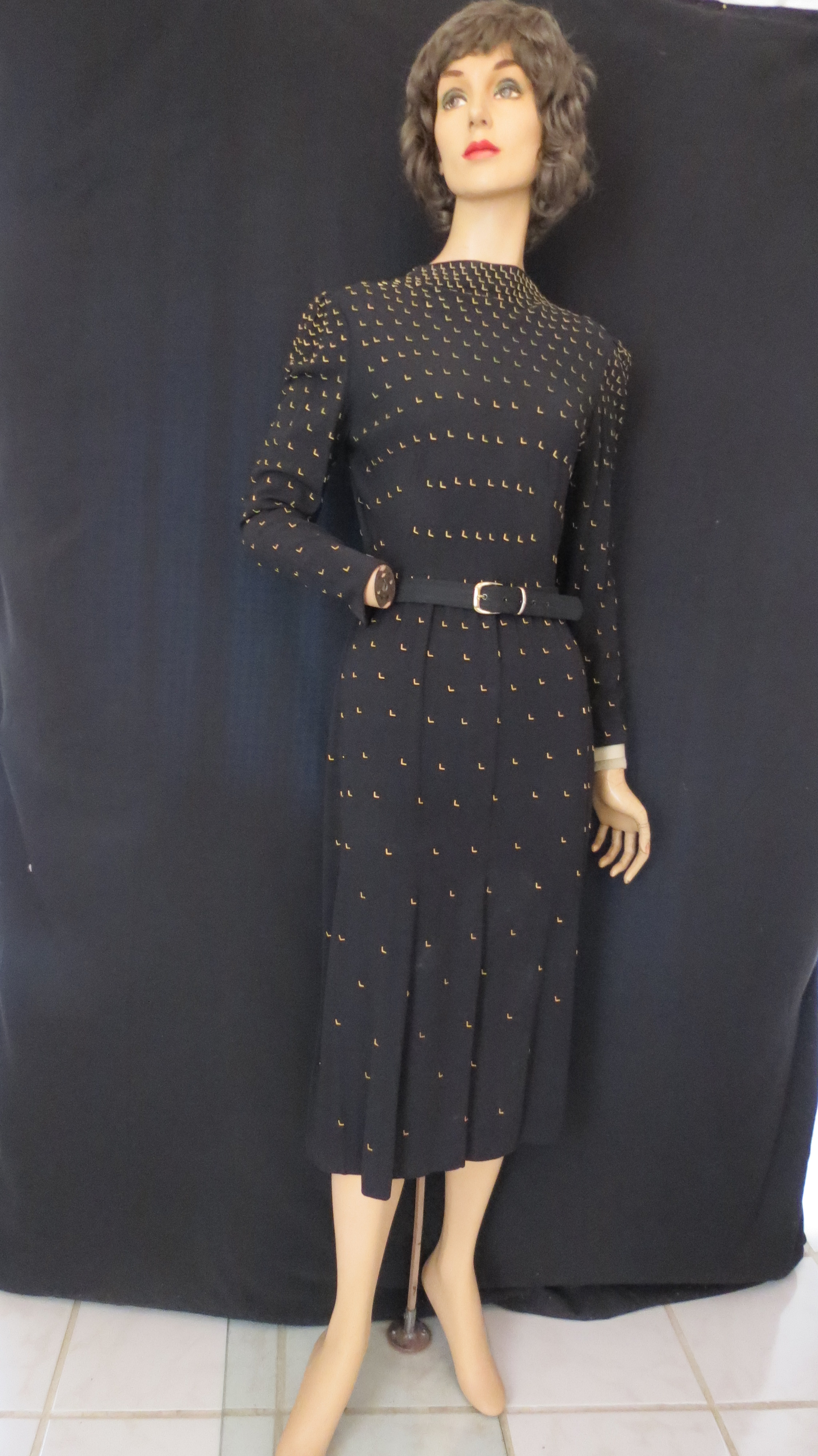
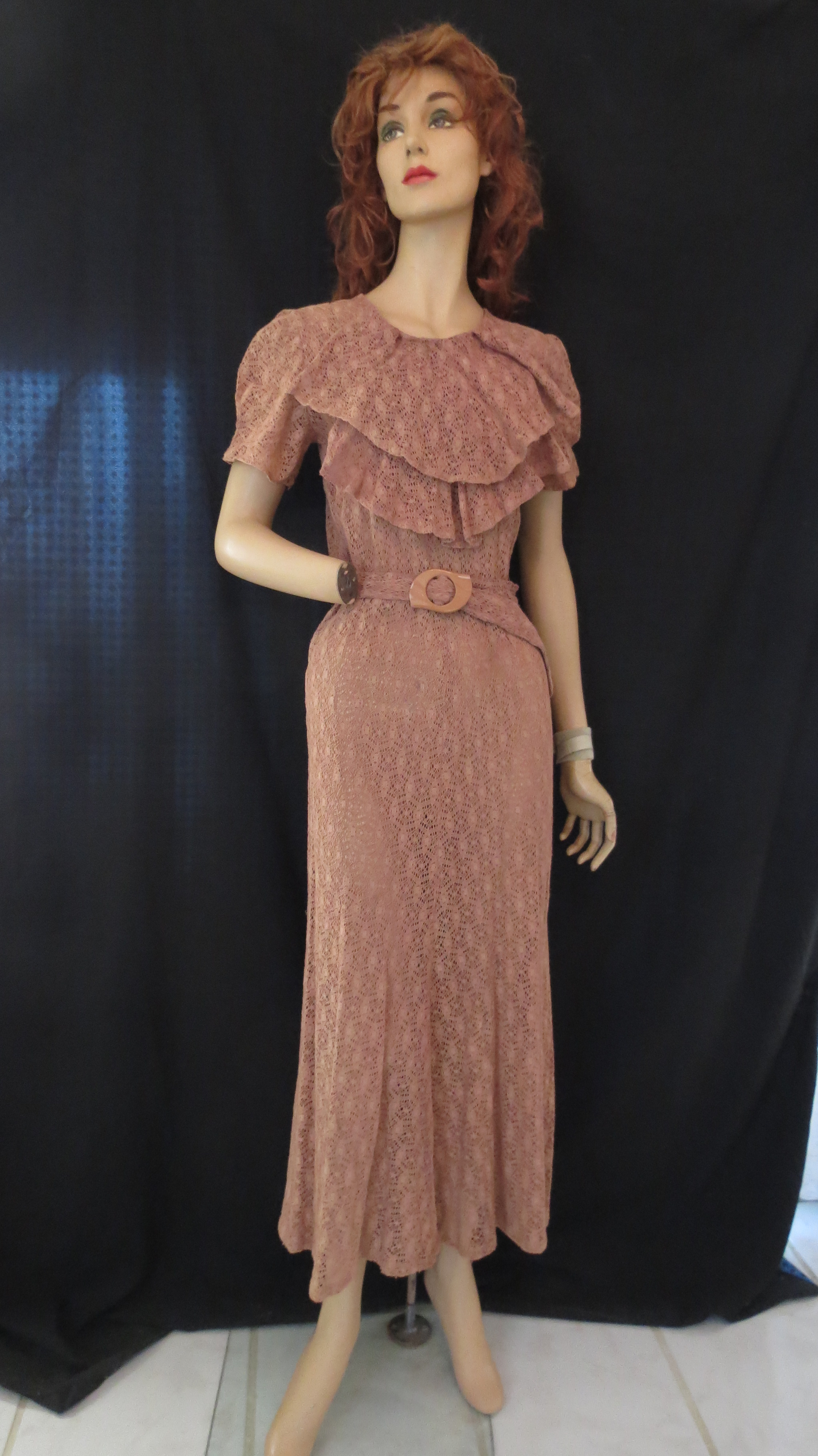
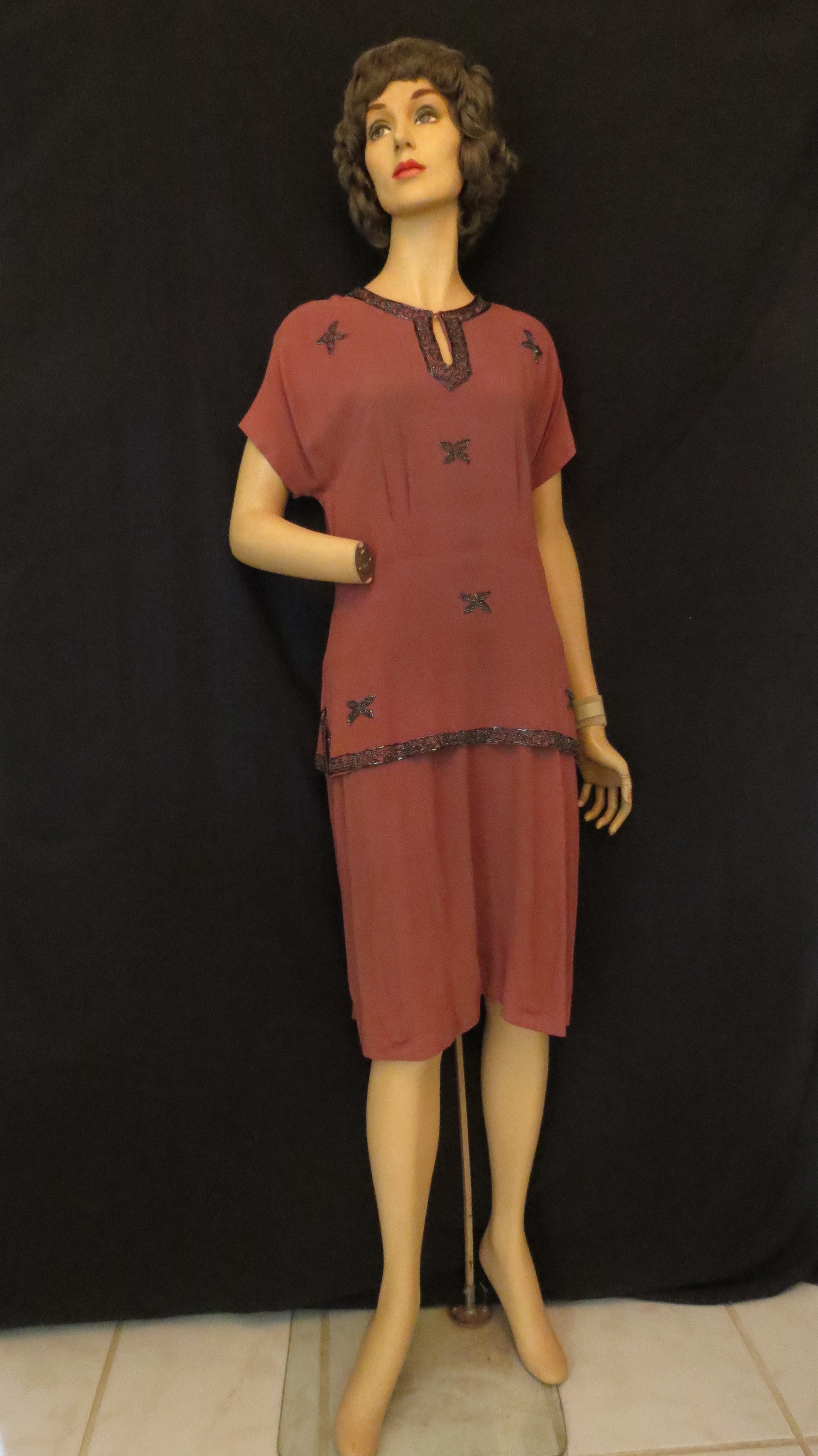
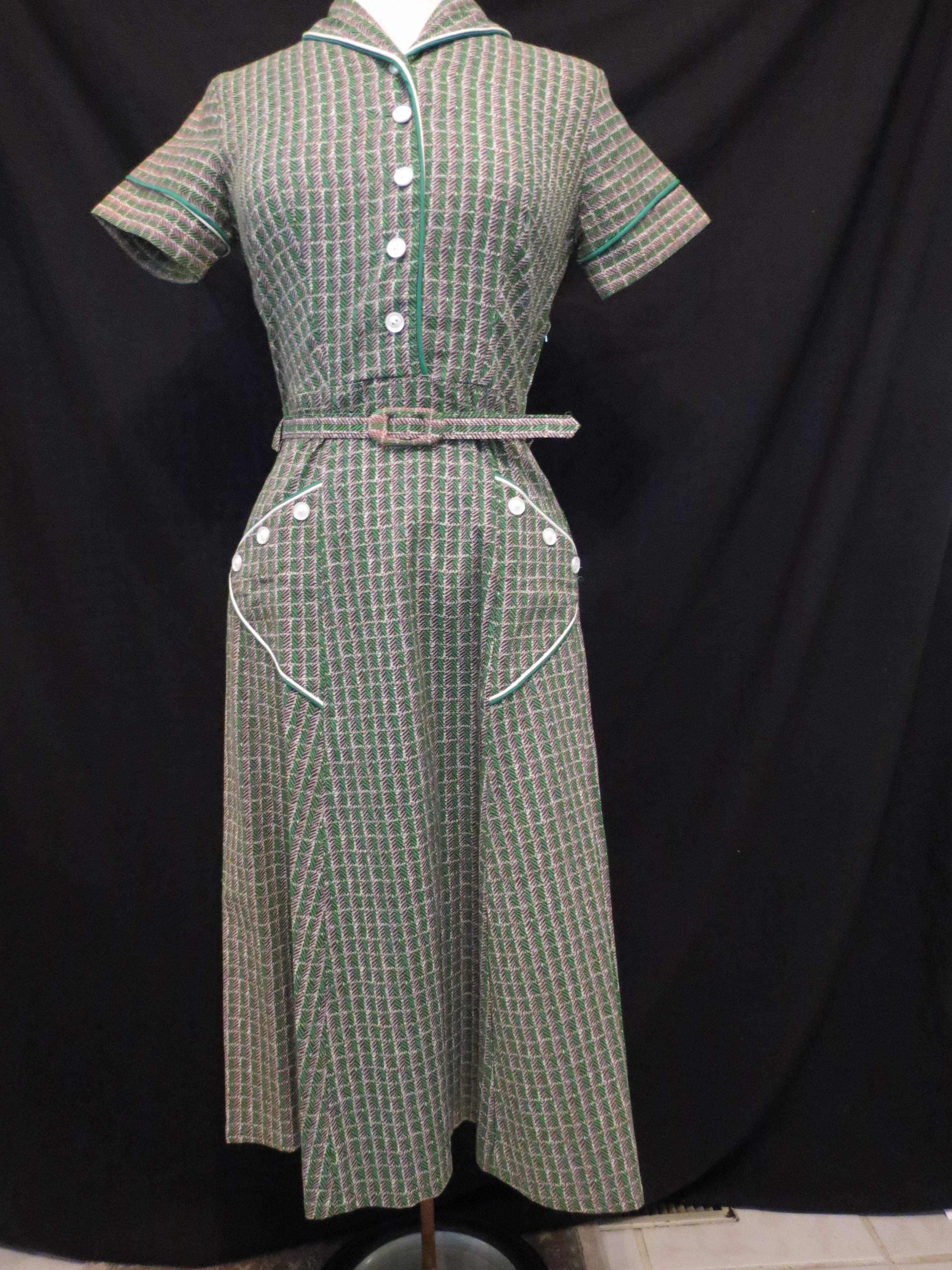
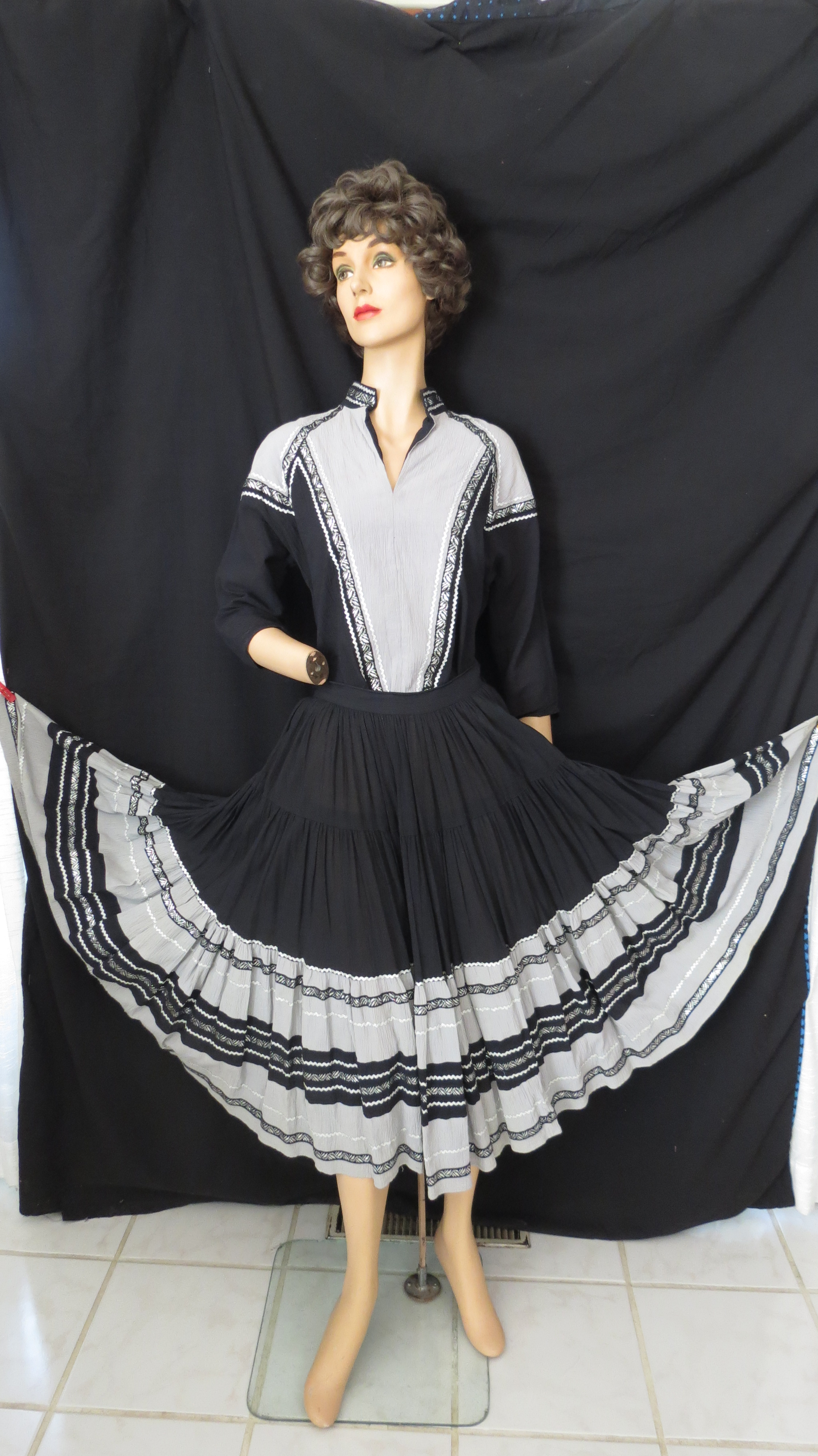
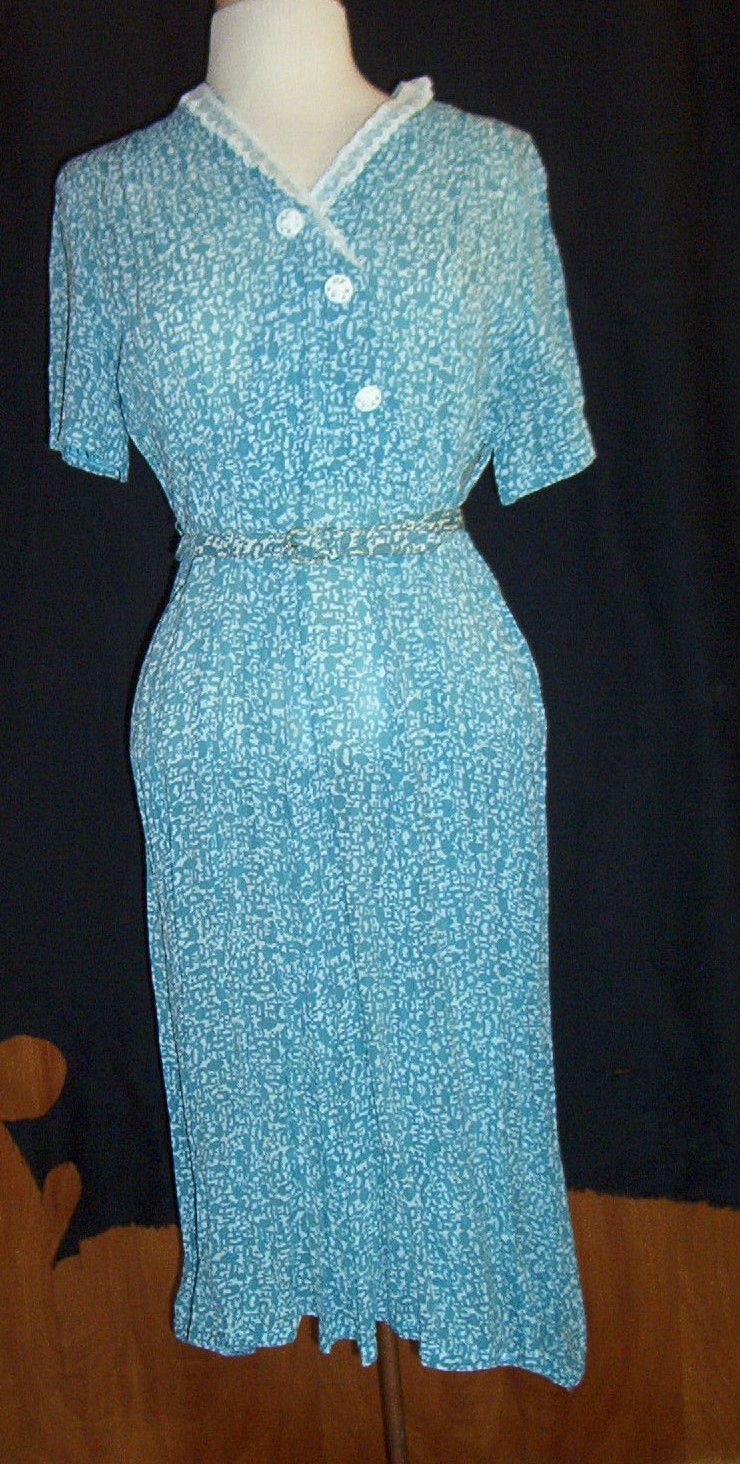
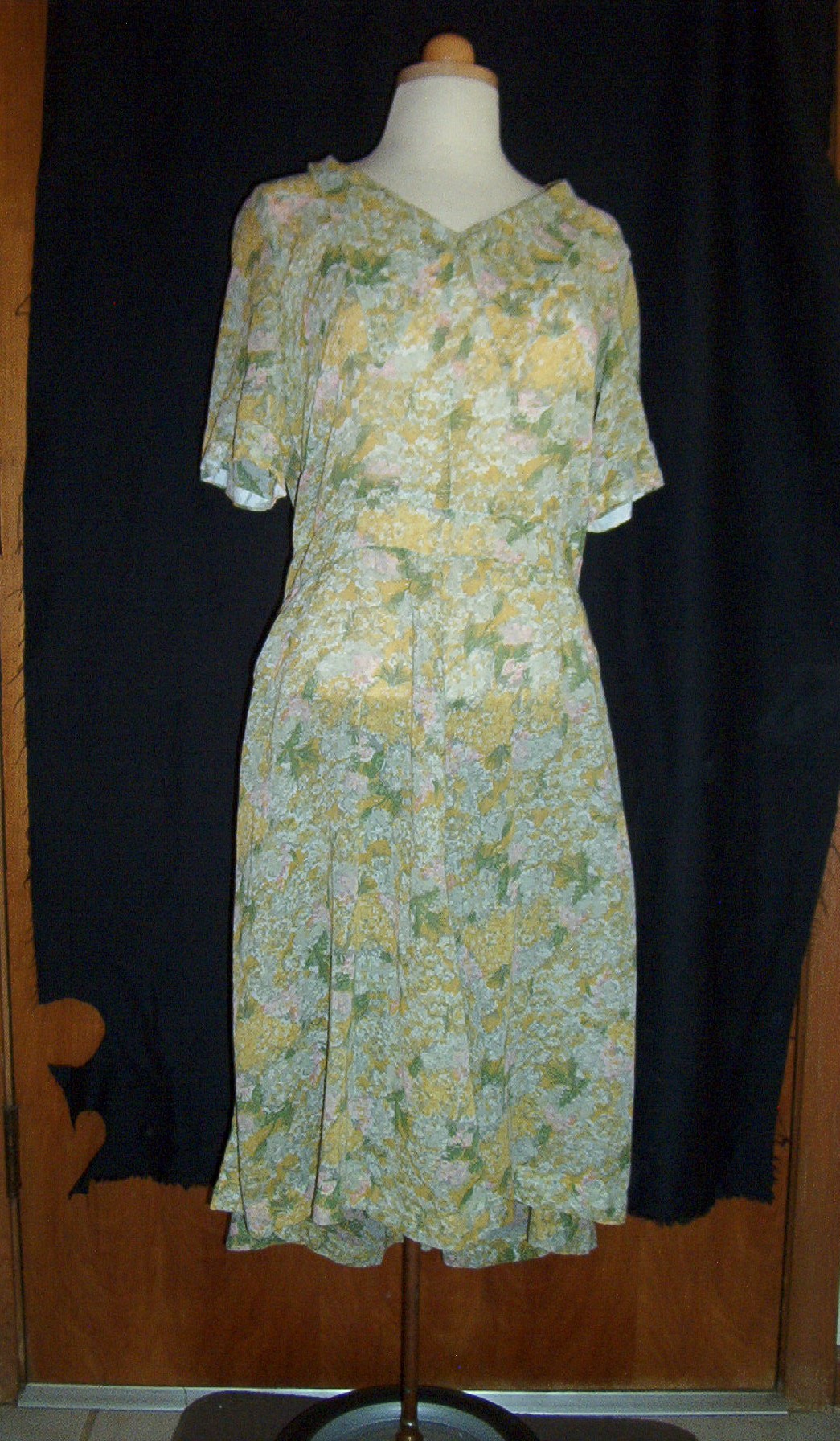
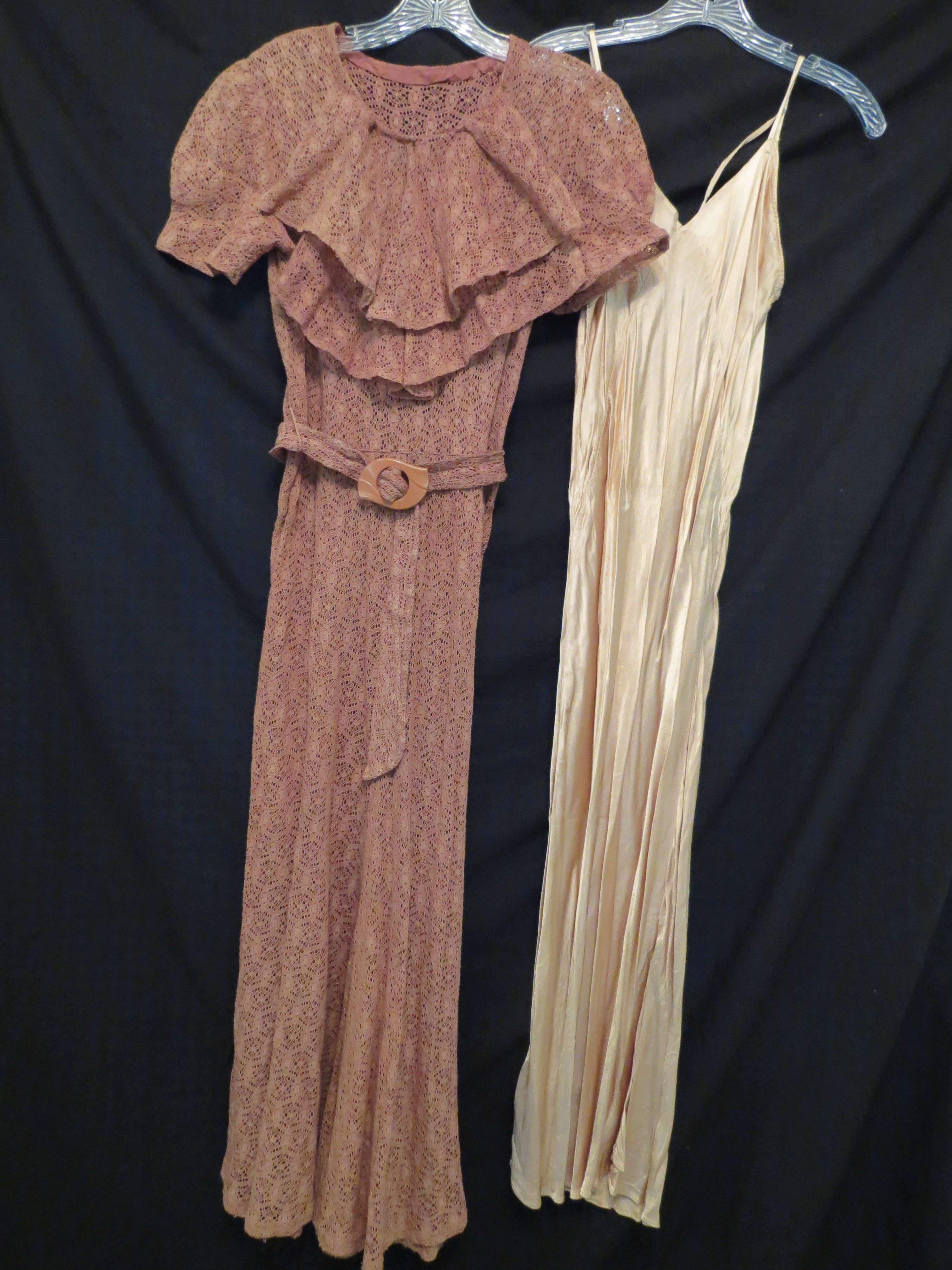
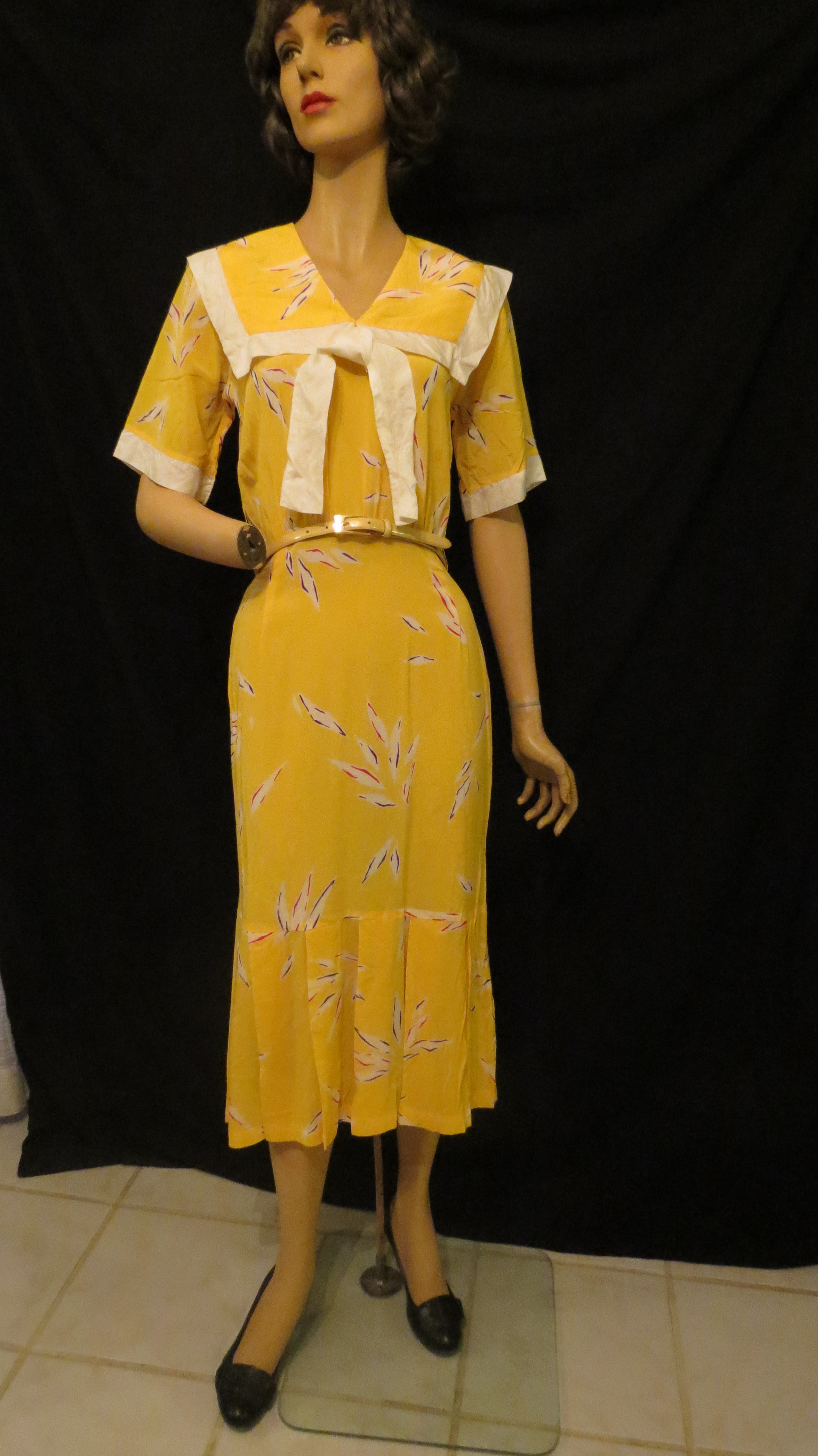
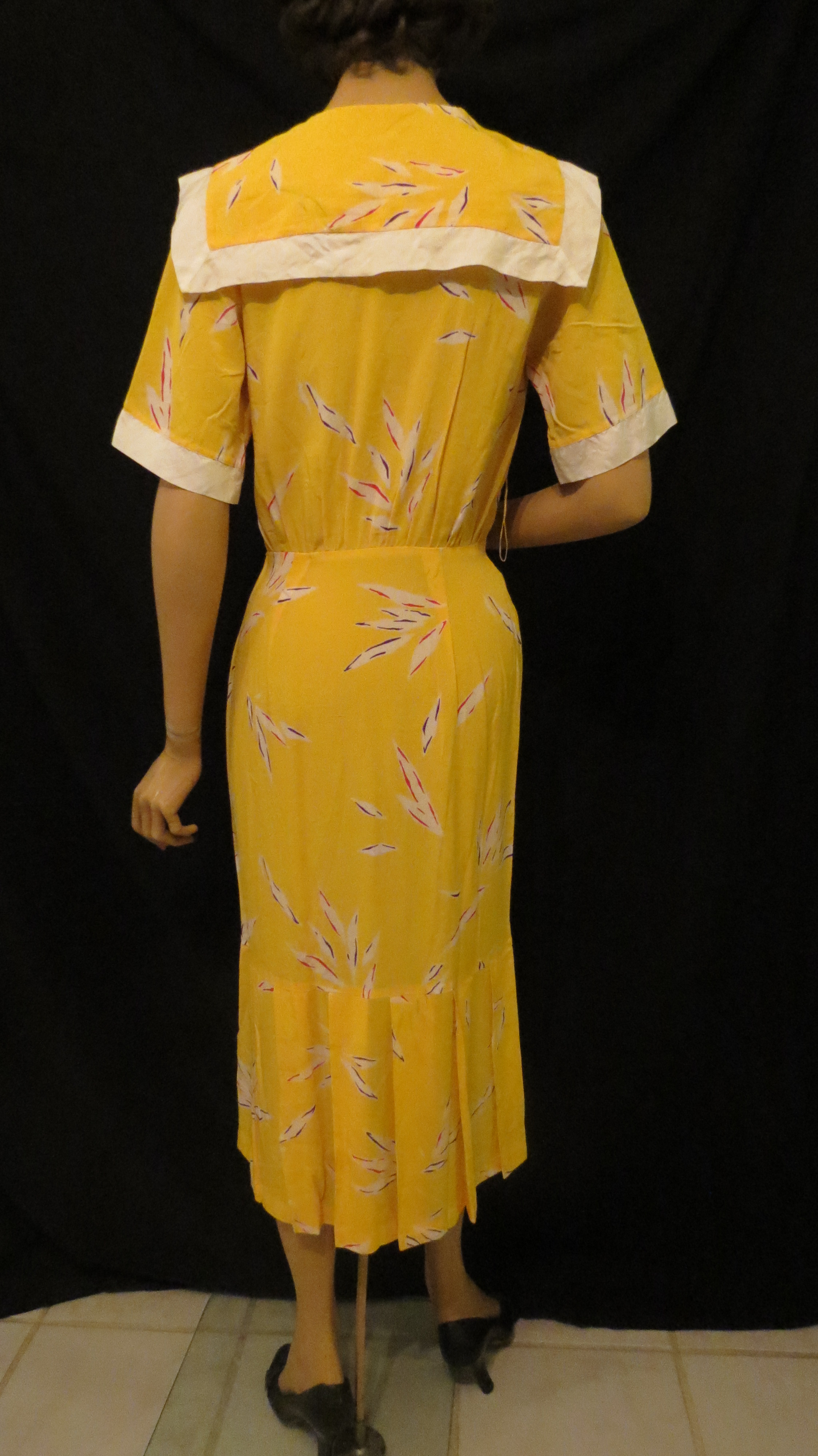
Two of my favorite 1930’s dresses to wear and one when I feel like Bonnie of Bonnie and Clyde. The fabrics feel so wonderful on the body and the fit is killer because of the fabulous drape. An earlier find, I was thrilled to discover the blue dress because of it’s condition. The original buttons and belt are present and no damage to the trim at the neckline. Also, no stains! You can see that the body of the dress has faded a bit due to years of washing by the original owner (compare to the color of the belt, which would not have been put in the laundry), but I don’t mind. The floral-print yellow and green frock is near-perfect and is a bit more casual. Super easy-breezy. The crocheted dress with satiny rayon slip given to me by a family member who found it in an old antique wardrove is the real star. It still has the authentic celluloid plastic belt buckle. The longer hemline makes it probably the oldest of the group, from the very early ’30’s. I have to include a 1980’s or ’90’s dress that dipped into a retro 1930’s. The yellow rayon belted sheath is a fun fashion with loyalty to the Thirties style and lovely rayon fabric.

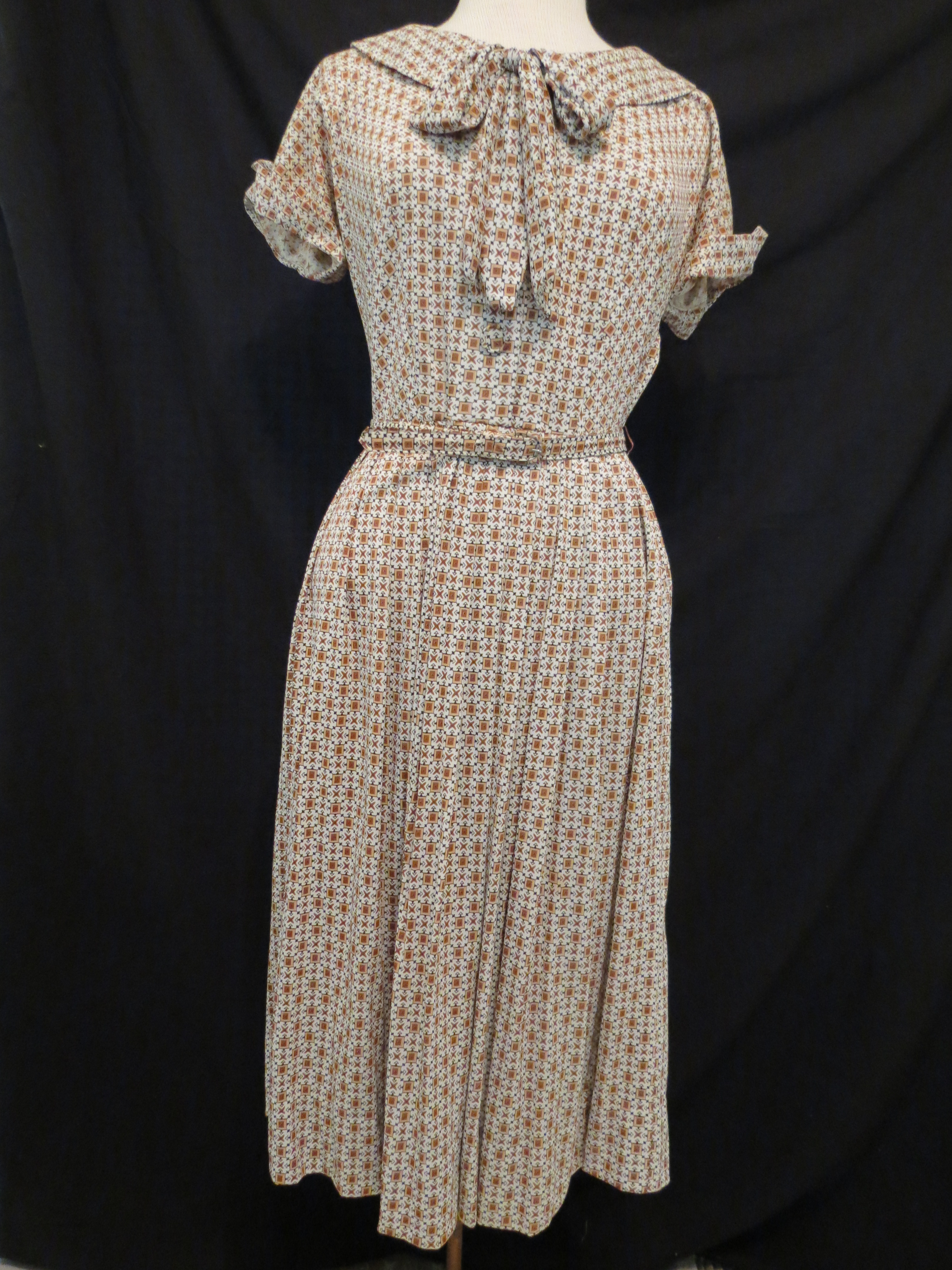
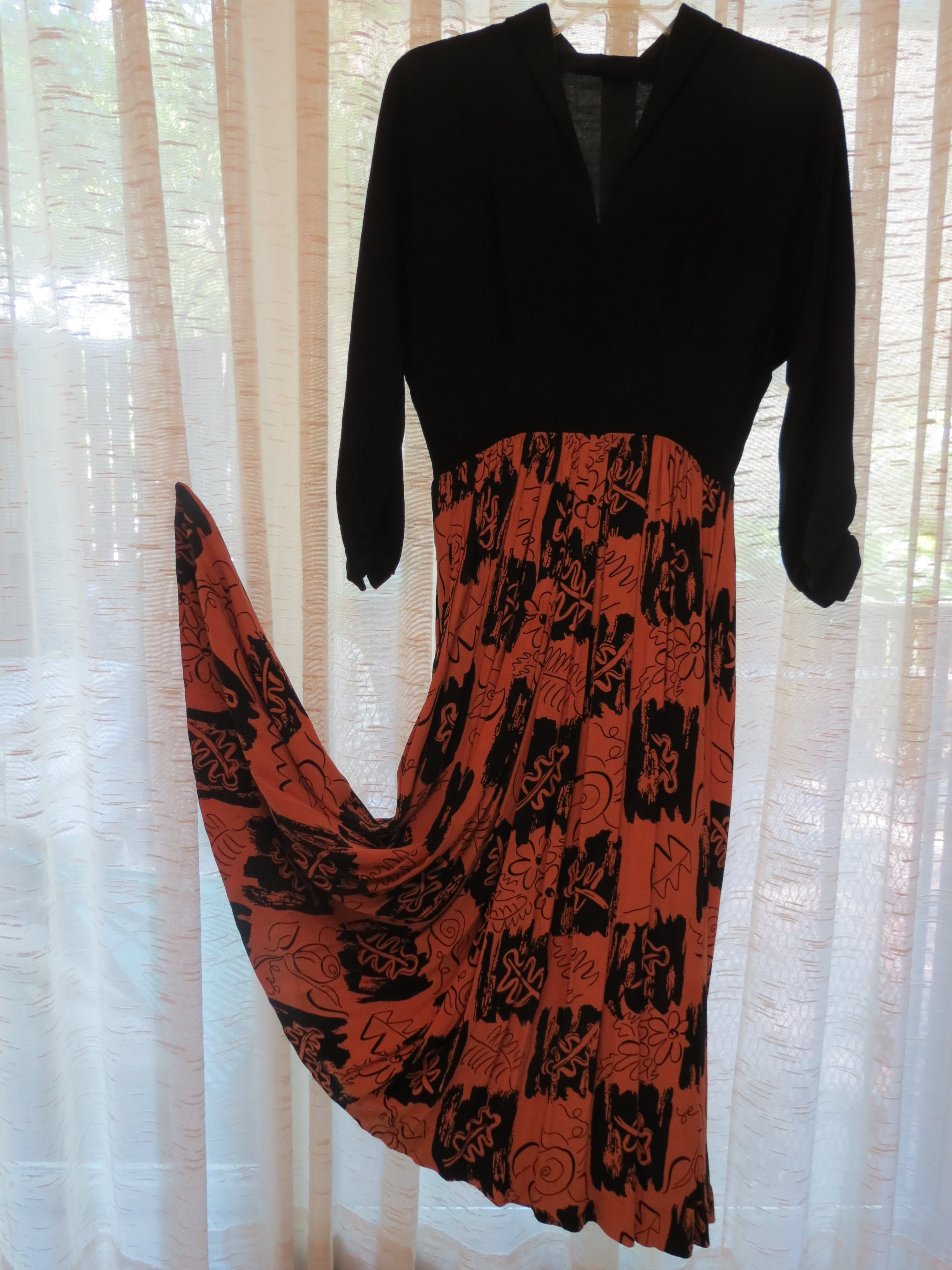
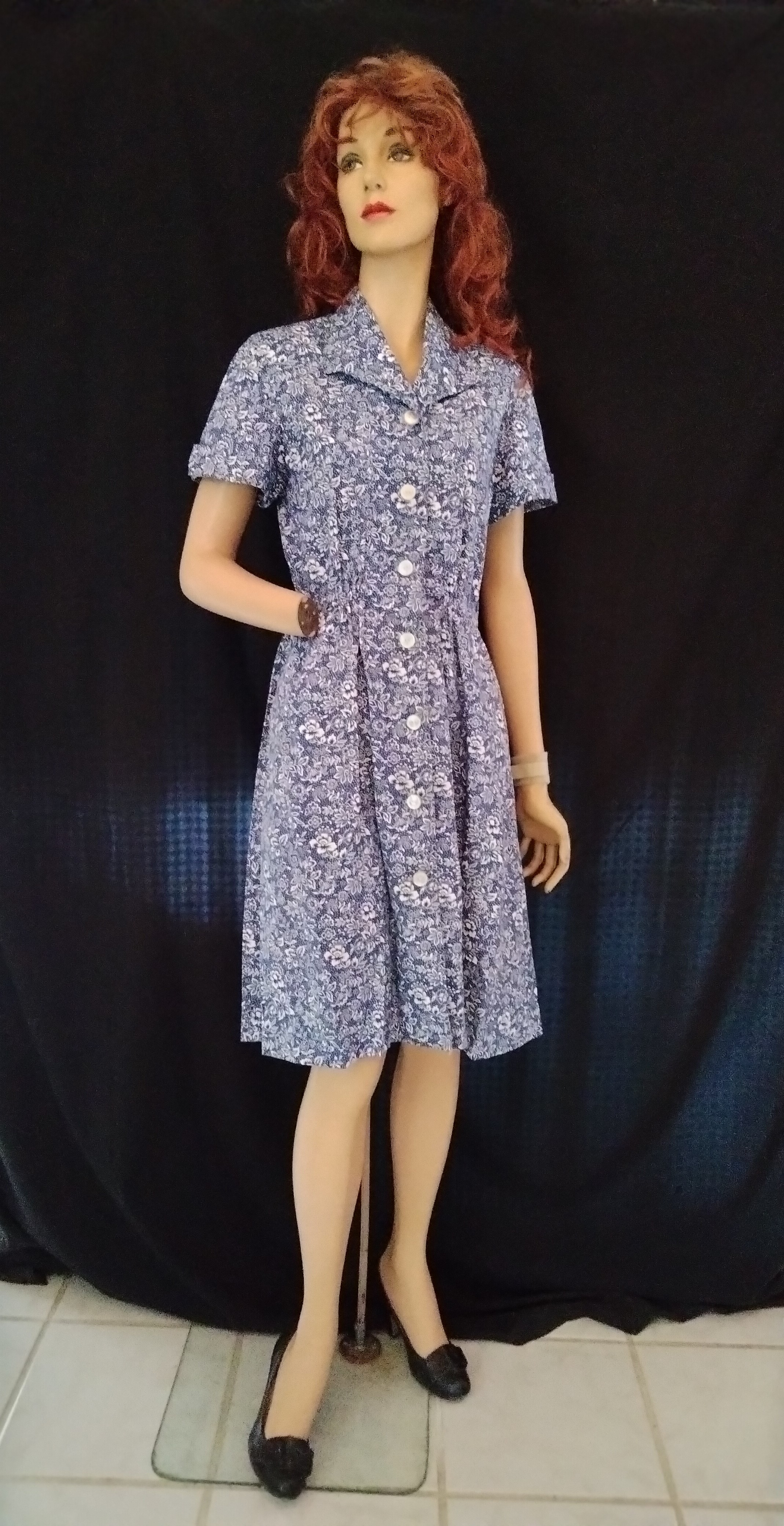
These are both mid-priced dresses, at most, but have held up over 70 years before finding their way into my closet. It’s possible they were home-sewn. I love the elbow-length sleeves and the way that the fabric causes the hemline to ripple and sway. Very flattering. Both do require a slip underneath because of the sheerness and, since they are warmer weather frocks, I like to wear a true vintage cotton slip with very little decoration so that it doesn’t show through and compete with the print. Slips of that sort are hard to find since most of the slips that have survived are made of nylon and full of decorative detail. Although some fabrics don’t seem to require a slip, wearing one often causes the dress to fit and move so much better. Your other foundation garments i.e. brassiere, underpants and even stockings will have a real effect on how your outfit looks so it’s an important consideration. I have silk tap pants and some silk slips from the pre-war and WWII era that are good examples of undergarments that work really well with dresses like these.

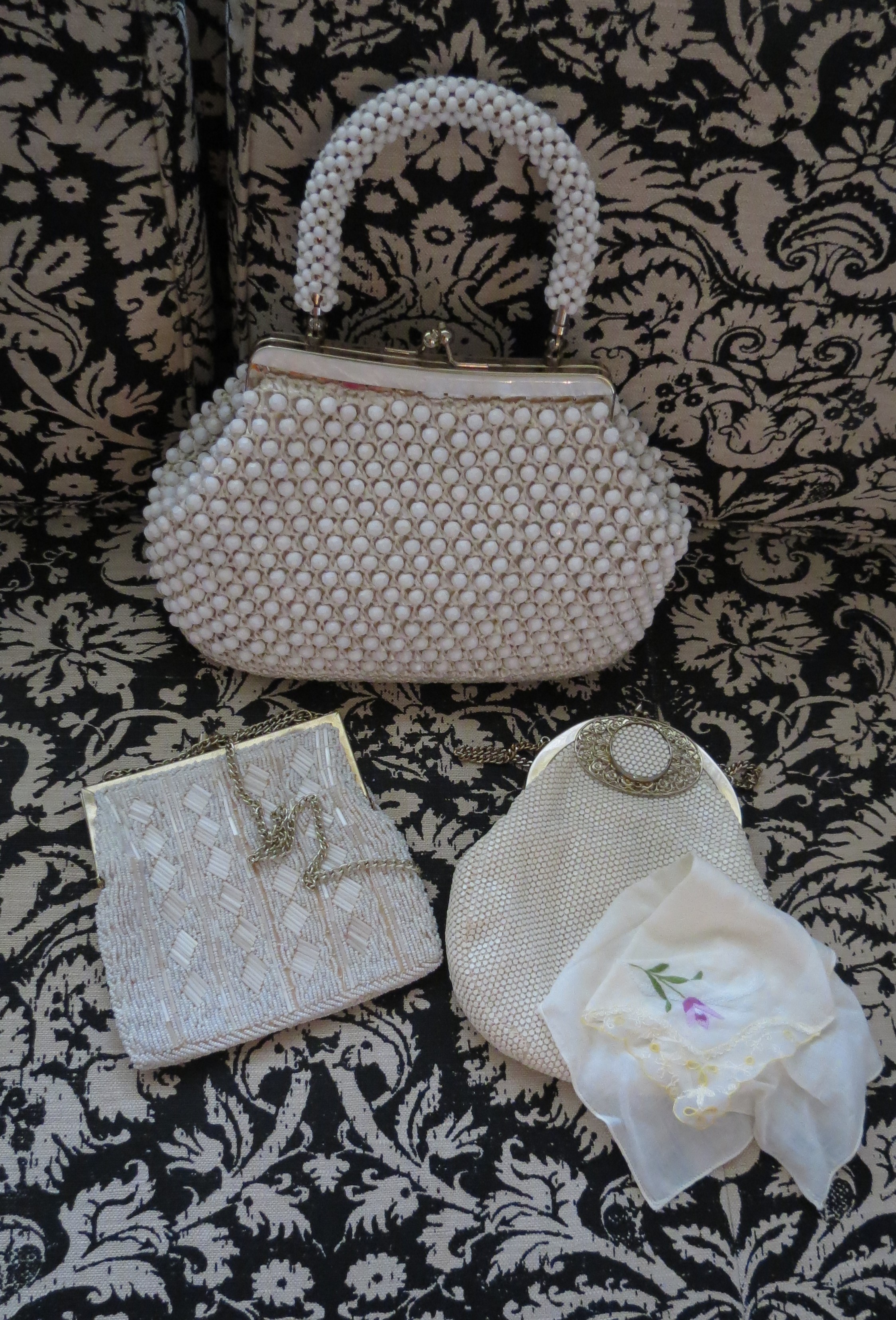
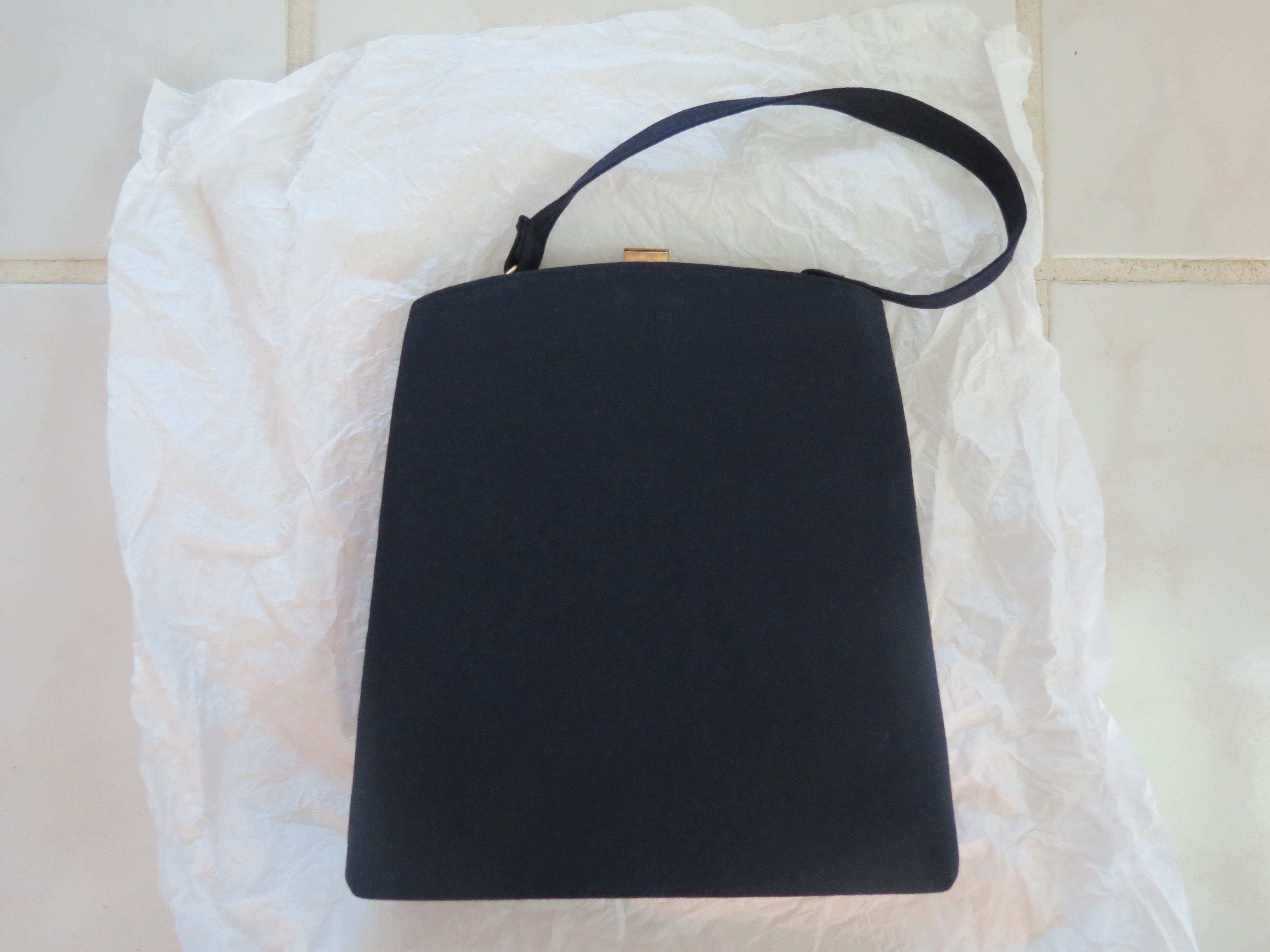
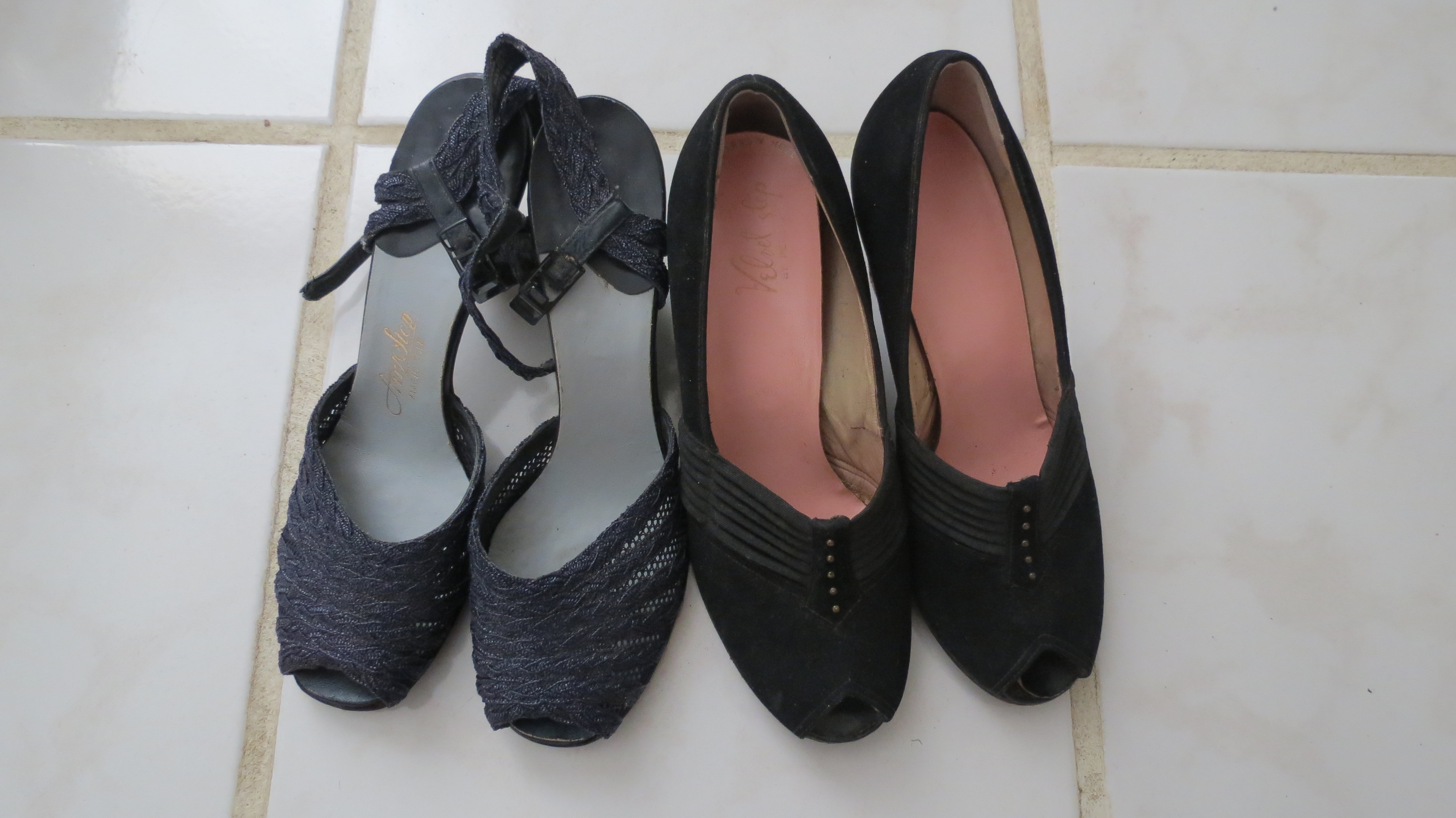
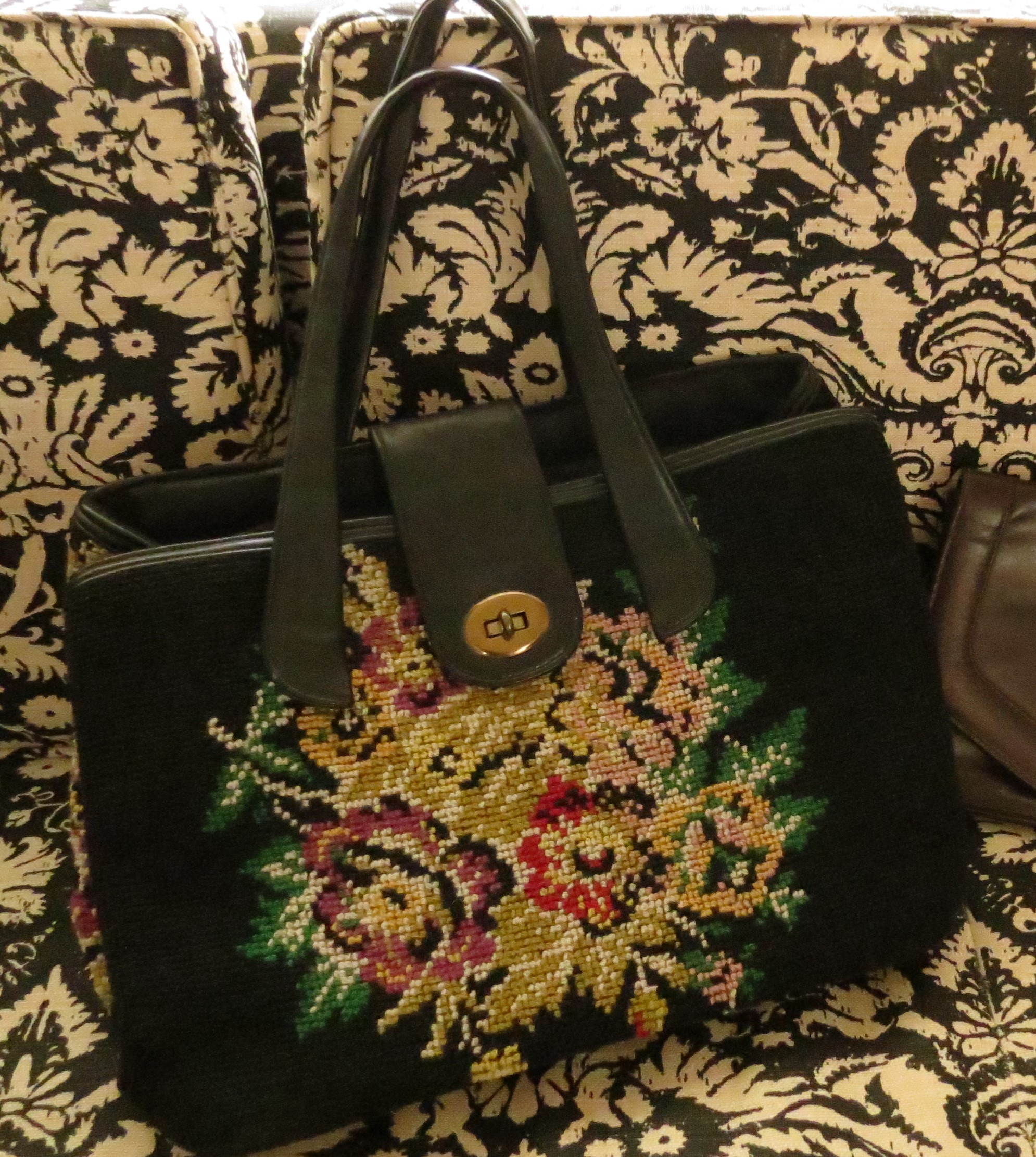
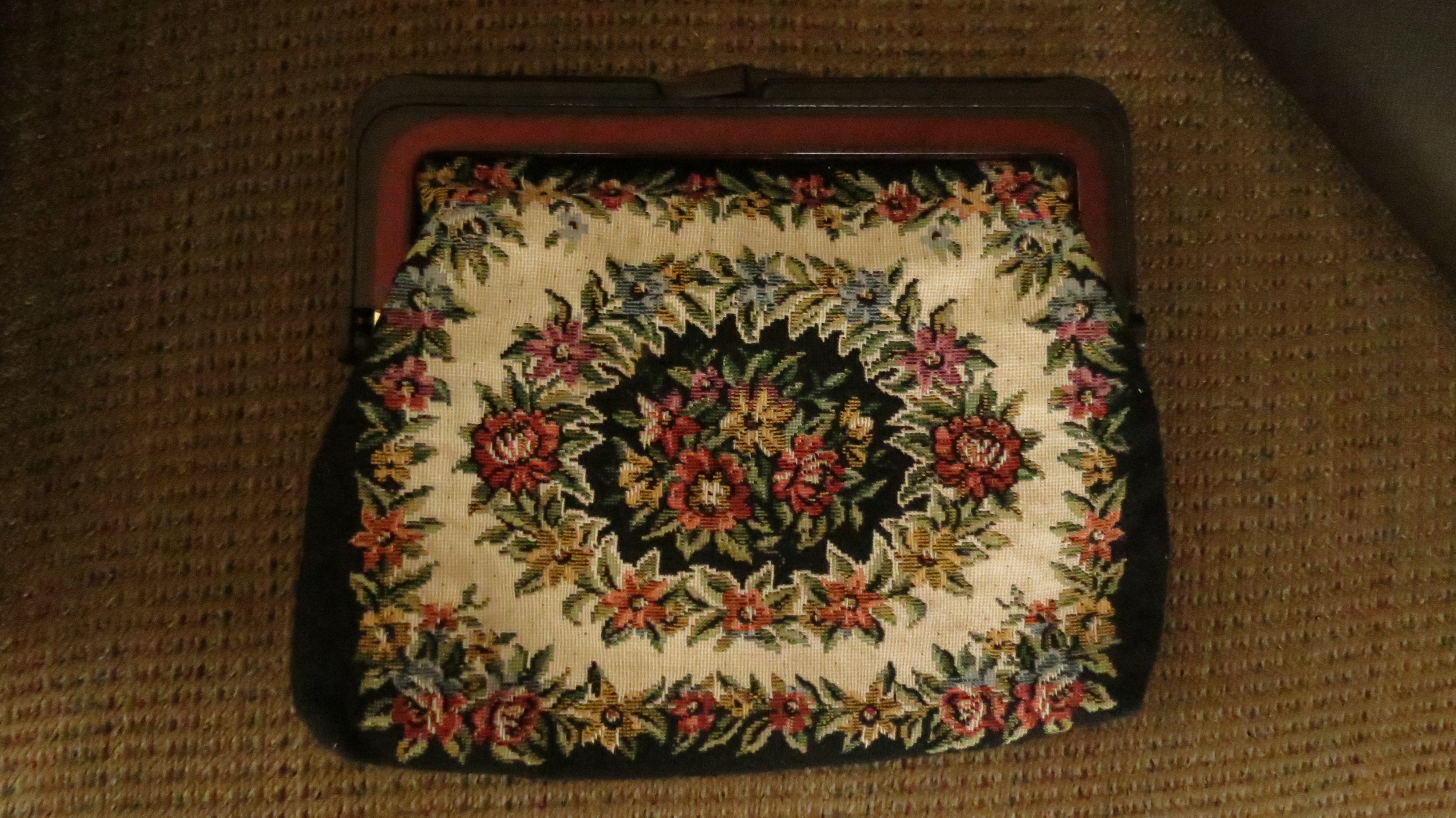
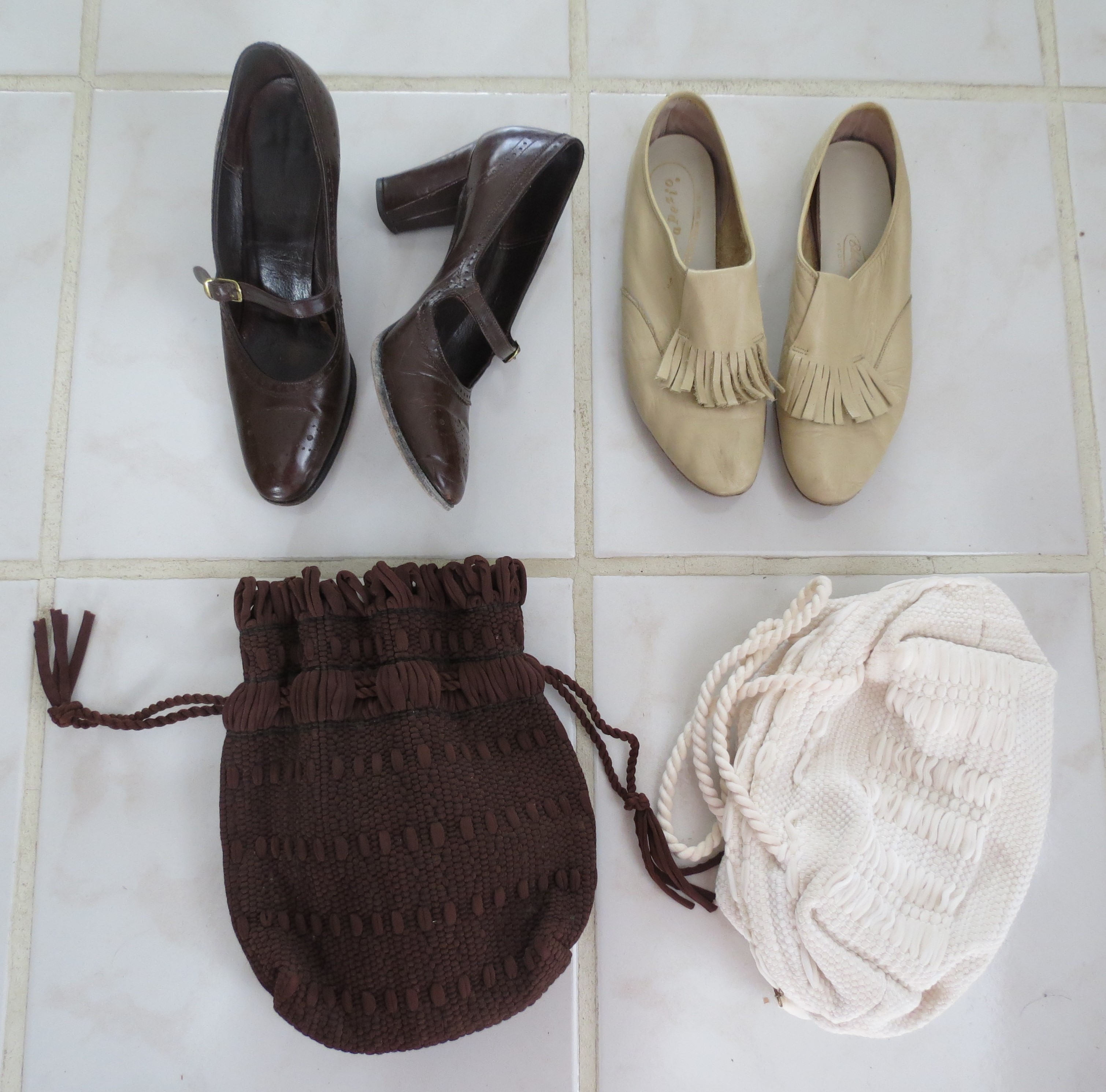
Mary Jane style shoes are seen in every decade since the 1920’s. Decorated flats became popular for women, too, especially when they began wearing slacks. The shoes shown above may be a little younger than the dresses and purses, but are still within a decade or so. Handbags woven from synthetic yarn were another way that the market for clothing and accessories coped with the economic downturn of the Depression and the looming rationing of wartime. Leather, silk, quality cotton and wool were less available and too expensive for many buyers. The big move forward in the development of synthetics changed clothing in big ways, many having to do with fit, comfort and convenience so, overall, the deprivation turned out to be a plus. Tomorrow we move into the 1940’s. Stay tuned . . . . . . . . . . . . . . . . . . . . . . . . . . . . . . . .

MORGANA MARTIN, THE MAGICVINTAGESPY

BLOG: MAGICVINTAGESPY.COM

TRUE VINTAGE SPRING JACKETS & COAT 1940’S – 1980’S

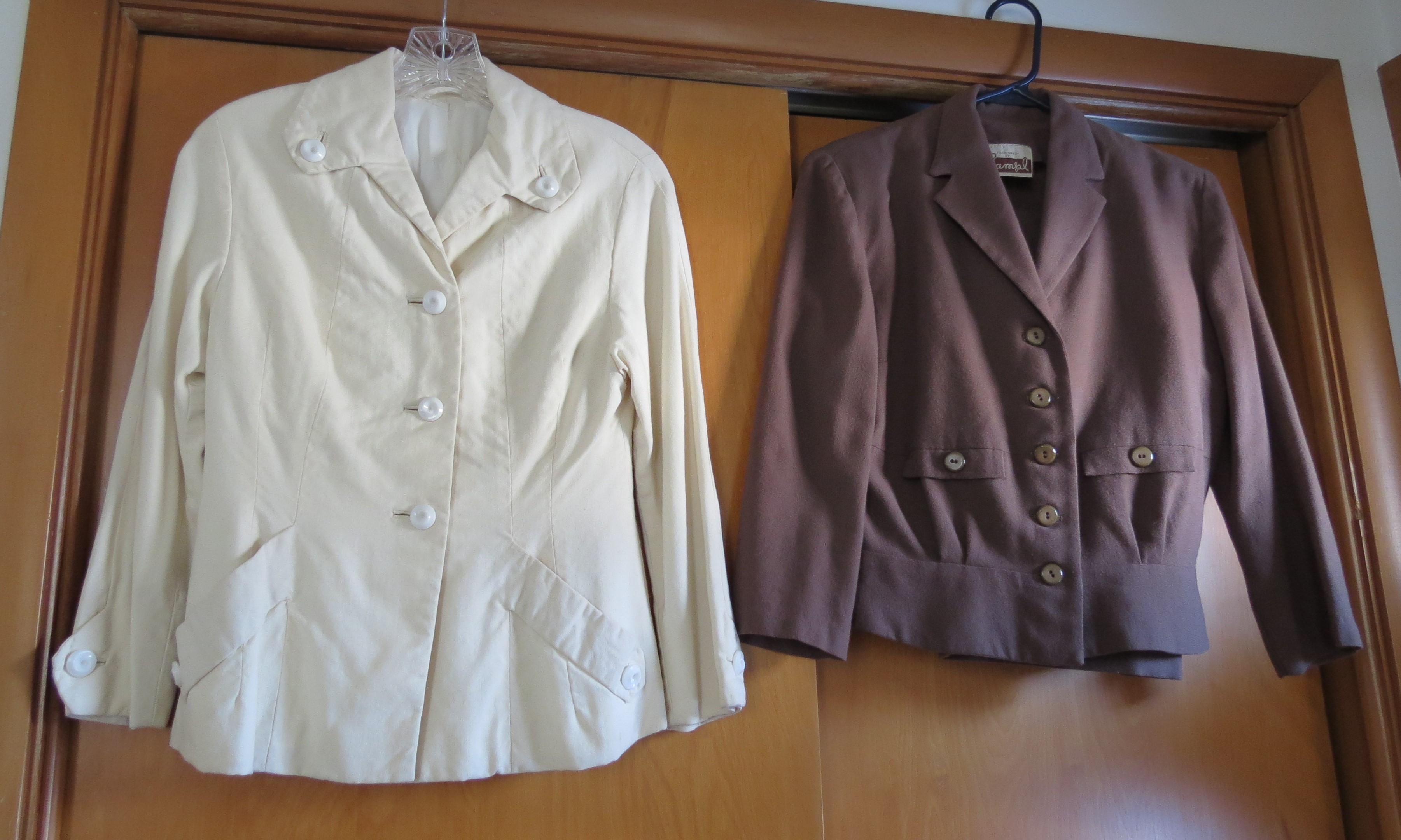
Distinctive tailoring and fabric in ladies’ jackets helps identify their decade in fashion history. Wool jackets with interesting buttons and lots of tailored details were very popular from the late 1930’s into the 1950’s. Not all 1940’s jackets had big, military-style shoulders. The two 1940’s jackets in the first photo are good examples which were both parts of a skirt suit originally. They’d look great with a pair of tailored pants, too. Look at the buttons and pockets that draw attention. Tabs on the cuffs and waistline detail do the same. Both jackets have an easy, flattering fit.

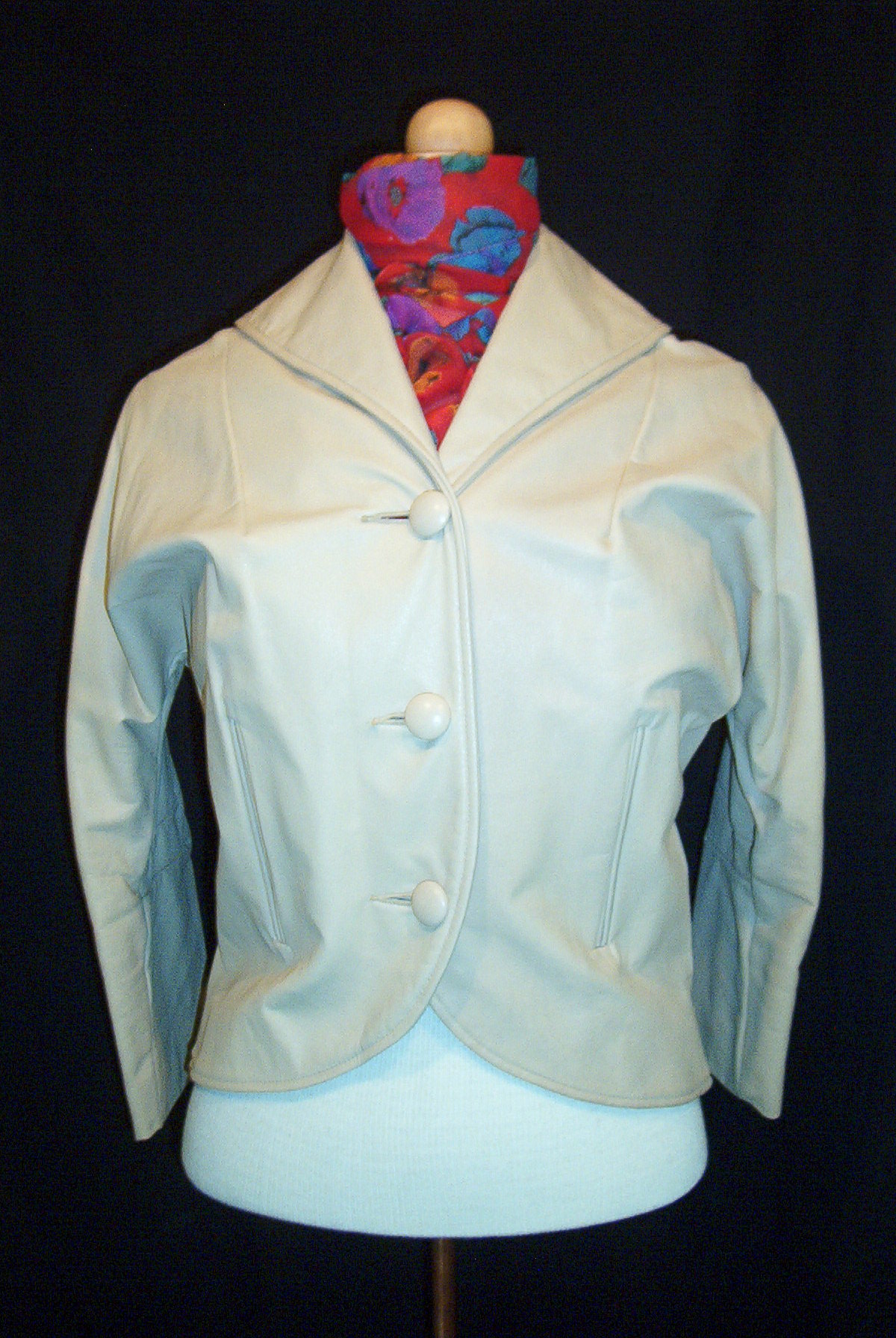
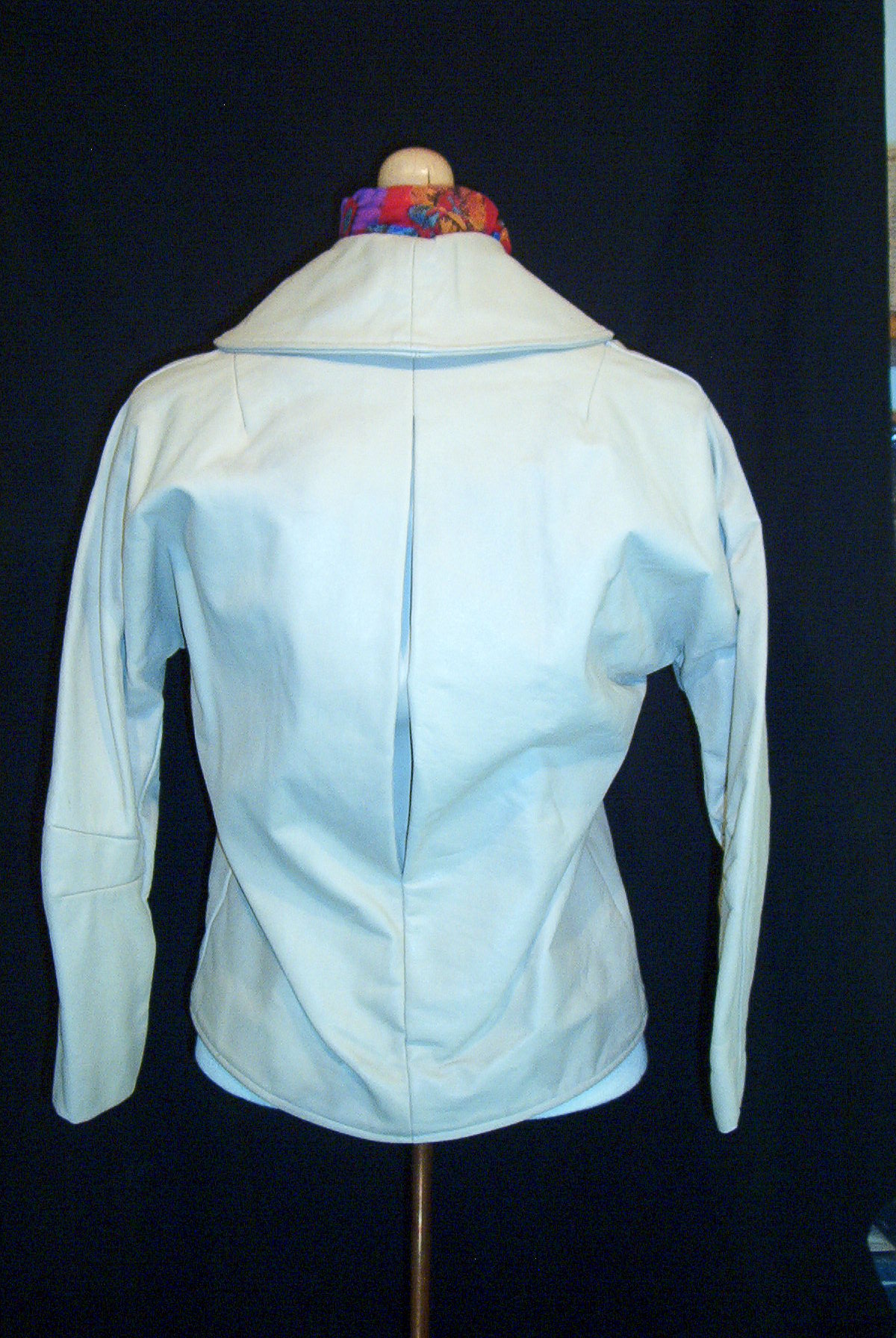
In the 1950’s, jackets became more sporty and body-conscious in many cases. This fitted white leather jacket is a great example. Covered buttons, a wide collar, slash pockets and back vent really draw the eye. It’s sleek and streamlined. The fitting reflects that in the tapered sleeves and fitted waist. Extra room on top which accents she shoulders and bustline gives a bit of an athletic or “va-va-voom” figure enhancement. Love it!

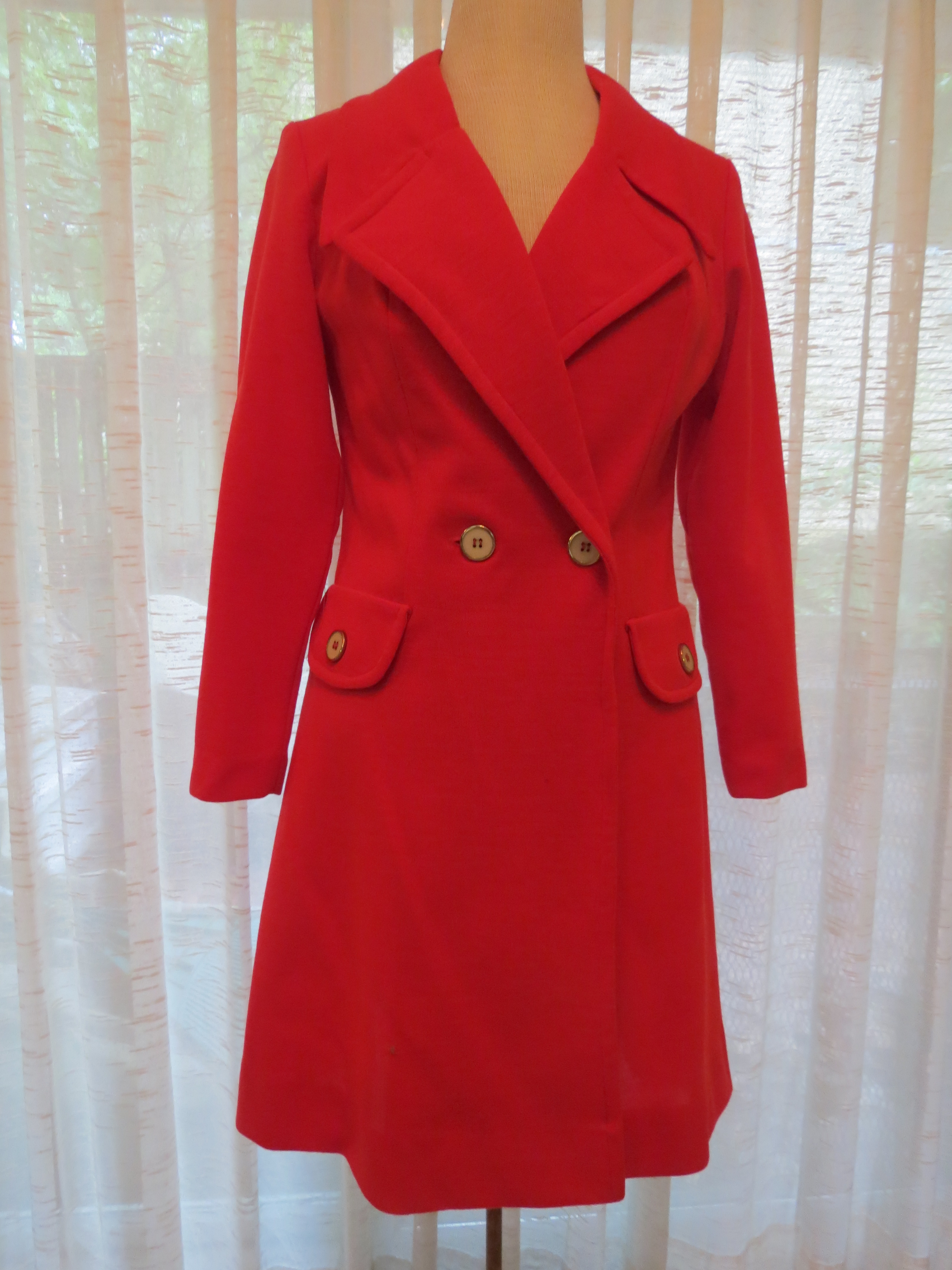
The bright red all-weather textured polyester coat from the 1970’s has many mid-century style features. The stand-out collar design with extended lapels is a “1970’s does 1940’s” style which was very popular in the early Seventies. The fitted Princess cut also harks back to the 1940’s and 1950’s, up through the early 1960’s because it is very classic. Knee-length hemlines on coats reflected the hemlines on skirts and dresses, so were shorter during WWII and the mini-skirt era between the early ’60’s and early ’70’s.

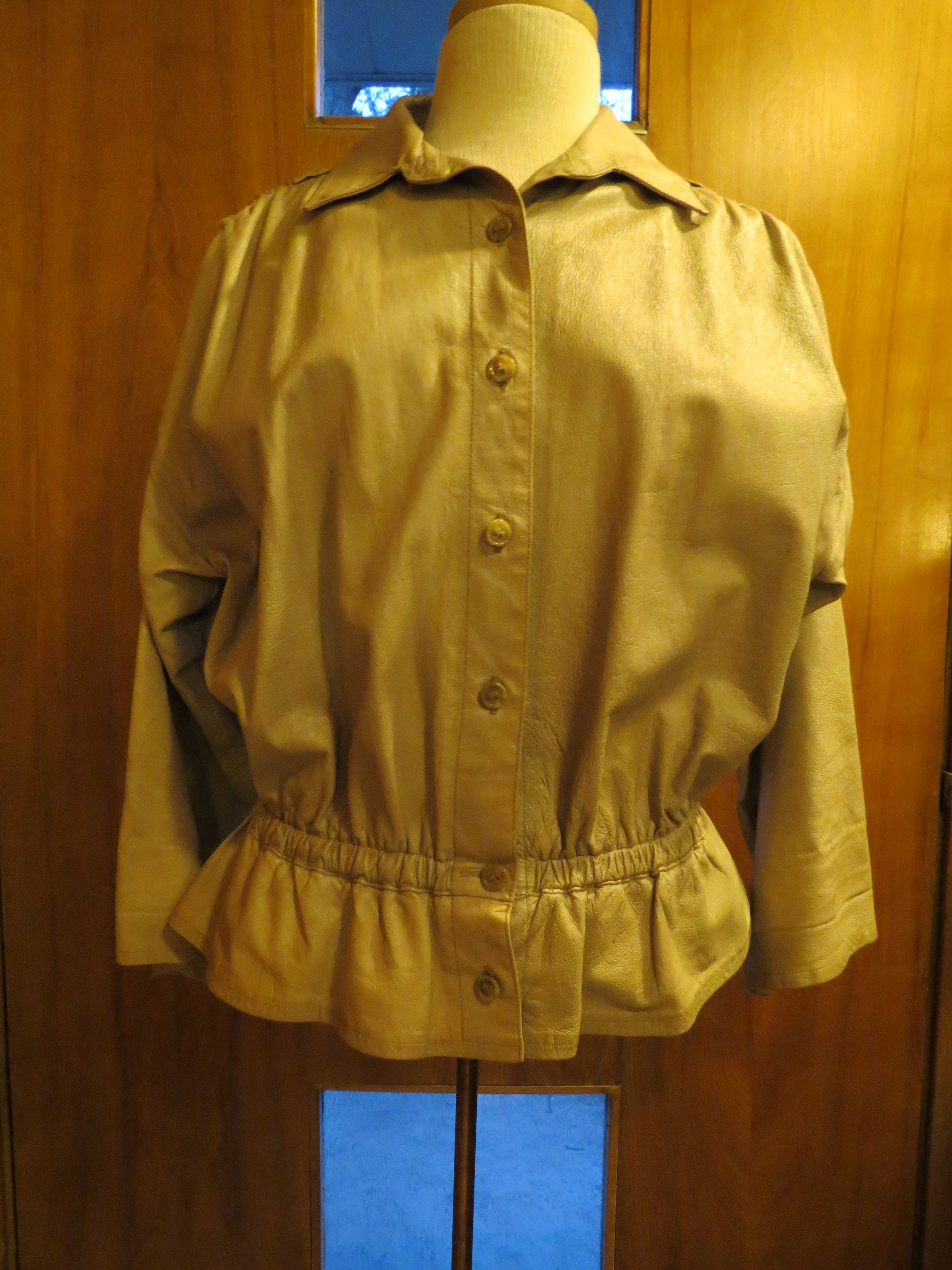
The tan-color 1980’s jacket is also made of leather. It’s a casual style that is more international and eccentric but has a bomber jacket silhouette paired with a 1940’s peplum waist that goes with some types of skirts and pants. Lots of gathers on the shoulders and at the waist give it a roomy fit that lets you wear a sweater underneath if you want to.

Before heading into a chronology of true vintage Spring day dresses, we’ll take a Snowbird vacation tomorrow. Stay tuned . .. . . . . . . . . . . . . . . . . . . . .

MORGANA MARTIN, THE MAGICVINTAGESPY

BLOG: MAGICVINTAGESPY.COM

True Vintage Ladies’ Sweaters 1940’s – 1970’s

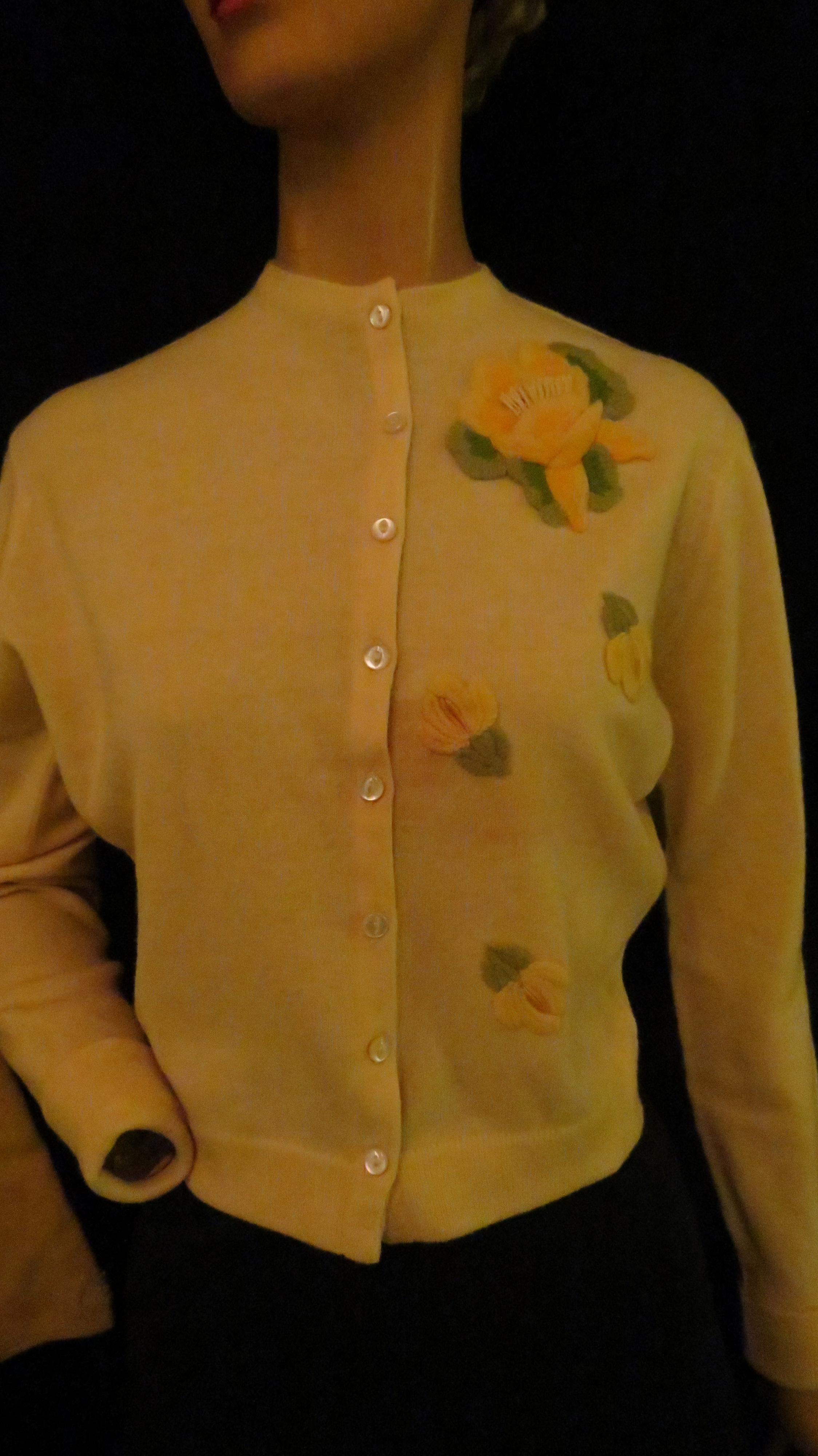
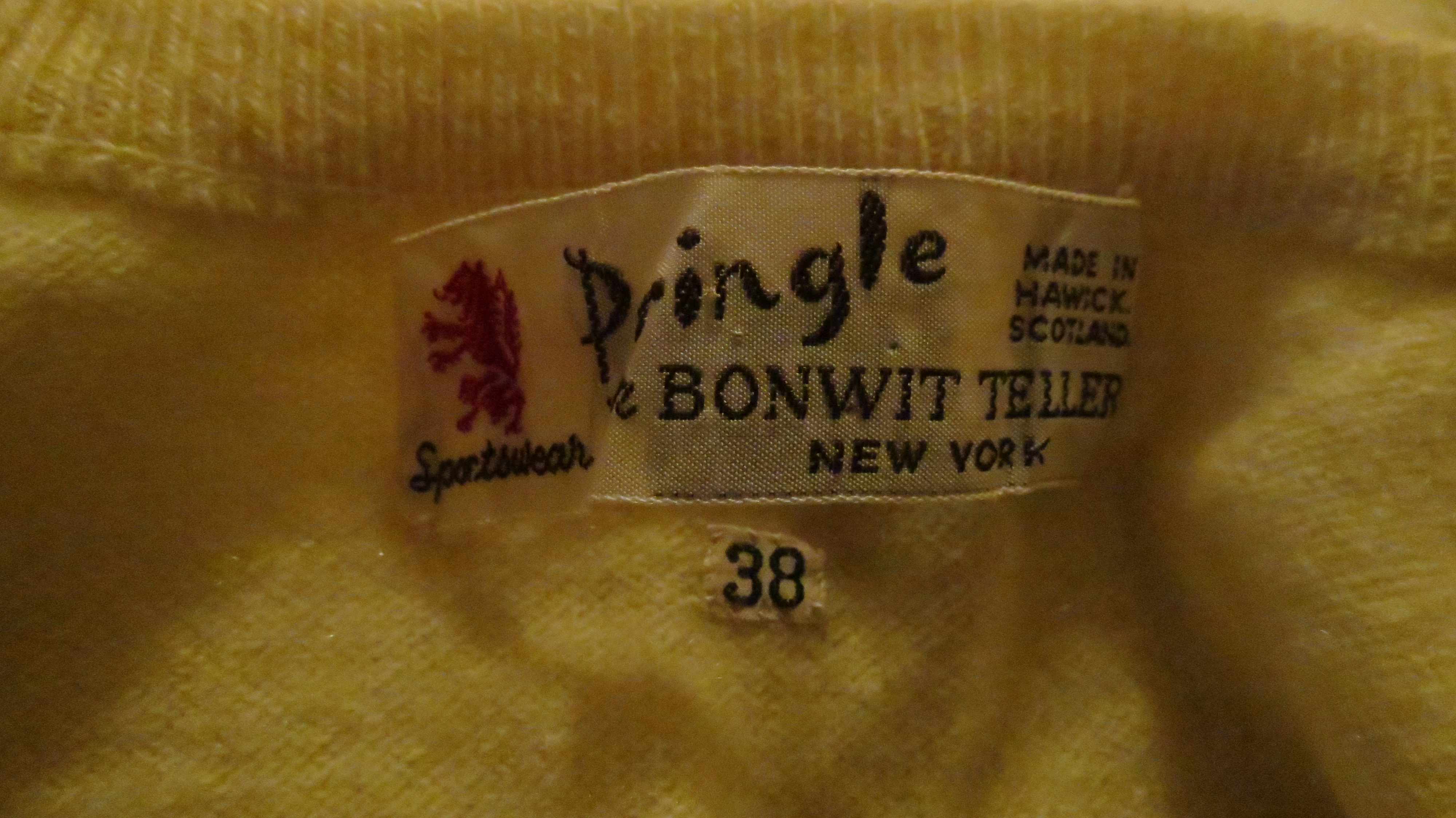
Just a few examples of the many styles and varieties in my archives, but this assortment is a good beginning. The most classic, and probably the most numerous of my discoveries, have been cardigans. Finely made cashmere sweaters, like my mother’s yellow one with appliqued flowers, were a staple for the college coed in the late 1930’s to 1940’s. Plain styles were often worn in reverse, with the buttons in back. Up through the 1950’s to the early 1960’s beaded and embroidered cardigans were hugely popular and the designs were endless. Most were commercially-made, many of the best ones in British Hong Kong, but some women decorated theirs at home. My mother bought this yellow sweater jacket by Banff in the early 1960’s.

Of course, there were v-neck, crew neck, and collared sweaters in all sorts of variety. Most were nice, but casual styles made to wear with skirts and, later, with slacks. Wool sweaters provided the most warmth for colder months and, until Orlon became available, almost all sweaters were made of wool. Synthetics were really given a boost during WWII because of the government’s requisitioning of wool for military uniforms.

The turtleneck that we love now didn’t seem to show up too much in everyone’s closets until the early 1960’s. Until then, it was a little more avant guarde or unconventional for the average gal though they were on the scene from the 1920’s. Always a sportswear item, especially from the time women began to dress more casually in the 1940’s, women’s sweaters became less dressy. We’d begin to see themed sweaters like this Las Vegas souvenir from the 1970’s or with prominent monograms, mostly in the ’50’s. Of course, many mid-century women knitted and crocheted tons of styles at home, from super-casual to evening styles.

True vintage sweaters from before the 1970’s when acrylic yarn took over are a rare and fabulous find. Moth damage, pills and snags usually took most of them out of circulation. Though I have many, it’s only possible to show sample at one time. A few ladies’ casual Spring jackets tomorrow – stay tuned . . . . . . . . . . . . . . . . . . . . . . . . . . . . . .

MORGANA MARTIN, THE MAGICVINTAGESPY

BLOG: MAGICVINTAGESPY.COM
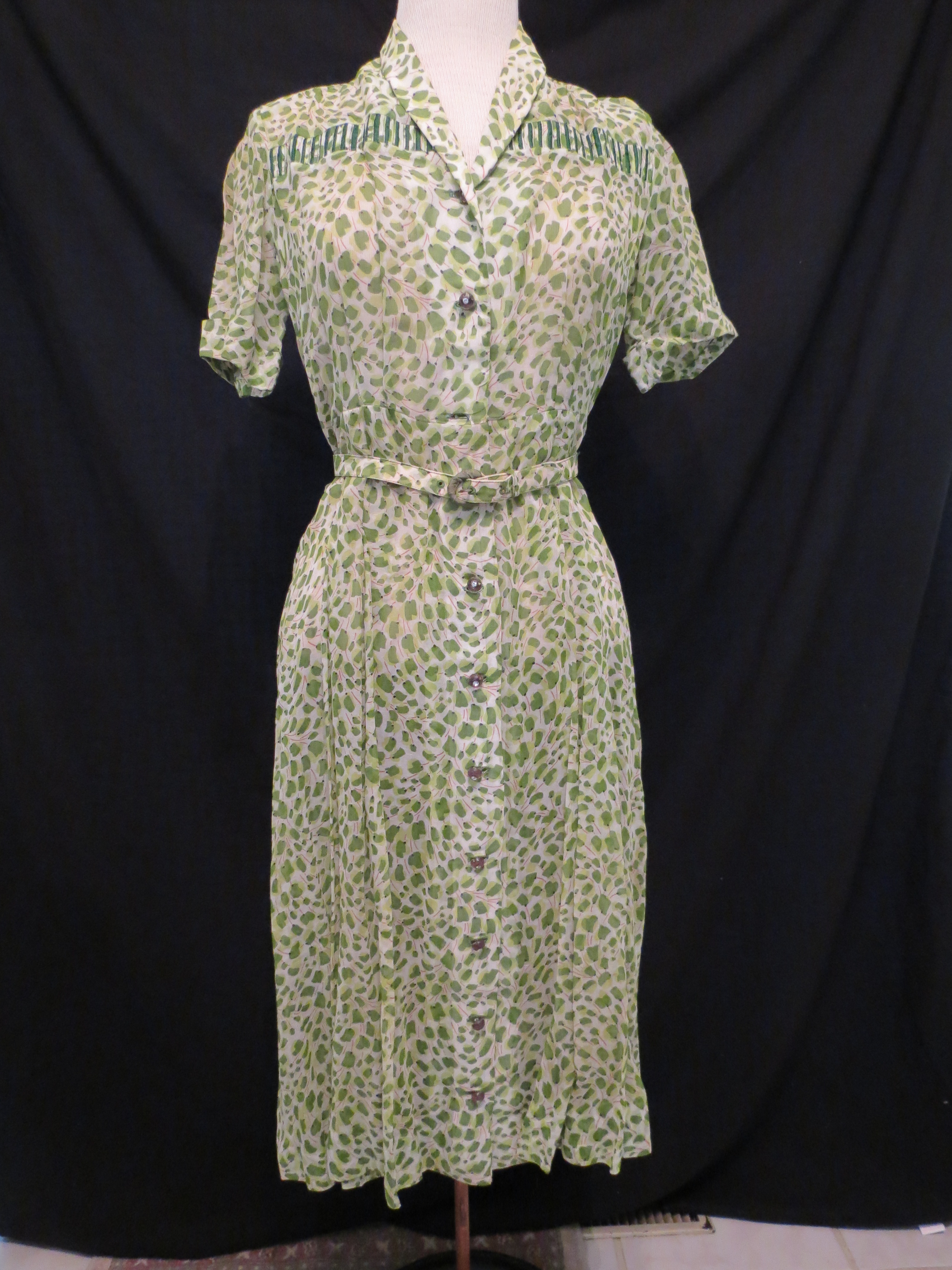
BACK TO LONG DRESSES FOR WINTER HOLIDAY PARTIES. LET’S START WITH A 1930’S RETRO FROCK.

Cold shoulder tailoring and drapey, body con fit was a VERY Deco style. This is a custom-made gown from the mid-century. I can tell from the fabric that this gorgeous dark green velvet didn’t come from the 1930’s. Probably 1960’s or 1970’s – true vintage retro! It’s still a beautiful and unusual dress . . wonder if it was made for a special event, as a glam hostess dress or a costume for a theater production? I’ll wear it in a heartbeat.

Jewel colors are super for winter fashions, as well as black and white. I’ll show more of these in the next few posts as we come forward through the decades. Stay tuned . . . . . . . . . . . . . . . . . . . .

MORGANA MARTIN, THE MAGICVINTAGESPY

BLOG: MAGICVINTAGESPY.COM
A Gallery of True Vintage Lingerie Slips

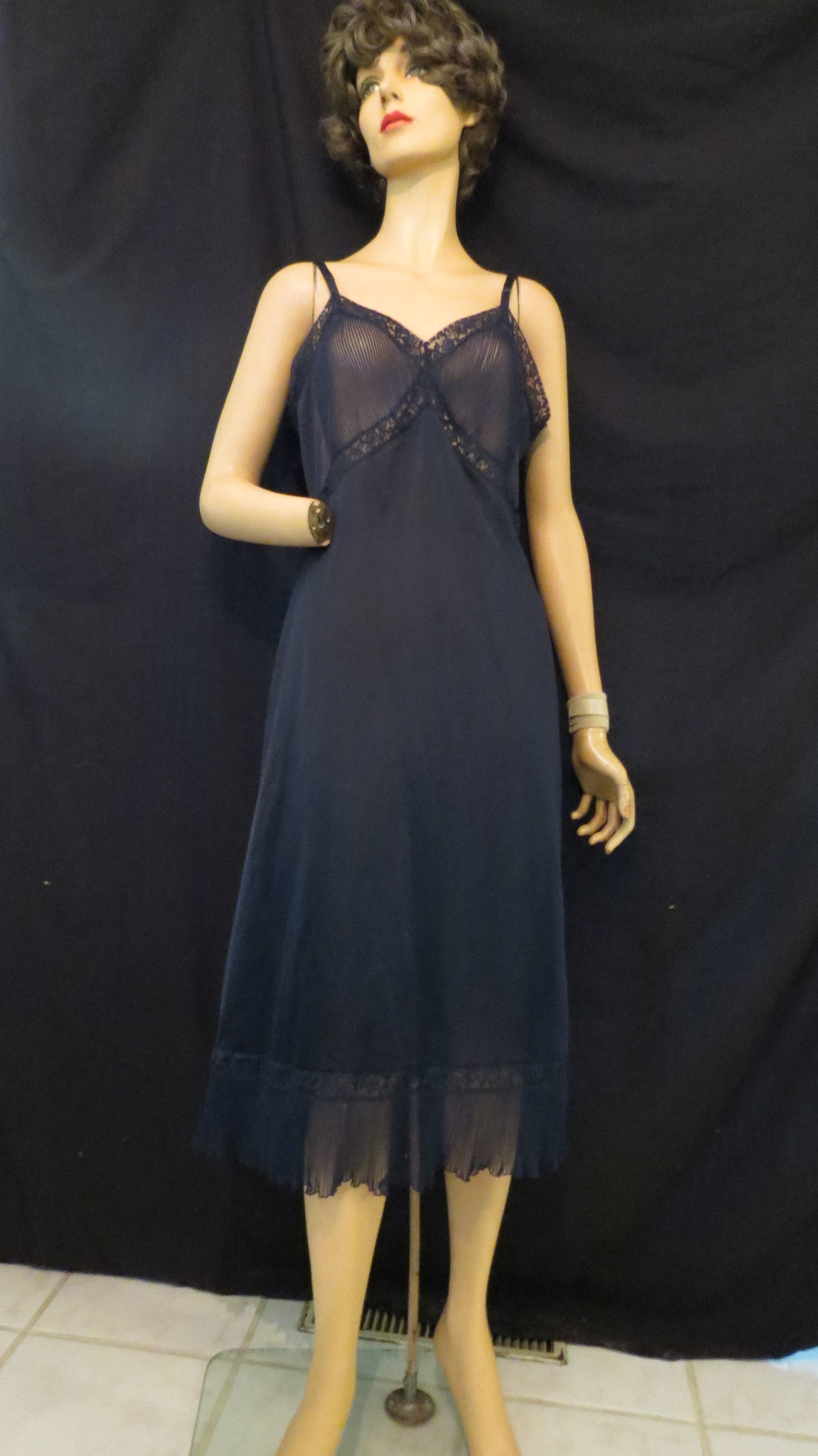
Here’s a sampling of my dozens of beautiful lingerie slips from several eras. True vintage lingerie is essential to wearing your dresses, blouses and skirts with their best fit and comfort. Slips can be fine cotton, rayon, silk, acetate or nylon. Designs can be highly decorated or very sleek and plain. It pays to have every type you can find in different lengths and colors. Some are so gorgeous they can be worn alone as “slip dresses”.

Matching your undergarments to your dresses in a way that minimizes binding, getting too hot or having some unsightly see-through makes all the difference in the final presentation of your outfits and your enjoyment of wearing them. Usually, you’re the only one who knows how truly beautiful your full or half-slip really is. Sometimes it’s fun to allow just a corner of lace trim to show beneath a hemline or at a neckline. In other words, have fun. Have a beautiful Thanksgiving holiday and stay tuned . . . . . . . . . . ..

MORGANA MARTIN, THE MAGICVINTAGESPY

BLOG: MAGICVINTAGESPY.COM

TRUE VINTAGE OUTERWEAR? FUR REAL OR FAUX? WE HAVE TO THINK ABOUT IT . . . . . . . . .

Last night I was out and about to a theater production and couldn’t reasonably drive a two block distance. Walking was the only choice, which I love, but IT WAS SO COLD!!! My warmest outerwear option, which kept me toasty and comfy, was my post-war beaver jacket from Canada. 75 years old and it’s still snuggly and beautiful. I grieve for the precious animals who (yes, WHO) were sacrificed for vanity and retail profit back in the day and will NEVER buy modern fur products. I advocate for animal rights but also celebrate those lives and gifts by preserving and enjoying elegant fashions from the past for as long as they will last.

I own many gorgeous fur and faux fur pieces made decades ago, before protective legislation and individual conscience stopped some of the fur trade and promoted humane practices. Above is one example, on the left, of an older fur jacket dyed to mimic mink. I cannot identify the fur – could be muskrat. Before the end of WWII, furs considered to be less fine were often processed this way. Other examples, such as the one on the right, are fakes – popular in the 1950’s and beyond. Some have been very convincing even since the 1950’s. Many of those made today look and even feel very authentic. The look is fun and elegant, in a vintage way, plus, as I proved last night, very practical.

Faux fur and secondhand true vintage furs are the best, the ONLY humane and progressive choice. I prefer those from the 1960’s and before. The remaining fur trade is still a blot on humanity, so we must be vigilant in our boycotting of this active market but I don’t see the enjoyment of historical fashions as being hypocritical. I will continue to show you how much I love them. Stay tuned . . . . . . . . . . . . . . . . . . . . . . . . . . . . . . . . . .

MORGANA MARTIN, THE MAGICVINTAGESPY

BLOG: MAGICVINTAGESPY.COM

Undercover Magic, Essential True Vintage Lingerie

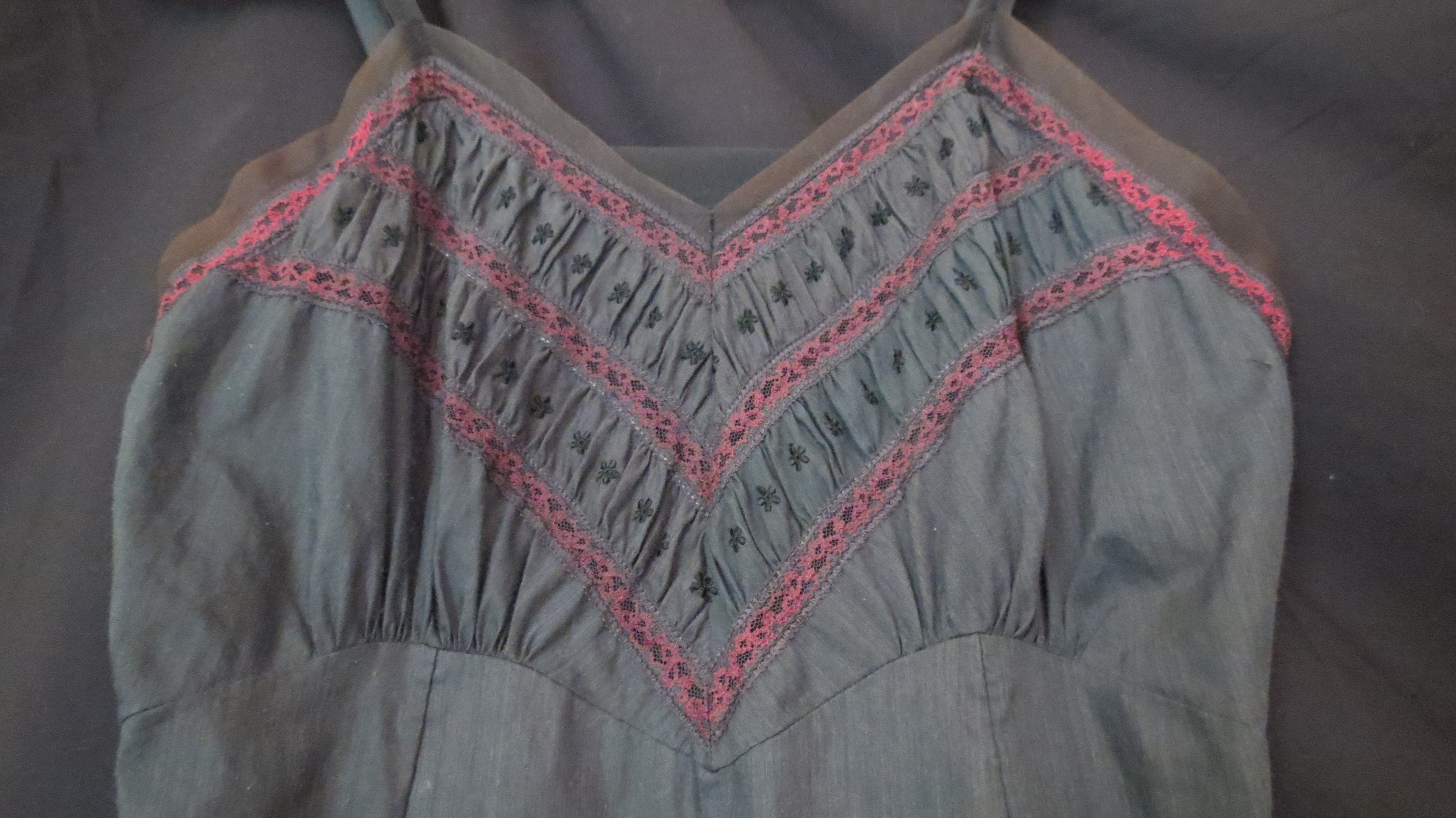
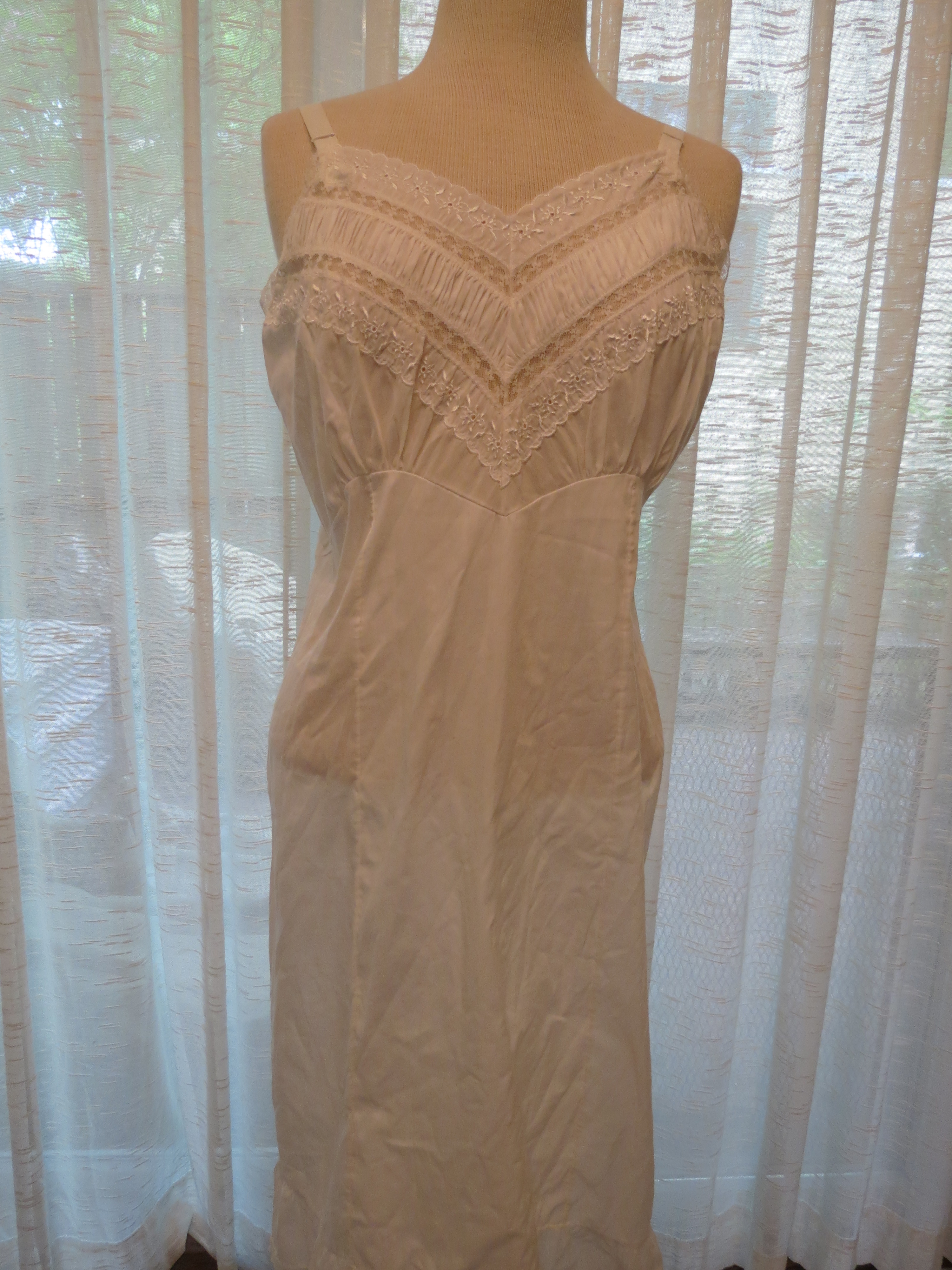
No matter what you’re wearing, lingerie pieces are key to making the outfit look right. Preventing lumps, bumps and see-through are only the simplest issues. The proper undergarment also ensures that the fabric lays correctly on your body and allows it to drape without clinging. Above are a very few examples of beautiful slips and only a tiny fraction of my complete collection.

You can see here how lovely the details are. Typically, even the plainest design will have nice little details and excellent tailoring. More elaborate styles are full of lace, embroidery, ribbons, sheer panels, satin straps and, often, some work done by hand. Though most slips are done in neutral, pastel colors, some (especially from the 1950’s to early 1960’s) were made in fabulous vibrant colors. True vintage nylon has a feel like no modern fabric and is absolutely luxurious. So gorgeous they could often be worn as a lightweight dress or skirt on their own.

Look for vintage lingerie that suits your wardrobe. Notice the details. Slips, of course, are the basis if you wear dresses and skirts. Search for cotton slips as well as the more-common nylon ones. In the summer, you will appreciate the difference! It’s also important to match your undergarments to the clothing worn with it – if anything might show or peek out, whether by accident or on purpose, will the color be OK? How will your outer garment move over the fabric of the slip? How will the fabric of the slip react with your skin in hot weather? Lots of things to consider in order to get the best result.

Also, look for other undergarments – in the 1960’s some split slips were made to be worn under culottes and split skirts. “Slips” to be worn under slacks can even be found from the 1960’s and 1970’s. A 1950’s/1960’s girdle was ALWAYS a base foundation for most women at that time (thank goodness, not now!). If you’re wearing a wiggle dress, you may not have a choice in order to make it look right. Silk tap pants from the Twenties are so comfy and perfect under a lightweight dress in the summer. A camisole under a blouse or top can improve the fit, add some warmth on a cold day and sometimes provide a little neckline interest depending on the style. A “bullet bra” is perfect if you want to be a “sweater girl”. Garter belts and girdles are necessary for wearing stockings. A crinoline is important for most mid-century dress styles with circle skirts, especially from the late 1940’s through the early 1960’s. Some dresses have their own, but others require you to add one.

I’ve probably forgotten to mention something but you get the drift. Lingerie is SO important that I probably should always start any series of posts with it. . . . . . . . . . . . . . . . . . .

MORGANA MARTIN, THE MAGICVINTAGESPY

BLOG: MAGICVINTAGESPY.COM
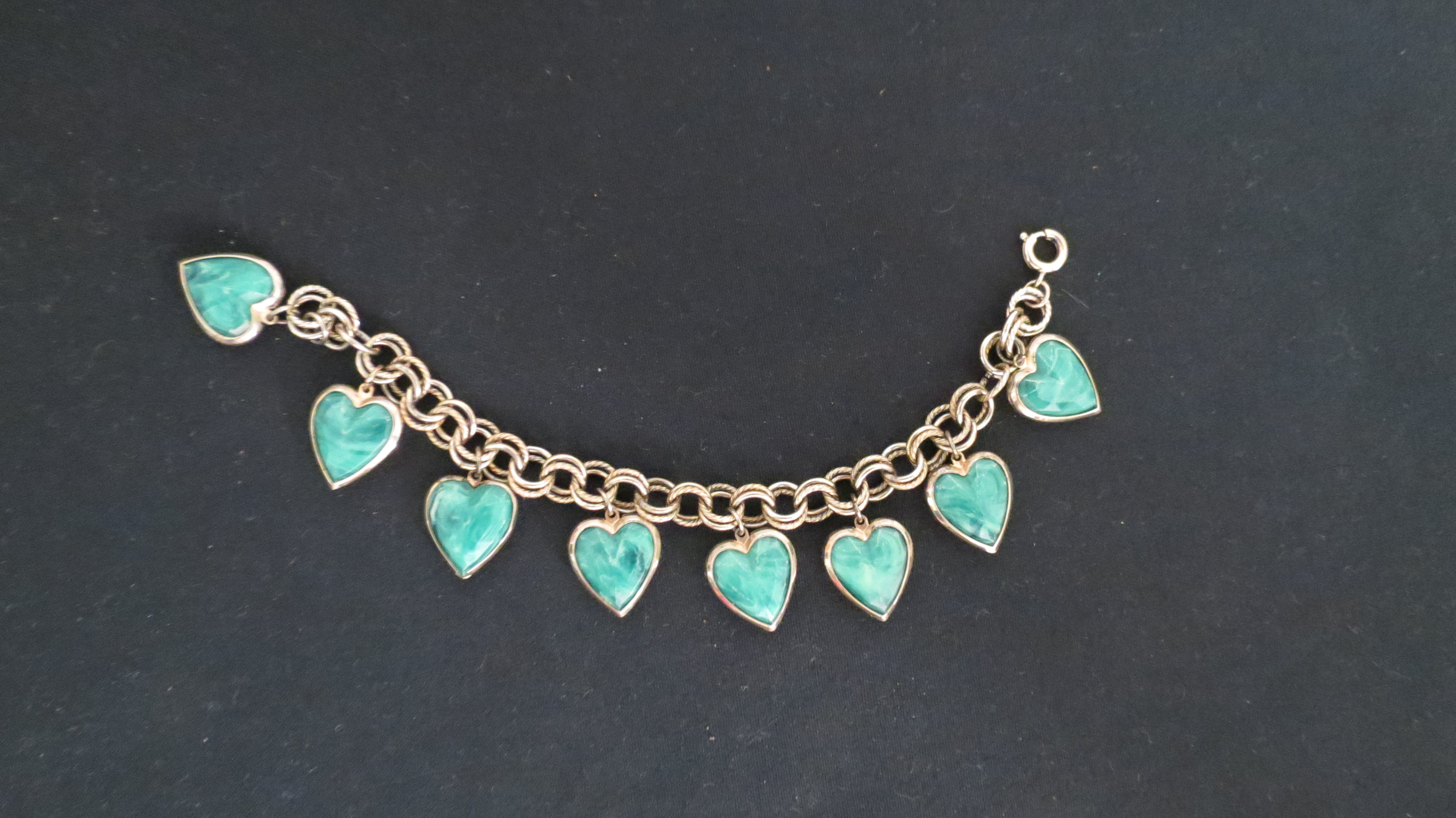
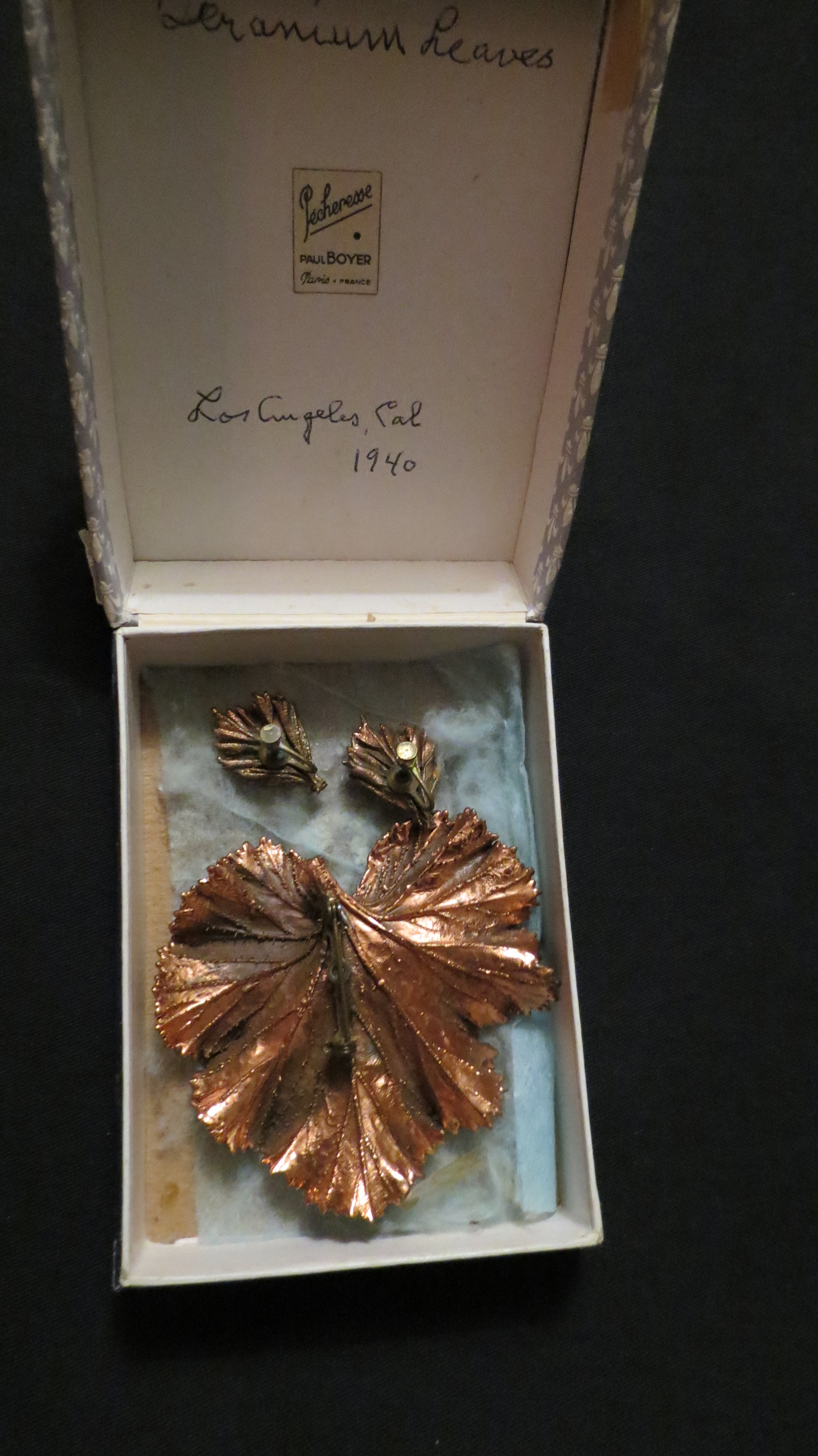
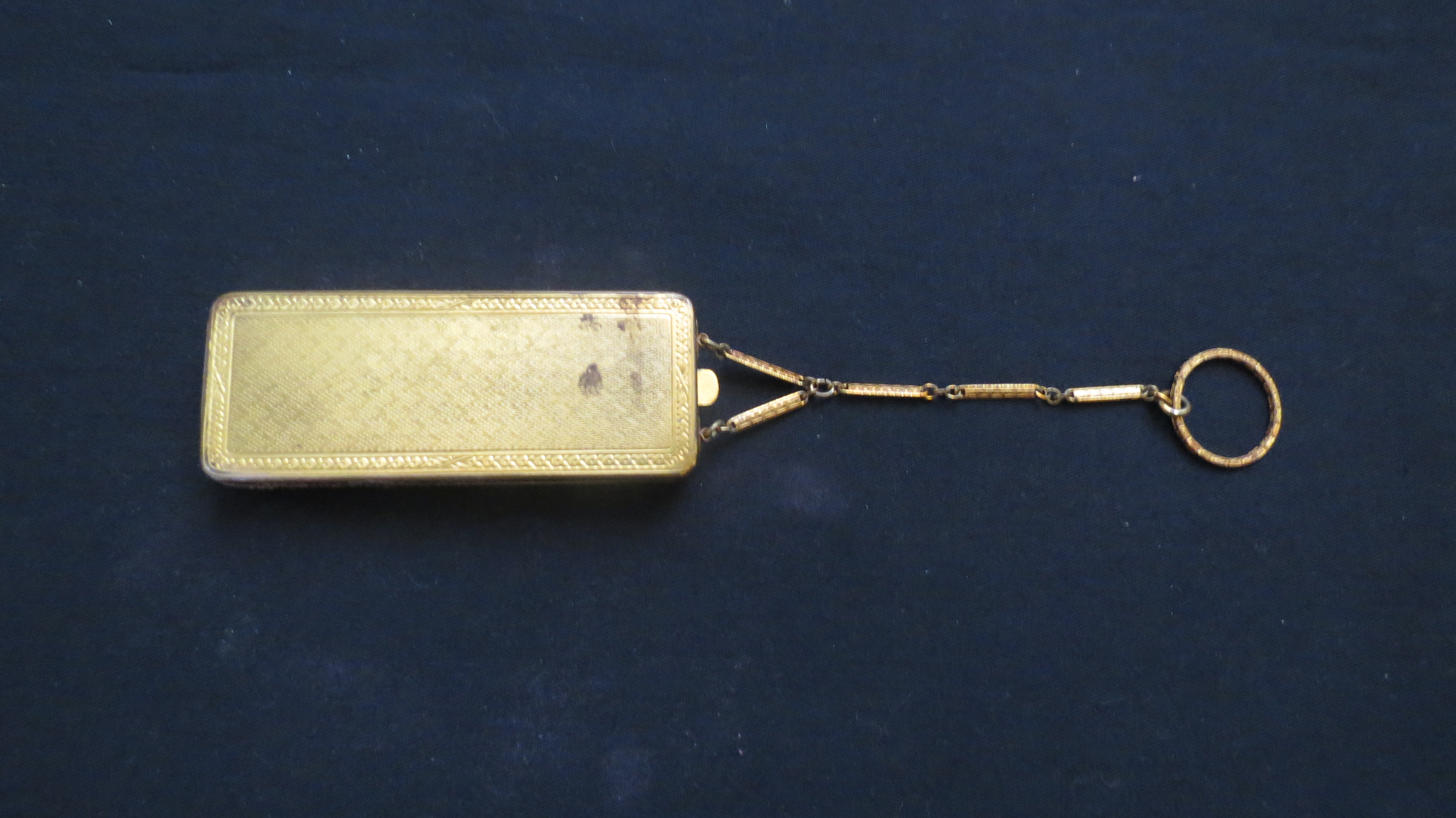
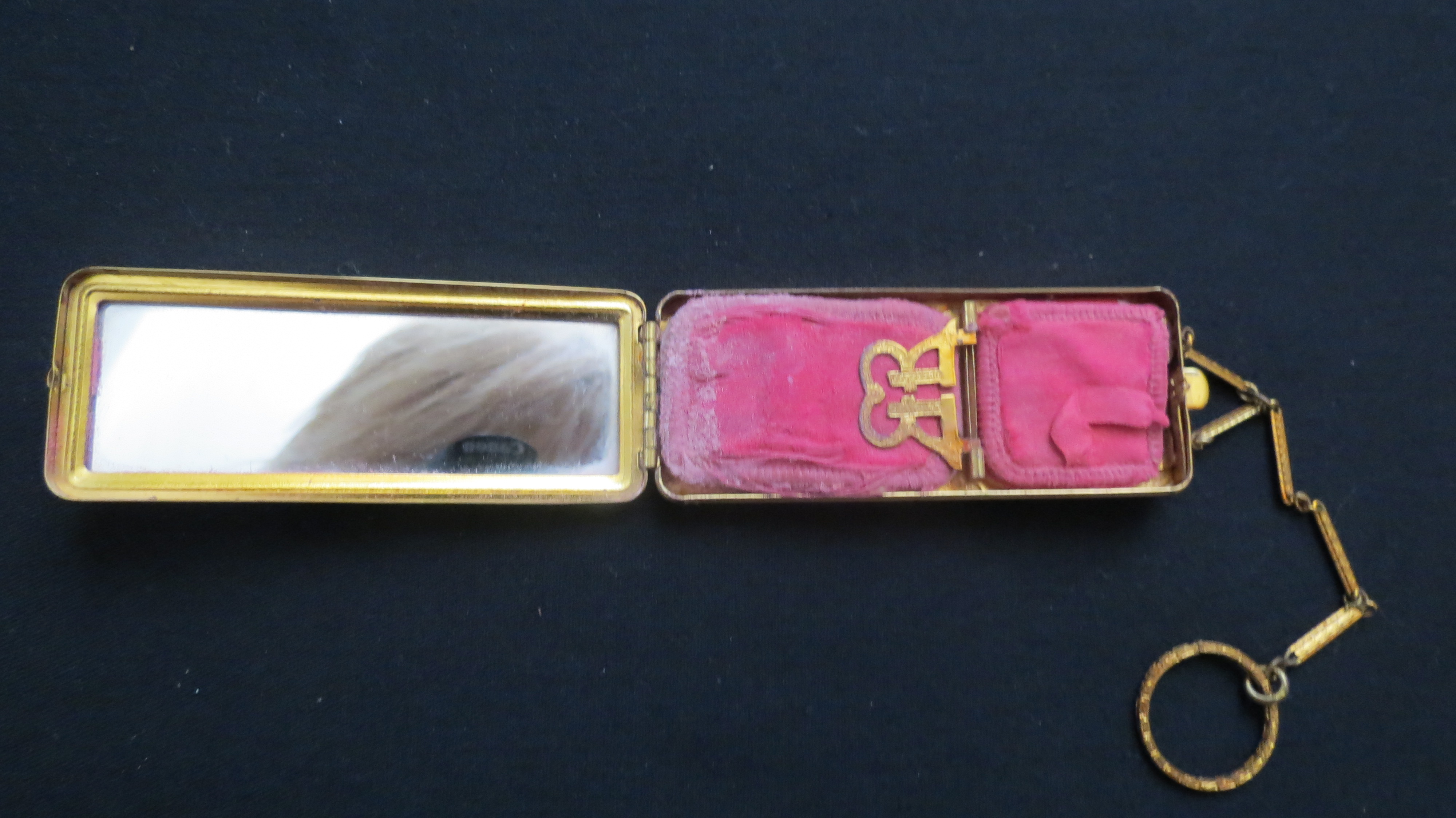
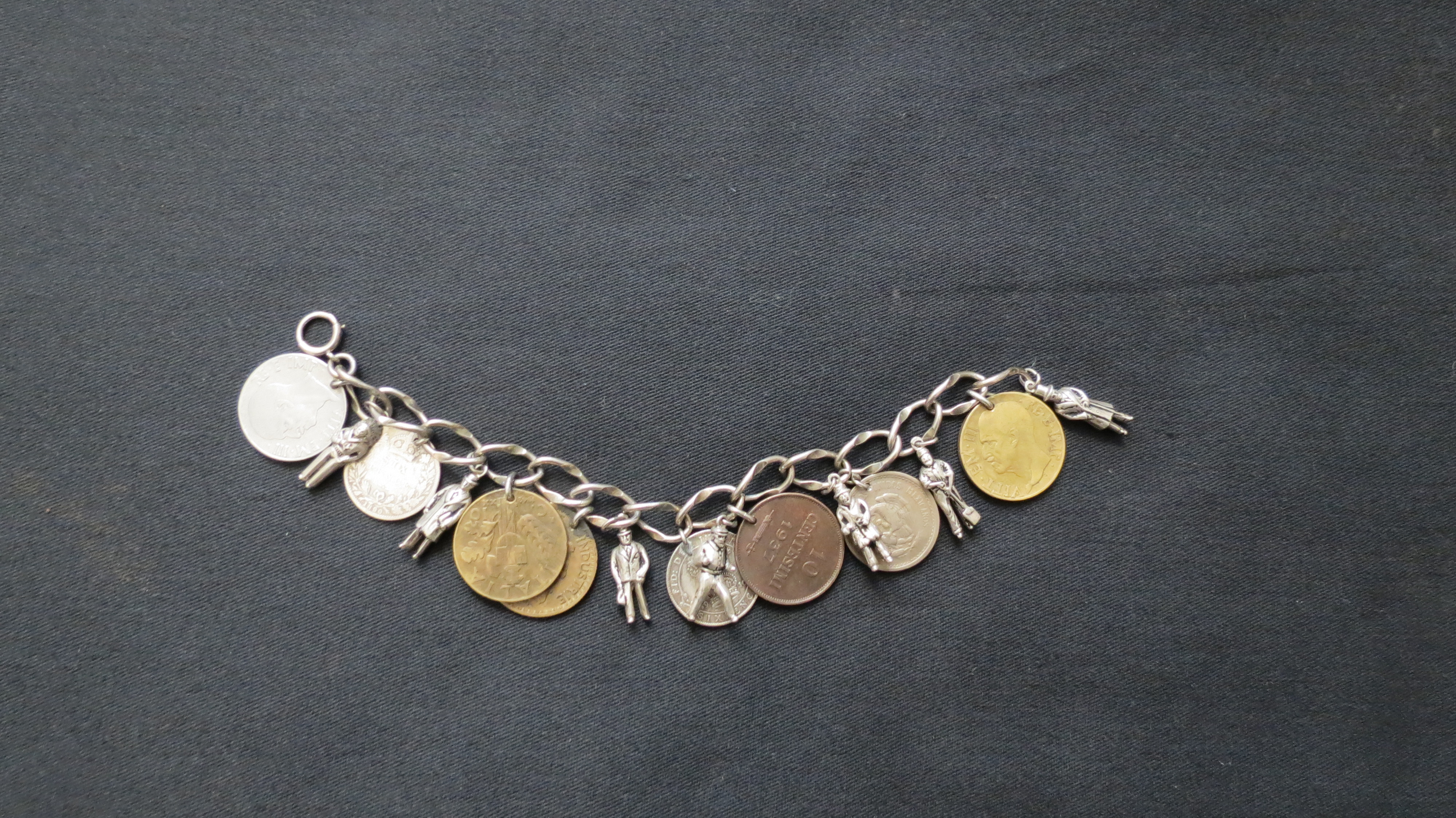
Another MUST for a True Vintage Wardrobe – Authentic Costume Jewelry

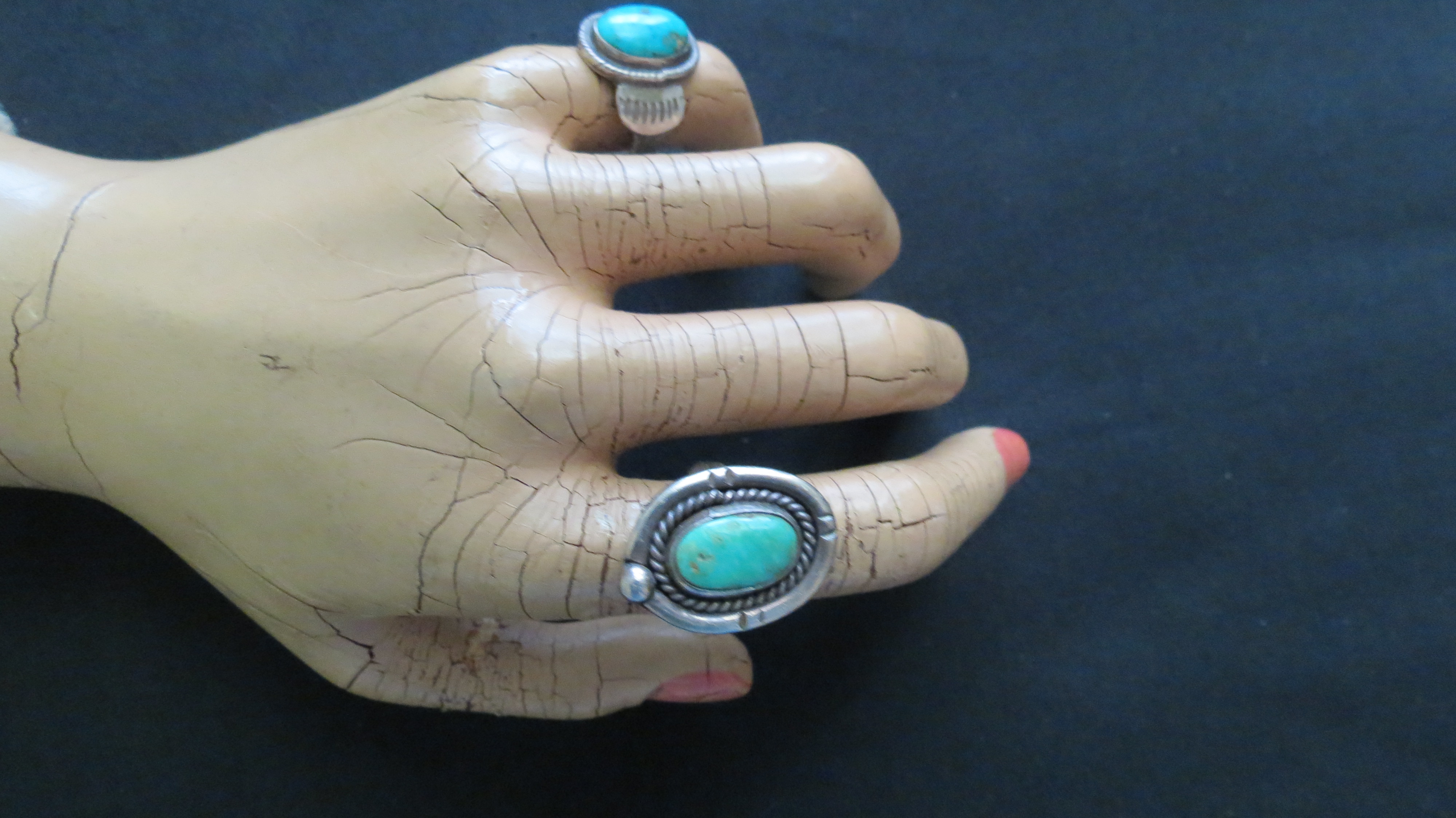
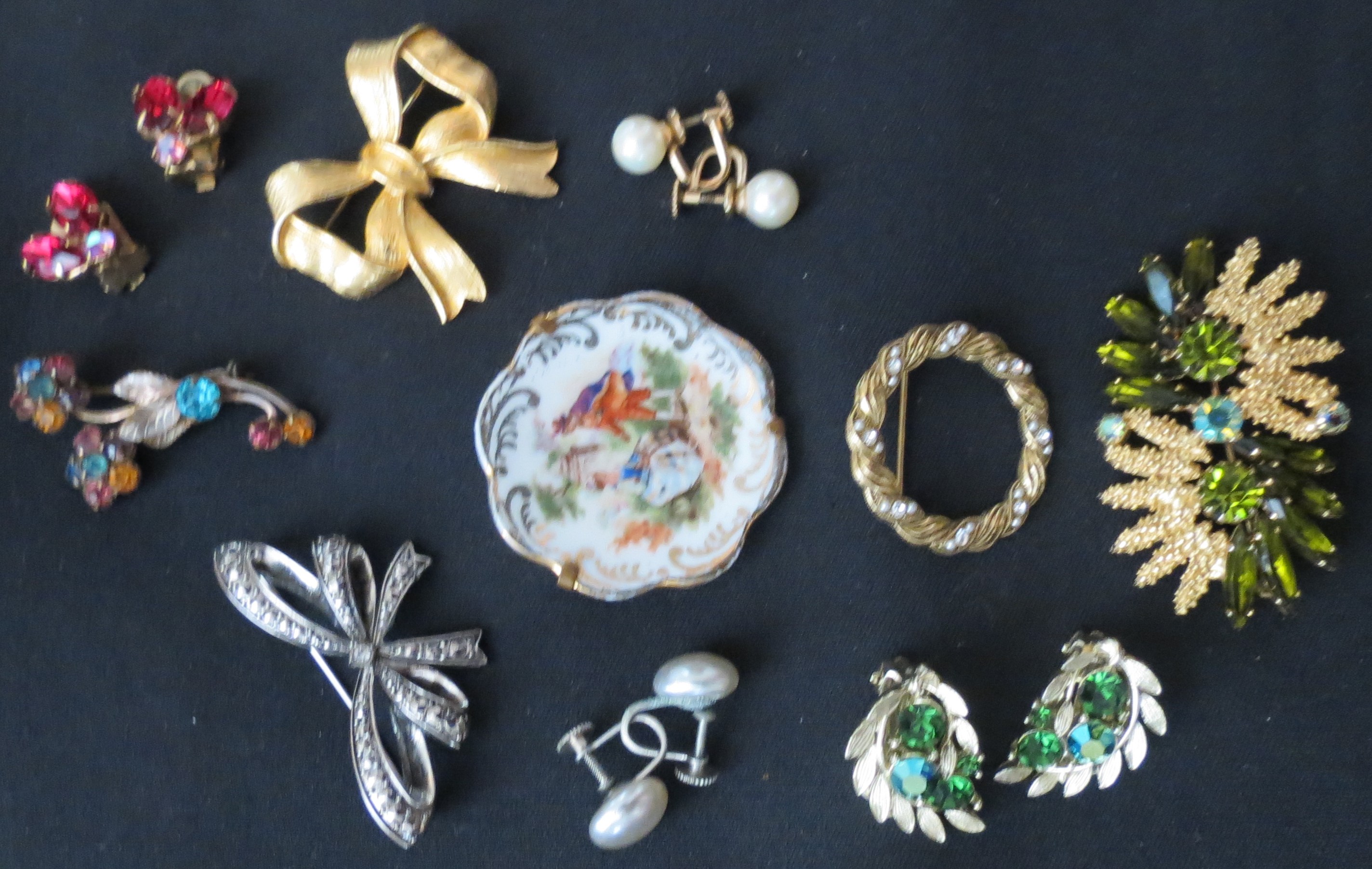
No matter what else you’re wearing, or even if your jewelry is the only vintage piece in your outfit, it will stand out strongly. That’s especially true of these colorful and unique examples. Though cheap copy-cats are being made now, I still recommend the originals.

Fine true vintage jewelry in gold and silver is always special and wonderful but can be pricey. Costume jewelry is easier to find and softer on the budget. Collect a variety of styles and items – you’ll have something different for every day and just the perfect thing for every outfit.

Of course, it needs care but is exceptionally durable in general. Simple protection from scratches, rough handling and strong UV light for prolonged periods will do the trick. Compact and easy to store, though if you’re a sleuth with an extensive archive the files can become pretty heavy . . . . . . . . . . . . . . . . . More accessories tomorrow. Stay tuned . . . . . . . . . . . . . . . . . . . . . . . . . . . . . . . . . . . . . . . . . . . .

MORGANA MARTIN, THE MAGICVINTAGESPY

BLOG: MAGICVINTAGESPY.COM

TOTALLY CLASSIC, ABSOLUTELY ESSENTIAL TRUE VINTAGE WARDROBE SHOES. WHAT ARE THEY?

100% LEATHER PENNY LOAFERS. Don’t care who you are, where you are, what your age, what you do; if you want to build a true vintage wardrobe, high quality penny loafers made of leather are a MUST. You might think that this is only an American or western European fashion, but not so. They originated over 100 years ago in Norway and, like the human population, have migrated into mainstream fashion all over the world since then. Men, especially, have been able to wear them as dress shoes since the beginning. They were de rigeuer for high school and college men and coeds at least since WWII; Probably replaced the saddle shoe in most adolescent closets. Mid-century pennies are a strong suggestion.

Highly polished, for smart casual to semi-formal dress. Lightly scuffed or a little dusty for just about everything else. Pretty versatile. Smooth leather in black or cordovan brown is the true classic. The full leather construction is mandatory because it’s original and also allows them to be repaired forever. (OK, a true vintage synthetic sole is acceptable if that is all you can find, but keep looking). In line with my philosophy regarding humane treatment of animals and environmental sustainability, I don’t recommend buying modern retro versions at retail, no matter how nice they are. You can find the real thing at second-hand and they’re better. Also, I’m obviously all about running undercover investigations and that’s a lot more fun because – you just never know. Stay tuned . . . . . . . . . . . . . . . . . . . . . . .

MORGANA MARTIN, THE MAGICVINTAGESPY

BLOG: MAGICVINTAGESPY.COM

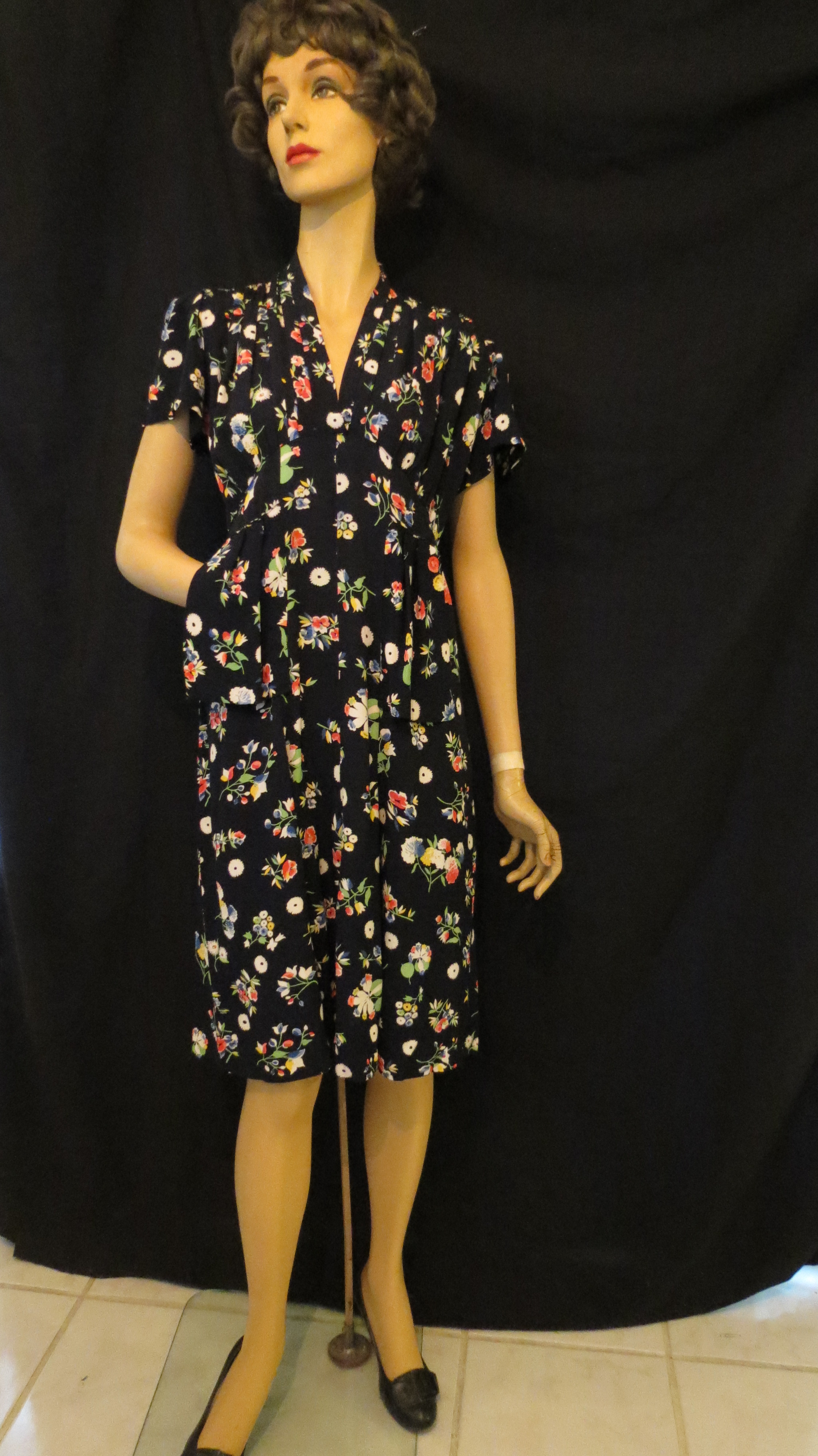
A Retro 1930’s Frock that I couldn’t pass up . . . . .

When I spied this dress I was immediately aware of the loyalty to 1930’s style in the fabric and design. Though it’s not true vintage, it was worth collecting. Love the sheer material, the drape and hemline. And, IT FITS ME! Will be seen on the street next summer. The purge does continue. Stay tuned . . . . . . .

MORGANA MARTIN, THE MAGICVINTAGESPY

BLOG: MAGICVINTAGESPY.COM