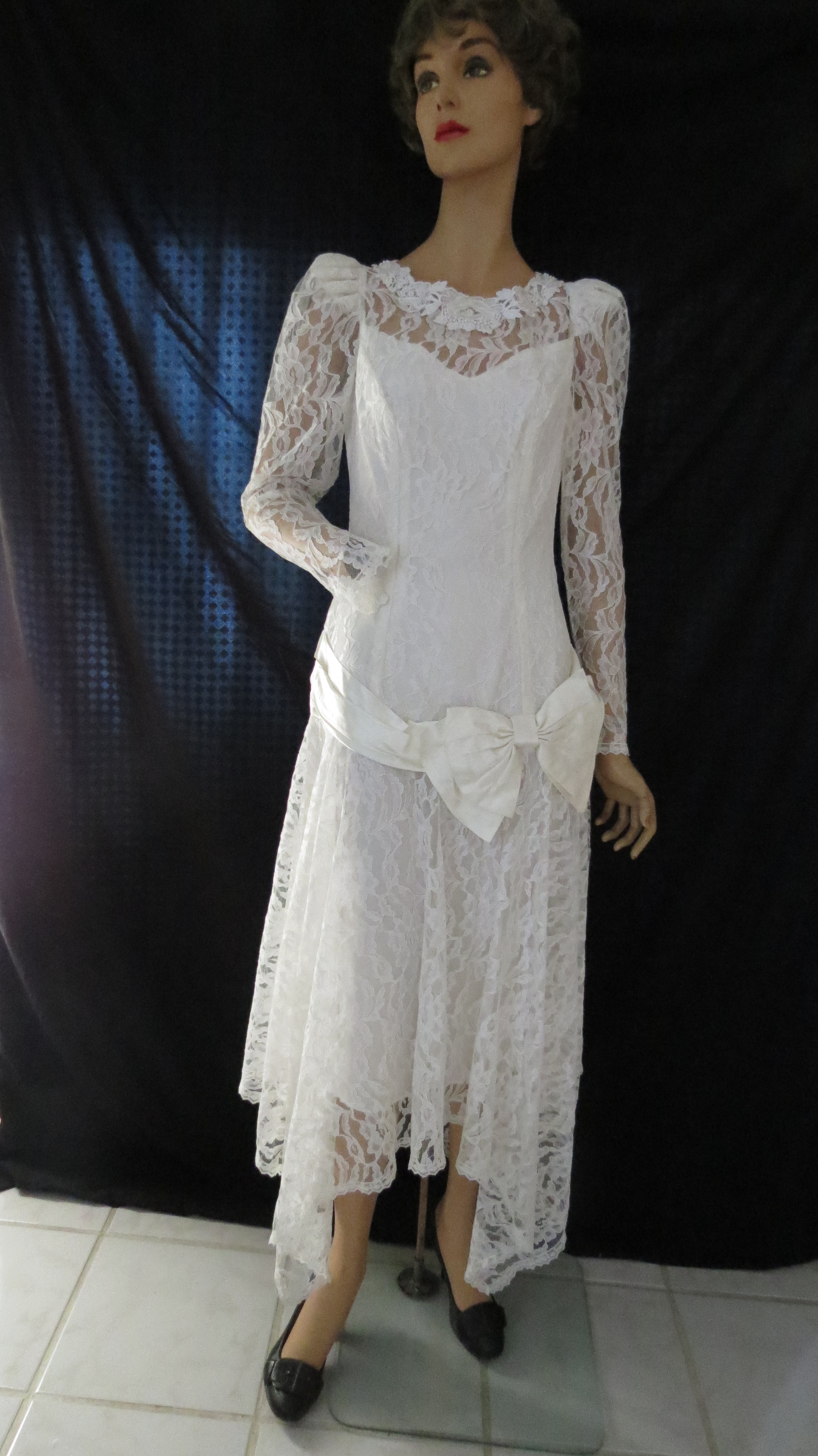
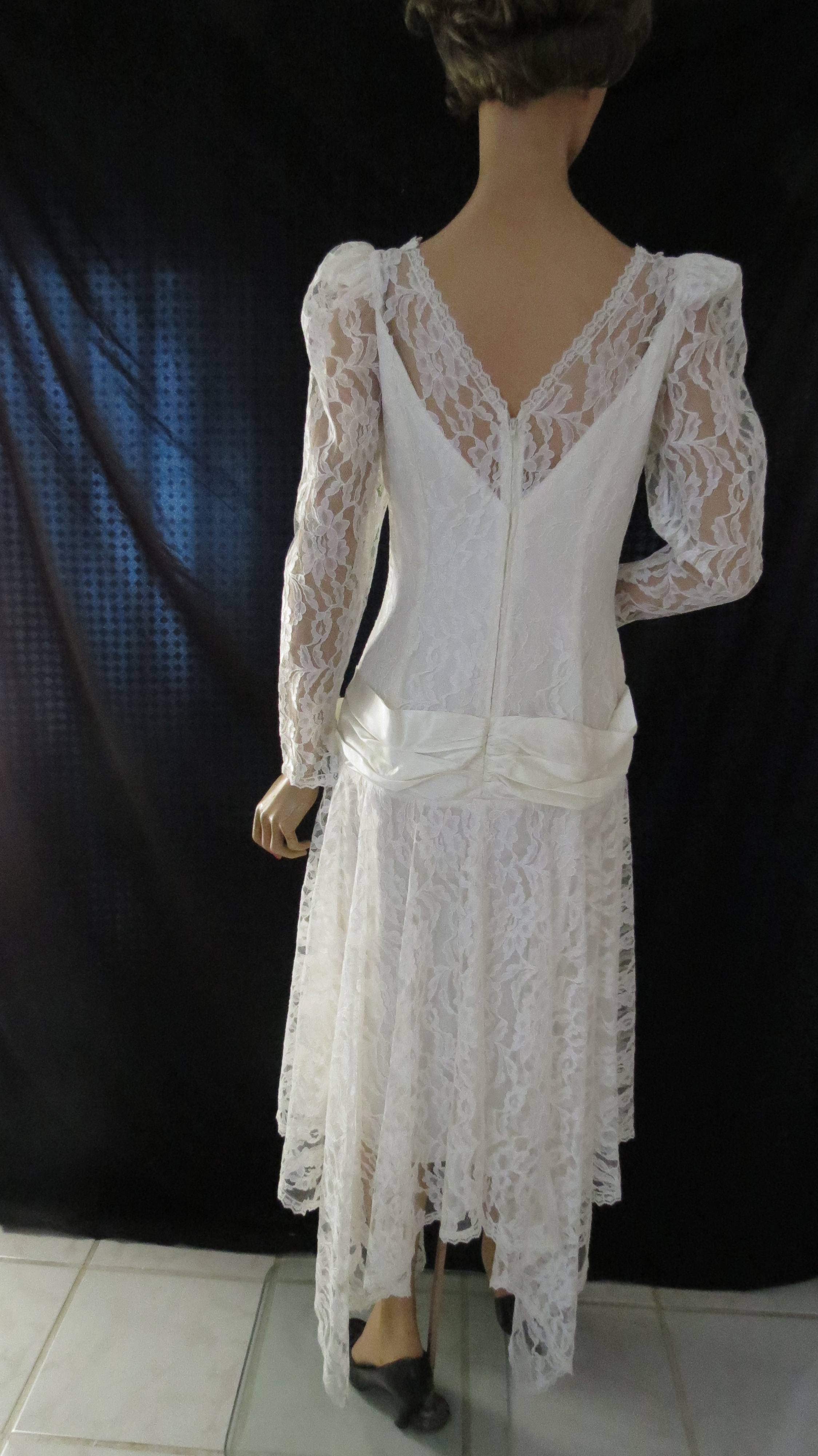
TRUE VINTAGE MID-CENTURY DOES 1920’S SEMI-FORMAL DRESS

Sometime during a brief 1920’s style revival in the l960’s – 1980’s this frock was produced. It’s not a style that is flattering to everyone but, of course, Stella can pull it off perfectly. In this pure white, it may have been made as a lower-priced wedding costume alternative by some company that made bridal dresses. While obviously not high end, it’s pretty and flirty.

Love the handkerchief hemline! Can you imagine a gown in this style, made of fine silk and satin with handmade lace? During the Gatsby gilded age brides from wealthy families would have been dressed that way. Today it would make a fun Halloween or theater costume. Dresses that are obviously tied to a theme or era are always interesting whether they are true vintage, retro or modern. Of course, I always sleuth for the original evidence. More coming, so stay tuned . . . . . . . . . . . . . . . . . . . . . . . . .

MORGANA MARTIN, THE MAGICVINTAGESPY

BLOG: MAGICVINTAGESPY.COM
A Couple of Very Conservative Party or Event Dresses from the 1960’s

My examples of the true vintage “Party” genre wouldn’t be complete without including some frocks like these two. Not the typical type of party dress we usually think of, and certainly not the most popular styles, but conservative styles in muted colors have always been available no matter the decade or era. Even for those of us who are more flamboyant in our taste, it’s always a good idea to have at least one of these in the back of the closet because they may be the only type of dress that is appropriate for certain occasions. It could be a Celebration of Life event, a corporate gathering or meeting the prospective in-laws . . . . . . . . . your call, but sometimes we just know.

The frock on the left, by a high-quality vintage maker, is very elegant and could hardly be criticized by even the most picky person – at least not publicly – and then, who cares (unless it’s your boss). The dress on the right was much more “common” and affordable, but is still attractive and “correct”. Some picky person might balk at the sheer sleeves or say that the neckline is too low but that would be extreme (and you could also wear a neckline scarf and/or a lightweight pretty shawl if you want to be ultra demure).

So, that covers the ground, for the time being, of holiday party options and how to avoid the fashion police. Speaking of which, I will be relocating to another safehouse within the week so there will be a pause in transmissions for at least 2 or three days by the weekend but this will be temporary so stay tuned . . . . . . . . . . . . . . . . . . . . . ..

MORGANA MARTIN, THE MAGICVINTAGESPY

BLOG: MAGICVINTAGESPY.COM
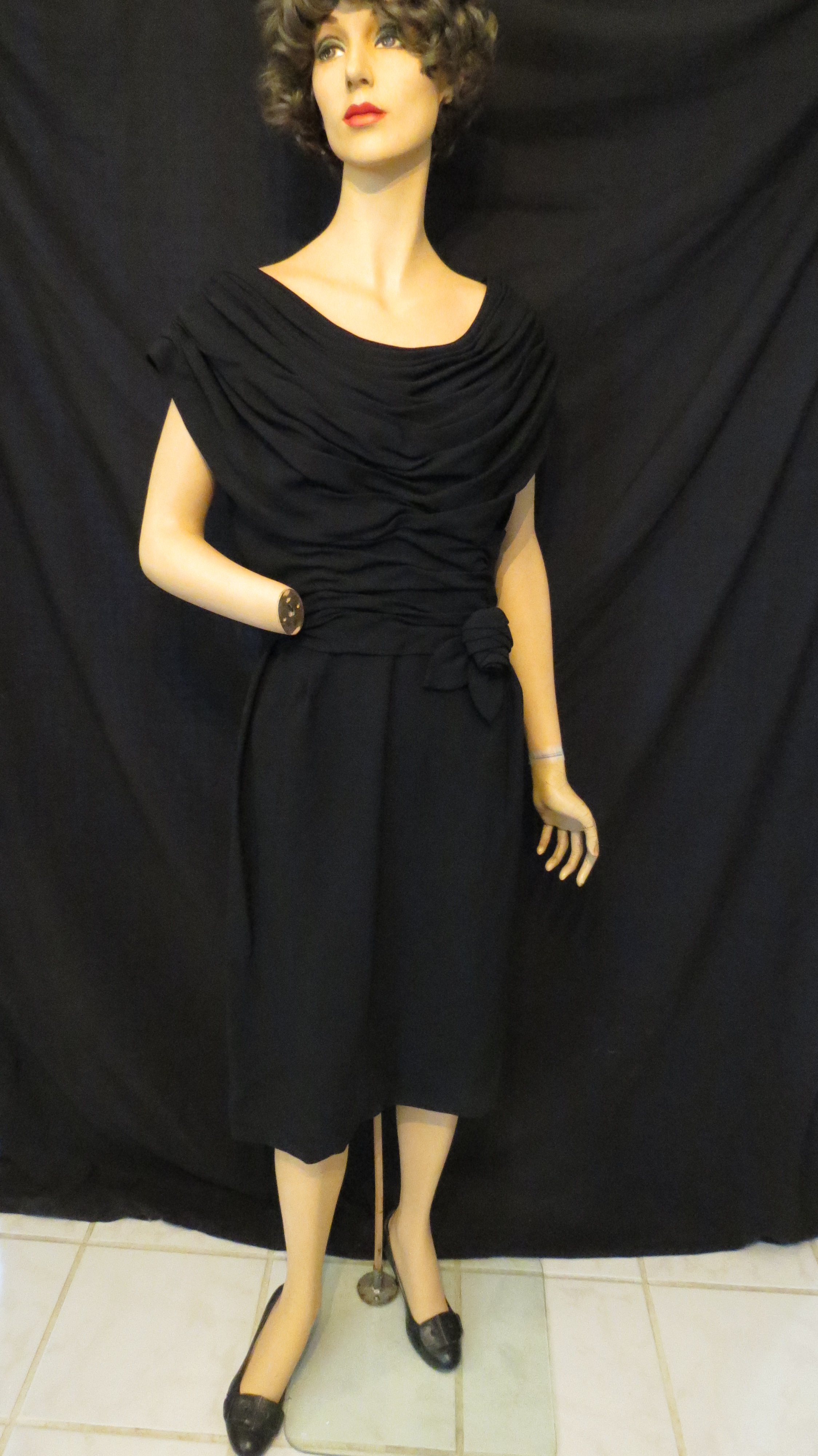
Unique 1950’s True Vintage LBD Cocktail Dress – Party On!

Any time there’s a special event or holiday, a true vintage little black dress will never let you down. This one is so unusual, I had to slip it into the line of bright and colorful frocks that I’ve been showing. Not an easy fit for everyone, but if you’ve got the shoulders to support the neckline and a tiny waist like Stella, it’s absolutely stunning. The drape of the bodice is genius and the fabric flower at the waist adds even more interest without any need to be flashy.

Jewelry should be sophisticated but simple. Diamond stud earrings or gold, or pearls. Absolutely NO statement necklaces to detract from that beautiful neckline and maybe no necklace at all. If more bling is desired, a delicate but luxurious bracelet or watch would be nice. Back in the day beautiful tiny watches in gold or platinum with diamonds were not unusual for those who could afford to splurge on them. Of course, a cocktail ring is always acceptable with a dress like this but, again, the jewelry should not overpower the dress, which is the star of this show. And, the show must go on. Stay tuned . . . . . . . . . . . .

MORGANA MARTIN, THE MAGICVINTAGESPY

BLOG: MAGICVINTAGESPY.COM

A Retro 1930’s Frock that I couldn’t pass up . . . . .

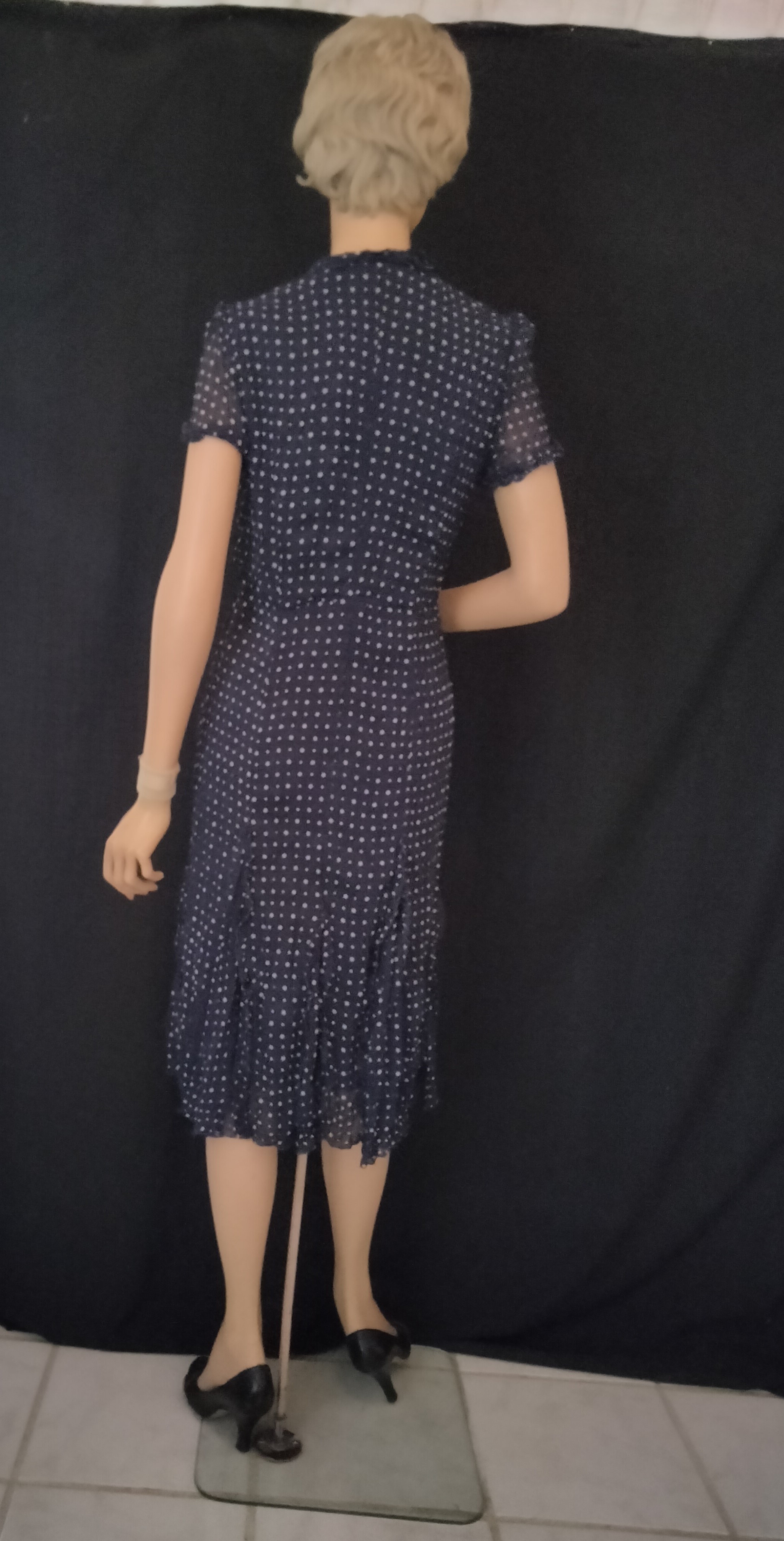
When I spied this dress I was immediately aware of the loyalty to 1930’s style in the fabric and design. Though it’s not true vintage, it was worth collecting. Love the sheer material, the drape and hemline. And, IT FITS ME! Will be seen on the street next summer. The purge does continue. Stay tuned . . . . . . .

MORGANA MARTIN, THE MAGICVINTAGESPY

BLOG: MAGICVINTAGESPY.COM

Here’s Another 1940’s Frock, in a Dressier Mood

In a more substantial rayon, this dress would have taken Stella to an important luncheon, dinner date, Club meeting or business appointment. For any event calling for a sophisticated and dignified appearance this garment would have been appropriate. The high neckline, 3/4 sleeves and rhinestone buttons support this demure and elegant presence and the peplum waist keeps it from being too boring. Not exactly my style (a bit too demure) but such a beautiful example of 1940’s couture. I’m on the fence about passing it on.

Stuck in the 1940’s – stay tuned . . . . . . . . . . . . . . . . . . . . . . . . . . .. . . . . . . . . ..

MORGANA MARTIN, THE MAGICVINTAGESPY

BLOG: MAGICVINTAGESPY.COM
FABULOUS DISCOVERY! 1970’S GUNNE SAX PRAIRIE-STYLE FORMAL DRESS

What a great find! It’s always worth investigating; you just never know what evidence might be uncovered. A beautiful Gunne Sax gown, designed by Jessica San Francisco. Robin’s egg blue for Spring.

This frock was worn, probably once, to a formal event or, possibly, to a wedding. In the 1970’s, Prom and wedding-party dresses for young women often looked like this. Gunne Sax was a favorite label of the time and this prairie style was hugely popular. I wonder who cherished and stored her gown for 50 years . . . . . . . . . . . . . . . . . . . . . . . . . . . . . . . . . . . . . .

MORGANA MARTIN, THE MAGICVINTAGESPY

BLOG: MAGICVINTAGESPY.COM

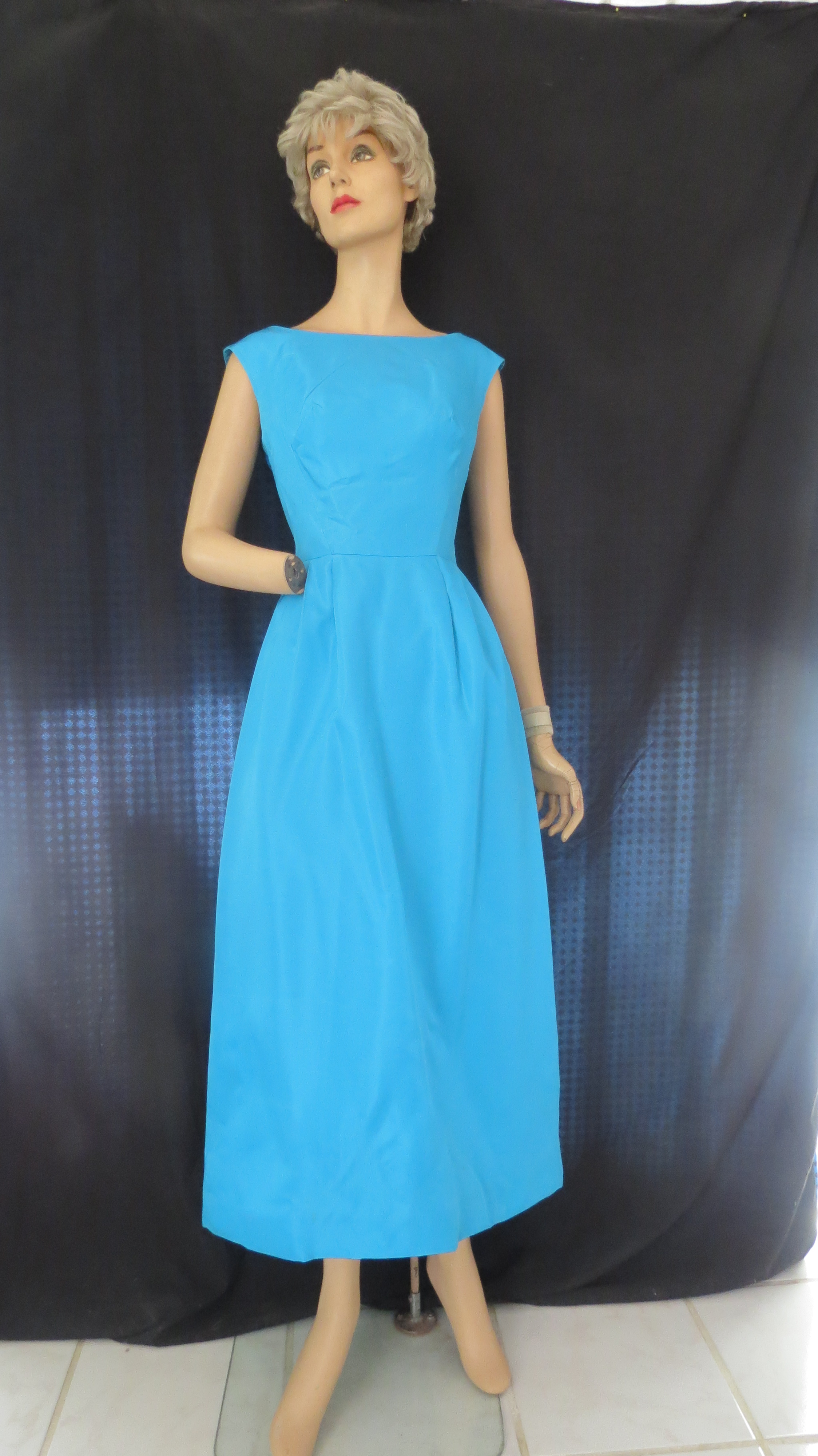
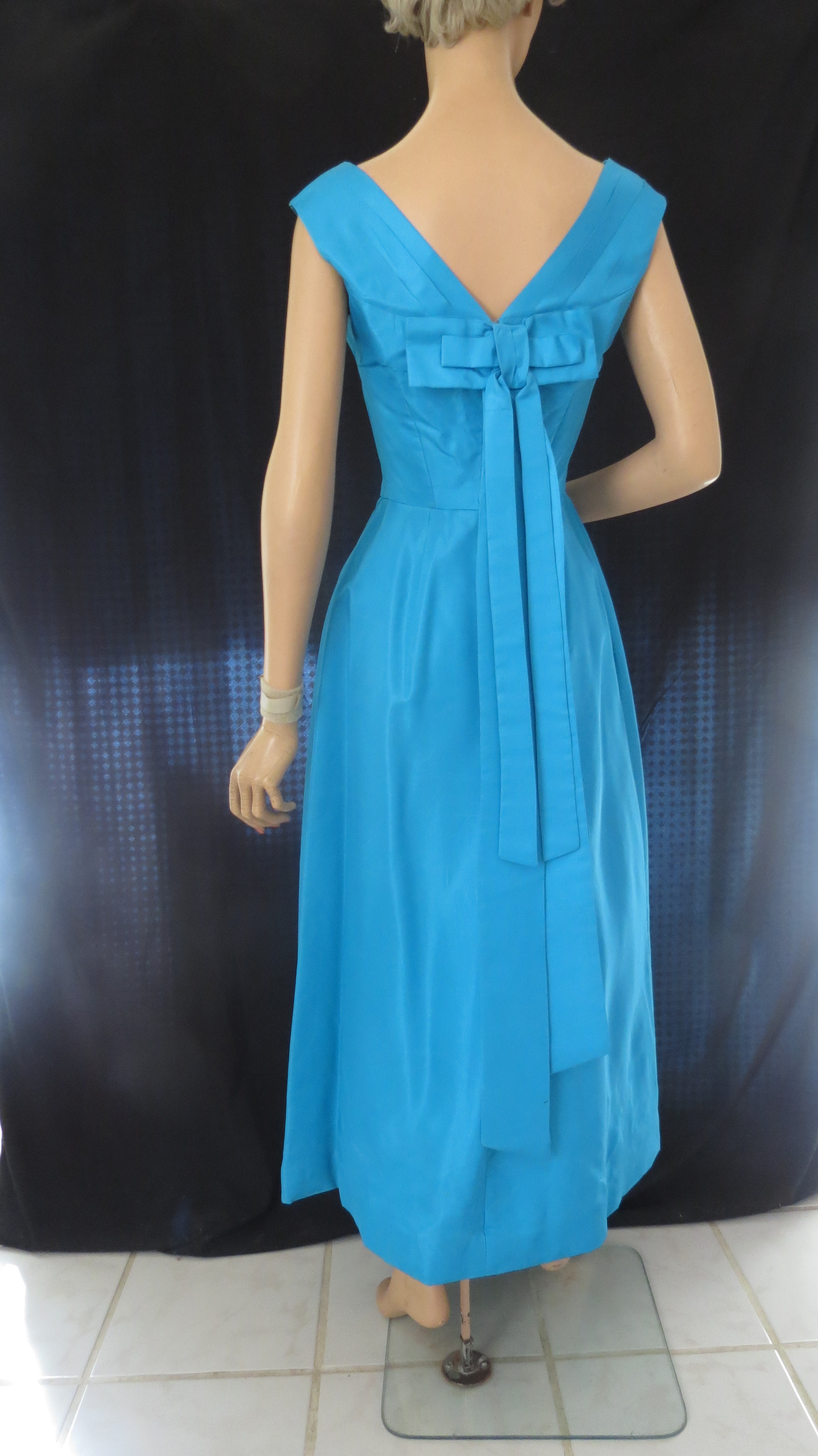
SAPPHIRE BLUE AND SATIN, TOO . . . . . . . . .

This version of “satin” is really heavy and is also a bonded fabric. Materials like this crop up here and there throughout the mid-century and seem like they would be uncomfortable to wear. However, they hold their shape very well without the need of too many stiff crinoline underskirt layers which, I suppose, was the point and an improvement over 1950’s styles. The hem is tea-length on Stella but an average-size gal from 1960 – about 5 inches shorter – might have found it to be ankle-length. Again, not really a Prom dress but it would have been perfect at a gala or music recital.

The most striking features are the intense color and the back-view design. Bows were a big deal – even up into the early 1970’s. Comfortably demure but also sexy in it’s own way, gowns like this provided lots of coverage for girdles, garter belts and structured bras – the standard foundation garments of that time. Less prone to “wardrobe malfunctions”? Not sure about that. I’m sure there are stories . . . . . . . . . . . . . . . . . . . . . . . . .. . . . . . . . . . . . . .

MORGANA MARTIN, THE MAGICVINTAGESPY

BLOG: MAGICVINTAGESPY.COM

LET’S LOOK AT SOME LATE 1950’S – EARLY 1960’S SPECIAL OCCASION DRESSES

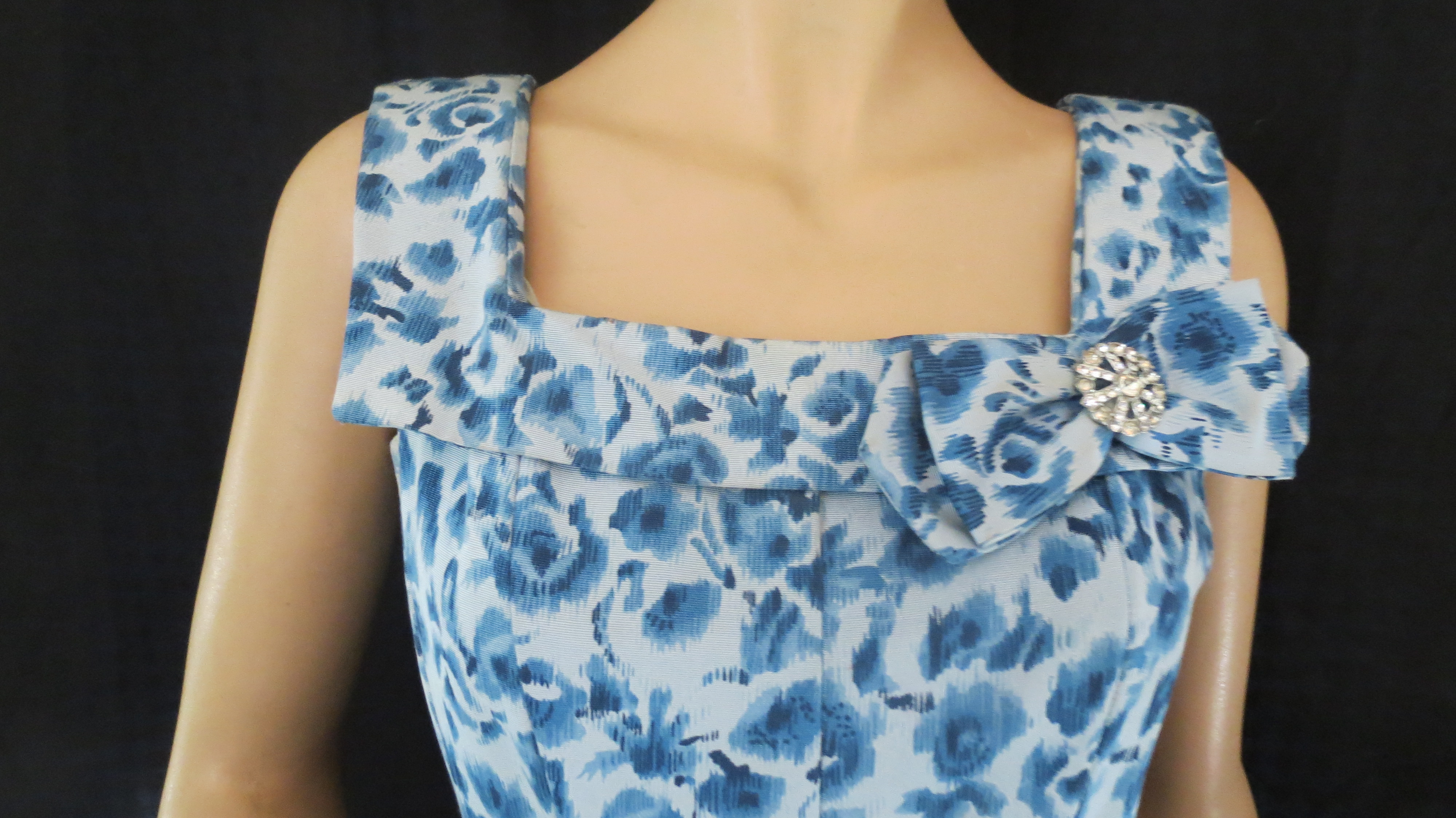
Not quite a Prom dress, but it might be just right for the Spring Fling. The Spring season has always brought parties, dances and holiday events in March and April. Everyone was itching to get out of the woolies and into pretty frocks again.

This one is just made for the still-cool days and nights in a substantial fabric and with slightly more coverage on the bodice than dresses with spaghetti straps or strapless designs would provide. However, a lacy crocheted shawl or matching bolero jacket would not be out of place. For those of the more tony set, it would be an opportunity to wear a fur stole.

We’ve left St. Paddy’s day behind and are swiftly heading into Easter. Perhaps we’ll look at something a little more conservative tomorrow. Stay tuned . . . . . . . . . . . . . . . . . . . . . . . . . . . . . . . . . . . . . . . . . . . . . . . . . . . . . . . . . . . . . . . . . . . . . . . . . . .

MORGANA MARTIN, THE MAGICVINTAGESPY

BLOG: MAGICVINTAGESPY.COM
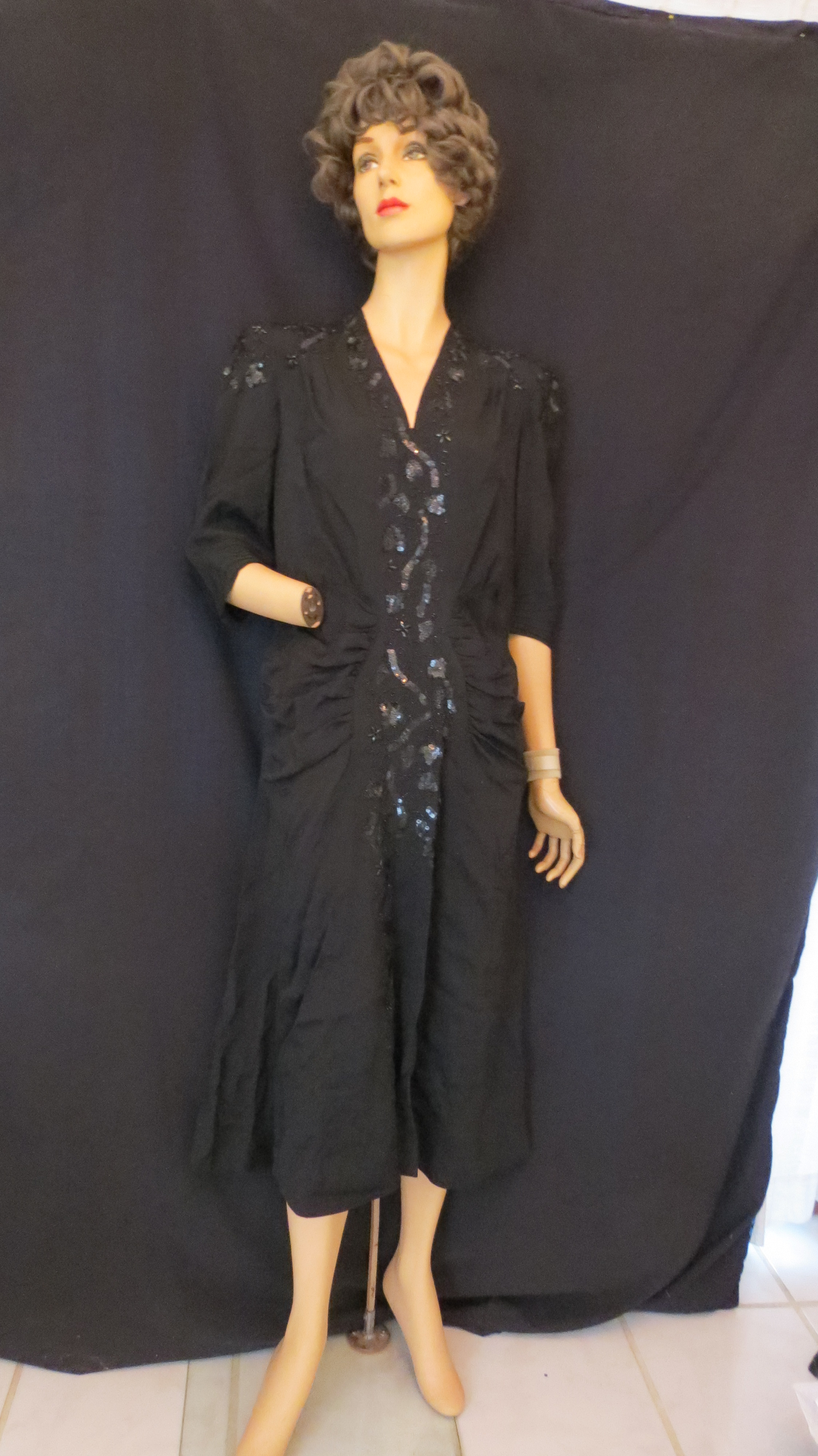
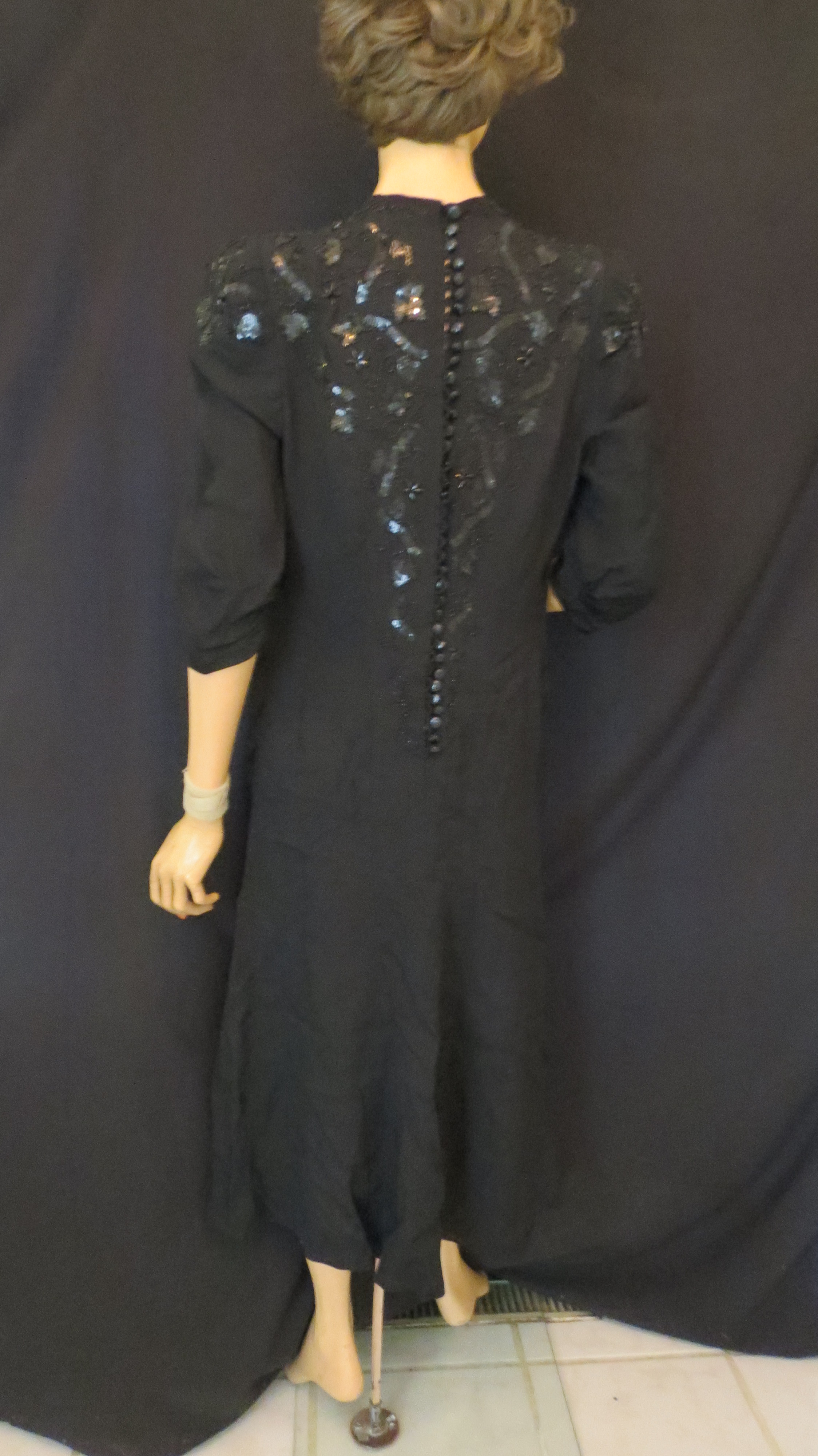
AS PROMISED, THE SISTER FROCK TO THE DRESS SHOWN YESTERDAY. POST-WAR 1940’S TAILORED FOR A SOCIALITE.

No ifs, ands or buts about going to a fancy event this time. Also from Montevideo, Uruguay, it belonged to a woman who was or was posing as a member of “society”. This frock has a huge amount of glitzy embellishment both front and back, but what better way to hide in plain sight? Very pretty, and it’s all hand-done. There is a label from “Mae’s” but I still suspect a small tailoring business, unless this was a toney department store that had it’s own tailoring department. The suspect or agent in this case had access to money and obviously had “help” or a very loving and patient partner. Can you imagine any other way to manage all those close-together buttons in back? (Hey, Mae’s, looks like you could have gotten zippers from Argentina instead! See yesterday’s post)

The very 1940’s style details are evident – big shoulders, midi hem length, below-elbow sleeves with shaping detail and that bizarre stuff going on at the hip-line. Unless it’s on the right figure, it’s pretty gruesome but Stella can wear anything. This dress has a very different cut from the one shown yesterday. It may have been made for a different woman but I suspect the measurements have more to do with the style of the dress. The padded shoulders, naturally, are wider but so is the bustline. The hips are narrower. My best guess is that this was done to balance out all the pleating on the hips and keep our heroine from looking bottom-heavy.

It’s a little tired from long-term storage but we know what a good drycleaner’s can do in a jiffy. Stay tuned for stepping into the 1950’s . . . . . . . . . . . . . . . . . . . . . . . . . . . . . .

MORGANA MARTIN, THE MAGICVINTAGESPY

BLOG: MAGICVINTAGESPY.COM
HOW INTRIGUING. A POST-WAR 1940’S COCKTAIL DRESS FROM URUGUAY

This garment came to light during an investigation in that nation’s capitol, Montevideo. It is a very international city and was undoubtedly a hotbed of clandestine affairs during the wartime 1940’s. The cocktail dress pictured above had been commissioned by a woman who was a member of the social elite who routinely had their fashions custom-tailored or traded with shops that offered handmade garments and imported couture. The lack of a label and evident hand-stitching point to a private tailor. Though the crepe is a little rumpled from years of storage, this frock has been well-preserved and is a perfect example of that genre.

I am not sure whether the tailoring differences from what we expect in dresses made in North America are due to historical constraints or to the culture of that country. The extended shoulders, sheer insets, midi-length hem and ubiquitous black rayon fabric are commonly seen in designs of that post-war time but I was a little surprised by the straight, matronly cut. Either the New Look with its nipped waist had not yet landed in high fashion, or this frock was made for a more conservative, older woman.

The same will be seen in a similar dress from that same investigation which will be shown, probably tomorrow. Stay tuned . . . . . .

MORGANA MARTIN, THE MAGICVINTAGESPY

BLOG: MAGICVINTAGESPY.COM