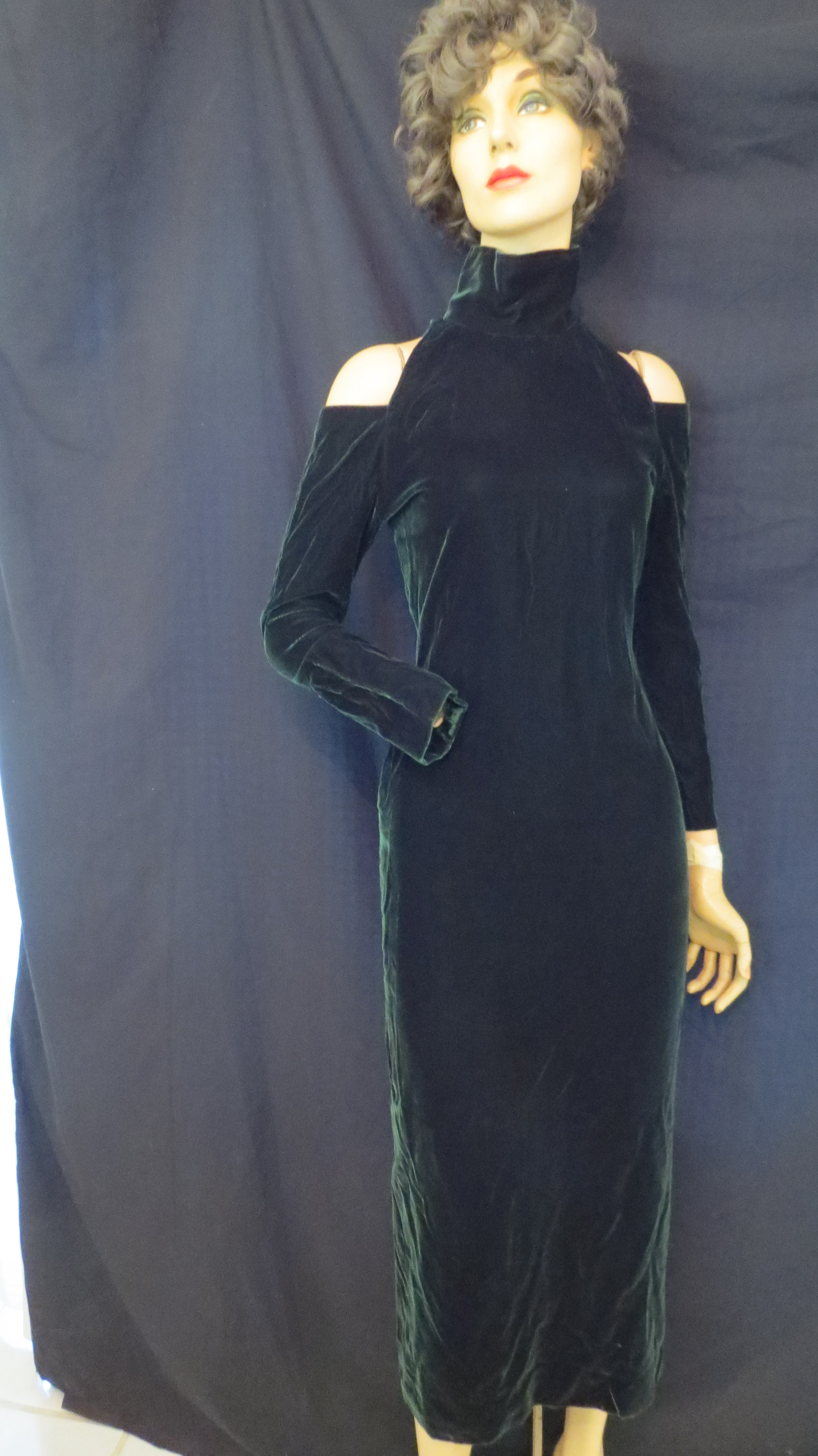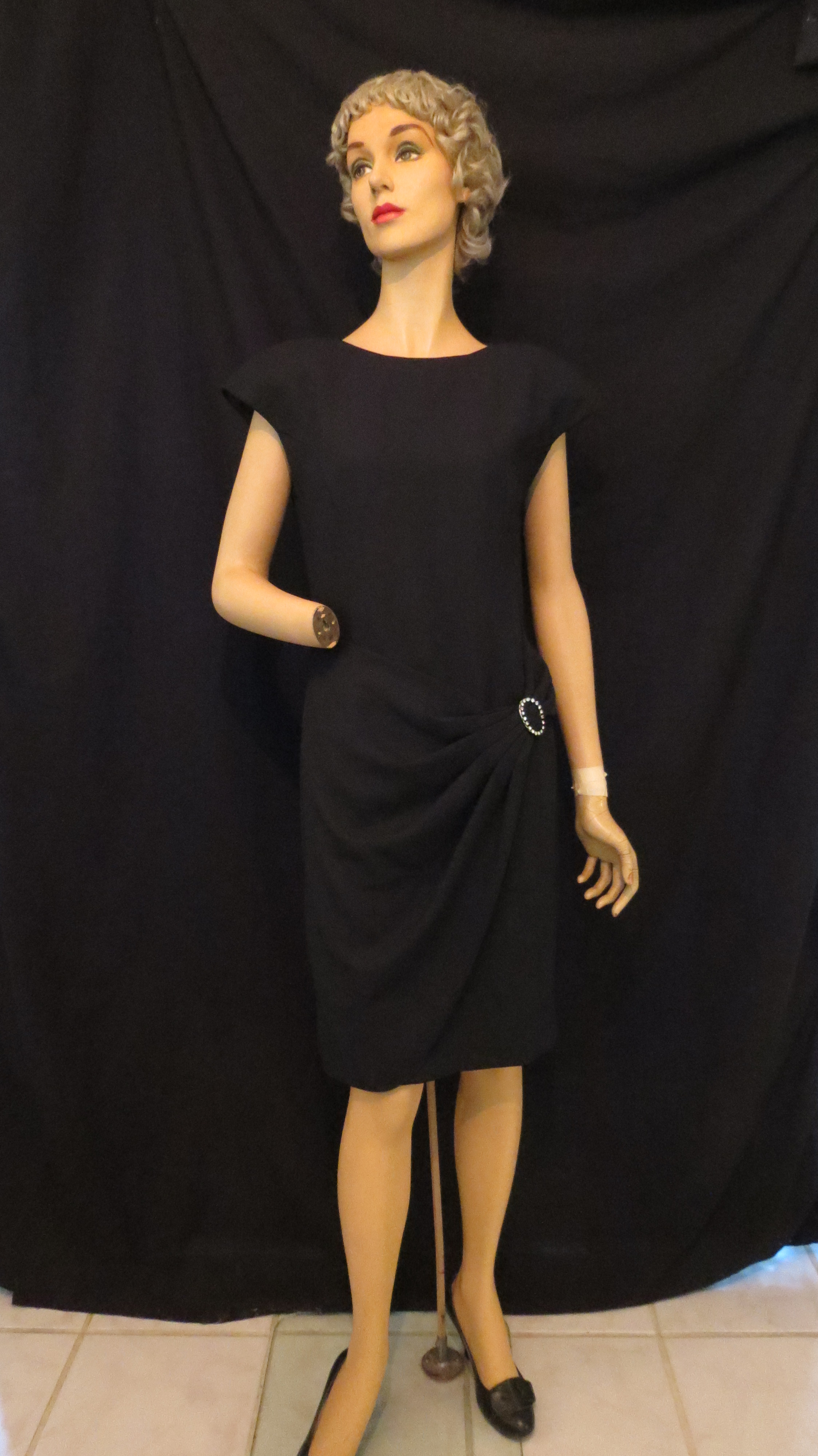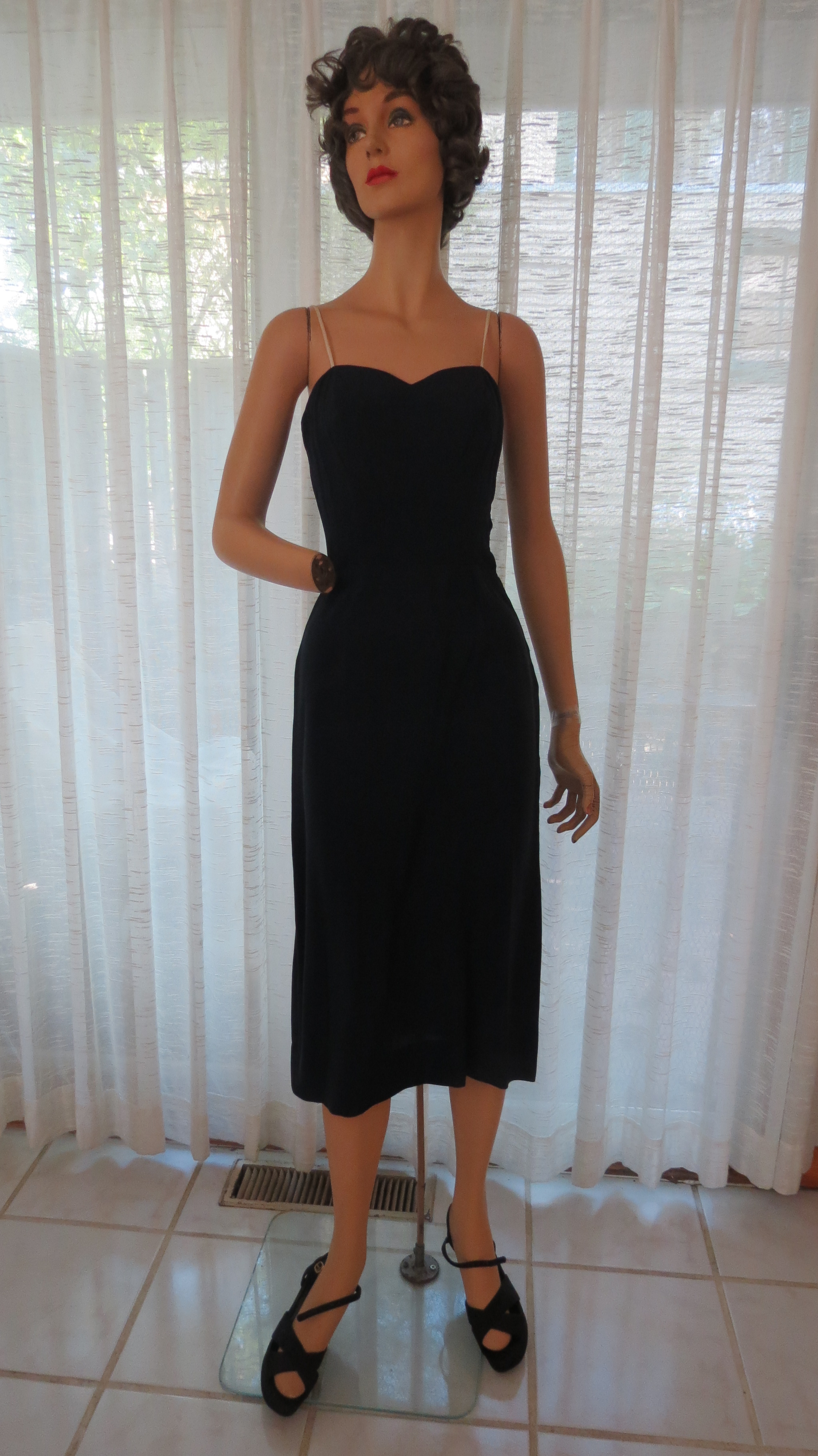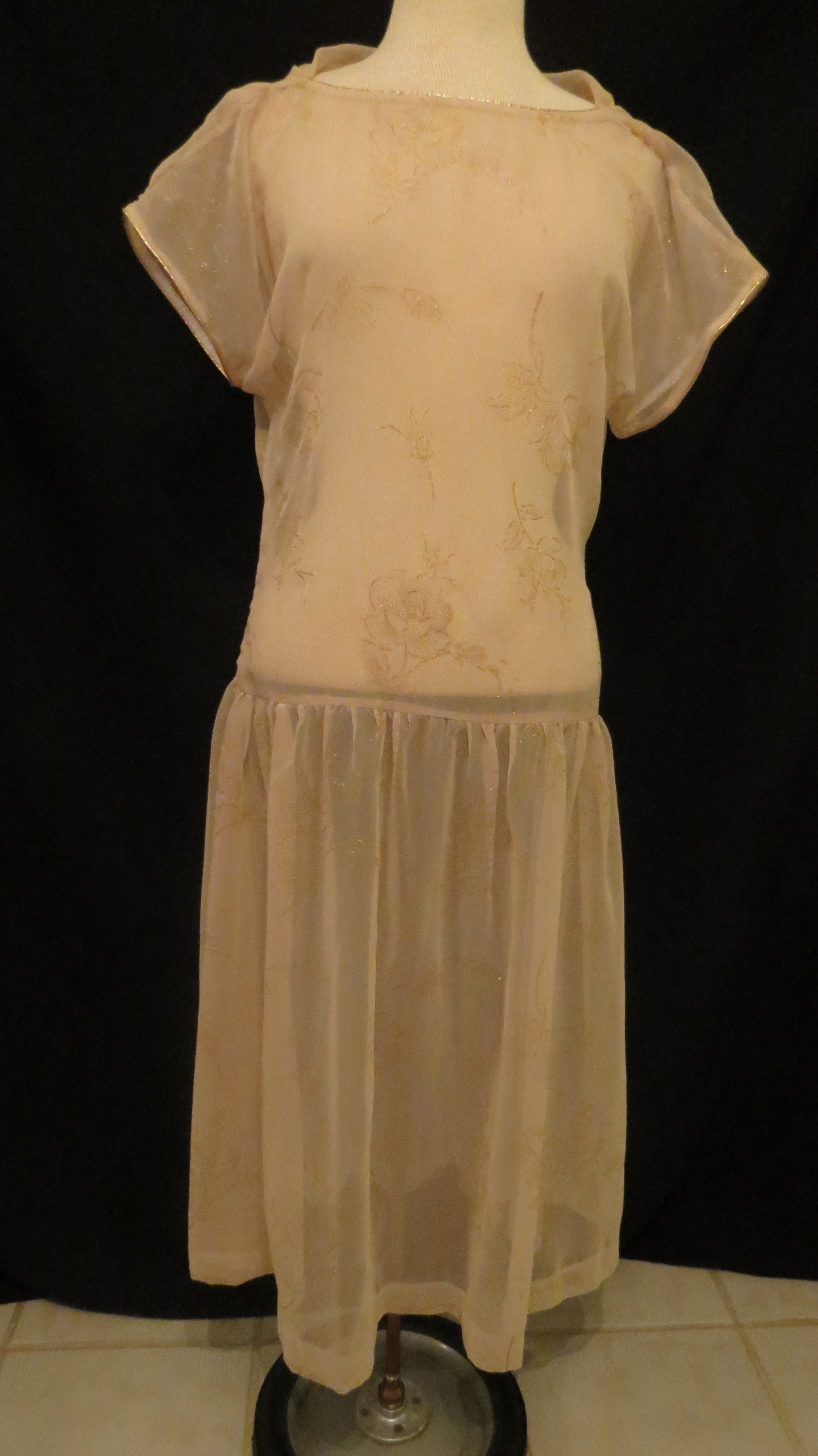
Any time there’s a special event or holiday, a true vintage little black dress will never let you down. This one is so unusual, I had to slip it into the line of bright and colorful frocks that I’ve been showing. Not an easy fit for everyone, but if you’ve got the shoulders to support the neckline and a tiny waist like Stella, it’s absolutely stunning. The drape of the bodice is genius and the fabric flower at the waist adds even more interest without any need to be flashy.
Jewelry should be sophisticated but simple. Diamond stud earrings or gold, or pearls. Absolutely NO statement necklaces to detract from that beautiful neckline and maybe no necklace at all. If more bling is desired, a delicate but luxurious bracelet or watch would be nice. Back in the day beautiful tiny watches in gold or platinum with diamonds were not unusual for those who could afford to splurge on them. Of course, a cocktail ring is always acceptable with a dress like this but, again, the jewelry should not overpower the dress, which is the star of this show. And, the show must go on. Stay tuned . . . . . . . . . . . .
These are just 3 out of my collection of lovely kitchen aprons, but perhaps a bit more interesting and seasonal than others I have, which are more generic, like a cotton gingham check without any specific theme. Many aprons, like the first one here, were specifically themed for a particular holiday or fashion era. It’s a great example, with bright color and a novelty print for Thanksgiving. Although it’s definitely trendy and targeted, it is also at least somewhat practical because of the machine-washable fabric, wraparound style, secure ties and big pocket. It could actually do the job of keeping the cook’s skirt clean. The most useful styles also covered the bodice.
The usefulness is really important, but I love the novelty print. It’s always good to play the hostess in something that also makes people smile. The two aprons following are entirely different in their purpose. These are made from a much more delicate fabric and would be best washed by hand, both because of their delicacy and because they are hand-painted. They were made for and gifted to my grandmother by a relative who at least did the painting herself, if not the sewing job. Gifts like this were common in her day, and cherished. These aprons were made not so much to protect clothing as to be pretty. Grandma might have worn them when she had her friends in for tea or a card game, maybe even for hosting an at-home cocktail party. The messy part of the hostess job would have already been done when she made the cake or other refreshments beforehand.
Aprons were much more commonly worn in decades past and were a significant part of a woman’s household wardrobe, like housedresses worn on cleaning day. Most women’s (especially married women’s) lives were organized around a routine of household duties throughout the week and each one usually required a different kind of outfit – one for cooking, one cleaning, one for tending plants, one for doing the weekly shopping. Special accessories to these outfits were needed for certain jobs, such as gloves of various kinds, hats of various kinds, nursing bras and pads to protect clothing from breast milk and burping babies. Housewives were trained to be very practical and were rewarded by Society for a job well-done. The home was their workplace and the role defined them, so their household wardrobe had a central place in their lives. For better or for worse, that was the way it was. Do we want that again? Think about it and keep your eyes on the clues . . . . . . . . . . . . . . . . . . . . . . . . . . . . . . . . . . . . . .
Last night I was out and about to a theater production and couldn’t reasonably drive a two block distance. Walking was the only choice, which I love, but IT WAS SO COLD!!! My warmest outerwear option, which kept me toasty and comfy, was my post-war beaver jacket from Canada. 75 years old and it’s still snuggly and beautiful. I grieve for the precious animals who (yes, WHO) were sacrificed for vanity and retail profit back in the day and will NEVER buy modern fur products. I advocate for animal rights but also celebrate those lives and gifts by preserving and enjoying elegant fashions from the past for as long as they will last.
I own many gorgeous fur and faux fur pieces made decades ago, before protective legislation and individual conscience stopped some of the fur trade and promoted humane practices. Above is one example, on the left, of an older fur jacket dyed to mimic mink. I cannot identify the fur – could be muskrat. Before the end of WWII, furs considered to be less fine were often processed this way. Other examples, such as the one on the right, are fakes – popular in the 1950’s and beyond. Some have been very convincing even since the 1950’s. Many of those made today look and even feel very authentic. The look is fun and elegant, in a vintage way, plus, as I proved last night, very practical.
Faux fur and secondhand true vintage furs are the best, the ONLY humane and progressive choice. I prefer those from the 1960’s and before. The remaining fur trade is still a blot on humanity, so we must be vigilant in our boycotting of this active market but I don’t see the enjoyment of historical fashions as being hypocritical. I will continue to show you how much I love them. Stay tuned . . . . . . . . . . . . . . . . . . . . . . . . . . . . . . . . . .
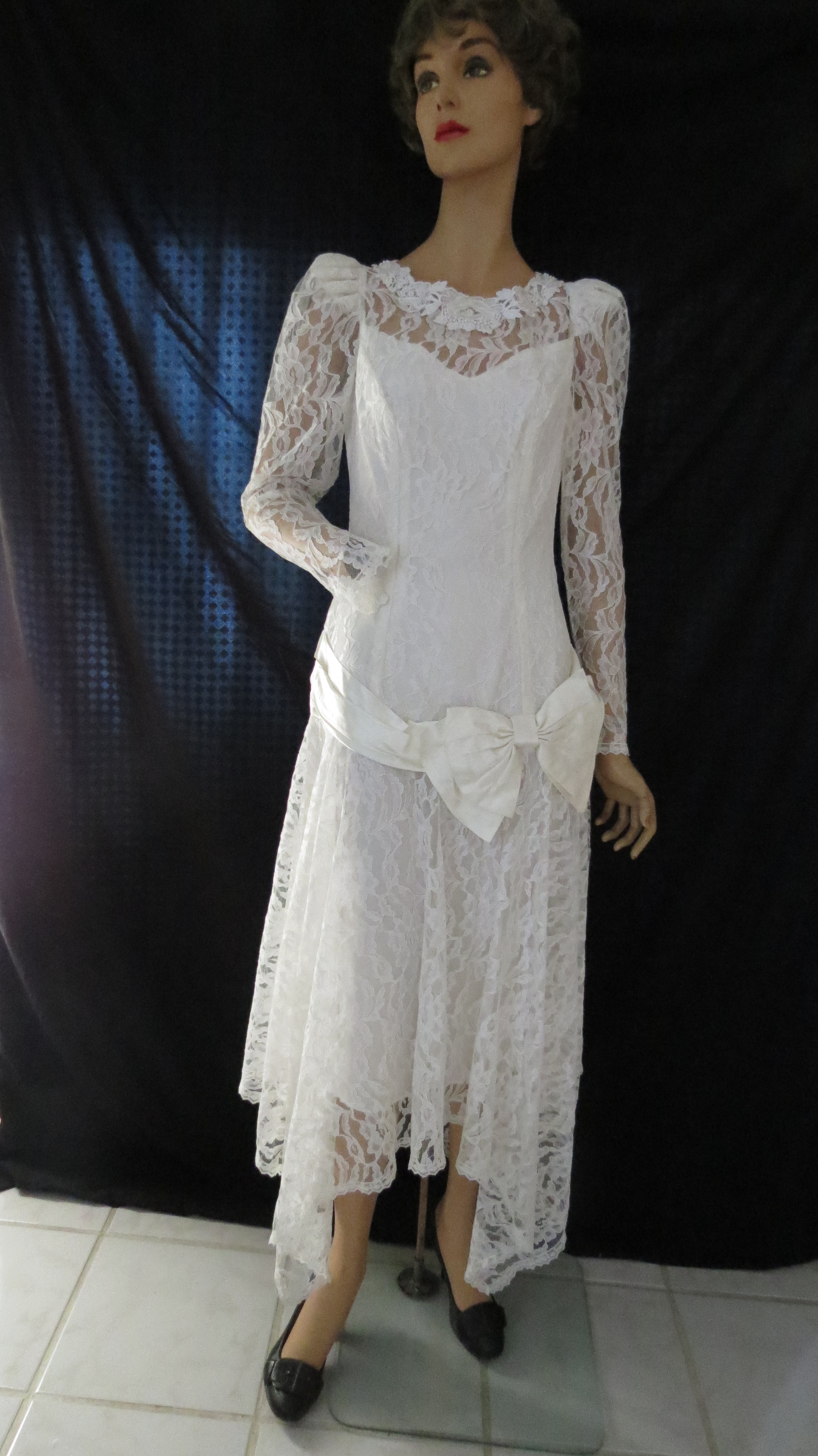
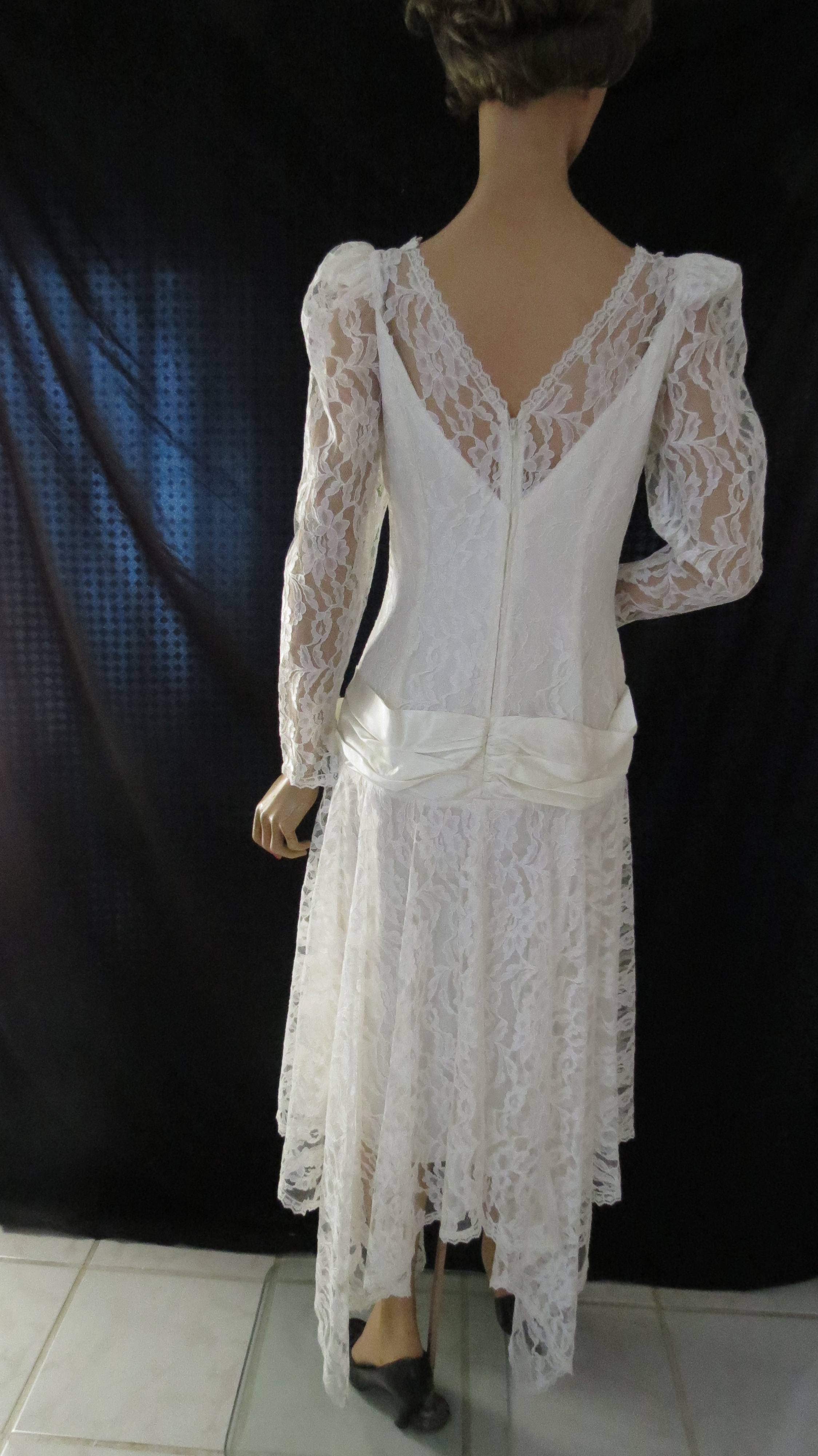
Perfect example of a Kennedy Era party dress, bought off the rack back in the day. It’s full of clues in the fabrics and construction. Lace overlay fabric which was very popular at that time, 3-layer skirt with a netting crinoline in the middle, AFLCIO Union Workers label, vintage metal zipper with a hook and eye at the neckline and at the waist, and hanging loops sewn in at the shoulder. These dresses are exceptionally well-made although they were reasonably priced. Although it’s a little short on Stella, it fits her pretty well.
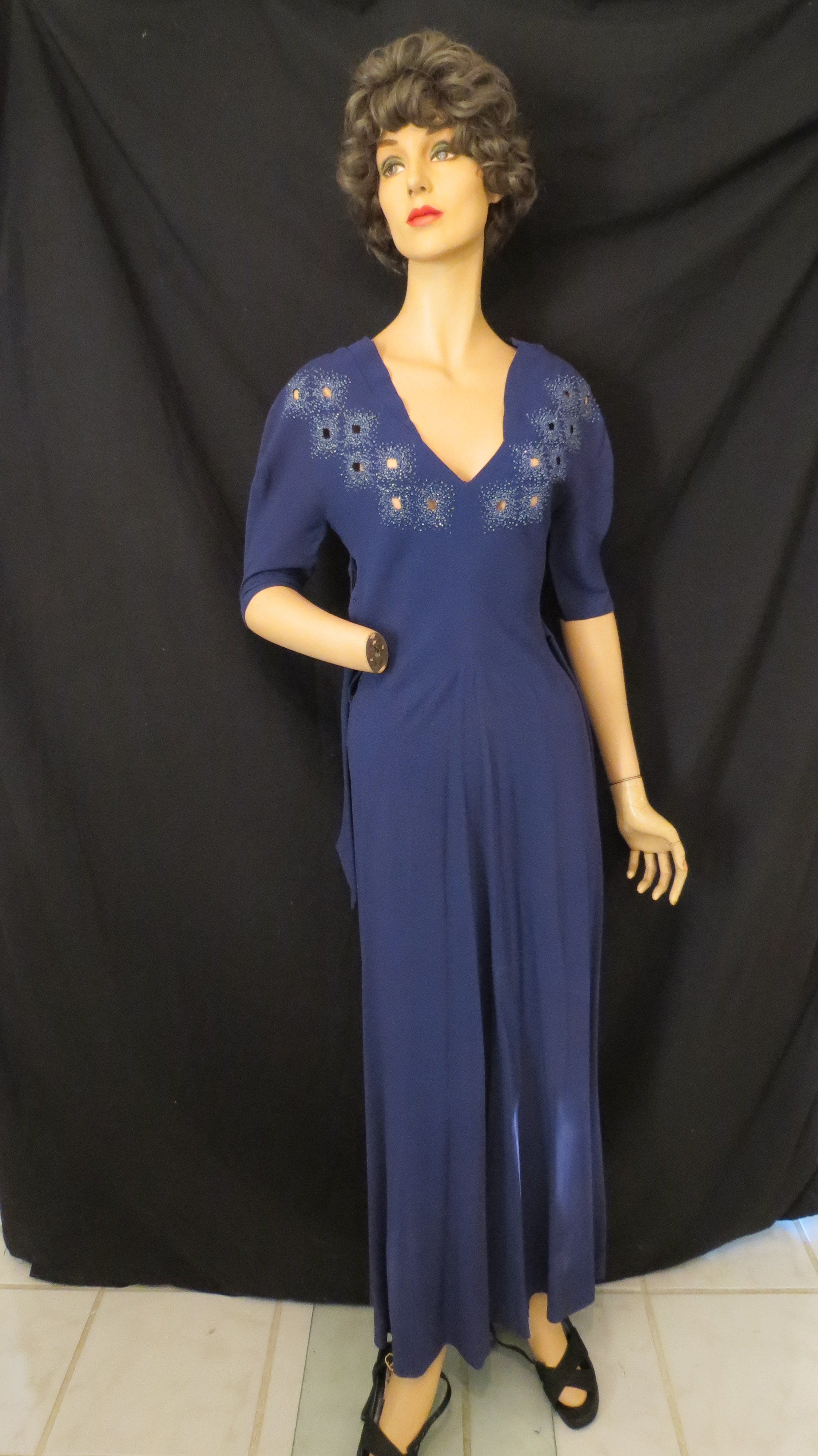
I’m always thrilled to find one and each example has some unique features. In this case, the scarf attached at the right shoulder which drapes across the front neckline is a novel addition. It’s even got a detachable rhinestone brooch on the opposite shoulder, suggesting that there might be other ways to style the scarf. As worn above, it makes a tail over the left shoulder, which was a popular design element at that time and also in decades before. In any case, I’ve never seen one exactly like this. Just goes to prove that you just never know . . . . . . . . . . . . . . . . . . . . . . . .
I pulled this little beauty out of the archives to decide whether she gets a permanent place in the closet or the chopping block . . . . . . . . . . . ..
The 1970’s was not a banner decade for high quality fashion, in my opinion, but this is a lovely example of the mid-priced garments available then so worth collecting. It’s nicely designed and tailored with gathers at the neckline, knife pleating and piping finish at the neck and wrists; a flattering style with well-done tailoring details and features that were popular in some of the better dresses. Of course, a full matching lining in the body is essential.
Alas, it’s not a perfect fit nor the best color for me so it’s off to eBay. Sometimes, spycraft must be ruthless. Stay tuned . . . . . . . . . . . . . . . . . . . . . . . . . . . . . . . . . . ..
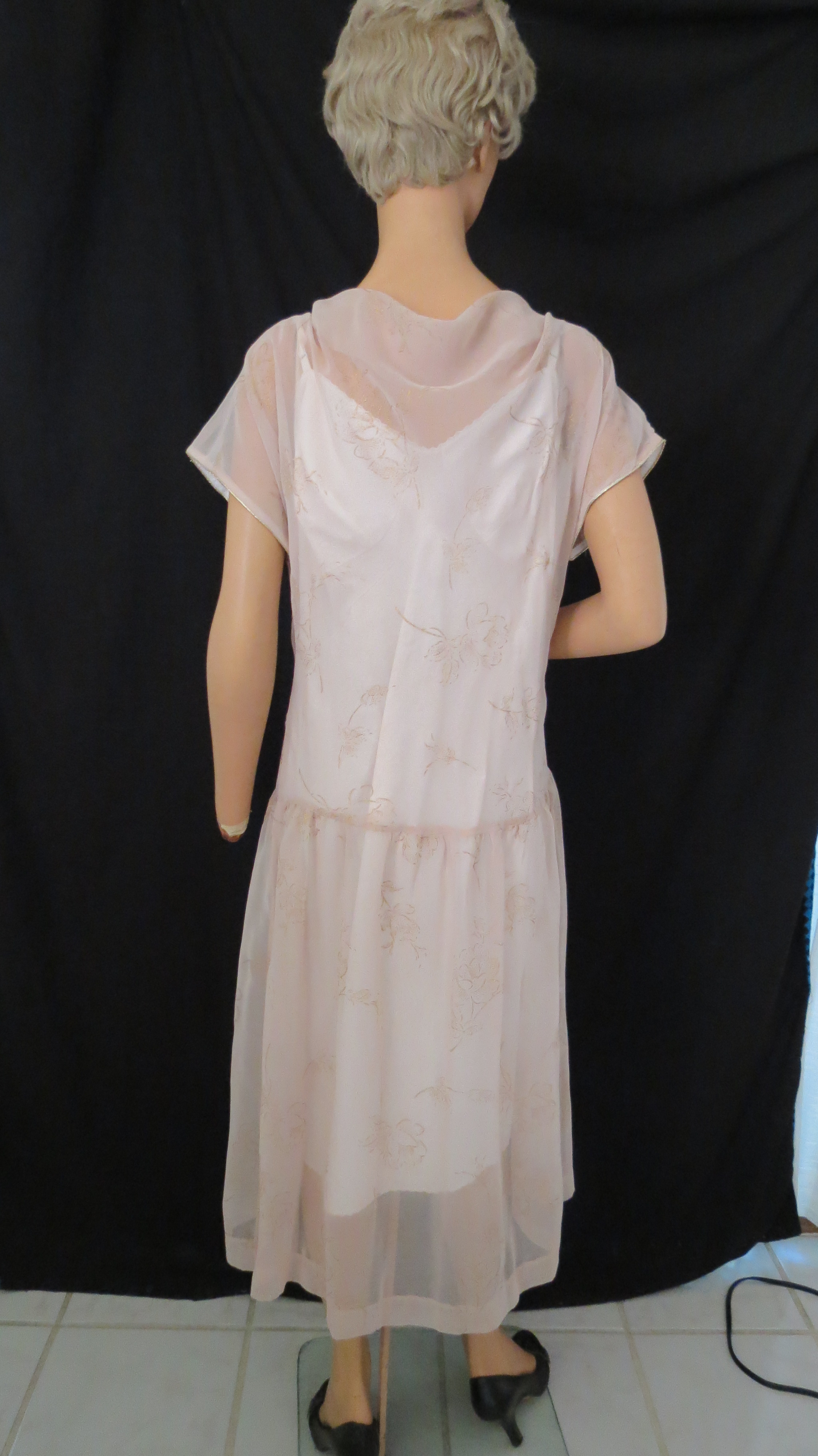
Of course, I couldn’t pass up this Asian(?) beauty when I discovered it although I don’t know it’s history. There’s no label and it looks unworn so Where and When did it originate? The zipper gives me my best clue – it’s a Talon, in the style of the 1960’s and 1970’s – but not a definite answer, since this frock was hand-tailored.
The fabric, also, is a clue – pure silk with gold embellishments – which brings to mind others I have seen in garments made by Asian and Middle Eastern tailors; sometimes overseas and sometimes in North America. I love a mystery, but let’s get down to the real brass tacks. What makes this dress so exceptional and worthy of being categorized as True Vintage?
Professional hand-tailoring which includes traditional features such as strap holders for undergarments sewn into the shoulders, other hand-finishing details and a full lining.
True vintage styling most popular in previous decades i.e. wasp waist, ruching and midi length.
The vintage Talon zipper. True, the maker may have saved this from previous times but still noteworthy.
So, there you have the initial conclusions of the investigation. Further clues may be uncovered in the future but this is enough to justify the acquisition. It’s a gorgeous example of tailoring history and garment design. However, the purge continues and it’s not a perfect fit for Moi, so off to the public auction house it has gone . . . . . . . . . . . . . . . . . . . . . . . . . . . . . . .
I just love this cape and it’s little details. I’m an animal rights activist and don’t approve of the fur trade in any way, but I have collected old ones from back in the day.
Not sure what the origin of this fur is. The stripes are clearly dyed, probably to resemble mink. It’s got these funny little tabs to “close” the bottoms of the arm slits, for a better appearance and added warmth.
Of course, it had patches sewn inside with the owner’s initials embroidered on, along with the maker’s label, both of which are gone now. Surprisingly, it’s in great condition for its age – still soft and radiant.
These garments are so full of history that they intrigue me as much as any other vintage fashion. I wear them, too. Some people would say this is hypocritical but I would disagree – buying or wearing antique fur or leather does not support the current market for these things unless someone makes an irresponsible decision. I suggest that we should all be responsible for our choices in the marketplace – so, if you like my vintage fur, don’t use that as an excuse to go out and buy a modern one. Search for another vintage fur at least 50 or more years old or buy an imitation fur replica and do something kind for wildlife or your pet.
MORGANA MARTIN, THE MAGICVINTAGESPY
BLOG: MAGICVINTAGESPY.COM
BOOK: HOW TO FIND THE BEST IN VINTAGE FASHION – AVAILABLE ON AMAZON.COM
She’d just pull out the latest edition of her McCalls Needlework magazine. And, of course, there is the Christmas Pageant, too . .. . .
I can’t believe the intricacy of these home-sewing DIY patterns. Women used to do this all the time!
Once when I was a kid, my (I thought) non-sewing grandmother did whip up a very convincing 1960’s black collarless jacket for me when I wanted to be a Beatle for Halloween. Who knew? . . .
Completely different from yesterday’s cardigan but so much fun! It’s another must-have vintage sweater to wear with cigarette pants. A pretty open-weave Orlon sweater knit with metallic thread design to be worn with a black skirt or slacks at some mid-century party event. It is absolutely amazing that it’s survived for 60 years in almost unworn condition!
Just like the women of the 1940’s onward, I’m grateful for these lovely acrylic yarns that can be washed in a machine (with care) and don’t have to be stored in a moth-proof container. Orlon was a revelation and major time-saving blessing to wartime and post-war ladies who still did most of their housework by hand.
Although we’re so used to acrylic fibers now, these early ones were really special in terms of their quality or, perhaps, it is the garment itself that is made so well that the fabric looks great after more than half a century. I’m sure that I also, again, have to thank the first owner of this elegant top for taking such good care of it.
I’m over the full moon again, and wondering what will turn up next . .. . . . . . . . . . . . . ..
Another rare find! This one was not a high-end item when it was made, but it is an iconic piece with mink-trimmed sleeves. I have a few of these garments with sleeves like this but don’t find them often.
Metallic thread on sheer black fabric, with “Autumn Haze” mink cuffs. Buttons up the back. Back in the day, companies that produced medium-priced clothing still made some “luxury” items that the average woman could afford, and they made them well.