
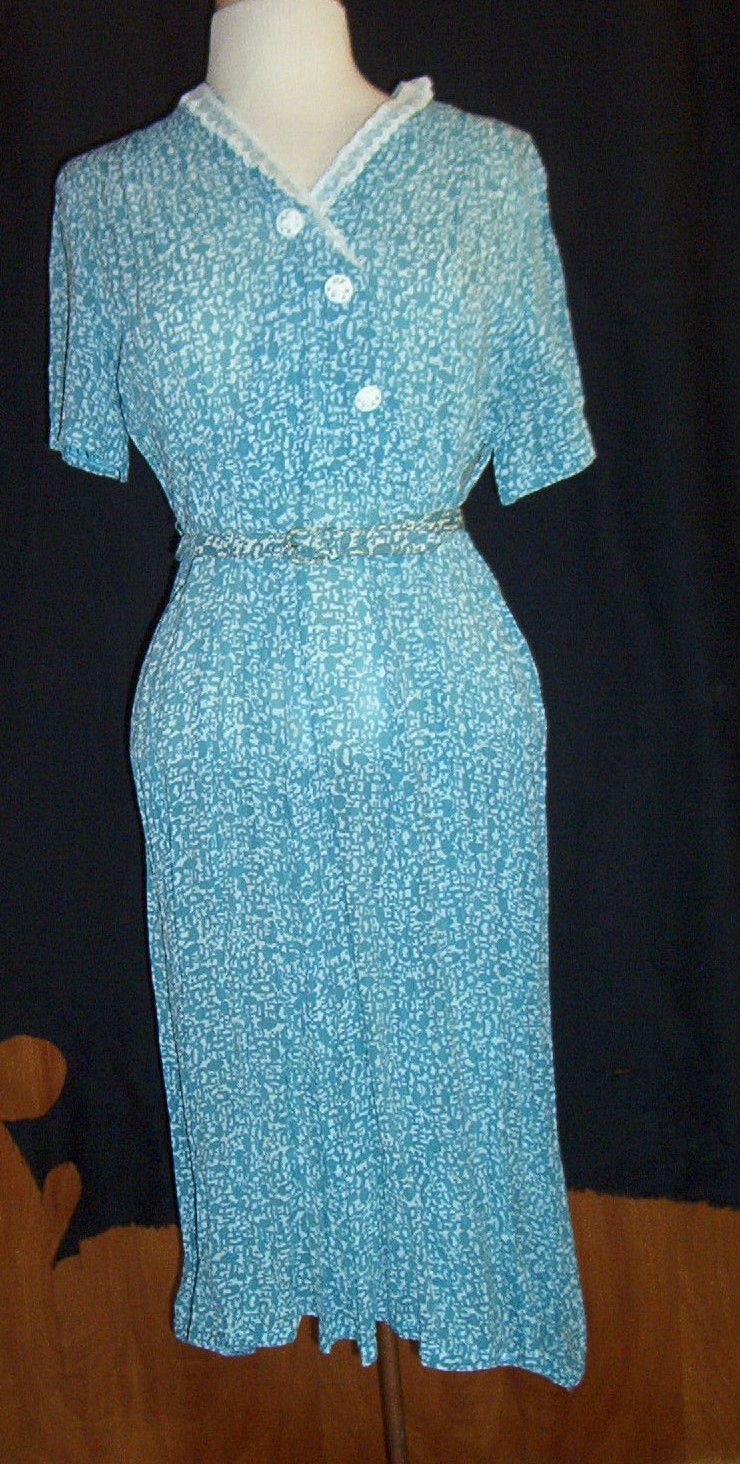
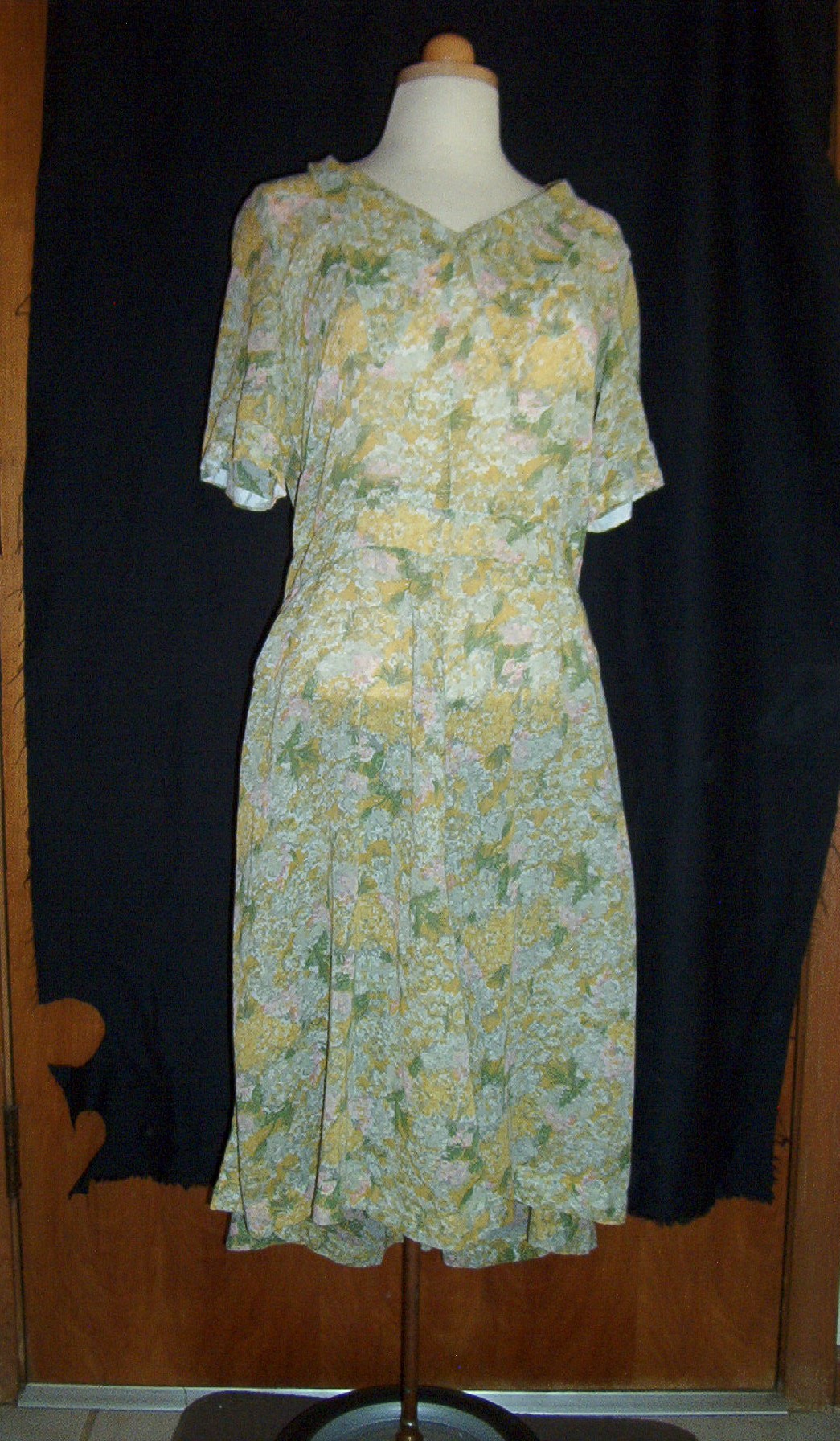
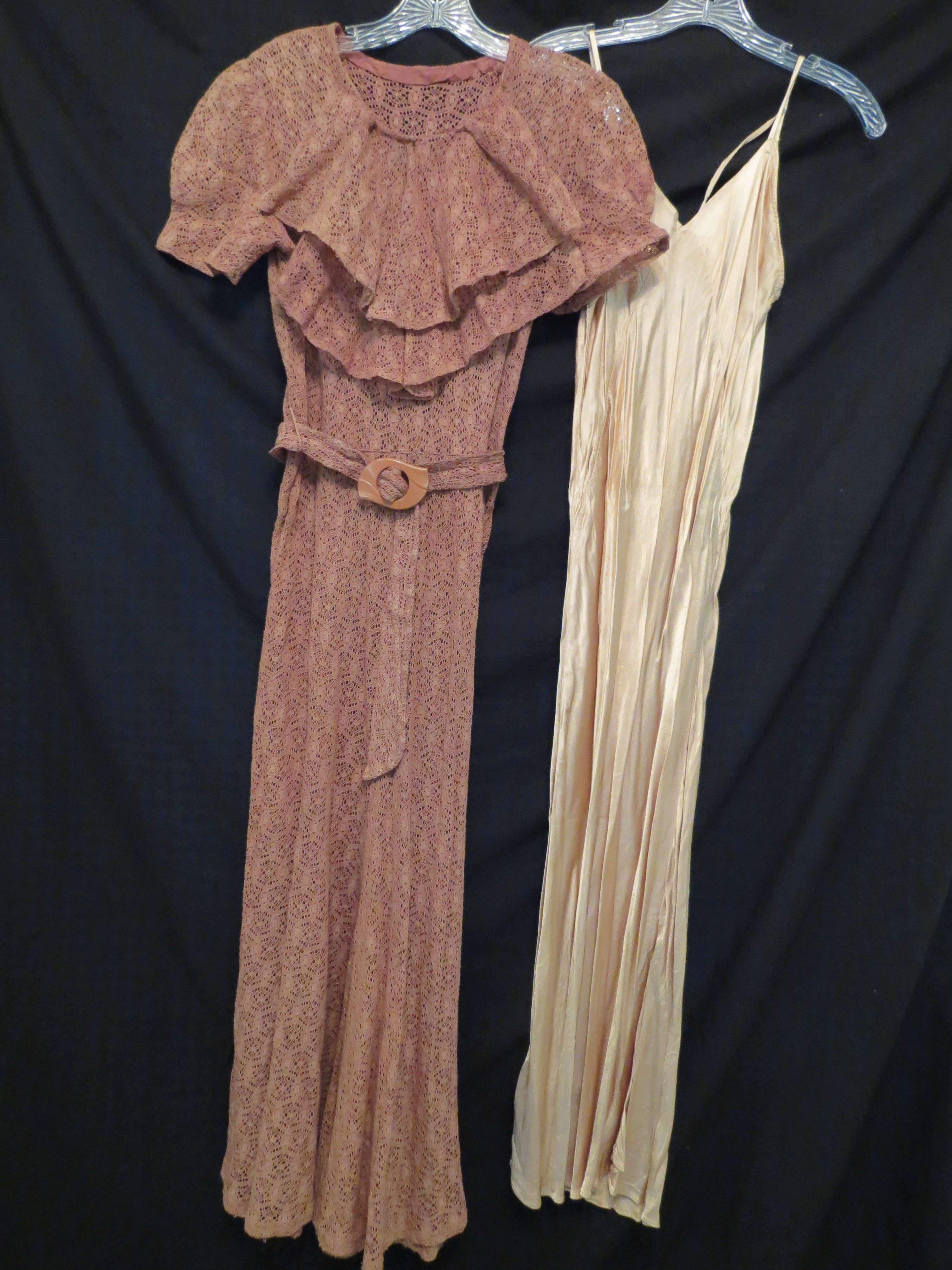
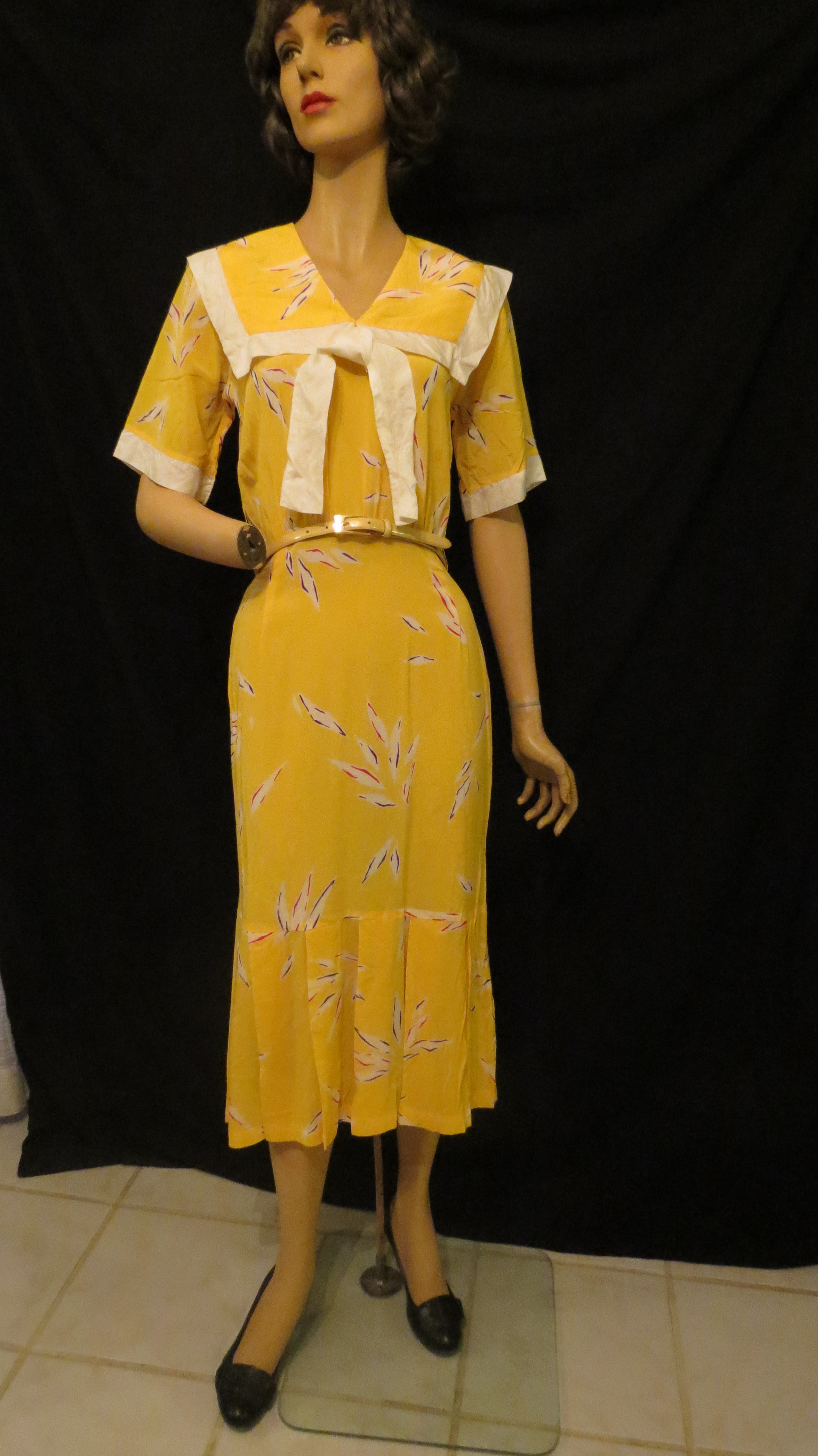
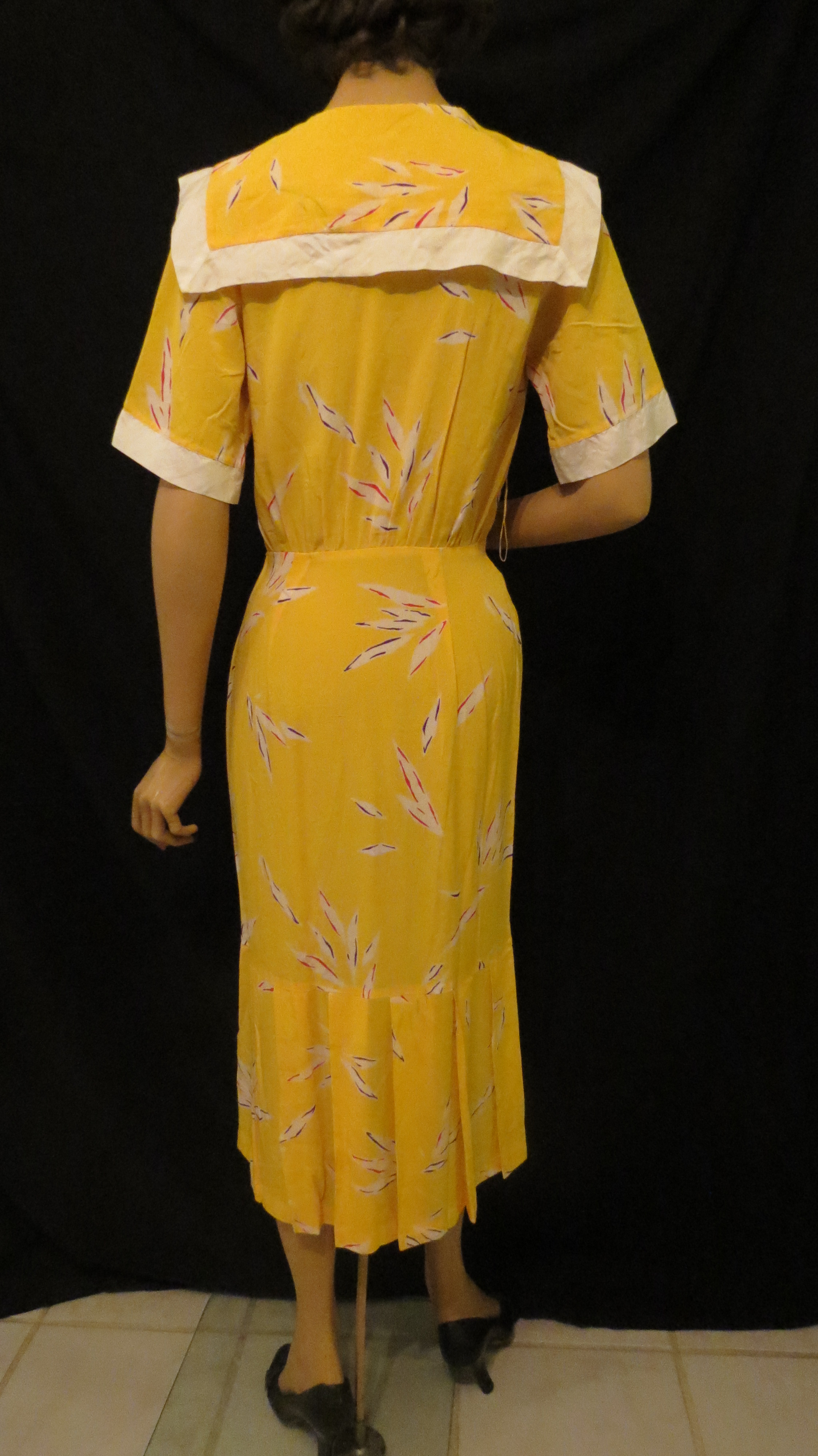
Two of my favorite 1930’s dresses to wear and one when I feel like Bonnie of Bonnie and Clyde. The fabrics feel so wonderful on the body and the fit is killer because of the fabulous drape. An earlier find, I was thrilled to discover the blue dress because of it’s condition. The original buttons and belt are present and no damage to the trim at the neckline. Also, no stains! You can see that the body of the dress has faded a bit due to years of washing by the original owner (compare to the color of the belt, which would not have been put in the laundry), but I don’t mind. The floral-print yellow and green frock is near-perfect and is a bit more casual. Super easy-breezy. The crocheted dress with satiny rayon slip given to me by a family member who found it in an old antique wardrove is the real star. It still has the authentic celluloid plastic belt buckle. The longer hemline makes it probably the oldest of the group, from the very early ’30’s. I have to include a 1980’s or ’90’s dress that dipped into a retro 1930’s. The yellow rayon belted sheath is a fun fashion with loyalty to the Thirties style and lovely rayon fabric.
These are both mid-priced dresses, at most, but have held up over 70 years before finding their way into my closet. It’s possible they were home-sewn. I love the elbow-length sleeves and the way that the fabric causes the hemline to ripple and sway. Very flattering. Both do require a slip underneath because of the sheerness and, since they are warmer weather frocks, I like to wear a true vintage cotton slip with very little decoration so that it doesn’t show through and compete with the print. Slips of that sort are hard to find since most of the slips that have survived are made of nylon and full of decorative detail. Although some fabrics don’t seem to require a slip, wearing one often causes the dress to fit and move so much better. Your other foundation garments i.e. brassiere, underpants and even stockings will have a real effect on how your outfit looks so it’s an important consideration. I have silk tap pants and some silk slips from the pre-war and WWII era that are good examples of undergarments that work really well with dresses like these.
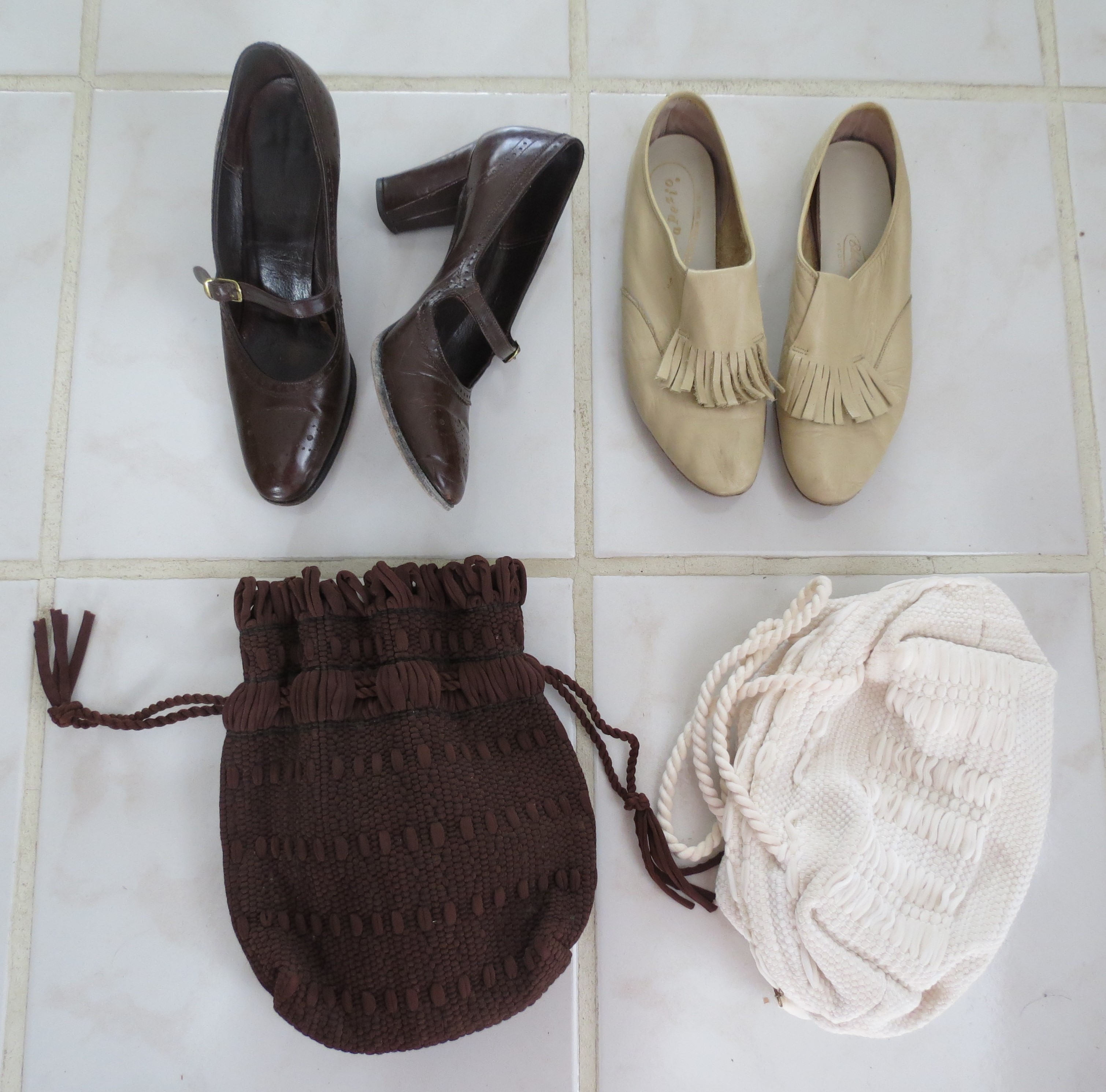
Mary Jane style shoes are seen in every decade since the 1920’s. Decorated flats became popular for women, too, especially when they began wearing slacks. The shoes shown above may be a little younger than the dresses and purses, but are still within a decade or so. Handbags woven from synthetic yarn were another way that the market for clothing and accessories coped with the economic downturn of the Depression and the looming rationing of wartime. Leather, silk, quality cotton and wool were less available and too expensive for many buyers. The big move forward in the development of synthetics changed clothing in big ways, many having to do with fit, comfort and convenience so, overall, the deprivation turned out to be a plus. Tomorrow we move into the 1940’s. Stay tuned . . . . . . . . . . . . . . . . . . . . . . . . . . . . . . . .
MORGANA MARTIN, THE MAGICVINTAGESPY
BLOG: MAGICVINTAGESPY.COM
 Magicvintagespy