EARLY 1970’S TAILORED SHIRT

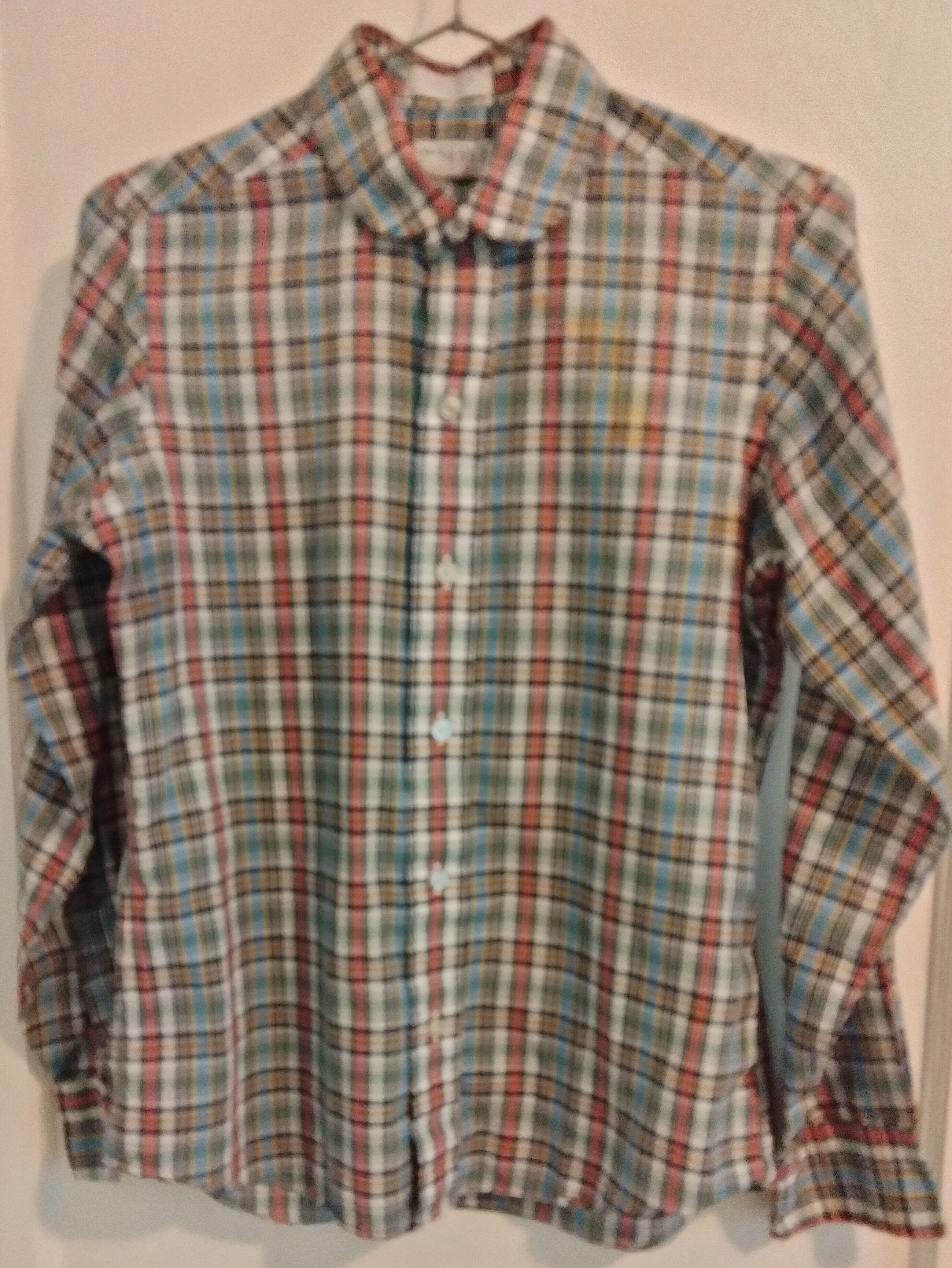
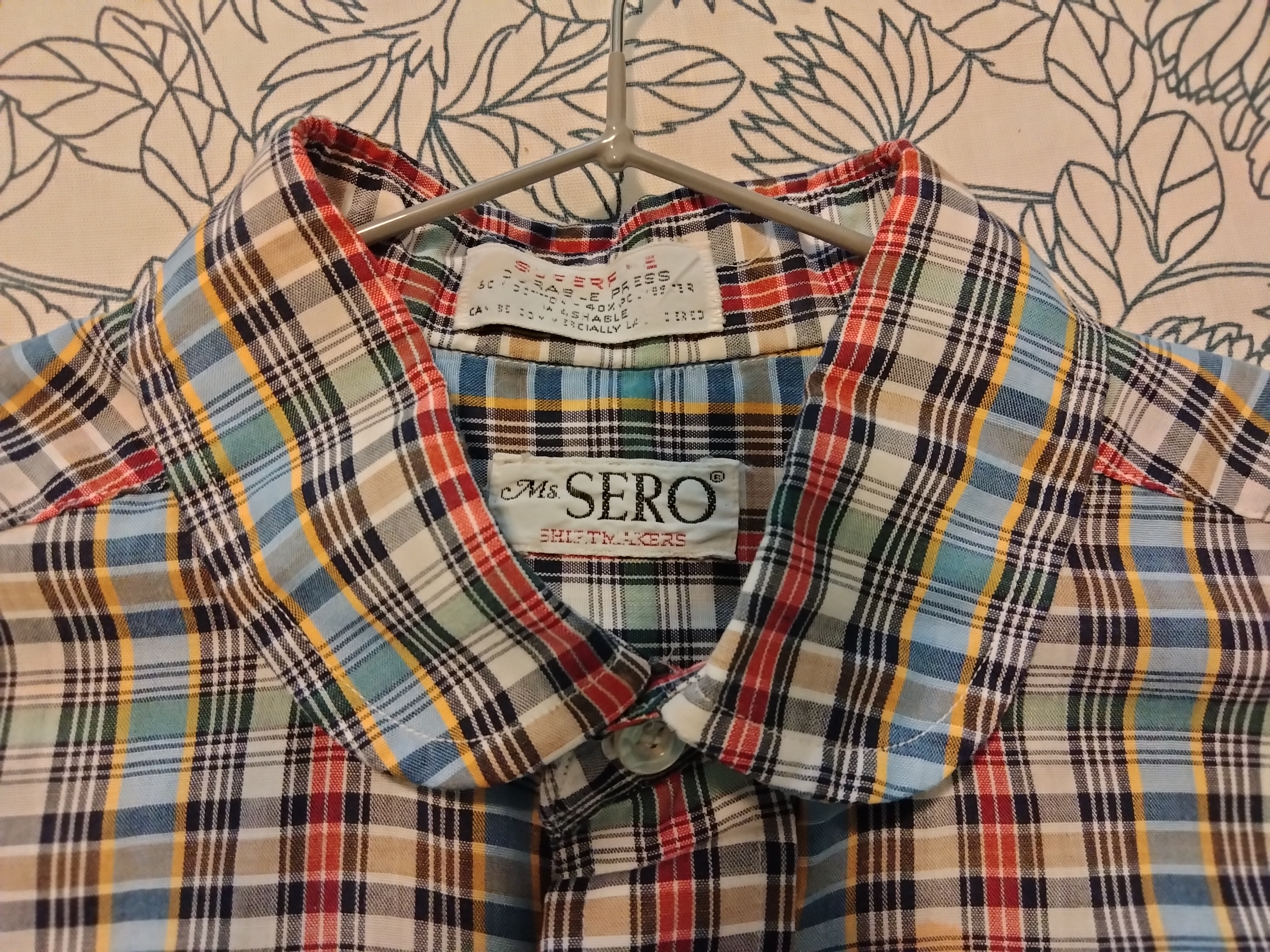
Boring old shirt, right? Wrong. Let’s start with the most important characteristic: 1. MAKERS LABEL/ BRAND: Labels are made of soft cloth and attached at the neckline, firmly stitched along two sides. Fabric content, wrinkle resistance and wash-ability are clearly marked. Information is embroidered on the cloth, rather than printed, which will last longer. Any brand which identifies itself as “Shirtmakers” is likely to be of higher quality in all respects. There are no other tags in side seams. These labels won’t bother the wearer or easily come loose. The name Ms. SERO clearly identifies it as being a 1970’s brand, when the Women’s Liberation movement was “new” again, gaining popularity, and the title Ms. was beginning to replace the use of Miss or Mrs..

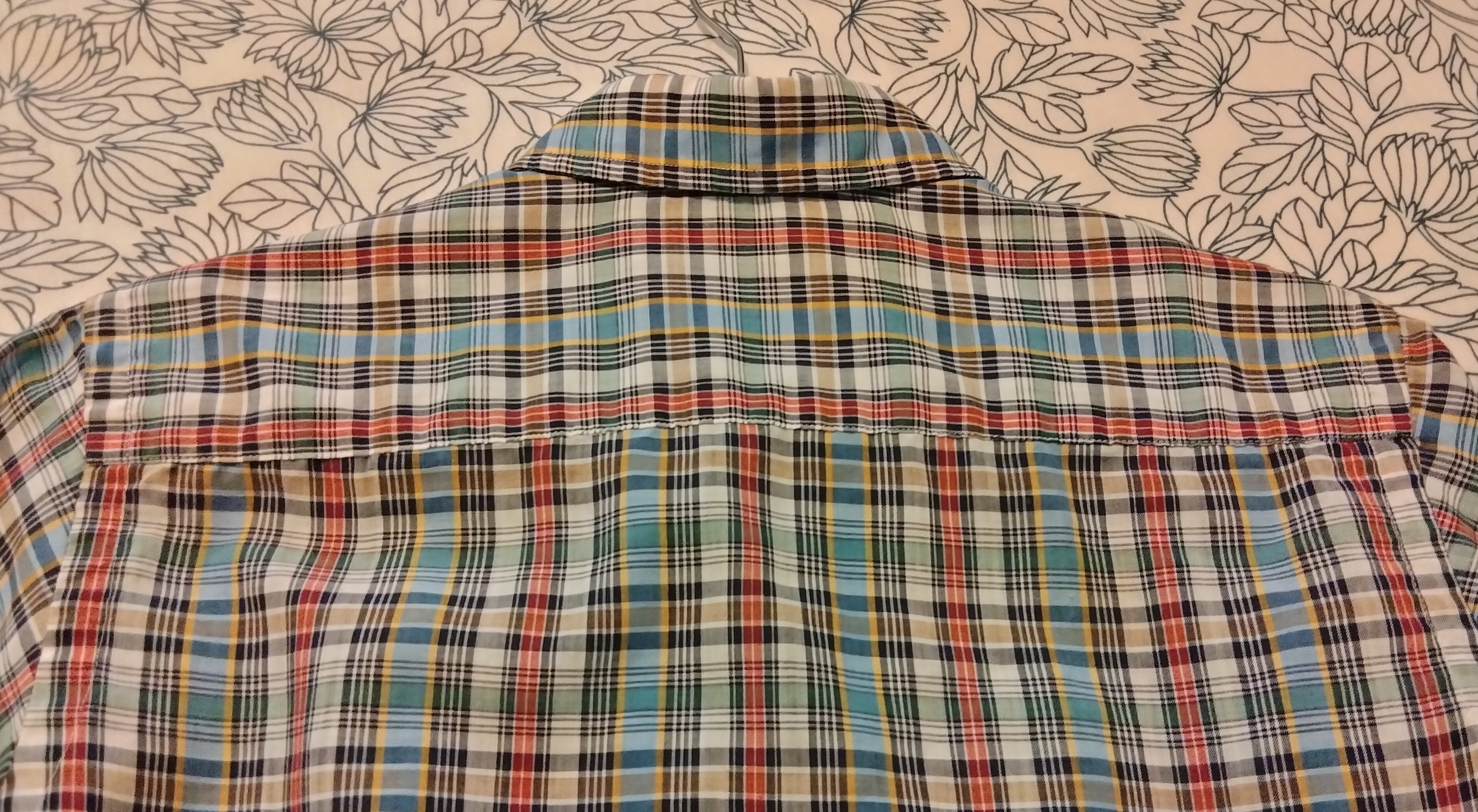
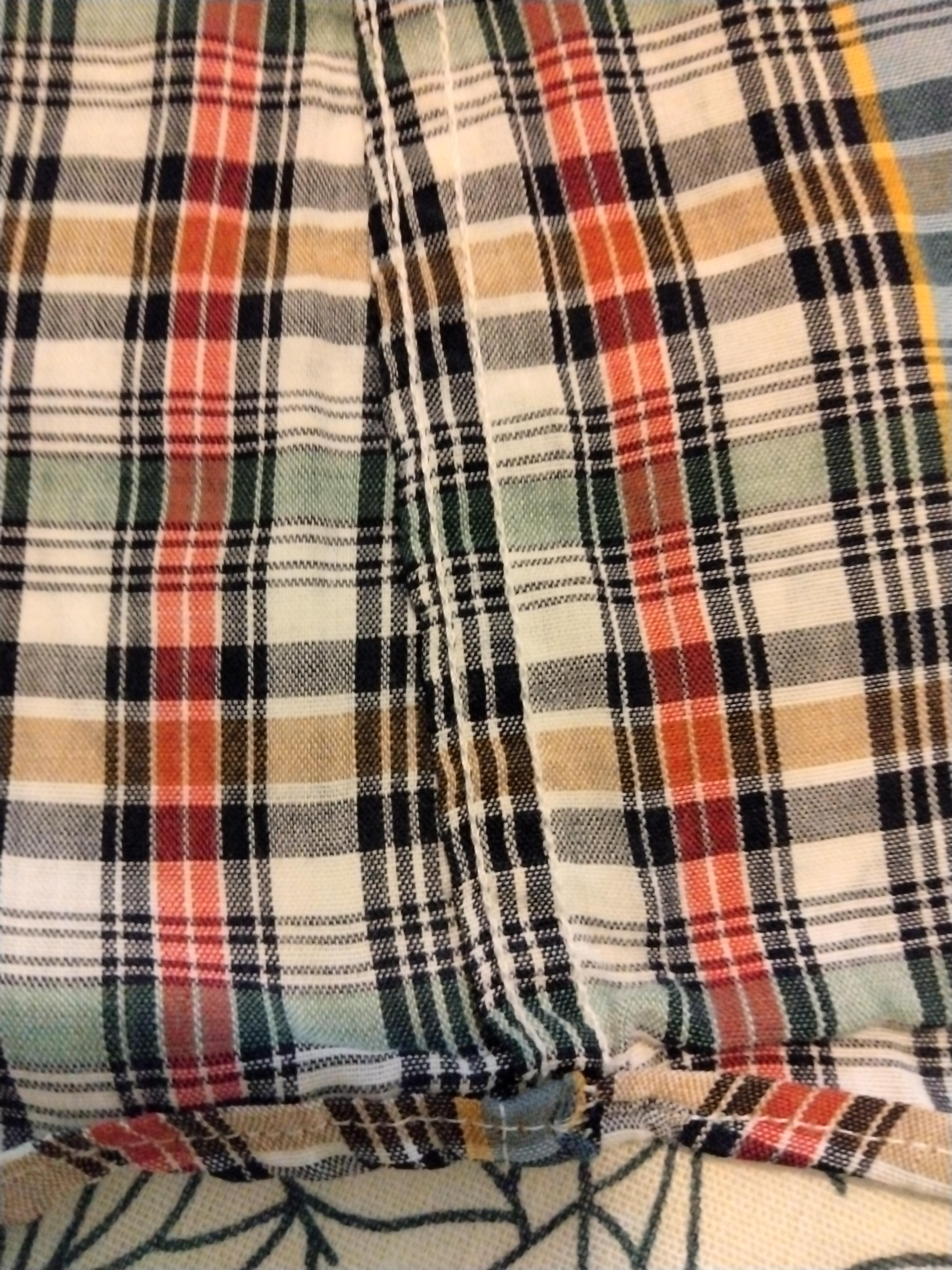
2. FABRIC: The plaid is beautiful. The material has a light, very silky-soft hand. Part of this must be age, but part is due to the fact that this fabric is tightly-woven. It’s a poly/cotton blend, which adds washing convenience, but it’s obviously a higher quality textile, also. Wrinkle resistant fabric was a slightly more upscale feature at that time, as today. The mystery of its history is deepened by the appearance of a shadow stain illuminated by the digital camera photo. The quality of the fabric will be reflected in how well it will release the stain. That will require further investigation, as it was obviously overlooked when the evidence was found. Doesn’t look like blood, but . . . . . . . . . . . . . . . . . . . . . . . . . . . . .

3. STYLE/DESIGN: The Peter Pan collar, of course, the plaid and the basic menswear cut; Classic elements of style which are often seen throughout the decades, though the Peter Pan collar design originated in 1905 and was first used in children’s clothing. It didn’t become iconic to women’s garments until the Pre- and Post-WW2 mid-century eras. Elements of menswear styling have been seen in women’s clothing ever since women began wearing shirts and pants.

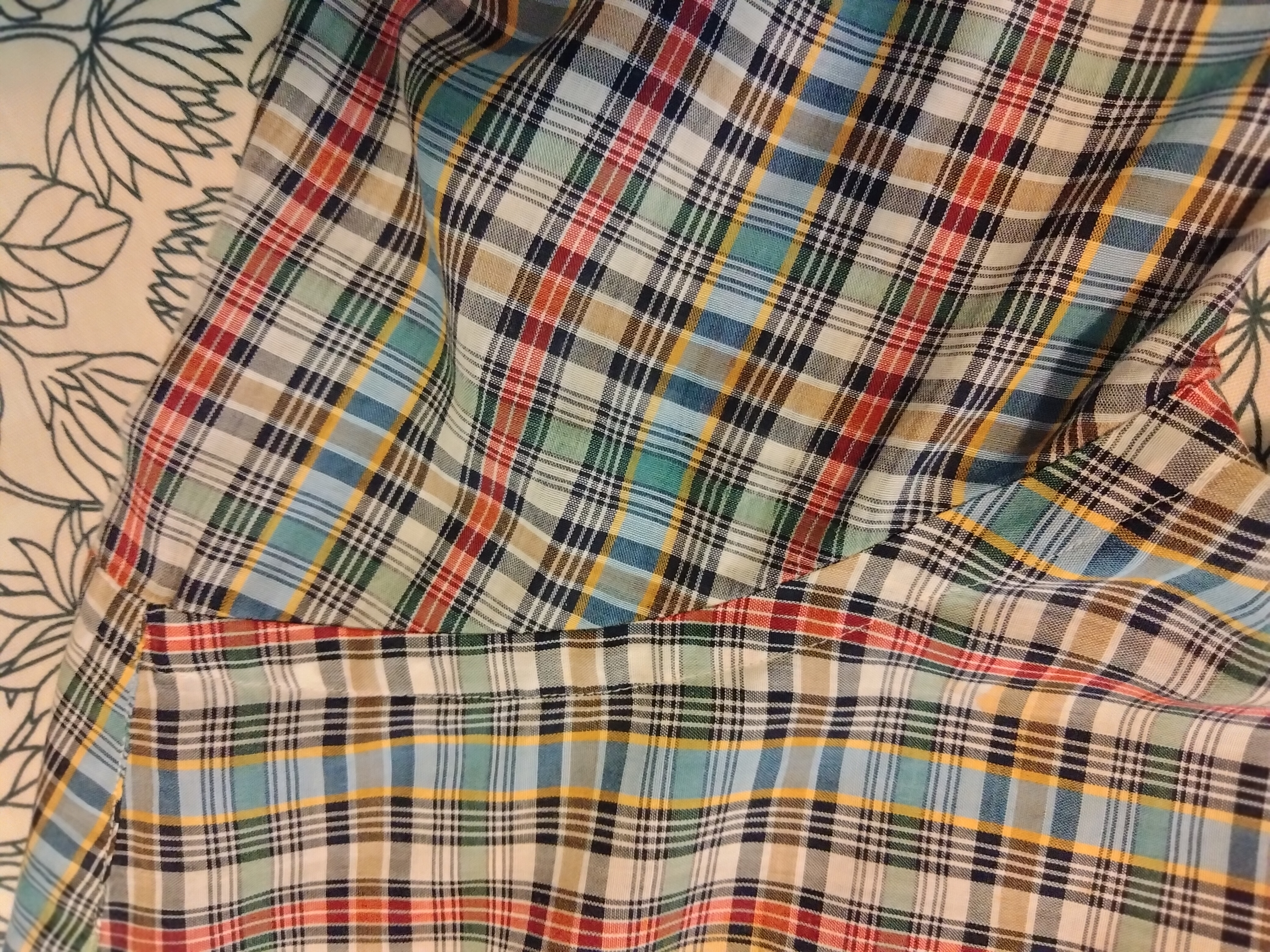
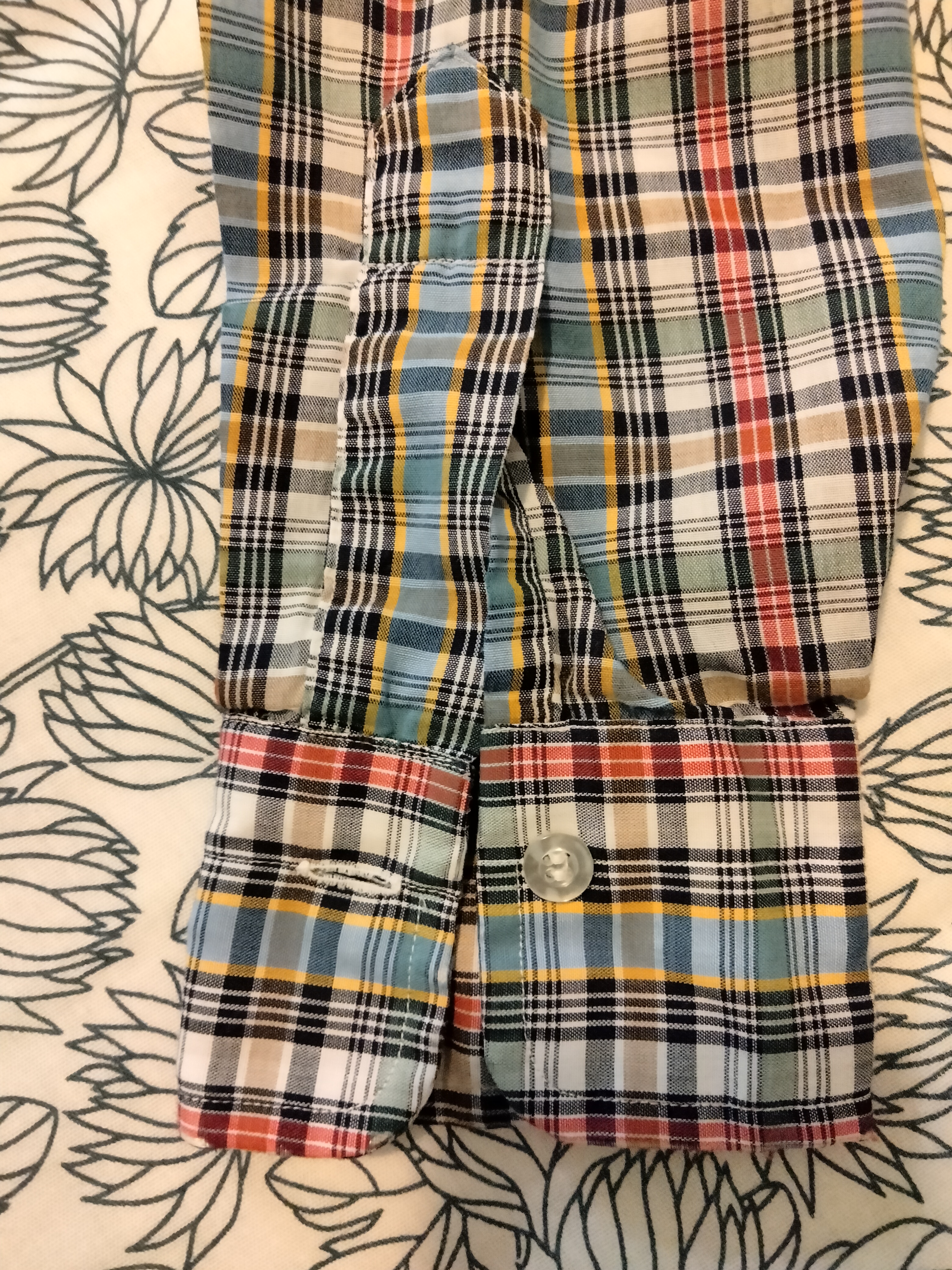
4. TAILORING DETAILS: After the fabric quality passes muster, this is where the rubber really hits the road. The best clothing, even in very plain styles, will have “tells” indicating their value in fine tailoring methods. TOPSTITCHING can be a design element when it’s visible on the outside, but also strengthens seams and attachments. See the stitching on the collar, which will help it to maintain its shape without stiffening. The stitching is very even in appearance – a good sign. Let’s review the other photos, too. There is a YOKE at the shoulders, extending to the upper back but also crossing the tops of the shoulders. This is a design feature, but the double-thickness of fabric strengthens this area where arm movements put stress on the sleeve attachments and upper back seams. SEAM FINISHING – take a look at the photos of interior and exterior seams. You can see the stitching around the armholes, which looks like simple topstitching on the outside. But, when the seams are examined inside you can see that they are completely finished off. They lie completely flat inside and out with the double reinforcement of two rows of stitches. The shirt hem is also carefully finished.

Last of all, the vents at the sleeve cuffs are finished with a decorative PLACKET that reinforces both sides and the top of the opening – another area of stress which frequently frays and tears with wear. Also worth a mention is that the buttonholes are very well-finished and only the second one from the top, which would be the one most frequently opened and closed with normal wear, shows some fraying. I can and will repair that with some hand-done stitches.

All in all, this “simple” mid-priced shirt is a quality garment with styling and construction that make it flattering and comfortable to wear, as well as long-lasting. When was the last time you saw these features on clothing in a retail store? If you do and you like it, Grab It, but you see why I love true vintage garments. Stay tuned for more . . . . . . . . . . . . . . . . . . . . . . . .

P.S. I’ll update you on the stain removal story.

MORGANA MARTIN, THE MAGICVINTAGESPY

BLOG: MAGICVINTAGESPY.COM

DRESS IT UP OR DOWN – A MID-CENTURY SWEATER-BLOUSE COULD BE MANY THINGS

Sportswear, day outfits, professional attire, dress-up events – you name it. Beaded or ribbed, plain or patterned; the combinations were endless and all set off that full skirt to perfection. Many would also look great with your Capri’ pants, a straight skirt or even short shorts.

Of course, some needed special accessories . . . . . . . . . .. . . . . . . . . . . . . . . . . . . . . . . . . . . . . .

MORGANA MARTIN, THE MAGICVINTAGESPY

BLOG: MAGICVINTAGESPY.COM

HOW POPULAR DRESS STYLES FOLLOWED AND PROMOTED CULTURAL CHANGE – 1950’S ERA

In the decade that followed World War 2 the image of women in society had been changed by the independence and social involvement required of them during the 1930’s Depression era and the war effort of the 1940’s. Although our culture still expected most women to be homemakers, the surge in average family income and more modern lifestyles encouraged them to become drivers of the consumer economy, which meant getting out in society more often and more visibly.

A woman who wanted to see herself as a benevolent member of her community often participated in volunteer work and this was a step up in her social standing. Sophisticated wardrobes were a part of the image-marketing aimed toward women. Many were still economical do-it-yourselfers and were avid consumers of craft magazines. Tomorrow we’ll continue the journey as this dream lifestyle expanded in the fashion worlds of mid-century women . . . . . . . . . . . . . . . . . . . . . . . . . . . . . . . . . . . . . . . . . . . . . .

MORGANA MARTIN, THE MAGICVINTAGESPY

BLOG: MAGICVINTAGESPY.COM

LOTS OF RESOURCE MATERIAL FROM THE ARCHIVED FILES – REMEMBER THE 1940’S SWEATER DRESSES I’VE POSTED?

You know me – I can’t stay out of the files. Just opened up a box with many mid-century needlework and craft magazines gifted to me by an elderly friend several years ago. As I reviewed the images, I came across several which show styles similar to some of mine that I’ve recently posted. The examples in my blogs have been from the 1940’s and these two are from the early 1950’s.

Both of the garments pictured above are made from needlework patterns in women’s magazines that many subscribed to. Most women still were not working outside the home. The new image of a suburban homemaker with a new house, many modern appliances and a luxurious life of ease had taken hold in the popular media. Therefore, it was believed that she had plenty of time to concentrate on crafts for pleasure or profit. It’s true that many, many women were knitting, crocheting, sewing and making their own clothing, hats, purses and jewelry during their spare hours if their partners had steady employment. But, of course, most of this was a dream machine.

However, lots of neat stuff from that era is out there and was made at home. Unfortunately, most needlework projects didn’t survive. This is especially true of dresses and coats, which got the most wear. Some of them were absolutely beautiful and I will be showing more pictures. Two-piece ensembles were especially popular right around 1952 – 1959 and into the early 1960’s.

I’m sure to keep on finding these magazine pages that will dovetail with recent posts and fill in the gaps between finds, so stay tuned to the airwaves . . . . . . . . . . . . . . . . . . . . . . . . . . . . . . . . . . . . . . . . . . . . . .

MORGANA MARTIN, THE MAGICVINTAGESPY

BLOG: MAGICVINTAGESPY.COM

A TRUE VINTAGE COSTUME BRACELET FOR BETTY BOOP AND ONE FOR BETTE DAVIS

Latest jewelry finds! Love it – the one at the top was a dime-store purchase or maybe even from a mail-order kit to make at home. (These kinds of craft kits were heavily marketed to homemakers in the mid-century but that’s another story – maybe coming up) Anyway, it was something to put on on your way to the soda fountain or the races but absolutely just for some rockabilly fun.

You can see that the adhesive was unevenly applied and has yellowed over the years. The “stones” are plastic and the bracelet itself is probably made of pot metal. However, it’s exactly the thing that a modern teenage gal might have worn in 1955. It won’t go in the vault but too cute to pass up. And, don’t knock the 5 & 10! Women LOVED the dime-stores back in the Fifties when there was some stability again after the war and lots of goods became available. You could get almost anything there – like our Dollar Stores today.

At the bottom, here’s a different animal. No, not quite “Bette Davis” – it’s completely faux – but sophisticated and pretty, as well as being nicely made. Any time a bracelet or necklace has a safety chain it indicates a certain level of quality in the piece. Definitely worthy of her date for the Prom, or . . . . . . . . . . . . . . . . . . . . . . . . . . . . . . . . . . . . . . . . . . . . . . . . . . . . . . . . . . . . .

MORGANA MARTIN, THE MAGICVINTAGESPY

BLOG: MAGICVINTAGESPY.COM

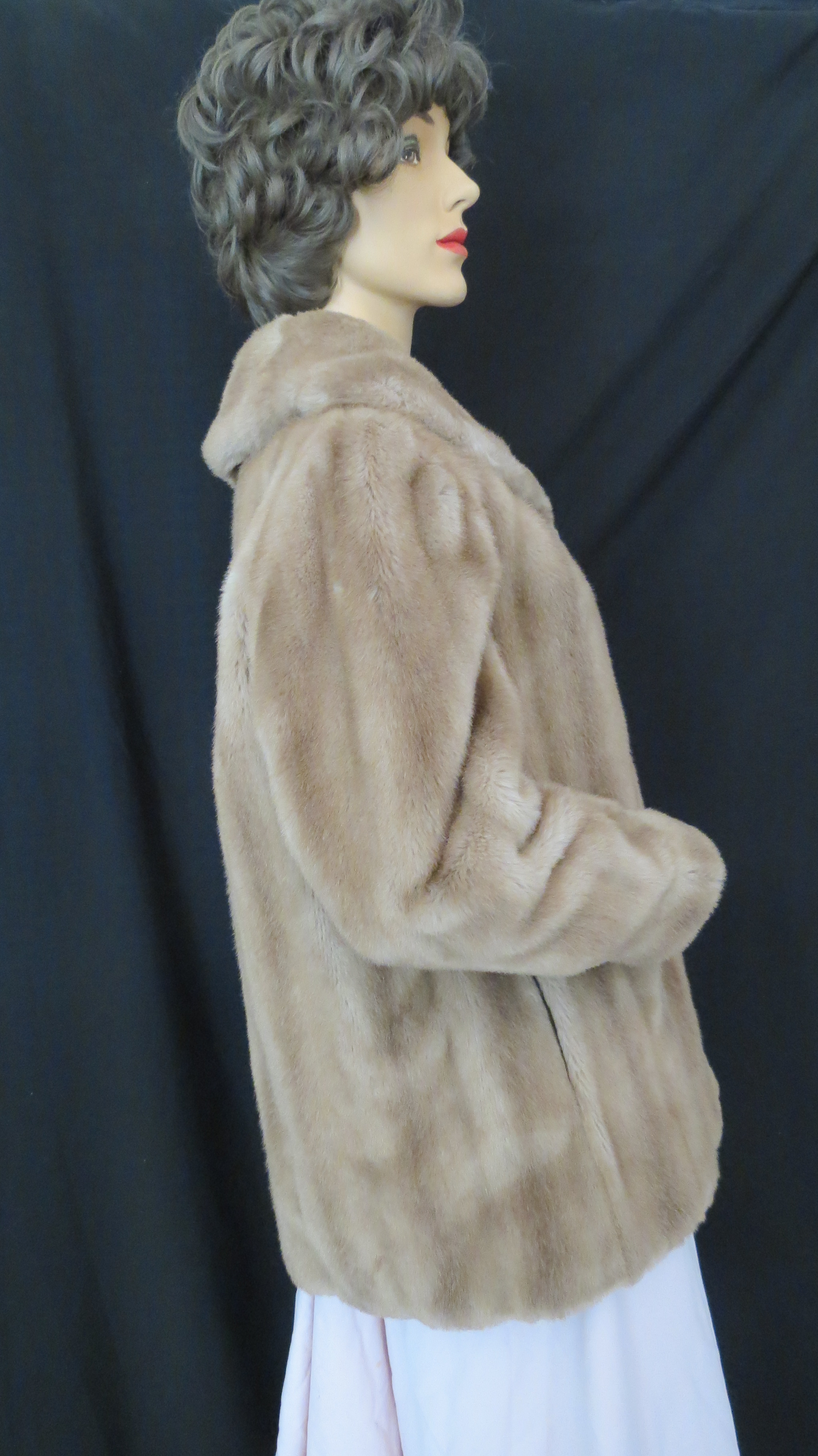
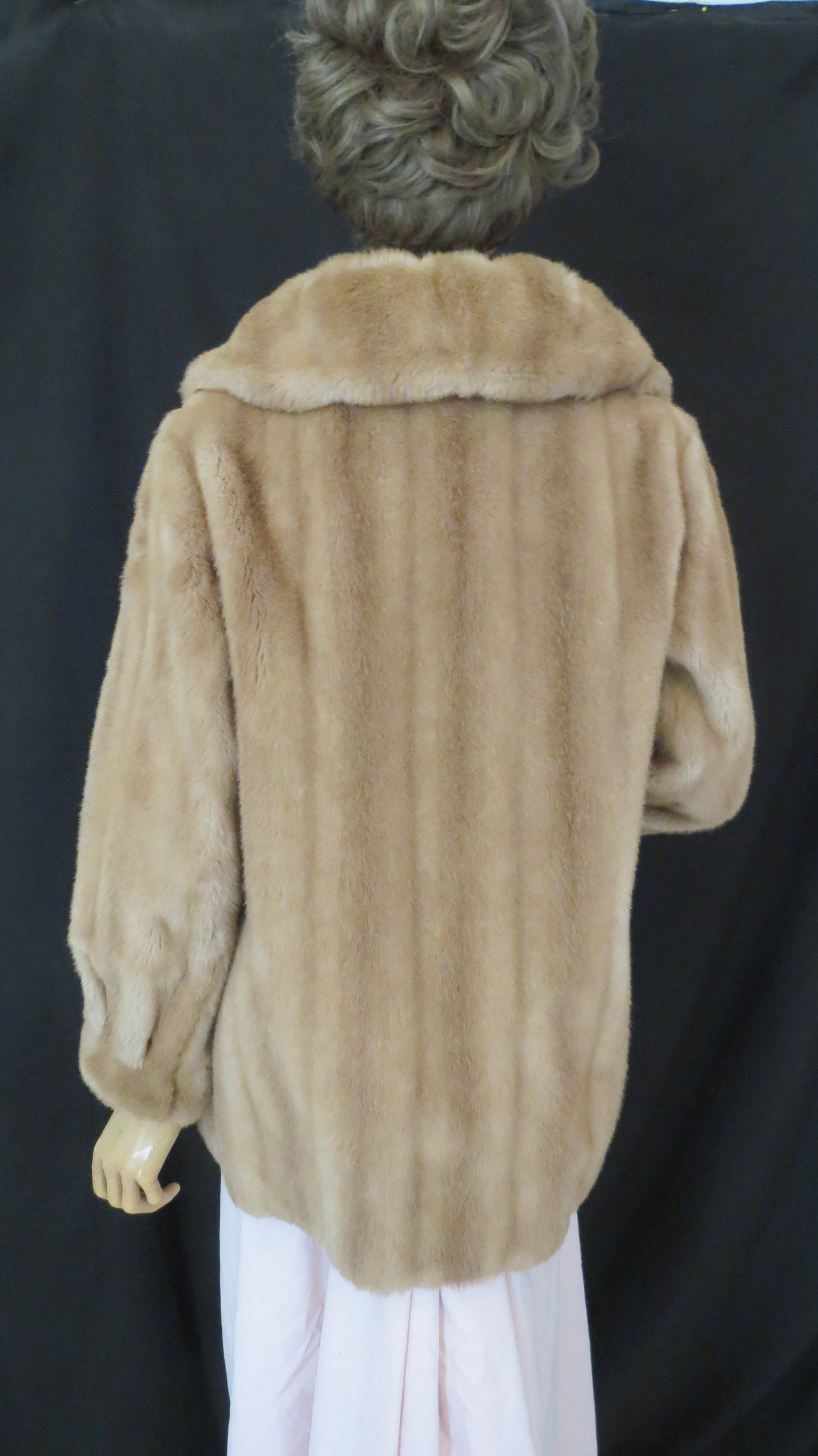
ELEGANT, WARM AND HUMANE TRUE VINTAGE OUTERWEAR FOR A FORMAL OCCASION

Evenings are still cold enough to require a warm coat or jacket over formalwear. A blonde faux mink jacket fills the bill and masquerades beautifully. As a great example of mid-century faux furs, this one appears genuine until the closest examination is made.

Styled and tailored as the best furs have always been, this jacket has a full cut, wide collar, cuffs, slash pockets and decorative buttons. A silky full lining covers you inside. The only break with pure vegan construction is a strip of what I believe is leather that faces the front closure on each side. To the credit of the maker, this addition does a good job of strengthening the foundation for the buttons and buttonholes (super important!) and helps the jacket to fall correctly. Now there are ways of accomplishing this with vegan materials.

Again, this coat demonstrates the garment industry’s post-war/mid-century efforts to make the type of wardrobe items which were formerly luxury goods become available to women of the middle classes. Today this trend has continued to build in many segments of wardrobe manufacture i.e. shoes, handbags and sachels/briefcases as well as cosmetics and personal care products which used to be made wholly or in part of substances harvested from animals (fur, skins, leather, whale oil, wool, lanolin, and more). Humane culture is finally becoming mainstream. How Woke of us!

MORGANA MARTIN, THE MAGICVINTAGESPY

BLOG: MAGICVINTAGESPY.COM

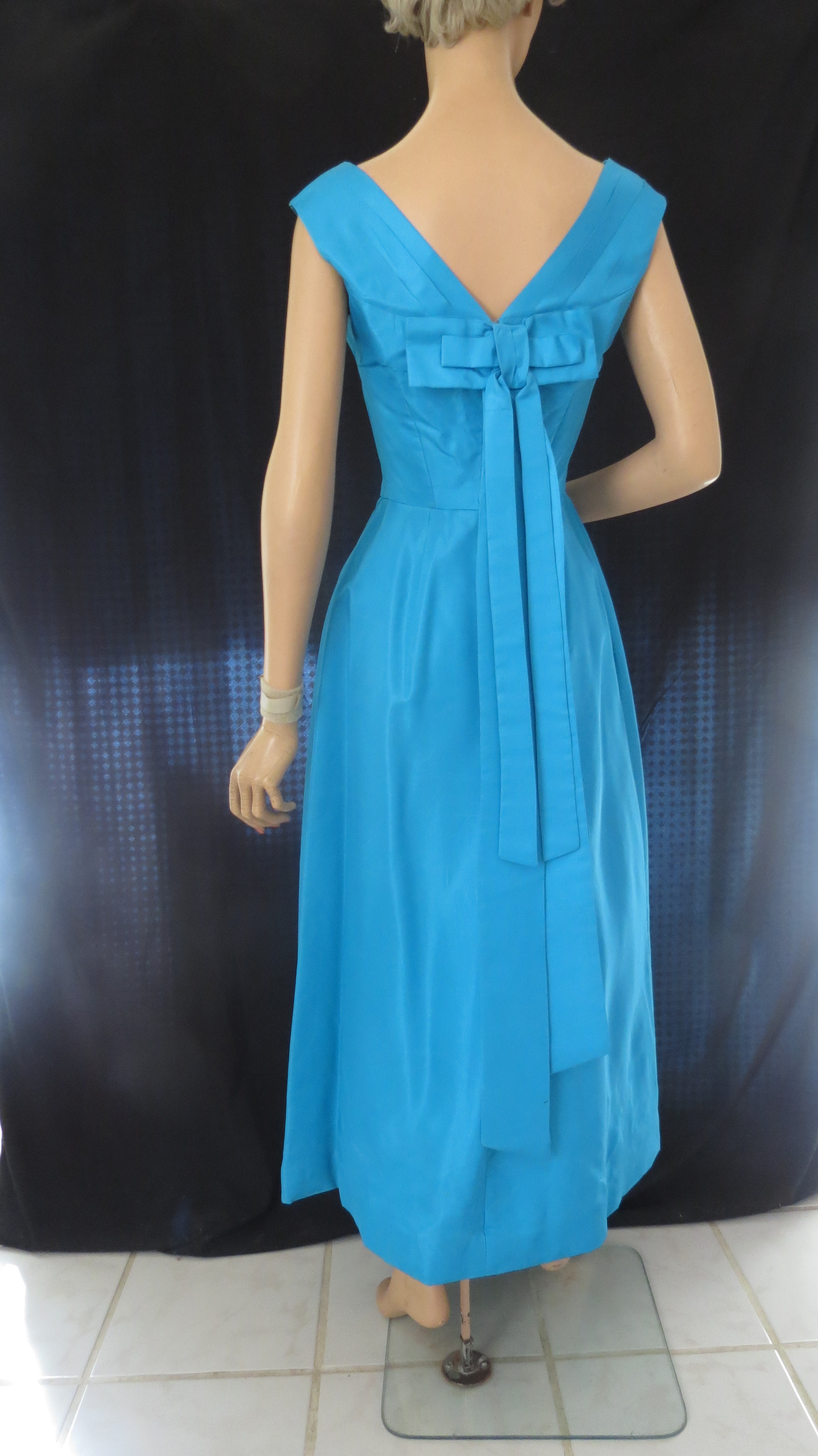
SAPPHIRE BLUE AND SATIN, TOO . . . . . . . . .

This version of “satin” is really heavy and is also a bonded fabric. Materials like this crop up here and there throughout the mid-century and seem like they would be uncomfortable to wear. However, they hold their shape very well without the need of too many stiff crinoline underskirt layers which, I suppose, was the point and an improvement over 1950’s styles. The hem is tea-length on Stella but an average-size gal from 1960 – about 5 inches shorter – might have found it to be ankle-length. Again, not really a Prom dress but it would have been perfect at a gala or music recital.

The most striking features are the intense color and the back-view design. Bows were a big deal – even up into the early 1970’s. Comfortably demure but also sexy in it’s own way, gowns like this provided lots of coverage for girdles, garter belts and structured bras – the standard foundation garments of that time. Less prone to “wardrobe malfunctions”? Not sure about that. I’m sure there are stories . . . . . . . . . . . . . . . . . . . . . . . . .. . . . . . . . . . . . . .

MORGANA MARTIN, THE MAGICVINTAGESPY

BLOG: MAGICVINTAGESPY.COM
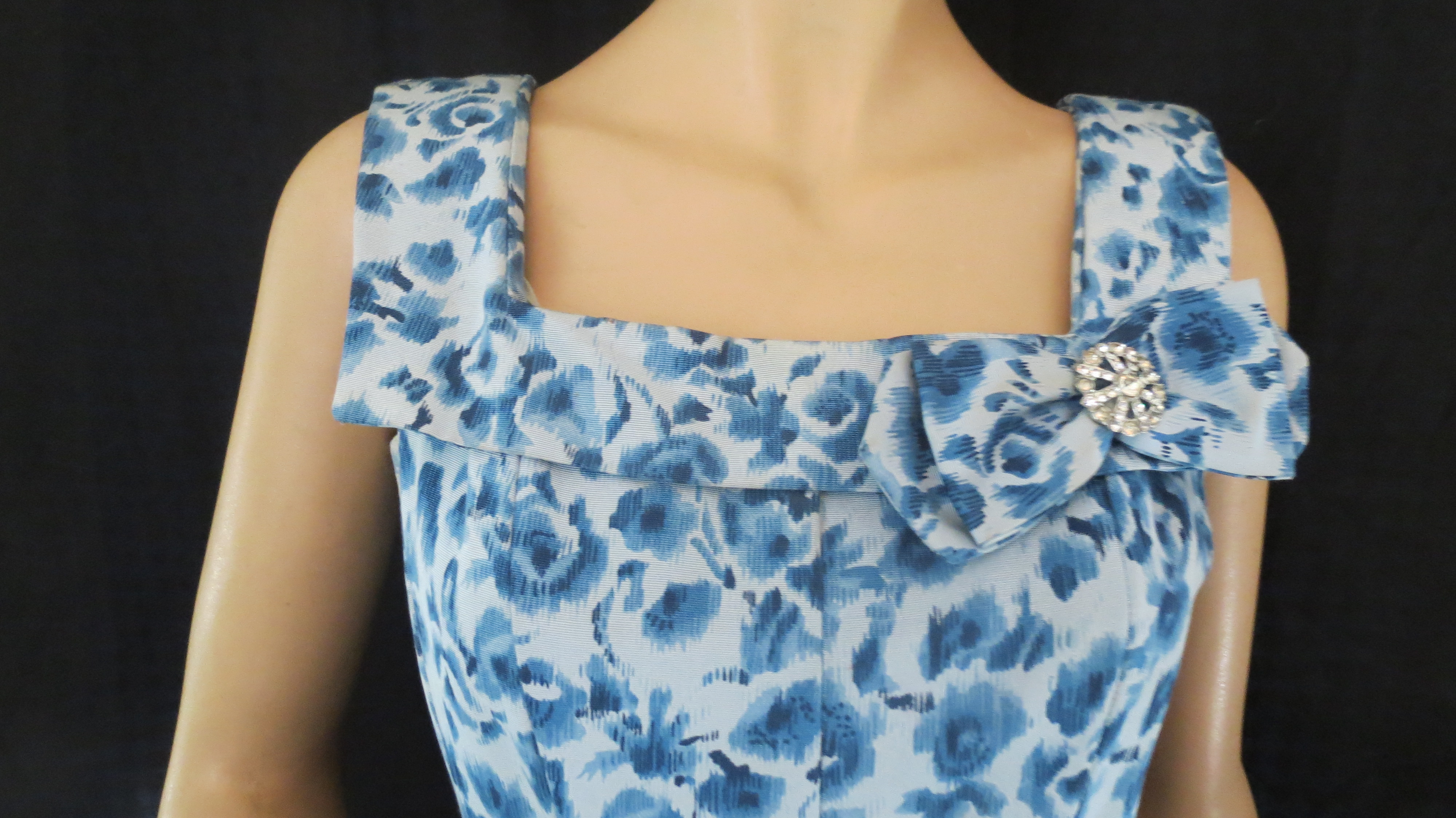
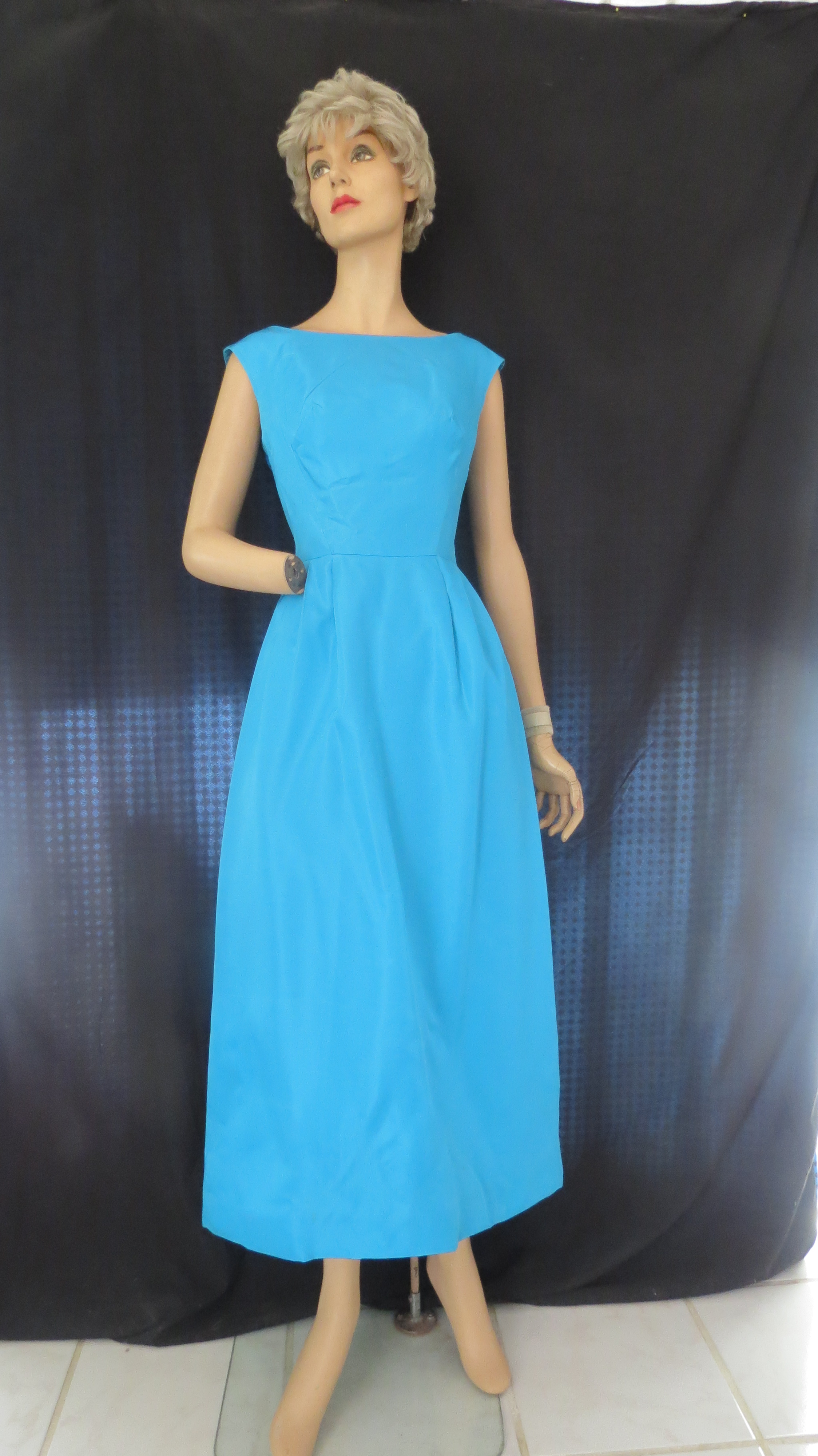
LET’S LOOK AT SOME LATE 1950’S – EARLY 1960’S SPECIAL OCCASION DRESSES

Not quite a Prom dress, but it might be just right for the Spring Fling. The Spring season has always brought parties, dances and holiday events in March and April. Everyone was itching to get out of the woolies and into pretty frocks again.

This one is just made for the still-cool days and nights in a substantial fabric and with slightly more coverage on the bodice than dresses with spaghetti straps or strapless designs would provide. However, a lacy crocheted shawl or matching bolero jacket would not be out of place. For those of the more tony set, it would be an opportunity to wear a fur stole.

We’ve left St. Paddy’s day behind and are swiftly heading into Easter. Perhaps we’ll look at something a little more conservative tomorrow. Stay tuned . . . . . . . . . . . . . . . . . . . . . . . . . . . . . . . . . . . . . . . . . . . . . . . . . . . . . . . . . . . . . . . . . . . . . . . . . . .

MORGANA MARTIN, THE MAGICVINTAGESPY

BLOG: MAGICVINTAGESPY.COM
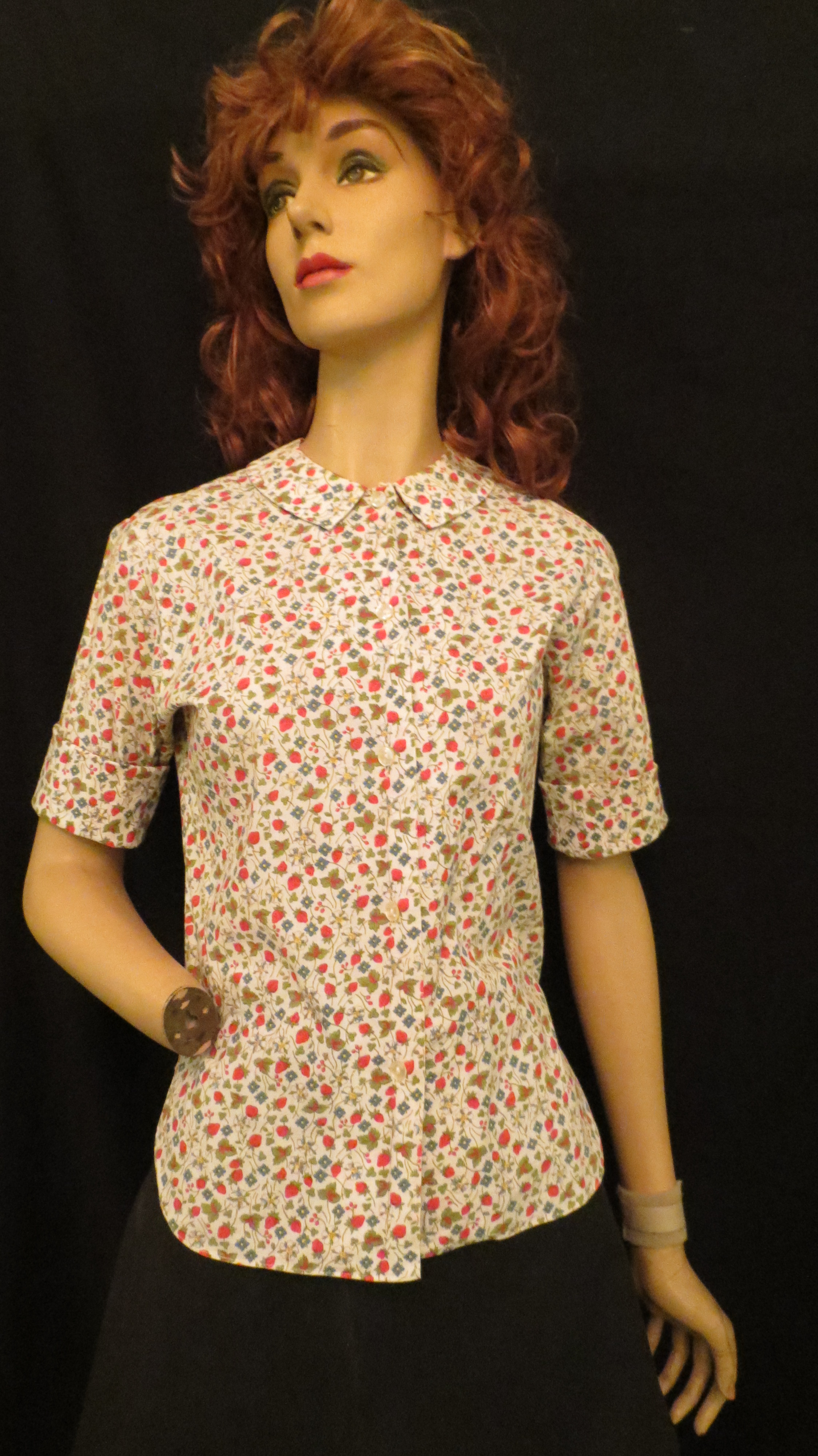
ANOTHER SUPER-CLASSIC WARDROBE ELEMENT FROM THE EARLY 1960’S – THE SHORT-SLEEVED COTTON BLOUSE

Here we see all of the elements – a Peter Pan collar, roll-up cuffs, 100% cotton fabric and an emphasis on “easy care”. Manufacturers and designers of the 1950’s and 1960’s capitalized on making women’s lives easier and more “luxurious” by selling products that helped them to spend more time away from the kitchen and laundry room. Strawberry motifs had their day, too, and were often seen in prints and decorations on skirts, dresses and sweaters.

The Arrow company, well-known manufacturer of men’s daily apparel, also branched into a women’s line back when a Misses size 10 was tiny but also very commonly worn by the women of that day. Imagine opening your front door in the U.S. on a world where most women wore a modern size 4 and stood about 5’3″ tall. . . . . . . . . . . . . . . . . . . . . . . . . . . . . . . . . . . . . . . . . . . . . . . . .

MORGANA MARTIN, THE MAGICVINTAGESPY

BLOG: MAGICVINTAGESPY.COM
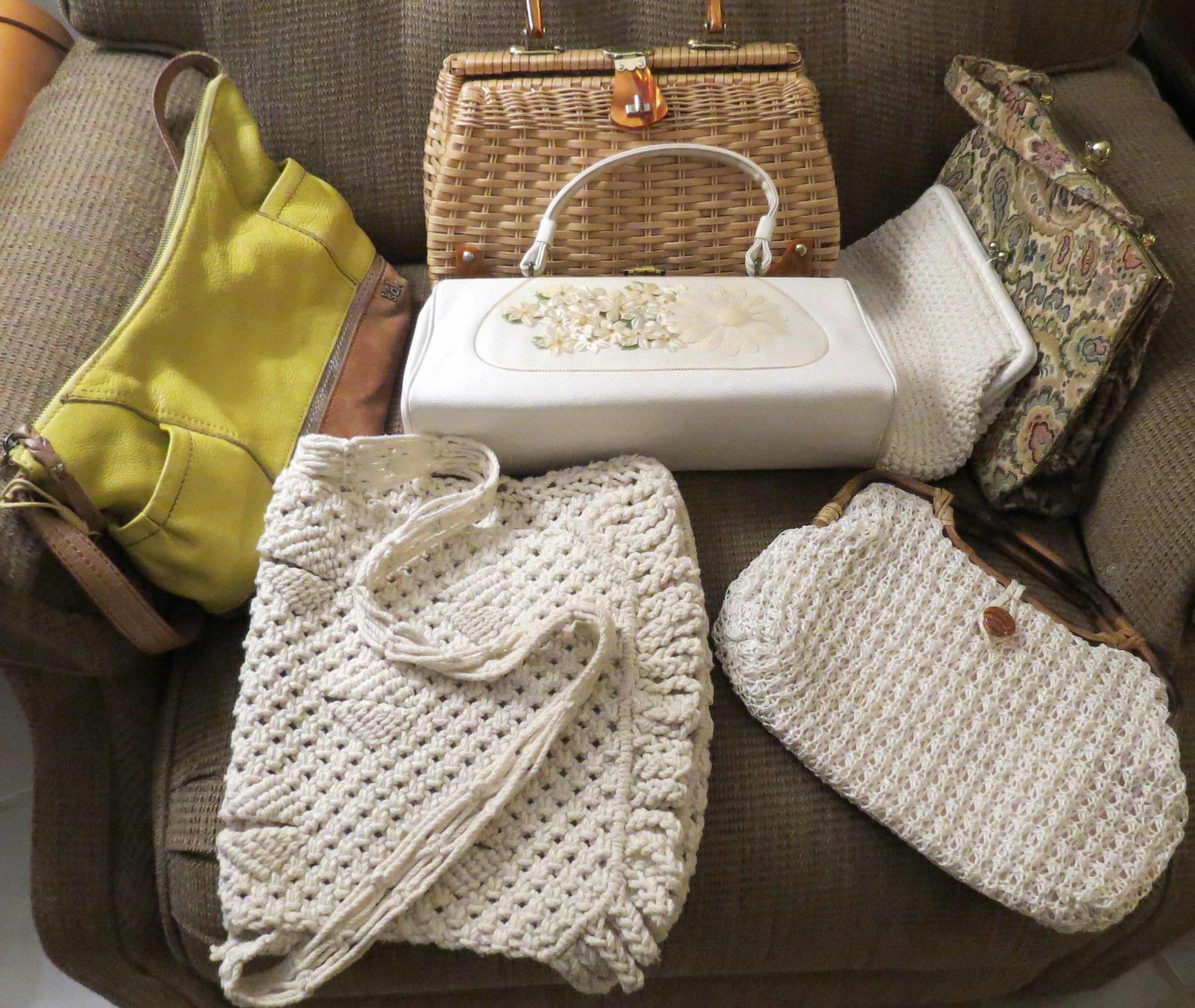
TRUE VINTAGE PURSE ACCESSORIES WERE A BIG PART OF THE CONTENTS OF ANY WOMAN’S . . . . . . .

From the 1950’s through the 1970’s some favorite styles and brands were seen on the street every day. Though not as roomy as many of the mini-suitcases that are popular now, there was always room for a compact, mirror, lipstick, coin purse and maybe a plastic rain hat – especially before the 1970’s. A more sophisticated lady might have a notepad with attached pen or pencil, a wallet which also held her checkbook and a few mints for after lunch.

The purse or handbag was always an integral part of a mid-century woman’s ensemble. Often it matched her gloves, shoes or hat. These considerations were probably more important than any kind of status symbol they displayed, though an expensive and well-maintained bag has always been seen as an indicator of social status and fashion-consciousness. The downside today is that it makes an agent easier to spot; so always take care not to leave clues behind . .. . . . . . . . . . . . . . . . . . . . . . . . . . . . . . . . . .

MORGANA MARTIN, THE MAGICVINTAGESPY

BLOG: MAGICVINTAGESPY.COM