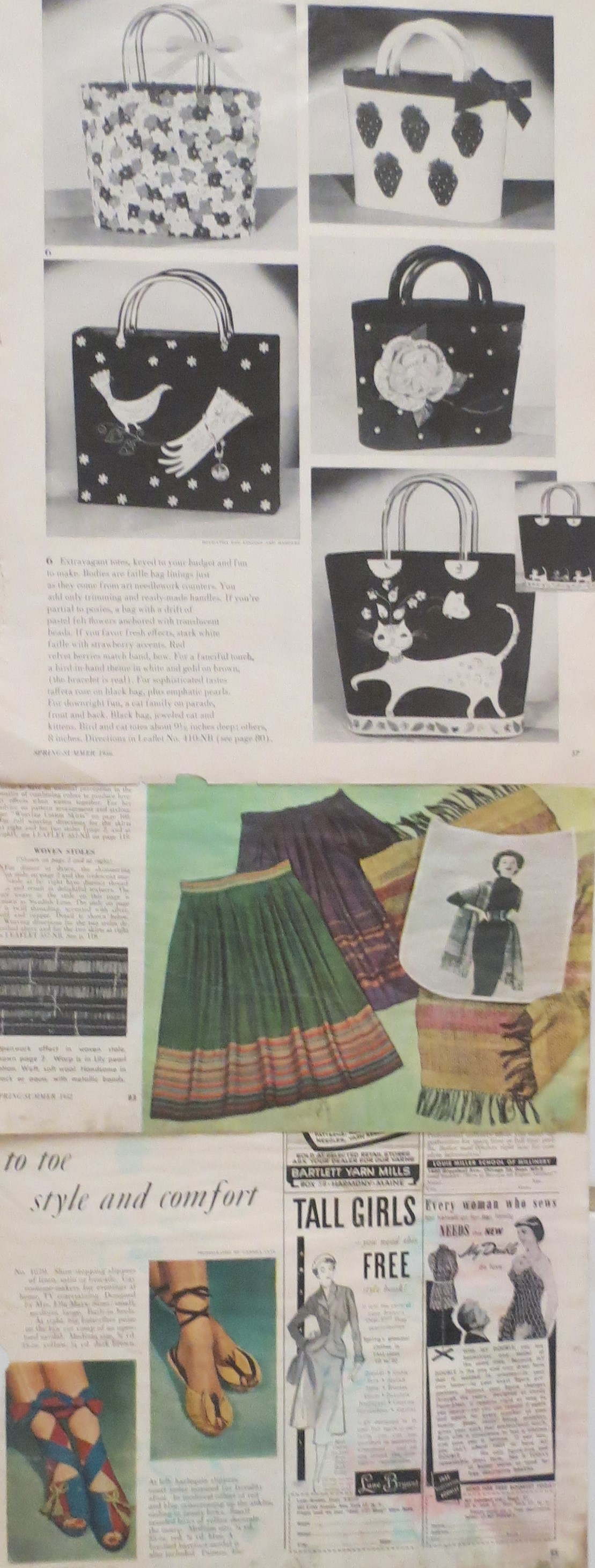
EARLY 1950’S HOME-CRAFTED ACCESSORIES FOR THE NEW CASUAL LOOK. FINGERTIPS TO TOE . . .

Big decorated tote bags! These are often associated with the 1960’s, but the trend started long before. Whimsical, cute, pretty; whatever your fancy. Big skirts of hand-woven material; how Boho of you! This called for home-made colorful ankle-wrap sandals, designed to match your outfits – a bit of throw-back to 1940’s styles.

As always in mid-century magazines, the pages are also filled with special-interest advertisements and mail-order offers. Women were constantly encouraged to go into home-based business selling accessories and home-assembled items which they could start with a kit by mail or correspondence course – early front-runners to today’s online marketing.

While time and culture kept marching forward, we can continue to see the reluctance to give up previous ways of being and doing things. Just like today, there were big leaps forward that surprised everyone alternating with slow-grinding incremental change that almost seemed like no change at all. However, also like today, it was accelerating . . . . . . . . . . . . . . . . . . . . . . . . . . . . . . .

MORGANA MARTIN, THE MAGICVINTAGESPY

BLOG: MAGICVINTAGESPY.COM

DRESS IT UP OR DOWN – A MID-CENTURY SWEATER-BLOUSE COULD BE MANY THINGS

Sportswear, day outfits, professional attire, dress-up events – you name it. Beaded or ribbed, plain or patterned; the combinations were endless and all set off that full skirt to perfection. Many would also look great with your Capri’ pants, a straight skirt or even short shorts.

Of course, some needed special accessories . . . . . . . . . .. . . . . . . . . . . . . . . . . . . . . . . . . . . . . .

MORGANA MARTIN, THE MAGICVINTAGESPY

BLOG: MAGICVINTAGESPY.COM

POST-WAR 1950’S NEW LOOK FASHION MADE THE CIRCLE SKIRT A GO-TO FAVORITE

Whether daily shopping, a rockabilly event or dressy dance, circle skirts were a style front-runner and showed up everywhere. This trend had started with some peasant styles in the 1940’s, but really took off after the war ended. Of course, it called for a new kind of blouse and top. Favored styles were close-fitting, whether tucked-in or extending over the hips. The natural stretch of knits made them perfect for the job.

The upper photos show casual tops that worked well for warm or cold weather. Needlework magazines published both patterns for these tops and instructions for making and decorating the skirts. Below, we see two-piece dresses in another iteration of those we’ve recently looked at. The apricot-colored dressy skirts pictured met the need by including matching tops in the patterns. The striped outfit has a cap-sleeved blouse for tea-time and one for an evening event with longer sleeves and a plunging back. The solid-color dress is a bit more demure. All of them carry the added possibilities of separates to be mixed and matched within a wardrobe.

And, what a wardrobe! We’ll see how many looks the home needle-worker could create with a few pieces . . . . . . . . . . . . . . . . .

MORGANA MARTIN, THE MAGICVINTAGESPY

BLOG: MAGICVINTAGESPY.COM

PART OF MODERN ’50’s – ’60’s LIFE IS TRAVEL – A NEW SENSE OF FREEDOM FOR MIDDLE-CLASS WOMEN

In the late 1950’s and early 1960’s needlework magazines embraced this exciting adventure and symbol of the Good Life and modern prosperity. Women were still mostly “at home”, but were REALLY getting out of the kitchen sometimes. Styles shifted right along with them.

Nothing portrays a life of leisure, well-being and financial freedom better than the ability to travel. This was a revelation for many women and international journeys were truly “another world” for most of them. New activities, of course, require new products and definitely a new wardrobe. The clothing industry, including handicrafts, got right into it and has continued to heavily market wardrobe items for travel ever since.

So, was there anything more thrilling than making an outfit for an upcoming trip across the country or the planet? The dream machine was in high gear and wardrobe, including all accessories, has led the movement. Only, perhaps, cars have had an equally compelling attraction and ability to follow and create culture. But, that’s another blog . . . . . . . . . .

MORGANA MARTIN, THE MAGICVINTAGESPY

BLOG: MAGICVINTAGESPY.COM

HOW POPULAR DRESS STYLES FOLLOWED AND PROMOTED CULTURAL CHANGE – 1950’S ERA

In the decade that followed World War 2 the image of women in society had been changed by the independence and social involvement required of them during the 1930’s Depression era and the war effort of the 1940’s. Although our culture still expected most women to be homemakers, the surge in average family income and more modern lifestyles encouraged them to become drivers of the consumer economy, which meant getting out in society more often and more visibly.

A woman who wanted to see herself as a benevolent member of her community often participated in volunteer work and this was a step up in her social standing. Sophisticated wardrobes were a part of the image-marketing aimed toward women. Many were still economical do-it-yourselfers and were avid consumers of craft magazines. Tomorrow we’ll continue the journey as this dream lifestyle expanded in the fashion worlds of mid-century women . . . . . . . . . . . . . . . . . . . . . . . . . . . . . . . . . . . . . . . . . . . . . .

MORGANA MARTIN, THE MAGICVINTAGESPY

BLOG: MAGICVINTAGESPY.COM

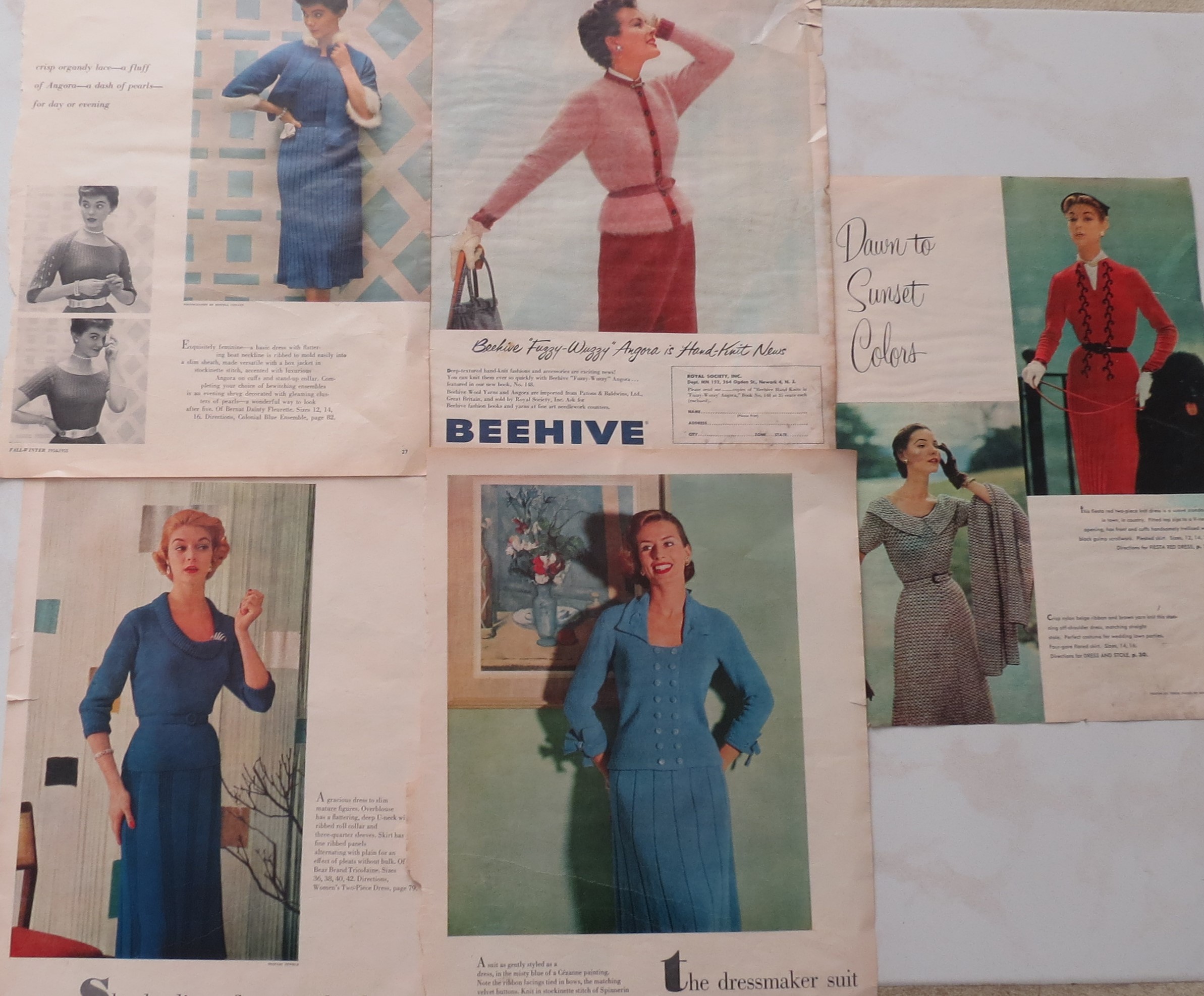
GORGEOUS TWO-PIECE DRESSES THAT WOMEN DREAMED OF KNITTING IN THE 1950’S

Yes, they dreamed. A few of them actually did it, though it took phenomenal skill with needles or a knitting machine to make one of these outfits with good fit and beautifully-finished detail. The most popular needlework magazines were very good at following the fashion and cultural trends. The pictures above come from issues dated 1954 – 1958. Look at the blue dress top left – remember my posts of dresses and coats with fur trim on cuffs and hems? That was a “fad” in the ’50’s to early ’60’s which came up now and then on the most sophisticated styles. I was surprised to see it shown on a custom-knitted dress.

Can you imagine crafting something tailored as exceptionally as one of these? I can’t, but would LOVE to find one with this amount of style and added detail. You’ll be the first to know when I discover one . . . . . . . . . . . . . . . . . . . . . . . . . . . .

MORGANA MARTIN, THE MAGICVINTAGESPY

BLOG: MAGICVINTAGESPY.COM

LOTS OF RESOURCE MATERIAL FROM THE ARCHIVED FILES – REMEMBER THE 1940’S SWEATER DRESSES I’VE POSTED?

You know me – I can’t stay out of the files. Just opened up a box with many mid-century needlework and craft magazines gifted to me by an elderly friend several years ago. As I reviewed the images, I came across several which show styles similar to some of mine that I’ve recently posted. The examples in my blogs have been from the 1940’s and these two are from the early 1950’s.

Both of the garments pictured above are made from needlework patterns in women’s magazines that many subscribed to. Most women still were not working outside the home. The new image of a suburban homemaker with a new house, many modern appliances and a luxurious life of ease had taken hold in the popular media. Therefore, it was believed that she had plenty of time to concentrate on crafts for pleasure or profit. It’s true that many, many women were knitting, crocheting, sewing and making their own clothing, hats, purses and jewelry during their spare hours if their partners had steady employment. But, of course, most of this was a dream machine.

However, lots of neat stuff from that era is out there and was made at home. Unfortunately, most needlework projects didn’t survive. This is especially true of dresses and coats, which got the most wear. Some of them were absolutely beautiful and I will be showing more pictures. Two-piece ensembles were especially popular right around 1952 – 1959 and into the early 1960’s.

I’m sure to keep on finding these magazine pages that will dovetail with recent posts and fill in the gaps between finds, so stay tuned to the airwaves . . . . . . . . . . . . . . . . . . . . . . . . . . . . . . . . . . . . . . . . . . . . . .

MORGANA MARTIN, THE MAGICVINTAGESPY

BLOG: MAGICVINTAGESPY.COM
ELEGANT, WARM AND HUMANE TRUE VINTAGE OUTERWEAR FOR A FORMAL OCCASION

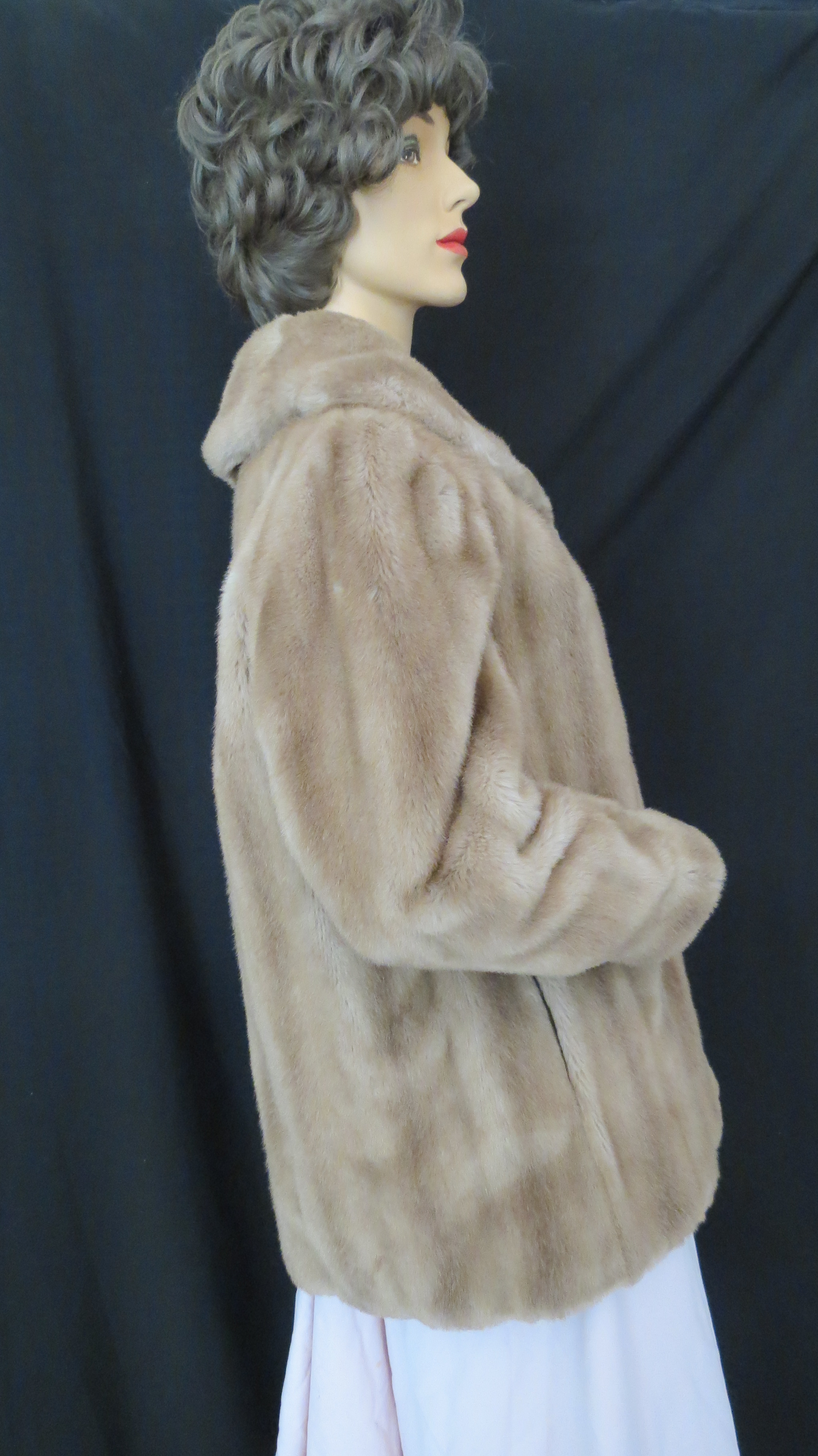
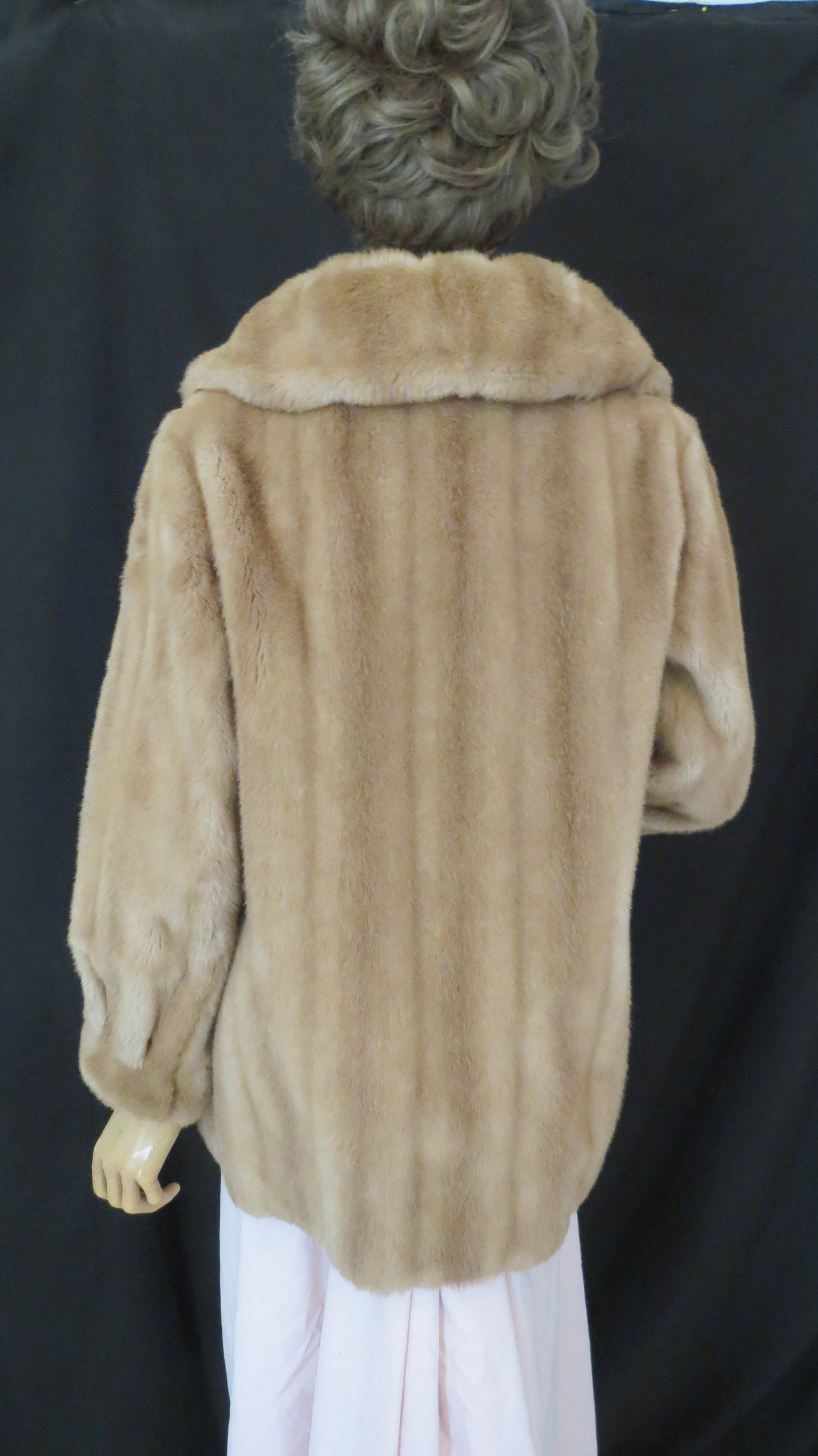
Evenings are still cold enough to require a warm coat or jacket over formalwear. A blonde faux mink jacket fills the bill and masquerades beautifully. As a great example of mid-century faux furs, this one appears genuine until the closest examination is made.

Styled and tailored as the best furs have always been, this jacket has a full cut, wide collar, cuffs, slash pockets and decorative buttons. A silky full lining covers you inside. The only break with pure vegan construction is a strip of what I believe is leather that faces the front closure on each side. To the credit of the maker, this addition does a good job of strengthening the foundation for the buttons and buttonholes (super important!) and helps the jacket to fall correctly. Now there are ways of accomplishing this with vegan materials.

Again, this coat demonstrates the garment industry’s post-war/mid-century efforts to make the type of wardrobe items which were formerly luxury goods become available to women of the middle classes. Today this trend has continued to build in many segments of wardrobe manufacture i.e. shoes, handbags and sachels/briefcases as well as cosmetics and personal care products which used to be made wholly or in part of substances harvested from animals (fur, skins, leather, whale oil, wool, lanolin, and more). Humane culture is finally becoming mainstream. How Woke of us!

MORGANA MARTIN, THE MAGICVINTAGESPY

BLOG: MAGICVINTAGESPY.COM

NOW, FOR A GENUINE PROM DRESS FROM THE 1940’S

Back to the delightful tailoring of the early mid-century. This is real 1940’s Prom dress style before they became over-the-top- flouncy a few years later. I love the unusual color palette of this frock – sheer powder blue over mauve pink. The ruching on the bodice is quite unique and especially flattering on someone with a small bustline. Looks like a comfortable design that wouldn’t invite wardrobe malfunctions.

Extra crinoline layers could be worn under the skirt if a mid-1950’s silhouette is more your style. However, comfort and freedom of movement are always the gold standard for any effective disguise. . . . . . . . . . . . . . . . . . . . . . . . . . . . . . . . . . . . . . . . .

MORGANA MARTIN, THE MAGICVINTAGESPY

BLOG: MAGICVINTAGESPY.COM

SAPPHIRE BLUE AND SATIN, TOO . . . . . . . . .

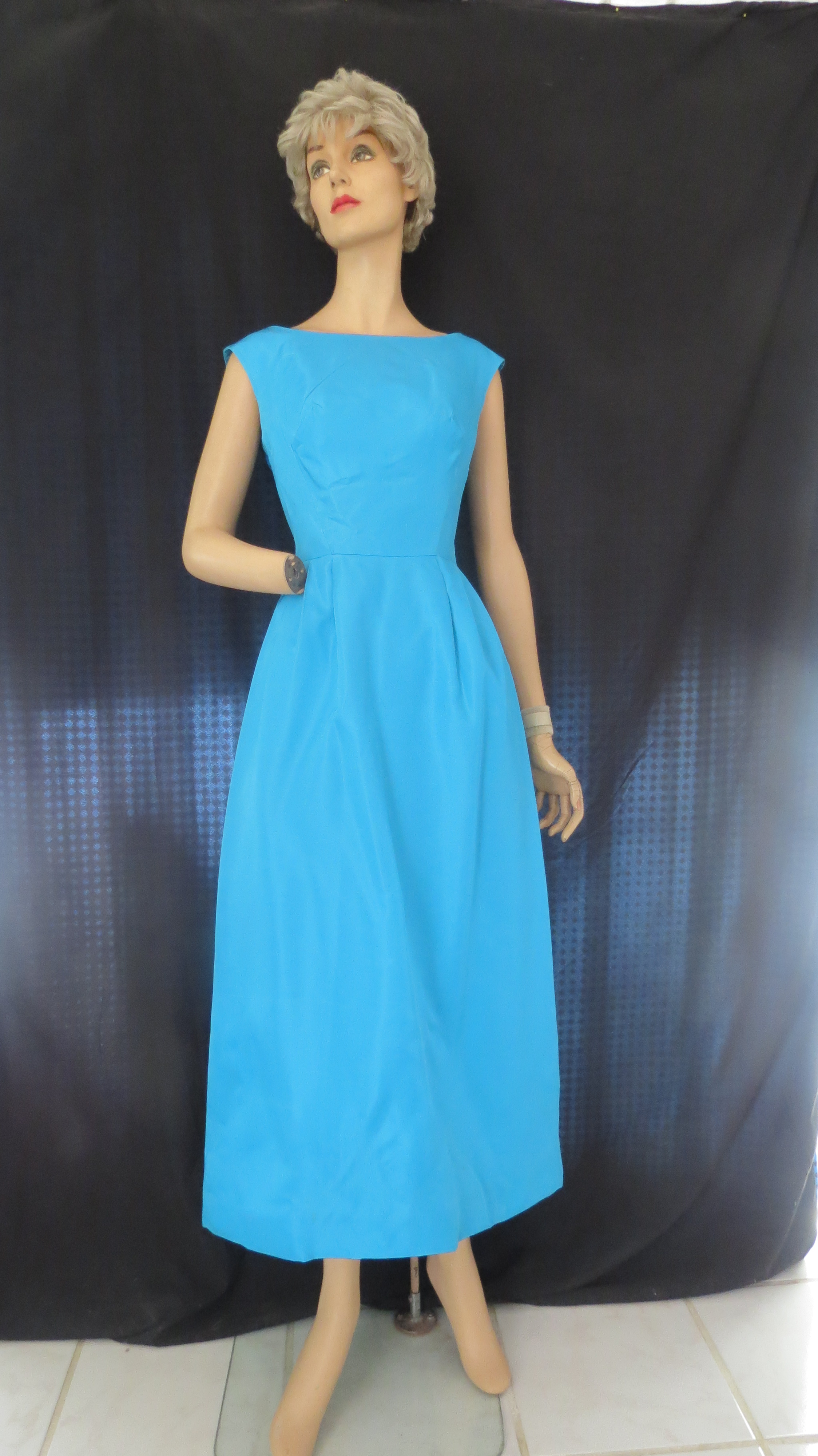
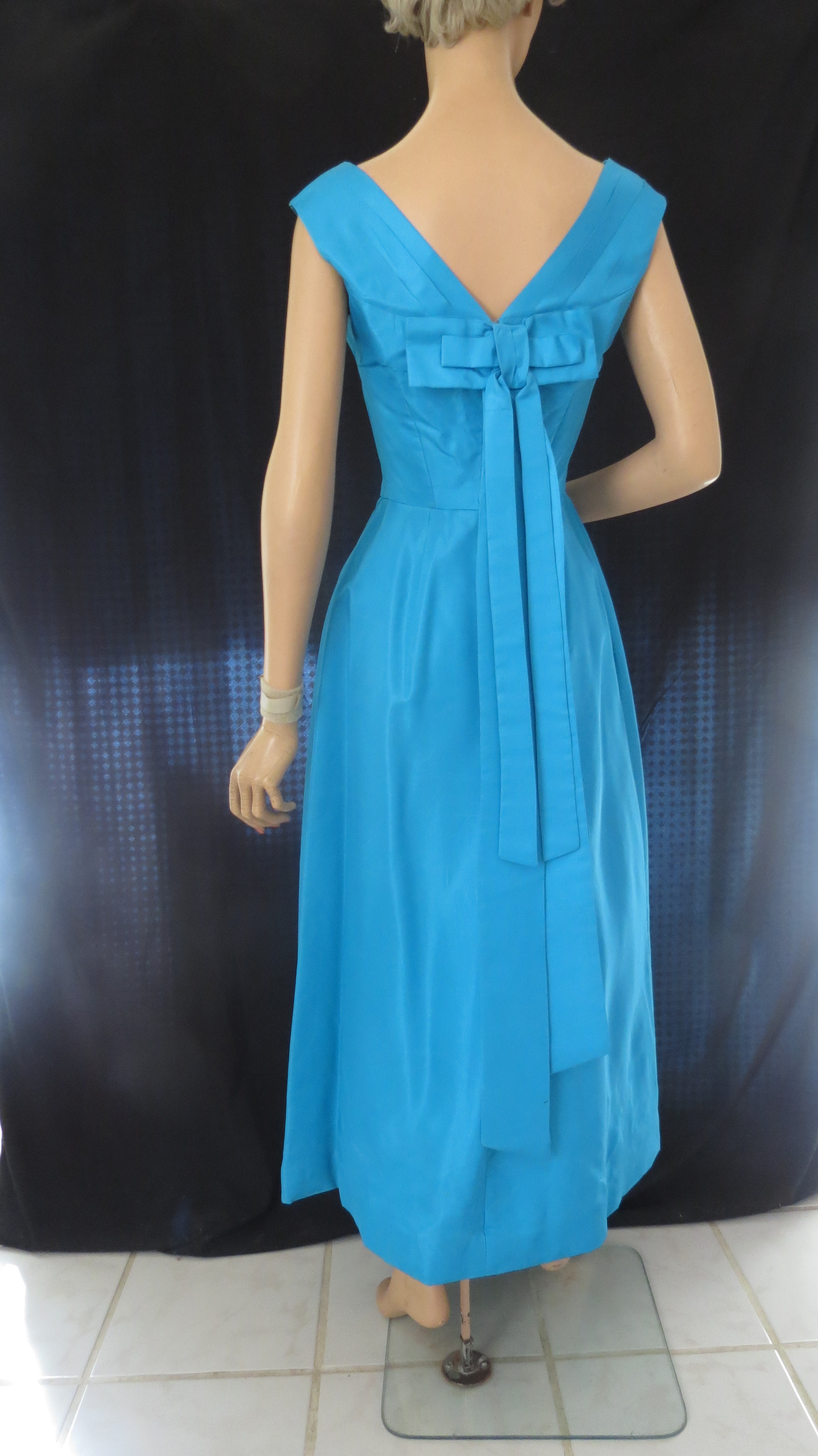
This version of “satin” is really heavy and is also a bonded fabric. Materials like this crop up here and there throughout the mid-century and seem like they would be uncomfortable to wear. However, they hold their shape very well without the need of too many stiff crinoline underskirt layers which, I suppose, was the point and an improvement over 1950’s styles. The hem is tea-length on Stella but an average-size gal from 1960 – about 5 inches shorter – might have found it to be ankle-length. Again, not really a Prom dress but it would have been perfect at a gala or music recital.

The most striking features are the intense color and the back-view design. Bows were a big deal – even up into the early 1970’s. Comfortably demure but also sexy in it’s own way, gowns like this provided lots of coverage for girdles, garter belts and structured bras – the standard foundation garments of that time. Less prone to “wardrobe malfunctions”? Not sure about that. I’m sure there are stories . . . . . . . . . . . . . . . . . . . . . . . . .. . . . . . . . . . . . . .

MORGANA MARTIN, THE MAGICVINTAGESPY

BLOG: MAGICVINTAGESPY.COM