What could be a better brand name for something this flamboyant? Next time I need a flamingo costume . . . . . . . . . . . . . . . . . OK, it IS pretty and definitely tells us that Spring has sprung. The El Rita label has apparently made hats (of various kinds) for many decades, but the elastic chin strap is always a good clue to the early mid-century or before.
This set reflects very well the resourcefulness of war-time women and their suppliers in the fashion trade. The availability of metals was restricted, if not yet rationed in 1940. Why not use a hardening and preserving process to manufacture beautiful pieces from natural leaves? The brooch might even have a loop behind for hanging on a chain as a necklace, which was often done. Of course, we’ve seen similar jewelry in the commercial market for the past 3 or 4 decades but this must have been a new or rarely-used technique back in the day. Looks like copper was part of the witch’s brew used here.
Just love it when a lady (investigator, victim or witness? . . . . . .) made notes about the evidence which we sleuths can use in the future and kept the original packaging. Perfect clue . . . . . . . . . . . . . . . . . . . . . . . . . . . . . . . …
So, when I unpacked this I thought “Oh, a charm bracelet. Those started to become fashionable in the mid-century.” Well, when I looked at it closely it’s no regular charm bracelet. It tells the story of the New Deal and wartime. Those coins are from various European countries, and the United States. Germany, France, Italy and England are represented. Leaving out several players, these are the principal Enemy and western Allies of World Wars 1&2. The little male figures (only men, of course) represent people from different walks of life and levels of society. The Native American, the professor, the businessman, the teamster, the beggar, the Laborer and the Elite. This may represent the New Deal’s aim of leveling the economic playing field across all the population. A great idea. Good luck with that.
Fabulous clue, however. Only a certain type of woman at a certain time and from a certain type of place would wear such a bracelet. Or, perhaps, it was an individual creation worn as an unobtrusive bauble but carrying a coded message . . . . . . . . . . . . . .
Victorian photographs were not generally the most uplifting of images, though they can be wonderful clues. I have used them as reference from time to time and do like the two dandies in their high hats, who seem to have a bit of a sense of humor. All that heavy, heavy clothing – can you imagine?
We’re talking mid-1800’s to about 1900 here. Lots more to come, and all in the Twentieth Century. Stay tuned . . . . . . . . . . . . . . . .
My great-great grandmother’s jewelry box. Unfortunately, one of the flasks for perfume or cologne (often called toilet water back in the day, but I hesitate to use that term now) was lost or broken. However, this vanity accessory is in great shape. The true color is a more bluish cranberry red. The square-shaped tray in the center lifts up to reveal another compartment below.
This piece is large – about 14″ wide by 7″ deep and 6″ high. Completely covered in velvet with satin liner. However, the Victorian tendency to over-embellishment and wastefulness in design is evident. The darn thing is heavy and holds very little jewelry. You see on top formed places for a bracelet or two and a few rings plus necklaces or pins at the side. Down below there’s a little more room, but not a lot. The spaces below where the bottles sit are inaccessible and don’t hold anything. This would never be practical for modern women of our lifetime. However, we must admit that the tendency to over-accumulate stuff is something that the post-war generations after World War II have to own. I’m sure that great-great grandma was thrilled with this. But then, she wasn’t a sleuth, to the best of my knowledge.
Think of the hidden compartments which could have been installed . . .. . . . . . . . . . . . . . . . . . . . . . . . . . . . . . . . .
After several tries, here’s a good close-up view of this Victorian to Edwardian era mourning jewelry from the late 1800’s to very early 1900’s. Commonly worn after the deaths of close family members, this type of jewelry was usually set with onyx, obsidian, black glass or jet stones. The blank portrait area on the pendant is the aspect I find most ominous. So very glad that this morbid tradition has, for the most part been abandoned, at least in the United States.
The brief wearing of black armbands is less concerning and it is good that, in some cases, people who are recovering from a serious loss can be identified and respected. Though it could come in very handy as an element of disguise, I’m not likely ever to use it . . . . . . . . . . . . . . . . . . . . . . . . . . . . . . . . . . . . . . . . . . . . . . . . . . . . .
This is really special – it comes from my family. Can’t say which of the grannies or aunties it belonged to, but one of them carried it before the 1930’s. Can you imagine – it still contains some of the powder and rouge that she used!
It’s a pretty messy deal, but you can see that there is an attractive little lever to hold one of the powder puffs in place, no doubt to prevent the two powders from mixing. Well, good luck on that, but I guess it worked well enough.
On top of that, the compact then fastened on to a clip somewhere on her belt or pocket or in a purse. Powdering one’s nose was an important beauty ritual for women at least until the end of the mid-century. They must have sprinkled cosmetic across the entire world. Take care, damsels of intrigue. If a clever investigator could suss out the exact shade and formulation of the evidence left behind, s/he might be on your trail . . . . . . . . . . . . . . . . . . . . . . . . . . . . . . . . . . . . . . . . . . . . . . . . . . . . . . . . . . . . . .
Who would have thought? Until the mother of a friend gave me a 2-piece sweater-dress that she had made for herself in 1952, I never would have guessed it. That dress was a day-dress, whereas this one is dressy. It may even be from the 1940’s. It is hand-knitted from some kind of heavy synthetic yarn, which would make sense for that time period.
Previously, I would never have expected to see something like this before the 1960’s. It just goes to show that there is always more to learn and that clues often come from unexpected sources . . . . . . . . . . . . . . . . . . . . . . . . . . . . . . . . . . . . . . .
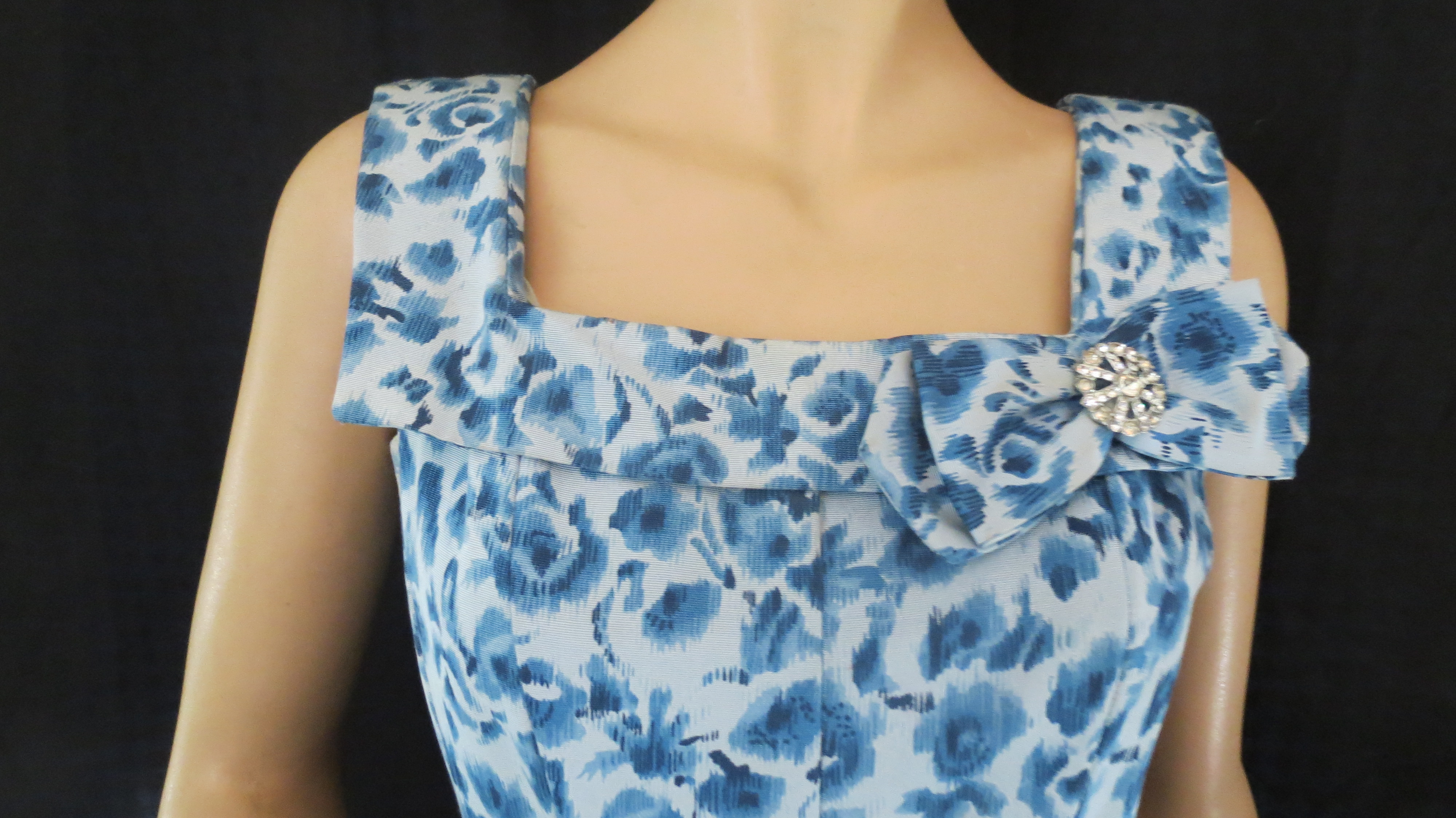
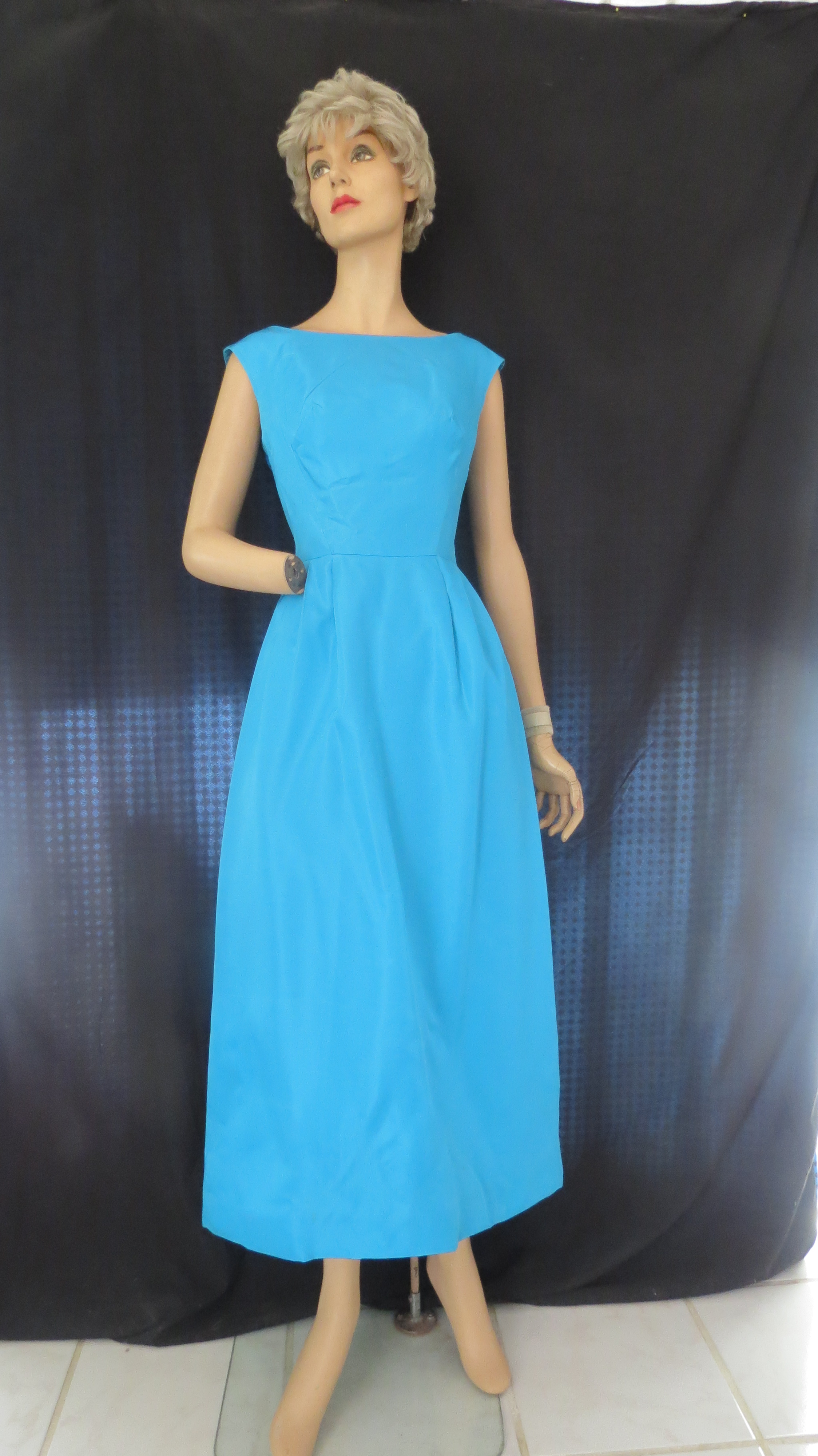
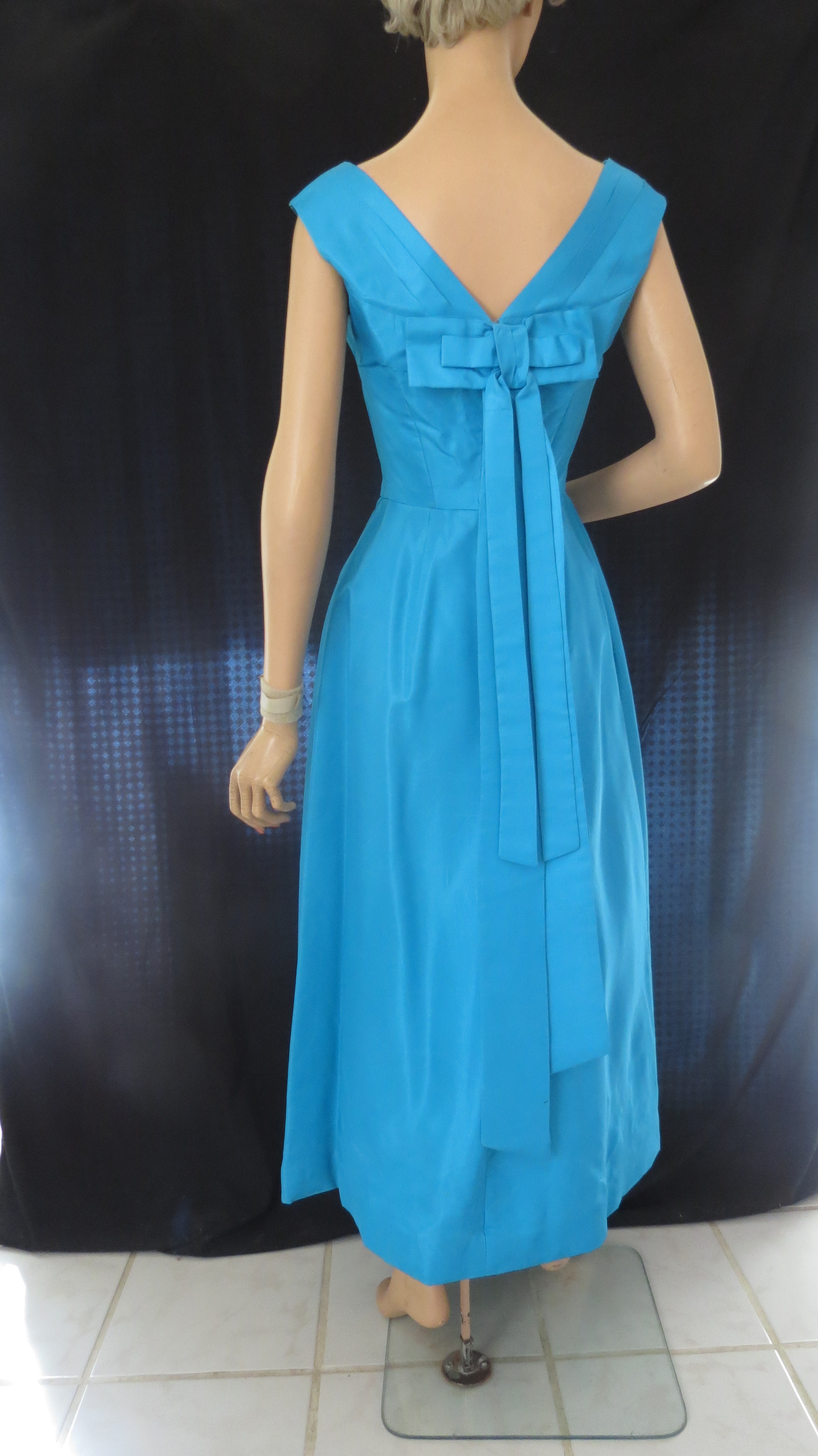
Beautifully-tailored, this dress is a perfect example of the quality and exceptional tailoring that was commonly found on mid-century clothing. This was often true even on mid-priced items. Bargain buys were generally well-made, too. Aside from pretty details, excellent cut and fitting seen in clothing from this time, strap holders have always been a favorite find of mine. What could be more practical?
Something else to love is strategically-placed hooks & eyes or snaps. These enhance the fit and protect the garment by preventing gaps or strains on places that had to withstand extra pressure, like the tops of zippers, necklines and waists. Therefore, the clothing always looks better when worn and lasts longer. Today you can buy online a plastic clip that will hold some straps together in back to keep them from falling down your arm, but that does nothing to prevent them from showing in a wide neckline. Nothing is simpler or more elegant than tailoring details which are part of the design.
Now we’re Prairie – Victorian, or some combination of the 1800s. Empire waistlines were in style earlier in that century and high necklines with tight sleeves mostly in the 1890’s. The late 1960’s and early 1970’s fell in love with the 1800’s fashion. Think early Gunne Sax. This was especially true for white cotton lingerie undergarments, sleepwear and casual clothing but also spilled over into some day dresses and formals. In this case, a white structured gown was likely meant for a wedding or, at the least, some kind of formal occasion
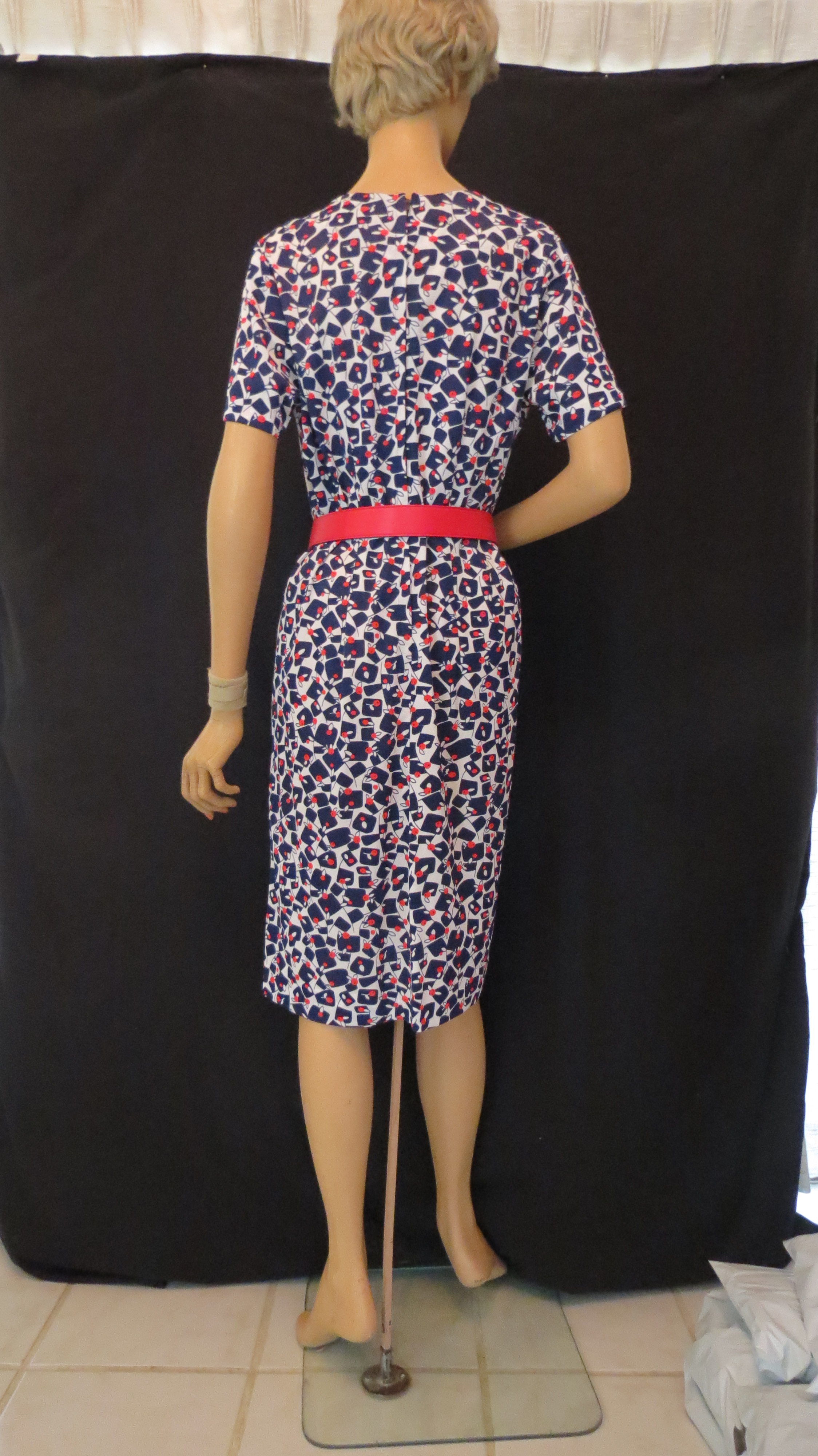
This one is all 20th century fad fashion, with a zip up the back and polyester fabric. But, it was fun while the trend lasted. Not the best disguise, however, unless you’re in the theater . . . . . . . . . . . . . . . . . . . . . . . . . . . . . . . . . . . . .