Hello, Climate Change! The weather has suddenly morphed from sweltering to chilly and I’m pulling out these snuggly cotton flannel pajamas. Nothing beats the comfort and durability of these common Fifties garments. So comforting and warm, and I love the design that Stella wears above!
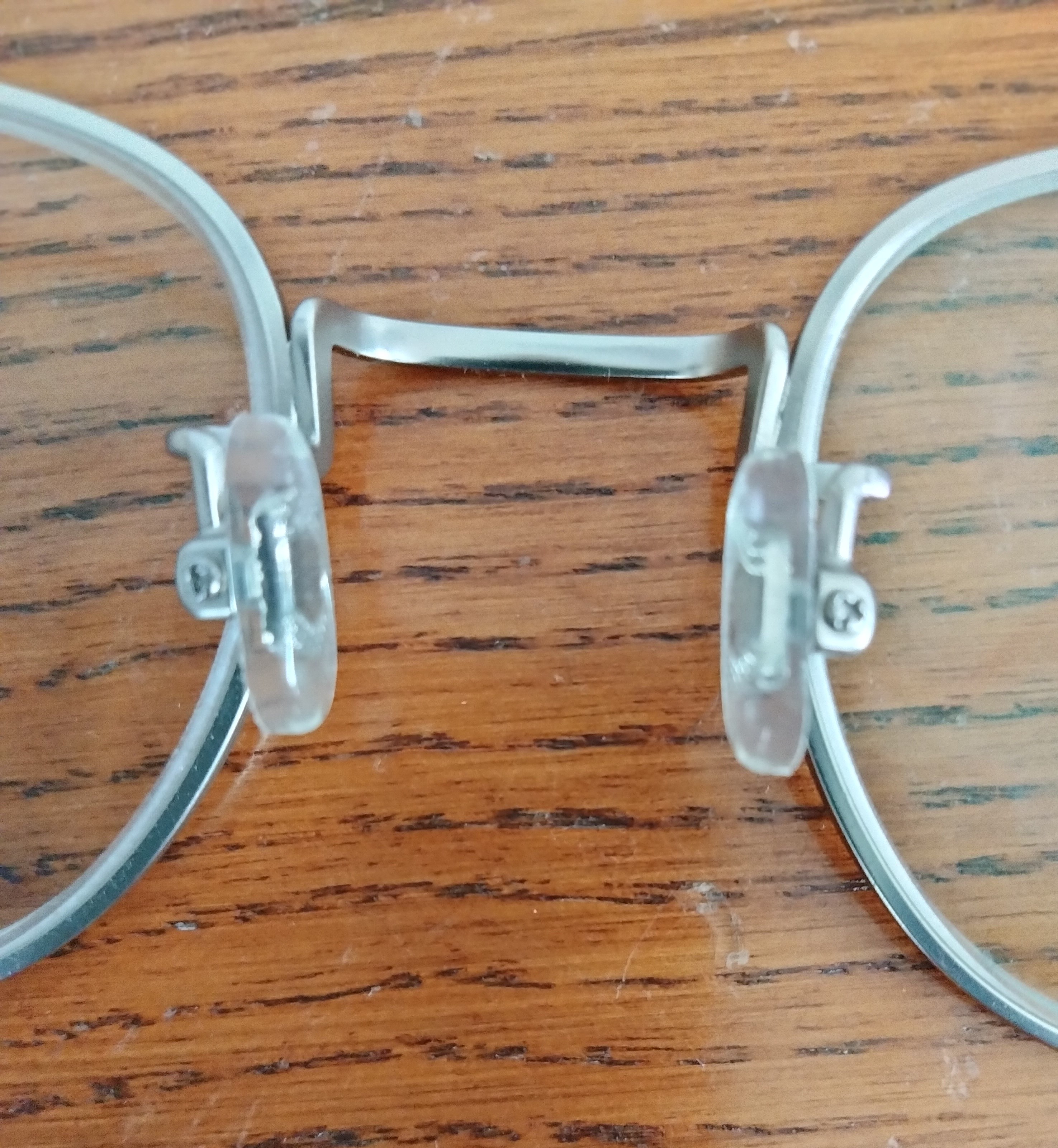
This brand is a new one on me, but the style is so 1960’s that I had to pick them up and was pleased to learn more about them. Although I’ve seen only a few other modern frames with nosepieces, the look is always good and these are quite close to the true vintage style.
Another great thing to learn was that they are very well-made, in Korea (so no surprise). Good value! This company was founded in Korea in 2011 and makes lots of neat designs. The particular model is called Planet Blu. My research into Gentle Monster products turned up photos of some that are very similar, but not exactly the same. My best guess is that they were made about 5 – 10 years ago. Not true vintage by any standard, but the high quality retro chic makes them worth mentioning.
Gentle Monster makes a variety of ready-to-wear glasses for sun protection, reading and blue light blocking but the frames can apparently be purchased without lenses for your own prescription. This pair probably has prescription lenses which are absolutely in perfect condition but, unfortunately, aren’t suitable for me. So, the decision to keep or not is up in the air, but they’re still a worthy find and good to share. Very unexpected, but you just never know . . . . .
Classic rectangular frames in heavy black plastic (but not Bakelite), with the metal screw details expected on many true vintage eyeglass frames but rarely seen now. I also love the carved detail on the temples.
The brand name NIGHTHAWK is stamped inside along with another unusual stamp: FOREIGN. I suspect that this indicates that the frames, at least, were imported. I can find no other explanation. Some similar glasses from that time were made in West Germany and these may be knock-offs, assembled in North America.
I’ll keep these forever – love the styling but they’re also very practical. There’s only minor to moderate wear on the frames and the lenses are almost perfect, even though they are made of a plastic material. So interesting to wonder about the origin details. If anyone has specialized knowledge on this topic, I’d love to hear from you. I’ll post the second pair of eyeglasses tomorrow, so stay tuned . . . . . . . . . . . . . . . . . .
Yes, I will continue to sleuth, and post new finds and photos of my existing collection of true vintage clothing and accessories. However, a little voice has told me for a long time that the whole mindset behind it is the main thing. It’s not just about how the sleuthing craft leads to great discoveries, but how we mysterious crafters can really change the world we all live in and how we live in it.
HOW? WHY? Let’s look at what optimizing and wearing a true vintage wardrobe accomplishes . . . . .
Are you bored by and disgusted with the style and quality of most wardrobe items available in retail stores and online? Tired of looking like everyone else? We, a few design and tailoring-conscious consumers, can flip the market by avoiding these trashy and cheaply-made products in favor of well-made and beautifully-tailored garments and accessories from years past. Occasionally you may find something that meets these standards among modern items and, of course, they can be included in your wardrobe. Be careful, though. It won’t happen often and may cost you an arm and a leg!
Are you concerned about the environment, the use of fossil fuels and the amount of garbage going into landfills? Most clothing and accessories now seem to be made with synthetic, fossil-based fabrics. They may have some nice properties like stretch or wash-ability, but don’t have the best appearance and don’t tend to last. It’s often hard to repair them, too. Rather than adding to the trash, poisoning the earth, air and wildlife, look for true vintage garments and accessories made from higher-quality vintage materials that are beautiful, comfortable, last a long time and can be repaired when necessary.
Are you an animal welfare activist who wants to live a humane lifestyle? I can hear your thoughts – “high quality vintage clothing is often made of wool, silk, skins, furs, feathers and leather!” Yes, they are and they’re beautiful, too. What could be more loving to animals than to enjoy these old historic garments while they last and offer no support to the current vendors of fur, silk, animal skins and leather? If you want a modern garment, buy faux fur and faux leather. These products get better every year. Go with a special faux silk piece. Wearing a fur coat made in 1950 does no harm to the animals that were killed in order to make it then. Like Native Americans, we can honor their sacrifice by caring for these garments and loving them until they have reached the end of their usefulness and the trade in animal products has been ended for lack of customers. “But what about the example you set?” you say – No one who knows anything about clothing will think that you bought your true vintage fur coat at the mall last year. If someone buys a modern fur because they like your vintage one, well, that’s their look-out and we have to expect people to be responsible for their own choices.
Do you always want to wear the “latest thing” or follow the styles of your friends who shop at retail? OK, go for it. No one is entitled to criticize another’s sense of fashion. However, the people with the most interesting, stylish and impressive wardrobes have a unique style and tend to go for great design, good tailoring and high quality – even in casual, day to day clothes like jeans and t-shirts. Unless you’re shopping bespoke in Paris from your own private tailor, there’s no better place to find clothing like that than among true vintage items.
We are powerful! Our thoughts shape public opinion. Our choices shape the markets and manufacturing decisions. No one shears sheep, makes fur coats or leather shoes if no one is buying them. You can still enjoy these items for decades if you buy true vintage and take care of it while you’re getting used to the idea of letting it go. We’ll have even better alternatives when we need them.
Do you long for a more beautiful world where well-dressed, healthy people walk under trees and among flowering plants or swim in clean oceans in every city or country, breathing clean air and listening to the birds? Do you like the idea of having a great selection of restaurants everywhere which all offer delicious vegan cuisine? Would you feel relieved by knowing that products in stores are all cruelty-free and environmentally responsible? Changing our shopping habits is a GREAT place to start and, what could be more fun, adventurous and satisfying than building your own true vintage style while you’re at it?
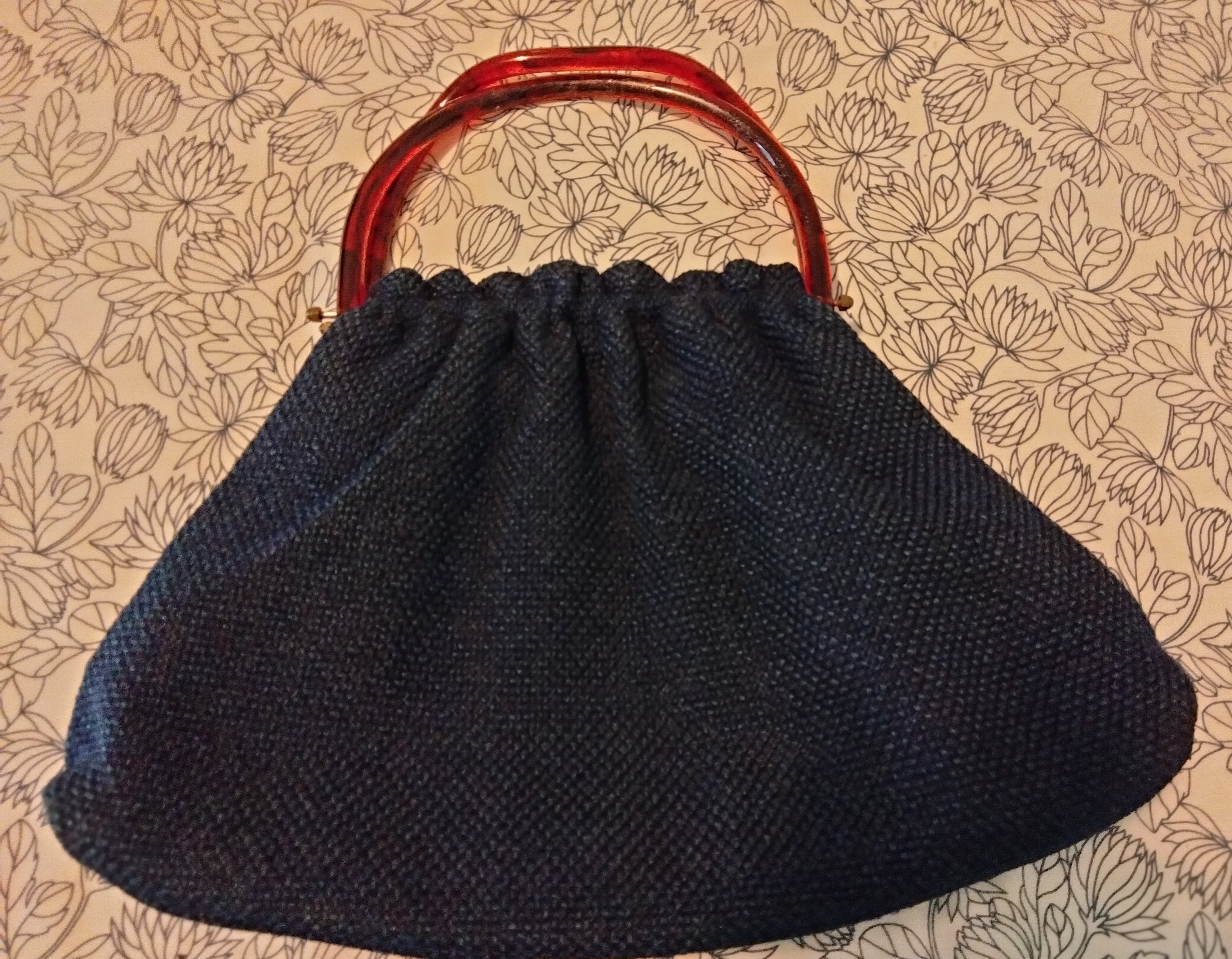
Although I have discovered several of these iconic soft handbags from the 1960’s and early 1970’s, this one is probably the nicest I’ve ever found. As often happens, I was just shopping for some everyday items when this beauty came into view. You just never know, though this powerful Summer Solstice surely didn’t hurt the good vibes today. Happy First Day Of Summer.
Why is this such a wonderful true vintage example? One, it’s in absolutely pristine condition. I doubt it was ever used. Second, I love the style. The bag is mid-sized so it’s roomy without being awkward. The tortoiseshell Lucite handles are cleverly shaped so that they snap closed at the top. It’s easy to carry in hand or over your arm. The full lining has a brown paisley pattern and the loose-weave “hopsacking” cover fabric is sturdy enough to last. These are materials that are very identified with the 1960’s.
Two unusual features really caught my eye: Unlike many purses in this style, this bag has a rigid base that gives it form and stability and makes items inside easier to find. The final touch is just a hoot! Remember all the mid-century purses that had little coin purses attached to the inside by a cord or chain? This bag has a chain with a clear vinyl envelope containing a plastic rain hat! Take my word for it – mid-century women almost always had one of these rain hats in their purses. They were often given away by businesses like key chains and pens still are. It was always a lurking fear in the backs of the minds of my grandmother’s generation that a sudden rain shower might catch them when they had their hairdo “just so”! Cute!!
Another sweet and oh-so-Sixties characteristic of this handbag is that I suspect it was homemade from a kit. Purse kits of this type were popular then, just like other needlework projects, and there is no brand label inside. All of the pieces and instructions would have been supplied. The maker did an excellent job.
So, another useful accessory for my closet. The navy blue color is perfect for my wardrobe and I’ll love it for years!
When the weather got cool, this was casual street-wear the way that hoodies are now. Of course, hooded sweatshirts were also around but they were seen mostly at athletic events or other outdoor activities. A jacket like this had just a little more panache and could be worn over jeans or slacks.
Also perfectly classic and unisex in style. Sportswear separates tended to have more decorative trim in the Fifties and Sixties, in my experience. The heavy metal zippers don’t tend to fail. Bulky acrylic knits with knitted cuffs keep you nice and toasty. Lots to love here!
I’ve never heard of the brand name, Abbey, and couldn’t find it online but that makes this jacket even more special. Another keeper in a small size – whoo-hoo!
Can’t get more classic than this! It’s got all the bells and whistles: Classic tailoring – metal front zipper, slash pockets, adjustable button cuffs, adjustable stand collar. Mid-century modern fabric innovations – water-resistant, all weather, wash and wear, wrinkle resistant Dacron Polyester and Cotton blend.
Vintage Peters jacket, so perfectly preserved, so classic in every way. The style could have been sold in the 1950’s, 1960’s or 1970’s but the label places this one in the 1980’s. Probably that is the only thing that changed in a substantial way. Some old companies sold high quality garments in the same popular styles for decades.
This was a men’s jacket back in the day, though it’s really uni-sex. The little size tag that would hang below the label is gone, but it’s small – like a 36. Lucky me! It’s another keeper. Will be back soon with the final find. Stay tuned . . . . . . . . . . . . . . . . . . . . . . . . . . . . . . . . . . . . . . . . . . . . . . . . . . . . . . .
This one IS my favorite. Although, as always, I’ve really missed having the modeling assistance of Stella, Madge and Giselle when I’m not at Headquarters, this blouse displays well on its own. Peasant blouses have had fad appeal at various times in the 1940’s, 1950’s and 1960’s so it was no surprise that the fad surfaced again in the ‘Seventies. We’ve seen Mexican style, Prairie style and other knock-off ethnic designs over the years and the Mexican style seemed to be prominent in the early ’70’s. Usually these ethnic fads are linked to some historical or social event/trend such as a war, politics or increased leisure travel.
In the early 1970’s, we were between the Hippie/Vietnam war and Prairie/Back to the Land movements and people were also traveling a lot more. The style of the blouses was Mexican peasant or Prairie pioneer with some Asian and African prints thrown in. So, this one presents as mostly Mexican peasant in the cut, placement of the embroidery and heavy cotton muslin fabric. However, the floral design and colors are more traditional Prairie than Mexican and that tells me that the blouse was probably home-sewn rather than a commercial product or travel souvenir. But, with so much variation and many blouses produced by hand in Mexico without labels, this is just a guess based on my experience.
Anyway, I love it! Bell sleeves are always a hit with me, as well as hand-done embroidery. The brighter Mexican colors are preferred, but this one is more versatile with a Fall wardrobe. I’m not a prairie-style gal but hippie/traveler resonates. Another keeper!
The blouses found in hidden storage are all covered now. Since my first post at the beginning of this series, another jacket turned up – maybe older than the first. I’ll be showing and discussing them over the coming week but maybe not on a daily basis as a short road trip is on the schedule. Stay tuned . . . . . . . . .. . . … . . . . . . . . . . . . . . . . . . . . . . .
Faithful Western-wear style with a front and back yoke, chest pockets and pearlized snap closures (2 on each cuff). Compared to authentic western-wear this fabric is really lightweight, so better as a casual fashion shirt. Look at that tag – what convenience! Super easy-care. This garment has survived the decades almost intact, with just a little fabric wear and tear. Might make a good gardening shirt.
Good old “Monkey Ward” followed fashion trends well, just like Sears & Roebuck and J.C. Penney always did. Women around the U.S. waited impatiently for the new Spring catalogs to come out each year. After the 1970’s all these stores upped the offerings in their store locations and gradually phased out catalog sales. Maybe some still existed, but it was less important. Now these chains are closing down most of their outlets.
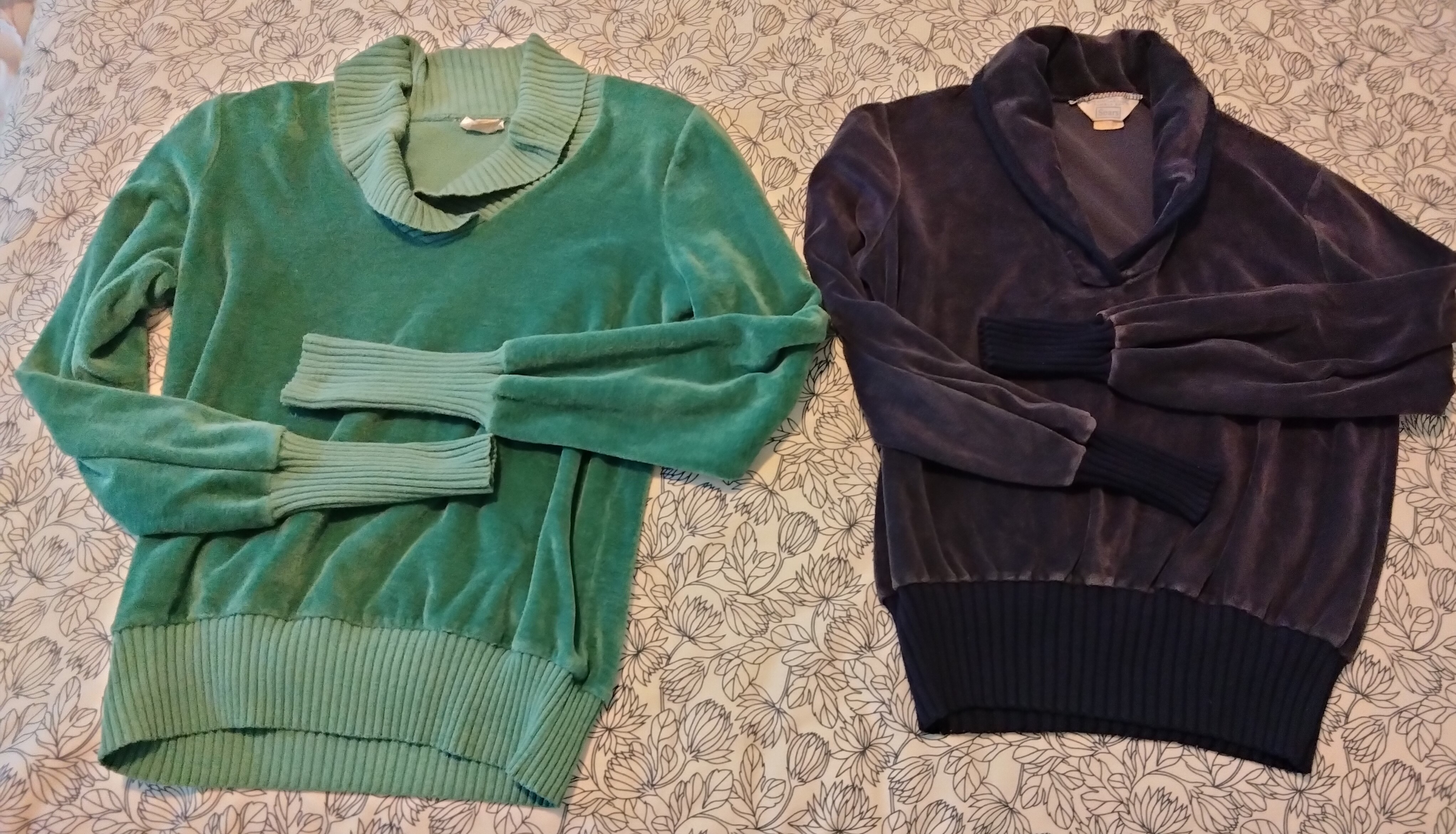
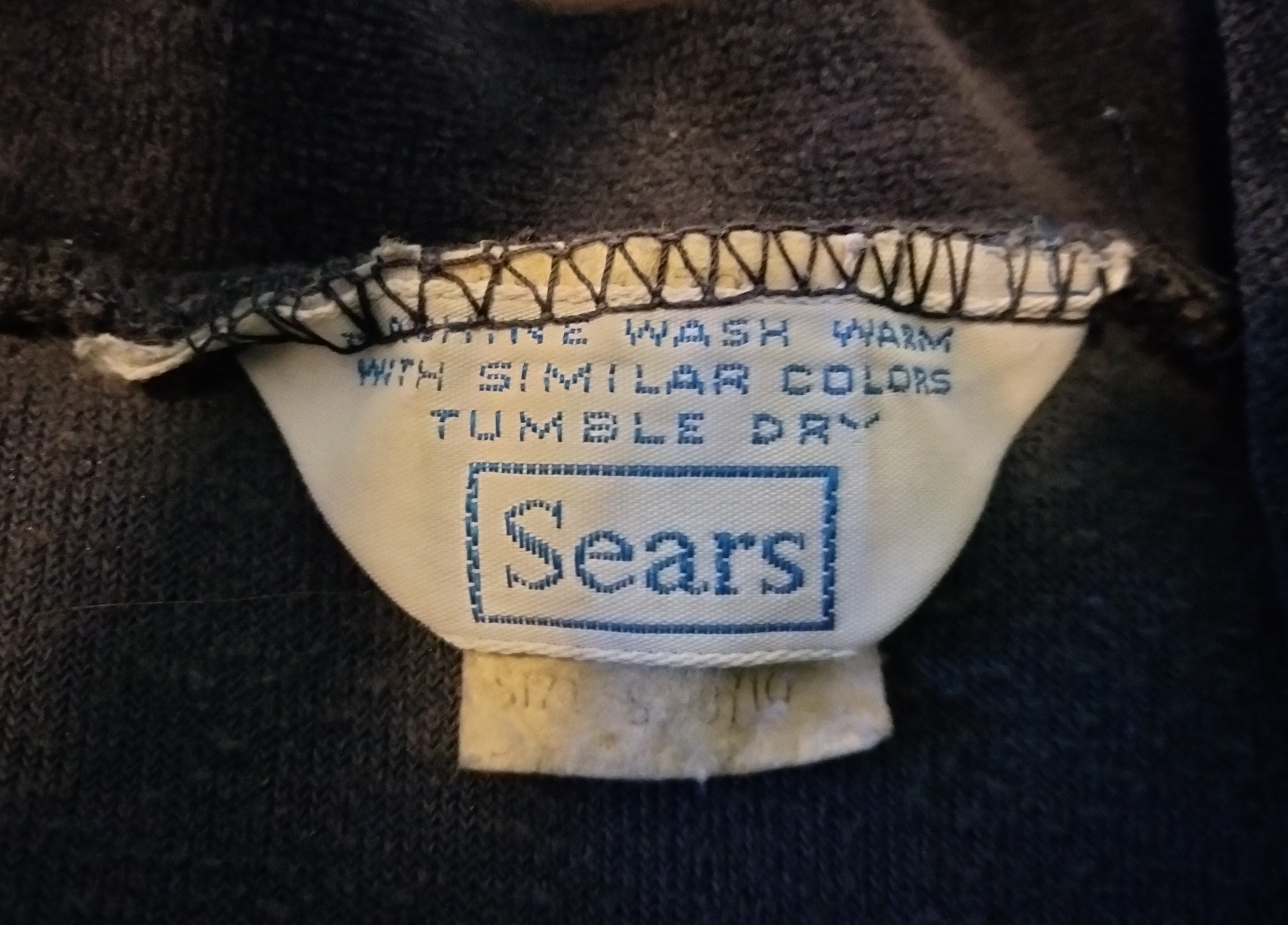
This is more like it! True vintage again, in an iconic style of ‘Seventies sportswear. Both are in amazing condition with plush fabric in rich colors (better in person).
Aside from a bit of stretching in the aileen neckline and a bit of fade around the seams on the Sears top, I don’t find anything wrong. Of course, the aileen top was a slightly more upscale brand, but the quality levels of the two are very much alike. All the seams are finished with serging and remain strong.
There seems to have been a bit more stretching of the ribbing on the aileen top – perhaps a bigger person wore it or it was washed improperly – something I can probably fix. The slight fading on the navy top would probably not be noticed when it’s worn. These would be keepers!
We’ll stay in the ‘Seventies and maybe dive into the ‘Sixties for a look at the rest of these surprise finds. Stay tuned . . . . . . . . . .







 Magicvintagespy