HERE’S A MORE MODERN TAKE ON THE TRADITIONAL FROCK POSTED YESTERDAY . . . .

About 35 – 40 years later we see another Japanese-owned clothing company in Hawaii coming out with a very similar design. This is not the same traditional tea ceremony dress, but alike in many ways; Contrasting lining in the sleeves, ankle length and gently-fitted shape, though the print is a thoroughly MOD pattern in the popular color combo of that brief era around 1962 – 1963. This company apparently closed at that time, too. Wonder why . . . . . . . . . . . . . . . . . . . . . . . . . . . . . . . . . . . . . . . . . . . . .

MORGANA MARTIN, THE MAGICVINTAGESPY

BLOG: MAGICVINTAGESPY.COM

ANOTHER RARE FIND: 1940’S RAYON TEA DRESS FROM HAWAII

The Malihini company which made this garment may have been Japanese-owned. At that time, of course, Hawaii was not a part of the United States. The style is, therefore, traditional Japanese Tea Ceremony garb rather than the Hawaiian style that we began to see become very popular in the 1950’s. The rayon fabric is absolutely wonderful – you’d have to feel it to know. Rayons of that time often felt like silk.

This dress is even too tiny for Stella to get into. A very rare clue . . . . . . . . . . . . . . . . . . . . . . . . . . . . . . . . . . . . . . . . . . . . . .

MORGANA MARTIN, THE MAGICVINTAGESPY

BLOG: MAGICVINTAGESPY.COM

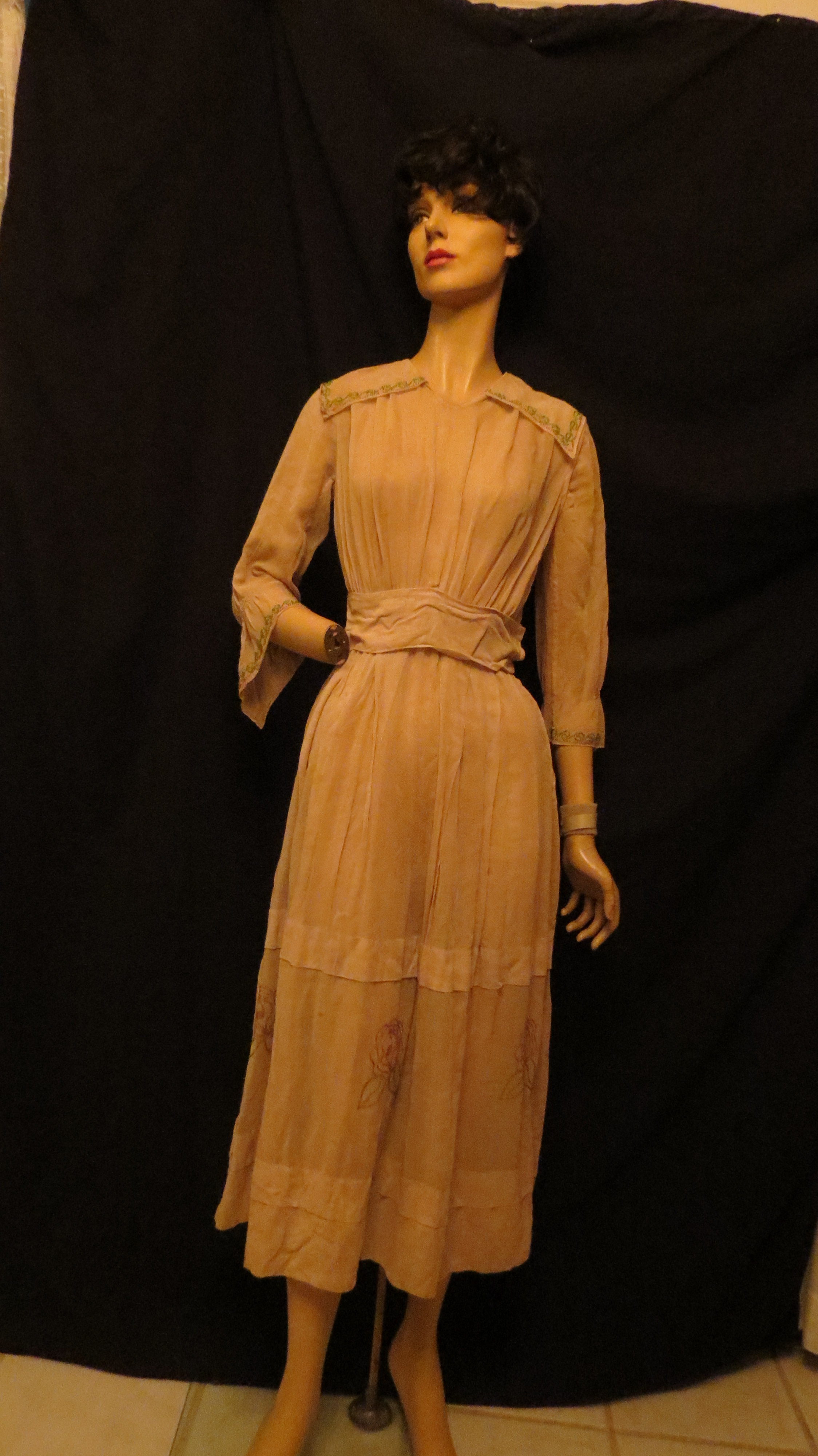
VERY RARE FIND: A HAND-TAILORED GARDEN PARTY DRESS FROM THE 1920’S OR BEFORE

The pictures are yellowed because of low light at the time of the photograph. However, you can see the exceptional detail in the design of this frock. The true color is a creamy white, with beaded embellishments depicting leaves and flowers. It’s rather intricate to put on, too, with panels that fold over but I finally figured it out. Can you imagine the time it took to fashion this garment by hand – but many women, before the 1950’s, did almost all their sewing that way and had very limited choices with regard to anything they could purchase ready-made.

And to think that now our landfills are overflowing with cheap polyester clothing that is discarded in a few weeks (if it lasts that long). Thank goodness that we can still come across clues like this one . . . . . . . . . . . . . . . . . . . .

MORGANA MARTIN, THE MAGICVINTAGESPY

BLOG: MAGICVINTAGESPY.COM

A 1930’S BLACK CREPE COCKTAIL SHEATH WITH ART DECO EMBELLISHMENTS

Worthy of Ayn Rand and such a fabulous example of a Deco design. Black crepe that drapes beautifully is always the go-to but these metal studs covering the fabric are pure Art Deco of the late 1930’s. The high-rise neckline is not often seen. The shoulders are augmented not with pads but with little fabric wedges that extend them just a bit. A side metal zipper and neckline opening complete the sleek and streamlined silhouette. Like so many fitted frocks of that era, this baby goes on over your head.

Unfortunately, the fit of this dress doesn’t do a thing for me even though it’s my size but it looks great on Stella. I guess that’s why she found the right career. At any rate, it’s a perfect sophisticated disguise for any cocktail party or elite dinner. So many of those occasions take place amongst members of high society and the ruling class the world over – perfect for collecting intelligence. . . . . . . . . . . . . . . . . . . . . . . . . . . . . . . . . . . . . . . . . . . . . . . .

MORGANA MARTIN, THE MAGICVINTAGESPY

BLOG: MAGICVINTAGESPY.COM

SILKY BOUDOIR GOWN FROM FRANCE – VIA MONTEVIDEO, URUGUAY

Found in the historic city of Montevideo, capital of Uruguay, this at-home dress may have seen a lot of intrigue. From the pre- and wartime 1930’s – 1940’s, it came from France to the home of a well-to-do woman who had the means to buy her wardrobe from there. Apparently, French-made garments and accessories were favorites of Uruguayan women in Society; at least, until they became unavailable. Some pieces may have remained accessible from occupied France, but probably only to the most elite.

It makes me wonder if clandestine activities may have taken place in order to procure these goods for those who could pay . . . .

MORGANA MARTIN, THE MAGICVINTAGESPY

BLOG: MAGICVINTAGESPY.COM

BEAUTIFUL 1950’S WOOL COAT IN CLASSIC BLACK

Surprising as it may seem, coats of this type were often more commonly seen in beige, brown and colors than in black. Those alternatives certainly would have been easier to keep looking clean – we all know what lint-magnets black garments are! So, maybe this just became a market-driven issue among the general population. At any rate, it’s true to my sleuthing experience and a clue for the file. However, market characteristics like that can sometimes vary by location or even by year so never ignore a mundane-seeming piece of evidence. That’s especially true when no other signs of its origin can be found.

This particular item, with its de rigueur big sculpted buttons, also has interesting design in back with a big welt seam and a somewhat distinctive collar shape and color, disguised as mink. These little design features are what differentiated one coat from another, as the general style of the time was quite uniform, and can make or break a case whenever witnesses can be found. I guess that’s always true with coats that are built for warmth and outdoor wear. No operative could ask for a better element of disguise while carrying out her daily routine now that our old stand-by, the trench coat, has lost its cover in film noir.

Tomorrow, another example that’s just a pretty fashion piece with no occult interpretations attached. But, you just never know –

MORGANA MARTIN, THE MAGICVINTAGESPY

BLOG: MAGICVINTAGESPY.COM

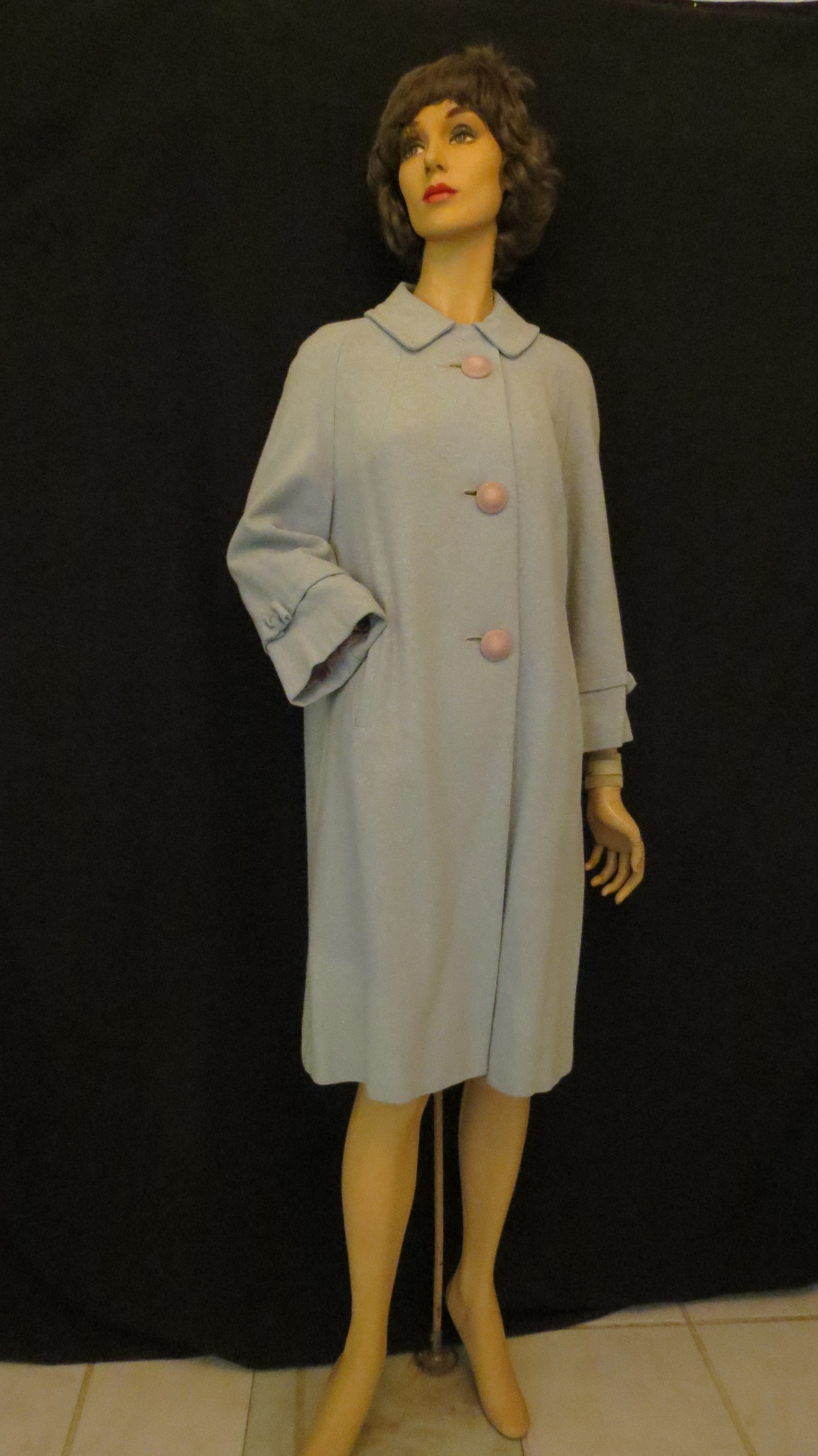
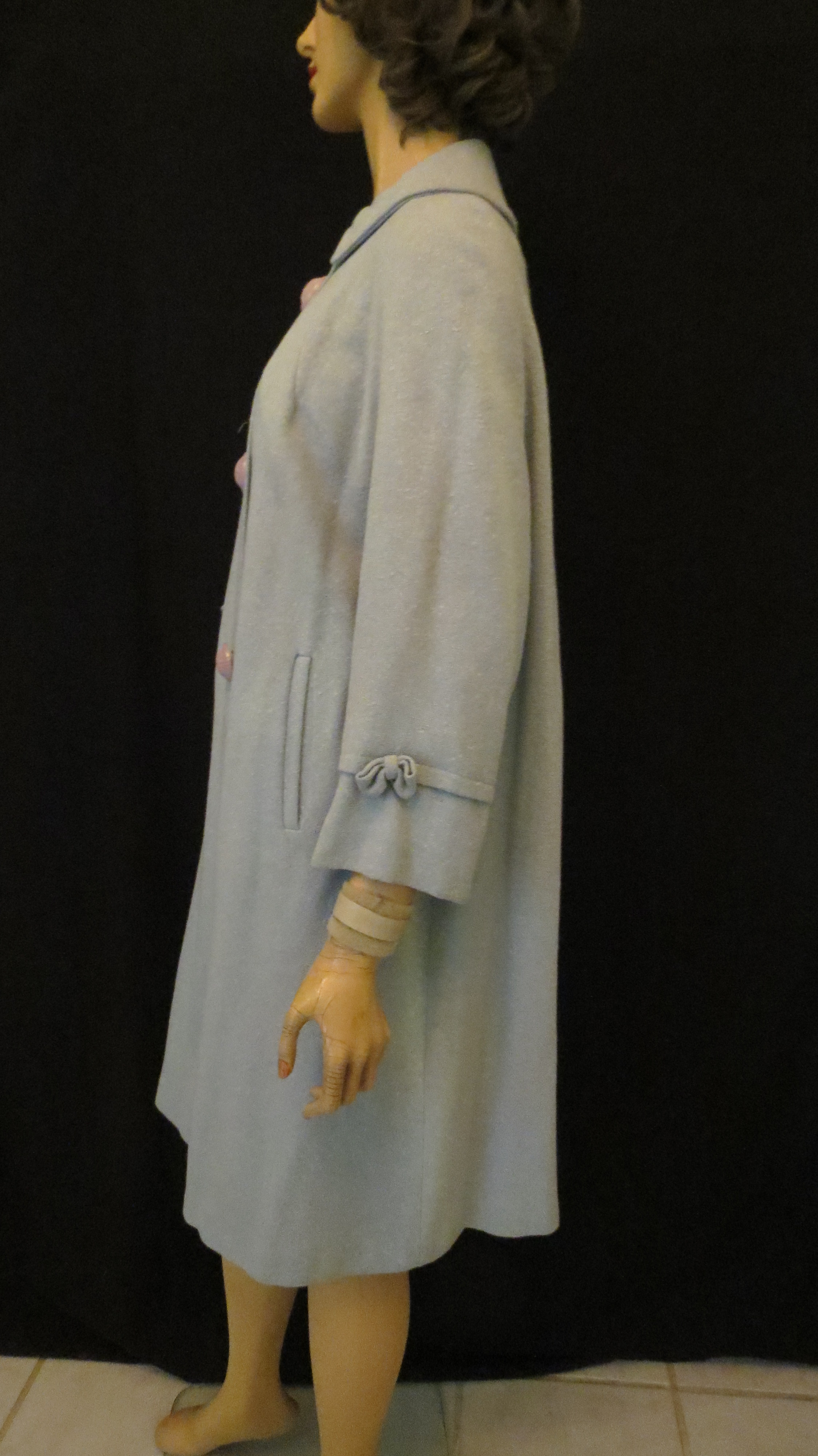
HERE’S THE SWEETEST POST-WAR EARLY SPRING COAT THERE IS!

Don’t you love those great big buttons, dyed a pale mauve to match the lining of this coat? Also, those sweet bows on each sleeve and Peter Pan collar, paired with the always-necessary and convenient hip pockets – good design that makes this a wonderful true vintage garment. The wool shell is a rather loosely-woven fabric that provides warmth, but not enough for the weather we’re having now. But, just wait . . . . . . . . . . . it’s almost February and warmer days aren’t far away.

Always love the cut of swing coats, as you can tell. Some are much more flared than others, but all are classic and comfortable over whatever is worn underneath. That’s especially important in a 3-season item like this one, when temps may vary a great deal while the season is changing. Over a dress, sweater or even a suit underneath, the coat will still fit well. What could be more practical when disguises may have to be changed frequently . . . . . . . . . . . . . . . . . . . . . . . . . . . . . . . . . . . . . . . . . . . .

MORGANA MARTIN, THE MAGICVINTAGESPY

BLOG: MAGICVINTAGESPY.COM

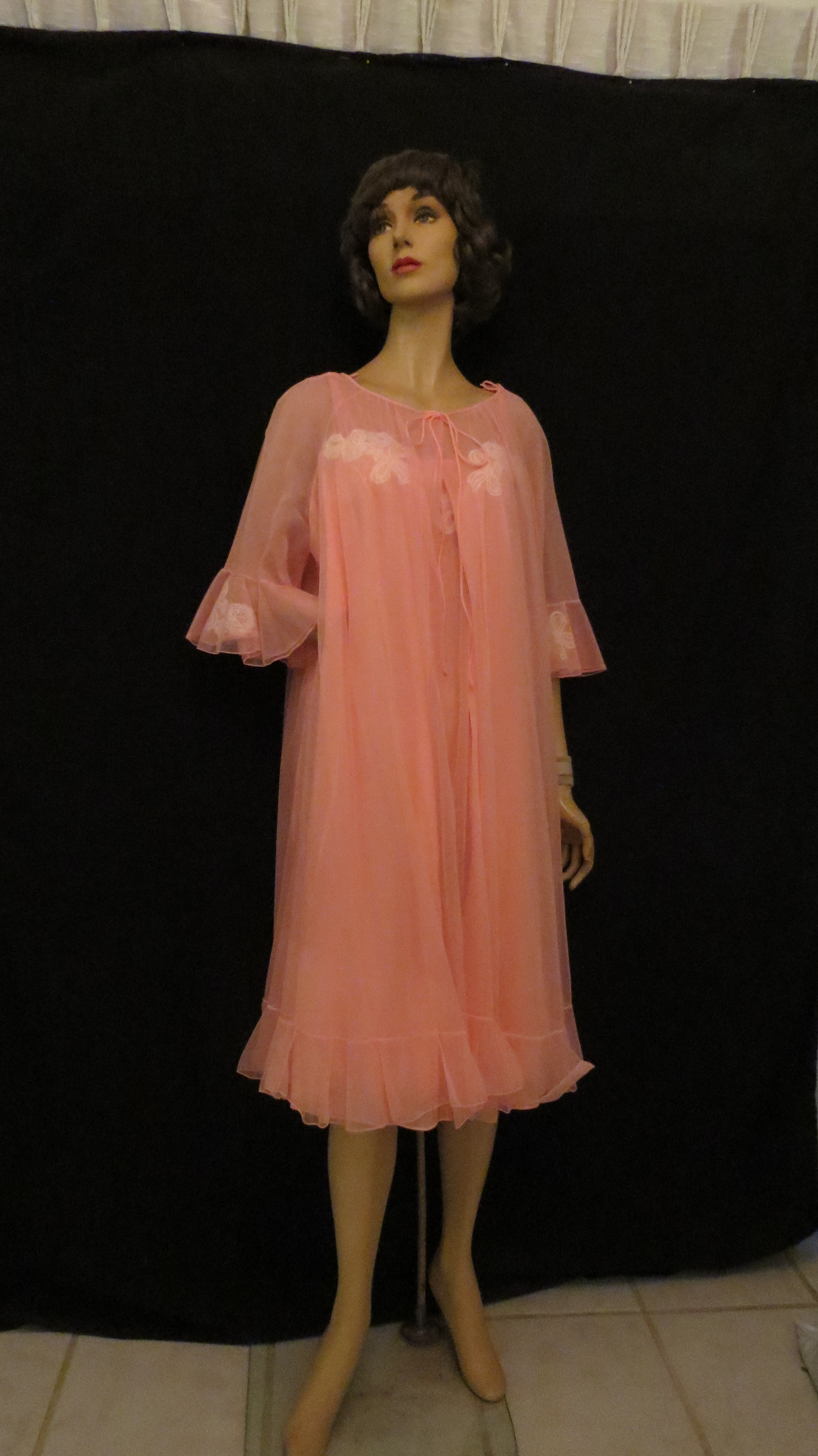
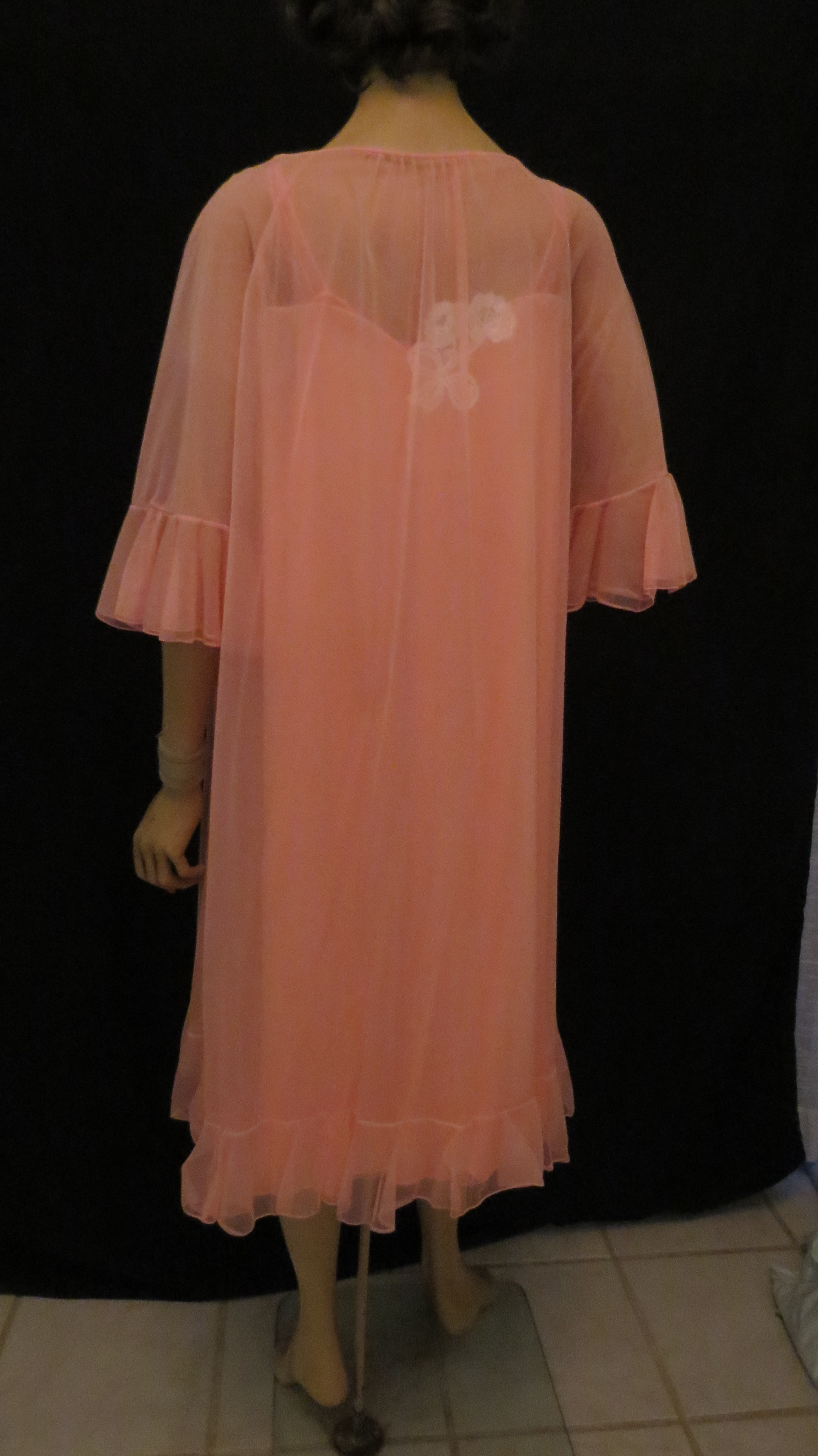
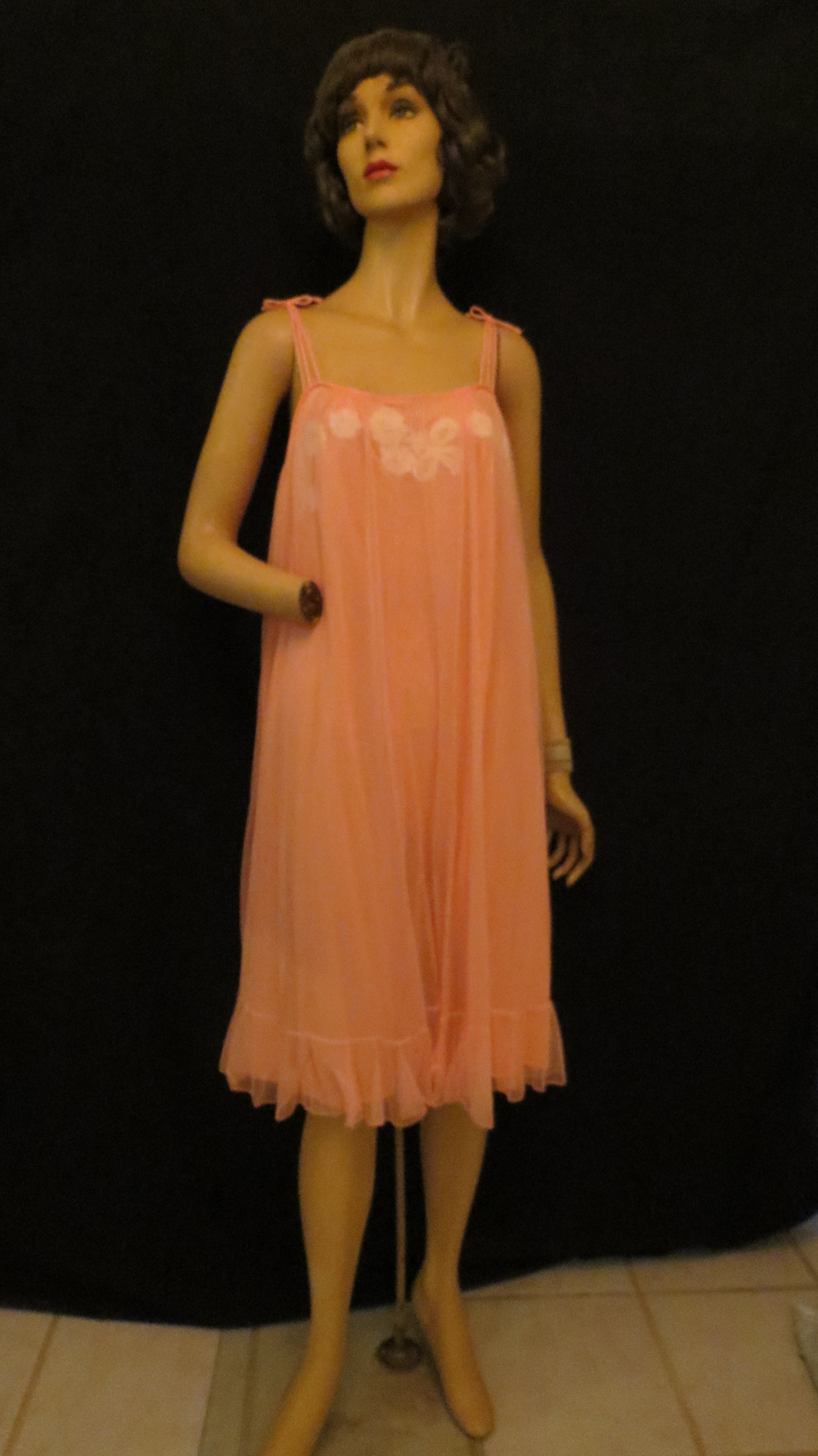
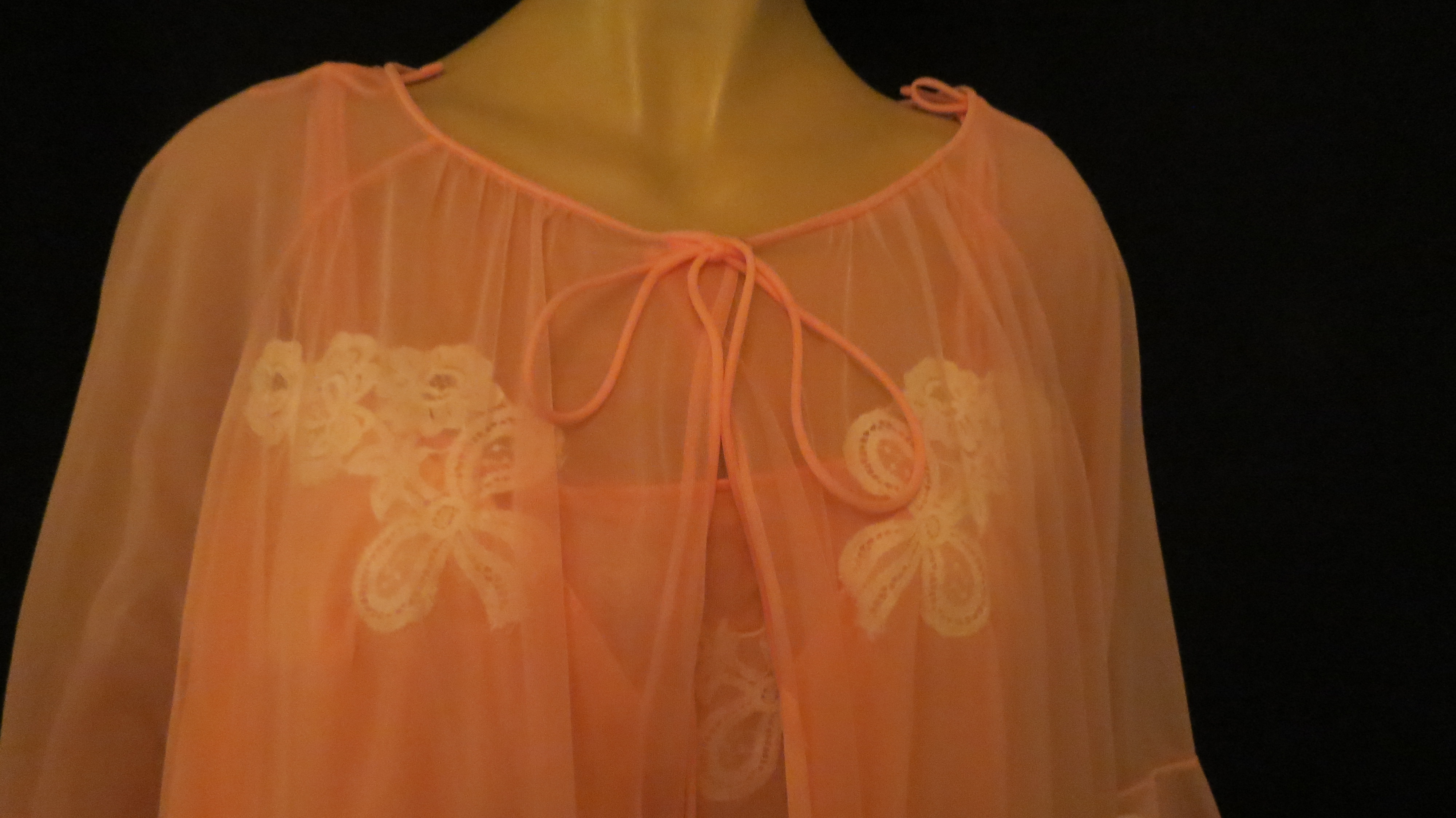
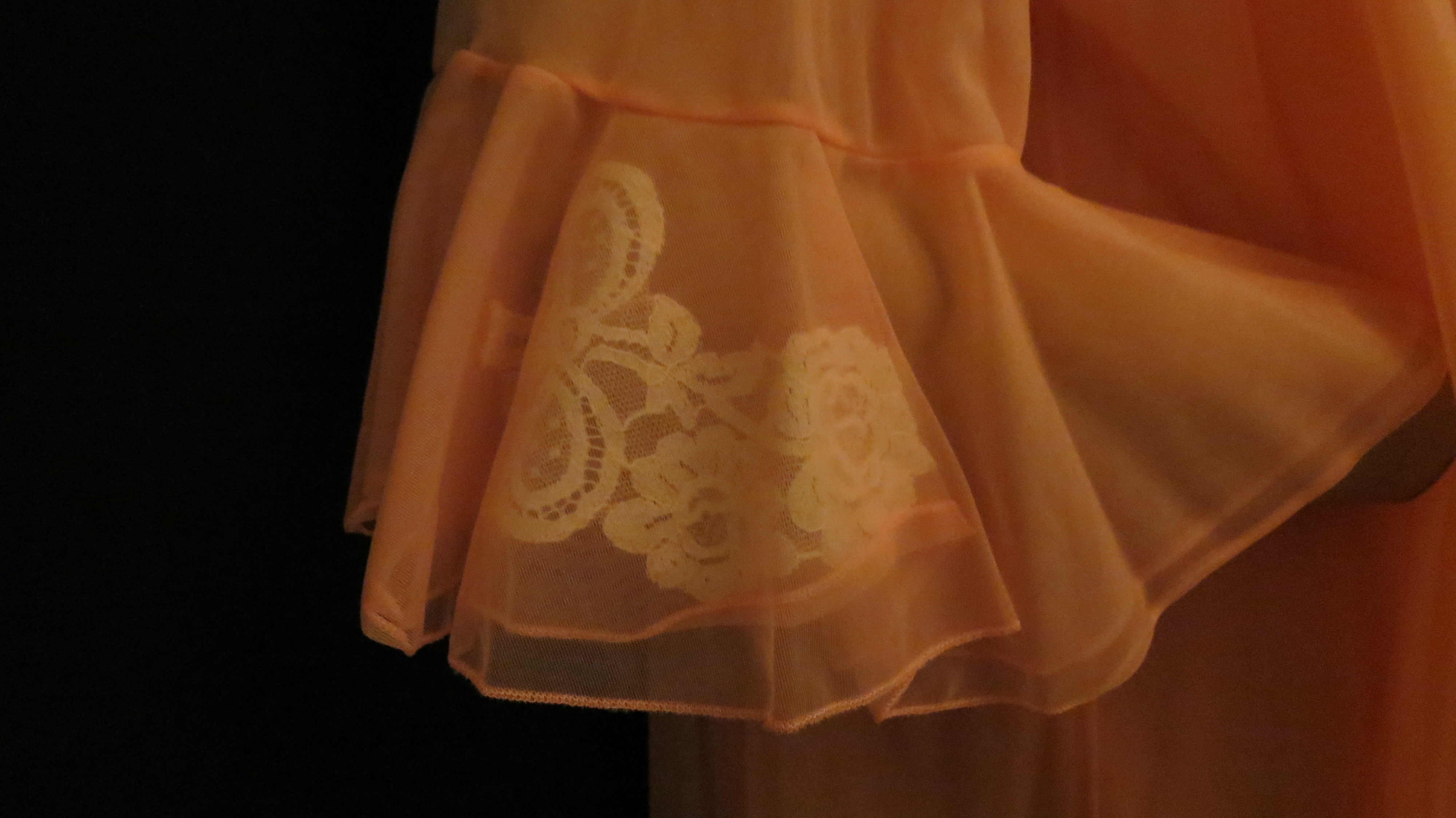
BEAUTIFUL GOWN & PEIGNOIR SET BY GOSSARD ARTEMIS – EARLY 1960’S

Just yesterday I delved into the sleepwear file. Police always find bedrooms to be prime locations for crime scenes, but they’re also a hot spot for hidden evidence. Some of the most bewitching things I’ve come across have been stored away in this archive. The Gossard label was one of the best and these photos show why. Not as deeply lovely as some of the silk gowns produced in the 1930’s and 1940’s, but the decoration is always beautiful and the colors so vibrant. I’ll probably be showing more to you . . . . . . . .

MORGANA MARTIN, THE MAGICVINTAGESPY

BLOG: MAGICVINTAGESPY.COM

1920’S – 1930’S DROPPED WAIST CREPE DRESS WITH BEADED TRIM

This dress was a really great find and incredibly rare. The slouchy, dropped sleeves, loosely fitted silhouette and tons of beading design are very indicative of the few years pre-war – whether talking about WWI or WWII, although other style elements still were frequently seen. This frock was custom-made for dressy dinner or party events. As often happened with vintage rayon crepe, there is some color fade but the condition of the garment is still remarkable. Since it turned up away from its original home, there are no specific clues associated with it. But, the city in which it was found and where its original owner undoubtedly went about her business has been known, for decades, for its high-rollers, shady dealings and clandestine activities. Need I say more? The case will probably never be closed . . . . . . . . . . . . . . . . . . . . . . . . . . . . . . . . . . . . . . . . . . .

MORGANA MARTIN, THE MAGICVINTAGESPY

BLOG: MAGICVINTAGESPY.COM

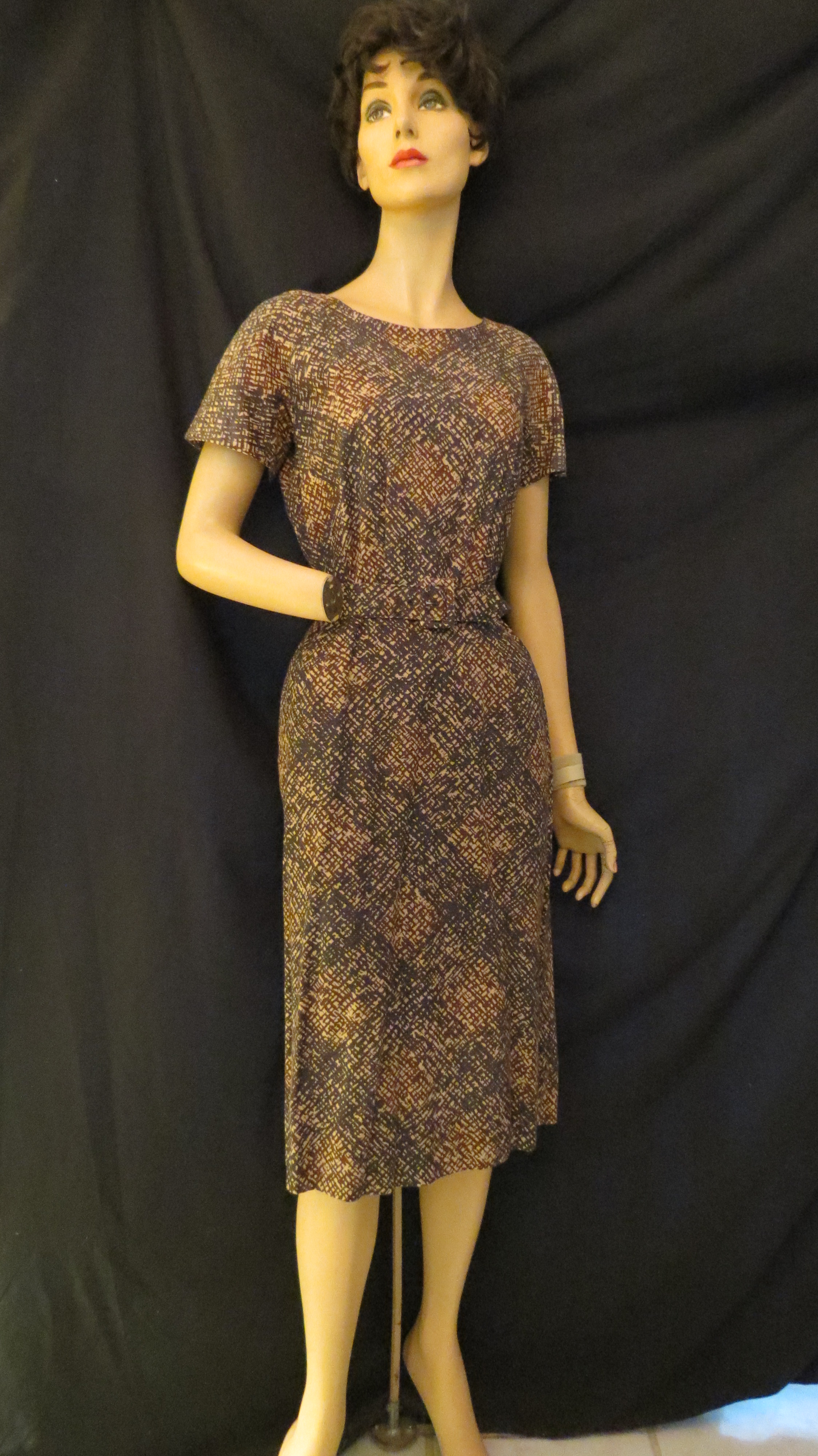
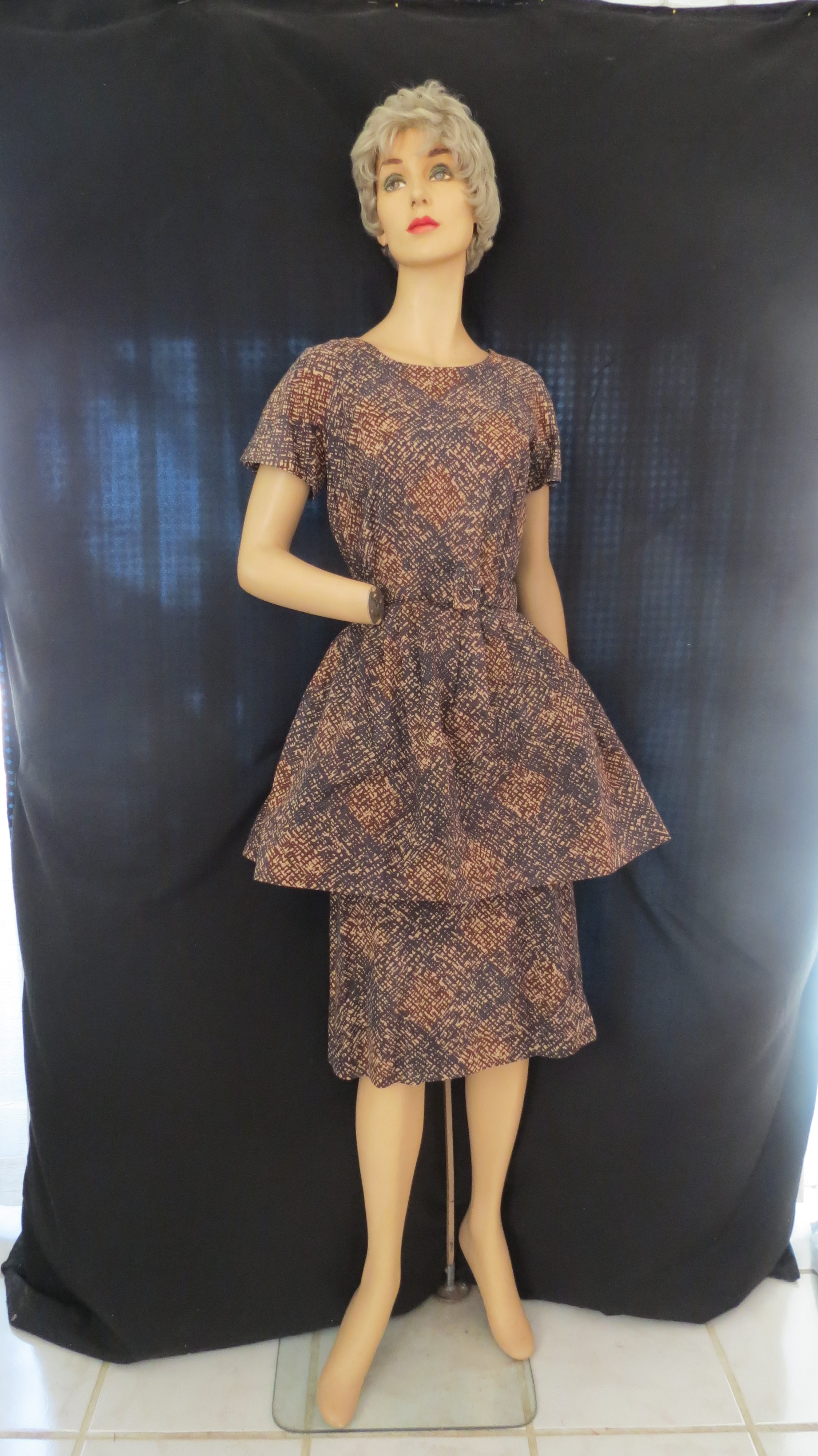
ANOTHER VERY SPECIAL VINTAGE DRESS – A PARIS KNOCK-OFF BY NELLY DON

When I discovered this clue in an out-of-the-way place I thought “Hmm. This is interesting. Not sure I’d ever wear it, but worth picking up.” It hung in the evidence room for some time until one day, as I was traveling to Europe, I saw a poster with examples of iconic Paris designs from various years and Guess What! 1952.

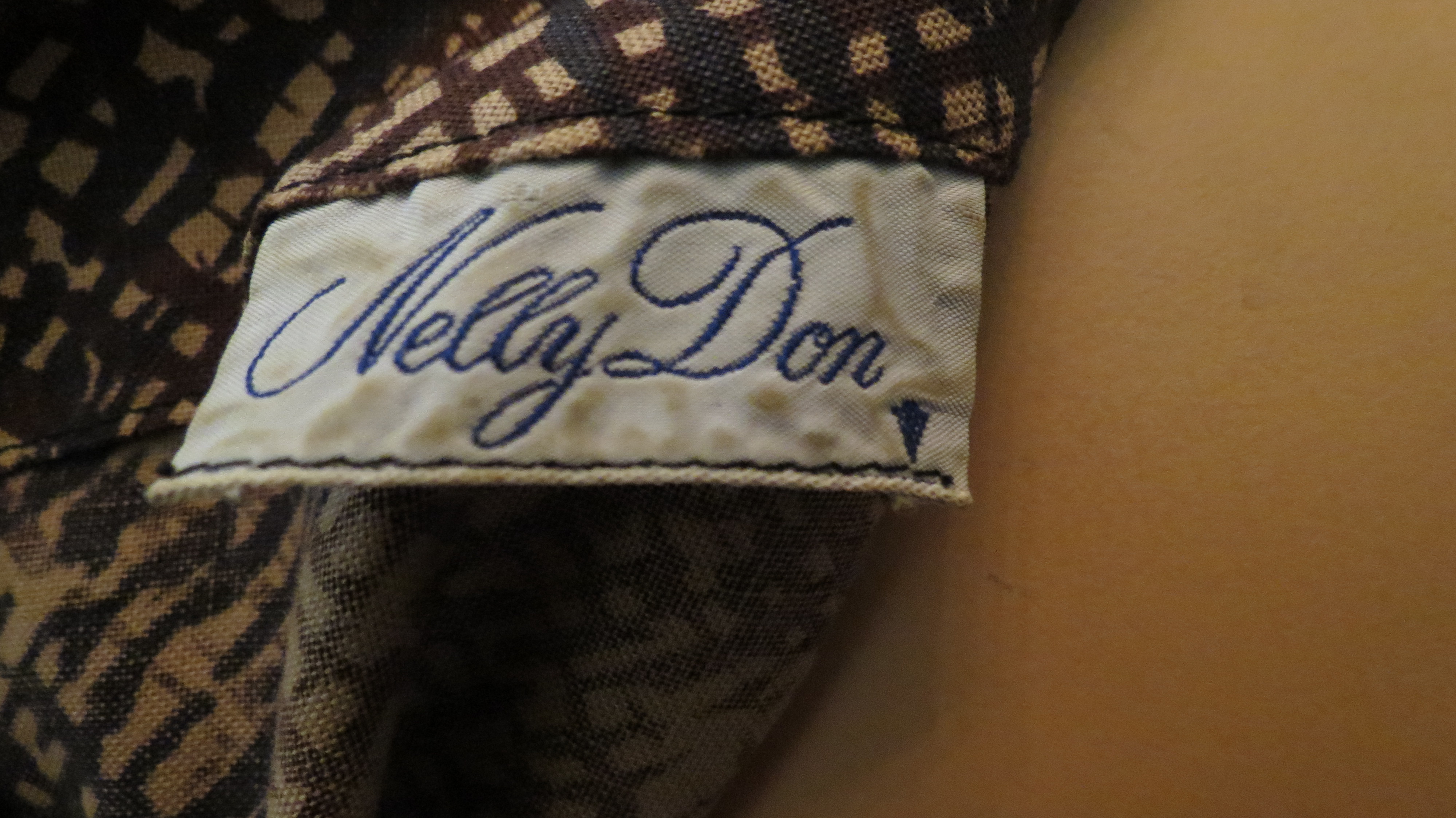
The Nelly Don label, made in Kansas City, was very popular with mid-century women in the U.S.. This was, in part, because of their up-to-the-minute designs and they weren’t shy about mimicking the famous couturiers. This example is very well-made and leave it to American marketing savvy to think practically and make the peplum removable and to use an easy-care fabric. I also love the subtle basket weave print, which shows up vividly when exposed to the camera flash and digital imaging but is less obvious in ordinary light. Just my cup of tea . . . . . . . . . . . . . . . . . . . . . . . . . . . . . . . . . . . . . . . . . . . . . ..

MORGANA MARTIN, THE MAGICVINTAGESPY

BLOG: MAGICVINTAGESPY.COM