BACK TO LADIES’ ACCESSORIES – A MORE MODERN PURSE COMPACT

Come forward about 30 years from the chatelaine compact I showed earlier and we have another example from the 1960’s. Also from my family, with some of the original powder still remaining. For so many decades, a powder compact was an important item in every woman’s purse.

This one is also quite elegant, with a nicely finished puff and separator pad on top of the powder. The pretty design and large mirror made it a pleasure to carry and to use. Despite every effort to be discreet, however, one could hardly help sprinkling a trail of powder here and there when conducting an investigation. It would always have been better for any agent to use a common drugstore brand which could never be associated with with you after the forensics team arrives . . . . . . . . . . . . . . . . . . . . . . . . . . . . .

MORGANA MARTIN, THE MAGICVINTAGESPY

BLOG: MAGICVINTAGESPY.COM

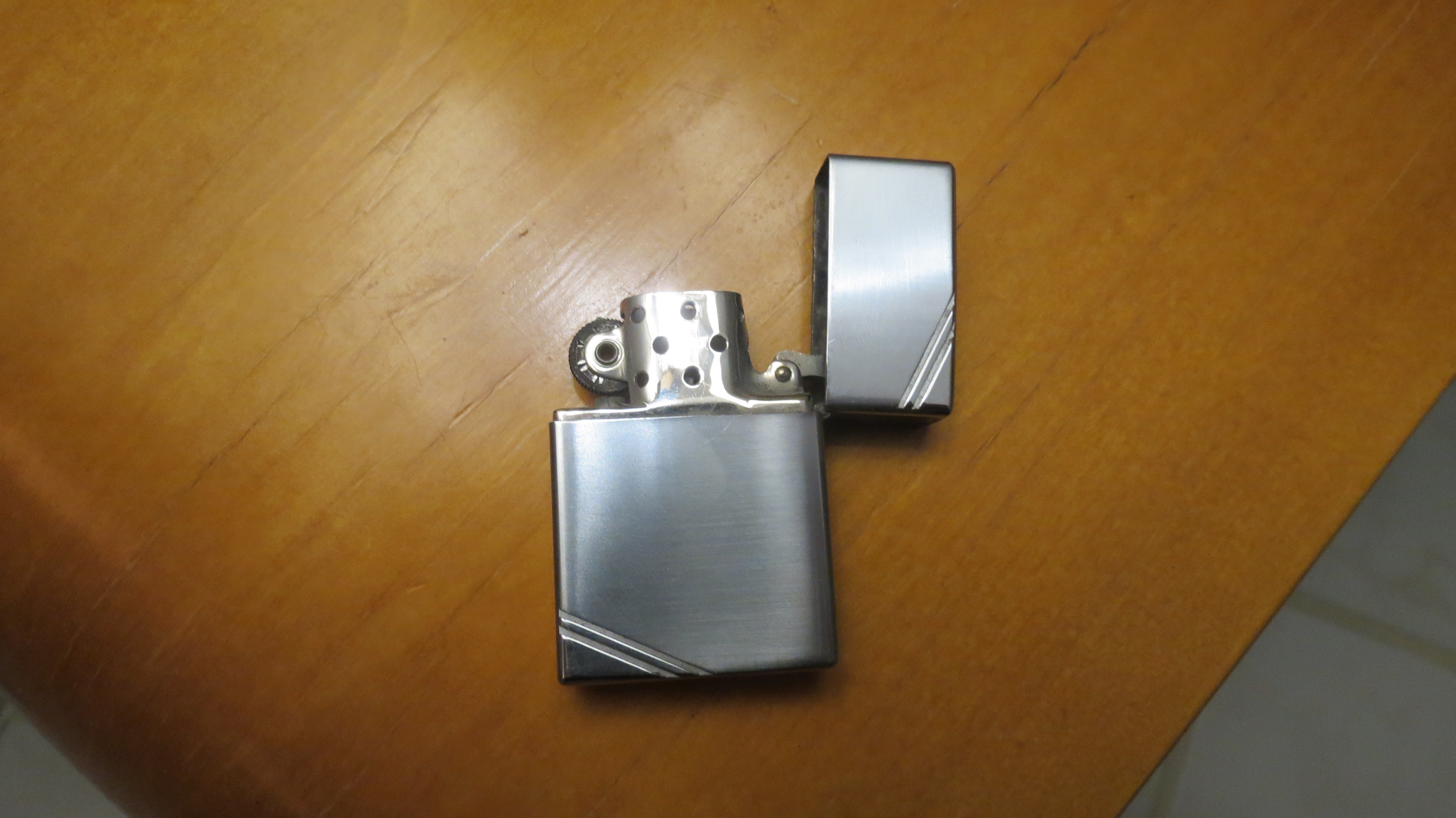
A 1930’S ZIPPO LIGHTER COMPLETES THE PICTURE

Our hero completes the scene of evening relaxation with an iconic lighter by Zippo.

MORGANA MARTIN, THE MAGICVINTAGESPY

BLOG: MAGICVINTAGESPY.COM

ELEGANT AT-HOME LOUNGE-WEAR FOR A MID-CENTURY GENTLEMAN

While not quite the “smoking” garment of lore, this was a 1950’s dad’s answer to the “dressing gown”, made to wear before putting on any clothing which could be worn outside the house. Whether after the morning shower while preparing for his day or in the evening after work hours an elegant robe of this type could be worn, possibly while relaxing with coffee and the newspaper or a highball and, of course, his pipe.

The wide, decorative collar and cuffs were de rigueur for these garments, as well as a matching tie belt. Sometimes, the pockets were also accented with trim. Rayon and satin were common fabrics for the older versions while quality cotton, as above, became popular after WWII when wash-and-wear was the favorite for fabric care.

One more potential clue from the drawing room murder scene tomorrow . . . . . . . . . . . . . . . . . . . . . . . . . . . . . . . . . . . . . . . . . . . . . . .

MORGANA MARTIN, THE MAGICVINTAGESPY

BLOG: MAGICVINTAGESPY.COM
A COMMON MID-CENTURY MAN’S “ACCESSORY” – THE PIPE

We’ll hang with the men for a day or two more. Though it might be odd to think of a pipe as a wardrobe accessory, it would seem to be just that when you think of so many vintage advertising photographs, not for tobacco products but showing a mid-century guy with a pipe. A pipe used to say volumes about a man – his tastes and habits and even his sense of style. What a rich clue – especially in today’s era of DNA evidence.

On top of that, this specimen still has its packaging from that iconic Chicago department store, Marshall Field & Company. Tomorrow we’ll take a look at what the suspect might have been wearing while enjoying a smoke at the end of his day. Stay tuned

MORGANA MARTIN, THE MAGICVINTAGESPY

BLOG: MAGICVINTAGESPY.COM
WHILE WE’RE IN THE JEWELRY FILE, IT’S NOT ONLY WOMEN WHO LEAVE IMPORTANT CLUES

How many times has a dropped cuff-link or a tie tack on an end table been the downfall of a careless man? I’ll bet that Perry Mason could go on all night about those cases. Here are a couple of examples which were very important to a well-dressed guy in the 1950’s and early 1960’s. The set on left are fine jewelry; sterling silver set with pearls. On the right, an ensemble by Swank – costume jewelry, but very respectable. Department stores, jewelry stores and some men’s clothiers carried these items.

Like their female counterparts, men’s taste in jewelry (or, at least, the things they wore) were always valuable clues in case of a mystery. Even though his dress might be due to very unconscious choices, the women, families and vendors involved could probably put together the whole story for a diligent investigator. For our purposes, there’s no need for elaborate interviews or forensics to pinpoint the fashion era of these pieces. With a little imagination and a lot of sleuthing know-how, the entire profile of our suspect comes in to focus . . . . . . . . . . . . . . . . . . . . . . . . . . . . . . . . . . . . . . . . . . . . . . . . . . . . . . . . . . . . . . . . . . . . . . . .

MORGANA MARTIN, THE MAGICVINTAGESPY

BLOG: MAGICVINTAGESPY.COM

NO MID-CENTURY WOMAN LEFT HOME FOR AN OUTING WITHOUT A LITTLE BLING

Whether it was a trip to town for the weekly shopping, the Women’s Club meeting or a visit to a friend in the hospital, a church service or a weekend in the city, most women’s jewelry boxes would have them covered. A simple, but elegant, pair of silver earrings purchased during that trip to Mexico would be perfect with a cotton shirt-dress or cotton blouse and capris at the grocery store. That simple string of white pearls can go almost anywhere anytime, even though these are costume (just don’t wear them in the shower). The brooch in raspberry tones would go well with a nice dress or on the lapel of your coat and the iridescent blue parure is perfect with a dressy suit. Some other time we’ll have to explore the eveningwear file –

At any rate, a few pieces could be very versatile but still leave sleuths with valuable clues about when, where and by who they were worn. It’s often enough to clinch a case . . . . . . . . . . . . . . . . . . . . . . . . . . . . . . .. . . . . . . . . . . . . . . . . . . . . . . . . . . . . ..

MORGANA MARTIN, THE MAGICVINTAGESPY

BLOG: MAGICVINTAGESPY.COM

A PRETTY MID-CENTURY ENSEMBLE FOR WARMER WEATHER

During the vetting process I found two bits of evidence that seem to go together well. The dress is an unfinished project which is no mystery as it was given to me by the mother of a friend, who was an exceptional tailor. She even passed on the original pattern, which could have sleeves or not. The best thing about this design is the interesting pockets. When finished, it would be a very smart day dress.

In which case, only a coordinating hat would do for a late 1950’s – early 1960’s ladies’ ensemble. Just right for a Spring or Summer day in the city.

MORGANA MARTIN, THE MAGICVINTAGESPY

BLOG: MAGICVINTAGESPY.COM

A MEN’S ICONIC HANDMADE WATCHBAND – POST WWII

Right around the time that the U.S. began to settle again there developed a big interest in the American Southwest. Families began to travel and Southwest fashions had a day. Part of that was handcrafted jewelry made by Native Americans. This example fills the bill with sterling silver metal, set with two natural turquoise gems. At that time Speidel expanding bands were popular and worked great as an insert to this design. Of course, a quality piece had to be signed by the artist.

MORGANA MARTIN, THE MAGICVINTAGESPY

BLOG: MAGICVINTAGESPY.COM
AS PROMISED, THE SISTER FROCK TO THE DRESS SHOWN YESTERDAY. POST-WAR 1940’S TAILORED FOR A SOCIALITE.

No ifs, ands or buts about going to a fancy event this time. Also from Montevideo, Uruguay, it belonged to a woman who was or was posing as a member of “society”. This frock has a huge amount of glitzy embellishment both front and back, but what better way to hide in plain sight? Very pretty, and it’s all hand-done. There is a label from “Mae’s” but I still suspect a small tailoring business, unless this was a toney department store that had it’s own tailoring department. The suspect or agent in this case had access to money and obviously had “help” or a very loving and patient partner. Can you imagine any other way to manage all those close-together buttons in back? (Hey, Mae’s, looks like you could have gotten zippers from Argentina instead! See yesterday’s post)

The very 1940’s style details are evident – big shoulders, midi hem length, below-elbow sleeves with shaping detail and that bizarre stuff going on at the hip-line. Unless it’s on the right figure, it’s pretty gruesome but Stella can wear anything. This dress has a very different cut from the one shown yesterday. It may have been made for a different woman but I suspect the measurements have more to do with the style of the dress. The padded shoulders, naturally, are wider but so is the bustline. The hips are narrower. My best guess is that this was done to balance out all the pleating on the hips and keep our heroine from looking bottom-heavy.

It’s a little tired from long-term storage but we know what a good drycleaner’s can do in a jiffy. Stay tuned for stepping into the 1950’s . . . . . . . . . . . . . . . . . . . . . . . . . . . . . .

MORGANA MARTIN, THE MAGICVINTAGESPY

BLOG: MAGICVINTAGESPY.COM
HOW INTRIGUING. A POST-WAR 1940’S COCKTAIL DRESS FROM URUGUAY

This garment came to light during an investigation in that nation’s capitol, Montevideo. It is a very international city and was undoubtedly a hotbed of clandestine affairs during the wartime 1940’s. The cocktail dress pictured above had been commissioned by a woman who was a member of the social elite who routinely had their fashions custom-tailored or traded with shops that offered handmade garments and imported couture. The lack of a label and evident hand-stitching point to a private tailor. Though the crepe is a little rumpled from years of storage, this frock has been well-preserved and is a perfect example of that genre.

I am not sure whether the tailoring differences from what we expect in dresses made in North America are due to historical constraints or to the culture of that country. The extended shoulders, sheer insets, midi-length hem and ubiquitous black rayon fabric are commonly seen in designs of that post-war time but I was a little surprised by the straight, matronly cut. Either the New Look with its nipped waist had not yet landed in high fashion, or this frock was made for a more conservative, older woman.

The same will be seen in a similar dress from that same investigation which will be shown, probably tomorrow. Stay tuned . . . . . .

MORGANA MARTIN, THE MAGICVINTAGESPY

BLOG: MAGICVINTAGESPY.COM